EP2501822B1 - Methods for enhanced protein production - Google Patents
Methods for enhanced protein production Download PDFInfo
- Publication number
- EP2501822B1 EP2501822B1 EP10782133.2A EP10782133A EP2501822B1 EP 2501822 B1 EP2501822 B1 EP 2501822B1 EP 10782133 A EP10782133 A EP 10782133A EP 2501822 B1 EP2501822 B1 EP 2501822B1
- Authority
- EP
- European Patent Office
- Prior art keywords
- cells
- cell culture
- cell
- protein
- perfusion
- Prior art date
- Legal status (The legal status is an assumption and is not a legal conclusion. Google has not performed a legal analysis and makes no representation as to the accuracy of the status listed.)
- Revoked
Links
Images


Classifications
-
- C—CHEMISTRY; METALLURGY
- C07—ORGANIC CHEMISTRY
- C07K—PEPTIDES
- C07K1/00—General methods for the preparation of peptides, i.e. processes for the organic chemical preparation of peptides or proteins of any length
- C07K1/14—Extraction; Separation; Purification
- C07K1/30—Extraction; Separation; Purification by precipitation
-
- C—CHEMISTRY; METALLURGY
- C07—ORGANIC CHEMISTRY
- C07K—PEPTIDES
- C07K16/00—Immunoglobulins [IGs], e.g. monoclonal or polyclonal antibodies
-
- C—CHEMISTRY; METALLURGY
- C12—BIOCHEMISTRY; BEER; SPIRITS; WINE; VINEGAR; MICROBIOLOGY; ENZYMOLOGY; MUTATION OR GENETIC ENGINEERING
- C12N—MICROORGANISMS OR ENZYMES; COMPOSITIONS THEREOF; PROPAGATING, PRESERVING, OR MAINTAINING MICROORGANISMS; MUTATION OR GENETIC ENGINEERING; CULTURE MEDIA
- C12N1/00—Microorganisms, e.g. protozoa; Compositions thereof; Processes of propagating, maintaining or preserving microorganisms or compositions thereof; Processes of preparing or isolating a composition containing a microorganism; Culture media therefor
- C12N1/02—Separating microorganisms from their culture media
-
- C—CHEMISTRY; METALLURGY
- C12—BIOCHEMISTRY; BEER; SPIRITS; WINE; VINEGAR; MICROBIOLOGY; ENZYMOLOGY; MUTATION OR GENETIC ENGINEERING
- C12P—FERMENTATION OR ENZYME-USING PROCESSES TO SYNTHESISE A DESIRED CHEMICAL COMPOUND OR COMPOSITION OR TO SEPARATE OPTICAL ISOMERS FROM A RACEMIC MIXTURE
- C12P21/00—Preparation of peptides or proteins
-
- C—CHEMISTRY; METALLURGY
- C12—BIOCHEMISTRY; BEER; SPIRITS; WINE; VINEGAR; MICROBIOLOGY; ENZYMOLOGY; MUTATION OR GENETIC ENGINEERING
- C12P—FERMENTATION OR ENZYME-USING PROCESSES TO SYNTHESISE A DESIRED CHEMICAL COMPOUND OR COMPOSITION OR TO SEPARATE OPTICAL ISOMERS FROM A RACEMIC MIXTURE
- C12P21/00—Preparation of peptides or proteins
- C12P21/02—Preparation of peptides or proteins having a known sequence of two or more amino acids, e.g. glutathione
-
- C—CHEMISTRY; METALLURGY
- C07—ORGANIC CHEMISTRY
- C07K—PEPTIDES
- C07K2317/00—Immunoglobulins specific features
- C07K2317/10—Immunoglobulins specific features characterized by their source of isolation or production
- C07K2317/14—Specific host cells or culture conditions, e.g. components, pH or temperature
Definitions
- Animal cell culture is commonly used for the expression of recombinantly produced proteins for therapeutic, prophylactic and diagnostic purposes.
- mammalian cell culture methods are preferred over microbial expression systems (e.g ., bacterial or yeast expression systems), because they are better suited to express high molecular weight proteins and proteins having complex steric structures, protein expression levels from mammalian cell culture-based systems are generally considerably lower than those from microbial expression systems. While numerous approaches have tried to increase protein expression from mammalian cell culture, these methods have been deficient in optimizing conditions for cell growth, maintaining high cell viability and producing large volumes of high quality protein, thereby limiting their practical application in the biopharmaceutical industry.
- proteins e.g ., antibodies and antibody fragments, peptides, enzymes, growth factors, hormones, interleukins, interferons, and vaccines
- proteins e.g ., antibodies and antibody fragments, peptides, enzymes, growth factors, hormones, interleukins, interferons, and vaccines
- the present invention provides methods for increasing production of a protein in a cell culture by growing cells that produce the protein in perfusion to a high cell density (e.g ., at least to above about 50x 10 6 cells/mL, more preferably above about 60 to 80 ⁇ 10 6 cells/mL, and most preferably around about 100 ⁇ 10 6 cells/mL), also referred to herein as "super high density", then switching the cell culture to fed-batch, such that the cells enter a high protein production phase.
- a high cell density e.g ., at least to above about 50x 10 6 cells/mL, more preferably above about 60 to 80 ⁇ 10 6 cells/mL, and most preferably around about 100 ⁇ 10 6 cells/mL
- super high density also referred to herein as "super high density”
- the maximum cell density achieved using known cell cultures techniques is generally thought to be limited by the presence of particular levels of waste products (e.g ., lactate, ammonium, etc.), since it is known that such waste products can be toxic to cell growth when they accumulate to critical concentrations (see, for example, Schumpp, B. et al., J. Cell Sci., 7(Pt 4):639-647 (Dec. 1990 )).
- waste products e.g ., lactate, ammonium, etc.
- known cell culture techniques often limit the maximum density to which cells are initially grown, so that the cells are not adversely affected by particular concentrations of waste products.
- the cell culture method described in WO 2009/023562 relies on lactate levels to signal the maximum cell density that can theoretically be achieved before initiating perfusion cell culture.
- cells are grown to a cell density of about 1 million to 9 million cells/mL, which results in a lactate concentration of about 1 g/L to about 6 g/L. According to WO 2009/023562 , this signals the optimum time point to begin perfusion. After perfusion, cells are then grown to roughly 5 to 40 million cells/mL and maintained in fed-batch cell culture to yield antibody titers between 8-10 g/L (between days 14-17).
- the cells are grown to a density of at least above about 50 x 10 6 cells/mL to 60 x 10 6 cells/mL, preferably above about 70 x 10 6 cells/mL to 90 x 10 6 cells/mL, more preferably above about 100 ⁇ 10 6 to 130 ⁇ 10 6 , and most preferably above about 140 ⁇ 10 6 to 200 ⁇ 10 6 cells/mL or more.
- This "super" high density of cells in turn, enables the production of significantly higher quantities of protein (e.g ., 13.8 g/L at day 6) in a shorter period of time than has been previously reported.
- the present invention further provides yet another unexpected advantage over known cell culture techniques in that it optimizes the production of large amounts of high quality protein.
- protein harvested according to the methods of the present invention is obtained only from the fed-batch cell culture. This increases the freshness, stability and quality of the protein, in contrast to protein obtained from both perfusion and fed-batch cultures subjected to longer periods of culture, which is thus more susceptible to degradation and generally of poorer quality.
- the present invention also contemplates harvesting protein from both the perfusion and fed-batch cultures ( e.g ., when the cells are cultured in a single bioreactor).
- the present invention employs recombinant cells which express a protein of interest.
- cells are transfected with at least one nucleic acid that encodes a protein of interest.
- the methods of the present invention can be used to enhance production of any protein of interest, including, without limitation, enzymes, receptors, fusion proteins, cytokines, regulatory factors, hormones, diagnostic proteins, therapeutic proteins, and antigen-binding agents.
- the protein is an antibody (or antigen binding fragment thereof).
- a wide variety of cells can be cultured according to the methods of the present invention.
- the cells are animal cells.
- the cells are mammalian cells, such as CHO, NS0, BHK and Per C6 cells.
- the conditions of the cell culture can be determined and adjusted by one of ordinary skill in the art depending on a number of factors, such as the particular cell line and protein to be produced.
- the perfusion cell culture and fed-batch mode cell culture are performed in bioreactors. This can include a single bioreactor or multiple bioreactors ( e.g ., such that the perfusion cell culture and fed-batch mode cell culture are performed in separate bioreactors).
- the perfusion cell culture can be performed in one bioreactor and then the cells can be transferred into multiple fed-batch bioreactors.
- cell culture conditions can be optimized to maximize protein production.
- cell culture parameters such as pH, DO, temperature, feed strategies, feed composition, etc. can be optimized.
- a protein from a cell culture This is achieved by adjusting the pH of the cell culture to below neutral pH (i.e. , below a pH of 7) and settling the cell culture, such that the cell culture separates to form a supernatant layer and a cell-bed layer, wherein the protein is present in (and can be isolated from) the supernatant layer.
- neutral pH i.e. , below a pH of 7
- settling the cell culture such that the cell culture separates to form a supernatant layer and a cell-bed layer, wherein the protein is present in (and can be isolated from) the supernatant layer.
- the methods can be applied to cell cultures of the invention, they can be applied to clarify a protein from any cell culture, including high density cell cultures.
- the method may involve adjusting the pH of the cell culture to a low pH (i.e ., below a neutral pH of 7 such as pH of 4-7).
- the pH may be adjusted to a pH between about 4.5 and 6.5.
- the method may also involve settling the cell culture for at least about 30 minutes, so as to enhance clarification of the cell culture in advance of collecting the protein.
- the cell culture can be settled for longer periods of time at the discretion of the skilled artisan.
- the cell culture may be settled for between about 30 and 120 minutes.
- the cell culture can be centrifuged before settling the cell culture.
- the cell culture can be centrifuged after settling the cell culture, or the cell culture can be centrifuged before and after settling the cell culture.
- Another optional step that can be taken to enhance the clarification method is washing the cell-bed layer that forms as a result of the settling process with a low pH buffer.
- the pH of the buffer is the same as the pH of the cell culture, i.e. , when the cell culture is adjusted to a low pH ( i.e ., below a neutral pH of 7).
- filtration techniques can be used to further clarify the cell culture.
- the cell culture can be filtered before the cell culture is settled, the cell culture can be filtered after the cell culture is settled, or, the cell culture can be filtered before and after the cell culture is settled. Filtration can be performed using any number of techniques known in the art, including, but not limited to depth filtration and polishing filtration.
- the present invention provides improved methods for increasing protein production in a cell culture by growing cells that produce the protein in a perfusion cell culture to a high cell density (i.e. , at least above 40 ⁇ 10 6 cells/mL), and then switching to a fed-batch cell culture, such that the cells enter a protein production phase.
- the invention further provides methods for clarifying cell cultures to facilitate collection of protein from the cultures.
- cell culture and “culture” include any combination of cells and medium.
- the methods of the present invention contemplate, without limitation, two general types of cell culture, i.e. , perfusion cell culture and fed-batch cell culture. The principles behind these types of cell culture are described below.
- perfuse As used herein, the terms “perfuse”, “perfusion” and “perfusion culture” are used interchangeably to refer to a method of culturing cells, wherein additional fresh medium is provided to the culture and spent medium is removed from the culture. Perfusion is initiated after the culture is seeded and can occur either continuously or intermittently, as desired, over a period of time.
- the fresh medium added during perfusion typically provides nutritional supplements for the cells that have been depleted during the culturing process.
- Perfusion also allows for removal of cellular waste products and toxic byproducts from the cell culture. Perfusion is performed during the growth phase of the cells, but can also be continued after the cells have been transferred to a fed-batch cell culture (discussed below).
- SPR specific perfusion rate
- SPR Reactor Volume / day / Total Cell Density ⁇ 10 6 .
- the SPR can be determined and/or adjusted by one of ordinary skill in the art, based on factors including, but not limited to the nature of the particular host cells, the cell growth rate, and the cell density. For example, the typical SPR can range from about 0.01 to about.1.0 ⁇ 10 -6 mL cell -1 day -1 .
- the SPR is 1.0, 0.9, 0.8, 0.7, 0.6, 0.5, 0.4, 0.3, 0.2, 0.1, 0.09, 0.08, 0.07, 0.06, 0.05, 0.04, 0.03, 0.02 or 0.01.
- the SPR ranges from 0.25 to 0.03 ⁇ 10 -6 mL cell -1 day -1 .
- the SPR ranges from 0.07 to 0.01 ⁇ 10 -6 mL cell -1 day -1 .
- the SPR ranges from 0.07 to 0.03 ⁇ 10 -6 mL cell -1 day -1 .
- the SPR is maintained at about 0.05 ⁇ 10 -6 mL cell -1 day -1 .
- the SPR can remain constant over a period of time or it can be altered ( i.e. , increased or decreased) over the course of the period of perfusion. For example, the SPR can be steadily increased over time, increased in a step-wise fashion over time, steadily decreased over time, decreased in a step-wise fashion over time, or any combination thereof.
- the perfusion can be applied in a continuous manner or in an intermittent manner.
- One of ordinary skill in the art can determine the SPR, as well as the appropriate timing of the initiation and cessation of the perfusion period(s), and of any alterations to the perfusion, based upon the monitoring of some parameter of the cell culture.
- the term "fed-batch culture” refers to a method of culturing cells, wherein the cell culture is supplemented with fresh medium, i.e. , the cells are "fed” with new medium while spent medium is not removed.
- a "fed-batch" culture process is performed in a bioreactor and additional components (e.g ., nutritional supplements) are added to the culture at some time after initiation of the culture process.
- additional components e.g ., nutritional supplements
- a fed-batch culture is typically terminated at some point and the cells and/or components in the medium are harvested and optionally purified.
- feed percentage is the percentage of feed volume in the total volume of cell culture.
- bolus feed refers to one time feed addition
- the terms "inoculation”, “inoculum”, and “seeding” refer to the addition of cells to starting medium to begin the culture.
- cell density refers to the number of cells in a given volume of medium. A high cell density is desirable in that it can lead to higher protein productivity. As such, cell density is routinely monitored in cell cultures. Cell density can be monitored by any technique known in the art, including, but not limited to, extracting samples from a culture and analyzing the cells under a microscope, using a commercially available cell counting device or by using a commercially available suitable probe introduced into the bioreactor itself (or into a loop through which the medium and suspended cells are passed and then returned to the bioreactor).
- the terms “super high cell density” and “high cell density” are used interchangeably and refer to a cell density of at least above 40 x 10 6 cells/mL.
- Known cell culture techniques may involve growing cells to a "first critical level” (i.e. , "a point during the cell cycle growth phase when the cell viability may be affected by the increased concentration of waste productions (e.g ., cell growth inhibitors and toxic metabolites, e.g ., lactate, ammonium, etc.)" before perfusing the cell culture and obtaining roughly 5 to 40 million cells/mL).
- waste productions e.g ., cell growth inhibitors and toxic metabolites, e.g ., lactate, ammonium, etc.
- cells grown according to the methods of the present invention are not restricted by waste products and, thus, are able to reach a super high cell density (i.e.
- cells grown in perfusion cell culture are "switched" (e.g ., shifted or transferred) to a fed-batch culture mode once the cells reach high cell density.
- the switch occurs at a high cell density of at least above about 50 x 10 6 cells/mL. In another embodiment, the switch occurs at a high cell density of at least between about 50 x 10 6 cells/mL and 200 x 10 6 cells/mL.
- the switch occurs at high cell densities of about 51 x 10 6 cells/mL, 52 x 10 6 cells/mL, 53 x 10 6 cells/mL, 54 x 10 6 cells/mL, 55 x 10 6 cells/mL, 56 x 10 6 cells/mL, 57 x 10 6 cells/mL, 58 x 10 6 cells/mL, 59 x 10 6 cells/mL, 60 x 10 6 cells/mL, 61 x 10 6 cells/mL, 62 x 10 6 cells/mL, 63 x 10 6 cells/mL, 64 x 10 6 cells/mL, 65 x 10 6 cells/mL, 66 x 10 6 cells/mL, 67 x 10 6 cells/mL, 68 x 10 6 cells/mL, 69 x 10 6 cells/mL, 70 x 10 6 cells/mL, 71 x 10 6 cells/mL, 72 x 10 6 cells/mL, 73 x 10 6 cells/mL, 70
- the switch from perfusion culture to fed-batch culture occurs at a cell density of at least about 50 x 10 6 cells/mL. In a more preferred embodiment, the switch occurs at a cell density of at least about 100 x 10 6 cells/mL.
- the term "super density fed-batch process,” “SDF process”, and “super density fed-batch cell culture process” are used interchangeably and refer to the process of growing cells in a perfusion cell culture and then transferring the cells to a fed-batch culture mode, once the cells reach high cell density (e . g ., at least above 50 x 10 6 cells/mL).
- a high cell density may be achieved at any time after inoculation of the cell culture, depending on the growth rate of the cell line and the seeding density. In one embodiment, the high density may be reached 2, 3, 4, 5, 6, 7, 8, 9, 10, 11, 12, 13, 14, 15, 16, 17, 18, 19, 20, 21, 23, 24 or 25 days post-inoculation. In a preferred embodiment, the high density is reached between about 4 to 17 days post-inoculation.
- viable cell density refers to the number of live cells present in a given volume of medium under a given set of experimental conditions.
- cell viability refers to the ability of cells in culture to survive under a given set of conditions or experimental variations.
- the term as used herein also refers to that portion of cells that are alive at a particular time in relation to the total number of cells ( e.g ., living and dead) in the culture at that time.
- the growth phase of a cell culture refers to the phase during which the viable cell density at any time point is higher than at any previous time point.
- production phase of a cell culture refers to the phase during which the cells produce significant amounts of protein, which accumulates for future processing.
- cell integral refers to the overall viable cell numbers during the course of a cell growth profile.
- the term "titer” refers to the total amount of protein produced by a cell culture, divided by a given amount of medium volume. In essence, the term “titer” refers to a concentration and is typically expressed in units of milligrams of polypeptide per liter of medium. The methods of the present invention have the effect of substantially increasing polypeptide product titer, as compared to polypeptide product titer produced from other cell culture methods known in the art.
- Cell culture media is the physiochemical, nutritional, and hormonal environment for cells and typically includes at least one or more components from the following: an energy source (e.g ., in the form of a carbohydrate such as glucose); essential amino acids, including the twenty basic amino acids plus cysteine; vitamins and/or other organic compounds typically required at low concentrations; lipids or free fatty acids ( e.g ., linoleic acid); and trace elements (e.g ., inorganic compounds or naturally occurring elements that are typically required at very low concentrations, usually in the micromolar range).
- Media may be solid, gelatinous, liquid, gaseous or a mixture of phases and materials.
- the cells utilized in the methods of the present invention can be grown and maintained in any number of cell culture media which are known in the art or are commercially available.
- One of ordinary skill in the art may opt to use one or more known cell culture media that is selected to maximize cell growth, cell viability, and/or protein production in a particular cultured host cell.
- Exemplary cell culture media include any media suitable for culturing cells that can express a protein of interest, including, but not limited to animal component free medium, such as EX-CELL® TiterHigh medium (SAFC), and chemically defined media, such as CD CHO medium (Invitrogen, Carlsbad, Calif.) and CD OptiCHO (Invitrogen, Carlsbad, Calif.))
- the cell culture media can optionally be supplemented to include one or more additional components, in appropriate concentrations or amounts, as necessary or desired, and as would be known and practiced by those of ordinary skill in the art.
- additional components include, but not limited to, chemical gene selection agents, hormones and other growth factors, (e.g ., insulin, transferrin, epidermal growth factor, serum, somatotropin, pituitary extract, aprotinin); salts (e.g ., calcium, magnesium and phosphate), and buffers ( e.g ., HEPES (4-[2-Hydroxethyl]-1-piperazineethanesulfonic acid)); nucleosides and bases (e.g ., adenosine, thymidine, hypoxanthine); protein and hydrolysates; antibiotics (e.g.
- cell protective agents e.g. , a Pluronic polyol (PLURONIC® F68)
- extracellular matrix proteins e.g ., fibronectin.
- Supplements that support the growth and maintenance of particular cell cultures are able to be readily determined by those of ordinary skill in the art, such as is described, for example, by Barnes et al. (Cell, 22:649 (1980 )); in Mammalian Cell Culture, Mather, J.P., ed., Plenum Press, NY (1984 ); and in U.S. Patent No. 5,721,121 .
- bioreactor refers to any apparatus, closed container or vessel (e.g ., a fermentation chamber) that is used for growing cell cultures. Bioreactors allow controlling various parameters during the cell culture process including, but not limited to, the circulation loop flow, pH, the temperature, the overpressure and/or the medium perfusion rate. Bioreactors include commercially available bioreactors, classical fermenters and cell culture perfusion systems, as well as disposable bioreactors.
- the bioreactor can be of any size that is useful for culturing cells at a desirable scale in accordance with a method of the invention.
- a bioreactor employed in the methods of the present invention may be at least 0.1, 0.5, 1, 5, 10, 15, 20, 25, 30, 35, 40, 45, 50, 55, 60, 65, 70, 75, 80, 85, 90, 95, 100, 105, 110, 115, 120, 125, 130, 135, 140, 145, 150, 155, 160, 165, 170, 175, 180, 185, 190, 195, 200, 205, 210, 215, 220, 225, 230, 235, 240, 245, 250, 255, 260, 265, 270, 275, 280, 285, 290, 295, 300, 305, 310, 315, 320, 325, 330, 340, 350, 360, 370, 380, 390, 400, 410, 420, 430, 440, 450, 460, 470
- the methods of the present invention can employ one or more bioreactors.
- the perfusion cell culture and fed-batch cell culture can be performed in the same bioreactor.
- the perfusion cell culture can be performed in separate bioreactors.
- the cells from the perfusion cell culture can be transferred to multiple fed-batch bioreactors.
- a suitable bioreactor may be composed of ( i.e. , constructed of) any material that is suitable for holding cell cultures under the culture conditions of the present invention and is conducive to cell growth and viability.
- a bioreactor employed in the methods of the present invention can be made of glass, plastic or metal.
- the materials comprising the bioreactor should not interfere with expression or stability of the polypeptide product. Suitable bioreactors are known in the art and commercially available.
- a perfusion bioreactor used in the methods of the present invention can be a disposable perfusion bioreactor or any other traditional perfusion bioreactors.
- the bioreactor may optionally be equipped with any internal or external cell retention devices, including, but not limited to, spin filters, tangential flow membrane filters, dynamic membranes, ultrasonic separators, gravity settlers, continuous centrifuge or acoustic cell retention device, microfiltration devices, ultrafiltration devices, etc.
- the bioreactor is a disposable bioreactor equipped with microfiltration membrane having a pore size of 1.2 to 10 ⁇ m.
- antifoam refers to an agent that can be added to a cell culture to prevent the build up of excess foam.
- antifoam agents include, but are not limited to, 3% simethicone manufactured by Invitrogen and HyClone. Antifoams are commercially available and can be used at the discretion of one of ordinary skill in the art.
- the cell cultures encompassed by the methods of the present invention may be grown at any temperature appropriate for the cell type and culture conditions. In one embodiment, it is desirable to use a temperature between about 30 °C and 38 °C, to enhance protein production. In another embodiment, the temperature is at least about 25 °C, 26 °C, 27°, 28 °C, 29 °C, 30 °C, 31 °C, 32 °C, 33 °C, 34 °C, 35 °C, 36 °C, 37 °C, 38 °C, 39 °C, 40 °C, or 41 °C. It may also be desirable to use different temperatures at different times during the culture.
- the term "cell” refers to animal cells, mammalian cells, cultured cells, host cells, recombinant cells, and recombinant host cells. Such cells are generally cell lines obtained or derived from mammalian tissues which are able to grow and survive when placed in media containing appropriate nutrients and/or growth factors.
- the cells utilized in the methods of the present invention are generally animal or mammalian cells that can express and secrete, or that can be molecularly engineered to express and secrete, large quantities of a particular protein into the culture medium.
- the protein produced by the cell can be endogenous or homologous to the cell. Alternatively, the protein is heterologous, i.e. , foreign, to the cell.
- any cell that is capable of expressing the protein of interest can be cultured according to the methods of the present invention.
- Numerous cell lines are available from commercial sources, including, but not limited to the American Type Culture Collection (ATCC).
- ATCC American Type Culture Collection
- the cell culture employs hybridoma cells.
- the construction of antibody-producing hybridoma cells is well known in the art.
- the cell culture employs CHO cells.
- Representative cells that can be used in the methods of the present invention include, but are not limited to, Chinese hamster ovary cells (CHO), NSO, Per C6, HEK, COS, VERO076, BRL-3A, HepG2, MRC 5, 293T, A431, 3T3, CV-I, C3H10T1/2, Colo205, 293, L cells, HL-60, FRhL-2, U937, HaK, Jurkat cells, Rat2, BaF3, 32D, FDCP-1, PC12, Mix, murine myelomas ( e.g ., SP2/0 and NSO) and C2C12 cells, DG44 ( Chasin et al., Som. Cell Molec.
- CHO-K1 Tet-On cell line (Clontech), CHO designated ECACC 85050302 (CAMR, Salisbury, Wiltshire, UK), CHO clone 13 (GEIMG, Genova, IT), CHO clone B (GEIMG, Genova, IT), CHO-K1/SF designated ECACC 93061607 (CAMR, Salisbury, Wiltshire, UK), RR-CHOK1 designated ECACC 92052129 (CAMR, Salisbury, Wiltshire, UK), dihydrofolate reductase negative CHO cells (CHO/-DHFR, Urlaub et al., Proc.
- human cervical carcinoma cells HELA, ATCC® CCL-2
- canine kidney cells MDCK, ATCC® CCL-34
- human lung cells W138, ATCC® CCL-75
- human hepatoma cells HEP-G2, HB 8065
- mouse mammary tumor cells MMT 060562, ATCC® CCL-51
- buffalo rat liver cells BRL 3A, ATCC® CRL-1442
- TRI cells Mather, Annals NY Acad. Sci., 383:44-68 (1982 )
- MCR 5 cells FS4 cells, as well as transformed primate cell lines, hybridomas, normal diploid cells, and cell strains derived from in vitro culture of primary tissue and primary explants.
- Cells suitable for culturing in the methods of the present invention can contain introduced (e.g ., via transformation, transfection, infection, or injection) expression vectors (constructs), such as plasmids and the like, that harbor coding sequences (or portions thereof), which encode a desired protein.
- expression vectors contain the necessary elements for the transcription and translation of the inserted coding sequence and generally include, but are not limited to, one or more of the following: a signal sequence, one or more marker genes, an enhancer element, a promoter, and a transcription termination sequence.
- Expression constructs can be introduced into cells by a wide variety of routine gene transfer methods known in the art.
- routine gene transfer methods can include, but are not limited to, conventional gene transfection methods, such as calcium phosphate coprecipitation, liposomal transfection, microinjection, electroporation, and infection or viral transduction (see, for example, U.S. Patent No. 4,399,216 , Keown et al., Methods in Enzymology (1989 ), Keown et al., Methods in Enzymology, 185:527-537 (1990 ), and Mansour et al., Nature, 336:348-352 (1988 ).
- any number of known expression vectors can be suitable for eukaryotic host cells cultured according to the methods of the invention, including, but not limited to, vectors for mammalian host cells (e.g ., BPV-1, pHyg, pRSV, pSV2, pTK2 (Maniatis); pIRES (Clontech); pRc/CMV2, pRc/RSV, pSFV1 (Life Technologies); pVPakc vectors, pCMV vectors, pSG5 vectors (Stratagene), retroviral vectors ( e.g ., pFB vectors (Stratagene)), pcDNA-3 (Invitrogen), adenoviral vectors; Adeno-associated virus vectors, baculovirus vectors, yeast vectors (e.g ., pESC vectors (Stratagene)), or modified forms of any of the foregoing. Vectors can also contain enhancer sequences upstream or downstream of promoter region sequence
- Control elements are those non-translated regions of the vector, e.g ., enhancers, promoters, 5' and 3' untranslated regions, that interact with host cellular proteins to carry out transcription and translation. Such elements vary in their strength and specificity. Depending on the vector system and particular host cell, any number of suitable transcription and translation elements, including constitutive and inducible promoters, can be used. In mammalian cell systems, promoters from mammalian genes or from mammalian viruses are preferred.
- constructs for use in protein expression systems are designed to contain at least one promoter, an enhancer sequence (optional, for mammalian expression systems), and other sequences as necessary or required for proper transcription and regulation of gene expression (e.g ., transcriptional initiation and termination sequences, origin of replication sites, polyadenylation sequences).
- promoter e.g ., a promoter for use in protein expression systems
- enhancer sequence e.g ., for mammalian expression systems
- other sequences e.g ., transcriptional initiation and termination sequences, origin of replication sites, polyadenylation sequences.
- Commonly used eukaryotic control sequences for use in mammalian expression vectors include promoters and control sequences compatible with mammalian cells, such as, for example, the cytomegalovirus (CMV) promoter (CDM8 vector) and avian sarcoma virus (ASV).
- CMV cytomegalovirus
- ASV avian sarcoma virus
- Other commonly used promoters include the early and late promoters from Simian Virus 40 (SV40) ( Fiers et al., Nature, 273:113 (1973 )), or other viral promoters such as those derived from polyoma, Adenovirus 2, and bovine papilloma virus.
- An inducible promoter such as hMTII ( Karin et al., Nature, 299:797-802 (1982 ) can also be used.
- polypeptide As used herein, the terms “polypeptide”, “polypeptide product”, “protein” and “protein product,” are used interchangeably and, as is known in the art, refer to a molecule consisting of two or more amino acids, e.g ., at least one chain of amino acids linked via sequential peptide bonds.
- a "protein of interest” or a “polypeptide of interest” is a protein encoded by an exogenous nucleic acid molecule that has been transformed into a host cell, wherein the exogenous DNA determines the sequence of amino acids.
- a "protein of interest” is a protein encoded by a nucleic acid molecule that is endogenous to the host cell.
- polypeptides can be produced by the methods of the present invention.
- Exemplary polypeptides include gene products, naturally-occurring proteins, homologs, orthologs, paralogs, fragments, and other equivalents, variants and analogs of the foregoing.
- Polypeptides may also include one or more modifications such as, for example, a lipid moiety, a phosphate, a sugar moiety, etc.
- Particular polypeptides that may be desirable for expression in a method of the invention include, but are not limited to, cytokines, cytokine receptors, growth factors (e.g ., epidermal growth factor (EGF), human epidermal growth factor receptor-2 (HER-2), fibroblast growth factor-alpha (FGF- ⁇ .), fibroblast growth factor-beta (FGF- ⁇ ), transforming growth factor-alpha (TGF- ⁇ ), transforming growth factor-beta (TGF- ⁇ ), platelet-derived growth factor (PDGF), insulin-like growth factor-1 (IGF-1), insulin-like growth factor-2 (IGF-2), nerve growth factor (NGF), nerve growth factor-beta (NGF- ⁇ )); growth factor receptors, including fusion or chimeric proteins, growth hormones ( e.g ., human growth hormone, bovine growth hormone); insulin ( e.g ., insulin A chain and insulin B chain), proinsulin; erythropoietin (EPO); colony stimulating factors ( e.
- CTLA proteins e.g. , CTLA4
- T-cell and B-cell receptor proteins bone morphogenic proteins (BMPs, e.g ., BMP-1, BMP-2, BMP-3, etc.); neurotrophic factors, e.g ., bone derived neurotrophic factor (BDNF); neurotrophins, e.g ., 3-6; renin; rheumatoid factor; RANTES (regulated on activation normally T-cell expressed and secreted); albumin; relaxin; relaxin A-chain; relaxin B-chain; prorelaxin; macrophage inhibitory protein ( e.g ., MIP-1, MIP-2); viral proteins or antigens; surface membrane proteins; ion channel proteins; enzymes; regulatory proteins; antibodies; immunomodulatory proteins, ( e.g ., HLA, MHC, the B7 family); homing receptors; transport proteins; superoxide dismutas
- BMPs bone morphogenic proteins
- BDNF bone
- methods of the present invention can be used to produce immunoglobulins (e.g ., antibodies), immunoglobulin-like domain-containing molecules (e.g ., ankyrin or fibronectin domain-containing molecules), and Fc-fusion proteins.
- immunoglobulins e.g ., antibodies
- immunoglobulin-like domain-containing molecules e.g ., ankyrin or fibronectin domain-containing molecules
- Fc-fusion protein is meant to encompass therapeutic proteins comprising an immunoglobulin-derived moiety (i.e. , an Fc moiety) and a moiety derived from a second, non-immunoglobulin protein.
- the polypeptide produced by the methods of the present invention is an antibody.
- antibody is used in the broadest sense to cover any type of known antibody, including, but is not limited to, monoclonal antibodies (including full length monoclonal antibodies), polyclonal antibodies, monospecific antibodies, multispecific antibodies ( e.g ., bispecific antibodies), immunoadhesins, antibody-immunoadhesin chimeras, humanized, human, chimeric, single-chain, synthetic, recombinant, hybrid, mutated, grafted, or in vitro generated antibodies.
- the antibody can be a full length antibody or an antibody fragment.
- the antibody may be selected from any of the known antibody isotypes, for example, IgA, IgG, IgD, IgE, IgM.
- the antibody may be a monomer, dimer, or multimer ( e.g ., a trimer or pentamer).
- antibody or “immunoglobulin,” as used interchangeably herein, includes whole antibodies and any antigen binding fragment (i.e. , “antigen-binding portion") or single chains thereof.
- An “antibody” comprises at least two heavy (H) chains and two light (L) chains inter-connected by disulfide bonds.
- Each heavy chain is comprised of a heavy chain variable region (abbreviated herein as V H ) and a heavy chain constant region.
- the heavy chain constant region is comprised of three domains, CH1, CH2 and CH3.
- Each light chain is comprised of a light chain variable region (abbreviated herein as V L ) and a light chain constant region.
- the light chain constant region is comprised of one domain, CL.
- V H and V L regions can be further subdivided into regions of hypervariability, termed complementarity determining regions (CDR), interspersed with regions that are more conserved, termed framework regions (FR).
- CDR complementarity determining regions
- FR framework regions
- Each V H and V L is composed of three CDRs and four FRs, arranged from amino-terminus to carboxy-terminus in the following order: FR1, CDR1, FR2, CDR2, FR3, CDR3, FR4.
- the variable regions of the heavy and light chains contain a binding domain that interacts with an antigen.
- the constant regions of the antibodies may mediate the binding of the immunoglobulin to host tissues or factors, including various cells of the immune system (e.g ., effector cells) and the first component (Clq) of the classical complement system.
- antibody portion refers to one or more fragments of an antibody that retain the ability to specifically bind to an antigen. It has been shown that the antigen-binding function of an antibody can be performed by fragments of a full-length antibody.
- binding fragments encompassed within the term "antigen-binding portion" of an antibody include (i) a Fab fragment, a monovalent fragment consisting of the V L , V H , CL and CH1 domains; (ii) a F(ab') 2 fragment, a bivalent fragment comprising two Fab fragments linked by a disulfide bridge at the hinge region; (iii) a Fd fragment consisting of the V H and CH1 domains; (iv) a Fv fragment consisting of the V L and V H domains of a single arm of an antibody, (v) a dAb including VH and VL domains; (vi) a dAb fragment ( Ward et al., Nature, 341:544-546 (1989 )), which consists of a V H domain; (vii) a dAb which consists of a VH or a VL domain; and (viii) an isolated complementarity determining region (CDR) or (ix) a combination of two or
- the two domains of the Fv fragment, V L and V H are coded for by separate genes, they can be joined, using recombinant methods, by a synthetic linker that enables them to be made as a single protein chain in which the V L and V H regions pair to form monovalent molecules (known as single chain Fv (scFv); see, e.g. , Bird et al., Science, 242:423-426 (1988 ); and Huston et al., Proc. Natl. Acad. Sci. USA, 85:5879-5883 (1988 )).
- scFv single chain Fv
- Such single chain antibodies are also intended to be encompassed within the term "antigen-binding portion" of an antibody.
- Antigen-binding portions can be produced by recombinant DNA techniques, or by enzymatic or chemical cleavage of intact immunoglobulins.
- monoclonal antibody refers to an antibody obtained from a population of substantially homogeneous antibodies, i.e. , the individual antibodies comprising the population are identical except for possible naturally occurring mutations that may be present in minor amounts. Monoclonal antibodies are highly specific, being directed against a single antigenic site. Furthermore, in contrast to conventional (polyclonal) antibody preparations which typically include different antibodies directed against different determinants (epitopes), each monoclonal antibody is directed against a single determinant on the antigen.
- monoclonal antibodies can be produced using conventional hybridoma technology first described by Kohler et al., Nature, 256:495 (1975 ), or they can be made using recombinant DNA methods (see, e.g. , U.S. Patent No. 4,816,567 ).
- Monoclonal antibodies can also be isolated from phage antibody libraries, e.g. , using the techniques described in Clackson et al., Nature, 352:624-628 (1991 ); Marks et al., J. Mol. Biol., 222:581-597 (1991 ); and U.S. Patent Nos.
- bispecific or “bifunctional antibody” is an artificial hybrid antibody having two different heavy/light chain pairs and two different binding sites.
- Bispecific antibodies can be produced by a variety of methods including fusion of hybridomas or linking of Fab' fragments. See, e.g. , Songsivilai et al., Clin. Exp. Immunol., 79:315-321 (1990 ); Kostelny et al., J. Immunol., 148:1547-1553 (1992 ).
- an “isolated antibody,” as used herein, is intended to refer to an antibody which is substantially free of other antibodies having different antigenic specificities.
- an isolated antibody is typically substantially free of other cellular material and/or chemicals.
- multiple "isolated" monoclonal antibodies having different binding specificities are combined in a well defined composition.
- isotype refers to the antibody class (e.g ., IgM or IgG1) that is encoded by heavy chain constant region genes.
- an antibody or antigen binding portion thereof is of an isotype selected from an IgG1, an IgG2, an IgG3, an IgG4, an IgM, an IgA1, an IgA2, an IgAsec, an IgD, or an IgE antibody isotype.
- Monoclonal antibodies described herein include “chimeric” and “humanized” antibodies in which a portion of the heavy and/or light chain is identical with or homologous to corresponding sequences in antibodies derived from a particular species or belonging to a particular antibody class or subclass, while the remainder of the chain(s) is identical with or homologous to corresponding sequences in antibodies derived from another species or belonging to another antibody class or subclass, as well as fragments of such antibodies, so long as they exhibit the desired biological activity ( U.S. Patent No. 4,816,567 ; and Morrison et al., Proc. Natl. Acad. Sci. USA, 81:6851-6855 (1984 )).
- Humanized forms of non-human (e.g ., murine) antibodies are chimeric antibodies which contain minimal sequence derived from non-human immunoglobulin.
- humanized antibodies are human immunoglobulins (recipient antibody) in which the hypervariable region residues of the recipient are replaced by hypervariable region residues from a non-human species (donor antibody) such as mouse, rat, rabbit or nonhuman primate having the desired specificity, affinity, and capacity.
- donor antibody such as mouse, rat, rabbit or nonhuman primate having the desired specificity, affinity, and capacity.
- Fv framework region (FR) residues of the human immunoglobulin are replaced by corresponding non-human residues.
- humanized antibodies may comprise residues which are not found in the recipient antibody or in the donor antibody. These modifications are made to further refine antibody performance.
- the humanized antibody will comprise substantially all of at least one, and typically two, variable domains, in which all or substantially all of the hypervariable loops correspond to those of a non-human immunoglobulin and all or substantially all of the FR regions are those of a human immunoglobulin sequence.
- the humanized antibody optionally also will comprise at least a portion of an immunoglobulin constant region (Fc), typically that of a human immunoglobulin.
- Fc immunoglobulin constant region
- Chimeric or humanized antibodies can be prepared based on the sequence of a murine monoclonal antibody prepared as described above.
- DNA encoding the heavy and light chain immunoglobulins can be obtained from the murine hybridoma of interest and engineered to contain non-murine ( e.g ., human) immunoglobulin sequences using standard molecular biology techniques.
- the murine variable regions can be linked to human constant regions using methods known in the art (see, e.g. , U.S. Patent No. 4,816,567 to Cabilly et al. ).
- the murine CDR regions can be inserted into a human framework using methods known in the art (see, e.g. , U.S. Patent No. 5,225,539 to Winter , and U.S. Patent Nos. 5,530,101 ; 5,585,089 ; 5,693,762 and 6,180,370 to Queen et al. ).
- the monoclonal antibodies described herein also include "human" antibodies, which can be isolated from various sources, including, e.g ., from the blood of a human patient or recombinantly prepared using transgenic animals.
- transgenic animals include KM-MOUSE® (Medarex, Inc., Princeton, NJ) which has a human heavy chain transgene and a human light chain transchromosome (see WO 02/43478 ), XENOMOUSE® (Abgenix, Inc., Fremont CA; described in, e.g ., U.S. Patent Nos. 5,939,598 ; 6,075,181 ; 6,114,598 ; 6, 150,584 and 6,162,963 to Kucherlapati et al.
- HUMAB-MOUSE® Medarex, Inc.; described in, e.g ., Taylor, L. et al., Nucleic Acids Research, 20:6287-6295 (1992 ); Chen, J. et al., International Immunology, 5:647-656 (1993 ); Tuaillon et al., Proc. Natl. Acad. Sci. USA, 90:3720-3724 (1993 ); Choi et al., Nature Genetics, 4:117-123 (1993 ); Chen, J. et al., EMBO J., 12: 821-830 (1993 ); Tuaillon et al., J. Immunol., 152:2912-2920 (1994 ); Taylor, L.
- Human monoclonal antibodies of the invention can also be prepared using SCID mice into which human immune cells have been reconstituted such that a human antibody response can be generated upon immunization. Such mice are described in, for example, U.S. Patent Nos. 5,476,996 and 5,698,767 to Wilson et al.
- a fusion protein is a protein, or domain or a protein (e.g ., a soluble extracellular domain) fused to a heterologous protein or peptide.
- Representative fusion proteins include, but are not limited to, proteins expressed as a fusion with a portion of an immunoglobulin molecule, proteins expressed as fusion proteins with a zipper moiety, and novel polyfunctional proteins, such as a fusion protein of a cytokine and a growth factor.
- WO 93/08207 and WO 96/40918 describe the preparation of various soluble oligomeric forms of a molecule referred to as CD40L, including an immunoglobulin fusion protein and a zipper fusion protein, respectively.
- the techniques described in WO 93/08207 and WO 96/40918 are applicable to other proteins.
- any molecule can be expressed as a fusion protein including, but not limited to, the extracellular domain of a cellular receptor molecule, an enzyme, a hormone, a cytokine, a portion of an immunoglobulin molecule, a zipper domain, and an epitope.
- the present specification discloses improved methods for clarifying a cell culture e.g ., so as to facilitate collection of the expressed protein. Specifically, the present specification discloses a method for clarifying a protein from a cell culture by adjusting the pH of the cell culture to below neutral pH (i . e ., below a pH of 7) and settling the cell culture, such that the cell culture separates to form a supernatant layer and a cell-bed layer, wherein the protein is present in and can be isolated from the supernatant layer. Methods disclosed in the present specification can comprise steps to enhance the clarification process.
- the methods may further comprise washing the cell-bed with the same pH buffer, additional settling, and additional filtration such that more protein yield can be obtained from the cell culture.
- the clarification methods described herein can be used in combination with the above-described cell culture method or any other cell culture method.
- cell culture supernatant layer refers to the liquid fraction of the cell culture, including the liquid phase of the cell-bed.
- cell bed layer refers to the biomass layer of the cell culture.
- the term "settling" refers to the process of allowing the cell culture to sit undisturbed for a period of time, so as to facilitate separation of the supernatant from the cell-bed.
- the cell culture can be settled for any period of time, including but not limited to about 15, 16, 17, 18, 19, 20, 21, 22, 23, 24, 25, 26, 27, 28, 29, 30, 31, 32, 33, 34, 35, 36, 37, 38, 39, 40, 41, 42, 43, 44, 45, 46, 47, 48, 49, 50, 51, 52, 53, 54, 55, 56, 57, 58, 59, 60, 61, 62, 63, 64, 65, 66, 67, 68, 69, 70, 71, 72, 73, 74, 75, 76, 77, 78, 79, 80, 81, 82, 83, 84, 85, 86, 87, 88, 89, 90, 91, 92, 93, 94, 95, 96, 97, 98, 99, 100
- Cell cultures can be clarified using the methods described herein either alone or in combination with other known clarification and purification techniques.
- a protease inhibitor such as phenyl methyl sulfonyl fluoride (PMSF) also may be useful to inhibit proteolytic degradation during clarification.
- PMSF phenyl methyl sulfonyl fluoride
- clarification methods suitable for the protein of interest may require modification to account for changes in the character of the protein upon expression in recombinant cell culture. Additionally, the desired degree of clarification depends on the particular protein and the intended use of the protein. The proteins ultimately isolated using the methods described herein can be suitable for therapeutic and diagnostic uses.
- depth filtration refers to a type of filtration performed using a depth filter.
- a depth filter usually has multiple layers of filtration media, each of varying size and density, which become progressively finer and denser in the lower layer.
- a depth filter traps particular within it structure, not just on the surface.
- polishing filtration refers to a finer grade of depth filtration and membrane filtration.
- Recombinant CHO cells i.e ., antibody producing CHOK1SV cells
- the perfusion bioreactor was operated with the same basal medium that is used in cell expansion process. The perfusion rate was adjusted to maintain a healthy culture with high cell viabilities. In certain experiments, cells were concentrated to a higher cell density, as appropriate, by adjusting the medium in and out flow rates. Once the viable cell density reached greater than 50 ⁇ 10 6 cells/mL, fed-batch production process was started. The culture was fed by a combination of bolus and continuous feeding modes, so as to control the osmolality and glucose level. The cell culture was then harvested when cell viability decreased to approximately 60-10%.
- Cells were inoculated in a BIOSTAT Cultibag (Sartorius) at approximately 0.84 ⁇ 10 6 cells/mL.
- the specific perfusion rate (SPR) ranged from 0.25 to 0.03 x 10 -6 mL cell -1 day -1 .
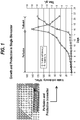
- Cells were concentrated about 2.6 fold when viable cell density reached 12.6 ⁇ 10 6 cells/mL. After concentration, cells were grown up to 108.8 ⁇ 10 6 cells/mL. Once the cells reached 108.8 ⁇ 10 6 cells/mL, perfusion was stopped and the fed-batch process was started immediately.
- one or two bolus feeds at 3 to 10% (i.e ., percentage of feed to post feed volume) were performed every day to maintain cell viability.
- Glucose was also supplemented by bolus feed to maintain a sufficient level.
- Cell density reached 124.66 ⁇ 10 6 cells/mL with 98% viability the second day after fed-batch process started.
- the total feed percentage was about 40%.
- a final productivity of 8.8 g/L from fed-batch process was achieved after 6 days at 39% viability.
- Cells were inoculated in the WAVE BIOREACTOR® (GE Healthcare, Fairfield, CT) at approximately 0.81 ⁇ 10 6 cells/mL.
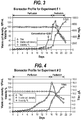
- the rate of specific perfusion (SPR) ranged from 0.07 to 0.01 x 10 -6 mL cell -1 day -1 and varied at different time points. The cells were concentrated about 1.5 fold overnight between days 15 and 16. On day 16, the cell density reached up to 136.5 ⁇ 10 6 cells/mL.
- the perfusion process was stopped and the fed-batch process was started.
- One or two bolus feeds at 1 to 6% were performed in the first two days to maintain cell viability. Continuous feeding of glucose and/or other nutrients was started on the first day of the fed-batch process to maintain glucose level, as well as to promote a favorable osmolality increasing trend, while providing sufficient nutrients.
- the cells grew to 142.0 ⁇ 10 6 cells/mL about 7 hours after fed-batch process started and the total feed percentage was about 28%. As shown in the growth and production profile depicted in Figure 4 , a final productivity of 13.8 g/L was achieved after 6 days at 61% viability from fed-batch production phase.
- Cells were inoculated in the WAVE BIOREACTOR® (GE Healthcare, Fairfield, CT) at approximately 1.20 x 10 6 cells/mL.
- the rate of specific perfusion (SPR) ranged from 0.07 to 0.03 ( e.g. , 0.05) x 10 -6 mL cell -1 day -1 and varied at different time points.
- SPR specific perfusion
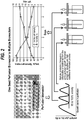
- cells were partially transferred on day 13 and day 18 to two separate 5 liter stir tank bioreactors at a cell density of approximately 50 ⁇ 10 6 cells/mL. Antifoam was also added to overcome foaming in the bioreactors.
- a further perfusion run was performed to repeat the cell culture process of the foregoing examples in a single perfusion bioreactor (i.e ., such that both perfusion and fed-batch occurred in the same bioreactor).
- perfusion process e.g ., specific perfusion rate (SPR)
- SPR specific perfusion rate
- the SPR was maintained at a range of about 0.15 to 0.05, to keep the cells in a stable and healthy condition. This led to a more than 100% increase of cell growth rate, as compared to the initial perfusion runs (Experiment #s 1 and 2).
- Cell density increased by about 70% per day.
- the fed-batch process was started immediately and medium perfusion was stopped. Two to three time bolus feeds at 2 to 6% were performed every day for three days. On the second day after the fed-batch process was started, the cell density reached 119.5 ⁇ 10 6 cells/mL and 98% viability was achieved. Continuous feeding of glucose and/or other nutrients was performed throughout the fed-batch process to maintain glucose level and control the osmolality increase rate. The total feed volume percentage was about 60%.
- Figure 8 summarizes the productivity and cell integral of Experiment #s 1-3 ( i.e. , wherein the fed-batch process started with over 100 x 10 6 cells/mL) and Experiment # 4 ( i.e. , wherein the fed-batch process started with about 50 x 10 6 cells/mL).
- the productivity is represented in terms of the actual observed final titer, as well as a normalized titer ( e.g ., normalized by starting volume and final perfusion cell density per 100 million cells/mL).
- the basal medium can be optimized by concentrating the nutrients, so as to potentially reduce the perfusion volume.
- the pH buffering component in the basal medium can be optimized to handle low pH conditions typical of traditional stir tank bioreactors.
- the feed composition and/or the feeding strategy can be optimized to promote productivity and efficiency, while maintaining good solubility.
- the resultant culture has a high percentage of cell-bed solid volume (e.g ., 20% cell bed volume for cultures when cell density is over 100 ⁇ 10 6 cells/mL by natural settling or centrifugation) and very turbid supernatant.
- cell-bed solid volume e.g . 20% cell bed volume for cultures when cell density is over 100 ⁇ 10 6 cells/mL by natural settling or centrifugation
- very turbid supernatant e.g . 20% cell bed volume for cultures when cell density is over 100 ⁇ 10 6 cells/mL by natural settling or centrifugation
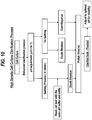
- Additional steps such as washing the bed with product compatible buffer or diluted PBS at the same pH condition that used to settle the cells, additional settling, and additional filtration, can optionally be performed to enhance the clarification process, as shown in Figure 10 .
- additional optional steps e.g ., filtration, centrifugation, washing, etc.
- centrifugation can optionally be performed prior to or after the settling process.
Landscapes
- Chemical & Material Sciences (AREA)
- Life Sciences & Earth Sciences (AREA)
- Organic Chemistry (AREA)
- Health & Medical Sciences (AREA)
- Engineering & Computer Science (AREA)
- Wood Science & Technology (AREA)
- Zoology (AREA)
- Genetics & Genomics (AREA)
- General Health & Medical Sciences (AREA)
- Biochemistry (AREA)
- Bioinformatics & Cheminformatics (AREA)
- Biotechnology (AREA)
- Molecular Biology (AREA)
- General Engineering & Computer Science (AREA)
- Microbiology (AREA)
- Medicinal Chemistry (AREA)
- Proteomics, Peptides & Aminoacids (AREA)
- General Chemical & Material Sciences (AREA)
- Chemical Kinetics & Catalysis (AREA)
- Biophysics (AREA)
- Immunology (AREA)
- Tropical Medicine & Parasitology (AREA)
- Biomedical Technology (AREA)
- Virology (AREA)
- Analytical Chemistry (AREA)
- Preparation Of Compounds By Using Micro-Organisms (AREA)
- Micro-Organisms Or Cultivation Processes Thereof (AREA)
- Peptides Or Proteins (AREA)
Priority Applications (6)
| Application Number | Priority Date | Filing Date | Title |
|---|---|---|---|
| EP17183182.9A EP3255153A1 (en) | 2009-11-17 | 2010-11-17 | Methods for enhanced protein production |
| PL10782133T PL2501822T3 (pl) | 2009-11-17 | 2010-11-17 | Sposoby zwiększenia produkcji białek |
| SI201031532T SI2501822T1 (sl) | 2009-11-17 | 2010-11-17 | Postopki za povečanje produkcije proteina |
| SM20170529T SMT201700529T1 (it) | 2009-11-17 | 2010-11-17 | Metodi per un'aumentata produzione di proteine |
| HRP20171701TT HRP20171701T8 (hr) | 2009-11-17 | 2010-11-17 | Metode za poboljšanu proizvodnju proteina |
| EP18177245.0A EP3431608A3 (en) | 2009-11-17 | 2010-11-17 | Method for enhanced protein production |
Applications Claiming Priority (2)
| Application Number | Priority Date | Filing Date | Title |
|---|---|---|---|
| US26188609P | 2009-11-17 | 2009-11-17 | |
| PCT/US2010/056924 WO2011062926A2 (en) | 2009-11-17 | 2010-11-17 | Methods for enhanced protein production |
Related Child Applications (2)
| Application Number | Title | Priority Date | Filing Date |
|---|---|---|---|
| EP17183182.9A Division EP3255153A1 (en) | 2009-11-17 | 2010-11-17 | Methods for enhanced protein production |
| EP18177245.0A Division EP3431608A3 (en) | 2009-11-17 | 2010-11-17 | Method for enhanced protein production |
Publications (2)
| Publication Number | Publication Date |
|---|---|
| EP2501822A2 EP2501822A2 (en) | 2012-09-26 |
| EP2501822B1 true EP2501822B1 (en) | 2017-08-16 |
Family
ID=43480207
Family Applications (3)
| Application Number | Title | Priority Date | Filing Date |
|---|---|---|---|
| EP18177245.0A Pending EP3431608A3 (en) | 2009-11-17 | 2010-11-17 | Method for enhanced protein production |
| EP10782133.2A Revoked EP2501822B1 (en) | 2009-11-17 | 2010-11-17 | Methods for enhanced protein production |
| EP17183182.9A Withdrawn EP3255153A1 (en) | 2009-11-17 | 2010-11-17 | Methods for enhanced protein production |
Family Applications Before (1)
| Application Number | Title | Priority Date | Filing Date |
|---|---|---|---|
| EP18177245.0A Pending EP3431608A3 (en) | 2009-11-17 | 2010-11-17 | Method for enhanced protein production |
Family Applications After (1)
| Application Number | Title | Priority Date | Filing Date |
|---|---|---|---|
| EP17183182.9A Withdrawn EP3255153A1 (en) | 2009-11-17 | 2010-11-17 | Methods for enhanced protein production |
Country Status (15)
| Country | Link |
|---|---|
| US (2) | US8765415B2 (Direct) |
| EP (3) | EP3431608A3 (Direct) |
| CY (1) | CY1119923T1 (Direct) |
| DK (1) | DK2501822T3 (Direct) |
| ES (1) | ES2642629T3 (Direct) |
| HR (1) | HRP20171701T8 (Direct) |
| HU (1) | HUE035508T2 (Direct) |
| LT (1) | LT2501822T (Direct) |
| NO (1) | NO2501822T3 (Direct) |
| PL (1) | PL2501822T3 (Direct) |
| PT (1) | PT2501822T (Direct) |
| RS (1) | RS56484B1 (Direct) |
| SI (1) | SI2501822T1 (Direct) |
| SM (1) | SMT201700529T1 (Direct) |
| WO (1) | WO2011062926A2 (Direct) |
Families Citing this family (51)
| Publication number | Priority date | Publication date | Assignee | Title |
|---|---|---|---|---|
| US20090042253A1 (en) * | 2007-08-09 | 2009-02-12 | Wyeth | Use of perfusion to enhance production of fed-batch cell culture in bioreactors |
| US8691145B2 (en) | 2009-11-16 | 2014-04-08 | Flodesign Sonics, Inc. | Ultrasound and acoustophoresis for water purification |
| PL2501822T3 (pl) * | 2009-11-17 | 2017-12-29 | E. R. Squibb & Sons, L.L.C. | Sposoby zwiększenia produkcji białek |
| US8506797B2 (en) * | 2011-04-10 | 2013-08-13 | Therapeutic Proteins International, LLC | Downstream bioprocessing device |
| US11292829B2 (en) | 2011-07-01 | 2022-04-05 | Amgen Inc. | Mammalian cell culture |
| US8852435B2 (en) * | 2011-11-29 | 2014-10-07 | Therapeutics Proteins International, LLC | Purification and separation treatment assembly (PASTA) for biological products |
| US10967298B2 (en) | 2012-03-15 | 2021-04-06 | Flodesign Sonics, Inc. | Driver and control for variable impedence load |
| US9752113B2 (en) | 2012-03-15 | 2017-09-05 | Flodesign Sonics, Inc. | Acoustic perfusion devices |
| US9458450B2 (en) | 2012-03-15 | 2016-10-04 | Flodesign Sonics, Inc. | Acoustophoretic separation technology using multi-dimensional standing waves |
| US10704021B2 (en) | 2012-03-15 | 2020-07-07 | Flodesign Sonics, Inc. | Acoustic perfusion devices |
| US9950282B2 (en) | 2012-03-15 | 2018-04-24 | Flodesign Sonics, Inc. | Electronic configuration and control for acoustic standing wave generation |
| US10689609B2 (en) | 2012-03-15 | 2020-06-23 | Flodesign Sonics, Inc. | Acoustic bioreactor processes |
| US10953436B2 (en) | 2012-03-15 | 2021-03-23 | Flodesign Sonics, Inc. | Acoustophoretic device with piezoelectric transducer array |
| US9752114B2 (en) | 2012-03-15 | 2017-09-05 | Flodesign Sonics, Inc | Bioreactor using acoustic standing waves |
| US9796956B2 (en) | 2013-11-06 | 2017-10-24 | Flodesign Sonics, Inc. | Multi-stage acoustophoresis device |
| US9272234B2 (en) | 2012-03-15 | 2016-03-01 | Flodesign Sonics, Inc. | Separation of multi-component fluid through ultrasonic acoustophoresis |
| US9567559B2 (en) | 2012-03-15 | 2017-02-14 | Flodesign Sonics, Inc. | Bioreactor using acoustic standing waves |
| US9783775B2 (en) | 2012-03-15 | 2017-10-10 | Flodesign Sonics, Inc. | Bioreactor using acoustic standing waves |
| US10322949B2 (en) | 2012-03-15 | 2019-06-18 | Flodesign Sonics, Inc. | Transducer and reflector configurations for an acoustophoretic device |
| US9745548B2 (en) | 2012-03-15 | 2017-08-29 | Flodesign Sonics, Inc. | Acoustic perfusion devices |
| US10370635B2 (en) | 2012-03-15 | 2019-08-06 | Flodesign Sonics, Inc. | Acoustic separation of T cells |
| US10737953B2 (en) | 2012-04-20 | 2020-08-11 | Flodesign Sonics, Inc. | Acoustophoretic method for use in bioreactors |
| TWI637057B (zh) | 2012-11-09 | 2018-10-01 | 拜爾沙納有限公司 | 具交替生物反應器用途之不連續進料批次製程 |
| US9745569B2 (en) | 2013-09-13 | 2017-08-29 | Flodesign Sonics, Inc. | System for generating high concentration factors for low cell density suspensions |
| US10421986B2 (en) * | 2013-09-30 | 2019-09-24 | Janssen Vaccines & Prevention B.V. | Method for the clarification of high-density crude cell culture harvest |
| CA2935960C (en) | 2014-01-08 | 2023-01-10 | Bart Lipkens | Acoustophoresis device with dual acoustophoretic chamber |
| AU2015218193A1 (en) * | 2014-02-17 | 2016-10-06 | Advantech Bioscience Farmaceutica Ltda | Enhancement of recombinant protein expression using a membrane-based cell retention system |
| EP3119871A4 (en) * | 2014-03-17 | 2018-01-03 | Regeneron Pharmaceuticals, Inc. | Clarification of mammalian cell culture |
| WO2015143512A2 (en) * | 2014-03-23 | 2015-10-01 | Advantech Bioscience Farmacêutica Ltda. | Enhancement of recombinant protein expression with copper |
| KR20160146762A (ko) | 2014-04-01 | 2016-12-21 | 어드밴텍 바이오사이언스 파마큐티카 엘티디에이 | 당과 글리신이 소량 첨가된 안정적인 factor iii 제형 |
| CA2944183A1 (en) | 2014-04-01 | 2015-10-08 | Advantech Bioscience Farmaceutica Ltda. | Stabilization of factor viii without calcium as an excipient |
| US9744483B2 (en) | 2014-07-02 | 2017-08-29 | Flodesign Sonics, Inc. | Large scale acoustic separation device |
| CN105296433B (zh) | 2014-08-01 | 2018-02-09 | 中山康方生物医药有限公司 | 一种ctla4抗体、其药物组合物及其用途 |
| WO2016106192A2 (en) * | 2014-12-22 | 2016-06-30 | Genzyme Corporation | Methods of culturing a mammalian cell |
| US10106770B2 (en) | 2015-03-24 | 2018-10-23 | Flodesign Sonics, Inc. | Methods and apparatus for particle aggregation using acoustic standing waves |
| US11377651B2 (en) | 2016-10-19 | 2022-07-05 | Flodesign Sonics, Inc. | Cell therapy processes utilizing acoustophoresis |
| US11708572B2 (en) | 2015-04-29 | 2023-07-25 | Flodesign Sonics, Inc. | Acoustic cell separation techniques and processes |
| US11420136B2 (en) | 2016-10-19 | 2022-08-23 | Flodesign Sonics, Inc. | Affinity cell extraction by acoustics |
| US10640760B2 (en) | 2016-05-03 | 2020-05-05 | Flodesign Sonics, Inc. | Therapeutic cell washing, concentration, and separation utilizing acoustophoresis |
| US11021699B2 (en) | 2015-04-29 | 2021-06-01 | FioDesign Sonics, Inc. | Separation using angled acoustic waves |
| EP3303557B1 (en) * | 2015-05-29 | 2021-05-05 | Glycotope GmbH | Small scale cultivation method for suspension cells |
| US11459540B2 (en) | 2015-07-28 | 2022-10-04 | Flodesign Sonics, Inc. | Expanded bed affinity selection |
| US11474085B2 (en) | 2015-07-28 | 2022-10-18 | Flodesign Sonics, Inc. | Expanded bed affinity selection |
| US10710006B2 (en) | 2016-04-25 | 2020-07-14 | Flodesign Sonics, Inc. | Piezoelectric transducer for generation of an acoustic standing wave |
| US11085035B2 (en) | 2016-05-03 | 2021-08-10 | Flodesign Sonics, Inc. | Therapeutic cell washing, concentration, and separation utilizing acoustophoresis |
| US11214789B2 (en) | 2016-05-03 | 2022-01-04 | Flodesign Sonics, Inc. | Concentration and washing of particles with acoustics |
| WO2018035710A1 (en) | 2016-08-23 | 2018-03-01 | Akeso Biopharma, Inc. | Anti-ctla4 antibodies |
| WO2019071076A1 (en) | 2017-10-06 | 2019-04-11 | Lonza Ltd. | AUTOMATED CONTROL OF CELL CULTURE BY SPECTROSCOPY RAMAN |
| EP3697887B1 (en) | 2017-10-16 | 2022-04-06 | Regeneron Pharmaceuticals, Inc. | Perfusion methods |
| EP3725092A4 (en) | 2017-12-14 | 2021-09-22 | FloDesign Sonics, Inc. | DRIVE AND CONTROL UNIT FOR ACOUSTIC CONVERTER |
| EP3924458A1 (en) * | 2019-02-15 | 2021-12-22 | Just-Evotec Biologics, Inc. | Automated biomanufacturing systems, facilities, and processes |
Citations (6)
| Publication number | Priority date | Publication date | Assignee | Title |
|---|---|---|---|---|
| US5705364A (en) | 1995-06-06 | 1998-01-06 | Genentech, Inc. | Mammalian cell culture process |
| US20030087372A1 (en) | 2001-06-13 | 2003-05-08 | Genentech, Inc. | Methods of culturing animal cells and polypeptide production in animal cells |
| WO2005095578A1 (en) | 2004-03-05 | 2005-10-13 | Dsm Ip Assets B.V. | Process for cell culturing by continuous perfusion and alternating tangential flow |
| US20080206819A1 (en) | 2006-08-21 | 2008-08-28 | Mary Tsao | Intensified Perfusion Production Method |
| US20090042253A1 (en) | 2007-08-09 | 2009-02-12 | Wyeth | Use of perfusion to enhance production of fed-batch cell culture in bioreactors |
| US20090081251A1 (en) | 2005-04-11 | 2009-03-26 | Vivalis | Production of Viral Vaccines in Suspension on Avian Embryonic Derived Stem Cell Lines |
Family Cites Families (43)
| Publication number | Priority date | Publication date | Assignee | Title |
|---|---|---|---|---|
| US4399216A (en) | 1980-02-25 | 1983-08-16 | The Trustees Of Columbia University | Processes for inserting DNA into eucaryotic cells and for producing proteinaceous materials |
| US4816567A (en) | 1983-04-08 | 1989-03-28 | Genentech, Inc. | Recombinant immunoglobin preparations |
| US5225539A (en) | 1986-03-27 | 1993-07-06 | Medical Research Council | Recombinant altered antibodies and methods of making altered antibodies |
| US5476996A (en) | 1988-06-14 | 1995-12-19 | Lidak Pharmaceuticals | Human immune system in non-human animal |
| US5223409A (en) | 1988-09-02 | 1993-06-29 | Protein Engineering Corp. | Directed evolution of novel binding proteins |
| GB8823869D0 (en) | 1988-10-12 | 1988-11-16 | Medical Res Council | Production of antibodies |
| US5530101A (en) | 1988-12-28 | 1996-06-25 | Protein Design Labs, Inc. | Humanized immunoglobulins |
| US6673986B1 (en) | 1990-01-12 | 2004-01-06 | Abgenix, Inc. | Generation of xenogeneic antibodies |
| US6075181A (en) | 1990-01-12 | 2000-06-13 | Abgenix, Inc. | Human antibodies derived from immunized xenomice |
| DK0463151T3 (da) | 1990-01-12 | 1996-07-01 | Cell Genesys Inc | Frembringelse af xenogene antistoffer |
| US6150584A (en) | 1990-01-12 | 2000-11-21 | Abgenix, Inc. | Human antibodies derived from immunized xenomice |
| US5427908A (en) | 1990-05-01 | 1995-06-27 | Affymax Technologies N.V. | Recombinant library screening methods |
| US6172197B1 (en) | 1991-07-10 | 2001-01-09 | Medical Research Council | Methods for producing members of specific binding pairs |
| GB9015198D0 (en) | 1990-07-10 | 1990-08-29 | Brien Caroline J O | Binding substance |
| DE69127627T2 (de) | 1990-08-29 | 1998-02-19 | Genpharm Int | Produktion und Nützung nicht-menschliche transgentiere zur Produktion heterologe Antikörper |
| US5814318A (en) | 1990-08-29 | 1998-09-29 | Genpharm International Inc. | Transgenic non-human animals for producing heterologous antibodies |
| US5633425A (en) | 1990-08-29 | 1997-05-27 | Genpharm International, Inc. | Transgenic non-human animals capable of producing heterologous antibodies |
| US5625126A (en) | 1990-08-29 | 1997-04-29 | Genpharm International, Inc. | Transgenic non-human animals for producing heterologous antibodies |
| US5545806A (en) | 1990-08-29 | 1996-08-13 | Genpharm International, Inc. | Ransgenic non-human animals for producing heterologous antibodies |
| US5789650A (en) | 1990-08-29 | 1998-08-04 | Genpharm International, Inc. | Transgenic non-human animals for producing heterologous antibodies |
| US5661016A (en) | 1990-08-29 | 1997-08-26 | Genpharm International Inc. | Transgenic non-human animals capable of producing heterologous antibodies of various isotypes |
| US6300129B1 (en) | 1990-08-29 | 2001-10-09 | Genpharm International | Transgenic non-human animals for producing heterologous antibodies |
| US5874299A (en) | 1990-08-29 | 1999-02-23 | Genpharm International, Inc. | Transgenic non-human animals capable of producing heterologous antibodies |
| US5770429A (en) | 1990-08-29 | 1998-06-23 | Genpharm International, Inc. | Transgenic non-human animals capable of producing heterologous antibodies |
| US6255458B1 (en) | 1990-08-29 | 2001-07-03 | Genpharm International | High affinity human antibodies and human antibodies against digoxin |
| US5877397A (en) | 1990-08-29 | 1999-03-02 | Genpharm International Inc. | Transgenic non-human animals capable of producing heterologous antibodies of various isotypes |
| KR100283541B1 (ko) | 1991-10-25 | 2001-03-02 | 크리스토퍼 엘. 와이트, 스코트 지. 홀퀴스트, 스티븐 엘. 말라스카 | 신규 사이토킨 |
| ES2341666T3 (es) | 1991-12-02 | 2010-06-24 | Medimmune Limited | Produccion de autoanticuerpos de repertorios de segmentos de anticue rpos expresados en la superficie de fagos. |
| CA2124967C (en) | 1991-12-17 | 2008-04-08 | Nils Lonberg | Transgenic non-human animals capable of producing heterologous antibodies |
| EP0754225A4 (en) | 1993-04-26 | 2001-01-31 | Genpharm Int | HETEROLOGIC ANTIBODY-PRODUCING TRANSGENIC NON-HUMAN ANIMALS |
| US5660731A (en) * | 1994-11-08 | 1997-08-26 | Pall Corporation | Filter for separating photoactive agent |
| US5721121A (en) | 1995-06-06 | 1998-02-24 | Genentech, Inc. | Mammalian cell culture process for producing a tumor necrosis factor receptor immunoglobulin chimeric protein |
| ES2214541T3 (es) | 1995-06-07 | 2004-09-16 | Immunex Corporation | Muteina de cd40l. |
| CA2589418A1 (en) | 1999-08-24 | 2001-03-01 | Medarex, Inc. | Human ctla-4 antibodies and their uses |
| IL155977A0 (en) | 2000-11-30 | 2003-12-23 | Medarex Inc | Transgenic transchromosomal rodents for making human antibodies |
| TWI442965B (zh) * | 2006-11-01 | 2014-07-01 | Biogen Idec Inc | 使用低pH及二價陽離子分離生物巨分子的方法 |
| SI2115126T1 (sl) * | 2007-03-02 | 2015-06-30 | Wyeth Llc | Uporaba bakra in glutamata v celični kulturi za proizvodnjo polipeptidov |
| CN102056936A (zh) * | 2008-06-09 | 2011-05-11 | 丹尼斯科美国公司 | 从发酵液中回收不溶解酶和不溶解酶的制剂 |
| WO2010008579A2 (en) * | 2008-07-16 | 2010-01-21 | Kbi Biopharma, Inc. | Methods and systems for manipulating particles using a fluidized bed |
| US20110184154A1 (en) * | 2008-10-17 | 2011-07-28 | Percivia Llc | Cell broth clarification and host cell protein removal |
| TW201041899A (en) * | 2009-04-13 | 2010-12-01 | Bristol Myers Squibb Co | Protein purification by citrate precipitation |
| PL2501822T3 (pl) * | 2009-11-17 | 2017-12-29 | E. R. Squibb & Sons, L.L.C. | Sposoby zwiększenia produkcji białek |
| KR101704462B1 (ko) * | 2013-02-26 | 2017-02-09 | 이엠디 밀리포어 코포레이션 | 용액 조건을 조정하는 것에 의해 활성탄을 사용하여 단백질의 혼합물로부터 단백질의 선택적 제거 |
-
2010
- 2010-11-17 PL PL10782133T patent/PL2501822T3/pl unknown
- 2010-11-17 SM SM20170529T patent/SMT201700529T1/it unknown
- 2010-11-17 WO PCT/US2010/056924 patent/WO2011062926A2/en not_active Ceased
- 2010-11-17 LT LTEP10782133.2T patent/LT2501822T/lt unknown
- 2010-11-17 HU HUE10782133A patent/HUE035508T2/en unknown
- 2010-11-17 DK DK10782133.2T patent/DK2501822T3/da active
- 2010-11-17 NO NO10782133A patent/NO2501822T3/no unknown
- 2010-11-17 EP EP18177245.0A patent/EP3431608A3/en active Pending
- 2010-11-17 HR HRP20171701TT patent/HRP20171701T8/hr unknown
- 2010-11-17 RS RS20171124A patent/RS56484B1/sr unknown
- 2010-11-17 EP EP10782133.2A patent/EP2501822B1/en not_active Revoked
- 2010-11-17 ES ES10782133.2T patent/ES2642629T3/es active Active
- 2010-11-17 PT PT107821332T patent/PT2501822T/pt unknown
- 2010-11-17 US US13/510,372 patent/US8765415B2/en active Active
- 2010-11-17 EP EP17183182.9A patent/EP3255153A1/en not_active Withdrawn
- 2010-11-17 SI SI201031532T patent/SI2501822T1/sl unknown
-
2014
- 2014-06-19 US US14/309,308 patent/US20140302581A1/en not_active Abandoned
-
2017
- 2017-10-30 CY CY20171101129T patent/CY1119923T1/el unknown
Patent Citations (8)
| Publication number | Priority date | Publication date | Assignee | Title |
|---|---|---|---|---|
| US5705364A (en) | 1995-06-06 | 1998-01-06 | Genentech, Inc. | Mammalian cell culture process |
| US20030087372A1 (en) | 2001-06-13 | 2003-05-08 | Genentech, Inc. | Methods of culturing animal cells and polypeptide production in animal cells |
| WO2005095578A1 (en) | 2004-03-05 | 2005-10-13 | Dsm Ip Assets B.V. | Process for cell culturing by continuous perfusion and alternating tangential flow |
| US20080131934A1 (en) | 2004-03-05 | 2008-06-05 | John Crowley | Process For Cell Culturing By Continuous Perfusion And Alternating Tangential Flow |
| US20090081251A1 (en) | 2005-04-11 | 2009-03-26 | Vivalis | Production of Viral Vaccines in Suspension on Avian Embryonic Derived Stem Cell Lines |
| US20080206819A1 (en) | 2006-08-21 | 2008-08-28 | Mary Tsao | Intensified Perfusion Production Method |
| US20090042253A1 (en) | 2007-08-09 | 2009-02-12 | Wyeth | Use of perfusion to enhance production of fed-batch cell culture in bioreactors |
| WO2009023562A2 (en) | 2007-08-09 | 2009-02-19 | Wyeth | Use of perfusion to enhance production of fed-batch cell culture in bioreactors |
Non-Patent Citations (5)
| Title |
|---|
| HU WEI-SHOU; AUNINS J G: "Large-scale mammalian cell culture", CURRENT OPINION IN BIOTECHNOLOGY, vol. 8, no. 2, 1997, pages 148 - 153, XP002520547 |
| KRETZMER, G. ET AL.: "Industrial processes with animal cells", APPLIED MICROBIOLOGY AND BIOTECHNOLOGY, vol. 59, 1 July 2002 (2002-07-01), pages 135 - 142, XP055489526 |
| MEUWLY; WEBER F; ZIEGLER U; GERVAIS T; MASTRANGELI A; CRISCI R; ROSSI C; BERNARD M; VON STOCKAR A; KADOURI U; A: "Conversion of a CHO cell culture process from perfusion to fed-batch technology without altering product quality", JOURNAL OF BIOTECHNOLOGY, vol. 123, 3 May 2006 (2006-05-03), pages 106 - 116, XP005398962 |
| VOISARD ET AL.: "Potential of cell retention techniques for large-scale high-density perfusion culture of suspended mammalian cells", BIOTECHNOLOGY AND BIOENGINEERING, vol. 82, no. 7, 3 June 2003 (2003-06-03), pages 751 - 765, XP002317548 |
| YALLOP ET AL.: "Modern Biopharmaceuticals: Design, D3 Development and Optimization", vol. 3, 2005, Weinheim, Germany, article "PER.C6® Cells for the Manufacture of Biopharmaceutical Proteins", pages: 779 - 807, XP008102484 |
Also Published As
| Publication number | Publication date |
|---|---|
| WO2011062926A2 (en) | 2011-05-26 |
| EP3431608A2 (en) | 2019-01-23 |
| HRP20171701T1 (hr) | 2017-12-15 |
| SMT201700529T1 (it) | 2018-01-11 |
| US20140302581A1 (en) | 2014-10-09 |
| RS56484B1 (sr) | 2018-01-31 |
| HUE035508T2 (en) | 2018-05-02 |
| HRP20171701T8 (hr) | 2018-02-23 |
| PL2501822T3 (pl) | 2017-12-29 |
| US8765415B2 (en) | 2014-07-01 |
| US20130017577A1 (en) | 2013-01-17 |
| EP2501822A2 (en) | 2012-09-26 |
| EP3255153A1 (en) | 2017-12-13 |
| EP3431608A3 (en) | 2019-02-20 |
| ES2642629T3 (es) | 2017-11-17 |
| SI2501822T1 (sl) | 2017-10-30 |
| WO2011062926A3 (en) | 2011-07-21 |
| NO2501822T3 (Direct) | 2018-01-13 |
| PT2501822T (pt) | 2017-10-18 |
| DK2501822T3 (da) | 2017-11-27 |
| LT2501822T (lt) | 2017-10-25 |
| CY1119923T1 (el) | 2018-12-12 |
Similar Documents
| Publication | Publication Date | Title |
|---|---|---|
| EP2501822B1 (en) | Methods for enhanced protein production | |
| US11685772B2 (en) | Mammalian cell culture | |
| US20250346936A1 (en) | Methods of protein production | |
| KR102391259B1 (ko) | 포유류 세포 배양물을 회수하는 방법 | |
| DK2702164T3 (en) | METHOD FOR REDUCING heterogeneity OF ANTIBODIES AND METHOD OF PRODUCING THESE ANTIBODIES | |
| JP7707062B2 (ja) | 連続的採取を行い細胞流出を行わない強化灌流による細胞培養法 | |
| JP2011518790A (ja) | ポリクローナルタンパク質を製造する方法 | |
| US20240392030A1 (en) | Methods of Controlling the Formation of Disulfide Bonds in Protein Solutions | |
| US20160281124A1 (en) | Use of monensin to regulate glycosylation of recombinant proteins | |
| EP3147355A1 (en) | Method for preparing aqueous solution containing culture medium and chelating agent | |
| AU2024313665A1 (en) | Methods for chromatography and chromatography medium reuse | |
| WO2023198450A1 (en) | Methods for high recovery of a cell culture clarification product | |
| US20250382366A1 (en) | Methods of producing anti-cd19 antibodies | |
| CN121488027A (zh) | 用于细胞培养基灌注和生物反应器收获的交替再循环切向流(artf)过滤 | |
| WO2024248118A1 (ja) | 細胞培養方法および生産物の製造方法 |
Legal Events
| Date | Code | Title | Description |
|---|---|---|---|
| PUAI | Public reference made under article 153(3) epc to a published international application that has entered the european phase |
Free format text: ORIGINAL CODE: 0009012 |
|
| 17P | Request for examination filed |
Effective date: 20120516 |
|
| AK | Designated contracting states |
Kind code of ref document: A2 Designated state(s): AL AT BE BG CH CY CZ DE DK EE ES FI FR GB GR HR HU IE IS IT LI LT LU LV MC MK MT NL NO PL PT RO RS SE SI SK SM TR |
|
| RIN1 | Information on inventor provided before grant (corrected) |
Inventor name: MARTEL, RICHARD Inventor name: DAI, XIAO-PING Inventor name: ARUNAKUMARI, ALAHARI Inventor name: GARCIA, JAVIER |
|
| DAX | Request for extension of the european patent (deleted) | ||
| RAP1 | Party data changed (applicant data changed or rights of an application transferred) |
Owner name: MEDAREX, L.L.C. |
|
| RAP1 | Party data changed (applicant data changed or rights of an application transferred) |
Owner name: E. R. SQUIBB & SONS, L.L.C. |
|
| 17Q | First examination report despatched |
Effective date: 20160203 |
|
| REG | Reference to a national code |
Ref country code: DE Ref legal event code: R079 Ref document number: 602010044472 Country of ref document: DE Free format text: PREVIOUS MAIN CLASS: C12P0021000000 Ipc: C12N0001020000 |
|
| RIC1 | Information provided on ipc code assigned before grant |
Ipc: C12N 5/00 20060101ALI20160713BHEP Ipc: C12N 1/02 20060101AFI20160713BHEP Ipc: C12P 21/00 20060101ALI20160713BHEP Ipc: C07K 16/00 20060101ALI20160713BHEP Ipc: C12P 21/02 20060101ALI20160713BHEP Ipc: C07K 1/36 20060101ALI20160713BHEP |
|
| GRAP | Despatch of communication of intention to grant a patent |
Free format text: ORIGINAL CODE: EPIDOSNIGR1 |
|
| STAA | Information on the status of an ep patent application or granted ep patent |
Free format text: STATUS: GRANT OF PATENT IS INTENDED |
|
| INTG | Intention to grant announced |
Effective date: 20161121 |
|
| GRAJ | Information related to disapproval of communication of intention to grant by the applicant or resumption of examination proceedings by the epo deleted |
Free format text: ORIGINAL CODE: EPIDOSDIGR1 |
|
| STAA | Information on the status of an ep patent application or granted ep patent |
Free format text: STATUS: EXAMINATION IS IN PROGRESS |
|
| GRAP | Despatch of communication of intention to grant a patent |
Free format text: ORIGINAL CODE: EPIDOSNIGR1 |
|
| STAA | Information on the status of an ep patent application or granted ep patent |
Free format text: STATUS: GRANT OF PATENT IS INTENDED |
|
| INTC | Intention to grant announced (deleted) | ||
| INTG | Intention to grant announced |
Effective date: 20170424 |
|
| GRAS | Grant fee paid |
Free format text: ORIGINAL CODE: EPIDOSNIGR3 |
|
| GRAA | (expected) grant |
Free format text: ORIGINAL CODE: 0009210 |
|
| STAA | Information on the status of an ep patent application or granted ep patent |
Free format text: STATUS: THE PATENT HAS BEEN GRANTED |
|
| AK | Designated contracting states |
Kind code of ref document: B1 Designated state(s): AL AT BE BG CH CY CZ DE DK EE ES FI FR GB GR HR HU IE IS IT LI LT LU LV MC MK MT NL NO PL PT RO RS SE SI SK SM TR |
|
| REG | Reference to a national code |
Ref country code: GB Ref legal event code: FG4D |
|
| REG | Reference to a national code |
Ref country code: CH Ref legal event code: NV Representative=s name: SERVOPATENT GMBH, CH Ref country code: CH Ref legal event code: EP |
|
| REG | Reference to a national code |
Ref country code: IE Ref legal event code: FG4D |
|
| REG | Reference to a national code |
Ref country code: AT Ref legal event code: REF Ref document number: 919037 Country of ref document: AT Kind code of ref document: T Effective date: 20170915 |
|
| REG | Reference to a national code |
Ref country code: DE Ref legal event code: R096 Ref document number: 602010044472 Country of ref document: DE |
|
| REG | Reference to a national code |
Ref country code: FR Ref legal event code: PLFP Year of fee payment: 8 |
|
| REG | Reference to a national code |
Ref country code: PT Ref legal event code: SC4A Ref document number: 2501822 Country of ref document: PT Date of ref document: 20171018 Kind code of ref document: T Free format text: AVAILABILITY OF NATIONAL TRANSLATION Effective date: 20171004 |
|
| REG | Reference to a national code |
Ref country code: RO Ref legal event code: EPE |
|
| REG | Reference to a national code |
Ref country code: HR Ref legal event code: TUEP Ref document number: P20171701 Country of ref document: HR |
|
| REG | Reference to a national code |
Ref country code: ES Ref legal event code: FG2A Ref document number: 2642629 Country of ref document: ES Kind code of ref document: T3 Effective date: 20171117 |
|
| REG | Reference to a national code |
Ref country code: DK Ref legal event code: T3 Effective date: 20171123 |
|
| REG | Reference to a national code |
Ref country code: SE Ref legal event code: TRGR |
|
| REG | Reference to a national code |
Ref country code: NL Ref legal event code: FP |
|
| REG | Reference to a national code |
Ref country code: HR Ref legal event code: T1PR Ref document number: P20171701 Country of ref document: HR Ref country code: EE Ref legal event code: FG4A Ref document number: E014479 Country of ref document: EE Effective date: 20171101 |
|
| REG | Reference to a national code |
Ref country code: NO Ref legal event code: T2 Effective date: 20170816 |
|
| REG | Reference to a national code |
Ref country code: HR Ref legal event code: T8IS Ref document number: P20171701 Country of ref document: HR |
|
| REG | Reference to a national code |
Ref country code: HU Ref legal event code: AG4A Ref document number: E035508 Country of ref document: HU |
|
| REG | Reference to a national code |
Ref country code: GR Ref legal event code: EP Ref document number: 20170403007 Country of ref document: GR Effective date: 20180420 |
|
| REG | Reference to a national code |
Ref country code: DE Ref legal event code: R026 Ref document number: 602010044472 Country of ref document: DE |
|
| PLBI | Opposition filed |
Free format text: ORIGINAL CODE: 0009260 |
|
| PLAX | Notice of opposition and request to file observation + time limit sent |
Free format text: ORIGINAL CODE: EPIDOSNOBS2 |
|
| 26 | Opposition filed |
Opponent name: PFIZER INC. Effective date: 20180515 Opponent name: SARTORIUS STEDIM BIOTECH GMBH Effective date: 20180514 |
|
| REG | Reference to a national code |
Ref country code: FR Ref legal event code: PLFP Year of fee payment: 9 |
|
| PLBB | Reply of patent proprietor to notice(s) of opposition received |
Free format text: ORIGINAL CODE: EPIDOSNOBS3 |
|
| REG | Reference to a national code |
Ref country code: HR Ref legal event code: ODRP Ref document number: P20171701 Country of ref document: HR Payment date: 20191011 Year of fee payment: 10 |
|
| APAH | Appeal reference modified |
Free format text: ORIGINAL CODE: EPIDOSCREFNO |
|
| APBM | Appeal reference recorded |
Free format text: ORIGINAL CODE: EPIDOSNREFNO |
|
| APBP | Date of receipt of notice of appeal recorded |
Free format text: ORIGINAL CODE: EPIDOSNNOA2O |
|
| APBM | Appeal reference recorded |
Free format text: ORIGINAL CODE: EPIDOSNREFNO |
|
| APBP | Date of receipt of notice of appeal recorded |
Free format text: ORIGINAL CODE: EPIDOSNNOA2O |
|
| APBM | Appeal reference recorded |
Free format text: ORIGINAL CODE: EPIDOSNREFNO |
|
| APBP | Date of receipt of notice of appeal recorded |
Free format text: ORIGINAL CODE: EPIDOSNNOA2O |
|
| REG | Reference to a national code |
Ref country code: AT Ref legal event code: UEP Ref document number: 919037 Country of ref document: AT Kind code of ref document: T Effective date: 20170816 |
|
| REG | Reference to a national code |
Ref country code: CH Ref legal event code: PCAR Free format text: NEW ADDRESS: WANNERSTRASSE 9/1, 8045 ZUERICH (CH) |
|
| APBQ | Date of receipt of statement of grounds of appeal recorded |
Free format text: ORIGINAL CODE: EPIDOSNNOA3O |
|
| APBQ | Date of receipt of statement of grounds of appeal recorded |
Free format text: ORIGINAL CODE: EPIDOSNNOA3O |
|
| REG | Reference to a national code |
Ref country code: HR Ref legal event code: ODRP Ref document number: P20171701 Country of ref document: HR Payment date: 20201110 Year of fee payment: 11 |
|
| TPAC | Observations filed by third parties |
Free format text: ORIGINAL CODE: EPIDOSNTIPA |
|
| REG | Reference to a national code |
Ref country code: HR Ref legal event code: ODRP Ref document number: P20171701 Country of ref document: HR Payment date: 20211116 Year of fee payment: 12 |
|
| REG | Reference to a national code |
Ref country code: HR Ref legal event code: ODRP Ref document number: P20171701 Country of ref document: HR Payment date: 20221115 Year of fee payment: 13 |
|
| PGFP | Annual fee paid to national office [announced via postgrant information from national office to epo] |
Ref country code: FI Payment date: 20221109 Year of fee payment: 13 Ref country code: DE Payment date: 20220930 Year of fee payment: 13 |
|
| PLAB | Opposition data, opponent's data or that of the opponent's representative modified |
Free format text: ORIGINAL CODE: 0009299OPPO |
|
| P01 | Opt-out of the competence of the unified patent court (upc) registered |
Effective date: 20230417 |
|
| R26 | Opposition filed (corrected) |
Opponent name: PFIZER INC. Effective date: 20180515 |
|
| PGFP | Annual fee paid to national office [announced via postgrant information from national office to epo] |
Ref country code: AL Payment date: 20221031 Year of fee payment: 13 |
|
| PGFP | Annual fee paid to national office [announced via postgrant information from national office to epo] |
Ref country code: GB Payment date: 20230928 Year of fee payment: 14 |
|
| REG | Reference to a national code |
Ref country code: DE Ref legal event code: R103 Ref document number: 602010044472 Country of ref document: DE Ref country code: DE Ref legal event code: R064 Ref document number: 602010044472 Country of ref document: DE |
|
| APBU | Appeal procedure closed |
Free format text: ORIGINAL CODE: EPIDOSNNOA9O |
|
| REG | Reference to a national code |
Ref country code: HR Ref legal event code: ODRP Ref document number: P20171701 Country of ref document: HR Payment date: 20231012 Year of fee payment: 14 |
|
| PGFP | Annual fee paid to national office [announced via postgrant information from national office to epo] |
Ref country code: NL Payment date: 20231013 Year of fee payment: 14 Ref country code: FR Payment date: 20230929 Year of fee payment: 14 |
|
| RDAF | Communication despatched that patent is revoked |
Free format text: ORIGINAL CODE: EPIDOSNREV1 |
|
| STAA | Information on the status of an ep patent application or granted ep patent |
Free format text: STATUS: PATENT REVOKED |
|
| RDAG | Patent revoked |
Free format text: ORIGINAL CODE: 0009271 |
|
| PGFP | Annual fee paid to national office [announced via postgrant information from national office to epo] |
Ref country code: LU Payment date: 20231113 Year of fee payment: 14 |
|
| REG | Reference to a national code |
Ref country code: CH Ref legal event code: PL |
|
| REG | Reference to a national code |
Ref country code: LT Ref legal event code: MM9A Effective date: 20301117 Ref country code: SK Ref legal event code: MC4A Ref document number: E 25661 Country of ref document: SK Effective date: 20231121 |
|
| PGFP | Annual fee paid to national office [announced via postgrant information from national office to epo] |
Ref country code: SK Payment date: 20231013 Year of fee payment: 14 |
|
| PGFP | Annual fee paid to national office [announced via postgrant information from national office to epo] |
Ref country code: GR Payment date: 20231012 Year of fee payment: 14 |
|
| PGFP | Annual fee paid to national office [announced via postgrant information from national office to epo] |
Ref country code: MC Payment date: 20231027 Year of fee payment: 14 |
|
| PGFP | Annual fee paid to national office [announced via postgrant information from national office to epo] |
Ref country code: ES Payment date: 20231211 Year of fee payment: 14 |
|
| PGFP | Annual fee paid to national office [announced via postgrant information from national office to epo] |
Ref country code: IS Payment date: 20231109 Year of fee payment: 14 |
|
| 27W | Patent revoked |
Effective date: 20231121 |
|
| GBPR | Gb: patent revoked under art. 102 of the ep convention designating the uk as contracting state |
Effective date: 20231121 |
|
| PGFP | Annual fee paid to national office [announced via postgrant information from national office to epo] |
Ref country code: TR Payment date: 20231115 Year of fee payment: 14 Ref country code: SM Payment date: 20231231 Year of fee payment: 14 Ref country code: SI Payment date: 20231016 Year of fee payment: 14 Ref country code: SE Payment date: 20231002 Year of fee payment: 14 Ref country code: RS Payment date: 20231026 Year of fee payment: 14 Ref country code: RO Payment date: 20231018 Year of fee payment: 14 Ref country code: PT Payment date: 20231117 Year of fee payment: 14 Ref country code: NO Payment date: 20231108 Year of fee payment: 14 Ref country code: MT Payment date: 20231117 Year of fee payment: 14 Ref country code: LV Payment date: 20231003 Year of fee payment: 14 Ref country code: LT Payment date: 20231030 Year of fee payment: 14 Ref country code: IT Payment date: 20231010 Year of fee payment: 14 Ref country code: IE Payment date: 20231009 Year of fee payment: 14 Ref country code: HU Payment date: 20231019 Year of fee payment: 14 Ref country code: HR Payment date: 20231012 Year of fee payment: 14 Ref country code: EE Payment date: 20231003 Year of fee payment: 14 Ref country code: DK Payment date: 20231116 Year of fee payment: 14 Ref country code: CZ Payment date: 20231027 Year of fee payment: 14 Ref country code: CY Payment date: 20231231 Year of fee payment: 14 Ref country code: CH Payment date: 20231201 Year of fee payment: 14 Ref country code: BG Payment date: 20231231 Year of fee payment: 14 Ref country code: AT Payment date: 20231025 Year of fee payment: 14 |
|
| PGFP | Annual fee paid to national office [announced via postgrant information from national office to epo] |
Ref country code: PL Payment date: 20231005 Year of fee payment: 14 Ref country code: BE Payment date: 20231016 Year of fee payment: 14 |
|
| REG | Reference to a national code |
Ref country code: HR Ref legal event code: PNEV Ref document number: P20171701 Country of ref document: HR |
|
| REG | Reference to a national code |
Ref country code: GR Ref legal event code: NF Ref document number: 20170403007 Country of ref document: GR Effective date: 20240312 |
|
| PGFP | Annual fee paid to national office [announced via postgrant information from national office to epo] |
Ref country code: MK Payment date: 20231010 Year of fee payment: 14 |
|
| PG25 | Lapsed in a contracting state [announced via postgrant information from national office to epo] |
Ref country code: GR Free format text: THE PATENT HAS BEEN ANNULLED BY A DECISION OF A NATIONAL AUTHORITY Effective date: 20240212 |
|
| REG | Reference to a national code |
Ref country code: SE Ref legal event code: ECNC |
|
| REG | Reference to a national code |
Ref country code: AT Ref legal event code: MA03 Ref document number: 919037 Country of ref document: AT Kind code of ref document: T Effective date: 20231121 |
|
| PG25 | Lapsed in a contracting state [announced via postgrant information from national office to epo] |
Ref country code: GR Free format text: THE PATENT HAS BEEN ANNULLED BY A DECISION OF A NATIONAL AUTHORITY Effective date: 20240212 |
|
| PG25 | Lapsed in a contracting state [announced via postgrant information from national office to epo] |
Ref country code: AT Free format text: LAPSE BECAUSE OF THE APPLICANT RENOUNCES Effective date: 20231121 |
|
| PG25 | Lapsed in a contracting state [announced via postgrant information from national office to epo] |
Ref country code: AT Free format text: LAPSE BECAUSE OF THE APPLICANT RENOUNCES Effective date: 20231121 |
|
| PG25 | Lapsed in a contracting state [announced via postgrant information from national office to epo] |
Ref country code: SM Free format text: LAPSE BECAUSE OF NON-PAYMENT OF DUE FEES Effective date: 20250606 |
|
| REG | Reference to a national code |
Ref country code: EE Ref legal event code: MM4A Ref document number: E014479 Country of ref document: EE Effective date: 20241130 |
|
| PG25 | Lapsed in a contracting state [announced via postgrant information from national office to epo] |
Ref country code: EE Free format text: LAPSE BECAUSE OF NON-PAYMENT OF DUE FEES Effective date: 20241130 |
|
| PG25 | Lapsed in a contracting state [announced via postgrant information from national office to epo] |
Ref country code: CY Free format text: LAPSE BECAUSE OF NON-PAYMENT OF DUE FEES Effective date: 20241117 |
|
| REG | Reference to a national code |
Ref country code: SI Ref legal event code: KO00 Effective date: 20241118 |