EP2495801A1 - Charge management method for an accumulator and device thereof - Google Patents
Charge management method for an accumulator and device thereof Download PDFInfo
- Publication number
- EP2495801A1 EP2495801A1 EP10788713A EP10788713A EP2495801A1 EP 2495801 A1 EP2495801 A1 EP 2495801A1 EP 10788713 A EP10788713 A EP 10788713A EP 10788713 A EP10788713 A EP 10788713A EP 2495801 A1 EP2495801 A1 EP 2495801A1
- Authority
- EP
- European Patent Office
- Prior art keywords
- storage battery
- charging
- battery
- temperature
- current
- Prior art date
- Legal status (The legal status is an assumption and is not a legal conclusion. Google has not performed a legal analysis and makes no representation as to the accuracy of the status listed.)
- Granted
Links
Images


Classifications
-
- H—ELECTRICITY
- H01—ELECTRIC ELEMENTS
- H01M—PROCESSES OR MEANS, e.g. BATTERIES, FOR THE DIRECT CONVERSION OF CHEMICAL ENERGY INTO ELECTRICAL ENERGY
- H01M10/00—Secondary cells; Manufacture thereof
- H01M10/42—Methods or arrangements for servicing or maintenance of secondary cells or secondary half-cells
- H01M10/44—Methods for charging or discharging
- H01M10/443—Methods for charging or discharging in response to temperature
-
- H—ELECTRICITY
- H01—ELECTRIC ELEMENTS
- H01M—PROCESSES OR MEANS, e.g. BATTERIES, FOR THE DIRECT CONVERSION OF CHEMICAL ENERGY INTO ELECTRICAL ENERGY
- H01M10/00—Secondary cells; Manufacture thereof
- H01M10/42—Methods or arrangements for servicing or maintenance of secondary cells or secondary half-cells
- H01M10/44—Methods for charging or discharging
-
- Y—GENERAL TAGGING OF NEW TECHNOLOGICAL DEVELOPMENTS; GENERAL TAGGING OF CROSS-SECTIONAL TECHNOLOGIES SPANNING OVER SEVERAL SECTIONS OF THE IPC; TECHNICAL SUBJECTS COVERED BY FORMER USPC CROSS-REFERENCE ART COLLECTIONS [XRACs] AND DIGESTS
- Y02—TECHNOLOGIES OR APPLICATIONS FOR MITIGATION OR ADAPTATION AGAINST CLIMATE CHANGE
- Y02E—REDUCTION OF GREENHOUSE GAS [GHG] EMISSIONS, RELATED TO ENERGY GENERATION, TRANSMISSION OR DISTRIBUTION
- Y02E60/00—Enabling technologies; Technologies with a potential or indirect contribution to GHG emissions mitigation
- Y02E60/10—Energy storage using batteries
Definitions
- the method further comprises: when the voltage of the storage battery reaches a preset equalizing charging voltage value, actuating a constant-voltage charging mode to charge the storage battery.
- the method further comprises: when the discharge depth of the storage battery is less than the preset battery equalizing charging threshold capacity, actuating a floating charging mode to charge the storage battery.
- Fig. 5 is a block diagram of a structure of a charging management apparatus according to an embodiment of the present invention. As shown in Fig. 5 , the apparatus comprises:
Landscapes
- Engineering & Computer Science (AREA)
- Manufacturing & Machinery (AREA)
- Chemical & Material Sciences (AREA)
- Chemical Kinetics & Catalysis (AREA)
- Electrochemistry (AREA)
- General Chemical & Material Sciences (AREA)
- Charge And Discharge Circuits For Batteries Or The Like (AREA)
- Secondary Cells (AREA)
- Operation Control Of Excavators (AREA)
Abstract
Description
- The present invention relates to the storage battery field, in particular to a charging management method and apparatus for a storage battery.
- With the rapid development of the communication industry in recent years, facilities such as trunk fiber optic cables, microwave unmanned stations and mobile base stations have been built successively, and a large quantity of storage battery packs are used in these facilities. Storage battery has high cost and accounts for a large proportion of the investment, so the storage battery should be correctly used and reasonably maintained to avoid battery capacity, service life and number of times of charge/discharge from being incapable of reaching the nominal criteria , thus it is crucial to perform scientific charging management for the storage battery.
- Usually, the storage battery needs to be recharged after it is used, to recover its battery capacity, in order to supply power when the commercial power is powered off accidentally. The charging of the storage battery is realized by a switching power supply, therefore, whether the charging management method for the switching power supply is good or not will directly influence the battery capacity and service life of the storage battery.
- There are two modes for the switching power supply to charge the storage battery. One mode is an floating charging mode wherein the charging voltage is 2.23V-2.25V per one cell, for some storage batteries used for communication, and a charging voltage is applied on the storage battery which has been charged to generate a tiny charging current, the function thereof is to compensate the power consumption caused by the self-discharge of the storage battery, so that the storage battery can stably keep its battery capacity. The other charging mode is an equalizing charging mode, in which the charging voltage is 2.35V per one cell for some storage batteries used for communication, and the rapid charging is performed on the discharged storage battery in order to supplement power to the discharged storage battery in time. In order not to damage the service life of the storage battery, the equalizing charging is usually needed in the following cases: for example, when the installation of the new storage battery system is completed, it needs to use the equalizing charging mode to charge the storage battery packs; if being not used for a period of time, it needs to use the equalizing charging mode to charge the storage battery; when charging in the floating charging mode for a period of time, it needs to use the equalizing charging mode to charge the storage battery; after being deeply discharged, it needs to use the equalizing charging mode to charge the storage battery.
- At present, in the charging management for the storage battery, there are many modes to equalizing charge the storage battery, mainly comprising: constant-current charging method, two-stage charging method and constant-voltage charging method. The constant-current charging method means that the charging current is kept at a constant value during the charging of the storage battery, and has the disadvantage as follows: at the late stage of charging, the charging current is mostly used for electrolyzing water and a large amount of hydrogen and oxygen is generated, and only a small part of these gases can be chemically recombined to water, and as a result, the interior pressure of the storage battery is increased, such that the gas exhaust valve is open, which makes the battery loses water. The constant-voltage charging method means that the charging voltage is kept at a constant value during the charging of the storage battery, and has the disadvantage as follows: at the early stage of charging, the charging current is very large, and as a result, the lead sulfate attached to the battery plate is easy to fall off, which will form irreversible vulcanization, which greatly influences the battery capacity and the service life of the storage battery. In the worse situation, excessive charging current can easily make the pole plate of the battery bent and further make the battery scrapped. The two-stage charging method is a quick charging method combining the constant-current charging method and the constant-voltage charging method together. In this method, a constant current is first used to charge the storage battery to have the storage battery being at the predetermined voltage value, and then the constant-voltage charging method is used to complete the rest charging of the storage battery. The disadvantage of this method is that, the constant current first used is also relatively large, which also can easily make the lead sulfate attached to the battery plate fall off, forming irreversible vulcanization and influencing the service life. In addition, during the charging process using these methods, with the charging progresses, particularly in a case of charging with a large current, the temperature of the storage battery rises gradually, and the rising temperature will aggravate the corrosion of the pole plate of the battery and consume water in the storage battery, and as a result, the service life of the storage battery is shortened, the battery capacity is decreased, and even the storage battery is damaged.
- Therefore, how to realize the charging of the storage battery quickly and safely becomes a problem to be solved.
- The present invention provides a charging management method and apparatus for a storage battery to solve at least one of the above problems.
- The present invention provides a charging management method for a storage battery, which comprises the following steps: monitoring discharge capacity of a storage battery, and determining discharge depth of the storage battery according to the discharge capacity and total capacity of the storage battery; comparing the discharge depth of the storage battery with a preset battery equalizing charging threshold; and when the discharge depth of the storage battery is greater than or equal to the preset battery equalizing charging threshold, actuating a temperature-control charging mode to charge the storage battery, wherein the temperature-control charging mode is to adjust charging current according to the temperature of the battery.
- In the above, before actuating a temperature-control charging mode to charge the storage battery, the method further comprises: actuating a constant-current charging mode to charge the storage battery, wherein the charging current of the constant-current charging mode is determined according to the discharge depth.
- In the above, after actuating a temperature-control charging mode to charge the storage battery, the method further comprises: when the voltage of the storage battery reaches a preset equalizing charging voltage value, actuating a constant-voltage charging mode to charge the storage battery.
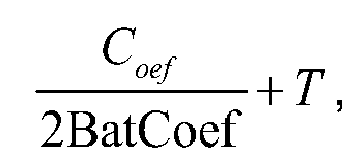
- In the above, in actuating a temperature-control charging mode to charge the storage battery: when the temperature of the storage battery is less than or equal to T, the value of the charging current is C*Coef ; when the temperature of the storage battery is greater than T and less than or equal to

- In the above, determining the charging current of the constant-current charging mode according to the discharge depth comprises: acquiring a charging current ratio adjustable factor corresponding to the discharge depth from a pre-saved corresponding relation between discharge depth and the charging current ratio adjustable factor; acquiring the automatically turned-down charging current C*Coef -C*ΔCoef ; wherein, Coef is the charging current ratio, C is the total capacity of the storage battery, and ΔCoef is the charging current ratio adjustable factor.
- In the above, after comparing the discharge depth of the storage battery with a preset battery equalizing charging threshold capacity, the method further comprises: when the discharge depth of the storage battery is less than the preset battery equalizing charging threshold capacity, actuating a floating charging mode to charge the storage battery.
- The present invention also provides a charging management apparatus for a storage battery, which comprises:
- a monitoring unit, which is configured to monitor discharge capacity of a storage battery, and determine discharge depth of the storage battery according to the discharge capacity and total capacity of the storage battery; a comparison unit, which is configured to compare the discharge depth of the storage battery determined by the monitoring unit with a preset battery equalizing charging threshold; and an adjustment unit, which is configured to actuate a temperature-control charging mode to charge the storage battery when the discharge depth of the storage battery is greater than or equal to the preset battery equalizing charging threshold, wherein the temperature-control charging mode is to adjust charging current according to the temperature of the battery.
- In the above, before actuating a temperature-control charging mode to charge the storage battery, the adjustment unit is further configured to actuate a constant-current charging mode, and determine the charging current of the constant-current charging mode according to the discharge depth to charge the storage battery.
- In the above, after actuating a temperature-control charging mode to charge the storage battery, the adjustment unit is further configured to actuate a constant-voltage charging mode to charge the storage battery when the voltage of the storage battery reaches a preset equalizing charging voltage value.
- In the above, after comparing the discharge depth of the storage battery with the preset battery equalizing charging threshold capacity, the adjustment unit is further configured to actuate a floating charging mode to charge the storage battery when the discharge depth of the storage battery is less than the preset battery equalizing charging threshold capacity.
- In the charging management method and apparatus for a storage battery provided by the present invention, a staged charging method is employed, in which by using a temperature-control charging mode to charge the storage battery under the situation that the discharge depth of the storage battery is relatively great, the problem that the temperature of the storage battery is too high due to the excessive current at the early stage of charging is avoided, so the service life of the storage battery is prolonged, and the investment cost of user is reduced.
- The drawings illustrated here provide further understanding of the present invention and form a part of the present invention. The exemplary embodiments of the present invention and the description thereof are used to explain the present invention without unduly limiting the scope of the present invention. In the drawings:
-
Fig. 1 is a flow chart of a charging management method of an embodiment of the present invention; -
Fig. 2 is a specific flow chart of a charging management method of an embodiment of the present invention; -
Fig. 3 is a schematic diagram of a charging curve of a charging management method of an embodiment of the present invention; -
Fig. 4 is a schematic diagram of another charging curve of a charging management method of an embodiment of the present invention; and -
Fig. 5 is a block diagram of a structure of a charging management apparatus according to an embodiment of the present invention. - The charging management method for a storage battery proposed by the present invention belongs to the equalizing charging method, and it can be called a staged charging method. The technical solution of the present invention will be described in detail hereinafter with reference to the drawings.
-
Fig. 1 is a flow chart of a charging management method according to an embodiment of the present invention, and the method comprises: - S102: monitoring discharge capacity of a storage battery, and determining discharge depth of the storage battery according to the discharge capacity and total capacity of the storage battery;
- S104: comparing the discharge depth of the storage battery with a preset battery equalizing charging threshold; and
- S106: when the discharge depth of the storage battery is greater than or equal to the preset battery equalizing charging threshold capacity, actuating a temperature-control charging mode to charge the storage battery, wherein the temperature-control charging mode is to adjust charging current according to the temperature of the battery.
- In this embodiment, under the situation that the discharge depth of the storage battery is relatively great, a temperature-control charging mode is used to charge the storage battery, thus avoiding the problem that the temperature of the storage battery is too high due to the excessive current when the remaining capacity of the battery is relatively low, so the service life of the storage battery is prolonged.
- Preferably, before a temperature-control charging mode is actuated to charge the storage battery, a constant-current charging mode is actuated to charge the storage battery, wherein the charging current in the constant-current charging mode is determined according to the discharge depth.
- At the early stage of charging, a turned-down charging current is used for constant-current charging, thus avoiding the problem that the lead sulfate attached to the battery plate falls off due to the relatively large charging current at the early stage of charging, so the damage of the storage battery is reduced.
- Preferably, after a temperature-control charging mode is actuated to charge the storage battery, when the voltage of the storage battery reaches a preset equalizing charging voltage value, a constant-voltage charging mode is actuated to charge the storage battery.
- At the late stage of charging, current is mostly used for electrolyzing water when the constant-current charging mode is used, which makes the interior pressure of the storage battery too high, thus the battery loses water. In this embodiment, at the late stage of charging, a constant-voltage charging mode is actuated to charge the storage battery, therefore the above problem is avoided, and the stability of the charging of the storage battery is improved.
- Preferably, in actuating a temperature-control charging mode to charge the storage battery: when the temperature of the storage battery is less than or equal to T, the value of the charging current is C*Coef ; when the temperature of the storage battery is greater than T and less than or equal to


- The corresponding relation between the temperature and the charging current is provided in the embodiment, so the practicability of the embodiment is enhanced.
- Preferably, determining the charging current of the constant-current charging mode according to the discharge depth comprises: acquiring a charging current ratio adjustable factor corresponding to the discharge depth from a pre-saved corresponding relation between the depth of discharge and charging current ratio adjustable factor; acquiring the automatically turned-down charging current C*Coef -C*ΔCoef ; wherein, Coef is the charging current ratio, C is the total capacity of the storage battery, and ΔCoef is the charging current ratio adjustable factor.
- The charging current ratio adjustable factor is a common parameter to describe the charging current. In this embodiment, the discharge depth is made to correspond to the charging current ratio adjustable factor, which can meet the applications in most scenes.
- Preferably, when the discharge depth is less than the preset battery equalizing charging threshold capacity, a floating charging mode is actuated to charge the storage battery.
- In the embodiment, under the situation that the discharge depth is small, a floating charging mode is actuated, so the power consumption caused by the self-discharge of the storage battery can be compensated, thus the storage battery can be stably kept at its battery capacity.
-
Fig. 2 is a specific flow chart of a charging management method of an embodiment of the present invention; andFig. 3 is a schematic diagram of a charging curve of a charging management method of an embodiment of the present invention, respectively shows the change of the charging current over time and the change of the battery voltage over time. The charging management method of the present invention, i.e., the implementation flow of a staged charging method, will be described hereinafter with reference toFig. 2 and in conjunction with the curves inFig. 3 which respectively show the change of the charging current and the change of the charging voltage over time. - S202: The charging parameters of the storage battery are set according to the input of the user. The above parameters comprise a charging current ratio, a temperature compensation coefficient of the charging current ratio, a reference temperature, an equalizing charging voltage, a floating charging voltage, a battery equalizing charging threshold capacity, a quick charging threshold, the current ratio at the final stage of equalizing charging and etc.. The range of these parameters is usually provided by the storage battery manufacturer, and the user selects one proper value within the provided range of the parameters to set the parameter.
- S204: After the commercial power is powered off, the storage battery starts to be discharged, and the discharge state monitoring of the battery is started simultaneously, wherein main parameters for the monitoring comprise: discharge capacity of the battery, battery voltage, battery current and battery temperature, and the discharge depth of the battery is determined according to the recorded discharge capacity of the battery.
- The discharge depth is determined according to the discharge capacity and the total capacity of the storage battery, and the discharge depth is a ratio of the quantity of the discharged electricity to the total capacity of the storage battery. When the storage battery is discharged, the capacity of the storage battery is directly reflected by the voltage thereof, therefore the change of the capacity of the storage battery can also be known through the change of the voltage of the storage battery.
- S206: After the commercial power is recovered, it is switched to the commercial power which provides electricity for loads, and the storage battery stops discharging and starts to be charged to supplement the consumed electricity.
- The discharge depth of the storage battery is compared with the preset battery equalizing charging threshold capacity, if the discharge depth of the storage battery is less than the battery equalizing charging threshold capacity, it turns to S216; otherwise, the staged charging method is actuated to charge the storage battery.
- The value of the above battery equalizing charging threshold capacity can be set around 20%. When the discharge depth of the storage battery is less than the battery equalizing charging threshold capacity, it is indicated that the quantity of electricity discharged in the powering process is small, and supplement of the power of the storage battery can be achieved just through the floating charging mode. The charging current of the floating charging mode is small, which is suitable for the non-deep discharge situation with small quantity of discharged electricity, and also suitable for compensation of the power consumption caused by the self-discharge of the storage battery.
- S208: The constant-current charging mode is actuated, the charging current is turned-down automatically according to the discharge depth, and the storage battery is charged slowly until the battery capacity reaches the preset quick charging threshold.
- The method for automatically turning down the charging current according to the discharge depth is as follows: the corresponding relation between the discharge depth and the charging current ratio adjustable factor is saved in the charging management apparatus for the storage battery in advance, and from the corresponding relation, the charging current ratio adjustable factor corresponding to the discharge depth of the storage battery can be acquired. The turned-down charging current also can be acquired in other ways, for example, the turned-down charging current value is set by the user in advance.
- The automatically turned-down charging current value is a current value determined by automatically turning down the value of the charging current ratio of the storage battery by a certain amount based on the preset value thereof according to the discharge depth. It can be represented as a difference value between the charging current determined according to the preset charging current ratio and the current adjustment amount determined according to the charging current ratio adjustable factor. It can be expressed by the following formula:

wherein, Ismall current is the automatically turned-down charging current value, C is the total capacity of the storage battery, Coef is the charging current ratio, and ΔCoef is the charging current ratio adjustable factor; Coef * C is the charging current determined according to the preset charging current ratio, which is also called current limiting value, namely, Icurrent limiting value = Coef *C ; C*ΔCoef is the current adjustment amount determined according to the charging current ratio adjustable factor, namely, Iadjustment amount = C*ΔCoef , therefore, the automatically turned-down charging current value also may be expressed as:
- The function of the small-current constant-current charging mode is shown in the curve corresponding to a period of time from t0 to t1 in
Fig. 2 . The current for charging the storage battery is the automatically turned-down charging current value, which is relatively small. With the charging process going on, the battery voltage of the storage battery rises gradually but slowly. - The function of charging the storage battery with the low-current constant-current charging mode is mainly to prevent the lead sulfate attached to the battery plate from falling off after the discharge to form irreversible vulcanization, which can influence the service life of the battery. When the battery capacity reaches the preset quick charging threshold, it is indicated that the lead sulfate on the surface of the battery plate has been reduced, and at this time a relatively large current can be used for charging, which will not cause any damage to the device.
- S210: The temperature-control charging mode in which the charging current is adjusted according to the temperature of the battery is actuated, and a relatively large current is used to charge the storage battery. When the battery voltage rises to the preset equalizing charging voltage value, it implements S212.
- Adjusting the charging current according to the temperature of the battery to charge the storage battery is implemented as follows: first, the monitored temperature of the battery is compared with the preset reference temperature, if the monitored temperature of the battery is lower than or equal to the preset reference temperature of the battery, the storage battery is charged with the charging current at the current limiting value, which can be represented as:

wherein, tbat is the temperature of the storage battery, and I is the charging current. - When the monitored temperature of the battery is greater than the reference temperature, the charging current for charging the storage battery is determined by the following formula:

wherein, NCoef is the actual charging current ratio, which is the difference value between the preset charging current ratio and the charging current ratio adjustable factor when the charging is performed with the large current; ΔCoef is the charging current ratio adjustable factor when the charging is performed with the large current. - The charging current ratio adjustable factor when the charging is performed with the large current is determined by the following formula:

wherein, BatCoef is the temperature compensation coefficient of battery charging current ratio. When the monitored temperature of the battery allows ΔCoef > 0.5 *Coef , namely, when

- Therefore, when
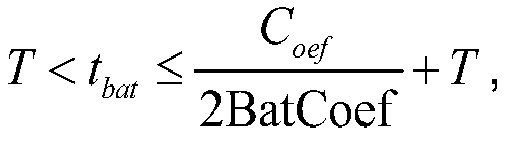

- While when


wherein, Imin is the minimum value of the current limiting value. - The adjustment amount of the current also may be defined as f(tbat ) = -ΔCoef * Coef , then I also may be expressed as:

- The coefficient 0.5 in Formula ΔCoef > 0.5*Coef is a preferred value, and this coefficient also may be set as other proper values.
- When the temperature of the storage battery is less than the preset reference temperature of the battery, the storage battery is charged with the constant current limiting value Icurrent limiting value ; with the charging progressing, when the temperature of the storage battery is greater than the preset reference temperature of the battery, the charging current becomes smaller as the temperature rises, to prevent the temperature from rising too fast; when the battery temperature of the storage battery rises to a certain value, the storage battery is charged with the minimum value of the current limiting value Imin . During the charging process, the following situations may also occur: if the battery temperature is always lower than the reference temperature, then the battery is always charged with the charging current I = Icurrent limiting value ; or, the battery temperature only rises to a value between T and

Fig. 2 . In the drawing, the storage battery is charged with I = Icurrent limiting value first, and since t2, the storage battery is then charged with I = Coef * C-(tbat - T) * BatCoef * C. - The introduction of the temperature adjustment into the quick charging of the storage battery with relatively large current may prevent the temperature of the battery from rising too high due to the large current, which protects the battery.
- S212: The constant-voltage charging mode is actuated to charge the storage battery, and after a period of time, the charging current is lower than the holding current at the final stage of the equalizing charging.
- The stage of charging the storage battery using the constant-voltage charging mode is called battery charge absorption stage. With the charging going on, the conversion efficiency of electrical energy decreases accordingly which presents approximate exponential law. When the storage battery is nearly fully-charged and the battery voltage reaches or exceeds the floating charging voltage, if being still charged with the large current, only a small part of electrical energy is converted into chemical energy, and all the remaining energy is consumed by heating or electrolysis of water, and as a result, the battery may have bulge deformation and even crack. Therefore, the constant-voltage charging mode is used instead to charge the storage battery with an equalizing charging voltage, wherein the charging current for the storage battery is very small, the equalizing charging will end automatically after the equalizing charging state holds for another period of time. The duration of the holding period can be set according to the performance of the storage battery.
- The holding current at the final stage of the equalizing charging is acquired according to the product of the preset current ratio at the final stage of the equalizing charging and the total capacity of the storage battery. The user can set a proper current ratio at the final stage of the equalizing charging according to the type of the storage battery to determine the holding current at the final stage of the equalizing charging.
- The function of the temperature-control charging mode is shown in the curve corresponding to a period of time from t3 to t4 in
Fig. 2 , and as shown by the curve, the battery voltage of the storage battery is kept constant, and the charging current for the storage battery decreases in approximate exponential law. - S214: The equalizing charging holding stage is entered, and after a period of time, it implements S216.
- S216: Switching to the floating charging mode, the capacity of the storage battery is kept stable.
- After the equalizing charging ends, the storage battery is charged in the floating charging mode, the function of which is to compensate the electricity consumption caused by the self-discharge of the storage battery, so the storage battery can be stably kept at its battery capacity.
-
Fig. 4 is a schematic diagram of another charging curve of a charging management method of an embodiment of the present invention. It will be described hereinafter with reference to the drawing and the embodiment. - With a certain communication base station as the example, the station, with the load of 120A, is provided with a battery of 500AH, and six rectifier modules, each of which is 50A. By monitoring, the charging current ratio of the storage battery is manually set as 0.15/H, the temperature compensation coefficient of battery charging current ratio as 0.01/H , the reference temperature as 25 , the equalizing charging voltage as 56.4V, the floating charging voltage as 53.5V, the battery equalizing charging threshold capacity as 20%, the quick charging threshold as 35%, the holding current at the final stage of equalizing charging as 0.015C. The specific process is as follows:
- At t0, the supply of commercial power is interrupted, the storage battery starts to discharge, the battery voltage starts to drop, and the capacity starts to decrease.
- At t1, the supply of commercial power is recovered, it is switched to that the commercial power provides electricity to load. As the storage battery is discharged greatly and the discharge depth of the storage battery is greater than the preset battery equalizing charging threshold capacity, the storage battery is first charged in the constant-current charging mode with an automatically turned-down charging current, and the value of the charging current is 0.10C.
- At t2, the battery voltage rises to the quick charging threshold, the charging process enters the quick charging stage, and at this time, the battery temperature is 20 which does not reach the reference temperature 25 , therefore the charging current is adjusted to the current limiting value 0.15C to quickly charge the storage battery, the battery voltage rises quickly and the battery capacity also increases quickly.
- At t3, the battery temperature rises to 25 , and the actual charging current is still at the set current limiting value 0.15C; after t3, the battery temperature rises and exceeds the reference temperature, for example, at t4, the temperature rises to 26 , and at this time, ΔC oef = (26-25) * 0.01=0.01, and due to ΔC oef ≤ 0.5 * Coef = 0.075, the charging current I = 0.15C - (26-25)*0.01*C is 0.14C; with the charging going on, the temperature of the storage battery rises continuously, for example, rises to 27 , and at this time, the charging current is 0.13C. In the embodiment, the introduction of the temperature adjustment cannot decrease the temperature of the storage battery, but can slow down the speed of the rise of the temperature.
- At t5, the temperature of the storage battery rises to 28, and at this moment, the charging current is 0.12C, the battery voltage rises to the preset equalizing charging voltage value 56.4V, the constant-voltage charging mode is actuated, the battery current becomes smaller and smaller, and the battery capacity is close to the full capacity and rises slowly.
- At t6, the battery current is lower than the holding current 0.015C at the final stage of the equalizing charging, and at this moment, the charging process enters the equalizing charging holding stage.
- At t7, the equalizing charging holding stage of the battery ends, and the charging process turns into floating charging automatically.
- From the above embodiment, it can be known that the staged charging method realizes the automatic charging of the storage battery safely, quickly and effectively and also prolongs the service life of the storage battery, and refined maintenance and management for the battery are really achieved.
-
Fig. 5 is a block diagram of a structure of a charging management apparatus according to an embodiment of the present invention. As shown inFig. 5 , the apparatus comprises: - a
monitoring unit 52, which is configured to monitor discharge capacity of a storage battery, and determine discharge depth of the storage battery according to the discharge capacity and total capacity of the storage battery; acomparison unit 54 coupled to themonitoring unit 52, and configured to compare the discharge depth of the storage battery determined by the - In this embodiment, under the situation that the discharge depth of the storage battery is relatively great, a temperature-control charging mode is used to charge the storage battery, thus avoiding the problem that the temperature of the storage battery is too high due to the excessive current when the remaining capacity of the battery is relatively low, so the service life of the storage battery is prolonged.
- In addition, before adjusting the charging current according to the battery temperature to charge the storage battery, the adjustment unit 56 is further configured to actuate a constant-current charging mode to charge the storage battery until the battery capacity reaches the preset quick charging threshold, wherein the charging current of the constant-current charging mode is determined according to the discharge depth.
- At the early stage of charging, a turned-down charging current is used for constant-current charging, thus avoiding the problem that the lead sulfate attached on the battery plate falls off due to the relatively large charging current at the early stage of charging, so the damage of the storage battery is reduced.
- After adjusting the charging current according to the battery temperature to charge the storage battery, the adjustment unit 56 is further configured to actuate a constant-voltage charging mode to charge the storage battery when the battery voltage reaches a preset equalizing charging voltage value.
- At the late stage of charging, current is mostly used for electrolyzing water when the constant-current charging mode is used, which makes the interior pressure of the storage battery too high, thus the battery loses water. In this embodiment, at the late stage of charging, a constant-voltage charging mode is used to charge the storage battery, therefore the above problem is avoided, and the stability of the charging of the storage battery is improved.
- Preferably, after comparing the discharge depth of the storage battery with the preset battery equalizing charging threshold capacity, the adjustment unit 56 is further configured to actuate a floating charging mode to charge the storage battery when the discharge depth of the storage battery is less than the preset battery equalizing charging threshold capacity.
- In the embodiment, under the situation that the discharge depth is small, a floating charging mode is actuated, so the power consumption caused by the self-discharge of the storage battery can be compensated, thus the storage battery can be stably kept at its battery capacity.
- In summary, under the situation that the discharge depth of the storage battery is relatively great, a temperature-control charging mode is used to charge the storage battery, thus avoiding the problem that the temperature of the storage battery is too high due to the excessive current when the remaining capacity of the battery is relatively low, so the service life of the storage battery is prolonged. Furthermore, during the process of charging the storage battery by the equalizing charging mode, an automatically turned-down constant-current charging mode is also used to charge the storage battery, which can avoid the problem that the lead sulfate attached to the battery plate falls off due to large charging current under the situation that the storage battery is discharged deeply, which will form irreversible vulcanization and influence the service life of the battery; and after a period of charging, namely, when the capacity of the storage battery reaches the preset quick charging threshold, when the lead sulfate on the surface of the plate is reduced, a relatively large current can be used to quickly charge the storage battery. During the quick charging process, a temperature-control charging mode in which the charging current is adjusted according to the battery temperature is used, and the introduction of the temperature adjustment can prevent the battery temperature from rising too high due to the large current, which will aggravate the corrosion of the plate and consume excessive water, thus the storage battery can be protected.
- The above description is only to illustrate the preferred embodiments but not to limit the present invention. Various alternative and changes to the present invention are apparent to those skilled in the art. The scope defined by claims shall comprise any modification, equivalent substitution and improvement within the spirit and principle of the present invention.
Claims (10)
- A charging management method for a storage battery, characterized in that the method comprises the following steps:monitoring discharge capacity of a storage battery, and determining discharge depth of the storage battery according to the discharge capacity and total capacity of the storage battery;comparing the discharge depth of the storage battery with a preset battery equalizing charging threshold; andwhen the discharge depth of the storage battery is greater than or equal to the preset battery equalizing charging threshold, actuating a temperature-control charging mode to charge the storage battery, wherein the temperature-control charging mode is to adjust charging current according to the temperature of the battery.
- The method according to claim 1, characterized in that, before actuating a temperature-control charging mode to charge the storage battery, the method further comprises:actuating a constant-current charging mode to charge the storage battery, wherein the charging current of the constant-current charging mode is determined according to the discharge depth.
- The method according to claim 1 or 2, characterized in that, after actuating a temperature-control charging mode to charge the storage battery, the method further comprises:when the voltage of the storage battery reaches the preset equalizing charging voltage value, actuating a constant-voltage charging mode to charge the storage battery.
- The method according to claim 1 or 2, characterized in that, in actuating a temperature-control charging mode to charge the storage battery:when the temperature of the storage battery is less than or equal to T, the value of the charging current is C * Coef ;when the temperature of the storage battery is greater than T and less than or equal to
 when the temperature of the storage battery is greater than or equal to
 wherein, T is reference temperature, tbat is the temperature of the storage battery, Coef is charging current ratio, C is the total capacity of the storage battery, and BatCoef is temperature compensation coefficient of the charging current ratio.
 - The method according to claim 2, characterized in that, determining the charging current of the constant-current charging mode according to the discharge depth comprises:acquiring a charging current ratio adjustable factor corresponding to the discharge depth from a pre-saved corresponding relation between the discharge depth and the charging current ratio adjustable factor;acquiring the automatically turned-down charging current C *Coef - C *ΔC oef ;wherein, Coef is the charging current ratio, C is the total capacity of the storage battery, and ΔCoef is the charging current ratio adjustable factor.
- The method according to claim 1, characterized in that, after comparing the discharge depth of the storage battery with a preset battery equalizing charging threshold capacity, the method further comprises:when the discharge depth of the storage battery is less than the preset battery equalizing charging threshold capacity, actuating a floating charging mode to charge the storage battery.
- A charging management apparatus for a storage battery, characterized in that the apparatus comprises:a monitoring unit, configured to monitor discharge capacity of a storage battery, and determine discharge depth of the storage battery according to the discharge capacity and total capacity of the storage battery;a comparison unit, configured to compare the discharge depth of the storage battery determined by the monitoring unit with a preset battery equalizing charging threshold; andan adjustment unit, configured to actuate a temperature-control charging mode to charge the storage battery when the discharge depth of the storage battery is greater than or equal to the preset battery equalizing charging threshold, wherein the temperature-control charging mode means is to adjust charging current according to the temperature of the battery.
- The apparatus according to claim 7, characterized in that, before actuating a temperature-control charging mode to charge the storage battery, the adjustment unit is further configured to actuate a constant-current charging mode to charge the storage battery, and the charging current in the constant-current charging mode is determined according to the discharge depth.
- The apparatus according to claim 7 or 8, characterized in that, after actuating a temperature-control charging mode to charge the storage battery, the adjustment unit is further configured to actuate a constant-voltage charging mode to charge the storage battery when the voltage of the storage battery reaches a preset equalizing charging voltage value.
- The apparatus according to claim 7 or 8, characterized in that, after comparing the discharge depth of the storage battery with the preset battery equalizing charging threshold capacity, the adjustment unit is further configured to actuate a floating charging mode to charge the storage battery when the discharge depth of the storage battery is less than the preset battery equalizing charging threshold capacity.
Applications Claiming Priority (2)
| Application Number | Priority Date | Filing Date | Title |
|---|---|---|---|
| CN2009102066623A CN101702453B (en) | 2009-10-27 | 2009-10-27 | Storage battery charging management method and device thereof |
| PCT/CN2010/072064 WO2010145317A1 (en) | 2009-10-27 | 2010-04-22 | Charge management method for an accumulator and device thereof |
Publications (3)
| Publication Number | Publication Date |
|---|---|
| EP2495801A1 true EP2495801A1 (en) | 2012-09-05 |
| EP2495801A4 EP2495801A4 (en) | 2015-12-30 |
| EP2495801B1 EP2495801B1 (en) | 2017-06-14 |
Family
ID=42157351
Family Applications (1)
| Application Number | Title | Priority Date | Filing Date |
|---|---|---|---|
| EP10788713.5A Active EP2495801B1 (en) | 2009-10-27 | 2010-04-22 | Charge management method for an accumulator and device thereof |
Country Status (5)
| Country | Link |
|---|---|
| US (1) | US8933672B2 (en) |
| EP (1) | EP2495801B1 (en) |
| CN (1) | CN101702453B (en) |
| ES (1) | ES2634331T3 (en) |
| WO (1) | WO2010145317A1 (en) |
Cited By (3)
| Publication number | Priority date | Publication date | Assignee | Title |
|---|---|---|---|---|
| WO2015084970A1 (en) | 2013-12-04 | 2015-06-11 | Google Technology Holdings LLC | Method and system for rapid charging of rechargeable cells |
| EP3188341A4 (en) * | 2014-09-01 | 2018-07-25 | Guangdong Oppo Mobile Telecommunications Corp., Ltd. | Terminal |
| CN109860739A (en) * | 2019-02-19 | 2019-06-07 | 湖北鹏程新锐科技发展有限公司 | A kind of non-equal compound formulation, system, storage medium and device for holding battery pack |
Families Citing this family (40)
| Publication number | Priority date | Publication date | Assignee | Title |
|---|---|---|---|---|
| CN101917038B (en) * | 2010-08-05 | 2014-01-15 | 惠州市亿能电子有限公司 | Charge balancing control method of power battery pack |
| US8560257B2 (en) * | 2010-11-29 | 2013-10-15 | GM Global Technology Operations LLC | Dynamic battery capacity estimation |
| CN102195105B (en) | 2011-01-14 | 2013-03-20 | 中兴通讯股份有限公司 | Method and apparatus for controlling accumulator charging |
| CN102651565B (en) * | 2011-02-25 | 2015-05-13 | 凹凸电子(武汉)有限公司 | Battery pack charging management method and device, charger and battery pack managing system |
| US8977874B2 (en) * | 2012-01-26 | 2015-03-10 | Qualcomm Incorporated | System and method for battery load management in a portable computing device |
| CN103887831B (en) * | 2012-12-19 | 2016-03-09 | 远翔科技股份有限公司 | current regulation system |
| CN104009262B (en) * | 2013-02-27 | 2016-11-23 | 神讯电脑(昆山)有限公司 | Battery protecting method and the electronic installation applying this battery protecting method |
| CN103401037B (en) * | 2013-08-09 | 2015-10-14 | 深圳威迈斯电源有限公司 | A kind of charging method of traction accumulator |
| CN103427122B (en) * | 2013-08-26 | 2015-06-24 | 珠海许继电气有限公司 | Charge-discharge maintaining method for medium-capacity maintenance-free battery |
| CN103647328A (en) * | 2013-12-23 | 2014-03-19 | 中国科学院电工研究所 | Ladder type gradual parameter attenuation battery equalization method |
| CN105337321A (en) * | 2014-07-01 | 2016-02-17 | 苏州宝时得电动工具有限公司 | Charging management system and power tool |
| CN104078716B (en) * | 2014-07-14 | 2017-03-22 | 广东西奥物联网科技股份有限公司 | Battery charging method and processor |
| JP6245120B2 (en) * | 2014-09-16 | 2017-12-13 | トヨタ自動車株式会社 | Control device for electric vehicle |
| KR101698522B1 (en) * | 2015-08-27 | 2017-02-01 | 현대자동차주식회사 | Apparatus and method for lamp control in vehicle |
| CN105337370B (en) * | 2015-11-30 | 2019-02-12 | 东莞市港奇电子有限公司 | Charging method of electric ship charger and electric ship charger |
| CN105932740B (en) * | 2016-06-01 | 2018-11-30 | 惠州市蓝微新源技术有限公司 | The adaptive charging method and charging unit of electric automobile power battery |
| CN106026269A (en) * | 2016-06-27 | 2016-10-12 | 深圳天珑无线科技有限公司 | Rapid charging device and method |
| CN106054086A (en) * | 2016-07-11 | 2016-10-26 | 深圳天珑无线科技有限公司 | Battery self-discharge detection method and apparatus |
| US10020548B2 (en) * | 2016-08-08 | 2018-07-10 | Getac Technology Corporation | Gauging method for battery discharge-capacity corresponding to temperature and electronic device using the same |
| CN108282002A (en) * | 2018-01-29 | 2018-07-13 | 东莞市台诺电子有限公司 | Intelligent three-section charging circuit |
| KR102458526B1 (en) * | 2018-02-07 | 2022-10-25 | 주식회사 엘지에너지솔루션 | Apparatus and method for estimating soc base on operating state of battery |
| CN110828913B (en) * | 2018-08-13 | 2023-01-20 | 台达电子工业股份有限公司 | Battery charging method and charging system thereof |
| KR102554926B1 (en) * | 2018-12-05 | 2023-07-11 | 현대자동차주식회사 | Method for charging battery at low temperature |
| CN109742468B (en) * | 2018-12-29 | 2022-04-08 | 宁波古得电子科技有限公司 | Charging method of storage battery |
| WO2020191583A1 (en) * | 2019-03-25 | 2020-10-01 | Oppo广东移动通信有限公司 | Battery charging method, apparatus and device, and readable storage medium |
| CN110364775B (en) * | 2019-05-27 | 2020-10-16 | 漳州科华技术有限责任公司 | Battery charging control method, charging control device and terminal |
| CN112649735A (en) * | 2019-10-11 | 2021-04-13 | 浙江华云信息技术有限公司 | Method for rapidly obtaining total capacity of battery pack |
| TWI744721B (en) * | 2019-11-19 | 2021-11-01 | 廣達電腦股份有限公司 | Battery device and control metheod thereof |
| CN111430823B (en) * | 2020-03-31 | 2021-04-20 | 苏州精诚智造智能科技有限公司 | Integration method of power lithium battery system of electric automobile |
| CN111679712A (en) * | 2020-06-24 | 2020-09-18 | 深圳市金百缔新能源有限公司 | Electronic equipment capable of adaptively adjusting current and control method thereof |
| CN112003362B (en) * | 2020-07-15 | 2023-08-25 | 滨州学院 | Control method and related device for power supply system |
| JP7402774B2 (en) * | 2020-10-05 | 2023-12-21 | プライムアースEvエナジー株式会社 | Secondary battery control device, vehicle control device, and secondary battery control method |
| US12265132B2 (en) | 2020-12-23 | 2025-04-01 | Medtronic, Inc. | Updating battery capacity after clinical implementation |
| EP4268345A1 (en) * | 2020-12-23 | 2023-11-01 | Medtronic, Inc. | Control logic to update battery capacity |
| CN112803524B (en) * | 2020-12-31 | 2023-04-28 | 科华恒盛股份有限公司 | Battery charging control method, device and terminal |
| CN113178926B (en) * | 2021-05-19 | 2022-07-15 | 臻懿(北京)科技有限公司 | Method and system for equalizing charge and discharge control for communication base stations |
| CN114184959A (en) * | 2021-11-19 | 2022-03-15 | 阿里巴巴(中国)有限公司 | Online detection device for storage battery |
| CN116266705A (en) * | 2021-12-09 | 2023-06-20 | 华北电力大学 | A 5G base station battery participating in power grid load reduction method considering operational risk |
| CN116317026A (en) * | 2023-05-09 | 2023-06-23 | 歌尔股份有限公司 | Battery charging control method, device and smart device |
| CN119275962B (en) * | 2024-09-04 | 2025-11-14 | 厦门科华数能科技有限公司 | Charging and discharging control methods, controllers, and energy storage systems for energy storage systems |
Family Cites Families (10)
| Publication number | Priority date | Publication date | Assignee | Title |
|---|---|---|---|---|
| US4553081A (en) * | 1982-06-07 | 1985-11-12 | Norand Corporation | Portable battery powered system |
| US5889386A (en) * | 1982-06-07 | 1999-03-30 | Intermec Technology Corporation | Battery conditioning system having communication with battery parameter memory means in conjunction with battery conditioning |
| JP3768382B2 (en) | 2000-05-22 | 2006-04-19 | 本田技研工業株式会社 | Control device for hybrid vehicle |
| CN1306675C (en) * | 2002-12-26 | 2007-03-21 | 北京机电研究所 | Equipment for managing accumulator battery of motive power utilized in electric automobile |
| JP2004364445A (en) * | 2003-06-06 | 2004-12-24 | Matsushita Electric Ind Co Ltd | Backup battery discharge control device |
| JP3979981B2 (en) * | 2003-08-29 | 2007-09-19 | 三洋電機株式会社 | Charger |
| US7528574B1 (en) * | 2006-02-16 | 2009-05-05 | Summit Microelectronics, Inc. | Systems and methods of programming voltage and current in a battery charger |
| CN1889323A (en) * | 2006-06-15 | 2007-01-03 | 王山山 | Charger capable of sensing temperature |
| CN101312293B (en) * | 2007-05-22 | 2011-02-16 | 深圳市金一泰实业有限公司 | Power lithium battery intelligent management system |
| CN101404347A (en) | 2008-10-24 | 2009-04-08 | 中国移动通信集团甘肃有限公司 | Accumulator charging management method and apparatus |
-
2009
- 2009-10-27 CN CN2009102066623A patent/CN101702453B/en active Active
-
2010
- 2010-04-22 EP EP10788713.5A patent/EP2495801B1/en active Active
- 2010-04-22 US US13/504,337 patent/US8933672B2/en active Active
- 2010-04-22 ES ES10788713.5T patent/ES2634331T3/en active Active
- 2010-04-22 WO PCT/CN2010/072064 patent/WO2010145317A1/en not_active Ceased
Cited By (4)
| Publication number | Priority date | Publication date | Assignee | Title |
|---|---|---|---|---|
| WO2015084970A1 (en) | 2013-12-04 | 2015-06-11 | Google Technology Holdings LLC | Method and system for rapid charging of rechargeable cells |
| EP3078095A4 (en) * | 2013-12-04 | 2017-08-30 | Google Technology Holdings LLC | Method and system for rapid charging of rechargeable cells |
| EP3188341A4 (en) * | 2014-09-01 | 2018-07-25 | Guangdong Oppo Mobile Telecommunications Corp., Ltd. | Terminal |
| CN109860739A (en) * | 2019-02-19 | 2019-06-07 | 湖北鹏程新锐科技发展有限公司 | A kind of non-equal compound formulation, system, storage medium and device for holding battery pack |
Also Published As
| Publication number | Publication date |
|---|---|
| ES2634331T3 (en) | 2017-09-27 |
| WO2010145317A1 (en) | 2010-12-23 |
| US20120217934A1 (en) | 2012-08-30 |
| CN101702453A (en) | 2010-05-05 |
| CN101702453B (en) | 2013-06-05 |
| EP2495801B1 (en) | 2017-06-14 |
| EP2495801A4 (en) | 2015-12-30 |
| US8933672B2 (en) | 2015-01-13 |
Similar Documents
| Publication | Publication Date | Title |
|---|---|---|
| EP2495801B1 (en) | Charge management method for an accumulator and device thereof | |
| CN103918120B (en) | Lead accumulator system | |
| KR102392376B1 (en) | Battery system | |
| US20130187465A1 (en) | Power management system | |
| US9431832B2 (en) | Stationary electrical storage system and control method | |
| US9252620B2 (en) | Battery energy storage system | |
| US20160020495A1 (en) | Method for restoring battery capacity, method for restoring battery pack capacity, device for restoring battery capacity, and device for restoring battery pack capacity | |
| JP2011078313A (en) | Power storage device using electric double-layer capacitor | |
| Wong et al. | Charge regimes for valve-regulated lead-acid batteries: Performance overview inclusive of temperature compensation | |
| KR102309014B1 (en) | Intelligent apparatus and method of battery charge/discharge using charging profile | |
| JP2010160955A (en) | Method of charging battery pack | |
| US20190140324A1 (en) | Battery charging method | |
| JP6614010B2 (en) | Battery system | |
| EP2645524B1 (en) | Method and apparatus for battery charging | |
| CN114094650A (en) | Control system and method for optimizing use and monitoring service life of echelon energy storage battery | |
| CN102769154B (en) | Storage battery charging measurement and control technology with soft-start characteristic | |
| De Beer et al. | Influences of energy throughput on the life of various battery technologies | |
| KR102022321B1 (en) | Energy storage system | |
| JP2009261148A (en) | Control device of electricity accumulating device | |
| CN119853241B (en) | Household photovoltaic integrated energy storage charge and discharge control method, system and equipment | |
| JP2010252552A (en) | Discharger, discharge method, and DC power supply system | |
| Sauer | Charging strategies and maintenance for stationary lead-acid batteries | |
| JP2007134130A (en) | Battery charge and discharge management system of automatic guided vehicle | |
| CN119582375A (en) | Battery module and battery life extension method thereof | |
| Byrne | The Proper Charging Of Stationary Lead-Acid Batteries (Your Battery Is Only As Good As How You Charge It.) |
Legal Events
| Date | Code | Title | Description |
|---|---|---|---|
| PUAI | Public reference made under article 153(3) epc to a published international application that has entered the european phase |
Free format text: ORIGINAL CODE: 0009012 |
|
| 17P | Request for examination filed |
Effective date: 20120329 |
|
| AK | Designated contracting states |
Kind code of ref document: A1 Designated state(s): AT BE BG CH CY CZ DE DK EE ES FI FR GB GR HR HU IE IS IT LI LT LU LV MC MK MT NL NO PL PT RO SE SI SK SM TR |
|
| DAX | Request for extension of the european patent (deleted) | ||
| RA4 | Supplementary search report drawn up and despatched (corrected) |
Effective date: 20151201 |
|
| RIC1 | Information provided on ipc code assigned before grant |
Ipc: H01M 10/44 20060101AFI20151125BHEP |
|
| 17Q | First examination report despatched |
Effective date: 20160909 |
|
| GRAP | Despatch of communication of intention to grant a patent |
Free format text: ORIGINAL CODE: EPIDOSNIGR1 |
|
| INTG | Intention to grant announced |
Effective date: 20170308 |
|
| GRAS | Grant fee paid |
Free format text: ORIGINAL CODE: EPIDOSNIGR3 |
|
| GRAA | (expected) grant |
Free format text: ORIGINAL CODE: 0009210 |
|
| AK | Designated contracting states |
Kind code of ref document: B1 Designated state(s): AT BE BG CH CY CZ DE DK EE ES FI FR GB GR HR HU IE IS IT LI LT LU LV MC MK MT NL NO PL PT RO SE SI SK SM TR |
|
| REG | Reference to a national code |
Ref country code: GB Ref legal event code: FG4D |
|
| REG | Reference to a national code |
Ref country code: CH Ref legal event code: EP Ref country code: AT Ref legal event code: REF Ref document number: 901768 Country of ref document: AT Kind code of ref document: T Effective date: 20170615 |
|
| REG | Reference to a national code |
Ref country code: IE Ref legal event code: FG4D |
|
| REG | Reference to a national code |
Ref country code: DE Ref legal event code: R096 Ref document number: 602010042995 Country of ref document: DE |
|
| REG | Reference to a national code |
Ref country code: ES Ref legal event code: FG2A Ref document number: 2634331 Country of ref document: ES Kind code of ref document: T3 Effective date: 20170927 |
|
| REG | Reference to a national code |
Ref country code: NL Ref legal event code: MP Effective date: 20170614 |
|
| REG | Reference to a national code |
Ref country code: LT Ref legal event code: MG4D |
|
| PG25 | Lapsed in a contracting state [announced via postgrant information from national office to epo] |
Ref country code: NO Free format text: LAPSE BECAUSE OF FAILURE TO SUBMIT A TRANSLATION OF THE DESCRIPTION OR TO PAY THE FEE WITHIN THE PRESCRIBED TIME-LIMIT Effective date: 20170914 Ref country code: GR Free format text: LAPSE BECAUSE OF FAILURE TO SUBMIT A TRANSLATION OF THE DESCRIPTION OR TO PAY THE FEE WITHIN THE PRESCRIBED TIME-LIMIT Effective date: 20170915 Ref country code: HR Free format text: LAPSE BECAUSE OF FAILURE TO SUBMIT A TRANSLATION OF THE DESCRIPTION OR TO PAY THE FEE WITHIN THE PRESCRIBED TIME-LIMIT Effective date: 20170614 Ref country code: LT Free format text: LAPSE BECAUSE OF FAILURE TO SUBMIT A TRANSLATION OF THE DESCRIPTION OR TO PAY THE FEE WITHIN THE PRESCRIBED TIME-LIMIT Effective date: 20170614 Ref country code: FI Free format text: LAPSE BECAUSE OF FAILURE TO SUBMIT A TRANSLATION OF THE DESCRIPTION OR TO PAY THE FEE WITHIN THE PRESCRIBED TIME-LIMIT Effective date: 20170614 |
|
| REG | Reference to a national code |
Ref country code: AT Ref legal event code: MK05 Ref document number: 901768 Country of ref document: AT Kind code of ref document: T Effective date: 20170614 |
|
| PG25 | Lapsed in a contracting state [announced via postgrant information from national office to epo] |
Ref country code: BG Free format text: LAPSE BECAUSE OF FAILURE TO SUBMIT A TRANSLATION OF THE DESCRIPTION OR TO PAY THE FEE WITHIN THE PRESCRIBED TIME-LIMIT Effective date: 20170914 Ref country code: LV Free format text: LAPSE BECAUSE OF FAILURE TO SUBMIT A TRANSLATION OF THE DESCRIPTION OR TO PAY THE FEE WITHIN THE PRESCRIBED TIME-LIMIT Effective date: 20170614 Ref country code: NL Free format text: LAPSE BECAUSE OF FAILURE TO SUBMIT A TRANSLATION OF THE DESCRIPTION OR TO PAY THE FEE WITHIN THE PRESCRIBED TIME-LIMIT Effective date: 20170614 Ref country code: SE Free format text: LAPSE BECAUSE OF FAILURE TO SUBMIT A TRANSLATION OF THE DESCRIPTION OR TO PAY THE FEE WITHIN THE PRESCRIBED TIME-LIMIT Effective date: 20170614 |
|
| PG25 | Lapsed in a contracting state [announced via postgrant information from national office to epo] |
Ref country code: EE Free format text: LAPSE BECAUSE OF FAILURE TO SUBMIT A TRANSLATION OF THE DESCRIPTION OR TO PAY THE FEE WITHIN THE PRESCRIBED TIME-LIMIT Effective date: 20170614 Ref country code: AT Free format text: LAPSE BECAUSE OF FAILURE TO SUBMIT A TRANSLATION OF THE DESCRIPTION OR TO PAY THE FEE WITHIN THE PRESCRIBED TIME-LIMIT Effective date: 20170614 Ref country code: RO Free format text: LAPSE BECAUSE OF FAILURE TO SUBMIT A TRANSLATION OF THE DESCRIPTION OR TO PAY THE FEE WITHIN THE PRESCRIBED TIME-LIMIT Effective date: 20170614 Ref country code: CZ Free format text: LAPSE BECAUSE OF FAILURE TO SUBMIT A TRANSLATION OF THE DESCRIPTION OR TO PAY THE FEE WITHIN THE PRESCRIBED TIME-LIMIT Effective date: 20170614 Ref country code: SK Free format text: LAPSE BECAUSE OF FAILURE TO SUBMIT A TRANSLATION OF THE DESCRIPTION OR TO PAY THE FEE WITHIN THE PRESCRIBED TIME-LIMIT Effective date: 20170614 |
|
| PG25 | Lapsed in a contracting state [announced via postgrant information from national office to epo] |
Ref country code: PL Free format text: LAPSE BECAUSE OF FAILURE TO SUBMIT A TRANSLATION OF THE DESCRIPTION OR TO PAY THE FEE WITHIN THE PRESCRIBED TIME-LIMIT Effective date: 20170614 Ref country code: IT Free format text: LAPSE BECAUSE OF FAILURE TO SUBMIT A TRANSLATION OF THE DESCRIPTION OR TO PAY THE FEE WITHIN THE PRESCRIBED TIME-LIMIT Effective date: 20170614 Ref country code: SM Free format text: LAPSE BECAUSE OF FAILURE TO SUBMIT A TRANSLATION OF THE DESCRIPTION OR TO PAY THE FEE WITHIN THE PRESCRIBED TIME-LIMIT Effective date: 20170614 Ref country code: IS Free format text: LAPSE BECAUSE OF FAILURE TO SUBMIT A TRANSLATION OF THE DESCRIPTION OR TO PAY THE FEE WITHIN THE PRESCRIBED TIME-LIMIT Effective date: 20171014 |
|
| REG | Reference to a national code |
Ref country code: DE Ref legal event code: R097 Ref document number: 602010042995 Country of ref document: DE |
|
| PLBE | No opposition filed within time limit |
Free format text: ORIGINAL CODE: 0009261 |
|
| STAA | Information on the status of an ep patent application or granted ep patent |
Free format text: STATUS: NO OPPOSITION FILED WITHIN TIME LIMIT |
|
| PG25 | Lapsed in a contracting state [announced via postgrant information from national office to epo] |
Ref country code: DK Free format text: LAPSE BECAUSE OF FAILURE TO SUBMIT A TRANSLATION OF THE DESCRIPTION OR TO PAY THE FEE WITHIN THE PRESCRIBED TIME-LIMIT Effective date: 20170614 |
|
| 26N | No opposition filed |
Effective date: 20180315 |
|
| PG25 | Lapsed in a contracting state [announced via postgrant information from national office to epo] |
Ref country code: SI Free format text: LAPSE BECAUSE OF FAILURE TO SUBMIT A TRANSLATION OF THE DESCRIPTION OR TO PAY THE FEE WITHIN THE PRESCRIBED TIME-LIMIT Effective date: 20170614 |
|
| PG25 | Lapsed in a contracting state [announced via postgrant information from national office to epo] |
Ref country code: MC Free format text: LAPSE BECAUSE OF FAILURE TO SUBMIT A TRANSLATION OF THE DESCRIPTION OR TO PAY THE FEE WITHIN THE PRESCRIBED TIME-LIMIT Effective date: 20170614 |
|
| REG | Reference to a national code |
Ref country code: CH Ref legal event code: PL |
|
| REG | Reference to a national code |
Ref country code: BE Ref legal event code: MM Effective date: 20180430 |
|
| REG | Reference to a national code |
Ref country code: IE Ref legal event code: MM4A |
|
| PG25 | Lapsed in a contracting state [announced via postgrant information from national office to epo] |
Ref country code: LU Free format text: LAPSE BECAUSE OF NON-PAYMENT OF DUE FEES Effective date: 20180422 |
|
| PG25 | Lapsed in a contracting state [announced via postgrant information from national office to epo] |
Ref country code: CH Free format text: LAPSE BECAUSE OF NON-PAYMENT OF DUE FEES Effective date: 20180430 Ref country code: LI Free format text: LAPSE BECAUSE OF NON-PAYMENT OF DUE FEES Effective date: 20180430 Ref country code: BE Free format text: LAPSE BECAUSE OF NON-PAYMENT OF DUE FEES Effective date: 20180430 |
|
| PG25 | Lapsed in a contracting state [announced via postgrant information from national office to epo] |
Ref country code: FR Free format text: LAPSE BECAUSE OF NON-PAYMENT OF DUE FEES Effective date: 20180430 Ref country code: IE Free format text: LAPSE BECAUSE OF NON-PAYMENT OF DUE FEES Effective date: 20180422 |
|
| PG25 | Lapsed in a contracting state [announced via postgrant information from national office to epo] |
Ref country code: MT Free format text: LAPSE BECAUSE OF NON-PAYMENT OF DUE FEES Effective date: 20180422 |
|
| PG25 | Lapsed in a contracting state [announced via postgrant information from national office to epo] |
Ref country code: TR Free format text: LAPSE BECAUSE OF FAILURE TO SUBMIT A TRANSLATION OF THE DESCRIPTION OR TO PAY THE FEE WITHIN THE PRESCRIBED TIME-LIMIT Effective date: 20170614 |
|
| PG25 | Lapsed in a contracting state [announced via postgrant information from national office to epo] |
Ref country code: HU Free format text: LAPSE BECAUSE OF FAILURE TO SUBMIT A TRANSLATION OF THE DESCRIPTION OR TO PAY THE FEE WITHIN THE PRESCRIBED TIME-LIMIT; INVALID AB INITIO Effective date: 20100422 Ref country code: PT Free format text: LAPSE BECAUSE OF FAILURE TO SUBMIT A TRANSLATION OF THE DESCRIPTION OR TO PAY THE FEE WITHIN THE PRESCRIBED TIME-LIMIT Effective date: 20170614 |
|
| PG25 | Lapsed in a contracting state [announced via postgrant information from national office to epo] |
Ref country code: CY Free format text: LAPSE BECAUSE OF FAILURE TO SUBMIT A TRANSLATION OF THE DESCRIPTION OR TO PAY THE FEE WITHIN THE PRESCRIBED TIME-LIMIT Effective date: 20170614 Ref country code: MK Free format text: LAPSE BECAUSE OF NON-PAYMENT OF DUE FEES Effective date: 20170614 |
|
| PGFP | Annual fee paid to national office [announced via postgrant information from national office to epo] |
Ref country code: GB Payment date: 20250306 Year of fee payment: 16 |
|
| PGFP | Annual fee paid to national office [announced via postgrant information from national office to epo] |
Ref country code: DE Payment date: 20250305 Year of fee payment: 16 |
|
| PGFP | Annual fee paid to national office [announced via postgrant information from national office to epo] |
Ref country code: ES Payment date: 20250506 Year of fee payment: 16 |