EP2480893B1 - Utilisation d'activateurs de canaux potassiques k2p en tant qu'antalgiques - Google Patents
Utilisation d'activateurs de canaux potassiques k2p en tant qu'antalgiques Download PDFInfo
- Publication number
- EP2480893B1 EP2480893B1 EP10771161.6A EP10771161A EP2480893B1 EP 2480893 B1 EP2480893 B1 EP 2480893B1 EP 10771161 A EP10771161 A EP 10771161A EP 2480893 B1 EP2480893 B1 EP 2480893B1
- Authority
- EP
- European Patent Office
- Prior art keywords
- trek
- morphine
- compound
- potassium channel
- effect
- Prior art date
- Legal status (The legal status is an assumption and is not a legal conclusion. Google has not performed a legal analysis and makes no representation as to the accuracy of the status listed.)
- Not-in-force
Links
Images


Classifications
-
- G—PHYSICS
- G01—MEASURING; TESTING
- G01N—INVESTIGATING OR ANALYSING MATERIALS BY DETERMINING THEIR CHEMICAL OR PHYSICAL PROPERTIES
- G01N33/00—Investigating or analysing materials by specific methods not covered by groups G01N1/00 - G01N31/00
- G01N33/48—Biological material, e.g. blood, urine; Haemocytometers
- G01N33/50—Chemical analysis of biological material, e.g. blood, urine; Testing involving biospecific ligand binding methods; Immunological testing
- G01N33/68—Chemical analysis of biological material, e.g. blood, urine; Testing involving biospecific ligand binding methods; Immunological testing involving proteins, peptides or amino acids
- G01N33/6872—Intracellular protein regulatory factors and their receptors, e.g. including ion channels
Definitions
- the present invention relates to the treatment and prevention of pain. More particularly, the present invention demonstrates the involvement of potassium channels K2P in the analgesic effect of morphine. The present invention thus provides a screening method for the identification of analgesics.
- Pain can be defined as an unpleasant sensory and emotional experience related to existing or potential tissue injury or described in terms of such injury.
- the management of the pain perceived by the patient results from the interaction between the phenomenon that generates the pain, the capacity of the individual to integrate it, and the response of the professionals in situation to recognize it and to treat it.
- Pain is also the most common symptom related to cancer. It concerns 30 to 50% of cancer patients in all stages, and 65 to 90% of patients with advanced stages. The vast majority of patients interviewed suffering from chronic pain report receiving medical analgesic treatment.
- the prescription drugs most often cited are anti-inflammatories and weak opioids, while strong opioids are at a frequency of about 5%.
- drugs mentioned are anti-inflammatories and paracetamol, and to a lesser extent weak opioids in countries where they can be obtained without a prescription ( Breivik et al., 2006 Eur J Pain. 10: 287-333 ).
- the opioid analgesics include morphine and all hemi-synthetic or synthetic derivatives of this alkaloid. Morphine remains the reference product in the treatment of intense pain of nociception excess, including post-operative pain and cancer pain. Opioids have analgesic effects but also psychodysleptics, respiratory depressants, emetic, cardiovascular, on the smooth musculature and on the immune system.
- the adverse effects associated with the use of opioids are characterized by almost systematic constipation, nausea and vomiting in more than half of the patients, frequent sedation, the risk of respiratory depression requiring monitoring, and hallucinations or confusion at home. the elderly who, although rare, require a reduction in doses. In addition, constipating effects are a major handicap, especially for the elderly and oncology.
- Morphine produces its effects via the activation of opioid receptors, of which three subtypes are known ( ⁇ , ⁇ and ⁇ ).
- the therapeutic (analgesic) and undesirable effects preferentially involve the activation of the ⁇ receptor ( Roy et al., 1998 Brain Res Mol Brain Res. 56: 281-3 ).
- the desire to dissociate these effects therefore requires working downstream of this receiver.
- binding of morphine to the p receptor results in the activation of Gi / O proteins, inhibition of adenylate cyclase, activation of phospholipase C, and consequently, the inhibition of voltage dependent calcium channels as well as the activation of potassium channels ( Zuo, 2005 Anesth. Analg.
- opioid analgesics with no action on ⁇ receptors or peripheral ⁇ -receptor antagonists which, however, oppose only constipating effects, and not effects respiratory depressants.
- the former may have less analgesic efficacy than ⁇ receptor agonists, and the latter must be co-prescribed with opioids.
- analgesic as effective as morphine, but devoid of constipating effects and respiratory depressant, two major adverse effects in terms of frequency and severity, respectively.
- the inventors demonstrate for the first time, the involvement of potassium channels K2P, and more particularly TREK-1 and TRAAK, in the analgesic effect of morphine.
- the deletion of the gene encoding TREK-1 or TRAAK leads to the suppression of the analgesic effect of the opiate.
- the depletion of the gene encoding TREK-1 or TRAAK does not reduce the constipating and / or respiratory depressant effect of morphine.
- the TREK-1 and TRAAK channels are therefore necessary for the analgesic action but do not participate in these undesirable effects.
- the K2P potassium channels of the TREK / TRAAK family can therefore be used as targets to screen new analgesics as effective as morphine with a better benefit / risk ratio.
- the present invention thus provides a screening method for isolating new effective and well tolerated analgesics, and therefore allows the synthesis, validation, development and formulation of the analgesics thus selected.
- K2P potassium channels of the TREK / TRAAK family are useful as targets in screening to identify antalgic compounds.
- the analgesic compounds thus identified are characterized in that they have no constipating effect and / or respiratory depressant.
- the method according to the invention may comprise the additional step of selecting an analgesic compound devoid of constipating effect and / or respiratory depressant.
- analgesic compound is meant here a compound capable of reducing or abolishing pain.
- K2P patassic channel is meant here the UniProt family No. TC 1.A.1.8 (also called “two pore domain potassium channel family”).
- the potassium channel K2P according to the invention is chosen from the members of the TREK / TRAAK family, more particularly from TREK-1, TREK-2 and TRAAK.
- TREK-1 channel is meant here a potassium channel K2P comprising at least one subunit whose sequence is shown in Swiss-Prot entry No. 095069 (SEQ ID NO: 1) or whose sequence is derived. of this sequence.
- the TREK-1 channel is a channel consisting of two subunits of sequences chosen from the sequence SEQ ID NO: 1 and its derived sequences.
- the channel TREK-1 may for example be a homodimeric channel consisting of two subunits of sequence SEQ ID NO: 1.
- TREK-2 channel is meant here a potassium channel K2P comprising at least one subunit whose sequence is shown in the Swiss-Prot entry No. P57789 (SEQ ID NO: 2) or whose sequence is derived of this sequence.
- the TREK-2 channel is a channel consisting of two subunits of sequences selected from the sequence SEQ ID NO: 2 and its derived sequences.
- the channel TREK-2 may for example be a homodimeric channel consisting of two subunits of sequence SEQ ID NO: 2.
- TRAAK channel is meant here a potassium channel K2P comprising at least one subunit whose sequence is shown in the Swiss-Prot entry No. Q9NYG8 (SEQ ID NO: 3) or whose sequence is derived from this sequence.
- the channel TRAAK is a channel consisting of two subunits of sequences chosen from the sequence SEQ ID NO: 3 and its derived sequences.
- the TRAAK channel may for example be a homodimeric channel consisting of two subunits of sequence SEQ ID NO: 3.
- Derived sequences include splice variants, allelic variants, and homologous sequences in non-human mammalian species.
- the derived sequences include especially sequences at least 50, 60, 70, 80, 85, 90, 95 or 99% identical to one of the sequences SEQ ID NO: 1, SEQ ID NO: 2 or SEQ ID NO: 3.
- amino acid sequence at least 95% (for example) identical to a reference sequence is meant a sequence identical to the reference sequence except that this sequence may comprise up to five mutations (substitutions , deletions and / or insertions) for each 100 amino acid portion of the reference sequence.
- substitutions substitutions , deletions and / or insertions
- sequences 95% identical to the reference sequence are two examples of sequences 95% identical to the reference sequence.
- the percentage of identity is usually determined using sequence analysis software.
- the amino acid sequences to be compared are aligned to obtain the maximum degree of identity. To this end, it may be necessary to artificially introduce gaps in the sequence.
- the degree of identity is established by recording all the positions for which the amino acids of the two compared sequences are identical, relative to the total number of positions.
- the "needle” program which uses the global alignment algorithm “Needleman-Wunsch” to find the optimal alignment (with gaps) of two sequences over their entire length, can for example be used. This program is available on the ebi: ac.uk website.
- the derived sequences may differ from the reference sequence by substitution, deletion and / or insertion of one or more amino acids, and this at positions such that these modifications do not significantly affect the biological activity of the peptides.
- the substitutions may in particular correspond to conservative substitutions.
- the sequence of the derivatives differs from the sequence SEQ ID NO: 1,2 where 3 only by the presence of conservative substitutions.
- Conservative substitutions are amino acid substitutions of the same class, such as amino acid substitutions to uncharged side chains (such as asparagine, glutamine, serine, cysteine, and tyrosine), amino acids with basic side chains (such as lysine, arginine, and histidine), amino acids with acid side chains (such as aspartic acid and glutamic acid), chain amino acids apolar side effects (such as alanine, valine, leucine, isoleucine, proline, phenylalanine, methionine and tryptophan).
- K2P potassium channel activator is meant herein a compound capable of increasing the biological activity of a potassium channel K2P.
- the activators described do not have the effect of activating opioid receptors. As a result, they are devoid of constipating effect and / or respiratory depressant.
- the activators act directly on the potassium channel K2P, that is to say that they interact directly with said channel.
- Activators can also activate the K2P potassium channel via a signaling cascade.
- the activators necessarily act downstream of the opioid receptors, that is to say they modulate the activity of a component of the cascade which is situated upstream of the potassium channel K2P, but downstream of the opioid receptors.
- K2P potassium channel activator acts downstream of the opioid receptors
- K2P potassium channel activity in the presence and absence of an opioid receptor inhibitor such as, for example, naloxone.
- K2P potassic activity is the same in the presence and absence of the opioid receptor inhibitor indicates that the activator acts downstream of the opioid receptors.
- the screening method can be implemented using a high-throughput screening platform suitable for screening of potassium channel modulators ( Falconer et al., 2002 J Biomol Screen. 7: 460-5 ; Ford et al., 2002 Prog Drug Res. 58: 133-68 ).
- analgesic compounds thus identified are characterized in that they have no constipating effect and / or respiratory depressant. In addition, they may also be devoid of other undesirable effects.
- compound having an " analgesic effect" is meant here a compound capable of reducing or abolishing pain.
- the analgesic effect of a compound can be measured by any method well known to those skilled in the art, for example by the von Frey mechanical susceptibility test or by the immersion test of the tail in the body. hot water (see Examples 1 and 2).
- constipating effect a compound capable of decreasing defecation.
- the constipating effect of a compound can be measured by any method well known to those skilled in the art, for example using a comprehensive method of collecting faeces (see Examples 1 and 4).
- compound having a " respiratory depressant effect” is meant herein a compound capable of decreasing the respiratory rate.
- the respiratory depressant effect of a compound can be measured by any method well known to those skilled in the art, for example by measuring the respiratory rate by means of a barometric plethysmograph (see Examples 1 and 5).
- compound “ devoid of constipating effect and / or respiratory depressant” means a compound in the presence of which the defecation and / or respiratory rate is greater than or equal to 70%, 80%, 90% or 95% of the value observed in the absence of said compound. Preferably, defecation and / or respiratory rate is not statistically significantly decreased in the presence of said compound.
- Constipating effects and / or respiratory depressant being dose-dependent, the absence of constipating effect and / or respiratory depressant of an analgesic compound is preferably evaluated at an equianalgesic dose to that at which morphine produces an analgesic effect.
- the candidate compounds may for example correspond to natural ligands of a potassium channel. K2P, chemical molecules, aptamers, peptides and antibodies. In a preferred embodiment, the candidate compounds are small chemical molecules.
- This method further comprises the step of measuring the analgesic effect of said candidate compound which activates said potassium channel K2P, and / or the step of measuring the constipating effect and / or respiratory depressant of said compound activating said potassium channel K2P.
- the method according to the invention may comprise the additional step of selecting an analgesic compound devoid of constipating effect and / or respiratory depressant.
- potassium channel K2P as a target for identifying an analgesic compound in a screening of candidate compounds is also described. More specifically, such use is directed to the identification of potassium channel activators K2P, which have an analgesic effect.
- the screening methods according to the invention can be carried out in vitro or in vivo. When these methods involve experiments on model animals such as rats or mice, these animals are sacrificed at the end of these methods. Thus, these methods may include an additional step of sacrificing model animals that may have been used.
- the activators of the TREK-1 and TRAAK channels are analgesics without these effects adverse effects of morphine.
- a K2P potassium channel activator of the TREK / TRAAK family is also disclosed for use in the treatment or prevention of pain. Such activators are particularly advantageous for treating or preventing pain since they are devoid of constipating effect and / or respiratory depressant.
- the pain can be of various natures. It can be acute or chronic. For example, it may be postoperative pain, pain associated with a hyperalgesic attack, pain associated with cancer, osteoarticular pain, visceral pain or pain. neuropathic, said pain occurring at any stage of life. In a preferred embodiment, it is a chronic pain, and more particularly a chronic pain syndrome such as fibromyalgia, irritable bowel or sine materia pain . In another preferred embodiment, it is intestinal, stomach or lung pain, whether or not linked to cancer, such as pain associated with colorectal cancer, colon cancer, cancer stomach, ulcerative colitis, inflammatory bowel disease (abbreviated as "IBD” or "IBD”), irritable bowel, lung cancer, or asthma.
- IBD inflammatory bowel disease
- the pain can be treated at any stage.
- treatment is meant curative treatment (aimed at at least relieving, curbing or stopping pain).
- Prevention means prophylactic treatment (aimed at reducing the risk of developing pain).
- Activators may, for example, correspond to natural K2P potassium channel ligands, chemical molecules, aptamers, peptides, or antibodies.
- the activator may for example correspond to one of the potassium channel activators K2P already known in the art.
- the channels of the TREK / TRAAK family are reversibly open by lysophospholipids which have large polar heads (lysophosphatidylcholine, lysophosphatidylinositol) and polyunsaturated fatty acids (linolenic acid, arachidonic acid) ( Fink et al., 1998 EMBO J. 17: 3297-308 ).
- esters of caffeic acid especially cinnamyl-1,3,4-dihydroxy- ⁇ -cyanocinnamate (CDC) and caffeic acid phenethyl ester (CAPE), increase the TEK-1 current on adreno-fascicular bovine cells ( Danthi et al., 2004 Mol Pharmacol. 65: 599-610 ).
- fenamates such as flufenamic acid, niflumic acid and mefenamic acid activate the TREK-1, TREK and TRAAK channels in heterologous expression systems ( Takahira et al., 2005 Pflugers Arch. 451: 474-8 ).
- the compounds specifically mentioned above are examples of activator.
- the activator may be for example selected from lysophospholipid, polyunsaturated fatty acid, caffeic acid ester or fenamate.
- K2P potassium channel activators can be isolated by the screening methods described above in the section titled "Using K2P Potassium channels as targets”.
- Such a manufacturing method which makes it possible to test the quality of different batches of production, is useful during the industrial production of drugs. More particularly, this method makes it possible to verify that a given batch of medicinal product containing an activator of a potassium channel K2P has an analgesic effect, and has no constipating effect and / or respiratory depressant.
- the drug can be produced by any method known to those skilled in the art. The production of such a drug typically comprises the synthesis of K2P potassium channel activator and then its formulation into a pharmaceutical product.
- the drug may be intended to be administered by any suitable route, for example oral, sub-lingual, nasal, oral, transdermal, intravenous, subcutaneous, intramuscular and / or rectal.
- a medicament the active ingredient (i.e., the activator according to the invention) is combined with a pharmaceutically acceptable carrier (i.e. any solvent, dispersion medium, absorption retarding agent, etc., which does not produce a side reaction, for example allergic, in humans or animals).
- a pharmaceutically acceptable carrier i.e. any solvent, dispersion medium, absorption retarding agent, etc., which does not produce a side reaction, for example allergic, in humans or animals.
- the pharmaceutically acceptable carriers are well known to those skilled in the art, and include those described in "Remington's Pharmaceutical Sciences” (Mack Publishing Company, Easton, USA, 1985 ).
- the individual is preferably a mammal, more particularly a human.
- the effective therapeutic dose can easily be determined by those skilled in the art.
- K2P potassium channel activator for the preparation of a medicament for treating or preventing pain is further described.
- mice C57B1 / 6J (Charles River Lab, France), TREK-1 - / - , TREK-2 - / - and TRAAK - / - (IPMC, Nice Sophia Antipolis), weighing 20 to 30 grams, were placed caged with food and water ad libitum in thermo-regulated environment at 22 ° C with a day / night cycle of 12h / 12h.
- the details concerning the generation of KO animals have been described previously ( Heurteaux et al., 2004 EMBO J. 23: 2684-95 ; Guyon et al., 2009 J. Neurosc. 29: 2528-33 ).
- the experiments were carried out blind in a quiet room by the same experimenter, taking care to comply with the regulatory requirements on animal testing.
- morphine hydrochloride (Cooper, Melun, France), naloxone hydrochloride (Sigma Chemical Co., St. Louis, MO).
- the solutions were prepared extemporaneously in NaCl (0.9%).
- Naloxone (1 mg / kg, s.c.) was administered 15 minutes prior to morphine or vehicle injection.
- the thermal sensitivity is measured by the immersion test of the tail in water at the nociceptive temperature of 46 ° C ( Janssen et al., 1963 Arzneiffenforschung. 13: 502-7 ).
- the animal is kept manually and the tail is immersed in a water bath until the withdrawal of the animal by the animal or until "cut off", set at 30 s.
- the basal threshold (pre-treatment) is defined by the average of the first two latency periods not differing by more than one second. The animals were used to restraint for a week before the start of the experiment.
- the mechanical sensitivity is measured by application of Von Frey (Bioseb) filaments of growth strength (0.01 to 2 g) under the legs of the animal ( Tal and Bennett, 1994 Bread. 57: 375-82 ).
- the animals are placed in boxes (85 x 35 mm, opaque separation between mice, mesh bottom to access the arch) 20 minutes before the test, to get used to them.
- the filaments are supported perpendicularly under the right hind paw of the mice until they bend. This operation is repeated five times, before proceeding to the next filament in the case where no reaction has been obtained.
- the pressure exerted corresponds to the threshold of tactile sensitivity of the animal, it has a withdrawal reaction of the paw equivalent to a reflex beat.
- the pressure value of the filament is then retained as a threshold value.
- the evaluation of the intestinal transit was performed using a global method of collecting feces in kinetics for 2 hours following the injection of morphine or vehicle (0.9% NaCl).
- the animals are placed in boxes (85 x 35 mm, opaque separation between the mice, mesh bottom for the collection of feces) 20 minutes before the test, for habituation.
- the faeces are collected and weighed immediately after collection every hour for 2 hours after the injection of morphine or vehicle.
- Respiratory rate was measured non-invasively ( Drorbaugh and Fenn, 1955 Pediatrics. 16: 81-7 ; Matthes et al., 1998 J Neurosci. 18: 7285-95 ) using a barometric plethysmograph (Emka Technologies, VA, USA) comprising 8 chambers allowing parallel measurement on several animals.
- the IOX software (Emka Technologies, VA, USA) was used to calculate the respiratory rate.
- Each dose of morphine or vehicle was administered, and their effects on respiratory rate assessed in four wild and four TREK-1 - / - mice in parallel. The animals were used to the rooms for 15 minutes before the injection. Analysis of the respiratory rate during this 15-minute period revealed a stable respiratory rate. The mean respiratory rate during this period was therefore used to normalize the effect of morphine or vehicle on the respiratory rate during the test period (90 minutes).
- the experimental data was analyzed using Sigma STAT software, version 3.0 for Windows (STAT32 Software Inc., San Diego, California).
- Example 2 Role of TREK-1, TREK-2 and TRAAK channels in the physiology of nociception
- Opioid receptors are key players in the inhibition of gastrointestinal transit induced by morphine ( Reisine and Pasternak, 1996, “The Pharmacological Basis of Therapeutics", Publishers: Hardman JG, Gilman AG, and Limbird, pp. 521-555. ).
- morphine The impact of morphine on the transit of TREK-1 - / - animals has therefore been studied in order to evaluate the influence of the deletion on this undesirable effect.
- the effects of morphine on gastrointestinal functions were assessed by measuring the production of faeces harvested hourly for 2 hours after injection of morphine or vehicle. To ensure that the two genotypes do not differ in their food and water consumption, this consumption was measured and normalized by animal (cages containing 3 to 5 animals) and data averaged for 3 cages per genotype.
- Morphine-induced respiratory depression also occurs via activation of opioid receptors ( Santiago and Edelman, 1985 J Appl Physiol. 59: 1675-1685 ; Reisine and Pasternak, 1996, “The Pharmacological Basis of Therapeutics", Publishers: Hardman JG, Gilman AG, and Limbird, pp. 521-555. ), moreover the mice whose gene encoding the ⁇ receptor has been invalidated are protected against this undesirable effect ( Matthes et al., 1998 J Neurosci. 18: 7285-95 ; Dahan et al., 2001 Anesthesiology.
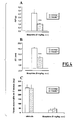
- the basal respiratory rate is not different in the two genotypes. Moreover, regardless of the genotype, neither the vehicle nor the morphine at the dose of 5 mg / kg influence the respiratory rate. On the other hand, whatever genotype, the administration of morphine at doses of 10, 20 and 50 mg / kg results in a decrease in the respiratory dose-dependent frequency with no difference between the genotypes ( Fig. 3B ).
- the deletion of the gene that codes for TREK-1 does not reduce the respiratory depressant effect of morphine.
- the TREK-1 channel is therefore not involved in this adverse effect.
- Morphine-induced constipation in TRAAK - / - animals was also studied.
- the effects of morphine on gastrointestinal function were assessed by measuring the production of faeces harvested hourly for 2 hours after morphine or vehicle injection. To ensure that the two genotypes do not differ in their food and water consumption, this consumption was measured and standardized by animal (cages containing 3 to 5 animals) and data averaged for 3 cages per genotype.
Landscapes
- Life Sciences & Earth Sciences (AREA)
- Health & Medical Sciences (AREA)
- Engineering & Computer Science (AREA)
- Molecular Biology (AREA)
- Chemical & Material Sciences (AREA)
- Urology & Nephrology (AREA)
- Biomedical Technology (AREA)
- Cell Biology (AREA)
- Hematology (AREA)
- Immunology (AREA)
- Food Science & Technology (AREA)
- Biochemistry (AREA)
- Biotechnology (AREA)
- Proteomics, Peptides & Aminoacids (AREA)
- Medicinal Chemistry (AREA)
- Physics & Mathematics (AREA)
- Analytical Chemistry (AREA)
- Microbiology (AREA)
- General Health & Medical Sciences (AREA)
- General Physics & Mathematics (AREA)
- Pathology (AREA)
- Medicines That Contain Protein Lipid Enzymes And Other Medicines (AREA)
- Pharmaceuticals Containing Other Organic And Inorganic Compounds (AREA)
- Investigating Or Analysing Biological Materials (AREA)
Applications Claiming Priority (2)
| Application Number | Priority Date | Filing Date | Title |
|---|---|---|---|
| FR0956477A FR2950362B1 (fr) | 2009-09-21 | 2009-09-21 | Utilisation d'activateurs de canaux potassiques k2p en tant qu'antalgiques. |
| PCT/FR2010/051968 WO2011033241A1 (fr) | 2009-09-21 | 2010-09-21 | Utilisation d'activateurs de canaux potassiques k2p en tant qu'antalgiques |
Publications (2)
| Publication Number | Publication Date |
|---|---|
| EP2480893A1 EP2480893A1 (fr) | 2012-08-01 |
| EP2480893B1 true EP2480893B1 (fr) | 2014-08-27 |
Family
ID=42115665
Family Applications (1)
| Application Number | Title | Priority Date | Filing Date |
|---|---|---|---|
| EP10771161.6A Not-in-force EP2480893B1 (fr) | 2009-09-21 | 2010-09-21 | Utilisation d'activateurs de canaux potassiques k2p en tant qu'antalgiques |
Country Status (9)
| Country | Link |
|---|---|
| US (1) | US9448242B2 (enExample) |
| EP (1) | EP2480893B1 (enExample) |
| CN (1) | CN102597780B (enExample) |
| CA (1) | CA2774861C (enExample) |
| DK (1) | DK2480893T3 (enExample) |
| ES (1) | ES2517925T3 (enExample) |
| FR (1) | FR2950362B1 (enExample) |
| IN (1) | IN2012DN02433A (enExample) |
| WO (1) | WO2011033241A1 (enExample) |
Families Citing this family (2)
| Publication number | Priority date | Publication date | Assignee | Title |
|---|---|---|---|---|
| WO2013098416A2 (fr) | 2011-12-30 | 2013-07-04 | Ecole Nationale Superieure De Chimie De Clermont Ferrand | Composes anti-douleur |
| WO2024126778A1 (en) * | 2022-12-16 | 2024-06-20 | Centre National De La Recherche Scientifique | Process for reversibly inhibiting two-pore potassium channels and inducing nociception, with light spatiotemporal resolution |
Family Cites Families (8)
| Publication number | Priority date | Publication date | Assignee | Title |
|---|---|---|---|---|
| GB1192126A (en) * | 1967-10-05 | 1970-05-20 | Centre Nat Rech Scient | Indole Derivatives and their production |
| FR2623498B1 (fr) * | 1987-11-24 | 1990-04-06 | Bioprojet Soc Civ | Nouveaux composes enantiomeres derives d'amino-acides, leur procede de preparation et leurs applications therapeutiques |
| US20030165806A1 (en) * | 1997-03-11 | 2003-09-04 | Mark H. Pausch | Potassium channels, nucleotide sequences encoding them, and methods of using same |
| US5919473A (en) * | 1997-05-12 | 1999-07-06 | Elkhoury; George F. | Methods and devices for delivering opioid analgesics to wounds via a subdermal implant |
| US7112403B1 (en) * | 1998-09-01 | 2006-09-26 | Centre National De La Recherche Scientifique | Method for the identification of anesthetics |
| US7955616B2 (en) * | 2003-09-23 | 2011-06-07 | Orthocon, Inc. | Absorbable implants and methods for their use in hemostasis and in the treatment of osseous defects |
| GB0329310D0 (en) * | 2003-12-18 | 2004-01-21 | Univ Keele | Method |
| EP2077126A1 (en) * | 2008-01-07 | 2009-07-08 | Graftys | Analgesic apatitic calcium-phosphate cement |
-
2009
- 2009-09-21 FR FR0956477A patent/FR2950362B1/fr not_active Expired - Fee Related
-
2010
- 2010-09-21 US US13/497,353 patent/US9448242B2/en not_active Expired - Fee Related
- 2010-09-21 EP EP10771161.6A patent/EP2480893B1/fr not_active Not-in-force
- 2010-09-21 CN CN201080050386.7A patent/CN102597780B/zh not_active Expired - Fee Related
- 2010-09-21 CA CA2774861A patent/CA2774861C/fr active Active
- 2010-09-21 WO PCT/FR2010/051968 patent/WO2011033241A1/fr not_active Ceased
- 2010-09-21 IN IN2433DEN2012 patent/IN2012DN02433A/en unknown
- 2010-09-21 ES ES10771161.6T patent/ES2517925T3/es active Active
- 2010-09-21 DK DK10771161.6T patent/DK2480893T3/da active
Also Published As
| Publication number | Publication date |
|---|---|
| CA2774861A1 (fr) | 2011-03-24 |
| DK2480893T3 (da) | 2014-09-29 |
| FR2950362B1 (fr) | 2011-10-21 |
| US20120260354A1 (en) | 2012-10-11 |
| FR2950362A1 (fr) | 2011-03-25 |
| WO2011033241A1 (fr) | 2011-03-24 |
| CN102597780A (zh) | 2012-07-18 |
| CA2774861C (fr) | 2017-08-08 |
| ES2517925T3 (es) | 2014-11-04 |
| US9448242B2 (en) | 2016-09-20 |
| EP2480893A1 (fr) | 2012-08-01 |
| CN102597780B (zh) | 2014-11-12 |
| IN2012DN02433A (enExample) | 2015-08-21 |
Similar Documents
| Publication | Publication Date | Title |
|---|---|---|
| Yu et al. | Brenner & Rector’s the kidney | |
| Hoenderop et al. | Calcium absorption across epithelia | |
| Hardie | TRP channels and lipids: from Drosophila to mammalian physiology | |
| Etherington et al. | Selective inhibition of extra-synaptic α5-GABAA receptors by S44819, a new therapeutic agent | |
| Marigo et al. | TRPM4 impacts on Ca2+ signals during agonist-induced insulin secretion in pancreatic β-cells | |
| Breese et al. | Basis of the gabamimetic profile of ethanol | |
| US9675591B2 (en) | Methods for treating seizure disorders and pain | |
| Tian et al. | The TRP channels serving as chemical-to-electrical signal converter | |
| Henderson et al. | Menthol stereoisomers exhibit different effects on α4β2 nAChR upregulation and dopamine neuron spontaneous firing | |
| Sinha et al. | Fast A‐type currents shape a rapidly adapting form of delayed short latency firing of excitatory superficial dorsal horn neurons that express the neuropeptide Y Y1 receptor | |
| CA2774861C (fr) | Utilisation d'activateurs de canaux potassiques k2p en tant qu'antalgiques | |
| Tallent et al. | Nociceptin reduces epileptiform events in CA3 hippocampus via presynaptic and postsynaptic mechanisms | |
| He et al. | Chronic ethanol consumption in rats produces opioid antinociceptive tolerance through inhibition of mu opioid receptor endocytosis | |
| Choi et al. | Multiple effects of bisphenol A, an endocrine disrupter, on GABAA receptors in acutely dissociated rat CA3 pyramidal neurons | |
| Furukawa et al. | Presynaptic large-conductance calcium-activated potassium channels control synaptic transmission in the superficial dorsal horn of the mouse | |
| Garau et al. | Age-related changes in circadian rhythm of serotonin synthesis in ring doves: effects of increased tryptophan ingestion | |
| Tanaka et al. | GABAergic modulation of hippocampal glutamatergic neurons: an in vivo microdialysis study | |
| Wilting et al. | Urine osmolality, cyclic AMP and aquaporin-2 in urine of patients under lithium treatment in response to water loading followed by vasopressin administration | |
| Nakamura et al. | Cytosolic calcium elevation induced by orexin/hypocretin in granule cell domain cells of the rat cochlear nucleus in vitro | |
| N'Gouemo et al. | Ethanol withdrawal is accompanied by downregulation of calcium channel alpha 1B subunit in rat inferior colliculus neurons | |
| Chesnoy-Marchais | The estrogen receptor modulator tamoxifen enhances spontaneous glycinergic synaptic inhibition of hypoglossal motoneurons | |
| Peterson | The regulation of subfornical organ neurons | |
| MOTONEURONES | ML Garabette, KF Martin'& PH Redfern, Department of Pharmacy & Pharmacology, University of Bath, Bath, BA2 7AY and'Knoll Pharmaceuticals R&D, Nottingham | |
| Williams et al. | Calcium channels in retinal function and disease | |
| Gers-Barlag et al. | Differential mechanisms of cold sensitivity in mouse trigeminal and vagal ganglion neurons |
Legal Events
| Date | Code | Title | Description |
|---|---|---|---|
| PUAI | Public reference made under article 153(3) epc to a published international application that has entered the european phase |
Free format text: ORIGINAL CODE: 0009012 |
|
| 17P | Request for examination filed |
Effective date: 20120330 |
|
| AK | Designated contracting states |
Kind code of ref document: A1 Designated state(s): AL AT BE BG CH CY CZ DE DK EE ES FI FR GB GR HR HU IE IS IT LI LT LU LV MC MK MT NL NO PL PT RO SE SI SK SM TR |
|
| DAX | Request for extension of the european patent (deleted) | ||
| 17Q | First examination report despatched |
Effective date: 20130110 |
|
| GRAP | Despatch of communication of intention to grant a patent |
Free format text: ORIGINAL CODE: EPIDOSNIGR1 |
|
| INTG | Intention to grant announced |
Effective date: 20140317 |
|
| GRAS | Grant fee paid |
Free format text: ORIGINAL CODE: EPIDOSNIGR3 |
|
| GRAA | (expected) grant |
Free format text: ORIGINAL CODE: 0009210 |
|
| AK | Designated contracting states |
Kind code of ref document: B1 Designated state(s): AL AT BE BG CH CY CZ DE DK EE ES FI FR GB GR HR HU IE IS IT LI LT LU LV MC MK MT NL NO PL PT RO SE SI SK SM TR |
|
| REG | Reference to a national code |
Ref country code: GB Ref legal event code: FG4D Free format text: NOT ENGLISH |
|
| REG | Reference to a national code |
Ref country code: CH Ref legal event code: EP |
|
| REG | Reference to a national code |
Ref country code: AT Ref legal event code: REF Ref document number: 684764 Country of ref document: AT Kind code of ref document: T Effective date: 20140915 |
|
| REG | Reference to a national code |
Ref country code: SE Ref legal event code: TRGR |
|
| REG | Reference to a national code |
Ref country code: IE Ref legal event code: FG4D Free format text: LANGUAGE OF EP DOCUMENT: FRENCH |
|
| REG | Reference to a national code |
Ref country code: DK Ref legal event code: T3 Effective date: 20140922 |
|
| REG | Reference to a national code |
Ref country code: CH Ref legal event code: NV Representative=s name: ARNOLD AND SIEDSMA AG, CH |
|
| REG | Reference to a national code |
Ref country code: DE Ref legal event code: R096 Ref document number: 602010018584 Country of ref document: DE Effective date: 20141009 |
|
| REG | Reference to a national code |
Ref country code: ES Ref legal event code: FG2A Ref document number: 2517925 Country of ref document: ES Kind code of ref document: T3 Effective date: 20141104 |
|
| REG | Reference to a national code |
Ref country code: NL Ref legal event code: T3 |
|
| REG | Reference to a national code |
Ref country code: AT Ref legal event code: MK05 Ref document number: 684764 Country of ref document: AT Kind code of ref document: T Effective date: 20140827 |
|
| REG | Reference to a national code |
Ref country code: LT Ref legal event code: MG4D |
|
| PG25 | Lapsed in a contracting state [announced via postgrant information from national office to epo] |
Ref country code: LT Free format text: LAPSE BECAUSE OF FAILURE TO SUBMIT A TRANSLATION OF THE DESCRIPTION OR TO PAY THE FEE WITHIN THE PRESCRIBED TIME-LIMIT Effective date: 20140827 Ref country code: BG Free format text: LAPSE BECAUSE OF FAILURE TO SUBMIT A TRANSLATION OF THE DESCRIPTION OR TO PAY THE FEE WITHIN THE PRESCRIBED TIME-LIMIT Effective date: 20141127 Ref country code: PT Free format text: LAPSE BECAUSE OF FAILURE TO SUBMIT A TRANSLATION OF THE DESCRIPTION OR TO PAY THE FEE WITHIN THE PRESCRIBED TIME-LIMIT Effective date: 20141229 Ref country code: GR Free format text: LAPSE BECAUSE OF FAILURE TO SUBMIT A TRANSLATION OF THE DESCRIPTION OR TO PAY THE FEE WITHIN THE PRESCRIBED TIME-LIMIT Effective date: 20141128 Ref country code: NO Free format text: LAPSE BECAUSE OF FAILURE TO SUBMIT A TRANSLATION OF THE DESCRIPTION OR TO PAY THE FEE WITHIN THE PRESCRIBED TIME-LIMIT Effective date: 20141127 |
|
| PG25 | Lapsed in a contracting state [announced via postgrant information from national office to epo] |
Ref country code: AT Free format text: LAPSE BECAUSE OF FAILURE TO SUBMIT A TRANSLATION OF THE DESCRIPTION OR TO PAY THE FEE WITHIN THE PRESCRIBED TIME-LIMIT Effective date: 20140827 Ref country code: IS Free format text: LAPSE BECAUSE OF FAILURE TO SUBMIT A TRANSLATION OF THE DESCRIPTION OR TO PAY THE FEE WITHIN THE PRESCRIBED TIME-LIMIT Effective date: 20141227 Ref country code: HR Free format text: LAPSE BECAUSE OF FAILURE TO SUBMIT A TRANSLATION OF THE DESCRIPTION OR TO PAY THE FEE WITHIN THE PRESCRIBED TIME-LIMIT Effective date: 20140827 Ref country code: LV Free format text: LAPSE BECAUSE OF FAILURE TO SUBMIT A TRANSLATION OF THE DESCRIPTION OR TO PAY THE FEE WITHIN THE PRESCRIBED TIME-LIMIT Effective date: 20140827 Ref country code: CY Free format text: LAPSE BECAUSE OF FAILURE TO SUBMIT A TRANSLATION OF THE DESCRIPTION OR TO PAY THE FEE WITHIN THE PRESCRIBED TIME-LIMIT Effective date: 20140827 |
|
| PG25 | Lapsed in a contracting state [announced via postgrant information from national office to epo] |
Ref country code: SK Free format text: LAPSE BECAUSE OF FAILURE TO SUBMIT A TRANSLATION OF THE DESCRIPTION OR TO PAY THE FEE WITHIN THE PRESCRIBED TIME-LIMIT Effective date: 20140827 Ref country code: CZ Free format text: LAPSE BECAUSE OF FAILURE TO SUBMIT A TRANSLATION OF THE DESCRIPTION OR TO PAY THE FEE WITHIN THE PRESCRIBED TIME-LIMIT Effective date: 20140827 Ref country code: EE Free format text: LAPSE BECAUSE OF FAILURE TO SUBMIT A TRANSLATION OF THE DESCRIPTION OR TO PAY THE FEE WITHIN THE PRESCRIBED TIME-LIMIT Effective date: 20140827 Ref country code: RO Free format text: LAPSE BECAUSE OF FAILURE TO SUBMIT A TRANSLATION OF THE DESCRIPTION OR TO PAY THE FEE WITHIN THE PRESCRIBED TIME-LIMIT Effective date: 20140827 |
|
| REG | Reference to a national code |
Ref country code: DE Ref legal event code: R097 Ref document number: 602010018584 Country of ref document: DE |
|
| PG25 | Lapsed in a contracting state [announced via postgrant information from national office to epo] |
Ref country code: PL Free format text: LAPSE BECAUSE OF FAILURE TO SUBMIT A TRANSLATION OF THE DESCRIPTION OR TO PAY THE FEE WITHIN THE PRESCRIBED TIME-LIMIT Effective date: 20140827 Ref country code: MC Free format text: LAPSE BECAUSE OF FAILURE TO SUBMIT A TRANSLATION OF THE DESCRIPTION OR TO PAY THE FEE WITHIN THE PRESCRIBED TIME-LIMIT Effective date: 20140827 |
|
| PGRI | Patent reinstated in contracting state [announced from national office to epo] |
Ref country code: BE Effective date: 20150124 |
|
| PLBE | No opposition filed within time limit |
Free format text: ORIGINAL CODE: 0009261 |
|
| STAA | Information on the status of an ep patent application or granted ep patent |
Free format text: STATUS: NO OPPOSITION FILED WITHIN TIME LIMIT |
|
| 26N | No opposition filed |
Effective date: 20150528 |
|
| PG25 | Lapsed in a contracting state [announced via postgrant information from national office to epo] |
Ref country code: SI Free format text: LAPSE BECAUSE OF FAILURE TO SUBMIT A TRANSLATION OF THE DESCRIPTION OR TO PAY THE FEE WITHIN THE PRESCRIBED TIME-LIMIT Effective date: 20140827 |
|
| PG25 | Lapsed in a contracting state [announced via postgrant information from national office to epo] |
Ref country code: SM Free format text: LAPSE BECAUSE OF FAILURE TO SUBMIT A TRANSLATION OF THE DESCRIPTION OR TO PAY THE FEE WITHIN THE PRESCRIBED TIME-LIMIT Effective date: 20140827 |
|
| PG25 | Lapsed in a contracting state [announced via postgrant information from national office to epo] |
Ref country code: MT Free format text: LAPSE BECAUSE OF FAILURE TO SUBMIT A TRANSLATION OF THE DESCRIPTION OR TO PAY THE FEE WITHIN THE PRESCRIBED TIME-LIMIT Effective date: 20140827 |
|
| PG25 | Lapsed in a contracting state [announced via postgrant information from national office to epo] |
Ref country code: HU Free format text: LAPSE BECAUSE OF FAILURE TO SUBMIT A TRANSLATION OF THE DESCRIPTION OR TO PAY THE FEE WITHIN THE PRESCRIBED TIME-LIMIT; INVALID AB INITIO Effective date: 20100921 Ref country code: TR Free format text: LAPSE BECAUSE OF FAILURE TO SUBMIT A TRANSLATION OF THE DESCRIPTION OR TO PAY THE FEE WITHIN THE PRESCRIBED TIME-LIMIT Effective date: 20140827 |
|
| REG | Reference to a national code |
Ref country code: FR Ref legal event code: PLFP Year of fee payment: 7 |
|
| REG | Reference to a national code |
Ref country code: FR Ref legal event code: PLFP Year of fee payment: 8 |
|
| PG25 | Lapsed in a contracting state [announced via postgrant information from national office to epo] |
Ref country code: MK Free format text: LAPSE BECAUSE OF FAILURE TO SUBMIT A TRANSLATION OF THE DESCRIPTION OR TO PAY THE FEE WITHIN THE PRESCRIBED TIME-LIMIT Effective date: 20140827 |
|
| REG | Reference to a national code |
Ref country code: FR Ref legal event code: PLFP Year of fee payment: 9 |
|
| PG25 | Lapsed in a contracting state [announced via postgrant information from national office to epo] |
Ref country code: AL Free format text: LAPSE BECAUSE OF FAILURE TO SUBMIT A TRANSLATION OF THE DESCRIPTION OR TO PAY THE FEE WITHIN THE PRESCRIBED TIME-LIMIT Effective date: 20140827 |
|
| PGFP | Annual fee paid to national office [announced via postgrant information from national office to epo] |
Ref country code: LU Payment date: 20210816 Year of fee payment: 12 Ref country code: NL Payment date: 20210816 Year of fee payment: 12 |
|
| PGFP | Annual fee paid to national office [announced via postgrant information from national office to epo] |
Ref country code: FI Payment date: 20210817 Year of fee payment: 12 Ref country code: CH Payment date: 20210920 Year of fee payment: 12 Ref country code: IE Payment date: 20210825 Year of fee payment: 12 |
|
| PGFP | Annual fee paid to national office [announced via postgrant information from national office to epo] |
Ref country code: SE Payment date: 20210916 Year of fee payment: 12 Ref country code: BE Payment date: 20210927 Year of fee payment: 12 Ref country code: DK Payment date: 20210820 Year of fee payment: 12 |
|
| REG | Reference to a national code |
Ref country code: DE Ref legal event code: R082 Ref document number: 602010018584 Country of ref document: DE |
|
| PGFP | Annual fee paid to national office [announced via postgrant information from national office to epo] |
Ref country code: GB Payment date: 20220929 Year of fee payment: 13 Ref country code: DE Payment date: 20220929 Year of fee payment: 13 |
|
| PGFP | Annual fee paid to national office [announced via postgrant information from national office to epo] |
Ref country code: IT Payment date: 20220929 Year of fee payment: 13 Ref country code: ES Payment date: 20221018 Year of fee payment: 13 |
|
| PG25 | Lapsed in a contracting state [announced via postgrant information from national office to epo] |
Ref country code: FI Free format text: LAPSE BECAUSE OF NON-PAYMENT OF DUE FEES Effective date: 20220921 |
|
| REG | Reference to a national code |
Ref country code: CH Ref legal event code: PL |
|
| REG | Reference to a national code |
Ref country code: DK Ref legal event code: EBP Effective date: 20220930 |
|
| REG | Reference to a national code |
Ref country code: SE Ref legal event code: EUG |
|
| REG | Reference to a national code |
Ref country code: NL Ref legal event code: MM Effective date: 20221001 |
|
| REG | Reference to a national code |
Ref country code: BE Ref legal event code: MM Effective date: 20220930 |
|
| PG25 | Lapsed in a contracting state [announced via postgrant information from national office to epo] |
Ref country code: NL Free format text: LAPSE BECAUSE OF NON-PAYMENT OF DUE FEES Effective date: 20221001 Ref country code: LU Free format text: LAPSE BECAUSE OF NON-PAYMENT OF DUE FEES Effective date: 20220921 |
|
| PG25 | Lapsed in a contracting state [announced via postgrant information from national office to epo] |
Ref country code: LI Free format text: LAPSE BECAUSE OF NON-PAYMENT OF DUE FEES Effective date: 20220930 Ref country code: IE Free format text: LAPSE BECAUSE OF NON-PAYMENT OF DUE FEES Effective date: 20220921 Ref country code: CH Free format text: LAPSE BECAUSE OF NON-PAYMENT OF DUE FEES Effective date: 20220930 |
|
| PG25 | Lapsed in a contracting state [announced via postgrant information from national office to epo] |
Ref country code: SE Free format text: LAPSE BECAUSE OF NON-PAYMENT OF DUE FEES Effective date: 20220922 |
|
| PG25 | Lapsed in a contracting state [announced via postgrant information from national office to epo] |
Ref country code: BE Free format text: LAPSE BECAUSE OF NON-PAYMENT OF DUE FEES Effective date: 20220930 |
|
| PG25 | Lapsed in a contracting state [announced via postgrant information from national office to epo] |
Ref country code: DK Free format text: LAPSE BECAUSE OF NON-PAYMENT OF DUE FEES Effective date: 20220930 |
|
| REG | Reference to a national code |
Ref country code: DE Ref legal event code: R119 Ref document number: 602010018584 Country of ref document: DE |
|
| GBPC | Gb: european patent ceased through non-payment of renewal fee |
Effective date: 20230921 |
|
| PG25 | Lapsed in a contracting state [announced via postgrant information from national office to epo] |
Ref country code: GB Free format text: LAPSE BECAUSE OF NON-PAYMENT OF DUE FEES Effective date: 20230921 |
|
| PG25 | Lapsed in a contracting state [announced via postgrant information from national office to epo] |
Ref country code: GB Free format text: LAPSE BECAUSE OF NON-PAYMENT OF DUE FEES Effective date: 20230921 Ref country code: DE Free format text: LAPSE BECAUSE OF NON-PAYMENT OF DUE FEES Effective date: 20240403 |
|
| PGFP | Annual fee paid to national office [announced via postgrant information from national office to epo] |
Ref country code: FR Payment date: 20240917 Year of fee payment: 15 |
|
| REG | Reference to a national code |
Ref country code: ES Ref legal event code: FD2A Effective date: 20241104 |
|
| PG25 | Lapsed in a contracting state [announced via postgrant information from national office to epo] |
Ref country code: IT Free format text: LAPSE BECAUSE OF NON-PAYMENT OF DUE FEES Effective date: 20230921 |
|
| PG25 | Lapsed in a contracting state [announced via postgrant information from national office to epo] |
Ref country code: IT Free format text: LAPSE BECAUSE OF NON-PAYMENT OF DUE FEES Effective date: 20230921 |
|
| PG25 | Lapsed in a contracting state [announced via postgrant information from national office to epo] |
Ref country code: ES Free format text: LAPSE BECAUSE OF NON-PAYMENT OF DUE FEES Effective date: 20230922 |
|
| PG25 | Lapsed in a contracting state [announced via postgrant information from national office to epo] |
Ref country code: ES Free format text: LAPSE BECAUSE OF NON-PAYMENT OF DUE FEES Effective date: 20230922 |
|
| PG25 | Lapsed in a contracting state [announced via postgrant information from national office to epo] |
Ref country code: FR Free format text: LAPSE BECAUSE OF NON-PAYMENT OF DUE FEES Effective date: 20250930 |