EP2469873A2 - Verfahren zur Ansteuerung einer Anzeigetafel und Anzeigevorrichtung zur Durchführung des Verfahrens - Google Patents
Verfahren zur Ansteuerung einer Anzeigetafel und Anzeigevorrichtung zur Durchführung des Verfahrens Download PDFInfo
- Publication number
- EP2469873A2 EP2469873A2 EP11178079A EP11178079A EP2469873A2 EP 2469873 A2 EP2469873 A2 EP 2469873A2 EP 11178079 A EP11178079 A EP 11178079A EP 11178079 A EP11178079 A EP 11178079A EP 2469873 A2 EP2469873 A2 EP 2469873A2
- Authority
- EP
- European Patent Office
- Prior art keywords
- frame
- reverse signal
- polarities
- display panel
- data voltage
- Prior art date
- Legal status (The legal status is an assumption and is not a legal conclusion. Google has not performed a legal analysis and makes no representation as to the accuracy of the status listed.)
- Withdrawn
Links
Images



Classifications
-
- G—PHYSICS
- G09—EDUCATION; CRYPTOGRAPHY; DISPLAY; ADVERTISING; SEALS
- G09G—ARRANGEMENTS OR CIRCUITS FOR CONTROL OF INDICATING DEVICES USING STATIC MEANS TO PRESENT VARIABLE INFORMATION
- G09G3/00—Control arrangements or circuits, of interest only in connection with visual indicators other than cathode-ray tubes
- G09G3/20—Control arrangements or circuits, of interest only in connection with visual indicators other than cathode-ray tubes for presentation of an assembly of a number of characters, e.g. a page, by composing the assembly by combination of individual elements arranged in a matrix no fixed position being assigned to or needed to be assigned to the individual characters or partial characters
- G09G3/34—Control arrangements or circuits, of interest only in connection with visual indicators other than cathode-ray tubes for presentation of an assembly of a number of characters, e.g. a page, by composing the assembly by combination of individual elements arranged in a matrix no fixed position being assigned to or needed to be assigned to the individual characters or partial characters by control of light from an independent source
- G09G3/36—Control arrangements or circuits, of interest only in connection with visual indicators other than cathode-ray tubes for presentation of an assembly of a number of characters, e.g. a page, by composing the assembly by combination of individual elements arranged in a matrix no fixed position being assigned to or needed to be assigned to the individual characters or partial characters by control of light from an independent source using liquid crystals
- G09G3/3611—Control of matrices with row and column drivers
- G09G3/3614—Control of polarity reversal in general
-
- G—PHYSICS
- G09—EDUCATION; CRYPTOGRAPHY; DISPLAY; ADVERTISING; SEALS
- G09G—ARRANGEMENTS OR CIRCUITS FOR CONTROL OF INDICATING DEVICES USING STATIC MEANS TO PRESENT VARIABLE INFORMATION
- G09G3/00—Control arrangements or circuits, of interest only in connection with visual indicators other than cathode-ray tubes
- G09G3/001—Control arrangements or circuits, of interest only in connection with visual indicators other than cathode-ray tubes using specific devices not provided for in groups G09G3/02 - G09G3/36, e.g. using an intermediate record carrier such as a film slide; Projection systems; Display of non-alphanumerical information, solely or in combination with alphanumerical information, e.g. digital display on projected diapositive as background
- G09G3/003—Control arrangements or circuits, of interest only in connection with visual indicators other than cathode-ray tubes using specific devices not provided for in groups G09G3/02 - G09G3/36, e.g. using an intermediate record carrier such as a film slide; Projection systems; Display of non-alphanumerical information, solely or in combination with alphanumerical information, e.g. digital display on projected diapositive as background to produce spatial visual effects
-
- H—ELECTRICITY
- H04—ELECTRIC COMMUNICATION TECHNIQUE
- H04N—PICTORIAL COMMUNICATION, e.g. TELEVISION
- H04N13/00—Stereoscopic video systems; Multi-view video systems; Details thereof
- H04N13/30—Image reproducers
- H04N13/356—Image reproducers having separate monoscopic and stereoscopic modes
- H04N13/359—Switching between monoscopic and stereoscopic modes
Definitions
- Exemplary embodiments of the present invention relate to a method of driving a display panel and a display apparatus performing the method of driving the display panel. More particularly, exemplary embodiments of the present invention relate to a method of driving a display panel enhancing display quality and a display apparatus performing the method of driving the display panel.
- a stereoscopic image display apparatus displays a stereoscopic image using a principle of binocular parallax through a viewer's two eyes. For example, since the left and right eyes of the viewer are spaced apart from each other, two different images with different angles are perceived by the viewer's brain. The perceived images are mixed in the viewer's brain. Through this series of processes, the viewer's brain may recognize the two images as a stereoscopic image.
- an LCD apparatus employing the liquid crystal shutter glasses type method displays a left image for left eye and a right image for right eye using a time-division method, and is thereby driven at a high frequency.
- High-frequency driving causes an insufficient pixel charging rate, thus deteriorating display quality.
- power consumption of the LCD apparatus is increased.
- Exemplary embodiments of the present invention provide a method of driving a display panel capable of enhancing display quality of 3D stereoscopic images and a display apparatus performing the method.
- a method of driving a display panel comprising determining an image mode based on a received image signal, outputting a reverse signal based on the image mode, and reversing at a predetermined period polarities of data voltages based on the reverse signal.
- a method of driving a display panel determines an image mode of an image signal is a 2D flat image mode or a 3D stereoscopic image mode.
- a first reverse signal and a second reverse signal different from the first reverse signal are generated according to the determined image mode.
- the image signal is converted to a first polarity data voltage or a second polarity data voltage with respect to a reference voltage based on the first reverse signal or the second reverse signal, and the first polarity data voltage or the second polarity data voltage is outputted to a display panel.
- the first reverse signal may be generated when the determined image mode is the 2D flat image mode, and the second reverse signal having a frame period different from a frame period of the first reverse signal may be generated when the determined image mode is the 3D stereoscopic image mode.
- the method further may include outputting the first polarity data voltage of a left-eye image frame to the display panel during an N-th frame, outputting the first polarity data voltage of a right-eye image frame to the display panel during an (N+1)-th frame, outputting the second polarity data voltage of the left-eye image frame to the display panel during an (N+2)-th frame, and outputting the second polarity data voltage of the right-eye image frame to the display panel during an (N+3)-th frame.
- N is a natural number.
- the method may further include outputting the first polarity data voltage of a left-eye image frame to the display panel during an N-th frame, outputting the second polarity data voltage of a right-eye image frame to the display panel during an (N+1)-th frame, outputting the second polarity data voltage of the left-eye image frame to the display panel during an (N+2)-th frame, and outputting the first polarity data voltage of the right-eye image frame to the display panel during an (N+3)-th frame.
- N is a natural number.
- a display apparatus includes a display panel displaying an image, a controller, and a data driver.
- the controller determines whether an image mode of an image signal is a 2D flat image mode or a 3D stereoscopic image mode and generates a first reverse signal and a second reverse signal different from the first reverse signal according to the determined image mode.
- the data driver converts the image signal to a first polarity data voltage or a second polarity data voltage with respect to a reference voltage based on the first reverse signal or the second reverse signal, and outputs the first polarity data voltage or the second polarity data voltage to a display panel.
- the polarities of the data voltages are reversed at a period of a plurality of frames, so that display quality of the 3D stereoscopic image is enhanced.
- the polarities of the data voltages are reversed at a pixel column period during a frame, so that power consumption is decreased, and a charging rate is increased.
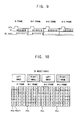
- FIG 1 is a block diagram of a display apparatus according to an exemplary embodiment of the present invention.
- FIG 2 is a flow chart for describing a method for driving a display panel of FIG 1 ;
- FIGS. 3A and 3B are timing charts of control signals inputted to a data driver of FIG 1 ;
- FIG 4 is a conceptual diagram for describing a method for driving the display panel according to the control signals of FIG 3B ;
- FIGS. 5A and 5B are timing charts of control signals inputted to a data driver according to an exemplary embodiment of the present invention.
- FIG 6 is a conceptual diagram for describing a method for driving a display panel according to the control signals of FIG 5B ;
- FIGS. 7A and 7B are timing charts of control signals inputted to a data driver according to an exemplary embodiment of the present invention.
- FIG 8 is a conceptual diagram for describing a method for driving a display panel according to the control signals of FIG 7B ;
- FIG 9 is a timing chart of control signals inputted to a data driver according to an exemplary embodiment of the present invention.
- FIG 10 is a conceptual diagram for describing a method for driving a display panel according to the control signals of FIG 9 ;
- FIG 11 is a timing chart of control signals inputted to a data driver according to an exemplary embodiment of the present invention.
- FIG 12 is a conceptual diagram for describing a method for driving a display panel according to the control signals of FIG 11 .
- FIG 1 is a block diagram of a display apparatus according to an exemplary embodiment of the present invention.
- the display apparatus includes a display panel 100, a controller 200, a data driver 300, a gate driver 400, and a pair of shutter glasses 500.
- the display panel 100 includes a plurality of data lines DL, a plurality of gate lines GL crossing the data lines DL, and a plurality of pixels P.
- Each of the pixels P includes a switching element TR connected to the data and gate lines GL and DL, and a liquid crystal capacitor CLC connected to the switching element TR.
- a data voltage provided from the data line DL is applied to a first electrode of the liquid crystal capacitor CLC, and a reference voltage (or a common voltage) Vcom is applied to a second electrode of the liquid crystal capacitor CLC.
- a reference voltage (or a common voltage) Vcom is applied to a second electrode of the liquid crystal capacitor CLC. According to a voltage difference between the first and second electrodes of the liquid crystal capacitor CLC, an arrangement direction of liquid crystal molecules is adjusted to display a grayscale.
- the controller 200 includes a mode decider 210 and a control signal generator 230.
- the mode decider 210 determines an image mode of an image signal D_SIGNAL based on an information signal included in the received image signal D_SIGNAL. For example, the mode decider 210 determines whether the received image signal D_SIGNAL is a two-dimensional (2D) flat image or a three-dimensional (3D) stereoscopic image.
- a frame frequency of image data for the 2D flat image may be about 60 Hz or about 120 Hz.
- a frame frequency of image data for the 3D stereoscopic image may be about 20 Hz.
- the control signal generator 230 generates control signals controlling the data driver 300 based on an original control signal C_SIGNAL received from an external device (not shown).
- the control signals may include a vertical synchronizing signal STV, a load signal TP, and a reverse signal.
- the vertical synchronizing signal STV is a start signal of a frame
- the load signal TP is a signal loading the data voltage into the data line DL at a one-horizontal-line period 1H
- the reverse signal is a control signal controlling a polarity of the data voltage.
- the reverse signal includes a 2D reverse signal 2D_REV and a 3D reverse signal 3D_REV.
- Reversing methods for the 2D and 3D reverse signals are different from each other.
- the reversing methods may include a method of reversing the polarity of the data voltage at a K-horizontal-line period in a frame (K is a natural number), and a method of reversing the polarity of the data voltage applied to a substantially same pixel in sequential frames.
- the control signal generator 230 generates the 2D reverse signal 2D_REV and the 3D reverse signal 3D_REV having frame frequencies different from each other according to the image mode, and provides the 2D reverse signal 2D_REV and the 3D reverse signal 3D_REV to the data driver 300.
- the data driver 300 converts digital image data to analogue image data based on the control signals provided from the controller 200. According to an embodiment, the data driver 300 controls the polarity of the data voltage based on the 2D reverse signal 2D_REV or the 3D reverse signal 3D_REV provided from the control signal generator 230 according to the image mode.
- the data voltage has a first polarity (positive (+) polarity) higher than the reference voltage, and a second polarity (negative (-) polarity) lower than the reference voltage.
- the polarities of the data voltages, which are adjacent to each other and inputted from the data driver 300, may be reversed with respect to each other.
- the gate driver 400 generates a plurality of gate signals based on the control signals received from the control signal generator 230, and sequentially outputs the gate signals to the gate lines GL.
- the shutter glasses 500 include left-eye and right-eye shutters 510 and 520.
- the shutter glasses 500 are driven according to an image displayed on the display panel 100 in the 3D stereoscopic image mode. For example, when the display panel 100 displays a left-eye image frame, the left-eye shutter 510 is open, and the right-eye shutter 520 is closed. When the display panel 100 displays a right-eye image frame, the left-eye shutter 510 is closed, and the right-eye shutter 520 is open. As a consequence, the viewer recognizes the left-eye and right-eye images displayed on the display panel 100.
- FIG 2 is a flow chart for describing a method for driving the display panel of FIG 1 .
- FIGS. 3A and 3B are timing charts of the control signals inputted to the data driver of FIG 1 .
- the controller 200 receives the image data and the original control signals (step S100).
- the mode decider 210 determines the image mode of the image data (step S120).
- the mode decider 210 controls the control signal generator 230 according to the image mode of the image data.
- the control signal generator 230 generates a 2D reverse signal 2D_REV1, when the image mode of the image data is the 2D flat image mode (step S130).
- the 2D reverse signal 2D_REV1 reverses polarities of data voltages at a one-horizontal-line period 1H in a frame and at a one-frame period.
- the data driver 300 determines polarities of data voltages of horizontal lines according to the 2D reverse signal 2D_REV1 and outputs the data voltages to the display panel 100.
- polarities of data voltages applied to pixels of an N-th pixel column among data voltages in horizontal lines are described as an example.
- N is a natural number.
- the data driver 300 outputs data voltages whose polarities are reversed at a one-horizontal-line period 1H in an order of positive (+) and negative (-) polarities to pixels of the N-th pixel column.
- the data driver 300 outputs data voltages whose polarities are reversed at a one-frame period to pixels of the N-th pixel column.
- the data voltages whose polarities are reversed with respect to the data voltages applied to the pixels of the N-th pixel column during the N-th frame N FRAME and have an order of negative (-) and positive (+) polarities are applied to the pixels of the N-th pixel column during the (N+1)-th frame (N+1) FRAME
- the data driver 300 outputs data voltages whose polarities are reversed with respect to the polarities of the data voltages applied during the (N+1)-th frame (N+1) FRAME and have an order of positive (+) and negative (-) polarities to the pixels of the N-th pixel column.
- the data driver 300 outputs data voltages whose polarities are reversed with respect to the polarities of the data voltages applied during the (N+2)-th frame (N+2) FRAME and have an order of negative (-) and positive (+) polarities to the pixels of the N-th pixel column (step S150).
- the control signal generator 230 generates the 3D reverse signal 3D_REV1, when the image mode of the image data is the 3D stereoscopic image mode (Step S 140).
- the image data includes left-eye image frames and right-eye image frames.
- the left-eye image frames and the right-eye image frames are received with a frequency of about 120 Hz.
- the 3D reverse signal 3D_REV1 reverses polarities of data voltages at a one-horizontal-line period 1H in a frame and at a two-frame period.
- the data driver 300 outputs data voltages whose polarities are reversed at a one-horizontal-line period 1H and have an order of positive (+) and negative (-) polarities to the pixels of the N-th pixel column.
- the data driver 300 outputs data voltages having polarities the same or substantially the same as the polarities of the data voltages applied to the pixels of the N-th pixel column during the N-th frame N FRAME to the pixels of the N-th pixel column.
- the data driver 300 outputs data voltages whose polarities are reversed at a two-frame period. For example, data voltages whose polarities are reversed with respect to the polarities of the data voltages applied to the pixels of the N-th pixel column during the (N+1)-th frame (N+1) FRAME and have an order of negative (-) and positive (+) polarities are applied to the pixels of the N-th pixel column during the (N+2)-th frame (N+2) FRAME During the (N+3)-th frame (N+3) FRAME, the data driver 300 outputs the data voltages having polarities the same or substantially the same as the polarities of the data voltages applied to the pixels of the N-th pixel column during the (N+2)-th frame (N+2) FRAME to the pixels of the N-th pixel column (step S150).
- the data voltages applied to the display panel 100 are reversed at a two-frame period in the 3D stereoscopic image mode.
- FIG 4 is a conceptual diagram for describing a method for driving the display panel according to the control signals of FIG 3B .
- the data driver 300 outputs data voltages of a left-eye image frame to the display panel 100 during the N-th frame N FRAME, outputs data voltages of a right-eye image frame to the display panel 100 during the (N+1)-th frame (N+1) FRAME, outputs data voltages of a left-eye image frame to the display panel 100 during the (N+2)-th frame (N+2) FRAME, and outputs data voltages of a right-eye image frame to the display panel 100 during the (N+3)-th frame (N+3) FRAME.
- the display panel 100 is driven at a frame frequency of about 120 Hz.
- the polarities of the data voltages are reversed based on the 3D reverse signal 3D_REV1 of FIG. 3B at a two-frame period.
- the data voltages of the left-eye image frame of the N-th frame N FRAME have an order of positive (+), negative (-), positive (+), negative (-), positive (+), and negative (-) polarities
- the data voltages of the left-eye image frame of the N+2-th frame N+2 FRAME have an order of negative (-), positive (+), negative (-), positive (+), negative (-), and positive (+) polarities.
- the data voltages of the right-eye image frame of the (N+1)-th frame (N+1) FRAME have an order of positive (+), negative (-), positive (+), negative (-), positive (+), and negative (-) polarities
- the data voltages of the right-eye image frame of the (N+3)-th frame (N+3) FRAME have an order of negative (-), positive (+), negative (-), positive (+), negative (-), and positive (+) polarities.
- the polarities of the data voltages of the left-eye image frame applied to the display panel 100 during the N-th frame N FRAME are reversed with respect to the polarities of the data voltages of the left-eye image frame applied to the display panel 100 during the (N+2)-th frame (N+2) FRAME
- the polarities of the data voltages of the right-eye image frame applied to the display panel 100 during the (N+1)-th frame (N+1) FRAME are reversed with respect to the polarities of the data voltages of the right-eye image frame applied to the display panel 100 during the (N+3)-th frame (N+3) FRAME
- the data voltages of the sequential left-eye image frames or the sequential right-eye image frames have different polarities from each other. Accordingly, a DC voltage is prevented from being charged to a liquid crystal layer of the display panel 100, which displays the left-eye image frame and the right-eye image frame, thus enhancing display quality.
- FIGS. 5A and 5B are timing charts of control signals inputted to a data driver according to an exemplary embodiment of the present invention.
- FIG 6 is a conceptual diagram for describing a method for driving a display panel according to the control signals of FIG. 5B .
- a 2D reverse signal 2D_REV2 reverses polarities of data voltages at a two-horizontal-line period in a frame and at a one-frame period.
- the data driver 300 outputs data voltages whose polarities are reversed at a two-horizontal-line period in an order of positive (+) and positive (+) polarities, and negative (-) and negative (-) polarities to the pixels of the N-th pixel column.
- the data driver 300 outputs data voltages whose polarities are reversed at a one-frame period to the pixels of the N-th pixel column.
- the data driver 300 outputs data voltages whose polarities are reversed with respect to the polarities of the data voltages applied to the pixels of the N-th pixel column during the (N+1)-th frame (N+1) FRAME and have an order of positive (+) and positive (+) polarities, and negative (-) and negative (-) polarities to the pixels of the N-th pixel column.
- the data driver 300 outputs data voltages whose polarities are reversed with respect to the polarities of the data voltages applied to the pixels of the N-th pixel colum during the (N+2)-th frame (N+2) FRAME and have an order of negative (-) and negative (-) polarities, and positive (+) and positive (+) polarities to the pixels of the N-th pixel column.
- the data voltages applied to the display panel 100 are reversed at a one-frame period in the 2D flat image mode.
- a 3D reverse signal 3D_REV2 reverses polarities of data voltages at a two-horizontal-line period in a frame and at a two-frame period.
- the data driver 300 outputs data voltages whose polarities are reversed at a two-horizontal-line period and have an order of positive (+) and positive (+) polarities, and negative (-) and negative (-) polarities to the pixels of the N-th pixel column.
- the data driver 300 outputs data voltages having polarities the same or substantially the same as the polarities of the data voltages applied to the pixels of the N-th pixel column during the N-th frame N FRAME to the pixels of the N-th pixel column.
- the data driver 300 outputs data voltages whose polarities are reversed at a two-frame period to the pixels of the N-th pixel column. For example, data voltages whose polarities are reversed with respect to the data voltages applied to the pixels of the N-th pixel column during the (N+1)-th frame (N+1) FRAME and have an order of negative (-) and negative (-) polarities, and positive (+) and positive (+) polarities are applied to the pixels of the N-th pixel column during the (N+2)-th frame (N+2) FRAME During the (N+3)-th frame N+3 FRAME, the data driver 300 outputs data voltages having polarities the same or substantially the same as the polarities of the data voltages applied to the pixels of the N-th pixel column during the (N+2)-th frame (N+2) FRAME to the pixels of the N-th pixel column.
- the data voltages applied to the display panel 100 are reversed at a two-frame period in the 3D stereoscopic image mode.
- the polarities of the data voltages are reversed based on the 3D reverse signal 3D_REV2 at a two-frame period.
- the data voltages of a left-eye image frame of the N-th frame N FRAME have an order of positive (+), positive (+), negative (-), negative (-), positive (+), and positive (+) polarities
- the data voltages of a left-eye image frame of the (N+2)-th frame (N+2) FRAME have an order of negative (-), negative (-), positive (+), positive (+), negative (-), and negative (-) polarities.
- the data voltages of a right-eye image frame of the (N+1)-th frame (N+1) FRAME have an order of positive (+), positive (+), negative (-), negative (-), positive (+), and positive (+) polarities
- the data voltages of a right-eye image frame of the (N+3)-th frame (N+3) FRAME have an order of negative (-), negative (-), positive (+), positive (+), negative (-), and negative (-) polarities.
- the data voltages of the sequential left-eye image frames or the sequential right-eye image frames have different polarities from each other. Accordingly, a DC voltage is prevented from being charged to a liquid crystal layer of the display panel 100 displaying the left-eye image frame or the right-eye image frame, thus enhancing display quality.
- FIGS. 7A and 7B are timing charts of control signals inputted to a data driver according to an exemplary embodiment of the present invention.
- FIG 8 is a conceptual diagram for describing a method for driving a display panel according to the control signals of FIG. 7B .
- a 2D reverse signal 2D_REV3 reverses polarities of data voltages at a (1+2)-horizontal-line period in a frame and at a one-frame period.
- the 2D reverse signal 2D_REV3 reverses polarities of data voltages of first and second horizontal lines to each other, and reverses polarities of data voltages from the second horizontal line to a last horizontal line at a two-horizontal-line period.
- the 2D reverse signal 2D_REV3 reverses the polarities of the data voltages at a one-frame period.
- the data driver 300 outputs data voltages whose polarities are reversed at a (1+2)-horizontal-line period and have an order of positive (+), negative (-), negative (-), positive (+), positive (+), negative (-), and negative (-) polarities to the pixels of the N-th pixel column.
- the data driver 300 outputs data voltages whose polarities are reversed at a one-frame period to the pixels of the N-th pixel column.
- data voltages whose polarities are reversed with respect to the polarities of the data voltages applied to the pixels of the N-th pixel column during the N-th frame N FRAME and have an order of negative (-), positive (+), positive (+), negative (-), negative (-), positive (+), and positive (+) polarities are applied to the pixels of the N-th pixel column during the (N+1)-th frame (N+1) FRAME
- the data driver 300 outputs data voltages whose polarities are reversed with respect to the polarities of the data voltages applied to the pixels of the N-th pixel column during the (N+1)-th frame (N+1) FRAME and have an order of positive (+), negative (-), negative (-), positive (+), positive (+), negative (-), and negative (-) polarities to the pixels of the N-th pixel column.
- the data driver 300 outputs data voltages whose polarities are reversed with respect to the data voltages applied to the pixels of the N-th pixel column during the (N+2)-th frame (N+2) FRAME and have an order of negative (-), positive (+), positive (+), negative (-), negative (-), positive (+), and positive (+) polarities to the pixels of the N-th pixel column.
- the data voltages applied to the display panel 100 are reversed at a one-frame period in the 2D flat image mode.
- a 3D reverse signal 3D_REV3 reverses polarities of data voltages at a (1+2)-horizontal-line period in a frame and at a two-frame period.
- the 3D reverse signal 3D_REV3 reverses polarities of data voltages of first and second horizontal lines to each other, and reverses polarities of data voltages from the second horizontal line to a last horizontal line at a two-horizontal-line period.
- the 3D reverse signal 3D_REV3 reverses the polarities of the data voltages at a two-frame period.
- the data driver 300 outputs data voltages whose polarities are reversed at a (1+2)-horizontal-line period and have an order of positive (+), negative (-), negative (-), positive (+), positive (+), negative (-), and negative (-) polarities to the pixels of the N-th pixel column.
- the data driver 300 outputs data voltages having polarities the same or substantially the same as the polarities of the data voltages applied to the pixels of the N-th pixel column during the N-th frame N FRAME to the pixels of the N-th pixel column.
- the data driver 300 outputs data voltages whose polarities are reversed at a two-frame period to the pixels of the N-th pixel column. For example, data voltages whose polarities are reversed with respect to the data voltages applied to the pixels of the N-th pixel column during the (N+1)-th frame (N+1) FRAME and have an order of negative (-), positive (+), positive (+), negative (-), negative (-), positive (+), and positive (+) polarities are applied to the pixels of the N-th pixel column during the (N+2)-th frame N+2 FRAME During the (N+3)-th frame (N+3) FRAME, the data driver 300 outputs data voltages having polarities the same or substantially the same as the polarities of the data voltages applied to the pixels of the N-th pixel column during the (N+2)-th frame (N+2) FRAME to the pixels of the N-th pixel column.
- the data voltages applied to the display panel 100 are reversed at a two-frame period in the 3D stereoscopic image mode.
- the polarities of the data voltages are reversed based on the 3D reverse signal 3D_REV3 at a two-frame period.
- the data voltages of a left-eye image frame of the N-th frame N FRAME have an order of positive (+), negative (-), negative (-), positive (+), positive (+), and negative (-) polarities
- the data voltages of a left-eye image frame of the (N+2)-th frame (N+2) FRAME have an order of negative (-), positive (+), positive (+), negative (-), negative (-), and positive (+) polarities.
- the data voltages of a right-eye image frame of the (N+1)-th frame (N+1) FRAME have an order of positive (+), negative (-), negative (-), positive (+), positive (+), and negative (-) polarities
- the data voltages of a right-eye image frame of the (N+3)-th frame (N+3) FRAME have an order of negative (-), positive (+), positive (+), negative (-), negative (-), and positive (+) polarities.
- the data voltages of the sequential left-eye image frames or the sequential right-eye image frames have different polarities from each other. Accordingly, a DC voltage is prevented from being charged to a liquid crystal layer of the display panel 100 displaying the left-eye image frame or the right-eye image frame, thus enhancing display quality.
- FIG 9 is a timing chart of control signals inputted to a data driver according to an exemplary embodiment of the present invention.
- FIG 10 is a conceptual diagram for describing a method for driving a display panel according to the control signals of FIG 9 .
- various signals such as, for example, the 2D reverse signals 2D_REV1, 2D_REV2, or 2D_REV3 as described in connection with Figs. 3A , 5A , and 7A may be used as a 2D reverse signal.
- a 3D reverse signal 3D_REV4 reverses polarities of data voltages at a one-pixel-column period in a frame and at a two-frame period.
- the 3D reverse signal 3D_REV4 maintains the same or substantially the same polarity for data voltages of the same or substantially the same pixel columns and reverses polarities of data voltages of N-th and (N+1)-th pixel columns to each other.
- the 3D reverse signal 3D_REV4 reverses the polarities of the data voltages at a two-frame period.
- the data driver 300 outputs data voltages having a positive (+) polarity to pixels of an N-th pixel column PCn and outputs data voltages having a negative (-) polarity to pixels of an (N+1)-th pixel column PC(n+1).
- the data driver 300 outputs data voltages having polarities the same or substantially the same as the polarities of the data voltages applied to the pixels of the N-th pixel column during the N-th frame N FRAME to the pixels of the N-th pixel column PCn.
- the data driver 300 outputs data voltages whose polarities are reversed at a two-frame period to the pixels of the N-th pixel column PCn. For example, data voltages whose polarities are reversed with respect to the data voltages applied to the pixels of the N-th pixel column during the (N+1)-th frame (N+1) FRAME and have a negative (-) polarity are applied to the pixels of the N-th pixel column PCn during the (N+2)-th frame (N+2) FRAME During an (N+3)-th frame (N+3) FRAME, the data driver 300 outputs data voltages having polarities the same or substantially the same as the polarities of the data voltages applied to the pixels of the N-th pixel column during the (N+2)-th frame (N+2) FRAME to the pixels of the N-th pixel column PCn.
- the data voltages applied to the display panel 100 are reversed at a one-pixel-column period in a frame and at a two-frame period in the 3D stereoscopic image mode.
- the polarities of the data voltages are reversed based on the 3D reverse signal 3D_REV4 at a two-frame period.
- the data voltages of a left-eye image frame of the N-th frame N FRAME have a positive (+) polarity
- the data voltages of a left-eye image frame of the (N+2)-th frame (N+2) FRAME have a negative (-) polarity.
- the data voltages of a right-eye image frame of the (N+1)-th frame (N+1) FRAME have a positive (+) polarity
- the data voltages of a right-eye image frame of the (N+3)-th frame (N+3) FRAME have a negative (-) polarity
- the data voltages of the sequential left-eye image frames or the sequential right-eye image frames have different polarities from each other. Accordingly, a DC voltage is prevented from being charged to a liquid crystal layer of the display panel 100 displaying the left-eye image frame or the right-eye image frame, thus enhancing display quality.
- the polarities of the data voltages are reversed at a two-frame period, so that power consumption is decreased, and a charging rate is increased.
- FIG 11 is a timing chart of control signals inputted to a data driver according to an exemplary embodiment of the present invention.
- FIG 12 is a conceptual diagram for describing a method for driving a display panel according to the control signals of FIG 11 .
- various signals such as, for example, 2D_REV, 2D_REV2, or 2D_REV3 as described in connection with FIGs. 3A , 5A , and 7A may be used as a 2D reverse signal.
- a 3D reverse signal 3D_REV5 reverses polarities of data voltages at a one-pixel-column period in a frame and at a (1+2)-frame period.
- the 3D reverse signal 3D_REV5 maintains the same or substantially the same polarity for data voltages of the same or substantially the same pixel columns and reverses polarities of data voltages of N-th and (N+1)-th pixel columns to each other.
- the 3D reverse signal 3D_REV5 reverses the polarities of the data voltages of N-th and (N+1)-th frames N FRAME and N+1 FRAME to each other and reverses the polarities of the data voltages from the (N+1)-th frame N+1 FRAME to a last frame at a two-frame period.
- the data driver 300 outputs data voltages having a positive (+) polarity to the pixels of the N-th pixel column PCn and outputs data voltages having a negative (-) polarity to pixels of an (N+1)-th pixel column PC(n+1).
- the data driver 300 outputs data voltages whose polarities are reversed with respect to the polarities of the data voltages applied to the pixels of the N-th pixel column PCn during the N-th frame N FRAME and have a negative (-) polarity to the pixels of the N-th pixel column PCn.
- the data driver 300 outputs data voltages whose polarities are reversed with respect to the polarities of the data voltages applied to the pixels of the N-th pixel column PCn during the N-th frame N FRAME at a two-frame period to the pixels of the N-th pixel column PCn.
- data voltages whose polarities are the same or substantially the same as the polarities of the data voltages applied to the pixels of the N-th pixel column during the (N+1)-th frame (N+1) FRAME and have a negative (-) polarity are applied to the pixels of the N-th pixel column PCn during the (N+2)-th frame (N+2) FRAME
- the data driver 300 outputs data voltages whose polarities are reversed with respect to the polarities of the data voltages applied to the pixels of the N-th pixel column during the (N+2)-th frame (N+2) FRAME and have a positive (-) polarity to the pixels of the N-th pixel column PCn.
- the data voltages applied to the display panel 100 are reversed at a one-pixel-column period in a frame and at a (1+2)-frame period in the 3D stereoscopic image mode.
- the polarities of the data voltages are reversed based on the 3D reverse signal 3D_REV5 at a (1+2)-frame period.
- the data voltages of a left-eye image frame of the N-th frame N FRAME have a positive (+) polarity
- the data voltages of a left-eye image frame of the (N+2)-th frame (N+2) FRAME have a negative (-) polarity.
- the data voltages of a right-eye image frame of the (N+1)-th frame (N+1) FRAME have a negative (-) polarity
- the data voltages of a right-eye image frame of the (N+3)-th frame (N+3) FRAME have a positive (+) polarity
- the data voltages of the sequential left-eye image frames or the sequential right-eye image frames have different polarities from each other. Accordingly, a DC voltage is prevented from being charged to a liquid crystal layer of the display panel 100 displaying the left-eye image frame or the right-eye image frame, thus enhancing display quality.
- the polarities of the data voltages are reversed at a two-frame period, so that power consumption is decreased, and a charging rate is increased.
- the polarities of the data voltages are reversed at a period of a plurality of frames, so that display quality of the 3D stereoscopic image is enhanced.
- the polarities of the data voltages are reversed at a one-pixel-column period during a frame, so that power consumption is decreased, and a charging rate is increased.
Landscapes
- Engineering & Computer Science (AREA)
- Theoretical Computer Science (AREA)
- Physics & Mathematics (AREA)
- Computer Hardware Design (AREA)
- General Physics & Mathematics (AREA)
- Crystallography & Structural Chemistry (AREA)
- Chemical & Material Sciences (AREA)
- Multimedia (AREA)
- Signal Processing (AREA)
- Liquid Crystal Display Device Control (AREA)
- Liquid Crystal (AREA)
- Control Of Indicators Other Than Cathode Ray Tubes (AREA)
- Testing, Inspecting, Measuring Of Stereoscopic Televisions And Televisions (AREA)
Applications Claiming Priority (1)
| Application Number | Priority Date | Filing Date | Title |
|---|---|---|---|
| KR1020100133611A KR101804890B1 (ko) | 2010-12-23 | 2010-12-23 | 표시 패널의 구동 방법 및 이를 수행하는 표시 장치 |
Publications (2)
| Publication Number | Publication Date |
|---|---|
| EP2469873A2 true EP2469873A2 (de) | 2012-06-27 |
| EP2469873A3 EP2469873A3 (de) | 2014-10-15 |
Family
ID=44644992
Family Applications (1)
| Application Number | Title | Priority Date | Filing Date |
|---|---|---|---|
| EP11178079.7A Withdrawn EP2469873A3 (de) | 2010-12-23 | 2011-08-19 | Verfahren zur Ansteuerung einer Anzeigetafel und Anzeigevorrichtung zur Durchführung des Verfahrens |
Country Status (5)
| Country | Link |
|---|---|
| US (1) | US20120162172A1 (de) |
| EP (1) | EP2469873A3 (de) |
| JP (1) | JP5932316B2 (de) |
| KR (1) | KR101804890B1 (de) |
| CN (1) | CN102568417B (de) |
Families Citing this family (16)
| Publication number | Priority date | Publication date | Assignee | Title |
|---|---|---|---|---|
| KR101957997B1 (ko) * | 2012-10-05 | 2019-03-15 | 삼성디스플레이 주식회사 | 입체영상 표시장치 |
| KR102037688B1 (ko) | 2013-02-18 | 2019-10-30 | 삼성디스플레이 주식회사 | 표시 장치 |
| CN103761946A (zh) * | 2013-12-25 | 2014-04-30 | 深圳市华星光电技术有限公司 | 一种数据信号极性反转驱动方法及液晶面板画面显示方法 |
| KR102192207B1 (ko) * | 2014-04-29 | 2020-12-18 | 삼성디스플레이 주식회사 | 영상 표시 장치 |
| KR20160017279A (ko) | 2014-08-01 | 2016-02-16 | 삼성디스플레이 주식회사 | 표시 장치 |
| CN104217703B (zh) * | 2014-08-25 | 2016-08-31 | 京东方科技集团股份有限公司 | 像素阵列的驱动方法、像素阵列驱动模块和显示装置 |
| CN104410854B (zh) | 2014-12-16 | 2017-07-18 | 上海天马微电子有限公司 | 一种3d面板及其驱动方法及电子设备 |
| WO2016127332A1 (en) * | 2015-02-11 | 2016-08-18 | Shenzhen Yunyinggu Technology Co., Ltd. | Method and apparatus for signal polarity control in display driving |
| CN104952407B (zh) * | 2015-06-25 | 2018-01-12 | 南京中电熊猫液晶显示科技有限公司 | 一种液晶面板的源极驱动器及其驱动方法 |
| KR102479508B1 (ko) * | 2016-03-31 | 2022-12-20 | 삼성디스플레이 주식회사 | 표시 장치 |
| CN106128399A (zh) * | 2016-08-31 | 2016-11-16 | 深圳市华星光电技术有限公司 | 用于降低液晶显示器显示亮度不均的驱动方法及装置 |
| TWI625721B (zh) * | 2017-04-28 | 2018-06-01 | 友達光電股份有限公司 | 顯示器驅動裝置及其驅動方法 |
| CN107393492A (zh) * | 2017-08-01 | 2017-11-24 | 惠科股份有限公司 | 显示装置的驱动方法、显示装置及计算机可读存储介质 |
| US11114057B2 (en) * | 2018-08-28 | 2021-09-07 | Samsung Display Co., Ltd. | Smart gate display logic |
| CN111009224A (zh) * | 2019-12-26 | 2020-04-14 | 厦门天马微电子有限公司 | 显示面板的驱动方法、显示装置 |
| JP7660370B2 (ja) | 2020-12-25 | 2025-04-11 | 武漢天馬微電子有限公司 | 立体画像表示装置 |
Family Cites Families (10)
| Publication number | Priority date | Publication date | Assignee | Title |
|---|---|---|---|---|
| WO2004070697A1 (ja) * | 2003-02-03 | 2004-08-19 | Sharp Kabushiki Kaisha | 液晶表示装置 |
| KR100552905B1 (ko) * | 2003-06-30 | 2006-02-22 | 엘지.필립스 엘시디 주식회사 | 액정표시장치의 구동장치 및 구동방법 |
| JP4572095B2 (ja) * | 2004-07-15 | 2010-10-27 | Nec液晶テクノロジー株式会社 | 液晶表示装置、携帯機器及び液晶表示装置の駆動方法 |
| KR100859694B1 (ko) * | 2007-04-12 | 2008-09-23 | 삼성에스디아이 주식회사 | 평면/입체 액정 표시장치 및 그 구동방법 |
| JP5309488B2 (ja) * | 2007-07-18 | 2013-10-09 | セイコーエプソン株式会社 | 電気光学装置及び電子機器 |
| JP5665255B2 (ja) * | 2007-10-15 | 2015-02-04 | Nltテクノロジー株式会社 | 表示装置とその駆動方法、端末装置及び表示パネル |
| US8797231B2 (en) * | 2009-04-15 | 2014-08-05 | Nlt Technologies, Ltd. | Display controller, display device, image processing method, and image processing program for a multiple viewpoint display |
| JP5526597B2 (ja) * | 2009-05-19 | 2014-06-18 | ソニー株式会社 | 表示装置、表示方法 |
| JP5321393B2 (ja) * | 2009-09-30 | 2013-10-23 | ソニー株式会社 | 画像表示装置、画像表示観察システム及び画像表示方法 |
| TW201129078A (en) * | 2010-02-01 | 2011-08-16 | Chunghwa Picture Tubes Ltd | Stereoscopic image displaying method |
-
2010
- 2010-12-23 KR KR1020100133611A patent/KR101804890B1/ko not_active Expired - Fee Related
-
2011
- 2011-08-04 US US13/198,063 patent/US20120162172A1/en not_active Abandoned
- 2011-08-19 EP EP11178079.7A patent/EP2469873A3/de not_active Withdrawn
- 2011-12-02 JP JP2011264928A patent/JP5932316B2/ja not_active Expired - Fee Related
- 2011-12-15 CN CN201110434635.9A patent/CN102568417B/zh not_active Expired - Fee Related
Non-Patent Citations (1)
| Title |
|---|
| None |
Also Published As
| Publication number | Publication date |
|---|---|
| EP2469873A3 (de) | 2014-10-15 |
| CN102568417B (zh) | 2016-03-09 |
| KR20120071885A (ko) | 2012-07-03 |
| JP2012133350A (ja) | 2012-07-12 |
| CN102568417A (zh) | 2012-07-11 |
| US20120162172A1 (en) | 2012-06-28 |
| KR101804890B1 (ko) | 2017-12-06 |
| JP5932316B2 (ja) | 2016-06-08 |
Similar Documents
| Publication | Publication Date | Title |
|---|---|---|
| EP2469873A2 (de) | Verfahren zur Ansteuerung einer Anzeigetafel und Anzeigevorrichtung zur Durchführung des Verfahrens | |
| US8860770B2 (en) | Method of driving a display panel and a display apparatus performing the method | |
| US9251728B2 (en) | Method of driving a 3D display panel with enhanced left-eye image and right-eye image luminance difference and display apparatus for performing the method | |
| US9196184B2 (en) | Method of driving display panel and display apparatus for performing the same | |
| KR101950204B1 (ko) | 표시 패널의 구동 방법 및 이를 수행하는 표시 장치 | |
| US10102811B2 (en) | Method of displaying three-dimensional image and display apparatus using the same | |
| US20110187705A1 (en) | Method for displaying stereoscopic images | |
| CN100498918C (zh) | 用于驱动液晶显示装置的装置和方法 | |
| KR20140003685A (ko) | 입체 영상 표시 장치 및 그것의 구동 방법 | |
| US9088788B2 (en) | Method of displaying a three dimensional image and display apparatus for performing the method | |
| US9117386B2 (en) | Method for driving display panel and display apparatus applying the same | |
| US9202429B2 (en) | Three-dimensional image display device and driving method thereof | |
| KR101818567B1 (ko) | 표시 패널의 구동 방법 및 이를 수행하는 표시 장치 | |
| US20130063428A1 (en) | Method of displaying an image and display apparatus for performing the same | |
| KR20110057535A (ko) | 입체 영상 표시장치와 그 구동방법 | |
| KR101921963B1 (ko) | 표시장치 및 이의 구동방법 | |
| CN102867472A (zh) | 电光装置及电子设备 | |
| US20150221263A1 (en) | Three-dimensional image display device and driving method thereof | |
| US20130271512A1 (en) | Three-dimensional display device and method for driving the same | |
| KR20130014194A (ko) | 입체영상 액정표시장치 및 이의 구동방법 |
Legal Events
| Date | Code | Title | Description |
|---|---|---|---|
| AK | Designated contracting states |
Kind code of ref document: A2 Designated state(s): AL AT BE BG CH CY CZ DE DK EE ES FI FR GB GR HR HU IE IS IT LI LT LU LV MC MK MT NL NO PL PT RO RS SE SI SK SM TR |
|
| AX | Request for extension of the european patent |
Extension state: BA ME |
|
| PUAI | Public reference made under article 153(3) epc to a published international application that has entered the european phase |
Free format text: ORIGINAL CODE: 0009012 |
|
| RAP1 | Party data changed (applicant data changed or rights of an application transferred) |
Owner name: SAMSUNG ELECTRONICS CO., LTD. |
|
| RAP1 | Party data changed (applicant data changed or rights of an application transferred) |
Owner name: SAMSUNG DISPLAY CO., LTD. |
|
| PUAL | Search report despatched |
Free format text: ORIGINAL CODE: 0009013 |
|
| AK | Designated contracting states |
Kind code of ref document: A3 Designated state(s): AL AT BE BG CH CY CZ DE DK EE ES FI FR GB GR HR HU IE IS IT LI LT LU LV MC MK MT NL NO PL PT RO RS SE SI SK SM TR |
|
| AX | Request for extension of the european patent |
Extension state: BA ME |
|
| RIC1 | Information provided on ipc code assigned before grant |
Ipc: G09G 3/00 20060101ALI20140908BHEP Ipc: H04N 13/04 20060101AFI20140908BHEP |
|
| 17P | Request for examination filed |
Effective date: 20150225 |
|
| RBV | Designated contracting states (corrected) |
Designated state(s): AL AT BE BG CH CY CZ DE DK EE ES FI FR GB GR HR HU IE IS IT LI LT LU LV MC MK MT NL NO PL PT RO RS SE SI SK SM TR |
|
| RAP1 | Party data changed (applicant data changed or rights of an application transferred) |
Owner name: SAMSUNG DISPLAY CO., LTD. |
|
| 17Q | First examination report despatched |
Effective date: 20170320 |
|
| STAA | Information on the status of an ep patent application or granted ep patent |
Free format text: STATUS: THE APPLICATION IS DEEMED TO BE WITHDRAWN |
|
| 18D | Application deemed to be withdrawn |
Effective date: 20170801 |