EP2469684A2 - Entladesteuerungsvorrichtung und Entladesteuerungsverfahren - Google Patents
Entladesteuerungsvorrichtung und Entladesteuerungsverfahren Download PDFInfo
- Publication number
- EP2469684A2 EP2469684A2 EP11188175A EP11188175A EP2469684A2 EP 2469684 A2 EP2469684 A2 EP 2469684A2 EP 11188175 A EP11188175 A EP 11188175A EP 11188175 A EP11188175 A EP 11188175A EP 2469684 A2 EP2469684 A2 EP 2469684A2
- Authority
- EP
- European Patent Office
- Prior art keywords
- battery
- power
- discharge
- control unit
- battery pack
- Prior art date
- Legal status (The legal status is an assumption and is not a legal conclusion. Google has not performed a legal analysis and makes no representation as to the accuracy of the status listed.)
- Withdrawn
Links
Images





Classifications
-
- H—ELECTRICITY
- H02—GENERATION; CONVERSION OR DISTRIBUTION OF ELECTRIC POWER
- H02J—ELECTRIC POWER NETWORKS; CIRCUIT ARRANGEMENTS OR SYSTEMS FOR SUPPLYING OR DISTRIBUTING ELECTRIC POWER; SYSTEMS FOR STORING ELECTRIC ENERGY
- H02J7/00—Circuit arrangements for charging or discharging batteries or for supplying loads from batteries
- H02J7/50—Circuit arrangements for charging or discharging batteries or for supplying loads from batteries acting upon multiple batteries simultaneously or sequentially
-
- H—ELECTRICITY
- H02—GENERATION; CONVERSION OR DISTRIBUTION OF ELECTRIC POWER
- H02J—ELECTRIC POWER NETWORKS; CIRCUIT ARRANGEMENTS OR SYSTEMS FOR SUPPLYING OR DISTRIBUTING ELECTRIC POWER; SYSTEMS FOR STORING ELECTRIC ENERGY
- H02J7/00—Circuit arrangements for charging or discharging batteries or for supplying loads from batteries
- H02J7/50—Circuit arrangements for charging or discharging batteries or for supplying loads from batteries acting upon multiple batteries simultaneously or sequentially
- H02J7/585—Sequential battery discharge in systems with a plurality of batteries
-
- H—ELECTRICITY
- H02—GENERATION; CONVERSION OR DISTRIBUTION OF ELECTRIC POWER
- H02J—ELECTRIC POWER NETWORKS; CIRCUIT ARRANGEMENTS OR SYSTEMS FOR SUPPLYING OR DISTRIBUTING ELECTRIC POWER; SYSTEMS FOR STORING ELECTRIC ENERGY
- H02J7/00—Circuit arrangements for charging or discharging batteries or for supplying loads from batteries
- H02J7/855—Circuit arrangements for charging or discharging batteries or for supplying loads from batteries with circuits adapted for supplying loads from the battery
-
- H—ELECTRICITY
- H01—ELECTRIC ELEMENTS
- H01M—PROCESSES OR MEANS, e.g. BATTERIES, FOR THE DIRECT CONVERSION OF CHEMICAL ENERGY INTO ELECTRICAL ENERGY
- H01M10/00—Secondary cells; Manufacture thereof
- H01M10/42—Methods or arrangements for servicing or maintenance of secondary cells or secondary half-cells
- H01M10/44—Methods for charging or discharging
-
- H—ELECTRICITY
- H02—GENERATION; CONVERSION OR DISTRIBUTION OF ELECTRIC POWER
- H02J—ELECTRIC POWER NETWORKS; CIRCUIT ARRANGEMENTS OR SYSTEMS FOR SUPPLYING OR DISTRIBUTING ELECTRIC POWER; SYSTEMS FOR STORING ELECTRIC ENERGY
- H02J7/00—Circuit arrangements for charging or discharging batteries or for supplying loads from batteries
- H02J7/60—Circuit arrangements for charging or discharging batteries or for supplying loads from batteries including safety or protection arrangements
- H02J7/663—Circuit arrangements for charging or discharging batteries or for supplying loads from batteries including safety or protection arrangements using battery or load disconnect circuits
-
- Y—GENERAL TAGGING OF NEW TECHNOLOGICAL DEVELOPMENTS; GENERAL TAGGING OF CROSS-SECTIONAL TECHNOLOGIES SPANNING OVER SEVERAL SECTIONS OF THE IPC; TECHNICAL SUBJECTS COVERED BY FORMER USPC CROSS-REFERENCE ART COLLECTIONS [XRACs] AND DIGESTS
- Y02—TECHNOLOGIES OR APPLICATIONS FOR MITIGATION OR ADAPTATION AGAINST CLIMATE CHANGE
- Y02E—REDUCTION OF GREENHOUSE GAS [GHG] EMISSIONS, RELATED TO ENERGY GENERATION, TRANSMISSION OR DISTRIBUTION
- Y02E60/00—Enabling technologies; Technologies with a potential or indirect contribution to GHG emissions mitigation
- Y02E60/10—Energy storage using batteries
Definitions
- the present disclosure relates to a discharge control apparatus and discharge control method.
- the battery server includes a power source unit including a control module that controls charging of a battery when the battery is charged with power supplied from the outside, and a control module that controls output of the power accumulated in the battery.
- the battery module disposed in the battery server may be divided into two or more sub-battery modules in some cases to dynamically increase/decrease the battery capacity.
- the sub-battery modules are connected in parallel through diodes.
- any particular process is not necessary to control discharge from the battery module.
- it is necessary to dispose two or more detachable battery modules in a server.
- the battery modules may be connected through diodes and electronic switches, but when the battery modules are merely connected in this way, the power supply from the battery module is temporarily stopped when the electronic switch is operated.
- Japanese Unexamined Patent Application Publication No. 2010-166811 discloses a technology including two or more built-in battery modules, in which it is difficult to simultaneously discharge from the battery modules.
- Japanese Unexamined Patent Application Publication No. 2008-199798 discloses a technology of a charging/discharging apparatus in which only one battery module discharges.
- a discharge control apparatus includes: two or more battery packs equipped with a secondary battery; and a main control unit controlling discharge from the battery packs, in which the main control unit controls the two or more battery packs such that at least one of the battery packs selected by the main control unit discharges, and when switching the battery packs so that only the selected battery pack discharges, the main control unit controls switching such that the battery pack after switching discharges and then the battery pack before switching stops discharge.
- the battery packs may each include a control unit controlling stopping and starting of discharge from the secondary battery on the basis of the switching control of the main control unit.
- the battery packs may each include a first switch and a second switch that open or close by the control of the control unit to stop or start discharge from the secondary battery and a diode that is disposed at a side of the first switch and prevents power from another battery pack from flowing inside.
- the battery packs may each include a first DC-DC converter and a second DC-DC converter that start or stop operation by the control of the control unit to stop or start discharge from the secondary battery and a diode that is disposed at a side of the first DC-DC converter and prevents power from another battery pack from flowing inside.
- the main control unit may control the two or more battery packs to simultaneously discharge.
- a discharge control method in a discharge control apparatus including two or more battery packs equipped with a secondary battery, and a main control unit controlling discharge from the battery packs, the method includes: controlling the two or more battery packs such that at least one of the battery packs selected by the main control unit from the two or more battery packs discharges, and causing the battery pack after switching to discharge and then causing the battery pack before switching to stop discharge by the main control unit, when switching the battery packs such that only the selected battery pack discharges.
- a discharge control apparatus includes a main control unit controlling discharge from two or more battery packs equipped with a secondary battery, the main control unit controlling the two or more battery packs such that at least a selected one of the battery packs discharges, when switching a target battery pack that discharges so that only the selected battery pack discharges, causing the battery pack after switching to discharge, and then stopping discharge from the battery pack before switching.
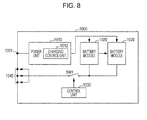
- Figs. 7 to 9 are illustrative diagrams showing an example of the configuration of a battery server 1000 that is an example of a discharge control apparatus of the related art.
- the battery server 1000 of the related art includes an AC/DC input terminal 1001, a power source unit 1010, a battery module 1020, a control unit 1030, and a universal DC output terminal 1040.
- the AC/DC input terminal 1001 is a terminal that inputs power generated outside the battery server 1000.
- the power may be generated from an electric generation plant by an electric power company, or may be generated by an electric generation apparatus using renewable energy, such as photovoltaic power generation or wind force power generation, or from unsustainable energy, such as manpower. Power input to the AC/DC input terminal 1001 is transmitted to the power source unit 1010.
- the power source unit 1010 performs processes, such as AC-DC conversion, rectification, and boosting on the power input to the AC/DC input terminal 1001 so as to charge the battery module 1020.
- the power source unit 1010 includes a charging control unit 1012, as shown in Fig. 7 .
- the charging control unit 1012 controls charging of the battery module 1020.
- the control of charging performed by the charging control unit 1012 may be, for example, a CCCV charging process.
- the battery module 1020 is a module equipped with a secondary battery, which is chargeable and dischargeable, therein, and can accumulate a predetermined amount of power therein. Although one battery module is connected to one battery server 1000 in Fig. 7 , two or more battery modules may be connected to one battery server 1000, as shown in Fig. 8 . Further, the battery module 1020, as shown in Fig. 9 , may be divided into sub-battery modules 1021a to 1021d. The sub-battery modules 1021a to 1021d are connected in parallel through diodes D1 to D4, respectively.
- the charging control unit 1012 simultaneously charges the sub-battery modules 1021a to 1021d, when the sub-battery modules 1021a to 1021d are disposed in the battery module 1020. Alternatively, the charging control unit 1012 may charge only one sub-battery module and then charge another sub-battery module after charging the one sub-battery module or charging up to a predetermined amount.
- the control unit 1030 controls turning on/off of a switch SW1 which is implemented by a MOSFET or the like to output the power accumulated in the battery module 1020 from the universal DC output terminal 1040.
- a switch SW1 which is implemented by a MOSFET or the like to output the power accumulated in the battery module 1020 from the universal DC output terminal 1040.
- the universal output terminal 1040 is provided to supply the power accumulated in the battery module 1020 to the outside of the battery server 1000.
- the power accumulated in the battery module 1020 is output from the universal DC output terminal 1040 by connecting a cable to the universal DC output terminal 1040 and turning on the switch SW1 by operating the control unit 1030 in a predetermined way.
- the battery server 1000 that is an example of a discharge control apparatus of the related art has a configuration as described above.
- any particular process is not necessary for discharge control from the battery module.
- two or more battery modules are connected to dynamically increase/decrease the battery capacity, there is a problem in that it is difficult to suitably control discharge from the battery modules.
- the battery modules When two or more battery modules are connected to a battery server and used, the battery modules may be connected through diodes and electronic switches, but when the battery modules are connected in this way, the power supply from the battery module is temporarily stopped when an electronic switch is operated.
- a battery server and a discharge control method are described in which two or more battery modules that discharge are switched without stopping power when transmitting electricity from the battery modules.
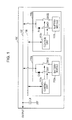
- Fig. 1 is an illustrative view showing the configuration of a battery server 100 according to an embodiment of the present disclosure, as an example of a discharge control apparatus of the present disclosure.
- the configuration of the battery server 100 according to an embodiment of the present disclosure is described with reference to Fig. 1 .
- Fig. 1 shows only the configuration for controlling discharge from a battery pack and the detailed configuration of the battery server 100 is described below.
- the battery server 100 includes a discharge line 107, an information communication line 108, and battery packs 110a and 110b.
- the discharge line 107 is a line for discharging power accumulated in the battery packs 110a and 110b to the outside of the battery server 100.
- the information communication line 108 is a communication line for the battery packs 110a and 110b.
- the battery packs 110a and 110b turn on/off the switches therein on the basis of the information transmitted through the information communication line 108. Accordingly, it is possible to switch the battery modules that discharge, without stopping power when transmitting power from the battery modules.
- the battery packs 110a and 110b are equipped with the battery modules therein and accumulate and discharge power.
- the battery packs 110a and 110b may be detachably attached to the batter server 100 and may be separated from the battery server 100 to be used when the battery modules are finished charging. Although two battery packs are shown in Fig. 1 , the number of battery packs disposed in the battery server 100 is not limited to the example.
- the battery packs 110a and 110b respectively include battery modules 112a and 112b, control units 113a and 113b, and switches SW11, 12, 21, and 22, and each include a diode D1.
- the battery modules 112a and 112b are implemented by secondary batteries and discharge accumulated power to the outside, when the switches SW11, 12, 21, and 22 are turned on by the control units 113a and 113b.
- the battery modules may be configured to output the power after converting it at a predetermined voltage through a DC-DC converter. That is, the DC-DC converter may be disposed between the switch and the battery module.
- the control units 113a and 113b control turning on/off of the switches SW11, 12, 21, and 22 to discharge the power accumulated in the battery modules 112a and 112b to the outside of the battery packs 110a and 110b.
- the control units 113a and 113b communicate through the information communication line 108 so as to control turning on/off of the switches SW11, 12, 21, and 22 on the basis of the communication result performed through the information communication line 108.
- the case where power is being supplied from the battery pack 110a is considered here.
- the switch SW11 of the battery pack 110a is turned off and the switch SW12 is turned on.
- the switches SW21 and 22 of the battery pack 110b are both turned off.
- the case where the source supplying power is switched to be connected to the battery pack 110b from the battery pack 110a is considered.
- an instruction is given from the upper level to the control unit 113a of the battery pack 110a through the information communication line 108.
- the control unit 113a receiving the instruction from the upper level first turns on the switch SW11 and then turns off the switch SW12.
- the switches SW11 and SW12 are both temporarily turned on when the switch SW11 is turned on, the side of the battery module 112a that is connected to the switch SW11 has a lower output voltage than the side that is connected to the switch SW12, and therefore a reverse bias is not applied to the battery module 112a. Further, since the switch SW12 is immediately turned off, the time during which both switches SW11 and SM12 remain turned on is short.
- the voltage of the power that is supplied to the outside drops slightly across a diode D1, but the reduction is compensated for by a capacitor C1 downstream.
- an instruction is given to the control unit 113b of the battery pack 110b from the upper level.
- the control unit 113b receiving the instruction turns on the switch SW21.
- an instruction of turning off the switch SW11 is given to the control unit 113a of the battery pack 110a from the upper level. Power supply from the battery pack 110a is stopped.
- the battery packs 110a and 110b have the configuration shown in Fig. 1 , power supply does not stop even if the source of power supply is switched.
- the battery server 100 includes an AC/DC input terminal 101, a DC input terminal 102, power source units 103 and 104, a power integration unit 105, a charge line 106, a discharge line 107, an information communication line 108, battery packs 110a and 110b, a main control unit 120, and a universal DC output terminal 130.
- the AC/DC input terminal 101 is a terminal that inputs power generated outside the battery server 100.
- the power may be generated from an electric generation plant by an electric power company, or may be generated by an electric generation apparatus using renewable energy, such as photovoltaic power generation or wind force power generation, or from unsustainable energy, such as manpower.
- Power input to the AC/DC input terminal 101 is transmitted to the power source unit 103.
- the AC/DC input terminal 101 is herein a common terminal for AC and DC, independent terminals may be disposed for AC and DC.
- the DC input terminal 102 is a terminal that inputs power generated outside the battery server 100.
- Power input to the DC input terminal 102 is power mainly generated by an electric generation apparatus using renewable energy, such as photovoltaic power generation or wind force power generation, or from unsustainable energy, such as manpower.
- the power input to the DC input terminal 102 is transmitted to the power source unit 104.
- the number of terminals for receiving the input of power is not limited to the example in the present disclosure.
- the power source unit 103 performs processes, such as AC-DC conversion, rectification, and boosting on the power input to the AC/DC input terminal 101 to charge the battery packs 110a and 110b. Further, the power source unit 104 performs processes, such as rectification, and boosting on the power input to the DC input terminal 102 to charge the battery packs 110a and 110b.
- the maximum power is achieved by using an MPPT (Maximum Power Point Tracker) and then adjusted at a predetermined voltage.
- MPPT Maximum Power Point Tracker
- the power that has undergone various processes in the power source units 103 and 104 is output to the power integration unit 105.
- the battery server 100 shown in Fig. 2 includes two power source units 103 and 104, the present disclosure is not limited to the example in the present disclosure and the power source units are disposed depending on the terminals for receiving the input of power.
- the power integration unit 105 integrates the power output from the power source units 103 and 104 and outputs the integrated power. Although the detailed configuration of the power integration unit 105 is described later, for example, it combines the power output from the power source units 103 and 104 through capacitors and/or diodes. The power combined by the power integration unit 105 is supplied to the battery packs 110a and 110b by the control of the main control unit 120. When only one power source unit is disposed in the battery server 100, the power integration unit 105 may not be necessary.
- the charge line 106 is a power line for supplying the power integrated and output by the power integration unit 105 to the battery packs 110a and 110b.
- the discharge line 107 is a power line for outputting power accumulated in the battery packs 110a and 110b from the universal DC output terminal 130.
- the information communication line 108 is a communication line for communicating information between the main control unit 120 and the control units 113a and 113b respectively included in the battery packs 110a and 110b.
- the battery packs 110a and 110b are equipped with the battery modules and allow accumulation and discharge of power.
- the battery packs 110a and 110b may be detachably attached to the battery server 100 and may be separated from the battery server 100 to be used when the battery modules are finished being charged. Although two battery packs are shown in Fig. 2 , the number of battery packs disposed in the battery server 100 is not limited to the example.
- the battery packs 110a and 110b respectively include charging control units 111a and 111b, battery modules 112a and 112b, control units 113a and 113b, switches SW11, SW12 and SW21, SW22, and diodes D11 and D21.
- the charging control units 111a and 111b control charging of the battery modules 112a and 112b by receiving the power supplied from the power integration unit 105 through the charge line 106 and supplying the power to the battery modules 112a and 112b.
- the battery modules 112a and 112b are implemented by secondary batteries and accumulate the power supplied from the charging control units 111a and 111b, and discharge the accumulated power to the outside, when the switches SW11, SW12 and SW21, SW22 are turned on by the control units 113a and 113b.
- the battery modules 112a and 112b may be divided into two or more sub-battery modules, if necessary.
- the battery used herein may be any one of a lithium ion battery, a nickel hydrogen battery, a lead battery, and a common secondary battery (battery cell).
- the configuration of the battery module and the sub-battery module may be implemented by any one of series or parallel connection of two or more battery cells.
- the control units 113a and 113b control turning on/off of the switches SW11, SW12 and SW21, SW22 to discharge the power accumulated in the battery modules 112a and 112b to the outside of the battery packs 110a and 110b.
- the control units 113a and 113b communicate with the main control unit 120 so as to control turning on/off of the switches SW11, SW12 and SW21, SW22 on the basis of the communication result with the main control unit 120.
- the main control unit 120 controls the operation of the battery server 100. Specifically, the main control unit 120 constantly monitors the power input to the power integration unit 105. The main control unit 120 measures the voltage of a capacitor and the amount of current flowing through the diode when monitoring the power input to the power integration unit 105. Accordingly, the main control unit 120 calculates the amount of power input to the power integration unit 105. The main control, unit 120 may perform A/D conversion on parameters to be measured and calculate the amount of power by using the parameters that are acquired as digital values.
- the main control unit 120 supplies the entire input power to the battery packs 110a and 110b. More specifically, for example, when power of 300 W is acquired, as a result of monitoring the power input to the power integration unit 105, it is determined to supply 200 W to the battery pack 110a and 95 W to the battery pack 110b and the main control unit 120 gives an instruction to the battery packs 110a and 110b through the information communication line 108.
- the battery packs 110a and 110b receiving the instructions receive the power assigned thereto and charge the battery modules 112a and 112b therein.
- the main control unit 120 gives an instruction of supplying power a little smaller than the total power that can be supplied (for example, about 90% to 95% of the entire power input to the power integration unit 105). This is because when the power amount is large, the load increases accordingly and power becomes insufficient. Further, a disadvantage occurs, if the output voltages of the power source units 103 and 104 do not completely match each other. This is because power can be received only from the power source unit at a higher voltage. In practice, it is difficult to make the output voltages of the power source units 103 and 104 completely the same.
- the output of both the power source units match each other. That is, power is consumed first by the side at a higher voltage.
- the voltage of the side at the higher voltage decreases, and consequently, the output voltages of the two power source units 103 and 104 become the same. Accordingly, the composite power is output from the two power source units. That is, when the power source units 103 and 104 are designed to output voltages equal to each other to some extent, power from the two power source units are combined in the power integration unit 105.
- the universal DC output terminal 130 is a terminal that outputs power accumulated in the battery packs 110a and 110b to the outside of the battery server 100.
- a DC output terminal is provided as a terminal that outputs power to the outside of the battery server 100 in the battery server 100 according to the embodiment, the present disclosure is not limited to the example.
- Fig. 3 is an illustrative diagram showing another example of the configuration of the battery server 100 according to an embodiment of the present disclosure.
- the battery server 100 shown in Fig. 3 is different in that the control units 113a and 113b of the battery packs 110a and 110b respectively include A/D converters 114a and 114b that monitor the voltage or the amount of current flowing to the battery packs 110a and 110b and feedback circuits 115a and 115b that feedback the amount of power supplied to the battery packs 110a and 110b to the main control unit 120.
- the main control unit 120 designates a charging ratio for the battery packs 110a and 110b when the battery packs 110a and 110b are charged.
- electricity is generated outside the battery server 100 and power is supplied to the battery server 100.
- the battery packs 110a and 110b start to be charged in accordance with the charging ratio designated by the main control unit 120.
- the main control unit 120 designates the charging ratio of the battery packs 110a and 110b at 2:1 and power of 300 W is generated and supplied to the battery server 100, the battery packs 110a and 110b gradually receive power from the generated power and are charged.
- the battery packs 110a and 110b change the timing for receiving the power from the power integration unit 105 in synchronization with each other.
- the main control unit 120 designates the increase amount of power in charging for the battery packs 110a and 110b. For example, the main control unit 120 determines the increase amount by 20 W for the battery pack 110a and by 10 W for the battery pack 110b.
- the main control unit 120 changes charging of the battery packs 110a and 110b to a self-adjusting mode. For example, when the battery packs 110a and 110b are charged at a level above the amount of electricity generated, the voltage supplied from the power integration unit 105 decreases.
- the control units 113a and 113b detect the decrease in supplied power by using the A/D converters 114a and 114b and the voltage is adjusted by the feedback circuits 115a and 115b through feedback.
- the amount of power synchronously increases from the start to the stationary state and the battery packs 110a and 110b autonomously operate, when the amount of power exceeds the voltage supplied from the power integration unit 105.
- the supposed voltage of the power integration unit 105 is determined in advance and the supposed voltage is constantly output. When load equal to or more than the generated power is applied, the output voltage of the power integration unit 105 decreases, which is detected by the control units 113a and 113b and the battery packs adjust the amount of current to fit to the output voltage of the power integration unit 105.
- the battery pack 110b may be added to the battery server 100 and also charged. It is assumed that the amount of power generation is 300 W and the battery pack 110a has received power of 200 W in advance. Accordingly, when the charging ratio of the battery packs 110a and 110b is 2:1, the main control unit 120 charges the battery pack 110b up to 100 W. For example, the main control unit 120 checks the power that is currently consumed by the battery pack 110a by communication or detects it by using a sensor and indicates the battery pack 110b of the value of receiving power therefor in accordance with the charging ratio.
- the main control unit 120 When there is no problem even if load of up to 100 W is applied to the battery pack 110b, the main control unit 120 implements a self-adjusting mode where the battery packs 110a and 110b autonomously adjust the power. Meanwhile, if the potential of the power integration unit 105 drops before the load of 100 W is applied, the main control unit 120 decreases the load of the battery pack 110a. For example, if the potential of the power integration unit 105 drops when a load of 90 W is applied to the battery pack 110b, the main control unit 120 changes the load of the battery pack 110 to 180 W. Thereafter, the battery packs 110a and 110b autonomously adjust the power at the predetermined charging ratio.
- the charging ratio of the battery packs may be changed after being determined. For example, when the charging ratio of the battery packs 110a and 110b is determined at 2:1 and the power of the battery packs 110a and 110b is in the stationary state, the charging ratio may be changed to 1:1. In this case, the receiving power of the battery pack at the higher level is fitted to the lower side. That is, the receiving power of both the battery packs becomes 100 W. Thereafter, it is possible to supply power by 150 W while increasing the power of both the battery packs synchronously.
- the power supplying to the battery server 100 is changed is considered. For example, when power obtained by photovoltaic power generation is being supplied, the solar light may be changed in some cases.
- the battery packs autonomously increase the receiving power.
- the output power of the power integration unit 105 is monitored by the control units 113a and 113b of the battery packs and the power is adjusted.
- the power is monitored and adjusted by the control units 113a and 113b of the battery packs in the same way, even if it is cloudy and power generated by photovoltaic power generation is reduced.
- the main control unit 120 may determine priority of the battery packs to be charged instead of designating the charging ratio described above. For example, the main control unit 120 may determine the priority to sequentially charge the battery packs 110a and 110b in this order. In this case, when power remains even if the battery pack 110a at the first order is charged at the maximum speed, the main control unit 120 allows power to be supplied to the battery pack 110b at the second order.
- the main control unit 120 communicates with the battery pack 110a at the first order and monitors whether the battery pack 110a starts to be charged at the maximum speed. When the battery pack 110a starts to be charged at the maximum speed and the voltage remains, the main control unit 120 allows the battery pack 110b at the next order in the priority to be charged. If the voltage starts to drop, the main control unit 120 reduces the receiving power of the battery pack 110b. If it is insufficient, the main control unit 120 reduces the receiving power of the battery packs one after the other to zero and can charge first the battery pack of the higher priority.
- the configuration of the battery server 100 according to an embodiment of the present disclosure was described above with reference to Figs. 2 and 3 . Next, the operation of the battery server 100 according to an embodiment of the present disclosure is described.
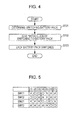
- Fig. 4 is a flowchart showing the operation of the battery server 100 according to an embodiment of the present disclosure and showing the operation when the power source of the battery server 100 is switched from the battery pack 110a to the battery pack 110b.
- the operation of the battery server 100 according to an embodiment of the present disclosure is described with reference to Fig. 4 .
- the main control unit 120 determines to switch the power source from the battery pack 110a to the battery pack 110b (Step S101).
- Step S101 when determining to switch the power source from the battery pack 110a to the battery pack 110b, the main control unit 120 sequentially gives an instruction of turning on/off the switches through the information communication line 108, for the battery packs 110a and 110b (Step S102).
- Step S102 when the main control unit 120 gives an instruction of turning on/off the switches through the information communication line 108, for the battery packs 110a and 110b, the battery packs 110a and 110b sequentially turn on/off the switches SW11, SW12, SW21, and SW22 on the basis of the instruction from the main control unit 120 (Step S103).
- Fig. 5 is an illustrative diagram showing a time series when turning on/off the switches SW11, SW12, SW21, and SW22 disposed in the battery packs 110a and 110b. "O” shows that the switch is turned on and “x” shows that the switch is turned off in the figure.
- the main control unit 120 determines to switch the power source from the battery pack 110a to the battery pack 110b. Accordingly, the main control unit 120 gives an instruction to the battery pack 110a to turn on first the switch SW11 of the battery pack 110a. The battery pack 110a receiving the instruction turns on the switch SW11 that has been turned off.
- the main control unit 120 gives an instruction to the battery pack 110a to turn off the switch SW12 of the battery pack 110a.
- the battery pack 110a receiving the instruction turns off the switch SW12 that has been turned on.
- the main control unit 120 gives an instruction to the battery pack 110b to turn on the switch SW21 of the battery pack 110b.
- the battery pack 110b receiving the instruction turns on the switch SW21 that has been turned off.
- the main control unit 120 gives an instruction to the battery pack 110a to turn off the switch SW11 of the battery pack 110a.
- the battery pack 110a receiving the instruction turns off the switch SW11 that has been turned on. Power supply from the battery pack 110a is stopped. However, since the switch SW21 of the battery pack 110b has been turned on, power remains supplied from the battery pack 110b. Accordingly, the supply of power is not stopped, even though the power source is switched from the battery pack 110a to the battery pack 110b.
- the output is made through a diode as described above.
- the output is made through a diode, it is possible to avoid deterioration of the battery modules in the battery packs due to an influence of reverse bias from another battery pack.
- the main control unit 120 gives an instruction to the battery pack 110b to turn on the switch SW22 of the battery pack 110b.
- the battery pack 110b receiving the instruction turns on the switch SW22 that has been turned off.
- the main control unit 120 gives an instruction to the battery pack 110b to turn off the switch SW21 of the battery pack 110b.
- the battery pack 110b receiving the instruction turns off the switch SW21 that has been turned on.
- the main control unit 120 can switch the power source from the battery pack 110a to the battery pack 110b without stopping the supply of power from the battery packs 110a and 110b.
- Fig. 6 is an illustrative diagram showing the configuration of a battery server 200 according to a modified example of an embodiment of the present disclosure.
- the configuration of the battery server 200 according to a modified example of the present disclosure is described with reference to Fig. 6 .
- the battery server 200 includes a discharge line 207, an information communication line 208, and battery packs 210a and 210b.
- the battery packs 210a and 210b each include a diode D1 and respectively include battery modules 212a and 212b, control units 213a and 213b, and DC-DC converters 221a, 222a and 221b, 222b.
- the DC-DC converters 221a, 221b, 222a, and 222b are DC-DC converters having a switch function.
- the DC-DC converters 221a, 221b, 222a, and 222b can turn on/off the output in accordance with instructions from the control units 213a and 213b.
- the DC-DC converter 221b is turned on by the control of the control unit 213b and the DC-DC converter 221a is turned off by the control of the control unit 213a. Further, the DC-DC converter 222b is turned on and the DC-DC converter 221b is turned off finally by the control of the control unit 213b.
- the power source is switched from the battery pack 210a to the battery pack 210b in the above description.
- An advantage of the modified example is that voltage is not decreased by the diode D1 and heat is not generated by the electronic switches (heat is usually generated by the current flowing to the MOSFET). Meanwhile, since the circuit increases in size, it may be possible to remove the DC-DC converters 221a and 221b, and when switching the power source, two DC-DC converters 222a and 222b may be simultaneously turned on and the DC-DC converter where power is cut is then turned off. Accordingly, voltage is not decreased by the diode D1 and it is possible to reduce the size of the circuit. Further, even if both the DC-DC converters 222a and 222b are simultaneously turned on, reverse bias is not applied to the battery modules 212a and 212b and therefore the battery is not deteriorated. In addition, since the output continues, the voltage does not change.
- the configuration of the battery server 200 according to a modified example of the present disclosure was described above with reference to Fig. 6 .
- the battery server 100 when two or more battery packs are included in the battery server 100 and power is supplied from one of the battery packs, it is possible to keep supplying power without stopping supply of power even if the battery pack that is a power source is switched.
Landscapes
- Engineering & Computer Science (AREA)
- Power Engineering (AREA)
- Charge And Discharge Circuits For Batteries Or The Like (AREA)
- Stand-By Power Supply Arrangements (AREA)
- Secondary Cells (AREA)
Applications Claiming Priority (1)
| Application Number | Priority Date | Filing Date | Title |
|---|---|---|---|
| JP2010287548A JP5786330B2 (ja) | 2010-12-24 | 2010-12-24 | 放電制御装置及び放電制御方法 |
Publications (2)
| Publication Number | Publication Date |
|---|---|
| EP2469684A2 true EP2469684A2 (de) | 2012-06-27 |
| EP2469684A3 EP2469684A3 (de) | 2016-01-13 |
Family
ID=45491238
Family Applications (1)
| Application Number | Title | Priority Date | Filing Date |
|---|---|---|---|
| EP11188175.1A Withdrawn EP2469684A3 (de) | 2010-12-24 | 2011-11-08 | Entladesteuerungsvorrichtung und Entladesteuerungsverfahren |
Country Status (5)
| Country | Link |
|---|---|
| US (1) | US8901889B2 (de) |
| EP (1) | EP2469684A3 (de) |
| JP (1) | JP5786330B2 (de) |
| CN (1) | CN102545367B (de) |
| TW (1) | TWI472121B (de) |
Cited By (3)
| Publication number | Priority date | Publication date | Assignee | Title |
|---|---|---|---|---|
| FR3082068A1 (fr) * | 2018-05-30 | 2019-12-06 | Blue Solutions | Dispositif et systeme rechargeables de stockage d'energie electrique, vehicule et installation munis d'un tel systeme |
| CN111566895A (zh) * | 2018-01-12 | 2020-08-21 | 开利公司 | 用于运输制冷单元的用于带有双输出电压的电池充电器的架构和方法以及充电管理 |
| DE102014219889B4 (de) | 2013-10-09 | 2024-07-18 | Ford Global Technologies, Llc | Fahrzeug und Verfahren zum Steuern einer Batterie in einem Fahrzeug |
Families Citing this family (20)
| Publication number | Priority date | Publication date | Assignee | Title |
|---|---|---|---|---|
| WO2012144674A1 (ko) * | 2011-04-22 | 2012-10-26 | Sk 이노베이션 주식회사 | 착탈 가능한 배터리 모듈, 이를 이용한 배터리 스트링을 위한 전하 균일 방법 및 장치 |
| JP5998454B2 (ja) * | 2011-11-07 | 2016-09-28 | ソニー株式会社 | 制御装置、制御方法および制御システム |
| CN102938570B (zh) * | 2012-10-23 | 2015-03-11 | 华为技术有限公司 | 供电系统及供电装置 |
| KR101424500B1 (ko) * | 2012-11-26 | 2014-08-01 | 디에치이앤이 (주) | 배터리 비상 발전기 및 이를 갖는 전력계통 시스템 |
| WO2014123188A1 (ja) * | 2013-02-08 | 2014-08-14 | 日本電気株式会社 | 電池制御装置、電池制御支援装置、電池制御システム、電池制御方法、電池制御支援方法、および記録媒体 |
| JP6319726B2 (ja) * | 2014-05-15 | 2018-05-09 | パナソニックIpマネジメント株式会社 | 電力供給切替システムおよび電力供給切替方法 |
| EP2944432B1 (de) | 2014-05-16 | 2017-05-31 | Techtronic Power Tools Technology Limited | Mehrfach-batteriepack für elektrische werkzeuge |
| JP6880740B2 (ja) * | 2014-11-04 | 2021-06-02 | ソニーグループ株式会社 | 直流電力制御装置、直流電力制御方法及び直流電力制御システム |
| CN106451582A (zh) * | 2015-08-11 | 2017-02-22 | 中兴通讯股份有限公司 | 一种实现充放电控制的方法及装置 |
| JP6883396B2 (ja) * | 2016-08-25 | 2021-06-09 | 矢崎総業株式会社 | 急速充電装置 |
| TWI645672B (zh) * | 2017-11-15 | 2018-12-21 | 廣達電腦股份有限公司 | 電源重置電路 |
| CN108427496A (zh) * | 2018-02-14 | 2018-08-21 | 合肥联宝信息技术有限公司 | 一种控制方法及电子设备 |
| KR102390394B1 (ko) | 2018-05-15 | 2022-04-22 | 주식회사 엘지에너지솔루션 | 메인 배터리와 서브 배터리를 제어하기 위한 장치 및 방법 |
| CN108711662B (zh) * | 2018-05-22 | 2020-05-05 | 宁德时代新能源科技股份有限公司 | 一种电池组加热装置与控制方法 |
| KR102778975B1 (ko) * | 2019-05-10 | 2025-03-11 | 삼성전자주식회사 | 배터리 수명을 연장하기 위한 전자 장치 및 방법 |
| JP7534058B2 (ja) | 2020-05-26 | 2024-08-14 | Fdk株式会社 | バックアップ電源装置 |
| EP4175117A4 (de) * | 2020-06-26 | 2023-08-02 | Terawatt Technology K.K. | Batteriesystem, steuerungsvorrichtung und steuerungsverfahren |
| CN112644283B (zh) * | 2020-12-15 | 2022-05-31 | 神华铁路装备有限责任公司 | 车载网关电源管理系统及25t轴重铝合金煤炭漏斗车 |
| CN113178939A (zh) * | 2021-04-12 | 2021-07-27 | 天地(常州)自动化股份有限公司 | 隔爆兼本安电源中电池组冗余切换系统、方法及电子设备 |
| JP7644548B1 (ja) | 2024-07-02 | 2025-03-12 | Mirai-Labo株式会社 | 電源装置および電源制御方法 |
Citations (3)
| Publication number | Priority date | Publication date | Assignee | Title |
|---|---|---|---|---|
| JP2008199798A (ja) | 2007-02-13 | 2008-08-28 | Panasonic Ev Energy Co Ltd | 充放電装置 |
| JP2010166811A (ja) | 2000-04-20 | 2010-07-29 | Sony Corp | 電源システムと電子機器と電源供給装置および電源供給方法 |
| JP2010287548A (ja) | 2009-06-15 | 2010-12-24 | Ccs Inc | 光照射装置 |
Family Cites Families (29)
| Publication number | Priority date | Publication date | Assignee | Title |
|---|---|---|---|---|
| JPS5281524A (en) * | 1975-12-29 | 1977-07-08 | Shin Kobe Electric Machinery | Storage battery switching device |
| JPS59148073U (ja) * | 1983-03-23 | 1984-10-03 | ソニー株式会社 | 電源装置 |
| JP2566996Y2 (ja) * | 1988-03-30 | 1998-03-30 | 株式会社東芝 | 電池駆動式電子機器 |
| JP2539982B2 (ja) * | 1992-01-31 | 1996-10-02 | 株式会社ピーエフユー | 電源制御方式 |
| JP2928431B2 (ja) * | 1993-01-13 | 1999-08-03 | 富士通株式会社 | 補助バッテリ装置および充放電制御方法 |
| US5825155A (en) * | 1993-08-09 | 1998-10-20 | Kabushiki Kaisha Toshiba | Battery set structure and charge/ discharge control apparatus for lithium-ion battery |
| US5652499A (en) * | 1995-02-20 | 1997-07-29 | Sanyo Electric Co., Ltd. | Power supply apparatus to provide power to electrical equipment from a plurality of battery packs and its method of power supply |
| US5656915A (en) * | 1995-08-28 | 1997-08-12 | Eaves; Stephen S. | Multicell battery pack bilateral power distribution unit with individual cell monitoring and control |
| JPH1051961A (ja) * | 1996-07-31 | 1998-02-20 | Toshiba Corp | 電池パックの短絡保護回路 |
| TWI247469B (en) * | 2003-02-11 | 2006-01-11 | O2Micro Int Ltd | Power supply system, electronic device comprising the same, and method of ensuring safe operation of batteries in parallel |
| JP2004248369A (ja) * | 2003-02-12 | 2004-09-02 | Toshio Nozawa | 携帯機器用電力供給システム |
| JP2007520180A (ja) * | 2003-10-14 | 2007-07-19 | ブラック アンド デッカー インク | 電池パックの障害状態からの保護を提供するべく適合された二次電池、電動工具、充電器、及び電池パック用の保護方法、保護回路、及び保護装置 |
| US7456614B2 (en) * | 2003-10-27 | 2008-11-25 | Sony Corporation | Battery pack |
| JP2006115561A (ja) * | 2004-10-12 | 2006-04-27 | Matsushita Electric Ind Co Ltd | 携帯端末装置及び電源供給装置 |
| JP4508145B2 (ja) * | 2006-04-10 | 2010-07-21 | 株式会社デンソー | 組電池の管理装置 |
| EP2003760A3 (de) * | 2007-06-14 | 2018-01-24 | Black & Decker, Inc. | Temperatur- und Polarisationsspannungskompensierungssystem |
| US20090021216A1 (en) * | 2007-07-17 | 2009-01-22 | Malcolm Hills | Dual-Battery Charging And Discharging Method And Device And Portable Electronic Device Containing The Same |
| US8358108B2 (en) * | 2007-09-05 | 2013-01-22 | Black & Decker Inc. | System and method for re-initiating charge cycle for battery pack left in a charger |
| JP2009183020A (ja) * | 2008-01-29 | 2009-08-13 | Panasonic Corp | モバイル機器の電源回路装置 |
| JP5360968B2 (ja) * | 2008-03-03 | 2013-12-04 | パナソニック株式会社 | 情報処理装置および集積回路 |
| US7847512B2 (en) * | 2008-03-20 | 2010-12-07 | Min Carroll | Solar powered DC load system |
| JP4216898B1 (ja) * | 2008-03-28 | 2009-01-28 | 和征 榊原 | 電池パック |
| US8111038B2 (en) * | 2008-06-12 | 2012-02-07 | O2 Micro, Inc | Vehicle electronic systems with battery management functions |
| CN101610304B (zh) * | 2008-06-20 | 2013-01-02 | 希姆通信息技术(上海)有限公司 | 移动通信终端及其双电池充供电的切换方法 |
| TW201010241A (en) * | 2008-08-25 | 2010-03-01 | J S Power Co Ltd | Battery charge and discharge equipment, energy-saving module, and its control method |
| CN201466783U (zh) * | 2009-02-13 | 2010-05-12 | 路建乡 | 基于光伏阵列切换控制的风光互补发电电源装置 |
| TWI379487B (en) * | 2009-06-08 | 2012-12-11 | Inergy Technology Inc | Battery monitoring apparatus and method thereof |
| JP2011130551A (ja) * | 2009-12-16 | 2011-06-30 | Sanyo Electric Co Ltd | 電源装置及びこれを備える車両 |
| US8541979B2 (en) * | 2010-06-22 | 2013-09-24 | A123 Systems, Inc. | System and method for balancing voltage of individual battery cells within a battery pack |
-
2010
- 2010-12-24 JP JP2010287548A patent/JP5786330B2/ja not_active Expired - Fee Related
-
2011
- 2011-10-27 TW TW100139208A patent/TWI472121B/zh not_active IP Right Cessation
- 2011-11-08 EP EP11188175.1A patent/EP2469684A3/de not_active Withdrawn
- 2011-12-08 US US13/314,822 patent/US8901889B2/en not_active Expired - Fee Related
- 2011-12-16 CN CN201110425041.1A patent/CN102545367B/zh not_active Expired - Fee Related
Patent Citations (3)
| Publication number | Priority date | Publication date | Assignee | Title |
|---|---|---|---|---|
| JP2010166811A (ja) | 2000-04-20 | 2010-07-29 | Sony Corp | 電源システムと電子機器と電源供給装置および電源供給方法 |
| JP2008199798A (ja) | 2007-02-13 | 2008-08-28 | Panasonic Ev Energy Co Ltd | 充放電装置 |
| JP2010287548A (ja) | 2009-06-15 | 2010-12-24 | Ccs Inc | 光照射装置 |
Cited By (3)
| Publication number | Priority date | Publication date | Assignee | Title |
|---|---|---|---|---|
| DE102014219889B4 (de) | 2013-10-09 | 2024-07-18 | Ford Global Technologies, Llc | Fahrzeug und Verfahren zum Steuern einer Batterie in einem Fahrzeug |
| CN111566895A (zh) * | 2018-01-12 | 2020-08-21 | 开利公司 | 用于运输制冷单元的用于带有双输出电压的电池充电器的架构和方法以及充电管理 |
| FR3082068A1 (fr) * | 2018-05-30 | 2019-12-06 | Blue Solutions | Dispositif et systeme rechargeables de stockage d'energie electrique, vehicule et installation munis d'un tel systeme |
Also Published As
| Publication number | Publication date |
|---|---|
| JP5786330B2 (ja) | 2015-09-30 |
| US20120161714A1 (en) | 2012-06-28 |
| EP2469684A3 (de) | 2016-01-13 |
| CN102545367A (zh) | 2012-07-04 |
| TW201230597A (en) | 2012-07-16 |
| JP2012135179A (ja) | 2012-07-12 |
| CN102545367B (zh) | 2016-01-20 |
| TWI472121B (zh) | 2015-02-01 |
| US8901889B2 (en) | 2014-12-02 |
Similar Documents
| Publication | Publication Date | Title |
|---|---|---|
| EP2469684A2 (de) | Entladesteuerungsvorrichtung und Entladesteuerungsverfahren | |
| US9755440B2 (en) | Charging control device and charging control method | |
| EP2793352B1 (de) | Stromversorgungssystem und inverter zu dessen ladung und entladung | |
| EP2605359B1 (de) | Batteriesystem und sein steuerungsverfahren | |
| KR101243909B1 (ko) | 전력 저장 시스템 및 그 제어 방법 | |
| KR101775957B1 (ko) | 태양광 발전 장치 연계형 전원공급시스템 | |
| US20110210694A1 (en) | Power storage system | |
| US20110210701A1 (en) | Battery system | |
| EP3163712B1 (de) | Unterbrechungsfreies stromversorgungssystem | |
| JP2011211885A (ja) | 蓄電システム | |
| US9269989B2 (en) | Electric power supply system | |
| WO2011065375A1 (ja) | 電力変換装置、発電システム、及び充放電制御方法 | |
| US8957545B2 (en) | Prioritization circuit and electric power supply system | |
| RU2662791C1 (ru) | Инверторный зарядно-разрядный преобразовательный комплекс локальной сети с разнородными источниками энергии | |
| JP2004023879A (ja) | 給電システム及びその制御方法 | |
| JP2018121468A (ja) | 直流給電システム | |
| WO2018155442A1 (ja) | 直流給電システム | |
| WO2021039678A1 (ja) | 直流給電装置 | |
| KR101215396B1 (ko) | 방전전류제어를 이용한 하이브리드 스마트그리드 무정전전원장치 | |
| CN120016524A (zh) | 新能源储能子模块及其运行方法、储能系统及其运行方法 | |
| EP3316467A2 (de) | Stromversorgungssystem für mehrere stromquellen | |
| JP2013090456A (ja) | パワーコンディショナ | |
| CN121650487A (zh) | 充电装置、设备和充电桩 | |
| JP2014050160A (ja) | 給電装置 |
Legal Events
| Date | Code | Title | Description |
|---|---|---|---|
| 17P | Request for examination filed |
Effective date: 20111108 |
|
| AK | Designated contracting states |
Kind code of ref document: A2 Designated state(s): AL AT BE BG CH CY CZ DE DK EE ES FI FR GB GR HR HU IE IS IT LI LT LU LV MC MK MT NL NO PL PT RO RS SE SI SK SM TR |
|
| AX | Request for extension of the european patent |
Extension state: BA ME |
|
| PUAI | Public reference made under article 153(3) epc to a published international application that has entered the european phase |
Free format text: ORIGINAL CODE: 0009012 |
|
| PUAL | Search report despatched |
Free format text: ORIGINAL CODE: 0009013 |
|
| AK | Designated contracting states |
Kind code of ref document: A3 Designated state(s): AL AT BE BG CH CY CZ DE DK EE ES FI FR GB GR HR HU IE IS IT LI LT LU LV MC MK MT NL NO PL PT RO RS SE SI SK SM TR |
|
| AX | Request for extension of the european patent |
Extension state: BA ME |
|
| RIC1 | Information provided on ipc code assigned before grant |
Ipc: H02J 7/00 20060101AFI20151209BHEP Ipc: H01M 10/44 20060101ALI20151209BHEP |
|
| STAA | Information on the status of an ep patent application or granted ep patent |
Free format text: STATUS: EXAMINATION IS IN PROGRESS |
|
| 17Q | First examination report despatched |
Effective date: 20180702 |
|
| STAA | Information on the status of an ep patent application or granted ep patent |
Free format text: STATUS: THE APPLICATION IS DEEMED TO BE WITHDRAWN |
|
| 18D | Application deemed to be withdrawn |
Effective date: 20191120 |