EP2437886B1 - Modifizierte zeolithe und ihre verwendung für das recycling von kunststoffabfall - Google Patents
Modifizierte zeolithe und ihre verwendung für das recycling von kunststoffabfall Download PDFInfo
- Publication number
- EP2437886B1 EP2437886B1 EP10724562.3A EP10724562A EP2437886B1 EP 2437886 B1 EP2437886 B1 EP 2437886B1 EP 10724562 A EP10724562 A EP 10724562A EP 2437886 B1 EP2437886 B1 EP 2437886B1
- Authority
- EP
- European Patent Office
- Prior art keywords
- zeolite
- catalyst
- ion
- exchange process
- minutes
- Prior art date
- Legal status (The legal status is an assumption and is not a legal conclusion. Google has not performed a legal analysis and makes no representation as to the accuracy of the status listed.)
- Active
Links
Images

Classifications
-
- B—PERFORMING OPERATIONS; TRANSPORTING
- B01—PHYSICAL OR CHEMICAL PROCESSES OR APPARATUS IN GENERAL
- B01J—CHEMICAL OR PHYSICAL PROCESSES, e.g. CATALYSIS OR COLLOID CHEMISTRY; THEIR RELEVANT APPARATUS
- B01J29/00—Catalysts comprising molecular sieves
- B01J29/04—Catalysts comprising molecular sieves having base-exchange properties, e.g. crystalline zeolites
- B01J29/06—Crystalline aluminosilicate zeolites; Isomorphous compounds thereof
- B01J29/08—Crystalline aluminosilicate zeolites; Isomorphous compounds thereof of the faujasite type, e.g. type X or Y
- B01J29/084—Y-type faujasite
-
- B—PERFORMING OPERATIONS; TRANSPORTING
- B01—PHYSICAL OR CHEMICAL PROCESSES OR APPARATUS IN GENERAL
- B01J—CHEMICAL OR PHYSICAL PROCESSES, e.g. CATALYSIS OR COLLOID CHEMISTRY; THEIR RELEVANT APPARATUS
- B01J37/00—Processes, in general, for preparing catalysts; Processes, in general, for activation of catalysts
- B01J37/30—Ion-exchange
-
- C—CHEMISTRY; METALLURGY
- C08—ORGANIC MACROMOLECULAR COMPOUNDS; THEIR PREPARATION OR CHEMICAL WORKING-UP; COMPOSITIONS BASED THEREON
- C08J—WORKING-UP; GENERAL PROCESSES OF COMPOUNDING; AFTER-TREATMENT NOT COVERED BY SUBCLASSES C08B, C08C, C08F, C08G or C08H
- C08J11/00—Recovery or working-up of waste materials
- C08J11/04—Recovery or working-up of waste materials of polymers
- C08J11/10—Recovery or working-up of waste materials of polymers by chemically breaking down the molecular chains of polymers or breaking of crosslinks, e.g. devulcanisation
- C08J11/16—Recovery or working-up of waste materials of polymers by chemically breaking down the molecular chains of polymers or breaking of crosslinks, e.g. devulcanisation by treatment with inorganic material
-
- C—CHEMISTRY; METALLURGY
- C10—PETROLEUM, GAS OR COKE INDUSTRIES; TECHNICAL GASES CONTAINING CARBON MONOXIDE; FUELS; LUBRICANTS; PEAT
- C10G—CRACKING HYDROCARBON OILS; PRODUCTION OF LIQUID HYDROCARBON MIXTURES, e.g. BY DESTRUCTIVE HYDROGENATION, OLIGOMERISATION, POLYMERISATION; RECOVERY OF HYDROCARBON OILS FROM OIL-SHALE, OIL-SAND, OR GASES; REFINING MIXTURES MAINLY CONSISTING OF HYDROCARBONS; REFORMING OF NAPHTHA; MINERAL WAXES
- C10G1/00—Production of liquid hydrocarbon mixtures from oil-shale, oil-sand, or non-melting solid carbonaceous or similar materials, e.g. wood, coal
- C10G1/10—Production of liquid hydrocarbon mixtures from oil-shale, oil-sand, or non-melting solid carbonaceous or similar materials, e.g. wood, coal from rubber or rubber waste
-
- C—CHEMISTRY; METALLURGY
- C10—PETROLEUM, GAS OR COKE INDUSTRIES; TECHNICAL GASES CONTAINING CARBON MONOXIDE; FUELS; LUBRICANTS; PEAT
- C10G—CRACKING HYDROCARBON OILS; PRODUCTION OF LIQUID HYDROCARBON MIXTURES, e.g. BY DESTRUCTIVE HYDROGENATION, OLIGOMERISATION, POLYMERISATION; RECOVERY OF HYDROCARBON OILS FROM OIL-SHALE, OIL-SAND, OR GASES; REFINING MIXTURES MAINLY CONSISTING OF HYDROCARBONS; REFORMING OF NAPHTHA; MINERAL WAXES
- C10G2300/00—Aspects relating to hydrocarbon processing covered by groups C10G1/00 - C10G99/00
- C10G2300/10—Feedstock materials
- C10G2300/1003—Waste materials
-
- C—CHEMISTRY; METALLURGY
- C10—PETROLEUM, GAS OR COKE INDUSTRIES; TECHNICAL GASES CONTAINING CARBON MONOXIDE; FUELS; LUBRICANTS; PEAT
- C10G—CRACKING HYDROCARBON OILS; PRODUCTION OF LIQUID HYDROCARBON MIXTURES, e.g. BY DESTRUCTIVE HYDROGENATION, OLIGOMERISATION, POLYMERISATION; RECOVERY OF HYDROCARBON OILS FROM OIL-SHALE, OIL-SAND, OR GASES; REFINING MIXTURES MAINLY CONSISTING OF HYDROCARBONS; REFORMING OF NAPHTHA; MINERAL WAXES
- C10G2300/00—Aspects relating to hydrocarbon processing covered by groups C10G1/00 - C10G99/00
- C10G2300/40—Characteristics of the process deviating from typical ways of processing
- C10G2300/44—Solvents
-
- C—CHEMISTRY; METALLURGY
- C10—PETROLEUM, GAS OR COKE INDUSTRIES; TECHNICAL GASES CONTAINING CARBON MONOXIDE; FUELS; LUBRICANTS; PEAT
- C10G—CRACKING HYDROCARBON OILS; PRODUCTION OF LIQUID HYDROCARBON MIXTURES, e.g. BY DESTRUCTIVE HYDROGENATION, OLIGOMERISATION, POLYMERISATION; RECOVERY OF HYDROCARBON OILS FROM OIL-SHALE, OIL-SAND, OR GASES; REFINING MIXTURES MAINLY CONSISTING OF HYDROCARBONS; REFORMING OF NAPHTHA; MINERAL WAXES
- C10G2300/00—Aspects relating to hydrocarbon processing covered by groups C10G1/00 - C10G99/00
- C10G2300/70—Catalyst aspects
-
- Y—GENERAL TAGGING OF NEW TECHNOLOGICAL DEVELOPMENTS; GENERAL TAGGING OF CROSS-SECTIONAL TECHNOLOGIES SPANNING OVER SEVERAL SECTIONS OF THE IPC; TECHNICAL SUBJECTS COVERED BY FORMER USPC CROSS-REFERENCE ART COLLECTIONS [XRACs] AND DIGESTS
- Y02—TECHNOLOGIES OR APPLICATIONS FOR MITIGATION OR ADAPTATION AGAINST CLIMATE CHANGE
- Y02P—CLIMATE CHANGE MITIGATION TECHNOLOGIES IN THE PRODUCTION OR PROCESSING OF GOODS
- Y02P20/00—Technologies relating to chemical industry
- Y02P20/50—Improvements relating to the production of bulk chemicals
-
- Y—GENERAL TAGGING OF NEW TECHNOLOGICAL DEVELOPMENTS; GENERAL TAGGING OF CROSS-SECTIONAL TECHNOLOGIES SPANNING OVER SEVERAL SECTIONS OF THE IPC; TECHNICAL SUBJECTS COVERED BY FORMER USPC CROSS-REFERENCE ART COLLECTIONS [XRACs] AND DIGESTS
- Y02—TECHNOLOGIES OR APPLICATIONS FOR MITIGATION OR ADAPTATION AGAINST CLIMATE CHANGE
- Y02W—CLIMATE CHANGE MITIGATION TECHNOLOGIES RELATED TO WASTEWATER TREATMENT OR WASTE MANAGEMENT
- Y02W30/00—Technologies for solid waste management
- Y02W30/50—Reuse, recycling or recovery technologies
- Y02W30/62—Plastics recycling; Rubber recycling
Definitions
- the present invention relates to novel zeolite based catalysts used in methods of recycling plastics materials.
- the present invention also relates to methods of manufacturing such zeolite based catalysts.
- Plastics waste is traditionally disposed of by land-fill, incineration or recycling by reprocessing the waste into raw material for reuse.
- land-fill may include energy recovery, there still remains the obvious problem of CO 2 emission and the emission of other toxic pollutants.
- temperatures required for incineration are high, typically of the order of 400 to 1200°C.
- zeolite based catalysts in the hydrocracking and pyrolysis of gasoline feed stocks into gasoline is known in the petrochemical industry. Furthermore, the use of zeolite based catalysts in the recycling of waste plastics into desirable fuels such as gasoline, diesel fuel and liquefied petroleum gas (LPG) has been considered as a possible recycling method; thermal and catalytic cracking have both been considered. Hydrocracking catalysts typically consist of a metal (hydrogenation function) supported over an acidic support (cracking function).
- the most used metal functions are noble metals as Pt, Pd and Ni, or bimetallic sulphides such as Co/MoS or Ni/MoS with the usual acidic supports being alumina, amorphous silica alumina (ASA) and zeolites.
- the balance between the acidic and metal function is critical in the performance of the catalyst. However, it is not possible to determine the optimum balance ab initio.
- One problem with this approach is that conventional zeolite catalysts have a limited lifetime and become "spent" after a period of use. The spent catalysts are less active and this is considered to be a consequence of their reduced crystallinity relative to fresh catalysts.
- the performance of zeolite based catalysts may be improved by increasing the stability of the zeolite and by reducing the unit cell size dimension and sodium oxide (Na 2 O) content of the zeolite. It is therefore an objective when providing improved zeolite based catalysts to reduce the unit cell size and Na 2 O content from that of the originally synthesised zeolite catalyst to as low a value as possible.
- the modified catalyst may resemble a spent catalyst and/or become ineffective or have a reduced lifetime. For this reason, catalysts are treated carefully to ensure that the modification of the crystallinity, unit cell size and Na 2 O content only proceeds to a limited extent.
- GB 2 014 970 discloses modified forms of zeolite Y which exhibit an adsorptive preference for less polar organic molecules relative to strongly polar molecules such as water.
- the authors of GB 2 014 970 termed these modified forms of zeolite Y 'ultrahydrophobic type Y zeolites' or 'UHP-Y zeolites'.
- the zeolites are first ion-exchanged and are then subjected to a steam calcination step.
- the ion-exchange method comprises steam calcining zeolite Y at between 550 and 800°C for 0.25 hr; rapidly cooling to 350°C; and performing a conventional cation exchange with an ammonium salt.
- the ion-exchanged zeolites are disclosed to have a Na 2 O content of approximately 0.25%.
- the ion-exchanged zeolites then undergo a further limited steam calcination process.
- the resulting UHP-Y zeolites are disclosed to have a unit cell dimension of 24.20 - 24.45 ⁇ . These modified zeolites are then used as catalysts without further treatment.
- GB patent 2 085 861 discloses a process for preparing an aluminium ion exchanged type Y zeolite-containing catalyst which produces high octane cracked gasoline.
- the process disclosed comprises: performing an ammonium ion exchange, then subjecting the zeolite to calcination at 537 - 815°C and performing an aluminium ion exchange. This process reduces both the Na 2 O content and also the unit cell size of the zeolite; unit cell size values of 24.45 ⁇ are disclosed.
- the aluminium ion exchanged zeolite may be subjected to a further ammonium ion exchange to further reduce the Na 2 O content.
- the aluminium ion exchange in this process replaces most of the sodium ions present in the calcined zeolite with aluminium ions.
- US patent 5,059,567 also discloses a process for preparing a modified zeolite Y having increased stability and a small zeolite unit cell size; unit cell size values of 24.20 ⁇ are disclosed.
- the process disclosed in this document increases the stability of the zeolite and decreases the stability of the zeolite by the following process: first performing an initial ammonium ion exchange, then subjecting the zeolite to steam calcination at 500 - 900°C, optionally performing a further ammonium ion exchange, then performing an aluminium ion exchange before subjecting the zeolite to a final steam calcination at 500 - 900°C. The resulting catalyst is then used without further treatment.
- US 5 013 699 discloses catalyst bases which are prepared by hydrothermally treating an ammonium ion exchanged sodium Y zeolite followed by low pH ammonium ion exchange to produce highly crystalline zeolite catalyst base. Catalysts incorporating such zeolite catalyst bases, as well as hydrocracking and fluid catalytic cracking processes for the production of gasoline products utilizing catalysts incorporating such catalyst bases, are also described.
- WO2005/094990 discloses a process of preparing a catalytic cracking catalyst comprising: mixing the following ingredients in the proportion indicated there against faujasite zeolite - 5-35 wt %; pseudoboehmite alumina - 10-40 wt %; polyammonium silicate -1-10 wt %; kaolin clay - 15-60wt %; milling said ingredients and making a slurry using water; spray drying said slurry to micro-spheres; and calcining said micro-spheres at 500°C for 1 hour to obtain the catalyst.
- WO2007/068067 discloses an alumino silicate catalyst comprising counter ion Na and/or K in a sufficient amount so that when mixing 0.2g of catalyst in powder form with 20ml water having a pH of 5.56 so as to form a water/catalyst mixture, the pH of the water/catalyst mixture is higher than 4.2, and having a BET surface of 5 to 60 m 2 /g, said catalytic system further comprising 0.005% to 1% by weight of Ba and/or Sr.
- Garforth et al Current Opinion in Solid State and Materials Science, 8 (2004), 419-425 discloses feedstock recycling of polymer wastes by hydrocracking with hydrogen over a catalyst comprising transition metals supported on acid solids such as zeolites.
- the present invention also aims to provide novel zeolite based catalysts and methods for providing the same.
- the present invention satisfies at least one or more of the above aims.
- modified zeolite catalysts of the present invention are obtained from existing zeolite catalysts by a process that includes steps which ordinarily might be considered as leading to deactivation of the zeolite catalyst. In this regard the catalysts would normally be considered to be "spent" and incapable of further use.
- the present invention provides a method of making a modified zeolite catalyst comprising:
- the present invention provides a zeolite catalyst obtained by the method of the above aspect comprising: a zeolite having a sodium oxide content of 0.1% or less; and comprising a transition metal in an amount of 0.1% to 75% by weight.
- the zeolite of the present invention has a final unit cell dimension of 24.3 - 24.7 ⁇ . In an embodiment, the zeolite of the present invention has a Si/AI ratio of 1.5 - 3. In an embodiment, the zeolite of the present invention has a surface area of 400 - 900 m 2 g -1 , preferably 650 - 850 m 2 g -1 . In an embodiment, the zeolite of the present invention has a crystallinity of 60 - 100%, preferably 70 - 90%.
- the commercially available zeolite Y of step (i) of the method of making the zeolite catalyst has a Na 2 O concentration of 2.0 to 3.5%, preferably 2.0 to 3.0% and more preferably around 2.5% (% of dried bulk).
- the ammonium salt solution is an aqueous solution of an ammonium salt for any one or all of step (ii), step (iii) and step (v).
- the ammonium salt when used to ion-exchange the zeolite catalyst is independently selected from the group comprising: ammonium chloride, ammonium sulphate and ammonium nitrate.
- the skilled person will be aware of other ammonium salts that would be suitable in the method of the present invention.
- the ammonium salt used in step (ii), step (iii) and step (v) may be the same or different.
- step (ii), step (iii) and step (v) use the same ammonium salt.
- step (ii) of the method of making a zeolite catalyst is a mild ammonium ion exchange.
- step (ii) of the method of making a zeolite catalyst comprises subjecting the zeolite to a first ion-exchange process, wherein the ion-exchange process comprises admixing the zeolite with an ammonium salt solution at between 60 and 75°C and more preferably 65 and 70°C.
- the ion-exchange process comprises admixing the zeolite with an ammonium salt solution at around 70°C.
- step (ii) of the method of making a zeolite catalyst comprises subjecting the zeolite to an ion-exchange process, wherein the ion-exchange process comprises admixing the zeolite with an ammonium salt solution for between 15 minutes and 50 minutes, preferably 20 minutes and 45 minutes, more preferably 25 minutes and 40 minutes and yet more preferably 30 minutes and 35 minutes.
- the ion-exchange process comprises admixing the zeolite with an ammonium salt solution for 30 minutes.
- step (iii) of the method of making a zeolite catalyst is a severe ammonium ion exchange.
- the ion-exchange process comprises admixing the zeolite with an ammonium salt solution at around 95°C ⁇ 2°C.
- step (iii) of the method of making a zeolite catalyst comprises subjecting the zeolite to an ion-exchange process, wherein the ion-exchange process comprises admixing the zeolite with an ammonium salt solution for between 1.5 hours and 4 hours, preferably 2 hours and 3.5 hours and more preferably 2.5 hours and 3.5 hours.
- step (iii) comprises subjecting the zeolite to an ion-exchange process, wherein the ion-exchange process comprises admixing the zeolite with an ammonium salt solution for around 3 hours.
- step (iv) of the method of making a zeolite catalyst comprises steam calcining the zeolite from step (iii) at between 450 and 600°C, preferably 470 and 570°C and more preferably 500 and 540°C. In an embodiment, step (iv) comprises calcining the zeolite from step (iii) at 520°C.
- step (iv) of the method of making a zeolite catalyst comprises steam calcining the zeolite from step (iii) at between 500 and 700°C, preferably 550 and 650°C and more preferably 580 and 620°C. In an embodiment, step (iv) comprises calcining the zeolite from step (iii) at 600°C.
- step (iv) of the method of making a zeolite catalyst comprises steam calcining the zeolite from step (iii) at between 600 and 800°C, preferably 650 and 750°C and more preferably 680 and 730°C. In an embodiment, step (iv) comprises calcining the zeolite from step (iii) at 710°C.
- step (iv) of the method of making a zeolite catalyst comprises steam calcining the zeolite from step (iii) for between 15 minutes and 50 minutes, preferably 20 minutes and 45 minutes, more preferably 25 minutes and 40 minutes and yet more preferably 30 minutes and 35 minutes. In an embodiment, step (iv) of the method comprises steam calcining the zeolite from step (iii) for 30 minutes.
- step (v) of the method of making a zeolite catalyst comprises subjecting the zeolite to an ion-exchange process, wherein the ion-exchange process comprises admixing the zeolite with an ammonium salt solution at between 60 and 95°C, preferably 65 and 90°C and more preferably 70 and 90°C.
- step (v) comprises subjecting the zeolite to an ion-exchange process, wherein the ion-exchange process comprises admixing the zeolite with an ammonium salt solution at around 80°C ⁇ 2°C.
- step (v) of the method of making a zeolite catalyst comprises subjecting the zeolite to an ion-exchange process, wherein the ion-exchange process comprises admixing the zeolite with an ammonium salt solution for between 20 minutes and 90 minutes, preferably 30 minutes and 90 minutes and more preferably 45 minutes and 75.
- step (v) of the method comprises subjecting the zeolite to an ion-exchange process, wherein the ion-exchange process comprises admixing the zeolite with an ammonium salt solution for around 1 hour.
- step (vi) comprising stirring the zeolite from step (v) in a solution of transition metal salt at around room temperature for between 1 hour and 48 hours, preferably 24 hours.
- the zeolite is produced by first reducing the Na 2 O level by performing a mild ion-exchange process, followed by a more severe ion-exchange process and then performing a steam calcination step.
- the final level of Na 2 O can be tuned according to the severity of the final steam calcination step; the more severe the calcination, the lower the Na 2 O content.
- the steam calcined zeolite is further ion-exchanged.
- the zeolite may be prepared by the following method:
- the zeolite is produced by the method recited in the first aspect above. In an embodiment the zeolite is characterised per the preferred embodiments recited above.
- the transition metal catalyst is preferably selected from the group comprising: platinum, palladium, nickel and iridium. More preferably, the transition metal is selected from the group comprising: platinum and nickel; most preferably the metal is platinum.
- the quantity of metal catalyst in relation to the zeolite can vary considerably.
- the quality of transition metal depends on which transition metal catalyst is selected.
- the amount of catalyst may be between 0.1 and 10%, and more normally is between 0.1 and 5%, preferably 1% ⁇ 0.2%, by weight of the zeolite catalyst.
- the amount of catalyst may be between 10 and 75%, preferably 60% ⁇ 2%, by weight of the zeolite catalyst.
- the reduction in Na 2 O content means that the zeolite also has a concomitant reduction in unit cell size.
- ammonium ion exchange and calcination each independently reduce both the unit cell size and the Na 2 O content.
- the balance of Al 3+ in the framework versus extra framework Al 3+ is important in controlling the overall acidity of the catalyst. The balance of this is manipulated here by using various steaming regimes.
- Example 1 Preparation of reactor (general). This example does not fall within the scope of the claims, but is retained to demonstrate the utility of the claimed catalysts.
- This example illustrates how the reactor is prepared prior to commencing the reaction.
- the example makes reference to figure 1 .
- the reactor is then purged with N 2 to remove all of the air in the system.
- the valve V-N is fully opened and the valve V-G is opened in a controlled manner to gradually increase the pressure (as indicated by the gauge).
- V-G and V-N are closed and the content of the autoclave is vented in a controlled manner by opening V-V and V-G. This operation is repeated approximately three times to make sure the reactor has no air.
- the reactor is pressurised to the desired pressure, Po, with N 2 .
- H 2 is to be used, it is advisable to purge the system again with N 2 before pressurising to the desired pressure, P 0 , with H 2 .
- the amount of gas that is initially in the reactor is measured by connecting a gas meter to the sampling exit, SC, and opening the valve V-S to circulate the gas from the autoclave through the gas meter.
- V-S is closed and the reactor pressurised again up to P 0 .
- the reactor is then closed and the experiment ready to start.
- Example 2 The reaction. This example does not fall within the scope of the claims, but is retained to demonstrate the utility of the claimed catalysts.
- This example illustrates the procedure for performing the hydrocracking or pyrolysis reaction.
- the stirrer is turned on. Then, the desired reaction temperature is set by using the temperature controller. In order to avoid the temperature overshooting, it is advisable not to set the temperature directly to the final value, but to increase the temperature in stages. When the final temperature is reached, it is held isothermal for the desired reaction time. After the reaction, the heater is switched off. During the experiment, it is important to monitor and record any changes associated with the stirrer, heater and pressure with time.
- the reactor is then cooled by using compressed air and at a temperature where leaks are likely to occur, the gas contents of the reactor are sampled into a 1L bomb placed in an ice-bath. This is done by connecting the sampling bomb to the sampling exit SC. The bomb is connected to a gas meter and the gas is circulated. During this time gas sampling bags can be used to collect samples for analysis. When gas sampling is complete, when no more gas is flowing, the gas meter is disconnected and the bomb sealed.
- the remaining gas in the reactor is also measured with the gas meter and samples taken for analysis.
- the reactor is then turned upside down to collect the liquid and solid contents which can then be weighed and collected for analysis.
- This scheme illustrates an example flow diagram for both preparing the reactor and performing the reaction according to examples 1 and 2.
- Example 3 preparation of the bare zeolite catalyst (excluding metal)
- This example illustrates a procedure for the manufacture of three zeolite catalysts of the present invention.
- the Na 2 O contents of the catalysts and intermediates are recited.
- the initial zeolite catalyst having a Na 2 O content of 2.5% is commercially available.
- Example 4 loading of transition metal by ion exchange
- This example illustrates the procedure for the loading of the transition metal to the zeolites produced from example 3.
- the catalysts were loaded with Pt by ion exchange with an aqueous solution of Pt(NH 3 ) 4 Cl 2 salt purchased from Sigma-Aldrich. About 10 g of zeolite was mixed with 1000 mL of 0.001 M Pt solution and the slurry was then stirred at room temperature for 24 h. The concentration of the solution was calculated from the required level of loading, assuming complete uptake of platinum by the zeolite and a ratio of 100 mL of solution per gram of zeolite exchanged. The Pt loaded zeolite was then filtered off and washed with deionised water to remove chloride ions. About 6 L of deionised water was used for each 10 g of catalyst prepared. The filtrate (supernatant solution) was retained and analysed for Pt to ensure total ion exchange of the Pt. The catalyst was then dried overnight at 110°C.
- the Pt ion exchange performed can be represented non-stoichiometrically as shown in diagram: NH 4 + (zeolite) + Pt(NH 3 ) 4 2+ (aq) ⁇ Pt(NH 3 ) 4 (zeolite) + NH 4 + (aq)
- the ion exchange intended is not complete and some ammonium is left to provide the Br ⁇ nsted acid site after calcination.
- the catalysts prepared and tested are summarised in table 1.
- the loadings are calculated with the hypothesis (confirmed) of complete Pt uptake.
- Example of platinum loadings (in wt %) of catalysts used 0% Pt 0.5% Pt 1% Pt USY-1 - - + USY-2 + + + USY-3 - - + MOR - - + ASA + - +
- the character '+' indicates that the catalyst is active.
- the character '-' indicates that the catalyst is not active.
- This example illustrates the procedure for the activation of the catalysts from example 4.
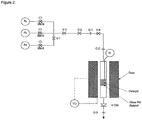
- Figure 2 is relevant to this example.
- the catalysts with the tetra-ammine Pt complex adsorbed require activation to obtain the Pt metal (oxidation 0).
- the procedure has two steps: firstly calcination with O 2 or air (to obtain the oxidized form of the metal Pt 2+ and the H form of the zeolite) and secondly, reduction with H 2 (to obtain the reduced Pt metal form).
- Activation of these types of catalysts is usually done in-situ. Alternatively, the activation may be performed outside the reactor. A suitable apparatus for activating the catalysts outside the reactor is given in figure 2 .
- the activation of the Pt loaded catalyst may be carried out using the apparatus of figure 2 by following the flowchart provided in the following scheme.
- the valves may be calibrated by measuring flows with a bubble-meter, and so setting the positions for the desired flows.
- Example 6 Results. This example does not fall within the scope of the claims, but is retained to demonstrate the utility of the claimed catalysts.
- Example 7 Typical Product Distribution. This example does not fall within the scope of the claims, but is retained to demonstrate the utility of the claimed catalysts.
- This example illustrates the product distribution for the catalytic hydrocracking of a number of compounds.
- the catalyst numbers refer to those recited in example 3 above.
- Distribution of lower alkyl compounds (the number corresponds to number of carbon atoms in alkyl compound)
Landscapes
- Chemical & Material Sciences (AREA)
- Organic Chemistry (AREA)
- Engineering & Computer Science (AREA)
- Chemical Kinetics & Catalysis (AREA)
- Materials Engineering (AREA)
- Life Sciences & Earth Sciences (AREA)
- Oil, Petroleum & Natural Gas (AREA)
- Crystallography & Structural Chemistry (AREA)
- General Chemical & Material Sciences (AREA)
- Wood Science & Technology (AREA)
- Sustainable Development (AREA)
- Health & Medical Sciences (AREA)
- Medicinal Chemistry (AREA)
- Polymers & Plastics (AREA)
- Catalysts (AREA)
- Separation, Recovery Or Treatment Of Waste Materials Containing Plastics (AREA)
Claims (9)
- Verfahren zum Herstellen eines modifizierten Zeolith-Katalysators, wobei das Verfahren Folgendes beinhaltet:(i) Erhalten eines kommerziell verfügbaren Zeolith-Y-Katalysators mit einem Na2O-Gehalt von 2,0 bis 4,0 %;(ii) Unterwerfen des Zeoliths einem zweistufigen Ionen-Austausch-Prozess, wobei der erste Ionen-Austausch-Prozess das Vermengen des Zeoliths mit einer Ammoniumsalzlösung bei zwischen 50 und 85 °C für zwischen 10 und 60 Minuten beinhaltet;(iii) Unterwerfen des Zeoliths einem zweiten Ionen-Austausch-Prozess, wobei der zweite Ionen-Austausch-Prozess das Vermengen des Zeoliths mit einer Ammoniumsalzlösung bei zwischen 90 und 100 °C für zwischen 60 und 240 Minuten beinhaltet;(iv) Dampfkalzinieren des Zeoliths von Schritt (iii) bei zwischen 450 und 800 °C für zwischen 10 Minuten und 60 Minuten;(v) Unterwerfen des Zeoliths von Schritt (iv) einem Ionen-Austausch-Prozess, wobei der Ionen-Austausch-Prozess das Vermengen des Zeoliths von Schritt (iv) mit einer Ammoniumsalzlösung bei zwischen 50 und 95 °C für zwischen 10 und 120 Minuten beinhaltet; und(vi) Unterwerfen des Zeoliths von Schritt (v) einem Übergangsmetall-Ionen-Austausch-Prozess, wobei der Ionen-Austausch-Prozess das Vermengen des Zeoliths von Schritt (v) mit einer Übergangsmetall-Salzlösung beinhaltet, wobei das Übergangsmetall in der Übergangsmetall-Salzlösung aus der Gruppe ausgewählt ist, die Folgendes beinhaltet: Fe, Ru, Os, Co, Rh, Ir, Ni, Pd und Pt.
- Verfahren gemäß Anspruch 1, wobei in Schritt (i) des Verfahrens der Zeolith-Katalysator eine Na2O-Konzentration von 2,0 bis 3,0 % aufweist.
- Verfahren gemäß Anspruch 1 oder 2, wobei die Ammoniumsalzlösung eine wässrige Lösung eines Ammoniumsalzes ist, die aus der Gruppe ausgewählt ist, die Folgendes beinhaltet: Ammoniumchlorid, Ammoniumsulfat und Ammoniumnitrat.
- Verfahren gemäß einem der Ansprüche 1 bis 3, wobei Schritt (iv) des Verfahrens zum Herstellen eines Zeolith-Katalysators das Dampfkalzinieren des Zeoliths von Schritt (iii) bei zwischen 450 und 600 °C beinhaltet.
- Modifizierter Zeolith-Katalysator, wie durch einen Prozess gemäß einem der Ansprüche 1 bis 4 erhältlich, der Folgendes beinhaltet: einen Zeolith, der einen Natriumoxidgehalt von 0,1 % oder weniger aufweist; und ein Übergangsmetall in einer Menge von 0,1 Gew.-% bis 75 Gew.-%.
- Katalysator gemäß Anspruch 5, wobei der modifizierte Zeolith eine endgültige Einheitszellenabmessung von 24,3 bis 24,7 Å aufweist.
- Katalysator gemäß einem der Ansprüche 5 bis 6, wobei der Zeolith einen Oberflächenbereich von 400 bis 900 m2g-1 aufweist.
- Katalysator gemäß einem der Ansprüche 5 bis 7, wobei der Zeolith eine Kristallinität von 60 bis 100 % aufweist.
- Katalysator gemäß einem der Ansprüche 5 bis 8, wobei der Zeolith einen Na2O-Gehalt von 0,05 bis 0,07-Gew.-% der getrockneten Masse aufweist.
Priority Applications (1)
| Application Number | Priority Date | Filing Date | Title |
|---|---|---|---|
| EP19199176.9A EP3608019A1 (de) | 2009-06-03 | 2010-06-03 | Modifizierte zeolithe und ihre verwendung für das recycling von kunststoffabfall |
Applications Claiming Priority (2)
| Application Number | Priority Date | Filing Date | Title |
|---|---|---|---|
| GB0909527A GB0909527D0 (en) | 2009-06-03 | 2009-06-03 | Modified zeolites and their use in the recycling of plastics waste |
| PCT/GB2010/050932 WO2010139997A2 (en) | 2009-06-03 | 2010-06-03 | Modified zeolites and their use in the recycling of plastics waste |
Related Child Applications (2)
| Application Number | Title | Priority Date | Filing Date |
|---|---|---|---|
| EP19199176.9A Division EP3608019A1 (de) | 2009-06-03 | 2010-06-03 | Modifizierte zeolithe und ihre verwendung für das recycling von kunststoffabfall |
| EP19199176.9A Division-Into EP3608019A1 (de) | 2009-06-03 | 2010-06-03 | Modifizierte zeolithe und ihre verwendung für das recycling von kunststoffabfall |
Publications (2)
| Publication Number | Publication Date |
|---|---|
| EP2437886A2 EP2437886A2 (de) | 2012-04-11 |
| EP2437886B1 true EP2437886B1 (de) | 2019-11-13 |
Family
ID=40902511
Family Applications (2)
| Application Number | Title | Priority Date | Filing Date |
|---|---|---|---|
| EP10724562.3A Active EP2437886B1 (de) | 2009-06-03 | 2010-06-03 | Modifizierte zeolithe und ihre verwendung für das recycling von kunststoffabfall |
| EP19199176.9A Withdrawn EP3608019A1 (de) | 2009-06-03 | 2010-06-03 | Modifizierte zeolithe und ihre verwendung für das recycling von kunststoffabfall |
Family Applications After (1)
| Application Number | Title | Priority Date | Filing Date |
|---|---|---|---|
| EP19199176.9A Withdrawn EP3608019A1 (de) | 2009-06-03 | 2010-06-03 | Modifizierte zeolithe und ihre verwendung für das recycling von kunststoffabfall |
Country Status (5)
| Country | Link |
|---|---|
| US (1) | US20120165583A1 (de) |
| EP (2) | EP2437886B1 (de) |
| CN (1) | CN102458656A (de) |
| GB (1) | GB0909527D0 (de) |
| WO (1) | WO2010139997A2 (de) |
Families Citing this family (19)
| Publication number | Priority date | Publication date | Assignee | Title |
|---|---|---|---|---|
| GB201020810D0 (en) * | 2010-12-08 | 2011-01-19 | Univ Manchester | Continuous plastics recycling process |
| EP2780284A4 (de) | 2011-11-18 | 2015-08-26 | Basf Se | Verfahren zum ionenaustausch auf zeoliten |
| CN103946159A (zh) * | 2011-11-18 | 2014-07-23 | 巴斯夫欧洲公司 | 在沸石上离子交换的方法 |
| WO2013096794A1 (en) | 2011-12-21 | 2013-06-27 | Swaminathan Ramesh | Catalyst for decomposing a plastic |
| US10240093B2 (en) * | 2013-07-25 | 2019-03-26 | Newpek S.A. De C.V. | Method and equipment for producing hydrocarbons by catalytic decomposition of plastic waste products in a single step |
| WO2016009333A1 (en) | 2014-07-17 | 2016-01-21 | Sabic Global Technologies B.V. | Upgrading hydrogen deficient streams using hydrogen donor streams in a hydropyrolysis process |
| EP3491102B1 (de) * | 2016-08-01 | 2020-07-15 | SABIC Global Technologies B.V. | Entchlorung von gemischten kunststoff-pyrolyseölen mittels entgasungsextrusion und chloridabscheider |
| CA3174728A1 (en) * | 2020-04-13 | 2021-10-21 | Bruce Roger Debruin | Chemical recycling of reclaimer flake reject |
| US12305126B2 (en) * | 2020-06-18 | 2025-05-20 | University Of Delaware | Hydrocracking catalysts and uses thereof |
| WO2022039094A1 (ja) * | 2020-08-20 | 2022-02-24 | 住友化学株式会社 | オレフィンの製造方法 |
| CN112295588B (zh) * | 2020-09-23 | 2024-04-02 | 山西晟莱再生资源科技有限公司 | 废旧轮胎热解油气催化转化催化剂制备及用途 |
| KR20230088350A (ko) * | 2020-10-13 | 2023-06-19 | 바스프 에스이 | 수소화에 의한 소진된 폴리아미드의 가치 사슬 회수 공정 |
| US20240025085A1 (en) * | 2020-11-09 | 2024-01-25 | Washington State University | Conversion of co-mingled waste plastics to monomers and fuels in sequential catalytic process |
| EP4032963A1 (de) | 2021-01-21 | 2022-07-27 | Basell Poliolefine Italia S.r.l. | Verfahren zur hydrodepolymerisation von polymerem abfallmaterial |
| US20230106395A1 (en) * | 2021-09-30 | 2023-04-06 | Basell Poliolefine Italia S.R.L. | High pressure depolymerization of hdpe and pp |
| US20250092216A1 (en) * | 2022-01-19 | 2025-03-20 | Oxford University Innovation Limited | Decomposition of polyolefins |
| EP4466304A1 (de) * | 2022-01-19 | 2024-11-27 | Oxford University Innovation Limited | Zersetzung von polyolefinen |
| CN115043416B (zh) * | 2022-07-19 | 2023-07-11 | 西安交通大学 | 一种用于去除钠基污染盐中有机污染物的方法及系统 |
| KR20240058615A (ko) * | 2022-10-26 | 2024-05-03 | 주식회사 엘지화학 | Pvc 폐기물의 촉매 크래킹 방법 |
Family Cites Families (20)
| Publication number | Priority date | Publication date | Assignee | Title |
|---|---|---|---|---|
| JPS546519B1 (de) * | 1969-02-03 | 1979-03-29 | ||
| US3677698A (en) * | 1970-04-16 | 1972-07-18 | Mobil Oil Corp | Low temperature-high temperature two-stage ion exchange of zeolites |
| US3929672A (en) * | 1971-10-20 | 1975-12-30 | Union Oil Co | Ammonia-stable Y zeolite compositions |
| US4036739A (en) * | 1971-10-20 | 1977-07-19 | Union Oil Company Of America | Catalytic cracking process using ammonia-stable zeolite catalyst |
| CA1131195A (en) | 1978-02-23 | 1982-09-07 | David E. Earls | Ultrahydrophobic zeolite y |
| NL8103069A (nl) | 1980-10-28 | 1982-05-17 | Grace W R & Co | Werkwijze voor de bereiding van katalytische kraakkatalysatoren. |
| US4556646A (en) * | 1984-11-19 | 1985-12-03 | Chevron Research Company | Manufacture of noble metal/zeolite catalysts |
| SE8602341D0 (sv) | 1986-05-22 | 1986-05-22 | Eka Nobel Ab | Sett att framstella en modifierad zeolit y |
| US4923836A (en) * | 1987-07-16 | 1990-05-08 | Union Oil Company Of California | Ni/Cu absorbent/catalyst for desulfurization and isomerization of N-paraffins |
| US5160033A (en) * | 1988-03-30 | 1992-11-03 | Uop | Octane gasoline catalyst and process using same in a hydrocracking process |
| US5013699A (en) * | 1988-04-07 | 1991-05-07 | Uop | Novel zeolite compositions derived from zeolite Y |
| US5100644A (en) * | 1990-12-14 | 1992-03-31 | Uop | Process for inserting silicon into zeolite frameworks |
| CN1097431A (zh) * | 1993-07-10 | 1995-01-18 | 杨先春 | 用于废旧聚烯烃塑料降解的催化剂 |
| US5435987A (en) * | 1993-07-22 | 1995-07-25 | Pq Corporation | Process for preparing ammonium zeolites of low alkali metal content |
| EP0908233A1 (de) * | 1997-10-13 | 1999-04-14 | Institut Français du Pétrole | Verbrückte 2:1 dioktaedrisches Phylosilikat mit grossem Gitterabstand, Katalysator und Verfahren zur Umwandlung |
| EP1102631B1 (de) * | 1998-08-05 | 2004-03-10 | Akzo Nobel N.V. | Katalysatorträger mit hoher dieselselektivität |
| CN1190269C (zh) * | 2003-05-26 | 2005-02-23 | 四川大学 | 用于裂解废塑料以生产燃油的催化剂 |
| WO2005094990A1 (en) * | 2004-03-30 | 2005-10-13 | Indian Oil Corporation Limited | A catalyst composition for catalytic cracking of waste plastic |
| RU2008128363A (ru) * | 2005-12-14 | 2010-01-20 | Басф Каталистс Ллк (Us) | ЦЕОЛИТНЫЙ КАТАЛИЗАТОР С УЛУЧШЕННЫМ ВОССТАНОВЛЕНИЕМ NOх В SCR |
| ATE524235T1 (de) * | 2005-12-15 | 2011-09-15 | Leroy Andree | Aluminosilikat-katalysatorsystem und seine verwendung |
-
2009
- 2009-06-03 GB GB0909527A patent/GB0909527D0/en not_active Ceased
-
2010
- 2010-06-03 EP EP10724562.3A patent/EP2437886B1/de active Active
- 2010-06-03 EP EP19199176.9A patent/EP3608019A1/de not_active Withdrawn
- 2010-06-03 WO PCT/GB2010/050932 patent/WO2010139997A2/en not_active Ceased
- 2010-06-03 US US13/376,024 patent/US20120165583A1/en not_active Abandoned
- 2010-06-03 CN CN2010800247235A patent/CN102458656A/zh active Pending
Non-Patent Citations (3)
| Title |
|---|
| GARFORTH ET AL: "Feedstock recycling of polymer wastes", CURRENT OPINION IN SOLID STATE AND MATERIALS SCIENCE, ELSEVIER SCIENCE LTD, OXFORD, GB, vol. 8, no. 6, 1 December 2004 (2004-12-01), pages 419 - 425, XP005151121, ISSN: 1359-0286, DOI: 10.1016/J.COSSMS.2005.04.003 * |
| NATHAN D. HESSE ET AL: "Polyethylene catalytic hydrocracking by PtHZSM-5, PtHY, and PtHMCM-41", JOURNAL OF APPLIED POLYMER SCIENCE, vol. 92, no. 2, 15 April 2004 (2004-04-15), pages 1293 - 1301, XP055130950, ISSN: 0021-8995, DOI: 10.1002/app.20083 * |
| WEIBING DING ET AL: "Hydrocracking and Hydroisomerization of High-Density Polyethylene and Waste Plastic over Zeolite and Silica-Alumina-Supported Ni and Ni-Mo Sulfides", ENERGY & FUELS, vol. 11, no. 6, 1 November 1997 (1997-11-01), pages 1219 - 1224, XP055130933, ISSN: 0887-0624, DOI: 10.1021/ef970051q * |
Also Published As
| Publication number | Publication date |
|---|---|
| EP2437886A2 (de) | 2012-04-11 |
| WO2010139997A2 (en) | 2010-12-09 |
| WO2010139997A3 (en) | 2011-03-31 |
| WO2010139997A9 (en) | 2012-03-29 |
| EP3608019A1 (de) | 2020-02-12 |
| CN102458656A (zh) | 2012-05-16 |
| US20120165583A1 (en) | 2012-06-28 |
| GB0909527D0 (en) | 2009-07-15 |
Similar Documents
| Publication | Publication Date | Title |
|---|---|---|
| EP2437886B1 (de) | Modifizierte zeolithe und ihre verwendung für das recycling von kunststoffabfall | |
| CA2112117C (en) | Synthetic porous crystalline material its synthesis and use | |
| EP2649121B1 (de) | Recyclingverfahren für kunststoffen | |
| EP1875963B1 (de) | Verfahren zur Herstellung eines Crackkatalysators | |
| RU2387480C2 (ru) | Композиция катализатора гидрокрекинга | |
| EP1599285B1 (de) | Verwendung einer trägerlosen katalysatorzusammensetzung | |
| JP4855475B2 (ja) | ベータ及びyゼオライトを含有する水素化分解触媒及びナフサを製造するためのその使用 | |
| KR101003213B1 (ko) | 금속 히드록시 염을 포함하는 조성물, 이의 제조 방법 및촉매 또는 흡착제로서의 이의 용도 | |
| TWI386483B (zh) | 含β及Y沸石之氫裂解催化劑及使用其製造噴射機燃料及餾份之方法 | |
| EP2792408A1 (de) | Magnesiummodifiziertes ultrastabile seltenerdmolekularsieb vom typ y und herstellungsverfahren dafür | |
| EP2506968B1 (de) | Faujasith-zeolith | |
| JP2009543693A (ja) | ベータ及びyゼオライトを含有する水素化分解触媒及び留出油を製造するためのその使用法 | |
| CA2657313A1 (en) | Hydrocracking catalyst containing beta and y zeolites, and process for its use to make distillate | |
| EP3356036B1 (de) | Verfahren zur herstellung von flüssiggas aus einem schweren kohlenwasserstoffeinsatz | |
| EP3356034B1 (de) | Verfahren zur herstellung von flüssiggas aus einem schweren kohlenwasserstoffeinsatz | |
| MX2009000566A (es) | Catalizador de hidrodesintegracion que contiene zeolitas beta y zeolitas y, y proceso para su utilizacion en la produccion de destilados. |
Legal Events
| Date | Code | Title | Description |
|---|---|---|---|
| PUAI | Public reference made under article 153(3) epc to a published international application that has entered the european phase |
Free format text: ORIGINAL CODE: 0009012 |
|
| 17P | Request for examination filed |
Effective date: 20111219 |
|
| AK | Designated contracting states |
Kind code of ref document: A2 Designated state(s): AL AT BE BG CH CY CZ DE DK EE ES FI FR GB GR HR HU IE IS IT LI LT LU LV MC MK MT NL NO PL PT RO SE SI SK SM TR |
|
| DAX | Request for extension of the european patent (deleted) | ||
| 17Q | First examination report despatched |
Effective date: 20140804 |
|
| STAA | Information on the status of an ep patent application or granted ep patent |
Free format text: STATUS: EXAMINATION IS IN PROGRESS |
|
| GRAP | Despatch of communication of intention to grant a patent |
Free format text: ORIGINAL CODE: EPIDOSNIGR1 |
|
| STAA | Information on the status of an ep patent application or granted ep patent |
Free format text: STATUS: GRANT OF PATENT IS INTENDED |
|
| INTG | Intention to grant announced |
Effective date: 20190509 |
|
| GRAJ | Information related to disapproval of communication of intention to grant by the applicant or resumption of examination proceedings by the epo deleted |
Free format text: ORIGINAL CODE: EPIDOSDIGR1 |
|
| STAA | Information on the status of an ep patent application or granted ep patent |
Free format text: STATUS: EXAMINATION IS IN PROGRESS |
|
| INTC | Intention to grant announced (deleted) | ||
| RIN1 | Information on inventor provided before grant (corrected) |
Inventor name: CRESSWELL, DAVID Inventor name: AKAH, AARON Inventor name: GARFORTH, ARTHUR Inventor name: HERNANDEZ-MARTINEZ, JESUS Inventor name: COOKE, MICHAEL |
|
| GRAR | Information related to intention to grant a patent recorded |
Free format text: ORIGINAL CODE: EPIDOSNIGR71 |
|
| GRAS | Grant fee paid |
Free format text: ORIGINAL CODE: EPIDOSNIGR3 |
|
| STAA | Information on the status of an ep patent application or granted ep patent |
Free format text: STATUS: GRANT OF PATENT IS INTENDED |
|
| GRAA | (expected) grant |
Free format text: ORIGINAL CODE: 0009210 |
|
| STAA | Information on the status of an ep patent application or granted ep patent |
Free format text: STATUS: THE PATENT HAS BEEN GRANTED |
|
| INTG | Intention to grant announced |
Effective date: 20191003 |
|
| AK | Designated contracting states |
Kind code of ref document: B1 Designated state(s): AL AT BE BG CH CY CZ DE DK EE ES FI FR GB GR HR HU IE IS IT LI LT LU LV MC MK MT NL NO PL PT RO SE SI SK SM TR |
|
| REG | Reference to a national code |
Ref country code: GB Ref legal event code: FG4D |
|
| REG | Reference to a national code |
Ref country code: CH Ref legal event code: EP Ref country code: AT Ref legal event code: REF Ref document number: 1201103 Country of ref document: AT Kind code of ref document: T Effective date: 20191115 |
|
| REG | Reference to a national code |
Ref country code: DE Ref legal event code: R081 Ref document number: 602010061928 Country of ref document: DE Owner name: UNIVERSITY OF MANCHESTER, GB Free format text: FORMER OWNER: UNIVERSITY OF MANCHESTER, MANCHESTER, AU |
|
| REG | Reference to a national code |
Ref country code: DE Ref legal event code: R096 Ref document number: 602010061928 Country of ref document: DE |
|
| REG | Reference to a national code |
Ref country code: IE Ref legal event code: FG4D |
|
| REG | Reference to a national code |
Ref country code: NL Ref legal event code: FP |
|
| REG | Reference to a national code |
Ref country code: LT Ref legal event code: MG4D |
|
| PG25 | Lapsed in a contracting state [announced via postgrant information from national office to epo] |
Ref country code: LV Free format text: LAPSE BECAUSE OF FAILURE TO SUBMIT A TRANSLATION OF THE DESCRIPTION OR TO PAY THE FEE WITHIN THE PRESCRIBED TIME-LIMIT Effective date: 20191113 Ref country code: SE Free format text: LAPSE BECAUSE OF FAILURE TO SUBMIT A TRANSLATION OF THE DESCRIPTION OR TO PAY THE FEE WITHIN THE PRESCRIBED TIME-LIMIT Effective date: 20191113 Ref country code: BG Free format text: LAPSE BECAUSE OF FAILURE TO SUBMIT A TRANSLATION OF THE DESCRIPTION OR TO PAY THE FEE WITHIN THE PRESCRIBED TIME-LIMIT Effective date: 20200213 Ref country code: FI Free format text: LAPSE BECAUSE OF FAILURE TO SUBMIT A TRANSLATION OF THE DESCRIPTION OR TO PAY THE FEE WITHIN THE PRESCRIBED TIME-LIMIT Effective date: 20191113 Ref country code: PT Free format text: LAPSE BECAUSE OF FAILURE TO SUBMIT A TRANSLATION OF THE DESCRIPTION OR TO PAY THE FEE WITHIN THE PRESCRIBED TIME-LIMIT Effective date: 20200313 Ref country code: GR Free format text: LAPSE BECAUSE OF FAILURE TO SUBMIT A TRANSLATION OF THE DESCRIPTION OR TO PAY THE FEE WITHIN THE PRESCRIBED TIME-LIMIT Effective date: 20200214 Ref country code: NO Free format text: LAPSE BECAUSE OF FAILURE TO SUBMIT A TRANSLATION OF THE DESCRIPTION OR TO PAY THE FEE WITHIN THE PRESCRIBED TIME-LIMIT Effective date: 20200213 Ref country code: LT Free format text: LAPSE BECAUSE OF FAILURE TO SUBMIT A TRANSLATION OF THE DESCRIPTION OR TO PAY THE FEE WITHIN THE PRESCRIBED TIME-LIMIT Effective date: 20191113 Ref country code: PL Free format text: LAPSE BECAUSE OF FAILURE TO SUBMIT A TRANSLATION OF THE DESCRIPTION OR TO PAY THE FEE WITHIN THE PRESCRIBED TIME-LIMIT Effective date: 20191113 Ref country code: ES Free format text: LAPSE BECAUSE OF FAILURE TO SUBMIT A TRANSLATION OF THE DESCRIPTION OR TO PAY THE FEE WITHIN THE PRESCRIBED TIME-LIMIT Effective date: 20191113 |
|
| PG25 | Lapsed in a contracting state [announced via postgrant information from national office to epo] |
Ref country code: IS Free format text: LAPSE BECAUSE OF FAILURE TO SUBMIT A TRANSLATION OF THE DESCRIPTION OR TO PAY THE FEE WITHIN THE PRESCRIBED TIME-LIMIT Effective date: 20200313 Ref country code: HR Free format text: LAPSE BECAUSE OF FAILURE TO SUBMIT A TRANSLATION OF THE DESCRIPTION OR TO PAY THE FEE WITHIN THE PRESCRIBED TIME-LIMIT Effective date: 20191113 |
|
| PG25 | Lapsed in a contracting state [announced via postgrant information from national office to epo] |
Ref country code: AL Free format text: LAPSE BECAUSE OF FAILURE TO SUBMIT A TRANSLATION OF THE DESCRIPTION OR TO PAY THE FEE WITHIN THE PRESCRIBED TIME-LIMIT Effective date: 20191113 |
|
| PG25 | Lapsed in a contracting state [announced via postgrant information from national office to epo] |
Ref country code: RO Free format text: LAPSE BECAUSE OF FAILURE TO SUBMIT A TRANSLATION OF THE DESCRIPTION OR TO PAY THE FEE WITHIN THE PRESCRIBED TIME-LIMIT Effective date: 20191113 Ref country code: CZ Free format text: LAPSE BECAUSE OF FAILURE TO SUBMIT A TRANSLATION OF THE DESCRIPTION OR TO PAY THE FEE WITHIN THE PRESCRIBED TIME-LIMIT Effective date: 20191113 Ref country code: DK Free format text: LAPSE BECAUSE OF FAILURE TO SUBMIT A TRANSLATION OF THE DESCRIPTION OR TO PAY THE FEE WITHIN THE PRESCRIBED TIME-LIMIT Effective date: 20191113 Ref country code: EE Free format text: LAPSE BECAUSE OF FAILURE TO SUBMIT A TRANSLATION OF THE DESCRIPTION OR TO PAY THE FEE WITHIN THE PRESCRIBED TIME-LIMIT Effective date: 20191113 |
|
| REG | Reference to a national code |
Ref country code: DE Ref legal event code: R097 Ref document number: 602010061928 Country of ref document: DE |
|
| REG | Reference to a national code |
Ref country code: AT Ref legal event code: MK05 Ref document number: 1201103 Country of ref document: AT Kind code of ref document: T Effective date: 20191113 |
|
| PG25 | Lapsed in a contracting state [announced via postgrant information from national office to epo] |
Ref country code: SK Free format text: LAPSE BECAUSE OF FAILURE TO SUBMIT A TRANSLATION OF THE DESCRIPTION OR TO PAY THE FEE WITHIN THE PRESCRIBED TIME-LIMIT Effective date: 20191113 Ref country code: SM Free format text: LAPSE BECAUSE OF FAILURE TO SUBMIT A TRANSLATION OF THE DESCRIPTION OR TO PAY THE FEE WITHIN THE PRESCRIBED TIME-LIMIT Effective date: 20191113 |
|
| PLBE | No opposition filed within time limit |
Free format text: ORIGINAL CODE: 0009261 |
|
| STAA | Information on the status of an ep patent application or granted ep patent |
Free format text: STATUS: NO OPPOSITION FILED WITHIN TIME LIMIT |
|
| 26N | No opposition filed |
Effective date: 20200814 |
|
| PG25 | Lapsed in a contracting state [announced via postgrant information from national office to epo] |
Ref country code: SI Free format text: LAPSE BECAUSE OF FAILURE TO SUBMIT A TRANSLATION OF THE DESCRIPTION OR TO PAY THE FEE WITHIN THE PRESCRIBED TIME-LIMIT Effective date: 20191113 Ref country code: AT Free format text: LAPSE BECAUSE OF FAILURE TO SUBMIT A TRANSLATION OF THE DESCRIPTION OR TO PAY THE FEE WITHIN THE PRESCRIBED TIME-LIMIT Effective date: 20191113 |
|
| PG25 | Lapsed in a contracting state [announced via postgrant information from national office to epo] |
Ref country code: MC Free format text: LAPSE BECAUSE OF FAILURE TO SUBMIT A TRANSLATION OF THE DESCRIPTION OR TO PAY THE FEE WITHIN THE PRESCRIBED TIME-LIMIT Effective date: 20191113 |
|
| REG | Reference to a national code |
Ref country code: CH Ref legal event code: PL |
|
| PG25 | Lapsed in a contracting state [announced via postgrant information from national office to epo] |
Ref country code: LU Free format text: LAPSE BECAUSE OF NON-PAYMENT OF DUE FEES Effective date: 20200603 |
|
| REG | Reference to a national code |
Ref country code: BE Ref legal event code: MM Effective date: 20200630 |
|
| PG25 | Lapsed in a contracting state [announced via postgrant information from national office to epo] |
Ref country code: LI Free format text: LAPSE BECAUSE OF NON-PAYMENT OF DUE FEES Effective date: 20200630 Ref country code: IE Free format text: LAPSE BECAUSE OF NON-PAYMENT OF DUE FEES Effective date: 20200603 Ref country code: CH Free format text: LAPSE BECAUSE OF NON-PAYMENT OF DUE FEES Effective date: 20200630 |
|
| PG25 | Lapsed in a contracting state [announced via postgrant information from national office to epo] |
Ref country code: BE Free format text: LAPSE BECAUSE OF NON-PAYMENT OF DUE FEES Effective date: 20200630 |
|
| PG25 | Lapsed in a contracting state [announced via postgrant information from national office to epo] |
Ref country code: TR Free format text: LAPSE BECAUSE OF FAILURE TO SUBMIT A TRANSLATION OF THE DESCRIPTION OR TO PAY THE FEE WITHIN THE PRESCRIBED TIME-LIMIT Effective date: 20191113 Ref country code: MT Free format text: LAPSE BECAUSE OF FAILURE TO SUBMIT A TRANSLATION OF THE DESCRIPTION OR TO PAY THE FEE WITHIN THE PRESCRIBED TIME-LIMIT Effective date: 20191113 Ref country code: CY Free format text: LAPSE BECAUSE OF FAILURE TO SUBMIT A TRANSLATION OF THE DESCRIPTION OR TO PAY THE FEE WITHIN THE PRESCRIBED TIME-LIMIT Effective date: 20191113 |
|
| PG25 | Lapsed in a contracting state [announced via postgrant information from national office to epo] |
Ref country code: MK Free format text: LAPSE BECAUSE OF FAILURE TO SUBMIT A TRANSLATION OF THE DESCRIPTION OR TO PAY THE FEE WITHIN THE PRESCRIBED TIME-LIMIT Effective date: 20191113 |
|
| P01 | Opt-out of the competence of the unified patent court (upc) registered |
Effective date: 20230518 |
|
| PGFP | Annual fee paid to national office [announced via postgrant information from national office to epo] |
Ref country code: NL Payment date: 20250723 Year of fee payment: 16 |
|
| PGFP | Annual fee paid to national office [announced via postgrant information from national office to epo] |
Ref country code: DE Payment date: 20250722 Year of fee payment: 16 |
|
| PGFP | Annual fee paid to national office [announced via postgrant information from national office to epo] |
Ref country code: IT Payment date: 20250731 Year of fee payment: 16 |
|
| PGFP | Annual fee paid to national office [announced via postgrant information from national office to epo] |
Ref country code: GB Payment date: 20250714 Year of fee payment: 16 |
|
| PGFP | Annual fee paid to national office [announced via postgrant information from national office to epo] |
Ref country code: FR Payment date: 20250718 Year of fee payment: 16 |