EP2435064B1 - Verwendung von hemmstoffen der hat und tmprss2 als arzneimittel - Google Patents
Verwendung von hemmstoffen der hat und tmprss2 als arzneimittel Download PDFInfo
- Publication number
- EP2435064B1 EP2435064B1 EP10729701.2A EP10729701A EP2435064B1 EP 2435064 B1 EP2435064 B1 EP 2435064B1 EP 10729701 A EP10729701 A EP 10729701A EP 2435064 B1 EP2435064 B1 EP 2435064B1
- Authority
- EP
- European Patent Office
- Prior art keywords
- compounds
- treatment
- hat
- functional group
- following structures
- Prior art date
- Legal status (The legal status is an assumption and is not a legal conclusion. Google has not performed a legal analysis and makes no representation as to the accuracy of the status listed.)
- Not-in-force
Links
- 0 O=S(Cc1ccccc1)(**c1ccccc1)=O Chemical compound O=S(Cc1ccccc1)(**c1ccccc1)=O 0.000 description 19
- DJNNZKJZFCRFRX-FTJBHMTQSA-N NC(c1ccc(CNC([C@H](CCC2)N2C([C@@H](CC2CCCCC2)NS(Cc2ccccc2)(=O)=O)=O)=O)cc1)=N Chemical compound NC(c1ccc(CNC([C@H](CCC2)N2C([C@@H](CC2CCCCC2)NS(Cc2ccccc2)(=O)=O)=O)=O)cc1)=N DJNNZKJZFCRFRX-FTJBHMTQSA-N 0.000 description 1
- ZNOKJHWJKULOGM-ZWKOTPCHSA-N NC(c1ccc(CNC([C@H](CO)NC([C@@H](CO)NS(Cc2ccccc2)(=O)=O)=O)=O)cc1)=N Chemical compound NC(c1ccc(CNC([C@H](CO)NC([C@@H](CO)NS(Cc2ccccc2)(=O)=O)=O)=O)cc1)=N ZNOKJHWJKULOGM-ZWKOTPCHSA-N 0.000 description 1
Images
Classifications
-
- A—HUMAN NECESSITIES
- A61—MEDICAL OR VETERINARY SCIENCE; HYGIENE
- A61K—PREPARATIONS FOR MEDICAL, DENTAL OR TOILETRY PURPOSES
- A61K38/00—Medicinal preparations containing peptides
- A61K38/04—Peptides having up to 20 amino acids in a fully defined sequence; Derivatives thereof
- A61K38/05—Dipeptides
-
- A—HUMAN NECESSITIES
- A61—MEDICAL OR VETERINARY SCIENCE; HYGIENE
- A61K—PREPARATIONS FOR MEDICAL, DENTAL OR TOILETRY PURPOSES
- A61K31/00—Medicinal preparations containing organic active ingredients
- A61K31/33—Heterocyclic compounds
- A61K31/38—Heterocyclic compounds having sulfur as a ring hetero atom
- A61K31/381—Heterocyclic compounds having sulfur as a ring hetero atom having five-membered rings
-
- A—HUMAN NECESSITIES
- A61—MEDICAL OR VETERINARY SCIENCE; HYGIENE
- A61K—PREPARATIONS FOR MEDICAL, DENTAL OR TOILETRY PURPOSES
- A61K31/00—Medicinal preparations containing organic active ingredients
- A61K31/33—Heterocyclic compounds
- A61K31/395—Heterocyclic compounds having nitrogen as a ring hetero atom, e.g. guanethidine or rifamycins
- A61K31/40—Heterocyclic compounds having nitrogen as a ring hetero atom, e.g. guanethidine or rifamycins having five-membered rings with one nitrogen as the only ring hetero atom, e.g. sulpiride, succinimide, tolmetin, buflomedil
-
- A—HUMAN NECESSITIES
- A61—MEDICAL OR VETERINARY SCIENCE; HYGIENE
- A61K—PREPARATIONS FOR MEDICAL, DENTAL OR TOILETRY PURPOSES
- A61K31/00—Medicinal preparations containing organic active ingredients
- A61K31/33—Heterocyclic compounds
- A61K31/395—Heterocyclic compounds having nitrogen as a ring hetero atom, e.g. guanethidine or rifamycins
- A61K31/41—Heterocyclic compounds having nitrogen as a ring hetero atom, e.g. guanethidine or rifamycins having five-membered rings with two or more ring hetero atoms, at least one of which being nitrogen, e.g. tetrazole
- A61K31/425—Thiazoles
- A61K31/426—1,3-Thiazoles
-
- A—HUMAN NECESSITIES
- A61—MEDICAL OR VETERINARY SCIENCE; HYGIENE
- A61K—PREPARATIONS FOR MEDICAL, DENTAL OR TOILETRY PURPOSES
- A61K31/00—Medicinal preparations containing organic active ingredients
- A61K31/33—Heterocyclic compounds
- A61K31/395—Heterocyclic compounds having nitrogen as a ring hetero atom, e.g. guanethidine or rifamycins
- A61K31/435—Heterocyclic compounds having nitrogen as a ring hetero atom, e.g. guanethidine or rifamycins having six-membered rings with one nitrogen as the only ring hetero atom
- A61K31/44—Non condensed pyridines; Hydrogenated derivatives thereof
-
- A—HUMAN NECESSITIES
- A61—MEDICAL OR VETERINARY SCIENCE; HYGIENE
- A61P—SPECIFIC THERAPEUTIC ACTIVITY OF CHEMICAL COMPOUNDS OR MEDICINAL PREPARATIONS
- A61P11/00—Drugs for disorders of the respiratory system
-
- A—HUMAN NECESSITIES
- A61—MEDICAL OR VETERINARY SCIENCE; HYGIENE
- A61P—SPECIFIC THERAPEUTIC ACTIVITY OF CHEMICAL COMPOUNDS OR MEDICINAL PREPARATIONS
- A61P29/00—Non-central analgesic, antipyretic or antiinflammatory agents, e.g. antirheumatic agents; Non-steroidal antiinflammatory drugs [NSAID]
-
- A—HUMAN NECESSITIES
- A61—MEDICAL OR VETERINARY SCIENCE; HYGIENE
- A61P—SPECIFIC THERAPEUTIC ACTIVITY OF CHEMICAL COMPOUNDS OR MEDICINAL PREPARATIONS
- A61P31/00—Antiinfectives, i.e. antibiotics, antiseptics, chemotherapeutics
- A61P31/12—Antivirals
-
- A—HUMAN NECESSITIES
- A61—MEDICAL OR VETERINARY SCIENCE; HYGIENE
- A61P—SPECIFIC THERAPEUTIC ACTIVITY OF CHEMICAL COMPOUNDS OR MEDICINAL PREPARATIONS
- A61P35/00—Antineoplastic agents
Definitions
- the present invention describes the use of inhibitors of the serine proteases HAT and TMPRSS2 for the preparation of medicaments useful in the treatment of diseases in which these proteases are involved.
- inhibitors of both enzymes are suitable for the treatment of virus-related diseases, such as influenza infections.
- Inhibitors of HAT can also be used for the treatment of inflammatory respiratory diseases, while inhibitors of TMPRSS2 can additionally be used for the treatment of cancer and associated metastasis.
- the present invention relates to the fields of pharmacy, medicine, organic chemistry and biochemistry.
- the present invention relates to the use of tripeptide mimetics as inhibitors of the serine proteases HAT and TMPRSS2 for the production of medicaments which can be used for the therapy and / or prophylaxis of viral diseases and the treatment of tumors or the reduction of metastasis. Likewise, a use of these compounds for the therapy and / or prophylaxis of inflammatory respiratory diseases is possible.
- the HAT also referred to as human airway trypsin-like protease or adrenal secretory serine protease , accession code: AB002134
- the TMPRSS2 accession code: U75329
- HAT serine protease HAT was originally isolated from the sputum of patients with chronic respiratory disease ( Yasuoka et al., Am. J. Respir. Cell Mol. Biol. 16, 300-308 (1997 ), but so far only a few papers on the physiological function of the HAT have appeared. However, HAT has been shown to be able to activate influenza viruses by cleaving the non-fusible HA0-hemagglutinin on the virus surface in HA1 and HA2, giving the viruses the ability to invade host cells ( Böttcher et al., J. Virology 80, 9896-9898 (2006 )).
- HAT has also been shown to possess important functions in inflammatory processes in the respiratory organs mediated via HAT-catalyzed activation of the PAR-2 receptor ( Matsushima et al., Am. J. Physiol Lung Cell Mol Physiol. 290, L385-L395 (2006 )). Another paper has described that HAT may be responsible for the increased production of mucus in patients with chronic respiratory disease, thereby exacerbating the condition ( Chokki et al., Am. J. Respir. Cell Mol. Biol. 30 470-478 (2004 )). The HAT may also play an important role in cancer and metastasis by degrading extracellular matrix proteins, but also by activating pro-hormones or zymogen forms of other proteases.
- TMPRSS2 The gene for the serine protease TMPRSS2 was first identified in 1997 ( Paolini-Giacobino, Genomics 44, 309-320 (1997 )). TMPRSS2 has also been described as being involved in viral diseases such as influenza or metapneumovirus infections ( Böttcher et al., J. Virology 80, 9896-9898 (2006 ) Chaipan et al., J. Virology 83, 3200-3211 (2009 ) Shirogane et al., J. Virology 82, 8942-8946 (2008 )). For TMPRSS2 an increased expression or mislocalisation of cancers was also observed ( Afar et al., Cancer Res.
- TMPRSS2 potentially have the potential to treat cancer and associated metastasis of the tumors.
- the invention is therefore based on the object to provide for therapeutic applications suitable agents that inhibit the serine proteases HAT and TMPRSS2 with high activity and are therefore suitable for the treatment of diseases in which these proteases are involved.
- P1 represents a 4-amidinobenzylamide radical according to formula (III) wherein R 3 is as defined above, preferably R 3 is H.
- R 1 is in the 3- or 4-position of the phenyl ring, very particularly preferably R 1 is an H.
- Particularly suitable for use as inhibitors of HAT and TMPRSS2 and for the treatment of diseases associated with these proteases have been found to be compounds which are characterized in that the remainder of P3 is selected from the following structures and a D-arginine, D-cyclohexylalanine or D-serine residue.
- residue P2 is selected from the following structures and represents a serine or proline residue in L configuration.
- the compounds according to the invention of formula (I) and their salts of inorganic and organic acids are inhibitors of the serine proteases HAT and TMPRSS2 and can be used in the form of their pharmaceutically acceptable salts for the preparation of medicaments for patients for the therapy and / or prophylaxis of viral diseases, for example of influenza. Infections as well as for the treatment of inflammatory respiratory diseases and cancer are used.
- patient refers equally to humans and vertebrates.
- the drugs can be used in human and veterinary medicine.
- compositions according to the invention for use as inhibitors of the serine proteases HAT and TMPRSS2 according to formula (I) are the corresponding salts of organic and inorganic acids which, according to reliable medical evaluation, do not trigger excessive toxicity, irritations or allergic reactions in the patient.
- Suitable pharmaceutically acceptable acid addition salts of the compounds of the invention are e.g. Salts of inorganic acids, such as hydrochloric, hydrobromic, phosphoric, metaphosphoric, nitric, sulfonic and sulfuric acids or salts of organic acids, e.g.
- physiologically functional derivative refers to any physiologically acceptable derivative of a compound of formula (I), e.g. An ester which, when administered to a mammal, such as. Human, is capable of (directly or indirectly) forming a compound of formula I or an active metabolite thereof and is suitable for use as inhibitors of the serine proteases HAT and TMPRSS2.
- the compounds according to general formula I can furthermore be used in various forms, e.g. B. as amorphous and crystalline polymorphic forms.
- active ingredients according to the present invention which are both therapeutically effective and pharmaceutically acceptable can be administered to the patient as part of a pharmaceutically acceptable composition.
- Administration may be oral, parenteral, intravenous, intramuscular, subcutaneous, intracisternal, intravaginal, intraperitoneal, intravascular, intrathecal, intratracheal, intravesical, topical, local (powder, ointment or drops) or in spray form (aerosol).
- the intravenous, subcutaneous, intraperitoneal or intrathecal administration can be carried out continuously by means of a pump or dosing unit.
- Dosage forms for topical administration of the compounds of the invention include ointments, powders, suppositories, sprays and inhalants.
- the active component is mixed under sterile conditions with a physiologically acceptable carrier and possible preservatives, buffers, diluents and propellants as needed.
- the active component may be compounds according to formula (I), their pharmaceutically acceptable salts or mixtures of compounds of formula (I) and pharmaceutically acceptable salts thereof.
- HPLC reversed-phase HPLC was a HPLC system LC-10A Shimadzu, consisting of the subsystems CTO-10A column oven, LC-10ATvp pumps (2 x), DGU-14A degasser, SIL-10Axl autoinjector, SCL-10Avp System controller, SPD-M10Avp photodiode array detector and a column 250 / 4,6 Nucleodur 100-5 C18 ec Macherey-Nagel, Germany, using the associated software Shimadzu CLASS-VP, Version 7.2.1, used. The detection was carried out at 220 nm.
- the eluant used was water with 0.1% TFA (A) and acetonitrile with 0.1% TFA (B), the analysis being carried out at a flow rate of 1 ml / min with a linear gradient (1%). B / min) and 10% B as start condition.
- the inhibitory effect of the inhibitors for HAT (R & D Systems) and TMPRSS2 (catalytic domain expressed in E. coli) were determined using chromogenic substrates.
- HAT d-cyclohexylalanine-Pro-Arg-7-aminomethylcoumarin was used as the substrate and for TMPRSS2 d-cyclohexylalanine-Gly-Arg-p-nitroaniline.
- the measurement was carried out in Tris buffer (50 mM Tris pH 9.5, 0.05% Brij 58 and 1 mg / ml bovine serum albumin for HAT and 50 mM Tris pH 8.0, 0.154 M NaCl for TMPRSS2) on microtiter plates at room temperature.
- the inhibitor solutions of appropriate concentration were prepared in DMSO.
- 15 ⁇ l of buffer and 20 ⁇ l of substrate solution were added to each 2 ⁇ l of inhibitor solution of different concentration, and then the reaction was started by addition of 20 ⁇ l of enzyme solution.
- Each inhibitor was measured at three different substrate concentrations (50 ⁇ M, 100 ⁇ M, 200 ⁇ M for HAT and 45 ⁇ M, 90 ⁇ M and 181 ⁇ M for TMPRSS2).
- the inhibitor concentration was varied at least by the order of magnitude and the steady-state velocity was determined in each case.
- the calculation of the Ki values was carried out with the aid of a computer program according to the method of Dixon.
- MDCK-HAT cells with inducible expression of the protease HAT were used for the experiments.
- MDCK-HAT cells were generated by stable transfection of MDCK cells (Madin Darby Canine Kidney) with the plasmids pcEFTet-On / NEO and pTRE2pur-HAT-FLAG.
- the expression of HAT in these cells may be induced by the addition of doxycycline to the culture medium ( Tet-On Expression System, Gossen and Bujard, Science 1995 ).
- MDCK-HAT cells were first cultured in 96-well plates for 24 h in the presence and absence of 0.2 ⁇ g / ml doxycycline. Subsequently, the cells were infected with the human influenza isolate A / Memphis / 14/96 (H1N1) and incubated for 24 h in the presence or absence of various inhibitors at 37 ° C and 5% CO 2 . Subsequently, infected cells were immunohistochemically stained against the viral nucleoprotein. A concentration-dependent inhibition of virus proliferation and spread by the synthetic inhibitors used could be demonstrated.
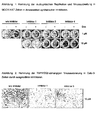
- Page 26 contains only description and no illustration. The information contained in the original version of the application illustration 1 is at the end of this version of the application.
- the protease HAT expressed in MDCK-HAT cells additionally has a C-terminal flag epitope, which allows the affinity purification of the protease with the aid of anti-FlagM2 agarose (Sigma-Aldrich). HAT flag is after immunoprecipitation as active protease.
- the enzymatic activity can be determined with the aid of the fluorescent substrate Boc-Leu-Gly-Arg-AMC.
- HAT-Flag was first isolated from MDCK-HAT cells using the FLAG® Tagged Protein Immunoprecipitation Kit . Subsequently, the isolated protease was incubated with 25 ⁇ M Boc-Leu-Gly-Arg-AMC in 50 mM Tris / HCl pH 7.4 in the presence or absence of the inhibitors (final concentrations 0.1-10 ⁇ M) for 2 h at 37 ° C incubated. The reaction of the substrate was determined using a fluorescence spectrophotomer at 350 nm (absorbance) and 460 nm (emission). The control was the determination of the protease activity in the absence of an inhibitor (corresponds to 0% inhibition).
- Table 2 Inhibitory effect of synthetic serine protease inhibitors on the HAT-catalyzed cleavage of the substrate Boc-Leu-Gly-Arg-AMC. Inhibitor concentration ( ⁇ M) Percent inhibition (%) Inhibitor 1 Inhibitor 3 Inhibitor 5 0.1 22.3 29.5 27 1 70.7 47.1 47.4 10 93.1 80.3 51.5
- Calu-3 cells human respiratory epithelial cells, endogenous expression of TMPRSS2
- TMPRSS2-mediated viral spread The cells were cultured in 12 Weil plates and infected with the human influenza virus isolate A / Memphis / 14/96 (H1N1) in the presence and absence of various inhibitors for 24 h. Subsequently, infected cells were immunohistochemically stained against the viral nucleoprotein. A concentration-dependent reduction of virus spread in the presence of inhibitors 1 and 3 was shown.
- Page 28 contains only description and no illustration. The information contained in the original version of the application Figure 2 is at the end of this version of the application.
Landscapes
- Health & Medical Sciences (AREA)
- Life Sciences & Earth Sciences (AREA)
- Pharmacology & Pharmacy (AREA)
- Veterinary Medicine (AREA)
- Public Health (AREA)
- Chemical & Material Sciences (AREA)
- General Health & Medical Sciences (AREA)
- Medicinal Chemistry (AREA)
- Animal Behavior & Ethology (AREA)
- Epidemiology (AREA)
- General Chemical & Material Sciences (AREA)
- Organic Chemistry (AREA)
- Nuclear Medicine, Radiotherapy & Molecular Imaging (AREA)
- Chemical Kinetics & Catalysis (AREA)
- Bioinformatics & Cheminformatics (AREA)
- Engineering & Computer Science (AREA)
- Gastroenterology & Hepatology (AREA)
- Rheumatology (AREA)
- Virology (AREA)
- Pain & Pain Management (AREA)
- Communicable Diseases (AREA)
- Oncology (AREA)
- Immunology (AREA)
- Proteomics, Peptides & Aminoacids (AREA)
- Pulmonology (AREA)
- Medicines That Contain Protein Lipid Enzymes And Other Medicines (AREA)
- Pharmaceuticals Containing Other Organic And Inorganic Compounds (AREA)
- Enzymes And Modification Thereof (AREA)
Description
- Die vorliegende Erfindung beschreibt die Verwendung von Hemmstoffen der Serinproteasen HAT und TMPRSS2 zur Herstellung von Arzneimitteln, die zur Behandlung von Erkrankungen einsetzbar sind, bei denen diese Proteasen beteiligt sind. So sind Hemmstoffe beider Enzyme für die Behandlung virusbedingter Erkrankungen geeignet, beispielsweise von Influenzainfektionen. Inhibitoren der HAT sind auch für die Therapie von inflammatorischen Atemwegserkrankungen einsetzbar, während Hemmstoffe der TMPRSS2 zusätzlich für die Behandlung von Krebs und einer damit verbundenen Metastasierung verwendet werden können.
- Die vorliegende Erfindung betrifft die Gebiete Pharmazie, Medizin, organische Chemie und Biochemie.
- Die vorliegende Erfindung betrifft die Verwendung von Tripeptidmimetika als Hemmstoffe der Serinproteasen HAT und TMPRSS2 zur Herstellung von Arzneimitteln, die für die Therapie und/oder Prophylaxe von viralen Erkrankungen und der Behandlung von Tumoren bzw. der Reduktion der Metastasierung eingesetzt werden können. Ebenso ist eine Verwendung dieser Verbindungen zur Therapie und/oder Prophylaxe von inflammatorischen Atemwegserkrankungen möglich.
- Die HAT (auch als human airway trypsin-like protease oder adrenal secretory serine protease bezeichnet, accession code: AB002134) und die TMPRSS2 (accession code: U75329) gehören zur Gruppe der Typ II Transmembranproteine und besitzen eine trypsinartige Serinproteasedomäne. Erste Ergebnisse weisen darauf hin, dass beide Enzyme an verschiedenen Erkrankungen beteiligt sein könnten.
- Die Serinprotease HAT wurde ursprünglich aus dem Sputum von Patienten mit chronischen Atemwegserkrankungen isoliert (Yasuoka et al., Am. J. Respir. Cell Mol. Biol. 16, 300-308 (1997), allerdings sind bisher nur wenige Arbeiten zur physiologischen Funktion der HAT erschienen. Es wurde aber gezeigt, dass HAT in der Lage ist, Influenza-Viren zu aktivieren, indem sie das nicht fusionsfähige HA0-Hämagglutinin auf der Virenoberfläche in HA1 und HA2 spaltet, wodurch die Viren die Fähigkeit erlangen, in Wirtszellen eindringen zu können (Böttcher et al., J. Virology 80, 9896-9898 (2006)). Für HAT wurde gefunden, dass sie möglicherweise auch wichtige Funktionen bei entzündlichen Prozessen in den Atemwegsorganen besitzt, die über die HAT-katalysierte Aktivierung des PAR-2 Rezeptors vermittelt werden (Matsushima et al., Am J. Physiol Lung Cell Mol Physiol. 290, L385-L395 (2006)). In einer anderen Arbeit wurde beschrieben, dass die HAT möglicherweise für die erhöhte Schleimproduktion bei Patienten mit chronischen Atemwegserkrankungen verantwortlich ist und dadurch das Krankheitsbild verstärkt (Chokki et al., Am. J. Respir. Cell Mol. Biol. 30 470- 478 (2004)). Möglicherweise besitzt die HAT auch bei Krebs und der Metastasierung eine wichtige Funktion, indem sie extrazelluläre Matrixproteine abbaut, aber auch Prohormone oder Zymogenformen anderer Proteasen aktivieren kann.
- Das Gen für die Serinprotease TMPRSS2 wurde erstmals 1997 identifiziert (Paolini-Giacobino, Genomics 44, 309-320 (1997)). Für die TMPRSS2 wurde auch beschrieben, dass sie an viralen Erkrankungen beteiligt sein kann, beispielsweise an Influenza- oder Metapneumovirus-Infektionen (Böttcher et al., J. Virology 80, 9896-9898 (2006), Chaipan et al., J. Virology 83, 3200-3211 (2009), Shirogane et al., J. Virology 82, 8942-8946 (2008)). Für die TMPRSS2 wurde ebenfalls eine erhöhte Expression bzw. Misslokalisierung bei Krebserkrankungen beobachtet (Afar et al., Cancer Res. 61, 1686-1692 (2001), Varaala et al., Int. J. Cancer 94, 705-710 (2001), Lucas et al., J. Pathology 215, 118-125 (2008), daher wird vermutet, dass man mit Hemmstoffen der TMPRSS2 potentiell die Möglichkeit hat, Krebs und eine damit verbundene Metastasierung der Tumore behandeln zu können.
- Bisher sind keine synthetischen Inhibitoren der HAT und TMPRSS2 bekannt. Der Erfindung liegt daher die Aufgabe zu Grunde, für therapeutische Anwendungen geeignete Wirkstoffe bereitzustellen, die die Serinproteasen HAT und TMPRSS2 mit hoher Aktivität inhibieren und daher für die Behandlung von Erkrankungen geeignet sind, bei denen diese Proteasen beteiligt sind.
- Durch ein Screening bekannter Hemmstoffe für trypsinartige Serinproteasen, die beispielsweise bereits als Inhibitoren der Proteasen Faktor Xa, Thrombin oder Urokinase (uPA) beschrieben wurden (z.B. Schweinitz et al., J. Biol. Chem. 279, 33613-336122 (2004), Schweinitz et al., Medicinal Chemistry 2, 349-361 (2006), Stürzebecher et al., ChemMedChem 2, 1043-1053 (2007), Hellstern et al., J. Thromb. Haemost. 5, 2119-2126 (2007)), haben wir überraschenderweise Verbindungen gefunden, die die Serinproteasen HAT und TMPRSS2 wirksam hemmen und deshalb für die Behandlung von Erkrankungen einsetzbar sind, bei denen diese Proteasen beteiligt sind.
- Die Aufgabe wird durch Inhibitoren der Serinproteasen HAT und TMPRSS2 gemäß Patentanspruch 1 gelöst. Als geeignet für die Verwendung bei der Therapie und/oder Prophylaxe viraler Infektionen und inflammatorischer Atemwegserkrankungen durch Inhibierung der Serinproteasen HAT und TMPRSS2 erwiesen sich demnach substratanaloge Inhibitoren der allgemeinen Formel (I),

- R1 sich in 2-, 3- oder 4-Stellung befindet und ausgewählt ist aus -H, oder R2-CO-NH-CH2-, worin R2 eine lineare oder verzweigte Alkylgruppe mit 1 bis 9 Kohlenstoffatomen darstellt, und
- P3 eine einfach oder mehrfach substituierte oder unsubstituierte, natürliche oder unnatürliche α-Aminosäure in der D-Konfiguration ist, und
- P2 eine einfach oder mehrfach substituierte oder unsubstituierte, natürliche oder unnatürliche α-Aminosäure oder α-Iminosäure in der L-Konfiguration ist, und
- P1 ausgewählt wird aus folgenden Strukturen

wobei P3 eine Struktur gemäß Formel (II) darstellt
- m = 0, 1, 2, 3, 4 oder 5 ist, und
- R4 ausgewählt wird aus
- einer unsubstituierten oder gegebenenfalls substituierten Hydroxy-, Amino-, Amid-, -S-CH3, Amidino-, Guanidino- oder -O-Guanidinogruppe der folgenden Strukturen


- aus einem unsubstituierten oder an beliebiger Stelle substituierten Aryl-oder Heteroarylring mit 5 bis 10 Ringatomen, wobei der Heteroarylring bis zu 4 Heteroatome ausgewählt aus N, O oder S enthalten kann, und der gegebenenfalls vorhandene Substituent am Aryl- oder Heteroarylring ausgewählt wird aus Cyano, CF3, F, Cl, Br, Amino, Aminomethylen, Amidino, Guanidino, oder aus folgenden Strukturen


- aus einem unsubstituiertem oder an beliebiger Stelle substituierten Cycloalkylring mit 5 bis 7 Ringatomen;
wobei P2 einen α-Aminosäure- oder α-Iminosäurerest gemäß der folgenden Strukturen darstellt
- einer unsubstituierten oder gegebenenfalls substituierten Hydroxy-, Amino-, Amid-, -S-CH3, Amidino-, Guanidino- oder -O-Guanidinogruppe der folgenden Strukturen
- Als erfindungsgemäß geeignet für die Verwendung als Hemmstoffe der HAT und TMPRSS2 und mit diesen Proteasen in Zusammenhang stehenden Erkrankungen erwiesen sich Verbindungen, die dadurch gekennzeichnet sind, dass P1 einen 4-Amidinobenzylamidrest gemäß Formel (III) darstellt

- Als besonders geeignet für die Verwendung als Hemmstoffe der HAT und TMPRSS2 und für die Behandlung von Erkrankungen, die mit diesen Proteasen in Zusammenhang stehen, erwiesen sich Verbindungen, die dadurch gekennzeichnet sind, dass sich der Rest R1 in 3- oder 4-Stellung des Phenylrings befindet, ganz besonders bevorzugt ist R1 ein H.
- Als besonders geeignet für die Verwendung als Hemmstoffe der HAT und TMPRSS2 und für die Behandlung von Erkrankungen, die mit diesen Proteasen in Zusammenhang stehen, erwiesen sich Verbindungen, die dadurch gekennzeichnet sind, dass der Rest P3 aus folgenden Strukturen ausgewählt wird

- Als besonders geeignet für die Verwendung als Hemmstoffe der HAT und TMPRSS2 und für die Behandlung von Erkrankungen, die mit diesen Proteasen in Zusammenhang stehen, erwiesen sich Verbindungen, die dadurch gekennzeichnet sind, dass der Rest P2 aus folgenden Strukturen ausgewählt wird

- Als besonders geeignet für die Verwendung als Hemmstoffe der HAT und TMPRSS2 und für die Behandlung von Erkrankungen, die mit diesen Proteasen in Zusammenhang stehen, erwiesen sich folgende Verbindungen


- Die erfindungsgemäßen Verbindungen gemäß Formel (I) sowie deren Salze anorganischer und organischer Säuren sind Hemmstoffe der Serinproteasen HAT und TMPRSS2 und können in Form ihrer pharmazeutisch akzeptablen Salze zur Herstellung von Arzneimitteln für Patienten zur Therapie und/oder Prophylaxe von viralen Erkrankungen, beispielsweise von Influenza-Infektionen sowie für die Behandlung von inflammatorischen Atemwegserkrankungen und Krebs verwendet werden. Der Begriff "Patient" bezieht sich dabei gleichermaßen auf Menschen und Wirbeltiere. Damit können die Arzneimittel in der Human- und Veterinärmedizin verwendet werden.
- Unter pharmazeutisch akzeptablen Salzen der erfindungsgemäßen Verbindungen zur Verwendung als Hemmstoffe der Serinproteasen HAT und TMPRSS2 gemäß Formel (I) werden die entsprechenden Salze organischer und anorganischer Säuren verstanden, welche nach zuverlässiger medizinischer Beurteilung keine übermäßige Toxizität, Irritationen oder allergische Reaktionen am Patienten auslösen.
- Diese pharmazeutisch akzeptablen Salze organischer und anorganischer Säuren sind aufgrund ihrer höheren Wasserlöslichkeit gegenüber den Ausgangs- bzw. Basisverbindungen besonders für die Herstellung von Arzneimitteln geeignet. Diese Salze müssen ein pharmazeutisch verträgliches Anion aufweisen. Geeignete pharmazeutisch verträgliche Säureadditionssalze der erfindungsgemäßen Verbindungen sind z.B. Salze anorganischer Säuren, wie Salzsäure, Bromwasserstoff-, Phosphor-, Metaphosphor-, Salpeter-, Sulfon- und Schwefelsäure oder Salze organischer Säuren wie z.B. Essigsäure, Benzolsulfonsäure, Benzoesäure, Zitronensäure, Ethansulfonsäure, Fumarsäure, Gluconsäure, Glykolsäure, Isethionsäure, Milchsäure, Lactobionsäure, Maleinsäure, Methansulfonsäure, Bernsteinsäure, p-Toluolsulfonsäure, Weinsäure, Trifluoressigsäure.
- Der im folgenden verwendete Begriff "physiologisch funktionelles Derivat" bezeichnet jedes physiologisch verträgliche Derivat einer erfindungsgemäßen Verbindung der Formel (I), z. B. einen Ester, der bei Verabreichung an einem Säuger, wie z. B. den Menschen, in der Lage ist, (direkt oder indirekt) eine Verbindung der Formel I oder einen aktiven Metaboliten hiervon zu bilden und für die Verwendung als Hemmstoffe der Serinproteasen HAT und TMPRSS2 geeignet ist. Die Verbindungen gemäß der allgemeinen Formel I können des Weiteren in verschiedenen Formen verwendet werden, z. B. als amorphe und kristalline polymorphe Formen.
- Nachfolgend beziehen sich alle Verweise auf die Verwendung von Verbindungen gemäß Formel (I) wie vorstehend beschrieben sowie Salze, Solvate und physiologisch funktionellen Derivate wie hierin beschrieben.
- Die Verwendung von Wirkstoffen im Sinne der vorliegenden Erfindung, die sowohl therapeutisch wirksam als auch pharmazeutisch akzeptabel sind, können dem Patienten als Teil einer pharmazeutisch akzeptablen Komposition verabreicht werden. Die Verabreichung kann peroral, parenteral, intravenös, intramuskulär, subkutan, intracisternal, intravaginal, intraperitoneal, intravasculär, intrathekal, intratracheal, intravesikal, topisch, lokal (Puder, Salbe oder Tropfen) oder in Sprayform (Aerosol) erfolgen. Die intravenöse, subkutane, intraperitoneale oder intrathekale Gabe kann dabei kontinuierlich mittels einer Pumpe oder Dosiereinheit erfolgen. Dosierungsformen für die örtliche Administration der erfindungsgemäßen Verbindungen schließen Salben, Puder, Zäpfchen, Sprays und Inhalationsmittel ein. Die aktive Komponente wird dabei unter sterilen Bedingungen mit einem physiologisch akzeptablen Trägerstoff und möglichen Konservierungsmitteln, Puffern, Verdünnungs- und Treibmitteln je nach Bedarf vermischt. Bei der aktiven Komponente kann es sich dabei um Verbindungen gemäß Formel (I), deren pharmazeutisch akzeptable Salze oder um Gemische aus Verbindungen gemäß Formel (I) und deren pharmazeutisch akzeptabler Salze handeln.
- Zur analytischen reversed-phase-HPLC wurde eine HPLC-Anlage LC-10A der Firma Shimadzu, bestehend aus den Teilsystemen CTO-10A Säulenofen, LC-10ATvp Pumpen (2 x), DGU-14A Degaser, SIL-10Axl Autoinjektor, SCL-10Avp Systemcontroller, SPD-M10Avp Photodiodenarraydetektor und einer Säule 250/4,6 Nucleodur 100-5 C18 ec der Firma Macherey-Nagel, Germany, unter Benutzung der zugehörigen Software Shimadzu CLASS-VP, Version 7.2.1, verwendet. Die Detektion erfolgte bei 220 nm. Als Elutionsmittel dienten Wasser mit 0,1 % TFA (A) und Acetonitril mit 0,1 % TFA (B), die Analyse erfolgte bei einer Flussrate von 1 ml/min mit einem linearen Gradienten (1 % B/min) und 10 % B als Startbedingung.
- Die Spektren wurden mit einem Gerät der Firma Applied Biosystems (QTrap 2000) aufgenommen.
-
- Cbz
- Benzyloxycarbonyl
- MS
- Massenspektrometrie
- Die für die Experimente verwendeten Verbindungen bzw. Inhibitoren sind bereits bekannt und wurden nach den aus der Literatur bekannten Verfahren synthetisiert und am Ende über präparative HPLC gereinigt und liegen als TFA-Salze vor (Schweinitz et al., J. Biol. Chem. 279, 33613-336122 (2004); Schweinitz et al., Medicinal Chemistry 2, 349-361 (2006), Stürzebecher et al., ChemMedChem 2, 1043-1053 (2007); Hellstern et al., J. Thromb. Haemost. 5, 2119-2126 (2007)).
Tabelle 1: Übersicht und analytische Charakterisierung der synthetisierten Inhibitoren (n.b. = nicht bestimmt). Nr. Struktur MS berechnet MS gef.(M+H)+ HPLC min 1 
556,26 557,0 16,80 2 
516,23 517,3 15,35 3 
477,17 478,2 14,76 4 
652,27 653,3 32,74 5 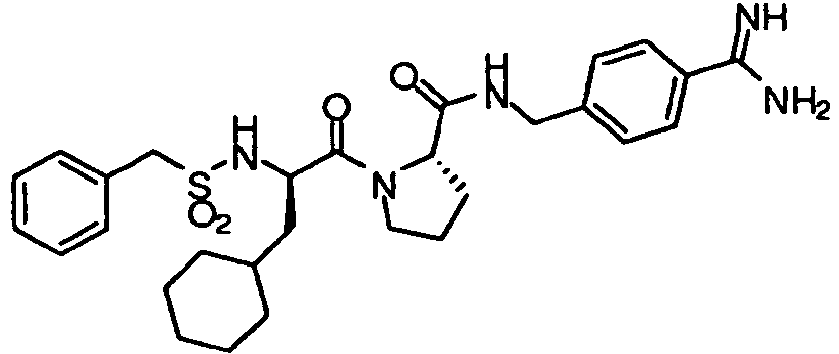
553,27 554,2 36,93 6 
547,22 548,1 34,17 7 
561,24 562,1 36,15 8 
662,29 663,3 36,93 9 
528,25 529,2 18,16 10 
570,27 571,2 20,01 11 
562,24 563,1 17, 21 /18,11 (Razemat) 12 
572,22 573,0 30,82 13 
589,25 590,16 n.b. 14 
741,43 742,3 n.b. 15 
708,40 709,3 n.b. Tabelle 1B: Übersicht und analytische Charakterisierung der synthetisierten Inhibitoren mit den Dissoziationskonstanten Ki (n.b. = nicht bestimmt). Nr. Struktur MS berechnet MS gef.(M+H)+ HPLC min Ki (nM) HAT Ki (nM) TMPRSS2 1 
556,26 557,0 16,80 19 3 2 
516,23 517,3 15,35 279 n.b. 3 
477,17 478,2 14,76 78 n.b. 4 
652,27 653,3 32,74 48 n.b. 5 
553,27 554,2 36,93 77 81 6 
547,22 548,1 34,17 66 n.b. 7 
561,24 562,1 36,15 55 n.b. 8 
662,29 663,3 36,93 49 n.b. 9 
528,25 529,2 18,16 30 n.b. 10 
570,27 571,2 20,01 13 n.b. 11 
562,24 563,1 17,21/18,11 (Razemat) 32 n.b. 12 
572,22 573,0 30,82 210 n.b. 13 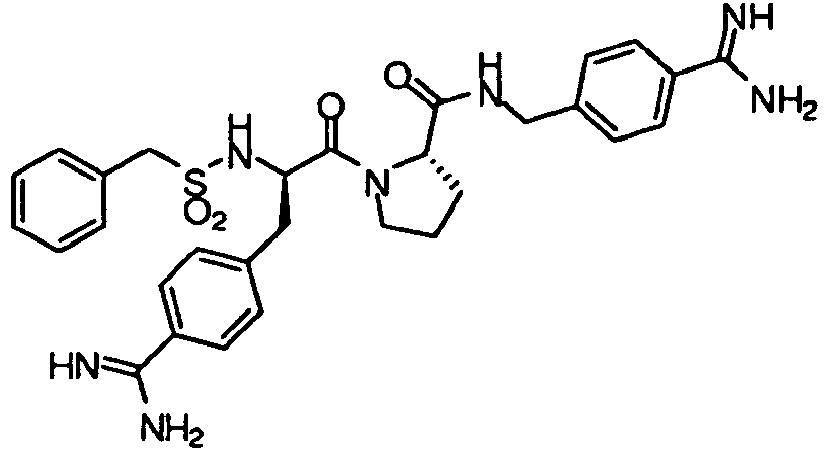
589,25 590,16 n.b. n.b. n.b. 14 
741,44 742,4 46,6 160 8 15 
447,16 448,3 23,52 1840 n.b. 16 
739,2 740,1 57,7 >20000 n.b. 17 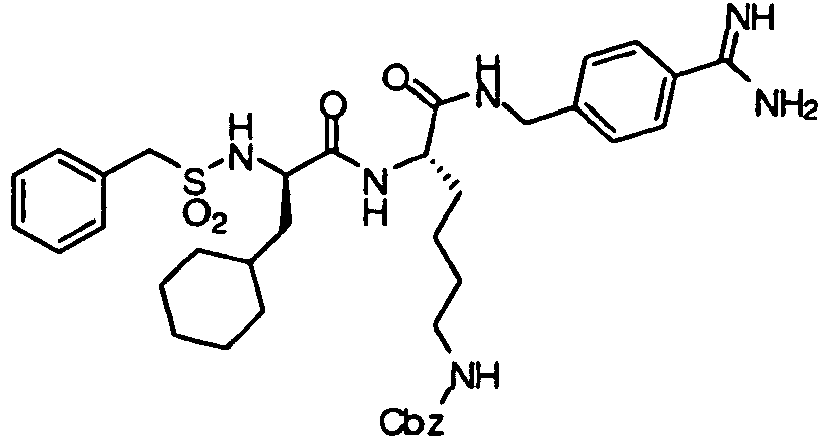
718,35 719,3 52,1 488 84 - Die Hemmwirkung der Inhibitoren für HAT (R&D Systems) und TMPRSS2 (katalytische Domäne exprimiert in E. coli) wurden unter Verwendung chromogener Substrate ermittelt. Für HAT wurde d-Cyclohexylalanin-Pro-Arg-7-Aminomethylcoumarin und für TMPRSS2 d-Cyclohexylalanin-Gly-Arg-p-Nitroanilin als Substrat verwendet. Die Bestimmung wurde mit einem Fluoreszenz-Plattenreader Safire2 der Firma Tecan (λEx = 380 nm, λEm = 460 nm) für HAT und mit einem UV/Vis Plattenreader iEMS Reader MF 1401 der Firma LABSYSTEMS für TMPRSS2 bei 405 nm durchgeführt. Die Messung erfolgte in Tris-Puffer (50 mM Tris pH 9.5, 0,05% Brij 58 und 1 mg/ml bovines serum Albumin für HAT und 50 mM Tris pH 8.0, 0,154 M NaCl für TMPRSS2) auf Mikrotiter Platten bei Raumtemperatur. Die Inhibitorlösungen geeigneter Konzentration wurden in DMSO hergestellt. Im Messansatz wurden zu 2 µl Inhibitorlösung unterschiedlicher Konzentration jeweils 158 µl Puffer und 20 µl Substratlösung geben, und danach die Reaktion durch Zugabe von 20 µl Enzymlösung gestartet. Jeder Inhibitor wurde mit drei verschiedenen Substratkonzentrationen vermessen (50 µM, 100 µM, 200 µM für HAT und 45 µM, 90 µM und 181 µM für TMPRSS2). Die Inhibitorkonzentration wurde mindestens um den Bereich einer Größenordnung variiert und jeweils die steady-state Geschwindigkeit bestimmt. Die Berechnung der Ki-Werte erfolgte mit Hilfe eines Computerprogramms nach der Methode von Dixon.
- Für die Experimente wurden MDCK-HAT-Zellen mit induzierbarer Expression der Protease HAT verwendet. MDCK-HAT-Zellen wurden durch stabile Transfektion von MDCK-Zellen (Madin Darby Canine Kidney) mit den Plasmiden pcEFTet-On/NEO und pTRE2pur-HAT-FLAG generiert. Die Expression von HAT in diesen Zellen kann durch Zugabe von Doxycyclin zum Kulturmedium induziert werden (Tet-On Expressionssystem, Gossen and Bujard, Science 1995).
- Um die Wirksamkeit synthetischer Serinproteaseinhibitoren auf die Hemmung der proteolytischen Aktivierung von Influenzaviren durch HAT zu analysieren, wurde die multizyklische Replikation und Virusausbreitung in MDCK-HAT Zellen in Anwesenheit der Inhibitoren untersucht. Dazu wurden MDCK-HAT-Zellen zunächst in 96-well Platten für 24 h in An- und Abwesenheit von 0.2 µg/ml Doxycyclin kultiviert. Anschließend wurden die Zellen mit dem humanen Influenza-Isolat A/Memphis/14/96 (H1N1) infiziert und für 24 h in An- bzw. Abwesenheit verschiedener Inhibitoren bei 37° C und 5% CO2 inkubiert. Im Anschluss wurden infizierte Zellen immunohisto-chemisch gegen das virale Nukleoprotein gefärbt. Dabei konnte eine konzentrationsabhängige Hemmung der Virusvermehrung und -Ausbreitung durch die verwendeten synthetischen Inhibitoren gezeigt werden.
- Die Seite 26 enthält nur Beschreibung und keine Abbildung. Die in der ursprünglichen Version der Anmeldeschrift enthaltene
Abbildung 1 befindet sich am Ende der vorliegenden Version der Anmeldeschrift. - Die in MDCK-HAT-Zellen exprimierte Protease HAT besitzt zusätzlich ein C-terminales Flag-Epitop, welches die Affinitätsreinigung der Protease mit Hilfe von anti-FlagM2-Agarose (Sigma-Aldrich) ermöglicht. HAT-Flag liegt nach der Immunpräzipitation als aktive Protease vor. Die enzymatische Aktivität kann mit Hilfe des Fluoreszenzsubstrats Boc-Leu-Gly-Arg-AMC bestimmt werden.
- Für Inhibitionsstudien wurde HAT-Flag zunächst mit Hilfe des FLAG®Tagged Protein Immunoprecipitation Kits aus MDCK-HAT-Zellen isoliert. Anschließend wurde die isolierte Protease mit 25 µM Boc-Leu-Gly-Arg-AMC in 50 mM Tris/HCl pH 7,4 in An- oder Abwesenheit der Inhibitoren (Endkonzentrationen 0,1 -10 µM) für 2 h bei 37° C inkubiert. Die Umsetzung des Substrates wurde mit Hilfe eines Fluoreszenz-Spektralphotomers bei 350 nm (Extinktion) sowie 460 nm (Emission) bestimmt. Als Kontrolle diente die Bestimmung der Proteaseaktivität in Abwesenheit eines Inhibitors (entspricht 0% Hemmung).
Tabelle 2: Hemmwirkung synthetischer Serinproteasehemmstoffe auf die HAT-katalysierte Spaltung des Substrats Boc-Leu-Gly-Arg-AMC. Inhibitorkonzentration (µM) Prozent Hemmung (%) Inhibitor 1 Inhibitor 3 Inhibitor 5 0,1 22,3 29,5 27 1 70,7 47,1 47,4 10 93,1 80,3 51,5 - Zum Nachweis der Hemmwirkung einer TMPRSS2-vermittelten Virusausbreitung wurden Calu-3-Zellen (humane Atemwegsepithelzellen, endogene Expression von TMPRSS2) verwendet. Dazu wurden die Zellen in 12 Weil-Platten kultiviert und mit dem humanen Influenzavirus-Isolat A/Memphis/14/96 (H1N1) in An- und Abwesenheit verschiedener Inhibitoren für 24 h infiziert. Anschließend wurden infizierte Zellen immunohistochemisch gegen das virale Nukleoprotein gefärbt. Dabei konnte eine konzentrationsabhängige Reduktion der Virusausbreitung in Anwesenheit der verwendeten Inhibitoren 1 und 3 gezeigt werden.
- Die Seite 28 enthält nur Beschreibung und keine Abbildung. Die in der ursprünglichen Version der Anmeldeschrift enthaltene
Abbildung 2 befindet sich am Ende der vorliegenden Version der Anmeldeschrift.
Claims (9)
- Verbindungen gemäß der allgemeinen Formel (I)
 - R1 sich in 2-, 3- oder 4-Stellung befindet und ausgewählt ist aus -H oder R2-CO-NH-CH2-, worin R2 eine lineare oder verzweigte Alkylgruppe mit 1 bis 9 Kohlenstoffatomen darstellt; und- P3 eine einfach oder mehrfach substituierte oder unsubstituierte, natürliche oder unnatürliche α-Aminosäure in der D-Konfiguration ist, nämlich P3 eine Struktur gemäß Formel (II) darstellt
 - m = 0, 1, 2, 3, 4 oder 5 ist, und- R4 ausgewählt wird aus• einer unsubstituierten oder gegebenenfalls substituierten Hydroxy-, Amino-, Amid-, -S-CH3, Amidino-, Guanidino- oder -O-Guanidinogruppe der folgenden Strukturen

 • aus einem unsubstituierten oder an beliebiger Stelle substituierten Aryl-oder Heteroarylring mit 5 bis 10 Ringatomen, wobei der Heteroarylring bis zu 4 Heteroatome ausgewählt aus N, O oder S enthalten kann, und der gegebenenfalls vorhandene Substituent am Aryl- oder Heteroarylring ausgewählt wird aus Cyano, CF3, F, Cl, Br, Amino, Aminomethylen, Amidino, Guanidino oder aus folgenden Strukturen
 • aus einem unsubstituiertem oder an beliebiger Stelle substituierten Cycloalkylring mit 5 bis 7 Ringatomen; und- P2 eine einfach oder mehrfach substituierte oder unsubstituierte, natürliche oder unnatürliche α-Aminosäure oder α-Iminosäure in der L-Konfiguration ist, nämlich P2 einen a-Aminosäure- oder α-Iminosäurerest gemäß der folgenden Strukturen darstellt
 - wobei n gleich 0, 1 oder 2 sein kann, und m und R4 wie zuvor definiert sind und wenn m gleich 0 oder 1 ist, kann R4 H sein; und- P1 ausgewählt wird aus folgenden Strukturenzur Verwendung bei der Therapie und/oder Prophylaxe viraler Infektionen und inflammatorischer Atemwegserkrankungen durch Inhibierung der Serinproteasen HAT und TMPRSS2.
- Die Verbindungen zur Verwendung bei der Therapie und/oder Prophylaxe viraler Infektionen und inflammatorischer Atemwegserkrankungen nach Anspruch 1, dadurch gekennzeichnet, dass sich der Rest R1 in 3- oder 4-Stellung des Phenylrings befindet, bevorzugt ist R1 ein H.
- Die Verbindungen zur Verwendung bei der Therapie und/oder Prophylaxe viraler Infektionen und inflammatorischer Atemwegserkrankungen nach einem der Ansprüche 1 oder 2, dadurch gekennzeichnet, dass der Rest P3 aus folgenden Strukturen ausgewählt wird

- Die Verbindungen zur Verwendung bei der Therapie und/oder Prophylaxe viraler Infektionen und inflammatorischer Atemwegserkrankungen nach einem der Ansprüche 1 bis 3, dadurch gekennzeichnet, dass der Rest P2 aus folgenden Strukturen ausgewählt wird

- Die Verbindungen zur Verwendung bei der Therapie und/oder Prophylaxe viraler Infektionen und inflammatorischer Atemwegserkrankungen nach einem der Ansprüche 1 bis 4, dadurch gekennzeichnet, dass es sich bei den Verbindungen gemäß Formel (I) um folgende Strukturen handelt


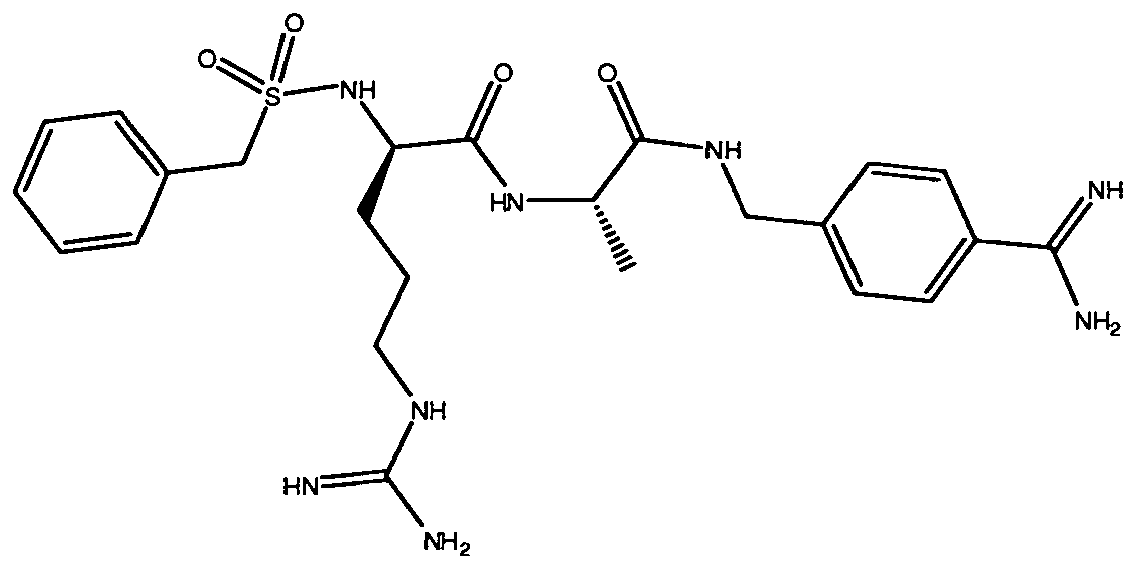


- Verwendung einer pharmazeutisch akzeptablen Komposition enthaltend Verbindungen gemäß einem der Ansprüche 1 bis 5 und/oder deren pharmazeutisch akzeptable Salze anorganischer und organischer Säuren oder Basen als aktive Komponente und einen physiologisch akzeptablen Trägerstoff zur Herstellung eines Arzneimittels zur Behandlung viraler Infektionen und inflammatorischer Atemwegserkrankungen.
- Verwendung einer pharmazeutisch akzeptablen Komposition gemäß Anspruch 6, dadurch gekennzeichnet, dass sie peroral, parenteral, intravenös, intramuskulär, subkutan, intracisternal, intravaginal, intraperitoneal, intravasculär, intrathekal, intratracheal, topisch, lokal oder als Aerosol verabreicht wird.
- Verwendung von Verbindungen gemäß einem der Ansprüche 1 bis 5 sowie deren pharmazeutisch akzeptabler Salze anorganischer und organischer Säuren zur Herstellung eines Arzneimittels zur Therapie und/oder Prophylaxe von viralen Erkrankungen, besonders von Influenza-Infektionen.
- Verwendung von Verbindungen gemäß einem der Ansprüche 1 bis 5 sowie deren pharmazeutisch akzeptabler Salze anorganischer und organischer Säuren zur Herstellung eines Arzneimittels zur Therapie inflammatorischer Atemwegserkrankungen.
Applications Claiming Priority (2)
| Application Number | Priority Date | Filing Date | Title |
|---|---|---|---|
| DE102009022794A DE102009022794A1 (de) | 2009-05-27 | 2009-05-27 | Verwendung von Hemmstoffen der HAT und TMPRSS2 als Arzneimittel |
| PCT/EP2010/057334 WO2010149459A1 (de) | 2009-05-27 | 2010-05-27 | Verwendung von hemmstoffen der hat und tmprss2 als arzneimittel |
Publications (2)
| Publication Number | Publication Date |
|---|---|
| EP2435064A1 EP2435064A1 (de) | 2012-04-04 |
| EP2435064B1 true EP2435064B1 (de) | 2015-08-19 |
Family
ID=42562552
Family Applications (1)
| Application Number | Title | Priority Date | Filing Date |
|---|---|---|---|
| EP10729701.2A Not-in-force EP2435064B1 (de) | 2009-05-27 | 2010-05-27 | Verwendung von hemmstoffen der hat und tmprss2 als arzneimittel |
Country Status (3)
| Country | Link |
|---|---|
| EP (1) | EP2435064B1 (de) |
| DE (1) | DE102009022794A1 (de) |
| WO (1) | WO2010149459A1 (de) |
Families Citing this family (3)
| Publication number | Priority date | Publication date | Assignee | Title |
|---|---|---|---|---|
| DE102011108346A1 (de) | 2011-07-25 | 2013-01-31 | Philipps-Universität Marburg | Verwendung von Hemmstoffen der TMPRSS2 als Arzneimittel |
| EP3710531B1 (de) | 2017-11-13 | 2023-05-24 | Basell Poliolefine Italia S.r.l. | Aus recycelten polyolefinen erhaltene zusammensetzungen |
| FR3108033B1 (fr) | 2020-03-10 | 2023-04-21 | Univ Claude Bernard Lyon | COMPOSES ANTIVIRAUX ET LEURS COMBINAISONS POUR TRAITER L’INFECTION VIRALE PAR LE SARS-CoV-2 |
Family Cites Families (7)
| Publication number | Priority date | Publication date | Assignee | Title |
|---|---|---|---|---|
| US6797504B1 (en) * | 2000-09-08 | 2004-09-28 | Dendreon San Diego Llc | Inhibitors of serine protease activity of matriptase or MTSP1 |
| DE10029014A1 (de) * | 2000-06-15 | 2001-12-20 | Univ Schiller Jena | Urokinase-Hemmstoffe |
| DE60034447T2 (de) * | 2000-08-11 | 2008-02-14 | Wilex Ag | Nicht-kovalente Urokinase-und Angiogenese-Inhibitoren |
| US7838560B2 (en) * | 2002-03-11 | 2010-11-23 | The Medicines Company (Leipzig) Gmbh | Urokinase inhibitors, production and use thereof |
| DE10212555A1 (de) * | 2002-03-15 | 2003-09-25 | Univ Schiller Jena | Verwendung von Hemmstoffen des Gerinnungsfaktors Xa als Wirkstoffe zur Erkennung und Unterdrückung des Wachstums maligner Tumore sowie der von diesen ausgehenden Metastasierung |
| DE102006048300A1 (de) * | 2006-01-26 | 2007-08-02 | Hellstern, Peter, Prof. Dr.med. | Inhibitoren des Blutgerinnungsfaktors Xa zur Verwendung als Antikoagulans |
| EP2117541A1 (de) * | 2007-02-09 | 2009-11-18 | Irm Llc | Verbindungen und zusammensetzungen als kanalaktivierende protease-hemmer |
-
2009
- 2009-05-27 DE DE102009022794A patent/DE102009022794A1/de not_active Withdrawn
-
2010
- 2010-05-27 EP EP10729701.2A patent/EP2435064B1/de not_active Not-in-force
- 2010-05-27 WO PCT/EP2010/057334 patent/WO2010149459A1/de not_active Ceased
Non-Patent Citations (3)
| Title |
|---|
| ETTMAYER PETER ET AL: "Lessons learned from marketed and investigational prodrugs", JOURNAL OF MEDICINAL CHEMISTRY, vol. 47, no. 10, 6 May 2004 (2004-05-06), pages 2393 - 2404, XP001537347, ISSN: 0022-2623, DOI: doi:10.1021/jm0303812 * |
| MATSUSHIMA RIE ET AL: "Human airway trypsin-like protease stimulates human bronchial fibroblast proliferation in a protease-activated receptor-2-dependent pathway", AMERICAN JOURNAL OF PHYSIOLOGY - LUNG CELLULAR AND MOLECULAR PHYSIOLOGY, vol. 290, no. 2, February 2006 (2006-02-01), pages L385 - L395, ISSN: 1040-0605 * |
| SIELAFF FRANK ET AL: "Development of substrate analogue inhibitors for the human airway trypsin-like protease HAT", BIOORGANIC & MEDICINAL CHEMISTRY LETTERS, vol. 21, no. 16, August 2011 (2011-08-01), pages 4860 - 4864, XP028267764, DOI: doi:10.1016/j.bmcl.2011.06.033 * |
Also Published As
| Publication number | Publication date |
|---|---|
| EP2435064A1 (de) | 2012-04-04 |
| DE102009022794A1 (de) | 2010-12-02 |
| WO2010149459A1 (de) | 2010-12-29 |
Similar Documents
| Publication | Publication Date | Title |
|---|---|---|
| EP1583526B1 (de) | Acylierte 4-amidino- und 4-guanidinobenzylaminen zur inhibierung von plasmakallikrein | |
| JP5255456B2 (ja) | ピラジン誘導体を含有する医薬組成物およびピラジン誘導体を組み合わせて使用する方法 | |
| EP0918792B1 (de) | Dipeptidische benzamidine als kininogenasen-inhibitoren | |
| DE4115468A1 (de) | Amidinophenylalaninderivate, verfahren zu deren herstellung, deren verwendung und diese enthaltende mittel als antikoagulantien | |
| EP1294742B1 (de) | Urokinase-hemmstoffe | |
| EP2349312B1 (de) | N-terminal modifizierte tetrapeptidderivate mit c-terminalem argininmimetikum | |
| DE102011108346A1 (de) | Verwendung von Hemmstoffen der TMPRSS2 als Arzneimittel | |
| EP1485345B1 (de) | Hemmstoffe der urokinase, ihre herstellung und verwendung | |
| WO2004085682A2 (de) | Caspase inhibitoren, insbesondere von caspase-3, zur behandlung von influenza | |
| EP2435064A1 (de) | Verwendung von hemmstoffen der hat und tmprss2 als arzneimittel | |
| EP2550963B1 (de) | Pentamidin-Amidoximsäureesters als Prodrugs und ihre Verwendung als Arzneimittel | |
| EP0344682A2 (de) | Oligopeptide mit zyklischen Prolin-analogen Aminosäuren | |
| EP1165601A2 (de) | Prodrugs von thrombininhibitoren | |
| EP1664089B1 (de) | Basisch-substituierte benzylaminanaloga als inhibitoren des gerinnungsfaktors xa, ihre herstellung und verwendung | |
| DE10150172A1 (de) | Neue Verbindungen, die Protein Tyrosin Phosphatase 1B (PTP-1B) inhibieren | |
| DE69838303T2 (de) | Derivate hydroxyprolin | |
| WO2007031343A1 (de) | 2-(AMINOMETHYL)-5-CHLOR-BENZYLAMID-DERIVATE UND IHRE VERWENDUNG ALS HEMMSTOFFE DES GERINNUNGSFAKTORS Xa | |
| DE2063996C3 (de) | Alpha-Aminoxyhydroxamsäurederivate, Verfahren zur Herstellung derselben und diese enthaltende Arzneimittel | |
| DE69606552T2 (de) | Acylierte enolderivate von alpha-ketoestern und alpha-ketoamiden | |
| WO2003103644A2 (de) | Guanidinophenylalaninverbindungen als urokinase-inhibitoren | |
| JP2012504941A5 (de) | ||
| DE102009035593A1 (de) | N-terminal modifizierte Tetrapeptidderivate mit C-terminalem Argininmetikum | |
| EP0373335B1 (de) | Neue Serinprotease-Inhibitor-Proteine, diese enthaltende Arzneimittel, DNA-Sequenzen die für diese Proteine codieren und Verfahren zur Herstellung dieser Proteine, Arzneimittel und DNA-Sequenzen | |
| EP4613859A1 (de) | Tlr-signalisierungshemmendes peptid und zusammensetzung damit zur prävention oder behandlung von entzündlichen erkrankungen | |
| AU2008225372B2 (en) | A medicament for treating chronic obstructive pulmonary disease |
Legal Events
| Date | Code | Title | Description |
|---|---|---|---|
| PUAI | Public reference made under article 153(3) epc to a published international application that has entered the european phase |
Free format text: ORIGINAL CODE: 0009012 |
|
| 17P | Request for examination filed |
Effective date: 20111227 |
|
| AK | Designated contracting states |
Kind code of ref document: A1 Designated state(s): AL AT BE BG CH CY CZ DE DK EE ES FI FR GB GR HR HU IE IS IT LI LT LU LV MC MK MT NL NO PL PT RO SE SI SK SM TR |
|
| DAX | Request for extension of the european patent (deleted) | ||
| 17Q | First examination report despatched |
Effective date: 20130205 |
|
| GRAP | Despatch of communication of intention to grant a patent |
Free format text: ORIGINAL CODE: EPIDOSNIGR1 |
|
| INTG | Intention to grant announced |
Effective date: 20141010 |
|
| GRAP | Despatch of communication of intention to grant a patent |
Free format text: ORIGINAL CODE: EPIDOSNIGR1 |
|
| INTG | Intention to grant announced |
Effective date: 20150319 |
|
| GRAS | Grant fee paid |
Free format text: ORIGINAL CODE: EPIDOSNIGR3 |
|
| GRAA | (expected) grant |
Free format text: ORIGINAL CODE: 0009210 |
|
| AK | Designated contracting states |
Kind code of ref document: B1 Designated state(s): AL AT BE BG CH CY CZ DE DK EE ES FI FR GB GR HR HU IE IS IT LI LT LU LV MC MK MT NL NO PL PT RO SE SI SK SM TR |
|
| REG | Reference to a national code |
Ref country code: GB Ref legal event code: FG4D Free format text: NOT ENGLISH |
|
| REG | Reference to a national code |
Ref country code: CH Ref legal event code: EP |
|
| REG | Reference to a national code |
Ref country code: IE Ref legal event code: FG4D Free format text: LANGUAGE OF EP DOCUMENT: GERMAN |
|
| REG | Reference to a national code |
Ref country code: AT Ref legal event code: REF Ref document number: 743310 Country of ref document: AT Kind code of ref document: T Effective date: 20150915 |
|
| REG | Reference to a national code |
Ref country code: DE Ref legal event code: R096 Ref document number: 502010010106 Country of ref document: DE |
|
| REG | Reference to a national code |
Ref country code: LT Ref legal event code: MG4D |
|
| REG | Reference to a national code |
Ref country code: NL Ref legal event code: MP Effective date: 20150819 |
|
| PG25 | Lapsed in a contracting state [announced via postgrant information from national office to epo] |
Ref country code: GR Free format text: LAPSE BECAUSE OF FAILURE TO SUBMIT A TRANSLATION OF THE DESCRIPTION OR TO PAY THE FEE WITHIN THE PRESCRIBED TIME-LIMIT Effective date: 20151120 Ref country code: NO Free format text: LAPSE BECAUSE OF FAILURE TO SUBMIT A TRANSLATION OF THE DESCRIPTION OR TO PAY THE FEE WITHIN THE PRESCRIBED TIME-LIMIT Effective date: 20151119 Ref country code: LV Free format text: LAPSE BECAUSE OF FAILURE TO SUBMIT A TRANSLATION OF THE DESCRIPTION OR TO PAY THE FEE WITHIN THE PRESCRIBED TIME-LIMIT Effective date: 20150819 Ref country code: FI Free format text: LAPSE BECAUSE OF FAILURE TO SUBMIT A TRANSLATION OF THE DESCRIPTION OR TO PAY THE FEE WITHIN THE PRESCRIBED TIME-LIMIT Effective date: 20150819 Ref country code: LT Free format text: LAPSE BECAUSE OF FAILURE TO SUBMIT A TRANSLATION OF THE DESCRIPTION OR TO PAY THE FEE WITHIN THE PRESCRIBED TIME-LIMIT Effective date: 20150819 |
|
| PG25 | Lapsed in a contracting state [announced via postgrant information from national office to epo] |
Ref country code: SE Free format text: LAPSE BECAUSE OF FAILURE TO SUBMIT A TRANSLATION OF THE DESCRIPTION OR TO PAY THE FEE WITHIN THE PRESCRIBED TIME-LIMIT Effective date: 20150819 Ref country code: IS Free format text: LAPSE BECAUSE OF FAILURE TO SUBMIT A TRANSLATION OF THE DESCRIPTION OR TO PAY THE FEE WITHIN THE PRESCRIBED TIME-LIMIT Effective date: 20151219 Ref country code: PL Free format text: LAPSE BECAUSE OF FAILURE TO SUBMIT A TRANSLATION OF THE DESCRIPTION OR TO PAY THE FEE WITHIN THE PRESCRIBED TIME-LIMIT Effective date: 20150819 Ref country code: PT Free format text: LAPSE BECAUSE OF FAILURE TO SUBMIT A TRANSLATION OF THE DESCRIPTION OR TO PAY THE FEE WITHIN THE PRESCRIBED TIME-LIMIT Effective date: 20151221 |
|
| PG25 | Lapsed in a contracting state [announced via postgrant information from national office to epo] |
Ref country code: NL Free format text: LAPSE BECAUSE OF FAILURE TO SUBMIT A TRANSLATION OF THE DESCRIPTION OR TO PAY THE FEE WITHIN THE PRESCRIBED TIME-LIMIT Effective date: 20150819 |
|
| PG25 | Lapsed in a contracting state [announced via postgrant information from national office to epo] |
Ref country code: CZ Free format text: LAPSE BECAUSE OF FAILURE TO SUBMIT A TRANSLATION OF THE DESCRIPTION OR TO PAY THE FEE WITHIN THE PRESCRIBED TIME-LIMIT Effective date: 20150819 Ref country code: DK Free format text: LAPSE BECAUSE OF FAILURE TO SUBMIT A TRANSLATION OF THE DESCRIPTION OR TO PAY THE FEE WITHIN THE PRESCRIBED TIME-LIMIT Effective date: 20150819 Ref country code: EE Free format text: LAPSE BECAUSE OF FAILURE TO SUBMIT A TRANSLATION OF THE DESCRIPTION OR TO PAY THE FEE WITHIN THE PRESCRIBED TIME-LIMIT Effective date: 20150819 Ref country code: SK Free format text: LAPSE BECAUSE OF FAILURE TO SUBMIT A TRANSLATION OF THE DESCRIPTION OR TO PAY THE FEE WITHIN THE PRESCRIBED TIME-LIMIT Effective date: 20150819 Ref country code: IT Free format text: LAPSE BECAUSE OF FAILURE TO SUBMIT A TRANSLATION OF THE DESCRIPTION OR TO PAY THE FEE WITHIN THE PRESCRIBED TIME-LIMIT Effective date: 20150819 |
|
| REG | Reference to a national code |
Ref country code: DE Ref legal event code: R097 Ref document number: 502010010106 Country of ref document: DE |
|
| PG25 | Lapsed in a contracting state [announced via postgrant information from national office to epo] |
Ref country code: RO Free format text: LAPSE BECAUSE OF FAILURE TO SUBMIT A TRANSLATION OF THE DESCRIPTION OR TO PAY THE FEE WITHIN THE PRESCRIBED TIME-LIMIT Effective date: 20150819 |
|
| PLBE | No opposition filed within time limit |
Free format text: ORIGINAL CODE: 0009261 |
|
| STAA | Information on the status of an ep patent application or granted ep patent |
Free format text: STATUS: NO OPPOSITION FILED WITHIN TIME LIMIT |
|
| 26N | No opposition filed |
Effective date: 20160520 |
|
| PG25 | Lapsed in a contracting state [announced via postgrant information from national office to epo] |
Ref country code: SI Free format text: LAPSE BECAUSE OF FAILURE TO SUBMIT A TRANSLATION OF THE DESCRIPTION OR TO PAY THE FEE WITHIN THE PRESCRIBED TIME-LIMIT Effective date: 20150819 Ref country code: BE Free format text: LAPSE BECAUSE OF NON-PAYMENT OF DUE FEES Effective date: 20160531 |
|
| REG | Reference to a national code |
Ref country code: DE Ref legal event code: R119 Ref document number: 502010010106 Country of ref document: DE |
|
| PG25 | Lapsed in a contracting state [announced via postgrant information from national office to epo] |
Ref country code: LU Free format text: LAPSE BECAUSE OF FAILURE TO SUBMIT A TRANSLATION OF THE DESCRIPTION OR TO PAY THE FEE WITHIN THE PRESCRIBED TIME-LIMIT Effective date: 20160527 |
|
| REG | Reference to a national code |
Ref country code: CH Ref legal event code: PL |
|
| GBPC | Gb: european patent ceased through non-payment of renewal fee |
Effective date: 20160527 |
|
| PG25 | Lapsed in a contracting state [announced via postgrant information from national office to epo] |
Ref country code: LI Free format text: LAPSE BECAUSE OF NON-PAYMENT OF DUE FEES Effective date: 20160531 Ref country code: CH Free format text: LAPSE BECAUSE OF NON-PAYMENT OF DUE FEES Effective date: 20160531 |
|
| REG | Reference to a national code |
Ref country code: IE Ref legal event code: MM4A |
|
| REG | Reference to a national code |
Ref country code: FR Ref legal event code: ST Effective date: 20170131 |
|
| PG25 | Lapsed in a contracting state [announced via postgrant information from national office to epo] |
Ref country code: DE Free format text: LAPSE BECAUSE OF NON-PAYMENT OF DUE FEES Effective date: 20161201 Ref country code: FR Free format text: LAPSE BECAUSE OF NON-PAYMENT OF DUE FEES Effective date: 20160531 |
|
| PG25 | Lapsed in a contracting state [announced via postgrant information from national office to epo] |
Ref country code: GB Free format text: LAPSE BECAUSE OF NON-PAYMENT OF DUE FEES Effective date: 20160527 Ref country code: IE Free format text: LAPSE BECAUSE OF NON-PAYMENT OF DUE FEES Effective date: 20160527 |
|
| REG | Reference to a national code |
Ref country code: AT Ref legal event code: MM01 Ref document number: 743310 Country of ref document: AT Kind code of ref document: T Effective date: 20160527 |
|
| PG25 | Lapsed in a contracting state [announced via postgrant information from national office to epo] |
Ref country code: AT Free format text: LAPSE BECAUSE OF NON-PAYMENT OF DUE FEES Effective date: 20160527 |
|
| PG25 | Lapsed in a contracting state [announced via postgrant information from national office to epo] |
Ref country code: CY Free format text: LAPSE BECAUSE OF FAILURE TO SUBMIT A TRANSLATION OF THE DESCRIPTION OR TO PAY THE FEE WITHIN THE PRESCRIBED TIME-LIMIT Effective date: 20150819 Ref country code: SM Free format text: LAPSE BECAUSE OF FAILURE TO SUBMIT A TRANSLATION OF THE DESCRIPTION OR TO PAY THE FEE WITHIN THE PRESCRIBED TIME-LIMIT Effective date: 20150819 Ref country code: ES Free format text: LAPSE BECAUSE OF FAILURE TO SUBMIT A TRANSLATION OF THE DESCRIPTION OR TO PAY THE FEE WITHIN THE PRESCRIBED TIME-LIMIT Effective date: 20150819 Ref country code: HU Free format text: LAPSE BECAUSE OF FAILURE TO SUBMIT A TRANSLATION OF THE DESCRIPTION OR TO PAY THE FEE WITHIN THE PRESCRIBED TIME-LIMIT; INVALID AB INITIO Effective date: 20100527 |
|
| PG25 | Lapsed in a contracting state [announced via postgrant information from national office to epo] |
Ref country code: MC Free format text: LAPSE BECAUSE OF FAILURE TO SUBMIT A TRANSLATION OF THE DESCRIPTION OR TO PAY THE FEE WITHIN THE PRESCRIBED TIME-LIMIT Effective date: 20150819 Ref country code: MT Free format text: LAPSE BECAUSE OF FAILURE TO SUBMIT A TRANSLATION OF THE DESCRIPTION OR TO PAY THE FEE WITHIN THE PRESCRIBED TIME-LIMIT Effective date: 20150819 Ref country code: TR Free format text: LAPSE BECAUSE OF FAILURE TO SUBMIT A TRANSLATION OF THE DESCRIPTION OR TO PAY THE FEE WITHIN THE PRESCRIBED TIME-LIMIT Effective date: 20150819 Ref country code: MK Free format text: LAPSE BECAUSE OF FAILURE TO SUBMIT A TRANSLATION OF THE DESCRIPTION OR TO PAY THE FEE WITHIN THE PRESCRIBED TIME-LIMIT Effective date: 20150819 Ref country code: HR Free format text: LAPSE BECAUSE OF FAILURE TO SUBMIT A TRANSLATION OF THE DESCRIPTION OR TO PAY THE FEE WITHIN THE PRESCRIBED TIME-LIMIT Effective date: 20150819 |
|
| PG25 | Lapsed in a contracting state [announced via postgrant information from national office to epo] |
Ref country code: BG Free format text: LAPSE BECAUSE OF FAILURE TO SUBMIT A TRANSLATION OF THE DESCRIPTION OR TO PAY THE FEE WITHIN THE PRESCRIBED TIME-LIMIT Effective date: 20150819 |
|
| PG25 | Lapsed in a contracting state [announced via postgrant information from national office to epo] |
Ref country code: AL Free format text: LAPSE BECAUSE OF FAILURE TO SUBMIT A TRANSLATION OF THE DESCRIPTION OR TO PAY THE FEE WITHIN THE PRESCRIBED TIME-LIMIT Effective date: 20150819 |