EP2427468B2 - Herstellung eines metallkomplexes - Google Patents
Herstellung eines metallkomplexes Download PDFInfo
- Publication number
- EP2427468B2 EP2427468B2 EP10700450.9A EP10700450A EP2427468B2 EP 2427468 B2 EP2427468 B2 EP 2427468B2 EP 10700450 A EP10700450 A EP 10700450A EP 2427468 B2 EP2427468 B2 EP 2427468B2
- Authority
- EP
- European Patent Office
- Prior art keywords
- complex
- phosphine
- ligand
- butylphosphino
- solvent
- Prior art date
- Legal status (The legal status is an assumption and is not a legal conclusion. Google has not performed a legal analysis and makes no representation as to the accuracy of the status listed.)
- Active
Links
Images
Classifications
-
- C—CHEMISTRY; METALLURGY
- C07—ORGANIC CHEMISTRY
- C07F—ACYCLIC, CARBOCYCLIC OR HETEROCYCLIC COMPOUNDS CONTAINING ELEMENTS OTHER THAN CARBON, HYDROGEN, HALOGEN, OXYGEN, NITROGEN, SULFUR, SELENIUM OR TELLURIUM
- C07F15/00—Compounds containing elements of Groups 8, 9, 10 or 18 of the Periodic Table
- C07F15/0006—Compounds containing elements of Groups 8, 9, 10 or 18 of the Periodic Table compounds of the platinum group
- C07F15/006—Palladium compounds
- C07F15/0066—Palladium compounds without a metal-carbon linkage
-
- C—CHEMISTRY; METALLURGY
- C07—ORGANIC CHEMISTRY
- C07F—ACYCLIC, CARBOCYCLIC OR HETEROCYCLIC COMPOUNDS CONTAINING ELEMENTS OTHER THAN CARBON, HYDROGEN, HALOGEN, OXYGEN, NITROGEN, SULFUR, SELENIUM OR TELLURIUM
- C07F15/00—Compounds containing elements of Groups 8, 9, 10 or 18 of the Periodic Table
- C07F15/0006—Compounds containing elements of Groups 8, 9, 10 or 18 of the Periodic Table compounds of the platinum group
- C07F15/006—Palladium compounds
-
- C—CHEMISTRY; METALLURGY
- C07—ORGANIC CHEMISTRY
- C07F—ACYCLIC, CARBOCYCLIC OR HETEROCYCLIC COMPOUNDS CONTAINING ELEMENTS OTHER THAN CARBON, HYDROGEN, HALOGEN, OXYGEN, NITROGEN, SULFUR, SELENIUM OR TELLURIUM
- C07F17/00—Metallocenes
- C07F17/02—Metallocenes of metals of Groups 8, 9 or 10 of the Periodic Table
Definitions
- the present invention concerns the preparation of metal complexes, in particular, Pd(0) complexes.
- US4196135 describes the preparation of Pd[(o-tol) 3 ] 2 . However, this method could not be reproduced. The major by-product was a black insoluble material, typical of reduced palladium and the starting palladium(II) complex. Hartwig et al. were also not able to reproduce this synthesis even by changing the reaction conditions ( Hartwig, J. F. Organometallics 1995, 14, 3030 ). US3799961 describes the preparation of Pd(Ph 3 P) 4 .
- the process is general, safe and efficient and may be carried out on an industrial scale.
- the process may use readily available, inexpensive, air-stable precursors and in some embodiments nearly quantitative yields of the complexes may be obtained.
- the invention provides a process for the preparation of a Pd(0)L n complex, where L is a ligand and n is 2, comprising the steps of:
- the invention provides a process for the preparation of a L 2 Pd(H)(Hal) complex comprising the steps of:
- the invention provides a Pd(0)L 2 complex which is [ t -Bu 2 ( p -PhMe 2 N)P] 2 Pd.
- one aspect of the present invention is to provide a process for the preparation of a Pd(0)L n complex, where L is a ligand and n is 2, comprising the steps of:
- the diolefin contains a cyclic diolefin, more preferably 2,5-norbornadiene (NBD) or 1,5-cyclooctadiene (COD).
- NBD 2,5-norbornadiene
- CDOD 1,5-cyclooctadiene
- the cyclic diolefin can be replaced by either two molecules of an olefin such as ethylene or two molecules of a C 5-10 cycloalkene.
- halide may be chloride, bromide or iodide, preferably chloride or bromide.
- halide and “Hal” may be used interchangeably.
- the cation M may be an alkali metal cation (e.g. Na + or K + ) or an ammonium ion cation (NH 4 + ).
- alkali metal cation e.g. Na + or K +
- NH 4 + ammonium ion cation
- Suitable Pd(II) complexes include Pd(diolefin)(halide) 2 complexes such as Pd(COD)Br 2 , Pd(COD)Cl 2 , Pd(NBD)Br 2 , Pd(NBD)Cl 2 .
- the Pd(II) complex is present in at least one solvent and may be in the form of a suspension or solution.
- the solvent used may be any suitable solvent and may be selected from protic solvents, aprotic solvents or combinations thereof.
- protic solvents are water or alcohols (such as methanol, ethanol, 1-propanol, 2-propanol, 1-butanol, 2-butanol, t-butanol or benzylic alcohol).
- aprotic solvents are aromatic solvents (such as toluene or benzene), ethers (e.g.
- tetrahydrofuran THF
- dioxane dioxane
- methyltertbutylether MTBE
- diethylether diethylether
- ketones such as acetone
- esters e.g. ethylacetate
- nitriles such as acetonitrile
- amides e.g. dimethylformamide (DMF), N-methylpyrrolidine (NMP) or dimethylacetamide (DMAc)
- alkanes such as isomers of pentane, hexane or heptane.
- Particularly preferred solvents are water, alcohols and/or aromatic solvents, especially water, methanol, ethanol and/or toluene.
- the base may be a hydroxide, alkoxide, carbonate, acetate or phosphate and preferably, hydroxide or alkoxide.
- Suitable hydroxides include alkali metal hydroxides (e.g. lithium hydroxide, sodium hydroxide or potassium hydroxide) or tetraalkylammonium hydroxides.
- alkali metal hydroxides e.g. lithium hydroxide, sodium hydroxide or potassium hydroxide
- Preferred hydroxides are sodium hydroxide, potassium hydroxide or tetrabutylammonium hydroxide.
- Suitable alkoxides include alkali metal alkoxides (e.g. lithium alkoxide, sodium alkoxide or potassium alkoxide) or tetraalkylammonium alkoxides.
- alkali metal alkoxides e.g. lithium alkoxide, sodium alkoxide or potassium alkoxide
- tetraalkylammonium alkoxides e.g. lithium alkoxide, sodium alkoxide or potassium alkoxide
- a preferred alkoxide is sodium methoxide.
- alkyl refers to an optionally substituted cyclic, branched or straight chain saturated hydrocarbon group preferably having 1 to 15 carbon atoms, more preferably 1 to 10 carbon atoms, most preferably 1 to 5 carbon atoms.
- Examples of C 1 -C 15 alkyl groups include, but are not limited to, methyl, ethyl, n-propyl, isopropyl, n-butyl, t-butyl, n-pentyl, cyclopentyl, n-hexyl, cyclohexyl and the like.
- alkoxide should be construed accordingly.
- Suitable carbonates include alkali metal carbonates (e.g. lithium carbonate, sodium carbonate or potassium carbonate).
- a preferred carbonate is sodium carbonate.
- Suitable phosphates include alkali metal phosphates (e.g. lithium phosphates, sodium phosphates or potassium phosphates).
- a preferred phosphate is sodium phosphate.
- Suitable acetates include alkali metal acetates (e.g. lithium acetates, sodium acetates or potassium acetates).
- a preferred acetate is sodium acetate.
- the base is preferably present in stoichiometric quantities or excess to the Pd(II) complex.
- the base may be added to the reaction mixture as a solution in at least one solvent.
- Suitable solvents will generally be similar to those previously mentioned in connection with the Pd(II) complex.
- the solvent may be water, an alcohol or a combination thereof. Methanol and/or water are particularly preferred.
- the at least one solvent comprises a protic solvent when the base is a hydroxide, carbonate, phosphate or acetate.
- the solvent is aprotic
- aromatic solvents are preferred, in particular, toluene.
- the solvent is an aprotic solvent when the base is an alkoxide.
- Pd(II) complex is Pd(diolefin)(halide) 2
- a Pd(II) dimer is formed as an intermediate on reaction of the Pd(diolefin)(halide) 2 with a base in a solvent. It is possible to isolate the Pd(II) dimer using methods known to a person skilled in the art before reacting the complex with the ligand L (if desired). Alternatively, it is also possible to add a solution of the ligand L directly to the solution of the Pd(II) dimer.
- the base is a hydroxide in water
- the inventors believe the Pd(II) dimer formed is a Pd(II) (hydroxyl-olefin)dimer.
- the base is an alkoxide or hydroxide in alcohol
- the inventors believe the Pd(II) dimer formed is a Pd(II) (alkoxy-olefin)dimer.
- the ligand L may be a phosphorus compound. Any suitable phosphorus compound capable of forming a ligand-metal interaction with the Pd atom may be used.
- the heteroatom is selected from the group consisting of N and O.
- the phosphorus ligand may be monodentate, e.g. PPh 3 , or bidentate.
- the ligand may be chiral or achiral, although in many instances it is preferred that the phosphorus ligand is chiral.
- a variety of chiral phosphorus ligands has been described and reviews are available, for example see W. Tang and X. Zhang, Chem Rev. 2003, 103, 3029 - 3070 and J.C. Carretero, Angew. Chem. Int. Ed., 2006, 45, 7674-7715 .
- Phosphorus ligands that may be used in the present invention include but are not restricted to the following structural types:
- -PR 2 may be -P(alkyl) 2 in which alkyl is preferably C 1 -C 10 alkyl, -P(aryl) 2 where aryl includes phenyl and naphthyl which may be substituted or unsubstituted or -P(O-alkyl) 2 and -P(O-aryl) 2 with alkyl and aryl as defined above.
- -PR 2 is preferably either -P(aryl) 2 where aryl includes phenyl, tolyl, xylyl or anisyl or -P(O-aryl) 2 .
- O-aryl groups are those based on chiral or achiral substituted 1,1'-biphenol and 1,1'-binaphtol.
- R groups on the P-atom may be linked as part of a cyclic structure.
- Substituting groups may be present on the alkyl or aryl substituents in the phosphorus ligands.
- Such substituting groups are typically branched or linear C 1-6 alkyl groups such as methyl, ethyl, propyl, isopropyl, tert butyl and cyclohexyl.
- the phosphorus ligands are preferably used in their single enantiomer form. These phosphorus ligands are generally available commercially and their preparation is known. For example, the preparation of PARAPHOS ligands is given in WO 04/111065 , the preparation of Bophoz ligands in WO02/26750 and US6906212 , the preparation of QUINAPHOS ligands in US6720281 , the preparation of H 8 -BinamP ligands in US5919981 and the preparation of Dihydroquinaphos ligands in WO2008/041029 .
- Preferred phosphorus ligands include phenyl-di-t-butylphosphine, 1,2,3,4,5-pentaphenyl-1'-(di-t-butylphosphino)ferrocene, triphenylphosphine, tricyclohexylphosphine, tri(tert-butyl)phosphine, tris(p-tolyl)phosphine, tris(o-tolyl)phosphine, tris(p-methoxyphenyl)phosphine, di-tert-butyl-neopentylphosphine, tris(p-trifluoromethylphenyl)phosphine, tris(2,4,6-trimethoxyphenyl)phosphine, tris(2,4,6,-trimethyl)phosphine, tris(2,6-dimethylphenyl)phosphine, 1-adamantyl-di-t-butylphosphine,
- the ligand may be present in stoichiometric or excess to the Pd(II) complex, preferably in stoichiometric quantities.
- stoichiometric quantities are utilised, the methodology does not require the use of excess expensive ligands (such as phosphines) as sacrificing reducing agents and thereby makes the whole process highly efficient and atom-economical for commercial production.
- the ligand L may be added to the reaction mixture as a solution in at least one solvent.
- Suitable solvents will generally be similar to those previously mentioned in connection with the Pd(II) complex.
- Alcohols, aromatic solvents and/or ketones are preferred, especially methanol, ethanol, toluene and acetone.
- the solvents which may be used in steps a and b may be the same or different.
- the solvents may be single protic solvent (such as methanol or water) or a combination of protic solvents (e.g. water, ethanol and/or methanol).
- the solvents may be a combination of aprotic and protic solvents (such as toluene, acetone, methanol, ethanol and/or water).
- step a and/or step b may be carried out under an inert atmosphere, such as under nitrogen or argon.
- the ligand L is reacted under an inert atmosphere.
- the reactants may be added in any suitable order, but in one preferred process of the invention, the ligand L together with a solvent (if used) is added to a reaction mixture of the Pd(II) complex in at least one solvent and the base in a solvent (if used). This order of steps desirably prepares Pd(0)L 2 complexes. In another preferred process of the invention, the base together with a solvent (if used) is added to a reaction mixture of the Pd(II) complex in at least one solvent and the ligand L in a solvent (if used). This order of steps desirably prepares Pd(0)L 2 or Pd(0)L 4 complexes.
- the Pd(0)L n complex prepared is selected from the group consisting of:
- the present invention provides a Pd(0)L 2 complex which is Pd[(4-dimethyl-aminophenyl)(tert-butyl) 2 phosphine] 2 .
- the process of the invention may be preferably carried out at one or more temperatures in the range of about -10°C to about 120°C, more preferably about -5°C to about 80°C. It is preferred that the temperature is maintained below the decomposition temperature, and so, when the Pd(II) complex, Pd(II) intermediates and/or the Pd(0)L n complexes are known to decompose within the temperature ranges given above, the temperature should be maintained below the decomposition temperature.
- the reaction may be carried out for a period of from about several minutes to about 24 hours but is usually complete within about 10 hours.
- the Pd(0)L n complex is separated from the reaction mixture by any appropriate method which is dependent upon the physical form of the product.
- the complex may be filtered from the supernatant, optionally washed and dried. Drying may be performed using known methods, for example at temperatures in the range 10-60°C and preferably 20-40°C under 1-30 mbar vacuum for 1 hour to 5 days. If desired the complex may be recrystallised.
- the present invention provides a process for the preparation of a L 2 Pd(H)(Hal) complex comprising the steps of:
- Suitable bases, solvents, ligands, as well as reaction and isolation conditions will be generally similar to those previously mentioned above.
- the process further comprises the step of: c'. reacting the L 2 Pd(H)(Hal) complex to form a Pd(0)L n complex wherein n is 2, 3 or 4;
- step c' may require the addition of further base in order to form the Pd(0)L n complex.
- step a' is performed and the complex of formula 2a or 2b is prepared in situ, no further base may be necessary as there may be sufficient base remaining from step a'.
- the complexes obtained by the methods of the present invention are pure and may contain very low or no byproducts.
- the complexes of the present invention have a purity ⁇ 80%, in some embodiments ⁇ 85%, in some embodiments ⁇ 90%, in some embodiments ⁇ 95%, in some embodiments ⁇ 98%, in some embodiments ⁇ 99%, in some embodiments ⁇ 99.9%.
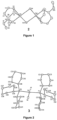
- the molecular structure of the organopalladium dimer reveals the oxypalladation of the COD via the nucleophilic attack of the MeO - anion at one of its double bonds.
- the Pd-C6 distance is 2.062 A, typical of a Pd-C ⁇ bond.
- Palladium dichloride PdCl 2 was reacted with 2 mole equivalents of NH 4 Cl in methanol at 60 °C for 1.5h. The resulting slurry was reacted with 4 mole equivalents of PPh 3 in toluene at 60 °C for 10 min. The yellow slurry was reacted with 2 mole equivalents of [Bu 4 N]OH solution (50% w/w in H 2 O) at 60 °C under N 2 for 1h, followed by cooling to room temperature, filtration, washing with methanol, H 2 O, and methanol and drying to give the product as a bright yellow solid. Total yield 66%. NMR indicated pure product as Pd[PPh 3 ] 4 (Pd(0)).
- Palladium dichloride PdCl 2 was reacted with 2 mole equivalents of KCI in methanol at 60 °C for 1.5 h. The resulting slurry was reacted with 4 mole equivalents of PPh 3 in toluene at 60 °C for 10 min. The yellow slurry was reacted with 2 mole equivalents of KOH solution in methanol at 60 °C under N 2 for 3 h, followed by methanol addition, cooling to room temperature, filtration, washing with 20% H 2 O/methanol, and methanol and drying to give the product as a bright yellow solid. Total yield 89%. NMR indicated pure product as Pd[PPh 3 ] 4 (Pd(0)).
Landscapes
- Chemical & Material Sciences (AREA)
- Organic Chemistry (AREA)
- Organic Low-Molecular-Weight Compounds And Preparation Thereof (AREA)
Claims (13)
- Verfahren zum Herstellen eines Pd(0)Ln-Komplexes, wobei L ein Ligand ist und n 2 ist, umfassend die Schritte:a. Umsetzen eines Pd(II)-Komplexes in mindestens einem Lösungsmittel mit einer Base und einem Liganden L; undb. gegebenenfalls Zugabe einer weiteren Base, optional in mindestens einem Lösungsmittel, um den Pd(0)Ln-Komplex zu bilden;wobei die mindestens einen Lösungsmittel in den Schritten a und b unabhängig voneinander gleich oder unterschiedlich sind und wobei der Pd(II)-Komplex Pd(olefin)x(Hal)2 ist,wobeijedes Hal unabhängig ein Halogenid ist,M ein Kation ist,x 1 oder 2 beträgt,und wobei,wenn x = 1, das Olefin ein Diolefin ist,wenn x = 2, das Olefin ein Monoolefin ist.
- Verfahren nach Anspruch 1, wobei in Schritt a der Ligand L zu einem Reaktionsgemisch des Pd(II)-Komplexes in mindestens einem Lösungsmittel und der Base gegeben wird.
- Verfahren nach Anspruch 1, wobei in Schritt a die Base zu einem Reaktionsgemisch des Pd(II)-Komplexes in mindestens einem Lösungsmittel und dem Liganden L gegeben wird.
- Verfahren nach einem der vorstehenden Ansprüche, wobei die Base ein Hydroxid, Alkoxid, Carbonat, Phosphat oder Acetat ist.
- Verfahren nach einem der vorstehenden Ansprüche, wobei die mindestens einen Lösungsmittel in den Schritten a und b unabhängig voneinander aus der Gruppe ausgewählt sind, bestehend aus protischen Lösungsmitteln, aprotischen Lösungsmitteln und Kombinationen davon.
- Verfahren nach einem der vorstehenden Ansprüche, wobei der Ligang L ein Phosphorligand ist.
- Verfahren nach Anspruch 6, wobei der Phosphorligand ein chiraler oder achiraler, einzähniger oder zweizähniger Phosphorligand ist, in dem jedes Phosphoratom kovalent entweder an 3 Kohlenstoffatome oder an z Heteroatome und 3-z Kohlenstoffatome gebunden ist, wobei z = 1, 2 oder 3.
- Verfahren nach Anspruch 7, wobei das Heteroatom aus der Gruppe ausgewählt ist, bestehend aus N und O.
- Verfahren nach einem der vorstehenden Ansprüche, wobei der Ligand L ein Phosphin ist, ausgewählt aus der Gruppe bestehend aus Phenyl-di-t-butylphosphin, Di-tert-butyl-neopentylphosphin, 1,2,3,4,5-Pentaphenyl-1'-(di-t-butylphosphino)ferrocen, Triphenylphosphin, Tricyclohexylphosphin, Tri(tert-butyl)phosphin, Tris(p-tolyl)phosphin, Tris(o-tolyl)phosphin, Tris(p-methoxyphenyl)phosphin, Tris(p-trifluormethylphenyl)phosphin, Tris(2,4,6-trimethoxyphenyl)phosphin, Tris(2,4,6,-trimethyl)phosphin, Tris(2,6-dimethylphenyl)phosphin, 1-adamantyl-di-t-butylphosphin, Benzyldi-1-adamantylphosphin, Butyldi-1-adamantylphosphin, Cyclohexyldi-t-butylphosphin, Cyclohexyldiphenylphosphin, 2-Di-t-butylphosphino-1,1'-binaphtyl, 2-(Di-t-butylphosphino)biphenyl, 2-Di-t-butylphosphino-2'-(N,N-dimethylamino)biphenyl, 2-Di-t-butylphosphino-2'-methylbiphenyl, 2-Di-t-butylphosphino-2',4',6'-tri-i-propyl-1,1'-biphenyl, 2-Di-t-butylphosphino-3,4,5,6-tetramethyl-2',4',6'-tri-1-propylbiphenyl, 2-(Dicyclohexylphosphino)biphenyl, 2-(Dicyclohexylphosphino)-2',6'-dimethoxy-1,1'-biphenyl, 2-Di-t-cyclohexyl phosphino-2'-(N,N-dimethylamino)biphenyl, 2-Di-t-cyclohexylphosphino-2',6'-di-i-propoxy-1,1'-biphenyl, 2-(Dicyclohexylphosphino)-2',4',6'-tri-i-propyl-1,1'-biphenyl, 2-Di-cyclohexylphosphino-2'-methylbiphenyl, 2-Diphenylphosphino-2'-(N,N-dimethylamino)biphenyl, (4-Dimethylaminophenyl)(tert-butyl)2-phosphin, 1,2-Bis(ditertbutylphosphinomethyl)benzol, 1,3-Bis(di-tertbutylphosphinomethyl)propan, 1,2-Bis(di-phenylphosphinomethyl)benzol, 1,2-Bis(di-phenylphosphino)ethan, 1,2-Bis(diphenylphosphino)propan, 1,2-Bis(diphenylphosphino)butan, 1,1'-Bis(diphenylphosphino)ferrocen, N-(2-Methoxyphenyl)-2-(di-t-butylphosphino)pyrrol, 1-(2-Methoxyphenyl)-2-(dicyclohexylphosphino)pyrrol, N-Phenyl-2-(di-t-butylphosphino)indol, N-Phenyl-2-(di-t-butylphosphino)pyrrol, N-Phenyl-2-(dicyclohexylphosphino)indol, N-Phenyl-2-(di-cyclohexylphosphino)pyrrol und 1-(2,4,6-Trimethylphenyl)-2(dicyclohexylphosphino)imidazol.
- Verfahren nach Anspruch 1, wobei der Pd(0)Ln-Komplex ausgewählt ist aus der Gruppe bestehend aus:a. [t-Bu2PhP]2Pd;b. [t-Bu2(p-PhMe2N)P]2Pd;c. [Cy3P]2Pd;d. [t-Bu3P]2Pd;e. [P(C5H4FeC5Ph5)(t-Bu)2]2Pd;f. [(o-tol)3P]2Pd; undg. [t-Bu2(neopentyl)P]2Pd.
- Verfahren zum Herstellen eines L2Pd(H)(Hal)-Komplexes, umfassend die Schritte:a'. optional Herstellen eines Pd(II)-Komplexes der Formel 2a oder 2b:
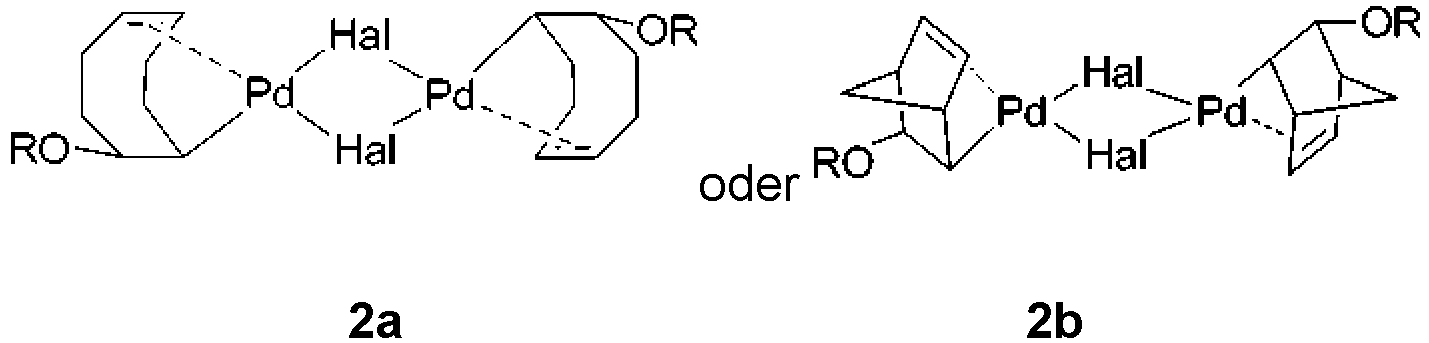 umfassend das Umsetzen von Pd(Diolefin)(Hal)2 mit (i) Hydroxid in Wasser, (ii) einem Alkoxid in mindestens einem Lösungsmittel oder (iii) Hydroxid in einem Alkohol ROH, optional in mindestens einem Lösungsmittel, wobeijedes Hal unabhängig ein Halogenid ist;jedes R unabhängig H oder eine optional substituierte geradkettige, verzweigte oder cyclische C1-15-Alkylgruppe ist; unddas Diolefin Cyclooctadien oder Norbornadien ist; undb'. Umsetzen des Pd(II)-Komplexes der Formel 2a oder 2b mit Ligand L und, falls erforderlich, mindestens einem Lösungsmittel, um den L2Pd(H)(Hal)-Komplex zu bilden;
wobei
die mindestens einen Lösungsmittel von Schritten a' und b' unabhängig voneinander gleich oder unterschiedlich sind. - Verfahren nach Anspruch 11, ferner umfassend den Schritt:
c'. Umsetzen des L2Pd(H)(Hal)-Komplexes, um einen Pd(0)Ln-Komplex zu bilden, wobei n 2, 3 oder 4 ist. - Pd(0)L2-Komplex, der [t-Bu2(p-PhMe2N)P]2Pd ist.
Priority Applications (1)
| Application Number | Priority Date | Filing Date | Title |
|---|---|---|---|
| SI201031528T SI2427468T1 (sl) | 2009-05-06 | 2010-01-12 | Priprava kovinskega kompleksa |
Applications Claiming Priority (2)
| Application Number | Priority Date | Filing Date | Title |
|---|---|---|---|
| US17594209P | 2009-05-06 | 2009-05-06 | |
| PCT/GB2010/050035 WO2010128316A1 (en) | 2009-05-06 | 2010-01-12 | Preparation of a metal complex |
Publications (3)
| Publication Number | Publication Date |
|---|---|
| EP2427468A1 EP2427468A1 (de) | 2012-03-14 |
| EP2427468B1 EP2427468B1 (de) | 2017-06-14 |
| EP2427468B2 true EP2427468B2 (de) | 2025-06-04 |
Family
ID=41800739
Family Applications (1)
| Application Number | Title | Priority Date | Filing Date |
|---|---|---|---|
| EP10700450.9A Active EP2427468B2 (de) | 2009-05-06 | 2010-01-12 | Herstellung eines metallkomplexes |
Country Status (6)
| Country | Link |
|---|---|
| US (1) | US8772520B2 (de) |
| EP (1) | EP2427468B2 (de) |
| CN (1) | CN102459292B (de) |
| ES (1) | ES2640038T5 (de) |
| SI (1) | SI2427468T1 (de) |
| WO (1) | WO2010128316A1 (de) |
Families Citing this family (7)
| Publication number | Priority date | Publication date | Assignee | Title |
|---|---|---|---|---|
| CN105273009A (zh) * | 2014-06-23 | 2016-01-27 | 河北百灵威超精细材料有限公司 | 一种制备二(三叔丁基膦)钯(o)的合成方法 |
| JP6726321B2 (ja) * | 2016-07-04 | 2020-07-22 | ヘレーウス ドイチュラント ゲゼルシャフト ミット ベシュレンクテル ハフツング ウント コンパニー コマンディートゲゼルシャフトHeraeus Deutschland GmbH&Co.KG | テトラキス(トリヒドロカルビルホスファン)パラジウム(0)の製造方法 |
| CN110312728B (zh) * | 2016-10-21 | 2022-05-27 | 庄信万丰股份有限公司 | 方法 |
| US20240116965A1 (en) * | 2020-12-23 | 2024-04-11 | Umicore Ag & Co. Kg | Organometallic compounds |
| CN116802187A (zh) * | 2020-12-23 | 2023-09-22 | 优米科尔股份公司及两合公司 | 有机金属化合物 |
| CN114933612B (zh) * | 2022-04-08 | 2022-12-30 | 安徽泽升科技有限公司 | 一种四(三苯基膦)钯的合成方法 |
| CN117327117A (zh) * | 2023-09-05 | 2024-01-02 | 武汉膦配巴科技有限公司 | 一种二(三叔丁基膦)钯(0)的制备方法 |
Citations (1)
| Publication number | Priority date | Publication date | Assignee | Title |
|---|---|---|---|---|
| WO2004039819A2 (de) † | 2002-10-31 | 2004-05-13 | Umicore Ag & Co. Kg | Verfahren zur herstellung von palladium(0)-haltigen verbindungen |
Family Cites Families (10)
| Publication number | Priority date | Publication date | Assignee | Title |
|---|---|---|---|---|
| GB1338741A (en) | 1972-06-27 | 1973-11-28 | Vnii Sint Kauchuka Im Akademik | Process for the production of phosphine complexes of zero oxidation state palladium or platinum |
| JPS53144552A (en) | 1977-05-18 | 1978-12-15 | Kureha Chem Ind Co Ltd | Palladium complexes |
| JPS63264594A (ja) | 1987-04-21 | 1988-11-01 | Ajinomoto Co Inc | 抗腫瘍剤 |
| US5919981A (en) | 1997-12-10 | 1999-07-06 | The Hong Kong Polytechnic University | Chiral aminophosphines |
| DE19936473A1 (de) | 1999-08-03 | 2001-02-08 | Studiengesellschaft Kohle Mbh | Neue chirale Phosphorliganden und ihre Verwendung in der Herstellung optisch aktiver Produkte |
| US6590115B2 (en) * | 2000-09-29 | 2003-07-08 | Eastman Chemical Company | Phosphino-aminophosphines |
| MXPA05013569A (es) | 2003-06-13 | 2006-04-05 | Johnson Matthey Plc | Ligandos. |
| GB0313709D0 (en) * | 2003-06-13 | 2003-07-16 | Johnson Matthey Plc | Ligands |
| US6906212B1 (en) | 2004-06-25 | 2005-06-14 | Eastman Chemical Company | Phosphine-phosphoramidite compounds |
| GB0619494D0 (en) | 2006-10-03 | 2006-11-08 | Johnson Matthey Plc | Chiral phosphorus compound |
-
2010
- 2010-01-12 ES ES10700450T patent/ES2640038T5/es active Active
- 2010-01-12 WO PCT/GB2010/050035 patent/WO2010128316A1/en not_active Ceased
- 2010-01-12 US US13/318,970 patent/US8772520B2/en active Active
- 2010-01-12 EP EP10700450.9A patent/EP2427468B2/de active Active
- 2010-01-12 SI SI201031528T patent/SI2427468T1/sl unknown
- 2010-01-12 CN CN201080028026.7A patent/CN102459292B/zh active Active
Patent Citations (2)
| Publication number | Priority date | Publication date | Assignee | Title |
|---|---|---|---|---|
| WO2004039819A2 (de) † | 2002-10-31 | 2004-05-13 | Umicore Ag & Co. Kg | Verfahren zur herstellung von palladium(0)-haltigen verbindungen |
| US20060106239A1 (en) † | 2002-10-31 | 2006-05-18 | Bernd Kayser | Method for the production of compounds containing palladium(0) |
Non-Patent Citations (7)
| Title |
|---|
| BARBIERI ET AL.: "METODO RAPIDO, SIMPLES E EFICIENTE DE PREP ARACAO DE CAT ALISADORES:TETRAQUIS (TRIFENILFOSFINA)PALADIO (0) E TETR1.QUIS(TRIFENILFOSFINA)PLATINA(0)", QUIMICA NOVA, vol. 14, no. 3, 1991, pages 212 - 215, XP055472081 † |
| COLES ET AL.: "lladium complexes of bridgehead phosphines", J. CHEM. SOC., DALTON TRANS., 1997, pages 1821 - 1830, XP055472087 † |
| DERVISI ET AL.: "Synthesis and chemistry of diphenyl-2-pyridylphosphine complexesof palladium(o). X-Ray characterisation of Pd(Ph2Ppy)2•(112-DMAD) and trans-Pd(Ph1Ppy)2(PhC-CHJ(CF3COJ", J. CHEM. SOC., DALTON TRANS., 2000, pages 523 - 528, XP055472084 † |
| KURAN ET AL.: "Synthesis and Characterization of Tertiary Phosphine Pd(O) Complexes", INORG. CHIM. ACTA, vol. 12, 1975, pages 18 7 - 193, XP055472100 † |
| MEIER ET AL., INORG. SYNTH., vol. 28, 1990, pages 104, XP055472082 † |
| Takahashi Y. et al.: "A Novel Palladium(O) Complex;Bis(dibenzylideneacetone)palladium (Of, Chemical Communications 1970,1065-1066. † |
| TREZECIAK ET AL.: "Synthesis.of·Palladium Benzyl Complexes from the reaction of PdCI2[P,COPh)sJ2 With Bemyl Bromide and Triethylamirie Inlportant Intermediates· in Catalytic", ORGANOMETALLICS, vol. 21, 2002, pages 132 - 137, XP055472092 † |
Also Published As
| Publication number | Publication date |
|---|---|
| WO2010128316A1 (en) | 2010-11-11 |
| ES2640038T3 (es) | 2017-10-31 |
| EP2427468B1 (de) | 2017-06-14 |
| ES2640038T5 (en) | 2025-09-16 |
| CN102459292B (zh) | 2015-11-25 |
| EP2427468A1 (de) | 2012-03-14 |
| US20120116109A1 (en) | 2012-05-10 |
| SI2427468T1 (sl) | 2017-10-30 |
| US8772520B2 (en) | 2014-07-08 |
| CN102459292A (zh) | 2012-05-16 |
Similar Documents
| Publication | Publication Date | Title |
|---|---|---|
| EP2427468B2 (de) | Herstellung eines metallkomplexes | |
| Kireenko et al. | Palladium complexes with stabilized germylene and stannylene ligands | |
| Bálint et al. | N-Benzyl and N-aryl bis (phospha-Mannich adducts): Synthesis and catalytic activity of the related bidentate chelate platinum complexes in hydroformylation | |
| CA2611791A1 (en) | Stable cyclic (alkyl)(amino) carbenes as ligands for transition metal catalysts | |
| CN104520255A (zh) | 用于氢化硅烷化的第一排金属基催化剂 | |
| Li et al. | Alkyl Grignard cross-coupling of aryl phosphates catalyzed by new, highly active ionic iron (ii) complexes containing a phosphine ligand and an imidazolium cation | |
| Wang et al. | Palladium pincer-type complexes and zwitterionic sulfur adducts of pyridine-bridged bis (1, 2, 3-triazolin-5-ylidenes): syntheses, characterizations and catalytic applications | |
| Ye et al. | Synthesis, structural characterization, and catalytic behaviour in Heck coupling of palladium (II) complexes containing pyrimidine-functionalized N-heterocyclic carbenes | |
| Maji et al. | Ferrocenyl palladacycles derived from unsymmetrical pincer-type ligands: evidence of Pd (0) nanoparticle generation during the Suzuki–Miyaura reaction and applications in the direct arylation of thiazoles and isoxazoles | |
| Cinellu et al. | Gold (III) derivatives with anionic oxygen ligands: mononuclear hydroxo, alkoxo and acetato complexes. Crystal structure of [Au (bpy)(OMe) 2][PF 6] | |
| Schneider et al. | Pyridin-and quinolinylidene nickel carbene complexes as effective catalysts for the Grignard cross-coupling reaction | |
| Cimino et al. | Novel yttrium and zirconium catalysts featuring reduced Ar-BIANH 2 ligands for olefin hydroamination (Ar-BIANH 2= bis-arylaminoacenaphthylene) | |
| Zhang et al. | Alkali-metal-catalyzed addition of primary and secondary phosphines to carbodiimides. A general and efficient route to substituted phosphaguanidines | |
| Ren et al. | Pd, Pt, and Ru complexes of a pincer bis (amino) amide ligand | |
| Huynh et al. | Heteroleptic nickel (II)–diNHC complexes and an unusual ‘reverse’carbene-transfer reaction to silver (I) | |
| JPWO2007080837A1 (ja) | 置換ベンゼンの製造法 | |
| Dodds et al. | Diphosphanes derived from phobane and phosphatrioxa-adamantane: similarities, differences and anomalies | |
| Guo et al. | Potassium complexes containing bidentate pyrrole ligands: synthesis, structures, and catalytic activity for the cyclotrimerization of isocyanates | |
| Blanco et al. | Room temperature asymmetric Pd-catalyzed methoxycarbonylation of norbornene: highly selective catalysis and HP-NMR studies | |
| CN107628948B (zh) | 醇的烷氧羰基化的方法 | |
| Cain et al. | Synthesis, structure and spectroscopic properties of 2, 3-bis (diphenylphosphino) quinoxaline (dppQx) and its copper (I) complexes | |
| Godau et al. | Cu (i) catalysed cyclopropanation with enantiopure scorpionate type ligands derived from (+)-camphor or (−)-menthone | |
| Duneş et al. | NCN-pincer organopnictogen (III) bis (aryloxides) | |
| Günay et al. | Synthesis, X-ray structures, and catalytic activities of (κ2-C, N)-palladacycles bearing imidazol-2-ylidenes | |
| Halcovitch et al. | Synthesis and characterization of organo-scandium and yttrium complexes stabilized by phosphinoamide ligands |
Legal Events
| Date | Code | Title | Description |
|---|---|---|---|
| PUAI | Public reference made under article 153(3) epc to a published international application that has entered the european phase |
Free format text: ORIGINAL CODE: 0009012 |
|
| 17P | Request for examination filed |
Effective date: 20111102 |
|
| AK | Designated contracting states |
Kind code of ref document: A1 Designated state(s): AT BE BG CH CY CZ DE DK EE ES FI FR GB GR HR HU IE IS IT LI LT LU LV MC MK MT NL NO PL PT RO SE SI SK SM TR |
|
| DAX | Request for extension of the european patent (deleted) | ||
| 17Q | First examination report despatched |
Effective date: 20140307 |
|
| TPAC | Observations filed by third parties |
Free format text: ORIGINAL CODE: EPIDOSNTIPA |
|
| GRAP | Despatch of communication of intention to grant a patent |
Free format text: ORIGINAL CODE: EPIDOSNIGR1 |
|
| INTG | Intention to grant announced |
Effective date: 20160921 |
|
| GRAJ | Information related to disapproval of communication of intention to grant by the applicant or resumption of examination proceedings by the epo deleted |
Free format text: ORIGINAL CODE: EPIDOSDIGR1 |
|
| STAA | Information on the status of an ep patent application or granted ep patent |
Free format text: STATUS: EXAMINATION IS IN PROGRESS |
|
| INTC | Intention to grant announced (deleted) | ||
| GRAP | Despatch of communication of intention to grant a patent |
Free format text: ORIGINAL CODE: EPIDOSNIGR1 |
|
| STAA | Information on the status of an ep patent application or granted ep patent |
Free format text: STATUS: GRANT OF PATENT IS INTENDED |
|
| INTG | Intention to grant announced |
Effective date: 20170316 |
|
| GRAS | Grant fee paid |
Free format text: ORIGINAL CODE: EPIDOSNIGR3 |
|
| GRAA | (expected) grant |
Free format text: ORIGINAL CODE: 0009210 |
|
| STAA | Information on the status of an ep patent application or granted ep patent |
Free format text: STATUS: THE PATENT HAS BEEN GRANTED |
|
| AK | Designated contracting states |
Kind code of ref document: B1 Designated state(s): AT BE BG CH CY CZ DE DK EE ES FI FR GB GR HR HU IE IS IT LI LT LU LV MC MK MT NL NO PL PT RO SE SI SK SM TR |
|
| REG | Reference to a national code |
Ref country code: GB Ref legal event code: FG4D |
|
| REG | Reference to a national code |
Ref country code: CH Ref legal event code: EP Ref country code: AT Ref legal event code: REF Ref document number: 900862 Country of ref document: AT Kind code of ref document: T Effective date: 20170615 |
|
| REG | Reference to a national code |
Ref country code: IE Ref legal event code: FG4D |
|
| REG | Reference to a national code |
Ref country code: DE Ref legal event code: R096 Ref document number: 602010042935 Country of ref document: DE |
|
| REG | Reference to a national code |
Ref country code: CH Ref legal event code: NV Representative=s name: BOVARD AG PATENT- UND MARKENANWAELTE, CH |
|
| REG | Reference to a national code |
Ref country code: NL Ref legal event code: MP Effective date: 20170614 |
|
| REG | Reference to a national code |
Ref country code: LT Ref legal event code: MG4D |
|
| PG25 | Lapsed in a contracting state [announced via postgrant information from national office to epo] |
Ref country code: NO Free format text: LAPSE BECAUSE OF FAILURE TO SUBMIT A TRANSLATION OF THE DESCRIPTION OR TO PAY THE FEE WITHIN THE PRESCRIBED TIME-LIMIT Effective date: 20170914 Ref country code: HR Free format text: LAPSE BECAUSE OF FAILURE TO SUBMIT A TRANSLATION OF THE DESCRIPTION OR TO PAY THE FEE WITHIN THE PRESCRIBED TIME-LIMIT Effective date: 20170614 Ref country code: GR Free format text: LAPSE BECAUSE OF FAILURE TO SUBMIT A TRANSLATION OF THE DESCRIPTION OR TO PAY THE FEE WITHIN THE PRESCRIBED TIME-LIMIT Effective date: 20170915 Ref country code: FI Free format text: LAPSE BECAUSE OF FAILURE TO SUBMIT A TRANSLATION OF THE DESCRIPTION OR TO PAY THE FEE WITHIN THE PRESCRIBED TIME-LIMIT Effective date: 20170614 Ref country code: LT Free format text: LAPSE BECAUSE OF FAILURE TO SUBMIT A TRANSLATION OF THE DESCRIPTION OR TO PAY THE FEE WITHIN THE PRESCRIBED TIME-LIMIT Effective date: 20170614 |
|
| REG | Reference to a national code |
Ref country code: ES Ref legal event code: FG2A Ref document number: 2640038 Country of ref document: ES Kind code of ref document: T3 Effective date: 20171031 |
|
| REG | Reference to a national code |
Ref country code: AT Ref legal event code: MK05 Ref document number: 900862 Country of ref document: AT Kind code of ref document: T Effective date: 20170614 |
|
| PG25 | Lapsed in a contracting state [announced via postgrant information from national office to epo] |
Ref country code: BG Free format text: LAPSE BECAUSE OF FAILURE TO SUBMIT A TRANSLATION OF THE DESCRIPTION OR TO PAY THE FEE WITHIN THE PRESCRIBED TIME-LIMIT Effective date: 20170914 Ref country code: NL Free format text: LAPSE BECAUSE OF FAILURE TO SUBMIT A TRANSLATION OF THE DESCRIPTION OR TO PAY THE FEE WITHIN THE PRESCRIBED TIME-LIMIT Effective date: 20170614 Ref country code: SE Free format text: LAPSE BECAUSE OF FAILURE TO SUBMIT A TRANSLATION OF THE DESCRIPTION OR TO PAY THE FEE WITHIN THE PRESCRIBED TIME-LIMIT Effective date: 20170614 Ref country code: LV Free format text: LAPSE BECAUSE OF FAILURE TO SUBMIT A TRANSLATION OF THE DESCRIPTION OR TO PAY THE FEE WITHIN THE PRESCRIBED TIME-LIMIT Effective date: 20170614 |
|
| REG | Reference to a national code |
Ref country code: FR Ref legal event code: PLFP Year of fee payment: 9 |
|
| PG25 | Lapsed in a contracting state [announced via postgrant information from national office to epo] |
Ref country code: RO Free format text: LAPSE BECAUSE OF FAILURE TO SUBMIT A TRANSLATION OF THE DESCRIPTION OR TO PAY THE FEE WITHIN THE PRESCRIBED TIME-LIMIT Effective date: 20170614 Ref country code: EE Free format text: LAPSE BECAUSE OF FAILURE TO SUBMIT A TRANSLATION OF THE DESCRIPTION OR TO PAY THE FEE WITHIN THE PRESCRIBED TIME-LIMIT Effective date: 20170614 Ref country code: SK Free format text: LAPSE BECAUSE OF FAILURE TO SUBMIT A TRANSLATION OF THE DESCRIPTION OR TO PAY THE FEE WITHIN THE PRESCRIBED TIME-LIMIT Effective date: 20170614 Ref country code: CZ Free format text: LAPSE BECAUSE OF FAILURE TO SUBMIT A TRANSLATION OF THE DESCRIPTION OR TO PAY THE FEE WITHIN THE PRESCRIBED TIME-LIMIT Effective date: 20170614 Ref country code: AT Free format text: LAPSE BECAUSE OF FAILURE TO SUBMIT A TRANSLATION OF THE DESCRIPTION OR TO PAY THE FEE WITHIN THE PRESCRIBED TIME-LIMIT Effective date: 20170614 |
|
| PG25 | Lapsed in a contracting state [announced via postgrant information from national office to epo] |
Ref country code: IS Free format text: LAPSE BECAUSE OF FAILURE TO SUBMIT A TRANSLATION OF THE DESCRIPTION OR TO PAY THE FEE WITHIN THE PRESCRIBED TIME-LIMIT Effective date: 20171014 Ref country code: SM Free format text: LAPSE BECAUSE OF FAILURE TO SUBMIT A TRANSLATION OF THE DESCRIPTION OR TO PAY THE FEE WITHIN THE PRESCRIBED TIME-LIMIT Effective date: 20170614 Ref country code: PL Free format text: LAPSE BECAUSE OF FAILURE TO SUBMIT A TRANSLATION OF THE DESCRIPTION OR TO PAY THE FEE WITHIN THE PRESCRIBED TIME-LIMIT Effective date: 20170614 |
|
| REG | Reference to a national code |
Ref country code: DE Ref legal event code: R026 Ref document number: 602010042935 Country of ref document: DE |
|
| PLBI | Opposition filed |
Free format text: ORIGINAL CODE: 0009260 |
|
| PLAX | Notice of opposition and request to file observation + time limit sent |
Free format text: ORIGINAL CODE: EPIDOSNOBS2 |
|
| 26 | Opposition filed |
Opponent name: UMICORE AG & CO. KG Effective date: 20180313 |
|
| PG25 | Lapsed in a contracting state [announced via postgrant information from national office to epo] |
Ref country code: DK Free format text: LAPSE BECAUSE OF FAILURE TO SUBMIT A TRANSLATION OF THE DESCRIPTION OR TO PAY THE FEE WITHIN THE PRESCRIBED TIME-LIMIT Effective date: 20170614 |
|
| PLBB | Reply of patent proprietor to notice(s) of opposition received |
Free format text: ORIGINAL CODE: EPIDOSNOBS3 |
|
| PG25 | Lapsed in a contracting state [announced via postgrant information from national office to epo] |
Ref country code: LU Free format text: LAPSE BECAUSE OF NON-PAYMENT OF DUE FEES Effective date: 20180112 |
|
| REG | Reference to a national code |
Ref country code: IE Ref legal event code: MM4A |
|
| REG | Reference to a national code |
Ref country code: BE Ref legal event code: MM Effective date: 20180131 |
|
| PG25 | Lapsed in a contracting state [announced via postgrant information from national office to epo] |
Ref country code: BE Free format text: LAPSE BECAUSE OF NON-PAYMENT OF DUE FEES Effective date: 20180131 |
|
| PG25 | Lapsed in a contracting state [announced via postgrant information from national office to epo] |
Ref country code: IE Free format text: LAPSE BECAUSE OF NON-PAYMENT OF DUE FEES Effective date: 20180112 |
|
| PG25 | Lapsed in a contracting state [announced via postgrant information from national office to epo] |
Ref country code: MC Free format text: LAPSE BECAUSE OF FAILURE TO SUBMIT A TRANSLATION OF THE DESCRIPTION OR TO PAY THE FEE WITHIN THE PRESCRIBED TIME-LIMIT Effective date: 20170614 |
|
| REG | Reference to a national code |
Ref country code: DE Ref legal event code: R082 Ref document number: 602010042935 Country of ref document: DE Representative=s name: BARDEHLE PAGENBERG PARTNERSCHAFT MBB PATENTANW, DE |
|
| PG25 | Lapsed in a contracting state [announced via postgrant information from national office to epo] |
Ref country code: MT Free format text: LAPSE BECAUSE OF NON-PAYMENT OF DUE FEES Effective date: 20180112 |
|
| PG25 | Lapsed in a contracting state [announced via postgrant information from national office to epo] |
Ref country code: TR Free format text: LAPSE BECAUSE OF FAILURE TO SUBMIT A TRANSLATION OF THE DESCRIPTION OR TO PAY THE FEE WITHIN THE PRESCRIBED TIME-LIMIT Effective date: 20170614 |
|
| APAH | Appeal reference modified |
Free format text: ORIGINAL CODE: EPIDOSCREFNO |
|
| APBM | Appeal reference recorded |
Free format text: ORIGINAL CODE: EPIDOSNREFNO |
|
| APBP | Date of receipt of notice of appeal recorded |
Free format text: ORIGINAL CODE: EPIDOSNNOA2O |
|
| APBM | Appeal reference recorded |
Free format text: ORIGINAL CODE: EPIDOSNREFNO |
|
| APBP | Date of receipt of notice of appeal recorded |
Free format text: ORIGINAL CODE: EPIDOSNNOA2O |
|
| PG25 | Lapsed in a contracting state [announced via postgrant information from national office to epo] |
Ref country code: PT Free format text: LAPSE BECAUSE OF FAILURE TO SUBMIT A TRANSLATION OF THE DESCRIPTION OR TO PAY THE FEE WITHIN THE PRESCRIBED TIME-LIMIT Effective date: 20170614 Ref country code: HU Free format text: LAPSE BECAUSE OF FAILURE TO SUBMIT A TRANSLATION OF THE DESCRIPTION OR TO PAY THE FEE WITHIN THE PRESCRIBED TIME-LIMIT; INVALID AB INITIO Effective date: 20100112 |
|
| APBQ | Date of receipt of statement of grounds of appeal recorded |
Free format text: ORIGINAL CODE: EPIDOSNNOA3O |
|
| APBQ | Date of receipt of statement of grounds of appeal recorded |
Free format text: ORIGINAL CODE: EPIDOSNNOA3O |
|
| PG25 | Lapsed in a contracting state [announced via postgrant information from national office to epo] |
Ref country code: CY Free format text: LAPSE BECAUSE OF FAILURE TO SUBMIT A TRANSLATION OF THE DESCRIPTION OR TO PAY THE FEE WITHIN THE PRESCRIBED TIME-LIMIT Effective date: 20170614 Ref country code: MK Free format text: LAPSE BECAUSE OF NON-PAYMENT OF DUE FEES Effective date: 20170614 |
|
| PGFP | Annual fee paid to national office [announced via postgrant information from national office to epo] |
Ref country code: SI Payment date: 20230103 Year of fee payment: 14 |
|
| P01 | Opt-out of the competence of the unified patent court (upc) registered |
Effective date: 20230526 |
|
| APBU | Appeal procedure closed |
Free format text: ORIGINAL CODE: EPIDOSNNOA9O |
|
| PLAY | Examination report in opposition despatched + time limit |
Free format text: ORIGINAL CODE: EPIDOSNORE2 |
|
| PLBC | Reply to examination report in opposition received |
Free format text: ORIGINAL CODE: EPIDOSNORE3 |
|
| PLAY | Examination report in opposition despatched + time limit |
Free format text: ORIGINAL CODE: EPIDOSNORE2 |
|
| PLBC | Reply to examination report in opposition received |
Free format text: ORIGINAL CODE: EPIDOSNORE3 |
|
| PLAY | Examination report in opposition despatched + time limit |
Free format text: ORIGINAL CODE: EPIDOSNORE2 |
|
| PLAT | Information related to reply to examination report in opposition deleted |
Free format text: ORIGINAL CODE: EPIDOSDORE3 |
|
| PLBC | Reply to examination report in opposition received |
Free format text: ORIGINAL CODE: EPIDOSNORE3 |
|
| PLBC | Reply to examination report in opposition received |
Free format text: ORIGINAL CODE: EPIDOSNORE3 |
|
| PLAY | Examination report in opposition despatched + time limit |
Free format text: ORIGINAL CODE: EPIDOSNORE2 |
|
| PG25 | Lapsed in a contracting state [announced via postgrant information from national office to epo] |
Ref country code: SI Free format text: LAPSE BECAUSE OF NON-PAYMENT OF DUE FEES Effective date: 20240113 |
|
| REG | Reference to a national code |
Ref country code: SI Ref legal event code: KO00 Effective date: 20240930 |
|
| PG25 | Lapsed in a contracting state [announced via postgrant information from national office to epo] |
Ref country code: SI Free format text: LAPSE BECAUSE OF NON-PAYMENT OF DUE FEES Effective date: 20240113 |
|
| PLBC | Reply to examination report in opposition received |
Free format text: ORIGINAL CODE: EPIDOSNORE3 |
|
| PGFP | Annual fee paid to national office [announced via postgrant information from national office to epo] |
Ref country code: GB Payment date: 20241219 Year of fee payment: 16 |
|
| PGFP | Annual fee paid to national office [announced via postgrant information from national office to epo] |
Ref country code: FR Payment date: 20241220 Year of fee payment: 16 |
|
| PGFP | Annual fee paid to national office [announced via postgrant information from national office to epo] |
Ref country code: DE Payment date: 20241218 Year of fee payment: 16 |
|
| PGFP | Annual fee paid to national office [announced via postgrant information from national office to epo] |
Ref country code: ES Payment date: 20250203 Year of fee payment: 16 |
|
| PGFP | Annual fee paid to national office [announced via postgrant information from national office to epo] |
Ref country code: CH Payment date: 20250201 Year of fee payment: 16 |
|
| PGFP | Annual fee paid to national office [announced via postgrant information from national office to epo] |
Ref country code: IT Payment date: 20250107 Year of fee payment: 16 |
|
| PUAH | Patent maintained in amended form |
Free format text: ORIGINAL CODE: 0009272 |
|
| STAA | Information on the status of an ep patent application or granted ep patent |
Free format text: STATUS: PATENT MAINTAINED AS AMENDED |
|
| 27A | Patent maintained in amended form |
Effective date: 20250604 |
|
| AK | Designated contracting states |
Kind code of ref document: B2 Designated state(s): AT BE BG CH CY CZ DE DK EE ES FI FR GB GR HR HU IE IS IT LI LT LU LV MC MK MT NL NO PL PT RO SE SI SK SM TR |
|
| REG | Reference to a national code |
Ref country code: DE Ref legal event code: R102 Ref document number: 602010042935 Country of ref document: DE |