EP2420175B2 - Dishwasher with a manually adjustable rinsing programme - Google Patents
Dishwasher with a manually adjustable rinsing programme Download PDFInfo
- Publication number
- EP2420175B2 EP2420175B2 EP11176807.3A EP11176807A EP2420175B2 EP 2420175 B2 EP2420175 B2 EP 2420175B2 EP 11176807 A EP11176807 A EP 11176807A EP 2420175 B2 EP2420175 B2 EP 2420175B2
- Authority
- EP
- European Patent Office
- Prior art keywords
- pump
- cycle
- sequence
- rinse
- pumping
- Prior art date
- Legal status (The legal status is an assumption and is not a legal conclusion. Google has not performed a legal analysis and makes no representation as to the accuracy of the status listed.)
- Active
Links
Images


Classifications
-
- A—HUMAN NECESSITIES
- A47—FURNITURE; DOMESTIC ARTICLES OR APPLIANCES; COFFEE MILLS; SPICE MILLS; SUCTION CLEANERS IN GENERAL
- A47L—DOMESTIC WASHING OR CLEANING; SUCTION CLEANERS IN GENERAL
- A47L15/00—Washing or rinsing machines for crockery or tableware
- A47L15/0018—Controlling processes, i.e. processes to control the operation of the machine characterised by the purpose or target of the control
- A47L15/0021—Regulation of operational steps within the washing processes, e.g. optimisation or improvement of operational steps depending from the detergent nature or from the condition of the crockery
-
- A—HUMAN NECESSITIES
- A47—FURNITURE; DOMESTIC ARTICLES OR APPLIANCES; COFFEE MILLS; SPICE MILLS; SUCTION CLEANERS IN GENERAL
- A47L—DOMESTIC WASHING OR CLEANING; SUCTION CLEANERS IN GENERAL
- A47L15/00—Washing or rinsing machines for crockery or tableware
- A47L15/0002—Washing processes, i.e. machine working principles characterised by phases or operational steps
- A47L15/0005—Rinsing phases, e.g. pre-rinsing, intermediate rinsing, final rinsing
-
- A—HUMAN NECESSITIES
- A47—FURNITURE; DOMESTIC ARTICLES OR APPLIANCES; COFFEE MILLS; SPICE MILLS; SUCTION CLEANERS IN GENERAL
- A47L—DOMESTIC WASHING OR CLEANING; SUCTION CLEANERS IN GENERAL
- A47L15/00—Washing or rinsing machines for crockery or tableware
- A47L15/0002—Washing processes, i.e. machine working principles characterised by phases or operational steps
- A47L15/0007—Washing phases
-
- A—HUMAN NECESSITIES
- A47—FURNITURE; DOMESTIC ARTICLES OR APPLIANCES; COFFEE MILLS; SPICE MILLS; SUCTION CLEANERS IN GENERAL
- A47L—DOMESTIC WASHING OR CLEANING; SUCTION CLEANERS IN GENERAL
- A47L15/00—Washing or rinsing machines for crockery or tableware
- A47L15/0002—Washing processes, i.e. machine working principles characterised by phases or operational steps
- A47L15/0013—Drying phases, including dripping-off phases
-
- A—HUMAN NECESSITIES
- A47—FURNITURE; DOMESTIC ARTICLES OR APPLIANCES; COFFEE MILLS; SPICE MILLS; SUCTION CLEANERS IN GENERAL
- A47L—DOMESTIC WASHING OR CLEANING; SUCTION CLEANERS IN GENERAL
- A47L15/00—Washing or rinsing machines for crockery or tableware
- A47L15/0018—Controlling processes, i.e. processes to control the operation of the machine characterised by the purpose or target of the control
-
- A—HUMAN NECESSITIES
- A47—FURNITURE; DOMESTIC ARTICLES OR APPLIANCES; COFFEE MILLS; SPICE MILLS; SUCTION CLEANERS IN GENERAL
- A47L—DOMESTIC WASHING OR CLEANING; SUCTION CLEANERS IN GENERAL
- A47L15/00—Washing or rinsing machines for crockery or tableware
- A47L15/0018—Controlling processes, i.e. processes to control the operation of the machine characterised by the purpose or target of the control
- A47L15/0049—Detection or prevention of malfunction, including accident prevention
-
- A—HUMAN NECESSITIES
- A47—FURNITURE; DOMESTIC ARTICLES OR APPLIANCES; COFFEE MILLS; SPICE MILLS; SUCTION CLEANERS IN GENERAL
- A47L—DOMESTIC WASHING OR CLEANING; SUCTION CLEANERS IN GENERAL
- A47L2301/00—Manual input in controlling methods of washing or rinsing machines for crockery or tableware, i.e. information entered by a user
-
- A—HUMAN NECESSITIES
- A47—FURNITURE; DOMESTIC ARTICLES OR APPLIANCES; COFFEE MILLS; SPICE MILLS; SUCTION CLEANERS IN GENERAL
- A47L—DOMESTIC WASHING OR CLEANING; SUCTION CLEANERS IN GENERAL
- A47L2301/00—Manual input in controlling methods of washing or rinsing machines for crockery or tableware, i.e. information entered by a user
- A47L2301/04—Operation mode, e.g. delicate washing, economy washing, reduced time, sterilizing, water softener regenerating, odor eliminating or service
-
- A—HUMAN NECESSITIES
- A47—FURNITURE; DOMESTIC ARTICLES OR APPLIANCES; COFFEE MILLS; SPICE MILLS; SUCTION CLEANERS IN GENERAL
- A47L—DOMESTIC WASHING OR CLEANING; SUCTION CLEANERS IN GENERAL
- A47L2301/00—Manual input in controlling methods of washing or rinsing machines for crockery or tableware, i.e. information entered by a user
- A47L2301/08—Other manual input
-
- A—HUMAN NECESSITIES
- A47—FURNITURE; DOMESTIC ARTICLES OR APPLIANCES; COFFEE MILLS; SPICE MILLS; SUCTION CLEANERS IN GENERAL
- A47L—DOMESTIC WASHING OR CLEANING; SUCTION CLEANERS IN GENERAL
- A47L2401/00—Automatic detection in controlling methods of washing or rinsing machines for crockery or tableware, e.g. information provided by sensors entered into controlling devices
- A47L2401/02—Consumable products information, e.g. information on detergent, rinsing aid or salt; Dispensing device information, e.g. information on the type, e.g. detachable, or status of the device
- A47L2401/023—Quantity or concentration of the consumable product
-
- A—HUMAN NECESSITIES
- A47—FURNITURE; DOMESTIC ARTICLES OR APPLIANCES; COFFEE MILLS; SPICE MILLS; SUCTION CLEANERS IN GENERAL
- A47L—DOMESTIC WASHING OR CLEANING; SUCTION CLEANERS IN GENERAL
- A47L2501/00—Output in controlling method of washing or rinsing machines for crockery or tableware, i.e. quantities or components controlled, or actions performed by the controlling device executing the controlling method
- A47L2501/01—Water supply, e.g. opening or closure of the water inlet valve
-
- A—HUMAN NECESSITIES
- A47—FURNITURE; DOMESTIC ARTICLES OR APPLIANCES; COFFEE MILLS; SPICE MILLS; SUCTION CLEANERS IN GENERAL
- A47L—DOMESTIC WASHING OR CLEANING; SUCTION CLEANERS IN GENERAL
- A47L2501/00—Output in controlling method of washing or rinsing machines for crockery or tableware, i.e. quantities or components controlled, or actions performed by the controlling device executing the controlling method
- A47L2501/03—Water recirculation, e.g. control of distributing valves for redirection of water flow
-
- A—HUMAN NECESSITIES
- A47—FURNITURE; DOMESTIC ARTICLES OR APPLIANCES; COFFEE MILLS; SPICE MILLS; SUCTION CLEANERS IN GENERAL
- A47L—DOMESTIC WASHING OR CLEANING; SUCTION CLEANERS IN GENERAL
- A47L2501/00—Output in controlling method of washing or rinsing machines for crockery or tableware, i.e. quantities or components controlled, or actions performed by the controlling device executing the controlling method
- A47L2501/05—Drain or recirculation pump, e.g. regulation of the pump rotational speed or flow direction
-
- A—HUMAN NECESSITIES
- A47—FURNITURE; DOMESTIC ARTICLES OR APPLIANCES; COFFEE MILLS; SPICE MILLS; SUCTION CLEANERS IN GENERAL
- A47L—DOMESTIC WASHING OR CLEANING; SUCTION CLEANERS IN GENERAL
- A47L2501/00—Output in controlling method of washing or rinsing machines for crockery or tableware, i.e. quantities or components controlled, or actions performed by the controlling device executing the controlling method
- A47L2501/06—Water heaters
-
- A—HUMAN NECESSITIES
- A47—FURNITURE; DOMESTIC ARTICLES OR APPLIANCES; COFFEE MILLS; SPICE MILLS; SUCTION CLEANERS IN GENERAL
- A47L—DOMESTIC WASHING OR CLEANING; SUCTION CLEANERS IN GENERAL
- A47L2501/00—Output in controlling method of washing or rinsing machines for crockery or tableware, i.e. quantities or components controlled, or actions performed by the controlling device executing the controlling method
- A47L2501/07—Consumable products, e.g. detergent, rinse aids or salt
-
- A—HUMAN NECESSITIES
- A47—FURNITURE; DOMESTIC ARTICLES OR APPLIANCES; COFFEE MILLS; SPICE MILLS; SUCTION CLEANERS IN GENERAL
- A47L—DOMESTIC WASHING OR CLEANING; SUCTION CLEANERS IN GENERAL
- A47L2501/00—Output in controlling method of washing or rinsing machines for crockery or tableware, i.e. quantities or components controlled, or actions performed by the controlling device executing the controlling method
- A47L2501/12—Air blowers
-
- A—HUMAN NECESSITIES
- A47—FURNITURE; DOMESTIC ARTICLES OR APPLIANCES; COFFEE MILLS; SPICE MILLS; SUCTION CLEANERS IN GENERAL
- A47L—DOMESTIC WASHING OR CLEANING; SUCTION CLEANERS IN GENERAL
- A47L2501/00—Output in controlling method of washing or rinsing machines for crockery or tableware, i.e. quantities or components controlled, or actions performed by the controlling device executing the controlling method
- A47L2501/26—Indication or alarm to the controlling device or to the user
-
- A—HUMAN NECESSITIES
- A47—FURNITURE; DOMESTIC ARTICLES OR APPLIANCES; COFFEE MILLS; SPICE MILLS; SUCTION CLEANERS IN GENERAL
- A47L—DOMESTIC WASHING OR CLEANING; SUCTION CLEANERS IN GENERAL
- A47L2501/00—Output in controlling method of washing or rinsing machines for crockery or tableware, i.e. quantities or components controlled, or actions performed by the controlling device executing the controlling method
- A47L2501/30—Regulation of machine operational steps within the washing process, e.g. performing an additional rinsing phase, shortening or stopping of the drying phase, washing at decreased noise operation conditions
-
- A—HUMAN NECESSITIES
- A47—FURNITURE; DOMESTIC ARTICLES OR APPLIANCES; COFFEE MILLS; SPICE MILLS; SUCTION CLEANERS IN GENERAL
- A47L—DOMESTIC WASHING OR CLEANING; SUCTION CLEANERS IN GENERAL
- A47L2501/00—Output in controlling method of washing or rinsing machines for crockery or tableware, i.e. quantities or components controlled, or actions performed by the controlling device executing the controlling method
- A47L2501/32—Stopping or disabling machine operation, including disconnecting the machine from a network, e.g. from an electrical power supply
-
- A—HUMAN NECESSITIES
- A47—FURNITURE; DOMESTIC ARTICLES OR APPLIANCES; COFFEE MILLS; SPICE MILLS; SUCTION CLEANERS IN GENERAL
- A47L—DOMESTIC WASHING OR CLEANING; SUCTION CLEANERS IN GENERAL
- A47L2501/00—Output in controlling method of washing or rinsing machines for crockery or tableware, i.e. quantities or components controlled, or actions performed by the controlling device executing the controlling method
- A47L2501/34—Change machine operation from normal operational mode into special mode, e.g. service mode, resin regeneration mode, sterilizing mode, steam mode, odour eliminating mode or special cleaning mode to clean the hydraulic circuit
Definitions
- the present invention relates to a dishwasher, in particular a household dishwasher, with a control device in which at least one washing program is stored for executing, in particular controlling and/or regulating, a washing cycle comprising several partial washing cycles for cleaning and/or drying items to be washed, and with an operating device for entering operating commands for the control device.
- Dishwasher users have many, sometimes conflicting, requirements for a dishwasher. These include, for example, high cleaning performance, high drying efficiency, low water and energy consumption, a short wash cycle time, and the prevention of stains on the cleaned dishes.
- a dishwasher according to the preamble of claim 1 is made of DE 100 58 188 A1 known.
- the object of the present invention is to provide a dishwasher, in particular a household dishwasher, which better meets the requirements of users.
- the object is achieved by a dishwasher having the features of claim 1 and by a method having the features of claim 11.
- the object is achieved in a dishwasher of the type mentioned at the outset in that at least one operating command for carrying out one or more adaptation measures on at least one of the washing programs can be entered on the operating device, by means of which the avoidance of stains on the washware and/or the drying result on the washware is improved when carrying out the wash cycle on the basis of the adapted wash program.
- the dishwasher according to the invention has a control device, preferably for the automatic execution, in particular control and/or regulation, of operating sequences of the dishwasher.
- the control device can for this purpose be designed as a so-called sequence controller, in particular as an electronic sequence controller. It can advantageously be designed, in addition to or independently of the control, of course also for the regulation and/or other control or influencing of operating sequences of the dishwasher.
- the control device can therefore in particular form a control device with which operating sequences, in particular washing programs, can be monitored and/or influenced.
- At least one washing program for carrying out or controlling a washing process also called a wash cycle, for washing items to be washed, in particular for washing dishes, is stored in the control device.
- several washing programs are provided, each of which can be selected and started by the operator. This makes it possible to adapt the sequence of a washing cycle, in particular to the load size, the load type and/or the degree of soiling of the items to be washed.
- an energy-saving washing program can be provided, which is optimized for low energy and/or water consumption, for example at the expense of a lower cleaning and/or drying effect.
- an intensive washing program can also be provided, which has a higher cleaning and/or drying effect than the normal program, at the expense of higher energy and/or water consumption.
- the respective stored dishwashing program can preferably be designed such that the dishwashing cycle controlled by the dishwashing program comprises a plurality of partial dishwashing cycles, in particular at least one pre-wash cycle for pre-cleaning the dishes, at least one subsequent cleaning cycle for thoroughly cleaning the dishes, at least one subsequent intermediate dishwashing cycle for removing contaminated dishwashing liquid from the dishes, at least one subsequent final rinse cycle to prevent stains on the dishes and/or to prepare for a subsequent drying step or drying cycle, and/or at least one final drying cycle to dry the dishes, in the order listed above.
- the pre-wash cycle, cleaning cycle, intermediate rinse cycle and final rinse cycle are referred to as water-based partial dishwashing cycles because, during their execution, the dishes placed in the dishwashing chamber are each treated with a dishwashing liquid. As a rule, dishwashing liquid is not used during the drying cycle.
- the treatment of the wash ware with wash liquid can take place in a substantially closed wash chamber, in particular a wash container, of the dishwasher.
- An inlet valve can be assigned to the wash chamber, which allows wash liquid to be poured into the wash chamber.
- a circulation pump for circulating wash liquid can be assigned to the wash chamber, which pump allows the wash liquid poured into the wash chamber to be taken, e.g., from a collection device for wash liquid, and applied to the wash ware via a spray system assigned to the wash chamber.
- a wash liquid is understood here, in particular, to be a liquid that is intended to be applied to the wash ware in order to clean and/or treat it in another way.
- the wash liquid can also be provided for heating the wash ware, which is possible, for example, during a final rinse step, in order to prepare for a subsequent drying cycle.
- the drying process is based, at least in part, on the evaporation of the dishwashing liquid adhering to the dishes due to the heat stored in the dishes, which is referred to as self-drying.
- the dishes can be dried during the drying cycle using an air flow that is as warm and dry as possible, generated, for example, by a sorption drying device.
- an operating device which is connected to the control device in such a way that a user of the dishwasher can enter operating commands into the control device.
- An operating command is understood to be information that systematically influences the function of the control device. For example, an operating command for manually selecting a washing program and an operating command for starting a selected washing program can be provided.
- the dishwasher according to the invention can achieve an improved shine effect that was and is not possible with conventional dishwashers.
- the reason for this is that in a dishwasher in which measures for achieving a shine effect are already predetermined by the manufacturer of the dishwasher and are invariably included in every wash program during operation of the dishwasher, the measures would have to be limited so that their disadvantages could be accepted even if a special shine effect was not actually desired by the consumer.
- the dishwasher according to the invention however, such considerations are irrelevant, since the potential disadvantages of the adjustment measures do not occur at all if the user does not give or withdraws the operating command intended to activate them to carry out adjustment measures to achieve the desired special shine effect.
- FIG. 1 shows an advantageous embodiment of a household dishwasher 1 according to the invention in a schematic side view.
- the dishwasher 1 has a control device 2 in which at least one washing program for controlling a wash cycle for washing washware, in particular dishes, is stored.
- at least one washing program for controlling a wash cycle for washing washware, in particular dishes is stored.
- several washing programs are stored so that, by selecting a suitable washing program, the sequence of a wash cycle controlled by the control device 2 can be adapted, for example, to the load size, the load type, and/or the degree of soiling of the washware.
- a rinsing liquid S from a partial rinsing cycle, e.g., in at least one storage container (not shown), and to fill the rinsing chamber 7 again in a later partial rinsing cycle.
- a supply line 17 Downstream of the housing-fixed connection piece 16, a supply line 17 is provided, which is connected to an inlet side of an inlet valve 18 that can be switched by means of the control device 2. An outlet side of the inlet valve 18 is in turn connected to a liquid inlet 19 of the washing chamber 7. In this way, it is possible to direct inlet water ZW as washing liquid S into the interior of the washing chamber 7 of the dishwasher 1 by means of the water inlet device 13.
- the inlet valve 18 can be designed as a switchable solenoid valve that has only one open position and one closed position.
- a water treatment system (not shown), for example a water softening system, can be provided in the supply line 17.
- an external inlet valve in particular a so-called aqua stop valve, can also be provided between the connecting piece 14 and the water tap WH, which can preferably be switched, in particular shut off and opened, by means of the control device.
- the washing liquid S which is poured into the washing chamber 7 via a liquid inlet 19, reaches, due to its weight, a collecting device 21 formed on a bottom 20 of the washing container 5, which can preferably be designed as a collecting pot 21.
- a circulating pump 22 is connected with its inlet 23 in a fluid-conducting manner to the collecting pot 21.
- an outlet side of the circulating pump 22 is connected via a preferably electrical heating device 24 for heating washing liquid S to a spray device 25, 26, which makes it possible to apply optionally heated washing liquid S to the items to be washed introduced into the washing chamber 7.
- the spray device 25, 26 comprises an upper rotatable spray arm 25 and a lower rotatable spray arm 26.
- fixed spray elements or other spray devices could also be provided.
- a pump pressure sufficient for the intended cleaning effect can be achieved and, on the other hand, the formation of annoying slurping noises can be avoided.
- a circular rotation monitoring unit 27 This can be provided as a separate component or, if necessary, also be part of the control device 2. If, during the circulation of rinsing liquid, an uneven running of the circulation pump 22 is detected by means of the runout monitoring unit 27, additional rinsing liquid S can be filled into the collecting device 21, for example by opening the inlet valve 18, so that the fill level of rinsing liquid S in the collecting device 21 increases and the circulation pump 22 thereby starts to run smoothly.
- the drain pump 31 is preferably assigned a monitoring device 38 for monitoring the amount of rinsing liquid S pumped per unit of time, i.e., for monitoring the pumped rinsing liquid flow.
- the monitoring device 38 makes it possible, for example, to detect when, when pumping rinsing liquid S from the collecting device 21, the fill level of rinsing liquid S in the collecting device 21 has dropped so far that no more rinsing liquid S is pumped.
- the dishwasher 1 of the Figure 1 one in Figure 1 Sorption drying device 39 shown only schematically, which makes it possible to circulate air through a sorption column (not shown), to introduce it into the rinsing chamber 7 through an opening 40, and to remove it from the rinsing chamber 7 through a further opening 41 in order to pass it through the sorption column again.
- moisture present in the air accumulates on the sorption column, so that the air is dehumidified.
- the air also heats up, so that the air introduced into the rinsing chamber 7 is dry and warm.
- a control line 44 is provided, which connects the control device 2 to the switchable inlet valve 18 such that the inlet valve 18 can be closed or opened by the control device 2. In this way, the filling of rinsing liquid S into the rinsing chamber 7 can be controlled by the control device 2.
- a further control line 45 connects the control device 2 to the circulation pump 22. As a result, the circulation of rinsing liquid S in the rinsing chamber 7 can also be adjusted, in particular controlled or regulated, by the control device 2.
- a signal line 46 is provided, which connects the concentricity monitoring unit 27 to the control device 2.
- the signal line 46 enables the transmission of information generated by the concentricity monitoring unit 27 regarding the running characteristics of the circulation pump 22 to the control device 2.
- the control device 2 is designed such that it can take this information from the concentricity monitoring unit 27 into account when switching, in particular when controlling the closing and/or opening times, and possibly also controlling or regulating, the inlet valve 18.
- the concentricity monitoring device can also be designed, in particular, as a functional component of the control device.
- the subsequent, single intermediate rinse cycle ZG comprises a further filling sequence F 3 for filling the rinse chamber 7 with rinse liquid S and a further circulation sequence U 3 , which essentially serves to rinse residues of the rinse liquid S from the cleaning cycle RG from the washware.
- a pumping sequence A 3 is now performed.
- the washware is dried during a drying sequence T5 in the exemplary embodiment using dry, warm air from the sorption drying device 39.
- the rinsing liquid S used during the final rinse cycle KG could be heated by means of a heating phase not provided for in the exemplary embodiment.
- One adaptation measure consists in carrying out modified pumping sequences A' z , A' 3 and A' z , which are also described in more detail below, during selected partial rinse cycles, in the exemplary embodiment during the cleaning cycle RG, during the intermediate rinse cycle ZG and during an additional intermediate rinse cycle ZG z .
- the disruptive residues of dirt and cleaning agent can be removed particularly effectively, since the almost complete pumping out of the rinsing liquid S from the cleaning cycle RG in the intermediate rinse cycle ZG results in a particularly clean rinsing liquid. Furthermore, the rinsing liquid S from the first intermediate rinse cycle ZG absorbs only a small amount of dirt and/or cleaning agent during the first intermediate rinse cycle, so that the rinsing liquid S is significantly cleaner at the end of the intermediate rinse cycle ZG than would be the case if an unmodified pumping sequence had been performed at the end of the cleaning cycle RG.
- a further, i.e. in this case the third, modified pumping sequence A' z is carried out, which corresponds to the pumping sequence A' 3 of the first intermediate rinse cycle ZG, i.e. is carried out in a similar way to this. This further reduces the carryover of dirt and/or cleaning agent into the final rinse cycle KG following the second intermediate rinse cycle from the already relatively clean rinse liquid S of the additionally performed intermediate rinse cycle ZG z .
- the last rinse liquid S of the rinse cycle SG' in the exemplary embodiment the rinse liquid of the final rinse cycle KG, contains considerably less dirt and/or cleaning agent, so that the formation of spots on the cleaned dishes after the end of the final drying cycle TG is further reduced and a special shine drying effect on the dishes, in particular with glassware, is achieved.
- the adjustment measures described result in an improvement in the shine result during the SG' rinse cycle.
- the adjustment measures can be implemented individually or in any combination.
- the pumping sequence A comprises a pumping phase AP 1 , during which the drain pump 31 is switched on continuously, i.e., continuously without interruption.
- the drain pump 31 can be designed, in particular, as an electric centrifugal pump, for example as a radial pump, a semi-radial pump, or an axial pump.
- the design of the drain pump 31 as a centrifugal pump leads, improved or different than, for example, a design as a piston pump, to the fact that the function of the drain pump is ensured even when the dishwashing liquid to be pumped out is heavily contaminated.
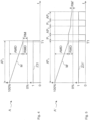
- FIG 5 shows, in particular for a user-selected washing program "gloss drying", a schematic representation of a modified draining sequence A' of the dishwasher according to the invention of Figures 1 and 2 , which in Figure 3 shown pumping sequences A' 2 , A' 3 and A' z .
- the modified pumping sequence A' comprises, in addition to the pumping phase AP 1 of the original pumping sequence A, two additional, chronologically subsequent pumping phases AP 2 and AP 3 , during which the drain pump 31 is continuously switched on. Furthermore, pauses P 1 and P 2 are provided, during which the circulation pump 31 is continuously switched off.
- the first pumping phase AP 1 is separated by a pause or dead time period P 1 from its adjacent, chronologically subsequent, i.e. here the second pumping phase AP 2 and this in turn is separated by a pause P 2 from its adjacent, i.e. here subsequent, third pumping phase AP 3 .
- the pauses P 1 and P 2 can have a duration of at least 1 second, preferably of at least 2 seconds, particularly preferably of at least 4 seconds, and/or of at most 24 seconds, preferably of at most 12 seconds, particularly preferably of at most 6 seconds.
- the specified minimum values for the duration of the pauses P 1 and P 2 are normally sufficient for the rinsing liquid S swirled up in the preceding pumping phase AP 1 or AP 2 to reach a rest position in the drain pump 31 during the respective pause P 1 or P 2 , in which at least a brief pressure build-up is possible due to the start-up of the drain pump 31.
- the specified maximum values also ensure that the entire pumping sequence A does not last longer than necessary.
- the pumping phases AP 2 and AP 3 following the first pumping phase AP 1 have a duration of at least 1 second, preferably of at least 2 seconds, particularly preferably of at least 4 seconds, and/or of at most 32 seconds, preferably of at most 16 seconds, particularly preferably of at most 8 seconds.
- the maximum additional quantity of rinsing liquid S that can be pumped out when the drain pump 31 starts up can be achieved in each of the subsequent pumping phases AP 2 and AP 3.
- the specified maximum values further ensure that the entire modified pumping sequence A' does not last longer than necessary.
- the following operation of the drain pump is advantageous in the case of a complete emptying of the washing container, in particular its pump chamber or liquid collection area, especially in connection with the "gloss drying" program, but also independently of it: Considered over the total duration of the respective modified drain sequence, which is performed at the end of a partial wash cycle, which requires the most complete emptying of the wash tub, particularly its pump sump or liquid collection area, at least three consecutive drain phases of the drain pump are performed, with pauses in between, i.e., interruption periods of the drain pump operation. This is therefore operated in a particularly "stuttering" manner, i.e., preferably with at least three alternating pumping phases and pauses or interruptions of the drain pump operation.
- At least two further surges of liquid can be forced out of the pump well of the washing container into the drainage system, even though the drain pump has already pumped the liquid level in the pump well or liquid collection area of the washing container below a liquid quantity threshold during the first pumping phase, above which it begins to suck in air or above which the remaining amount of washing liquid in the pump well could no longer be pumped out by continuous operation of the drain pump.
- This threshold may also be determined by a residual amount of liquid that remains in the liquid collection area or pump well of the washing container after an initial pumping phase, during which the drain pump operates for a fixed period of time.
- the causes of staining on the dishes such as the carryover of cleaning agents and dirt into the rinse cycle and/or Reduce or avoid hardness-forming substances (e.g. minerals, salts) in the water.
- hardness-forming substances e.g. minerals, salts
- a speed change of the drain pump can be provided such that its speed is increased during the respective draining phase and, conversely, reduced during the subsequent pause.
- the changing speeds are expediently selected such that the behavior of the drain pump at low speed essentially corresponds to its off state and at a higher speed essentially corresponds to its on state.
- a predetermined draining speed is assigned to this.
- the drain pump pumps at least three more times per modified pumping sequence, with a break between each pumping phase after the first pumping phase. Therefore, for the respective pumping sequence A' (see Figure 5 ) after the third pumping phase AP3, after waiting for a pause or interruption of the pumping, a fourth pumping phase AP4, during which the drain pump runs again for pumping.
- This fourth pumping phase AP4 is in the Figure 5 omitted for clarity.
- At least three pumping phases AP2 - AP4 following the first pumping phase AP1 ensure particularly thorough emptying of the liquid collection area or pump pot of the rinsing tank.
- the "Dry to Shine" program can also be implemented on dishwashers equipped only with a conventional drying system, particularly a condensation drying system. Even then, sufficient drying of the dishes to a shine can still be achieved.
- stain reduction and/or improved drying performance can be ensured in a dishwasher, especially in a dishwasher with a zeolite system. This is because the causes of stain formation, such as the carryover of detergents and dirt into the rinse cycle and/or the presence of hardening agents (e.g., minerals, salts) in the water, can be reduced or avoided.
- hardening agents e.g., minerals, salts
- rinse aid i.e. the addition of rinse aid via the dishwasher's dosing system
- rinse aid via the dishwasher's dosing system
- the bath volumes in this additional intermediate rinse and in the subsequent final rinse are reduced to, for example, 2.5 liters each compared to the rinse bath volumes in the second intermediate rinse and final rinse of the gloss drying program, in order to prevent carryover of surfactants from the multi-function tablet into the final rinse.
- Pumping also takes place in "conventional" mode.
- the additional rinse aid dosage in the final, especially the second, intermediate rinse can be omitted if necessary.
- the final rinse can be heated to higher temperatures, especially to transfer more rinse aid from the tablet into the final rinse and improve drying. The extended drying time can be maintained.
Landscapes
- Washing And Drying Of Tableware (AREA)
Description
Die vorliegende Erfindung betrifft eine Geschirrspülmaschine, insbesondere eine Haushaltsgeschirrspülmaschine, mit einer Steuereinrichtung, bei der wenigstens ein Spülprogramm zur Ausführung, insbesondere Steuerung und/oder Regelung, eines mehrere Teilspülgänge umfassenden Spülgangs zum Reinigen und/oder Trocknen von Spülgut hinterlegt ist, und mit einer Bedieneinrichtung zur Eingabe von Bedienbefehlen für die Steuereinrichtung.The present invention relates to a dishwasher, in particular a household dishwasher, with a control device in which at least one washing program is stored for executing, in particular controlling and/or regulating, a washing cycle comprising several partial washing cycles for cleaning and/or drying items to be washed, and with an operating device for entering operating commands for the control device.
Handelsübliche Geschirrspülmaschinen sind zum automatischen Reinigen von Geschirr mit Spülflüssigkeit ausgebildet. Dabei bestehen seitens der Benutzer von Geschirrspülmaschinen viele, teils sich widersprechende Anforderungen an eine Geschirrspülmaschine. Dazu zählen beispielsweise eine hohe Reinigungswirkung, eine hohe Trocknungswirkung, ein geringer Wasser- und Energieverbrauch, eine kurze Dauer eines Spülgangs, aber auch die Vermeidung von Flecken am gereinigten Spülgut.Commercial dishwashers are designed to automatically clean dishes with detergent. Dishwasher users have many, sometimes conflicting, requirements for a dishwasher. These include, for example, high cleaning performance, high drying efficiency, low water and energy consumption, a short wash cycle time, and the prevention of stains on the cleaned dishes.
Eine Geschirrspülmaschine gemäß dem Oberbegriff des Anspruchs 1 ist aus
Aufgabe der vorliegenden Erfindung ist es, eine Geschirrspülmaschine, insbesondere eine Haushaltsgeschirrspülmaschine, bereitzustellen, welche die Anforderungen der Benutzer besser erfüllt.The object of the present invention is to provide a dishwasher, in particular a household dishwasher, which better meets the requirements of users.
Die Aufgabe wird gelöst durch eine Geschirrspülmaschine mit den Merkmalen des Anspruchs 1 und durch ein Verfahren mit den Merkmalen des Anspruchs 11. Die Aufgabe wird bei einer Geschirrspülmaschine der eingangs genannten Art dadurch gelöst, dass an der Bedieneinrichtung wenigstens ein Bedienbefehl zum Ausführen einer oder mehrerer Anpassungsmaßnahmen an wenigstens einem der Spülprogramme eingebbar ist, mittels der oder denen die Vermeidung von Flecken am Spülgut und/oder das Trocknungsergebnis am Spülgut bei der Durchführung des Spülgangs auf der Basis des angepassten Spülprogramms verbessert ist.The object is achieved by a dishwasher having the features of
Die erfindungsgemäße Geschirrspülmaschine weist eine Steuereinrichtung vorzugsweise zur automatischen Ausführung, insbesondere Steuerung und/oder Regelung, von Betriebsabläufen der Geschirrspülmaschine auf. Die Steuereinrichtung kann hierzu als sogenannte Ablaufsteuerung, insbesondere als elektronische Ablaufsteuerung, ausgebildet sein. Sie kann in vorteilhafter Weise zusätzlich oder unabhängig zum Steuern selbstverständlich auch zur Regelung und/oder sonstigen Kontrolle bzw. Beeinflussung von Betriebsabläufen der Geschirrspülmaschine ausgebildet sein. Die Steuereinrichtung kann im Rahmen der Erfindung verallgemeinert ausgedrückt also insbesondere eine Kontrolleinrichtung bilden, mit der sich Betriebsabläufe, insbesondere Spülprogramme, überwachen und/oder beeinflussen lassen.The dishwasher according to the invention has a control device, preferably for the automatic execution, in particular control and/or regulation, of operating sequences of the dishwasher. The control device can for this purpose be designed as a so-called sequence controller, in particular as an electronic sequence controller. It can advantageously be designed, in addition to or independently of the control, of course also for the regulation and/or other control or influencing of operating sequences of the dishwasher. Generally speaking, within the scope of the invention, the control device can therefore in particular form a control device with which operating sequences, in particular washing programs, can be monitored and/or influenced.
In der Steuereinrichtung ist wenigstens ein Spülprogramm zum Durchführen bzw. Steuern eines Spülprozesses, auch Spülgang genannt, zum Spülen von Spülgut, insbesondere zum Spülen von Geschirr, hinterlegt. Vorteilhafterweise sind dabei mehrere Spülprogramme vorgesehen, von denen jeweils eines durch den Bediener ausgewählt und gestartet werden kann. Hierdurch ist es möglich, den Ablauf eines Spülgangs, insbesondere an die Beladungsmenge, an die Beladungsart und/oder an den Verschmutzungsgrad des Spülguts, anzupassen. Beispielsweise kann neben einem Normalprogramm ein Energiesparspülprogramm vorgesehen sein, welches beispielsweise unter Inkaufnahme einer geringeren Reinigungs- und/oder Trocknungswirkung auf einen geringen Energie- und/oder Wasserverbrauch hin optimiert ist. Als weiteres Beispiel kann zusätzlich ein Intensivspülprogramm vorgesehen sein, welches unter Inkaufnahme eines höheren Energie- und/oder Wasserverbrauchs eine höhere Reinigungs- und/oder Trocknungswirkung als das Normalprogramm aufweist.At least one washing program for carrying out or controlling a washing process, also called a wash cycle, for washing items to be washed, in particular for washing dishes, is stored in the control device. Advantageously, several washing programs are provided, each of which can be selected and started by the operator. This makes it possible to adapt the sequence of a washing cycle, in particular to the load size, the load type and/or the degree of soiling of the items to be washed. For example, in addition to a normal program, an energy-saving washing program can be provided, which is optimized for low energy and/or water consumption, for example at the expense of a lower cleaning and/or drying effect. As a further example, an intensive washing program can also be provided, which has a higher cleaning and/or drying effect than the normal program, at the expense of higher energy and/or water consumption.
Das jeweilig hinterlegte Spülprogramm kann vorzugsweise so ausgebildet sein, dass der jeweils durch das Spülprogramm gesteuerte Spülgang mehrere Teilspülgänge, insbesondere wenigstens einen Vorspülgang zum Vorreinigen von Spülgut, wenigstens einen zeitlich nachfolgenden Reinigungsgang zum gründlichen Reinigen von Spülgut, wenigstens einen zeitlich nachfolgenden Zwischenspülgang zum Entfernen von verschmutzter Spülflüssigkeit vom Spülgut, wenigstens einen zeitlich nachfolgenden Klarspülgang zur Vermeidung von Flecken am Spülgut und/oder zur Vorbereitung eines zeitlich nachgeordneten Trocknungsschritts bzw. Trocknungsgangs, und/oder wenigstens einen abschließenden Trocknungsgang zum Trocknen des Spülguts, in der vorstehend aufgelisteten Reihenfolge umfasst. Vorspülgang, Reinigungsgang, Zwischenspülgang und Klarspülgang werden als wasserführende Teilspülgänge bezeichnet, da während ihrer Durchführung das in die Spülkammer eingebrachte Spülgut jeweils mit einer Spülflüssigkeit behandelt wird. Während des Trocknungsgangs ist eine Verwendung von Spülflüssigkeit in aller Regel nicht vorgesehen.The respective stored dishwashing program can preferably be designed such that the dishwashing cycle controlled by the dishwashing program comprises a plurality of partial dishwashing cycles, in particular at least one pre-wash cycle for pre-cleaning the dishes, at least one subsequent cleaning cycle for thoroughly cleaning the dishes, at least one subsequent intermediate dishwashing cycle for removing contaminated dishwashing liquid from the dishes, at least one subsequent final rinse cycle to prevent stains on the dishes and/or to prepare for a subsequent drying step or drying cycle, and/or at least one final drying cycle to dry the dishes, in the order listed above. The pre-wash cycle, cleaning cycle, intermediate rinse cycle and final rinse cycle are referred to as water-based partial dishwashing cycles because, during their execution, the dishes placed in the dishwashing chamber are each treated with a dishwashing liquid. As a rule, dishwashing liquid is not used during the drying cycle.
Die Behandlung des Spülguts mit Spülflüssigkeit kann dabei in einer im Wesentlichen abgeschlossenen Spülkammer, insbesondere eines Spülbehälters, der Geschirrspülmaschine erfolgen. Dabei kann der Spülkammer ein Zulaufventil zugeordnet sein, welches ermöglicht, Spülflüssigkeit in die Spülkammer einzufüllen. Weiterhin kann der Spülkammer eine Umwälzpumpe zum Umwälzen einer Spülflüssigkeit zugeordnet sein, welche ermöglicht, die in die Spülkammer eingefüllte Spülflüssigkeit z. B. aus einer Sammeleinrichtung für Spülflüssigkeit zu entnehmen und über ein der Spülkammer zugeordnetes Sprühsystem auf das Spülgut aufzubringen. Unter einer Spülflüssigkeit wird hier insbesondere eine Flüssigkeit verstanden, welche dazu vorgesehen ist, auf das Spülgut aufgebracht zu werden, um dieses zu reinigen und/oder in anderer Weise zu behandeln. So kann die Spülflüssigkeit beispielsweise auch zum Erwärmen des Spülguts vorgesehen sein, was beispielsweise während eines Klarspülschritts möglich ist, um einen nachfolgenden Trocknungsgang vorzubereiten, in dem die Trocknung zumindest teilweise darauf beruht, dass die am Spülgut anhaftende Spülflüssigkeit aufgrund der im Spülgut gespeicherten Wärme verdampft, was als Eigentrocknung bezeichnet wird. Alternativ oder zusätzlich kann das Spülgut während des Trocknungsgangs mittels einer möglichst warmen und trockenen Luftströmung getrocknet werden, welche beispielsweise mit einer Sorptionstrockenvorrichtung erzeugt wird.The treatment of the wash ware with wash liquid can take place in a substantially closed wash chamber, in particular a wash container, of the dishwasher. An inlet valve can be assigned to the wash chamber, which allows wash liquid to be poured into the wash chamber. Furthermore, a circulation pump for circulating wash liquid can be assigned to the wash chamber, which pump allows the wash liquid poured into the wash chamber to be taken, e.g., from a collection device for wash liquid, and applied to the wash ware via a spray system assigned to the wash chamber. A wash liquid is understood here, in particular, to be a liquid that is intended to be applied to the wash ware in order to clean and/or treat it in another way. For example, the wash liquid can also be provided for heating the wash ware, which is possible, for example, during a final rinse step, in order to prepare for a subsequent drying cycle. In this case, the drying process is based, at least in part, on the evaporation of the dishwashing liquid adhering to the dishes due to the heat stored in the dishes, which is referred to as self-drying. Alternatively or additionally, the dishes can be dried during the drying cycle using an air flow that is as warm and dry as possible, generated, for example, by a sorption drying device.
Weiterhin ist eine Bedieneinrichtung vorgesehen, welche derart mit der Steuereinrichtung verbunden ist, dass ein Benutzer der Geschirrspülmaschine Bedienbefehle an die Steuereinrichtung eingeben kann. Unter einem Bedienbefehl wird dabei eine Information verstanden, welche auf die Funktion der Steuereinrichtung planmäßig einwirkt. Dabei kann beispielsweise ein Bedienbefehl zum manuellen Auswählen eines Spülprogramms sowie ein Bedienbefehl zum Starten eines ausgewählten Spülprogramms vorgesehen sein.Furthermore, an operating device is provided, which is connected to the control device in such a way that a user of the dishwasher can enter operating commands into the control device. An operating command is understood to be information that systematically influences the function of the control device. For example, an operating command for manually selecting a washing program and an operating command for starting a selected washing program can be provided.
Bei der erfindungsgemäßen Geschirrspülmaschine ist nun eine Verbesserung der Vermeidung von Flecken am gereinigten Spülgut und/oder des Trocknungsergebnisses am Spülgut möglich, welche zu einem besonderen Glanzeffekt am gereinigten Spülgut führt, insbesondere wenn es sich um Geschirr, bevorzugt Glasgeschirr, oder um Besteck oder Töpfe aus Metall handelt.With the dishwasher according to the invention, it is now possible to improve the prevention of stains on the cleaned dishes and/or the drying result of the dishes, which leads to a special shine effect on the cleaned dishes, in particular when it is dishes, preferably glass dishes, or cutlery or pots made of metal.
Die Verbesserung wird hierbei über wenigstens eine Anpassungsmaßnahme an wenigstens einem der Spülprogramme erreicht. Dabei ist die wenigstens eine Anpassungsmaßnahme über einen an der Bedieneinrichtung eingebbaren Bedienbefehl zum Ausführen von Anpassungsmaßnahmen manuell durchführbar.The improvement is achieved by at least one adjustment measure to at least one of the washing programs. The at least one adjustment measure can be implemented manually via an operating command for executing adjustment measures that can be entered into the operating device.
Hierdurch kann der Benutzer auf der Basis seiner individuellen Anforderungen bei jedem Spülgang selbst entscheiden, ob er den besonderen Glanzeffekt am gereinigten Spülgut erreichen möchte oder nicht. Der Benutzer kann also bei der erfindungsgemäßen Geschirrspülmaschine bei jedem Spülgang aus seiner individuellen Sicht abwägen, ob der Vorteil des besonderen Glanzeffekts am Spülgut die möglichen Nachteile, wie beispielsweise eine Verlängerung der Dauer des Spülgangs und/oder eine Erhöhung des Wasser- und/oder Energieverbrauchs des Spülgangs, überwiegt.This allows the user to decide for themselves, based on their individual requirements, whether or not they want to achieve the special shine effect on the cleaned dishes. With the dishwasher according to the invention, the user can therefore weigh up from their individual perspective during each wash cycle whether the advantage of the special shine effect on the dishes outweighs the possible disadvantages, such as a longer wash cycle duration and/or an increase in water and/or energy consumption during the wash cycle.
Durch den so erreichten flexiblen Einsatz der Geschirrspülmaschine werden die Anforderungen der Benutzer besser erfüllt.The flexible use of the dishwasher achieved in this way better meets the needs of users.
Darüber hinaus kann mit der erfindungsgemäßen Geschirrspülmaschine ein verbesserter Glanzeffekt erzielt werden, der bei herkömmlichen Geschirrspülmaschinen nicht möglich war und ist. Der Grund dafür liegt darin, dass bei einer Geschirrspülmaschine, bei der Maßnahmen zur Erzielung eines Glanzeffekts seitens des Herstellers der Geschirrspülmaschine bereits werksseitig fest vorgegeben und im Betrieb der Geschirrspülmaschine unveränderlich in jedem Spülprogramm enthalten wären, die Maßnahmen so beschränkt werden müssten, dass ihre Nachteile auch dann akzeptiert werden könnten, wenn ein besonderer Glanzeffekt gar nicht seitens des Verbrauchers gewünscht ist. Bei der erfindungsgemäßen Geschirrspülmaschine hingegen spielen solche Überlegungen keine Rolle, da die möglichen Nachteile der Anpassungsmaßnahmen dann gar nicht auftreten, wenn der Benutzer den zu ihrer Aktivierung vorgesehenen Bedienbefehl zum Ausführen von Anpassungsmaßnahmen zur Erreichung des gewünschten besonderen Glanzeffekts nicht gibt oder ihn zurücknimmt.Furthermore, the dishwasher according to the invention can achieve an improved shine effect that was and is not possible with conventional dishwashers. The reason for this is that in a dishwasher in which measures for achieving a shine effect are already predetermined by the manufacturer of the dishwasher and are invariably included in every wash program during operation of the dishwasher, the measures would have to be limited so that their disadvantages could be accepted even if a special shine effect was not actually desired by the consumer. In the dishwasher according to the invention, however, such considerations are irrelevant, since the potential disadvantages of the adjustment measures do not occur at all if the user does not give or withdraws the operating command intended to activate them to carry out adjustment measures to achieve the desired special shine effect.
Durch den so verbesserten Glanzeffekt werden die Anforderungen der Benutzer noch besser erfüllt.The improved gloss effect meets user requirements even better.
Der Bedienbefehl zum Ausführen von Anpassungsmaßnahmen zur Verbesserung der Vermeidung von Flecken am gereinigten Spülgut und/oder des Trocknungsergebnisses am Spülgut kann auf ein oder mehrere der vorgesehenen Spülprogramme wirken. Dabei können bei unterschiedlichen Spülprogrammen durch den Bedienbefehl sich unterscheidende Anpassungsmaßnahmen bewirkt werden. Es ist auch möglich, mehrere Bedienbefehle zum Ausführen von Anpassungsmaßnahmen zur Verbesserung der Vermeidung von Flecken am gereinigten Spülgut und/oder des Trocknungsergebnisses am Spülgut vorzusehen, welche unterschiedliche Anpassungsmaßnahmen beim selben Spülprogramm auslösen, um so die Intensität des Glanzeffekts noch genauer an die Bedürfnissee der Benutzer anpassen zu können.The operating command for executing adjustment measures to improve the prevention of stains on the cleaned dishes and/or the drying results of the dishes can affect one or more of the provided washing programs. Different adjustment measures can be triggered by the operating command for different washing programs. It is also possible to provide multiple operating commands for executing adjustment measures to improve the prevention of stains on the cleaned dishes and/or the drying results of the dishes, which trigger different adjustment measures for the same washing program in order to adapt the intensity of the shine effect even more precisely to the needs of the user.
Nach einer vorteilhaften Weiterbildung der Erfindung ist der Bedienbefehl zum Ausführen von Anpassungsmaßnahmen über ein ausschließlich dafür vorgesehenes Bedienelement eingebbar. Hierdurch wird der Bedienkomfort erhöht, was den Anforderungen der Benutzer weiter entgegenkommt. Zusätzlich können so Fehlbedienungen vermieden werden. Bei dem Bedienelement kann es sich beispielsweise um eine separate Taste handeln, welche an einer Bedienblende der Geschirrspülmaschine angeordnet ist. Es ist aber grundsätzlich auch möglich, Bedienelemente zum Eingeben des Bedienbefehls zum Ausführen von Anpassungsmaßnahmen vorzusehen, welche bereits für andere Bedienbefehle vorgesehen sind. Denkbar sind Multifunktionstasten, Drehknöpfe, Touchscreens, alphanumerische Eingabeeinheiten und dergleichen mehr.According to an advantageous development of the invention, the operating command for executing adjustment measures can be entered via a control element exclusively provided for this purpose. This increases operating convenience, which further meets user requirements. In addition, incorrect operation can be avoided. The control element can, for example, be a separate button arranged on a control panel of the dishwasher. However, it is also possible in principle to provide control elements for entering the operating command for executing adjustment measures that are already provided for other operating commands. Multifunctional buttons, rotary knobs, touchscreens, alphanumeric input units, and the like are conceivable.
Gemäß einer Weiterbildung bewirkt eine der Anpassungsmaßnahmen während des Spülgangs eine Durchführung wenigstens eines zusätzlichen als Zwischenspülgang vorgesehenen Teilspülgangs, d.h. es werden mindestens zwei Zwischenspülgänge für den selektiv ausgewählten Spülgang "Glanztrocknen" durchgeführt. Hierdurch wird ein besseres Abspülen von Schmutz und/oder Reinigungsmitteln am Spülgut bewirkt, was der Fleckenbildung am gereinigten Spülgut entgegenwirkt und so zu einem höheren Glanz am Spülgut führt.According to a further development, one of the adjustment measures during the wash cycle results in at least one additional partial wash cycle being performed as an intermediate wash cycle, i.e., at least two intermediate wash cycles are performed for the selectively selected "gloss drying" wash cycle. This results in better rinsing of dirt and/or cleaning agents from the washware, which counteracts the formation of stains on the cleaned washware and thus leads to a higher shine on the washware.
Gemäß einer Weiterbildung bewirkt eine der Anpassungsmaßnahmen eine Erhöhung einer Menge einer in einem als Klarspülgang vorgesehenen Teilspülgang verwendeten Spülflüssigkeit, wobei die Erhöhung wenigstens 20 %, bevorzugt wenigstens 30 %, besonders bevorzugt wenigstens 40 %, der regulären bzw. ursprünglichen Menge der jeweiligen Spülflüssigkeit beträgt, die bei einem Spülgang ohne Glanztrocknen für dessen Klarspülgang vorgesehen ist. Die Erhöhung der Menge der im Klarspülgang verwendeten Spülflüssigkeit führt zu einer zusätzlichen Verdünnung von in der Spülflüssigkeit enthaltenen Schmutz- und/oder Reinigungsmittelresten, was der Fleckenbildung am gereinigten Spülgut entgegenwirkt und so zu einem höheren Glanz am Spülgut führt. Bei den genannten Mindestwerten für die Erhöhung der Menge ergibt sich bereits eine wesentliche Verbesserung des Glanzes des Spülguts.According to a further development, one of the adaptation measures results in an increase in the amount of rinsing liquid used in a partial rinse cycle provided as a final rinse cycle, wherein the increase is at least 20%, preferably at least 30%, particularly preferably at least 40%, of the regular or original amount of the respective rinsing liquid provided for the final rinse cycle in a rinse cycle without shine drying. Increasing the amount of rinsing liquid used in the final rinse cycle leads to an additional dilution of dirt and/or cleaning agent residues contained in the rinsing liquid, which counteracts the formation of spots on the cleaned dishes and thus leads to a higher shine on the dishes. With the stated minimum values for the increase in the amount, a significant improvement in the shine of the dishes is already achieved.
Nach einer Alternative der Erfindung bewirkt eine der Anpassungsmaßnahmen bei wenigstens einem als Zwischenspülgang vorgesehenen Teilspülgang eine Zugabe von Klarspülmittel zu einer dort verwendeten Spülflüssigkeit. Hierdurch verringert sich die Oberflächenspannung der Spülflüssigkeit, so dass zu Ende des Zwischenspülgangs ein größerer Anteil der mit Schmutz- und/oder Reinigungsmittelresten versetzten Spülflüssigkeit vom Spülgut abläuft und/oder abtropft, so dass ein größerer Anteil und die darin enthaltenen Schmutz- und/oder Reinigungsmittelreste abgepumpt werden können, was der Fleckenbildung am gereinigten Spülgut entgegenwirkt und so zu einem höheren Glanz am Spülgut führt.According to an alternative of the invention, one of the adaptation measures results in the addition of rinse aid to the rinsing liquid used in at least one partial rinse cycle provided as an intermediate rinse cycle. This reduces the surface tension of the rinsing liquid, so that at the end of the intermediate rinse cycle, a larger portion of the rinsing liquid containing dirt and/or cleaning agent residues runs off and/or drips off the dishes. This allows a larger portion and the dirt and/or cleaning agent residues contained therein to be pumped away, which counteracts the formation of stains on the cleaned dishes and thus leads to a higher shine on the dishes.
Gemäß einer Weiterbildung bewirkt eine der Anpassungsmaßnahmen eine Verlängerung einer Heizphase, wobei die Verlängerung wenigstens 10 %, bevorzugt wenigstens 20 %, besonders bevorzugt wenigstens 30 %, der ursprünglichen bzw. regulären Dauer der Heizphase beträgt, die bei einem Spülgang ohne "Glanztrocknen" vorgesehen ist, und/oder eine Durchführung wenigstens einer zusätzlichen Heizphase während eines als Klarspülgang vorgesehenen Teilspülgangs vor der Zugabe von Klarspülmittel zu einer dort verwendeten Spülflüssigkeit. Manche Klarspülmittel neigen in einer relativ kalten Spülflotte mit beispielsweise weniger als 35°C zu einer starken Schaumbildung. Gerade bei der Durchführung von mehreren unbeheizten Zwischenspülgängen kann die hinsichtlich Schaumbildung kritische Temperatur der Spülflüssigkeit im Klarspülgang deutlich unterschritten werden. Indem nun eine vor der Zugabe des Klarspülmittels ohnehin vorgesehene Heizphase für die Spülflüssigkeit des Klarspülgangs verlängert wird, was insbesondere bei einer vorgesehenen Eigentrocknung zum Trocknen des Spülguts vorgesehen werden kann, und/oder indem vor der Zugabe des Klarspülmittels eine zusätzliche Heizphase vorgesehen wird, was insbesondere bei einer vorgesehenen Trocknung des Spülguts durch eine insbesondere trocken-warme Luftströmung vorgesehen werden kann, kann eine Schaumbildung sicher verhindert werden. Hierdurch kann die Spülflüssigkeit des Klarspülgangs das Spülgut gleichmäßig benetzen, was der Fleckenbildung am gereinigten Spülgut entgegenwirkt und so zu einem höheren Glanz am Spülgut führt.According to a further development, one of the adaptation measures results in an extension of a heating phase, wherein the extension amounts to at least 10%, preferably at least 20%, particularly preferably at least 30%, of the original or regular duration of the heating phase provided for a rinse cycle without "gloss drying," and/or the implementation of at least one additional heating phase during a partial rinse cycle intended as a final rinse cycle, before the addition of rinse aid to a rinse liquid used there. Some rinse aids tend to produce heavy foaming in a relatively cold rinse liquor, for example, less than 35°C. Especially when performing several unheated intermediate rinse cycles, the temperature of the rinse liquid during the final rinse cycle can be significantly lower than the critical temperature for foaming. By extending the heating phase for the rinse aid in the final rinse cycle, which is already provided before the rinse aid is added, which can be provided particularly when self-drying is provided to dry the dishes, and/or by providing an additional heating phase before the rinse aid is added, which can be provided particularly when the dishes are dried using a dry, warm air flow, foam formation can be reliably prevented. This allows the rinse aid in the final rinse cycle to evenly wet the dishes, which counteracts the formation of stains on the cleaned dishes and thus leads to a higher shine on the dishes.
Gemäß einer zweckmäßigen Weiterbildung der Erfindung bewirkt eine der Anpassungsmaßnahmen eine Verlängerung einer Dauer eines als Trocknungsgang vorgesehenen Teilspülgangs, wobei die Verlängerung wenigstens 10 %, bevorzugt wenigstens 20 %, besonders bevorzugt wenigstens 30 %, der ursprünglichen bzw. regulären Dauer des Trocknungsgangs beträgt, die bei einem Spülprogramm ohne Glanztrocknen vorgesehen ist. Durch die Verlängerung einer Dauer des Trocknungsgangs wird eine Verbesserung der Trocknungswirkung erreicht, wobei so insbesondere auch Hohlgefäße, wie Trinkgläser, besser getrocknet werden können und so der Glanzeffekt besser hervortritt. Bei den genannten Mindestwerten für die Verlängerung tritt bereits eine wesentliche Verbesserung der Trocknungswirkung ein.According to an expedient development of the invention, one of the adaptation measures extends the duration of a partial rinse cycle provided as a drying cycle, wherein the extension amounts to at least 10%, preferably at least 20%, particularly preferably at least 30%, of the original or regular duration of the drying cycle provided for in a rinse program without shine drying. By extending the duration of the drying cycle, the drying effect is improved, whereby hollow containers, such as drinking glasses, in particular, can be dried more effectively and the shine effect is thus more pronounced. At the stated minimum values for the extension, a significant improvement in the drying effect already occurs.
Gemäß einer Weiterbildung bewirkt eine der Anpassungsmaßnahmen eine Modifizierung wenigstens einer Abpumpsequenz zum Abpumpen einer Spülflüssigkeit eines Teilspülgangs mittels einer Laugenpumpe aus der Geschirrspülmaschine, wobei bei der modifizierten Abpumpsequenz eine nicht abgepumpte Restmenge von Spülflüssigkeit verringert ist. Durch die Verringerung der nicht abpumpbaren Restmenge an Spülflüssigkeit kann insbesondere eine Verschleppung von Schmutz und/oder Reinigungsmitteln aus der vor der Abpumpsequenz verwendeten Spülflüssigkeit in eine nach der Abpumpsequenz verwendete Spülflüssigkeit verringert werden. Hierdurch kann der Schmutzgehalt und/oder der Reinigungsmittelgehalt der letzten in einem Spülgang verwendeten Spülflüssigkeit verringert werden, was die Fleckenbildung an dem gereinigten Spülgut verringert. Das gereinigte Spülgut erhält so, insbesondere wenn es sich um Besteck oder Glasgeschirr handelt, einen besonderen Glanz.According to a further development, one of the adaptation measures modifies at least one pumping sequence for pumping out a rinse liquid from a partial wash cycle from the dishwasher by means of a drain pump, wherein the modified pumping sequence reduces the residual amount of rinse liquid that has not been pumped out. By reducing the residual amount of rinse liquid that cannot be pumped out, it is possible, in particular, to reduce the carryover of dirt and/or cleaning agents from the rinse liquid used before the pumping sequence into a rinse liquid used after the pumping sequence. This makes it possible to reduce the dirt content and/or the cleaning agent content of the last rinse liquid used in a wash cycle, which reduces the formation of stains on the cleaned dishes. The cleaned dishes thus acquire a special shine, particularly when it comes to cutlery or glassware.
Nach einer vorteilhaften Weiterbildung der Erfindung umfasst die Abpumpsequenz wenigstens eine Abpumphase, während der die Laugenpumpe eingeschaltet ist oder hinsichtlich ihrer Drehzahl hochläuft, wobei die modifizierte Abpumpsequenz wenigstens eine zusätzliche Abpumphase umfasst, während der die Laugenpumpe eingeschaltet ist oder hinsichtlich ihrer Drehzahl hochläuft, wobei die zusätzliche Abpumpphase durch eine Pause, während der die Laugenpumpe ausgeschaltet oder hinsichtlich ihrer Drehzahl abgesenkt ist, von der jeweils vorangegangenen Abpumpphase getrennt, d.h. zeitlich beabstandet ist.According to an advantageous development of the invention, the pumping sequence comprises at least one pumping phase during which the drain pump is switched on or is running up in terms of its speed, wherein the modified pumping sequence comprises at least one additional pumping phase during which the drain pump is switched on or is running up in terms of its speed, wherein the additional pumping phase is separated, i.e. spaced apart in time, from the respectively preceding pumping phase by a pause during which the drain pump is switched off or its speed is reduced.
Üblicherweise ist die Laugenpumpe als Kreiselpumpe, insbesondere als Radialpumpe, als Halbradialpumpe oder als Axialpumpe, ausgebildet. Eine Kreiselpumpe ist dabei eine Strömungsmaschine, bei der die jeweilige Flüssigkeit unter Nutzung der Zentrifugalkraft mittels eines rotierenden Förderelements gefördert wird. Die Ausführung der Laugenpumpe als Kreiselpumpe führt, verbessert oder anders als beispielsweise bei einer Ausführung als Kolbenpumpe, dazu, dass die Funktion der Laugenpumpe auch dann sichergestellt ist, wenn die abzupumpende Spülflüssigkeit stark verschmutzt ist.The drain pump is typically designed as a centrifugal pump, particularly a radial pump, a semi-radial pump, or an axial pump. A centrifugal pump is a fluid-flow machine in which the fluid is pumped using centrifugal force by means of a rotating pumping element. The design of the drain pump as a centrifugal pump, improved or different from, for example, a piston pump, ensures that the drain pump functions even when the dishwashing liquid to be pumped is heavily contaminated.
Wird eine derartige Laugenpumpe eingeschaltet, so sinkt die Menge der in der Geschirrspülmaschine befindlichen Spülflüssigkeit bei gleichbleibender Drehzahl im Zeitverlauf zunächst im Wesentlichen linear ab. Bei Unterschreitung einer bestimmten Restmenge an Spülflüssigkeit gelangt jedoch eine derartige Menge an Luft in die Umwälzpumpe, dass der Druck zum Fördern von Spülflüssigkeit zusammenbricht und folglich keine Spülflüssigkeit mehr gefördert wird. Auf diese Weise verbleibt eine im Dauerbetrieb der Laugenpumpe nicht abpumpbare Restmenge an Spülflüssigkeit in der Geschirrspülmaschine.If such a drain pump is switched on, the amount of detergent in the dishwasher The amount of rinse liquid remaining in the dishwasher initially decreases essentially linearly over time at a constant speed. However, if the residual rinse liquid level falls below a certain level, such a quantity of air enters the circulation pump that the pressure required to pump rinse liquid collapses, and consequently, no more rinse liquid is pumped. This leaves a residual amount of rinse liquid in the dishwasher that cannot be pumped out during continuous operation of the drain pump.
Überraschenderweise hat sich nun gezeigt, dass durch die automatische Durchführung einer Abpumpsequenz, welche, insbesondere gegenüber der in den Spülprogrammen ohne "Glanztrocknen" verwendeten Abpumpsequenz, wenigstens eine weitere Abpumphase umfasst, während der die Laugenpumpe eingeschaltet ist, wobei die weitere Abpumpphase durch eine Pause, während der die Laugenpumpe ausgeschaltet ist, von einer vorangegangenen Abpumpphase getrennt ist, eine nicht abpumpbare Restmenge an Spülflüssigkeit, welche in der Geschirrspülmaschine verleibt, deutlich verringert werden kann.Surprisingly, it has now been shown that by automatically carrying out a draining sequence which, in particular compared to the draining sequence used in the dishwashing programs without "gloss drying", comprises at least one further draining phase during which the drain pump is switched on, wherein the further draining phase is separated from a previous draining phase by a pause during which the drain pump is switched off, a residual amount of dishwashing liquid that cannot be pumped out and remains in the dishwasher can be significantly reduced.
Der Effekt, der zur Verringerung der nicht abgepumpten Restmenge an Spülflüssigkeit führt, ist nicht abschließend geklärt. Es hat sich jedoch gezeigt, dass beim Anlaufen der Umwälzpumpe nach einer Pause selbst dann zumindest für eine kurze Zeit ein Druck zum Fördern von Spülflüssigkeit aufgebaut wird, wenn die mittels des Dauerbetriebs der Laugenpumpe nicht abpumpbare Restmenge an Spülflüssigkeit unterschritten ist. Der Effekt, der zur Verringerung der nicht abgepumpten Restmenge an Spülflüssigkeit führt, und der bei der ersten der Abpumpphasen aufgrund der dort noch großen Menge an Spülflüssigkeit keine Rolle spielt, tritt jedoch aus ungeklärter Ursache nicht nur bei einer zweiten Abpumpphase sondern auch bei einer dritten Abpumpphase und gegebenenfalls bei weiteren Abpumpphasen einer Abpumpsequenz auf. Dies ist insofern überraschend, als ja die durch das Anlaufen der Laugenpumpe zusätzlich abpumpbare Menge an Spülflüssigkeit eigentlich nach der zweiten Abpumpphase abgepumpt sein müsste. Dementsprechend kann jedoch durch das Vorsehen einer zusätzlichen Abpumpphase in der modifizierten Abpumpsequenz eine Verringerung der nicht abgepumpten Restmenge an Spülflüssigkeit erreicht werden, unabhängig davon, ob in der ursprünglichen Abpumpsequenz eine oder mehrere Abpumpphasen vorgesehen sind.The effect that leads to a reduction in the residual amount of dishwashing liquid not pumped away has not been conclusively clarified. However, it has been shown that when the circulation pump starts up after a pause, pressure is built up to pump dishwashing liquid, at least for a short time, even if the residual amount of dishwashing liquid that cannot be pumped away by continuous operation of the drain pump has been reached. The effect that leads to a reduction in the residual amount of dishwashing liquid not pumped away, and which plays no role in the first of the pumping phases due to the still large amount of dishwashing liquid there, occurs, for an unknown reason, not only in a second pumping phase but also in a third pumping phase and possibly in further pumping phases of a pumping sequence. This is surprising insofar as the additional amount of dishwashing liquid that can be pumped away by starting up the drain pump should actually have been pumped out after the second pumping phase. Accordingly, however, by providing an additional pumping phase in the modified pumping sequence, a reduction in the residual amount of rinsing fluid not pumped out can be achieved, regardless of whether one or more pumping phases are provided in the original pumping sequence.
Nach einer vorteilhaften Weiterbildung der Erfindung umfasst die jeweilige, modifizierte Abpumpsequenz insgesamt wenigstens drei Abpumpphasen. Durch die Durchführung von wenigstens drei Abpumpphasen kann der beschriebene Effekt mehrfach genutzt werden, so dass die nicht abgepumpte Restmenge an Spülflüssigkeit besonders stark verringert werden kann. Diese mindestens drei mit Pausen zeitlich hintereinander folgenden Abpumpphasen der jeweiligen Abpumpsequenz entsprechen einem "stotternden Abpumpen" der Laugenpumpe.According to an advantageous development of the invention, the respective modified pumping sequence comprises a total of at least three pumping phases. By performing at least three pumping phases, the described effect can be utilized multiple times, so that the residual amount of unpumped dishwashing liquid can be significantly reduced. These at least three pumping phases of the respective pumping sequence, which follow one another with pauses, correspond to a "stuttering pumping" of the drain pump.
Nach einer vorteilhaften Weiterbildung der Erfindung ist die erste der Abpumpphasen zum Abpumpen von wenigstens 80 %, bevorzugt von wenigstens 90 %, besonders bevorzugt von wenigstens 95 %, der Gesamtmenge der abzupumpenden Spülflüssigkeit vorgesehen. Hierdurch ist es möglich, mittels der nachfolgenden Abpumpphasen die in der Geschirrspülmaschine verbleibende Restmenge an Spülflüssigkeit effektiv zu reduzieren.According to an advantageous development of the invention, the first of the pumping phases is designed to pump out at least 80%, preferably at least 90%, particularly preferably at least 95%, of the total amount of washing liquid to be pumped out. This makes it possible to effectively reduce the residual amount of washing liquid remaining in the dishwasher by means of the subsequent pumping phases.
Nach einer zweckmäßigen Weiterbildung der Erfindung ist bei der Abpumpsequenz und/oder der modifizierten Abpumpsequenz die erste Abpumpphase der Abpumpphasen zum Abpumpen einer im Dauerbetrieb der Laugenpumpe abpumpbaren Menge an Spülflüssigkeit vorgesehen. Auf diese Weise ist es möglich, mittels der nachfolgenden Abpumpphasen die in der Geschirrspülmaschine verbleibende Restmenge an Spülflüssigkeit besonders effektiv zu reduzieren.According to an expedient development of the invention, in the draining sequence and/or the modified draining sequence, the first draining phase of the draining phases is provided for draining a quantity of washing liquid that can be pumped out during continuous operation of the drain pump. In this way, it is possible to particularly effectively reduce the residual amount of washing liquid remaining in the dishwasher by means of the subsequent draining phases.
Gemäß einer zweckmäßigen Weiterbildung der Erfindung ist eine Überwachungseinrichtung zur Überwachung eines von der Laugenpumpe geförderten Spülflüssigkeitsstroms vorgesehen, wobei bei der Abpumpsequenz und/oder der modifizierten Abpumpsequenz ein Abbruch der ersten Abpumpphase der Abpumpphasen vorgesehen ist, wenn mittels der Überwachungseinrichtung ein Unterschreiten eines Mindestwerts für den Spülflüssigkeitsstrom erkannt ist. Wenn ein Mindestwert für die je Zeiteinheit abgepumpte Menge an Spülflüssigkeit, also für den geförderten Spülflüssigkeitsstrom unterschritten wird, so deutet dies darauf hin, dass die im Dauerbetrieb der Laugenpumpe abpumpbaren Menge an Spülflüssigkeit im Wesentlichen abgepumpt ist. Wird anhand dieses Kriteriums der Abbruch der ersten Abpumpphase eingeleitet, so kann sichergestellt werden, dass einerseits die im ersten Abpumpschritt überhaupt abpumpbare Menge an Spülflüssigkeit zumindest im Wesentlichen erreicht ist, und dass andererseits eine unnötige Dauer der ersten Abpumpphase vermieden ist.According to an expedient development of the invention, a monitoring device is provided for monitoring a flow of rinsing liquid conveyed by the drain pump, wherein, in the pumping sequence and/or the modified pumping sequence, the first pumping phase of the pumping phases is interrupted if the monitoring device detects that the flow of rinsing liquid has fallen below a minimum value. If a minimum value for the amount of rinsing liquid pumped per unit of time, i.e. for the conveyed flow of rinsing liquid, is undershot, this indicates that the amount of rinsing liquid that can be pumped out during continuous operation of the drain pump has essentially been pumped out. If the interruption of the first pumping phase is initiated based on this criterion, it can be ensured that, on the one hand, the amount of rinsing liquid that can actually be pumped out in the first pumping step has at least essentially been reached, and, on the other hand, that an unnecessary duration of the first pumping phase is avoided.
Nach einer zweckmäßigen Weiterbildung der Erfindung weist die Laugenpumpe einen Elektromotor auf, wobei die Überwachungseinheit zur Überwachung mindestens eines elektrischen Betriebsparameters des Elektromotors ausgebildet ist. Dem liegt die Erkenntnis zugrunde, dass sich elektrische Betriebsparameter von Elektromotoren von Laugenpumpen in Abhängigkeit vom geförderten Spülflüssigkeitsstrom charakteristisch verändern. Dies gilt beispielsweise bei einer mit einer festen Spannung betriebenen Laugenpumpe für ihre Strom- beziehungsweise Leistungsaufnahme. So liegt bei gegebener Drehzahl die Leistungsaufnahme einer luftsaugenden Laugenpumpe in aller Regel deutlich unter der Leistungsaufnahme einer ausschließlich spülflüssigkeitssaugenden Laugenpumpe. Eine derartige Überwachungseinheit ist dabei einfach aufgebaut. Dies gilt insbesondere im Vergleich zu Überwachungseinrichtungen, welche einen speziellen Durchflussmesser, wie beispielsweise einen Flügelradzähler, aufweisen.According to an expedient development of the invention, the drain pump has an electric motor, wherein the monitoring unit is designed to monitor at least one electrical operating parameter of the electric motor. This is based on the knowledge that electrical operating parameters of electric motors of drain pumps change characteristically depending on the flow of dishwashing liquid pumped. This applies, for example, to the current or power consumption of a drain pump operated with a fixed voltage. For example, at a given speed, the power consumption of an air-suction drain pump is generally significantly lower than the power consumption of a drain pump that exclusively sucks dishwashing liquid. Such a monitoring unit has a simple design. This is particularly true compared to monitoring devices that have a special flow meter, such as an impeller meter.
Gemäß einer zweckmäßigen Weiterbildung der Erfindung ist bei der Abpumpsequenz und/oder der modifizierten Abpumpsequenz ein Abbruch der ersten Abpumpphase der Abpumpphasen vorgesehen, wenn mittels der Überwachungseinrichtung nach Ablauf einer vorgegebenen Zeitdauer kein Unterschreiten des Mindestwerts für den Spülflüssigkeitsstrom festgestellt ist. Auf diese Weise kann verhindert werden, dass im Falle einer Fehlfunktion der Überwachungseinrichtung die ersten Abpumpphase unendlich fortgesetzt wird.According to an expedient development of the invention, the pumping sequence and/or the modified pumping sequence provides for the termination of the first pumping phase of the pumping phases if, after a predetermined period of time, the monitoring device detects that the flushing fluid flow has not fallen below the minimum value. This prevents the first pumping phase from continuing indefinitely in the event of a malfunction of the monitoring device.
Nach einer vorteilhaften Weiterbildung der Erfindung erfolgt bei der Abpumpsequenz und/oder der modifizierten Abpumpsequenz ein Abbruch wenigstens einer der auf die erste Abpumpphase folgenden Abpumpphasen und/oder wenigstens einer der Pausen zeitgesteuert. Auf diese Weise kann die vorgesehene Abpumpsequenz in einfacher Weise, insbesondere ohne zusätzliche Sensoren, realisiert werden.According to an advantageous development of the invention, during the pumping sequence and/or the modified pumping sequence, at least one of the pumping phases following the first pumping phase and/or at least one of the pauses is aborted in a time-controlled manner. In this way, the intended pumping sequence can be implemented in a simple manner, in particular without additional sensors.
Gemäß einer zweckmäßigen Weiterbildung der Erfindung weist bei der Abpumpsequenz und/oder der modifizierten Abpumpsequenz wenigstens eine der Pausen eine Dauer von wenigstens 1 Sekunde, bevorzugt von wenigstens 2 Sekunden, besonders bevorzugt von wenigstens 4 Sekunden, und/oder von höchstens 24 Sekunden, bevorzugt von höchstens 12 Sekunden, besonders bevorzugt von höchstens 6 Sekunden, auf. Die angegebenen Mindestwerte für die Dauer der Pausen sind im Normalfall dafür ausreichend, dass die in der vorangegangenen Abpumpphase aufgewirbelte Spülflüssigkeit in der Laugenpumpe in während der jeweiligen Pause in eine Ruhelage gelangt, bei der durch das Anlaufen der Laugenpumpe zumindest ein kurzzeitiger Druckaufbau möglich ist. Durch die angegebenen Höchstwerte wird weiterhin sichergestellt, dass die gesamte Abpumpsequenz nicht länger als erforderlich dauert.According to an expedient development of the invention, in the pumping sequence and/or the modified pumping sequence, at least one of the pauses has a duration of at least 1 second, preferably of at least 2 seconds, particularly preferably of at least 4 seconds, and/or of at most 24 seconds, preferably of at most 12 seconds, particularly preferably of at most 6 seconds. The specified minimum values for the duration of the pauses are normally sufficient for the dishwashing liquid swirled up in the previous pumping phase to reach a rest position in the drain pump during the respective pause, in which at least a brief pressure build-up is possible due to the start-up of the drain pump. The specified maximum values also ensure that the entire pumping sequence does not last longer than necessary.
Nach einer zweckmäßigen Weiterbildung der Erfindung weist bei der Abpumpsequenz und/oder der modifizierten Abpumpsequenz wenigstens eine der auf die erste Abpumpphase folgenden Abpumpphasen eine Dauer von wenigstens 1 Sekunde, bevorzugt von wenigstens 2 Sekunden, besonders bevorzugt von wenigstens 4 Sekunden, und/oder von höchstens 32 Sekunden, bevorzugt von höchstens 16 Sekunden, besonders bevorzugt von höchstens 8 Sekunden, auf. Bei den angegebenen Mindestwerten für die Dauer der auf die erste Abpumpphase folgenden Abpumpphasen kann die beim Anlaufen der Laugenpumpe zusätzlich maximal abpumpbare Menge an Spülflüssigkeit im Allgemeinen in jeder der nachfolgenden Abpumpphasen erreicht werden. Durch die angegebenen Höchstwerte wird weiterhin sichergestellt, dass die gesamte Abpumpsequenz nicht länger als erforderlich dauert.According to an expedient development of the invention, in the pumping sequence and/or the modified pumping sequence, at least one of the pumping phases following the first pumping phase has a duration of at least 1 second, preferably of at least 2 seconds, particularly preferably of at least 4 seconds, and/or of at most 32 seconds, preferably of at most 16 seconds, particularly preferably of at most 8 seconds. With the specified minimum values for the duration of the pumping phases following the first pumping phase, the maximum additional quantity of washing liquid that can be pumped out when the drain pump starts up can generally be achieved in each of the subsequent pumping phases. The specified maximum values also ensure that the entire pumping sequence does not last longer than necessary.
Gemäß einer zweckmäßigen Weiterbildung der Erfindung erfolgt die Modifizierung bei einer Abpumpsequenz am Ende eines als Zwischenspülgang vorgesehenen Teilspülgangs. Gerade am Ende eines als Zwischenspülgang vorgesehenen Teilspülgangs führt eine Verringerung der nicht abgepumpten Menge an Spülflüssigkeit zu einer Verringerung einer Verschleppung von Reinigungsmittel und/oder Schmutz in die letzte Spülflüssigkeit eines Spülgangs, welche in aller Regel die Spülflüssigkeit eines als Klarspülgangs ausgebildeten Teilspülgangs ist. Hierdurch kann der Glanzeffekt am gespülten Spülgut besonders effektiv gesteigert werden.According to an expedient development of the invention, the modification occurs during a pumping sequence at the end of a partial rinse cycle provided as an intermediate rinse cycle. Especially at the end of a partial rinse cycle provided as an intermediate rinse cycle, a reduction in the amount of rinse liquid not pumped out leads to a reduction in the carryover of detergent and/or dirt into the final rinse liquid of a rinse cycle, which is usually the rinse liquid of a partial rinse cycle designed as a final rinse cycle. This can particularly effectively increase the shine of the washed items.
Gemäß einer vorteilhaften Weiterbildung der Erfindung erfolgt die Modifizierung bei einer Abpumpsequenz am Ende eines als Reinigungsgang vorgesehenen Teilspülgangs. Auf diese Weise kann im Allgemeinen bereits eine Verschleppung von Reinigungsmittel und/oder Schmutz in einen Zwischenspülgang verhindert werden, so dass die Spülflüssigkeit in diesem Zwischenspülgang weniger Reinigungsmittel und/oder Schmutz enthält. Hierdurch kann eine weitere Verschleppung von Reinigungsmittel und/oder Schmutz in die letzte Spülflüssigkeit eines Spülgangs weiter minimiert werden und der Glanzeffekt am gespülten Spülgut gesteigert werden.According to an advantageous development of the invention, the modification occurs during a pumping sequence at the end of a partial rinse cycle intended as a cleaning cycle. In this way, carryover of cleaning agent and/or dirt into an intermediate rinse cycle can generally be prevented, so that the rinse liquid in this intermediate rinse cycle contains less cleaning agent and/or dirt. This further minimizes the carryover of cleaning agent and/or dirt into the final rinse liquid of a rinse cycle, and the shine effect on the washed items can be enhanced.
Nach einer vorteilhaften Weiterbildung der Erfindung ist die Modifizierung bei einer Abpumpsequenz am Ende eines als Vorspülgang vorgesehenen Teilspülgangs nicht vorgesehen. Am Ende eines üblichen Vorspülgangs haftet im Allgemeinen noch eine größere Menge von Schmutz am Spülgut an. Da diese im Normalfall im nachfolgenden Reinigungsgang abgelöst wird, fällt eine mögliche Verschleppung von Schmutz durch nicht abgepumpte Spülflüssigkeit vom Vorspülgang in den Reinigungsgang nicht ins Gewicht. Daher kann am Ende eines Vorspülgangs ohne Nachteil auf eine Modifizierung der Abpumpsequenz verzichtet werden, was die Durchführung des Spülgangs beschleunigt.According to an advantageous development of the invention, modification of a pumping sequence at the end of a partial wash cycle intended as a pre-wash cycle is not provided. At the end of a typical pre-wash cycle, a large amount of dirt generally still clings to the washware. Since this dirt is normally removed in the subsequent wash cycle, any potential carryover of dirt from the pre-wash cycle into the wash cycle by unpumped wash liquid is not significant. Therefore, modification of the pumping sequence at the end of a pre-wash cycle can be omitted without any disadvantage, which speeds up the wash cycle.
Gemäß einer vorteilhaften Weiterbildung der Erfindung ist die Modifizierung bei einer Abpumpsequenz am Ende eines als Klarspülgang vorgesehenen Teilspülgangs nicht vorgesehen. Am Ende eines Klarspülgangs ist die verwendete Spülflüssigkeit im Wesentlichen frei von Reinigungsmittel und/oder Schmutz. Daher ist eine Verschleppung von Reinigungsmittel und/oder Schmutz in einen späteren Spülgang allenfalls in geringem Maße möglich und nicht störend. Daher kann am Ende eines Klarspülgangs ohne Nachteil auf eine Modifizierung der Abpumpsequenz verzichtet werden, was die Durchführung des Spülgangs weiter beschleunigt.According to an advantageous development of the invention, modification of a pumping sequence at the end of a partial rinse cycle intended as a final rinse cycle is not provided. At the end of a final rinse cycle, the rinse liquid used is essentially free of detergent and/or dirt. Therefore, carryover of detergent and/or dirt into a subsequent rinse cycle is possible at most to a minor extent and is not disruptive. Therefore, modification of the pumping sequence at the end of a final rinse cycle can be omitted without disadvantage, which further accelerates the rinse cycle.
Nach einer zweckmäßigen Weiterbildung der Erfindung umfasst die Laugenpumpe einen bürstenlosen Elektromotor, vorzugsweise einen bürstenlosen Permanentmagnetmotor. Der bürstenlose Elektromotor kann insbesondere als bürstenloser Gleichstrommotor, auch BLDC-Motor genannt, als bürstenloser Wechselstrommotor, auch BLAC-Motor genannt, oder als Synchronmotor ausgebildet sein. Der Rotor des Motors kann dabei wenigstens einen Permanentmagneten aufweisen, wohingegen der Stator mehrere Elektromagnete aufweist. Die Elektromagnete werden dabei über eine Ansteuerelektronik kommutiert. Im Vergleich zu anderen möglichen Motorkonzepten kann hierdurch ein definiertes Anlaufen des Motors aus dem Stillstand erreicht werden, so dass die in den auf die erste Abpumpphase folgenden Abpumpphasen zusätzlich abpumpbare Menge an Spülflüssigkeit maximiert werden kann. Nach einer vorteilhaften Weiterbildung der Erfindung ist eine Umwälzpumpe zur Beaufschlagung von Spülgut mit Spülflüssigkeit während der gesamten Dauer der Abpumpsequenz und/oder der modifizierten Abpumpsequenz abgeschaltet. Hierdurch wird verhindert, dass Spülflüssigkeit während der Abpumpsequenz und/oder der modifizierten Abpumpsequenz durch die Umwälzpumpe in der Geschirrspülmaschine verteilt wird, so dass diese nicht mittels der Laugenpumpe abgepumpt werden kann.According to an expedient development of the invention, the drain pump comprises a brushless electric motor, preferably a brushless permanent magnet motor. The brushless electric motor can be designed in particular as a brushless direct current motor, also called a BLDC motor, as a brushless alternating current motor, also called a BLAC motor, or as a synchronous motor. The rotor of the motor can have at least one permanent magnet, whereas the stator has several electromagnets. The electromagnets are commutated via control electronics. Compared to other possible motor concepts, this enables a defined start-up of the motor from a standstill, so that the additional amount of dishwashing liquid that can be pumped out in the pumping phases following the first pumping phase can be maximized. According to an advantageous development of the invention, a circulating pump for supplying dishware with dishwashing liquid is switched off for the entire duration of the pumping sequence and/or the modified pumping sequence. This prevents dishwashing liquid from being distributed in the dishwasher by the circulating pump during the pumping sequence and/or the modified pumping sequence, so that it cannot be pumped out by the drain pump.
Nach einer Alternative der Erfindung bewirkt eine der Anpassungsmaßnahmen bei wenigstens einem als Zwischenspülgang vorgesehenen Teilspülgang eine Verlängerung einer Zeitspanne zwischen einer Umwälzsequenz zum Umwälzen der Spülflüssigkeit und einer Abpumpsequenz zum Abpumpen der Spülflüssigkeit. Auf diese Weise kann ein größerer Teil der am Spülgut anhaftenden Spülflüssigkeit abtropfen und/oder ablaufen, so dass ein größerer Teil der Spülflüssigkeit und die darin enthaltenen Schmutz- und/oder Reinigungsmittelreste abgepumpt werden können, was der Fleckenbildung am gereinigten Spülgut entgegenwirkt und so zu einem höheren Glanz am Spülgut führt.According to an alternative of the invention, one of the adaptation measures, in at least one partial rinse cycle provided as an intermediate rinse cycle, extends the time period between a circulation sequence for circulating the rinse liquid and a pumping sequence for pumping out the rinse liquid. This allows a larger portion of the rinse liquid adhering to the dishes to drip and/or run off, so that a larger portion of the rinse liquid and the dirt and/or cleaning agent residues contained therein can be pumped out, which counteracts the formation of stains on the cleaned dishes and thus leads to a higher shine on the dishes.
Nach einer vorteilhaften Weiterbildung der Erfindung unterbleibt wenigstens eine bei Eingabe des Bedienbefehls zum Ausführen von Anpassungsmaßnahmen vorgesehene Anpassungsmaßnahme, wenn eine Dosiereinrichtung zur Zugabe von Klarspülmittel zur Spülflüssigkeit deaktiviert ist, oder wenn ein Füllstand von Klarspülmittel in der Dosiereinrichtung einen Mindestfüllstand unterschreitet. Bei einer manuellen Deaktivierung der Dosiereinrichtung zur Zugabe von Klarspülmittel zur Spülflüssigkeit oder wenn der Benutzer kein Klarspülmittel in die Dosiereinrichtung einfüllt, kann davon ausgegangen werden, dass ein Reinigungsmittel verwendet wird, in welches Klarspülmittel integriert ist. Dabei kann es sich um sogenannte Multifunktionstabs handeln. Diese werden üblicherweise in eine Dosiereinrichtung zur Zugabe von Reinigungsmittel eingebracht und automatisch während eines Reinigungsgangs eines Spülgangs freigegeben. Damit löst sich das darin enthaltene Klarspülmittel im Wesentlichen in der Spülflüssigkeit des Reinigungsgangs auf. Ein geringer Teil des aufgelösten Klarspülmittels gelangt dann durch Verschleppung beispielsweise über die nicht abpumpbare Menge an Spülflüssigkeit von Teilspülgang zu Teilspülgang bis in den Klarspülgang, um dort seine oberflächenspannungsabbauende Wirkung zu entfalten. Um nun diese wünschenswerte Verschleppung aufrecht zu erhalten, können eine oder mehrere der vorgesehenen Anpassungsmaßnahmen entfallen, um so beim angepassten Spülprogramm eine durch Verzicht auf separates Klarspülmittel eintretende Verschlechterung des Glanzeffekts zu minimieren.According to an advantageous development of the invention, at least one adjustment measure provided for when the operating command for executing adjustment measures is entered is omitted if a dosing device for adding rinse aid to the rinsing liquid is deactivated or if the rinse aid level in the dosing device falls below a minimum fill level. If the dosing device for adding rinse aid to the rinsing liquid is manually deactivated or if the user does not fill the dosing device with rinse aid, it can be assumed that a cleaning agent is being used into which rinse aid is integrated. These can be so-called multifunctional tabs. These are usually inserted into a dosing device for adding cleaning agent and automatically released during a cleaning cycle of a rinse cycle. The rinse aid contained therein thus essentially dissolves in the rinsing liquid of the cleaning cycle. A small portion of the dissolved rinse aid then travels from one partial rinse cycle to the next, for example, via the amount of rinse liquid that cannot be pumped out, into the final rinse cycle, where it exerts its surface tension-reducing effect. To maintain this desirable carryover, one or more of the proposed adjustment measures can be omitted, thus minimizing the deterioration of the shine effect caused by omitting a separate rinse aid in the adjusted wash program.
Beispielsweise kann auf eine im Zwischenspülgang vorgesehene Zugabe von Klarspülmittel zu einer dort verwendeten Spülflüssigkeit, auf eine Modifizierung wenigstens einer Abpumpsequenz zum Abpumpen einer Spülflüssigkeit eines Teilspülgangs, auf eine Erhöhung einer Menge einer im Klarspülgang verwendeten Spülflüssigkeit, auf eine Durchführung eines zusätzlichen Zwischenspülgangs und/oder auf eine Verlängerung einer Zeitspanne in einem Zwischenspülgang zwischen einer Umwälzsequenz zum Umwälzen der Spülflüssigkeit und einer Abpumpsequenz zum Abpumpen der Spülflüssigkeit verzichtet werden.For example, it is possible to dispense with the addition of rinse aid to a rinsing liquid used in the intermediate rinsing cycle, with a modification of at least one pumping sequence for pumping out a rinsing liquid of a partial rinsing cycle, with an increase in the quantity of a rinsing liquid used in the final rinsing cycle, with an additional intermediate rinsing cycle and/or with an extension of a time period in an intermediate rinsing cycle between a circulation sequence for circulating the rinsing liquid and a pumping sequence for pumping out the rinsing liquid.
Die Erfindung betrifft auch ein Verfahren zum Betreiben einer Geschirrspülmaschine nach Anspruch 11.The invention also relates to a method for operating a dishwasher according to
Das erfindungsgemäße Verfahren ermöglicht einen flexiblen Einsatz der Geschirrspülmaschine sowie eine Verringerung der Fleckenbildung am gereinigten Geschirr. Sonstige vorteilhafte Aus- und/oder Weiterbildungen der Erfindung sind in den Unteransprüchen wiedergegeben.The method according to the invention enables flexible use of the dishwasher and reduces stain formation on cleaned dishes. Other advantageous embodiments and/or further developments of the invention are recited in the subclaims.
Die vorstehenden vorteilhaften Aus- und/oder Weiterbildungen der Erfindung sowie die in den abhängigen Ansprüchen wiedergegebenen vorteilhaften Weiterbildungen der Erfindung können einzeln oder in beliebiger Kombination miteinander bei der erfindungsgemäßen Geschirrspülmaschine vorgesehen sein.The above advantageous embodiments and/or further developments of the invention as well as the advantageous further developments of the invention set out in the dependent claims can be provided individually or in any desired combination with one another in the dishwasher according to the invention.
Die Erfindung und ihre Weiterbildungen sowie deren Vorteile sind nachfolgend anhand von Figuren näher erläutert. Es zeigen jeweils schematisch:
Figur 1- ein vorteilhaftes Ausführungsbeispiel einer erfindungsgemäßen Haushaltsgeschirrspülmaschine in einer schematischen Seitenansicht,
Figur 2- eine Blockdarstellung der
Haushaltsgeschirrspülmaschine von Figur 1 , Figur 3- eine schematische Darstellung eines auf der Basis eines Spülprogramms durchgeführten Spülgangs sowie eines auf der Basis eines angepassten Spülprogramms durchgeführten Spülgangs im Zeitverlauf der Haushaltsgeschirrspülmaschine der
Figuren 2 , Figur 4- eine schematische Darstellung einer Abpumpsequenz der Geschirrspülmaschine der
Figuren 1 und2 , sowie Figur 5- eine schematische Darstellung einer modifizierten Abpumpsequenz der Geschirrspülmaschine der
Figuren 1 und 2 .
- Figure 1
- an advantageous embodiment of a household dishwasher according to the invention in a schematic side view,
- Figure 2
- a block diagram of the household dishwasher from
Figure 1 , - Figure 3
- a schematic representation of a rinsing cycle carried out on the basis of a rinsing program and a rinsing cycle carried out on the basis of an adapted rinsing program over time of the household dishwasher of the
Figures 1 ,2 , - Figure 4
- a schematic representation of a draining sequence of the dishwasher of the
Figures 1 and2 , as well as - Figure 5
- a schematic representation of a modified draining sequence of the dishwasher of the
Figures 1 and2 .
In den folgenden Figuren sind einander entsprechende Teile mit denselben Bezugszeichen versehen. Dabei sind nur diejenigen Bestandteile einer Geschirrspülmaschine mit Bezugszeichen versehen und erläutert, welche für das Verständnis der Erfindung erforderlich sind. Es versteht sich von selbst, dass die erfindungsgemäße Geschirrspülmaschine weitere Teile und Baugruppen umfassen kann.In the following figures, corresponding parts are provided with the same reference numerals. Only those components of a dishwasher which are necessary for understanding the invention are provided with reference numerals and explained. It goes without saying that the inventive Dishwasher may include additional parts and assemblies.
Der Steuereinrichtung 2 ist eine Bedieneinrichtung 3 zugeordnet, welche derart mit der Steuereinrichtung 2 verbunden ist, dass ein Benutzer der Geschirrspülmaschine 1 Bedienbefehle an die Steuereinrichtung 2 eingeben kann. Unter einem Bedienbefehl wird dabei eine Information verstanden, welche auf die Funktion der Steuereinrichtung planmäßig einwirkt. Dabei kann beispielsweise ein Bedienbefehl zum manuellen Auswählen eines Spülprogramms sowie ein Bedienbefehl zum Starten eines ausgewählten Spülprogramms vorgesehen sein.An
Bei der erfindungsgemäßen Geschirrspülmaschine 1 ist nun eine Verbesserung der Vermeidung von Flecken am gereinigten Spülgut und/oder des Trocknungsergebnisses am Spülgut, möglich, welche zu einem besonderen Glanzeffekt am gereinigten und getrockneten Spülgut führt, insbesondere, wenn es sich um Geschirr, bevorzugt Glasgeschirr, oder um Töpfe oder Besteck aus Metall handelt. Dies wird im Rahmen der Erfindung als "Glanztrocknen" bezeichnet.The
Die Verbesserung wird hierbei über wenigstens eine Anpassungsmaßnahme an wenigstens einem der Spülprogramme erreicht. Dabei ist die wenigstens eine Anpassungsmaßnahme über einen an der Bedieneinrichtung 3 eingebbaren Bedienbefehl zum Ausführen von Anpassungsmaßnahmen manuell durchführbar.The improvement is achieved by at least one adjustment measure to at least one of the rinsing programs. The at least one adjustment measure can be carried out manually via an operating command for executing adjustment measures that can be entered on the
Die Bedieneinrichtung 3 kann so ausgebildet sein, dass der Bedienbefehl zum Ausführen von Anpassungsmaßnahmen über ein ausschließlich dafür vorgesehenes Bedienelement eingebbar. Hierdurch wird der Bedienkomfort erhöht, was den Anforderungen der Benutzer weiter entgegenkommt. Zusätzlich können so Fehlbedienungen vermieden werden. Bei dem Bedienelement kann es sich beispielsweise um eine separate Taste handeln, welche an einer Bedienblende der Geschirrspülmaschine 1 angeordnet ist. Es ist aber grundsätzlich auch möglich, Bedienelemente zum Eingeben des Bedienbefehls zum Ausführen von Anpassungsmaßnahmen vorzusehen, welche bereits für andere Bedienbefehle vorgesehen sind. Denkbar sind Multifunktionstasten, Drehknöpfe, Touchscreens, alphanumerische Eingabeeinheiten und dergleichen mehr.The operating
Weiterhin ist der Steuereinrichtung 2 eine Ausgabeeinrichtung 4 zugeordnet, welche die Ausgabe von Meldungen an den Bediener ermöglicht. Die Ausgabeeinrichtung 4 kann zur Ausgabe insbesondere von optischen Meldungen Anzeigelampen, Leuchtdioden, eine alphanumerische Anzeige und/oder eine graphische Anzeige umfassen. Zusätzlich oder unabhängig hiervon kann die Ausgabeeinrichtung 4 ferner zur Ausgabe von akustischen Meldungen einen Summer, einen Lautsprecher und/oder dergleichen aufweisen.Furthermore, the
Die Geschirrspülmaschine 1 umfasst weiterhin einen Spülbehälter 5, der durch eine Tür 6 verschließbar ist, so dass eine geschlossene Spülkammer 7 zum Spülen von Spülgut entsteht. Der Spülbehälter 5 kann dabei ggf. im Inneren eines Gehäuses 8 der Geschirrspülmaschine 1 angeordnet sein. Insbesondere bei Einbau-Geschirrspülmaschinen ist das Gehäuse 8 nicht erforderlich und kann teilweise oben ganz weggelassen sein. In
Die Geschirrspülmaschine 1 weist zum Positionieren von Spülgut wie z.B. Geschirr einen oberen Geschirrkorb 9 und einen unteren Geschirrkorb 10 auf. Der obere Geschirrkorb 9 ist dabei an Ausfahrschienen 11 angeordnet, welche jeweils an sich gegenüberliegenden, sich in Tiefenrichtung des Spülbehälters erstreckenden Seitenwänden des Spülbehälters 5 befestigt sind. Der Geschirrkorb 9 ist bei geöffneter Tür 6 mittels der Ausfahrschienen 11 aus dem Spülbehälter 5 ausfahrbar, was das Be- bzw. Entladen des oberen Geschirrkorbs 9 erleichtert. Der untere Geschirrkorb 10 ist in analoger Weise an Ausfahrschienen 12 angeordnet.The
Das oder die in der Steuereinrichtung 2 hinterlegten Spülprogramme können jeweils mehrere Teilspülgänge vorsehen, beispielsweise in dieser zeitlichen Reihenfolge wenigstens einen Vorspülgang, wenigstens einen Reinigungsgang, wenigstens einen Zwischenspülgang, wenigstens einen Klarspülgang und/oder wenigstens einen Trocknungsgang. Dabei werden Vorspülgang, Reinigungsgang, Zwischenspülgang und Klarspülgang als wasserführende Teilspülgänge bezeichnet, da während ihrer Durchführung das in der Spülkammer 7 positionierte Spülgut mit einer Spülflüssigkeit S behandelt wird. Während des Trocknungsgangs ist eine Behandlung des Spülguts mit Spülflüssigkeit S in aller Regel nicht vorgesehen.The washing program(s) stored in the
Als Spülflüssigkeit S zur Behandlung des Spülguts wird im vorliegenden Ausführungsbeispiel Frischwasser bzw. Zulaufwasser ZW verwendet, welches von einer externen Wasserversorgungseinrichtung WH, insbesondere einem Trinkwasserversorgungsnetz, aufgenommen und in die Spülkammer 7 eingefüllt werden kann. Typischerweise wird dabei zu Beginn eines jeden wasserführenden Teilspülgangs eine aus frischem Zulaufwasser ZW gebildete Spülflüssigkeit S eingefüllt, welche dann zum Ende des jeweiligen Teilspülgangs an eine externe Abwasserentsorgungseinrichtung AR als Abwasser AW abgegeben wird. Es ist aber auch möglich, eine Spülflüssigkeit S eines Teilspülgangs z.B. in mindestens einem nicht gezeigten Vorratsbehälter zu speichern und in einem späteren Teilspülgang erneut in die Spülkammer 7 einzufüllen.In the present exemplary embodiment, fresh water or inlet water ZW is used as the rinsing liquid S for treating the wash ware, which can be taken in from an external water supply device WH, in particular a drinking water supply network, and filled into the rinsing
Die Geschirrspülmaschine 1 der
Stromabwärts des gehäusefesten Anschlussstücks 16 ist eine Versorgungsleitung 17 vorgesehen, welche an eine Eingangsseite eines mittels der Steuereinrichtung 2 schaltbaren Zulaufventils 18 angeschlossen ist. Eine Ausgangsseite des Zulaufventils 18 wiederum ist mit einem Flüssigkeitseinlass 19 der Spülkammer 7 verbunden. Auf diese Weise ist es möglich, mittels der Wasserzulaufeinrichtung 13 Zulaufwasser ZW als Spülflüssigkeit S in das Innere der Spülkammer 7 der Geschirrspülmaschine 1 zu leiten. Das Zulaufventil 18 kann dabei als schaltbares Magnetventil ausgebildet sein, welches lediglich eine Offenstellung und eine Geschlossenstellung aufweist. In der Versorgungsleitung 17 kann eine nicht gezeigte Wasseraufbereitungsanlage, beispielsweise eine Enthärtungsanlage, vorgesehen sein.Downstream of the housing-fixed
Anstelle oder zusätzlich zum geräteseitigen Zulaufventil 18 kann auch zwischen dem Anschlussstück 14 und dem Wasserhahn WH ein externes Zulaufventil, insbesondere ein sogenanntes Aqua-Stopventil vorgesehen sein, das vorzugsweise mittels der Steuereinrichtung schaltbar, insbesondere absperrbar sowie zu öffnen ist.Instead of or in addition to the
Die über einen Flüssigkeitseinlass 19 in die Spülkammer 7 eingefüllte Spülflüssigkeit S gelangt aufgrund ihrer Gewichtskraft in eine an einem Boden 20 des Spülbehälters 5 ausgebildete Sammeleinrichtung 21, welche vorzugsweise als Sammeltopf 21 ausgebildet sein kann. Eine Umwälzpumpe 22 ist dabei mit ihrem Einlass 23 flüssigkeitsleitend mit dem Sammeltopf 21 verbunden. Weiterhin ist im Ausführungsbeispiel eine Ausgangsseite der Umwälzpumpe 22 über eine vorzugsweise elektrische Heizeinrichtung 24 zum Beheizen von Spülflüssigkeit S mit einer Sprüheinrichtung 25, 26 verbunden, welche es ermöglicht, das in die Spülkammer 7 eingebrachte Spülgut mit ggf. beheizter Spülflüssigkeit S zu beaufschlagen. Im Ausführungsbeispiel der
Die bei eingeschalteter Umwälzpumpe 22 aus der Sprüheinrichtung 25, 26 austretende Spülflüssigkeit S gelangt aufgrund ihrer Gewichtskraft innerhalb der Spülkammer 7 zurück in den Sammeltopf 21. Während dem Umwälzen der Spülflüssigkeit S in der Spülkammer 7 ist angestrebt, die Umwälzpumpe 22 im Rundlauf zu betreiben. Die Umwälzpumpe 22 befindet sich dann im Rundlauf, wenn ihr Einlass 23 im Querschnitt vollständig mit Spülflüssigkeit S gefüllt ist, so dass ausschließlich Spülflüssigkeit S, oder anders herum ausgedrückt, keine Luft in das Innere der Umwälzpumpe 22 gelangt. Durch den Betrieb der Umwälzpumpe 22 im Rundlauf kann einerseits ein für eine vorgesehene Reinigungswirkung ausreichender Pumpendruck erreicht und andererseits die Bildung von störenden Schlürfgeräuschen vermieden werden. Um nun zu ermitteln, ob sich die Umwälzpumpe 22 im Rundlauf befindet oder nicht, ist ihr eine Rundlaufüberwachungseinheit 27 zugeordnet. Diese kann als separates Bauteil vorgesehen sein oder ggf. auch Bestandteil der Steuereinrichtung 2 sein. Wird während dem Umwälzen von Spülflüssigkeit mittels der Rundlaufüberwachungseinheit 27 ein unrunder Lauf der Umwälzpumpe 22 erkannt, so kann beispielsweise durch Öffnen des Zulaufventils 18 zusätzliche Spülflüssigkeit S in die Sammeleinrichtung 21eingefüllt werden, so dass sich der Füllstand an Spülflüssigkeit S in der Sammeleinrichtung 21 erhöht und die Umwälzpumpe 22 dadurch in den Rundlauf gelangt.The rinsing liquid S emerging from the
Weiterhin weist die Geschirrspülmaschine 1 in herkömmlicher Weise eine Dosiereinrichtung 28 auf, welche es ermöglicht, die in die Spülkammer 7 eingeführte Spülflüssigkeit S mit Reinigungsmitteln in Pulverform oder flüssiger Form zu versetzen, um die Reinigungswirkung eines Spülgangs zu verbessern. Eine weitere Dosiereinrichtung 29 ermöglicht es zudem, die Spülflüssigkeit S mit insbesondere flüssigem Klarspülmittel zu versehen, um insbesondere eine Fleckenbildung an dem gereinigten Spülgut zu vermeiden sowie eine Trocknungswirkung eines Spülgangs zu erhöhen.Furthermore, the
Ferner weist die in der
Auf diese Weise ist es möglich, nicht mehr benötigte Spülflüssigkeit S, insbesondere verschmutzte Spülflüssigkeit S, aus der Sammeleinrichtung 21 an die Abwasserentsorgungseinrichtung AR abzugeben, wobei durch den Rückschlagverhinderer 33, der beispielsweise als Rückschlagklappe 33 ausgebildet sein kann, verhindert wird, dass bereits aus der Sammeleinrichtung 21 abgepumpte Spülflüssigkeit S und/oder aus der Abwasserentsorgungseinrichtung AR stammende Flüssigkeit durch ihre Gewichtskraft und/oder durch Druckschwankungen in der Abwasserentsorgungseinrichtung AR in die Sammeleinrichtung 21 gelangt.In this way, it is possible to discharge rinsing liquid S that is no longer required, in particular contaminated rinsing liquid S, from the
Der Laugenpumpe 31 ist bevorzugt eine Überwachungseinrichtung 38 zur Überwachung einer je Zeiteinheit geförderten Menge an Spülflüssigkeit S, also zur Überwachung des geförderten Spülflüssigkeitsstroms, zugeordnet. Die Überwachungseinrichtung 38 ermöglicht es beispielsweise zu erkennen, wenn beim Abpumpen von Spülflüssigkeit S aus der Sammeleinrichtung 21 der Füllstand an Spülflüssigkeit S in der Sammeleinrichtung 21 so weit abgesunken ist, dass keine Spülflüssigkeit S mehr gefördert wird.The
Die Laugenpumpe 31 weist hier im Ausführungsbeispiel einen Elektromotor auf, wobei die Überwachungseinheit 38 zur Überwachung mindestens eines elektrischen Betriebsparameters des Elektromotors ausgebildet ist. Dem liegt die Erkenntnis zugrunde, dass sich elektrische Betriebsparameter von Elektromotoren von Laugenpumpen 31 in Abhängigkeit vom geförderten Spülflüssigkeitsstrom charakteristisch verändern. Dies gilt beispielsweise bei einer mit einer festen Spannung betriebenen Laugenpumpe für ihre Strom- bzw. Leistungsaufnahme. So liegt bei gegebener Drehzahl die Leistungsaufnahme einer luftsaugenden Laugenpumpe in aller Regel deutlich unter der Leistungsaufnahme einer ausschließlich spülflüssigkeitssaugenden Laugenpumpe 31. Eine derartige Überwachungseinheit 38 ist dabei einfach aufgebaut. Dies gilt insbesondere im Vergleich zu Überwachungseinrichtungen, welche einen speziellen Durchflussmesser, wie beispielsweise einen Flügelradzähler, aufweisen.In this exemplary embodiment, the
Bei dem Elektromotor der Laugenpumpe 31 kann es sich insbesondere um einen bürstenlosen Elektromotor, vorzugsweise um einen bürstenlosen Permanentmagnetmotor, handeln. Der bürstenlose Elektromotor kann insbesondere als bürstenloser Gleichstrommotor, auch BLDC-Motor genannt, als bürstenloser Wechselstrommotor, auch BLAC-Motor genannt, oder als Synchronmotor ausgebildet sein. Der Rotor des Motors kann dabei wenigstens einen Permanentmagneten aufweisen, wohingegen der Stator mehrere Elektromagnete aufweist. Die Elektromagnete werden dabei über eine Ansteuerelektronik kommutiert. Im Vergleich zu anderen möglichen Motorkonzepten kann hierdurch ein definiertes Anlaufen des Motors aus dem Stillstand heraus erreicht werden, so dass die in den auf die erste Abpumpphase folgenden Abpumpphasen zusätzlich abpumpbare Menge an Spülflüssigkeit maximiert werden kann.The electric motor of the
Weiterhin umfasst die Geschirrspülmaschine 1 der
Ferner ist eine Steuerleitung 44 vorgesehen, welche die Steuereinrichtung 2 mit dem schaltbaren Zulaufventil 18 derart verbindet, dass das Zulaufventil 18 durch die Steuereinrichtung 2 geschlossen bzw. geöffnet werden kann. Auf diese Weise kann das Einfüllen von Spülflüssigkeit S in die Spülkammer 7 durch die Steuereinrichtung 2 gesteuert werden. Eine weitere Steuerleitung 45 verbindet die Steuereinrichtung 2 mit der Umwälzpumpe 22. Hierdurch ist auch das Umwälzen von Spülflüssigkeit S in der Spülkammer 7 durch die Steuereinrichtung 2 einstellbar, insbesondere steuerbar oder regelbar.Furthermore, a
Weiterhin ist eine Signalleitung 46 vorgesehen, welche die Rundlaufüberwachungseinheit 27 mit der Steuereinrichtung 2 verbindet. Die Signalleitung 46 ermöglicht es, von der Rundlaufüberwachungseinheit 27 generierte Informationen bezüglich der Laufeigenschaften der Umwälzpumpe 22 zur Steuereinrichtung 2 zu übertragen. Dabei ist die Steuereinrichtung 2 so ausgebildet, dass sie bei der Schaltung, insbesondere bei der Steuerung der Schließ- und/oder Öffnungszeiten, ggf. auch Steuerung oder Regelung, des Zulaufventils 18 diese Informationen von der Rundlaufüberwachungseinheit 27 berücksichtigen kann. Die Rundlaufüberwachungseinrichtung kann dabei insbesondere auch als Funktionsbestandteil der Steuereinrichtung ausgebildet sein.Furthermore, a
Ferner ist eine Steuerleitung 47 vorgesehen, welche die Steuereinrichtung 2 mit der Laugenpumpe 31 verbindet, so dass auch die Laugenpumpe 31 durch die Steuereinrichtung 2 schaltbar, insbesondere aus- und einschaltbar, optional auch steueroder regelbar, ist. Eine weitere Signalleitung 48 verbindet die der Laugenpumpe 31 zugeordnete Überwachungseinrichtung 38 derart mit der Steuereinrichtung 2, dass durch die Überwachungseinrichtung 38 erzeugte Informationen durch die Steuereinrichtung 2 bei der Durchführung von Spülgängen berücksichtigt werden können.Furthermore, a
Eine weitere Steuerleitung 49 verbindet beim Ausführungsbeispiel die Steuereinrichtung 2 mit der der Umwälzpumpe 22 zugeordneten Heizeinrichtung 24 derart, dass die Heizeinrichtung 24 im Verlauf eines Spülgangs durch die Steuereinrichtung 2 bedarfsgerecht eingesetzt werden kann.In the exemplary embodiment, a
Über eine weitere Steuerleitung 50, welche die Steuereinrichtung 2 und die Sorptionstrockenvorrichtung 39 verbindet, ist es der Steuereinrichtung 2 zudem möglich, den Betrieb der Sorptionstrockenvorrichtung 39 zu steuern und/oder zu regeln.Via a
Die Zugabe von Reinigungsmittel zu einer Spülflüssigkeit kann ferner durch die Steuereinrichtung 2 über eine weitere Steuerleitung 51 beeinflusst werden, welche die Steuereinrichtung 2 und die Dosiereinrichtung 28 verbindet.The addition of cleaning agent to a rinsing liquid can also be influenced by the
Ebenso kann die Zugabe von Reinigungsmittel zu einer Spülflüssigkeit durch die Steuereinrichtung 2 über eine weitere Steuerleitung 52 beeinflusst werden, welche die Steuereinrichtung 2 und die Dosiereinrichtung 29 verbindet.Likewise, the addition of cleaning agent to a rinsing liquid can be influenced by the
Zu Beginn des Vorspülgangs VG wird eine Füllsequenz F1 zum Befüllen der Spülkammer 7 mit Spülflüssigkeit S durchgeführt. Hierbei wird im Ausführungsbeispiel das Füllventil 18 zeitweise geöffnet. Ebenso zu Beginn des Vorspülgangs VG wird eine Umwälzsequenz U1 ausgeführt, bei der das Spülgut mit umgewälzter Spülflüssigkeit S beaufschlagt wird. Hierzu wird während der Umwälzsequenz U1 die Umwälzpumpe 31 zumindest zeitweise eingeschaltet. Nach der Umwälzsequenz U1 wird eine weiter unten näher beschriebene Abpumpsequenz A1 durchgeführt, während der zumindest ein wesentlicher Teil der in der Spülkammer 7 befindlichen und nun verschmutzten Spülflüssigkeit S mittels der Laugenpumpe 31 beispielsweise an das Abwasserrohr AR abgegeben wird.At the beginning of the pre-wash cycle VG, a filling sequence F 1 is carried out to fill the
Für den nun nachfolgend durchgeführten Reinigungsgang RG wird mittels einer weiteren Füllsequenz F2 weitere Spülflüssigkeit S in die Spülkammer 7 eingebracht und in einer weiteren Umwälzsequenz U2 umgewälzt. Dabei ist die Reinigungswirkung des Reinigungsgangs erhöht, indem in einer Heizphase H2 eine Beheizung der Spülflüssigkeit S beispielsweise mittels der Heizeinrichtung 24 und/oder mittels der Abwärme einer Regenerationsphase der Sorptionstrockenvorrichtung 39 erfolgt. Zum selben Zweck erfolgt im Reinigungsgang RG eine Zugabe ZR von Reinigungsmittel, beispielsweise über die Dosiereinrichtung 28. Auf diese Weise kann im Reinigungsgang RG der am Spülgut anhaftende Schmutz nahezu vollständig abgelöst werden. Um die stark verschmutzte Spülflüssigkeit S des Reinigungsgangs RG abzupumpen, wird zu dessen Ende eine Abpumpsequenz A2 durchgeführt.For the subsequent cleaning cycle RG, a further filling sequence F 2 further rinsing liquid S is introduced into the rinsing
Der nachfolgende, einzige Zwischenspülgang ZG umfasst eine weitere Füllsequenz F3 zum Befüllen der Spülkammer 7 mit Spülflüssigkeit S sowie eine weitere Umwälzsequenz U3, welche im Wesentlichen dem Abspülen von Resten der Spülflüssigkeit S des Reinigungsgangs RG vom Spülgut dient. Am Ende des Zwischenspülgangs ZG wird nun eine Abpumpsequenz A3 durchgeführt.The subsequent, single intermediate rinse cycle ZG comprises a further filling sequence F 3 for filling the rinse
Im zeitlich späteren Klarspülgang KG wird mittels einer weiteren Füllsequenz F3 eingefüllte Spülflüssigkeit S in einer Umwälzsequenz U4 umgewälzt. Dabei ist die Zugabe ZK von Klarspülmittel, beispielsweise über die Dosiereinrichtung 29, vorgesehen, um die Oberflächenspannung der Spülflüssigkeit S zu verringern. Hierdurch läuft die Spülflüssigkeit S besser vom Spülgut ab, was in bekannter Weise der Vermeidung von Flecken am Spülgut dient. Die Spülflüssigkeit des Klarspülgangs KG kann mittels einer weiteren Abpumpsequenz A4 erfolgen.In the later final rinse cycle KG, rinse liquid S added by means of a further filling sequence F 3 is circulated in a circulation sequence U 4 . Rinse aid is added ZK, for example via the
Im abschließenden Trocknungsgang TG wird das Spülgut während einer Trocknungssequenz T5 im Ausführungsbeispiel mittels trocken-warmer Luft der Sorptionstrockenvorrichtung 39 getrocknet. Es ist aber auch möglich, das Spülgut ohne Sorptionstrockenvorrichtung 39 zu trocknen, insbesondere durch eine sogenannte Eigentrocknung, bei der die Trocknung zumindest teilweise darauf beruht, dass die am Spülgut anhaftende Spülflüssigkeit S aufgrund der im Spülgut gespeicherten Wärme verdampft. Um das Spülgut auf die hierzu erforderliche Temperatur zu bringen, könnte während des Klarspülgangs KG die dort verwendete Spülflüssigkeit S mittels einer im Ausführungsbeispiel nicht vorgesehenen Heizphase beheizt werden.In the final drying cycle TG, the washware is dried during a drying sequence T5 in the exemplary embodiment using dry, warm air from the
Im Folgenden werden insbesondere folgende Anpassungsmaßnahmen bei Auswahl des angepassten bzw. modifizierten Spülgangs SG' für "Glanztrocknen" durch Eingeben wenigstens eines Bedienbefehls an der Bedieneinrichtung der Geschirrspülmaschine durch die Steuereinrichtung durchgeführt:
So besteht eine Anpassungsmaßnahme darin, dass bei ausgewählten Teilspülgängen, im Ausführungsbeispiel beim Reinigungsgang RG, beim Zwischenspülgang ZG und bei einem zusätzlich durchgeführten Zwischenspülgang ZGz, eine ebenfalls weiter unten näher beschriebene, modifizierte Abpumpsequenzen A'z, A'3 und A'z durchgeführt werden.In particular, the following adaptation measures are carried out by the control device when selecting the adapted or modified wash cycle SG' for "gloss drying" by entering at least one operating command on the control device of the dishwasher:
One adaptation measure consists in carrying out modified pumping sequences A' z , A' 3 and A' z , which are also described in more detail below, during selected partial rinse cycles, in the exemplary embodiment during the cleaning cycle RG, during the intermediate rinse cycle ZG and during an additional intermediate rinse cycle ZG z .
So wird zu Ende des Reinigungsgangs RG eine erste, modifizierte Abpumpsequenz A'2 durchgeführt, welche sich dadurch auszeichnet, dass eine nicht abpumpbare Restmenge an Spülflüssigkeit S gegenüber der ursprünglichen Abpumpsequenz A2 beim Spülgang SG (ohne Glanztrocknen) verringert wird. Auf diese Weise wird eine Verschleppung von Schmutz und/oder Reinigungsmittel in den danach durchgeführten, ersten Zwischenspülgang ZG verringert.Thus, at the end of the cleaning cycle RG, a first, modified pumping sequence A' 2 is performed, which is characterized by the fact that a residual amount of rinsing liquid S that cannot be pumped out is reduced compared to the original pumping sequence A 2 during the rinsing cycle SG (without shine drying). This reduces the carryover of dirt and/or cleaning agent into the subsequent, first intermediate rinsing cycle ZG.
Dabei können im ersten Zwischenspülgang ZG die störenden Reste an Schmutz und Reinigungsmittel besonders gut entfernt werden, da aufgrund des nahezu vollständigen Abpumpens der Spülflüssigkeit S des Reinigungsgangs RG im Zwischenspülgang ZG eine besonders saubere Spülflüssigkeit zur Verfügung steht. Die Spülflüssigkeit S des ersten Zwischenspülgangs ZG nimmt zudem während des ersten Zwischenspülgangs nur noch wenig Schmutz und/oder Reinigungsmittel auf, so dass die Spülflüssigkeit S am Ende des Zwischenspülgangs ZG wesentlich sauberer ist, als dies der Fall wäre, wenn zu Ende des Reinigungsgangs RG eine nicht modifizierte Abpumpsequenz durchgeführt worden wäre.In the first intermediate rinse cycle ZG, the disruptive residues of dirt and cleaning agent can be removed particularly effectively, since the almost complete pumping out of the rinsing liquid S from the cleaning cycle RG in the intermediate rinse cycle ZG results in a particularly clean rinsing liquid. Furthermore, the rinsing liquid S from the first intermediate rinse cycle ZG absorbs only a small amount of dirt and/or cleaning agent during the first intermediate rinse cycle, so that the rinsing liquid S is significantly cleaner at the end of the intermediate rinse cycle ZG than would be the case if an unmodified pumping sequence had been performed at the end of the cleaning cycle RG.
Am Ende des ersten Zwischenspülgangs ZG wird nun eine weitere, d.h. hier zweite modifizierte Abpumpsequenz A'3 durchgeführt, welche sich ebenfalls dadurch auszeichnet, dass eine nicht abpumpbare Restmenge an Spülflüssigkeit S gegenüber der Abpumpsequenz A3 beim Spülgang SG (ohne Glanztrocknen) verringert wird, wodurch eine Verschleppung von Schmutz und/oder Reinigungsmittel in den zusätzlich durchgeführten, zweiten Zwischenspülgang ZGz verringert wird.At the end of the first intermediate rinse cycle ZG, a further, i.e. second modified pumping sequence A' 3 is carried out, which is also characterized in that a residual quantity of rinsing liquid S that cannot be pumped out is reduced compared to the pumping sequence A 3 in the rinse cycle SG (without shine drying), whereby the carryover of dirt and/or cleaning agent into the additionally carried out second intermediate rinse cycle ZG z is reduced.
Am Ende des zusätzlich durchgeführten, d.h. hier zweiten Zwischenspülgangs ZGz d.h. hier des zweiten Zwischenspülgangs ZGz wird nun eine weitere, d.h. hier dritte, modifizierte Abpumpsequenz A'z durchgeführt, welche der Abpumpsequenz A'3 des ersten Zwischenspülgangs ZG entspricht, d.h. in analoger Weise wie diese durchgeführt wird. Hierdurch wird eine Verschleppung von Schmutz und/oder Reinigungsmittel in den dem zweiwten Zwischenspülgang nachfolgenden Klarspülgang KG aus der ohnehin bereits relativ sauberen Spülflüssigkeit S des zusätzlich durchgeführten Zwischenspülgangs ZGz weiter vermindert.At the end of the additionally performed, i.e. in this case the second intermediate rinse cycle ZG z , i.e. in this case the second intermediate rinse cycle ZG z , a further, i.e. in this case the third, modified pumping sequence A' z is carried out, which corresponds to the pumping sequence A' 3 of the first intermediate rinse cycle ZG, i.e. is carried out in a similar way to this. This further reduces the carryover of dirt and/or cleaning agent into the final rinse cycle KG following the second intermediate rinse cycle from the already relatively clean rinse liquid S of the additionally performed intermediate rinse cycle ZG z .
Hingegen wird am Ende des Vorspülgangs VG die Abpumpsequenz A1 beibehalten. Dies kann die Durchführung des Spülgangs SG' beschleunigen, wobei allerdings eine erhöhte Verschleppung von Schmutz in den nachfolgenden Reinigungsgang RG durch nicht abgepumpte Spülflüssigkeit S möglich ist. Dies bereitet allerdings keine größeren Probleme, da am Ende des Vorspülgangs VG im Allgemeinen noch eine größere Menge von Schmutz am Spülgut anhaftet, welche im Normalfall im nachfolgenden Reinigungsgang RG abgelöst wird und die dort verwendete Spülflüssigkeit S belastet, so dass eine mögliche Verschleppung von Schmutz durch nicht abgepumpte Spülflüssigkeit vom Vorspülgang VG in den Reinigungsgang RG nicht ins Gewicht fällt.However, at the end of the pre-wash cycle VG, the pumping sequence A 1 is maintained. This can accelerate the execution of the wash cycle SG', although an increased carryover of dirt into the subsequent cleaning cycle RG due to unpumped rinse liquid S is possible. This does not cause any major problems, however, since at the end of the pre-wash cycle VG, a larger amount of dirt generally still adheres to the washware, which is normally removed in the subsequent cleaning cycle RG and pollutes the rinse liquid S used there, so that a possible carryover of dirt by unpumped rinsing liquid from the pre-wash cycle VG into the cleaning cycle RG is not significant.
Die Spülflüssigkeit des Klarspülgangs KG kann problemlos mittels einer nicht modifizierten Abpumpsequenz A4 erfolgen, da aufgrund ihres geringen Gehalts an Schmutz und/oder Reinigungsmittel eine wesentliche Verschleppung von Schmutz und/oder Reinigungsmittel in einen späteren Spülgang SG oder einen späteren angepassten Spülgang SG' im Allgemeinen nicht möglich ist.The rinsing liquid of the final rinse cycle KG can be easily pumped out using an unmodified pumping sequence A 4 , since due to its low content of dirt and/or detergent, a significant carryover of dirt and/or detergent into a later rinse cycle SG or a later adapted rinse cycle SG' is generally not possible.
Wesentlich ist jedoch, dass durch die Durchführung der - hier im Ausführungsbeispiel vorzugsweise insgesamt drei - modifizierten Abpumpsequenzen A'2, A'3 und Az für den Reinigungsgang RG, für den ersten Zwischenspülgang ZG sowie den nachfolgenden zweiten Zwischenspülgang Zz die letzte Spülflüssigkeit S des Spülgangs SG', im Ausführungsbeispiel die Spülflüssigkeit des Klarspülgangs KG, wesentlich weniger Schmutz und/oder Reinigungsmittel enthält, so dass die Fleckenbildung am gereinigten Spülgut nach Ende des abschließenden Trocknungsgangs TG weiter reduziert ist und ein besonderer Glanztrocknungseffekt am Spülgut, insbesondere bei Glasgut, erreicht wird.It is important, however, that by carrying out the modified pumping sequences A' 2 , A' 3 and A z - here in the exemplary embodiment preferably a total of three - for the cleaning cycle RG, for the first intermediate rinse cycle ZG and the subsequent second intermediate rinse cycle Z z , the last rinse liquid S of the rinse cycle SG', in the exemplary embodiment the rinse liquid of the final rinse cycle KG, contains considerably less dirt and/or cleaning agent, so that the formation of spots on the cleaned dishes after the end of the final drying cycle TG is further reduced and a special shine drying effect on the dishes, in particular with glassware, is achieved.
Während der gesamten Dauer der modifizierten Abpumpsequenzen A'2, A'3' und Az ist jeweils bevorzugt die Umwälzpumpe 22 abgeschaltet. Hierdurch wird verhindert, dass Spülflüssigkeit S während den modifizierten Abpumpsequenzen A'2, A'3, und Az durch die Umwälzpumpe 22 in der Geschirrspülmaschine 1 verteilt wird, so dass diese mittels der Laugenpumpe 31 besser abgepumpt werden kann.During the entire duration of the modified pumping sequences A' 2 , A' 3 , and A z , the
Eine weitere Anpassungsmaßnahme besteht wie bereits erwähnt darin, dass während des angepassten Spülgangs SG' wenigstens ein zusätzlicher Zwischenspülgang ZGz durchgeführt wird. Hierdurch wird ein besseres Abspülen von Schmutz und/oder Reinigungsmitteln am Spülgut bewirkt, was der Fleckenbildung am gereinigten Spülgut entgegenwirkt und so zu einem höheren Glanz am Spülgut führt.As already mentioned, a further adaptation measure consists in performing at least one additional intermediate rinse cycle ZG z during the adjusted rinse cycle SG'. This results in better rinsing of dirt and/or cleaning agents from the dishes, which counteracts the formation of stains on the cleaned dishes and thus leads to a higher shine on the dishes.
Dabei bewirkt im Ausführungsbeispiel eine weitere Anpassungsmaßnahme bei dem zusätzlichen Zwischenspülgang ZGz eine Zugabe ZKz von Klarspülmittel zu einer dort verwendeten Spülflüssigkeit S. Hierdurch verringert sich die Oberflächenspannung der Spülflüssigkeit S, so dass zu Ende des zusätzlichen Zwischenspülgang ZGz ein größerer Anteil der mit Schmutz- und/oder Reinigungsmittelresten versetzten Spülflüssigkeit vom Spülgut abläuft und/oder abtropft, so dass ein größerer Anteil und die darin enthaltenen Schmutz- und/oder Reinigungsmittelreste abgepumpt werden können, was der Fleckenbildung am gereinigten Spülgut entgegenwirkt und so zu einem höheren Glanz am Spülgut führt. Alternativ oder zusätzlich könnte auch beim ersten Zwischenspülgang ZG eine Zugabe von Klarspülmittel vorgesehen sein.In the exemplary embodiment, a further adaptation measure during the additional intermediate rinse cycle ZG z results in the addition ZK z of rinse aid to a rinsing liquid S used there. This reduces the surface tension of the rinsing liquid S, so that at the end of the additional intermediate rinse cycle ZG z a larger proportion of the rinsing liquid containing dirt and/or cleaning agent residues runs off and/or drips off the dishes, so that a larger proportion and the dirt and/or cleaning agent residues contained therein can be pumped away, which counteracts the formation of spots on the cleaned dishes and thus leads to a higher shine on the dishes. Alternatively or additionally, rinse aid could also be added during the first intermediate rinse cycle ZG.
Weiterhin bewirkt im Ausführungsbeispiel eine weitere Anpassungsmaßnahme beim Zwischenspülgang ZG eine Verlängerung einer Zeitspanne Z3 zwischen einer Umwälzsequenz U3 zum Umwälzen der Spülflüssigkeit und einer Abpumpsequenz A'3 zum Abpumpen der Spülflüssigkeit sowie beim zusätzlichen Zwischenspülgang ZGz eine Verlängerung einer Zeitspanne Zz zwischen einer Umwälzsequenz Uz zum Umwälzen der Spülflüssigkeit und einer Abpumpsequenz A'z zum Abpumpen der Spülflüssigkeit. Durch diese zusätzliche Abtropfwartezeit kann jeweils ein größerer Teil der am Spülgut anhaftenden Spülflüssigkeit S abtropfen und/oder ablaufen, so dass ein größerer Teil der Spülflüssigkeit S und die darin enthaltenen Schmutz- und/oder Reinigungsmittelreste abgepumpt werden können, was der Fleckenbildung am gereinigten Spülgut entgegenwirkt und so zu einem höheren Glanz am Spülgut führt.Furthermore, in the exemplary embodiment, a further adaptation measure in the intermediate rinse cycle ZG results in an extension of a time period Z 3 between a circulation sequence U 3 for circulating the rinse liquid and a pumping sequence A' 3 for pumping out the rinse liquid, and in the additional intermediate rinse cycle ZG z, an extension of a time period Z z between a circulation sequence U z for circulating the rinse liquid and a pumping sequence A' z for pumping out the rinse liquid. This additional drip-drying waiting time allows a larger portion of the rinse liquid S adhering to the washware to drip off and/or run off, so that a larger portion of the rinse liquid S and the dirt and/or cleaning agent residues contained therein can be pumped out, which counteracts the formation of stains on the cleaned washware and thus leads to a greater shine on the washware.
Eine weitere Anpassungsmaßnahme bewirkt eine Durchführung wenigstens einer zusätzlichen Heizphase H4 während des Klarspülgangs KG vor der Zugabe ZK von Klarspülmittel zu einer dort verwendeten Spülflüssigkeit S. Manche Klarspülmittel neigen in einer relativ kalten Spülflotte mit beispielsweise weniger als 35°C zu einer starken Schaumbildung. Gerade bei der Durchführung von mehreren - hier im Ausführungsbeispiel von zwei - unbeheizten Zwischenspülgänge ZG, ZGz kann die kritische Temperatur der Spülflüssigkeit S im Klarspülgang KG deutlich unterschritten werden. Indem vor der Zugabe ZK des Klarspülmittels eine zusätzliche Heizphase H4 vorgesehen wird, was insbesondere bei der im Ausführungsbeispiel vorgesehenen Trocknung des Spülguts durch eine insbesondere trocken-warme Luftströmung vorteilhaft ist, kann eine übermäßige Schaumbildung sicher verhindert werden. Hierdurch kann die Spülflüssigkeit des Klarspülgangs KG das Spülgut gleichmäßig benetzen, was der Fleckenbildung am gereinigten Spülgut entgegenwirkt und so zu einem höheren Glanz am Spülgut führt.A further adaptation measure results in the implementation of at least one additional heating phase H 4 during the final rinse cycle KG before the addition ZK of rinse aid to a rinsing liquid S used there. Some rinse aids tend to produce heavy foam in a relatively cold rinsing liquor, for example less than 35°C. Especially when carrying out several - here two in the exemplary embodiment - unheated intermediate rinse cycles ZG, ZG z , the critical temperature of the rinsing liquid S in the final rinse cycle KG can be significantly undercut. By providing an additional heating phase H 4 before the addition ZK of the rinse aid, which is particularly advantageous when the dishes are dried using a particularly dry, warm air flow, as provided in the exemplary embodiment, excessive foam formation can be reliably prevented. This allows the rinsing liquid of the final rinse cycle KG to wet the dishes evenly, which counteracts the formation of spots on the cleaned dishes and thus leads to a greater shine on the dishes.
In einem anderen vorteilhaften Ausführungsbeispiel, welches beispielsweise eine Eigentrocknung zum Trocknen des Spülguts vorsieht, könnte auch eine Verlängerung einer ohnehin vorgesehenen Heizphase vorgesehen sein, wobei die Verlängerung wenigstens 10 %, bevorzugt wenigstens 20 %, besonders bevorzugt wenigstens 30 %, der ursprünglichen Dauer der Heizphase betragen könnte.In another advantageous embodiment, which for example provides for self-drying for drying the items to be washed, an extension of an already provided heating phase could also be provided, wherein the extension could amount to at least 10%, preferably at least 20%, particularly preferably at least 30%, of the original duration of the heating phase.
Eine weitere, insbesondere optional zusätzliche, Anpassungsmaßnahme bewirkt eine Verlängerung einer Dauer des Trocknungsgangs TG, wobei die Verlängerung wenigstens 10 %, bevorzugt wenigstens 20 %, besonders bevorzugt wenigstens 30 %, der ursprünglichen bzw. regulären Dauer des Trocknungsgangs TG (beim Spülgang ohne Glanztrocknen) beträgt. Durch die Verlängerung einer Dauer des Trocknungsgang TG wird eine Verbesserung der Trocknungswirkung erreicht, wobei so insbesondere auch Hohlgefäße, wie Trinkgläser, besser getrocknet werden können und so der Glanzeffekt besser hervortritt. Bei den genannten Mindestwerten für die Verlängerung tritt bereits eine wesentliche Verbesserung der Trocknungswirkung ein.A further, in particular optional additional, adaptation measure results in an extension of the duration of the drying cycle TG, wherein the extension is at least 10%, preferably at least 20%, particularly preferably at least 30% of the original or regular duration of the drying cycle TG (for the rinse cycle without gloss drying). By extending the duration of the drying cycle TG, an improvement in the drying effect is achieved, whereby in particular hollow vessels, such as drinking glasses, can be dried more effectively and the gloss effect is thus more pronounced. With the stated minimum values for the extension, a significant improvement already occurs. the drying effect.
Insgesamt bewirken die dargestellten Anpassungsmaßnahmen eine Verbesserung des Glanzergebnisses beim Spülgang SG'. Die Anpassungsmaßnahmen können dabei prinzipiell einzeln oder in jeder Kombination vorgesehen sein.Overall, the adjustment measures described result in an improvement in the shine result during the SG' rinse cycle. In principle, the adjustment measures can be implemented individually or in any combination.
In einem unteren Teil des Diagramms ist der Betriebszustand Z31 der Laugenpumpe 31 dargestellt. Dabei bedeuten der Betriebszustand "1", dass die Laugenpumpe 31 eingeschaltet ist, und der Betriebszustand "0", dass die Laugenpumpe 31 ausgeschaltet ist.The lower part of the diagram shows the operating state Z31 of the
Die Abpumpsequenz A umfasst eine Abpumpphase AP1, während der die Laugenpumpe 31 jeweils durchgehend, d.h. fortlaufend ohne Unterbrechung, eingeschaltet ist. Die Laugenpumpe 31 kann insbesondere als elektrische Kreiselpumpe, beispielsweise als Radialpumpe, als Halbradialpumpe oder als Axialpumpe, ausgebildet sein. Die Ausführung der Laugenpumpe 31 als Kreiselpumpe führt, verbessert oder anders als beispielsweise bei einer Ausführung als Kolbenpumpe, dazu, dass die Funktion der Laugenpumpe auch dann sichergestellt ist, wenn die abzupumpende Spülflüssigkeit stark verschmutzt ist.The pumping sequence A comprises a pumping phase AP 1 , during which the
Wird nun die als Kreiselpumpe ausgebildete Laugenpumpe 31 zu Beginn der Abpumpphase AP1 eingeschaltet, so sinkt die relative Menge M, der in der Geschirrspülmaschine1 befindlichen Spülflüssigkeit S bei gleichbleibender Drehzahl der Laugenpumpe 31 im Zeitverlauf zunächst im Wesentlichen linear ab. Bei Unterschreitung einer bestimmten Restmenge RMD an Spülflüssigkeit S zum Zeitpunkt T1 gelangt jedoch eine derartige Menge an Luft in die Umwälzpumpe 31, dass der Druck zum Fördern von Spülflüssigkeit S zusammenbricht und folglich keine Spülflüssigkeit S mehr gefördert wird. Dieser Zustand kann mittels der Überwachungseinrichtung 38 beispielsweise anhand einer Überwachung eines elektrischen Parameters der Laugenpumpe 31 festgestellt werden, wobei daraufhin die Abpumpphase AP1 beendet werden kann.If the
Auf diese Weise verbleibt in der Geschirrspülmaschine zum Ende der Abpumpphase AP1 eine im Dauerbetrieb der Laugenpumpe 31 nicht abpumpbare Restmenge RMD an Spülflüssigkeit S. Andererseits ist hierdurch sichergestellt, dass während der ersten Abpumpphase AP1 die im Dauerbetrieb der Umwälzpumpe 31 abpumpbare Menge AMD an Spülflüssigkeit S tatsächlich abgepumpt wird.In this way, at the end of the pumping phase AP 1, a residual quantity RMD of washing liquid S remains in the dishwasher that cannot be pumped out during continuous operation of the
Optionalerweise kann vorgesehen sein, dass eine Beendigung der ersten Abpumpphase AP1 erfolgt, wenn mittels der Überwachungseinrichtung 38 nach Ablauf einer vorgegebenen Zeitdauer kein Unterschreiten des Mindestwerts für den Spülflüssigkeitsstrom festgestellt ist. Auf diese Weise kann verhindert werden, dass im Falle einer Fehlfunktion der Überwachungseinrichtung 38 die erste Abpumpphase AP1 unendlich fortgesetzt wird.Optionally, the first pumping phase AP 1 can be terminated if the
Während der zweiten Abpumpphase AP2 nimmt bei eingeschalteter Laugenpumpe 31 die relative Menge M weiter ab. Der Effekt, der zur Verringerung der relativen Menge M an Spülflüssigkeit S führt, ist nicht abschließend geklärt. Es hat sich jedoch gezeigt, dass nach der ersten Abpumpphase AP1 beim Anlaufen der Umwälzpumpe 31 nach der Pause P1 zumindest für eine kurze Zeit ein Druck zum Fördern von Spülflüssigkeit S aufgebaut wird, obwohl die mittels des Dauerbetriebs der Laugenpumpe 31 nicht abpumpbare Restmenge RMD an Spülflüssigkeit S unterschritten ist.During the second pumping phase AP2 , with the
Dieser Effekt tritt überraschenderweise auch nach der zweiten Pause P2 während der dritten Abpumpphase AP3 auf, so dass die relative Menge M weiter abnimmt. Hierdurch kann eine mit der modifizierten Abpumpsequenz A' nicht abpumpbare Restmenge RM' an Spülflüssigkeit S, welche am Ende der modifizierten Abpumpsequenz A' in der Geschirrspülmaschine 1 verbleibt, gegenüber der nicht abpumpbaren Restmenge RM der Abpumpsequenz A deutlich verringert werden. Durch die Durchführung von wenigstens drei Abpumpphasen AP1, AP2 und AP3 pro modifizierter Abpumpsequenz kann der beschriebene Effekt also mehrfach genutzt werden, so dass die am Ende der modifizierten Abpumpsequenz A' nicht abgepumpte Restmenge RM' an Spülflüssigkeit S besonders stark verringert werden kann. Zur weiteren Reduzierung der mit der modifizierten Abpumpsequenz A' nicht abpumpbaren Restmenge RM' an Spülflüssigkeit S könnten daher noch weitere, nicht gezeigte, durch Pausen getrennte Abpumpphasen vorgesehen sein.This effect surprisingly also occurs after the second pause P 2 during the third pumping phase AP 3 , so that the relative quantity M decreases further. As a result, a residual quantity RM' of washing liquid S that cannot be pumped out using the modified pumping sequence A' and remains in the
Insbesondere können dabei die Pausen P1 und P2 eine Dauer von wenigstens 1 Sekunde, bevorzugt von wenigstens 2 Sekunden, besonders bevorzugt von wenigstens 4 Sekunden, und/oder von höchstens 24 Sekunden, bevorzugt von höchstens 12 Sekunden, besonders bevorzugt von höchstens 6 Sekunden, aufweisen. Die angegebenen Mindestwerte für die Dauer der Pausen P1 und P2 sind im Normalfall dafür ausreichend, dass die in der jeweils vorangegangenen Abpumpphase AP1 bzw. AP2 aufgewirbelte Spülflüssigkeit S in der Laugenpumpe 31 während der jeweiligen Pause P1 bzw. P2 in eine Ruhelage gelangt, bei der durch das Anlaufen der Laugenpumpe 31 zumindest ein kurzzeitiger Druckaufbau möglich ist. Durch die angegebenen Höchstwerte wird weiterhin sichergestellt, dass die gesamte Abpumpsequenz A nicht länger als erforderlich dauert.In particular, the pauses P 1 and P 2 can have a duration of at least 1 second, preferably of at least 2 seconds, particularly preferably of at least 4 seconds, and/or of at most 24 seconds, preferably of at most 12 seconds, particularly preferably of at most 6 seconds. The specified minimum values for the duration of the pauses P 1 and P 2 are normally sufficient for the rinsing liquid S swirled up in the preceding pumping phase AP 1 or AP 2 to reach a rest position in the
Bevorzugt weisen die auf die erste Abpumpphase AP1 folgenden Abpumpphasen AP2 und AP3 eine Dauer von wenigstens 1 Sekunde, bevorzugt von wenigstens 2 Sekunden, besonders bevorzugt von wenigstens 4 Sekunden, und/oder von höchstens 32 Sekunden, bevorzugt von höchstens 16 Sekunden, besonders bevorzugt von höchstens 8 Sekunden, auf. Bei den angegebenen Mindestwerten für die Dauer der auf die erste Abpumpphase AP1 folgenden Abpumpphasen AP2 und AP3 kann die beim Anlaufen der Laugenpumpe 31 zusätzlich maximal abpumpbare Menge an Spülflüssigkeit S in jeder der nachfolgenden Abpumpphasen AP2 und AP3 erreicht werden. Durch die angegebenen Höchstwerte wird weiterhin sichergestellt, dass die gesamte modifizierte Abpumpsequenz A' nicht länger als erforderlich dauert.Preferably, the pumping phases AP 2 and AP 3 following the first pumping phase AP 1 have a duration of at least 1 second, preferably of at least 2 seconds, particularly preferably of at least 4 seconds, and/or of at most 32 seconds, preferably of at most 16 seconds, particularly preferably of at most 8 seconds. With the specified minimum values for the duration of the pumping phases AP 2 and AP 3 following the first pumping phase AP 1 , the maximum additional quantity of rinsing liquid S that can be pumped out when the
Durch die Verringerung der mittels der modifizierten Abpumpsequenz A' nicht abpumpbaren Restmenge RM' an Spülflüssigkeit S gegenüber der unmodifizierten, regulären Abpumpsequenz A kann insbesondere eine Verschleppung von Schmutz und/oder Reinigungsmitteln aus der vor der modifizierten Abpumpsequenz A' verwendeten Spülflüssigkeit S in eine nach der modifizierten Abpumpsequenz A' verwendete Spülflüssigkeit S verringert werden. Hierdurch kann der Schmutzgehalt und/oder der Reinigungsmittelgehalt in der letzten Badmenge an Spülflüssigkeit S, die in dem angepassten Spülgang SG' zuletzt verwendet wird, was hier die Spülbadmenge für den Klarspülgang KG ist,verringert werden, was die Fleckenbildung an dem gereinigten Spülgut nach dem Ende des Trocknungsgangs verringert. Das gereinigte und getrocknete Spülgut erhält so, insbesondere wenn es sich um Glasgeschirr handelt, einen besonderen Glanz.By reducing the residual quantity RM' of rinsing liquid S that cannot be pumped out using the modified pumping sequence A' compared to the unmodified, regular pumping sequence A, it is possible, in particular, to reduce the carryover of dirt and/or detergent from the rinsing liquid S used before the modified pumping sequence A' into a rinsing liquid S used after the modified pumping sequence A'. This makes it possible to reduce the dirt content and/or detergent content in the last bath quantity of rinsing liquid S used last in the adapted rinse cycle SG', which in this case is the rinse bath quantity for the final rinse cycle KG, which reduces the formation of stains on the cleaned dishes after the end of the drying cycle. The cleaned and dried dishes thus acquire a special shine, particularly when they are glassware.
Verallgemeinert ausgedrückt ist somit folgende Betriebsweise der Laugenpumpe im Fall einer möglichst vollständigen Entleerung des Spülbehälters, insbesondere dessen Pumpentopfes oder Flüssigkeits- Sammelbereiches, insbesondere im Zusammenhang mit dem "Glanztrocknen"-Programm, aber auch losgelöst davon, vorteilhaft:
Über die Gesamtzeitdauer der jeweiligen modifizierten Abpumpsequenz betrachtet, die am Ende eines Teilspülgangs durchgeführt wird, für den ein möglichst vollständiges Entleeren des Spülbehälters, insbesondere dessen Pumpentopfes oder Flüssigkeitssammelbereichs, gefordert ist, werden mindestens drei mit dazwischen liegenden Pausen, d.h. Unterbrechungszeitdauern des Laugenpumpenlaufs, zeitlich hintereinander folgende Abpumpphasen der Laugenpumpe durchgeführt. Diese wird somit insbesondere "stotternd", d.h. vorzugsweise in mindestens dreifachem Wechsel von Pumpenlauf und Pause bzw. Unterbrechung des Laugenpumpenbetriebs betrieben. Durch die mindestens zwei erneuten, durch Pausen voneinander versetzten Pumpenanläufe nach der ersten Abpumpphase lassen sich noch mindestens zwei Flüssigkeitsschwalle aus dem Pumpentopf des Spülbehälters in die Abflusseinrichtung zusätzlich hinausdrücken, obwohl die Laugenpumpe während der ersten Abpumpphase den Flüssigkeitspegel im Pumpentopf oder Flüssigkeitssammelbereich des Spülbehälters bereits unter einen Flüssigkeitsmengen- Schwellwert abgepumpt hat, ab dem sie insbesondere beginnt, Luft anzusaugen oder ab dem die verbleibende Spülflüssigkeits- Restmenge im Pumpentopf durch einen fortlaufenden Dauerbetrieb der Laugenpumpe nicht weiter abpumpbar wäre. Dieser Schwellwert kann ggf. auch durch eine Flüssigkeits-Restmenge gegeben sein, die nach einer ersten Abpumpphase, während der die Laugenpumpe für einen fest vorgegebenen Zeitraum arbeitet, im Flüssigkeitssammelbereich oder Pumpentopf des Spülbehälters verbleibt. Erst dadurch, dass die erste Abpumpphase abgebrochen wird und die Laugenpumpe für eine vorgegebene Pausenzeitdauer bzw. Totzeitdauer hinsichtlich ihrer Drehzahl gegenüber der Betriebsdrehzahl bei der ersten Abpumpphase abgesenkt oder ganz ausgeschaltet wird, und somit zeitversetzt zur ersten Abpumpphase mindestens eine zweite Abpumpphase durch erneuten Drehzahlhochlauf oder ein Neueinschalten der Laugenpumpe durchgeführt wird, kann ein Teil der nach der ersten Abpumpphase im Flüssigkeits- Sammelbereich oder im Pumpentopf des Spülbehälters verbliebene Restflüssigkeitsmenge in die Abflusseinrichtung abgepumpt werden. Wird nach dem Ende der zweiten Abpumpphase nochmals eine weitere, zweite Pausenzeitdauer abgewartet, während der die Drehzahl der Laugenpumpe gegenüber der Abpumpdrehzahl abgesenkt ist oder die Laugenpumpe ausgeschaltet ist, und dann nochmals in einer dritten Abpumpphase die Laugenpumpe aktiviert, d.h. deren Drehzahl auf eine vorgegebene Abpumpdrehzahl hochgefahren oder die Laugenpumpe eingeschaltet, so kann die Laugenpumpe einen weiteren Flüssigkeitsschwall, d.h. eine Teilmenge der nach der zweiten Abpumpphase im Sammelbereich oder Pumpentopf des Spülbehälters verbliebenen Restwassermenge in die Abflusseinrichtung befördern.In general terms, the following operation of the drain pump is advantageous in the case of a complete emptying of the washing container, in particular its pump chamber or liquid collection area, especially in connection with the "gloss drying" program, but also independently of it:
Considered over the total duration of the respective modified drain sequence, which is performed at the end of a partial wash cycle, which requires the most complete emptying of the wash tub, particularly its pump sump or liquid collection area, at least three consecutive drain phases of the drain pump are performed, with pauses in between, i.e., interruption periods of the drain pump operation. This is therefore operated in a particularly "stuttering" manner, i.e., preferably with at least three alternating pumping phases and pauses or interruptions of the drain pump operation. Due to the at least two further pump starts, spaced apart by pauses, after the first pumping phase, at least two additional surges of liquid can be forced out of the pump well of the washing container into the drainage system, even though the drain pump has already pumped the liquid level in the pump well or liquid collection area of the washing container below a liquid quantity threshold during the first pumping phase, above which it begins to suck in air or above which the remaining amount of washing liquid in the pump well could no longer be pumped out by continuous operation of the drain pump. This threshold may also be determined by a residual amount of liquid that remains in the liquid collection area or pump well of the washing container after an initial pumping phase, during which the drain pump operates for a fixed period of time. Only when the first pumping phase is aborted and the drain pump is reduced in terms of its speed compared to the operating speed during the first pumping phase or switched off completely for a predetermined pause time or dead time, and thus at least a second pumping phase is carried out at a time offset from the first pumping phase by increasing the speed again or switching the drain pump back on, can part of the residual liquid remaining in the liquid collection area or in the pump bowl of the washing container after the first pumping phase be pumped out into the drainage system. If, after the end of the second pumping phase, a further, second pause period is waited for, during which the speed of the drain pump is reduced compared to the pumping speed or the drain pump is switched off, and then the drain pump is activated again in a third pumping phase, i.e. its speed is increased to a predetermined pumping speed or the drain pump is switched on, the drain pump can transport a further surge of liquid, i.e. a portion of the residual water remaining in the collection area or pump bowl of the washing container after the second pumping phase, into the drainage system.
Auf diese Weise lassen sich die Ursachen für die Fleckenbildung am Spülgut wie z.B. Verschleppung von Reinigerstoffen und Schmutz in den Klarspülgang und/oder von Härtebildnern (z.B. Mineralien, Salze) im Wasser reduzieren oder vermeiden.In this way, the causes of staining on the dishes, such as the carryover of cleaning agents and dirt into the rinse cycle and/or Reduce or avoid hardness-forming substances (e.g. minerals, salts) in the water.
Anstelle eines wiederholten, insbesondere mindestens dreimaligen Ein- und Ausschaltens der Laugenpumpe kann alternativ ein Drehzahlwechsel der Laugenpumpe dahingehend vorgesehen sein, dass ihre Drehzahl während der jeweiligen Abpumpphase erhöht wird und demgegenüber während der jeweilig nachfolgenden Pause abgesenkt wird. Die wechselnden Drehzahlen sind dabei zweckmäßigerweise so gewählt, dass das Verhalten der Laugenpumpe bei niedriger Drehzahl im Wesentlichen ihrem Auszustand und bei demgegenüber höherer Drehzahl im Wesentlichen ihrem Einschalt-Zustand entspricht. Diesem ist eine vorgegebene Abpumpdrehzahl zugeordnet.Instead of repeatedly switching the drain pump on and off, in particular at least three times, a speed change of the drain pump can be provided such that its speed is increased during the respective draining phase and, conversely, reduced during the subsequent pause. The changing speeds are expediently selected such that the behavior of the drain pump at low speed essentially corresponds to its off state and at a higher speed essentially corresponds to its on state. A predetermined draining speed is assigned to this.
Insbesondere kann es besonders vorteilhaft sein, wenn die Laugenpumpe pro modifizierter Abpumpsequenz mindestens 3 weitere Male mit jeweils Pause voneinander nach der ersten Abpumpphase abpumpt. Es folgt also bei der jeweiligen Abpumpsequenz A'(siehe
Insbesondere kann es zweckmäßig sein, wenn eine oder mehrere der vorstehend aufgezeigten Modifikationen des Spülgangablaufs für das spezielle Programm "Glanztrocknen" bei einer Geschirrspülmaschine durchgeführt werden, die über ein Sorptionstrocknungssystem, vorzugsweise ein sogenanntes Zeolithsystem, verfügt. Dieses zeichnet sich insbesondere durch einen sehr energieeffizienten und vor allem sehr wirkungsvollen Trocknungsvorgang aus. Dieses Sorptionstrocknungssystem kann ggf. in Kombination mit einem herkömmlichen Kondensations- Trocknungssystem verwendet sein, bei dem die Flüssigkeitsmenge mittels einer Heizeinrichtung, insbesondere einer Flüssigkeitsheizeinrichtung wie z.B. eines Durchlauferhitzers und/oder einer Luftheizeinrichtung, im Klarspülgang auf entsprechend hohe Temperaturen gebracht und das Spülgut damit besprüht und somit aufgeheizt wird. Das auf diese Art und Weise, insbesondere lediglich allein mittels Sorptionstrocknungseinrichtung, erwärmte Spülgut trocknet dann aufgrund seiner Eigenwärme und durch Kondensation der Luftfeuchte im Spülbehälter an den gegenüber dem erwärmten Spülgut kühleren Spülbehälterwänden.In particular, it may be expedient to implement one or more of the above-described modifications to the wash cycle sequence for the special "gloss drying" program in a dishwasher equipped with a sorption drying system, preferably a so-called zeolite system. This is characterized in particular by a highly energy-efficient and, above all, highly effective drying process. This sorption drying system can, if necessary, be used in combination with a conventional condensation drying system, in which the liquid is heated to correspondingly high temperatures in the final rinse cycle by means of a heating device, in particular a liquid heating device such as a flow heater and/or an air heating device, and the dishes are sprayed with it and thus heated. The dishes heated in this way, in particular solely by means of the sorption drying device, then dry due to their own heat and by condensation of the atmospheric humidity in the wash tub on the wash tub walls, which are cooler than the heated dishes.
Optional kann das Programm "Glanztrocknen" selbstverständlich auch bei einer Geschirrspülmaschine implementiert werden, die nur mit einer herkömmlichen Trocknungseinrichtung, insbesondere Kondensationstrocknungseinrichtung, ausgerüstet ist. Auch dann ist noch eine ausreichende Glanztrocknung des Spülguts erreichbar.Optionally, the "Dry to Shine" program can also be implemented on dishwashers equipped only with a conventional drying system, particularly a condensation drying system. Even then, sufficient drying of the dishes to a shine can still be achieved.
Die vorstehend aufgezeigten Modifikationen bewirken als Einzelmaßnahme oder in beliebiger Kombination, besonders bevorzugt als Gesamtheit, dass das gereinigte Spülgut, wie z.B. Geschirr, insbesondere Gläser, Besteck, Töpfe, nach seiner Trocknung fleckenfrei ist.The modifications outlined above, as individual measures or in any combination, particularly preferably as a whole, ensure that the cleaned items to be washed, such as dishes, in particular glasses, cutlery, pots, are free of stains after drying.
Die Glanztrocknungs- Wirkung am Spülgut kann insbesondere durch die Durchführung folgender Maßnahmen unterstützt oder bewirkt werden:
- die Verwendung von Klarspüler: Dann kann es ggf. zweckmäßig sein, das Programm "Glanztrocknen" nur dann seitens der Steuereinrichtung zu ermöglichen, wenn ein Klarspülermittel in die entsprechende Dosiereinrichtung in der Geschirrspülmaschine mit ausreichender Füllmenge eingefüllt ist. Andernfalls verriegelt oder deaktiviert die Steuereinrichtung zweckmäßigerweise die Bedieneinrichtung zur Auswahl des Programms "Glanztrocknen". Falls eigens eine Extra-Taste "Glanztrocknen" zur Auswahl bzw. Aktivierung/Deaktivierung des Programms "Glanztrocknen" vorgesehen ist, kann diese Funktionstaste bei Fehlen einer für den Spülgang ausreichenden Menge an Klarspüler durch die Steuereinrichtung verriegelt bzw. gesperrt werden. Alternativ oder zusätzlich kann dieses Fehlen von Klarspüler oder die Aufforderung zum Nachfüllen von Klarspülmittel dem Benutzer mittels der Informationsausgabe-, insbesondere Anzeigeeinrichtung, der Geschirrspülmaschine signalisiert werden.
- ein spezieller Abpumpmodus mit "stotternd betriebener Laugenpumpe", mit dem Ziel, die Verschleppung von Reinigungsmittelresten und/oder Schmutzteilchen in den Klarspülgang zu reduzieren. Dieser "Stotterbetrieb" der Laugenpumpe ist obenstehend z.B. anhand der
Figur 5 ausführlich erläutert. - Eine zusätzliche Wartezeitdauer (wie z.B. Z3, Zz in
Figur 3 ) nach dem Umwälzvorgang des jeweiligen Zwischenspülgangs, insbesondere nach dem jeweiligen Zwischenspülgang, damit vermehrt Spülflüssigkeit vom Spülgut und den Bauteilen im Spülbehälter abtropfen und dann mittels der Laugenpumpe im den jeweiligen Zwischenspülgang abschließenden, insbesondere modifizierten Abpumpvorgang, aus dem Spülbehälter abgepumpt werden kann. - Reduzierung der Totwassermenge im Hydraulickreislaufsystem der Geschirrspülmaschine. So kann beispielsweise die Wasserweiche und/oder alle Ventileinrichtungen für alle Zuleitungen zu den ein oder mehreren Sprüheinrichtungen in eine Stellung gebracht werden, in der Restwassermengen in den Pumpentopf ablaufen und von dort mittels der Laugenpumpe abgepumpt werden können. Bei Vorhandensein einer Wasserweiche wird deren Drehscheibe oder Verdrehzylinder zweckmäßigerweise derart von einer Anschlussstellung zur nächsten Anschlussstellung, in der oder denen die jeweilige Austrittsöffnung der Drehscheibe oder des Drehzylinders in Deckung mit der Eintrittsöffnung der Zuführleitung(en) zu den ein oder mehreren Sprüheinrichtungen kommt, verdreht, dass jeweils Totwasser bzw. Restwasser, das in den Leitungen steht, in den Pumpentopf oder in eine Sammeleinrichtung aufgrund seiner Schwerkraft zurücklaufen kann und von dort mittels der Laugenpumpe abgepumpt werden kann.
- Verlängerung der Trocknungszeitdauer (Trocknungsverlangsamung). Z.B. kann die Lüftergeschwindigkeit des Gebläses im Luftführungskanal des Sorptionstrocknungssystems gegenüber der Lüftergeschwindigkeit des Gebläses bei der Durchführung des Trocknungsgangs von Nicht- Glanztrocknungsprogrammen reduziert werden.
- The use of rinse aid: In this case, it may be appropriate for the control unit to only enable the "Rinse Dry" program if a sufficient amount of rinse aid has been filled into the corresponding dosing device in the dishwasher. Otherwise, the control unit will conveniently lock or deactivate the control unit for selecting the "Rinse Dry" program. If a separate "Rinse Dry" button is provided for selecting or activating/deactivating the "Rinse Dry" program, this function button can be locked or blocked by the control unit if there is insufficient rinse aid for the wash cycle. Alternatively or additionally, this lack of rinse aid or the request to refill rinse aid can be signaled to the user via the dishwasher's information output, particularly the display.
- A special drain mode with a "stuttering drain pump" with the aim of reducing the carryover of detergent residues and/or dirt particles into the rinse cycle. This "stuttering operation" of the drain pump is described above, for example, using the
Figure 5 explained in detail. - An additional waiting period (such as Z 3 , Z z in
Figure 3 ) after the circulation process of the respective intermediate rinse cycle, in particular after the respective intermediate rinse cycle, so that more rinsing liquid can drip off the items to be washed and the components in the washing container and can then be pumped out of the washing container by means of the drain pump in the particularly modified pumping process concluding the respective intermediate rinse cycle. - Reducing the amount of dead water in the dishwasher's hydraulic circuit system. For example, the water diverter and/or all valve devices for all supply lines to the one or more spray devices can be moved into a position in which residual water flows into the pump sump and can be pumped out from there by the drain pump. If a water diverter is present, its rotary disc or rotating cylinder is expediently rotated from one connection position to the next connection position, in which the respective outlet opening of the rotary disc or rotating cylinder is aligned with the inlet opening of the supply line(s) to the one or more spray devices, in such a way that any dead water or residual water in the lines can flow back into the pump sump or a collecting device due to gravity and can be pumped out from there by the drain pump.
- Extension of the drying time (drying slowdown). For example, the fan speed in the air duct of the sorption drying system can be reduced compared to the fan speed during the drying cycle of non-gloss drying programs.
Mit Hilfe dieser modifizierten Arbeitsschritte und/oder Umkonstruktionen, die einzeln oder in beliebiger Kombination beim Spülgang des ausgewählten Geschirrspülprogramms "Glanztrocknen" zur Verwendung kommen, lässt sich eine Fleckenreduzierung und/oder eine Trocknungsverbesserung bei einer Geschirrspülmaschine, insbesondere bei einer Geschirrspülmaschine mit Zeolithsystem, sicherstellen. Denn die Ursachen für die Fleckenbildung wie z.B. Verschleppung von Reinigerstoffen und Schmutz in den Klarspülgang und/oder von Härtebildnern (z.B. Mineralien, Salze) im Wasser lassen sich somit reduzieren oder vermeiden.With the help of these modified work steps and/or redesigns, which can be used individually or in any combination during the wash cycle of the selected "Dry Shine" dishwashing program, stain reduction and/or improved drying performance can be ensured in a dishwasher, especially in a dishwasher with a zeolite system. This is because the causes of stain formation, such as the carryover of detergents and dirt into the rinse cycle and/or the presence of hardening agents (e.g., minerals, salts) in the water, can be reduced or avoided.
Stickpunktartig sowie vereinfacht zusammengefasst können besonders zweckmäßig folgende Modifikationen im Spülablauf beim gewählten Geschirrspülprogramm "Glanztrocknen" einzeln und/oder in beliebiger Kombination zur Fleckenreduzierung gegenüber den anderen Spülprogrammen, d.h. "Nicht-Glanztrocknungsprogrammen" durchgeführt werden:
- Die Abpumpvorgänge werden durch "Stotterbetrieb" der Laugenpumpe (wie z.B. im
Ausführungsbeispiel zu Figur 5 erläutert) optimiert. Dadurch lässt sich die im Pumpentopf oder Flüssigkeitssammelbereich des Spülbehälters verbleibende Restwassermenge reduzieren und die Verschleppung von Reinigungsmittelresten und/oder Schmutzteilchen aus dem Reinigungsgang in den Klarspülgang reduzieren oder weitgehend vermeiden. - Mindestens ein zweites Zwischenspülen wird durchgeführt, was ein besseres Abspülen von Reinigermittel- und/oder Schmutzresten sowie eine Verdünnung des im Spülbehälter verbleibenden Restwassers nach dem Ende des zweiten Zwischenspülgangs ermöglicht.
- Es wird zusätzlich Klarspüler im zweiten, allgemein ausgedrückt letzten Zwischenspülen verwendet. Dadurch kann die Spülflüssigkeit vom Spülgut und/oder von den Bauteilen im und/oder des Spülbehälters beim letzten Zwischenspülgang verbessert nach unten ablaufen.
- Die Spülbadmenge beim Klarspülgang des Glanztrocknungs-Spülprogramms kann gegenüber der Spülbadmenge in den anderen Spülprogrammen erhöht werden, wodurch die Klarspülflottenflüssigkeit weiter verdünnt wird.
- The pumping processes are carried out by "stuttering" the drain pump (as in the example shown
Figure 5 explained). This reduces the amount of residual water remaining in the pump sump or liquid collection area of the washing container and reduces or largely prevents the carryover of detergent residues and/or dirt particles from the cleaning cycle into the final rinse cycle. - At least a second intermediate rinse is carried out, which allows for better rinsing of detergent and/or dirt residues and dilution of the residual water remaining in the rinse tank after the end of the second intermediate rinse cycle.
- Rinse aid is also added in the second, generally expressed as the last intermediate rinse. This allows the rinse liquid from the items to be washed and/or from the components in and/or the rinse tank to drain downwards more effectively during the last intermediate rinse cycle.
- The rinse bath quantity in the final rinse cycle of the gloss-drying wash program can be increased compared to the rinse bath quantity in the other wash programs, which further dilutes the final rinse liquid.
Weiterhin können in vorteilhafter Weise ggf. noch zusätzlich ein oder mehrere folgende Modifikationen zur Steigerung der Trocknungsleistung einzeln oder in beliebiger Kombination beim gewählten Geschirrspülprogramm "Glanztrocknen" durchgeführt werden, d.h. es können insbesondere folgende Parameter zur Steigerung der Trocknungsleistung gegenüber denen von Nicht-Glanztrocknungsprogrammen verändert werden:
- Verlängerung der Trocknungszeit (insbesondere Lüfter-Laufzeit beim Sorptionstrocknungssystem) beispielsweise um > 10min
- Kurze Heizphase/Aufwärmen der Spülflottenflüssigkeit auf Mindesttemperatur vor der Zugabe des Klarspülers im Klarspülen, um Schaumbildung des mit Klarspüler versetzten Wassers zu vermeiden.
- Extension of the drying time (especially fan running time in the sorption drying system) for example by > 10 min
- Short heating phase/warming up of the rinsing liquid to minimum temperature before adding the rinse aid in the final rinse to prevent foaming of the water mixed with rinse aid.
Die vorstehend aufgeführten Maßnahmen und/oder nachfolgend aufgelistete Maßnahmen können (evtl. auch nur teilweise) abhängig von der Programm-Grundstruktur integriert sein:
- Verbessertes Abpumpen ("Stotterpumpe"): Hier werden dem Abpumpen mit "Leererkennung" (Erkennung beispielsweise über BLDC-Laugenpumpe) noch weitere, insbesondere mindestens zwei, bevorzugt mindestens drei Abpumpschritte hinzugefügt (jeweils kurze Pause, danach wieder kurze Abpumpphase). Vorzugsweise werden insgesamt pro Abpumpsequenz der Laugenpumpe bei deren "Stotterbetrieb" mindestens drei Abpumpphasen mit jeweils einer Wartezeit bzw. Pause zwischen je zwei aufeinanderfolgenden Abpumpphasen durchgeführt). Dadurch kann mehr Wasser aus dem Pumpentopf entfernt werden, was die Verschleppung von Reinigermittelresten und/oder Schmutzteilchen und/oder Härtebildnern sowie sonstigen Verunreinigungen reduziert.
- Zusätzliches Zwischenspülen, d.h. es sind mindestens zwei nacheinander folgende Zwischenspülgänge vorgesehen: Dadurch wird die noch im Gerät befindliche Spülflotte (z.B. am Geschirr und/oder an Bauteilen im Spülbehälter und/oder im Pumpentopf) verdünnt und abgespült, wodurch eine Verschleppung von Reinigermittelresten und/oder Schmutzteilchen und/oder Härtebildnern sowie sonstigen Verunreinigungen reduziert und die Spülflottenflüssigkeit stärker als nur mit einem einzigen Zwischenspülgang (, der bei den anderen Spülprogrammen ohne Glanztrocknen, Nicht- Glanztrocknen-Spülprogrammen vorgesehen ist,) verdünnt wird.
- Klarspüler im Zwischenspülen: Durch die zusätzliche Zugabe einer geringen Menge Klarspülers während des letzten Zwischenspülens wird die Oberflächenspannung des Wassers reduziert. Dadurch fließt das Wasser besser vom Geschirr ab. Die Verschleppung von Reinigermittelresten und/oder Schmutzteilchen und/oder Härtebildnern sowie sonstigen Verunreinigungen wird weiter reduziert.
- Erhöhung der Badmenge im Klarspülgang beim Glanztrocknungsprogramm gegenüber dem jeweiligen Klarspülgang bei den anderen Spülprogrammen ohne Glanztrocknen, Nicht-Glanztrocknen-Spülprogrammen. Dies sorgt für eine höhere Verdünnung der Spülbadmenge.
- Heizen im Klarspülen: Durch ein weiteres Zwischenspülen, insbesondere das zweite Zwischenspülen, kühlt die Geschirrspülmaschine weiter ab und die Badtemperatur der Klarspülflotte liegt niedriger als im jeweiligen Klarspülgang bei den anderen Spülprogrammen ohne Glanztrocknen. Bei geringen Spülbadtemperaturen neigen manche Klarspüler zum Schäumen. Deshalb wird hier beim Glanztrocknungsprogramm die Spülbadflüssigkeit ggf. auf eine Mindesttemperatur geheizt, ab der ein unerwünschtes Schäumen vermieden wird.
- Verlängerte Trocknungsphase: Durch die Verlängerung der Lüfterlaufzeit des Sorptionstrocknungssystems wird die Trocknung des Spülguts, insbesondere z.B. Geschirrs verbessert.
- Improved pumping ("stuttering pump"): Here, additional pumping steps, in particular at least two, preferably at least three (each with a short pause, followed by another short pumping phase), are added to the pumping with "empty detection" (detection, for example, via a BLDC drain pump). Preferably, at least three pumping phases are performed per pumping sequence of the drain pump during "stuttering operation," each with a waiting period or pause between each two consecutive pumping phases. This allows more water to be removed from the pump sump, which reduces the carryover of detergent residues and/or dirt particles and/or hardening agents and other contaminants.
- Additional intermediate rinsing, i.e. at least two consecutive intermediate rinsing cycles are provided: This dilutes and rinses off the rinsing water still in the appliance (e.g. on the dishes and/or on components in the washing container and/or in the pump pot), which reduces the carryover of detergent residues and/or dirt particles and/or hardening agents and other contaminants and dilutes the rinsing water more than with just a single intermediate rinsing cycle (which is provided for in the other washing programs without shine drying, non-shine drying washing programs).
- Rinse aid in the intermediate rinse: Adding a small amount of rinse aid during the final intermediate rinse reduces the surface tension of the water. This allows the water to drain more easily from the dishes. The carryover of detergent residues and/or dirt particles and/or hardening agents and other contaminants is further reduced.
- Increased bath volume in the final rinse cycle of the gloss-drying program compared to the corresponding final rinse cycle in the other wash programs without gloss drying and non-gloss-drying programs. This ensures a higher dilution of the rinse bath volume.
- Heating during the final rinse: An additional intermediate rinse, especially the second intermediate rinse, cools the dishwasher further, and the temperature of the final rinse solution is lower than in the respective final rinse cycle in other wash programs without gloss drying. At low rinse temperatures, some rinse aids tend to foam. Therefore, in the gloss drying program, the rinse solution may be heated to a minimum temperature above which unwanted foaming is avoided.
- Extended drying phase: By extending the fan running time of the sorption drying system, the drying of the dishes, especially crockery, is improved.
Insbesondere lässt sich zusätzlich oder unabhängig hiervon die Art und Weise des Abpumpens von Spülbadflüssigkeit nach dem jeweiligen flüssigkeitsführenden Teilspülgang, der dem Klarspülgang des "Glanztrocknungsprogramms" vorausgeht, in vorteilhafter Weise in der Art eines "stotternden Abpumpens" verändern; dies ist insbesondere zum Ausführungsbeispiel von
- Beim herkömmlichen Abpumpen (Abpumpen auf Leererkennung) bleiben beispielsweise ca. 160-180ml Spülflotte im Pumpentopf zurück.
- Durch das modifizierte Abpumpen können diese Spülflottenflüssigkeits- Restmengen beispielsweise auf ca. 60-100ml reduziert werden.
- Beim modifizierten Abpumpen werden an das serienmäßige Abpumpen noch weitere Pumpschritte (mind. 2 Schritte, bevorzugt mind. 3 Schritte) angehängt:
- For example, with conventional pumping (pumping on empty detection), approximately 160-180ml of rinsing solution remains in the pump pot.
- Through modified pumping, these residual amounts of rinse liquid can be reduced to approx. 60-100ml, for example.
- With modified pumping, additional pumping steps (at least 2 steps, preferably at least 3 steps) are added to the standard pumping:
Beispielhaft kann das modifizierte Abpumpen (schematisch) insbesondere wie folgt durchgeführt werden:
- Abpumpen auf Leererkennung
- Pause (5 sec)
- Abpumpen (7 sec)
- Pause (5 sec)
- Abpumpen (7 sec)
- Pause (5 sec)
- Abpumpen (7 sec)
- Pumping on empty detection
- Pause (5 seconds)
- Pumping (7 sec)
- Pause (5 seconds)
- Pumping (7 sec)
- Pause (5 seconds)
- Pumping (7 sec)
Beispielhaft kann ein Programmablauf (schematisch) ohne "Glanztrocknen" insbesondere wie folgt aussehen:
- Reinigen (z.B.
mit 3,9 I Wasser) - Abpumpen
- Zwischenspülen (z.B.
mit 2,9 I Wasser) - Abpumpen
- Klarspülen (z.B.
mit 2,5 I Wasser) - Trocknungsphase
- Clean (e.g. with 3.9 l water)
- Pumping out
- Intermediate rinsing (e.g. with 2.9 l water)
- Pumping out
- Rinse (e.g. with 2.5 l water)
- Drying phase
Demgegenüber kann beispielhaft der Programmablauf (schematisch) mit "Glanztrocknen" (verbesserte Trocknung und geringere Fleckenbildung) wie folgt durchgeführt werden:
- Reinigen (z.B.
mit 3,9 I Wasser) - modifiziertes Abpumpen
- ersten Zwischenspülen (z.B.
mit 2,9 I Wasser) - modifiziertes Abpumpen
- zusätzliches, d.h. zweites Zwischenspülen (z.B. mit 3 I Wasser und Klarspülerzugabe)
- modifiziertes Abpumpen
- Klarspülen (z.B.
mit 3,0 I Wasser, also erhöhter Füllmenge und zusätzlichem Heizen vor Zugabe des Klarspülers auf ca. 35-38°C) - verlängerte Trocknungsphase
- Clean (e.g. with 3.9 l water)
- modified pumping
- first intermediate rinse (e.g. with 2.9 l water)
- modified pumping
- additional, i.e. second intermediate rinse (e.g. with 3 l water and rinse aid addition)
- modified pumping
- Rinse (e.g. with 3.0 l water, i.e. increased filling quantity and additional heating before adding the rinse aid to approx. 35-38°C)
- extended drying phase
Um ein gutes Trocknungsergebnis mit wenig Flecken zu erzielen, wird für die Funktion "Glanztrocken" zweckmäßigerweise die separate Verwendung von Klarspüler (, d.h. die Zudosierung von Klarspüler über das Zugabesystem der Geschirrspülmaschine,) vorgesehen und empfohlen.In order to achieve a good drying result with few stains, the separate use of rinse aid (i.e. the addition of rinse aid via the dishwasher's dosing system) is recommended for the "Bright Dry" function.
Sollte ein Kunde trotzdem keinen Klarspüler einfüllen oder die eingefüllte Klarspülermenge im Dosiersystem der Geschirrspülmaschine nicht ausreichend sein, und anstelle dessen lediglich einen Multifunktionstab verwenden wie z.B. einen sogenannten "3in1" oder "5in1"-Tab, so können zweckmäßigerweise ggf. folgende Abhilfemaßnahmen getroffen werden, die das Glanztrocknungsprogramm abwandeln, um insbesondere dafür zu sorgen, dass durch die Zuwahl von "Glanztrocken" das Trocknungsergebnis, das normalerweise ohne die Zusatzfunktion "Glanztrocknen" erreicht wird nicht merklich verschlechtert wird: Dazu wird das zusätzliche Zwischenspülen zum ersten Zwischenspülen beibehalten. Jedoch werden die Badmengen in diesem zusätzlichen Zwischenspülen und im darauffolgenden Klarspülen aber auf jeweils z.B. 2,5L im Vergleich zu den Spülbadmengen beim zweiten Zwischenspülen und Klarspülen des Glanztrocknungsprogramms reduziert, um eine Verschleppung von Tensiden aus dem Multifunktionstab ins Klarspülen zu erreichen. Das Abpumpen erfolgt dabei auch wieder im "herkömmlichen" Modus. Auf die zusätzliche Klarspülerzudosierung im letzten, insbesondere zweiten Zwischenspülen kann ggf. verzichtet werden. Ggf. kann im Klarspülen insbesondere auf höhere Temperaturen geheizt werden, um mehr Klarspüleranteile aus dem Tab ins Klarspülen zu bringen und die Trocknung zu verbessern. Die verlängerte Trocknungszeit kann beibehalten bleiben.Should a customer still not add rinse aid, or should the amount of rinse aid added to the dishwasher's dosing system be insufficient, and instead use a multi-function tablet, such as a so-called "3-in-1" or "5-in-1" tablet, the following remedies can be usefully implemented, which modify the gloss drying program, in particular to ensure that the drying result normally achieved without the additional "gloss drying" function is not noticeably impaired by the selection of "gloss drying": To this end, the additional intermediate rinse for the first intermediate rinse is retained. However, the bath volumes in this additional intermediate rinse and in the subsequent final rinse are reduced to, for example, 2.5 liters each compared to the rinse bath volumes in the second intermediate rinse and final rinse of the gloss drying program, in order to prevent carryover of surfactants from the multi-function tablet into the final rinse. Pumping also takes place in "conventional" mode. The additional rinse aid dosage in the final, especially the second, intermediate rinse can be omitted if necessary. If necessary, the final rinse can be heated to higher temperatures, especially to transfer more rinse aid from the tablet into the final rinse and improve drying. The extended drying time can be maintained.
- 11
- Geschirrspülmaschinedishwasher
- 22
- SteuereinrichtungControl device
- 33
- BedieneinrichtungControl device
- 44
- AusgabeeinrichtungOutput device
- 55
- SpülbehälterRinse container
- 66
- Türdoor
- 77
- Spülkammerrinsing chamber
- 88
- GehäuseHousing
- 99
- oberer Geschirrkorbupper dish basket
- 1010
- unterer Geschirrkorblower dish basket
- 1111
- AusfahrschieneExit rail
- 1212
- AusfahrschieneExit rail
- 1313
- WasserzulaufeinrichtungWater inlet device
- 1414
- Anschlussstückconnector
- 1515
- Anschlussschlauchconnecting hose
- 1616
- gehäusefestes Anschlussstückhousing-mounted connector
- 1717
- Versorgungsmittel, Versorgungsleitungsupply means, supply line
- 1818
- Zulaufventilinlet valve
- 1919
- FlüssigkeitseinlassLiquid inlet
- 2020
- Boden des SpülbehältersBottom of the rinsing container
- 2121
- Sammeleinrichtung, Sammeltopfcollection facility, collection pot
- 2222
- UmwälzpumpeCirculation pump
- 2323
- Einlass der UmwälzpumpeCirculation pump inlet
- 2424
- HeizeinrichtungHeating device
- 2525
- oberer Sprüharmupper spray arm
- 2626
- unterer Sprüharmlower spray arm
- 2727
- Rundlaufüberwachungseinheit der UmwälzpumpeCirculation pump runout monitoring unit
- 2828
- Dosiereinrichtung für ReinigungsmittelDosing device for cleaning agents
- 2929
- Dosiereinrichtung für KlarspülmittelDosing device for rinse aid
- 3030
- AbflusseinrichtungDrainage system
- 3131
- LaugenpumpeDrain pump
- 3232
- Einlass der LaugenpumpeDrain pump inlet
- 3333
- RückschlagverhindererKickback preventer
- 3434
- Verbindungsleitungconnecting line
- 3535
- gehäusefester Anschlusshousing-mounted connection
- 3636
- AbwasserschlauchWastewater hose
- 3737
- Anschlussstückconnector
- 3838
- Überwachungseinrichtung für SpülflüssigkeitsstromMonitoring device for flushing liquid flow
- 3939
- SorptionstrockenvorrichtungSorption drying device
- 4040
- Öffnung zum Eintritt von Luft in den SpülbehälterOpening for air to enter the rinsing tank
- 4141
- Öffnung zum Austritt von Luft aus dem SpülbehälterOpening for air to escape from the rinsing tank
- 4242
- SignalleitungSignal line
- 4343
- SignalleitungSignal line
- 4444
- Steuerleitungcontrol line
- 4545
- Steuerleitungcontrol line
- 4646
- SignalleitungSignal line
- 4747
- Steuerleitungcontrol line
- 4848
- SignalleitungSignal line
- 4949
- Steuerleitungcontrol line
- 5050
- Steuerleitungcontrol line
- 5151
- Steuerleitungcontrol line
- 5252
- Steuerleitungcontrol line
- WHWH
- Wasserversorgungseinrichtung, WasserhahnWater supply device, tap
- ZWZW
- ZulaufwasserInlet water
- SS
- SpülflüssigkeitFlushing liquid
- ARAR
- Abwasserentsorgungseinrichtung, AbwasserrohrWastewater disposal facility, sewage pipe
- AWAW
- AbwasserWastewater
- SGSG
- SpülgangRinse cycle
- VGVG
- VorspülgangPre-wash cycle
- RGRG
- ZwischenspülgangIntermediate rinse cycle
- ZGZG
- ZwischenspülgangIntermediate rinse cycle
- KGKG
- KlarspülgangRinse cycle
- TGTG
- TrocknungsgangDrying cycle
- FF
- FüllsequenzFill sequence
- UU
- UmwälzsequenzCirculation sequence
- AA
- AbpumpsequenzPumping sequence
- HH
- HeizphaseHeating phase
- ZZ
- Zeitspanne zwischen Umwälzsequenz und AbpumpsequenzTime span between circulation sequence and pumping sequence
- TT
- TrocknungssequenzDrying sequence
- ZRZR
- Zugabe von ReinigungsmittelAddition of cleaning agent
- ZKCentral Committee
- Zugabe von KlarspülmittelAdding rinse aid
- APAP
- AbpumpphasePumping phase
- PP
- Pausepause
- Z31Z31
- Betriebszustand der LaugenpumpeOperating status of the drain pump
- MM
- relative Menge an Spülflüssigkeit in der Spülkammerrelative amount of rinsing liquid in the rinsing chamber
- AMDAMD
- im Dauerbetrieb der Laugenpumpe abpumpbaren Menge an SpülflüssigkeitThe amount of rinsing liquid that can be pumped out during continuous operation of the drain pump
- RMDRMD
- im Dauerbetrieb nicht abpumpbare Restmenge von Spülflüssigkeitresidual amount of rinsing liquid that cannot be pumped out during continuous operation
- RMRM
- Restmenge von Spülflüssigkeit am Ende der AbpumpsequenzRemaining amount of rinsing fluid at the end of the pumping sequence
Claims (11)
- Dishwasher (1), especially a household dishwasher, with a control device (2), in which at least one wash program for carrying out a wash cycle (SG, SG') comprising a number of part wash cycles for cleaning and/or drying items to be washed is stored, and with an operating device (3) for entering operating commands for the control device (2), wherein at least one operating command for carrying out one or more adaptation measures to at least one of the wash programs is able to be input at the operating device (3), by means of which the avoidance of spots on the items to be washed and/or the drying result on the washed items is improved when the wash cycle (SG') based on the adapted wash program is carried out, characterised in that• one of the adaptation measures, in at least one part wash cycle provided as an intermediate rinse cycle (ZG, ZGZ), brings about an addition (ZKz) of rinse aid to a washing fluid (S) used there and/or• one of the adaptation measures, in at least one part wash cycle provided as an intermediate rinse cycle (ZG, ZGz), brings about a lengthening of a period of time (Z3, Zz) between a circulating sequence (U3, UZ) for circulating the washing fluid and a pump-off sequence (A'3, A'z) for pumping off the washing fluid (S).
- Dishwasher according to the preceding claim, characterised in that the operating command is able to be entered for carrying out adaptation measures via an operating element provided exclusively for the purpose.
- Dishwasher according to one of the preceding claims, characterised in that one of the adaptation measures brings about a lengthening of a heating phase of a washing fluid (S), wherein the lengthening amounts to at least 10%, preferably at least 20%, especially preferably at least 30%, of the original duration of the heating phase, and/or an execution of at least one additional heating phase (HZ) during a part wash cycle provided as a final rinse cycle (KG) before the addition (ZK) of rinse aid to a washing fluid (S) used there.
- Dishwasher according to one of the preceding claims, characterised in that one of the adaptation measures brings about a lengthening of a duration of a part wash cycle provided as a drying cycle (TG), wherein the lengthening amounts to at least 10%, preferably at least 20%, especially preferably at least 30%, of the original duration of the drying cycle (TG).
- Dishwasher according to one of the preceding claims, characterised in that one of the adaptation measures brings about a modification of at least one pump-off sequence (A, A1, A2, A3, A4) for pumping off a washing fluid of a part wash cycle by means of a drain pump (31) from the dishwasher (1), wherein in the modified pump-off sequence (A', A'2, A'3, A'z) a non-pumped-off residual amount (RM') of washing fluid (S) is reduced.
- Dishwasher according to the preceding claim, characterised in that one of the adaptation measures brings about a modification of at least one pump-off sequence (A, A1, A2, A3, A4) for pumping off a washing fluid of a part wash cycle by means of a drain pump (31) from the dishwasher (1), wherein in the modified pump-off sequence (A', A'2, A'3, A'z) a non-pumped-off residual amount (RM') of washing fluid (S) is reduced and wherein the pump-off sequence (A, A1, A2, A3, A4) comprises at least one pump-off phase (AP1) during which the drain pump (31) is switched on or increases its speed, wherein the modified pump-off sequence (A', A'2, A'3, A'z) comprises at least one additional pump-off phase (AP2, AP3), during which the drain pump (31) is switched on or speeds up, wherein the additional pump-off phase (AP2, AP3) is separated by a pause (P1, P2), during which the drain pump (31) is switched off or reduces its speed, from the respective preceding pump-off phase (AP1, AP2).
- Dishwasher according to claim 6, characterised in that the modified pump-off sequence (A', A'2, A'3, A'z) comprises a total of at least three pump-off phases (AP1, AP2, AP3).
- Dishwasher according to one of claims 6 or 7, characterised in that in the pump-off sequence (A, A1, A2, A3, A4) and/or the modified pump-off sequence (A', A'2, A'3, A'z) the first pump-off phase (AP1) of the pump-off phases (AP1, AP2, AP3) is provided for pumping off an amount (AMD) of washing fluid able to be pumped off in continuous operation of the drain pump.
- Dishwasher according to one of claims 6 to 8, characterised in that a monitoring device (38) is provided for monitoring a flow of washing fluid conveyed by the drain pump (31), wherein in the pump-off sequence (A, A1, A2, A3, A4) and/or the modified pump-off sequence (A', A'2, A'3, A'z) there is provision for aborting the first pump-off phase (AP1) of the pump-off phases (AP1, AP2, AP3) if an undershoot of a minimum value for the flow of washing fluid is detected by the monitoring device (38).
- Dishwasher according to one of the preceding claims, characterised in that at least one adaptation measure provided on entry of the operating command for carrying out adaptation measures is not carried out if a dispensing device (29) for adding rinse aid to the washing fluid (S) is deactivated or when the fill level of rinse aid in the dispensing device (29) for adding rinse aid drops below a minimum level.
- Method for operating a dishwasher, especially a household dishwasher, with a control device (2) in which at least one wash program for carrying out a wash cycle (SG, SG') comprising a number of part wash cycles for cleaning and/or drying items to be washed is stored, and with an operating device (3) for entering operating commands for the control device (2), especially according to one of the preceding claims, wherein one or more adaptation measures are carried out on at least one of the wash programs such that the avoidance of spots on the items to be washed and/or the drying result on the washed items is improved when the wash cycle (SG') based on the adapted wash program is carried out, if an operating command intended for this purpose for carrying out adaptation measures is entered at the operating device (3), characterised in that• one of the adaptation measures, in at least one part wash cycle provided as an intermediate rinse cycle (ZG, ZGZ), brings about an addition (ZKz) of rinse aid to a washing fluid (S) used there and/or• one of the adaptation measures, in at least one part wash cycle provided as an intermediate rinse cycle (ZG, ZGZ), brings about a lengthening of a period of time (Z3, Zz) between a circulating sequence (U3, UZ) for circulating the washing fluid and a pump-off sequence (A'3, A'z) for pumping off the washing fluid (S).
Priority Applications (1)
| Application Number | Priority Date | Filing Date | Title |
|---|---|---|---|
| PL11176807.3T PL2420175T5 (en) | 2010-08-20 | 2011-08-08 | Dishwasher with manually adjustable washing program |
Applications Claiming Priority (1)
| Application Number | Priority Date | Filing Date | Title |
|---|---|---|---|
| DE102010039611A DE102010039611A1 (en) | 2010-08-20 | 2010-08-20 | Dishwasher with a manually adjustable wash program |
Publications (4)
| Publication Number | Publication Date |
|---|---|
| EP2420175A2 EP2420175A2 (en) | 2012-02-22 |
| EP2420175A3 EP2420175A3 (en) | 2017-12-27 |
| EP2420175B1 EP2420175B1 (en) | 2020-10-07 |
| EP2420175B2 true EP2420175B2 (en) | 2025-06-25 |
Family
ID=44677440
Family Applications (1)
| Application Number | Title | Priority Date | Filing Date |
|---|---|---|---|
| EP11176807.3A Active EP2420175B2 (en) | 2010-08-20 | 2011-08-08 | Dishwasher with a manually adjustable rinsing programme |
Country Status (4)
| Country | Link |
|---|---|
| US (1) | US9204778B2 (en) |
| EP (1) | EP2420175B2 (en) |
| DE (1) | DE102010039611A1 (en) |
| PL (1) | PL2420175T5 (en) |
Families Citing this family (16)
| Publication number | Priority date | Publication date | Assignee | Title |
|---|---|---|---|---|
| KR102042221B1 (en) * | 2012-12-28 | 2019-11-07 | 엘지전자 주식회사 | Dishwasher and method of controlling the same |
| DE102013110974A1 (en) | 2013-03-19 | 2014-09-25 | Hanning Elektro-Werke Gmbh & Co. Kg | Cleaning device for kitchen appliances and pump system |
| DE102013219700A1 (en) * | 2013-09-30 | 2015-04-02 | Meiko Maschinenbau Gmbh & Co. Kg | Dishwashing machine and method for cleaning items to be washed |
| US10342406B2 (en) | 2015-10-21 | 2019-07-09 | Illinois Tool Works Inc. | Warewasher idling system and method |
| DE102016205756A1 (en) | 2016-04-07 | 2017-10-12 | BSH Hausgeräte GmbH | Method for improved control of a water-conducting household appliance and suitable household appliance |
| DE102016210169A1 (en) | 2016-06-09 | 2017-12-14 | BSH Hausgeräte GmbH | Method for improved control of a water-conducting household appliance and suitable household appliance |
| DE102016211328A1 (en) | 2016-06-24 | 2017-12-28 | BSH Hausgeräte GmbH | Method for improved control of a water-conducting household appliance and suitable household appliance |
| DE102016222095A1 (en) | 2016-11-10 | 2018-05-17 | BSH Hausgeräte GmbH | Method for improved control of a water-conducting household appliance and suitable household appliance |
| DE102017208562A1 (en) * | 2017-05-19 | 2018-11-22 | BSH Hausgeräte GmbH | Dishwasher and method for operating a dishwasher |
| DE102017209135A1 (en) | 2017-05-31 | 2018-12-06 | BSH Hausgeräte GmbH | Method for controlling a water-conducting household appliance and suitable household appliance |
| DE102017216760A1 (en) | 2017-09-21 | 2019-03-21 | BSH Hausgeräte GmbH | Method for operating a household appliance and household appliance |
| DE102017223324A1 (en) | 2017-12-20 | 2019-06-27 | BSH Hausgeräte GmbH | Method for operating a water-conducting household appliance with a spectrometer and suitable household appliance |
| DE102018209076A1 (en) * | 2018-06-07 | 2019-12-12 | BSH Hausgeräte GmbH | Dishwasher, method for operating a dishwasher and computer program product |
| EP3845114A1 (en) * | 2019-12-30 | 2021-07-07 | Arçelik Anonim Sirketi | A customizable dishwasher |
| CN114980790A (en) * | 2020-01-24 | 2022-08-30 | 伊莱克斯电器股份公司 | Washing appliance, method for detecting operation error, and control device |
| CN115517605A (en) * | 2022-08-30 | 2022-12-27 | 杭州老板电器股份有限公司 | Dishwasher control method, device and electronic device |
Citations (14)
| Publication number | Priority date | Publication date | Assignee | Title |
|---|---|---|---|---|
| US4159211A (en) † | 1977-11-14 | 1979-06-26 | General Motors Corporation | Dishwasher water temperature control system |
| CH665547A5 (en) † | 1984-11-22 | 1988-05-31 | Electrolux Ag | Automatic dish-washer with at least three programs - has additional washing parameter selection buttons for increased flexibility |
| DE19651346A1 (en) † | 1996-12-10 | 1998-06-25 | Bosch Siemens Hausgeraete | Dishwasher with a control device |
| JPH11332814A (en) † | 1998-05-28 | 1999-12-07 | Matsushita Electric Ind Co Ltd | Dishwasher |
| US20040089029A1 (en) † | 2002-09-11 | 2004-05-13 | Yoshiaki Sakita | Cloth washer, dish washer-dryer, and control system of the same |
| EP1362547B1 (en) † | 2002-05-16 | 2005-02-09 | Electrolux Home Products Corporation N.V. | Dishwasher and method of operating a dishwasher when a combined preparation of various active ingredients is used |
| WO2005075117A1 (en) † | 2004-01-23 | 2005-08-18 | Appliance Scientific, Inc. | Rapid residential dishwasher |
| DE102005061807A1 (en) † | 2005-12-23 | 2007-06-28 | BSH Bosch und Siemens Hausgeräte GmbH | Method for modifying the process of a domestic dish washing machine has a switch by which the drying temperature may be reduced when a lower temperature rinsing operation is employed |
| WO2008103127A1 (en) † | 2007-02-23 | 2008-08-28 | Asko Cylinda Ab | Real time based parameter control for a dish washing or fabric washing machine |
| US20080314423A1 (en) † | 2007-06-25 | 2008-12-25 | Miele & Cie. Kg | Control system for a dishwasher |
| US20090038644A1 (en) † | 2005-12-27 | 2009-02-12 | BSH Bosch und Siemens Hausgeräte GmbH | Washing Programme for a Dishwasher Having a Shorter Cycle With a Constant Cleaning Efficiency |
| DE102008045086A1 (en) † | 2007-08-31 | 2009-04-09 | Lg Electronics Inc. | Dishwashing machine and method for controlling the same |
| WO2009095301A1 (en) † | 2008-01-28 | 2009-08-06 | BSH Bosch und Siemens Hausgeräte GmbH | Dishwasher |
| DE102008044952A1 (en) † | 2008-08-29 | 2010-03-04 | Premark Feg L.L.C., Wilmington | Dishwasher in the form of a programmer and method of operation thereof |
Family Cites Families (19)
| Publication number | Priority date | Publication date | Assignee | Title |
|---|---|---|---|---|
| US3798465A (en) * | 1972-09-28 | 1974-03-19 | Gen Electric | Control arrangement for a washing machine |
| DE4022274A1 (en) * | 1990-07-12 | 1992-01-16 | Licentia Gmbh | Electric dishwasher with rinsing AID - activated at end of cleaning step or during intermediate rinsing stop to clear water by soft water |
| KR940009563B1 (en) * | 1992-09-04 | 1994-10-15 | 대우전자주식회사 | dish washer |
| US5957144A (en) * | 1998-05-18 | 1999-09-28 | Maytag Corporation | Turbidity sensor that interrupts drain motor and water valve |
| DE10058188A1 (en) * | 2000-11-23 | 2002-05-29 | Miele & Cie | Dishwasher has a fan drying system in which the dampness of the circulated air is monitored and controls the fan operation |
| US7241347B2 (en) * | 2002-07-02 | 2007-07-10 | Whirlpool Corporation | Adaptive drain and purge system for a dishwasher |
| US20050161064A1 (en) * | 2004-01-28 | 2005-07-28 | Clouser Michael T. | Method and apparatus for controlling the water temperature in a dishwasher |
| JP2006204336A (en) * | 2005-01-25 | 2006-08-10 | Matsushita Electric Ind Co Ltd | Dishwasher and its program |
| US20090139544A1 (en) * | 2005-05-31 | 2009-06-04 | Byung-Hwan Ahn | Dishwasher and controlling method thereof |
| US20070246069A1 (en) * | 2006-04-20 | 2007-10-25 | Maytag Corp. | Method and apparatus for selectively releasing a rinse aid in a dishwasher |
| KR101268756B1 (en) * | 2006-04-25 | 2013-05-29 | 엘지전자 주식회사 | Dish washer, Rinse injection apparatus for the dish washer and method thereof |
| US8105047B2 (en) | 2007-01-05 | 2012-01-31 | Samsung Electronics Co., Ltd. | Electric home appliance having drain function and method of controlling the same |
| EP2009165A1 (en) | 2007-06-28 | 2008-12-31 | Bonferraro S.p.A. | Operating cycle for the drain pump of a household washing appliance |
| KR101306131B1 (en) * | 2007-09-21 | 2013-09-09 | 엘지전자 주식회사 | Method for controling a dish washer |
| PL2323531T3 (en) * | 2008-07-28 | 2015-03-31 | Bsh Hausgeraete Gmbh | Dishwasher comprising a sorption drying system |
| TR200807248A2 (en) * | 2008-09-23 | 2010-04-21 | Vestel Beyaz Eşya Sanayi̇ Ve Ti̇caret Anoni̇m Şi̇rketi̇@ | A drying method for dishwashers |
| EP2179684A1 (en) * | 2008-10-22 | 2010-04-28 | Vestel Beyaz Esya Sanayi Ve Ticaret A.S. | A washing method for dishwashers |
| US7909936B2 (en) * | 2008-12-19 | 2011-03-22 | Whirlpool Corporation | Dishwasher final steam rinse method |
| US9743820B2 (en) * | 2010-02-26 | 2017-08-29 | Whirlpool Corporation | User interface for dishwashing cycle optimization |
-
2010
- 2010-08-20 DE DE102010039611A patent/DE102010039611A1/en active Pending
-
2011
- 2011-08-02 US US13/195,879 patent/US9204778B2/en active Active
- 2011-08-08 PL PL11176807.3T patent/PL2420175T5/en unknown
- 2011-08-08 EP EP11176807.3A patent/EP2420175B2/en active Active
Patent Citations (14)
| Publication number | Priority date | Publication date | Assignee | Title |
|---|---|---|---|---|
| US4159211A (en) † | 1977-11-14 | 1979-06-26 | General Motors Corporation | Dishwasher water temperature control system |
| CH665547A5 (en) † | 1984-11-22 | 1988-05-31 | Electrolux Ag | Automatic dish-washer with at least three programs - has additional washing parameter selection buttons for increased flexibility |
| DE19651346A1 (en) † | 1996-12-10 | 1998-06-25 | Bosch Siemens Hausgeraete | Dishwasher with a control device |
| JPH11332814A (en) † | 1998-05-28 | 1999-12-07 | Matsushita Electric Ind Co Ltd | Dishwasher |
| EP1362547B1 (en) † | 2002-05-16 | 2005-02-09 | Electrolux Home Products Corporation N.V. | Dishwasher and method of operating a dishwasher when a combined preparation of various active ingredients is used |
| US20040089029A1 (en) † | 2002-09-11 | 2004-05-13 | Yoshiaki Sakita | Cloth washer, dish washer-dryer, and control system of the same |
| WO2005075117A1 (en) † | 2004-01-23 | 2005-08-18 | Appliance Scientific, Inc. | Rapid residential dishwasher |
| DE102005061807A1 (en) † | 2005-12-23 | 2007-06-28 | BSH Bosch und Siemens Hausgeräte GmbH | Method for modifying the process of a domestic dish washing machine has a switch by which the drying temperature may be reduced when a lower temperature rinsing operation is employed |
| US20090038644A1 (en) † | 2005-12-27 | 2009-02-12 | BSH Bosch und Siemens Hausgeräte GmbH | Washing Programme for a Dishwasher Having a Shorter Cycle With a Constant Cleaning Efficiency |
| WO2008103127A1 (en) † | 2007-02-23 | 2008-08-28 | Asko Cylinda Ab | Real time based parameter control for a dish washing or fabric washing machine |
| US20080314423A1 (en) † | 2007-06-25 | 2008-12-25 | Miele & Cie. Kg | Control system for a dishwasher |
| DE102008045086A1 (en) † | 2007-08-31 | 2009-04-09 | Lg Electronics Inc. | Dishwashing machine and method for controlling the same |
| WO2009095301A1 (en) † | 2008-01-28 | 2009-08-06 | BSH Bosch und Siemens Hausgeräte GmbH | Dishwasher |
| DE102008044952A1 (en) † | 2008-08-29 | 2010-03-04 | Premark Feg L.L.C., Wilmington | Dishwasher in the form of a programmer and method of operation thereof |
Also Published As
| Publication number | Publication date |
|---|---|
| US9204778B2 (en) | 2015-12-08 |
| EP2420175B1 (en) | 2020-10-07 |
| PL2420175T5 (en) | 2025-09-08 |
| EP2420175A3 (en) | 2017-12-27 |
| EP2420175A2 (en) | 2012-02-22 |
| US20120042908A1 (en) | 2012-02-23 |
| DE102010039611A1 (en) | 2012-02-23 |
| PL2420175T3 (en) | 2021-03-08 |
Similar Documents
| Publication | Publication Date | Title |
|---|---|---|
| EP2420175B1 (en) | Dishwasher with a manually adjustable rinsing programme | |
| DE102015203129B4 (en) | Dishwasher in the form of a trained as a programmer commercial utensil or dishwasher | |
| DE102010016130A1 (en) | Method for recirculating a scouring aid for the pretreatment of dirt | |
| WO2010009890A1 (en) | Dishwasher having circulation circuits | |
| DE102015111994B4 (en) | Dishwasher in the form of a commercial utensil or dishwasher designed as a program machine | |
| EP2473085B1 (en) | Dishwasher comprising a reservoir and associated preheating method | |
| EP2072000A1 (en) | Dishwasher in the form of a programming machines and method for operating it | |
| WO2012146599A2 (en) | Dishwasher and method for operating a dishwasher | |
| DE102008044952A1 (en) | Dishwasher in the form of a programmer and method of operation thereof | |
| EP2919637B1 (en) | Dishwasher having a multi-chamber storage means for wash liquor | |
| DE4006621A1 (en) | Commercial dishwasher with computer controlled cleaning cycle - has programmed pre-wash, main-wash and rinse variability to suit work-load e.g. earthenware, porcelain, glass, plastic etc. | |
| EP2420174B1 (en) | Dishwasher with an improved drainage sequence | |
| EP2381827A2 (en) | Method for pumping a fluid out of an aquiferous household device | |
| EP1945089B1 (en) | Dishwasher and operating method for a dishwasher | |
| EP2433546B1 (en) | Dishwasher with a dynamic filling sequence | |
| EP2496126B1 (en) | A dishwasher with an optimized filling sequence | |
| WO2017005389A1 (en) | Dishwasher having a drying device | |
| EP2315546B1 (en) | Dishwasher having circulation circuits | |
| DE102010063432B4 (en) | Water-bearing household appliance, in particular dishwasher | |
| EP2289388A2 (en) | Dishwasher with a water container for condensation drying and method for filling same | |
| EP1699340B2 (en) | Dishwasher with an intermediate pump mode | |
| EP4728956A1 (en) | Dishwasher with a tank cleaning system | |
| EP3381346B1 (en) | Short washing program for a dish rack | |
| DE102015017503B4 (en) | Dishwasher in the form of a commercial utensil or dishwashing machine designed as a programmer |
Legal Events
| Date | Code | Title | Description |
|---|---|---|---|
| AK | Designated contracting states |
Kind code of ref document: A2 Designated state(s): AL AT BE BG CH CY CZ DE DK EE ES FI FR GB GR HR HU IE IS IT LI LT LU LV MC MK MT NL NO PL PT RO RS SE SI SK SM TR |
|
| AX | Request for extension of the european patent |
Extension state: BA ME |
|
| PUAI | Public reference made under article 153(3) epc to a published international application that has entered the european phase |
Free format text: ORIGINAL CODE: 0009012 |
|
| RAP1 | Party data changed (applicant data changed or rights of an application transferred) |
Owner name: BSH HAUSGERAETE GMBH |
|
| PUAL | Search report despatched |
Free format text: ORIGINAL CODE: 0009013 |
|
| AK | Designated contracting states |
Kind code of ref document: A3 Designated state(s): AL AT BE BG CH CY CZ DE DK EE ES FI FR GB GR HR HU IE IS IT LI LT LU LV MC MK MT NL NO PL PT RO RS SE SI SK SM TR |
|
| AX | Request for extension of the european patent |
Extension state: BA ME |
|
| RIC1 | Information provided on ipc code assigned before grant |
Ipc: A47L 15/00 20060101AFI20171120BHEP |
|
| STAA | Information on the status of an ep patent application or granted ep patent |
Free format text: STATUS: REQUEST FOR EXAMINATION WAS MADE |
|
| 17P | Request for examination filed |
Effective date: 20180627 |
|
| RBV | Designated contracting states (corrected) |
Designated state(s): AL AT BE BG CH CY CZ DE DK EE ES FI FR GB GR HR HU IE IS IT LI LT LU LV MC MK MT NL NO PL PT RO RS SE SI SK SM TR |
|
| GRAP | Despatch of communication of intention to grant a patent |
Free format text: ORIGINAL CODE: EPIDOSNIGR1 |
|
| STAA | Information on the status of an ep patent application or granted ep patent |
Free format text: STATUS: GRANT OF PATENT IS INTENDED |
|
| INTG | Intention to grant announced |
Effective date: 20200508 |
|
| GRAS | Grant fee paid |
Free format text: ORIGINAL CODE: EPIDOSNIGR3 |
|
| GRAA | (expected) grant |
Free format text: ORIGINAL CODE: 0009210 |
|
| STAA | Information on the status of an ep patent application or granted ep patent |
Free format text: STATUS: THE PATENT HAS BEEN GRANTED |
|
| AK | Designated contracting states |
Kind code of ref document: B1 Designated state(s): AL AT BE BG CH CY CZ DE DK EE ES FI FR GB GR HR HU IE IS IT LI LT LU LV MC MK MT NL NO PL PT RO RS SE SI SK SM TR |
|
| REG | Reference to a national code |
Ref country code: GB Ref legal event code: FG4D Free format text: NOT ENGLISH |
|
| REG | Reference to a national code |
Ref country code: CH Ref legal event code: EP Ref country code: AT Ref legal event code: REF Ref document number: 1320272 Country of ref document: AT Kind code of ref document: T Effective date: 20201015 |
|
| REG | Reference to a national code |
Ref country code: DE Ref legal event code: R096 Ref document number: 502011016929 Country of ref document: DE |
|
| REG | Reference to a national code |
Ref country code: IE Ref legal event code: FG4D Free format text: LANGUAGE OF EP DOCUMENT: GERMAN |
|
| REG | Reference to a national code |
Ref country code: NL Ref legal event code: MP Effective date: 20201007 |
|
| PG25 | Lapsed in a contracting state [announced via postgrant information from national office to epo] |
Ref country code: GR Free format text: LAPSE BECAUSE OF FAILURE TO SUBMIT A TRANSLATION OF THE DESCRIPTION OR TO PAY THE FEE WITHIN THE PRESCRIBED TIME-LIMIT Effective date: 20210108 Ref country code: FI Free format text: LAPSE BECAUSE OF FAILURE TO SUBMIT A TRANSLATION OF THE DESCRIPTION OR TO PAY THE FEE WITHIN THE PRESCRIBED TIME-LIMIT Effective date: 20201007 Ref country code: RS Free format text: LAPSE BECAUSE OF FAILURE TO SUBMIT A TRANSLATION OF THE DESCRIPTION OR TO PAY THE FEE WITHIN THE PRESCRIBED TIME-LIMIT Effective date: 20201007 Ref country code: NL Free format text: LAPSE BECAUSE OF FAILURE TO SUBMIT A TRANSLATION OF THE DESCRIPTION OR TO PAY THE FEE WITHIN THE PRESCRIBED TIME-LIMIT Effective date: 20201007 Ref country code: NO Free format text: LAPSE BECAUSE OF FAILURE TO SUBMIT A TRANSLATION OF THE DESCRIPTION OR TO PAY THE FEE WITHIN THE PRESCRIBED TIME-LIMIT Effective date: 20210107 Ref country code: PT Free format text: LAPSE BECAUSE OF FAILURE TO SUBMIT A TRANSLATION OF THE DESCRIPTION OR TO PAY THE FEE WITHIN THE PRESCRIBED TIME-LIMIT Effective date: 20210208 |
|
| REG | Reference to a national code |
Ref country code: LT Ref legal event code: MG4D |
|
| PG25 | Lapsed in a contracting state [announced via postgrant information from national office to epo] |
Ref country code: ES Free format text: LAPSE BECAUSE OF FAILURE TO SUBMIT A TRANSLATION OF THE DESCRIPTION OR TO PAY THE FEE WITHIN THE PRESCRIBED TIME-LIMIT Effective date: 20201007 Ref country code: IS Free format text: LAPSE BECAUSE OF FAILURE TO SUBMIT A TRANSLATION OF THE DESCRIPTION OR TO PAY THE FEE WITHIN THE PRESCRIBED TIME-LIMIT Effective date: 20210207 Ref country code: BG Free format text: LAPSE BECAUSE OF FAILURE TO SUBMIT A TRANSLATION OF THE DESCRIPTION OR TO PAY THE FEE WITHIN THE PRESCRIBED TIME-LIMIT Effective date: 20210107 Ref country code: SE Free format text: LAPSE BECAUSE OF FAILURE TO SUBMIT A TRANSLATION OF THE DESCRIPTION OR TO PAY THE FEE WITHIN THE PRESCRIBED TIME-LIMIT Effective date: 20201007 Ref country code: LV Free format text: LAPSE BECAUSE OF FAILURE TO SUBMIT A TRANSLATION OF THE DESCRIPTION OR TO PAY THE FEE WITHIN THE PRESCRIBED TIME-LIMIT Effective date: 20201007 |
|
| PG25 | Lapsed in a contracting state [announced via postgrant information from national office to epo] |
Ref country code: HR Free format text: LAPSE BECAUSE OF FAILURE TO SUBMIT A TRANSLATION OF THE DESCRIPTION OR TO PAY THE FEE WITHIN THE PRESCRIBED TIME-LIMIT Effective date: 20201007 |
|
| REG | Reference to a national code |
Ref country code: DE Ref legal event code: R026 Ref document number: 502011016929 Country of ref document: DE |
|
| PLBI | Opposition filed |
Free format text: ORIGINAL CODE: 0009260 |
|
| PLAX | Notice of opposition and request to file observation + time limit sent |
Free format text: ORIGINAL CODE: EPIDOSNOBS2 |
|
| PG25 | Lapsed in a contracting state [announced via postgrant information from national office to epo] |
Ref country code: RO Free format text: LAPSE BECAUSE OF FAILURE TO SUBMIT A TRANSLATION OF THE DESCRIPTION OR TO PAY THE FEE WITHIN THE PRESCRIBED TIME-LIMIT Effective date: 20201007 Ref country code: SK Free format text: LAPSE BECAUSE OF FAILURE TO SUBMIT A TRANSLATION OF THE DESCRIPTION OR TO PAY THE FEE WITHIN THE PRESCRIBED TIME-LIMIT Effective date: 20201007 Ref country code: LT Free format text: LAPSE BECAUSE OF FAILURE TO SUBMIT A TRANSLATION OF THE DESCRIPTION OR TO PAY THE FEE WITHIN THE PRESCRIBED TIME-LIMIT Effective date: 20201007 Ref country code: CZ Free format text: LAPSE BECAUSE OF FAILURE TO SUBMIT A TRANSLATION OF THE DESCRIPTION OR TO PAY THE FEE WITHIN THE PRESCRIBED TIME-LIMIT Effective date: 20201007 Ref country code: EE Free format text: LAPSE BECAUSE OF FAILURE TO SUBMIT A TRANSLATION OF THE DESCRIPTION OR TO PAY THE FEE WITHIN THE PRESCRIBED TIME-LIMIT Effective date: 20201007 Ref country code: SM Free format text: LAPSE BECAUSE OF FAILURE TO SUBMIT A TRANSLATION OF THE DESCRIPTION OR TO PAY THE FEE WITHIN THE PRESCRIBED TIME-LIMIT Effective date: 20201007 |
|
| 26 | Opposition filed |
Opponent name: IMMOBILIARA MAAKELAR, S.A. DE C.V. Effective date: 20210707 |
|
| PG25 | Lapsed in a contracting state [announced via postgrant information from national office to epo] |
Ref country code: DK Free format text: LAPSE BECAUSE OF FAILURE TO SUBMIT A TRANSLATION OF THE DESCRIPTION OR TO PAY THE FEE WITHIN THE PRESCRIBED TIME-LIMIT Effective date: 20201007 |
|
| PG25 | Lapsed in a contracting state [announced via postgrant information from national office to epo] |
Ref country code: IT Free format text: LAPSE BECAUSE OF FAILURE TO SUBMIT A TRANSLATION OF THE DESCRIPTION OR TO PAY THE FEE WITHIN THE PRESCRIBED TIME-LIMIT Effective date: 20201007 Ref country code: AL Free format text: LAPSE BECAUSE OF FAILURE TO SUBMIT A TRANSLATION OF THE DESCRIPTION OR TO PAY THE FEE WITHIN THE PRESCRIBED TIME-LIMIT Effective date: 20201007 |
|
| PLBB | Reply of patent proprietor to notice(s) of opposition received |
Free format text: ORIGINAL CODE: EPIDOSNOBS3 |
|
| PG25 | Lapsed in a contracting state [announced via postgrant information from national office to epo] |
Ref country code: SI Free format text: LAPSE BECAUSE OF FAILURE TO SUBMIT A TRANSLATION OF THE DESCRIPTION OR TO PAY THE FEE WITHIN THE PRESCRIBED TIME-LIMIT Effective date: 20201007 |
|
| REG | Reference to a national code |
Ref country code: CH Ref legal event code: PL |
|
| PG25 | Lapsed in a contracting state [announced via postgrant information from national office to epo] |
Ref country code: MC Free format text: LAPSE BECAUSE OF FAILURE TO SUBMIT A TRANSLATION OF THE DESCRIPTION OR TO PAY THE FEE WITHIN THE PRESCRIBED TIME-LIMIT Effective date: 20201007 |
|
| REG | Reference to a national code |
Ref country code: BE Ref legal event code: MM Effective date: 20210831 |
|
| GBPC | Gb: european patent ceased through non-payment of renewal fee |
Effective date: 20210808 |
|
| PG25 | Lapsed in a contracting state [announced via postgrant information from national office to epo] |
Ref country code: LI Free format text: LAPSE BECAUSE OF NON-PAYMENT OF DUE FEES Effective date: 20210831 Ref country code: CH Free format text: LAPSE BECAUSE OF NON-PAYMENT OF DUE FEES Effective date: 20210831 |
|
| PG25 | Lapsed in a contracting state [announced via postgrant information from national office to epo] |
Ref country code: IS Free format text: LAPSE BECAUSE OF FAILURE TO SUBMIT A TRANSLATION OF THE DESCRIPTION OR TO PAY THE FEE WITHIN THE PRESCRIBED TIME-LIMIT Effective date: 20210207 Ref country code: LU Free format text: LAPSE BECAUSE OF NON-PAYMENT OF DUE FEES Effective date: 20210808 |
|
| PG25 | Lapsed in a contracting state [announced via postgrant information from national office to epo] |
Ref country code: IE Free format text: LAPSE BECAUSE OF NON-PAYMENT OF DUE FEES Effective date: 20210808 Ref country code: GB Free format text: LAPSE BECAUSE OF NON-PAYMENT OF DUE FEES Effective date: 20210808 Ref country code: BE Free format text: LAPSE BECAUSE OF NON-PAYMENT OF DUE FEES Effective date: 20210831 |
|
| REG | Reference to a national code |
Ref country code: AT Ref legal event code: MM01 Ref document number: 1320272 Country of ref document: AT Kind code of ref document: T Effective date: 20210808 |
|
| PG25 | Lapsed in a contracting state [announced via postgrant information from national office to epo] |
Ref country code: AT Free format text: LAPSE BECAUSE OF NON-PAYMENT OF DUE FEES Effective date: 20210808 |
|
| APAH | Appeal reference modified |
Free format text: ORIGINAL CODE: EPIDOSCREFNO |
|
| APBM | Appeal reference recorded |
Free format text: ORIGINAL CODE: EPIDOSNREFNO |
|
| APBP | Date of receipt of notice of appeal recorded |
Free format text: ORIGINAL CODE: EPIDOSNNOA2O |
|
| APBQ | Date of receipt of statement of grounds of appeal recorded |
Free format text: ORIGINAL CODE: EPIDOSNNOA3O |
|
| PG25 | Lapsed in a contracting state [announced via postgrant information from national office to epo] |
Ref country code: HU Free format text: LAPSE BECAUSE OF FAILURE TO SUBMIT A TRANSLATION OF THE DESCRIPTION OR TO PAY THE FEE WITHIN THE PRESCRIBED TIME-LIMIT; INVALID AB INITIO Effective date: 20110808 Ref country code: CY Free format text: LAPSE BECAUSE OF FAILURE TO SUBMIT A TRANSLATION OF THE DESCRIPTION OR TO PAY THE FEE WITHIN THE PRESCRIBED TIME-LIMIT Effective date: 20201007 |
|
| P01 | Opt-out of the competence of the unified patent court (upc) registered |
Effective date: 20230504 |
|
| PG25 | Lapsed in a contracting state [announced via postgrant information from national office to epo] |
Ref country code: MK Free format text: LAPSE BECAUSE OF FAILURE TO SUBMIT A TRANSLATION OF THE DESCRIPTION OR TO PAY THE FEE WITHIN THE PRESCRIBED TIME-LIMIT Effective date: 20201007 |
|
| PG25 | Lapsed in a contracting state [announced via postgrant information from national office to epo] |
Ref country code: MT Free format text: LAPSE BECAUSE OF FAILURE TO SUBMIT A TRANSLATION OF THE DESCRIPTION OR TO PAY THE FEE WITHIN THE PRESCRIBED TIME-LIMIT Effective date: 20201007 |
|
| APBU | Appeal procedure closed |
Free format text: ORIGINAL CODE: EPIDOSNNOA9O |
|
| PUAH | Patent maintained in amended form |
Free format text: ORIGINAL CODE: 0009272 |
|
| STAA | Information on the status of an ep patent application or granted ep patent |
Free format text: STATUS: PATENT MAINTAINED AS AMENDED |
|
| 27A | Patent maintained in amended form |
Effective date: 20250625 |
|
| AK | Designated contracting states |
Kind code of ref document: B2 Designated state(s): AL AT BE BG CH CY CZ DE DK EE ES FI FR GB GR HR HU IE IS IT LI LT LU LV MC MK MT NL NO PL PT RO RS SE SI SK SM TR |
|
| REG | Reference to a national code |
Ref country code: DE Ref legal event code: R102 Ref document number: 502011016929 Country of ref document: DE |
|
| PGFP | Annual fee paid to national office [announced via postgrant information from national office to epo] |
Ref country code: DE Payment date: 20250831 Year of fee payment: 15 |
|
| PGFP | Annual fee paid to national office [announced via postgrant information from national office to epo] |
Ref country code: TR Payment date: 20250804 Year of fee payment: 15 |
|
| PGFP | Annual fee paid to national office [announced via postgrant information from national office to epo] |
Ref country code: FR Payment date: 20250827 Year of fee payment: 15 |
|
| PGFP | Annual fee paid to national office [announced via postgrant information from national office to epo] |
Ref country code: PL Payment date: 20250730 Year of fee payment: 15 |