EP2417232B1 - Use of lubricant in machining process utilizing titanium against steel - Google Patents
Use of lubricant in machining process utilizing titanium against steel Download PDFInfo
- Publication number
- EP2417232B1 EP2417232B1 EP10723440.3A EP10723440A EP2417232B1 EP 2417232 B1 EP2417232 B1 EP 2417232B1 EP 10723440 A EP10723440 A EP 10723440A EP 2417232 B1 EP2417232 B1 EP 2417232B1
- Authority
- EP
- European Patent Office
- Prior art keywords
- wear
- nanoparticles
- particle
- lubricant
- agglomerated
- Prior art date
- Legal status (The legal status is an assumption and is not a legal conclusion. Google has not performed a legal analysis and makes no representation as to the accuracy of the status listed.)
- Active
Links
Images


Classifications
-
- C—CHEMISTRY; METALLURGY
- C10—PETROLEUM, GAS OR COKE INDUSTRIES; TECHNICAL GASES CONTAINING CARBON MONOXIDE; FUELS; LUBRICANTS; PEAT
- C10M—LUBRICATING COMPOSITIONS; USE OF CHEMICAL SUBSTANCES EITHER ALONE OR AS LUBRICATING INGREDIENTS IN A LUBRICATING COMPOSITION
- C10M103/00—Lubricating compositions characterised by the base-material being an inorganic material
-
- C—CHEMISTRY; METALLURGY
- C10—PETROLEUM, GAS OR COKE INDUSTRIES; TECHNICAL GASES CONTAINING CARBON MONOXIDE; FUELS; LUBRICANTS; PEAT
- C10M—LUBRICATING COMPOSITIONS; USE OF CHEMICAL SUBSTANCES EITHER ALONE OR AS LUBRICATING INGREDIENTS IN A LUBRICATING COMPOSITION
- C10M103/00—Lubricating compositions characterised by the base-material being an inorganic material
- C10M103/06—Metal compounds
-
- C—CHEMISTRY; METALLURGY
- C10—PETROLEUM, GAS OR COKE INDUSTRIES; TECHNICAL GASES CONTAINING CARBON MONOXIDE; FUELS; LUBRICANTS; PEAT
- C10M—LUBRICATING COMPOSITIONS; USE OF CHEMICAL SUBSTANCES EITHER ALONE OR AS LUBRICATING INGREDIENTS IN A LUBRICATING COMPOSITION
- C10M125/00—Lubricating compositions characterised by the additive being an inorganic material
- C10M125/20—Compounds containing nitrogen
-
- C—CHEMISTRY; METALLURGY
- C10—PETROLEUM, GAS OR COKE INDUSTRIES; TECHNICAL GASES CONTAINING CARBON MONOXIDE; FUELS; LUBRICANTS; PEAT
- C10M—LUBRICATING COMPOSITIONS; USE OF CHEMICAL SUBSTANCES EITHER ALONE OR AS LUBRICATING INGREDIENTS IN A LUBRICATING COMPOSITION
- C10M125/00—Lubricating compositions characterised by the additive being an inorganic material
- C10M125/22—Compounds containing sulfur, selenium or tellurium
-
- C—CHEMISTRY; METALLURGY
- C10—PETROLEUM, GAS OR COKE INDUSTRIES; TECHNICAL GASES CONTAINING CARBON MONOXIDE; FUELS; LUBRICANTS; PEAT
- C10M—LUBRICATING COMPOSITIONS; USE OF CHEMICAL SUBSTANCES EITHER ALONE OR AS LUBRICATING INGREDIENTS IN A LUBRICATING COMPOSITION
- C10M2201/00—Inorganic compounds or elements as ingredients in lubricant compositions
- C10M2201/06—Metal compounds
- C10M2201/061—Carbides; Hydrides; Nitrides
-
- C—CHEMISTRY; METALLURGY
- C10—PETROLEUM, GAS OR COKE INDUSTRIES; TECHNICAL GASES CONTAINING CARBON MONOXIDE; FUELS; LUBRICANTS; PEAT
- C10M—LUBRICATING COMPOSITIONS; USE OF CHEMICAL SUBSTANCES EITHER ALONE OR AS LUBRICATING INGREDIENTS IN A LUBRICATING COMPOSITION
- C10M2201/00—Inorganic compounds or elements as ingredients in lubricant compositions
- C10M2201/06—Metal compounds
- C10M2201/065—Sulfides; Selenides; Tellurides
- C10M2201/066—Molybdenum sulfide
-
- C—CHEMISTRY; METALLURGY
- C10—PETROLEUM, GAS OR COKE INDUSTRIES; TECHNICAL GASES CONTAINING CARBON MONOXIDE; FUELS; LUBRICANTS; PEAT
- C10N—INDEXING SCHEME ASSOCIATED WITH SUBCLASS C10M RELATING TO LUBRICATING COMPOSITIONS
- C10N2010/00—Metal present as such or in compounds
- C10N2010/12—Groups 6 or 16
-
- C—CHEMISTRY; METALLURGY
- C10—PETROLEUM, GAS OR COKE INDUSTRIES; TECHNICAL GASES CONTAINING CARBON MONOXIDE; FUELS; LUBRICANTS; PEAT
- C10N—INDEXING SCHEME ASSOCIATED WITH SUBCLASS C10M RELATING TO LUBRICATING COMPOSITIONS
- C10N2020/00—Specified physical or chemical properties or characteristics, i.e. function, of component of lubricating compositions
- C10N2020/01—Physico-chemical properties
- C10N2020/055—Particles related characteristics
- C10N2020/06—Particles of special shape or size
-
- C—CHEMISTRY; METALLURGY
- C10—PETROLEUM, GAS OR COKE INDUSTRIES; TECHNICAL GASES CONTAINING CARBON MONOXIDE; FUELS; LUBRICANTS; PEAT
- C10N—INDEXING SCHEME ASSOCIATED WITH SUBCLASS C10M RELATING TO LUBRICATING COMPOSITIONS
- C10N2030/00—Specified physical or chemical properties which is improved by the additive characterising the lubricating composition, e.g. multifunctional additives
- C10N2030/06—Oiliness; Film-strength; Anti-wear; Resistance to extreme pressure
-
- C—CHEMISTRY; METALLURGY
- C10—PETROLEUM, GAS OR COKE INDUSTRIES; TECHNICAL GASES CONTAINING CARBON MONOXIDE; FUELS; LUBRICANTS; PEAT
- C10N—INDEXING SCHEME ASSOCIATED WITH SUBCLASS C10M RELATING TO LUBRICATING COMPOSITIONS
- C10N2040/00—Specified use or application for which the lubricating composition is intended
- C10N2040/20—Metal working
- C10N2040/22—Metal working with essential removal of material, e.g. cutting, grinding or drilling
-
- C—CHEMISTRY; METALLURGY
- C10—PETROLEUM, GAS OR COKE INDUSTRIES; TECHNICAL GASES CONTAINING CARBON MONOXIDE; FUELS; LUBRICANTS; PEAT
- C10N—INDEXING SCHEME ASSOCIATED WITH SUBCLASS C10M RELATING TO LUBRICATING COMPOSITIONS
- C10N2050/00—Form in which the lubricant is applied to the material being lubricated
- C10N2050/015—Dispersions of solid lubricants
-
- C—CHEMISTRY; METALLURGY
- C10—PETROLEUM, GAS OR COKE INDUSTRIES; TECHNICAL GASES CONTAINING CARBON MONOXIDE; FUELS; LUBRICANTS; PEAT
- C10N—INDEXING SCHEME ASSOCIATED WITH SUBCLASS C10M RELATING TO LUBRICATING COMPOSITIONS
- C10N2050/00—Form in which the lubricant is applied to the material being lubricated
- C10N2050/08—Solids
-
- C—CHEMISTRY; METALLURGY
- C10—PETROLEUM, GAS OR COKE INDUSTRIES; TECHNICAL GASES CONTAINING CARBON MONOXIDE; FUELS; LUBRICANTS; PEAT
- C10N—INDEXING SCHEME ASSOCIATED WITH SUBCLASS C10M RELATING TO LUBRICATING COMPOSITIONS
- C10N2070/00—Specific manufacturing methods for lubricant compositions
Definitions
- the field relates generally to machining and other fabrication and manufacturing processes, and more specifically, to methods and apparatus for reducing wear of surfaces in contact with relative motion with respect to one another, including, for example, sliding, rolling, and other forms of motion.
- reducing wear translates into reducing the rate at which material from one of the devices is removed from its acting surface.
- reducing wear allows a drill bit to drill more holes before it needs to be replaced. The drill bit can be used longer because the surface quality, including for example a smoothness associated with the surface, is less adversely affected.
- Solutions for reducing friction include the adding of lubricants, such as oils, greases, and solid lubricants, for example, molybdenum disulfide (MoS 2 ), to processes; and dry lubricants such as coatings and powders.
- lubricants such as oils, greases, and solid lubricants, for example, molybdenum disulfide (MoS 2 )
- dry lubricants such as coatings and powders.
- Other solutions include custom coatings applied to the surface where engagement is expected to occur.
- Various custom coatings can be used to protect surfaces, such as coating the cutting surfaces of drill bits.
- surfaces such as coating the cutting surfaces of drill bits.
- Regrinding removes the coating so the bit must also go through the coating processes again before it can once again be utilized in the process.
- One beneficial method is to develop a method or system to reduce particle size that can accumulate between sliding surfaces, especially in applications with substantial forces between the surfaces. Particle size reduction can result in greater direct contact between the surfaces. Such a method and system would improve efficiency and cost effectiveness of many industrial applications such as drilling and grinding.
- JP H10 130678 A states in its abstract: "PROBLEM TO BE SOLVED: To obtain a lubricating oil which is free from sediment or layer separation and is excellent in lubricity in a wide temp. range by dispersing a fine hexagonal boron nitride powder having a specified average particle size in a lubricating oil.
- SOLUTION A hexagonal born nitride powder which has an average particle size of 20-200nm and the content of which particles having particle sizes in the range of the average particle size ⁇ 30% is 80wt.-% or higher is dispersed in a lubricating oil. The powder is obtained e.g.
- a suitable amount of the powder dispersed in a lubricating oil is about 0.01-30wt.-%.”
- Rapoport et al. (ADVANCED MATERIALS, vol. 15, no. 7-8, 2003, pages 651-655 ) describe investigation into the use of fullerene-like WS 2 nanoparticles in lubricants for harsh conditions.
- Cizaire et al. (SURFACE AND COATINGS TECHNOLOGY, vol. 160, no. 2-3, 2002, pages 282-287 ) describe investigations into the mechanism of ultra-low friction by hollow inorganic fullerene-like MoS 2 nanoparticles.
- Huang et al. (TRIBOLOGY LETTERS, vol. 20, no. 3-4, 2005, pages 247-250 ) describe investigations into the friction and wear properties of inorganic fullerene-like MoS 2 as additives in paraffin oil.
- WO 2007/082299 states in its abstract: "A composition that includes solid lubricant nanoparticles and an organic medium is disclosed. Also disclosed are nanoparticles that include layered materials. A method of producing a nanoparticle by milling layered materials is provided. Also disclosed is a method of making a lubricant, the method including milling layered materials to form nanoparticles and incorporating the nanoparticles into a base to form a lubricant.”
- US 2009/0042751 A1 states in its abstract: "A combination nano and microparticle treatment for engines enhances fuel efficiency and life duration and reduces exhaust emissions.
- the nanoparticles are chosen from a class of hard materials, preferably alumina, silica, ceria, titania, diamond, cubic boron nitride, and molybdenum oxide.
- the microparticles are chosen from a class of materials of layered structures, preferably graphite, hexagonal boron nitride, magnesium silicates (talc) and molybdenum disulphide.
- the nano-micro combination can be chosen from the same materials.
- This group of materials includes zinc oxide, copper oxide, molybdenum oxide, graphite, talc, and hexagonal boron nitride.
- the ratio of nano to micro in the proposed combination varies with the engine characteristics and driving conditions.
- a laser synthesis method can be used to disperse nanoparticles in engine oil or other compatible medium.
- the nano and microparticle combination when used in engine oil can effect surface morphology changes such as smoothening and polishing of engine wear surfaces, improvement in coefficient of friction, and fuel efficiency enhancement up to 35% in a variety of vehicles (cars and trucks) under actual road conditions, and reduction in exhaust emissions up to 90%.”
- the invention is the use of a lubricant comprising 0.5 wt.-% tungsten disulfide nanoparticles for reducing wear in a machining process that utilizes titanium against steel.
- titanium is present in form of titanium sheets and steel is present in form of 440C steel balls.
- a method for reducing wear between two surfaces in sliding contact with one another includes introducing nanoparticles between the two surfaces, in a quantity and composition that results in shear lines being generated within at least one agglomerated wear particle. These agglomerated wear particles are generated between the two surfaces as a result of the sliding contact between the surfaces. By subjecting the agglomerated wear particles to at least one load, using at least one of the two surfaces, such that the agglomerated wear particles disassemble along the shear lines into multiple smaller wear particles, allowing for protected contact between the two surfaces.
- a method for reducing wear between two surfaces in sliding contact with one another includes using nanoparticles to destabilize agglomerated wear particles that build up between the two surfaces as a result of the sliding contact, and causing the destabilized, agglomerated wear particles to break down into smaller pieces, allowing for protected contact between the two surfaces.
- the embodiments described herein relate to methods and compositions for reducing mass loss of either or of both surfaces when those two surfaces are in sliding contact with one another.
- the surfaces are metal, such as a drill bit and a component on which the drill bit is operating.
- the embodiments are certainly applicable in applications where one or both of the surfaces are not metal.
- the reduction in the loss of mass occurs through the destabilization of agglomerated wear particles that are generated during the sliding contact, or rubbing, between the two items or surfaces.
- the agglomerated wear particles may be referred to as a "solid film" which may have a relatively higher aspect ratio that is different from substantially spherical.
- Figure 1 is a prior art illustration of an agglomerated wear particle 10 between two surfaces 12 and 14 that are in sliding contact with one another.
- Figure 1 is a microscopic view which illustrates that surfaces 12 and 14 are imperfect, exhibiting a series of peaks and valleys.
- surfaces 12 and 14 are illustrative of typical surfaces which, while possibly appearing smooth to the naked eye and possibly feeling smooth to the touch, actually can have fairly large asperities at low magnification.
- worn debris removed from one or both rubbing surfaces 12 and 14 tend to aggregate under the contact pressure to create the agglomerated wear particle 10, which can be abrasive especially to the softer of the two surfaces 12 and 14.
- This agglomerated wear particle 10 is less effective as an abrasive as long as it remains smaller than some characteristic dimension of the surface finish.
- wear particle 10 increases in size, the interaction between the two surfaces 12 and 14 is diminished due to the buildup in size of wear particle 10. More specifically, surfaces 12 and 14 stop interacting directly with one another because the wear particle 10, and other particles like wear particle 10, increase in size.
- the wear particles, such as wear particle 10 are abrasive because they are work hardened as a result of plastic deformation and affect both of the opposing surfaces 12 and 14.
- wear particle 10 is operating on both surfaces 12 and 14.
- wear particle 10 when the wear particle 10 is of sufficient size, it is performing the material removal, based on a pressure applied by the bit to the wear particle 10, instead of the bit acting directly on a surface.
- this interaction is not nearly as efficient as a direct interaction between the surfaces 12 and 14.
- surface 12 represents a cutting tool designed to operate on surface 14
- the abrasion received on surface 12 from wear particle 10 acts to reduce the operating life of the cutting tool.
- Wear particles 18, 20, 22, and 24, at the point in time shown in Figure 1 are smaller than wear particle 10. Such wear particles tend to congregate within the surfaces imperfections as shown in the figure. With continued interaction between surfaces 12 and 14 and wear particle 10, however, wear particles 18, 20, 22, and 24 may also increase in size to the point where they affect interaction between surfaces 12 and 14 and further add to the problems causing by wear particles the size of wear particle 10. It is apparent that the higher percentage of time each wear particle exists as one of these smaller particles, translates into less wear on the two surfaces 12 and 14. In current applications, wear particles 18, 20, 22, and 24 may became agglomerated on their own or with wear particle 10, adding to the problems it causes, which are described above.
- the wear particles should remain to remain small enough to "hide” in the surface roughness, pits, and grooves of the rubbing surfaces 12 and 14, as do the smaller wear particles 18, 20, 22, and 24.
- the agglomerated wear particle 10 will continue to increase in size up to a stable large size determined by material properties and the conditions of contact between the two surfaces 12 and 14. As described above, additional wear action between the surfaces 12 and 14 will result.
- agglomerated wear particle 10 which is created in the process of rubbing surfaces 12 and 14 together, into a particle that is apt to fall apart or disassemble into smaller particles under the normal and frictional loads typically experienced in such operations.
- Such a wear particle is created by essentially causing sheer planes or fault lines to be added within wear particles as they agglomerate.
- the following embodiments relate more to the tooling that makes such parts, through destabilization, for example through shearing, of the agglomerated wear particle to reduce a rate of wear at both surfaces.
- destabilization for example through shearing
- the embodiments take advantage of the latest understanding of the interaction at the point of contact between surfaces of the two materials in contact. More specifically, the embodiments describe how to destabilize agglomerated wear particles, which in turn can be utilized to reduce the wear of tooling (and hence recurring cost of tools, drill bits, saws, etc.) in many processes including, for example, stamping, peening, drilling, machining, grinding, polishing, incremental sheet forming, cutting, and punching.
- the wear agglomerates are formed when wear particles are trapped at the interface and compacted under the large contact pressure (see generally, Oktay, S.T., and Suh, N.P., "Wear particle formation and agglomeration", Journal of Tribology 114, No. 2, (1992) 379-393 ). Since the wear agglomerate is subjected to the frictional shearing (destabilization) during sliding, lowering the shear strength between compacted particles results in easier breakage of the wear agglomerate.
- nanoparticles Due to the abundance of oil with dispersed nanoparticles as the lubricating fluid at the interface, nanoparticles adhere to individual wear particles and participate in the wear agglomeration process.
- the non-limiting examples of nanoparticles described herein, i.e. MoS 2 , WS 2 , and hBN, are solid lubricants with very low shear strengths (see generally, Kazuhisa Miyoshi, Solid Lubrication Fundamentals & Applications, CRC; 1st edition (October 15, 2001 )). Therefore, the shearing of the wear particles within the agglomerate requires less shear force. SEM micrographs have revealed the existence of MoS 2 , WS 2 , and hBN at the sheared interfaces.
- Such embodiments are operable for reducing wear between two components in sliding and rolling contact, rather than reducing friction between the components.
- Figure 2 depicts an agglomerated wear particle 100 that is destabilized through introduction of shear lines therethrough.
- destabilization of agglomerated wear particle 100 is achieved by introducing specific nanoparticles 102 into the agglomerated wear particle 100.
- the nanoparticles 102 are introduced via a lubricating fluid.
- Other embodiments include introducing the nanoparticles 102 via a dry powder or via a coating on one or more of the parts.
- Another embodiment contemplates introducing the nanoparticles 102 into the agglomerated wear article 100 as a constituent of one of the two materials that are in sliding contact with one another.
- a sonicator was used for dispersing the nanoparticles in the oil samples whose volume was 10 cm 3 .
- the sonication was carried out for two periods of five minutes at 10 watts output power while the oil was cooled, via a heat exchanger, with cold water to prevent heating.
- the concentration of nanoparticles by weight fraction in the oil was varied from a fraction of a percentage to several percentages to study the effect of nanoparticle concentration on friction and wear.
- the sonication process improved the dispersion quality and reduced the average particle size in the oil compared with simple shaking of oil and nanoparticle solutions.
- Table 1 shows the dispersion characteristic of nanoparticle in the oil.
- Table 1 Nanoparticles and their dispersion characteristics Materials Average size (nm) as powder Average size (nm) in oil after shaking Average size (nm) in oil after sonication MoS 2 nanoparticles 70-100 1000 600 WS 2 nanoparticles 50 600 450 hBN nanoparticles 70 800 550
- FIG. 2 A preliminary result of the introduction of nanoparticles 102 is illustrated by Figure 2 .
- Both the hard surface 110 and the soft surface 112 have lost material therefrom.
- the lost materials have agglomerated with continued action between surfaces 110 and 112 to generate an agglomerated wear particle 100 through continued sliding contact with one another as described above.
- the wear particle 100 now includes a number of nanoparticles 102 embedded within wear particle 100 which results in shear lines 120 and 122 that extend through the wear particle 100.
- the nanoparticles 102 are fabricated from one or more solid lubricants, including, but not limited to, molybdenum disulfide (MoS 2 ), tungsten disulfide (WS 2 ), and hexagonal boron nitride (hBN), and other solid lubricants such as graphite and others known in the art.
- MoS 2 molybdenum disulfide
- WS 2 tungsten disulfide
- hBN hexagonal boron nitride
- the agglomerated wear particle 10 (shown in Figure 1 ) consists completely of materials that have worn off of surfaces 12 and 14 and have clustered together into essentially a single particle.
- One result is that the wear particle acts like a solid mass, as there are no shear lines therethrough.
- Another result is that wear particle 10 operates on both surfaces 12 and 14, rather than surface 12 operating directly on surface 14.
- Wear particle 100 is in contrast because wear particle 100 builds up from the wearing of surfaces 110 and 112, and the clustering of particles therefrom, along with some number of the nanoparticles 102.
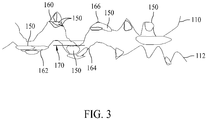
- the presence of the nanoparticles 102 and the resulting shear planes 120 and 122 operate to prevent wear particle 100 from attaining a size similar to that of wear particle 10. More specifically, in the presence of a sufficient pressure against wear particle 100, it will break down into multiple, smaller pieces as shown in Figure 3 .
- the higher percentage of time such particles spend in the non-agglomerated state reduces the amount of wear between the two surfaces in sliding contact with one another.
- Figure 3 illustrates that the agglomerated wear particle 100 of Figure 2 has broken up into multiple, smaller wear particles 150. These smaller wear particles 150 tend to migrate into the valleys 160, 162, 164, and 166, for example, associated with surfaces 110 and 112 thereby reducing the wear on surfaces 110 and 112 associated with wear particle 100 and the like.
- Two results of the breaking down of agglomerated wear particle 100 are that machining into the soft materials is cleaner, and the cutting device associated with the hard surface 110 lasts longer both of which are illustrated by the lines of cutting area 170.
- nanoparticles By adding nanoparticles at a certain percentage by weight, generally to a lubricant associated with that process, those nanoparticles cluster with materials removed from the surfaces to form the agglomerated wear particle 100.
- nanoparticles themselves may be provided in one or more various shapes including, but not limited to, flakes, balls, and rods.
- the agglomerated wear particle 100 is sometimes referred to as an abrasive wear ball. This abrasive wear ball breaks apart at the shear planes 120, 122, which are caused by the nanoparticles 102 once a force, such as that which may be introduced by the sliding contact associated with a machining process, is applied.
- composition and concentration of nanoparticles added depends in part on the metals, alloys, composite materials and any other materials that may be used in a machining process.
- the choice of composition and concentration of nanoparticles added may also be affected by a viscosity associated with the lubricant, for example, maintaining a usable working viscosity of the lubricating fluid, both prior to and after addition of the particular nanoparticles.
- the reduced size of the separate pieces of the agglomerated wear particle 100 reduces wear on both surfaces.
- the embodiments described herein relate to the addition of nanoparticles to an existing work area.
- nanoparticles there are a host of possible nanoparticles, possible lubricants, and non-lubricant approaches that can be brought to bear against any of a host of machining processes.
- the embodiments relate to the destabilization of agglomerated wear particles, as well as the determination of nanoparticle, and weight percentage of that nanoparticle to use, to gain a significant advantage in the machining process.
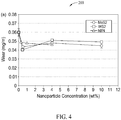
- Figure 4 is an example graph 200 that illustrates the wear reducing results of adding nanoparticles to a machining process that utilizes titanium sheets against 440C steel balls.
- Graph 200 illustrates the reduction in wear when molybdenum disulfide (MoS 2 ), tungsten disulfide (WS 2 ), or hexagonal boron nitride (hBN), are added to a lubricant in a percentage, by weight from about 0.1 percent to about 10 percent.
- Graph 200 further illustrates that about 0.5% by weight of tungsten disulfide (WS 2 ) optimizes the reduction in wear.
- Graph 200 also illustrates that, for the materials utilized (titanium and steel), tungsten disulfide provides a better reduction in wear rate than does either of hexagonal boron nitride (hBn) and molybdenum disulfide (MoS 2 ).
- hBn hexagonal boron nitride
- MoS 2 molybdenum disulfide
- nanoparticle can be made based on cost and/or a desire to not "gum up" the lubricant being utilized in the machining process by adding too much nanoparticle powder.
- a lubricant will effectively contain between about zero and ten percent by weight of a nanoparticle, with a particle size of about 100 nanometers, or less. This percentage will vary depending upon the surface chemistry of the nanoparticles used, the chemistry of the lubricant, and the operating conditions.
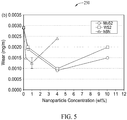
- Figure 5 is a graph 250, illustrating that maximum wear reduction occurs when adding weight 1% of hexagonal boron nitride (hBN), 4% of molybdenum disulfide (MoS 2 ), or 4% of tungsten disulfide (WS 2 ), by weight, to a machining process that includes steel sheets against the 440C steel balls.
- the hexagonal boron nitride provides dramatic improvements in wear reduction with only a one percent by weight concentration, while slightly better results can be achieved using four times as much MoS 2 or WS 2 .
- graph 250 illustrates the reduction in wear when molybdenum disulfide (MoS 2 ), tungsten disulfide (WS 2 ), or hexagonal boron nitride (hBN), are added to a lubricant in a percentage, by weight from about 0.1 percent to about 10 percent.
- Graph 250 also illustrates a reduction in wear particle production of over 50 percent.
- a cost component may also be illustrated by the fact that only a one percent concentration of hexagonal boron nitride provides a result that is only slightly reduced from the results associated with a four percent concentration of either MoS 2 or WS 2 .
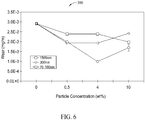
- Figure 6 is a graph 300 that illustrates different rates in the reduction in wear of 440C steel balls when different particle concentrations of hexagonal boron nitride, molybdenum disulfide, or tungsten disulfide nanoparticles are added to a lubricant in a process where the steel balls are sliding against steel sheets.
- the wear in the steel balls in milligrams per meter, is most reduced when a four percent concentration, by weight, of molybdenum disulfide nanoparticles is added to the lubricant.
- the reductions in wear of the steel balls when utilizing hexagonal boron nitride or tungsten disulfide nanoparticles, in various concentration, with the lubricant is also shown.
- the processes described here are insensitive to the uniformity of dispersion of the nanoparticles. Once the nanoparticles are engaged with the wear particles formed in the machining process, the force of the process breaks down agglomerations. However, it is important to keep the nanoparticles in suspension as they are being applied to the machining process.
- the sonication process described above is but one example of suspension, or dispersion, of the nanoparticles within a lubricant.
- the above described embodiments are capable of reducing the weight loss of a hard surface, such as a tool or die by up to 70% as compared to existing oils and lubricants.
- the embodiments are also effective in reducing the weight loss of the softer surface, the part being tooled, at least as compared to existing oils and lubricants.
- the embodiments may include biocompatible applications, for example, artificial joints, insulin pumps, ventricular assist devices, and others as known in the art.
- other applications include vacuum-compatible lubrication (e.g., spacecraft and satellites), contaminate-sensitive manufacturing, and non-outgassing applications.
Landscapes
- Chemical & Material Sciences (AREA)
- Chemical Kinetics & Catalysis (AREA)
- General Chemical & Material Sciences (AREA)
- Oil, Petroleum & Natural Gas (AREA)
- Organic Chemistry (AREA)
- Inorganic Chemistry (AREA)
- Lubricants (AREA)
Applications Claiming Priority (3)
| Application Number | Priority Date | Filing Date | Title |
|---|---|---|---|
| US16684909P | 2009-04-06 | 2009-04-06 | |
| US12/576,643 US9605228B2 (en) | 2009-04-06 | 2009-10-09 | Methods and compositions for reducing wear of surfaces in contact with one another |
| PCT/US2010/029981 WO2010117955A1 (en) | 2009-04-06 | 2010-04-05 | Method and apparatus for reducing wear of surfaces in contact with one another |
Publications (2)
| Publication Number | Publication Date |
|---|---|
| EP2417232A1 EP2417232A1 (en) | 2012-02-15 |
| EP2417232B1 true EP2417232B1 (en) | 2020-07-22 |
Family
ID=42826409
Family Applications (1)
| Application Number | Title | Priority Date | Filing Date |
|---|---|---|---|
| EP10723440.3A Active EP2417232B1 (en) | 2009-04-06 | 2010-04-05 | Use of lubricant in machining process utilizing titanium against steel |
Country Status (4)
| Country | Link |
|---|---|
| US (1) | US9605228B2 (enExample) |
| EP (1) | EP2417232B1 (enExample) |
| JP (2) | JP5687686B2 (enExample) |
| WO (1) | WO2010117955A1 (enExample) |
Families Citing this family (7)
| Publication number | Priority date | Publication date | Assignee | Title |
|---|---|---|---|---|
| JPH0798375B2 (ja) | 1988-03-30 | 1995-10-25 | 新王子製紙株式会社 | 金属蒸着ラベル用紙の製造方法 |
| US8389129B2 (en) | 2010-07-09 | 2013-03-05 | Climax Engineered Materials, Llc | Low-friction surface coatings and methods for producing same |
| US8956586B2 (en) | 2011-04-27 | 2015-02-17 | Climax Engineered Materials, Llc | Friction materials and methods of producing same |
| US8507090B2 (en) | 2011-04-27 | 2013-08-13 | Climax Engineered Materials, Llc | Spherical molybdenum disulfide powders, molybdenum disulfide coatings, and methods for producing same |
| US9222050B1 (en) * | 2012-02-29 | 2015-12-29 | Rand Innovations, Llc | Lubricant composition, method of preparing the same, and firearm cleaner including the same |
| US11530362B2 (en) | 2020-04-23 | 2022-12-20 | The Boeing Company | Organosiloxane-based surface treatments for enhancing the adhesion and lubricity of metal surfaces |
| US12195689B1 (en) * | 2022-09-08 | 2025-01-14 | Tribodyn, Inc. | Lubricating compositions |
Citations (2)
| Publication number | Priority date | Publication date | Assignee | Title |
|---|---|---|---|---|
| US20090042751A1 (en) * | 2007-08-11 | 2009-02-12 | Jagdish Narayan | Lubricant having nanoparticles and microparticles to enhance fuel efficiency, and a laser synthesis method to create dispersed nanoparticles |
| US20090054275A1 (en) * | 2007-08-21 | 2009-02-26 | Billiet Romain L | High density materials with intrinsic unabradable slipperiness and method of fabrication thereof |
Family Cites Families (5)
| Publication number | Priority date | Publication date | Assignee | Title |
|---|---|---|---|---|
| JPS582391A (ja) * | 1981-06-29 | 1983-01-07 | Seiko Epson Corp | 精密摺動部品 |
| JPH07118683A (ja) | 1993-09-22 | 1995-05-09 | Nippon Seiko Kk | 転がり軸受用潤滑剤 |
| JPH10130678A (ja) * | 1996-10-24 | 1998-05-19 | Otsuka Chem Co Ltd | 潤滑油 |
| JP2002020883A (ja) * | 2000-07-04 | 2002-01-23 | Nippon Parkerizing Co Ltd | 金属表面の処理方法 |
| CA2636932C (en) | 2006-01-12 | 2014-03-25 | The Board Of Trustees Of The University Of Arkansas | Nanoparticle compositions and methods for making and using the same |
-
2009
- 2009-10-09 US US12/576,643 patent/US9605228B2/en active Active
-
2010
- 2010-04-05 JP JP2012503771A patent/JP5687686B2/ja active Active
- 2010-04-05 EP EP10723440.3A patent/EP2417232B1/en active Active
- 2010-04-05 WO PCT/US2010/029981 patent/WO2010117955A1/en not_active Ceased
-
2014
- 2014-09-04 JP JP2014180206A patent/JP6025792B2/ja active Active
Patent Citations (2)
| Publication number | Priority date | Publication date | Assignee | Title |
|---|---|---|---|---|
| US20090042751A1 (en) * | 2007-08-11 | 2009-02-12 | Jagdish Narayan | Lubricant having nanoparticles and microparticles to enhance fuel efficiency, and a laser synthesis method to create dispersed nanoparticles |
| US20090054275A1 (en) * | 2007-08-21 | 2009-02-26 | Billiet Romain L | High density materials with intrinsic unabradable slipperiness and method of fabrication thereof |
Also Published As
| Publication number | Publication date |
|---|---|
| US20100255203A1 (en) | 2010-10-07 |
| JP2015052113A (ja) | 2015-03-19 |
| JP2012522876A (ja) | 2012-09-27 |
| JP6025792B2 (ja) | 2016-11-16 |
| US9605228B2 (en) | 2017-03-28 |
| WO2010117955A1 (en) | 2010-10-14 |
| EP2417232A1 (en) | 2012-02-15 |
| JP5687686B2 (ja) | 2015-03-18 |
Similar Documents
| Publication | Publication Date | Title |
|---|---|---|
| Sharma et al. | Mechanism of nanoparticles functioning and effects in machining processes: a review | |
| Singh et al. | Emerging application of nanoparticle-enriched cutting fluid in metal removal processes: a review | |
| Cetin et al. | Effects of cutting fluids with nano-silver and borax additives on milling performance of aluminium alloys | |
| Sayuti et al. | Investigation on the morphology of the machined surface in end milling of aerospace AL6061-T6 for novel uses of SiO2 nanolubrication system | |
| Mao et al. | The tribological properties of nanofluid used in minimum quantity lubrication grinding | |
| Sharma et al. | Progress of nanofluid application in machining: a review | |
| US9605228B2 (en) | Methods and compositions for reducing wear of surfaces in contact with one another | |
| Najiha et al. | Experimental investigation of flank wear in end milling of aluminum alloy with water-based TiO2 nanofluid lubricant in minimum quantity lubrication technique | |
| Zilabi et al. | A review on nanoparticle application as an additive in lubricants | |
| Kumar et al. | Experimental investigations on surface grinding of silicon nitride subjected to mono and hybrid nanofluids | |
| Wang et al. | Friction-induced motion evolution of reduced graphene oxide-Al2O3 at contact interface to achieve superior lubrication performance | |
| Khalil et al. | The effect of cutting parameters on cutting force and tool wear in machining Nickel Titanium Shape Memory Alloy ASTM F2063 under Minimum Quantity Nanolubricant | |
| EP2714814B1 (en) | Surface conditioning nanolubricant | |
| Kulkarni et al. | A review on nanofluids for machining | |
| Li et al. | Performance evaluation of graphene oxide nanosheet water coolants in the grinding of semiconductor substrates | |
| CN112958848A (zh) | 富勒烯纳米球粒子切削油的齿轮插削工艺使用方法 | |
| CN108624389B (zh) | 一种氧化石墨烯水基纳米润滑剂及其制备方法 | |
| Bhuyan et al. | State of art on minimum quantity lubrication in grinding process | |
| Xie et al. | Tribological behaviors of graphene oxide partly substituted with nano-SiO2 as lubricant additives in water for magnesium alloy/steel interfaces | |
| CN101348908B (zh) | 一种金属零件磨损表面在线强化修复材料及其制备方法 | |
| JP2012522876A5 (enExample) | ||
| KR20100114648A (ko) | 강화입자를 포함하는 코팅용 조성물에 의하여 코팅된 부시 및 그 제조방법 | |
| Xie et al. | Effects of combined additions of SiO2 and MoS2 nanoparticles as lubricant additive on the tribological properties of AZ31 magnesium alloy | |
| Sultana et al. | Effects of nano-fluids assisted MQL in machining processes: a review | |
| Morshed et al. | A tribological investigation of water-based nanolubricants prepared by mechanically synthesised hBN/TiO2 nanocomposites |
Legal Events
| Date | Code | Title | Description |
|---|---|---|---|
| PUAI | Public reference made under article 153(3) epc to a published international application that has entered the european phase |
Free format text: ORIGINAL CODE: 0009012 |
|
| 17P | Request for examination filed |
Effective date: 20111104 |
|
| AK | Designated contracting states |
Kind code of ref document: A1 Designated state(s): AT BE BG CH CY CZ DE DK EE ES FI FR GB GR HR HU IE IS IT LI LT LU LV MC MK MT NL NO PL PT RO SE SI SK SM TR |
|
| DAX | Request for extension of the european patent (deleted) | ||
| 17Q | First examination report despatched |
Effective date: 20150423 |
|
| STAA | Information on the status of an ep patent application or granted ep patent |
Free format text: STATUS: EXAMINATION IS IN PROGRESS |
|
| GRAP | Despatch of communication of intention to grant a patent |
Free format text: ORIGINAL CODE: EPIDOSNIGR1 |
|
| STAA | Information on the status of an ep patent application or granted ep patent |
Free format text: STATUS: GRANT OF PATENT IS INTENDED |
|
| INTG | Intention to grant announced |
Effective date: 20200103 |
|
| GRAS | Grant fee paid |
Free format text: ORIGINAL CODE: EPIDOSNIGR3 |
|
| GRAJ | Information related to disapproval of communication of intention to grant by the applicant or resumption of examination proceedings by the epo deleted |
Free format text: ORIGINAL CODE: EPIDOSDIGR1 |
|
| GRAL | Information related to payment of fee for publishing/printing deleted |
Free format text: ORIGINAL CODE: EPIDOSDIGR3 |
|
| STAA | Information on the status of an ep patent application or granted ep patent |
Free format text: STATUS: EXAMINATION IS IN PROGRESS |
|
| INTC | Intention to grant announced (deleted) | ||
| GRAR | Information related to intention to grant a patent recorded |
Free format text: ORIGINAL CODE: EPIDOSNIGR71 |
|
| STAA | Information on the status of an ep patent application or granted ep patent |
Free format text: STATUS: GRANT OF PATENT IS INTENDED |
|
| GRAA | (expected) grant |
Free format text: ORIGINAL CODE: 0009210 |
|
| STAA | Information on the status of an ep patent application or granted ep patent |
Free format text: STATUS: THE PATENT HAS BEEN GRANTED |
|
| AK | Designated contracting states |
Kind code of ref document: B1 Designated state(s): AT BE BG CH CY CZ DE DK EE ES FI FR GB GR HR HU IE IS IT LI LT LU LV MC MK MT NL NO PL PT RO SE SI SK SM TR |
|
| INTG | Intention to grant announced |
Effective date: 20200615 |
|
| REG | Reference to a national code |
Ref country code: GB Ref legal event code: FG4D |
|
| REG | Reference to a national code |
Ref country code: CH Ref legal event code: EP |
|
| REG | Reference to a national code |
Ref country code: DE Ref legal event code: R096 Ref document number: 602010064968 Country of ref document: DE |
|
| REG | Reference to a national code |
Ref country code: AT Ref legal event code: REF Ref document number: 1293397 Country of ref document: AT Kind code of ref document: T Effective date: 20200815 |
|
| REG | Reference to a national code |
Ref country code: IE Ref legal event code: FG4D |
|
| REG | Reference to a national code |
Ref country code: LT Ref legal event code: MG4D |
|
| REG | Reference to a national code |
Ref country code: AT Ref legal event code: MK05 Ref document number: 1293397 Country of ref document: AT Kind code of ref document: T Effective date: 20200722 |
|
| PG25 | Lapsed in a contracting state [announced via postgrant information from national office to epo] |
Ref country code: SE Free format text: LAPSE BECAUSE OF FAILURE TO SUBMIT A TRANSLATION OF THE DESCRIPTION OR TO PAY THE FEE WITHIN THE PRESCRIBED TIME-LIMIT Effective date: 20200722 Ref country code: NO Free format text: LAPSE BECAUSE OF FAILURE TO SUBMIT A TRANSLATION OF THE DESCRIPTION OR TO PAY THE FEE WITHIN THE PRESCRIBED TIME-LIMIT Effective date: 20201022 Ref country code: BG Free format text: LAPSE BECAUSE OF FAILURE TO SUBMIT A TRANSLATION OF THE DESCRIPTION OR TO PAY THE FEE WITHIN THE PRESCRIBED TIME-LIMIT Effective date: 20201022 Ref country code: PT Free format text: LAPSE BECAUSE OF FAILURE TO SUBMIT A TRANSLATION OF THE DESCRIPTION OR TO PAY THE FEE WITHIN THE PRESCRIBED TIME-LIMIT Effective date: 20201123 Ref country code: GR Free format text: LAPSE BECAUSE OF FAILURE TO SUBMIT A TRANSLATION OF THE DESCRIPTION OR TO PAY THE FEE WITHIN THE PRESCRIBED TIME-LIMIT Effective date: 20201023 Ref country code: LT Free format text: LAPSE BECAUSE OF FAILURE TO SUBMIT A TRANSLATION OF THE DESCRIPTION OR TO PAY THE FEE WITHIN THE PRESCRIBED TIME-LIMIT Effective date: 20200722 Ref country code: ES Free format text: LAPSE BECAUSE OF FAILURE TO SUBMIT A TRANSLATION OF THE DESCRIPTION OR TO PAY THE FEE WITHIN THE PRESCRIBED TIME-LIMIT Effective date: 20200722 Ref country code: AT Free format text: LAPSE BECAUSE OF FAILURE TO SUBMIT A TRANSLATION OF THE DESCRIPTION OR TO PAY THE FEE WITHIN THE PRESCRIBED TIME-LIMIT Effective date: 20200722 Ref country code: FI Free format text: LAPSE BECAUSE OF FAILURE TO SUBMIT A TRANSLATION OF THE DESCRIPTION OR TO PAY THE FEE WITHIN THE PRESCRIBED TIME-LIMIT Effective date: 20200722 Ref country code: HR Free format text: LAPSE BECAUSE OF FAILURE TO SUBMIT A TRANSLATION OF THE DESCRIPTION OR TO PAY THE FEE WITHIN THE PRESCRIBED TIME-LIMIT Effective date: 20200722 |
|
| PG25 | Lapsed in a contracting state [announced via postgrant information from national office to epo] |
Ref country code: LV Free format text: LAPSE BECAUSE OF FAILURE TO SUBMIT A TRANSLATION OF THE DESCRIPTION OR TO PAY THE FEE WITHIN THE PRESCRIBED TIME-LIMIT Effective date: 20200722 Ref country code: PL Free format text: LAPSE BECAUSE OF FAILURE TO SUBMIT A TRANSLATION OF THE DESCRIPTION OR TO PAY THE FEE WITHIN THE PRESCRIBED TIME-LIMIT Effective date: 20200722 Ref country code: IS Free format text: LAPSE BECAUSE OF FAILURE TO SUBMIT A TRANSLATION OF THE DESCRIPTION OR TO PAY THE FEE WITHIN THE PRESCRIBED TIME-LIMIT Effective date: 20201122 |
|
| PG25 | Lapsed in a contracting state [announced via postgrant information from national office to epo] |
Ref country code: NL Free format text: LAPSE BECAUSE OF FAILURE TO SUBMIT A TRANSLATION OF THE DESCRIPTION OR TO PAY THE FEE WITHIN THE PRESCRIBED TIME-LIMIT Effective date: 20200722 |
|
| REG | Reference to a national code |
Ref country code: DE Ref legal event code: R097 Ref document number: 602010064968 Country of ref document: DE |
|
| PG25 | Lapsed in a contracting state [announced via postgrant information from national office to epo] |
Ref country code: RO Free format text: LAPSE BECAUSE OF FAILURE TO SUBMIT A TRANSLATION OF THE DESCRIPTION OR TO PAY THE FEE WITHIN THE PRESCRIBED TIME-LIMIT Effective date: 20200722 Ref country code: SM Free format text: LAPSE BECAUSE OF FAILURE TO SUBMIT A TRANSLATION OF THE DESCRIPTION OR TO PAY THE FEE WITHIN THE PRESCRIBED TIME-LIMIT Effective date: 20200722 Ref country code: CZ Free format text: LAPSE BECAUSE OF FAILURE TO SUBMIT A TRANSLATION OF THE DESCRIPTION OR TO PAY THE FEE WITHIN THE PRESCRIBED TIME-LIMIT Effective date: 20200722 Ref country code: EE Free format text: LAPSE BECAUSE OF FAILURE TO SUBMIT A TRANSLATION OF THE DESCRIPTION OR TO PAY THE FEE WITHIN THE PRESCRIBED TIME-LIMIT Effective date: 20200722 Ref country code: DK Free format text: LAPSE BECAUSE OF FAILURE TO SUBMIT A TRANSLATION OF THE DESCRIPTION OR TO PAY THE FEE WITHIN THE PRESCRIBED TIME-LIMIT Effective date: 20200722 Ref country code: IT Free format text: LAPSE BECAUSE OF FAILURE TO SUBMIT A TRANSLATION OF THE DESCRIPTION OR TO PAY THE FEE WITHIN THE PRESCRIBED TIME-LIMIT Effective date: 20200722 |
|
| PLBE | No opposition filed within time limit |
Free format text: ORIGINAL CODE: 0009261 |
|
| STAA | Information on the status of an ep patent application or granted ep patent |
Free format text: STATUS: NO OPPOSITION FILED WITHIN TIME LIMIT |
|
| 26N | No opposition filed |
Effective date: 20210423 |
|
| PG25 | Lapsed in a contracting state [announced via postgrant information from national office to epo] |
Ref country code: SK Free format text: LAPSE BECAUSE OF FAILURE TO SUBMIT A TRANSLATION OF THE DESCRIPTION OR TO PAY THE FEE WITHIN THE PRESCRIBED TIME-LIMIT Effective date: 20200722 |
|
| PG25 | Lapsed in a contracting state [announced via postgrant information from national office to epo] |
Ref country code: SI Free format text: LAPSE BECAUSE OF FAILURE TO SUBMIT A TRANSLATION OF THE DESCRIPTION OR TO PAY THE FEE WITHIN THE PRESCRIBED TIME-LIMIT Effective date: 20200722 |
|
| REG | Reference to a national code |
Ref country code: NL Ref legal event code: MP Effective date: 20200722 |
|
| PG25 | Lapsed in a contracting state [announced via postgrant information from national office to epo] |
Ref country code: MC Free format text: LAPSE BECAUSE OF FAILURE TO SUBMIT A TRANSLATION OF THE DESCRIPTION OR TO PAY THE FEE WITHIN THE PRESCRIBED TIME-LIMIT Effective date: 20200722 |
|
| PG25 | Lapsed in a contracting state [announced via postgrant information from national office to epo] |
Ref country code: LU Free format text: LAPSE BECAUSE OF NON-PAYMENT OF DUE FEES Effective date: 20210405 |
|
| REG | Reference to a national code |
Ref country code: BE Ref legal event code: MM Effective date: 20210430 |
|
| PG25 | Lapsed in a contracting state [announced via postgrant information from national office to epo] |
Ref country code: CH Free format text: LAPSE BECAUSE OF NON-PAYMENT OF DUE FEES Effective date: 20210430 Ref country code: LI Free format text: LAPSE BECAUSE OF NON-PAYMENT OF DUE FEES Effective date: 20210430 |
|
| PG25 | Lapsed in a contracting state [announced via postgrant information from national office to epo] |
Ref country code: IE Free format text: LAPSE BECAUSE OF NON-PAYMENT OF DUE FEES Effective date: 20210405 |
|
| PG25 | Lapsed in a contracting state [announced via postgrant information from national office to epo] |
Ref country code: IS Free format text: LAPSE BECAUSE OF FAILURE TO SUBMIT A TRANSLATION OF THE DESCRIPTION OR TO PAY THE FEE WITHIN THE PRESCRIBED TIME-LIMIT Effective date: 20201122 |
|
| PG25 | Lapsed in a contracting state [announced via postgrant information from national office to epo] |
Ref country code: BE Free format text: LAPSE BECAUSE OF NON-PAYMENT OF DUE FEES Effective date: 20210430 |
|
| PG25 | Lapsed in a contracting state [announced via postgrant information from national office to epo] |
Ref country code: HU Free format text: LAPSE BECAUSE OF FAILURE TO SUBMIT A TRANSLATION OF THE DESCRIPTION OR TO PAY THE FEE WITHIN THE PRESCRIBED TIME-LIMIT; INVALID AB INITIO Effective date: 20100405 Ref country code: CY Free format text: LAPSE BECAUSE OF FAILURE TO SUBMIT A TRANSLATION OF THE DESCRIPTION OR TO PAY THE FEE WITHIN THE PRESCRIBED TIME-LIMIT Effective date: 20200722 |
|
| P01 | Opt-out of the competence of the unified patent court (upc) registered |
Effective date: 20230523 |
|
| PG25 | Lapsed in a contracting state [announced via postgrant information from national office to epo] |
Ref country code: MK Free format text: LAPSE BECAUSE OF FAILURE TO SUBMIT A TRANSLATION OF THE DESCRIPTION OR TO PAY THE FEE WITHIN THE PRESCRIBED TIME-LIMIT Effective date: 20200722 |
|
| PG25 | Lapsed in a contracting state [announced via postgrant information from national office to epo] |
Ref country code: TR Free format text: LAPSE BECAUSE OF FAILURE TO SUBMIT A TRANSLATION OF THE DESCRIPTION OR TO PAY THE FEE WITHIN THE PRESCRIBED TIME-LIMIT Effective date: 20200722 |
|
| PG25 | Lapsed in a contracting state [announced via postgrant information from national office to epo] |
Ref country code: MT Free format text: LAPSE BECAUSE OF FAILURE TO SUBMIT A TRANSLATION OF THE DESCRIPTION OR TO PAY THE FEE WITHIN THE PRESCRIBED TIME-LIMIT Effective date: 20200722 |
|
| PGFP | Annual fee paid to national office [announced via postgrant information from national office to epo] |
Ref country code: GB Payment date: 20260427 Year of fee payment: 17 |
|
| PGFP | Annual fee paid to national office [announced via postgrant information from national office to epo] |
Ref country code: DE Payment date: 20260429 Year of fee payment: 17 |
|
| PGFP | Annual fee paid to national office [announced via postgrant information from national office to epo] |
Ref country code: FR Payment date: 20260427 Year of fee payment: 17 |