EP2392239A1 - Verfahren zur Konfiguration eines Kaffeevollautomaten und Kaffeevollautomat - Google Patents
Verfahren zur Konfiguration eines Kaffeevollautomaten und Kaffeevollautomat Download PDFInfo
- Publication number
- EP2392239A1 EP2392239A1 EP11167814A EP11167814A EP2392239A1 EP 2392239 A1 EP2392239 A1 EP 2392239A1 EP 11167814 A EP11167814 A EP 11167814A EP 11167814 A EP11167814 A EP 11167814A EP 2392239 A1 EP2392239 A1 EP 2392239A1
- Authority
- EP
- European Patent Office
- Prior art keywords
- parameters
- coffee
- coffee machine
- flavor
- coffee beverage
- Prior art date
- Legal status (The legal status is an assumption and is not a legal conclusion. Google has not performed a legal analysis and makes no representation as to the accuracy of the status listed.)
- Granted
Links
Images
Classifications
-
- A—HUMAN NECESSITIES
- A47—FURNITURE; DOMESTIC ARTICLES OR APPLIANCES; COFFEE MILLS; SPICE MILLS; SUCTION CLEANERS IN GENERAL
- A47J—KITCHEN EQUIPMENT; COFFEE MILLS; SPICE MILLS; APPARATUS FOR MAKING BEVERAGES
- A47J31/00—Apparatus for making beverages
- A47J31/002—Apparatus for making beverages following a specific operational sequence, e.g. for improving the taste of the extraction product
Definitions
- the invention relates to a method for configuring a coffee machine according to the preamble of claim 1 and a coffee machine according to the preamble of claim 8.
- Coffee machines in the catering sector offer a number of possibilities of machine settings that affect the taste of the coffee beverage dispensed. These machine settings are currently set at the factory or by a service technician for on-site conditions at machine startup or maintenance. A readjustment of machine parameters by the restaurateur or another end user is usually not possible. Thus, the taste of the dispensed drinks depends primarily on the individual taste perception of the service technician, who often makes the setting of the machine not systematically but according to his individual previous experience.
- the service technician or end user has a few options for setting. However, this only concerns e.g. a change in the weight and only rarely a change in the brewing temperature, and possibly a change in the degree of grinding. A direct adjustment according to taste aspects does not take place.
- the invention achieves this object by a method having the features of claim 1 and a coffee machine with the features of claim 8.
- the taste parameters may also include other parameters than those enumerated above.
- the user or other persons, especially a service technician it is thus possible for the first time to make a targeted further adjustment of the coffee machine according to taste aspects in a simple manner.
- the selectable flavor parameters include a setting of one or more of the following parameters: acidity, bitterness, (if desired) salinity (see Fig. 2 ), Fullness and / or departure of the coffee beverage.
- acidity acidity
- bitterness if desired salinity
- salinity see Fig. 2
- Fullness if desired salinity
- Fig. 2 Fullness and / or departure of the coffee beverage.
- the adjustment of the flavor parameter (s) may be advantageously adapted to the particular type of coffee beverage such as cappuccino, espresso, latte macchiato, coffee and / or mocca and / or others.
- the optimum settings for different flavor parameter preselections are determined systematically by the manufacturer and stored in a database directly or in the manner of functions or the like.
- the setting of the taste parameters can be facilitated by the user advantageously by a scaling, which is arranged in an input window, so that when evaluating the data signal with the appropriate information on the taste parameters can be done by the control unit to the preset data sets.
- the data sets which convert the data signal received in the control unit into control signals are preset depending on the type of machine, water quality and / or the type of coffee used.
- the taste parameters are converted into machine parameters, wherein, regardless of the aforementioned characteristics, a desired flavor is achieved under the set taste parameters.
- a coffee machine for producing a coffee beverage has an input unit, for Adjusting the type and taste parameters of the coffee beverage.
- the setting is preferably carried out by resorting to database parameters - eg stored in the machine or retrievable online - whereby based on these prestored database parameters then one or more of the various modules of the coffee machine are controlled.
- the input unit has an optical output unit in the form of a display, preferably in the form of a touchscreen.
- the display has a plurality of input windows and / or is subdivided into a plurality of display segments, so that the individual selection options are arranged clearly, which makes it possible for the end user to quickly operate the fully automatic coffee machine.
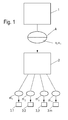
- Fig.1 shows a block diagram in which a possible principle of data processing is shown schematically.
- the invention is not limited to the embodiment shown below.
- it allows for the first time to make a simple individual adjustment of machine parameters in order to further influence the taste of caffeinated beverage beyond a mere preselection of a beverage type addition. It is suitable for both the setting by the service technician - which may be the rule - as well as a hiring by other operators such as a restaurateur.
- the operator - for example, the restaurateur - in an input unit 1 initially desired information.
- a screen for example, a screen, in the form of a touch screen, and one or more input functions are available to him.
- taste parameters X 1 -X n of the coffee beverage for example, acidity, bitterness, saltiness, fullness and finish. This selection can also be made only once and then not changed until new needs arise, for example, dissatisfaction with the taste for a longer usefulness with fixed parameters.
- the acidity of the coffee for example the content of caffeic acid, may vary according to the roasting process and cultivation conditions of the coffee beans. However, the acidity of the coffee can also be influenced by different machine parameters.
- bitterness for example caused by chlorogenic acid lactones and phenyl indanes, which are released to a greater extent at high pressures and temperatures.
- the fullness or the body of the coffee describes the stability of the coffee taste in the mouth and is u.a. due to the viscosity of the beverage.
- the abundance of coffee depends, for example, on the content of coffee oil and solid substances in the liquid.
- the finish is the aftertaste, which is felt after swallowing the coffee.
- the input of a data signal A which has at least information about the type and the desired taste parameter X 1 -X n of the coffee beverage in a control unit 2.
- the selection is made on a touch screen by means of a finger or a pen and, alternatively or additionally, a mouse, mouse pad or other commander.
- This signal A is evaluated by the control unit 2.
- the desired taste parameter X 1 -X n can be achieved by the interaction of the individual machine parameters m 1 -m m .
- the one or more machine parameters m 1 -m m are preferably sizes that can be set by controlling individual components 3.1-3 or assemblies of the coffee machine.
- This relates, for example, to one or more of the following parameters, including the contact pressure of the ground coffee, the grinding degree of the ground coffee, the brewing temperature, the amount of ground coffee, the amount and duration of the water supply via a bypass, the extent and duration of a pre-infusion, and other sizes.
- appropriate modules controllable such as a boiler unit for setting the temperature, etc ..
- a low bitterness value can be assigned a low contact pressure of the ground coffee by a pressure unit and a low brewing temperature by a brew unit. In the case of the brewing temperature, for example, this would result in an activation of the instantaneous water heater or of the water boiler.
- An adjustment of the data records to a specific type of device, to the water quality and / or the coffee grade used in each case can be taken into account, for example, by a corresponding factorization of the data records by the control unit 2.
- the setting of the data sets may vary depending on the coffee specialty. For example, mocha may have a different preset scale for bitterness than cappuccino, for example.
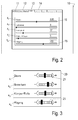
- Fig. 2 shows an input window of an electronic display 10.
- the optical output unit 10 is formed in the present case as a screen display, preferably as a touch screen.
- the dispensing unit 10 has a plurality of input windows 11-14, with Espresso 11, Latte Macchiato 12 and Café 13 and an optional input window 14 as types for a coffee beverage.
- data sets can be entered via another coffee beverage, whereby the offer of the coffee machine can also be supplemented with other coffee drinks, such as mocha.
- the selection on the display can be made by a stylus, which unlike a wide-area finger input allows punctual input.
- the individual taste parameters x 1 -x 5 are given with numerical values and, for better estimation of the values, additionally with a bar-like scaling 15, which gives information about the tendency of the set taste parameter x 1 -x 5 .
- Fig. 3 shows a display 20 with several taste parameters x 1 -x 4 whose concrete values are readable on the basis of an interval scale 21.
- the flavor additives, the taste parameters and other configuration options are on the display respectively Value ranges or value selection options shown, which are by a commander, such as a mouse, a keyboard, a thumbwheel or a mouse pad or the like on or adjustable.
- the input can take place by means of a touchscreen or a touchpad segment, so that an apparatus simplification of the system is achieved.
Landscapes
- Engineering & Computer Science (AREA)
- Food Science & Technology (AREA)
- Apparatus For Making Beverages (AREA)
- Tea And Coffee (AREA)
Abstract
Description
- Die Erfindung betrifft ein Verfahren zur Konfiguration eines Kaffeevollautomaten nach dem Oberbegriff des Anspruchs 1 und einen Kaffeevollautomaten nach dem Oberbegriff des Anspruchs 8.
- Kaffeevollautomaten im gastronomischen Bereich bieten eine Reihe von Möglichkeiten von Maschineneinstellungen, die den Geschmack des ausgegebenen Kaffeegetränkes beeinflussen. Diese Maschineneinstellungen werden derzeit im Werk oder von einem Servicetechniker auf die Gegebenheiten vor Ort bei Inbetriebnahme des Gerätes oder bei Wartungsarbeiten fest eingestellt. Eine Nacheinstellung von Maschinenparametern durch den Gastronom oder einen anderen Endanwender ist in der Regel nicht möglich. Somit hängt der Geschmack der ausgegebenen Getränke in erster Linie vom individuellen Geschmacksempfinden des Servicetechnikers ab, der häufig die Einstellung der Maschine nicht systematisch sondern nach seiner individuellen früheren Erfahrung vornimmt.
- Parallel dazu sind dem Servicetechniker oder Endanwender einige Möglichkeiten der Einstellung gegeben. Dies betrifft aber lediglich z.B. eine Änderung der Einwaage und nur selten eine Änderung der Brühtemperatur, sowie ggf. eine Änderung des Mahlgrades. Eine direkte Einstellung nach geschmacklichen Gesichtspunkten erfolgt dabei nicht.
- Andere weitergehende Maschinenparameter wie z.B. der Anpressdruck oder dgl. können vom Anwender dagegen nicht beeinflusst werden.
- Es ist daher Aufgabe der vorliegenden Erfindung, ein Verfahren zur Konfiguration eines Kaffeevollautomaten und einen Kaffeevollautomaten bereitzustellen, die es ermöglichen, eine benutzerfreundliche Einstellung des Geschmacks eines Kaffeegetränkes zu ermöglichen.
- Die Erfindung löst diese Aufgabe durch ein Verfahren mit den Merkmalen des Anspruchs 1 und einen Kaffeevollautomaten mit den Merkmalen des Anspruchs 8.
- Geschaffen wird ein Verfahren zur Konfiguration eines wenigstens eine oder mehrere Baugruppen aufweisenden Kaffeevollautomaten, gekennzeichnet durch folgende Schritte:
- Eingeben (im Sinne eines Auswählens oder Einstellens) eines oder mehrerer Geschmacksparameter des Kaffeegetränkes an einer Eingabeeinheit, wobei die einen oder mehrere auswählbare Geschmacksparameter wenigstens einen oder mehrere der folgenden Parameter umfassen oder aufweisen: Säure, Bitterkeit, Salzigkeit, Fülle und/oder Abgang des Kaffeegetränkes; und
- Auswerten der Eingabe durch eine Steuereinheit anhand eines Vergleichs der eingegebenen Geschmacksparametern mit vorgespeicherten Datensätzen, die Ansteuerparameter zur Ansteuerung der Baugruppen des Kaffeevollautomaten in Abhängigkeit von den gewählten Geschmacksparametern umfassen; und
- Ansteuern der zumindest einen oder mehreren Baugruppen des Kaffeevollautomaten durch die Steuereinheit mit den bei dem Auswerten bestimmten Ansteuerparametern.
- Die Geschmacksparameter können auch weitere Parameter umfassen als die vorstehend aufgezählten.
- Vorteilhafte Ausgestaltungen der Erfindung sind Gegenstand der Unteransprüche.
- Durch das gezielte Auswerten einer Datenbankinformation und von diesem Auswerten abhängiges Ansteuern einer oder mehrerer Baugruppen des Kaffeevollautomaten werden Maschinenparameter, die bisher nur herstellerseitig fest voreingestellt wurden, für eine Geschmackskonfiguration bei der Herstellung eines Kaffeegetränkes nutzbar.
- Dem Anwender oder anderen Personen, insbesondere auch einem Servicetechniker, wird es damit erstmals möglich, in einfacher Weise eine gezielte weitergehende Einstellung des Kaffeevollautomaten nach geschmacklichen Gesichtspunkten vorzunehmen.
- So braucht beispielsweise weder ein einstellender Techniker noch ein sonstige Bediener wie ein Gastronom bei der Einstellung der Geschmacksparameter über Spezialwissen zum komplexen Geräteaufbau des Kaffeevollautomaten zu verfügen.
- Dabei ist es von Vorteil, dass die auswählbaren Geschmacksparameter eine Einstellung von einem oder mehreren der folgenden Parameter umfassen: Säure, Bitterkeit, (wenn gewünscht) Salzigkeit (siehe
Fig. 2 ), Fülle und/oder Abgang des Kaffeegetränkes. Diese Geschmacksparameter sind anerkannt und besonders bedeutsam, so dass der Verbraucher eine spezielle geschmackliche Ausprägung mit diesen Geschmacksparametern verbindet. Dies erleichtert dem Verbraucher die Einstellung des Geschmacks des Kaffeegetränkes. - Die Einstellung des oder der Geschmacksparameter kann vorteilhaft für die jeweilige Art eines Kaffeegetränkes wie beispielsweise Cappuccino, Espresso, Latte Macchiato, Kaffee und/oder oder Mocca und/oder andere angepasst werden.
- Die optimalen Einstellungen für verschiedene Geschmacksparametervorwahlen werden herstellerseitig systematisch ermittelt und in einer Datenbank direkt oder nach Art von Funktionen oder dgl. gespeichert.
- Das Einstellen der Geschmacksparameter kann dem Nutzer vorteilhaft durch eine Skalierung erleichtert werden, welche in einem Eingabefenster angeordnet ist, so dass bei der Auswertung des Datensignals mit der entsprechenden Information zu den Geschmacksparametern ein Abgleich an die voreingestellten Datensätze durch die Steuereinheit erfolgen kann.
- Es ist von Vorteil, wenn die Datensätze, welche das in der Steuereinheit eingehende Datensignal in Steuersignale umwandeln, je nach Maschinentyp, Wasserqualität und/oder nach der eingesetzten Kaffeesorte voreingestellt werden. So werden die Geschmacksparameter in Maschinenparameter umgewandelt, wobei, unabhängig von den zuvor genannten Kenndaten ein gewünschter Geschmack unter den eingestellten Geschmacksparametern erreicht wird.
- Es ist weiterhin von Vorteil, wenn optional nach dem Auswählen des Kaffeegetränkes ein Auswählen eines Geschmackszusatzes erfolgt.
- Erfindungsgemäß weist ein Kaffeevollautomat, zur Herstellung eines Kaffeegetränkes nach einem der vorhergehenden Ansprüche eine Eingabeeinheit, zum Einstellen der Art und der Geschmacksparameter des Kaffeegetränkes auf. Dadurch wird eine bedienfreundliche Möglichkeit geschaffen, einzelne Geschmacksparameter einzustellen, ohne dass es zu Fehleinstellungen kommt. Das Einstellen erfolgt vorzugsweise durch Rückgriff auf Datenbankparameter - z.B. im Automat gespeichert oder online abrufbar - wobei anhand dieser vorgespeicherten Datenbankparameter sodann eine oder mehrere der verschiedenen Baugruppen des Kaffeevollautomaten angesteuert werden.
- Für eine leichte Ablesbarkeit und Bestimmung der eingestellten Parameter ist es von Vorteil. wenn die Eingabeeinheit eine optische Ausgabeeinheit in Form eines Displays, vorzugsweise in Form eines Touchscreens, aufweist.
- Um die einzelnen Auswahloptionen übersichtlich und nachvollziehbar zu gestalten ist es von Vorteil, wenn das Display mehrere Eingabefenster aufweist und/oder in mehrere Anzeigesegmente unterteilt ist, so dass die einzelnen Auswahloptionen übersichtlich angeordnet sind, was dem Endverbraucher ein schnelles Bedienen des Kaffeevollautomaten möglich macht.
- In der Folge wird ein erfindungsgemäßes Ausführungsbeispiel anhand von Zeichnungen näher erläutert. Sie zeigen:
- Fig.1
- Blockdiagramm zur Darstellung des Eingabe- und Steuerungsprinzips,
- Fig.2
- Einstellung eines Bildschirmfensters eines erfindungsgemäßen Kaffeevollautomaten und
- Fig.3
- Einstellung eines weiteren Ausführungsbeispiels eines Bildschirmfensters
-
Fig.1 zeigt ein Blockdiagramm, in welchem schematisch ein mögliches Prinzip der Datenverarbeitung dargestellt ist. - Die Erfindung ist aber nicht auf das nachfolgend dargestellte Ausführungsbeispiel beschränkt. Insbesondere ermöglicht sie es erstmals, eine einfache individuelle Einstellung von Maschinenparametern vorzunehmen, um den Geschmack des koffeinhaltigen Getränkes weitergehend über eine bloße Vorauswahl eines Getränketyps hinaus zu beeinflussen. Dabei eignet sie sich sowohl für die Einstellung durch den Servicetechniker - was die Regel sein dürfte - als auch für eine Einstellung durch andere Bedienpersonen wie einen Gastronomen.
- Nach einem möglichen Ablauf gibt die Bedienperson - beispielsweise der Gastronom - in eine Eingabeeinheit 1 zunächst gewünschte Informationen ein. Hierfür stehen ihm beispielsweise ein Bildschirm, in Form eines Touchscreens, sowie eine oder mehrere Eingabefunktionen zur Verfügung.
- Zur besseren Übersichtlichkeit der Eingabe können unterschiedliche Bedienoberflächen als Bildschirmfenster gewählt werden.
- Die Eingabe umfasst die Auswahl von unterschiedlichen Parametern. So kann die Eingabe beispielsweise in folgender Reihenfolge erfolgen:
- Bei der dargestellten Verfahrensvariante erfolgt eine Auswahl des Kaffeegetränkes. Dies sind vorzugsweise eine Anzahl unterschiedlicher Kaffeespezialitäten, wie z.B. Cappuccino, Latte Macchiato, Kaffee schwarz, ggf. Milchmenge und/oder mit Milch, Wiener Melange, Mocca und dergleichen.
- Diese Auswahl ist optional, nicht aber zwingend.
- Wesentlich ist vielmehr, dass eine Auswahl von Geschmacksparametern X1-Xn des Kaffeegetränkes erfolgt, beispielsweise nach Säuregehalt, Bitterkeit, Salzigkeit, Fülle und Abgang. Diese Auswahl kann auch nur einmalig vorgenommen werden und dann nicht verändert werden, bis erneuter Bedarf entsteht, beispielsweise durch Unzufriedenheit mit dem Geschmack nach einem längeren Nutzen mit festen Parametern.
- Der Säuregehalt des Kaffees, beispielsweise der Gehalt an Kaffeesäure, kann nach Röstverfahren und Anbaubedingungen der Kaffeebohnen variieren. Der Säuregehalt des Kaffees kann allerdings auch durch verschiedene Maschinenparameter beeinflusst werden.
- Gleiches gilt für die Bitterkeit, beispielsweise hervorgerufen durch Chlorogensäure-Lactone und Phenyl-Indane, die im verstärkten Maße bei hohen Drücken und Temperaturen freigesetzt werden.
- Sowohl die Salzigkeit als auch die Bitterkeit sind wesentliche Bestandteile des Kaffeearomas.
- Die Fülle bzw. der Körper des Kaffees beschreibt die Beständigkeit des Kaffeegeschmacks im Mund und ist u.a. auf die Viskosität des Getränkes zurückzuführen. Die Fülle des Kaffees hängt beispielsweise vom Gehalt an Kaffeeöl und festen Substanzen in der Flüssigkeit ab.
- Der Abgang ist der Nachgeschmack, welcher nach dem Schlucken des Kaffees empfunden wird.
- Infolge der Auswahl der gewünschten Informationen an der Eingabeeinheit 1 erfolgt die Eingabe eines Datensignals A, das zumindest Informationen über die Art und der gewünschten Geschmacksparameter X1-Xn des Kaffeegetränks aufweist, in eine Steuereinheit 2. Die Auswahl erfolgt an einem Touchscreen mittels eines Fingers oder eines Stiftes und alternativ oder zusätzlich durch eine Maus, ein Mauspad oder einen anderen Befehlsgeber.
- Dieses Signal A wird durch die Steuereinheit 2 ausgewertet. In Optimierung und Abstimmung mit vorhandenen Erfahrungswerten kann durch das Zusammenspiel der einzelnen Maschinenparameter m1-mm der gewünschte Geschmacksparameter X1-Xn erreicht werden.
- Zur Zuordnung einzelner Geschmacksparameter X1-Xn auf die jeweils festgesetzten Maschinenparameter m1-mm sind beispielsweise Datensätzen hinterlegt, welche durch die Steuereinheit 2 des Kaffeevollautomaten in einer Datenbank verwaltet werden.
- Die einen oder mehreren Maschinenparameter m1-mm sind vorzugsweise Grö-βen, die durch Steuerung einzelner Bauteile 3.1-3 bzw. Baugruppen des Kaffeevollautomaten einstellbar sind.
- Dies betrifft beispielsweise einen oder mehrere der folgenden Parameter umfassend den Anpressdruck des Kaffeemehls, den Mahlgrad des Kaffeemehls, die Brühtemperatur, die Menge der Einwaage an Kaffeemehl, der Menge und Dauer der Wasserzufuhr über einen Bypass, eine Umfang und Dauer einer Preinfusion und weitere Größen. Zur Einstellung dieser Größen sind entsprechende Baugruppen ansteuerbar, so z.B. eine Kesseleinheit zur Einstellung der Temperatur usw..
- Beispielsweise kann einem geringen Wert für Bitterkeit ein geringer Anpressdruck des Kaffeemehls durch eine Andruckeinheit und eine geringe Brühtemperatur durch eine Brüheinheit zugeordnet werden. Im Fall der Brühtemperatur hätte dies beispielsweise eine Ansteuerung des Durchlauferhitzers oder des Wasserboilers zur Folge.
- Eine Einstellung der Datensätze auf einen bestimmten Gerätetyp, auf die Wasserqualität und/oder die jeweils eingesetzte Kaffeesorte kann beispielsweise durch eine entsprechende Faktorisierung der Datensätze durch die Steuereinheit 2 berücksichtigt werden. Zudem kann die Einstellung der Datensätze je nach Kaffeespezialität variieren. So kann beispielsweise Mokka eine andere voreingestellte Skalierung für Bitterkeit aufweisen, als beispielsweise Cappuccino.
-
Fig. 2 zeigt ein Eingabefenster einer elektronischen Anzeige 10. Die optische Ausgabeeinheit 10 ist im vorliegenden Fall als Bildschirm-Display, vorzugsweise als Touchscreen, ausgebildet. Die Ausgabeeinheit 10 weist mehrere Eingabefenster 11-14 auf, mit Espresso 11, Latte Macchiato 12 und Café 13 und einem optionalen Eingabefenster 14 als Typen für eines Kaffeegetränkes. In dem optionalen Eingabefenster können Datensätze über ein weiteres Kaffeegetränk eingegeben werden, wodurch das Angebot des Kaffeevollautomaten auch auf andere Kaffeegetränke, wie z.B. Mokka ergänzt werden kann. Die Auswahl am Display kann durch einen Eingabestift erfolgen, der anders als eine breitflächige Fingereingabe eine punktuelle Eingabe ermöglicht. - Im Zentrum des Displays sind die einzelnen Geschmacksparameter x1-x5 mit Zahlenwerte angegeben und zur besseren Einschätzung der Werte zusätzlich mit einer balkenartigen Skalierung 15 auf, die Auskunft über die Tendenz des eingestellten Geschmacksparameters x1-x5 gibt.
-
Fig. 3 zeigt ein Display 20 mit mehreren Geschmacksparameter x1-x4, deren konkrete Werte anhand einer Intervallskala 21 ablesbar sind. - Zur Einstellung der Art des Kaffeegetränks, der Geschmackszusätze, der Geschmacksparameter und weiterer Einstelloptionen sind auf dem Display jeweils Wertebereiche oder Werteauswahlmöglichkeiten dargestellt, welche durch einen Befehlsgeber, beispielsweise eine Maus, eine Tastatur, ein Stellrad oder ein Mauspad oder dergleichen ein- bzw. verstellbar sind.
- Alternativ oder zusätzlich kann die Eingabe durch einen Touchscreen oder ein Touchpad-segment erfolgen, so dass eine apparative Vereinfachung der Anlage erreicht wird.
-
- 1
- Eingabeeinheit
- 2
- Steuereinheit
- 3.1-3.m
- Bauelement
- 10
- optische Ausgabeeinheit
- 11-14
- Eingabefenster
- 15
- Skalierung
- 20
- Display
- 21
- Skalierung
- A
- Datensignal
- X1 - Xn
- Geschmacksparameter
- m1 - mm
- Maschinenparameter
Claims (10)
- Verfahren zur Konfiguration eines wenigstens eine oder mehrere Baugruppen aufweisenden Kaffeevollautomaten, gekennzeichnet durch folgende Schritte:- Eingeben eines oder mehrerer Geschmacksparameter (x1-xn) eines Kaffeegetränkes an einer Eingabeeinheit (1), wobei die einen oder mehreren auswählbaren Geschmacksparameter (x1-xn) wenigstens einen oder mehrere der folgenden Parameter betreffen: Säure, Bitterkeit, Salzigkeit, Fülle und/oder Abgang des Kaffeegetränkes; und- Auswerten der Eingabe durch eine Steuereinheit (2) anhand eines Vergleichs der eingegebenen Geschmacksparameter mit zumindest einem vorgespeicherten Datensatz, der zumindest einen Ansteuerparameter zur Ansteuerung der Baugruppen (3.1-3.m) des Kaffeevollautomaten in Abhängigkeit von den eingegebenen Geschmacksparametern umfasst; und- Ansteuern der zumindest einen oder mehreren Baugruppen (3.1-3.m) des Kaffeevollautomaten durch die Steuereinheit mit dem bei dem Auswerten bestimmten Ansteuerparameter.
- Verfahren nach Anspruch 1, gekennzeichnet durch folgenden weiteren Schritt: Manuelles Auswählen eines Kaffeegetränkes an einer Eingabeeinheit (1) des Kaffeevollautomaten vor dem manuellen Auswählen von einem oder mehreren Geschmacksparametern.
- Verfahren nach Anspruch 1 oder 2, dadurch gekennzeichnet, dass die einen oder mehreren auswählbaren Geschmacksparameter (x1-xn) wenigstens einen oder mehrere der folgenden Parameter umfassen: Säure, Bitterkeit, Salzigkeit, Fülle und/oder Abgang des Kaffeegetränkes.
- Verfahren nach Anspruch 1, 2 oder 3, dadurch gekennzeichnet, dass das Kaffeegetränk eine oder mehrere der folgenden Kaffeegetränkarten umfasst: Cappuccino, Espresso, Latte Macchiato, Kaffee, Mocca und/oder andere.
- Verfahren nach einem der vorhergehenden Ansprüche, dadurch gekennzeichnet, dass das manuelle Einstellen der einen oder mehreren Geschmacksparameter (x1-xn) an einem Eingabefenster (11-14) der Eingabeeinheit (1) erfolgt.
- Verfahren nach einem der vorhergehenden Ansprüche, dadurch gekennzeichnet, dass das manuelle Einstellen der einen oder mehreren Geschmacksparameter (x1-xn) mittels einer Skalierung (15, 21) im Eingabefenster (11-14) erfolgt.
- Verfahren nach einem der vorhergehenden Ansprüche, dadurch gekennzeichnet, dass eine Speicherung der eingegebenen einen oder mehreren Geschmacksparameter in einer Datenbank erfolgt.
- Kaffeevollautomat, welcher durch ein Verfahren nach einem der vorhergehenden Ansprüche konfigurierbar ist, dadurch gekennzeichnet, dass der Kaffeevollautomat eine Eingabeeinheit (1), zum Einstellen des Kaffeegetränkes und der einen oder mehreren Geschmacksparameter (X1-Xn) des Kaffeegetränkes aufweist und eine Datenbank.
- Kaffeevollautomat nach Anspruch 8, dadurch gekennzeichnet, dass die Eingabeeinheit (1) ein optisches Display (10, 20) aufweist, welches vorzugsweise mehrere Eingabefenster (11-14) aufweist und/oder in mehrere Anzeigesegmente unterteilt ist.
- Kaffeevollautomat nach Anspruch 8 oder 9, dadurch gekennzeichnet, dass auf dem Display ein Cursor oder ein Mauspfeil angeordnet ist, welcher durch einen Befehlsgeber bedienbar ist oder dass die Eingabeeinheit (1) ein Touchscreen ist oder ein Touchpadsegment aufweist.
Applications Claiming Priority (1)
| Application Number | Priority Date | Filing Date | Title |
|---|---|---|---|
| DE201010017221 DE102010017221A1 (de) | 2010-06-02 | 2010-06-02 | Verfahren zur Konfiguration eines Kaffeevollautomaten und Kaffeevollautomat |
Publications (2)
| Publication Number | Publication Date |
|---|---|
| EP2392239A1 true EP2392239A1 (de) | 2011-12-07 |
| EP2392239B1 EP2392239B1 (de) | 2015-03-11 |
Family
ID=44455237
Family Applications (1)
| Application Number | Title | Priority Date | Filing Date |
|---|---|---|---|
| EP20110167814 Active EP2392239B1 (de) | 2010-06-02 | 2011-05-27 | Verfahren zur Konfiguration eines Kaffeevollautomaten |
Country Status (2)
| Country | Link |
|---|---|
| EP (1) | EP2392239B1 (de) |
| DE (1) | DE102010017221A1 (de) |
Cited By (8)
| Publication number | Priority date | Publication date | Assignee | Title |
|---|---|---|---|---|
| EP3409149A1 (de) * | 2017-05-31 | 2018-12-05 | Miele & Cie. KG | Kaffeeautomat mit einer steuereinrichtung zur einstellung von getränkeparametern |
| CN112543608A (zh) * | 2018-08-07 | 2021-03-23 | 株式会社穗菲尔德 | 装置、方法以及程序 |
| IT201900017582A1 (it) * | 2019-09-30 | 2021-03-30 | Simonelli Group Spa | Sistema personalizzabile per erogazione di caffe’. |
| US20210177193A1 (en) * | 2018-07-05 | 2021-06-17 | Melitta Professional Coffee Solutions GmbH & Co. KG | Method by means of which caffeinated hot beverages, particularly coffee beverages, can be produced by an apparatus for producing a caffeinated hot beverage |
| DE102021206556A1 (de) | 2021-03-22 | 2022-09-22 | BSH Hausgeräte GmbH | Verfahren zur Voreinstellung von insbesondere in einem Haushalt verwendeten Geräten |
| EP4062810A1 (de) | 2021-03-22 | 2022-09-28 | BSH Hausgeräte GmbH | Verfahren zur voreinstellung von insbesondere in einem haus-halt verwendeten geräten |
| CN116919168A (zh) * | 2023-08-11 | 2023-10-24 | 珠海格力电器股份有限公司 | 咖啡机控制方法、装置和咖啡机 |
| CN120909166A (zh) * | 2025-10-09 | 2025-11-07 | 珠海格力电器股份有限公司 | 咖啡的萃取方法、装置及咖啡萃取设备 |
Families Citing this family (8)
| Publication number | Priority date | Publication date | Assignee | Title |
|---|---|---|---|---|
| WO2016026586A1 (en) | 2014-08-22 | 2016-02-25 | Illycaffe' S.P.A. Con Unico Socio | A system and method to obtain and optimize mixtures for preparing beverages |
| DE202016008296U1 (de) | 2016-03-31 | 2018-01-22 | Eugster / Frismag Ag | Kaffeemaschine |
| DE102016105862A1 (de) | 2016-03-31 | 2017-10-05 | Eugster/Frismag Ag | Kaffeemaschine sowie Betriebsverfahren |
| EP3278692B1 (de) | 2016-08-03 | 2020-08-12 | Melitta Professional Coffee Solutions GmbH & Co. KG | Verfahren zur bedienung eines getränkeautomaten aus einer vielzahl von getränkeautomaten |
| US12557938B2 (en) | 2022-09-30 | 2026-02-24 | Midea Group Co., Ltd. | Drip coffee maker with two dimensional brew selection interface |
| US12369744B1 (en) | 2024-01-18 | 2025-07-29 | Sharkninja Operating Llc | Preparation of beverage machines for cold beverage brewing |
| US12575692B2 (en) | 2024-01-18 | 2026-03-17 | Sharkninja Operating Llc | Suggesting coffee bean grind size for beverage machines |
| WO2025155323A1 (en) | 2024-01-18 | 2025-07-24 | Sharkninja Operating Llc | Preventing coffee bean grinder jamming |
Citations (3)
| Publication number | Priority date | Publication date | Assignee | Title |
|---|---|---|---|---|
| WO2001012039A2 (en) * | 1999-08-14 | 2001-02-22 | The Procter & Gamble Company | Methods and systems utilizing delayed dilution, mixing, and filtration for providing customized beverages on demand |
| DE102009034945A1 (de) * | 2008-12-03 | 2010-06-10 | De'longhi Appliances S.R.L. | Kaffeemaschine und Kontrollverfahren einer Kaffeemaschine |
| EP2279683B1 (de) | 2009-07-31 | 2012-01-04 | René M. Kohli | Verfahren zum benutzergesteuerten Herstellen eines insbesondere flüssigen Lebensmittel-Produkts |
-
2010
- 2010-06-02 DE DE201010017221 patent/DE102010017221A1/de not_active Withdrawn
-
2011
- 2011-05-27 EP EP20110167814 patent/EP2392239B1/de active Active
Patent Citations (3)
| Publication number | Priority date | Publication date | Assignee | Title |
|---|---|---|---|---|
| WO2001012039A2 (en) * | 1999-08-14 | 2001-02-22 | The Procter & Gamble Company | Methods and systems utilizing delayed dilution, mixing, and filtration for providing customized beverages on demand |
| DE102009034945A1 (de) * | 2008-12-03 | 2010-06-10 | De'longhi Appliances S.R.L. | Kaffeemaschine und Kontrollverfahren einer Kaffeemaschine |
| EP2279683B1 (de) | 2009-07-31 | 2012-01-04 | René M. Kohli | Verfahren zum benutzergesteuerten Herstellen eines insbesondere flüssigen Lebensmittel-Produkts |
Cited By (10)
| Publication number | Priority date | Publication date | Assignee | Title |
|---|---|---|---|---|
| EP3409149A1 (de) * | 2017-05-31 | 2018-12-05 | Miele & Cie. KG | Kaffeeautomat mit einer steuereinrichtung zur einstellung von getränkeparametern |
| US20210177193A1 (en) * | 2018-07-05 | 2021-06-17 | Melitta Professional Coffee Solutions GmbH & Co. KG | Method by means of which caffeinated hot beverages, particularly coffee beverages, can be produced by an apparatus for producing a caffeinated hot beverage |
| CN112543608A (zh) * | 2018-08-07 | 2021-03-23 | 株式会社穗菲尔德 | 装置、方法以及程序 |
| CN112543608B (zh) * | 2018-08-07 | 2022-07-12 | 株式会社大都技研 | 装置、方法以及计算机可读存储介质 |
| IT201900017582A1 (it) * | 2019-09-30 | 2021-03-30 | Simonelli Group Spa | Sistema personalizzabile per erogazione di caffe’. |
| EP3797654A1 (de) | 2019-09-30 | 2021-03-31 | Universita' Degli Studi Di Camerino | Anpassbares kaffeeausgabesystem |
| DE102021206556A1 (de) | 2021-03-22 | 2022-09-22 | BSH Hausgeräte GmbH | Verfahren zur Voreinstellung von insbesondere in einem Haushalt verwendeten Geräten |
| EP4062810A1 (de) | 2021-03-22 | 2022-09-28 | BSH Hausgeräte GmbH | Verfahren zur voreinstellung von insbesondere in einem haus-halt verwendeten geräten |
| CN116919168A (zh) * | 2023-08-11 | 2023-10-24 | 珠海格力电器股份有限公司 | 咖啡机控制方法、装置和咖啡机 |
| CN120909166A (zh) * | 2025-10-09 | 2025-11-07 | 珠海格力电器股份有限公司 | 咖啡的萃取方法、装置及咖啡萃取设备 |
Also Published As
| Publication number | Publication date |
|---|---|
| DE102010017221A1 (de) | 2011-12-08 |
| EP2392239B1 (de) | 2015-03-11 |
Similar Documents
| Publication | Publication Date | Title |
|---|---|---|
| EP2392239B1 (de) | Verfahren zur Konfiguration eines Kaffeevollautomaten | |
| EP2945514B2 (de) | Verfahren zum betreiben eines getränkezubereitungsautomaten und getränkezubereitungsautomat zur durchführung eines solchen verfahrens | |
| EP1955624B1 (de) | Kaffeemaschine | |
| EP3413766B2 (de) | Getränkezubereitungsmaschine | |
| EP3168815A1 (de) | System mit getränkezubereitungsmaschine, verfahren und computerprogramm zu dessen ansteuerung | |
| EP3785579B1 (de) | Getränke-parametereinstellung an einem getränkebereiter | |
| EP2801304B1 (de) | Bedien- und Anzeigevorrichtung für einen programmgesteuerten Getränkebereiter und Getränkebereiter | |
| DE102015109921A1 (de) | Verfahren zum Erzeugen eines Kaffeegetränks | |
| EP3413767A1 (de) | Getränkezubereitungssystem | |
| DE102014101079A1 (de) | Verfahren zum Betrieb einer Küchenmaschine und Küchenmaschine | |
| DE102018121567A1 (de) | Verfahren und Vorrichtung zum Erzeugen von Milch-Luft-Emulsionen | |
| DE102017106491A1 (de) | Verfahren und Vorrichtung zur Ansteuerung einer Heißgetränkebereitungsvorrichtung | |
| DE2434336A1 (de) | Verfahren zum einstellen des aromas des von einer maschine hergestellten kaffees und vorrichtung zur durchfuehrung des verfahrens | |
| DE102018116306A1 (de) | Verfahren, mit dem koffeinhaltige Heißgetränke, insbesondere Kaffeegetränke, mit einer Vorrichtung zum Erzeugen eines koffeinhaltigen Heißgetränks hergestellt werden | |
| DE102014011209A1 (de) | Kaffeemaschine zum Zubereiten von Kaffee | |
| DE102022207809B4 (de) | Verfahren zum benutzergesteuerten Ermitteln eines Brühparameters für Kaffeebohnen zum Zubereiten eines Kaffeegetränks mittels eines Kaffeeautomaten | |
| WO2024022760A1 (de) | Verfahren zum betreiben eines kaffeeautomaten | |
| WO2017093015A1 (de) | Vorrichtung und verfahren zur herstellung eines brühgetränks | |
| DE102019204912A1 (de) | Getränkeautomat | |
| EP2767255A1 (de) | Dentalbrennofen sowie Verfahren zum Betrieb eines Dentalbrennofens | |
| DE102021206556A1 (de) | Verfahren zur Voreinstellung von insbesondere in einem Haushalt verwendeten Geräten | |
| DE102016225680A1 (de) | Verfahren zum Betrieb eines Gargeräts, insbesondere eines gewerblichen Gargeräts | |
| DE102022207812B3 (de) | Verfahren zum benutzergesteuerten Ermitteln eines Röstgrades von Kaffeebohnen zum Zubereiten eines Kaffeegetränks mittels eines Kaffeeautomaten | |
| DE102007033656A1 (de) | Gargerät mit elektronischer Steuerung | |
| EP4516171A1 (de) | Verfahren zum betreiben eines kaffeeautomaten |
Legal Events
| Date | Code | Title | Description |
|---|---|---|---|
| AK | Designated contracting states |
Kind code of ref document: A1 Designated state(s): AL AT BE BG CH CY CZ DE DK EE ES FI FR GB GR HR HU IE IS IT LI LT LU LV MC MK MT NL NO PL PT RO RS SE SI SK SM TR |
|
| AX | Request for extension of the european patent |
Extension state: BA ME |
|
| PUAI | Public reference made under article 153(3) epc to a published international application that has entered the european phase |
Free format text: ORIGINAL CODE: 0009012 |
|
| 17P | Request for examination filed |
Effective date: 20120604 |
|
| TPAC | Observations filed by third parties |
Free format text: ORIGINAL CODE: EPIDOSNTIPA |
|
| 17Q | First examination report despatched |
Effective date: 20130313 |
|
| 17Q | First examination report despatched |
Effective date: 20130404 |
|
| GRAP | Despatch of communication of intention to grant a patent |
Free format text: ORIGINAL CODE: EPIDOSNIGR1 |
|
| INTG | Intention to grant announced |
Effective date: 20141203 |
|
| RAP1 | Party data changed (applicant data changed or rights of an application transferred) |
Owner name: MELITTA PROFESSIONAL COFFEE SOLUTIONS GMBH & CO., |
|
| GRAS | Grant fee paid |
Free format text: ORIGINAL CODE: EPIDOSNIGR3 |
|
| GRAA | (expected) grant |
Free format text: ORIGINAL CODE: 0009210 |
|
| AK | Designated contracting states |
Kind code of ref document: B1 Designated state(s): AL AT BE BG CH CY CZ DE DK EE ES FI FR GB GR HR HU IE IS IT LI LT LU LV MC MK MT NL NO PL PT RO RS SE SI SK SM TR |
|
| REG | Reference to a national code |
Ref country code: GB Ref legal event code: FG4D Free format text: NOT ENGLISH |
|
| REG | Reference to a national code |
Ref country code: CH Ref legal event code: EP |
|
| REG | Reference to a national code |
Ref country code: IE Ref legal event code: FG4D Free format text: LANGUAGE OF EP DOCUMENT: GERMAN |
|
| REG | Reference to a national code |
Ref country code: AT Ref legal event code: REF Ref document number: 714848 Country of ref document: AT Kind code of ref document: T Effective date: 20150415 |
|
| REG | Reference to a national code |
Ref country code: DE Ref legal event code: R096 Ref document number: 502011006188 Country of ref document: DE Effective date: 20150416 |
|
| REG | Reference to a national code |
Ref country code: NL Ref legal event code: VDEP Effective date: 20150311 |
|
| REG | Reference to a national code |
Ref country code: NL Ref legal event code: VDEP Effective date: 20150311 |
|
| PG25 | Lapsed in a contracting state [announced via postgrant information from national office to epo] |
Ref country code: SE Free format text: LAPSE BECAUSE OF FAILURE TO SUBMIT A TRANSLATION OF THE DESCRIPTION OR TO PAY THE FEE WITHIN THE PRESCRIBED TIME-LIMIT Effective date: 20150311 Ref country code: LT Free format text: LAPSE BECAUSE OF FAILURE TO SUBMIT A TRANSLATION OF THE DESCRIPTION OR TO PAY THE FEE WITHIN THE PRESCRIBED TIME-LIMIT Effective date: 20150311 Ref country code: HR Free format text: LAPSE BECAUSE OF FAILURE TO SUBMIT A TRANSLATION OF THE DESCRIPTION OR TO PAY THE FEE WITHIN THE PRESCRIBED TIME-LIMIT Effective date: 20150311 Ref country code: FI Free format text: LAPSE BECAUSE OF FAILURE TO SUBMIT A TRANSLATION OF THE DESCRIPTION OR TO PAY THE FEE WITHIN THE PRESCRIBED TIME-LIMIT Effective date: 20150311 Ref country code: NO Free format text: LAPSE BECAUSE OF FAILURE TO SUBMIT A TRANSLATION OF THE DESCRIPTION OR TO PAY THE FEE WITHIN THE PRESCRIBED TIME-LIMIT Effective date: 20150611 Ref country code: ES Free format text: LAPSE BECAUSE OF FAILURE TO SUBMIT A TRANSLATION OF THE DESCRIPTION OR TO PAY THE FEE WITHIN THE PRESCRIBED TIME-LIMIT Effective date: 20150311 |
|
| REG | Reference to a national code |
Ref country code: LT Ref legal event code: MG4D |
|
| PG25 | Lapsed in a contracting state [announced via postgrant information from national office to epo] |
Ref country code: GR Free format text: LAPSE BECAUSE OF FAILURE TO SUBMIT A TRANSLATION OF THE DESCRIPTION OR TO PAY THE FEE WITHIN THE PRESCRIBED TIME-LIMIT Effective date: 20150612 Ref country code: RS Free format text: LAPSE BECAUSE OF FAILURE TO SUBMIT A TRANSLATION OF THE DESCRIPTION OR TO PAY THE FEE WITHIN THE PRESCRIBED TIME-LIMIT Effective date: 20150311 Ref country code: LV Free format text: LAPSE BECAUSE OF FAILURE TO SUBMIT A TRANSLATION OF THE DESCRIPTION OR TO PAY THE FEE WITHIN THE PRESCRIBED TIME-LIMIT Effective date: 20150311 |
|
| PG25 | Lapsed in a contracting state [announced via postgrant information from national office to epo] |
Ref country code: NL Free format text: LAPSE BECAUSE OF FAILURE TO SUBMIT A TRANSLATION OF THE DESCRIPTION OR TO PAY THE FEE WITHIN THE PRESCRIBED TIME-LIMIT Effective date: 20150311 |
|
| PG25 | Lapsed in a contracting state [announced via postgrant information from national office to epo] |
Ref country code: PT Free format text: LAPSE BECAUSE OF FAILURE TO SUBMIT A TRANSLATION OF THE DESCRIPTION OR TO PAY THE FEE WITHIN THE PRESCRIBED TIME-LIMIT Effective date: 20150713 Ref country code: CZ Free format text: LAPSE BECAUSE OF FAILURE TO SUBMIT A TRANSLATION OF THE DESCRIPTION OR TO PAY THE FEE WITHIN THE PRESCRIBED TIME-LIMIT Effective date: 20150311 Ref country code: RO Free format text: LAPSE BECAUSE OF FAILURE TO SUBMIT A TRANSLATION OF THE DESCRIPTION OR TO PAY THE FEE WITHIN THE PRESCRIBED TIME-LIMIT Effective date: 20150311 Ref country code: EE Free format text: LAPSE BECAUSE OF FAILURE TO SUBMIT A TRANSLATION OF THE DESCRIPTION OR TO PAY THE FEE WITHIN THE PRESCRIBED TIME-LIMIT Effective date: 20150311 Ref country code: SK Free format text: LAPSE BECAUSE OF FAILURE TO SUBMIT A TRANSLATION OF THE DESCRIPTION OR TO PAY THE FEE WITHIN THE PRESCRIBED TIME-LIMIT Effective date: 20150311 |
|
| PG25 | Lapsed in a contracting state [announced via postgrant information from national office to epo] |
Ref country code: IS Free format text: LAPSE BECAUSE OF FAILURE TO SUBMIT A TRANSLATION OF THE DESCRIPTION OR TO PAY THE FEE WITHIN THE PRESCRIBED TIME-LIMIT Effective date: 20150711 Ref country code: PL Free format text: LAPSE BECAUSE OF FAILURE TO SUBMIT A TRANSLATION OF THE DESCRIPTION OR TO PAY THE FEE WITHIN THE PRESCRIBED TIME-LIMIT Effective date: 20150311 |
|
| REG | Reference to a national code |
Ref country code: DE Ref legal event code: R097 Ref document number: 502011006188 Country of ref document: DE |
|
| PG25 | Lapsed in a contracting state [announced via postgrant information from national office to epo] |
Ref country code: IT Free format text: LAPSE BECAUSE OF FAILURE TO SUBMIT A TRANSLATION OF THE DESCRIPTION OR TO PAY THE FEE WITHIN THE PRESCRIBED TIME-LIMIT Effective date: 20150311 |
|
| REG | Reference to a national code |
Ref country code: CH Ref legal event code: PL |
|
| PLBE | No opposition filed within time limit |
Free format text: ORIGINAL CODE: 0009261 |
|
| STAA | Information on the status of an ep patent application or granted ep patent |
Free format text: STATUS: NO OPPOSITION FILED WITHIN TIME LIMIT |
|
| PG25 | Lapsed in a contracting state [announced via postgrant information from national office to epo] |
Ref country code: LI Free format text: LAPSE BECAUSE OF NON-PAYMENT OF DUE FEES Effective date: 20150531 Ref country code: LU Free format text: LAPSE BECAUSE OF FAILURE TO SUBMIT A TRANSLATION OF THE DESCRIPTION OR TO PAY THE FEE WITHIN THE PRESCRIBED TIME-LIMIT Effective date: 20150527 Ref country code: DK Free format text: LAPSE BECAUSE OF FAILURE TO SUBMIT A TRANSLATION OF THE DESCRIPTION OR TO PAY THE FEE WITHIN THE PRESCRIBED TIME-LIMIT Effective date: 20150311 Ref country code: CH Free format text: LAPSE BECAUSE OF NON-PAYMENT OF DUE FEES Effective date: 20150531 Ref country code: MC Free format text: LAPSE BECAUSE OF FAILURE TO SUBMIT A TRANSLATION OF THE DESCRIPTION OR TO PAY THE FEE WITHIN THE PRESCRIBED TIME-LIMIT Effective date: 20150311 |
|
| 26N | No opposition filed |
Effective date: 20151214 |
|
| GBPC | Gb: european patent ceased through non-payment of renewal fee |
Effective date: 20150611 |
|
| REG | Reference to a national code |
Ref country code: IE Ref legal event code: MM4A |
|
| REG | Reference to a national code |
Ref country code: FR Ref legal event code: ST Effective date: 20160129 |
|
| PG25 | Lapsed in a contracting state [announced via postgrant information from national office to epo] |
Ref country code: SI Free format text: LAPSE BECAUSE OF FAILURE TO SUBMIT A TRANSLATION OF THE DESCRIPTION OR TO PAY THE FEE WITHIN THE PRESCRIBED TIME-LIMIT Effective date: 20150311 |
|
| PG25 | Lapsed in a contracting state [announced via postgrant information from national office to epo] |
Ref country code: IE Free format text: LAPSE BECAUSE OF NON-PAYMENT OF DUE FEES Effective date: 20150527 Ref country code: GB Free format text: LAPSE BECAUSE OF NON-PAYMENT OF DUE FEES Effective date: 20150611 |
|
| PG25 | Lapsed in a contracting state [announced via postgrant information from national office to epo] |
Ref country code: FR Free format text: LAPSE BECAUSE OF NON-PAYMENT OF DUE FEES Effective date: 20150601 |
|
| PG25 | Lapsed in a contracting state [announced via postgrant information from national office to epo] |
Ref country code: MT Free format text: LAPSE BECAUSE OF FAILURE TO SUBMIT A TRANSLATION OF THE DESCRIPTION OR TO PAY THE FEE WITHIN THE PRESCRIBED TIME-LIMIT Effective date: 20150311 |
|
| PG25 | Lapsed in a contracting state [announced via postgrant information from national office to epo] |
Ref country code: HU Free format text: LAPSE BECAUSE OF FAILURE TO SUBMIT A TRANSLATION OF THE DESCRIPTION OR TO PAY THE FEE WITHIN THE PRESCRIBED TIME-LIMIT; INVALID AB INITIO Effective date: 20110527 Ref country code: BG Free format text: LAPSE BECAUSE OF FAILURE TO SUBMIT A TRANSLATION OF THE DESCRIPTION OR TO PAY THE FEE WITHIN THE PRESCRIBED TIME-LIMIT Effective date: 20150311 Ref country code: SM Free format text: LAPSE BECAUSE OF FAILURE TO SUBMIT A TRANSLATION OF THE DESCRIPTION OR TO PAY THE FEE WITHIN THE PRESCRIBED TIME-LIMIT Effective date: 20150311 |
|
| PG25 | Lapsed in a contracting state [announced via postgrant information from national office to epo] |
Ref country code: CY Free format text: LAPSE BECAUSE OF FAILURE TO SUBMIT A TRANSLATION OF THE DESCRIPTION OR TO PAY THE FEE WITHIN THE PRESCRIBED TIME-LIMIT Effective date: 20150311 |
|
| REG | Reference to a national code |
Ref country code: AT Ref legal event code: MM01 Ref document number: 714848 Country of ref document: AT Kind code of ref document: T Effective date: 20160527 |
|
| PG25 | Lapsed in a contracting state [announced via postgrant information from national office to epo] |
Ref country code: BE Free format text: LAPSE BECAUSE OF NON-PAYMENT OF DUE FEES Effective date: 20150531 |
|
| PG25 | Lapsed in a contracting state [announced via postgrant information from national office to epo] |
Ref country code: TR Free format text: LAPSE BECAUSE OF FAILURE TO SUBMIT A TRANSLATION OF THE DESCRIPTION OR TO PAY THE FEE WITHIN THE PRESCRIBED TIME-LIMIT Effective date: 20150311 Ref country code: AT Free format text: LAPSE BECAUSE OF NON-PAYMENT OF DUE FEES Effective date: 20160527 |
|
| PG25 | Lapsed in a contracting state [announced via postgrant information from national office to epo] |
Ref country code: MK Free format text: LAPSE BECAUSE OF FAILURE TO SUBMIT A TRANSLATION OF THE DESCRIPTION OR TO PAY THE FEE WITHIN THE PRESCRIBED TIME-LIMIT Effective date: 20150311 |
|
| PG25 | Lapsed in a contracting state [announced via postgrant information from national office to epo] |
Ref country code: AL Free format text: LAPSE BECAUSE OF FAILURE TO SUBMIT A TRANSLATION OF THE DESCRIPTION OR TO PAY THE FEE WITHIN THE PRESCRIBED TIME-LIMIT Effective date: 20150311 |
|
| PGFP | Annual fee paid to national office [announced via postgrant information from national office to epo] |
Ref country code: DE Payment date: 20250531 Year of fee payment: 15 |