EP2390916A2 - Gestapelte lichtemittierende Vorrichtungen und deren Herstellungsverfahren - Google Patents
Gestapelte lichtemittierende Vorrichtungen und deren Herstellungsverfahren Download PDFInfo
- Publication number
- EP2390916A2 EP2390916A2 EP20110167102 EP11167102A EP2390916A2 EP 2390916 A2 EP2390916 A2 EP 2390916A2 EP 20110167102 EP20110167102 EP 20110167102 EP 11167102 A EP11167102 A EP 11167102A EP 2390916 A2 EP2390916 A2 EP 2390916A2
- Authority
- EP
- European Patent Office
- Prior art keywords
- conductivity
- light emitting
- type semiconductor
- emitting device
- layer
- Prior art date
- Legal status (The legal status is an assumption and is not a legal conclusion. Google has not performed a legal analysis and makes no representation as to the accuracy of the status listed.)
- Granted
Links
Images


Classifications
-
- H10W90/00—
-
- H—ELECTRICITY
- H10—SEMICONDUCTOR DEVICES; ELECTRIC SOLID-STATE DEVICES NOT OTHERWISE PROVIDED FOR
- H10H—INORGANIC LIGHT-EMITTING SEMICONDUCTOR DEVICES HAVING POTENTIAL BARRIERS
- H10H20/00—Individual inorganic light-emitting semiconductor devices having potential barriers, e.g. light-emitting diodes [LED]
- H10H20/80—Constructional details
- H10H20/81—Bodies
- H10H20/816—Bodies having carrier transport control structures, e.g. highly-doped semiconductor layers or current-blocking structures
- H10H20/8162—Current-blocking structures
-
- H—ELECTRICITY
- H10—SEMICONDUCTOR DEVICES; ELECTRIC SOLID-STATE DEVICES NOT OTHERWISE PROVIDED FOR
- H10H—INORGANIC LIGHT-EMITTING SEMICONDUCTOR DEVICES HAVING POTENTIAL BARRIERS
- H10H20/00—Individual inorganic light-emitting semiconductor devices having potential barriers, e.g. light-emitting diodes [LED]
- H10H20/80—Constructional details
- H10H20/83—Electrodes
- H10H20/832—Electrodes characterised by their material
- H10H20/833—Transparent materials
-
- H—ELECTRICITY
- H10—SEMICONDUCTOR DEVICES; ELECTRIC SOLID-STATE DEVICES NOT OTHERWISE PROVIDED FOR
- H10H—INORGANIC LIGHT-EMITTING SEMICONDUCTOR DEVICES HAVING POTENTIAL BARRIERS
- H10H20/00—Individual inorganic light-emitting semiconductor devices having potential barriers, e.g. light-emitting diodes [LED]
- H10H20/01—Manufacture or treatment
- H10H20/011—Manufacture or treatment of bodies, e.g. forming semiconductor layers
- H10H20/018—Bonding of wafers
Definitions
- the present invention relates to a light emitting device, a method of fabricating the same and a light emitting device package.
- Light emitting devices such as light emitting diodes or laser diodes using group III-V or II-VI compound semiconductor materials, produce light of various colors, such as red, green, blue, and ultraviolet light, due to development of thin film growth techniques and element materials, and produce white light using fluorescent materials or through color mixing. Further, the light emitting devices have advantages, such as low power consumption, semi-permanent lifespan, rapid response speed, safety, and environmentally friendliness as compared to conventional light sources, such as fluorescent lamps and incandescent lamps.
- these light emitting devices are increasingly applied to transmission modules of optical communication units, light emitting diode backlights replacing cold cathode fluorescent lamps (CCFLs) constituting backlights of liquid crystal display (LCD) devices, lighting apparatuses using white light emitting diodes replacing fluorescent lamps or incandescent lamps, headlights for vehicles and traffic lights.
- CCFLs cold cathode fluorescent lamps
- LCD liquid crystal display
- the present invention is directed to a light emitting device, a method of fabricating the same and a light emitting device package.
- An object of the present invention is to provide a light emitting device which is driven and emits light using AC power.
- a light emitting device includes a first nitride semiconductor and a second nitride semiconductor, each of which includes a first conductivity-type semiconductor layer, a second conductivity-type semiconductor layer and an active layer disposed between the first conductivity-type semiconductor layer and the second conductivity-type semiconductor layer, and a connection layer formed between the second conductivity-type semiconductor layer of the second nitride semiconductor and the first conductivity-type semiconductor layer of the first nitride semiconductor, wherein the first nitride semiconductor and the second nitride semiconductor are connected by the connection layer, and the light emitting device further comprises electrodes formed on at least a part of the second conductivity-type semiconductor layer of the first nitride semiconductor, at least a part of the first conductivity-type semiconductor layer of the second nitride semiconductor, and at least a part of the second conductivity-type semiconductor layer of the second nitride
- a light emitting device package in another aspect of the present invention, includes a package body, a first electrode layer and a second electrode layer disposed on the package body and electrically isolated from each other, and a light emitting device electrically connected to the first electrode layer and the second electrode layer, wherein the light emitting device includes a first nitride semiconductor and a second nitride semiconductor, each of which includes a first conductivity-type semiconductor layer, a second conductivity-type semiconductor layer and an active layer disposed between the first conductivity-type semiconductor layer and the second conductivity-type semiconductor layer, and a connection layer formed between the second conductivity-type semiconductor layer of the second nitride semiconductor and the first conductivity-type semiconductor layer of the first nitride semiconductor, wherein the first nitride semiconductor and the second nitride semiconductor are connected by the connection layer, and the light emitting device package further comprises electrodes formed on at least a part of the second conductivity-type semiconductor layer of the first nitride semiconductor, at least a part
- a lighting system in another aspect of the present invention, includes light emitting device packages, each of which includes at least one light emitting device, a circuit board electrically connected to the light emitting device packages, a substrate to support the light emitting device packages and the circuit board, and optical members to transmit light emitted from the light emitting device packages, wherein the at least one light emitting device includes a first nitride semiconductor and a second nitride semiconductor, each of which includes a first conductivity-type semiconductor layer, a second conductivity-type semiconductor layer and an active layer disposed between the first conductivity-type semiconductor layer and the second conductivity-type semiconductor layer, and a connection layer formed between the second conductivity-type semiconductor layer of the second nitride semiconductor and the first conductivity-type semiconductor layer of the first nitride semiconductor, wherein the first nitride semiconductor and the second nitride semiconductor are connected by the connection layer, and the lighting system further comprises electrodes formed on at least a part of the second conductivity-type semiconductor layer of the first
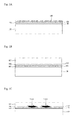
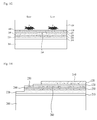
- FIGs. 1A to 1H are views illustrating a method of fabricating a light emitting device in accordance with one embodiment of the present invention
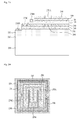
- FIGs. 2A and 2B are views illustrating a light emitting device in accordance with one embodiment of the present invention.
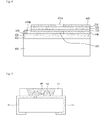
- FIGs. 3A and 3B are views illustrating a light emitting device in accordance with another embodiment of the present invention.
- FIG. 4 is a view illustrating a light emitting device in accordance with yet another embodiment of the present invention.
- FIG. 5 is a view illustrating a light emitting device package in accordance with one embodiment of the present invention.
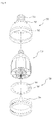
- FIG. 6 is an exploded perspective view of a lighting apparatus including light emitting device packages in accordance with one embodiment of the present invention.
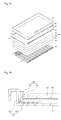
- FIGs. 7A and 7B are views illustrating a backlight including light emitting device packages in accordance with one embodiment of the present invention.
- FIGs. 1A to 1H are views illustrating a method of fabricating a light emitting device in accordance with one embodiment of the present invention. Hereinafter, the method of fabricating a light emitting device will be described with reference to FIG. 1A to 1H .
- a first nitride semiconductor is formed on a substrate 100.
- the first nitride semiconductor may include a first conductivity-type semiconductor layer 120, an active layer 130 and a second conductivity-type semiconductor layer 140.
- the active layer 130 disposed between the first conductivity-type semiconductor layer 120 and the second conductivity-type semiconductor layer 140.
- a sapphire (Al 2 O 3 ) substrate a silicon carbide (SiC) substrate, a silicon (Si) substrate, or a gallium arsenide (GaAs) substrate may be used.
- a sapphire (Al 2 O 3 ) substrate is used as the support substrate 100.
- a buffer layer 110 serves to reduce lattice mismatch and differences in coefficients of thermal expansion between the support substrate 100 and the nitride semiconductor material.
- the buffer layer 110 may be formed of at least one selected from among the group consisting of GaN, AlN, InN, InGaN, AlGaN, InAlGaN and AlInN.
- the buffer layer 110, the first conductivity-type semiconductor layer 120, the active layer 130 and the second conductivity-type semiconductor layer 140 may be formed through metal organic chemical vapor deposition (MOCVD), chemical vapor deposition (CVD), plasma-enhanced chemical vapor deposition (PECVD), molecular beam epitaxy (MBE), and hydride vapor phase epitaxy (HVPE), but formation thereof is not limited thereto.
- MOCVD metal organic chemical vapor deposition
- CVD chemical vapor deposition
- PECVD plasma-enhanced chemical vapor deposition
- MBE molecular beam epitaxy
- HVPE hydride vapor phase epitaxy
- first conductivity-type semiconductor layer 120, the active layer 130 and the second conductivity-type semiconductor layer 140 may be formed at a temperature of 700 ⁇ 1,100°C.
- the first conductivity-type semiconductor layer 120 may include a group III-V compound semiconductor doped with a first conductivity-type dopant. If the first conductivity-type semiconductor layer 120 is an N-type semiconductor layer, the first conductivity-type dopant is an N-type dopant, and the N-type dopant may include Si, Ge, Sn, Se and Te, but is not limited thereto.
- the first conductivity-type semiconductor layer 120 may include an N-doped semiconductor material having a composition formula of Al x InyGa 1-x-y N (0 ⁇ x ⁇ 1, 0 ⁇ y ⁇ 1, 0 ⁇ x+y ⁇ 1).
- the first conductivity-type semiconductor layer 120 may include at least one selected from among the group consisting of GaN, InN, AIN, InGaN, AlGaN, InAlGaN, AlInN, AlGaAs, InGaAs, AlInGaAs, GaP, AlGaP, InGaP, AlInGaP and InP.
- the first conductivity-type semiconductor layer 120 may be formed by injecting silane (SiH 4 ) gas including an N-type impurity, such as trimethyl gallium (TMGa) gas, ammonia (NH 3 ) gas, nitrogen (N 2 ) gas or silicon (Si), into a chamber.
- silane (SiH 4 ) gas including an N-type impurity such as trimethyl gallium (TMGa) gas, ammonia (NH 3 ) gas, nitrogen (N 2 ) gas or silicon (Si)
- TMGa trimethyl gallium
- NH 3 ammonia
- N 2 nitrogen
- Si silicon
- the active layer 130 emits light having energy decided by an inherent energy band of an active layer (light emitting) layer due to contact between carriers injected through the first conductivity-type semiconductor layer 120 and the second conductivity-type semiconductor layer 140.
- the active layer 130 may be formed to have at least one selected from among the group consisting of a single quantum well structure, a multi-quantum well structure (MQW), a quantum-wire structure and a quantum dot structure.
- MQW multi-quantum well structure
- the active layer 130 may be formed to have an MQW structure by injecting trimethyl gallium (TMGa) gas, ammonia (NH 3 ) gas, nitrogen (N 2 ) gas or trimethyl indium (TMIn) gas, but is not limited thereto.
- TMGa trimethyl gallium
- NH 3 ammonia
- N 2 nitrogen
- TMIn trimethyl indium
- Well/barrier layers of the active layer 130 may be formed to have at least one paired structure selected from among the group consisting of InGaN/GaN, InGaN/InGaN, GaN/AlGaN, InAlGaN/GaN, GaAs(InGaAs)/AlGaAs and GaP(InGaP)/AlGaP, but are not limited thereto.
- the well layer may be formed of a material having a lower band gap than the band gap of the barrier layer.
- the second conductivity-type semiconductor layer 140 may include a group III-V compound semiconductor doped with a second conductivity-type dopant, for example, a semiconductor material having a composition formula of In x Al y Ga 1-x-y N (0 ⁇ x ⁇ 1, 0 ⁇ y ⁇ 1, 0 ⁇ x+y ⁇ 1). If the second conductivity-type semiconductor layer 140 is a P-type semiconductor layer, the second conductivity-type dopant is a P-type dopant, and the P-type dopant may include Mg, Zn, Ca, Sr and Ba.
- the second conductivity-type semiconductor layer 140 may be a P-type GaN layer formed by injecting biscetyl cyclo pentadienyl magnesium ((EtCp 2 Mg) ⁇ Mg(C 2 H 5 C 5 H 4 ) 2 ⁇ ) including a P-type impurity, such as trimethyl gallium (TMGa) gas, ammonia (NH 3 ) gas, nitrogen (N 2 ) gas or magnesium (Mg), into a chamber, but is not limited thereto.
- TMGa trimethyl gallium
- NH 3 ammonia
- N 2 nitrogen
- Mg magnesium
- the first conductivity-type semiconductor layer 120 may be a P-type semiconductor layer and the second conductivity-type semiconductor layer 140 may be an N-type semiconductor layer.
- a semiconductor layer having polarity opposite to the second conductivity-type semiconductor layer 140 for example, an N-type semiconductor layer (not shown) if the second conductivity-type semiconductor layer 140 is a P-type semiconductor layer, may be formed on the second conductivity-type semiconductor layer 140.
- a first substrate 150 is formed on the second conductivity-type semiconductor layer 140.
- the first substrate 150 serves to support the first nitride semiconductor after removal of the support substrate 100, which will be described later.
- the first substrate 150 may be formed of at least one metal selected from among the group consisting of silicon (Si), chrome (Cr), molybdenum (Mo), nickel (Ni), gold (Au), aluminum (A1), titanium (Ti), platinum (Pt), copper (Cu) and tungsten (W), or alloys thereof.
- the first substrate 150 may be formed to a thickness of 30-500 ⁇ m.
- the support substrate 100 and the buffer layer 110 are removed.
- the removal of the support substrate 100 may be achieved by laser lift-off (LLO) using an excimer laser, dry etching or wet etching.
- the buffer layer 110 absorbs the laser and thus separation of the support substrate 100 is carried out.
- FIG. 1D illustrates the first substrate 150 on which the second conductivity-type semiconductor layer 140, the active layer 130 and the first conductivity-type semiconductor layer 120 are stacked by removing the support substrate 100 and the buffer layer 110.
- FIG. 1E another nitride semiconductor structure is formed. That is, a second nitride semiconductor is formed on a second substrate 200.
- the second nitride semiconductor may include a first conductivity-type semiconductor layer 220, an active layer 230 and a second conductivity-type semiconductor layer 240.
- compositions and methods of forming the respective layers of the second nitride semiconductor are the same as those of the above-described first nitride semiconductor.
- connection layer 250 is formed on the second conductivity-type semiconductor layer 240 of the second nitride semiconductor.
- the connection layer 250 serves to connect the second nitride semiconductor to the first nitride semiconductor.
- a current blocking layer (CBL) 260 may be formed within the connection layer 250 by patterning. That is, in order to relieve current crowding of a light emitting device which will be fabricated, the current blocking layer 260 may be formed of a metal or an insulating material. If the current blocking layer 260 is formed of a metal, a layer of the first nitride semiconductor or the second nitride semiconductor to which current is supplied may be formed of the material forming the layer and a material having Schottky characteristics.
- the first nitride semiconductor of FIG. 1D and the second nitride semiconductor are bonded.
- the first nitride semiconductor is bonded to the second nitride semiconductor through the connection layer 250 formed on the second nitride semiconductor.
- the first substrate 150 to which the first nitride semiconductor is fixed is removed.
- the removal of the first substrate 150 may be carried out by the same method as that of the removal of the support substrate 100.
- a structure in which two nitride semiconductors are connected under the condition that the connection layer 250 is interposed therebetween may be formed by the above-described method, and, in FIG. 1H , electrodes are formed.
- the electrodes may be formed after MESA etching through reactive ion etching (RIE).
- MESA etching is performed up to parts of the second conductivity-type semiconductor layers 140 and 240 and the first conductivity-type semiconductor layers 120 and 220, thereby assuring spaces in which the electrodes will be formed.
- the first conductivity-type semiconductor layer 220 and the second conductivity-type semiconductor layer 240 of the second nitride semiconductor and the first conductivity-type semiconductor layer 120 of the first nitride semiconductor are exposed, in FIG. 1H .
- the MESA etching process needs to be performed three times. Further, the second conductivity-type semiconductor layer 140 of the first nitride semiconductor is the uppermost layer, and thus may be exposed.
- the electrodes are formed, thereby forming a light emitting device having a horizontal structure, in FIGs. 2A and 2B .
- an N-type electrode 270D is formed on the first conductivity-type semiconductor layer 220 of the second nitride semiconductor
- a P-type electrode 270C is formed on the second conductivity-type semiconductor layer 220 of the second nitride semiconductor.
- An N-type electrode 270B is formed on the first conductivity-type semiconductor layer 120 of the first nitride semiconductor, and a P-type electrode 270A is formed on the second conductivity-type semiconductor layer 140 of the first nitride semiconductor.
- a transparent electrode layer 280 may be formed on the second conductivity-type semiconductor layer 140.
- the above electrodes may be formed of at least one metal selected from among the group consisting of chrome (Cr), nickel (Ni), gold (Au), aluminum (A1), titanium (Ti) and platinum (Pt), or alloys thereof.
- the transparent electrode layer 280 may include a metal thin film or a metal oxide, and in this case, the transparent electrode layer 280 may effectively transmit light emitted from the active layer 130.
- FIG. 2B is an elevation view of the light emitting device of FIG. 2A .
- the four electrodes 270A, 270B, 270C and 270D are formed on the respective semiconductor layers.
- the above-described light emitting device may be driven by AC power.
- the electrode 270A and the electrode 270D are connected to a common electrode or terminal, and the electrode 270C and the electrode 270B are connected to another common electrode or terminal.
- FIGs. 3A and 3B are views illustrating a light emitting device in accordance with another embodiment of the present invention.
- three electrodes may be formed on a light emitting device including two nitride semiconductors. That is, after the process shown in FIG. 1G , instead of performing the MESA etching process three times, the MESA etching process is performed twice in order to expose two layers.
- an N-type electrode 270C is formed on a first conductivity-type semiconductor layer 220 of the second nitride semiconductor. Further, an N-type electrode 270B is formed on a second conductivity-type semiconductor layer 240 of the second nitride semiconductor, and a P-type electrode 270A is formed on a second conductivity-type semiconductor layer 140 of the first nitride semiconductor.
- a transparent electrode layer 280 may be formed on the second conductivity-type semiconductor layer 140. Further, compositions of the electrodes are the same as those of the former embodiment shown in FIGs. 2A and 2B .
- FIG. 3B is an elevation view of the light emitting device of FIG. 3A .
- the three electrodes 270A, 270B and 270C are formed on the respective semiconductor layers.
- the above-described light emitting device may be driven by AC power.
- the electrode 270A and the electrode 270C are connected to a common electrode or terminal, and the electrode 270B is connected to another electrode or terminal.
- each of the light emitting devices in accordance with the embodiments may be connected to two electrode terminals and be driven by AC power. That is, each of the light emitting devices may be driven by applying currents in different directions, i.e., AC currents to the two active layers having the MQW structure. Further, each of the light emitting devices in accordance with the embodiments includes the two active layers having the MQW structure, and thus light/energy emitted from each of the light emitting devices may be increased.
- FIG. 4 is a view illustrating a light emitting device in accordance with yet another embodiment of the present invention.
- a first nitride semiconductor including a first conductivity-type semiconductor layer 410, an active layer 420 and a second conductivity-type semiconductor layer 430 is formed on a conductive substrate 400, and a current blocking layer 450 and a connection layer 440 are formed on the second conductivity-type semiconductor layer 430.
- the first nitride semiconductor is connected to a second nitride semiconductor including a first conductivity-type semiconductor layer 510, an active layer 520 and a second conductivity-type semiconductor layer 530 through the connection layer 440.
- a transparent electrode layer 460 may be formed on the second conductivity-type semiconductor layer 530.
- Compositions of the respective layers are the same as those of the former embodiments.
- the conductive substrate 400 may be a base substrate formed of copper (Cu), gold (Au), nickel (Ni), molybdenum (Mo), copper-tungsten (Cu-W) and includes single or multiple layers. Further, the conductive substrate 400 may be omitted, or may be disposed in a conductive sheet type.
- the second conductivity-type semiconductor layer 430 of the first nitride semiconductor is exposed, and an electrode 470B is formed on the exposed second conductivity-type semiconductor layer 430.
- the electrode 470A and the conductive substrate 400 may be connected to a common electrode or terminal, and the electrode 470B may be connected to another electrode or terminal.
- the light emitting device in accordance with the embodiment of FIG. 4 may be connected to two electrode terminals and be driven by AC power. Further, the light emitting device in accordance with the embodiment of FIG. 4 includes the two active layers having the MQW structure, and thus light/energy emitted from the light emitting device may be increased.
- FIG. 5 is a view illustrating a light emitting device package in accordance with one embodiment of the present invention.
- the light emitting device package in accordance with this embodiment will be described.
- the light emitting device package in accordance with this embodiment includes a package body 620, a first electrode layer 611 and a second electrode layer 612 installed on the package body 620, a light emitting device 600 installed on the package body 620 and electrically connected to the first electrode layer 611 and the second electrode layer 612, and a filing material 640 surrounding the light emitting device 600.
- the package body 620 may be made of a material, such as silicon, a synthetic resin or a metal.
- the package body 620 includes inclined planes around the light emitting device 600, thus increasing light extraction efficiency.
- the first electrode layer 611 and the second electrode layer 612 are electrically isolated from each other, and provide power to the light emitting device 600. Further, the first electrode layer 611 and the second electrode layer 612 may serve to reflect light emitted from the light emitting device 600 to increase light efficiency, and to discharge heat generated by the light emitting device 600 to the outside.
- the light emitting device 600 may be installed on the package body 620, or be installed on the first electrode layer 611 or the second electrode layer 612.
- the light emitting device 600 may be electrically connected to the first electrode layer 611 and the second electrode layer 612 by one method out of a wire-bonding method, a flip chip-bonding method or a die-bonding method.
- the filling material 640 may surround the light emitting device 600 to protect the light emitting device 600. Further, the filling material 640 may include a phosphor, thus varying a wavelength of light emitted from the light emitting device 600.
- the above light emitting device package may include at least one light emitting device or plural light emitting devices from among the light emitting devices in accordance with the former embodiments, but is not limited thereto.
- An array of a plurality of light emitting device packages in accordance with this embodiment may be mounted on a substrate, and optical members, such as a light guide panel, a prism sheet, a diffusion sheet, etc., may be disposed on a optical path of the light emitting device packages.
- the light emitting device packages, the substrate and the optical members may function as a light unit.
- the light emitting devices or the light emitting device package in accordance with the above-described embodiments may constitute a display device, an indicating device or a lighting system, and, for example, the lighting system may include a lamp or a streetlight.
- FIG. 6 is an exploded perspective view of a lighting apparatus including light emitting device packages in accordance with one embodiment of the present invention.
- the lighting apparatus in accordance with this embodiment includes a light source 720 to project light, a housing 700 in which the light source 720 is installed, a heat dissipation unit 710 to dissipate heat generated by the light source 720, and a holder 730 to connect the light source 720 and the heat dissipation unit 710 to the housing 700.
- the housing 700 includes a socket connector 701 connected to an electrical socket (not shown) and a body 702 connected to the socket connector 701 and accommodating the light source 720.
- One air flow hole 703 may be formed through the body 702.
- a plurality of air flow holes 703 is disposed on the body 702 of the housing 700.
- One air flow hole 703 may be formed, or plural air flow holes 703 may be disposed in a radial shape, in FIG. 6 , or various other shapes.
- the light source 720 includes a plurality of light emitting device packages 704 on a substrate 705.
- the substrate 705 may have a shape which is capable of being inserted into an opening of the housing 700, and be formed of a material having high thermal conductivity so as to transfer heat to the heat dissipation unit 710, as described later.
- the holder 730 is disposed under the light source 720.
- the holder 730 may include a frame and air flow holes. Further, although not shown in FIG. 6 , optical members may be disposed under the light source 720 so as to diffuse, scatter or converge light emitted from the light emitting device packages 704 of the light source 720.
- FIGs. 7A and 7B are views illustrating a backlight including light emitting device packages in accordance with one embodiment of the present invention.
- the backlight includes a bottom cover 810, a light emitting device package module (not shown) disposed at one side of the inside of the bottom cover 810, a reflective plate 820 disposed on the front surface of the bottom cover 810, a light guide panel 830 disposed in front of the reflective plate 820 to guide light emitted from the light emitting device package module to the front part of a display device, and optical members 840 disposed in front of the light guide panel 830.
- the display device including the backlight may further include, in addition to the above components, a liquid crystal display panel 860 disposed in front of the optical members 840, a top cover 870 disposed in front of the liquid crystal display panel 860, and fixing members 850 disposed between the bottom cover 810 and the top cover 870 to fix the bottom cover 810 and the top cover 870 together.
- the light guide panel 830 serves to guide light emitted from the light emitting device package module (not shown) so as to convert the light into surface light.
- the reflective plate 820 disposed at the rear of the light guide panel 830 serves to reflect light emitted from the light emitting device package module (not shown) toward the light guide panel 830 so as to improve light efficiency.
- the reflective plate 820 may be disposed as a separate component, in FIGs. 7A and 7B , or be disposed by coating the rear surface of the light guide panel 830 or the front surface of the bottom cover 810 with a material having high reflectivity.
- the reflective plate 820 may be formed of a material having high reflectivity and usable as an ultra-thin type, such as polyethylene terephthalate (PET).
- PET polyethylene terephthalate
- the light guide panel 830 scatters light emitted from the light emitting device package module so as to uniformly distribute the light throughout the entirety of a screen of the liquid crystal display device. Therefore, the light guide panel 830 is formed of a material having a high index of refraction and high transmittance, such as polymethylmethacrylate (PMMA), polycarbonate (PC) or polyethylene (PE).
- PMMA polymethylmethacrylate
- PC polycarbonate
- PE polyethylene
- the optical members 840 disposed on the light guide panel 830 diffuse light emitted from the light guide panel 830 by a designated angle.
- the optical members 840 enable light guided by the light guide panel 830 to be uniformly irradiated toward the liquid crystal display panel 860.
- optical sheets such as a diffusion sheet, a prism sheet and a protection sheet, may be selectively stacked, or a micro-lens array may be used.
- a plurality of optical sheets may be used, and the optical sheets may be formed of a transparent resin, such as acrylic resin, polyurethane resin or silicon resin.
- the prism sheet may include a phosphor sheet, as described above.
- the liquid crystal display panel 860 may be disposed on the front surface of the optical members 840.
- the liquid crystal display panel 860 instead of the liquid crystal display panel 860, other kinds of display devices requiring a light source may be disposed.
- FIG. 7B is a cross-sectional view of a light source part of the backlight.
- the reflective plate 820 is mounted on the bottom cover 810, and the light guide panel 830 is mounted on the reflective plate 820. Thereby, the reflective plate 820 may directly contact a heat dissipation member (not shown).
- Printed circuit boards 881 to which light emitting device packages 882 are fixed may be bonded to a bracket 812.
- the bracket 812 may be formed of a material having high thermal conductivity so as to discharge heat as well as to fix the light emitting device packages 882, and, although not shown in the drawings, heat pads may be disposed between the bracket 812 and the light emitting device packages 882 so as to facilitate heat transfer.
- bracket 812 is disposed in an L shape, in FIG. 7B , a horizontal part 812a of the bracket 812 is supported by the bottom cover 810, and a vertical part 812a of the bracket 812 fixes the printed circuit boards 881.
- a light emitting device, a method of fabricating the same and a light emitting device package in accordance with one embodiment of the present invention may be driven using AC power.
Landscapes
- Led Devices (AREA)
Applications Claiming Priority (1)
| Application Number | Priority Date | Filing Date | Title |
|---|---|---|---|
| KR1020100047833A KR101039609B1 (ko) | 2010-05-24 | 2010-05-24 | 발광 소자, 발광 소자의 제조방법 및 발광 소자 패키지 |
Publications (3)
| Publication Number | Publication Date |
|---|---|
| EP2390916A2 true EP2390916A2 (de) | 2011-11-30 |
| EP2390916A3 EP2390916A3 (de) | 2015-06-03 |
| EP2390916B1 EP2390916B1 (de) | 2019-04-10 |
Family
ID=44405157
Family Applications (1)
| Application Number | Title | Priority Date | Filing Date |
|---|---|---|---|
| EP11167102.0A Active EP2390916B1 (de) | 2010-05-24 | 2011-05-23 | Gestapelte lichtemittierende Vorrichtungen |
Country Status (4)
| Country | Link |
|---|---|
| US (1) | US8507944B2 (de) |
| EP (1) | EP2390916B1 (de) |
| KR (1) | KR101039609B1 (de) |
| CN (1) | CN102263180A (de) |
Families Citing this family (8)
| Publication number | Priority date | Publication date | Assignee | Title |
|---|---|---|---|---|
| TWD146468S1 (zh) * | 2011-05-24 | 2012-04-11 | 隆達電子股份有限公司 | 晶片 |
| TWD146471S (zh) * | 2011-05-24 | 2012-04-11 | 隆達電子股份有限公司 | 晶片 |
| TWD146469S (zh) * | 2011-05-24 | 2012-04-11 | 隆達電子股份有限公司 | 晶片 |
| TWD146470S (zh) * | 2011-05-24 | 2012-04-11 | 隆達電子股份有限公司 | 晶片 |
| USD656908S1 (en) * | 2011-07-05 | 2012-04-03 | Epistar Corporation | Light emitting device |
| US20130285010A1 (en) * | 2012-04-27 | 2013-10-31 | Phostek, Inc. | Stacked led device with posts in adhesive layer |
| JP5440674B1 (ja) * | 2012-09-18 | 2014-03-12 | ウシオ電機株式会社 | Led素子及びその製造方法 |
| TWI871647B (zh) * | 2023-05-31 | 2025-02-01 | 隆達電子股份有限公司 | 發光裝置及其製造方法 |
Family Cites Families (13)
| Publication number | Priority date | Publication date | Assignee | Title |
|---|---|---|---|---|
| TW522534B (en) * | 2001-09-11 | 2003-03-01 | Hsiu-Hen Chang | Light source of full color LED using die bonding and packaging technology |
| KR100970611B1 (ko) | 2003-12-17 | 2010-07-15 | 우리엘에스티 주식회사 | 다수 파장의 광들을 방출하는 발광 다이오드 및 그의제조방법 |
| TWI229463B (en) | 2004-02-02 | 2005-03-11 | South Epitaxy Corp | Light-emitting diode structure with electro-static discharge protection |
| US7119374B2 (en) * | 2004-02-20 | 2006-10-10 | Supernova Optoelectronics Corp. | Gallium nitride based light emitting device and the fabricating method for the same |
| US20060002442A1 (en) * | 2004-06-30 | 2006-01-05 | Kevin Haberern | Light emitting devices having current blocking structures and methods of fabricating light emitting devices having current blocking structures |
| US7474681B2 (en) | 2005-05-13 | 2009-01-06 | Industrial Technology Research Institute | Alternating current light-emitting device |
| TW200640045A (en) * | 2005-05-13 | 2006-11-16 | Ind Tech Res Inst | Alternating current light-emitting device |
| KR100691177B1 (ko) * | 2005-05-31 | 2007-03-09 | 삼성전기주식회사 | 백색 발광소자 |
| CN100388515C (zh) * | 2005-09-30 | 2008-05-14 | 晶能光电(江西)有限公司 | 半导体发光器件及其制造方法 |
| KR100793333B1 (ko) | 2006-04-21 | 2008-01-11 | 삼성전기주식회사 | 표면실장형 발광 다이오드 소자의 제조방법 |
| KR20080092716A (ko) | 2007-04-13 | 2008-10-16 | 삼성전자주식회사 | 유기 발광 소자 및 이를 포함하는 유기 발광 표시 장치 |
| JP2010534943A (ja) * | 2007-07-26 | 2010-11-11 | ザ リージェンツ オブ ザ ユニバーシティ オブ カリフォルニア | P型表面を有する発光ダイオード |
| KR101332794B1 (ko) * | 2008-08-05 | 2013-11-25 | 삼성전자주식회사 | 발광 장치, 이를 포함하는 발광 시스템, 상기 발광 장치 및발광 시스템의 제조 방법 |
-
2010
- 2010-05-24 KR KR1020100047833A patent/KR101039609B1/ko not_active Expired - Fee Related
-
2011
- 2011-05-23 EP EP11167102.0A patent/EP2390916B1/de active Active
- 2011-05-24 US US13/114,246 patent/US8507944B2/en active Active
- 2011-05-24 CN CN2011101451777A patent/CN102263180A/zh active Pending
Non-Patent Citations (1)
| Title |
|---|
| None |
Also Published As
| Publication number | Publication date |
|---|---|
| US20110284901A1 (en) | 2011-11-24 |
| EP2390916B1 (de) | 2019-04-10 |
| EP2390916A3 (de) | 2015-06-03 |
| US8507944B2 (en) | 2013-08-13 |
| CN102263180A (zh) | 2011-11-30 |
| KR101039609B1 (ko) | 2011-06-09 |
Similar Documents
| Publication | Publication Date | Title |
|---|---|---|
| US10141478B2 (en) | Structure of a reflective electrode and an OHMIC layer of a light emitting device | |
| US9356007B2 (en) | Light emitting device and lighting apparatus including the same | |
| EP2390916B1 (de) | Gestapelte lichtemittierende Vorrichtungen | |
| US9673254B2 (en) | Light emitting device | |
| EP2860770B1 (de) | Lichtemittierendes element | |
| US8536606B2 (en) | Light emitting device, light emitting device package including the same and lighting system | |
| US20110316004A1 (en) | Light emitting device | |
| EP2375457B1 (de) | Lichtemittierende Vorrichtung mit monolithischer Re-Emissionsschicht | |
| US8212265B2 (en) | Light emitting device and method for fabricating the light emitting device | |
| KR20130139015A (ko) | 발광 소자 | |
| KR101861633B1 (ko) | 발광소자 및 이를 포함하는 발광소자 패키지 | |
| KR20130074989A (ko) | 발광소자 | |
| KR20120038126A (ko) | 발광 소자 | |
| KR20130010673A (ko) | 발광소자 및 이를 포함하는 발광소자 패키지 | |
| KR20120045877A (ko) | 발광 소자 | |
| KR20120037708A (ko) | 발광소자 |
Legal Events
| Date | Code | Title | Description |
|---|---|---|---|
| AK | Designated contracting states |
Kind code of ref document: A2 Designated state(s): AL AT BE BG CH CY CZ DE DK EE ES FI FR GB GR HR HU IE IS IT LI LT LU LV MC MK MT NL NO PL PT RO RS SE SI SK SM TR |
|
| AX | Request for extension of the european patent |
Extension state: BA ME |
|
| PUAI | Public reference made under article 153(3) epc to a published international application that has entered the european phase |
Free format text: ORIGINAL CODE: 0009012 |
|
| 17P | Request for examination filed |
Effective date: 20140327 |
|
| RBV | Designated contracting states (corrected) |
Designated state(s): AL AT BE BG CH CY CZ DE DK EE ES FI FR GB GR HR HU IE IS IT LI LT LU LV MC MK MT NL NO PL PT RO RS SE SI SK SM TR |
|
| RAP1 | Party data changed (applicant data changed or rights of an application transferred) |
Owner name: LG INNOTEK CO., LTD. |
|
| PUAL | Search report despatched |
Free format text: ORIGINAL CODE: 0009013 |
|
| AK | Designated contracting states |
Kind code of ref document: A3 Designated state(s): AL AT BE BG CH CY CZ DE DK EE ES FI FR GB GR HR HU IE IS IT LI LT LU LV MC MK MT NL NO PL PT RO RS SE SI SK SM TR |
|
| AX | Request for extension of the european patent |
Extension state: BA ME |
|
| RIC1 | Information provided on ipc code assigned before grant |
Ipc: H01L 33/00 20100101ALN20150430BHEP Ipc: H01L 25/075 20060101AFI20150430BHEP |
|
| RAP1 | Party data changed (applicant data changed or rights of an application transferred) |
Owner name: LG INNOTEK CO., LTD. |
|
| GRAP | Despatch of communication of intention to grant a patent |
Free format text: ORIGINAL CODE: EPIDOSNIGR1 |
|
| STAA | Information on the status of an ep patent application or granted ep patent |
Free format text: STATUS: GRANT OF PATENT IS INTENDED |
|
| RIC1 | Information provided on ipc code assigned before grant |
Ipc: H01L 25/075 20060101AFI20180927BHEP Ipc: H01L 33/14 20100101ALI20180927BHEP Ipc: H01L 33/00 20100101ALN20180927BHEP Ipc: H01L 33/42 20100101ALI20180927BHEP |
|
| RIC1 | Information provided on ipc code assigned before grant |
Ipc: H01L 33/14 20100101ALI20181001BHEP Ipc: H01L 33/00 20100101ALN20181001BHEP Ipc: H01L 25/075 20060101AFI20181001BHEP Ipc: H01L 33/42 20100101ALI20181001BHEP |
|
| RIC1 | Information provided on ipc code assigned before grant |
Ipc: H01L 33/42 20100101ALI20181009BHEP Ipc: H01L 33/00 20100101ALN20181009BHEP Ipc: H01L 33/14 20100101ALI20181009BHEP Ipc: H01L 25/075 20060101AFI20181009BHEP |
|
| INTG | Intention to grant announced |
Effective date: 20181026 |
|
| GRAS | Grant fee paid |
Free format text: ORIGINAL CODE: EPIDOSNIGR3 |
|
| GRAA | (expected) grant |
Free format text: ORIGINAL CODE: 0009210 |
|
| STAA | Information on the status of an ep patent application or granted ep patent |
Free format text: STATUS: THE PATENT HAS BEEN GRANTED |
|
| AK | Designated contracting states |
Kind code of ref document: B1 Designated state(s): AL AT BE BG CH CY CZ DE DK EE ES FI FR GB GR HR HU IE IS IT LI LT LU LV MC MK MT NL NO PL PT RO RS SE SI SK SM TR |
|
| REG | Reference to a national code |
Ref country code: GB Ref legal event code: FG4D |
|
| REG | Reference to a national code |
Ref country code: CH Ref legal event code: EP Ref country code: AT Ref legal event code: REF Ref document number: 1119839 Country of ref document: AT Kind code of ref document: T Effective date: 20190415 |
|
| REG | Reference to a national code |
Ref country code: IE Ref legal event code: FG4D |
|
| REG | Reference to a national code |
Ref country code: DE Ref legal event code: R096 Ref document number: 602011057890 Country of ref document: DE |
|
| REG | Reference to a national code |
Ref country code: NL Ref legal event code: MP Effective date: 20190410 |
|
| REG | Reference to a national code |
Ref country code: LT Ref legal event code: MG4D |
|
| REG | Reference to a national code |
Ref country code: AT Ref legal event code: MK05 Ref document number: 1119839 Country of ref document: AT Kind code of ref document: T Effective date: 20190410 |
|
| PG25 | Lapsed in a contracting state [announced via postgrant information from national office to epo] |
Ref country code: NL Free format text: LAPSE BECAUSE OF FAILURE TO SUBMIT A TRANSLATION OF THE DESCRIPTION OR TO PAY THE FEE WITHIN THE PRESCRIBED TIME-LIMIT Effective date: 20190410 |
|
| PG25 | Lapsed in a contracting state [announced via postgrant information from national office to epo] |
Ref country code: SE Free format text: LAPSE BECAUSE OF FAILURE TO SUBMIT A TRANSLATION OF THE DESCRIPTION OR TO PAY THE FEE WITHIN THE PRESCRIBED TIME-LIMIT Effective date: 20190410 Ref country code: LT Free format text: LAPSE BECAUSE OF FAILURE TO SUBMIT A TRANSLATION OF THE DESCRIPTION OR TO PAY THE FEE WITHIN THE PRESCRIBED TIME-LIMIT Effective date: 20190410 Ref country code: AL Free format text: LAPSE BECAUSE OF FAILURE TO SUBMIT A TRANSLATION OF THE DESCRIPTION OR TO PAY THE FEE WITHIN THE PRESCRIBED TIME-LIMIT Effective date: 20190410 Ref country code: PT Free format text: LAPSE BECAUSE OF FAILURE TO SUBMIT A TRANSLATION OF THE DESCRIPTION OR TO PAY THE FEE WITHIN THE PRESCRIBED TIME-LIMIT Effective date: 20190910 Ref country code: NO Free format text: LAPSE BECAUSE OF FAILURE TO SUBMIT A TRANSLATION OF THE DESCRIPTION OR TO PAY THE FEE WITHIN THE PRESCRIBED TIME-LIMIT Effective date: 20190710 Ref country code: ES Free format text: LAPSE BECAUSE OF FAILURE TO SUBMIT A TRANSLATION OF THE DESCRIPTION OR TO PAY THE FEE WITHIN THE PRESCRIBED TIME-LIMIT Effective date: 20190410 Ref country code: HR Free format text: LAPSE BECAUSE OF FAILURE TO SUBMIT A TRANSLATION OF THE DESCRIPTION OR TO PAY THE FEE WITHIN THE PRESCRIBED TIME-LIMIT Effective date: 20190410 Ref country code: FI Free format text: LAPSE BECAUSE OF FAILURE TO SUBMIT A TRANSLATION OF THE DESCRIPTION OR TO PAY THE FEE WITHIN THE PRESCRIBED TIME-LIMIT Effective date: 20190410 |
|
| PG25 | Lapsed in a contracting state [announced via postgrant information from national office to epo] |
Ref country code: GR Free format text: LAPSE BECAUSE OF FAILURE TO SUBMIT A TRANSLATION OF THE DESCRIPTION OR TO PAY THE FEE WITHIN THE PRESCRIBED TIME-LIMIT Effective date: 20190711 Ref country code: BG Free format text: LAPSE BECAUSE OF FAILURE TO SUBMIT A TRANSLATION OF THE DESCRIPTION OR TO PAY THE FEE WITHIN THE PRESCRIBED TIME-LIMIT Effective date: 20190710 Ref country code: PL Free format text: LAPSE BECAUSE OF FAILURE TO SUBMIT A TRANSLATION OF THE DESCRIPTION OR TO PAY THE FEE WITHIN THE PRESCRIBED TIME-LIMIT Effective date: 20190410 Ref country code: RS Free format text: LAPSE BECAUSE OF FAILURE TO SUBMIT A TRANSLATION OF THE DESCRIPTION OR TO PAY THE FEE WITHIN THE PRESCRIBED TIME-LIMIT Effective date: 20190410 Ref country code: LV Free format text: LAPSE BECAUSE OF FAILURE TO SUBMIT A TRANSLATION OF THE DESCRIPTION OR TO PAY THE FEE WITHIN THE PRESCRIBED TIME-LIMIT Effective date: 20190410 |
|
| REG | Reference to a national code |
Ref country code: CH Ref legal event code: PL |
|
| PG25 | Lapsed in a contracting state [announced via postgrant information from national office to epo] |
Ref country code: IS Free format text: LAPSE BECAUSE OF FAILURE TO SUBMIT A TRANSLATION OF THE DESCRIPTION OR TO PAY THE FEE WITHIN THE PRESCRIBED TIME-LIMIT Effective date: 20190810 Ref country code: AT Free format text: LAPSE BECAUSE OF FAILURE TO SUBMIT A TRANSLATION OF THE DESCRIPTION OR TO PAY THE FEE WITHIN THE PRESCRIBED TIME-LIMIT Effective date: 20190410 |
|
| REG | Reference to a national code |
Ref country code: DE Ref legal event code: R097 Ref document number: 602011057890 Country of ref document: DE |
|
| PG25 | Lapsed in a contracting state [announced via postgrant information from national office to epo] |
Ref country code: EE Free format text: LAPSE BECAUSE OF FAILURE TO SUBMIT A TRANSLATION OF THE DESCRIPTION OR TO PAY THE FEE WITHIN THE PRESCRIBED TIME-LIMIT Effective date: 20190410 Ref country code: LI Free format text: LAPSE BECAUSE OF NON-PAYMENT OF DUE FEES Effective date: 20190531 Ref country code: DK Free format text: LAPSE BECAUSE OF FAILURE TO SUBMIT A TRANSLATION OF THE DESCRIPTION OR TO PAY THE FEE WITHIN THE PRESCRIBED TIME-LIMIT Effective date: 20190410 Ref country code: MC Free format text: LAPSE BECAUSE OF FAILURE TO SUBMIT A TRANSLATION OF THE DESCRIPTION OR TO PAY THE FEE WITHIN THE PRESCRIBED TIME-LIMIT Effective date: 20190410 Ref country code: SK Free format text: LAPSE BECAUSE OF FAILURE TO SUBMIT A TRANSLATION OF THE DESCRIPTION OR TO PAY THE FEE WITHIN THE PRESCRIBED TIME-LIMIT Effective date: 20190410 Ref country code: CZ Free format text: LAPSE BECAUSE OF FAILURE TO SUBMIT A TRANSLATION OF THE DESCRIPTION OR TO PAY THE FEE WITHIN THE PRESCRIBED TIME-LIMIT Effective date: 20190410 Ref country code: CH Free format text: LAPSE BECAUSE OF NON-PAYMENT OF DUE FEES Effective date: 20190531 Ref country code: RO Free format text: LAPSE BECAUSE OF FAILURE TO SUBMIT A TRANSLATION OF THE DESCRIPTION OR TO PAY THE FEE WITHIN THE PRESCRIBED TIME-LIMIT Effective date: 20190410 |
|
| REG | Reference to a national code |
Ref country code: BE Ref legal event code: MM Effective date: 20190531 |
|
| PLBE | No opposition filed within time limit |
Free format text: ORIGINAL CODE: 0009261 |
|
| STAA | Information on the status of an ep patent application or granted ep patent |
Free format text: STATUS: NO OPPOSITION FILED WITHIN TIME LIMIT |
|
| PG25 | Lapsed in a contracting state [announced via postgrant information from national office to epo] |
Ref country code: LU Free format text: LAPSE BECAUSE OF NON-PAYMENT OF DUE FEES Effective date: 20190523 Ref country code: IT Free format text: LAPSE BECAUSE OF FAILURE TO SUBMIT A TRANSLATION OF THE DESCRIPTION OR TO PAY THE FEE WITHIN THE PRESCRIBED TIME-LIMIT Effective date: 20190410 Ref country code: SM Free format text: LAPSE BECAUSE OF FAILURE TO SUBMIT A TRANSLATION OF THE DESCRIPTION OR TO PAY THE FEE WITHIN THE PRESCRIBED TIME-LIMIT Effective date: 20190410 |
|
| 26N | No opposition filed |
Effective date: 20200113 |
|
| GBPC | Gb: european patent ceased through non-payment of renewal fee |
Effective date: 20190710 |
|
| PG25 | Lapsed in a contracting state [announced via postgrant information from national office to epo] |
Ref country code: TR Free format text: LAPSE BECAUSE OF FAILURE TO SUBMIT A TRANSLATION OF THE DESCRIPTION OR TO PAY THE FEE WITHIN THE PRESCRIBED TIME-LIMIT Effective date: 20190410 |
|
| PG25 | Lapsed in a contracting state [announced via postgrant information from national office to epo] |
Ref country code: GB Free format text: LAPSE BECAUSE OF NON-PAYMENT OF DUE FEES Effective date: 20190710 Ref country code: IE Free format text: LAPSE BECAUSE OF NON-PAYMENT OF DUE FEES Effective date: 20190523 |
|
| PG25 | Lapsed in a contracting state [announced via postgrant information from national office to epo] |
Ref country code: BE Free format text: LAPSE BECAUSE OF NON-PAYMENT OF DUE FEES Effective date: 20190531 Ref country code: SI Free format text: LAPSE BECAUSE OF FAILURE TO SUBMIT A TRANSLATION OF THE DESCRIPTION OR TO PAY THE FEE WITHIN THE PRESCRIBED TIME-LIMIT Effective date: 20190410 |
|
| PG25 | Lapsed in a contracting state [announced via postgrant information from national office to epo] |
Ref country code: FR Free format text: LAPSE BECAUSE OF NON-PAYMENT OF DUE FEES Effective date: 20190610 |
|
| PG25 | Lapsed in a contracting state [announced via postgrant information from national office to epo] |
Ref country code: CY Free format text: LAPSE BECAUSE OF FAILURE TO SUBMIT A TRANSLATION OF THE DESCRIPTION OR TO PAY THE FEE WITHIN THE PRESCRIBED TIME-LIMIT Effective date: 20190410 |
|
| PG25 | Lapsed in a contracting state [announced via postgrant information from national office to epo] |
Ref country code: MT Free format text: LAPSE BECAUSE OF FAILURE TO SUBMIT A TRANSLATION OF THE DESCRIPTION OR TO PAY THE FEE WITHIN THE PRESCRIBED TIME-LIMIT Effective date: 20190410 Ref country code: HU Free format text: LAPSE BECAUSE OF FAILURE TO SUBMIT A TRANSLATION OF THE DESCRIPTION OR TO PAY THE FEE WITHIN THE PRESCRIBED TIME-LIMIT; INVALID AB INITIO Effective date: 20110523 |
|
| REG | Reference to a national code |
Ref country code: DE Ref legal event code: R081 Ref document number: 602011057890 Country of ref document: DE Owner name: SUZHOU LEKIN SEMICONDUCTOR CO. LTD., TAICANG, CN Free format text: FORMER OWNER: LG INNOTEK CO., LTD., SEOUL, KR |
|
| PG25 | Lapsed in a contracting state [announced via postgrant information from national office to epo] |
Ref country code: MK Free format text: LAPSE BECAUSE OF FAILURE TO SUBMIT A TRANSLATION OF THE DESCRIPTION OR TO PAY THE FEE WITHIN THE PRESCRIBED TIME-LIMIT Effective date: 20190410 |
|
| REG | Reference to a national code |
Ref country code: DE Ref legal event code: R079 Ref document number: 602011057890 Country of ref document: DE Free format text: PREVIOUS MAIN CLASS: H01L0025075000 Ipc: H10H0029240000 |
|
| PGFP | Annual fee paid to national office [announced via postgrant information from national office to epo] |
Ref country code: DE Payment date: 20250408 Year of fee payment: 15 |