EP2373437B1 - Verfahren zur herstellung von bleibatterieplatten - Google Patents
Verfahren zur herstellung von bleibatterieplatten Download PDFInfo
- Publication number
- EP2373437B1 EP2373437B1 EP20080875290 EP08875290A EP2373437B1 EP 2373437 B1 EP2373437 B1 EP 2373437B1 EP 20080875290 EP20080875290 EP 20080875290 EP 08875290 A EP08875290 A EP 08875290A EP 2373437 B1 EP2373437 B1 EP 2373437B1
- Authority
- EP
- European Patent Office
- Prior art keywords
- lead
- extrudate
- coolant
- lead alloy
- plate
- Prior art date
- Legal status (The legal status is an assumption and is not a legal conclusion. Google has not performed a legal analysis and makes no representation as to the accuracy of the status listed.)
- Active
Links
Images


Classifications
-
- B—PERFORMING OPERATIONS; TRANSPORTING
- B21—MECHANICAL METAL-WORKING WITHOUT ESSENTIALLY REMOVING MATERIAL; PUNCHING METAL
- B21C—MANUFACTURE OF METAL SHEETS, WIRE, RODS, TUBES, PROFILES OR LIKE SEMI-MANUFACTURED PRODUCTS OTHERWISE THAN BY ROLLING; AUXILIARY OPERATIONS USED IN CONNECTION WITH METAL-WORKING WITHOUT ESSENTIALLY REMOVING MATERIAL
- B21C23/00—Extruding metal; Impact extrusion
- B21C23/002—Extruding materials of special alloys so far as the composition of the alloy requires or permits special extruding methods of sequences
-
- H—ELECTRICITY
- H01—ELECTRIC ELEMENTS
- H01M—PROCESSES OR MEANS, e.g. BATTERIES, FOR THE DIRECT CONVERSION OF CHEMICAL ENERGY INTO ELECTRICAL ENERGY
- H01M4/00—Electrodes
- H01M4/02—Electrodes composed of, or comprising, active material
- H01M4/64—Carriers or collectors
- H01M4/82—Multi-step processes for manufacturing carriers for lead-acid accumulators
-
- B—PERFORMING OPERATIONS; TRANSPORTING
- B21—MECHANICAL METAL-WORKING WITHOUT ESSENTIALLY REMOVING MATERIAL; PUNCHING METAL
- B21C—MANUFACTURE OF METAL SHEETS, WIRE, RODS, TUBES, PROFILES OR LIKE SEMI-MANUFACTURED PRODUCTS OTHERWISE THAN BY ROLLING; AUXILIARY OPERATIONS USED IN CONNECTION WITH METAL-WORKING WITHOUT ESSENTIALLY REMOVING MATERIAL
- B21C23/00—Extruding metal; Impact extrusion
- B21C23/005—Continuous extrusion starting from solid state material
-
- B—PERFORMING OPERATIONS; TRANSPORTING
- B21—MECHANICAL METAL-WORKING WITHOUT ESSENTIALLY REMOVING MATERIAL; PUNCHING METAL
- B21C—MANUFACTURE OF METAL SHEETS, WIRE, RODS, TUBES, PROFILES OR LIKE SEMI-MANUFACTURED PRODUCTS OTHERWISE THAN BY ROLLING; AUXILIARY OPERATIONS USED IN CONNECTION WITH METAL-WORKING WITHOUT ESSENTIALLY REMOVING MATERIAL
- B21C23/00—Extruding metal; Impact extrusion
- B21C23/02—Making uncoated products
- B21C23/04—Making uncoated products by direct extrusion
- B21C23/08—Making wire, rods or tubes
- B21C23/085—Making tubes
-
- B—PERFORMING OPERATIONS; TRANSPORTING
- B21—MECHANICAL METAL-WORKING WITHOUT ESSENTIALLY REMOVING MATERIAL; PUNCHING METAL
- B21C—MANUFACTURE OF METAL SHEETS, WIRE, RODS, TUBES, PROFILES OR LIKE SEMI-MANUFACTURED PRODUCTS OTHERWISE THAN BY ROLLING; AUXILIARY OPERATIONS USED IN CONNECTION WITH METAL-WORKING WITHOUT ESSENTIALLY REMOVING MATERIAL
- B21C29/00—Cooling or heating extruded work or parts of the extrusion press
- B21C29/003—Cooling or heating of work
-
- B—PERFORMING OPERATIONS; TRANSPORTING
- B21—MECHANICAL METAL-WORKING WITHOUT ESSENTIALLY REMOVING MATERIAL; PUNCHING METAL
- B21C—MANUFACTURE OF METAL SHEETS, WIRE, RODS, TUBES, PROFILES OR LIKE SEMI-MANUFACTURED PRODUCTS OTHERWISE THAN BY ROLLING; AUXILIARY OPERATIONS USED IN CONNECTION WITH METAL-WORKING WITHOUT ESSENTIALLY REMOVING MATERIAL
- B21C31/00—Control devices for metal extruding, e.g. for regulating the pressing speed or temperature of metal; Measuring devices, e.g. for temperature of metal, combined with or specially adapted for use in connection with extrusion presses
-
- C—CHEMISTRY; METALLURGY
- C22—METALLURGY; FERROUS OR NON-FERROUS ALLOYS; TREATMENT OF ALLOYS OR NON-FERROUS METALS
- C22C—ALLOYS
- C22C11/00—Alloys based on lead
-
- C—CHEMISTRY; METALLURGY
- C22—METALLURGY; FERROUS OR NON-FERROUS ALLOYS; TREATMENT OF ALLOYS OR NON-FERROUS METALS
- C22F—CHANGING THE PHYSICAL STRUCTURE OF NON-FERROUS METALS AND NON-FERROUS ALLOYS
- C22F1/00—Changing the physical structure of non-ferrous metals or alloys by heat treatment or by hot or cold working
- C22F1/12—Changing the physical structure of non-ferrous metals or alloys by heat treatment or by hot or cold working of lead or alloys based thereon
-
- H—ELECTRICITY
- H01—ELECTRIC ELEMENTS
- H01M—PROCESSES OR MEANS, e.g. BATTERIES, FOR THE DIRECT CONVERSION OF CHEMICAL ENERGY INTO ELECTRICAL ENERGY
- H01M4/00—Electrodes
- H01M4/02—Electrodes composed of, or comprising, active material
- H01M4/64—Carriers or collectors
- H01M4/66—Selection of materials
- H01M4/68—Selection of materials for use in lead-acid accumulators
- H01M4/685—Lead alloys
-
- Y—GENERAL TAGGING OF NEW TECHNOLOGICAL DEVELOPMENTS; GENERAL TAGGING OF CROSS-SECTIONAL TECHNOLOGIES SPANNING OVER SEVERAL SECTIONS OF THE IPC; TECHNICAL SUBJECTS COVERED BY FORMER USPC CROSS-REFERENCE ART COLLECTIONS [XRACs] AND DIGESTS
- Y02—TECHNOLOGIES OR APPLICATIONS FOR MITIGATION OR ADAPTATION AGAINST CLIMATE CHANGE
- Y02E—REDUCTION OF GREENHOUSE GAS [GHG] EMISSIONS, RELATED TO ENERGY GENERATION, TRANSMISSION OR DISTRIBUTION
- Y02E60/00—Enabling technologies; Technologies with a potential or indirect contribution to GHG emissions mitigation
- Y02E60/10—Energy storage using batteries
Definitions
- the present disclosure relates to a method for manufacturing a lead or lead alloy plate lattice for a lead-acid battery.
- the grain structure in the lead plate affects the occurrence of intergranular corrosion.
- the grain size at the anode should be of medium size (often 100-200 ⁇ m).
- the material is easy to form and manufacture, and depending on manufacturing method, a smaller grain size (10-20 ⁇ m) may be preferrable. It is desirable to be able to control and modify the crystallographic structure of grains and grain boundaries during the manufacturing process of lead or lead alloy electrodes.
- the lead or lead alloy plate may be manufactured to a plate lattice by a punching process or the plate may be perforated and subsequently stretched to provide a net-like structure.
- a process for manufacturing a lead or lead alloy anode plate lattice for lead-acid batteries with controlled grain size is disclosed.
- a melt of lead or lead alloy is extruded to the shape of a pipe, provided with a slit and cold rolled.
- the grain size in the lead or lead alloy plate is controlled by controlling the temperature of the extrudate during the cold rolling.
- the cold rolling is performed under a temperature of about 50 - 230°C below the melting point of lead or the lead alloy, and the extrudate is cold rolled with a total draft rate of about 10 - 90%.
- JP 56-141176 discloses a process for producing a lead or a lead alloy plate grid, comprising rolling or extruding a thick sheet, followed by rolling the thick sheet to a thin sheet_at less than 50 °C.
- JP 56-141175 discloses a process for producing a lead or a lead alloy plate grid, comprising rolling or extruding a thick sheet, followed by rolling the thick sheet to a thin sheet at "ordinary temperature".
- WO 02/069421A1 discloses a process for producing a lead or a lead alloy plate grid, comprising extruding a strip at a temperature of about 200 °C and subsequently cooling the strip.
- DE-2 164 218 discloses a continuous extruder, which is suitable for extruding lead.
- a method for manufacturing a lead or lead alloy anode or cathode plate lattice for a lead-acid battery comprises continuous extrusion of a melt of lead or lead alloy under temperatures lower by 10 - 100°C than the melting point of lead, or the lead alloy, the extrudate being subsequently subjected to a flattening process under a temperature lower by more than at least 267°C than the melting point of lead or the lead alloy, wherein said step of flattening of said extrudate provides a total draft rate less than 10%, and thereafter the extrudate is processed so as to manufacture a plate lattice.
- the grain size of the extrudate may be controlled directly in the extrusion process, whereby advanced temperature control during a subsequent rolling step may be dispensed with.
- the grain size in an anode lead or lead alloy plate may be of 50-300 ⁇ m, or preferrably of 100-200 ⁇ m.
- the grain size in a cathode lead or lead alloy plate may be of 10-50 ⁇ m, or preferrably of 10-20 ⁇ m.
- the draft rate during flattening of the extrudate is kept to a minimum, since this process affects the grain structure of the lead or lead alloy plate lattice.
- the total draft rate during the flattening process is less than 10%, and preferably the total draft rate may be 0-3%.
- the melt or melt alloy may be extruded to a substantially tubular shape, L-shape or U-shape.
- the extrudate may further be provided with at least one longitudinal slit, either directly in the die block during the extrusion step, or by a separate cutting device.
- the at least one longitudinal slit enables unfolding of the extrudate into a substantially continuous plate.
- the grain size of the lead or lead alloy may be controlled by cooling of the extrudate with coolants, such as for example air, inert gas, liquified gas, water, vapour, aerosol, cutting fluid, oil, combinations of such coolants, or no coolant at all, either in the die block during the extrusion process or immediately after the extrudate's passage of the die block.
- coolant supply parameters such as supply position, supply rate, coolant temperature, coolant pressure and type of coolant, may be set to adjust the grain size of the extrudate.
- coolant supply parameters such as supply position, supply rate, coolant temperature, coolant pressure and type of coolant, may be set to adjust the grain size of the extrudate.
- liquified gas is understood such compositions that would be gaseous at room temperature.
- the setting of coolant supply parameters may be achieved by feeding coolant to a coolant supply inlet or to a plurality of supply inlets spaced apart in the longitudinal direction of the extrudate.
- a lead or lead alloy is melted and then extruded under temperatures lower by 10 to 100°C than the melting point of lead or the lead alloy.
- a lead or lead alloy is extruded by an extrusion screw (not shown) in a screw housing 12 ( Fig. 3 ), and fed into a die block 1, which may comprise a pressure build-up zone 2a, a rough shaping zone 2b and a final shaping and cooling zone 2c.
- the lead or lead alloy may thus be continuously extruded through the die block 1 into e.g. a tubular shape 3 or an L-shape or U-shape (not shown).
- the extrudate may have a curved cross section, presenting at least one exposed concave portion and at least one corresponding exposed convex portion.
- the tubular shaped extrudate 3 may be provided with one or more longitudinal slits 11, and then unfolded into a substantially flat, continuous plate 4 by e.g. a spreader cone 6, or any device having similar function.
- the extrudated plate 4 may then be flattened in a flattening process, which may include cold rolling in a flattening roll 5.
- the flattening of the extrudate plate 4 is performed under temperatures lower by more than at least 267°C than the melting point of lead or the lead alloy, and after the flattening process, the thickness of the plate 4 should be substantially the same as before.
- the longitudinal slit 11 may be provided to the tubular extrudate 3 inside the die block 1 in the extrusion step.
- the slit 11 may be provided to the extrudate 3 by an external cutting device 7.
- the cutting device 7 may be located outside or in connection to the die block 1, before the spreader cone 6 in the extrusion step.
- the cutting device may also be integrated with the spreader cone 6.
- the grain size of the lead or lead alloy may be controlled by cooling of the extrudate following the extrusion step.
- the die block 1 may include at least one coolant supply inlet.
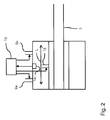
- the at least one coolant supply inlet may be provided in the form of at least one movable coolant supply inlet 13 displaceable in the longitudinal direction L of the extrudate 3 in the die block 1, as schematically illustrated in Fig. 2 .
- the at least one coolant supply inlet may be provided by a plurality of spaced apart (in a longitudinal direction of the extrudate) coolant supply inlets 9a, 9b, which may be provided in the die block 1 ( Fig. 1 ).
- coolant may be added through at least one outer coolant supply inlet 8, which may be located after the extrusion step outside the die block 1.
- the cooling of the extrudate in the extrusion step may be achieved by manipulating one or more cooling parameters, such as coolant temperature, coolant pressure, coolant supply rate and type of coolant used.
- the coolant supply inlets 8, 9, 13 may be provided with individually controllable valves, and a control unit 10 may be used to control coolant supply inlet with respect to the above mentioned parameters.
- rapid cooling may achieved by providing a high rate of low temperature coolant at an upstream point 9a in the die block 1.
- slow cooling may be achieved by providing a lower rate of higher temperature coolant at a downstream point in the die block 1.
- the coolant provided to the at least one coolant supply inlet 8, 9, 13 may be selected from different mediums such as air, inert gas (e.g. carbon dioxide), liquified gas (e.g. liquid nitrogen), water, aerosol, vapour, cutting fluid, oil, combinations of at least two of said coolants or no coolant.
- inert gas e.g. carbon dioxide
- liquified gas e.g. liquid nitrogen
- One or more sensors may be provided in the die block 1, to sense temperatures in different portions of the die block 1. Data acquired from such sensors 14a, 14b, 14c may be used as feedback when controlling the cooling parameters.
- the control unit 10 may comprise a programmable processing device, provided with software providing the above related functions of controlling coolant selection and supply, sensor data acquisition, feedback control and manual operator input. Naturally, such a control unit 10 may also integrate other control functions of the extrusion process, and optionally control of any downstream processing of the plate lattices manufactured.
Landscapes
- Engineering & Computer Science (AREA)
- Chemical & Material Sciences (AREA)
- Mechanical Engineering (AREA)
- Materials Engineering (AREA)
- General Chemical & Material Sciences (AREA)
- Electrochemistry (AREA)
- Chemical Kinetics & Catalysis (AREA)
- Metallurgy (AREA)
- Organic Chemistry (AREA)
- Physics & Mathematics (AREA)
- Thermal Sciences (AREA)
- Crystallography & Structural Chemistry (AREA)
- Cell Electrode Carriers And Collectors (AREA)
- Extrusion Of Metal (AREA)
Claims (15)
- Ein Verfahren zur Herstellung eines Bleiplattengitters oder Bleilegierungsplattengitters für eine Blei-Säure-Batterie, aufweisend die Schritte:Kontinuierliches Extrudieren des Bleis oder der Bleilegierung bei Temperaturen von 10°C bis 100°C unter dem Schmelzpunkt des Bleis oder der Bleilegierung;Abplatten eines somit gebildeten Extrudats bei einer Temperatur, die um zumindest mehr als 267°C geringer ist als der Schmelzpunkt des Bleis oder der Bleilegierung;wobei der Schritt des Abplattens des Extrudats eine Draft-Rate von weniger als 10% aufweist; undVerarbeiten des Extrudats, um ein Plattengitter herzustellen.
- Verfahren gemäß Anspruch 1, wobei das Abplatten bei einer Temperatur von zumindest mehr als 287°C unter dem Schmelzpunkt von Blei oder der Bleilegierung, von zumindest mehr als 297°C unter dem Schmelzpunkt von Blei oder der Bleilegierung, oder von zumindest mehr als 307°C unter dem Schmelzpunkt von Blei oder der Bleilegierung ausgeführt wird.
- Verfahren gemäß Anspruch 1 oder 2, wobei der Schritt des Abplattens des Extrudats eine Draft-Rate kleiner oder gleich 5%, kleiner oder gleich 3%, kleiner oder gleich 1%, oder kleiner oder gleich 0,5% aufweist.
- Verfahren gemäß einem der Ansprüche 1 bis 3, wobei das Extrudat zu einer im Wesentlichen röhrenförmigen Form extrudiert wird und mindestens einen Längsspalt aufweist, gefolgt von einem anschließenden Entfalten des Extrudats in mindestens eine, im Wesentlichen durchgehende Platte.
- Verfahren gemäß Anspruch 4, wobei der mindestens eine Längsspalt während des Extrudierschrittes direkt in einem Düsenblock ausgebildet wird.
- Verfahren gemäß Anspruch 4, wobei der mindestens eine Längsspalt getrennt vom Düsenblock ausgebildet wird.
- Verfahren gemäß einem der vorhergehenden Ansprüche, wobei ein Kühlmittel zum Kühlen des Extrudats in einem Düsenblock während des Extrudierens vorgesehen ist.
- Verfahren gemäß einem der vorhergehenden Ansprüche, wobei ein Kühlmittel zum Kühlen des Extrudats vorgesehen ist, nachdem das Extrudat den Düsenblock passiert hat.
- Verfahren gemäß Anspruch 7 oder 8, weiterhin aufweisend:Setzen mindestens eines Zufuhrparameters des Kühlmittels basierend auf einer gewünschten Korngröße des Extrudats, wobei der Zufuhrparameter aus einer Gruppe bestehend aus Zufuhrposition, Zufuhrrate, Kühlmitteltemperatur, Kühlmitteldruck und Art des Kühlmittels gewählt wird.
- Verfahren gemäß Anspruch 9, wobei die Einstellung zumindest teilweise durch Positionieren einer Zufuhröffnung für das Kühlmittel in Längsrichtung des Extrudats erreicht wird.
- Verfahren gemäß Anspruch 9 oder 10, wobei die Einstellung zumindest teilweise durch selektives Einspeisen des Kühlmittels in zumindest eine aus einer Vielzahl von Zuführöffnungen erreicht wird, welche räumlich getrennt in der Längsrichtung des Extrudats angeordnet sind.
- Verfahren gemäß Anspruch 7 bis 11, wobei die Art des Kühlmittels aus einer Gruppe bestehend aus Luft, inertem Gas, Flüssiggas, Wasser, Öl, Schneidfluid, Aerosol, Dampf, einer Kombination von mindestens zwei von diesen, oder keinem Kühlmittel gewählt wird.
- Verfahren gemäß einem der Ansprüche 9 bis 12, weiterhin aufweisend:Detektieren einer Temperatur im Düsenblock, undEinstellen des Zufuhrparameters basierend auf der Temperatur.
- Das Verfahren gemäß einem der Ansprüche 7 bis 13, wobei eine Anoden-Bleiplatte oder eine Anoden-Bleilegierungsplatte hergestellt wird,
wobei die Kühlung gesteuert wird, um eine Korngröße der Platte von 50 - 300 µm, oder 100 - 200 µm, auszubilden. - Das Verfahren gemäß einem der Ansprüche 7 bis 13, wobei eine Kathoden-Bleiplatte oder eine Kathoden-Bleilegierungsplatte hergestellt wird,
wobei die Kühlung gesteuert wird, um eine Korngröße der Platte von 10-50 µm, oder 10 - 20 µm, auszubilden.
Applications Claiming Priority (1)
| Application Number | Priority Date | Filing Date | Title |
|---|---|---|---|
| PCT/EP2008/065128 WO2010051848A1 (en) | 2008-11-07 | 2008-11-07 | Methods and system for manufacturing lead battery plates |
Publications (2)
| Publication Number | Publication Date |
|---|---|
| EP2373437A1 EP2373437A1 (de) | 2011-10-12 |
| EP2373437B1 true EP2373437B1 (de) | 2012-12-26 |
Family
ID=40847904
Family Applications (1)
| Application Number | Title | Priority Date | Filing Date |
|---|---|---|---|
| EP20080875290 Active EP2373437B1 (de) | 2008-11-07 | 2008-11-07 | Verfahren zur herstellung von bleibatterieplatten |
Country Status (4)
| Country | Link |
|---|---|
| US (2) | US9114446B2 (de) |
| EP (1) | EP2373437B1 (de) |
| JP (1) | JP5559184B2 (de) |
| WO (1) | WO2010051848A1 (de) |
Families Citing this family (5)
| Publication number | Priority date | Publication date | Assignee | Title |
|---|---|---|---|---|
| US9595360B2 (en) | 2012-01-13 | 2017-03-14 | Energy Power Systems LLC | Metallic alloys having amorphous, nano-crystalline, or microcrystalline structure |
| CN102728641B (zh) * | 2012-06-18 | 2015-03-25 | 张明 | 热室挤出铅酸蓄电池铅合金部件的制备方法 |
| WO2014149254A2 (en) * | 2013-03-15 | 2014-09-25 | Dhar Subhash K | Metallic allyos having amorphous, nano-crystallline, or microcrystalline structure |
| CN115228958A (zh) * | 2022-07-14 | 2022-10-25 | 山东源硕祥辐射防护工程有限公司 | 一种冷压成型式铅砖生产方法 |
| EP4394841A1 (de) | 2022-12-31 | 2024-07-03 | ASML Netherlands B.V. | Multiplex-ausleseverfahren für parallele elektronendetektoren |
Family Cites Families (18)
| Publication number | Priority date | Publication date | Assignee | Title |
|---|---|---|---|---|
| US2029728A (en) * | 1934-02-12 | 1936-02-04 | Dow Chemical Co | Rolling magnesium alloys |
| SE351791B (de) | 1969-11-17 | 1972-12-11 | A Runevall | |
| US3756312A (en) * | 1970-12-28 | 1973-09-04 | American Hydrotherm Corp | Heat transfer system for a continuous lead extruder |
| AU5956180A (en) * | 1979-06-29 | 1981-01-08 | Chloride Group Ltd. | Pb - sb alloy and its extrusion |
| JPS56141176A (en) | 1980-04-02 | 1981-11-04 | Japan Storage Battery Co Ltd | Lead acid battery with expanded grid |
| JPS56141175A (en) | 1980-04-02 | 1981-11-04 | Japan Storage Battery Co Ltd | Lead acid battery with expanded grid |
| JPS57208068A (en) | 1981-06-17 | 1982-12-21 | Furukawa Battery Co Ltd:The | Manufacture of lead alloy member for lead storage battery plate |
| US5527404A (en) * | 1994-07-05 | 1996-06-18 | Aluminum Company Of America | Vehicle frame components exhibiting enhanced energy absorption, an alloy and a method for their manufacture |
| US5611128A (en) * | 1995-04-28 | 1997-03-18 | Wirtz Manufacturing Co., Inc. | Battery grids, method and apparatus |
| US6342110B1 (en) | 1996-03-01 | 2002-01-29 | Integran Technologies Inc. | Lead and lead alloys with enhanced creep and/or intergranular corrosion resistance, especially for lead-acid batteries and electrodes therefor |
| US6325869B1 (en) * | 1999-01-15 | 2001-12-04 | Alcoa Inc. | Aluminum alloy extrusions having a substantially unrecrystallized structure |
| JP4502346B2 (ja) | 2000-10-24 | 2010-07-14 | 古河電池株式会社 | 鉛蓄電池用鉛基合金 |
| CN1489637A (zh) * | 2000-12-21 | 2004-04-14 | �Ƹ��� | 铝合金产品及人工时效方法 |
| CA2338168A1 (en) * | 2001-02-26 | 2002-08-26 | Kenneth Henning Runo Gustavsson | Continuous extruded lead alloy strip for battery electrodes |
| US20030226935A1 (en) * | 2001-11-02 | 2003-12-11 | Garratt Matthew D. | Structural members having improved resistance to fatigue crack growth |
| DE60332532D1 (de) | 2002-04-26 | 2010-06-24 | Furukawa Battery Co Ltd | Prozess zur herstellung eines blei- oder bleilegierungsplattengitters für eine bleibatterie und bleibatterie |
| JP2004327300A (ja) | 2003-04-25 | 2004-11-18 | Furukawa Battery Co Ltd:The | 密閉型鉛蓄電池 |
| JP2004327299A (ja) | 2003-04-25 | 2004-11-18 | Furukawa Battery Co Ltd:The | 密閉型鉛蓄電池 |
-
2008
- 2008-11-07 EP EP20080875290 patent/EP2373437B1/de active Active
- 2008-11-07 JP JP2011535011A patent/JP5559184B2/ja active Active
- 2008-11-07 US US13/128,064 patent/US9114446B2/en active Active
- 2008-11-07 WO PCT/EP2008/065128 patent/WO2010051848A1/en not_active Ceased
-
2015
- 2015-07-22 US US14/805,732 patent/US20150325858A1/en not_active Abandoned
Also Published As
| Publication number | Publication date |
|---|---|
| JP2012508112A (ja) | 2012-04-05 |
| US9114446B2 (en) | 2015-08-25 |
| EP2373437A1 (de) | 2011-10-12 |
| US20150325858A1 (en) | 2015-11-12 |
| WO2010051848A1 (en) | 2010-05-14 |
| US20110314885A1 (en) | 2011-12-29 |
| JP5559184B2 (ja) | 2014-07-23 |
Similar Documents
| Publication | Publication Date | Title |
|---|---|---|
| US20150325858A1 (en) | Methods and system for manufacturing lead battery plates | |
| US20090165903A1 (en) | Material Having Ultrafine Grained Structure and Method of Fabricating Thereof | |
| EP1866247B1 (de) | Vorrichtung und verfahren zum kristallisieren von nichteisenmetallen | |
| EP2890834B1 (de) | Modellprädiktive regelung des zonenschmelz-verfahrens | |
| CN104175068A (zh) | 一种航空用合金材料异形环锻造方法 | |
| CN1316654C (zh) | 制造用于铅酸电池的铅或铅合金板格的方法及铅酸电池 | |
| EP3594554B1 (de) | Vorrichtung zum unterkühlen von verflüssigten gasen | |
| KR100958479B1 (ko) | 마그네슘기 합금 나사 및 그 제조방법 | |
| EP3590619B1 (de) | Verfahren und vorrichtung zum aufwickeln eines metallbands sowie verwendung einer kontaktwalze | |
| CN104525559A (zh) | 基于二十辊轧机轧制宽幅镍带卷的方法及装置 | |
| EP3408854B1 (de) | Herstellungsverfahren für einen widerstand und entsprechende herstellungsanlage | |
| JP7397193B2 (ja) | 鉄鋼工業の設備の作動のための方法 | |
| CN106216396B (zh) | 一种双零银箔的生产工艺 | |
| EP1880780B1 (de) | Verfahren und Vorrichtung zum Strangpressen einer Bolzenvorform | |
| US20020121120A1 (en) | Method and apparatus for manufacturing extruded parts | |
| EP2357263B1 (de) | Verfahren zur steuerung von variationen einer al-ti-c-legierungs-kornverfeinerungskapazität durch steuerung des kompressionsverhältnisses | |
| CN114309372A (zh) | Inco718合金异形薄壁环件的辗轧成形方法 | |
| CN115672981B (zh) | 一种锂硼合金薄带的制备方法 | |
| KR100241015B1 (ko) | 폭방향으로 재질이 변화되는 열간압연 판재의 제조방법 | |
| CN111318570A (zh) | 一种靶材晶粒微细化的制成工艺 | |
| CN109807556A (zh) | 一种轿车用暖风机翅片材料的制备方法 | |
| CN108340098A (zh) | 一种5183铝合金半成品焊丝的加工工艺 | |
| DE19635578A1 (de) | Verfahren und Vorrichtung zur Kreislaufkühlung von Schlauchfolien | |
| DE10209138A1 (de) | Verfahren zur Herstellung von Bleibändern | |
| EP0976474A1 (de) | Verfahren und Vorrichtung zur Herstellung von Bleigussband |
Legal Events
| Date | Code | Title | Description |
|---|---|---|---|
| PUAI | Public reference made under article 153(3) epc to a published international application that has entered the european phase |
Free format text: ORIGINAL CODE: 0009012 |
|
| 17P | Request for examination filed |
Effective date: 20110607 |
|
| AK | Designated contracting states |
Kind code of ref document: A1 Designated state(s): AT BE BG CH CY CZ DE DK EE ES FI FR GB GR HR HU IE IS IT LI LT LU LV MC MT NL NO PL PT RO SE SI SK TR |
|
| DAX | Request for extension of the european patent (deleted) | ||
| GRAP | Despatch of communication of intention to grant a patent |
Free format text: ORIGINAL CODE: EPIDOSNIGR1 |
|
| GRAS | Grant fee paid |
Free format text: ORIGINAL CODE: EPIDOSNIGR3 |
|
| GRAA | (expected) grant |
Free format text: ORIGINAL CODE: 0009210 |
|
| AK | Designated contracting states |
Kind code of ref document: B1 Designated state(s): AT BE BG CH CY CZ DE DK EE ES FI FR GB GR HR HU IE IS IT LI LT LU LV MC MT NL NO PL PT RO SE SI SK TR |
|
| REG | Reference to a national code |
Ref country code: GB Ref legal event code: FG4D |
|
| REG | Reference to a national code |
Ref country code: CH Ref legal event code: EP |
|
| REG | Reference to a national code |
Ref country code: AT Ref legal event code: REF Ref document number: 590163 Country of ref document: AT Kind code of ref document: T Effective date: 20130115 |
|
| REG | Reference to a national code |
Ref country code: DE Ref legal event code: R096 Ref document number: 602008021241 Country of ref document: DE Effective date: 20130307 |
|
| REG | Reference to a national code |
Ref country code: SE Ref legal event code: TRGR |
|
| PG25 | Lapsed in a contracting state [announced via postgrant information from national office to epo] |
Ref country code: LT Free format text: LAPSE BECAUSE OF FAILURE TO SUBMIT A TRANSLATION OF THE DESCRIPTION OR TO PAY THE FEE WITHIN THE PRESCRIBED TIME-LIMIT Effective date: 20121226 Ref country code: FI Free format text: LAPSE BECAUSE OF FAILURE TO SUBMIT A TRANSLATION OF THE DESCRIPTION OR TO PAY THE FEE WITHIN THE PRESCRIBED TIME-LIMIT Effective date: 20121226 Ref country code: NO Free format text: LAPSE BECAUSE OF FAILURE TO SUBMIT A TRANSLATION OF THE DESCRIPTION OR TO PAY THE FEE WITHIN THE PRESCRIBED TIME-LIMIT Effective date: 20130326 Ref country code: HR Free format text: LAPSE BECAUSE OF FAILURE TO SUBMIT A TRANSLATION OF THE DESCRIPTION OR TO PAY THE FEE WITHIN THE PRESCRIBED TIME-LIMIT Effective date: 20121226 |
|
| REG | Reference to a national code |
Ref country code: AT Ref legal event code: MK05 Ref document number: 590163 Country of ref document: AT Kind code of ref document: T Effective date: 20121226 |
|
| REG | Reference to a national code |
Ref country code: LT Ref legal event code: MG4D |
|
| REG | Reference to a national code |
Ref country code: NL Ref legal event code: VDEP Effective date: 20121226 |
|
| PG25 | Lapsed in a contracting state [announced via postgrant information from national office to epo] |
Ref country code: LV Free format text: LAPSE BECAUSE OF FAILURE TO SUBMIT A TRANSLATION OF THE DESCRIPTION OR TO PAY THE FEE WITHIN THE PRESCRIBED TIME-LIMIT Effective date: 20121226 Ref country code: GR Free format text: LAPSE BECAUSE OF FAILURE TO SUBMIT A TRANSLATION OF THE DESCRIPTION OR TO PAY THE FEE WITHIN THE PRESCRIBED TIME-LIMIT Effective date: 20130327 Ref country code: SI Free format text: LAPSE BECAUSE OF FAILURE TO SUBMIT A TRANSLATION OF THE DESCRIPTION OR TO PAY THE FEE WITHIN THE PRESCRIBED TIME-LIMIT Effective date: 20121226 |
|
| PG25 | Lapsed in a contracting state [announced via postgrant information from national office to epo] |
Ref country code: ES Free format text: LAPSE BECAUSE OF FAILURE TO SUBMIT A TRANSLATION OF THE DESCRIPTION OR TO PAY THE FEE WITHIN THE PRESCRIBED TIME-LIMIT Effective date: 20130406 Ref country code: EE Free format text: LAPSE BECAUSE OF FAILURE TO SUBMIT A TRANSLATION OF THE DESCRIPTION OR TO PAY THE FEE WITHIN THE PRESCRIBED TIME-LIMIT Effective date: 20121226 Ref country code: CZ Free format text: LAPSE BECAUSE OF FAILURE TO SUBMIT A TRANSLATION OF THE DESCRIPTION OR TO PAY THE FEE WITHIN THE PRESCRIBED TIME-LIMIT Effective date: 20121226 Ref country code: BG Free format text: LAPSE BECAUSE OF FAILURE TO SUBMIT A TRANSLATION OF THE DESCRIPTION OR TO PAY THE FEE WITHIN THE PRESCRIBED TIME-LIMIT Effective date: 20130326 Ref country code: BE Free format text: LAPSE BECAUSE OF FAILURE TO SUBMIT A TRANSLATION OF THE DESCRIPTION OR TO PAY THE FEE WITHIN THE PRESCRIBED TIME-LIMIT Effective date: 20121226 Ref country code: IS Free format text: LAPSE BECAUSE OF FAILURE TO SUBMIT A TRANSLATION OF THE DESCRIPTION OR TO PAY THE FEE WITHIN THE PRESCRIBED TIME-LIMIT Effective date: 20130426 Ref country code: AT Free format text: LAPSE BECAUSE OF FAILURE TO SUBMIT A TRANSLATION OF THE DESCRIPTION OR TO PAY THE FEE WITHIN THE PRESCRIBED TIME-LIMIT Effective date: 20121226 Ref country code: SK Free format text: LAPSE BECAUSE OF FAILURE TO SUBMIT A TRANSLATION OF THE DESCRIPTION OR TO PAY THE FEE WITHIN THE PRESCRIBED TIME-LIMIT Effective date: 20121226 |
|
| PG25 | Lapsed in a contracting state [announced via postgrant information from national office to epo] |
Ref country code: NL Free format text: LAPSE BECAUSE OF FAILURE TO SUBMIT A TRANSLATION OF THE DESCRIPTION OR TO PAY THE FEE WITHIN THE PRESCRIBED TIME-LIMIT Effective date: 20121226 Ref country code: PT Free format text: LAPSE BECAUSE OF FAILURE TO SUBMIT A TRANSLATION OF THE DESCRIPTION OR TO PAY THE FEE WITHIN THE PRESCRIBED TIME-LIMIT Effective date: 20130426 Ref country code: PL Free format text: LAPSE BECAUSE OF FAILURE TO SUBMIT A TRANSLATION OF THE DESCRIPTION OR TO PAY THE FEE WITHIN THE PRESCRIBED TIME-LIMIT Effective date: 20121226 Ref country code: RO Free format text: LAPSE BECAUSE OF FAILURE TO SUBMIT A TRANSLATION OF THE DESCRIPTION OR TO PAY THE FEE WITHIN THE PRESCRIBED TIME-LIMIT Effective date: 20121226 |
|
| PG25 | Lapsed in a contracting state [announced via postgrant information from national office to epo] |
Ref country code: DK Free format text: LAPSE BECAUSE OF FAILURE TO SUBMIT A TRANSLATION OF THE DESCRIPTION OR TO PAY THE FEE WITHIN THE PRESCRIBED TIME-LIMIT Effective date: 20121226 |
|
| PLBE | No opposition filed within time limit |
Free format text: ORIGINAL CODE: 0009261 |
|
| STAA | Information on the status of an ep patent application or granted ep patent |
Free format text: STATUS: NO OPPOSITION FILED WITHIN TIME LIMIT |
|
| PG25 | Lapsed in a contracting state [announced via postgrant information from national office to epo] |
Ref country code: CY Free format text: LAPSE BECAUSE OF FAILURE TO SUBMIT A TRANSLATION OF THE DESCRIPTION OR TO PAY THE FEE WITHIN THE PRESCRIBED TIME-LIMIT Effective date: 20121226 |
|
| 26N | No opposition filed |
Effective date: 20130927 |
|
| PG25 | Lapsed in a contracting state [announced via postgrant information from national office to epo] |
Ref country code: IT Free format text: LAPSE BECAUSE OF FAILURE TO SUBMIT A TRANSLATION OF THE DESCRIPTION OR TO PAY THE FEE WITHIN THE PRESCRIBED TIME-LIMIT Effective date: 20121226 |
|
| REG | Reference to a national code |
Ref country code: DE Ref legal event code: R097 Ref document number: 602008021241 Country of ref document: DE Effective date: 20130927 |
|
| REG | Reference to a national code |
Ref country code: CH Ref legal event code: PL |
|
| PG25 | Lapsed in a contracting state [announced via postgrant information from national office to epo] |
Ref country code: LI Free format text: LAPSE BECAUSE OF NON-PAYMENT OF DUE FEES Effective date: 20131130 Ref country code: MC Free format text: LAPSE BECAUSE OF FAILURE TO SUBMIT A TRANSLATION OF THE DESCRIPTION OR TO PAY THE FEE WITHIN THE PRESCRIBED TIME-LIMIT Effective date: 20121226 Ref country code: CH Free format text: LAPSE BECAUSE OF NON-PAYMENT OF DUE FEES Effective date: 20131130 |
|
| REG | Reference to a national code |
Ref country code: IE Ref legal event code: MM4A |
|
| PG25 | Lapsed in a contracting state [announced via postgrant information from national office to epo] |
Ref country code: IE Free format text: LAPSE BECAUSE OF NON-PAYMENT OF DUE FEES Effective date: 20131107 |
|
| PG25 | Lapsed in a contracting state [announced via postgrant information from national office to epo] |
Ref country code: TR Free format text: LAPSE BECAUSE OF FAILURE TO SUBMIT A TRANSLATION OF THE DESCRIPTION OR TO PAY THE FEE WITHIN THE PRESCRIBED TIME-LIMIT Effective date: 20121226 |
|
| PG25 | Lapsed in a contracting state [announced via postgrant information from national office to epo] |
Ref country code: LU Free format text: LAPSE BECAUSE OF NON-PAYMENT OF DUE FEES Effective date: 20131107 Ref country code: HU Free format text: LAPSE BECAUSE OF FAILURE TO SUBMIT A TRANSLATION OF THE DESCRIPTION OR TO PAY THE FEE WITHIN THE PRESCRIBED TIME-LIMIT; INVALID AB INITIO Effective date: 20081107 |
|
| PG25 | Lapsed in a contracting state [announced via postgrant information from national office to epo] |
Ref country code: MT Free format text: LAPSE BECAUSE OF FAILURE TO SUBMIT A TRANSLATION OF THE DESCRIPTION OR TO PAY THE FEE WITHIN THE PRESCRIBED TIME-LIMIT Effective date: 20121226 |
|
| REG | Reference to a national code |
Ref country code: FR Ref legal event code: PLFP Year of fee payment: 8 |
|
| REG | Reference to a national code |
Ref country code: FR Ref legal event code: PLFP Year of fee payment: 9 |
|
| REG | Reference to a national code |
Ref country code: FR Ref legal event code: PLFP Year of fee payment: 10 |
|
| PGFP | Annual fee paid to national office [announced via postgrant information from national office to epo] |
Ref country code: DE Payment date: 20251016 Year of fee payment: 18 |
|
| PGFP | Annual fee paid to national office [announced via postgrant information from national office to epo] |
Ref country code: GB Payment date: 20251016 Year of fee payment: 18 |
|
| PGFP | Annual fee paid to national office [announced via postgrant information from national office to epo] |
Ref country code: FR Payment date: 20251016 Year of fee payment: 18 |
|
| PGFP | Annual fee paid to national office [announced via postgrant information from national office to epo] |
Ref country code: SE Payment date: 20251015 Year of fee payment: 18 |