EP2369751A2 - Empfänger für fehlergeschützte paketbasierte Rahmen - Google Patents
Empfänger für fehlergeschützte paketbasierte Rahmen Download PDFInfo
- Publication number
- EP2369751A2 EP2369751A2 EP20100174120 EP10174120A EP2369751A2 EP 2369751 A2 EP2369751 A2 EP 2369751A2 EP 20100174120 EP20100174120 EP 20100174120 EP 10174120 A EP10174120 A EP 10174120A EP 2369751 A2 EP2369751 A2 EP 2369751A2
- Authority
- EP
- European Patent Office
- Prior art keywords
- packet
- frame
- packets
- fec
- processing
- Prior art date
- Legal status (The legal status is an assumption and is not a legal conclusion. Google has not performed a legal analysis and makes no representation as to the accuracy of the status listed.)
- Ceased
Links
Images

Classifications
-
- H—ELECTRICITY
- H03—ELECTRONIC CIRCUITRY
- H03M—CODING; DECODING; CODE CONVERSION IN GENERAL
- H03M13/00—Coding, decoding or code conversion, for error detection or error correction; Coding theory basic assumptions; Coding bounds; Error probability evaluation methods; Channel models; Simulation or testing of codes
- H03M13/03—Error detection or forward error correction by redundancy in data representation, i.e. code words containing more digits than the source words
- H03M13/05—Error detection or forward error correction by redundancy in data representation, i.e. code words containing more digits than the source words using block codes, i.e. a predetermined number of check bits joined to a predetermined number of information bits
-
- H—ELECTRICITY
- H03—ELECTRONIC CIRCUITRY
- H03M—CODING; DECODING; CODE CONVERSION IN GENERAL
- H03M13/00—Coding, decoding or code conversion, for error detection or error correction; Coding theory basic assumptions; Coding bounds; Error probability evaluation methods; Channel models; Simulation or testing of codes
- H03M13/03—Error detection or forward error correction by redundancy in data representation, i.e. code words containing more digits than the source words
- H03M13/05—Error detection or forward error correction by redundancy in data representation, i.e. code words containing more digits than the source words using block codes, i.e. a predetermined number of check bits joined to a predetermined number of information bits
- H03M13/13—Linear codes
-
- H—ELECTRICITY
- H04—ELECTRIC COMMUNICATION TECHNIQUE
- H04L—TRANSMISSION OF DIGITAL INFORMATION, e.g. TELEGRAPHIC COMMUNICATION
- H04L1/00—Arrangements for detecting or preventing errors in the information received
- H04L1/004—Arrangements for detecting or preventing errors in the information received by using forward error control
- H04L1/0045—Arrangements at the receiver end
- H04L1/0052—Realisations of complexity reduction techniques, e.g. pipelining or use of look-up tables
-
- H—ELECTRICITY
- H04—ELECTRIC COMMUNICATION TECHNIQUE
- H04L—TRANSMISSION OF DIGITAL INFORMATION, e.g. TELEGRAPHIC COMMUNICATION
- H04L1/00—Arrangements for detecting or preventing errors in the information received
- H04L1/004—Arrangements for detecting or preventing errors in the information received by using forward error control
- H04L1/0056—Systems characterized by the type of code used
- H04L1/0057—Block codes
Definitions
- the present invention relates to buffer-memory management in a receiver having an error-correction decoder, and, in particular, a forward-error-correction (FEC) decoder.
- FEC forward-error-correction
- FEC techniques are commonly used in packet-based networks, such as the Internet, to compensate for packet losses.
- An FEC technique suitable for use with real-time media packets employing the real-time transmission protocol (RTP) is described in U.S. Patent No. 6,141,788 and in Internet standards track protocol no. RFC-2733, entitled “An RTP Payload Format for Generic Forward Error Correction,” by J. Rosenberg et al., published December 1999 by The Internet Society, each of which is hereby incorporated by reference in its entirety.
- RTP real-time transmission protocol
- an additional packet called a checksum or FEC packet, is added to a media frame, or block of data packets, before transmission.
- a lost data packet in the frame can be recovered and reconstructed by combining the checksum packet with those data packets that were successfully received. More specifically, the lost data packet is recovered by performing a mathematical operation (e.g., an exclusive-or (XOR) logic operation) on the checksum packet and the successfully received data packets. The lost data packet may then be reconstructed from the results of the mathematical operations.
- a mathematical operation e.g., an exclusive-or (XOR) logic operation
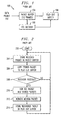
- FIG. 1 depicts a conventional receiver 100 employing FEC decoding according to Internet standards track protocol no. RFC-2733.
- Receiver 100 includes a packet buffer 104 connected to an FEC decoder 108 and to a play-out buffer 106.
- FEC decoder 108 is also connected to play-out buffer 106.
- FIG. 2 depicts the operation of conventional receiver 100. Operation begins in block 202.
- a received packet 102 is stored in packet buffer 104.
- a copy of packet 102 is transferred to play-out buffer 106; however, packet 102 is retained, in packet buffer 104 for subsequent processing by FEC decoder 108.
- FEC decoder 108 determines whether the media frame F to which packet 102 belongs is ready for FEC decoding (e.g., when an FEC packet and all data packets except one have been received for a given media frame F). If not, operation returns to block 204, where a subsequent packet is received and stored.
- FEC decoder 108 reads the received packets (i.e., all but one of the data packets and the FEC packet) for media frame F from packet buffer 104 and performs mathematical operations (e.g., XOR-logic operations) on the received packets.
- FEC decoder 108 reconstructs the missing packet, based on the results of the mathematical operations, in accordance with well-known techniques.
- FEC decoder 108 transfers the recovered packet to play-out buffer 106.
- a disadvantage of conventional receiver 100 is the relatively large size of packet buffer 104.
- An MPEG media frame for example, may have up to 24 data packets plus an FEC packet, for a total of 25 packets.
- each packet may have a maximum size of the user-datagram-protocol (UDP) maximum packet size (e.g., 1.5KB, the conventional Ethernet Maximum Transmission Unit (MTU) size).
- UDP user-datagram-protocol
- MTU Ethernet Maximum Transmission Unit
- the number m of frames that must be stored in packet buffer 104 is a function of a number of variables, including (i) the latency of FEC decoder 108 (i.e., the time period between the receipt of a first packet of a frame and the start of FEC decoding for the frame), (ii) the FEC decoding delay (i.e., the time period from the start of FEC decoding to the completion of FEC decoding for the frame, including, e.g., performing 24 sets of XOR-logic operations for the frame), and (iii) the packet jitter of the incoming packets.
- the number m of frames to be stored in packet buffer 104 is typically between 12 and 30. Thus, if conventional receiver 100 is designed to receive MPEG media packets, then packet buffer 104 would conventionally require between 450KB and 1.125MB of memory.
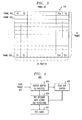
- FIG. 3 graphically depicts an exemplary implementation of packet buffer 104, in which 12 media frames 302 1 -302 12 (having 25 packets each) may be stored.
- An exemplary embodiment of the invention provides a receiver and method for FEC decoding, in which the latency of FEC decoding and the size of the packet buffer are significantly reduced.
- the invention is a method for performing error-correction (EC) processing in a receiver.
- a subset of packets of a first frame comprising three or more data packets and an EC packet is serially received.
- EC processing is performed on the subset of packets of the first frame to reconstruct at least one packet of the first frame.
- the EC processing is initiated before the entire subset of packets is received.
- the invention is a receiver.
- the receiver comprises a packet buffer adapted to serially receive a subset of packets of a first frame comprising three or more data packets and an error-correction (EC) packet.
- the receiver further comprises an EC decoder adapted to perform EC processing on the subset of packets of the first frame to reconstruct at least one packet of the first frame, wherein the EC processing is initiated before the entire subset of packets is received.
- EC error-correction
- FIG. 4 depicts an embodiment of a receiver 400 in accordance with the present invention.
- receiver 400 comprises packet buffer 404, play-out buffer 406, FEC decoder 408, and FEC cache 410.
- FEC decoder 408 processes each received packet substantially in real-time, e.g., shortly after each packet arrives and is stored in packet buffer 404. FEC processing is initiated for each packet, even if the frame to which the packet belongs is incomplete. For this reason, FEC decoder 408 produces and maintains intermediate FEC-processing results that are stored in FEC cache 410.
- FEC decoder 408 updates the intermediate results stored in FEC cache 410 after each incoming packet is received and FEC processed. As such, FEC decoder 408 differs from prior-art FEC decoder 108 of FIG. 1 , which waits until all but one of the data packets in a media frame have been received before commencing FEC processing.
- packet buffer 404 may be significantly smaller than prior-art packet buffer 104 of FIG. 1 .
- Packet buffer 404 stores a received packet only for as long as needed to (i) transfer the received packet to play-out buffer 406 and (ii) transfer the received packet to FEC decoder 408. After those transfers are completed, the memory in packet buffer 404 consumed by the received packet may be cleared and used for another incoming packet. As such, packet buffer 404 no longer is required to store all of the packets for a frame until the frame is deemed to be ready for FEC processing.
- play-out buffer 406 may be significantly smaller (e.g., by a factor ranging from about 2 to about 10) than play-out buffer 106.
- play-out buffer 406 may be sized to allow storage of between about 12 to about 24 packets (which packets may belong to 12 different consecutively transmitted frames), and FEC decoder 408 is adapted to FEC process packets for the 12 consecutively transmitted frames. It should be understood, however, that the number of packets that packet buffer 404 and the number of frames that FEC decoder 408 are designed to handle may be varied, based on the packet jitter in the packet-based network, the latency of FEC decoder 408, and the processing delay of FEC decoder 408.
- receiver 400 is designed for use in a communication system having a packet jitter that is sufficiently small to permit FEC decoder 408 to operate on packets belonging to three consecutively transmitted media frames at a time.
- FEC cache 410 comprises, inter alia, three memory locations fec_str 1 , fec_str 2 , and fec_str 3 (not shown in FIG.
- the number of packets protected by an FEC frame is either predetermined or negotiated between the receiver 400 and a transmitter (not shown), in accordance with techniques known to persons of ordinary skill in the art.
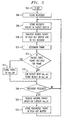
- FIG. 5 depicts the operation of receiver 400. Operation begins in block 502.
- memory locations fec_str 1 , fec_str 2 , and fec_str 3 are cleared (e.g., set to zero).
- a received packet 402 is stored in packet buffer 404.
- received packet 402 is transferred from packet buffer 404 to memory location current_packet in FEC cache 410 and to play-out buffer 406, and the memory location in packet buffer 404 that is occupied by received packet 402 is freed for other packets.
- FEC decoder 408 reads header information for packet 402 and determines to which media frame (e.g., previous frame F 1 ) packet 402 belongs.
- FEC decoder 408 determines whether packet 402 is the first packet that receiver 400 has received for the media frame (e.g., previous frame F 1 ) to which packet 402 belongs. If so, in block 514, FEC decoder stores packet 402 in the memory location (fec_str 1 , fec_str 2 , or fec_str 3 ) corresponding to the media frame to which packet 402 belongs, and operation returns to block 506 to process another received packet.
- FEC decoder 408 performs a mathematical operation (e.g., an XOR-logic operation) between a data portion of packet 402 and the contents of the memory location (e.g., fec_str 1 ) corresponding to the media frame to which the packet belongs.
- the result of the mathematical operation is then stored in the same memory location (e.g., fec_str 1 ), thereby replacing the previous contents of the memory location.
- FEC decoder determines whether the media frame to which packet 402 belongs is ready for FEC decoding (e.g., when an FEC packet and all data packets except one have been received for the media frame). (Frame-determination block 518 is explained in more detail below with reference to FIG. 8 .) If the frame to which packet 402 belongs is not ready for FEC decoding, then operation returns to block 506 to process another received packet.
- FEC decoder 408 uses the mathematical operation result stored in the memory location (e.g., fec_str 1 ) corresponding to the media frame (e.g., previous frame F 1 ) to which packet 402 belongs to reconstruct the missing packet, in accordance with well-known techniques, such as those described in U.S. Patent No. 6,141,788 and in Internet standards track protocol no. RFC-2733.
- FEC decoder 408 stores the recovered packet in play-out buffer 406, and the memory location (e.g., fec_str 1 ) is cleared for the next incoming frame.
- FIG. 6 is a graphical illustration of FEC cache 410.
- FEC cache 410 comprises three data structures (or defined memory portions) 602 1 , 602 2 , and 602 3 (identified respectively as FEC_RX_DATA1, FEC_RX_DATA2, and FEC_RX_DATA3) and a current_packet memory location 604 for storing the current received packet.
- FEC decoder 408 stores information that is useful for FEC decoding media frames F 1 , F 2 , and F 3 , respectively.
- data structures 602 1 , 602 2 , and 602 3 are defined as follows:
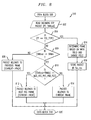
- FIG. 8 is a flow chart illustrating in more detail frame-determination block 510 of FIG. 5 , in which FEC decoder 408 determines to which media frame (e.g., previous frame F 1 ) received packet 402 belongs.
- media frame e.g., previous frame F 1
- FEC decoder 408 reads a payload-type descriptor PT and a sequence number SNRcvd for received packet 402 stored in packet buffer 404 shown in FIG. 4 .
- FEC decoder 408 checks whether received packet 402 is an FEC packet (i.e., the payload-type descriptor PT equals a predetermined value FEC_TYPE). If received packet 402 is not an FEC packet, then operation continues in block 806.
- FEC decoder 408 checks whether the sequence number SNRcvd is greater than or equal to the minimum sequence number snmin of the media packets within current frame F 2 .
- FEC decoder 408 identifies received packet 402 as belonging to previous frame F 1 , and a pointer is set to data structure 602 1 (FEC_RX_DATA1), the defined memory location for storing FEC-decoding information relating to previous frame F 1 . Operation continues in block Ii, where operation returns to block 516 in FIG. 5 . In block 516, FEC decoder 408 uses the pointer to identify the data structure (e.g., FEC_RX_DATA1) having the memory location (e.g., fec_str 1 ) to be used in performing the mathematical operation on the data portion of packet 402.
- the data structure e.g., FEC_RX_DATA1
- the memory location e.g., fec_str 1
- FEC decoder 408 determines that the sequence number SNRcvd is greater than or equal to the minimum sequence number snmin of the media packets within current frame F 2 , then operation proceeds in block 810.
- FEC decoder 408 checks whether a difference of the received packet sequence number SNRcvd and the minimum sequence number snmin of the RTP media packets within the current frame F 2 is greater than or equal to a predetermined maximum number MAX_FEC_PKT_PER_FEC of packets that may be protected by an FEC packet. For example, for MPEG RTP media frames, the predetermined maximum number MAX_FEC_PKT_PER_FEC of packets that may be protected by an FEC packet is 24.
- FEC decoder 408 identifies received packet 402 as belonging to current frame F 2 .
- a pointer is set to data structure 602 2 (FEC_RX_DATA2), the defined memory location for storing FEC-decoding information relating to current frame F 2 . Operation continues in block Ii, where operation returns to block 516 in FIG. 5 .
- FEC decoder 408 uses the pointer to identify the data structure (e.g., FEC_RX_DATA2) having the memory location (e.g., fec_str 2 ) to be used in performing the mathematical operation on the data portion of data packet 402.
- the data structure e.g., FEC_RX_DATA2
- the memory location e.g., fec_str 2
- FEC decoder 408 determines that the difference of the received packet sequence number SNRcvd and the minimum sequence number snmin of the RTP media packets within the current frame F 2 is greater than or equal to (i.e., is not less than) the predetermined maximum number MAX_FEC_PKT_PER_FEC, then operation continues in block 812.
- FEC decoder 408 identifies received packet 402 as belonging to next frame F 3 .
- a pointer is set to data structure 602 3 (FEC_RX_DATA3), the defined memory location for storing FEC-decoding information relating to next frame F 3 . Operation continues in block Ii, where operation returns to block 516 in FIG. 5 .
- FEC decoder 408 uses the pointer to identify the data structure (e.g., FEC_RX_DATA3) having the memory location (e.g., fec_str 3 ) to be used in performing the mathematical operation on the data portion of packet 402.
- the data structure e.g., FEC_RX_DATA3
- the memory location e.g., fec_str 3
- FEC decoder 408 determines that received packet 402 is an FEC packet (i.e., the payload-type descriptor PT equals a predetermined value FEC_TYPE), then operation continues in block 816.
- the mask field and the snbase field of packet 402 are used to determine to which frame (e.g., previous frame F 1 , current frame F 2 , or next frame F 3 ) packet 402 belongs.
- packet 402 then is stored in the fec_rec memory location in the appropriate data structure (FEC_RX_DATA1, FEC_RX_DATA2, or FEC_RX_DATA3) in FEC cache 410, and, in block 820, operation returns to block 518 in FIG. 5 .
- FEC_RX_DATA1, FEC_RX_DATA2, or FEC_RX_DATA3 FEC cache 410
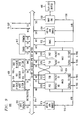
- FIG. 9 is a more-detailed block diagram of receiver 400 shown in FIG. 4 .
- FEC decoder 408 is preferably implemented as a reduced-instruction-set-computing (RISC) processor, such as an ARM1176J-S processor, based on a core design available from ARM Holdings plc, located in Cambridge, England.
- the RISC processor preferably operates at a speed of at least 250 MHz.
- Packet buffer 404 and FEC cache 410 are preferably implemented within a 64KB data tightly-coupled memory (D-TCM) 910 within the RISC processor.
- the RISC processor may also include an 8KB data cache (D-cache), an 8KB instruction cache (I-cache), and a 64KB instruction tightly-coupled memory (I-TCM).
- Play-out buffer 406 and FEC decoder 408 are connected via a 64-bit Advanced extensible Interface (AXI)-based bus matrix 914.
- Play-out buffer 406 is preferably an external double-data-rate (DDR) synchronous dynamic random access memory (SDRAM) (i) having a data transfer rate of 533 million data transfers per second, (ii) complying with the JEDEC Standard No. JESD79-2E, entitled “DDR2 SDRAM Specification,” and (iii) implemented in an "x16" configuration (i.e., a DDR2-533 x16 memory).
- Play-out buffer 406 is connected to bus matrix 914 through a DDR2 external memory interface (EMI) 938.
- DDR double-data-rate
- SDRAM synchronous dynamic random access memory
- EMI DDR2 external memory interface
- Receiver 400 also includes a 256KB general-purpose SRAM memory (“PPBMEM”) 912 for use by FEC decoder 408.
- PPBMEM general-purpose SRAM memory
- Receiver 400 also includes media access controllers (MACs) 924, 930 for providing Ethernet support.
- MACs 924, 930 are connected to bus matrix 914 through packet classification engine (PCE) co-processors 920, 928 and Transmit MAC DMA (TXD) co-processors.
- PCE co-processors 920, 928 provide L2/L3/L4 IP and UDP packet classification and direct-memory-access (DMA) support between MACs 924, 930 and packet buffer 404 for receive packets.
- TXD co-processors 922, 926 provide DMA support between MACs 924, 930 and transmit memory (not shown) for transmit packets.
- a 48KB general-purpose SRAM memory 902 is also provided for PCE co-processors 920, 928, e.g., to store tables for Internet Protocol version 6 (IPv6) support.
- IPv6 Internet Protocol version 6
- Receiver 400 also includes a DMA controller 932 that provides DMA support for play-out buffer 406 (through external memory interface 938).
- FEC decoder 408 preferably also communicates (i) with MACs 924, 930 and PCE co-processors 920, 928 through an advanced peripheral bus (APB) 918 connected via an AXI-to-APB bridge 916 and (ii) with DMA controller 932 and DDR2 external memory interface 938 through an advanced high-performance bus (AHB) 936 connected via an AXI-to-AHB bridge 934.
- API advanced peripheral bus
- HAB advanced high-performance bus
- DSPs digital signal processors
- FEC decoder 408 performs a mathematical operation (e.g., an XOR-logic operation) on each received packet immediately, without delaying until all or most of the remaining packets in the corresponding media frame have been received.
- a mathematical operation e.g., an XOR-logic operation
- FEC decoder 108 delays performing any mathematical operations until a buffered frame is determined to be ready for FEC decoding (e.g., until an FEC packet and all but one of the data packets for the frame have been received.) As such, FEC decoder 408 has a significantly smaller latency than conventional FEC decoder 108. Moreover, because FEC decoder 408 performs the mathematical operation on each received packet immediately, there is no need for packet buffer 404 to be capable of storing nearly all of the packets of each frame. As a result, packet buffer 404 may be much smaller in size than packet buffer 104 of FIG. 1 .
- the present invention may be implemented as an all-digital, all-analog, or a hybrid of both analog and digital circuit-based processes, including possible implementation as a single integrated circuit (such as an ASIC or an FPGA), a multi-chip module, a single card, or a multi-card circuit pack.
- a single integrated circuit such as an ASIC or an FPGA
- a multi-chip module such as a single card, or a multi-card circuit pack.
- various functions of circuit elements may also be implemented as processing blocks in a software program.
- Such software may be employed in, for example, a digital signal processor, micro-controller, or general-purpose computer.
- the invention has been described above with respect to error correction using the XOR-logic operation, the invention is not so limited, and other logic operations (e.g., the NOT-exclusive-OR (NXOR) logic operation) may be used.
- the invention may be practiced using other error-correction (EC) algorithms based on mathematical operations other than logic operations, provided that such EC algorithms allow FEC processing to occur for each received packet without delay, e.g., without requiring all or substantially all of the packets in a frame to be present before EC processing is initiated.
- EC error-correction
- the invention has been described above with respect to particular lengths and quantities, the invention is not so limited, and other lengths and quantities may be used.
- the number of frames that FEC decoder 408 and packet buffer 404 are designed to handle, as well as the number of memory locations in FEC cache 410 may be increased or decreased, based on the packet jitter in the packet-based network and/or on the latency of FEC decoder 408.
- a two-frame packet buffer may be employed, rather than a three-frame packet buffer as described above. In such an embodiment, only two data structures 602 1 , 602 2 would be needed in FEC cache 410, rather than three as described above.
- FEC cache 410 may comprise, or be composed of, a single data structure 602 1 .
- the FEC decoder 408 and packet buffer 404 may be designed to handle four (or more) frames, and a corresponding number of data structures would be needed in FEC cache 410.
- FEC decoder 408 and packet buffer 404 may be designed to handle 12 frames as well, with 12 data structures in FEC cache 410.
Landscapes
- Engineering & Computer Science (AREA)
- Physics & Mathematics (AREA)
- Probability & Statistics with Applications (AREA)
- Theoretical Computer Science (AREA)
- Computer Networks & Wireless Communication (AREA)
- Signal Processing (AREA)
- Detection And Prevention Of Errors In Transmission (AREA)
- Communication Control (AREA)
- Data Exchanges In Wide-Area Networks (AREA)
Applications Claiming Priority (1)
| Application Number | Priority Date | Filing Date | Title |
|---|---|---|---|
| IN2125CH2009 | 2009-09-02 |
Publications (2)
| Publication Number | Publication Date |
|---|---|
| EP2369751A2 true EP2369751A2 (de) | 2011-09-28 |
| EP2369751A3 EP2369751A3 (de) | 2012-02-29 |
Family
ID=43384185
Family Applications (1)
| Application Number | Title | Priority Date | Filing Date |
|---|---|---|---|
| EP20100174120 Ceased EP2369751A3 (de) | 2009-09-02 | 2010-08-26 | Empfänger für fehlergeschützte paketbasierte Rahmen |
Country Status (6)
| Country | Link |
|---|---|
| US (1) | US8543893B2 (de) |
| EP (1) | EP2369751A3 (de) |
| JP (1) | JP2011055500A (de) |
| KR (1) | KR101419801B1 (de) |
| CN (2) | CN103986473A (de) |
| TW (1) | TWI451725B (de) |
Families Citing this family (12)
| Publication number | Priority date | Publication date | Assignee | Title |
|---|---|---|---|---|
| US9167279B2 (en) | 2011-08-22 | 2015-10-20 | Electronics & Telecommunications Research Institute | Method for payload formatting and deformatting for burst loss recovery |
| KR101995221B1 (ko) | 2011-11-24 | 2019-07-16 | 삼성전자주식회사 | 통신 시스템에서 패킷 송수신 장치 및 방법 |
| US9239808B2 (en) * | 2011-12-15 | 2016-01-19 | Marvell World Trade Ltd. | Serial interface for FPGA prototyping |
| JP6229437B2 (ja) * | 2013-10-31 | 2017-11-15 | アイコム株式会社 | 復調方法、受信装置、及び通信システム |
| KR20150050133A (ko) * | 2013-10-31 | 2015-05-08 | 삼성전자주식회사 | 통신 시스템에서 패킷 송수신 방법 및 장치 |
| US9747048B2 (en) * | 2014-06-02 | 2017-08-29 | Micron Technology, Inc. | Systems and methods for packing data in a scalable memory system protocol |
| AT514851B1 (de) * | 2014-10-23 | 2019-07-15 | Avl List Gmbh | Verfahren zur Rekonstruktion eines in einem drahtlosen Sensornetzwerk fehlerhaft empfangenen Datenpakets |
| US9559805B2 (en) * | 2014-11-03 | 2017-01-31 | Cisco Technology, Inc. | Self-describing error correction of consolidated media content |
| CN105045237A (zh) * | 2015-07-22 | 2015-11-11 | 浙江大丰实业股份有限公司 | 一种智能分布式舞台数据挖掘系统 |
| US10003434B2 (en) | 2016-04-08 | 2018-06-19 | Cisco Technology, Inc. | Efficient error correction that aggregates different media into encoded container packets |
| JP2018007192A (ja) * | 2016-07-08 | 2018-01-11 | シントレーディング株式会社 | 音声通信システム、送信装置、受信装置、送信方法、受信方法、およびプログラム |
| CN113573050B (zh) * | 2021-09-22 | 2021-12-24 | 北京海誉动想科技股份有限公司 | 视频流包处理方法与装置 |
Citations (4)
| Publication number | Priority date | Publication date | Assignee | Title |
|---|---|---|---|---|
| US6141788A (en) | 1998-03-13 | 2000-10-31 | Lucent Technologies Inc. | Method and apparatus for forward error correction in packet networks |
| WO2006099528A1 (en) * | 2005-03-11 | 2006-09-21 | Qualcomm Incorporated | Parallel turbo decoders with multiplexed output |
| US20060259849A1 (en) * | 2005-05-13 | 2006-11-16 | Verizon Services Corp. | Systems and methods for decoding forward error correcting codes |
| WO2008116121A1 (en) * | 2007-03-21 | 2008-09-25 | Qualcomm Incorporated | Detection validation of a h-arq acknowledgment by data combining and re-decoding |
Family Cites Families (18)
| Publication number | Priority date | Publication date | Assignee | Title |
|---|---|---|---|---|
| US2009119A (en) * | 1932-12-12 | 1935-07-23 | Universal Oil Prod Co | Conversion of hydrocarbon oil |
| JPH05235978A (ja) * | 1992-02-17 | 1993-09-10 | Nec Corp | 非同期転送モード通信方式 |
| JPH05235979A (ja) * | 1992-02-18 | 1993-09-10 | Nec Corp | 非同期転送モード通信方式 |
| JP3571918B2 (ja) * | 1997-06-04 | 2004-09-29 | 株式会社東芝 | 符号伝送方法、送信装置、受信装置および通信システム |
| US6000053A (en) * | 1997-06-13 | 1999-12-07 | Microsoft Corporation | Error correction and loss recovery of packets over a computer network |
| US6243846B1 (en) * | 1997-12-12 | 2001-06-05 | 3Com Corporation | Forward error correction system for packet based data and real time media, using cross-wise parity calculation |
| US5870412A (en) * | 1997-12-12 | 1999-02-09 | 3Com Corporation | Forward error correction system for packet based real time media |
| US6445717B1 (en) * | 1998-05-01 | 2002-09-03 | Niwot Networks, Inc. | System for recovering lost information in a data stream |
| US6728920B1 (en) * | 1999-05-24 | 2004-04-27 | Adaptive Broadband Corporation | Method for correcting errors in transfer of information |
| EP2375606B1 (de) * | 2001-03-26 | 2017-09-13 | LG Electronics Inc. | Verfahren zum Übertragen oder Empfangen eines Datenpakets in einem Paketdatenkommunikationssystem unter Verwendung einer automatischen Hybrid-Wiederholungsanforderung |
| US7249291B2 (en) * | 2002-02-15 | 2007-07-24 | Digital Fountain, Inc. | System and method for reliably communicating the content of a live data stream |
| KR100458878B1 (ko) * | 2002-05-03 | 2004-12-03 | 학교법인 경희대학교 | Fec 코딩 방식에 기초한 가변길이 패킷 송수신 방법 |
| US6851084B2 (en) * | 2002-06-10 | 2005-02-01 | Harris Corporation | Forward error correction method and system for reliable transmission of real time data over a packet based network |
| JP4252596B2 (ja) * | 2004-03-03 | 2009-04-08 | 三菱電機株式会社 | パケット転送装置 |
| US7617436B2 (en) * | 2005-08-02 | 2009-11-10 | Nokia Corporation | Method, device, and system for forward channel error recovery in video sequence transmission over packet-based network |
| JP4250654B2 (ja) * | 2006-11-17 | 2009-04-08 | 株式会社東芝 | 通信装置、通信方法および通信プログラム |
| JP5075536B2 (ja) * | 2007-09-03 | 2012-11-21 | 株式会社東芝 | Fec送信処理装置、ならびにfec送信処理のための方法およびプログラム |
| JP2009118244A (ja) * | 2007-11-07 | 2009-05-28 | Internatl Business Mach Corp <Ibm> | 再生単位が可変のデータを送信する技術 |
-
2010
- 2010-07-16 US US12/837,556 patent/US8543893B2/en not_active Expired - Fee Related
- 2010-08-05 TW TW99126205A patent/TWI451725B/zh not_active IP Right Cessation
- 2010-08-26 EP EP20100174120 patent/EP2369751A3/de not_active Ceased
- 2010-08-31 CN CN201410245806.7A patent/CN103986473A/zh active Pending
- 2010-08-31 CN CN201010269329XA patent/CN102006142A/zh active Pending
- 2010-08-31 KR KR20100084737A patent/KR101419801B1/ko not_active Expired - Fee Related
- 2010-09-02 JP JP2010196274A patent/JP2011055500A/ja active Pending
Patent Citations (4)
| Publication number | Priority date | Publication date | Assignee | Title |
|---|---|---|---|---|
| US6141788A (en) | 1998-03-13 | 2000-10-31 | Lucent Technologies Inc. | Method and apparatus for forward error correction in packet networks |
| WO2006099528A1 (en) * | 2005-03-11 | 2006-09-21 | Qualcomm Incorporated | Parallel turbo decoders with multiplexed output |
| US20060259849A1 (en) * | 2005-05-13 | 2006-11-16 | Verizon Services Corp. | Systems and methods for decoding forward error correcting codes |
| WO2008116121A1 (en) * | 2007-03-21 | 2008-09-25 | Qualcomm Incorporated | Detection validation of a h-arq acknowledgment by data combining and re-decoding |
Non-Patent Citations (2)
| Title |
|---|
| ANONYM: "ERROR DETECTION AND CORRECTION", SUPPLEMENT TO LOGIC AND COMPUTER DESIGN FUNDAMENTALS 3RD EDITION 1, 30 June 2004 (2004-06-30), pages 1 - 4, XP055102146, Retrieved from the Internet <URL:http://logos.cs.uic.edu/366/notes/ErrorCorrectionAndDetectionSupplement.pdf> [retrieved on 20140213] * |
| HAGEDORN A ET AL: "Rateless Coding with Feedback", INFOCOM 2009. THE 28TH CONFERENCE ON COMPUTER COMMUNICATIONS. IEEE, IEEE, PISCATAWAY, NJ, USA, 19 April 2009 (2009-04-19), pages 1791 - 1799, XP031468938, ISBN: 978-1-4244-3512-8 * |
Also Published As
| Publication number | Publication date |
|---|---|
| JP2011055500A (ja) | 2011-03-17 |
| US20110055666A1 (en) | 2011-03-03 |
| CN103986473A (zh) | 2014-08-13 |
| KR20110025118A (ko) | 2011-03-09 |
| TWI451725B (zh) | 2014-09-01 |
| CN102006142A (zh) | 2011-04-06 |
| KR101419801B1 (ko) | 2014-07-16 |
| EP2369751A3 (de) | 2012-02-29 |
| US8543893B2 (en) | 2013-09-24 |
| TW201119294A (en) | 2011-06-01 |
Similar Documents
| Publication | Publication Date | Title |
|---|---|---|
| US8543893B2 (en) | Receiver for error-protected packet-based frame | |
| US8225188B2 (en) | Apparatus for blind checksum and correction for network transmissions | |
| US8161364B1 (en) | Out of order checksum calculation for fragmented packets | |
| US8495241B2 (en) | Communication apparatus and method therefor | |
| CN113454935B (zh) | 一种线路编码方法及装置 | |
| CN103685060B (zh) | 数据包发送方法及装置 | |
| WO2004034429A2 (en) | Line rate buffer using single ported memories for variable length packets | |
| EP1401155B1 (de) | Verfahren und Vorrichtung zur Detektion von Gigabit-Geschwindigkeit-Erwachungs-Paketen | |
| CN113518044B (zh) | Epa设备 | |
| EP2201740B1 (de) | Schnelle paketverarbeitung in einem drahtlosen netzwerk | |
| CN110995507B (zh) | 一种网络加速控制器及方法 | |
| CN110297785A (zh) | 一种基于fpga的金融数据流控装置和流控方法 | |
| US9559857B2 (en) | Preprocessing unit for network data | |
| CN110417813B (zh) | 出栈网络处理器及网络数据出栈处理方法 | |
| CN116155843B (zh) | 一种基于pynq的脉冲神经网络芯片数据通信方法及系统 | |
| CN100401731C (zh) | 高速数据链路控制协议接收处理模块及其数据处理方法 | |
| CN107783926B (zh) | 基于PowerPC与网口的FPGA与PC的通信方法 | |
| US7607064B2 (en) | Serial asynchronous interface with slip coding/decoding and CRC checking in the transmission and reception paths | |
| CN103108256A (zh) | 一种接收rtp包时消除抖动乱序重包的方法 | |
| CN115473861B (zh) | 基于通信与计算分离的高性能处理系统和方法、存储介质 | |
| CN116561045B (zh) | 一种双处理器核间通信方法、装置、tbox及存储介质 | |
| CN120710635A (zh) | 一种短距通信接收方法与系统 | |
| CN117880383A (zh) | 一种高速并行的icrc计算方法 | |
| CN117956108A (zh) | 一种基于fpga的星上高速图像处理方法及系统 | |
| CN120896881A (zh) | 一种高效性时间触发以太网端系统测试方法 |
Legal Events
| Date | Code | Title | Description |
|---|---|---|---|
| PUAI | Public reference made under article 153(3) epc to a published international application that has entered the european phase |
Free format text: ORIGINAL CODE: 0009012 |
|
| AK | Designated contracting states |
Kind code of ref document: A2 Designated state(s): AL AT BE BG CH CY CZ DE DK EE ES FI FR GB GR HR HU IE IS IT LI LT LU LV MC MK MT NL NO PL PT RO SE SI SK SM TR |
|
| AX | Request for extension of the european patent |
Extension state: BA ME RS |
|
| PUAL | Search report despatched |
Free format text: ORIGINAL CODE: 0009013 |
|
| AK | Designated contracting states |
Kind code of ref document: A3 Designated state(s): AL AT BE BG CH CY CZ DE DK EE ES FI FR GB GR HR HU IE IS IT LI LT LU LV MC MK MT NL NO PL PT RO SE SI SK SM TR |
|
| AX | Request for extension of the european patent |
Extension state: BA ME RS |
|
| RIC1 | Information provided on ipc code assigned before grant |
Ipc: G06F 11/10 20060101ALI20120125BHEP Ipc: H04L 1/00 20060101ALI20120125BHEP Ipc: H03M 13/13 20060101ALI20120125BHEP Ipc: H03M 13/05 20060101AFI20120125BHEP |
|
| 17P | Request for examination filed |
Effective date: 20120829 |
|
| 17Q | First examination report despatched |
Effective date: 20130103 |
|
| STAA | Information on the status of an ep patent application or granted ep patent |
Free format text: STATUS: THE APPLICATION HAS BEEN REFUSED |
|
| 18R | Application refused |
Effective date: 20140726 |