EP2333919A2 - Elektrische Kabelanordnung - Google Patents
Elektrische Kabelanordnung Download PDFInfo
- Publication number
- EP2333919A2 EP2333919A2 EP10193671A EP10193671A EP2333919A2 EP 2333919 A2 EP2333919 A2 EP 2333919A2 EP 10193671 A EP10193671 A EP 10193671A EP 10193671 A EP10193671 A EP 10193671A EP 2333919 A2 EP2333919 A2 EP 2333919A2
- Authority
- EP
- European Patent Office
- Prior art keywords
- cable
- web
- branch
- housing
- main cable
- Prior art date
- Legal status (The legal status is an assumption and is not a legal conclusion. Google has not performed a legal analysis and makes no representation as to the accuracy of the status listed.)
- Granted
Links
Images


Classifications
-
- H—ELECTRICITY
- H02—GENERATION; CONVERSION OR DISTRIBUTION OF ELECTRIC POWER
- H02G—INSTALLATION OF ELECTRIC CABLES OR LINES, OR OF COMBINED OPTICAL AND ELECTRIC CABLES OR LINES
- H02G3/00—Installations of electric cables or lines or protective tubing therefor in or on buildings, equivalent structures or vehicles
-
- B—PERFORMING OPERATIONS; TRANSPORTING
- B60—VEHICLES IN GENERAL
- B60R—VEHICLES, VEHICLE FITTINGS, OR VEHICLE PARTS, NOT OTHERWISE PROVIDED FOR
- B60R16/00—Electric or fluid circuits specially adapted for vehicles and not otherwise provided for; Arrangement of elements of electric or fluid circuits specially adapted for vehicles and not otherwise provided for
- B60R16/02—Electric or fluid circuits specially adapted for vehicles and not otherwise provided for; Arrangement of elements of electric or fluid circuits specially adapted for vehicles and not otherwise provided for electric constitutive elements
- B60R16/0207—Wire harnesses
-
- H—ELECTRICITY
- H01—ELECTRIC ELEMENTS
- H01B—CABLES; CONDUCTORS; INSULATORS; SELECTION OF MATERIALS FOR THEIR CONDUCTIVE, INSULATING OR DIELECTRIC PROPERTIES
- H01B7/00—Insulated conductors or cables characterised by their form
- H01B7/08—Flat or ribbon cables
- H01B7/0853—Juxtaposed parallel wires, fixed to each other without a support layer
-
- H—ELECTRICITY
- H01—ELECTRIC ELEMENTS
- H01R—ELECTRICALLY-CONDUCTIVE CONNECTIONS; STRUCTURAL ASSOCIATIONS OF A PLURALITY OF MUTUALLY-INSULATED ELECTRICAL CONNECTING ELEMENTS; COUPLING DEVICES; CURRENT COLLECTORS
- H01R4/00—Electrically-conductive connections between two or more conductive members in direct contact, i.e. touching one another; Means for effecting or maintaining such contact; Electrically-conductive connections having two or more spaced connecting locations for conductors and using contact members penetrating insulation
- H01R4/24—Connections using contact members penetrating or cutting insulation or cable strands
- H01R4/2404—Connections using contact members penetrating or cutting insulation or cable strands the contact members having teeth, prongs, pins or needles penetrating the insulation
- H01R4/2406—Connections using contact members penetrating or cutting insulation or cable strands the contact members having teeth, prongs, pins or needles penetrating the insulation having needles or pins
Definitions
- the invention relates to an electrical cable assembly having an extruded main cable, which is provided over its length with a plurality of spaced apart, each leading to individual consumers junctions, each composed of a at least two-wire branch cable and the beginning of the branch cable branching, which seated with a trough-shaped shell on the main cable, wherein contact with the wires of the branch cable piercing or cutting contacts contact the wires of the main strand.
- Such cable assemblies are used in vehicle technology and in particular in the electrical wiring of trailer vehicles, such. B. semi-trailers. Due to the length and size of their vehicle bodywork, these vehicles not only have the usual taillight units with taillight, brake light and turn signals, but also a large number of additional lights, which are usually connected together with the standard and low beam of the towing vehicle. These auxiliary lights include side lights arranged at intervals along the body length of the vehicle so as to make the vehicle more visible from the side in the dark. Furthermore, the additional lights include position lights, which are arranged at the top of the vehicle body. The power supply of the additional lights is usually on the leading to the taillight unit harness.
- this consists of a plurality of a main cable branching individual cores, which provide the individual function lights (brake light, flashing) and the continuous light (rear light, additional lights) electrically.
- modern lighting systems to supply the function lights work z. B. with a two-wire bus line, on the positive wire not only the operating voltage for the supply of the function lights, but in addition a superimposed signal voltage is performed. This reduces the number of wires in the main cable and the wiring complexity, but the inclusion of the continuous light, ie connected together with the headlights additional lights is difficult.
- these could be controlled via the BUS system, but this would require a receiving and conversion unit for BUS signals in each additional lights, which would greatly increase the cost of additional lights.
- the main cable composed of a first strand with at least two current conductors and a parallel strand with at least one other current vein, and that the two strands are connected via a mitextrud faced web, the on those longitudinal sections on which there are channel-shaped shells, each provided with an interruption, which has at least the length of the housing portion.
- the web is longitudinally perforated, wherein preferably the perforation openings of the longitudinal perforation are shorter than the channel-shaped shells, and the non-perforated web sections have weakening zones which can be torn open under transverse forces exerted on the main cable and / or with auxiliary means are separable.
- the perforation openings are each longer than the channel-shaped shells, wherein individual of these perforation openings at the same time form the interruptions.
- the web is continuous and, viewed in the longitudinal direction, has weakening zones which can be torn open under tensile forces exerted transversely to the main cable and / or can be separated with auxiliary means.
- a wall of the branch housing extends through the interruption, the wall terminating in a triangle terminating in a tip.
- Fig. 1 shown is the photometric electrical equipment of a commercial vehicle, which is composed of a - driven - towing vehicle Z and a-pulled - trailer or semitrailer A.
- an electrical connection box 2 is attached near the front side wall 1 of the trailer vehicle A. This contains, facing the towing vehicle Z, at least one connection plug connection, via which a detachable electrical cable connection 3 can be produced with corresponding electrical connections or connecting plugs on the towing vehicle Z.
- the drawing shows several different variants of ISO connection plug connections 3a to 3d.
- a left tail lamp RL and a right tail lamp RR which are summarized in taillight units and usually the light functions of a brake light, a respective turn signal, the tail light and possibly a reversing light, a rear fog lamp or license plate lights To run.
- At least the brake unit and the turn signal unit of the taillight units RL, RR can be equipped with light-emitting diodes (LED) and corresponding ballast resistors for the light-emitting diodes instead of conventional light bulbs.
- the LEDs are usually connected in the manner of a matrix consisting of parallel LED rows, which in turn consist of several LEDs.
- each taillight housing is also a BUS signal connection of a taillight units with electrical voltage and with the ON and OFF signals for each light functions supplying BUS system.
- a central processing unit (ECU) 10 of the vehicle trailer having a processor (CPU).
- CPU central processing unit
- This can either be designed in such a way that it is the central logistics node only the lighting and lighting technology of the vehicle trailer, or the light control unit 10 may be technically linked to other control components of the vehicle, for. B. with an electronic brake control unit 4 of the vehicle.
- the central light control unit 10 is connected to the tail lamp units RL, RR via an electrical cable arrangement extending over the vehicle length.
- the main cable 11 of this cable arrangement is three-wire and contains inter alia a working as a bidirectional DC bus 7 line with positive potential, and the negative potential having ground conductor 8.
- the bus strands 7, 8 operate with DC voltage, preferably the DC voltage of the 24- Volt on-board network of the towing vehicle, wherein the DC voltage for modulating information in addition BUS signals are modulated.
- This contacting of the BUS string 7, 8 with the signal connections is preferably carried out by appropriate contacts.
- the turn signal is operated right, the corresponding, guided via the cable connection 3 and the connection plug connections circuit is closed, and this is detected by a signal evaluation of the central light control unit 10.
- the light control unit 10 then initiates the data bus 7, 8 routed via the main cable 11, a modulated signal for switching on the LED of the flashing lights of the right tail light RR.
- the BUS signal connection receives the signal and switches the LEDs of the flashing light via integrated switching elements individually or in groups depending on their execution.
- Trailer vehicles have because of their large vehicle length of often more than six meters over several side lights 20, which serve in the dark of the side marking of the vehicle body. Further, on the vehicle body front clearance lights 21 and rear position lights may be arranged, which serve the front and rear marking of the vehicle in the dark.
- the power supply of the side lights 20, the clearance lights 21 and the position lights done with DC of the 24-volt electrical system via its own, lying on positive potential plus wire 22, which is like the wires 7, 8 of the BUS strand part of the long main cable 11 ,
- the switching on of the plus wire 22 takes place by means of the control unit 10 when switching on the driving or dipped headlights in the towing vehicle, or directly by switching on the driving or dipped headlights in the towing vehicle.
- the plus wire 22 may serve as a spare line in the event of a failure or failure of the BUS line 7. If a malfunction or failure of the BUS line 7 is detected by the central light control unit 10, then the light control unit 10 closes the plus wire 22 instead of the BUS line 7 so that the BUS signals henceforth pass via the plus wire 22 to the respective tail lamp unit. This can, but does not have to go hand in hand with a targeted interruption of the disturbed BUS line 7.
- the replacement of the BUS line 7 by carried in the same main cable 11 plus wire 22 of the vehicle lighting requires that the plus wire 22 over the entire electrical conduction extends between the BUS signal connection 6A of the light control unit and the BUS signal connections of the taillight units.
- each plus wire 22 is extended on the one hand to the place of signal application in the control unit side bus signal connection 6A, and on the other hand to the place of the signal tap in the tail light side bus signal connection 6B, as in Fig. 1 the line sections 22A and 22B of the plus wire 22 play.
- the switching of the BUS signals from the wire 7 of the BUS strand to the adjacent plus wire 22 has for the regular, the supply of the side lights 20, the front Clearance lights 21 and the rear position lights with DC voltage supply voltage has no effect, as this continues to take place. Rather, it is even of advantage that the emergency operation for the driver is at least recognizable from the fact that even with the driving or dipped headlights off, the side lights 20, clearance lights 21 and position lights burn.
- the driver can be displayed separately switching to emergency mode, for example by a switched from the light control unit 10 warning notice on the instrument panel of towing vehicle Z or to the connection box 2 of the trailer.
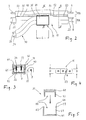
- each branch 15 is located in a branch housing 31, from which a branch cable 30 with wires 33, 34 leads to the respective side light 20. Details in the area of each branch 15 are described below with reference to FIGS. 2 to 7 explained.
- the main cable 11 is made in one piece of a first strand 11A, in the plastic, the positive wire 22 and the ground conductor 8 are embedded, and a parallel strand 11 B together. Embedded in the parallel strand 11 B runs to the taillight unit RL or RR leading, BUS signals transmitting vein 7 of the bidirectional BUS. According to Fig. 4 and Fig. 7 the two strands 11A, 11 B of the main cable 11 are normally connected to each other via a web 35.
- the web 35 is extruded in the extrusion of the insulating plastic of the main cable 11, wherein the cross-sectional thickness d of the web 35 is less than the cross-sectional thickness D of the strand 11A and the parallel strand 11 B.
- the electrical contacting of the two wires 33, 34 of the branch cable 30 is located within the branch housing 31.
- the branch housing 31 consists of a first housing part 41 and a second housing part 42.
- the first housing part 41 is designed shell-shaped. It therefore forms a housing region 44 which opens in a channel-shaped manner with respect to the first strand 11A. This region of the branching housing is therefore designed such that it encloses the strand 11A, in which the strands to be contacted are located, on three sides.
- the second housing part 42 is set against the shell 44 of the first housing part 41, whereby the two housing parts 41, 42 together enclose the strand 11A of the main cable 11 over the housing length L.
- Fig. 5 let the housing parts 41, 42 permanently connect with one another by means of integrally formed latches 47.
- two pointed lancing piercing contacts 45 or two sharp cutting edge having cutting contacts are fixed, which are electrically connected within the housing with the wires 33, 34 of the branch cable 30.
- the tips or cutting the piercing or cutting contacts 45 penetrate into the ground conductor 8 and into the positive wire 22, and thus provide the required for powering the side lights electrical contact of the wires 33, 34 of the branch cable 30 to the ground conductor 8 and the plus wire 22 ago.
- the web 35 can be designed continuously. Preferably, however, is the illustrated, interrupted embodiment, in which the web 35 is provided in the cable longitudinal direction with a plurality of openings, so perforations 50, between which web portions 52 remain.
- the length of the individual perforation openings 50 is less than the housing length L.
- an interruption 51 of the web length must therefore be created, through which interruption 51 the wall 43 of the branch housing 31 can extend.
- the interruption 51 must be equal to or longer than the housing length L of the cup-shaped housing portion 44. This can be accomplished in a simple manner by separating all the web sections 52 present in the region of the length L. This can be done by hand applied to the strands 11A, 11B tensile forces transverse to the main cable 11, ie by deliberate tearing. The rupture of the web portions 52 is facilitated by having these weakened zones 53 again with reduced material thickness.
- the web sections 52 can also be severed by means of technical aids.
- the lateral wall 43 of each of the housing parts 41, 42 sharp-edged be designed similar to a cutting edge.
- the Fig. 5 indicates that the lateral wall 43 of the one housing part 42 in the direction of the other housing part 41 out in an acute-angled, that ends in a sharp-edged tip 48 triangle ends.
- integrally formed on the branch housing 31 cutting edge occurs, for. B. at a strong depression of the housing part 41 on the strand 11A by itself to a severing of all arranged on the longitudinal portion L web portions 52, which is a particularly advantageous embodiment in terms of production technology.
- This electrical cable arrangement can, with a simple structure, any other additional lights 20, 21 connect in a simple manner to the main cable 11. This can also be done at any point along the main cable 11, which is why the cable assembly is very flexible despite the consistently shaped wires of the main cable, such as different types of vehicles.
- the cable arrangement is suitable for the electrical connection of such additional consumers, which likewise have to be supplied via the positive wire 22 with continuous current or longer switched-on current.
Landscapes
- Engineering & Computer Science (AREA)
- Architecture (AREA)
- Civil Engineering (AREA)
- Structural Engineering (AREA)
- Mechanical Engineering (AREA)
- Lighting Device Outwards From Vehicle And Optical Signal (AREA)
- Multi-Conductor Connections (AREA)
Abstract
Description
- Die Erfindung betrifft eine elektrische Kabelanordnung mit einem extrudierten Hauptkabel, welches über seine Länge mit einer Mehrzahl im Abstand zueinander abgeordneter, jeweils zu Einzelverbrauchern führenden Abzweigungen versehen ist, die sich jeweils aus einem mindestens zweiadrigen Abzweigkabel und einem den Anfang des Abzweigkabels umschließenden Abzweiggehäuse zusammensetzen, welches mit einer rinnenförmigen Schale auf dem Hauptkabel aufsitzt, wobei mit den Adern des Abzweigkabels verbundene Stech- oder Schneidkontakte die Adern des Hauptstrangs kontaktieren.
- Solche Kabelanordnungen finden Verwendung in der Fahrzeugtechnik und insbesondere bei der elektrischen Verkabelung von Anhängerfahrzeugen, wie z. B. Sattelaufliegern. Diese Fahrzeuge verfügen wegen der Länge und Größe ihres Fahrzeugaufbaus nicht nur über die üblichen Rückleuchteneinheiten mit Rücklicht, Bremslicht und Blinkleuchten, sondern über eine Vielzahl an Zusatzleuchten, die im Regelfall zusammen mit dem Stand- und Abblendlicht des Zugfahrzeugs geschaltet sind. Zu diesen Zusatzleuchten gehören Seitenleuchten, die in Abständen längs der Aufbaulänge des Fahrzeugs angeordnet sind, um so das Fahrzeug in der Dunkelheit von der Seite her besser erkennbar zu machen. Ferner gehören zu den Zusatzleuchten Positionsleuchten, welche oben am Fahrzeugaufbau angeordnet sind. Die Spannungsversorgung der Zusatzleuchten erfolgt in der Regel über den zur Rückleuchteneinheit führenden Kabelstrang. Bei herkömmlichen Beleuchtungssystemen besteht dieser aus einer Vielzahl von einem Hauptkabel abzweigender Einzeladern, die die einzelnen Funktionsleuchten (Bremslicht, Blinkleuchte) sowie das Dauerlicht (Rücklicht, Zusatzleuchten) elektrisch versorgen. Zur Vermeidung dieser Vielzahl an elektrischen Adern arbeiten moderne Beleuchtungssysteme zur Versorgung der Funktionsleuchten z. B. mit einem zweiadrigen BUS-Strang, über dessen Plusader nicht nur die Betriebsspannung für die Versorgung der Funktionsleuchten, sondern zusätzlich eine überlagerte Signalspannung geführt ist. Dies reduziert die Anzahl der Adern im Hauptkabel und den kabeltechnischen Aufwand, jedoch ist die Einbeziehung auch der auf Dauerlicht, d.h. zusammen mit dem Fahrlicht geschalteten Zusatzleuchten schwierig. Zwar ließen sich auch diese über das BUSSystem ansteuern, jedoch würde dies in den einzelnen Zusatzleuchten jeweils eine Empfangs- und Umsetzungseinheit für BUS-Signale erfordern, was die Kosten für die Zusatzleuchten stark erhöhen würde.
- Daher besteht ein Bedürfnis für eine elektrische Kabelanordnung, die bei einfachem Aufbau eine flexible elektrische Anbindung solcher zusätzlicher Verbraucher ermöglicht, die häufig mit Dauerstrom oder länger eingeschaltetem Strom versorgt werden müssen.
- Zur Lösung dieser Aufgabe wird bei einer elektrischen Kabelanordnung der eingangs angegebenen Art vorgeschlagen, dass sich das Hauptkabel aus einem ersten Strang mit mindestens zwei Stromadern und einem Parallelstrang mit mindestens einer weiteren Stromader zusammensetzt, und dass die beiden Stränge über einen mitextrudierten Steg verbunden sind, der auf jenen Längsabschnitten, auf denen sich rinnenförmige Schalen befinden, jeweils mit einer Unterbrechung versehen ist, die mindestens die Länge des Gehäusebereichs aufweist.
- Mit einer ersten Ausgestaltung der Kabelanordnung wird vorgeschlagen, dass der Steg längsperforiert ist, wobei vorzugsweise die Perforationsöffnungen der Längsperforierung jeweils kürzer als die rinnenförmigen Schalen sind, und die nicht perforierten Stegabschnitte Schwächungszonen aufweisen, die unter quer zum Hauptkabel ausgeübten Zugkräften aufreißbar und/oder mit Hilfsmitteln auftrennbar sind.
- Gemäß einer alternativen Ausgestaltung sind die Perforationsöffnungen jeweils länger als die rinnenförmigen Schalen, wobei einzelne dieser Perforationsöffnungen zugleich die Unterbrechungen bilden.
- Gemäß einer weiteren Ausführungsform ist der Steg durchgehend und weist in Längsrichtung betrachtet Schwächungszonen auf, die unter quer zum Hauptkabel ausgeübten Zugkräften aufreißbar und/oder mit Hilfsmitteln auftrennbar sind.
- Gemäß einer weiteren Ausführungsform erstreckt sich durch die Unterbrechung hindurch eine Wand des Abzweiggehäuses, wobei die Wand in einem in einer Spitze auslaufenden Dreieck endet. Diese Ausgestaltung ist produktionstechnisch von Vorteil, da es durch die am Abzweiggehäuse angeformte Schneide bei einem Niederdrücken des Abzweiggehäuses auf den Strang von selbst zu einem Durchtrennen aller auf dem Längsabschnitt angeordneter Stegabschnitte kommt.
- Ausführungsbeispiele der Erfindung werden im Folgenden unter Bezugnahme auf die Zeichnung beschrieben. Darin zeigen
- Fig. 1
- in einer stark schematischen Darstellung das elektrische Layout einer Fahrzeugbeleuchtungsvorrichtung eines aus einem Zugfahrzeug und einem Anhängerfahrzeug bestehenden Fahrzeugverbandes;
- Fig. 2
- die Ansicht eines Längsabschnitts einer elektrischen Kabelanordnung im Bereich einer Abzweigung;
- Fig. 3
- einen Schnitt entlang der Schnittlinie III - III durch die elektrische Kabelanordnung im Bereich der Abzweigung;
- Fig. 4
- einen Schnitt entlang der Schnittlinie IV - IV durch die elektrische Kabelanordnung im Bereich der Abzweigung;
- Fig. 5
- einen Schnitt durch zwei hier getrennt wiedergegebene Gehäuseteile eines Abzweiggehäuses;
- Fig. 6
- die Ansicht eines Längsabschnitts einer zweiten Ausführungsform einer elektrischen Kabelanordnung im Bereich einer Abzweigung;
- Fig. 7
- einen Schnitt entlang der Schnittlinie VII - VII durch die elektrische Kabelanordnung im Bereich der Abzweigung und
- Fig. 8
- einen Schnitt entlang der Schnittlinie VIII - VIII durch die elektrische Kabelanordnung im Bereich der Abzweigung.
- In
Fig. 1 dargestellt ist die lichttechnische elektrische Ausrüstung eines Nutzfahrzeuges, welches sich aus einem - angetriebenen - Zugfahrzeug Z und einem -gezogenen - Anhänger oder Sattelauflieger A zusammensetzt. Für die elektrische Verbindung mit dem Zugfahrzeug Z ist nahe der vorderen Bordwand 1 des Anhängerfahrzeuges A eine elektrische Anschlussbox 2 befestigt. Diese enthält, dem Zugfahrzeug Z zugewandt, mindestens einen Verbindungssteckanschluss, über den sich eine lösbare elektrische Kabelverbindung 3 mit entsprechenden elektrischen Anschlüssen oder Verbindungssteckern am Zugfahrzeuges Z herstellen lässt. Für den anhängerseitigen Anschluss der Kabelverbindung 3 zeigt die Zeichnung mehrere unterschiedliche Varianten von ISO-Verbindungssteckanschlüssen 3a bis 3d. - Am anderen, d. h. rückwärtigen Ende des Fahrzeuganhängers A befindet sich in üblicher Weise eine linke Rückleuchte RL und eine rechte Rückleuchte RR, die jeweils in Rückleuchteneinheiten zusammengefasst sind und üblicherweise die Lichtfunktionen einer Bremsleuchte, einer jeweiligen Blinkerleuchte, des Rücklichts und ggf. eines Rückfahrlichts, einer Nebelschlussleuchte oder der Kennzeichenbeleuchtung ausführen. Zumindest die Bremseinheit und die Blinkereinheit der Rückleuchteneinheiten RL, RR können statt mit herkömmlichen Glühbirnen mit Leuchtdioden (LED) und entsprechenden Vorschaltwiderständen für die Leuchtdioden bestückt sein. Die Leuchtdioden sind üblicherweise nach Art einer Matrix geschaltet, bestehend aus parallelen LED-Reihen, die ihrerseits aus mehreren LED bestehen. In jedem Rückleuchtengehäuse befindet sich ferner eine BUS-Signalanbindung eines die Rückleuchteneinheiten mit elektrischer Spannung sowie mit den Ein- und Ausschaltsignalen für die einzelnen Lichtfunktionen versorgenden BUS-Systems.
- In der Anschlussbox 2 befindet sich die einen Prozessor (CPU) aufweisende zentrale Lichtsteuereinheit (ECU) 10 des Fahrzeuganhängers. Diese kann entweder in der Weise ausgestaltet sein, dass sie der zentrale Logistikknoten nur der Beleuchtungs- und Lichttechnik des Fahrzeuganhängers ist, oder aber die Lichtsteuereinheit 10 kann signaltechnisch mit anderen Steuerkomponenten des Fahrzeuges verknüpft sein, z. B. mit einem elektronischen Bremsensteuergerät 4 des Fahrzeuges.
- Die zentrale Lichtsteuereinheit 10 steht über eine sich über die Fahrzeuglänge erstreckende elektrische Kabelanordnung mit den Rückleuchteneinheiten RL, RR in Verbindung. Das Hauptkabel 11 dieser Kabelanordnung ist dreiadrig und enthält unter anderem eine als bidirektionaler DC-BUS 7 arbeitende Leitung mit positivem Potential, und den das negative Potential aufweisenden Masseleiter 8. Die BUS-Stränge 7, 8 arbeiten mit Gleichspannung, vorzugsweise der Gleichspannung des 24-Volt-Bordnetzes des Zugfahrzeuges, wobei der Gleichspannung zur Übertragung von Informationen zusätzlich BUS-Signale aufmoduliert sind.
- Gemäß
Fig. 2 ist jeder BUS-Strang 7, 8 zum Aufmodulieren bzw. Auslesen der BUS-Signale auf Seiten der Anschlussbox 2 mit einer ersten BUS-Signalanbindung 6A, und auf Seiten jeder Rückleuchte RL, RR mit jeweils einer weiteren BUS-Signalanbindung 6B verbunden. Diese Kontaktierung des BUS-Strangs 7, 8 mit den Signalanbindungen erfolgt vorzugsweise durch entsprechende Kontakte. - Wird im Zugfahrzeug Z durch den Fahrer z. B. der Blinker rechts betätigt, wird der entsprechende, über die Kabelverbindung 3 und die Verbindungssteckanschlüsse geführte Stromkreis geschlossen, und dies wird durch eine Signalauswertung der zentralen Lichtsteuereinheit 10 detektiert. Die Lichtsteuereinheit 10 initiiert daraufhin den über das Hauptkabel 11 geführten Daten-BUS 7, 8 ein aufmoduliertes Signal zum Einschalten der LED der Blinklichter der rechten Rückleuchte RR. Die BUS-Signalanbindung empfängt das Signal und schaltet über integrierte Schaltelemente die LEDs des Blinklichts einzeln oder gruppenweise je nach deren Ausführung ein bzw. aus.
- Anhängerfahrzeuge verfügen wegen ihrer großen Fahrzeuglänge von häufig mehr als sechs Metern über mehrere Seitenleuchten 20, die bei Dunkelheit der Seitenmarkierung des Fahrzeugaufbaus dienen. Ferner können am Fahrzeugaufbau vordere Umrissleuchten 21 und hintere Positionsleuchten angeordnet sein, die der Front- bzw. Heckmarkierung des Fahrzeugs bei Dunkelheit dienen. Die Spannungsversorgung der Seitenleuchten 20, der Umrissleuchten 21 und der Positionsleuchten erfolgt mit Gleichstrom des 24-Volt-Bordnetzes über eine eigene, auf positivem Potential liegende Plusader 22, die ebenso wie die Adern 7, 8 des BUS-Strangs Bestandteil des langen Hauptkabels 11 ist. Das Einschalten der Plusader 22 erfolgt mittels des Steuergerätes 10 beim Einschalten des Fahr- oder Abblendlichts im Zugfahrzeug, oder direkt durch Einschalten des Fahr- oder Abblendlichts im Zugfahrzeug.
- Die Plusader 22 kann im Fall eines Defekts oder eines Ausfalls der BUS-Leitung 7 als Ersatzleitung dienen. Wird von der zentralen Lichtsteuereinheit 10 eine Störung oder ein Ausfall der BUS-Leitung 7 festgestellt, so schließt die Lichtsteuereinheit 10 die Plusader 22 anstatt der BUS-Leitung 7, so dass die BUS-Signale fortan über die Plusader 22 zu der jeweiligen Rückleuchteneinheit gelangen. Dies kann, muss aber nicht einhergehen mit einer gezielten Unterbrechung der gestörten BUS-Leitung 7. Der Ersatz der BUS-Leitung 7 durch die im selben Hauptkabel 11 mitgeführte Plusader 22 der Fahrzeugbeleuchtung setzt voraus, dass sich auch die Plusader 22 über den gesamten elektrischen Leitungsweg zwischen der BUS-Signalanbindung 6A der Lichtsteuereinheit und den BUS-Signalanbindungen der Rückleuchteneinheiten erstreckt. Daher ist jede Plusader 22 einerseits bis zum Ort der Signalbeaufschlagung in der steuergeräteseitigen BUS-Signalanbindung 6A, und anderseits bis zum Ort des Signalabgriffs in der rückleuchtenseitigen BUS-Signalanbindung 6B verlängert, wie dies in
Fig. 1 die Leitungsabschnitte 22A und 22B der Plusader 22 wiedergeben. - Das Umschalten der BUS-Signale von der Ader 7 des BUS-Strangs auf die benachbarte Plusader 22 hat für die reguläre, der Versorgung der Seitenleuchten 20, der vorderen Umrissleuchten 21 und der hinteren Positionsleuchten mit Gleichspannung dienende Spannungsversorgung keinen Einfluss, da diese weiterhin erfolgt. Vielmehr ist sogar von Vorteil, dass der Notbetrieb für den Fahrer spätestens daraus erkennbar ist, dass auch bei ausgeschaltetem Fahr- bzw. Abblendlicht die Seitenleuchten 20, Umrissleuchten 21 und Positionsleuchten brennen. Zusätzlich kann dem Fahrer die Umschaltung auf den Notbetrieb gesondert angezeigt werden, etwa durch einen von der Lichtsteuereinheit 10 geschalteten Warnhinweis an der Armaturentafel des Zugfahrzeugs Z oder an der Anschlussbox 2 des Anhängers.
- Zur Versorgung der einzelnen Seitenleuchten 20 sind die beiden Hauptkabel 11 jeweils über ihre Länge mit im Abstand zueinander angeordneten, jeweils zu einer Seitenleuchte 20 führenden Abzweigungen 15 versehen. Jede Abzweigung 15 befindet sich in einem Abzweiggehäuse 31, von dem aus ein Abzweigkabel 30 mit Adern 33, 34 zu der jeweiligen Seitenleuchte 20 führt. Einzelheiten im Bereich jeder Abzweigung 15 werden im Folgenden anhand der
Fign. 2 bis 7 erläutert. - Das Hauptkabel 11 setzt sich einteilig aus einem ersten Strang 11A, in dessen Kunststoff die Plusader 22 und der Masseleiter 8 eingebettet sind, und einem Parallelstrang 11 B zusammen. Im Parallelstrang 11 B eingebettet verläuft die zu der Rückleuchteneinheit RL bzw. RR führende, BUS-Signale übertragende Ader 7 des bidirektionalen BUS. Gemäß
Fig. 4 undFig. 7 sind die beiden Stränge 11A, 11 B des Hauptkabels 11 normalerweise über einen Steg 35 miteinander verbunden. Der Steg 35 wird bei der Extrusion des isolierenden Kunststoffs des Hauptkabels 11 mit extrudiert, wobei die Querschnittsdicke d des Stegs 35 geringer ist, als die Querschnittsdicke D des Strangs 11A und des Parallelstrangs 11 B. - Die elektrische Kontaktierung der beiden Adern 33, 34 des Abzweigkabels 30 befindet sich innerhalb des Abzweiggehäuses 31. Das Abzweiggehäuse 31 besteht aus einem ersten Gehäuseteil 41 und einem zweiten Gehäuseteil 42. Das erste Gehäuseteil 41 ist schalenförmig gestaltet. Es bildet daher einen sich zu dem ersten Strang 11A hin rinnenförmig öffnenden Gehäusebereich 44. Dieser Bereich des Abzweiggehäuses ist daher so gestaltet, dass er den Strang 11A, in dem sich die zu kontaktierenden Adern befinden, an drei Seiten umschließt. Das zweite Gehäuseteil 42 ist gegen die Schale 44 des ersten Gehäuseteils 41 gesetzt, wodurch die beiden Gehäuseteile 41, 42 gemeinsam den Strang 11A des Hauptkabels 11 über die Gehäuselänge L umschließen.
- Gemäß
Fig. 5 lassen sich die Gehäuseteile 41, 42 mit Hilfe einstückig angeformter Verrastungen 47 dauerhaft miteinander verbinden. - In dem Gehäuseteil 41 sind zwei spitz auslaufende Stechkontakte 45 oder zwei eine scharfe Schneidkante aufweisende Schneidkontakte fest angeordnet, die innerhalb des Gehäuses mit den Adern 33, 34 des Abzweigkabels 30 elektrisch verbunden sind. Beim Niederdrücken des Gehäuseteils 41 auf das Hauptkabel 11 dringen die Spitzen bzw. Schneiden der Stech- oder Schneidkontakte 45 in den Masseleiter 8 und in die Plusader 22 ein, und stellen so den zur Spannungsversorgung der Seitenleuchten erforderlichen elektrischen Kontakt der Adern 33, 34 des Abzweigkabels 30 zu dem Masseleiter 8 und der Plusader 22 her.
- Der Steg 35 kann durchgehend gestaltet sein. Bevorzugt ist jedoch die zeichnerisch dargestellte, unterbrochene Ausführung, bei der der Steg 35 in Kabellängsrichtung mit einer Vielzahl von Öffnungen, also Perforationsöffnungen 50 versehen ist, zwischen denen Stegabschnitte 52 verbleiben.
- Bei der Ausführungsform nach den
Fign. 2, 3 und 4 ist die Länge der einzelnen Perforationsöffnungen 50 geringer als die Gehäuselänge L. Um zwecks Kontaktierung des Hauptkabels das Abzweiggehäuse 31 aufsetzen zu können, muss daher eine Unterbrechung 51 der Steglänge geschaffen werden, durch welche Unterbrechung 51 hindurch sich die Wand 43 des Abzweiggehäuses 31 erstrecken kann. Die Unterbrechung 51 muss gleich lang oder länger als die Gehäuselänge L des schalenförmigen Gehäusebereichs 44 sein. Dies lässt sich in einfacher Weise dadurch bewerkstelligen, dass alle im Bereich der Länge L vorhandenen Stegabschnitte 52 aufgetrennt werden. Dies kann durch von Hand auf die Stränge 11A, 11 B ausgeübte Zugkräfte quer zum Hauptkabel 11 erfolgen, also durch bewusstes Aufreißen. Das Aufreißen der Stegabschnitte 52 wird erleichtert, indem diese Schwächungszonen 53 mit nochmals reduzierter Materialdicke aufweisen. Alternativ oder zusätzlich zu dem Aufreißen können die Stegabschnitte 52 auch mittels technischer Hilfsmittel durchtrennt werden. So kann z. B. die seitliche Wand 43 jedes der Gehäuseteile 41, 42 scharfkantig ähnlich einer Schneide gestaltet sein. DieFig. 5 lässt erkennen, dass die seitliche Wand 43 des einen Gehäuseteils 42 in Richtung zu dem anderen Gehäuseteil 41 hin in einem spitzwinkligen, d.h. in einer scharfkantigen Spitze 48 auslaufenden Dreieck endet. Durch die so am Abzweiggehäuse 31 angeformte Schneide kommt es z. B. bei einem kräftigen Niederdrücken des Gehäuseteils 41 auf den Strang 11A von selbst zu einem Durchtrennen aller auf dem Längsabschnitt L angeordneter Stegabschnitte 52, was produktionstechnisch eine besonders vorteilhafte Ausgestaltung ist. - Durch diese elektrische Kabelanordnung lassen sich, bei einfachem Aufbau, beliebige weitere Zusatzleuchten 20, 21 auf einfache Weise an das Hauptkabel 11 anbinden. Dies kann zudem an beliebiger Stelle längs des Hauptkabels 11 erfolgen, weshalb die Kabelanordnung trotz der durchgängig gestalteten Adern des Hauptkabels sehr flexibel anwendbar ist, etwa bei unterschiedlichen Fahrzeugtypen. Geeignet ist die Kabelanordnung zur elektrischen Anbindung solcher zusätzlicher Verbraucher, die ebenfalls über die Plusader 22 mit Dauerstrom oder länger eingeschaltetem Strom versorgt werden müssen.
- Bei der Ausführungsform nach den
Fign. 6, 7 und 8 ist die Länge der einzelnen Perforationsöffnungen 50 größer als die Länge L des Abzweiggehäuses 31. Hier ist es also, um eine ausreichend große Unterbrechung 51 des Steges 35 zum Aufsetzen des Abzweiggehäuses 31 zur Verfügung zu haben, nicht erforderlich, Stegabschnitte 52 aufzureißen oder aufzutrennen. - Bezugszeichen
- 1
- Bordwand
- 2
- Anschlussbox
- 3
- Kabelverbindung
- 3a
- Verbindungssteckanschluss
- 3b
- Verbindungssteckanschluss
- 3c
- Verbindungssteckanschluss
- 3d
- Verbindungssteckanschluss
- 4
- Bremsensteuergerät
- 6A
- BUS-Signalanbindung
- 6B
- BUS-Signalanbindung
- 7
- bidirektionaler BUS
- 8
- Masseleiter
- 10
- zentrale Lichtsteuereinheit (ECU)
- 11
- Hauptkabel 11A Strang
- 11 B
- Parallelstrang
- 15
- Abzweigung
- 20
- Seitenleuchte
- 21
- vordere Umrissleuchte
- 22
- Plusader
- 22A
- Leitungsabschnitt
- 22B
- Leitungsabschnitt
- 30
- Abzweigkabel
- 31
- Abzweiggehäuse
- 33
- Ader
- 34
- Ader
- 35
- Steg
- 41
- erstes Gehäuseteil
- 42
- zweites Gehäuseteil
- 43
- Wand
- 44
- Gehäusebereich, Schale
- 45
- Stechkontakt, Schneidkontakt
- 47
- Verrastung
- 48
- Spitze
- 50
- Perforationsöffnung
- 51
- Unterbrechung
- 52
- Stegabschnitt
- 53
- Schwächungszone
- A
- Anhängerfahrzeug
- d
- Dicke
- D
- Dicke
- L
- Gehäuselänge
- LED
- Leuchtdiode
- RL
- Rückleuchte links
- RR
- Rückleuchte rechts
- Z
- Zugfahrzeug
Claims (7)
- Elektrische Kabelanordnung mit einem extrudierten Hauptkabel (11), welches über seine Länge mit einer Mehrzahl im Abstand zueinander angeordneter, jeweils zu Einzelverbrauchern führenden Abzweigungen (15) versehen ist, die sich jeweils aus einem mindestens zweiadrigen Abzweigkabel (30) und einem den Anfang des Abzweigkabels umschließenden Abzweiggehäuse (31) zusammensetzen, welches mit einem rinnenförmigen Gehäusebereich (44) auf dem Hauptkabel (11) aufsitzt, wobei mit den Adern (33, 34) des Abzweigkabels (30) verbundene Stech- oder Schneidkontakte (45) die Adern des Hauptkabels (11) kontaktieren, dadurch gekennzeichnet, dass sich das Hauptkabel (11) aus einem ersten Strang (11A) mit mindestens zwei Stromadern (8, 22) und einem Parallelstrang (11B) mit mindestens einer weiteren Stromader (7) zusammensetzt, und dass die beiden Stränge (11A,11B) über einen mitextrudierten Steg (35) verbunden sind, der auf jenen Längsabschnitten, auf denen sich rinnenförmige Gehäusebereiche (44) befinden, jeweils mit einer Unterbrechung (51) versehen ist, die gleich lang oder länger als der Gehäusebereich (44) ist.
- Kabelanordnung nach Anspruch 1, dadurch gekennzeichnet, dass die Querschnittsdicke (d) des Stegs (35) geringer als die Querschnittsdicke (D) jedes der beiden Stränge (11A, 11 B) ist.
- Kabelanordnung nach Anspruch 1 oder 2, dadurch gekennzeichnet, dass der Steg (35) längsperforiert ist.
- Kabelanordnung nach Anspruch 3, dadurch gekennzeichnet, dass die Perforationsöffnungen (50) der Längsperforierung jeweils kürzer als die rinnenförmigen Schalen (44) sind, und dass die nicht perforierten Stegabschnitte (52) Schwächungszonen (53) aufweisen, die aufreißbar oder auftrennbar sind.
- Kabelanordnung nach Anspruch 3, dadurch gekennzeichnet, dass die Perforationsöffnungen (50) jeweils länger als die rinnenförmigen Schalen (44) sind, wobei einzelne dieser Perforationsöffnungen (50) zugleich die Unterbrechungen (51) bilden.
- Kabelanordnung nach Anspruch 1 oder 2, dadurch gekennzeichnet, dass der Steg (35) durchgehend ist und in Längsrichtung betrachtet Schwächungszonen aufweist, die aufreißbar oder auftrennbar sind.
- Kabelanordnung nach einem der vorangehenden Ansprüche, dadurch gekennzeichnet, dass sich durch die Unterbrechung (51) hindurch eine Wand (43) des Abzweiggehäuses (31) erstreckt, und dass die Wand (43) in einem in einer Spitze (48) auslaufenden Dreieck endet.
Applications Claiming Priority (1)
| Application Number | Priority Date | Filing Date | Title |
|---|---|---|---|
| DE102009044809A DE102009044809A1 (de) | 2009-12-08 | 2009-12-08 | Elektrische Kabelanordnung |
Publications (3)
| Publication Number | Publication Date |
|---|---|
| EP2333919A2 true EP2333919A2 (de) | 2011-06-15 |
| EP2333919A3 EP2333919A3 (de) | 2013-08-14 |
| EP2333919B1 EP2333919B1 (de) | 2014-06-11 |
Family
ID=43858294
Family Applications (1)
| Application Number | Title | Priority Date | Filing Date |
|---|---|---|---|
| EP10193671.4A Not-in-force EP2333919B1 (de) | 2009-12-08 | 2010-12-03 | Elektrische Kabelanordnung |
Country Status (2)
| Country | Link |
|---|---|
| EP (1) | EP2333919B1 (de) |
| DE (1) | DE102009044809A1 (de) |
Cited By (2)
| Publication number | Priority date | Publication date | Assignee | Title |
|---|---|---|---|---|
| CN103946070A (zh) * | 2011-11-21 | 2014-07-23 | 矢崎总业株式会社 | 用于制造线束的方法和用于制造并布置该线束的方法 |
| EP2607653A3 (de) * | 2011-12-22 | 2017-10-11 | Rolls-Royce plc | Elektrische Baugruppe mit Massefläche für ein Gasturbinentriebwerk |
Families Citing this family (4)
| Publication number | Priority date | Publication date | Assignee | Title |
|---|---|---|---|---|
| DE102011105970A1 (de) * | 2011-06-29 | 2013-01-03 | Burg Silvergreen Gmbh | Leitungsanordnung |
| US8870590B2 (en) | 2012-05-25 | 2014-10-28 | Amphenol Ltw Technology Co., Ltd. | Electrical-conductive assembly for signal cable and connecitng line |
| US11601575B2 (en) | 2018-09-14 | 2023-03-07 | Gopro, Inc. | Electrical connectivity between detachable components |
| DE102019101889A1 (de) * | 2019-01-25 | 2020-07-30 | Wabco Gmbh | Verkabelung und Ansteuerungsmodul |
Family Cites Families (12)
| Publication number | Priority date | Publication date | Assignee | Title |
|---|---|---|---|---|
| DE7024588U (de) * | 1970-07-01 | 1971-05-06 | Diehl | Vielleiterkabel für Schwachstrom |
| JPS59201313A (ja) * | 1983-04-21 | 1984-11-14 | モレツクス・インコ−ポレ−テツド | ノツチなし電気リボンケ−ブル |
| DE3405302C2 (de) * | 1984-02-15 | 1986-10-23 | Wolfgang Dipl.-Ing. 2351 Trappenkamp Freitag | Vierpoliges elektrisches Flachband-Lautsprecherkabel |
| FR2665803B1 (fr) * | 1990-08-09 | 1993-06-18 | Labinal | Connecteur de derivation. |
| CA2145608C (en) * | 1994-03-29 | 2000-06-20 | Kazuya Akashi | Wire harness and method of manufacturing the same |
| US5483020A (en) * | 1994-04-12 | 1996-01-09 | W. L. Gore & Associates, Inc. | Twin-ax cable |
| GB9415551D0 (en) * | 1994-08-02 | 1994-09-21 | Amphenol Ltd | Flat flexible conductor cable |
| JP2002246090A (ja) * | 2001-02-13 | 2002-08-30 | Sunx Ltd | 並列多芯ケーブル用コネクタ |
| JP3984536B2 (ja) * | 2002-12-04 | 2007-10-03 | 株式会社オートネットワーク技術研究所 | シールドケーブル及びその分岐接続方法 |
| DE102004036341A1 (de) * | 2004-07-27 | 2006-03-23 | Schmitz Gotha Fahrzeugwerke Gmbh | Beleuchtungsanordnung eines Lastfahrzeugs, insbesondere eines Anhängers, sowie Kabelverbinder hierfür |
| DE102006039604A1 (de) * | 2006-08-24 | 2008-02-28 | Weidmüller Interface GmbH & Co. KG | Kabel, Anschlußeinrichtung mit Kabel und Verfahren zur Herstellung des Kabels |
| DE202006019520U1 (de) * | 2006-12-21 | 2008-04-30 | Weidmüller Interface GmbH & Co. KG | Anschlussvorrichtung für Mehrleiterkabel |
-
2009
- 2009-12-08 DE DE102009044809A patent/DE102009044809A1/de not_active Withdrawn
-
2010
- 2010-12-03 EP EP10193671.4A patent/EP2333919B1/de not_active Not-in-force
Non-Patent Citations (1)
| Title |
|---|
| None |
Cited By (3)
| Publication number | Priority date | Publication date | Assignee | Title |
|---|---|---|---|---|
| CN103946070A (zh) * | 2011-11-21 | 2014-07-23 | 矢崎总业株式会社 | 用于制造线束的方法和用于制造并布置该线束的方法 |
| CN103946070B (zh) * | 2011-11-21 | 2016-01-20 | 矢崎总业株式会社 | 用于制造线束的方法和用于制造并布置该线束的方法 |
| EP2607653A3 (de) * | 2011-12-22 | 2017-10-11 | Rolls-Royce plc | Elektrische Baugruppe mit Massefläche für ein Gasturbinentriebwerk |
Also Published As
| Publication number | Publication date |
|---|---|
| DE102009044809A1 (de) | 2011-06-09 |
| EP2333919B1 (de) | 2014-06-11 |
| EP2333919A3 (de) | 2013-08-14 |
Similar Documents
| Publication | Publication Date | Title |
|---|---|---|
| DE69416602T2 (de) | Leiterverbindung und werkzeug sowie verfahren zur herstellung der verbindung | |
| EP2333919B1 (de) | Elektrische Kabelanordnung | |
| DE4405083C2 (de) | Meßinstrumentenmodul | |
| DE4424471C2 (de) | Elektrisches Anhängeranschlußgerät für ein Zugfahrzeug | |
| EP2287043B1 (de) | Fahrzeugbeleuchtungssystem mit Detektierung und Anzeige eines Ausfalls einer LED-Fahrzeugleuchte | |
| DE2809763A1 (de) | Energieversorgungsanlage, insbesondere fuer kraftfahrzeuge | |
| DE2323620C3 (de) | Zentraleinheit für die elektrische Ausrüstung eines Kraftfahrzeuges | |
| EP3325723B1 (de) | Elektrisch leitende fahrbahnmarkierung und strasse mit einer elektrisch leitenden fahrbahnmarkierung | |
| EP0968880B1 (de) | Einrichtung zur Strom- und/oder Spannungsversorgung eines Fahrzeuganhängers für die Versorgung von Bremskomponenten | |
| EP2945465B1 (de) | Elektronische Schaltung für eine Totwinkelüberwachungsanzeige und dazugehöriges Herstellungsverfahren | |
| DE102009044055A1 (de) | Elektrische Anschlusseinheit für ein Anhängerfahrzeug | |
| DE4422393A1 (de) | Kraftfahrzeugbeleuchtungsanordnung | |
| DE2014959B2 (de) | Kabelbaum, insbesondere fuer die verwendung in kraftfahrzeugen, und verfahren zu seiner herstellung | |
| DE102011050407B4 (de) | Fahrzeugheckleuchte mit akustischem Rückfahrwarner | |
| DE10355046A1 (de) | Steuereinrichtung für Außenlichteinheiten von Fahrzeugen, insbesondere Kraftfahrzeugen | |
| DE102021117174B4 (de) | Hubladebühne und Verfahren zur Fahrzeugbeleuchtung | |
| DE202005017151U1 (de) | Steuerungsvorrichtung für Anhänger und Fahrradträger | |
| DE69504389T2 (de) | Lenksäule für ein Kraftfahrzeug | |
| DE102009044056A1 (de) | Fahrzeugbeleuchtungssystem mit einer Lichtsteuereinheit | |
| EP3686056A1 (de) | Verkabelung und ansteuerungsmodul für ein anhängefahrzeug | |
| EP2384935B1 (de) | Verfahren zum Schalten einer Fahrzeugbeleuchtung | |
| DE2931903A1 (de) | Richtungsanzeigeschalter fuer strassenfahrzeuge | |
| DE102004036340A1 (de) | Heckleuchtenanordnung für Lastfahrzeuge, insbesondere Anhänger | |
| EP2428400A2 (de) | Fahrzeugbeleuchtungssystem mit einer Ausweichschaltung | |
| EP1690735B1 (de) | Fahrzeugleuchtenanordnung |
Legal Events
| Date | Code | Title | Description |
|---|---|---|---|
| PUAI | Public reference made under article 153(3) epc to a published international application that has entered the european phase |
Free format text: ORIGINAL CODE: 0009012 |
|
| AK | Designated contracting states |
Kind code of ref document: A2 Designated state(s): AL AT BE BG CH CY CZ DE DK EE ES FI FR GB GR HR HU IE IS IT LI LT LU LV MC MK MT NL NO PL PT RO RS SE SI SK SM TR |
|
| AX | Request for extension of the european patent |
Extension state: BA ME |
|
| PUAL | Search report despatched |
Free format text: ORIGINAL CODE: 0009013 |
|
| AK | Designated contracting states |
Kind code of ref document: A3 Designated state(s): AL AT BE BG CH CY CZ DE DK EE ES FI FR GB GR HR HU IE IS IT LI LT LU LV MC MK MT NL NO PL PT RO RS SE SI SK SM TR |
|
| AX | Request for extension of the european patent |
Extension state: BA ME |
|
| RIC1 | Information provided on ipc code assigned before grant |
Ipc: H01R 4/24 20060101ALI20130705BHEP Ipc: H02G 3/00 20060101AFI20130705BHEP Ipc: H01B 7/00 20060101ALI20130705BHEP Ipc: B60R 16/02 20060101ALI20130705BHEP Ipc: H01R 12/61 20110101ALI20130705BHEP |
|
| 17P | Request for examination filed |
Effective date: 20131122 |
|
| RBV | Designated contracting states (corrected) |
Designated state(s): AL AT BE BG CH CY CZ DE DK EE ES FI FR GB GR HR HU IE IS IT LI LT LU LV MC MK MT NL NO PL PT RO RS SE SI SK SM TR |
|
| GRAP | Despatch of communication of intention to grant a patent |
Free format text: ORIGINAL CODE: EPIDOSNIGR1 |
|
| RIC1 | Information provided on ipc code assigned before grant |
Ipc: H01R 12/61 20110101ALI20131209BHEP Ipc: H02G 3/00 20060101AFI20131209BHEP Ipc: H01R 4/24 20060101ALI20131209BHEP Ipc: H01B 7/00 20060101ALI20131209BHEP Ipc: B60R 16/02 20060101ALI20131209BHEP |
|
| INTG | Intention to grant announced |
Effective date: 20140116 |
|
| GRAS | Grant fee paid |
Free format text: ORIGINAL CODE: EPIDOSNIGR3 |
|
| GRAA | (expected) grant |
Free format text: ORIGINAL CODE: 0009210 |
|
| AK | Designated contracting states |
Kind code of ref document: B1 Designated state(s): AL AT BE BG CH CY CZ DE DK EE ES FI FR GB GR HR HU IE IS IT LI LT LU LV MC MK MT NL NO PL PT RO RS SE SI SK SM TR |
|
| REG | Reference to a national code |
Ref country code: GB Ref legal event code: FG4D Free format text: NOT ENGLISH |
|
| REG | Reference to a national code |
Ref country code: CH Ref legal event code: EP |
|
| REG | Reference to a national code |
Ref country code: IE Ref legal event code: FG4D Free format text: LANGUAGE OF EP DOCUMENT: GERMAN |
|
| REG | Reference to a national code |
Ref country code: AT Ref legal event code: REF Ref document number: 672639 Country of ref document: AT Kind code of ref document: T Effective date: 20140715 |
|
| REG | Reference to a national code |
Ref country code: DE Ref legal event code: R096 Ref document number: 502010007173 Country of ref document: DE Effective date: 20140724 |
|
| PG25 | Lapsed in a contracting state [announced via postgrant information from national office to epo] |
Ref country code: FI Free format text: LAPSE BECAUSE OF FAILURE TO SUBMIT A TRANSLATION OF THE DESCRIPTION OR TO PAY THE FEE WITHIN THE PRESCRIBED TIME-LIMIT Effective date: 20140611 Ref country code: GR Free format text: LAPSE BECAUSE OF FAILURE TO SUBMIT A TRANSLATION OF THE DESCRIPTION OR TO PAY THE FEE WITHIN THE PRESCRIBED TIME-LIMIT Effective date: 20140912 Ref country code: LT Free format text: LAPSE BECAUSE OF FAILURE TO SUBMIT A TRANSLATION OF THE DESCRIPTION OR TO PAY THE FEE WITHIN THE PRESCRIBED TIME-LIMIT Effective date: 20140611 Ref country code: NO Free format text: LAPSE BECAUSE OF FAILURE TO SUBMIT A TRANSLATION OF THE DESCRIPTION OR TO PAY THE FEE WITHIN THE PRESCRIBED TIME-LIMIT Effective date: 20140911 |
|
| REG | Reference to a national code |
Ref country code: NL Ref legal event code: VDEP Effective date: 20140611 |
|
| REG | Reference to a national code |
Ref country code: LT Ref legal event code: MG4D |
|
| PG25 | Lapsed in a contracting state [announced via postgrant information from national office to epo] |
Ref country code: HR Free format text: LAPSE BECAUSE OF FAILURE TO SUBMIT A TRANSLATION OF THE DESCRIPTION OR TO PAY THE FEE WITHIN THE PRESCRIBED TIME-LIMIT Effective date: 20140611 Ref country code: SE Free format text: LAPSE BECAUSE OF FAILURE TO SUBMIT A TRANSLATION OF THE DESCRIPTION OR TO PAY THE FEE WITHIN THE PRESCRIBED TIME-LIMIT Effective date: 20140611 Ref country code: LV Free format text: LAPSE BECAUSE OF FAILURE TO SUBMIT A TRANSLATION OF THE DESCRIPTION OR TO PAY THE FEE WITHIN THE PRESCRIBED TIME-LIMIT Effective date: 20140611 Ref country code: RS Free format text: LAPSE BECAUSE OF FAILURE TO SUBMIT A TRANSLATION OF THE DESCRIPTION OR TO PAY THE FEE WITHIN THE PRESCRIBED TIME-LIMIT Effective date: 20140611 |
|
| REG | Reference to a national code |
Ref country code: DE Ref legal event code: R082 Ref document number: 502010007173 Country of ref document: DE Representative=s name: BUNGARTZ CHRISTOPHERSEN PARTNERSCHAFT MBB PATE, DE |
|
| PG25 | Lapsed in a contracting state [announced via postgrant information from national office to epo] |
Ref country code: CZ Free format text: LAPSE BECAUSE OF FAILURE TO SUBMIT A TRANSLATION OF THE DESCRIPTION OR TO PAY THE FEE WITHIN THE PRESCRIBED TIME-LIMIT Effective date: 20140611 Ref country code: RO Free format text: LAPSE BECAUSE OF FAILURE TO SUBMIT A TRANSLATION OF THE DESCRIPTION OR TO PAY THE FEE WITHIN THE PRESCRIBED TIME-LIMIT Effective date: 20140611 Ref country code: EE Free format text: LAPSE BECAUSE OF FAILURE TO SUBMIT A TRANSLATION OF THE DESCRIPTION OR TO PAY THE FEE WITHIN THE PRESCRIBED TIME-LIMIT Effective date: 20140611 Ref country code: ES Free format text: LAPSE BECAUSE OF FAILURE TO SUBMIT A TRANSLATION OF THE DESCRIPTION OR TO PAY THE FEE WITHIN THE PRESCRIBED TIME-LIMIT Effective date: 20140611 Ref country code: PT Free format text: LAPSE BECAUSE OF FAILURE TO SUBMIT A TRANSLATION OF THE DESCRIPTION OR TO PAY THE FEE WITHIN THE PRESCRIBED TIME-LIMIT Effective date: 20141013 Ref country code: SK Free format text: LAPSE BECAUSE OF FAILURE TO SUBMIT A TRANSLATION OF THE DESCRIPTION OR TO PAY THE FEE WITHIN THE PRESCRIBED TIME-LIMIT Effective date: 20140611 |
|
| PG25 | Lapsed in a contracting state [announced via postgrant information from national office to epo] |
Ref country code: NL Free format text: LAPSE BECAUSE OF FAILURE TO SUBMIT A TRANSLATION OF THE DESCRIPTION OR TO PAY THE FEE WITHIN THE PRESCRIBED TIME-LIMIT Effective date: 20140611 Ref country code: IS Free format text: LAPSE BECAUSE OF FAILURE TO SUBMIT A TRANSLATION OF THE DESCRIPTION OR TO PAY THE FEE WITHIN THE PRESCRIBED TIME-LIMIT Effective date: 20141011 Ref country code: PL Free format text: LAPSE BECAUSE OF FAILURE TO SUBMIT A TRANSLATION OF THE DESCRIPTION OR TO PAY THE FEE WITHIN THE PRESCRIBED TIME-LIMIT Effective date: 20140611 |
|
| REG | Reference to a national code |
Ref country code: DE Ref legal event code: R097 Ref document number: 502010007173 Country of ref document: DE |
|
| PLBE | No opposition filed within time limit |
Free format text: ORIGINAL CODE: 0009261 |
|
| STAA | Information on the status of an ep patent application or granted ep patent |
Free format text: STATUS: NO OPPOSITION FILED WITHIN TIME LIMIT |
|
| PG25 | Lapsed in a contracting state [announced via postgrant information from national office to epo] |
Ref country code: IT Free format text: LAPSE BECAUSE OF FAILURE TO SUBMIT A TRANSLATION OF THE DESCRIPTION OR TO PAY THE FEE WITHIN THE PRESCRIBED TIME-LIMIT Effective date: 20140611 Ref country code: DK Free format text: LAPSE BECAUSE OF FAILURE TO SUBMIT A TRANSLATION OF THE DESCRIPTION OR TO PAY THE FEE WITHIN THE PRESCRIBED TIME-LIMIT Effective date: 20140611 |
|
| 26N | No opposition filed |
Effective date: 20150312 |
|
| REG | Reference to a national code |
Ref country code: DE Ref legal event code: R097 Ref document number: 502010007173 Country of ref document: DE Effective date: 20150312 |
|
| PG25 | Lapsed in a contracting state [announced via postgrant information from national office to epo] |
Ref country code: BE Free format text: LAPSE BECAUSE OF NON-PAYMENT OF DUE FEES Effective date: 20141231 |
|
| PG25 | Lapsed in a contracting state [announced via postgrant information from national office to epo] |
Ref country code: LU Free format text: LAPSE BECAUSE OF FAILURE TO SUBMIT A TRANSLATION OF THE DESCRIPTION OR TO PAY THE FEE WITHIN THE PRESCRIBED TIME-LIMIT Effective date: 20141203 Ref country code: SI Free format text: LAPSE BECAUSE OF FAILURE TO SUBMIT A TRANSLATION OF THE DESCRIPTION OR TO PAY THE FEE WITHIN THE PRESCRIBED TIME-LIMIT Effective date: 20140611 |
|
| REG | Reference to a national code |
Ref country code: CH Ref legal event code: PL |
|
| GBPC | Gb: european patent ceased through non-payment of renewal fee |
Effective date: 20141203 |
|
| REG | Reference to a national code |
Ref country code: IE Ref legal event code: MM4A |
|
| REG | Reference to a national code |
Ref country code: FR Ref legal event code: ST Effective date: 20150831 |
|
| PG25 | Lapsed in a contracting state [announced via postgrant information from national office to epo] |
Ref country code: CH Free format text: LAPSE BECAUSE OF NON-PAYMENT OF DUE FEES Effective date: 20141231 Ref country code: LI Free format text: LAPSE BECAUSE OF NON-PAYMENT OF DUE FEES Effective date: 20141231 Ref country code: IE Free format text: LAPSE BECAUSE OF NON-PAYMENT OF DUE FEES Effective date: 20141203 Ref country code: GB Free format text: LAPSE BECAUSE OF NON-PAYMENT OF DUE FEES Effective date: 20141203 |
|
| PG25 | Lapsed in a contracting state [announced via postgrant information from national office to epo] |
Ref country code: FR Free format text: LAPSE BECAUSE OF NON-PAYMENT OF DUE FEES Effective date: 20141231 |
|
| PG25 | Lapsed in a contracting state [announced via postgrant information from national office to epo] |
Ref country code: SM Free format text: LAPSE BECAUSE OF FAILURE TO SUBMIT A TRANSLATION OF THE DESCRIPTION OR TO PAY THE FEE WITHIN THE PRESCRIBED TIME-LIMIT Effective date: 20140611 |
|
| PG25 | Lapsed in a contracting state [announced via postgrant information from national office to epo] |
Ref country code: MC Free format text: LAPSE BECAUSE OF FAILURE TO SUBMIT A TRANSLATION OF THE DESCRIPTION OR TO PAY THE FEE WITHIN THE PRESCRIBED TIME-LIMIT Effective date: 20140611 |
|
| PG25 | Lapsed in a contracting state [announced via postgrant information from national office to epo] |
Ref country code: BG Free format text: LAPSE BECAUSE OF FAILURE TO SUBMIT A TRANSLATION OF THE DESCRIPTION OR TO PAY THE FEE WITHIN THE PRESCRIBED TIME-LIMIT Effective date: 20140611 Ref country code: CY Free format text: LAPSE BECAUSE OF FAILURE TO SUBMIT A TRANSLATION OF THE DESCRIPTION OR TO PAY THE FEE WITHIN THE PRESCRIBED TIME-LIMIT Effective date: 20140611 |
|
| PG25 | Lapsed in a contracting state [announced via postgrant information from national office to epo] |
Ref country code: MT Free format text: LAPSE BECAUSE OF FAILURE TO SUBMIT A TRANSLATION OF THE DESCRIPTION OR TO PAY THE FEE WITHIN THE PRESCRIBED TIME-LIMIT Effective date: 20140611 Ref country code: TR Free format text: LAPSE BECAUSE OF FAILURE TO SUBMIT A TRANSLATION OF THE DESCRIPTION OR TO PAY THE FEE WITHIN THE PRESCRIBED TIME-LIMIT Effective date: 20140611 Ref country code: HU Free format text: LAPSE BECAUSE OF FAILURE TO SUBMIT A TRANSLATION OF THE DESCRIPTION OR TO PAY THE FEE WITHIN THE PRESCRIBED TIME-LIMIT; INVALID AB INITIO Effective date: 20101203 |
|
| REG | Reference to a national code |
Ref country code: AT Ref legal event code: MM01 Ref document number: 672639 Country of ref document: AT Kind code of ref document: T Effective date: 20151203 |
|
| PG25 | Lapsed in a contracting state [announced via postgrant information from national office to epo] |
Ref country code: AT Free format text: LAPSE BECAUSE OF NON-PAYMENT OF DUE FEES Effective date: 20151203 |
|
| PGFP | Annual fee paid to national office [announced via postgrant information from national office to epo] |
Ref country code: DE Payment date: 20180105 Year of fee payment: 8 |
|
| PG25 | Lapsed in a contracting state [announced via postgrant information from national office to epo] |
Ref country code: MK Free format text: LAPSE BECAUSE OF FAILURE TO SUBMIT A TRANSLATION OF THE DESCRIPTION OR TO PAY THE FEE WITHIN THE PRESCRIBED TIME-LIMIT Effective date: 20140611 |
|
| PG25 | Lapsed in a contracting state [announced via postgrant information from national office to epo] |
Ref country code: AL Free format text: LAPSE BECAUSE OF FAILURE TO SUBMIT A TRANSLATION OF THE DESCRIPTION OR TO PAY THE FEE WITHIN THE PRESCRIBED TIME-LIMIT Effective date: 20140611 |
|
| REG | Reference to a national code |
Ref country code: DE Ref legal event code: R119 Ref document number: 502010007173 Country of ref document: DE |
|
| PG25 | Lapsed in a contracting state [announced via postgrant information from national office to epo] |
Ref country code: DE Free format text: LAPSE BECAUSE OF NON-PAYMENT OF DUE FEES Effective date: 20190702 |