EP2325756A1 - Method and systems for language translation using social networking - Google Patents
Method and systems for language translation using social networking Download PDFInfo
- Publication number
- EP2325756A1 EP2325756A1 EP10251642A EP10251642A EP2325756A1 EP 2325756 A1 EP2325756 A1 EP 2325756A1 EP 10251642 A EP10251642 A EP 10251642A EP 10251642 A EP10251642 A EP 10251642A EP 2325756 A1 EP2325756 A1 EP 2325756A1
- Authority
- EP
- European Patent Office
- Prior art keywords
- translation
- server
- originator
- translations
- request
- Prior art date
- Legal status (The legal status is an assumption and is not a legal conclusion. Google has not performed a legal analysis and makes no representation as to the accuracy of the status listed.)
- Withdrawn
Links
Images





Classifications
-
- G—PHYSICS
- G06—COMPUTING OR CALCULATING; COUNTING
- G06F—ELECTRIC DIGITAL DATA PROCESSING
- G06F40/00—Handling natural language data
- G06F40/40—Processing or translation of natural language
-
- G—PHYSICS
- G06—COMPUTING OR CALCULATING; COUNTING
- G06Q—INFORMATION AND COMMUNICATION TECHNOLOGY [ICT] SPECIALLY ADAPTED FOR ADMINISTRATIVE, COMMERCIAL, FINANCIAL, MANAGERIAL OR SUPERVISORY PURPOSES; SYSTEMS OR METHODS SPECIALLY ADAPTED FOR ADMINISTRATIVE, COMMERCIAL, FINANCIAL, MANAGERIAL OR SUPERVISORY PURPOSES, NOT OTHERWISE PROVIDED FOR
- G06Q10/00—Administration; Management
- G06Q10/10—Office automation; Time management
Definitions
- translating a foreign language may be costly while being potentially inaccurate.
- the required expenditure in time and effort may be significant, and the results returned may not be reliable.
- This disparity is even greater when the passage to be translated is a brief passage. Significant work may be required to translate even a single paragraph or sentence.
- An originator may request a translation by sending the passage to be translated to a server.
- the server may then broadcast the passage to prospective translators.
- the translators may be connected to the originator and /or each other through a social network. Some or all of the prospective translators then return translations of the passage to the originator, via the server.
- the originator may then select the most desirable translation and inform the server.
- the provision of the translation service may be part of an exchange or barter transaction.
- the server may apply a credit to the translator of the chosen translation. The translator may then use the credit in a subsequent trade or other transaction.
- System 100 may provide for communications between an originator communications device 110 and the communications devices of one or more prospective translators 120, via a language translation request processing server 130 and a network 140, but is not limited to these components. Note that while two translator communication devices are shown, it is to be understood that this is not a limitation, and that any number of translator communications devices may be present.
- the server 130 may not be a need for the server 130 to contact prospective translators 120. Frequently requested translations may be cached at the server 130. If, for example, the passage to be translated has frequently been the subject of previously requested translations, previous translations of the passage may be saved in a cache at server 130. In this case, the server may first see if the requested translation exists in its cache, and if so, may directly respond to the originator 110 with the one or more of the cached translations. Alternatively, the server may have functionality that allows translation to be performed in an automated manner at the server using a stored digital dictionary. Again, this latter embodiment may be feasible when the passage contains frequently used words and phrases.
- network 140 may include the Internet, one or more wide area networks, one or more local area networks, or some combination thereof.
- the communications may take the form of short messaging system (SMS) and/ or multi-media messaging system (MMS) messages.
- SMS short messaging system
- MMS multi-media messaging system
- the originator may request a translation via his communications device. This may be accomplished by providing text or audio to the server in the form of a translation request.
- this request may be received at the server.
- the server may send out a request broadcast at 230 to communications devices of prospective translators.
- the translators may provide these translations to the server.
- the server receives the translations.
- the translations may be forwarded to the communications device of the originator. If there are two or more translations, the originator may evaluate them and select a favored translation at 270.
- the originator may also inform the server of the chosen translation, and the server may then award a credit to the responsible translator.
- the credit may be used by the translator in a subsequent transaction, such as a trade or barter for example.
- the process may conclude at 280.
- system 300 may include the originator communications device 110, the language translation request processing server 130, and translators' communications devices 120, but is not limited to these components. Communications between these entities may take place via a network 140, although such a network is not shown in FIG. 3 for the sake of simplicity.
- Originator communications device 110 may send a translation request 310 to server 130.
- Originator communications device 110 may be a mobile communications device, such as a smart phone or other mobile internet device, for example.
- the translation request 310 may have been constructed using a template or form that is included in an application running on the originator communications device 110. Such a form may ask for the language desired, for example, and may include the text or audio to be translated. Alternatively, the text or audio to be translated may be attached to the form.
- the translation request 310 may include the completed form with the text or audio, and may be sent to the server 130 as one or more SMS or MMS messages.
- the server 130 may then receive the translation request 310.
- the translation request 310 may have to be authenticated by the server 130.
- the translation request may, for example, be accompanied by a digital signature.
- a signature may be cryptographically based using public key or symmetric key technology, for example, and would have to be verified by server 130 before processing may continue.
- the server 130 may parse the translation request 310 in order to detect any abusive or inappropriate language. This may be performed, for example, using a dictionary lookup process in order to identify questionable words or phrases. If such language is found, the translation request 310 may be denied by server 130. If no such language is found, the server 130 may construct a request broadcast 315 on the basis of the translation request 310. The request broadcast 315 is then sent out to each of one or more communications devices of prospective translators 120. In an embodiment, the set of translators may have been identified in translation request 310. Alternatively, the set of translators may have been predetermined and their identities stored at server 130.
- the translators may be associated with the originator 110 through a social networking service such as LinkedIn or Facebook for example, and/or may be associated with a particular language.
- the server 130 may derive the list of prospective translators 120 through a search of a social network of the originator. Such a search may be performed upon receipt of the translation request 130, or may have been done in advance.
- Each translator communications device 120 may then return a translation 320 to the server 130.
- the returned translations 320 may each include audio data representing the translation.
- server 130 may parse some or all of translations 320 in order to determine whether they contain anything abusive, offensive, or otherwise inappropriate. Inappropriate translations may be deleted.
- the translations 320 that survive this parsing process may then be sent to originator communications device 110 as one or more MMS messages.
- the originator may then evaluate the translations 320 and choose a preferred translation.
- an identifier 340 of the chosen translation is sent back to server 130.
- the server 130 may then use identifier 340 to identify the responsible translator.
- This translator may then be granted credit that may later be used in another transaction, such as a trade or barter transaction for example, with the originator or with another party.
- the originator may construct a translation request. In the illustrated embodiment, this may be performed by completing a template or form in an application running on the communications device of the originator.
- the translation request may be sent to the server as one or more SMS and/or MMS messages.
- the translation request may include text or audio data, or both.
- the translation request may also include a digital signature for authentication purposes, as indicated at 430
- the originator communications device may receive translation(s) from the server.
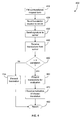
- the translations are received as one or more MMS messages. If, at 450, it is determined that there are more than one translation received, then at 460 the translations are presented to the originator via his communications device. This allows the originator to evaluate the different translations. The originator may then choose a translation through his communications device; this input may be received by a user interface of the communications device at 470. In an embodiment, this indication may result in a communication being sent back to the server, identifying the chosen translation. If, at 450, it is determined that there is only one translation available, then there is no need for evaluation, and the sole translation may be presented to the originator at 455. The process concludes at 455.
- the logic described above with respect to FIG. 4 may be implemented as hardware, firmware, or software, or any combination thereof, including discrete and integrated circuit logic, application specific integrated circuit (ASIC) logic, and microcontrollers, and may be implemented as part of a domain-specific integrated circuit package, or a combination of integrated circuit packages.
- ASIC application specific integrated circuit
- the term software, as used herein, refers to a computer program product including a computer readable medium having computer program logic stored therein to cause a computer system to perform one or more features and/or combinations of features disclosed herein.
- FIG. 5 illustrates a software or firmware embodiment of the logic of FIG. 4 .
- System 500 may be incorporated in a communications device of the originator, such as a smart phone or other mobile internet device for example.
- System 500 may include one or more memory components 502 in communication with a processor 506 and one or more input/output devices or ports, shown collectively as I/O 504, but is not necessarily limited to these components.
- Memory 502 may store instructions for execution by processor 506, along with additional related data.
- Memory 502 may be implemented on a computer readable medium, as would be understood to a person of ordinary skill in the art. Such a medium may be, for example and without limitation, a non-volatile memory device, a hard drive, a compact disk that may be read by a compact disk drive, an integrated circuit, or other machine-readable memory device.
- the executable instructions are shown as computer program logic 508.
- Computer program logic 508 may include several modules, shown as modules 510 - 560, but is not necessarily limited to these modules. These may include an originator user interface (UI) 510 that presents the originator with input options, receive such inputs, and present data to the originator.
- UI originator user interface
- the originator's inputs may be used by a translation request UI 520 to formulate a translation request that can ultimately be sent to the server.
- the inputs in this case may include an indication of the text or audio data that is to be translated.
- a translation receiver module 530 may be responsible for receiving translations and presenting them to the originator. Selection of a particular translation may be made by the originator through originator UI 510.
- system 500 includes functionality that may be used by a translator, in addition to the logic described above for an originator.
- a single communications device may, in this case, be usable by both kinds of users.
- the computer program logic modules 540-560 related to translator operations will be described in greater detail below.
- the processing at the server may take place as shown in FIG. 6 , process 600.
- the server may receive a translation request from an originator communications device.
- the translation request may be one or more SMS or MMS messages, and may include the passage to be translated in text or audio form.
- the translation request may be processed by the server. This may include parsing, authentication, and other administrative functions, as will be discussed in greater detail below with respect to FIG. 7 .
- a determination may be made at 620 as to whether to continue. If so, the process 600 may continue at 625; otherwise, the originator may be informed at 640 that processing is stopping, and process 600 may conclude at 670.
- the processing of 615 may reveal that the passage to be translated has already been translated, perhaps for another originator.
- the previous translation may have been cached at the server.
- one or more such cached translations for this passage may be sent to the originator, without any solicitation of prospective translators.
- the server may also have functionality that allows translation to be performed in an automated manner at the server using a stored digital dictionary or other form of collected previous translations. Again, this latter embodiment may be feasible when the passage contains frequently used words and phrases.
- the server may construct a request broadcast on the basis of the received translation request.
- the request broadcast may be sent to communications devices of a respective set of prospective translators.
- the translations may be in the form of MMS messages that include audio data.
- the translations may be parsed in order to determine if any abusive or other offensive language is present. Such translations may be deleted, and at 650, the remaining translations may be forwarded to the originator.
- the server may receive from the originator an identifier of the chosen translation.
- the server may award credit to the translator responsible for the chosen translation. The process may conclude at 670.
- the processing of the translation request (615 of FIG. 6 ) is illustrated in greater detail in FIG. 7 , according to an embodiment.
- the signature accompanying the translation request may be verified in order to authenticate the originator.
- the signature and verification processes may be cryptographically based and may utilize public key or symmetric key cryptography.
- a determination is made as to whether verification was successful. If not, processing may be stopped at 740. A decision may then be made at 620 (see FIG. 6 ) to not continue, and to inform the originator at 640.
- the process may continue at 730, where the translation request may be parsed.
- the server may parse the translation request in order to determine whether it contains any language that may be considered abusive or offensive. In an embodiment, this may be accomplished by using a stored dictionary of relevant words or phrases, and by looking up words as they are parsed.
- a determination may be made as to whether any such language is present. If such language is present, then the translation request is not approved, and processing halts at 740. Referring to FIG. 6 , a determination may then be made at 620 to not continue.
- processing may continue at 760.
- an identifier may be attached to the translation request.
- a variety of data relating to the translation request may be recorded. This data may include the phone number of the originator, the international mobile equipment identity (IMEI) number of the originator's communications device, the date and time of the request, and the location of the originator. This information may be used when the server forwards any translations back to the originator. The process may conclude at 780.
- IMEI international mobile equipment identity
- the originator may not be the only party who evaluates translations.
- translations may be open for inspection by other parties who may log on to the server and who may then review previous translations. These third parties may then grade or rank the translations, or provide their own.
- a subsequent originator may then take advantage of these evaluations to either select a translator, or to choose a translation if the passage in question has been previously translated, cached, and graded at the server. These evaluations may also be used in determining the amount of credit to be granted to a translator.
- the server may authenticate a prospective evaluator. This may include password authentication and/or verification of a digital signature presented by the evaluator. Such a signature may be, for example, based on public key or symmetric key technology.
- the evaluations may be received at 820.
- additional translations may be received, if any.
- these received evaluations may be associated with one or more particular translation requests.
- the evaluations may be sent to the originator, along with the actual translations. The process may conclude at 860.
- FIG. 9 illustrates a software or firmware embodiment of the logic of FIGs. 6 and 7 .
- System 900 may be incorporated in a server, such as the language translation request processing server 130 of FIGs. 1 and 3 for example.
- System 900 may include but is not limited to one or more memory components 902 in communication with a processor 906 and one or more input/output devices or ports, shown collectively as I/O 904.
- Memory 902 may store instructions for execution by processor 906, along with additional related data.
- Memory 902 may be implemented on a computer readable medium, as would be understood to a person of ordinary skill in the art.
- a medium may be, for example and without limitation, a non-volatile memory device, a hard drive, a compact disk that may be read by a compact disk drive, an integrated circuit, or other machine-readable memory device.
- Computer program logic 910 may include several modules, shown as modules 920 - 990, but is not limited to these modules. These include request processing logic 920. This module may be responsible for receiving a translation request and performing the processing described above with respect to references 610,615 and FIG. 7 , e.g., receiving, authentication, and parsing of the translation request, and recording of related administrative data.
- Request broadcast construction logic 930 may be responsible for constructing the request broadcast on the basis of the translation request.
- Broadcast logic 940 may be responsible for determining the prospective translators to solicit and for sending the broadcast to them.
- the translators may have been predetermined and their identities stored at the server, or determined upon receipt of the translation request. These identities may have been determined by searching the originator's contacts on social networking services. Alternatively, the originator may identify the translators in the translation request.
- Selection receiving logic 980 may be responsible for receiving an identifier for the translation selected by the originator.
- Credit assignment logic 990 may be responsible for issuing credit to the translator that created the chosen translation.
- memory 902 may also include storage for previous translations 995.
- These translations may represent a digital dictionary that allows the server to perform automated translation of translation requests, or otherwise makes available previously requested translations of the passage in question. Such a lookup or translation may be performed at the server using server translation logic 975.
- the previous translations 995 may reside in a different memory component or medium other than memory 902.
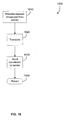
- FIG. 10 illustrates the processing 1000 performed by the translator, according to an embodiment.
- the request broadcast is received at the translator's communications device from the server.
- the translation may be performed.
- the translation created at 1020 is sent to the server. The process may conclude at 1040.
- the translator's communications device may be used in process 1000.
- the request broadcast may be received through such a device, and the translation may be sent to the server via the computing device.
- the device may be a mobile communications device.
- the functionality for supporting a translator may be incorporated in a communications device along with functionality that supports an originator.
- the device may be used by a person acting as an originator or as a translator.
- FIG. 5 Such an embodiment is illustrated in FIG. 5 . While the functionality shown in this figure is implemented in software or firmware, this functionality may also be implemented in hardware, or in a combination of software, firmware, or hardware.
- Computer program logic 508 may include a translation response UI 520 to receive inputs from and convey information to the translator.
- the broadcast receiver module 550 may serve to receive the request broadcast from the server.
- the translation UI 560 may allow the translator to access the text or audio to be translated, and to accept the translation from the translator.
Landscapes
- Engineering & Computer Science (AREA)
- Business, Economics & Management (AREA)
- Theoretical Computer Science (AREA)
- Strategic Management (AREA)
- Human Resources & Organizations (AREA)
- Entrepreneurship & Innovation (AREA)
- Physics & Mathematics (AREA)
- General Physics & Mathematics (AREA)
- Economics (AREA)
- Quality & Reliability (AREA)
- General Business, Economics & Management (AREA)
- Data Mining & Analysis (AREA)
- Tourism & Hospitality (AREA)
- Marketing (AREA)
- Operations Research (AREA)
- Health & Medical Sciences (AREA)
- Audiology, Speech & Language Pathology (AREA)
- General Engineering & Computer Science (AREA)
- Artificial Intelligence (AREA)
- Computational Linguistics (AREA)
- General Health & Medical Sciences (AREA)
- Machine Translation (AREA)
- Management, Administration, Business Operations System, And Electronic Commerce (AREA)
- Information Transfer Between Computers (AREA)
Abstract
Methods and systems with which a language translation may be obtained. An originator may request a translation by sending the passage to be translated to a server. The server may then broadcast the passage to prospective translators. In an embodiment, the translators may be connected to the originator and /or each other through a social network. Some or all of the prospective translators then return translations of the passage to the originator, via the server. The originator may then select the most desirable translation and inform the server. In an embodiment, the provision of the translation service may be part of an exchange or barter transaction. The server may apply a credit to the translator of the chosen translation. The translator may then use the credit in a subsequent trade or other transaction.
Description
- Understanding spoken or written words in a foreign language is an ancient problem. Whether in a professional, academic, or social setting, the inability to understand a language impedes progress and forecloses relationships.
- Current solutions to this problem can be slow, expensive, and ineffective. Mastering a language may take years of study, represents a huge investment, and therefore may not be a practical solution. Another possibility is to manually look up the translations of individual words or phrases. This can be clumsy at best and inaccurate at worst. Resources are required, perhaps a phrasebook or access to an online dictionary. Such an approach is slow and tedious, as well as being mistake prone. Moreover, this approach may require some background knowledge on the part of the user. A word-for-word translation of a passage may not be meaningful without some knowledge of the foreign grammar. In addition, a lookup process may not be possible if the alphabet is foreign, as in the case of the Cyrillic alphabet, or if the language is character based, as in the case of Japanese. Machine-based solutions have been proposed but they tend to be crude and inaccurate, in part because of the well known difficulties of automating natural language processing.
- In short, translating a foreign language may be costly while being potentially inaccurate. The required expenditure in time and effort may be significant, and the results returned may not be reliable. This disparity is even greater when the passage to be translated is a brief passage. Significant work may be required to translate even a single paragraph or sentence.
-
-
FIG. 1 is a block diagram generally illustrating the system described herein, according to an embodiment. -
FIG. 2 is a flowchart generally illustrating the processing described herein, according to an embodiment. -
FIG. 3 is a block diagram illustrating operation of the system described herein, according to an embodiment. -
FIG. 4 is a flowchart illustrating the processing described herein from the perspective of the originator of a translation request, according to an embodiment. -
FIG. 5 is a block diagram illustrating software components in a communications device used by the originator, in an embodiment. -
FIG. 6 is a flowchart illustrating the processing described herein from the perspective of a server, according to an embodiment. -
FIG. 7 is a flowchart illustrating processing of a translation request at the server, according to an embodiment. -
FIG. 8 is a flowchart illustrating the processing of third party evaluations of translations, according to an embodiment. -
FIG. 9 is a block diagram illustrating software components in the server, according to an embodiment. -
FIG. 10 is a flowchart illustrating processing at a translator, according to an embodiment. - In the drawings, the leftmost digit(s) of a reference number identifies the drawing in which the reference number first appears.
- Disclosed herein are methods and systems with which a language translation may be obtained. An originator may request a translation by sending the passage to be translated to a server. The server may then broadcast the passage to prospective translators. In an embodiment, the translators may be connected to the originator and /or each other through a social network. Some or all of the prospective translators then return translations of the passage to the originator, via the server. The originator may then select the most desirable translation and inform the server. In an embodiment, the provision of the translation service may be part of an exchange or barter transaction. The server may apply a credit to the translator of the chosen translation. The translator may then use the credit in a subsequent trade or other transaction.
- An embodiment of the system described herein is shown generally in
FIG. 1 .System 100 may provide for communications between anoriginator communications device 110 and the communications devices of one or more prospective translators 120, via a language translationrequest processing server 130 and anetwork 140, but is not limited to these components. Note that while two translator communication devices are shown, it is to be understood that this is not a limitation, and that any number of translator communications devices may be present. - The communications device of the
originator 110 may create a translation request and send it to language translationrequest processing server 130. The translation request may include the text or audio that needs to be translated. Theserver 130 may then construct a request broadcast based on the translation request, and send the request broadcast to communications devices of the respective translators 120. After one or more of the translators performs the translation, the translations may be returned to theserver 130, which may then pass the translations to the mobile communications device oforiginator 110. In the illustrated embodiment, the communications between theoriginator communications device 110, translator communications devices 120, andserver 130 may take place via acommunications network 140. - In alternative embodiments, there may not be a need for the
server 130 to contact prospective translators 120. Frequently requested translations may be cached at theserver 130. If, for example, the passage to be translated has frequently been the subject of previously requested translations, previous translations of the passage may be saved in a cache atserver 130. In this case, the server may first see if the requested translation exists in its cache, and if so, may directly respond to theoriginator 110 with the one or more of the cached translations. Alternatively, the server may have functionality that allows translation to be performed in an automated manner at the server using a stored digital dictionary. Again, this latter embodiment may be feasible when the passage contains frequently used words and phrases. - In an embodiment,
network 140 may include the Internet, one or more wide area networks, one or more local area networks, or some combination thereof. The communications may take the form of short messaging system (SMS) and/ or multi-media messaging system (MMS) messages. - The processing of
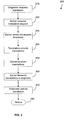
system 100 is described inflowchart 200 ofFIG. 2 , according to an embodiment. At 210, the originator may request a translation via his communications device. This may be accomplished by providing text or audio to the server in the form of a translation request. At 220, this request may be received at the server. After processing the translation request in a manner described below, the server may send out a request broadcast at 230 to communications devices of prospective translators. At 240, after performing the translation, the translators may provide these translations to the server. At 250, the server receives the translations. At 260, the translations may be forwarded to the communications device of the originator. If there are two or more translations, the originator may evaluate them and select a favored translation at 270. In an embodiment, the originator may also inform the server of the chosen translation, and the server may then award a credit to the responsible translator. The credit may be used by the translator in a subsequent transaction, such as a trade or barter for example. The process may conclude at 280. - The processing of an embodiment is shown in greater detail as
system 300 ofFIG. 3 . As in FIG. l,system 300 may include theoriginator communications device 110, the language translationrequest processing server 130, and translators' communications devices 120, but is not limited to these components. Communications between these entities may take place via anetwork 140, although such a network is not shown inFIG. 3 for the sake of simplicity. -
Originator communications device 110 may send atranslation request 310 toserver 130.Originator communications device 110 may be a mobile communications device, such as a smart phone or other mobile internet device, for example. In an embodiment, thetranslation request 310 may have been constructed using a template or form that is included in an application running on theoriginator communications device 110. Such a form may ask for the language desired, for example, and may include the text or audio to be translated. Alternatively, the text or audio to be translated may be attached to the form. Thetranslation request 310 may include the completed form with the text or audio, and may be sent to theserver 130 as one or more SMS or MMS messages. - The
server 130 may then receive thetranslation request 310. In an embodiment, thetranslation request 310 may have to be authenticated by theserver 130. The translation request may, for example, be accompanied by a digital signature. Such a signature may be cryptographically based using public key or symmetric key technology, for example, and would have to be verified byserver 130 before processing may continue. - In an embodiment, the
server 130 may parse thetranslation request 310 in order to detect any abusive or inappropriate language. This may be performed, for example, using a dictionary lookup process in order to identify questionable words or phrases. If such language is found, thetranslation request 310 may be denied byserver 130. If no such language is found, theserver 130 may construct arequest broadcast 315 on the basis of thetranslation request 310. The request broadcast 315 is then sent out to each of one or more communications devices of prospective translators 120. In an embodiment, the set of translators may have been identified intranslation request 310. Alternatively, the set of translators may have been predetermined and their identities stored atserver 130. The translators may be associated with theoriginator 110 through a social networking service such as LinkedIn or Facebook for example, and/or may be associated with a particular language. In an embodiment, theserver 130 may derive the list of prospective translators 120 through a search of a social network of the originator. Such a search may be performed upon receipt of thetranslation request 130, or may have been done in advance. - Each translator communications device 120 may then return a translation 320 to the
server 130. The returned translations 320 may each include audio data representing the translation. In an embodiment,server 130 may parse some or all of translations 320 in order to determine whether they contain anything abusive, offensive, or otherwise inappropriate. Inappropriate translations may be deleted. In an embodiment, the translations 320 that survive this parsing process may then be sent tooriginator communications device 110 as one or more MMS messages. - The originator may then evaluate the translations 320 and choose a preferred translation. In the illustrated embodiment, an
identifier 340 of the chosen translation is sent back toserver 130. Theserver 130 may then useidentifier 340 to identify the responsible translator. This translator may then be granted credit that may later be used in another transaction, such as a trade or barter transaction for example, with the originator or with another party. - The processing performed at the originator is shown in
FIG. 4 asprocess 400, according to an embodiment. At 410, the originator may construct a translation request. In the illustrated embodiment, this may be performed by completing a template or form in an application running on the communications device of the originator. At 420, the translation request may be sent to the server as one or more SMS and/or MMS messages. The translation request may include text or audio data, or both. In an embodiment, the translation request may also include a digital signature for authentication purposes, as indicated at 430 - At 440, the originator communications device may receive translation(s) from the server. In an embodiment, the translations are received as one or more MMS messages. If, at 450, it is determined that there are more than one translation received, then at 460 the translations are presented to the originator via his communications device. This allows the originator to evaluate the different translations. The originator may then choose a translation through his communications device; this input may be received by a user interface of the communications device at 470. In an embodiment, this indication may result in a communication being sent back to the server, identifying the chosen translation. If, at 450, it is determined that there is only one translation available, then there is no need for evaluation, and the sole translation may be presented to the originator at 455. The process concludes at 455.
- The logic described above with respect to
FIG. 4 may be implemented as hardware, firmware, or software, or any combination thereof, including discrete and integrated circuit logic, application specific integrated circuit (ASIC) logic, and microcontrollers, and may be implemented as part of a domain-specific integrated circuit package, or a combination of integrated circuit packages. The term software, as used herein, refers to a computer program product including a computer readable medium having computer program logic stored therein to cause a computer system to perform one or more features and/or combinations of features disclosed herein. -
FIG. 5 illustrates a software or firmware embodiment of the logic ofFIG. 4 .System 500 may be incorporated in a communications device of the originator, such as a smart phone or other mobile internet device for example.System 500 may include one ormore memory components 502 in communication with aprocessor 506 and one or more input/output devices or ports, shown collectively as I/O 504, but is not necessarily limited to these components. -
Memory 502 may store instructions for execution byprocessor 506, along with additional related data.Memory 502 may be implemented on a computer readable medium, as would be understood to a person of ordinary skill in the art. Such a medium may be, for example and without limitation, a non-volatile memory device, a hard drive, a compact disk that may be read by a compact disk drive, an integrated circuit, or other machine-readable memory device. The executable instructions are shown ascomputer program logic 508.Computer program logic 508 may include several modules, shown as modules 510 - 560, but is not necessarily limited to these modules. These may include an originator user interface (UI) 510 that presents the originator with input options, receive such inputs, and present data to the originator. The originator's inputs may be used by atranslation request UI 520 to formulate a translation request that can ultimately be sent to the server. The inputs in this case may include an indication of the text or audio data that is to be translated. Atranslation receiver module 530 may be responsible for receiving translations and presenting them to the originator. Selection of a particular translation may be made by the originator throughoriginator UI 510. - In the illustrated embodiment,
system 500 includes functionality that may be used by a translator, in addition to the logic described above for an originator. A single communications device may, in this case, be usable by both kinds of users. The computer program logic modules 540-560 related to translator operations will be described in greater detail below. - In an embodiment, the processing at the server may take place as shown in
FIG. 6 ,process 600. At 610, the server may receive a translation request from an originator communications device. As noted above, the translation request may be one or more SMS or MMS messages, and may include the passage to be translated in text or audio form. At 615, the translation request may be processed by the server. This may include parsing, authentication, and other administrative functions, as will be discussed in greater detail below with respect toFIG. 7 . Depending on the outcome of the processing of 615, a determination may be made at 620 as to whether to continue. If so, theprocess 600 may continue at 625; otherwise, the originator may be informed at 640 that processing is stopping, andprocess 600 may conclude at 670. - In an embodiment, the processing of 615 may reveal that the passage to be translated has already been translated, perhaps for another originator. The previous translation may have been cached at the server. In such an embodiment, one or more such cached translations for this passage may be sent to the originator, without any solicitation of prospective translators. Alternatively, the server may also have functionality that allows translation to be performed in an automated manner at the server using a stored digital dictionary or other form of collected previous translations. Again, this latter embodiment may be feasible when the passage contains frequently used words and phrases.
- At 625, the server may construct a request broadcast on the basis of the received translation request. At 630, the request broadcast may be sent to communications devices of a respective set of prospective translators. At 635, it may be determined whether or not any translations have been received from the translators. If not, then the originator may be so informed at 640, and the process concludes. If one or more translations are received, then processing may continue at 645. In an embodiment, the translations may be in the form of MMS messages that include audio data. At 645, the translations may be parsed in order to determine if any abusive or other offensive language is present. Such translations may be deleted, and at 650, the remaining translations may be forwarded to the originator.
- In the illustrated embodiment, at 660 the server may receive from the originator an identifier of the chosen translation. At 665, the server may award credit to the translator responsible for the chosen translation. The process may conclude at 670.
- The processing of the translation request (615 of
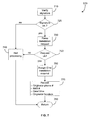
FIG. 6 ) is illustrated in greater detail inFIG. 7 , according to an embodiment. At 710, the signature accompanying the translation request may be verified in order to authenticate the originator. The signature and verification processes may be cryptographically based and may utilize public key or symmetric key cryptography. At 720, a determination is made as to whether verification was successful. If not, processing may be stopped at 740. A decision may then be made at 620 (seeFIG. 6 ) to not continue, and to inform the originator at 640. - Otherwise, the process may continue at 730, where the translation request may be parsed. The server may parse the translation request in order to determine whether it contains any language that may be considered abusive or offensive. In an embodiment, this may be accomplished by using a stored dictionary of relevant words or phrases, and by looking up words as they are parsed. At 750, a determination may be made as to whether any such language is present. If such language is present, then the translation request is not approved, and processing halts at 740. Referring to
FIG. 6 , a determination may then be made at 620 to not continue. - If the translation request is approved, then processing may continue at 760. Here, an identifier may be attached to the translation request. At 770, a variety of data relating to the translation request may be recorded. This data may include the phone number of the originator, the international mobile equipment identity (IMEI) number of the originator's communications device, the date and time of the request, and the location of the originator. This information may be used when the server forwards any translations back to the originator. The process may conclude at 780.
- In an alternative embodiment, the originator may not be the only party who evaluates translations. Here, translations may be open for inspection by other parties who may log on to the server and who may then review previous translations. These third parties may then grade or rank the translations, or provide their own. A subsequent originator may then take advantage of these evaluations to either select a translator, or to choose a translation if the passage in question has been previously translated, cached, and graded at the server. These evaluations may also be used in determining the amount of credit to be granted to a translator.
- The processing for such an embodiment at the server is illustrated in
FIG. 8 , according to an embodiment. At 810, the server may authenticate a prospective evaluator. This may include password authentication and/or verification of a digital signature presented by the evaluator. Such a signature may be, for example, based on public key or symmetric key technology. After the evaluator has accessed and evaluated the translations related to a particular translation request, the evaluations may be received at 820. At 830, additional translations may be received, if any. At 840, these received evaluations may be associated with one or more particular translation requests. At 850, the evaluations may be sent to the originator, along with the actual translations. The process may conclude at 860. -
FIG. 9 illustrates a software or firmware embodiment of the logic ofFIGs. 6 and7 .System 900 may be incorporated in a server, such as the language translationrequest processing server 130 ofFIGs. 1 and3 for example.System 900 may include but is not limited to one ormore memory components 902 in communication with aprocessor 906 and one or more input/output devices or ports, shown collectively as I/O 904. -
Memory 902 may store instructions for execution byprocessor 906, along with additional related data.Memory 902 may be implemented on a computer readable medium, as would be understood to a person of ordinary skill in the art. Such a medium may be, for example and without limitation, a non-volatile memory device, a hard drive, a compact disk that may be read by a compact disk drive, an integrated circuit, or other machine-readable memory device. - The executable instructions are shown as
computer program logic 910.Computer program logic 910 may include several modules, shown as modules 920 - 990, but is not limited to these modules. These includerequest processing logic 920. This module may be responsible for receiving a translation request and performing the processing described above with respect to references 610,615 andFIG. 7 , e.g., receiving, authentication, and parsing of the translation request, and recording of related administrative data. - Request
broadcast construction logic 930 may be responsible for constructing the request broadcast on the basis of the translation request.Broadcast logic 940 may be responsible for determining the prospective translators to solicit and for sending the broadcast to them. As discussed above, the translators may have been predetermined and their identities stored at the server, or determined upon receipt of the translation request. These identities may have been determined by searching the originator's contacts on social networking services. Alternatively, the originator may identify the translators in the translation request. -
Translation receiving logic 950 may be responsible for receiving the translations at the server. After receiving the translations,translation parsing logic 960 may parse the translations as discussed above. Translations that are not rejected in the parsing process may then be forwarded to the originator bytranslation transmission logic 970. -
Selection receiving logic 980 may be responsible for receiving an identifier for the translation selected by the originator.Credit assignment logic 990 may be responsible for issuing credit to the translator that created the chosen translation. - In the illustrated embodiment,
memory 902 may also include storage forprevious translations 995. These translations may represent a digital dictionary that allows the server to perform automated translation of translation requests, or otherwise makes available previously requested translations of the passage in question. Such a lookup or translation may be performed at the server usingserver translation logic 975. Alternatively, theprevious translations 995 may reside in a different memory component or medium other thanmemory 902. -
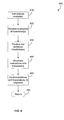
FIG. 10 illustrates theprocessing 1000 performed by the translator, according to an embodiment. At 1010, the request broadcast is received at the translator's communications device from the server. At 1020, the translation may be performed. At 1030, the translation created at 1020 is sent to the server. The process may conclude at 1040. - In an embodiment, the translator's communications device may be used in
process 1000. In particular, the request broadcast may be received through such a device, and the translation may be sent to the server via the computing device. Moreover, the device may be a mobile communications device. The functionality for supporting a translator may be incorporated in a communications device along with functionality that supports an originator. In this case, the device may be used by a person acting as an originator or as a translator. Such an embodiment is illustrated inFIG. 5 . While the functionality shown in this figure is implemented in software or firmware, this functionality may also be implemented in hardware, or in a combination of software, firmware, or hardware. -
Computer program logic 508 may include atranslation response UI 520 to receive inputs from and convey information to the translator. Thebroadcast receiver module 550 may serve to receive the request broadcast from the server. Thetranslation UI 560 may allow the translator to access the text or audio to be translated, and to accept the translation from the translator. - While various embodiments are disclosed herein, it should be understood that they have been presented by way of example only, and not limitation. It will be apparent to persons skilled in the relevant art that various changes in form and detail may be made therein without departing from the spirit and scope of the methods and systems disclosed herein. Thus, the breadth and scope of the claims should not be limited by any of the exemplary embodiments disclosed herein.
- This disclosure includes all the subject matter recited in the following clauses:
- 1. A method, comprising:
- receiving, at a server, a translation request;
- sending, from the server, a request broadcast, based on the translation request;
- receiving, at the server, one or more translations responsive to the broadcast; and
- forwarding the translations from the server to a communications device of an originator of the translation request.
- 2. The method of
clause 1, wherein the translation request comprises a form filled out by the originator. - 3. The method of clause l, wherein the translation request is received as one or more short message service (SMS) messages.
- 4. The method of
clause 1, further comprising:- authenticating the received translation request at the server,
- performed prior to said sending of the request broadcast.
- 5. The method of clause l, further comprising:
- parsing the translation request at the server,
- performed prior to said sending of the request broadcast.
- 6. The method of
clause 1, wherein the translation request is received from the communications device of the originator. - 7. The method of
clause 1, further comprising:- parsing the one or more translations,
- performed prior to said forwarding.
- 8. The method of
clause 1, further comprising:- receiving, at the server, an identity of a translation that has been chosen by the originator from among the one or more translations,
- performed after said forwarding.
- 9. The method of clause 8, further comprising:
- awarding a translator of the identified translation with credit that is usable by the translator in a subsequent transaction.
- 10. The method of clause I, wherein each of the one or more translations include audio data representing the translation.
- 11. A system, comprising:
- a processor; and
- a memory in communication with said processor, wherein the memory stores a plurality of processing instructions that are configured to direct said processor to
- receive a translation request;
- send a request broadcast based on the translation request;
- receive one or more translations responsive to the broadcast; and
- forward the translations to an originator of the translation request.
- 12. The system of clause 11, wherein the translation request is received as one or more short message service (SMS) messages.
- 13. The system of clause 11, wherein said memory further stores additional instructions that are configured to direct said processor to:
- authenticate the received translation request, prior to sending said
- request broadcast.
- 14. The system of clause 11, wherein said memory further stores additional instructions that are configured to direct said processor to:
- parse the translation request, prior to sending said request broadcast.
- 15. The system of clause 11, wherein said memory further stores additional instructions that are configured to direct said processor to:
- parse the one or more translations, prior to said forwarding.
- 16. The system of clause 11, wherein said memory further stores additional instructions that are configured to direct said processor to:
- award credit to a translator associated with a translation that was chosen by the originator from among said one or more translations, wherein said credit is usable by the translator in a subsequent transaction.
- 17. The system of clause 11, wherein said memory is further configured to store previously translated words that may be accessed by said originator.
- 18. A system, comprising:
- a processor; and
- a memory in communication with said processor, wherein the memory stores a plurality of processing instructions that are configured to direct said processor to
- send a translation request to a server;
- receive one or more translations from the server;
- present said translations to a communications device of an originator of the translation request;
- receive from said originator an indication of the best translation that has been chosen by said originator from among said one or more translations.
- 19. The system of clause 18, wherein said translation request is in the form of one or more short messaging service (SMS) messages.
- 20. The system of clause 18, wherein said one or more translations are received from said server as one or more multi-media messaging service (MMS) messages.
- 21. The system of clause 18, wherein said memory further stores additional instructions that are configured to direct said processor to:
- convey to the server the identity of the best translation that has been chosen by said originator from among said one or more translations.
- 22. The system of clause 18, wherein said one or more translations each comprise audio data representing the translation.
- 23. The system of clause 18, wherein said memory further stores additional instructions that are configured to direct said processor to:
- send to the server a digital signature corresponding to the system, prior to receiving said one or more translations.
- 24. The system of clause 18, wherein said originator is connected to translators that produce said translations via a social networking service.
- 25. A computer program product including a computer readable medium having computer program logic stored thereon, the computer program logic including:
- logic to cause a processor to send a translation request to a server;
- logic to cause the processor to receive one or more translations from the server;
- logic to cause the processor to present said translations to a communications device of an originator of the translation request; and
- logic to cause the processor to receive from said originator an indication of the best translation that has been chosen by said originator from among said one or more translations.
- 26. The computer program product of clause 25, wherein said translation request is received as one or more short messaging service (SMS) messages.
- 27. The computer program product of clause 25, wherein said one or more translations are received from said server as one or more multi-media messaging system (MMS) messages.
- 28. The computer program product of clause 25, wherein said the computer program logic further comprises:
- logic to convey to the server the identity of the best translation that has been chosen by said originator from among said one or more translations.
- 29. The computer program product of clause 25, wherein said one or more translations each comprise audio data representing the translation.
- 30. The computer program product of clause 25, wherein said the computer program logic further comprises:
- logic to send to the server a digital signature corresponding to the system, prior to receiving said one or more translations.
Claims (15)
- A method, comprising:receiving, at a server, a translation request;sending, from the server, a request broadcast, based on the translation request;receiving, at the server, one or more translations responsive to the broadcast; andforwarding the translations from the server to a communications device of an originator of the translation request.
- The method of claim 1, wherein the translation request comprises a form filled out by the originator.
- The method of claim 1, wherein the translation request is received as one or more short message service (SMS) messages.
- The method of claim 1, further comprising:authenticating the received translation request at the server,performed prior to said sending of the request broadcast.
- The method of claim 1, further comprising:parsing the translation request at the server,performed prior to said sending of the request broadcast.
- The method of claim 1, wherein the translation request is received from the communications device of the originator.
- The method of claim 1, further comprising:parsing the one or more translations,performed prior to said forwarding.
- The method of claim 1, further comprising:receiving, at the server, an identity of a translation that has been chosen by the originator from among the one or more translations,performed after said forwarding.
- The method of claim 8, further comprising:awarding a translator of the identified translation with credit that is usable by the translator in a subsequent transaction.
- The method of claim 1, wherein each of the one or more translations include audio data representing the translation.
- A system, comprising:a processor; anda memory in communication with said processor, wherein the memory stores a plurality of processing instructions that are configured to direct said processor toreceive a translation request;send a request broadcast based on the translation request;receive one or more translations responsive to the broadcast; and forward the translations to an originator of the translation request.
- The system of claim 11, wherein the translation request is received as one or more short message service (SMS) messages.
- The system of claim 11, wherein said memory further stores additional instructions that are configured to direct said processor to:authenticate the received translation request, prior to sending said request broadcast.
- A system, comprising:a processor; anda memory in communication with said processor, wherein the memory stores a plurality of processing instructions that are configured to direct said processor tosend a translation request to a server;receive one or more translations from the server;present said translations to a communications device of an originator of the translation request;receive from said originator an indication of the best translation that has been chosen by said originator from among said one or more translations.
- A computer program product including a computer readable medium having computer program logic stored thereon, the computer program logic including:logic to cause a processor to send a translation request to a server;logic to cause the processor to receive one or more translations from the server;logic to cause the processor to present said translations to a communications device of an originator of the translation request; andlogic to cause the processor to receive from said originator an indication of the best translation that has been chosen by said originator from among said one or more translations.
Applications Claiming Priority (1)
| Application Number | Priority Date | Filing Date | Title |
|---|---|---|---|
| US12/625,119 US9087045B2 (en) | 2009-11-24 | 2009-11-24 | Methods and systems for real time language translation using social networking |
Publications (1)
| Publication Number | Publication Date |
|---|---|
| EP2325756A1 true EP2325756A1 (en) | 2011-05-25 |
Family
ID=43034550
Family Applications (1)
| Application Number | Title | Priority Date | Filing Date |
|---|---|---|---|
| EP10251642A Withdrawn EP2325756A1 (en) | 2009-11-24 | 2010-09-24 | Method and systems for language translation using social networking |
Country Status (5)
| Country | Link |
|---|---|
| US (1) | US9087045B2 (en) |
| EP (1) | EP2325756A1 (en) |
| JP (2) | JP5516981B2 (en) |
| KR (1) | KR101300426B1 (en) |
| CN (2) | CN105740240A (en) |
Families Citing this family (20)
| Publication number | Priority date | Publication date | Assignee | Title |
|---|---|---|---|---|
| US8965751B2 (en) * | 2010-11-01 | 2015-02-24 | Microsoft Corporation | Providing multi-lingual translation for third party content feed applications |
| US9063931B2 (en) * | 2011-02-16 | 2015-06-23 | Ming-Yuan Wu | Multiple language translation system |
| US8538742B2 (en) * | 2011-05-20 | 2013-09-17 | Google Inc. | Feed translation for a social network |
| US9081749B2 (en) * | 2011-12-12 | 2015-07-14 | Microsoft Technology Licensing, Llc | Automatic language sensitive, event based activity feeds |
| CN102708097A (en) * | 2012-04-27 | 2012-10-03 | 曾立人 | Online computer translation method and online computer translation system |
| JP2014153756A (en) * | 2013-02-05 | 2014-08-25 | Yahoo Japan Corp | Business intermediation device, business intermediation method and business intermediation program |
| CN104102628A (en) * | 2013-04-08 | 2014-10-15 | 刘龙 | System and method for real-time language translation service |
| KR20140123654A (en) * | 2013-04-12 | 2014-10-23 | 주식회사 플리토 | System for sharing translated contents using crowd sourcing |
| KR101740332B1 (en) * | 2013-11-05 | 2017-06-08 | 한국전자통신연구원 | Apparatus and method for automatic tlanslation |
| WO2016018004A1 (en) | 2014-07-31 | 2016-02-04 | Samsung Electronics Co., Ltd. | Method, apparatus, and system for providing translated content |
| US20160055148A1 (en) * | 2014-08-22 | 2016-02-25 | Mr. Ravi Kumar Govindan | TranslateMe - Software Application to Translate Message(s)/Picture(s) through Human Collaboration |
| JP6259804B2 (en) | 2014-11-26 | 2018-01-10 | ネイバー コーポレーションNAVER Corporation | Content participation translation apparatus and content participation translation method using the same |
| CN106156008B (en) * | 2015-04-07 | 2019-07-09 | 阿里巴巴集团控股有限公司 | The interpretation method and device of information |
| KR101675049B1 (en) * | 2016-01-08 | 2016-11-10 | (주)클랜지앤씨 | Global communication system |
| CN106383819A (en) * | 2016-01-11 | 2017-02-08 | 陈勇 | Speech convertor |
| CN105912531B (en) * | 2016-02-03 | 2021-03-12 | 冯忠 | Translation system and method |
| US11314937B2 (en) * | 2017-12-14 | 2022-04-26 | Yahoo Assets Llc | Controlling a graphical user interface to present a message comprising a representation of an item |
| CN110275961A (en) * | 2019-06-13 | 2019-09-24 | 北京字节跳动网络技术有限公司 | Document interactive approach, device, electronic equipment and computer readable storage medium |
| JP6828945B1 (en) * | 2020-06-09 | 2021-02-10 | 株式会社シニスケープ | Information processing device and information processing method |
| CN112187625A (en) * | 2020-09-29 | 2021-01-05 | 在秀网络科技(深圳)有限公司 | Multifunctional instant messaging video system |
Family Cites Families (31)
| Publication number | Priority date | Publication date | Assignee | Title |
|---|---|---|---|---|
| US5495413A (en) * | 1992-09-25 | 1996-02-27 | Sharp Kabushiki Kaisha | Translation machine having a function of deriving two or more syntaxes from one original sentence and giving precedence to a selected one of the syntaxes |
| JPH10275157A (en) | 1997-03-31 | 1998-10-13 | Sanyo Electric Co Ltd | Data processor |
| EP1266313A2 (en) | 1999-03-19 | 2002-12-18 | Trados GmbH | Workflow management system |
| CN100352291C (en) | 1999-12-22 | 2007-11-28 | 英华达(上海)电子有限公司 | Simultaneous interpreting system in mobile communication |
| US6738053B1 (en) * | 2000-02-16 | 2004-05-18 | Telefonaktiebolaget Lm Ericsson (Publ) | Predefined electronic pen applications in specially formatted paper |
| WO2002015603A2 (en) * | 2000-08-15 | 2002-02-21 | Zonamovil.Com, Inc. | Method and apparatus for a network independent short message delivery system |
| JP2002244884A (en) | 2001-02-15 | 2002-08-30 | Dainippon Printing Co Ltd | Work request system server and work request system |
| US20030182420A1 (en) * | 2001-05-21 | 2003-09-25 | Kent Jones | Method, system and apparatus for monitoring and controlling internet site content access |
| JP2003022265A (en) * | 2001-07-06 | 2003-01-24 | Nec Corp | System for automatically translating language |
| KR100777581B1 (en) | 2001-09-27 | 2007-11-16 | 주식회사 케이티 | Conference call service device and method |
| KR100509924B1 (en) | 2002-04-26 | 2005-08-25 | 한국전자통신연구원 | Method of multiple payment based on electronic cash using a mobile phone |
| JP2004118720A (en) | 2002-09-27 | 2004-04-15 | Toshiba Corp | Translation apparatus, translation method, and translation program |
| US20040102957A1 (en) * | 2002-11-22 | 2004-05-27 | Levin Robert E. | System and method for speech translation using remote devices |
| US7444402B2 (en) * | 2003-03-11 | 2008-10-28 | General Motors Corporation | Offensive material control method for digital transmissions |
| US20050004840A1 (en) * | 2003-06-23 | 2005-01-06 | Wanninger Lester A. | System and method for mobile telephone text message consumer promotions |
| US20060206310A1 (en) * | 2004-06-29 | 2006-09-14 | Damaka, Inc. | System and method for natural language processing in a peer-to-peer hybrid communications network |
| EP2492808A1 (en) * | 2004-06-30 | 2012-08-29 | Jumpstart Wireless Corporation | System and method for extending business systems to a mobile workforce |
| JP2006139577A (en) | 2004-11-12 | 2006-06-01 | Task Management:Kk | Translation service device and translation service method |
| US8170897B1 (en) * | 2004-11-16 | 2012-05-01 | Amazon Technologies, Inc. | Automated validation of results of human performance of tasks |
| CN1707476A (en) | 2005-05-06 | 2005-12-14 | 贺方升 | Auxiliary translation searching engine system and method thereof |
| CN100458772C (en) | 2005-10-21 | 2009-02-04 | 华为技术有限公司 | Text information communication method and system |
| JP2007179513A (en) | 2005-12-28 | 2007-07-12 | Transmart Kk | Translation processing system |
| US8032355B2 (en) * | 2006-05-22 | 2011-10-04 | University Of Southern California | Socially cognizant translation by detecting and transforming elements of politeness and respect |
| JP5108272B2 (en) | 2006-10-04 | 2012-12-26 | ヤフー株式会社 | Joint translation device |
| US8548795B2 (en) * | 2006-10-10 | 2013-10-01 | Abbyy Software Ltd. | Method for translating documents from one language into another using a database of translations, a terminology dictionary, a translation dictionary, and a machine translation system |
| US20080177528A1 (en) * | 2007-01-18 | 2008-07-24 | William Drewes | Method of enabling any-directional translation of selected languages |
| US20090007245A1 (en) * | 2007-02-09 | 2009-01-01 | Schultz Michael J | System and method for controlled content access on mobile devices |
| JP2009053761A (en) | 2007-08-23 | 2009-03-12 | Brother Ind Ltd | Translated content providing method, translated content providing server, and translated content providing program |
| AU2008333773B2 (en) | 2007-12-05 | 2013-09-26 | Facebook, Inc. | Community translation on a social network |
| JP5272407B2 (en) | 2007-12-28 | 2013-08-28 | 株式会社リコー | Translation support system, translation support method, and program |
| KR20090089522A (en) | 2008-02-19 | 2009-08-24 | 주식회사 엔에스텍 | System and method for providing authentication service for media content distribution using digital media adapter |
-
2009
- 2009-11-24 US US12/625,119 patent/US9087045B2/en active Active
-
2010
- 2010-09-17 JP JP2010209896A patent/JP5516981B2/en active Active
- 2010-09-24 EP EP10251642A patent/EP2325756A1/en not_active Withdrawn
- 2010-09-24 KR KR1020100092880A patent/KR101300426B1/en not_active Expired - Fee Related
- 2010-09-26 CN CN201610142746.5A patent/CN105740240A/en active Pending
- 2010-09-26 CN CN2010102936323A patent/CN102075509A/en active Pending
-
2013
- 2013-12-02 JP JP2013249378A patent/JP2014099180A/en not_active Withdrawn
Non-Patent Citations (1)
| Title |
|---|
| EPO: "Notice from the European Patent Office dated 1 October 2007 concerning business methods", .OFFICIAL JOURNAL OF THE EUROPEAN PATENT OFFICE, vol. 30, no. 11, 1 November 2007 (2007-11-01), pages 592 - 593, XP007905525, ISSN: 0170-9291 * |
Also Published As
| Publication number | Publication date |
|---|---|
| CN102075509A (en) | 2011-05-25 |
| CN105740240A (en) | 2016-07-06 |
| JP2011123871A (en) | 2011-06-23 |
| US20110125485A1 (en) | 2011-05-26 |
| US9087045B2 (en) | 2015-07-21 |
| JP5516981B2 (en) | 2014-06-11 |
| KR101300426B1 (en) | 2013-08-26 |
| JP2014099180A (en) | 2014-05-29 |
| KR20110058649A (en) | 2011-06-01 |
Similar Documents
| Publication | Publication Date | Title |
|---|---|---|
| US9087045B2 (en) | Methods and systems for real time language translation using social networking | |
| US20140280623A1 (en) | Auto-reply email system and method with personalized content | |
| US12167302B2 (en) | System and method for rich short messaging service | |
| US9298703B2 (en) | Systems and methods for incentivizing user feedback for translation processing | |
| CN110728455B (en) | Service processing method, service processing device, storage medium and electronic equipment | |
| US10650103B2 (en) | Systems and methods for incentivizing user feedback for translation processing | |
| US12242800B2 (en) | Utilizing natural language processing to automatically perform multi-factor authentication | |
| CN109450776A (en) | Cohesion calculation method, device, equipment and medium | |
| US12425449B2 (en) | Logical language model prompts for fraud detection | |
| CN104142975A (en) | Microblog information promotion method, device and system | |
| CN108111533A (en) | The registration login method and system of APP | |
| US20230029014A1 (en) | Method and apparatus for providing counseling service | |
| US10225329B2 (en) | Methods and systems for sending and receiving alerts | |
| US20220100785A1 (en) | Entity search system | |
| US12159704B2 (en) | Method and apparatus for providing counseling service | |
| WO2023134255A1 (en) | Information insertion method and apparatus, device, medium, and computer program product | |
| EP4393176A1 (en) | A system and method for rich short messaging service | |
| WO2025169244A1 (en) | A system and method for message template validation | |
| AU2024405747A1 (en) | Logical language model prompts for fraud detection | |
| US20150348050A1 (en) | Hybrid cloud encryption method | |
| AU2024407973A1 (en) | Dynamic language model prompts for fraud detection | |
| CN121509943A (en) | Business processing methods, devices, equipment, media and procedures products | |
| CN121597799A (en) | Low-delay intelligent question-answering method and device, electronic equipment and storage medium | |
| CN117725612A (en) | Sensitive data processing method and device, electronic equipment and storage medium | |
| CN110009370A (en) | Information processing method, device, electronic equipment and readable storage medium storing program for executing |
Legal Events
| Date | Code | Title | Description |
|---|---|---|---|
| PUAI | Public reference made under article 153(3) epc to a published international application that has entered the european phase |
Free format text: ORIGINAL CODE: 0009012 |
|
| 17P | Request for examination filed |
Effective date: 20101018 |
|
| AK | Designated contracting states |
Kind code of ref document: A1 Designated state(s): AL AT BE BG CH CY CZ DE DK EE ES FI FR GB GR HR HU IE IS IT LI LT LU LV MC MK MT NL NO PL PT RO SE SI SK SM TR |
|
| AX | Request for extension of the european patent |
Extension state: BA ME RS |
|
| STAA | Information on the status of an ep patent application or granted ep patent |
Free format text: STATUS: THE APPLICATION HAS BEEN WITHDRAWN |
|
| 18W | Application withdrawn |
Effective date: 20111129 |