EP2297329B1 - L-lysin-herstellungsverfahren - Google Patents
L-lysin-herstellungsverfahren Download PDFInfo
- Publication number
- EP2297329B1 EP2297329B1 EP09750085.4A EP09750085A EP2297329B1 EP 2297329 B1 EP2297329 B1 EP 2297329B1 EP 09750085 A EP09750085 A EP 09750085A EP 2297329 B1 EP2297329 B1 EP 2297329B1
- Authority
- EP
- European Patent Office
- Prior art keywords
- seq
- sequence
- akiii
- amino acid
- nucleotide sequence
- Prior art date
- Legal status (The legal status is an assumption and is not a legal conclusion. Google has not performed a legal analysis and makes no representation as to the accuracy of the status listed.)
- Active
Links
Images


Classifications
-
- C—CHEMISTRY; METALLURGY
- C12—BIOCHEMISTRY; BEER; SPIRITS; WINE; VINEGAR; MICROBIOLOGY; ENZYMOLOGY; MUTATION OR GENETIC ENGINEERING
- C12N—MICROORGANISMS OR ENZYMES; COMPOSITIONS THEREOF; PROPAGATING, PRESERVING, OR MAINTAINING MICROORGANISMS; MUTATION OR GENETIC ENGINEERING; CULTURE MEDIA
- C12N9/00—Enzymes; Proenzymes; Compositions thereof; Processes for preparing, activating, inhibiting, separating or purifying enzymes
- C12N9/10—Transferases (2.)
- C12N9/12—Transferases (2.) transferring phosphorus containing groups, e.g. kinases (2.7)
- C12N9/1217—Phosphotransferases with a carboxyl group as acceptor (2.7.2)
-
- C—CHEMISTRY; METALLURGY
- C12—BIOCHEMISTRY; BEER; SPIRITS; WINE; VINEGAR; MICROBIOLOGY; ENZYMOLOGY; MUTATION OR GENETIC ENGINEERING
- C12N—MICROORGANISMS OR ENZYMES; COMPOSITIONS THEREOF; PROPAGATING, PRESERVING, OR MAINTAINING MICROORGANISMS; MUTATION OR GENETIC ENGINEERING; CULTURE MEDIA
- C12N1/00—Microorganisms; Compositions thereof; Processes of propagating, maintaining or preserving microorganisms or compositions thereof; Processes of preparing or isolating a composition containing a microorganism; Culture media therefor
- C12N1/32—Processes using, or culture media containing, lower alkanols, i.e. C1 to C6
-
- C—CHEMISTRY; METALLURGY
- C12—BIOCHEMISTRY; BEER; SPIRITS; WINE; VINEGAR; MICROBIOLOGY; ENZYMOLOGY; MUTATION OR GENETIC ENGINEERING
- C12P—FERMENTATION OR ENZYME-USING PROCESSES TO SYNTHESISE A DESIRED CHEMICAL COMPOUND OR COMPOSITION OR TO SEPARATE OPTICAL ISOMERS FROM A RACEMIC MIXTURE
- C12P13/00—Preparation of nitrogen-containing organic compounds
- C12P13/04—Alpha- or beta- amino acids
- C12P13/08—Lysine; Diaminopimelic acid; Threonine; Valine
Definitions
- the present invention concerns methods of microbial production of L-lysine from methanol and other substrates, and particularly improving the production of L-lysine from such substrates.
- the methods of the invention involve over-expression of an aspartokinase III (AKIII) enzyme in the producing microorganism Bacillus methanolicus. This may be achieved by modifying the microorganism to express an AKIII-encoding gene, for example under the control of a promoter which may be non-native (or heterologous) to that gene.
- AKIII aspartokinase III
- the microorganism may naturally express an (endogenous) AKIII, a further copy (or more) of that AKIII, or of another AKIII, may be expressed, or the microorganism may otherwise be modified to over-express AKIII e.g. by mutagenesis, followed by appropriate selection.
- Amino acids are among the major products in biotechnology in both volume and value, and the global market is growing. They are used as food and feed supplements, pharmaceuticals, cosmetics, polymer materials and agricultural chemicals ( Ikeda (2003) Amino Acid Production Processes In: Faurie et al., (Eds) Advances in Biochemical Engineering Biotechnology: Volume 79, Microbial Production of L-amino acids. Springer: Berlin, Heidelberg, New York ; Marx et al., (2006) Protein line and amino acid-based product family trees. In: Kamm et al., Biorefineries - industrial processes and products. Status quo and future directions. Wiley-VCH: Weinheim pp. 201-216 ).
- Microbial fermentation is the dominant method used for industrial production, and today the most important microorganisms used are Corynebacteria , utilising sugars.
- the most important industrial amino acid producer today is the bacterium Corynebacterium glutamicum , which produces about 2 million tons of amino acids per year, above 1 and 0.6 million tons of L-glutamate and L-lysine, respectively ( Eggeling et al., (2005), Handbook of Corynebacterium glutamicum. Taylor and Francis: Boca Rat on).
- the substrate for C. glutamicum fermentation is generally sugar from agricultural crops.
- C 1 One-carbon (C 1 ) compounds occur abundantly throughout nature, and methane and methanol are two of the most important C 1 compounds from a biotechnological and a bulk chemical point of view (Linton et al ., (1987) Antonie Van Leeuwenhoek, 53: 55-63). Compared to molasses, for example, methanol is a pure raw material that can be completely utilized during bacterial fermentations.
- Methylotrophs comprise the large number of both aerobic and anaerobic microorganisms that can grow on reduced compounds lacking C-C bonds, such as methane and methanol ( Anthony (1982) The biochemistry of methylotrophs. Academic Press: New York ; Large et al., (1988) Methylotrophy and biotechnology. Wiley: New York ). Obligate methylotrophs can exclusively utilize C 1 compounds as a sole carbon and energy source, while facultative methylotrophs can utilize both C 1 and multicarbon compounds. Genetic tools for many methylotrophs have been established, and engineering of methylotrophs leading to overproduction of different amino acids are reported including L-serine ( Izumi et al., (1993) Appl. Microbiol.
- a recombinant mutant, AL119 (pDYOM4-2), of the Gram-negative obligate methyotroph Methylobacillus glycogenes , overexpressing a dihydrodipicolinate synthase partly deregulated in L-lysine inhibition was reported to produce about 8 g/l of L-lysine and 37 g/l of 1-glutamate from methanol at 37°C (Motayama et al ., (2001), supra ). Notwithstanding the foregoing, no commercial methanol-based industrial production process for any amino acid is presently thought to exist.
- the methylotrophic thermotolerant bacterium B. methanolicus may represent a promising candidate for the bioconversion of methanol into amino acids ( Brautaset et al., (2007) Appl. Microbiol. Biotechnol., 74: 22-34 ).
- Favourable properties of B. methanolicus include lack of sporulation at high temperatures, utilisation of methanol as energy and carbon source, high methanol conversion rate, and an optimal growth temperature of 50°C.
- B. methanolicus mutants produced by random chemical mutagenesis have been reported to produce up to 37 g/l of L-lysine ( Schendel et al., (1990) Appl. Environ. Microbiol., 56: 963-970 ).
- B. methanolicus Whilst methanol may represent an attractive substrate, B. methanolicus may utilise other substrates including multi-carbon substrates such as sugars (e.g. mannitol). Accordingly, B . methanolicus is of interest as a "host” or organism for production of L-lysine, irrespective of substrate (i.e. not necessarily using methanol as substrate).
- L-lysine is synthesised from L-asparate as part of the aspartate pathway which also includes the biosynthetic pathways for L-methionine and L-threonine ( Figure 1 ).
- the first step of the aspartate pathway is controlled by aspartokinase ("AK"; ATP:4-L-aspartate-4-phosphotransferase).
- AK aspartokinase
- This enzyme is generally heavily feedback-regulated by products of the aspartate pathway, both in respect to enzyme activity (inhibition) and enzyme synthesis (repression).
- Deregulation of AK i.e.
- a yclM gene encoding AKIII results in significantly increased production of L-lysine.
- this result may be achieved using a gene encoding a wild-type enzyme, that is an enzyme which is subject to feedback inhibition.
- over-expressing yclM by expressing a yclM gene (i.e. an exogenously-introduced yclM gene) using a strong, promoter non-native to the AKIII gene, a 60-fold increase in L-lysine production has been achieved, with no requirement to use a feedback inhibition-resistant mutant of AKIII.
- the present invention arises in part from the cloning by the inventors of the yclM (encoding AKIII) and dapG (encoding AKI) genes of B. methanolicus.
- the AKIII of B. methanolicus may be used to achieve over-expression both in a B methanolicus host organism and in other organisms.
- a particularly notable increase in L-lysine production was observed when wild-type B. methanolicus AKIII was overexpressed from a strong, non-native promoter in wild-type B. methanolicus.
- B. methanolicus may beneficially be used as a host for producing L-lysine, using both methanol and other substrates (i.e. other carbon sources such as sugars) as feedstock.
- a method for producing L-lysine in B. methanolicus may comprise overexpressing an AKIII enzyme in said B. methanolicus.
- the AKIII enzyme may be defined as an enzyme having AK activity which is encoded by a yclM gene.
- a method for increasing the production of L-lysine in B. methanolicus may comprise overexpressing an AKIII enzyme in said B. methanolicus.
- the present invention provides a method for producing L-lysine in B. methanolicus, said method comprising introducing into said B. methanolicus a nucleic acid molecule comprising a nucleotide sequence encoding an AKIII enzyme, such that an AKIII enzyme is overexpressed, wherein said nucleotide sequence
- the B. methanolicus is cultured or grown using any desirable carbon source as a substrate, including but not limited to methanol, under conditions in which lysine may be produced.
- a B. methanolicus host cell is used which has been modified to over express AKIII (e.g. engineered in such a manner that AKIII is overexpressed in the host cell, by introducing into a B. methanolicus host cell a gene encoding an AKIII enzyme).
- the method of the invention may thus in one embodiment comprise culturing or growing a B. methanolicus host cell which contains an exogenously-introduced AKIII-encoding gene (i.e. a B.
- the present invention also provides a B. methanolicus microorganism which overexpresses an AKIII enzyme wherein said B. methanolicus has been modified by introducing a nucleic acid molecule comprising a nucleotide sequence encoding an AKIII enzyme, wherein said nucleotide sequence
- the present invention provides a B. methanolicus organism which overexpresses an AKIII enzyme.
- this aspect of the invention provides a B. methanolicus organism which has been modified to overexpress an AKIII enzyme by introducing into said organism a gene (or more generally put, a nucleic acid molecule) encoding an AKIII enzyme, more specifically a yclM gene.
- AKIII enzyme used in the present invention is as defined in the claims.
- AKIII enzymes are known or available from other sources, including both known enzymes reported in the literature or as yet unknown enzymes cloned from a desired source, and reference to AKIII includes any enzyme having the function or activity of B. methanolicus AKIII or any enzyme considered to correspond homologously to B. methanolicus AKIII on the basis of amino acid sequence identity or similarity, or by virtue of the identity or similarity of the encoding nucleic acid sequence to yclM of B. methanolicus.
- the AKIII enzyme is an enzyme having AK activity which is encoded by a yclM gene.
- methanolicus may be used as detailed below, including both the native ("wild-type") AKIII / yclM of B. methanolicus as set out in SEQ ID Nos 3 and 4 or AKIII/ yclM sequences which are functionally equivalent to SEQ ID No. 3 and/or 4 e.g. sequences which are homologous thereto (e.g. as expressed by % sequence similarity or identity as set out below) and represent or encode a polypeptide having AKIII activity.
- This includes "variants" of yclM /AKIII e.g. which encode or are mutant proteins retaining AKIII activity, e.g. feedback-resistant mutants.
- AKIII may be obtained or derived from any appropriate organism, more particularly a microbial or bacterial organism and in particular from a Bacillus.
- a representative AKIII may be obtained or derived from B, subtilis, B. licheniformis, B. halodurans, B. amyloliquefaciens or Listeria innocua (see for example the AKIII of Bacillus subtilis subsp. subtilis str.
- GenBank accession number: CP000560 GenBank accession number: 8
- Listeria innocua Clip112b2 as described in Glaser et al., 2001, Science 294, 849-852
- GenBank accession number: AL596172 GenBank accession number: 9
- GenBank accession numbers referred to above are for the whole genome and accordingly in terms of reference to AKIII sequences reference is made particularly to the AKIII-encoding parts thereof, namely the AKIII-encoding genes or nucleotide sequences contained within the GenBank deposits.
- An AKIII "derived from” such a known AKIII may include for example an enzyme encoded by a variant or fragment (part) of that gene or nucleotide sequence, for example a variant having at least 50, 55, 60, 65, 70, 75, 80, 85, 90, 95% or more sequence identity to the published or a deposited sequence.
- an AKIII may have an amino acid sequence which has at least 50, 55, 60, 65, 70, 75, 80, 85, 90, 95% or more sequence identity to the published/deposited amino acid sequence, or to the amino acid translation of the published/deposited nucleotide sequence.
- a "part" of the published/deposited nucleotide or amino acid sequence may include or comprise at least 50, 55, 60, 65, 70, 75, 80, 85, 90, 95% or more contiguous nucleotides or amino acids. More particularly it may be an AKIII which is, or which is derived from, the B. methanolicus AKIII, as detailed above or below. Particularly preferably, the AKIII is wild-type or sensitive to feedback inhibition i.e. it is not a deregulated enzyme in terms of enzyme activity. It is also preferred for the AKIII enzyme to be thermostable, e.g. capable of operating at temperatures of up to 40°C, 50°C, 60°C, 70°C or 80°C.
- B. methanolicus Whilst B. methanolicus is used in the present invention for production of lysine, the effect of AKIII over-expression in increasing production of lysine can be achieved in any microbial host.
- a method for producing L-lysine in a microorganism may comprise over-expressing in said microorganism an endogenous AKIII gene of that microorganism or an AKIII enzyme defined as follows:
- This method is thus a method in which the desired microorganism which over expresses the AKIII enzyme is cultured or grown using any desirable carbon source/substrate under conditions in which lysine may be produced.
- the microorganism maybe modified to over-express AKIII by introducing into the host cell a nucleic acid molecule comprising a nucleotide sequence as defined above, or encoding an AKIII as defined above.
- the microorganism may then be cultured or grown under conditions in which the nucleotide sequence is expressed.
- a microorganism which overexpresses an endogenous AKIII gene of that microorganism or an AKIII enzyme may be defined as follows:
- a microorganism may be modified to overexpress an AKIII gene or enzyme as defined above. Such modification includes introducing into said microorganism a nucleic acid molecule encoding an AKIII enzyme as defined above.
- nucleic acid molecule encodes a polypeptide having AKIII activity and may comprise or consist of a nucleotide sequence which is
- nucleic acid molecules/nucleotide sequences and AKIII amino acid sequence are further defined below.
- the microorganism which is modified (or "engineered") to over-express AKIII may contain an exogenously-introduced AKIII encoding nucleic acid molecule as defined above (the organism may be transformed with such an AKIII-encoding nucleic acid molecule).
- the nucleic acid molecule may encode an AKIII enzyme which is homologous or heterologous (i.e. native or non-native) to that host.
- a further copy (or more) of a gene which is native to the host may be introduced.
- the nucleic acid molecule which is introduced may comprise a nucleotide sequence derived from the native gene, or from a different source.
- the "endogenous" AKIII of the producing micro-organism may be over-expressed.
- endogenous is meant the AKIII which is produced as a result of expression of the endogenous AKIII-encoding gene in that microorganism (i.e. the gene which is present in that organism).
- an exogenous nucleic acid molecule encoding the AKIII is not introduced and only the gene sequence naturally present in the microorganism is expressed (although this may of course be modified e.g. by random or site-directed mutagenesis).
- microorganisms which over-express AKIII may be modified (e.g. by mutation) in such a manner such as to achieve over-expression of the native gene which is naturally contained in the genome of that organism (the sequence of which may or may not be modified).
- This may be for example by mutation of regulatory elements (e.g. promoters or other transcriptional or translational control elements or regulatory proteins etc) in the microorganism, which may for example lead to increased transcription of the native AKIII-encoding gene (e.g. yclM gene) of that organism.
- the AKIII which is over-expressed may be a variant of a wild-type or native sequence including a feedback inhibition-resistant mutant.
- a producing microorganism may be any microorganism, eukaryotic or prokaryotic, particularly a bacterium, for example from the following classes or genera: Bacillus, Geobacillus, Methanomonas, Methylobacillus, Methylophilus, Pseudomonas, Protaminobacter, Methylococcus and Listeria.
- Bacillus is of particular interest and may specifically include, but, not be limited to B. methanolicus, B. subtilis, B. amyloliquefaciens, B. clausii, B. cereus, B. halodurans, B. sp. NRRL B-14911 and B. licheniformis.
- the organism can be thermotolerant or thermophilic, for example being capable of growth at 50-70°C e.g. 50-60°C.
- the microorganism is, as noted above, B. methanolicus.
- the B. methanolicus in which the AKIII enzyme is over-expressed according to the invention can be any strain of B. methanolicus.
- the B. methanolicus can thus be of any genetic background including e.g. auxotrophs or mutants resistant to lysine analogues such as AEC.
- production of L-lysine may advantageously be further increased through use of the invention in a particular genetic background, e.g. in a strain in which L-lysine production is already elevated e.g.
- B. methanolicus strains include B. methanolicus MGA3.
- Other B. methanolicus wild type strains include: PB1 (NCIMB 13113), NOA2 (Schendel et al., (1990) supra ), HEN9, TSL32, DFS2, CFS, RCP, SC6, NIWA, BVD, DGS, JCP, N2 ( Brautaset et al., (2004) J.
- the AKIII may also be over-expressed in combination with the expression or over-expression of other genes in the microorganism.
- Such other genes may be other genes of the lysine biosynthetic pathway as shown in Figure 1 e.g. asd, dapA, lysA. Lysine production may further be enhanced in this way, as shown in Example 2 below.
- overexpressing means that expression of the gene encoding the AKIII is increased as compared to, or relative to, the level of expression occurring in a microorganism which has not been modified according to the invention, e.g. the level of expression driven from the native AKIII-encoding ( yclM ) genomic (e.g. chromosomal) locus of the microorganism (e.g. B. methanolicus) (if it is a native AKIII expressor), or the level of expression seen in a control strain, e.g.
- Gene expression is to be considered in terms of the amount of protein product (AKIII enzyme) produced, which may be determined by any convenient method known in the art. For example, expression can be determined by measuring protein activity (i.e. the activity of the expressed AKIII protein). Alternatively, the amount of protein produced can be measured to determine the level of expression, for example Western Blotting or other antibody detection systems, or indeed by any method of assessing or quantifying protein. Realtime PCR may also be used.
- the assay may be an in vivo or in vitro assay.
- expression e.g. determined by detection of the specific activity of AKIII
- expression may be 2-, 3- or 4-fold or more higher than that which results from the native (ie. endogenous) AKIII-encoding gene, but may be less in other systems or under other conditions.
- AKIII activity may be determined by assaying for aspartokinase activity by procedures known in the art and described in the literature, for example as detailed in the Examples below.
- AK activity of an encoded protein can be determined by assaying for the formation of aspartyl hydoxamate from hydroxylamine as described by Black and Wright ( Black et al., (1955) J. Biol. Chem., 213: 27-38 ).
- overexpressing may mean simply that an additional AKIII gene is expressed in the host beyond the native AKIII gene ( yclM ) endogenously present in that host but is not limited to such a mechanism. It may include expressing an AKIII gene in an organism in which does not naturally contain such a gene.
- overexpressing an AKIII enzyme may be by any means known in the art, such as by introducing a gene (or put more generally, a nucleic acid molecule comprising a nucleotide sequence) encoding an AKIII, e.g. a copy of the gene, for example expressed from a stronger or unregulated promoter relative to the native gene, and/or by introducing multiple copies of an AKIII-encoding nucleic acid molecule /gene.
- the invention in one embodiment may thus provide a method wherein an AKIII gene is expressed which is not subject to transcriptional repression, e.g. by a product of the aspartate pathway or by a repressor of the endogenous AKIII gene.
- the introduced gene(s) may be modified to render it relieved of transcriptional repression, e.g. by mutating or deleting recognition elements for transcriptional repressors or by using expression control elements (e.g. promoters) which are not subject to transcriptional regulation by the transcriptional regulator(s) which normally control expression of the AKIII gene, e.g. which control expression in its native situation, for example transcriptional repressors being products of the aspartate pathway.
- expression control elements e.g. promoters
- the endogenous AKIII-encoding gene may alternatively or additionally be modified in this way, or by addition of a stronger promoter.
- mutagenesis may for example be used to mutate the endogenous control or regulatory elements so as to increase expression of the endogenous AKIII gene (e.g. increase transcription and/or translation).
- the organism may be engineered to introduce additional or alternative regulatory elements.
- an AKIII-encoding gene may be expressed from a non-native or heterologous promoter (that is a promoter which is heterologous to the AKIII-encoding gene, i.e. is not the native AKIII gene promoter) and particularly a strong, non-native or heterologous promoter.
- a non-native or heterologous promoter that is a promoter which is heterologous to the AKIII-encoding gene, i.e. is not the native AKIII gene promoter
- An AKIII-encoding gene may be introduced which is under the control of a non-native promoter.
- a strong promoter is one which expresses a gene at a high level, or at least at a higher level than effected by its native promoter.
- the term "strong promoter" is a term well known and widely used in the art and many strong promoters are known in the art, or can be identified by routine experimentation.
- non-native promoter may advantageously have the effect of relieving the AKIII-encoding gene of transcriptional repression, as at least some of any repressive elements will be located in the native promoter region.
- the non-native promoter is native to B. methanolicus.
- said promoter is a methanol dehydrogenase ( mdh ) promoter.
- the non-native promoter is the methanol dehydrogenase (mdh ) promoter of B. methanolicus.
- Other promoters functional in B. methanolicus include any of the promoters of known B. methanolicus genes. From the previously published sequence of pBM19 (Brautaset et al ., (2004) supra ) the following promoters have been experimentally characterized: glpX, fba, pfk, rpe promoters. From the previously published sequence of the hps + phi operon (Brautaset et al ., (2004) supra ): hps promoter.
- Bacillus generally any promoters from closely related species (e.g. bacilli) maybe used. Promoters from other microorganisms which may be used both in B. methanolicus and other microorganisms are well known in the art and widely described in the literature.
- an AKIII gene may be expressed using a native promoter.
- the invention encompasses the use of B. methanolicus which endogenously expresses an AKIII gene.
- One or more additional copies of the native gene or a variant thereof or of another AKIII gene or encoding nucleic acid molecule may be introduced, and these may be introduced under the control of a native or non-native promoter.
- a native promoter a multi-copy vector may for example be used.
- an AKIII gene (or encoding nucleic acid molecule) is introduced which is heterologous to that host, but which may be under the control of a promoter which is native or non-native to the AKIII gene from which the encoding nucleic acid molecule is derived.
- an increase in L-lysine production of up to 60-fold or more is obtainable by over-expression of wild-type B. methanolicus AKIII from the B. methanolicus mdh promoter in a wild-type B. methanolicus host, relative to a control lacking the exogenous AKIII construct.
- this may vary significantly, depending on the precise system used, and the "baseline" level of L-lysine production.
- an increase in L-lysine production of 60-, 70-, 80-, 90- or 100- fold, or more may be attainable.
- the baseline level of L-lysine production is relatively high, e.g.
- the fold-increase obtainable may be less dramatic while remaining practically valuable. Accordingly, the increase in L-lysine production may be in the order of 2-, 3-, 4-, 5-, 6-, 7-, 8-, 9-, 10-, 12-, 15-, 20-, 25-, 30-, 40- or 50-fold, or more.
- the present invention thus allows high increases in lysine production to be obtained, particularly when using a wild-type host where particularly high increases may be seen. It has further been surprisingly found that L-lysine exclusively is produced when AKIII, particularly the AKIII of B. methanolicus as disclosed herein, (or indeed AKI or AKII) is overexpressed in a microorganism. This is demonstrated in the Examples below in B. methanolicus using the B. methanolicus AKIII gene ( yclM ). As both L-threonine and L-methionine are also produced by the L-aspartate pathway, the sole synthesis of L-lysine by the methods of the invention was unexpected and could not have been predicted prior to the invention.
- AKIII particularly the AKIII of B. methanolicus
- B. subtilis has been reported as requiring both L-lysine and L-threonine for feedback inhibition (Schendel et al ., (1992) supra ).
- B. methanolicus AKIII has not been purified and biochemically characterised, and so it cannot be said for certain that this is the case, if it is then in view of the surprising observation that L-lysine is exclusively produced by overexpression of the B. methanolicus AKs, including AKIII, it may be that feedback inhibition is not occurring despite the use of a wild-type yclM gene.
- the gene (nucleic acid molecule) may thus be introduced using a vector, which may be an an autononously-replicating vector or a vector which allows the gene (nucleic acid molecule) to be integrated into the host genome (e.g. chromosome).
- the gene (nucleic acid molecule) to be expressed may thus be introduced into an expression vector and the expression vector may then be introduced into the host cell.
- Methods for constructing expression vectors and introducing them into host cells are well known in the art.
- the gene encoding AKIII may be introduced using a plasmid vector and a host microorganism, e.g. B. methanolicus host, may be transformed with the plasmid e.g. by electoporation.
- a host microorganism e.g. B. methanolicus host
- Methods for introducing nucleic acids and vectors into microorganisms are well known and widely described in the literature. The choice of method may depend on the microorganism used. As described in Brautaset et al ., 2007 ( supra ), methods for introducing genes into B, methanolicus and suitable plasmids etc for use in such methods are known and available in the art. Particular mention may be made of vectors based on the E.
- coli-B.subtilis shuttle plasmid pHP13 as described by Jakobsen et al., 2006 ( supra ) .
- the plasmid pTB1.9mdh which contains the mdh gene may conveniently be used as a vector for introduction of the gene under the control of the mdh promoter.
- the host B. methanolicus modified according to the present invention may be grown or cultured under conditions which allow lysine to be produced using a desired or appropriate substrate.
- the host cells may thus be grown in the presence of the substrate or source e.g. in growth media containing the substrate or to which the substrate has been added.
- Methods and conditions for growing B. methanolicus are known and described in the art, and are exemplified in Example 1 below.
- the substrate, or carbon source, which is used for lysine production may be any suitable substrate of choice and may depend on the microorganism which is used.
- suitable substrates may be any of the carbon-sources known and used in the art today e.g. poly- or monosaccharides (e.g.
- the substrate may be provided in purified or "isolated" form or as part of a crude, or unrefined or partially refined mixture, for example a by-product of another commercial or industrial process.
- a methylotroph such as B. methanolicus methanol may be used as substrate.
- B. methanolicus grows also on other substances, such as sugars, which may be used, e.g.
- mannitol glucose, maltose, ribose, acetate, glutamate, ⁇ -ketoglutarate (Schendel et al, 1990, supra).
- mannitol as substrate for B. methanolicus engineered to over-express AKIII. It will be seen that high levels of lysine production may be achieved, exceeding even the lysine levels attainable using methanol.
- the instant invention has been made possible in part by the cloning, for the first time, by the present inventors of the genes encoding AKIII of B. methanolicus, yclM.
- the inventors have also cloned for the first time the gene encoding AKI of B. methanolicus, dapG. This had not previously been achieved, despite efforts which resulted in the identification of lysC, encoding AKII, of B. methanolicus (Schendel et al ., (1992) supra ).
- the nucleic acid sequence of B. methanolicus dapG and yclM are set forth in SEQ ID NOs: 1 and 3, respectively, whilst the amino acid sequence of the encoded proteins is shown in SEQ ID NOs: 2 and 4, respectively.
- the invention therefore provides a nucleic acid molecule, preferably an isolated nucleic acid molecule, which encodes a polypeptide (or protein) having AK activity, or which is the complement thereof, comprising or consisting of a nucleotide sequence selected from the group consisting of:
- the invention provides a nucleic acid molecule, preferably an isolated nucleic acid molecule, which encodes a polypeptide having AK activity, or which is the complement thereof comprising or consisting of a nucleotide sequence selected from the group consisting of:
- the nucleic acid molecule preferably encodes a polypeptide or protein which is an AKI or an AKIII or a part thereof having AK activity.
- the nucleic acid molecule as defined in parts (i)-(iv) or (i) to (iii) above encodes a polypeptide or protein having or retaining the function or activity or properties of the AKI and AKIII enzymes as defined by the amino acid sequences of SEQ ID NOs 2 and 4.
- polypeptide and “protein” are used interchangeably herein and include any length of amino acid chain (i.e. any polymer or oligomer of amino acids).
- the invention encompasses the use of parts or functional fragments of the nucleotide sequences defined herein, by which it is meant parts or fragments that encode a protein or polypeptide which has the same or substantially the same activity as the full length protein as defined above.
- Tests to determine whether a protein/polypeptide encoded by such a part or fragment has the same or substantially the same activity (e.g. catalytic or enzymatic activity) as the full length polypeptide/ protein as defined above include those discussed above.
- Normally parts or functional fragments of nucleic acid molecules will only have small deletions relative to the full length nucleic acid molecule, e.g.
- deletions of less than 50, 40, 30, 20 or 10 nucleotides for example at the 5' end encoding the N-terminus of the protein, the 3' end encoding the C-terminus of the protein or internally within the encoding region, although larger deletions e.g. of at least 60, 70, 80, 90, 100, 150, 200, 300, 400, 500, 600 or 700 nucleotides, or deletions of less than 60, 70, 80, 90, 100, 150, 200, 300, 400, 500, 600 or 700 nucleotides can also be carried out, if the fragment has the same or substantially the same activity (e.g. catalytic or enzymatic activity) as the full length protein as defined above.
- the activity of the encoded polypeptide or protein can readily be tested to determine whether it shares the same activity as the full length polypeptide or protein, e.g. as set out above.
- Representative parts or fragments may comprise at least 50%, and preferably at least 60, 70, 75, 80, 85, 90 or 95 % contiguous nucleotides of the nucleotide sequence as set forth in SEQ ID No. 1 or 3.
- the part or fragment may be at least 684, 821, 957, 1026, 1094, 1163, 1231 or 1300 nucleotides long.
- the part or fragment may be at least 621, 745, 869, 931, 994, 1056, 1118 or 1178 nucleotides long.
- Exemplary part or fragment sizes thus include at least 620, 700, 800, 850, 900, 950, 1000, 1050, 1100, 1150, 1200, 1250 and 1300 nucleotides.
- Shorter fragments of the nucleic acid molecule of the invention can be used as probes, e.g. for PCR or hybridisation protocols. Shorter fragments can be e.g. 10-30, 20-25 nucleotides in length. Such probes are useful in protocols for identifying further nucleic acid molecules which share homology with the nucleic acid molecules of the invention.
- nucleic acid molecule refers to a polymer of RNA or DNA that is single or double stranded, optionally including synthetic, non-natural or altered nucleotide bases. Examples of such polynucleotides include cDNA, genomic DNA and dsRNA, inter alia. Preferably, the nucleic acid molecule is DNA.
- nucleic acid sequences referred to herein comprise thymidine ("t") nucleotides, it will be understood that the invention also relates to corresponding sequences wherein thymidine is replaced by uridine (“u").
- the invention thus includes nucleic acid molecules which are variants of the nucleic acid molecules of SEQ ID No. 1 and 3, particularly functionally equivalent variants.
- The"variant" nucleic acid molecules may thus have single or multiple nucleotide changes compared to the nucleic acid molecules of SEQ ID Nos. 1 and 3.
- the variants might have 1, 2, 3, 4, or 5 or more nucleotide additions, substitutions, insertions or deletions.
- the invention provides a protein (or polypeptide) having AK activity and comprising or consisting of a sequence of amino acids selected from the group consisting of:
- the protein or polypeptide preferably is an AKI or AKIII or a part thereof having AK activity. More particularly the part retains the function or activity of properties of the AKI or AKIII from which it derives (as defined by reference to the amino acid sequence of SEQ ID NOS. 2 and 4).
- the protein or polypeptide may alternatively be defined with reference to the encoding nucleic acid sequences and as such the protein or polypeptide of the invention can be encoded by any of the nucleic acid molecules of the invention, as described above.
- the invention extends to functional parts or fragments of the full length protein molecules, by which it is meant parts or fragments which have the same or substantially the same activity as the full length proteins as defined above i.e. they should be considered to be functionally equivalent variants.
- the property can be tested for in various ways in a straightforward manner. Normally these functional fragments will only have small deletions relative to the full length protein molecule, e.g. of less than 50,40, 30,20 or 10 amino acids, although as noted above in connection with nucleic acid molecules larger deletions e.g. of up to 60, 70, 80, 90, 100, 150, 200 amino acids or at least 60, 70, 80, 90, 100, 150, 200 amino acids, may be appropriate.
- the fragments should have the same or substantially the same activity as the full length proteins as defined above i.e. they should be considered to be functionally equivalent variants.
- These deletions may be at the N terminus, the C terminus or they may be internal deletions.
- Representative parts or fragments may comprise at least 50%, and preferably at least 60, 70, 75, 80, 85, 90 or 95 % contiguous amino acids of the amino acid sequence as set forth in SEQ ID No. 2 or 4.
- the part or fragment may be at least 227, 318, 341, 364, 387, 409 or 432 amino acids long.
- the part or fragment may be at least 206, 248, 289, 310, 330, 351, 372 or 392 amino acids long.
- Exemplary part or fragment sizes thus include at least 200, 220, 230, 250, 300, 330, 350, 360, 370, 380, 390, 400, 410, 420 and 430 amino acids.
- the protein of the invention as defined above thus include variants of the sequences of SEQ ID Nos. 2 and 4, e.g. sequences having certain levels of sequence identity to the recited sequences.
- Such variants could be naturally occurring variants, such as comparable proteins or homologues found in other species or more particularly variants found within other microorganisms, (which share the functional properties of the encoded protein as defined elsewhere herein).
- Variants of the naturally occurring protein as defined herein can also be generated synthetically e.g. by using standard molecular biology techniques that are known in the art, for example standard mutagenesis techniques such as site directed or random mutagenesis (e.g. using gene shuffling or error prone PCR). Such mutagenesis techniques can be used to develop enzymes which have improved or different catalytic properties.
- derivatives of the protein as defined herein may also be used.
- derivative is meant a protein as described above or a variant thereof which instead of the naturally occurring amino acid, contains a structural analogue of that amino acid.
- Derivatisation or modification e.g. labelling, glycosylation, methylation of the amino acids in the protein
- structural analogue it is meant a non-standard amino acid.
- non-standard or structural analogue amino acids which may be used are D amino acids, amide isosteres (such as N-methyl amide, retro-inverse amide, thioamide, thioester, phosphonate, ketomethylene, hydroxymethylene, fluorovinyl, (E)-vinyl, methyleneamino, methylenethio or alkane), L-N methylamino acids, D- ⁇ methylamino acids, D-N-methylamino acids.
- Sequence identity may be assessed by any convenient method. However, for determining the degree of sequence identity between sequences, computer programs that make multiple alignments of sequences are useful, for instance Clustal W ( Thompson et al., (1994) Nucleic Acids Res., 22: 4673-4680 ).
- a further embodiment of the invention provides a construct comprising the isolated AKIII-encoding nucleic acid molecule of the invention (i.e. the nucleic acid of SEQ ID NO: 3 and related or derivative sequences as defined above) operably linked to a non-native promoter, particularly a strong, non-native promoter, preferably the mdh promoter of B. methanolicus.
- the construct may additionally contain a further one or more genes, and/or one or more suitable regulatory sequences.
- the optional further one or more genes may be under the control of the same promoter as the AKIII-encoding nucleic acid molecule of the invention.
- the optional one or more of the regulatory sequences may be non-native regulatory sequences.
- operably linked refers to the association of two or more nucleic acid molecules on a single nucleic acid fragment so that the function of one is affected by the other.
- a promoter is operably linked with a coding sequence when it is capable of affecting the expression of that coding sequence (i.e. the coding sequence is under the transcriptional control of the promoter).
- Coding sequences may be operably linked to regulatory sequences in sense or antisense orientation.
- regulatory sequences refers to nucleotide sequences located upstream (5' non-coding sequences), within, or downstream (3' non-coding sequences) of a coding sequence, and which influence the transcription, RNA processing or stability, or translation of the associated coding sequence. Regulatory sequences may include promoters, operators, enhancers and translation leader sequences.
- promoter refers to a nucleotide sequence capable of controlling the expression of a coding sequence or RNA. In general, a coding sequence is located 3' to a promoter sequence. Promoters may be derived in their entirety from a native gene, or be composed of different elements derived from different promoters found in nature, or even comprise synthetic nucleotide segments. It is further recognized that since in most cases the exact boundaries of regulatory sequences have not been completely defined, nucleic acid fragments of different lengths may have identical promoter activity.
- a further embodiment of the invention provides a vector comprising a nucleic acid molecule or construct as defined above.
- vectors comprising the AKIII-encoding nucleic acid molecule of the invention (or construct of the invention) may be constructed.
- the choice of vector may be dependent upon the microorganism, the method that will be used to transform host cells, the method that is used for protein expression, or on another intended use of the vector.
- the skilled person is well aware of the genetic elements that must be present on the vector in order to successfully transform, select and propagate host cells containing the AKIII-encoding nucleic acid molecule or construct of the invention.
- the skilled person will also recognize that different independent transformation events will result in different levels and patterns of expression and thus that multiple events must be screened in order to obtain cells displaying the desired expression level and pattern.
- Such screening may be accomplished by Southern analysis of DNA, Northern analysis of mRNA expression, Western analysis of protein expression, inter alia.
- the invention further provides a B. methanolicus containing one or more of the nucleic acid molecules, constructs or vectors of the invention, particularly a nucleic acid molecule or a vector or construct comprising a nucleic acid molecule encoding AKIII which hence is capable of overexpressing AKIII.
- the host B. methanolicus endogenously contains an AKIII-encoding nucleic acid of the invention; it is genetically manipulated so as to alter the expression of AKIII. This can be achieved e.g. by introducing one or more further copies of the AKIII-encoding nucleic acid of the invention under the control of a non-native, preferably strong, promoter. Genetic material is present in the host organism that is not present in naturally-occurring organism (i.e. exogenous genetic material is present).
- the exogenous genetic material is introduced using the process of transformation. Transformation will typically involve a plasmid or other vector which will also contain a marker (e.g. a gene) to enable identification of successfully transformed microorganisms, e.g. a gene for antibiotic resistance (for example against ampicillin).
- a marker e.g. a gene
- Other methods for selecting transformants are known to the skilled person and include the use of a light sensitive vector, a lux -gene, which causes positive colonies to light up in the dark.
- suitable vehicles for transformation of the bacteria include cosmids and bacteriophage molecules.
- the methods of the invention find particular utility in the commercial or industrial production of L-lysine.
- the methods of producing L-lysine or of increasing expression of L-lysine relate to production-scale processes i.e. they are carried out on a production-scale or industrial scale, rather than a laboratory experiment.
- the processes may be preferred in a bio-reactor or fermentor, particularly a production-scale bio-reactor or fermentor.
- Escherichia coli DH5a was used as a standard cloning host, and recombinant strains were grown at 37°C in liquid or solid Luria-Bertani medium supplemented with chloramphenicol (15ug/ml) when appropriate.
- Recombinant E. coli procedures where performed as described elsewhere ( Sambrook et al., (1989) Molecular cloning: a laboratory manual. Cold Spring Harbor Laboratory Press: Cold Spring Harbor, New York ). Transformation of B. methanolicus was performed by electroporation as previously described (Jakobsen et al ., (2006) supra ).
- B. methanalicus strains were grown at 50°C in 100ml MeOH 200 medium containing 200mM methanol (Jakobsen et al ., (2006) supra ), and bacterial growth was monitored by measuring the optical density at 600nm (OD 600 ).
- the medium defined as UMN1 medium, contained K 2 HPO 4 , 4.09 g/l; NaH 2 PO 4 , 1.30 g/l; (NH 4 ) 2 SO 4 , 2.11 g/l; Yeast Extract (Difco), 0.25 g/l; d-Biotin, 6 mg/l; Vitamin B12, 0.01 mg/l; MgSO4, 1mM; Concentrated Metals Solution (Lee et al. 1996 ), 1ml/l; Methanol, 150mM. Chloramphenicol (5 ⁇ g/ml) was added when appropriate.
- the fermentors were inoculated with a culture volume equal to 75ml divided by the OD 600 of the inoculum at time of harvest (1.1 - 1.3).
- Fermentations were run at 50°C with initial agitation of 400 rpm and aeration of 0.5 WM.
- the aeration was stepwise increased up to 1.0 VVM and the air was stepwise enriched up to 60% O 2 , as oxygen demand increased. At all times, the dissolved oxygen was maintained at 30% saturation by automatic adjustment of the agitation speed up to 2,000 rpm.
- pH was maintained at 6.5 by automatic addition of 12.5% (w/v) NH 3 (typically 200 - 250ml).
- Antifoam (Sigma Antifoam 204) was added to an initial concentration of 0,005% (v/v), and added on demand throughout the fermentation (typically 3ml).
- the methanol concentration in the fermentor was monitored by online analysis of the head space gas by a mass spectrometer (Balzers Omnistar GSD 300 02). The head space gas was carried from the fermentor to the mass spectrometer in insulated stainless steel tubing heated to 60°C, with a flow rate of about 30 ml/min.
- the methanol concentration in the medium was maintained at 150mM by automatic addition of MeOH Feed Solution on methanol demand.
- MeOH Feed Solution contains 50ml CKNFD Trace Metals per liter methanol.
- CKNFD Trace Metals contains MgCl 2 , 344 mM; FeCl 2 , 78.5 mM; MnCl 2 , 50.5 mM; CuCl 2 , 1.53 mM; CoCl 2 , 1.60 mM; Na2MoO 2 , 1.57 mM; ZnCl 2 , 3.23 mM; HCl, 100 ml/l.
- Dry cell weight was calculated based on a conversion factor of 0.31 g/l dry cell weight per OD 600 (calculated as an average value based on measurements of OD 600 and dry cell weight of the reported fermentation trials).
- Specific growth rate was calculated by linear regression of semilogarithmic plots of biomass concentration vs. time based on data-points from the period of exponential growth (biomass concentration less than 15g/l). The fermentations were run until the CO 2 content of the exhausted gas was close to zero (no cell respiration).
- pHP13mp-dapG pHP13 carrying the dapG coding region under control of mdh promoter This study pHP13mp-lysC pHP13 carrying the lys C coding region under control of mdh promoter
- pHP13mp-yclM pHP13 carrying the yclM coding region under control of mdh promoter This study a Amp r , ampicillin resistance; Neo r , neomycin resistance; Glm r , chloramphenicol resistance.
- Amino-acids were quantified according to Skjerdal et al., 1996 (Appl. Micro. Biotechnol., 44(5): 635-642 ), using a buffer containing 0.02 M Na-acetate and 2% tetrahydrofuran, pH 5.9. Estimation of intracellular amino-acid concentration was performed as previously described ( Brautaset et al., (2003) Appl. Environ. Microbiol., 69(7): 3986-3995 ), based on determination of the amino-acid content in a briefly washed and lysed cell culture, theoretical estimation of the intracellular volume, and an experimentally determined conversion factor of 2.2 ⁇ 10 8 cells/ml per OD 600 . Ammonia was measured with Spectroquant Ammonium-Test Kit (Merck), according to the manufacturer's instructions (the samples were diluted 1:1 000 and 1:10 000 before analysis).
- the putative AKI and AKIII encoding genes were PCR amplified from B. methanolicus MGA3 total DNA by using degenerated primers based on DNA sequences of yclM, mlpA, asd, dapG, and ymfA of B. licheniformls, B. halodurans, B. cereus, Listeria innocua, L. monocytogenes and B. subtilis (GenBank accession numbers AE017333, BA000004, NC_004722, AL592022, AL591824 and AL009126, respectively).
- DNA fragments of MGA3 covering asd, dapG and dapA were PCR amplified as overlapping fragments by using primer pairs (Table 2) mlpA-PPS-1F together with asd-PPS-1R (yielding a 3.9kb fragment) and asd-PPS-1F together with ymfA-PPS-1R (yielding a 3.3kb fragment). These fragments were sequenced by primer walking.
- a central region of yclM was PCR amplified and partly sequenced by using degenerated primers based on conserved regions within yclM.
- Total DNA of MGA3 was digested with EcoRI, followed by heat inactivation of the restriction enzyme. The material was diluted and ligated for 72 hours at 4°C.
- Primers yclM-PPS-1F and yclM-PPS-1R, both pointing outwards from the previously PCR amplified yclM region were used to PCR amplify a 3kb DNA fragment using the ligation mixture as template. This DNA fragment was sequenced by primer walking.
- DNA fragment A including the methanol dehydrogenase (mdh) coding region was PCR amplified from pTB1.9mdhL by using primers mdh-CDS-F1 and pTB1.9-R1.
- the putative mdh promoter region was PCR amplified from the same template by using primers mdh-prom-F1 and mdh-prom-R1, yielding DNA fragment B.
- pTB1.9mdhL was digested with PstI and BamHI and the vector backbone fragment was ligated with BamHI/Pcil-digested DNA fragment B and Pcil/Pstl-digested DNA fragment A.
- Two Pcil sites were removed from the resulting vector by PCR amplification of the vector as two fragments: Fragment 1 using primers mp-mdh-P2-F1 and mp-mdh-P2-R2, and Fragment 2 using primers mp-mdh-P2-F2 and mp-mdh-P2-R1.
- the two fragments were end digested with SphI and Kpnl and ligated to yield pTB1.9mp-mdh, which carries a Pcil-site between the mdh upstream and coding regions for simplified fusion of coding regions to the mdh promoter. Insertion of the Pcil site changed the four nucleotides upstream the mdh start codon from the original AAGA to CATG.
- the coding regions of dapG, lysC and yclM were PCR amplified from B. methanolicus MGA3 total DNA by using primers dapG-CDS-F1 and dapG-CDS-R1, lysC-CDS-Fl and lysC-CDS-R1, yclM-CDS-F1 and yclM-CDS-Rl, respectively.
- lysC coding region of pHP13mp-lysC was exchanged with dapG and yclM coding regions by inserting a Pstl/Kpnl fragment of pTB1.9mp-dapG and a Spel/Kpnl fragment of pTB1.9mp-yclM into the corresponding sites ofpHP13mp-lysC, yielding pHP13mp-dapG (7.1kb) and pHP13mp-yclM (7.2kb), respectively.
- Table 2 Table 2.
- AK assay buffer 50mM potassium phosphate, 10mM MgSO 4 , pH 7.5
- sonicated for 3min Brainnson Sonifier 250, output control 3, 30% duty cycle.
- Cell debris was removed by centrifugation (3,200xg, 20min, 4°C), and the supernatant was collected as crude cell extract and stored on ice for subsequent enzyme activity and total cell protein analysis.
- AK activity was determined by formation of aspartyl hydroxamate from hydroxylamine (Black et al. , (1955) supra ).
- the reaction mixture contained 400 ⁇ l Reaction buffer (0.5M Tris-HCI, 2M KCI, pH 8.0), 200 ⁇ l hydroxylamine solution (2M hydroxylamine, pH 8.0), 100 ⁇ l AAM solution (0.1M L-aspartic acid, 0.1M ATP, 0.1M MgCl 2 , 0.2M Tris-HCl, pH 8.0) and 300 ⁇ l sample diluted in AK assay buffer.
- Reaction buffer 0.5M Tris-HCI, 2M KCI, pH 8.0
- 200 ⁇ l hydroxylamine solution 2M hydroxylamine, pH 8.0
- AAM solution 0.1M L-aspartic acid, 0.1M ATP, 0.1M MgCl 2 , 0.2M Tris-HCl, pH 8.0
- sample diluted in AK assay buffer 300 ⁇ l sample diluted in AK assay buffer.
- the reaction mixture was incubated at 50°C for 20min before the reaction was terminated by addition of 1ml Fe solution (10% (w/v)
- AK activity was defined as the amount of enzyme needed to produce 1 ⁇ mole aspartyl hydroxamate per minute under the above conditions (Black et al. , (1955) supra ). Protein concentrations were determined by the method of Bradford (Bio-Rad), using bovine serum albumin as a standard. AK assays were done in triplicates and four parallels were performed for each protein concentration measurement.
- yclM encodes a putative AKIII in B. methanolicus
- a set of degenerate primers were designed (see MATERIALS AND METHODS) and used to PCR amplify a 2 kb DNA fragment using MGA3 total DNA as a template.
- a putative yclM gene was successfully PCR amplified from MGA3 total-DNA using this strategy.
- a 2012 bp DNA fragment was sequenced and was found to contain the expected coding region and 605 bp of upstream sequence ( Figure 2 ).
- the deduced primary sequence (455 amino acids) of the yclM gene product exhibits the overall highest identity at the amino acid level to B. licheniformis AKIII (74%) and is 71% identical to AKIII B. subtilis str.
- dapG and dapA are located within the dap operon ( Chen et al., (1993) J. Biol. Chem., 268(13): 9448-9465 ).
- MATERIALS AND METHODS we noted a conserved organization of genes upstream of, inside and downstream of the dap operon, and we hypothesized that this genetic organization was similar in B. methanolicus as in the examined related species.
- degenerated primers based on conserved regions within mlpA, asd, dapG and ymfA ( Figure 2 ) we PCR amplified overlapping DNA fragments covering a partial, putative MGA3 dap operon.
- a DNA region of 4465 bp was sequenced comprising the putative genes asd, dapG and dapA, in addition to parts of the upstream putative spoVFB and downstream putative ymfA ( Figure 2 ).
- the deduced gene products of asd, dapG and dapA (351, 413 and 290 amino acids, respectively) display the highest primary sequence identities to aspartate semialdehyde dehydrogenase, AKI and dihydrodipicolinate synthase of Bacillus sp. NRRL B-14911 (76, 85 and 79%, respectively).
- the deduced dapG gene product is 68% identical to the AKI of B. subtilis str.
- the wild type MGA3 reached a maximum biomass concentration of 58 g/l in 23 hours with an initial specific growth rate of 0. 49 h -1 .
- the final L-lysine production of MGA3 was 0.18 g/l, in agreement with previous results (Schendel et al. , (1990) supra ; Brautaset et al. , (2003) supra ).
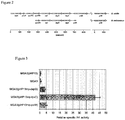
- the control strain MGA3(pHP13) was similar to the wild type in respect to both specific growth rate, maximum cell density and L-lysine production, indicating that pHP 13 cause no effects on these properties ( Figure 4 and Table 3).
- RNA concentrations were quantified using a NanoDrop® ND-1000 Spectrophotometer (NanoDrop Technologies). Primers for the real-time PCR experiments we designed by using the computer software Primer ExpressR v 2.0 (Applied Biosystems). Detection of PCR products was performed with the ABI 7500 System (Applied Biosystems) under the following profiles.
- reaction mixtures were incubated at 95 °C for 10 min to activate hot-start Taq polymerase followed by a two-step PCR protocol (denaturation for 15 sek at 95 °C followed by a combined annealing-extension step (with fluorescent data acquisition) for 1 min at 60 °C). This step was repeated in 40 cycles.
- the determination of the dissociation temperature was performed by a subsequent cycle with 15 sek at 95°C, 1 min at 60 °C and a final step at 95°C for 15 sek.
- the profile was reduced to the steps used for the primer efficiency test. Data acquisition and analysis were performed with the Sequence Detection software version v1.2.3 (Applied Biosystems Inc.) under standardized reaction with SYBR signal.
- Plasmid pHP13 (Jakobsen et al., 2006, supra) was digested with PciI, and the resulting cohesive ends were blunted by using T4 DNA Polymerase, and the ends religated to yield plasmid pTH1.
- Plasmid pHP13mp-lysC (Example 1) was digested with PstI/EcoRI and the 2.6 kb fragment was isolated and ligated into the corresponding sites of pTH1, yielding the cassette cloning an expression vector pTH1mp-lysC.
- This vector is analogous to the plasmid HP13mp-lysC and has a unique PciI site for one-step cloning of any coding gene downstream of the strong mdh promoter and in-frame with the mdh rbs region.
- DNA fragments with the coding regions of asd (1117 bp), dapA (904 bp), and lysA (1322 bp) were PCR amplified from B. methanolicus total DNA by using the following primer pairs: asd-F: 5'-GCGC ACATGTG GGTCAAGAAAATGGTCTTC-3' (SEQ ID NO: 30) asd-R: 5'-ATG GTACC TGCCCCCGAATTTTTGAAC-3'(SEQ ID NO: 31) dapA-F: 5'-GCGC ACATGTG GTTTCATTTGGTCGAATATC-3'(SEQ ID NO: 32) dapA-R: 5'-AT GGTACC GGCAGTAAAAACTCCATTGAT-3'(SEQ ID NO: 33) lysA-F: 5'-GCGC ACATGTG TATTTTCATGGCACAACA-3'(SEQ ID NO: 34) lysA-R: 5'-AT GGTACC GCAGCTTAGTATCTTACTCT-3
- the obtained PCR products were end digested with Pci I/ Kpn I and ligated into the corresponding sites of pTH1mp-lysC (substituting the lysC gene), yielding expression vectors pTH1mp-asd, pTH1mp-dapA, and pTH1mp-lysA, respectively.
- the inserts in all plasmids were verified by DNA sequencing.
- Plasmid pTH1mp-lysA was digested with SpeI/NcoI and the 1.8 kb fragment was ligated into vector pHP13mp-yclM digested with XbaI/NcoI, yielding plasmid pHP13mp-yclM+lysA.
- Plasmid pHP13mp-yclM was digested with SpeI/NcoI and the 1.9 kb fragment was purified and ligated into pTH1mp-dapA XbaI/NcoI sites, yielding expression vector pTHmp-dapA+ yclM.
- the vectors were transformed to B. methanolicus strain MGA3 by electroporation.
- Table 4 L-lysine production yields (mg/l) obtained in shake flask cultures of recombinant B. methanolicus strain MGA3 growing on methanol .
- Example 2 shows, as in Example 1, that overexpression of yclM results in much higher L-lysine production than seen with AKI (dapG) and AKII (lysC) genes. It is further shown that an improved effect on lysine production may be obtained by combining AKIII overexpression with overexpression of other genes of the lysine biosynthetic pathway such as dapA (encoding dihydropicolinate synthase) and lysA (encoding meso-dimainopimelate decarboxylase).
- dapA encoding dihydropicolinate synthase
- lysA encoding meso-dimainopimelate decarboxylase
Landscapes
- Chemical & Material Sciences (AREA)
- Life Sciences & Earth Sciences (AREA)
- Health & Medical Sciences (AREA)
- Engineering & Computer Science (AREA)
- Organic Chemistry (AREA)
- Wood Science & Technology (AREA)
- Zoology (AREA)
- Genetics & Genomics (AREA)
- Bioinformatics & Cheminformatics (AREA)
- Biotechnology (AREA)
- Microbiology (AREA)
- General Engineering & Computer Science (AREA)
- General Health & Medical Sciences (AREA)
- Biochemistry (AREA)
- Medicinal Chemistry (AREA)
- Biomedical Technology (AREA)
- Molecular Biology (AREA)
- Chemical Kinetics & Catalysis (AREA)
- General Chemical & Material Sciences (AREA)
- Tropical Medicine & Parasitology (AREA)
- Virology (AREA)
- Preparation Of Compounds By Using Micro-Organisms (AREA)
- Micro-Organisms Or Cultivation Processes Thereof (AREA)
- Enzymes And Modification Thereof (AREA)
Claims (18)
- Ein Verfahren zum Herstellen von L-Lysin in B. methanolicus, das besagte Verfahren aufweisend Einbringen eines Nukleinsäuremoleküls in den besagten B. methanolicus, das eine Nukleotidsequenz aufweist, die ein AKIII-Enzym kodiert, so dass ein AKIII-Enzym überexprimiert wird, wobei die besagte Nukleotidsequenz(i) die Nukleotidsequenz wie in SEQ ID NR: 3 aufgeführt oder eine Nukleotidsequenz mit mindestens 75% Identität zu SEQ ID NR: 3 (oder insbesondere mindestens 77, 79, 80, 81, 83, 85, 86, 87, 88, 89, 90, 91, 93, 95, 97, 98 oder 99% Sequenzidentität zu SEQ ID NR: 3) oder eine Nukleotidsequenz welche mit dem Komplement von SEQ ID NR: 3 unter hoch stringenten Bedingungen hybridisiert (0,1xSSC, 0,1% SDS, 65°C und Waschbedingungen: 2xSSC, 0,1% SDS, 65°C gefolgt von 0,1xSSC, 0,1% SDS, 65°C) ist; oder(ii) die Aminosäuresequenz wie in SEQ ID NR: 4 gezeigt oder eine Aminosäuresequenz, die mindestens 80% Sequenzidentität mit der Aminosäuresequenz von SEQ ID NR: 4 (oder insbesondere mindestens 82, 84, 86, 88, 90, 92, 94, 95, 96, 97, 98 oder 99% Sequenzidentität zu SEQ ID NR: 4) hat, kodiert.
- Ein B. methanolicus Mikroorganismus, der ein AKIII-Enzym überexprimiert, wobei der besagte B. methanolicus durch Einbringen eines Nukleinsäuremoleküls, das eine Nukleotidsequenz aufweist, die ein AKIII-Enzym kodiert, modifiziert wurde, wobei die besagte Nukleotidsequenz(i) die Nukleotidsequenz wie in SEQ ID NR: 3 aufgeführt oder eine Nukleotidsequenz mit mindestens 75% Identität zu SEQ ID NR: 3 (oder insbesondere mindestens 77, 79, 80, 81, 83, 85, 86, 87, 88, 89, 90, 91, 93, 95, 97, 98 oder 99% Sequenzidentität zu SEQ ID NR: 3) oder eine Nukleotidsequenz welche mit dem Komplement von SEQ ID NR: 3 unter hoch stringenten Bedingungen hybridisiert (0,1xSSC, 0,1% SDS, 65°C und Waschbedingungen: 2xSSC, 0,1% SDS, 65°C gefolgt von 0,1xSSC, 0,1% SDS, 65°C) ist; oder(ii) die Aminosäuresequenz wie in SEQ ID NR: 4 gezeigt oder eine Aminosäuresequenz, die mindestens 80% Sequenzidentität mit der Aminosäuresequenz von SEQ ID NR: 4 (oder insbesondere mindestens 82, 84, 86, 88, 90, 92, 94, 95, 96, 97, 98 oder 99% Sequenzidentität zu SEQ ID NR: 4) hat, kodiert.
- Das Verfahren oder der Mikroorganismus nach Anspruch 1 oder 2, wobei die besagte Nukleotidsequenz:(i) eine Nukleotidsequenz mit mindestens 90% Sequenzidentität zu SEQ ID NR: 3 ist; oder(ii) eine Aminosäuresequenz kodiert, die mindestens 90% Sequenzidentität zu SEQ ID NR: 4 hat.
- Das Verfahren oder der Mikroorganismus nach einem der Ansprüche 1 bis 3, wobei das AKIII sensitiv gegenüber Rückkopplungs-Inhibition ist.
- Das Verfahren oder der Mikroorganismus nach einem der Ansprüche 1 bis 3, wobei das AKIII resistent gegenüber Rückkopplungs-Inhibition ist.
- Das Verfahren oder der Mikroorganismus nach einem der Ansprüche 1 bis 5, wobei der B. methanolicus oder Mikroorganismus ein Wildtyp- B. methanolicus oder Mikroorganismus ist.
- Das Verfahren oder der Mikroorganismus nach einem der Ansprüche 1 bis 5, wobei der B. methanolicus oder Mikroorganismus ein auxotropher oder eine gegen ein Lysin-Analogon resistente Mutante ist.
- Das Verfahren oder der Mikroorganismus nach einem der Ansprüche 1 bis 7, wobei die AKIII in Kombination mit der Expression oder Überexpression von anderen Genen in dem Mikroorganismus überexprimiert wird.
- Das Verfahren oder der Mikroorganismus nach einem der Ansprüche 1 bis 8, wobei das Nukleinsäuremolekül, das eine Nukleotidsequenz aufweist, die eine AKIII kodiert, von einem nicht nativen Promoter exprimiert wird.
- Das Verfahren oder der Mikroorganismus nach Anspruch 9, wobei der Promoter ein starker Promoter ist.
- Das Verfahren oder der Mikroorganismus nach Anspruch 9 oder Anspruch 10, wobei die Expression von der Nukleotidsequenz keiner Transkriptions-Repression unterliegt.
- Ein Nukleinsäuremolekül, das ein Polypeptid mit einer AK-Aktivität kodiert oder das das Komplement davon ist, aufweisend oder bestehend aus einer Nukleotidsequenz ausgewählt aus der Gruppe bestehend aus:(i) der Nukleotidsequenz wie in SEQ ID NR: 1 oder 3 aufgeführt,(ii) einer Nukleotidsequenz mit mindestens 80% Sequenzidentität, insbesondere mindestens 82, 84, 86, 88, 90, 92, 94, 95, 96, 97, 98 oder 99% Sequenzidentität mit der Nukleotidsequenz wie in SEQ ID NR: 1 aufgeführt,(iii) einer Nukleotidsequenz mit mindestens 75% Sequenzidentität, insbesondere mindestens 77, 79, 80, 81, 83, 85, 86, 97, 88, 89, 90, 91, 93, 95, 97, 98 oder 99% Sequenzidentität mit der Nukleotidsequenz wie in SEQ ID NR: 3 aufgeführt;(iv) eine Nukleotidsequenz, die das Polypeptid kodiert, dessen Aminosäuresequenz in SEQ ID NR: 2 oder 4 aufgeführt ist;(v) eine Nukleotidsequenz, die ein Polypeptid kodiert, das eine Aminosäuresequenz mit mindestens 90% Sequenzidentität, bevorzugt mindestens 92, 93, 94, 95, 96, 97, 98 oder 99% Sequenzidentität mit der Aminosäuresequenz wie in SEQ ID NR: 2 aufgeführt hat;(vi) eine Nukleotidsequenz, die ein Polypeptid kodiert, das eine Aminosäuresequenz mit mindestens 80% Sequenzidentität, bevorzugt mindestens 82, 84, 86, 88, 90, 92, 94, 95, 96, 97, 98 oder 99% Sequenzidentität mit einer Aminosäuresequenz wie in SEQ ID NR: 4 aufgeführt hat; und(vii) eine Nukleotidsequenz, die komplementär zu der Nukleotidsequenz nach einer von (i) bis (vi) ist.
- Das Nukleinsäuremolekül nach Anspruch 12, wobei die besagte Nukleotidsequenz:(i) mindestens 90% Sequenzidentität mit der in SEQ ID NR: 1 oder SEQ ID NR: 3 aufgeführten Nukleotidsequenz hat;(ii) ein Polypeptid kodiert, das eine Aminosäuresequenz mit mindestens 95% Sequenzidentität mit der in SEQ ID NR: 2 aufgeführten Aminosäuresequenz hat; oder(iii) ein Polypeptid kodiert, das eine Aminosäuresequenz mit mindestens 90% Sequenzidentität mit der in SEQ ID NR: 4 aufgeführten Aminosäuresequenz hat.
- Ein Polypeptid mit AK-Aktivität und aufweisend oder bestehend aus einer Sequenz von Aminosäuren, die ausgewählt sind aus der Gruppe bestehend aus:(i) der Aminosäuresequenz wie in SEQ ID NR: 2 oder 4 aufgeführt,(ii) der Aminosäuresequenz mit mindestens 90% Sequenzidentität, bevorzugt mindestens 92, 93, 94, 95, 96, 97, 98 oder 99% Sequenzidentität mit der Aminosäuresequenz wie in SEQ ID NR: 2 aufgeführt; und(iii) einer Aminosäuresequenz mit mindestens 80% Sequenzidentität, bevorzugt mindestens 82, 84, 86, 88, 90, 92, 94, 95, 96, 97, 98 oder 99% Sequenzidentität mit der Aminosäuresequenz wie in SEQ ID NR: 4 aufgeführt.
- Das Polypeptid nach Anspruch 14, wobei die besagte Aminosäuresequenz:(i) mindestens 95% Sequenzidentität mit der in SEQ ID NR: 2 aufgeführten Aminosäuresequenz hat; oder(ii) mindestens 90% Sequenzidentität mit der in SEQ ID NR: 4 aufgeführten Aminosäuresequenz hat.
- Ein Konstrukt, das ein Nukleinsäuremolekül aufweist, das ein AKIII-Enzym kodiert, das operativ mit einem nicht nativen Promoter verbunden ist, wobei das besagte Nukleinsäuremolekül wie in Anspruch 12 oder 13 mit Bezug auf SEQ ID NR: 3 oder SEQ ID NR: 4 definiert ist.
- Ein Vektor, der ein Nukleinsäuremolekül wie in Anspruch 12 oder 13 definiert oder ein Konstrukt wie in Anspruch 16 definiert, aufweist.
- Ein Wirtsmikroorganismus, in den ein Nukleinsäuremolekül, Konstrukt oder Vektor wie in einem der Ansprüche 12, 13, 16 oder 17 definiert, eingebracht wurde.
Applications Claiming Priority (2)
| Application Number | Priority Date | Filing Date | Title |
|---|---|---|---|
| GBGB0809169.6A GB0809169D0 (en) | 2008-05-20 | 2008-05-20 | Method of L-lysine production |
| PCT/GB2009/001265 WO2009141607A1 (en) | 2008-05-20 | 2009-05-15 | Method of l-lysine production |
Publications (2)
| Publication Number | Publication Date |
|---|---|
| EP2297329A1 EP2297329A1 (de) | 2011-03-23 |
| EP2297329B1 true EP2297329B1 (de) | 2017-03-15 |
Family
ID=39596211
Family Applications (1)
| Application Number | Title | Priority Date | Filing Date |
|---|---|---|---|
| EP09750085.4A Active EP2297329B1 (de) | 2008-05-20 | 2009-05-15 | L-lysin-herstellungsverfahren |
Country Status (7)
| Country | Link |
|---|---|
| US (1) | US8859244B2 (de) |
| EP (1) | EP2297329B1 (de) |
| JP (1) | JP5707318B2 (de) |
| DK (1) | DK2297329T3 (de) |
| ES (1) | ES2626405T3 (de) |
| GB (1) | GB0809169D0 (de) |
| WO (1) | WO2009141607A1 (de) |
Families Citing this family (5)
| Publication number | Priority date | Publication date | Assignee | Title |
|---|---|---|---|---|
| JP2011067095A (ja) * | 2008-01-10 | 2011-04-07 | Ajinomoto Co Inc | 発酵法による目的物質の製造法 |
| MY171302A (en) * | 2011-12-21 | 2019-10-08 | Cj Cheiljedang Corp | Method for producing l-lysine using microorganisms having ability to produce l-lysine |
| EP3052635A4 (de) | 2013-10-04 | 2017-06-21 | Genomatica, Inc. | Alkoholdehydrogenasevarianten |
| EP3368548B1 (de) | 2015-10-30 | 2023-08-23 | Genomatica, Inc. | Methanoldehydrogenasefusionsproteine |
| DE102016116794A1 (de) | 2016-09-08 | 2018-03-08 | Universität Bielefeld | Verfahren und Mittel zur Herstellung von Aminolävulinsäure |
Family Cites Families (10)
| Publication number | Priority date | Publication date | Assignee | Title |
|---|---|---|---|---|
| US5426052A (en) | 1989-04-10 | 1995-06-20 | Regents Of The University Of Minnesota | Bacillus MGA3 diaminopimelate decarboxylase gene |
| US5243039A (en) | 1989-04-10 | 1993-09-07 | Regents Of The University Of Minnesota | Bacillus MGA3 aspartokinase II gene |
| US6110713A (en) | 1993-03-23 | 2000-08-29 | Regents Of The University Of Minnesota | Production of glutamic acid and lysine using auxotrophic mutants of Bacillus methanolicus |
| JP4088982B2 (ja) | 1996-10-15 | 2008-05-21 | 味の素株式会社 | 発酵法によるl−アミノ酸の製造法 |
| US6083728A (en) | 1997-10-17 | 2000-07-04 | Regents Of The University Of Minnesota | Production of glutamate using wild type Bacillus methanolicus |
| JP3713956B2 (ja) | 1998-05-29 | 2005-11-09 | 富士ゼロックス株式会社 | 面発光型半導体レーザ素子の製造方法 |
| EP1063288A3 (de) * | 1999-06-15 | 2001-01-17 | Ajinomoto Co., Inc. | Verfahren zur Herstellung von L-Lysin |
| JP2001057896A (ja) * | 1999-06-15 | 2001-03-06 | Ajinomoto Co Inc | L−リジンの製造法 |
| JP2010017081A (ja) | 2006-10-10 | 2010-01-28 | Ajinomoto Co Inc | L−アミノ酸の製造法 |
| US20090215133A1 (en) * | 2007-02-02 | 2009-08-27 | Evonik Degussa Gmbh | Production of l-lysine and l-lysine-containing feed additives |
-
2008
- 2008-05-20 GB GBGB0809169.6A patent/GB0809169D0/en not_active Ceased
-
2009
- 2009-05-15 DK DK09750085.4T patent/DK2297329T3/en active
- 2009-05-15 EP EP09750085.4A patent/EP2297329B1/de active Active
- 2009-05-15 JP JP2011510043A patent/JP5707318B2/ja active Active
- 2009-05-15 WO PCT/GB2009/001265 patent/WO2009141607A1/en not_active Ceased
- 2009-05-15 US US12/993,399 patent/US8859244B2/en active Active
- 2009-05-15 ES ES09750085.4T patent/ES2626405T3/es active Active
Non-Patent Citations (2)
| Title |
|---|
| DATABASE EMBL [online] 30 April 2009 (2009-04-30), "Sequence 1802 from patent US 7494798.", retrieved from EBI accession no. EM_PAT:GP227071 Database accession no. GP227071 * |
| DATABASE EMBL [online] 30 April 2009 (2009-04-30), "Sequence 422 from patent US 7494798.", retrieved from EBI accession no. EM_PAT:GP225691 Database accession no. GP225691 * |
Also Published As
| Publication number | Publication date |
|---|---|
| DK2297329T3 (en) | 2017-06-12 |
| US20110177568A1 (en) | 2011-07-21 |
| GB0809169D0 (en) | 2008-06-25 |
| EP2297329A1 (de) | 2011-03-23 |
| JP2011520462A (ja) | 2011-07-21 |
| US8859244B2 (en) | 2014-10-14 |
| JP5707318B2 (ja) | 2015-04-30 |
| WO2009141607A1 (en) | 2009-11-26 |
| ES2626405T3 (es) | 2017-07-25 |
Similar Documents
| Publication | Publication Date | Title |
|---|---|---|
| US11667936B2 (en) | Modified polypeptide with attenuated activity of citrate synthase and method for producing L-amino acid using the same | |
| AU2019212416B2 (en) | A microorganism of the genus corynebacterium producing purine nucleotide and a method for producing purine nucleotide by using the same | |
| EP3404101B1 (de) | Verfahren zur herstellung von l-lysin mit mikroorganismen mit fähigkeit zur herstellung von l-lysin | |
| JP5486029B2 (ja) | 遺伝子増幅によるリジン産生の増加 | |
| KR101592140B1 (ko) | 자일로즈 이용능이 부여된 코리네박테리움 속 미생물 및 이를 이용한 l-라이신의 생산방법 | |
| EP3597738B1 (de) | Modifizierte homoserin-dehydrogenase und verfahren zur herstellung von homoserin oder l-aminosäure aus homoserin unter verwendung derselben | |
| EP2239336B1 (de) | Mikroorganismen zur herstellung von l-aminosäuren sowie verfahren zur herstellung von l-aminosäuren damit | |
| US10501503B2 (en) | Modified membrane permeability | |
| US8859244B2 (en) | Method of L-lysine production | |
| US10597686B2 (en) | Polypeptide having the activity of exporting O-acetyl-homoserine | |
| CN115052976B (zh) | 新型乙酰羟酸合酶变体和包括其的微生物 | |
| Xu et al. | Expression of the Escherichia Coli TdcB gene encoding threonine dehydratase in L-isoleucine-overproducing Corynebacterium Glutamicum Yilw | |
| KR20260047566A (ko) | 변형 에스케리키아 콜라이 및 발효를 통한 l-아미노산 생산에서의 이의 용도 | |
| Wang | Jianxun Zhao, Xiaoqing Hu, Ye Li & |
Legal Events
| Date | Code | Title | Description |
|---|---|---|---|
| PUAI | Public reference made under article 153(3) epc to a published international application that has entered the european phase |
Free format text: ORIGINAL CODE: 0009012 |
|
| 17P | Request for examination filed |
Effective date: 20101220 |
|
| AK | Designated contracting states |
Kind code of ref document: A1 Designated state(s): AT BE BG CH CY CZ DE DK EE ES FI FR GB GR HR HU IE IS IT LI LT LU LV MC MK MT NL NO PL PT RO SE SI SK TR |
|
| AX | Request for extension of the european patent |
Extension state: AL BA RS |
|
| DAX | Request for extension of the european patent (deleted) | ||
| 17Q | First examination report despatched |
Effective date: 20140424 |
|
| RIC1 | Information provided on ipc code assigned before grant |
Ipc: C12N 9/12 20060101ALI20141124BHEP Ipc: C12N 1/32 20060101ALI20141124BHEP Ipc: C12P 13/08 20060101AFI20141124BHEP |
|
| RAP1 | Party data changed (applicant data changed or rights of an application transferred) |
Owner name: SINTEF TTO AS |
|
| GRAP | Despatch of communication of intention to grant a patent |
Free format text: ORIGINAL CODE: EPIDOSNIGR1 |
|
| INTG | Intention to grant announced |
Effective date: 20160908 |
|
| GRAS | Grant fee paid |
Free format text: ORIGINAL CODE: EPIDOSNIGR3 |
|
| GRAJ | Information related to disapproval of communication of intention to grant by the applicant or resumption of examination proceedings by the epo deleted |
Free format text: ORIGINAL CODE: EPIDOSDIGR1 |
|
| GRAL | Information related to payment of fee for publishing/printing deleted |
Free format text: ORIGINAL CODE: EPIDOSDIGR3 |
|
| GRAJ | Information related to disapproval of communication of intention to grant by the applicant or resumption of examination proceedings by the epo deleted |
Free format text: ORIGINAL CODE: EPIDOSDIGR1 |
|
| GRAL | Information related to payment of fee for publishing/printing deleted |
Free format text: ORIGINAL CODE: EPIDOSDIGR3 |
|
| GRAR | Information related to intention to grant a patent recorded |
Free format text: ORIGINAL CODE: EPIDOSNIGR71 |
|
| GRAA | (expected) grant |
Free format text: ORIGINAL CODE: 0009210 |
|
| INTC | Intention to grant announced (deleted) | ||
| INTC | Intention to grant announced (deleted) | ||
| AK | Designated contracting states |
Kind code of ref document: B1 Designated state(s): AT BE BG CH CY CZ DE DK EE ES FI FR GB GR HR HU IE IS IT LI LT LU LV MC MK MT NL NO PL PT RO SE SI SK TR |
|
| INTG | Intention to grant announced |
Effective date: 20170207 |
|
| REG | Reference to a national code |
Ref country code: CH Ref legal event code: EP Ref country code: GB Ref legal event code: FG4D |
|
| REG | Reference to a national code |
Ref country code: IE Ref legal event code: FG4D |
|
| REG | Reference to a national code |
Ref country code: AT Ref legal event code: REF Ref document number: 875626 Country of ref document: AT Kind code of ref document: T Effective date: 20170415 |
|
| REG | Reference to a national code |
Ref country code: DE Ref legal event code: R096 Ref document number: 602009044764 Country of ref document: DE |
|
| REG | Reference to a national code |
Ref country code: FR Ref legal event code: PLFP Year of fee payment: 9 |
|
| REG | Reference to a national code |
Ref country code: SE Ref legal event code: TRGR Ref country code: NL Ref legal event code: FP |
|
| REG | Reference to a national code |
Ref country code: DK Ref legal event code: T3 Effective date: 20170606 |
|
| REG | Reference to a national code |
Ref country code: NO Ref legal event code: T2 Effective date: 20170315 |
|
| REG | Reference to a national code |
Ref country code: ES Ref legal event code: FG2A Ref document number: 2626405 Country of ref document: ES Kind code of ref document: T3 Effective date: 20170725 Ref country code: LT Ref legal event code: MG4D |
|
| PG25 | Lapsed in a contracting state [announced via postgrant information from national office to epo] |
Ref country code: FI Free format text: LAPSE BECAUSE OF FAILURE TO SUBMIT A TRANSLATION OF THE DESCRIPTION OR TO PAY THE FEE WITHIN THE PRESCRIBED TIME-LIMIT Effective date: 20170315 Ref country code: LT Free format text: LAPSE BECAUSE OF FAILURE TO SUBMIT A TRANSLATION OF THE DESCRIPTION OR TO PAY THE FEE WITHIN THE PRESCRIBED TIME-LIMIT Effective date: 20170315 Ref country code: GR Free format text: LAPSE BECAUSE OF FAILURE TO SUBMIT A TRANSLATION OF THE DESCRIPTION OR TO PAY THE FEE WITHIN THE PRESCRIBED TIME-LIMIT Effective date: 20170616 Ref country code: HR Free format text: LAPSE BECAUSE OF FAILURE TO SUBMIT A TRANSLATION OF THE DESCRIPTION OR TO PAY THE FEE WITHIN THE PRESCRIBED TIME-LIMIT Effective date: 20170315 |
|
| REG | Reference to a national code |
Ref country code: AT Ref legal event code: MK05 Ref document number: 875626 Country of ref document: AT Kind code of ref document: T Effective date: 20170315 |
|
| PG25 | Lapsed in a contracting state [announced via postgrant information from national office to epo] |
Ref country code: BG Free format text: LAPSE BECAUSE OF FAILURE TO SUBMIT A TRANSLATION OF THE DESCRIPTION OR TO PAY THE FEE WITHIN THE PRESCRIBED TIME-LIMIT Effective date: 20170615 Ref country code: LU Free format text: LAPSE BECAUSE OF NON-PAYMENT OF DUE FEES Effective date: 20170531 Ref country code: LV Free format text: LAPSE BECAUSE OF FAILURE TO SUBMIT A TRANSLATION OF THE DESCRIPTION OR TO PAY THE FEE WITHIN THE PRESCRIBED TIME-LIMIT Effective date: 20170315 |
|
| PG25 | Lapsed in a contracting state [announced via postgrant information from national office to epo] |
Ref country code: EE Free format text: LAPSE BECAUSE OF FAILURE TO SUBMIT A TRANSLATION OF THE DESCRIPTION OR TO PAY THE FEE WITHIN THE PRESCRIBED TIME-LIMIT Effective date: 20170315 Ref country code: RO Free format text: LAPSE BECAUSE OF FAILURE TO SUBMIT A TRANSLATION OF THE DESCRIPTION OR TO PAY THE FEE WITHIN THE PRESCRIBED TIME-LIMIT Effective date: 20170315 Ref country code: CZ Free format text: LAPSE BECAUSE OF FAILURE TO SUBMIT A TRANSLATION OF THE DESCRIPTION OR TO PAY THE FEE WITHIN THE PRESCRIBED TIME-LIMIT Effective date: 20170315 Ref country code: SK Free format text: LAPSE BECAUSE OF FAILURE TO SUBMIT A TRANSLATION OF THE DESCRIPTION OR TO PAY THE FEE WITHIN THE PRESCRIBED TIME-LIMIT Effective date: 20170315 Ref country code: AT Free format text: LAPSE BECAUSE OF FAILURE TO SUBMIT A TRANSLATION OF THE DESCRIPTION OR TO PAY THE FEE WITHIN THE PRESCRIBED TIME-LIMIT Effective date: 20170315 |
|
| PG25 | Lapsed in a contracting state [announced via postgrant information from national office to epo] |
Ref country code: IS Free format text: LAPSE BECAUSE OF FAILURE TO SUBMIT A TRANSLATION OF THE DESCRIPTION OR TO PAY THE FEE WITHIN THE PRESCRIBED TIME-LIMIT Effective date: 20170715 Ref country code: PT Free format text: LAPSE BECAUSE OF FAILURE TO SUBMIT A TRANSLATION OF THE DESCRIPTION OR TO PAY THE FEE WITHIN THE PRESCRIBED TIME-LIMIT Effective date: 20170717 Ref country code: PL Free format text: LAPSE BECAUSE OF FAILURE TO SUBMIT A TRANSLATION OF THE DESCRIPTION OR TO PAY THE FEE WITHIN THE PRESCRIBED TIME-LIMIT Effective date: 20170315 |
|
| REG | Reference to a national code |
Ref country code: DE Ref legal event code: R097 Ref document number: 602009044764 Country of ref document: DE |
|
| PLBE | No opposition filed within time limit |
Free format text: ORIGINAL CODE: 0009261 |
|
| STAA | Information on the status of an ep patent application or granted ep patent |
Free format text: STATUS: NO OPPOSITION FILED WITHIN TIME LIMIT |
|
| PG25 | Lapsed in a contracting state [announced via postgrant information from national office to epo] |
Ref country code: MC Free format text: LAPSE BECAUSE OF FAILURE TO SUBMIT A TRANSLATION OF THE DESCRIPTION OR TO PAY THE FEE WITHIN THE PRESCRIBED TIME-LIMIT Effective date: 20170315 |
|
| 26N | No opposition filed |
Effective date: 20171218 |
|
| PG25 | Lapsed in a contracting state [announced via postgrant information from national office to epo] |
Ref country code: SI Free format text: LAPSE BECAUSE OF FAILURE TO SUBMIT A TRANSLATION OF THE DESCRIPTION OR TO PAY THE FEE WITHIN THE PRESCRIBED TIME-LIMIT Effective date: 20170315 |
|
| PG25 | Lapsed in a contracting state [announced via postgrant information from national office to epo] |
Ref country code: LU Free format text: LAPSE BECAUSE OF NON-PAYMENT OF DUE FEES Effective date: 20170515 |
|
| REG | Reference to a national code |
Ref country code: FR Ref legal event code: PLFP Year of fee payment: 10 |
|
| PG25 | Lapsed in a contracting state [announced via postgrant information from national office to epo] |
Ref country code: MT Free format text: LAPSE BECAUSE OF NON-PAYMENT OF DUE FEES Effective date: 20170515 |
|
| PG25 | Lapsed in a contracting state [announced via postgrant information from national office to epo] |
Ref country code: HU Free format text: LAPSE BECAUSE OF FAILURE TO SUBMIT A TRANSLATION OF THE DESCRIPTION OR TO PAY THE FEE WITHIN THE PRESCRIBED TIME-LIMIT; INVALID AB INITIO Effective date: 20090515 |
|
| PG25 | Lapsed in a contracting state [announced via postgrant information from national office to epo] |
Ref country code: CY Free format text: LAPSE BECAUSE OF NON-PAYMENT OF DUE FEES Effective date: 20170315 |
|
| PG25 | Lapsed in a contracting state [announced via postgrant information from national office to epo] |
Ref country code: MK Free format text: LAPSE BECAUSE OF FAILURE TO SUBMIT A TRANSLATION OF THE DESCRIPTION OR TO PAY THE FEE WITHIN THE PRESCRIBED TIME-LIMIT Effective date: 20170315 |
|
| PG25 | Lapsed in a contracting state [announced via postgrant information from national office to epo] |
Ref country code: TR Free format text: LAPSE BECAUSE OF FAILURE TO SUBMIT A TRANSLATION OF THE DESCRIPTION OR TO PAY THE FEE WITHIN THE PRESCRIBED TIME-LIMIT Effective date: 20170315 |
|
| REG | Reference to a national code |
Ref country code: DE Ref legal event code: R082 Ref document number: 602009044764 Country of ref document: DE |
|
| P01 | Opt-out of the competence of the unified patent court (upc) registered |
Effective date: 20230524 |
|
| PGFP | Annual fee paid to national office [announced via postgrant information from national office to epo] |
Ref country code: NL Payment date: 20250522 Year of fee payment: 17 |
|
| PGFP | Annual fee paid to national office [announced via postgrant information from national office to epo] |
Ref country code: DE Payment date: 20250520 Year of fee payment: 17 |
|
| PGFP | Annual fee paid to national office [announced via postgrant information from national office to epo] |
Ref country code: GB Payment date: 20250520 Year of fee payment: 17 Ref country code: ES Payment date: 20250611 Year of fee payment: 17 Ref country code: DK Payment date: 20250522 Year of fee payment: 17 |
|
| PGFP | Annual fee paid to national office [announced via postgrant information from national office to epo] |
Ref country code: NO Payment date: 20250523 Year of fee payment: 17 |
|
| PGFP | Annual fee paid to national office [announced via postgrant information from national office to epo] |
Ref country code: BE Payment date: 20250522 Year of fee payment: 17 Ref country code: IT Payment date: 20250528 Year of fee payment: 17 |
|
| PGFP | Annual fee paid to national office [announced via postgrant information from national office to epo] |
Ref country code: FR Payment date: 20250520 Year of fee payment: 17 |
|
| PGFP | Annual fee paid to national office [announced via postgrant information from national office to epo] |
Ref country code: CH Payment date: 20250601 Year of fee payment: 17 |
|
| PGFP | Annual fee paid to national office [announced via postgrant information from national office to epo] |
Ref country code: IE Payment date: 20250521 Year of fee payment: 17 |
|
| PGFP | Annual fee paid to national office [announced via postgrant information from national office to epo] |
Ref country code: SE Payment date: 20250522 Year of fee payment: 17 |