EP2287744A1 - Nodma cache - Google Patents
Nodma cache Download PDFInfo
- Publication number
- EP2287744A1 EP2287744A1 EP10012451A EP10012451A EP2287744A1 EP 2287744 A1 EP2287744 A1 EP 2287744A1 EP 10012451 A EP10012451 A EP 10012451A EP 10012451 A EP10012451 A EP 10012451A EP 2287744 A1 EP2287744 A1 EP 2287744A1
- Authority
- EP
- European Patent Office
- Prior art keywords
- cache
- memory
- nodma
- superpage
- access
- Prior art date
- Legal status (The legal status is an assumption and is not a legal conclusion. Google has not performed a legal analysis and makes no representation as to the accuracy of the status listed.)
- Ceased
Links
Images
Classifications
-
- G—PHYSICS
- G06—COMPUTING OR CALCULATING; COUNTING
- G06F—ELECTRIC DIGITAL DATA PROCESSING
- G06F12/00—Accessing, addressing or allocating within memory systems or architectures
- G06F12/14—Protection against unauthorised use of memory or access to memory
- G06F12/1416—Protection against unauthorised use of memory or access to memory by checking the object accessibility, e.g. type of access defined by the memory independently of subject rights
- G06F12/1425—Protection against unauthorised use of memory or access to memory by checking the object accessibility, e.g. type of access defined by the memory independently of subject rights the protection being physical, e.g. cell, word, block
-
- G—PHYSICS
- G06—COMPUTING OR CALCULATING; COUNTING
- G06F—ELECTRIC DIGITAL DATA PROCESSING
- G06F12/00—Accessing, addressing or allocating within memory systems or architectures
- G06F12/02—Addressing or allocation; Relocation
- G06F12/08—Addressing or allocation; Relocation in hierarchically structured memory systems, e.g. virtual memory systems
-
- G—PHYSICS
- G06—COMPUTING OR CALCULATING; COUNTING
- G06F—ELECTRIC DIGITAL DATA PROCESSING
- G06F12/00—Accessing, addressing or allocating within memory systems or architectures
- G06F12/14—Protection against unauthorised use of memory or access to memory
- G06F12/1416—Protection against unauthorised use of memory or access to memory by checking the object accessibility, e.g. type of access defined by the memory independently of subject rights
- G06F12/1425—Protection against unauthorised use of memory or access to memory by checking the object accessibility, e.g. type of access defined by the memory independently of subject rights the protection being physical, e.g. cell, word, block
- G06F12/1441—Protection against unauthorised use of memory or access to memory by checking the object accessibility, e.g. type of access defined by the memory independently of subject rights the protection being physical, e.g. cell, word, block for a range
-
- G—PHYSICS
- G06—COMPUTING OR CALCULATING; COUNTING
- G06F—ELECTRIC DIGITAL DATA PROCESSING
- G06F12/00—Accessing, addressing or allocating within memory systems or architectures
- G06F12/14—Protection against unauthorised use of memory or access to memory
- G06F12/1416—Protection against unauthorised use of memory or access to memory by checking the object accessibility, e.g. type of access defined by the memory independently of subject rights
- G06F12/145—Protection against unauthorised use of memory or access to memory by checking the object accessibility, e.g. type of access defined by the memory independently of subject rights the protection being virtual, e.g. for virtual blocks or segments before a translation mechanism
Definitions
- the invention relates to security devices for protecting sensitive data from inappropriate access by I/O devices. More specifically, the invention relates to a cache for a NoDMA table that tracks the segments of memory that contain sensitive data.
- DMA controller allows peripheral devices such as network cards to read and write to system memory with minimal usage of the central processing unit.
- I/O devices can circumvent the security measures provided by an operating system. This may be achieved by making requests for memory access to segments of memory containing sensitive information that is outside the segment of system memory designated for use by the peripheral device.
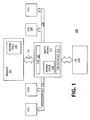
- Figure 1 is a block diagram of a computer system including a NoDMA cache.
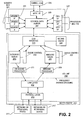
- Figure 2 is a block diagram of input and output dataflow through a chipset implementing NoDMA.
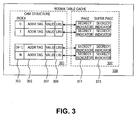
- Figure 3 is a diagram of a NoDMA cache structure.
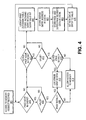
- Figure 4 is a flow chart of a NoDMA cache system.
- Figure 1 illustrates one embodiment of a computer system 100 including a chipset ("north bridge") 117, a set of central processing units (CPUs) 105 and system memory 101.
- the set of CPUs 105 is connected to the northbridge 117 via processor bus 119.
- computer system 100 contains multiple processors 105 to support multiprocessing in a server environment.
- computer system 100 may include a single CPU.
- the system memory 101 is connected to the northbridge 117 via memory bus 121.
- System memory 101 includes a no direct memory access (NoDMA) table 103.
- NoDMA no direct memory access
- system memory 101 is a set of random access memory devices such as a synchronous dynamic random access memory (SDRAM), double data rate random access memory (DDR RAM), or similar devices.
- SDRAM synchronous dynamic random access memory
- DDR RAM double data rate random access memory
- the memory system 101 may also include registers and similar storage devices.
- a NoDMA table 103 is stored in system memory 101, which tracks the segments of the system memory 101 that contain sensitive data. Sensitive data may include social security numbers, financial account numbers, passwords, and similar data.
- the NoDMA table 103 data can be used by an operating system (OS) to restrict access to memory segments containing sensitive data by flagging an entry in the NoDMA table 103 corresponding to the segment of memory containing the sensitive data and allowing only those programs that are authorized to access secret information to access the protected sections of memory 101.
- system memory 101 is segmented into pages. Pages can vary in size as determined by the operating system. In one embodiment, the pages are four kilobytes in size.
- the NoDMA table 103 is structured as a contiguous set of bits each corresponding to a page of memory 101. If a page contains sensitive data the operating system will 'set' the bit corresponding to that page in the NoDMA table 103.
- the base or start of the NoDMA table 103 is relocatable in system memory 101.
- an operating system, basic input output system (BIOS) or similar system can relocate the NoDMA table 103, for example after boot of system 100.
- NoDMA table 103 is located in system memory 101 based on the start address stored in the base register.
- NoDMA table 103 is sized according to data stored in a size register. When NoDMA table 103 is enabled, all accesses by an I/O device must be checked against the table 103.
- the NoDMA table 103 is aligned to start at a page boundary and end at a page boundary. This alignment simplifies the use of the NoDMA table 103.
- the NoDMA table 103 may start at any address in memory 101 that allows sufficient contiguous space for the table 103. Each bit from the starting point to the end point of the NoDMA table 103 indicates the access privilege for non-CPU accesses of each page of memory 101 starting with address 0 to cover the entire memory address space that needs to be protected.
- the northbridge 117 When the northbridge 117 needs to check access rights privileges for a particular address, it can determine easily the access privileges for the page because the northbridge 117 has access to the starting address of the NoDMA table 103 and the page address of the page to be accessed. Thus, the corresponding NoDMA table 103 entry can be easily calculated and accessed.
- northbridge 117 handles communication between system memory 101, CPUs 105 and I/O devices 115.
- the northbridge 117 includes a central data buffer (CDB) which processes incoming memory access requests from CPUs 105, I/O devices and sources 115.
- Central control block (CDB interface) 113 handles initial processing of incoming memory access requests and final processing of outgoing requests. Memory access requests waiting to be processed by CDB 107 or CDB interface 113 are stored in queues.
- CDB 107 and CDB interface 113 process memory requests from I/O devices 115 and send requested data from system memory 101 to I/O devices 115.
- the northbridge 117 includes a set of queues that store incoming and outgoing memory access requests (e.g., read and write requests). In one embodiment, the queues are first in first out queues (FIFOs) or employ a similar queue management scheme.
- the northbridge 117 also includes a NoDMA cache 109, which stores recently requested NoDMA table entries. This cache 109 is maintained and used by the CDB interface 113 before accessing memory 101. CDB interface 113 also manages incoming and outgoing messages in their respective queues.
- the northbridge 117 also includes a set of registers related to the function of NoDMA table 103 and NoDMA cache 109. These registers include status registers, a base address register that indicates the address in memory 101 where NoDMA table 103 starts, and a size register that indicates the size of NoDMA table 103 in system memory 101.
- northbridge 117 protects memory 101 from access by non-CPU devices. Segments of memory that contain protected data cannot be read or written to by a non-CPU device. Protected pages are not static and pages can be moved into and out of protected status.
- northbridge 117 uses NoDMA table 103 and NoDMA cache 109 to enforce this system. NoDMA cache 109 aids in the I/O performance.
- I/O access to a NoDMA table 103 region of memory 101 is always denied even when NoDMA table 103 is disabled. Any attempts to access this region of system memory 101 cause an error, are logged by the northbridge 117 chipset and the system is reset.
- the I/O source 115 may be a communication control device ("southbridge") which handles communication between peripheral devices (e.g., storage drives, modems, network cards and similar devices) and other peripheral devices or the northbridge 117.
- the southbridge 115 or northbridge 117 may have multiple I/O units that can be configured to various widths of ports.
- the I/O units can support communication protocols including PCI-Express, Hublink (HL ), Peripheral Component Interconnect (PCI) and similar systems.
- a separate NoDMA cache 109 may be dedicated to each I/O unit or a subset of the total units in order to improve the performance of the NoDMA verification.
- an I/O source 115 may be a set of peripheral devices directly connected to northbridge 117.
- Figure 2 is a block diagram of northbridge 117. This diagram illustrates the structures that support a memory access request from a peripheral device 217 to system memory 101 and the return of requested or outgoing data.
- Network or peripheral devices 217 communicate over a physical layer 215 and link layer 213 with inbound processor or logic 209 and outbound processor or logic 211 of I/O unit 250.
- Inbound processor 209 receives memory access requests and messages from the link layer 213 and places these messages in the inbound queue 201.
- inbound queue 201 and outbound queue 203 are each composed of a number of queues that each handle a specific type of message or request or a defined set of requests or message types.
- Inbound queue control 207 manages the movement of data through queue 201 which is read by CDB interface 113.
- CDB interface 113 processes memory access requests and may generate response messages (e.g., when processing read operations) that are sent to the outbound queue 203.
- Dataflow through outbound queue 203 is controlled by outbound queue controller 205.
- outbound and inbound queues 201 and 203 there are multiple outbound and inbound queues 201 and 203, that correspond to the message, or memory access types used by PCI-Express, HL, PCI or other similar systems.
- Outbound processor 211 sends the response data over the link layer 213 and physical layer 215 to peripheral device 217.
- outbound logic 211 and inbound processor 209 handle the transmission of data coming from an I/O communication bus running at a different speed than northbridge 117.
- CDB interface 113 and CDB 107 perform predictive prefetchs of requested memory by looking ahead in the inbound queues 201.
- the CDB interface 113 is responsible for making requests to the CDB and servicing the requests.
- CDB interface 113 enforces access rights to the system memory 101, tracks outstanding requests to CDB 107, services outstanding DMA read requests, performs DMA writes, tracks inbound completions, interrupts and similar functions.
- the CDB interface 113 performs the access rights checks for the memory accesses from I/O devices to ensure security in the system. If an I/O device tries to access a region in memory for which it does not have access rights, then the CDB interface 113 denies access to that request. For memory reads as well as any access that needs completion, it sends a master-abort response indicating to the requestor that the access was invalid. For memory writes and other transactions that do not need a response, the write is dropped by the control logic of the CDB interface 113. In either case, the security violation is logged by northbridge 117.
- CDB 107 interacts with the CDB interface 113, memory bus interface 231, CPU bus interface 227 and other interfaces 229 to route and forward data between the Input-Output unit 250, processor bus 119, and memory bus 121.
- CDB 107 also handles input and output to a System Management Bus (SMbus), Joint Test Action Group (JTAG) 225 or similar interface.
- SMbus System Management Bus
- JTAG Joint Test Action Group
- the northbridge 117 checks the NoDMA cache 109 and NoDMA table 103 when receiving SMBus, JTAG, and similar interface accesses. These interfaces allow system administrators or service personnel to monitor and diagnose a system. Memory accesses from SMBus, JTAG or similar interfaces are processed similar to memory accesses of peripheral devices. The memory accesses from SMBus, JTAG or similar interfaces are checked against the NoDMA table 103 and NoDMA cache 109. This prevents even system administrators or service personnel from bypassing page protection mechanisms of an OS and accessing pages with secret information.
- northbridge 117 can be configured such that SMBus, JTAG and similar interface accesses are not checked against the NoDMA table, or a security level setting can be adjusted to enable or disable the NoDMA check for these interfaces.
- Figure 3 is a diagram of the structure of a NoDMA table cache 109.
- cache 109 reduces bandwidth loss caused by accessing NoDMA table 103 in system memory 101.
- the NoDMA table 103 and cache 109 eliminate the need for a blockmap of memory to track pages with secrets.
- memory accesses in computer system 100 are optimized for system cache line sizes.
- the system cache being the general cache for memory accesses to system memory.
- the cache line size is 512 bits.
- NoDMA cache 109 includes a content addressable memory (CAM) structure 301 and secrecy storage information structure 302.
- CAM structure 301 stores information in 'rows.' Each row corresponds to an entry (e.g., a page secrecy indicator) in the NoDMA table 103 stored in system memory 101.
- CAM structure 301 stores or inherently includes an index 303. The index is used by in connection with the cache replacement scheme to identify and replace lines of cache.
- the CAM structure 301 does not store the index 303 explicitly since the logic circuitry in the hardware knows which entry corresponds to an index.
- CAM structure 301 is addressed by addresses stored in the address tag storage fields 305.
- 'Valid' storage bit field 307 indicates whether or not the entry for the row is valid. If the page corresponding to the cache row is written to or altered then the valid bit would be cleared because the contents of the page are no longer known and consequently it is not known if protected information is stored in the page.
- CAM structure 301 also stores cache management information such as a least recently used bit 309 (LRU). This field 309 of CAM 301 is used to track the relative age of the entry so that older or infrequently used entries can be replaced with recent or more frequently used entries. Any cache management and replacement scheme may be used for the NoDMA cache 109.
- the secrecy information storage device 302 stores two separate secrecy indicators for each entry in NoDMA table 103. Page secrecy field 311 indicates whether a page of memory 101 contains protected information.
- the page secrecy indicator may be a bit or set of bits that encode the state of the page (e.g., containing protected information) that corresponds to the NoDMA table address in the same row of cache 109.
- a superpage secrecy field 313 indicates whether a set of pages, to which the page addressed by the entry belongs, include protected information.
- a superpage is a set of contiguous pages.
- the size of a superpage can be set by an operating system, BIOS or similar software.
- the bits of a NoDMA table 103 are grouped into superpages corresponding to the size of a system cache line and memory access sizes.
- Superpage secrecy indicator 313 may be a single bit or a group of bits.
- the superpage is calculated when a new entry is made into NoDMA cache 109.
- All of the bits corresponding to the superpage are retrieved along with the specific page bit corresponding to the new entry into the cache 109. These bits are logically'OR'ed to determine the value of a single superpage bit.
- the superpage is represented by multiple bits.
- the superpage is then calculated by using a logical'OR' to determine each of the subsections of the superpage corresponding to each bit. For example 512 consecutive pages may be represented by four superpage bits in the NoDMA cache 109, each one corresponding to a set of 128 pages.
- Superpage sizes can be adjusted to correspond to the size of the accesses.
- a single superpage or multiple superpages can correspond to the size of the cache line access. In one embodiment, the size of the set of pages is equal to the natural access size of the memory controller.
- the address tag 305 of the CAM is comprised of two parts: a super page and a page offset within the superpage.
- I/O unit 250 receives an access, the incoming address is passed through the CAM structure. Each row compares this incoming address to the address tag 305 if the valid bit is set. There are three possible outcomes for each row. First, both the superpage and page offsets match (and valid is set), second, only the superpage offset matches the incoming address (and valid is set), and, third, there is no match or the valid bit is not set. At most one row will have the first outcome. In that case, the corresponding page secrecy indicator 311 is used to decide the access rights for the incoming address for the memory access request.
- a cache row with a superpage offset match is used. If the superpage secrecy indicator 313 indicates there are no secrets in any of the pages that belong to the superpage, then access rights are granted. No further look up of the NoDMA table 103 is needed. However, if the superpage secrecy indicator 313 indicates that at least one page in the superpage has secrets, then northbridge 117 accesses the NoDMA table 103 to determine if the requested memory access page contains secrets. It is possible that multiple entries in cache 109 will have matching superpage address tags 305. In that situation, any of the superpage matching rows can be used. If no rows in cache 109 have a matching superpage address, then the NoDMA table 103 needs to be accessed.
- the use of a NoDMA table 103 allows the computer system 100 to scale for large system memory 101 (e.g., greater than 4 gigabytes (GB)) and for dynamic resizing of memory (e.g., if memory is hot plugged into a system).
- GB gigabytes
- Support for dynamic resizing of memory and the use of superpages, as well as, pages allows for varying levels of granularity in verifying memory accesses without requiring a system reset.
- a superpage may be composed of multiple bits to control the level of granularity of the size of the segment that a superpage represents. Additional bits allow superpages to represent smaller segments of memory and serve as more accurate indications of where protected information is located.
- Superpages represented by fewer bits decrease the complexity of the NoDMA caching system in particular the generation of the superpage indicator.
- the implementation of a logical 'OR' is simplified when fewer bits are used. This variation in the level of granularity by varying the bits representing a superpage allows for greater customization of design toward speed or reduced space requirements dependent on the needs of a system.
- NoDMA cache 109 and northbridge 117 process a set of instructions related to the function of NoDMA cache 109.
- the cache 109 can be enabled or disabled by separate instructions.
- An enable instruction enables the use of the NoDMA cache, clears all valid bits for stored entries in cache 109 and sets status bits in northbridge 117 and cache registers that indicate the enablement of NoDMA cache 109.
- a disable instruction disables NoDMA cache 109 and clears status bits in registers of the northbridge 117 and cache 109 that indicate the enablement of cache 109.
- NoDMA cache 109 may be disabled while NoDMA table 103 is enabled.
- An invalidate instruction clears valid bits for all entries in the cache.
- a bit or stored value e.g., a superpage bit, page bit, LRU bit or similar stored value is 'set' by storing a logical '1' or set of logical '1's in the appropriate field.
- a bit or stored value may be logically'set' by storing any value including a logical '0'. The designated value is defined in connection with a 'set' operation. Likewise, a 'clear' operation for a bit or stored value may use any designated value other than the 'set' indicator value.
- the NoDMA cache 109 is maintained by software, such as the operating system. When write operations are allowed, the operating system is responsible for properly invalidating references to written areas in the NoDMA cache 109.
- an OS updates the NoDMA table 103 to identify secret pages. The OS also determines if there are other memory accesses in progress when the NoDMA table 103 or NoDMA cache 109 is being checked.
- FIG. 4 is a flow chart of the operation of NoDMA cache 109.
- memory access requests are processed by CDB 107 and CDB interface 113 (block 401).
- CDB interface 113 checks NoDMA cache 109 to determine if an address requested for access is stored in cache 109. The requested address is compared to the address tags 305 stored in cache 109 by use of CAM structure 301 (block 403). If a tag 305 matching the requested page address is found in the cache 109, then the corresponding valid bit is checked to determine if the cache entry is still valid (block 405). If the valid bit is set, then the page secrecy indicator 311 is checked (block 409). If the secrecy indicator is set then access is denied and an error may be logged (block 417). If the secrecy indicator is not set then access is allowed (block 419).
- the cache 109 is checked to determine if protected information is stored in the superpage.
- the address tags 305 are checked to find a corresponding super page entry (block 411). If an entry is found, its validity is checked (block 413). If superpage entry is found and no protected data is stored in the superpage (block 415) then the memory access request is allowed to proceed (block 419). If the superpage secrecy indicator 313 is set then access is denied and an error may be logged (block 417).
- the page secrecy information is retrieved from NoDMA table 103, which is stored in system memory 101 (block 407).
- the address tag is stored in an available cache row and the valid bit for that row is cleared.
- the data accessed from NoDMA table 103 is then stored in NoDMA cache 109 (block 421).
- the entry that is created in cache 109 includes the page secrecy indicator 311 and superpage secrecy indicator 313.
- the superpage secrecy indicator 313 is calculated and stored based on a logical 'OR' of the pages in the superpage (block 423).
- the specific page secrecy information will be retrieved and stored as an entry.
- the entry will correspond to the first page in the superpage.
- the entry may correspond to any page in the superpage.
- an error response message may be returned (e.g., if a read operation were denied, the normal response message would be replaced with an error response message).
- the error and denied access are logged to be subsequently analyzed to determine the cause of the error or determine if a malicious request or attack was made.
- the types of requests that generate error or security logging can be defined (e.g., set by the operating system).
- northbridge 117 responds to an access violation from the NoDMA cache 109 by logging a fatal error and resetting.
- Errors include accessing a page with secrets, or accessing NoDMA table 103 while that is not allowed. Errors are logged in error registers. The error registers may map the appropriate signaling method for a given error detected. The error registers are not accessible by an I/O device that maybe requesting memory access.
- the NoDMA cache 109 is implemented in software (e.g., microcode or higher level computer languages).
- the software implementation may also be used to run simulations or emulations of the NoDMA cache 109.
- a software implementation may be stored on a machine readable medium.
- a "machine readable" medium may include any medium that can store or transfer information. Examples of a machine readable medium include a ROM, a floppy diskette, a CD-ROM, an optical disk, a hard disk, a radio frequency (RF) link, or similar media.
- RF radio frequency
- the invention may also relate to one or more of the following examples:
Landscapes
- Engineering & Computer Science (AREA)
- Theoretical Computer Science (AREA)
- Physics & Mathematics (AREA)
- General Engineering & Computer Science (AREA)
- General Physics & Mathematics (AREA)
- Computer Security & Cryptography (AREA)
- Storage Device Security (AREA)
- Memory System Of A Hierarchy Structure (AREA)
Applications Claiming Priority (2)
| Application Number | Priority Date | Filing Date | Title |
|---|---|---|---|
| US10/404,881 US7296127B2 (en) | 2003-03-31 | 2003-03-31 | NoDMA cache |
| EP04708978.4A EP1609069B1 (en) | 2003-03-31 | 2004-02-06 | Nodma cache |
Related Parent Applications (2)
| Application Number | Title | Priority Date | Filing Date |
|---|---|---|---|
| EP04708978.4A Division-Into EP1609069B1 (en) | 2003-03-31 | 2004-02-06 | Nodma cache |
| EP04708978.4 Division | 2004-02-06 |
Publications (1)
| Publication Number | Publication Date |
|---|---|
| EP2287744A1 true EP2287744A1 (en) | 2011-02-23 |
Family
ID=32990210
Family Applications (2)
| Application Number | Title | Priority Date | Filing Date |
|---|---|---|---|
| EP10012451A Ceased EP2287744A1 (en) | 2003-03-31 | 2004-02-06 | Nodma cache |
| EP04708978.4A Expired - Lifetime EP1609069B1 (en) | 2003-03-31 | 2004-02-06 | Nodma cache |
Family Applications After (1)
| Application Number | Title | Priority Date | Filing Date |
|---|---|---|---|
| EP04708978.4A Expired - Lifetime EP1609069B1 (en) | 2003-03-31 | 2004-02-06 | Nodma cache |
Country Status (7)
| Country | Link |
|---|---|
| US (3) | US7296127B2 (enExample) |
| EP (2) | EP2287744A1 (enExample) |
| JP (1) | JP4430624B2 (enExample) |
| KR (1) | KR100831468B1 (enExample) |
| CN (1) | CN1291329C (enExample) |
| TW (1) | TWI297831B (enExample) |
| WO (1) | WO2004095205A2 (enExample) |
Families Citing this family (16)
| Publication number | Priority date | Publication date | Assignee | Title |
|---|---|---|---|---|
| US7296127B2 (en) | 2003-03-31 | 2007-11-13 | Intel Corporation | NoDMA cache |
| US20050182862A1 (en) * | 2004-02-12 | 2005-08-18 | Ritz Andrew J. | System and method for detecting DMA-generated memory corruption in a PCI express bus system |
| CN100418074C (zh) * | 2004-03-05 | 2008-09-10 | 菲尼萨公司 | 光学收发机中的分级和字节可配置存储器 |
| US20070078879A1 (en) * | 2005-09-30 | 2007-04-05 | Safranek Robert J | Active address table |
| US7594042B2 (en) * | 2006-06-30 | 2009-09-22 | Intel Corporation | Effective caching mechanism with comparator coupled to programmable registers to store plurality of thresholds in order to determine when to throttle memory requests |
| US8782367B2 (en) * | 2006-12-20 | 2014-07-15 | Stmicroelectronics S.A. | Memory area protection circuit |
| US8041912B2 (en) | 2007-09-28 | 2011-10-18 | Macronix International Co., Ltd. | Memory devices with data protection |
| US7907432B2 (en) * | 2009-06-30 | 2011-03-15 | Netlogic Microsystems, Inc. | Content addressable memory device for simultaneously searching multiple flows |
| US8898417B1 (en) | 2009-10-20 | 2014-11-25 | Micron Technology, Inc. | Block-based storage device with a memory-mapped interface |
| US8572440B1 (en) * | 2010-11-15 | 2013-10-29 | E.Digital Corporation | System and method for managing information stored in semiconductors |
| CN102467417B (zh) | 2010-11-19 | 2014-04-23 | 英业达股份有限公司 | 计算机系统 |
| TWI421701B (zh) * | 2010-12-06 | 2014-01-01 | Inventec Corp | 計算機系統 |
| JP5790043B2 (ja) * | 2011-03-14 | 2015-10-07 | 株式会社リコー | データ転送システム及びデータ転送方法 |
| US9471514B1 (en) * | 2012-08-23 | 2016-10-18 | Palo Alto Networks, Inc. | Mitigation of cyber attacks by pointer obfuscation |
| US20160034404A1 (en) * | 2014-07-31 | 2016-02-04 | International Business Machines Corporation | Managing access to storage |
| US12301561B2 (en) | 2022-08-29 | 2025-05-13 | Bank Of America Corporation | Secure access to devices in a virtual environment using security tokens |
Citations (1)
| Publication number | Priority date | Publication date | Assignee | Title |
|---|---|---|---|---|
| US5809546A (en) * | 1996-05-23 | 1998-09-15 | International Business Machines Corporation | Method for managing I/O buffers in shared storage by structuring buffer table having entries including storage keys for controlling accesses to the buffers |
Family Cites Families (18)
| Publication number | Priority date | Publication date | Assignee | Title |
|---|---|---|---|---|
| US5134700A (en) * | 1987-09-18 | 1992-07-28 | General Instrument Corporation | Microcomputer with internal ram security during external program mode |
| US5079737A (en) * | 1988-10-25 | 1992-01-07 | United Technologies Corporation | Memory management unit for the MIL-STD 1750 bus |
| US5251304A (en) * | 1990-09-28 | 1993-10-05 | Motorola, Inc. | Integrated circuit microcontroller with on-chip memory and external bus interface and programmable mechanism for securing the contents of on-chip memory |
| US5628023A (en) | 1993-04-19 | 1997-05-06 | International Business Machines Corporation | Virtual storage computer system having methods and apparatus for providing token-controlled access to protected pages of memory via a token-accessible view |
| FR2725537B1 (fr) | 1994-10-11 | 1996-11-22 | Bull Cp8 | Procede de chargement d'une zone memoire protegee d'un dispositif de traitement de l'information et dispositif associe |
| US5646890A (en) * | 1996-03-29 | 1997-07-08 | Aplus Integrated Circuits, Inc. | Flexible byte-erase flash memory and decoder |
| JP2916421B2 (ja) | 1996-09-09 | 1999-07-05 | 株式会社東芝 | キャッシュフラッシュ装置およびデータ処理方法 |
| US5930826A (en) * | 1997-04-07 | 1999-07-27 | Aplus Integrated Circuits, Inc. | Flash memory protection attribute status bits held in a flash memory array |
| US6473861B1 (en) * | 1998-12-03 | 2002-10-29 | Joseph Forte | Magnetic optical encryption/decryption disk drive arrangement |
| US6412043B1 (en) | 1999-10-01 | 2002-06-25 | Hitachi, Ltd. | Microprocessor having improved memory management unit and cache memory |
| JP4719957B2 (ja) * | 2000-05-24 | 2011-07-06 | 株式会社日立製作所 | 記憶制御装置及び記憶システム並びに記憶システムのセキュリティ設定方法 |
| JP4678084B2 (ja) | 2000-09-29 | 2011-04-27 | ソニー株式会社 | メモリ装置およびメモリアクセス制限方法 |
| JP3644494B2 (ja) | 2001-04-13 | 2005-04-27 | 日本電気株式会社 | 情報検索装置 |
| US7130951B1 (en) * | 2002-04-18 | 2006-10-31 | Advanced Micro Devices, Inc. | Method for selectively disabling interrupts on a secure execution mode-capable processor |
| US6785790B1 (en) * | 2002-05-29 | 2004-08-31 | Advanced Micro Devices, Inc. | Method and apparatus for storing and retrieving security attributes |
| US7296127B2 (en) | 2003-03-31 | 2007-11-13 | Intel Corporation | NoDMA cache |
| US7146477B1 (en) * | 2003-04-18 | 2006-12-05 | Advanced Micro Devices, Inc. | Mechanism for selectively blocking peripheral device accesses to system memory |
| US7665143B2 (en) * | 2005-05-16 | 2010-02-16 | Microsoft Corporation | Creating secure process objects |
-
2003
- 2003-03-31 US US10/404,881 patent/US7296127B2/en not_active Expired - Fee Related
-
2004
- 2004-02-06 WO PCT/US2004/003387 patent/WO2004095205A2/en not_active Ceased
- 2004-02-06 EP EP10012451A patent/EP2287744A1/en not_active Ceased
- 2004-02-06 KR KR1020057018689A patent/KR100831468B1/ko not_active Expired - Fee Related
- 2004-02-06 EP EP04708978.4A patent/EP1609069B1/en not_active Expired - Lifetime
- 2004-02-06 JP JP2005518870A patent/JP4430624B2/ja not_active Expired - Fee Related
- 2004-02-11 TW TW093103219A patent/TWI297831B/zh not_active IP Right Cessation
- 2004-03-31 CN CNB2004100316462A patent/CN1291329C/zh not_active Expired - Fee Related
-
2007
- 2007-10-05 US US11/973,209 patent/US7571294B2/en not_active Expired - Fee Related
-
2009
- 2009-08-03 US US12/462,466 patent/US20090292879A1/en not_active Abandoned
Patent Citations (1)
| Publication number | Priority date | Publication date | Assignee | Title |
|---|---|---|---|---|
| US5809546A (en) * | 1996-05-23 | 1998-09-15 | International Business Machines Corporation | Method for managing I/O buffers in shared storage by structuring buffer table having entries including storage keys for controlling accesses to the buffers |
Also Published As
| Publication number | Publication date |
|---|---|
| US20080040566A1 (en) | 2008-02-14 |
| HK1069450A1 (en) | 2005-05-20 |
| WO2004095205A2 (en) | 2004-11-04 |
| US7571294B2 (en) | 2009-08-04 |
| EP1609069A2 (en) | 2005-12-28 |
| KR20060006791A (ko) | 2006-01-19 |
| US7296127B2 (en) | 2007-11-13 |
| CN1291329C (zh) | 2006-12-20 |
| US20040193755A1 (en) | 2004-09-30 |
| JP2006514770A (ja) | 2006-05-11 |
| WO2004095205A3 (en) | 2004-12-29 |
| TW200426588A (en) | 2004-12-01 |
| TWI297831B (en) | 2008-06-11 |
| KR100831468B1 (ko) | 2008-05-21 |
| CN1534492A (zh) | 2004-10-06 |
| JP4430624B2 (ja) | 2010-03-10 |
| US20090292879A1 (en) | 2009-11-26 |
| EP1609069B1 (en) | 2017-08-16 |
Similar Documents
| Publication | Publication Date | Title |
|---|---|---|
| US7571294B2 (en) | NoDMA cache | |
| US11921646B2 (en) | Secure address translation services using a permission table | |
| US7139890B2 (en) | Methods and arrangements to interface memory | |
| CN109002706B (zh) | 一种基于用户级页表的进程内数据隔离保护方法和系统 | |
| US4858117A (en) | Apparatus and method for preventing computer access by unauthorized personnel | |
| US8549275B2 (en) | Method and apparatus for secure execution using a secure memory partition | |
| US7739466B2 (en) | Method and apparatus for supporting immutable memory | |
| CN104685479B (zh) | 客户虚拟机内的虚拟输入/输出存储器管理单元 | |
| US9734092B2 (en) | Secure support for I/O in software cryptoprocessor | |
| CN107949832B (zh) | 用于仅执行事务存储器的技术 | |
| CN108027779A (zh) | 允许受保护的容器存储器与输入/输出设备之间的安全通信的处理器、方法、系统和指令 | |
| KR20040093472A (ko) | 영역-입도 하드웨어-제어 메모리 암호화를 제공하기 위한시스템 및 방법 | |
| US7454787B2 (en) | Secure direct memory access through system controllers and similar hardware devices | |
| US9323932B2 (en) | Protecting memory contents during boot process | |
| US7246213B2 (en) | Data address security device and method | |
| US20240193260A1 (en) | Apparatus and method for handling stashing transactions | |
| CN114077496A (zh) | 命中时读取的前popa请求 | |
| JP6257844B2 (ja) | 実行制御装置及び実行制御方法及び実行制御プログラム | |
| HK1069450B (en) | An apparatus and method for accessing memory | |
| US20240070091A1 (en) | Isolation of memory regions in trusted domain | |
| US10705983B1 (en) | Transparent conversion of common virtual storage | |
| CN119004489A (zh) | 可信执行环境系统 |
Legal Events
| Date | Code | Title | Description |
|---|---|---|---|
| PUAI | Public reference made under article 153(3) epc to a published international application that has entered the european phase |
Free format text: ORIGINAL CODE: 0009012 |
|
| AC | Divisional application: reference to earlier application |
Ref document number: 1609069 Country of ref document: EP Kind code of ref document: P |
|
| AK | Designated contracting states |
Kind code of ref document: A1 Designated state(s): AT BE BG CH CY CZ DE DK EE ES FI FR GB GR HU IE IT LI LU MC NL PT RO SE SI SK TR |
|
| 17P | Request for examination filed |
Effective date: 20110816 |
|
| 17Q | First examination report despatched |
Effective date: 20111017 |
|
| STAA | Information on the status of an ep patent application or granted ep patent |
Free format text: STATUS: THE APPLICATION HAS BEEN REFUSED |
|
| 18R | Application refused |
Effective date: 20190602 |