EP2284938A1 - Nachbrenner für erdgasbasierte Brennstoffzellenheizgeräte - Google Patents
Nachbrenner für erdgasbasierte Brennstoffzellenheizgeräte Download PDFInfo
- Publication number
- EP2284938A1 EP2284938A1 EP10006898A EP10006898A EP2284938A1 EP 2284938 A1 EP2284938 A1 EP 2284938A1 EP 10006898 A EP10006898 A EP 10006898A EP 10006898 A EP10006898 A EP 10006898A EP 2284938 A1 EP2284938 A1 EP 2284938A1
- Authority
- EP
- European Patent Office
- Prior art keywords
- catalyst
- afterburner
- fuel cell
- platinum
- palladium
- Prior art date
- Legal status (The legal status is an assumption and is not a legal conclusion. Google has not performed a legal analysis and makes no representation as to the accuracy of the status listed.)
- Granted
Links
- 239000000446 fuel Substances 0.000 title claims abstract description 36
- VNWKTOKETHGBQD-UHFFFAOYSA-N methane Chemical compound C VNWKTOKETHGBQD-UHFFFAOYSA-N 0.000 title description 52
- 239000003345 natural gas Substances 0.000 title description 5
- 239000007789 gas Substances 0.000 claims abstract description 44
- UFHFLCQGNIYNRP-UHFFFAOYSA-N Hydrogen Chemical compound [H][H] UFHFLCQGNIYNRP-UHFFFAOYSA-N 0.000 claims abstract description 17
- 229910052739 hydrogen Inorganic materials 0.000 claims abstract description 17
- 239000001257 hydrogen Substances 0.000 claims abstract description 17
- 238000002485 combustion reaction Methods 0.000 claims abstract description 15
- 229930195733 hydrocarbon Natural products 0.000 claims abstract description 12
- 150000002430 hydrocarbons Chemical class 0.000 claims abstract description 12
- UGFAIRIUMAVXCW-UHFFFAOYSA-N Carbon monoxide Chemical compound [O+]#[C-] UGFAIRIUMAVXCW-UHFFFAOYSA-N 0.000 claims abstract description 9
- 229910002091 carbon monoxide Inorganic materials 0.000 claims abstract description 9
- 239000003054 catalyst Substances 0.000 claims description 72
- 238000006243 chemical reaction Methods 0.000 claims description 11
- KDLHZDBZIXYQEI-UHFFFAOYSA-N palladium Substances [Pd] KDLHZDBZIXYQEI-UHFFFAOYSA-N 0.000 claims description 6
- BASFCYQUMIYNBI-UHFFFAOYSA-N platinum Chemical compound [Pt] BASFCYQUMIYNBI-UHFFFAOYSA-N 0.000 claims description 6
- 229910052763 palladium Inorganic materials 0.000 claims description 5
- 229910052697 platinum Inorganic materials 0.000 claims description 3
- 238000011144 upstream manufacturing Methods 0.000 claims description 3
- PWHULOQIROXLJO-UHFFFAOYSA-N Manganese Chemical group [Mn] PWHULOQIROXLJO-UHFFFAOYSA-N 0.000 claims description 2
- OJMOMXZKOWKUTA-UHFFFAOYSA-N aluminum;borate Chemical compound [Al+3].[O-]B([O-])[O-] OJMOMXZKOWKUTA-UHFFFAOYSA-N 0.000 claims description 2
- 229910052746 lanthanum Inorganic materials 0.000 claims description 2
- 229910052748 manganese Inorganic materials 0.000 claims description 2
- 239000011572 manganese Substances 0.000 claims description 2
- CFQCIHVMOFOCGH-UHFFFAOYSA-N platinum ruthenium Chemical compound [Ru].[Pt] CFQCIHVMOFOCGH-UHFFFAOYSA-N 0.000 claims description 2
- 229910052703 rhodium Inorganic materials 0.000 claims description 2
- 239000010948 rhodium Substances 0.000 claims description 2
- MHOVAHRLVXNVSD-UHFFFAOYSA-N rhodium atom Chemical compound [Rh] MHOVAHRLVXNVSD-UHFFFAOYSA-N 0.000 claims description 2
- 230000003197 catalytic effect Effects 0.000 description 14
- 238000010438 heat treatment Methods 0.000 description 7
- QVGXLLKOCUKJST-UHFFFAOYSA-N atomic oxygen Chemical compound [O] QVGXLLKOCUKJST-UHFFFAOYSA-N 0.000 description 5
- 239000001301 oxygen Substances 0.000 description 5
- 229910052760 oxygen Inorganic materials 0.000 description 5
- IJGRMHOSHXDMSA-UHFFFAOYSA-N Atomic nitrogen Chemical compound N#N IJGRMHOSHXDMSA-UHFFFAOYSA-N 0.000 description 4
- 230000000694 effects Effects 0.000 description 3
- 229910000510 noble metal Inorganic materials 0.000 description 3
- 230000003647 oxidation Effects 0.000 description 3
- 238000007254 oxidation reaction Methods 0.000 description 3
- CURLTUGMZLYLDI-UHFFFAOYSA-N Carbon dioxide Chemical compound O=C=O CURLTUGMZLYLDI-UHFFFAOYSA-N 0.000 description 2
- XEEYBQQBJWHFJM-UHFFFAOYSA-N Iron Chemical compound [Fe] XEEYBQQBJWHFJM-UHFFFAOYSA-N 0.000 description 2
- PXHVJJICTQNCMI-UHFFFAOYSA-N Nickel Chemical compound [Ni] PXHVJJICTQNCMI-UHFFFAOYSA-N 0.000 description 2
- 230000001419 dependent effect Effects 0.000 description 2
- 229910052757 nitrogen Inorganic materials 0.000 description 2
- 239000002918 waste heat Substances 0.000 description 2
- VYZAMTAEIAYCRO-UHFFFAOYSA-N Chromium Chemical compound [Cr] VYZAMTAEIAYCRO-UHFFFAOYSA-N 0.000 description 1
- RYGMFSIKBFXOCR-UHFFFAOYSA-N Copper Chemical compound [Cu] RYGMFSIKBFXOCR-UHFFFAOYSA-N 0.000 description 1
- 229910000831 Steel Inorganic materials 0.000 description 1
- RTAQQCXQSZGOHL-UHFFFAOYSA-N Titanium Chemical compound [Ti] RTAQQCXQSZGOHL-UHFFFAOYSA-N 0.000 description 1
- 229910002092 carbon dioxide Inorganic materials 0.000 description 1
- 239000001569 carbon dioxide Substances 0.000 description 1
- 238000006555 catalytic reaction Methods 0.000 description 1
- 229910052804 chromium Inorganic materials 0.000 description 1
- 239000011651 chromium Substances 0.000 description 1
- 229910017052 cobalt Inorganic materials 0.000 description 1
- 239000010941 cobalt Substances 0.000 description 1
- GUTLYIVDDKVIGB-UHFFFAOYSA-N cobalt atom Chemical compound [Co] GUTLYIVDDKVIGB-UHFFFAOYSA-N 0.000 description 1
- 239000004020 conductor Substances 0.000 description 1
- 238000010276 construction Methods 0.000 description 1
- 229910052802 copper Inorganic materials 0.000 description 1
- 239000010949 copper Substances 0.000 description 1
- 238000009792 diffusion process Methods 0.000 description 1
- 238000010790 dilution Methods 0.000 description 1
- 239000012895 dilution Substances 0.000 description 1
- 230000005611 electricity Effects 0.000 description 1
- 229910052742 iron Inorganic materials 0.000 description 1
- 238000012423 maintenance Methods 0.000 description 1
- WPBNNNQJVZRUHP-UHFFFAOYSA-L manganese(2+);methyl n-[[2-(methoxycarbonylcarbamothioylamino)phenyl]carbamothioyl]carbamate;n-[2-(sulfidocarbothioylamino)ethyl]carbamodithioate Chemical compound [Mn+2].[S-]C(=S)NCCNC([S-])=S.COC(=O)NC(=S)NC1=CC=CC=C1NC(=S)NC(=O)OC WPBNNNQJVZRUHP-UHFFFAOYSA-L 0.000 description 1
- 239000000463 material Substances 0.000 description 1
- 238000000034 method Methods 0.000 description 1
- 229910052759 nickel Inorganic materials 0.000 description 1
- 239000007800 oxidant agent Substances 0.000 description 1
- 230000001590 oxidative effect Effects 0.000 description 1
- 230000035515 penetration Effects 0.000 description 1
- 239000011148 porous material Substances 0.000 description 1
- 238000010248 power generation Methods 0.000 description 1
- 230000036647 reaction Effects 0.000 description 1
- 238000002407 reforming Methods 0.000 description 1
- 230000001105 regulatory effect Effects 0.000 description 1
- 238000003980 solgel method Methods 0.000 description 1
- 229910001220 stainless steel Inorganic materials 0.000 description 1
- 239000010935 stainless steel Substances 0.000 description 1
- 239000010959 steel Substances 0.000 description 1
- 239000010936 titanium Substances 0.000 description 1
- 229910052719 titanium Inorganic materials 0.000 description 1
- XLYOFNOQVPJJNP-UHFFFAOYSA-N water Chemical compound O XLYOFNOQVPJJNP-UHFFFAOYSA-N 0.000 description 1
Images
Classifications
-
- H—ELECTRICITY
- H01—ELECTRIC ELEMENTS
- H01M—PROCESSES OR MEANS, e.g. BATTERIES, FOR THE DIRECT CONVERSION OF CHEMICAL ENERGY INTO ELECTRICAL ENERGY
- H01M8/00—Fuel cells; Manufacture thereof
- H01M8/06—Combination of fuel cells with means for production of reactants or for treatment of residues
- H01M8/0662—Treatment of gaseous reactants or gaseous residues, e.g. cleaning
-
- F—MECHANICAL ENGINEERING; LIGHTING; HEATING; WEAPONS; BLASTING
- F23—COMBUSTION APPARATUS; COMBUSTION PROCESSES
- F23C—METHODS OR APPARATUS FOR COMBUSTION USING FLUID FUEL OR SOLID FUEL SUSPENDED IN A CARRIER GAS OR AIR
- F23C13/00—Apparatus in which combustion takes place in the presence of catalytic material
- F23C13/08—Apparatus in which combustion takes place in the presence of catalytic material characterised by the catalytic material
-
- F—MECHANICAL ENGINEERING; LIGHTING; HEATING; WEAPONS; BLASTING
- F23—COMBUSTION APPARATUS; COMBUSTION PROCESSES
- F23G—CREMATION FURNACES; CONSUMING WASTE PRODUCTS BY COMBUSTION
- F23G7/00—Incinerators or other apparatus for consuming industrial waste, e.g. chemicals
- F23G7/06—Incinerators or other apparatus for consuming industrial waste, e.g. chemicals of waste gases or noxious gases, e.g. exhaust gases
- F23G7/07—Incinerators or other apparatus for consuming industrial waste, e.g. chemicals of waste gases or noxious gases, e.g. exhaust gases in which combustion takes place in the presence of catalytic material
-
- F—MECHANICAL ENGINEERING; LIGHTING; HEATING; WEAPONS; BLASTING
- F23—COMBUSTION APPARATUS; COMBUSTION PROCESSES
- F23C—METHODS OR APPARATUS FOR COMBUSTION USING FLUID FUEL OR SOLID FUEL SUSPENDED IN A CARRIER GAS OR AIR
- F23C2900/00—Special features of, or arrangements for combustion apparatus using fluid fuels or solid fuels suspended in air; Combustion processes therefor
- F23C2900/13001—Details of catalytic combustors
-
- H—ELECTRICITY
- H01—ELECTRIC ELEMENTS
- H01M—PROCESSES OR MEANS, e.g. BATTERIES, FOR THE DIRECT CONVERSION OF CHEMICAL ENERGY INTO ELECTRICAL ENERGY
- H01M8/00—Fuel cells; Manufacture thereof
- H01M8/04—Auxiliary arrangements, e.g. for control of pressure or for circulation of fluids
- H01M8/04007—Auxiliary arrangements, e.g. for control of pressure or for circulation of fluids related to heat exchange
- H01M8/04014—Heat exchange using gaseous fluids; Heat exchange by combustion of reactants
- H01M8/04022—Heating by combustion
-
- Y—GENERAL TAGGING OF NEW TECHNOLOGICAL DEVELOPMENTS; GENERAL TAGGING OF CROSS-SECTIONAL TECHNOLOGIES SPANNING OVER SEVERAL SECTIONS OF THE IPC; TECHNICAL SUBJECTS COVERED BY FORMER USPC CROSS-REFERENCE ART COLLECTIONS [XRACs] AND DIGESTS
- Y02—TECHNOLOGIES OR APPLICATIONS FOR MITIGATION OR ADAPTATION AGAINST CLIMATE CHANGE
- Y02E—REDUCTION OF GREENHOUSE GAS [GHG] EMISSIONS, RELATED TO ENERGY GENERATION, TRANSMISSION OR DISTRIBUTION
- Y02E60/00—Enabling technologies; Technologies with a potential or indirect contribution to GHG emissions mitigation
- Y02E60/30—Hydrogen technology
- Y02E60/50—Fuel cells
Definitions
- the invention relates to an afterburner for natural gas-based fuel cell heaters in the domestic energy supply.
- Combined heat and power plants use the waste heat generated during power generation to supply other consumers with thermal energy.
- the waste heat is often used to supply buildings with heat.
- various energy converters are contemplated which can convert a fuel into electricity and heat, e.g. Gas engines and turbines as well as fuel cells.
- All technical fuel cells require hydrogen as fuel, with the different types of fuel cells differing, among other things, in their requirements for hydrogen quality and purity. All fuel cells have in common that they must be operated with an excess of hydrogen in order to prevent a decrease in the clamping voltage. However, this means that at the anode output of the fuel cell, a so-called fuel cell residual gas or anode exhaust gas is present, which still contains hydrogen and possibly other combustible components. From efficiency and immissions protection reasons, these combustible components must be withdrawn from the anode exhaust gas.
- the combustible gases e.g., methane or other gaseous hydrocarbons, hydrogen and / or carbon monoxide
- the non-combustible components e.g. As nitrogen (from the air), water vapor or carbon dioxide diluted.
- the cathode exhaust should therefore contain enough oxygen for complete oxidation of the anode exhaust gas.
- the invention has for its object to provide an afterburner for fuel cell systems available to optimize the afterburning of the fuel cell residual gas and the traces of methane and hydrocarbons contained therein, so that no or significantly reduced combustible components are released to the environment.
- the afterburner catalyst consists of two Nachbrenner-Katalysatorstuffen downstream of the supply of the fuel cell residual gas are arranged downstream serve the stepwise implementation of the fuel cell residual gas.
- the two-stage afterburner according to the invention enables a reliable reduction of the emissions below the required limit values for fuel cell systems.
- the heating of the afterburner catalyst stages takes place uniformly.
- the catalytic afterburning by the two-stage afterburner according to the invention enables a simple construction and operation of the fuel cell system.
- This afterburner is low maintenance and has a high efficiency.
- the use of selective afterburner catalysts is also possible.
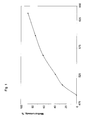
- FIG. 1 shows that the catalytic methane combustion is temperature-dependent and increases the methane conversion in the catalytic afterburner of a fuel cell system with the operating temperature.
- the catalytic methane combustion takes place at temperatures above 650 ° C much better.
- methane conversion temperatures of 450 ° C to 750 ° C are usually required.
- a conversion of methane of more than 80% of platinum catalysts in the catalytic afterburner is achieved at an afterburner temperature greater than 600 ° C.
- Such a catalytic exhaust gas burner is for example from the DE 10 2005 062 926 known. There, methane is converted in the operating temperature range from 500 ° C to 700 ° C.
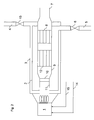
- the afterburner catalyst stages 8, 12 are arranged downstream of the feed of the fuel cell residual gas such that the conversion of the fuel cell residual gas is carried out by means of an afterburner catalyst Fuel cell residual gas takes place gradually.
- the first catalyst stage 12 for the conversion of hydrogen and carbon monoxide and the downstream catalyst stage 8 - provided for the reaction of methane and higher hydrocarbons.
- the liberated heat of reaction in the afterburning of hydrogen and carbon monoxide heats the gas stream. Part of this heat may be used to preheat the anode exhaust gas and / or to preheat the oxidant, e.g. the cathode exhaust air or afterburner air can be used. Another part serves to preheat the second catalyst stage 8.
- a catalyst 8 optimized for post-combustion of methane and higher hydrocarbons which has a similar ignition temperature as the catalyst for hydrogen and carbon monoxide oxidation.
- the afterburner 9 may be preceded by a starting burner 1, which also supplies heat to the rest of the fuel cell system during start-up operation.
- the starting burner 1 can be designed as a diffusion burner, teilvormischender burner, vollvormischender burner or pore burner and is supplied via lines 14, 15 with natural gas and combustion air.
- the starting burner 1 is ignited and the methane or the desulfurized natural gas is oxidized with atmospheric oxygen. Its exhaust gases now heat the catalytic afterburner 9 to a temperature above 700 ° C. In this case, air is added to the heated exhaust gases of the catalytic afterburner 9 via a supply air line 4, so that the exhaust gas temperature does not exceed a permissible exhaust gas temperature and does not damage the downstream catalyst stages 12, 8.
- a usual limit temperature for noble metal-containing afterburner catalysts is between 800 ° C and 1000 ° C.
- the air stream 4 to be admixed is regulated so that in the heating phase the temperature in a mixing point 11 of the afterburner 12 does not exceed a temperature of 750.degree.
- An intended backflow protection 13 is not absolutely necessary in this case.
- An intended return current fuse 6 is required in any case to avoid penetration of the starting burner exhaust gases in the anode path of the fuel cell system.
- the starting burner 1 After the hydrogen-containing gas was brought with the exhaust gases to the required operating temperature for a clean and complete implementation of the catalytic afterburner 9, the starting burner 1 is turned off.
- the hydrogen-rich gas from the anode or a reformer is post-combusted catalytically.
- the hydrogen-rich gas is supplied via line 5 to the afterburner unit 9 and preheated in a heat exchanger 2.
- the afterburner unit 9 is supplied with air via a further line 4 and preheated in a heat exchanger 3.
- Heat exchanger can also be arranged downstream of an exhaust pipe 7, which heat transfer the heat of the exhaust gas to the fuel cell system and / or to the heating system of the building.
- the first afterburner catalyst stage 12 is optimized for the catalytic afterburning of hydrogen and carbon monoxide.
- This preferably contains noble metal-containing elements or rare earths as active components.
- the catalyst used may preferably be a platinum catalyst, a platinum-palladium catalyst, a platinum-palladium-rhodium catalyst, a platinum-ruthenium catalyst, a platinum-palladium-ruthenium catalyst or a platinum-palladium-lanthanum catalyst can be used.
- Such catalysts may contain proportions of manganese, cobalt, iron, nickel, copper or chromium and are characterized by a particular heat resistance. These catalysts are therefore particularly suitable, since the afterburning of hydrocarbons in the inventive arrangement at elevated temperatures to increase their sales - as shown in Figure 1 - leads.
- the second afterburner catalyst stages 8 for the catalytic afterburning of hydrocarbons may be an alkaline earth hexaaluminate catalyst, a manganese substituted hexaaluminate catalyst, a rhodium persovskite catalyst or an aluminum borate palladium catalyst.
- Titanium-containing catalysts are not suitable for the catalytic post-combustion because of the high temperatures (above 600 ° C). However, this group of catalysts is an interesting alternative if methane and higher hydrocarbons are to be post-combusted at temperatures of 400 ° C to 550 ° C.
- the arrangement according to the invention can also be used for the catalytic afterburning at lower afterburner temperatures.
- the preheating of the catalyst by means of exhaust gases of a starting burner fails in this case.
- the afterburning gas flowing out of the afterburner is electrically heated, in which heating coil is arranged in the gas flow upstream or the afterburner catalysts are mounted on electrically conductive material.
- the catalyst reaches the desired operating temperature, he is on one applied electrically conductive catalyst support, for example, a ferritic steel.
- This special stainless steel can be used up to 900 ° C and is characterized by particularly good thermal and electrical conductivity.
- the afterburner catalyst is applied to such a material.
- adhesion-promoting layer between catalyst and metallic carrier can serve a hexaaluminate, which is applied by means of a sol-gel process.
- an electric current is applied to the catalyst support. Due to the released Joule heat, the catalyst support and thus also the catalyst heats up.
- An advantage of this arrangement is that the catalyst is brought to the same operating temperature. This favors the catalytic reactions on the surface of the catalyst. Even during operation, the active component can be further heated electrically via the catalyst support when the catalyst threatens to cool down in the partial load range.
- the afterburner invention enables a reliable reduction of emissions below the required limit values for fuel cell systems.
- the two-stage afterburner consists in its first stage of a catalyst which has a particularly high activity in terms of hydrogen and carbon monoxide.
- a catalyst which has a particularly high activity in terms of hydrogen and carbon monoxide.
- noble metal-containing catalysts such as e.g. Platinum-palladium systems are used.
- the second stage is optimized for the catalytic afterburning of methane and higher hydrocarbons and is also operated at higher temperatures than the first stage as it is heated by the first stage exhaust gases.
- alkaline earth hexaaluminates are advantageous as catalysts for this stage.
- the catalyst stages of the afterburner may either be brought to operating temperature by the exhaust gases of an upstream starting burner, or electrically heated, in which the catalyst carrier is traversed by current and as Resistance heating for catalyst heating acts.
Landscapes
- Engineering & Computer Science (AREA)
- Chemical & Material Sciences (AREA)
- Chemical Kinetics & Catalysis (AREA)
- Environmental & Geological Engineering (AREA)
- Mechanical Engineering (AREA)
- General Engineering & Computer Science (AREA)
- Combustion & Propulsion (AREA)
- Life Sciences & Earth Sciences (AREA)
- Manufacturing & Machinery (AREA)
- Sustainable Development (AREA)
- Sustainable Energy (AREA)
- Electrochemistry (AREA)
- General Chemical & Material Sciences (AREA)
- Hydrogen, Water And Hydrids (AREA)
- Catalysts (AREA)
Abstract
Description
- Die Erfindung betrifft einen Nachbrenner für erdgasbasierte Brennstoffzellenheizgeräte in der Hausenergieversorgung.
- In Kraft-Wärme-Kopplungsanlagen (KWK) wird die anfallende Abwärme bei der Stromerzeugung genutzt, um andere Verbraucher mit thermischer Energie zu versorgen. Bei Mikro- Kraft-Wärme-Kopplungsanlagen wird oftmals die Abwärme genutzt, um Gebäude mit Wärme zu versorgen. Als Stromerzeuger hier kommen verschiedene Energiewandler in Betracht, die einen Brennstoff in Strom und Wärme umwandeln können, wie z.B. Gasmotoren und -turbinen sowie Brennstoffzellen.
- Alle technischen Brennstoffzellen benötigten Wasserstoff als Brennstoff, wobei sich die verschiedenen Brennstoffzellentypen u.a. in ihren Anforderungen an die Wasserstoffqualität und Reinheit unterscheiden. Allen Brennstoffzellen ist gemeinsam, dass diese mit einem Überschuss an Wasserstoff betrieben werden müssen, um ein Absinken der Klemmspannung zu verhindern. Dies bedeutet aber, dass am Anodenausgang der Brennstoffzelle ein sogenanntes Brennstoffzellen-Restgas oder Anodenabgas anliegt, welches noch Wasserstoff und ggf. noch andere brennbare Anteile enthält. Aus Effizienz- und Immissionsschutzgründen müssen diese brennbaren Anteile dem Anodenabgas entzogen werden.
- Um den Wasserstoffüberschuss an der Anode gering zu halten, muss ein so genanntes Schwachgas nachverbrannt werden, welches nur geringe brennbare Anteile enthält. Bei den besagten Schwachgasen sind die brennbaren Gase (z.B. Methan oder andere gasförmige Kohlenwasserstoffe, Wasserstoff und/oder Kohlenmonoxid) mit nicht brennbaren Komponenten, wie z. B. Stickstoff (aus der Luft), Wasserdampf oder Kohlendioxid verdünnt. In manchen Anwendungen kann es vorteilhaft sein, das Anodenabgas mit der Kathodenabluft gemeinsam nachzuverbrennen.
- Ein Sauerstoffüberschuss muss auf der Kathodenseite eingestellt werden, um den Sauerstoffpartialdruck aufrechtzuerhalten und um ein Absinken der Klemmspannung zu verhindern. Die Kathodenabluft sollte daher genügend Sauerstoff enthalten, damit eine vollständige Oxidation des Anodenabgases erfolgen kann.
- Auch wenn die Kathodenabluft nicht zur Oxidation für die Nachverbrennung, sondern Luftsauerstoff als Verbrennungsluft genutzt wird, kommt es dennoch zu einer weiteren Verdünnung des Anodenabgases durch den Stickstoffanteil der Luft.
- Schwachgase können oftmals nicht mehr stabil homogen verbrannt werden, da deren Aktivität für eine homogene Verbrennung nicht mehr ausreicht. Für eine stabile und sichere Nachverbrennung können daher weitere brennbare Anteile dem Schwachgas hinzugefügt werden, um die Aktivität zu steigern. Auch durch der Einsatz von Katalysatoren und eine Vorwärmung des Anodenabgases und der Verbrennungsluft kann die Nachverbrennung stabiler gestalten werden.
- Da das Erdgas zu großen Anteilen aus Methan besteht, bleiben auch nach dem Reformierungsverfahren geringfügige Anteile vorhanden. Diese Methanrestanteile werden in vielen Brennstoffzellentypen nicht weiter umgesetzt. Somit passieren die Methanrestanteile die Anode, ohne dass diese durch die Brennstoffzellenreaktion abgebaut werden. Diese Spuren an Methan liegen hinter der Anode an und müssen im Nachbrenner umgesetzt werden.
- Der Erfindung liegt die Aufgabe zugrunde, einen Nachbrenner für Brennstoffzellensysteme zur Verfügung zu stellen, mit dem die Nachverbrennung vom Brennstoffzellen-Restgas und den darin enthaltenen Spuren an Methan und Kohlenwasserstoffen zu optimieren, so dass keine oder deutlich reduzierte brennbare Anteile an die Umgebung abgegeben werden.
- Zu dem soll die Anordnung einen schnellen und zuverlässigen Start des Nachbrenners ermöglichen, da insbesondere während des Startbetriebes des Reformers, dieser einen noch nicht der Gleichgewichtslage entsprechenden Methanumsatz aufweist und somit größere Mengen an Methan oder Kohlenwasserstoffen im Nachbrenner umgesetzt werden müssen.
- Erfindungsgemäß wird dies gemäß den Merkmalen des Anspruchs 1 mit Nachbrenner eines Brennstoffzellensystems zum Nachverbrennen vom Brennstoffzellen-Restgas mit Hilfe eines Nachbrenner-Katalysators gelöst, wobei der Nachbrenner-Katalysator aus zwei Nachbrenner-Katalysatorstuffen besteht, die der Zufuhr des Brennstoffzellen-Restgases stromabwärts angeordnet sind und der stufenweise Umsetzung des Brennstoffzellen-Restgases dienen.
- Vorteilhafte Ausgestaltungen ergeben sich durch die Merkmale der abhängigen Ansprüche. Durch den erfindungsgemäßen zweistufigen Nachbrenner wird eine zuverlässige Reduktion der Emissionen unter die geforderten Grenzwerte für Brennstoffzellensysteme ermöglicht. Dabei erfolgt die Erwärmung der Nachbrenner-Katalysatorstuffen gleichmäßig.
- Die katalytische Nachverbrennung durch den erfindungsgemäßen zweistufigen Nachbrenner ermöglicht einen einfachen Aufbau und Betrieb des Brennstoffzellensystems. Dabei ist dieser Nachbrenner wartungsarm und hat einen hohen Wirkungsgrad. Der Einsatz selektiver Nachbrennerkatalysatoren ist ebenfalls möglich.
- Die Erfindung wird nun anhand der Figuren detailliert erläutert. Hierbei zeigen
- Figur 1
- grafische Darstellung der Abhängigkeit zwischen Nachbrennertemperatur und Methanumsatz und
- Figur 2
- eine Anordnung des erfindungsgemäßen Nachbrenners.
-
Figur 1 zeigt, dass die katalytische Methanverbrennung temperaturabhängig ist und der Methanumsatz im katalytischen Nachbrenner eines Brennstoffzellensystems mit der Betriebstemperatur steigt. Die katalytische Methanverbrennung erfolgt bei Temperaturen oberhalb von 650°C deutlich besser. - Für die Methanumsetzung sind normalerweise Temperaturen von 450°C bis 750°C erforderlich. Ein Umsatz von Methan von mehr als 80% an Platin-Katalysatoren im katalytischen Nachbrenner wird bei einer Nachbrennertemperatur größer als 600°C erzielt.
- Ein solcher katalytischer Abgasbrenner ist beispielsweise aus der
DE 10 2005 062 926 bekannt. Dort wird Methan im Betriebstemperaturbereich von 500°C bis 700°C umsetzt. Wie inFigur 2 dargestellt, enthält der erfindungsgemäße katalytische Nachbrenner 9 zum Nachverbrennen vom Brennstoffzellen-Restgas mit Hilfe eines Nachbrenner-Katalysators zwei Nachbrenner-Katalysatorstuffen 8, 12. Die Nachbrenner-Katalysatorstuffen 8, 12 sind der Zufuhr des Brennstoffzellen-Restgases stromabwärts derart angeordnet, dass die Umsetzung des Brennstoffzellen-Restgases stufenweise erfolgt. - Dabei ist die erste Katalysatorstufe 12 zur Umsetzung von Wasserstoff und Kohlenmonoxid und die nachgeschaltete Katalysatorstufe 8 - für die Umsetzung von Methan und höheren Kohlenwasserstoffen vorgesehen. Durch die freiwerdende Reaktionswärme bei der Nachverbrennung von Wasserstoff und Kohlenmonoxid erwärmt sich der Gasstrom. Ein Teil dieser Wärme kann zur Vorwärmung des Anodenabgases und/oder zur Vorwärmung des Oxidationsmittels, z.B. der Kathodenabluft oder Nachbrennerluft genutzt werden. Ein anderer Teil dient zur Vorwärmung der zweiten Katalysatorstufe 8.
- In der zweiten Stufe ist ein für die Nachverbrennung von Methan und höheren Kohlenwasserstoffen optimierter Katalysator 8 eingesetzt, der eine ähnliche Zündtemperatur wie der Katalysator für Wasserstoff- und Kohlenmonoxidoxidation aufweist.
- Zur schnelleren Erwärmung kann dem Nachbrenner 9 ein Startbrenner 1 vorgeschaltet sein, der auch das restliche Brennstoffzellensystem während des Startbetriebes mit Wärme versorgt. Der Startbrenner 1 kann als Diffusionsbrenner, teilvormischender Brenner, vollvormischender Brenner oder Porenbrenner ausgeführt sein und wird über Leitungen 14, 15 mit Erdgas und Verbrennungsluft versorgt.
- Während des Startbetriebes des Brennstoffzellensystems wird der Startbrenner 1 gezündet und der Methan bzw. das entschwefelte Erdgas mit Luftsauerstoff oxidiert. Seine Abgase erwärmen nun den katalytischen Nachbrenner 9 auf eine Temperatur oberhalb von 700°C. Dabei wird den erwärmten Abgasen des katalytischen Nachbrenners 9 über eine Zuluftleitung 4 Luft zugegeben, damit die Abgastemperatur eine zulässige Abgastemperatur nicht überschreitet und die stromabwärts angeordneten Katalysatorstufen 12, 8 nicht schädigt. Eine übliche Grenztemperatur für edelmetallhaltige Nachbrennerkatalysatoren liegt zwischen 800°C bzw. 1.000°C. Der zu zumischende Luftstrom 4 wird so geregelt, dass in der Aufheizphase die Temperatur in einer Mischstelle 11 des Nachbrenners 12 eine Temperatur von 750°C nicht überschreitet. Zum anderen kann dadurch eine Rückströmung in den Luftweg des Brennstoffzellensystems vermieden werden. Eine vorgesehene Rückstromsicherung 13 ist in diesem Fall nicht unbedingt notwendig. Eine vorgesehene Rückstromsicherung 6 ist in jeden Fall zur Vermeidung vom Eindringen der Startbrennerabgasen in den Anodenweg des Brennstoffzellensystems erforderlich.
- Nachdem das wasserstoffhaltige Gas mit den Abgasen auf die erforderliche Betriebstemperatur für eine saubere und vollständige Umsetzung dem katalytischen Nachbrenner 9 gebracht wurde, wird der Startbrenner 1 abgeschaltet. Das wasserstoffreiche Gas von der Anode oder einem Reformer wird katalytisch nachverbrannt. Dabei wird das wasserstoffreiche Gas über die Leitung 5 der Nachbrennereinheit 9 zugeführt und in einem Wärmeübertrager 2 vorgewärmt. Die Nachbrennereinheit 9 wird über eine weitere Leitung 4 mit Luft versorgt und in einem Wärmeübertrager 3 vorgewärmt.
- Einer Abgasleitung 7 können stromabwärts ebenfalls Wärmeübertrager angeordnet sein, die die Wärme des Abgases an das Brennstoffzellensystem und/oder an das Heizungssystem des Gebäudes übertragen.
- Die erste Nachbrenner-Katalysatorstuffe 12 ist für die katalytische Nachverbrennung von Wasserstoff und Kohlenmonoxid optimiert. Diese enthält vorzugsweise edelmetallhaltige Elemente oder seltene Erden als aktive Komponenten. Als Katalysator kann vorzugsweise ein Platin-Katalysator, ein Platin-Palladium-Katalysator, ein Platin-Palladium-Rhodium-Katalysator, ein Platin-Ruthenium-Katalysator, ein Platin-Palladium-Ruthenium-Katalysator oder ein Platin-Palladium-Lanthan-Katalysator eingesetzt werden.
- Solche Katalysatoren können Anteile von Mangan, Kobalt, Eisen, Nickel, Kupfer oder Chrom enthalten und zeichnen sich durch eine besondere Hitzebeständigkeitaus. Diese Katalysatoren sind daher besonders geeignet, da die Nachverbrennung von Kohlenwasserstoffen in der erfindungsgemäßen Anordnung bei erhöhten Temperaturen zur deren Umsatzsteigerung - wie in Bild 1 gezeigt - führt.
- Die zweite Nachbrenner-Katalysatorstuffe 8 für die katalytische Nachverbrennung von Kohlenwasserstoffen, beispielsweise Methan, kann ein Erdalkalihexaaluminat-Katalysator, ein Mangan substituiertes Hexaaluminat-Katalysator, ein Rhodium-Persovskit-Katalysator oder ein Aluminium-Borat-Palladium-Katalysator sein.
- Titanhaltige Katalysatoren sind für die katalytische Nachverbrennung wegen der hohen Temperaturen (oberhalb 600°C) nicht geeignet. Diese Gruppe von Katalysatoren ist aber eine interessante Alternative, wenn Methan und höhere Kohlenwasserstoffe bei Temperaturen von 400°C bis 550°C nachverbrannt werden sollen.
- Die erfindungsgemäße Anordnung kann auch für die katalytische Nachverbrennung bei niedrigeren Nachbrennertemperaturen genutzt werden. Das Vorwärmen des Katalysators mittels Abgasen eines Startbrenners fällt in diesem Fall aus. Das aus dem Nachbrenner strömende nachverbrannte Gas wird elektrisch aufgeheizt, in dem stromaufwärts Heizwendel im Gasstrom angeordnet oder die Nachbrenner-Katalysatoren auf elektrisch leitendes Material angebracht sind.
- Damit der Katalysator die gewünschte Betriebstemperatur erreicht, wird er auf einen elektrisch leitenden Katalysatorträger aufgebracht, z.B. ein ferritischer Stahl. Dieser Sonderedelstahl kann bis 900°C eingesetzt werden und zeichnet sich dabei durch besonders gute Wärme- und elektrische Leitfähigkeit aus. Der Nachbrennerkatalysator wird auf ein solches Material aufgebracht. Als haftvermittelnde Schicht zwischen Katalysator und metallischen Träger kann ein Hexaaluminat dienen, welches mittels eines Sol-Gel-Verfahrens aufgebracht wird. Zur Erwärmung des Katalysators auf Betriebstemperatur wird ein elektrischer Strom an den Katalysatorträger angelegt. Durch die freiwerdende Joul'sche Wärme erwärmt sich der Katalysatorträger und somit auch der Katalysator.
- Vorteilhaft bei dieser Anordnung ist, dass der Katalysator gleichmäßig auf Betriebstemperatur gebracht wird. Dies begünstigt die katalytischen Reaktionen auf der Oberfläche des Katalysators. Auch während des Betriebes kann die aktive Komponente weiter elektrisch über den Katalysatorträger erwärmt werden, wenn im Teillastbereich der Katalysator auszukühlen droht.
- Durch den erfindungsgemäßen Nachbrenner wird eine zuverlässige Reduktion der Emissionen unter die geforderten Grenzwerte für Brennstoffzellensysteme ermöglicht. Den zweistufigen Nachbrenner besteht dabei in seiner ersten Stufe aus einem Katalysator, der eine besonders hohe Aktivität hinsichtlich Wasserstoff und Kohlenmonoxid hat. Hier können insbesondere edelmetallhaltige Katalysatoren, wie z.B. Platin-Palladium-Systeme eingesetzt werden. Die zweite Stufe ist für die katalytische Nachverbrennung von Methan und höheren Kohlenwasserstoffen optimiert und wird auch bei höheren Temperaturen betrieben als die erste Stufe, da diese durch die Abgase der ersten Stufe erwärmt wird. Für diese Stufe sind insbesondere Erdalkalihexaaluminate als Katalysatoren vorteilhaft.
- Die Katalysator-Stufen des Nachbrenners können entweder durch die Abgase eines stromaufwärts angebrachten Startbrenners auf Betriebstemperatur gebracht werden, oder elektrisch beheizt werden, in dem der Katalysatorträger Strom durchflossen ist und so als Widerstandsheizung zur Katalysatorerwärmung wirkt.
Claims (6)
- Nachbrenner (9) eines Brennstoffzellensystems zum Nachverbrennen vom Brennstoffzellen-Restgas mit Hilfe eines Nachbrenner-Katalysators, dadurch gekennzeichnet dass der Nachbrenner-Katalysator aus zwei Nachbrenner-Katalysatorstufen (12, 8) besteht, die der Zufuhr des Brennstoffzellen-Restgases stromabwärts angeordnet sind und der stufenweise Umsetzung des Brennstoffzellen-Restgases dienen.
- Nachbrenner (9) nach Anspruch 1, dadurch gekennzeichnet, dass die erste Nachbrenner-Katalysatorstufe (12) der Umsetzung von Wasserstoff und Kohlenmonoxid und die zweite Nachbrenner-Katalysatorstufe (8) der Umsetzung von Kohlenwasserstoffen aus dem Brennstoffzellen-Restgas dient.
- Nachbrenner (9) nach Anspruch 1 oder 2, dadurch gekennzeichnet, dass die Nachbrenner-Katalysatorstufen (12, 8) durch die Abgase eines stromaufwärts angebrachten Startbrenners (1) oder elektrisch beheizt werden.
- Nachbrenner (9) nach einem der vorgehenden Ansprüche, dadurch gekennzeichnet, dass der die Nachbrenner-Katalysatorstufen (12, 8) auf elektrisch leitende Katalysatorträger aufgebracht werden.
- Nachbrenner (9) nach einem der vorgehenden Ansprüche, dadurch gekennzeichnet, dass die Nachbrenner-Katalysatorstufe (12) für die Nachverbrennung von Wasserstoff und Kohlenmonoxid als ein Platin-Katalysator, ein Platin-Palladium-Katalysator, ein Platin-Palladium-Rhodium-Katalysator, ein Platin-Ruthenium-Katalysator, ein Platin-Palladium-Ruthenium-Katalysator oder ein Platin-Palladium-Lanthan-Katalysator ausgebildet ist.
- Nachbrenner (9) nach einem der vorgehenden Ansprüche, dadurch gekennzeichnet, dass die Nachbrenner-Katalysatorstufe (8) für die Nachverbrennung von Kohlenwasserstoffen als ein Erdalkalihexaaluminat-Katalysator, ein Mangan substituiertes Hexaaluminat-Katalysator, ein Rhodium-Persovskit-Katalysator oder ein Aluminium-Borat-Palladium-Katalysator ausgebildet ist.
Applications Claiming Priority (1)
| Application Number | Priority Date | Filing Date | Title |
|---|---|---|---|
| AT0109409A AT508488A1 (de) | 2009-07-13 | 2009-07-13 | Nachbrenner für erdgasbasierte brennstoffzellenheizgeräte |
Publications (2)
| Publication Number | Publication Date |
|---|---|
| EP2284938A1 true EP2284938A1 (de) | 2011-02-16 |
| EP2284938B1 EP2284938B1 (de) | 2012-11-07 |
Family
ID=42740317
Family Applications (1)
| Application Number | Title | Priority Date | Filing Date |
|---|---|---|---|
| EP10006898A Not-in-force EP2284938B1 (de) | 2009-07-13 | 2010-07-03 | Nachbrenner für erdgasbasierte Brennstoffzellenheizgeräte |
Country Status (3)
| Country | Link |
|---|---|
| EP (1) | EP2284938B1 (de) |
| AT (1) | AT508488A1 (de) |
| ES (1) | ES2396619T3 (de) |
Cited By (6)
| Publication number | Priority date | Publication date | Assignee | Title |
|---|---|---|---|---|
| EP2490289A1 (de) * | 2011-02-17 | 2012-08-22 | Vaillant GmbH | Brennstoffzellensystem |
| CN107407481A (zh) * | 2015-03-05 | 2017-11-28 | 瓦特燃料电池公司 | 补燃器及其制造和操作方法 |
| AT519617A1 (de) * | 2017-02-09 | 2018-08-15 | Avl List Gmbh | Startbrenner für ein Brennstoffzellensystem |
| EP3401988A1 (de) * | 2017-05-09 | 2018-11-14 | Vaillant GmbH | Verfahren zum erkennen erhöhter co-emissionen bei einem brennstoffzellen-heizsystem |
| WO2019075502A1 (de) * | 2017-10-22 | 2019-04-25 | Avl List Gmbh | Brenner für ein brennstoffzellensystem mit zwei reaktionskammern |
| US11233255B2 (en) | 2017-02-09 | 2022-01-25 | Avl List Gmbh | Starting burner for a fuel cell system |
Families Citing this family (1)
| Publication number | Priority date | Publication date | Assignee | Title |
|---|---|---|---|---|
| DE102023213057A1 (de) | 2023-12-20 | 2025-06-26 | Robert Bosch Gesellschaft mit beschränkter Haftung | System aus Katalysator, elektrochemische Zellenvorrichtung |
Citations (5)
| Publication number | Priority date | Publication date | Assignee | Title |
|---|---|---|---|---|
| US1789812A (en) * | 1929-08-12 | 1931-01-20 | Joseph C W Frazer | Method of eliminating combustible constituents from the products of combustion of an internal-combustion engine |
| JPS59203372A (ja) * | 1983-05-02 | 1984-11-17 | Hitachi Ltd | 燃料電池用燃料改質装置 |
| JP2501666B2 (ja) * | 1991-02-12 | 1996-05-29 | 溶融炭酸塩型燃料電池発電システム技術研究組合 | 燃料電池アノ―ド排ガスの燃焼装置 |
| DE102005062926A1 (de) | 2005-12-29 | 2007-07-05 | Süd-Chemie AG | Brennstoffzellenanordnung mit edelmetallfreiem Abgasbrenner |
| US20090176136A1 (en) * | 2008-01-04 | 2009-07-09 | Protonex Technology Corporation | Solid oxide fuel cell systems with hot zones and two-stage tail gas combustors |
-
2009
- 2009-07-13 AT AT0109409A patent/AT508488A1/de not_active Application Discontinuation
-
2010
- 2010-07-03 EP EP10006898A patent/EP2284938B1/de not_active Not-in-force
- 2010-07-03 ES ES10006898T patent/ES2396619T3/es active Active
Patent Citations (5)
| Publication number | Priority date | Publication date | Assignee | Title |
|---|---|---|---|---|
| US1789812A (en) * | 1929-08-12 | 1931-01-20 | Joseph C W Frazer | Method of eliminating combustible constituents from the products of combustion of an internal-combustion engine |
| JPS59203372A (ja) * | 1983-05-02 | 1984-11-17 | Hitachi Ltd | 燃料電池用燃料改質装置 |
| JP2501666B2 (ja) * | 1991-02-12 | 1996-05-29 | 溶融炭酸塩型燃料電池発電システム技術研究組合 | 燃料電池アノ―ド排ガスの燃焼装置 |
| DE102005062926A1 (de) | 2005-12-29 | 2007-07-05 | Süd-Chemie AG | Brennstoffzellenanordnung mit edelmetallfreiem Abgasbrenner |
| US20090176136A1 (en) * | 2008-01-04 | 2009-07-09 | Protonex Technology Corporation | Solid oxide fuel cell systems with hot zones and two-stage tail gas combustors |
Cited By (9)
| Publication number | Priority date | Publication date | Assignee | Title |
|---|---|---|---|---|
| EP2490289A1 (de) * | 2011-02-17 | 2012-08-22 | Vaillant GmbH | Brennstoffzellensystem |
| EP2490289B1 (de) | 2011-02-17 | 2017-04-05 | Vaillant GmbH | Brennstoffzellensystem |
| CN107407481A (zh) * | 2015-03-05 | 2017-11-28 | 瓦特燃料电池公司 | 补燃器及其制造和操作方法 |
| CN107407481B (zh) * | 2015-03-05 | 2023-08-25 | 瓦特燃料电池公司 | 补燃器及其制造和操作方法 |
| AT519617A1 (de) * | 2017-02-09 | 2018-08-15 | Avl List Gmbh | Startbrenner für ein Brennstoffzellensystem |
| AT519617B1 (de) * | 2017-02-09 | 2020-11-15 | Avl List Gmbh | Startbrenner für ein Brennstoffzellensystem |
| US11233255B2 (en) | 2017-02-09 | 2022-01-25 | Avl List Gmbh | Starting burner for a fuel cell system |
| EP3401988A1 (de) * | 2017-05-09 | 2018-11-14 | Vaillant GmbH | Verfahren zum erkennen erhöhter co-emissionen bei einem brennstoffzellen-heizsystem |
| WO2019075502A1 (de) * | 2017-10-22 | 2019-04-25 | Avl List Gmbh | Brenner für ein brennstoffzellensystem mit zwei reaktionskammern |
Also Published As
| Publication number | Publication date |
|---|---|
| EP2284938B1 (de) | 2012-11-07 |
| ES2396619T3 (es) | 2013-02-22 |
| AT508488A1 (de) | 2011-01-15 |
Similar Documents
| Publication | Publication Date | Title |
|---|---|---|
| EP2284938B1 (de) | Nachbrenner für erdgasbasierte Brennstoffzellenheizgeräte | |
| EP2153485B1 (de) | Mit flüssiggas betriebenes brennstoffzellensystem | |
| WO2003021696A2 (de) | System zum erzeugen elektrischer energie und verfahren zum betreiben eines systems zum erzeugen elektrischer energie | |
| EP1679757B1 (de) | Brennstoffzellensystem | |
| EP1986263B1 (de) | Brennstoffzellensystem und zugehöriges Startverfahren | |
| EP2200114B1 (de) | Reformer-Brennstoffzellen-System | |
| EP2490289B1 (de) | Brennstoffzellensystem | |
| DE10104607A1 (de) | Gaserzeugungssystem für ein Brennstoffzellensystem und Verfahren zum Betrieb eines Gaserzeugungssystems | |
| EP2135315A2 (de) | Brennstoffzellensystem mit rezirkulationsstrang | |
| WO2009103554A1 (de) | Hochtemperatur-brennstoffzellensystem und verfahren zum erzeugen von strom und wärme mit hilfe eines hochtemperatur-brennstoffzellensystems | |
| EP1905510B1 (de) | Brennstoffzellensystem und zugehöriges Betriebsverfahren | |
| EP1942537B1 (de) | Brennstoffzellensystem mit einer Regenerationseinrichtung für einen Reformer und zugehöriges Verfahren | |
| EP1617499B1 (de) | Brennstoffzellensystem | |
| AT520881B1 (de) | Verfahren zum Betreiben eines Brennstoffzellensystems | |
| DE102008008907A1 (de) | Brennstoffzellensystem | |
| WO2008006334A1 (de) | Brennstoff zellensystem mit reformer und nachbrenner | |
| DE102007033151B4 (de) | Betriebsverfahren für ein Brennstoffzellensystem | |
| AT408041B (de) | Brennstoffzellenanordnung | |
| DE202006008898U1 (de) | Brennstoffzellensystem für ein Fahrzeug | |
| DE102008037028B4 (de) | Brennstoffzellensystem für gasförmige Kohlenwassserstoffe und dazugehöriges Betriebsverfahren | |
| EP1845577A2 (de) | Brennstoffzellensystem | |
| DE10359231A1 (de) | System und Verfahren zur Erzeugung eines Reformats | |
| AT507853B1 (de) | Sofc-brennstoffzelle mit einem externen dampfreformer | |
| DE102021106965A1 (de) | Verfahren zum Starten einer Festoxid-Brennstoffzellenvorrichtung, Brenner für eine Festoxid-Brennstoffzellenvorrichtung, Festoxid-Brennstoffzellenvorrichtung sowie Brennstoffzellen-Fahrzeug | |
| DE102006032469B4 (de) | Reformer für ein Brennstoffzellensystem und Verfahren zum Betreiben eines Reformers sowie deren Verwendung |
Legal Events
| Date | Code | Title | Description |
|---|---|---|---|
| PUAI | Public reference made under article 153(3) epc to a published international application that has entered the european phase |
Free format text: ORIGINAL CODE: 0009012 |
|
| AK | Designated contracting states |
Kind code of ref document: A1 Designated state(s): AL AT BE BG CH CY CZ DE DK EE ES FI FR GB GR HR HU IE IS IT LI LT LU LV MC MK MT NL NO PL PT RO SE SI SK SM TR |
|
| AX | Request for extension of the european patent |
Extension state: BA ME RS |
|
| 17P | Request for examination filed |
Effective date: 20110901 |
|
| RIC1 | Information provided on ipc code assigned before grant |
Ipc: H01M 8/06 20060101AFI20120308BHEP Ipc: F23G 7/07 20060101ALI20120308BHEP Ipc: H01M 8/04 20060101ALN20120308BHEP |
|
| GRAP | Despatch of communication of intention to grant a patent |
Free format text: ORIGINAL CODE: EPIDOSNIGR1 |
|
| GRAS | Grant fee paid |
Free format text: ORIGINAL CODE: EPIDOSNIGR3 |
|
| GRAA | (expected) grant |
Free format text: ORIGINAL CODE: 0009210 |
|
| AK | Designated contracting states |
Kind code of ref document: B1 Designated state(s): AL AT BE BG CH CY CZ DE DK EE ES FI FR GB GR HR HU IE IS IT LI LT LU LV MC MK MT NL NO PL PT RO SE SI SK SM TR |
|
| REG | Reference to a national code |
Ref country code: GB Ref legal event code: FG4D Free format text: NOT ENGLISH |
|
| REG | Reference to a national code |
Ref country code: CH Ref legal event code: EP Ref country code: AT Ref legal event code: REF Ref document number: 583315 Country of ref document: AT Kind code of ref document: T Effective date: 20121115 |
|
| REG | Reference to a national code |
Ref country code: IE Ref legal event code: FG4D Free format text: LANGUAGE OF EP DOCUMENT: GERMAN |
|
| REG | Reference to a national code |
Ref country code: DE Ref legal event code: R096 Ref document number: 502010001573 Country of ref document: DE Effective date: 20130103 |
|
| REG | Reference to a national code |
Ref country code: ES Ref legal event code: FG2A Ref document number: 2396619 Country of ref document: ES Kind code of ref document: T3 Effective date: 20130222 |
|
| REG | Reference to a national code |
Ref country code: NL Ref legal event code: VDEP Effective date: 20121107 |
|
| REG | Reference to a national code |
Ref country code: LT Ref legal event code: MG4D |
|
| PG25 | Lapsed in a contracting state [announced via postgrant information from national office to epo] |
Ref country code: FI Free format text: LAPSE BECAUSE OF FAILURE TO SUBMIT A TRANSLATION OF THE DESCRIPTION OR TO PAY THE FEE WITHIN THE PRESCRIBED TIME-LIMIT Effective date: 20121107 Ref country code: NO Free format text: LAPSE BECAUSE OF FAILURE TO SUBMIT A TRANSLATION OF THE DESCRIPTION OR TO PAY THE FEE WITHIN THE PRESCRIBED TIME-LIMIT Effective date: 20130207 Ref country code: LT Free format text: LAPSE BECAUSE OF FAILURE TO SUBMIT A TRANSLATION OF THE DESCRIPTION OR TO PAY THE FEE WITHIN THE PRESCRIBED TIME-LIMIT Effective date: 20121107 Ref country code: NL Free format text: LAPSE BECAUSE OF FAILURE TO SUBMIT A TRANSLATION OF THE DESCRIPTION OR TO PAY THE FEE WITHIN THE PRESCRIBED TIME-LIMIT Effective date: 20121107 Ref country code: HR Free format text: LAPSE BECAUSE OF FAILURE TO SUBMIT A TRANSLATION OF THE DESCRIPTION OR TO PAY THE FEE WITHIN THE PRESCRIBED TIME-LIMIT Effective date: 20121107 Ref country code: IS Free format text: LAPSE BECAUSE OF FAILURE TO SUBMIT A TRANSLATION OF THE DESCRIPTION OR TO PAY THE FEE WITHIN THE PRESCRIBED TIME-LIMIT Effective date: 20130307 Ref country code: SE Free format text: LAPSE BECAUSE OF FAILURE TO SUBMIT A TRANSLATION OF THE DESCRIPTION OR TO PAY THE FEE WITHIN THE PRESCRIBED TIME-LIMIT Effective date: 20121107 |
|
| PG25 | Lapsed in a contracting state [announced via postgrant information from national office to epo] |
Ref country code: PT Free format text: LAPSE BECAUSE OF FAILURE TO SUBMIT A TRANSLATION OF THE DESCRIPTION OR TO PAY THE FEE WITHIN THE PRESCRIBED TIME-LIMIT Effective date: 20130307 Ref country code: SI Free format text: LAPSE BECAUSE OF FAILURE TO SUBMIT A TRANSLATION OF THE DESCRIPTION OR TO PAY THE FEE WITHIN THE PRESCRIBED TIME-LIMIT Effective date: 20121107 Ref country code: PL Free format text: LAPSE BECAUSE OF FAILURE TO SUBMIT A TRANSLATION OF THE DESCRIPTION OR TO PAY THE FEE WITHIN THE PRESCRIBED TIME-LIMIT Effective date: 20121107 Ref country code: GR Free format text: LAPSE BECAUSE OF FAILURE TO SUBMIT A TRANSLATION OF THE DESCRIPTION OR TO PAY THE FEE WITHIN THE PRESCRIBED TIME-LIMIT Effective date: 20130208 Ref country code: LV Free format text: LAPSE BECAUSE OF FAILURE TO SUBMIT A TRANSLATION OF THE DESCRIPTION OR TO PAY THE FEE WITHIN THE PRESCRIBED TIME-LIMIT Effective date: 20121107 |
|
| PG25 | Lapsed in a contracting state [announced via postgrant information from national office to epo] |
Ref country code: EE Free format text: LAPSE BECAUSE OF FAILURE TO SUBMIT A TRANSLATION OF THE DESCRIPTION OR TO PAY THE FEE WITHIN THE PRESCRIBED TIME-LIMIT Effective date: 20121107 Ref country code: DK Free format text: LAPSE BECAUSE OF FAILURE TO SUBMIT A TRANSLATION OF THE DESCRIPTION OR TO PAY THE FEE WITHIN THE PRESCRIBED TIME-LIMIT Effective date: 20121107 Ref country code: SK Free format text: LAPSE BECAUSE OF FAILURE TO SUBMIT A TRANSLATION OF THE DESCRIPTION OR TO PAY THE FEE WITHIN THE PRESCRIBED TIME-LIMIT Effective date: 20121107 Ref country code: BG Free format text: LAPSE BECAUSE OF FAILURE TO SUBMIT A TRANSLATION OF THE DESCRIPTION OR TO PAY THE FEE WITHIN THE PRESCRIBED TIME-LIMIT Effective date: 20130207 |
|
| PG25 | Lapsed in a contracting state [announced via postgrant information from national office to epo] |
Ref country code: RO Free format text: LAPSE BECAUSE OF FAILURE TO SUBMIT A TRANSLATION OF THE DESCRIPTION OR TO PAY THE FEE WITHIN THE PRESCRIBED TIME-LIMIT Effective date: 20121107 |
|
| PLBE | No opposition filed within time limit |
Free format text: ORIGINAL CODE: 0009261 |
|
| STAA | Information on the status of an ep patent application or granted ep patent |
Free format text: STATUS: NO OPPOSITION FILED WITHIN TIME LIMIT |
|
| 26N | No opposition filed |
Effective date: 20130808 |
|
| PG25 | Lapsed in a contracting state [announced via postgrant information from national office to epo] |
Ref country code: CY Free format text: LAPSE BECAUSE OF FAILURE TO SUBMIT A TRANSLATION OF THE DESCRIPTION OR TO PAY THE FEE WITHIN THE PRESCRIBED TIME-LIMIT Effective date: 20121107 |
|
| REG | Reference to a national code |
Ref country code: DE Ref legal event code: R097 Ref document number: 502010001573 Country of ref document: DE Effective date: 20130808 |
|
| BERE | Be: lapsed |
Owner name: VAILLANT G.M.B.H. Effective date: 20130731 |
|
| PG25 | Lapsed in a contracting state [announced via postgrant information from national office to epo] |
Ref country code: MC Free format text: LAPSE BECAUSE OF FAILURE TO SUBMIT A TRANSLATION OF THE DESCRIPTION OR TO PAY THE FEE WITHIN THE PRESCRIBED TIME-LIMIT Effective date: 20121107 |
|
| REG | Reference to a national code |
Ref country code: IE Ref legal event code: MM4A |
|
| PG25 | Lapsed in a contracting state [announced via postgrant information from national office to epo] |
Ref country code: BE Free format text: LAPSE BECAUSE OF NON-PAYMENT OF DUE FEES Effective date: 20130731 |
|
| PG25 | Lapsed in a contracting state [announced via postgrant information from national office to epo] |
Ref country code: IE Free format text: LAPSE BECAUSE OF NON-PAYMENT OF DUE FEES Effective date: 20130703 |
|
| PG25 | Lapsed in a contracting state [announced via postgrant information from national office to epo] |
Ref country code: SM Free format text: LAPSE BECAUSE OF FAILURE TO SUBMIT A TRANSLATION OF THE DESCRIPTION OR TO PAY THE FEE WITHIN THE PRESCRIBED TIME-LIMIT Effective date: 20121107 |
|
| PG25 | Lapsed in a contracting state [announced via postgrant information from national office to epo] |
Ref country code: TR Free format text: LAPSE BECAUSE OF FAILURE TO SUBMIT A TRANSLATION OF THE DESCRIPTION OR TO PAY THE FEE WITHIN THE PRESCRIBED TIME-LIMIT Effective date: 20121107 Ref country code: MT Free format text: LAPSE BECAUSE OF FAILURE TO SUBMIT A TRANSLATION OF THE DESCRIPTION OR TO PAY THE FEE WITHIN THE PRESCRIBED TIME-LIMIT Effective date: 20121107 |
|
| PG25 | Lapsed in a contracting state [announced via postgrant information from national office to epo] |
Ref country code: HU Free format text: LAPSE BECAUSE OF FAILURE TO SUBMIT A TRANSLATION OF THE DESCRIPTION OR TO PAY THE FEE WITHIN THE PRESCRIBED TIME-LIMIT; INVALID AB INITIO Effective date: 20100703 Ref country code: MK Free format text: LAPSE BECAUSE OF FAILURE TO SUBMIT A TRANSLATION OF THE DESCRIPTION OR TO PAY THE FEE WITHIN THE PRESCRIBED TIME-LIMIT Effective date: 20121107 Ref country code: LU Free format text: LAPSE BECAUSE OF NON-PAYMENT OF DUE FEES Effective date: 20130703 |
|
| REG | Reference to a national code |
Ref country code: FR Ref legal event code: PLFP Year of fee payment: 7 |
|
| REG | Reference to a national code |
Ref country code: FR Ref legal event code: PLFP Year of fee payment: 8 |
|
| REG | Reference to a national code |
Ref country code: FR Ref legal event code: PLFP Year of fee payment: 9 |
|
| PG25 | Lapsed in a contracting state [announced via postgrant information from national office to epo] |
Ref country code: AL Free format text: LAPSE BECAUSE OF FAILURE TO SUBMIT A TRANSLATION OF THE DESCRIPTION OR TO PAY THE FEE WITHIN THE PRESCRIBED TIME-LIMIT Effective date: 20121107 |
|
| PGFP | Annual fee paid to national office [announced via postgrant information from national office to epo] |
Ref country code: CZ Payment date: 20180709 Year of fee payment: 9 Ref country code: AT Payment date: 20180627 Year of fee payment: 9 |
|
| PG25 | Lapsed in a contracting state [announced via postgrant information from national office to epo] |
Ref country code: CZ Free format text: LAPSE BECAUSE OF NON-PAYMENT OF DUE FEES Effective date: 20190703 |
|
| REG | Reference to a national code |
Ref country code: AT Ref legal event code: MM01 Ref document number: 583315 Country of ref document: AT Kind code of ref document: T Effective date: 20190703 |
|
| PG25 | Lapsed in a contracting state [announced via postgrant information from national office to epo] |
Ref country code: AT Free format text: LAPSE BECAUSE OF NON-PAYMENT OF DUE FEES Effective date: 20190703 |
|
| REG | Reference to a national code |
Ref country code: ES Ref legal event code: FD2A Effective date: 20201126 |
|
| PG25 | Lapsed in a contracting state [announced via postgrant information from national office to epo] |
Ref country code: ES Free format text: LAPSE BECAUSE OF NON-PAYMENT OF DUE FEES Effective date: 20190704 |
|
| PGFP | Annual fee paid to national office [announced via postgrant information from national office to epo] |
Ref country code: CH Payment date: 20210629 Year of fee payment: 12 Ref country code: GB Payment date: 20210628 Year of fee payment: 12 |
|
| PGFP | Annual fee paid to national office [announced via postgrant information from national office to epo] |
Ref country code: FR Payment date: 20210723 Year of fee payment: 12 Ref country code: IT Payment date: 20210730 Year of fee payment: 12 |
|
| PGFP | Annual fee paid to national office [announced via postgrant information from national office to epo] |
Ref country code: DE Payment date: 20210629 Year of fee payment: 12 |
|
| REG | Reference to a national code |
Ref country code: DE Ref legal event code: R119 Ref document number: 502010001573 Country of ref document: DE |
|
| REG | Reference to a national code |
Ref country code: CH Ref legal event code: PL |
|
| GBPC | Gb: european patent ceased through non-payment of renewal fee |
Effective date: 20220703 |
|
| PG25 | Lapsed in a contracting state [announced via postgrant information from national office to epo] |
Ref country code: LI Free format text: LAPSE BECAUSE OF NON-PAYMENT OF DUE FEES Effective date: 20220731 Ref country code: FR Free format text: LAPSE BECAUSE OF NON-PAYMENT OF DUE FEES Effective date: 20220731 Ref country code: CH Free format text: LAPSE BECAUSE OF NON-PAYMENT OF DUE FEES Effective date: 20220731 |
|
| PG25 | Lapsed in a contracting state [announced via postgrant information from national office to epo] |
Ref country code: GB Free format text: LAPSE BECAUSE OF NON-PAYMENT OF DUE FEES Effective date: 20220703 Ref country code: DE Free format text: LAPSE BECAUSE OF NON-PAYMENT OF DUE FEES Effective date: 20230201 |
|
| PG25 | Lapsed in a contracting state [announced via postgrant information from national office to epo] |
Ref country code: IT Free format text: LAPSE BECAUSE OF NON-PAYMENT OF DUE FEES Effective date: 20220703 |