EP2276228A1 - Warteschlangen-Online-Support - Google Patents
Warteschlangen-Online-Support Download PDFInfo
- Publication number
- EP2276228A1 EP2276228A1 EP10169757A EP10169757A EP2276228A1 EP 2276228 A1 EP2276228 A1 EP 2276228A1 EP 10169757 A EP10169757 A EP 10169757A EP 10169757 A EP10169757 A EP 10169757A EP 2276228 A1 EP2276228 A1 EP 2276228A1
- Authority
- EP
- European Patent Office
- Prior art keywords
- waiting
- data
- data communication
- information
- provider
- Prior art date
- Legal status (The legal status is an assumption and is not a legal conclusion. Google has not performed a legal analysis and makes no representation as to the accuracy of the status listed.)
- Granted
Links
Images
Classifications
-
- H—ELECTRICITY
- H04—ELECTRIC COMMUNICATION TECHNIQUE
- H04M—TELEPHONIC COMMUNICATION
- H04M3/00—Automatic or semi-automatic exchanges
- H04M3/42—Systems providing special services or facilities to subscribers
- H04M3/50—Centralised arrangements for answering calls; Centralised arrangements for recording messages for absent or busy subscribers ; Centralised arrangements for recording messages
- H04M3/51—Centralised call answering arrangements requiring operator intervention, e.g. call or contact centers for telemarketing
- H04M3/523—Centralised call answering arrangements requiring operator intervention, e.g. call or contact centers for telemarketing with call distribution or queueing
- H04M3/5238—Centralised call answering arrangements requiring operator intervention, e.g. call or contact centers for telemarketing with call distribution or queueing with waiting time or load prediction arrangements
-
- G—PHYSICS
- G06—COMPUTING OR CALCULATING; COUNTING
- G06Q—INFORMATION AND COMMUNICATION TECHNOLOGY [ICT] SPECIALLY ADAPTED FOR ADMINISTRATIVE, COMMERCIAL, FINANCIAL, MANAGERIAL OR SUPERVISORY PURPOSES; SYSTEMS OR METHODS SPECIALLY ADAPTED FOR ADMINISTRATIVE, COMMERCIAL, FINANCIAL, MANAGERIAL OR SUPERVISORY PURPOSES, NOT OTHERWISE PROVIDED FOR
- G06Q10/00—Administration; Management
- G06Q10/10—Office automation; Time management
- G06Q10/109—Time management, e.g. calendars, reminders, meetings or time accounting
-
- G—PHYSICS
- G07—CHECKING-DEVICES
- G07C—TIME OR ATTENDANCE REGISTERS; REGISTERING OR INDICATING THE WORKING OF MACHINES; GENERATING RANDOM NUMBERS; VOTING OR LOTTERY APPARATUS; ARRANGEMENTS, SYSTEMS OR APPARATUS FOR CHECKING NOT PROVIDED FOR ELSEWHERE
- G07C11/00—Arrangements, systems or apparatus for checking, e.g. the occurrence of a condition, not provided for elsewhere
Definitions
- the invention relates to a method for communication of a provider of goods and / or services with a person waiting, in which the communication takes place via at least one telecommunication connection and comprises a transmission of the probable waiting time to the person waiting.
- the invention further relates to a data communication arrangement for carrying out the method and to the use of the data communication arrangement.
- the customer may draw a fairy tale with a sequential number. He then does not have to queue, but a queue system manages the waiting and the agents. A scoreboard informs the customer when it is his turn. However, the customer can not make the waiting time meaningful, as he only receives feedback on how to reduce the queue if he remains in the field of view of the scoreboard.
- the service provider usually does not have the mobile phone number of the person waiting, so that this number must first be entered manually.
- the caller's number must be manually assigned further information, such as the consecutive queue number, a service identifier (for multiple queues for different services), or a location identifier for multiple branches.
- the customer can not track "in time” how fast the queue is degrading. A time predicted at the time of the number assignment from the previous processing times can change considerably during the waiting period. That means, the customer must always with one unexpected, premature notification and can not make his range of action flexible.
- the waiting person decodes a coded information that he has preferably received from the provider or recorded in the premises of the provider. Based on the decoded information, the person waiting can then establish a telecommunications connection to the provider, via which they can send specific data to the provider. On the basis of this specific data, the provider can determine the expected waiting time of the waiting person and then transmit it via the telecommunication connection to the waiting person.
- the data and / or information exchange can be permanent, i.
- the information regarding the waiting time is retrieved multiple times at arbitrary intervals by sending the specific data by the waiting person.
- a waiting person can observe during the waiting time "in time” how quickly the queue is being reduced and when it has to re-enter the provider of the goods and / or services. As a result, the waiting person is informed at all times about their remaining waiting time, so that they can flexibly organize their action radius and make good use of the waiting time.
- the decoded information comprises the necessary information for establishing the telecommunication connection with the provider and the data to determine the waiting time.
- the data for determining the waiting time comprise, for example, the time of the output of the coded information and / or a consecutive number which corresponds to the position of the waiting person within the queue.
- the coded information can be made available to the person waiting by the provider and / or the provider, preferably optically readable.
- the coded information can be printed out or displayed on a display or monitor.
- the coded information can also be provided by means of a suitable transponder, preferably an RFID element.
- the waiting person acquires the coded information in digital form, so that it can be automatically decoded by means of data processing.
- the waiting person preferably uses a suitable reading device, for example a scanner, a camera or an RFID reader.
- the encoded information is stored in a two-dimensional code, preferably a QR code.
- a two-dimensional code preferably a QR code.
- the telecommunication connection is a network connection.
- the network connection is an intranet or Internet connection, so that the data or information exchange at any time can be done "in time".
- the intranet connection is preferably provided by the provider of the goods and / or services.
- existing internal networks can be used to carry out the method according to the invention.
- using an Internet connection can increase the flexibility of the process increase.
- the network connection can be made via network cable or realized wirelessly.
- the network connection can be made for example via shielded cables within the premises of the provider, wherein the query of the expected waiting time can be made by the person waiting at special terminals. In this case no very secure data transmission can be guaranteed.
- the telecommunication connection can also be made wirelessly by means of WLAN or data (mobile) radio transmission (eg UMTS), which significantly increases the flexibility of the method and the range of motion of the person waiting.
- the waiting person then reads the QR code into a mobile data communication device, wherein the QR code is decoded in the data communication device.
- a wireless network connection is established with a data processing device of the provider, the data being sent to and processed by the data processing device, and the data processing device transmitting the expected waiting time to the data communication device of the waiting person.
- a data communication system comprising at least one data processing device for managing queues, at least one output device for encoded information and at least one data communication device for detecting and processing the encoded information, wherein the data communication device is connectable to the data processing device via a telecommunication connection.
- the output device should be a display device which displays the preferably two-dimensional representation of the encoded information and reading this information into a suitable reading device, for example a Scanner or a camera.
- the output device is a printer or a monitor that ensures a readable display of the code.
- the output device could also provide or output a transponder (eg RFID element).
- the output device and / or the data processing device for managing queues is preferably equipped with software for generating the encoded information, for example a software for generating QR codes.
- dot matrix printers can be used as printers for waiting labels, so that, for example, a two-dimensional QR code with the existing infrastructure can additionally be printed on the fairy tale.
- a reading device for detecting the coded information is provided.
- the reader may be, for example, a scanner, a camera, a short range radio receiver (e.g., Bluetooth), or an RFID receiver.
- the data communication device preferably comprises the reading device for reading in the coded information and, moreover, may be equipped with software which enables decoding and processing of the coded information.
- the data communication device is therefore preferably a mobile phone, a smartphone or a personal digital assistant (PDA).
- the data communication device and the data processing device preferably each have at least one network interface.
- the network interface is preferably a wireless interface, in particular a WLAN or a data (mobile) radio transmission (eg UMTS) interface, so that the flexibility of the data communication system and the range of motion of the person waiting can be significantly increased.
- the invention further relates to the use of the data communication arrangement according to the invention for the transmission of a probable waiting time from a provider of goods and / or services to a waiting person.
- the invention also relates to the use of at least one QR code for the information of persons waiting, the information comprising the expected waiting time.
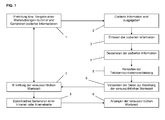
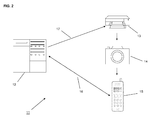
- FIGS. 1 and 2 illustrate the invention by way of exemplary and preferred embodiments of the method according to the invention (method steps 1 to 9 in FIG. 1 ) and the data communication device of the present invention (reference numerals 11 to 17 in FIG FIG. 2 ).
- the data communication arrangement 11 comprises a queue management data processing means 12, an encoded information output means 13, a reading device 14 for acquiring the encoded information, and a data communication device 15 for processing the encoded information and establishing a telecommunication connection 16 with the data processing means 12.
- the data processing device 12 is preferably a conventional computer system (server) that is operated or used by a provider of goods and / or services.
- the data processing device 12 is equipped with software that enables management of a queue.
- step 1 of a preferred embodiment of the method according to the invention is by the data processing device 12 assigns a queue number and generates coded information based on this queue number.
- This encoded information may be, for example, a two-dimensional code, preferably a QR code.
- the coded information (eg a QR code) is sent by the data processing device 12 via the data line 17 to the output device 13 and displayed or printed in step 2 of this.
- the output device 13 can be, for example, a monitor or, as in the case of FIG FIG. 2 illustrated embodiment, to act a printer. However, it could also be used, for example, an output device for RFID elements. For example, a fairy tale that a customer draws at the beginning of the waiting period prints out a QR code. In this two-dimensional code, both the Internet address of the queue system and the relevant transaction information such as the drawn queue number and possibly an identifier for which service and in which branch office he has logged, coded.
- the encoded information is read by the customer by means of the reader 14.
- the reader 14 may be, for example, a scanner (hand-held scanner) or, as in the example shown, a camera. Alternatively, however, a short-range data radio receiver (e.g., Bluetooth) or an RFID receiver may be used.
- the reader 14 may be used as a separate device or alternatively integrated into the data communication device 15.
- the reader 14 is a camera integrated in a mobile phone, smartphone or PDA.
- the waiting customer can record the QR code of his queue mark with the camera of his mobile phone.
- the encoded information is forwarded by the reader 14 to the data communication device 15 and processed there.
- step 4 the encoded information is decoded in the data communication device 15, and in step 5, based on the decoded information on the telecommunication link 16, a connection between the data communication device 15 and the data processing device 12 produced.
- the QR software on the mobile decodes the information contained in the QR code and uses this information, which preferably includes the queue number and address (URL) of the data processing device 12, to connect to the service provider's queue server. This is preferably an internet connection.
- the data required for determining the expected (remaining) waiting time are transmitted to the data processing device 12 via the telecommunication connection 16 in step 6.
- step 7 the data processing device 12 continuously determines the expected point in time of the customer contact or the expected remaining waiting time from the available statistical data for processing the transaction-related queue for the transmitted parameters, that is to say process-specific. These data are processed in step 8 by the data processing device 12 to a customer-related intranet or Internet display page with dynamically generated content, which is transmitted to the data communication device 15 of the person waiting, in which they are displayed in step 9.
- the method steps 5 to 9 can be repeated as often as desired at intervals on the initiative of the person waiting. Since the displayed data is constantly being updated, depending on the depletion of the queue, the person waiting is continuously informed and can flexibly adjust their activities and their range of action.
Landscapes
- Business, Economics & Management (AREA)
- Engineering & Computer Science (AREA)
- Human Resources & Organizations (AREA)
- Physics & Mathematics (AREA)
- General Physics & Mathematics (AREA)
- Marketing (AREA)
- Entrepreneurship & Innovation (AREA)
- Strategic Management (AREA)
- Economics (AREA)
- Data Mining & Analysis (AREA)
- Operations Research (AREA)
- Quality & Reliability (AREA)
- Tourism & Hospitality (AREA)
- General Business, Economics & Management (AREA)
- Theoretical Computer Science (AREA)
- Signal Processing (AREA)
- Mobile Radio Communication Systems (AREA)
Abstract
Description
- Die Erfindung betrifft ein Verfahren zur Kommunikation eines Anbieters von Waren und/oder Dienstleistungen mit einem Wartenden, bei dem die Kommunikation über mindestens eine Telekommunikationsverbindung erfolgt und eine Übertragung der voraussichtlichen Wartezeit zum Wartenden umfasst. Die Erfindung betrifft ferner eine Datenkommunikationsanordnung zur Durchführung des Verfahrens sowie die Verwendung der Datenkommunikationsanordnung.
- In vielen Dienstleistungsbereichen mit Kundenkontakt, in denen mit größeren Wartezeiten zu rechnen ist (z.B. in Meldeämtern, KFZ-Zulassungsstellen, Warenausgabestellen oder Bibliotheken), kann der Kunde ein Märkchen mit einer fortlaufenden Nummer ziehen. Er braucht dann nicht in einer Schlange anzustehen, sondern ein Warteschlangensystem verwaltet die Wartenden und die Bearbeiter. Eine Anzeigetafel informiert den Kunden, wenn er an der Reihe ist. Die Wartezeit kann der Kunde aber dennoch nicht sinnvoll gestalten, da er nur dann ein Feedback zum Abbau der Warteschlange erhält, wenn er im Sichtbereich der Anzeigetafel bleibt.
- Zur Lösung dieses Problems wurde in der
DE-B3-103 37 603 bereits vorgeschlagen, den Kunden per SMS zu benachrichtigen, kurz bevor er an der Reihe ist. Dieses Verfahren hat aber mehrere signifikante Nachteile. Zum Einen liegt dem Dienstleister in der Regel nicht die Mobilfunk-Rufnummer des Wartenden vor, so dass diese Nummer zuvor von Hand erfasst werden muss. Zum Anderen müssen der Rufnummer des Wartenden von Hand weitere Informationen zugeordnet werden, wie beispielsweise die fortlaufende Warteschlangen-Nummer, eine Dienstleistungskennung (bei mehreren Warteschlangen zu unterschiedlichen Dienstleistungen) oder eine Standortkennung bei mehreren Zweigstellen. Darüber hinaus kann der Kunde während der Wartezeit nicht "in time" nachverfolgen, wie schnell sich die Warteschlange abbaut. Eine zum Zeitpunkt der Nummernvergabe aus den zurückliegenden Bearbeitungszeiten prognostizierte Zeit kann sich im Laufe der Wartezeit erheblich verändern. Dass heißt, der Kunde muss stets mit einer überraschenden, vorzeitigen Benachrichtigung rechnen und kann seinen Aktionsradius nicht flexibel gestalten. - Es ist Aufgabe der Erfindung, ein Verfahren und eine Datenkommunikationsanordnung bereitzustellen, welche die genannten Nachteile vermeidet und eine zuverlässige, flexible und jeder Zeit aktuelle Information eines Wartenden bezüglich der voraussichtlichen Wartezeit gewährleistet.
- Die Aufgabe wird erfindungsgemäß durch ein Verfahren der eingangs genannten Art gelöst, bei dem der Wartende mindestens eine codierte Information decodiert, die Telekommunikationsverbindung mittels der decodierten Information herstellt, Daten über die Telekommunikationsverbindung versendet und die Übertragung der voraussichtlichen Wartezeit zum Wartenden anhand dieser Daten erfolgt. Erfindungsgemäß decodiert die wartende Person eine codierte Information, die sie vorzugsweise vom Anbieter erhalten bzw. in den Räumlichkeiten des Anbieters erfasst hat. Anhand der decodierten Information kann die wartende Person dann eine Telekommunikationsverbindung zum Anbieter herstellen, über die sie spezifische Daten an den Anbieter versenden kann. Anhand dieser spezifischen Daten kann der Anbieter die voraussichtliche Wartezeit der wartenden Person ermitteln und diese dann über die Telekommunikationsverbindung an die wartende Person übermitteln. Der Daten- und/oder Informationsaustausch kann dabei permanent, d.h. über eine Art Standleitung, oder zu einem beliebigen Zeitpunkt auf Abruf erfolgen. Vorzugsweise wird die Information bezüglich der Wartezeit mehrfach in beliebigen Abständen durch das Versenden der spezifischen Daten durch die wartende Person abgefragt. Durch das erfindungsgemäße Verfahren kann eine wartende Person während der Wartezeit "in time" verfolgen, wie schnell sich die Warteschlange abbaut und wann sie sich wieder beim Anbieter der Waren und/oder Dienstleistungen einfinden muss. Folglich ist die wartende Person zu jeder Zeit über ihre ungefähr verbleibende Wartezeit informiert, so dass sie ihren Aktionsradius flexibel gestalten und die Wartezeit sinnvoll nutzen kann.
- Vorzugsweise umfasst die decodierte Information die nötigen Informationen zur Herstellung der Telekommunikationsverbindung mit dem Anbieter und die Daten zur Ermittlung der Wartezeit. Die Informationen zur Herstellung der Telekommunikationsverbindung können dabei insbesondere die Adresse des Anbieters, beispielsweise die Adresse innerhalb eines Netzwerkes (Netzkennung oder URL= Uniform Resource Locator), umfassen. Die Daten zur Ermittlung der Wartezeit umfassen beispielsweise den Zeitpunkt der Ausgabe der codierten Information und/oder eine fortlaufende Nummer, welche der Position des Wartenden innerhalb der Warteschlange entspricht.
- Die codierte Information kann dem Wartenden durch den Anbieter und/oder beim Anbieter, vorzugsweise optisch lesbar, zur Verfügung gestellt werden. So kann die codierte Information beispielsweise ausgedruckt oder auf einem Display bzw. Monitor angezeigt werden. Alternativ kann die codierte Information auch mittels eines geeigneten Transponders, vorzugsweise eines RFID-Elements, bereitgestellt werden.
- Vorzugsweise erfasst der Wartende die codierte Information in digitaler Form, so dass sie mittels Datenverarbeitung automatisch decodiert werden kann. Zu diesem Zweck verwendet die wartende Person vorzugsweise ein geeignetes Lesegerät, beispielsweise einen Scanner, eine Kamera oder ein RFID-Lesegerät.
- In besonders vorteilhafter Ausgestaltung der Erfindung ist vorgesehen, dass die codierte Information in einem zweidimensionalen Code, vorzugsweise einem QR-Code, abgelegt ist. Auf diese Weise wird eine sichere und effiziente Erfassung der Information sowie eine standardisierte Verarbeitung derselben ermöglicht.
- In weiterer vorteilhafter Ausgestaltung der Erfindung ist vorgesehen, dass die Telekommunikationsverbindung eine Netzwerkverbindung ist. Vorzugsweise ist die Netzwerkverbindung eine Intranet- oder Internetverbindung, so dass der Daten- bzw. Informationsaustausch zu jeder Zeit "in time" erfolgen kann. Die Intranetverbindung wird vorzugsweise vom Anbieter der Waren und/oder Dienstleistungen zur Verfügung gestellt. Es können also bereits vorhandene interne Netzwerke genutzt werden, um das erfindungsgemäße Verfahren durchzuführen. Durch die Verwendung einer Internetverbindung kann beispielsweise die Flexibilität des Verfahrens erhöht werden. Die Netzwerkverbindung kann über Netzwerkkabel hergestellt oder drahtlos realisiert werden. So kann die Netzwerkverbindung beispielsweise über abgeschirmte Kabel innerhalb der Räumlichkeiten des Anbieters hergestellt werden, wobei die Abfrage der voraussichtlichen Wartezeit durch die wartende Person an speziellen Terminals erfolgen kann. In diesem Fall kein eine sehr sichere Datenübertragung gewährleistet werden. Alternativ kann die Telekommunikationsverbindung aber auch drahtlos mittels WLAN oder Daten- (Mobil-) Funkübermittlung (z.B. UMTS) hergestellt werden, was die Flexibilität des Verfahrens und den Bewegungsspielraum der wartenden Person deutlich erhöht.
- In einer bevorzugten Ausführungsform des erfindungsgemäßen Verfahrens stellt der Anbieter dem Wartenden einen QR-Code in optisch lesbarer Form zur Verfügung, wobei der QR-Code zumindest die Daten bezüglich der Adresse (z.B. URL= Uniform Resource Locator) des Anbieters und einer Warteschlangennummer des Wartenden umfasst. Der Wartende liest den QR-Code dann in ein mobiles Datenkommunikationsgerät ein, wobei der QR-Code in dem Datenkommunikationsgerät decodiert wird. Mittels der Daten, die in der decodierten Information enthalten sind, wird eine drahtlose Netzwerkverbindung mit einer Datenverarbeitungseinrichtung des Anbieters hergestellt, wobei die Daten an die Datenverarbeitungseinrichtung versendet und dort verarbeitet werden, und wobei die Datenverarbeitungseinrichtung die voraussichtliche Wartezeit auf das Datenkommunikationsgerät des Wartenden überträgt.
- Die Aufgabe wird ferner durch eine Datenkommunikationsanlage gelöst, die mindestens eine Datenverarbeitungseinrichtung zur Verwaltung von Warteschlangen, mindestens eine Ausgabevorrichtung für codierte Informationen und mindestens ein Datenkommunikationsgerät zum Erfassen und Verarbeiten der codierten Informationen umfasst, wobei das Datenkommunikationsgerät mit der Datenverarbeitungseinrichtung über eine Telekommunikationsverbindung verbindbar ist.
- Die Ausgabevorrichtung sollte eine Anzeigeeinrichtung bzw. Display sein, welche die vorzugsweise zweidimensionale Darstellung der codierten Information und ein Einlesen dieser Information in ein geeignetes Lesegerät, beispielsweise einen Scanner oder eine Kamera, ermöglicht. Vorzugsweise ist die Ausgabevorrichtung ein Drucker oder ein Monitor, der eine gut lesbare Anzeige des Codes gewährleistet. Alternativ könnte die Ausgabevorrichtung beispielsweise aber auch einen Transponder (z.B. RFID-Element) zur Verfügung stellen bzw. ausgeben. Die Ausgabevorrichtung und/oder die Datenverarbeitungseinrichtung zur Verwaltung von Warteschlangen ist vorzugsweise mit einer Software zum Generieren der codierten Information, beispielsweise einer Software zum Generieren von QR-Codes, ausgestattet. Als Drucker für Wartemarken können beispielsweise Matrixdrucker eingesetzt werden, so dass sich beispielsweise ein zweidimensionale QR-Code mit der bestehenden Infrastruktur zusätzlich auf den Märkchen ausdrucken lässt.
- In besonders vorteilhafter Ausgestaltung der Erfindung ist ein Lesegerät zum Erfassen der codierten Informationen vorgesehen. Das Lesegerät kann beispielsweise ein Scanner, eine Kamera, ein Kurzstrecken-Datenfunkempfänger (z.B. Bluetooth) oder ein RFID-Empfänger sein.
- Das Datenkommunikationsgerät umfasst vorzugsweise das Lesegerät zum Einlesen der codierten Information und kann darüber hinaus mit einer Software ausgestattet sein, die ein Decodieren und Verarbeiten der codierten Information ermöglicht. Da beispielsweise QR-Codes bereits vielfach in der Produktwerbung und zur Anzeige von Hintergrundinformationen in Tageszeitungen und Fachzeitschriften zum Einsatz kommen, ist die Software zum Generieren der QR-Codes allgemein verfügbar und die QR-Software für Mobilfunkgeräte bereits weit verbreitet. Das Datenkommunikationsgerät ist daher vorzugsweise ein Mobiltelefon, ein Smartphone oder ein Personal Digital Assistant (PDA).
- Zum Aufbau einer Telekommunikationsverbindung weisen das Datenkommunikationsgerät und die Datenverarbeitungseinrichtung vorzugsweise jeweils mindestens eine Netzwerkschnittstelle auf. Dabei ist die Netzwerkschnittstelle vorzugsweise eine Drahtlosschnittstelle, insbesondere eine WLAN- oder eine Daten- (Mobil-) Funkübermittlungs- (z.B. UMTS-) Schnittstelle, so dass die Flexibilität der Datenkommunikationsanlage und der Bewegungsspielraum der wartenden Person deutlich erhöht werden können.
- Die Erfindung betrifft ferner die Verwendung der erfindungsgemäßen Datenkommunikationsanordnung zur Übertragung einer voraussichtlichen Wartezeit von einem Anbieter von Waren und/oder Dienstleistungen zu einem Wartenden.
- Die Erfindung betrifft auch die Verwendung mindestens eines QR-Codes zur Information von Wartenden, wobei die Information die voraussichtliche Wartezeit umfasst.
- Die Erfindung wird im weiteren anhand der Abbildungen beispielhaft näher erläutert.
-
Figur 1 zeigt ein Flussdiagram einer bevorzugten Ausführungsform des erfindungsgemäßen Verfahrens. -
Figur 2 zeigt eine schematische Darstellung einer beispielhaften Ausführungsform der erfindungsgemäßen Datenkommunikationsanordnung. - Die
Figuren 1 und2 veranschaulichen die Erfindung anhand beispielhafter und bevorzugter Ausführungsformen des erfindungsgemäßen Verfahrens (Verfahrensschritte 1 bis 9 inFigur 1 ) und der erfindungsgemäßen Datenkommunikationsanordnung (Bezugsziffern 11 bis 17 inFigur 2 ). Die Datenkommunikationsanordnung 11 umfasst eine Datenverarbeitungseinrichtung 12 zur Verwaltung von Warteschlangen (Warteschlangen-System), eine Ausgabevorrichtung 13 für codierte Informationen, ein Lesegerät 14 zum Erfassen der codierten Informationen und ein Datenkommunikationsgerät 15 zum Verarbeiten der codierten Informationen und zur Herstellung einer Telekommunikationsverbindung 16 mit der Datenverarbeitungseinrichtung 12. Bei der Datenverarbeitungseinrichtung 12 handelt es sich vorzugsweise um eine klassische EDV-Anlage (Server), die von einem Anbieter von Waren und/oder Dienstleistungen betrieben bzw. genutzt wird. - Die Datenverarbeitungseinrichtung 12 ist mit einer Software ausgestattet, die ein Verwalten einer Warteschlange ermöglicht. In Schritt 1 einer bevorzugten Ausführungsform des erfindungsgemäßen Verfahrens wird durch die Datenverarbeitungseinrichtung 12 eine Warteschlangen-Nummer vergeben und anhand dieser Warteschlangen-Nummer eine codierte Information generiert. Bei dieser codierten Information kann es sich beispielsweise um einen zweidimensionalen Code, vorzugsweise um einen QR-Code, handeln.
- Die codierte Information (z.B. ein QR-Code) wird von der Datenverarbeitungseinrichtung 12 über die Datenleitung 17 an die Ausgabevorrichtung 13 gesendet und in Schritt 2 von dieser angezeigt oder ausgedruckt. Bei der Ausgabevorrichtung 13 kann es sich beispielsweise um einen Monitor oder, wie bei dem in
Figur 2 dargestellten Ausführungsbeispiel, um einen Drucker handeln. Es könnte aber beispielsweise auch eine Ausgabevorrichtung für RFID-Elemente eingesetzt werden. So wird beispielsweise auf einem Märkchen, das ein Kunde zu Beginn der Wartezeit zieht, ein QR-Code ausgedruckt. In diesem zweidimensionalen Code können sowohl die Internet-Adresse des Warteschlangen-Systems als auch die relevanten Vorgangs-Informationen wie die gezogene Warteschlangen-Nummer und ggf. eine Kennung, für welche Dienstleistung und in welcher Zweigstelle er sich angemeldet hat, codiert sein. - In Schritt 3 wird die codierte Information durch den Kunden mittels des Lesegeräts 14 eingelesen bzw. erfasst. Bei dem Lesegerät 14 kann es sich beispielsweise um einen Scanner (Handscanner) oder, wie im gezeigten Beispiel, eine Kamera handeln. Alternativ kann aber auch ein Kurzstrecken-Datenfunkempfänger (z.B. Bluetooth) oder ein RFID-Empfänger verwendet werden. Das Lesegerät 14 kann als separates Gerät verwendet werden oder alternativ in das Datenkommunikationsgerät 15 integriert sein. Vorzugsweise ist das Lesegerät 14 eine in ein Mobiltelefon, Smartphone oder PDA integrierte Kamera. So kann der wartende Kunde beispielsweise mit der Kamera seines Mobiltelefons den QR-Code seiner Warteschlangen-Marke aufnehmen. Die codierte Information wird von dem Lesegerät 14 an das Datenkommunikationsgerät 15 weitergeleitet und dort verarbeitet.
- In Schritt 4 wird die codierte Information in dem Datenkommunikationsgerät 15 decodiert und in Schritt 5 wird anhand der decodierten Information über die Telekommunikationsverbindung 16 eine Verbindung zwischen dem Datenkommunikationsgerät 15 und der Datenverarbeitungseinrichtung 12 hergestellt. Die QR-Software auf dem Mobiltelefon decodiert beispielsweise die im QR-Code enthaltenen Informationen und baut anhand dieser Informationen, die vorzugsweise die Warteschlangen-Nummer und die Adresse (URL) der Datenverarbeitungseinrichtung 12 umfassen, eine Verbindung zum Warteschlangen-Server des Dienstleisters auf. Dabei handelt es sich vorzugsweise um eine Internetverbindung.
- Die zur Ermittlung der voraussichtlichen (verbleibenden) Wartezeit erforderlichen Daten, welche die Warteschlangen-Nummer und ggf. Zusatzinformationen als Parameter umfassen, werden in Schritt 6 über die Telekommunikationsverbindung 16 an die Datenverarbeitungseinrichtung 12 übermittelt.
- In Schritt 7 ermittelt die Datenverarbeitungseinrichtung 12 für die übertragenen Parameter, also vorgangsspezifisch, aus den vorliegenden statistischen Daten zur Abarbeitung der vorgangsbezogenen Warteschlange fortlaufend den erwarteten Zeitpunkt des Kundenkontakts bzw. die voraussichtlich verbleibende Wartezeit. Diese Daten werden in Schritt 8 durch die Datenverarbeitungseinrichtung 12 zu einer kundenbezogenen Intranet- oder Internet-Anzeigeseite mit dynamisch erzeugtem Inhalt aufbereitet, die auf das Datenkommunikationsgerät 15 der wartenden Person übertragen wird, von dem sie in Schritt 9 angezeigt werden. Dabei können die Verfahrensschritte 5 bis 9 in zeitlichen Abständen auf Veranlassung der wartenden Person beliebig oft wiederholt werden. Da die angezeigten Daten, abhängig vom Abbau der Warteschlange, fortwährend angepasst werden, ist die wartende Person kontinuierlich informiert und kann ihre Aktivitäten und ihren Aktionsradius flexibel darauf einstellen.
Claims (15)
- Verfahren zur Kommunikation eines Anbieters von Waren und/oder Dienstleistungen mit einem Wartenden, bei dem die Kommunikation über mindestens eine Telekommunikationsverbindung erfolgt und eine Übertragung der voraussichtlichen Wartezeit zum Wartenden umfasst,
dadurch gekennzeichnet, dass
der Wartende mindestens eine codierte Information decodiert, wobei die codierte Information eine Warteschlangen-Nummer umfasst, die Telekommunikationsverbindung mittels der decodierten Information herstellt, Daten, welche die Warteschlangen-Nummer umfassen, über die Telekommunikationsverbindung versendet und die Übertragung der voraussichtlichen Wartezeit zum Wartenden anhand dieser Daten erfolgt. - Verfahren nach Anspruch 1,
dadurch gekennzeichnet, dass
die decodierte Information die nötigen Informationen zur Herstellung der Telekommunikationsverbindung mit dem Anbieter und die Daten zur Ermittlung der Wartezeit umfasst. - Verfahren nach Anspruch 1 oder 2,
dadurch gekennzeichnet, dass
die codierte Information dem Wartenden durch den Anbieter und/oder beim Anbieter, vorzugsweise optisch lesbar, zur Verfügung gestellt wird. - Verfahren nach einem der vorhergehenden Ansprüche,
dadurch gekennzeichnet, dass
der Wartende die codierte Information in digitaler Form erfasst und mittels Datenverarbeitung automatisch decodiert. - Verfahren nach einem der vorhergehenden Ansprüche,
dadurch gekennzeichnet, dass
die codierte Information in einem zweidimensionalen Code, vorzugsweise einem QR-Code, abgelegt ist. - Verfahren nach einem der vorhergehenden Ansprüche,
dadurch gekennzeichnet, dass
die Telekommunikationsverbindung eine Netzwerkverbindung ist, vorzugsweise eine Intranet- oder Internetverbindung. - Verfahren nach einem der vorhergehenden Ansprüche,
dadurch gekennzeichnet, dass
die Telekommunikationsverbindung mittels WLAN oder Daten-Funkübermittlung hergestellt wird. - Verfahren nach einem der Ansprüche 5 bis 7,
dadurch gekennzeichnet, dass
der Anbieter dem Wartenden einen QR-Code in optisch lesbarer Form zur Verfügung stellt, wobei der QR-Code zumindest die Daten bezüglich der Adresse des Anbieters und einer Warteschlangennummer des Wartenden umfasst, der Wartende den QR-Code in ein mobiles Datenkommunikationsgerät einliest, wobei der QR-Code in dem Datenkommunikationsgerät decodiert wird, mittels der Daten eine drahtlose Netzwerkverbindung mit einer Datenverarbeitungseinrichtung des Anbieters hergestellt wird, wobei die Daten an die Datenverarbeitungseinrichtung versendet und dort verarbeitet werden, und wobei die Datenverarbeitungseinrichtung die voraussichtliche Wartezeit auf das Datenkommunikationsgerät des Wartenden überträgt. - Datenkommunikationsanordnung (11) zur Durchführung des Verfahrens nach einem der Ansprüche 1 bis 8,
gekennzeichnet durch
mindestens eine Datenverarbeitungseinrichtung (12) zur Verwaltung von Warteschlangen,
mindestens eine Ausgabevorrichtung (13) für codierte Informationen, und
mindestens ein Datenkommunikationsgerät (15) zum Erfassen und Verarbeiten der codierten Informationen,
wobei das Datenkommunikationsgerät (15) mit der Datenverarbeitungseinrichtung (12) über eine Telekommunikationsverbindung (16) verbindbar ist. - Datenkommunikationsanordnung nach Anspruch 9,
dadurch gekennzeichnet, dass
ein Lesegerät (14) zum Erfassen der codierten Informationen vorgesehen ist. - Datenkommunikationsanordnung nach Anspruch 10,
dadurch gekennzeichnet, dass
das Datenkommunikationsgerät (15) das Lesegerät (14) umfasst. - Datenkommunikationsanordnung nach einem der vorhergehenden Ansprüche,
dadurch gekennzeichnet, dass
das Datenkommunikationsgerät (15) und die Datenverarbeitungseinrichtung (12) jeweils mindestens eine Netzwerkschnittstelle aufweisen. - Datenkommunikationsanordnung nach Anspruch 12,
dadurch gekennzeichnet, dass
die Netzwerkschnittstelle eine Drahtlosschnittstelle ist, vorzugsweise eine WLAN- oder Daten-Funkübermittlungs-Schnittstelle. - Verwendung der Datenkommunikationsanordnung nach einem der Ansprüche 9 bis 13 zur Übertragung einer voraussichtlichen Wartezeit von einem Anbieter von Waren und/oder Dienstleistungen zu einem Wartenden.
- Verwendung mindestens eines QR-Codes zur Information von Wartenden, wobei die Information die voraussichtliche Wartezeit umfasst.
Applications Claiming Priority (1)
| Application Number | Priority Date | Filing Date | Title |
|---|---|---|---|
| DE200910033748 DE102009033748B4 (de) | 2009-07-17 | 2009-07-17 | Warteschlangen-Online-Support |
Publications (2)
| Publication Number | Publication Date |
|---|---|
| EP2276228A1 true EP2276228A1 (de) | 2011-01-19 |
| EP2276228B1 EP2276228B1 (de) | 2017-05-03 |
Family
ID=43033272
Family Applications (1)
| Application Number | Title | Priority Date | Filing Date |
|---|---|---|---|
| EP10169757.1A Not-in-force EP2276228B1 (de) | 2009-07-17 | 2010-07-16 | Warteschlangen-Online-Support |
Country Status (2)
| Country | Link |
|---|---|
| EP (1) | EP2276228B1 (de) |
| DE (1) | DE102009033748B4 (de) |
Cited By (2)
| Publication number | Priority date | Publication date | Assignee | Title |
|---|---|---|---|---|
| EP2806407A1 (de) * | 2013-05-24 | 2014-11-26 | Eduardo Manuel Salas Fehlandt | Elektronisches System zur Verwaltung von Warteschlangen |
| WO2016097774A1 (en) * | 2014-12-17 | 2016-06-23 | Seszták Szabolcs | Procedure and mobile application for handling sequence number calling information |
Families Citing this family (1)
| Publication number | Priority date | Publication date | Assignee | Title |
|---|---|---|---|---|
| CN105844761B (zh) * | 2016-05-23 | 2018-10-26 | 北方工业大学 | 一种无纸化排队取号系统 |
Citations (3)
| Publication number | Priority date | Publication date | Assignee | Title |
|---|---|---|---|---|
| JP2002312474A (ja) * | 2001-04-12 | 2002-10-25 | Sato Corp | 順番表示システム |
| DE10337603B3 (de) | 2003-08-16 | 2004-10-21 | Stephan Wilke | Verfahren und System zum automatischen Benachrichtigen eines Wartenden |
| US20050157865A1 (en) * | 2004-01-21 | 2005-07-21 | Yeager C. D. | System and method of managing a wait list queue |
Family Cites Families (3)
| Publication number | Priority date | Publication date | Assignee | Title |
|---|---|---|---|---|
| US5175417A (en) * | 1989-11-06 | 1992-12-29 | Fujitsu Limited | Window information apparatus |
| US20030120555A1 (en) * | 2000-03-09 | 2003-06-26 | Takashi Kitagawa | Information processing apparatus with optical data reader, servers, and electronic commerce method |
| GB0413624D0 (en) * | 2004-06-17 | 2004-07-21 | Monkwood Technologies Ltd | A queue management system and method |
-
2009
- 2009-07-17 DE DE200910033748 patent/DE102009033748B4/de not_active Expired - Fee Related
-
2010
- 2010-07-16 EP EP10169757.1A patent/EP2276228B1/de not_active Not-in-force
Patent Citations (3)
| Publication number | Priority date | Publication date | Assignee | Title |
|---|---|---|---|---|
| JP2002312474A (ja) * | 2001-04-12 | 2002-10-25 | Sato Corp | 順番表示システム |
| DE10337603B3 (de) | 2003-08-16 | 2004-10-21 | Stephan Wilke | Verfahren und System zum automatischen Benachrichtigen eines Wartenden |
| US20050157865A1 (en) * | 2004-01-21 | 2005-07-21 | Yeager C. D. | System and method of managing a wait list queue |
Cited By (2)
| Publication number | Priority date | Publication date | Assignee | Title |
|---|---|---|---|---|
| EP2806407A1 (de) * | 2013-05-24 | 2014-11-26 | Eduardo Manuel Salas Fehlandt | Elektronisches System zur Verwaltung von Warteschlangen |
| WO2016097774A1 (en) * | 2014-12-17 | 2016-06-23 | Seszták Szabolcs | Procedure and mobile application for handling sequence number calling information |
Also Published As
| Publication number | Publication date |
|---|---|
| DE102009033748A1 (de) | 2011-02-03 |
| DE102009033748B4 (de) | 2011-09-01 |
| EP2276228B1 (de) | 2017-05-03 |
Similar Documents
| Publication | Publication Date | Title |
|---|---|---|
| EP1062984A3 (de) | Vorrichtung zur Übertragung von Daten insbesondere aus einem elektromedizinischen Implantat | |
| DE102007038810A1 (de) | Verfahren zur Datenübertragung | |
| DE102007059816A1 (de) | Verfahren zum mobilen Erwerb von elektronischen Tickets | |
| DE60133384T2 (de) | GEZIELTE NACHRICHTEN FüR EIN ENDBENUTZERGERÄT, DAS MIT EINEM DIENSTKNOTEN IN EINEM KOMMUNIKATIONSNETZ VERBUNDEN IST | |
| EP2276228B1 (de) | Warteschlangen-Online-Support | |
| DE60204062T2 (de) | Mobiles Kommunikationsgerät und Datenkommunikationsverfahren zum Austausch von Daten entsprechend einem aufgezeigten Protokoll in empfangenen Anweisungsdaten | |
| EP2265050A2 (de) | Verfahren und Übertragungsrahmen für die Übertragung von Kurznachrichten mit verschiedenen Datenformaten | |
| EP1428160A2 (de) | Verfahren zur gewährung von rabatten auf produkte und/oder dienstleistungen | |
| DE102021100772B3 (de) | Verfahren zur Informationsübertragung und Ausgabegerät zur Durchführung des Verfahrens | |
| EP1191720A3 (de) | Kombiniertes Netzsystem und Verfahren zur Bereitstellung individualisierter information aus einer Gesamtheit von Informationen | |
| EP1800456B1 (de) | Verfahren und system zur automatisierten anpassung eines dienstparameters | |
| AT400786B (de) | Vorrichtung zur datenübertragung zwischen einem faxgerät und einer gegenstation | |
| EP1233359A2 (de) | Verfahren und Computersystem zur Terminierung von Dienstleistungen | |
| EP0989763A2 (de) | Verfahren und Mobil-Kommunikationssystem zur Steuerung eines Kurznachrichtendienstes | |
| DE102005019803A1 (de) | Verfahren zur Übertragung von Informationen über einen mit einer Kennung versehenen Gegenstand zu einem mobilen Kommuni-kationsgerät | |
| DE10238700B4 (de) | Mobiltelefon mit Kanalauflistung | |
| EP0915447B1 (de) | Kommunikationsverfahren und -vorrichtung | |
| DE212012000069U1 (de) | Interaktives Messe-Führungssystem | |
| DE102023125522A1 (de) | Codelesegerät, Codelesesystem, Arbeitssystem sowie Verfahren | |
| EP1215630B1 (de) | Verfahren zum Durchführen eines Check-In-Vorgangs in Flughäfen | |
| EP2226785A1 (de) | Verfahren zum Aufschalten einer visuellen Information auf zumindest eine Informationen wiedergebende Fläche und Vorrichtung zur Durchführung des Verfahrens | |
| DE102022122234A1 (de) | Verfahren zum Ermitteln von Fahrzeugkomponenten eines Kraftfahrzeugs sowie Handgerät | |
| DE10205576B4 (de) | Verfahren und System zur flexiblen Definition graphischer Informationen an Kommunikationsendgeräten | |
| DE102004006559B4 (de) | Verfahren zur Benachrichtigung bei Erhalt von Daten eines Dienstes | |
| DE202012010791U1 (de) | System, bei dem Dritte im definierbaren Radius eines Ereignisses unverzüglich über dieses alarmiert werden, sodass das Auffinden der von diesem Ereignis betroffenen Lebewesen oder Sachen und /oder Hilfeleistungen für selbige ermöglicht werden |
Legal Events
| Date | Code | Title | Description |
|---|---|---|---|
| PUAI | Public reference made under article 153(3) epc to a published international application that has entered the european phase |
Free format text: ORIGINAL CODE: 0009012 |
|
| AK | Designated contracting states |
Kind code of ref document: A1 Designated state(s): AL AT BE BG CH CY CZ DE DK EE ES FI FR GB GR HR HU IE IS IT LI LT LU LV MC MK MT NL NO PL PT RO SE SI SK SM TR |
|
| AX | Request for extension of the european patent |
Extension state: BA ME RS |
|
| 17P | Request for examination filed |
Effective date: 20110719 |
|
| 17Q | First examination report despatched |
Effective date: 20130913 |
|
| GRAP | Despatch of communication of intention to grant a patent |
Free format text: ORIGINAL CODE: EPIDOSNIGR1 |
|
| INTG | Intention to grant announced |
Effective date: 20170125 |
|
| GRAS | Grant fee paid |
Free format text: ORIGINAL CODE: EPIDOSNIGR3 |
|
| GRAA | (expected) grant |
Free format text: ORIGINAL CODE: 0009210 |
|
| RBV | Designated contracting states (corrected) |
Designated state(s): AL AT BE BG CH CY CZ DK EE ES FI FR GB GR HR HU IE IS IT LI LT LU LV MC MK MT NL NO PL PT RO SE SI SK SM TR |
|
| REG | Reference to a national code |
Ref country code: DE Ref legal event code: R108 |
|
| AK | Designated contracting states |
Kind code of ref document: B1 Designated state(s): AL AT BE BG CH CY CZ DK EE ES FI FR GB GR HR HU IE IS IT LI LT LU LV MC MK MT NL NO PL PT RO SE SI SK SM TR |
|
| REG | Reference to a national code |
Ref country code: GB Ref legal event code: FG4D Free format text: NOT ENGLISH |
|
| REG | Reference to a national code |
Ref country code: AT Ref legal event code: REF Ref document number: 891155 Country of ref document: AT Kind code of ref document: T Effective date: 20170515 Ref country code: CH Ref legal event code: EP |
|
| REG | Reference to a national code |
Ref country code: IE Ref legal event code: FG4D Free format text: LANGUAGE OF EP DOCUMENT: GERMAN |
|
| REG | Reference to a national code |
Ref country code: FR Ref legal event code: PLFP Year of fee payment: 8 |
|
| REG | Reference to a national code |
Ref country code: NL Ref legal event code: MP Effective date: 20170503 |
|
| REG | Reference to a national code |
Ref country code: LT Ref legal event code: MG4D |
|
| PG25 | Lapsed in a contracting state [announced via postgrant information from national office to epo] |
Ref country code: FI Free format text: LAPSE BECAUSE OF FAILURE TO SUBMIT A TRANSLATION OF THE DESCRIPTION OR TO PAY THE FEE WITHIN THE PRESCRIBED TIME-LIMIT Effective date: 20170503 Ref country code: GR Free format text: LAPSE BECAUSE OF FAILURE TO SUBMIT A TRANSLATION OF THE DESCRIPTION OR TO PAY THE FEE WITHIN THE PRESCRIBED TIME-LIMIT Effective date: 20170804 Ref country code: LT Free format text: LAPSE BECAUSE OF FAILURE TO SUBMIT A TRANSLATION OF THE DESCRIPTION OR TO PAY THE FEE WITHIN THE PRESCRIBED TIME-LIMIT Effective date: 20170503 Ref country code: ES Free format text: LAPSE BECAUSE OF FAILURE TO SUBMIT A TRANSLATION OF THE DESCRIPTION OR TO PAY THE FEE WITHIN THE PRESCRIBED TIME-LIMIT Effective date: 20170503 Ref country code: HR Free format text: LAPSE BECAUSE OF FAILURE TO SUBMIT A TRANSLATION OF THE DESCRIPTION OR TO PAY THE FEE WITHIN THE PRESCRIBED TIME-LIMIT Effective date: 20170503 Ref country code: NO Free format text: LAPSE BECAUSE OF FAILURE TO SUBMIT A TRANSLATION OF THE DESCRIPTION OR TO PAY THE FEE WITHIN THE PRESCRIBED TIME-LIMIT Effective date: 20170803 |
|
| PG25 | Lapsed in a contracting state [announced via postgrant information from national office to epo] |
Ref country code: IS Free format text: LAPSE BECAUSE OF FAILURE TO SUBMIT A TRANSLATION OF THE DESCRIPTION OR TO PAY THE FEE WITHIN THE PRESCRIBED TIME-LIMIT Effective date: 20170903 Ref country code: SE Free format text: LAPSE BECAUSE OF FAILURE TO SUBMIT A TRANSLATION OF THE DESCRIPTION OR TO PAY THE FEE WITHIN THE PRESCRIBED TIME-LIMIT Effective date: 20170503 Ref country code: NL Free format text: LAPSE BECAUSE OF FAILURE TO SUBMIT A TRANSLATION OF THE DESCRIPTION OR TO PAY THE FEE WITHIN THE PRESCRIBED TIME-LIMIT Effective date: 20170503 Ref country code: BG Free format text: LAPSE BECAUSE OF FAILURE TO SUBMIT A TRANSLATION OF THE DESCRIPTION OR TO PAY THE FEE WITHIN THE PRESCRIBED TIME-LIMIT Effective date: 20170803 Ref country code: PL Free format text: LAPSE BECAUSE OF FAILURE TO SUBMIT A TRANSLATION OF THE DESCRIPTION OR TO PAY THE FEE WITHIN THE PRESCRIBED TIME-LIMIT Effective date: 20170503 Ref country code: LV Free format text: LAPSE BECAUSE OF FAILURE TO SUBMIT A TRANSLATION OF THE DESCRIPTION OR TO PAY THE FEE WITHIN THE PRESCRIBED TIME-LIMIT Effective date: 20170503 |
|
| PG25 | Lapsed in a contracting state [announced via postgrant information from national office to epo] |
Ref country code: CZ Free format text: LAPSE BECAUSE OF FAILURE TO SUBMIT A TRANSLATION OF THE DESCRIPTION OR TO PAY THE FEE WITHIN THE PRESCRIBED TIME-LIMIT Effective date: 20170503 Ref country code: EE Free format text: LAPSE BECAUSE OF FAILURE TO SUBMIT A TRANSLATION OF THE DESCRIPTION OR TO PAY THE FEE WITHIN THE PRESCRIBED TIME-LIMIT Effective date: 20170503 Ref country code: DK Free format text: LAPSE BECAUSE OF FAILURE TO SUBMIT A TRANSLATION OF THE DESCRIPTION OR TO PAY THE FEE WITHIN THE PRESCRIBED TIME-LIMIT Effective date: 20170503 Ref country code: SK Free format text: LAPSE BECAUSE OF FAILURE TO SUBMIT A TRANSLATION OF THE DESCRIPTION OR TO PAY THE FEE WITHIN THE PRESCRIBED TIME-LIMIT Effective date: 20170503 Ref country code: RO Free format text: LAPSE BECAUSE OF FAILURE TO SUBMIT A TRANSLATION OF THE DESCRIPTION OR TO PAY THE FEE WITHIN THE PRESCRIBED TIME-LIMIT Effective date: 20170503 |
|
| PG25 | Lapsed in a contracting state [announced via postgrant information from national office to epo] |
Ref country code: IT Free format text: LAPSE BECAUSE OF FAILURE TO SUBMIT A TRANSLATION OF THE DESCRIPTION OR TO PAY THE FEE WITHIN THE PRESCRIBED TIME-LIMIT Effective date: 20170503 Ref country code: SM Free format text: LAPSE BECAUSE OF FAILURE TO SUBMIT A TRANSLATION OF THE DESCRIPTION OR TO PAY THE FEE WITHIN THE PRESCRIBED TIME-LIMIT Effective date: 20170503 |
|
| REG | Reference to a national code |
Ref country code: CH Ref legal event code: PL |
|
| PLBE | No opposition filed within time limit |
Free format text: ORIGINAL CODE: 0009261 |
|
| STAA | Information on the status of an ep patent application or granted ep patent |
Free format text: STATUS: NO OPPOSITION FILED WITHIN TIME LIMIT |
|
| 26N | No opposition filed |
Effective date: 20180206 |
|
| REG | Reference to a national code |
Ref country code: IE Ref legal event code: MM4A |
|
| PG25 | Lapsed in a contracting state [announced via postgrant information from national office to epo] |
Ref country code: CH Free format text: LAPSE BECAUSE OF NON-PAYMENT OF DUE FEES Effective date: 20170731 Ref country code: LI Free format text: LAPSE BECAUSE OF NON-PAYMENT OF DUE FEES Effective date: 20170731 Ref country code: IE Free format text: LAPSE BECAUSE OF NON-PAYMENT OF DUE FEES Effective date: 20170716 |
|
| PG25 | Lapsed in a contracting state [announced via postgrant information from national office to epo] |
Ref country code: SI Free format text: LAPSE BECAUSE OF FAILURE TO SUBMIT A TRANSLATION OF THE DESCRIPTION OR TO PAY THE FEE WITHIN THE PRESCRIBED TIME-LIMIT Effective date: 20170503 |
|
| REG | Reference to a national code |
Ref country code: BE Ref legal event code: MM Effective date: 20170731 |
|
| PG25 | Lapsed in a contracting state [announced via postgrant information from national office to epo] |
Ref country code: LU Free format text: LAPSE BECAUSE OF NON-PAYMENT OF DUE FEES Effective date: 20170716 |
|
| REG | Reference to a national code |
Ref country code: FR Ref legal event code: PLFP Year of fee payment: 9 |
|
| PG25 | Lapsed in a contracting state [announced via postgrant information from national office to epo] |
Ref country code: BE Free format text: LAPSE BECAUSE OF NON-PAYMENT OF DUE FEES Effective date: 20170731 |
|
| REG | Reference to a national code |
Ref country code: AT Ref legal event code: MM01 Ref document number: 891155 Country of ref document: AT Kind code of ref document: T Effective date: 20170716 |
|
| PG25 | Lapsed in a contracting state [announced via postgrant information from national office to epo] |
Ref country code: MT Free format text: LAPSE BECAUSE OF FAILURE TO SUBMIT A TRANSLATION OF THE DESCRIPTION OR TO PAY THE FEE WITHIN THE PRESCRIBED TIME-LIMIT Effective date: 20170503 |
|
| PG25 | Lapsed in a contracting state [announced via postgrant information from national office to epo] |
Ref country code: AT Free format text: LAPSE BECAUSE OF NON-PAYMENT OF DUE FEES Effective date: 20170716 |
|
| PG25 | Lapsed in a contracting state [announced via postgrant information from national office to epo] |
Ref country code: MC Free format text: LAPSE BECAUSE OF FAILURE TO SUBMIT A TRANSLATION OF THE DESCRIPTION OR TO PAY THE FEE WITHIN THE PRESCRIBED TIME-LIMIT Effective date: 20170503 Ref country code: HU Free format text: LAPSE BECAUSE OF FAILURE TO SUBMIT A TRANSLATION OF THE DESCRIPTION OR TO PAY THE FEE WITHIN THE PRESCRIBED TIME-LIMIT; INVALID AB INITIO Effective date: 20100716 |
|
| PG25 | Lapsed in a contracting state [announced via postgrant information from national office to epo] |
Ref country code: CY Free format text: LAPSE BECAUSE OF NON-PAYMENT OF DUE FEES Effective date: 20170503 |
|
| PG25 | Lapsed in a contracting state [announced via postgrant information from national office to epo] |
Ref country code: MK Free format text: LAPSE BECAUSE OF FAILURE TO SUBMIT A TRANSLATION OF THE DESCRIPTION OR TO PAY THE FEE WITHIN THE PRESCRIBED TIME-LIMIT Effective date: 20170503 |
|
| PG25 | Lapsed in a contracting state [announced via postgrant information from national office to epo] |
Ref country code: TR Free format text: LAPSE BECAUSE OF FAILURE TO SUBMIT A TRANSLATION OF THE DESCRIPTION OR TO PAY THE FEE WITHIN THE PRESCRIBED TIME-LIMIT Effective date: 20170503 |
|
| PG25 | Lapsed in a contracting state [announced via postgrant information from national office to epo] |
Ref country code: PT Free format text: LAPSE BECAUSE OF FAILURE TO SUBMIT A TRANSLATION OF THE DESCRIPTION OR TO PAY THE FEE WITHIN THE PRESCRIBED TIME-LIMIT Effective date: 20170503 |
|
| PG25 | Lapsed in a contracting state [announced via postgrant information from national office to epo] |
Ref country code: AL Free format text: LAPSE BECAUSE OF FAILURE TO SUBMIT A TRANSLATION OF THE DESCRIPTION OR TO PAY THE FEE WITHIN THE PRESCRIBED TIME-LIMIT Effective date: 20170503 |
|
| PGFP | Annual fee paid to national office [announced via postgrant information from national office to epo] |
Ref country code: GB Payment date: 20240723 Year of fee payment: 15 |
|
| PGFP | Annual fee paid to national office [announced via postgrant information from national office to epo] |
Ref country code: FR Payment date: 20240724 Year of fee payment: 15 |
|
| GBPC | Gb: european patent ceased through non-payment of renewal fee |
Effective date: 20250716 |
|
| PG25 | Lapsed in a contracting state [announced via postgrant information from national office to epo] |
Ref country code: GB Free format text: LAPSE BECAUSE OF NON-PAYMENT OF DUE FEES Effective date: 20250716 |
|
| PG25 | Lapsed in a contracting state [announced via postgrant information from national office to epo] |
Ref country code: FR Free format text: LAPSE BECAUSE OF NON-PAYMENT OF DUE FEES Effective date: 20250731 |