EP2271755B1 - High expression zymomonas promoters - Google Patents
High expression zymomonas promoters Download PDFInfo
- Publication number
- EP2271755B1 EP2271755B1 EP09725976.6A EP09725976A EP2271755B1 EP 2271755 B1 EP2271755 B1 EP 2271755B1 EP 09725976 A EP09725976 A EP 09725976A EP 2271755 B1 EP2271755 B1 EP 2271755B1
- Authority
- EP
- European Patent Office
- Prior art keywords
- xylose
- promoter
- dna
- seq
- plasmid
- Prior art date
- Legal status (The legal status is an assumption and is not a legal conclusion. Google has not performed a legal analysis and makes no representation as to the accuracy of the status listed.)
- Active
Links
- 0 *CC(CC1N)C=*1*=C=C Chemical compound *CC(CC1N)C=*1*=C=C 0.000 description 5
Images










Classifications
-
- C—CHEMISTRY; METALLURGY
- C12—BIOCHEMISTRY; BEER; SPIRITS; WINE; VINEGAR; MICROBIOLOGY; ENZYMOLOGY; MUTATION OR GENETIC ENGINEERING
- C12N—MICROORGANISMS OR ENZYMES; COMPOSITIONS THEREOF; PROPAGATING, PRESERVING, OR MAINTAINING MICROORGANISMS; MUTATION OR GENETIC ENGINEERING; CULTURE MEDIA
- C12N15/00—Mutation or genetic engineering; DNA or RNA concerning genetic engineering, vectors, e.g. plasmids, or their isolation, preparation or purification; Use of hosts therefor
- C12N15/09—Recombinant DNA-technology
- C12N15/63—Introduction of foreign genetic material using vectors; Vectors; Use of hosts therefor; Regulation of expression
- C12N15/74—Vectors or expression systems specially adapted for prokaryotic hosts other than E. coli, e.g. Lactobacillus, Micromonospora
Definitions
- the invention relates to the fields of microbiology and genetic engineering. More specifically, new promoters for directing expression of chimeric genes in bacteria were identified.
- microorganisms producing ethanol as well as other useful products, be capable of using xylose as a carbon source since xylose is the major pentose in hydrolyzed lignocellulosic materials, and therefore can provide an abundantly available, low cost carbon substrate.
- Zymomonas mobilis and other bacterial ethanologens which do not naturally utilize xylose may be genetically engineered for xylose utilization by introduction of genes encoding 1) xylose isomerase, which catalyses the conversion of xylose to xylulose; 2) xylulokinase, which phosphorylates xylulose to form xylulose 5-phosphate; 3) transketolase; and 4) transaldolase.
- the gene encoding glyceraldehyde-3-phosphate dehydrogenase was isolated from a library of Zymomonas mobilis DNA fragments by complementing a deficient strain of Escherichia coli. It contained tandem promoters which were recognized by E. coli but appeared to function less efficiently than the enteric lac promoter in E. coli ( Conway et al. JOURNAL OF BACTERIOLOGY, AMERICAN SOCIETY FOR MICROBIOLOGY, US, vol. 169, no. 12, 1 December 1987 ). There has been success in engineering Z.
- mobilis cells typically the promoter of the Z. mobilis glyceraldehyde-3-phosphate dehydrogenase gene or the promoter of the Z. mobilis enolase gene.
- Strains engineered for xylose utilization have been adapted by serial passage on xylose medium, resulting in strains with improved xylose utilization as described in U.S. Pat. 7,223,575 and commonly owned and co-pending U.S. Patent App. Publication No. US20080286870 . However the genetic basis for the improvement had not been determined.
- mutant promoters having increased activity that can be used for expressing xylose utilization genes, which activity confers to engineered strains comprising these promoters improved xylose utilization.
- the promoters may be used for expression of other genes.
- the present invention relates to isolated, mutant promoters for expression of genes, i.e., that is chimeric genes in Zymomonas, Zymobacter, and related bacteria that direct higher levels of gene expression than levels directed by the natural promoter of the Z. mobilis glyceraldehyde-3-phosphate dehydrogenase gene (P gap ) .
- the mutant promoters are derivatives of the Z. mobilis glyceraldehyde-3-phosphate dehydrogenase gene promoter and have increased activity due to the presence of specific mutations.
- the promoters may be used in genetic engineering for expression of a coding region or of a regulatory RNA. Expression of a coding region for xylose isomerase directed by these promoters led to improved growth of xylose-utilizing Zymomonas mobilis in xylose-containing medium.
- Described herein is an isolated nucleic acid molecule comprising a Z. mobilis glyceraldehyde-3-phosphate dehydrogenase gene promoter that has a nucleotide substitution in a position selected from the group consisting of position -190, position -89, or both position -190 and -89; wherein the position numbers are with respect to the natural ATG translation initiation codon for glyceraldehyde-3-phosphate dehydrogenase in the CP4 and ZM4 strains of Z. mobilis.
- a chimeric gene comprising the isolated nucleic acid molecule described above and operably linked to a heterologous nucleic acid molecule; a vector comprising the nucleic acid molecule described above and a method of genetically engineering a bacterial cell comprising introducing into the cell the nucleic acid molecule described above.
- Applicants have discovered that each of two different mutations of the Z. mobilis glyceraldehyde-3-phosphate dehydrogenase gene promoter separately increases the level of expression directed by the promoter.
- One mutation is at the -190 position, and the second mutation is at the -89 position, both with respect to the natural ATG translation initiation codon for glyceraldehyde-3-phosphate dehydrogenase in the CP4 and ZM4 strains of Z. mobilis.
- a Z. mobilis glyceraldehyde-3-phosphate dehydrogenase gene promoter containing either or both of these mutations may be used for expression of heterologous, operably linked DNA sequences in bacterial cells.
- compositions comprising, “comprising,” “includes,” “including,” “has,” “having,” “contains” or “containing,” or any other variation thereof, are intended to cover a non-exclusive inclusion.
- a composition, a mixture, process, method, article, or apparatus that comprises a list of elements is not necessarily limited to only those elements but may include other elements not expressly listed or inherent to such composition, mixture, process, method, article, or apparatus.
- “or” refers to an inclusive or and not to an exclusive or. For example, a condition A or B is satisfied by any one of the following: A is true (or present) and B is false (or not present), A is false (or not present) and B is true (or present), and both A and B are true (or present).
- Gene refers to a nucleic acid fragment that expresses a specific protein or functional RNA molecule, which may include regulatory sequences preceding (5' non-coding sequences) and following (3' non-coding sequences) the coding sequence.
- “Native gene” or “wild type gene” refers to a gene as found in nature with its own regulatory sequences.
- Chimeric gene refers to any gene that is not a native gene, comprising regulatory and coding sequences that are not found together in nature. Accordingly, a chimeric gene may comprise regulatory sequences and coding sequences that are derived from different sources, or regulatory sequences and coding sequences derived from the same source, but arranged in a manner different than that found in nature.
- Endogenous gene refers to a native gene in its natural location in the genome of an organism.
- a “foreign” gene refers to a gene not normally found in the host organism, but that is introduced into the host organism by gene transfer.
- Foreign genes can comprise native genes inserted into a non-native organism, or chimeric genes.
- genetic construct refers to a nucleic acid fragment that encodes for expression of one or more specific proteins or functional RNA molecules.
- the gene may be native, chimeric, or foreign in nature.
- a genetic construct will comprise a "coding sequence”.
- a "coding sequence” refers to a DNA sequence that encodes a specific amino acid sequence.
- Promoter refers to a DNA sequence capable of controlling the expression of a coding sequence or functional RNA.
- a coding sequence is located 3' to a promoter sequence. Promoters may be derived in their entirety from a native gene, or be composed of different elements derived from different promoters found in nature, or even comprise synthetic DNA segments. It is understood by those skilled in the art that different promoters may direct the expression of a gene in different tissues or cell types, or at different stages of development, or in response to different environmental conditions. Promoters which cause a gene to be expressed in most cell types at most times are commonly referred to as “constitutive promoters”.
- expression refers to the transcription and stable accumulation of coding (mRNA) or functional RNA derived from a gene. Expression may also refer to translation of mRNA into a polypeptide.
- Antisense inhibition refers to the production of antisense RNA transcripts capable of suppressing the expression of the target protein.
- Overexpression refers to the production of a gene product in transgenic organisms that exceeds levels of production in normal or non-transformed organisms.
- Co-suppression refers to the production of sense RNA transcripts or fragments capable of suppressing the expression of identical or substantially similar foreign or endogenous genes ( U.S. 5,231,020 ).
- mRNA messenger RNA
- transformation refers to the transfer of a nucleic acid fragment into a host organism, resulting in genetically stable inheritance.
- the transferred nucleic acid may be in the form of a plasmid maintained in the host cell, or some transferred nucleic acid may be integrated into the genome of the host cell.
- Host organisms containing the transformed nucleic acid fragments are referred to as “transgenic” or “recombinant” or “transformed” organisms.
- Plasmid and "vector” as used herein, refer to an extra chromosomal element often carrying genes which are not part of the central metabolism of the cell, and usually in the form of circular double-stranded DNA molecules.
- Such elements may be autonomously replicating sequences, genome integrating sequences, phage or nucleotide sequences, linear or circular, of a single- or double-stranded DNA or RNA, derived from any source, in which a number of nucleotide sequences have been joined or recombined into a unique construction which is capable of introducing a promoter fragment and DNA sequence for a selected gene product along with appropriate 3' untranslated sequence into a cell.
- operably linked refers to the association of nucleic acid sequences on a single nucleic acid fragment so that the function of one is affected by the other.
- a promoter is operably linked with a coding sequence when it is capable of affecting the expression of that coding sequence (i.e., that the coding sequence is under the transcriptional control of the promoter).
- Coding sequences can be operably linked to regulatory sequences in sense or antisense orientation.
- selectable marker means an identifying factor, usually an antibiotic or chemical resistance gene, that is able to be selected for based upon the marker gene's effect, i.e., resistance to an antibiotic, wherein the effect is used to track the inheritance of a nucleic acid of interest and/or to identify a cell or organism that has inherited the nucleic acid of interest.
- heterologous means not naturally found in the location of interest.
- a heterologous gene refers to a gene that is not naturally found in the host organism, but that is introduced into the host organism by gene transfer.
- a heterologous nucleic acid molecule that is present in a chimeric gene is a nucleic acid molecule that is not naturally found associated with the other segments of the chimeric gene, such as the nucleic acid molecules having the coding region and promoter segments not naturally being associated with each other.
- an "isolated nucleic acid molecule” is a polymer of RNA or DNA that is single- or double-stranded, optionally containing synthetic, non-natural or altered nucleotide bases.
- An isolated nucleic acid molecule in the form of a polymer of DNA may be comprised of one or more segments of cDNA, genomic DNA or synthetic DNA.
- Z. mobilis glyceraldehyde-3-phosphate dehydrogenase gene promoter and " Zm P gap" refer to a nucleic acid molecule with promoter activity that has a nucleotide sequence that naturally occurs upstream of the glyceraldehyde-3-phosphate dehydrogenase coding region in the Z. mobilis genome. These terms refer to the promoters of strains of Z. mobilis such as the CP4 and ZM4 strains (SEQ ID NOs:1 and 2, respectively) and to variants in sequence and/or length that direct expression at a level that is not substantially different, such as the Zm P gap of pZB4 (SEQ ID NO:3).
- Zm P gap or P gap A natural promoter of the Z . mobilis glyceraldehyde-3-phosphate dehydrogenase gene ( Zm P gap or P gap ) has been used for expression of chimeric genes in Zymomonas mobilis and Zymobacter palmae. When a Zm P gap has been used to express genes for xylose metabolism, the resulting xylose utilization typically has not been as effective as desired.
- Zm P gap A natural promoter of the Z . mobilis glyceraldehyde-3-phosphate dehydrogenase gene
- mobilis strain engineered to express the four xylose metabolism enzymes xylose isomerase, xylulokinase, transketolase, and transaldolase
- xylose isomerase xylose isomerase
- xylulokinase xylulokinase
- transketolase transaldolase
- Applicants have discovered, as described in Example 3 herein, that the improved xylose-utilizing strain called ZW658 (ATCC # PTA-7858) has increased expression of the xylose isomerase and xylulokinase enzymes that were integrated into the genome as an operon expressed from Zm P gap (P gapxylAB operon).
- ZW658 ATCC # PTA-7858
- Applicants have further discovered that there is a single new nucleotide change in the promoter of the P gapxylAB operon that is responsible for the promoter directing increased expression of operably linked coding regions.
- the nucleotide change is new with respect to the sequence of the Pgap of the P gapxylAB operon in strain ZW658 as compared to the sequence of the Zm P gap of the P gapxylAB operon in a precursor strain to ZW658 that did not have increased xylose isomerase and xylulokinase activities.
- the Pgap having this single nucleotide change is an improved promoter.
- a Z . mobilis strain that was separately engineered with the genes encoding the four xylose utilization enzymes and separately adapted for improved xylose utilization (strain 8b, described in U. S Pat. No. 7,223,575 ) also has increased expression of the xylose isomerase and xylulokinase enzymes that were integrated into the genome as a PgapxylAB operon.
- strain 8b described in U. S Pat. No. 7,223,575
- Applicants have further discovered that there is a single new nucleotide change in the Pgap of the PgapxylAB operon in the 8b strain that is at a different position than the nucleotide change of the ZW658 Pgap.
- the mutant Pgap of the PgapxylAB operon also provides an improved promoter.
- the identified new nucleotide changes in the Pgap of the ZW658 and 8b strain PgapxylAB operons are at positions -190 and -89, respectively, with respect to the natural ATG translation initiation codon for glyceraldehyde-3-phosphate dehydrogenase in the CP4 and ZM4 strains of Z . mobilis.
- the discovered nucleotide change at position -190 is from G to T, and at position -89 is from C to T.
- sequence context of the base changes are the important factor, as the position number may change due to sequence variations.
- the -190 position is in the sequence context:
- the -89 position is in the sequence context:
- nucleotide changes to other nucleotides at the -190 and -89 positions may provide improved activity of Zm P gap.
- nucleotide changes at other positions within Zm P gap may provide improved activity of promoters.
- the naturally occurring sequence of Zm P gap is not a single sequence, but may have some variation in sequence that has no substantial effect on promoter function. Having no substantial effect on promoter function means that the promoter sequence directs an expression level that is substantially similar to the level of expression directed by a Zm P gap present in a natural Zymomonas mobilis strain.
- Variation in sequence may naturally occur between different isolates or strains of Zymomonas mobilis, such as the difference between the CP4 and ZM4 strains at position -29 with respect to the natural ATG translation initiation codon for glyceraldehyde-3-phosphate dehydrogenase (SEQ ID NOs:1 and 2, respectively), where in CP4 there is an A and in ZM4 there is a G.
- nucleotide changes that do not substantially affect function may occur during routine manipulation procedures including PCR, cloning, transformation, and strain growth as is known to one skilled in the art.
- An example is the ZmPgap of pZB4, which has a deletion of T at position -21.
- any nucleotide changes in the ZmPgap sequence, occurring in different natural or engineered strains, that do not substantially affect promoter function may be present in the sequence of a Z . mobilis glyceraldehyde-3-phosphate dehydrogenase gene promoter such as the deletion of a T after position -21 that is in the ZmPgap of pZB4 (SEQ ID NO:3).
- the mutations at positions -190 and -89 described above that do affect promoter function may be made in any of the Zm P gap sequences with substantially similar activity (natural level) and can co-occur with variations not affecting function.
- improved Pgap sequences with the described mutations at positions -189 and/or -88 include the promoter sequence from strain ZW658 (SEQ ID NO:4), from strain 8b (SEQ ID NO:5), and a double mutation of the same ZmPgap variant which is from pZB4 (SEQ ID NO:6). Additional examples of improved Pgap sequences are the -190, -89, or double mutation in the Zm P gap variant from CP4 (SEQ ID NOs:7, 8, and 9, respectively) and the -190, - 89, or double mutation in the ZmPgap variant from ZM4 (SEQ ID NOs:10, 11 , and 12, respectively).
- the present invention includes improved Pgaps having the described mutations at position -190 and/or -89 with respect to the natural ATG translation initiation codon for glyceraldehyde-3-phosphate dehydrogenase in the CP4 and ZM4 strains of Z . mobilis in Zm P gaps of varying length that have no substantial change in activity prior to addition of the -190 and/or -89 mutations.
- the described mutations at positions -190 and/or -89 may be introduced into a Zm P gap nucleic acid molecule by any method known to one skilled in the art.
- an oligonucleotide having the mutation and surrounding DNA sequence may be synthesized and cloned into a larger promoter DNA fragment, substituting for a segment without the mutation.
- Primers containing the mutation and some adjacent promoter sequence may be synthesized and used in PCR to prepare the promoter fragment.
- An entire promoter DNA fragment may be synthesized as multiple oligonucleotides that are ligated together. Site-directed mutagenesis may be used to introduce the mutation(s).
- the mutant promoters may be prepared as PCR amplified DNA fragments using DNA from the ZW658 or 8b strain as template.
- a promoter of the present invention may be operably linked to a heterologous nucleic molecule that is to be expressed in a bacterial cell, forming a chimeric nucleic acid molecule, or chimeric gene of the present invention.
- the designing and construction of chimeric genes are well known to one skilled in the art.
- a chimeric gene typically includes a promoter, a heterologous nucleic acid molecule to be expressed, and a 3' termination control region. Termination control regions may be derived from various genes, and are often taken from genes native to a target host cell.
- the operably linked heterologous nucleic acid molecule may be any nucleic acid molecule whose expression is desired in a bacterial cell, including, for example, a coding region for a protein or peptide, or a nucleic acid for expression of a functional RNA.
- Functional RNAs include, for example, antisense RNAs, ribozymes, and interfering RNAs.
- an operon may be constructed that comprises the promoter described herein and multiple coding regions expressed from the promoter.
- the promoters described herein may be used in chimeric genes for expression in bacteria belonging to Zymomonas or Zymobacter.
- the chimeric genes may be used for expression of any protein involved in production of a product of Zymomonas or Zymobacter.
- one or more enzymes involved in synthesis of an amino acid such as alanine or of sorbitol or xylitol may be expressed from a chimeric gene having these promoters.
- the chimeric genes may be expressed in a natural Zymomonas or Zymobacter strain that does not utilize xylose, or in a xylose- utilizing strain.
- the promoters described herein may be used for expression of enzymes related to xylose metabolism or another metabolic pathway.
- the chimeric genes described herein are typically constructed in or transferred to a vector for further manipulations.
- Vectors are well known in the art. Certain vectors are capable of replicating in a broad range of host bacteria and can be transferred by conjugation.
- the complete and annotated sequence of pRK404 and three related vectors: pRK437, pRK442, and pRK442(H) are available. These derivatives have proven to be valuable tools for genetic manipulation in gram-negative bacteria ( Scott et al., Plasmid 50(1):74-79 (2003 )).
- vectors may be used in different target host cells. Examples of vectors useful for different hosts are described in co-owned and co-pending US Patent Application Publication # US20070092957 A1 , pp11-13. Particularly useful for expression in Zymomonas are vectors that can replicate in both E. coli and Zymomonas, such as pZB188 which is described in US 5,514,583 .
- Vectors may include plasmids for autonomous replication in a cell, and plasmids for carrying constructs to be integrated into bacterial genomes. Plasmids for DNA integration may include transposons, regions of nucleic acid sequence homologous to the target bacterial genome, or other sequences supporting integration.
- An additional type of vector may be a transposome produced using, for example, a system that is commercially available from EPICENTRE ® . It is well known how to choose an appropriate vector for the desired target host and the desired function.
- a promoter described herein may also be constructed in a vector without an operably linked nucleic acid molecule for expression, and integrated adjacent to an endogenous coding region to replace an endogenous promoter in a bacterial genome or to add a promoter, for example to a coding region within an operon.
- Chromosomal promoter replacements may be accomplished using methods such as described by Yuan et al (Metab. Eng. (2006) 8:79-90 ), and White et al. (Can. J. Microbiol. (2007) 53:56-62 ).
- Vectors comprising a promoter described herein may be introduced into a bacterial cell by well known methods, such as using freeze-thaw transformation, calcium-mediated transformation, electroporation, or conjugation.
- Increased levels of chimeric gene expression may be obtained using an improved Pgap described herein.
- a chimeric gene constructed with an improved Pgap and a xylose isomerase coding region that was integrated into the genome was shown herein in Example 8 to allow improved growth in xylose medium of Z. mobilis cells engineered to express genes encoding proteins for xylose metabolism.
- Improved growth on xylose was shown herein in Examples 3 and 10 to be related to expression of higher levels of xylose isomerase activity and xylulokinase activities. Strains of xylose-utilizing Z.
- Xylose isomerase and xylulokinase activities were about 4 to 5 times higher than in strains without an improved Pgap directing expression of xylose isomerase and xylulokinase.
- a chimeric gene having an improved Pgap operably linked to a heterologous sequence encoding ribose 5-phosphate isomerase (RPI) produced a higher amount of RPI protein as compared to the amount produced from a chimeric gene containing a Zm P gap.
- RPI ribose 5-phosphate isomerase
- Cells were grown in 50 ml of RM + 2% glucose at 30°C overnight to an OD 600 of 1.0-1.2. Cells were harvested by centrifugation at 4500 rpm for 10 min at 4°C. The supernatant was discarded and the cell pellet washed with 25 ml ice-cold sonication buffer (10 mM Tris, pH 7.6, 10 mM MgCl 2 ), followed by centrifugation at 4500 rpm for 10 min. The pellet was resuspended in 2.0-2.5 ml sonication buffer plus 1 mM dithiothreitol. A 500 ⁇ L aliquot was centrifuged for 1 min in an eppendorf centrifuge at 4°C.
- TKT transketolase
- TAL transaldolase
- Figure 1B The basis of the transaldolase (TAL) assay is shown in Figure 1B .
- TAL activity was calculated as follows:
- XI xylose isomerase
- XK xylulokinase assay
- 20 ⁇ L of cell free extract was added to each well in a reaction mix, at 30°C, that included the following final concentrations of components:0.2 mM NADH, 50 mM Tris HCl pH 7.5, 2.0 mm MgCl2-6H2O, 2.0 M ATP 0.2 M PEP (phosphoenolpyruvate), 8.5 mM D-xylulose, 5 U/ml PK (pyruvate kinase), and 5 U/ml LDH (lactate dehydrognase).
- the A 340 was read on a plate reader for 3-5 min.
- XI activity was calculated as follows:
- strains of xylose-fermenting Zymomonas mo bilis were constructed by integrating two operons, P gapxylAB and P gaptaltkt , containing four xylose-utilizing genes encoding xylose isomerase, xylulokinase, transaldolase and transketolase, into the genome of ZW1 (ATCC #31821) via sequential transposition events, followed by adaptation on selective media containing xylose.
- a xylose-fermenting Zymomonas mobilis strain called 8b was constructed, as described in U.S. App. Pub. No.
- the four genes encoding the xylose utilization enzymes were arranged and cloned as two separate operons: P gapxylAB and P gaptaltkt for the integration.
- An antibiotic resistance marker a chloramphenicol resistance (Cm r ) gene flanked by two P1 phage Cre-recombinase recognition sequences ( IoxP ), was attached to each operon for the selection of integrants.
- the integration of the two operons was accomplished in a two-step, sequential manner: P gaptaltkt followed by P gapxylAB.
- Cm resistance selection was used in both integration events, since it was removed by expressing a Cre recombinase on a plasmid followed by curing of the plasmid after each integration. This process allowed the use of the same antibiotic marker for selection multiple times. More importantly, it allowed the removal of the antibiotic marker introduced for selection of the integration of the operons. This process eliminated the negative impact of antibiotic resistance gene(s) on the fermentation strain for commercial use.
- a 2.2 kb DNA fragment containing the transketolase (tkt) coding region from E. coli was isolated from pUCtaltkt ( U.S. App. Pub. No. 20030162271 ) by BgIII/Xbal digestion and cloned in a pMOD (Epicentre Biotechnologies, Madison, WI) vector digested with BamHI/Xbal, resulting in pMODtkt.
- pMOD Epicentre Biotechnologies, Madison, WI
- a PCR fragment named P gaptal was generated by fusing the promoter region of the Zymomonas mobilis gap (P gap ; glyceraldehyde-3-phosphate dehydrogenase) gene to the coding region of E. coli transaldolase ( tal ) as follows.
- P gap Zymomonas mobilis gap
- tal E. coli transaldolase
- a Pgap fragment was amplified from pZB4, the construction of which is described in U.S. Pat. No. 5514583 (Example 3), using primers with SEQ ID NOs:13 and 14.
- pZB4 contains a P gapxylA / xylB operon and a P eno-tal / tkt operon.
- a tal coding region fragment was amplified from pZB4 using primers with SEQ ID NOs:15 and 16.
- a P gaptal fragment was amplified using the Pgap and tal fragments as template using primers with SEQ ID NOs:17 and 18. This fragment was digested with Xbal and cloned into the plasmid pMOD tkt , upstream of the tkt coding region.
- a loxP ::Cm fragment was generated by PCR using Cmlox(F,sfi) and Cmlox(R,sfi) primers (SEQ ID NOs:19 and 20) and pZB186 as the template.
- pZB186 is a combination of a native Z.
- the loxP ::Cm PCR fragment was inserted in the Sfil site of the plasmid containing Pgaptaltkt to form the integrative plasmid pMODP gaptaltkt Cm.
- the P gaptaltkt loxP ::Cm fragment was inserted between two mosaic ends (transposase binding sites) in the pMOD vector.
- the complete nucletotide sequence for the pMODP gaptaltkt Cm plasmid is given as SEQ ID NO:21.
- Plasmid pMOD is a pUC-based vector, and therefore is a non-replicative vector in Zymomonas. Plasmid pMODP gaptaltkt Cm was treated with transposase in the presence of Mg 2+ at room temperature for one hour and used to transform ZW1 cells by electroporation (using a BioRad Gene Pulser set at 200 ohms, 25 ⁇ F and 16 kV/cm).
- Electroporated cells were incubated in a mating medium (MM), which consists of 10 g/L yeast extract, 5 g/L tryptone, 2.5 g/L (NH 4 ) 2 SO 4 , 0.2 g/L K 2 HPO 4 ) supplemented with 50 g/L glucose and 1 mM MgSO 4 for 6 hours at 30°C.
- MM mating medium
- the transformation mixture was plated on agar plates containing 15 g/L Bacto agar in MM supplemented with 50 g/L glucose and 120 ⁇ g/mL chloramphenicol and incubated anerobically at 30 °C.
- the transformants were visible after about 2 days.
- the transformation/transposition frequency was approx. 3x10 1 / ⁇ g DNA.
- the transformants were grown up in RM medium containing 2% (w/v) glucose supplemented with 120 ⁇ g/ml chloramphenicol) in 50 ml conical centrifuge tubes at 30°C.
- the control strains 8b and ZW1 were grown up as well (RM plus 2% glucose was used for ZW1) for enzymatic assays.
- Cells were harvested when the OD 600 reached 1.0. Cells were washed once and resuspended in sonication buffer (10 mM Tris-HCl, pH 7.6 and 10 mM MgCl 2 ).
- Enzymatic assays were conducted as described in U.S. App. Pub. No. 20030162271 . Units are given as ⁇ mole/min-mg. All samples had transaldolase and transketolase activities except for one.
- T2, T3, T4 and T5 were transformed with pZB188/Spec-Cre.
- This plasmid is a derivative of the Zymomonas-E.coli shuttle vector pZB188 [ Zhang et al. (1995) Science 267:240-243 ; US 5514583 ] that contains an expression cassette for Cre Recombinase.
- pZB188/Spec-Cre is identical to the Cre Expression vector that is described In Example 10 (pZB188/Kan-Cre), except that it has a spectinomycin-resistance gene instead of a kanamycin-resistance gene.
- the transformants were selected on MM agar plates supplemented with 2% glucose and 200 ⁇ g/ml spectinomycin). Sp r resistant colonies were picked onto RM agar plates supplemented with 2% glucose and 200 ⁇ g/ml spectinomycin and RM agar plates supplemented with 2% glucose and 120 ⁇ g/mL Cm. One hundred percent of the colonies picked were Cm s indicating the high efficiency excision of Cm r by Cre. Sp r Cm s transformants were cultured in RM plus 2% glucose at 37°C for 2 to 5 daily transfers to cure pZB188aadACreF.
- Colonies were diluted and plated onto RMG plates for colony isolation after the 1 st and 10th transfers. Twelve colonies from each transfer of each strain tested positive for the presence of P gaptaltkt by colony PCR using 5' Pgap and 3' tkt primers (SEQ ID NOs; 13 and 23). Transaldolase and transketolase activities were also measured for isolates after the 1 st and 10th transfers (as described in General Methods). All 4 integrants had similar levels of both TAL and TKT activities after 100 generations on the non-selective medium, suggesting that these integrants were genetically stable.
- the next step was to further integrate the P gapxylAB loxP ::Cm operon into the ZW1::P gaptaltkt integrants (T2C, T3C, T4C and T5C).
- the integrative plasmid pMODP gapxylAB Cm was constructed based on the plasmid pMODP gaptaltkt Cm (described above).
- the P gaptaltkt DNA fragment was removed by Sacl/Sfil digestion.
- An adaptor fragment containing Sacl, Notl, and Sfil restriction sites was introduced by ligation.
- Xylose isomerase (XI) is encoded by xylA and xylulokinase (XK) is encoded by xylB.
- XI Xylose isomerase
- XK xylulokinase
- SEQ ID NO:24 The complete nucletotide sequence for the pMODP gapxylAB Cm plasmid is given as SEQ ID NO:24.
- T2C, T3C, T4C and T5C were transformed/transposed with pMODP gapxylAB Cm (described above) treated with transposase.
- Six integrants (T3CCmX1, T3CCmX2, T3CCmX3, T4CCmX1, T5CCmX1, T5CCmX2) were obtained in 2 transformation/transposition experiments following Cm selection.
- the integrants including the 2 PCR negative lines, were assayed for XI, XK, TAL and TKT activities (General Methods).
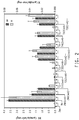
- XI and XK activities were newly acquired as compared to the negative parental controls ( Figure 2 ).
- TAL and TKT activities were maintained as in the parental controls. All results indicated that the proteins were made and functional.
- Enzyme activity levels varied, with TI and XK activities similar to those of ZW1 integrants transformed/transposed with the same plasmid.
- the levels of activities of XI, XK, TAL and TKT were lower than those in strain 8b.
- the integration of the xylAB operon was confirmed by Southern hybridization. Both genomic and plasmid DNA of the 6 lines were digested with Sphl and hybridized to a digoxenin labeled xylB probe. A common band of about 3 kb, which is generated from an Sphl site in xylB and another Sphl site in the adjacent cloning sites on the pMOD vector, was present in all genomic DNA samples, and in addition, higher molecular weight hybridizing bands in the genomic DNA samples indicated that there were four sites of integration for the PgapxylAB operon in the chromosome.
- T3CCmX1 and T3CCmX2 appear to have the same integration site, T3CCmX3 and T4CCmX1 may have the same integration site, and T5CCmX1 and T5CCmX2 each have a separate integration site. Digestion of the same DNA with Pstl followed by Southern hybridization with the tkt probe demonstrated that each integrant had the same hybridization pattern as its respective parental strain.
- strains were adapted as follows.
- ZW1::P gaptaltkt P gapxylAB Cm integrant strains were inoculated into test tubes containing RMX (containing 10 g/l yeast extract, 2 g/l KH 2 PO 4 , 20 g/l or 2% (w/v) xylose as well as onto MMGX or MMX plates (10 g/L yeast extract, 5 g/L of tryptone, 2.5 g/L of (NH 4 ) 2 SO 4 , 0.2 g/L K 2 HPO 4 , 1 mM MgS0 4 , 1.5% (w/v) agar, 0.025% (w/v) glucose and 4% (w/v) xylose or just 4% (w/v) xylose).
- RMX containing 10 g/l yeast extract, 2 g/l KH 2 PO 4 , 20 g/l or 2% (w/v) xylose as well as onto MMGX or
- the low level of glucose was used to support initial growth to increase the chance of mutation during adaptation.
- One of at least five attempts at adaptation on xylose in both cultures and plates was successful. After 10 days of anaerobic incubation at 30°C, 17 and 19 colonies were visible on MMGX plated with T3CCmX1 and T3CCmX2 cells, respectively. The colonies were small and looked unhealthy (transparent) on the plates.
- Adaptation of integrants in test tubes containing 3 ml RMX was conducted at 30°C. OD 600 was constantly monitored in a Spectronic 601 spectrophotometer. When the growth reached mid-log phase, the cultures were transferred into fresh tubes of RMX. This process was continued for 7 transfers. The growth rates and final ODs (non-linear readings) were improved over the transfers.
- T3CCmX13, T3CCmX26 and T3CCmX27 which are referred to as X13, X26 and X27 in the tables and discussion below.
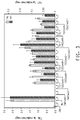
- X27 grew more slowly in RMG than the other cultures and was inoculated again 6.5 hrs later. After 69 hrs (62.5 hrs for X27), samples were taken for HPLC analysis (General Methods). Figure 4 charts the average ethanol yield (% of theoretical yield) and xylose utilization (%) for cultures at 69 hours (62.5 hr for all X27 cultures). There was no significant difference between the large and small colonies. Although the performance of X27 was better as compared to X26 on xylose, it showed slower growth on glucose. Therefore, the top performers, large colonies of X13 (X13L3) and X26 (X26L1), were chosen for further evaluation in pH-controlled fermentations.
- the fermentations were conducted in RMG(6% glucose), RMX(6% xylose) and RMGX(8%:4%; glucose:xylose) at 37°C for strains X13L3 and X26L1, as well as the control strain 8b. Fermentation of glucose by X13L3 and X26L1 grown in RMG(6%) and RMGX(8%:4%) proceeded rather quickly. The fermentation of xylose in the RMGX(8%:4%) was slower for both X13L3 and X26L1 as compared to that of strain 8b. In addition, growth on RMX(6%) at 37°C occurred after a long lag for both X13L3 and X26L1.
- the activities of the four xylose utilization enzymes encoded by integrated genes were measured as described in the General Methods for three of the strains selected for adaptation at high sugar and 37°C (of Example 1) and were compared to activities of the same enzymes in the further adapted strain ZW658 (of Example 2).
- the results, expressed as ⁇ moles product/mg protein/minute are shown in Table 1.
- the activity levels for both members of the xylAB operon were increased by about 4 to 8 fold in the further adapted strain ZW658 as compared to levels in the partially adapted precursor strains. There was little or no change in the expression level of enzymes from the tal / tkt operon between ZW658 and the partially adapted precursor strains.
- the resulting 961 bp PCR product was sequenced using primers LM121, LM122, and LM123 (SEQ ID NOs:29, 30, and 31).
- the promoter sequence from ZW641 is given in SEQ ID NO:3 and that from ZW658 in SEQ ID NO:4. These promoter sequences were both found to differ at one position from the published sequence of the Pgap in the Z. mobilis strain CP4 (SEQ ID NO:1): a 1 base deletion (of a T) after position -21, counting towards the 5' end starting upstream of the ATG start codon for the GAP coding region.
- This sequence change does not contribute to any difference in expression between the Pgap of ZW641 and Pgap of ZW658 since it is present in both strains.
- the G at position -189 with respect to the coding region start ATG for XylA in the sequence from the ZW641 strain was replaced by a T in the sequence from ZW658. No other changes between the two sequences were noted and it seemed possible that a change in expression level due to this single base change in the GAP promoter region might be responsible for the increased enzyme activities found for both proteins encoded by genes under the control of that promoter.
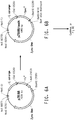
- a plasmid construct that confers resistance to spectinomycin and expression of E. coli xylose isomerase in Z . mobilis (pZB188/aada-GapXylA; where Gap represents the promoter) was generated as described below using an E. coli / Z. mobilis shuttle vector (pZB188) as starting material ( Figure 6A ). Steps involved in the construction of pZB188 are disclosed in US 5,514,583 . Briefly, this 7008 bp plasmid is able to replicate in E. coli and Z . mobilis because it has two different origins of replication, one for each bacterial species. pZB188 also contains a DNA fragment that confers resistance to tetracycline (i.e.
- Tc r -cassette The first step in the construction of pZB188/aada-GapXylA, was to remove the Tc r -cassette from pZB188 and replace it with a DNA fragment that confers resistance to spectinomycin (i.e. Spec r -cassette). To excise the Tc r -cassette from pZB188, the plasmid was cut with Clal and BssHII and the resulting large vector fragment was purified by agarose gel electrophoresis as described in more detail below.
- Plasmid pHP15578 contains the complete nucleotide sequence for the Spec r -cassette and its promoter, which is based on the published sequence of the Tranposon Tn7 aadA gene (GenBank accession number X03043) that codes for 3' (9)-O-nucleotidyltransferase.
- the underlined bases of Primer 1 hybridize just upstream from the promotor for the Spec r -cassette (to nts 4-22 of GenBank accession number X03043), while the lower case letters correspond to a Clal site that was added to the 5' end of the primer.
- the underlined bases of Primer 2 (reverse primer) hybridize about 130 bases downstream from the stop codon for the Spec r -cassette (to nts 1002-1020 of GenBank accession number X03043), while the lower case letters correspond to an AflIII site that was added to the 5' end of the primer.
- the 1048 bp PCR-generated Spec r -cassette was double-digested with ClaI and AflIII, and the resulting DNA fragment was purified using the QIAquick PCR Purification Kit (Qiagen, Cat. No. 28104) and the vendor's recommended protocol.
- plasmid pZB188 isolated from E. coli SSC110 (dcm - , dam - ) in order to obtain non-methylated plasmid DNA for cutting with ClaI (which is sensitive to dam methylation) was double-digested with ClaI and BssHII to remove the Tc r -cassette, and the resulting large vector fragment was purified by agarose gel electrophoresis.
- an E. coli xylose isomerase expression cassette was inserted between the Ncol and AclI sites of pZB188/aadA after cutting the latter with both enzymes, and purifying the large vector fragment by agarose gel electrophoresis.
- the ⁇ 2 Kbp DNA fragment that served as the E. coli xylose isomerase expression cassette was isolated from plasmid pZB4 by cutting the latter construct with Ncol and ClaI, and purifying the relevant DNA fragment by agarose gel electrophoresis. Plasmid pZB4 is described in detail in US 5514583 , and a schematic representation of the E. coli xylose isomerase expression cassette PgapXylA (SEQ ID NO:34) is shown in the boxed diagram in Figure 6D .
- the fragment containing the E. coli xylose isomerase expression cassette has an Ncol site and a ClaI site at its 5' and 3' ends respectively. As described in more detail in US 5514583 , this fragment contains the strong, constitutive Z . mobilis glyceraldehyde 3-phosphate dehydrogenase (GAP) promoter (nts 316-619), which is precisely fused to the complete open reading frame of the E. coli xylA open reading frame (nts 620-1942) that codes for xylose isomerase. It also contains the small stem-loop region that immediately follows the xylose isomerase stop codon (nts 1965-1999).
- GAP glyceraldehyde 3-phosphate dehydrogenase
- coli xylose isomerase expression cassette was inserted between the Ncol and AclI sites of pZB188/aadA in a standard ligation reaction. Note that ClaI and AclI generate compatible "sticky ends", but both sites are destroyed when they are ligated together. The ligation reaction mixture was then electroporated into E. coli SSC110 (dcm - , dam - ) to obtain non-methylated plasmid DNA for subsequent transformation of Z . mobilis, and the transformed cells were plated on LB medium that contained 100 ⁇ g/ml of spectinomycin; growth was at 37 °C.
- Spectinomycin-resistant tranformants that had a plasmid with a correct size insert were identified by restriction digestion analysis with NotI, Ncol and AclI.
- the plasmid that was selected for further manipulation and overexpression of E. coli xylose isomerase in the Z . mobilis ZW641 strain is referred to below as "pZB188/aadA-641GapXylA"; a circle diagram of this plasmid construct is shown in Figure 6C .
- nucleotide sequence of SEQ ID NO:34 is not identical to the nucleotide sequence that is described in SEQ ID NO:34 in co-owned and co-pending U.S. App. Pub. Nos. US20080286870 and US20080187973 , even though it corresponds to the same E. coli xylose isomerase expression cassette (P gapXylA ).
- the DNA sequence disclosed in SEQ ID NO: 34 in the present work has a 1-bp deletion in the Pgap that corresponds to nt 599 of SEQ ID NO:34 in U.S. App. Pub. Nos. US20080286870 and US20080187973 .
- Plasmid pZB188/aadA-801GapXylA is identical to pZB188-aadA-641GapXylA ( Figure 6C ) but has a single bp substitution in the Pgap that corresponds to the G->T mutation that is present at position -189 in the Pgap that drives expression of the E. coli XylA/B operon in ZW658.
- the same point mutation is also present in strains ZW800 and ZW801-4, which were sequentially derived from ZW658 as described below.
- the construction and characterization of ZW800 and ZW801-4 are described in great detail in commonly owned and co-pending U.S. App. Pub. No. US20080286870 .
- ZW800 is a derivative of ZW658 which has a double-crossover insertion of a spectinomycin resistance cassette in the sequence encoding the glucose-fructose oxidoreductase (GFOR) enzyme that inactivates this activity.
- ZW801-4 is a derivative of ZW800 in which the spectinomycin resistance cassette was deleted by site-specific recombination leaving an in-frame stop codon that prematurely truncates the protein. None of these manipulations altered the nucleotide sequence of the mutant Pgap promoter that drives the XylA/B operon in ZW658.
- the "801 GAP promoter” refers to the promoter sequence that is present in the following strains: ZW658, ZW800, and ZW801-4.
- pMODTM-2 ⁇ MCS> Transposon Construction Vector (Cat. No. MOD0602) that is commercially available from EPICENTRE ® .
- pMODTM-2 ⁇ MCS> has an ampicillin resistance gene (ampR), an E. coli origin of replication (ori), and a multi-cloning site that is situated between the two mosaic ends (ME) that Tn5 transposase interacts with.
- ampR ampicillin resistance gene
- ori E. coli origin of replication
- ME mosaic ends
- the first step in the construction of pMOD-Linker was to remove the original multi-cloning site in pMOD2- ⁇ MCS> and replace it with a new multi-cloning site that has unique restriction sites for AsiSi, Fsel and Sbfl. This was done by cutting the plasmid with EcoRI and HindIII and purifying the large (about 2.5 Kbp) vector fragment by agarose gel electrophoresis. The new multi-cloning site was then generated by annealing together two synthetic oligonucleotides, Linker B (SEQ ID NO:35) and Linker T (SEQ ID NO:36) that were both phosphorylated at their 5' end.
- Linker B SEQ ID NO:35
- Linker T SEQ ID NO:36
- oligonucleotides are complimentary to each other, and when annealed together form a double stranded linker that has single-stranded overhangs at both ends (lower case letters), which allow the DNA fragment to be ligated between the EcoRI and HindIII sites of the large pMODTM-2 ⁇ MCS> vector fragment described above.
- this synthetic linker also contains three unique restriction sites (AsiSi, Fsel and SbfI) that can be used for subsequent cloning steps.
- the Sbfl site is underlined with a thin line
- the Fsel site is underlined with a thick line
- the AsiSI site is underlined with two thin lines.
- Linker B and Linker T were annealed together and the resulting DNA fragment was inserted between the EcoRI and HindIII sites of pMODTM-2 ⁇ MCS> in a standard ligation reaction.
- the ligation reaction mixture was used to transform E. coli DH10B and the transformed cells were plated on LB media that contained 100 ⁇ g/ml of ampicillin. Plasmid DNA was then isolated from a representativeampicillin-resistant colony that contained the new multi-cloning site.
- a circle diagram of the resulting plasmid construct (referred to below as "pMOD-Linker") is shown in Figure 7B .
- a DNA fragment that confers resistance to spectinomycin (Spec r ) and has a wild type loxP site at both ends was inserted between the AsiSI and Fsel sites of the pMOD-Linker construct described above.
- the source of the loxP-flanked Spec r cassette was plasmid pLDHSp-9WW ( Figure 8 ), which is described in great detail in U.S. App. No. 11/862566 .
- MOD-Linker plasmid DNA was sequentially digested with Fsel and AsiSI, and the large vector fragment was purified using a DNA Clean & ConcentratorTM-5 spin column kit that was purchased from Zymo Research Corporation (Cat. No. DO4003).
- a circle diagram of this construct (referred to below as "pMOD-Linker-Spec") is shown in Figure 7C .
- a DNA fragment that contains the entire P gap, the XylA coding region, and the stem-loop region that is between the XylA and XylB open reading frames was PCR-amplified from ZW801-4 using Primers 3 and 4 (SEQ ID NOs:37 and 38, respectively) and resuspended cells as a template.
- Primers 3 and 4 SEQ ID NOs:37 and 38, respectively
- DNA sequence analysis has shown that ZW801-4 has the same G->T point mutation at position -189 in the Pgap promoter that drives the expression of the integrated E. coli XylA/B operon as ZW658 and that the Pgap in both strains are identical.
- the underlined bases of Primer 3 hybridize to the first 22 bases of the Pgap (and to nts 316-337 of SEQ ID NO:34, while the lower case letters correspond to an Fsel site that was added to the 5' end of the primer.
- the underlined bases of Primer 4 (reverse primer) hybridize just downstream from the stem-loop region that is after the XylA stop codon (and to the last 12 nts of SEQ ID NO:34), while the lower case letters correspond to an Sbfl site that was added to the 5' end of the primer.
- the PCR product was double-digested with Fsel and Sbfl, and purified using a DNA Clean & ConcentratorTM-5 spin column kit that was purchased from Zymo Research Corporation (Cat. No. DO4003).
- plasmid pMOD-Linker-Spec was cut with the same two enzymes and the resulting large vector fragment was purified using the same procedure.
- the two DNA fragments of interest were then ligated together, and the transformation reaction mixture was introduced into E. coli DH10B using electroporation.
- the cells were plated on LB media that contained ampicillin (100 ⁇ g /ml) and spectinomycin (100 ⁇ g /ml) and growth was at 37 °C.
- Transformants that contained a plasmid with a correct size insert were identified by PCR using Primers 3 and 4 and resuspended colonies as a template ("colony PCR").
- the plasmid that was selected for further manipulation is referred to below as pMOD-Linker-Spec-801GapXylA, and a circle diagram of this construct is shown in Figure 9 .
- pMOD-Linker-Spec-641GapXylA The same steps described above were used to generate another plasmid that is referred to below as "pMOD-Linker-Spec-641GapXylA", except the template that was used for PCR-amplification of the P gap -XylA gene DNA fragment was a cell suspension of ZW641.
- pMOD-Linker-Spec-641GapXylA and pMOD-Linker-Spec-801 GapXylA are identical except for the G->T substitution in the Pgap that distinguishes ZW658 (and ZW801-4) from ZW641.
- pZB188-aadA-801GapXylA is an E. coli Xylose Isomerase expression vector for Z. mobilis that is identical to pZB188-aadA-641 GapXylA, but it has the same G->T substitution in the Pgap that drives expression of the integrated Pgap-XylA/B operon in ZW658 (and ZW801-4).
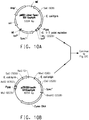
- pMOD-Linker-Spec-801GapXylA ( Figure 10A ) was double digested with Mlul and Sall and the smaller DNA fragment (about 1100 bp) was purified using agarose gel electrophoresis and the Zymoclean Gel DNA Recovery Kit (catalog #D4001, Zymo Research).
- This fragment contains the Pgap G->T substitution and part of the XylA ORF and was used to replace the corresponding fragment in pZB188-aadA-641GapXylA ( Figure 10B ), after cutting the latter construct with the same two enzymes and purifying the large vector fragment by agarose gel electrophoresis.
- the enzyme activity measurements in Table I show that xylose isomerase and xylulokinase activities increased dramatically during the transition from ZW641 to ZW658.
- xylose isomerase is the rate-limiting enzyme for growth on xylose in ZW641
- the enzyme was overexpressed in this strain using the multicopy plasmid, pZB188/aadA-641GapXylA ( Fig. 6C ).
- the control for this experiment was ZW641 transformed with the multicopy plasmid pZB188/aadA, which lacks the Pgap- E . coli xylose isomerase expression cassette ( Fig. 6B ).
- non-methylated plasmid DNA isolated from from E . coli SSC110, which is a dcm - and dam - strain
- ZW641 non-methylated plasmid DNA
- the transformed cells were plated on LB media that contained 200 ⁇ g/ml spectinomycin.
- three primary transformants were randomly selected for each plasmid, and these were patched (transferred) onto agar plates that contained the same growth media for further characterization.
- Figure 11 shows growth curves (OD600 versus time) in xylose-containing media for the three strains that harbored the 641 Pgap-E. coli xylose isomerase expression plasmid (X1, X2 and X2) and the three strains that harbored the control plasmid (C1, C2 and C3).
- This experiment was performed at 30 °C in shake flasks (5-ml cultures in 15-ml tubes at 150 rpm), and the growth media was mRM3-X10 (10 g/L yeast extract, 2 g/L KH2PO 4 , 1 g/L MgSO 4 and 100 g/L xylose) that also contained spectinomycin (200 ⁇ g/ml).
- Figure 12 shows a side-by-side comparison of ZW641, ZW658, X1 and C1 in the same xylose containing growth media without spectinomycin.
- the conditions for this experiment were identical to those described above but the 20-ml cultures were grown in 50-ml tubes and the initial OD600s were about 4-fold lower (0.035).
- the growth curves shown in Figure 12A are plotted on a linear scale (OD600 versus Time), while Figure 12B shows the same experimental data plotted on a logarithmic scale (logOD600 versus Time) in order to compare exponential growth rates.
- ZW641 and two plasmid constructs (pMOD-Linker-Spec-801GapXylA and pMOD-Linker-Spec-641GapXylA) were used to test the hypothesis that the Pgap promoter with the G->T substitution that drives expression of the integrated XylA/B operon in ZW658 (henceforth referred to as the "801 GAP promoter") is stronger than the corresponding promoter in ZW641 (henceforth referred to as the "641 GAP promoter").
- ZW641 was selected for these experiments since it's barely able to grow on xylose, and because overexpression of xylose isomerase in this strain results in faster growth on xylose (Example 7, Figs. 11 and 12 ).
- the basic idea was to introduce an extra copy of the E. coli xylose isomerase gene (driven by the 641 GAP promoter or the 801 GAP promoter) into the chromosome of ZW641 and see which construct would result in the fastest growth on xylose. Chromosomal integration of the two chimeric genes was accomplished using Epicentre's transposome technology.
- pMOD-Linker-Spec-641GapXylA and pMOD-Linker-Spec-801 GapXylA are identical plasmids except for the G->T point mutation that is present in the Pgap promoter in the latter construct.
- the transposable element used for random insertion into DNA in both cases consisted of the two 19-bp mosaic ends (MEs) and the entire DNA fragment that is sandwiched between them. As shown in Fig. 9 , this element, which is referred to as the transposon, contains a spectinomycin-resistance cassette (Spec r ) and a downstream Pgap-E. coli xylose isomerase expression cassette.
- the protocol that was used to form the transposomes was essentially the same as that described in Epicentre's instruction manual for the EZ::TNTMpMODTM-2 ⁇ MCS> Transposn Construction Vector (Cat. No. MOD0602).
- the 8- ⁇ L reaction contained 1.5 ⁇ L of 5'-phosphorylated, blunt-ended transposon DNA that was free of Mg ++ ions (about 250 ng/ ⁇ L), 4 ⁇ L of Epicentre's EZ::TN Transposase and 2.5 ⁇ L of 80% (v/v) glycerol.
- the control transposome reaction mixture was identical but 4 ⁇ L of sterile water was substituted for the transposase.
- the reactions were incubated at room temperature for 30 min and were then transferred to 4 °C for a 2- to 7-day incubation period that is required for the slow isomerization step, which results in the formation of the active transposmome; using this procedure the transposomes are stable for at least 3 months at -20 °C.
- the transposomes were electroporated into ZW641 essentially using the same transformation protocol that is described in US 5,514,583 . Briefly, the 40- ⁇ L transformation reactions contained about 10 10 cells/ml in 10% (v/v) glycerol, 1 ⁇ L of Epicentre's TypeOneTM Restriction Inhibitor (Cat. No. TYO261H) and 1 ⁇ L of the control or transposome reaction mixture. The settings for the electroporator were 1.6 kv/cm, 200 ⁇ , and 25 ⁇ F, and the gap width of the cuvette was 0.1 cm.
- the transformation reactions were diluted with 1.0 ml of MMG media (50 g/L glucose, 10 g/L yeast extract, 5 g/L of tryptone, 2.5 g/L of (NH 4 ) 2 SO 4 , 0.2 g/L K 2 HPO 4 , and 1 mM MgS0 4 ) and the cells were allowed to recover for about 3 hours at 30°C. The cells were then harvested by centrifugation at room temperature (13, 000 X g, 5 min) in sterile 1.5-ml microfuge tubes and the supernatant was carefully removed.
- MMG media 50 g/L glucose, 10 g/L yeast extract, 5 g/L of tryptone, 2.5 g/L of (NH 4 ) 2 SO 4 , 0.2 g/L K 2 HPO 4 , and 1 mM MgS0 4 .
- MMX media is the same as MMG media, but contains 50 g/L of xylose instead of glucose. After a second round of growth on a fresh MMX plus spectinomycin plate, the six strains that grew the best on xylose (three for each transposome) were used for the experiment described below.
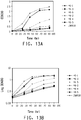
- Figure 13A shows linear growth curves for the three ZW641 strains that were obtained with the 641Gap-XylA transposome (#6-1, #6-3 and #6-5) and the three that received the 801 Gap XylA transposome (#8-2, #8-4 and #8-5) in xylose-containing media. The same data is plotted on a log scale in Fig. 13B .
- This experiment was performed at 30 °C in shake flasks (7-ml cultures in 15-ml tubes at 150 rpm), and mRM3-X10 (10 g/L yeast extract, 2 g/L KH2PO 4 , 1 g/L MgSO 4 and 100 g/L xylose) was the growth media.
- the cultures were started with a loop of cells from the patched plate described above and the initial ODs were very similar (about 0.02-0.03).
- the control for this experiment was the xylose-adapted strain ZW658, which has the G->T substitution in the Pgap that drives the chromosomally-integrated E. coli XylA/B operon.
- the 801 GAP promoter is really stronger than the 641 GAP promoter, its stimulatory effect on expression should not be restricted to the E. coli xylose isomerase gene, and enhanced expression of other proteins with this promoter would also be expected.
- the Z . mobilis gene that codes for ribose 5-phosphate isomerase (RPI) was fused to both promoters, and the chimeric genes were inserted into a multi-copy plasmid that replicates in Z . mobilis.
- the resulting Pgap-RPI expression plasmids (pZB188/aadA-641GapRPI and pZB188/aadA-801GapRPI) were introduced into Z . mobilis and RPI expression levels were analyzed by SDS-PAGE as described below.
- Plasmid pZB188aadA/Gap/Zymo RPI/EcoliSL was an in important intermediate in the construction of the two Pgap-RPI expression plasmids that were used in the present invention.
- this plasmid contains an expression cassette for the Z . mobilis ribose 5-phosphate isomerase (RPI) gene that is located between the unique Ncol and Xhol sites.
- RPI ribose 5-phosphate isomerase
- An overlap PCR technique described below was used to generate the RPI expression cassette, which is a chimeric gene that contains the full-length 641 GAP promoter sequence (nts 316-619 of SEQ ID NO:34) and the entire open reading frame of the Z . mobilis RPI gene.
- the RPI ORF corresponds to nts 1224730-1225203 of the Z . mobilis genome (GenBank accession number AE008692), and the initiation codon of RPI is directly fused to the 3'-end of the 641 GAP promoter.
- the template for the 641 Gap promoter was pZB188/aadA-641GapXylA, and a 320-bp DNA fragment was amplified from this plasmid using Primers 5 and 6 (SEQ ID NOs:39 and 40, respectively) in a PCR reaction.
- the resulting PCR product contains the 641 GAP promoter and the first 15 bp of the Z . mobilis RPI ORF that are attached to its 3'-end starting with the GTG initiation codon. This fragment also has a unique Ncol site at its 5'-end (lower case letters) that was added to the 5'-end of Primer 5 for cloning purposes.
- Primers 7 and 8 (SEQ ID NOs:41 and 42, respectively) were used to generate a 473-bp fragment that contains the entire ORF of the native Z . mobilis RPI gene.
- the template that was used for amplification was genomic DNA that was isolated from the Z . mobilis strain ZW801-4. Note that the 5'-end of Primer 7 has 15 bp of an overlap sequence that can hybridize to the 3'-end of the 320-bp 641 GAP promoter fragment, and that an Xhol site (lower case letters) was added to the 5'-end of Primer 8 for cloning purposes.
- the two fragments described above were then subjected to an overlap PCR reaction using Primers 5 and 8 (SEQ ID NOs:39 and 42, respectively), and this manipulation resulted in the generation of the RPI expression cassette.
- the latter is a 778-bp fragment that contains the 641 GAP promoter fused directly to the start codon of the Z . mobilis RPI ORF.
- the PCR product was then cut with NcoI and XhoI, and the resulting fragment was inserted into the NcoI and XhoI sites of a plasmid that was ultimately derived from pZB188/aada-641GapXylA ( Fig.
- this plasmid which is an RPI expression vector for Z. mobilis, also contains the stem-loop region that is present in the intergenic region of the E. coli XylA/B operon, and that this stabilizing element is located between the Xhol and NotI sites just downstream from the RPI stop codon.
- the nucleotide sequence of the RPI expression cassette that is in plasmid pZB188aadA/Gap/Zymo RPI/EcoliSL is disclosed in SEQ ID NO:43.
- the nucleotide sequence that is shown corresponds to the DNA fragment that is located between the Ncol and NotI sites, and includes both restriction sites.
- pZB188/aadA-641 GapRPI and pZB188/aadA-801 GapRPI are Pgap-RPI expression plasmids for Z. mobilis that are identical, except the latter construct has the G->T substitution that distinguishes the 801 GAP promoter from the 641 GAP promoter.
- a 1240-bp DNA fragment that originated from pZB188aadA/Gap/Zymo RPI/EcoliSL was used to convert pZB188/aadA-641GapXylA ( Fig. 6C ) to pZB188/aadA-641 GapRPI ( Fig.
- pZB188aadA/Gap/Zymo RPI/EcoliSL has unique AsiSI and Nhel restriction sites, and the same sites are also present in pZB188/aadA-641 GapXylA and pZB188/aadA-801 GapXylA.
- AsiSI cleaves all three of these plasmids in the Pgap downstream from the G->T substitution that distinguishes the 801 GAP promoter from the 641 GAP promoter, and that Nhel cuts the plasmid backbone about 700 bp downstream from the XylA or RPI stop codons.
- the 1240-bp DNA fragment that was obtained from pZB188aadA/Gap/Zymo RPI/EcoliSL therefore contains a small stretch of DNA that the 641 Gap promoter and 801 Gap promoter share in common, the entire RPI open reading frame and the stabilizing XylA stem-loop region.
- the 1240-bp DNA fragment described above was inserted between the AsiSI and Nhel sites in pZB188/aadA-641 GapXylA and pZB188/aadA-801 GapXylA in two separate ligation reactions, after cutting both of these plasmids with AsiSI and Nhel and purifying the larger vector fragments. Both ligation reaction mixtures were introduced into E.
- coli DH10B using electroporation, and transformants were plated on LB media that contained spectinomycin (100 ⁇ g/ml); growth was at 37 °C.
- pZB188/aadA-641GapRPI Fig. 15B
- pZB188/aadA-801GapRPI Fig. 15C
- plasmid DNA was isolated from colonies that contained the correct construct (as confirmed by DNA sequence analysis), and both plasmids were then introduced into E. coli SCS110 (dam-, dcm-) to generate non-methylated plasmid DNA for transformation of Z. mobilis.
- the two Pgap-RPI expression vectors described above (pZB188/aadA-641GapRPI and pZB188/aadA-801GapRPI) were introduced into the wild type Z. mobilis strain ZW1 using electroporation and non-methylated plasmid DNA.
- the transformed cells were grown anaerobically at 30 °C on 1.5% agar plates that contained MMG media (50 g/L glucose, 10 g/L yeast extract, 5 g/L of tryptone, 2.5 g/L of (NH 4 ) 2 SO 4 , 0.2 g/L K 2 HPO 4 , and 1 mM MgSO 4 ) and 200 ⁇ g/ml of spectinomycin.
- MMG media 50 g/L glucose, 10 g/L yeast extract, 5 g/L of tryptone, 2.5 g/L of (NH 4 ) 2 SO 4 , 0.2 g/L K 2 HPO 4 , and 1 mM M
- the seed cultures were started with a loop of cells and were grown at 30 °C (150 rpm) in 15-ml capped tubes that contained 5 ml of MMG media and spectinomycin (200 ⁇ g/ml).
- the control for this experiment (the parent strain, ZW1) was grown under the same conditions, but the growth media lacked spectinomycin.
- the seed cultures were allowed to reach saturation, and were then used to start 20-ml cultures in 50-ml capped tubes, using the same growth media and conditions described above.
- the initial OD600 values were about 0.12 in all cases.
- 1X SDS-PAGE sample buffer contains 250 ⁇ L NuPAGETM LDS 4X Sample Buffer (Cat. No. N0007), 100 ⁇ L NuPAGETM Sample Reducing Agent (Cat. No.NP0004) and 650 ⁇ L distilled water. The samples were heated for 10 min at 80 °C, and particulate debris was removed by centrifugation (15,000 x g, 10 min).
- the molecular mass of the Z . mobilis RPI protein is 16927.37 Da based on the DNA sequence of the open reading frame.
- FIG 16 severeal lightly stained protein bands migrated in the polyacrylamide gel in this region (i.e. between the 17 kDa and 19 kDa molecular weight standards) for the parent strain, ZW1 (Lanes 2 and 7).
- Visual inspection of the gel revealed that the intensity of one of the stained bands (indicated with an arrow) increased at least 2-fold when the 641GAP-RPI expression plasmid was introduced into ZW1 (Lanes 3 and 5), indicating that this is the RPI protein.
- Figure 12 the intensity of the Z.
- strain 8b (Example 1 and US App. Pub. No. 20030162271 ) was obtained using a similar course of gene introduction and strain adaptation as was ZW658, the transgene activities of the pentose phosphate pathway and the sequence of the P gapxylAB operon were also compared in partially and more fully adapted strains of this independent strain production.
- Enzyme activities for products of the P gapxylAB operon in a partially adapted strain 8XL4 and the final adapted strain 8b were measured using the techniques described in General Methods and the results expressed as ⁇ moles product/mg protein/minute are shown in Table 2.
- Enzyme activities in different xylose-utilizing adapted Z . mobilis strains Strain Xylose isomerase Xyulose kinase 8XL4 0.027+/- 0.004 1.10 +/- 0.41 8b 0.142 +/- 0.057 5.76 +/- 0.43
- strain 8b had increased activity for products of both genes in the xylAB operon over its predecessor strain 8XL4. Once again the increase in measured enzyme activity was about five fold increased over the less adapted strain.
- the Pgap directing expression of the xylAB operon was sequenced in the 8b and 8XL4 strains.
- a PCR fragment was prepared using a forward PCR primer (GAP-F8; SEQ ID NO:44) from the 5' end of the promoter and a reverse primer from the xylA coding region (XylAB851R; SEQ ID NO:5).
- the resulting PCR product was sequenced using primers GAP-F8, XylAB449R, and XylAB851R (SEQ ID NOs:44, 46, and 45).
- the promoter sequence from ZW8XL4 is given in SEQ ID NO:3 and that from 8b in SEQ ID NO:5.
- promoter sequences also both had the one difference with the published sequence of the Pgap of strain CP4 as in the Pgap of the xylAB operon in ZW641 and ZW658. In addition to these common changes there was also a single base pair difference between the ZW641 and ZW658 Pgap sequences. While the G to T change at -189 to the start ATG was not present in the comparison of 8XL4 and 8b, a C to T change did occur at position -89 with respect to the start ATG.
- the promoter sequence of the P gapxylAB operon in strain 8b changed during adaptation to a new sequence which allowed production of more of the protein from the coding regions under its control than did the sequence of the same promoter from the partially adapted strain.
Landscapes
- Genetics & Genomics (AREA)
- Health & Medical Sciences (AREA)
- Engineering & Computer Science (AREA)
- Life Sciences & Earth Sciences (AREA)
- Chemical & Material Sciences (AREA)
- Bioinformatics & Cheminformatics (AREA)
- Organic Chemistry (AREA)
- Biotechnology (AREA)
- General Engineering & Computer Science (AREA)
- Zoology (AREA)
- Wood Science & Technology (AREA)
- Biomedical Technology (AREA)
- Microbiology (AREA)
- Plant Pathology (AREA)
- Molecular Biology (AREA)
- Physics & Mathematics (AREA)
- Biochemistry (AREA)
- General Health & Medical Sciences (AREA)
- Biophysics (AREA)
- Micro-Organisms Or Cultivation Processes Thereof (AREA)
Applications Claiming Priority (2)
| Application Number | Priority Date | Filing Date | Title |
|---|---|---|---|
| US3987108P | 2008-03-27 | 2008-03-27 | |
| PCT/US2009/038158 WO2009120730A2 (en) | 2008-03-27 | 2009-03-25 | High expression zymomonas promoters |
Publications (2)
| Publication Number | Publication Date |
|---|---|
| EP2271755A2 EP2271755A2 (en) | 2011-01-12 |
| EP2271755B1 true EP2271755B1 (en) | 2017-03-22 |
Family
ID=41010370
Family Applications (1)
| Application Number | Title | Priority Date | Filing Date |
|---|---|---|---|
| EP09725976.6A Active EP2271755B1 (en) | 2008-03-27 | 2009-03-25 | High expression zymomonas promoters |
Country Status (10)
| Country | Link |
|---|---|
| US (1) | US7989206B2 (https=) |
| EP (1) | EP2271755B1 (https=) |
| JP (1) | JP5444323B2 (https=) |
| CN (1) | CN101981184B (https=) |
| AU (1) | AU2009228322B2 (https=) |
| BR (1) | BRPI0906241B8 (https=) |
| CA (1) | CA2716590C (https=) |
| ES (1) | ES2627671T3 (https=) |
| PL (1) | PL2271755T3 (https=) |
| WO (1) | WO2009120730A2 (https=) |
Families Citing this family (21)
| Publication number | Priority date | Publication date | Assignee | Title |
|---|---|---|---|---|
| US8247208B2 (en) | 2008-12-22 | 2012-08-21 | Alliance For Sustainable Energy Llc | Zymomonas with improved xylose utilization in stress conditions |
| US8647850B2 (en) | 2009-12-23 | 2014-02-11 | E I Du Pont De Nemours And Company | Process for simultaneous saccharification and fermentation for production of ethanol |
| US8623623B2 (en) | 2010-06-29 | 2014-01-07 | E I Du Pont De Nemours And Company | Xylose utilization in recombinant Zymomonas |
| US8679822B2 (en) | 2010-06-29 | 2014-03-25 | E I Du Pont De Nemours And Company | Xylose utilization in recombinant zymomonas |
| US8476048B2 (en) | 2010-12-17 | 2013-07-02 | E I Du Pont De Nemours And Company | Xylose utilizing zymomonas mobilis with improved ethanol production in biomass hydrolysate medium |
| US8765426B2 (en) | 2011-04-07 | 2014-07-01 | E I Du Pont De Nemours And Company | Pantothenic acid biosynthesis in zymomonas |
| US8911983B2 (en) * | 2011-12-20 | 2014-12-16 | E I Du Pont De Nemours And Company | Pnp gene modification for improved xylose utilization in Zymomonas |
| US20130157332A1 (en) | 2011-12-20 | 2013-06-20 | E I Du Pont De Nemours And Company | Gene inactivation allowing immediate growth on xylose medium by engineered zymomonas |
| CN102533769B (zh) * | 2012-02-28 | 2013-07-31 | 昆明理工大学 | 假单胞菌低温启动子及其应用 |
| US8697426B2 (en) | 2012-06-15 | 2014-04-15 | E I Du Pont De Nemours And Company | Contaminant control in Zymomonas fermentation using virginiamycin |
| US8759069B2 (en) | 2012-06-15 | 2014-06-24 | E I Du Pont De Nemours And Company | Contaminant control in Zymomonas fermentation using hop acids |
| US8846357B2 (en) | 2012-12-20 | 2014-09-30 | E I Du Pont De Nemours And Company | Stabilized chlorine dioxide for contamination control in Zymomonas fermentation |
| US20140273105A1 (en) | 2013-03-12 | 2014-09-18 | E I Du Pont De Nemours And Company | Gradient pretreatment of lignocellulosic biomass |
| US9139818B2 (en) * | 2013-09-26 | 2015-09-22 | E I Du Pont De Nemours And Company | High expression Zymomonas promoters |
| US20150087041A1 (en) | 2013-09-26 | 2015-03-26 | E I Du Pont De Nemours And Company | Production of ethanol with reduced contaminants in a cellulosic biomass based process |
| US20150087040A1 (en) | 2013-09-26 | 2015-03-26 | E I Du Pont De Nemours And Company | Production of ethanol and recycle water in a cellulosic fermentation process |
| US20150147786A1 (en) | 2013-11-24 | 2015-05-28 | E I Du Pont De Nemours And Company | High force and high stress destructuring for starch biomass processing |
| US9371546B2 (en) | 2014-06-24 | 2016-06-21 | E I Du Pont De Nemours And Company | Enhancing D-xylose and L-arabinose utilization in Zymomonas cells |
| WO2018106656A1 (en) | 2016-12-06 | 2018-06-14 | Danisco Us Inc | Truncated lpmo enzymes and use thereof |
| WO2019074828A1 (en) | 2017-10-09 | 2019-04-18 | Danisco Us Inc | CELLOBIOSE DEHYDROGENASE VARIANTS AND METHODS OF USE |
| CN114774421B (zh) * | 2022-05-07 | 2023-04-28 | 湖北大学 | 运动发酵单胞菌内源性启动子突变体 |
Family Cites Families (14)
| Publication number | Priority date | Publication date | Assignee | Title |
|---|---|---|---|---|
| US5231020A (en) | 1989-03-30 | 1993-07-27 | Dna Plant Technology Corporation | Genetic engineering of novel plant phenotypes |
| AU2388295A (en) | 1994-04-15 | 1995-11-10 | Midwest Research Institute | Recombinant zymomonas for pentose fermentation |
| US5712133A (en) | 1994-04-15 | 1998-01-27 | Midwest Research Institute | Pentose fermentation by recombinant zymomonas |
| US5514583A (en) | 1994-04-15 | 1996-05-07 | Midwest Research Institute | Recombinant zymomonas for pentose fermentation |
| CN1283699A (zh) * | 1999-08-06 | 2001-02-14 | 中国科学院上海生物化学研究所 | 甲醇酵母表达系统中含有的多种启动子多表达盒 |
| US7223575B2 (en) * | 2000-05-01 | 2007-05-29 | Midwest Research Institute | Zymomonas pentose-sugar fermenting strains and uses thereof |
| US6566107B1 (en) | 2000-11-01 | 2003-05-20 | Midwest Research Institute | Recombinant Zymomonas mobilis with improved xylose utilization |
| US7259255B2 (en) * | 2003-06-25 | 2007-08-21 | E. I. Du Pont De Nemours And Company | Glyceraldehyde-3-phosphate dehydrogenase and phosphoglycerate mutase promoters for gene expression in oleaginous yeast |
| DE10359595A1 (de) * | 2003-12-18 | 2005-07-28 | Basf Ag | Pgro-Expressionseinheiten |
| AT501955B1 (de) * | 2005-02-23 | 2007-08-15 | Univ Graz Tech | Mutierte aox1-promotoren |
| RU2394913C2 (ru) | 2005-10-26 | 2010-07-20 | Е.И.Дюпон Де Немур Энд Компани | Ферментативное получение четырехуглеродных спиртов |
| JP2009521936A (ja) * | 2006-01-03 | 2009-06-11 | マサチューセッツ・インスティチュート・オブ・テクノロジー | プロモータ工学及び遺伝子制御 |
| US7741084B2 (en) | 2006-09-28 | 2010-06-22 | E. I. Du Pont De Nemours And Company | Ethanol production using xylitol synthesis mutant of xylose-utilizing zymomonas |
| US7741119B2 (en) | 2006-09-28 | 2010-06-22 | E. I. Du Pont De Nemours And Company | Xylitol synthesis mutant of xylose-utilizing zymomonas for ethanol production |
-
2009
- 2009-03-25 BR BRPI0906241A patent/BRPI0906241B8/pt not_active IP Right Cessation
- 2009-03-25 PL PL09725976T patent/PL2271755T3/pl unknown
- 2009-03-25 EP EP09725976.6A patent/EP2271755B1/en active Active
- 2009-03-25 WO PCT/US2009/038158 patent/WO2009120730A2/en not_active Ceased
- 2009-03-25 JP JP2011501995A patent/JP5444323B2/ja not_active Expired - Fee Related
- 2009-03-25 CN CN2009801106369A patent/CN101981184B/zh not_active Expired - Fee Related
- 2009-03-25 US US12/410,495 patent/US7989206B2/en active Active
- 2009-03-25 ES ES09725976.6T patent/ES2627671T3/es active Active
- 2009-03-25 AU AU2009228322A patent/AU2009228322B2/en not_active Ceased
- 2009-03-25 CA CA2716590A patent/CA2716590C/en not_active Expired - Fee Related
Non-Patent Citations (1)
| Title |
|---|
| None * |
Also Published As
| Publication number | Publication date |
|---|---|
| CN101981184B (zh) | 2013-05-01 |
| BRPI0906241B8 (pt) | 2019-02-19 |
| AU2009228322A1 (en) | 2009-10-01 |
| WO2009120730A3 (en) | 2009-12-10 |
| JP5444323B2 (ja) | 2014-03-19 |
| ES2627671T3 (es) | 2017-07-31 |
| BRPI0906241B1 (pt) | 2019-01-29 |
| EP2271755A2 (en) | 2011-01-12 |
| PL2271755T3 (pl) | 2017-08-31 |
| JP2011515106A (ja) | 2011-05-19 |
| CA2716590C (en) | 2016-05-17 |
| US7989206B2 (en) | 2011-08-02 |
| CN101981184A (zh) | 2011-02-23 |
| CA2716590A1 (en) | 2009-10-01 |
| US20090246876A1 (en) | 2009-10-01 |
| AU2009228322B2 (en) | 2013-09-26 |
| WO2009120730A2 (en) | 2009-10-01 |
| BRPI0906241A2 (pt) | 2015-06-30 |
Similar Documents
| Publication | Publication Date | Title |
|---|---|---|
| EP2271755B1 (en) | High expression zymomonas promoters | |
| US7998722B2 (en) | Zymomonas with improved xylose utilization | |
| EP2066784B1 (en) | Xylitol synthesis mutant of xylose-utilizing zymomonas for ethanol production | |
| ES2361385T3 (es) | Proceso para la producción de etanol en un medio que comprende xilosa que emplea una cepa de zymomonas recombinante con expresión de hima reducida. | |
| JP5185940B2 (ja) | キシロース資化性ザイモモナス(Zymomonas)のキシリトール合成変異体を使用するエタノール産生 | |
| EP2209899B1 (en) | Zymomonas with improved ethanol production in medium containing concentrated sugars and acetate | |
| US7374939B1 (en) | Method of inactivation of an end product of energy metabolism in Zymomonas mobilis | |
| CN103998607B (zh) | 用于改善发酵单胞菌属(Zymomonas)中的木糖利用率的PNP基因修饰 | |
| US9139818B2 (en) | High expression Zymomonas promoters |
Legal Events
| Date | Code | Title | Description |
|---|---|---|---|
| PUAI | Public reference made under article 153(3) epc to a published international application that has entered the european phase |
Free format text: ORIGINAL CODE: 0009012 |
|
| 17P | Request for examination filed |
Effective date: 20101027 |
|
| AK | Designated contracting states |
Kind code of ref document: A2 Designated state(s): AT BE BG CH CY CZ DE DK EE ES FI FR GB GR HR HU IE IS IT LI LT LU LV MC MK MT NL NO PL PT RO SE SI SK TR |
|
| AX | Request for extension of the european patent |
Extension state: AL BA RS |
|
| RIN1 | Information on inventor provided before grant (corrected) |
Inventor name: TAO, LUAN Inventor name: VIITANEN, PAUL, V. Inventor name: ZHANG, YUYING Inventor name: CAIMI, PERRY, G. Inventor name: CHOU, YAT-CHEN Inventor name: MCCUTCHEN, CAROL Inventor name: ZHANG, MIN Inventor name: MCCOLE, LAURA Inventor name: FRANDEN, MARY, ANN |
|
| DAX | Request for extension of the european patent (deleted) | ||
| 17Q | First examination report despatched |
Effective date: 20121112 |
|
| GRAP | Despatch of communication of intention to grant a patent |
Free format text: ORIGINAL CODE: EPIDOSNIGR1 |
|
| INTG | Intention to grant announced |
Effective date: 20161021 |
|
| GRAS | Grant fee paid |
Free format text: ORIGINAL CODE: EPIDOSNIGR3 |
|
| GRAA | (expected) grant |
Free format text: ORIGINAL CODE: 0009210 |
|
| AK | Designated contracting states |
Kind code of ref document: B1 Designated state(s): AT BE BG CH CY CZ DE DK EE ES FI FR GB GR HR HU IE IS IT LI LT LU LV MC MK MT NL NO PL PT RO SE SI SK TR |
|
| REG | Reference to a national code |
Ref country code: GB Ref legal event code: FG4D |
|
| REG | Reference to a national code |
Ref country code: FR Ref legal event code: PLFP Year of fee payment: 9 |
|
| REG | Reference to a national code |
Ref country code: CH Ref legal event code: EP |
|
| REG | Reference to a national code |
Ref country code: AT Ref legal event code: REF Ref document number: 877809 Country of ref document: AT Kind code of ref document: T Effective date: 20170415 |
|
| REG | Reference to a national code |
Ref country code: IE Ref legal event code: FG4D |
|
| REG | Reference to a national code |
Ref country code: DE Ref legal event code: R096 Ref document number: 602009044917 Country of ref document: DE |
|
| REG | Reference to a national code |
Ref country code: NL Ref legal event code: MP Effective date: 20170322 |
|
| PG25 | Lapsed in a contracting state [announced via postgrant information from national office to epo] |
Ref country code: HR Free format text: LAPSE BECAUSE OF FAILURE TO SUBMIT A TRANSLATION OF THE DESCRIPTION OR TO PAY THE FEE WITHIN THE PRESCRIBED TIME-LIMIT Effective date: 20170322 Ref country code: FI Free format text: LAPSE BECAUSE OF FAILURE TO SUBMIT A TRANSLATION OF THE DESCRIPTION OR TO PAY THE FEE WITHIN THE PRESCRIBED TIME-LIMIT Effective date: 20170322 Ref country code: NO Free format text: LAPSE BECAUSE OF FAILURE TO SUBMIT A TRANSLATION OF THE DESCRIPTION OR TO PAY THE FEE WITHIN THE PRESCRIBED TIME-LIMIT Effective date: 20170622 Ref country code: LT Free format text: LAPSE BECAUSE OF FAILURE TO SUBMIT A TRANSLATION OF THE DESCRIPTION OR TO PAY THE FEE WITHIN THE PRESCRIBED TIME-LIMIT Effective date: 20170322 Ref country code: GR Free format text: LAPSE BECAUSE OF FAILURE TO SUBMIT A TRANSLATION OF THE DESCRIPTION OR TO PAY THE FEE WITHIN THE PRESCRIBED TIME-LIMIT Effective date: 20170623 |
|
| REG | Reference to a national code |
Ref country code: ES Ref legal event code: FG2A Ref document number: 2627671 Country of ref document: ES Kind code of ref document: T3 Effective date: 20170731 |
|
| REG | Reference to a national code |
Ref country code: LT Ref legal event code: MG4D |
|
| REG | Reference to a national code |
Ref country code: AT Ref legal event code: MK05 Ref document number: 877809 Country of ref document: AT Kind code of ref document: T Effective date: 20170322 |
|
| PG25 | Lapsed in a contracting state [announced via postgrant information from national office to epo] |
Ref country code: SE Free format text: LAPSE BECAUSE OF FAILURE TO SUBMIT A TRANSLATION OF THE DESCRIPTION OR TO PAY THE FEE WITHIN THE PRESCRIBED TIME-LIMIT Effective date: 20170322 Ref country code: LV Free format text: LAPSE BECAUSE OF FAILURE TO SUBMIT A TRANSLATION OF THE DESCRIPTION OR TO PAY THE FEE WITHIN THE PRESCRIBED TIME-LIMIT Effective date: 20170322 Ref country code: BG Free format text: LAPSE BECAUSE OF FAILURE TO SUBMIT A TRANSLATION OF THE DESCRIPTION OR TO PAY THE FEE WITHIN THE PRESCRIBED TIME-LIMIT Effective date: 20170622 |
|
| PG25 | Lapsed in a contracting state [announced via postgrant information from national office to epo] |
Ref country code: NL Free format text: LAPSE BECAUSE OF FAILURE TO SUBMIT A TRANSLATION OF THE DESCRIPTION OR TO PAY THE FEE WITHIN THE PRESCRIBED TIME-LIMIT Effective date: 20170322 |
|
| PG25 | Lapsed in a contracting state [announced via postgrant information from national office to epo] |
Ref country code: AT Free format text: LAPSE BECAUSE OF FAILURE TO SUBMIT A TRANSLATION OF THE DESCRIPTION OR TO PAY THE FEE WITHIN THE PRESCRIBED TIME-LIMIT Effective date: 20170322 Ref country code: EE Free format text: LAPSE BECAUSE OF FAILURE TO SUBMIT A TRANSLATION OF THE DESCRIPTION OR TO PAY THE FEE WITHIN THE PRESCRIBED TIME-LIMIT Effective date: 20170322 Ref country code: CZ Free format text: LAPSE BECAUSE OF FAILURE TO SUBMIT A TRANSLATION OF THE DESCRIPTION OR TO PAY THE FEE WITHIN THE PRESCRIBED TIME-LIMIT Effective date: 20170322 Ref country code: SK Free format text: LAPSE BECAUSE OF FAILURE TO SUBMIT A TRANSLATION OF THE DESCRIPTION OR TO PAY THE FEE WITHIN THE PRESCRIBED TIME-LIMIT Effective date: 20170322 Ref country code: RO Free format text: LAPSE BECAUSE OF FAILURE TO SUBMIT A TRANSLATION OF THE DESCRIPTION OR TO PAY THE FEE WITHIN THE PRESCRIBED TIME-LIMIT Effective date: 20170322 |
|
| REG | Reference to a national code |
Ref country code: CH Ref legal event code: PL |
|
| PG25 | Lapsed in a contracting state [announced via postgrant information from national office to epo] |
Ref country code: PT Free format text: LAPSE BECAUSE OF FAILURE TO SUBMIT A TRANSLATION OF THE DESCRIPTION OR TO PAY THE FEE WITHIN THE PRESCRIBED TIME-LIMIT Effective date: 20170724 Ref country code: IS Free format text: LAPSE BECAUSE OF FAILURE TO SUBMIT A TRANSLATION OF THE DESCRIPTION OR TO PAY THE FEE WITHIN THE PRESCRIBED TIME-LIMIT Effective date: 20170722 |
|
| REG | Reference to a national code |
Ref country code: IE Ref legal event code: MM4A |
|
| REG | Reference to a national code |
Ref country code: DE Ref legal event code: R097 Ref document number: 602009044917 Country of ref document: DE |
|
| PLBE | No opposition filed within time limit |
Free format text: ORIGINAL CODE: 0009261 |
|
| STAA | Information on the status of an ep patent application or granted ep patent |
Free format text: STATUS: NO OPPOSITION FILED WITHIN TIME LIMIT |
|
| PG25 | Lapsed in a contracting state [announced via postgrant information from national office to epo] |
Ref country code: DK Free format text: LAPSE BECAUSE OF FAILURE TO SUBMIT A TRANSLATION OF THE DESCRIPTION OR TO PAY THE FEE WITHIN THE PRESCRIBED TIME-LIMIT Effective date: 20170322 Ref country code: MC Free format text: LAPSE BECAUSE OF FAILURE TO SUBMIT A TRANSLATION OF THE DESCRIPTION OR TO PAY THE FEE WITHIN THE PRESCRIBED TIME-LIMIT Effective date: 20170322 Ref country code: LU Free format text: LAPSE BECAUSE OF NON-PAYMENT OF DUE FEES Effective date: 20170325 |
|
| REG | Reference to a national code |
Ref country code: FR Ref legal event code: PLFP Year of fee payment: 10 |
|
| 26N | No opposition filed |
Effective date: 20180102 |
|
| PG25 | Lapsed in a contracting state [announced via postgrant information from national office to epo] |
Ref country code: IT Free format text: LAPSE BECAUSE OF NON-PAYMENT OF DUE FEES Effective date: 20170325 Ref country code: CH Free format text: LAPSE BECAUSE OF NON-PAYMENT OF DUE FEES Effective date: 20170331 Ref country code: IE Free format text: LAPSE BECAUSE OF NON-PAYMENT OF DUE FEES Effective date: 20170325 Ref country code: SI Free format text: LAPSE BECAUSE OF FAILURE TO SUBMIT A TRANSLATION OF THE DESCRIPTION OR TO PAY THE FEE WITHIN THE PRESCRIBED TIME-LIMIT Effective date: 20170322 Ref country code: LI Free format text: LAPSE BECAUSE OF NON-PAYMENT OF DUE FEES Effective date: 20170331 |
|
| REG | Reference to a national code |
Ref country code: BE Ref legal event code: MM Effective date: 20170331 |
|
| PGFP | Annual fee paid to national office [announced via postgrant information from national office to epo] |
Ref country code: GB Payment date: 20180321 Year of fee payment: 10 |
|
| PG25 | Lapsed in a contracting state [announced via postgrant information from national office to epo] |
Ref country code: IT Free format text: LAPSE BECAUSE OF NON-PAYMENT OF DUE FEES Effective date: 20170325 Ref country code: BE Free format text: LAPSE BECAUSE OF NON-PAYMENT OF DUE FEES Effective date: 20170331 |
|
| PGFP | Annual fee paid to national office [announced via postgrant information from national office to epo] |
Ref country code: PL Payment date: 20180205 Year of fee payment: 10 |
|
| PGRI | Patent reinstated in contracting state [announced from national office to epo] |
Ref country code: IT Effective date: 20180219 |
|
| PGFP | Annual fee paid to national office [announced via postgrant information from national office to epo] |
Ref country code: ES Payment date: 20180402 Year of fee payment: 10 |
|
| PG25 | Lapsed in a contracting state [announced via postgrant information from national office to epo] |
Ref country code: MT Free format text: LAPSE BECAUSE OF NON-PAYMENT OF DUE FEES Effective date: 20170325 |
|
| PG25 | Lapsed in a contracting state [announced via postgrant information from national office to epo] |
Ref country code: HU Free format text: LAPSE BECAUSE OF FAILURE TO SUBMIT A TRANSLATION OF THE DESCRIPTION OR TO PAY THE FEE WITHIN THE PRESCRIBED TIME-LIMIT; INVALID AB INITIO Effective date: 20090325 |
|
| PG25 | Lapsed in a contracting state [announced via postgrant information from national office to epo] |
Ref country code: CY Free format text: LAPSE BECAUSE OF NON-PAYMENT OF DUE FEES Effective date: 20170322 |
|
| GBPC | Gb: european patent ceased through non-payment of renewal fee |
Effective date: 20190325 |
|
| PG25 | Lapsed in a contracting state [announced via postgrant information from national office to epo] |
Ref country code: MK Free format text: LAPSE BECAUSE OF FAILURE TO SUBMIT A TRANSLATION OF THE DESCRIPTION OR TO PAY THE FEE WITHIN THE PRESCRIBED TIME-LIMIT Effective date: 20170322 |
|
| PG25 | Lapsed in a contracting state [announced via postgrant information from national office to epo] |
Ref country code: GB Free format text: LAPSE BECAUSE OF NON-PAYMENT OF DUE FEES Effective date: 20190325 |
|
| PG25 | Lapsed in a contracting state [announced via postgrant information from national office to epo] |
Ref country code: TR Free format text: LAPSE BECAUSE OF FAILURE TO SUBMIT A TRANSLATION OF THE DESCRIPTION OR TO PAY THE FEE WITHIN THE PRESCRIBED TIME-LIMIT Effective date: 20170322 |
|
| REG | Reference to a national code |
Ref country code: ES Ref legal event code: FD2A Effective date: 20200728 |
|
| PG25 | Lapsed in a contracting state [announced via postgrant information from national office to epo] |
Ref country code: ES Free format text: LAPSE BECAUSE OF NON-PAYMENT OF DUE FEES Effective date: 20190326 |
|
| PG25 | Lapsed in a contracting state [announced via postgrant information from national office to epo] |
Ref country code: PL Free format text: LAPSE BECAUSE OF NON-PAYMENT OF DUE FEES Effective date: 20190325 |
|
| PGFP | Annual fee paid to national office [announced via postgrant information from national office to epo] |
Ref country code: IT Payment date: 20230822 Year of fee payment: 15 |
|
| PGFP | Annual fee paid to national office [announced via postgrant information from national office to epo] |
Ref country code: DE Payment date: 20230818 Year of fee payment: 15 |
|
| REG | Reference to a national code |
Ref country code: DE Ref legal event code: R119 Ref document number: 602009044917 Country of ref document: DE |
|
| PGFP | Annual fee paid to national office [announced via postgrant information from national office to epo] |
Ref country code: FR Payment date: 20240924 Year of fee payment: 16 |
|
| PG25 | Lapsed in a contracting state [announced via postgrant information from national office to epo] |
Ref country code: DE Free format text: LAPSE BECAUSE OF NON-PAYMENT OF DUE FEES Effective date: 20241001 |
|
| PG25 | Lapsed in a contracting state [announced via postgrant information from national office to epo] |
Ref country code: DE Free format text: LAPSE BECAUSE OF NON-PAYMENT OF DUE FEES Effective date: 20241001 |
|
| PG25 | Lapsed in a contracting state [announced via postgrant information from national office to epo] |
Ref country code: FR Free format text: LAPSE BECAUSE OF NON-PAYMENT OF DUE FEES Effective date: 20250331 |