EP2267167A1 - Verfahren und system zur erkennung und/oder quantifizierung von bakteriophagen als infektoren eines bestimmten bakteriellen wirtsstammes, verwendung eines mikroelektronischen sensors zur erkennung dieser bakteriophagen und mikroelektronischer sensor zur umsetzung dieses verfahrens - Google Patents
Verfahren und system zur erkennung und/oder quantifizierung von bakteriophagen als infektoren eines bestimmten bakteriellen wirtsstammes, verwendung eines mikroelektronischen sensors zur erkennung dieser bakteriophagen und mikroelektronischer sensor zur umsetzung dieses verfahrens Download PDFInfo
- Publication number
- EP2267167A1 EP2267167A1 EP09723530A EP09723530A EP2267167A1 EP 2267167 A1 EP2267167 A1 EP 2267167A1 EP 09723530 A EP09723530 A EP 09723530A EP 09723530 A EP09723530 A EP 09723530A EP 2267167 A1 EP2267167 A1 EP 2267167A1
- Authority
- EP
- European Patent Office
- Prior art keywords
- biofilm
- bacteriophages
- change
- bacteria
- electrode
- Prior art date
- Legal status (The legal status is an assumption and is not a legal conclusion. Google has not performed a legal analysis and makes no representation as to the accuracy of the status listed.)
- Withdrawn
Links
Images

Classifications
-
- C—CHEMISTRY; METALLURGY
- C12—BIOCHEMISTRY; BEER; SPIRITS; WINE; VINEGAR; MICROBIOLOGY; ENZYMOLOGY; MUTATION OR GENETIC ENGINEERING
- C12Q—MEASURING OR TESTING PROCESSES INVOLVING ENZYMES, NUCLEIC ACIDS OR MICROORGANISMS; COMPOSITIONS OR TEST PAPERS THEREFOR; PROCESSES OF PREPARING SUCH COMPOSITIONS; CONDITION-RESPONSIVE CONTROL IN MICROBIOLOGICAL OR ENZYMOLOGICAL PROCESSES
- C12Q1/00—Measuring or testing processes involving enzymes, nucleic acids or microorganisms; Compositions therefor; Processes of preparing such compositions
- C12Q1/68—Measuring or testing processes involving enzymes, nucleic acids or microorganisms; Compositions therefor; Processes of preparing such compositions involving nucleic acids
- C12Q1/6813—Hybridisation assays
- C12Q1/6816—Hybridisation assays characterised by the detection means
- C12Q1/6825—Nucleic acid detection involving sensors
-
- C—CHEMISTRY; METALLURGY
- C12—BIOCHEMISTRY; BEER; SPIRITS; WINE; VINEGAR; MICROBIOLOGY; ENZYMOLOGY; MUTATION OR GENETIC ENGINEERING
- C12Q—MEASURING OR TESTING PROCESSES INVOLVING ENZYMES, NUCLEIC ACIDS OR MICROORGANISMS; COMPOSITIONS OR TEST PAPERS THEREFOR; PROCESSES OF PREPARING SUCH COMPOSITIONS; CONDITION-RESPONSIVE CONTROL IN MICROBIOLOGICAL OR ENZYMOLOGICAL PROCESSES
- C12Q1/00—Measuring or testing processes involving enzymes, nucleic acids or microorganisms; Compositions therefor; Processes of preparing such compositions
- C12Q1/70—Measuring or testing processes involving enzymes, nucleic acids or microorganisms; Compositions therefor; Processes of preparing such compositions involving virus or bacteriophage
-
- G—PHYSICS
- G01—MEASURING; TESTING
- G01N—INVESTIGATING OR ANALYSING MATERIALS BY DETERMINING THEIR CHEMICAL OR PHYSICAL PROPERTIES
- G01N33/00—Investigating or analysing materials by specific methods not covered by groups G01N1/00 - G01N31/00
-
- G—PHYSICS
- G01—MEASURING; TESTING
- G01N—INVESTIGATING OR ANALYSING MATERIALS BY DETERMINING THEIR CHEMICAL OR PHYSICAL PROPERTIES
- G01N33/00—Investigating or analysing materials by specific methods not covered by groups G01N1/00 - G01N31/00
- G01N33/48—Biological material, e.g. blood, urine; Haemocytometers
- G01N33/50—Chemical analysis of biological material, e.g. blood, urine; Testing involving biospecific ligand binding methods; Immunological testing
- G01N33/53—Immunoassay; Biospecific binding assay; Materials therefor
- G01N33/543—Immunoassay; Biospecific binding assay; Materials therefor with an insoluble carrier for immobilising immunochemicals
- G01N33/54366—Apparatus specially adapted for solid-phase testing
- G01N33/54373—Apparatus specially adapted for solid-phase testing involving physiochemical end-point determination, e.g. wave-guides, FETS, gratings
- G01N33/5438—Electrodes
Definitions
- the present invention relates to a process and system for detecting and/or quantifying bacteriophages capable of infecting a predetermined bacterial host strain, which is based on measuring the electrical impedance of the medium or solution being analysed using the electrical impedance spectroscopy technique.
- It also relates to a microelectronic sensor device for carrying out said process and the use of said microelectronic sensor device for detecting and quantifying said bacteriophages.
- Bacteriophages are viruses that infect bacteria and are formed from nucleic acids (DNA or RNA) wrapped in a protein coat or "capsid". These viruses have high specificity for the bacteria they infect, in such a manner that a certain bacteriophage or group of bacteriophages can be detected based on the selected host strain.
- DNA or RNA nucleic acids
- the bacteriophage cycle consists of four phases: in a first phase, bacteriophage-bacteria recognition and injection of phagic nucleic acids containing the necessary genetic information for forming new bacteriophages takes place.
- the genetic material of the bacteriophages is integrated in the bacterial chromosome in the form of DNA. Once integrated, the infection of the host cell can provoke two types of response according to the type of bacteriophage it infects.
- temperate bacteriophages which can become integrated in the genome of the host cell indefinitely or until lysis is induced by means of diverse factors
- lytic bacteriophages which, after an incubation period and thanks to the biosynthetic machinery of the host cell, replicate the necessary material for creating new virions and are released to the exterior via lysis of the host cell.
- bacteriophages of enteric bacteria are of particular importance to the microbiological control of water and to determining the origin of fecal contamination. Said bacteriophages have been proposed as indicator microorganisms of the presence of viruses, as their behaviour is similar to these. There are three groups of bacteriophages of enteric bacteria which are use as indicators of fecal contamination of viral origin: somatic coliphages, F-specific RNA phages and phages infecting Bacteroides spp.
- Another group of bacteriophages the detection and/or quantification of which is of particular interest, is that formed by bacteriophages infecting lactic bacteria of the type used to produce cheese or other lactic-type fermented products. Said bacteriophages seriously affect the production of lactic acid, entailing substantial economic losses in lactic industries.
- bacteriophages were quantified using a double-layer agar culture, wherein a semi-solid agar layer containing a certain host strain (according to the bateriophage being quantified) and the sample being analysed is deposited on an agar layer. Quantification of the bacteriophages is carried out through the detection of lysis areas or plaques originated by the infection and lysis of the host bacteria by a bacteriophage or group of bacteriophages present in the sample, after an incubation period of said host strain.
- EP0149383 and EP0714450 describe other methods for detecting bacteriophages, specifically for detecting bacteriophages of lactic bacteria.
- Patent EP0714450 relates to the detection of an internal component of a bacterium upon lysis using bioluminescence emission, in enzymatic reactions catalyzed by enzymes such as luciferase, while Patent IP0149383 relates to the detection of the inhibition of growth using pH indicators to detect microbial activity.
- Spanish patent application number 200800109 relates to a process and device for measuring the concentration of biomass which uses the electrochemical impedance spectroscopy (EIS) technique to determine the change in impedimetric signal produced by the adhesion of the biomass onto the surface of the work electrode of a device.
- EIS electrochemical impedance spectroscopy
- the electrodes with which interface impedance measurements are performed are disposed integrated in a material substrate of a flat microelectronic device, specifically a chip sensor, susceptible to being immersed in the medium in which the biomass concentration in the solution is measured.
- biomass concentration is determined based on the change in capacitance value of the electric double layer of the electrode-solution interface produced by the electrostatic adhesion of the biomass.
- Capacitance variation of the electric double layer of the electrode-solution interface has been observed to depend on the biomass concentration in the solution, due to which monitoring the changes in the capacitance of said layer allows the detection of biomass concentration in the solution, in a simple and very reliable manner, by means of the corresponding calibration curve.
- a first objective of the present invention is to develop an alternative process and system to detect and/or quantify bacteriophages based on measuring the changes in electrical impedance produced in the interface of an electrode whereonto bacteria have been previously adhered.
- the present invention provides a process for detecting and/or quantifying bacteriophages capable of infecting a predetermined bacterial host strain, characterised in that it comprises the stages of:
- the present invention provides a system for detecting and/or quantifying bacteriophages capable of infecting a predetermined bacterial host strain, characterised in that it comprises a microelectronic sensor device comprising at least two electrodes for performing electrical impedance measurements, bacteria from at least one host strain adhered onto the surface of at least one of said electrodes, and processing and control means to determine either the change in capacitance of the electrode-bacteria interface, in the equivalent circuit, or the change in magnitude of the imaginary impedance component at a predetermined frequency according to said host strain, said change in capacitance or change in magnitude of the imaginary impedance component occurring as a result of the lysis of the bacteria adhered onto the electrode, on being said bacteria infected by bacteriophages.
- a second objective of the present invention is that of providing a microelectronic sensor device comprising at least one pair of electrodes for measuring electrical impedance changes.
- Said sensor device is characterised in that it comprises a bacterial biofilm adhered onto the surface of at least one of said electrodes, the bacteria of said biofilm stemming from at least one host strain susceptible to being infected by bacteriophages of a predetermined specificity for said strain.
- a third objective of the present invention is the use of a microelectronic sensor device, comprising at least one pair of electrodes integrated in a material substrate for detecting and quantifying, by means of electrochemical impedance spectroscopy, bacteriophages capable of infecting a predetermined bacterial host strain.
- microelectronic device shall be understood to be a flat sensor component, preferably manufactured using thick-film or thin-film microelectronic technologies.
- Biofilm shall be understood to be a heterogeneous bacterial formation growing on the surface of the work electrode of a microelectronic device; preferably a bacterial community growing embedded in an exopolysaccharide matrix adhered onto the surface of the work electrode of a microelectronic device.
- the process and system being claimed are based on the measurement of the impedance changes produced in the interface of an electrode, whereonto bacteria of a host strain have previously been adhered for detecting the desired bacteriophage or group of bacteriophages.
- the changes produced in said electrode-bacteria interface are originated by the phagic action of the bacteriophages on the bacteria adhered onto the surface of the work electrode.
- Said electrode belongs to a microelectronic sensor device that measures impedances using electrochemical impedance spectroscopy.
- the capacitance value of the interface of an electrode whereonto bacteria have adhered may be modified by the phagic activity of bacteriophages that provoke the lysis of said bacteria.
- the interface capacitance change value determined in the equivalent electrical circuit of the impedance spectrum, depends on the degree of phagic activity (lysis) that takes place on the electrode surface, which in turn is proportional to the concentration of bacteriophages in the medium or solution being analysed.
- the infection produced by the bacteriophages can be monitored in a faster and simpler manner by directly measuring the change in magnitude of the imaginary impedance component at a predetermined frequency.
- the imaginary impedance component is related to the capacitative component of the impedance of the circuit, which has also been observed to vary (descend) with the presence of bateriophages in the solution.
- Both the claimed system and process require the adhesion, onto the surface of the work electrode, of the host strain to detect the desired bateriophage or group of bacteriophages.
- Said bacterial adhesion may be carried out using different techniques.
- the adhesion can be carried out through the prior functionalisation of the work electrode surface with the adsorption of a compound or solution destined for immobilising the bacteria.
- the adhesion can be carried out applying electric potential to the electrodes of the device, for the purpose of provoking the electrostatic adhesion of the bacteria onto the work electrode.
- the bacterial adhesion comprises the formation of a bacterial biofilm on the surface of the work electrode which will, preferably, have a thickness of at least 25 microns or a concentration of 10 4 PFU/ml (Plaque-Forming Units). It has been verified that said thickness or concentration of bacteria affords the methodology greater sensitivity.
- the formation of a biofilm follows a characteristic process that starts with a reversible phase of bacterial adhesion onto a substrate, followed by an irreversible adhesion and the start of the bacterial division that will entail the growth and subsequent maturity of the biofilm.
- This process can be monitored using the electrochemical impedance spectroscopy technique, following an equivalent circuit wherein the capacitance of the biofilm (Cb) is defined as the parameter or electric component of said circuit that models the biofilm adhered onto the electrode in the interface.
- the capacitance of the biofilm shows a positive correlation with the thickness of the biofilm, in such a manner that it increases on increasing the thickness of the biofilm during maturity thereof.
- the formation of the biofilm of the present invention comprises the exposure of the work electrode to a culture medium containing bacteria from the host strain, and the simultaneous polarisation of the work electrode for a predetermined period of time according to said host strain.
- the present invention claims a process wherein:
- the present invention claims a system wherein the bacteria adhered to the work electrode of the microelectronic device form part of said biofilm and wherein the processing and control means determine either the change in capacitance (Cb) of said biofilm or the change in magnitude of the imaginary impedance component, said change in capacitance or change in magnitude of the imaginary impedance component being correlated with the deterioration of the same biofilm as a result of the bacterial lysis.
- the present invention provides a very simple and reliable system and process wherein, according to a preferred embodiment, the presence of bacteriophages in a solution is detected and quantified by detecting changes in impedance associated with the deterioration of a biofilm adhered onto the surface of a microelectronic device.
- the present invention provides a microelectronic sensor device comprising at least one pair of electrodes for measuring changes in electric impedance, characterised in that it comprises a bacterial biofilm adhered onto the surface of at least one of said electrodes, the bacteria of said biofilm belonging to a host strain susceptible to being infected by bacteriophages of predetermined specificity for said strain.
- the microelectronic device that includes a biofilm is used to detect and quantify, by means of electrochemical impedance spectroscopy, bacteriophages capable of infecting at least one host strain of the bacteria of said biofilm.
- the biofilm of the device has a thickness of at least 25 microns or a concentration of bacteria of said host strain of at least 10 4 PFU/ml (Plaque-Forming Units).
- the microelectronic device is a flat, miniaturised microelectronic sensor chip or device, preferably manufactured using thin-film lithographic technologies.
- the chip constitutes a highly sensitive sensor which, due to its small size, enables measurements in very small sample volumes.
- the process and system being claimed can be applied to the detection of any type of bacteriophages, provided that the host strain for which said bacteriophage has a predetermined specificity is available.
- Said bacteriophages may stem from samples of very diverse materials; for example, sewage plant mud, leachate or other types of solid or liquid materials wherein the detection of bacteriophages is of interest.
- the present invention relates to the detection of bacteriophages of importance to the microbiological control of water and/or the determination of fecal contamination, which include, for example, somatic coliphages, F-RNA specific bateriophages or bacteriophages infecting Bacteroides fragilis.
- the bateriophages of the present invention are bacteriophages infecting Pseudomonas putida or bacteriophages infecting lactic bacteria, such as for example: Lactobacillus bulgaris, Lactobacillus lactis, Lactobacillus helveticus, Lactobacillus plantarum and Streptococcus thermophilus.
- a first embodiment of the process and system of the present invention for the detection of bacteriophages infecting Pseudomonas putida is described below.
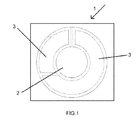
- the microelectronic device used is a sensor chip 1 such as that represented in figure 1 integrating, in a single substrate, a work electrode 2 and two counter electrodes 3, all in the form of platinum micro-disks.
- the process and system being claimed are based on the measurement of the changes in impedance produced in the interface of an electrode, whereonto bacteria of a host strain have previously been adhered in order to detect the desired bacteriophage or group of bacteriophages.
- the bacteria have been adhered onto the surface of the chip 1 of figure 1 through the formation of a biofilm 4 of Pseudomonas putida.
- Figure 2a shows a detail of the sensor chip of figure 1 whereon said biofilm 4 has been made to grow.
- the sensor chip 1 itself was introduced in a reactor with a Pseudomonas putida culture in an exponential phase, in a controlled minimal medium (AB minimal medium) with agitation and constant ventilation. In this reactor, chip 1 was allowed to incubate for a period of five years. After this period, the biofilm 4 formed on the chip 1 has the appearance shown in figure 2a .
- the A solution includes, in 1,000 ml of distilled water:
- the B solution includes the following components, which are mixed together after being individually autoclaved:
- said chip 1 is introduced into a solution containing a suspension of bacteriophages at 10 8 (PFU/ml) (Plaque-Forming Units). This solution has been obtained on inoculating 0.5 ml of a bacteriophage-containing sewage sample, in 4.5 ml of said minimal AB medium.
- the aforementioned solution that includes the chip 1 is incubated for a period of 24 hours at a temperature of 37°-C. During the incubation process, electric impedance measurements have been performed for the purpose of monitoring biofilm 4 deterioration.
- the impedance measurements were performed using electrochemical impedance spectroscopy, applying the following measurement conditions:
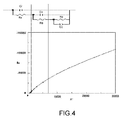
- biofilm capacitance (Cb) a dielectric material which is modelled, in the equivalent electric circuit of the impedance spectrum, as biofilm capacitance (Cb).
- Cb biofilm capacitance
- FIG. 4 shows a representation of the aforementioned equivalent circuit wherein, in addition to biofilm capacitance (Cb), the following parameters are defined:
- the exposure of the biofilm 4 to the action of the bacteriophages generates a response that is impedimetrically measurable in terms of variation in the equivalent electrical circuit parameter, i.e. in terms of variation in the capacitance of said biofilm 4.
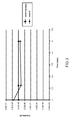
- Figure 3 is a graphic representation showing the evolution over time of the capacitance (Cb) of the biofilm 4 disposed on the sensor chip 1, in a control solution and in a solution of a sewage water sample containing bacteriophages infecting Pseudomonas putida.
- biofilm 4 capacitance (Cb) decreases (8% compared to the control solution) six hours after incubating the chip 1 when disposed in a solution containing bacteriophages.
- the same capacitance (Cb) is maintained constant when the same chip 1 is disposed in a control solution without bacteriophages.
- the thickness of the biofilm 4 in the chip 1 which had been exposed to the action of the bacteriophages was measured, detecting a reduction of around 50% of the thickness of the biofilm, although the total reduction of the bacteria (UFC/ml) (Colony-Forming Units) was around 20%, probably due to the fact that only the outer layers of the biofilm 4, which have less bacterial density, were capable of being infected by the phages.
- the concentration of bacteriophages in the solution being analysed is determined based on the change in the biofilm capacitance (Cb) value by means of the corresponding calibration curve that correlates said capacitance (Cb) value change with the concentration of the solution within the work range.
- the microelectronic device used is the same sensor chip 1 of figure 1 , whereon in this case a biofilm having a thickness of 30 microns and a bacterial concentration of 10 5 PFU/ml has been formed.
- the sensor chip 1 For the rapid formation of a compact biofilm of the aforementioned thickness and bacterial concentration, the sensor chip 1 itself is introduced into a bioreactor with an Escherichia Coli culture in an exponential phase in a controlled medium (AB minimal medium) with agitation and constant ventilation. After three minutes of conditioning the sensor in the bioreactor, the chip 1 is subjected to forced incubation by polarising the work microelectrode using a voltage of three volts applied using a pulse train lasting ten seconds. Under these conditions, the biofilm with the aforementioned characteristics is obtained. This biofilm has the same appearance as the normal biofilm incubated spontaneously for several days shown in figure 2a .
- the same infection protocol is followed as that described in the first embodiment, introducing the chip with the biofilm in a solution containing a suspension of bacteriophages of 10 8 (PFU/ml) (Plaque-Forming Units). Subsequently, the aforementioned solution that includes the chip is incubated for a period of six hours at a temperature of 37oC. During the incubation process, electrochemical impedance measurements are performed for the purpose of monitoring biofilm deterioration.
- the exposure of the biofilm to the action of the bacteriophages generates a response that is impedimetrically measureable in terms of variation in the equivalent circuit parameter modelled by the biofilm in the interface, i.e. in terms of variation in the capacitance (Cb) of said biofilm.
- Table 1 shows the results obtained in this second embodiment for two types of bacteriophages capable of infecting the biofilm of Escherichia coli created on the microchip. The results are expressed as a percentage of reduction in the capacitance of said biofilm. Table 1. - Percentage of reduction in the capacitance of the biofilm due to the action of the bacteriophages after two hours and six hours of incubation. BACTERIOPHAGE % REDUCTION IN C biofilm SIGNAL 2 h 6 h A Escherichia coli 2 % 24 % B Escherichia col i 3.5 % 19 %
- the results show that the formation of a compact biofilm having a thickness of 30 microns and 10 4 UFC/ml affords the methodology greater sensitivity.
- Said compact biofilm can be quickly formed (in a matter of hours) by subjecting the chip to forced incubation by means of simultaneous polarisation of the work electrode.
- the exposure of the biofilm to the action of the bacteriophages generates a response that is also impedimetrically measurable in terms of variation in the magnitude of the imaginary impedance component (Zi) obtained at a certain frequency.
- the microelectronic device used is the same sensor chip 1 of figure 1 , whereon a biofilm having a thickness of 40 microns and a bacterial concentration of 3.10 5 PFU/ml has been formed.
- Table 2 shows the results obtained in this third embodiment for two types of bacteriophages capable of infecting the biofilm of Escherichia coli created on the microchip. The results are expressed as a percentage of variation in the magnitude of the imaginary impedance component. Table 2. - Percentage of variation in the magnitude of the imaginary impedance component due to the action of the bacteriophages after six hours of incubation. BACTERIOPHAGE % VARIATION Z i (6 hours) 50 Hz 500 Hz 1,000 Hz A Escherichia coli 17 % 15 % 12 % B Escherichia coli 14 % 11 % 10 %
- the change values obtained are slightly less sensitive than in the second embodiment, wherein the percentage of variation in capacitance is measured.
- determining the imaginary impedance component at a frequency has the advantage of substantially simplifying the detection process.
- the impedance measurements have been carried out using a microelectronic chip 1 type sensor device.
- any other equivalent microelectronic device such as, for example, a microelectronic device manufactured using thick-film microelectronic technology could be useful for performing the measurements of the present invention.
- adhesion of the bacteria onto the surface of the work electrode 2 has been carried out through the formation of a biofilm 4.
- adhesion of the bacteria can be carried out using any other type of technique such as, for example, carrying out the functionalisation of the work electrode 3 surface through the direct adsorption of a compound, for example avidin, which facilitates adhesion of the previously biotinylated bacteria by means of avidin-biotin bonds.
- the described embodiments relate to the detection of bacteriophages infecting Pseudomonas putida and somatic coliphages infecting Escherichia coli. Nevertheless, as mentioned earlier, the present invention can be applied to the detection and/or quantification of any type of bacterophage, provided that there is a bacterial host strain susceptible to being infected by said bacteriophage.
Landscapes
- Health & Medical Sciences (AREA)
- Life Sciences & Earth Sciences (AREA)
- Chemical & Material Sciences (AREA)
- Engineering & Computer Science (AREA)
- Immunology (AREA)
- Organic Chemistry (AREA)
- Analytical Chemistry (AREA)
- Molecular Biology (AREA)
- Physics & Mathematics (AREA)
- General Health & Medical Sciences (AREA)
- Biochemistry (AREA)
- Proteomics, Peptides & Aminoacids (AREA)
- Wood Science & Technology (AREA)
- Zoology (AREA)
- Biotechnology (AREA)
- Microbiology (AREA)
- Biomedical Technology (AREA)
- Urology & Nephrology (AREA)
- Hematology (AREA)
- General Physics & Mathematics (AREA)
- Medicinal Chemistry (AREA)
- Food Science & Technology (AREA)
- Bioinformatics & Cheminformatics (AREA)
- General Engineering & Computer Science (AREA)
- Genetics & Genomics (AREA)
- Biophysics (AREA)
- Pathology (AREA)
- Cell Biology (AREA)
- Virology (AREA)
- Investigating Or Analyzing Materials By The Use Of Electric Means (AREA)
- Measuring Or Testing Involving Enzymes Or Micro-Organisms (AREA)
- Apparatus Associated With Microorganisms And Enzymes (AREA)
Applications Claiming Priority (2)
| Application Number | Priority Date | Filing Date | Title |
|---|---|---|---|
| ES200800776A ES2325825B1 (es) | 2008-03-17 | 2008-03-17 | Procedimiento y sistema para detectar y/o cuantificar bacteriofagos susceptibles de infectar una cepa huesped bacteriana predeterminada, uso de un dispositivo microelectronico sensor para detectar dichos bacteriofagos y dispositivo microelectronico sensor para llevar a cabo dicho. |
| PCT/ES2009/070066 WO2009115633A1 (es) | 2008-03-17 | 2009-03-17 | Procedimiento y sistema para detectar y/o cuantificar bacteriófagos susceptibles de infectar una cepa huésped bacteriana predeterminada, uso de un dispositivo microelectrónico sensor para detectar dichos bacteriófagos y dispositivo microelectrónico sensor para llevar a cabo dicho procedimiento. |
Publications (2)
| Publication Number | Publication Date |
|---|---|
| EP2267167A1 true EP2267167A1 (de) | 2010-12-29 |
| EP2267167A4 EP2267167A4 (de) | 2011-04-20 |
Family
ID=41052018
Family Applications (1)
| Application Number | Title | Priority Date | Filing Date |
|---|---|---|---|
| EP09723530A Withdrawn EP2267167A4 (de) | 2008-03-17 | 2009-03-17 | Verfahren und system zur erkennung und/oder quantifizierung von bakteriophagen als infektoren eines bestimmten bakteriellen wirtsstammes, verwendung eines mikroelektronischen sensors zur erkennung dieser bakteriophagen und mikroelektronischer sensor zur umsetzung dieses verfahrens |
Country Status (8)
| Country | Link |
|---|---|
| US (1) | US20110053144A1 (de) |
| EP (1) | EP2267167A4 (de) |
| JP (1) | JP2011517559A (de) |
| KR (1) | KR20100130218A (de) |
| CN (1) | CN102119227A (de) |
| CA (1) | CA2718687A1 (de) |
| ES (1) | ES2325825B1 (de) |
| WO (1) | WO2009115633A1 (de) |
Cited By (2)
| Publication number | Priority date | Publication date | Assignee | Title |
|---|---|---|---|---|
| WO2012151563A2 (en) | 2011-05-04 | 2012-11-08 | Dxupclose | Device and method for identifying microbes and counting microbes and determining antimicrobial sensitivity |
| EP3299804A1 (de) * | 2016-09-27 | 2018-03-28 | Georg Fischer JRG AG | Verfahren und vorrichtung zur analyse der bakteriendichte in trinkwasser |
Families Citing this family (14)
| Publication number | Priority date | Publication date | Assignee | Title |
|---|---|---|---|---|
| WO2012064043A2 (ko) | 2010-11-08 | 2012-05-18 | 에스케이케미칼 주식회사 | 폴리유산 수지, 이의 제조 방법 및 이를 포함하는 포장용 필름 |
| US9650272B2 (en) | 2010-12-31 | 2017-05-16 | Dow Global Technologies Llc | Prevention and remediation of petroleum reservoir souring and corrosion by treatment with virulent bacteriophage |
| US9453247B2 (en) * | 2011-05-25 | 2016-09-27 | Dow Global Technologies Llc | Application of bacteriophages for the control of unwanted bacteria in biofuel production mediated by non-bacterial reactive agents |
| WO2012177807A1 (en) | 2011-06-20 | 2012-12-27 | Sri International | Electrochemical disinfection of implanted catheters |
| WO2012177803A1 (en) | 2011-06-20 | 2012-12-27 | Sri International | Self - sterilizing catheter with titanium dioxide photocatalyst thin film upon uv radiation |
| US9823249B2 (en) * | 2012-12-12 | 2017-11-21 | Brigham And Women's Hospital, Inc. | System and method for detecting pathogens |
| US9464267B2 (en) | 2013-03-14 | 2016-10-11 | Dow Global Technologies Llc | Staged bacteriophage remediation of target bacteria |
| US20190316169A1 (en) * | 2016-11-28 | 2019-10-17 | Sonanutech Inc. | Methods, compositions, and kits for detecting a cell in a sample |
| JP7477851B2 (ja) * | 2018-07-26 | 2024-05-02 | 国立研究開発法人物質・材料研究機構 | 電流発生菌の活性調整剤および微生物燃料電池システムの出力調整方法 |
| CN111798712B (zh) * | 2020-07-15 | 2021-10-29 | 周晓庆 | 噬菌体侵染细菌3d智能模拟方法 |
| CN111855753B (zh) * | 2020-08-05 | 2023-04-07 | 中国水产科学研究院黄海水产研究所 | 一种水体中副溶血弧菌的现场检测试剂盒和检测方法 |
| CN112011446A (zh) * | 2020-08-31 | 2020-12-01 | 吉林大学 | 一种用于细菌裂解的微流控芯片、细菌裂解装置及其应用 |
| CN116626130B (zh) * | 2022-08-05 | 2026-01-13 | 广西大学 | 一种检测大肠杆菌的电化学传感器的制备方法 |
| CN121518257B (zh) * | 2026-01-09 | 2026-03-31 | 苏州万贵源精密科技有限公司 | 一种可通电测试阻抗的金属接种环 |
Family Cites Families (8)
| Publication number | Priority date | Publication date | Assignee | Title |
|---|---|---|---|---|
| EP0143107B1 (de) * | 1983-10-26 | 1988-08-17 | Jürgen Dr. Lembke | Neues Verfahren zum Virus-Nachweis in Reinkulturen mikroskopischer Kleinlebewesen sowie in Lebensmitteln und in technologischen Produkten |
| FR2556741B1 (fr) * | 1983-12-14 | 1987-03-27 | Air Liquide | Procede et dispositif de detection de l'activite d'une substance sur un micro-organisme ou sur un melange de micro-organismes |
| WO1993017129A1 (en) * | 1992-02-28 | 1993-09-02 | Judkins Paul W | Method and diagnostic kit for determination of bacteria |
| GB9317139D0 (en) | 1993-08-18 | 1993-10-06 | Miniser For Agriculture Fisher | Method and test kits for detection of bacteriophage |
| IT1291913B1 (it) * | 1997-05-22 | 1999-01-21 | Angeletti P Ist Richerche Bio | Metodo che prevede l'uso di batteriofagi per la rivelazione della presenza di molecole di interesse in campioni biologici |
| CA2380480C (en) * | 1999-07-30 | 2010-10-26 | Profos Ag | Detection and identification of bacterial strains |
| CA2646987C (en) * | 2006-03-09 | 2014-09-30 | The Regents Of The University Of California | Method and apparatus for target detection using electrode-bound viruses |
| ES2340118B1 (es) * | 2008-01-16 | 2011-04-04 | Consejo Superior De Investigaciones Cientificas (50%) | Dispositivo y procedimiento para medir concentracion de biomasa, y uso de un elemento electronico chip para medir dicha concentracion de biomasa. |
-
2008
- 2008-03-17 ES ES200800776A patent/ES2325825B1/es not_active Expired - Fee Related
-
2009
- 2009-03-17 JP JP2011500243A patent/JP2011517559A/ja active Pending
- 2009-03-17 CN CN2009801166779A patent/CN102119227A/zh active Pending
- 2009-03-17 US US12/922,882 patent/US20110053144A1/en not_active Abandoned
- 2009-03-17 WO PCT/ES2009/070066 patent/WO2009115633A1/es not_active Ceased
- 2009-03-17 EP EP09723530A patent/EP2267167A4/de not_active Withdrawn
- 2009-03-17 KR KR1020107023202A patent/KR20100130218A/ko not_active Withdrawn
- 2009-03-17 CA CA2718687A patent/CA2718687A1/en not_active Abandoned
Cited By (3)
| Publication number | Priority date | Publication date | Assignee | Title |
|---|---|---|---|---|
| WO2012151563A2 (en) | 2011-05-04 | 2012-11-08 | Dxupclose | Device and method for identifying microbes and counting microbes and determining antimicrobial sensitivity |
| EP2705355A4 (de) * | 2011-05-04 | 2015-04-08 | Dxupclose | Vorrichtung und verfahren zur identifikation von mikroben und zur bestimmung einer empfindlichkeit gegen mikroben |
| EP3299804A1 (de) * | 2016-09-27 | 2018-03-28 | Georg Fischer JRG AG | Verfahren und vorrichtung zur analyse der bakteriendichte in trinkwasser |
Also Published As
| Publication number | Publication date |
|---|---|
| ES2325825B1 (es) | 2010-06-25 |
| WO2009115633A1 (es) | 2009-09-24 |
| JP2011517559A (ja) | 2011-06-16 |
| KR20100130218A (ko) | 2010-12-10 |
| CN102119227A (zh) | 2011-07-06 |
| US20110053144A1 (en) | 2011-03-03 |
| CA2718687A1 (en) | 2009-09-24 |
| EP2267167A4 (de) | 2011-04-20 |
| ES2325825A1 (es) | 2009-09-18 |
Similar Documents
| Publication | Publication Date | Title |
|---|---|---|
| EP2267167A1 (de) | Verfahren und system zur erkennung und/oder quantifizierung von bakteriophagen als infektoren eines bestimmten bakteriellen wirtsstammes, verwendung eines mikroelektronischen sensors zur erkennung dieser bakteriophagen und mikroelektronischer sensor zur umsetzung dieses verfahrens | |
| Dzydevich et al. | Conductometric biosensors based on cholinesterases for sensitive detection of pesticides | |
| CN103940883B (zh) | 可快速检测水体生物毒性的一次性微生物膜传感器的制备方法、应用、装置及检测方法 | |
| JP6323883B2 (ja) | 成長測定によるマススペクトル耐性判定 | |
| Liu et al. | Impedance sensor for rapid enumeration of E. coli in milk samples | |
| MX2012014909A (es) | Proceso para detectar e identificar directamente un microorganismo en una muestra biologica diluida en un caldo enriquecido. | |
| US7238496B2 (en) | Rapid and automated electrochemical method for detection of viable microbial pathogens | |
| CN104931554A (zh) | 一种基于丝网印刷碳电极的传感器制备方法及应用 | |
| CA2557487A1 (en) | Detection of contaminants retained on a filter by a detectable moiety-producing substrate | |
| Patel et al. | Impedance based biosensor for agricultural pathogen detection | |
| Nakamura et al. | Electrochemical detection of viable bacteria in urine and antibiotic selection | |
| CN103969303B (zh) | 胶原纤维负载酿酒酵母作为生物传感器识别元件快速测定bod的方法 | |
| Badalyan et al. | Novel sensor platform for rapid detection and quantification of coliforms on food contact surfaces | |
| Patel et al. | Biosynthesized AgNP modified glassy carbon electrode as a label-free non faradaic impedance sensor for bacteria detection | |
| Kara et al. | Application of impedimetric and voltammetric genosensor for detection of a biological warfare: Anthrax | |
| Yan et al. | ATP bioluminescence rapid detection of total viable count in soy sauce | |
| CN101441167A (zh) | 一种测定重金属对微生物最小抑制浓度的方法 | |
| CN118655199B (zh) | 一种细胞印迹电化学传感器的制备方法及利用其快速定量检测乳制品中乳酸菌的方法 | |
| JP3529453B2 (ja) | 大腸菌群の選択的検出方法 | |
| Subrahmanyam et al. | Cyclic voltammetric measurements of growth of Aspergillus terreus | |
| Mejri et al. | Magnetic nanoparticles immobilization and functionalization for biosensor applications | |
| Meenakshi et al. | Detection of Food Spoilage Gram-Positive Bacteria by Nanosensor | |
| Al-Madhagi et al. | Development of an integrated label-free electrochemical sensor with sample collection for the detection of Acinetobacter baumannii | |
| Abbasian et al. | Label-free impedometric antibiogram test | |
| Lei et al. | A novel BOD sensor immobilized active sludge bacteria for rapid determination of biochemical oxygen demand in industrial wastewater |
Legal Events
| Date | Code | Title | Description |
|---|---|---|---|
| PUAI | Public reference made under article 153(3) epc to a published international application that has entered the european phase |
Free format text: ORIGINAL CODE: 0009012 |
|
| 17P | Request for examination filed |
Effective date: 20100929 |
|
| AK | Designated contracting states |
Kind code of ref document: A1 Designated state(s): AT BE BG CH CY CZ DE DK EE ES FI FR GB GR HR HU IE IS IT LI LT LU LV MC MK MT NL NO PL PT RO SE SI SK TR |
|
| AX | Request for extension of the european patent |
Extension state: AL BA RS |
|
| A4 | Supplementary search report drawn up and despatched |
Effective date: 20110317 |
|
| RIC1 | Information provided on ipc code assigned before grant |
Ipc: G01N 33/543 20060101ALI20110311BHEP Ipc: G01N 33/00 20060101ALI20110311BHEP Ipc: C12Q 1/70 20060101AFI20091013BHEP |
|
| DAX | Request for extension of the european patent (deleted) | ||
| 17Q | First examination report despatched |
Effective date: 20111104 |
|
| STAA | Information on the status of an ep patent application or granted ep patent |
Free format text: STATUS: THE APPLICATION IS DEEMED TO BE WITHDRAWN |
|
| 18D | Application deemed to be withdrawn |
Effective date: 20120515 |