EP2260462B1 - System for optimizing a patient's insulin dosage regimen - Google Patents
System for optimizing a patient's insulin dosage regimen Download PDFInfo
- Publication number
- EP2260462B1 EP2260462B1 EP09755481.0A EP09755481A EP2260462B1 EP 2260462 B1 EP2260462 B1 EP 2260462B1 EP 09755481 A EP09755481 A EP 09755481A EP 2260462 B1 EP2260462 B1 EP 2260462B1
- Authority
- EP
- European Patent Office
- Prior art keywords
- patient
- glucose
- blood
- insulin dosage
- insulin
- Prior art date
- Legal status (The legal status is an assumption and is not a legal conclusion. Google has not performed a legal analysis and makes no representation as to the accuracy of the status listed.)
- Active
Links
Images



Classifications
-
- A—HUMAN NECESSITIES
- A61—MEDICAL OR VETERINARY SCIENCE; HYGIENE
- A61B—DIAGNOSIS; SURGERY; IDENTIFICATION
- A61B5/00—Measuring for diagnostic purposes; Identification of persons
- A61B5/145—Measuring characteristics of blood in vivo, e.g. gas concentration or pH-value ; Measuring characteristics of body fluids or tissues, e.g. interstitial fluid or cerebral tissue
- A61B5/14532—Measuring characteristics of blood in vivo, e.g. gas concentration or pH-value ; Measuring characteristics of body fluids or tissues, e.g. interstitial fluid or cerebral tissue for measuring glucose, e.g. by tissue impedance measurement
-
- A—HUMAN NECESSITIES
- A61—MEDICAL OR VETERINARY SCIENCE; HYGIENE
- A61M—DEVICES FOR INTRODUCING MEDIA INTO, OR ONTO, THE BODY; DEVICES FOR TRANSDUCING BODY MEDIA OR FOR TAKING MEDIA FROM THE BODY; DEVICES FOR PRODUCING OR ENDING SLEEP OR STUPOR
- A61M5/00—Devices for bringing media into the body in a subcutaneous, intra-vascular or intramuscular way; Accessories therefor, e.g. filling or cleaning devices, arm-rests
- A61M5/14—Infusion devices, e.g. infusing by gravity; Blood infusion; Accessories therefor
- A61M5/168—Means for controlling media flow to the body or for metering media to the body, e.g. drip meters, counters ; Monitoring media flow to the body
- A61M5/172—Means for controlling media flow to the body or for metering media to the body, e.g. drip meters, counters ; Monitoring media flow to the body electrical or electronic
- A61M5/1723—Means for controlling media flow to the body or for metering media to the body, e.g. drip meters, counters ; Monitoring media flow to the body electrical or electronic using feedback of body parameters, e.g. blood-sugar, pressure
-
- G—PHYSICS
- G16—INFORMATION AND COMMUNICATION TECHNOLOGY [ICT] SPECIALLY ADAPTED FOR SPECIFIC APPLICATION FIELDS
- G16H—HEALTHCARE INFORMATICS, i.e. INFORMATION AND COMMUNICATION TECHNOLOGY [ICT] SPECIALLY ADAPTED FOR THE HANDLING OR PROCESSING OF MEDICAL OR HEALTHCARE DATA
- G16H10/00—ICT specially adapted for the handling or processing of patient-related medical or healthcare data
-
- G—PHYSICS
- G16—INFORMATION AND COMMUNICATION TECHNOLOGY [ICT] SPECIALLY ADAPTED FOR SPECIFIC APPLICATION FIELDS
- G16H—HEALTHCARE INFORMATICS, i.e. INFORMATION AND COMMUNICATION TECHNOLOGY [ICT] SPECIALLY ADAPTED FOR THE HANDLING OR PROCESSING OF MEDICAL OR HEALTHCARE DATA
- G16H20/00—ICT specially adapted for therapies or health-improving plans, e.g. for handling prescriptions, for steering therapy or for monitoring patient compliance
- G16H20/10—ICT specially adapted for therapies or health-improving plans, e.g. for handling prescriptions, for steering therapy or for monitoring patient compliance relating to drugs or medications, e.g. for ensuring correct administration to patients
-
- G—PHYSICS
- G16—INFORMATION AND COMMUNICATION TECHNOLOGY [ICT] SPECIALLY ADAPTED FOR SPECIFIC APPLICATION FIELDS
- G16H—HEALTHCARE INFORMATICS, i.e. INFORMATION AND COMMUNICATION TECHNOLOGY [ICT] SPECIALLY ADAPTED FOR THE HANDLING OR PROCESSING OF MEDICAL OR HEALTHCARE DATA
- G16H20/00—ICT specially adapted for therapies or health-improving plans, e.g. for handling prescriptions, for steering therapy or for monitoring patient compliance
- G16H20/10—ICT specially adapted for therapies or health-improving plans, e.g. for handling prescriptions, for steering therapy or for monitoring patient compliance relating to drugs or medications, e.g. for ensuring correct administration to patients
- G16H20/17—ICT specially adapted for therapies or health-improving plans, e.g. for handling prescriptions, for steering therapy or for monitoring patient compliance relating to drugs or medications, e.g. for ensuring correct administration to patients delivered via infusion or injection
-
- A—HUMAN NECESSITIES
- A61—MEDICAL OR VETERINARY SCIENCE; HYGIENE
- A61B—DIAGNOSIS; SURGERY; IDENTIFICATION
- A61B5/00—Measuring for diagnostic purposes; Identification of persons
- A61B5/0002—Remote monitoring of patients using telemetry, e.g. transmission of vital signals via a communication network
-
- A—HUMAN NECESSITIES
- A61—MEDICAL OR VETERINARY SCIENCE; HYGIENE
- A61M—DEVICES FOR INTRODUCING MEDIA INTO, OR ONTO, THE BODY; DEVICES FOR TRANSDUCING BODY MEDIA OR FOR TAKING MEDIA FROM THE BODY; DEVICES FOR PRODUCING OR ENDING SLEEP OR STUPOR
- A61M5/00—Devices for bringing media into the body in a subcutaneous, intra-vascular or intramuscular way; Accessories therefor, e.g. filling or cleaning devices, arm-rests
- A61M5/14—Infusion devices, e.g. infusing by gravity; Blood infusion; Accessories therefor
- A61M5/142—Pressure infusion, e.g. using pumps
Definitions
- the present invention relates to a system for optimizing the insulin dosage regimen for a diabetes patient, and more particularly to such a system according to which a processor is programmed at least to determine from the data inputs corresponding to the patient's blood-glucose-level measurements determined at a plurality of times whether and by how much to vary at least one of the one or more components in the patient's present insulin dosage regimen in order to maintain the patient's future blood-glucose-level measurements within a predefined range.
- Diabetes is a chronic disease resulting from deficient insulin secretion by the endocrine pancreas. About 7% of the general population in the Western Hemisphere suffers from diabetes. Of these persons, roughly 90% suffer from Type-2 diabetes while approximately 10% suffer from Type-1. In Type-1 diabetes, patients effectively surrender their endocrine pancreas to autoimmune distraction and so become dependent on daily insulin injections to control blood-glucose-levels. In Type-2 diabetes, on the other hand, the endocrine pancreas gradually fails to satisfy increased insulin demands, thus requiring the patient to compensate with a regime of oral medications or insulin therapy. In the case of either Type-1 or Type-2 diabetes, the failure to properly control glucose levels in the patient may lead to such complications as heart attacks, strokes, blindness, renal failure, and even premature death.
- Insulin therapy is the mainstay of Type-1 diabetes management and one of the most widespread treatments in Type-2 diabetes, about 27% of the sufferers of which require insulin.
- Insulin administration is designed to imitate physiological insulin secretion by introducing two classes of insulin into the patient's body: Long-acting insulin, which fulfills basal metabolic needs; and short-acting insulin (also known as fact-acting insulin), which compensates for sharp elevations in blood-glucose-levels following patient meals. Orchestrating the process of dosing these two types of insulin, in whatever form (e.g., separately or as premixed insulin) involves numerous considerations.
- the device most commonly employed in diabetes management is the glucose meter.
- Such devices come in a variety of forms, although all are characterized by their ability to provide patients near instantaneous readings of their blood-glucose-levels. This additional information can be used to better identify dynamic trends in blood-glucose-levels.
- all conventional glucose meters are designed to be diagnostic tools rather than therapeutic ones. Therefore, by themselves, even state-of-the-art glucose meters do not lead to improved glycemic control.
- Insulin pumps are devices that continuously infuse short acting insulin into a patient at a predetermined rate to cover both basal needs and meals.
- a healthcare professional sets the pump with the patient's insulin dosage regimen during clinic visits.
- insulin pumps require frequent adjustment by the physician or other healthcare professional to compensate for the needs of individual patients based upon frequent blood-glucose-level measurements.
- U.S. 5,822,715 A relates to a diabetes management system for predicting a future blood glucose value of a patient and for recommending a corrective action to the patient when the future blood glucose value lies outside of a target range.
- the system includes a patient-operated apparatus for measuring blood glucose values and for storing data relating to insulin doses administered to the patient.
- the apparatus predicts the patient's future blood glucose value based upon the patient's current blood glucose value, the fraction of insulin action remaining from the insulin doses, and the patient's insulin sensitivity.
- the apparatus also determines the corrective action for the patient when the predicted blood glucose value lies outside of a target range.
- the system also includes a physician computer in communication with the apparatus for receiving the blood glucose values and insulin dose data and for calculating an adjusted insulin sensitivity for use in subsequent predictions.
- U.S. 6,923,763 B1 relates to a method for estimating blood glucose (“BG”) in the near future and to estimate of the risk of the onset of hypoglycemia.
- the method utilizes BG sampling, insulin infusion/injection records, heart rate (“HR”) information and heart rate varability ("HRV”) information.
- HR heart rate
- HRV heart rate varability
- the invention also relates to an apparatus for predicting BG levels and for assessing the risk of the onset of hypoglycemia in the near future.
- the invention is based on two predetermined bio-mathematical routines: a network model of BG fluctuations and a BG profile for assessment of the risk of hypoglycemia.
- U.S. 2005/0049179 A1 relates to a method for digitally determining the daily insulin regimen for a diabetic patient.
- the invention divides the patient's day into adjustable time intervals containing basal insulin dosage rates and Carbohydrate-to-Insulin Ratio(s) (for determining meal insulin doses).
- the invention identifies the Corrective Insulin doses over a time interval as an "error" in the Prescription Insulin (Basal Insulin+Meal Insulin). Methods involve first estimating the change to one of these two components of Prescription Insulin, and then determining the change to the other by subtracting from the error.
- One method estimates Change in Meal Insulin distributed among intervals proportional to old Meal Insulin.
- Another method lumps After-Meal Corrective Insulin together with Meal Insulin. Another method splits the interval at the After-Meal Corrective Dose and determines Basal from Time-Boundary Corrective Dose. Data may be obtained from the previous day, and a small fraction of error applied, leading to asymptotic reduction of error. Data may be obtained from recent history, and a larger fraction of error applied by doctor or automatic method.
- WO 2007/112034 A2 provides methods, devices and a system for disease management that employ diagnostic testing devices (e.g., blood glucose meters) and medication delivery devices (e.g., insulin delivery devices) for providing data to a repository in real-time and automatically.
- diagnostic testing devices e.g., blood glucose meters
- medication delivery devices e.g., insulin delivery devices
- Repository data can be analyzed to determine such information as actual test strip use, patient health parameters to outside prescribed ranges, testing and medication delivery compliance, patient profiles or stakeholders to receive promotional items or incentives, and so on.
- Connected meters and medication delivery devices and repository data analysis are also employed to associate a diagnostic test to a mealtime based on timing of a therapeutic intervention performed by an individual.
- the system comprises at least a first memory for storing data inputs corresponding to one or more components of a patient's present insulin dosage regimen, and data inputs corresponding to at least the patient's blood-glucose-level measurements determined at a plurality of times; wherein the data inputs corresponding at least to the patient's blood-glucose-level measurements determined at a plurality of times are each associated with an identifier indicative of when the measurement was input into the memory, wherein the patient's initial insulin dosage regimen has been entered in the at least first memory; and a processor operatively connected to the first memory, the processor programmed to determine from the data inputs corresponding to the patient's blood-glucose-level measurements determined at a plurality of times whether and by how much to vary at least one of the one or more components in the patient's present insulin dosage regimen in order to maintain the patient's future blood-glucose-level measurements within a predefined range; wherein the one or more components in the patient's present insulin dosage regimen comprise
- the at least first memory and the processor are resident in a single apparatus.
- the single apparatus further comprises a glucose meter.
- the glucose meter may be separate from the single apparatus, further to which the glucose meter is adapted to communicate to the at least first memory of the single apparatus the data inputs corresponding at least to the patient's blood-glucose-level measurements determined at a plurality of times.
- the single apparatus may further comprises data entry means for entering data inputs corresponding at least to the patient's blood-glucose-level measurements determined at a plurality of times directly into the at least first memory.
- data entry means disposed at a location remote from the single apparatus for remotely entering data inputs corresponding at least to the one or more components in the patient's present insulin dosage regimen into the at least first memory.
- the invention may comprise at least first data entry means disposed at a location remote from the at least first memory and processor for remotely entering data inputs corresponding at least to the one or more components in the patient's present insulin dosage regimen into the at least first memory, and at least second data entry means, disposed at a location remote from the at least first memory, processor and at least first data entry means, for remotely entering data inputs corresponding at least to the patient's blood-glucose-level measurements determined at a plurality of times into the at least first memory.
- data entry means enabling a user to define the identifier associated with each blood-glucose-level measurement data-input, to confirm the correctness of the identifier associated with each blood-glucose-level measurement data-input, and/or to modify the identifier associated with each blood-glucose-level measurement data-input.
- the processor is programmed to determine on a predefined schedule whether and by how much to vary at least one of the one or more components in the patient's present insulin dosage regimen.
- the processor is programmed to determine whether each data input corresponding to the patient's blood-glucose-level measurements represents a severe hypoglycemic event, and to vary at least one of the one or more components in the patient's present insulin dosage regimen in response to a determination that a data input corresponding to the patient's blood-glucose-level measurements represents a severe hypoglycemic event.
- the processor is programmed to determine from the data inputs corresponding to the patient's blood-glucose-level measurements determined at a plurality of times if there have been an excessive number of hypoglycemic events over a predefined period of time, and to vary at least one of the one or more components in the patient's present insulin dosage regimen in response to a determination that there have been an excessive number of such hypoglycemic events over a predefined period of time.
- the processor is programmed to determine from the data inputs corresponding at least to the patient's blood-glucose-level measurements determined at a plurality of times if the patient's blood-glucose level measurements fall within or outside of a predefined range, and to vary at least one of the one or more components in the patient's present insulin dosage regimen only if the patient's blood-glucose level measurements fall outside of the predefined range.
- the processor may be further programmed to determine from the data inputs corresponding at least to the patient's blood-glucose-level measurements determined at a plurality of times whether the patient's blood-glucose-level measurements determined at a plurality of times represent a normal or abnormal distribution. In one aspect, this determination comprises determining whether the third moment of the distribution of the patient's blood-glucose-level measurements determined at a plurality of times fall within a predefined range.
- the processor may further be programmed to factor in an insulin sensitivity correction factor that defines both the percentage by which any of the one or more components of the insulin dosage regimen may be varied and the direction in which any fractional variations in any of the one or more components are rounded to the nearest whole number.
- the at least first memory further stores data inputs corresponding to a patient's present weight, and the insulin sensitivity correction factor is in part determined from the patient's present weight.
- the determination of by how much to vary the long-acting insulin dosage component of a patient's present insulin dosage regimen may be a function of the present long-acting insulin dosage, the insulin sensitivity correction factor, and the patient's blood-glucose-level measurements.
- the one or more components in the patient's present insulin dosage regimen comprise a short-acting insulin dosage component defined by a carbohydrate ratio and plasma glucose correction factor
- the processor is programmed to determine whether and by how much to vary the patient's carbohydrate ratio and plasma glucose correction factor.
- the processor may be programmed to factor in an insulin sensitivity correction factor that defines both the percentage by which any one or more components of the insulin dosage regimen may be varied and the direction in which any fractional variations in the one or more components are rounded to the nearest whole number.
- the determination of by how much to vary the present plasma glucose correction factor component of a patient's insulin dosage regimen may be a function of a predefined value divided by the mean of the total daily dosage of insulin administered to the patient, the patient's present plasma glucose correction factor, and the insulin sensitivity correction factor.
- a value representing twice the patient's daily dosage of long-acting insulin in the present insulin dosage regimen may be substituted for the mean of the total daily dosage of insulin administered to the patient as an approximation thereof.
- the plasma glucose correction factor component of the patient's insulin dosage regimen may be quantized to predefined steps of mg/dL.
- the determination of by how much to vary the present carbohydrate ratio component of a patient's insulin dosage regimen is a function of a predefined value divided by the mean of the total daily dosage of insulin administered to the patient, the patient's present carbohydrate ratio, and the insulin sensitivity correction factor.
- a value representing twice the patient's daily dosage of long-acting insulin in the present insulin dosage regimen is substituted for the mean of the total daily dosage of insulin administered to the patient as an approximation thereof.
- the processor may also be programmed to determine a correction factor that allows variations to the carbohydrate ratio component of a patient's insulin dosage regimen to be altered in order to compensate for a patient's individual response to insulin at different times of the day.
- the one or more components in the patient's present insulin dosage regimen comprise a long-acting insulin dosage component, and the determination of by how much to vary the long-acting insulin dosage component is constrained to an amount of variation within predefined limits.
- the one or more components in the patient's present insulin dosage regimen comprise a short-acting insulin dosage component defined by a carbohydrate ratio and plasma glucose correction factor, and the determination of by how much to vary any one or more of each component in the short-acting insulin dosage is constrained to an amount of variation within predefined limits.
- the one or more components in the patient's present insulin dosage regimen comprise a short-acting insulin dosage component taken according to a sliding scale
- the processor is programmed to determine whether and by how much to vary at least the sliding scale in order to maintain the patient's future blood-glucose-level measurements within a predefined range.
- the determination of by how much to vary the sliding scale may further be constrained to an amount of variation within predefined limits.
- the present invention comprehends a system for optimizing the insulin dosage regimen in diabetes patients over time - such as in between clinic visits -- to thereby enhance diabetes control.
- insulin dose means and refers to the quantity of insulin taken on any single occasion
- insulin dosage regimen refers to and means the set of instructions (typically defined by the patient's physician or other healthcare professional) defining when and how much insulin to take in a given period of time and/or under certain conditions.
- One conventional insulin dosage regimen comprises several components, including a long-acting insulin dosage component, a plasma glucose correction factor component, and a carbohydrate ratio component.
- an exemplary insulin dosage regimen for a patient might be as follows: 25 units of long acting insulin at bedtime; 1 unit of fast-acting insulin for every 10 grams of ingested carbohydrates; and 1 unit of fast-acting insulin for every 20 mg/dL by which a patient's blood glucose reading exceeds 120 mg/dL.
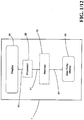
- the invention according to an exemplary embodiment more particularly comprises an apparatus 1 having at least a first memory 10 for storing data inputs corresponding at least to one or more components of a patient's present insulin dosage regimen (whether comprising separate units of long-acting and short-acting insulin, premixed insulin, etc.) and the patient's blood-glucose-level measurements determined at a plurality of times, a processor 20 operatively connected (indicated at line 11 ) to the at least first memory 10, and a display 30 operatively coupled (indicated at line 31 ) to the processor and operative to display at least information corresponding to the patient's present insulin dosage regimen.
- a processor 20 operatively connected (indicated at line 11 ) to the at least first memory 10
- a display 30 operatively coupled (indicated at line 31 ) to the processor and operative to display at least information corresponding to the patient's present insulin dosage regimen.
- the processor 20 is programmed at least to determine from the data inputs corresponding to the patient's blood-glucose-level measurements determined at a plurality of times whether and by how much to vary at least one or the one or more components of the patient's present insulin dosage regimen in order to maintain the patient's future blood-glucose-level measurements within a predefined range. Such variation, if effected, leads to a modification of the patient's present insulin dosage regimen data as stored in the memory 10, as explained further herein.
- the data inputs corresponding to the one or more components of the patient's present insulin dosage regimen as stored in the memory device 10 will, at a starting time for employment of the inventive apparatus, constitute an insulin dosage regimen prescribed by a healthcare professional, but those data inputs may subsequently be varied by operation of the apparatus (such as during the time interval between a patient's clinic visits).
- the inventive apparatus is operative to monitor relevant patient data with each new input of information (such as, at a minimum, the patient's blood-glucose-level measurements), thereby facilitating the optimization of the patient's insulin dosage regimen in between clinic visits.
- the apparatus as generalized above may be embodied in any of a variety of forms, including a purpose-built, PDA-like unit, a commercially available device such as a cell-phone, IPHONE, etc.
- a device such as a cell-phone, IPHONE, etc.
- data entry means such as a keypad, touch-screen interface, etc.
- Display 30 is operative to provide a visual display to the patient, healthcare professional, etc. of pertinent information, including, by way of non-limiting example, information corresponding to the present insulin dosage regimen for the patient, the current insulin dose (i.e., number of insulin units the patient needs to administer on the basis of the latest blood-glucose-level measurement and current insulin dosage regimen), etc. To that end, display 30 is operatively connected to the processor 20, as indicated by the dashed line 31.
- the data entry means 40 may take the form of a touch-screen, in which case the data entry means 40 and display 30 may be combined (such as exemplified by the commercially available IPHONE (Apple, Inc., California)).
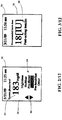
- FIGS. 2 through 5 there are depicted representative images for a display 30 and a touch-screen type, combined display 30 /data entry means 40 exemplifying both the patient information that may be provided via the display, as well as the manner of data entry.
- FIG. 2 shows a display 30 providing current date/time information 32 as well as the patient's current blood-glucose-level measurement 33 based upon a concurrent entry of that data.
- FIG. 2 further depicts a pair of scrolling arrows 42 by which the patient is able to scroll through a list 34 of predefined choices representing the time of the patient's said current blood-glucose-level measurement. As explained further herebelow in association with a description of an exemplary algorithm for implementing the invention, selection of one of these choices will permit the processor to associate the measurement data with the appropriate measurement time for more precise control of the patient's insulin dosage regimen.
- FIG. 3 shows a display 30 providing current date/time information 32, as well as the presently recommended dose of short-acting insulin units 35 - based upon the presently defined insulin dosage regimen - for the patient to take at lunchtime.
- FIG. 4 shows a display 30 providing current date/time information 32, as well as, according to a conventional "carbohydrate-counting" therapy, the presently recommended base (3 IUs) and additional doses (1 IU per every 8 grams of carbohydrates ingested) of short-acting insulin units 36 for the patient to take at lunchtime - all based upon the presently defined insulin dosage regimen.
- FIG. 5 there is shown a display 30 providing current date/time information 32, as well as the presently recommended dose of short-acting insulin units 37 - based upon the presently defined insulin dosage regimen - for the patient to take at lunchtime according to a designated amount of carbohydrates to be ingested.
- a pair of scrolling arrows 42 are displayed, by which the patient is able to scroll through a list of predefined meal choices 38, each of which will have associated therewith in the memory a number (e.g., grams) of carbohydrates.
- the processor When the patient selects a meal choice, the processor is able to determine from the number of carbohydrates associated with that meal, and the presently defined insulin dosage regimen, a recommended dose of short-acting insulin for the patient to take (in this example, 22 IUs of short-acting insulin for a lunch of steak and pasta).
- the inventive apparatus as described above in respect of FIG. 1 optionally includes a glucose meter (indicated by the dashed box 50 ) operatively connected (as indicated at line 51 ) to memory 10 to facilitate the automatic input of data corresponding to the patient's blood-glucose-level measurements directly to the memory 10.
- a glucose meter indicated by the dashed box 50
- memory 10 to facilitate the automatic input of data corresponding to the patient's blood-glucose-level measurements directly to the memory 10.
- the glucose meter 50' could be provided as a separate unit that is capable of communicating (such as via a cable or wirelessly, represented at line 51' ) with the device 1' so as to download to the memory 10' the patient's blood-glucose-level measurements, such as shown in FIG. 7 .
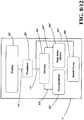
- the inventive apparatus 1" may be combined with an insulin pump 60" and, optionally, a glucose meter 50" as well.
- the processor 20" is operative to determine from at least the patient's blood-glucose-level measurement data (which may be automatically transferred to the memory 10" where the apparatus is provided with a glucose meter 50", as shown, is connectable to a glucose meter so that these data may be automatically downloaded to the memory 10", or is provided with data entry means 40" so that these data may be input by the patient) whether and by how much to vary the patient's present insulin dosage regimen in order to maintain the patient's future blood-glucose-level measurements within a predefined range.
- the processor 20 which is operatively connected to the insulin pump 60" (indicated at line 61" ), is operative to employ the insulin dosage regimen information to control the insulin units provided to the patient via the pump 60". Therefore, the processor 20" and the pump 60" form a semi-automatic, closed-loop system operative to automatically adjust the pump's infusion rate and profile based on at least the patient's blood-glucose-level measurements. This will relieve the burden of having to go to the healthcare provider to adjust the insulin pump's infusion rate and profile, as is conventionally the case.
- the insulin pump 60" may be operative to transfer to the memory 10" data corresponding to the rate at which insulin is delivered to the patient by the pump according to the patient's present insulin dosage regimen. These data may be accessed by the processor 20" to calculate, for example, the amount of insulin units delivered by the pump to the patient over a predefined period of time (e.g., 24 hours). Such data may thus be employed in the present invention to more accurately determine a patient's insulin sensitivity, plasma glucose correction factor and carbohydrate ratio, for instance.
- the apparatus 1" may optionally be provided with data entry means, such as a keypad, touch-screen interface, etc. (indicated generally at the dashed box 40" ) for entry of various data, including, for instance, the initial input by a healthcare professional of data corresponding at least to a patient's present insulin dosage regimen (and, optionally, such additional data inputs as, for instance, the patient's present weight, defined upper and lower preferred limits for the patient's blood-glucose-level measurements, etc.), as well as the subsequent data inputs corresponding at least to the patient's blood-glucose-level measurements determined at a plurality of times (to the extent that this information is not automatically transferred to the memory 10" from the blood glucose meter 50" ) and, optionally, such additional data inputs as, for instance, the patient's present weight, the number of insulin units administered by the patient, data corresponding to when the patient eats, the carbohydrate content of the foodstuffs eaten, the meal type (e.g.
- data entry means
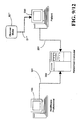
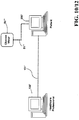
- the invention may be effected through the input of data by persons (e.g., patient and healthcare professional) at disparate locations, such as illustrated in FIG. 9 .
- the data inputs pertaining to at least the patient's initial insulin dosage regimen may be entered by the healthcare professional at a first location, in the form of a general purpose computer, cell phone, IPHONE, or other device 100 (a general purpose computer is depicted), while the subsequent data inputs (e.g., patient blood-glucose-level readings) may be entered by the patient at a second location, also in the form of a general purpose computer, cell phone, IPHONE, or other device 200 (a general purpose computer is depicted), and these data communicated to a third location, in the form of a computer 300 comprising the at least first memory and the processor.
- the computers 100, 200, 300 may be networked in any known manner (including, for instance, via the internet). Such networking is shown diagrammatically via lines 101 and 201 .
- the inventive system may be implemented via a healthcare professional/patient accessible website through which relevant data are input and information respecting any updates to the predefined treatment plan are communicated to the patient and healthcare professional.
- the invention may be effected through the input of data via persons (e.g., patient and healthcare professional) at disparate locations, and wherein further one of the persons, such as, in the illustrated example, the patient, is in possession of a single device 200' comprising the processor and memory components, that device 200' being adapted to receive data inputs from a person at a disparate location.
- a single device 200' comprising the processor and memory components, that device 200' being adapted to receive data inputs from a person at a disparate location.
- This device 200' could take any form, including a general-purpose computer (such as illustrated), a PDA, cell-phone, purpose-built device such as heretofore described, etc.
- the data inputs pertaining to at least the patient's initial insulin dosage may be entered (for instance by the healthcare professional) at another location, such as via a general purpose computer, cell phone, or other device 100' (a general purpose computer is depicted) operative to transmit data to the device 200', while the subsequent data inputs (e.g., patient blood-glucose-level measurements) may be entered directly into the device 200'.
- a healthcare professional could remotely input the patient's initial insulin dosage at a first location via the device 100', and that data could then be transmitted to the patient's device 200' where it would be received and stored in the memory thereof.
- the aforedescribed arrangement could also be reversed, such that the patient data inputs (e.g., patient blood-glucose-level measurements) may be entered remotely, such as via a cell phone, computer, etc., at a first location and then transmitted to a remotely situated device comprising the processor and memory components operative to determine whether and by how much to vary the patient's present insulin dosage regimen.
- the patient data inputs e.g., patient blood-glucose-level measurements
- modifications to the patient's insulin dosage effected by operation of the invention could be transmitted back to the patient via the same, or alternate, means.
- a glucose meter 50' (including, for instance, in the form of the device as described above in reference to FIG. 6 ) that can interface 51'" (wirelessly, via a hard-wire connection such as a USB cable, FIREWIRE cable, etc.) with a general purpose computer 200 at the patient's location to download blood-glucose-level measurements for transmission to the computer 300 at the third location.
- a hard-wire connection such as a USB cable, FIREWIRE cable, etc.
- this glucose meter 50' may be adapted to interface 51'" (wirelessly, via a hard-wire connection such as a USB cable, FIREWIRE cable, etc.) with the single device 200', thereby downloading blood-glucose-level measurement data to that device directly.
- a hard-wire connection such as a USB cable, FIREWIRE cable, etc.
- FIG. 11 there is shown a diagram generalizing the manner in which the invention may be implemented to optimize a diabetes patient's insulin dosage regimen.
- a patient insulin dosage regimen (comprised of, for instance, a carbohydrate ratio ("CHR"), a long-acting insulin dose, and a plasma glucose correction factor).
- CHR carbohydrate ratio
- the initial insulin dosage regimen can be specified using published protocols for the initiation of insulin therapy, such as, for example, the protocols published by the American Diabetes Association on October 22 nd 2008.
- this insulin dosage regimen data is entered in the memory of an apparatus (including according to any of the several embodiment described above), such as by a healthcare professional, in the first instance and before the patient has made any use of the apparatus.
- the patient will input, or there will otherwise automatically be input (such as by the glucose meter) into the memory at least data corresponding to each successive one of the patient's blood-glucose-level measurements.
- the processor determines, such as via the algorithm described herein, whether and by how much to vary the patient's present insulin dosage regimen. Information corresponding to this present insulin dosage regimen is then provided to the patient so that he/she may adjust the amount of insulin they administer.
- determination of whether and by how much to vary a patient's present insulin dosage regimen is undertaken both on the basis of evaluations conducted at predefined time intervals (every 7 days, for example) as well as asynchronously to such intervals.
- the asynchronous determinations will evaluate the patient's blood-glucose-level data for safety each time a new blood-glucose-level measurement is received to determine whether any urgent action, including any urgent variation to the patient's present insulin dosage, is necessary.
- a certain event e.g., pre-breakfast, bedtime, nighttime, etc.
- the new and/or previously recorded blood-glucose-level measurements are subjected to evaluation for the need to update on the basis of the passage of a predefined period of time 320 measured by a counter, as well as the need to update asynchronously for safety 330.
- a very low blood glucose measurement (e.g., below 50 mg/dL) representing a severe hypoglycemic event or the accumulation of several low measurements in the past few days may lead to an update in the patient's insulin dosage regimen according to the step 330, while an update to that regimen may otherwise be warranted according to the step 320 if a predefined period of time (e.g., 7 days) has elapsed since the patient's insulin dosage regimen was last updated.
- a predefined period of time e.g. 7 days
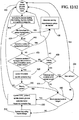
- FIG. 12 there is shown a flowchart that still more particularly sets forth an exemplary algorithm by which the invention may be implemented to optimize a diabetes patient's insulin dosage regimen.
- the insulin dosage modification contemplates separate units of long-acting and short-acting insulin.
- the invention is equally applicable to optimize the insulin dosage regimen of a patient where that dosage is in another conventional form (such as premixed insulin). It will also be understood from this specification that the invention may be implemented otherwise than as particularly described hereinbelow.
- a first step 400 data corresponding to a patient's new blood-glucose-level measurement is input, such as, for instance, by any of the exemplary means mentioned above, into the at least first memory (not shown in FIG. 12 ).
- This data is accessed and evaluated (by the processor) at step 410 of the exemplary algorithm and sorted according to the time it was input.
- the blood-glucose-level measurement data input is "tagged” with an identifier reflective of when the reading was input; specifically, whether it is a morning (i.e., "fast") measurement (herein “MPG”), a pre-lunch measurement (herein “BPG”), a pre-dinner measurement (herein “LPG”), a bedtime measurement (herein “BTPG”), or a nighttime measurement (herein “NPG”).
- MPG morning
- BPG pre-lunch measurement
- LPG pre-dinner measurement
- BTPG bedtime measurement
- NPG nighttime measurement
- the "tagging" process may be facilitated using a clock internal to the processor (such as, for instance, the clock of a general purpose computer) that provides an input time that can be associated with the blood-glucose-level measurement data synchronous to its entry.
- time data i.e., "10:00AM,” “6:00PM,” etc.
- event-identifying information i.e., "lunchtime,” “dinnertime,” “bedtime,” etc.
- time data may be automatically associated with the blood-glucose-level measurement data by such glucose monitor (for instance, by using a clock internal to that glucose monitor). It is also contemplated that, optionally, the user/patient may be queried (for instance at a display) for input to confirm or modify any time-tag automatically assigned a blood-glucose-level measurement data-input.
- a patient may be asked to confirm (via data entry means such as, for example, one or more buttons or keys, a touch-screen display, etc.) that the most recently input blood-glucose-level measurement data reflects a pre-lunch (BPG) measurement based on the time stamp associated with the input of the data. If the patient confirms, then the BPG designation would remain associated with the measurement. Otherwise, further queries of the patient may be made to determine the appropriate time designation to associate with the measurement.
- BPG pre-lunch
- any internal clock used to tag the blood-glucose-level measurement data may, as desired, be user adjustable so as to define the correct time for the time zone where the patient is located.
- the various categories into which the blood-glucose-level measurement data are more particularly sorted by the foregoing "tagging" process are as follows:
- the time stamp of a blood-glucose-level measurement data-input is less than 3 hours from the measurement that preceded the last meal the patient had, it is considered biased and omitted unless it represents a hypoglycemic event.
- the newly input blood-glucose-level measurement is accessed and evaluated (by the processor) to determine if the input reflects a present, severe hypoglycemic event.
- This evaluation may be characterized by the exemplary formula PG(t) ⁇ w, where PG(t) represents the patient's blood-glucose-level data in mg/dL, and w represents a predefined threshold value defining a severe hypoglycemic event (such as, by way of non-limiting example, 50 mg/dL).
- the patient's present insulin dosage regimen data (in the memory 10 [not shown in FIG. 12 ]) is updated as warranted and independent of the periodic update evaluation described further below. More particularly, the algorithm will in this step 430 asynchronously (that is, independent of the periodic update evaluation) determine whether or not to update the patient's insulin dosage regimen on the basis of whether the patient's input blood-glucose-level data reflect the accumulation of several low glucose values over a short period of time. According to the exemplary embodiment, the dosage associated with the newly input blood-glucose-level measurement is immediately decreased. More specifically, for a severe hypoglycemic event at MPG, the long-acting insulin dosage is decreased by 20%; and for a severe hypoglycemic event at BPG the breakfast short-acting insulin dose is decreased by 20%.
- the algorithm also at this step 430 updates a counter of hypoglycemic events to reflect the newly-input (at step 400 ) blood-glucose-level measurement.
- modifications to the patient's insulin dosage regimen according to this step 430 do not reset the timer counting to the next periodic update evaluation.
- variation in the patient's insulin dosage regimen according to this step 430 will not prevent the algorithm from undertaking the next periodic update evaluation.
- hypoglycemic events database in the memory.
- this is a rolling database that is not reset. Instead, the recorded hypoglycemic events expire from the database after a predefined period of time has elapsed; essentially, once these data become irrelevant to the patient's insulin dosage regime.
- this database may contain a record of a hypoglycemic event for 7 days.
- one or more warnings may be generated for display to the patient (such as via a display 30 [not shown in FIG. 12 ]). Most essentially, it is contemplated that such one or more warnings would alert a patient to the fact that his/her blood-glucose-level is dangerously low so that appropriate corrective steps (e.g., ingesting a glucose tablet) could be taken promptly. Additionally, and without limitation, such one or more warnings may also correspond to any one or more of the following determinations:
- That the patient's blood-glucose-level measurement data reflect that there have been more than two hypoglycemic events during a predetermined period of time (such as, by way of example only, in the past 7 days); that more than two drops in the patient's blood-glucose-level measurements between the nighttime measurement and the morning measurement are greater than a predetermined amount in mg/dL (70mg/dL, for instance); and/or that more than two drops in the patient's blood-glucose-level measurement between the nighttime measurement and the morning measurement are greater than a predetermined percentage (such as, for instance, 30%).
- a predetermined period of time such as, by way of example only, in the past 7 days
- a predetermined amount in mg/dL 70mg/dL, for instance
- a predetermined percentage such as, for instance, 30%
- the recorded (in the memory 10 ) data inputs corresponding to the number of patient hypoglycemic events over a predetermined period of days are accessed and evaluated by the processor ( 20, not shown) at step 440 to determine if there have been an excessive number of regular hypoglycemic events (e.g., a blood- glucose-level measurement between 50 mg/dL and 75 mg/dL) over that predetermined period.
- regular hypoglycemic events e.g., a blood- glucose-level measurement between 50 mg/dL and 75 mg/dL
- Q may equal 3 and W may also equal 3, in which case if it is determined in step 440 that there were either 4 recorded hypoglycemic events or there were 3 recorded hypoglycemic events in the last 3 days, the algorithm proceeds to step 430.
- step 440 if step 440 leads to step 430, then a binary ("1" or “0") hypoglycemic event correction "flag" is set to "1," meaning that no increase in the patient's insulin dosage regimen is allowed and the algorithm jumps to step 490 (the periodic dosage update evaluation routine).
- the periodic update evaluation may concur that any or all the parts of the insulin dosage regimen require an increase due to the nature of blood-glucose-levels currently stored in the memory 10 and the execution of the different formulas described hereafter.
- the hypoglycemic event correction flag by setting the hypoglycemic event correction flag to "1,” the algorithm will ignore any such required increase and would leave the suggested part of the dosage unchanged. Therefore, this will lead to a potential reduction in any or all the components of the insulin dosage regimen to thus address the occurrence of the excessive number of hypoglycemic events.
- the timer counting to the next periodic update evaluation is reset.
- the recorded, time-sorted/tagged blood-glucose-level measurement data corresponding to the number of patient hypoglycemic events over a predetermined period of days are accessed and evaluated by the processor to determine if there have been an excessive number of such hypoglycemic events at any one or more of breakfast, lunch, dinner and/or in the morning over the predetermined period.
- #HG(m)(b)(1)(d) represents the number of hypoglycemic events at any of the assigned (by the preceding step) measurement times of morning, bedtime, lunch or dinner over a period of XX (in the instant example, 7) days ("[d]")
- Y represents a number of hypoglycemic events that is predetermined to constitute a threshold sufficient to merit adjustment of the patient's insulin dosage regimen (in the present example, 2 hypoglycemic events).
- the algorithm queries at step 460 whether or not it is time to update the patient's insulin dosage regimen irrespective of the non-occurrence of hypoglycemic events, and based instead upon the passage of a predefined interval of time (e.g., 7 days) since the need to update the patient's insulin dosage regimen was last assessed. If such an update is not indicated - i.e., because an insufficient time interval has passed -- then no action is taken with respect to the patient's insulin dosage and the algorithm ends (indicated by the arrow labeled "NO") until the next blood-glucose-level measurement data are input.
- a predefined interval of time e.g. 7 days
- the algorithm first determines, in step 470, if the patient's general condition falls within a predetermined "normal" range.
- This determination operation may be characterized by the exemplary formula: xxx ⁇ E ⁇ PG ⁇ ⁇ yyy ; where xxx represents a lower bound for a desired blood-glucose-level range for the patient, yyy represents an upper bound for a desired blood-glucose-level range for the patient, and E ⁇ PG ⁇ represents the mean of the patient's recorded blood-glucose-level measurements.
- the lower bound xxx may be predefined as 80 mg/dL
- the upper bound yyy may be predefined as 135 mg/dL.
- step 490 the data are evaluated to determine whether it is necessary to correct the patient's long-acting insulin dosage regimen.
- the algorithm next (step 480 ) queries whether the patient's recorded blood-glucose-level measurement data represent a normal (e.g., Gaussian) or abnormal distribution.
- a normal e.g., Gaussian
- E ⁇ PG ⁇ 3 ⁇ represents the third moment of the distribution of the recorded (in the memory) blood-glucose-level measurement data - i.e., the third root of the average of the cubed deviations in these data around the mean of the recorded blood-glucose-levels
- X represents a predefined limit (e.g., 5). It is contemplated that the predefined limit X should be reasonably close to 0, thus reflecting that the data (E ⁇ PG ⁇ 3 ⁇ ) are well balanced around the mean.
- the data are considered to be normal when the third root of the average of the cubed deviations thereof around the mean of the recorded blood-glucose-levels is greater than -5 but less than 5. Otherwise, the data are considered to be abnormal.
- step 480 where the data are determined to be normal in step 480 (indicated by the arrow labeled "YES"), then no action is taken to update the patient's insulin dosage regimen.
- step 490 the algorithm evaluates whether it is necessary to correct the patient's long-acting insulin dosage regimen. This is done by evaluating whether the patient's recorded MPG and BTPG data fall within an acceptable range or, alternatively, if there is an indication that the patient's long-acting insulin dosage should be corrected due to low MPG blood-glucose-level measurements.
- the determination of whether the patient's MPG and BTPG data fall within a predetermined range may be characterized by the exemplary formula: xxy ⁇ E ⁇ MPG ⁇ , E ⁇ BTPG ⁇ ⁇ yyx ; where xxy is a lower bound for a desired blood-glucose-level range for the patient, yyx is an upper bound for a desired blood-glucose-level range for the patient, E ⁇ MPG ⁇ represents the mean of the patient's recorded MPG blood-glucose-level measurements, and E ⁇ BTPG ⁇ represents the mean of the patient's recorded BTPG measurements.
- xxy may be predefined as 80 mg/dL
- yyx may be predefined as 200 mg/dL. However, it will be understood that these values may be otherwise predefined, including, as desired, by the patient's healthcare provider (being entered into the memory via data entry means, for instance).
- step 510 If the determination in step 490 is positive, then update of the patient's long-acting insulin dosage (step 510 ) is bypassed and the algorithm proceeds to step 500, according to which the patient's short-acting insulin dosage (in the form of the carbohydrate ratio ("CHR"), a correction factor ⁇ , and the plasma glucose correction factor are each updated and the hypoglycemic correction "flag" reset to 0 (thus permitting subsequent modification of the insulin dosage regimen at the next evaluation thereof).
- CHR carbohydrate ratio
- ⁇ correction factor
- ⁇ the plasma glucose correction factor
- step 490 If, on the other hand, the determination in step 490 is negative, then the patient's long-acting insulin dosage is updated at step 510, along with performance of the updates specified at step 500. In either case, the process ends following such updates until new patient blood-glucose-level measurement data are input.
- Updates of the long-acting insulin dosage regimen data may be characterized by the following, exemplary formulas: ; where ⁇ (1) represents a percentage by which the patient's present long-acting insulin dosage regimen is to be varied, ⁇ (2) represents a corresponding binary value (due to the need to quantize the dosage), LD(k) represents the patient's present dosage of long-acting insulin, LD(k+1) represents the new long-acting insulin dosage, b 1 , b 2 , and b 3 represent predetermined blood-glucose-level threshold parameters in mg/dL, and E ⁇ MPG ⁇ is the mean of the patient's recorded MPG blood-glucose-level measurements.
- a patient's insulin dosage regimen is expressed in integers (i.e., units of insulin)
- integers i.e., units of insulin
- a percent change increase or decrease
- the new dosage should be 21 units or 22 units. In the exemplary algorithm, this decision is made on the basis of the patient's insulin sensitivity.
- a patient's insulin sensitivity factor may of course be approximated by other conventional means, including without reliance on entry of data corresponding to the patient's weight.
- the inventive algorithm employs an insulin sensitivity correction factor ( ⁇ (2x1) (IS)) )), a 2 entries vector, to determine the percentage at which the dosage will be corrected and to effect an appropriate rounding to the closest whole number for updates in the patient's CHR, PGR and LD.
- ⁇ (2x1) (IS)) an insulin sensitivity correction factor
- the value of ⁇ (2) is defined by the value of IS(k) in relation to a predefined percent change value (e.g., y 1 , y 2 , y 3 , y 4 ) for ⁇ (1).
- a predefined percent change value e.g., y 1 , y 2 , y 3 , y 4
- ⁇ (1) is 5 and the value of ⁇ (2) is 0
- 0.3 ⁇ IS(k) ⁇ 0.5 the value of ⁇ (1) is 10 and the value of ⁇ (2) is 0
- 0.5 ⁇ IS(k) ⁇ 0.7 the value of a(l) is 20 and the value of ⁇ (2) is 0
- 0.7 ⁇ IS(k) the value of a(l) is 20 and the value of ⁇ (2) is 1.
- the new long-acting insulin dosage (LD(k+1)) is the present long-acting insulin dosage (LD(k)) minus the value of ⁇ down (which, as shown above, is a function of the insulin sensitivity correction factors ⁇ (1) and ⁇ (2), and the patient's long-acting insulin dosage (LD(k)) and may equal half of ⁇ up ).
- the new long-acting insulin dosage (LD(k+1)) is the present long-acting insulin dosage (LD(k)) plus the value of the ⁇ up (which, as shown above, is a function of the insulin sensitivity correction factors ⁇ (1) and ⁇ (2), and the patient's long-acting insulin dosage (LD(k)).
- the mean of the patient's MPG blood-glucose-level data is greater than 150 but less than 200, the new long-acting insulin dosage (LD(k+1)) is the present long-acting insulin dosage (LD(k)) plus the value of the ⁇ down .
- step 520 if an excessive number of hypoglycemic events at any of the time-tagged blood-glucose-level measurement data for breakfast, lunch, dinner or in the morning over the predetermined period (for instance, 7 days) are indicated from the patient's data, then at step 520 the algorithm identifies from the recorded, time-tagged data of hypoglycemic events when those events occurred in order to affect any subsequently undertaken variation to the patient's insulin dosage regimen, and also sets the binary hypoglycemic correction "flag" (e.g., "1" or "0", where 1 represents the occurrence of too many hypoglycemic events, and 0 represents the nonoccurrence of too many hypoglycemic events) to 1.
- the binary hypoglycemic correction "flag" e.g., "1" or "0"
- the algorithm identifies the appropriate modification required to any subsequent variation of the patient's insulin dosage regimen.
- ⁇ (1)/2 reflects that the patient's long-acting insulin dosage is to be reduced only by 1 ⁇ 2 of the value of ⁇ (1), if at all, where the recorded hypoglycemic events occur in the morning or overnight.
- the algorithm queries 530 whether it is time to update the patient's insulin dosage regimen irrespective of the occurrence of hypoglycemic events and based upon the passage of a predefined interval of time (by way of non-limiting example, 7 days) since the need to update the patient's insulin dosage regimen was last assessed.
- a predefined interval of time by way of non-limiting example, 7 days
- the process is at an end (indicated by the arrow labeled "NO") until new blood-glucose-level measurement data are input. If, on the other hand, the predefined period of time has passed, then the algorithm proceeds to the step 490 to determine if the long-acting insulin dosage has to be updated as described before followed by the update step 500, according to which the patient's short-acting insulin dosage (in the form of the carbohydrate ratio (“CHR”)), the correction factor ⁇ , and plasma glucose correction factor are each updated and the hypoglycemic correction flag reset to 0.
- CHR carbohydrate ratio
- an update to the patient's plasma glucose correction factor is undertaken.
- PGR plasma glucose correction factor
- the new PGR is a function of a predefined value (e.g., 1700) divided by twice the patient's total daily dosage of long-acting insulin in the present insulin dosage regimen.
- the value of this divisor is represented by E ⁇ DT ⁇ , since the value representing twice the patient's daily dosage of long-acting insulin in the present insulin dosage regimen is substituted as an approximation for the mean of the total daily dosage of insulin administered to the patient (which data may, optionally, be employed if they are input into the memory by an insulin pump, such as in the exemplary apparatus described above, or by the patient using data entry means).
- the resultant value is subtracted from the present patient PGR ("PGR(k)") to define a difference (" ⁇ ").
- the new PGR (PGR(k+1)) is equal to the present PGR (PGR(k)) plus ⁇ times the sign of the difference, positive or negative, of NPGR minus PGR(k).
- CHR represents the average carbohydrate to insulin ratio that a patient needs to determine the correct dose of insulin to inject before each meal. This process may be characterized by the following, exemplary formulas:
- the new CHR is a function of a predefined value (e.g., 500) divided by twice the patient's total daily dosage of long-acting insulin in the present insulin dosage regimen.
- the value of this divisor is represented by E ⁇ DT ⁇ , since the value representing twice the patient's daily dosage of long-acting insulin in the present insulin dosage regimen is substituted as an approximation for the mean of the total daily dosage of insulin administered to the patient (which data may, optionally, be employed if they are input into the memory by an insulin pump, such as in the exemplary apparatus described above, or by the patient using data entry means).
- the resultant value is subtracted from the present patient CHR ("CHR(k)") to define a difference (" ⁇ ").
- the new CHR (CHR(k+1)) is equal to the present CHR (CHR(k)) plus ⁇ times the sign of the difference, positive or negative, of NCHR minus CHR(k).
- a different dose of insulin may be required to compensate for a similar amount of carbohydrates consumed for breakfast, lunch, or dinner.
- this flexibility is achieved by the parameter Delta, ⁇ , which is also updated in the step 500.
- the carbohydrate to insulin ratio (CHR) as calculated above is the same for all meals.
- the actual dosage differs among meals (i.e., breakfast, lunch, dinner) and equals CHR- ⁇ . Therefore, the exemplary algorithm allows the dosage to be made more effective by slightly altering the CHR with ⁇ to compensate for a patient's individual response to insulin at different times of the day.
- Delta ⁇ is a set of integers representing grams of carbohydrates, and is more specifically defined as the set of values [ ⁇ b, ⁇ l, ⁇ d], where "b" represents breakfast, “1” represents lunch, and “d” represents dinner.
- Delta, ⁇ may be either positive -- thus reflecting that before a certain meal it is desired to increase the insulin dose -- or negative - thus reflecting that due to hypoglycemic events during the day it is desired to decrease the insulin dose for a given meal.
- the range of ⁇ (“R ⁇ ”) is defined as the maximum of three differences, expressed as max(
- ⁇ min the minimal entry of the set [ ⁇ b, ⁇ l, ⁇ d], expressed as min( ⁇ b, ⁇ l, ⁇ d).
- Any correction to the patient's CHR can only result in a new R ⁇ ("R ⁇ (k+1)") that is less than or equal to the greatest of the range of the present set of ⁇ (R ⁇ (k)) or a predefined limit (D), which may, for instance, be 2, as in the exemplary embodiment.
- ⁇ ⁇ i ⁇ ⁇ ⁇ i ⁇ - d.
- the algorithm looks for an unbalanced response to insulin between the three meals (b, l, d).
- the binary hypoglycemic correction-flag is reset to 0, reflecting that the patient's insulin dosage regimen has been updated (and thus may be updated again at the next evaluation).
- the PGR and CHR values determined at step 500 may optionally be employed by the processor to calculate, per conventional formulas, a "sliding scale"-type insulin dosage regimen. Such calculations may employ as a basis therefor a predefined average number of carbohydrates for each meal. Alternatively, data corresponding to such information may be input into the memory by the patient using data entry means.
- any time a periodic evaluation of the patient insulin dosage regimen is undertaken treats the insulin dosage regimen as having been updated even if there has been no change made to the immediately preceding insulin dosage regimen. And, moreover, any time the insulin dosage regimen is updated, whether in consequence of a periodic update evaluation or an asynchronous update, the timer counting to the next periodic update evaluation will be reset to zero.
- a patient insulin dosage regimen comprised of, for example, a long-acting insulin dose component, a carbohydrate ratio component and a plasma-glucose correction factor component.
- This insulin dosage regimen data is entered in the memory of an apparatus, such as by a healthcare professional, in the first instance and before the patient has made any use of the apparatus.
- the internal clock of the apparatus is set for the correct time for the time zone where the patient resides so that the time tags assigned to patient's blood-glucose-level measurements as they are subsequently input into the apparatus are accurate in relation to when, in fact, the data are input (whether automatically, manually, or a combination of both).
- the patient will input, or there will otherwise automatically be input (such as by the glucose meter) into the memory at least data corresponding to each successive one of the patient's blood-glucose-level measurements.
- the processor determines, such as via the algorithm described hereinabove, whether and by how much to vary the patient's present insulin dosage regimen. Information corresponding to this present insulin dosage regimen is then provided to the patient so that he/she may adjust the amount of insulin they administer.
Landscapes
- Health & Medical Sciences (AREA)
- Engineering & Computer Science (AREA)
- Life Sciences & Earth Sciences (AREA)
- General Health & Medical Sciences (AREA)
- Public Health (AREA)
- Medical Informatics (AREA)
- Veterinary Medicine (AREA)
- Animal Behavior & Ethology (AREA)
- Heart & Thoracic Surgery (AREA)
- Biomedical Technology (AREA)
- Physics & Mathematics (AREA)
- Primary Health Care (AREA)
- Epidemiology (AREA)
- Chemical & Material Sciences (AREA)
- Bioinformatics & Cheminformatics (AREA)
- Medicinal Chemistry (AREA)
- Pathology (AREA)
- Molecular Biology (AREA)
- Surgery (AREA)
- Biophysics (AREA)
- Hematology (AREA)
- Vascular Medicine (AREA)
- Anesthesiology (AREA)
- Emergency Medicine (AREA)
- Optics & Photonics (AREA)
- Diabetes (AREA)
- Computer Networks & Wireless Communication (AREA)
- Medicines That Contain Protein Lipid Enzymes And Other Medicines (AREA)
- Infusion, Injection, And Reservoir Apparatuses (AREA)
- Measurement Of The Respiration, Hearing Ability, Form, And Blood Characteristics Of Living Organisms (AREA)
- Investigating Or Analysing Biological Materials (AREA)
- External Artificial Organs (AREA)
Applications Claiming Priority (3)
| Application Number | Priority Date | Filing Date | Title |
|---|---|---|---|
| US4248708P | 2008-04-04 | 2008-04-04 | |
| US6064508P | 2008-06-11 | 2008-06-11 | |
| PCT/US2009/039418 WO2009146119A2 (en) | 2008-04-04 | 2009-04-03 | System for optimizing a patient's insulin dosage regimen |
Publications (3)
| Publication Number | Publication Date |
|---|---|
| EP2260462A2 EP2260462A2 (en) | 2010-12-15 |
| EP2260462A4 EP2260462A4 (en) | 2014-02-26 |
| EP2260462B1 true EP2260462B1 (en) | 2018-12-19 |
Family
ID=41133878
Family Applications (2)
| Application Number | Title | Priority Date | Filing Date |
|---|---|---|---|
| EP09755483.6A Active EP2260423B1 (en) | 2008-04-04 | 2009-04-03 | Apparatus for optimizing a patient's insulin dosage regimen |
| EP09755481.0A Active EP2260462B1 (en) | 2008-04-04 | 2009-04-03 | System for optimizing a patient's insulin dosage regimen |
Family Applications Before (1)
| Application Number | Title | Priority Date | Filing Date |
|---|---|---|---|
| EP09755483.6A Active EP2260423B1 (en) | 2008-04-04 | 2009-04-03 | Apparatus for optimizing a patient's insulin dosage regimen |
Country Status (12)
| Country | Link |
|---|---|
| US (10) | US8600682B2 (OSRAM) |
| EP (2) | EP2260423B1 (OSRAM) |
| CN (4) | CN103336853B (OSRAM) |
| BR (2) | BRPI0911121B8 (OSRAM) |
| CA (2) | CA2720304C (OSRAM) |
| DK (1) | DK2260423T3 (OSRAM) |
| ES (2) | ES2670793T3 (OSRAM) |
| NO (1) | NO2260423T3 (OSRAM) |
| PL (1) | PL2260423T3 (OSRAM) |
| PT (1) | PT2260423T (OSRAM) |
| TR (1) | TR201807154T4 (OSRAM) |
| WO (2) | WO2009146121A2 (OSRAM) |
Families Citing this family (245)
| Publication number | Priority date | Publication date | Assignee | Title |
|---|---|---|---|---|
| US20080172026A1 (en) | 2006-10-17 | 2008-07-17 | Blomquist Michael L | Insulin pump having a suspension bolus |
| AU2003303597A1 (en) | 2002-12-31 | 2004-07-29 | Therasense, Inc. | Continuous glucose monitoring system and methods of use |
| EP1718198A4 (en) | 2004-02-17 | 2008-06-04 | Therasense Inc | METHOD AND SYSTEM FOR PROVIDING DATA COMMUNICATION IN A CONTINUOUS BLOOD SUGAR MONITORING AND MANAGEMENT SYSTEM |
| US20060010098A1 (en) | 2004-06-04 | 2006-01-12 | Goodnow Timothy T | Diabetes care host-client architecture and data management system |
| US9788771B2 (en) | 2006-10-23 | 2017-10-17 | Abbott Diabetes Care Inc. | Variable speed sensor insertion devices and methods of use |
| US8029441B2 (en) | 2006-02-28 | 2011-10-04 | Abbott Diabetes Care Inc. | Analyte sensor transmitter unit configuration for a data monitoring and management system |
| US20080314395A1 (en) | 2005-08-31 | 2008-12-25 | Theuniversity Of Virginia Patent Foundation | Accuracy of Continuous Glucose Sensors |
| US7766829B2 (en) | 2005-11-04 | 2010-08-03 | Abbott Diabetes Care Inc. | Method and system for providing basal profile modification in analyte monitoring and management systems |
| US7885698B2 (en) | 2006-02-28 | 2011-02-08 | Abbott Diabetes Care Inc. | Method and system for providing continuous calibration of implantable analyte sensors |
| US7630748B2 (en) | 2006-10-25 | 2009-12-08 | Abbott Diabetes Care Inc. | Method and system for providing analyte monitoring |
| US8140312B2 (en) | 2007-05-14 | 2012-03-20 | Abbott Diabetes Care Inc. | Method and system for determining analyte levels |
| US9392969B2 (en) | 2008-08-31 | 2016-07-19 | Abbott Diabetes Care Inc. | Closed loop control and signal attenuation detection |
| US8473022B2 (en) | 2008-01-31 | 2013-06-25 | Abbott Diabetes Care Inc. | Analyte sensor with time lag compensation |
| US8224415B2 (en) | 2009-01-29 | 2012-07-17 | Abbott Diabetes Care Inc. | Method and device for providing offset model based calibration for analyte sensor |
| US8374668B1 (en) | 2007-10-23 | 2013-02-12 | Abbott Diabetes Care Inc. | Analyte sensor with lag compensation |
| US8478557B2 (en) | 2009-07-31 | 2013-07-02 | Abbott Diabetes Care Inc. | Method and apparatus for providing analyte monitoring system calibration accuracy |
| US8226891B2 (en) | 2006-03-31 | 2012-07-24 | Abbott Diabetes Care Inc. | Analyte monitoring devices and methods therefor |
| US9326709B2 (en) | 2010-03-10 | 2016-05-03 | Abbott Diabetes Care Inc. | Systems, devices and methods for managing glucose levels |
| US7618369B2 (en) | 2006-10-02 | 2009-11-17 | Abbott Diabetes Care Inc. | Method and system for dynamically updating calibration parameters for an analyte sensor |
| US8206296B2 (en) | 2006-08-07 | 2012-06-26 | Abbott Diabetes Care Inc. | Method and system for providing integrated analyte monitoring and infusion system therapy management |
| US8932216B2 (en) | 2006-08-07 | 2015-01-13 | Abbott Diabetes Care Inc. | Method and system for providing data management in integrated analyte monitoring and infusion system |
| JP2010508091A (ja) | 2006-10-26 | 2010-03-18 | アボット ダイアベティス ケア インコーポレイテッド | 検体センサの感度低下をリアルタイムで検出するための方法、システム、及びコンピュータプログラム製品 |
| US20080199894A1 (en) | 2007-02-15 | 2008-08-21 | Abbott Diabetes Care, Inc. | Device and method for automatic data acquisition and/or detection |
| US8930203B2 (en) | 2007-02-18 | 2015-01-06 | Abbott Diabetes Care Inc. | Multi-function analyte test device and methods therefor |
| US8732188B2 (en) | 2007-02-18 | 2014-05-20 | Abbott Diabetes Care Inc. | Method and system for providing contextual based medication dosage determination |
| US9008743B2 (en) | 2007-04-14 | 2015-04-14 | Abbott Diabetes Care Inc. | Method and apparatus for providing data processing and control in medical communication system |
| EP3741291A1 (en) | 2007-04-14 | 2020-11-25 | Abbott Diabetes Care, Inc. | Method and apparatus for providing data processing and control in medical communication system |
| CA2683959C (en) | 2007-04-14 | 2017-08-29 | Abbott Diabetes Care Inc. | Method and apparatus for providing data processing and control in medical communication system |
| WO2008130896A1 (en) | 2007-04-14 | 2008-10-30 | Abbott Diabetes Care, Inc. | Method and apparatus for providing data processing and control in medical communication system |
| US8461985B2 (en) | 2007-05-08 | 2013-06-11 | Abbott Diabetes Care Inc. | Analyte monitoring system and methods |
| US8665091B2 (en) | 2007-05-08 | 2014-03-04 | Abbott Diabetes Care Inc. | Method and device for determining elapsed sensor life |
| US8456301B2 (en) | 2007-05-08 | 2013-06-04 | Abbott Diabetes Care Inc. | Analyte monitoring system and methods |
| US8600681B2 (en) | 2007-05-14 | 2013-12-03 | Abbott Diabetes Care Inc. | Method and apparatus for providing data processing and control in a medical communication system |
| US8444560B2 (en) | 2007-05-14 | 2013-05-21 | Abbott Diabetes Care Inc. | Method and apparatus for providing data processing and control in a medical communication system |
| US8239166B2 (en) | 2007-05-14 | 2012-08-07 | Abbott Diabetes Care Inc. | Method and apparatus for providing data processing and control in a medical communication system |
| US8560038B2 (en) | 2007-05-14 | 2013-10-15 | Abbott Diabetes Care Inc. | Method and apparatus for providing data processing and control in a medical communication system |
| US8103471B2 (en) | 2007-05-14 | 2012-01-24 | Abbott Diabetes Care Inc. | Method and apparatus for providing data processing and control in a medical communication system |
| US10002233B2 (en) | 2007-05-14 | 2018-06-19 | Abbott Diabetes Care Inc. | Method and apparatus for providing data processing and control in a medical communication system |
| US8260558B2 (en) | 2007-05-14 | 2012-09-04 | Abbott Diabetes Care Inc. | Method and apparatus for providing data processing and control in a medical communication system |
| US9125548B2 (en) | 2007-05-14 | 2015-09-08 | Abbott Diabetes Care Inc. | Method and apparatus for providing data processing and control in a medical communication system |
| JP5680960B2 (ja) | 2007-06-21 | 2015-03-04 | アボット ダイアベティス ケア インコーポレイテッドAbbott Diabetes Care Inc. | 健康管理装置および方法 |
| EP3473167A1 (en) | 2007-06-21 | 2019-04-24 | Abbott Diabetes Care, Inc. | Health monitor |
| US8160900B2 (en) | 2007-06-29 | 2012-04-17 | Abbott Diabetes Care Inc. | Analyte monitoring and management device and method to analyze the frequency of user interaction with the device |
| US8834366B2 (en) | 2007-07-31 | 2014-09-16 | Abbott Diabetes Care Inc. | Method and apparatus for providing analyte sensor calibration |
| US20090143725A1 (en) * | 2007-08-31 | 2009-06-04 | Abbott Diabetes Care, Inc. | Method of Optimizing Efficacy of Therapeutic Agent |
| US7967795B1 (en) | 2010-01-19 | 2011-06-28 | Lamodel Ltd. | Cartridge interface assembly with driving plunger |
| US10420880B2 (en) | 2007-10-02 | 2019-09-24 | West Pharma. Services IL, Ltd. | Key for securing components of a drug delivery system during assembly and/or transport and methods of using same |
| US9656019B2 (en) | 2007-10-02 | 2017-05-23 | Medimop Medical Projects Ltd. | Apparatuses for securing components of a drug delivery system during transport and methods of using same |
| US9345836B2 (en) | 2007-10-02 | 2016-05-24 | Medimop Medical Projects Ltd. | Disengagement resistant telescoping assembly and unidirectional method of assembly for such |
| EP2195052B1 (en) | 2007-10-02 | 2019-09-04 | Medimop Medical Projects Ltd. | External drug pump |
| US8377031B2 (en) | 2007-10-23 | 2013-02-19 | Abbott Diabetes Care Inc. | Closed loop control system with safety parameters and methods |
| US8409093B2 (en) | 2007-10-23 | 2013-04-02 | Abbott Diabetes Care Inc. | Assessing measures of glycemic variability |
| US20090164239A1 (en) | 2007-12-19 | 2009-06-25 | Abbott Diabetes Care, Inc. | Dynamic Display Of Glucose Information |
| US9341614B2 (en) * | 2008-04-04 | 2016-05-17 | Hygieia, Inc. | Apparatus and methods for taking blood glucose measurements and recommending insulin doses |
| US10624577B2 (en) | 2008-04-04 | 2020-04-21 | Hygieia, Inc. | Systems, devices, and methods for alleviating glucotoxicity and restoring pancreatic beta-cell function in advanced diabetes mellitus |
| US9220456B2 (en) * | 2008-04-04 | 2015-12-29 | Hygieia, Inc. | Systems, methods and devices for achieving glycemic balance |
| US8600682B2 (en) | 2008-04-04 | 2013-12-03 | Hygieia, Inc. | Apparatus for optimizing a patient's insulin dosage regimen |
| US8591410B2 (en) | 2008-05-30 | 2013-11-26 | Abbott Diabetes Care Inc. | Method and apparatus for providing glycemic control |
| US8924159B2 (en) | 2008-05-30 | 2014-12-30 | Abbott Diabetes Care Inc. | Method and apparatus for providing glycemic control |
| US8734422B2 (en) | 2008-08-31 | 2014-05-27 | Abbott Diabetes Care Inc. | Closed loop control with improved alarm functions |
| US9943644B2 (en) | 2008-08-31 | 2018-04-17 | Abbott Diabetes Care Inc. | Closed loop control with reference measurement and methods thereof |
| US8622988B2 (en) | 2008-08-31 | 2014-01-07 | Abbott Diabetes Care Inc. | Variable rate closed loop control and methods |
| US20100057040A1 (en) | 2008-08-31 | 2010-03-04 | Abbott Diabetes Care, Inc. | Robust Closed Loop Control And Methods |
| US12097357B2 (en) | 2008-09-15 | 2024-09-24 | West Pharma. Services IL, Ltd. | Stabilized pen injector |
| US9393369B2 (en) | 2008-09-15 | 2016-07-19 | Medimop Medical Projects Ltd. | Stabilized pen injector |
| US9326707B2 (en) | 2008-11-10 | 2016-05-03 | Abbott Diabetes Care Inc. | Alarm characterization for analyte monitoring devices and systems |
| US8992464B2 (en) * | 2008-11-11 | 2015-03-31 | Hygieia, Inc. | Apparatus and system for diabetes management |
| US10456036B2 (en) | 2008-12-23 | 2019-10-29 | Roche Diabetes Care, Inc. | Structured tailoring |
| US10437962B2 (en) | 2008-12-23 | 2019-10-08 | Roche Diabetes Care Inc | Status reporting of a structured collection procedure |
| US8849458B2 (en) | 2008-12-23 | 2014-09-30 | Roche Diagnostics Operations, Inc. | Collection device with selective display of test results, method and computer program product thereof |
| US9918635B2 (en) | 2008-12-23 | 2018-03-20 | Roche Diabetes Care, Inc. | Systems and methods for optimizing insulin dosage |
| US20120011125A1 (en) | 2008-12-23 | 2012-01-12 | Roche Diagnostics Operations, Inc. | Management method and system for implementation, execution, data collection, and data analysis of a structured collection procedure which runs on a collection device |
| US9117015B2 (en) | 2008-12-23 | 2015-08-25 | Roche Diagnostics Operations, Inc. | Management method and system for implementation, execution, data collection, and data analysis of a structured collection procedure which runs on a collection device |
| CN102265279B (zh) | 2008-12-23 | 2019-08-23 | 霍夫曼-拉罗奇有限公司 | 用于慢性病患者的诊断或者治疗支持的结构化测试方法及其设备 |
| US8152779B2 (en) | 2008-12-30 | 2012-04-10 | Medimop Medical Projects Ltd. | Needle assembly for drug pump |
| US8560082B2 (en) * | 2009-01-30 | 2013-10-15 | Abbott Diabetes Care Inc. | Computerized determination of insulin pump therapy parameters using real time and retrospective data processing |
| US9402544B2 (en) | 2009-02-03 | 2016-08-02 | Abbott Diabetes Care Inc. | Analyte sensor and apparatus for insertion of the sensor |
| WO2010135646A1 (en) | 2009-05-22 | 2010-11-25 | Abbott Diabetes Care Inc. | Usability features for integrated insulin delivery system |
| EP2433235A2 (en) | 2009-05-22 | 2012-03-28 | Abbott Diabetes Care, Inc. | Safety features for integrated insulin delivery system |
| US9184490B2 (en) | 2009-05-29 | 2015-11-10 | Abbott Diabetes Care Inc. | Medical device antenna systems having external antenna configurations |
| DK3173014T3 (da) | 2009-07-23 | 2021-09-13 | Abbott Diabetes Care Inc | Realtidsstyring af data vedrørende fysiologisk kontrol af glucoseniveauer |
| AU2010278894B2 (en) | 2009-07-30 | 2014-01-30 | Tandem Diabetes Care, Inc. | Infusion pump system with disposable cartridge having pressure venting and pressure feedback |
| CN105686807B (zh) | 2009-08-31 | 2019-11-15 | 雅培糖尿病护理公司 | 医疗设备 |
| US10071198B2 (en) | 2012-11-02 | 2018-09-11 | West Pharma. Servicees IL, Ltd. | Adhesive structure for medical device |
| US8157769B2 (en) | 2009-09-15 | 2012-04-17 | Medimop Medical Projects Ltd. | Cartridge insertion assembly for drug delivery system |
| US10071196B2 (en) | 2012-05-15 | 2018-09-11 | West Pharma. Services IL, Ltd. | Method for selectively powering a battery-operated drug-delivery device and device therefor |
| WO2011041469A1 (en) | 2009-09-29 | 2011-04-07 | Abbott Diabetes Care Inc. | Method and apparatus for providing notification function in analyte monitoring systems |
| WO2011041531A1 (en) | 2009-09-30 | 2011-04-07 | Abbott Diabetes Care Inc. | Interconnect for on-body analyte monitoring device |
| US8185181B2 (en) | 2009-10-30 | 2012-05-22 | Abbott Diabetes Care Inc. | Method and apparatus for detecting false hypoglycemic conditions |
| US20120253840A1 (en) * | 2009-12-21 | 2012-10-04 | Stc.Unm | System and methods for estimating hba1c, treatment response, and hypoglycemia risk using self-monitoring of blood glucose data |
| US8348898B2 (en) | 2010-01-19 | 2013-01-08 | Medimop Medical Projects Ltd. | Automatic needle for drug pump |
| DK2525863T3 (en) * | 2010-01-20 | 2019-01-21 | Hoffmann La Roche | METHOD AND DEVICE FOR IMPROVING Glycemic Control |
| CA2787761A1 (en) * | 2010-01-22 | 2011-07-28 | Lifescan, Inc. | Analyte testing method and system |
| WO2011141907A1 (en) | 2010-05-10 | 2011-11-17 | Medimop Medical Projects Ltd. | Low volume accurate injector |
| US8532933B2 (en) | 2010-06-18 | 2013-09-10 | Roche Diagnostics Operations, Inc. | Insulin optimization systems and testing methods with adjusted exit criterion accounting for system noise associated with biomarkers |
| US8635046B2 (en) | 2010-06-23 | 2014-01-21 | Abbott Diabetes Care Inc. | Method and system for evaluating analyte sensor response characteristics |
| US10092229B2 (en) | 2010-06-29 | 2018-10-09 | Abbott Diabetes Care Inc. | Calibration of analyte measurement system |
| WO2012048168A2 (en) | 2010-10-07 | 2012-04-12 | Abbott Diabetes Care Inc. | Analyte monitoring devices and methods |
| KR101235338B1 (ko) * | 2010-10-20 | 2013-02-19 | 엘지전자 주식회사 | 건강 관리 단말기 및 건강 관리 방법 |
| JP6047097B2 (ja) | 2010-10-31 | 2016-12-21 | トラスティーズ オブ ボストン ユニバーシティ | 血糖制御システム |
| US20120173151A1 (en) | 2010-12-29 | 2012-07-05 | Roche Diagnostics Operations, Inc. | Methods of assessing diabetes treatment protocols based on protocol complexity levels and patient proficiency levels |
| US20140088392A1 (en) | 2011-02-11 | 2014-03-27 | Abbott Diabetes Care Inc. | Feedback from Cloud or HCP to Payer or Patient via Meter or Cell Phone |
| WO2012108938A1 (en) * | 2011-02-11 | 2012-08-16 | Abbott Diabetes Care Inc. | Software applications residing on handheld analyte determining devices |
| US9760679B2 (en) | 2011-02-11 | 2017-09-12 | Abbott Diabetes Care Inc. | Data synchronization between two or more analyte detecting devices in a database |
| CN102648992B (zh) * | 2011-02-24 | 2013-11-20 | 上海微创生命科技有限公司 | 一种胰岛素输注控制装置 |
| CA3277222A1 (en) | 2011-02-28 | 2025-10-30 | Abbott Diabetes Care Inc. | Devices, systems, and methods associated with analyte monitoring devices and devices incorporating the same |
| US10136845B2 (en) | 2011-02-28 | 2018-11-27 | Abbott Diabetes Care Inc. | Devices, systems, and methods associated with analyte monitoring devices and devices incorporating the same |
| WO2012122520A1 (en) | 2011-03-10 | 2012-09-13 | Abbott Diabetes Care Inc. | Multi-function analyte monitor device and methods of use |
| USD702834S1 (en) | 2011-03-22 | 2014-04-15 | Medimop Medical Projects Ltd. | Cartridge for use in injection device |
| WO2012129507A1 (en) * | 2011-03-24 | 2012-09-27 | WellDoc, Inc. | Adaptive analytical behavioral and health assistant system and related method of use |
| EP3865053B1 (en) | 2011-03-30 | 2024-02-07 | Novo Nordisk A/S | System for optimizing a patient's drug dosage regimen over time |
| KR101182733B1 (ko) * | 2011-04-13 | 2012-09-13 | 주식회사 필로시스 | 진단스트립 분석장치의 시간동기화 방법 |
| US9636461B2 (en) | 2011-05-06 | 2017-05-02 | Novo Nordisk A/S | System for optimizing a drug dosage regimen over time |
| US8755938B2 (en) | 2011-05-13 | 2014-06-17 | Roche Diagnostics Operations, Inc. | Systems and methods for handling unacceptable values in structured collection protocols |
| US8766803B2 (en) | 2011-05-13 | 2014-07-01 | Roche Diagnostics Operations, Inc. | Dynamic data collection |
| EP3556285B1 (en) | 2011-06-16 | 2022-08-31 | Abbott Diabetes Care, Inc. | Temperature-compensated analyte monitoring devices, systems, and methods thereof |
| JP5930823B2 (ja) * | 2011-06-17 | 2016-06-08 | アークレイ株式会社 | 測定装置 |
| US9451907B2 (en) | 2011-06-22 | 2016-09-27 | Arkray, Inc. | Measuring apparatus |
| EP2798546B1 (en) | 2011-09-13 | 2020-12-23 | Novo Nordisk A/S | Adaptive system for optimizing a drug dosage regimen over time |
| EP3381360A1 (en) | 2011-09-28 | 2018-10-03 | Abbott Diabetes Care, Inc. | Methods, devices and systems for analyte monitoring management |
| EP2765911A1 (en) | 2011-10-11 | 2014-08-20 | Novo Nordisk A/S | Dual purpose advisory device |
| US20130096939A1 (en) * | 2011-10-14 | 2013-04-18 | Sarah L. Russell | Methods and Systems for Patient Self-Management |
| WO2013066849A1 (en) | 2011-10-31 | 2013-05-10 | Abbott Diabetes Care Inc. | Model based variable risk false glucose threshold alarm prevention mechanism |
| US9069536B2 (en) | 2011-10-31 | 2015-06-30 | Abbott Diabetes Care Inc. | Electronic devices having integrated reset systems and methods thereof |
| US20130132118A1 (en) * | 2011-11-22 | 2013-05-23 | Sedara Medical Applications | Generating, delivering and displaying personalized healthcare instructions |
| US8710993B2 (en) | 2011-11-23 | 2014-04-29 | Abbott Diabetes Care Inc. | Mitigating single point failure of devices in an analyte monitoring system and methods thereof |
| US9317656B2 (en) | 2011-11-23 | 2016-04-19 | Abbott Diabetes Care Inc. | Compatibility mechanisms for devices in a continuous analyte monitoring system and methods thereof |
| US9402570B2 (en) | 2011-12-11 | 2016-08-02 | Abbott Diabetes Care Inc. | Analyte sensor devices, connections, and methods |
| US10335545B2 (en) | 2012-01-31 | 2019-07-02 | West Pharma. Services IL, Ltd. | Time dependent drug delivery apparatus |
| US9072827B2 (en) | 2012-03-26 | 2015-07-07 | Medimop Medical Projects Ltd. | Fail safe point protector for needle safety flap |
| US9463280B2 (en) | 2012-03-26 | 2016-10-11 | Medimop Medical Projects Ltd. | Motion activated septum puncturing drug delivery device |
| US10668213B2 (en) | 2012-03-26 | 2020-06-02 | West Pharma. Services IL, Ltd. | Motion activated mechanisms for a drug delivery device |
| US9238100B2 (en) | 2012-06-07 | 2016-01-19 | Tandem Diabetes Care, Inc. | Device and method for training users of ambulatory medical devices |
| CN104620244A (zh) * | 2012-07-11 | 2015-05-13 | 卡伦·弗朗西丝·汤姆森 | 为糖尿病患者设定胰岛素剂量的方法、系统和装置 |
| WO2014036177A1 (en) | 2012-08-30 | 2014-03-06 | Abbott Diabetes Care Inc. | Optimizing medication dosage based on analyte sensor data |
| WO2014035732A1 (en) | 2012-08-30 | 2014-03-06 | Abbot Diabetes Care Inc. | Dropout detection in continuous analyte monitoring data during data excursions |
| US9897565B1 (en) | 2012-09-11 | 2018-02-20 | Aseko, Inc. | System and method for optimizing insulin dosages for diabetic subjects |
| US9171343B1 (en) | 2012-09-11 | 2015-10-27 | Aseko, Inc. | Means and method for improved glycemic control for diabetic patients |
| EP2901153A4 (en) | 2012-09-26 | 2016-04-27 | Abbott Diabetes Care Inc | METHOD AND DEVICE FOR IMPROVING DELAY CORRECTION FUNCTION DURING IN VIVO MEASUREMENT OF ANALYZ CONCENTRATION WITH ANALYZ CONCENTRATION VARIABILITY AND RANGE DATA |
| US20140129151A1 (en) | 2012-11-07 | 2014-05-08 | Dexcom, Inc. | Systems and methods for managing glycemic variability |
| US9421323B2 (en) | 2013-01-03 | 2016-08-23 | Medimop Medical Projects Ltd. | Door and doorstop for portable one use drug delivery apparatus |
| EP3135195B1 (en) * | 2013-03-12 | 2023-09-20 | Roche Diabetes Care GmbH | Method for transmitting a glucose measure and handheld glucose meter |
| US9805163B1 (en) * | 2013-03-13 | 2017-10-31 | Wellframe, Inc. | Apparatus and method for improving compliance with a therapeutic regimen |
| CA2895538A1 (en) | 2013-03-15 | 2014-09-18 | Abbott Diabetes Care Inc. | System and method to manage diabetes based on glucose median, glucose variability, and hypoglycemic risk |
| US10433773B1 (en) | 2013-03-15 | 2019-10-08 | Abbott Diabetes Care Inc. | Noise rejection methods and apparatus for sparsely sampled analyte sensor data |
| WO2014152034A1 (en) | 2013-03-15 | 2014-09-25 | Abbott Diabetes Care Inc. | Sensor fault detection using analyte sensor data pattern comparison |
| US9474475B1 (en) | 2013-03-15 | 2016-10-25 | Abbott Diabetes Care Inc. | Multi-rate analyte sensor data collection with sample rate configurable signal processing |
| US9011164B2 (en) | 2013-04-30 | 2015-04-21 | Medimop Medical Projects Ltd. | Clip contact for easy installation of printed circuit board PCB |
| US9889256B2 (en) | 2013-05-03 | 2018-02-13 | Medimop Medical Projects Ltd. | Sensing a status of an infuser based on sensing motor control and power input |
| US20140379360A1 (en) * | 2013-06-25 | 2014-12-25 | Lifescan, Inc. | Low glucose treatment for people with diabetes |
| CN113940627B (zh) * | 2013-08-05 | 2024-12-03 | 海吉雅有限公司 | 减轻糖毒性和恢复胰岛β细胞功能的系统、装置和方法 |
| EP2851822A1 (en) * | 2013-09-20 | 2015-03-25 | Sanofi-Aventis Deutschland GmbH | Data management unit and method operating same |
| CN103495231A (zh) * | 2013-10-16 | 2014-01-08 | 李秀 | 智能药物释放装置 |
| CN103550842B (zh) * | 2013-10-30 | 2016-06-15 | 理康互联科技(北京)有限公司 | 胰岛素释放装置 |
| EP3089666B1 (en) | 2013-12-31 | 2020-08-19 | Abbott Diabetes Care Inc. | Self-powered analyte sensor and devices using the same |
| EP3100189A1 (fr) * | 2014-01-28 | 2016-12-07 | Debiotech S.A. | Dispositif de commande avec recommandation |
| EP3089667B1 (en) | 2014-01-31 | 2022-04-13 | Trustees of Boston University | Offline glucose control based on preceding periods |
| US9486580B2 (en) | 2014-01-31 | 2016-11-08 | Aseko, Inc. | Insulin management |
| US9233204B2 (en) | 2014-01-31 | 2016-01-12 | Aseko, Inc. | Insulin management |
| US9861748B2 (en) | 2014-02-06 | 2018-01-09 | Medtronic Minimed, Inc. | User-configurable closed-loop notifications and infusion systems incorporating same |
| WO2015153482A1 (en) | 2014-03-30 | 2015-10-08 | Abbott Diabetes Care Inc. | Method and apparatus for determining meal start and peak events in analyte monitoring systems |
| US20160088136A1 (en) * | 2014-09-24 | 2016-03-24 | Paolo Di Donato | Smartphone Based Meter and Injector |
| JP6989262B2 (ja) | 2014-10-27 | 2022-01-05 | アセコー インコーポレイテッド | 皮下外来患者管理 |
| US11081226B2 (en) | 2014-10-27 | 2021-08-03 | Aseko, Inc. | Method and controller for administering recommended insulin dosages to a patient |
| US20160158471A1 (en) * | 2014-12-05 | 2016-06-09 | Dance Biopharm, Inc. | Integration of glucose data to adjust inhaled insulin dose |
| US9795534B2 (en) | 2015-03-04 | 2017-10-24 | Medimop Medical Projects Ltd. | Compliant coupling assembly for cartridge coupling of a drug delivery device |
| US10251813B2 (en) | 2015-03-04 | 2019-04-09 | West Pharma. Services IL, Ltd. | Flexibly mounted cartridge alignment collar for drug delivery device |
| US10449298B2 (en) * | 2015-03-26 | 2019-10-22 | Medtronic Minimed, Inc. | Fluid injection devices and related methods |
| US10293120B2 (en) | 2015-04-10 | 2019-05-21 | West Pharma. Services IL, Ltd. | Redundant injection device status indication |
| US9744297B2 (en) | 2015-04-10 | 2017-08-29 | Medimop Medical Projects Ltd. | Needle cannula position as an input to operational control of an injection device |
| EP3295342B1 (en) * | 2015-05-13 | 2021-08-25 | Ascensia Diabetes Care Holdings AG | Blood glucose management device for calculating bolus insulin |
| US10149943B2 (en) | 2015-05-29 | 2018-12-11 | West Pharma. Services IL, Ltd. | Linear rotation stabilizer for a telescoping syringe stopper driverdriving assembly |
| EP4252798A3 (en) | 2015-06-04 | 2023-10-25 | Medimop Medical Projects Ltd. | Cartridge insertion for drug delivery device |
| AU2016291569B2 (en) | 2015-07-10 | 2021-07-08 | Abbott Diabetes Care Inc. | System, device and method of dynamic glucose profile response to physiological parameters |
| JP2018525093A (ja) | 2015-08-07 | 2018-09-06 | トラスティーズ オブ ボストン ユニバーシティ | グルコース目標の自動適合を備えたグルコース制御システム |
| US9886556B2 (en) | 2015-08-20 | 2018-02-06 | Aseko, Inc. | Diabetes management therapy advisor |
| US10664569B2 (en) * | 2015-08-21 | 2020-05-26 | Medtronic Minimed, Inc. | Data analytics and generation of recommendations for controlling glycemic outcomes associated with tracked events |
| US10576207B2 (en) | 2015-10-09 | 2020-03-03 | West Pharma. Services IL, Ltd. | Angled syringe patch injector |
| US9987432B2 (en) | 2015-09-22 | 2018-06-05 | West Pharma. Services IL, Ltd. | Rotation resistant friction adapter for plunger driver of drug delivery device |
| CN113648488B (zh) | 2015-10-09 | 2024-03-29 | 西医药服务以色列分公司 | 至预填充的流体储存器的弯曲流体路径附加装置 |
| FR3042943B1 (fr) * | 2015-11-03 | 2017-11-10 | Kuhn Sa | Attelage agricole avec un systeme de gestion et de guidage de manœuvres et procede mis en œuvre par cet attelage |
| CN105193426B (zh) * | 2015-11-05 | 2016-08-17 | 山东大数据医疗科技有限公司 | 无创式血糖仪 |
| CN105607530B (zh) * | 2015-11-05 | 2016-12-14 | 华北理工大学 | 一种自动化血糖仪 |
| CN105232056B (zh) * | 2015-11-05 | 2016-11-09 | 中山标佳生物科技有限公司 | 医学治疗仪 |
| CN112933333B (zh) | 2016-01-14 | 2023-03-28 | 比格福特生物医药公司 | 调整胰岛素输送速率 |
| WO2017127215A1 (en) | 2016-01-21 | 2017-07-27 | Medimop Medical Projects Ltd. | Needle insertion and retraction mechanism |
| CN109219456B (zh) | 2016-01-21 | 2020-05-15 | 西医药服务以色列有限公司 | 自动注射器中的力牵制 |
| US11311674B2 (en) | 2016-01-21 | 2022-04-26 | West Pharma. Services IL, Ltd. | Medicament delivery device comprising a visual indicator |
| US10518031B2 (en) * | 2016-03-04 | 2019-12-31 | Roche Diabetes Care, Inc. | Bolus calculator with probabilistic glucose measurements |
| WO2017161076A1 (en) | 2016-03-16 | 2017-09-21 | Medimop Medical Projects Ltd. | Staged telescopic screw assembly having different visual indicators |
| US12383166B2 (en) | 2016-05-23 | 2025-08-12 | Insulet Corporation | Insulin delivery system and methods with risk-based set points |
| CN109310831B (zh) | 2016-06-02 | 2021-11-23 | 西医药服务以色列有限公司 | 三位置针缩回 |
| EP3479264A1 (en) | 2016-06-30 | 2019-05-08 | Novo Nordisk A/S | Systems and methods for analysis of insulin regimen adherence data |
| MA45580A (fr) | 2016-07-08 | 2019-05-15 | Novo Nordisk As | Titrage basal avec glycémie cible adaptative |
| EP3482319B1 (en) | 2016-07-08 | 2020-12-09 | Novo Nordisk A/S | Systems and methods for the determination of insulin sensitivity |
| WO2018026385A1 (en) | 2016-08-01 | 2018-02-08 | Medimop Medical Projects Ltd. | Partial door closure prevention spring |
| EP3490643B1 (en) | 2016-08-01 | 2021-10-27 | West Pharma. Services Il, Ltd. | Anti-rotation cartridge pin |
| WO2018033515A1 (en) * | 2016-08-17 | 2018-02-22 | Novo Nordisk A/S | Systems and methods for optimization of bolus timing relative to meal events |
| CN109863560B (zh) | 2016-08-25 | 2023-11-17 | 诺和诺德股份有限公司 | 基础胰岛素滴定的起始工具包 |
| US10426896B2 (en) * | 2016-09-27 | 2019-10-01 | Bigfoot Biomedical, Inc. | Medicine injection and disease management systems, devices, and methods |
| US11373759B2 (en) * | 2016-10-31 | 2022-06-28 | Novo Nordisk A/S | Systems and methods for estimating the risk of a future hypoglycemic event |
| MA46993A (fr) | 2016-11-29 | 2019-10-09 | Novo Nordisk As | Trousse de départ pour titrage de taux de base |
| AU2017376111B2 (en) | 2016-12-12 | 2023-02-02 | Bigfoot Biomedical, Inc. | Alarms and alerts for medication delivery devices and related systems and methods |
| WO2018115316A1 (en) * | 2016-12-23 | 2018-06-28 | Sanofi-Aventis Deutschland Gmbh | Data management unit for supporting health control |
| EP3568859B1 (en) | 2017-01-13 | 2025-12-10 | Insulet Corporation | Insulin delivery methods, systems and devices |
| US10758675B2 (en) | 2017-01-13 | 2020-09-01 | Bigfoot Biomedical, Inc. | System and method for adjusting insulin delivery |
| WO2018132723A1 (en) | 2017-01-13 | 2018-07-19 | Mazlish Bryan | Insulin delivery methods, systems and devices |
| US10583250B2 (en) | 2017-01-13 | 2020-03-10 | Bigfoot Biomedical, Inc. | System and method for adjusting insulin delivery |
| US10881793B2 (en) | 2017-01-13 | 2021-01-05 | Bigfoot Biomedical, Inc. | System and method for adjusting insulin delivery |
| US10500334B2 (en) | 2017-01-13 | 2019-12-10 | Bigfoot Biomedical, Inc. | System and method for adjusting insulin delivery |
| CN108335750B (zh) * | 2017-01-20 | 2022-08-09 | 华广生技股份有限公司 | 动态分析血糖值的方法、系统与计算机存储介质 |
| EP3570735A4 (en) | 2017-01-23 | 2020-10-21 | Abbott Diabetes Care Inc. | SYSTEMS, DEVICES AND METHODS FOR INSERTING ANALYTE SENSOR |
| EP3600014B1 (en) | 2017-03-21 | 2025-07-30 | Abbott Diabetes Care Inc. | Devices and system for providing diabetic condition diagnosis |
| CN107137093B (zh) * | 2017-04-20 | 2019-06-07 | 浙江大学 | 一种包含异常血糖概率报警器的连续血糖监测设备 |
| WO2018222521A1 (en) | 2017-05-30 | 2018-12-06 | West Pharma. Services IL, Ltd. | Modular drive train for wearable injector |
| JP7178370B2 (ja) | 2017-06-15 | 2022-11-25 | ノボ・ノルデイスク・エー/エス | 適合可能な標的グルコースレベルを用いる基礎タイトレーション |
| US12249425B2 (en) | 2017-06-15 | 2025-03-11 | Novo Nordisk A/S | Insulin titration algorithm based on patient profile |
| WO2018228932A1 (en) | 2017-06-15 | 2018-12-20 | Novo Nordisk A/S | Basal titration with adaptive target glucose level |
| USD839294S1 (en) | 2017-06-16 | 2019-01-29 | Bigfoot Biomedical, Inc. | Display screen with graphical user interface for closed-loop medication delivery |
| CN107292110B (zh) * | 2017-06-28 | 2021-01-22 | 贵州省人民医院 | 用于医疗辅助终端设备和后端设备的抗凝管理方法及装置 |
| USD863343S1 (en) | 2017-09-27 | 2019-10-15 | Bigfoot Biomedical, Inc. | Display screen or portion thereof with graphical user interface associated with insulin delivery |
| CN107715230B (zh) * | 2017-10-12 | 2019-10-01 | 微泰医疗器械(杭州)有限公司 | 基于云端大数据的胰岛素泵个体化配置优化系统 |
| JP7402799B2 (ja) | 2017-12-22 | 2023-12-21 | ウェスト ファーマ サービシーズ イスラエル リミテッド | サイズの異なるカートリッジを利用可能な注射器 |
| EP3598453A1 (en) * | 2018-07-15 | 2020-01-22 | mySugr GmbH | Method for detecting issues in the basal rate in insulin treated diabetes patients |
| JP7496835B2 (ja) * | 2019-03-29 | 2024-06-07 | マイシュガー ゲゼルシャフト ミット ベシュレンクテル ハフツンク | 複数の患者に対する血糖制御の欠如の相対リスクを決定するためのコンピュータ実装方法およびシステム、ならびにコンピュータプログラム製品 |
| CN112185552B (zh) * | 2019-07-04 | 2022-09-20 | 丰格生物科技(上海)有限公司 | 自动计算胰岛素剂量的方法 |
| WO2021011738A1 (en) | 2019-07-16 | 2021-01-21 | Beta Bionics, Inc. | Blood glucose control system |
| US11957876B2 (en) | 2019-07-16 | 2024-04-16 | Beta Bionics, Inc. | Glucose control system with automated backup therapy protocol generation |
| JP7657428B2 (ja) | 2019-07-16 | 2025-04-07 | ベータ バイオニクス,インコーポレイテッド | 血糖制御システム |
| US20210050085A1 (en) * | 2019-08-02 | 2021-02-18 | Abbott Diabetes Care Inc. | Systems, devices, and methods relating to medication dose guidance |
| AU2020356531A1 (en) * | 2019-09-25 | 2022-05-19 | Janssen Pharmaceuticals, Inc. | Drug administration system configured to determine a drug dosing scheme |
| JP2023504519A (ja) * | 2019-12-03 | 2023-02-03 | ノボ・ノルデイスク・エー/エス | 投与ガイダンスアルゴリズムのための自己ベンチマーキング |
| WO2021170641A1 (en) | 2020-02-25 | 2021-09-02 | Novo Nordisk A/S | Add-on dose logging device with dose guidance functionality |
| USD1032624S1 (en) | 2020-03-10 | 2024-06-25 | Beta Bionics, Inc. | Display screen with animated graphical user interface |
| US11278661B2 (en) | 2020-03-10 | 2022-03-22 | Beta Bionics, Inc. | Infusion system and components thereof |
| US12205705B2 (en) * | 2020-07-22 | 2025-01-21 | Optimdosing Llc | Smart nutrition dosing |
| MY192294A (en) | 2020-08-31 | 2022-08-17 | Abbott Diabetes Care Inc | Systems, devices, and methods for analyte sensor insertion |
| CN112133439B (zh) * | 2020-09-07 | 2022-06-03 | 北京理工大学 | 一种基于高斯过程的餐前胰岛素剂量个体化决策系统 |
| US20220199218A1 (en) * | 2020-12-07 | 2022-06-23 | Beta Bionics, Inc. | Ambulatory medicament pump with integrated medicament ordering interface |
| US20220189603A1 (en) | 2020-12-07 | 2022-06-16 | Beta Bionics, Inc. | Medicament pumps and control systems for managing glucose control therapy data of a subject |
| US12465686B2 (en) | 2021-03-25 | 2025-11-11 | Beta Bionics, Inc. | Emergency medicament dose control |
| CN113539403A (zh) * | 2021-07-16 | 2021-10-22 | 上海市公共卫生临床中心 | 一种基于规则的胰岛素追加剂量计算方法 |
| WO2023250076A1 (en) * | 2022-06-23 | 2023-12-28 | Hygieia, Inc. | Systems and methods for identifying medical conditions or treatment issues using optimized diabetes patient management data |
| JP2025538349A (ja) * | 2022-11-17 | 2025-11-28 | アボット ダイアベティス ケア インコーポレイテッド | 薬剤投与ガイダンスに関するシステム、デバイス、及び方法 |
| US12251242B1 (en) | 2023-10-24 | 2025-03-18 | UpDoc Inc. | Voice-based method and system for management of type 2 diabetes |
Citations (1)
| Publication number | Priority date | Publication date | Assignee | Title |
|---|---|---|---|---|
| US20050049179A1 (en) * | 2003-03-19 | 2005-03-03 | Davidson Paul C. | Method and system for determining insulin dosing schedules and carbohydrate-to-insulin ratios in diabetic patients |
Family Cites Families (85)
| Publication number | Priority date | Publication date | Assignee | Title |
|---|---|---|---|---|
| US4403984A (en) * | 1979-12-28 | 1983-09-13 | Biotek, Inc. | System for demand-based adminstration of insulin |
| US4731726A (en) | 1986-05-19 | 1988-03-15 | Healthware Corporation | Patient-operated glucose monitor and diabetes management system |
| US4981779A (en) | 1986-06-26 | 1991-01-01 | Becton, Dickinson And Company | Apparatus for monitoring glucose |
| US5216597A (en) | 1987-05-01 | 1993-06-01 | Diva Medical Systems Bv | Diabetes therapy management system, apparatus and method |
| US5251126A (en) | 1990-10-29 | 1993-10-05 | Miles Inc. | Diabetes data analysis and interpretation method |
| US6186145B1 (en) * | 1994-05-23 | 2001-02-13 | Health Hero Network, Inc. | Method for diagnosis and treatment of psychological and emotional conditions using a microprocessor-based virtual reality simulator |
| US7624028B1 (en) * | 1992-11-17 | 2009-11-24 | Health Hero Network, Inc. | Remote health monitoring and maintenance system |
| US5956501A (en) | 1997-01-10 | 1999-09-21 | Health Hero Network, Inc. | Disease simulation system and method |
| US8734339B2 (en) * | 1996-12-16 | 2014-05-27 | Ip Holdings, Inc. | Electronic skin patch for real time monitoring of cardiac activity and personal health management |
| US7267665B2 (en) | 1999-06-03 | 2007-09-11 | Medtronic Minimed, Inc. | Closed loop system for controlling insulin infusion |
| US6024699A (en) | 1998-03-13 | 2000-02-15 | Healthware Corporation | Systems, methods and computer program products for monitoring, diagnosing and treating medical conditions of remotely located patients |
| US6540672B1 (en) | 1998-12-09 | 2003-04-01 | Novo Nordisk A/S | Medical system and a method of controlling the system for use by a patient for medical self treatment |
| US20070293742A1 (en) | 1998-11-30 | 2007-12-20 | Novo Nordisk A/S | Medical System And A Method Of Controlling The System For Use By A Patient For Medical Self Treatment |
| ATE269723T1 (de) | 1998-11-30 | 2004-07-15 | Novo Nordisk As | System zur unterstützung einer medizinischen selbstbehandlung,welche eine mehrzahl von schritten umfasst |
| US6669663B1 (en) * | 1999-04-30 | 2003-12-30 | Medtronic, Inc. | Closed loop medicament pump |
| US7806886B2 (en) | 1999-06-03 | 2010-10-05 | Medtronic Minimed, Inc. | Apparatus and method for controlling insulin infusion with state variable feedback |
| US6923763B1 (en) * | 1999-08-23 | 2005-08-02 | University Of Virginia Patent Foundation | Method and apparatus for predicting the risk of hypoglycemia |
| US6572542B1 (en) * | 2000-03-03 | 2003-06-03 | Medtronic, Inc. | System and method for monitoring and controlling the glycemic state of a patient |
| US20050197533A1 (en) * | 2000-03-16 | 2005-09-08 | Medivision, Inc. | Endoscope and camera mount |
| PL198154B1 (pl) * | 2000-03-29 | 2008-05-30 | Univ Virginia | Sposób kontroli HbA₁c pacjenta w oparciu o dane stężenia glukozy we krwi, sposób oceny hipoglikemii u pacjenta i urządzenie do kontroli cukrzycy u pacjenta |
| AU2001291189A1 (en) * | 2000-09-22 | 2002-04-02 | Knobbe, Lim And Buckingham | Method and apparatus for real-time estimation and control of pysiological parameters |
| US7039560B2 (en) * | 2000-11-30 | 2006-05-02 | Arkray, Inc. | Measuring device with comment input function |
| US6560471B1 (en) * | 2001-01-02 | 2003-05-06 | Therasense, Inc. | Analyte monitoring device and methods of use |
| AU2002229926B2 (en) * | 2001-02-08 | 2005-12-01 | Lifescan Scotland Limited | A personal condition management system |
| US6544212B2 (en) | 2001-07-31 | 2003-04-08 | Roche Diagnostics Corporation | Diabetes management system |
| EP1320322A1 (en) | 2001-08-20 | 2003-06-25 | Inverness Medical Limited | Wireless diabetes management devices and methods for using the same |
| US6740072B2 (en) | 2001-09-07 | 2004-05-25 | Medtronic Minimed, Inc. | System and method for providing closed loop infusion formulation delivery |
| US6827702B2 (en) | 2001-09-07 | 2004-12-07 | Medtronic Minimed, Inc. | Safety limits for closed-loop infusion pump control |
| US6565114B1 (en) | 2001-11-06 | 2003-05-20 | General Motors Corporation | Plastic air bag module with variable cushion vent area adjustment |
| US7204823B2 (en) * | 2001-12-19 | 2007-04-17 | Medtronic Minimed, Inc. | Medication delivery system and monitor |
| US20030216628A1 (en) * | 2002-01-28 | 2003-11-20 | Bortz Jonathan David | Methods and systems for assessing glycemic control using predetermined pattern label analysis of blood glucose readings |
| US8504179B2 (en) * | 2002-02-28 | 2013-08-06 | Smiths Medical Asd, Inc. | Programmable medical infusion pump |
| US7108680B2 (en) | 2002-03-06 | 2006-09-19 | Codman & Shurtleff, Inc. | Closed-loop drug delivery system |
| GB0206792D0 (en) | 2002-03-22 | 2002-05-01 | Leuven K U Res & Dev | Normoglycemia |
| CN1516562A (zh) * | 2002-04-25 | 2004-07-28 | 松下电器产业株式会社 | 投药量决定支援装置、注射器及健康管理支援系统 |
| US20060264886A9 (en) | 2002-05-06 | 2006-11-23 | Pettis Ronald J | Method for altering insulin pharmacokinetics |
| ES2456068T3 (es) * | 2002-08-13 | 2014-04-21 | University Of Virginia Patent Foundation | Método, sistema y producto de programa informático para el procesamiento de datos de auto-supervisión de glucemia (SMBG) para mejorar la autogestión diabética |
| JP2004095048A (ja) * | 2002-08-30 | 2004-03-25 | Toshiba Corp | 不揮発性半導体メモリ |
| US7404796B2 (en) * | 2004-03-01 | 2008-07-29 | Becton Dickinson And Company | System for determining insulin dose using carbohydrate to insulin ratio and insulin sensitivity factor |
| ATE433775T1 (de) * | 2002-10-11 | 2009-07-15 | Becton Dickinson Co | Insulinabgabesystem mit sensor |
| US7137951B2 (en) | 2002-10-23 | 2006-11-21 | Joseph Pilarski | Method of food and insulin dose management for a diabetic subject |
| IL152486A0 (en) * | 2002-10-25 | 2003-05-29 | Meir Eini | Alcohol-free cosmetic and pharmaceutical foam carrier |
| KR20050086948A (ko) | 2002-12-27 | 2005-08-30 | 디오벡스, 인코포레이티드 | 인슐린으로 인한 저혈당증을 예방하고 조절하기 위한조성물 및 방법 |
| US7591801B2 (en) * | 2004-02-26 | 2009-09-22 | Dexcom, Inc. | Integrated delivery device for continuous glucose sensor |
| BRPI0507175A (pt) | 2004-01-27 | 2007-06-26 | Aspect Medical Systems Inc | sistema e método para dispensa de droga adaptativa |
| US7651845B2 (en) * | 2004-05-13 | 2010-01-26 | The Regents Of The University Of California | Method and apparatus for glucose control and insulin dosing for diabetics |
| WO2005110222A1 (en) * | 2004-05-18 | 2005-11-24 | Okto Medical Appliance Co., Ltd. | Blood sugar control system and medical treatment method using the same |
| SE528768C2 (sv) * | 2004-05-24 | 2007-02-13 | Hemocue Ab | Handburen medicinsk loggningsanordning och metod |
| US7291107B2 (en) * | 2004-08-26 | 2007-11-06 | Roche Diagnostics Operations, Inc. | Insulin bolus recommendation system |
| US20060173260A1 (en) * | 2005-01-31 | 2006-08-03 | Gmms Ltd | System, device and method for diabetes treatment and monitoring |
| US7509156B2 (en) | 2005-05-18 | 2009-03-24 | Clarian Health Partners, Inc. | System for managing glucose levels in patients with diabetes or hyperglycemia |
| US8251904B2 (en) | 2005-06-09 | 2012-08-28 | Roche Diagnostics Operations, Inc. | Device and method for insulin dosing |
| US20070078314A1 (en) * | 2005-09-30 | 2007-04-05 | Grounsell Richard L | System and method for measuring and predicting insulin dosing rates |
| WO2007062173A1 (en) | 2005-11-22 | 2007-05-31 | Vocollect Healthcare Systems, Inc. | Advanced diabetes management system (adms) |
| ES2736954T3 (es) | 2006-03-23 | 2020-01-09 | Becton Dickinson Co | Procedimiento de gestión y utilización mejoradas de datos de diabetes utilizando conectividad inalámbrica entre pacientes y proveedores de atención sanitaria, y repositorio de información de gestión de la diabetes |
| US7824333B2 (en) * | 2006-03-31 | 2010-11-02 | Lifescan, Inc. | Diabetes management methods and systems |
| GB2436873A (en) | 2006-04-07 | 2007-10-10 | Univ Cambridge Tech | Blood glucose monitoring systems |
| US20080077072A1 (en) * | 2006-08-15 | 2008-03-27 | Richard Keenan | Analyte detection system with user interface providing trend display |
| US9056165B2 (en) * | 2006-09-06 | 2015-06-16 | Medtronic Minimed, Inc. | Intelligent therapy recommendation algorithm and method of using the same |
| US20080172030A1 (en) | 2006-10-17 | 2008-07-17 | Blomquist Michael L | Insulin pump having aweekly schedule |
| US20080119705A1 (en) | 2006-11-17 | 2008-05-22 | Medtronic Minimed, Inc. | Systems and Methods for Diabetes Management Using Consumer Electronic Devices |
| US20080214919A1 (en) | 2006-12-26 | 2008-09-04 | Lifescan, Inc. | System and method for implementation of glycemic control protocols |
| US7734323B2 (en) * | 2007-01-24 | 2010-06-08 | Smiths Medical Asd, Inc. | Correction factor testing using frequent blood glucose input |
| US20080206799A1 (en) * | 2007-02-27 | 2008-08-28 | Michael Blomquist | Carbohydrate ratio testing using frequent blood glucose input |
| US20080234943A1 (en) * | 2007-03-20 | 2008-09-25 | Pinaki Ray | Computer program for diabetes management |
| US8221345B2 (en) * | 2007-05-30 | 2012-07-17 | Smiths Medical Asd, Inc. | Insulin pump based expert system |
| US7998069B2 (en) * | 2007-09-11 | 2011-08-16 | Roche Diagnostics Operations, Inc. | Mask algorithms for health management systems |
| US20090247982A1 (en) | 2008-03-27 | 2009-10-01 | Lifescan Inc. | Medical Device Mechanical Pump |
| US8600682B2 (en) | 2008-04-04 | 2013-12-03 | Hygieia, Inc. | Apparatus for optimizing a patient's insulin dosage regimen |
| TWI394580B (zh) * | 2008-04-28 | 2013-05-01 | Halozyme Inc | 超快起作用胰島素組成物 |
| US20100256047A1 (en) * | 2009-04-03 | 2010-10-07 | Lifescan, Inc. | Analyte Measurement and Management Device and Associated Methods |
| US8924159B2 (en) * | 2008-05-30 | 2014-12-30 | Abbott Diabetes Care Inc. | Method and apparatus for providing glycemic control |
| WO2010009382A2 (en) | 2008-07-18 | 2010-01-21 | Lifescan, Inc. | Analyte measurement and management device and associated methods |
| US8992464B2 (en) | 2008-11-11 | 2015-03-31 | Hygieia, Inc. | Apparatus and system for diabetes management |
| US20100124996A1 (en) | 2008-11-18 | 2010-05-20 | Paul Ernesto Lindsay | Obstacle course |
| US9330237B2 (en) * | 2008-12-24 | 2016-05-03 | Medtronic Minimed, Inc. | Pattern recognition and filtering in a therapy management system |
| US20100161346A1 (en) | 2008-12-24 | 2010-06-24 | Kristen Getschmann | Systems and Methods for Providing Bolus Dosage Recommendations |
| US20100160740A1 (en) | 2008-12-24 | 2010-06-24 | Gary Cohen | Use of Patterns in a Therapy Management System |
| US20100174553A1 (en) | 2008-12-24 | 2010-07-08 | Medtronic Minimed, Inc. | Diabetes Therapy Management System |
| JP5677321B2 (ja) | 2009-02-04 | 2015-02-25 | サノフィ−アベンティス・ドイチュラント・ゲゼルシャフト・ミット・ベシュレンクテル・ハフツング | 血糖コントロール用の情報を提供するための医療デバイス及び方法 |
| DK2393414T3 (en) | 2009-02-04 | 2016-01-18 | Sanofi Aventis Deutschland | MEDICAL SYSTEM AND A method for providing glycemic control glycemic response BASED ON INFORMATION |
| AU2010210155B2 (en) | 2009-02-04 | 2015-04-09 | Sanofi-Aventis Deutschland Gmbh | Medical device and method for glycemic control |
| EP2393415B1 (en) | 2009-02-04 | 2015-11-25 | Sanofi-Aventis Deutschland GmbH | Medical system and method for providing information for glycemic control |
| US20100331652A1 (en) * | 2009-06-29 | 2010-12-30 | Roche Diagnostics Operations, Inc. | Modular diabetes management systems |
| BRPI1015133A2 (pt) * | 2009-06-30 | 2016-04-19 | Lifescan Scotland Ltd | sistemas para o gerenciamento de diabetes e métodos |
-
2009
- 2009-04-03 US US12/417,955 patent/US8600682B2/en active Active
- 2009-04-03 EP EP09755483.6A patent/EP2260423B1/en active Active
- 2009-04-03 CN CN201310226412.2A patent/CN103336853B/zh not_active Expired - Fee Related
- 2009-04-03 CA CA2720304A patent/CA2720304C/en active Active
- 2009-04-03 PT PT97554836T patent/PT2260423T/pt unknown
- 2009-04-03 WO PCT/US2009/039421 patent/WO2009146121A2/en not_active Ceased
- 2009-04-03 ES ES09755483.6T patent/ES2670793T3/es active Active
- 2009-04-03 EP EP09755481.0A patent/EP2260462B1/en active Active
- 2009-04-03 PL PL09755483T patent/PL2260423T3/pl unknown
- 2009-04-03 WO PCT/US2009/039418 patent/WO2009146119A2/en not_active Ceased
- 2009-04-03 US US12/417,960 patent/US8457901B2/en active Active - Reinstated
- 2009-04-03 CN CN200980116033XA patent/CN102016906B/zh not_active Expired - Fee Related
- 2009-04-03 TR TR2018/07154T patent/TR201807154T4/tr unknown
- 2009-04-03 ES ES09755481T patent/ES2719305T3/es active Active
- 2009-04-03 NO NO09755483A patent/NO2260423T3/no unknown
- 2009-04-03 CN CN2009801160325A patent/CN102016855A/zh active Pending
- 2009-04-03 BR BRPI0911121A patent/BRPI0911121B8/pt active IP Right Grant
- 2009-04-03 CN CN201310303620.8A patent/CN103400028B/zh not_active Expired - Fee Related
- 2009-04-03 DK DK09755483.6T patent/DK2260423T3/en active
- 2009-04-03 BR BRPI0911124-7A patent/BRPI0911124B1/pt active IP Right Grant
- 2009-04-03 CA CA2720302A patent/CA2720302C/en active Active
-
2011
- 2011-10-03 US US13/251,356 patent/US8370077B2/en active Active
-
2013
- 2013-04-23 US US13/868,612 patent/US10272198B2/en active Active
- 2013-10-30 US US14/067,479 patent/US10335546B2/en active Active
-
2019
- 2019-03-13 US US16/352,463 patent/US11869648B2/en active Active
- 2019-05-20 US US16/417,102 patent/US11756661B2/en active Active
-
2023
- 2023-08-02 US US18/229,420 patent/US12183445B2/en active Active
- 2023-11-29 US US18/523,200 patent/US20240212819A1/en not_active Abandoned
-
2024
- 2024-11-25 US US18/958,919 patent/US20250356983A1/en active Pending
Patent Citations (1)
| Publication number | Priority date | Publication date | Assignee | Title |
|---|---|---|---|---|
| US20050049179A1 (en) * | 2003-03-19 | 2005-03-03 | Davidson Paul C. | Method and system for determining insulin dosing schedules and carbohydrate-to-insulin ratios in diabetic patients |
Also Published As
Similar Documents
| Publication | Publication Date | Title |
|---|---|---|
| US12183445B2 (en) | Apparatus for optimizing a patient's insulin dosage regimen | |
| US11826163B2 (en) | Systems, methods and devices for achieving glycemic balance | |
| EP3030140B1 (en) | Systems and devices for alleviating glucotoxicity and restoring pancreatic beta-cell function in advanced diabetes mellitus | |
| US11723592B2 (en) | Systems, devices, and methods for alleviating glucotoxicity and restoring pancreatic beta-cell function in advanced diabetes mellitus | |
| US20240156400A1 (en) | Systems, Methods and Devices for Achieving Glycemic Balance |
Legal Events
| Date | Code | Title | Description |
|---|---|---|---|
| PUAI | Public reference made under article 153(3) epc to a published international application that has entered the european phase |
Free format text: ORIGINAL CODE: 0009012 |
|
| 17P | Request for examination filed |
Effective date: 20100930 |
|
| AK | Designated contracting states |
Kind code of ref document: A2 Designated state(s): AT BE BG CH CY CZ DE DK EE ES FI FR GB GR HR HU IE IS IT LI LT LU LV MC MK MT NL NO PL PT RO SE SI SK TR |
|
| AX | Request for extension of the european patent |
Extension state: AL BA RS |
|
| DAX | Request for extension of the european patent (deleted) | ||
| A4 | Supplementary search report drawn up and despatched |
Effective date: 20140128 |
|
| RIC1 | Information provided on ipc code assigned before grant |
Ipc: G06F 19/00 20110101AFI20140122BHEP |
|
| 17Q | First examination report despatched |
Effective date: 20160606 |
|
| STAA | Information on the status of an ep patent application or granted ep patent |
Free format text: STATUS: EXAMINATION IS IN PROGRESS |
|
| GRAP | Despatch of communication of intention to grant a patent |
Free format text: ORIGINAL CODE: EPIDOSNIGR1 |
|
| STAA | Information on the status of an ep patent application or granted ep patent |
Free format text: STATUS: GRANT OF PATENT IS INTENDED |
|
| INTG | Intention to grant announced |
Effective date: 20180717 |
|
| GRAS | Grant fee paid |
Free format text: ORIGINAL CODE: EPIDOSNIGR3 |
|
| GRAA | (expected) grant |
Free format text: ORIGINAL CODE: 0009210 |
|
| STAA | Information on the status of an ep patent application or granted ep patent |
Free format text: STATUS: THE PATENT HAS BEEN GRANTED |
|
| AK | Designated contracting states |
Kind code of ref document: B1 Designated state(s): AT BE BG CH CY CZ DE DK EE ES FI FR GB GR HR HU IE IS IT LI LT LU LV MC MK MT NL NO PL PT RO SE SI SK TR |
|
| REG | Reference to a national code |
Ref country code: GB Ref legal event code: FG4D |
|
| REG | Reference to a national code |
Ref country code: CH Ref legal event code: EP |
|
| REG | Reference to a national code |
Ref country code: IE Ref legal event code: FG4D |
|
| REG | Reference to a national code |
Ref country code: DE Ref legal event code: R096 Ref document number: 602009056294 Country of ref document: DE |
|
| REG | Reference to a national code |
Ref country code: AT Ref legal event code: REF Ref document number: 1079443 Country of ref document: AT Kind code of ref document: T Effective date: 20190115 |
|
| REG | Reference to a national code |
Ref country code: NL Ref legal event code: FP |
|
| PG25 | Lapsed in a contracting state [announced via postgrant information from national office to epo] |
Ref country code: FI Free format text: LAPSE BECAUSE OF FAILURE TO SUBMIT A TRANSLATION OF THE DESCRIPTION OR TO PAY THE FEE WITHIN THE PRESCRIBED TIME-LIMIT Effective date: 20181219 Ref country code: NO Free format text: LAPSE BECAUSE OF FAILURE TO SUBMIT A TRANSLATION OF THE DESCRIPTION OR TO PAY THE FEE WITHIN THE PRESCRIBED TIME-LIMIT Effective date: 20190319 Ref country code: HR Free format text: LAPSE BECAUSE OF FAILURE TO SUBMIT A TRANSLATION OF THE DESCRIPTION OR TO PAY THE FEE WITHIN THE PRESCRIBED TIME-LIMIT Effective date: 20181219 Ref country code: LT Free format text: LAPSE BECAUSE OF FAILURE TO SUBMIT A TRANSLATION OF THE DESCRIPTION OR TO PAY THE FEE WITHIN THE PRESCRIBED TIME-LIMIT Effective date: 20181219 Ref country code: BG Free format text: LAPSE BECAUSE OF FAILURE TO SUBMIT A TRANSLATION OF THE DESCRIPTION OR TO PAY THE FEE WITHIN THE PRESCRIBED TIME-LIMIT Effective date: 20190319 Ref country code: LV Free format text: LAPSE BECAUSE OF FAILURE TO SUBMIT A TRANSLATION OF THE DESCRIPTION OR TO PAY THE FEE WITHIN THE PRESCRIBED TIME-LIMIT Effective date: 20181219 |
|
| REG | Reference to a national code |
Ref country code: LT Ref legal event code: MG4D |
|
| REG | Reference to a national code |
Ref country code: AT Ref legal event code: MK05 Ref document number: 1079443 Country of ref document: AT Kind code of ref document: T Effective date: 20181219 |
|
| PG25 | Lapsed in a contracting state [announced via postgrant information from national office to epo] |
Ref country code: GR Free format text: LAPSE BECAUSE OF FAILURE TO SUBMIT A TRANSLATION OF THE DESCRIPTION OR TO PAY THE FEE WITHIN THE PRESCRIBED TIME-LIMIT Effective date: 20190320 Ref country code: SE Free format text: LAPSE BECAUSE OF FAILURE TO SUBMIT A TRANSLATION OF THE DESCRIPTION OR TO PAY THE FEE WITHIN THE PRESCRIBED TIME-LIMIT Effective date: 20181219 |
|
| PGFP | Annual fee paid to national office [announced via postgrant information from national office to epo] |
Ref country code: NL Payment date: 20190418 Year of fee payment: 11 |
|
| REG | Reference to a national code |
Ref country code: ES Ref legal event code: FG2A Ref document number: 2719305 Country of ref document: ES Kind code of ref document: T3 Effective date: 20190709 |
|
| PG25 | Lapsed in a contracting state [announced via postgrant information from national office to epo] |
Ref country code: CZ Free format text: LAPSE BECAUSE OF FAILURE TO SUBMIT A TRANSLATION OF THE DESCRIPTION OR TO PAY THE FEE WITHIN THE PRESCRIBED TIME-LIMIT Effective date: 20181219 Ref country code: PT Free format text: LAPSE BECAUSE OF FAILURE TO SUBMIT A TRANSLATION OF THE DESCRIPTION OR TO PAY THE FEE WITHIN THE PRESCRIBED TIME-LIMIT Effective date: 20190419 Ref country code: PL Free format text: LAPSE BECAUSE OF FAILURE TO SUBMIT A TRANSLATION OF THE DESCRIPTION OR TO PAY THE FEE WITHIN THE PRESCRIBED TIME-LIMIT Effective date: 20181219 |
|
| PG25 | Lapsed in a contracting state [announced via postgrant information from national office to epo] |
Ref country code: RO Free format text: LAPSE BECAUSE OF FAILURE TO SUBMIT A TRANSLATION OF THE DESCRIPTION OR TO PAY THE FEE WITHIN THE PRESCRIBED TIME-LIMIT Effective date: 20181219 Ref country code: SK Free format text: LAPSE BECAUSE OF FAILURE TO SUBMIT A TRANSLATION OF THE DESCRIPTION OR TO PAY THE FEE WITHIN THE PRESCRIBED TIME-LIMIT Effective date: 20181219 Ref country code: IS Free format text: LAPSE BECAUSE OF FAILURE TO SUBMIT A TRANSLATION OF THE DESCRIPTION OR TO PAY THE FEE WITHIN THE PRESCRIBED TIME-LIMIT Effective date: 20190419 Ref country code: EE Free format text: LAPSE BECAUSE OF FAILURE TO SUBMIT A TRANSLATION OF THE DESCRIPTION OR TO PAY THE FEE WITHIN THE PRESCRIBED TIME-LIMIT Effective date: 20181219 |
|
| PGFP | Annual fee paid to national office [announced via postgrant information from national office to epo] |
Ref country code: BE Payment date: 20190418 Year of fee payment: 11 |
|
| REG | Reference to a national code |
Ref country code: DE Ref legal event code: R097 Ref document number: 602009056294 Country of ref document: DE |
|
| PLBE | No opposition filed within time limit |
Free format text: ORIGINAL CODE: 0009261 |
|
| STAA | Information on the status of an ep patent application or granted ep patent |
Free format text: STATUS: NO OPPOSITION FILED WITHIN TIME LIMIT |
|
| PG25 | Lapsed in a contracting state [announced via postgrant information from national office to epo] |
Ref country code: DK Free format text: LAPSE BECAUSE OF FAILURE TO SUBMIT A TRANSLATION OF THE DESCRIPTION OR TO PAY THE FEE WITHIN THE PRESCRIBED TIME-LIMIT Effective date: 20181219 Ref country code: AT Free format text: LAPSE BECAUSE OF FAILURE TO SUBMIT A TRANSLATION OF THE DESCRIPTION OR TO PAY THE FEE WITHIN THE PRESCRIBED TIME-LIMIT Effective date: 20181219 |
|
| 26N | No opposition filed |
Effective date: 20190920 |
|
| REG | Reference to a national code |
Ref country code: CH Ref legal event code: PL |
|
| PG25 | Lapsed in a contracting state [announced via postgrant information from national office to epo] |
Ref country code: MC Free format text: LAPSE BECAUSE OF FAILURE TO SUBMIT A TRANSLATION OF THE DESCRIPTION OR TO PAY THE FEE WITHIN THE PRESCRIBED TIME-LIMIT Effective date: 20181219 Ref country code: LU Free format text: LAPSE BECAUSE OF NON-PAYMENT OF DUE FEES Effective date: 20190403 |
|
| PG25 | Lapsed in a contracting state [announced via postgrant information from national office to epo] |
Ref country code: LI Free format text: LAPSE BECAUSE OF NON-PAYMENT OF DUE FEES Effective date: 20190430 Ref country code: CH Free format text: LAPSE BECAUSE OF NON-PAYMENT OF DUE FEES Effective date: 20190430 |
|
| PG25 | Lapsed in a contracting state [announced via postgrant information from national office to epo] |
Ref country code: SI Free format text: LAPSE BECAUSE OF FAILURE TO SUBMIT A TRANSLATION OF THE DESCRIPTION OR TO PAY THE FEE WITHIN THE PRESCRIBED TIME-LIMIT Effective date: 20181219 |
|
| PG25 | Lapsed in a contracting state [announced via postgrant information from national office to epo] |
Ref country code: TR Free format text: LAPSE BECAUSE OF FAILURE TO SUBMIT A TRANSLATION OF THE DESCRIPTION OR TO PAY THE FEE WITHIN THE PRESCRIBED TIME-LIMIT Effective date: 20181219 |
|
| REG | Reference to a national code |
Ref country code: NL Ref legal event code: MM Effective date: 20200501 |
|
| REG | Reference to a national code |
Ref country code: NL Ref legal event code: NE Effective date: 20210115 |
|
| REG | Reference to a national code |
Ref country code: BE Ref legal event code: MM Effective date: 20200430 |
|
| PG25 | Lapsed in a contracting state [announced via postgrant information from national office to epo] |
Ref country code: BE Free format text: LAPSE BECAUSE OF NON-PAYMENT OF DUE FEES Effective date: 20200430 |
|
| PG25 | Lapsed in a contracting state [announced via postgrant information from national office to epo] |
Ref country code: NL Free format text: LAPSE BECAUSE OF NON-PAYMENT OF DUE FEES Effective date: 20200501 |
|
| PG25 | Lapsed in a contracting state [announced via postgrant information from national office to epo] |
Ref country code: CY Free format text: LAPSE BECAUSE OF FAILURE TO SUBMIT A TRANSLATION OF THE DESCRIPTION OR TO PAY THE FEE WITHIN THE PRESCRIBED TIME-LIMIT Effective date: 20181219 |
|
| PG25 | Lapsed in a contracting state [announced via postgrant information from national office to epo] |
Ref country code: HU Free format text: LAPSE BECAUSE OF FAILURE TO SUBMIT A TRANSLATION OF THE DESCRIPTION OR TO PAY THE FEE WITHIN THE PRESCRIBED TIME-LIMIT; INVALID AB INITIO Effective date: 20090403 Ref country code: MT Free format text: LAPSE BECAUSE OF FAILURE TO SUBMIT A TRANSLATION OF THE DESCRIPTION OR TO PAY THE FEE WITHIN THE PRESCRIBED TIME-LIMIT Effective date: 20181219 |
|
| PG25 | Lapsed in a contracting state [announced via postgrant information from national office to epo] |
Ref country code: MK Free format text: LAPSE BECAUSE OF FAILURE TO SUBMIT A TRANSLATION OF THE DESCRIPTION OR TO PAY THE FEE WITHIN THE PRESCRIBED TIME-LIMIT Effective date: 20181219 |
|
| REG | Reference to a national code |
Ref country code: FR Ref legal event code: PLFP Year of fee payment: 15 |
|
| PGFP | Annual fee paid to national office [announced via postgrant information from national office to epo] |
Ref country code: IT Payment date: 20230412 Year of fee payment: 15 Ref country code: FR Payment date: 20230411 Year of fee payment: 15 |
|
| PGFP | Annual fee paid to national office [announced via postgrant information from national office to epo] |
Ref country code: IE Payment date: 20240423 Year of fee payment: 16 |
|
| PGFP | Annual fee paid to national office [announced via postgrant information from national office to epo] |
Ref country code: GB Payment date: 20240425 Year of fee payment: 16 |
|
| PGFP | Annual fee paid to national office [announced via postgrant information from national office to epo] |
Ref country code: DE Payment date: 20240423 Year of fee payment: 16 |
|
| PGFP | Annual fee paid to national office [announced via postgrant information from national office to epo] |
Ref country code: ES Payment date: 20240528 Year of fee payment: 16 |
|
| PG25 | Lapsed in a contracting state [announced via postgrant information from national office to epo] |
Ref country code: FR Free format text: LAPSE BECAUSE OF NON-PAYMENT OF DUE FEES Effective date: 20240430 |
|
| PG25 | Lapsed in a contracting state [announced via postgrant information from national office to epo] |
Ref country code: FR Free format text: LAPSE BECAUSE OF NON-PAYMENT OF DUE FEES Effective date: 20240430 |
|
| PG25 | Lapsed in a contracting state [announced via postgrant information from national office to epo] |
Ref country code: IT Free format text: LAPSE BECAUSE OF NON-PAYMENT OF DUE FEES Effective date: 20240403 |
|
| REG | Reference to a national code |
Ref country code: DE Ref legal event code: R119 Ref document number: 602009056294 Country of ref document: DE |