EP2256205B1 - Porphorymonas gingivalis polypeptides and polynucleotides - Google Patents
Porphorymonas gingivalis polypeptides and polynucleotides Download PDFInfo
- Publication number
- EP2256205B1 EP2256205B1 EP10177457A EP10177457A EP2256205B1 EP 2256205 B1 EP2256205 B1 EP 2256205B1 EP 10177457 A EP10177457 A EP 10177457A EP 10177457 A EP10177457 A EP 10177457A EP 2256205 B1 EP2256205 B1 EP 2256205B1
- Authority
- EP
- European Patent Office
- Prior art keywords
- seq
- gingivalis
- sequence
- dna
- polypeptide
- Prior art date
- Legal status (The legal status is an assumption and is not a legal conclusion. Google has not performed a legal analysis and makes no representation as to the accuracy of the status listed.)
- Expired - Lifetime
Links
Images

Classifications
-
- C—CHEMISTRY; METALLURGY
- C12—BIOCHEMISTRY; BEER; SPIRITS; WINE; VINEGAR; MICROBIOLOGY; ENZYMOLOGY; MUTATION OR GENETIC ENGINEERING
- C12N—MICROORGANISMS OR ENZYMES; COMPOSITIONS THEREOF; PROPAGATING, PRESERVING, OR MAINTAINING MICROORGANISMS; MUTATION OR GENETIC ENGINEERING; CULTURE MEDIA
- C12N15/00—Mutation or genetic engineering; DNA or RNA concerning genetic engineering, vectors, e.g. plasmids, or their isolation, preparation or purification; Use of hosts therefor
- C12N15/09—Recombinant DNA-technology
- C12N15/11—DNA or RNA fragments; Modified forms thereof; Non-coding nucleic acids having a biological activity
-
- C—CHEMISTRY; METALLURGY
- C07—ORGANIC CHEMISTRY
- C07K—PEPTIDES
- C07K14/00—Peptides having more than 20 amino acids; Gastrins; Somatostatins; Melanotropins; Derivatives thereof
- C07K14/195—Peptides having more than 20 amino acids; Gastrins; Somatostatins; Melanotropins; Derivatives thereof from bacteria
-
- A—HUMAN NECESSITIES
- A61—MEDICAL OR VETERINARY SCIENCE; HYGIENE
- A61K—PREPARATIONS FOR MEDICAL, DENTAL OR TOILETRY PURPOSES
- A61K38/00—Medicinal preparations containing peptides
- A61K38/16—Peptides having more than 20 amino acids; Gastrins; Somatostatins; Melanotropins; Derivatives thereof
- A61K38/164—Peptides having more than 20 amino acids; Gastrins; Somatostatins; Melanotropins; Derivatives thereof from bacteria
-
- A—HUMAN NECESSITIES
- A61—MEDICAL OR VETERINARY SCIENCE; HYGIENE
- A61P—SPECIFIC THERAPEUTIC ACTIVITY OF CHEMICAL COMPOUNDS OR MEDICINAL PREPARATIONS
- A61P1/00—Drugs for disorders of the alimentary tract or the digestive system
- A61P1/02—Stomatological preparations, e.g. drugs for caries, aphtae, periodontitis
-
- A—HUMAN NECESSITIES
- A61—MEDICAL OR VETERINARY SCIENCE; HYGIENE
- A61P—SPECIFIC THERAPEUTIC ACTIVITY OF CHEMICAL COMPOUNDS OR MEDICINAL PREPARATIONS
- A61P31/00—Antiinfectives, i.e. antibiotics, antiseptics, chemotherapeutics
- A61P31/04—Antibacterial agents
-
- A—HUMAN NECESSITIES
- A61—MEDICAL OR VETERINARY SCIENCE; HYGIENE
- A61P—SPECIFIC THERAPEUTIC ACTIVITY OF CHEMICAL COMPOUNDS OR MEDICINAL PREPARATIONS
- A61P37/00—Drugs for immunological or allergic disorders
- A61P37/02—Immunomodulators
- A61P37/04—Immunostimulants
-
- A—HUMAN NECESSITIES
- A61—MEDICAL OR VETERINARY SCIENCE; HYGIENE
- A61K—PREPARATIONS FOR MEDICAL, DENTAL OR TOILETRY PURPOSES
- A61K39/00—Medicinal preparations containing antigens or antibodies
Definitions
- the present invention relates to P. gingivalis nucleotide sequences, P. gingivalis polypeptides and probes for detection of P. gingivalis.
- the P. gingivalis polypeptides and nucleotides can be used in compositions for use in raising an immune response in a subject against P. gingivalis and treating or preventing or reducing the severity of the condition known as periodontitis.
- Periodontal diseases are bacterial-associated inflammatory diseases of the supporting tissues of the teeth and range from the relatively mild form of gingivitis, the non-specific, reversible inflammation of gingival tissue to the more aggressive forms of periodontitis which are characterised by the destruction of the tooth's supporting structures.
- Periodontitis is associated with a subgingival infection of a consortium of specific Gram-negative bacteria that leads to the destruction of the periodontium and is a major public health problem.
- P. gingivalis As the recovery of this microorganism from adult periodontitis lesions can be up to 50% of the subgingival anaerobically cultivable flora, whereas P.
- gingivalis is rarely recovered, and then in low numbers, from healthy sites.
- a proportional increase in the level of P. gingivalis in subgingival plaque has been associated with an increased severity of periodontitis and eradication of the microorganism from the cultivable subgingival microbial population is accompanied by resolution of the disease.
- The-progression of periodontitis lesions in non-human primates has been demonstrated with the subgingival implantation of P. gingivalis.
- P. gingivalis is a black-pigmented, anaerobic, asaccharolytic, proteolytic Gram-negative rod that obtains energy from the metabolism of specific amino acids.
- the microorganism has an absolute growth requirement for iron, preferentially in the form of haeme or its Fe(III) oxidation product haemin and when grown under conditions of excess haemin is highly virulent in experimental animals.
- a number of virulence factors have been implicated in the pathogenicity of P. gingivalis including the capsule, adhesins, cytotoxins and extracellular hydrolytic enzymes.
- DNA sequencing As the gene is present (but not transcribed) even when the organism is grown in vitro it can be identified, cloned and produced as a recombinant DNA protein. Similarly, a protective antigen or therapeutic target may be transiently expressed by the organism in vitro or produced in low levels making the identification of these molecules extremely difficult by conventional methods.
- the present inventors have attempted to isolate P . gingivalis nucleotide sequences which can be used for recombinant production of P. gingivalis polypeptides and to develop nucleotide probes specific for P. gingivalis.
- the DNA sequences listed below have been selected from a large number of P. gingivalis sequences according to their indicative potential as vaccine candidates. This intuitive step involved comparison of the deduced protein sequence from the P . gingivalis DNA sequences to the known protein sequence databases.
- Some of the characteristics used to select useful vaccine candidates include; the expected cellular location, such as outer membrane proteins or secreted proteins, particular functional activities of similar proteins such as those with an enzymatic or proteolytic activity, proteins involved in essential metabolic pathways that when inactivated or blocked may be deleterious or lethal to the organism, proteins that might be expected to play a role in the pathogenesis of the organism eg. red cell lysis, cell agglutination or cell receptors and proteins which are paralogues to proteins with proven vaccine efficacy.
- the present invention provides isolated antigenic Porphorymonas gingivalis polypeptide, the polypeptide comprising;
- % identity for polypeptides is to be calculated using the alignment algorithm of Needleman and Munsch (9) using a standard protein scoring matrix (Blosum 50).
- the present invention consists in an isolated antigenic Porphorymonas gingivalis polypeptide, the polypeptide comprising an amino acid sequence selected from the group consisting of SEQ. ID.NO. 526 or SEQ. ID. N.383 set out in Table 3.
- the present invention consists in an isolated DNA molecule, the DNA, molecule comprising a nucleotide sequence which encodes the polypeptide of the first aspect the present invention.
- the DNA molecule may comprise a nucleotide sequence of SEQ. ID. NO. 119 or SEQ. ID. NO. 262.
- the present invention consists in a recombinant expression vector comprising the DNA molecule of the third aspect of the present invention operably linked to a transcription regulatory element.
- the present invention also provides an isolated cell comprising this recombinant expression vector.
- the present invention consists in a method for producing a P. gingivalis polypeptide comprising culturing the cell under conditions that permit expression of the polypeptide.
- the present invention provides a composition for use in raising an immune response directed against P. gingivalis in a subject, the composition comprising an effective amount of at least one polypeptide of the first aspect of the present invention, or at least one DNA molecule of the third aspect of the present invention, or both,and a pharmaceutically acceptable carrier. It is preferred that the pharmaceutically acceptable carrier is an adjuvant. In an other aspect the present invention provides such a composition for use in treating P. gingivalis infection. The treatment may be prophylactic or therapeutic.
- the present invention provides an antibody raised against a polypeptide of the first aspect the invention.
- the antibody may be polyclonal or monoclonal.
- the present invention also provides compositions including these antibodies. It is preferred that these compositions are adapted for oral use and may be, for example, dentrifices, mouthwashes, etc.
- the present invention provides a method for detecting the presence of a DNA molecule of the third aspect of the invention in a sample, comprising:
- the probe further comprises a detectable label.
- a purified or isolated polypeptide or a substantially pure preparation of a polypeptide are used interchangeably herein and, as used herein, mean a polypeptide that has been separated from other proteins, lipids, and nucleic acids with which it naturally occurs.
- the polypeptide is also separated from substances, e.g., antibodies or gel matrix, e.g., polyacrylamide, which are used to purify it.
- the polypeptide constitutes at least 10, 20, 50 70, 80 or 95% dry weight of the purified preparation.
- the preparation contains: sufficient polypeptide to allow protein sequencing; at least 1, 10, or 100 mg of the polypeptide.
- a purified preparation of cells refers to, in the case of plant or animal cells, an in vitro preparation of cells and not an entire intact plant or animal. In the case of cultured cells or microbial cells, it consists of a preparation of at least 10% and more preferably 50% of the subject cells.
- a purified or isolated or a substantially pure nucleic acid is a nucleic acid which is one or both of the following: not immediately contiguous with both of the coding sequences with which it is immediately contiguous (i.e., one at the 5' end and one at the 3' end) in the naturally occurring genome of the organism from which the nucleic acid is derived; or which is substantially free of a nucleic acid with which it occurs in the organism from which the nucleic acid is derived.
- the term includes, for example, a recombinant DNA which is incorporated into a vector, e.g., into an autonomously replicating plasmid or virus, or into the genomic DNA of a prokaryote or eukaryote, or which exists as a separate molecule (e.g., a cDNA or a genomic DNA fragment produced by PCR or restriction endonuclease treatment) independent of other DNA sequences.
- Substantially pure DNA also includes a recombinant DNA which is part of a hybrid gene encoding additional P. gingivalis DNA sequence.
- a "contig” as used herein is a nucleic acid representing a continuous stretch of genomic sequence of an organism.
- ORF an "open reading frame”, also referred to herein as ORF, is a region of nucleic acid which encodes a polypeptide. This region may represent a portion of a coding sequence or a total sequence and can be determined from a stop to stop codon or from a start to stop codon.
- a "coding sequence” is a nucleic acid which is transcribed into messenger RNA and/or translated into a polypeptide when placed under the control of appropriate regulatory sequences. The boundaries of the coding sequence are determined by a translation start codon at the five prime terminus and a translation stop code at the three prime terminus.
- a coding sequence can include but is not limited to messenger RNA synthetic DNA, and recombinant nucleic acid sequences.
- a "complement" of a nucleic acid as used herein refers to an anti-parallel or antisense sequence that participates in Watson-Crick base-pairing with the original sequence.
- a “gene product” is a protein or structural RNA which is specifically encoded by a gene.
- probe refers to a nucleic acid, peptide or other chemical entity which specifically binds to a molecule of interest. Probes are often associated with or capable of associating with a label.
- a label is a chemical moiety capable of detection. Typical labels comprise dyes, radioisotopes, luminescent and chemiluminescent moieties, fluorophores, enzymes, precipitating agents, amplification sequences, and the like.
- a nucleic acid, peptide or other chemical entity which specifically binds to a molecule of interest and immobilizes such molecule is referred herein as a "capture ligand".
- Capture ligands are typically associated with or capable of associating with a support such as nitro-cellulose, glass, nylon membranes, beads, particles and the like.
- the specificity of hybridization is dependent on conditions such as the base pair composition of the nucleotides, and the temperature and salt concentration of the reaction. These conditions are readily discernible to one of ordinary skill in the art using routine experimentation.
- Homologous refers to the sequence similarity or sequence identity between two polypeptides or between two nucleic acid molecules. When a position in both of the two compared sequences is occupied by the same base or amino acid monomer subunit, e.g., if a position in each of two DNA molecules is occupied by adenine, then the molecules are homologous at that position.
- the percent of homology between two sequences is a function of the number of matching or homologous positions shared by the two sequences divided by the number of positions compared x 100.
- an "immunogenic component” as used herein is a moiety, such as an P. gingivalis polypeptide, analog or fragment thereof, that is capable of eliciting a humoral and/or cellular immune response in a host animal.
- an "antigenic component” as used herein is a moiety, such as P. gingivalis polypeptide, analog or fragment thereof, that is capable of binding to a specific antibody with sufficiently high affinity to form a detectable antigen-antibody complex.
- cell-specific promoter means a DNA sequence that serves as a promoter, i.e., regulates expression of a selected DNA sequence operably linked to the promoter, and which effects expression of the selected DNA sequence in specific cells of a tissue.
- the term also covers so-called “leaky” promoters, which regulate expression of a selected DNA primarily in one tissue, but cause expression in other tissues as well.
- control sequence refers to a nucleic acid having a base sequence which is recognized by the host organism to effect the expression of encoded sequences to which they are ligated.
- the nature of such control sequences differs depending upon the host organism; in prokaryotes, such control sequences generally include a promoter, ribosomal binding site, terminators, and in some cases operators; in eukaryotes, generally such control sequences include promoters, terminators and in some instances, enhancers.
- the term control sequence is intended to include at a minimum, all components whose presence is necessary for expression, and may also include additional components whose presence is advantageous, for example, leader sequences.
- operably linked refers to sequences joined or ligated to function in their intended manner.
- a control sequence is operably linked to coding sequence by ligation in such a way that expression of the coding sequence is achieved under conditions compatible with the control sequence and host cell.
- sample refers to a biological sample, such as, for example, tissue or fluid isolated from an individual (including without plasma serum, cerebrospinal fluid, lymph, tears, saliva and tissue sections) or from in vitro cell culture constituents, as well as samples from the environment.
- compositions which include a carrier or diluent.
- compositions include pharmaceutical compositions where the carrier or diluent will be pharmaceutically acceptable.
- Pharmaceutically acceptable carriers or diluents include those used in compositions suitable for oral, rectal, nasal, topical (including buccal and sublingual), vaginal, parenteral (including subcutaneous, intramuscular, intravenous, intradermal, intrathecal and epidural) administration. They are nontoxic to recipients at the dosages and concentrations employed.
- compositions include, but are not limited to; water, isotonic solutions which are preferably buffered at a physiological pH (such as phosphate-buffered saline or Tris-buffered saline) and can also contain one or more of, mannitol, lactose, trehalose, dextrose, glycerol, ethanol or polypeptides (such as human serum albumin).
- a physiological pH such as phosphate-buffered saline or Tris-buffered saline
- mannitol lactose
- trehalose dextrose
- glycerol glycerol
- polypeptides such as human serum albumin
- alterations may be made to the amino acid sequences set out in the Sequence Listings. These alterations may be deletions, insertions, or substitutions of amino acid residues.
- the altered polypeptides can be either naturally occurring (that is to say, purified or isolated from a natural source) or synthetic (for example, by performing site-directed metagenesis on the encoding DNA). It is intended that such altered polypeptides which have at least 85%, preferably at least 95% identity with the sequences set out in the Sequence Listing are within the scope of the present invention. Antibodies raised against these altered polypeptides will also bind to the polypeptides having one of the sequences set out in the Sequence Listings. The level of % identity is to be calculated as set out above.
- Protein sequences are homologous if they are related by divergence from a common ancestor. Consequently, a species homologue of the protein will be the equivalent protein which occurs naturally in another species. Within any one species a homologue may exist as numerous allelic variants, and these will be considered homologues of the protein. Allelic variants and species homologues can be obtained by following standard techniques known to those skilled in the art.
- allelic variant will be a variant that is naturally occurring within an individual organism.
- Mutant polynucleotides will possess one or more mutations which are deletions, insertions, or substitutions of nucleotide residues. Mutants can be either naturally occurring (that is to say, isolated from a natural source) or synthetic (for example, by performing site-directed metagenesis on the DNA). It is thus apparent that polynucleotides of the invention can be either naturally occurring or recombinant (that is to say prepared using recombinant DNA techniques).
- allelic variant will be a variant that is naturally occurring within an individual organism.
- Nucleotide sequences are homologous if they are related by divergence from a common ancestor. Consequently, a species homologue of the polynucleotide will be the equivalent polynucleotide which occurs naturally in another species. Within any one species a homologue may exist as numerous allelic variants, and these will be considered homologues of the polynucleotide. Allelic variants and species homologues can be obtained by following standard techniques known to those skilled in the art.
- Antibodies either polyclonal or monoclonal, which are specific for a polypeptide of the present invention can be produced by a person skilled in the art using standard techniques such as, but not limited to, those described by Harlow et al. Antibodies: A Laboratory Manual, Cold Springs Harbor Laboratory Press (1988 ), and D. Catty (editor), Antibodies: A Practical Approach, IRL Press (1988 ).
- polyclonal antibodies to epitopes of a protein.
- a number of host animals are acceptable for the generation of antibodies by immunization with one or more injections of a polypeptide preparation, including but not limited to rabbits, mice, rats, etc.
- adjuvants may be used to increase the immunological response in the host animal, depending on the host species, including but not limited to Freund's (complete and incomplete), mineral gels such as aluminium hydroxide, surface active substances such as lysolecithin, pluronic polyols, polyanions, oil emulsions, keyhole lympet hemocyanins, dinitrophenol, and potentially useful human adjuvants such as BCG (bacille Calmette-Guerin) and Corynebacterium parvum.
- BCG Bacille Calmette-Guerin
- Corynebacterium parvum bacille Calmette-Guerin
- a monoclonal antibody to an epitope of a protein may be prepared by using any technique which provides for the production of antibody molecules by continuous cell lines in culture. These include but are not limited to the hybridoma technique originally described by Kohler and Milstein (1975, Nature 256, 493-497 ), and the more recent human B-cell hybridoma technique ( Kesber et al. 1983, Immunology Today 4:72 ) and EBV-hybridoma technique ( Cole et al. 1985, Monoclonal Antibodies and Cancer. Therapy, Alan R. Liss, Inc. pp. 77-96 ).
- Humanized antibodies may be prepared according to procedures in the literature (e.g. Jones et al. 1986, Nature 321:522-25 ; Reichman et al. 1988 Nature 332:323-27 ; Verhoeyen et al. 1988, Science 239:1534-36 ).
- the recently described "gene conversion metagenesis" strategy for the production of humanized monoclonal antibody may also be employed in the production of humanized antibodies ( Carter et al. 1992 Proc. Natl. Acad. Sci. U.S.A. 89:4285-89 ).
- techniques for generating the recombinant phase library of random combinations of heavy and light regions may be used to prepare recombinant antibodies (e.g. Huse et al. 1989 Science 246:1275-81 ).
- Antibody fragments which contain the idiotype of the molecule such as Fu F(ab1) and F(ab2) may be generated by known techniques.
- fragments include but are not limited to: the F(ab) E2 fragment which can be produced by pepsin digestion of the intact antibody molecule; the Fab' fragments which can be generated by reducing the disulfide bridges of the F(ab')2 fragment, and the two Fab fragments which can be generated by treating the antibody molecule with papain and a reducing agent.
- Fab expression libraries may be constructed ( Huse et al. 1989, Science 246:1275-1281 ) to allow rapid and easy identification of monoclonal Fab fragment with the desired specificity to a protein.
- Adjuvant means a composition comprised of one or more substances that enhances the immunogenicity and efficacy of a vaccine composition.
- suitable adjuvants include squalane and squalene (or other oils of animal origin); block copolymers; detergents such as Tween®-80; Quil® A, mineral oils such as Drakeol or Marcol, vegetable oils such as peanut oil; Corynebacterium-derived adjuvants such as Corynebacterium parvum; Propionibacterium-derived adjuvants such as Propionibacterium acne; Mycobacterium bovis (Bacillus Calmetic and Guerinn or BCG); interleukins such as interleukin 2 and interleukin-12; monokines such as interleukin 1; tumour necrosis factor; interferons such as gamma interferon; combinations such as saponin-aluminium hydroxide or Quil-A aluminium hydroxide; liposomes; ISCOM adjuvant; my
- stringent conditions are those that (1) employ low ionic strength and high temperature for washing, for example, 0.015 M NaCl/0.0015 M sodium citrate/0.1% NaDodSO4 at 50°C; (2) employ during hybridisation a denaturing agent such as formamide, for example, 50% (vol/vol) formamide with 0.19% bovine serum albumin, 0.1% Ficoll, 0.1% polyvinylpyrrolidone, 50 mM sodium phosphate buffer at pH 6.5 with 750 mM NaCl, 75 mM sodium citrate at 42°C; or (3) employ 50% formamide, 5 x SSC (0.75 M NaCl, 0.075 M sodium citrate), 50 mM sodium phosphate (pH 6.8), 0.1% sodium pyrophosphate, 5 x Denhardt's solution, sonicated salmon sperm DNA (50 ⁇ g/ml), 0.1% SDS and 10% dextran sulfate at 42°C in 0.2 x SSC and 0.1% SDS
- formamide for example
- DNA vaccination includes within its scope DNA vaccination. Further information regarding DNA vaccination may be found in Donnelly et al, Journal of Immunological Methods 176(1994)145-152 .
- genomic DNA was isolated from P. gingivalis strain W50 (ATCC 53978) essentially by the method described by Mamur J. (J. Mol. Biol. 3, 208-218,1961 ). Cloning of DNA fragments was performed essentially as described by Fleischmann et al., (Science; 269, 496-512, 1995 )(2). Briefly, purified genomic DNA from P. gingivalis was nebulized to fragment the DNA and was treated with Bal31 nuclease to create blunt ends then run twice through preparative 1% agarose gels, DNA fragments of 1.6-2.0 kb were excised from the gel and the DNA recovered.
- This DNA was then ligated to the vector pUC18 ( Sma Idigested and dephosphorylated; Pharmacia) and electrophoresed through a 1% preparative agarose gel. The fragment comprising linear vector plus one insert was excised, purified and this process repeated to reduce any vector without insert contamination. The recovered vector plus insert DNA was blunt-ended with T4 DNA polymerase, then a final ligation to produce circular DNA was performed. Aliquots of Epicurian Coli Electroporation-Competent Cells (Stratagene) were transformed with the ligated DNA and plated out on SOB agar antibiotic diffusion plates containing X-gal and incubated at 37°C overnight. Colonies with inserts appeared white and those without inserts (vector alone) appeared blue. Plates were stored at 4°C until the white clones were picked and expanded for the extraction of plasmid DNA for sequencing.
- Plasmid DNA was prepared by picking bacterial colonies into 1.5ml of LB, TB or SOB broth supplemented with 50-100ug/ml Ampicillin in 96 deep well plates. Plasmid DNA was isolated using the QIAprep Spin or QIAprep 96 Turbo miniprep kits (QIAGEN GmbH, Germany). DNA was eluted into a 96 well gridded array and stored at -20C.
- Sequencing reactions were performed using ABI PRISM Dye Terminator and ABI PRISM BIGDye Terminator Cycle Sequencing Ready Reaction kits with AmpliTaq DNA polymerase FS (PE Applied Biosystems, Foster City, CA) using the M13 Universal forward and reverse sequencing primers. Sequence reactions were conducted on either a Perkin-Elmer GeneAmp 9700 (PE Applied Biosystems) or Hybaid PCR Express (Hybaid, UK) thermal cyclers. Sequencing reactions were analysed on ABI PRISM 377 DNA sequencers (PE Applied Biosystems).
- DNA files in FASTA format were converted to GCG format files and imported into a database.
- the DNA files were translated into amino acid files using the program Flip obtained from ANGIS(Australian Genomic Information Service, University of Sydney, Australia).
- a series of bioinformatic analyses were performed on the proteins in order to select potential vaccine candidates.
- the programs used were FASTA homology searching (1), PSORT (2.3). SignalP (4), TopPred (5), and GeneMark (6).
- the proteins and their bioinformatic results were stored in the custom written database for search and retrieval of proteins with the desired characteristics
- Protein files were then trimmed to the first, second, third, fourth and fifth methionine residues using a protein trimming program (ANGIS).
- ANGIS protein trimming program
- the trimmed proteins were then subjected to PSORT analysis for the detection of signal sequences and the prediction of cell location. Proteins exhibiting a PSORT probability of outer membrane >0.8 were considered to indicate surface localisation.
- a second signal sequence detection program SignalP was also performed and, in certain instances, this program detected signals not identified with PSORT. All proteins identified by other methods were also analysed by PSORT and SignalP.
- the C-terminal amino acid of bacterial outer membrane proteins has been shown to be important for the assembly of the protein on the outer membrane (7).
- a typical structure definition for outer membrane proteins has been determined as the presence of a signal sequence at the N-terminus and a tyrosine or phenylalanine at the C-terminus. A number of the selected proteins exhibit this characteristic structure.
- the program TopPred was used to determine the presence and number of membrane spanning domains (MSDs) and the presence of such sequences indicates a preference to be attached to membranes such as the outer membrane.
- MSDs membrane spanning domains
- the protein data set was searched using FASTA homology as described above and the results for PG96 and PG97 are listed in Table 4 Table 2: FASTA protein homology results of complete ORFs against a non-redundant protein database. Protein name Homology description Genbank accession lumber Length of homolog Length of P .
- gingivalis protein FASTA homology results Identity % Overlap E value PG1 48kD outer membrane protein, Actinobacillus pleuropneumoniae U24492 449aa 451aa 32 454aa 1.40E-42 - PG3 Outer membrane porin F adhesin, Pseudomonas fluorescens U19743 317aa 223aa 35 187aa 1.10E-10 PG30 Putative NlpD lipoprotein, Aquifex aeolicus AE000754 187aa 337aa 42 142aa 1.80E-12 PG75 Class 3 outer membrane porin (porB), Neisseria meningitidis U07191 332aa 391aa 23 239aa 4.60E-01 Table 3: Results of PSORT, SignalP and TopPred analysis of the proteins.
- the signal present column indicates the presence of a signal sequence detected with either PSORT or SignalP.
- the terms in parenthesis indicates the type of signal sequence as determined by PSORT.
- the cell location & probability values are generated by PSORT and represent the probability of the protein being in the cell compartments outer membrane (OM), inner membrane (IM), periplasmic space (PC) or cytoplasm (C).
- OM outer membrane
- IM inner membrane
- PC periplasmic space
- C cytoplasm
- the number of transmembrane domains (TMDs) was determined by TopPred and does not include uncleavable signal sequences.
- Oligonucleotides to the 5' and 3' regions of the deduced protein were used to amplify the gene of interest from a preparation of P. gingivalis W50 genomic DNA using the TaqPlus Precision PCR System (Stratagene) and a PTC-100 (MJ Research) thermal cycler or similar device.
- the 5' oligonucleotide primer sequence was GCGCCATATGCTGGCCGAACCGGCC
- the 3' oligonucleotide primer sequence was GCGCCTCGAGTCAATTCATTTCCTTATAGAG.
- the PCR fragment was purified, digested with Nde I, Xho I restriction enzymes (Promega) and ligated into the corresponding sites of the plasmid pProEx-1 (Gibco-BRL) and transformed into E. coli ER1793 cells (a gift from Elizabeth Raleigh, New England Biolabs).
- a resulting clone expressing the correct insert was selected and induced with or without 0.1 mM IPTG (Promega) for expression of the recombinant protein.
- PG1 was purified by disruption of the E . coli cells by sonication in binding buffer (Novagen) and solubilisation by the addition of sarkosyl (N-Lauroyl sarcosine) to a 1 % final concentration.
- the methods used for PG3 were essentially the same as for PG1 with the following exceptions.
- the 5' oligonucleotide primer sequence was GCGCGTATACATGAAGAAATCAAGTGTAG
- the 3' oligonucleotide primer sequence was GCGCAGATCTCTTCAGCGTACCTTGCTGTG
- DNA was amplified with Pfu DNA polymerase (Stratagene).
- the PCR product was cloned directly into pCR-Blunt and transformed into E. coli Top10F'(InVitrogen) before subcloning into the expression plasmid pGex-stop RBS(IV) using the Bst Z171 and Bgl II restriction sites and transformed into E.
- Urea (or guanidine hydrochloride when it was substituted) was removed from the purified protein by sequential dialysis against reducing levels of urea (3M then 1.5M then 0.5M then 0M urea all in 50mM Tris, 500mM NaCl, 8% glycerol, pH7.4). Purified protein was stored frozen at -80°C until required. Protein concentration was determined by the Coomassie Plus protein assay (Pierce).
- the methods used for PG30 were essentially the same as for PG3 with the following exceptions.
- the predicted N-terminal signal sequence was removed from the recombinant protein.
- the 5' oligonucleotide primer sequence was TACGGAATTCGTGACCCCCGTCAGAAATGTGCGC, the 3' oligonucleotide primer sequence was CTATGCGGCCGCTTTGATCCTCAAGGCTTTGCCCGG and DNA was amplified with the Tth XL PCR kit.
- the PCR product was cloned into the expression plasmid pET24a using the Eco RI and Not I restriction sites and transformed into E. coli BL21DE3. Expression studies and immunoreactivity studies were carried out on whole E. coli lysates of PG30.
- the methods used for PG75 were essentially the same as for PG30 with the following exceptions.
- the predicted N-terminal signal sequence was removed from the recombinant protein.
- the 5' oligonucleotide primer sequence was GGCGGGATCCGCTCAGGAGCAACTGAATGTGGTA
- the 3' oligonucleotide primer sequence was GAGTGCGGCCGCTGTGGAACAAATTGCGCAATCCATC
- DNA was amplified with the Tth XL PCR kit.
- the PCR product was cloned into the expression plasmid pET24a using the Bam HI and Not I restriction sites and transformed into E. coli BL21DE3. Expression studies and immunoreactivity studies were carried out on whole E. coli lysates. Purification was not done for these studies.
- the methods used for PG96 were essentially the same as for PG30 with the following exceptions.
- the predicted N-terminal signal sequence was removed from the recombinant protein.
- the 5' oligonucleotide primer sequence was TGCTGAGCTCCAAACGCAAATGCAAGCAGACCGA
- the 3' oligonucleotide primer sequence was GAGTGCGGCCGCTTTTGAGAATTTTCATTGTCTCACG and DNA was amplified with the Tth XL PCR kit.
- the PCR product was cloned into the expression plasmid pET24a using the Sac I and Not I restriction sites and transformed into E. coli BL21DE3. Expression studies and immunoreactivity studies were carried out on whole E. coli lysates. Purification was not done for these studies.
- the methods used for PG97 were essentially the same as for PG30 with the following exceptions.
- the predicted N-terminal signal sequence was removed from the recombinant protein.
- the 5' oligonucleotide primer sequence was GGCGGGATCCCAGTTTGTTCCGGCTCCCACCACA
- the 3' oligonucleotide primer sequence was GAGTGCGGCCGCTCTGTTTGATGAGCTTAGTGGTATA
- DNA was amplified with the Tth XL PCR kit.
- the PCR product was cloned into the expression plasmid pET24a using the Bam HI and Not I restriction sites and transformed into E. coli BL21DE3. Expression studies and immunoreactivity studies were carried out on whole E. coli lysates. Purification was not done for these studies.
- Various antisera were raised for detecting the expression and refolding of the recombinant P. gingivalis proteins.
- a whole cell antisera was raised by injecting New Zealand White rabbits with 3 doses of sonicated P. gingivalis (strain W50) containing approximately 2mg of protein. The first dose was given in Freunds complete adjuvant (FCA) and the second and third doses were given in Freunds incomplete adjuvant (IFA) at 3 week intervals.
- FCA Freunds complete adjuvant
- IFA Freunds incomplete adjuvant
- a second rabbit antisera was produced in a similar manner but using a sarkosyl insoluble fraction (each dose was 0.69mg of protein) derived from P. gingivalis W50 according to the method of Doidg and Trust T. et al 1994 as the immunogen.
- a third rabbit antisera was produced in a similar manner to the first only the sarkosyl soluble fraction (1mg of protein per dose) derived from P. gingivalis W50 cells according to the method of Doidg P. and Trust TJ. (1994 Infect Immun 62:4526-33 ) was used as the immunogen.
- a "protected rat serum” pool was also used in these studies and was obtained from rats immunised with formalin killed whole P. gingivalis cells in FIA (strain ATCC 33277; 2 doses of 2x10 9 cells, 3 weeks apart). Rats were then challenged 2 weeks after their last dose with live P . gingivalis cells (strain 33277) given orally as previously described ( Klaussen B. et al. 1991, Oral Microbiol Immunol 6:193-201 ) and the serum obtained from these rats 6 weeks after the final challenge inoculation at the time of sacrifice.
- mice abscess model was used to assess the efficacy of immunising mice with recombinant P. gingivalis proteins in protecting mice from formation of a subcutaneous abscess.
- This model has been used by others as a predictor of potential vaccines against periodontal disease ( Bird PS, et al. 1995 J. Periodontol. 66:351-362 .
- BALB/c mice 6-8 weeks old were immunised by subcutaneously injecting them with 0.1 ml containing either 10 or 20 ⁇ g of recombinant P . gingivalis protein, 20 ⁇ g of E. coli lysate protein, 2 x 10 9 formalin killed cells of P.
- gingivalis strain 33277 emulsified in incomplete Freund's adjuvant (IFA; Sigma) on day 0.
- IFA incomplete Freund's adjuvant
- mice At day 21 mice were re-injected with the same dose and then bled 1 week later and evaluated for antibody levels.
- mice all mice were challenged with approximately 2 x 10 9 cells of live P. gingivalis (ATCC 33277) by subcutaneous injection in the abdomen. Following challenge mice were monitored daily for weight loss and the size of the lesion measured for the next 10 days. Lesion sizes were measured by length and width and expressed as mm 2 . Groups were statistically analysed using a Kruskal-Wallis one-way ANOVA and were also individually examined using the unpaired t test or Mann-Whitney rank sum test using the Instat statistical package.
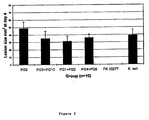
- Figure 1 shows the results of one experiment at day 4 after challenge (lesions were at maximum size at this time point).
- Control mice immunised with E. coli lysate showed large lesions while mice immunised with killed cells of P. gingivalis strain 33277 were fully protected. This indicates that whole cells provide protection against P. gingivalis while E. coli protein immunised mice were not protected.
- Figure 2 shows the results of a separate experiment using combinations of recombinant proteins. Mice given PG1 + PG2 showed a significant level of protection compared to control mice give E. coli lysate (p ⁇ 0.026 unpaired t test).
- Cloned candidates were cultured in 15ml of Terrific broth, induced with IPTG and sampled at 4h post-induction. One ml of culture was removed, pelleted and the cells resuspended in a volume of PBS determined by dividing the OD A 600nm of the culture by 8. An aliquot of lysate (100 ⁇ l) was added to 100 ⁇ l of 2x sample reducing buffer (125mM Tris pH 6.8, 20% glycerol, 4% SDS, 80mM DTT, 0.03% bromophenol blue) and boiled for 10min. SDS-PAGE was performed according to the method of Laemmli UK.
- Immunoscreening was performed separately with the rabbit anti- P . gingivalis whole cell serum, the rat protective serum, a pool of human periodontal patients serum, and in many cases an anti-T7-Tag antibody HRP conjugate (Novagen).
- the rabbit, rat and human sera Prior to use, were diluted 1/5000, 1/1000 and 1/500 respectively in 5% skim milk in TTBS and absorbed with 100 ⁇ l (for the rabbit serum) or 250 ⁇ l (for the rat and human sera) E . coli extract (20mg/ml; Promega) for 6h at RT.
- Membranes were incubated overnight at RT with the absorbed antisera, or for 1 hr at RT with 1/5000 diluted anti-T7-Tag conjugate. Following 3x10min washes with TTBS, HRP-conjugated anti-rabbit (Silenus), anti-mouse (Silenus) or anti-human (KPL) antibody, diluted 1/5000 in 5% skim milk in TTBS, was added for 1h at RT. Membranes were washed as before, prior to addition of TMB membrane peroxidase substrate (KPL) for detection of immunoreactive proteins. Results of reactivity for the recombinant P. gingivalis proteins is shown in Table 5.
- Table 5 Immunoblot results of proteins expressed in E.coli against rabbit, rat and human antisera. Deduced MW was calculated from amino acid sequence of the P. gingivalis proteins, some of which had their N-terminal signal sequences removed. Apparent MW was determined from SDS-PAGE gels. The N- and C-terminal tags add approximately 2.5 KDa to the deduced MW of the recombinant proteins. The symbols are + positive, - negative, +/- weak positive, ND not done.
Landscapes
- Health & Medical Sciences (AREA)
- Life Sciences & Earth Sciences (AREA)
- Chemical & Material Sciences (AREA)
- Organic Chemistry (AREA)
- Engineering & Computer Science (AREA)
- General Health & Medical Sciences (AREA)
- Genetics & Genomics (AREA)
- Bioinformatics & Cheminformatics (AREA)
- Medicinal Chemistry (AREA)
- Animal Behavior & Ethology (AREA)
- Pharmacology & Pharmacy (AREA)
- Public Health (AREA)
- Veterinary Medicine (AREA)
- Immunology (AREA)
- Nuclear Medicine, Radiotherapy & Molecular Imaging (AREA)
- General Chemical & Material Sciences (AREA)
- Chemical Kinetics & Catalysis (AREA)
- Biomedical Technology (AREA)
- Molecular Biology (AREA)
- Biophysics (AREA)
- Biotechnology (AREA)
- Gastroenterology & Hepatology (AREA)
- Zoology (AREA)
- Proteomics, Peptides & Aminoacids (AREA)
- Wood Science & Technology (AREA)
- Biochemistry (AREA)
- General Engineering & Computer Science (AREA)
- Microbiology (AREA)
- Plant Pathology (AREA)
- Communicable Diseases (AREA)
- Epidemiology (AREA)
- Oncology (AREA)
- Physics & Mathematics (AREA)
- Peptides Or Proteins (AREA)
- Medicines Containing Antibodies Or Antigens For Use As Internal Diagnostic Agents (AREA)
- Preparation Of Compounds By Using Micro-Organisms (AREA)
- Medicines That Contain Protein Lipid Enzymes And Other Medicines (AREA)
- Pharmaceuticals Containing Other Organic And Inorganic Compounds (AREA)
- Micro-Organisms Or Cultivation Processes Thereof (AREA)
- Measuring Or Testing Involving Enzymes Or Micro-Organisms (AREA)
Applications Claiming Priority (14)
| Application Number | Priority Date | Filing Date | Title |
|---|---|---|---|
| AUPP0839A AUPP083997A0 (en) | 1997-12-10 | 1997-12-10 | Porphyromonas gingivalis nucleotides |
| AUPP1182A AUPP118297A0 (en) | 1997-12-31 | 1997-12-31 | P. gingivalis sequences |
| AUPP1546A AUPP154698A0 (en) | 1998-01-30 | 1998-01-30 | P. gingivalis sequences |
| AUPP2264A AUPP226498A0 (en) | 1998-03-10 | 1998-03-10 | Porphyromonas gingivalis probes and polypeptides |
| AUPP2911A AUPP291198A0 (en) | 1998-04-09 | 1998-04-09 | P. gingivalis sequences |
| AUPP3128A AUPP312898A0 (en) | 1998-04-23 | 1998-04-23 | Porphyromonas gingivalis antigens and probes |
| AUPP3338A AUPP333898A0 (en) | 1998-05-05 | 1998-05-05 | P. gingivalis sequences |
| AUPP3654A AUPP365498A0 (en) | 1998-05-22 | 1998-05-22 | P. gingivalis sequences |
| AUPP4917A AUPP491798A0 (en) | 1998-07-29 | 1998-07-29 | P.gingivalis nucleotides and polypeptides |
| AUPP4963A AUPP496398A0 (en) | 1998-07-30 | 1998-07-30 | P.gingivalis polypeptides |
| AUPP5028A AUPP502898A0 (en) | 1998-08-04 | 1998-08-04 | P.gingivalis antigens |
| EP06008722A EP1681350A3 (en) | 1997-12-10 | 1998-12-10 | Porphorymonas gingivalis polypeptides and polynucleotides |
| EP08100586A EP1908772B1 (en) | 1997-12-10 | 1998-12-10 | Porphorymonas gingivalis polypeptides and polynucleotides |
| EP98960880A EP1037999A4 (en) | 1997-12-10 | 1998-12-10 | POLYPEPTIDES AND NUCLEOTIDES PORPHYROMONAS GINGIVALIS |
Related Parent Applications (3)
| Application Number | Title | Priority Date | Filing Date |
|---|---|---|---|
| EP98960880.7 Division | 1998-12-10 | ||
| EP06008722.8 Division | 2006-04-27 | ||
| EP08100586.0 Division | 2008-01-17 |
Publications (2)
| Publication Number | Publication Date |
|---|---|
| EP2256205A1 EP2256205A1 (en) | 2010-12-01 |
| EP2256205B1 true EP2256205B1 (en) | 2013-04-03 |
Family
ID=27581380
Family Applications (10)
| Application Number | Title | Priority Date | Filing Date |
|---|---|---|---|
| EP10177457A Expired - Lifetime EP2256205B1 (en) | 1997-12-10 | 1998-12-10 | Porphorymonas gingivalis polypeptides and polynucleotides |
| EP98960880A Withdrawn EP1037999A4 (en) | 1997-12-10 | 1998-12-10 | POLYPEPTIDES AND NUCLEOTIDES PORPHYROMONAS GINGIVALIS |
| EP10185466A Withdrawn EP2283852A3 (en) | 1997-12-10 | 1998-12-10 | Porphorymonas gingivalis polypeptides and polynucleotides |
| EP10185525A Withdrawn EP2283853A3 (en) | 1997-12-10 | 1998-12-10 | Porphorymonas gingivalis polypeptides and polynucleotides |
| EP10185620A Withdrawn EP2283855A3 (en) | 1997-12-10 | 1998-12-10 | Polypeptides et polynucleotides de phorphorymonas gingivalis |
| EP10177405A Withdrawn EP2256204A1 (en) | 1997-12-10 | 1998-12-10 | Porphorymonas gingivalis polypeptides and polynucleotides |
| EP08100586A Expired - Lifetime EP1908772B1 (en) | 1997-12-10 | 1998-12-10 | Porphorymonas gingivalis polypeptides and polynucleotides |
| EP10185564A Withdrawn EP2283854A3 (en) | 1997-12-10 | 1998-12-10 | Porphorymonas gingivalis polypeptides and polynucleotides |
| EP06008722A Withdrawn EP1681350A3 (en) | 1997-12-10 | 1998-12-10 | Porphorymonas gingivalis polypeptides and polynucleotides |
| EP10177423A Withdrawn EP2264176A1 (en) | 1997-12-10 | 1998-12-10 | Porphorymonas gingivalis polypeptides and polynucleotides |
Family Applications After (9)
| Application Number | Title | Priority Date | Filing Date |
|---|---|---|---|
| EP98960880A Withdrawn EP1037999A4 (en) | 1997-12-10 | 1998-12-10 | POLYPEPTIDES AND NUCLEOTIDES PORPHYROMONAS GINGIVALIS |
| EP10185466A Withdrawn EP2283852A3 (en) | 1997-12-10 | 1998-12-10 | Porphorymonas gingivalis polypeptides and polynucleotides |
| EP10185525A Withdrawn EP2283853A3 (en) | 1997-12-10 | 1998-12-10 | Porphorymonas gingivalis polypeptides and polynucleotides |
| EP10185620A Withdrawn EP2283855A3 (en) | 1997-12-10 | 1998-12-10 | Polypeptides et polynucleotides de phorphorymonas gingivalis |
| EP10177405A Withdrawn EP2256204A1 (en) | 1997-12-10 | 1998-12-10 | Porphorymonas gingivalis polypeptides and polynucleotides |
| EP08100586A Expired - Lifetime EP1908772B1 (en) | 1997-12-10 | 1998-12-10 | Porphorymonas gingivalis polypeptides and polynucleotides |
| EP10185564A Withdrawn EP2283854A3 (en) | 1997-12-10 | 1998-12-10 | Porphorymonas gingivalis polypeptides and polynucleotides |
| EP06008722A Withdrawn EP1681350A3 (en) | 1997-12-10 | 1998-12-10 | Porphorymonas gingivalis polypeptides and polynucleotides |
| EP10177423A Withdrawn EP2264176A1 (en) | 1997-12-10 | 1998-12-10 | Porphorymonas gingivalis polypeptides and polynucleotides |
Country Status (10)
| Country | Link |
|---|---|
| EP (10) | EP2256205B1 (enExample) |
| JP (2) | JP2001526035A (enExample) |
| KR (1) | KR100603552B1 (enExample) |
| AT (1) | ATE534742T1 (enExample) |
| AU (1) | AU1648799A (enExample) |
| CA (1) | CA2313823A1 (enExample) |
| DK (2) | DK1908772T3 (enExample) |
| ES (2) | ES2377751T3 (enExample) |
| NZ (1) | NZ504811A (enExample) |
| WO (1) | WO1999029870A1 (enExample) |
Cited By (1)
| Publication number | Priority date | Publication date | Assignee | Title |
|---|---|---|---|---|
| WO2018063801A1 (en) * | 2016-09-29 | 2018-04-05 | Meharry Medical College | Bacterial inhibitors |
Families Citing this family (16)
| Publication number | Priority date | Publication date | Assignee | Title |
|---|---|---|---|---|
| US6833262B1 (en) | 1999-04-21 | 2004-12-21 | University Of Georgia Research Foundation, Inc. | Polypeptide having amidolytic activity for a serpin |
| AU4648700A (en) * | 1999-04-21 | 2000-11-02 | Daniel Nelson | A polypeptide having amidolytic activity for a serpin |
| AUPQ485999A0 (en) * | 1999-12-24 | 2000-02-03 | Csl Limited | P. gingivalis antigenic composition |
| AU2001252042B2 (en) * | 2000-04-28 | 2005-12-01 | Csl Limited | Porphyromonas gingivalis recombinant proteins and truncations |
| AUPQ718200A0 (en) * | 2000-04-28 | 2000-05-25 | Csl Limited | Porphyromonas gingivalis recombinant proteins and truncations |
| JP2003192616A (ja) * | 2001-12-27 | 2003-07-09 | Univ Nihon | 歯周病用dnaワクチン |
| AU2004266213A1 (en) * | 2003-08-15 | 2005-03-03 | University Of Florida | Identification of porphyromonas gingivalis virulence polynucleotides for diagnosis, treatment, and monitoring of periodontal diseases |
| GB0411150D0 (en) * | 2004-05-19 | 2004-06-23 | Queen Mary & Westfield College | Vaccine |
| CA2652957A1 (en) * | 2006-06-27 | 2008-01-03 | Oral Health Australia Pty Ltd. | Porphyromonas gingivalis polypeptides useful in the prevention of periodontal disease |
| CN103357014A (zh) * | 2007-07-12 | 2013-10-23 | 口腔健康澳洲私人有限公司 | 生物膜治疗 |
| AU2013203250B2 (en) * | 2007-07-12 | 2014-11-13 | Oral Health Australia Pty Ltd | Immunology treatment for biofilms |
| EP2176413A4 (en) * | 2007-07-12 | 2012-08-01 | Oral Health Australia Pty Ltd | IMMUNOLOGY TREATMENT FOR BIOFILMS |
| CA2769231A1 (en) * | 2009-08-02 | 2011-02-10 | Sanofi Pasteur Limited | Porphyromonas gingivalis polypeptides |
| EP2657703B1 (en) * | 2010-12-15 | 2018-12-05 | Sunstar Inc. | Test kit for plasma or serum antibody titer against periodontal disease-causing bacteria |
| JP6310631B2 (ja) * | 2011-10-18 | 2018-04-11 | サンスター株式会社 | 歯周病原菌血漿または血清抗体価検査キット |
| CN111172177B (zh) * | 2019-07-30 | 2023-08-08 | 镇江市江澜绿洲生物技术有限公司 | cra4S1基因及其编码的蛋白和应用 |
Family Cites Families (13)
| Publication number | Priority date | Publication date | Assignee | Title |
|---|---|---|---|---|
| US5047238A (en) | 1983-06-15 | 1991-09-10 | American Home Products Corporation | Adjuvants for vaccines |
| US4946778A (en) | 1987-09-21 | 1990-08-07 | Genex Corporation | Single polypeptide chain binding molecules |
| US5830710A (en) * | 1988-09-08 | 1998-11-03 | University Of Florida | Cloned porphyromonas gingivalis genes and probes for the detection of periodontal disease |
| US5798224A (en) * | 1992-12-29 | 1998-08-25 | Doheny Eye Institute | Nucleic acids encoding protocadherin |
| US5643781A (en) * | 1992-12-29 | 1997-07-01 | Doheny Eye Institute | DNA encoding protocadherin-42 |
| US5523390A (en) * | 1993-09-10 | 1996-06-04 | University Of Georgia Research Foundation, Inc. | Porphyromonas gingivalis arginine-specific proteinase |
| US5475097A (en) | 1993-10-21 | 1995-12-12 | University Of Georgia Research Foundation, Inc. | Lysine-specific Porphyromonas gingivalis proteinase |
| EP0726314A4 (en) * | 1993-10-08 | 1998-04-22 | Lion Corp | FIMBRILLIN PROTEIN FROM -i (PORPHYROMONAS GINGIVALIS) |
| AUPN015794A0 (en) | 1994-12-20 | 1995-01-19 | Csl Limited | Variants of human papilloma virus antigens |
| AUPN627595A0 (en) * | 1995-10-30 | 1995-11-23 | University Of Melbourne, The | Diagnostics and treatments of periodontal disease |
| EP0888124A4 (en) * | 1996-03-22 | 2001-04-11 | Univ Georgia Res Found | Immunogenic assemblies of Porphyromonas Gingivalis peptides and their methods |
| AUPN901296A0 (en) * | 1996-03-29 | 1996-04-26 | University Of Melbourne, The | Porphyromonas gingivalis antigens for the diagnosis and treatment of periodontitis |
| AUPO652897A0 (en) * | 1997-04-30 | 1997-05-29 | University Of Melbourne, The | Synthetic peptide constructs for the diagnosis and treatment of periodontitis |
-
1998
- 1998-12-10 NZ NZ504811A patent/NZ504811A/en not_active IP Right Cessation
- 1998-12-10 DK DK08100586.0T patent/DK1908772T3/da active
- 1998-12-10 EP EP10177457A patent/EP2256205B1/en not_active Expired - Lifetime
- 1998-12-10 KR KR1020007006386A patent/KR100603552B1/ko not_active Expired - Fee Related
- 1998-12-10 EP EP98960880A patent/EP1037999A4/en not_active Withdrawn
- 1998-12-10 ES ES08100586T patent/ES2377751T3/es not_active Expired - Lifetime
- 1998-12-10 EP EP10185466A patent/EP2283852A3/en not_active Withdrawn
- 1998-12-10 EP EP10185525A patent/EP2283853A3/en not_active Withdrawn
- 1998-12-10 DK DK10177457.8T patent/DK2256205T3/da active
- 1998-12-10 EP EP10185620A patent/EP2283855A3/en not_active Withdrawn
- 1998-12-10 WO PCT/AU1998/001023 patent/WO1999029870A1/en not_active Ceased
- 1998-12-10 EP EP10177405A patent/EP2256204A1/en not_active Withdrawn
- 1998-12-10 CA CA002313823A patent/CA2313823A1/en not_active Abandoned
- 1998-12-10 EP EP08100586A patent/EP1908772B1/en not_active Expired - Lifetime
- 1998-12-10 JP JP2000524441A patent/JP2001526035A/ja active Pending
- 1998-12-10 EP EP10185564A patent/EP2283854A3/en not_active Withdrawn
- 1998-12-10 EP EP06008722A patent/EP1681350A3/en not_active Withdrawn
- 1998-12-10 AU AU16487/99A patent/AU1648799A/en not_active Abandoned
- 1998-12-10 ES ES10177457T patent/ES2419664T3/es not_active Expired - Lifetime
- 1998-12-10 EP EP10177423A patent/EP2264176A1/en not_active Withdrawn
- 1998-12-10 AT AT08100586T patent/ATE534742T1/de active
-
2009
- 2009-02-12 JP JP2009029661A patent/JP5349070B2/ja not_active Expired - Fee Related
Non-Patent Citations (4)
| Title |
|---|
| DASHPER S G ET AL: "Response of Porphyromonas gingivalis to heme limitation in continuous culture", JOURNAL OF BACTERIOLOGY 200902 US LNKD- DOI:10.1128/JB.01270-08, vol. 191, no. 3, February 2009 (2009-02-01), pages 1044 - 1055, ISSN: 0021-9193 * |
| EBERSOLE J L ET AL: "Human antibody responses to outer envelope antigens of Porphyromonas gingivalis serotypes", JOURNAL OF PERIODONTAL RESEARCH, vol. 30, no. 1, 1995, pages 1 - 14, ISSN: 0022-3484 * |
| FRANCA MÔNICA ET AL: "Humoral immune response to antigens of Porphyromonas gingivalis ATCC 33277 in chronic periodontitis.", JOURNAL OF APPLIED ORAL SCIENCE : REVISTA FOB JUN 2007 LNKD- PUBMED:19089132, vol. 15, no. 3, June 2007 (2007-06-01), pages 213 - 219, ISSN: 1678-7765 * |
| SEERS C A ET AL: "The RgpB C-terminal domain has a role in attachment of RgpB to the outer membrane and belongs to a novel C-terminal-domain family found in Porphyromonas gingivalis", JOURNAL OF BACTERIOLOGY 200609 US LNKD- DOI:10.1128/JB.00731-06, vol. 188, no. 17, September 2006 (2006-09-01), pages 6376 - 6386, ISSN: 0021-9193 * |
Cited By (1)
| Publication number | Priority date | Publication date | Assignee | Title |
|---|---|---|---|---|
| WO2018063801A1 (en) * | 2016-09-29 | 2018-04-05 | Meharry Medical College | Bacterial inhibitors |
Also Published As
| Publication number | Publication date |
|---|---|
| NZ504811A (en) | 2003-10-31 |
| EP2283855A3 (en) | 2011-05-04 |
| EP1908772A2 (en) | 2008-04-09 |
| EP2283852A2 (en) | 2011-02-16 |
| ES2377751T3 (es) | 2012-03-30 |
| EP1908772B1 (en) | 2011-11-23 |
| EP1681350A2 (en) | 2006-07-19 |
| DK1908772T3 (da) | 2012-03-19 |
| ES2419664T3 (es) | 2013-08-21 |
| ATE534742T1 (de) | 2011-12-15 |
| EP2283853A3 (en) | 2011-05-11 |
| EP2283855A2 (en) | 2011-02-16 |
| EP1681350A3 (en) | 2007-07-18 |
| EP1037999A4 (en) | 2005-03-23 |
| EP1908772A3 (en) | 2008-12-03 |
| DK2256205T3 (da) | 2013-07-08 |
| KR100603552B1 (ko) | 2006-07-20 |
| AU1648799A (en) | 1999-06-28 |
| EP2283853A2 (en) | 2011-02-16 |
| JP2009136300A (ja) | 2009-06-25 |
| WO1999029870A1 (en) | 1999-06-17 |
| EP2256205A1 (en) | 2010-12-01 |
| EP2283854A2 (en) | 2011-02-16 |
| EP2264176A1 (en) | 2010-12-22 |
| EP2283852A3 (en) | 2011-05-04 |
| EP2283854A3 (en) | 2011-04-06 |
| CA2313823A1 (en) | 1999-06-17 |
| EP1037999A1 (en) | 2000-09-27 |
| JP5349070B2 (ja) | 2013-11-20 |
| JP2001526035A (ja) | 2001-12-18 |
| KR20010033030A (ko) | 2001-04-25 |
| EP2256204A1 (en) | 2010-12-01 |
Similar Documents
| Publication | Publication Date | Title |
|---|---|---|
| JP5349070B2 (ja) | Porphorymonasgingivalisポリペプチドおよびヌクレオチド | |
| US8642731B2 (en) | Porphyromonas gingivalis polypeptides and nucleotides | |
| Aduse-Opoku et al. | Characterization, genetic analysis, and expression of a protease antigen (PrpRI) of Porphyromonas gingivalis W50 | |
| AU740545B2 (en) | Nucleic acid fragments and polypeptide fragments derived from M. tuberculosis | |
| US6444799B1 (en) | P. gingivalis polynucleotides and uses thereof | |
| WO1996040930A1 (en) | Mutants of streptococcal toxin a and methods of use | |
| US7544777B2 (en) | Porphorymonas gingivalis polypeptides and nucleotides | |
| EP0946730B1 (en) | Mutants of streptococcal toxin c and methods of use | |
| US6669940B2 (en) | Recombinant fusobacterium necrophorum leukotoxin vaccine and preparation thereof | |
| AU766093B2 (en) | Tuberculosis vaccine and diagnostic reagents based on antigens from the mycobacterium tuberculosis cell | |
| AU2001259138B2 (en) | Recombinant fusobacterium necrophorum leukotoxin vaccine and preparation thereof | |
| AU2007231821B8 (en) | Porphyromonas gingivalis polypeptides and nucleotides | |
| HK1110603A (en) | Porphorymonas gingivalis polypeptides and polynucleotides | |
| Barr et al. | Ross et a1. | |
| EP1787994A1 (en) | TB vaccine and diagnostic based on antigens from M. tuberculosis cell |
Legal Events
| Date | Code | Title | Description |
|---|---|---|---|
| PUAI | Public reference made under article 153(3) epc to a published international application that has entered the european phase |
Free format text: ORIGINAL CODE: 0009012 |
|
| AC | Divisional application: reference to earlier application |
Ref document number: 1681350 Country of ref document: EP Kind code of ref document: P Ref document number: 1037999 Country of ref document: EP Kind code of ref document: P Ref document number: 1908772 Country of ref document: EP Kind code of ref document: P |
|
| AK | Designated contracting states |
Kind code of ref document: A1 Designated state(s): AT BE CH CY DE DK ES FI FR GB GR IE IT LI LU MC NL PT SE |
|
| 17P | Request for examination filed |
Effective date: 20110531 |
|
| RIC1 | Information provided on ipc code assigned before grant |
Ipc: A61K 38/16 20060101ALI20110921BHEP Ipc: A61K 39/00 20060101ALI20110921BHEP Ipc: C12N 15/31 20060101AFI20110921BHEP Ipc: C07K 14/195 20060101ALI20110921BHEP Ipc: A61K 38/00 20060101ALI20110921BHEP |
|
| 17Q | First examination report despatched |
Effective date: 20120120 |
|
| GRAP | Despatch of communication of intention to grant a patent |
Free format text: ORIGINAL CODE: EPIDOSNIGR1 |
|
| GRAP | Despatch of communication of intention to grant a patent |
Free format text: ORIGINAL CODE: EPIDOSNIGR1 |
|
| GRAS | Grant fee paid |
Free format text: ORIGINAL CODE: EPIDOSNIGR3 |
|
| GRAA | (expected) grant |
Free format text: ORIGINAL CODE: 0009210 |
|
| AC | Divisional application: reference to earlier application |
Ref document number: 1037999 Country of ref document: EP Kind code of ref document: P Ref document number: 1681350 Country of ref document: EP Kind code of ref document: P Ref document number: 1908772 Country of ref document: EP Kind code of ref document: P |
|
| AK | Designated contracting states |
Kind code of ref document: B1 Designated state(s): AT BE CH CY DE DK ES FI FR GB GR IE IT LI LU MC NL PT SE |
|
| REG | Reference to a national code |
Ref country code: GB Ref legal event code: FG4D |
|
| REG | Reference to a national code |
Ref country code: AT Ref legal event code: REF Ref document number: 604778 Country of ref document: AT Kind code of ref document: T Effective date: 20130415 Ref country code: CH Ref legal event code: EP |
|
| REG | Reference to a national code |
Ref country code: IE Ref legal event code: FG4D |
|
| REG | Reference to a national code |
Ref country code: DE Ref legal event code: R096 Ref document number: 69842996 Country of ref document: DE Effective date: 20130529 |
|
| REG | Reference to a national code |
Ref country code: DK Ref legal event code: T3 |
|
| REG | Reference to a national code |
Ref country code: SE Ref legal event code: TRGR |
|
| REG | Reference to a national code |
Ref country code: ES Ref legal event code: FG2A Ref document number: 2419664 Country of ref document: ES Kind code of ref document: T3 Effective date: 20130821 |
|
| REG | Reference to a national code |
Ref country code: NL Ref legal event code: T3 |
|
| PG25 | Lapsed in a contracting state [announced via postgrant information from national office to epo] |
Ref country code: GR Free format text: LAPSE BECAUSE OF FAILURE TO SUBMIT A TRANSLATION OF THE DESCRIPTION OR TO PAY THE FEE WITHIN THE PRESCRIBED TIME-LIMIT Effective date: 20130704 Ref country code: PT Free format text: LAPSE BECAUSE OF FAILURE TO SUBMIT A TRANSLATION OF THE DESCRIPTION OR TO PAY THE FEE WITHIN THE PRESCRIBED TIME-LIMIT Effective date: 20130805 Ref country code: FI Free format text: LAPSE BECAUSE OF FAILURE TO SUBMIT A TRANSLATION OF THE DESCRIPTION OR TO PAY THE FEE WITHIN THE PRESCRIBED TIME-LIMIT Effective date: 20130403 |
|
| PG25 | Lapsed in a contracting state [announced via postgrant information from national office to epo] |
Ref country code: CY Free format text: LAPSE BECAUSE OF FAILURE TO SUBMIT A TRANSLATION OF THE DESCRIPTION OR TO PAY THE FEE WITHIN THE PRESCRIBED TIME-LIMIT Effective date: 20130403 |
|
| PLBE | No opposition filed within time limit |
Free format text: ORIGINAL CODE: 0009261 |
|
| STAA | Information on the status of an ep patent application or granted ep patent |
Free format text: STATUS: NO OPPOSITION FILED WITHIN TIME LIMIT |
|
| 26N | No opposition filed |
Effective date: 20140106 |
|
| REG | Reference to a national code |
Ref country code: DE Ref legal event code: R097 Ref document number: 69842996 Country of ref document: DE Effective date: 20140106 |
|
| PG25 | Lapsed in a contracting state [announced via postgrant information from national office to epo] |
Ref country code: MC Free format text: LAPSE BECAUSE OF FAILURE TO SUBMIT A TRANSLATION OF THE DESCRIPTION OR TO PAY THE FEE WITHIN THE PRESCRIBED TIME-LIMIT Effective date: 20130403 |
|
| PGFP | Annual fee paid to national office [announced via postgrant information from national office to epo] |
Ref country code: SE Payment date: 20141219 Year of fee payment: 17 Ref country code: DK Payment date: 20141222 Year of fee payment: 17 Ref country code: GB Payment date: 20141229 Year of fee payment: 17 Ref country code: CH Payment date: 20141222 Year of fee payment: 17 Ref country code: LU Payment date: 20141223 Year of fee payment: 17 Ref country code: IE Payment date: 20141222 Year of fee payment: 17 |
|
| PGFP | Annual fee paid to national office [announced via postgrant information from national office to epo] |
Ref country code: AT Payment date: 20141222 Year of fee payment: 17 Ref country code: NL Payment date: 20141222 Year of fee payment: 17 |
|
| PGFP | Annual fee paid to national office [announced via postgrant information from national office to epo] |
Ref country code: DE Payment date: 20141222 Year of fee payment: 17 Ref country code: ES Payment date: 20141222 Year of fee payment: 17 Ref country code: IT Payment date: 20141223 Year of fee payment: 17 |
|
| PGFP | Annual fee paid to national office [announced via postgrant information from national office to epo] |
Ref country code: FR Payment date: 20141231 Year of fee payment: 17 |
|
| PGFP | Annual fee paid to national office [announced via postgrant information from national office to epo] |
Ref country code: BE Payment date: 20141222 Year of fee payment: 17 |
|
| PG25 | Lapsed in a contracting state [announced via postgrant information from national office to epo] |
Ref country code: BE Free format text: LAPSE BECAUSE OF NON-PAYMENT OF DUE FEES Effective date: 20151231 |
|
| REG | Reference to a national code |
Ref country code: DE Ref legal event code: R119 Ref document number: 69842996 Country of ref document: DE |
|
| REG | Reference to a national code |
Ref country code: DK Ref legal event code: EBP Effective date: 20151231 |
|
| PG25 | Lapsed in a contracting state [announced via postgrant information from national office to epo] |
Ref country code: LU Free format text: LAPSE BECAUSE OF NON-PAYMENT OF DUE FEES Effective date: 20151210 |
|
| REG | Reference to a national code |
Ref country code: CH Ref legal event code: PL |
|
| REG | Reference to a national code |
Ref country code: SE Ref legal event code: EUG |
|
| REG | Reference to a national code |
Ref country code: AT Ref legal event code: MM01 Ref document number: 604778 Country of ref document: AT Kind code of ref document: T Effective date: 20151210 |
|
| GBPC | Gb: european patent ceased through non-payment of renewal fee |
Effective date: 20151210 |
|
| PG25 | Lapsed in a contracting state [announced via postgrant information from national office to epo] |
Ref country code: SE Free format text: LAPSE BECAUSE OF NON-PAYMENT OF DUE FEES Effective date: 20151211 |
|
| REG | Reference to a national code |
Ref country code: NL Ref legal event code: MM Effective date: 20160101 |
|
| REG | Reference to a national code |
Ref country code: IE Ref legal event code: MM4A |
|
| REG | Reference to a national code |
Ref country code: FR Ref legal event code: ST Effective date: 20160831 |
|
| PG25 | Lapsed in a contracting state [announced via postgrant information from national office to epo] |
Ref country code: IE Free format text: LAPSE BECAUSE OF NON-PAYMENT OF DUE FEES Effective date: 20151210 Ref country code: DE Free format text: LAPSE BECAUSE OF NON-PAYMENT OF DUE FEES Effective date: 20160701 Ref country code: NL Free format text: LAPSE BECAUSE OF NON-PAYMENT OF DUE FEES Effective date: 20160101 Ref country code: CH Free format text: LAPSE BECAUSE OF NON-PAYMENT OF DUE FEES Effective date: 20151231 Ref country code: GB Free format text: LAPSE BECAUSE OF NON-PAYMENT OF DUE FEES Effective date: 20151210 Ref country code: LI Free format text: LAPSE BECAUSE OF NON-PAYMENT OF DUE FEES Effective date: 20151231 |
|
| PG25 | Lapsed in a contracting state [announced via postgrant information from national office to epo] |
Ref country code: AT Free format text: LAPSE BECAUSE OF NON-PAYMENT OF DUE FEES Effective date: 20151210 Ref country code: FR Free format text: LAPSE BECAUSE OF NON-PAYMENT OF DUE FEES Effective date: 20151231 |
|
| PG25 | Lapsed in a contracting state [announced via postgrant information from national office to epo] |
Ref country code: IT Free format text: LAPSE BECAUSE OF NON-PAYMENT OF DUE FEES Effective date: 20151210 |
|
| REG | Reference to a national code |
Ref country code: ES Ref legal event code: FD2A Effective date: 20170127 |
|
| PG25 | Lapsed in a contracting state [announced via postgrant information from national office to epo] |
Ref country code: DK Free format text: LAPSE BECAUSE OF NON-PAYMENT OF DUE FEES Effective date: 20151231 |
|
| PG25 | Lapsed in a contracting state [announced via postgrant information from national office to epo] |
Ref country code: ES Free format text: LAPSE BECAUSE OF NON-PAYMENT OF DUE FEES Effective date: 20151211 |