EP2247013A1 - Verfahren und vorrichtung zum realisieren von quellenrouting im blocked-cross-netzwerk - Google Patents
Verfahren und vorrichtung zum realisieren von quellenrouting im blocked-cross-netzwerk Download PDFInfo
- Publication number
- EP2247013A1 EP2247013A1 EP08706483A EP08706483A EP2247013A1 EP 2247013 A1 EP2247013 A1 EP 2247013A1 EP 08706483 A EP08706483 A EP 08706483A EP 08706483 A EP08706483 A EP 08706483A EP 2247013 A1 EP2247013 A1 EP 2247013A1
- Authority
- EP
- European Patent Office
- Prior art keywords
- information
- link
- constraint
- wavelength
- path tree
- Prior art date
- Legal status (The legal status is an assumption and is not a legal conclusion. Google has not performed a legal analysis and makes no representation as to the accuracy of the status listed.)
- Withdrawn
Links
- 238000000034 method Methods 0.000 title claims abstract description 29
- 230000005540 biological transmission Effects 0.000 claims abstract description 40
- 230000000903 blocking effect Effects 0.000 claims abstract description 24
- 230000000977 initiatory effect Effects 0.000 claims abstract description 10
- 230000003287 optical effect Effects 0.000 description 7
- 238000004364 calculation method Methods 0.000 description 5
- 238000005516 engineering process Methods 0.000 description 5
- 238000004422 calculation algorithm Methods 0.000 description 3
- 238000006243 chemical reaction Methods 0.000 description 3
- 238000010586 diagram Methods 0.000 description 3
- 239000013307 optical fiber Substances 0.000 description 2
- 230000001360 synchronised effect Effects 0.000 description 2
- 230000009466 transformation Effects 0.000 description 2
- 238000000844 transformation Methods 0.000 description 2
- 238000011084 recovery Methods 0.000 description 1
- 230000011664 signaling Effects 0.000 description 1
Images


Classifications
-
- H—ELECTRICITY
- H04—ELECTRIC COMMUNICATION TECHNIQUE
- H04Q—SELECTING
- H04Q11/00—Selecting arrangements for multiplex systems
- H04Q11/0001—Selecting arrangements for multiplex systems using optical switching
- H04Q11/0005—Switch and router aspects
-
- H—ELECTRICITY
- H04—ELECTRIC COMMUNICATION TECHNIQUE
- H04J—MULTIPLEX COMMUNICATION
- H04J14/00—Optical multiplex systems
- H04J14/02—Wavelength-division multiplex systems
- H04J14/0227—Operation, administration, maintenance or provisioning [OAMP] of WDM networks, e.g. media access, routing or wavelength allocation
-
- H—ELECTRICITY
- H04—ELECTRIC COMMUNICATION TECHNIQUE
- H04J—MULTIPLEX COMMUNICATION
- H04J14/00—Optical multiplex systems
- H04J14/02—Wavelength-division multiplex systems
- H04J14/0227—Operation, administration, maintenance or provisioning [OAMP] of WDM networks, e.g. media access, routing or wavelength allocation
- H04J14/0254—Optical medium access
- H04J14/0256—Optical medium access at the optical channel layer
- H04J14/0257—Wavelength assignment algorithms
-
- H—ELECTRICITY
- H04—ELECTRIC COMMUNICATION TECHNIQUE
- H04J—MULTIPLEX COMMUNICATION
- H04J14/00—Optical multiplex systems
- H04J14/02—Wavelength-division multiplex systems
- H04J14/0227—Operation, administration, maintenance or provisioning [OAMP] of WDM networks, e.g. media access, routing or wavelength allocation
- H04J14/0254—Optical medium access
- H04J14/0267—Optical signaling or routing
-
- H—ELECTRICITY
- H04—ELECTRIC COMMUNICATION TECHNIQUE
- H04L—TRANSMISSION OF DIGITAL INFORMATION, e.g. TELEGRAPHIC COMMUNICATION
- H04L45/00—Routing or path finding of packets in data switching networks
- H04L45/02—Topology update or discovery
- H04L45/03—Topology update or discovery by updating link state protocols
-
- H—ELECTRICITY
- H04—ELECTRIC COMMUNICATION TECHNIQUE
- H04L—TRANSMISSION OF DIGITAL INFORMATION, e.g. TELEGRAPHIC COMMUNICATION
- H04L45/00—Routing or path finding of packets in data switching networks
- H04L45/34—Source routing
-
- H—ELECTRICITY
- H04—ELECTRIC COMMUNICATION TECHNIQUE
- H04L—TRANSMISSION OF DIGITAL INFORMATION, e.g. TELEGRAPHIC COMMUNICATION
- H04L45/00—Routing or path finding of packets in data switching networks
- H04L45/48—Routing tree calculation
-
- H—ELECTRICITY
- H04—ELECTRIC COMMUNICATION TECHNIQUE
- H04Q—SELECTING
- H04Q11/00—Selecting arrangements for multiplex systems
- H04Q11/0001—Selecting arrangements for multiplex systems using optical switching
- H04Q11/0062—Network aspects
-
- H—ELECTRICITY
- H04—ELECTRIC COMMUNICATION TECHNIQUE
- H04J—MULTIPLEX COMMUNICATION
- H04J14/00—Optical multiplex systems
- H04J14/02—Wavelength-division multiplex systems
- H04J14/0227—Operation, administration, maintenance or provisioning [OAMP] of WDM networks, e.g. media access, routing or wavelength allocation
- H04J14/0254—Optical medium access
- H04J14/0256—Optical medium access at the optical channel layer
- H04J14/0258—Wavelength identification or labelling
-
- H—ELECTRICITY
- H04—ELECTRIC COMMUNICATION TECHNIQUE
- H04J—MULTIPLEX COMMUNICATION
- H04J14/00—Optical multiplex systems
- H04J14/02—Wavelength-division multiplex systems
- H04J14/0227—Operation, administration, maintenance or provisioning [OAMP] of WDM networks, e.g. media access, routing or wavelength allocation
- H04J14/0254—Optical medium access
- H04J14/0261—Optical medium access at the optical multiplex section layer
-
- H—ELECTRICITY
- H04—ELECTRIC COMMUNICATION TECHNIQUE
- H04J—MULTIPLEX COMMUNICATION
- H04J14/00—Optical multiplex systems
- H04J14/02—Wavelength-division multiplex systems
- H04J14/0227—Operation, administration, maintenance or provisioning [OAMP] of WDM networks, e.g. media access, routing or wavelength allocation
- H04J14/0254—Optical medium access
- H04J14/0267—Optical signaling or routing
- H04J14/0269—Optical signaling or routing using tables for routing
-
- H—ELECTRICITY
- H04—ELECTRIC COMMUNICATION TECHNIQUE
- H04Q—SELECTING
- H04Q11/00—Selecting arrangements for multiplex systems
- H04Q11/0001—Selecting arrangements for multiplex systems using optical switching
- H04Q11/0062—Network aspects
- H04Q2011/0073—Provisions for forwarding or routing, e.g. lookup tables
-
- H—ELECTRICITY
- H04—ELECTRIC COMMUNICATION TECHNIQUE
- H04Q—SELECTING
- H04Q11/00—Selecting arrangements for multiplex systems
- H04Q11/0001—Selecting arrangements for multiplex systems using optical switching
- H04Q11/0062—Network aspects
- H04Q2011/0086—Network resource allocation, dimensioning or optimisation
Definitions
- the present invention relates to the field of communications, particularly to a method and apparatus for realizing source routing in a blocking cross network in an optical transmission equipment network.
- a physical link layer and a wavelength channel layer there is certain constraint characteristic in a physical link layer and a wavelength channel layer, and there is certain constraint characteristic in multiple physical transmission links in each node in terms of service scheduling. Not all physical transmission links in each node can implement service scheduling between each other.
- Wavelength service scheduling is basically up-and-down or straight-through in each node, without the capability of wavelength conversion, and this is true of a reconfigurable optical add-drop multiplexer (ROADM) system composed of a wavelength blocker (WB) and a wavelength selective switch (WSS).
- ROADM reconfigurable optical add-drop multiplexer
- WB wavelength blocker
- WSS wavelength selective switch
- TMUX sub-transparent multiplexing
- the cross capability design of the TMUX is often insufficient for the crossover capability, and the wavelength channels among links in the nodes can't realize all-optical wavelength cross.
- the switchable constraint characteristic between links only illustrates whether there is the possibility of switching between links. If service scheduling is possible on the link layer, whether service scheduling can be realized or not should also depend on the constraint characteristic of the layer of wavelength channel in the link. Service scheduling capability should be analyzed from constraint characteristics of two layers: 1. the switchable constraint capability between links in a node in a DWDM equipment network realized by multidimensional ROADM technology, generally, if it's possible to implement service scheduling on the link layer between links of two directions in a node, the links of two directions are connected to each other by optical fibers inside. If the links of two directions are not connected to each other by optical fibers, there is no service scheduling capability between the two links.
- Every set of links of two directions in a system comprise a group and the service scheduling capability of each group is represented by bit.
- 1 means the two links in a group have the service scheduling capability between them on the physical link layer, while 0 means the two links in a group don't have the service scheduling capability between them on the physical link layer.
- the fixed combinations show that it's possible that transport links of two specific directions have the service scheduling capability between them on the link layer.
- Table 1 shows such combinations.
- Table 1 Corresponding relationship between link groups and bits in a node A B C D E F G H A 1 2 3 4 5 6 7 B 8 9 10 11 12 13 C 14 15 16 17 18 D 19 20 21 22 E 23 24 25 F 26 27 G 28 H 2.
- a switching unit DXC digital cross connect equipment
- a west terminal equipment (TE) link distributes wavelengths in the link into different switching units through a DWDM wavelength division equipment, which is also true of the east TE link. Wavelength switching can be achieved only when the wavelength in the west TE link and that in the east TE link are in one switching unit.
- wavelengths are basically up-and-down or straight-through in each node and wavelength switching is impossible.
- a collection which limits wavelength switching in the link is defined as a wavelength switching group (or wavelength group).
- the wavelength collection in each link which is in one wavelength switching group (or wavelength group) can realize wavelength conversion, while wavelengths in each link which are not in one wavelength group can't realize wavelength conversion.
- the same wavelength is a wavelength switching group (or wavelength group).
- the technical problem to be solved by the present invention is to provide a method and apparatus for realizing source routing in a blocking cross network, to overcome the problem in the existing technology that only the available link bandwidth information is considered as a routing calculation condition, which leads to selection of service path and wavelength being tried again and again in the process of call connection establishment, thereby making the control too complicated.
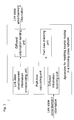
- the present invention provides a method for realizing source routing in a blocking cross network, which includes: link state advertisement information diffused in a network carries cross constraint characteristic information, and a call initiating node checks a path tree to get a service path according to the cross constraint characteristic information included in the link state advertisement information in the network; wherein the cross constraint characteristic information includes physical transmission link layer constraint information of a link in a node, which is called link switching constraint information, and constraint information of each wavelength channel in the link, which is called wavelength constraint characteristic information.
- the method may include the following steps:
- the link switching constraint information may be represented by a work direction and link constraint characteristic information corresponding to the work direction; and the link constraint characteristic information may be represented by whether there is service scheduling capability between the link and a link of a corresponding work direction in a system; the wavelength constraint characteristic information may include resource state information and cross constraint information of each wavelength channel, and specifically may include a type of a signal carried over each wavelength channel, an identity of a wavelength switching group to which a wavelength belongs, resource state, and a type of signal cascade multiplexing.
- the process of that the call initialing node checks the path tree to get the service path according to the cross constraint characteristic information in the network may include:
- the present invention also provides a method for realizing source routing in a blocking cross network, which includes: link state advertisement information diffused in a network carries constraint information of each wavelength channel in a link; physical transmission link layer constraint information of each link in a node is diffused in the network, wherein the physical transmission link layer constraint information of the link in a node is called link switching constraint information; the constraint information of each wavelength channel in the link is called wavelength constraint characteristic information, and the link switching constraint information and the wavelength constraint characteristic information are collectively called cross constraint characteristic information.
- the method may include the following steps:
- the summary information may be represented by link constraint characteristic information corresponding to each work direction; and the link constraint characteristic information may be represented by whether there is service scheduling capability between the link and a link of a corresponding work direction in a system;
- the wavelength constraint characteristic information may include resource state information and cross constraint information of each wavelength channel, and specifically may include a type of signal carried over each wavelength channel, an identity of a wavelength switching group to which a wavelength belongs, resource state, and a type of signal cascade multiplexing.
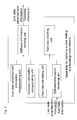
- the process of that the call initiating node checks the path tree to get the service path according to the cross constraint characteristic information in the network may include:
- the present invention also provides an apparatus for realizing source routing in a blocking cross network, which includes a link state advertisement information encapsulating unit, a diffused information sending unit, a path tree calculating unit, a diffused information receiving unit, and a path tree checking unit; wherein the link state advertisement information encapsulating unit is used for writing cross constraint characteristic information of a node into link state advertisement information and sending encapsulated link state advertisement information to the diffused information sending unit; the diffused information sending unit is used for diffusing the link state advertisement information into a network; the path tree calculating unit is used for calculating a path tree according to available link bandwidth information and sending information of the path tree to the path tree checking unit; the diffused information receiving unit is used for receiving the link state advertisement information in the network and sending to the path tree checking unit the cross constraint characteristic information included in the link state advertisement information; and the path tree checking unit is used for checking the path tree according to the cross constraint characteristic information and selecting a qualified service path from the path tree; wherein
- the present invention also provides an apparatus for realizing source routing in a blocking cross network, which includes a link state advertisement information encapsulating unit, a summary information encapsulating unit, a diffused information sending unit, a path tree calculating unit, a diffused information receiving unit, and a path tree checking unit; wherein the link state advertisement information encapsulating unit is used for writing all wavelength constraint characteristic information of each link in a node into link state advertisement information and sending encapsulated link state advertisement information to the diffused information sending unit; the summary information encapsulating unit is used for encapsulating physical transmission link layer constraint information of each link in the node as summary information and sending the summary information to the diffused information sending unit; the diffused information sending unit is used for diffusing the link state advertisement information and the summary information into a network; the path tree calculating unit is used for calculating a path tree according to available link bandwidth information and sending information of the path tree to the path tree checking unit; the diffused information receiving unit is used for receiving the link
- the cross constraint characteristic information of a link in a node is carried in link state advertisement information, wherein the cross constraint characteristic information includes two layers, i.e. a physical transmission link layer and a wavelength channel layer; or the constraint characteristic of the physical transmission link layer in a node is diffused in the network as summary information; in the calculation process of service paths, one or more qualified service paths are calculated by checking each path and each node in each path tree according to the constraint characteristic information of a link. In such way, when a control connection request is initiated, a complete end-to-end path and a proposed wavelength of each link can be calculated according to the link state advertisement information in the first node, and the multi-level service scheduling is supported.
- the cross constraint characteristic information includes two layers, i.e. a physical transmission link layer and a wavelength channel layer; or the constraint characteristic of the physical transmission link layer in a node is diffused in the network as summary information; in the calculation process of service paths, one or more qualified service paths are calculated by checking each path and each no
- the core idea of the present invention is to make a call initiating node be able to check a path tree according to cross constraint characteristic information in a network to get a qualified service path by the cross constraint characteristic information of a link (mainly including physical transmission link layer constraint information of the link in a node and constraint information of each wavelength channel in the link) which is carried in link state advertisement information diffused in the network.
- the cross constraint characteristic information mainly includes information of two layers, i.e. information of a physical transmission link layer and information of a wavelength channel layer; wherein the constraint characteristic information of the physical transmission link layer is link switching constraint information; and the constraint characteristic information of the wavelength channel layer is wavelength constraint characteristic information, including resource state information and cross constraint information of each wavelength channel; the link switching constraint information and the wavelength constraint characteristic information may be carried in the link state advertisement information diffused in a network; or the link switching constraint information may be diffused in a control domain as summary information, while the link state advertisement information carries the wavelength constraint characteristic information.
- an embodiment of the present invention includes the following steps:
- the network of the present invention includes many nodes, and each node has an apparatus for realizing source routing in a blocking cross network according to the embodiments of the present invention.
- the apparatus in one of nodes as above includes: a link state advertisement information encapsulating unit, a diffused information sending unit, a path tree calculating unit, a diffused information receiving unit, and a path tree checking unit; wherein the link state advertisement information encapsulating unit is used for writing cross constraint characteristic information of the node into link state advertisement information and sending encapsulated link state advertisement information to the diffused information sending unit.
- this link state advertisement information encapsulating unit is generally realized by a local resource management (LRM) module; the diffused information sending unit is used for diffusing the link state advertisement information into a network.
- this diffused information sending unit is generally realized by an open shortest path first-traffic engineering (OSPF-TE) module; the path tree calculating unit is used for calculating a path tree according to available link bandwidth information and sending information of the path tree to the path tree checking unit; the diffused information receiving unit is used for receiving the link state advertisement information in the network and sending to the path tree checking unit the cross constraint characteristic information included in the link state advertisement information; the path tree checking unit is used for checking the path tree according to the cross constraint characteristic information and selecting a qualified service path from the path tree.
- OSPF-TE open shortest path first-traffic engineering
- Fig. 4 is a schematic diagram of an apparatus for realizing source routing in a blocking cross network according to another embodiment of the present invention.
- the apparatus includes a link state advertisement information encapsulating unit, a summary information encapsulating unit, a diffused information sending unit, a path tree calculating unit, a diffused information receiving unit, and a path tree checking unit; wherein the link state advertisement information encapsulating unit is used for writing all wavelength constraint characteristic information of each link in the node into link state advertisement information and sending encapsulated link state advertisement information to the diffused information sending unit; the summary information encapsulating unit is used for encapsulating physical transmission link layer constraint information of each link in the node as summary information and sending the summary information to the diffused information sending unit; the diffused information sending unit is used for diffusing the link state advertisement information and the summary information into a network; the path tree calculating unit is used for calculating a path tree according to available link bandwidth information and sending information of the path tree to the path tree checking unit; the diffused information receiving unit
- Link switching constraint information of each transmission link in a node may be represented as follows:
- the front bits represent the service scheduling capability between this link and links of other directions in the system. 0 represents that there is no service scheduling capability between this link and a corresponding link; and 1 represents that first there is service scheduling capability on the physical link layer between this link and a corresponding link.
- a constant bit represents the constraint relation between the working link of this direction and the working link of a fixed direction.
- the wavelength constraint characteristic information in the link namely the resource state information and cross constraint information of each wavelength channel may be represented as follows:
- the link switching constraint information is carried and transmitted in the diffused link state advertisement information based on an OSPF-TE in a whole network; in LINK Type-Length-Value (LINK TLV), interface switching capability descriptor Sub-TLV is extended and defined to carry various cross constraint characteristic information of the transmission link in a node.
- the original defined format is:
- the link work direction of the transmission link is extended and defined in switching capability-specific information (variable), the link constraint characteristic information of the link in the node, the types of signals carried over each wavelength channel, the identity of the wavelength switching group to which the wavelength belongs, the resource state, and the type of signal cascade multiplexing, and information of each wavelength channel are arranged in sequence; in the LENGTH field, n is the number of wavelength channels in the transmission link.
- the new Sub-TLV format defined by the link switching constraint information is:
- the Sub-TLV defined by the resource state information of the wavelength channel and cross constraint information of the wavelength channel is:
- the link switching constraint information between transmission links in a node is represented as summary information, and the summary information between transmission links of 8 work directions is represented as follows:
- a constant bit corresponds to the constraint capability between links of two fixed directions; 1 means scheduling can be implemented between the links of two directions on the physical link layer, while 0 means scheduling can not be implemented between the links of two directions on the physical link layer, the information can be diffused in each control domain of an intelligent control network.
- the wavelength constraint characteristic information of each transmission link is carried in the transmission link state advertisement (LSA) information in a manner based on the first way and the second way; the work direction of a link, and the resource state information and cross constraint information of each wavelength channel are extended and defined in the interface switching capability descriptor sub-TLV:
- LSA transmission link state advertisement
- sub-TLV for the work direction of a link is:
- the sub-TLV defined by the resource state information of a wavelength channel and cross constraint information of a wavelength channel is:
- a call initiating node may, according to the link state advertisement information in the network, or according to the link state advertisement information and the summary information, check whether each link and each wavelength of each path in the path tree which is calculated by using the SPF algorithm according to the available link bandwidth information, possess the wavelength switching capability of end-to-end service establishment point by point according to the link switching constraint information, the resource state information and cross constraint information of a wavelength channel, and select a qualified path, and provide the available wavelength of each link in the path to provide reliable routing assurance for the call connection control.
- the present invention also has many other embodiments. Those skilled in the art may make various relevant changes and transformations based on the present invention. All such changes and transformations made without departing from the principle of the present invention shall be within the protection scope of the present invention.
- the present invention provides a method for realizing source routing in a blocking cross network.
- a call initiating node can check a path tree according to the cross constraint characteristic information in the network to get a qualified service path.
- the present invention has overcome the problem in the existing technology that only the available link bandwidth information is considered as a routing calculation condition, which leads to the selection of the service path and wavelength being tried again and again in the process of call connection establishment, thereby making the control too complicated.
- a complete end-to-end path and a proposed wavelength of each link in the first node can be calculated according to the link state advertisement information, and multi-level service scheduling is supported.
Landscapes
- Engineering & Computer Science (AREA)
- Computer Networks & Wireless Communication (AREA)
- Signal Processing (AREA)
- Data Exchanges In Wide-Area Networks (AREA)
Applications Claiming Priority (1)
| Application Number | Priority Date | Filing Date | Title |
|---|---|---|---|
| PCT/CN2008/000305 WO2009100575A1 (zh) | 2008-02-04 | 2008-02-04 | 有阻交叉网络实现源路由的方法和装置 |
Publications (2)
| Publication Number | Publication Date |
|---|---|
| EP2247013A1 true EP2247013A1 (de) | 2010-11-03 |
| EP2247013A4 EP2247013A4 (de) | 2012-10-24 |
Family
ID=40956610
Family Applications (1)
| Application Number | Title | Priority Date | Filing Date |
|---|---|---|---|
| EP08706483A Withdrawn EP2247013A4 (de) | 2008-02-04 | 2008-02-04 | Verfahren und vorrichtung zum realisieren von quellenrouting im blocked-cross-netzwerk |
Country Status (4)
| Country | Link |
|---|---|
| US (1) | US8665749B2 (de) |
| EP (1) | EP2247013A4 (de) |
| CN (1) | CN101981844B (de) |
| WO (1) | WO2009100575A1 (de) |
Families Citing this family (8)
| Publication number | Priority date | Publication date | Assignee | Title |
|---|---|---|---|---|
| CN101998184B (zh) * | 2009-08-12 | 2015-04-01 | 中兴通讯股份有限公司 | 适配装置及方法 |
| CN102572618B (zh) * | 2010-12-17 | 2015-09-16 | 中兴通讯股份有限公司 | 一种基于g.709的多级复用路由控制方法和网关网元 |
| CN102316390B (zh) * | 2011-09-07 | 2018-03-02 | 中兴通讯股份有限公司 | 利用虚拟拓扑提高约束条件下路径计算效率的方法及装置 |
| WO2012163038A1 (zh) * | 2011-11-01 | 2012-12-06 | 华为技术有限公司 | 限制自动交换光网络的域规模的方法和系统、节点设备 |
| US9167318B1 (en) * | 2012-08-07 | 2015-10-20 | Ciena Corporation | Bandwidth advertisement systems and methods for optical transport network |
| CN105721183A (zh) * | 2014-12-03 | 2016-06-29 | 中兴通讯股份有限公司 | 信息更新方法、装置及终端 |
| CN110737627B (zh) * | 2019-10-11 | 2023-10-03 | 苏州盛科通信股份有限公司 | 一种数据处理方法、装置及存储介质 |
| CN120750429B (zh) * | 2025-09-04 | 2025-11-11 | 江苏神州半导体科技有限公司 | 一种射频信号检波的调试方法 |
Family Cites Families (14)
| Publication number | Priority date | Publication date | Assignee | Title |
|---|---|---|---|---|
| US5954829A (en) * | 1996-12-30 | 1999-09-21 | Mci Communications Corporation | System, method, and computer program product for digital cross connect testing |
| JP4433624B2 (ja) * | 2001-02-28 | 2010-03-17 | 日本電気株式会社 | 通信ネットワーク、集中制御装置、通信ノード装置及びそれらに用いる状態通知情報相互交換方法 |
| US7499468B2 (en) * | 2001-04-06 | 2009-03-03 | Montgomery Jr Charles Donald | Method of adapting an optical network to provide lightpaths to dynamically assigned higher priority traffic |
| US7388872B2 (en) * | 2001-04-06 | 2008-06-17 | Montgomery Jr Charles D | Dynamic communication channel allocation method and system |
| JP3830953B2 (ja) * | 2002-10-02 | 2006-10-11 | 富士通株式会社 | 伝送システム |
| US8150018B2 (en) | 2002-12-18 | 2012-04-03 | Cisco Technology, Inc. | System and method for provisioning connections as a distributed digital cross-connect over a packet network |
| JP2004297230A (ja) * | 2003-03-26 | 2004-10-21 | Nec Corp | 光ネットワーク、光ネットワーク伝送装置及びそれに用いる分散型経路制御方法並びにそのプログラム |
| CN1279713C (zh) | 2003-08-18 | 2006-10-11 | 烽火通信科技股份有限公司 | 一种三级克洛斯矩阵无阻塞扩展方法 |
| US7164679B2 (en) * | 2004-01-12 | 2007-01-16 | Ciena Corporation | Scalable abstraction of topology across domain boundaries |
| US7760664B2 (en) * | 2004-09-30 | 2010-07-20 | Sanyogita Gupta | Determining and provisioning paths in a network |
| CN100562177C (zh) | 2005-05-25 | 2009-11-18 | 烽火通信科技股份有限公司 | 一种大容量多播严格无阻塞交叉矩阵器件 |
| JP2007243567A (ja) * | 2006-03-08 | 2007-09-20 | Fujitsu Ltd | 通信パス計算方法及び装置 |
| CN1878047A (zh) * | 2006-07-19 | 2006-12-13 | 华为技术有限公司 | 扩散波分设备的交叉限制信息的方法 |
| CN1929690B (zh) * | 2006-09-27 | 2011-11-02 | 华为技术有限公司 | 光通道建立方法、波分设备及波分系统 |
-
2008
- 2008-02-04 US US12/865,862 patent/US8665749B2/en active Active
- 2008-02-04 CN CN200880127996.5A patent/CN101981844B/zh active Active
- 2008-02-04 WO PCT/CN2008/000305 patent/WO2009100575A1/zh not_active Ceased
- 2008-02-04 EP EP08706483A patent/EP2247013A4/de not_active Withdrawn
Also Published As
| Publication number | Publication date |
|---|---|
| WO2009100575A1 (zh) | 2009-08-20 |
| US8665749B2 (en) | 2014-03-04 |
| CN101981844B (zh) | 2013-09-11 |
| US20100329155A1 (en) | 2010-12-30 |
| CN101981844A (zh) | 2011-02-23 |
| EP2247013A4 (de) | 2012-10-24 |
Similar Documents
| Publication | Publication Date | Title |
|---|---|---|
| CN101621714B (zh) | 节点、数据处理系统和数据处理方法 | |
| US9407359B2 (en) | Localized network repair systems and methods | |
| CN103891222B (zh) | 对光传输网络中的现有业务流调整大小的方法及装置 | |
| US9800522B2 (en) | Make-before-break systems and methods decoupling a control plane from a data plane | |
| EP1632043B1 (de) | Architektur und verfahren zur rahmenbildung optischer kontroll- und datenbündel, innerhalb optischer transportstrukturen, in photonischbündelgeschalteten netzwerken | |
| US8665749B2 (en) | Method and apparatus for realizing source routing in a blocking cross network | |
| US10063336B1 (en) | Protected transponded services integrated with control plane switched services | |
| CN103931123B (zh) | Wson复原 | |
| US8861402B2 (en) | Optical transport switching node with framer | |
| US20140147107A1 (en) | Drop port based shared risk link group systems and methods | |
| US7280758B2 (en) | Optical multi-ring network for burst data communication | |
| CN107005336A (zh) | 用于软件定义的联网的混合光学开关 | |
| US8665889B2 (en) | Unidirectional asymmetric traffic pattern systems and methods in switch matrices | |
| CN100536369C (zh) | 光通信网络中的业务保护装置及其方法 | |
| KR20130025889A (ko) | G.709를 기반으로 하는 서비스 구성의 신호 제어 방법 및 시스템 | |
| EP2466767B1 (de) | Adaptervorrichtung und verfahren dafür | |
| Oki et al. | Optical networking paradigm: Past, recent trends and future directions | |
| Wang et al. | Otn for the future transmission network | |
| Veeraraghavan et al. | A network throughput comparison of optical metro ring architectures | |
| WO2013149660A1 (en) | Apparatus and Method For Switching Information Transported Using a Hierarchical Data Structure | |
| US10331601B2 (en) | Systems, apparatus, and methods for efficient space to time conversion of OTU multiplexed signal | |
| Ajibodu et al. | Optimization of High Capacity Optical Transport Network Using Riverbed SP Guru Transport Planner for Metropolitan Network | |
| Mouronte | Infrastructure Optimization in a Transmission Network | |
| Aripov et al. | Balancing the tasks between optical and electrical signal processing in Metro Networks | |
| Wellbrock et al. | IP over OTH/ASTN: from concepts to real deployments |
Legal Events
| Date | Code | Title | Description |
|---|---|---|---|
| PUAI | Public reference made under article 153(3) epc to a published international application that has entered the european phase |
Free format text: ORIGINAL CODE: 0009012 |
|
| 17P | Request for examination filed |
Effective date: 20100903 |
|
| AK | Designated contracting states |
Kind code of ref document: A1 Designated state(s): AT BE BG CH CY CZ DE DK EE ES FI FR GB GR HR HU IE IS IT LI LT LU LV MC MT NL NO PL PT RO SE SI SK TR |
|
| AX | Request for extension of the european patent |
Extension state: AL BA MK RS |
|
| DAX | Request for extension of the european patent (deleted) | ||
| A4 | Supplementary search report drawn up and despatched |
Effective date: 20120926 |
|
| STAA | Information on the status of an ep patent application or granted ep patent |
Free format text: STATUS: THE APPLICATION IS DEEMED TO BE WITHDRAWN |
|
| 18D | Application deemed to be withdrawn |
Effective date: 20130416 |