EP2233311A1 - Fountain solution composition for lithographic printing and heat-set offset rotary printing process - Google Patents
Fountain solution composition for lithographic printing and heat-set offset rotary printing process Download PDFInfo
- Publication number
- EP2233311A1 EP2233311A1 EP20100157506 EP10157506A EP2233311A1 EP 2233311 A1 EP2233311 A1 EP 2233311A1 EP 20100157506 EP20100157506 EP 20100157506 EP 10157506 A EP10157506 A EP 10157506A EP 2233311 A1 EP2233311 A1 EP 2233311A1
- Authority
- EP
- European Patent Office
- Prior art keywords
- fountain solution
- solution composition
- acid
- compound
- group
- Prior art date
- Legal status (The legal status is an assumption and is not a legal conclusion. Google has not performed a legal analysis and makes no representation as to the accuracy of the status listed.)
- Granted
Links
- 239000000203 mixture Substances 0.000 title claims abstract description 105
- 238000007639 printing Methods 0.000 title claims abstract description 56
- 238000000034 method Methods 0.000 title claims description 15
- 150000001875 compounds Chemical class 0.000 claims abstract description 106
- 125000004432 carbon atom Chemical group C* 0.000 claims abstract description 20
- 125000000217 alkyl group Chemical group 0.000 claims abstract description 18
- 125000004435 hydrogen atom Chemical group [H]* 0.000 claims abstract description 12
- DSKYSDCYIODJPC-UHFFFAOYSA-N 2-butyl-2-ethylpropane-1,3-diol Chemical compound CCCCC(CC)(CO)CO DSKYSDCYIODJPC-UHFFFAOYSA-N 0.000 claims abstract description 11
- OJRJDENLRJHEJO-UHFFFAOYSA-N 2,4-diethylpentane-1,5-diol Chemical compound CCC(CO)CC(CC)CO OJRJDENLRJHEJO-UHFFFAOYSA-N 0.000 claims abstract description 10
- 229910052783 alkali metal Inorganic materials 0.000 claims abstract description 10
- 125000002887 hydroxy group Chemical group [H]O* 0.000 claims abstract description 8
- 229940031723 1,2-octanediol Drugs 0.000 claims abstract description 7
- AEIJTFQOBWATKX-UHFFFAOYSA-N octane-1,2-diol Chemical compound CCCCCCC(O)CO AEIJTFQOBWATKX-UHFFFAOYSA-N 0.000 claims abstract description 7
- 229910006146 SO3M1 Inorganic materials 0.000 claims abstract description 5
- 150000001340 alkali metals Chemical class 0.000 claims abstract description 5
- 125000005843 halogen group Chemical group 0.000 claims abstract description 5
- 125000002768 hydroxyalkyl group Chemical group 0.000 claims abstract description 5
- 125000003396 thiol group Chemical group [H]S* 0.000 claims abstract description 5
- -1 acetylene glycols Chemical class 0.000 claims description 88
- IAYPIBMASNFSPL-UHFFFAOYSA-N Ethylene oxide Chemical compound C1CO1 IAYPIBMASNFSPL-UHFFFAOYSA-N 0.000 claims description 38
- GOOHAUXETOMSMM-UHFFFAOYSA-N Propylene oxide Chemical compound CC1CO1 GOOHAUXETOMSMM-UHFFFAOYSA-N 0.000 claims description 38
- XLYOFNOQVPJJNP-UHFFFAOYSA-N water Substances O XLYOFNOQVPJJNP-UHFFFAOYSA-N 0.000 claims description 30
- 238000007645 offset printing Methods 0.000 claims description 9
- CHZLVSBMXZSPNN-UHFFFAOYSA-N 2,4-dimethylbenzenesulfonic acid Chemical compound CC1=CC=C(S(O)(=O)=O)C(C)=C1 CHZLVSBMXZSPNN-UHFFFAOYSA-N 0.000 claims description 6
- HSFWRNGVRCDJHI-UHFFFAOYSA-N alpha-acetylene Natural products C#C HSFWRNGVRCDJHI-UHFFFAOYSA-N 0.000 claims description 6
- ZLMJMSJWJFRBEC-UHFFFAOYSA-N Potassium Chemical compound [K] ZLMJMSJWJFRBEC-UHFFFAOYSA-N 0.000 claims description 5
- 238000007865 diluting Methods 0.000 claims description 5
- 229910052700 potassium Inorganic materials 0.000 claims description 5
- 239000011591 potassium Substances 0.000 claims description 5
- DSYVTLPHGJLVKD-UHFFFAOYSA-M sodium 1,5-dimethylcyclohexa-2,4-diene-1-sulfonate Chemical compound [Na+].C1(CC(=CC=C1)C)(C)S(=O)(=O)[O-] DSYVTLPHGJLVKD-UHFFFAOYSA-M 0.000 claims description 5
- QSHKDIHEZKCYDU-UHFFFAOYSA-N 1,5-dimethylcyclohexa-2,4-diene-1-sulfonic acid Chemical compound C1(CC(=CC=C1)C)(C)S(=O)(=O)O QSHKDIHEZKCYDU-UHFFFAOYSA-N 0.000 claims description 4
- 150000004040 pyrrolidinones Chemical class 0.000 claims description 4
- YAVBMJJUQADLIY-UHFFFAOYSA-N 2-butyl-2-ethylpropane-1,3-diol;2,4-diethylpentane-1,5-diol Chemical compound CCCCC(CC)(CO)CO.CCC(CO)CC(CC)CO YAVBMJJUQADLIY-UHFFFAOYSA-N 0.000 claims 1
- 239000000243 solution Substances 0.000 description 127
- KFZMGEQAYNKOFK-UHFFFAOYSA-N Isopropanol Chemical compound CC(C)O KFZMGEQAYNKOFK-UHFFFAOYSA-N 0.000 description 45
- 239000000976 ink Substances 0.000 description 29
- 230000008021 deposition Effects 0.000 description 25
- 235000014113 dietary fatty acids Nutrition 0.000 description 15
- 229930195729 fatty acid Natural products 0.000 description 15
- 239000000194 fatty acid Substances 0.000 description 15
- 238000011156 evaluation Methods 0.000 description 14
- 230000000694 effects Effects 0.000 description 13
- 229920003171 Poly (ethylene oxide) Polymers 0.000 description 12
- 239000002253 acid Substances 0.000 description 12
- 150000002148 esters Chemical class 0.000 description 12
- 229920001577 copolymer Polymers 0.000 description 11
- QTBSBXVTEAMEQO-UHFFFAOYSA-N Acetic acid Chemical compound CC(O)=O QTBSBXVTEAMEQO-UHFFFAOYSA-N 0.000 description 9
- RPNUMPOLZDHAAY-UHFFFAOYSA-N Diethylenetriamine Chemical compound NCCNCCN RPNUMPOLZDHAAY-UHFFFAOYSA-N 0.000 description 9
- MTHSVFCYNBDYFN-UHFFFAOYSA-N diethylene glycol Chemical compound OCCOCCO MTHSVFCYNBDYFN-UHFFFAOYSA-N 0.000 description 9
- 230000002349 favourable effect Effects 0.000 description 9
- 229920000036 polyvinylpyrrolidone Polymers 0.000 description 9
- 239000001267 polyvinylpyrrolidone Substances 0.000 description 9
- 235000013855 polyvinylpyrrolidone Nutrition 0.000 description 9
- 239000003795 chemical substances by application Substances 0.000 description 8
- 230000000052 comparative effect Effects 0.000 description 8
- RTZKZFJDLAIYFH-UHFFFAOYSA-N ether Substances CCOCC RTZKZFJDLAIYFH-UHFFFAOYSA-N 0.000 description 8
- 239000003960 organic solvent Substances 0.000 description 8
- 230000036961 partial effect Effects 0.000 description 8
- 159000000000 sodium salts Chemical class 0.000 description 8
- HHAPGMVKBLELOE-UHFFFAOYSA-N 2-(2-methylpropoxy)ethanol Chemical compound CC(C)COCCO HHAPGMVKBLELOE-UHFFFAOYSA-N 0.000 description 7
- PIICEJLVQHRZGT-UHFFFAOYSA-N Ethylenediamine Chemical compound NCCN PIICEJLVQHRZGT-UHFFFAOYSA-N 0.000 description 7
- PEDCQBHIVMGVHV-UHFFFAOYSA-N Glycerol Natural products OCC(O)CO PEDCQBHIVMGVHV-UHFFFAOYSA-N 0.000 description 7
- 239000004793 Polystyrene Substances 0.000 description 7
- 229910052782 aluminium Inorganic materials 0.000 description 7
- XAGFODPZIPBFFR-UHFFFAOYSA-N aluminium Chemical compound [Al] XAGFODPZIPBFFR-UHFFFAOYSA-N 0.000 description 7
- 239000002738 chelating agent Substances 0.000 description 7
- 159000000001 potassium salts Chemical class 0.000 description 7
- 239000004094 surface-active agent Substances 0.000 description 7
- LXOFYPKXCSULTL-UHFFFAOYSA-N 2,4,7,9-tetramethyldec-5-yne-4,7-diol Chemical compound CC(C)CC(C)(O)C#CC(C)(O)CC(C)C LXOFYPKXCSULTL-UHFFFAOYSA-N 0.000 description 6
- NBIIXXVUZAFLBC-UHFFFAOYSA-N Phosphoric acid Chemical compound OP(O)(O)=O NBIIXXVUZAFLBC-UHFFFAOYSA-N 0.000 description 6
- DNIAPMSPPWPWGF-UHFFFAOYSA-N Propylene glycol Chemical compound CC(O)CO DNIAPMSPPWPWGF-UHFFFAOYSA-N 0.000 description 6
- 230000000873 masking effect Effects 0.000 description 6
- 239000000047 product Substances 0.000 description 6
- 229920005989 resin Polymers 0.000 description 6
- 239000011347 resin Substances 0.000 description 6
- JOXIMZWYDAKGHI-UHFFFAOYSA-N toluene-4-sulfonic acid Chemical compound CC1=CC=C(S(O)(=O)=O)C=C1 JOXIMZWYDAKGHI-UHFFFAOYSA-N 0.000 description 6
- RWLALWYNXFYRGW-UHFFFAOYSA-N 2-Ethyl-1,3-hexanediol Chemical compound CCCC(O)C(CC)CO RWLALWYNXFYRGW-UHFFFAOYSA-N 0.000 description 5
- LYCAIKOWRPUZTN-UHFFFAOYSA-N Ethylene glycol Chemical compound OCCO LYCAIKOWRPUZTN-UHFFFAOYSA-N 0.000 description 5
- 235000010724 Wisteria floribunda Nutrition 0.000 description 5
- 125000003342 alkenyl group Chemical group 0.000 description 5
- 239000007864 aqueous solution Substances 0.000 description 5
- 125000003710 aryl alkyl group Chemical group 0.000 description 5
- 239000012752 auxiliary agent Substances 0.000 description 5
- 150000004665 fatty acids Chemical class 0.000 description 5
- 239000003002 pH adjusting agent Substances 0.000 description 5
- 239000002904 solvent Substances 0.000 description 5
- 235000000346 sugar Nutrition 0.000 description 5
- 229920003169 water-soluble polymer Polymers 0.000 description 5
- OAYXUHPQHDHDDZ-UHFFFAOYSA-N 2-(2-butoxyethoxy)ethanol Chemical compound CCCCOCCOCCO OAYXUHPQHDHDDZ-UHFFFAOYSA-N 0.000 description 4
- BDLXTDLGTWNUFM-UHFFFAOYSA-N 2-[(2-methylpropan-2-yl)oxy]ethanol Chemical compound CC(C)(C)OCCO BDLXTDLGTWNUFM-UHFFFAOYSA-N 0.000 description 4
- YJTIFIMHZHDNQZ-UHFFFAOYSA-N 2-[2-(2-methylpropoxy)ethoxy]ethanol Chemical compound CC(C)COCCOCCO YJTIFIMHZHDNQZ-UHFFFAOYSA-N 0.000 description 4
- NUYADIDKTLPDGG-UHFFFAOYSA-N 3,6-dimethyloct-4-yne-3,6-diol Chemical compound CCC(C)(O)C#CC(C)(O)CC NUYADIDKTLPDGG-UHFFFAOYSA-N 0.000 description 4
- WSFSSNUMVMOOMR-UHFFFAOYSA-N Formaldehyde Chemical compound O=C WSFSSNUMVMOOMR-UHFFFAOYSA-N 0.000 description 4
- ZRALSGWEFCBTJO-UHFFFAOYSA-N Guanidine Chemical class NC(N)=N ZRALSGWEFCBTJO-UHFFFAOYSA-N 0.000 description 4
- WPPOGHDFAVQKLN-UHFFFAOYSA-N N-Octyl-2-pyrrolidone Chemical compound CCCCCCCCN1CCCC1=O WPPOGHDFAVQKLN-UHFFFAOYSA-N 0.000 description 4
- WHNWPMSKXPGLAX-UHFFFAOYSA-N N-Vinyl-2-pyrrolidone Chemical compound C=CN1CCCC1=O WHNWPMSKXPGLAX-UHFFFAOYSA-N 0.000 description 4
- 229920002472 Starch Polymers 0.000 description 4
- 230000002411 adverse Effects 0.000 description 4
- 150000005215 alkyl ethers Chemical class 0.000 description 4
- 239000004411 aluminium Substances 0.000 description 4
- WPYMKLBDIGXBTP-UHFFFAOYSA-N benzoic acid Chemical compound OC(=O)C1=CC=CC=C1 WPYMKLBDIGXBTP-UHFFFAOYSA-N 0.000 description 4
- XUPYJHCZDLZNFP-UHFFFAOYSA-N butyl butanoate Chemical compound CCCCOC(=O)CCC XUPYJHCZDLZNFP-UHFFFAOYSA-N 0.000 description 4
- 230000002401 inhibitory effect Effects 0.000 description 4
- PQLMXFQTAMDXIZ-UHFFFAOYSA-N isoamyl butyrate Chemical compound CCCC(=O)OCCC(C)C PQLMXFQTAMDXIZ-UHFFFAOYSA-N 0.000 description 4
- 150000007522 mineralic acids Chemical class 0.000 description 4
- 150000007524 organic acids Chemical class 0.000 description 4
- LPNBBFKOUUSUDB-UHFFFAOYSA-N p-toluenecarboxylic acid Natural products CC1=CC=C(C(O)=O)C=C1 LPNBBFKOUUSUDB-UHFFFAOYSA-N 0.000 description 4
- 229920000642 polymer Polymers 0.000 description 4
- 239000003755 preservative agent Substances 0.000 description 4
- YGSDEFSMJLZEOE-UHFFFAOYSA-N salicylic acid Chemical compound OC(=O)C1=CC=CC=C1O YGSDEFSMJLZEOE-UHFFFAOYSA-N 0.000 description 4
- 150000003839 salts Chemical class 0.000 description 4
- 239000008107 starch Substances 0.000 description 4
- 235000019698 starch Nutrition 0.000 description 4
- 150000008163 sugars Chemical class 0.000 description 4
- QAOWNCQODCNURD-UHFFFAOYSA-N sulfuric acid Substances OS(O)(=O)=O QAOWNCQODCNURD-UHFFFAOYSA-N 0.000 description 4
- 239000008399 tap water Substances 0.000 description 4
- 235000020679 tap water Nutrition 0.000 description 4
- 238000009736 wetting Methods 0.000 description 4
- WEVYAHXRMPXWCK-UHFFFAOYSA-N Acetonitrile Chemical compound CC#N WEVYAHXRMPXWCK-UHFFFAOYSA-N 0.000 description 3
- 241000894006 Bacteria Species 0.000 description 3
- 239000004375 Dextrin Substances 0.000 description 3
- 229920001353 Dextrin Polymers 0.000 description 3
- 241000233866 Fungi Species 0.000 description 3
- 229920002153 Hydroxypropyl cellulose Polymers 0.000 description 3
- MUBZPKHOEPUJKR-UHFFFAOYSA-N Oxalic acid Chemical compound OC(=O)C(O)=O MUBZPKHOEPUJKR-UHFFFAOYSA-N 0.000 description 3
- 240000004808 Saccharomyces cerevisiae Species 0.000 description 3
- ZJCCRDAZUWHFQH-UHFFFAOYSA-N Trimethylolpropane Chemical compound CCC(CO)(CO)CO ZJCCRDAZUWHFQH-UHFFFAOYSA-N 0.000 description 3
- 235000011054 acetic acid Nutrition 0.000 description 3
- 150000000475 acetylene derivatives Chemical group 0.000 description 3
- 229910000147 aluminium phosphate Inorganic materials 0.000 description 3
- 150000003863 ammonium salts Chemical class 0.000 description 3
- 239000002518 antifoaming agent Substances 0.000 description 3
- 229940092714 benzenesulfonic acid Drugs 0.000 description 3
- SRBFZHDQGSBBOR-UHFFFAOYSA-N beta-D-Pyranose-Lyxose Natural products OC1COC(O)C(O)C1O SRBFZHDQGSBBOR-UHFFFAOYSA-N 0.000 description 3
- KRKNYBCHXYNGOX-UHFFFAOYSA-N citric acid Chemical compound OC(=O)CC(O)(C(O)=O)CC(O)=O KRKNYBCHXYNGOX-UHFFFAOYSA-N 0.000 description 3
- 239000003086 colorant Substances 0.000 description 3
- 235000019425 dextrin Nutrition 0.000 description 3
- AQEFLFZSWDEAIP-UHFFFAOYSA-N di-tert-butyl ether Chemical compound CC(C)(C)OC(C)(C)C AQEFLFZSWDEAIP-UHFFFAOYSA-N 0.000 description 3
- 238000010790 dilution Methods 0.000 description 3
- 239000012895 dilution Substances 0.000 description 3
- 238000004945 emulsification Methods 0.000 description 3
- 238000001704 evaporation Methods 0.000 description 3
- 230000008020 evaporation Effects 0.000 description 3
- 235000011187 glycerol Nutrition 0.000 description 3
- 239000001863 hydroxypropyl cellulose Substances 0.000 description 3
- 235000010977 hydroxypropyl cellulose Nutrition 0.000 description 3
- 125000000959 isobutyl group Chemical group [H]C([H])([H])C([H])(C([H])([H])[H])C([H])([H])* 0.000 description 3
- 239000007788 liquid Substances 0.000 description 3
- 239000003921 oil Substances 0.000 description 3
- 125000001997 phenyl group Chemical group [H]C1=C([H])C([H])=C(*)C([H])=C1[H] 0.000 description 3
- HNJBEVLQSNELDL-UHFFFAOYSA-N pyrrolidin-2-one Chemical group O=C1CCCN1 HNJBEVLQSNELDL-UHFFFAOYSA-N 0.000 description 3
- 235000020681 well water Nutrition 0.000 description 3
- 239000002349 well water Substances 0.000 description 3
- WQZGKKKJIJFFOK-SVZMEOIVSA-N (+)-Galactose Chemical compound OC[C@H]1OC(O)[C@H](O)[C@@H](O)[C@H]1O WQZGKKKJIJFFOK-SVZMEOIVSA-N 0.000 description 2
- IBHWREHFNDMRPR-UHFFFAOYSA-N 2,4,6-Trihydroxybenzoic acid Chemical compound OC(=O)C1=C(O)C=C(O)C=C1O IBHWREHFNDMRPR-UHFFFAOYSA-N 0.000 description 2
- JVSWJIKNEAIKJW-UHFFFAOYSA-N 2-Methylheptane Chemical compound CCCCCC(C)C JVSWJIKNEAIKJW-UHFFFAOYSA-N 0.000 description 2
- AFABGHUZZDYHJO-UHFFFAOYSA-N 2-Methylpentane Chemical compound CCCC(C)C AFABGHUZZDYHJO-UHFFFAOYSA-N 0.000 description 2
- POAOYUHQDCAZBD-UHFFFAOYSA-N 2-butoxyethanol Chemical compound CCCCOCCO POAOYUHQDCAZBD-UHFFFAOYSA-N 0.000 description 2
- SVTBMSDMJJWYQN-UHFFFAOYSA-N 2-methylpentane-2,4-diol Chemical compound CC(O)CC(C)(C)O SVTBMSDMJJWYQN-UHFFFAOYSA-N 0.000 description 2
- OVBFMEVBMNZIBR-UHFFFAOYSA-N 2-methylvaleric acid Chemical compound CCCC(C)C(O)=O OVBFMEVBMNZIBR-UHFFFAOYSA-N 0.000 description 2
- NECRQCBKTGZNMH-UHFFFAOYSA-N 3,5-dimethylhex-1-yn-3-ol Chemical compound CC(C)CC(C)(O)C#C NECRQCBKTGZNMH-UHFFFAOYSA-N 0.000 description 2
- HVBSAKJJOYLTQU-UHFFFAOYSA-N 4-aminobenzenesulfonic acid Chemical compound NC1=CC=C(S(O)(=O)=O)C=C1 HVBSAKJJOYLTQU-UHFFFAOYSA-N 0.000 description 2
- JOOXCMJARBKPKM-UHFFFAOYSA-N 4-oxopentanoic acid Chemical compound CC(=O)CCC(O)=O JOOXCMJARBKPKM-UHFFFAOYSA-N 0.000 description 2
- 244000215068 Acacia senegal Species 0.000 description 2
- CIWBSHSKHKDKBQ-JLAZNSOCSA-N Ascorbic acid Chemical compound OC[C@H](O)[C@H]1OC(=O)C(O)=C1O CIWBSHSKHKDKBQ-JLAZNSOCSA-N 0.000 description 2
- FERIUCNNQQJTOY-UHFFFAOYSA-N Butyric acid Chemical compound CCCC(O)=O FERIUCNNQQJTOY-UHFFFAOYSA-N 0.000 description 2
- FBPFZTCFMRRESA-FSIIMWSLSA-N D-Glucitol Natural products OC[C@H](O)[C@H](O)[C@@H](O)[C@H](O)CO FBPFZTCFMRRESA-FSIIMWSLSA-N 0.000 description 2
- RGHNJXZEOKUKBD-SQOUGZDYSA-N D-gluconic acid Chemical compound OC[C@@H](O)[C@@H](O)[C@H](O)[C@@H](O)C(O)=O RGHNJXZEOKUKBD-SQOUGZDYSA-N 0.000 description 2
- RFSUNEUAIZKAJO-ARQDHWQXSA-N Fructose Chemical compound OC[C@H]1O[C@](O)(CO)[C@@H](O)[C@@H]1O RFSUNEUAIZKAJO-ARQDHWQXSA-N 0.000 description 2
- AEMRFAOFKBGASW-UHFFFAOYSA-N Glycolic acid Chemical compound OCC(O)=O AEMRFAOFKBGASW-UHFFFAOYSA-N 0.000 description 2
- 229920000084 Gum arabic Polymers 0.000 description 2
- OFOBLEOULBTSOW-UHFFFAOYSA-N Malonic acid Chemical compound OC(=O)CC(O)=O OFOBLEOULBTSOW-UHFFFAOYSA-N 0.000 description 2
- CHJJGSNFBQVOTG-UHFFFAOYSA-N N-methyl-guanidine Chemical class CNC(N)=N CHJJGSNFBQVOTG-UHFFFAOYSA-N 0.000 description 2
- 238000005481 NMR spectroscopy Methods 0.000 description 2
- ISWSIDIOOBJBQZ-UHFFFAOYSA-N Phenol Chemical compound OC1=CC=CC=C1 ISWSIDIOOBJBQZ-UHFFFAOYSA-N 0.000 description 2
- 239000002202 Polyethylene glycol Substances 0.000 description 2
- JUJWROOIHBZHMG-UHFFFAOYSA-N Pyridine Chemical class C1=CC=NC=C1 JUJWROOIHBZHMG-UHFFFAOYSA-N 0.000 description 2
- 229930006000 Sucrose Natural products 0.000 description 2
- ULUAUXLGCMPNKK-UHFFFAOYSA-N Sulfobutanedioic acid Chemical compound OC(=O)CC(C(O)=O)S(O)(=O)=O ULUAUXLGCMPNKK-UHFFFAOYSA-N 0.000 description 2
- 239000001089 [(2R)-oxolan-2-yl]methanol Substances 0.000 description 2
- 235000010489 acacia gum Nutrition 0.000 description 2
- 239000000205 acacia gum Substances 0.000 description 2
- 239000000654 additive Substances 0.000 description 2
- 230000000996 additive effect Effects 0.000 description 2
- PYMYPHUHKUWMLA-LMVFSUKVSA-N aldehydo-D-ribose Chemical compound OC[C@@H](O)[C@@H](O)[C@@H](O)C=O PYMYPHUHKUWMLA-LMVFSUKVSA-N 0.000 description 2
- 150000001412 amines Chemical class 0.000 description 2
- PYMYPHUHKUWMLA-UHFFFAOYSA-N arabinose Natural products OCC(O)C(O)C(O)C=O PYMYPHUHKUWMLA-UHFFFAOYSA-N 0.000 description 2
- SRSXLGNVWSONIS-UHFFFAOYSA-N benzenesulfonic acid Chemical compound OS(=O)(=O)C1=CC=CC=C1 SRSXLGNVWSONIS-UHFFFAOYSA-N 0.000 description 2
- 235000010233 benzoic acid Nutrition 0.000 description 2
- 229960004365 benzoic acid Drugs 0.000 description 2
- QRUDEWIWKLJBPS-UHFFFAOYSA-N benzotriazole Chemical class C1=CC=C2N[N][N]C2=C1 QRUDEWIWKLJBPS-UHFFFAOYSA-N 0.000 description 2
- 125000001797 benzyl group Chemical group [H]C1=C([H])C([H])=C(C([H])=C1[H])C([H])([H])* 0.000 description 2
- 239000004359 castor oil Substances 0.000 description 2
- 235000019438 castor oil Nutrition 0.000 description 2
- 239000003054 catalyst Substances 0.000 description 2
- 238000007796 conventional method Methods 0.000 description 2
- 125000000664 diazo group Chemical group [N-]=[N+]=[*] 0.000 description 2
- 239000003085 diluting agent Substances 0.000 description 2
- SWSQBOPZIKWTGO-UHFFFAOYSA-N dimethylaminoamidine Chemical class CN(C)C(N)=N SWSQBOPZIKWTGO-UHFFFAOYSA-N 0.000 description 2
- XBDQKXXYIPTUBI-UHFFFAOYSA-N dimethylselenoniopropionate Natural products CCC(O)=O XBDQKXXYIPTUBI-UHFFFAOYSA-N 0.000 description 2
- 238000004090 dissolution Methods 0.000 description 2
- POULHZVOKOAJMA-UHFFFAOYSA-N dodecanoic acid Chemical compound CCCCCCCCCCCC(O)=O POULHZVOKOAJMA-UHFFFAOYSA-N 0.000 description 2
- 230000002708 enhancing effect Effects 0.000 description 2
- 125000001495 ethyl group Chemical group [H]C([H])([H])C([H])([H])* 0.000 description 2
- CBOQJANXLMLOSS-UHFFFAOYSA-N ethyl vanillin Chemical group CCOC1=CC(C=O)=CC=C1O CBOQJANXLMLOSS-UHFFFAOYSA-N 0.000 description 2
- 238000002474 experimental method Methods 0.000 description 2
- LNTHITQWFMADLM-UHFFFAOYSA-N gallic acid Chemical compound OC(=O)C1=CC(O)=C(O)C(O)=C1 LNTHITQWFMADLM-UHFFFAOYSA-N 0.000 description 2
- ZEMPKEQAKRGZGQ-XOQCFJPHSA-N glycerol triricinoleate Natural products CCCCCC[C@@H](O)CC=CCCCCCCCC(=O)OC[C@@H](COC(=O)CCCCCCCC=CC[C@@H](O)CCCCCC)OC(=O)CCCCCCCC=CC[C@H](O)CCCCCC ZEMPKEQAKRGZGQ-XOQCFJPHSA-N 0.000 description 2
- 239000001866 hydroxypropyl methyl cellulose Substances 0.000 description 2
- 229920003088 hydroxypropyl methyl cellulose Polymers 0.000 description 2
- 235000010979 hydroxypropyl methyl cellulose Nutrition 0.000 description 2
- UFVKGYZPFZQRLF-UHFFFAOYSA-N hydroxypropyl methyl cellulose Chemical compound OC1C(O)C(OC)OC(CO)C1OC1C(O)C(O)C(OC2C(C(O)C(OC3C(C(O)C(O)C(CO)O3)O)C(CO)O2)O)C(CO)O1 UFVKGYZPFZQRLF-UHFFFAOYSA-N 0.000 description 2
- MLFHJEHSLIIPHL-UHFFFAOYSA-N isoamyl acetate Chemical compound CC(C)CCOC(C)=O MLFHJEHSLIIPHL-UHFFFAOYSA-N 0.000 description 2
- KQNPFQTWMSNSAP-UHFFFAOYSA-N isobutyric acid Chemical compound CC(C)C(O)=O KQNPFQTWMSNSAP-UHFFFAOYSA-N 0.000 description 2
- FGKJLKRYENPLQH-UHFFFAOYSA-N isocaproic acid Chemical compound CC(C)CCC(O)=O FGKJLKRYENPLQH-UHFFFAOYSA-N 0.000 description 2
- QQVIHTHCMHWDBS-UHFFFAOYSA-N isophthalic acid Chemical compound OC(=O)C1=CC=CC(C(O)=O)=C1 QQVIHTHCMHWDBS-UHFFFAOYSA-N 0.000 description 2
- JVTAAEKCZFNVCJ-UHFFFAOYSA-N lactic acid Chemical compound CC(O)C(O)=O JVTAAEKCZFNVCJ-UHFFFAOYSA-N 0.000 description 2
- HEBKCHPVOIAQTA-UHFFFAOYSA-N meso ribitol Natural products OCC(O)C(O)C(O)CO HEBKCHPVOIAQTA-UHFFFAOYSA-N 0.000 description 2
- BDAGIHXWWSANSR-UHFFFAOYSA-N methanoic acid Natural products OC=O BDAGIHXWWSANSR-UHFFFAOYSA-N 0.000 description 2
- 125000002496 methyl group Chemical group [H]C([H])([H])* 0.000 description 2
- 125000004108 n-butyl group Chemical group [H]C([H])([H])C([H])([H])C([H])([H])C([H])([H])* 0.000 description 2
- FBUKVWPVBMHYJY-UHFFFAOYSA-N nonanoic acid Chemical compound CCCCCCCCC(O)=O FBUKVWPVBMHYJY-UHFFFAOYSA-N 0.000 description 2
- 229920003986 novolac Polymers 0.000 description 2
- FJKROLUGYXJWQN-UHFFFAOYSA-N papa-hydroxy-benzoic acid Natural products OC(=O)C1=CC=C(O)C=C1 FJKROLUGYXJWQN-UHFFFAOYSA-N 0.000 description 2
- PGMYKACGEOXYJE-UHFFFAOYSA-N pentyl acetate Chemical compound CCCCCOC(C)=O PGMYKACGEOXYJE-UHFFFAOYSA-N 0.000 description 2
- CFNJLPHOBMVMNS-UHFFFAOYSA-N pentyl butyrate Chemical compound CCCCCOC(=O)CCC CFNJLPHOBMVMNS-UHFFFAOYSA-N 0.000 description 2
- 125000000286 phenylethyl group Chemical group [H]C1=C([H])C([H])=C(C([H])=C1[H])C([H])([H])C([H])([H])* 0.000 description 2
- XNGIFLGASWRNHJ-UHFFFAOYSA-N phthalic acid Chemical compound OC(=O)C1=CC=CC=C1C(O)=O XNGIFLGASWRNHJ-UHFFFAOYSA-N 0.000 description 2
- 239000000049 pigment Substances 0.000 description 2
- 229920001223 polyethylene glycol Polymers 0.000 description 2
- 229920002503 polyoxyethylene-polyoxypropylene Polymers 0.000 description 2
- 229960004889 salicylic acid Drugs 0.000 description 2
- KVCGISUBCHHTDD-UHFFFAOYSA-M sodium;4-methylbenzenesulfonate Chemical compound [Na+].CC1=CC=C(S([O-])(=O)=O)C=C1 KVCGISUBCHHTDD-UHFFFAOYSA-M 0.000 description 2
- 230000007928 solubilization Effects 0.000 description 2
- 238000005063 solubilization Methods 0.000 description 2
- 235000010356 sorbitol Nutrition 0.000 description 2
- 239000000600 sorbitol Substances 0.000 description 2
- 239000000126 substance Substances 0.000 description 2
- 229960004793 sucrose Drugs 0.000 description 2
- 125000000999 tert-butyl group Chemical group [H]C([H])([H])C(*)(C([H])([H])[H])C([H])([H])[H] 0.000 description 2
- BSYVTEYKTMYBMK-UHFFFAOYSA-N tetrahydrofurfuryl alcohol Chemical compound OCC1CCCO1 BSYVTEYKTMYBMK-UHFFFAOYSA-N 0.000 description 2
- NBOMNTLFRHMDEZ-UHFFFAOYSA-N thiosalicylic acid Chemical compound OC(=O)C1=CC=CC=C1S NBOMNTLFRHMDEZ-UHFFFAOYSA-N 0.000 description 2
- 229940103494 thiosalicylic acid Drugs 0.000 description 2
- 238000012546 transfer Methods 0.000 description 2
- ZIBGPFATKBEMQZ-UHFFFAOYSA-N triethylene glycol Chemical compound OCCOCCOCCO ZIBGPFATKBEMQZ-UHFFFAOYSA-N 0.000 description 2
- NQPDZGIKBAWPEJ-UHFFFAOYSA-N valeric acid Chemical compound CCCCC(O)=O NQPDZGIKBAWPEJ-UHFFFAOYSA-N 0.000 description 2
- PUPZLCDOIYMWBV-UHFFFAOYSA-N (+/-)-1,3-Butanediol Chemical compound CC(O)CCO PUPZLCDOIYMWBV-UHFFFAOYSA-N 0.000 description 1
- WHOZNOZYMBRCBL-OUKQBFOZSA-N (2E)-2-Tetradecenal Chemical compound CCCCCCCCCCC\C=C\C=O WHOZNOZYMBRCBL-OUKQBFOZSA-N 0.000 description 1
- NIONDZDPPYHYKY-SNAWJCMRSA-N (2E)-hexenoic acid Chemical compound CCC\C=C\C(O)=O NIONDZDPPYHYKY-SNAWJCMRSA-N 0.000 description 1
- 125000006732 (C1-C15) alkyl group Chemical group 0.000 description 1
- BJEPYKJPYRNKOW-REOHCLBHSA-N (S)-malic acid Chemical compound OC(=O)[C@@H](O)CC(O)=O BJEPYKJPYRNKOW-REOHCLBHSA-N 0.000 description 1
- LDVVTQMJQSCDMK-UHFFFAOYSA-N 1,3-dihydroxypropan-2-yl formate Chemical compound OCC(CO)OC=O LDVVTQMJQSCDMK-UHFFFAOYSA-N 0.000 description 1
- FDIQTLPXQLUYNK-UHFFFAOYSA-N 1,5-dimethylcyclohexa-2,4-diene-1-carboxylic acid Chemical compound CC1=CC=CC(C)(C(O)=O)C1 FDIQTLPXQLUYNK-UHFFFAOYSA-N 0.000 description 1
- ALVZNPYWJMLXKV-UHFFFAOYSA-N 1,9-Nonanediol Chemical compound OCCCCCCCCCO ALVZNPYWJMLXKV-UHFFFAOYSA-N 0.000 description 1
- ZFPGARUNNKGOBB-UHFFFAOYSA-N 1-Ethyl-2-pyrrolidinone Chemical compound CCN1CCCC1=O ZFPGARUNNKGOBB-UHFFFAOYSA-N 0.000 description 1
- IGRHQNITNJZXKA-UHFFFAOYSA-N 1-bromo-1-nitropropan-1-ol Chemical compound CCC(O)(Br)[N+]([O-])=O IGRHQNITNJZXKA-UHFFFAOYSA-N 0.000 description 1
- BNXZHVUCNYMNOS-UHFFFAOYSA-N 1-butylpyrrolidin-2-one Chemical compound CCCCN1CCCC1=O BNXZHVUCNYMNOS-UHFFFAOYSA-N 0.000 description 1
- NJPQAIBZIHNJDO-UHFFFAOYSA-N 1-dodecylpyrrolidin-2-one Chemical compound CCCCCCCCCCCCN1CCCC1=O NJPQAIBZIHNJDO-UHFFFAOYSA-N 0.000 description 1
- HYZJCKYKOHLVJF-UHFFFAOYSA-N 1H-benzimidazole Chemical compound C1=CC=C2NC=NC2=C1 HYZJCKYKOHLVJF-UHFFFAOYSA-N 0.000 description 1
- XYHKNCXZYYTLRG-UHFFFAOYSA-N 1h-imidazole-2-carbaldehyde Chemical compound O=CC1=NC=CN1 XYHKNCXZYYTLRG-UHFFFAOYSA-N 0.000 description 1
- FMNZAHDAULEOSO-UHFFFAOYSA-N 2,2-dibromo-2-nitroethanol Chemical compound OCC(Br)(Br)[N+]([O-])=O FMNZAHDAULEOSO-UHFFFAOYSA-N 0.000 description 1
- XZIDTOHMJBOSOX-UHFFFAOYSA-N 2,3,6-TBA Chemical compound OC(=O)C1=C(Cl)C=CC(Cl)=C1Cl XZIDTOHMJBOSOX-UHFFFAOYSA-N 0.000 description 1
- PTFNNDHASFGWFI-UHFFFAOYSA-N 2,4,5-trichlorobenzoic acid Chemical compound OC(=O)C1=CC(Cl)=C(Cl)C=C1Cl PTFNNDHASFGWFI-UHFFFAOYSA-N 0.000 description 1
- FFFIRKXTFQCCKJ-UHFFFAOYSA-N 2,4,6-trimethylbenzoic acid Chemical compound CC1=CC(C)=C(C(O)=O)C(C)=C1 FFFIRKXTFQCCKJ-UHFFFAOYSA-N 0.000 description 1
- IKQCSJBQLWJEPU-UHFFFAOYSA-N 2,5-dihydroxybenzenesulfonic acid Chemical compound OC1=CC=C(O)C(S(O)(=O)=O)=C1 IKQCSJBQLWJEPU-UHFFFAOYSA-N 0.000 description 1
- IRLYGRLEBKCYPY-UHFFFAOYSA-N 2,5-dimethylbenzenesulfonic acid Chemical compound CC1=CC=C(C)C(S(O)(=O)=O)=C1 IRLYGRLEBKCYPY-UHFFFAOYSA-N 0.000 description 1
- IHJUECRFYCQBMW-UHFFFAOYSA-N 2,5-dimethylhex-3-yne-2,5-diol Chemical compound CC(C)(O)C#CC(C)(C)O IHJUECRFYCQBMW-UHFFFAOYSA-N 0.000 description 1
- SBASXUCJHJRPEV-UHFFFAOYSA-N 2-(2-methoxyethoxy)ethanol Chemical compound COCCOCCO SBASXUCJHJRPEV-UHFFFAOYSA-N 0.000 description 1
- HRWADRITRNUCIY-UHFFFAOYSA-N 2-(2-propan-2-yloxyethoxy)ethanol Chemical compound CC(C)OCCOCCO HRWADRITRNUCIY-UHFFFAOYSA-N 0.000 description 1
- DJCYDDALXPHSHR-UHFFFAOYSA-N 2-(2-propoxyethoxy)ethanol Chemical compound CCCOCCOCCO DJCYDDALXPHSHR-UHFFFAOYSA-N 0.000 description 1
- PAWQVTBBRAZDMG-UHFFFAOYSA-N 2-(3-bromo-2-fluorophenyl)acetic acid Chemical compound OC(=O)CC1=CC=CC(Br)=C1F PAWQVTBBRAZDMG-UHFFFAOYSA-N 0.000 description 1
- OXQGTIUCKGYOAA-UHFFFAOYSA-N 2-Ethylbutanoic acid Chemical compound CCC(CC)C(O)=O OXQGTIUCKGYOAA-UHFFFAOYSA-N 0.000 description 1
- XNWFRZJHXBZDAG-UHFFFAOYSA-N 2-METHOXYETHANOL Chemical compound COCCO XNWFRZJHXBZDAG-UHFFFAOYSA-N 0.000 description 1
- GYIXQTJAIAZSHP-UHFFFAOYSA-N 2-[2-[(2-methylpropan-2-yl)oxy]propoxy]propan-1-ol Chemical compound OCC(C)OCC(C)OC(C)(C)C GYIXQTJAIAZSHP-UHFFFAOYSA-N 0.000 description 1
- MXVMODFDROLTFD-UHFFFAOYSA-N 2-[2-[2-(2-butoxyethoxy)ethoxy]ethoxy]ethanol Chemical compound CCCCOCCOCCOCCOCCO MXVMODFDROLTFD-UHFFFAOYSA-N 0.000 description 1
- AJSNIWUHRQAZOS-UHFFFAOYSA-N 2-[2-[2-(2-methylpropoxy)ethoxy]ethoxy]ethanol Chemical compound CC(C)COCCOCCOCCO AJSNIWUHRQAZOS-UHFFFAOYSA-N 0.000 description 1
- URDCARMUOSMFFI-UHFFFAOYSA-N 2-[2-[bis(carboxymethyl)amino]ethyl-(2-hydroxyethyl)amino]acetic acid Chemical compound OCCN(CC(O)=O)CCN(CC(O)=O)CC(O)=O URDCARMUOSMFFI-UHFFFAOYSA-N 0.000 description 1
- WXHLLJAMBQLULT-UHFFFAOYSA-N 2-[[6-[4-(2-hydroxyethyl)piperazin-1-yl]-2-methylpyrimidin-4-yl]amino]-n-(2-methyl-6-sulfanylphenyl)-1,3-thiazole-5-carboxamide;hydrate Chemical compound O.C=1C(N2CCN(CCO)CC2)=NC(C)=NC=1NC(S1)=NC=C1C(=O)NC1=C(C)C=CC=C1S WXHLLJAMBQLULT-UHFFFAOYSA-N 0.000 description 1
- TWJNQYPJQDRXPH-UHFFFAOYSA-N 2-cyanobenzohydrazide Chemical compound NNC(=O)C1=CC=CC=C1C#N TWJNQYPJQDRXPH-UHFFFAOYSA-N 0.000 description 1
- ZNQVEEAIQZEUHB-UHFFFAOYSA-N 2-ethoxyethanol Chemical compound CCOCCO ZNQVEEAIQZEUHB-UHFFFAOYSA-N 0.000 description 1
- ODLIHNXQTJXBDT-UHFFFAOYSA-N 2-hydroxy-6-methylbenzenesulfonic acid Chemical compound CC1=CC=CC(O)=C1S(O)(=O)=O ODLIHNXQTJXBDT-UHFFFAOYSA-N 0.000 description 1
- OMIGHNLMNHATMP-UHFFFAOYSA-N 2-hydroxyethyl prop-2-enoate Chemical group OCCOC(=O)C=C OMIGHNLMNHATMP-UHFFFAOYSA-N 0.000 description 1
- CEBKHWWANWSNTI-UHFFFAOYSA-N 2-methylbut-3-yn-2-ol Chemical compound CC(C)(O)C#C CEBKHWWANWSNTI-UHFFFAOYSA-N 0.000 description 1
- HCGFUIQPSOCUHI-UHFFFAOYSA-N 2-propan-2-yloxyethanol Chemical compound CC(C)OCCO HCGFUIQPSOCUHI-UHFFFAOYSA-N 0.000 description 1
- YEYKMVJDLWJFOA-UHFFFAOYSA-N 2-propoxyethanol Chemical compound CCCOCCO YEYKMVJDLWJFOA-UHFFFAOYSA-N 0.000 description 1
- WXBXVVIUZANZAU-UHFFFAOYSA-N 2E-decenoic acid Natural products CCCCCCCC=CC(O)=O WXBXVVIUZANZAU-UHFFFAOYSA-N 0.000 description 1
- BCHZICNRHXRCHY-UHFFFAOYSA-N 2h-oxazine Chemical class N1OC=CC=C1 BCHZICNRHXRCHY-UHFFFAOYSA-N 0.000 description 1
- ZTWMBHJPUJJJME-UHFFFAOYSA-N 3,4-dimethylpyrrole-2,5-dione Chemical group CC1=C(C)C(=O)NC1=O ZTWMBHJPUJJJME-UHFFFAOYSA-N 0.000 description 1
- PYSRRFNXTXNWCD-UHFFFAOYSA-N 3-(2-phenylethenyl)furan-2,5-dione Chemical compound O=C1OC(=O)C(C=CC=2C=CC=CC=2)=C1 PYSRRFNXTXNWCD-UHFFFAOYSA-N 0.000 description 1
- GWYFCOCPABKNJV-UHFFFAOYSA-M 3-Methylbutanoic acid Natural products CC(C)CC([O-])=O GWYFCOCPABKNJV-UHFFFAOYSA-M 0.000 description 1
- XIAMXNMLRAUKOQ-UHFFFAOYSA-N 3-bromo-3-nitropentane-2,4-diol Chemical compound CC(O)C(Br)(C(C)O)[N+]([O-])=O XIAMXNMLRAUKOQ-UHFFFAOYSA-N 0.000 description 1
- NTKBNCABAMQDIG-UHFFFAOYSA-N 3-butoxypropan-1-ol Chemical compound CCCCOCCCO NTKBNCABAMQDIG-UHFFFAOYSA-N 0.000 description 1
- JSGVZVOGOQILFM-UHFFFAOYSA-N 3-methoxy-1-butanol Chemical compound COC(C)CCO JSGVZVOGOQILFM-UHFFFAOYSA-N 0.000 description 1
- MFKRHJVUCZRDTF-UHFFFAOYSA-N 3-methoxy-3-methylbutan-1-ol Chemical compound COC(C)(C)CCO MFKRHJVUCZRDTF-UHFFFAOYSA-N 0.000 description 1
- DBTMGCOVALSLOR-UHFFFAOYSA-N 32-alpha-galactosyl-3-alpha-galactosyl-galactose Natural products OC1C(O)C(O)C(CO)OC1OC1C(O)C(OC2C(C(CO)OC(O)C2O)O)OC(CO)C1O DBTMGCOVALSLOR-UHFFFAOYSA-N 0.000 description 1
- OSWFIVFLDKOXQC-UHFFFAOYSA-N 4-(3-methoxyphenyl)aniline Chemical compound COC1=CC=CC(C=2C=CC(N)=CC=2)=C1 OSWFIVFLDKOXQC-UHFFFAOYSA-N 0.000 description 1
- CVLHGLWXLDOELD-UHFFFAOYSA-N 4-(Propan-2-yl)benzenesulfonic acid Chemical compound CC(C)C1=CC=C(S(O)(=O)=O)C=C1 CVLHGLWXLDOELD-UHFFFAOYSA-N 0.000 description 1
- VVQVMHASNBSOOC-UHFFFAOYSA-N 4-(hydroxymethyl)benzenesulfonic acid Chemical compound OCC1=CC=C(S(O)(=O)=O)C=C1 VVQVMHASNBSOOC-UHFFFAOYSA-N 0.000 description 1
- RJWBTWIBUIGANW-UHFFFAOYSA-N 4-chlorobenzenesulfonic acid Chemical compound OS(=O)(=O)C1=CC=C(Cl)C=C1 RJWBTWIBUIGANW-UHFFFAOYSA-N 0.000 description 1
- XRHGYUZYPHTUJZ-UHFFFAOYSA-N 4-chlorobenzoic acid Chemical compound OC(=O)C1=CC=C(Cl)C=C1 XRHGYUZYPHTUJZ-UHFFFAOYSA-N 0.000 description 1
- BRIXOPDYGQCZFO-UHFFFAOYSA-N 4-ethylphenylsulfonic acid Chemical compound CCC1=CC=C(S(O)(=O)=O)C=C1 BRIXOPDYGQCZFO-UHFFFAOYSA-N 0.000 description 1
- YCOXCINCKKAZMJ-UHFFFAOYSA-N 4-hydroxy-3-methylbenzenesulfonic acid Chemical compound CC1=CC(S(O)(=O)=O)=CC=C1O YCOXCINCKKAZMJ-UHFFFAOYSA-N 0.000 description 1
- NJESAXZANHETJV-UHFFFAOYSA-N 4-methylsalicylic acid Chemical compound CC1=CC=C(C(O)=O)C(O)=C1 NJESAXZANHETJV-UHFFFAOYSA-N 0.000 description 1
- AWQSAIIDOMEEOD-UHFFFAOYSA-N 5,5-Dimethyl-4-(3-oxobutyl)dihydro-2(3H)-furanone Chemical compound CC(=O)CCC1CC(=O)OC1(C)C AWQSAIIDOMEEOD-UHFFFAOYSA-N 0.000 description 1
- LRUDIIUSNGCQKF-UHFFFAOYSA-N 5-methyl-1H-benzotriazole Chemical compound C1=C(C)C=CC2=NNN=C21 LRUDIIUSNGCQKF-UHFFFAOYSA-N 0.000 description 1
- YCPXWRQRBFJBPZ-UHFFFAOYSA-N 5-sulfosalicylic acid Chemical compound OC(=O)C1=CC(S(O)(=O)=O)=CC=C1O YCPXWRQRBFJBPZ-UHFFFAOYSA-N 0.000 description 1
- FHVDTGUDJYJELY-UHFFFAOYSA-N 6-{[2-carboxy-4,5-dihydroxy-6-(phosphanyloxy)oxan-3-yl]oxy}-4,5-dihydroxy-3-phosphanyloxane-2-carboxylic acid Chemical class O1C(C(O)=O)C(P)C(O)C(O)C1OC1C(C(O)=O)OC(OP)C(O)C1O FHVDTGUDJYJELY-UHFFFAOYSA-N 0.000 description 1
- GUBGYTABKSRVRQ-XLOQQCSPSA-N Alpha-Lactose Chemical compound O[C@@H]1[C@@H](O)[C@@H](O)[C@@H](CO)O[C@H]1O[C@@H]1[C@@H](CO)O[C@H](O)[C@H](O)[C@H]1O GUBGYTABKSRVRQ-XLOQQCSPSA-N 0.000 description 1
- 239000004254 Ammonium phosphate Substances 0.000 description 1
- 239000005711 Benzoic acid Substances 0.000 description 1
- BHPQYMZQTOCNFJ-UHFFFAOYSA-N Calcium cation Chemical compound [Ca+2] BHPQYMZQTOCNFJ-UHFFFAOYSA-N 0.000 description 1
- 229920002134 Carboxymethyl cellulose Polymers 0.000 description 1
- 102000008186 Collagen Human genes 0.000 description 1
- 108010035532 Collagen Proteins 0.000 description 1
- YTBSYETUWUMLBZ-UHFFFAOYSA-N D-Erythrose Natural products OCC(O)C(O)C=O YTBSYETUWUMLBZ-UHFFFAOYSA-N 0.000 description 1
- FBPFZTCFMRRESA-KVTDHHQDSA-N D-Mannitol Chemical compound OC[C@@H](O)[C@@H](O)[C@H](O)[C@H](O)CO FBPFZTCFMRRESA-KVTDHHQDSA-N 0.000 description 1
- LKDRXBCSQODPBY-JDJSBBGDSA-N D-allulose Chemical compound OCC1(O)OC[C@@H](O)[C@@H](O)[C@H]1O LKDRXBCSQODPBY-JDJSBBGDSA-N 0.000 description 1
- YTBSYETUWUMLBZ-IUYQGCFVSA-N D-erythrose Chemical compound OC[C@@H](O)[C@@H](O)C=O YTBSYETUWUMLBZ-IUYQGCFVSA-N 0.000 description 1
- FBPFZTCFMRRESA-JGWLITMVSA-N D-glucitol Chemical compound OC[C@H](O)[C@@H](O)[C@H](O)[C@H](O)CO FBPFZTCFMRRESA-JGWLITMVSA-N 0.000 description 1
- RGHNJXZEOKUKBD-UHFFFAOYSA-N D-gluconic acid Natural products OCC(O)C(O)C(O)C(O)C(O)=O RGHNJXZEOKUKBD-UHFFFAOYSA-N 0.000 description 1
- RXVWSYJTUUKTEA-UHFFFAOYSA-N D-maltotriose Natural products OC1C(O)C(OC(C(O)CO)C(O)C(O)C=O)OC(CO)C1OC1C(O)C(O)C(O)C(CO)O1 RXVWSYJTUUKTEA-UHFFFAOYSA-N 0.000 description 1
- SHZGCJCMOBCMKK-UHFFFAOYSA-N D-mannomethylose Natural products CC1OC(O)C(O)C(O)C1O SHZGCJCMOBCMKK-UHFFFAOYSA-N 0.000 description 1
- WQZGKKKJIJFFOK-QTVWNMPRSA-N D-mannopyranose Chemical compound OC[C@H]1OC(O)[C@@H](O)[C@@H](O)[C@@H]1O WQZGKKKJIJFFOK-QTVWNMPRSA-N 0.000 description 1
- PNNNRSAQSRJVSB-JGWLITMVSA-N D-quinovose Chemical compound C[C@@H](O)[C@@H](O)[C@H](O)[C@@H](O)C=O PNNNRSAQSRJVSB-JGWLITMVSA-N 0.000 description 1
- ZAQJHHRNXZUBTE-NQXXGFSBSA-N D-ribulose Chemical compound OC[C@@H](O)[C@@H](O)C(=O)CO ZAQJHHRNXZUBTE-NQXXGFSBSA-N 0.000 description 1
- YTBSYETUWUMLBZ-QWWZWVQMSA-N D-threose Chemical compound OC[C@@H](O)[C@H](O)C=O YTBSYETUWUMLBZ-QWWZWVQMSA-N 0.000 description 1
- SRBFZHDQGSBBOR-IOVATXLUSA-N D-xylopyranose Chemical compound O[C@@H]1COC(O)[C@H](O)[C@H]1O SRBFZHDQGSBBOR-IOVATXLUSA-N 0.000 description 1
- FEWJPZIEWOKRBE-JCYAYHJZSA-N Dextrotartaric acid Chemical compound OC(=O)[C@H](O)[C@@H](O)C(O)=O FEWJPZIEWOKRBE-JCYAYHJZSA-N 0.000 description 1
- KCXVZYZYPLLWCC-UHFFFAOYSA-N EDTA Chemical compound OC(=O)CN(CC(O)=O)CCN(CC(O)=O)CC(O)=O KCXVZYZYPLLWCC-UHFFFAOYSA-N 0.000 description 1
- 102000016942 Elastin Human genes 0.000 description 1
- 108010014258 Elastin Proteins 0.000 description 1
- LFQSCWFLJHTTHZ-UHFFFAOYSA-N Ethanol Chemical compound CCO LFQSCWFLJHTTHZ-UHFFFAOYSA-N 0.000 description 1
- DBVJJBKOTRCVKF-UHFFFAOYSA-N Etidronic acid Chemical compound OP(=O)(O)C(O)(C)P(O)(O)=O DBVJJBKOTRCVKF-UHFFFAOYSA-N 0.000 description 1
- WQZGKKKJIJFFOK-GASJEMHNSA-N Glucose Natural products OC[C@H]1OC(O)[C@H](O)[C@@H](O)[C@@H]1O WQZGKKKJIJFFOK-GASJEMHNSA-N 0.000 description 1
- 239000004354 Hydroxyethyl cellulose Substances 0.000 description 1
- 229920000663 Hydroxyethyl cellulose Polymers 0.000 description 1
- WOBHKFSMXKNTIM-UHFFFAOYSA-N Hydroxyethyl methacrylate Chemical group CC(=C)C(=O)OCCO WOBHKFSMXKNTIM-UHFFFAOYSA-N 0.000 description 1
- DGAQECJNVWCQMB-PUAWFVPOSA-M Ilexoside XXIX Chemical compound C[C@@H]1CC[C@@]2(CC[C@@]3(C(=CC[C@H]4[C@]3(CC[C@@H]5[C@@]4(CC[C@@H](C5(C)C)OS(=O)(=O)[O-])C)C)[C@@H]2[C@]1(C)O)C)C(=O)O[C@H]6[C@@H]([C@H]([C@@H]([C@H](O6)CO)O)O)O.[Na+] DGAQECJNVWCQMB-PUAWFVPOSA-M 0.000 description 1
- IMQLKJBTEOYOSI-GPIVLXJGSA-N Inositol-hexakisphosphate Chemical compound OP(O)(=O)O[C@H]1[C@H](OP(O)(O)=O)[C@@H](OP(O)(O)=O)[C@H](OP(O)(O)=O)[C@H](OP(O)(O)=O)[C@@H]1OP(O)(O)=O IMQLKJBTEOYOSI-GPIVLXJGSA-N 0.000 description 1
- AYRXSINWFIIFAE-SCLMCMATSA-N Isomaltose Natural products OC[C@H]1O[C@H](OC[C@@H](O)[C@@H](O)[C@H](O)[C@@H](O)C=O)[C@@H](O)[C@@H](O)[C@@H]1O AYRXSINWFIIFAE-SCLMCMATSA-N 0.000 description 1
- FBPFZTCFMRRESA-UNTFVMJOSA-N L-iditol Chemical compound OC[C@H](O)[C@@H](O)[C@H](O)[C@@H](O)CO FBPFZTCFMRRESA-UNTFVMJOSA-N 0.000 description 1
- SRBFZHDQGSBBOR-OWMBCFKOSA-N L-ribopyranose Chemical compound O[C@H]1COC(O)[C@@H](O)[C@H]1O SRBFZHDQGSBBOR-OWMBCFKOSA-N 0.000 description 1
- GUBGYTABKSRVRQ-QKKXKWKRSA-N Lactose Natural products OC[C@H]1O[C@@H](O[C@H]2[C@H](O)[C@@H](O)C(O)O[C@@H]2CO)[C@H](O)[C@@H](O)[C@H]1O GUBGYTABKSRVRQ-QKKXKWKRSA-N 0.000 description 1
- 239000005639 Lauric acid Substances 0.000 description 1
- GUBGYTABKSRVRQ-PICCSMPSSA-N Maltose Natural products O[C@@H]1[C@@H](O)[C@H](O)[C@@H](CO)O[C@@H]1O[C@@H]1[C@@H](CO)OC(O)[C@H](O)[C@H]1O GUBGYTABKSRVRQ-PICCSMPSSA-N 0.000 description 1
- 229920000881 Modified starch Polymers 0.000 description 1
- TUNFSRHWOTWDNC-UHFFFAOYSA-N Myristic acid Natural products CCCCCCCCCCCCCC(O)=O TUNFSRHWOTWDNC-UHFFFAOYSA-N 0.000 description 1
- 235000021360 Myristic acid Nutrition 0.000 description 1
- QPCDCPDFJACHGM-UHFFFAOYSA-N N,N-bis{2-[bis(carboxymethyl)amino]ethyl}glycine Chemical compound OC(=O)CN(CC(O)=O)CCN(CC(=O)O)CCN(CC(O)=O)CC(O)=O QPCDCPDFJACHGM-UHFFFAOYSA-N 0.000 description 1
- SECXISVLQFMRJM-UHFFFAOYSA-N N-Methylpyrrolidone Chemical compound CN1CCCC1=O SECXISVLQFMRJM-UHFFFAOYSA-N 0.000 description 1
- GRYLNZFGIOXLOG-UHFFFAOYSA-N Nitric acid Chemical compound O[N+]([O-])=O GRYLNZFGIOXLOG-UHFFFAOYSA-N 0.000 description 1
- DKXNBNKWCZZMJT-UHFFFAOYSA-N O4-alpha-D-Mannopyranosyl-D-mannose Natural products O=CC(O)C(O)C(C(O)CO)OC1OC(CO)C(O)C(O)C1O DKXNBNKWCZZMJT-UHFFFAOYSA-N 0.000 description 1
- QJKKDIJRAMMUOQ-NYMZXIIRSA-N OC[C@@H](O)[C@]1(O)[C@H](O)[C@H](O)[C@H](O)CO1 Chemical compound OC[C@@H](O)[C@]1(O)[C@H](O)[C@H](O)[C@H](O)CO1 QJKKDIJRAMMUOQ-NYMZXIIRSA-N 0.000 description 1
- BPQQTUXANYXVAA-UHFFFAOYSA-N Orthosilicate Chemical compound [O-][Si]([O-])([O-])[O-] BPQQTUXANYXVAA-UHFFFAOYSA-N 0.000 description 1
- ZCQWOFVYLHDMMC-UHFFFAOYSA-N Oxazole Chemical class C1=COC=N1 ZCQWOFVYLHDMMC-UHFFFAOYSA-N 0.000 description 1
- 229930040373 Paraformaldehyde Natural products 0.000 description 1
- ALQSHHUCVQOPAS-UHFFFAOYSA-N Pentane-1,5-diol Chemical compound OCCCCCO ALQSHHUCVQOPAS-UHFFFAOYSA-N 0.000 description 1
- MIYFJEKZLFWKLZ-UHFFFAOYSA-N Phenylmethyl benzeneacetate Chemical compound C=1C=CC=CC=1COC(=O)CC1=CC=CC=C1 MIYFJEKZLFWKLZ-UHFFFAOYSA-N 0.000 description 1
- ABLZXFCXXLZCGV-UHFFFAOYSA-N Phosphorous acid Chemical compound OP(O)=O ABLZXFCXXLZCGV-UHFFFAOYSA-N 0.000 description 1
- OAICVXFJPJFONN-UHFFFAOYSA-N Phosphorus Chemical compound [P] OAICVXFJPJFONN-UHFFFAOYSA-N 0.000 description 1
- 206010034972 Photosensitivity reaction Diseases 0.000 description 1
- IMQLKJBTEOYOSI-UHFFFAOYSA-N Phytic acid Natural products OP(O)(=O)OC1C(OP(O)(O)=O)C(OP(O)(O)=O)C(OP(O)(O)=O)C(OP(O)(O)=O)C1OP(O)(O)=O IMQLKJBTEOYOSI-UHFFFAOYSA-N 0.000 description 1
- 229920001214 Polysorbate 60 Polymers 0.000 description 1
- 239000004372 Polyvinyl alcohol Substances 0.000 description 1
- JVWLUVNSQYXYBE-UHFFFAOYSA-N Ribitol Natural products OCC(C)C(O)C(O)CO JVWLUVNSQYXYBE-UHFFFAOYSA-N 0.000 description 1
- 229920001800 Shellac Polymers 0.000 description 1
- XUIMIQQOPSSXEZ-UHFFFAOYSA-N Silicon Chemical compound [Si] XUIMIQQOPSSXEZ-UHFFFAOYSA-N 0.000 description 1
- 239000004288 Sodium dehydroacetate Substances 0.000 description 1
- 229920002125 Sokalan® Polymers 0.000 description 1
- 229920000147 Styrene maleic anhydride Polymers 0.000 description 1
- CZMRCDWAGMRECN-UGDNZRGBSA-N Sucrose Chemical compound O[C@H]1[C@H](O)[C@@H](CO)O[C@@]1(CO)O[C@@H]1[C@H](O)[C@@H](O)[C@H](O)[C@@H](CO)O1 CZMRCDWAGMRECN-UGDNZRGBSA-N 0.000 description 1
- FEWJPZIEWOKRBE-UHFFFAOYSA-N Tartaric acid Natural products [H+].[H+].[O-]C(=O)C(O)C(O)C([O-])=O FEWJPZIEWOKRBE-UHFFFAOYSA-N 0.000 description 1
- XTXRWKRVRITETP-UHFFFAOYSA-N Vinyl acetate Chemical compound CC(=O)OC=C XTXRWKRVRITETP-UHFFFAOYSA-N 0.000 description 1
- TVXBFESIOXBWNM-UHFFFAOYSA-N Xylitol Natural products OCCC(O)C(O)C(O)CCO TVXBFESIOXBWNM-UHFFFAOYSA-N 0.000 description 1
- NIONDZDPPYHYKY-UHFFFAOYSA-N Z-hexenoic acid Natural products CCCC=CC(O)=O NIONDZDPPYHYKY-UHFFFAOYSA-N 0.000 description 1
- YDONNITUKPKTIG-UHFFFAOYSA-N [Nitrilotris(methylene)]trisphosphonic acid Chemical compound OP(O)(=O)CN(CP(O)(O)=O)CP(O)(O)=O YDONNITUKPKTIG-UHFFFAOYSA-N 0.000 description 1
- RSWGJHLUYNHPMX-ONCXSQPRSA-N abietic acid Chemical compound C([C@@H]12)CC(C(C)C)=CC1=CC[C@@H]1[C@]2(C)CCC[C@@]1(C)C(O)=O RSWGJHLUYNHPMX-ONCXSQPRSA-N 0.000 description 1
- VJHCJDRQFCCTHL-UHFFFAOYSA-N acetic acid 2,3,4,5,6-pentahydroxyhexanal Chemical compound CC(O)=O.OCC(O)C(O)C(O)C(O)C=O VJHCJDRQFCCTHL-UHFFFAOYSA-N 0.000 description 1
- 125000002777 acetyl group Chemical group [H]C([H])([H])C(*)=O 0.000 description 1
- 230000002378 acidificating effect Effects 0.000 description 1
- 150000007513 acids Chemical class 0.000 description 1
- 239000000853 adhesive Substances 0.000 description 1
- 238000013019 agitation Methods 0.000 description 1
- 150000001298 alcohols Chemical class 0.000 description 1
- GZCGUPFRVQAUEE-KAZBKCHUSA-N aldehydo-D-talose Chemical compound OC[C@@H](O)[C@H](O)[C@H](O)[C@H](O)C=O GZCGUPFRVQAUEE-KAZBKCHUSA-N 0.000 description 1
- 229940072056 alginate Drugs 0.000 description 1
- 235000010443 alginic acid Nutrition 0.000 description 1
- 229920000615 alginic acid Polymers 0.000 description 1
- 239000003513 alkali Substances 0.000 description 1
- 150000008044 alkali metal hydroxides Chemical class 0.000 description 1
- 229910052784 alkaline earth metal Inorganic materials 0.000 description 1
- 150000003973 alkyl amines Chemical class 0.000 description 1
- BJEPYKJPYRNKOW-UHFFFAOYSA-N alpha-hydroxysuccinic acid Natural products OC(=O)C(O)CC(O)=O BJEPYKJPYRNKOW-UHFFFAOYSA-N 0.000 description 1
- 150000001408 amides Chemical class 0.000 description 1
- 150000001409 amidines Chemical class 0.000 description 1
- 229910000148 ammonium phosphate Inorganic materials 0.000 description 1
- 235000019289 ammonium phosphates Nutrition 0.000 description 1
- 239000003945 anionic surfactant Substances 0.000 description 1
- 239000012736 aqueous medium Substances 0.000 description 1
- 235000010323 ascorbic acid Nutrition 0.000 description 1
- 239000011668 ascorbic acid Substances 0.000 description 1
- 229960005070 ascorbic acid Drugs 0.000 description 1
- 238000003556 assay Methods 0.000 description 1
- 235000015278 beef Nutrition 0.000 description 1
- OATNQHYJXLHTEW-UHFFFAOYSA-N benzene-1,4-disulfonic acid Chemical compound OS(=O)(=O)C1=CC=C(S(O)(=O)=O)C=C1 OATNQHYJXLHTEW-UHFFFAOYSA-N 0.000 description 1
- 239000012964 benzotriazole Substances 0.000 description 1
- WOHYVFWWTVNXTP-TWOHWVPZSA-N beta-D-fructofuranosyl-(2,1)-beta-D-fructofuranose Chemical compound O[C@H]1[C@H](O)[C@@H](CO)O[C@]1(O)CO[C@@]1(CO)[C@@H](O)[C@H](O)[C@@H](CO)O1 WOHYVFWWTVNXTP-TWOHWVPZSA-N 0.000 description 1
- WQZGKKKJIJFFOK-VFUOTHLCSA-N beta-D-glucose Chemical compound OC[C@H]1O[C@@H](O)[C@H](O)[C@@H](O)[C@@H]1O WQZGKKKJIJFFOK-VFUOTHLCSA-N 0.000 description 1
- GUBGYTABKSRVRQ-QUYVBRFLSA-N beta-maltose Chemical compound OC[C@H]1O[C@H](O[C@H]2[C@H](O)[C@@H](O)[C@H](O)O[C@@H]2CO)[C@H](O)[C@@H](O)[C@@H]1O GUBGYTABKSRVRQ-QUYVBRFLSA-N 0.000 description 1
- GWYFCOCPABKNJV-UHFFFAOYSA-N beta-methyl-butyric acid Natural products CC(C)CC(O)=O GWYFCOCPABKNJV-UHFFFAOYSA-N 0.000 description 1
- 239000001055 blue pigment Substances 0.000 description 1
- DLDJFQGPPSQZKI-UHFFFAOYSA-N but-2-yne-1,4-diol Chemical compound OCC#CCO DLDJFQGPPSQZKI-UHFFFAOYSA-N 0.000 description 1
- 229910001424 calcium ion Inorganic materials 0.000 description 1
- BVKZGUZCCUSVTD-UHFFFAOYSA-N carbonic acid Chemical compound OC(O)=O BVKZGUZCCUSVTD-UHFFFAOYSA-N 0.000 description 1
- 229920003064 carboxyethyl cellulose Polymers 0.000 description 1
- 229920002678 cellulose Chemical class 0.000 description 1
- 239000001913 cellulose Chemical class 0.000 description 1
- 235000015165 citric acid Nutrition 0.000 description 1
- 238000004140 cleaning Methods 0.000 description 1
- 239000008199 coating composition Substances 0.000 description 1
- 229920001436 collagen Polymers 0.000 description 1
- 239000000084 colloidal system Substances 0.000 description 1
- 238000004040 coloring Methods 0.000 description 1
- 239000007859 condensation product Substances 0.000 description 1
- HABLENUWIZGESP-UHFFFAOYSA-N decanoic acid Chemical compound CCCCCCCCCC(O)=O.CCCCCCCCCC(O)=O HABLENUWIZGESP-UHFFFAOYSA-N 0.000 description 1
- 238000011161 development Methods 0.000 description 1
- MNNHAPBLZZVQHP-UHFFFAOYSA-N diammonium hydrogen phosphate Chemical compound [NH4+].[NH4+].OP([O-])([O-])=O MNNHAPBLZZVQHP-UHFFFAOYSA-N 0.000 description 1
- 150000004891 diazines Chemical class 0.000 description 1
- CMMUKUYEPRGBFB-UHFFFAOYSA-L dichromic acid Chemical compound O[Cr](=O)(=O)O[Cr](O)(=O)=O CMMUKUYEPRGBFB-UHFFFAOYSA-L 0.000 description 1
- 235000013681 dietary sucrose Nutrition 0.000 description 1
- XXJWXESWEXIICW-UHFFFAOYSA-N diethylene glycol monoethyl ether Chemical compound CCOCCOCCO XXJWXESWEXIICW-UHFFFAOYSA-N 0.000 description 1
- 229940075557 diethylene glycol monoethyl ether Drugs 0.000 description 1
- GPLRAVKSCUXZTP-UHFFFAOYSA-N diglycerol Chemical compound OCC(O)COCC(O)CO GPLRAVKSCUXZTP-UHFFFAOYSA-N 0.000 description 1
- POLCUAVZOMRGSN-UHFFFAOYSA-N dipropyl ether Chemical compound CCCOCCC POLCUAVZOMRGSN-UHFFFAOYSA-N 0.000 description 1
- 150000002016 disaccharides Chemical class 0.000 description 1
- 229920002549 elastin Polymers 0.000 description 1
- 230000001804 emulsifying effect Effects 0.000 description 1
- 230000003628 erosive effect Effects 0.000 description 1
- 238000005530 etching Methods 0.000 description 1
- XYIBRDXRRQCHLP-UHFFFAOYSA-N ethyl acetoacetate Chemical compound CCOC(=O)CC(C)=O XYIBRDXRRQCHLP-UHFFFAOYSA-N 0.000 description 1
- 229940073505 ethyl vanillin Drugs 0.000 description 1
- 230000001747 exhibiting effect Effects 0.000 description 1
- 238000001914 filtration Methods 0.000 description 1
- 239000000796 flavoring agent Substances 0.000 description 1
- 235000019634 flavors Nutrition 0.000 description 1
- 125000001153 fluoro group Chemical class F* 0.000 description 1
- 238000005187 foaming Methods 0.000 description 1
- 235000013305 food Nutrition 0.000 description 1
- 229960004279 formaldehyde Drugs 0.000 description 1
- 235000019253 formic acid Nutrition 0.000 description 1
- 238000009472 formulation Methods 0.000 description 1
- 229940074391 gallic acid Drugs 0.000 description 1
- 235000004515 gallic acid Nutrition 0.000 description 1
- 239000000174 gluconic acid Substances 0.000 description 1
- 235000012208 gluconic acid Nutrition 0.000 description 1
- 229960004275 glycolic acid Drugs 0.000 description 1
- 239000001056 green pigment Substances 0.000 description 1
- ZPAHIDQOBSVHOQ-UHFFFAOYSA-N hexan-2-yl 3-oxobutanoate Chemical compound CCCCC(C)OC(=O)CC(C)=O ZPAHIDQOBSVHOQ-UHFFFAOYSA-N 0.000 description 1
- FBPFZTCFMRRESA-UHFFFAOYSA-N hexane-1,2,3,4,5,6-hexol Chemical compound OCC(O)C(O)C(O)C(O)CO FBPFZTCFMRRESA-UHFFFAOYSA-N 0.000 description 1
- ZILMEHNWSRQIEH-UHFFFAOYSA-N hexanoic acid Chemical compound CCCCCC(O)=O.CCCCCC(O)=O ZILMEHNWSRQIEH-UHFFFAOYSA-N 0.000 description 1
- 229940051250 hexylene glycol Drugs 0.000 description 1
- 229920001519 homopolymer Polymers 0.000 description 1
- 238000005984 hydrogenation reaction Methods 0.000 description 1
- 125000004356 hydroxy functional group Chemical group O* 0.000 description 1
- WGCNASOHLSPBMP-UHFFFAOYSA-N hydroxyacetaldehyde Natural products OCC=O WGCNASOHLSPBMP-UHFFFAOYSA-N 0.000 description 1
- 235000019447 hydroxyethyl cellulose Nutrition 0.000 description 1
- 150000002460 imidazoles Chemical class 0.000 description 1
- 239000004615 ingredient Substances 0.000 description 1
- 229940079865 intestinal antiinfectives imidazole derivative Drugs 0.000 description 1
- DLRVVLDZNNYCBX-RTPHMHGBSA-N isomaltose Chemical compound O[C@@H]1[C@@H](O)[C@H](O)[C@@H](CO)O[C@@H]1OC[C@@H]1[C@@H](O)[C@H](O)[C@@H](O)C(O)O1 DLRVVLDZNNYCBX-RTPHMHGBSA-N 0.000 description 1
- 125000001449 isopropyl group Chemical group [H]C([H])([H])C([H])(*)C([H])([H])[H] 0.000 description 1
- MGIYRDNGCNKGJU-UHFFFAOYSA-N isothiazolinone Chemical class O=C1C=CSN1 MGIYRDNGCNKGJU-UHFFFAOYSA-N 0.000 description 1
- 239000004310 lactic acid Substances 0.000 description 1
- 235000014655 lactic acid Nutrition 0.000 description 1
- 239000008101 lactose Substances 0.000 description 1
- 229960001375 lactose Drugs 0.000 description 1
- 229940040102 levulinic acid Drugs 0.000 description 1
- 229910003002 lithium salt Inorganic materials 0.000 description 1
- 159000000002 lithium salts Chemical class 0.000 description 1
- 230000007774 longterm Effects 0.000 description 1
- 239000001630 malic acid Substances 0.000 description 1
- 235000011090 malic acid Nutrition 0.000 description 1
- 239000000845 maltitol Substances 0.000 description 1
- 235000010449 maltitol Nutrition 0.000 description 1
- VQHSOMBJVWLPSR-WUJBLJFYSA-N maltitol Chemical compound OC[C@H](O)[C@@H](O)[C@@H]([C@H](O)CO)O[C@H]1O[C@H](CO)[C@@H](O)[C@H](O)[C@H]1O VQHSOMBJVWLPSR-WUJBLJFYSA-N 0.000 description 1
- 229940035436 maltitol Drugs 0.000 description 1
- 229960002160 maltose Drugs 0.000 description 1
- FYGDTMLNYKFZSV-UHFFFAOYSA-N mannotriose Natural products OC1C(O)C(O)C(CO)OC1OC1C(CO)OC(OC2C(OC(O)C(O)C2O)CO)C(O)C1O FYGDTMLNYKFZSV-UHFFFAOYSA-N 0.000 description 1
- 238000004519 manufacturing process Methods 0.000 description 1
- 229920000609 methyl cellulose Polymers 0.000 description 1
- XJRBAMWJDBPFIM-UHFFFAOYSA-N methyl vinyl ether Chemical compound COC=C XJRBAMWJDBPFIM-UHFFFAOYSA-N 0.000 description 1
- 239000001923 methylcellulose Substances 0.000 description 1
- 235000010981 methylcellulose Nutrition 0.000 description 1
- 235000019426 modified starch Nutrition 0.000 description 1
- 150000002772 monosaccharides Chemical class 0.000 description 1
- PSZYNBSKGUBXEH-UHFFFAOYSA-M naphthalene-1-sulfonate Chemical compound C1=CC=C2C(S(=O)(=O)[O-])=CC=CC2=C1 PSZYNBSKGUBXEH-UHFFFAOYSA-M 0.000 description 1
- 229930014626 natural product Natural products 0.000 description 1
- 229910017604 nitric acid Inorganic materials 0.000 description 1
- MGFYIUFZLHCRTH-UHFFFAOYSA-N nitrilotriacetic acid Chemical compound OC(=O)CN(CC(O)=O)CC(O)=O MGFYIUFZLHCRTH-UHFFFAOYSA-N 0.000 description 1
- 239000002736 nonionic surfactant Substances 0.000 description 1
- OEIJHBUUFURJLI-UHFFFAOYSA-N octane-1,8-diol Chemical compound OCCCCCCCCO OEIJHBUUFURJLI-UHFFFAOYSA-N 0.000 description 1
- WWZKQHOCKIZLMA-UHFFFAOYSA-N octanoic acid Chemical compound CCCCCCCC(O)=O WWZKQHOCKIZLMA-UHFFFAOYSA-N 0.000 description 1
- 229920001542 oligosaccharide Polymers 0.000 description 1
- 150000002482 oligosaccharides Chemical class 0.000 description 1
- 229920000620 organic polymer Polymers 0.000 description 1
- 235000006408 oxalic acid Nutrition 0.000 description 1
- 239000005022 packaging material Substances 0.000 description 1
- 239000010893 paper waste Substances 0.000 description 1
- 229920002866 paraformaldehyde Polymers 0.000 description 1
- YWAKXRMUMFPDSH-UHFFFAOYSA-N pentene Chemical compound CCCC=C YWAKXRMUMFPDSH-UHFFFAOYSA-N 0.000 description 1
- 229960003330 pentetic acid Drugs 0.000 description 1
- 239000003208 petroleum Substances 0.000 description 1
- 239000005011 phenolic resin Substances 0.000 description 1
- 229940044654 phenolsulfonic acid Drugs 0.000 description 1
- 150000003009 phosphonic acids Chemical class 0.000 description 1
- 229910052698 phosphorus Inorganic materials 0.000 description 1
- 239000011574 phosphorus Substances 0.000 description 1
- 229940068041 phytic acid Drugs 0.000 description 1
- 235000002949 phytic acid Nutrition 0.000 description 1
- 239000000467 phytic acid Substances 0.000 description 1
- 229920000172 poly(styrenesulfonic acid) Polymers 0.000 description 1
- 229920002401 polyacrylamide Polymers 0.000 description 1
- 239000004584 polyacrylic acid Substances 0.000 description 1
- 238000006116 polymerization reaction Methods 0.000 description 1
- 229920000137 polyphosphoric acid Polymers 0.000 description 1
- 229920001296 polysiloxane Polymers 0.000 description 1
- 229940005642 polystyrene sulfonic acid Drugs 0.000 description 1
- 229920005749 polyurethane resin Polymers 0.000 description 1
- 229920002451 polyvinyl alcohol Polymers 0.000 description 1
- 230000003389 potentiating effect Effects 0.000 description 1
- 238000002360 preparation method Methods 0.000 description 1
- 230000002335 preservative effect Effects 0.000 description 1
- 238000012545 processing Methods 0.000 description 1
- 235000019260 propionic acid Nutrition 0.000 description 1
- 125000001436 propyl group Chemical group [H]C([*])([H])C([H])([H])C([H])([H])[H] 0.000 description 1
- 239000001057 purple pigment Substances 0.000 description 1
- UMJSCPRVCHMLSP-UHFFFAOYSA-N pyridine Chemical class COC1=CC=CN=C1 UMJSCPRVCHMLSP-UHFFFAOYSA-N 0.000 description 1
- 150000003242 quaternary ammonium salts Chemical class 0.000 description 1
- IUVKMZGDUIUOCP-BTNSXGMBSA-N quinbolone Chemical compound O([C@H]1CC[C@H]2[C@H]3[C@@H]([C@]4(C=CC(=O)C=C4CC3)C)CC[C@@]21C)C1=CCCC1 IUVKMZGDUIUOCP-BTNSXGMBSA-N 0.000 description 1
- 150000003248 quinolines Chemical class 0.000 description 1
- 239000001054 red pigment Substances 0.000 description 1
- 230000002829 reductive effect Effects 0.000 description 1
- HEBKCHPVOIAQTA-ZXFHETKHSA-N ribitol Chemical compound OC[C@H](O)[C@H](O)[C@H](O)CO HEBKCHPVOIAQTA-ZXFHETKHSA-N 0.000 description 1
- 238000000926 separation method Methods 0.000 description 1
- 239000004208 shellac Substances 0.000 description 1
- ZLGIYFNHBLSMPS-ATJNOEHPSA-N shellac Chemical compound OCCCCCC(O)C(O)CCCCCCCC(O)=O.C1C23[C@H](C(O)=O)CCC2[C@](C)(CO)[C@@H]1C(C(O)=O)=C[C@@H]3O ZLGIYFNHBLSMPS-ATJNOEHPSA-N 0.000 description 1
- 229940113147 shellac Drugs 0.000 description 1
- 235000013874 shellac Nutrition 0.000 description 1
- 150000003376 silicon Chemical class 0.000 description 1
- 239000010703 silicon Substances 0.000 description 1
- 229910052710 silicon Inorganic materials 0.000 description 1
- 229910052708 sodium Inorganic materials 0.000 description 1
- 239000011734 sodium Substances 0.000 description 1
- 229940079842 sodium cumenesulfonate Drugs 0.000 description 1
- 235000019259 sodium dehydroacetate Nutrition 0.000 description 1
- 229940079839 sodium dehydroacetate Drugs 0.000 description 1
- DSOWAKKSGYUMTF-GZOLSCHFSA-M sodium;(1e)-1-(6-methyl-2,4-dioxopyran-3-ylidene)ethanolate Chemical compound [Na+].C\C([O-])=C1/C(=O)OC(C)=CC1=O DSOWAKKSGYUMTF-GZOLSCHFSA-M 0.000 description 1
- SDCULNUHRZODAC-UHFFFAOYSA-M sodium;2,5-dimethylbenzenesulfonate Chemical compound [Na+].CC1=CC=C(C)C(S([O-])(=O)=O)=C1 SDCULNUHRZODAC-UHFFFAOYSA-M 0.000 description 1
- ASJUTVUXOMPOQH-UHFFFAOYSA-M sodium;4-octylbenzenesulfonate Chemical compound [Na+].CCCCCCCCC1=CC=C(S([O-])(=O)=O)C=C1 ASJUTVUXOMPOQH-UHFFFAOYSA-M 0.000 description 1
- QEKATQBVVAZOAY-UHFFFAOYSA-M sodium;4-propan-2-ylbenzenesulfonate Chemical compound [Na+].CC(C)C1=CC=C(S([O-])(=O)=O)C=C1 QEKATQBVVAZOAY-UHFFFAOYSA-M 0.000 description 1
- 238000003860 storage Methods 0.000 description 1
- 239000005720 sucrose Substances 0.000 description 1
- 150000005846 sugar alcohols Chemical class 0.000 description 1
- 229950000244 sulfanilic acid Drugs 0.000 description 1
- BDHFUVZGWQCTTF-UHFFFAOYSA-M sulfonate Chemical compound [O-]S(=O)=O BDHFUVZGWQCTTF-UHFFFAOYSA-M 0.000 description 1
- 230000003746 surface roughness Effects 0.000 description 1
- 239000006188 syrup Substances 0.000 description 1
- 235000020357 syrup Nutrition 0.000 description 1
- 239000003760 tallow Substances 0.000 description 1
- 239000011975 tartaric acid Substances 0.000 description 1
- 235000002906 tartaric acid Nutrition 0.000 description 1
- 230000001988 toxicity Effects 0.000 description 1
- 231100000419 toxicity Toxicity 0.000 description 1
- 238000012549 training Methods 0.000 description 1
- WXBXVVIUZANZAU-CMDGGOBGSA-N trans-2-decenoic acid Chemical compound CCCCCCC\C=C\C(O)=O WXBXVVIUZANZAU-CMDGGOBGSA-N 0.000 description 1
- 125000005270 trialkylamine group Chemical group 0.000 description 1
- 150000003852 triazoles Chemical class 0.000 description 1
- 229940005605 valeric acid Drugs 0.000 description 1
- 125000000391 vinyl group Chemical group [H]C([*])=C([H])[H] 0.000 description 1
- 229920002554 vinyl polymer Polymers 0.000 description 1
- 239000000811 xylitol Substances 0.000 description 1
- 235000010447 xylitol Nutrition 0.000 description 1
- HEBKCHPVOIAQTA-SCDXWVJYSA-N xylitol Chemical compound OC[C@H](O)[C@@H](O)[C@H](O)CO HEBKCHPVOIAQTA-SCDXWVJYSA-N 0.000 description 1
- 229960002675 xylitol Drugs 0.000 description 1
- 239000001052 yellow pigment Substances 0.000 description 1
- FYGDTMLNYKFZSV-BYLHFPJWSA-N β-1,4-galactotrioside Chemical compound O[C@@H]1[C@@H](O)[C@H](O)[C@@H](CO)O[C@H]1O[C@@H]1[C@H](CO)O[C@@H](O[C@@H]2[C@@H](O[C@@H](O)[C@H](O)[C@H]2O)CO)[C@H](O)[C@H]1O FYGDTMLNYKFZSV-BYLHFPJWSA-N 0.000 description 1
Classifications
-
- B—PERFORMING OPERATIONS; TRANSPORTING
- B41—PRINTING; LINING MACHINES; TYPEWRITERS; STAMPS
- B41N—PRINTING PLATES OR FOILS; MATERIALS FOR SURFACES USED IN PRINTING MACHINES FOR PRINTING, INKING, DAMPING, OR THE LIKE; PREPARING SUCH SURFACES FOR USE AND CONSERVING THEM
- B41N3/00—Preparing for use and conserving printing surfaces
- B41N3/08—Damping; Neutralising or similar differentiation treatments for lithographic printing formes; Gumming or finishing solutions, fountain solutions, correction or deletion fluids, or on-press development
Definitions
- the present invention relates to fountain solution compositions for lithographic printing, more specifically to fountain solution compositions for offset printing process, which are preferably used for a rotary heat-set offset printing process.
- Lithographic printing is a process of printing, which advantageously utilizes the property that water and oil are essentially not miscible with each other, and consists of two areas: one receives water and repels an oil based ink, and the other receives the oil based ink and repels water.
- the former one is the non-image area
- the latter is the image area.
- Wetting the non-image area with a fountain solution enlarges the surface chemical difference between the image and non-image areas, thereby enhancing the ink repellency of the non-image area and the ink receptivity of the image area.
- Lithographic printing machines typically employ offset printing methods, in which ink and fountain solution are supplied onto the plate where ink attaches to the image area and fountain solution attaches to the non-image area to create an image, which image on the plate in turn becomes transferred to the blanket and then to the paper from the blanket, thereby achieving printing.
- offset printing methods in which ink and fountain solution are supplied onto the plate where ink attaches to the image area and fountain solution attaches to the non-image area to create an image, which image on the plate in turn becomes transferred to the blanket and then to the paper from the blanket, thereby achieving printing.
- bladenket piling where the ink component and paper component gradually pile up on the non-image areas on the blanket.
- rotary lithographic offset (rotary offset) printing is characterized by its long-term and continuous operatability and high productivity, however, had a considerable problem of causing blanket piling.
- the ink on the image area tends to be extruded and deposited on especially the back side of the rotation (the gripper end side), and said deposition inhibits ink transfer from the blanket to paper resulting in insufficient attachment of ink.
- printing operation has to be stopped for cleaning the blanket, giving rise remarkably to increase in paper waste and reduction of the productivity. Therefore, an improvement has been demanded.
- Some solutions for blanket piling have been proposed such as an ink composition for rotary lithographic offset printing comprising lanoline with an acid value of less than 1.0 in an amount of 1-5% by weight (see Patent Document 1), and a pigment coated paper for offset printing characterized by being coated with a coating composition wherein a ratio between a particular adhesive agent and the pigment is defined (see Patent Document 2).
- fountain solutions include aqueous solutions containing alkali metal salt or ammonium salt of dichromic acid, phosphorus acid or salt thereof such as ammonium phosphate, gum Arabic, colloid substances such as carboxymethyl cellulose (CMC) and the like.
- CMC carboxymethyl cellulose
- Dahlgren system using an aqueous solution containing about 20-25% of isopropyl alcohol has been proposed.
- This method is advantageous in many points, including operationality and quality of the printed matters, by improving wetting of the non-image area, reducing the required amount of fountain solution, facilitating balancing of the amounts of printing ink and water to be supplied, reducing the emulsifying amount, of fountain solution into the printing ink and further by improving the transfer efficiency of the printing ink to the blanket.
- isopropyl alcohol is volatile, a special apparatus is required in order to maintain a certain level of isopropyl alcohol in fountain solution, which leads to an increase of the cost.
- isopropyl alcohol has a peculiar unpleasant odor, and a toxicity problem, therefore not favorable for the working environment.
- Application of a fountain solution containing isopropyl alcohol to offset printing where a common dampening roller is used has been problematic since isopropyl alcohol evaporates on the roller and on the plate surface and fails in exerting its effect.
- An object of the present invention is to provide a method for improving blanket piling, and in particular to provide a fountain solution composition which is capable of improving blanket piling.
- An object of the present invention is also to provide a concentrated fountain solution composition which can prevent deposition of a slightly water soluble compound, such a deposition being possibly generated when a user dilutes the concentrated fountain solution composition to prepare a solution for practical use, and can provide an aqueous solution which is uniform and stable when used, as well as capable of exhibiting an effect of improving blanket piling.
- a concentrated fountain solution composition comprising the diol compounds and the another compounds can be diluted to provide a fountain solution composition when used, which is uniform and stable in terms of the composition when used, without causing deposition of components contained in the composition.
- the present inventors then achieved the invention on the basis of these findings.
- the present invention is a fountain solution composition for lithographic printing characterized by comprising at least one selected from 2,4-diethyl-1,5-pentanediol, 2-butyl-2-ethyl-1,3-propanediol and 1,2-octanediol, and at least one selected from compounds represented by the following general formula (I) or (II): wherein R 3 to R 5 each independently represent hydrogen atom, an alkyl group having 1 to 4 carbon atoms, a hydroxyalkyl group having 1 to 4 carbon atoms, a hydroxyl group, a halogen atom, a mercapto group, -SO 3 M 1 or -COOM 1 , and M 1 represents hydrogen atom, an alkali metal or NH 4 .
- R 3 to R 5 each independently represent hydrogen atom, an alkyl group having 1 to 4 carbon atoms, a hydroxyalkyl group having 1 to 4 carbon atoms, a hydroxyl group,
- Examples of the compound represented by the above general formula (I) include m-xylene sulfonic acid, sodium m-xylene sulfonate, and potassium m-xylene sulfonate.
- the fountain solution composition for lithographic printing according to the present invention, there is the fountain solution composition further comprising at least one compound represented by the following general formula (III): R 1 -O-(CH 2 CH 2 O) m -H (III) wherein R 1 represents an alkyl group having 1 to 4 carbon atoms, and m represents an integer of 1 to 3.
- fountain solution composition for lithographic printing there is the fountain solution composition described above further comprising a pyrrolidone derivative represented by the following general formula (VI): wherein R 4 represents an alkyl, group having 2 to 12 carbon atoms.
- the fountain solution composition further comprises at least one selected from the group consisting of acetylene glycols, acetylene alcohols, and an adduct compound of ethylene oxide and/or propylene oxide thereto.
- the present invention is also directed to a concentrated fountain solution composition for lithographic printing characterized by comprising at least one diol compound selected from 2,4-diethyl-1,5-pentanediol, 2-butyl-2-ethyl-1,3-propanediol and 1,2-actanediol in an amount of 5 to 25% by weight, and at least one selected from compounds represented by the above general formula (I) or (II) in an amount of 0.3 to 2 times with respect to the amount of the diol compound.
- Said concentrated fountain solution composition can be diluted from 30 to 100 fold with water to prepare a fountain solution, and said fountain solution can be used for heat-set offset rotary printing process.
- the present invention is also directed to a rotary heat-set offset printing process wherein a fountain solution composition obtained by diluting the above concentrated fountain solution composition from 30 to 100 fold with water is used to print.
- a fountain solution composition obtained by diluting the above concentrated fountain solution composition from 30 to 100 fold with water is used to print.
- an ink for rotary offset of a heat-set type can be used.
- the fountain solution composition of the present invention represses the occurrence of blanket piling, and stably produces printings with high quality even through a continuous printing operation for a long period of time.
- the concentrated fountain solution composition according to the present invention prevents the deposition of a slightly water soluble compound, which deposition is a concern and possibly occurs when said concentrated fountain solution composition is diluted to prepare a solution for practical use, so as to obtain a diluent that is uniform and stable in terms of composition thereof, and therefore said concentrated fountain solution composition can provide a fountain solution that is uniform and stable in terms of composition thereof.
- the use of volatile organic solvents such as isopropyl alcohol is not required, and therefore the operational environment is favorable, and scumming on printed matter is hardly generated, and favorable printing performance is attained without problems in printing such as the ink-stain (ink feedback) on the dampening roller.
- At least one diol compound selected from 2,4-diethyl-1,5-pentanediol, 2-butyl-2-ethyl-1,3-propanediol and 1,2-octanediol is used, and in particular the use of 2-butyl-2-ethyl-1,3-propanediol shows remarkably the effect of the present invention.
- An appropriate amount of the diol compound of the invention to be added is suitably 0.001 to 2.0 % by weight based on the total weight of the fountain solution composition when used, preferably 0.01 to 1.0 % by weight, more preferably 0.05 to 0.7 % by weight, and further preferably 0.1 to 0.5 % by weight based on the total weight of the fountain solution composition when used.
- the fountain solution composition of the invention can comprise one or more than one diol compounds.
- the fountain solution composition of the invention there is the fountain solution comprising two or more diol compounds, wherein 2-butyl-2-ethyl-1,3-propanediol represents at least 1 % by weight of the total weight of diol compounds.
- 2-butyl-2-ethyl-1,3-propanediol represents preferably at least 3 % by weight, and more preferably at least 10 % by weight of the total weight of diol compounds.
- the diol compound to be used in combination with 2-butyl-2-ethyl-1,3-propanediol includes specifically 2,4-diethyl-1,5-pentanediol.
- the fountain solution composition according to present invention further comprises at least one selected from the benzenesulfonic acid and a derivative thereof represented by the following general formula (I) and the benzenecarboxylic acid and a derivative thereof represented by the following general formula (II).
- R 3 to R 5 each independently represent hydrogen atom, an alkyl group having 1 to 4 carbon atoms, a hydroxyalkyl group having 1 to 4 carbon atoms, a hydroxyl group, a halogen atom, a mercapto group, -SO 3 M 1 or -COOM 1
- M 1 represents hydrogen atom, an alkali metal or NH 4 .
- R 3 to R 5 each preferably represent hydrogen atom, methyl group or ethyl group.
- R 3 to R 5 each preferably represent hydrogen atom, methyl group or ethyl group.
- Examples of the compound represented by the general formula (I) or (II) include benzenesulfonic acid, p-toluenesulfonic acid, cumenesulfonic acid, m-xylenesulfonic acid, p-xylenesulfonic acid, 2,4,6-trimethylsulfonic acid, 4-ethyl-benzenesulfonic acid, phenolsulfonic acid, o-cresolsulfonic acid, m-cresolsulfonic acid, 1,4-benzenedisulfonic acid, 2,5-dimethyl-1,3-benzenesulfonic acid, 2,5-dihydroxy-benzenesulfonic acid, 4-chlorobenzenesulfonic acid, 4-(hydroxymethyl)benzenesulfonic acid, p-toluenecarboxylic acid, m-xylenecarboxylic acid, benzoic acid, salicylic acid, isophthalylsulfonic acid, gallic
- Examples also include the alkali metal salts (sodium, potassium, lithium salts) thereof, ammonium salt thereof and the like.
- alkali metal salts sodium, potassium, lithium salts
- p-toluenesulfonic acid sodium p-toluene sulfonate
- m-xylenesulfonic acid sodium m-xylenesulfonate and potassium m-xylenesulfonate
- particularly preferred are m-xylenesulfonic acid, sodium m-xylenesulfonate and potassium m-xylenesulfonate.
- At least one selected from compounds represented by the above general formula (I) or (II) is used in an amount that is suitably 0.01 to 10 times, preferably 0.1 to 5 times and more preferably 0.3 to 2 times with respect to the amount of the above diol compound, in the fountain solution composition when used.
- At least one selected from compounds represented by the general formula (I) or (II) is also added in an amount that is suitably 0.01 to 10 times, preferably 0.1 to 5 times and more preferably 0.3 to 2 times with respect to the content of the above diol compound.
- at least one selected from compounds represented by the general formula (I) or (II) can be present at the above ratio to prevent the deposition of the diol compound, that deposition is a concern and possibly occurs when the concentrated fountain solution composition is diluted to prepare the solution for practical use, so as to easily obtain a diluent that is uniform and stable in terms of the composition thereof, in other words, to easily obtain a fountain solution that is uniform and stable in terms of the composition thereof.
- the fountain solution composition would be generally used by diluting a concentrated solution before use in terms of transportation cost, storage space, and production cost including the cost of packaging materials.
- the dilution rate is preferably 10 to 200 fold, more preferably 20 to 150 fold, and the most preferably 30 to 100 fold. Therefore, the concentration of the composition in the concentrated solution is adjusted to a level that would give the above concentration of the fountain solution composition of use upon dilution. Higher concentration is preferred in respect of cost; however, excessive levels of concentration may cause some problems such as deposition or liquid separation, therefore being not favorable.
- the concentrated fountain solution composition there is a concentrated fountain solution composition comprising at least one diol compound selected from 2,4-diethyl-1,5-pentanediol, 2-butyl-2-ethyl-1,3-propanediol and 1,2-octanediol in an amount of 5 to 25% by weight, and at least one selected from compounds represented by the above general formula (I) or (II) in an amount of 0.01 to 10 times, preferably 0.1 to 5 times and more preferably 0.3 to 2 times with respect to the amount of the diol compound.
- diol compound selected from 2,4-diethyl-1,5-pentanediol, 2-butyl-2-ethyl-1,3-propanediol and 1,2-octanediol in an amount of 5 to 25% by weight
- compounds represented by the above general formula (I) or (II) in an amount of 0.01 to 10 times, preferably 0.1 to 5 times and more preferably
- the fountain solution composition of the present invention may further comprises at least one compound represented by the following general formula (III): R 1 -O-(CH 2 CH 2 O) m -H (III) wherein R 1 represents an alkyl group having 1 to 4 carbon atoms, and m represents an integer of 1 to 3.
- R 1 represents a straight or branched chain alkyl group having 1 to 4 carbon atoms, including methyl group, ethyl group, propyl group, isopropyl group, n-butyl group, isobutyl group, t-butyl group and the like.
- R 1 represents preferably n-butyl group, isobutyl group or t-butyl group, and most preferably isobutyl group.
- m represents an integer of 1 to 3, preferably 1 or 2, and most preferably 1.
- Examples of the compound represented by the general formula (III) include ethylene glycol mono t-butyl ether, ethylene glycol monoisobutyl ether, ethylene glycol mono n-butyl ether, ethylene glycol monomethyl ether, ethylene glycol monoethyl ether, ethylene glycol mono n-propyl ether, ethylene glycol monoisopropyl ether, diethylene glycol mono t-butyl ether, diethylene glycol monoisobutyl ether, diethylene glycol mono n-butyl ether, triethylene glycol mono t-butyl ether, tetraethylene glycol mono n-butyl ether, triethylene glycol monoisobutyl ether, diethylene glycol monomethyl ether, diethylene glycol monoethyl ether, dietylene glycol mono n-propyl ether, diethylene glycol monoisopropyl ether and the like. These compounds can be used either alone or in combination of more than one.
- ethylene glycol mono t-butyl ether, ethylene glycol monoisobutyl ether, ethylene glycol mono n-butyl ether, diethylene glycol mono t-butyl ether, diethylene glycol monoisobutyl ether and diethylene glycol mono n-butyl ether are preferable, and ethylene glycol monoisobutyl ether, diethylene glycol monoisobutyl ether and diethylene glycol mono n-butyl ether are specifically preferable, and ethylene glycol monoisobutyl ether can be most preferably used.
- An appropriate amount of the compound represented by the general formula (III) to be added is 0.05 to 5.0 % by weight based on the total weight of the fountain solution composition when used, because within the above range, the composition would exhibit a sufficient effect of blanket piling repression, while not causing problems such as roller stripping or poor printing durability on a printing plate. More preferably, the amount to be added is 0.1 to 3.0 % by weight.
- the fountain solution composition of the present invention can further comprise at least one compound selected from an adduct compound of ethylene oxide and propylene oxide to ethylenediamine and an adduct compound of ethylene oxide and propylene oxide to diethylenetriamine.
- An adduct compound of ethylene oxide and propylene oxide to ethylenediamine used for the invention has an appropriate weight-average molecular weight of 500 to 20000, preferably 500 to 5000, more preferably 800 to 1500, and most preferably about 1000.
- a molar ratio of attachment of ethylene oxide and propylene oxide is suitably in the range of 5:95 to 50:50, and more preferably in the range of 20:80 to 35:65 in terms of sufficient printing performance.
- Bond-structures of ethylene oxide and propylene oxide in the compound include a block structure in which ethylene oxide is added first followed by propylene oxide, block structure in which propylene oxide is added first followed by ethylene oxide, and random structure in which ethylene oxide and propylene oxide are added simultaneously, however, any of these structures displays almost the same effect.
- the adduct compound of ethylene oxide and propylene oxide to ethylenediamine used for the invention can be produced by a conventional method, for example, by allowing ethylene oxide and/or propylene oxide to react with ethylenediamine in the presence of a catalyst.
- the adduct compound of ethylene oxide and propylene oxide to ethylenediamine used for the invention is specifically represented by formula (IV) as follows.
- a and B each independently represents -CH 2 CH 2 O- or-CH 2 CH(CH 3 )O-, A and B are different groups from each other, a to h each represents an integer of 0 to 50, wherein at least one of a, c, e and g is not less than 1, and at least one of b, d, f and h is not less than 1.
- the symbols a to h take certain values so that the molecular weight of the compound in total would be 500 to 20000.
- Each copolymer chain may be in either a block or random structure.
- the molecular weight of the compound and the ratio of ethylene oxide and propylene oxide can be determined, for example, by measuring a hydroxyl value and an amine value, or by NMR measurement.
- the compound of formula (IV) is preferably represented by formula (IV) as follows. wherein a, b, c, d, e, f, g and h each represent an integer of 0 to 50, wherein at least one of a, c, e and g is not less than 1, and at least one of b, d, f and h is not less than 1.
- the compound of above formula (IV') suitably has a weight-average molecular weight of 500 to 20000, preferably 500 to 5000, and more preferably 800 to 1500.
- the symbols a to h take certain values so that the molecular weight of the compound in total would be 500 to 20000, however, a to h are preferably 1 to 10, and in particular, 2 to 4.
- Such compounds would not adversely affect image areas, even when the remaining water drops are left and becomes concentrated by evaporation during run-down time of the printing machine.
- These compounds can take the place of isopropyl alcohol without being combined with volatile organic solvents, however, tend to deteriorate blanket piling and ink-stain (ink feedback) on the dampening roller.
- the above compound would be able to take place of isopropyl alcohol without aggravating blanket piling and ink-stain (ink feedback) on the dampening roller.
- a suitable molar ratio of added ethylene oxide and added propylene oxide is suitably in the range of 5:95 to 50:50, and more preferably in the range of 20:80 to 35:65 in terms of sufficient printing performance.
- An adduct compound of ethylene oxide and propylene oxide to diethylenetriamine used for the invention has an appropriate weight-average molecular weight of 500 to 3000, preferably 800 to 2000, and most preferably about 1000.
- a suitable molar ratio of added ethylene oxide and added propylene oxide is suitably in the range of 5:95 to 50:50, and more preferably in the range of 20:80 to 35:65 in terms of sufficient printing performance.
- Bond-structures of ethylene oxide and propylene oxide include a block structure in which ethylene oxide is attached first followed by propylene oxide, block structure in which propylene oxide is attached first followed by ethylene oxide, and random structure in which ethylene oxide and propylene oxide are attached simultaneously, however, any of these structures displays almost the same effect.
- the adduct compound of ethylene oxide and propylene oxide to diethylenetriamine used for the invention can be produced by a conventional method, for example, by allowing ethylene oxide and/or propylene oxide to react with diethylenetriamine in the presence of a catalyst.
- a catalyst for example, one can cool diethylenetriamine along with acetonitrile in an ice bath and add propylene oxide thereto, and further add ethylene oxide thereto to allow to react, then remove the deposit from the mixture by filtration, whereby obtain the adduct compound of propylene oxide/ethylene oxide to diethylenetriamine.
- the adduct compound of propylene oxide/ethylene oxide to diethylenetriamine used for the invention is specifically represented by formula (V) as follows. wherein A and B each independently represents -CH 2 CH 2 O- or-CH 2 CH(CH 3 )O-, A and B are different groups from each other, a to j each represents an integer not less than 1. Each copolymer chain may be in either a block or random structure.
- a to j take certain values so that the molecular weight of the compound in total would be 500 to 3000, however, a to j are preferably 1 to 6, and in particular, 2 to 3.
- the molecular weight of the compound and the ratio of ethylene oxide and propylene oxide can be determined, for example, by measuring a hydroxyl value and an amine value or by NMR measurement.
- Isopropyl alcohol can be replaced by the above compound contained in an amount of 0.01 to 1 % by weight, preferably 0.05 to 0.5 % by weight, in a fountain solution composition when used, and then an excellent printability would be displayed.
- Such compounds would not adversely affect image areas, even when the remaining water drops are left and becomes concentrated by evaporation during run-down time of the printing machine after using the fountain solution.
- these compounds tend to deteriorate blanket piling and ink-stain (ink feedback) on the dampening roller.
- the above compound would be able to take the place of isopropyl alcohol without aggravating blanket piling and ink-stain (ink feedback) on the dampening roller.
- the fountain solution composition of the invention may include other components as follows:
- anionic surfactants include fatty acid salts, abietate, hydroxyalkanesulfonate, alkanesulfonate, dialkyl sulfosuccinate, linear alkylbenzene sulfonate, branched alkylbenzene sulfonate, alkylnaphthalenesulfonate, alkylphenoxy polyoxyethylene propylsulfonate, polyoxyethylene alkylsulfenyl ether salt, N-methyl-N-oleyl taurine sodium salt, N-alkyl sulfosuccinic acid monoamide disodium salt, petroleum sulfonate, sulfated castor oil, sulfated beef tallow oil, sulfuric ester salt of fatty acid alkyl ester, alkyl sulfuric acid ester salt, polyoxyethylene alkyl
- Nonionic surfactants include polyoxyethylene alkyl ether, polyoxyethylene alkylphenyl ether, polyoxyethylene polystyrylphenyl ether, polyoxyethylene polyoxypropylene alkyl ether, glycerol fatty acid partial ester , sorbitan fatty acid partial ester, pentaerythritol fatty acid partial ester, propylene glycol mono fatty acid ester, sucrose fatty acid partial ester, polyoxyethylene sorbitan fatty acid partial ester, polyoxyethylene sorbitol fatty acid partial ester, polyethylene glycol fatty acid ester, polyglycerin fatty acid partial ester, polyoxyethylenated castor oil, polyoxyethylene glycerol fatty acid partial ester, fatty acid diethanol amide, N,N-bis-2-hydroxy alkylamine, polyoxyethylene alkylamine, triethanolamine fatty acid ester, trialkylamine oxide and the like.
- fluorochemical surfactants and silicon surfactants may be used.
- polyoxyethylene alkylphenyl ether and polyoxyethylene-polyoxypropylene block polymer are preferably used.
- surfactants of silicon derivatives and fluorine derivatives are preferably used.
- an appropriate content thereof is not more than 1.0 % by weight, preferably 0.001 to 0.5 % by weight in the fountain solution composition when used, in view of foaming.
- combination of two or more surfactants can be employed.
- auxiliary agent or wetting solvent 3-methoxy-3-methyl butanol, 3-methoxybutanol, ethylene glycol, diethylene glycol, triethylene glycol, butylene glycol, hexylene glycol, glycerol, diglycerol, polyglycerin, trimethylolpropane and the like can be used.
- solvents can be used either alone or in combination of more than one.
- solvents are appropriately used in a range of 0.1 to 3 % by weight based on the total weight of the fountain solution composition when used, and preferably 0.3 to 2 % by weight.
- a pyrrolidone derivative represented by the following general formula (VI) may be used. wherein R 4 represents an alkyl group having 2 to 12 carbon atoms.
- pyrrolidone derivative examples include ethyl pyrrolidone, butyl pyrrolidone, pentapyrrolidone, hexapyrrolidone, octylpyrrolidone, laurylpyrrolidone and the like. These compounds can be used either alone or in combination of more than one. Among these, those wherein R 4 represents an alkyl having 6 or more carbon atoms in the formula (VI) are preferable, and octylpyrrolidone is particularly preferable.
- the compound represented by the general formula (VI) is used appropriately in an amount of 0.0001 to 1.0 % by weight on the basis of the total weight of the fountain solution composition when used, and more preferably 0.001 to 0.1 % by weight.
- the fountain solution composition of the invention can also comprise at least one selected from the group consisting of acetylene glycols, acetylene alcohols, and an adduct compound of ethylene oxide and/or propylene oxide thereto.
- Specific examples of said compounds include 3,5-dimethyl-1-hexyne-3-ol, 2,5-dimethyl-3-hexyne-2,5-diol, 2,4,7,9-tetramethyl-5-decyne-4,7-diol, 3,6-dimethyl-4-octyne-3,6-diol, 2-butyne-1,4-diol, 3-methyl-1-butyne-3-ol, an adduct compound of ethylene oxide and/or propylene oxide to the above compound, and the like.
- 3,6-dimethyl-4-octyne-3,6-diol, 2,4,7,9-tetramethyl-5-decyne-4,7-diol, and an adduct compound of 4 to 10 ethylene oxides to 2,4,7,9-tetramethyl-5-decyne-4,7-diol are preferable.
- These compounds are used appropriately in an amount of 0.0001 to 1.0 % by weight on the basis of the total weight of the fountain solution composition when used, and more preferably 0.001 to 0.1 % by weight.
- the following compounds can be added to the fountain solution composition, if desired, for the purpose of adjustment of dynamic surface tension, solubilization, control on a mix rate (emulsification rate) of printing ink into a proper range, or the like: 2-ethyl-1,3-hexanediol, an adduct compound of ethylene oxide and/or propylene oxide to 2-ethyl-1,3-hexanediol, an adduct compound of propylene oxide to trimethylolpropane, an adduct compound of propylene oxide to glycerin, an adduct compound of propylene oxide to sorbitol, tetrahydrofurfuryl alcohol, and the like.
- auxiliary agent for adjustment of dynamic surface tension is 2-ethyl-1,3-hexanediol
- agent for solubilization is tetrahydrofurfuryl alcohol.
- an adduct compound of ethylene oxide to 2-ethyl-1,3-hexanediol, an adduct compound of propylene oxide to trimethylolpropane and the like may be preferably used. These compounds can be used either alone or in combination of more than one. These compounds are used appropriately in an amount of 0.01 to 7 % by weight on the basis of the total weight of the fountain solution composition when used, and more preferably 0.05 to 5 % by weight.
- the water-soluble polymer compounds (b) used for the fountain solution composition of the invention include natural products and denatured products thereof such as gum Arabic, starch derivatives (e.g. dextrin, enzymolysis dextrin, hydroxypropylated enzymolysis dextrin, carboxymethylated starch, phosphoric acid starch, octenylsuccinated starch), alginate, cellulose derivatives (e.g.
- the appropriate content of the water-soluble polymer is 0.0001 to 0.1 % by weight, preferably 0.0005 to 0.05 % by weight, based on the total weight of the fountain solution composition when used.
- polyvinylpyrrolidone hydroxypropyl cellulose, and hydroxypropylmethyl cellulose are preferably used for the invention.
- Polyvinylpyrrolidone contained in the fountain solution composition refers to a homopolymer of vinylpyrrolidone.
- the molecular weight of polyvinylpyrrolidone is 200 to 3,000,000, preferably 300 to 500,000, and more preferably 300 to 100,000. The molecular weight of 300 to 30,000 is particularly preferred.
- polyvinylpyrrolidone can be used either alone or in combination of more than one with different molecular weights. In addition, they can be combined with polyvinylpyrrolidone of low molecular weight, such as vinylpyrrolidone oligomers with degree of polymerization of 3 to 5.
- polyvinylpyrrolidone is commercially available.
- polyvinylpyrrolidone in different grades such as K-15, K-30, K-60, K-90, K-120 and the like from ISP Co., Ltd. can be usefully employed.
- the appropriate polyvinylpyrrolidone content in the fountain solution composition when used is 0.001 to 0.3 % by weight, and preferably 0.005 to 0.2 % by weight.
- the fountain solution composition of the invention preferably comprises at least one compound selected from sugars.
- the sugar for use can be selected from monosaccharide, disaccharide, oligosaccharide and sugar alcohols thereof obtainable by hydrogenation.
- sugars include D-erythrose, D-threose, D-arabinose, D-ribose, D-xylose, D-erythro-pentulose, D-allulose, D-galactose, D-glucose, D-mannose, D-talose, ⁇ -D-fructose, ⁇ -L-sarbose, 6-deoxy-D-glucose, D-glycero-D-galactose, ⁇ -D-allulo-heptulose, ⁇ -D-altro-3-heptulose, saccharose, lactose, D-maltose, isomaltose, inulobiose, maltotriose, D,
- the appropriate content of at least one compound selected from sugars is 0.01 to 1 % by weight, and preferably 0.1 to 0.8 % by weight, in the fountain solution composition when used.
- Water-soluble organic and/or inorganic acids and/or salts thereof can be used as pH adjusting agents (c) used for the fountain solution composition of the invention. These compounds act as a pH adjusting agent or buffer in the fountain solution and can be effectively used for adequate etching or anticorrosive treatment.
- Preferable organic acid includes, for example, citric acid, ascorbic acid, malic acid, tartaric acid, lactic acid, acetic acid, gluconic acid, acetic acid, hydroxyacetic acid, oxalic acid, malonic acid, levulinic acid, sulfanilic acid, p-toluenesulfonic acid, phytic acid, an organic phosphonic acid and the like.
- Inorganic acid includes phosphoric acid, nitric acid, sulfuric acid, polyphosphoric acid and the like.
- alkali metal salts, alkaline earth metal salts, ammonium salts or organic amine salts of these organic and/or inorganic acids can be preferably used, and such organic and inorganic acids and salts thereof can be used either alone or in combination of more than one.
- the amount of such a pH adjusting agent to be added to the fountain solution composition of the invention is preferably in the range of 0.001 to 0.3 % by weight.
- the pH adjusting agent is preferably used within an acidic condition of pH 3-7 in the fountain solution composition, it can also be used within alkali condition of pH 7-11 in the presence of alkali metal hydroxide, phosphoric acid, alkali metal salt, alkali metal salt of carbonic acid, silicate and the like.
- the fountain solution composition of the invention may further comprise a chelating agent (d).
- a fountain solution composition is usually prepared by diluting the concentrated solution with tap water, well water or the like, and components of tap water or well water such as calcium ion may adversely affect printing and make printing matter stain-prone. Under such condition, addition of a chelating agent may solve the above problem.
- Examples of preferred chelating agents include ethylenediaminetetraacetic acid and potassium salts and sodium salts thereof: diethylenetriaminepentaacetic acid and potassium salts and sodium salts thereof; triethylenetetraminehexaacetic acid and potassium salts and sodium salts thereof; hydroxyethylethylenediaminetriacetic acid and potassium salts and sodium salts thereof; nitrilotriacetic acid and sodium salts thereof; organic phosphonic acids such as 1-hydroxy ethane-1,1-diphosphonic acid and potassium salts and sodium salts thereof; aminotri (methylenephosphonic acid) and potassium salts and sodium salts thereof, and phosphonoalkanetricarboxylic acids.
- Organic amine salts are also effective instead of the sodium salts or potassium salts of the chelating agents above.
- chelating agents which are stable in the fountain solution composition when used and do not inhibit printing property are selected.
- the appropriate content of the chelating agent is 0.001 to 0.5 % by weight, and preferably 0.002 to 0.25 % by weight in the fountain solution composition when used.
- Odor masking agents (e) include esters which is conventionally known to be used as flavors.
- Examples of odor masking agents include those represented by formula (VII) as follows. R 2 -COOR 3 (VII)
- R 2 is a C 1 -C 15 alkyl, alkenyl or aralkyl group or phenyl group; in case where R 2 is alkyl or alkenyl, the number of carbon atoms therein is preferably 4 to 8; in case where R 2 represents an alkyl, alkenyl or aralkyl group, the group may be either linear or branched. Note that a suitable alkenyl group has one double bond.
- Aralkyl groups include a benzyl group, phenylethyl group and the like.
- R 3 is a C 2 -C 10 alkyl, aralky or phenyl group, and may be either linear or branched; in case where R 3 is an alkyl group, the number of carbon atoms therein is preferably from 3 to 9.
- Aralkyl groups include a benzyl group, phenylethyl group and the like.
- odor masking agents (e) which may be used include esters of formic acid, acetic acid, propionic acid, butyric acid, isobutyric acid, 2-ethylbutyric acid, valeric acid, isovaleric acid, 2-methylvaleric acid, hexanoic acid (caproic acid), 4-methylpentanoic acid (isohexane acid), 2-hexenoic acid, 4-pentene acid, heptanoic acid, 2-methylheptane acid, octanoic acid (caprylic acid), nonanoic acid, decanoic acid (capric acid), 2-decenoic acid, lauric acid or myristic acid.
- odor masking agents also includes acetoacetic esters such as benzyl phenylacetate, ethyl acetoacetate and 2-hexyl acetoacetate.
- acetoacetic esters such as benzyl phenylacetate, ethyl acetoacetate and 2-hexyl acetoacetate.
- n-pentyl acetate, isopentyl acetate, n-butyl butyrate, n-pentyl butyrate and isopentyl butyrate are preferred and, in particular, n-butyl butyrate, n-pentyl butyrate and isopentyl butyrate are preferred.
- the appropriate content of such acid ester in the fountain solution composition is 0.0001 to 10 % by weight, and preferably 0.001 to 1 % by weight, based on the total weight of the fountain solution composition when used.
- Such odor masking agents may improve the working environment, and be used in combination with vanillin, ethyl vanillin and the like.
- Preservatives (f)(i) used for the fountain solution composition of the invention include phenol or derivatives thereof, formalin, imidazole derivatives, sodium dehydroacetate, 4-isothiazolin-3-one derivatives, benztriazole derivatives, derivatives of amidine or guanidine, quaternary ammonium salt, pyridine, derivatives of quinoline or guanidine, derivatives of diazine or triazole, derivatives of oxazol or oxazin, bromonitro alcohols such as bromonitro propanol, 2,2-dibromo-2-nitro ethanol, 3-bromo-3-nitro pentane 2,4-diol, and the like.
- Preferable amount of the preservative to be added is such that stably exhibit its effect on bacteria, fungi, yeasts and the like, and varies with the types of the bacteria, fungi and yeasts, however, it is preferably 0.001 to 1.0 % by weight relative to the fountain solution composition when used. It is also preferable to use preservatives in combination of more than one which are potent against a variety of bacteria, fungi and yeasts.
- Food colorings and the like can be preferably used for invention as colorants (f)(ii).
- colorants include CI No. 19140 and 15985 for yellow pigments; CI No. 16185, 45430, 16255, 45380, and 45100 for red pigments; CI No. 42640 for purple pigment; CI No. 42090 and 73015 for blue pigment; CI No. 42095 for green pigment; and the like.
- Anticorrosives (f)(iii) which may be used for the invention include benzotriazole, 5-methylbenzotriazol, thiosalicylic acid, benzimidazole and derivatives thereof and the like. Silicone antifoaming agents are preferable for antifoaming agents (f)(iv) which may be used for the invention. Among these, either emulsion-dispersing type or solubilized type may be used.
- the balance of the fountain solution composition according to the invention is water.
- Fountain solution compositions are generally concentrated in commercial products on a commercial basis. Accordingly, the concentrated solution can be obtained as an aqueous solution with the above components dissolved therein by using water, preferably desalted water, i.e. pure water.
- the concentrated solution is used by diluting about 10-200 fold, preferably about 20-150 fold and more preferably about 30-100 fold with tap water, well water or the like thereby making the fountain solution composition when used.
- the fountain solution composition of the invention can be used for a variety of lithographic printing plates, and, in particular, can be preferably used for lithographic printing plates which can be obtained by imagewise exposure and development of a photo-sensitive lithographic printing plate (a printing plate which is preliminarily photosensitized and referred to as PS plate) onto the surface of an aluminum plate support.
- a photo-sensitive lithographic printing plate a printing plate which is preliminarily photosensitized and referred to as PS plate
- PS plate a photo-sensitive layer consisting of a mixture with diazo resin (salt of a condensation product of p-diazodiphenylamine and paraformaldehyde) and shellac is prepared on an aluminium plate as described in GB Patent No.
- a plate in which a photo-sensitive layer consisting of a mixture with diazo resin and a polymer containing hydroxyethylmethacrylate unit or hydroxyethyl acrylate unit as the primary recurring unit is prepared on an aluminium plate as described in GB Patent Nos.
- a negative-working PS plate in which a photo-sensitive polymer containing dimethylmaleimide group is prepared on an aluminium plate as described in JP H2-236552 A and JP H4-274429 A
- a positive-working PS plate in which a photo-sensitive polymer consisting of a mixture with o-quinonediazido photosensitive product and novolac phenol resin is prepared on an aluminium plate as described in JP S50-125806 A .
- the fountain solution composition can be used for burning-treated positive-working PS plates.
- an alkali-soluble resin other than the alkali-soluble novolac resin may be incorporated, if necessary.
- an alkali-soluble resin includes for example, styrene-acrylic acid copolymer, methylmethacrylate-mathacrylic acid copolymer, alkali-soluble polyurethane resin, alkali-soluble vinyl resin as disclosed in J.P. KOKOKU (publication of examined application) No. Sho 52-28401 , and alkali-soluble polybutyral resin.
- a PS plate wherein a photosensitive layer of photopolymerizable photopolymer composition is provided on an aluminum plate as disclosed in U.S. Patent Nos.
- the fountain solution composition of the present invention can be preferably applied to a CTP plate, which has been directly exposed by a visible or infrared laser, and examples thereof include a photopolymer type digital plate such as LP-NX manufactured by FUJI FILM Corporation, a thermal positive type digital plate such as LH-PI manufactured by FUJI FILM Corporation, a plate of on press processing type to be developed by a fountain solution and an ink, such as ET-S manufactured by FUJI FILM Corporation, and a thermal negative type digital plate such as LH-NI manufactured by FUJI FILM Corporation, and the like.
- a photopolymer type digital plate such as LP-NX manufactured by FUJI FILM Corporation
- a thermal positive type digital plate such as LH-PI manufactured by FUJI FILM Corporation
- a plate of on press processing type to be developed by a fountain solution and an ink such as ET-S manufactured by FUJI FILM Corporation
- a variety of concentrated fountain solution compositions of Examples 1-10 and Comparative Examples 1-9 were prepared according to the following preparation in the same manner, except for changing diol compounds and the compound represented by the general formula (I) or (II) as shown in Table 1 below, but using the equal weight thereof.
- Formulation of the fountain solution composition (concentrated solution) Ingredients Additive amount Ethylene glycol monoisobutyl ether 200g Ethylene glycol monotertiary butyl ether 200g Diol compounds shown in Table 1 120g Compounds represented by general formula (I) or (II) 100g Ammonium nitrate 30g Citric acrid 8g Hydroxypropyl cellulose 5g N-octylpyrrolidone 10g Water up to 1000g in total
- Each concentrated fountain solution composition prepared above was diluted with water in a fountain solution tank so that a dilution rate became 2%, dissolution thereof was carried out by merely liquid circulation but not agitation, and then printing was performed, and the following evaluations were conducted.
- the blanket was removed and the height of deposit on a non-image area was measured with a stylus surface roughness meter (SURFCORDER) to evaluate blanket piling as a relative value to a value in a case using a fountain solution free from the diol compound and the compound represented by the general formula (I) or (II), the latter value being supposed to be 100 (see Comparative Example 1 in Table 1).
- SURFCORDER stylus surface roughness meter
- Table 3 Example Pyrrolidone derivative/ acetylene derivative Blanket piling Deposition of components Ink-stain on dampening roller 3 N-octylpyrrolidone 48 ⁇ 18 no additive 63 ⁇ 19 P-(1) 59 ⁇ 20 P-(2) 61 ⁇ 21 A-(3) 66 ⁇ 22 A-(4) 55 ⁇ 23 A-(5) 62 ⁇ ⁇ 24 A-(6) 52 ⁇
- N-octylpyrrolidone, 3,6-Dimethyl-4-octyne-3,6-diol or an adduct compound of 4 ethylene oxides to 2,4,7,9-tetramethyl-5-decyne-4,7-diol is added to improve ink-stain on dampening roller and to show the effect of present invention preferably.
Landscapes
- Printing Plates And Materials Therefor (AREA)
Abstract

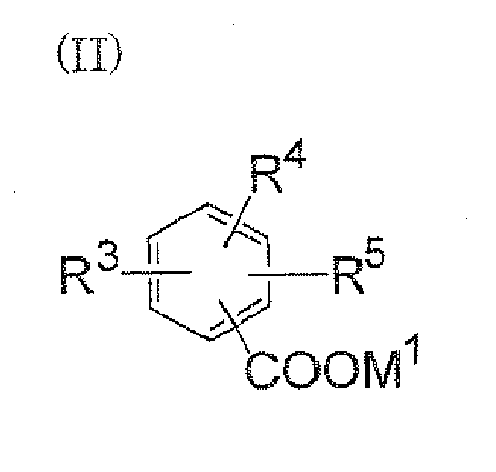
Description
- The present invention relates to fountain solution compositions for lithographic printing, more specifically to fountain solution compositions for offset printing process, which are preferably used for a rotary heat-set offset printing process.
- Lithographic printing is a process of printing, which advantageously utilizes the property that water and oil are essentially not miscible with each other, and consists of two areas: one receives water and repels an oil based ink, and the other receives the oil based ink and repels water. The former one is the non-image area, and the latter is the image area. Wetting the non-image area with a fountain solution enlarges the surface chemical difference between the image and non-image areas, thereby enhancing the ink repellency of the non-image area and the ink receptivity of the image area.
- Lithographic printing machines typically employ offset printing methods, in which ink and fountain solution are supplied onto the plate where ink attaches to the image area and fountain solution attaches to the non-image area to create an image, which image on the plate in turn becomes transferred to the blanket and then to the paper from the blanket, thereby achieving printing. During this procedure, when continuing printing for a long period of time, there causes a problem so-called "blanket piling", where the ink component and paper component gradually pile up on the non-image areas on the blanket. Specifically, rotary lithographic offset (rotary offset) printing is
characterized by its long-term and continuous operatability and high productivity, however, had a considerable problem of causing blanket piling. - In the blanket piling phenomena, the ink on the image area tends to be extruded and deposited on especially the back side of the rotation (the gripper end side), and said deposition inhibits ink transfer from the blanket to paper resulting in insufficient attachment of ink. In order to remove the deposit, printing operation has to be stopped for cleaning the blanket, giving rise remarkably to increase in paper waste and reduction of the productivity. Therefore, an improvement has been demanded.
- Some solutions for blanket piling have been proposed such as an ink composition for rotary lithographic offset printing comprising lanoline with an acid value of less than 1.0 in an amount of 1-5% by weight (see Patent Document 1), and a pigment coated paper for offset printing characterized by being coated with a coating composition wherein a ratio between a particular adhesive agent and the pigment is defined (see Patent Document 2).
- However, limitation to particular inks or printing papers cannot be satisfactory under circumstances where use of wide variety of inks or papers is desired. Therefore, improvement of blanket piling still remains as an important issue.
- Commonly known fountain solutions include aqueous solutions containing alkali metal salt or ammonium salt of dichromic acid, phosphorus acid or salt thereof such as ammonium phosphate, gum Arabic, colloid substances such as carboxymethyl cellulose (CMC) and the like. However, fountain solution containing only these compounds has a drawback in that it shows a difficulty in wetting the non-image area of the plate evenly and often causes undesired stains on the printed matters. Also, there has been a problem that the control of fountain solution supply requires substantial training.
- In order to improve the above drawback, Dahlgren system using an aqueous solution containing about 20-25% of isopropyl alcohol has been proposed. This method is advantageous in many points, including operationality and quality of the printed matters, by improving wetting of the non-image area, reducing the required amount of fountain solution, facilitating balancing of the amounts of printing ink and water to be supplied, reducing the emulsifying amount, of fountain solution into the printing ink and further by improving the transfer efficiency of the printing ink to the blanket. However, as isopropyl alcohol is volatile, a special apparatus is required in order to maintain a certain level of isopropyl alcohol in fountain solution, which leads to an increase of the cost. Further, isopropyl alcohol has a peculiar unpleasant odor, and a toxicity problem, therefore not favorable for the working environment. Application of a fountain solution containing isopropyl alcohol to offset printing where a common dampening roller is used has been problematic since isopropyl alcohol evaporates on the roller and on the plate surface and fails in exerting its effect.
- Fountain solutions free from isopropyl alcohol have been proposed such as a fountain solution containing compounds with ethylenediamine to which ethylene oxide and propylene oxide are attached (see Patent Documents 3 and 4), and a fountain solution containing compounds with diethylenetriamine to which ethylene oxide and propylene oxide are attached (see Patent Document 5). However, these still tended to cause blanket piling, and an improvement thereof has been demanded.
- On the other hand, a technique using a water-soluble organic polymer for improving wettability of printing cylinder has been proposed and it utilizes a fountain solution containing naturally occurring collagen/elastin, which are soluble to a weak acid aqueous medium (see Patent Document 6). It is also disclosed therein that the wettability becomes further improved by inclusion of a long chain (n≧6) non-polymeric alcohol and/or alkane diol having a hydroxyl group at (1,2)- or (1,3)-position. However, a method for improving blanket piling is not explicitly mentioned in the above prior arts.
- Further, as a method being free from isopropyl alcohol wherein the similar wettability is obtained as isopropyl alcohol is used, and an excess emulsification of a printing ink, ink-stain on dampening roller and erosion to image areas on CTP (computer to plate) type-printing plates are prevented, a fountain solution composition comprising 2,4-diethyl-1,5-pentanediol has been proposed (see Patent Document 7). However, there is no description relating to blanket piling in the prior art, and the effect on blanket piling thereby has not been known. Assuming that 2,4-diethyl-1,5-pentanediol is added in such an amount that an effect of inhibiting blanket piling is shown, since the solubility of the compound in water is extremely small, when a concentrated solution (the solution having a high concentration of the solvent) is diluted to prepare a solution for practical use (generally, 1-5% aqueous solution), a deposition may be generated and eventually no effect of inhibiting blanket piling appears, and therefore the improvement has been desired.
- [Patent Document 1]
JP 2006-328299 A - [Patent Document 2]
JP 2006-322114 A - [Patent Document 3]
JP 2007-50665 A - [Patent Document 4]
JP 2007-168124 A - [Patent Document 5]
JP 2007-55182 A - [Patent Document 6]
JP S61-189997 A - [Patent Document 7]
JP 2008-119922 A - An object of the present invention is to provide a method for improving blanket piling, and in particular to provide a fountain solution composition which is capable of improving blanket piling. An object of the present invention is also to provide a concentrated fountain solution composition which can prevent deposition of a slightly water soluble compound, such a deposition being possibly generated when a user dilutes the concentrated fountain solution composition to prepare a solution for practical use, and can provide an aqueous solution which is uniform and stable when used, as well as capable of exhibiting an effect of improving blanket piling.
- In order to achieve the objects described above, the present inventors extensively studied to discover that blanket piling is significantly improved by adding particular diol compounds and particular another compounds to a fountain solution. Further, a concentrated fountain solution composition comprising the diol compounds and the another compounds can be diluted to provide a fountain solution composition when used, which is uniform and stable in terms of the composition when used, without causing deposition of components contained in the composition. The present inventors then achieved the invention on the basis of these findings.
- Accordingly, the present invention is a fountain solution composition for lithographic printing characterized by comprising at least one selected from 2,4-diethyl-1,5-pentanediol, 2-butyl-2-ethyl-1,3-propanediol and 1,2-octanediol, and at least one selected from compounds represented by the following general formula (I) or (II):


- Examples of the compound represented by the above general formula (I) include m-xylene sulfonic acid, sodium m-xylene sulfonate, and potassium m-xylene sulfonate.
- As one embodiment of the fountain solution composition for lithographic printing according to the present invention, there is the fountain solution composition further comprising at least one compound represented by the following general formula (III):
R1-O-(CH2CH2O)m-H (III)
wherein R1 represents an alkyl group having 1 to 4 carbon atoms, and m represents an integer of 1 to 3. - As another embodiment of the fountain solution composition for lithographic printing according to the present invention, there is the fountain solution composition described above further comprising a pyrrolidone derivative represented by the following general formula (VI):

- In yet another embodiment of the fountain solution composition of the invention, the fountain solution composition further comprises at least one selected from the group consisting of acetylene glycols, acetylene alcohols, and an adduct compound of ethylene oxide and/or propylene oxide thereto.
- The present invention is also directed to a concentrated fountain solution composition for lithographic printing characterized by comprising at least one diol compound selected from 2,4-diethyl-1,5-pentanediol, 2-butyl-2-ethyl-1,3-propanediol and 1,2-actanediol in an amount of 5 to 25% by weight, and at least one selected from compounds represented by the above general formula (I) or (II) in an amount of 0.3 to 2 times with respect to the amount of the diol compound. Said concentrated fountain solution composition can be diluted from 30 to 100 fold with water to prepare a fountain solution, and said fountain solution can be used for heat-set offset rotary printing process. Accordingly, the present invention is also directed to a rotary heat-set offset printing process wherein a fountain solution composition obtained by diluting the above concentrated fountain solution composition from 30 to 100 fold with water is used to print. In such a rotary heat-set offset printing process, an ink for rotary offset of a heat-set type can be used.
- The fountain solution composition of the present invention represses the occurrence of blanket piling, and stably produces printings with high quality even through a continuous printing operation for a long period of time. In addition, the concentrated fountain solution composition according to the present invention prevents the deposition of a slightly water soluble compound, which deposition is a concern and possibly occurs when said concentrated fountain solution composition is diluted to prepare a solution for practical use, so as to obtain a diluent that is uniform and stable in terms of composition thereof, and therefore said concentrated fountain solution composition can provide a fountain solution that is uniform and stable in terms of composition thereof. According to the fountain solution composition according to the present invention, the use of volatile organic solvents such as isopropyl alcohol is not required, and therefore the operational environment is favorable, and scumming on printed matter is hardly generated, and favorable printing performance is attained without problems in printing such as the ink-stain (ink feedback) on the dampening roller.
- The present invention will be described in its detail below.
- In the present invention, at least one diol compound selected from 2,4-diethyl-1,5-pentanediol, 2-butyl-2-ethyl-1,3-propanediol and 1,2-octanediol is used, and in particular the use of 2-butyl-2-ethyl-1,3-propanediol shows remarkably the effect of the present invention.
- An appropriate amount of the diol compound of the invention to be added is suitably 0.001 to 2.0 % by weight based on the total weight of the fountain solution composition when used, preferably 0.01 to 1.0 % by weight, more preferably 0.05 to 0.7 % by weight, and further preferably 0.1 to 0.5 % by weight based on the total weight of the fountain solution composition when used.
- When the amount of the diol compound is too small, an effect of inhibiting blanket piling according to the present invention is not sufficient. On the other hand, when the amount of the diol compound is too large, inferior dissolution tends to occur, and when a concentrated solution is prepared and then diluted to prepare a solution for practical use, deposition of a slightly water soluble compound is easily generated, it follows that it is difficult to obtain a solution for practical use which is uniform and stable.
- The fountain solution composition of the invention can comprise one or more than one diol compounds. As one example of the fountain solution composition of the invention, there is the fountain solution comprising two or more diol compounds, wherein 2-butyl-2-ethyl-1,3-propanediol represents at least 1 % by weight of the total weight of diol compounds. In this embodiment, 2-butyl-2-ethyl-1,3-propanediol represents preferably at least 3 % by weight, and more preferably at least 10 % by weight of the total weight of diol compounds. In the above fountain solution composition comprising two or more diol compounds, the diol compound to be used in combination with 2-butyl-2-ethyl-1,3-propanediol includes specifically 2,4-diethyl-1,5-pentanediol.
- The fountain solution composition according to present invention further comprises at least one selected from the benzenesulfonic acid and a derivative thereof represented by the following general formula (I) and the benzenecarboxylic acid and a derivative thereof represented by the following general formula (II). These compounds are described in detail below.


- R3 to R5 each preferably represent hydrogen atom, methyl group or ethyl group. Among compounds represented by the formula (I) and compounds represented by the general formula (II), compounds represented by the general formula (I) are preferably used.
- Examples of the compound represented by the general formula (I) or (II) include benzenesulfonic acid, p-toluenesulfonic acid, cumenesulfonic acid, m-xylenesulfonic acid, p-xylenesulfonic acid, 2,4,6-trimethylsulfonic acid, 4-ethyl-benzenesulfonic acid, phenolsulfonic acid, o-cresolsulfonic acid, m-cresolsulfonic acid, 1,4-benzenedisulfonic acid, 2,5-dimethyl-1,3-benzenesulfonic acid, 2,5-dihydroxy-benzenesulfonic acid, 4-chlorobenzenesulfonic acid, 4-(hydroxymethyl)benzenesulfonic acid, p-toluenecarboxylic acid, m-xylenecarboxylic acid, benzoic acid, salicylic acid, isophthalylsulfonic acid, gallic acid, thiosalicylic acid, sulfosalicylic acid, 4-chlorobenzoic acid, 2,4,5-trichlorobenzoic acid, 2,3,6-trichlorobenzoic acid, 4-methylsalicylic acid, phthalic acid, isophthalic acid, 2,4,6-trimethylbenzoic acid, 2,4,6-trihydroxybenzoic acid, and the like. Examples also include the alkali metal salts (sodium, potassium, lithium salts) thereof, ammonium salt thereof and the like. Among these, preferred are p-toluenesulfonic acid, sodium p-toluene sulfonate, m-xylenesulfonic acid, sodium m-xylenesulfonate and potassium m-xylenesulfonate, and particularly preferred are m-xylenesulfonic acid, sodium m-xylenesulfonate and potassium m-xylenesulfonate.
- At least one selected from compounds represented by the above general formula (I) or (II) is used in an amount that is suitably 0.01 to 10 times, preferably 0.1 to 5 times and more preferably 0.3 to 2 times with respect to the amount of the above diol compound, in the fountain solution composition when used.
- In preparing the concentrated fountain solution composition, at least one selected from compounds represented by the general formula (I) or (II) is also added in an amount that is suitably 0.01 to 10 times, preferably 0.1 to 5 times and more preferably 0.3 to 2 times with respect to the content of the above diol compound. In the concentrated fountain solution composition, at least one selected from compounds represented by the general formula (I) or (II) can be present at the above ratio to prevent the deposition of the diol compound, that deposition is a concern and possibly occurs when the concentrated fountain solution composition is diluted to prepare the solution for practical use, so as to easily obtain a diluent that is uniform and stable in terms of the composition thereof, in other words, to easily obtain a fountain solution that is uniform and stable in terms of the composition thereof.
- It is preferable that the fountain solution composition would be generally used by diluting a concentrated solution before use in terms of transportation cost, storage space, and production cost including the cost of packaging materials. The dilution rate is preferably 10 to 200 fold, more preferably 20 to 150 fold, and the most preferably 30 to 100 fold. Therefore, the concentration of the composition in the concentrated solution is adjusted to a level that would give the above concentration of the fountain solution composition of use upon dilution. Higher concentration is preferred in respect of cost; however, excessive levels of concentration may cause some problems such as deposition or liquid separation, therefore being not favorable.
- As a specific embodiment of the concentrated fountain solution composition, there is a concentrated fountain solution composition comprising at least one diol compound selected from 2,4-diethyl-1,5-pentanediol, 2-butyl-2-ethyl-1,3-propanediol and 1,2-octanediol in an amount of 5 to 25% by weight, and at least one selected from compounds represented by the above general formula (I) or (II) in an amount of 0.01 to 10 times, preferably 0.1 to 5 times and more preferably 0.3 to 2 times with respect to the amount of the diol compound.
- The fountain solution composition of the present invention may further comprises at least one compound represented by the following general formula (III):
R1-O-(CH2CH2O)m-H (III)
wherein R1 represents an alkyl group having 1 to 4 carbon atoms, and m represents an integer of 1 to 3. - In the compound of the general formula (III), specifically, R1 represents a straight or branched chain alkyl group having 1 to 4 carbon atoms, including methyl group, ethyl group, propyl group, isopropyl group, n-butyl group, isobutyl group, t-butyl group and the like. In the light of enhancing a solubility of the diol compound and inhibiting blanket piling, R1 represents preferably n-butyl group, isobutyl group or t-butyl group, and most preferably isobutyl group. Further, m represents an integer of 1 to 3, preferably 1 or 2, and most preferably 1.
- Examples of the compound represented by the general formula (III) include ethylene glycol mono t-butyl ether, ethylene glycol monoisobutyl ether, ethylene glycol mono n-butyl ether, ethylene glycol monomethyl ether, ethylene glycol monoethyl ether, ethylene glycol mono n-propyl ether, ethylene glycol monoisopropyl ether, diethylene glycol mono t-butyl ether, diethylene glycol monoisobutyl ether, diethylene glycol mono n-butyl ether, triethylene glycol mono t-butyl ether, tetraethylene glycol mono n-butyl ether, triethylene glycol monoisobutyl ether, diethylene glycol monomethyl ether, diethylene glycol monoethyl ether, dietylene glycol mono n-propyl ether, diethylene glycol monoisopropyl ether and the like. These compounds can be used either alone or in combination of more than one.
- Among these, ethylene glycol mono t-butyl ether, ethylene glycol monoisobutyl ether, ethylene glycol mono n-butyl ether, diethylene glycol mono t-butyl ether, diethylene glycol monoisobutyl ether and diethylene glycol mono n-butyl ether are preferable, and ethylene glycol monoisobutyl ether, diethylene glycol monoisobutyl ether and diethylene glycol mono n-butyl ether are specifically preferable, and ethylene glycol monoisobutyl ether can be most preferably used. An appropriate amount of the compound represented by the general formula (III) to be added is 0.05 to 5.0 % by weight based on the total weight of the fountain solution composition when used, because within the above range, the composition would exhibit a sufficient effect of blanket piling repression, while not causing problems such as roller stripping or poor printing durability on a printing plate. More preferably, the amount to be added is 0.1 to 3.0 % by weight.
- The fountain solution composition of the present invention can further comprise at least one compound selected from an adduct compound of ethylene oxide and propylene oxide to ethylenediamine and an adduct compound of ethylene oxide and propylene oxide to diethylenetriamine.
- These compounds will be described as follows.
- An adduct compound of ethylene oxide and propylene oxide to ethylenediamine used for the invention has an appropriate weight-average molecular weight of 500 to 20000, preferably 500 to 5000, more preferably 800 to 1500, and most preferably about 1000.
- In the compound, a molar ratio of attachment of ethylene oxide and propylene oxide is suitably in the range of 5:95 to 50:50, and more preferably in the range of 20:80 to 35:65 in terms of sufficient printing performance.
- Bond-structures of ethylene oxide and propylene oxide in the compound include a block structure in which ethylene oxide is added first followed by propylene oxide, block structure in which propylene oxide is added first followed by ethylene oxide, and random structure in which ethylene oxide and propylene oxide are added simultaneously, however, any of these structures displays almost the same effect.
- The adduct compound of ethylene oxide and propylene oxide to ethylenediamine used for the invention can be produced by a conventional method, for example, by allowing ethylene oxide and/or propylene oxide to react with ethylenediamine in the presence of a catalyst.
- The adduct compound of ethylene oxide and propylene oxide to ethylenediamine used for the invention is specifically represented by formula (IV) as follows.

- The molecular weight of the compound and the ratio of ethylene oxide and propylene oxide can be determined, for example, by measuring a hydroxyl value and an amine value, or by NMR measurement.
- The compound of formula (IV) is preferably represented by formula (IV) as follows.

- The compound of above formula (IV') suitably has a weight-average molecular weight of 500 to 20000, preferably 500 to 5000, and more preferably 800 to 1500. The symbols a to h take certain values so that the molecular weight of the compound in total would be 500 to 20000, however, a to h are preferably 1 to 10, and in particular, 2 to 4.
- Such compounds would not adversely affect image areas, even when the remaining water drops are left and becomes concentrated by evaporation during run-down time of the printing machine. These compounds can take the place of isopropyl alcohol without being combined with volatile organic solvents, however, tend to deteriorate blanket piling and ink-stain (ink feedback) on the dampening roller. By combining with the diol compound used for the present invention, the above compound would be able to take place of isopropyl alcohol without aggravating blanket piling and ink-stain (ink feedback) on the dampening roller.
- In the compound, a suitable molar ratio of added ethylene oxide and added propylene oxide is suitably in the range of 5:95 to 50:50, and more preferably in the range of 20:80 to 35:65 in terms of sufficient printing performance.
- An adduct compound of ethylene oxide and propylene oxide to diethylenetriamine used for the invention has an appropriate weight-average molecular weight of 500 to 3000, preferably 800 to 2000, and most preferably about 1000.
- Compounds having such molecular weights would not adversely affect image areas, even when the remaining water drops are left and becomes concentrated by evaporation during run-down time of the printing machine.
These compounds can take place of isopropyl alcohol without being combined with volatile organic solvents. - In the compound, a suitable molar ratio of added ethylene oxide and added propylene oxide is suitably in the range of 5:95 to 50:50, and more preferably in the range of 20:80 to 35:65 in terms of sufficient printing performance.
- Bond-structures of ethylene oxide and propylene oxide include a block structure in which ethylene oxide is attached first followed by propylene oxide, block structure in which propylene oxide is attached first followed by ethylene oxide, and random structure in which ethylene oxide and propylene oxide are attached simultaneously, however, any of these structures displays almost the same effect.
- The adduct compound of ethylene oxide and propylene oxide to diethylenetriamine used for the invention can be produced by a conventional method, for example, by allowing ethylene oxide and/or propylene oxide to react with diethylenetriamine in the presence of a catalyst. Alternatively, one can cool diethylenetriamine along with acetonitrile in an ice bath and add propylene oxide thereto, and further add ethylene oxide thereto to allow to react, then remove the deposit from the mixture by filtration, whereby obtain the adduct compound of propylene oxide/ethylene oxide to diethylenetriamine.
- The adduct compound of propylene oxide/ethylene oxide to diethylenetriamine used for the invention is specifically represented by formula (V) as follows.

- In the formula, the symbols a to j take certain values so that the molecular weight of the compound in total would be 500 to 3000, however, a to j are preferably 1 to 6, and in particular, 2 to 3.
- The molecular weight of the compound and the ratio of ethylene oxide and propylene oxide can be determined, for example, by measuring a hydroxyl value and an amine value or by NMR measurement.
- Isopropyl alcohol can be replaced by the above compound contained in an amount of 0.01 to 1 % by weight, preferably 0.05 to 0.5 % by weight, in a fountain solution composition when used, and then an excellent printability would be displayed. Such compounds would not adversely affect image areas, even when the remaining water drops are left and becomes concentrated by evaporation during run-down time of the printing machine after using the fountain solution. However, these compounds tend to deteriorate blanket piling and ink-stain (ink feedback) on the dampening roller. By combining with the diol compound used for the invention, the above compound would be able to take the place of isopropyl alcohol without aggravating blanket piling and ink-stain (ink feedback) on the dampening roller.
- The fountain solution composition of the invention may include other components as follows:
- (a) auxiliary agent for wettability improvement
- (b) water-soluble polymer compound
- (c) pH adjusting agent
- (d) chelating agent
- (e) odor masking agent
- (f) others ((i) preservatives, (ii) colorant, (iii) anticorrosive, (iv) antifoaming agent, etc.)
- As for (a) auxiliary agents for wettability improvement, surfactants and other solvents can be used. Among surfactants, for example, anionic surfactants include fatty acid salts, abietate, hydroxyalkanesulfonate, alkanesulfonate, dialkyl sulfosuccinate, linear alkylbenzene sulfonate, branched alkylbenzene sulfonate, alkylnaphthalenesulfonate, alkylphenoxy polyoxyethylene propylsulfonate, polyoxyethylene alkylsulfenyl ether salt, N-methyl-N-oleyl taurine sodium salt, N-alkyl sulfosuccinic acid monoamide disodium salt, petroleum sulfonate, sulfated castor oil, sulfated beef tallow oil, sulfuric ester salt of fatty acid alkyl ester, alkyl sulfuric acid ester salt, polyoxyethylene alkyl ether sulfuric ester salt, fatty acid monoglyceride sulfuric ester salt, polyoxyethylene alkylphenyl ether sulfuric ester salt, polyoxyethylene styrylphenyl ether sulfuric ester salt, alkyl phosphoric ester salt, polyoxyethylene alkyl ether phosphoric ester salt, polyoxyethylene alkylphenyl ether phosphoric ester salt, partially saponified product of styrene-maleic anhydride copolymer, partially saponified product of olefin-maleic anhydride copolymer, naphthalene sulfonate formalin condensate and the like. Among these, dialkyl sulfosuccinate, alkyl sulfuric acid ester salt and alkylnaphthalenesulfonate are particularly preferably used.
- Nonionic surfactants include polyoxyethylene alkyl ether, polyoxyethylene alkylphenyl ether, polyoxyethylene polystyrylphenyl ether, polyoxyethylene polyoxypropylene alkyl ether, glycerol fatty acid partial ester , sorbitan fatty acid partial ester, pentaerythritol fatty acid partial ester, propylene glycol mono fatty acid ester, sucrose fatty acid partial ester, polyoxyethylene sorbitan fatty acid partial ester, polyoxyethylene sorbitol fatty acid partial ester, polyethylene glycol fatty acid ester, polyglycerin fatty acid partial ester, polyoxyethylenated castor oil, polyoxyethylene glycerol fatty acid partial ester, fatty acid diethanol amide, N,N-bis-2-hydroxy alkylamine, polyoxyethylene alkylamine, triethanolamine fatty acid ester, trialkylamine oxide and the like. In addition, fluorochemical surfactants and silicon surfactants may be used. Among these, polyoxyethylene alkylphenyl ether and polyoxyethylene-polyoxypropylene block polymer are preferably used. In addition, there are surfactants of silicon derivatives and fluorine derivatives. In case of using a surfactant, an appropriate content thereof is not more than 1.0 % by weight, preferably 0.001 to 0.5 % by weight in the fountain solution composition when used, in view of foaming. In addition, combination of two or more surfactants can be employed.
- As for another auxiliary agent or wetting solvent, 3-methoxy-3-methyl butanol, 3-methoxybutanol, ethylene glycol, diethylene glycol, triethylene glycol, butylene glycol, hexylene glycol, glycerol, diglycerol, polyglycerin, trimethylolpropane and the like can be used. These solvents can be used either alone or in combination of more than one. These solvents are appropriately used in a range of 0.1 to 3 % by weight based on the total weight of the fountain solution composition when used, and preferably 0.3 to 2 % by weight.
- As for another auxiliary agent, a pyrrolidone derivative represented by the following general formula (VI) may be used.

- Specific examples of the pyrrolidone derivative include ethyl pyrrolidone, butyl pyrrolidone, pentapyrrolidone, hexapyrrolidone, octylpyrrolidone, laurylpyrrolidone and the like. These compounds can be used either alone or in combination of more than one. Among these, those wherein R4 represents an alkyl having 6 or more carbon atoms in the formula (VI) are preferable, and octylpyrrolidone is particularly preferable. The compound represented by the general formula (VI) is used appropriately in an amount of 0.0001 to 1.0 % by weight on the basis of the total weight of the fountain solution composition when used, and more preferably 0.001 to 0.1 % by weight.
- The fountain solution composition of the invention can also comprise at least one selected from the group consisting of acetylene glycols, acetylene alcohols, and an adduct compound of ethylene oxide and/or propylene oxide thereto. Specific examples of said compounds include 3,5-dimethyl-1-hexyne-3-ol, 2,5-dimethyl-3-hexyne-2,5-diol, 2,4,7,9-tetramethyl-5-decyne-4,7-diol, 3,6-dimethyl-4-octyne-3,6-diol, 2-butyne-1,4-diol, 3-methyl-1-butyne-3-ol, an adduct compound of ethylene oxide and/or propylene oxide to the above compound, and the like. Among these, 3,6-dimethyl-4-octyne-3,6-diol, 2,4,7,9-tetramethyl-5-decyne-4,7-diol, and an adduct compound of 4 to 10 ethylene oxides to 2,4,7,9-tetramethyl-5-decyne-4,7-diol are preferable. These compounds are used appropriately in an amount of 0.0001 to 1.0 % by weight on the basis of the total weight of the fountain solution composition when used, and more preferably 0.001 to 0.1 % by weight.
- The following compounds can be added to the fountain solution composition, if desired, for the purpose of adjustment of dynamic surface tension, solubilization, control on a mix rate (emulsification rate) of printing ink into a proper range, or the like: 2-ethyl-1,3-hexanediol, an adduct compound of ethylene oxide and/or propylene oxide to 2-ethyl-1,3-hexanediol, an adduct compound of propylene oxide to trimethylolpropane, an adduct compound of propylene oxide to glycerin, an adduct compound of propylene oxide to sorbitol, tetrahydrofurfuryl alcohol, and the like. Among these, preferred as an auxiliary agent for adjustment of dynamic surface tension is 2-ethyl-1,3-hexanediol, and preferred as an agent for solubilization is tetrahydrofurfuryl alcohol. As an agent for controlling an ink emulsification rate, an adduct compound of ethylene oxide to 2-ethyl-1,3-hexanediol, an adduct compound of propylene oxide to trimethylolpropane and the like may be preferably used. These compounds can be used either alone or in combination of more than one. These compounds are used appropriately in an amount of 0.01 to 7 % by weight on the basis of the total weight of the fountain solution composition when used, and more preferably 0.05 to 5 % by weight.
- The water-soluble polymer compounds (b) used for the fountain solution composition of the invention include natural products and denatured products thereof such as gum Arabic, starch derivatives (e.g. dextrin, enzymolysis dextrin, hydroxypropylated enzymolysis dextrin, carboxymethylated starch, phosphoric acid starch, octenylsuccinated starch), alginate, cellulose derivatives (e.g. carboxymethyl cellulose, carboxyethyl cellulose, methyl cellulose, hydroxypropyl cellulose, hydroxypropylmethyl cellulose, hydroxyethyl cellulose) and the like, and synthetic products such as polyethylene glycol and copolymers thereof, polyvinyl alcohol and derivatives thereof, polyvinylpyrrolidone, polyacrylamide and copolymers thereof, polyacrylic acid and copolymers thereof, a vinyl methyl ether/maleic anhydride copolymer, a vinyl acetate/maleic anhydride copolymer, polystyrene sulfonic acid and copolymers thereof, and the like. The appropriate content of the water-soluble polymer is 0.0001 to 0.1 % by weight, preferably 0.0005 to 0.05 % by weight, based on the total weight of the fountain solution composition when used.
- Among the water-soluble polymer compounds listed above, polyvinylpyrrolidone, hydroxypropyl cellulose, and hydroxypropylmethyl cellulose are preferably used for the invention. Polyvinylpyrrolidone contained in the fountain solution composition refers to a homopolymer of vinylpyrrolidone. Suitably, the molecular weight of polyvinylpyrrolidone is 200 to 3,000,000, preferably 300 to 500,000, and more preferably 300 to 100,000. The molecular weight of 300 to 30,000 is particularly preferred.
- These polyvinylpyrrolidone can be used either alone or in combination of more than one with different molecular weights. In addition, they can be combined with polyvinylpyrrolidone of low molecular weight, such as vinylpyrrolidone oligomers with degree of polymerization of 3 to 5.
- Such polyvinylpyrrolidone is commercially available. For example, polyvinylpyrrolidone in different grades, such as K-15, K-30, K-60, K-90, K-120 and the like from ISP Co., Ltd. can be usefully employed.
- The appropriate polyvinylpyrrolidone content in the fountain solution composition when used is 0.001 to 0.3 % by weight, and preferably 0.005 to 0.2 % by weight.
- The fountain solution composition of the invention preferably comprises at least one compound selected from sugars. The sugar for use can be selected from monosaccharide, disaccharide, oligosaccharide and sugar alcohols thereof obtainable by hydrogenation. Examples of sugars include D-erythrose, D-threose, D-arabinose, D-ribose, D-xylose, D-erythro-pentulose, D-allulose, D-galactose, D-glucose, D-mannose, D-talose, β-D-fructose, α-L-sarbose, 6-deoxy-D-glucose, D-glycero-D-galactose, α-D-allulo-heptulose, β-D-altro-3-heptulose, saccharose, lactose, D-maltose, isomaltose, inulobiose, maltotriose, D,L-arabite, ribitol, xylitol, D,L-sorbitol, D,L-mannite, D,L-idit, D,L-talite, dulcite, allodulcite, maltitol, reduced starch syrup and the like. These sugars can be used either alone or in combination of more than one.
- The appropriate content of at least one compound selected from sugars is 0.01 to 1 % by weight, and preferably 0.1 to 0.8 % by weight, in the fountain solution composition when used.
- Water-soluble organic and/or inorganic acids and/or salts thereof can be used as pH adjusting agents (c) used for the fountain solution composition of the invention. These compounds act as a pH adjusting agent or buffer in the fountain solution and can be effectively used for adequate etching or anticorrosive treatment. Preferable organic acid includes, for example, citric acid, ascorbic acid, malic acid, tartaric acid, lactic acid, acetic acid, gluconic acid, acetic acid, hydroxyacetic acid, oxalic acid, malonic acid, levulinic acid, sulfanilic acid, p-toluenesulfonic acid, phytic acid, an organic phosphonic acid and the like. Inorganic acid includes phosphoric acid, nitric acid, sulfuric acid, polyphosphoric acid and the like. In addition, alkali metal salts, alkaline earth metal salts, ammonium salts or organic amine salts of these organic and/or inorganic acids can be preferably used, and such organic and inorganic acids and salts thereof can be used either alone or in combination of more than one. The amount of such a pH adjusting agent to be added to the fountain solution composition of the invention is preferably in the range of 0.001 to 0.3 % by weight. Although the pH adjusting agent is preferably used within an acidic condition of pH 3-7 in the fountain solution composition, it can also be used within alkali condition of pH 7-11 in the presence of alkali metal hydroxide, phosphoric acid, alkali metal salt, alkali metal salt of carbonic acid, silicate and the like.
- The fountain solution composition of the invention may further comprise a chelating agent (d). A fountain solution composition is usually prepared by diluting the concentrated solution with tap water, well water or the like, and components of tap water or well water such as calcium ion may adversely affect printing and make printing matter stain-prone. Under such condition, addition of a chelating agent may solve the above problem. Examples of preferred chelating agents include ethylenediaminetetraacetic acid and potassium salts and sodium salts thereof: diethylenetriaminepentaacetic acid and potassium salts and sodium salts thereof; triethylenetetraminehexaacetic acid and potassium salts and sodium salts thereof; hydroxyethylethylenediaminetriacetic acid and potassium salts and sodium salts thereof; nitrilotriacetic acid and sodium salts thereof; organic phosphonic acids such as 1-hydroxy ethane-1,1-diphosphonic acid and potassium salts and sodium salts thereof; aminotri (methylenephosphonic acid) and potassium salts and sodium salts thereof, and phosphonoalkanetricarboxylic acids. Organic amine salts are also effective instead of the sodium salts or potassium salts of the chelating agents above. Among these, chelating agents which are stable in the fountain solution composition when used and do not inhibit printing property are selected. The appropriate content of the chelating agent is 0.001 to 0.5 % by weight, and preferably 0.002 to 0.25 % by weight in the fountain solution composition when used.
- Odor masking agents (e) include esters which is conventionally known to be used as flavors. Examples of odor masking agents include those represented by formula (VII) as follows.
R2-COOR3 (VII)
- In the compound of formula (VII), R2 is a C1-C15 alkyl, alkenyl or aralkyl group or phenyl group; in case where R2 is alkyl or alkenyl, the number of carbon atoms therein is preferably 4 to 8; in case where R2 represents an alkyl, alkenyl or aralkyl group, the group may be either linear or branched. Note that a suitable alkenyl group has one double bond. Aralkyl groups include a benzyl group, phenylethyl group and the like. One or more of hydrogen atoms of alkyl, alkenyl or aralkyl group or phenyl group represented by R2 may optionally be substituted by hydroxy or acetyl groups. R3 is a C2-C10 alkyl, aralky or phenyl group, and may be either linear or branched; in case where R3 is an alkyl group, the number of carbon atoms therein is preferably from 3 to 9. Aralkyl groups include a benzyl group, phenylethyl group and the like.
- Specific examples of odor masking agents (e) which may be used include esters of formic acid, acetic acid, propionic acid, butyric acid, isobutyric acid, 2-ethylbutyric acid, valeric acid, isovaleric acid, 2-methylvaleric acid, hexanoic acid (caproic acid), 4-methylpentanoic acid (isohexane acid), 2-hexenoic acid, 4-pentene acid, heptanoic acid, 2-methylheptane acid, octanoic acid (caprylic acid), nonanoic acid, decanoic acid (capric acid), 2-decenoic acid, lauric acid or myristic acid. In addition, odor masking agents also includes acetoacetic esters such as benzyl phenylacetate, ethyl acetoacetate and 2-hexyl acetoacetate. Among these, n-pentyl acetate, isopentyl acetate, n-butyl butyrate, n-pentyl butyrate and isopentyl butyrate are preferred and, in particular, n-butyl butyrate, n-pentyl butyrate and isopentyl butyrate are preferred. The appropriate content of such acid ester in the fountain solution composition is 0.0001 to 10 % by weight, and preferably 0.001 to 1 % by weight, based on the total weight of the fountain solution composition when used. Such odor masking agents may improve the working environment, and be used in combination with vanillin, ethyl vanillin and the like.
- Preservatives (f)(i) used for the fountain solution composition of the invention include phenol or derivatives thereof, formalin, imidazole derivatives, sodium dehydroacetate, 4-isothiazolin-3-one derivatives, benztriazole derivatives, derivatives of amidine or guanidine, quaternary ammonium salt, pyridine, derivatives of quinoline or guanidine, derivatives of diazine or triazole, derivatives of oxazol or oxazin, bromonitro alcohols such as bromonitro propanol, 2,2-dibromo-2-nitro ethanol, 3-bromo-3-nitro pentane 2,4-diol, and the like. Preferable amount of the preservative to be added is such that stably exhibit its effect on bacteria, fungi, yeasts and the like, and varies with the types of the bacteria, fungi and yeasts, however, it is preferably 0.001 to 1.0 % by weight relative to the fountain solution composition when used. It is also preferable to use preservatives in combination of more than one which are potent against a variety of bacteria, fungi and yeasts.
- Food colorings and the like can be preferably used for invention as colorants (f)(ii). Examples of colorants include CI No. 19140 and 15985 for yellow pigments; CI No. 16185, 45430, 16255, 45380, and 45100 for red pigments; CI No. 42640 for purple pigment; CI No. 42090 and 73015 for blue pigment; CI No. 42095 for green pigment; and the like. Anticorrosives (f)(iii) which may be used for the invention include benzotriazole, 5-methylbenzotriazol, thiosalicylic acid, benzimidazole and derivatives thereof and the like. Silicone antifoaming agents are preferable for antifoaming agents (f)(iv) which may be used for the invention. Among these, either emulsion-dispersing type or solubilized type may be used.
- The balance of the fountain solution composition according to the invention is water. Fountain solution compositions are generally concentrated in commercial products on a commercial basis. Accordingly, the concentrated solution can be obtained as an aqueous solution with the above components dissolved therein by using water, preferably desalted water, i.e. pure water. The concentrated solution is used by diluting about 10-200 fold, preferably about 20-150 fold and more preferably about 30-100 fold with tap water, well water or the like thereby making the fountain solution composition when used.
- The fountain solution composition of the invention can be used for a variety of lithographic printing plates, and, in particular, can be preferably used for lithographic printing plates which can be obtained by imagewise exposure and development of a photo-sensitive lithographic printing plate (a printing plate which is preliminarily photosensitized and referred to as PS plate) onto the surface of an aluminum plate support. Preferable examples of such PS plates include a plate in which a photo-sensitive layer consisting of a mixture with diazo resin (salt of a condensation product of p-diazodiphenylamine and paraformaldehyde) and shellac is prepared on an aluminium plate as described in
GB Patent No. 1, 350, 521 GB Patent Nos. 1, 460, 978 1, 505, 739 JP H2-236552 A JP H4-274429 A JP S50-125806 A - In the composition forming the above photosensitive layer, an alkali-soluble resin other than the alkali-soluble novolac resin may be incorporated, if necessary. Such an alkali-soluble resin includes for example, styrene-acrylic acid copolymer, methylmethacrylate-mathacrylic acid copolymer, alkali-soluble polyurethane resin, alkali-soluble vinyl resin as disclosed in J.P. KOKOKU (publication of examined application) No.
Sho 52-28401 U.S. Patent Nos. 4,072,528 and4,072,527 , and a PS plate wherein a photosensitive layer comprising a mixture of an azide compound and a water-soluble polymer is provided on an aluminum plate as disclosed inGB Patent Nos. 1,235,281 1,495,861 - Furthermore, the fountain solution composition of the present invention can be preferably applied to a CTP plate, which has been directly exposed by a visible or infrared laser, and examples thereof include a photopolymer type digital plate such as LP-NX manufactured by FUJI FILM Corporation, a thermal positive type digital plate such as LH-PI manufactured by FUJI FILM Corporation, a plate of on press processing type to be developed by a fountain solution and an ink, such as ET-S manufactured by FUJI FILM Corporation, and a thermal negative type digital plate such as LH-NI manufactured by FUJI FILM Corporation, and the like.
- The present invention will now be described more in detail by way of examples thereof. It should be noted that % used herein indicates % by weight unless otherwise mentioned.
- A variety of concentrated fountain solution compositions of Examples 1-10 and Comparative Examples 1-9 were prepared according to the following preparation in the same manner, except for changing diol compounds and the compound represented by the general formula (I) or (II) as shown in Table 1 below, but using the equal weight thereof.
Formulation of the fountain solution composition (concentrated solution) Ingredients Additive amount Ethylene glycol monoisobutyl ether 200g Ethylene glycol monotertiary butyl ether 200g Diol compounds shown in Table 1 120g Compounds represented by general formula (I) or (II) 100g Ammonium nitrate 30g Citric acrid 8g Hydroxypropyl cellulose 5g N-octylpyrrolidone 10g Water up to 1000g in total - Each concentrated fountain solution composition prepared above was diluted with water in a fountain solution tank so that a dilution rate became 2%, dissolution thereof was carried out by merely liquid circulation but not agitation, and then printing was performed, and the following evaluations were conducted.
- The following assays were conducted for each fountain solution composition after printing 20000 sheets using Lithron26 printing machine from KOMORI Corporation with an ink: LEO-X Black L from TOYO INK MFG CO., LTD., ultra lightweight coat papers: OK topcoat+ from OJI Paper Co., Ltd., and a plate: PN-V from FUJI FILM Corporation.
- After above printing, the blanket was removed and the height of deposit on a non-image area was measured with a stylus surface roughness meter (SURFCORDER) to evaluate blanket piling as a relative value to a value in a case using a fountain solution free from the diol compound and the compound represented by the general formula (I) or (II), the latter value being supposed to be 100 (see Comparative Example 1 in Table 1). The smaller the value is, the smaller the height of piling is, therefore preferable.
- 30 Liters of tap water was impounded in a fountain solution tank, cooled at a temperature of 10°C, and then 600 mL of each concentrated fountain solution was added thereto, merely liquid circulation was carried out, and an amount of deposition of components in the fountain solution, said deposition floating on the surface of the solution, was visually evaluated. The smaller the amount is, the evaluation result is more preferable.
- : No deposition was generated at all.

- ○: Immediately after addition of concentrated fountain solution, deposition was generated, and then dissolved within one minute.
- △: Immediately after addition of concentrated fountain solution, deposition was generated, and then dissolved within 5 minutes.
- ×: Immediately after addition of concentrated fountain solution, deposition was generated, and then a small amount of remainder undissolved was still observed after 15 minutes.
- ××: Immediately after addition of concentrated fountain solution, deposition was generated, and then a large amount of remainder undissolved was still observed after 15 minutes and more.
- Results of the evaluations are shown in Table 1.
- In Table 1, symbols used therein represent the following compounds.
- (1): 2,4-diethyl-1,5-pentanediol
- (2): 2-butyl-2-ethyl-1,3-propanediol
- (3): 1,2-octanediol
- Comparative compound (1): 2-ethyl-1,3-hexanediol
- Comparative compound (2): 1,5-pentanediol
- Comparative compound (3): 1,8-octanediol
- Comparative compound (4): 1,9-nonanediol
- Compound represented by formula (I) or (II)
- (A): m-xylenesulfonic acid
- (B): sodium m-xylenesulfonate
- (C): sodium p-toluenesulfonate
- (D): sodium p-xylenesulfonate
- (E): sodium cumenesulfonate
- (F): p-toluenecarboxylic acid
- (G): salicylic acid
- (H): 5-sulfosalicylic acid
Comparative compound (A): sodium 4-octylbenzene sulfonate
- As seen from results in Table 1, the combination use of the specific diol compound and the compound represented by the general formula (I) or (II) remarkably inhibits blanket piling, and also inhibits the deposition of components in the fountain solution.
- Experiment was conducted in the same manner as Example 3 in Table 1, except that ethylene glycol monoisobutyl ether was replaced with an organic solvent shown in Table 2, and the following evaluation was carried out.
- (1) Evaluation of blanket piling
Same as Examples 1-10. - (2) Evaluation of deposition of components
Same as Examples 1-10. - (3) Evaluation of minimum value of water dial
Water dial equipped with the printing machine (dial value of from 1 to 99, this value is bigger, a rotating speed of the dampening roller becomes bigger, and an amount of water provided on a plate surface becomes larger) was changed gradually from a small value to a big value, and the value at which scumming on 40% dots area was resolved was measured and defined as "minimum value of water dial". A difference of each minimum value of water dial in Examples 11 to 17 from the minimum value of water dial in Example 3 was measured, and said value was evaluated as a difference of minimum value of water dial. The smaller this value is, it follows that printing can be conducted with a smaller amount of water, therefore preferable. - Results of the evaluations are shown in Table 2.
- In Table 2, symbols used in the organic solvent column represent the following compounds.
-
- S-(1): ethylene glycol monoisobutyl ether
- S-(2): diethylene glycol monoisobutyl ether
- S-(3): diethylene glycol mono n-butyl ether
- S-(4): ethylene glycol mono t-butyl ether
- S-(5) diethylene glycol mono n-propyl ether
- S-(6): propylene glycol mono n-butyl ether
- S-(7): dipropylene glycol mono t-butyl ether
- S-(8): propylene glycol
- As seen from results in Table 2, when the organic solvent represented by the general formula (III) (S-(1) to S-(5)) is used, blanket piling and deposition of components are inhibited and simultaneously the minimum value of water dial is lower, and therefore these embodiments are particularly preferable.
- Experiment was conducted in the same manner as Example 3 in Table 1, except that N-octylpyrrolidone was replaced with a pyrrolidone derivative or an acetylene derivative shown in Table 3 below in an equal quantity, and the following evaluation was carried out.
- (1) Evaluation of blanket piling
Same as Examples 1-10. - (2) Evaluation of deposition of components
Same as Examples 1-10. - (3) Evaluation of ink-stain (ink feedback) on the dampening roller
- After completion of the printing, ink-stain on the dampening roller were visually observed and ranked as follows.
- ○: Little ink-stain
- △: Slight ink-stain
- ×: Obvious ink-stain
- Results are shown in Table 3.
Table 3 Example Pyrrolidone derivative/ acetylene derivative Blanket piling Deposition of components Ink-stain on dampening roller 3 N-octylpyrrolidone 48 
○ 18 no additive 63 
△ 19 P-(1) 59 
△ 20 P-(2) 61 
△ 21 A-(3) 66 
△ 22 A-(4) 55 
○ 23 A-(5) 62 ○ △ 24 A-(6) 52 
○ - The symbols in the pyrrolidone derivative/acetylene derivative column represent the following compounds.
- P-(1): N-methylpyrrolidone
- P-(2): N-buthylpyrrolidone
- A-(3): 3,5-Dimethyl-1-hexyne-3-ol
- A-(4): 3,6-Dimethyl-4-octyne-3,6-diol
- A-(5): 2,4,7,9-Tetramethyl-5-decyne-4,7-diol
- A-(6): adduct compound of 4 ethylene oxides to 2,4,7,9-tetramethyl-5-decyne-4,7-diol
- As seen from results in Table 3, N-octylpyrrolidone, 3,6-Dimethyl-4-octyne-3,6-diol or an adduct compound of 4 ethylene oxides to 2,4,7,9-tetramethyl-5-decyne-4,7-diol is added to improve ink-stain on dampening roller and to show the effect of present invention preferably.
| Example | Organic solvent | Blanket piling | Deposition of components | difference of minimum value of water dial | Remarks |
| 3 | S-(1) | 48 |
 |
0 | favorable |
| 11 | S-(2) | 52 |
 |
2 | favorable |
| 12 | S-(3) | 53 |
 |
2 | favorable |
| 13 | S-(4) | 53 |
 |
5 | favorable |
| 14 | S-(5) | 54 |
 |
5 | favorable |
| 15 | S-(6) | 68 | △ | 0 | |
| 16 | S-(7) | 70 | △ | 5 | |
| 17 | S-(8) | 55 |
 |
12 |
Claims (7)
- A fountain solution composition for lithographic printing characterized by comprising at least one selected from 2,4-diethyl-1,5-pentanediol 2-butyl-2-ethyl-1,3-propanediol and 1,2-octanediol, and at least one selected from compounds represented by the following general formula (I) or (II):


- The fountain solution composition for lithographic printing according to claim 1, wherein the compound represented by the general formula (I) is m-xylenesulfonic acid, sodium m-xylenesulfonate or potassium m-xylenesulfonate.
- The fountain solution composition for lithographic printing according to claim 1 or 2, further comprising at least one compound represented by the following general formula (III):
R1-O-(CH2CH2O)m-H (III)
wherein R1 represents an alkyl group having 1 to 4 carbon atoms, and m represents an integer of 1 to 3. - The fountain solution composition for Lithographic printing according to any one of claims 1 to 3, further comprising a pyrrolidone derivative represented by the following general formula (VI):

- The fountain solution composition for lithographic printing according to any one of claims 1 to 4, further comprising at least one selected from the group consisting of acetylene glycols, acetylene alcohols, and an adduct compound of ethylene oxide and/or propylene oxide thereto.
- A concentrated fountain solution composition for lithographic printing
characterized by comprising at least one diol compound selected from 2,4-diethyl-1,5-pentanediol, 2-butyl-2-ethyl-1,3-propanediol and 1,2-octanediol in an amount of 5 to 25% by weight, and at least one selected from compounds represented by the following general formula (1) or (II) in an amount of 0.3 to 2 times with respect to the amount of the diol compound.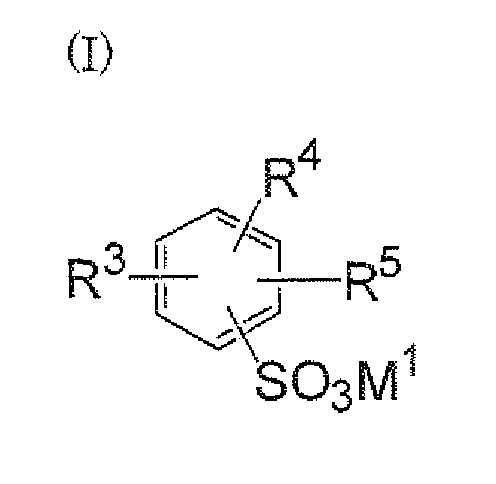
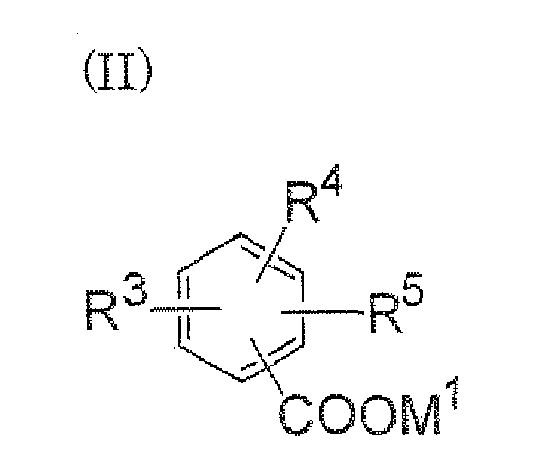
- A rotary heat-set offset printing process wherein a fountain solution
composition obtained by diluting the concentrated fountain solution composition according to claim 6, from 30 to 100 fold with water is used to print.
Applications Claiming Priority (1)
| Application Number | Priority Date | Filing Date | Title |
|---|---|---|---|
| JP2009074468A JP5288268B2 (en) | 2009-03-25 | 2009-03-25 | Dampening solution composition for lithographic printing and heat set-off ring printing method |
Publications (2)
| Publication Number | Publication Date |
|---|---|
| EP2233311A1 true EP2233311A1 (en) | 2010-09-29 |
| EP2233311B1 EP2233311B1 (en) | 2013-09-18 |
Family
ID=42313839
Family Applications (1)
| Application Number | Title | Priority Date | Filing Date |
|---|---|---|---|
| EP20100157506 Not-in-force EP2233311B1 (en) | 2009-03-25 | 2010-03-24 | Fountain solution composition for lithographic printing and heat-set offset rotary printing process |
Country Status (3)
| Country | Link |
|---|---|
| US (1) | US20100242764A1 (en) |
| EP (1) | EP2233311B1 (en) |
| JP (1) | JP5288268B2 (en) |
Cited By (6)
| Publication number | Priority date | Publication date | Assignee | Title |
|---|---|---|---|---|
| WO2012061370A3 (en) * | 2010-11-01 | 2013-03-14 | Sun Chemical Corporation | Fountain solutions for offset lithographic printing inks |
| CN104085218A (en) * | 2014-07-05 | 2014-10-08 | 安徽索亚装饰材料有限公司 | Offset press fountain solution and preparation method thereof |
| CN104085217A (en) * | 2014-07-05 | 2014-10-08 | 安徽索亚装饰材料有限公司 | Commercial web offset press fountain solution and preparing method thereof |
| CN104085219A (en) * | 2014-07-05 | 2014-10-08 | 安徽索亚装饰材料有限公司 | High-performance fountain solution and preparation method thereof |
| WO2021150430A1 (en) * | 2020-01-22 | 2021-07-29 | Eastman Kodak Company | Method for making lithographic printing plates |
| EP3960480A1 (en) | 2020-09-01 | 2022-03-02 | Heidelberger Druckmaschinen AG | Reduction of picture framing in offset printing by adding at least one inorganic additive to the damping agent |
Families Citing this family (2)
| Publication number | Priority date | Publication date | Assignee | Title |
|---|---|---|---|---|
| US20120192740A1 (en) * | 2011-01-28 | 2012-08-02 | Takashi Miyazaki | Fountain solution composition for lithographic printing plate and lithographic printing method |
| JP5805149B2 (en) * | 2012-07-17 | 2015-11-04 | 東京インキ株式会社 | Lithographic printing method and fountain solution concentrated composition |
Citations (22)
| Publication number | Priority date | Publication date | Assignee | Title |
|---|---|---|---|---|
| GB1235281A (en) | 1967-02-18 | 1971-06-09 | Howson Algraphy Ltd | Improvements in or relating to lithographic printing plates |
| GB1350521A (en) | 1971-03-11 | 1974-04-18 | Fuji Photo Film Co Ltd | Light-sensitive compositions for presensitized printing plates |
| JPS50125806A (en) | 1974-03-25 | 1975-10-03 | ||
| GB1460978A (en) | 1973-07-23 | 1977-01-06 | Fuji Photo Film Co Ltd | Photosensitive composition |
| JPS5228401B2 (en) | 1973-09-21 | 1977-07-26 | ||
| GB1495861A (en) | 1974-02-22 | 1977-12-21 | Fuji Photo Film Co Ltd | Light-sensitive printing plates |
| US4072528A (en) | 1972-09-27 | 1978-02-07 | E. I. Du Pont De Nemours And Company | Oxygen barrier layers for photopolymerizable elements |
| US4072527A (en) | 1972-09-27 | 1978-02-07 | E. I. Du Pont De Nemours And Company | Oxygen barrier layers for photopolymerizable elements |
| GB1505739A (en) | 1974-02-28 | 1978-03-30 | Fuji Photo Film Co Ltd | Photosensitive composition |
| JPS61189997A (en) | 1985-02-16 | 1986-08-23 | カール・フロイデンベルク | Dampening liquid for offset printing plate |
| JPH02236552A (en) | 1988-11-14 | 1990-09-19 | Fuji Photo Film Co Ltd | Photosensitive composition |
| JPH04274429A (en) | 1991-03-01 | 1992-09-30 | Fuji Photo Film Co Ltd | Photosensitive planographic printing plate |
| US5221330A (en) * | 1991-05-29 | 1993-06-22 | Fuji Photo Film Co., Ltd. | Concentrated dampening water composition for lithographic printing |
| JPH1178281A (en) * | 1997-09-03 | 1999-03-23 | Fuji Photo Film Co Ltd | Dampening water composition for lithographic printing plate |
| JP2006322114A (en) | 2005-05-20 | 2006-11-30 | Oji Paper Co Ltd | Pigment coated paper for offset printing |
| JP2006328299A (en) | 2005-05-30 | 2006-12-07 | Dainippon Ink & Chem Inc | Flat offset rotary printing ink composition |
| US20070000408A1 (en) * | 2005-07-01 | 2007-01-04 | Huber Gregory T | Low viscosity, highly pigmented oil based dispersions exhibiting a low relative interfacial tension drop |
| JP2007050665A (en) | 2005-08-19 | 2007-03-01 | Fujifilm Corp | Dampening solution composition for lithographic printing |
| JP2007055182A (en) | 2005-08-26 | 2007-03-08 | Fujifilm Corp | Dampening solution composition for lithographic printing |
| JP2007168124A (en) | 2005-12-19 | 2007-07-05 | Fujifilm Corp | Dampening solution composition for lithographic printing |
| JP2007176085A (en) * | 2005-12-28 | 2007-07-12 | Fuji Yakuhin Kogyo Kk | Concentrated fountain solution for lithographic printing |
| JP2008119922A (en) | 2006-11-10 | 2008-05-29 | Dainippon Ink & Chem Inc | Dampening water concentrated composition for lithographic printing |
Family Cites Families (4)
| Publication number | Priority date | Publication date | Assignee | Title |
|---|---|---|---|---|
| CA1305296C (en) * | 1986-07-02 | 1992-07-21 | Robert Bassemir | Fountain solutions |
| DE68913576T2 (en) * | 1988-04-07 | 1994-06-16 | Fuji Photo Film Co Ltd | Composition for fountain solution for flat printing and fountain additive. |
| JP2963290B2 (en) * | 1992-12-18 | 1999-10-18 | 富士写真フイルム株式会社 | Additive for lithographic printing |
| JP2008230028A (en) * | 2007-03-20 | 2008-10-02 | Fujifilm Corp | On-press developable lithographic printing plate precursor |
-
2009
- 2009-03-25 JP JP2009074468A patent/JP5288268B2/en not_active Expired - Fee Related
-
2010
- 2010-03-24 EP EP20100157506 patent/EP2233311B1/en not_active Not-in-force
- 2010-03-24 US US12/730,685 patent/US20100242764A1/en not_active Abandoned
Patent Citations (22)
| Publication number | Priority date | Publication date | Assignee | Title |
|---|---|---|---|---|
| GB1235281A (en) | 1967-02-18 | 1971-06-09 | Howson Algraphy Ltd | Improvements in or relating to lithographic printing plates |
| GB1350521A (en) | 1971-03-11 | 1974-04-18 | Fuji Photo Film Co Ltd | Light-sensitive compositions for presensitized printing plates |
| US4072528A (en) | 1972-09-27 | 1978-02-07 | E. I. Du Pont De Nemours And Company | Oxygen barrier layers for photopolymerizable elements |
| US4072527A (en) | 1972-09-27 | 1978-02-07 | E. I. Du Pont De Nemours And Company | Oxygen barrier layers for photopolymerizable elements |
| GB1460978A (en) | 1973-07-23 | 1977-01-06 | Fuji Photo Film Co Ltd | Photosensitive composition |
| JPS5228401B2 (en) | 1973-09-21 | 1977-07-26 | ||
| GB1495861A (en) | 1974-02-22 | 1977-12-21 | Fuji Photo Film Co Ltd | Light-sensitive printing plates |
| GB1505739A (en) | 1974-02-28 | 1978-03-30 | Fuji Photo Film Co Ltd | Photosensitive composition |
| JPS50125806A (en) | 1974-03-25 | 1975-10-03 | ||
| JPS61189997A (en) | 1985-02-16 | 1986-08-23 | カール・フロイデンベルク | Dampening liquid for offset printing plate |
| JPH02236552A (en) | 1988-11-14 | 1990-09-19 | Fuji Photo Film Co Ltd | Photosensitive composition |
| JPH04274429A (en) | 1991-03-01 | 1992-09-30 | Fuji Photo Film Co Ltd | Photosensitive planographic printing plate |
| US5221330A (en) * | 1991-05-29 | 1993-06-22 | Fuji Photo Film Co., Ltd. | Concentrated dampening water composition for lithographic printing |
| JPH1178281A (en) * | 1997-09-03 | 1999-03-23 | Fuji Photo Film Co Ltd | Dampening water composition for lithographic printing plate |
| JP2006322114A (en) | 2005-05-20 | 2006-11-30 | Oji Paper Co Ltd | Pigment coated paper for offset printing |
| JP2006328299A (en) | 2005-05-30 | 2006-12-07 | Dainippon Ink & Chem Inc | Flat offset rotary printing ink composition |
| US20070000408A1 (en) * | 2005-07-01 | 2007-01-04 | Huber Gregory T | Low viscosity, highly pigmented oil based dispersions exhibiting a low relative interfacial tension drop |
| JP2007050665A (en) | 2005-08-19 | 2007-03-01 | Fujifilm Corp | Dampening solution composition for lithographic printing |
| JP2007055182A (en) | 2005-08-26 | 2007-03-08 | Fujifilm Corp | Dampening solution composition for lithographic printing |
| JP2007168124A (en) | 2005-12-19 | 2007-07-05 | Fujifilm Corp | Dampening solution composition for lithographic printing |
| JP2007176085A (en) * | 2005-12-28 | 2007-07-12 | Fuji Yakuhin Kogyo Kk | Concentrated fountain solution for lithographic printing |
| JP2008119922A (en) | 2006-11-10 | 2008-05-29 | Dainippon Ink & Chem Inc | Dampening water concentrated composition for lithographic printing |
Cited By (9)
| Publication number | Priority date | Publication date | Assignee | Title |
|---|---|---|---|---|
| WO2012061370A3 (en) * | 2010-11-01 | 2013-03-14 | Sun Chemical Corporation | Fountain solutions for offset lithographic printing inks |
| CN103260890A (en) * | 2010-11-01 | 2013-08-21 | 太阳化学公司 | Fountain solutions for offset lithographic printing inks |
| CN104085218A (en) * | 2014-07-05 | 2014-10-08 | 安徽索亚装饰材料有限公司 | Offset press fountain solution and preparation method thereof |
| CN104085217A (en) * | 2014-07-05 | 2014-10-08 | 安徽索亚装饰材料有限公司 | Commercial web offset press fountain solution and preparing method thereof |
| CN104085219A (en) * | 2014-07-05 | 2014-10-08 | 安徽索亚装饰材料有限公司 | High-performance fountain solution and preparation method thereof |
| CN104085217B (en) * | 2014-07-05 | 2016-08-24 | 安徽索亚装饰材料有限公司 | A kind of business round fountain solution and preparation method thereof |
| WO2021150430A1 (en) * | 2020-01-22 | 2021-07-29 | Eastman Kodak Company | Method for making lithographic printing plates |
| US11633948B2 (en) | 2020-01-22 | 2023-04-25 | Eastman Kodak Company | Method for making lithographic printing plates |
| EP3960480A1 (en) | 2020-09-01 | 2022-03-02 | Heidelberger Druckmaschinen AG | Reduction of picture framing in offset printing by adding at least one inorganic additive to the damping agent |
Also Published As
| Publication number | Publication date |
|---|---|
| JP2010221667A (en) | 2010-10-07 |
| EP2233311B1 (en) | 2013-09-18 |
| JP5288268B2 (en) | 2013-09-11 |
| US20100242764A1 (en) | 2010-09-30 |
Similar Documents
| Publication | Publication Date | Title |
|---|---|---|
| EP2233311B1 (en) | Fountain solution composition for lithographic printing and heat-set offset rotary printing process | |
| JP5311193B2 (en) | Dampening solution composition for lithographic printing and heat set-off ring printing method | |
| US20090226616A1 (en) | Fountain solution composition for lithographic printing and heat-set offset rotary printing process | |
| JP2009096178A (en) | Dampening solution composition for lithographic printing and heat set-off ring printing method | |
| US6652631B2 (en) | Dampening water composition for lithographic printing plate and lithographic printing process | |
| US20090081592A1 (en) | Fountain solution composition for lithographic printing and heat-set offset rotary printing process | |
| EP2042339B1 (en) | Fountain solution composition for lithographic printing and heatset offset rotary printing process | |
| JP4672483B2 (en) | Dampening solution composition for lithographic printing | |
| JP5163841B2 (en) | Concentrated fountain solution for lithographic printing | |
| JP2011073193A (en) | Dampening water composition for lithographic printing and heat-set-off rotary printing method | |
| JP2012030373A (en) | Dampening water composition for lithographic printing, and heat setting web offset printing method | |
| JP2007055182A (en) | Dampening solution composition for lithographic printing | |
| JP4489621B2 (en) | Dampening solution composition for lithographic printing | |
| JP2009078438A (en) | Dampening solution composition for lithographic printing and heat set-off ring printing method | |
| JP2009234246A (en) | Dampening water composition for lithographic printing and heat-set rotary offset printing process | |
| JP4489624B2 (en) | Dampening solution composition for lithographic printing | |
| JP4684825B2 (en) | Dampening solution composition for lithographic printing | |
| JP2004174892A (en) | Concentrated damping water composition for lithographic printing plate | |
| JP2004160869A (en) | Damping water concentrated composition for lithographic printing plate | |
| JP2004181632A (en) | Concentrated damping water composition for lithographic printing plate | |
| JP2009078437A (en) | Dampening solution composition for lithographic printing and heat set-off ring printing method | |
| JP2012030548A (en) | Water composition for lithographic printing and heat-set-off-rotary printing | |
| JPH11105449A (en) | Dampening water composition for lithographic printing plate | |
| JP2004181858A (en) | Concentrated damping water composition for lithographic printing plate | |
| JP2002178661A (en) | Damping water composition for lithographic printing plate |
Legal Events
| Date | Code | Title | Description |
|---|---|---|---|
| PUAI | Public reference made under article 153(3) epc to a published international application that has entered the european phase |
Free format text: ORIGINAL CODE: 0009012 |
|
| AK | Designated contracting states |
Kind code of ref document: A1 Designated state(s): AT BE BG CH CY CZ DE DK EE ES FI FR GB GR HR HU IE IS IT LI LT LU LV MC MK MT NL NO PL PT RO SE SI SK SM TR |
|
| AX | Request for extension of the european patent |
Extension state: AL BA ME RS |
|
| 17P | Request for examination filed |
Effective date: 20110329 |
|
| GRAP | Despatch of communication of intention to grant a patent |
Free format text: ORIGINAL CODE: EPIDOSNIGR1 |
|
| INTG | Intention to grant announced |
Effective date: 20130410 |
|
| GRAS | Grant fee paid |
Free format text: ORIGINAL CODE: EPIDOSNIGR3 |
|
| GRAA | (expected) grant |
Free format text: ORIGINAL CODE: 0009210 |
|
| AK | Designated contracting states |
Kind code of ref document: B1 Designated state(s): AT BE BG CH CY CZ DE DK EE ES FI FR GB GR HR HU IE IS IT LI LT LU LV MC MK MT NL NO PL PT RO SE SI SK SM TR |
|
| REG | Reference to a national code |
Ref country code: GB Ref legal event code: FG4D |
|
| REG | Reference to a national code |
Ref country code: CH Ref legal event code: EP |
|
| REG | Reference to a national code |
Ref country code: IE Ref legal event code: FG4D |
|
| REG | Reference to a national code |
Ref country code: AT Ref legal event code: REF Ref document number: 632524 Country of ref document: AT Kind code of ref document: T Effective date: 20131015 |
|
| REG | Reference to a national code |
Ref country code: DE Ref legal event code: R096 Ref document number: 602010010311 Country of ref document: DE Effective date: 20131114 |
|
| PG25 | Lapsed in a contracting state [announced via postgrant information from national office to epo] |
Ref country code: HR Free format text: LAPSE BECAUSE OF FAILURE TO SUBMIT A TRANSLATION OF THE DESCRIPTION OR TO PAY THE FEE WITHIN THE PRESCRIBED TIME-LIMIT Effective date: 20130918 Ref country code: LT Free format text: LAPSE BECAUSE OF FAILURE TO SUBMIT A TRANSLATION OF THE DESCRIPTION OR TO PAY THE FEE WITHIN THE PRESCRIBED TIME-LIMIT Effective date: 20130918 Ref country code: NO Free format text: LAPSE BECAUSE OF FAILURE TO SUBMIT A TRANSLATION OF THE DESCRIPTION OR TO PAY THE FEE WITHIN THE PRESCRIBED TIME-LIMIT Effective date: 20131218 Ref country code: CY Free format text: LAPSE BECAUSE OF FAILURE TO SUBMIT A TRANSLATION OF THE DESCRIPTION OR TO PAY THE FEE WITHIN THE PRESCRIBED TIME-LIMIT Effective date: 20130904 Ref country code: SE Free format text: LAPSE BECAUSE OF FAILURE TO SUBMIT A TRANSLATION OF THE DESCRIPTION OR TO PAY THE FEE WITHIN THE PRESCRIBED TIME-LIMIT Effective date: 20130918 |
|
| REG | Reference to a national code |
Ref country code: NL Ref legal event code: VDEP Effective date: 20130918 |
|
| REG | Reference to a national code |
Ref country code: AT Ref legal event code: MK05 Ref document number: 632524 Country of ref document: AT Kind code of ref document: T Effective date: 20130918 |
|
| REG | Reference to a national code |
Ref country code: LT Ref legal event code: MG4D |
|
| PG25 | Lapsed in a contracting state [announced via postgrant information from national office to epo] |
Ref country code: LV Free format text: LAPSE BECAUSE OF FAILURE TO SUBMIT A TRANSLATION OF THE DESCRIPTION OR TO PAY THE FEE WITHIN THE PRESCRIBED TIME-LIMIT Effective date: 20130918 Ref country code: GR Free format text: LAPSE BECAUSE OF FAILURE TO SUBMIT A TRANSLATION OF THE DESCRIPTION OR TO PAY THE FEE WITHIN THE PRESCRIBED TIME-LIMIT Effective date: 20131219 Ref country code: SI Free format text: LAPSE BECAUSE OF FAILURE TO SUBMIT A TRANSLATION OF THE DESCRIPTION OR TO PAY THE FEE WITHIN THE PRESCRIBED TIME-LIMIT Effective date: 20130918 Ref country code: FI Free format text: LAPSE BECAUSE OF FAILURE TO SUBMIT A TRANSLATION OF THE DESCRIPTION OR TO PAY THE FEE WITHIN THE PRESCRIBED TIME-LIMIT Effective date: 20130918 |
|
| PG25 | Lapsed in a contracting state [announced via postgrant information from national office to epo] |
Ref country code: CY Free format text: LAPSE BECAUSE OF FAILURE TO SUBMIT A TRANSLATION OF THE DESCRIPTION OR TO PAY THE FEE WITHIN THE PRESCRIBED TIME-LIMIT Effective date: 20130918 Ref country code: BE Free format text: LAPSE BECAUSE OF FAILURE TO SUBMIT A TRANSLATION OF THE DESCRIPTION OR TO PAY THE FEE WITHIN THE PRESCRIBED TIME-LIMIT Effective date: 20130918 |
|
| PG25 | Lapsed in a contracting state [announced via postgrant information from national office to epo] |
Ref country code: NL Free format text: LAPSE BECAUSE OF FAILURE TO SUBMIT A TRANSLATION OF THE DESCRIPTION OR TO PAY THE FEE WITHIN THE PRESCRIBED TIME-LIMIT Effective date: 20130918 Ref country code: EE Free format text: LAPSE BECAUSE OF FAILURE TO SUBMIT A TRANSLATION OF THE DESCRIPTION OR TO PAY THE FEE WITHIN THE PRESCRIBED TIME-LIMIT Effective date: 20130918 Ref country code: CZ Free format text: LAPSE BECAUSE OF FAILURE TO SUBMIT A TRANSLATION OF THE DESCRIPTION OR TO PAY THE FEE WITHIN THE PRESCRIBED TIME-LIMIT Effective date: 20130918 Ref country code: IS Free format text: LAPSE BECAUSE OF FAILURE TO SUBMIT A TRANSLATION OF THE DESCRIPTION OR TO PAY THE FEE WITHIN THE PRESCRIBED TIME-LIMIT Effective date: 20140118 Ref country code: SK Free format text: LAPSE BECAUSE OF FAILURE TO SUBMIT A TRANSLATION OF THE DESCRIPTION OR TO PAY THE FEE WITHIN THE PRESCRIBED TIME-LIMIT Effective date: 20130918 |
|
| PG25 | Lapsed in a contracting state [announced via postgrant information from national office to epo] |
Ref country code: PL Free format text: LAPSE BECAUSE OF FAILURE TO SUBMIT A TRANSLATION OF THE DESCRIPTION OR TO PAY THE FEE WITHIN THE PRESCRIBED TIME-LIMIT Effective date: 20130918 Ref country code: AT Free format text: LAPSE BECAUSE OF FAILURE TO SUBMIT A TRANSLATION OF THE DESCRIPTION OR TO PAY THE FEE WITHIN THE PRESCRIBED TIME-LIMIT Effective date: 20130918 Ref country code: ES Free format text: LAPSE BECAUSE OF FAILURE TO SUBMIT A TRANSLATION OF THE DESCRIPTION OR TO PAY THE FEE WITHIN THE PRESCRIBED TIME-LIMIT Effective date: 20130918 |
|
| REG | Reference to a national code |
Ref country code: DE Ref legal event code: R097 Ref document number: 602010010311 Country of ref document: DE |
|
| PG25 | Lapsed in a contracting state [announced via postgrant information from national office to epo] |
Ref country code: PT Free format text: LAPSE BECAUSE OF FAILURE TO SUBMIT A TRANSLATION OF THE DESCRIPTION OR TO PAY THE FEE WITHIN THE PRESCRIBED TIME-LIMIT Effective date: 20140120 |
|
| PLBE | No opposition filed within time limit |
Free format text: ORIGINAL CODE: 0009261 |
|
| STAA | Information on the status of an ep patent application or granted ep patent |
Free format text: STATUS: NO OPPOSITION FILED WITHIN TIME LIMIT |
|
| 26N | No opposition filed |
Effective date: 20140619 |
|
| PG25 | Lapsed in a contracting state [announced via postgrant information from national office to epo] |
Ref country code: IT Free format text: LAPSE BECAUSE OF FAILURE TO SUBMIT A TRANSLATION OF THE DESCRIPTION OR TO PAY THE FEE WITHIN THE PRESCRIBED TIME-LIMIT Effective date: 20130918 |
|
| PG25 | Lapsed in a contracting state [announced via postgrant information from national office to epo] |
Ref country code: DK Free format text: LAPSE BECAUSE OF FAILURE TO SUBMIT A TRANSLATION OF THE DESCRIPTION OR TO PAY THE FEE WITHIN THE PRESCRIBED TIME-LIMIT Effective date: 20130918 |
|
| REG | Reference to a national code |
Ref country code: DE Ref legal event code: R097 Ref document number: 602010010311 Country of ref document: DE Effective date: 20140619 |
|
| PG25 | Lapsed in a contracting state [announced via postgrant information from national office to epo] |
Ref country code: LU Free format text: LAPSE BECAUSE OF FAILURE TO SUBMIT A TRANSLATION OF THE DESCRIPTION OR TO PAY THE FEE WITHIN THE PRESCRIBED TIME-LIMIT Effective date: 20140324 |
|
| REG | Reference to a national code |
Ref country code: CH Ref legal event code: PL |
|
| REG | Reference to a national code |
Ref country code: FR Ref legal event code: ST Effective date: 20141128 |
|
| REG | Reference to a national code |
Ref country code: IE Ref legal event code: MM4A |
|
| PG25 | Lapsed in a contracting state [announced via postgrant information from national office to epo] |
Ref country code: FR Free format text: LAPSE BECAUSE OF NON-PAYMENT OF DUE FEES Effective date: 20140331 Ref country code: LI Free format text: LAPSE BECAUSE OF NON-PAYMENT OF DUE FEES Effective date: 20140331 Ref country code: CH Free format text: LAPSE BECAUSE OF NON-PAYMENT OF DUE FEES Effective date: 20140331 Ref country code: IE Free format text: LAPSE BECAUSE OF NON-PAYMENT OF DUE FEES Effective date: 20140324 |
|
| PG25 | Lapsed in a contracting state [announced via postgrant information from national office to epo] |
Ref country code: MT Free format text: LAPSE BECAUSE OF FAILURE TO SUBMIT A TRANSLATION OF THE DESCRIPTION OR TO PAY THE FEE WITHIN THE PRESCRIBED TIME-LIMIT Effective date: 20130918 |
|
| PG25 | Lapsed in a contracting state [announced via postgrant information from national office to epo] |
Ref country code: SM Free format text: LAPSE BECAUSE OF FAILURE TO SUBMIT A TRANSLATION OF THE DESCRIPTION OR TO PAY THE FEE WITHIN THE PRESCRIBED TIME-LIMIT Effective date: 20130918 |
|
| PG25 | Lapsed in a contracting state [announced via postgrant information from national office to epo] |
Ref country code: MC Free format text: LAPSE BECAUSE OF FAILURE TO SUBMIT A TRANSLATION OF THE DESCRIPTION OR TO PAY THE FEE WITHIN THE PRESCRIBED TIME-LIMIT Effective date: 20130918 Ref country code: RO Free format text: LAPSE BECAUSE OF FAILURE TO SUBMIT A TRANSLATION OF THE DESCRIPTION OR TO PAY THE FEE WITHIN THE PRESCRIBED TIME-LIMIT Effective date: 20130918 |
|
| PG25 | Lapsed in a contracting state [announced via postgrant information from national office to epo] |
Ref country code: BG Free format text: LAPSE BECAUSE OF FAILURE TO SUBMIT A TRANSLATION OF THE DESCRIPTION OR TO PAY THE FEE WITHIN THE PRESCRIBED TIME-LIMIT Effective date: 20130918 |
|
| PG25 | Lapsed in a contracting state [announced via postgrant information from national office to epo] |
Ref country code: HU Free format text: LAPSE BECAUSE OF FAILURE TO SUBMIT A TRANSLATION OF THE DESCRIPTION OR TO PAY THE FEE WITHIN THE PRESCRIBED TIME-LIMIT; INVALID AB INITIO Effective date: 20100324 Ref country code: TR Free format text: LAPSE BECAUSE OF FAILURE TO SUBMIT A TRANSLATION OF THE DESCRIPTION OR TO PAY THE FEE WITHIN THE PRESCRIBED TIME-LIMIT Effective date: 20130918 |
|
| PG25 | Lapsed in a contracting state [announced via postgrant information from national office to epo] |
Ref country code: MK Free format text: LAPSE BECAUSE OF FAILURE TO SUBMIT A TRANSLATION OF THE DESCRIPTION OR TO PAY THE FEE WITHIN THE PRESCRIBED TIME-LIMIT Effective date: 20130918 |
|
| PGFP | Annual fee paid to national office [announced via postgrant information from national office to epo] |
Ref country code: DE Payment date: 20190312 Year of fee payment: 10 Ref country code: GB Payment date: 20190320 Year of fee payment: 10 |
|
| REG | Reference to a national code |
Ref country code: DE Ref legal event code: R119 Ref document number: 602010010311 Country of ref document: DE |
|
| PG25 | Lapsed in a contracting state [announced via postgrant information from national office to epo] |
Ref country code: DE Free format text: LAPSE BECAUSE OF NON-PAYMENT OF DUE FEES Effective date: 20201001 |
|
| GBPC | Gb: european patent ceased through non-payment of renewal fee |
Effective date: 20200324 |
|
| PG25 | Lapsed in a contracting state [announced via postgrant information from national office to epo] |
Ref country code: GB Free format text: LAPSE BECAUSE OF NON-PAYMENT OF DUE FEES Effective date: 20200324 |