EP2232858B1 - Changing visual content communication - Google Patents
Changing visual content communication Download PDFInfo
- Publication number
- EP2232858B1 EP2232858B1 EP08861110.8A EP08861110A EP2232858B1 EP 2232858 B1 EP2232858 B1 EP 2232858B1 EP 08861110 A EP08861110 A EP 08861110A EP 2232858 B1 EP2232858 B1 EP 2232858B1
- Authority
- EP
- European Patent Office
- Prior art keywords
- visual content
- changing visual
- changing
- content
- video
- Prior art date
- Legal status (The legal status is an assumption and is not a legal conclusion. Google has not performed a legal analysis and makes no representation as to the accuracy of the status listed.)
- Active
Links
Images



Classifications
-
- G—PHYSICS
- G09—EDUCATION; CRYPTOGRAPHY; DISPLAY; ADVERTISING; SEALS
- G09G—ARRANGEMENTS OR CIRCUITS FOR CONTROL OF INDICATING DEVICES USING STATIC MEANS TO PRESENT VARIABLE INFORMATION
- G09G5/00—Control arrangements or circuits for visual indicators common to cathode-ray tube indicators and other visual indicators
- G09G5/36—Control arrangements or circuits for visual indicators common to cathode-ray tube indicators and other visual indicators characterised by the display of a graphic pattern, e.g. using an all-points-addressable [APA] memory
- G09G5/37—Details of the operation on graphic patterns
- G09G5/377—Details of the operation on graphic patterns for mixing or overlaying two or more graphic patterns
-
- G—PHYSICS
- G09—EDUCATION; CRYPTOGRAPHY; DISPLAY; ADVERTISING; SEALS
- G09G—ARRANGEMENTS OR CIRCUITS FOR CONTROL OF INDICATING DEVICES USING STATIC MEANS TO PRESENT VARIABLE INFORMATION
- G09G5/00—Control arrangements or circuits for visual indicators common to cathode-ray tube indicators and other visual indicators
- G09G5/003—Details of a display terminal, the details relating to the control arrangement of the display terminal and to the interfaces thereto
- G09G5/006—Details of the interface to the display terminal
-
- G—PHYSICS
- G09—EDUCATION; CRYPTOGRAPHY; DISPLAY; ADVERTISING; SEALS
- G09G—ARRANGEMENTS OR CIRCUITS FOR CONTROL OF INDICATING DEVICES USING STATIC MEANS TO PRESENT VARIABLE INFORMATION
- G09G5/00—Control arrangements or circuits for visual indicators common to cathode-ray tube indicators and other visual indicators
- G09G5/14—Display of multiple viewports
-
- H—ELECTRICITY
- H04—ELECTRIC COMMUNICATION TECHNIQUE
- H04N—PICTORIAL COMMUNICATION, e.g. TELEVISION
- H04N19/00—Methods or arrangements for coding, decoding, compressing or decompressing digital video signals
- H04N19/10—Methods or arrangements for coding, decoding, compressing or decompressing digital video signals using adaptive coding
- H04N19/134—Methods or arrangements for coding, decoding, compressing or decompressing digital video signals using adaptive coding characterised by the element, parameter or criterion affecting or controlling the adaptive coding
- H04N19/156—Availability of hardware or computational resources, e.g. encoding based on power-saving criteria
-
- G—PHYSICS
- G09—EDUCATION; CRYPTOGRAPHY; DISPLAY; ADVERTISING; SEALS
- G09G—ARRANGEMENTS OR CIRCUITS FOR CONTROL OF INDICATING DEVICES USING STATIC MEANS TO PRESENT VARIABLE INFORMATION
- G09G2320/00—Control of display operating conditions
- G09G2320/10—Special adaptations of display systems for operation with variable images
- G09G2320/103—Detection of image changes, e.g. determination of an index representative of the image change
-
- G—PHYSICS
- G09—EDUCATION; CRYPTOGRAPHY; DISPLAY; ADVERTISING; SEALS
- G09G—ARRANGEMENTS OR CIRCUITS FOR CONTROL OF INDICATING DEVICES USING STATIC MEANS TO PRESENT VARIABLE INFORMATION
- G09G2340/00—Aspects of display data processing
- G09G2340/12—Overlay of images, i.e. displayed pixel being the result of switching between the corresponding input pixels
- G09G2340/125—Overlay of images, i.e. displayed pixel being the result of switching between the corresponding input pixels wherein one of the images is motion video
Definitions
- Communicating video content in a terminal server session may be inefficient as the relatively large amount of data, forming the video content, may be frequently updated along with other visual content. For instance, video data may be refreshed and communicated with the other screen content such as text. The additional content may be communicated with the video content even though the additional content may not change at the same rate as the video content.
- US 2004/0151390 A1 relates to a scheme to permit a client to efficiently control a server by reducing the amount of graphics data which is transmitted.
- video data is encoded on block basis, for example, eight-by-eight (8 x 8) pixel blocks as an MPEG encoder uses.
- a block may be categorized as one of two types, either MPEG block or DPCM block.
- the encoder monitors motion of each block for a certain time period. If the block is consecutively or frequently active, the encoder groups the blocks into MPEG blocks so that it may be MPEG-encoded. If not, the block is grouped into DPCM blocks and it is DPCM-encoded.
- EP 0 920 219 A2 relates to an audio/video synchronous reproducer for carrying out audio reproduction and video display synchronously in response to audio data and video data.
- An audio processing section processes the audio data to produce a processed audio data amount in addition to an audio reproduction control signal.
- an audio time stamp deriving section Based on the processed audio data amount, an audio time stamp deriving section derives an audio time stamp equivalent value. Comparing the audio time stamp equivalent value with a video time stamp produced in a video processing section, a time stamp comparing section produces a comparison result signal indicative of a delayed/advanced relationship between the video data and the audio data.
- a video control arrangement controls the operation of the video processing section.
- US 5,880,728 relates to a video data display controlling technique suitable for systems such as a video data monitoring system using a computer for displaying a plurality of images on a display screen by changing the display quality of each image or for displaying one image by changing the display quality of an image in a desired partial area.
- US 2007/028286 A1 relates to techniques for detecting content change in a streaming image system.
- a content change detector selects a change detection algorithm based on factors such as server performance or capability, client performance or capability, current network conditions or network capabilities.
- Changing visual content, included in a visual presentation may be identified from other visual elements included in the visual presentation.
- the changing visual content may be manipulated based on available resources associated with presenting the changing visual content as an overlay for a client.
- changing visual content which may include video content, animation, and so on which changes frequently based on a threshold or in comparison to other visual content.
- identified changing visual content may be presented as an overlay on a remote device.
- Changing visual content may be treated differently from other visual content which may not change, change at a lesser rate than that of the changing video content or not meet a change threshold.
- Presenting changing visual content as an overlay may allow the data forming the content to be handled as changing content (e.g., video) based on available resources.
- changing visual content may be manipulated and communicated so that the available resources may be used efficiently.
- a system including an identification module may identify changing visual content. For instance, animation, which includes screen updates in excess of a set threshold, may be identified based on the aspect ratio for a bitmap representing the animated content. In this manner, the changing animation may be identified from other visual content and manipulated on that basis. The identified visual content may be manipulated depending on available resources. Manipulation may include compressing the data forming the content, dropping updates, e.g., video frames, and so on which may be implemented depending on the resources available for handling the changing visual content.
- FIG. 1 illustrates an environment 100 in exemplary implementations which may remotely present changing visual content.
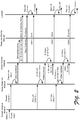
- FIG. 2 illustrates exemplary techniques and data flows which may be performed by the exemplary implementations discussed herein.
- a system 102 may include a video detection module 104 for determining if changing visual content is included in the visual content.
- a screen updated handler 106 provides video content and other visual content (which may not change) the video detection module 104 may identify the existence of the changing video content within the provided visual content.
- exemplary changing visual content may include, but is not limited to, animation, transitions (such as a POWERPOINT (Microsoft Corporation, Redmond WA) transition) and so on which may change in comparison to other visual data or change beyond a set threshold (e.g., no change) and so on.
- the screen update handler module 106 may forward the other visual content such as text, graphical objects and so on to a remote client 108 for display, while the changing visual content is handled as discussed herein.
- the other visual content may be updated less frequently in comparison to video, animation or other changing visual content if the former visual components change nominally or do not change. Treating the other visual content differently may minimize the impact of various compression schemes in comparison to when a common compression scheme is applied to both the changing visual content and the other visual content.
- An audio handler module 110 may be included to obtain audio content which is associated with the changing visual content.
- the audio content may be handled separately from the changing visual content so the content may be handled in a content specific manner.
- the audio data may be segregated from the video data for subsequent recombination using timestamps to synchronize the audio data with the corresponding video data when presented on a remote client device 108.
- changing visual content such as a video 112
- non-changing or minimally changing visual content may be treated in a different or second manner so that the other content may not overly consume resources and may permit changing visual content to be handled in a manner which is changing visual content specific.
- the video detection module 104 may identify the changing visual information in an uncompressed state.
- the other visual content may be updated at a lesser rate than that of the changing visual content and thereby minimize the overall data being transmitted.
- the video content, or other changing visual content may be encoded and/or communicated based on computing resources including communication resources available for performing the task.
- the system's encoding capabilities such as encoders 114-118) and the communication resources (e.g., network120) may be used efficiently without bogging down computing resources, while handling the changing visual content in a changing visual content specific manner.
- a display includes a flash video, as well as, text and graphical objects
- the text and graphical objects may not change or may seldom change in comparison to the video content or a threshold update rate used to distinguish changing from non-changing content.
- Examples of non-changing or minimally changing content may include, but are not limited to text, graphical objects and so on which may not change or do so infrequently in comparison to changing visual content.
- a video of a car driving 112 may be presented in a window, while text and graphical objects 122, which permit a user to contact a dealer, receive a quote, may be presented on other portions of the display.
- the video portion of the display may change frequently in comparison to the other visual content or some criteria.
- the text and graphical objects may remain unchanged or change infrequently based on a similar comparison or predetermined screen update standard.
- the video detection module 104 may identify the visual content is changing based on a variety of criteria. Exemplary criteria may include, but are not limited to, screen update frequency, aspect ratio, window class name, process name for a screen update and so on. Moreover, the video content detection module 104 may determine if the changing content has stopped playing or has been halted. If the changing content has stopped, the video detection module 104 may identify that the window for presenting the changing visual content should be terminated when replicated on a client device. If play of the changing content is merely halted, the overlay presenting the changing content on the client device may remain although no content may be presented or the overlay may be blacked out.
- criteria may include, but are not limited to, screen update frequency, aspect ratio, window class name, process name for a screen update and so on.
- the video content detection module 104 may determine if the changing content has stopped playing or has been halted. If the changing content has stopped, the video detection module 104 may identify that the window for presenting the changing visual content should be terminated when replicate
- a screen update frequency may be identified according to the number of screen updates per second, e.g., twenty-four frames per second for film, twenty-five frames per second for European television, thirty frames per second for American television and so on.
- a screen update rate may be used as a threshold for determining if visual content is changing. The foregoing examples being exemplary only. In implementations, combination of criteria may be used for identification. In further examples, changing visual content may be heuristically identified.
- a changing visual content aspect ratio may be identified according to the aspect ratio of a bitmap representing the visual content. For instance, a 4:3 ratio may indicate standard television content while a 16:9 ratio may indicate wide screen changing content.
- a window class name may include the name of the renderer used for presenting a window which would, at least, partially cover a screen on which the visual content is to be presented. Changing visual content may be identified if a window has a 4:3 ratio and is updating at approximately twenty-four frames per second.
- a handler module 124 may direct manipulation of the identified changing visual content. For instance, once identified, animated content may be manipulated, as directed by the handler module, based on the computing resources available for processing including communicating the data. Manipulation may include dropping frames (for video) or screen updates (for animation); compressing the contents; not sending the changing visual contents; use of a particular encoding scheme and so on. For example, bitmaps representing animation or video may be dropped.
- the hander module 124 may direct one or more encoders 114-118 modules to implement a simple encoding scheme (e.g., a lossy encoding technique) to minimize processor overhead for the changing visual content.
- a resource intensive encoding technique may be used to minimize bandwidth consumption. Combinations of factors may be considered as well including resources dedicated to other non-related tasks and so on.
- the encoder modules "1-N" 114-118 may implement various formats including, but not limited to, video codec 1 (VC1), moving picture experts group (MPEG), joint photographic experts group (JPEG) and so on.
- Control information may be included with the data forming the visual content.
- Control information may include data for directing how the changing visual content is to be remotely presented.
- control information may include the size of an overlay which is to present the changing data, the position of the overlay on the display, timestamps and so on (e.g., an overlay including the car video 136 on remote client 108).
- the one or more encoder modules may encode the control information with the changing visual content data for communication to a remote client.
- the visual content, including the changing visual content may mirror the server's configuration of the visual data. This is to say, that the overlay as well as the other visual content may be presented on the client as the visual content was obtained by the server screen update handler 106.
- control data may be sent separately, sent in segregated portions of the data stream forwarding the content data and control data and so on with the timestamps permitting synchronization of audio and visual content.
- a resource monitor module 126 may monitor the availability of computing resources, including communication resources, associated with remotely presenting the visual content. For example, the resource monitor module 126, included in the server system, may send the handler module 124 an indication of the computing resources associated with presenting the visual content on a remote client. If, for instance, bandwidth is limited, the handler module 124 may select to drop frames, use a particular encoding technique and so on, based on the resources as determined by the resource monitor. Relevant resource indications may include, but are not limited to, indications regarding: the availability of communication bandwidth (e.g., network 120), available processor resources (e.g., server resources and/or client resources), available encoders and so on.
- the availability of communication bandwidth e.g., network 120
- available processor resources e.g., server resources and/or client resources
- the handler module 124 may access the available resources for remotely presenting the changing visual content without overwhelming the computing resources or overly consuming computing resources.
- Using a resource monitor module 126 may tailor how the changing visual content is to be communicated, what changing visual content is communicated and so on in accordance with available computing resources. Resource usage may change as the changing visual content is provided to the remote client based on resource availability.
- the remote client 108 may include a client handler module 128 which determines how to present the decoded changing visual content.
- the client handler module 128 may present the changing content (which is decoded by client decoders "1-N" 130-132 as an overlay based on the control data which was encoded with the content data.
- the client hander module 128 may reconstruct the changing visual content so the presentation of the changing visual content matches that of the server 102, such as if the content were to be presented on a display associated with the server 102.
- the size, aspect ratio and so on may be specified by control data included with the changing video content.
- Control data may include information related to child video window detection, geometry tracking which correspondingly may be used by the client handler module when determining how to present the changing visual content. If applicable, audio may be recombined with the changing visual content using timestamps for coordinating the multimedia.
- a client screen handler 134 may receive the other visual data, if applicable, from the server screen update handler. For example, while video is presented as an overlay on a client display, the text, graphical objects and so on may be presented as "background" to the overlay. This is to say, that while the video may be segregated and treated individually, the generally non-changing visual content portion may be presented on a client display with the video content portion over at least a portion of the display.
- the overlay and the other visual content, if present, may be arranged and configured so as to be displayed on the client matches the content from the server screen update handler module 106.
- any of the functions described herein can be implemented using software, firmware, hardware (e.g., fixed logic circuitry), manual processing, or a combination of these implementations.
- the terms “module,” “functionality,” and “logic” as used herein generally represent software, firmware, hardware, or a combination thereof.
- the module, functionality, or logic represents program code that performs specified tasks when executed on a processor (e.g., CPU or CPUs).
- the program code can be stored in one or more computer readable memory devices, e.g., tangible memory and so on.
- FIG. 3 discloses exemplary procedures for providing changing visual data as an overlay. Displaying changing visual content which may change frequently, in comparison to a set standard or other visual content, may permit handling of the data forming the changing visual data at a low-level, while tailoring data handling in accordance with available computing resources. For example, the visual presentation may be remotely presented on a client device accessing video content from a web server.
- Changing visual content which may be included with other visual content (which does not change or changes a negligible rate) as part of a screen update 302, may be identified in an uncompressed state 304.
- changing visual content may include, but is not limited to, video, transitions, animation and so on which updates at generally regular intervals.
- Changing visual content may be in contrast to, as applicable, non-changing visual content, minimally changing content, or compared to some set standard (e.g., a rate of change or screen update).
- Identification 304 of changing visual content may be at least partially based on an update frequency, the aspect ratio of the content, window identification, process name and so on. Heuristic techniques may be used in conjunction with identifying changing visual content.
- Changing visual content identification 304 may be based on if the aspect ratio of a window matches that of a movie or film display and if the process name for an incoming screen update matches that of a video player. For example, if the content is in a 4:3 aspect ratio, and the process name for the update matches that associated with player for playing a television broadcast, the visual content may be identified as changing content, even if, for instance, playback play of the changing content is momentarily paused. Exemplary process names may include, but are not limited to, WINDOWS MEDIA CENTER (Microsoft Corporation, Redmond, WA) and so on. If changing visual content is not present or visual content has stopped flowing an update of other content may occur or the overlay from stopped changing content may be removed 306.
- the available resources may be evaluated 308.
- the particular manipulation and/or compression scheme selected 310 may be in accordance with the parameters of the computing resources handling the remote presentation.
- computing resources may be evaluated 308 to determine availability.
- Exemplary computing resources parameters which may be considered when manipulating and/or direct encoding of the changing visual content 310 include, but are not limited to, server resource, client resources, and communication resources. For instance, if relatively little bandwidth is available in comparison to the data which may be communicated, the changing visual content may not be sent such as by halting a video 312 or dropping frames as part of manipulating 310 the changing visual content.
- the changing video or animation content may be handled based on the available computing resources 308, while other visual content is handled via other techniques.
- minimally changing text and graphical objects may be separately transferred for client presentation.
- the other visual content may be handled in a different manner.
- minimally changing visual content may be updated at a different rate or communicated separately.
- the changing visual content may overlaid over the minimally changing content so that a client visual presentation matches that of the remote source providing the visual content.
- changing visual content and other visual content may be recreated (e.g., with the changing content in an overlay) so that the visual presentation matches that of the visual content at identification.
- minimally changing content may be overlaid over the changing content.
- An example of the foregoing may include, an irregular region, such as a notification popup (such as a OUTLOOK (Microsoft Corporation, Redmond, WA) notification window) overlaid over the changing content.
- a notification popup such as a OUTLOOK (Microsoft Corporation, Redmond, WA) notification window
- the changing content may be partially obscured by non-changing content.
- the identified changing visual content may be manipulated 310 as desired.
- manipulation may include compressing the changing visual content, dropping frames or screen updates for the changing visual content, halting play of the changing visual content 312 and the like.
- the changing visual content may be manipulated 310 so that the overlaid video or animation appears on the client in a particular location on a display, matches a designated size, aspect ratio or so on.
- child window detection, geometry tracking or similar techniques may be used when creating an overlay to present changing visual content. The foregoing techniques may permit low level remoting of the changing visual content.
- resource considerations include, but are not limited to, selecting a particular encoding technique or dropping frames to minimize bandwidth consumption, manipulating the changing visual content based on other tasks being handled by the server. For example, a lossy compression scheme may be used if bandwidth is at a premium. Thus, while encoding the content 310 may be more intensive, the reduced bandwidth consumption may be of chief consideration.
- the changing visual content may be encoded 310 for communication to a client.
- control data and the data forming the changing visual content may be encoded via a variety of techniques for communication 312 to a remote client.
- control data and content data may be individually communicated.
- Encoding/directing encoding may include using VC1, MPEG and the like techniques for encoding and/or compressing the content for remote presentation.
- Audio content may be separately handled and communicated. For instance, timestamps may be associated with the audio and video content and for use in re-synchronizing or matching presentation of audio content with the video, animation, or other changing visual content.
- the changing visual content may be presented as an overlay which overlies visual content which does not change or changes in a minimal fashion.
- the client may decode 314 the changing visual content for presentation as an overlay.
- the overlay may be recreated based on control information forwarded by the server system providing the visual content. For instance, child window tracking, geometry tracking techniques may be used to generate and/or recreate the changing visual content so that the visual content appears as configured and arranged at identification 304.
- audio content is associated with the animation or video content, e.g., a multi-media presentation
- the audio may be recombined 316 with the changing visual content.
- corresponding timestamps tied, respectively, to the audio and visual data may be used to resynchronize the audio and video for presentation by the client.
- the audio content may be compressed for transmission.
- the compressed audio content transferred in a separate datastream, may be uncompressed and the timestamps used in recombining with the video content.
- the compressed audio and compressed changing video content may be transmitted in a common data stream.
- FIG. 4 discloses exemplary procedures and instructions for providing changing visual data as an overlay.
- the techniques discussed below may be implemented as a set of computer executable instructions for remote presentation of changing video, animation or other changing visual content.
- Uncompressed changing visual content included in a screen update 402 may be identified 404 from other visual components based on criteria including, screen update frequency, aspect ratio, window name, if a portion of the screen is covered by a window, the process name for the screen update may be considered as well. Combinations of the above identification parameters or criteria may be considered. For example, a video may be identified based on frame update frequency of a bitmap representing the video, while other visual content may remain substantially unchanged. Heuristic learning techniques may be used to improve identification of the changing visual content. If changing visual content is not identified, other visual content which may not change or only minimally change may be independently communicated to a client device 406. For example, if a video has stopped playing, the other graphical elements may be updated and an overly which formerly presented the video may be removed 406.
- the various computing resources involved with communicating and presenting the visual content remotely may be checked 408 to determine if the computing resources are available to handle the changing visual content.
- Resource considerations may include, but are not limited to, encoder availability, network bandwidth, client parameters, available server processor capacity and so on. If sufficient computing resources are not available, the changing visual content may not be communicated 412. For instance, a screen update, which includes a change in video content, may not be sent if a network communicating the content does not have sufficient throughput.
- the uncompressed data forming the changing visual content may be manipulated 410 based on the computing resources involved in handling and/or communicating the changing visual content 408.
- manipulation 410 may include directing encoders to use a particular encoding technique, dropping frames or screen updates, not communicating the changing visual content 412, compressing the changing visual content data, including control information and so on in accordance with resource availability.
- Control information may include data related to child window detection and/or geometry tracking which may be used to direct a client in the recreation of changing visual contents.
- control information may be encoded with the data forming the changing visual content, while in other instances, control data may be co-extensively communicated with the data forming the changing visual content.
- Control data may specify how the changing visual content should be recreated by the client. For example, control data may indicate one or more of: the size of an overlay for presenting a video, the aspect ratio of the overlay, the location of the overlay and so on.
- Visual elements which minimally change or do not change may be handled separately.
- video content may be handled in a first manner
- non-changing graphical elements may be handled and/or communicated in a second fashion.
- minimally changing items may be communicated via different methodologies, at different update intervals and so on.
- timestamps 414 may be implemented to coordinate the changing visual content with audio content which may be handled separately. For example, a timestamp may be included with a video so that the audio may be matched up to the video overlay on a client device. In this manner, the audio may be communicated in an audio specific manner, while the changing visual content may be handled and/or communicated as discussed herein.
- the encoded changing visual content may be communicated 416 in accordance with the determined computing resources. For example, if a relatively large amount of network bandwidth is available (in comparison to the changing visual content) a simpler algorithm, which may use less computing resources to encode/decode, may be used. If, in contrast, bandwidth is at a premium a more complex algorithm, which consumes less bandwidth but may burden encoders and/or decoders.
- the client may decode 418 the changing visual content for presentation as an overlay.
- the changing visual content may be presented as an overlay which overlies the visual content which does not change or changes in a minimal fashion.
- the overlay may be recreated based on control information forwarded by the server system providing the visual content. For instance, child window tracking, geometry tracking techniques may be used to generate and/or recreate the changing visual content so that the visual content appears as configured and arranged in the screen update 402.
- Other visual content such as non-changing or minimally changing content may be overlaid over the changing visual content. For example, a pop-up window may obscure a portion of the changing visual content overlay.
- audio content is associated with the animation or video content, e.g., a multi-media presentation
- the audio may be matched 420 with the changing visual content.
- corresponding timestamps tied, respectively, to the audio and visual data may be used to resynchronize the audio and video in the overlay for presentation by the client.
Landscapes
- Engineering & Computer Science (AREA)
- Theoretical Computer Science (AREA)
- Physics & Mathematics (AREA)
- Computer Hardware Design (AREA)
- General Physics & Mathematics (AREA)
- Computing Systems (AREA)
- Multimedia (AREA)
- Signal Processing (AREA)
- Information Transfer Between Computers (AREA)
- Two-Way Televisions, Distribution Of Moving Picture Or The Like (AREA)
- User Interface Of Digital Computer (AREA)
- Digital Computer Display Output (AREA)
Applications Claiming Priority (2)
| Application Number | Priority Date | Filing Date | Title |
|---|---|---|---|
| US11/957,321 US8890874B2 (en) | 2007-12-14 | 2007-12-14 | Changing visual content communication |
| PCT/US2008/084975 WO2009079190A2 (en) | 2007-12-14 | 2008-11-26 | Changing visual content communication |
Publications (3)
| Publication Number | Publication Date |
|---|---|
| EP2232858A2 EP2232858A2 (en) | 2010-09-29 |
| EP2232858A4 EP2232858A4 (en) | 2011-05-11 |
| EP2232858B1 true EP2232858B1 (en) | 2019-01-23 |
Family
ID=40752619
Family Applications (1)
| Application Number | Title | Priority Date | Filing Date |
|---|---|---|---|
| EP08861110.8A Active EP2232858B1 (en) | 2007-12-14 | 2008-11-26 | Changing visual content communication |
Country Status (8)
| Country | Link |
|---|---|
| US (3) | US8890874B2 (enExample) |
| EP (1) | EP2232858B1 (enExample) |
| JP (1) | JP2011507401A (enExample) |
| KR (1) | KR101560850B1 (enExample) |
| CN (2) | CN103151023B (enExample) |
| BR (1) | BRPI0820978A2 (enExample) |
| RU (1) | RU2506715C2 (enExample) |
| WO (1) | WO2009079190A2 (enExample) |
Families Citing this family (21)
| Publication number | Priority date | Publication date | Assignee | Title |
|---|---|---|---|---|
| US8890874B2 (en) | 2007-12-14 | 2014-11-18 | Microsoft Corporation | Changing visual content communication |
| US20100023485A1 (en) * | 2008-07-25 | 2010-01-28 | Hung-Yi Cheng Chu | Method of generating audiovisual content through meta-data analysis |
| US9854254B2 (en) | 2009-08-04 | 2017-12-26 | Avocent Corporation | Method and system for remote viewing of static and video images |
| US20110154214A1 (en) * | 2009-12-18 | 2011-06-23 | Microsoft Corporation | Offloading Content Retrieval And Decoding In Pluggable Content-Handling Systems |
| JP5471794B2 (ja) * | 2010-05-10 | 2014-04-16 | 富士通株式会社 | 情報処理装置、画像送信プログラム及び画像表示方法 |
| US8976744B2 (en) * | 2010-11-03 | 2015-03-10 | Broadcom Corporation | Vehicle communication network including wireless communications |
| US9276972B2 (en) | 2010-12-14 | 2016-03-01 | Microsoft Technology Licensing, Llc | Real-time media optimization over remoted sessions |
| US8745122B2 (en) | 2011-06-14 | 2014-06-03 | At&T Intellectual Property I, L.P. | System and method for providing an adjunct device in a content delivery network |
| US8902248B1 (en) | 2011-07-14 | 2014-12-02 | Vmware, Inc. | Method and system for measuring display performance of a remote application |
| US20140046923A1 (en) | 2012-08-10 | 2014-02-13 | Microsoft Corporation | Generating queries based upon data points in a spreadsheet application |
| JP2014200074A (ja) * | 2013-03-15 | 2014-10-23 | 株式会社リコー | 配信制御システム、配信制御方法、及びプログラム |
| FR3009916A1 (fr) * | 2013-08-26 | 2015-02-27 | Orange | Procede et dispositif d'enrichissement d'une communication |
| US9674265B2 (en) * | 2013-11-04 | 2017-06-06 | Vmware, Inc. | Filtering unnecessary display updates for a networked client |
| US9674518B2 (en) | 2013-12-20 | 2017-06-06 | Vmware, Inc. | Measuring remote video display with embedded pixels |
| US9699247B2 (en) | 2014-06-17 | 2017-07-04 | Vmware, Inc. | User experience monitoring for application remoting |
| EP3029943B1 (en) * | 2014-12-04 | 2018-01-31 | Axis AB | Method and device for determining properties of a graphical overlay for a video stream |
| US10255021B2 (en) * | 2015-05-28 | 2019-04-09 | Qualcomm Incorporated | Low latency screen mirroring |
| CN107613357B (zh) * | 2017-09-13 | 2020-05-19 | 广州酷狗计算机科技有限公司 | 声画同步优化方法、装置及可读存储介质 |
| DE102017218201A1 (de) | 2017-10-12 | 2019-04-18 | Robert Bosch Gmbh | Übertragungsverfahren |
| DE102017218203A1 (de) | 2017-10-12 | 2019-04-18 | Robert Bosch Gmbh | Verfahren zur Übertragung von Daten von einem Server auf ein Endgerät und entsprechendes Kommunikationssystem |
| CN110708591B (zh) * | 2018-07-10 | 2022-04-26 | 杭州海康威视系统技术有限公司 | 一种图像处理方法、装置及电子设备 |
Citations (1)
| Publication number | Priority date | Publication date | Assignee | Title |
|---|---|---|---|---|
| US20070028286A1 (en) * | 2005-07-28 | 2007-02-01 | Greene David P | Systems, methods, and media for detecting content change in a streaming image system |
Family Cites Families (50)
| Publication number | Priority date | Publication date | Assignee | Title |
|---|---|---|---|---|
| US5623588A (en) * | 1992-12-14 | 1997-04-22 | New York University | Computer user interface with non-salience deemphasis |
| JP3298029B2 (ja) | 1993-03-16 | 2002-07-02 | 株式会社日立製作所 | 映像表示制御方法、映像表示処理システム |
| US5621429A (en) | 1993-03-16 | 1997-04-15 | Hitachi, Ltd. | Video data display controlling method and video data display processing system |
| KR100322727B1 (ko) | 1995-10-24 | 2002-06-20 | 윤종용 | 2차원/스테레오영상변환방법및장치 |
| US6343313B1 (en) | 1996-03-26 | 2002-01-29 | Pixion, Inc. | Computer conferencing system with real-time multipoint, multi-speed, multi-stream scalability |
| JP3063841B2 (ja) | 1997-11-26 | 2000-07-12 | 日本電気株式会社 | オーディオ・ビデオ同期再生装置 |
| US6349301B1 (en) * | 1998-02-24 | 2002-02-19 | Microsoft Corporation | Virtual environment bystander updating in client server architecture |
| US6959449B1 (en) | 1998-06-08 | 2005-10-25 | Sony Corporation | System and method for simultaneously accessing video data and internet page data |
| US6637031B1 (en) | 1998-12-04 | 2003-10-21 | Microsoft Corporation | Multimedia presentation latency minimization |
| US6624761B2 (en) | 1998-12-11 | 2003-09-23 | Realtime Data, Llc | Content independent data compression method and system |
| US6564380B1 (en) | 1999-01-26 | 2003-05-13 | Pixelworld Networks, Inc. | System and method for sending live video on the internet |
| KR20010036581A (ko) | 1999-10-09 | 2001-05-07 | 손동주 | 실시간 자동 배경 분리 장치 및 그 방법 |
| JP4532761B2 (ja) | 2000-03-03 | 2010-08-25 | キヤノン株式会社 | 近接場光による露光方法 |
| WO2001067223A1 (en) | 2000-03-07 | 2001-09-13 | Yahoo! Inc. | Information display systems and methods |
| US7274368B1 (en) | 2000-07-31 | 2007-09-25 | Silicon Graphics, Inc. | System method and computer program product for remote graphics processing |
| US6704024B2 (en) * | 2000-08-07 | 2004-03-09 | Zframe, Inc. | Visual content browsing using rasterized representations |
| EP1325400A4 (en) | 2000-09-08 | 2006-02-08 | United Virtualities Inc | COMPUTERIZED ADVERTISING PROCESS AND SYSTEM |
| EP1267278A1 (en) | 2001-06-12 | 2002-12-18 | Caplin Systems Limited | Streaming of real-time data to a browser |
| CN1399442A (zh) | 2001-07-20 | 2003-02-26 | 方程式资讯股份有限公司 | 网络市场商品搜寻装置与方法 |
| US7224404B2 (en) * | 2001-07-30 | 2007-05-29 | Samsung Electronics Co., Ltd. | Remote display control of video/graphics data |
| US7266616B1 (en) | 2001-08-08 | 2007-09-04 | Pasternak Solutions Llc | Method and system for digital rendering over a network |
| US7046269B2 (en) | 2001-10-16 | 2006-05-16 | Sprint Communications Company L.P. | Sharing of prerecorded motion video over an internetwork |
| US7562397B1 (en) * | 2002-02-27 | 2009-07-14 | Mithal Ashish K | Method and system for facilitating search, selection, preview, purchase evaluation, offering for sale, distribution, and/or sale of digital content and enhancing the security thereof |
| US6957392B2 (en) | 2002-01-16 | 2005-10-18 | Laszlo Systems, Inc. | Interface engine providing a continuous user interface |
| WO2003088694A1 (en) | 2002-04-09 | 2003-10-23 | Nortel Networks Limited | Tandem-free operation (tfo) capable communication apparatus |
| JP2004056777A (ja) | 2002-05-30 | 2004-02-19 | Matsushita Electric Ind Co Ltd | 無線遠隔操作システム |
| JP2004166156A (ja) | 2002-11-15 | 2004-06-10 | Ricoh Co Ltd | 画像送信装置、ネットワークシステム、プログラム及び記憶媒体 |
| JP2004166132A (ja) | 2002-11-15 | 2004-06-10 | Ricoh Co Ltd | 画像送信装置、ネットワークシステム、プログラム及び記憶媒体 |
| KR100517979B1 (ko) * | 2002-12-10 | 2005-10-04 | 엘지전자 주식회사 | 이동 통신 단말기의 영상 오버레이 장치 |
| US8631451B2 (en) * | 2002-12-11 | 2014-01-14 | Broadcom Corporation | Server architecture supporting adaptive delivery to a variety of media players |
| US7039247B2 (en) | 2003-01-31 | 2006-05-02 | Sony Corporation | Graphic codec for network transmission |
| US7219127B2 (en) | 2003-03-13 | 2007-05-15 | Oracle International Corporation | Control unit operations in a real-time collaboration server |
| US7088374B2 (en) | 2003-03-27 | 2006-08-08 | Microsoft Corporation | System and method for managing visual structure, timing, and animation in a graphics processing system |
| EP2426940A1 (en) | 2003-09-15 | 2012-03-07 | The DirecTV Group, Inc. | Method and system for adaptive transcoding and transrating in a video network |
| US7133051B2 (en) * | 2003-09-19 | 2006-11-07 | Microsoft Corporation | Full scale video with overlaid graphical user interface and scaled image |
| US7839419B2 (en) | 2003-10-23 | 2010-11-23 | Microsoft Corporation | Compositing desktop window manager |
| JP2006173962A (ja) | 2004-12-15 | 2006-06-29 | Nec Engineering Ltd | 画像符号化装置 |
| US7548657B2 (en) | 2005-06-25 | 2009-06-16 | General Electric Company | Adaptive video compression of graphical user interfaces using application metadata |
| US20070112971A1 (en) | 2005-11-14 | 2007-05-17 | Infodraw Ltd. | Real time video streaming and data collaboration over wireless networks |
| KR101091910B1 (ko) * | 2005-12-29 | 2011-12-08 | 삼성테크윈 주식회사 | 실시간 전송 프로토콜을 사용하는 비디오 서버의 제어 방법및 그 기록 매체 |
| KR20060031829A (ko) | 2006-03-21 | 2006-04-13 | 뷰웨이 주식회사 | 움직이는 객체 영역 검출을 위한 적응 배경 학습 방법 |
| US9395905B2 (en) * | 2006-04-05 | 2016-07-19 | Synaptics Incorporated | Graphical scroll wheel |
| US20080270110A1 (en) * | 2007-04-30 | 2008-10-30 | Yurick Steven J | Automatic speech recognition with textual content input |
| US8890874B2 (en) | 2007-12-14 | 2014-11-18 | Microsoft Corporation | Changing visual content communication |
| US9135024B2 (en) | 2008-11-30 | 2015-09-15 | Red Hat Israel, Ltd. | Playing multimedia content at remote graphics display client |
| US9025898B2 (en) | 2009-04-06 | 2015-05-05 | Red Hat Israel, Ltd. | Dynamically selecting compression method for graphics remoting |
| US8355585B2 (en) | 2009-05-12 | 2013-01-15 | Red Hat Israel, Ltd. | Data compression of images using a shared dictionary |
| US8392596B2 (en) | 2009-05-26 | 2013-03-05 | Red Hat Israel, Ltd. | Methods for detecting and handling video and video-like content in remote display system |
| JP2011128792A (ja) | 2009-12-16 | 2011-06-30 | Toshiba Corp | メモリ管理装置 |
| US20130039408A1 (en) | 2011-02-07 | 2013-02-14 | Screenovate Technologies Ltd | Method for enhancing compression and transmission process of a screen image |
-
2007
- 2007-12-14 US US11/957,321 patent/US8890874B2/en active Active
-
2008
- 2008-11-26 BR BRPI0820978-2A patent/BRPI0820978A2/pt not_active IP Right Cessation
- 2008-11-26 RU RU2010129037/07A patent/RU2506715C2/ru active
- 2008-11-26 CN CN201310060728.9A patent/CN103151023B/zh active Active
- 2008-11-26 EP EP08861110.8A patent/EP2232858B1/en active Active
- 2008-11-26 WO PCT/US2008/084975 patent/WO2009079190A2/en not_active Ceased
- 2008-11-26 CN CN2008801212626A patent/CN101897181B/zh active Active
- 2008-11-26 KR KR1020107014979A patent/KR101560850B1/ko not_active Expired - Fee Related
- 2008-11-26 JP JP2010538040A patent/JP2011507401A/ja active Pending
-
2014
- 2014-10-03 US US14/506,111 patent/US9082337B2/en active Active
-
2015
- 2015-06-05 US US14/731,717 patent/US9330634B2/en active Active
Patent Citations (1)
| Publication number | Priority date | Publication date | Assignee | Title |
|---|---|---|---|---|
| US20070028286A1 (en) * | 2005-07-28 | 2007-02-01 | Greene David P | Systems, methods, and media for detecting content change in a streaming image system |
Also Published As
| Publication number | Publication date |
|---|---|
| WO2009079190A2 (en) | 2009-06-25 |
| RU2010129037A (ru) | 2012-01-20 |
| CN101897181B (zh) | 2013-03-27 |
| RU2506715C2 (ru) | 2014-02-10 |
| BRPI0820978A2 (pt) | 2015-06-16 |
| US20150279337A1 (en) | 2015-10-01 |
| EP2232858A2 (en) | 2010-09-29 |
| US9330634B2 (en) | 2016-05-03 |
| CN103151023A (zh) | 2013-06-12 |
| KR20100103558A (ko) | 2010-09-27 |
| KR101560850B1 (ko) | 2015-10-15 |
| US9082337B2 (en) | 2015-07-14 |
| WO2009079190A3 (en) | 2009-08-13 |
| EP2232858A4 (en) | 2011-05-11 |
| US8890874B2 (en) | 2014-11-18 |
| JP2011507401A (ja) | 2011-03-03 |
| CN101897181A (zh) | 2010-11-24 |
| US20150054835A1 (en) | 2015-02-26 |
| US20090153585A1 (en) | 2009-06-18 |
| CN103151023B (zh) | 2015-11-18 |
Similar Documents
| Publication | Publication Date | Title |
|---|---|---|
| EP2232858B1 (en) | Changing visual content communication | |
| CN102771119B (zh) | 用于视频感知的屏幕捕获和压缩的系统和方法 | |
| EP2778896B1 (en) | Information processor, cloud platform, information processing method, and computer program thereof | |
| MXPA01000893A (es) | Acceso remoto a computadora. | |
| US9609338B2 (en) | Layered video encoding and decoding | |
| CN114025219B (zh) | 增强现实特效的渲染方法、装置、介质及设备 | |
| US8477842B2 (en) | Encoding method of screen frame and electronic device applying the same | |
| EP3410302B1 (en) | Graphic instruction data processing method, apparatus | |
| US20070217505A1 (en) | Adaptive Decoding Of Video Data | |
| CN112543373A (zh) | 一种转码控制方法、装置及电子设备 | |
| US9226003B2 (en) | Method for transmitting video signals from an application on a server over an IP network to a client device | |
| US20060203001A1 (en) | Clipping of media data transmitted in a network | |
| US6751404B1 (en) | Method and apparatus for detecting processor congestion during audio and video decode | |
| CN112584093B (zh) | 一种视频数据的处理方法、装置、终端设备和存储介质 | |
| KR100746005B1 (ko) | 다중 목적의 비디오 스트림을 처리하는 장치 및 방법 | |
| US12034786B2 (en) | Image processing device, image data transfer device, and image generation method | |
| CN120075455A (zh) | 一种中间件协同本地资源的视频编解码及渲染方法 | |
| JPH11164330A (ja) | 動画通信評価装置 | |
| JP2006246110A (ja) | 映像伝送装置およびシステム | |
| US10521086B1 (en) | Frame interpolation for media streaming | |
| JP5593514B2 (ja) | スクリーンフレームの符号化方法、及び、それを応用した電子装置 | |
| JP2005051564A (ja) | 画像配信方法及び画像配信システム | |
| AU2005248864A1 (en) | Adaptive decoding of video data |
Legal Events
| Date | Code | Title | Description |
|---|---|---|---|
| PUAI | Public reference made under article 153(3) epc to a published international application that has entered the european phase |
Free format text: ORIGINAL CODE: 0009012 |
|
| 17P | Request for examination filed |
Effective date: 20100708 |
|
| AK | Designated contracting states |
Kind code of ref document: A2 Designated state(s): AT BE BG CH CY CZ DE DK EE ES FI FR GB GR HR HU IE IS IT LI LT LU LV MC MT NL NO PL PT RO SE SI SK TR |
|
| AX | Request for extension of the european patent |
Extension state: AL BA MK RS |
|
| DAX | Request for extension of the european patent (deleted) | ||
| A4 | Supplementary search report drawn up and despatched |
Effective date: 20110407 |
|
| RIC1 | Information provided on ipc code assigned before grant |
Ipc: H04N 7/26 20060101ALI20110401BHEP Ipc: H04H 20/86 20080101ALI20110401BHEP Ipc: H04N 5/44 20110101ALI20110401BHEP Ipc: H04N 7/01 20060101AFI20090713BHEP |
|
| RAP1 | Party data changed (applicant data changed or rights of an application transferred) |
Owner name: MICROSOFT TECHNOLOGY LICENSING, LLC |
|
| STAA | Information on the status of an ep patent application or granted ep patent |
Free format text: STATUS: EXAMINATION IS IN PROGRESS |
|
| 17Q | First examination report despatched |
Effective date: 20171205 |
|
| REG | Reference to a national code |
Ref country code: DE Ref legal event code: R079 Ref document number: 602008058880 Country of ref document: DE Free format text: PREVIOUS MAIN CLASS: H04N0007010000 Ipc: H04N0019156000 |
|
| GRAP | Despatch of communication of intention to grant a patent |
Free format text: ORIGINAL CODE: EPIDOSNIGR1 |
|
| STAA | Information on the status of an ep patent application or granted ep patent |
Free format text: STATUS: GRANT OF PATENT IS INTENDED |
|
| RIC1 | Information provided on ipc code assigned before grant |
Ipc: H04H 20/86 20080101ALI20180810BHEP Ipc: H04N 5/44 20110101ALI20180810BHEP Ipc: H04N 19/156 20140101AFI20180810BHEP Ipc: G09G 5/377 20060101ALI20180810BHEP Ipc: G09G 5/14 20060101ALI20180810BHEP Ipc: G09G 5/00 20060101ALI20180810BHEP |
|
| INTG | Intention to grant announced |
Effective date: 20180829 |
|
| GRAS | Grant fee paid |
Free format text: ORIGINAL CODE: EPIDOSNIGR3 |
|
| GRAA | (expected) grant |
Free format text: ORIGINAL CODE: 0009210 |
|
| STAA | Information on the status of an ep patent application or granted ep patent |
Free format text: STATUS: THE PATENT HAS BEEN GRANTED |
|
| AK | Designated contracting states |
Kind code of ref document: B1 Designated state(s): AT BE BG CH CY CZ DE DK EE ES FI FR GB GR HR HU IE IS IT LI LT LU LV MC MT NL NO PL PT RO SE SI SK TR |
|
| REG | Reference to a national code |
Ref country code: GB Ref legal event code: FG4D |
|
| REG | Reference to a national code |
Ref country code: CH Ref legal event code: EP |
|
| REG | Reference to a national code |
Ref country code: AT Ref legal event code: REF Ref document number: 1092397 Country of ref document: AT Kind code of ref document: T Effective date: 20190215 |
|
| REG | Reference to a national code |
Ref country code: IE Ref legal event code: FG4D |
|
| REG | Reference to a national code |
Ref country code: DE Ref legal event code: R096 Ref document number: 602008058880 Country of ref document: DE |
|
| REG | Reference to a national code |
Ref country code: NL Ref legal event code: FP |
|
| PG25 | Lapsed in a contracting state [announced via postgrant information from national office to epo] |
Ref country code: ES Free format text: LAPSE BECAUSE OF FAILURE TO SUBMIT A TRANSLATION OF THE DESCRIPTION OR TO PAY THE FEE WITHIN THE PRESCRIBED TIME-LIMIT Effective date: 20190123 Ref country code: LT Free format text: LAPSE BECAUSE OF FAILURE TO SUBMIT A TRANSLATION OF THE DESCRIPTION OR TO PAY THE FEE WITHIN THE PRESCRIBED TIME-LIMIT Effective date: 20190123 Ref country code: FI Free format text: LAPSE BECAUSE OF FAILURE TO SUBMIT A TRANSLATION OF THE DESCRIPTION OR TO PAY THE FEE WITHIN THE PRESCRIBED TIME-LIMIT Effective date: 20190123 Ref country code: PL Free format text: LAPSE BECAUSE OF FAILURE TO SUBMIT A TRANSLATION OF THE DESCRIPTION OR TO PAY THE FEE WITHIN THE PRESCRIBED TIME-LIMIT Effective date: 20190123 Ref country code: SE Free format text: LAPSE BECAUSE OF FAILURE TO SUBMIT A TRANSLATION OF THE DESCRIPTION OR TO PAY THE FEE WITHIN THE PRESCRIBED TIME-LIMIT Effective date: 20190123 Ref country code: NO Free format text: LAPSE BECAUSE OF FAILURE TO SUBMIT A TRANSLATION OF THE DESCRIPTION OR TO PAY THE FEE WITHIN THE PRESCRIBED TIME-LIMIT Effective date: 20190423 Ref country code: PT Free format text: LAPSE BECAUSE OF FAILURE TO SUBMIT A TRANSLATION OF THE DESCRIPTION OR TO PAY THE FEE WITHIN THE PRESCRIBED TIME-LIMIT Effective date: 20190523 |
|
| REG | Reference to a national code |
Ref country code: AT Ref legal event code: MK05 Ref document number: 1092397 Country of ref document: AT Kind code of ref document: T Effective date: 20190123 |
|
| PG25 | Lapsed in a contracting state [announced via postgrant information from national office to epo] |
Ref country code: BG Free format text: LAPSE BECAUSE OF FAILURE TO SUBMIT A TRANSLATION OF THE DESCRIPTION OR TO PAY THE FEE WITHIN THE PRESCRIBED TIME-LIMIT Effective date: 20190423 Ref country code: GR Free format text: LAPSE BECAUSE OF FAILURE TO SUBMIT A TRANSLATION OF THE DESCRIPTION OR TO PAY THE FEE WITHIN THE PRESCRIBED TIME-LIMIT Effective date: 20190424 Ref country code: IS Free format text: LAPSE BECAUSE OF FAILURE TO SUBMIT A TRANSLATION OF THE DESCRIPTION OR TO PAY THE FEE WITHIN THE PRESCRIBED TIME-LIMIT Effective date: 20190523 Ref country code: LV Free format text: LAPSE BECAUSE OF FAILURE TO SUBMIT A TRANSLATION OF THE DESCRIPTION OR TO PAY THE FEE WITHIN THE PRESCRIBED TIME-LIMIT Effective date: 20190123 Ref country code: HR Free format text: LAPSE BECAUSE OF FAILURE TO SUBMIT A TRANSLATION OF THE DESCRIPTION OR TO PAY THE FEE WITHIN THE PRESCRIBED TIME-LIMIT Effective date: 20190123 |
|
| REG | Reference to a national code |
Ref country code: DE Ref legal event code: R097 Ref document number: 602008058880 Country of ref document: DE |
|
| PG25 | Lapsed in a contracting state [announced via postgrant information from national office to epo] |
Ref country code: CZ Free format text: LAPSE BECAUSE OF FAILURE TO SUBMIT A TRANSLATION OF THE DESCRIPTION OR TO PAY THE FEE WITHIN THE PRESCRIBED TIME-LIMIT Effective date: 20190123 Ref country code: RO Free format text: LAPSE BECAUSE OF FAILURE TO SUBMIT A TRANSLATION OF THE DESCRIPTION OR TO PAY THE FEE WITHIN THE PRESCRIBED TIME-LIMIT Effective date: 20190123 Ref country code: SK Free format text: LAPSE BECAUSE OF FAILURE TO SUBMIT A TRANSLATION OF THE DESCRIPTION OR TO PAY THE FEE WITHIN THE PRESCRIBED TIME-LIMIT Effective date: 20190123 Ref country code: EE Free format text: LAPSE BECAUSE OF FAILURE TO SUBMIT A TRANSLATION OF THE DESCRIPTION OR TO PAY THE FEE WITHIN THE PRESCRIBED TIME-LIMIT Effective date: 20190123 Ref country code: IT Free format text: LAPSE BECAUSE OF FAILURE TO SUBMIT A TRANSLATION OF THE DESCRIPTION OR TO PAY THE FEE WITHIN THE PRESCRIBED TIME-LIMIT Effective date: 20190123 Ref country code: DK Free format text: LAPSE BECAUSE OF FAILURE TO SUBMIT A TRANSLATION OF THE DESCRIPTION OR TO PAY THE FEE WITHIN THE PRESCRIBED TIME-LIMIT Effective date: 20190123 |
|
| PLBE | No opposition filed within time limit |
Free format text: ORIGINAL CODE: 0009261 |
|
| STAA | Information on the status of an ep patent application or granted ep patent |
Free format text: STATUS: NO OPPOSITION FILED WITHIN TIME LIMIT |
|
| PG25 | Lapsed in a contracting state [announced via postgrant information from national office to epo] |
Ref country code: AT Free format text: LAPSE BECAUSE OF FAILURE TO SUBMIT A TRANSLATION OF THE DESCRIPTION OR TO PAY THE FEE WITHIN THE PRESCRIBED TIME-LIMIT Effective date: 20190123 |
|
| 26N | No opposition filed |
Effective date: 20191024 |
|
| PG25 | Lapsed in a contracting state [announced via postgrant information from national office to epo] |
Ref country code: SI Free format text: LAPSE BECAUSE OF FAILURE TO SUBMIT A TRANSLATION OF THE DESCRIPTION OR TO PAY THE FEE WITHIN THE PRESCRIBED TIME-LIMIT Effective date: 20190123 |
|
| PG25 | Lapsed in a contracting state [announced via postgrant information from national office to epo] |
Ref country code: TR Free format text: LAPSE BECAUSE OF FAILURE TO SUBMIT A TRANSLATION OF THE DESCRIPTION OR TO PAY THE FEE WITHIN THE PRESCRIBED TIME-LIMIT Effective date: 20190123 |
|
| REG | Reference to a national code |
Ref country code: CH Ref legal event code: PL |
|
| PG25 | Lapsed in a contracting state [announced via postgrant information from national office to epo] |
Ref country code: LU Free format text: LAPSE BECAUSE OF NON-PAYMENT OF DUE FEES Effective date: 20191126 Ref country code: MC Free format text: LAPSE BECAUSE OF FAILURE TO SUBMIT A TRANSLATION OF THE DESCRIPTION OR TO PAY THE FEE WITHIN THE PRESCRIBED TIME-LIMIT Effective date: 20190123 Ref country code: CH Free format text: LAPSE BECAUSE OF NON-PAYMENT OF DUE FEES Effective date: 20191130 Ref country code: LI Free format text: LAPSE BECAUSE OF NON-PAYMENT OF DUE FEES Effective date: 20191130 |
|
| REG | Reference to a national code |
Ref country code: BE Ref legal event code: MM Effective date: 20191130 |
|
| PG25 | Lapsed in a contracting state [announced via postgrant information from national office to epo] |
Ref country code: IE Free format text: LAPSE BECAUSE OF NON-PAYMENT OF DUE FEES Effective date: 20191126 |
|
| PG25 | Lapsed in a contracting state [announced via postgrant information from national office to epo] |
Ref country code: BE Free format text: LAPSE BECAUSE OF NON-PAYMENT OF DUE FEES Effective date: 20191130 |
|
| PG25 | Lapsed in a contracting state [announced via postgrant information from national office to epo] |
Ref country code: CY Free format text: LAPSE BECAUSE OF FAILURE TO SUBMIT A TRANSLATION OF THE DESCRIPTION OR TO PAY THE FEE WITHIN THE PRESCRIBED TIME-LIMIT Effective date: 20190123 |
|
| PG25 | Lapsed in a contracting state [announced via postgrant information from national office to epo] |
Ref country code: HU Free format text: LAPSE BECAUSE OF FAILURE TO SUBMIT A TRANSLATION OF THE DESCRIPTION OR TO PAY THE FEE WITHIN THE PRESCRIBED TIME-LIMIT; INVALID AB INITIO Effective date: 20081126 Ref country code: MT Free format text: LAPSE BECAUSE OF FAILURE TO SUBMIT A TRANSLATION OF THE DESCRIPTION OR TO PAY THE FEE WITHIN THE PRESCRIBED TIME-LIMIT Effective date: 20190123 |
|
| P01 | Opt-out of the competence of the unified patent court (upc) registered |
Effective date: 20230505 |
|
| PGFP | Annual fee paid to national office [announced via postgrant information from national office to epo] |
Ref country code: NL Payment date: 20231020 Year of fee payment: 16 |
|
| REG | Reference to a national code |
Ref country code: NL Ref legal event code: MM Effective date: 20241201 |
|
| PG25 | Lapsed in a contracting state [announced via postgrant information from national office to epo] |
Ref country code: NL Free format text: LAPSE BECAUSE OF NON-PAYMENT OF DUE FEES Effective date: 20241201 |
|
| PGFP | Annual fee paid to national office [announced via postgrant information from national office to epo] |
Ref country code: DE Payment date: 20251022 Year of fee payment: 18 |
|
| PGFP | Annual fee paid to national office [announced via postgrant information from national office to epo] |
Ref country code: GB Payment date: 20251023 Year of fee payment: 18 |
|
| PGFP | Annual fee paid to national office [announced via postgrant information from national office to epo] |
Ref country code: FR Payment date: 20251022 Year of fee payment: 18 |