EP2230888A2 - Verfahren und System zum effizienten Betreiben einer dimmbaren Leuchte - Google Patents
Verfahren und System zum effizienten Betreiben einer dimmbaren Leuchte Download PDFInfo
- Publication number
- EP2230888A2 EP2230888A2 EP10156978A EP10156978A EP2230888A2 EP 2230888 A2 EP2230888 A2 EP 2230888A2 EP 10156978 A EP10156978 A EP 10156978A EP 10156978 A EP10156978 A EP 10156978A EP 2230888 A2 EP2230888 A2 EP 2230888A2
- Authority
- EP
- European Patent Office
- Prior art keywords
- luminaire
- dimming levels
- lamp
- light
- different dimming
- Prior art date
- Legal status (The legal status is an assumption and is not a legal conclusion. Google has not performed a legal analysis and makes no representation as to the accuracy of the status listed.)
- Granted
Links
Images
Classifications
-
- H—ELECTRICITY
- H05—ELECTRIC TECHNIQUES NOT OTHERWISE PROVIDED FOR
- H05B—ELECTRIC HEATING; ELECTRIC LIGHT SOURCES NOT OTHERWISE PROVIDED FOR; CIRCUIT ARRANGEMENTS FOR ELECTRIC LIGHT SOURCES, IN GENERAL
- H05B41/00—Circuit arrangements or apparatus for igniting or operating discharge lamps
- H05B41/14—Circuit arrangements
- H05B41/36—Controlling
- H05B41/38—Controlling the intensity of light
- H05B41/39—Controlling the intensity of light continuously
- H05B41/392—Controlling the intensity of light continuously using semiconductor devices, e.g. thyristor
- H05B41/3921—Controlling the intensity of light continuously using semiconductor devices, e.g. thyristor with possibility of light intensity variations
-
- H—ELECTRICITY
- H05—ELECTRIC TECHNIQUES NOT OTHERWISE PROVIDED FOR
- H05B—ELECTRIC HEATING; ELECTRIC LIGHT SOURCES NOT OTHERWISE PROVIDED FOR; CIRCUIT ARRANGEMENTS FOR ELECTRIC LIGHT SOURCES, IN GENERAL
- H05B45/00—Circuit arrangements for operating light-emitting diodes [LED]
- H05B45/10—Controlling the intensity of the light
- H05B45/14—Controlling the intensity of the light using electrical feedback from LEDs or from LED modules
Definitions
- the invention relates to a method for operating a lamp, in which different dimming levels can be set, such that with the lamp light emissions of different brightness can be generated. Moreover, the invention relates to a system for carrying out such a method.
- Such lights are known from the prior art.
- a problem with such a luminaire can usually be seen in the fact that in practice it is usually not optimally operated with regard to its efficiency.
- efficiency of a luminaire in the present context means the ratio of the illuminance of the light emitted by the luminaire to the power supplied to the luminaire.
- the efficiency depends in particular on the temperature of the luminaire, which is set during operation in the luminaire. As a result, the light does not necessarily emit light at the maximum illuminance at maximum power.
- the invention has for its object to provide a corresponding method that allows a particularly efficient radiation of the lamp.
- a system for carrying out such a method is to be specified.
- a method for operating a luminaire in which different dimming levels can be set, such that with the Lamp light emissions of different brightness can be generated.
- the method comprises the following step: Determination of luminaire efficiency values at several different dimming levels.
- efficiency value is meant a value which represents a measure of the ratio of the illuminance of the light emission generated by the luminaire to the power supplied to the luminaire.
- the luminaire By determining the efficiency values at several different dimming levels, it is easily possible to determine that of the different dimming levels at which the luminaire emits light most efficiently. The luminaire can then be operated at the dimming level determined in this way and thus particularly efficiently. The luminaire emits light at this dimming level in a particularly efficient way.
- step (a) is carried out automatically.
- the handling is particularly simple.
- a respective brightness value of the light emitted by the luminaire is detected.
- the brightness value can be detected with a photosensor.
- step (b) that one of the several different dimming levels at which the efficiency value was greatest is determined.
- step (b) is carried out automatically.
- step (a) in each case after adjustment of one of the several different dimming levels with the determination of the associated efficiency value is waited until the temperature has reached at least approximately a state of equilibrium in the field of light.
- a time-dependent temperature measurement can be performed in the luminaire.
- a system for carrying out a method according to the invention having means for determining luminaire efficiencies at a plurality of different dimming levels.
- the means comprise a photosensor with which a brightness value of the light emitted by the luminaire can be detected.
- the system has a control unit for the automated performance of the determination of the efficiency values.
- the system has a temperature measuring device for detecting the temperature in the region of the luminaire.
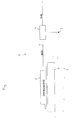
- the sketched in the figure system 1 is suitable for carrying out a method according to the invention for operating a lamp 2, in which different dimming levels can be set, such that the light 2 light emissions of different brightness can be generated.
- the lamp 2 may be connected, for example, with a dimmable electronic ballast 5 (ECG: electronic ballast).
- ECG dimmable electronic ballast 5
- the luminaire 2 comprises a luminous means;
- the luminous means may comprise at least one fluorescent lamp or at least one LED (light emitting diode).
- efficiency values of the luminaire 2 at a plurality of different dimming levels are determined in a step (a). This makes it very easy to determine that of the dimming levels at which the efficiency value is greatest. The luminaire can then continue to be operated at this dimming level and thus particularly efficiently.
- step (a) the associated efficiency value is detected in at least 10 or at least 20 different dimming levels.
- each of the different dimming levels may be detected for each of the different dimming levels to detect an associated brightness value of the light 7 emitted by the luminaire 2.
- a photosensor 3 serve. The detection of the brightness values can be carried out particularly accurately in this case if the relative positioning between the luminaire 2 and the photosensor 3 is kept unchanged during the execution of step (a).
- a detected brightness value represents a measure of the illuminance of the light 7 generated by the luminaire 2.
- the efficiency values can then be formed, for example, by setting the detected brightness values respectively in relation to the power (for example in the form of an indication in watts) supplied to the luminaire 2 at the respectively associated dimming level.
- step (a) is carried out automatically.
- the control unit 4 can be connected to the electronic ballast 5 via a bus 6.
- step (a) After performing step (a), it may then be determined in a further, subsequent step (b) at which of the dimming levels the efficiency value was greatest.
- this step is also carried out automatically.
- step (a) it is advantageous to perform step (a) at a time when the luminaire is not intended for regular operation, for example at night.
- step (a) it is therefore advantageous to wait in step (a) after setting of one of the several dimming levels with the determination of the associated efficiency value until the temperature has reached at least approximately an equilibrium state in the region of the lamp.
- a time-dependent temperature measurement can be carried out, preferably again automatically.
- a temperature measuring device for example, serve within the lamp, a temperature measuring device. This can also be connected to the controller 4 for automated implementation.
- a certain, predetermined period of time for example 15 minutes, is maintained before the associated efficiency value is determined.
Landscapes
- Circuit Arrangement For Electric Light Sources In General (AREA)
Abstract
Description
- Die Erfindung betrifft ein Verfahren zum Betreiben einer Leuchte, bei der unterschiedliche Dimm-Niveaus eingestellt werden können, derart, dass mit der Leuchte Lichtabstrahlungen unterschiedlicher Helligkeit erzeugt werden können. Außerdem betrifft die Erfindung ein System zur Durchführung eines solchen Verfahrens.
- Derartige Leuchten sind aus dem Stand der Technik bekannt. Ein Problem bei einer derartigen Leuchte kann in der Regel darin gesehen werden, dass sie in der Praxis mit Bezug auf ihre Effizienz zumeist nicht optimal betrieben wird. Unter "Effizienz" einer Leuchte sei im vorliegenden Rahmen dabei das Verhältnis der Beleuchtungsstärke des von der Leuchte abgestrahlten Lichts zu der der Leuchte zugeführten Leistung verstanden.
- Die Effizienz ist insbesondere unter anderem von der Temperatur der Leuchte abhängig, die sich bei Betrieb in der Leuchte einstellt. Dies führt dazu, dass von der Leuchte nicht zwangsläufig bei maximaler Leistung Licht mit der maximalen Beleuchtungsstärke abgestrahlt wird.
- Der Erfindung liegt die Aufgabe zugrunde, ein entsprechendes Verfahren anzugeben, das eine besonders effiziente Abstrahlung der Leuchte ermöglicht. Außerdem soll ein System zur Durchführung eines solchen Verfahrens angegeben werden.
- Diese Aufgabe wird gemäß der Erfindung mit den in den unabhängigen Ansprüchen genannten Gegenständen gelöst. Besondere Ausführungsarten sind in den abhängigen Ansprüchen angegeben.
- Gemäß der Erfindung ist ein Verfahren zum Betreiben einer Leuchte vorgesehen, bei der unterschiedliche Dimm-Niveaus eingestellt werden können, derart, dass mit der Leuchte Lichtabstrahlungen unterschiedlicher Helligkeit erzeugt werden können. Das Verfahren umfasst dabei folgenden Schritt: Bestimmung von Effizienzwerten der Leuchte bei mehreren unterschiedlichen Dimm-Niveaus.
- Mit "Effizienzwert" sei dabei ein Wert bezeichnet, der ein Maß für das Verhältnis der Beleuchtungsstärke der von der Leuchte erzeugten Lichtabstrahlung zu der der Leuchte zugeführten Leistung darstellt.
- Durch die Bestimmung der Effizienzwerte bei mehreren unterschiedlichen Dimm-Niveaus ist es leicht möglich, dasjenige der unterschiedlichen Dimm-Niveaus zu ermitteln, bei dem die Leuchte am effizientesten Licht abgibt. Die Leuchte kann dann bei dem so ermittelten Dimm-Niveau und somit besonders effizient betrieben werden. Die Leuchte strahlt also bei diesem Dimm-Niveau besonders effizient Licht ab.
- Vorteilhaft wird der Schritt (a) automatisiert durchgeführt. Hierdurch ist die Handhabung besonders einfach.
- Vorteilhaft wird zur Bestimmung der Effizienzwerte bei jedem der unterschiedlichen Dimm-Niveaus jeweils ein Helligkeitswert des Lichts erfasst, das von der Leuchte abgegeben wird. Beispielsweise kann der Helligkeitswert mit einem Fotosensor erfasst werden.
- Vorteilhaft wird in einem folgenden Schritt (b) dasjenige der mehreren unterschiedlichen Dimm-Niveaus bestimmt, bei dem der Effizienzwert am größten war. Eine besonders einfache Handhabung ist möglich, wenn der Schritt (b) automatisiert durchgeführt wird.
- Vorteilhaft wird bei Schritt (a) jeweils nach Einstellung von einem der mehreren unterschiedlichen Dimm-Niveaus mit der Bestimmung des dazugehörigen Effizienzwertes gewartet, bis die Temperatur im Bereich der Leuchte zumindest näherungsweise einen Gleichgewichtszustand erreicht hat. Hierzu kann beispielsweise eine zeitabhängige Temperaturmessung in der Leuchte durchgeführt werden. Vorteilhaft kann alternativ vorgesehen sein, dass nach Einstellung von einem der mehreren unterschiedlichen Dimm-Niveaus mit der Bestimmung des dazugehörigen Effizienzwertes eine vorab festgelegte Zeitspanne gewartet wird.
- Gemäß einem weiteren Aspekt der Erfindung ist ein System zur Durchführung eines erfindungsgemäßen Verfahrens vorgesehen, wobei das System Mittel zur Bestimmung von Effizienzwerten der Leuchte bei mehreren unterschiedlichen Dimm-Niveaus aufweist.
- Vorteilhaft umfassen dabei die Mittel einen Fotosensor, mit dem ein Helligkeitswert des Lichts erfasst werden kann, das von der Leuchte abgegeben wird.
- Weiterhin vorteilhaft weist das System ein Steuergerät zur automatisierten Durchführung der Bestimmung der Effizienzwerte auf.
- Weiterhin vorteilhaft weist das System ein Temperaturmessgerät zur Erfassung der Temperatur im Bereich der Leuchte auf.
- Die Erfindung wird im Folgenden anhand eines Ausführungsbeispiels und mit Bezug auf die Zeichnung näher erläutert. Es zeigt die
- Fig.
- eine Skizze zu einem Ausführungsbeispiel eines erfindungsgemäßen Systems zur Durchführung eines Verfahrens zum Betreiben einer Leuchte, bei der unterschiedliche Dimm-Niveaus eingestellt werden können, derart, dass mit der Leuchte Lichtabstrahlungen unterschiedlicher Helligkeit erzeugt werden können.
- Das in der Figur skizzierte System 1 eignet sich zur Durchführung eines erfindungsgemäßen Verfahrens zum Betreiben einer Leuchte 2, bei der unterschiedliche Dimm-Niveaus eingestellt werden können, derart, dass mit der Leuchte 2 Lichtabstrahlungen unterschiedlicher Helligkeit erzeugt werden können. Hierzu kann die Leuchte 2 beispielsweise mit einem dimmbaren EVG 5 (EVG: elektronisches Vorschaltgerät) verbunden sein.
- Die Leuchte 2 umfasst ein Leuchtmittel; das Leuchtmittel kann beispielsweise wenigstens eine Leuchtstofflampe oder wenigstens eine LED (lichtemittierende Diode) umfassen.
- Bei dem Verfahren werden in einem Schritt (a) Effizienzwerte der Leuchte 2 bei mehreren unterschiedlichen Dimm-Niveaus bestimmt. Hierdurch kann sehr einfach dasjenige der Dimm-Niveaus ermittelt werden, bei dem der Effizienzwert am größten ist. Die Leuchte kann dann im Weiteren bei diesem Dimm-Niveau und somit besonders effizient betrieben werden.
- Beispielsweise kann vorgesehen sein, dass bei Schritt (a) bei wenigstens 10 oder bei wenigstens 20 unterschiedlichen Dimm-Niveaus jeweils der dazugehörige Effizienzwert erfasst wird.
- Zur Bestimmung der Effizienzwerte kann vorgesehen sein, dass bei jedem der unterschiedlichen Dimm-Niveaus jeweils ein dazugehöriger Helligkeitswert des Lichts 7 erfasst wird, das von der Leuchte 2 abgegeben wird. Hierzu kann beispielsweise ein Fotosensor 3 dienen. Die Erfassung der Helligkeitswerte kann dabei besonders genau durchgeführt werden, wenn die relative Positionierung zwischen der Leuchte 2 und dem Fotosensor 3 während der Durchführung des Schritts (a) unverändert gehalten wird.
- Ein erfasster Helligkeitswert stellt ein Maß für die Beleuchtungsstärke des Lichts 7 dar, das von der Leuchte 2 erzeugt wird. Die Effizienzwerte können dann beispielsweise dadurch gebildet werden, dass die erfassten Helligkeitswerte jeweils in Verhältnis zu der - bei dem jeweils dazugehörigen Dimm-Niveau - der Leuchte 2 zugeführten Leistung (beispielsweise in Form einer Angabe in Watt) gesetzt werden.
- Eine besonders einfache Handhabung ist ermöglicht, wenn der Schritt (a) automatisiert durchgeführt wird. Hierzu kann beispielsweise ein Steuergerät 4 dienen. Das Steuergerät 4 kann hierzu über einen Bus 6 mit dem EVG 5 verbunden sein.
- Nach der Durchführung von Schritt (a) kann dann in einem weiteren, darauffolgenden Schritt (b) bestimmt werden, bei welchem der Dimm-Niveaus der Effizienzwert am größten war. Vorteilhaft wird auch dieser Schritt automatisiert durchgeführt.
- Die Bestimmung der Effizienzwerte bei den unterschiedlichen Dimm-Niveaus sollte verhältnismäßig langsam durchgeführt werden, da ein aussagekräftiger Effizienzwert erst erfasst werden kann, wenn sich - zumindest näherungsweise - j eweils wieder ein neues Gleichgewicht zwischen der Temperatur und der Lichtabstrahlung eingestellt hat. Somit ist es vorteilhaft den Schritt (a) in einer Zeit durchzuführen, in der die Leuchte nicht zum regulären Betrieb vorgesehen ist, also beispielsweise nachts.
- Es ist also vorteilhaft, bei Schritt (a) jeweils nach Einstellung von einem der mehreren Dimm-Niveaus mit der Bestimmung des dazugehörigen Effizienzwertes zu warten, bis die Temperatur im Bereich der Leuchte zumindest näherungsweise einen Gleichgewichtszustand erreicht hat. Zur Bestimmung dieser Wartezeit kann - vorzugsweise wiederum automatisiert - eine zeitabhängige Temperaturmessung durchgeführt werden. Hierzu kann beispielsweise innerhalb der Leuchte ein Temperaturmessgerät dienen. Dieses kann zur automatisierten Durchführung ebenfalls mit dem Steuergerät 4 verbunden sein.
- Alternativ kann vorgesehen sein, dass jeweils nach Einstellung von einem der mehreren Dimm-Niveaus eine bestimmte, vorab festgelegte Zeitspanne, beispielsweise 15 Minuten, gewartet wird, bevor der dazugehörige Effizienzwert bestimmt wird.
- Mit der Erfindung ist ein besonders effizienter Betrieb einer Leuchte möglich. Dies ist energetisch und somit wirtschaftlich besonders vorteilhaft.
Claims (13)
- Verfahren zum Betreiben einer Leuchte (2), bei der unterschiedliche Dimm-Niveaus eingestellt werden können, derart, dass mit der Leuchte (2) Lichtabstrahlungen unterschiedlicher Helligkeit erzeugt werden können,
gekennzeichnet durch
folgenden Schritt(a) Bestimmung von Effizienzwerten der Leuchte (2) bei mehreren unterschiedlichen Dimm-Niveaus. - Verfahren nach Anspruch 1,
bei dem der Schritt (a) automatisiert durchgeführt wird. - Verfahren nach Anspruch 1 oder 2,
bei dem zur Bestimmung der Effizienzwerte bei jedem der unterschiedlichen Dimm-Niveaus jeweils ein Helligkeitswert des Lichts (7) erfasst wird, das von der Leuchte (2) abgegeben wird. - Verfahren nach Anspruch 3,
bei dem jeweils ein Helligkeitswert des Lichts (7) mit einem Fotosensor (3) erfasst wird. - Verfahren nach einem der vorhergehenden Ansprüche,
bei dem in einem folgenden Schritt (b) dasjenige der mehreren unterschiedlichen Dimm-Niveaus bestimmt wird, bei dem der Effizienzwert am größten war. - Verfahren nach Anspruch 5,
bei dem der Schritt (b) automatisiert durchgeführt wird. - Verfahren nach einem der vorhergehenden Ansprüche,
bei dem bei Schritt (a) jeweils nach Einstellung von einem der mehreren unterschiedlichen Dimm-Niveaus mit der Bestimmung des dazugehörigen Effizienzwertes gewartet wird, bis die Temperatur im Bereich der Leuchte (2) zumindest näherungsweise einen Gleichgewichtszustand erreicht hat. - Verfahren nach Anspruch 7,
bei dem zur Bestimmung der entsprechenden Wartezeit eine zeitabhängige Temperaturmessung in der Leuchte (2) durchgeführt wird. - Verfahren nach Anspruch 7,
bei dem nach Einstellung von einem der mehreren unterschiedlichen Dimm-Niveaus zu dem darauffolgenden Dimm-Niveau mit der Bestimmung des dazugehörigen Effizienzwertes eine vorab festgelegte Zeitspanne gewartet wird. - System zur Durchführung eines Verfahrens nach einem der Ansprüche 1 bis 9, aufweisend
Mittel zur Bestimmung der Effizienzwerte der Leuchte (2) bei mehreren unterschiedlichen Dimm-Niveaus. - System nach Anspruch 10,
bei dem die Mittel einen Fotosensor (3) zur Erfassung eines Helligkeitswerts des Lichts (7) umfassen, das von der Leuchte (2) abgegeben wird. - System nach Anspruch 10 oder 11,
weiterhin aufweisend ein Steuergerät (4) zur automatisierten Durchführung der Bestimmung der Effizienzwerte. - System nach einem der Ansprüche 10 bis 12,
weiterhin aufweisend ein Temperaturessgerät zur Erfassung der Temperatur im Bereich der Leuchte (2).
Applications Claiming Priority (1)
| Application Number | Priority Date | Filing Date | Title |
|---|---|---|---|
| DE102009014061A DE102009014061A1 (de) | 2009-03-20 | 2009-03-20 | Verfahren und System zum effizienten Betreiben einer dimmbaren Leuchte |
Publications (3)
| Publication Number | Publication Date |
|---|---|
| EP2230888A2 true EP2230888A2 (de) | 2010-09-22 |
| EP2230888A3 EP2230888A3 (de) | 2016-11-02 |
| EP2230888B1 EP2230888B1 (de) | 2018-12-12 |
Family
ID=42281812
Family Applications (1)
| Application Number | Title | Priority Date | Filing Date |
|---|---|---|---|
| EP10156978.8A Active EP2230888B1 (de) | 2009-03-20 | 2010-03-19 | Verfahren und System zum effizienten Betreiben einer dimmbaren Leuchte |
Country Status (2)
| Country | Link |
|---|---|
| EP (1) | EP2230888B1 (de) |
| DE (1) | DE102009014061A1 (de) |
Cited By (1)
| Publication number | Priority date | Publication date | Assignee | Title |
|---|---|---|---|---|
| AT18138U1 (de) * | 2019-01-03 | 2024-02-15 | Tridonic Gmbh & Co Kg | Beleuchtungssystem mit Energiespar-Modus und Verfahren zur Optimierung der Gesamteffizienz des Beleuchtungssystems |
Family Cites Families (3)
| Publication number | Priority date | Publication date | Assignee | Title |
|---|---|---|---|---|
| US7279854B2 (en) * | 2004-11-30 | 2007-10-09 | General Electric Company | Charge pump interface circuit |
| KR100928455B1 (ko) * | 2009-05-08 | 2009-11-25 | 주식회사 아이디시스 | 바이오룩스 조명 장치 |
| JP6704911B2 (ja) * | 2014-11-12 | 2020-06-03 | シグニファイ ホールディング ビー ヴィSignify Holding B.V. | ドライバ回路及び方法 |
-
2009
- 2009-03-20 DE DE102009014061A patent/DE102009014061A1/de not_active Withdrawn
-
2010
- 2010-03-19 EP EP10156978.8A patent/EP2230888B1/de active Active
Non-Patent Citations (1)
| Title |
|---|
| None |
Cited By (1)
| Publication number | Priority date | Publication date | Assignee | Title |
|---|---|---|---|---|
| AT18138U1 (de) * | 2019-01-03 | 2024-02-15 | Tridonic Gmbh & Co Kg | Beleuchtungssystem mit Energiespar-Modus und Verfahren zur Optimierung der Gesamteffizienz des Beleuchtungssystems |
Also Published As
| Publication number | Publication date |
|---|---|
| EP2230888B1 (de) | 2018-12-12 |
| EP2230888A3 (de) | 2016-11-02 |
| DE102009014061A1 (de) | 2010-09-23 |
Similar Documents
| Publication | Publication Date | Title |
|---|---|---|
| DE102010004118A1 (de) | Beleuchtungsvorrichtung und Ansteuerverfahren dafür | |
| DE112009001581B4 (de) | Verfahren und Schaltungsaufbau für eine selbst-kalibrierende Steuereinrichtung | |
| DE112020001660T5 (de) | Systeme, geräte und verfahren für die zeitsteuerung vonleistungsimpulsen für einen beleuchtungskörper | |
| EP3123832B1 (de) | Beleuchtungssystem und verfahren zur ansteuerung eines beleuchtungssystems | |
| DE102012006860A1 (de) | Verfahren und Vorrichtung zum Regeln einer Beleuchtungsstärke | |
| DE102010063150A1 (de) | Eine regulierbare Beleuchtungsanlage für eine Fluoreszenzlampe und einen Sensorapparat dieser regulierbaren Beleuchtungsanlage | |
| EP2230888B1 (de) | Verfahren und System zum effizienten Betreiben einer dimmbaren Leuchte | |
| DE102017111380A1 (de) | Beleuchtungssteuervorrichtung, Beleuchtungssystem und Steuerverfahren | |
| WO2011120065A1 (de) | Verfahren zur ausleuchtung eines lichtkastens | |
| WO2010031103A2 (de) | VORRICHTUNG ZUM BETREIBEN VON LEDs | |
| DE202014104294U1 (de) | LED-Lampervorrichtung zum Ausführen von verschiedenen Methoden zur Steuerung | |
| DE102010011408A1 (de) | Vorrichtung mit einem Leuchtmittel und Verfahren zu dessen Steuerung | |
| EP2138012B8 (de) | Betriebsgerät und verfahren für den kombinierten betrieb von gasentladungslampen und halbleiterlichtquellen | |
| DE102010001798B4 (de) | Verfahren zum Betreiben einer Leuchtdiodenanordnung sowie Schaltanordnung | |
| WO2019219454A1 (de) | Verfahren zur dynamischen überwachung einer anhängerbeleuchtung von einem zugfahrzeug aus | |
| DE112014002422T5 (de) | Mehrfarblichtquellenvorichtung | |
| DE102014101367A1 (de) | Anordnung und Verfahren zur Überwachung von LED-Beleuchtungssystemen sowie LED-Leuchte | |
| EP2420108B1 (de) | Treiberschaltung für leds | |
| DE112009004860T5 (de) | Dimmersystem und Dimmverfahren | |
| EP2591640B1 (de) | Steuerung von betriebsparametern von betriebsgeräten für led | |
| DE102020105332A1 (de) | Leuchtvorrichtung mit integrierter Steuerung | |
| DE102011055901A1 (de) | Netzteil mit automatischer Helligkeitsregelung | |
| EP3069572B1 (de) | Betriebsschaltung für ein leuchtmittel und verfahren zum betreiben eines leuchtmittels | |
| DE102014224564A1 (de) | Resonanzwandler zum betreiben mehrerer ac-led-ketten | |
| EP2866524A3 (de) | Anordnung und Verfahren zur Überwachung mehrerer LED-Stränge sowie LED-Leuchte mit einer solchen Anordnung |
Legal Events
| Date | Code | Title | Description |
|---|---|---|---|
| PUAI | Public reference made under article 153(3) epc to a published international application that has entered the european phase |
Free format text: ORIGINAL CODE: 0009012 |
|
| AK | Designated contracting states |
Kind code of ref document: A2 Designated state(s): AT BE BG CH CY CZ DE DK EE ES FI FR GB GR HR HU IE IS IT LI LT LU LV MC MK MT NL NO PL PT RO SE SI SK SM TR |
|
| AX | Request for extension of the european patent |
Extension state: AL BA ME RS |
|
| PUAL | Search report despatched |
Free format text: ORIGINAL CODE: 0009013 |
|
| AK | Designated contracting states |
Kind code of ref document: A3 Designated state(s): AT BE BG CH CY CZ DE DK EE ES FI FR GB GR HR HU IE IS IT LI LT LU LV MC MK MT NL NO PL PT RO SE SI SK SM TR |
|
| AX | Request for extension of the european patent |
Extension state: AL BA ME RS |
|
| RIC1 | Information provided on ipc code assigned before grant |
Ipc: H05B 41/38 20060101AFI20160923BHEP Ipc: H05B 41/392 20060101ALI20160923BHEP Ipc: H05B 33/08 20060101ALI20160923BHEP |
|
| STAA | Information on the status of an ep patent application or granted ep patent |
Free format text: STATUS: REQUEST FOR EXAMINATION WAS MADE |
|
| 17P | Request for examination filed |
Effective date: 20170323 |
|
| RBV | Designated contracting states (corrected) |
Designated state(s): AT BE BG CH CY CZ DE DK EE ES FI FR GB GR HR HU IE IS IT LI LT LU LV MC MK MT NL NO PL PT RO SE SI SK SM TR |
|
| STAA | Information on the status of an ep patent application or granted ep patent |
Free format text: STATUS: EXAMINATION IS IN PROGRESS |
|
| 17Q | First examination report despatched |
Effective date: 20171201 |
|
| GRAP | Despatch of communication of intention to grant a patent |
Free format text: ORIGINAL CODE: EPIDOSNIGR1 |
|
| STAA | Information on the status of an ep patent application or granted ep patent |
Free format text: STATUS: GRANT OF PATENT IS INTENDED |
|
| INTG | Intention to grant announced |
Effective date: 20180806 |
|
| GRAS | Grant fee paid |
Free format text: ORIGINAL CODE: EPIDOSNIGR3 |
|
| GRAA | (expected) grant |
Free format text: ORIGINAL CODE: 0009210 |
|
| STAA | Information on the status of an ep patent application or granted ep patent |
Free format text: STATUS: THE PATENT HAS BEEN GRANTED |
|
| AK | Designated contracting states |
Kind code of ref document: B1 Designated state(s): AT BE BG CH CY CZ DE DK EE ES FI FR GB GR HR HU IE IS IT LI LT LU LV MC MK MT NL NO PL PT RO SE SI SK SM TR |
|
| REG | Reference to a national code |
Ref country code: GB Ref legal event code: FG4D Free format text: NOT ENGLISH |
|
| REG | Reference to a national code |
Ref country code: CH Ref legal event code: EP |
|
| REG | Reference to a national code |
Ref country code: AT Ref legal event code: REF Ref document number: 1077675 Country of ref document: AT Kind code of ref document: T Effective date: 20181215 |
|
| REG | Reference to a national code |
Ref country code: DE Ref legal event code: R096 Ref document number: 502010015615 Country of ref document: DE |
|
| REG | Reference to a national code |
Ref country code: IE Ref legal event code: FG4D Free format text: LANGUAGE OF EP DOCUMENT: GERMAN |
|
| REG | Reference to a national code |
Ref country code: LT Ref legal event code: MG4D |
|
| PG25 | Lapsed in a contracting state [announced via postgrant information from national office to epo] |
Ref country code: BG Free format text: LAPSE BECAUSE OF FAILURE TO SUBMIT A TRANSLATION OF THE DESCRIPTION OR TO PAY THE FEE WITHIN THE PRESCRIBED TIME-LIMIT Effective date: 20190312 Ref country code: NO Free format text: LAPSE BECAUSE OF FAILURE TO SUBMIT A TRANSLATION OF THE DESCRIPTION OR TO PAY THE FEE WITHIN THE PRESCRIBED TIME-LIMIT Effective date: 20190312 Ref country code: FI Free format text: LAPSE BECAUSE OF FAILURE TO SUBMIT A TRANSLATION OF THE DESCRIPTION OR TO PAY THE FEE WITHIN THE PRESCRIBED TIME-LIMIT Effective date: 20181212 Ref country code: LT Free format text: LAPSE BECAUSE OF FAILURE TO SUBMIT A TRANSLATION OF THE DESCRIPTION OR TO PAY THE FEE WITHIN THE PRESCRIBED TIME-LIMIT Effective date: 20181212 Ref country code: LV Free format text: LAPSE BECAUSE OF FAILURE TO SUBMIT A TRANSLATION OF THE DESCRIPTION OR TO PAY THE FEE WITHIN THE PRESCRIBED TIME-LIMIT Effective date: 20181212 Ref country code: HR Free format text: LAPSE BECAUSE OF FAILURE TO SUBMIT A TRANSLATION OF THE DESCRIPTION OR TO PAY THE FEE WITHIN THE PRESCRIBED TIME-LIMIT Effective date: 20181212 Ref country code: ES Free format text: LAPSE BECAUSE OF FAILURE TO SUBMIT A TRANSLATION OF THE DESCRIPTION OR TO PAY THE FEE WITHIN THE PRESCRIBED TIME-LIMIT Effective date: 20181212 |
|
| PG25 | Lapsed in a contracting state [announced via postgrant information from national office to epo] |
Ref country code: GR Free format text: LAPSE BECAUSE OF FAILURE TO SUBMIT A TRANSLATION OF THE DESCRIPTION OR TO PAY THE FEE WITHIN THE PRESCRIBED TIME-LIMIT Effective date: 20190313 Ref country code: SE Free format text: LAPSE BECAUSE OF FAILURE TO SUBMIT A TRANSLATION OF THE DESCRIPTION OR TO PAY THE FEE WITHIN THE PRESCRIBED TIME-LIMIT Effective date: 20181212 |
|
| PGFP | Annual fee paid to national office [announced via postgrant information from national office to epo] |
Ref country code: AT Payment date: 20190328 Year of fee payment: 10 |
|
| PG25 | Lapsed in a contracting state [announced via postgrant information from national office to epo] |
Ref country code: NL Free format text: LAPSE BECAUSE OF FAILURE TO SUBMIT A TRANSLATION OF THE DESCRIPTION OR TO PAY THE FEE WITHIN THE PRESCRIBED TIME-LIMIT Effective date: 20181212 |
|
| PG25 | Lapsed in a contracting state [announced via postgrant information from national office to epo] |
Ref country code: PL Free format text: LAPSE BECAUSE OF FAILURE TO SUBMIT A TRANSLATION OF THE DESCRIPTION OR TO PAY THE FEE WITHIN THE PRESCRIBED TIME-LIMIT Effective date: 20181212 Ref country code: CZ Free format text: LAPSE BECAUSE OF FAILURE TO SUBMIT A TRANSLATION OF THE DESCRIPTION OR TO PAY THE FEE WITHIN THE PRESCRIBED TIME-LIMIT Effective date: 20181212 Ref country code: IT Free format text: LAPSE BECAUSE OF FAILURE TO SUBMIT A TRANSLATION OF THE DESCRIPTION OR TO PAY THE FEE WITHIN THE PRESCRIBED TIME-LIMIT Effective date: 20181212 Ref country code: PT Free format text: LAPSE BECAUSE OF FAILURE TO SUBMIT A TRANSLATION OF THE DESCRIPTION OR TO PAY THE FEE WITHIN THE PRESCRIBED TIME-LIMIT Effective date: 20190412 |
|
| PG25 | Lapsed in a contracting state [announced via postgrant information from national office to epo] |
Ref country code: SK Free format text: LAPSE BECAUSE OF FAILURE TO SUBMIT A TRANSLATION OF THE DESCRIPTION OR TO PAY THE FEE WITHIN THE PRESCRIBED TIME-LIMIT Effective date: 20181212 Ref country code: SM Free format text: LAPSE BECAUSE OF FAILURE TO SUBMIT A TRANSLATION OF THE DESCRIPTION OR TO PAY THE FEE WITHIN THE PRESCRIBED TIME-LIMIT Effective date: 20181212 Ref country code: EE Free format text: LAPSE BECAUSE OF FAILURE TO SUBMIT A TRANSLATION OF THE DESCRIPTION OR TO PAY THE FEE WITHIN THE PRESCRIBED TIME-LIMIT Effective date: 20181212 Ref country code: RO Free format text: LAPSE BECAUSE OF FAILURE TO SUBMIT A TRANSLATION OF THE DESCRIPTION OR TO PAY THE FEE WITHIN THE PRESCRIBED TIME-LIMIT Effective date: 20181212 Ref country code: IS Free format text: LAPSE BECAUSE OF FAILURE TO SUBMIT A TRANSLATION OF THE DESCRIPTION OR TO PAY THE FEE WITHIN THE PRESCRIBED TIME-LIMIT Effective date: 20190412 |
|
| REG | Reference to a national code |
Ref country code: DE Ref legal event code: R097 Ref document number: 502010015615 Country of ref document: DE |
|
| PLBE | No opposition filed within time limit |
Free format text: ORIGINAL CODE: 0009261 |
|
| STAA | Information on the status of an ep patent application or granted ep patent |
Free format text: STATUS: NO OPPOSITION FILED WITHIN TIME LIMIT |
|
| PG25 | Lapsed in a contracting state [announced via postgrant information from national office to epo] |
Ref country code: MC Free format text: LAPSE BECAUSE OF FAILURE TO SUBMIT A TRANSLATION OF THE DESCRIPTION OR TO PAY THE FEE WITHIN THE PRESCRIBED TIME-LIMIT Effective date: 20181212 Ref country code: SI Free format text: LAPSE BECAUSE OF FAILURE TO SUBMIT A TRANSLATION OF THE DESCRIPTION OR TO PAY THE FEE WITHIN THE PRESCRIBED TIME-LIMIT Effective date: 20181212 Ref country code: DK Free format text: LAPSE BECAUSE OF FAILURE TO SUBMIT A TRANSLATION OF THE DESCRIPTION OR TO PAY THE FEE WITHIN THE PRESCRIBED TIME-LIMIT Effective date: 20181212 |
|
| REG | Reference to a national code |
Ref country code: CH Ref legal event code: PL |
|
| 26N | No opposition filed |
Effective date: 20190913 |
|
| PG25 | Lapsed in a contracting state [announced via postgrant information from national office to epo] |
Ref country code: LU Free format text: LAPSE BECAUSE OF NON-PAYMENT OF DUE FEES Effective date: 20190319 |
|
| REG | Reference to a national code |
Ref country code: BE Ref legal event code: MM Effective date: 20190331 |
|
| REG | Reference to a national code |
Ref country code: DE Ref legal event code: R084 Ref document number: 502010015615 Country of ref document: DE |
|
| PG25 | Lapsed in a contracting state [announced via postgrant information from national office to epo] |
Ref country code: CH Free format text: LAPSE BECAUSE OF NON-PAYMENT OF DUE FEES Effective date: 20190331 Ref country code: LI Free format text: LAPSE BECAUSE OF NON-PAYMENT OF DUE FEES Effective date: 20190331 Ref country code: IE Free format text: LAPSE BECAUSE OF NON-PAYMENT OF DUE FEES Effective date: 20190319 |
|
| PG25 | Lapsed in a contracting state [announced via postgrant information from national office to epo] |
Ref country code: BE Free format text: LAPSE BECAUSE OF NON-PAYMENT OF DUE FEES Effective date: 20190331 |
|
| PG25 | Lapsed in a contracting state [announced via postgrant information from national office to epo] |
Ref country code: TR Free format text: LAPSE BECAUSE OF FAILURE TO SUBMIT A TRANSLATION OF THE DESCRIPTION OR TO PAY THE FEE WITHIN THE PRESCRIBED TIME-LIMIT Effective date: 20181212 |
|
| PG25 | Lapsed in a contracting state [announced via postgrant information from national office to epo] |
Ref country code: MT Free format text: LAPSE BECAUSE OF FAILURE TO SUBMIT A TRANSLATION OF THE DESCRIPTION OR TO PAY THE FEE WITHIN THE PRESCRIBED TIME-LIMIT Effective date: 20181212 |
|
| REG | Reference to a national code |
Ref country code: AT Ref legal event code: MM01 Ref document number: 1077675 Country of ref document: AT Kind code of ref document: T Effective date: 20200319 |
|
| PG25 | Lapsed in a contracting state [announced via postgrant information from national office to epo] |
Ref country code: AT Free format text: LAPSE BECAUSE OF NON-PAYMENT OF DUE FEES Effective date: 20200319 |
|
| PG25 | Lapsed in a contracting state [announced via postgrant information from national office to epo] |
Ref country code: CY Free format text: LAPSE BECAUSE OF FAILURE TO SUBMIT A TRANSLATION OF THE DESCRIPTION OR TO PAY THE FEE WITHIN THE PRESCRIBED TIME-LIMIT Effective date: 20181212 |
|
| PG25 | Lapsed in a contracting state [announced via postgrant information from national office to epo] |
Ref country code: HU Free format text: LAPSE BECAUSE OF FAILURE TO SUBMIT A TRANSLATION OF THE DESCRIPTION OR TO PAY THE FEE WITHIN THE PRESCRIBED TIME-LIMIT; INVALID AB INITIO Effective date: 20100319 |
|
| PG25 | Lapsed in a contracting state [announced via postgrant information from national office to epo] |
Ref country code: MK Free format text: LAPSE BECAUSE OF FAILURE TO SUBMIT A TRANSLATION OF THE DESCRIPTION OR TO PAY THE FEE WITHIN THE PRESCRIBED TIME-LIMIT Effective date: 20181212 |
|
| P01 | Opt-out of the competence of the unified patent court (upc) registered |
Effective date: 20230530 |
|
| PGFP | Annual fee paid to national office [announced via postgrant information from national office to epo] |
Ref country code: FR Payment date: 20250324 Year of fee payment: 16 |
|
| PGFP | Annual fee paid to national office [announced via postgrant information from national office to epo] |
Ref country code: GB Payment date: 20260323 Year of fee payment: 17 |
|
| PGFP | Annual fee paid to national office [announced via postgrant information from national office to epo] |
Ref country code: DE Payment date: 20260320 Year of fee payment: 17 |