EP2226406A1 - Stainless austenitic low Ni alloy - Google Patents
Stainless austenitic low Ni alloy Download PDFInfo
- Publication number
- EP2226406A1 EP2226406A1 EP09155355A EP09155355A EP2226406A1 EP 2226406 A1 EP2226406 A1 EP 2226406A1 EP 09155355 A EP09155355 A EP 09155355A EP 09155355 A EP09155355 A EP 09155355A EP 2226406 A1 EP2226406 A1 EP 2226406A1
- Authority
- EP
- European Patent Office
- Prior art keywords
- steel alloy
- heat
- eqv
- alloy
- austenitic stainless
- Prior art date
- Legal status (The legal status is an assumption and is not a legal conclusion. Google has not performed a legal analysis and makes no representation as to the accuracy of the status listed.)
- Granted
Links
- 229910000990 Ni alloy Inorganic materials 0.000 title 1
- 229910045601 alloy Inorganic materials 0.000 claims abstract description 56
- 239000000956 alloy Substances 0.000 claims abstract description 56
- 229910052759 nickel Inorganic materials 0.000 claims abstract description 31
- 229910000963 austenitic stainless steel Inorganic materials 0.000 claims abstract description 25
- 229910052757 nitrogen Inorganic materials 0.000 claims abstract description 24
- 229910052804 chromium Inorganic materials 0.000 claims abstract description 22
- 238000005275 alloying Methods 0.000 claims abstract description 20
- 229910052799 carbon Inorganic materials 0.000 claims abstract description 19
- 239000000203 mixture Substances 0.000 claims abstract description 17
- 229910052802 copper Inorganic materials 0.000 claims abstract description 16
- 229910052748 manganese Inorganic materials 0.000 claims abstract description 15
- 229910052758 niobium Inorganic materials 0.000 claims abstract description 15
- 229910052710 silicon Inorganic materials 0.000 claims abstract description 15
- 229910052750 molybdenum Inorganic materials 0.000 claims abstract description 13
- 229910052782 aluminium Inorganic materials 0.000 claims abstract description 12
- 229910052719 titanium Inorganic materials 0.000 claims abstract description 12
- 229910052720 vanadium Inorganic materials 0.000 claims abstract description 11
- 239000012535 impurity Substances 0.000 claims abstract description 3
- 229910000851 Alloy steel Inorganic materials 0.000 claims description 128
- 229910052721 tungsten Inorganic materials 0.000 claims description 9
- 238000005242 forging Methods 0.000 claims description 3
- PXHVJJICTQNCMI-UHFFFAOYSA-N Nickel Chemical compound [Ni] PXHVJJICTQNCMI-UHFFFAOYSA-N 0.000 description 67
- 239000012071 phase Substances 0.000 description 39
- 239000011651 chromium Substances 0.000 description 37
- 229910000859 α-Fe Inorganic materials 0.000 description 34
- IJGRMHOSHXDMSA-UHFFFAOYSA-N Atomic nitrogen Chemical compound N#N IJGRMHOSHXDMSA-UHFFFAOYSA-N 0.000 description 33
- 229910001566 austenite Inorganic materials 0.000 description 30
- 229910000734 martensite Inorganic materials 0.000 description 29
- 238000005260 corrosion Methods 0.000 description 27
- 230000007797 corrosion Effects 0.000 description 27
- 238000005482 strain hardening Methods 0.000 description 23
- 229910000831 Steel Inorganic materials 0.000 description 20
- 239000010959 steel Substances 0.000 description 20
- 239000011572 manganese Substances 0.000 description 18
- 239000010949 copper Substances 0.000 description 17
- 230000000087 stabilizing effect Effects 0.000 description 17
- 239000010955 niobium Substances 0.000 description 15
- 239000010936 titanium Substances 0.000 description 15
- 230000015572 biosynthetic process Effects 0.000 description 14
- 230000000694 effects Effects 0.000 description 13
- 230000009467 reduction Effects 0.000 description 13
- 238000005496 tempering Methods 0.000 description 12
- OKTJSMMVPCPJKN-UHFFFAOYSA-N Carbon Chemical compound [C] OKTJSMMVPCPJKN-UHFFFAOYSA-N 0.000 description 11
- VYZAMTAEIAYCRO-UHFFFAOYSA-N Chromium Chemical compound [Cr] VYZAMTAEIAYCRO-UHFFFAOYSA-N 0.000 description 11
- PWHULOQIROXLJO-UHFFFAOYSA-N Manganese Chemical compound [Mn] PWHULOQIROXLJO-UHFFFAOYSA-N 0.000 description 9
- 230000000052 comparative effect Effects 0.000 description 9
- 238000012360 testing method Methods 0.000 description 9
- RYGMFSIKBFXOCR-UHFFFAOYSA-N Copper Chemical compound [Cu] RYGMFSIKBFXOCR-UHFFFAOYSA-N 0.000 description 8
- 238000004519 manufacturing process Methods 0.000 description 8
- XUIMIQQOPSSXEZ-UHFFFAOYSA-N Silicon Chemical compound [Si] XUIMIQQOPSSXEZ-UHFFFAOYSA-N 0.000 description 7
- 239000010703 silicon Substances 0.000 description 7
- FAPWRFPIFSIZLT-UHFFFAOYSA-M Sodium chloride Chemical compound [Na+].[Cl-] FAPWRFPIFSIZLT-UHFFFAOYSA-M 0.000 description 6
- 238000004881 precipitation hardening Methods 0.000 description 6
- 230000035882 stress Effects 0.000 description 6
- XEEYBQQBJWHFJM-UHFFFAOYSA-N Iron Chemical compound [Fe] XEEYBQQBJWHFJM-UHFFFAOYSA-N 0.000 description 5
- RTAQQCXQSZGOHL-UHFFFAOYSA-N Titanium Chemical compound [Ti] RTAQQCXQSZGOHL-UHFFFAOYSA-N 0.000 description 5
- 238000001556 precipitation Methods 0.000 description 5
- ZOKXTWBITQBERF-UHFFFAOYSA-N Molybdenum Chemical compound [Mo] ZOKXTWBITQBERF-UHFFFAOYSA-N 0.000 description 4
- 239000004411 aluminium Substances 0.000 description 4
- XAGFODPZIPBFFR-UHFFFAOYSA-N aluminium Chemical compound [Al] XAGFODPZIPBFFR-UHFFFAOYSA-N 0.000 description 4
- 238000005266 casting Methods 0.000 description 4
- 238000002844 melting Methods 0.000 description 4
- 230000008018 melting Effects 0.000 description 4
- 239000011733 molybdenum Substances 0.000 description 4
- GUCVJGMIXFAOAE-UHFFFAOYSA-N niobium atom Chemical compound [Nb] GUCVJGMIXFAOAE-UHFFFAOYSA-N 0.000 description 4
- 229910052760 oxygen Inorganic materials 0.000 description 4
- 229910001220 stainless steel Inorganic materials 0.000 description 4
- WFKWXMTUELFFGS-UHFFFAOYSA-N tungsten Chemical compound [W] WFKWXMTUELFFGS-UHFFFAOYSA-N 0.000 description 4
- 239000010937 tungsten Substances 0.000 description 4
- LEONUFNNVUYDNQ-UHFFFAOYSA-N vanadium atom Chemical compound [V] LEONUFNNVUYDNQ-UHFFFAOYSA-N 0.000 description 4
- MUBZPKHOEPUJKR-UHFFFAOYSA-N Oxalic acid Chemical compound OC(=O)C(O)=O MUBZPKHOEPUJKR-UHFFFAOYSA-N 0.000 description 3
- 238000005336 cracking Methods 0.000 description 3
- 238000010586 diagram Methods 0.000 description 3
- 239000007789 gas Substances 0.000 description 3
- 238000010438 heat treatment Methods 0.000 description 3
- 239000011159 matrix material Substances 0.000 description 3
- 238000003825 pressing Methods 0.000 description 3
- 239000011780 sodium chloride Substances 0.000 description 3
- 239000007790 solid phase Substances 0.000 description 3
- 230000009466 transformation Effects 0.000 description 3
- 230000003245 working effect Effects 0.000 description 3
- 230000003679 aging effect Effects 0.000 description 2
- 230000008901 benefit Effects 0.000 description 2
- 230000008859 change Effects 0.000 description 2
- -1 chromium nitrides Chemical class 0.000 description 2
- 239000010941 cobalt Substances 0.000 description 2
- 229910017052 cobalt Inorganic materials 0.000 description 2
- GUTLYIVDDKVIGB-UHFFFAOYSA-N cobalt atom Chemical compound [Co] GUTLYIVDDKVIGB-UHFFFAOYSA-N 0.000 description 2
- 230000007423 decrease Effects 0.000 description 2
- 229910000765 intermetallic Inorganic materials 0.000 description 2
- 229910052742 iron Inorganic materials 0.000 description 2
- 239000000463 material Substances 0.000 description 2
- 229910052751 metal Inorganic materials 0.000 description 2
- 239000002184 metal Substances 0.000 description 2
- 150000001247 metal acetylides Chemical class 0.000 description 2
- 238000000034 method Methods 0.000 description 2
- 230000008092 positive effect Effects 0.000 description 2
- 230000004044 response Effects 0.000 description 2
- 238000005096 rolling process Methods 0.000 description 2
- 238000007711 solidification Methods 0.000 description 2
- 230000008023 solidification Effects 0.000 description 2
- 230000006641 stabilisation Effects 0.000 description 2
- 238000011105 stabilization Methods 0.000 description 2
- 229910001256 stainless steel alloy Inorganic materials 0.000 description 2
- 238000009864 tensile test Methods 0.000 description 2
- 238000011282 treatment Methods 0.000 description 2
- 238000003466 welding Methods 0.000 description 2
- OAICVXFJPJFONN-UHFFFAOYSA-N Phosphorus Chemical compound [P] OAICVXFJPJFONN-UHFFFAOYSA-N 0.000 description 1
- 229910000639 Spring steel Inorganic materials 0.000 description 1
- NINIDFKCEFEMDL-UHFFFAOYSA-N Sulfur Chemical compound [S] NINIDFKCEFEMDL-UHFFFAOYSA-N 0.000 description 1
- 239000005864 Sulphur Substances 0.000 description 1
- WGLPBDUCMAPZCE-UHFFFAOYSA-N Trioxochromium Chemical compound O=[Cr](=O)=O WGLPBDUCMAPZCE-UHFFFAOYSA-N 0.000 description 1
- 238000007792 addition Methods 0.000 description 1
- 230000032683 aging Effects 0.000 description 1
- 238000000137 annealing Methods 0.000 description 1
- QVGXLLKOCUKJST-UHFFFAOYSA-N atomic oxygen Chemical compound [O] QVGXLLKOCUKJST-UHFFFAOYSA-N 0.000 description 1
- GPESMPPJGWJWNL-UHFFFAOYSA-N azane;lead Chemical compound N.[Pb] GPESMPPJGWJWNL-UHFFFAOYSA-N 0.000 description 1
- 238000006243 chemical reaction Methods 0.000 description 1
- 239000003795 chemical substances by application Substances 0.000 description 1
- VNNRSPGTAMTISX-UHFFFAOYSA-N chromium nickel Chemical compound [Cr].[Ni] VNNRSPGTAMTISX-UHFFFAOYSA-N 0.000 description 1
- 229940035427 chromium oxide Drugs 0.000 description 1
- 229910000423 chromium oxide Inorganic materials 0.000 description 1
- 238000010622 cold drawing Methods 0.000 description 1
- 230000002301 combined effect Effects 0.000 description 1
- 238000011109 contamination Methods 0.000 description 1
- 238000001816 cooling Methods 0.000 description 1
- 125000004122 cyclic group Chemical group 0.000 description 1
- 230000003247 decreasing effect Effects 0.000 description 1
- 230000007547 defect Effects 0.000 description 1
- 230000000994 depressogenic effect Effects 0.000 description 1
- 229910001873 dinitrogen Inorganic materials 0.000 description 1
- 238000005530 etching Methods 0.000 description 1
- 230000002349 favourable effect Effects 0.000 description 1
- 238000007542 hardness measurement Methods 0.000 description 1
- 238000005098 hot rolling Methods 0.000 description 1
- 230000006872 improvement Effects 0.000 description 1
- 230000006698 induction Effects 0.000 description 1
- 238000005259 measurement Methods 0.000 description 1
- 239000000155 melt Substances 0.000 description 1
- 150000002739 metals Chemical class 0.000 description 1
- 150000004767 nitrides Chemical class 0.000 description 1
- 230000003287 optical effect Effects 0.000 description 1
- 235000006408 oxalic acid Nutrition 0.000 description 1
- 238000007254 oxidation reaction Methods 0.000 description 1
- 239000001301 oxygen Substances 0.000 description 1
- 239000002245 particle Substances 0.000 description 1
- 229910052698 phosphorus Inorganic materials 0.000 description 1
- 239000011574 phosphorus Substances 0.000 description 1
- 230000008569 process Effects 0.000 description 1
- 239000002994 raw material Substances 0.000 description 1
- 238000007670 refining Methods 0.000 description 1
- 239000000161 steel melt Substances 0.000 description 1
- 230000001131 transforming effect Effects 0.000 description 1
Images

Classifications
-
- C—CHEMISTRY; METALLURGY
- C22—METALLURGY; FERROUS OR NON-FERROUS ALLOYS; TREATMENT OF ALLOYS OR NON-FERROUS METALS
- C22C—ALLOYS
- C22C38/00—Ferrous alloys, e.g. steel alloys
- C22C38/18—Ferrous alloys, e.g. steel alloys containing chromium
- C22C38/40—Ferrous alloys, e.g. steel alloys containing chromium with nickel
- C22C38/42—Ferrous alloys, e.g. steel alloys containing chromium with nickel with copper
-
- C—CHEMISTRY; METALLURGY
- C22—METALLURGY; FERROUS OR NON-FERROUS ALLOYS; TREATMENT OF ALLOYS OR NON-FERROUS METALS
- C22C—ALLOYS
- C22C38/00—Ferrous alloys, e.g. steel alloys
- C22C38/001—Ferrous alloys, e.g. steel alloys containing N
-
- C—CHEMISTRY; METALLURGY
- C22—METALLURGY; FERROUS OR NON-FERROUS ALLOYS; TREATMENT OF ALLOYS OR NON-FERROUS METALS
- C22C—ALLOYS
- C22C38/00—Ferrous alloys, e.g. steel alloys
- C22C38/02—Ferrous alloys, e.g. steel alloys containing silicon
-
- C—CHEMISTRY; METALLURGY
- C22—METALLURGY; FERROUS OR NON-FERROUS ALLOYS; TREATMENT OF ALLOYS OR NON-FERROUS METALS
- C22C—ALLOYS
- C22C38/00—Ferrous alloys, e.g. steel alloys
- C22C38/18—Ferrous alloys, e.g. steel alloys containing chromium
- C22C38/40—Ferrous alloys, e.g. steel alloys containing chromium with nickel
- C22C38/58—Ferrous alloys, e.g. steel alloys containing chromium with nickel with more than 1.5% by weight of manganese
-
- C—CHEMISTRY; METALLURGY
- C21—METALLURGY OF IRON
- C21D—MODIFYING THE PHYSICAL STRUCTURE OF FERROUS METALS; GENERAL DEVICES FOR HEAT TREATMENT OF FERROUS OR NON-FERROUS METALS OR ALLOYS; MAKING METAL MALLEABLE, e.g. BY DECARBURISATION OR TEMPERING
- C21D2211/00—Microstructure comprising significant phases
- C21D2211/001—Austenite
Definitions
- the present invention relates to an austenitic stainless steel alloy of low nickel content.
- the invention also relates to an article manufactured from the steel alloy.
- Austenitic stainless steel is a common material for various applications since these types of steels exhibit good corrosion resistance, good mechanical properties as well as good workability.
- Standard austenitic stainless steels comprise at least 17 percent chromium, 8 percent nickel and the rest iron. Other alloying elements are also often included.
- the steels described above exhibit good hot workability and high deformation hardening. These are properties which are important for the manufacturing of articles of large dimensions, such as heavy sheets. However, the steels described above have proven unsuitable for certain articles which require cold working including large reduction ratios.
- WO0026428 describes a low nickel steel alloy in which the amount of alloy elements have been combined to achieve a formable steel which exhibit good resistance to corrosion and work hardening. Further, the steel contains expensive alloy elements. Another steel alloy is described in JP2008038191 . In this steel alloy, the elements have been balanced for improving the surface conditions of the steel. However, the properties of the above mentioned steel alloys make them unsuitable for processes involving cold working including large reduction ratios.
- one object of the present invention is to provide a low nickel austenitic stainless steel alloy, which can be cold worked with large reduction ratios.
- the inventive austenitic stainless steel alloy is referred to as the steel alloy.
- the inventive steel alloy should have good mechanical properties, comparable to the known steel grade AISI 302, as well as good corrosion properties.
- the composition of the steel alloy should be carefully balanced with regard to the influence of each alloy element so that a cost effective steel alloy is achieved, which fulfils the demands on productivity and final properties.
- the steel alloy should exhibit good hot workability properties.
- the steel alloy should further be so ductile and stable against deformation hardening such that it can be cold worked at high productivity at high reduction ratios without cracking or becoming brittle.
- a further object of the present invention is to provide an article manufactured from the improved austenitic stainless steel alloy.
- the particular composition provides a cost effective low nickel austenitic stainless steel alloy with excellent mechanical properties, excellent workability properties and improved resistance to corrosion compared to other low nickel austenitic stainless steel alloys.
- the workability properties of the steel alloy are optimized with regard to cold forming and reduced nickel content.
- the steel alloy is especially suitable for manufacturing processes which involve large reduction ratios of the steel. Articles of small dimensions, for example springs, can thereby readily be achieved from the steel alloy. For example, wires may readily be manufactured from the steel alloy by cold drawing.
- Other examples of articles include, but are not limited to, strips, tubes, pipes, bars and products manufactured by cold-heading and forging.
- An advantage of the inventive steel alloy is that that it allows for the manufacturing of an article by cold working in fewer production steps since the number of intermediate heat treatments can be reduced.
- the contents of the alloy elements in the steel alloy may preferably be adjusted such that the following condition is fulfilled: Ni eqv - 1.42 * Cr eqv ⁇ - 16.00 whereby the phase fraction of ferrite in the microstructure is restricted and optimal mechanical properties, especially ductility, together with acceptable corrosion resistance, can be achieved in the steel alloy.
- the contents of the alloy elements in the steel alloy may preferably be adjusted such that the following condition is fulfilled: Ni eqv + 0.85 * Cr eqv ⁇ 29.00 whereby the risk of forming martensite on cooling or during cold deformation is depressed, so that deformation hardening can be controlled and optimal mechanical properties, especially ductility, are achieved in the steel alloy, lowering the risk of crack formation.
- the contents of the alloy elements in the steel alloy may preferably be adjusted such that the following condition is fulfilled: Ni eqv + 0.85 * Cr eqv ⁇ 31.00 whereby the risk of a too high deformation hardening of the untransformed austenitic phase can be avoided and the formation of unwished phases such as Cr 2 N and N 2 (gas) can be controlled, which guarantees that optimal mechanical properties are achieved in the steel alloy.
- the contents of the alloy elements in the steel alloy may preferably be balanced such that the following condition is fulfilled: Ni eqv + 0.85 * Cr eqv ⁇ 30.00 whereby the risk of a too high deformation hardening of the untransformed austenitic phase can be avoided and the formation of unwished phases such as Cr 2 N and N 2 (gas) can be controlled, which guarantees that optimal mechanical properties, are achieved in the steel alloy.
- the steel alloy may advantageously be included in an article, for example a wire, a spring, a strip, a tube, a pipe, a bar, and products manufactured by cold-heading and forging.
- the steel alloy is optimal for use in the manufacture of an article, for example a wire, a spring, a strip, a tube, a pipe, a cold-headed article or a forged article or an article produced by cold pressing/ cold forming.
- the inventors of the present invention have found that by carefully balancing the amounts of the alloy elements described below both with regard to the effects of each separate element and to the combined effect of several elements a steel alloy is achieved which has excellent ductility and workability properties as well as improved corrosion resistance compared to other low nickel austenitic stainless steel alloys. In particular it was found that optimal properties are achieved in the steel alloy when the amounts of the alloying elements are balanced according to relationships described below.
- Carbon (C) stabilizes the austenitic phase of the steel alloy at high and low temperatures. Carbon also promotes deformation hardening by increasing the hardness of the martensitic phase, which to some extent is desirable in the steel alloy. Carbon further increases the mechanical strength and the aging effect of the steel alloy. However, a high amount of carbon drastically reduces the ductility and the corrosion resistance of the steel alloy. The amount of carbon should therefore be limited to a range from 0.02 to 0.06 wt%.
- Silicon (Si) is necessary for removing oxygen from the steel melt during manufacturing of the steel alloy. Silicon increases the aging effect of the steel alloy. Silicon also promotes the formation of ferrite and in high amounts, silicon increases the tendency for precipitation of intermetallic phases.
- the amount of silicon in the steel alloy should therefore be limited to a maximum of 1.0 wt%. Preferably is the amount of silicon limited to a range from 0.2 to 0.6 wt%.
- manganese will change from being an austenite stabilizing element to become a ferrite stabilizing element.
- Another positive effect of manganese is that it promotes the solubility of nitrogen in the solid phase, and by that also indirectly increases the stability of the austenitic microstructure.
- Manganese will however increase the deformation hardening of the steel alloy, which increases the deformation forces and lowers the ductility, causing an enlarged risk of formation of cracks in the steel alloy during cold working.
- Increased amounts of manganese also reduces the corrosion resistance of the steel alloy, especially the resistance against pitting corrosion.
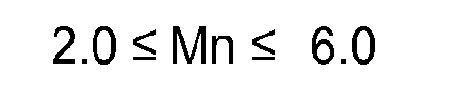
- the amount of manganese in the steel alloy should therefore be limited to a range from 2.0 to 6.0 wt%, preferably is the amount of manganese limited to a range from 2.0 to 5.5 wt%, more preferably to a range from 2.0 to 5.0 wt%.
- Nickel (Ni) is an expensive alloying element giving a large contribution to the alloy cost of a standard austenitic stainless steel alloy. Nickel promotes the formation of austenite and thus inhibits the formation of ferrite and improves ductility and to some extent the corrosion resistance. Nickel also stabilizes the austenite phase in the steel alloy from transforming into martensite phase (deformation martensite) during cold working. However, to achieve a proper balance between the austenite, ferrite and martensite phases on one hand, and the total alloy element cost of the steel alloy on the other hand, the amount of nickel should be in the range from 2.0 to 4.5 wt%, preferably is the amount of nickel limited to a range from 2.5 to 4.0 wt%.
- Chromium (Cr) is an important element of the stainless steel alloy since it provides corrosion resistance by the formation of a chromium-oxide layer on the surface of the steel alloy. An increase in chromium content can therefore be used to compensate for changes in other elements, causing reduced corrosion properties, in order to accomplish an optimal corrosion resistance of the steel alloy. Chromium promotes the solubility of nitrogen in the solid phase which has a positive effect on the mechanical strength of the steel alloy. Chromium also reduces the amount of deformation martensite during cold working, and by that indirectly helps to maintain the austenitic structure, which improves the cold workability of the steel alloy.
- the amount of chromium in the steel alloy should therefore be in the range from 17 wt% to 19 wt%, preferably is the amount of chromium limited to a range from 17.5 to 19 wt%.
- Copper increases the ductility of the steel and stabilizes the austenite phase and thus inhibits the austenite-to-martensite transformation during deformation which is favourable for cold working of the steel. Copper will also reduce the deformation hardening of the untransformed austenite phase during cold working, caused by an increase in the stacking fault energy of the steel alloy. At high temperatures, a too high amount of copper sharply reduces the hot workability of the steel, due to an extended risk of exceeding the solubility limit for copper in the matrix and to the risk of forming brittle phases. Besides that, additions of copper will improve the strength of the steel alloy during tempering, due to an increased precipitation hardening.
- copper promotes the formation of chromium nitrides which may reduce the corrosion resistance and the ductility of the steel alloy.
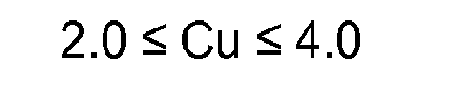
- the amount of copper in the steel alloy should therefore be limited to a range from 2.0 wt% to 4.0 wt%.
- Nitrogen (N) increases the resistance of the steel alloy towards pitting corrosion. Nitrogen also promotes the formation of austenite and depresses the transformation of austenite into deformation martensite during cold working. Nitrogen also increases the mechanical strength of the steel alloy after completed cold working, which can be further improved by a precipitation hardening, normally produced by a precipitation of small particles in the steel alloy during a subsequent tempering operation. However, higher amounts of nitrogen lead to increasing deformation hardening of the austenitic phase, which has a negative impact on the deformation force. Even higher amounts of nitrogen also increase the risk of exceeding the solubility limit for nitrogen in the solid phase, giving rise to gas phase (bubbles) in the steel. To achieve a correct balance between the effect of stabilization of the austenitic phase and the effect of precipitation hardening and deformation hardening, the content of nitrogen in the steel alloy should be limited to a range from 0.15 to 0.25 wt%.
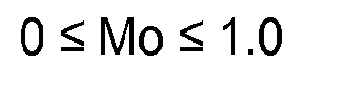
- molybdenum is an expensive alloying element and it also has a strong stabilizing effect on the ferrite phase. Therefore, the amount of molybdenum in the steel alloy should be limited to a range from 0 to 1.0 wt%, preferably 0 to 0.5 wt%.
- Tungsten stabilizes the ferrite phase and has a high affinity to carbon.
- high contents of tungsten in combination with high contents of Cr and Mo increase the risk of forming brittle inter-metallic precipitations.
- Tungsten should therefore be limited to a range from 0 to 0.3 wt%, preferably 0 to 0.2 wt%, more preferably 0 to 0.1 wt%.
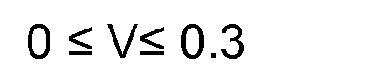
- Vanadium (V) stabilizes the ferrite phase and has a high affinity to carbon and nitrogen. Vanadium is a precipitation hardening element that will increase the strength of the steel after tempering. Vanadium should be limited to a range from 0 to 0.3 wt% in the steel alloy, preferably 0 to 0.2 wt%, more preferably 0 to 0.1 wt%.
- Titanium (Ti) stabilizes the delta ferrite phase and has a high affinity to nitrogen and carbon. Titanium can therefore be used to increase the solubility of nitrogen and carbon during meting or welding and to avoid the formation of bubbles of nitrogen gas during casting. However, an excessive amount of Ti in the material causes precipitation of carbides and nitrides during casting, which can disrupt the casting process. The formed carbon-nitrides can also act as defects causing a reduced corrosion resistance, toughness, ductility and fatigue strength. Titanium should be limited to a range from 0 to 0.5 wt%, preferably 0 to 0.2 wt%, more preferably 0 to 0.1 wt%.
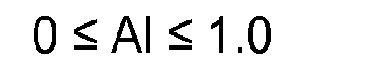
- Aluminium is used as de-oxidation agent during melting and casting of the steel alloy. Aluminium also stabilizes the ferrite phase and promotes precipitation hardening. Aluminium should be limited to a range from 0 to 1.0 wt%, preferably 0 to 0.2 wt%, more preferably 0 to 0.1 wt%.
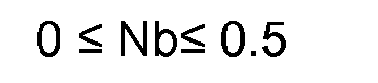
- Niobium (Nb) stabilizes the ferrite phase and has a high affinity to nitrogen and carbon. Niobium can therefore be used to increase the solubility of nitrogen and carbon during melting or welding. Niobium should be limited to a range from 0 to 0.5 wt%, preferably 0 to 0.2 wt%, more preferably 0 to 0.1 wt%.
- Co Co has properties that are intermediate between those of iron and nickel. Therefore, a minor replacement of these elements with Co, or the use of Co-containing raw materials will not result in any major change in properties of the steel alloy.
- Co can be used to replace some Ni as an austenite-stabilizing element and increases the resistance against high temperature corrosion.
- Cobalt is an expensive element so it should be limited to a range from 0 to 1.0 wt%, preferably 0 to 0.5 wt%.
- the steel alloy may also contain minor amounts of normally occurring contamination elements, for example sulphur and phosphorus. These elements should not exceed 0.05 wt% each.
- delta ferrite The balance between the alloy elements which promotes stabilization of the austenite and ferrite (delta ferrite) phases is important since the hot and cold workability of the steel alloy generally depends on the amount of delta ferrite in the steel alloy. If the amount of delta ferrite in the steel alloy is too high, the steel alloy may exhibit a tendency towards hot cracking during hot rolling and reduced mechanical properties such as strength and ductility during cold working. Additionally, delta ferrite can act as precipitation sites for chromium nitrides, carbides or inter-metallic phases. Delta ferrite will also drastically reduce the corrosion resistance of the steel alloy.
- the chromium equivalent is a value corresponding to the ferrite stability and its effect on the phases formed in the microstructure during solidification of the steel alloy.
- the nickel equivalent is a value corresponding to the austenite stability and its effect on the phases formed in the microstructure during solidification of the steel alloy.
- the amount of delta ferrite stabilizing alloying elements according to equation 1 and the amount of austenite stabilizing alloying elements according to equation 2 should be balanced such that condition B2 (tidigare B1) is fulfilled.
- condition B2 titanium eqv ⁇ - 16.00
- the amount of delta ferrite stabilizing alloying elements according to equation 1 and the amount of austenite stabilizing alloying elements according to equation 2 should be balanced such that condition B3 is fulfilled. Ni eqv + 0.85 * Cr eqv ⁇ 29.00
- the amount of delta ferrite stabilizing alloying elements according to equation 1 and the amount of austenite stabilizing alloying elements according to equation 2 should be balanced such that condition B4 is fulfilled. Ni eqv + 0.85 * Cr eqv ⁇ 31.00
- the amount of delta ferrite stabilizing alloying elements according to equation 1 and the amount of austenite stabilizing alloying elements according to equation 2 should be balanced such that condition B5 is fulfilled. Ni eqv + 0.85 * Cr eqv ⁇ 30.00
- relationship B1 When relationship B1 is fulfilled the combination of ferrite and austenite forming alloy elements in the steel alloy is excellent.
- the amount of delta ferrite in the austenite matrix is balanced as well as the stability of the austenite phase and the amount of deformation martensite.
- the steel alloy therefore exhibits excellent mechanical and workability properties and good corrosion resistance.
- the properties of the steel alloy may further be improved by optimizing the balance between ferrite and austenite forming alloy elements according to relationships B2-B5.
- Alloy compositions that do not fulfil relationship B1 generally have too high amount of austenite stabilizing elements in relation to the ferrite stabilizing elements, and in view of the low amounts of delta ferrite phase formed.
- a high austenite stability is mainly accomplished by an increase in the manganese or nitrogen contents, causing a high stability of the austenite phase, followed by an increased deformation hardening of this phase during working.
- Alloy compositions that fulfil relationship B2 exhibit increased ductility during working and improved corrosion resistance since the amount of ferrite stabilizing elements in relation to the austenite stabilizing elements is balanced such that an optimal amount of delta ferrite phase is achieved in the steel alloy.
- Alloy compositions that fulfil relationship B3 exhibit reduced deformation hardening and an increased ductility, mainly during cold working.
- the improvement of these properties is mainly due to that the amounts of both ferrite and austenite stabilizing elements are high enough to cause a stable austenite phase with low amounts of deformation martensite.
- Alloy compositions that fulfil relationships B4 and B5 exhibit improved mechanical properties, since the optimized amounts of both ferrite and austenite stabilizing elements decreases the deformation hardening of the matrix during working.
- the relationship between alloying elements which depress the formation of martensite in the steel alloy is important for strength and ductility of the steel alloy.
- Low ductility at room temperature depends to a certain extent on deformation hardening, which is caused by the transformation of austenite into martensite during cold working of the steel alloy. Martensite increases the strength and hardness of the steel. However, if too much martensite is formed in the steel, it may be difficult to work in cold conditions, due to increased deformation forces. Too much martensite also decreases the ductility and may cause cracks in the steel during cold working of the steel alloy.
- the stability of the austenite phase in the steel alloy during cold deforming may be determined by the MD30 value of the steel alloy.
- a decreased MD30 temperature corresponds to an increased austenite stability, which will lower the deformation hardening during cold working, due to a reduced formation of deformation martensite.
- Figure 1 shows a S-N curve at 90% security against failure of tempered springs coiled from wire 1.0 mm in diameter.
- S is the stress in MPa and N is the number of cycles.
- the mean stress is 450 MPa.
- Heats of steel alloys according to the invention named: A, B, C were prepared. As comparison were also heats of comparative steel alloys named D, E, F, G, H, I, J, K, L.
- the heats were prepared on laboratory scale by melting of component elements in a crucible placed in an induction furnace. The composition of each heat is shown in table 1 a and 1 b.
- Equations 1-3 were calculated for each heat of steel alloy, table 2 shows the results from the calculations. The results from table 2 were then compared with the conditions for each equation, B1 - B6 and it was determined if the test heats fulfilled the conditions B1 - B6. Table 3 shows the result of the comparison. A "YES” means that the condition is fulfilled, a "NO” means that the condition is not fulfilled.
- Table 1a Composition in wt% of inventive steel alloys. Alloy element Heat A Heat B Heat C C 0.049 0.044 0.023 N 0.20 0.20 0.21 Si 0.33 0.33 0.58 Mn 4.98 4.93 4.37 Ni 3.73 3.72 3.78 Cr 18.32 18.31 18.09 Cu 2.41 2.44 2.63 Mo 0.01 0.01 0.13 Nb ⁇ 0.01 ⁇ 0.01 ⁇ 0.01 P 0.013 0.013 0.018 S 0.009 0.007 0.001 Co 0.025 0.026 0.033 Ti ⁇ 0.005 ⁇ 0.005 ⁇ 0.005 V 0.035 0.035 0.051 W 0.01 0.02 0.01
- Table 1b Composition in wt% of comparative steel alloys.
- each sample was subjected to plastic deformation by pressing of the sample in a hydraulic press under increasing force until a thickness reduction corresponding to 60% plastic deformation was accomplished.
- the applied maximum force in kN was measured for each sample. The results are shown in table 4.
- the Vickers hardness [HV1] of each sample was thereafter measured according to standard measurement procedure (SS112517). The results from the hardness measurement are shown in table 4.
- Samples from heats D, G, H and I exhibited too high hardness after deforming, ranging from 474 to 484 HV, to be suitable for cold working into fine dimensions, A high number of cracks, 87 and 41, were observed in samples from heats G and I.
- Samples from heats E, F, J, K and L exhibited too high deformation force, 180 to 193 N, to be suitable for cold working with high reduction ratios.
- Samples from heats K and L exhibited in addition thereto relatively high hardness, 487 and 458 HV.
- a high number of cracks, 43 and 53 were also observed in samples from heats F and J.
- a heat of the inventive steel alloy named M was prepared.
- Two heats named N and O of a slightly different composition were prepared for comparison.
- P of steel alloy AISI 302 a standard spring steel alloy, prepared as well as one heat, named Q of steel alloy AISI 204Cu, a standard steel alloy of low nickel content.
- the square bars were then heated to a temperature of 1250°C and rolled into wire of a diameter of 5.5 mm.
- the wire rod was annealed directly after rolling at 1050°C. All heats had good hot working properties.
- the hot rolled wires were finally cold drawn in several steps with intermediate annealing at 1050°C, into a final diameter of 1.4 mm, 1.0 mm. 0.60 mm and 0.66 mm. Wire was also cold rolled to a dimension of 2.75 x 0.40 mm 2 . Samples were taken from the cold drawn wires.
- the properties of the steel alloy of each heat were analyzed during cold working of the steel alloys and the results were documented. It was observed that the steel alloy of heat M had excellent workability, low deformation hardening and high ductility. All these properties were better or at the same level in comparison to heats P and Q of the standard AISI 302 or 204Cu grade steel. It was also observed that heat O had good workability but the deformation hardening was higher than AISI 302. Heat N became brittle already at low reductions and tension cracks were observed.
- the tensile strength was determined according to standard SSEM 10002-1 on samples from wire rod (5.50 mm) and cold drawn wire from heats M, N, O and P. All samples were drawn and annealed with the same production parameters. The amount of martensite in the samples having a diameter of 5.50 mm by a magnetic balance equipment. The amount of martensite was again measured in samples that were drawn to a diameter of 1.4 mm and the increase in martensite phase was calculated. Table 8 shows the results from the tensile test and the amount of deformation martensite in the samples.
- Table 8 Results from tensile tests on samples from heats M - P Heat Dimension (mm) Tensile strength (MPa) Martensite (%) Heat M 5.50 684 0.3 Heat M 1.40 1978 12.7 Heat M 0.60 2063 Heat M 0.66 1977 Heat M 1.00 1980 Heat M 2.75 x 0.40 1580 Heat N 5.50 701 0.6 Heat N 1.40 2200 40.8 Heat N 0.60 2420 Heat N 0.66 2348 Heat O 5.50 683 0.2 Heat O 1.40 2210 23.9 Heat O 0.60 2274 Heat O 0.66 2237 Heat O 2.75 x 0.40 1670 Heat P (AISI302) 5.50 697 Heat P (AISI302) 0.60 2055 Heat P (AISI302) 0.66 1999
- the tempering effect is important for many applications, especially for springs.
- a high tempering response will benefit many spring properties like spring force, relaxation and fatigue resistance.
- the tensile increase for samples from heat M is much higher than samples from heat P (AISI 302).
- a high tensile increase is important for many applications, especially for spring applications.
- the high tempering response of heat M depends mainly on the high copper and nitrogen content, which increases the precipitation hardening of the steel alloy.
- Table 9 Results of the tempering effect on tensile strength Heat Temperature (°C)
- Tensile strength (MPa) Tensile strength increase (%) HeatM RT 1974 Heat M 250 2174 10.1 Heat M 350 2247 13.8 Heat P (AISI 302) RT 2146 Heat P (AISI 302) 250 2253 5.0 Heat P (AISI 302) 350 2323 8.2
- Relaxation is a very important parameter for spring applications. Relaxation is the spring force that the spring looses over time.
- the relaxation property was determined for heats M and P. Samples of 1.0 mm wire were taken from each heat. Each wire sample was coiled to a spring and tempered at 350°C for 1 hour. Each spring was thereafter stretched to a length that corresponds to a stress of 800, 1000, 1200 and 1400 MPa, respectively. The loss of spring force in Newton (N) was measured over 24 hours at room temperature. The relaxation is the loss of spring force measured in percent. The results from the test are shown in table 10.
- the fatigue strength was determined on samples from heats M and P. Springs manufactured from heats M and P were tempered at 350°C for 1 hour. The springs were then fastened in a fixture and subjected to cyclic tension stresses. Ten springs were tested parallel at the same time. Each spring sample was tested at a given stress level until the sample failed, or until a maxim of 10,000,000 cycles were reached. The fatigue strength of the sample was then evaluated by using Wöhler S-N diagram. Figure 1 shows the test result at 90% security against failure.
- the resistance against pitting corrosion was determined on the samples from heat M and from heat P (AISI 302) and heat Q (AISI 204Cu) by measuring the Critical Pitting Temperature (CPT) during electrochemical testing.
- CPT Critical Pitting Temperature
- a 5.5 mm wire rod sample was taken from each steel heat. Each sample was grinded and polished to reduce the influence of surface properties. The samples were immersed in a 0.1% NaCl solution at a constant potential of 300mV. The temperature of the solution was increased by 5°C each 5 min until the point where corrosion on the samples could be registred. The result of the CPT testing is shown in table 11.
- Table 11 shows that Heat M exhibit adequate resistance to pitting corrosion in comparison to Heat P (AISI 302). The results from the corrosion tests further show that heat M exhibits higher resistance to corrosion than heat Q (AISI 204Cu).
- Table 11 Critical pitting temperature (CPT), measured at +300 mV and 0.1% NaCl. Sample CPT, 0.1%NaCl, +300mV (°C) Heat M 60,50 Heat P (AISI 302) 90, >95 Heat Q (AISI 204Cu) 35, 35
Landscapes
- Chemical & Material Sciences (AREA)
- Engineering & Computer Science (AREA)
- Materials Engineering (AREA)
- Mechanical Engineering (AREA)
- Metallurgy (AREA)
- Organic Chemistry (AREA)
- Heat Treatment Of Steel (AREA)
Abstract








the balance Fe and normally occurring impurities,
characterized in that the contents of the alloying elements are balanced so that the following conditions is fulfilled:
Nieqv -1.42*Creqv ≤ -13.42, wherein


and
-70 °C < MD30 < -25 °C,wherein
Description
- The present invention relates to an austenitic stainless steel alloy of low nickel content. The invention also relates to an article manufactured from the steel alloy.
- Austenitic stainless steel is a common material for various applications since these types of steels exhibit good corrosion resistance, good mechanical properties as well as good workability. Standard austenitic stainless steels comprise at least 17 percent chromium, 8 percent nickel and the rest iron. Other alloying elements are also often included.
- The fast growing need for stainless steels around the world and the following high demand of alloying metals in the steel production has lead to increases in metal prices. Especially nickel has become expensive. Various attempts have therefore been made to substitute nickel in austenitic stainless steels with other alloying elements, for example as described in
US 5286310 A1 ,US 6274084 andJP3002357 - The steels described above exhibit good hot workability and high deformation hardening. These are properties which are important for the manufacturing of articles of large dimensions, such as heavy sheets. However, the steels described above have proven unsuitable for certain articles which require cold working including large reduction ratios.
-
WO0026428 JP2008038191 - Thus, one object of the present invention is to provide a low nickel austenitic stainless steel alloy, which can be cold worked with large reduction ratios. Hereinafter, the inventive austenitic stainless steel alloy is referred to as the steel alloy.
- The inventive steel alloy should have good mechanical properties, comparable to the known steel grade AISI 302, as well as good corrosion properties. The composition of the steel alloy should be carefully balanced with regard to the influence of each alloy element so that a cost effective steel alloy is achieved, which fulfils the demands on productivity and final properties. Thus, the steel alloy should exhibit good hot workability properties. The steel alloy should further be so ductile and stable against deformation hardening such that it can be cold worked at high productivity at high reduction ratios without cracking or becoming brittle.
- A further object of the present invention is to provide an article manufactured from the improved austenitic stainless steel alloy.
- The aforementioned objects are met by an austenitic stainless steel alloy having the following composition in percent of weight (wt%):




the balance Fe and normally occurring impurities, characterized in that the contents of the alloying elements are adjusted so that the following condition is fulfilled:
wherein

and
wherein
whereby the risk of a too high deformation hardening of a low nickel austenitic steel alloy can be avoided, which guarantees that optimal mechanical properties are achieved in the steel alloy during working. - The particular composition provides a cost effective low nickel austenitic stainless steel alloy with excellent mechanical properties, excellent workability properties and improved resistance to corrosion compared to other low nickel austenitic stainless steel alloys. The workability properties of the steel alloy are optimized with regard to cold forming and reduced nickel content. The steel alloy is especially suitable for manufacturing processes which involve large reduction ratios of the steel. Articles of small dimensions, for example springs, can thereby readily be achieved from the steel alloy. For example, wires may readily be manufactured from the steel alloy by cold drawing. Other examples of articles include, but are not limited to, strips, tubes, pipes, bars and products manufactured by cold-heading and forging. An advantage of the inventive steel alloy is that that it allows for the manufacturing of an article by cold working in fewer production steps since the number of intermediate heat treatments can be reduced.
- Articles produced by the steel alloy have proven very cost effective since the amounts of the alloying elements are carefully optimized with regard to their effect on the properties of the steel alloy.
- The contents of the alloy elements in the steel alloy may preferably be adjusted such that the following condition is fulfilled:

whereby the phase fraction of ferrite in the microstructure is restricted and optimal mechanical properties, especially ductility, together with acceptable corrosion resistance, can be achieved in the steel alloy. - The contents of the alloy elements in the steel alloy may preferably be adjusted such that the following condition is fulfilled:

whereby the risk of forming martensite on cooling or during cold deformation is depressed, so that deformation hardening can be controlled and optimal mechanical properties, especially ductility, are achieved in the steel alloy, lowering the risk of crack formation. - The contents of the alloy elements in the steel alloy may preferably be adjusted such that the following condition is fulfilled:

whereby the risk of a too high deformation hardening of the untransformed austenitic phase can be avoided and the formation of unwished phases such as Cr2N and N2 (gas) can be controlled, which guarantees that optimal mechanical properties are achieved in the steel alloy. - The contents of the alloy elements in the steel alloy may preferably be balanced such that the following condition is fulfilled:

whereby the risk of a too high deformation hardening of the untransformed austenitic phase can be avoided and the formation of unwished phases such as Cr2N and N2 (gas) can be controlled, which guarantees that optimal mechanical properties, are achieved in the steel alloy. - Preferably is the amount of silicon in the steel alloy ≤ 0.6 wt%. Preferably is the amount of manganese in the steel alloy in the range between 2.0 - 5.5 wt%, more preferably 2.0 - 5.0 wt%. Preferably is the amount of nickel in the steel alloy in the range between 2.5 - 4.0 wt%. Preferably is the amount of chromium in the steel alloy in the range between 17.5 - 19 wt%. Preferably is the amount of molybdenum in the steel alloy in the range between 0 - 0.5 wt%. Preferably is the amount of each of tungsten, vanadium, titanium, aluminium and niob in the steel alloy, (W, V, Ti, Al, Nb) ≤ 0.2 wt%. More preferably is the amount of each of W, V, Ti, Al, Nb ≤ 0.1 wt% and the amount of (W+V+Ti+Al+Nb) ≤ 0.3 wt%. Preferably is the amount of cobolt in the steel alloy in the range between 0 - 0.5 wt%.
- The steel alloy may advantageously be included in an article, for example a wire, a spring, a strip, a tube, a pipe, a bar, and products manufactured by cold-heading and forging.
- The steel alloy is optimal for use in the manufacture of an article, for example a wire, a spring, a strip, a tube, a pipe, a cold-headed article or a forged article or an article produced by cold pressing/ cold forming.
- The inventors of the present invention have found that by carefully balancing the amounts of the alloy elements described below both with regard to the effects of each separate element and to the combined effect of several elements a steel alloy is achieved which has excellent ductility and workability properties as well as improved corrosion resistance compared to other low nickel austenitic stainless steel alloys. In particular it was found that optimal properties are achieved in the steel alloy when the amounts of the alloying elements are balanced according to relationships described below.
- Following is a description of the effects of the various elements of the steel alloy together with an explanation of the limitation of each alloy element.
- Carbon (C) stabilizes the austenitic phase of the steel alloy at high and low temperatures. Carbon also promotes deformation hardening by increasing the hardness of the martensitic phase, which to some extent is desirable in the steel alloy. Carbon further increases the mechanical strength and the aging effect of the steel alloy. However, a high amount of carbon drastically reduces the ductility and the corrosion resistance of the steel alloy. The amount of carbon should therefore be limited to a range from 0.02 to 0.06 wt%.
- Silicon (Si) is necessary for removing oxygen from the steel melt during manufacturing of the steel alloy. Silicon increases the aging effect of the steel alloy. Silicon also promotes the formation of ferrite and in high amounts, silicon increases the tendency for precipitation of intermetallic phases. The amount of silicon in the steel alloy should therefore be limited to a maximum of 1.0 wt%. Preferably is the amount of silicon limited to a range from 0.2 to 0.6 wt%.
- Manganese (Mn) stabilizes the austenite phase and is therefore an important element as a replacement for nickel, in order to control the amount of ferrite phase formed in the steel alloy. However, at very high contents, manganese will change from being an austenite stabilizing element to become a ferrite stabilizing element. Another positive effect of manganese is that it promotes the solubility of nitrogen in the solid phase, and by that also indirectly increases the stability of the austenitic microstructure. Manganese will however increase the deformation hardening of the steel alloy, which increases the deformation forces and lowers the ductility, causing an enlarged risk of formation of cracks in the steel alloy during cold working. Increased amounts of manganese also reduces the corrosion resistance of the steel alloy, especially the resistance against pitting corrosion. The amount of manganese in the steel alloy should therefore be limited to a range from 2.0 to 6.0 wt%, preferably is the amount of manganese limited to a range from 2.0 to 5.5 wt%, more preferably to a range from 2.0 to 5.0 wt%.
- Nickel (Ni) is an expensive alloying element giving a large contribution to the alloy cost of a standard austenitic stainless steel alloy. Nickel promotes the formation of austenite and thus inhibits the formation of ferrite and improves ductility and to some extent the corrosion resistance. Nickel also stabilizes the austenite phase in the steel alloy from transforming into martensite phase (deformation martensite) during cold working. However, to achieve a proper balance between the austenite, ferrite and martensite phases on one hand, and the total alloy element cost of the steel alloy on the other hand, the amount of nickel should be in the range from 2.0 to 4.5 wt%, preferably is the amount of nickel limited to a range from 2.5 to 4.0 wt%.
- Chromium (Cr) is an important element of the stainless steel alloy since it provides corrosion resistance by the formation of a chromium-oxide layer on the surface of the steel alloy. An increase in chromium content can therefore be used to compensate for changes in other elements, causing reduced corrosion properties, in order to accomplish an optimal corrosion resistance of the steel alloy. Chromium promotes the solubility of nitrogen in the solid phase which has a positive effect on the mechanical strength of the steel alloy. Chromium also reduces the amount of deformation martensite during cold working, and by that indirectly helps to maintain the austenitic structure, which improves the cold workability of the steel alloy. However, at high temperatures the amount of ferrite (delta ferrite) increases with increasing chromium content which reduces the hot workability of the steel alloy. The amount of chromium in the steel alloy should therefore be in the range from 17 wt% to 19 wt%, preferably is the amount of chromium limited to a range from 17.5 to 19 wt%.
- Copper (Cu) increases the ductility of the steel and stabilizes the austenite phase and thus inhibits the austenite-to-martensite transformation during deformation which is favourable for cold working of the steel. Copper will also reduce the deformation hardening of the untransformed austenite phase during cold working, caused by an increase in the stacking fault energy of the steel alloy. At high temperatures, a too high amount of copper sharply reduces the hot workability of the steel, due to an extended risk of exceeding the solubility limit for copper in the matrix and to the risk of forming brittle phases. Besides that, additions of copper will improve the strength of the steel alloy during tempering, due to an increased precipitation hardening. At high nitrogen contents, copper promotes the formation of chromium nitrides which may reduce the corrosion resistance and the ductility of the steel alloy. The amount of copper in the steel alloy should therefore be limited to a range from 2.0 wt% to 4.0 wt%.
- Nitrogen (N) increases the resistance of the steel alloy towards pitting corrosion. Nitrogen also promotes the formation of austenite and depresses the transformation of austenite into deformation martensite during cold working. Nitrogen also increases the mechanical strength of the steel alloy after completed cold working, which can be further improved by a precipitation hardening, normally produced by a precipitation of small particles in the steel alloy during a subsequent tempering operation. However, higher amounts of nitrogen lead to increasing deformation hardening of the austenitic phase, which has a negative impact on the deformation force. Even higher amounts of nitrogen also increase the risk of exceeding the solubility limit for nitrogen in the solid phase, giving rise to gas phase (bubbles) in the steel. To achieve a correct balance between the effect of stabilization of the austenitic phase and the effect of precipitation hardening and deformation hardening, the content of nitrogen in the steel alloy should be limited to a range from 0.15 to 0.25 wt%.
- Molybdenum (Mo) greatly improves the corrosion resistance in most environments. However, molybdenum is an expensive alloying element and it also has a strong stabilizing effect on the ferrite phase. Therefore, the amount of molybdenum in the steel alloy should be limited to a range from 0 to 1.0 wt%, preferably 0 to 0.5 wt%.
- Tungsten (W) stabilizes the ferrite phase and has a high affinity to carbon. However, high contents of tungsten in combination with high contents of Cr and Mo increase the risk of forming brittle inter-metallic precipitations. Tungsten should therefore be limited to a range from 0 to 0.3 wt%, preferably 0 to 0.2 wt%, more preferably 0 to 0.1 wt%.
- Vanadium (V) stabilizes the ferrite phase and has a high affinity to carbon and nitrogen. Vanadium is a precipitation hardening element that will increase the strength of the steel after tempering. Vanadium should be limited to a range from 0 to 0.3 wt% in the steel alloy, preferably 0 to 0.2 wt%, more preferably 0 to 0.1 wt%.
- Titanium (Ti) stabilizes the delta ferrite phase and has a high affinity to nitrogen and carbon. Titanium can therefore be used to increase the solubility of nitrogen and carbon during meting or welding and to avoid the formation of bubbles of nitrogen gas during casting. However, an excessive amount of Ti in the material causes precipitation of carbides and nitrides during casting, which can disrupt the casting process. The formed carbon-nitrides can also act as defects causing a reduced corrosion resistance, toughness, ductility and fatigue strength. Titanium should be limited to a range from 0 to 0.5 wt%, preferably 0 to 0.2 wt%, more preferably 0 to 0.1 wt%.
- Aluminium (Al) is used as de-oxidation agent during melting and casting of the steel alloy. Aluminium also stabilizes the ferrite phase and promotes precipitation hardening. Aluminium should be limited to a range from 0 to 1.0 wt%, preferably 0 to 0.2 wt%, more preferably 0 to 0.1 wt%.
- Niobium (Nb) stabilizes the ferrite phase and has a high affinity to nitrogen and carbon. Niobium can therefore be used to increase the solubility of nitrogen and carbon during melting or welding. Niobium should be limited to a range from 0 to 0.5 wt%, preferably 0 to 0.2 wt%, more preferably 0 to 0.1 wt%.
- Cobalt (Co) has properties that are intermediate between those of iron and nickel. Therefore, a minor replacement of these elements with Co, or the use of Co-containing raw materials will not result in any major change in properties of the steel alloy. Co can be used to replace some Ni as an austenite-stabilizing element and increases the resistance against high temperature corrosion. Cobalt is an expensive element so it should be limited to a range from 0 to 1.0 wt%, preferably 0 to 0.5 wt%.
- The steel alloy may also contain minor amounts of normally occurring contamination elements, for example sulphur and phosphorus. These elements should not exceed 0.05 wt% each.
- The balance between the alloy elements which promotes stabilization of the austenite and ferrite (delta ferrite) phases is important since the hot and cold workability of the steel alloy generally depends on the amount of delta ferrite in the steel alloy. If the amount of delta ferrite in the steel alloy is too high, the steel alloy may exhibit a tendency towards hot cracking during hot rolling and reduced mechanical properties such as strength and ductility during cold working. Additionally, delta ferrite can act as precipitation sites for chromium nitrides, carbides or inter-metallic phases. Delta ferrite will also drastically reduce the corrosion resistance of the steel alloy.
- The chromium equivalent is a value corresponding to the ferrite stability and its effect on the phases formed in the microstructure during solidification of the steel alloy. The chromium equivalent may be derived from the modified Schaeffler DeLong diagram and is defined as:

- The nickel equivalent is a value corresponding to the austenite stability and its effect on the phases formed in the microstructure during solidification of the steel alloy.. The nickel equivalent may also be derived from the modified Schaeffler DeLong diagram and is defined as:

Reference: D.R. Harries, Int. Conf. on Mechanical Behaviour and Nuclear Applications of Stainless Steels at Elevated Temperatures, Varese, 1981. - It has been found that very good cold working properties at high reduction ratios, improved ductility, reduced deformation hardning and reduced tendency for surface cracking is achieved, when the amounts of alloy elements in the steel alloy are balanced such that equations 1 and 2 fulfil condition B1.

- Preferably, the amount of delta ferrite stabilizing alloying elements according to equation 1 and the amount of austenite stabilizing alloying elements according to equation 2 should be balanced such that condition B2 (tidigare B1) is fulfilled.

- Preferably, the amount of delta ferrite stabilizing alloying elements according to equation 1 and the amount of austenite stabilizing alloying elements according to equation 2 should be balanced such that condition B3 is fulfilled.

- Preferably, the amount of delta ferrite stabilizing alloying elements according to equation 1 and the amount of austenite stabilizing alloying elements according to equation 2 should be balanced such that condition B4 is fulfilled.

- Preferably, the amount of delta ferrite stabilizing alloying elements according to equation 1 and the amount of austenite stabilizing alloying elements according to equation 2 should be balanced such that condition B5 is fulfilled.

- When relationship B1 is fulfilled the combination of ferrite and austenite forming alloy elements in the steel alloy is excellent. In the steel alloy, the amount of delta ferrite in the austenite matrix is balanced as well as the stability of the austenite phase and the amount of deformation martensite. The steel alloy therefore exhibits excellent mechanical and workability properties and good corrosion resistance. The properties of the steel alloy may further be improved by optimizing the balance between ferrite and austenite forming alloy elements according to relationships B2-B5.
- Alloy compositions that do not fulfil relationship B1, generally have too high amount of austenite stabilizing elements in relation to the ferrite stabilizing elements, and in view of the low amounts of delta ferrite phase formed. In a low nickel stainless steel alloy a high austenite stability is mainly accomplished by an increase in the manganese or nitrogen contents, causing a high stability of the austenite phase, followed by an increased deformation hardening of this phase during working.
- Alloy compositions that fulfil relationship B2, exhibit increased ductility during working and improved corrosion resistance since the amount of ferrite stabilizing elements in relation to the austenite stabilizing elements is balanced such that an optimal amount of delta ferrite phase is achieved in the steel alloy.
- Alloy compositions that fulfil relationship B3, exhibit reduced deformation hardening and an increased ductility, mainly during cold working. The improvement of these properties is mainly due to that the amounts of both ferrite and austenite stabilizing elements are high enough to cause a stable austenite phase with low amounts of deformation martensite.
- Alloy compositions that fulfil relationships B4 and B5 exhibit improved mechanical properties, since the optimized amounts of both ferrite and austenite stabilizing elements decreases the deformation hardening of the matrix during working.
- The relationship between alloying elements which depress the formation of martensite in the steel alloy is important for strength and ductility of the steel alloy. Low ductility at room temperature depends to a certain extent on deformation hardening, which is caused by the transformation of austenite into martensite during cold working of the steel alloy. Martensite increases the strength and hardness of the steel. However, if too much martensite is formed in the steel, it may be difficult to work in cold conditions, due to increased deformation forces. Too much martensite also decreases the ductility and may cause cracks in the steel during cold working of the steel alloy.
- The stability of the austenite phase in the steel alloy during cold deforming may be determined by the MD30 value of the steel alloy. MD30 is the temperature, in °C, where a deformation corresponding to ε = 0.30 (logarithmic strain), leads to the conversion of 50% of the austenite to deformation martensite. Thus, a decreased MD30 temperature corresponds to an increased austenite stability, which will lower the deformation hardening during cold working, due to a reduced formation of deformation martensite. The MD30 value of the inventive steel alloy is defined as:

Reference: K. Nohara, Y. Ono and N. Ohashi, Tetsu-to-Hagane, 1977;63:2772 - It has been found that very good cold working properties in combination with optimal mechanical strength is achieved in the steel alloy when the alloy elements of the steel alloy are adjusted such that equation 3 fulfils the condition B6 below.

-
Figure 1 shows a S-N curve at 90% security against failure of tempered springs coiled from wire 1.0 mm in diameter. S is the stress in MPa and N is the number of cycles. The mean stress is 450 MPa. - The invention will in the following be described by concrete examples.
- Heats of steel alloys according to the invention named: A, B, C were prepared. As comparison were also heats of comparative steel alloys named D, E, F, G, H, I, J, K, L. The heats were prepared on laboratory scale by melting of component elements in a crucible placed in an induction furnace. The composition of each heat is shown in table 1 a and 1 b.
- Equations 1-3 were calculated for each heat of steel alloy, table 2 shows the results from the calculations. The results from table 2 were then compared with the conditions for each equation, B1 - B6 and it was determined if the test heats fulfilled the conditions B1 - B6. Table 3 shows the result of the comparison. A "YES" means that the condition is fulfilled, a "NO" means that the condition is not fulfilled.
- The melts were cast into small ingots and samples of steel alloy having dimensions of 4x4x3 mm3 were prepared from each heat.
Table 1a: Composition in wt% of inventive steel alloys. Alloy element Heat A Heat B Heat C C 0.049 0.044 0.023 N 0.20 0.20 0.21 Si 0.33 0.33 0.58 Mn 4.98 4.93 4.37 Ni 3.73 3.72 3.78 Cr 18.32 18.31 18.09 Cu 2.41 2.44 2.63 Mo 0.01 0.01 0.13 Nb <0.01 <0.01 <0.01 P 0.013 0.013 0.018 S 0.009 0.007 0.001 Co 0.025 0.026 0.033 Ti <0.005 <0.005 <0.005 V 0.035 0.035 0.051 W 0.01 0.02 0.01 Table 1b: Composition in wt% of comparative steel alloys. Alloy element Heat D Heat E Heat F Heat G Heat H Heat I Heat J Heat K Heat L C 0.050 0.046 0.041 0.023 0.023 0.025 0.075 0.081 0.051 N 0.19 0.20 0.20 0.20 0.15 0.20 0.11 0.14 0.16 Si 0.31 0.33 0.25 0.56 0.60 0.59 0.24 0.31 0.38 Mn 6.92 4.95 4.26 4.26 3.70 4.29 2.17 3.12 4.16 Ni 3.68 3.72 3.67 1.65 3.63 3.54 3.73 3.80 3.77 Cr 17.96 18.17 18.03 17.92 16.33 17.88 18.24 18.25 18.40 Cu 2.38 3.38 2.41 2.90 2.86 1.67 3.56 2.95 2.92 Mo 0.01 0.01 0.01 0.13 0.12 0.13 <0.01 <0.01 0.01 Nb <0.01 <0.01 <0.01 <0.01 <0.01 <0.01 <0.01 <0.01 <0.01 P 0.013 0.013 0.013 0.018 0.018 0.018 0.011 0.010 0.011 S 0.008 0.009 0.005 0.001 0.002 0.001 0.004 0.002 0.003 Co 0.024 0.025 0.025 0.031 0.031 0.032 0.021 0.024 0.022 Ti <0.005 <0.005 <0.005 <0.005 <0.005 <0.005 <0.005 <0.005 <0.005 V 0.035 0.035 0.033 0.053 0.048 0.051 0.039 0.035 0.033 W 0.01 0.01 0.02 0.01 0.02 0.01 0.01 0.01 0.01 - The properties of each heat were then determined by a series of tests, described below, performed on the sample taken from each heat.
- First, each sample was subjected to plastic deformation by pressing of the sample in a hydraulic press under increasing force until a thickness reduction corresponding to 60% plastic deformation was accomplished. The applied maximum force in kN was measured for each sample. The results are shown in table 4.
- The Vickers hardness [HV1] of each sample was thereafter measured according to standard measurement procedure (SS112517). The results from the hardness measurement are shown in table 4.
- The amount of deformation martensite formed during pressing [Mart.] as percentage of the total amount of phases in each sample was measured with a Ferritoscope as the difference in the amount of magnetic phase before and after the deformation of the samples. The results are shown in table 4.
- The number of cracks formed in each sample during deformation was also counted around the circumference of the samples in a light optical microscope, after etching in oxalic acid of the microsamples. The results are shown in table 4.
- In table 4 is shown that the samples of heats A, B, C could be deformed with relatively low deformation forces, ranging from 141 to 168 N. The hardness of the deformed samples ranges from 418 to 444 HV and the percentage of martensite in the samples ranges from 8 to 11 percent. Few cracks, numbering from 14 to 22, were observed in the samples.
- Samples from heats D, G, H and I exhibited too high hardness after deforming, ranging from 474 to 484 HV, to be suitable for cold working into fine dimensions, A high number of cracks, 87 and 41, were observed in samples from heats G and I. Samples from heats E, F, J, K and L exhibited too high deformation force, 180 to 193 N, to be suitable for cold working with high reduction ratios. Samples from heats K and L exhibited in addition thereto relatively high hardness, 487 and 458 HV. A high number of cracks, 43 and 53 were also observed in samples from heats F and J.
- From the results shown in table 4 it is evident that the samples taken from heats A, B and C indicate an excellent workability in cold conditions in comparison to samples taken from heats D, E, F, G, H, I, J, K, L. Thus, shown by the deformation force, hardness, martensite content and number of cracks, the samples taken from heats A, B and C exhibited a satisfactory mechanical strength and ductility to be subjected to thickness reductions corresponding to much larger reduction ratios than 60% plastic deformation, compared to the heats D, E, F, G, H, I, J, K, L.
Table 2: Results from the calculation of equations 1 - 3 for heats A-L. Equation Inventive steel alloy Comparative steel alloy Heat Heat Heat Heat Heat Heat Heat Heat Heat Heat Heat Heat A B C D E F G H I J K L Eqn 1 19.2 19.2 19.7 18.8 19.0 18.7 19.5 18.0 19.5 18.9 19.1 19.3 Eqn 2 13.4 13.3 12.7 14.1 13.6 12.8 10.4 10.8 12.0 10.9 12.2 12.3 Eqn 3 -36.6 -34.4 -33.5 -40.8 -60.8 -20.7 28.5 21.4 8.4 -15.6 -25.0 -29.9 Table 3: Fulfillment of conditions B1 - B6 for heats A-L Condition Inventive steel alloy Comparative steel alloy Heat Heat Heat Heat Heat Heat Heat Heat Heat Heat Heat Heat A B C D E F G H I J K L B1 YES YES YES NO NO YES YES YES YES YES YES YES B2 YES YES YES YES YES YES NO YES YES YES YES YES B3 YES YES YES YES YES NO NO NO NO NO NO NO B4 YES YES YES YES YES YES YES YES YES YES YES YES B5 YES YES YES YES YES YES YES YES YES YES YES YES B6 YES YES YES YES YES NO NO NO NO NO NO YES Composition within pre-characterizing part of claim 1 YES YES YES NO YES YES NO NO NO NO NO YES YES = fulfils condition, NO = does not fulfil condition. Table 4: Results from cold workability tests heats A-L Test parameter Inventive alloy Comparative alloy Heat Heat Heat Heat Heat Heat Heat Heat Heat Heat Heat Heat A B C D E F G H I J K L Force (kN) 168 164 141 174 188 193 174 163 175 186 180 181 Hardness (HV1) 418 426 444 478 412 414 474 484 484 430 487 458 Mart. (%) 8 8 11 4 4 9 14 33 16 21 10 7 Cracks (no.) 19 22 14 24 28 43 87 9 41 53 16 7 - A heat of the inventive steel alloy named M was prepared. Two heats named N and O of a slightly different composition were prepared for comparison. For comparison were also one heat, named P of steel alloy AISI 302, a standard spring steel alloy, prepared as well as one heat, named Q of steel alloy AISI 204Cu, a standard steel alloy of low nickel content.
- The heats weighed approximately 10 metric tons each and were produced by melting component elements in an HF-furnace followed by refining in CLU-converter and ladle treatment. The separate heats were cast into 21" ingots. The composition of each heat is shown in table 5. Equations 1-3 were calculated for heats M - Q. Table 6 shows the results from the calculations. The results from table 6 were then compared with the conditions for each equation, B1 - B6 and it was determined if the steel heats fulfilled the conditions B1 - B6. Table 7 shows the result of the comparison. A "YES" means that the condition is fulfilled, a "NO" means that the condition is not fulfilled.
Table 5: Composition of heats M-Q (in wt%) Alloy element Inventive alloy Comparative steel alloys Heat M Heat N Heat O Heat P (AISI302) Heat Q (AISI204Cu) C 0.043 0.081 0.079 0.079 0.075 N 0.18 0.10 0.13 0.044 0.11 Si 0.37 0.25 0.34 0.45 0.25 Mn 4.99 2.15 3.05 1.20 8.09 Ni 3.72 3.69 3.71 8.11 2.75 Cr 18.34 18.28 18.25 17.91 16.24 Cu 2.50 3.64 2.94 0.66 2.12 Mo 0.01 0.01 0.01 0.33 0.17 Nb 0.01 0.01 0.01 0.01 0.007 P 0.012 0.012 0.009 0.026 0.038 S 0.002 0.0025 0.0015 0.0006 0.0002 Al 0.001 0.001 <0.001 <0.003 <0.003 Co 0.04 0.03 0.04 0.057 0.046 Ti 0.001 0.001 0.001 <0.005 0.005 V 0.05 0.04 0.04 0.051 - W 0.01 0.01 0.01 0.03 - Table 6: Results from the calculation of equations 1 - 3 for heats M-Q Equation Inventive steel alloy Comparative steel alloys Heat M Heat N Heat O Heat P (AISI302) Heat Q (AISI204Cu) Eqn 1 19.4 19.0 19.2 19.6 17.0 Eqn 2 12.8 10.8 11.8 12.4 12.5 Eqn 3 -27.5 -16.2 -16.3 -26.2 30.3 Table 7: Fulfillment of conditions B1 - B6 for heats M-Q Condition Inventive steel alloy Comparative steel alloys Heat M Heat N Heat O Heat P (AISI302) Heat Q (AISI302) B1 YES YES YES YES NO B2 YES NO YES YES YES B3 YES NO NO YES NO B4 YES YES YES YES YES B5 YES YES YES YES YES B6 YES NO NO YES NO Composition within pre-characterizing part of claim 1 YES NO NO NO NO YES = fulfils condition, NO = does not fulfil condition. - The heats were subjected to the following treatment:
- Ingots of heat M as well as ingots of heats N, O, P, and Q of the comparative steel alloys were heated to a temperature of 1200°C and formed by rolling into square bars of a final dimension of 150 x 150 mm2.
- The square bars were then heated to a temperature of 1250°C and rolled into wire of a diameter of 5.5 mm. The wire rod was annealed directly after rolling at 1050°C. All heats had good hot working properties.
- The hot rolled wires were finally cold drawn in several steps with intermediate annealing at 1050°C, into a final diameter of 1.4 mm, 1.0 mm. 0.60 mm and 0.66 mm. Wire was also cold rolled to a dimension of 2.75 x 0.40 mm2. Samples were taken from the cold drawn wires.
- The properties of the steel alloy of each heat were analyzed during cold working of the steel alloys and the results were documented. It was observed that the steel alloy of heat M had excellent workability, low deformation hardening and high ductility. All these properties were better or at the same level in comparison to heats P and Q of the standard AISI 302 or 204Cu grade steel. It was also observed that heat O had good workability but the deformation hardening was higher than AISI 302. Heat N became brittle already at low reductions and tension cracks were observed.
- The properties of each steel alloy from heats M, N, O, P, and Q were determined as described below.
- The tensile strength was determined according to standard SSEM 10002-1 on samples from wire rod (5.50 mm) and cold drawn wire from heats M, N, O and P. All samples were drawn and annealed with the same production parameters. The amount of martensite in the samples having a diameter of 5.50 mm by a magnetic balance equipment. The amount of martensite was again measured in samples that were drawn to a diameter of 1.4 mm and the increase in martensite phase was calculated. Table 8 shows the results from the tensile test and the amount of deformation martensite in the samples.
Table 8: Results from tensile tests on samples from heats M - P Heat Dimension (mm) Tensile strength (MPa) Martensite (%) Heat M 5.50 684 0.3 Heat M 1.40 1978 12.7 Heat M 0.60 2063 Heat M 0.66 1977 Heat M 1.00 1980 Heat M 2.75 x 0.40 1580 Heat N 5.50 701 0.6 Heat N 1.40 2200 40.8 Heat N 0.60 2420 Heat N 0.66 2348 Heat O 5.50 683 0.2 Heat O 1.40 2210 23.9 Heat O 0.60 2274 Heat O 0.66 2237 Heat O 2.75 x 0.40 1670 Heat P (AISI302) 5.50 697 Heat P (AISI302) 0.60 2055 Heat P (AISI302) 0.66 1999 - Best tensile results were achieved from heat M, especially for large total reductions. The steel alloy from heat M has the lowest strength and highest ductility, comparable to the tensile strength of heat P (AISI 302). Very little martensite was formed in sample M. The results further show that the steel alloy from heat O exhibits too high strength and too low ductility for cold working into fine dimensions, where large reduction ratios are necessary. All dimensions from samples of heat N were brittle, and steel alloy N is therefore less suitable for cold working. Most martensite was formed in sample N.
- The tempering effect is important for many applications, especially for springs. A high tempering response will benefit many spring properties like spring force, relaxation and fatigue resistance.
- To determine the tempering effect, samples of cold drawn wire were taken from heats M and P. The tensile strength of the wires was measured. The wires were coiled and heat treated to increase the strength (aging). The heat treatment also increases the toughness of the deformation martensite and releases stresses (tempering). After the heat treatment, the tensile strength of the wires was measured again and the tempering effect was determined as the increase in tensile strength. Table 9 shows the results of the tempering effect as increase in tensile strength for 1.0 mm wire at different temperatures, with a holding time of 1 hour.
- The tensile increase for samples from heat M is much higher than samples from heat P (AISI 302). A high tensile increase is important for many applications, especially for spring applications. The high tempering response of heat M depends mainly on the high copper and nitrogen content, which increases the precipitation hardening of the steel alloy.
Table 9: Results of the tempering effect on tensile strength Heat Temperature (°C) Tensile strength (MPa) Tensile strength increase (%) HeatM RT 1974 Heat M 250 2174 10.1 Heat M 350 2247 13.8 Heat P (AISI 302) RT 2146 Heat P (AISI 302) 250 2253 5.0 Heat P (AISI 302) 350 2323 8.2 - Relaxation is a very important parameter for spring applications. Relaxation is the spring force that the spring looses over time.
- The relaxation property was determined for heats M and P. Samples of 1.0 mm wire were taken from each heat. Each wire sample was coiled to a spring and tempered at 350°C for 1 hour. Each spring was thereafter stretched to a length that corresponds to a stress of 800, 1000, 1200 and 1400 MPa, respectively. The loss of spring force in Newton (N) was measured over 24 hours at room temperature. The relaxation is the loss of spring force measured in percent. The results from the test are shown in table 10.
Table 10: Loss of spring force Heat Initial spring tension (MPa) Relaxation (%) Heat M 800 0.73 Heat M 1000 0.90 Heat M 1200 1.38 Heat M 1400 1.99 Heat P (AISI 302) 800 0.90 Heat P (AISI 302) 1000 1.80 Heat P (AISI 302) 1200 3.70 Heat P (AISI 302) 1300 3.80 - It can clearly be seen in table 10 that the relaxation of heat M is much lower than springs from samples of heat P (AISI 302), which thus makes the steel alloy from heat M much more suitable for spring applications.
- The fatigue strength was determined on samples from heats M and P. Springs manufactured from heats M and P were tempered at 350°C for 1 hour. The springs were then fastened in a fixture and subjected to cyclic tension stresses. Ten springs were tested parallel at the same time. Each spring sample was tested at a given stress level until the sample failed, or until a maxim of 10,000,000 cycles were reached. The fatigue strength of the sample was then evaluated by using Wöhler S-N diagram.
Figure 1 shows the test result at 90% security against failure. - From
figure 1 it is evident that the fatigue strength of the tempered spring from heat M is higher than that of springs from heat P (AISI 302). - The resistance against pitting corrosion was determined on the samples from heat M and from heat P (AISI 302) and heat Q (AISI 204Cu) by measuring the Critical Pitting Temperature (CPT) during electrochemical testing.
- A 5.5 mm wire rod sample was taken from each steel heat. Each sample was grinded and polished to reduce the influence of surface properties. The samples were immersed in a 0.1% NaCl solution at a constant potential of 300mV. The temperature of the solution was increased by 5°C each 5 min until the point where corrosion on the samples could be registred. The result of the CPT testing is shown in table 11.
- Table 11 shows that Heat M exhibit adequate resistance to pitting corrosion in comparison to Heat P (AISI 302). The results from the corrosion tests further show that heat M exhibits higher resistance to corrosion than heat Q (AISI 204Cu).
Table 11: Critical pitting temperature (CPT), measured at +300 mV and 0.1% NaCl. Sample CPT, 0.1%NaCl, +300mV (°C) Heat M 60,50 Heat P (AISI 302) 90, >95 Heat Q (AISI 204Cu) 35, 35
Claims (15)
- An austenitic stainless steel alloy having the following composition in percent of weight (wt%):








the balance Fe and normally occurring impurities,
characterized in that the contents of the alloying elements are balanced so that the following conditions is fulfilled:
wherein

and
wherein
- The austenitic stainless steel alloy according to claim 1 wherein the contents of the alloy elements in the steel alloy are balanced such that the following condition is fulfilled:

- The austenitic stainless steel alloy according to claim 1 or 2 wherein the contents of the alloy elements in the steel alloy are balanced such that the following condition is fulfilled:

- The austenitic stainless steel alloy according to any of claims 1-3 wherein the contents of the alloy elements in the steel alloy are balanced such that the following condition is fulfilled:

- The austenitic stainless steel alloy according to any of claims 1-4 wherein the contents of the alloy elements in the steel alloy are balanced such that the following condition is fulfilled:

- The austenitic stainless steel alloy according to any of claims 1-5 wherein 0.2 ≤ Si ≤ 0.6 wt%.
- The austenitic stainless steel alloy according to any of claims 1-6 wherein 2.0 ≤ Mn ≤ 5.5 wt%.
- The austenitic stainless steel alloy according to any of claims 1-7 wherein 2.0 ≤ Mn ≤ 5.0 wt%.
- The austenitic stainless steel alloy according to any of claims 1-8 wherein 2.5 ≤ Ni ≤ 4.0 wt%.
- The austenitic stainless steel alloy according to any of claims 1-9 wherein 17.5 ≤ Cr ≤ 19 wt%.
- The austenitic stainless steel alloy according to any of claims 1-10 wherein 0 ≤ Mo ≤ 0.5 wt%.
- The austenitic stainless steel alloy according to any of claims 1-11 wherein each of W, V, Ti, Al, Nb is ≤ 0.2 wt%
- The austenitic stainless steel alloy according to any of claims 1-12 wherein 0 ≤ Co ≤ 0.5 wt%.
- The alloy according to any of claims 1-13, wherein the amounts of each of the elements W, V, Ti, Al, and Nb ≤ 0,1wt%, and where
(W+V+Ti+AI+Nb) ≤ 0.3 wt%. - An article, such as a wire, a spring, a strip, a tube, a pipe, a bar, or aN article manufactured by cold-heading or forging comprising the austenitic stainless steel alloy according to any of claim 1-14.
Priority Applications (1)
| Application Number | Priority Date | Filing Date | Title |
|---|---|---|---|
| PL09155355T PL2226406T3 (en) | 2009-01-30 | 2009-03-17 | Stainless austenitic low Ni alloy |
Applications Claiming Priority (1)
| Application Number | Priority Date | Filing Date | Title |
|---|---|---|---|
| SE0900108A SE533635C2 (en) | 2009-01-30 | 2009-01-30 | Austenitic stainless steel alloy with low nickel content, and article thereof |
Publications (2)
| Publication Number | Publication Date |
|---|---|
| EP2226406A1 true EP2226406A1 (en) | 2010-09-08 |
| EP2226406B1 EP2226406B1 (en) | 2016-01-06 |
Family
ID=40718520
Family Applications (1)
| Application Number | Title | Priority Date | Filing Date |
|---|---|---|---|
| EP09155355.2A Not-in-force EP2226406B1 (en) | 2009-01-30 | 2009-03-17 | Stainless austenitic low Ni alloy |
Country Status (8)
| Country | Link |
|---|---|
| US (1) | US8540933B2 (en) |
| EP (1) | EP2226406B1 (en) |
| JP (1) | JP5462281B2 (en) |
| CN (1) | CN102301028B (en) |
| ES (1) | ES2562794T3 (en) |
| PL (1) | PL2226406T3 (en) |
| SE (1) | SE533635C2 (en) |
| WO (1) | WO2010087766A1 (en) |
Cited By (3)
| Publication number | Priority date | Publication date | Assignee | Title |
|---|---|---|---|---|
| RU2437746C1 (en) * | 2010-09-22 | 2011-12-27 | Российская Федерация, От Имени Которой Выступает Министерство Образования И Науки Российской Федерации | Composition of wise for automated assembly |
| DE102012104254A1 (en) * | 2011-11-02 | 2013-05-02 | Bayerische Motoren Werke Aktiengesellschaft | Cost-reduced steel for hydrogen technology with high resistance to hydrogen-induced embrittlement |
| WO2020020034A1 (en) * | 2018-07-24 | 2020-01-30 | 福建青拓特钢技术研究有限公司 | High-strength and high-corrosion-resistance nickel-saving austenitic stainless steel and manufacturing method therefor |
Families Citing this family (26)
| Publication number | Priority date | Publication date | Assignee | Title |
|---|---|---|---|---|
| AU2008330048B2 (en) | 2007-11-29 | 2012-11-08 | Ati Properties Llc | Lean austenitic stainless steel |
| US8337749B2 (en) * | 2007-12-20 | 2012-12-25 | Ati Properties, Inc. | Lean austenitic stainless steel |
| DK2245202T3 (en) | 2007-12-20 | 2011-12-19 | Ati Properties Inc | Low nickel Austenitic stainless steel containing stabilizing elements |
| PL2229463T3 (en) | 2007-12-20 | 2018-01-31 | Ati Properties Llc | Corrosion resistant lean austenitic stainless steel |
| DE102011089965A1 (en) * | 2011-12-27 | 2013-06-27 | Robert Bosch Gmbh | Method for joining metallic components |
| US10329649B2 (en) * | 2012-01-20 | 2019-06-25 | Solu Stainless Oy | Austenitic stainless steel product and a method for manufacturing same |
| UA111115C2 (en) | 2012-04-02 | 2016-03-25 | Ейкей Стіл Пропертіс, Інк. | cost effective ferritic stainless steel |
| WO2014208134A1 (en) * | 2013-06-28 | 2014-12-31 | Ykk株式会社 | Metal component for fasteners, slide fastener using same, and method for producing metal component for fasteners |
| CN103464696B (en) * | 2013-09-12 | 2016-09-28 | 重庆强大巴郡知识产权服务有限公司 | The closely whole manufacturing process of forging non-corrodible steel cutter blank |
| CN103618154B (en) * | 2013-11-14 | 2016-08-31 | 国家电网公司 | A kind of for electric power line pole tower corrosion-resisting grounding device and preparation method thereof |
| FI127274B (en) * | 2014-08-21 | 2018-02-28 | Outokumpu Oy | AUSTENITIC STAINLESS STEEL WITH HIGH STABILITY AND ITS PRODUCTION METHOD |
| US10055680B2 (en) * | 2015-06-02 | 2018-08-21 | Nv Bekaert Sa | Antenna for use in an RFID tag |
| CN105066096A (en) * | 2015-08-05 | 2015-11-18 | 上海锅炉厂有限公司 | Header of ultra supercritical boiler unit at 700 DEG C |
| BR102016001063B1 (en) | 2016-01-18 | 2021-06-08 | Amsted Maxion Fundição E Equipamentos Ferroviários S/A | alloy steel for railway components, and process for obtaining a steel alloy for railway components |
| GB2546809B (en) * | 2016-02-01 | 2018-05-09 | Rolls Royce Plc | Low cobalt hard facing alloy |
| GB2546808B (en) * | 2016-02-01 | 2018-09-12 | Rolls Royce Plc | Low cobalt hard facing alloy |
| KR101952808B1 (en) * | 2017-08-22 | 2019-02-28 | 주식회사포스코 | Low nickel austenitic stainless steel having excellent hot workability and hydrogen embrittlement resistance |
| KR102364389B1 (en) * | 2017-09-27 | 2022-02-17 | 엘지전자 주식회사 | Air conditioner |
| KR102160735B1 (en) * | 2018-08-13 | 2020-09-28 | 주식회사 포스코 | Austenitic stainless steel with improved strength |
| KR102120700B1 (en) * | 2018-09-13 | 2020-06-09 | 주식회사 포스코 | Austenitic stainless steel with excellent hole expanding workability and resistance of season cracking |
| KR102249965B1 (en) * | 2019-05-28 | 2021-05-11 | 주식회사 포스코 | Austenitic stainless steel having excellent corrosion resistance of weld |
| CN110983191A (en) * | 2019-12-31 | 2020-04-10 | 九牧厨卫股份有限公司 | High-corrosion-resistance stainless steel plate, stainless steel trough and preparation method thereof |
| CN111057967A (en) * | 2019-12-31 | 2020-04-24 | 九牧厨卫股份有限公司 | A kind of stainless steel plate with high corrosion resistance and scratch resistance, stainless steel water tank and preparation method thereof |
| CN111876670B (en) * | 2020-06-30 | 2021-11-09 | 九牧厨卫股份有限公司 | High-hardness scratch-resistant stainless steel, stainless steel water tank and preparation method thereof |
| CN114807741B (en) * | 2021-09-02 | 2023-09-22 | 中国科学院金属研究所 | A method to improve the performance of austenitic stainless steel based on carbide precipitation |
| CN115572887B (en) * | 2022-10-31 | 2023-06-09 | 常州大学 | A kind of manganese steel with ultra-fine twin gradient structure and preparation method thereof |
Citations (11)
| Publication number | Priority date | Publication date | Assignee | Title |
|---|---|---|---|---|
| JPS493810A (en) * | 1972-05-04 | 1974-01-14 | ||
| JPH032357A (en) * | 1989-05-31 | 1991-01-08 | Nippon Metal Ind Co Ltd | Nickel saving austenitic stainless steel |
| JPH032357B2 (en) | 1984-10-09 | 1991-01-14 | Sony Corp | |
| US5286310A (en) | 1992-10-13 | 1994-02-15 | Allegheny Ludlum Corporation | Low nickel, copper containing chromium-nickel-manganese-copper-nitrogen austenitic stainless steel |
| WO2000026428A1 (en) | 1998-11-02 | 2000-05-11 | Crs Holdings, Inc. | Cr-mn-ni-cu austenitic stainless steel |
| US6274084B1 (en) | 1998-07-02 | 2001-08-14 | Ugine Sa | Corrosion-resistant low-nickel austenitic stainless steel |
| JP2006219751A (en) * | 2005-02-14 | 2006-08-24 | Nisshin Steel Co Ltd | Low Ni austenitic stainless steel with excellent weather resistance |
| JP2007063632A (en) * | 2005-08-31 | 2007-03-15 | Nippon Metal Ind Co Ltd | Austenitic stainless steel |
| CN1978694A (en) * | 2005-11-29 | 2007-06-13 | 宝山钢铁股份有限公司 | Corrosion-resistance good-extensibility low-nickel austenitic stainless steel |
| JP2007197806A (en) * | 2006-01-30 | 2007-08-09 | Nippon Metal Ind Co Ltd | Austenitic stainless steel and springs made of that steel |
| JP2008038191A (en) | 2006-08-04 | 2008-02-21 | Nippon Metal Ind Co Ltd | Austenitic stainless steel and its manufacturing method |
Family Cites Families (17)
| Publication number | Priority date | Publication date | Assignee | Title |
|---|---|---|---|---|
| US4295769A (en) * | 1980-02-28 | 1981-10-20 | Armco Inc. | Copper and nitrogen containing austenitic stainless steel and fastener |
| JPS61124556A (en) | 1984-11-20 | 1986-06-12 | Kawasaki Steel Corp | Low nickel austenitic stainless steel sheet and its manufacture |
| SE459185B (en) | 1987-10-26 | 1989-06-12 | Sandvik Ab | FERRIT-MARTENSITIC STAINLESS STEEL WITH DEFORMATION-INDUCED MARTENSIT PHASE |
| FR2630132B1 (en) | 1988-04-15 | 1990-08-24 | Creusot Loire | AUSTENO-FERRITIC STAINLESS STEEL |
| JPH0686645A (en) * | 1991-10-07 | 1994-03-29 | Takenori Kato | Gel containing shaped source |
| JP3002357B2 (en) | 1993-06-11 | 2000-01-24 | 松下電工株式会社 | Roof panel with solar cell tile |
| JP3242522B2 (en) * | 1994-02-22 | 2001-12-25 | 新日本製鐵株式会社 | High cold workability, non-magnetic stainless steel |
| SE517449C2 (en) | 2000-09-27 | 2002-06-04 | Avesta Polarit Ab Publ | Ferrite-austenitic stainless steel |
| FR2827876B1 (en) | 2001-07-27 | 2004-06-18 | Usinor | AUSTENITIC STAINLESS STEEL FOR COLD DEFORMATION THAT CAN BE FOLLOWED BY MACHINING |
| US6551420B1 (en) | 2001-10-16 | 2003-04-22 | Ati Properties, Inc. | Duplex stainless steel |
| JP3863030B2 (en) * | 2002-02-07 | 2006-12-27 | 日本精線株式会社 | High strength precipitation hardening stainless steel, stainless steel wire and high strength parts for fastening with the steel wire |
| TWI247813B (en) | 2002-10-23 | 2006-01-21 | Yieh United Steel Corp | Austenite stainless steel with low nickel content |
| ES2277611T3 (en) | 2002-12-19 | 2007-07-16 | Yieh United Steel Corp. | STAINLESS STEEL CRUST A CRIIMNCU WITH LOW CONTENT IN NICKEL. |
| JP4498847B2 (en) | 2003-11-07 | 2010-07-07 | 新日鐵住金ステンレス株式会社 | Austenitic high Mn stainless steel with excellent workability |
| KR20060074400A (en) | 2004-12-27 | 2006-07-03 | 주식회사 포스코 | Nickel Reduction High Corrosion Resistance 2-Phase Stainless Steel |
| EP1690957A1 (en) | 2005-02-14 | 2006-08-16 | Rodacciai S.p.A. | Austenitic stainless steel |
| JP5014915B2 (en) | 2007-08-09 | 2012-08-29 | 日新製鋼株式会社 | Ni-saving austenitic stainless steel |
-
2009
- 2009-01-30 SE SE0900108A patent/SE533635C2/en unknown
- 2009-03-17 ES ES09155355.2T patent/ES2562794T3/en active Active
- 2009-03-17 PL PL09155355T patent/PL2226406T3/en unknown
- 2009-03-17 EP EP09155355.2A patent/EP2226406B1/en not_active Not-in-force
-
2010
- 2010-01-28 US US13/146,221 patent/US8540933B2/en not_active Expired - Fee Related
- 2010-01-28 CN CN201080006124.0A patent/CN102301028B/en not_active Expired - Fee Related
- 2010-01-28 JP JP2011547865A patent/JP5462281B2/en not_active Expired - Fee Related
- 2010-01-28 WO PCT/SE2010/050086 patent/WO2010087766A1/en not_active Ceased
Patent Citations (11)
| Publication number | Priority date | Publication date | Assignee | Title |
|---|---|---|---|---|
| JPS493810A (en) * | 1972-05-04 | 1974-01-14 | ||
| JPH032357B2 (en) | 1984-10-09 | 1991-01-14 | Sony Corp | |
| JPH032357A (en) * | 1989-05-31 | 1991-01-08 | Nippon Metal Ind Co Ltd | Nickel saving austenitic stainless steel |
| US5286310A (en) | 1992-10-13 | 1994-02-15 | Allegheny Ludlum Corporation | Low nickel, copper containing chromium-nickel-manganese-copper-nitrogen austenitic stainless steel |
| US6274084B1 (en) | 1998-07-02 | 2001-08-14 | Ugine Sa | Corrosion-resistant low-nickel austenitic stainless steel |
| WO2000026428A1 (en) | 1998-11-02 | 2000-05-11 | Crs Holdings, Inc. | Cr-mn-ni-cu austenitic stainless steel |
| JP2006219751A (en) * | 2005-02-14 | 2006-08-24 | Nisshin Steel Co Ltd | Low Ni austenitic stainless steel with excellent weather resistance |
| JP2007063632A (en) * | 2005-08-31 | 2007-03-15 | Nippon Metal Ind Co Ltd | Austenitic stainless steel |
| CN1978694A (en) * | 2005-11-29 | 2007-06-13 | 宝山钢铁股份有限公司 | Corrosion-resistance good-extensibility low-nickel austenitic stainless steel |
| JP2007197806A (en) * | 2006-01-30 | 2007-08-09 | Nippon Metal Ind Co Ltd | Austenitic stainless steel and springs made of that steel |
| JP2008038191A (en) | 2006-08-04 | 2008-02-21 | Nippon Metal Ind Co Ltd | Austenitic stainless steel and its manufacturing method |
Non-Patent Citations (2)
| Title |
|---|
| D.R. HARRIES: "Int. Conf. on Mechanical Behaviour and Nuclear Applications of Stainless Steels at Elevated Temperatures", VARESE, 1981 |
| K. NOHARA; Y. ONO; N. OHASHI, TETSU-TO-HAGANE, vol. 63, 1977, pages 2772 |
Cited By (4)
| Publication number | Priority date | Publication date | Assignee | Title |
|---|---|---|---|---|
| RU2437746C1 (en) * | 2010-09-22 | 2011-12-27 | Российская Федерация, От Имени Которой Выступает Министерство Образования И Науки Российской Федерации | Composition of wise for automated assembly |
| DE102012104254A1 (en) * | 2011-11-02 | 2013-05-02 | Bayerische Motoren Werke Aktiengesellschaft | Cost-reduced steel for hydrogen technology with high resistance to hydrogen-induced embrittlement |
| US10407759B2 (en) | 2011-11-02 | 2019-09-10 | Bayerische Motoren Werke Aktiengesellschaft | Cost reduced steel for hydrogen technology with high resistance to hydrogen-induced embrittlement |
| WO2020020034A1 (en) * | 2018-07-24 | 2020-01-30 | 福建青拓特钢技术研究有限公司 | High-strength and high-corrosion-resistance nickel-saving austenitic stainless steel and manufacturing method therefor |
Also Published As
| Publication number | Publication date |
|---|---|
| EP2226406B1 (en) | 2016-01-06 |
| JP2012516390A (en) | 2012-07-19 |
| CN102301028A (en) | 2011-12-28 |
| SE0900108A1 (en) | 2010-07-31 |
| ES2562794T3 (en) | 2016-03-08 |
| WO2010087766A1 (en) | 2010-08-05 |
| US8540933B2 (en) | 2013-09-24 |
| PL2226406T3 (en) | 2016-08-31 |
| US20120034126A1 (en) | 2012-02-09 |
| WO2010087766A8 (en) | 2011-07-28 |
| JP5462281B2 (en) | 2014-04-02 |
| SE533635C2 (en) | 2010-11-16 |
| CN102301028B (en) | 2014-12-31 |
Similar Documents
| Publication | Publication Date | Title |
|---|---|---|
| EP2226406B1 (en) | Stainless austenitic low Ni alloy | |
| KR101177540B1 (en) | AUSTENITIC HIGH Mn STAINLESS STEEL EXCELLENT IN WORKABILITY | |
| US11085093B2 (en) | Ultra-high strength maraging stainless steel with salt-water corrosion resistance | |
| EP2832876B1 (en) | High-strength stainless steel wire having excellent heat deformation resistance, high-strength spring, and method for manufacturing same | |
| RU2693990C1 (en) | Steel, article from steel and method of its production | |
| US5286310A (en) | Low nickel, copper containing chromium-nickel-manganese-copper-nitrogen austenitic stainless steel | |
| JP5097017B2 (en) | Manufacturing method of high Cr ferritic heat resistant steel | |
| JP5155634B2 (en) | Stainless steel wire for hydrogen resistant spring and hydrogen resistant spring product using the same | |
| JP7706214B2 (en) | Austenitic stainless steel material, its manufacturing method, and leaf spring | |
| EP3899062B1 (en) | Hot rolled and steel and a method of manufacturing thereof | |
| KR101818386B1 (en) | Method for producing high-strength duplex stainless steel | |
| CN110088323B (en) | Articles containing duplex stainless steels and their uses | |
| JP5154122B2 (en) | High strength stainless steel and high strength stainless steel wire using the same | |
| WO2014157146A1 (en) | Austenitic stainless steel sheet and method for manufacturing high-strength steel material using same | |
| EP3822384A1 (en) | Austenitic stainless steel having improved strength | |
| US11680301B2 (en) | Ultra-high strength maraging stainless steel with salt-water corrosion resistance | |
| JP5977609B2 (en) | Saving Ni-type austenitic stainless steel | |
| JP7737046B2 (en) | Stainless steel with excellent cold forging properties and hydrogen embrittlement resistance | |
| CN1110577C (en) | Austenitic stainless steel containing niobium | |
| EP3752654B1 (en) | New duplex stainless steel | |
| JP4576976B2 (en) | Steel for high strength bolts | |
| JPH0277554A (en) | Iron-base shape memory alloy excellent in shape memory characteristic, corrosion resistance, and high-temperature oxidation resistance | |
| JP2024103436A (en) | Austenitic stainless steel for high pressure hydrogen gas or liquid hydrogen and its manufacturing method | |
| JP2007113068A (en) | Spring material made of high strength and high corrosion resistant stainless steel having excellent bendability | |
| HK1205769B (en) | High-strength stainless steel wire having excellent heat deformation resistance, high-strength spring, and method for manufacturing same |
Legal Events
| Date | Code | Title | Description |
|---|---|---|---|
| PUAI | Public reference made under article 153(3) epc to a published international application that has entered the european phase |
Free format text: ORIGINAL CODE: 0009012 |
|
| 17P | Request for examination filed |
Effective date: 20090317 |
|
| AK | Designated contracting states |
Kind code of ref document: A1 Designated state(s): AT BE BG CH CY CZ DE DK EE ES FI FR GB GR HR HU IE IS IT LI LT LU LV MC MK MT NL NO PL PT RO SE SI SK TR |
|
| AX | Request for extension of the european patent |
Extension state: AL BA RS |
|
| AKX | Designation fees paid |
Designated state(s): AT BE BG CH CY CZ DE DK EE ES FI FR GB GR HR HU IE IS IT LI LT LU LV MC MK MT NL NO PL PT RO SE SI SK TR |
|
| GRAP | Despatch of communication of intention to grant a patent |
Free format text: ORIGINAL CODE: EPIDOSNIGR1 |
|
| INTG | Intention to grant announced |
Effective date: 20150706 |
|
| GRAS | Grant fee paid |
Free format text: ORIGINAL CODE: EPIDOSNIGR3 |
|
| GRAA | (expected) grant |
Free format text: ORIGINAL CODE: 0009210 |
|
| AK | Designated contracting states |
Kind code of ref document: B1 Designated state(s): AT BE BG CH CY CZ DE DK EE ES FI FR GB GR HR HU IE IS IT LI LT LU LV MC MK MT NL NO PL PT RO SE SI SK TR |
|
| REG | Reference to a national code |
Ref country code: GB Ref legal event code: FG4D |
|
| REG | Reference to a national code |
Ref country code: CH Ref legal event code: EP |
|
| REG | Reference to a national code |
Ref country code: IE Ref legal event code: FG4D |
|
| REG | Reference to a national code |
Ref country code: AT Ref legal event code: REF Ref document number: 768949 Country of ref document: AT Kind code of ref document: T Effective date: 20160215 |
|
| REG | Reference to a national code |
Ref country code: DE Ref legal event code: R096 Ref document number: 602009035507 Country of ref document: DE |
|
| REG | Reference to a national code |
Ref country code: FR Ref legal event code: PLFP Year of fee payment: 8 |
|
| REG | Reference to a national code |
Ref country code: ES Ref legal event code: FG2A Ref document number: 2562794 Country of ref document: ES Kind code of ref document: T3 Effective date: 20160308 |
|
| PGFP | Annual fee paid to national office [announced via postgrant information from national office to epo] |
Ref country code: ES Payment date: 20160211 Year of fee payment: 8 Ref country code: DE Payment date: 20160308 Year of fee payment: 8 Ref country code: CZ Payment date: 20160303 Year of fee payment: 8 |
|
| REG | Reference to a national code |
Ref country code: LT Ref legal event code: MG4D |
|
| REG | Reference to a national code |
Ref country code: NL Ref legal event code: MP Effective date: 20160106 |
|
| REG | Reference to a national code |
Ref country code: AT Ref legal event code: MK05 Ref document number: 768949 Country of ref document: AT Kind code of ref document: T Effective date: 20160106 |
|
| PGFP | Annual fee paid to national office [announced via postgrant information from national office to epo] |
Ref country code: GB Payment date: 20160316 Year of fee payment: 8 Ref country code: FR Payment date: 20160222 Year of fee payment: 8 |
|
| PG25 | Lapsed in a contracting state [announced via postgrant information from national office to epo] |
Ref country code: NL Free format text: LAPSE BECAUSE OF FAILURE TO SUBMIT A TRANSLATION OF THE DESCRIPTION OR TO PAY THE FEE WITHIN THE PRESCRIBED TIME-LIMIT Effective date: 20160106 |
|
| PG25 | Lapsed in a contracting state [announced via postgrant information from national office to epo] |
Ref country code: FI Free format text: LAPSE BECAUSE OF FAILURE TO SUBMIT A TRANSLATION OF THE DESCRIPTION OR TO PAY THE FEE WITHIN THE PRESCRIBED TIME-LIMIT Effective date: 20160106 Ref country code: NO Free format text: LAPSE BECAUSE OF FAILURE TO SUBMIT A TRANSLATION OF THE DESCRIPTION OR TO PAY THE FEE WITHIN THE PRESCRIBED TIME-LIMIT Effective date: 20160406 Ref country code: HR Free format text: LAPSE BECAUSE OF FAILURE TO SUBMIT A TRANSLATION OF THE DESCRIPTION OR TO PAY THE FEE WITHIN THE PRESCRIBED TIME-LIMIT Effective date: 20160106 Ref country code: GR Free format text: LAPSE BECAUSE OF FAILURE TO SUBMIT A TRANSLATION OF THE DESCRIPTION OR TO PAY THE FEE WITHIN THE PRESCRIBED TIME-LIMIT Effective date: 20160407 |
|
| PG25 | Lapsed in a contracting state [announced via postgrant information from national office to epo] |
Ref country code: IS Free format text: LAPSE BECAUSE OF FAILURE TO SUBMIT A TRANSLATION OF THE DESCRIPTION OR TO PAY THE FEE WITHIN THE PRESCRIBED TIME-LIMIT Effective date: 20160506 Ref country code: LT Free format text: LAPSE BECAUSE OF FAILURE TO SUBMIT A TRANSLATION OF THE DESCRIPTION OR TO PAY THE FEE WITHIN THE PRESCRIBED TIME-LIMIT Effective date: 20160106 Ref country code: AT Free format text: LAPSE BECAUSE OF FAILURE TO SUBMIT A TRANSLATION OF THE DESCRIPTION OR TO PAY THE FEE WITHIN THE PRESCRIBED TIME-LIMIT Effective date: 20160106 Ref country code: SE Free format text: LAPSE BECAUSE OF FAILURE TO SUBMIT A TRANSLATION OF THE DESCRIPTION OR TO PAY THE FEE WITHIN THE PRESCRIBED TIME-LIMIT Effective date: 20160106 Ref country code: LV Free format text: LAPSE BECAUSE OF FAILURE TO SUBMIT A TRANSLATION OF THE DESCRIPTION OR TO PAY THE FEE WITHIN THE PRESCRIBED TIME-LIMIT Effective date: 20160106 Ref country code: BE Free format text: LAPSE BECAUSE OF NON-PAYMENT OF DUE FEES Effective date: 20160331 Ref country code: PT Free format text: LAPSE BECAUSE OF FAILURE TO SUBMIT A TRANSLATION OF THE DESCRIPTION OR TO PAY THE FEE WITHIN THE PRESCRIBED TIME-LIMIT Effective date: 20160506 |
|
| PGFP | Annual fee paid to national office [announced via postgrant information from national office to epo] |
Ref country code: PL Payment date: 20160225 Year of fee payment: 8 |
|
| REG | Reference to a national code |
Ref country code: DE Ref legal event code: R097 Ref document number: 602009035507 Country of ref document: DE |
|
| PG25 | Lapsed in a contracting state [announced via postgrant information from national office to epo] |
Ref country code: DK Free format text: LAPSE BECAUSE OF FAILURE TO SUBMIT A TRANSLATION OF THE DESCRIPTION OR TO PAY THE FEE WITHIN THE PRESCRIBED TIME-LIMIT Effective date: 20160106 Ref country code: EE Free format text: LAPSE BECAUSE OF FAILURE TO SUBMIT A TRANSLATION OF THE DESCRIPTION OR TO PAY THE FEE WITHIN THE PRESCRIBED TIME-LIMIT Effective date: 20160106 Ref country code: LU Free format text: LAPSE BECAUSE OF FAILURE TO SUBMIT A TRANSLATION OF THE DESCRIPTION OR TO PAY THE FEE WITHIN THE PRESCRIBED TIME-LIMIT Effective date: 20160317 Ref country code: MC Free format text: LAPSE BECAUSE OF FAILURE TO SUBMIT A TRANSLATION OF THE DESCRIPTION OR TO PAY THE FEE WITHIN THE PRESCRIBED TIME-LIMIT Effective date: 20160106 |
|
| PGFP | Annual fee paid to national office [announced via postgrant information from national office to epo] |
Ref country code: IT Payment date: 20160725 Year of fee payment: 8 |
|
| REG | Reference to a national code |
Ref country code: CH Ref legal event code: PL |
|
| PLBE | No opposition filed within time limit |
Free format text: ORIGINAL CODE: 0009261 |
|
| STAA | Information on the status of an ep patent application or granted ep patent |
Free format text: STATUS: NO OPPOSITION FILED WITHIN TIME LIMIT |
|
| PG25 | Lapsed in a contracting state [announced via postgrant information from national office to epo] |
Ref country code: RO Free format text: LAPSE BECAUSE OF FAILURE TO SUBMIT A TRANSLATION OF THE DESCRIPTION OR TO PAY THE FEE WITHIN THE PRESCRIBED TIME-LIMIT Effective date: 20160106 Ref country code: SK Free format text: LAPSE BECAUSE OF FAILURE TO SUBMIT A TRANSLATION OF THE DESCRIPTION OR TO PAY THE FEE WITHIN THE PRESCRIBED TIME-LIMIT Effective date: 20160106 |
|
| 26N | No opposition filed |
Effective date: 20161007 |
|
| REG | Reference to a national code |
Ref country code: IE Ref legal event code: MM4A |
|
| PG25 | Lapsed in a contracting state [announced via postgrant information from national office to epo] |
Ref country code: BE Free format text: LAPSE BECAUSE OF FAILURE TO SUBMIT A TRANSLATION OF THE DESCRIPTION OR TO PAY THE FEE WITHIN THE PRESCRIBED TIME-LIMIT Effective date: 20160106 |
|
| PG25 | Lapsed in a contracting state [announced via postgrant information from national office to epo] |
Ref country code: LI Free format text: LAPSE BECAUSE OF NON-PAYMENT OF DUE FEES Effective date: 20160331 Ref country code: IE Free format text: LAPSE BECAUSE OF NON-PAYMENT OF DUE FEES Effective date: 20160317 Ref country code: CH Free format text: LAPSE BECAUSE OF NON-PAYMENT OF DUE FEES Effective date: 20160331 |
|
| PG25 | Lapsed in a contracting state [announced via postgrant information from national office to epo] |
Ref country code: BG Free format text: LAPSE BECAUSE OF FAILURE TO SUBMIT A TRANSLATION OF THE DESCRIPTION OR TO PAY THE FEE WITHIN THE PRESCRIBED TIME-LIMIT Effective date: 20160406 Ref country code: SI Free format text: LAPSE BECAUSE OF FAILURE TO SUBMIT A TRANSLATION OF THE DESCRIPTION OR TO PAY THE FEE WITHIN THE PRESCRIBED TIME-LIMIT Effective date: 20160106 |
|
| PG25 | Lapsed in a contracting state [announced via postgrant information from national office to epo] |
Ref country code: MT Free format text: LAPSE BECAUSE OF FAILURE TO SUBMIT A TRANSLATION OF THE DESCRIPTION OR TO PAY THE FEE WITHIN THE PRESCRIBED TIME-LIMIT Effective date: 20160106 |
|
| REG | Reference to a national code |
Ref country code: DE Ref legal event code: R119 Ref document number: 602009035507 Country of ref document: DE |
|
| PG25 | Lapsed in a contracting state [announced via postgrant information from national office to epo] |
Ref country code: CZ Free format text: LAPSE BECAUSE OF NON-PAYMENT OF DUE FEES Effective date: 20170317 |
|
| GBPC | Gb: european patent ceased through non-payment of renewal fee |
Effective date: 20170317 |
|
| REG | Reference to a national code |
Ref country code: FR Ref legal event code: ST Effective date: 20171130 |
|
| PG25 | Lapsed in a contracting state [announced via postgrant information from national office to epo] |
Ref country code: DE Free format text: LAPSE BECAUSE OF NON-PAYMENT OF DUE FEES Effective date: 20171003 Ref country code: FR Free format text: LAPSE BECAUSE OF NON-PAYMENT OF DUE FEES Effective date: 20170331 |
|
| PG25 | Lapsed in a contracting state [announced via postgrant information from national office to epo] |
Ref country code: IT Free format text: LAPSE BECAUSE OF NON-PAYMENT OF DUE FEES Effective date: 20170317 Ref country code: GB Free format text: LAPSE BECAUSE OF NON-PAYMENT OF DUE FEES Effective date: 20170317 |
|
| PG25 | Lapsed in a contracting state [announced via postgrant information from national office to epo] |
Ref country code: CY Free format text: LAPSE BECAUSE OF FAILURE TO SUBMIT A TRANSLATION OF THE DESCRIPTION OR TO PAY THE FEE WITHIN THE PRESCRIBED TIME-LIMIT Effective date: 20160106 Ref country code: HU Free format text: LAPSE BECAUSE OF FAILURE TO SUBMIT A TRANSLATION OF THE DESCRIPTION OR TO PAY THE FEE WITHIN THE PRESCRIBED TIME-LIMIT; INVALID AB INITIO Effective date: 20090317 |
|
| PG25 | Lapsed in a contracting state [announced via postgrant information from national office to epo] |
Ref country code: TR Free format text: LAPSE BECAUSE OF FAILURE TO SUBMIT A TRANSLATION OF THE DESCRIPTION OR TO PAY THE FEE WITHIN THE PRESCRIBED TIME-LIMIT Effective date: 20160106 Ref country code: MK Free format text: LAPSE BECAUSE OF FAILURE TO SUBMIT A TRANSLATION OF THE DESCRIPTION OR TO PAY THE FEE WITHIN THE PRESCRIBED TIME-LIMIT Effective date: 20160106 Ref country code: MT Free format text: LAPSE BECAUSE OF FAILURE TO SUBMIT A TRANSLATION OF THE DESCRIPTION OR TO PAY THE FEE WITHIN THE PRESCRIBED TIME-LIMIT Effective date: 20160331 |
|
| REG | Reference to a national code |
Ref country code: ES Ref legal event code: FD2A Effective date: 20180710 |
|
| PG25 | Lapsed in a contracting state [announced via postgrant information from national office to epo] |
Ref country code: PL Free format text: LAPSE BECAUSE OF NON-PAYMENT OF DUE FEES Effective date: 20170317 Ref country code: ES Free format text: LAPSE BECAUSE OF NON-PAYMENT OF DUE FEES Effective date: 20170318 |