EP2223998B1 - Peptides that can bind to scurfin and uses thereof - Google Patents
Peptides that can bind to scurfin and uses thereof Download PDFInfo
- Publication number
- EP2223998B1 EP2223998B1 EP08852484.8A EP08852484A EP2223998B1 EP 2223998 B1 EP2223998 B1 EP 2223998B1 EP 08852484 A EP08852484 A EP 08852484A EP 2223998 B1 EP2223998 B1 EP 2223998B1
- Authority
- EP
- European Patent Office
- Prior art keywords
- peptide
- scurfin
- phe
- seq
- cancer
- Prior art date
- Legal status (The legal status is an assumption and is not a legal conclusion. Google has not performed a legal analysis and makes no representation as to the accuracy of the status listed.)
- Active
Links
Images




Classifications
-
- A—HUMAN NECESSITIES
- A61—MEDICAL OR VETERINARY SCIENCE; HYGIENE
- A61P—SPECIFIC THERAPEUTIC ACTIVITY OF CHEMICAL COMPOUNDS OR MEDICINAL PREPARATIONS
- A61P1/00—Drugs for disorders of the alimentary tract or the digestive system
- A61P1/16—Drugs for disorders of the alimentary tract or the digestive system for liver or gallbladder disorders, e.g. hepatoprotective agents, cholagogues, litholytics
-
- A—HUMAN NECESSITIES
- A61—MEDICAL OR VETERINARY SCIENCE; HYGIENE
- A61P—SPECIFIC THERAPEUTIC ACTIVITY OF CHEMICAL COMPOUNDS OR MEDICINAL PREPARATIONS
- A61P31/00—Antiinfectives, i.e. antibiotics, antiseptics, chemotherapeutics
-
- A—HUMAN NECESSITIES
- A61—MEDICAL OR VETERINARY SCIENCE; HYGIENE
- A61P—SPECIFIC THERAPEUTIC ACTIVITY OF CHEMICAL COMPOUNDS OR MEDICINAL PREPARATIONS
- A61P31/00—Antiinfectives, i.e. antibiotics, antiseptics, chemotherapeutics
- A61P31/04—Antibacterial agents
-
- A—HUMAN NECESSITIES
- A61—MEDICAL OR VETERINARY SCIENCE; HYGIENE
- A61P—SPECIFIC THERAPEUTIC ACTIVITY OF CHEMICAL COMPOUNDS OR MEDICINAL PREPARATIONS
- A61P31/00—Antiinfectives, i.e. antibiotics, antiseptics, chemotherapeutics
- A61P31/10—Antimycotics
-
- A—HUMAN NECESSITIES
- A61—MEDICAL OR VETERINARY SCIENCE; HYGIENE
- A61P—SPECIFIC THERAPEUTIC ACTIVITY OF CHEMICAL COMPOUNDS OR MEDICINAL PREPARATIONS
- A61P31/00—Antiinfectives, i.e. antibiotics, antiseptics, chemotherapeutics
- A61P31/12—Antivirals
-
- A—HUMAN NECESSITIES
- A61—MEDICAL OR VETERINARY SCIENCE; HYGIENE
- A61P—SPECIFIC THERAPEUTIC ACTIVITY OF CHEMICAL COMPOUNDS OR MEDICINAL PREPARATIONS
- A61P31/00—Antiinfectives, i.e. antibiotics, antiseptics, chemotherapeutics
- A61P31/12—Antivirals
- A61P31/14—Antivirals for RNA viruses
-
- A—HUMAN NECESSITIES
- A61—MEDICAL OR VETERINARY SCIENCE; HYGIENE
- A61P—SPECIFIC THERAPEUTIC ACTIVITY OF CHEMICAL COMPOUNDS OR MEDICINAL PREPARATIONS
- A61P33/00—Antiparasitic agents
-
- A—HUMAN NECESSITIES
- A61—MEDICAL OR VETERINARY SCIENCE; HYGIENE
- A61P—SPECIFIC THERAPEUTIC ACTIVITY OF CHEMICAL COMPOUNDS OR MEDICINAL PREPARATIONS
- A61P33/00—Antiparasitic agents
- A61P33/02—Antiprotozoals, e.g. for leishmaniasis, trichomoniasis, toxoplasmosis
-
- A—HUMAN NECESSITIES
- A61—MEDICAL OR VETERINARY SCIENCE; HYGIENE
- A61P—SPECIFIC THERAPEUTIC ACTIVITY OF CHEMICAL COMPOUNDS OR MEDICINAL PREPARATIONS
- A61P35/00—Antineoplastic agents
-
- A—HUMAN NECESSITIES
- A61—MEDICAL OR VETERINARY SCIENCE; HYGIENE
- A61P—SPECIFIC THERAPEUTIC ACTIVITY OF CHEMICAL COMPOUNDS OR MEDICINAL PREPARATIONS
- A61P35/00—Antineoplastic agents
- A61P35/02—Antineoplastic agents specific for leukemia
-
- A—HUMAN NECESSITIES
- A61—MEDICAL OR VETERINARY SCIENCE; HYGIENE
- A61P—SPECIFIC THERAPEUTIC ACTIVITY OF CHEMICAL COMPOUNDS OR MEDICINAL PREPARATIONS
- A61P43/00—Drugs for specific purposes, not provided for in groups A61P1/00-A61P41/00
-
- C—CHEMISTRY; METALLURGY
- C07—ORGANIC CHEMISTRY
- C07K—PEPTIDES
- C07K7/00—Peptides having 5 to 20 amino acids in a fully defined sequence; Derivatives thereof
- C07K7/04—Linear peptides containing only normal peptide links
- C07K7/08—Linear peptides containing only normal peptide links having 12 to 20 amino acids
-
- C—CHEMISTRY; METALLURGY
- C12—BIOCHEMISTRY; BEER; SPIRITS; WINE; VINEGAR; MICROBIOLOGY; ENZYMOLOGY; MUTATION OR GENETIC ENGINEERING
- C12N—MICROORGANISMS OR ENZYMES; COMPOSITIONS THEREOF; PROPAGATING, PRESERVING, OR MAINTAINING MICROORGANISMS; MUTATION OR GENETIC ENGINEERING; CULTURE MEDIA
- C12N5/00—Undifferentiated human, animal or plant cells, e.g. cell lines; Tissues; Cultivation or maintenance thereof; Culture media therefor
- C12N5/06—Animal cells or tissues; Human cells or tissues
- C12N5/0602—Vertebrate cells
- C12N5/0634—Cells from the blood or the immune system
- C12N5/0636—T lymphocytes
Definitions
- the invention generally relates to peptides having the capacity to bind to scurfin and to their applications.
- the invention particularly relates to peptides inhibiting the biological activity of scurfin by means of their direct binding to said protein and which thus allow regulating or blocking the activity of regulatory T (Treg) lymphocytes.
- Treg regulatory T
- Said peptides can be used in the treatment of pathologies in which it is suitable or necessary to regulate or block the activity of Treg lymphocytes in a controlled manner, such as infectious and neoplastic diseases.
- CD4+CD25+ cells also known as Treg lymphocytes or Treg cells
- Treg lymphocytes or Treg cells are immunosuppressive.
- These cells were first identified in mice but have later been extensively characterized in humans ( Dieckmann et al. 2001. J Exp Med 193:1303-10 ; Jonuleit et al. 2001. J Exp Med 193:1285-94 ; Levings et al. 2001. J Exp Med 193:1295-302 ).
- the existence of a specific immunosuppressive subpopulation is currently widely accepted by the scientific community and the way to manipulate its activity for its clinical use is sought. The main issue is how its activity could be modulated.
- Treg lymphocytes are essential for the protection against autoimmune diseases and for the prevention of rejection to transplants; therefore, the possibility of enhancing their activity has a great potential in the treatment of the autoimmune diseases and in organ transplants.
- Treg lymphocytes due to the fact that tumors express autoantigens, Treg lymphocytes can be capable of inhibiting the activation of immune responses against cancer.
- CD4+CD25+ (Treg) cells are continuously slowing down the activation of effector T lymphocytes to prevent autoimmunity processes, but at the same time making the correct activation of an antitumor response difficult when it is necessary.
- Immunotherapy is very promising for the treatment of patients with cancer.
- the numerous clinical protocols carried out which have used therapies based on cytokines, infusions of effector T cells or vaccination protocols have demonstrated that cancer immunotherapy is generally safe.
- a meta-analysis of 37 independent clinical vaccination protocols including more than 700 patients has showed that the percentage of partial or complete responses against the tumor is very low (3.8%) ( Rosenberg et al. 2004. Nat Med 10:909-15 ).
- the recent demonstration of the presence of Treg lymphocytes in the tumor tissue or the lymph nodes of patients with melanoma Wang, H. Y., J Immunol, 2005.
- Treg lymphocytes secretes chemokines which specifically attract this subpopulation towards tumor tissue
- the presence of Treg in the tumor as well as in peripheral nodes could explain the low efficacy of the immunotherapy protocols.
- the control exerted by Treg lymphocytes can limit the magnitude of the effector T responses and cause the failure in the control of the infection. It has thus been described that some viruses such as hepatitis B virus ( Xu, D. J Immunol, 2006.
- hepatitis C virus Boettler, T., J Virol, 2005. 79:7860-7867 ; Cabrera, R. Hepatology, 2004. 40:1062-1071 ; Rushbrook, J Virol, 2005. 79:7852-7859 ; Sugimoto, K. Hepatology, 2003. 38:1437-1448 ) and HIV, ( Aandahl, E. M. J Virol, 2004. 78:2454-2459 ; Kinter, A. L. J Exp Med, 2004. 200:331-343 ; Oswald-Richter, K. PLoS Bio12004. 2:E198 ; Weiss, L. Blood, 2004.
- Treg lymphocytes can use Treg lymphocytes to block the antiviral immune response and thus allow the establishment of the persistent chronic infection. Due to all this, it is believed that the modulation of the action of Treg lymphocytes can be essential in the development of immunotherapies against cancer or against infectious diseases.
- Treg lymphocytes There is a certain controversy with regard the mode of action of Treg lymphocytes, but the role of cytokine TGF- ⁇ (transforming growth factor- ⁇ ) in the process for inhibiting effector T cells seems to be increasingly coherent ( Powrie et al. 1996. J Exp Med 183:2669-74 ; Somasundaram et al. 2002. Cancer Res 62:5267-72 ).
- cytokine TGF- ⁇ transforming growth factor- ⁇
- scurfin the transcription factor scurfin (FOXP3, expression product of the foxp3 gene) ( Yagi et al. 2004. Int Immunol 16:1643-56. 2004 Oct 04 ) is essential for the activity of Treg lymphocytes, such that its presence determines the suppressive activity of these cells.
- the cDNA sequences encoding murine and human scurfin have been the object of US patent 6,414,129 which furthermore describes that the modulation of the expresssion of scurfin can have therapeutic effects in various diseases; said patent also mentions the use of synthetic peptides, among other molecules, to regulate the expression of the foxp3 gene but does not mention anything about the possibility of inhibiting the activity of the already expressed scurfin.
- WO 2007/084775 discloses a method for treating cancer by reducing FOXP3 protein level with a cancer vaccine comprising a cancer specific protein or fragment thereof as antigen.
- Treg lymphocytes which have been experimentally described involve their elimination, by means of using depleting antibodies or by means of blocking the cytokines that they produce and which may be responsible for their activities (TGF- ⁇ , IL-10), but there is no specific inhibitor of this cell subpopulation.
- the methods which are based on the depletion of the regulatory T cells have the drawback that they eliminate the cells and involve risks of causing autoimmune diseases.
- there are no specific antibodies for regulatory T cells and those that exist can also eliminate effector T cells.
- the immunosuppressive activity of Treg lymphocytes can be transiently or temporarily regulated or blocked by inhibiting the activity of scurfin, an essential transcription factor for said Treg lymphocytes to exert their immunosuppressive effect, by means of using peptides not only capable of binding to scurfin but also capable of inhibiting its biological activity.
- Said peptides with capacity to bind to scurfin, particularly those peptides capable of inhibiting its biological activity are potentially useful for the treatment of pathologies requiring a transient or temporary regulation or inhibition of the immunosuppressive activity of Treg lymphocytes, such as infectious diseases and neoplastic diseases.
- Said peptides likewise provide a tool for studying the biological role of scurfin and Treg lymphocytes.
- one aspect of this invention relates to peptides having the capacity to bind to scurfin.
- said peptides further have the capacity to inhibit the biological activity of scurfin.
- the invention in another aspect, relates to a fusion protein comprising a peptide provided by this invention and a carrier peptide with capacity to internalize a peptide in a cell.
- the invention relates to a pharmaceutical composition
- a pharmaceutical composition comprising at least one peptide or one fusion protein provided by this invention.
- the invention relates to the use of said peptides and fusion proteins in the preparation of a medicinal product for the treatment of a neoplastic disease.
- the invention relates to the use of said peptides and fusion proteins in the treatment of a neoplastic disease requiring a transient regulation or inhibition of the immunosuppressive activity of Treg lymphocytes.
- the invention relates to nucleic acids encoding said peptides or said fusion proteins.
- the invention relates to a gene construct comprising a nucleic acid encoding a peptide or a fusion protein provided by this invention.
- the invention relates to a vector comprising said nucleic acid or said gene construct.
- the invention relates to a host cell, such as a transformed host cell, comprising said nucleic acid, said gene construct or said vector.
- the invention relates to a process for producing a peptide or a fusion protein provided by this invention comprising culturing said host cells under conditions allowing the expression of said peptide and, if desired, recovering the peptide or the fusion protein obtained.
- the invention relates to the use of said nucleic acids and gene constructs in the preparation of vectors and cells for the treatment of a neoplastic disease requiring a transient regulation or inhibition of the immunosuppressive activity of Treg lymphocytes.
- the invention relates to a peptide, hereinafter peptide of the invention, with capacity to bind to scurfin, selected from:
- peptide as used herein, relates to a polymer formed by the binding, in a defined order, of alpha-amino acids by means of a peptide bond, and includes modifications or derivatives thereof, for example, glycosylation, phosphorylation, acetylation, amidation, etc.
- amino acids of the peptide of the invention depending on the orientation of the amino group of the alpha carbon atom can belong to the L series or to the D series, preferably to the L series.
- the amino acids represented by X 14 and X 15 can be natural amino acids or modified or uncommon amino acids.
- Natural amino acids include aliphatic amino acids (glycine, alanine, valine, leucine and isoleucine), hydroxylated amino acids (serine and threonine), sulfured amino acids (Cysteine and methionine), dicarboxylic amino acids and their amides (aspartic acid, asparagine, glutamic acid and glutamine), amino acids having two basic groups (lysine, arginine and histidine), aromatic amino acids (phenylalanine, tyrosine and tryptophan) and cyclic amino acids (proline).
- modified or uncommon amino acids include 2-aminoadipic acid, 3-aminoadipic acid, beta-alanine, 2-aminobutyric acid, 4-aminobutyric acid, 6-aminocaproic acid, 2-aminoheptanoic acid, 2-aminoisobutyric acid, 3-aminoisobutyric acid, 2-aminopimelic acid, 2,4-diaminobutyric acid, desmosine, 2,2'-diaminopimelic acid, 2, 3-diaminopropionic acid, N-ethylglycine, N-ethylasparagine, hydroxylysine, allohydroxylysine, 3-hydroxyproline, 4-hydroxyproline, isodesmosine, alloisoleucine, N-methylglycine, N-methylisoleucine, 6-N-methyl-lysine, N-methylvaline, norvaline, norleucine, ornithine, etc.
- the peptide of the invention is characterized by its capacity to bind to scurfin, and advantageously, by its capacity to inhibit the biological activity of scurfin.
- the capacity of a peptide to bind to scurfin can be determined by means of any suitable methods which allows determining the binding between two molecules (e.g., by means of an affinity assay), said method comprising putting scurfin in contact with the peptide to be assayed under conditions allowing the binding of said peptide to scurfin and evaluating the binding between the peptide and scurfin.
- said affinity assay can be carried out using the surface plasmon resonance (SPR) technique (Example 1.3) or similar techniques using radioactively labeled scurfin, or, alternatively, radioactively labeling the peptide to be assayed.
- SPR surface plasmon resonance
- This type of affinity assay generally comprises putting scurfin, e.g., immobilized in the wells of a plate, in contact with the peptide the capacity to bind to scurfin of which is to be known, and, after incubating for a suitable time period, analyzing the binding of the peptide to scurfin.
- the peptides with low affinity for scurfin are eliminated by means of washings whereas the peptides with higher affinity remain bound to scurfin and can be released by breaking the molecular interactions between both molecules, which can be carried out by lowering the pH, for example.
- the peptide of the invention is advantageously characterized not only by its capacity to bind to scurfin but also by its capacity to inhibit the biological activity of scurfin and, as a result, indirectly regulate or block, transiently or temporarily, the immunosuppressive activity of Treg lymphocytes.
- the capacity of a peptide to inhibit the biological activity of scurfin is due to the direct binding of said peptide to scurfin.
- the capacity of a peptide to inhibit the biological activity of scurfin can be analyzed, in vitro, by any suitable method illustrating such effect, e.g.:
- Example 3 describes in detail different assays aimed at evaluating the capacity of the peptide to be assayed (e.g., a peptide of the invention) to inhibit the biological activity of scurfin in vitro.
- the peptide of the invention is a peptide of general formula (I) comprising the amino acid sequence: Arg-Asp-Phe-Gln-Ser-Phe-Arg-Lys-Met-Trp-Pro-Phe-Phe-X wherein X has the meaning previously indicated in relation to formula (I).
- the peptide of the invention is a peptide of general formula (Ia) [peptide of formula (I) wherein X is X 14 -X 15 ] and comprises or is formed by the amino acid sequence: Arg-Asp-Phe-Gln-Ser-Phe-Arg-Lys-Met-Trp-Pro-Phe-Phe-X 14 -X 15 (Ia) wherein X 14 and X 15 , independently from one another, represent a natural amino acid (e.g., Gly, Ala, Val, Leu, Ile, Ser, Thr, Cys, Met, Asp, Asn, Glu, Gln, Lys, Arg, His, Phe, Tyr, Trp or Pro) or a modified or uncommon amino acid (e.g., Aad, bAad, bAla, Abu, 4Abu, Acp, Ahe, Aib, bAib, Apm, Dbu, Des, Dpm, Dp
- the peptide of the invention is a peptide comprising or formed by the amino acid sequence:
- the peptide formed by SEQ ID NO: 1 is occasionally identified in this description as peptide P60.
- the peptide of the invention is a peptide of general formula (Ib) [peptide of formula (I) wherein X is X 14 ] and comprises or is formed by the amino acid sequence: Arg-Asp-Phe-Gln-Ser-Phe-Arg-Lys-Met-Trp-Pro-Phe-Phe-X (Ib) wherein X is X 14 , wherein X 14 represents a natural amino acid such as Gly, Ala, Val, Leu, Ile, Ser, Thr, Cys, Met, Asp, Asn, Glu, Gln, Lys, Arg, His, Phe, Tyr, Trp or Pro, or a modified or uncommon amino acid (e.g., Aad, bAad, bAla, Abu, 4Abu, Acp, Ahe, Aib, bAib, Apm, Dbu, Des, Dpm, Dpr, EtGly, EtAsn, Hyl,
- the peptide of the invention is a peptide comprising or formed by the amino acid sequence:
- the peptide of the invention is a peptide of general formula (Ic) [peptide of formula (I) wherein X is absent] and comprises or is formed by the amino acid sequence: Arg-Asp-Phe-Gln-Ser-Phe-Arg-Lys-Met-Trp-Pro-Phe (Ic)
- the peptide of the invention is a peptide formed by the amino acid sequence:
- the peptide of the invention is a variant of the peptide of general formula (I) defined in section a).
- variant relates to a peptide substantially homologous and functionally equivalent to the peptide of general formula (I) defined in section a).
- a peptide is "substantially homologous" to another peptide when its amino acid sequence has a degree of identity of at least 50%, advantageously of at least 60%, preferably of at least 70, more preferably of at least 80%, still more preferably of at least 90%, and even more preferably of at least 95%.
- the expression “functionally equivalent”, as used herein, means that the peptide in question (variant) maintains the capacity to bind to scurfin and, advantageously, to inhibit, in vitro and/or in vivo, the biological activity of scurfin.
- the capacity of a peptide to bind to scurfin can be determined by any suitable conventional method, as has been previously mentioned, for example, by means of an affinity assay, such as an affinity assay based on the surface plasmon resonance (SPR) technique (Example 1.3).
- the capacity of a peptide to inhibit the biological activity of scurfin can be determined by any suitable conventional method, as has been previously mentioned, for example, by means of any of the assays described in Example 3.
- the peptide of the invention is a variant having one or more insertions, deletions and/or modifications of one or more amino acids of the amino acid sequence shown in section a), and maintains the capacity to bind to scurfin.
- said variant comprises one or more conservative substitutions of amino acids, with respect to the previously mentioned amino acid sequence.
- the peptide of the invention is a fragment of the peptide of general formula (I) defined in section a) or of the variant defined in section b).
- fragment as used in the present description, relates to a peptide comprising a portion of at least 5 consecutive amino acids of the peptide of general formula (I) defined in section a), or of the variant defined in section b), i.e., a sequence of at least 5 contiguous amino acids comprised within the amino acid sequence of general formula (I) mentioned in said section a), or of the variant defined in section b), maintaining the capacity to bind to scurfin.
- the peptide of the invention is a fragment of the peptide of general formula (I) defined in a), or of the variant defined in b), comprising 5 or more (i.e., 6, 7, 8, 9, 10, 11, 12, 13 14 or 15) contiguous amino acids of the amino acid sequence of general formula (I) mentioned in section a), or of the variant defined in section b), in which one or more amino acids have been eliminated from the amino-terminal end or from the carboxyl-terminal end, or from both ends, maintaining the capacity to bind to scurfin, and, advantageously, the capacity to inhibit the biological activity of scurfin.
- the capacity of a peptide fragment to bind to scurfin can be determined by any suitable conventional method, as has been previously mentioned, for example, by means of an affinity assay, such as an affinity assay based on the SPR technique (Example 1.3).
- the capacity of a peptide fragment to inhibit the biological activity of scurfin can be determined by any suitable conventional method, as has been previously mentioned, such as, for example, by means of any of the assays described in Example 3.
- the pharmaceutically acceptable salts of the peptide of the invention are within the scope of this invention.
- pharmaceutically acceptable salts includes the salts usually used to form metal salts or acid addition salts. The nature of the salt is not critical provided that it is pharmaceutically acceptable.
- the pharmaceutically acceptable salts of the peptide of the invention can be obtained from organic or inorganic acids or bases. Said salts can be obtained by conventional methods well known by persons skilled in the art.
- the peptide of the invention is a peptide with capacity to bind to scurfin and inhibit its biological activity the amino acid sequence of which comprises or is formed by SEQ ID NO: 1, a variant or fragment thereof, and its pharmaceutically acceptable salts.
- said peptide is capable of binding to scurfin and inhibiting its biological activity and, indirectly, of transiently regulating or blocking the immunosuppressive activity of the Treg lymphocytes.
- the peptide of the invention can be fused to another peptide, thus forming a fusion protein. Since the interaction between the peptide of the invention and scurfin must occur inside the cell (e.g., in the cytoplasm and/or in the nucleus), the peptide to which the peptide of the invention is fused is, advantageously, a peptide capable of facilitating the entrance of the peptide of the invention inside the cell.
- the invention relates to a fusion protein of the invention comprising:
- a “carrier peptide with capacity to internalize a peptide in a cell”, occasionally identified in this description as “carrier peptide”, is a peptide capable of traversing the cell membrane and penetrating a cell from the outside, a characteristics which can be conferred to the peptide (e.g., peptide of the invention) to which it is fused (fusion protein of the invention), thus providing an alternative to the transport of peptides of interest (e.g., peptides of the invention) into the target cells.
- This mechanism of entrance of peptides into the cell is known as "protein transduction or delivery").
- Various carrier peptides with capacity to internalize a peptide in a cell are known ( Schwarze S.R.
- any carrier peptide with capacity to internalize a peptide in a cell can be used for putting the present invention into practice; nevertheless, in a particular embodiment, said carrier peptide is a peptide comprising a "PTD" ("protein transduction domain") segment.
- PTD protein transduction domain
- proteins comprising protein transduction domains include the human immunodeficiency virus 1 (HIV-1) TAT ("transacting translational protein") protein, the Drosophila antennapedia homeotic transcription factor (Antp) and the herpesvirus simplex 1 (HSV-1) VP22 DNA-binding protein, although it has also been suggested that other proteins have this property of internalizing peptides in cells, such as influenza virus hemagglutinin, lactoferrin, fibroblast growth factor-1, fibroblast growth factor-2 and the Hoxa-5, Hoxb-4 and Hoxc-8 proteins ( Ford K.G. et al., Gene Therapy, 2001; 8:1-4 ).
- said carrier peptide is a peptide derived from the HIV-1 TAT protein, comprising the sequence responsible for peptide transduction, the basic domain (PTD) of which comprises moieties 49-57 of said HIV-1 TAT protein, specifically the amino acid sequence RKKRRQRRR (SEQ ID NO: 9), or moieties 47-57 of said HIV-1 TAT protein, such as the peptide the amino acid sequence of which is YGRKKRRQRRR (SEQ ID NO: 10) or the peptide the amino acid sequence of which is CGISYGRKKRRQRRR (SEQ ID NO: 11).
- PTD basic domain
- said carrier peptide is a peptide derived from the D .
- antennapedia Antp protein comprising the antennapedia homeodomain (AntpHD) comprising the domain responsible for peptide transduction (PTD) [moieties 43-58 of said Antp protein), comprising the amino acid sequence RQIKIWFQNRRMKWKK (SEQ ID NO: 12), or a functional fragment thereof.
- said carrier peptide is a peptide derived from the HSV-1 VP22 protein comprising a domain responsible for peptide transduction (PTD).
- said carrier peptide is a peptide derived from the ARF ("alternative reading frame") tumor suppressing protein comprising the amino acid sequence responsible for the capacity of the peptide of penetrating the cells, such as the fragment comprising moieties 26-44 of said ARF protein, specifically, the amino acid sequence KFVRSRRPRTASCALAFVN (SEQ ID NO: 13), or a fragment thereof comprising moieties 37-44 of said ARF protein, specifically the amino acid sequence SCALAFVN (SEQ ID NO: 14).
- ARF alternative reading frame
- tumor suppressing protein comprising the amino acid sequence responsible for the capacity of the peptide of penetrating the cells, such as the fragment comprising moieties 26-44 of said ARF protein, specifically, the amino acid sequence KFVRSRRPRTASCALAFVN (SEQ ID NO: 13), or a fragment thereof comprising moieties 37-44 of said ARF protein, specifically the amino acid sequence SCALAFVN (SEQ ID NO: 14).
- the peptide of the invention can be bound to any of the (amino or carboxyl) terminal ends of the carrier peptide with capacity to internalize a peptide of the invention in a cell. Therefore, in a particular embodiment, the carboxyl-terminal end of the peptide of the invention is bound to the amino-terminal end of said carrier peptide, whereas in another particular embodiment, the amino-terminal end of the peptide of the invention is bound to the carboxyl-terminal end of said carrier peptide.
- the peptide of the invention may or may not be directly bound to said carrier peptide with capacity to internalize a peptide in a cell. Therefore, in a particular embodiment, the peptide of the invention [peptide (i)] is directly bound to said carrier peptide [peptide (ii)], whereas in another particular embodiment, the peptide of the invention [peptide (i)] is bound to said carrier peptide [peptide (ii)] through a linker or spacer peptide between said peptides (i) and (ii). As a result, if desired, the fusion protein of the invention can further contain a spacer peptide located between said peptide of the invention [peptide (i)] and said carrier peptide [peptide (ii)].
- Said spacer peptide is advantageously a peptide with structural flexibility, such as a peptide giving rise to a non-structured domain.
- Virtually any peptide with structural flexibility can be used as a spacer peptide; nevertheless, illustrative non-limiting examples of said spacer peptides include peptides containing repeats of amino acid moieties, e.g., of Gly and/or Ser, or any other suitable repeat of amino acid moieties.
- the fusion protein of the invention can optionally include an amino acid sequence useful for the isolation or purification of the fusion protein of the invention. Said sequence will be located in a region of the fusion protein of the invention which does not adversely affect the functionality of the peptide of the invention. Virtually any amino acid sequence which can be used to isolate or purify a fusion protein (generically called tag peptides) can be present in said fusion protein of the invention.
- said amino acid sequence useful for isolating or purifying a fusion protein can be, for example, an arginine tag (Arg-tag), a histidine tag (His-tag), FLAG-tag, Strep-tag, an epitope which can be recognized by an antibody, such as c-myc-tag, SBP-tag, S-tag, calmodulin-binding peptide, cellulose-binding domain, chitin-binding domain, glutathione S-transferase-tag, maltose-binding protein, NusA, TrxA, DsbA, Avitag, etc. ( Terpe K., Appl. Microbiol. Biotechnol.
- ⁇ -galactosidase VSV-glycoprotein (YTDIEMNRLGK) (SEQ ID NO: 15), or an amino acid sequence such as: Ala His Gly His Arg Pro (SEQ ID NO: 16) (2, 4, and 8 copies), Pro Ile His Asp His Asp His Pro His Leu Val Ile His Ser (SEQ ID NO: 17), etc.
- the peptide of the invention has capacity to bind to scurfin, and furthermore, advantageously, capacity to inhibit the biological activity of scurfin, therefore it is indirectly capable of transiently regulating or blocking the immunosuppressive activity of Treg lymphocytes. Therefore, an important advantage of the peptide of the invention lies in the fact that by means of its use the immunosuppressive activity of Treg lymphocytes can be transiently or temporarily regulated or blocked.
- the use of the peptides of the invention i.e., peptides with capacity to bind to scurfin and, particularly, with capacity to inhibit the biological activity of scurfin by means of their direct binding to said protein, does not eliminate Treg lymphocytes, which allows a finer temporary control over their activity.
- the peptides of the invention due to their small size, can be introduced in the cells to block the action of scurfin.
- the use of the peptides of the invention opens up a window for a potential development of a new family of drugs that are potentially useful in the treatment of neoplastic diseases and of infectious diseases.
- the inhibition of the biological activity of scurfin allows the peptides of the invention to transiently or temporarily regulate or block the immunosuppressive activity of Treg lymphocytes, therefore therapies can be developed for the treatment of neoplastic diseases in which the action of said Treg lymphocytes is furthermore selectively and transiently controlled such that the risk of induction of autoimmunity as a result of their elimination is reduced.
- the peptides of the invention can be used in the treatment of a pathology in which it is suitable or necessary to transiently or temporarily regulate or block the immunosuppressive activity of Treg lymphocytes, as occurs in the case of neoplastic diseases in which the Treg lymphocytes can have an immunosuppressive role, preventing the correct activation of an effective immune response.
- Treg lymphocytes are capable of suppressing the beneficial action of antitumor T cells in cases of melanoma ( Wang, H. Y., J Immunol, 2005. 174:2661-2670 ; Viguier, M., F. J Immunol, 2004.
- Treg cells In infectious diseases, the control exerted by Treg cells can limit the magnitude of effector T responses and cause the failure in the control of the infection. It has thus been described that some viruses, e.g., hepatitis B virus ( Xu, D. J Immunol, 2006. 177:739-747 ), hepatitis C virus ( Boettler, T., J Virol, 2005. 79:7860-7867 ; Cabrera, R. Hepatology, 2004. 40:1062-1071 ; Rushbrook, J Virol, 2005. 79:7852-7859 ; Sugimoto, K. Hepatology, 2003. 38:1437-1448 ) and human immunodeficiency virus (HIV) ( Aandahl, E. M.
- neoplastic diseases includes both tumors (i.e., tissue disorders which cause a increase in volume, particularly, lumps due to an increase in the number of cells forming it, independently of whether they are benign or malignant), and cancer (a disease which is characterized by an uncontrolled proliferation of abnormal cells capable of invading adjacent tissues and disseminating to distant organs).
- tumors i.e., tissue disorders which cause a increase in volume, particularly, lumps due to an increase in the number of cells forming it, independently of whether they are benign or malignant
- cancer a disease which is characterized by an uncontrolled proliferation of abnormal cells capable of invading adjacent tissues and disseminating to distant organs.
- infectious diseases generally relates to diseases caused by infectious agents e.g., viruses, bacteria, fungi, parasites, etc. In this type of infectious or neoplastic (cancerous) process, Treg lymphocytes exert a negative effect, since they are capable of inhibiting the activation of immune responses against infectious or neo
- neoplastic diseases which can be treated with the peptides and fusion proteins of the invention include, although they are not limited to, papillomas, adenomas, lipomas, osteomas, myomas, angiomas, nevi, mature teratomas, carcinomas, sarcomas or immature teratomas, for example, melanoma, myeloma, leukemia, Hodgkin's lymphoma, basalioma, spinalioma, breast cancer, ovarian cancer, uterine cancer, lung cancer, bronchial cancer, prostate cancer, colon cancer, pancreatic cancer, kidney cancer, esophageal cancer, hepatocarcinoma, head and neck cancer, etc.
- any neoplastic process in which Treg lymphocytes play an immunosuppressive role, which could affect the cure of the pathology suffered by a subject, can be treated with the peptide of the invention.
- the peptides and fusion proteins of the invention can be used to enhance antitumor vaccines, since their administration after the vaccination, and the subsequent blocking of Treg lymphocytes by the peptides of the invention during their administration, would allow enhancing the response to the components of the vaccine.
- Treg lymphocytes can play a central role in the oral tolerance to an antigen ( Huibregtse, I. L. Gastroenterology, 2007. 133:517-528 ), therefore the peptides of the invention could be used in situations in which this tolerance to orally administered antigens is to be broken.
- the peptide of the invention or the fusion protein of the invention will be formulated in a suitable pharmaceutical composition.
- subject relates to any member of a mammal species and includes but is not limited to domestic animals, primates and humans; the subject is preferably a male or female human being of any age or race.
- the invention relates to a pharmaceutical composition, hereinafter pharmaceutical composition of the invention, comprising a therapeutically effective amount of a peptide of the invention, or of a fusion protein of the invention, together with at least one pharmaceutically acceptable excipient.
- Said pharmaceutical composition is useful for its administration and/or application in the human or animal body, preferably in the human body.
- the pharmaceutical composition of the invention can contain one or more peptides or fusion proteins of the invention, together with, optionally, one or more alternative compounds regulating or inhibiting the immunosuppressive activity of Treg lymphocytes, different from the peptides and fusion proteins of the invention.
- Illustrative non-limiting examples of alternative compounds inhibiting or regulating the activity of Treg lymphocytes, different from the peptides and fusion proteins of the invention, which can be used together with the peptides and fusion proteins of the invention include, although they are not limited to, anti-CD25, anti-CTLA4, anti-GITR antibodies, compounds inhibiting cytokines TGF-beta, IL-10 or IL-9, chemotherapeutic compounds such as cyclophosphamide fludarabine, or inhibitors of chemokines CCL17 or CCL22, among others.
- the use of the peptides of the invention instead of antibodies has a number of advantages, since said peptides are small molecules, they have a higher diffusion capacity and a shorter half-life.
- the peptides of the invention have a high affinity for scurfin but are more quickly degraded than antibodies, the possible adverse side effects being able to be controlled by means of a suitable dosage of the peptides of the invention.
- most antibodies against Treg lymphocytes cause the elimination of said cells and, therefore, their effect is more long-lasting whereby the risk of inducing autoimmune diseases increases ( Stephens, L. A., Proc Natl Acad Sci U S A, 2005. 102:17418-17423 ).
- fusion proteins of the invention also has a number of advantages since they facilitate the entrance of the peptide of the invention in the cell, whereby the inhibitory activity for the activity of scurfin of the peptides of the invention increases as the interaction between the peptide of the invention and scurfin must be carried out inside the cell (e.g., in the cytoplasm or, perhaps, in the nucleus).
- the peptides and fusion proteins of the invention can be administered by any means causing the contact of the peptide of the invention with the site of action thereof in the human or animal body.
- the amount of peptide, derivative or pharmaceutically acceptable salt thereof, or of fusion protein of the invention, which can be present in the pharmaceutical composition provided by this invention can vary within a wide range.
- the dosage for treating said pathologies with the peptides, fusion proteins and/or pharmaceutical compositions of the invention will depend on a number of factors, including the age, condition of the patient, the severity of the disease or pathology, the route and frequency of administration and on the peptide or fusion protein of the invention to be administered.
- compositions containing the peptide or the fusion protein of the invention can be presented in any dosage form, for example, solid or liquid, and can be administered by any suitable route, for example, oral, parenteral, rectal or topical route, for which they will include the pharmaceutically acceptable excipients necessary for the formulation of the desired dosage form, for example, ointments (lipogels, hydrogels, etc.), eyedrops, aerosol sprays, injectable solutions, osmotic pumps, etc.
- ointments lipogels, hydrogels, etc.
- aerosol sprays injectable solutions, osmotic pumps, etc.
- the invention relates to the use of a peptide of the invention or of a fusion protein of the invention in the preparation of a medicinal product for the treatment of a pathology in which it is suitable or necessary to transiently or temporarily regulate or block the immunosuppressive activity of Treg lymphocytes, such as neoplastic diseases, e.g., cancer and tumors.
- Treg lymphocytes such as neoplastic diseases, e.g., cancer and tumors.
- the invention relates to the use of a peptide of the invention or of a fusion protein of the invention in the treatment of a pathology in which it is suitable or necessary to transiently or temporarily regulate or block the immunosuppressive activity of Treg lymphocytes, such as neoplastic diseases, e.g., cancer and tumors.
- Treg lymphocytes such as neoplastic diseases, e.g., cancer and tumors.
- the peptide of the invention can be obtained by conventional synthetic methods, for example, by means of solid phase synthesis techniques, and purified by means of conventional methods, for example, by means of high performance liquid chromatography (HPLC). Additionally, if desired, it can be analyzed by means of conventional techniques, for example, by means of sequencing and mass spectrometry, amino acid analysis, nuclear magnetic resonance, etc.
- the peptide of the invention can be obtained by means of peptide synthesis following conventional procedures ( Merrifield RB. J Am Chem Soc 1963; 85:2149-2154 ) using Atherton's Fmoc variant ( Atherton, E., Logan, J. C. and Sheppard, R. C. 1989. Peptide synthesis II.
- the fusion protein of the invention can be obtained by means of a coupling reaction of the peptide of the invention and of the carrier peptide with capacity to internalize a peptide of the invention in a cell, which may have been obtained by conventional synthetic methods, such as those which have been previously mentioned (e.g., solid phase chemical synthesis), or by means of recombinant techniques.
- the peptide of the invention and the fusion protein of the invention can be obtained by means of recombinant DNA technology. Therefore, in another aspect, the invention provides a DNA sequence encoding a peptide or a fusion protein of the invention. Said DNA sequence can be easily deduced from the amino acid sequence of the peptide or of the fusion protein of the invention.
- Said DNA sequence can be contained in a DNA construct. Therefore, in another aspect, the invention provides a DNA construct comprising a DNA sequence encoding a peptide or fusion protein of the invention. Said DNA construct can contain, operatively bound, a sequence regulating the expression of the DNA sequence encoding the peptide or fusion protein of the invention. Control sequences are sequences controlling and regulating the transcription and, where appropriate, the translation of the peptide or fusion protein of the invention, and include promoter, terminator sequences etc., functional in transformed host cells comprising said DNA sequence or construct. In a particular embodiment, said expression control sequence is functional in bacteria.
- Said DNA construct advantageously further comprises a marker or gene encoding a motif or a phenotype which allows selecting the transformed host cell with said DNA construct.
- the DNA construct provided by this invention can be obtained by means of using techniques that are widely known in the state of the art ( Sambrook et al., "Molecular cloning, a Laboratory Manual", 2nd ed., Cold Spring Harbor Laboratory Press, N.Y., 1989 Vol 1-3 ).
- the invention relates to a vector, such as an expression vector, comprising said DNA sequence or construct.
- a vector such as an expression vector
- the choice of the vector will depend on the host cell in which it will be subsequently introduced.
- the vector wherein said DNA sequence is introduced can be a plasmid or a vector which, when it is introduced in a host cell, is or is not integrated in the genome of said cell.
- Said vector can be obtained by conventional methods known by persons skilled in the art (Sambrook et al., 1989, mentioned above).
- the invention relates to a host cell, such as a transformed host cell, comprising a DNA sequence or a DNA construct provided by this invention or a vector as has been previously mentioned.
- Said cell can be a prokaryotic or eukaryotic cell.
- the invention relates to a process for producing a peptide of the invention or a fusion protein of the invention comprising growing a host cell comprising the sequence, DNA construct or vector provided by this invention under conditions allowing the production of said peptide or fusion protein of the invention and, if desired, recovering said peptide or fusion protein of the invention.
- the conditions for optimizing the culture of said host cell will depend on the host cell used.
- the process for producing the peptide or the fusion protein of the invention further includes the isolation and purification of said peptide or fusion protein.
- said DNA sequences and DNA constructs provided by this invention can be used in the preparation of vectors and cells for treating a pathology in which it is suitable or necessary to transiently regulate or block the immunosuppressive activity of Treg lymphocytes. Therefore, in another aspect, the invention relates to the use of said DNA sequences and DNA constructs in the preparation of vectors and cells for the treatment of a pathology in which it is suitable or necessary to transiently regulate or block the immunosuppressive activity of Treg lymphocytes, for example, viral, bacterial, fungal, parasitic infections, etc., and neoplastic diseases. According to this aspect of the invention, said DNA sequence or construct can be put in contact with a gene transfer vector, such as a viral or non-viral vector.
- a gene transfer vector such as a viral or non-viral vector.
- Suitable viral vectors for putting this embodiment of the invention into practice include, but are not limited to, adenoviral vectors, adeno-associated vectors, retroviral vectors, lentiviral vectors, alphaviral vectors, herspesviral vectors, coronavirus-derived vectors, etc.
- Suitable non-viral type vectors for putting this embodiment of the invention into practice include, but are not limited to naked DNA, liposomes, polyamines, dendrimers, cationic glycopolymers, liposome-polycation complexes, proteins, receptor-mediated gene transfer systems, etc.
- the technique associated to phage libraries has been used to initially identify peptides with capacity to bind to scurfin.
- This technique allows identifying peptides having a high-affinity binding with a certain protein (e.g., scurfin) and subsequently quantifying, by means of in vitro assays, their capacity to inhibit the biological activity of the protein in question.
- said protein is scurfin and the inhibition of its biological activity allows indirectly regulating or blocking the immunosuppressive activity of Treg lymphocytes.
- the sequence of the peptides binding to scurfin, inhibiting its biological activity can be deduced from the corresponding DNA sequence after several biopanning cycles, generally 3.
- the invention relates to a method for identifying peptides with capacity to bind to scurfin comprising:
- a phage library was used which was formed by a plurality of filamentous bacteriophages (M13), each of them containing a different peptide, of 15 amino acids, genetically fused to a phage coat protein, in this case bound to the N-terminal end of the pIII coat protein.
- M13 filamentous bacteriophages
- the phage thus displays on its surface a peptide of 15 amino acids, in each of the 5 molecules of the surface protein, whereas it internally contains the DNA encoding said peptide sequence.
- the sequence encoding the peptide comes from a degenerated sequence in each of the 15 positions with the 20 natural amino acids, which allows the display of 1.1x10 12 possible sequences of 15 amino acids in different phages.
- the 1 to 1 physical ratio between the peptide sequence and the DNA encoding it in the bacteriophage allows selecting, from a large number of variants, those sequences binding specifically to scurfin. This process is carried out by means of an affinity assay.
- said affinity assay consists of an in vitro selection protocol called biopanning.
- said technique consists of incubating a set of phages representing, for practical purposes, all the variants of peptides of 15 amino acids (in this case), in a plate coated with scurfin, correctly displayed for its interaction with the peptides carried by the phages. After an incubation, the unbound phages are eliminated by means of washings and the specifically bound phages are subsequently eluted by means of a pH decrease which breaks the molecular interactions between scurfin and the peptides displayed by the phages.
- the eluted phages are then amplified by means of infection in a bacterial strain.
- the process is repeated a total of 3 rounds, such that the content of phages binding specifically and with high affinity to scurfin is enriched.
- the concentration of scurfin used to block the plates is progressively reduced in each round, for example, from 2.5 to 0.02 ⁇ g/mL and, finally, 0.002 ⁇ g/mL.
- the phages selected in each round thus have a higher degree of affinity for scurfin.
- the phages which have been selected for their affinity for scurfin are sequenced with primers. This allows obtaining the sequences of the peptides displayed in the phages.
- assays for confirming the capacity of interaction between said peptides and scurfin can be carried out by means of the biomolecular interaction surface plasmon resonance (SPR) technique, as shown in Figure 1 and which shows how peptide P60 (SEQ ID NO: 1), identified by means of this technique, specifically binds to scurfin.
- SPR biomolecular interaction surface plasmon resonance
- plasmid pDEST15-FOXP3 a scurfin expression vector bound to glutathione-S-transferase (GST) was used as a fusion protein, kingly provided by Dr. Ignacio Casal (Centro Nacional de Investigaations Oncológicas, CNIO, Madrid, Espa ⁇ a). Said plasmid was cloned into Escherichia coli BL21 bacteria competent for the expression and subsequent purification of the protein (scurfin). The expression of said protein was carried out from a culture of 0.5 liters of LB culture medium (Sigma, St Louis).
- the bacterial pellet was lysed in a French press (Thermo Electron Corporation), such that the scurfin remained in the supernatant.
- the purification of scurfin was carried out by means of affinity chromatography using GSTrap affinity columns (Ref 17513001, Amersham, Pharmacia) and the platform of an FPLC (fast protein liquid chromatography) chromatograph (Akta FPLC, Amersham Biosciences).
- Akta FPLC fast protein liquid chromatography
- a Western Blot was carried out with the pooled fractions to verify the existence of the protein, using anti-Foxp3 antibodies (ab10564, Abcam).
- the technology associated to phage libraries has been used to identify peptides with capacity to bind to scurfin.
- This technique allows identifying peptides having a high-affinity binding with a certain protein (in this case, scurfin) and subsequently quantifying, by means of in vitro assays, the capacity of the different peptides to inhibit the biological activity of said protein.
- the sequence of the peptides binding to scurfin can be deduced from the corresponding DNA sequence after several biopanning cycles (generally 3).
- the phage library used to carry out this example contains 2 x 10 8 different clones and has been provided by the laboratory of George P. Smith (Division of Biological Sciences Tucker Hall, University of Missouri, USA).
- the phages present in said phage library were amplified and purified before carrying out the selection (biopanning).
- 10 ⁇ l of said phage library were amplified using E . coli K91Kan (supplied by George P. Smith, Division of Biological Sciences Tucker Hall, University of Missouri) as a host strain and subsequently purified by means of 2 precipitations with polyethylene glycol (PEG)/NaCl and a CsCl gradient centrifugation.
- PEG polyethylene glycol
- the titer of the phage suspension calculated by spectrometry was 3.82 x 10 14 virions/ml and the number of infectious particles was 1.3 x 10 13 TU/ml.
- a fraction of said phage suspension was sequenced to verify that the amplification had not affected the diversity of the clones.
- the process for selecting peptides with capacity to bind to scurfin, potentially useful as inhibitors of its biological activity comprises putting scurfin in contact with the peptides displayed by the phage library.
- the wells of a 96-well plate were coated with scurfin (adding scurfin in a carbonate buffer to said wells and leaving to incubate for 16 hours at 4°C), 10 ⁇ l of the phage library were added at a concentration of 3x10 4 virus/ml and it was left to incubate for 1-2 hours at room temperature (20-22°C).
- the unbound phages were then eliminated by means of washings with PBS/Tween (phosphate buffered saline/polyoxyalkylene derivatives of sorbitan fatty acid esters), such that only the specific phages of scurfin remained bound to the plate.
- PBS/Tween phosphate buffered saline/polyoxyalkylene derivatives of sorbitan fatty acid esters
- These phages bound specifically to scurfin were eluted by means of pH decrease (elution buffer) which breaks the molecular interactions between scurfin and the peptides displayed by the phages.
- the eluted phages were amplified by means of infection in a bacterial strain ( E.
- colonies of bacteria infected by a single phage having in the degenerated region of its genome a single sequence encoding a single peptide (the selection of the bacterial colonies was carried out in the presence of tetracycline the resistance of which is given by a gene of resistance to said antibiotic present in the genome of the phages, such that, in this way, only the colonies infected by the phages grow and each colony contains the genome of a single phage to which the sequence of a single peptide displayed on its surface corresponds).
- the sequencing of this region allows knowing its DNA sequence and therefore the sequence of the peptide capable of binding to scurfin, potentially an inhibitor of the activity of scurfin.
- a commercial ELISA was carried out, based on a anti-M13 monoclonal antibody of the phage (HRP/Anti-M13 monoclonal Conjugate (Ref 27942101, Amersham Pharmacia Biotech)), for the purpose of only selecting the phages with higher affinity for scurfin. Briefly, the ELISA was carried out using Maxisorp plates (Nunc, Ref: 442404) coated with scurfin. The selected phages were dispensed in the wells of the ELISA plate and, after successive washings, the plate was developed with the anti-M13 monoclonal antibody.
- HRP/Anti-M13 monoclonal Conjugate Ref 27942101, Amersham Pharmacia Biotech
- the wells with optical densities greater than their respective negative controls contained the most specific peptides for scurfin.
- 25 of the 47 initial phages were selected.
- the 25 peptides selected were chemically synthesized using the Fmoc technology in the laboratory of the inventors for their use in subsequent assays.
- the peptide identified as P60 was selected because it had the highest inhibitory activity in such assays (Example 2).
- peptide P60 SEQ ID NO: 1
- Scurfin produced in E . coli and purified by affinity using GSTrap columns (Amersham, Pharmacia) was covalently immobilized on the surface of the flow cell 2 (FC2) of a CM5 chip (Sensor Chip CM Ref 116Br-1000-14, BIAcore, General Electrics), as described in De Crescenzo et al. (JBC 2001, Vol 276; 29632-29643 ).
- FC1 Flow cell 1 (FC1), on the surface of which scurfin is not immobilized, was used as a reference reflow cell.
- the solutions of each peptide (10 ⁇ M) were injected three times in a 10 mM Hepes buffer, 150 mM NaCl, pH 7.4 at a flow of 30 ⁇ l/min.
- the binding curves were processed by means of subtracting the response in FC1 from that obtained in FC2.
- the response in equilibrium was compared between peptide P60 (SEQ ID NO: 1) and an irrelevant control peptide of the same size (length), specifically, the peptide the amino acid sequence of which is shown in SEQ ID NO: 6, corresponding to amino acids 123-137 of the human CD81 receptor.
- MW(P60)/MW(P) Each response was multiplied by a mass correction factor: MW(P60)/MW(P), wherein MW(P60) is the molecular weight of peptide P60 (SEQ ID NO: 1) and MW(P) is that of the control peptide.
- peptide P60 SEQ ID NO: 1 gives a positive signal proving its capacity to bind specifically to the scurfin protein.
- truncated forms of said peptide P60 were chemically synthesized as has been mentioned above, and the capacity of said truncated forms to bind to scurfin was assayed by means of SPR, according to the protocol previously described in section 1.3.
- in vitro assays were carried out using the Karpas 299 human cell line (ACC-31, DSMZ, Germany), derived from a human lymphoma with a regulatory T cell [Treg lymphocytes] profile ( Wolke et al Int J Mol Med. 2006 Feb;17(2):275-8 ), the need to isolate CD4+CD25+ cells is thus prevented.
- a "mixed lymphocyte reaction” (MLR) assay was carried out using peripheral blood mononuclear cells (PBMCs) from 2 donors in the presence or absence of the Karpas 299 cell line.
- PBMCs peripheral blood mononuclear cells
- This assay (MLR) is based on co-culturing lymphocytes of a different origin, with different histocompatibilities, which will recognize one another as foreign. This reaction makes lymphocytes proliferate, secreting cytokines.
- 100,000 cells of each donor positive MLR control
- IFN- ⁇ interferon-gamma
- Ref 555138 Pharmingen, San Diego, CA, United States
- IFN- ⁇ interferon-gamma
- FIG. 3 The results of the measurement of IFN- ⁇ are shown in Figure 3 and provide information about the suppressive activity of the Karpas 299 cell line.
- the capacity of peptide P60 (SEQ ID NO: 1) to restore the production of IFN- ⁇ due to the MLR was analyzed.
- Figure 3 shows that the addition of peptide P60 (SEQ ID NO: 1) (100 ⁇ M) to the co-culture of the MLR with the Karpas 299 cell line is capable of partly recovering the production of IFN- ⁇ which is observed in the absence of the Karpas 299 cells.
- PBMCs peripheral blood mononuclear cells
- Treg lymphocytes CD4+CD25+ Treg cells
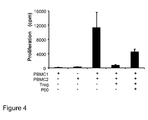
- This MLR assay was carried out incubating 10 5 PBMC cells from each donor and 2x10 4 Treg lymphocytes in the presence or absence of peptide P60 (SEQ ID NO: 1), for the purpose of assaying its capacity to block the inhibitory effect of human Treg lymphocytes.
- peptide P60 SEQ ID NO: 1
- This assay is based on the measurement of the production of IFN- ⁇ in a culture of 10 5 human CD4 effector T lymphocytes cultured with microspheres containing anti-CD3 and anti-CD28 antibodies adhered to their surface (Dynabeads® CD3/CD28; Ref 111.31, Dynal), in the presence or absence of 2x10 4 human Treg lymphocytes (purified as indicated above).
- This assay was carried out in the presence or absence of peptide P60 (SEQ ID NO: 1) to assess its inhibitory effect of Treg lymphocytes. After 48 hours of culture, the presence of IFN- ⁇ in the culture supernatants was measured by means of a commercial ELISA (Ref 555138, Pharmingen).
- Figure 5 shows that the microspheres containing anti-CD3 and anti-CD28 antibodies stimulate the production of IFN- ⁇ by T lymphocytes and that the addition of Treg cells to the culture is capable of inhibiting said production of IFN- ⁇ .
- the addition of peptide P60 (SEQ ID NO: 1) to these co-cultures is again capable of blocking the inhibitory effect of human Treg lymphocytes, partly restoring the production of IFN- ⁇ in response to the stimulus.
- MLR mixed lymphocyte reaction
- peptide P60 SEQ ID NO: 1
- Figure 8 shows the effect of peptide P60 (SEQ ID NO: 1) on the action of natural murine regulatory T cells (purified from mouse splenocytes) on the response of effector cells against the stimulation by an antigen (measured as production of IFN- ⁇ to the culture supernatant).
- the effector lymphocytes isolated from OT-1 transgenic mice (10 5 cells/well) were co-cultured with dendritic cells from C57BL/6 mice and the peptide SIINFEKL (SEQ ID NO: 7) (10 ⁇ g/ml), in the presence or absence of 2x10 4 BALB/cregulatory T cells and in the presence or absence of peptide P60 (SEQ ID NO: 1) (100 ⁇ M).
- peptide P60 (SEQ ID NO: 1) is capable of inhibiting the immunosuppressive effect of Treg lymphocytes on the production of IFN- ⁇ (measured by a commercial ELISA (Ref: 555138, Pharmingen, San Diego, CA)) by the specific effector cells of this peptide antigen.
- the tumor model used for this assay has been a model based on the CT26 colon cancer line, described in a previous work of the laboratory of the inventors ( Casares et al, 2001. Eur J Immunol 31:1780-9 ; Casares et al., 2003. J Immunol 171:5931-9 ), since the inventors had previously shown that, in this model, Treg lymphocytes have an immunosuppressive effect favoring tumor growth (Casares et al., 2003, mentioned above).
- the synthetic peptide (SEQ ID NO: 8) was used as a vaccine antigen, which peptide contains a cytotoxic T determinant for the CT26 line ( Huang, A. Y. et al, Proc Natl Acad Sci U S A, 1996. 93:9730-9735 ) and the immunization of which delays the tumor growth to a certain extent, without eliminating it due to the presence of Treg lymphocytes (Casares et al., 2003, mentioned above) .
- mice were immunized with peptide AH1 (SEQ ID NO: 8) as described in Casares et al., 2001, mentioned above, in the presence or absence of peptide P60 (SEQ ID NO: 1).
- mice were subcutaneously injected with 5 x 10 5 CT26 cells, and the tumor evolution was measured.
- Figure 10A shows the tumor growth curves whereas Figure 10B shows the survival curves of the different experimental groups (Kaplan-Meier Representation). p ⁇ 0.001 indicates the result of the statistical analysis by means of the log-rank test.
Landscapes
- Health & Medical Sciences (AREA)
- Life Sciences & Earth Sciences (AREA)
- Chemical & Material Sciences (AREA)
- Organic Chemistry (AREA)
- General Health & Medical Sciences (AREA)
- Engineering & Computer Science (AREA)
- Medicinal Chemistry (AREA)
- Veterinary Medicine (AREA)
- Nuclear Medicine, Radiotherapy & Molecular Imaging (AREA)
- Public Health (AREA)
- Chemical Kinetics & Catalysis (AREA)
- General Chemical & Material Sciences (AREA)
- Pharmacology & Pharmacy (AREA)
- Animal Behavior & Ethology (AREA)
- Biomedical Technology (AREA)
- Bioinformatics & Cheminformatics (AREA)
- Genetics & Genomics (AREA)
- Wood Science & Technology (AREA)
- Zoology (AREA)
- Biotechnology (AREA)
- Immunology (AREA)
- Oncology (AREA)
- Biochemistry (AREA)
- Communicable Diseases (AREA)
- Hematology (AREA)
- Cell Biology (AREA)
- Microbiology (AREA)
- General Engineering & Computer Science (AREA)
- Molecular Biology (AREA)
- Virology (AREA)
- Biophysics (AREA)
- Tropical Medicine & Parasitology (AREA)
- Proteomics, Peptides & Aminoacids (AREA)
- Gastroenterology & Hepatology (AREA)
- Medicines That Contain Protein Lipid Enzymes And Other Medicines (AREA)
- Peptides Or Proteins (AREA)
- Micro-Organisms Or Cultivation Processes Thereof (AREA)
Applications Claiming Priority (2)
| Application Number | Priority Date | Filing Date | Title |
|---|---|---|---|
| ES200703052A ES2328776B1 (es) | 2007-11-19 | 2007-11-19 | Peptidos con capacidad para unirse a escurfina y aplicaciones. |
| PCT/ES2008/000716 WO2009065982A1 (es) | 2007-11-19 | 2008-11-14 | Péptidos con capacidad para unirse a escurfina y aplicaciones |
Publications (2)
| Publication Number | Publication Date |
|---|---|
| EP2223998A1 EP2223998A1 (en) | 2010-09-01 |
| EP2223998B1 true EP2223998B1 (en) | 2015-05-13 |
Family
ID=40409793
Family Applications (1)
| Application Number | Title | Priority Date | Filing Date |
|---|---|---|---|
| EP08852484.8A Active EP2223998B1 (en) | 2007-11-19 | 2008-11-14 | Peptides that can bind to scurfin and uses thereof |
Country Status (11)
| Country | Link |
|---|---|
| US (1) | US8524860B2 (enExample) |
| EP (1) | EP2223998B1 (enExample) |
| JP (1) | JP5385910B2 (enExample) |
| CN (1) | CN101903514B (enExample) |
| AU (1) | AU2008327792B2 (enExample) |
| BR (1) | BRPI0819311A2 (enExample) |
| CA (1) | CA2706201A1 (enExample) |
| ES (1) | ES2328776B1 (enExample) |
| MX (1) | MX2010005520A (enExample) |
| RU (1) | RU2502741C2 (enExample) |
| WO (1) | WO2009065982A1 (enExample) |
Families Citing this family (4)
| Publication number | Priority date | Publication date | Assignee | Title |
|---|---|---|---|---|
| US8080518B2 (en) * | 2007-12-05 | 2011-12-20 | Arbor Vita Corporation | Co-administration of an agent linked to an internalization peptide with an anti-inflammatory |
| CA3018494C (en) | 2009-06-10 | 2021-12-07 | Nono Inc. | Co-administration of an agent linked to an internalization peptide with an anti-inflammatory |
| CA2939711C (en) * | 2014-02-21 | 2020-09-29 | Cellectis | Method for in situ inhibition of regulatory t cells |
| ES2665543B1 (es) | 2016-10-26 | 2019-02-12 | Fundacion Para La Investig Medica Aplicada | Péptidos de unión a FOXP3 y usos de los mismos |
Family Cites Families (8)
| Publication number | Priority date | Publication date | Assignee | Title |
|---|---|---|---|---|
| US5698015A (en) * | 1995-05-19 | 1997-12-16 | Nikko Company | Conductor paste for plugging through-holes in ceramic circuit boards and a ceramic circuit board having this conductor paste |
| WO1999029721A1 (en) * | 1997-12-10 | 1999-06-17 | Washington University | Anti-pathogen system and methods of use thereof |
| EP1105479B1 (en) * | 1998-08-11 | 2011-01-12 | Darwin Discovery Limited | Identification of the gene causing the mouse scurfy phenotype and its human ortholog |
| WO2001059115A2 (en) * | 2000-02-09 | 2001-08-16 | Agensys, Inc. | 83p5g4: a tissue specific protein highly expressed in prostate cancer |
| US20030191073A1 (en) * | 2001-11-07 | 2003-10-09 | Challita-Eid Pia M. | Nucleic acid and corresponding protein entitled 161P2F10B useful in treatment and detection of cancer |
| EP1967525B1 (en) * | 2001-05-08 | 2012-11-14 | Darwin Molecular Corporation | A method for regulating immune function in primates using the foxp3 protein |
| WO2006044864A2 (en) * | 2004-10-19 | 2006-04-27 | Duke University | Vaccine adjuvant |
| WO2007084775A2 (en) * | 2006-01-20 | 2007-07-26 | The Trustees Of The University Of Pennsylvania | Compositions and methods for modulation of suppressor t cell activation |
-
2007
- 2007-11-19 ES ES200703052A patent/ES2328776B1/es not_active Expired - Fee Related
-
2008
- 2008-11-14 MX MX2010005520A patent/MX2010005520A/es active IP Right Grant
- 2008-11-14 JP JP2010534507A patent/JP5385910B2/ja not_active Expired - Fee Related
- 2008-11-14 CA CA2706201A patent/CA2706201A1/en not_active Abandoned
- 2008-11-14 BR BRPI0819311-8A patent/BRPI0819311A2/pt not_active IP Right Cessation
- 2008-11-14 CN CN2008801217329A patent/CN101903514B/zh not_active Expired - Fee Related
- 2008-11-14 RU RU2010125199/10A patent/RU2502741C2/ru not_active IP Right Cessation
- 2008-11-14 WO PCT/ES2008/000716 patent/WO2009065982A1/es not_active Ceased
- 2008-11-14 AU AU2008327792A patent/AU2008327792B2/en not_active Ceased
- 2008-11-14 US US12/743,616 patent/US8524860B2/en not_active Expired - Fee Related
- 2008-11-14 EP EP08852484.8A patent/EP2223998B1/en active Active
Non-Patent Citations (7)
| Title |
|---|
| CASARES NOELIA ET AL: "CD4+/CD25+ regulatory cells inhibit activation of tumor-primed CD4+ T cells with IFN-gamma-dependent antiangiogenic activity, as well as long-lasting tumor immunity elicited by peptide vaccination.", JOURNAL OF IMMUNOLOGY (BALTIMORE, MD. : 1950) 1 DEC 2003 LNKD- PUBMED:14634104, vol. 171, no. 11, 1 December 2003 (2003-12-01), pages 5931 - 5939, ISSN: 0022-1767 * |
| COLOMBO MARIO P ET AL: "Regulatory-T-cell inhibition versus depletion: the right choice in cancer immunotherapy.", NATURE REVIEWS. CANCER NOV 2007 LNKD- PUBMED:17957190, vol. 7, no. 11, November 2007 (2007-11-01), pages 880 - 887, ISSN: 1474-1768 * |
| CURIEL TYLER J: "Regulatory T cells and treatment of cancer.", CURRENT OPINION IN IMMUNOLOGY APR 2008 LNKD- PUBMED:18508251, vol. 20, no. 2, April 2008 (2008-04-01), pages 241 - 246, ISSN: 0952-7915 * |
| LIU RUNHUA ET AL: "FOXP3 up-regulates p21 expression by site-specific inhibition of histone deacetylase 2/histone deacetylase 4 association to the locus.", CANCER RESEARCH 15 MAR 2009 LNKD- PUBMED:19276356, vol. 69, no. 6, 15 March 2009 (2009-03-15), pages 2252 - 2259, ISSN: 1538-7445 * |
| ROLINK A ET AL: "The SCID but not the RAG-2 gene product is required for S mu-S epsilon heavy chain class switching.", IMMUNITY OCT 1996 LNKD- PUBMED:8885865, vol. 5, no. 4, October 1996 (1996-10-01), pages 319 - 330, ISSN: 1074-7613 * |
| VIGUIER MANUELLE ET AL: "Foxp3 expressing CD4+CD25(high) regulatory T cells are overrepresented in human metastatic melanoma lymph nodes and inhibit the function of infiltrating T cells.", JOURNAL OF IMMUNOLOGY (BALTIMORE, MD. : 1950) 15 JUL 2004 LNKD- PUBMED:15240741, vol. 173, no. 2, 15 July 2004 (2004-07-15), pages 1444 - 1453, ISSN: 0022-1767 * |
| ZUO TAO ET AL: "FOXP3 is a novel transcriptional repressor for the breast cancer oncogene SKP2.", THE JOURNAL OF CLINICAL INVESTIGATION DEC 2007 LNKD- PUBMED:18008005, vol. 117, no. 12, December 2007 (2007-12-01), pages 3765 - 3773, ISSN: 0021-9738 * |
Also Published As
| Publication number | Publication date |
|---|---|
| ES2328776B1 (es) | 2010-07-06 |
| MX2010005520A (es) | 2010-09-28 |
| ES2328776A1 (es) | 2009-11-17 |
| US8524860B2 (en) | 2013-09-03 |
| JP2011504108A (ja) | 2011-02-03 |
| CA2706201A1 (en) | 2009-05-28 |
| AU2008327792B2 (en) | 2014-04-24 |
| AU2008327792A1 (en) | 2009-05-28 |
| EP2223998A1 (en) | 2010-09-01 |
| CN101903514B (zh) | 2013-07-17 |
| US20100267623A1 (en) | 2010-10-21 |
| RU2010125199A (ru) | 2011-12-27 |
| JP5385910B2 (ja) | 2014-01-08 |
| CN101903514A (zh) | 2010-12-01 |
| WO2009065982A1 (es) | 2009-05-28 |
| RU2502741C2 (ru) | 2013-12-27 |
| BRPI0819311A2 (pt) | 2015-06-16 |
Similar Documents
| Publication | Publication Date | Title |
|---|---|---|
| CN102119171B (zh) | Cdca1表位肽及包含它的疫苗 | |
| CN102186491B (zh) | Hig2和urlc表位肽及包含它们的疫苗 | |
| CN102947325B (zh) | Cdca5肽及包含它们的疫苗 | |
| EP2223998B1 (en) | Peptides that can bind to scurfin and uses thereof | |
| CN104619833B (zh) | Ube2t肽及包含它们的疫苗 | |
| CN107759661A (zh) | Topk肽及包含它们的疫苗 | |
| CN103620033A (zh) | Sema5b肽及包含它们的疫苗 | |
| CN112940076B (zh) | Foxm1衍生的肽和包含它们的疫苗 | |
| CN111925413B (zh) | Koc1衍生的肽和包含它们的疫苗 | |
| CN106795204B (zh) | Urlc10衍生的肽和含有它们的疫苗 | |
| US20200399313A1 (en) | Compositions and methods for inhibiting cd279 interactions | |
| CN105111281A (zh) | Tomm34肽及包含它们的疫苗 | |
| CN102939379B (zh) | Ect2肽及包含它们的疫苗 | |
| CN102884190B (zh) | Hjurp肽及包含它们的疫苗 | |
| JP2022191303A (ja) | Foxp3結合ペプチド及びその使用 | |
| CN102770441A (zh) | Tmem22肽及包含它们的疫苗 | |
| CN103282494B (zh) | C18orf54肽及包含它们的疫苗 | |
| CN107074908A (zh) | Cdca1衍生的肽和含有它们的疫苗 | |
| WO2024077376A1 (en) | Novel tumor-specific antigens for myeloid leukemia and uses thereof | |
| CN108699111A (zh) | Mphosph1衍生的肽和包含它们的疫苗 |
Legal Events
| Date | Code | Title | Description |
|---|---|---|---|
| PUAI | Public reference made under article 153(3) epc to a published international application that has entered the european phase |
Free format text: ORIGINAL CODE: 0009012 |
|
| 17P | Request for examination filed |
Effective date: 20100617 |
|
| AK | Designated contracting states |
Kind code of ref document: A1 Designated state(s): AT BE BG CH CY CZ DE DK EE ES FI FR GB GR HR HU IE IS IT LI LT LU LV MC MT NL NO PL PT RO SE SI SK TR |
|
| AX | Request for extension of the european patent |
Extension state: AL BA MK RS |
|
| 17Q | First examination report despatched |
Effective date: 20101216 |
|
| REG | Reference to a national code |
Ref country code: DE Ref legal event code: R079 Ref document number: 602008038166 Country of ref document: DE Free format text: PREVIOUS MAIN CLASS: C12N0005060000 Ipc: A61K0039390000 |
|
| RIC1 | Information provided on ipc code assigned before grant |
Ipc: C12N 5/0783 20100101ALI20140313BHEP Ipc: A61K 39/39 20060101AFI20140313BHEP Ipc: C07K 7/08 20060101ALI20140313BHEP |
|
| GRAP | Despatch of communication of intention to grant a patent |
Free format text: ORIGINAL CODE: EPIDOSNIGR1 |
|
| INTG | Intention to grant announced |
Effective date: 20140514 |
|
| RAP1 | Party data changed (applicant data changed or rights of an application transferred) |
Owner name: PROYECTO DE BIOMEDICINA CIMA, S.L. |
|
| GRAP | Despatch of communication of intention to grant a patent |
Free format text: ORIGINAL CODE: EPIDOSNIGR1 |
|
| INTG | Intention to grant announced |
Effective date: 20141119 |
|
| GRAS | Grant fee paid |
Free format text: ORIGINAL CODE: EPIDOSNIGR3 |
|
| GRAA | (expected) grant |
Free format text: ORIGINAL CODE: 0009210 |
|
| AK | Designated contracting states |
Kind code of ref document: B1 Designated state(s): AT BE BG CH CY CZ DE DK EE ES FI FR GB GR HR HU IE IS IT LI LT LU LV MC MT NL NO PL PT RO SE SI SK TR |
|
| AX | Request for extension of the european patent |
Extension state: AL BA MK RS |
|
| RAP1 | Party data changed (applicant data changed or rights of an application transferred) |
Owner name: PROYECTO DE BIOMEDICINA CIMA, S.L. |
|
| REG | Reference to a national code |
Ref country code: GB Ref legal event code: FG4D |
|
| REG | Reference to a national code |
Ref country code: CH Ref legal event code: EP |
|
| REG | Reference to a national code |
Ref country code: IE Ref legal event code: FG4D |
|
| REG | Reference to a national code |
Ref country code: AT Ref legal event code: REF Ref document number: 726572 Country of ref document: AT Kind code of ref document: T Effective date: 20150615 |
|
| REG | Reference to a national code |
Ref country code: DE Ref legal event code: R096 Ref document number: 602008038166 Country of ref document: DE Effective date: 20150625 |
|
| REG | Reference to a national code |
Ref country code: AT Ref legal event code: MK05 Ref document number: 726572 Country of ref document: AT Kind code of ref document: T Effective date: 20150513 |
|
| REG | Reference to a national code |
Ref country code: NL Ref legal event code: MP Effective date: 20150513 |
|
| REG | Reference to a national code |
Ref country code: LT Ref legal event code: MG4D |
|
| PG25 | Lapsed in a contracting state [announced via postgrant information from national office to epo] |
Ref country code: FI Free format text: LAPSE BECAUSE OF FAILURE TO SUBMIT A TRANSLATION OF THE DESCRIPTION OR TO PAY THE FEE WITHIN THE PRESCRIBED TIME-LIMIT Effective date: 20150513 Ref country code: ES Free format text: LAPSE BECAUSE OF FAILURE TO SUBMIT A TRANSLATION OF THE DESCRIPTION OR TO PAY THE FEE WITHIN THE PRESCRIBED TIME-LIMIT Effective date: 20150513 Ref country code: PT Free format text: LAPSE BECAUSE OF FAILURE TO SUBMIT A TRANSLATION OF THE DESCRIPTION OR TO PAY THE FEE WITHIN THE PRESCRIBED TIME-LIMIT Effective date: 20150914 Ref country code: HR Free format text: LAPSE BECAUSE OF FAILURE TO SUBMIT A TRANSLATION OF THE DESCRIPTION OR TO PAY THE FEE WITHIN THE PRESCRIBED TIME-LIMIT Effective date: 20150513 Ref country code: NO Free format text: LAPSE BECAUSE OF FAILURE TO SUBMIT A TRANSLATION OF THE DESCRIPTION OR TO PAY THE FEE WITHIN THE PRESCRIBED TIME-LIMIT Effective date: 20150813 Ref country code: LT Free format text: LAPSE BECAUSE OF FAILURE TO SUBMIT A TRANSLATION OF THE DESCRIPTION OR TO PAY THE FEE WITHIN THE PRESCRIBED TIME-LIMIT Effective date: 20150513 |
|
| PG25 | Lapsed in a contracting state [announced via postgrant information from national office to epo] |
Ref country code: GR Free format text: LAPSE BECAUSE OF FAILURE TO SUBMIT A TRANSLATION OF THE DESCRIPTION OR TO PAY THE FEE WITHIN THE PRESCRIBED TIME-LIMIT Effective date: 20150814 Ref country code: AT Free format text: LAPSE BECAUSE OF FAILURE TO SUBMIT A TRANSLATION OF THE DESCRIPTION OR TO PAY THE FEE WITHIN THE PRESCRIBED TIME-LIMIT Effective date: 20150513 Ref country code: BG Free format text: LAPSE BECAUSE OF FAILURE TO SUBMIT A TRANSLATION OF THE DESCRIPTION OR TO PAY THE FEE WITHIN THE PRESCRIBED TIME-LIMIT Effective date: 20150813 Ref country code: LV Free format text: LAPSE BECAUSE OF FAILURE TO SUBMIT A TRANSLATION OF THE DESCRIPTION OR TO PAY THE FEE WITHIN THE PRESCRIBED TIME-LIMIT Effective date: 20150513 Ref country code: IS Free format text: LAPSE BECAUSE OF FAILURE TO SUBMIT A TRANSLATION OF THE DESCRIPTION OR TO PAY THE FEE WITHIN THE PRESCRIBED TIME-LIMIT Effective date: 20150913 |
|
| PG25 | Lapsed in a contracting state [announced via postgrant information from national office to epo] |
Ref country code: DK Free format text: LAPSE BECAUSE OF FAILURE TO SUBMIT A TRANSLATION OF THE DESCRIPTION OR TO PAY THE FEE WITHIN THE PRESCRIBED TIME-LIMIT Effective date: 20150513 Ref country code: EE Free format text: LAPSE BECAUSE OF FAILURE TO SUBMIT A TRANSLATION OF THE DESCRIPTION OR TO PAY THE FEE WITHIN THE PRESCRIBED TIME-LIMIT Effective date: 20150513 |
|
| REG | Reference to a national code |
Ref country code: DE Ref legal event code: R097 Ref document number: 602008038166 Country of ref document: DE |
|
| PG25 | Lapsed in a contracting state [announced via postgrant information from national office to epo] |
Ref country code: CZ Free format text: LAPSE BECAUSE OF FAILURE TO SUBMIT A TRANSLATION OF THE DESCRIPTION OR TO PAY THE FEE WITHIN THE PRESCRIBED TIME-LIMIT Effective date: 20150513 Ref country code: PL Free format text: LAPSE BECAUSE OF FAILURE TO SUBMIT A TRANSLATION OF THE DESCRIPTION OR TO PAY THE FEE WITHIN THE PRESCRIBED TIME-LIMIT Effective date: 20150513 Ref country code: SK Free format text: LAPSE BECAUSE OF FAILURE TO SUBMIT A TRANSLATION OF THE DESCRIPTION OR TO PAY THE FEE WITHIN THE PRESCRIBED TIME-LIMIT Effective date: 20150513 Ref country code: RO Free format text: LAPSE BECAUSE OF NON-PAYMENT OF DUE FEES Effective date: 20150513 |
|
| PLBE | No opposition filed within time limit |
Free format text: ORIGINAL CODE: 0009261 |
|
| STAA | Information on the status of an ep patent application or granted ep patent |
Free format text: STATUS: NO OPPOSITION FILED WITHIN TIME LIMIT |
|
| 26N | No opposition filed |
Effective date: 20160216 |
|
| PG25 | Lapsed in a contracting state [announced via postgrant information from national office to epo] |
Ref country code: IT Free format text: LAPSE BECAUSE OF FAILURE TO SUBMIT A TRANSLATION OF THE DESCRIPTION OR TO PAY THE FEE WITHIN THE PRESCRIBED TIME-LIMIT Effective date: 20150513 |
|
| PG25 | Lapsed in a contracting state [announced via postgrant information from national office to epo] |
Ref country code: SI Free format text: LAPSE BECAUSE OF FAILURE TO SUBMIT A TRANSLATION OF THE DESCRIPTION OR TO PAY THE FEE WITHIN THE PRESCRIBED TIME-LIMIT Effective date: 20150513 |
|
| REG | Reference to a national code |
Ref country code: DE Ref legal event code: R119 Ref document number: 602008038166 Country of ref document: DE |
|
| PG25 | Lapsed in a contracting state [announced via postgrant information from national office to epo] |
Ref country code: LU Free format text: LAPSE BECAUSE OF FAILURE TO SUBMIT A TRANSLATION OF THE DESCRIPTION OR TO PAY THE FEE WITHIN THE PRESCRIBED TIME-LIMIT Effective date: 20151114 Ref country code: MC Free format text: LAPSE BECAUSE OF FAILURE TO SUBMIT A TRANSLATION OF THE DESCRIPTION OR TO PAY THE FEE WITHIN THE PRESCRIBED TIME-LIMIT Effective date: 20150513 |
|
| REG | Reference to a national code |
Ref country code: CH Ref legal event code: PL |
|
| GBPC | Gb: european patent ceased through non-payment of renewal fee |
Effective date: 20151114 |
|
| PG25 | Lapsed in a contracting state [announced via postgrant information from national office to epo] |
Ref country code: LI Free format text: LAPSE BECAUSE OF NON-PAYMENT OF DUE FEES Effective date: 20151130 Ref country code: CH Free format text: LAPSE BECAUSE OF NON-PAYMENT OF DUE FEES Effective date: 20151130 |
|
| REG | Reference to a national code |
Ref country code: IE Ref legal event code: MM4A |
|
| REG | Reference to a national code |
Ref country code: FR Ref legal event code: ST Effective date: 20160729 |
|
| PG25 | Lapsed in a contracting state [announced via postgrant information from national office to epo] |
Ref country code: BE Free format text: LAPSE BECAUSE OF FAILURE TO SUBMIT A TRANSLATION OF THE DESCRIPTION OR TO PAY THE FEE WITHIN THE PRESCRIBED TIME-LIMIT Effective date: 20150513 |
|
| PG25 | Lapsed in a contracting state [announced via postgrant information from national office to epo] |
Ref country code: DE Free format text: LAPSE BECAUSE OF NON-PAYMENT OF DUE FEES Effective date: 20160601 Ref country code: IE Free format text: LAPSE BECAUSE OF NON-PAYMENT OF DUE FEES Effective date: 20151114 Ref country code: GB Free format text: LAPSE BECAUSE OF NON-PAYMENT OF DUE FEES Effective date: 20151114 |
|
| PG25 | Lapsed in a contracting state [announced via postgrant information from national office to epo] |
Ref country code: FR Free format text: LAPSE BECAUSE OF NON-PAYMENT OF DUE FEES Effective date: 20151130 |
|
| PG25 | Lapsed in a contracting state [announced via postgrant information from national office to epo] |
Ref country code: HU Free format text: LAPSE BECAUSE OF FAILURE TO SUBMIT A TRANSLATION OF THE DESCRIPTION OR TO PAY THE FEE WITHIN THE PRESCRIBED TIME-LIMIT; INVALID AB INITIO Effective date: 20081114 |
|
| PG25 | Lapsed in a contracting state [announced via postgrant information from national office to epo] |
Ref country code: SE Free format text: LAPSE BECAUSE OF FAILURE TO SUBMIT A TRANSLATION OF THE DESCRIPTION OR TO PAY THE FEE WITHIN THE PRESCRIBED TIME-LIMIT Effective date: 20150513 Ref country code: CY Free format text: LAPSE BECAUSE OF FAILURE TO SUBMIT A TRANSLATION OF THE DESCRIPTION OR TO PAY THE FEE WITHIN THE PRESCRIBED TIME-LIMIT Effective date: 20150513 Ref country code: NL Free format text: LAPSE BECAUSE OF FAILURE TO SUBMIT A TRANSLATION OF THE DESCRIPTION OR TO PAY THE FEE WITHIN THE PRESCRIBED TIME-LIMIT Effective date: 20150513 |
|
| PG25 | Lapsed in a contracting state [announced via postgrant information from national office to epo] |
Ref country code: MT Free format text: LAPSE BECAUSE OF FAILURE TO SUBMIT A TRANSLATION OF THE DESCRIPTION OR TO PAY THE FEE WITHIN THE PRESCRIBED TIME-LIMIT Effective date: 20150513 Ref country code: TR Free format text: LAPSE BECAUSE OF FAILURE TO SUBMIT A TRANSLATION OF THE DESCRIPTION OR TO PAY THE FEE WITHIN THE PRESCRIBED TIME-LIMIT Effective date: 20150513 |