EP2222694B1 - Novel rubella e1 envelope protein variants and their use in the detection of anti-rubella antibodies - Google Patents
Novel rubella e1 envelope protein variants and their use in the detection of anti-rubella antibodies Download PDFInfo
- Publication number
- EP2222694B1 EP2222694B1 EP08860033.3A EP08860033A EP2222694B1 EP 2222694 B1 EP2222694 B1 EP 2222694B1 EP 08860033 A EP08860033 A EP 08860033A EP 2222694 B1 EP2222694 B1 EP 2222694B1
- Authority
- EP
- European Patent Office
- Prior art keywords
- rubella
- antigen
- cys
- disulfide
- protein
- Prior art date
- Legal status (The legal status is an assumption and is not a legal conclusion. Google has not performed a legal analysis and makes no representation as to the accuracy of the status listed.)
- Active
Links
Images

Classifications
-
- G—PHYSICS
- G01—MEASURING; TESTING
- G01N—INVESTIGATING OR ANALYSING MATERIALS BY DETERMINING THEIR CHEMICAL OR PHYSICAL PROPERTIES
- G01N33/00—Investigating or analysing materials by specific methods not covered by groups G01N1/00 - G01N31/00
- G01N33/48—Biological material, e.g. blood, urine; Haemocytometers
- G01N33/50—Chemical analysis of biological material, e.g. blood, urine; Testing involving biospecific ligand binding methods; Immunological testing
- G01N33/53—Immunoassay; Biospecific binding assay; Materials therefor
- G01N33/569—Immunoassay; Biospecific binding assay; Materials therefor for microorganisms, e.g. protozoa, bacteria, viruses
- G01N33/56983—Viruses
-
- C—CHEMISTRY; METALLURGY
- C07—ORGANIC CHEMISTRY
- C07K—PEPTIDES
- C07K14/00—Peptides having more than 20 amino acids; Gastrins; Somatostatins; Melanotropins; Derivatives thereof
- C07K14/005—Peptides having more than 20 amino acids; Gastrins; Somatostatins; Melanotropins; Derivatives thereof from viruses
-
- C—CHEMISTRY; METALLURGY
- C07—ORGANIC CHEMISTRY
- C07K—PEPTIDES
- C07K2319/00—Fusion polypeptide
- C07K2319/35—Fusion polypeptide containing a fusion for enhanced stability/folding during expression, e.g. fusions with chaperones or thioredoxin
-
- C—CHEMISTRY; METALLURGY
- C12—BIOCHEMISTRY; BEER; SPIRITS; WINE; VINEGAR; MICROBIOLOGY; ENZYMOLOGY; MUTATION OR GENETIC ENGINEERING
- C12N—MICROORGANISMS OR ENZYMES; COMPOSITIONS THEREOF; PROPAGATING, PRESERVING, OR MAINTAINING MICROORGANISMS; MUTATION OR GENETIC ENGINEERING; CULTURE MEDIA
- C12N2770/00—MICROORGANISMS OR ENZYMES; COMPOSITIONS THEREOF; PROPAGATING, PRESERVING, OR MAINTAINING MICROORGANISMS; MUTATION OR GENETIC ENGINEERING; CULTURE MEDIA ssRNA viruses positive-sense
- C12N2770/00011—Details
- C12N2770/36011—Togaviridae
- C12N2770/36211—Rubivirus, e.g. rubella virus
- C12N2770/36222—New viral proteins or individual genes, new structural or functional aspects of known viral proteins or genes
-
- G—PHYSICS
- G01—MEASURING; TESTING
- G01N—INVESTIGATING OR ANALYSING MATERIALS BY DETERMINING THEIR CHEMICAL OR PHYSICAL PROPERTIES
- G01N2333/00—Assays involving biological materials from specific organisms or of a specific nature
- G01N2333/005—Assays involving biological materials from specific organisms or of a specific nature from viruses
- G01N2333/08—RNA viruses
- G01N2333/18—Togaviridae; Flaviviridae
- G01N2333/19—Rubella virus
-
- G—PHYSICS
- G01—MEASURING; TESTING
- G01N—INVESTIGATING OR ANALYSING MATERIALS BY DETERMINING THEIR CHEMICAL OR PHYSICAL PROPERTIES
- G01N2469/00—Immunoassays for the detection of microorganisms
- G01N2469/20—Detection of antibodies in sample from host which are directed against antigens from microorganisms
-
- Y—GENERAL TAGGING OF NEW TECHNOLOGICAL DEVELOPMENTS; GENERAL TAGGING OF CROSS-SECTIONAL TECHNOLOGIES SPANNING OVER SEVERAL SECTIONS OF THE IPC; TECHNICAL SUBJECTS COVERED BY FORMER USPC CROSS-REFERENCE ART COLLECTIONS [XRACs] AND DIGESTS
- Y02—TECHNOLOGIES OR APPLICATIONS FOR MITIGATION OR ADAPTATION AGAINST CLIMATE CHANGE
- Y02A—TECHNOLOGIES FOR ADAPTATION TO CLIMATE CHANGE
- Y02A50/00—TECHNOLOGIES FOR ADAPTATION TO CLIMATE CHANGE in human health protection, e.g. against extreme weather
- Y02A50/30—Against vector-borne diseases, e.g. mosquito-borne, fly-borne, tick-borne or waterborne diseases whose impact is exacerbated by climate change
Definitions
- the invention relates to recombinant Rubella E1 antigens and variants thereof.
- the antigens comprise amino acids 201 to 432 and are characterized by lacking at least the C-terminal transmembrane region and the anchor segment (amino acids 453 to 481) as well as at least the amino acids 143 to 164.
- the antigens further contain two disulfide-bridges, i.e. they contain the region from the disulfide bridge Cys 225-Cys 235 to Cys 349-Cys 352.
- the invention also relates to the production of these double disulfide bridge antigens and their use in a method of detecting anti-Rubella antibodies in human sera.
- a further aspect of the invention is therefore a composition comprising at least two Rubella E1 antigens each of which contains at least two disulfide bridges, whereby the disulfide bond combinations within the various antigens differ from each other.
- Rubella virus is the only member of the Rubivirus genus within the Togaviridae family.
- the small enveloped (+) RNA virus is a human pathogen and causes a mild, self-limiting childhood disease (German Measles or Rubella) characterized by rash, lymphadenopathy and low-grade fever. When acquired in the first trimester of pregnancy, however, it may cause stillbirth, spontaneous abortion or several anomalies associated with the congenital Rubella syndrome.
- the characteristic triad of congenital Rubella syndrome includes cataracts, heart defects and deafness of the fetus. It necessitates Rubella vaccination programs and surveillance of the immune status of women in child-bearing age.
- the structural proteins of the Rubella virus originate from a single 110 kDa polypeptide precursor, which is proteolytically cleaved to yield the capsid protein C and the envelope proteins E2 and E1.
- E2 and E 1 are glycosylated, they form non-covalent heterodimers at the surface of the virion and are the preferred targets of the humoral immune response.
- the membrane-anchored ectodomain of the E1 protein in particular, is immunodominant, and antibodies against E1 are abundant in sera from Rubella-infected individuals.
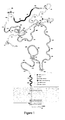
- the Rubella E1 protein also termed Rubella hemagglutinin (see Figure 1 ), presumably consists of a large ectodomain (residues 1-452), followed by a single transmembrane helix (residues 453-468) and a short cytoplasmic tail (residues 469-481).
- the residues 438-452 which immediately precede the transmembrane region, probably form also a helix.
- the ectodomain of E1 bears 20 cysteine residues, which are engaged in ten disulfide bonds.
- the cysteine pairs C(1)-C(2), C(3)-C(15), C(6)-C(7), C(9)-C(10), C(11)-C(12), C(13)-C(14), C(17)-C(18) and C(19)-C(20) could be confirmed with certainty, whereas the pairing of the cysteine residues C(4), C(5), C(8) and C(16) remains ambiguous ( Gros et al. 1997, Virology 230, 179-186 ).
- the ectodomain is glycosylated at the three asparagines 76, 177 and 209.
- a glycosylated and soluble form of full-length E1 could be produced in baculovirus-infected Spodoptera frugiperda ( Seppänen et al. 1991, J. Clin. Microbiol. 29, 1877-1882 and Oker-Blom 1989, Virology 172, 82-91 ) and CHO cells ( Perrenoud et al. 2004, Vaccine 23, 480-488 ) and, most recently, in Pichia pastoris ( Wen and Wang 2005, Intervirology 48, 321-328 ).
- the expression of Rubella-like particles in BHK cells Grangeot-Keros et al. J. lin. Microbiol.
- Rubella antigens suitable for diagnostic purposes are non-infectious, ill-defined agglomerates of the covalently linked Rubella proteins C, E2 and E1, and are useful for detecting immunoglobulins of the M and G type.
- Non-glycosylated forms of E1 could, in principle, be produced much more efficiently in a prokaryotic host.
- a full-length and a truncated version (207-353) of Rubella E1 were fused to protein A from Staphylococcus aureus and produced in E. coli ( Terry et al. 1989, Arch. Virol. 104, 63-75 ).
- These fusion proteins were active as antigens, but not well soluble and therefore only of limited value for the specific detection of anti-E 1 antibodies.
- variants of E 1 from prokaryotic hosts showed a strong tendency to aggregate, possibly because they are unglycosylated, or because they are incorrectly disulfide-bonded.
- E1 In fusion with glutathione-S-transferase, only small fragments of E1 comprising as little as 75 or 44 amino acid residues could be expressed in a soluble and functional form ( Newcombe et al. 1994, Clinical and Diagnostic Virology 2, 149-163 and Starkey et al. 1995, J. Clin. Microbiol. 33, 270-274 ). Larger E1 fragments encompassing 82 or 171 amino acid residues could be obtained when fused to both RecA and ß-galactosidase ( Wolinsky et al. 1991, J. Virol. 65, 3986-3994 ).
- EP-A-1780282 discloses the recombinant expression and production of soluble Rubella E1 envelope antigens that are characterized by lacking at least the C-terminal transmembrane region and the anchor segment as well as at least the segment from amino acids 143 to 164 in the middle part of the molecule. These Rubella E1 antigens contain at least the region spanning the disulfide bridges Cys 349-Cys 352 and Cys 368- Cys 401 and optionally Cys 225- Cys 235. According to the teaching of EP-A-1782082 it is essential to have both disulfide bridges in the C-terminal part of the antigen intact, i.e. closed, to obtain a Rubella E1 variant that is sufficiently antigenic and suitable for the detection of antibodies against Rubella virus in a sample.
- the problem to be solved was therefore to generate soluble Rubella E1 variants which harbor further combinations of disulfide-stabilized epitopes and which are highly soluble and highly reactive in terms of immunology (i.e. highly antigenic), and therefore well-suited as antigens for diagnostic applications.
- the invention relates to Rubella E1 antigens and variants of these antigens.
- the antigens comprise amino acids 201 to 432 and are characterized by lacking at least the C-terminal transmembrane region and the anchor segment (amino acids 453 to 481) as well as at least the segment from amino acids 143 to 164 in the middle part of the molecule. They further contain a region spanning two disulfide-bridges, i.e.the region from the disulfide bridge Cys 225-Cys 235 to Cys 349-Cys 352.
- the invention also relates to a composition comprising at least two of these Rubella E1 antigens as well as to the production of these double disulfide bridge antigens and their use in a method of detecting antibodies against Rubella in a sample.
- the Rubella E1 antigens are further characterized in that they lack at the C-terminal end the alpha-helical region comprising the amino acids residues 438 to 452.
- the invention also relates to a composition
- a composition comprising at least two Rubella E 1 antigens each of which comprises amino acids 201 to 432 with the proviso that each of said antigens lacks sequences corresponding to amino acids 143 to 164 and 454 to 481 of the native Rubella E1 antigen and wherein each of the Rubella E1 antigens contains two disulfide bridges in different combinations.
- the invention relates to a recombinant DNA molecule encoding said Rubella E1 antigen.
- the Rubella E1 antigen is recombinantly expressed, more preferably it is expressed as a chaperone fusion protein.
- the invention also relates to an expression vector containing operably linked or integrated the above-described DNA encoding a Rubella E1 antigen.
- the invention also concerns a host cell transformed with said expression vector and also a method for producing a soluble and immunoreactive Rubella E1 antigen, preferably a fusion protein containing an E1 part and a chaperone part, most preferably a chaperone belonging to the class of peptidyl prolyl isomerases.
- the present invention discloses a method for the detection of anti-Rubella antibodies in a human sample wherein the Rubella E1 antigen is used as a binding partner for the anti-Rubella antibodies.
- the invention comprises further a diagnostic test and a reagent kit for the detection of anti-Rubella antibodies, containing at least one of the Rubella E1 antigens.
- the invention relates to a soluble and immunoreactive (i.e. antigenic) Rubella E1 fragment that comprises an E1 polypeptide segment from amino acids 201 to 432 and bears two disulfide bridges.
- the Rubella E1 antigens according to the invention comprise amino acids 201 to 432 and are characterized by lacking at least the C-terminal transmembrane region and the anchor segment as well as at least the segment from amino acids 143 to 164 in the middle part of the molecule, i.e. a Rubella E1 antigen is claimed with the proviso that said Rubella E1 antigen lacks sequences corresponding to amino acids 143 to 164 and 454 to 481 of the mature or native-like folded Rubella E1 antigen and contains two disulfide bridges, wherein
- Rubella E1 antigens that comprise E1 amino acids 169 to 432, and are also characterized by lacking at least the C-terminal transmembrane region and the anchor segment as well as at least the segment from amino acids 143 to 164 in the middle part of the molecule, i.e. a Rubella E1 antigen is described with the proviso that said Rubella E1 antigen lacks sequences corresponding to amino acids 143 to 164 and 454 to 481 of the mature or native-like folded Rubella E1 antigen and contains two disulfide bridges, wherein
- a Rubella E1 antigen which comprises amino acids 169 to 432, and is characterized by lacking at at least the C-terminal transmembrane region and the anchor segment as well as at least the segment from amino acids 143 to 164 in the middle part of the molecule, i.e. a Rubella E1 antigen is described with the proviso that said Rubella E1 antigen lacks sequences corresponding to amino acids 143 to 164 and 454 to 481 of the native Rubella E1 antigen, wherein a disulfide bridge is formed between Cys 176 and Cys 185 .
- a preferred Rubella E1 antigen with two disulfide bridges thus comprises the disulfide bond combinations C13-C14 and C17-C18, or C13-C14 and C19-C20, or C13-C14 and C11-C12, or C11-C12 and C17-C18, or C11-C12 and C19-C20.
- a preferred Rubella E1 antigen comprises the E1 polypeptide fragment from amino acid 201 to 432 (201-432) and bears the disulfide bridges C13-C14 and C17-C18, i.e. the disulfide bridges Cys 225-Cys 235 and Cys 349-Cys 352. Further disclosed is a Rubella E1 antigen that harbors the same disulfide combination in an E1 polypeptide fragment comprising the E1 amino acid sequence 169-432.
- the Rubella E1 antigens according to the invention are further characterized in that they lack at the C-terminal end the putative alpha-helical region, which has been confined to amino acid residues 438 to 452 ( Gros et al.,1997, Virology 230, 179-186 ).
- the Rubella E1 antigens preferably contain combinations of two disulfide bridges. This means that not more than two disulfide bridges are formed within one Rubella E1 antigen.
- all cysteine residues of the mature E1 that do not participate in the desired disulfide bonding are replaced by another amino acid similar to cysteine in size and structure.
- these unwanted cysteine residues are substituted by alanine or serine.
- the substituted amino acid residues neither form abortive disulfide bridges nor contribute to detrimental side reactions such as disulfide shuffling.
- the desired matching cysteine pairs are supposed to be arranged in close vicinity during the in vitro refolding process, so that they can easily build the correct disulfide bonds and thus stabilize preformed epitopes as soon as the redox potential is raised.
- the native-like three-dimensional fold i.e. the native conformation or structure
- anti-Rubella antibodies are capable of recognizing and binding to the Rubella E1 antigen variants according to the invention.
- a Rubella E1 (201-432) antigen which is expected to form a first disulfide bridge between Cys 225 and Cys 235 (C13-C14) and a second disulfide bridge between Cys 349 and Cys 352 (C17-C18) harbors the cysteine residues at positions 225, 235, 349 and 352.
- its cysteine residues at positions 242 (C15), 287 (C16), 368 (C19) and 401 (C20) are changed to alanine, serine, or other amino acid residues lacking thiol moieties.
- the substituting amino acid residues are chosen according to steric and chemical requirements: on the one hand, they ought to fit into the local and overall structure of Rubella E1 and, on the other hand, they must not interfere with the correct disulfide bonding by forming mixed disulfides leading to misfolded, abortive protein species.
- disulfide bridge relates to two cysteine residues which are in close vicinity in the three-dimensional structure of a protein and whose thiol moieties can be oxidized to form a covalent disulfide bond.
- the rate of disulfide-bond formation depends on the proximity of the two cysteine residues, defined as the probability of their sulfur atoms of coming within the distance required for thiol/disulfide exchange.
- Disulfide bridges which are also termed disulfide bonds (synonyms are SS bonds and SS bridges, respectively), constitute covalent tertiary contacts and usually contribute to the stabilization of the folded conformation.
- disulfide bonds require an oxidative environment. Therefore, intracellular proteins barely contain disulfide bridges because intracellular compartments, such as the bacterial cytoplasm or the eucaryotic cytosol, are essentially reductive. However, disulfide bridges occur frequently in secreted or translocated proteins, such as the gp41 and gp36 ectodomains from HIV-1 and HIV-2, respectively, and in the Rubella envelope proteins E 1 and E2.
- disulfide bonds stabilize the protein conformation, i.e. in proteins they fulfill the task to lock the native-like fold.
- the matching cysteine pairs are usually arranged in close proximity and suitable orientation so that they can form disulfide bonds and thus stabilize the pre-existing native-like conformation.
- oxidative refolding The formation of the disulfide bonds, with the consequence that the three-dimensional fold is stabilized in a local or a global sense, is also termed "oxidative refolding".
- the uncoupling of conformational and oxidative refolding is used to introduce correct disulfide bonds in a defined manner.
- in vitro conformational refolding of the various E1 antigen variants is performed under reducing conditions.
- oxidative refolding is performed by removing the respective reducing agent, raising the redox potential and thus inducing the spontaneous formation of the favourable (i.e. correct) disulfide bonds.
- this refolding process is carried out under conditions characterized by low effective protein concentrations in order to avoid aggregation reactions. It is well established that low effective protein concentrations during refolding do increase the yield of the respective target protein.
- a well established technique of protein refolding in vitro is the so-called matrix-coupled refolding. Immobilization of unfolded protein molecules to a solid phase and refolding of the matrix-bound protein ensures low effective concentrations since the protein molecules are isolated (infinitely diluted) and unable to interact with neighboring protein molecules. Thus, unwanted detrimental side reactions such as aggregation of hydrophobic refolding intermediates are efficiently suppressed.
- the Rubella E1 antigens according to the invention may contain one or more additional amino acids at their N- or C-terminal ends or both.
- additional amino acids When additional amino acids are added it is important that these additional amino acids do not weaken the antigenic properties of the antigen, i.e. that they do not interfere with the use of the antigen in an immunoassay, for instance by lowering the overall solubility of the antigen.
- the ability of the antigen of being recognized and bound by anti-Rubella antibodies in a sample has to be maintained.
- recombinantly expressed soluble Rubella E 1 envelope antigens can be produced that are suitable for use in an immunoassay for the detection of anti-Rubella antibodies. These antigens are characterized by lacking at least the C-terminal transmembrane region and the anchor segment as well as at least the amino acids 143 to 164 in the middle part of E1.
- antigens contain at least the region spanning the C-terminal disulfide bridges Cys 349-Cys 352 and Cys 368- Cys 401 (C17-C18 and C 19-C20) and, optionally in addition, Cys 225- Cys 235 (C13-C14), indicating that even a third disulfide bridge may be advantageous in obtaining a suitable antigen for use in immunoassays.
- the Rubella E1 antigen comprises a soluble fragment harboring two disulfide bonds.
- essentially two disulfide bonds are formed in the antigen to stabilize an antigenic conformation, which is well suited to be recognized and bound by anti-E1 immunoglobulins and which is thus well suited for detecting anti-E1 immunoglobulins.
- the E1 segment bearing two disulfide-bridges may span the disulfide bond Cys 225-Cys 235 to Cys 349 - Cys 352 (C13-C14 to C17-C18).
- the transmembrane region from amino acids 453 to about 468 is also deleted.
- Within the middle part of Rubella E1 at least the amino acid residues 143-164 are also deleted.
- Rubella E1 antigens have shown to be soluble and stable under physiological buffer conditions without addition of detergents, for example in a phosphate buffer system at ambient temperature. They are highly immunoreactive (i. e. they are antigenic) in a serological assay and well-suited for the detection of anti-Rubella antibodies in human sera.
- variants of the Rubella E1 antigens are included.
- variants in this context relates to protein essentially similar to said protein.
- a variant may be an isoform which shows amino acid substitutions, deletions or insertions compared to the amino acid sequence of the most prevalent protein isoform.
- an essentially similar protein has a sequence similarity to the most prevalent isoform of the protein of at least 80%, preferably at least 85%, more preferably at least 90%, most preferably at least 95%.
- variants also relates to a post-translationally modifed protein such as a glycosylated or phosphorylated protein.
- a variant is also a protein or antigen which has been modified for example by covalent or non-covalent attachment of a label or carrier moiety to the protein or antigen.
- Possible labels, reporter groups or signaling moieties are radioactive, fluorescent, chemiluminescent, electrochemiluminescent, enzymes or others e.g. like digoxigenin. These labels are known to a person skilled in the art.
- Further label variants are solid phase binding groups like e.g. biotin or biotin derivatives attached to proteins, a detailed description of labels is disclosed further down in this specification.
- a “Rubella E1 antigen” is a protein containing a Rubella E1 amino acid sequence that is suitable for use in an immunological assay. This means that the antigen is capable of binding to or being recognized and bound by antibodies specific for Rubella, like e.g. anti-Rubella E1 antibodies present in a sample.
- a further aspect of the invention relates to a composition of at least two different Rubella E1 antigens.
- the term "Rubella E1 antigen” includes such a composition containing a combination of more than one Rubella E1 antigen.
- a preferred embodiment of the invention is a composition comprising at least two Rubella E1 antigens each of which comprises amino acids 201 to 432 or amino acids 169 to 432 with the proviso that each of said antigens lacks sequences corresponding to amino acids 143 to 164 and 454 to 481 of the native Rubella E1 antigen and wherein each of the at least two Rubella E1 antigens contains two disulfide bridges in different combinations.
- a preferred composition of at least two different Rubella E1 antigens comprises an antigen with a disulfide bridge between Cys 176 and Cys 185 (C11-C12) and a second disulfide bridge between Cys 225 and Cys 235 (C13-C14).
- the other antigen within this composition preferably contains a disulfide bridge between Cys 225 and Cys 235 (C13-C14) and a second disulfide bridge between Cys 349 and Cys 352 (C 17-C 18).
- antigens may be included in this composition, preferably a third Rubella E1 antigen that contains a disulfide bridge between Cys 349 and Cys 352 (C17-C18) and a disulfide bridge between Cys 368 and Cys 401 (C19-C20).
- a third Rubella E1 antigen that contains a disulfide bridge between Cys 349 and Cys 352 (C17-C18) and a disulfide bridge between Cys 368 and Cys 401 (C19-C20).
- the Rubella E 1 antigen is produced as a recombinant fusion protein.
- fusion protein refers to a protein comprising at least one protein part corresponding to a Rubella E1 antigen according to the invention and at least one protein part derived from another protein that serves the role of a fusion partner.
- fusion modules include maltose binding protein, glutathion S-transferase, thioredoxin, NusA, DsbA and chaperones like FkpA.
- the use of these fusion modules customarily aims at increasing the soluble expression (i.e. the native-like folding) of the respective target protein either in the cytosol or the periplasm of the overproducing E. coli host.
- chaperones more preferably chaperones of the peptidyl prolyl isomerase class, most preferably chaperones from the FKBP family of peptidyl proly isomerases are used as fusion proteins within the Rubella E1 fusion polypeptide.
- Chaperones which are known as classical "folding helpers", are proteins that assist the folding and maintenance of structural integrity of other proteins. They possess the ability to promote the folding of a protein both in vivo and in vitro.
- folding helpers are subdivided into folding catalysts and chaperones.
- Folding catalysts accelerate the rate limiting steps in protein folding due to their catalytic function.
- Chaperones are known to bind to denatured or partially denatured proteins and thus help to renature or, alternatively, degrade proteins. Thus, unlike folding catalysts, chaperones exert a mere binding function. Examples of catalysts and chaperones are described in detail in WO 03/000877 .
- chaperones are characterized by their ability to bind unfolded or partially unfolded proteins and have a physiological function that is linked to the correct folding of proteins or the degradation and removal of denatured or aggregated protein. It has been demonstrated that an enhanced expression of chaperones may facilitate the recombinant production of a protein. It is also known that an increased production of proteins can be achieved by using a gene construct encoding both the target protein sequence and a chaperone sequence. In all these applications of chaperones as tools in biotechnology the major obstacle is to find an appropriate and functional chaperone for a given target molecule.
- chaperones Since many chaperones exhibit a narrow substrate specificity and work in an energy-dependent mode, the search for an appropriate (i.e. solubilizing) binding partner for a given target protein is far from trivial. Briefly, the approach to use chaperones for increased production yields of native-like folded proteins is mainly based on the binding and thus solubilizing function of chaperone proteins. After recombinant production of a fusion protein comprising chaperone and target protein, the chaperone moiety is customarily cleaved off from the resulting fusion polypeptide to yield the desired protein in pure form.
- the recombinantly produced fusion protein containing a fusion module and a Rubella E1 antigen can be readily obtained from inclusion bodies in a soluble and functional form.
- the disclosed Rubella E1 protein is part of a fusion protein, it shows a high solubility at physiological buffer conditions and can readily be obtained in a native-like and immunoreactive (i.e. antigenic) structure or conformation.
- the Rubella E 1 fusion protein according to the present invention is very easy to handle. In other words, it is easy to renature such a fusion protein with high yields following a robust and simple refolding protocol.
- the denaturant-unfolded unstructured polypeptide can be refolded in different ways, all resulting in a thermodynamically stable and soluble native-like form that is antigenic. Refolding is achieved at high yields, both by dialysis and by rapid dilution, as well as by renaturing size exclusion chromatography or matrix-assisted refolding.
- refolding techniques enabling very low effective protein concentrations during renaturation are employed, such as renaturing size exclusion chromatography or matrix-assisted refolding.
- Refolding techniques such as dialysis or rapid dilution are successful as well, given the protein concentrations are kept low during the refolding process.
- a soluble protein according to the present invention is produced by fusing a Rubella E1 antigen to a chaperone from the class of peptidyl-prolyl-isomerases . Therefore, a preferred embodiment according to the invention relates to the fusion of a Rubella E 1 antigen with a peptidyl-prolyl-isomerase class chaperone, preferably with an FKBP chaperone and most preferably with a SlyD or FkpA chaperone.
- the Rubella E1 antigens according to the invention can also be produced by chemical synthesis, whereby the synthesis can be carried out in homogeneous solution or in solid phase as known in the art.
- the above described Rubella E1 antigens can be optimized according to the requirements of a specific immunoassay for the detection of anti-Rubella antibodies.
- the antigens can be brought into a defined monomeric or oligomeric state.
- the antigens are suitable for use in an immunological assay for the detection of IgM antibodies in a human sample.
- the E 1 fusion polypeptides according to the invention may be polymerized, e.g. by chemical crosslinking resulting in an antigen that is preferably recognized and bound by IgM antibodies.
- a mixed polymer may be obtained composed of Rubella proteins E1, E2 and Core protein C. Rubella E2 and Core proteins are immunodominant Rubella antigens well known in the art.
- the Rubella E1 protein according to the invention can also be prepared by means of recombinant DNA techniques.
- recombinant DNA molecule refers to a molecule which is made by the combination of two otherwise separated segments of sequence accomplished by the artificial manipulation of isolated segments of polynucleotides by genetic engineering techniques or by chemical synthesis. In doing so one may join together polynucleotide segments of desired functions to generate a desired combination of functions.
- polynucleotides may be produced by replication in a suitable host cell.
- Natural or synthetic DNA fragments coding for proteins or fragments thereof will be incorporated into recombinant polynucleotide constructs, typically DNA constructs, capable of introduction into and replication in a prokaryotic or lower or higher eukaryotic cell such as described by Sambrook et al., (1989, Molecular Cloning: A Laboratory Manual ).
- lower eukaryotes refers to host cells such as yeast, fungi and the like. Lower eukaryotes are generally but not necessarily unicellular.
- prokaryotes refers to hosts such as E. coli, Lactobacillus, Lactococcus, Salmonella, Streptococcus, Bacillus subtillis or Streptomyces. Also these hosts are contemplated within the present invention.
- Preferred lower eukaryotes are yeast's, particularly species within Schizosaccharomyces, Saccharomyces, Kluiveromyces, Pichia (e.g. Pichia pastoris), Hansenula (e.g.
- Saccharomyces cerevisiae and S. carlsbergensis are the most commonly used yeast hosts, and are convenient fungal hosts.
- the term "higher eukaryotes” refers to host cells derived from animals, such as mammals, reptiles, insects, and the like. Presently preferred higher eukaryote host cells are derived from Chinese hamster (e.g. CHO), monkey (e.g.
- the host cells may be provided in suspension or flask cultures, tissue cultures, organ cultures and the like.
- a further subject matter of the present invention relates to a recombinant DNA molecule, encoding a Rubella E1 antigen, comprising at least one nucleotide sequence coding for a Rubella E 1 antigen spanning a region that contains two disulfide bridges as described below.
- a preferred subject of the invention is a recombinant DNA molecule, encoding a Rubella E1 antigen, comprising at least one nucleotide sequence coding for a Rubella E1 antigen wherein upstream thereto is at least one nucleotide sequence coding for a a peptidyl-prolyl-isomerase class chaperone, preferably for an FKBP chaperone.
- This recombinant DNA molecule encodes a Rubella E1 antigen comprising amino acids 201 to 432 with the proviso that said antigen lacks sequences corresponding to amino acids 143 to 164 and 454 to 481 of the mature Rubella E1 antigen wherein one disulfide bridge is formed between Cys 225 and Cys 235 and a second disulfide bridge is formed between Cys 349 and Cys 352.
- a recombinant DNA molecule encoding a Rubella E1 antigen comprising at least one nucleotide sequence coding for a Rubella E1 antigen wherein upstream thereto is at least one nucleotide sequence coding for a a peptidyl-prolyl-isomerase class chaperone, preferably for an FKBP chaperone.
- the nucleic acid sequence encoding the Rubella E1 antigen comprises amino acids 169 to 432 with the proviso that said antigen lacks sequences corresponding to amino acids 143 to 164 and 454 to 481 of the native Rubella E 1 antigen wherein
- Prolyl isomerases may comprise different subunits or modules of different function, e.g ., a module exhibiting catalytic activity and a module exhibiting the chaperone or binding activity.
- Such modular members of the FKBP family are FkpA, SlyD and trigger factor.
- the invention relates to a recombinant DNA molecule, characterized in that the nucleic acid encoding the FKBP chaperone is selected from the group consisting of FkpA, SlyD and trigger factor.
- the FkpA variant used as expression tool according to the present invention lacks its N-terminal signal sequence.
- a close relative of FkpA, namely SlyD consists of a structured N-terminal domain responsible for catalytic and chaperone functions and of a largely unstructured C-terminus that is exceptionally rich in histidine and cysteine residues.
- WO 03/000878 discloses that a C-terminally truncated variant of SlyD comprising amino acids 1-165 exerts exceptionally positive effects on the efficient expression and overproduction of target proteins.
- a recombinant DNA molecule comprising a Rubella E1 antigen having a region spanning the two disulfide bridges as described above and a truncated SlyD (1-165*) represents a preferred embodiment of the present invention.
- a further preferred embodiment is the use of tandem SlyD chaperones.
- two tandem SlyD (1-165*) chaperones are fused to the N-terminal end of Rubella E1 (see also example 1).
- a Rubella E1 antigen In a preferred mode of designing a Rubella E1 antigen according to the present invention no signal peptides of possibly periplasmic fusion partners are included.
- the expression systems according to the present invention have been found most advantageous when working as cytosolic expression system. The more efficient this cytosolic expression is, the more inevitable is the accumulation of the target fusion polypeptide in insoluble and inactive inclusion bodies.
- Customarily, expression and overproduction strategies aim at soluble production in the bacterial cytosol by preventing inclusion body formation.
- the approach taken according to the invention is quite different in so far as a massive cytosolic overproduction is favored, followed by a renaturation protocol facilitating high yields of native-like folded (i.e. well-structured, native-like folded) antigenic protein.
- Rubella E1 antigen A high amount of Rubella E1 antigen is produced and accumulates in inclusion bodies, but the recombinant Rubella E1 proteins according to the present invention are very easy to handle, e.g. easy to solubilize and to refold into a functional (i.e. antigenic) conformation.
- the recombinant DNA molecule of the present invention is further characterized in that it comprises at least one nucleotide sequence coding for a peptidic linker of 10 - 100 amino acids located in between said sequence coding for a Rubella E1 antigen and said sequence coding for an FKBP chaperone.
- linker polypeptide is designed as most appropriate for the intended application, especially in terms of length, flexibility, charge, and hydrophilicity.
- DNA sequence coding for a linker may a proteolytic cleavage site for the expressed protein.
- Such DNA sequence may also serve as a polylinker, i.e., it may provide multiple DNA restriction sites to facilitate fusion of the DNA fragments coding for a Rubella E 1 antigen and a chaperone domain. After expression and purification of the obtained fusion protein and subsequent refolding into a soluble and immunoreactive conformation the polylinker may as well facilitate the release of the Rubella E1 protein from the fusion protein complex.
- a soluble Rubella E 1 antigen and variants of this protein according to the present invention may be precisely excised out of the fusion construct thus yielding the sole Rubella E1 antigen comprising amino acids 201 to 432 and characterized by lacking at least the C-terminal transmembrane region and the anchor segment (amino acids 453 to 481) as well as at least the segment from amino acids 143 to 164 in the middle part of the molecule.
- the antigen further contains a region spanning two disulfide bonds, i.e. the region from the disulfide bond Cys 225-Cys 235 to Cys 349- Cys 352.
- a further subject matter of the invention relates to a recombinant DNA which comprises a single nucleotide sequence coding for an FKBP chaperone and a single nucleotide sequence coding for a Rubella E1 protein.
- a fusion protein comprising at least two FKBP chaperone domains and one target protein or target antigen domain is also very advantageous.
- the recombinant DNA molecule according to the present invention comprises two sequences coding for a FKBP chaperone and one sequence coding for a Rubella E1 protein. The fusion of two FKPBchaperone domains imparts an improved solubility to the Rubella E1 protein.
- the term "at least two" is used to indicate that two or more nucleotide sequences coding for a FKBP chaperone domain may be used in construction of a recombinant DNA molecule without departing from the scope of the present invention.
- the Rubella E1 chaperone fusion protein will contain at least two and at most four sequences coding for a chaperone.
- the DNA molecule may be designed to comprise both the DNA sequences coding for the FKBP chaperone upstream to the target protein. Alternatively the two FKBP domains may be arranged to sandwich the target protein. A recombinant DNA molecule comprising both FKBP domains upstream to the sequence coding for a Rubella E1 antigen represents a preferred embodiment according to the present invention.
- different nucleotide sequences may be used to encode identical chaperone moieties fused to the target molecule.
- the coding sequences for all repetitive elements in the protein structure should be varied, whereby the codon usage of the respective host system should be taken into account. This is easily accomplished by exploiting the degeneracy of the genetic code which is well-known to any skilled person in the field of protein technology.
- the recombinant DNA molecule is characterized in that one sequence coding for a peptidyl prolyl isomerase chaperone is located upstream of a Rubella E1 antigen and the other sequence coding for a peptidyl prolyl isomerase chaperone is located downstream of the sequence coding for a Rubella E 1 antigen.
- the DNA construct comprising two chaperone domains as well as a sequence coding for a Rubella E1 antigen preferably also contains two linker peptides of 10 to 100 amino acids in between these domains.
- the nucleotide sequences coding for these two linker peptide sequences preferably are different. This difference in nucleotide sequence does not necessarily result in a difference in the amino acid sequence of the linker peptides.
- the linker peptide is constructed to harbor a proteolytic cleavage site.
- the proteolytic cleavage site may also serve as a polylinker, i.e., it may provide multiple DNA restriction sites to facilitate fusion of the DNA fragments coding for a Rubella E1 protein and a chaperone domain.
- a further aspect of the invention is an expression vector comprising operably linked a recombinant DNA molecule according to the present invention, i.e., a recombinant DNA molecule encoding a fusion protein comprising at least one polynucleotide sequence coding for a Rubella E1 antigen and upstream thereto at least one nucleotide sequence coding for a peptidyl prolyl isomerase chaperone, preferably an FKBP chaperone, wherein the FKBP chaperone is selected from FkpA, SlyD, and trigger factor, has proven to be very advantageous.
- the expression vector comprising a recombinant DNA according to the present invention may be used to express the fusion protein in a cell free translation system or may be used to transform a host cell.
- the present invention relates to a host cell transformed with an expression vector according to the present invention.
- Expression and cloning vectors will likely contain a selectable marker, a gene encoding a protein necessary for the survival or growth of a host cell transformed with the vector, although such a marker gene may be carried on another polynucleotide sequence co-introduced into the host cell. Only those host cells expressing the marker gene will survive and grow under selective conditions.
- Typical selection genes include but are not limited to those encoding proteins that (a) confer resistance to antibiotics or other toxic substances, e.g. ampicillin, tetracycline, etc.; (b) complement auxotrophic deficiencies; or (c) supply critical nutrients not available from complex media. The choice of the proper selectable marker will depend on the host cell, and appropriate markers for different hosts are known in the art.
- the vectors containing the Rubella E1 antigen of interest can be introduced into the host cell by any method known in the art. These methods vary depending upon the type of cellular host, including but not limited to transfection employing calcium chloride, rubidium chloride, calcium phosphate, DEAE-dextran, other substances, and infection by viruses. Large quantities of the Rubella E1 protein of the present invention may be prepared by expressing the polypeptides of the present invention by means of vectors or other expression vehicles in compatible host cells.
- Construction of a vector according to the present invention employs conventional ligation techniques. Isolated plasmids or DNA fragments are cleaved, tailored, and religated in the form desired to generate the plasmids required. If desired, analysis to confirm correct sequences in the constructed plasmids is performed in a known fashion. Suitable methods for constructing expression vectors, preparing in vitro transcripts, introducing DNA into host cells, and performing analyses for assessing expression and function are known to those skilled in the art.
- Gene presence, amplification and/or expression may be measured in a sample directly, for example, by conventional Southern blotting, Northern blotting to quantitate the transcription of mRNA, dot blotting (DNA or RNA analysis), or in situ hybridization, using an appropriately labeled probe which may be based on a sequence provided herein. Those skilled in the art will readily envisage how these methods may be modified, if desired.
- the invention also concerns a host cell transformed with said expression vector.
- a method for producing a soluble and immunoreactive Rubella E 1 antigen preferably as a fusion protein containing the E 1 antigen and a peptidyl prolyl isomerase class chaperone.
- the peptidyl prolyl isomerase is an FKBP chaperone, more preferably an FKBP chaperone selected from the group consisting of SlyD, FkpA and trigger factor.
- the present invention discloses a method for the detection of anti-Rubella antibodies in an isolated human sample wherein the Rubella E1 antigen is used as a binding partner for the antibodies.
- the invention thus concerns a method for the detection of antibodies specific for Rubella in an isolated sample, said method comprising
- a further subject matter of the present invention is a method for the detection, determination and quantification of anti-Rubella antibodies of the subclasses IgG or IgM or both in a sample wherein the Rubella E1 antigen is used as a capture reagent or binding partner or both for the antibodies.
- All biological liquids known to the expert can be used as samples for the detection of anti-Rubella antibodies.
- the samples preferred are body liquids like whole blood, blood sera, blood plasma, urine, saliva, etc.
- a soluble Rubella E1 antigen-fusion protein more preferably a soluble Rubella E1 antigen-chaperone fusion protein according to the present invention are, e.g., the increased solubility and stability of the Rubella E1 protein under physiological buffer conditions and the concomitant constancy of the diagnostic sensitivity, the increased number of accessible native-like conformational epitopes, the possibility to easily label a correctly folded Rubella E1 antigen and the lot-to-lot consistency in the manufacturing process.
- the detection of specific antibodies of a certain immunglobulin class can be performed by capturing the immunoglobulin to a solid phase to which a specific antigen has been immobilized. The captured immunoglobulin is subsequently detected by a labelled antibody specific for human immunoglobulins of a certain class. Yet, this indirect assay format can only be carried out in a two step setup allowing a washing step which eliminates unspecific immunoglobulins prior to detection.
- a one-step assay format which is frequently realized in automatic immunoassay analyzers, requires the direct assay format of a double antigen sandwich, i.e.
- the specific antibody forms an immunocomplex binding to a first antigen which is immobilized to a solid phase or will mediate immobilization to a solid phase and to a second antigen carrying a label thus allowing quantitative or qualitative detection of the specifically bound antibody analyte.
- the selective determination of specific IgG antibodies in the presence of IgM antibodies of the same specificity in a one-step double antigen sandwich format strictly requires the use of soluble, monomeric or defined oligomeric antigens as described for example in European Patent application EP 0 944 838 .
- a labeled soluble Rubella E1 antigen-fusion protein more preferably a labeled soluble Rubella E1 antigen-chaperone protein represents a further preferred embodiment according to the present invention.
- the labeling group can be selected from any known signaling moiety groups, such as dyes, luminescent labeling groups such as chemiluminescent groups, e.g ., acridinium esters or dioxetanes, or fluorescent dyes, e.g ., fluorescein, coumarin, rhodamine, oxazine, resorufin, cyanine and derivatives thereof.
- signaling moiety groups such as dyes, luminescent labeling groups such as chemiluminescent groups, e.g ., acridinium esters or dioxetanes, or fluorescent dyes, e.g ., fluorescein, coumarin, rhodamine, oxazine, resorufin, cyanine and derivatives thereof.
- signaling moieties or marker groups are luminescent metal complexes, such as ruthenium or europium complexes, enzymes, e.g ., as used for ELISA or for CEDIA (Cloned Enzyme Donor Immunoassay, e.g ., EP-A-0 061 888 ), and radioisotopes.
- Effector groups comprise, for example, one partner of a bioaffine binding pair. While performing an assay, the effector group interacts specifically and preferably non-covalently with the other partner of the bioaffine binding pair.
- suitable binding pairs are hapten or antigen/antibody, biotin or biotin analogues such as aminobiotin, iminobiotin or desthiobiotin/avidin or streptavidin, sugar/lectin, nucleic acid or nucleic acid analogue/complementary nucleic acid, and receptor/ligand, e.g ., steroid hormone receptor/steroid hormone.
- Preferred binding pair members comprise hapten, antigen and hormone. Especially preferred are haptens like digoxin and biotin and analogs thereof.
- the soluble complex comprising a Rubella E1 antigen and a prolyl peptidyl isomerase chaperone is used in an immunoassay for detection of anti-Rubella antibodies, i.e. antibodies specific for Rubella.
- a labeled soluble complex comprising a Rubella E1 antigen and a prolyl peptidyl isomerase chaperone is used in an immunoassay for detection of antibodies to Rubella.
- the labeled complex is an intramolecular complex within a recombinant polypeptide comprising the chaperone and a Rubella E 1 antigen.
- novel soluble Rubella E1 antigen-fusion protein more preferably the novel soluble Rubella E1 antigen chaperone fusion polypeptide can be used to improve assays for the detection of anti-Rubella antibodies independently of the mode of detection (e.g., radioisotope assay, enzyme immunoassay, electrochemiluminescence assay, etc. ) or the assay principle (e.g., test strip assay, sandwich assay, or homogenous assay, etc. ) .
- mode of detection e.g., radioisotope assay, enzyme immunoassay, electrochemiluminescence assay, etc.
- the assay principle e.g., test strip assay, sandwich assay, or homogenous assay, etc.
- the soluble complex according to the present invention enables the detection of anti-Rubella antibodies at physiological buffer conditions, i.e. without the need to include detergents that keep the antigen in a soluble form.
- the detection of anti-Rubella antibodies is an imperative part of such combined Rubella detection systems.
- the present invention therefore relates to Rubella detection systems comprising the detection of anti-Rubella antibodies based on the use of a Rubella E1 antigen-fusion protein, more preferably the use of a Rubella E1 antigen chaperone protein.
- antibodies to infectious agents such as bacteria, fungi or viruses
- an assay performed according to the double antigen sandwich format (sometimes this assay format is also termed double antigen bridge format, because the two antigens are bridged by the antibody analyte).
- double antigen bridge format because the two antigens are bridged by the antibody analyte.
- the ability of an antibody to bind at least two different molecules of a given antigen with its two (IgG, IgE), four (IgA) or 10 (IgM) paratopes is required and used.
- Detection of antibodies from bodily fluids according to the bridge concept can be performed in many different assay setups.
- a simple setup comprises the direct coating of an antigen to a solid phase and the use of the same antigen in a labeled form for the signal generation.
- a specific antibody analyte in a sample forms a bridge between the solid phase bound antigen and the labeled antigen. Therefore, only if the investigated antibody is present in the sample, a bridge is formed and a signal can be detected.
- solid phase antigen and the “detection antigen” preferably are the same.
- a protein comprising one or several epitopes i.e. an antigen
- the same antigen, bound to a label or marker is used as detection antigen.
- detection antigen i.e. an antigen
- similar and immunologically cross-reactive but different Rubella E 1 antigens in a double antigen bridge assay.
- the essential requirement for performing such assays is that the relevant epitope or the relevant epitopes are present on both antigens. It is self-evident that there are many variants of the double antigen bridge assay format.
- Such variants comprise, for example, the indirect coating of an Rubella E1 antigen to a solid phase.
- a specific binding pair most preferably the biotin-streptavidin (or -avidin) system, is used to indirectly immobilize an Rubella antigen to a solid phase.
- the Rubella E1 antigen used for detection in such a system may not directly carry a marker (e.g., a radioisotope, enzyme, fluorescent molecule, etc. ) , but rather may be indirectly detectable by, e.g., carrying a hapten (for example, digoxin). Such indirect detection then, e.g., may be performed by a labeled anti-digoxin antibody.
- a preferred embodiment of the present invention is therefore an immunoassay according to the double antigen bridge concept wherein a first Rubella E1 antigen according to the present invention, and a second Rubella E1 antigen according to the present invention is used.
- an immunoassay for the determination of anti-Rubella antibodies according to the double antigen bridge format is carried out by incubating a sample containing the anti-Rubella antibodies with two different Rubella E1 antigens, i.e. a first and a second Rubella E1 antigen, wherein each of the said antigens binds specifically to said anti-Rubella antibodies.
- the first antigen can be bound directly or indirectly to a solid phase and preferably carries an effector group such as, e.g. biotin, which is part of a bioaffine binding pair.
- the second antigen carries a label or signaling moiety.
- a solid phase to which the first antigen can be immobilized is added either prior to the addition of the sample to said antigens or, preferably, after the immunoreaction admixture is formed.
- This immunoreaction admixture is maintained for a time period sufficient for allowing anti-Rubella antibodies against said Rubella E1 antigens in the body fluid sample to immunoreact with said Rubella E1 antigens to form an immunoreaction product.
- the liquid phase is separated from the solid phase. Finally, the presence of any of said immunoreaction products is detected in the solid or liquid phase or both.
- the present invention relates to an immunoassay according to the double antigen bridge concept characterized in that a first Rubella E1 antigen-fusion protein complex is used as capture antigen and a second Rubella E1 antigen-fusion protein complex is used as detection antigen.
- the Rubella E1 antigen-fusion protein complex preferably the Rubella E1 antigen-chaperone complex as disclosed in the present invention does not only bring about an improved solubility of various proteins that are otherwise difficult to handle (such as Rubella E1), but they also facilitate an immunoassay according to the double antigen bridge concept in an advantageous manner.
- the present invention therefore relates to an immunoassay according to the double antigen bridge concept which is characterized in that the first chaperone and the second chaperone of a first and a second chaperone-Rubella E1 antigen complex differ from each other.
- the first and the second chaperone originate from different FKBP chaperones.
- a SlyD-E1 fusion protein on one side and a FkpA-E1 fusion protein on the other side is used in a double antigen sandwich immunoassay.
- Preferred FKBP chaperones originate from Escherichia coli, Treponema pallidum, Pasteurella multocida, Vibrio cholerae, Yersinia pestis, Thermus thermophilus and Thermococcus sp.
- an anti-interference substance could, for instance, comprise a tandem SlyD molecule including any linker, spacer and tag sequences that are also part of the chaperone-antigen polypeptide. It can even comprise the labeling moiety in an inactive form, i.e. it can comprise a labeling moiety mimic without quenching true positive signals.
- binding moiety that mediates immobilization to the solid phase A mimic of this binding moiety which is no longer binding-competent due to chemical modifications may also be envisaged in the design of an anti-interference substance.
- This anti-interference substance could then be polymerized by means of chemical crosslinkers and, as a soluble polymer, be added to the reaction mixture in order to capture immunoglobulins of any type directed against any moiety of the antigen polypeptide which is not part of the genuine viral protein used for antibody detection, for example the Rubella E1 protein in Rubella immunodiagnostics.
- the high epitope density of the chemically polymerized anti-interference substance would ensure efficient binding and elimination of IgM molecules which are reactive to, e.g., chaperone, linker, spacer or label epitopes and thus are a frequent cause of interferences in immunoassays.
- the chaperone is derived from extremophilic bacteria, especially of the group of bacteria comprising Thermatoga maritima, Aquifex aeolicus, Thermococcus sp., Methanococcus thermolithotrophicus, Methanococcus jannaschii, Pyrococcus Horikoshii, Aeropyrum pernix and Thermus thermophilus.
- a chaperone-antigen complex in an immunoassay in general, and preferably in an immunoassay according to the bridge concept, also provides the possibility to specifically derivatise the chaperone of such a complex without modification of the antigen itself.
- modification of a protein by any chemical moiety for example, the coupling of a label to that molecule, poses the risk of negatively influencing the polypeptide.
- the epitope under investigation may be altered and thus compromised, or non-specific binding may be favored by such labeling, or neoepitopes may be generated interfering with the specificity of an immunoassay.
- an immunoassay according to the double antigen bridge concept is further characterized in that the first Rubella E1 antigen-chaperone complex used as capture antigen comprises a solid phase binding group.
- an immunoassay according to the bridge concept is performed, which is further characterized in that the second Rubella E1 antigen-chaperone complex used as detection antigen comprises a marker group or signaling moiety.
- the present invention futher relates to the use of at least one antigen of Rubella E1 which contains two disulfide bridges in a diagnostic test for the detection of anti-Rubella antibodies.
- the invention also relates to the use of a composition comprising at least two different Rubella E1 antigens, each of which contains two disulfide bridges, in a diagnostic test for the detection of anti-Rubella antibodies.
- the disclosed uses and assays comprise the addition of further common additives as required and well-known in the art.
- a further subject matter of the invention is a reagent kit for the detection of antibodies against Rubella, which contains at least one of the Rubella E 1 antigens suitable for specifically binding to Rubella antibodies to be determined and possibly carries a label.
- the kit may contain other usual additives if necessary.
- the reagent kit contains a Rubella E1 antigen comprising amino acids 201 to 432 with the proviso that said antigen lacks sequences corresponding to amino acids 143 to 164 and 454 to 481 of the native Rubella E1 antigen and contains two disulfide bridges wherein
- At least one Rubella E 1 antigen is contained that comprises amino acids 169 to 432 with the proviso that said antigen lacks sequences corresponding to amino acids 143 to 164 and 454 to 481 of the native Rubella E1 antigen and contains two disulfide bridges wherein
- the reagent kit contains a composition comprising at least two different Rubella E1 antigens each of which comprises amino acids 201 to 432 with the proviso that each of said antigens lacks sequences corresponding to amino acids 143 to 164 and 454 to 481 of the native Rubella E 1 antigen and wherein each of the at least two Rubella E 1 antigens contains two disulfide bridges.
- each of the reagent kits disclosed above contains control and standard solutions as well as reagents in one or more solutions with the common additives, buffers, salts, detergents et cetera as used by the person skilled in the art.
- a further embodiment is the use of the Rubella E1 antigens according to the invention as vaccines.
- the preparation of vaccines which contain an immunogenic polypeptide as active ingredient is known in the art. Such vaccines are commonly prepared as injectables, either as liquid solutions or suspensions.
- the active ingredient i.e. the Rubella E1 antigen or its fusion protein is mixed with excipients which are pharmaceutically acceptable and compatible with the active ingredient like e.g., water, aqueous physiological buffers, saline, dextrose, glycerol, ethanol.
- the vaccines are conventionally administered by injection.
- the Rubella E1 ectodomain contains 20 cysteines. This disulfide complexity is a major obstacle for simple recombinant production of the Rubella E1 ectodomain in prokaryotic hosts such as E. coli. 20 cysteine residues within the ectodomain dramatically increase the likelihood of disulfide mispairing, which usually leads to mis-folded and aggregation-prone protein conformations. To reduce the disulfide complexity, a variant, in which all cysteine residues were mutated to alanine or serine was used. Starting with this disulfide-free E1 variant, two large soluble and monomeric E1 variants were obtained, the Rubella E1 fragments 201-432 and 169-432, respectively.
- the vector was digested with Nde I and Xho I and a semi-synthetic cassette comprising tandem- SlyD and the Rubella E1 fragment 201-432 or 169-432, respectively, was inserted. All recombinant E1 fusion polypeptide variants contained a C-terminal hexahistidine tag to facilitate Ni-NTA-assisted purification and refolding.
- the drawing below shows a scheme of the resulting Rubella E1 antigen 201-432 having two tandem SlyD chaperones fused to its N-terminal end.
- the insert of the resulting plasmid was sequenced and found to encode the desired fusion protein.
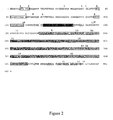
- the amino acid sequences of the inserted Rubella E1 antigens are shown in the sequence listing of the present invention.
- E1 chaperone fusion proteins were purified and refolded essentially according to identical protocols.
- E . coli BL21 (DE3) cells harboring the expression plasmid were grown in LB medium plus kanamycin (30 ⁇ g/ml) to an OD 600 of 1, and cytosolic overexpression was induced by adding Isopropyl-ß-D-Thiogalactosid (IPTG) to a final concentration of 1 mM at a growth temperature of 37°C. 4 hours after induction, cells were harvested by centrifugation (20 min at 5000 x g), frozen and stored at -20°C.
- IPTG Isopropyl-ß-D-Thiogalactosid
- the frozen pellet was resuspended in 100 mM sodium phosphate pH 8.0, 7.0 M GuHCl, 10 mM imidazole at room temperature and the resulting suspension was stirred to complete cell lysis for two hours. After centrifugation and filtration, the lysate was applied onto a Ni-NTA (nickel-nitrilotriacetate) column pre-equilibrated in the aforementioned lysis buffer. In order to prevent premature disulfide bridging and disulfide shuffling, 5 mM TCEP was included in the washing buffer as a reducing agent which is compatible with metal chelate columns.
- Ni-NTA nickel-nitrilotriacetate
- the chaotropic lysis buffer was displaced by 50 mM sodium phosphate pH 7.8, 100 mM sodium chloride, 5 mM TCEP in order to induce the conformational refolding of the matrix bound protein (at least 10 column volumes of refolding buffer were applied to make sure there was no residual GuHCl in chaotropic concentrations).
- the oxidative folding i.e . the oxidative bridging of the cysteine residues
- the formation of disulfide bridges within the matrix-bound fusion protein is a very fast process.
- the imidazole concentration was raised to 55 mM in order to remove a contaminant protein with an apparent molecular weight of ⁇ 50 kDa.
- the native fusion protein was then eluted by applying an imidazole gradient from 55 mM to 500 mM in 50 mM sodium phosphate pH 7.8, 100 mM sodium chloride. Protein containing fractions were assessed for purity (> 95 % as judged by SDS-PAGE) and pooled. Finally, the protein was subjected to size exclusion chromatography and the apparent dimer fraction was pooled, concentrated and assessed for its spectroscopic properties.
- the lysine e-amino groups of the recombinant Rubella ectodomains were modified at protein concentrations of ⁇ 10 mg/ml with N-hydroxy-succinimide activated biotin and ruthenium labels, respectively.
- the label/protein molar ratio varied from 1: 1 to 5:1, depending on the respective fusion protein.
- the reaction buffer was 150 mM sodium phosphate (pH 8.0), 50 mM NaCl, 1 mM EDTA.
- the reaction was carried out at room temperature for 15 minutes and stopped by adding buffered L-Lysine to a final concentration of 10 mM. After the coupling reaction, unreacted free label was removed by passing the crude protein conjugate over a gel filtration column (Superdex 200 HI Load).
- the immunological reactivity of the different fusion proteins was assessed in an automated Elecsys ® 2010 analyzer (Roche Diagnostics GmbH). Measurements were carried out in the double antigen sandwich format. Thereby, the biotin-conjugate (i.e. the capture antigen) is immobilized on the surface of a streptavidin-coated magnetic bead, whereas the detection-antigen bears a complexed ruthenium cation as the signaling moiety. Signal detection in Elecsys ® 2010 is based on electrochemiluminescence.
- the chromogenic ruthenium complex is bridged to the solid phase and emits light at 620 nm after excitation at a platinum electrode.
- the signal output is in arbitrary light units. Measurements were performed with anti-Rubella IgG positive samples from sera panels of the Bavarian red cross.
- the oligomeric state, the solubility and the stability of the SS-E1 fusion protein determine its suitability for diagnostic purposes.
- cysteine-free variants of E1 N-fragments (amino acids 1-314) and C-fragments (amino acids 315-432) were cloned, expressed and purified (as fusion proteins with tandem SlyD*).
- the Rubella E1 N-fragments and C-fragments were subjected to analytical gel filtration on a Superdex 200 HR 10/30 column.
- the running buffer was 50 mM potassium phosphate pH 7.5, 100 mM KCl.
- About 200 ⁇ l of the SS-E1 solution (protein concentration ⁇ 1.0 mg/ml) were applied onto the SEC column, and elution was monitored via absorption at 280 nm.
- the E1 N-fragments 1-55, 1-104, 1-133 and 1-142 all eluted in the separation range of the Superdex 200 column, as well as the E1 C-fragments 169-432, 201-432, 260-432 and 315-432. All the SlyD*-SlyD*-E1 variants eluted at the position of about twice the molecular size expected, suggesting apparent dimers.
- the immunological reactivity of the different fusion proteins was assessed in an automated Elecsys ® 2010 analyzer (Roche Diagnostics GmbH). Measurements were carried out in the double antigen sandwich format. Thereby, the biotin-conjugate (i.e. the capture antigen) is immobilized on the surface of a streptavidin-coated magnetic bead, whereas the detection-antigen bears a complexed ruthenium cation as the signaling moiety.
- Signal detection in Elecsys® 2010 is based on electrochemiluminescence. In the presence of a specific immunoglobulin analyte, the chromogenic ruthenium complex is bridged to the solid phase and emits light at 620 nm after excitation at a platinum electrode.
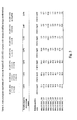
- the signal output is in arbitrary light units. Measuring was performed with anti-Rubella IgG positive samples from sera panels of the Bavarian Red Cross. The results are shown in Table 1. Table 1: Detection of anti-Rubella IgG antibodies in human sera by using Rubella SS-E1(aa201-432) Antigen bearing single disulfides or no disulfide C13-C14 C17-C18 C19-C20 no disulfide Rubella negative sera average counts 2,076 1,453 2,487 2,076 Rubella positive sera relative signal relative signal relative signal relative signal BRK 01/2003_115 23.55 34.88 17.94 18.17 BRK 01/2003_116 17.09 7.96 5.83 4.37 BRK 01/2003_119 13.47 1.89 5.92 0.94 BRK 01/2003_123 10.30 5.72 6.66 4.10 BRK 01/2003_127 11.82 3.37 2.93 1.82 BRK 01/2003_130 12.81 2.37 1.58 1.46 BRK 01/2003_157 3.09 3.
- the immunoassays were performed by using an Elecsys ® 2010 analyzer as described in Example 6.
- the relative signals are normalized relative to the average value obtained for 7 Rubella-negative samples.
- the Rubella-positive sera were purchased from the Bavarian Red Cross, Germany, the Rubella-negative controls were purchased from Trina International Bioreactives AG, Switzerland. All E1 variants were soluble SlyD*-SlyD* fusion proteins, their respective disulfide bonds are indicated in the table. All sera classified as positive were confirmed as being correct.
- Table 1 the relative signal considerably increases when the Rubella E1 antigen contains a disulfide bridge whereas the signal is relatively low when the E1 antigen lacks any disulfide bridge.
- the immunoassays were performed by using an Elecsys ® 2010 analyzer as described in Examples 6 and 7.
- the relative signals are normalized relative to the average value obtained for 7 Rubella-negative samples.
- the Rubella-positive sera were purchased from the Bavarian Red Cross, Germany, the Rubella-negative controls were purchased from Trina International Bioreactives AG, Switzerland. All E1 variants were soluble SlyD*-SlyD* fusion proteins, their respective disulfide bond combinations are indicated in the table. All sera classified as positive were confirmed as being correct.
- Table 4 shows that the restoration of the single disulfide bond Cys 176-Cys 185 (C11-C12) within the E1 169-432 fragment does barely alter the immunological activity.
- the C11-C 12 disulfide bridge significantly increases the signal.
- the respective double disulfide construct exhibits an immunoreactivity that clearly exceeds the sum of the reactivities of the single disulfide constructs, which is indicative of a cooperative mode of action. Best results are obtained by combining the disulfide bridges C11-C 12 and C13-C14, followed by the combination of the disulfide bridge C11-C12 with C19-C20 and C11-C12 with C17-C18.
- the combination of disulfide bridges C13-C14 with C19-C20 within the Rubella E1 antigen leads to an excellent immunological reactivity as reflected in high relative signals.
- a significant increase in the signal is also observed when the apparently inert single disulfide bridge C11-C 12 is added to the double disulfide combination C17-C18/C19-C20 to yield the triple disulfide construct C11-C12/C17-C18/C19-C20.
- the immunoreactivity of this triple disulfide E1 construct exceeds the added up immunoreactivities of the single (C11-C12) and the double disulfide construct (C17-C18/C19-C20), again indicative of a cooperative mode of action.
- the disulfide bridge Cys 176-Cys 185 when taken alone, does not conspicuously contribute to the immunological reactivity (i.e. antigenicity) of the Rubella E1 antigen.
- the seemingly inert single disulfide bridge Cys 176-Cys 185 (C11-C12) is combined with at least one of the other disulfide bridges, this combination surprisingly leads to a cooperatively improved antigen with excellent immunological reactivity.
- E1 variants bearing the C11-C12 disulfide bridge in combination with either the disulfide bridge C13-C 14 or C17-C 18 or C19-C20 or bearing the C11-C12 disulfide bridge in combination with both the disulfide bridge C17-C18 and C19-C20 are excellent tools for the detection of anti-Rubella E 1 antibodies in human sera.
Landscapes
- Health & Medical Sciences (AREA)
- Life Sciences & Earth Sciences (AREA)
- Chemical & Material Sciences (AREA)
- Molecular Biology (AREA)
- Virology (AREA)
- Immunology (AREA)
- Engineering & Computer Science (AREA)
- Biomedical Technology (AREA)
- Biochemistry (AREA)
- Hematology (AREA)
- Medicinal Chemistry (AREA)
- General Health & Medical Sciences (AREA)
- Urology & Nephrology (AREA)
- Organic Chemistry (AREA)
- Food Science & Technology (AREA)
- Pathology (AREA)
- Physics & Mathematics (AREA)
- Analytical Chemistry (AREA)
- Cell Biology (AREA)
- Biotechnology (AREA)
- General Physics & Mathematics (AREA)
- Microbiology (AREA)
- Gastroenterology & Hepatology (AREA)
- Biophysics (AREA)
- Genetics & Genomics (AREA)
- Proteomics, Peptides & Aminoacids (AREA)
- Tropical Medicine & Parasitology (AREA)
- Peptides Or Proteins (AREA)
- Preparation Of Compounds By Using Micro-Organisms (AREA)
- Micro-Organisms Or Cultivation Processes Thereof (AREA)
Priority Applications (1)
| Application Number | Priority Date | Filing Date | Title |
|---|---|---|---|
| EP08860033.3A EP2222694B1 (en) | 2007-12-13 | 2008-12-11 | Novel rubella e1 envelope protein variants and their use in the detection of anti-rubella antibodies |
Applications Claiming Priority (3)
| Application Number | Priority Date | Filing Date | Title |
|---|---|---|---|
| EP07024190 | 2007-12-13 | ||
| PCT/EP2008/010532 WO2009074318A2 (en) | 2007-12-13 | 2008-12-11 | Novel rubella e1 envelope protein variants and their use in the detection of anti-rubella antibodies |
| EP08860033.3A EP2222694B1 (en) | 2007-12-13 | 2008-12-11 | Novel rubella e1 envelope protein variants and their use in the detection of anti-rubella antibodies |
Publications (2)
| Publication Number | Publication Date |
|---|---|
| EP2222694A2 EP2222694A2 (en) | 2010-09-01 |
| EP2222694B1 true EP2222694B1 (en) | 2014-01-15 |
Family
ID=40671057
Family Applications (1)
| Application Number | Title | Priority Date | Filing Date |
|---|---|---|---|
| EP08860033.3A Active EP2222694B1 (en) | 2007-12-13 | 2008-12-11 | Novel rubella e1 envelope protein variants and their use in the detection of anti-rubella antibodies |
Country Status (7)
| Country | Link |
|---|---|
| US (1) | US8551696B2 (enExample) |
| EP (1) | EP2222694B1 (enExample) |
| JP (1) | JP5461423B2 (enExample) |
| CN (1) | CN101939330B (enExample) |
| CA (1) | CA2705716C (enExample) |
| ES (1) | ES2450998T3 (enExample) |
| WO (1) | WO2009074318A2 (enExample) |
Cited By (1)
| Publication number | Priority date | Publication date | Assignee | Title |
|---|---|---|---|---|
| US11780884B2 (en) | 2019-07-10 | 2023-10-10 | Judith STUERMER | Rubella virus spike construct |
Families Citing this family (8)
| Publication number | Priority date | Publication date | Assignee | Title |
|---|---|---|---|---|
| EP2706115A1 (en) * | 2012-09-06 | 2014-03-12 | Roche Diagnostics GmbH | Chaperone-chaperone fusion polypeptides for reduction of interference and stabilization of immunoassays |
| CN104755499B (zh) * | 2012-11-08 | 2020-10-02 | 霍夫曼-拉罗奇有限公司 | 结合HER3 β-发夹和HER4 β-发夹的抗HER3/HER4抗原结合蛋白 |
| JP6695812B2 (ja) * | 2014-05-14 | 2020-05-20 | エフ・ホフマン−ラ・ロシュ・アクチェンゲゼルシャフト | Her3のベータヘアピン及びher2のドメインiiに結合するher3/her2二重特異性抗体 |
| WO2017055235A1 (en) * | 2015-09-30 | 2017-04-06 | Boehringer Ingelheim Vetmedica Gmbh | Improved modular antigen transportation molecules and uses therof in animals |
| KR102943992B1 (ko) * | 2015-12-15 | 2026-03-25 | 에프. 호프만-라 로슈 아게 | 트랜스글루타미나제 인식 부위를 갖는 fkbp 도메인 |
| US12436148B2 (en) * | 2018-07-02 | 2025-10-07 | Siemens Healthcare Diagnostics Inc. | Direct immunoassay measurement of autoantibodies |
| CN115197941A (zh) * | 2021-04-08 | 2022-10-18 | 中国科学院分子细胞科学卓越创新中心 | 具有分子伴侣功能的rna及其应用 |
| CN116333164B (zh) * | 2022-12-08 | 2026-07-21 | 青岛硕景生物科技有限公司 | 一种风疹病毒特异性融合蛋白抗原、其制备方法及检测试剂盒 |
Family Cites Families (6)
| Publication number | Priority date | Publication date | Assignee | Title |
|---|---|---|---|---|
| JP2001501093A (ja) | 1996-09-26 | 2001-01-30 | メディカル リサーチ カウンシル | シャペロン断片 |
| ES2378272T3 (es) * | 1999-04-15 | 2012-04-10 | Crucell Holland B.V. | Producción de proteína recombinante en una célula humana |
| EP1103610A1 (en) * | 1999-11-26 | 2001-05-30 | Introgene B.V. | Production of vaccines from immortalised mammalian cell lines |
| ATE522603T1 (de) | 2001-06-22 | 2011-09-15 | Hoffmann La Roche | Löslicher komplex, der retrovirale oberflächen- glykoproteine und fkpa oder slyd enthält |
| US7604935B2 (en) * | 2005-10-26 | 2009-10-20 | Roche Diagnostics Operations, Inc. | Soluble rubella E1 envelope protein variants |
| EP1780282B1 (en) * | 2005-10-26 | 2010-12-08 | Roche Diagnostics GmbH | Recombinant expression of Rubella E1 envelope protein variants as chaperone fusion-proteins, and their use in the detection of anti-Rubella antibodies |
-
2008
- 2008-12-11 CN CN200880121328.1A patent/CN101939330B/zh active Active
- 2008-12-11 JP JP2010537314A patent/JP5461423B2/ja active Active
- 2008-12-11 EP EP08860033.3A patent/EP2222694B1/en active Active
- 2008-12-11 CA CA2705716A patent/CA2705716C/en active Active
- 2008-12-11 ES ES08860033.3T patent/ES2450998T3/es active Active
- 2008-12-11 WO PCT/EP2008/010532 patent/WO2009074318A2/en not_active Ceased
-
2010
- 2010-06-03 US US12/793,134 patent/US8551696B2/en active Active
Cited By (1)
| Publication number | Priority date | Publication date | Assignee | Title |
|---|---|---|---|---|
| US11780884B2 (en) | 2019-07-10 | 2023-10-10 | Judith STUERMER | Rubella virus spike construct |
Also Published As
| Publication number | Publication date |
|---|---|
| ES2450998T3 (es) | 2014-03-26 |
| CN101939330B (zh) | 2014-06-04 |
| CA2705716C (en) | 2013-03-19 |
| US20110059552A1 (en) | 2011-03-10 |
| US8551696B2 (en) | 2013-10-08 |
| WO2009074318A2 (en) | 2009-06-18 |
| HK1148026A1 (en) | 2011-08-26 |
| CN101939330A (zh) | 2011-01-05 |
| WO2009074318A3 (en) | 2009-07-30 |
| EP2222694A2 (en) | 2010-09-01 |
| JP5461423B2 (ja) | 2014-04-02 |
| JP2011505811A (ja) | 2011-03-03 |
| CA2705716A1 (en) | 2009-06-18 |
Similar Documents
| Publication | Publication Date | Title |
|---|---|---|
| US8551696B2 (en) | Rubella E1 envelope protein variants and their use in detection of anti-rubella antibodies | |
| KR100611545B1 (ko) | 레트로바이러스 표면 당단백질을 함유하는 가용성 복합체 | |
| CA2667177C (en) | Slpa as a tool for recombinant protein and enzyme technology | |
| AU2013211242B2 (en) | Soluble immunoreactive Treponema pallidum TpN47 antigens | |
| US20200033342A1 (en) | Soluble and immunoreactive variants of htlv capsid antigen p24 | |
| EP1780282B1 (en) | Recombinant expression of Rubella E1 envelope protein variants as chaperone fusion-proteins, and their use in the detection of anti-Rubella antibodies | |
| US7604935B2 (en) | Soluble rubella E1 envelope protein variants | |
| JP7818525B2 (ja) | 抗体-免疫アッセイでの使用のためのコロナヌクレオカプシド抗原 | |
| HK1148026B (en) | Novel rubella e1 envelope protein variants and their use in the detection of antirubella antibodies | |
| CA3136756A1 (en) | Rubella virus spike construct |
Legal Events
| Date | Code | Title | Description |
|---|---|---|---|
| PUAI | Public reference made under article 153(3) epc to a published international application that has entered the european phase |
Free format text: ORIGINAL CODE: 0009012 |
|
| 17P | Request for examination filed |
Effective date: 20100713 |
|
| AK | Designated contracting states |
Kind code of ref document: A2 Designated state(s): AT BE BG CH CY CZ DE DK EE ES FI FR GB GR HR HU IE IS IT LI LT LU LV MC MT NL NO PL PT RO SE SI SK TR |
|
| AX | Request for extension of the european patent |
Extension state: AL BA MK RS |
|
| RAP1 | Party data changed (applicant data changed or rights of an application transferred) |
Owner name: F.HOFFMANN-LA ROCHE AG Owner name: ROCHE DIAGNOSTICS GMBH |
|
| 17Q | First examination report despatched |
Effective date: 20101208 |
|
| DAX | Request for extension of the european patent (deleted) | ||
| REG | Reference to a national code |
Ref country code: DE Ref legal event code: R079 Ref document number: 602008029999 Country of ref document: DE Free format text: PREVIOUS MAIN CLASS: C07K0014190000 Ipc: G01N0033569000 |
|
| GRAP | Despatch of communication of intention to grant a patent |
Free format text: ORIGINAL CODE: EPIDOSNIGR1 |
|
| RIC1 | Information provided on ipc code assigned before grant |
Ipc: C07K 14/005 20060101ALI20130301BHEP Ipc: G01N 33/569 20060101AFI20130301BHEP |
|
| INTG | Intention to grant announced |
Effective date: 20130408 |
|
| RIN1 | Information on inventor provided before grant (corrected) |
Inventor name: BOLLHAGEN, RALF Inventor name: SCHAARSCHMIDT, PETER Inventor name: ENGEL, ALFRED Inventor name: ZARNT, TORALF Inventor name: SCHOLZ, CHRISTIAN Inventor name: FAATZ, ELKE Inventor name: UPMEIER, BARBARA |
|
| GRAS | Grant fee paid |
Free format text: ORIGINAL CODE: EPIDOSNIGR3 |
|
| GRAA | (expected) grant |
Free format text: ORIGINAL CODE: 0009210 |
|
| AK | Designated contracting states |
Kind code of ref document: B1 Designated state(s): AT BE BG CH CY CZ DE DK EE ES FI FR GB GR HR HU IE IS IT LI LT LU LV MC MT NL NO PL PT RO SE SI SK TR |
|
| REG | Reference to a national code |
Ref country code: GB Ref legal event code: FG4D Ref country code: CH Ref legal event code: EP |
|
| REG | Reference to a national code |
Ref country code: AT Ref legal event code: REF Ref document number: 650056 Country of ref document: AT Kind code of ref document: T Effective date: 20140215 |
|
| REG | Reference to a national code |
Ref country code: IE Ref legal event code: FG4D |
|
| REG | Reference to a national code |
Ref country code: DE Ref legal event code: R096 Ref document number: 602008029999 Country of ref document: DE Effective date: 20140227 |
|
| REG | Reference to a national code |
Ref country code: ES Ref legal event code: FG2A Ref document number: 2450998 Country of ref document: ES Kind code of ref document: T3 Effective date: 20140326 |
|
| REG | Reference to a national code |
Ref country code: NL Ref legal event code: VDEP Effective date: 20140115 |
|
| REG | Reference to a national code |
Ref country code: LT Ref legal event code: MG4D |
|
| PG25 | Lapsed in a contracting state [announced via postgrant information from national office to epo] |
Ref country code: LT Free format text: LAPSE BECAUSE OF FAILURE TO SUBMIT A TRANSLATION OF THE DESCRIPTION OR TO PAY THE FEE WITHIN THE PRESCRIBED TIME-LIMIT Effective date: 20140115 Ref country code: IS Free format text: LAPSE BECAUSE OF FAILURE TO SUBMIT A TRANSLATION OF THE DESCRIPTION OR TO PAY THE FEE WITHIN THE PRESCRIBED TIME-LIMIT Effective date: 20140515 Ref country code: NO Free format text: LAPSE BECAUSE OF FAILURE TO SUBMIT A TRANSLATION OF THE DESCRIPTION OR TO PAY THE FEE WITHIN THE PRESCRIBED TIME-LIMIT Effective date: 20140415 |
|
| PG25 | Lapsed in a contracting state [announced via postgrant information from national office to epo] |
Ref country code: NL Free format text: LAPSE BECAUSE OF FAILURE TO SUBMIT A TRANSLATION OF THE DESCRIPTION OR TO PAY THE FEE WITHIN THE PRESCRIBED TIME-LIMIT Effective date: 20140115 Ref country code: FI Free format text: LAPSE BECAUSE OF FAILURE TO SUBMIT A TRANSLATION OF THE DESCRIPTION OR TO PAY THE FEE WITHIN THE PRESCRIBED TIME-LIMIT Effective date: 20140115 Ref country code: CY Free format text: LAPSE BECAUSE OF FAILURE TO SUBMIT A TRANSLATION OF THE DESCRIPTION OR TO PAY THE FEE WITHIN THE PRESCRIBED TIME-LIMIT Effective date: 20140115 Ref country code: SE Free format text: LAPSE BECAUSE OF FAILURE TO SUBMIT A TRANSLATION OF THE DESCRIPTION OR TO PAY THE FEE WITHIN THE PRESCRIBED TIME-LIMIT Effective date: 20140115 Ref country code: PT Free format text: LAPSE BECAUSE OF FAILURE TO SUBMIT A TRANSLATION OF THE DESCRIPTION OR TO PAY THE FEE WITHIN THE PRESCRIBED TIME-LIMIT Effective date: 20140515 |
|
| PG25 | Lapsed in a contracting state [announced via postgrant information from national office to epo] |
Ref country code: LV Free format text: LAPSE BECAUSE OF FAILURE TO SUBMIT A TRANSLATION OF THE DESCRIPTION OR TO PAY THE FEE WITHIN THE PRESCRIBED TIME-LIMIT Effective date: 20140115 Ref country code: BE Free format text: LAPSE BECAUSE OF FAILURE TO SUBMIT A TRANSLATION OF THE DESCRIPTION OR TO PAY THE FEE WITHIN THE PRESCRIBED TIME-LIMIT Effective date: 20140115 Ref country code: HR Free format text: LAPSE BECAUSE OF FAILURE TO SUBMIT A TRANSLATION OF THE DESCRIPTION OR TO PAY THE FEE WITHIN THE PRESCRIBED TIME-LIMIT Effective date: 20140115 |
|
| REG | Reference to a national code |
Ref country code: DE Ref legal event code: R097 Ref document number: 602008029999 Country of ref document: DE |
|
| PG25 | Lapsed in a contracting state [announced via postgrant information from national office to epo] |
Ref country code: RO Free format text: LAPSE BECAUSE OF FAILURE TO SUBMIT A TRANSLATION OF THE DESCRIPTION OR TO PAY THE FEE WITHIN THE PRESCRIBED TIME-LIMIT Effective date: 20140115 Ref country code: EE Free format text: LAPSE BECAUSE OF FAILURE TO SUBMIT A TRANSLATION OF THE DESCRIPTION OR TO PAY THE FEE WITHIN THE PRESCRIBED TIME-LIMIT Effective date: 20140115 Ref country code: CZ Free format text: LAPSE BECAUSE OF FAILURE TO SUBMIT A TRANSLATION OF THE DESCRIPTION OR TO PAY THE FEE WITHIN THE PRESCRIBED TIME-LIMIT Effective date: 20140115 Ref country code: DK Free format text: LAPSE BECAUSE OF FAILURE TO SUBMIT A TRANSLATION OF THE DESCRIPTION OR TO PAY THE FEE WITHIN THE PRESCRIBED TIME-LIMIT Effective date: 20140115 |
|
| PLBE | No opposition filed within time limit |
Free format text: ORIGINAL CODE: 0009261 |
|
| STAA | Information on the status of an ep patent application or granted ep patent |
Free format text: STATUS: NO OPPOSITION FILED WITHIN TIME LIMIT |
|
| PG25 | Lapsed in a contracting state [announced via postgrant information from national office to epo] |
Ref country code: SK Free format text: LAPSE BECAUSE OF FAILURE TO SUBMIT A TRANSLATION OF THE DESCRIPTION OR TO PAY THE FEE WITHIN THE PRESCRIBED TIME-LIMIT Effective date: 20140115 Ref country code: PL Free format text: LAPSE BECAUSE OF FAILURE TO SUBMIT A TRANSLATION OF THE DESCRIPTION OR TO PAY THE FEE WITHIN THE PRESCRIBED TIME-LIMIT Effective date: 20140115 |
|
| 26N | No opposition filed |
Effective date: 20141016 |
|
| REG | Reference to a national code |
Ref country code: DE Ref legal event code: R097 Ref document number: 602008029999 Country of ref document: DE Effective date: 20141016 |
|
| PG25 | Lapsed in a contracting state [announced via postgrant information from national office to epo] |
Ref country code: SI Free format text: LAPSE BECAUSE OF FAILURE TO SUBMIT A TRANSLATION OF THE DESCRIPTION OR TO PAY THE FEE WITHIN THE PRESCRIBED TIME-LIMIT Effective date: 20140115 |
|
| PG25 | Lapsed in a contracting state [announced via postgrant information from national office to epo] |
Ref country code: LU Free format text: LAPSE BECAUSE OF FAILURE TO SUBMIT A TRANSLATION OF THE DESCRIPTION OR TO PAY THE FEE WITHIN THE PRESCRIBED TIME-LIMIT Effective date: 20141211 |
|
| REG | Reference to a national code |
Ref country code: IE Ref legal event code: MM4A |
|
| PG25 | Lapsed in a contracting state [announced via postgrant information from national office to epo] |
Ref country code: IE Free format text: LAPSE BECAUSE OF NON-PAYMENT OF DUE FEES Effective date: 20141211 |
|
| REG | Reference to a national code |
Ref country code: FR Ref legal event code: PLFP Year of fee payment: 8 |
|
| PG25 | Lapsed in a contracting state [announced via postgrant information from national office to epo] |
Ref country code: BG Free format text: LAPSE BECAUSE OF FAILURE TO SUBMIT A TRANSLATION OF THE DESCRIPTION OR TO PAY THE FEE WITHIN THE PRESCRIBED TIME-LIMIT Effective date: 20140115 Ref country code: MC Free format text: LAPSE BECAUSE OF FAILURE TO SUBMIT A TRANSLATION OF THE DESCRIPTION OR TO PAY THE FEE WITHIN THE PRESCRIBED TIME-LIMIT Effective date: 20140115 |
|
| PG25 | Lapsed in a contracting state [announced via postgrant information from national office to epo] |
Ref country code: GR Free format text: LAPSE BECAUSE OF FAILURE TO SUBMIT A TRANSLATION OF THE DESCRIPTION OR TO PAY THE FEE WITHIN THE PRESCRIBED TIME-LIMIT Effective date: 20140416 |
|
| PG25 | Lapsed in a contracting state [announced via postgrant information from national office to epo] |
Ref country code: HU Free format text: LAPSE BECAUSE OF FAILURE TO SUBMIT A TRANSLATION OF THE DESCRIPTION OR TO PAY THE FEE WITHIN THE PRESCRIBED TIME-LIMIT; INVALID AB INITIO Effective date: 20081211 Ref country code: TR Free format text: LAPSE BECAUSE OF FAILURE TO SUBMIT A TRANSLATION OF THE DESCRIPTION OR TO PAY THE FEE WITHIN THE PRESCRIBED TIME-LIMIT Effective date: 20140115 Ref country code: MT Free format text: LAPSE BECAUSE OF FAILURE TO SUBMIT A TRANSLATION OF THE DESCRIPTION OR TO PAY THE FEE WITHIN THE PRESCRIBED TIME-LIMIT Effective date: 20140115 |
|
| REG | Reference to a national code |
Ref country code: FR Ref legal event code: PLFP Year of fee payment: 9 |
|
| REG | Reference to a national code |
Ref country code: FR Ref legal event code: PLFP Year of fee payment: 10 |
|
| REG | Reference to a national code |
Ref country code: CH Ref legal event code: U11 Free format text: ST27 STATUS EVENT CODE: U-0-0-U10-U11 (AS PROVIDED BY THE NATIONAL OFFICE) Effective date: 20260101 |
|
| PGFP | Annual fee paid to national office [announced via postgrant information from national office to epo] |
Ref country code: DE Payment date: 20251126 Year of fee payment: 18 |
|
| PGFP | Annual fee paid to national office [announced via postgrant information from national office to epo] |
Ref country code: GB Payment date: 20251120 Year of fee payment: 18 |
|
| PGFP | Annual fee paid to national office [announced via postgrant information from national office to epo] |
Ref country code: AT Payment date: 20251121 Year of fee payment: 18 |
|
| PGFP | Annual fee paid to national office [announced via postgrant information from national office to epo] |
Ref country code: IT Payment date: 20251119 Year of fee payment: 18 |
|
| PGFP | Annual fee paid to national office [announced via postgrant information from national office to epo] |
Ref country code: FR Payment date: 20251119 Year of fee payment: 18 |
|
| PGFP | Annual fee paid to national office [announced via postgrant information from national office to epo] |
Ref country code: ES Payment date: 20260102 Year of fee payment: 18 |
|
| PGFP | Annual fee paid to national office [announced via postgrant information from national office to epo] |
Ref country code: CH Payment date: 20260101 Year of fee payment: 18 |