EP2210940B2 - Verfahren zur hochkonzentrierten proteinsekretion und -produktion - Google Patents
Verfahren zur hochkonzentrierten proteinsekretion und -produktion Download PDFInfo
- Publication number
- EP2210940B2 EP2210940B2 EP08845087.9A EP08845087A EP2210940B2 EP 2210940 B2 EP2210940 B2 EP 2210940B2 EP 08845087 A EP08845087 A EP 08845087A EP 2210940 B2 EP2210940 B2 EP 2210940B2
- Authority
- EP
- European Patent Office
- Prior art keywords
- gene
- strain
- seq
- protein
- antibody
- Prior art date
- Legal status (The legal status is an assumption and is not a legal conclusion. Google has not performed a legal analysis and makes no representation as to the accuracy of the status listed.)
- Active
Links
- PQVJGXHFMPPTLO-UHFFFAOYSA-N C(C1)C2=C1CC#CC2 Chemical compound C(C1)C2=C1CC#CC2 PQVJGXHFMPPTLO-UHFFFAOYSA-N 0.000 description 1
Images









Classifications
-
- C—CHEMISTRY; METALLURGY
- C12—BIOCHEMISTRY; BEER; SPIRITS; WINE; VINEGAR; MICROBIOLOGY; ENZYMOLOGY; MUTATION OR GENETIC ENGINEERING
- C12P—FERMENTATION OR ENZYME-USING PROCESSES TO SYNTHESISE A DESIRED CHEMICAL COMPOUND OR COMPOSITION OR TO SEPARATE OPTICAL ISOMERS FROM A RACEMIC MIXTURE
- C12P21/00—Preparation of peptides or proteins
- C12P21/02—Preparation of peptides or proteins having a known sequence of two or more amino acids, e.g. glutathione
-
- C—CHEMISTRY; METALLURGY
- C07—ORGANIC CHEMISTRY
- C07K—PEPTIDES
- C07K14/00—Peptides having more than 20 amino acids; Gastrins; Somatostatins; Melanotropins; Derivatives thereof
- C07K14/37—Peptides having more than 20 amino acids; Gastrins; Somatostatins; Melanotropins; Derivatives thereof from fungi
- C07K14/39—Peptides having more than 20 amino acids; Gastrins; Somatostatins; Melanotropins; Derivatives thereof from fungi from yeasts
-
- C—CHEMISTRY; METALLURGY
- C07—ORGANIC CHEMISTRY
- C07K—PEPTIDES
- C07K14/00—Peptides having more than 20 amino acids; Gastrins; Somatostatins; Melanotropins; Derivatives thereof
- C07K14/37—Peptides having more than 20 amino acids; Gastrins; Somatostatins; Melanotropins; Derivatives thereof from fungi
- C07K14/39—Peptides having more than 20 amino acids; Gastrins; Somatostatins; Melanotropins; Derivatives thereof from fungi from yeasts
- C07K14/395—Peptides having more than 20 amino acids; Gastrins; Somatostatins; Melanotropins; Derivatives thereof from fungi from yeasts from Saccharomyces
-
- C—CHEMISTRY; METALLURGY
- C07—ORGANIC CHEMISTRY
- C07K—PEPTIDES
- C07K14/00—Peptides having more than 20 amino acids; Gastrins; Somatostatins; Melanotropins; Derivatives thereof
- C07K14/435—Peptides having more than 20 amino acids; Gastrins; Somatostatins; Melanotropins; Derivatives thereof from animals; from humans
- C07K14/46—Peptides having more than 20 amino acids; Gastrins; Somatostatins; Melanotropins; Derivatives thereof from animals; from humans from vertebrates
- C07K14/47—Peptides having more than 20 amino acids; Gastrins; Somatostatins; Melanotropins; Derivatives thereof from animals; from humans from vertebrates from mammals
-
- C—CHEMISTRY; METALLURGY
- C07—ORGANIC CHEMISTRY
- C07K—PEPTIDES
- C07K16/00—Immunoglobulins [IG], e.g. monoclonal or polyclonal antibodies
-
- C—CHEMISTRY; METALLURGY
- C12—BIOCHEMISTRY; BEER; SPIRITS; WINE; VINEGAR; MICROBIOLOGY; ENZYMOLOGY; MUTATION OR GENETIC ENGINEERING
- C12N—MICROORGANISMS OR ENZYMES; COMPOSITIONS THEREOF; PROPAGATING, PRESERVING, OR MAINTAINING MICROORGANISMS; MUTATION OR GENETIC ENGINEERING; CULTURE MEDIA
- C12N15/00—Mutation or genetic engineering; DNA or RNA concerning genetic engineering, vectors, e.g. plasmids, or their isolation, preparation or purification; Use of hosts therefor
- C12N15/09—Recombinant DNA-technology
- C12N15/63—Introduction of foreign genetic material using vectors; Vectors; Use of hosts therefor; Regulation of expression
- C12N15/67—General methods for enhancing the expression
-
- C—CHEMISTRY; METALLURGY
- C12—BIOCHEMISTRY; BEER; SPIRITS; WINE; VINEGAR; MICROBIOLOGY; ENZYMOLOGY; MUTATION OR GENETIC ENGINEERING
- C12N—MICROORGANISMS OR ENZYMES; COMPOSITIONS THEREOF; PROPAGATING, PRESERVING, OR MAINTAINING MICROORGANISMS; MUTATION OR GENETIC ENGINEERING; CULTURE MEDIA
- C12N9/00—Enzymes; Proenzymes; Compositions thereof; Processes for preparing, activating, inhibiting, separating or purifying enzymes
- C12N9/0004—Oxidoreductases (1.)
- C12N9/0051—Oxidoreductases (1.) acting on a sulfur group of donors (1.8)
-
- C—CHEMISTRY; METALLURGY
- C12—BIOCHEMISTRY; BEER; SPIRITS; WINE; VINEGAR; MICROBIOLOGY; ENZYMOLOGY; MUTATION OR GENETIC ENGINEERING
- C12N—MICROORGANISMS OR ENZYMES; COMPOSITIONS THEREOF; PROPAGATING, PRESERVING, OR MAINTAINING MICROORGANISMS; MUTATION OR GENETIC ENGINEERING; CULTURE MEDIA
- C12N9/00—Enzymes; Proenzymes; Compositions thereof; Processes for preparing, activating, inhibiting, separating or purifying enzymes
- C12N9/10—Transferases (2.)
- C12N9/1048—Glycosyltransferases (2.4)
-
- C—CHEMISTRY; METALLURGY
- C12—BIOCHEMISTRY; BEER; SPIRITS; WINE; VINEGAR; MICROBIOLOGY; ENZYMOLOGY; MUTATION OR GENETIC ENGINEERING
- C12N—MICROORGANISMS OR ENZYMES; COMPOSITIONS THEREOF; PROPAGATING, PRESERVING, OR MAINTAINING MICROORGANISMS; MUTATION OR GENETIC ENGINEERING; CULTURE MEDIA
- C12N9/00—Enzymes; Proenzymes; Compositions thereof; Processes for preparing, activating, inhibiting, separating or purifying enzymes
- C12N9/10—Transferases (2.)
- C12N9/1048—Glycosyltransferases (2.4)
- C12N9/1051—Hexosyltransferases (2.4.1)
-
- C—CHEMISTRY; METALLURGY
- C12—BIOCHEMISTRY; BEER; SPIRITS; WINE; VINEGAR; MICROBIOLOGY; ENZYMOLOGY; MUTATION OR GENETIC ENGINEERING
- C12N—MICROORGANISMS OR ENZYMES; COMPOSITIONS THEREOF; PROPAGATING, PRESERVING, OR MAINTAINING MICROORGANISMS; MUTATION OR GENETIC ENGINEERING; CULTURE MEDIA
- C12N9/00—Enzymes; Proenzymes; Compositions thereof; Processes for preparing, activating, inhibiting, separating or purifying enzymes
- C12N9/14—Hydrolases (3)
-
- C—CHEMISTRY; METALLURGY
- C12—BIOCHEMISTRY; BEER; SPIRITS; WINE; VINEGAR; MICROBIOLOGY; ENZYMOLOGY; MUTATION OR GENETIC ENGINEERING
- C12N—MICROORGANISMS OR ENZYMES; COMPOSITIONS THEREOF; PROPAGATING, PRESERVING, OR MAINTAINING MICROORGANISMS; MUTATION OR GENETIC ENGINEERING; CULTURE MEDIA
- C12N9/00—Enzymes; Proenzymes; Compositions thereof; Processes for preparing, activating, inhibiting, separating or purifying enzymes
- C12N9/90—Isomerases (5.)
Definitions
- the present invention relates to a method for high-level secretory production of a protein, mainly in yeast.
- SRPs signal recognition particles
- the secretory proteins When secretory proteins are expressed, signal sequences thereof are recognized by signal recognition particles (SRPs), and the secretory proteins then pass through the translocon and enter into the endoplasmic reticulum.
- SRPs signal recognition particles
- the higher-order structures thereof When secretory proteins pass through the translocon, the higher-order structures thereof are loosened, and the proteins are folded in the endoplasmic reticulum (ER). Protein folding can spontaneously occur, and various molecular chaperones assist such folding.
- a native conformation formed in the endoplasmic reticulum is critical for secretion, and misfolded proteins cannot enter the secretory pathway located downstream.
- proteins of having abnormal higher-order structures are disadvantageously aggregated therein.
- molecular chaperones that loosen the aggregated proteins for the purpose of folding are known, as well as molecular chaperones that assist protein folding in the endoplasmic reticulum.
- HSP104 can perform a reaction that cannot be performed with the aid of other chaperones that cooperate with HSP70 and solubilizes proteins from the aggregates ( Glover JR, Lindquist S, Hsp104, Hsp70, and Hsp40: A novel chaperone system that rescues previously aggregated proteins, Cell, 1998, 94:73-82 ).
- antibody molecules form aggregates of a proper conformation (H2L2) through the formation of a disulfide bond between the antibody heavy chain and the antibody light chain or between antibody heavy chains and forming an intramolecular disulfide bond of the antibody heavy chain and the antibody light chain.
- H2L2 proper conformation
- introduction of a disulfide bond via protein oxidative folding is carried out by the oxidative protein disulfide isomerase (PDI) in the endoplasmic reticulum ( Benjamin P. Tu and Jonathan S. Weissman, Oxidative protein folding in eukaryotes: Mechanisms and consequences, J. Cell Biol., 2004, 164: 341-346 ).
- PDI oxidative protein disulfide isomerase
- PDI that is reduced via oxidization of substrate proteins is reoxidized by oxidative ERO1 localized in the vicinity of the membrane ( Mezghrani, A., Fassio, A., Benham, A., Simmen, T., Braakman, I., and Sitia, R., Manipulation of oxidative protein folding and PDI redox state in mammalian cells, EMBO. J., 2001, 20: 6288-6296 and Frand, A. R. and C. A. Kaiser, Erolp oxidizes protein disulfide isomerase in a pathway for disulfide bond formation in the endoplasmic reticulum, Mol. Cell, 1999, 4: 469-477 ).
- PDI families i.e., PDI1, EUG1, MPD1, MPD2, and EPS1 ( Per Norgaard, Vibeke Westphal, Christine Tachibana, Lene Alsoe, Bjorn Holst, Jakob R. Winther, Functional Differences in Yeast Protein Disulfide Isomerases, J. Cell Biology, 2001, 152 (3): 553-562 ).
- PDI families those that are confirmed to form an intramolecular disulfide bond with ERO1 are limited to PDI1 and MPD2.
- BiP/Kar2 which functions in cooperation with PDI ( Marcus Mayer, Ursula Kies, Robert Kammermeier, and Johannes Buchner, BiP and PDI Cooperate in the Oxidative Folding of Antibodies in Vitro, J. Biol. Chem., 2000, 275 (38): 29421-29425 ).
- BiP/Kar2 is also associated with induction by active HAC1 of various genes associated with the aforementioned UPR. Active HAC1 is activated by splicing of HAC1 by the IRE1 transmembrane kinase/nuclease.
- IRE1 to which BiP/Kar2 has bound is dissociated when BiP/Kar2 acts on a protein having an abnormal structure in the endoplasmic reticulum, it exhibits nuclease activity through the formation of a dimmer, and it produces active HAC1 by splicing HAC1 ( Cox JS., Shamu CE., Walter P., Transcriptional induction of genes encoding endoplasmic reticulum resident proteins requires a transmembrane protein kinase, Cell, 1993, 73: 1197-1206 and Sidrauski C.
- the transmembrane kinase Ire1p is a site-specific endonuclease that initiates mRNA splicing in the unfolded protein response, Cell, 1997, 90 (6): 1031-1039 ).
- Bip/Kar2 is associated with protein folding in the endoplasmic reticulum in cooperation with SCJ1 located in the endoplasmic reticulum ( Susana. Silberstein, Gabriel Schlenstedt, Pam A. Silver, and Reid Gilmore, A Role for the DnaJ Homologue Scj1p in Protein Folding in the Yeast Endoplasmic Reticulum, J. Cell Biol., 1998, 143 (4): 921-933 ).
- PDI overexpression allowed retention of TNFR:Fc (i.e., proteins rich in disulfide bonds) in the cells, but IL-15 was not retained in the cells ( Davis R., Schooley K., Rasmussen B., Thomas J., Reddy P., Effect of PDI overexpression on recombinant protein secretion in CHO cells. Biotechnol. Prog., 2000, 16: 736-743 ). This suggests that PDI overexpression disadvantageously results in a decrease in the amount of secretory production in CHO cells.
- US20060148039 discloses a recombinant strain of yeast O. minuta transformed with the PDI gene from S. cerevisiae encoding the chaperone protein disulfide isomerase and the use of such expression system to improve secretion of glycoproteins containing mammalian type sugar chains like human antibodies.
- the present invention is intended to provide a means for high-level secretory production of proteins and, more particularly, proteins having complicated structures, such as antibodies, in yeast or other host cells.
- the present inventors have conducted concentrated studies in order to attain the above object. As a result, they discovered that coexpression of one or more types of molecular chaperone genes with the targets of expression (i.e., foreign protein genes) in yeast or other host cells would result in an increase in the amount of secretory production of foreign proteins. Further, they discovered that activity of protein O-mannosyltransferase (PMT) associated with O-sugar chain addition to a yeast-specific protein, which inhibits aggregation of heteromultimers such as antibodies, may be inhibited to further improve productivity by approximately 2 to 45 times. The present invention has been completed based on such findings.
- PMT protein O-mannosyltransferase
- the present disclosure includes the following.
- High-level secretory production of a protein in the present invention involves the use of a gene encoding a set of molecular chaperones (hereafter such gene is referred to as a "chaperone gene”) that functions in protein folding and inhibition of degradation or aggregation of a denatured protein in the endoplasmic reticulum.
- a gene encoding a set of molecular chaperones hereafter such gene is referred to as a "chaperone gene” that functions in protein folding and inhibition of degradation or aggregation of a denatured protein in the endoplasmic reticulum.
- one or a combination of two or more of the chaperone genes of (a) to (c) or one or a combination of two or more of the genes encoding the chaperone proteins (d) to (f) are used:
- chaperone genes examples include PDI1, MPD1, SCJ1, EUG1, ERO1, HSP104. and Kar2 genes derived from the Ogataea minuta ( O. minuta) strain, which was newly obtained in the present invention.
- the PDI1, MPD1, SCJ1, EUG1, ERO1, HSP104, and Kar2 genes derived from Ogataea minuta ( O. minuta ) each consists of a nucleotide sequence as shown in SEQ ID NOs: 1, 3, 5, 7, 9, 11, or 13, and amino acid sequences deduced based on such nucleotide sequences are as shown in SEQ ID NOs: 2, 4, 6, 8, 10, 12, or 14.
- the chaperone gene used in the present disclosure may be a gene encoding a protein consisting of an amino acid sequence derived from the amino acid sequence as shown in SEQ ID NO: 2, 4, 6, 8, 10, 12, or 14 by deletion, substitution, and/or addition of one or several amino acids, provided that such gene has activity of accelerating foreign protein secretion.
- the number of amino acids that may be deleted, substituted, and/or added is preferably 1 to several.
- the number represented by the term “several” is not particular limited. For example, such number is 20 or smaller, preferably 10 or smaller, more preferably 7 or smaller, and further preferably 5 or smaller, approximately.
- the term "mutation" used herein primarily refers to a mutation that is artificially introduced via a known method for preparing a mutant protein, and the term may refers to a mutation that is similar to one existing in nature.
- the chaperone gene used in the present disclosure may be a gene encoding a protein which consists of an amino acid sequence having at least 80% homology with the amino acid sequence as shown in SEQ ID NO: 2, 4, 6, 8, 10, 12, or 14 and has activity of accelerating foreign protein secretion.
- the term "at least 80% homology” preferably refers to at least 85% homology, more preferably at least 90% homology, and most preferably at least 95% homology.
- Protein homology search can be carried out with the use of, for example, the DNA Databank of Japan (DDBJ) via FASTA, BLAST, or other programs.
- activity of accelerating foreign protein secretion refers to activity of high-level secretion of a correctly folded foreign protein in a host cell based on activity of molecular chaperones for protein folding (e.g., formation of a disulfide bond), activity of refolding a denatured protein into a normal protein, and activity of inhibiting denatured protein aggregation in the endoplasmic reticulum.
- ...has activity of accelerating foreign protein secretion refers that such activity is substantially equivalent to activity of a protein having the amino acid sequence as shown in SEQ ID NO: 2, 4, 6, 8, 10, 12, or 14.
- the chaperone gene used in the present disclosure may be a gene which hybridizes under stringent conditions to a DNA consisting of a nucleotide sequence complementary to DNA comprising the nucleotide sequence as shown in SEQ ID NO: 1, 3, 5, 7, 9, 11, or 13 and encodes a protein having activity of accelerating foreign protein secretion.
- a so-called specific hybrid is formed, but a non-specific hybrid is not formed.
- complementary strands of a highly homologous nucleic acid i.e., a nucleic acid consisting of a nucleotide sequence having at least 80%, preferably at least 85%, more preferably at least 90%, and most preferably at least 95% homology to the nucleotide sequence as shown in SEQ ID NO: 1, 3, 5, 7, 9, 11, or 13 undergo hybridization, but complementary strands of a nucleic acid having lower homology levels would not undergo hybridization.
- the sodium concentration is 15 to 750 mM, preferably 50 to 750 mM, and more preferably 300 to 750 mM
- the temperature is 25°C to 70°C, preferably 50°C to 70°C, and more preferably 55°C to 65°C
- formamide concentration is 0% to 50%, preferably 20% to 50%, and more preferably 35% to 45%.
- a filter is generally washed at sodium salt concentration of 15 to 600 mM, preferably 50 to 600mM, and more preferably 300 to 600 mM
- temperature is 54°C to 70°C, preferably 55°C to 70°C, and more preferably 60°C to 65°C, after hybridization.
- nucleotide sequence homology search can be carried out via FASTA, BLAST, or other programs.
- the amino acid mutation mentioned above can be introduced via a technique known in the art, such as the Kunkel method or the Gapped duplex method, or a technique in accordance therewith.
- mutagenesis kits utilizing site-directed mutagenesis such as a Mutant-K (Takara Bio), Mutant-G (Takara Bio), or LA PCR in vitro Mutagenesis series kit (Takara Bio), can be used.
- the chaperone gene used in the present disclosure may be a chaperone gene derived from another organism species, such as other types of yeast, mold, or a human.
- a chaperone gene derived from another organism species a chaperone gene derived from a human that corresponds to the aforementioned chaperone gene (the PDI1, MPD1, SCJ1, EUG1, ERO1, HSP104, or Kar2 gene) derived from Ogataea minuta is preferable.
- a chaperone gene other than the aforementioned chaperone genes may also be used.
- chaperone genes derived from a human include PDI (GenBank Accession No. BC010859; SEQ ID NO: 140), EROI-L ⁇ (GenBank Accession No. AF081886; SEQ ID NO: 143), ERO1-L ⁇ (GenBank Accession No. BC044573: SEQ ID NO: 146), and GRP78 (GenBank Accession No. AL354710; SEQ ID NO: 149).
- chaperone genes derived from Saccharonryces cerevisiae include PDI1 (Primary SGDID: S000000548; SEQ ID NO: 120), MPD1 (Primary SGDID: S000005814; SEQ ID NO: 122), SCJ1 (Primary SGDID: S000004827; SEQ ID NO: 124), ERO1 (Primary SGDID: S000004599; SEQ ID NO: 126), FKB2 (Primary SGDID: S000002927; SEQ ID NO: 128), JEM1 (Primary SGDID: S000003609; SEQ ID NO: 130), LHS1 (Primary SGDID: S000001556; SEQ ID NO: 132), MPD2 (Primary SGDID: S000005448; SEQ ID NO: 134), ERJ5 (Primary SGD1D: S000001937: SEQ ID NO: 136), and EUG1 (Primary SGD
- Such chaperone genes derived from other organism species may also be genes homologous thereto, provided that such genes have activity of accelerating foreign protein secretion. Extent of such sequence homology, the number of deletion, substitution, or addition of amino acids, stringent conditions, and methods for mutagenesis are as described above.
- chaperone genes derived from other organism species may be codon-modified genes that are modified so as to improve translation efficiency via substitution of a nucleotide sequence with a codon that is frequently used in a host cell (the term "codon-modified” may be occasionally referred to as “synthesized” herein).
- DNA having a modified nucleotide sequence can be artificially synthesized. In the case of a long DNA sequence, a sequence is first divided into several fragments, fragments are synthesized in advance, and the resultants are then bound to each other at the end. Thus, DNA of interest can be synthesized.
- one or more types of the aforementioned chaperone genes are used in combination.
- such genes may be derived from the same or different organism species.
- the chaperone gene that is used in the present invention is the PDI1 gene derived from O. minuta.
- the PDI1 gene derived from S. cerevisiae, the PDI gene derived from a human, the PDI gene derived from a human (a codon-modified gene), the ERO1 gene derived from O. minuta, the ERO1 gene derived from a human, and the Kar2 gene derived from O. minuta are further examples of chaperone genes.
- codon-modified gene used with regard to the chaperone gene derived from a human refers to a gene in which frequency of a codon to be used is optimized in accordance with that of O. minuta.
- target genes used for high-level secretory production of proteins and genes encoding foreign proteins that are the targets of high-level secretory production described below (hereafter these genes are referred to as "target genes") can be obtained by a general technique of preparing mRNA and synthesizing cDNA using reverse transcriptase.
- a cDNA library derived from a cell or tissue in which the target gene is expressed is subjected to screening with the use of a DNA probe synthesized from a fragments of the target gene, so as to isolate the gene of interest.
- mRNA can be prepared by a technique generally used in the art.
- the aforementioned cell or tissue may be treated with a guanidine reagent or a phenol reagent to obtain total RNA, following which poly (A)+ RNA (mRNA) is then obtained via the affinity column method using oligo (dT) cellulose columns or poly U-sepharose using sepharose 2B as a carrier or a batch technique. Further, poly (A)+ RNA may be fractionated via sucrose density gradient centrifugation or via other means.
- RNA is used as a template to synthesize single-stranded cDNA using oligo dT primers and reverse transcriptase, and double-stranded cDNA is synthesized from the single-stranded cDNA using DNA synthetase I, DNA ligase, RNaseH, and the like.
- the synthesized double-stranded cDNA is blunt-ended using T4 DNA synthetase, subjected to ligation of an adaptor (e.g., an EcoRI adaptor), phosphorylation, or the like, incorporated into a ⁇ phage, such as ⁇ gt11, and then packaged in vitro to prepare a cDNA library.
- an adaptor e.g., an EcoRI adaptor
- phosphorylation e.g., phosphorylation, or the like
- plasmid vectors may be used to prepare cDNA library.
- a strain having DNA of interest i.e., a positive clone
- genomic DNA is extracted from a cell strain of a source organism, and the target gene is selected in accordance with a common technique ( Molecular Cloning, 1989 ; Methods in enzymology 194, 1991 ).
- Genomic DNA can be extracted by the method of Cryer et al. (Methods in Cell Biology, 12, 39-44, 1975 ) or the method of P. Philippsen et al. (Methods Enzymol., 194, 169-182, 1991 ), for example.
- a yeast protoplast is prepared, and the yeast protoplast is then subjected to a conventional technique, such as known DNA extraction techniques, alcohol precipitation techniques after removal of cell residues at a high salt concentration, or alcohol precipitation techniques after phenol or chloroform extraction.
- a conventional technique such as known DNA extraction techniques, alcohol precipitation techniques after removal of cell residues at a high salt concentration, or alcohol precipitation techniques after phenol or chloroform extraction.
- the target gene can be obtained by, for example, PCR (PCR Technology, Henry A. Erlich, Stockton Press, 1989 ).
- PCR PCR Technology, Henry A. Erlich, Stockton Press, 1989
- genomic DNA is used as a template.
- the nucleotide sequence of the amplified gene is confirmed and then used.
- a fragment containing a target gene whose sequence is unknown can be obtained by (a) preparing a gene library by a conventional technique and (b) selecting a clone of interest from the resulting gene library to be amplified.
- a gene library can be prepared by obtaining chromosome DNA from a cell line of a source organism via a conventional technique, partially digesting the chromosome DNA with adequate restriction enzymes for fragmentation, ligating the resulting fragment to an adequate vector, and then introducing the vector into an adequate host cell.
- mRNA may be extracted from a cell, cDNA may be synthesized therefrom, the synthesized cDNA may be ligated to an adequate vector, and the vector may be introduced into an adequate host cell, so that a gene library can be prepared.
- a plasmid that is known as a conventional vector for gene library preparation can be used, and phages, cosmids, or other vectors can be extensively used.
- a host cell that is subjected to transformation or transduction may be selected in accordance with vector type.
- Clones that carry target gene fragments are selected from the above gene library via colony hybridization, plaque hybridization, or other means involving the use of label probes containing sequences specific to the target genes.
- the target genes can be subjected to chemical total synthesis. For example, two pairs of complementary oligonucleotides are prepared and then annealed, several annealed DNA strands are ligated with the aid of DNA ligase, or several partially complementary oligonucleotides are prepared and gaps are filled by PCR. Thus, genes can be synthesized.
- DNA sequences of genes can be determined by a conventional technique, such as the dideoxy method ( Sanger et al., Proc. Natl. Acad. Sci., U.S.A., 74, 5463-5467, 1977 ). Further, the above DNA nucleotide sequences can be easily determined with the use of a commercially available sequencing kit or the like.
- the present invention disclosure a vector comprising a single type of the chaperone gene, a vector comprising two or more copies of a single type of the chaperone genes, or a vector comprising a combination of two or more of the chaperone genes.
- a vector comprising either gene may be used to carry out transformation.
- a vector comprising a plurality of genes may be used to carry out transformation.
- such expression vector may comprise a gene encoding a foreign protein.
- an expression vector comprising a gene encoding a foreign protein may be prepared separately. In such a case, vectors are cotransfected into a host cell.
- a gene encoding a foreign protein is not particularly limited. Examples include: various enzyme genes, such as the lysozyme gene, the ⁇ -amylase gene, and the ⁇ -galactosidase gene, and in particular, glycosyltransferase genes that are necessary for production of pharmaceutically useful glycoproteins, such as the erythropoietin (EPO) gene and the granulocyte colony-stimulating factor (G-CSF) genes; various interferon genes that are and physiologically active proteins, such as interferon ⁇ and interferon ⁇ genes; various interleukin genes, such as IL1 and IL2 genes; various cytokine genes, such as the erythropoietin (EPO) gene and the granulocyte colony-stimulating factor (G-CSF) gene; and growth factor genes. These genes may be obtained via any means.
- various enzyme genes such as the lysozyme gene, the ⁇ -amylase gene, and the ⁇
- the present invention is particularly effective on a protein that is highly hydrophobic and a protein whose secretory production is insufficient due to composite formation.
- the aforementioned foreign protein includes a multimeric protein, such as an antibody or its functional fragment, i.e., a heteromultimer.
- An expression regulation region may be adequately added to the chaperone gene or a gene encoding a foreign protein to constitute an expression vector as a protein expression unit.
- a protein expression unit comprises, in the direction of a reading frame of transcription, at least a promoter region, the above gene, and a transcription terminator, region.
- a promoter that can be used herein may be an inducible expression promoter or constitutive expression promoter. Examples of inducible expression promoters include promoters involved in methanol metabolism of methanol-assimilating yeast, such as alcohol oxidase (AOX) gene promoter, dihydroxyacetone synthase (DAS) gene promoter, and formate dehydrogenase (FDH) gene promoter.
- AOX alcohol oxidase
- DAS dihydroxyacetone synthase
- FDH formate dehydrogenase
- an example of another inducible promoter that can be used is a copper-inducible (CUP) promoter.
- constitutive expression promoters include promoters of the glyceraldehyde-3-phosphate dehydrogenase (TDH, GAP) gene, the phosphoglycerokinase (PGK) gene, the phosphotriose isomerase (TPI) gene, the enolase (ENO) gene, the actin (ACT) gene, the cytochrome c (CYC) gene, the trehalose synthase (TPS) gene, and the alcohol dehydrogenase (ADH) gene.
- a transcription terminator may be a sequence having activity of terminating transcription from a promoter. It may be a sequence of the same or a different gene of the promoter.
- hyposecretion occurs due to the following reasons. That is, protein production exceeds the capacity of the ribosome where translation is performed and the endoplasmic reticulum wherein folding and secretion are performed. This causes excessively produced proteins to be denatured, aggregated, ubiquitinated in cells, and degraded by the proteosome.
- promoters that can attain an expression level to the extent that resulting proteins would be denatured and would not undergo aggregation or the resulting proteins would not exceed the secretion capacity may be adequately selected.
- activity of the promoters may be attenuated and the promoters of interest may then be used.
- Molecules that form heteromultimers are likely to be affected as described above among multimeric proteins.
- molecules such as antibodies are heterotetramers comprising two molecules each of the heavy chain and of the light chain being aggregated.
- the expression level is an important factor for realizing adequate aggregation.
- the expression vector of the present disclosure can comprise a selection marker for selecting a transformants.
- expression vectors for yeast can comprise auxotrophic marker genes selected from among His1, His2, His3, His4, His5, His6, Leu2, Arg1, Arg2, Arg3, Trp1, Lys2, Ade1 Ade2, Ura3, and Ura5 genes.
- selection markers drug-resistant markers that impart resistance to drugs such as cerulenin, aureobasidin, Zeocin, canavanine, cycloheximide, hygromycin, blasticidin, tetracycline, kanamycin, ampicillin, and neomycin can be used, in addition to the aforementioned auxotrophic markers.
- drugs such as cerulenin, aureobasidin, Zeocin, canavanine, cycloheximide, hygromycin, blasticidin, tetracycline, kanamycin, ampicillin, and neomycin
- genes that impart solvent resistance to ethanol, osmotic resistance to glycerol or salt, metal ion resistance to copper, and the like may be used as markers, so that transformants can be selected.
- the transformed host cell of the present disclosure comprises the gene described in 1. above or the expression vector described in 2. above introduced therein.
- yeast strains include methanol-assimilating yeast strains, such as Ogataea minuta, Pichia pastoris, Hansenulla polymorpha (Pichia angusta), and Candida boidinii and yeast strains, such as Saccharomyces cerevisiae, Kluyveromyces lactis. Yarowia lipolytica, and Shizosaccharomyces pombe.
- the Ogataea minuta YK3 strain ( ⁇ och1 ⁇ pep4 ⁇ prb1 ⁇ yps1 ⁇ ura3 ⁇ ade1) can be used as the Ogataea minuta strain
- the Saccharomyces cerevisiae BY4741 strain (MATa ⁇ his3 ⁇ leu2 ⁇ met15 ⁇ ura3) can be used as the Succharomyces cerevisiae strains, although the yeast strains are not limited thereto.
- the present disclosure is intended to obtain a host cell in which the endoplasmic reticulum (ER), which is essential for secretion, is enhanced. Accordingly, the present invention is applicable to animal cells or other cells.
- ER endoplasmic reticulum
- an expression vector can be introduced into a host cell by any method, provided that an introduced gene is stably present and adequately expressed in a host.
- methods that are generally employed include the calcium phosphate method ( Ito et al., Agric. Biol. Chem., 48, 341., 1984 ), electroporation ( Becker, D. M. et al., 1990; Methods. Enzymol., 194, 182-187 ), use of spheroplasts ( Creggh et al., Mol. Cell. Biol., 5, 3376, 1985 ), the lithium acetate method ( Itoh, H., 1983; J. Bacteriol. 153, 163-168 ), and lipofection.
- proteins can be produced by culturing the transformed host cells via a conventional technique and sampling the proteins from the culture product, followed by purification.
- culture product used herein refers to culture cells, cultured fungus bodies, or destroyed cells or fungus bodies, in addition to a culture supernatant.
- the transformed host cell can be cultured in a medium in accordance with a conventional method used for culture of the host cell.
- either a natural or synthetic medium may be used as a medium for culture, provided that it contains carbon sources, nitrogen sources, and inorganic salts assimilable by the microorganism and is capable of efficient culture of the transformant.
- Any carbon sources assimilable by the microorganism may be used, and examples thereof include: carbohydrates such as glucose, fructose, sucrose, and starch; organic acids such as acetic acid and propionic acid; and alcohols such as ethanol and propanol.
- nitrogen sources include: ammonia; ammonium salts of inorganic or organic acids such as ammonium chloride, ammonium sulfate, ammonium acetate, and ammonium phosphate; other nitrogen-containing compounds; peptone; meat extracts; and corn steep liquor.
- inorganic salts include: monopotassium phosphate, dipotassium phosphate, magnesium phosphate, magnesium sulfate, sodium chloride, iron(1) sulfate, manganese sulfate, copper sulfate, and calcium carbonate.
- an antibiotic agent such as aureobasidin, ampicillin, or tetracycline, may be adequately added to a medium.
- an amino acid that can be supplied by a gene complementing auxotrophy e.g., Leu, Ura, or Trp
- the (pH, level of the medium is preferably adjusted to 4 to 7.
- the culture temperature is between 15°C and 32°C, and preferably around 28°C.
- culture may be preferably carried out at a low temperature, in order to more effectively fold such a protein in the cell.
- the culture duration is generally about 24 to 1,000 hours, and culture can be carried out via batch culture, such as static, shake, agitation, or aeration culture, or via continuous culture.
- An expression product of a gene of a foreign protein from the culture product i.e., a culture solution or cultured cells
- a culture solution or cultured cells can be confirmed via SDS-PAGE, Western blotting, ELISA, or the like.
- the produced proteins may be isolated and purified via conventional techniques for protein isolation and purification.
- the fungus bodies or cells may be pulverized using, for example, an ultrasonic pulverizer, a French press, a Manton-Gaulin homogenizer, Dinomil, or the like, to obtain target proteins.
- the target proteins are produced outside the fungus body or cells, the culture solution is used as it is, or the fungus body or cells are removed via centrifugation or the like.
- the target proteins are collected via extraction using an organic solvent, subjected to various chromatography techniques (e.g., hydrophobic, reversed-phase, affinity, or ion-exchange chromatography), gel filtration using molecular sieves, electrophoresis using polyacrylamide gel, or the like, according to need. These techniques may be employed solely or in combinations of two or more. Thus, the target proteins may be isolated and purified.
- the above culture and purification techniques are examples, and methods are not limited thereto.
- the amino acid sequence of the purified gene product can be confirmed by a conventional method of amino acid analysis, such as automated amino acid sequencing via the Edman degradation technique.
- the aforementioned culture is more preferably carried out under conditions in which protein O-mannosyltransferase (PMT) activity is inhibited.
- PMT protein O-mannosyltransferase
- O-sugar chain is formed in a mammalian cell upon the addition of GalNAc by peptide O-GalNAc transferase, which is present mainly in the Golgi apparatus. Such sugar chain addition takes place after protein folding.
- O-sugar chain formation in yeast and mold cells is initiated upon the addition of mannose to a serine or threonine residue of the protein by a protein-O-mannosyltransferase (PMT) encoded by the PMT gene.
- PMT activity protein-O-mannosyltransferase
- the addition of mannose takes place in parallel with protein folding in the endoplasmic reticulum (ER) in the cell.
- ER endoplasmic reticulum
- Addition of an O-sugar chain peculiar to yeast or a mold can be inhibited by, for example, the two methods described below. These methods can be performed in combination.
- the protein O-mannosyltransferase (PMT) activity of (1) above can be inhibited with the addition of an inhibitor of PMT activity (i.e., a PMT inhibitor) to the medium, for example.
- an inhibitor of PMT activity i.e., a PMT inhibitor
- An example of an inhibitor of PMT activity that can be used is the rhodanine-3-acetic acid derivative ( Bioorganic & Medicinal Chemistry Letters 14, pp. 3975-3978, 2004 ).
- Specifc examples of the rhodanine-3-acetic acid derivative include 5-[[3,4-(1-phenylmethoxy)phenyl]methylene]-4-oxo-2-thioxo-3-thiazolidineacetic acid (compound (1c) described in Bioorganic & Medicinal Chemistry Letters, Vol.
- PMT protein O-mannosyltransferase activity described in (2) above can be inhibited by disrupting the PMT gene or inhibiting expression of such gene.
- PMT is encoded by at least 6 genes; i.e., the PMT1 gene (GenBank: L19169), the PMT2 gene (GenBank: L05146), the PMT3 gene (GenBank: X83797), the PMT4 gene (GenBank: X83798), the PMT5 gene ((GenBank: X95644), and the PMT46 gene ((GenBank: Z72984), and these genes independently form a homodimer (PMT4p) or a heterodimer (PMT1p/PMT2p) and exhibit activity.
- Deficiency of the PMT gene may be single or double deficiency.
- PMT is an important gene for the growth of yeast.
- activity such as PMT gene deficiency
- PMT gene-deficient strain requires attention.
- a strain in which the PMT gene has been destroyed is preferably a strain in which either the PMT5 or PMT6 gene has been destroyed or a strain in which both the PMT5 gene and the PMT6 gene have been destroyed.
- Examples of methods for suppressing the PMT gene include a method involving the use of antisense RNA or RNAi and a method involving attenuating a promoter.
- Plasmids, restriction enzymes, DNA modifying enzymes, and the like that are used in the examples of the present invention are commercially available products, and these products can be used in accordance with conventional techniques. Also, procedures of DNA cloning, nucleotide sequencing, host cell transformation, culture of transformed host cells, sampling and purification of enzymes from culture products, and the like are well-known in the art or can be learned through existing publications.
- a synthesized DNA fragment as shown in SEQ ID NO: 15 was subjected to double digestion with Hind III and Kpn I restriction enzymes to obtain a DNA fragment containing a Zeocin-resistant gene.
- pOMexGP1U disclosed in WO 2003/091431 was cleaved with Spie I, blunt-ended, and then ligated.
- the Sal I site and the Eco T22I site of the resulting plasmid were subjected to linker change with the Spe I site and the Bam HI site, respectively.
- the pOMexGP1U ⁇ Sp plasmid was obtained.
- the resulting pOMexGP1U ⁇ Sp was subjected to double digestion with Hind III and Kpn I restriction enzymes to isolate a fragment containing the GAP gene promoter and the terminator, and a DNA fragment containing the Zeocin-resistant gene marker was introduced therein to obtain the pOMexGP1Z plasmid.
- the resultant was digested with Xba I and Bam HI to obtain a fragment of the antibody heavy chain gene.
- the resulting artificially synthesized antibody heavy chain gene was used as a template to carry out PCR using the SynCH-F primer and the SynCH-R primer shown below at 94°C for 30 seconds, 55°C for 30 seconds, and 72°C for 2 minutes, and this cycle was repeated 20 times. Thus, a constant region of the antibody heavy chain gene was obtained.
- the resulting DNA fragment was subjected to double digestion with the Sac l and Bgl II restriction enzymes, and the resultant was introduced into pOMexGP1Z, which had been subjected to double digestion with the Sac l and Bam HI restriction enzymes.
- the resulting vector was designated as pOMexGPZ/SynCH.
- a variable region of the antibody heavy chain gene can be introduced into a site between the Sac l and the Nhe I restriction enzyme sites of this vector.
- pOMexGP1U disclosed in WO 2003/091431 was treated with Eco T22I and blunt-ended.
- the Bam HI linker was introduced therein to obtain pOMexGP2U.
- pOMexGP2U was treated with Sal I and blunt-ended.
- the Spe I linker was introduced therein to obtain pOMexGP3U.
- pOMexGP3U was digested with Hind III and Kpn I to isolate a fragment of approximately 2.0 kb comprising the GAP expression cassette.
- the resulting fragment was ligated to a fragment of approximately 5.0 kb comprising the ADE1 marker isolated by treating pOMex4A (disclosed in WO 2003/091431 ) with Hind III and Kpn I to obtain pOMexGP1A.
- the fragment obtained by cleaving pOMexGP1A with the BsiWI restriction enzyme was blunt-ended, and the NdeI linker (Takara Bio) was introduced.
- the resultant was digested with Xba I and Bam HI to obtain a fragment of the antibody light chain gene.
- the resulting artificially synthesized antibody light chain gene was used as a template to carry out PCR using the SynCL-F primer and the SynCL-R primer shown below at 94°C for 30 seconds, 55°C for 30 seconds, and 72°C for 2 minutes, and this cycle was repeated 20 times. Thus, a constant region of the antibody light chain gene was obtained.
- the resulting DNA fragment was subjected to double digestion with the Spe I and Bgl II restriction enzymes, and the resultant was introduced into pOMexGP2A, which had been subjected to double digestion with the Spe I and Bam HI restriction enzymes.
- the resulting vector was designated as pOMexGPA/SynCL.
- a variable region of the antibody light chain gene can be introduced into a site between the Spe I and the Bsi WI restriction enzymes of this vector.
- the OmKar2 signal sequence was ligated to the anti-TRAIL receptor antibody gene ( WO 2001/083560 , synthesized by Takara Bio while taking the frequency of the use of codons of O. minuta into consideration) via overlap extension PCR using the oligonucleotide primers below.
- the region of the OmKar2 signal sequence was amplified using genomic DNA of O. minuta prepared using the Y-DER Yeast DNA Extraction Reagent (PIERCE, 78870) as a template.
- PIERCE Y-DER Yeast DNA Extraction Reagent
- PCR was carried out using the Om-Kar2-Sac and OmKar-SanH-R3 primers for the heavy chain and the Om-Kar2-Spe and OmKar-SanL-R3 primers for the light chain at 95°C for 10 seconds, 55°C for 30 seconds, and 68°C for 30 seconds, and this cycle was repeated 30 times.
- the amplified target DNA fragments of about 0.1 kb were recovered.
- the antibody gene region was amplified using DNA obtained by synthesizing the codon of the anti-TRAIL receptor antibody cDNA ( WO 2001/083560 ) in accordance with the frequency of the codon of O. minuta used as a template.
- PCR was carried out using the OmKar-SanH-F3 and SanH-Nhe primers for the heavy chain and the OmKar-SanL-F3 and SanL-Bsi primers for the light chain at 95°C for 10 seconds, 55°C for 30 seconds, 68°C for 30 seconds, and this cycle was repeated 30 times.
- the amplified target DNA fragment of the heavy chain variable region of approximately 0.36 kb and that of the light chain variable region of approximately 0.33 kb were recovered.
- the amplified OmKar2 signal region for the heavy chain and the heavy chain variable region were used as templates, PCR was carried out using the Om-Kar2-Sac and SanH-Nhe primers and AccuPrime Pfx DNA Polymerase (Invitrogen, 12344-024) at 95°C for 10 seconds, 55°C for 30 seconds, and 68°C for 30 seconds, and this cycle was repeated 30 times. Thus, an amplified target DNA fragment of approximately 0.47 kb was recovered.
- the amplified OmKar2 signal region for the light chain and the light chain variable region were used as templates, and PCR was carried out using the Om-Kar2-Spe and SanL-Bsi primers and AccuPrime Pfx DNA Polymerase (Invitrogen, 12344-024) at 95°C for 10 seconds, 55°C for 30 seconds, and 68°C for 30 seconds, and this cycle was repeated 30 times.
- an amplified target DNA fragment of approximately 0.43 kb was recovered.
- the recovered DNA fragments were cloned into pCR2.1-TOPO.
- the OmKar2 signal-antibody heavy chain variable region and the OmKar2 signal-antibody light chain variable region were confirmed to have genes that are fused in frame to each other. From a plasmid having a DNA fragment, the nucleotide sequence thereof had been confirmed, a DNA fragment containing the OmKar signal-antibody heavy chain variable region was recovered via digestion with Sac I and NheI with the use of the Sac l restriction enzyme site introduced into the Om-Kar2-Sac primer and the NheI restriction enzyme site introduced into the SanH-Nhe primer.
- the Spe I restriction enzyme site introduced into the Om-Kar2-Spe primer and the BsiWI restriction enzyme site introduced into the SanL-Bsi primer were used to recover a DNA fragment containing the OmKar signal-antibody light chain variable regions via digestion with Spe I and BsiWI.
- a DNA fragment encoding the OmKar signal-antibody heavy chain variable region recovered via double digestion with Sac l and Nhe l restriction enzymes and a DNA fragment encoding the OmKar signal-antibody light chain variable region recovered via double digestion with Spe I and BsiWI restriction enzymes were ligated to the expression vector pOMexGPZ/SynCH for the human IgG1 ⁇ -chain constant region obtained via double digestion with Sacl and Nhel restriction enzymes (prepared in Example 1) and the expression vector pOMexGPA/SynCL for the human IgG1 ⁇ -chain constant region obtained via double digestion with Spe I and BsiWI restriction enzymes (prepared in Example 1), respectively.
- the resulting plasmids were designated as onaP02706 and onaP03106.
- the above protein has nucleotide sequence homology of about 60.5% to PDI1 (YCL043C) of S. cerevisiae and putative amino acid sequence homology of about 46.9%.
- the protein was deduced to be a functional homolog that also comprises two thioredoxin-like domains, CGHC (Cys-Gly-His-Cys), in PDI1 of S. cerevisiae, and it was designated as OmPDI1 as PDI1 of O. minuta .
- the nucleotide sequence of OmPDI1 comprises the cleavage sites for Eco T22I and Sal I restriction enzymes
- the Eco T22I and Sal I restriction enzyme sites were modified via overlap extension PCR using the oligonucleotide primers below.
- PCR was carried out using the genomic DNA of O. minuta prepared using the Y-DER yeast DNA extraction reagent (78870, PIERCE) as a template, the OMPDI1SAL and the OMPD1936R primers, the OMPDI912F and the OMPDI1343R primers, and the OMPDI1321F and the OMPDI1T22I primers, and AccuPrime Pfx DNA Polymerase (Invitrogen, 12344-024) at 95°C for 10 seconds, 55°C for 30 seconds, and 68°C for 60 seconds, and this cycle was repeated 30 times.
- target DNA fragments of approximately 0.94 kb, approximately 0.43 kb, and approximately 0.23 kb were amplified.
- PCR was carried out using the amplified fragments above and the OMPDI1SAL and the OMPDI1T22I primers at 95°C for 10 seconds, 55°C for 30 seconds, and 68°C for 90 seconds, and this cycle was repeated 30 times.
- the amplified target DNA fragment of approximately 1.6 kb was further amplified, and the resultant was cloned into pCR2.1-TOPO. Based on the nucleotide sequence of the inserted DNA fragment, it was confirmed that the target fragment had the OmPDI1 gene.
- a DNA fragment containing OmPDI1 was recovered via digestion with Sal I and Eco T22I, with the use of the Sal I restriction enzyme site introduced into the OMPDI1SAL primer and the Eco T22I restriction enzyme site introduced into the OMPDI1T22I primer.
- OmPDI1 was ligated to pOMexGP1U disclosed in WO 2003/091431 recovered via digestion with Sal I and EcoT22I. The resulting plasmid was designated as onaP03606.
- SEQ ID NO: 3 The gene consisiting of the nucleotide sequence as shown in SEQ ID NO: 3 (936 bp) is deduced to encode a protein consisiting of the amino acid sequence as shown in SEQ ID NO: 4 (311 amino acid residues).
- the above protein has nucleotide sequence homology of about 47.3% to MPD1 (YOR288C) of S. cerevisiae and putative amino acid sequence homology of about 31.2%.
- the protein was deduced to be a functional homolog that also comprises one thioredoxin-like domain, CGHC (Cys-Gly-His-Cys), contained in MPD1 derived from S. cerevisiae, and it was designated as OmMPD1 as MPD1 derived from O. minuta .
- the resultant was amplified via PCR using the oligonucleotide primers below.
- PCR was carried out using the genomic DNA of O. minuta prepared using the Y-DER yeast DNA extraction reagent (78870, PIERCE) as a template and AccuPrime Pfx DNA Polymerase (Invitrogen, 12344-024) at 95°C for 10 seconds, 554°C for 30 seconds, and 68°C for 60 seconds, and this cycle was repeated 30 times.
- a target DNA fragment of approximately 0.94 kb was amplified, and the resultant was into pCR2.1-TOPO. Based on the nucleotide sequence of the inserted DNA fragment, it was confirmed that the target fragment had the OmMPD1 gene.
- a DNA fragment containing OmMPD1 was recovered via digestion with Sal I and Eco T22I, with the use of the Sal I restriction enzyme site introduced into the OMIC1379SAL primer and the Eco T22I. restriction enzyme site introduced into the OMIC1379T22I primer.
- OmMPD1 was ligated to pOMexGP1U disclosed in WO 2003/091431 recovered via digestion with Sal I and Eco T22I. The resulting plasmid was designated as onaP04006.
- the gene consisiting of the nucleotide sequence as shown in SEQ ID NO: 5 (930 bp) is deduced to encode a protein consisiting of the amino acid sequence as shown in SEQ ID NO: 6 (309 amino acid residues).
- the above protein has nucleotide sequence homology of about 54.8% to SCJ1 (YMR214W) of S. cerevisiae and putative amino acid sequence homology of about 36.6%.
- the protein was deduced to be a functional homolog that comprises the central cysteine-rich (CR) domain of the DnaJ protein of CXXCXGXG and a region partially homologous to the DnaJ-C terminal region, and it was designated as OmSCJ1 as SCJ1 of O. minuta.
- the resultant was amplified via PCR using the oligonucleotide primers below.
- PCR was carried out using the genomic DNA of O. minuta prepared using the Y-DER yeast DNA extraction reagent (78870, PIERCE) as a template and AccuPrime Pfx DNA Polymerase (Invitrogen, 12344-024) at 95°C for 10 seconds, 55°C for 30 seconds, and 68°C for 60 seconds, and this cycle was repeated 30 times.
- a target DNA fragment of approximately 0.93 kb was amplified, and the resultant was cloned into pCR2.1-TOPO. Based on the nucleotide sequence of the inserted DNA fragment, it was confirmed that the target fragment had the OmSCJ1 gene.
- a DNA fragment containing OmSCJ1 was recovered via digestion with Sal I and Eco T22I, with the use of the Sal I restriction enzyme site introduced into the OMSCJ1SAL primer and the Eco T22I restriction enzyme site introduced into the OMSCJ1T22I primer.
- OmSCJ1 was ligated to pOMexGP1U disclosed in WO 2003/091431 recovered via digestion with Sal I and Eco T22I. The resulting plasmid was designated as onaP03806.
- SEQ ID NO: 7 The gene consisiting of the nucleotide sequence as shown in SEQ ID NO: 7 (1137 bp) is deduced to encode a protein consisiting of the amino acid sequence as shown in SEQ ID NO: 8 (378 amino acid residues).
- the protein did not show obvious homology to the protein disulfide isomerase family of S . cerevisiae, the protein comprised thioredoxin-like domains of CHSC in a region comprising residues 52 to 55 and of CGYC in a region comprising residues 174 to 177 from the N terminus.
- Five types of protein disulfide isomerases having thioredoxin-like domains are known in S. cerevisiae; however, those having two thioredoxin-like domains in the molecules are limited to PDI1 and EUG1.
- P5 that belongs to the human PDIfamily is the only isomerase having two thioredoxin-like domains from the N-terminus to the central region of the molecule ( Gene, 1995, 164, pp. 377-378 ), the above protein is deduced to function as a protein disulfide isomerase. Also, the protein was deduced to have the ER retention domain of KDEL at the C terminus and to function as protein disulfide isomerase in the yeast endoplasmic reticulum.
- the above protein was deduced to be a functional homolog of EUG1 derived from S. cerevisiae, and it was designated as OmEUG1 as EUG1 of O. minuta. Since the nucleotide sequence of OmEUG1 comprises cleavage sites for Eco T22I and Sal I restriction enzymes, the Eco T22I and the Sal I restriction enzyme sites were modified via overlap extension PCR using the oligonucleotide primers below.
- PCR was carried out using the genomic DNA of O. minuta prepared using the Y-DER yeast DNA extraction reagent (78870, PIERCE) as a template, the OMEUG1SAL and the OMEUG840R primers, the OMEUG819F and the OMEUG946R primers, and the OMEUG925F and the OMEUG1T22I primers, and AccuPrime Pfx DNA Polymerase (Invitrogen, 12344-024) at 95°C for 10 seconds, 55°C for 30 seconds, and 68°C for 60 seconds, and this cycle was repeated 30 times.
- target DNA fragments of approximately 0.84 kb, approximately 0.13 kb, and approximately 0.21 kb were amplified.
- PCR was carried out using the above amplified fragments, the OMEUG1SAL and the OMEUG1T22I primers, and AccuPrime PfxDNA Polymerase (Invitrogen, 12344-024) at 95°C for 10 seconds, 55°C for 30 seconds, and 68°C for 90 seconds, and this cycle was repeated 30 times.
- a target DNA fragment of approximately 1.1 kb was amplified and the resultant was cloned into pCR2.1-TOPO. Based on the nucleotide sequence of the inserted DNA fragment, it was confirmed that the target fragment had the OmEUG1 gene.
- a DNA fragment containing OmEUG1 was recovered via digestion with Sal I and Eco T22I with the utilization of the Sal I restriction enzyme site introduced into the OMEUG1SAL primer and the Eco T22I restriction enzyme site introduced into the OMEUG1T22I primer.
- OmEUG1 was ligated to pOMexGP1U digested with Sal I and Eco T22I disclosed in WO 2003/091431 .
- the resulting plasmid was designated as onaP03706.
- SEQ ID NO: 9 The gene consiting of the nucleotide sequence as shown in SEQ ID NO: 9 (1728 bp) is deduced to encode a protein consisting of the amino acid sequence as shown in SEQ ID NO: 10 (575 amino acid residues).
- the above protein has nucleotide sequence homology of about 37.4% to ERO1 (YML130C) of S. cerevisiae and putative amino acid sequence homology of about 35.1%.
- ERO1 of S. cerevisiae comprises 14 Cys residues and at least 10 Cys residues are associated with disulfide bond ( Cell, 2007, 129, pp. 333-344 ).
- Cys100-Cys105 is referred to as "shuttle disulfide” and associated with oxidation of PDI1
- Cys352-Cys355 is associated with reoxidation of reduced shuttle disulfide ( Moll. Cell, 1999, 4, pp.
- PCR was carried out using the genomic DNA of O. minuta prepared using the Y-DER yeast DNA extraction reagent (78870, PIERCE) as a template, the OMEROSAL and OMERO190R primers and the OMERO166F and OMEROT22I primers, and AccuPrime Pfx DNA Polymerase (Invitrogen, 12344-024) at 95°C for 10 seconds, 55°C for 30 seconds, and 68°C for 60 seconds, and this cycle was repeated 30 times.
- target DNA fragments of approximately 0.19 kb and approximately 1.56 kb were amplified.
- PCR was carried out using the above amplified fragments, the OMEROSAL and OMEROT22I primers, and AccuPrime PfxDNA Polymerase (Invitrogen, 12344-024) at 95°C for 10 seconds, 55°C for 30 seconds, and 68°C for 120 seconds, and this cycle was repeated 30 times.
- a target DNA fragment of approximately 1.73 kb was amplified and the resultant was cloned into pCR2.1-TOPO. Based on the nucleotide sequence of the inserted DNA fragment, it was confirmed that the target fragment had the OmERO1 gene.
- a DNA fragment containing OmERO1 was recovered via digestion with Sal I and Eco T22I with the utilization of the Sal I restriction enzyme site introduced into the OMEROSAL primer and the Eco T22I restriction enzyme site introduced into the OMEROT22I primer.
- OmERO1 was ligated to pOMexGP1U recovered via digestion with Sal I and Eco T22I disclosed in WO 2003/091431 .
- the resulting plasmid was designated as onaP03906.
- the gene consisiting of the nucleotide sequence as shown in SEQ ID NO: 11 (2700 bp) is deduced to encode a protein consisiting of the amino acid sequence as shown in SEQ ID NO: 12 (899 amino acid residues).
- the above protein has nucleotide sequence homology of about 60.4% to HSP104 (YLL026W) of S. cerevisiae and putative amino acid sequence homology of about 63.4%.
- HSP104 of S. cerevisiae is a molecular chaperone that belongs to the HSP100/C1p family, and it cooperates with a molecular chaperone that belongs to the HSP70/HSP40 family and an auxiliary chaperone thereof to regenerate an aggregated protein.
- the above protein has two domains in its molecule; i..e., the C1p amino terminal domain and the AAA+domain, and it is deduced to have HSP104-like activity.
- the above protein was deduced to be a functional homolog of S. cerevisiae HSP104 and designated as OmHSP104 as HSP104 of O. minuta.
- PCR was carried out using the genomic DNA of O. minuta prepared using the Y-DER yeast DNA extraction reagent (78870, PIERCE) as a template, the OmHSP104salF primer (5'-GGTCGACATGGATTCTACGCAATTTAC-3': SEQ ID NO: 48), the OmHSP104 Eco TR primer (5'-GATGCATTTAATCGAGATCAGGACTGC-3': SEQ ID NO: 49), and AccuPrime Pfx DNA Polymerase (Invitrogen, 12344-024) at 95°C for 10 seconds, 55°C for 30 seconds, and 68°C for 180 seconds, and this cycle was repeated 30 times.
- a target DNA fragment of approximately 2.7 kb was amplified and the resultant was cloned into pCR2.1-TOPO. Based on the nucleotide sequence of the inserted DNA fragment, it was confirmed that the target fragment had the OmHSP104 gene. From a plasmid carrying the DNA fragment with a confirmed nucleotide sequence, a DNA fragment containing OmHSP104 was recovered via digestion with Sal I and EcoT221 with the utilization of the Sal I restriction enzyme site introduced into the OmHSP104salF primer and the Eco T22I restriction enzyme site introduced into the OmHSP104EcoTR primer. In order to constitutively express OmHSP104 in O. minuta , OmHSP104 was ligated to pOMexGP1U recovered via digestion with Sal I and Eco T22I disclosed in WO 2003/091431 . The resulting plasmid was designated as onaP07107.
- the above protein has nucleotide sequence homology of about 60.4% to Kar2 (YJL034W) of S. cerevisiae and putative amino acid sequence homology of about 74.6%.
- the protein of interest was deduced to be a functional homolog and designated as OmKar2 as Kar2 of O. minuta .
- the OmKar2 nucleotide sequence comprises cleavage sites for Hind III and Kpn I restriction enzymes.
- the Hind III and Kpn I restriction enzyme sites were modified via overlap extension PCR using the oligonucleotide primers below.
- PCR was carried out using the genomic DNA of O. minuta prepared using the Y-DER yeast DNA extraction reagent (78870, PIERCE) as a template, the OMKAR-F and the Kar1-R primers, the Kar1-F and the Kar2-R primers, the Kar2-F and the Kar3-R primers, and the Kar3-F and the OMKAR-R primers, and AccuPrime Pfx DNA Polymerase (Invitrogen, 12344-024) at 95°C for 10 seconds, 55°C for 30 seconds, and 68°C for 60 seconds, and this cycle was repeated 30 times.
- target DNA fragments of approximately 0.6 kb, approximately 0.95 kb, approximately 0.3 kb, and approximately 0.2 kb were amplified.
- PCR was carried out using the above amplified fragments, the OMKAR-F and the OMKAR-R primers, and AccuPrime PfxDNA Polymerase (Invitrogen, 12344-024) at 95°C for 10 seconds, 55°C for 30 seconds, and 68°C for 90 seconds, and this cycle was repeated 30 times.
- a target DNA fragment of approximately 2.0 kb was amplified and the resultant was cloned into pCR2.1 -TOPO.
- a DNA fragment containing OmKar2 was recovered via digestion with Sal I and Eco T22I with the utilization of the Sal I restriction enzyme site introduced into the OMKAR-P primer and the Eco T22I restriction enzyme site introduced into the OMKAR-R primer.
- OmKar2 was ligated to pOMexGP1U recovered via digestion with Sal I and Eco T22I disclosed in WO 2003/091431 .
- the resulting plasmid was designated as onaP09007.
- PDI1 (YCL043C) of S . cerevisiae consists of amino acid sequence (SEQ ID NO: 121) composed of 522 amino acid residues encoded by a 1569-bp nucleotide sequence (SEQ ID NO: 120). PCR was carried out using genomic DNA of S.
- the ScPDI-sal-F primer (5'-GGTCGACATGAAGTTTTCTGCTGGTG-3': SEQ ID NO: 58)
- the ScPDI-EcoT-R primer (5'-GATGCATTTACAATTCATCGTGAATG-3' SEQ ID NO: 59)
- AccuPrime Pfx DNA Polymerase (Invitrogen, 12344-024) at 95°C for 10 seconds, 55°C for 30 seconds, and 68°C for 90 seconds, and this cycle was repeated 30 times.
- a target DNA fragment of approximately 1.6 kb was amplified and the resultant was cloned into pCR2.1-TOPO. Based on the nucleotide sequence of the inserted DNA fragment, it was confirmed that the target fragment had the S. cerevisiae PDI1 (ScPDJ1) gene. From a plasmid carrying the DNA fragment with a confirmed nucleotide sequence, a DNA fragment containing ScPDI1 was recovered via digestion with Sal I and Eco T22I with the utilization of the Sal I restriction enzyme site introduced into the ScPDI-sal-F primer and the Eco T22I restriction enzyme site introduced into the ScPDI-EcoT-R primer. In order to constitutively express ScPDI1 in O. minuta, ScPDI1 was ligated to pOMexGP1U recovered via digestion with Sal I and Eco T22I disclosed in WO 2003/091431 . The resulting plasmid was designated as onaP09307.
- Human PDI (hPDI, Accession No. P07237) consists of amino acid sequence (SEQ ID NO: 141) composed of 508 amino acid residues encoded by a 1527-bp nucleotide sequence (SEQ ID NO: 140).
- Human full-length cDNA clone, AK095938 lacks a 20-bp DNA sequence (5'-GTACCTGCTGGTGGAGTTCT-3') from residues 126 to 145 from an initiation codon. A lacking 20-bp region was restored via overlap extension PCR using AK095938 as a template.
- PCR was carried out using the SalmodifiedPDI-F primer (5'-GGTCGACATGCTGCGCCGCGCTCTGC-3': SEQ ID NO: 60), the EcoTmodifiedPDI-R primer (5'-GATGCATTTACAGTTCATCTTTCACAG-3': SEQ ID NO: 61), and AccuPrime Pfx DNA Polymerase (Invitrogen, 12344-024) at 95°C for 10 seconds, 55°C for 30 seconds, and 68°C for 90 seconds, and this cycle was repeated 30 times.
- a target DNA fragment of approximately 1.5 kb was amplified and the resultant was cloned into pCR2.1-TOPO.
- hPDI was recovered via digestion with Sal I and Eco T22I with the utilization of the Sal I restriction enzyme site introduced into the SalmodifiedPDI-F primer and the Eco T22I restriction enzyme site introduced into the EcoTmodifiedPDI-R primer.
- hPDI was ligated to pOMexGP1U recovered via digestion with Sal I and Eco T22I disclosed in WO 2003/091431 .
- the resulting plasmid was designated as onaP09207.
- Human PDI (hPDI, Accession No. P07237) consists of amino acid sequence composed of 508 amino acid residues encoded by a 1527-bp nucleotide sequence.
- the hPDI gene was synthesized by taking codon preference of O. minuta into consideration (Operon Biotechnologies). From a plasmid carrying the DNA fragment with a confirmed nucleotide sequence, a DNA fragment (SEQ ID NO: 142) containing synthesized hPDI was recovered via digestion with Sal I and Eco T22I with the utilization of the Sal I restriction enzyme site and the Eco T22I restriction enzyme site, which had been introduced at the time of synthesis.
- synthesized hPDI was ligated to pOMexGPIU recovered via digestion with Sal I and Eco T22I disclosed in WO 2003/091431 . The resulting plasmid was designated as onaP09107.
- a vector comprising the GAP promoter and the GAP terminator and carrying, as a selection marker, a Zeocin-resistant gene was constructed in the following manner.
- PCR was carried out using the GAPp-02Apa primer (5'-GCAGGGCCCTACTGGTTCAAGG-3': SEQ ID NO: 62), the GAPt-02Apa primer (5'-GCAGGGCCCGCTCGAATCGAC-3': SEQ ID NO: 63), and AccuPrime Pfx DNA Polymerase (Invitrogen, 12344-024) at 95°C for 10 seconds, 55°C for 30 seconds, and 68°C for 120 seconds, and this cycle was repeated 30 times
- the resulting target DNA fragment or approximately 2.1 kb was cloned into pGR2.1-TOPO. Based on the nucleotide sequence of the inserted DNA fragment, it was confirmed that the target fragment comprised the GAP promoter region and the GAP terminator region.
- the DNA fragment with a confirmed nucleotide sequence was introduced into the Apa I site of the pOMexGPZ/SynCH-AA vector, substituted with the Apa I restriction enzyme recognition sequence via insertion of the pApa I linker (Takara Bio, 4605P) into the Hin dIII restriction enzyme recognition sequence located upstream of the GAP promoter and the Kpn I restriction enzyme recognition sequence located downstream of the GAP terminator of pOMexGPZ/SynCH.
- the pZ/GpGt vector comprising the GAP promoter and the GAP terminator that can be selected with the use of a Zeocin-resistant gene was constructed.
- the OmERO1 region was recovered from the OmERO1 constitutive expression vector, onaP03906, with the aid of the Sal I and EcoT22I restriction enzymes. After pZ/GpGt was digested with the Sal I and Eco T22I restriction enzymes, an OmERO1-containing Sal I- Eco T22I fragment was introduced to construct pZ/GpGt/OmERO1. Subsequently, pZ/GpGt/OmERO1 was digested with the Apa I restriction enzyme, and a fragment comprising the GAP promoter-OmERO1-GAP terminator (i.e., the OmERO1 expression cassette) was recovered.
- the recovered OmERO1 expression cassette was introduced into the Apa I restriction enzyme site of the OmPDI1 expression vector, onaP03606, the insertion direction was confirmed via PCR, and a vector into which the OmPDI1 and OmERO1 expression cassette was introduced in inverse orientation with respect to each other around the URA3 marker of the OmPDI1 expression vector, onaP03606, was selected.
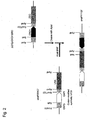
- the resulting coexpression vector for OmPDI1 and OmERO1 was designated as onaP09507 ( Fig. 1 ).
- the OmKar2 region was recovered from the OmKar2 constitutive expression vector, onaP09007, with the aid of the Sal I and Eco T22I restriction enzymes. After pZ/GpGt was digested with the Sal I and Eco T22I restriction enzymes, an OmKar2-containing Sal I- Eco T22I fragment was introduced to construct pZ/GpGt/OmKar2. Subsequently, pZ/GpGt/OmKar2 was digested with the Apa I restriction enzyme, and a fragment comprising the GAP promoter-OmKar2-GAP terminator (i.e., the OmKar2 expression cassette) was recovered.
- the recovered OmKar2 expression cassette was introduced into the Apa I restriction enzyme site of the OmPDI1 expression vector, onaP03606, the insertion direction was confirmed via PCR, and a vector into which the OmPDI1 and OmKar2 expression cassette was introduced in inverse orientation with respect to each other around the URA3 marker of the OmPDI1 expression vector, onaP03606, was selected.
- the resulting coexpression vector for OmPDI1 and OmKar2 was designated as onaP09707 ( Fig. 1 ).
- the OmHSP104 region was recovered from the OmHSP104 constitutive expression vector, onaP07107, with the aid of the Sal I and EcoT22I restriction enzymes. After pZ/GpGt was digested with the Sal I and EcoT22I restriction enzymes, an OmHSP104-containing Sal I- Eco T22I fragment was introduced to construct pZ/GpGt/OmHSP104. Subsequently, pZ/GpGt/OmHSP104 was digested with the Apa I restriction enzyme, and a fragment comprising the GAP promoter-OmHSP104-GAP terminator (i.e., the OmHSP104 expression cassette) was recovered.
- the recovered OmHSP104 expression cassette was introduced into the Apa I restriction enzyme site of the OmPDI1 expression vector, onaP03606, the insertion direction was confirmed via PCR, and a vector into which the OmPDI1 and OmHSP104 expression cassette was introduced in inverse orientation with respect to each other around the URA3 marker of the OmPDI1 expression vector, onaP03606, was selected.
- the resulting coexpression vector for OmPDI1 and OmHSP104 was designated as onaP09607 ( Fig. 1 ).
- the OmPDI1 region was recovered from the OmPDI1 constitutive expression vector, onaP03606, with the aid of the Sal I and Eco T22I restriction enzymes. After pZ/GpGt was digested with the Sal I and Eco T22I restriction enzymes, an OmPDI1-containing Sal I- Eco T22I fragment was introduced to construct pZ/GpGt/OmPDI1. Subsequently, pZ/GpGt/OmPDI1 was digested with the Apa I restriction enzyme, and a fragment comprising the GAP promoter-OmPDI1-GAP terminator (i.e., the OmPDI1 expression cassette) was recovered.
- the recovered OmPDI1 expression cassette was introduced into the Apa I restriction enzyme site of the OmPDI1 expression vector, onaP03606, the insertion direction was confirmed via PCR, and a vector into which an expression cassette of the first copy, OmPDI1, and an expression cassette of the second copy, OmPDI1, were introduced in inverse orientation with respect to each other around the URA3 marker of the OmPDI1 expression vector, onaP03606, was selected.
- the resulting coexpression vector comprising two copies of the OmPDI1 expression cassettes was designated as onaP09407 ( Fig. 1 ).
- the OmERO1 region was recovered from the OmERO1 Constitutive expression vector, onaP03906, with the aid of the Sal I and Eco T22I restriction enzymes. After pZ/GpGt was digested with the Sal I and Eco T22I restriction enzymes, an OmERO1-containing Sal I- Eco T22I fragment was introduced to construct pZ/GpGt/OmERO1. Subsequently, pZ/GpGt/OmERO1 was digested with the Apa I restriction enzyme, and a fragment comprising the GAP promoter-OmERO1-GAP terminator (i.e., the OmERO1 expression cassette) was recovered.
- the recovered OmERO1 expression cassette was introduced into the Apa I restriction enzyme site of the constitutive expression vector for the codon-modified Human PDI gene, onaP09107, the insertion direction was confirmed via PCR, and a vector into which the codon-modified Human HPDI and OmERO1 expression cassette was introduced in inverse orientation with respect to each other around the URA3 marker of the codon-modified Human PDI constitutive vector, onaP09107, was selected.
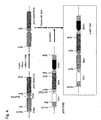
- the resulting coexpression vector for codon-modified Human PDI and OMERO1 was designated as onaP11107 ( Fig. 2 ).
- a coexpression vector for three chaperone genes was constructed in the following manner.
- the PGK1 gene encoding phosphoglycerine kinase was obtained from the Ogataea minuta IFO10746 strain, and the nucleotide sequence thereof was determined.
- DNA degenerate primers comprising nucleotide sequences corresponding to the conserved amino acid sequences, i.e., RVDFNVPLD and EGKELPGVA, derived from Saccharomyces cerevisiae (GenBank accession number: P00560) and Candida maltosa (GenBank accession number: P41757) were synthesized in the following manner.
- the PPG5 primer corresponds to the amino acid sequence, RVDFNVPLD
- the PPG3 primer is a sequence of a complementary strand of a nucleotide sequence corresponding to the amino acid sequence, EGKELPGVA.
- Chromosome DNA of the O. minuta IFO10746 strain was used as a template, PCR was carried out using PPG5 and PPG3 primers at 94°C for 30 seconds, 50°C for 1 minute, and 72°C for 1 minute, and this cycle was repeated 25 times.
- the amplified DNA fragment (approximately 1.2 kb) was recovered and cloned using the TOPO TA Cloning Kit.
- Plasmid DNA was isolated from the resulting clone, and the nucleotide sequence was determined. Thus, a clone having a nucleotide sequence encoding an amino acid sequence having high homology to the amino acid sequence of the PGK1 gene derived from S. cerevisiae and C . maltosa in the plasmid-inserted DNA fragment was selected. The 1.2-kb DNA-inserted fragment was recovered after the plasmid was cleaved with Eco RI, followed by agarose gel electrophoresis.
- Chromosome DNA of the O. minute IFO10746 strain was cleaved with various restriction enzymes and 0.8% agarose gel electrophoresis was performed. The separated DNA was transferred on the Hybond N+ nylon membrane (GE Healthcare Bio-Sciences). The DNA fragment obtained above was labeled with the use of the AlkPhos DIRECT (RPN3690, GE Healthcare Bio-Sciences), followed by Southern hybridization. Hybridization was carried out in accordance with a conventional technique ( Molecular cloning 2nd edn., ed. Sambrook, J., et al., Cold Spring Harbor Laboratory U.S.A., 1989 ).
- the PGK1 gene was considered to be present in a Bam HI fragment of approximately 9.0 kb.
- genome library was prepared. Chromosome DNA of O. minuta was cleaved with Bam HI and subjected to agarose electrophoresis, and a DNA fragment of approximately 9.0 kb was recovered from the gel. The recovered DNA fragment was ligated to the Bam HI-cleaved pUC118 and transformed into the E . coli DH5 ⁇ strain in accordance with the method of Hanahan (Gene, 10, 63, 1980 ) to prepare library. Approximately 4,000 clones were screened via colony hybridization using the aforementioned DNA fragments as probes. From among the obtained positive clones, the pOMPGK1 plasmids carrying PGK1 genes were selected.
- the nucleotide sequence in the Bam HI region in the pOMPGK1 plasmid was determined by the primer walking method, and the determined sequence was found to have the nucleotide sequence as shown in SEQ ID NO: 66.
- the nucleotide sequence as shown in SEQ ID NO: 66 comprises an open reading frame comprising 1,254 base pairs from nucleotides 4,766 to 6,016.
- Homology between the amino acid sequence as shown in SEQ ID NO: 67 that is deduced based on the open reading frame and phosphoglycerine kinases derived from Saccharomyces cerevisiae and Candida maltosa was inspected. As a result, the former homology was found to be 74%, and the latter homology was found to be 81%.
- PCR was carried out using the OPGK-P-F primer (SEQ ID NO: 68) and the OPGK-P-R primer (SEQ ID NO: 69) at 94°C for 30 seconds, 55°C for 1 minute, and 72°C for 1 minute, and this cycle was repeated 20 times. Also, PCR was carried out using the OPGK-T-F primer (SEQ ID NO: 70) and the OPGK-T-R primer (SEQ ID NO: 71) at 94°C for 30 seconds, 554°C for 1 minute, and 72°C for 1 minute, and this cycle was repeated 20 times.
- the amplified 1.5-kb and 1.0-kb DNA fragments were recovered and cloned using the TOPO TA Cloning Kit.
- the nucleotide sequences of the insertion DNA fragments were determined to select clones having the correct nucleotide sequences.
- the 1.5-kb and 1.0-kb insertion DNA fragments were isolated as the Hind III- Bam HI fragment and the Bam HI- Kpn I fragment, respectively.
- pOMexPGHy is a foreign gene-expressing vector comprising Spe I, Bgl II, and Bam HI sites in the PGK1 gene expression cassette.
- the PGK promoter and PGK terminator regions were cloned via PCR from the pOMexPGNy vector prepared in the above-described manner.
- the PGK promoter region was subjected to PCR using the OmPGKp-01Hd primer (5'-GGAAGCTTGACAATGTAGGAGATCATAAACA-3': SEQ ID NO: 72) and the OmPGKp-02Sal primer (5'-GGTCGACT-GCTAGTTCTATGCGGC-3': SEQ ID NO: 73) and the PGK terminator region was subjected to PCR using the OmPGKt-01EcoT primer (5'-GGATGCATGTGGGATTTGCGTGATCTAC-3': SEQ ID NO: 74) and the OmPGKt-02Kpn primer (5'-GGGTACCAGGGTCGATTTTCTTGGTCG-3': SEQ ID NO: 75) at 95°C for 10 seconds, 55°C for 30 seconds, and 68°C for 90 seconds with the use of Accu
- the resulting target DNA fragments of approximately 1.5 kb and approximately 0.5 kb were cloned into pCR2.1-TOPO. Based on the nucleotide sequence of the inserted DNA fragment, it was confirmed that the target fragments comprised the PGK promoter and PGK terminator regions.
- the constitutive expression vector for the OmKar2 gene, onaP09007 was digested with the Eco T22I and Kpn I restriction enzymes and the resultant was ligated to the PGK terminator region recovered via digestion with the Eco T22I and Kpn I restriction enzymes. Further, the resulting plasmid was digested with the Hind III and Sal I restriction enzymes, and the resultant was ligated to the PGK terminator region recovered via digestion with the Hind III and Sal I restriction enzymes. In the resulting plasmid, the GAP promoter and the GAP terminator were substituted with the PGK promoter and the PGK terminator, and OmKar2 expression was regulated by the PGK promoter.
- pOU1/Kar2Ppt vector Fig. 3
- the HindIII restriction enzyme site of pOU1/Kar2Ppt was blunt-ended, the cleavage site for the Kpn I restriction enzyme was introduced with the use of the pKpn I linker (Takara Bio, 4668P), and the resulting vector was designated as pOU1/Kar2-PptK.
- pOU1/Kar2-PptK was digested with the Kpn I restriction enzyme, a fragment containing the PGK promoter-OmKar2-PGK terminator (i.e., the OmKar2 expression cassette) was recovered, and the resultant was introduced into the Kpn I restriction enzyme site of the coexpression vector for OmPDI1 and OmERO1, onaP09507, to construct the coexpression vector for OmPDI1, OmERO1, and OmKar2, onaP11007 ( Fig. 4 ).
- the resultant was applied on Casamino-U agar medium that had been sterilized via steaming under pressure (6.7 g/l of Yeast Nitrogen Base without amino acids, 0.5 g/l of casamino acid, 20 g/l of glucose, 20 mg/l of L-tryptophan, 20 mg/l of adenine, and 20 g/l of Bacto agar), followed by multiplication at 30°C for approximately 2 to 3 days.
- the grown transformant was allowed to grow again on Casamino-U agar medium, a transformant into which the chaperone gene, expression of which is regulated by the GAP promoter, was selected via colony-PCR.
- OmKar2 was expressed with the use of the PGK promoter.
- introduction of the PGK promoter-Omkar2-PGK terminator expression cassette was confirmed with the use of the PGKpforS-F primer (5'-TAACGCCGCATAGAACTAGC-3': SEQ ID NO: 77) designed in the PGK promoter sequence and the OMKAR-R primer (5'-GATGCATTCACAGCTCATCATGATCCCAG-3': SEQ ID NO: 51).
- a target fragment was amplified via PCR using TaKaRa LA TaqTM with GC Buffer (Takara Bio, RR02AG) at 94°C for 30 seconds, 55°C for 30 seconds, and 72°C for 60 to 180 seconds, and this cycle was repeated 30 times.
- the expression vector for the anti-TRAIL receptor antibody gene ( WO 2001/083560 ) constructed in Example 2 was introduced into the yeast strain ( O. minuta ) to prepare an antibody-producing yeast strain.
- the yeast strain ( O. minuta ) As the yeast strain ( O. minuta ), the ona01206 strain prepared from O. minuta YK5 strain in the following manner was used.
- the grown transformant was allowed to grow again on Casamino-U agar medium, part of yeast that had grown on Casamino-U agar medium was suspended in 10 ⁇ l of a 0.25% SDS solution, 90 ⁇ l of sterilized water was added, and yeast cells were removed via centrifugation at 2,700x g and 4°C for 5 minutes. The obtained supernatant was designated as a DNA solution.
- OmURA3F primer (5'-ATGTCCTCGACTAAGACATACGC-3': SEQ ID NO: 79) and the OmURA3R primer (5'-TCATGCGACAC-GACTCAAATAAG-3': SEQ ID NO: 80), which had been designed at the initiation codon side and the germination codon side of the ura3 gene, respectively
- a target fragment of approximately 0.8 kb was amplified using TaKaRa LA TaqTM with GC Buffer (Takara Bio, RR02AG) (94°C for 30 seconds, 55°C for 30 seconds, and 72°C for 60 seconds, and this cycle was repeated 30 times).
- the transformant which was confirmed to have been amplified, was designated as the ona01206 strain as a ura3 candidate strain.
- the expression vector for the anti-TRAIL receptor antibody gene ( WO 2001/083560 ) constructed in Example 2 was introduced into the ona01206 strain via electroporation.
- As an antibody heavy chain 1 ⁇ g of onaP02706 digested with the Sse 8387I restriction enzyme was used.
- As an antibody light chain 1 ⁇ g of onaP03I06 digested with the Not I restriction enzyme was used.
- the transformant was applied on Casamino-U-A agar medium to which ZeocinTM (Invitrogen, R250-01) had been added at a concentration of 100 ⁇ g/ml (6.7 g/l of Yeast Nitrogen Base without amino acids, 0.5 g/l of casamino acid, 20 g/l of glucose, 20 mg/l of L-tryptophan, and 20 g/l of Bacto agar), and the transformant was allowed to grow at 30°C for approximately 2 to 3 days.
- ZeocinTM Invitrogen, R250-01
- the grown transformant was allowed to grow again on Casamino-U-A agar medium to which ZeocinTM (Invitrogen, R250-01) had been added at a concentration of 100 ⁇ g/ml, and the resultant was designated as an antibody secretory-producing strain.
- the antibody-producing strain was cultured in the following manner.
- 2x YP-P6-GG medium the medium was prepared by dissolving 20 g of Difco yeast extract and 40 g of Bacto peptone in 900 ml of pure water, sterilizing the solution via steaming under pressure, and adding 100 ml of separately sterilized 10x phosphate buffer (pH 6.0) (1M KH 2 PO 4 , 0.15M (NH 4 ) 2 SO 4 , 0.375N KOH), 10 ml of a separately sterilized 50% glucose solution, and 25 ml of separately sterilized 80% glycerine), 800 ⁇ l to 1000 ⁇ l of 2x YP-P6-GG medium was introduced into a 96-deep well plate (Greiner, 780271), the strains were sowed with the use of a toothpick, and the top of the plate was sealed with CO 2 -permeable plate sealers (Greiner, 676051).
- Culture was carried out at an agitation speed of 310 rpm, an amplitude of 50 mm, at 30°C for 3 or 4 days.
- the yeast cells were removed from the culture solution via centrifugation at 2,700x g and 4°C for 5 minutes to prepare a culture supernatant, and the resultant was designated as a secretory antibody sample.
- the secreted and produced antibodies were subjected to quantitative assay via sandwich ELISA.
- TRAIL receptor proteins that were antigens of the anti-TRAIL receptor antibodies were adsorbed on a 96-well plate, a secretory antibody sample was added, and detection was carried out using a peroxidase-labeled human IgG specific Fc antibody (Peroxidase-labeled affinity purified antibody to human IgG (Fc) (KPL, 04-10-20)) and the ABTS peroxidase substrate (KPL, 50-66-01).
- the selected antibody-producing yeast strain, ona02306, exhibited the capacity for secreting and producing an antibody at approximately 0.8 mg/l ( Fig. 5 ).
- the antibody-producing yeast obtained in Example 6 was cultured under conditions in which formation of O-sugar chain via the addition of PMT inhibitors is inhibited (PMT inhibitors, rhodanine-3-acetic acid derivative: 5-[[3,4-(1-phenylmethoxy)phenyl] methylene]-4-oxo-2-thioxo-3-thiazolidineacetic acid (compound 1c described in Bioorganic & Medicinal Chemistry Letters, Vol. 14, p. 3975, 2004 , was added to the medium).
- PMT inhibitors rhodanine-3-acetic acid derivative: 5-[[3,4-(1-phenylmethoxy)phenyl] methylene]-4-oxo-2-thioxo-3-thiazolidineacetic acid (compound 1c described in Bioorganic & Medicinal Chemistry Letters, Vol. 14, p. 3975, 2004 , was added to the medium).
- 2x YP-P6-GG medium (the medium was prepared by dissolving 20 g of Difco yeast extract and 40 g of Bacto peptone in 900 ml of pure water, sterilizing the solution via steaming under pressure, and adding 100 ml of separately sterilized 10x phosphate buffer (pH 6.0) (1M KH 2 PO 4 , 0.15M (NH 4 ) 2 SO 4 , 0.375N KOH), 10 ml of a separately sterilized 50% glucose solution, and 25 ml of separately sterilized 80% glycerine), 800 ⁇ l of 2x YP-P6-GG medium was introduced into a 96-deep well plate (Greiner, 780271), the strains were sowed with the use of a toothpick, and the top of the plate was sealed with CO 2 -permeable plate sealers (Greiner, 676051).
- Control culture was carried out at an agitation speed of 310 rpm, an amplitude of 50 mm, at 30°C for 2 days, 100 ⁇ l of 2x YP-P6-GG medium was added, and 100 ⁇ l of 2x YP-P6-GG medium was further added on day 3.
- culture was carried out at an agitation speed of 310 rpm, an amplitude of 50 mm, at 30°C for 2 days, 100 ⁇ l of 2x YP-P6-GG medium was added, and 100 ⁇ l of 2x YP-P6-GG medium containing 20 ⁇ M of 1c was further added on day 3.
- culture was carried out at an agitation speed of 310 rpm, an amplitude of 50 mm, at 30°C for 2 days, 100 ⁇ l of 2x YP-P6-GG medium containing 20 ⁇ M of 1c was added, and 100 ⁇ l of 2x YP-P6-GG medium containing 20 ⁇ M of 1c was further added on day 3.
- TRAIL receptor proteins that were antigens of the anti-TRAIL receptor antibodies were adsorbed on a 96-well plate, the sample of secreted antibody was added, and detection was carried out using a peroxidase-labeled human IgG specific Fc antibody (Peroxidase-labeled affinity purified antibody to human IgG (Fc) (KPL, 04-14-20)) and the ABTS peroxidase substrate (KPL, 50-66-01).
- Fc peroxidase-labeled human IgG specific Fc antibody
- Western blotting was carried out as follows. After the protein was subjected to SDS-PAGE under reducing and non-reducing conditions, the separated protein was blotted to a PVDF membrane, and the antibody heavy chain and the light chain were detected using Anti-human IgG ( ⁇ -chain specific) (Sigma, 1-3382) and Goat anti human kappa b&f affinity purified (Bethyl, A-80-115A) as the primary antibodies. Peroxidase conjugated affinity purified anti-goat IgG (H&L) (Rabbit) (Rockland, #605-4313) was used as the secondary antibody. Detection was carried out using ECL Advance Western blotting detection kit (GE, RPN2135).
- GE ECL Advance Western blotting detection kit
- a control sample (the ona02306 strain) exhibited the amount of secretion and production of an antibody at 0.8 mg/l.
- the amount of antibody production was increased to approximately 1.7 mg/l, and it was increased to approximately 1.9 mg/l; i.e., about 2.1 to about 2.4 times greater, via the addition of PMT inhibitors twice. That is, the amount of antibody production was increased by approximately 2.1 to approximately 2.4 times via the addition of PMT inhibitors ( Fig. 5 ).
- Example 8 Construction of antibody-producing yeast strain ( O. minuta ) that constitutively expresses chaperone.
- the expression vector for the anti-TRAIL receptor antibody gene ( WO 2001/083560 ) constructed in Example 2 was introduced into each of the strains constitutively expressing chaperone alone bred in Example 5 via electroporation.
- As an antibody heavy chain 1 ⁇ g of onaP02706 digested with the Sse83871 restriction enzyme was used.
- As an antibody light chain 1 ⁇ g of onaP03106 digested with the Not I restriction enzyme was used.
- the transformant was applied on Casamino-U-A agar medium to which ZeocinTM (Invitrogen, R250-01) had been added at a concentration of 100 ⁇ g/ml (6.7 g/l of Yeast Nitrogen Base without amino acids, 0.5 g/l of casamino acid, 20 g/l of glucose, 20 mg/l of L-tryptophan, and 20 g/l of Bacto agar), and the transformant was allowed to grow at 30°C for approximately 2 to 3 days.
- ZeocinTM Invitrogen, R250-01
- the grown transformant was allowed to grow again on Casamino-U-A agar medium to which ZeocinTM (Invitrogen, R250-01) had been added at a concentration of 100 ⁇ g/ml and a strain that secretes and produces an antibody was screened for.
- ZeocinTM Invitrogen, R250-01
- the ona08906 strain was selected as the strain constitutively expressing OmSCJ1 and having the antibody gene introduced therein
- the ona09206 strain was selected as the strain constitutively expressing OmEUG1 and having the antibody gene introduced therein
- the ona09406 strain was selected as the strain constitutively expressing OmERO1 and having the antibody gene introduced therein
- the ona26407 strain was selected as the strain constitutively expressing OmKar2 and having the antibody gene introduced therein
- the ona09506 strain was selected as the strain constitutively expressing OmPDI1 and having the antibody gene introduced therein
- the ona15807 strain was selected as the strain constitutively expressing OmHSP104 and having the antibody gene introduced therein.
- Example 8 With the use of the strain constitutively expressing chaperone and having the antibody gene introduced therein obtained in Example 8, the effects of chaperone introduction on secretory production of antibody were examined. Also, the effects of enhancing secretory production of antibody caused by the addition of PMT inhibitors that were found in Example 7 were examined. As shown in Fig.
- a control strain i.e., the ona02306 strain
- the strain constitutively expressing OmSCJ1 and having the antibody gene introduced therein exhibited that of approximately 2.6 mg/l
- the strain constitutively expressing OmEUG1 and having the antibody gene introduced therein i.e., the ona09206 strain
- the strain constitutively expressing OmERO1 and having the antibody gene introduced therein i.e., the ona09406 strain
- the strain constitutively expressing OmKar2 and having the antibody gene introduced therein i.e., the ona26407 strain
- the strain constitutively expressing OmMPD1 and having the antibody gene introduced therein exhibited that of 1.3 mg/l
- the strain constitutively expressing OmMPD1 and having the antibody gene introduced therein exhibited that of 1.3 mg/l
- the strain constitutively expressing OmMPD1 and having the antibody gene introduced therein exhibited that of 1.3 mg/l
- the capacity for antibody secretory production was improved by approximately 2 to 5 times. Further, addition of PMT inhibitors to culture was found to improve the amount of antibody secretory production of all the produced strains, as shown in Fig. 7 .
- the strain constitutively expressing OmPDI1 and having the antibody gene introduced therein i.e., the ona09806 strain
- the amount of antibody secretory production was found to be improved by approximately 15 times higher than that obtained via control culture of the strain into which the antibody gene had been introduced (i.e., the ona02306 strain) constructed in Example 6.
- Fig. 8 it was clearly confirmed via Western blot analysis following non-reducing electrophoresis that a full-length antibody (H2L2) would be secreted and produced.
- the expression vector for the anti-TRAIL receptor antibody gene ( WO 2001/083560 ) constructed in Example 2 was introduced into the strain constitutively expressing two types of chaperones bred in Example 5 via electroporation.
- As an antibody heavy chain 1 ⁇ g of onaP02706 digested with the Sse 8387I restriction enzyme was used.
- As an antibody light chain 1 ⁇ g of onaP03106 digested with the Not I restriction enzyme was used.
- the transformant was applied on Casamino-U-A agar medium to which ZeocinTM (Invitrogen, R250-01) had been added at a concentration of 100 ⁇ g/ml (6.7 g/l of Yeast Nitrogen Base without amino acids, 0.5 g/l of casamino acid, 20 g/l of glucose, 20 mg/l of L-tryptophan, and 20 g/l of Bacto agar), and the transformant was allowed to grow at 30°C for approximately 2 to 3 days.
- ZeocinTM Invitrogen, R250-01
- the grown transformant was allowed to grow again on Casamino-U-A agar medium to which ZeocinTM (Invitrogen, R250-01) had been added at a concentration of 100 ⁇ g/ml, and a strain that secretes and produces an antibody was screened for.
- ZeocinTM Invitrogen, R250-01
- the ona32507 strain was selected as the strain carrying two OmPDI1 expression units and constitutively expressing OmPDI1 and having the antibody gene introduced therein (i.e., the 2xOmPDI1 strain), the ona33407 strain was selected as the strain constitutively expressing OmPDI1/OmHSP104 and having the antibody gene introduced therein, the ona40007 strain was selected as the strain constitutively expressing OmPDI1/OmKar2 and having the antibody gene introduced therein, and the ona33107 strain was selected as the strain constitutively expressing OmPDI1/OmERO1 and having the antibody gene introduced therein.
- a control strain into which the antibody gene had been introduced i.e., the ona02306 strain
- the strain constitutively expressing OmHSP104 and having the antibody gene introduced therein exhibited that of approximately 1.8 mg/l and approximately 4.6 mg/l when PMT inhibitors were added
- the strain constitutively expressing OmKar2 and having the antibody gene introduced therein i.e., the ona26407 strain
- the strain constitutively expressing OmERO1 and having the antibody gene introduced therein i.e., the ona09406 strain
- the strain constitutively expressing 2xOmPDI1 and having the antibody gene introduced therein exhibited the amount of antibody secretory production of approximately 6.8 mg/l and approximately 15.8 mg/l when PMT inhibitors were added
- the strain constitutively expressing OmPDI1/OmHSP104 and having the antibody gene introduced therein exhibited that of approximately 4.8 mg/l and approximately 13.6 mg/l when PMT inhibitors were added
- the strain constitutively expressing OmPDI1/OmKar2 and having the antibody gene introduced therein i.e., the ona40007 strain
- the strain constitutively expressing OmPDI1/OmERO1 and having the antibody gene introduced therein exhibited that of approximately 17.7 mg/l and approximately 26.2 mg/l when PMT inhibitor
- the expression vector for the anti-TRAIL receptor antibody gene ( WO 2001/083560 ) constructed in Example 2 was introduced into the strain constitutively expressing heterologous PDI alone bred in Example 5 via electroporation.
- As an antibody heavy chain 1 ⁇ g of onaP02706 digested with the Sse 8387I restriction enzyme was used.
- As an antibody light chain 1 ⁇ g of onaP03106 digested with the Not I restriction enzyme was used.
- the transformant was applied on Casamino-U-A agar medium to which ZeocinTM (Invitrogen, R250-01) had been added at a concentration of 100 ⁇ g/ml (6.7 g/l of Yeast Nitrogen Base without amino acids.
- the ona32207 strain was selected as the strain constitutively expressing Succharomyces cerevisiae ScPDI1 and having the antibody gene introduced therein
- the ona38907 strain was selected as the strain constitutively expressing human PDI and having the antibody gene introduced therein
- the ona39307 strain was selected as the strain constitutively expressing synthetic human PDI (i.e., human PDI with the codon usage being optimized in accordance with that of O. minuta ) and having the antibody gene introduced therein.
- a control strain into which the antibody gene had been introduced i.e., the ona02306 strain
- the strain constitutively expressing OmPDI1 and having the antibody gene introduced therein exhibited that of approximately 4.2 mg/l and 12.2 mg/l when PMT inhibitors were added
- the strain constitutively expressing 2xOmPDI1 and having the antibody gene introduced therein i.e., the ona32507 strain
- the strain constitutively expressing ScPDI1 and having the antibody gene introduced therein i.e., the ona32207 strain
- the strain constitutively expressing hPDI and having the antibody gene introduced therein exhibited that of approximately 3.7 mg/l and approximately 11.3 mg/l when PMT inhibitors were added
- heterologous PDI When expression of a functional homolog; i.e., heterologous PDI, was enhanced in addition to constitutive expression of O. minuta PDI1, the capacity of antibody secretory production was also found to be improved.
- addition of PMT inhibitors to culture resulted in an improvement in the capacity for antibody secretory production to approximately 25 times higher than that of the control and approximately 1.6 times higher than that obtained upon introduction of OMPDI1 and addition of PMT inhibitors to culture.
- the expression vector for the anti-TRAIL receptor antibody gene ( WO 2001/083560 ) constructed in Example 2 was introduced into each of the strain constitutively expressing synthetic human PDI and OmERO1 and the strain constitutively expressing OmPDI1, OmERO1, and OmKar22 bred in Example 5 via electroporation.
- As an antibody heavy chain 1 ⁇ g of onaPO2706 digested with the Sse 8387I restriction enzyme was used.
- As an antibody light chain 1 ⁇ g of onaP03106 digested with the Not I restriction enzyme was used.
- the transformant was applied on Casamino-U-A agar medium to which ZeocinTM (Invitrogen, R250-01) had been added at a concentration of 100 ⁇ g/ml (6.7 g/l of Yeast Nitrogen Base without amino acids, 0.5 g/l of casamino acid, 20 g/l of glucose, 20 mg/l of L-tryptophan, and 20 g/l of Bacto agar), and the transformant was allowed to grow at 30°C for approximately 2 to 3 days.
- ZeocinTM Invitrogen, R250-01
- the grown transformant was allowed to grow again on Casamino-U-A agar medium to which ZeocinTM (Invitrogen, R250-01) had been added at a concentration of 100 ⁇ g/ml, and a strain that secretes and produces an antibody was screened for.
- ZeocinTM Invitrogen, R250-01
- the ona49707 strain was selected as a strain into which the gene of an antibody constitutively expressing synthetic human PDI/OmERO1 had been introduced
- the ona48707 strain was selected as the strain into which the gene of an antibody constitutively expressing OmPDI1, OmERO1, and OmKar2 had been introduced.
- a control strain into which the antibody gene had been introduced i.e., the ona02306 strain
- the strain constitutively expressing synthetic human PDI and having the antibody gene introduced therein i.e., the ona39307 strain
- the strain constitutively expressing OmPDI1/OmERO1 and having the antibody gene introduced therein i.e., the ona33107 strain
- the strain constitutively expressing OmPDI1/OmERO1 and having the antibody gene introduced therein i.e., the ona33107 strain
- the strain constitutively expressing synthetic human PDI/OmERO1 and having the antibody gene introduced therein i.e., the ona49707 strain
- the strain constitutively expressing OmPDI1/OmERO1/OmKar2 and having the antibody gene introduced therein i.e., the ona48707 strain
- the strain constitutively expressing OmPDI1/OmERO1/OmKar2 and having the antibody gene introduced therein i.e., the ona48707 strain
- the strain constitutively expressing OmPDI1/OmERO1/OmKar2 and having the antibody gene introduced therein i.e., the ona48707 strain
- heterologous PDI i.e., synthetic human PDI and OmERO1
- the capacity of antibody secretory production was increased by at least 20%, compared with the case when expression of OmPDI1 and OmERO1 was enhanced. That is, the capacity of antibody secretory production was approximately 36 times higher than that of the control.
- the capacity of antibody secretory production was further improved, which was approximately 45.8 times higher than that of the Control.
- ScKar2 signal a secretory signal of Kar2 (YTL034W) derived from S. cerevisiae (hereafter referred to as "ScKar2 signal") and the light and heavy chains of the anti-TRAIL receptor antibody as a fusion protein
- the ScKar2 signal gene was ligated to the anti-TRAIL receptor antibody gene ( WO 2001/083560 ) via overlap extension PCR using the oligonucleotide primers below.
- the ScKar2 signal gene region was amplified using genomic DNA of S. cerevisiae prepared using the Y-DER Yeast DNA Extraction Reagent (PIERCE) as a template. PCR was carried out at 95°C for 10 seconds, 55°C for 30 seconds, and 68°C for 60 seconds using the BipXba-F primer and the BipTraH-R primer for the heavy chain, and this cycle was repeated 30 times.
- PIERCE Y-DER Yeast DNA Extraction Reagent
- PCR was carried out at 95°C for 10 seconds, 55°C for 30 seconds, and 68°C for 60 seconds using the BipXba-F primer and the BipTraL-R primer and AccuPrime Pfx DNA Polymerase (Invitrogen, 12344-024) for the light chain, and this cycle was repeated 30 times.
- the amplified target DNAfragments of approximately 0.15 kb were recovered.
- the antibody gene region was amplified using the anti-TRAIL receptor antibody cDNA ( WO 2001/083560 ) as a template. PCR was carried out at 95°C for 10 seconds, 55°C for 30 seconds, and 68°C for 90 seconds using the BipTraH-F primer and the H04 primer for the heavy chain. Also, PCR was carried out at 95°C for 10 seconds, 55°C for 30 seconds, and 68°C for 90 seconds using the BipTraL-F primer and the L04 primer for the light chain and AccuPrime Pfx DNA Polymerase (Invitrogen, 12344-024), and this cycle was repeated 30 times. The amplified target DNA fragment of a heavy chain region of approximately 1.35 kb and that of a light chain region of approximately 0.65 kb were recovered.
- PCR was carried out at 95°C for 10 seconds, 55°C for 30 seconds, and 68°C for 90 seconds using the ScKar2 signal region for the heavy chain and the heavy chain region of approximately 1.35 kb as templates, the BipXba-F primer and the H04 primer, and AccuPrime Pfx DNA Polymerase (Invitrogen, 12344-024), and this cycle was repeated 30 times.
- the amplified target DNA fragment of approximately 1.5 kb was recovered.
- PCR was carried out at 95°C for 10 seconds, 55°C for 30 seconds, and 68°C for 60 seconds using the ScKar2 signal region for the light chain and the light chain region of approximately 0.65 kb as templates and the BipXba-F primer and the L04 primer, and this cycle was repeated 30 times.
- the amplified target DNA fragment of approximately 0.8 kb was recovered.
- the recovered DNA fragments were cloned into pCR2.1-TOPO. Based on the nucleotide sequence of the inserted DNA fragment, it was confirmed that the target fragments each comprised the gene in which the ScKar signal-antibody heavy chain was fused in frame to the ScKar2 signal-antibody light chain.
- the Xba I restriction enzyme site introduced into the BipXba-F primer and the Sal I restriction enzyme site introduced into the H04 and L04 primers were used to recover a DNA fragment encoding the ScKar2 signal-antibody heavy chain and the ScKar2 signal-antibody light chain via digestion with Xha I and Sal I.
- the obtained clones were arbitrarily selected, subjected to colony PCR (94°C for 30 seconds, 55°C for 30 seconds, and 72°C for 60 seconds) using the 352-Hpal-R2 primer (5'-CAAAATGAAGCACAGATGC-3': SEQ ID NO: 89), the L04 primer (5'-GGTCGACCTAACACTCTCCCCTGT-3': SEQ ID NO: 88), and TaKaRa LA TaqTM with GC Buffer (Takara Bio, RR02AG), and this cycle was repeated 30 times.
- 352-Hpal-R2 primer 5'-CAAAATGAAGCACAGATGC-3': SEQ ID NO: 89
- the L04 primer 5'-GGTCGACCTAACACTCTCCCCTGT-3': SEQ ID NO: 88
- TaKaRa LA TaqTM with GC Buffer Takara Bio, RR02AG
- PDI1 of Sc (YCL043C: SEQ ID NO: 120 (nucleotide sequence), SEQ ID NO: 121 (amino acid sequence)) was amplified using genomic DNA of S. cerevisiae prepared using the Y-DER Yeast DNA Extraction Reagent (PIERCE) as a template.
- PIERCE Y-DER Yeast DNA Extraction Reagent
- PCR was carried out using the PDI1-sac primer (5'-CGAGCTCATGAAGTTTTCTGCTGGTG-3': SEQ ID NO: 90), the PDI1-sma primer (5'-GCCCGGGTTACAATTCATCGTGAATG-3': SEQ ID NO: 91), and AccuPrime Pfx DNA Polymerase (Invitrogen, 12344-024) at 95°C for 10 seconds, 55°C for 30 seconds, and 68°C for 90 seconds, and this cycle was repeated 30 times. A target DNA fragment of approximately 1.6 kb was recovered and cloned into pCR2.1-TOPO. Thereafter, the nucleotide sequence of the inserted DNA fragment was confirmed. In order to express ScPDI1 in S.
- the gene encoding ScPDI1 recovered via digestion with Sac I and Sma I with the use of the Sac I and Sma I restriction enzyme sites introduced into the PDI1-sac primer and the PDI1-sma primer was ligated to the Sac I- Sma I site in the glyceraldehyde-3-phosphoric dehydrogenase gene (TDH3, GAP) promoter-terminator cassette introduced into the E. coli /yeast shuttle vector YEp351 ( Yeast 2, pp. 163-167, 1986 ). The resulting plasmid was designated as YEp351GAP-II-ScPDI1.
- ScMPD1 (YOR288C: SEQ ID NO: 122 (nucleotide sequence), SEQ ID NO: 123 (amino acid sequence)) was amplified using genomic DNA of S. cerevisiae prepared using the Y-DER Yeast DNA Extraction Reagent (PIERCE) as a template.
- PIERCE Y-DER Yeast DNA Extraction Reagent
- PCR was carried out using the MPD1-sac primer (5'-CGAGCTCATGTTATTTCTTAATATTATTAAG-3': SEQ ID NO: 92), the MPD1-sma primer (5'-GCCCGGGCTACAATTCGTCGTGCTTGTTTCC-3': SEQ ID NO: 93), and AccuPrime Pfx DNA Polymerase (Invitrogen, 12344-024) at 95°C for 10 seconds, 55°C for 30 seconds, and 68°C for 60 seconds, and this cycle was repeated 30 times. A target DNA fragment of approximately 0.96 kb was recovered and cloned into pCR2.1-TOPO. Thereafter, the nucleotide sequence of the inserted DNA fragment was confirmed.
- the gene encoding ScMPD1 recovered via digestion with Sac I and Sma I with the use of the Sac I and Sma I restriction enzyme sites introduced into the MPD1-sac primer and the MPD1-sma primer was ligated to the Sac I- Sma I site in the glyceraldehyde-3-phosphoric dehydrogenase gene (TDH3, GAP) promoter-terminator cassette introduced into the E. coli /yeast shuttle vector YEp351 ( Yeast 2, pp. 163-167, 1986 ).
- the resulting plasmid was designated as YEp351 GAP-II-ScMPD1.
- ScSCJ1 (YMR214W: SEQ ID NO: 124 (nucleotide sequence), SEQ ID NO: 125 (amino acid sequence)) was amplified using genomic DNA of S. cerevisiae prepared using the Y-DER Yeast DNA Extraction Reagent (PIERCE) as a template.
- PIERCE Y-DER Yeast DNA Extraction Reagent
- PCR was carried out using the SCJ1-sac primer (5'-CGAGCTCATGATTCCAAAATTATATATAC-3': SEQ ID NO: 94), the SCJ1-sma primer (5'-GCCCGGGCTACAACTCATCTTTGAGC-3': SEQ ID NO: 95), and AccuPrime Pfx DNA Polymerase (Invitrogen, 12344-024) at 95°C for 10 seconds, 55°C for 30 seconds, and 68°C for 60 seconds, and this cycle was repeated 30 times.
- a target DNA fragment of approximately 1.1 kb was recovered and cloned into pCR2.1.-TOPO. Thereafter, the nucleotide sequence of the inserted DNA fragment was confirmed.
- ScSCJ1 in S was carried out using the SCJ1-sac primer (5'-CGAGCTCATGATTCCAAAATTATATATAC-3': SEQ ID NO: 94), the SCJ1-sma primer (5'-GCCCGGGCTACAACTCATCTTTGA
- the gene encoding ScMPD1 recovered via digestion with Sac I and Sma I with the use of the Sac I and Sma I restriction enzyme sites introduced into the SCJ1-sac primer and the SCJ1-sma primer was ligated to the Sac I -Sma I site in the glyceraldehyde-3-phosphoric dehydrogenase gene (TDH3, GAP) promoter-terminator cassette introduced into the E . coli /yeast shuttle vector YEp351 ( Yeast2, pp. 163-167, 1986 ).
- the resulting plasmid was designated as YEp351GAP-II-ScSCJ1.
- ScERO1 (YML130C: SEQ ID NO: 126 (nucleotide sequence), SEQ ID NO: 127 (amino acid sequence) was amplified using genomic DNA of S. cerevisiae prepared using the Y-DER Yeast DNA Extraction Reagent (PIERCE) as a template.
- PIERCE Y-DER Yeast DNA Extraction Reagent
- PCR was carried out using the ERO1-sac2 primer (5'-CGAGCTCATGAGATTAAGAACCGCCATTG-3': SEQ ID NO: 96), the ERO1-sma2 primer (5'-GCCCGGGTTATTGTATATCTAGCTTATAG-3': SEQ ID NO: 97), and AccuPrime Pfx DNA Polymerase (Invitrogen, 12344-024) at 95°C for 10 seconds, 55°C for 30 seconds, and 68°C for 120 seconds, and this cycle was repeated 30 times. A target DNA fragment of approximately 1.7 kb was recovered and cloned into pCR2.1-TOPO. Thereafter, the nucleotide sequence of the inserted DNA fragment was confirmed.
- the gene encoding ScERO1 recovered via digestion with Sac I and Sma I with the use of the Sac I and Sma I restriction enzyme sites introduced into the ERO1-sac2 primer and the ERO1-sma2 primer was ligated to the Sac I- Sma I site in the glyceraldehyde-3-phosphoric dehydrogenase gene (TDH3, GAP) promoter-terminator cassette introduced into the E. coli /yeast shuttle vector YEp351 ( Yeast 2, pp. 163-167, 1986 ).
- the resulting plasmid was designated as YEp351GAP-II-ScERO1.
- ScFKB2 (FPR2/YDR519W: SEQ ID NO: 128 (nucleotide sequence), SEQ ID NO: 129 (amino acid sequence)) was amplified using genomic DNA of S. cerevisiae prepared using the Y-DER Yeast DNA Extraction Reagent (PIERCE) as a template.
- PIERCE Y-DER Yeast DNA Extraction Reagent
- PCR was carried out using the FKB2-sac primer (5'-CGAGCTCATGATGTTTAATATTTACC-3': SEQ ID NO: 98), the FKB2-sma primer (5'-GCCCGGGCTAGGCGGCTGATTTCACG-3': SEQ ID NO: 99), and AccuPrime Pfx DNA Polymerase (Invitrogen, 12344-024) at 95°C for 10 seconds, 55°C for 30 seconds, and 68°C for 30 seconds, and this cycle was repeated 30 times.
- a target DNA fragment of approximately 0.5 kb was recovered and cloned into pCR2.1-TOPO. Thereafter, the nucleotide sequence of the inserted DNA fragment was confirmed. In order to express ScFKB2 in S.
- the gene encoding ScFKB2 recovered via digestion with Sac I and Sma I with the use of the Sac I and Sma I restriction enzyme sites introduced into the FKB2-sac primer and the FKB2-sma primer was ligated to the Sac I -Sma I site in the glyceraldehyde-3-phosphoric dehydrogenase gene (TDH3, GAP) promoter-terminator cassette introduced into the E . coli /yeast shuttle vector YEp351 ( Yeast 2, pp. 163-167, 1986 ).
- the resulting plasmid was designated as YEp351GAP-II-ScFKB2.
- ScJEM1 (YJL073W: SEQ ID NO: 130 (nucleotide sequence), SEQ ID NO:: 131 (amino acid sequence)) was amplified using genomic DNA of S. cerevisiae prepared using the Y-DER Yeast DNA Extraction Reagent (PIERCE) as a template.
- PIERCE Y-DER Yeast DNA Extraction Reagent
- PCR was carried out using the JEM1-sac primer (5'-CGAGCTCATGATACTGATCTCGGGATACTGTC-3': SEQ ID NO: 100), the JEM1-sma primer (5'-GCCCGGGTCAAAGCCCAAAATTCATTTTAAAG-3': SEQ ID NO: 101), and AccuPrime Pfx DNA Polymerase (Invitrogen, 12344-024) at 95°C for 10 seconds, 55°C for 30 seconds, and 68°C for 120 seconds, and this cycle was repeated 30 times.
- a target DNA fragment of approximately 1.9 kb was recovered and cloned into pCR2.1-TOPO. Thereafter, the nucleotide sequence of the inserted DNA fragment was confirmed.
- the gene encoding ScJEM1 recovered via digestion with Sac I and Sma I with the use of the Sac I and Sma I restriction enzyme sites introduced into the JEM1-sac primer and the JEM1-sma primer was ligated to the Sac I -Sma I site in the glyceraldehyde-3-phosphoric dehydrogenase gene (TDH3, GAP) promoter-terminator cassette introduced into the E. coli /yeast shuttle vector YEp351 ( Yeast 2, pp. 163-167, 1986 ). The resulting plasmid was designated as YEp351GAP-II-ScJEM1.
- ScLHS1 (YKL073W: SEQ ID NO: 132 (nucleotide sequence), SEQ ID NO: 133 (amino acid sequence)) was amplified using genomic DNA of S. cerevisiae prepared using the Y-DER Yeast DNA Extraction Reagent (PIERCE) as a template.
- PIERCE Y-DER Yeast DNA Extraction Reagent
- PCR was carried out using the LHS1.1-sac primer (5'-CGAGCTCATGCGAAACGTTTTAAGGCTTT-3': SEQ ID NO: 102), the LHS1-sma primer (5'-GCCCGGGCTATAATTCATCATGCAAAATG-3': SEQ ID NO: 103), and AccuPrime Pfx DNA Polymerase (Invitrogen, 12344-024) at 95°C for 10 seconds, 55°C for 30 seconds, and 68°C for 180 seconds, and this cycle was repeated 30 times. A target DNA fragment of approximately 2.65 kb was recovered and cloned into pCR2.1-TOPO. Thereafter, the nucleotide sequence of the inserted DNA fragment was confirmed. In order to express ScLHS1 in S.
- the gene encoding ScLHS1 recovered via digestion with Sac I and Sma I with the use of the Sac I and Sma I restriction enzyme sites introduced into the LHS1.1-sac primer and the LHS1-sma primer was ligated to the Sac I -Sma I site in the glyceraldehyde-3-phosphoric dehydrogenase gene (TDH3, GAP) promoter-terminator cassette introduced into the E . coli /yeast shuttle vector YEp351 ( Yeast 2, pp. 163-167, 1986 ).
- the resulting plasmid was designated as YEp351GAP-II-ScLHS1.
- ScMPD2 (YOL088C: SEQ ID NO: 134 (nucleotide sequence), SEQ ID NO: 135 (amino acid sequence) was amplified using genomic DNA of S . cerevisiae prepared using the Y-DER Yeast DNA Extraction Reagent (PIERCE) as a template.
- PIERCE Y-DER Yeast DNA Extraction Reagent
- PCR was carried out using the MPD2-sac primer (5'-CGAGCTCATGAAATTGCACGGCTTTTTATTTTC-3': SEQ ID NO: 104), the MPD2-sma primer (5'-GCCCGGGTCAAAGCTCGTCATGACTACTGG-3': SEQ ID NO: 105), and AccuPrime Pfx DNA Polymerase (Invitrogen, 12344-024) at 95°C for 10 seconds, 55°C for 30 seconds, and 68°C for 60 seconds, and this cycle was repeated 30 times. A target DNA fragment of approximately 0.8 kb was recovered and cloned into pCR2.1-TOPO. Thereafter, the nucleotide sequence of the inserted DNA fragment was confirmed.
- the gene encoding ScMPD2 recovered via digestion with Sac I and Sma I with the use of the Sac I and Sma I restriction enzyme sites introduced into the MPD2-sac primer and the MPD2-sma primer was ligated to the Sac I -Sma I site in the glyceraldehyde-3-phosphoric dehydrogenase gene (TDH3, GAP) promoter-terminator cassette introduced into the E. coli /yeast shuttle vector YEp351 ( Yeast 2, pp. 163-167, 1986 ).
- the resulting plasmid was designated as YEp351 GAP-II-ScMPD2.
- ScERJ5 (YFR041C: SEQ ID NO: 136 (nucleotide sequence), SEQ ID NO: 137 (amino acid sequence) was amplified using genomic DNA of S. cerevisiae prepared using the Y-DER Yeast DNA Extraction Reagent (PIERCE) as a template.
- PIERCE Y-DER Yeast DNA Extraction Reagent
- PCR was carried out using the YFR041C-sac primer (5'-CGAGCTCATGAACGGTTACTGGAAAC-3': SEQ ID NO: 106), the YFR041C-sma primer (5'-GCCCGGGTCATTTACGTGAATAGATC-3': SEQ ID NO: 107), and AccuPrime Pfx DNA Polymerase (Invitrogen, 12344-024) at 95°C for 10 seconds, 55°C for 30 seconds, and 68°C for 60 seconds, and this cycle was repeated 30 times. A target DNA fragment of approximately 0.9 kb was recovered and cloned into pCR2.1-TOPO. Thereafter, the nucleotide sequence of the inserted DNA fragment was confirmed.
- the gene encoding ScERJ5 recovered via digestion with Sac I and Sma I with the use of the Sac I and Sma I restriction enzyme sites introduced into the YFR041C-sac primer and the YFR041C-sma primer was ligated to the Sac I -Sma I site in the glyceraldehyde-3-phosphoric dehydrogenase gene (TDH3, GAP) promoter-terminator cassette introduced into the E . coli /yeast shuttle vector YEp351 ( Yeast 2, pp. 163-167, 1986 ). The resulting plasmid was designated as YEp351GAP-II-ScERJ5.
- ScEUG1 (YDR518W: SEQ ID NO: 138 (nucleotide sequence), SEQ ID NO: 139 (amino acid sequence)) was amplified using genomic DNA of S. cerevisiae prepared using the Y-DER Yeast DNA Extraction Reagent (PIERCE) as a template.
- PIERCE Y-DER Yeast DNA Extraction Reagent
- PCR was carried out using the EUG1-sac primer (5'-CGAGCTCATGCAAGTGACCACAAGATT-3': SEQ ID NO: 108), the EUG1-sma primer (5'-GCCCGGGTTATAATTCATCATGTACGG-3': SEQ ID NO: 109), and AccuPrime Pfx DNA Polymerase (Invitrogen, 12344-024) at 95°C for 10 seconds, 55°C for 30 seconds, and 68°C for 90 seconds, and this cycle was repeated 30 times. A target DNA fragment of approximately 1.5 kb was recovered and cloned into pCR2.1-TOPO. Thereafter, the nucleotide sequence of the inserted DNA fragment was confirmed. In order to express ScEUG1 in S.
- the gene encoding ScEUG1 recovered via digestion with Sac I and Sma I with the use of the Sac I and Sma I restriction enzyme sites introduced into the EUG1-sac primer and the EUG1-sma primer was ligated to the Sac I -Sma I site in the glyceraldehyde-3-phosphoric dehydrogenase gene (TDH3, GAP) promoter-terminator cassette introduced into the E . coli /yeast shuttle vector YEp351 ( Yeast2, pp. 163-167, 1986 ). The resulting plasmid was designated as YEp351 GAP-II-ScEUG1.
- Competent cells of the ZUO1/YGR285C strain (MATa ⁇ his3 ⁇ leu2 ⁇ met15 ⁇ ura3 ⁇ zuol) derived from the S. cerevisiae BY4741 strain were prepared using the Frozen-EZ Yeast Transformation II Kit (ZYMO RESARCH).
- the S. cerevisiae ZUO1/YGR285C strain was sowed in 5 ml of YPAD medium (YPD medium containing 0.04% adenine (Sigma)), and yeast cells resulting from overnight culture at 30°C and 310 rpm were used.
- the expression vectors constructed in Example 13 and in Example 14 were introduced into the S.
- YEp352 GAP-II-ScKarHc/ScKarLc carrying the antibody heavy chain and light chain expression unit comprises an URA3 marker gene that complements uracil-requiring mutation of a host.
- YEp351 GAP-II (a control vector into which the gene is not introduced)
- YEp351GAP-II-ScPDI1 the ScPDI1 expression vector
- YEp351GAP-II-ScMPD1 the ScMPD1 expression vector
- YEp351GAP-II-ScSCJ1 the ScSCJ1 expression vector
- YEp351GAP-II-ScERO1 the ScERO1 expression vector
- YEp351GAP-II-ScFKB2 (the ScFKB2 expression vector)
- YEp351 GAP-II-ScJEM1 the ScJEM1 expression vector
- Host cells were transformed so that they can grow only when the expression vector for the gene of an antibody and the constitutive expression vector for chaperone are introduced, and 10 types of yeast strains expressing an antibody constitutively expressing chaperone were constructed from the S. cerevisiae ZUO1/YGR285C strain.
- ST medium 500 ⁇ l
- Yeast Nitrogen Base and Ammonium sulfate medium containing 2% glucose, 0.04% adenine, and 0.3M KCl and lacking uracil and leucine (Sigma) was applied onto a 96-deep well plate (Greiner, 780271), the transformant was sowed with the use of a toothpick, the top of the plate was sealed with CO 2 -permeable plate sealers (Greiner, 676051), and culture was carried out at an agitation speed of 310 rpm, an amplitude of 50 mm, at 30°C for 3 days.
- Control culture was carried out by applying 1 ml of YPAD medium to a 96-deep well plate (Greiner, 780271).
- 1 ml of YPAD medium to which the rhodanine-3-acetic acid derivative 1c had been initially added to a final concentration of 10 ⁇ M was applied to the plate.
- the culture solution that had been cultured in ST medium was sowed to a final concentration of 5%, and the top of the plate was sealed with CO 2 -permeable plate sealers (Greiner, 676051). Thereafter, culture was carried out at an agitation speed of 310 rpm, an amplitude of 50 mm, at 30°C for 3 days.
- the culture supernatant was prepared from the culture solution and it was designated as a sample containing an antibody secreted and produced by yeast. Antibody secretory production was confirmed via sandwich ELISA. Yeast cells were removed from the culture product via centrifugation at 2,700x g and 4°C for 5 minutes, and the resulting culture supernatant was designated as a sample of secreted antibody.
- Sandwich ELISA was carried out by adsorbing the TRAIL receptor proteins that were antigens of the anti-TRAIL receptor antibodies on a 96-well plate, adding the sample of secreted antibody, and performing detection using a peroxidase-labeled human IgG specific Fc antibody (Peroxidase-labeled affinity purified antibody to human IgG (Fc) (KPL, 04-10-20)) and the ABTS peroxidase substrate (KPL, 50-66-01).
- a peroxidase-labeled human IgG specific Fc antibody Peroxidase-labeled affinity purified antibody to human IgG (Fc) (KPL, 04-10-20)
- ABTS peroxidase substrate KPL, 50-66-01
- a control strain exhibited the amount of antibody secretory production of 3.9 ng/ml.
- the control strain exhibited an approximately 2.5 times greater amount of antibody secretory production; i.e., 10 ng/ml, and effects of suppression of O-sugar chain addition were observed.
- the strains into which each of ScERO1 and ScPDI1 had been introduced each exhibited approximately 7 times and approximately 20 times greater amounts of antibody secretory production; i.e., 26.4 ng/ml and 79.2 ng/ml.
- a gene encoding a sequence comprising 3 repeats of the FLAG sequence (3 ⁇ FLAG) was amplified.
- the gene was amplified via PCR using the P3 ⁇ FLAG-CMV-13 expression vector (Sigma, E4776) as a template and the 5'-3XFLAG primer (5'-atcatcatcatgcccgggccgactacaaagaccat-3': SEQ ID NO: 110), the 3'-3XFLAG primer (5'-gcaccgtctcggatcccttgtcatcgtcatccctt-3': SEQ ID NO: 111) to which the Srf I site and the Bam HI site had been added, respectively.
- the resulting fragment was inserted into the O.
- pOMEA1-His6 ( Akeboshi et al., 2007, Appl. Environ. Microbiol., 73:4805-4812 ) cleaved with Srf I and Bam HI using the In-Fusion Dry-Down PCR Cloning Kit (Takara Bio, Z9602N). The resulting vector was designated as pOMEA1-6H3F.
- ST3GaII a gene encoding a catalyst site of ST3GaII was amplified.
- the ST3GaII gene is present in human chromosome 8 and its cDNA nucleotide sequence is registered with a public database, GenBank, under the Accession No. L29555.
- the catalyst domain of the ST3GaII gene was first amplified via PCR using the 3FLAG-ST3GaII-F primer (5'-GATGACGATGACAAGGGATCCaactactcccacaccatgg-3': SEQ ID NO: 112) and the 3FLAG-ST3GaI1-R primer (5'-GCACCGTCTCGGATCCtcatctccccttgaagatccggat-3': SEQ ID NO:113).
- An entry clone of human glycosyltransferase library prepared in the NEDO SG project was used as a template ( Shimma et al., 2006, Appl. Environ. Microbiol., 72, 7003-7012 ).
- the obtained fragment was inserted into the Bam HI site of pOMEA1-6H3F using the In-Fusion Dry-Down PCR Cloning Kit (Takara Bio, Z9602N). After the nucleotide sequence was confirmed, the fragment was designated as the expression vector, pOMEA1-6H3F-ST3GaI1.
- the pOMEA1-6H3F-ST3GaI1 plasmid was cleaved with the Not I restriction enzyme, and the O. minute TK10-1-2 strain was then transformed. Transformation was carried out by the lithium acetate method. After transformation, the resultant was applied on SD-Ade medium (2% glucose, 0.17% Yeast Nitrogen Base without amino acids (Difco), nucleic acid bases except for adenine, and amino acids mixture (20 to 400 mg/l)), and culture was carried out at 30°C for 2 days. Whether or not the expression vector was incorporated into a chromosome was confirmed via colony PCR described in Example 5 and the transformant was designated as the YT-1 strain.
- SD-Ade medium 2% glucose, 0.17% Yeast Nitrogen Base without amino acids (Difco), nucleic acid bases except for adenine, and amino acids mixture (20 to 400 mg/l)
- the O. minuta -derived PDI1 expression vector (onaP03606) constructed in Example 3 was introduced. Also, transformation was carried out using pOMexGP1U containing no OmPDI1 as a control. After the YT-1 strain was transformed in the manner described above, the transformant was applied on SD-Ura medium (2% glucose, 0.17% Yeast Nitrogen Base without amino acids (Difco). nucleic acid bases except for uracil, and amino acid mixture (20 to 400 mg/l)), and culture was carried out at 30°C for 2 days.
- SD-Ura medium 2% glucose, 0.17% Yeast Nitrogen Base without amino acids (Difco). nucleic acid bases except for uracil, and amino acid mixture (20 to 400 mg/l)
- the expression vector was incorporated into a chromosome was confirmed via colony PCR described in Example 5, the strain into which pOMexGP1U (control plasmid) had been introduced was designated as the YT-2 strain, and the strain into which onaP03606 had been introduced was designated as the YT-3 strain.
- the YT-2 strain and the YT-3 strain were inoculated in 5 ml of YPAD+KCl medium (2% polypeptone, 1% yeast extract, 2% glucose, adenine (40 mg/l), 0.3 M potassium chloride), and preculture was carried out at 30°C overnight. Subsequently, 1 ml of a preculture solution was inoculated in 150 ml of YPAD+KCl medium, and culture was carried out at 30°C for 48 hours.
- YPAD+KCl medium 2% polypeptone, 1% yeast extract, 2% glucose, adenine (40 mg/l), 0.3 M potassium chloride
- the strains were recovered, resuspended in 100 ml of BMMY+2% casamino acid medium (1% yeast extract, 2% polypeptone, 1.34% Yeast Nitrogen Base without amino acids (Difco), 0.1 M KPi (pH 6.0), 2% casamino acid, 1% methanol), and cultured at 20°C for 96 hours. Methanol was added to a concentration of 0.5% every 12 hours. After the completion of culture, the culture product was subjected to centrifugation to remove yeast cells, and the resulting solution was designated as a crude enzyme solution.
- BMMY+2% casamino acid medium 1% yeast extract, 2% polypeptone, 1.34% Yeast Nitrogen Base without amino acids (Difco), 0.1 M KPi (pH 6.0), 2% casamino acid, 1% methanol
- Enzyme activity was assayed in the following manner.
- a crude enzyme solution (2 ⁇ l) was added to 18 ⁇ l of a reaction solution (0.1 M Tris-HCl (pH 7.5), 1 mM MnCl 2 , 5 mM CMP-NeuAc, 50 ⁇ M core1-pNP), and the reaction was initiated. After the reaction was carried out at 37°C for 30 minutes, the reaction was terminated via boiling, and HPLC analysis was carried out.
- the column was equilibrated, the sample was injected therein, and elution was carried out 20 minutes thereafter. Detection was carried out using a UV detector (detection wavelength: 300 nm).
- a core1-pNP substrate was eluted 14.5 minutes later, and a reaction product, sialylcorel-pNP, was eluted 17 minutes later.
- the reaction product was quantified based on the peak area, and the result was designated as activity (U).
- the unit "1 U” was defined as the amount of an enzyme that is necessary to produce I ⁇ mol of the reaction product per minute.
- Fig. 15 shows changes in expression levels of the enzyme with the elapse of time during culture. As a result, increased enzyme activity was observed in the ST3GaII-expressing strain (YT-3) into which OmPDI1 had been introduced, compared with the strain into which no OmPDI1 had been introduced (YT-2), and difference in the expression levels became as great as approximately 3.4 times 96 hours later.
- Example 17 The expression vector for various chaperone gene combinations derived from O. minuta prepared in Example 4 was introduced into the YT-1 strain of Example 17.
- plasmids were cleaved with Not I to transform the YT-1 strain.
- the resultant was applied on SD-Ura medium (2% glucose, 0.17% Yeast Nitrogen Base without amino acids (Difco), nucleic acid bases except for uracil, and amino acid mixture (20 to 400 mg/l)) and culture was carried out at 30°C for 2 days.
- SD-Ura medium 2% glucose, 0.17% Yeast Nitrogen Base without amino acids (Difco), nucleic acid bases except for uracil, and amino acid mixture (20 to 400 mg/l)
- an expressed strain having a coexpression vector (onaP09407) carrying two copies of the OmPDI1 expression cassette was designated as the YT-4 strain
- an expressed strain having a coexpression vector (onaP09707) for OmPDI1 and OmKar2 was designated as the YT-5 strain
- an expressed strain having a coexpression vector (onaP09507) for OmPDI1 and OmERO1 was designated as the YT-6 strain
- an expressed strain having a coexpression vector (onaP09607) for OmPDI1 and OmHSP104 was designated as the YT-7 strain.
- Enzyme expression levels substantially stopped increasing 2 days after induction in the YT-4, -5, and -7 strains; however, activity kept increasing at significant levels up to 4 days after induction in the YT-6 strain, and activity per ml of the culture supernatant of the YT-6 strain was the highest at the end. Although no clear increase in specific activity was observed in the YT-4 and YT-5 expression strains, an increase was observed in specific activity with the elapse of time in the YT-6 and YT -7 strains. Thus, it was considered that coexpression of ERO1 or HSP104 would result in an increase in the number of enzyme molecules that were correctly folded.
- the Chinese hamster GRP78 gene (Accession No. M17169: SEQ ID NO: 152) was cloned in the following manner to construct an expression vector.
- RNA was extracted from the CHO/dhFr-strain (ATCC CRL-9096) cell obtained via culture in Ex325 medium with the use of the QuickPrep total RNA Extraction Kit (GE Healthcare Life Sciences, 27-9271-01). Purified total RNA (600 ng) was used to synthesize cDNA via reverse transcription using ReverTra Ace- ⁇ - (TOYOBO, FSK-101).
- PCR was carried out using the resulting cDNA as a template, the CHOGRP78-F primer (5'-ACCCTCGAGATGAAGTTCCCTATGGTGG-3': SEQ ID NO: 114), the CHOGRP78-R primer (5'-ACCGCGGCCGCCTACAACTCATC-3': SEQ ID NO: 115), and AccuPrime Pfx DNA Polymerase (Invitrogen, 12344-024) at 95°C for 10 seconds, 55°C for 30 seconds, and 68°C for 120 seconds, and this cycle was repeated 30 times. A target DNA fragment of approximately 2 kb was recovered and cloned into pCR2.1-TOPO. Thereafter, the nucleotide sequence of the inserted DNA fragment was confirmed.
- the CHO GRP78 gene recovered via digestion with Xho I and Not I was ligated to the Xho I -Not I site in pME18s (Accession No. AB009864) with the use of the Xho I and Not I restriction enzyme sites introduced into the CHOGRP78-F primer and the CHOGRP78-R primer.
- the resulting plasmid was designated as pME18s/choGRP78.
- the Chinese hamster PDI gene (Accession No. AF364317: SEQ ID NO: 153) was cloned in the following manner to construct an expression vector.
- PCR was carried out using the resulting cDNA as a template as in the case of (1) above, the CHOPDI-F primer (5'-ACCCTCGAGATGCTGAGCCGTTCTC-3': SEQ ID NO: 116), the CHOPDI-R primer (5'-ACCGCGGCCGCCTACAATTCGTCCTTTAC-3': SEQ ID NO: 117), and AccuPrime Pfx DNA Polymerase (Invitrogen, 12344-024) at 95°C for 10 seconds, 55°C for 30 seconds, and 68°C for 90 seconds, and this cycle was repeated 30 times. A target DNA fragment of approximately 1.5 kb was recovered and cloned into pCR2.1-TOPO.
- the CHO PDI gene recovered via digestion with Xho I and Not I was ligated to the Xho I -Not I site in pME18s (Accession No. AB009864) with the use of the Xho I and Not I restriction enzyme sites introduced into the CHOPDI-F primer and the CHOPDI-R primer.
- the resulting plasmid was designated as pME18s/choPDI.
- the human ERO1-L ⁇ gene (Accession No. NM_019891: SEQ ID NO: 146) was cloned in the following manner to construct an expression vector.
- RNA was extracted from the FreeStyle 293-F cell (Invitrogen, R790-07) obtained via culture in Freestyle 293 Medium (Invitrogen, 12338-018) with the use of the QuickPrep total RNA Extraction Kit (GE Healthcare Life Sciences, 27-9271-01). Purified total RNA (600 ng) was used to synthesize cDNA via reverse transcription using ReverTra Ace- ⁇ - (TOYOBO, FSK-101).
- PCR was carried out using the resulting cDNA as a template, the hERO-F primer (5'-ACCCTCGAGATGAGCCAAGGG-3': SEQ ID NO: 118), the hERO-R primer (5'-ACCCTCGAGTTACCTACTGTGTT-GTAATAAGAC-3': SEQ ID NO: 119), and AccuPrime Pfx DNA Polymerase (Invitrogen, 12344-024) at 95°C for 10 seconds, 55°C for 30 seconds, and 68°C for 90 seconds, and this cycle was repeated 30 times.
- a target DNA fragment of approximately 1.4 kb was recovered and cloned into pCR2.1-TOPO. Thereafter, the nucleotide sequence of the inserted DNA fragment was confirmed.
- the human ERO1-L ⁇ gene recovered via digestion with Xho I was ligated to the Xho I site of pME18s (Accession No. AB009864) with the use of the Xho I restriction enzyme site introduced into the hERO-F primer and the hERO-R primer.
- the resulting plasmid was designated as pME18s/hERO1-L ⁇ .
- the light chain and the heavy chain of the anti-TRAIL receptor antibody gene ( WO 2001/083560 ) was introduced into the pcDNA3.1 (+) expression vector (Invitrogen, V790-20), and the resultant was designated as pcDNA3.1 (+)/expAB.
- the constitutive expression vectors for various chaperone genes constructed in Example 19 (1) to (3) were introduced into the COS-1 cells to examine the effects of chaperone introduction on secretory production of antibody.
- the COS-1 cells were sowed on a 24-well microplate (IWAK1 SI-Tech, 3820-024N) at 1.5 ⁇ 10 5 cells/well, and the anti-TRAIL receptor antibody-expressing vector, pcDNA3.1 (+)/expAB, and the constitutive expression vectors for various chaperone genes were cotransfected with the use of Lipofectamine 2000 (Invitrogen, 11668-027) 24 hours after the initiation of culture. After the gene was introduced. culture was carried out for 48 hours, the culture supernatant was clarified via centrifugation at 21,600x g at 4°C for 3 minutes, and the resultant was designated as a secretory antibody sample.
- the secreted and produced antibodies were subjected to quantitative assay via sandwich ELISA.
- the TRAIL receptor protein i.e., the antigen of the anti-TRAIL receptor antibody
- the sample of secreted antibody was added, and detection was carried out using a peroxidase-labeled human IgG specific Fc antibody (Peroxidase-labeled affinity purified antibody to human IgG (Fc) (KPL, 04-10-20)) and the ABTS peroxidase substrate (KPL, 50-66-01).
- a peroxidase-labeled human IgG specific Fc antibody Peroxidase-labeled affinity purified antibody to human IgG (Fc) (KPL, 04-10-20)
- the ABTS peroxidase substrate KPL, 50-66-01
- Human ERO1-L ⁇ (hERO1-L ⁇ , Accession No. Q96HE7) is a functional homolog of OmERO1 and it comprises an amino acid sequence composed of 468 amino acid residues (SEQ ID NO: 144) encoded by a 1,407-bp nucleotide sequence (SEQ ID NO: 143).
- the hERO1-L ⁇ gene was synthesized by taking codon preference of O. minuta into consideration (Operon Biotechnologies).
- a DNA fragment (SEQ ID NO: 145) containing synthetic hERO1-L ⁇ was recovered via digestion with Sal I and Eco T221 with the use of the Sal I restriction enzyme site and the Eco T22I restriction enzyme site that had been introduced at the time of synthesis.
- hERO1-L ⁇ was ligated to pOMexGP1U recovered via digestion with Sal I and Eco T22I disclosed in WHO 2003/091431. The resulting plasmid was designated as onaP17608.
- Human ERO1-L ⁇ (hERO1-L ⁇ , Accession No. NP_063944) is a functional homolog of OmERO1 and it comprises an amino acid sequence composed of 467 amino acid residues (SEQ ID NO: 147) encoded by a 1,404-bp nucleotide sequence (SEQ ID NO: 146).
- the hERO1-L ⁇ gene was synthesized by taking codon preference of O. minuta into consideration (Operon Biotechnologies).
- a DNA fragment (SEQ ID NO: 148) containing synthetic hERO1-L ⁇ was recovered via digestion with Sal I and Eco T22I with the use of the Sal I restriction enzyme site and the Eco T22I restriction enzyme site that had been introduced at the time of synthesis.
- synthetic hERO1-L ⁇ was ligated to pOMexGP1U recovered via digestion with Sal I and EcoT221 disclosed in WO 2003/091431 .
- the resulting plasmid was designated as onaP17808.
- Human GRP78 (hGRP78, Accession No. NP_005338) is a functional homolog of OmKar2 and it comprises an amino acid sequence composed of 654 amino acid residues (SEQ ID NO: 150) encoded by a 1,965-bp nucleotide sequence (SEQ ID NO: 149).
- the hGRP78 gene was synthesized by taking codon preference of O. minuta into consideration (Operon Biotechnologies).
- a DNA fragment (SEQ ID NO: 151) containing synthetic hGRP78 was recovered via digestion with Sal I and Eco T22I with the use of the Sal I restriction enzyme site and the Eco T22I restriction enzyme site that had been introduced at the time of synthesis.
- synthetic hGRP78 was ligated to pOMexGP1U recovered via digestion with Sal I and Eco T22I disclosed in WO 2003/091431 .
- the resulting plasmid was designated as onaP17408.
- the synthetic hERO1-L ⁇ region was recovered from the constitutive expression vector for synthetic hERO1-L ⁇ , onaP17608, with the use of Sal I and Eco T22I restriction enzymes. After the pZ/GpGt vector constructed in Example 4 was digested with the Sal I and Eco T22I restriction enzymes, the Sal I- Eco T22I fragment containing synthetic hERO1-L ⁇ was introduced to construct pZ/GpGt/synthetic hERO1-L ⁇ .
- pZ/GpGt/synthetic hERO1-L ⁇ was digested with the Apa I restriction enzyme, and a fragment containing GAP promoter-synthetic hERO1-L ⁇ -GAP terminator (the synthetic hERO1-L ⁇ expression cassette) was recovered.
- the recovered synthetic hERO1-L ⁇ expression cassette was introduced into the Apa I restriction enzyme of the synthetic hPDI expression vector (onaP09107), the insertion direction was confirmed via PCR, and a vector into which the synthetic hPDI expression cassette and synthetic hERO1-L ⁇ expression cassette was introduced in inverse orientation with respect to each other around the URA3 marker of the synthetic hPDI expression vector (onaP09107) was selected.
- the resulting coexpression vector for synthetic hPDI and synthetic hERO1-L ⁇ was designated as onaP18208.
- the synthetic hERO1-L ⁇ region was recovered from the constitutive expression vector for synthetic hERO1-L ⁇ , onaP17608, with the use of Sal I and Eco T22I restriction enzymes. After the pZ/GpGt vector constructed in Example 4 was digested with the Sal I and Eco T22I restriction enzymes, the Sal I- Eco T22I fragment containing synthetic hERO1-L ⁇ was introduced to construct pZ/GpGt/synthetic hERO1-L ⁇ .
- pZ/GpGt/synthetic hERO1-L ⁇ was digested with the Apa I restriction enzyme, and a fragment containing the GAP promoter-synthetic hERO1-L ⁇ -GAP terminator (the synthetic hERO1-L ⁇ expression cassette) was recovered.
- the recovered synthetic hERO1-L ⁇ expression cassette was introduced into the Apa I restriction enzyme of the synthetic hPDI expression vector (onaP09107), the insertion direction was confirmed via PCR, and a vector into which the synthetic hPDI expression cassette and the synthetic hERO1-L ⁇ expression cassette were inserted in inverse orientation with respect to each other around the URA3 marker of the synthetic hPDI expression vector (onaP09107) was selected.
- the resulting coexpression vector for synthetic hPDI1 and synthetic hERO1-L ⁇ was designated as onaP18308.
- the synthetic hGRP78 region was recovered from the constitutive expression vector for synthetic hGRP78, onaP17408, with the use of Sal I and Eco T22I restriction enzymes. After the pZ/GpGt vector constructed in Example 4 was digested with the Sal I and Eco T22I restriction enzymes, the Sal I- Eco T22I fragment containing synthetic hGRP78 was introduced to construct pZ/GpGt/synthetic hGRP78.
- pZ/GpGt/synthetic hGRP78 was digested with the Apa I restriction enzyme, and a fragment containing the GAP promoter-synthetic hGRP78-GAP terminator (the synthetic hGRP78 expression cassette) was recovered.
- the recovered synthetic hGRP78 expression cassette was introduced into the Apa I restriction enzyme of the synthetic hPDI expression vector (onaP09107), the insertion direction was confirmed via PCR, and a vector into which the synthetic hPDI expression cassette and synthetic hGRP78 expression cassette were inserted in inverse orientation with respect to each other around the URA3 marker of the synthetic hPDI expression vector (onaP09107) was selected.
- the resulting coexpression vector for synthetic hPDI1 and synthetic hGRP78 was designated as onaP18108.
- a coexpression vector for synthetic HPDI and synthetic hERO1-L ⁇ via expression regulation by GAP promoter and for synthetic hGRP78 via expression regulation by PGK promoter was constructed in the following manner.
- the PGK terminator region was recovered from the pOU1/Kar2-PptK plasmid constructed in Example 4 with the use of the Eco T22I and Kpn I restriction enzymes. Also, the synthetic hGRP78 region was recovered from the onaP17408 plasmid with the use of the Sal I and Eco T22I restriction enzymes.
- pUC119/PGKp +synthetic hGRP78 + PGKt was obtained.
- pUC119/PGKp + synthetic hGRP78 + PGKt was digested with the Kpn I restriction enzyme, a fragment containing the PGK promoter-synthetic hGRP78-PGK terminator (the synthetic hGRP78 expression cassette) was recovered, and the resultant was introduced into the Kpn I restriction enzyme site of the coexpression vector (onaP18208) for synthetic hPDI and synthetic hEROI-L ⁇ to construct a coexpression vector (onaP18508) for synthetic hPDI, synthetic hERO1-L ⁇ , and synthetic hGRP78.
- a coexpression vector for synthetic hPDI and synthetic hERO1-L ⁇ via expression regulation by GAP promoter and for synthetic hGRP78 via expression regulation by PGK promoter was constructed in the following manner.
- the pUC119/PGKp + synthetic hGRP78 + PGKt constructed in (4) above was digested with the Kpn I restriction enzyme, a fragment containing the PGK promoter-synthetic hGRP78-PGK terminator (the synthetic hGRP78 expression cassette) was recovered, and the fragment was introduced into the Kpn I restriction enzyme site of the coexpression vector (onaP18308) for synthetic hPDI and synthetic hERO1-L ⁇ to construct the coexpression vector (onaP18608) for synthetic hPDI, synthetic hERO1-L ⁇ , and synthetic hGRP78.
- a coexpression vector for synthetic hPDI and OmERO1 via expression regulation by GAP promoter and for synthetic hGRP78 via expression regulation by PGK promoter was constructed in the following manner.
- the pUC119/PGKp + synthetic hGRP78 + PGKt constructed in (4) above was digested with the Kpn I restriction enzyme, a fragment containing the PGK promoter-synthetic hGRP78-PGK terminator (the synthetic hGRP78 expression cassette) was recovered, and the fragment was introduced into the Kpn I restriction enzyme site of the coexpression vector (onaP11107) for synthetic hPDI and OmERO1 to construct the coexpression vector (onaP18708) for synthetic hPDI, OmERO1, and synthetic hGRP78.
- the transformant was applied on Casamino-U agar medium that had been sterilized via steaming under pressure (6.7 g/l of Yeast Nitrogen Base without amino acids, 0.5 g/l of casamino acid, 20 g/l of glucose, 20 mg/l or L-tryptophan, 20 mg/l of adenine, and 20 g/l of Bacto agar), and the transformant was allowed to grow at 30°C for approximately 2 to 3 days. The grown transformant was allowed to grow again on Casamino-U agar medium and a transformant into which chaperone, with its expression being regulated by the GAP promoter, had been introduced was selected via colony PCR.
- PCR was carried out using TaKaRa LA TaqTM with GC Buffer (Takara Bio, RR02AG) at 94°C for 30 seconds, 55°C for 30 seconds, and 72°C for 60 to 180 seconds to amplify the target fragment, and this cycle was repeated 30 times.
- the transformants below in which amplification was observed were each designated as a constitutive expression strain for chaperone.
- the expression vector for the anti-TRAIL receptor antibody gene ( WO 2001/083560 ) constructed in Example 2 was introduced into a strain that constitutively expresses a single chaperone gene, a strain that constitutively expresses two types of chaperone genes, and a strain that constitutively expresses three types of chaperone genes bred in Example 23, respectively, via electroporation.
- As an antibody heavy chain 1 ⁇ g of onaP02706 digested with the Sse 8387I restriction enzyme was used.
- As an antibody light chain 1 ⁇ g of onaP03106 digested with the Not I restriction enzyme was used.
- the transformant was applied on Casamino-U-A agar medium to which ZeocinTM (Invitrogen, R250-01) had been added at a concentration of 100 ⁇ g/ml (6.7 g/l of Yeast Nitrogen Base without amino acids, 0.5 g/l of casamino acid, 20 g/l of glucose, 20 mg/l of L-tryptophan, and 20 g/l of Bacto agar), and the transformant was allowed to grow at 30°C for approximately 2 to 3 days.
- ZeocinTM Invitrogen, R250-01
- the grown transformant was allowed to grow again on Casamino-U-A agar medium to which ZeocinTM (Invitrogen, R250-01) bad been added at a concentration of 100 ⁇ g/ml of agar medium, a strain that secretes and produces an antibody was screened for.
- ZeocinTM Invitrogen, R250-01
- the ona77108 strain was selected as the strain constitutively expressing synthetic hERO1-L ⁇ and having the antibody gene introduced therein
- the ona62508 strain was selected as the strain as the strain constitutively expressing synthetic hERO1-L ⁇ and having the antibody gene introduced therein
- the ona61808 strain was selected as the strain constitutively expressing synthetic hGRP78 and having the antibody gene introduced therein
- the ona77408 strain was selected as the strain constitutively expressing synthetic hPDI/synthetic hERO1-L ⁇ and having the antibody gene introduced therein
- the ona77808 strain was selected as the strain constitutively expressing synthetic hPDI/synthetic hERO1-L ⁇ and having the antibody gene introduced therein
- the ona78208 strain was selected as the strain constitutively expressing synthetic hPDI/synthetic hGRP78 and having the antibody gene introduced therein
- the ona78808 strain was selected as the strain constitutively
- Example 24 With the use of the strain constitutively expressing human-derived chaperone and having the antibody gene introduced therein obtained in Example 24, effects of introduction of human-derived chaperone on antibody secretory production were examined. Also, effects of antibody secretory production enhancement with the addition of PMT inhibitors that were found in Example 7 were examined. As shown in Fig.
- a control strain i.e., the ona02306 strain
- the strain constitutively expressing synthetic hPDI and having the antibody gene introduced therein i.e., the ona39307 strain
- the strain constitutively expressing hERO1-L and having the antibody gene introduced therein i.e., the ona77108 strain
- the strain constitutively expressing hERO1-L ⁇ and having the antibody gene introduced therein i.e., the ona62508 strain
- the strain constitutively expressing hGRP78 and having the antibody gene introduced therein i.e., the ona61808 strain
- the strain constitutively expressing synthetic hPDI/synthetic hERO1-L ⁇ /synthetic hGRP78 and having the antibody gene introduced therein exhibited the amount of antibody secretory production of 9.7 mg/l and the strain constitutively expressing synthetic hPDI/OmERO1/synthetic hGRP78 and having the antibody gene introduced therein (i.e., the ona80308 strain) exhibited that of approximately 12.5 mg/l. It was demonstrated that such strains exhibited the amount of antibody secretory production improved by approximately 23 times and approximately 30 times higher than that of a control culture. As shown in Fig.
- Human lysozyme (hLyz, Accession No. NM_000239) is encoded by the gene comprising 447 base pairs and comprises 148 amino acid residues.
- aMF-secreting signal the secretion signal of S. cerevisiae -derived MF alphal (GENBANK Accession Number; P01149) so as to efficiently secrete in O. minuta
- the aMF-secretion signal-fused hLyz gene was synthesized by taking codon preference of O. minute into consideration.
- An expression vector was constructed by ligating a fragment containing the ADE1 marker that is obtained by digesting pOMex4A disclosed in WO 2003/091431 with the Kpn I and Apa I restriction enzymes to a fragment containing the GAP promoter and the GAP terminator obtained by digesting pOMexGP1U disclosed in WO 2003/091431 with the Kpn I and Apa I restriction enzymes, and the resultant was designated as the pOMEGPA-1 vector ( Sal I- Eco T22I).
- the aMF secretory signal-fused hLyz gene recovered via digestion with the Sal I and Eco T22I restriction enzymes was introduced into pOMEGPA-1 ( Sal I- Eco T22I) prepared with the aid of the Sal I and EcoT221 restriction enzymes to construct an expression vector for the aMF secretory signal-fused hLyz gene (onaP21808).
- the expression vector for the aMF secretory signal-fused hLyz gene, onaP21808, constructed in (1) was introduced into the ona01206 strain complementing a ura3 deletion mutation of the O. minuta YK5 strain constructed in Example 6, a strain constitutively expressing chaperone combination; i.e., OmPD11, OmERO1, and OmKar2, of the O.
- minuta YK5 strain bred in Example 5 i.e., the ona44607 strain
- a strain constitutively expressing human-derived chaperone combination i.e., synthetic hPDI, synthetic hERO1-L ⁇ , and synthetic hGRP78, bred in Example 23 (i.e., the ona68908 strain), respectively, via electroporation.
- the transformants were applied on Casamino-U-A agar medium (6.7 g/l of Yeast Nitrogen Base without amino acids, 0.5 g/l of casamino acid, 20 g/l of glucose, 20 mg/l of L-tryptophan, and 20 g/l of Bacto agar) after electroporation, and the transformants were allowed to grow at 30°C for approximately 2 to 3 days. The grown transformants were allowed to grow again on Casamino-U-A agar medium and then cultured.
- Casamino-U-A agar medium 6.7 g/l of Yeast Nitrogen Base without amino acids, 0.5 g/l of casamino acid, 20 g/l of glucose, 20 mg/l of L-tryptophan, and 20 g/l of Bacto agar
- the expression vector for the aMF secretory signal-fused hLyz gene, onaP21808, was introduced into the ona01206strain into which no chaperone combination was introduced, a strain that constitutively expresses a combination of O. minuta -derived chaperone genes; i.e., OmPDI1, OmERO1, and OmKar2, (i.e., the ona44607 strain), and a strain that constitutively expresses a combination of human-derived chaperone genes; i.e., synthetic hPDI, synthetic hERO1-L ⁇ , and synthetic hGRP78, (i.e., the ona68908 strain).
- Three clones were arbitrarily selected from the resulting colonies and cultured.
- 2x YP-P6-GG medium the medium was prepared by dissolving 20 g of Difco yeast extract and 40 g of Bacto peptone in 900 ml of pure water, sterilizing the solution via steaming under pressure, and adding 100 ml of separately sterilized 10x phosphate buffer (pH 6.0) (1M KH 2 PO 4 , 0.15M (NH 4 ) 2 SO 4 , 0.375N KOH), 10 ml of a separately sterilized 50% glucose solution, and 25 ml of separately sterilized 80% glycerine), 800 ⁇ l of 2x YP-P6-GG medium was introduced into a 96-deep well plate (Greiner, 780271), the strains were sowed with the use of a toothpick, and the top of the plate was sealed with CO 2 -permeable plate sealers (Greiner, 676051).
- the secreted and produced human lysozyme was evaluated via Western blot analysis and in terms of bacteriolytic activity.
- Western blot analysis was carried out by subjecting the secreted and produced human lysozyme to SDS-PAGE under reducing conditions, blotting the separated protein on the PVDF membrane, and performing detection using the ECL Advance Western blot detection kit (GE, RPN2135) with the use of the horseradish peroxidase-conjugated IgG fraction of polyclonal rabbit antiserum to human lysozyme (Nordic Immunological Laboratories, RAHu/Lys/PO).
- bacteriolytic activity was assayed in the following manner. Bacteria of M . lysodeikticus was used as a substrate, and it was suspended in 50 mM phosphate buffer to prepare a substrate solution with a concentration of 0.16 mg/ml. To 240 ⁇ l of this substrate solution, 10 ⁇ l of a culture supernatant (the secreted human lysozyme) was added, and the mixture was incubated at room temperature for 10 minutes. Thereafter, the absorbance at 450 nm was assayed. Since human lysozyme degrades a bacterial cell wall, human lysozyme exhibiting higher activity exhibits a lower absorbance.
- a unit of lysozyme activity was defined as the amount of an enzyme that is necessary for the absorbance at 450 nm to be lowered by 0.001 per minute. Also, the total amount of proteins in the culture supernatant was assayed using the DC protein assay kit II (Bio-Rad, 500-0112JA) using bovine serum albumin as the standard.
- PCR was carried out using chromosome DNA of the O. minuta IFO10746 strain as a template, the PMT4inf5'armF primer (5'-CGGGCCCCCCCTCGAGTCTATGCTCCAAGACCT-3': SEQ ID NO: 157), and the PMT4 inf5'armR primer (5'-TACCGTCGACCTCGATCAACAACCACTGATTCC-3' : SEQ ID NO: 158) at 94°C for 30 seconds, 55°C for 1 minute, and 72°C for 2 minutes, and this cycle was repeated 25 times.
- the amplified DNA fragment of approximately 2.2 kb was recovered, the recovered fragment was introduced into rURApBKS prepared with the aid of the Xho I restriction enzyme using the In-fusion kit (Clontech, 631774), and the nucleotide sequence of the inserted DNA fragment was confirmed.
- the resulting plasmid was designated as PMT4K/O5armrURA3. Further, PCR was carried out using chromosome DNA of the O.
- the PMT4 inf3'armF primer (5'-AGTTCTA-GAGCGGCCATCCTATACCTGTCGTGCCT-3': SEQ ID NO: 159), and the PMT4 inf3'armR primer (5'-ACCGCGGT-GGCGGCCGCTCGTGTTGTTCCAGGTAATCC-3': SEQ ID NO: 160) at 94°C for 30 seconds, 55°C for 1 minute, and 72°C for 2 minutes, and this cycle was repeated 25 times.
- the amplified DNA fragment of approximately 2.5 kb was recovered, the recovered fragment was introduced into PMT4K/O5armrURA3 prepared with the aid of the Not I restriction enzyme using the In-Fusion PCR Cloning kit (Clontech, 631774), and the nucleotide sequence of the inserted DNA fragment was confirmed.
- the resulting vector was designated as PMT4K/O/rURA3.
- the PMT4 gene-deficient vector, PMT4K/O/rURA3, constructed in (1-1) above was digested with the Xho I and Not I restriction enzymes, and the resultant was introduced into the O. minuta YK5 ( ⁇ och1 ⁇ yps1 ⁇ ura3 ⁇ ade1) strain via electroporation.
- the primers shown below were synthesized.
- the O. minuta YK41 strain ( ⁇ och1 ⁇ yps1 ⁇ ura3 ⁇ ade1 ⁇ pmt4::rURA3) prepared in (1-2) above was cultured in YPDA medium and applied on 5-fluoroorotic acid (5-FOA) medium (Zymo Research, F9002) to obtain the grown uracil-requiring strain.
- the obtained strain was designated as the ona93608 strain ( ⁇ och1 ⁇ yps1 ⁇ ura3 ⁇ ade1 ⁇ pmt4).
- the transformant was applied on Casamino-U agar medium, and the transformant was allowed to grow at 30°C for approximately 2 to 3 days.
- the grown transformant was allowed to grow on Casamino-U agar medium again, and a transformant into which chaperone had been introduced was selected via colony PCR.
- OmPDI1 was confirmed with the use of the GAPpforS-F primer (5'-GATCTCAGGCCGAGTCAAGAC-3': SEQ ID NO: 76) and the OMPDI1T22I primer (5'-GATGCATTTACAACTCGTCGTGAGCCAC-3': SEQ ID NO: 29) designed within the GAP promoter sequence, that of OmERO1 was confirmed with the use of GAPpforS-F (5'-GATCTCAGGCCGAGTCAAGAC-3': SEQ ID NO: 76) and OMEROT22I (5'-GATGCATTTATAGCTCCAAACGATAGAG-3': SEQ ID NO: 45), and that of OmKar2 was confirmed with the use of the PGKpforS-F primer (5'-TAACGCCGCATAGAACTAGC-3': SEQ ID NO: 77) and the OMKAR-R primer (5'-GATGCATTCACAGCTCATCATGATCCCAG-3': SEQ ID NO: 51) designed within the PG
- the obtained O. minuta PMT4-deficient strain ( ⁇ och1 ⁇ yps1 ⁇ ura3 ⁇ ade1 ⁇ pmt4) into which the genes of chaperones (OmPDI1/OmERO1/OmKar2) had been introduced was designated as the ona96708 strain.
- the O. minuta YK6 strain ( ⁇ och1 ⁇ yps1 ⁇ ura3 ⁇ ade1 ⁇ pmt5::rURA3) disclosed in WO2007/132949 was cultured in YPDA medium and applied on 5-fluoroorotic acid (5-FOA) medium (Zymo Research, F9002) to obtain a grown uracil-requiring strain.
- the obtained strain was designated as the ona64908 strain ( ⁇ och1 ⁇ yps1 ⁇ ura3 ⁇ ade1 ⁇ pmt5).
- the constitutive expression vector, onaP11007, for OmPDI1, OmERO1, and OmKar2 constructed in Example 4 was digested with the Not I restriction enzyme and introduced into the ona64908 strain via electroporation.
- the trans-formant was applied on Casamino-U agar medium, and the transformant was allowed to grow at 30°C for approximately 2 to 3 days.
- the grown transformant was allowed to grow on Casamino-U agar medium again, and a transformant into which chaperone had been introduced was selected via colony PCR.
- OmPDI1 was confirmed with the use of the GAPpforS-F primer (5'-GATCTCAGGCCGAGTCAAGAC-3': SEQ ID NO: 76) and the OMPDI1T22I primer (5'-GATGCATTTACAACTCGTCGTGAGCCAC-3': SEQ ID NO: 29) designed within the GAP promoter sequence, that of OmERO1 was confirmed with the use of GAPpforS-F (5'-GATCTCAGGCCGAGTCAAGAC-3': SEQ ID NO: 76) and OMEROT22I (5'-GATGCATTTATAGCTCCAAACGATACAG-3': SEQ ID NO: 45), and that of OmKar2 was confirmed with the use of the PGKpforS-F primer (5'-TAACGCCGCATAGAACTAGC-3': SEQ ID NO: 77) and the OMKAR-R primer (5'-GATGCATTCACAGCTCATCATGATCCCAG-3': SEQ ID NO: 51) designed within the PG
- the obtained PMT5-deficient strain of O. minuta ( ⁇ och1 ⁇ yps1 ⁇ ura3 ⁇ ade1 ⁇ pmt5) into which the genes of chaperone (OmPDI1/OmERO1/OmKar2) had been introduced was designated as the ona69308 strain.
- the O. minuta YK7 strain ( ⁇ och1 ⁇ yps1 ⁇ ura3 ⁇ ade1 ⁇ pmt6::rURA3) disclosed in WO 2007/132949 was cultured in YPDA medium and applied on 5-fluoroorotic acid (5-FOA) medium (Zymo Research, F9002) to obtain a grown uracil-requiring strain.
- the obtained strain was designated as the ona65008 strain ( ⁇ och1 ⁇ yps1 ⁇ ura3 ⁇ ade1 ⁇ pmt6).
- the constitutive expression vector, onaP11007, for OmPD11, OmERO1, and OmKar2 constructed in Example 4 was digested with the Not I restriction enzyme and introduced into the ona65008 strain via electroporation.
- the transformant was applied on Casamino-U agar medium, and the transformant was allowed to grow at 30°C for approximately 2 to 3 days.
- the grown transformant was allowed to grow on Casamino-U agar medium again, and a transformant into which chaperone had been introduced was selected via colony PCR.
- OmPDI1 was confirmed with the use of the GAPpforS-F primer (5'-GATCTCAGGCCGAGTCAAGAC-3': SEQ ID NO: 76) and the OMPDI1T22I primer (5'-GATGCATTTACAACTCGTCGTGAGCCAC-3': SEQ ID NO: 29) designed within the GAP promoter sequence, that of OmERO1 was confirmed with the use of GAPpforS-F (5'-GATCTCAGGCCGAGTCAAGAC-3': SEQ ID NO: 76) and OMEROT221 (5'-GATGCATTTATAGCTCCAAACGATACAG-3': SEQ ID NO: 45), and that of OmKar2 was confirmed with the use of the PGKpforS-F primer (5'-TAACGCCGCATAGAACTAGC-3': SEQ ID NO: 77) and the OMKAR-R primer (5'-GATGCATTCACAGCTCATCATGATCCCAG-3': SEQ ID NO: 51) designed within the PG
- the obtained O. minuta PMT6-deficient strain ( ⁇ och1 ⁇ yps1 ⁇ ura3 ⁇ ade1 ⁇ pmt6) into which the genes of chaperones (OmPDI1/OmERO1/OmKar2) had been introduced was designated as the ona69508 strain.
- the PMT5 gene-deficient vector, PMT5K/O/rURA3, disclosed in WO 2007/132949 was digested with the Hind III restriction enzyme and it was then introduced into the ona65008 strain ( ⁇ och1 ⁇ yps1 ⁇ ura3 ⁇ ade1 ⁇ pmt6) prepared in (3) above via electroporation. Whether or not the PMT5 gene was destroyed in the strain was confirmed with the use of the primer disclosed in WO 2007/132949 .
- Part of the transformant yeast that had been multiplied on Casamino-U agar medium was suspended in 10 ⁇ l of a 0.25% SDS solution, 90 ⁇ l of sterilized water was added, and yeast cells where then removed via centrifugation at 2,700x g and 4°C for 5 minutes.
- the obtained supernatant was designated as a DNA solution.
- PCR was carried out using the gPMT5-5 primer (5'-CGGTGACGACTTCGACTAGTCGAG-3': SEQ ID NO: 165) and the gPMT5-2 primer (5'-CGGTGCTGTTGGCGTCGTCATGGGTG-3': SEQ ID NO: 166) at 94°C for 30 seconds, 55°C for 1 minute, and 72°C for 2 minutes, and this cycle was repeated 25 times.
- an amplified fragment as deduced of 4.9 kb was detected.
- PCR was carried out using the gPMT5-3 primer (5'-GGCGCGTTCCAATTCCACTCTGCTG-3': SEQ ID NO: 167) and the gPMT5-4 primer (5'-CGACGAGTCCTCTCACCAGGAGGTTG-3': SEQ ID NO: 168) at 94°C for 30 seconds, 55°C for 1 minute, and 72°C for 2 minutes, and this cycle was repeated 25 times.
- an amplified fragment as deduced of 4.9 kb was detected.
- the selected strain was designated as the O. minuta YK51 strain ( ⁇ och1 ⁇ yps1 ⁇ ura3 ⁇ ade1 ⁇ pmt6 ⁇ pmt5::rURA3).
- the O. minuta YK51 strain ( ⁇ och1 ⁇ yps1 ⁇ ura3Aade1 ⁇ pmt6 ⁇ pmt5::rURA3) prepared in (4-1) above was cultured in YPDA medium and applied on 5-fluoroorotic acid (5-FOA) medium (Zymo Research, F9002) to obtain a grown uracil-requiring strain.
- the obtained strain was designated as the ona15707 strain ( ⁇ och1 ⁇ yps1 ⁇ ura3 ⁇ ade1 ⁇ pmt5 ⁇ pmt6).
- the transformant was applied on Casamino-U agar medium, and the transformant was allowed to grow at 30°C for approximately 2 to 3 days.
- the grown transformant was allowed to grow on Casamino-U agar medium again, and a transformant into which chaperone had been introduced was selected via colony PCR.
- OmPDI1 was confirmed with the use of the GAPpforS-F primer (5'-GATCTCAGGCCGAGTCAAGAC-3': SEQ ID NO: 76) and the OMPDI1T22I primer (5'-GATGCATTTACAACTCGTCGTGAGCCAC-3': SEQ ID NO: 29) designed within the GAP promoter sequence, that of OmERO1 was confirmed with the use of GAPpforS-F (5'-GATCTCAGGCCGAGTCAAGAC-3': SEQ ID NO: 76) and OMEROT22I (5'-GATGCATTTATAGCTCCAAACGATACAG-3': SEQ ID NO: 45), and that of OmKar2 was confirmed with the use of the PGKpforS-F primer (5'-TAACGCCGCATAGAACTAGC-3': SEQ ID NO: 77) and the OMKAR-R primer (5'-GATGCATTCACAGCTCATCATGATCCCAG-3': SEQ ID NO: 51) designed within the PG
- the obtained O. minuta PMT5/PMT6 double-deficient strain ( ⁇ och1 ⁇ yps1 ⁇ ura3 ⁇ ade1 ⁇ pmt5 ⁇ pmt6) into which the genes of chaperones (OmPDI1/OmERO1/OmKar2) had been introduced was designated as the ona56207 strain.
- the expression vectors for the anti-TRAIL receptor antibody gene ( WO 2001/083560 ) constructed in Example 2 were introduced into the strains shown below prepared by introducing the chaperone genes (OmPDI1/OmERO1/OmKar2) into the PMT-deficient strains constructed in (1) to (4) above via electroporation.
- the transformant was applied on Casamino-U-A agar medium to which ZeocinTM (Invitrogen, R250-01) had been added at a concentration of 100 ⁇ g/ml (6.7 g/l of Yeast Nitrogen Base without amino acids, 0.5 g/l of casamino acid, 20 g/l of glucose, 20 mg/l of L-tryptophan, and 20 g/l of Bacto agar), and the transformant was allowed to grow at 30°C for approximately 2 to 3 days.
- ZeocinTM Invitrogen, R250-01
- the grown transformant was allowed to grow again on Casamino-U-A agar medium to which ZeocinTM (Invitrogen, R250-01) had been added at a concentration of 100 ⁇ g/ml, and a strain that secretes and produces an antibody was screened for.
- the ona98808 strain was selected as the O.
- minuta PMT4-deficient strain constitutively expressing the chaperones (OmPDI1/OmERO1/OmKar2) and having the antibody gene introduced therein; the ona74108 strain was selected as the O.
- minuta PMT5-deficient strain constitutively expressing the chaperones (OmPDI1/OmERO1/OmKar2) and having the antibody gene introduced therein;
- the ona74608 strain was selected as the O. minuta PMT6-deficient strain constitutively expressing the chaperones (OmPDI1/OmERO1/OmKar2) and having the antibody gene introduced therein;
- the ona67408 strain was selected as the O. minuta PMT5/PMT6 double-deficient strain constitutively expressing the chaperones (OmPDI1/OmERO1/OmKar2) and having the antibody gene introduced therein.
- Example 28 Confirmation of capacity for antibody production of antibody-producing yeast strain ( O. minuta ) prepared by introducing genes of O. minuta -derived chaperone proteins (PDI1/EPO1/Kar2) into the protein mannosyl transferase (PMT) gene-deficient strain of O. minuta.
- PKI1/EPO1/Kar2 genes of O. minuta -derived chaperone proteins
- PMT protein mannosyl transferase
- the antibody-producing strain was cultured in the following manner.
- 2x YP-P6-GG medium the medium was prepared by dissolving 20 g of Difco yeast extract and 40 g of Bacto peptone in 900 ml of pure water, sterilizing the solution via steaming under pressure, and adding 100 ml of separately sterilized 10x phosphate buffer (pH 6.0) (1M KH 2 PO 4 , 0.15M (NH 4 ) 2 SO 4 , 0.375N KOH), 10 ml of a separately sterilized 50% glucose solution, and 25 ml of separately sterilized 80% glycerine), 800 ⁇ l of 2x YP-P6-GG medium was introduced into a 96-deep well plate (Greiner, 780271), the strains were sowed with the use of a toothpick, and the top of the plate was sealed with CO 2 -permeable plate sealers (Greiner, 676051).
- Culture was carried out at an agitation speed of 310 rpm, an amplitude of 50 mm, at 30°C, and 100 ⁇ l each of 2x YP-P6-GG medium was added 2 and 3 days after the initiation of culture.
- Culture involving the addition of PMT inhibitors was carried out with the use of 2x YP-P6-GG medium (the medium was prepared by dissolving 20 g of Difco yeast extract and 40 g of Bacto peptone in 900 ml of pure water, sterilizing the solution via steaming under pressure, and adding 100 ml of separately sterilized 10x phosphate buffer (pH 6.0) (1M KH 2 PO 4 , 0.15M (NH 4 ) 2 SO 4 , 0.375N KOH), 10 ml of a separately sterilized 50% glucose solution, and 25 ml of separately sterilized 80% glycerine), 800 ⁇ l of 2x YP-P6-GG medium was introduced into a 96-deep well plate (Gre
- Culture involving the addition of the rhodanine-3-acetic acid derivative 1c was first carried out at an agitation speed of 310 rpm, an amplitude of 50 mm, at 30°C for 2 days, 100 ⁇ l of 2x YP-P6-GG medium containing 20 ⁇ M 1c was added, and 100 ⁇ l of 2x YP-P6-GG medium containing 20 ⁇ M 1c was further added on day 3.
- TRAIL receptor proteins that were antigens of the anti-TRAIL receptor antibodies were adsorbed on a 96-well plate, the sample of secreted antibody was added, and detection was carried out using a peroxidase-labeled human IgG specific Fc antibody (Peroxidase-labeled affinity purified antibody to human IgG (Fc), KPL, 04-10-20) and the ABTS peroxidase substrate (KPL, 50-66-01).
- Fc peroxidase-labeled human IgG specific Fc antibody
- KPL ABTS peroxidase substrate
- the separated protein was blotted to a PVDF membrane, and the antibody heavy chain and light chain were detected using Anti-human IgG ( ⁇ -chain specific) (Sigma, 1-3382) and Goat anti human kappa b&f affinity purified (Bethyl, A-80-115A) as the primary antibodies.
- Peroxidase conjugated affinity purified anti-goat IgG (H&L), rabbit, Rockland, #605-4313) was used as the secondary antibody. Detection was carried out using the ECL Advance Western blotting detection kit (GE, RPN2135).
- a control strain i.e., the ona02306 strain
- the strain constitutively expressing chaperones OmPDI1/OmERO1/OmKar2 and having the antibody gene introduced therein
- the ona48707 strain exhibited that of approximately 8.2 mg/l
- the O. minuta PMT4-deficient strain constitutively expressing chaperones OmPDI1/OmERO1/OmKar2 and having the antibody gene introduced therein (i.e., the ona98808 strain) exhibited that of approximately 0.4 mg/l
- the O. minuta PMT4-deficient strain constitutively expressing chaperones OmPDI1/OmERO1/OmKar2 and having the antibody gene introduced therein
- minuta PMT5-deficient strain constitutively expressing chaperones (OmPDI1/OmERO1/OmKar2) and having the antibody gene introduced therein (i.e., the ona74108 strain) exhibited that of approximately 3.8 mg/l; the O. minuta PMT6-deficient strain constitutively expressing chaperones (OmPDI1/OmERO1/OmKar2) and having the antibody gene introduced therein (i.e., the ona74608 strain) exhibited that of approximately 8 mg/l; and the O.
- minuta PMT5/PMT6 double-deficient strain constitutively expresseing chaperones (OmPDI1/OmERO1/OmKar2) and having the gene of an antibody introduced therein (i.e., the ona67408 strain) exhibited that of approximately 8.3 mg/l.
- enhanced chaperone expression was effective for a single- or double-deficient strain of the PMT gene, and the capacity for antibody secretory production was improved by approximately 5 to 14 times greater than that of a control strain.
- the O. minuta PMT4-deficient strain constitutively expresses chaperones (OmPDI1/OmERO1/OmKar2) and having the antibody gene introduced therein (i.e., the ona98808 strain), which exhibited the amount of production as low as approximately 0.4 mg/l, underwent abnormal growth and division resulting from PMT4 gene deficiency as shown in Fig. 24 and in Fig. 25 .
- chaperones OmPDI1/OmERO1/OmKar2
- the antibody gene introduced therein i.e., the ona98808 strain
- minuta PMT4-deficient strain constitutively expressing chaperones (OmPDI1/OmERO1/OmKar2) and having the antibody gene introduced therein (i.e., the ona98808 strain), the amount of an inhibitor of PMT activity, rhodanine-3-acetic acid derivative 1c added, was examined.
- Culture was carried out by introducing 800 ⁇ l of 2x YP-P6-GG medium to a 96-deep well plate (Greiner, 780271), 100 ⁇ l each of medium prepared while adjusting the concentration of the rhodanine-3-acetic acid derivative 1c at 1.25, 2.5, 5, 10, 20, or 40 ⁇ M with the aid of 2x YP-P6-GG medium was added 2 and 3 days after the initiation of culture (final concentration: 0.25, 0.5, 1, 2, 4, or 8 ⁇ M). As a result, the amount of production was improved by approximately 13% when 2x YP-P6-GG medium containing 0.25 ⁇ M 1c (final concentration) was added, as shown in Fig. 26 .
- Example 29 Purification of antibody produced by antibody-producing yeast strain ( O. minuta ) prepared by introducing the genes of the O. minuta -derived chaperone proteins (PDI1/EPO1/Kar2) into the PMT gene-deficient strain
- the ona02306 strain was selected as a control strain (i.e., a strain into which no chaperones are introduced, but the antibody gene is introduced); the ona48707 strain was selected as a strain constitutively expressing chaperones (OmPDI1/OmERO1/OmKar2) and having the antibody gene introduced therein, the ona98808 strain was selected as the O. minuta PMT4-deficient strain constitutively expressing chaperones (OmPDI1/OmERO1/OmKar2) and having the antibody gene introduced therein, the ona74108 strain was selected as the O.
- minuta PMT5-deficient strain constitutively expressing chaperones OmPDI1/OmERO1/OmKar2 and having the antibody gene introduced therein
- the ona74608 strain was selected as the O.
- minuta PMT6-deficient strain constitutively expressing chaperones OmPDI1/OmERO1/OmKar2 and having the antibody gene introduced therein
- the ona67408 strain was selected as the O. minuta PMT5/PMT6 double-deficient strain constitutively expressing chaperones (OmPDI1/OmERO1/OmKar2) and having the antibody gene introduced therein.
- a 100-ml Erlenmeyer flask comprising 20 ml of Casamino-U-A medium prepared by adding ZeocinTM (Invitrogen, R250-01) at a concentration of 50 ⁇ g/ml to Casamino-U-A medium (6.7 g/l of Yeast Nitrogen Base without amino acids, 0.5 g/l of casamino acid, 20 g/l of glucose, and 20 mg/l of L-tryptophan) was subjected to seed culture at an agitation speed of 210 rpm, an amplitude of 75 mm, at 30°C for 2 days.
- the seed culture solution was introduced into a 2-1 Erlenmeyer flask containing 400 ml of 2x YP-P6-GG medium (the medium was prepared by dissolving 20 g of Difco yeast extract and 40 g of Bacto peptone in 900 ml of pure water, sterilizing the solution via steaming under pressure, and adding 100 ml of separately sterilized 10x phosphate buffer (pH 6.0) (1M KH 2 PO 4 , 0.15M (NH 4 ) 2 SO 4 , 0.375N KOH), 10 ml of a separately sterilized 50% glucose solution, and 25 ml of separately sterilized 80% glycerine), and culture was carried out at an agitation speed of 210 rpm, an amplitude of 75 mm, at 30°C.
- 10x phosphate buffer pH 6.0
- an inhibitor of PMT activity (rhodanine-3-acetic acid derivative 1c) (stock solution concentration: 40 mM) was added in amounts of 0.2 ⁇ M each as the OD600 value increased by 1. Only in the case of the O. minuta PMT4-deficient strain constitutively expressing chaperones (OmPDI1/OmERO1/OmKar2) and having the antibody gene introduced therein (i.e., the ona98808 strain), the inhibitor of PMT activity was added in amounts of 0.0125 ⁇ M each.
- Yeast cells were removed from the culture solution via centrifugation at 13,000x g, 4°C, for 30 minutes, and the culture supernatant was designated as a sample of secreted antibody.
- the sample was concentrated using Pall Filtron CentrimateTM (10K Omega Centrimate medium screen, Pall) and then purified with the use of the AKTA purifier (GE).
- the concentrated antibody sample was adsorbed to the HiTrap Mabselect SuRe (GE, 11-0034-94), which had been equilibrated with sodium phosphate buffer (20 mM sodium phosphate, 300 mM sodium chloride, pH 7.2), and the sample was eluted with the use of ImmunoPure IgG Elution Buffer (Pierce, 21009).
- the eluted fraction was immediately neutralized with the addition of 1M Tris-HCl buffer (pH 9) in an amount of one tenth of the elution fraction, and an equivalent amount of sodium phosphate buffer (100 mM sodium phosphate, 150 mM sodium chloride, pH 7.2) was then added. Subsequently, the fraction eluted with the use of HiTrap Mabselect SuRe was adsorbed to Protein L Cartridge (Pierce, #89929), which had been equilibrated with sodium phosphate buffer (100 mM sodium phosphate, 150 mM sodium chloride, pH 7.2), and the sample was eluted with the use of ImmunoPure IgG Elution Buffer (Pierce, 21009).
- the eluted Protein L Cartridge-purified fraction was subjected to gel filtration with the use of Superdex200 10/30 GL (GE, 17-5175-01), which had been equilibrated with sodium phosphate buffer (10 mM sodium phosphate, 150 mM sodium chloride, pH 7.2) to purify various antibodies produced from O. minuta.
- the purified antibodies were analyzed via size exclusion chromatography (SEC)-HPLC using PROTEIN KW403-4F (4.6 (i.d.) x 300 mm) (Showa Denko K.K., F6989202).
- Sodium phosphate buffer (30 mM sodium phosphate, 300 mM sodium chloride, pH 6.7) was used as a mobile phase.
- the heterotetramer of the antibody heavy chain and light chain was clearly detected in the strain constitutively expressing chaperones (OmPDI1/OmERO1/OmKar2) and having the antibody gene introduced therein (i.e., the ona48707 strain), the PMT5-deficient strain constitutively expressing chaperones (OmPDI1/OmERO1/OmKar2) and having the antibody gene introduced therein (i.e., the ona74108 strain), the PMT6-deficient strain constitutively expressing chaperones (OmPDI1/OmERO1/OmKar2) and having the antibody gene introduced therein (i.e., the ona74608 strain), and the PMT5/PMT6 double-deficient strain constitutively expressing chaperones (OmPDI1/OmERO1/OmKar2) and having the antibody gene introduced therein (i.e., the ona67408 strain). Enhancement of chaperone (OmPDI1/O
- the amount of the purified antibody protein was measured by employing bovine serum albumin as the standard and using the DC protein assay kit II. (Bio-Rad, 500-0112JA).
- Cytotoxic activity of the anti-TRAIL receptor antibody was measured by the cross-link method using secondary antibodies as described below.
- An anti-TRAIL receptor antibody produced with the use of a mammalian cell was used as a control sample.
- the goat affinity purified antibody to human IgG Fc (MP Biomedicals, #55071) was used as a secondary antibody.
- the concentration of the secondary antibody was adjusted at 1 mg/ml with the use of cell culture medium (RPMI 1640 medium containing 10% serum, GIBCO, 11875), and the cell culture medium containing the secondary antibody thus prepared was used to prepare a specimen at a concentration of 2,000 ng/ml.
- a dilution series of the prepared specimen was prepared (200 ng/ml, 20 ng/ml, 2 ng/ml, and 0.2 ng/ml; 10-fold diluted) and fractionated on the Corning 96 well plate (costar, #3598) at 50 ( ⁇ l/well.
- a Jurkat cell suspension (1 x 10 5 cells/ml) was sowed on the plate to which the specimen had been added at 50 ⁇ l/well.
- ATP derived from cells having metabolic activity was quantified 72 hours after the initiation of culture with the use of the ATP detection kit (CellTiter-GloTM Luminescent Cell Viability Assay, Promega, #G7571), cell survival of the untreated group was designated as 100%, and the viable cell count in each treated group was determined. As shown in Fig.
- the antibody produced from the ona02306 strain (the control strain containing no chaperones and having the antibody gene introduced therein) exhibited IC50 of 77.3 ng/ml
- the antibody produced from the ona48707 strain constitutively expressing chaperones (OmPDI1/OmERO1/OmKar2) and having the antibody gene introduced therein exhibited IC50 of 28.5 ng/ml
- the antibody produced from the ona74108 strain the PMT5-deficient strain constitutively expressing chaperones (OmPDI1/OmERO1/OmKar2) and having the antibody gene introduced therein
- the antibody produced from the ona74608 (the PMT6-deficient strain constitutively expressing chaperones (OmPDI1/OmERO1/OmKar2) and having the antibody gene introduced therein) exhibited IC50 of 76.6 ng/ml
- the antibody produced from the ona74608 the PMT6-deficient strain constitutively expressing chaperones (
- the antibody produced from the ona48707 strain constitutively expressing chaperones (OmPDI1/OmERO1/OmKar2) and having the antibody gene introduced therein exhibited IC50 of 25.3 ng/ml
- the antibody produced from the ona74608 the PMT6-deficient strain constitutively expressing chaperones (OmPDI1/OmERO1/OmKar2) and having the antibody gene introduced therein) exhibited IC50 of 21.6 ng/ml
- the antibody produced from the ona98808 strain the PMT4-deficient strain constitutively expressing chaperones (OmPDI1/OmERO1/OmKar2) and having the antibody gene introduced therein) exhibited IC50 of 28.2 ng/ml.
- Cytotoxic activity of the antibody produced from the ona02306 strain was as small as one eleventh that of the anti-TRAIL receptor antibody produced from animal cells.
- the antibody produced by the ona48707 strain constitutively expressing. chaperones (OmPDI1/OmERO1/OmKar2) and having the antibody gene introduced therein exhibited cytotoxic activity of 1/4.1 times that of the anti-TRAIL receptor antibody produced from animal cells and 2.7 times that of the control strain.
- chaperone genes introduction of chaperone genes into host cells enables high-level secretion and production of proteins having complicated structures (e.g., antibodies) that are correctly folded in host cells, as well as normal proteins.
- proteins having complicated structures e.g., antibodies
- chaperone gene introduction in combination with suppression of O sugar chain addition inherent to yeast, synergetic effects can be attained regarding high-level secretion and production of proteins.
Landscapes
- Chemical & Material Sciences (AREA)
- Life Sciences & Earth Sciences (AREA)
- Health & Medical Sciences (AREA)
- Organic Chemistry (AREA)
- Genetics & Genomics (AREA)
- Zoology (AREA)
- Engineering & Computer Science (AREA)
- Wood Science & Technology (AREA)
- Bioinformatics & Cheminformatics (AREA)
- Molecular Biology (AREA)
- General Health & Medical Sciences (AREA)
- Biochemistry (AREA)
- Medicinal Chemistry (AREA)
- Microbiology (AREA)
- Biotechnology (AREA)
- General Engineering & Computer Science (AREA)
- Biomedical Technology (AREA)
- Proteomics, Peptides & Aminoacids (AREA)
- Biophysics (AREA)
- Mycology (AREA)
- Gastroenterology & Hepatology (AREA)
- Chemical Kinetics & Catalysis (AREA)
- Toxicology (AREA)
- Immunology (AREA)
- General Chemical & Material Sciences (AREA)
- Physics & Mathematics (AREA)
- Plant Pathology (AREA)
- Micro-Organisms Or Cultivation Processes Thereof (AREA)
- Preparation Of Compounds By Using Micro-Organisms (AREA)
- Enzymes And Modification Thereof (AREA)
Claims (22)
- Transformierte Wirtszelle,(i) in welche eines oder eine Kombination von zwei oder mehr der unten genannten Chaperon-Gene (a) bis (c) eingeführt wurde:(a) ein Gen, das DNA umfasst, welche aus der in SEQ ID NO: 1 gezeigten Nukleotidsequenz besteht;(b) ein Gen, welches aus einer Nukleotidsequenz besteht, die mindestens 80 % Homologie mit der in SEQ ID NO: 1 gezeigten Nukleotidsequenz besitzt, und welches unter stringenten Bedingungen an eine DNA hybridisiert, die aus einer Nukleotidsequenz besteht, die komplementär zu DNA ist, die aus der in SEQ ID NO: 1 gezeigten Nukleotidsequenz besteht, und welches ein Protein kodiert, welches Aktivität besitzt, die Sekretion fremden Proteins zu steigern, wobei die stringenten Bedingungen eine Natriumkonzentration von 15 bis 750 mM, eine Temperatur von 25°C bis 70°C, eine Formamidkonzentration von 0 % bis 50 % umfassen, wobei der Filter bei einer Natriumsalzkonzentration von 15 bis 600 mM und bei einer Temperatur von 50°C bis 70°C nach Hybridisierung gewaschen wird, wobei die Homologie mittels eines FASTA- oder BLAST-Programms bestimmt wird; und(c) ein Gen, welches aus einer Nukleotidsequenz besteht, die mindestens 90 % Homologie mit der in SEQ ID NO: 1 gezeigten Nukleotidsequenz besitzt, und welches ein Protein kodiert, welches Aktivität besitzt, die Sekretion fremden Proteins zu steigern, wobei die Homologie mittels eines FASTA- oder BLAST-Programms bestimmt wird, oder(ii) in welche eines oder eine Kombination von zwei oder mehr der Gene, welche die unten genannten Chaperon-Proteine (d) bis (f) kodieren, eingeführt wurde:(d) ein Protein, das aus der in SEQ ID NO: 2 gezeigten Aminosäuresequenz besteht;(e) ein Protein, das aus einer Aminosäuresequenz besteht, die mindestens 90 % Homologie mit der in SEQ ID NO: 2 gezeigten Aminosäuresequenz besitzt, und welches Aktivität besitzt, die Sekretion fremden Proteins zu steigern, wobei die Homologie mittels eines FASTA- oder BLAST-Programms bestimmt wird; und(f) ein Protein, welches aus einer Aminosäuresequenz besteht, die aus der in SEQ ID NO: 2 gezeigten Aminosäuresequenz durch Deletion, Substitution und/oder Addition von einer bis 10 Aminosäuren abgeleitet ist, und welches Aktivität besitzt, die Sekretion fremden Proteins zu steigern.
- Transformierte Wirtszelle gemäß Anspruch 1(i), in welche ferner eines oder eine Kombination von zwei oder mehr der unten genannten Chaperon-Gene (iv) bis (vi) eingeführt wurde:(iv) ein Gen, welches DNA umfasst, die aus der in SEQ ID NO: 3, 5, 7, 9, 11 oder 13 gezeigten Nukleotidsequenz besteht;(v) ein Gen, welches unter stringenten Bedingungen an eine DNA hybridisiert, die aus einer Nukleotidsequenz besteht, welche zu DNA komplementär ist, die aus der in SEQ ID NO: 3, 5, 7, 9, 11 oder 13 gezeigten Nukleotidsequenz besteht, und welches ein Protein kodiert, das Aktivität besitzt, die Sekretion fremden Proteins zu steigern, wobei die stringenten Bedingungen eine Natriumkonzentration von 15 bis 750 mM, eine Temperatur von 25°C bis 70°C, eine Formamidkonzentration von 0 % bis 50 % umfassen, wobei der Filter bei einer Natriumsalzkonzentration von 15 bis 600 mM und bei einer Temperatur von 50°C bis 70°C nach Hybridisierung gewaschen wird; und(vi) ein Gen, welches aus einer Nukleotidsequenz besteht, die mindestens 90 % Homologie mit der in SEQ ID NO: 3, 5, 7, 9, 11 oder 13 gezeigten Nukleotidsequenz besitzt, und welches ein Protein kodiert, das Aktivität besitzt, die Sekretion fremden Proteins zu steigern, wobei die Homologie mittels eines FASTA- oder BLAST-Programms bestimmt wird.
- Transformierte Wirtszelle gemäß Anspruch 1(ii), in welche ferner eines oder eine Kombination von zwei oder mehr der Gene, welche die unten genannten Chaperon-Proteine (vii) bis (ix) kodieren, eingeführt wurde:(vii) ein Protein, welches aus der in SEQ ID NO: 4, 6, 8, 10, 12 oder 14 gezeigten Aminosäuresequenz besteht;(viii) ein Protein, welches aus einer Aminosäuresequenz besteht, die mindestens 90 % Homologie mit der in SEQ ID NO: 4, 6, 8, 10, 12 oder 14 gezeigten Aminosäuresequenz besitzt, und welches Aktivität besitzt, die Sekretion fremden Proteins zu steigern, wobei die Homologie mittels eines FASTA- oder BLAST-Programms bestimmt wird; und(ix) ein Protein, welches aus einer Aminosäuresequenz besteht, die aus der in SEQ ID NO: 4, 6, 8, 10, 12 oder 14 gezeigten Aminosäuresequenz durch Deletion, Substitution und/oder Addition von einer bis 10 Aminosäuren abgeleitet ist, und welches Aktivität besitzt, die Sekretion fremden Proteins zu steigern.
- Transformierte Wirtszelle gemäß Anspruch 1, wobei die Wirtszelle eine eukaryotische Zelle ist.
- Transformierte Wirtszelle gemäß Anspruch 4, wobei die eukaryotische Zelle eine Hefezelle ist.
- Transformierte Wirtszelle gemäß Anspruch 5, wobei die Hefe Methanol-assimilierende Hefe ist.
- Transformierte Wirtszelle gemäß Anspruch 6, wobei die Methanol-assimilierende Hefe Ogataea minuta ist.
- Transformierte Wirtszelle gemäß Anspruch 5, wobei die Hefe Saccharomyces cerevisiae ist.
- Transformierte Wirtszelle gemäß mindestens einem der Ansprüche 1 bis 7, in welche ein Gen, das ein fremdes Zielprotein kodiert, eingeführt wurde.
- Transformierte Wirtszelle gemäß Anspruch 9, wobei das fremde Protein ein multimeres Protein ist.
- Transformierte Wirtszelle gemäß Anspruch 10, wobei das multimere Protein ein Heteromultimer ist.
- Transformierte Wirtszelle gemäß Anspruch 11, wobei das Heteromultimer ein Antikörper ist.
- Transformierte Wirtszelle gemäß Anspruch 9, wobei das fremde Protein Glycosyltransferase ist.
- Verfahren zum Herstellen eines Proteins, welches das Kultivieren der transformierten Wirtszelle gemäß mindestens einem der Ansprüche 9 bis 13 in einem Medium und das Gewinnen (sampling) eines Zielproteins aus dem Kulturerzeugnis umfasst.
- Verfahren zum Herstellen eines Proteins gemäß Anspruch 14, wobei Kultur unter Bedingungen durchgeführt wird, bei welchen Protein-O-Mannosyltransferase (PMT)-Aktivität gehemmt wird.
- Verfahren zum Herstellen eines Proteins gemäß Anspruch 15, wobei Protein-O-Mannosyltransferase (PMT)-Aktivität mit der Zugabe eines Hemmstoffs von PMT-Aktivität zum Medium gehemmt wird.
- Verfahren zum Herstellen eines Proteins gemäß Anspruch 16, wobei der Hemmstoff von PMT-Aktivität 5-[[3,4-(1-Phenylmethoxy)phenyl]methylen]-4-oxo-2-thioxo-3-thiazolidinessigsäure ist.
- Verfahren zum Herstellen eines Proteins gemäß Anspruch 15, wobei Protein-O-Mannosyltransferase (PMT)-Aktivität über Zerstörung des PMT-Gens gehemmt wird.
- Verfahren zum Herstellen eines Proteins gemäß Anspruch 15, wobei Protein-O-Mannosyltransferase (PMT)-Aktivität über Zerstörung des PMT-Gens und mit der Zugabe eines Hemmstoffs von PMT-Aktivität zum Medium gehemmt wird.
- Verfahren zum Herstellen eines Proteins gemäß Anspruch 19, wobei der Hemmstoff von PMT-Aktivität 5-[[3,4-(1-Phenylmethoxy)phenyl]methylen]-4-oxo-2-thioxo-3-thiazolidinessigsäure ist.
- Verfahren zum Herstellen eines Proteins gemäß mindestens einem der Ansprüche 18 bis 20, wobei Zerstörung des PMT-Gens einzelne Zerstörung des PMT5-Gens oder des PMT6-Gens oder doppelte Zerstörung des PMT5-Gens und des PMT6-Gens ist.
- Mindestens ein beliebiges der unten genannten Chaperon-Gene (a) bis (c) von Ogataea minuta:(a) ein Gen, das DNA umfasst, welche aus der in SEQ ID NO: 1 gezeigten Nukleotidsequenz besteht;(b) ein Gen, welches aus einer Nukleotidsequenz besteht, die mindestens 80 % Homologie mit der in SEQ ID NO: 1 gezeigten Nukleotidsequenz besitzt, und welches unter stringenten Bedingungen an eine DNA hybridisiert, die aus einer Nukleotidsequenz besteht, welche zu DNA komplementär ist, die aus der in SEQ ID NO: 1 gezeigten Nukleotidsequenz besteht, und welches ein Protein kodiert, welches Aktivität besitzt, die Sekretion fremden Proteins zu steigern, wobei die stringenten Bedingungen eine Natriumkonzentration von 15 bis 750 mM, eine Temperatur von 25°C bis 70°C, eine Formamidkonzentration von 0 % bis 50 % umfassen, wobei der Filter bei einer Natriumsalzkonzentration von 15 bis 600 mM und bei einer Temperatur von 50°C bis 70°C nach Hybridisierung gewaschen wird, wobei die Homologie mittels eines FASTA- oder BLAST-Programms bestimmt wird; und(c) ein Gen, welches aus einer Nukleotidsequenz besteht, die mindestens 90 % Homologie mit der in SEQ ID NO: 1 gezeigten Nukleotidsequenz besitzt, und welches ein Protein kodiert, welches Aktivität besitzt, die Sekretion fremden Proteins zu steigern, wobei die Homologie mittels eines FASTA-oder BLAST-Programms bestimmt wird, oderein Gen, das mindestens ein beliebiges der unten genannten Chaperon-Proteine (d) bis (f) kodiert:(d) ein Protein, welches aus der in SEQ ID NO: 2 gezeigten Aminosäuresequenz besteht;(e) ein Protein, welches aus einer Aminosäuresequenz besteht, die mindestens 90 % Homologie mit der in SEQ ID NO: 2 gezeigten Aminosäuresequenz besitzt, und welches Aktivität besitzt, die Sekretion fremden Proteins zu steigern, wobei die Homologie mittels eines FASTA- oder BLAST-Programms bestimmt wird; und(f) ein Protein, welches aus einer Aminosäuresequenz besteht, die aus der in SEQ ID NO: 2 gezeigten Aminosäuresequenz durch Deletion, Substitution und/oder Addition von einer bis 10 Aminosäuren abgeleitet ist, und welches Aktivität besitzt, die Sekretion fremden Proteins zu steigern.
Applications Claiming Priority (3)
| Application Number | Priority Date | Filing Date | Title |
|---|---|---|---|
| JP2007283731 | 2007-10-31 | ||
| JP2007288845 | 2007-11-06 | ||
| PCT/JP2008/070155 WO2009057813A1 (ja) | 2007-10-31 | 2008-10-29 | タンパク質の高分泌生産方法 |
Publications (4)
| Publication Number | Publication Date |
|---|---|
| EP2210940A1 EP2210940A1 (de) | 2010-07-28 |
| EP2210940A4 EP2210940A4 (de) | 2010-12-15 |
| EP2210940B1 EP2210940B1 (de) | 2015-03-11 |
| EP2210940B2 true EP2210940B2 (de) | 2018-07-18 |
Family
ID=40591187
Family Applications (1)
| Application Number | Title | Priority Date | Filing Date |
|---|---|---|---|
| EP08845087.9A Active EP2210940B2 (de) | 2007-10-31 | 2008-10-29 | Verfahren zur hochkonzentrierten proteinsekretion und -produktion |
Country Status (5)
| Country | Link |
|---|---|
| US (1) | US8409825B2 (de) |
| EP (1) | EP2210940B2 (de) |
| JP (1) | JP5288379B2 (de) |
| ES (1) | ES2537806T5 (de) |
| WO (1) | WO2009057813A1 (de) |
Families Citing this family (18)
| Publication number | Priority date | Publication date | Assignee | Title |
|---|---|---|---|---|
| CN102909068B (zh) * | 2011-08-01 | 2014-08-20 | 中国石油化工股份有限公司 | 一种甲苯歧化与烷基转移催化剂及其制备方法与应用 |
| CN102909066B (zh) * | 2011-08-01 | 2014-08-20 | 中国石油化工股份有限公司 | 甲苯歧化与烷基转移催化剂及其制备方法和应用 |
| CN102909063B (zh) * | 2011-08-01 | 2014-08-20 | 中国石油化工股份有限公司 | EU-1/Beta复合分子筛及甲苯歧化与烷基转移催化剂和应用 |
| JP5800160B2 (ja) | 2011-10-03 | 2015-10-28 | 国立研究開発法人産業技術総合研究所 | 複合型糖鎖加水分解酵素 |
| EP2808388B1 (de) | 2012-01-23 | 2019-03-13 | AGC Inc. | Expressionsvektor und verfahren zur herstellung von protein |
| EP2872644B1 (de) * | 2012-07-12 | 2017-07-12 | UAB Baltymas | Erzeugung von nativen rekombinanten sekretierten menschlichen endoplasmatischen reticulum-chaperonen unter verwendung ihrer nativen signalsequenzen in hefeexpressionssystemen |
| CA2903739A1 (en) * | 2013-03-06 | 2014-09-12 | Glaxosmithkline Llc | Host cells and methods of use |
| SG11201700665YA (en) * | 2014-07-30 | 2017-02-27 | Daiichi Sankyo Co Ltd | Method for improved high-level secretory production of protein |
| US9616114B1 (en) | 2014-09-18 | 2017-04-11 | David Gordon Bermudes | Modified bacteria having improved pharmacokinetics and tumor colonization enhancing antitumor activity |
| CA2977271A1 (en) | 2015-03-02 | 2016-09-09 | Synthetic Genomics, Inc. | Regulatory elements from labyrinthulomycetes microorganisms |
| JP6799738B2 (ja) * | 2015-03-04 | 2020-12-16 | 国立大学法人神戸大学 | グルタチオンの製造方法 |
| US10676723B2 (en) | 2015-05-11 | 2020-06-09 | David Gordon Bermudes | Chimeric protein toxins for expression by therapeutic bacteria |
| US10633454B2 (en) | 2016-11-01 | 2020-04-28 | Conagen Inc. | Expression of modified glycoproteins and glycopeptides |
| US10457970B2 (en) | 2016-11-01 | 2019-10-29 | Conagen Inc. | Expression of modified glycoproteins and glycopeptides |
| US11180535B1 (en) | 2016-12-07 | 2021-11-23 | David Gordon Bermudes | Saccharide binding, tumor penetration, and cytotoxic antitumor chimeric peptides from therapeutic bacteria |
| US11129906B1 (en) | 2016-12-07 | 2021-09-28 | David Gordon Bermudes | Chimeric protein toxins for expression by therapeutic bacteria |
| KR102213745B1 (ko) * | 2019-04-16 | 2021-02-09 | 주식회사 바이오앱 | 돼지 유행성 설사병 바이러스 백신 조성물 및 이의 제조 방법 |
| WO2021198431A1 (en) | 2020-04-01 | 2021-10-07 | Lonza Ltd | Helper factors for expressing proteins in yeast |
Citations (3)
| Publication number | Priority date | Publication date | Assignee | Title |
|---|---|---|---|---|
| US6291205B1 (en) † | 1992-06-12 | 2001-09-18 | Merck & Co., Inc. | Method of increasing production of disulfide bonded recombinant proteins by saccharomyces cerevisiae |
| WO2005061718A1 (en) † | 2003-12-23 | 2005-07-07 | Delta Biotechnology Limited | Gene expression technique |
| US20060148039A1 (en) † | 2002-04-26 | 2006-07-06 | Kazuo Kobayashi | Methylotroph producing mammalian type sugar chain |
Family Cites Families (3)
| Publication number | Priority date | Publication date | Assignee | Title |
|---|---|---|---|---|
| DK0828004T3 (da) * | 1996-09-04 | 2007-03-19 | Suntory Ltd | Proteindisulfidisomerase-gen afledt af stamme af methylotrof gær |
| TWI318983B (en) | 2000-05-02 | 2010-01-01 | Uab Research Foundation | An antibody selective for a tumor necrosis factor-related apoptosis-inducing ligand receptor and uses thereof |
| ES2553162T3 (es) | 2006-05-16 | 2015-12-04 | Daiichi Sankyo Company, Limited | Método de producción de alta secreción de proteínas |
-
2008
- 2008-10-29 JP JP2009539162A patent/JP5288379B2/ja active Active
- 2008-10-29 WO PCT/JP2008/070155 patent/WO2009057813A1/ja not_active Ceased
- 2008-10-29 ES ES08845087T patent/ES2537806T5/es active Active
- 2008-10-29 EP EP08845087.9A patent/EP2210940B2/de active Active
- 2008-10-29 US US12/740,995 patent/US8409825B2/en active Active
Patent Citations (3)
| Publication number | Priority date | Publication date | Assignee | Title |
|---|---|---|---|---|
| US6291205B1 (en) † | 1992-06-12 | 2001-09-18 | Merck & Co., Inc. | Method of increasing production of disulfide bonded recombinant proteins by saccharomyces cerevisiae |
| US20060148039A1 (en) † | 2002-04-26 | 2006-07-06 | Kazuo Kobayashi | Methylotroph producing mammalian type sugar chain |
| WO2005061718A1 (en) † | 2003-12-23 | 2005-07-07 | Delta Biotechnology Limited | Gene expression technique |
Non-Patent Citations (9)
Also Published As
| Publication number | Publication date |
|---|---|
| US8409825B2 (en) | 2013-04-02 |
| WO2009057813A1 (ja) | 2009-05-07 |
| ES2537806T5 (es) | 2018-10-09 |
| EP2210940A4 (de) | 2010-12-15 |
| EP2210940B1 (de) | 2015-03-11 |
| JPWO2009057813A1 (ja) | 2011-03-17 |
| ES2537806T3 (es) | 2015-06-12 |
| JP5288379B2 (ja) | 2013-09-11 |
| US20110014651A1 (en) | 2011-01-20 |
| EP2210940A1 (de) | 2010-07-28 |
Similar Documents
| Publication | Publication Date | Title |
|---|---|---|
| EP2210940B1 (de) | Verfahren zur hochkonzentrierten proteinsekretion und -produktion | |
| EP2022855B1 (de) | Proteinproduktionsverfahren mit hoher sekretion | |
| JP4628679B2 (ja) | Gdp−フコースの輸送に関与する蛋白質の活性が低下または欠失した細胞 | |
| JP4290423B2 (ja) | 抗体組成物を生産する細胞 | |
| EP1505149B1 (de) | Methylotrophe hefe,die eine zuckerkette eines säugers herstellt | |
| Kim et al. | Functional characterization of the Hansenula polymorpha HOC1, OCH1, and OCR1 genes as members of the yeast OCH1 mannosyltransferase family involved in protein glycosylation | |
| CA2551484A1 (en) | Methods for eliminating mannosylphosphorylation of glycans in the production of glycoproteins | |
| KR20070048185A (ko) | 당단백질 조성물의 제조법 | |
| AU2014225678B2 (en) | Host cells and methods of use | |
| TW201209160A (en) | Improved glycosylation of proteins in host cells | |
| EP3196304B1 (de) | Verfahren zur verbesserten hochgradigen sekretorischen produktion von proteinen | |
| KR20140091018A (ko) | 재조합 단백질 발현을 위한 조작된 하등 진핵 숙주 균주 | |
| KR20140114278A (ko) | 변형된 o-글리코실화를 갖는 단백질의 생산을 위한 효모 균주 | |
| US20150337274A1 (en) | Pmt2-, och1-, pmt5- mutant cells | |
| HK1238289A1 (en) | Method for improved high-level secretory production of proteins | |
| HK1238289B (en) | Method for improved high-level secretory production of proteins | |
| Hartl | Molecular characterization of initial steps in carbohydrate metabolism in Hypocrea jecorina and their role in cellulase induction |
Legal Events
| Date | Code | Title | Description |
|---|---|---|---|
| PUAI | Public reference made under article 153(3) epc to a published international application that has entered the european phase |
Free format text: ORIGINAL CODE: 0009012 |
|
| 17P | Request for examination filed |
Effective date: 20100521 |
|
| AK | Designated contracting states |
Kind code of ref document: A1 Designated state(s): AT BE BG CH CY CZ DE DK EE ES FI FR GB GR HR HU IE IS IT LI LT LU LV MC MT NL NO PL PT RO SE SI SK TR |
|
| AX | Request for extension of the european patent |
Extension state: AL BA MK RS |
|
| A4 | Supplementary search report drawn up and despatched |
Effective date: 20101117 |
|
| DAX | Request for extension of the european patent (deleted) | ||
| 17Q | First examination report despatched |
Effective date: 20130422 |
|
| REG | Reference to a national code |
Ref country code: DE Ref legal event code: R079 Ref document number: 602008037132 Country of ref document: DE Free format text: PREVIOUS MAIN CLASS: C12N0015000000 Ipc: C07K0014390000 |
|
| GRAP | Despatch of communication of intention to grant a patent |
Free format text: ORIGINAL CODE: EPIDOSNIGR1 |
|
| RAP1 | Party data changed (applicant data changed or rights of an application transferred) |
Owner name: DAIICHI SANKYO COMPANY, LIMITED |
|
| GRAJ | Information related to disapproval of communication of intention to grant by the applicant or resumption of examination proceedings by the epo deleted |
Free format text: ORIGINAL CODE: EPIDOSDIGR1 |
|
| RIC1 | Information provided on ipc code assigned before grant |
Ipc: C12N 9/14 20060101ALI20140904BHEP Ipc: C12N 9/90 20060101ALI20140904BHEP Ipc: C07K 14/395 20060101ALI20140904BHEP Ipc: C12P 21/02 20060101ALI20140904BHEP Ipc: C12N 9/02 20060101ALI20140904BHEP Ipc: C12N 9/10 20060101ALI20140904BHEP Ipc: C07K 14/47 20060101ALI20140904BHEP Ipc: C12N 15/67 20060101ALI20140904BHEP Ipc: C07K 16/00 20060101ALI20140904BHEP Ipc: C07K 14/39 20060101AFI20140904BHEP |
|
| GRAP | Despatch of communication of intention to grant a patent |
Free format text: ORIGINAL CODE: EPIDOSNIGR1 |
|
| INTG | Intention to grant announced |
Effective date: 20140918 |
|
| INTG | Intention to grant announced |
Effective date: 20141010 |
|
| GRAS | Grant fee paid |
Free format text: ORIGINAL CODE: EPIDOSNIGR3 |
|
| RAP1 | Party data changed (applicant data changed or rights of an application transferred) |
Owner name: DAIICHI SANKYO COMPANY, LIMITED |
|
| GRAA | (expected) grant |
Free format text: ORIGINAL CODE: 0009210 |
|
| AK | Designated contracting states |
Kind code of ref document: B1 Designated state(s): AT BE BG CH CY CZ DE DK EE ES FI FR GB GR HR HU IE IS IT LI LT LU LV MC MT NL NO PL PT RO SE SI SK TR |
|
| REG | Reference to a national code |
Ref country code: GB Ref legal event code: FG4D |
|
| REG | Reference to a national code |
Ref country code: CH Ref legal event code: NV Representative=s name: NOVAGRAAF INTERNATIONAL SA, CH Ref country code: CH Ref legal event code: EP |
|
| REG | Reference to a national code |
Ref country code: IE Ref legal event code: FG4D |
|
| REG | Reference to a national code |
Ref country code: AT Ref legal event code: REF Ref document number: 715290 Country of ref document: AT Kind code of ref document: T Effective date: 20150415 |
|
| REG | Reference to a national code |
Ref country code: DE Ref legal event code: R096 Ref document number: 602008037132 Country of ref document: DE Effective date: 20150423 |
|
| REG | Reference to a national code |
Ref country code: NL Ref legal event code: T3 |
|
| REG | Reference to a national code |
Ref country code: ES Ref legal event code: FG2A Ref document number: 2537806 Country of ref document: ES Kind code of ref document: T3 Effective date: 20150612 |
|
| PG25 | Lapsed in a contracting state [announced via postgrant information from national office to epo] |
Ref country code: LT Free format text: LAPSE BECAUSE OF FAILURE TO SUBMIT A TRANSLATION OF THE DESCRIPTION OR TO PAY THE FEE WITHIN THE PRESCRIBED TIME-LIMIT Effective date: 20150311 Ref country code: FI Free format text: LAPSE BECAUSE OF FAILURE TO SUBMIT A TRANSLATION OF THE DESCRIPTION OR TO PAY THE FEE WITHIN THE PRESCRIBED TIME-LIMIT Effective date: 20150311 Ref country code: SE Free format text: LAPSE BECAUSE OF FAILURE TO SUBMIT A TRANSLATION OF THE DESCRIPTION OR TO PAY THE FEE WITHIN THE PRESCRIBED TIME-LIMIT Effective date: 20150311 Ref country code: HR Free format text: LAPSE BECAUSE OF FAILURE TO SUBMIT A TRANSLATION OF THE DESCRIPTION OR TO PAY THE FEE WITHIN THE PRESCRIBED TIME-LIMIT Effective date: 20150311 Ref country code: NO Free format text: LAPSE BECAUSE OF FAILURE TO SUBMIT A TRANSLATION OF THE DESCRIPTION OR TO PAY THE FEE WITHIN THE PRESCRIBED TIME-LIMIT Effective date: 20150611 |
|
| REG | Reference to a national code |
Ref country code: AT Ref legal event code: MK05 Ref document number: 715290 Country of ref document: AT Kind code of ref document: T Effective date: 20150311 |
|
| REG | Reference to a national code |
Ref country code: LT Ref legal event code: MG4D |
|
| PG25 | Lapsed in a contracting state [announced via postgrant information from national office to epo] |
Ref country code: GR Free format text: LAPSE BECAUSE OF FAILURE TO SUBMIT A TRANSLATION OF THE DESCRIPTION OR TO PAY THE FEE WITHIN THE PRESCRIBED TIME-LIMIT Effective date: 20150612 Ref country code: LV Free format text: LAPSE BECAUSE OF FAILURE TO SUBMIT A TRANSLATION OF THE DESCRIPTION OR TO PAY THE FEE WITHIN THE PRESCRIBED TIME-LIMIT Effective date: 20150311 |
|
| REG | Reference to a national code |
Ref country code: FR Ref legal event code: PLFP Year of fee payment: 8 |
|
| PG25 | Lapsed in a contracting state [announced via postgrant information from national office to epo] |
Ref country code: CZ Free format text: LAPSE BECAUSE OF FAILURE TO SUBMIT A TRANSLATION OF THE DESCRIPTION OR TO PAY THE FEE WITHIN THE PRESCRIBED TIME-LIMIT Effective date: 20150311 Ref country code: EE Free format text: LAPSE BECAUSE OF FAILURE TO SUBMIT A TRANSLATION OF THE DESCRIPTION OR TO PAY THE FEE WITHIN THE PRESCRIBED TIME-LIMIT Effective date: 20150311 Ref country code: RO Free format text: LAPSE BECAUSE OF FAILURE TO SUBMIT A TRANSLATION OF THE DESCRIPTION OR TO PAY THE FEE WITHIN THE PRESCRIBED TIME-LIMIT Effective date: 20150311 Ref country code: PT Free format text: LAPSE BECAUSE OF FAILURE TO SUBMIT A TRANSLATION OF THE DESCRIPTION OR TO PAY THE FEE WITHIN THE PRESCRIBED TIME-LIMIT Effective date: 20150713 Ref country code: SK Free format text: LAPSE BECAUSE OF FAILURE TO SUBMIT A TRANSLATION OF THE DESCRIPTION OR TO PAY THE FEE WITHIN THE PRESCRIBED TIME-LIMIT Effective date: 20150311 |
|
| PG25 | Lapsed in a contracting state [announced via postgrant information from national office to epo] |
Ref country code: PL Free format text: LAPSE BECAUSE OF FAILURE TO SUBMIT A TRANSLATION OF THE DESCRIPTION OR TO PAY THE FEE WITHIN THE PRESCRIBED TIME-LIMIT Effective date: 20150311 Ref country code: IS Free format text: LAPSE BECAUSE OF FAILURE TO SUBMIT A TRANSLATION OF THE DESCRIPTION OR TO PAY THE FEE WITHIN THE PRESCRIBED TIME-LIMIT Effective date: 20150711 Ref country code: AT Free format text: LAPSE BECAUSE OF FAILURE TO SUBMIT A TRANSLATION OF THE DESCRIPTION OR TO PAY THE FEE WITHIN THE PRESCRIBED TIME-LIMIT Effective date: 20150311 |
|
| REG | Reference to a national code |
Ref country code: DE Ref legal event code: R026 Ref document number: 602008037132 Country of ref document: DE |
|
| PLBI | Opposition filed |
Free format text: ORIGINAL CODE: 0009260 |
|
| 26 | Opposition filed |
Opponent name: ALDER BIOPHARMACEUTICALS, INC. Effective date: 20151210 |
|
| PLAX | Notice of opposition and request to file observation + time limit sent |
Free format text: ORIGINAL CODE: EPIDOSNOBS2 |
|
| PG25 | Lapsed in a contracting state [announced via postgrant information from national office to epo] |
Ref country code: DK Free format text: LAPSE BECAUSE OF FAILURE TO SUBMIT A TRANSLATION OF THE DESCRIPTION OR TO PAY THE FEE WITHIN THE PRESCRIBED TIME-LIMIT Effective date: 20150311 |
|
| PG25 | Lapsed in a contracting state [announced via postgrant information from national office to epo] |
Ref country code: SI Free format text: LAPSE BECAUSE OF FAILURE TO SUBMIT A TRANSLATION OF THE DESCRIPTION OR TO PAY THE FEE WITHIN THE PRESCRIBED TIME-LIMIT Effective date: 20150311 |
|
| PLAF | Information modified related to communication of a notice of opposition and request to file observations + time limit |
Free format text: ORIGINAL CODE: EPIDOSCOBS2 |
|
| PG25 | Lapsed in a contracting state [announced via postgrant information from national office to epo] |
Ref country code: LU Free format text: LAPSE BECAUSE OF FAILURE TO SUBMIT A TRANSLATION OF THE DESCRIPTION OR TO PAY THE FEE WITHIN THE PRESCRIBED TIME-LIMIT Effective date: 20151029 |
|
| PG25 | Lapsed in a contracting state [announced via postgrant information from national office to epo] |
Ref country code: MC Free format text: LAPSE BECAUSE OF FAILURE TO SUBMIT A TRANSLATION OF THE DESCRIPTION OR TO PAY THE FEE WITHIN THE PRESCRIBED TIME-LIMIT Effective date: 20150311 |
|
| REG | Reference to a national code |
Ref country code: IE Ref legal event code: MM4A |
|
| PLBB | Reply of patent proprietor to notice(s) of opposition received |
Free format text: ORIGINAL CODE: EPIDOSNOBS3 |
|
| REG | Reference to a national code |
Ref country code: FR Ref legal event code: PLFP Year of fee payment: 9 |
|
| PG25 | Lapsed in a contracting state [announced via postgrant information from national office to epo] |
Ref country code: IE Free format text: LAPSE BECAUSE OF NON-PAYMENT OF DUE FEES Effective date: 20151029 |
|
| PG25 | Lapsed in a contracting state [announced via postgrant information from national office to epo] |
Ref country code: HU Free format text: LAPSE BECAUSE OF FAILURE TO SUBMIT A TRANSLATION OF THE DESCRIPTION OR TO PAY THE FEE WITHIN THE PRESCRIBED TIME-LIMIT; INVALID AB INITIO Effective date: 20081029 Ref country code: BG Free format text: LAPSE BECAUSE OF FAILURE TO SUBMIT A TRANSLATION OF THE DESCRIPTION OR TO PAY THE FEE WITHIN THE PRESCRIBED TIME-LIMIT Effective date: 20150311 |
|
| PG25 | Lapsed in a contracting state [announced via postgrant information from national office to epo] |
Ref country code: CY Free format text: LAPSE BECAUSE OF FAILURE TO SUBMIT A TRANSLATION OF THE DESCRIPTION OR TO PAY THE FEE WITHIN THE PRESCRIBED TIME-LIMIT Effective date: 20150311 |
|
| PG25 | Lapsed in a contracting state [announced via postgrant information from national office to epo] |
Ref country code: MT Free format text: LAPSE BECAUSE OF FAILURE TO SUBMIT A TRANSLATION OF THE DESCRIPTION OR TO PAY THE FEE WITHIN THE PRESCRIBED TIME-LIMIT Effective date: 20150311 Ref country code: TR Free format text: LAPSE BECAUSE OF FAILURE TO SUBMIT A TRANSLATION OF THE DESCRIPTION OR TO PAY THE FEE WITHIN THE PRESCRIBED TIME-LIMIT Effective date: 20150311 |
|
| REG | Reference to a national code |
Ref country code: FR Ref legal event code: PLFP Year of fee payment: 10 |
|
| APBM | Appeal reference recorded |
Free format text: ORIGINAL CODE: EPIDOSNREFNO |
|
| APBP | Date of receipt of notice of appeal recorded |
Free format text: ORIGINAL CODE: EPIDOSNNOA2O |
|
| APAH | Appeal reference modified |
Free format text: ORIGINAL CODE: EPIDOSCREFNO |
|
| APBU | Appeal procedure closed |
Free format text: ORIGINAL CODE: EPIDOSNNOA9O |
|
| PUAH | Patent maintained in amended form |
Free format text: ORIGINAL CODE: 0009272 |
|
| STAA | Information on the status of an ep patent application or granted ep patent |
Free format text: STATUS: PATENT MAINTAINED AS AMENDED |
|
| 27A | Patent maintained in amended form |
Effective date: 20180718 |
|
| AK | Designated contracting states |
Kind code of ref document: B2 Designated state(s): AT BE BG CH CY CZ DE DK EE ES FI FR GB GR HR HU IE IS IT LI LT LU LV MC MT NL NO PL PT RO SE SI SK TR |
|
| REG | Reference to a national code |
Ref country code: DE Ref legal event code: R102 Ref document number: 602008037132 Country of ref document: DE |
|
| REG | Reference to a national code |
Ref country code: CH Ref legal event code: AELC |
|
| REG | Reference to a national code |
Ref country code: NL Ref legal event code: FP |
|
| REG | Reference to a national code |
Ref country code: FR Ref legal event code: PLFP Year of fee payment: 11 |
|
| REG | Reference to a national code |
Ref country code: BE Ref legal event code: FP Effective date: 20150601 |
|
| REG | Reference to a national code |
Ref country code: ES Ref legal event code: DC2A Ref document number: 2537806 Country of ref document: ES Kind code of ref document: T5 Effective date: 20181009 |
|
| P01 | Opt-out of the competence of the unified patent court (upc) registered |
Effective date: 20230502 |
|
| PGFP | Annual fee paid to national office [announced via postgrant information from national office to epo] |
Ref country code: NL Payment date: 20250912 Year of fee payment: 18 Ref country code: IT Payment date: 20250922 Year of fee payment: 18 |
|
| PGFP | Annual fee paid to national office [announced via postgrant information from national office to epo] |
Ref country code: BE Payment date: 20250917 Year of fee payment: 18 Ref country code: GB Payment date: 20250904 Year of fee payment: 18 |
|
| PGFP | Annual fee paid to national office [announced via postgrant information from national office to epo] |
Ref country code: FR Payment date: 20250908 Year of fee payment: 18 |
|
| REG | Reference to a national code |
Ref country code: CH Ref legal event code: U11 Free format text: ST27 STATUS EVENT CODE: U-0-0-U10-U11 (AS PROVIDED BY THE NATIONAL OFFICE) Effective date: 20251101 |
|
| PGFP | Annual fee paid to national office [announced via postgrant information from national office to epo] |
Ref country code: DE Payment date: 20250902 Year of fee payment: 18 |
|
| PGFP | Annual fee paid to national office [announced via postgrant information from national office to epo] |
Ref country code: CH Payment date: 20251101 Year of fee payment: 18 |
|
| PGFP | Annual fee paid to national office [announced via postgrant information from national office to epo] |
Ref country code: ES Payment date: 20251103 Year of fee payment: 18 |