EP2210502A1 - Appareil pour la réalisation de décorations culinaires à deux couleurs et/ou deux saveurs - Google Patents
Appareil pour la réalisation de décorations culinaires à deux couleurs et/ou deux saveurs Download PDFInfo
- Publication number
- EP2210502A1 EP2210502A1 EP10151335A EP10151335A EP2210502A1 EP 2210502 A1 EP2210502 A1 EP 2210502A1 EP 10151335 A EP10151335 A EP 10151335A EP 10151335 A EP10151335 A EP 10151335A EP 2210502 A1 EP2210502 A1 EP 2210502A1
- Authority
- EP
- European Patent Office
- Prior art keywords
- sheath
- indexing
- dispensing nozzle
- central tube
- sleeve
- Prior art date
- Legal status (The legal status is an assumption and is not a legal conclusion. Google has not performed a legal analysis and makes no representation as to the accuracy of the status listed.)
- Granted
Links
- 235000013305 food Nutrition 0.000 title claims abstract description 19
- 238000005034 decoration Methods 0.000 title claims description 9
- 239000000796 flavoring agent Substances 0.000 title description 5
- 235000019634 flavors Nutrition 0.000 title description 5
- 239000003086 colorant Substances 0.000 title description 3
- 239000000463 material Substances 0.000 claims abstract description 74
- 238000000465 moulding Methods 0.000 claims abstract description 3
- 235000011837 pasties Nutrition 0.000 claims description 9
- 235000014594 pastries Nutrition 0.000 claims description 7
- 230000000295 complement effect Effects 0.000 claims description 5
- 238000004519 manufacturing process Methods 0.000 claims description 2
- 230000037431 insertion Effects 0.000 claims 1
- 238000003780 insertion Methods 0.000 claims 1
- 230000000903 blocking effect Effects 0.000 abstract description 3
- 238000002360 preparation method Methods 0.000 abstract 1
- 230000000694 effects Effects 0.000 description 4
- 239000011324 bead Substances 0.000 description 2
- 230000000007 visual effect Effects 0.000 description 2
- 239000000470 constituent Substances 0.000 description 1
- 230000008685 targeting Effects 0.000 description 1
Images


Classifications
-
- A—HUMAN NECESSITIES
- A23—FOODS OR FOODSTUFFS; TREATMENT THEREOF, NOT COVERED BY OTHER CLASSES
- A23G—COCOA; COCOA PRODUCTS, e.g. CHOCOLATE; SUBSTITUTES FOR COCOA OR COCOA PRODUCTS; CONFECTIONERY; CHEWING GUM; ICE-CREAM; PREPARATION THEREOF
- A23G3/00—Sweetmeats; Confectionery; Marzipan; Coated or filled products
- A23G3/02—Apparatus specially adapted for manufacture or treatment of sweetmeats or confectionery; Accessories therefor
- A23G3/28—Apparatus for decorating sweetmeats or confectionery
-
- A—HUMAN NECESSITIES
- A21—BAKING; EDIBLE DOUGHS
- A21C—MACHINES OR EQUIPMENT FOR MAKING OR PROCESSING DOUGHS; HANDLING BAKED ARTICLES MADE FROM DOUGH
- A21C15/00—Apparatus for handling baked articles
- A21C15/002—Apparatus for spreading granular material on, or sweeping or coating the surface of baked articles
-
- A—HUMAN NECESSITIES
- A23—FOODS OR FOODSTUFFS; TREATMENT THEREOF, NOT COVERED BY OTHER CLASSES
- A23P—SHAPING OR WORKING OF FOODSTUFFS, NOT FULLY COVERED BY A SINGLE OTHER SUBCLASS
- A23P30/00—Shaping or working of foodstuffs characterised by the process or apparatus
- A23P30/20—Extruding
- A23P30/25—Co-extrusion of different foodstuffs
Definitions
- the present invention relates to an apparatus for producing culinary decorations with two colors and / or two distinct flavors, that is to say an apparatus that combines and distributes simultaneously two food materials of pasty consistency, distinct from each other. one another by their appearance and / or their taste. More particularly, this apparatus associates, with a main food material, a secondary food material which forms streaks or scratches parallel to the surface of the main material.
- This invention has applications in the fields of pastry, catering, catering and the like.
- the present invention aims to eliminate these disadvantages, and it is therefore intended to provide a device of the kind in question, for the realization of two-color and / or two-flavored culinary decorations, which makes it easy to change the shape and shape of the food. aspect of the product distributed.
- the subject of the invention is an apparatus for producing two-color and / or two-flavored culinary decorations, the apparatus being intended for the distribution of a main alimentary material of pasty consistency, delivered according to its central axis, and a secondary food material also pasty consistency fed laterally at several points and thus forming streaks or scratches parallel to the surface of the main material, the apparatus comprising means for storing the two materials to be dispensed or being associated with such storage means, and this apparatus being essentially characterized by the fact that it comprises, behind an interchangeable dispensing nozzle with outlet orifice through which the two associated food materials come out, a sheath to the inside which is disposed a central tube itself interchangeable, provided with lateral openings of the kind holes or f provided for the supply of the secondary material to the main material, means being provided for the angular indexing of the central tube relative to the sleeve and / or the dispensing tip.
- the invention offers the advantageous possibility of varying, according to the wish or the need of the users, the type of incrustation of the secondary material in the main material, this thanks to the proposed system of interchangeable tubes here, in particular with the possibility of obtaining a variable number of scratches formed by the secondary material on the surface of the main material.
- the number of openings of the kind holes or slots of the tube it is possible to obtain 2, 3, 4 or 5 scratches.
- the section and location of the holes or slots of the tubes may vary to obtain various visual effects.
- the invention makes it possible to dispense not only cords of round section product, but also product cords of other section, for example flat, according to the shape of the outlet orifice of the nozzle, while respecting a precise position and distribution of secondary material scratches on the surface of the main material.
- indexing and blocking means advantageously take the form of lugs or bosses, easily obtained by molding during the production of the tube, which cooperate with complementary conformations, for example with indexing and locking notches, provided at the base of the sheath.
- this nozzle itself comprises angular indexing means relative to the sheath and / or the central tube , so as to match the angular position of the tube, so also its lateral openings of the kind holes or slots, with the angular position of the dispensing tip.
- the dispensing end has a thread that cooperates with a complementary thread carried by the sheath, a particularly simple solution is to perform the angular indexing of the tip relative to the sleeve at the end of screwing, by abutment of this tip against a collar of the sheath.
- the apparatus which is the subject of the invention may be completed by a "gun” or press device adapted to simultaneously extrude the two pasty food materials to be dispensed.
- this device can also be simply inserted into a "decorated pastry bag” of conventional design, generally available from professionals likely to use the device; thus, the apparatus object of the invention is feasible simple, compact and economical, while retaining all of its features and benefits.
- an apparatus for the realization of culinary decorations, consists essentially of a dispensing nozzle 2, a sheath 3 and a central tube 4, arranged coaxially along a central axis A.
- the dispensing nozzle 2 is mounted at the base of the sleeve 3, which has an upwardly flared shape, and the tube 4 takes place inside the sleeve 3, between the nozzle 2 and the upper level of this sheath 3.
- the dispensing nozzle 2 has at its tip an outlet orifice 5, through which is dispensed the product to be delivered.
- the tip 2 is provided with an internal thread 6 provided for its connection with the sheath 3.
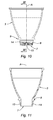
- the sheath 3 shown more particularly on the Figures 10 and 11 , comprises at its base a wide circular opening 7, around which is arranged an external thread 8, complementary to the internal thread 6 of the dispensing nozzle 2.
- a collar 9 is formed on the outside of the sleeve 3, above external thread 8.
- the central tube 4 has, at low height above its lower end, an annular shoulder 10 provided to abut against the circular edge of the opening 7 of the sleeve 3. Molded, this tube 4 comprises, towards its lower end, two diametrically opposed bosses, with a first boss 11 serving for the angular indexing of the tube 4, and a second boss 12 for locking this tube 4 relative to the sleeve 3.
- the first boss 11 of the central tube 4 is provided to cooperate with a first notch 13, formed at the base of the sleeve 3 at the thread 8, to perform the angular indexing of the central tube 4 relative to the sleeve 3.
- the second boss 12 of the central tube 4 is provided to cooperate with a second notch 14, also formed at the base of the sleeve 3 at the thread 8 but in a position diametrically opposed to the first notch 13, to achieve the locking of the tube 4 on the sheath 3.
- the central tube 4 is provided with a series of lateral holes 15, pierced in its wall above the annular shoulder 10, the holes 15 being in variable number (as specified below).
- This tube 4 finally has, internally, pairs of ribs 16 parallel to its axis, which surround the various lateral holes 15.
- the angular indexing of the central tube 4, with respect to the sheath 3, fixes the angular positions of all the holes 15 of this tube 4 relative to the sheath 3, thus also with respect to the dispensing nozzle 2, fixed to the base of the sheath 3.
- the screwing of the dispensing nozzle 2 on the thread 8 of the sleeve 3, until the stop of this nozzle 2 against the collar 9 of the sheath 3, determines an angular position or orientation constant of the dispensing nozzle 2 relatively to the sleeve 3, thus also relative to the central tube 4.
- a main food material 17 of pasty consistency is brought into the tube 4, thus in the center of the apparatus.
- Another food material, said secondary material 18, also of pasty consistency is fed into the sheath 3 around the tube 4, thus coaxially with the main material 17.
- this main material carries with it the secondary material 18, through the various lateral holes 15 of the central tube 4.
- the secondary material 18 will form streaks or scratches 19 parallel to the surface of the main material 17 (see figure 2 ).
- the secondary material 18 is of a color distinct from that of the main material 17, these streaks or stripes 19 will create a specific decorative effect.
- the secondary material 18 has a flavor different from that of the main material 17, we will obtain (when consuming the product) a combination of two flavors.
- the outlet orifice 5 of the dispensing nozzle 2 is of circular section, so that the product is delivered in the form of a cord itself of circular section, with streaks or parallel stripes 19, distributed on the periphery of this cord of product.
- the lateral holes 15 of the central tube 4 there will be more or fewer streaks or scratches, and also more or less wide.
- the central tube 4 is interchangeable, it will be possible to obtain with the same apparatus various incrustations of secondary material.
- a central tube 4 provided with three lateral holes 15 of small diameter d makes it possible to obtain three relatively narrow scratches.
- This first tube may be replaced by a central tube 4 provided with four lateral holes 15, which will provide four scratches - see figure 5 .
- the dispensing nozzle 2 may also include an outlet 5 of section other than circular, for example of flat section, for the delivery of a more or less flat strip-shaped product.
- an outlet 5 of section other than circular for example of flat section, for the delivery of a more or less flat strip-shaped product.
- streaks or scratches of secondary material must occupy appropriate positions, in accordance with the shape of the product delivered. In the illustrated example, it is to bring all the secondary material on one and the same side of the delivered product.
- the dispensing nozzle 2 is indexed angularly so that the outlet orifice 5 is oriented in a substantially diametrical manner, and perpendicularly to a diametrical line passing through the indexing and locking means of the central tube 4 relatively 3.
- the central tube 4 of the central holes 4 are here three in number (for example), and are brought together so as to be all on the same half-circumference of this tube 4, for example on the side of the boss 12 provided for blocking of said tube relative to the sleeve 3.
- the dispensing nozzle 2 with "flat" outlet orifice 5 is here angularly indexed relative to the central tube 4, via the sleeve 3, so that the supply of all the secondary material is in correspondence with a predefined side of the outlet orifice 5.
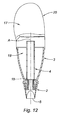
- figure 12 illustrates a use of the apparatus, previously described, in combination with a "decorative pastry bag" 20, fitted on the enlarged upper part of the sheath 3.
- the pocket 20 is filled with the main material 17, which passes from the pocket 20 in the central tube 4 of the apparatus.
- the sleeve 3 being filled with the secondary material 18 (around the central tube 4), the main material 17 contained in the bag 20 will also press the secondary material 18 to force it to pass through the lateral holes 15 of the tube 4, and to meet with the main material by forming the desired streaks or stripes.
Landscapes
- Engineering & Computer Science (AREA)
- Life Sciences & Earth Sciences (AREA)
- Food Science & Technology (AREA)
- Chemical & Material Sciences (AREA)
- Polymers & Plastics (AREA)
- Manufacturing & Machinery (AREA)
- Confectionery (AREA)
Abstract
Description
- La présente invention concerne un appareil destiné à la réalisation de décorations culinaires à deux couleurs et/ou deux saveurs distinctes, c'est-à-dire un appareil qui associe et qui distribue de façon simultanée deux matières alimentaires de consistance pâteuse, distinctes l'une de l'autre par leur aspect et/ou par leur goût. Plus particulièrement, cet appareil associe, à une matière alimentaire principale, une matière alimentaire secondaire qui forme des stries ou rayures parallèles à la surface de la matière principale. Cette invention trouve des applications dans les domaines de la pâtisserie, de la restauration, des activités de traiteur et analogues.
- On connaît, depuis fort longtemps, des appareils désignés comme « douilles », utilisés pour la décoration dans le domaine de la pâtisserie, en association avec une poche, pour la distribution d'une matière alimentaire pâteuse unique - voir par exemple les brevets français
416467 598674 1013040 - Il a aussi été déjà proposé des dispositifs analogues mais conçus pour le stockage et la distribution simultanée de deux matières alimentaires distinctes. Dans ces dispositifs, une poche est compartimentée de manière à stocker, de façon séparée, les deux matières à distribuer. Toutefois, ces deux matières sont distribuées « en parallèle » ou de façon concentrique, sans effet d'entraînement d'une matière par l'autre, et sans création d'un décor particulier résultant de l'association de couleurs. Les propositions connues sont relativement nombreuses :
- Brevet français
1104073 - Brevet
US 608958 et4961517 - Brevet britannique
GB 2423798 - Brevet allemand
DE 3201301 - Modèle d'utilité allemand
DE 20111636 U . - Pour éviter cet inconvénient, il a été déjà envisagé des appareils qui assurent l'entraînement d'une matière par l'autre, en prévoyant qu'une matière alimentaire principale, distribuée suivant l'axe central du dispositif, entraîne avec elle une matière alimentaire secondaire amenée latéralement en plusieurs points, et formant ainsi des stries ou des rayures parallèles à la surface de la matière principale - voir en particulier le brevet français
2472947 813514 US 3331535 . - Ces derniers appareils utilisent, pour la distribution simultanée des deux matières avec un effet d'entraînement d'une matière par l'autre, un organe tubulaire parcouru par la matière principale et pourvu d'ouvertures latérales au travers desquelles la matière secondaire est admise pour venir se joindre à la matière principale. Cette conception implique actuellement l'utilisation d'un embout de sortie de section circulaire, et ne permet pas de faire varier la forme générale et l'aspect de détail des matières distribuées. A titre d'exemple significatif, les dispositifs du brevet français
2472947 813514 - La présente invention vise à éliminer ces derniers inconvénients, et elle a donc pour but de fournir un appareil du genre ici concerné, destiné à la réalisation de décorations culinaires à deux couleurs et/ou deux saveurs, qui permet de modifier facilement la forme et l'aspect du produit distribué.
- A cet effet, l'invention a pour objet un appareil destiné à la réalisation de décorations culinaires à deux couleurs et/ou deux saveurs distinctes, l'appareil étant prévu pour la distribution d'une matière alimentaire principale de consistance pâteuse, délivrée suivant son axe central, et d'une matière alimentaire secondaire elle aussi de consistance pâteuse amenée latéralement en plusieurs points et formant ainsi des stries ou rayures parallèles à la surface de la matière principale, l'appareil comprenant des moyens de stockage des deux matières à distribuer ou étant associé à de tels moyens de stockage, et cet appareil étant essentiellement caractérisé par le fait qu'il comporte, en arrière d'un embout de distribution interchangeable avec orifice de sortie par lequel sortent les deux matières alimentaires associées, un fourreau à l'intérieur duquel est disposé un tube central lui-même interchangeable, pourvu d'ouvertures latérales du genre trous ou fentes prévues pour l'amenée de la matière secondaire vers la matière principale, des moyens étant prévus pour l'indexage angulaire du tube central par rapport au fourreau et/ou à l'embout de distribution. Ainsi, l'invention offre la possibilité avantageuse de varier, selon le souhait ou le besoin des utilisateurs, le type d'incrustation de la matière secondaire dans la matière principale, ceci grâce au système ici proposé de tubes interchangeables, notamment avec la possibilité d'obtenir un nombre variable de rayures formées par la matière secondaire à la surface de la matière principale. Par exemple selon le nombre des ouvertures du genre trous ou fentes du tube, on peut obtenir 2, 3, 4 ou 5 rayures. De plus, la section et l'emplacement des trous ou fentes des tubes peuvent varier pour l'obtention d'effets visuels divers.
- De plus, grâce à l'indexage du tube par rapport à l'embout de distribution, l'invention permet de distribuer non seulement des cordons de produit de section ronde, mais encore des cordons de produit de section autre, par exemple plate, selon la forme de l'orifice de sortie de l'embout, tout en respectant une position et une répartition précises des rayures de matière secondaire à la surface de la matière principale.
- Du point de vue constructif, et afin de faciliter le montage interchangeable du tube central, celui-ci est avantageusement pourvu, à son extrémité la plus proche de l'embout de distribution, de moyens d'indexage angulaire relativement au fourreau, et de moyens de blocage sur ce fourreau. Ces moyens d'indexage et de blocage prennent avantageusement la forme d'ergots ou de bossages, facilement obtenus par moulage lors de la réalisation du tube, qui coopèrent avec des conformations complémentaires, par exemple avec des encoches d'indexage et de blocage, prévues à la base du fourreau.
- De préférence, notamment dans le cas où l'embout de distribution comporte un orifice de sortie de section non ronde, par exemple de forme aplatie, cet embout comporte lui-même des moyens d'indexage angulaire relativement au fourreau et/ou au tube central, de manière à faire correspondre la position angulaire du tube, donc aussi de ses ouvertures latérales du genre trous ou fentes, avec la position angulaire de l'embout de distribution. Si l'embout de distribution comporte un filetage qui coopère avec un filetage complémentaire porté par le fourreau, une solution particulièrement simple consiste à réaliser l'indexage angulaire de l'embout relativement au fourreau en fin de vissage, par butée de cet embout contre une collerette du fourreau.
- L'appareil objet de l'invention peut être complété par un dispositif de « pistolet » ou de presse, adapté pour extruder simultanément les deux matières alimentaires pâteuses à distribuer. Toutefois, cet appareil peut aussi être simplement inséré dans une « poche pâtissière à décor » de conception classique, en général disponible chez les professionnels susceptibles d'utiliser ledit appareil ; ainsi, l'appareil objet de l'invention est réalisable de façon simple, compacte et économique, tout en conservant l'ensemble de ses fonctions et avantages.
- L'invention sera mieux comprise à l'aide de la description qui suit, en référence au dessin schématique annexé représentant, à titre d'exemple, une forme d'exécution de cet appareil pour la réalisation de décorations culinaires à deux couleurs et/ou deux saveurs :
-
Figure 1 est une vue en éclaté d'un appareil conforme à la présente invention, montrant ses divers composants ; -
Figure 2 est une vue en coupe passant par l'axe central de cet appareil, suivant la ligne II-II de lafigure 3 ; -
Figure 3 est une vue de côté de l'appareil, équipé d'un embout de distribution avec orifice de sortie de section circulaire ; -
Figure 4 est une vue en coupe transversale du tube central interchangeable de l'appareil desfigures 1 à 3 , au niveau des orifices latéraux ; -
Figures 5 et 6 sont des vues en coupe similaires à lafigure 4 , illustrant des variantes du tube central interchangeable ; -
Figure 7 est une vue de côté du même appareil, équipé d'un embout de distribution avec orifice de sortie de section plate ; -
Figure 8 est une vue en plan par-dessus de l'appareil de lafigure 7 ; -
Figure 9 est une vue en coupe transversale d'un tube central utilisable dans l'appareil desfigures 7 et 8 ; -
Figure 10 est une vue de côté du fourreau seul, avec ses moyens d'indexage et de blocage ; -
Figure 11 est une vue en coupe de ce fourreau, suivant la ligne XI - XI de lafigure 10 ; -
Figure 12 illustre l'utilisation de l'appareil objet de l'invention en combinaison avec une « poche pâtissière à décor ». - En se référant aux
figures 1 à 3 , un appareil conforme à l'invention, destiné à la réalisation de décorations culinaires, se compose essentiellement d'un embout de distribution 2, d'un fourreau 3 et d'un tube central 4, disposés coaxialement suivant un axe central A. Lorsque ces trois composants sont réunis, l'embout de distribution 2 est monté à la base du fourreau 3, qui possède une forme évasée vers le haut, et le tube 4 prend place à l'intérieur du fourreau 3, entre l'embout 2 et le niveau supérieur de ce fourreau 3. - De forme générale conique, l'embout de distribution 2 comporte à sa pointe un orifice de sortie 5, par lequel est distribué le produit à délivrer. Dans sa partie supérieure, l'embout 2 est pourvu d'un filetage intérieur 6 prévu pour sa liaison avec le fourreau 3.
- Le fourreau 3, représenté plus particulièrement sur les
figures 10 et 11 , comporte à sa base une large ouverture circulaire 7, autour de laquelle est aménagé un filetage extérieur 8, complémentaire du filetage intérieur 6 de l'embout de distribution 2. Une collerette 9 est formée sur l'extérieur du fourreau 3, au-dessus du filetage extérieur 8. - Le tube central 4 présente, à faible hauteur au-dessus de son extrémité inférieure, un épaulement annulaire 10 prévu pour venir en butée contre le bord circulaire de l'ouverture 7 du fourreau 3. Réalisé par moulage, ce tube 4 comporte, vers son extrémité inférieure, deux bossages diamétralement opposés, avec un premier bossage 11 servant à l'indexage angulaire du tube 4, et un second bossage 12 servant au blocage de ce tube 4 relativement au fourreau 3.
- Le premier bossage 11 du tube central 4 est prévu pour coopérer avec une première encoche 13, formée à la base du fourreau 3 au niveau du filetage 8, pour réaliser l'indexage angulaire du tube central 4 par rapport au fourreau 3. Le second bossage 12 du tube central 4 est prévu pour coopérer avec une seconde encoche 14, elle aussi formée à la base du fourreau 3 au niveau du filetage 8 mais dans une position diamétralement opposée à la première encoche 13, pour réaliser le blocage du tube 4 sur le fourreau 3.
- Le tube central 4 est pourvu d'une série de trous latéraux 15, percés dans sa paroi au-dessus de l'épaulement annulaire 10, les trous 15 étant en nombre variable (comme précisé ci-après). Ce tube 4 comporte enfin, intérieurement, des paires de nervures 16 parallèles à son axe, qui encadrent les différents trous latéraux 15.
- L'indexage angulaire du tube central 4, par rapport au fourreau 3, fixe les positions angulaires de tous les trous 15 de ce tube 4 relativement au fourreau 3, donc aussi par rapport à l'embout de distribution 2, fixé à la base du fourreau 3. A cet égard, on notera que le vissage de l'embout de distribution 2 sur le filetage 8 du fourreau 3, jusqu'à la butée de cet embout 2 contre la collerette 9 du fourreau 3, détermine une position angulaire ou orientation constante de l'embout de distribution 2 relativement au fourreau 3, donc aussi relativement au tube central 4.
- Pour l'utilisation de l'appareil, une matière alimentaire principale 17 de consistance pâteuse est amenée dans le tube 4, donc au centre de l'appareil. Une autre matière alimentaire, dite matière secondaire 18, elle aussi de consistance pâteuse, est amenée dans le fourreau 3 autour du tube 4, donc coaxialement à la matière principale 17. Lors de la délivrance de la matière principale 17 par l'orifice de sortie 5 de l'embout de distribution 2, cette matière principale entraîne avec elle la matière secondaire 18, au travers des différents trous latéraux 15 du tube central 4. Il en résulte que la matière secondaire 18 va former des stries ou rayures 19 parallèles à la surface de la matière principale 17 (voir
figure 2 ). En particulier, si la matière secondaire 18 est d'une couleur distincte de celle de la matière principale 17, ces stries ou rayures 19 créeront un effet décoratif spécifique. De plus, si la matière secondaire 18 possède une saveur différente de celle de la matière principale 17, on obtiendra (lors de la consommation du produit) une combinaison de deux saveurs. - Dans le cas le plus simple (
figures 1 à 3 ), l'orifice de sortie 5 de l'embout de distribution 2 est de section circulaire, si bien que le produit est délivré sous la forme d'un cordon lui-même de section circulaire, avec des stries ou rayures 19 parallèles, réparties sur la périphérie de ce cordon de produit. Selon le nombre et les dimensions des trous latéraux 15 du tube central 4, on obtiendra des stries ou rayures plus ou moins nombreuses, et aussi plus ou moins larges. De plus, dans la mesure où le tube central 4 est interchangeable, il sera possible d'obtenir avec le même appareil diverses incrustations de matière secondaire. - Ainsi, comme l'illustre la
figure 4 , un tube central 4 pourvu de trois trous latéraux 15 de petit diamètre d, par exemple égal à deux millimètres, permet d'obtenir trois rayures relativement étroites. Ce premier tube peut être remplacé par un tube central 4 pourvu de quatre trous latéraux 15, qui permettra d'obtenir quatre rayures - voirfigure 5 . Il peut encore être remplacé par un tube central 4 pourvu de trois trous 15 de plus grand diamètre D, par exemple égal à trois millimètres, lequel permettra d'obtenir trois rayures relativement larges - voirfigure 6 . - Dans tous les exemples précédents, les rayures obtenues sont régulièrement réparties sur la circonférence du cordon de produit délivré par l'appareil, ce cordon étant de section circulaire. Dans la mesure où l'embout de sortie 2 utilisé est lui-même interchangeable, on peut notamment utiliser, en combinaison avec l'un ou l'autre des tubes centraux 4 précédemment décrits :
- Soit un embout de distribution 2 avec un orifice de sortie 5 de section strictement circulaire, qui délivrera un produit en forme de cordon d'aspect lisse ;
- Soit un embout de sortie 2 avec un orifice de sortie 5 à bord dentelé, qui délivrera un produit en forme de cordon d'aspect cannelé.
- Toutefois, comme l'illustrent les
figures 7 à 9 , l'embout de distribution 2 peut aussi comporter un orifice de sortie 5 de section autre que circulaire, par exemple de section plate, en vue de la délivrance d'un produit en forme de bande plus ou moins aplatie. Dans un tel cas, les stries ou rayures de matière secondaire doivent occuper des positions appropriées, en concordance avec la forme du produit délivré. Dans l'exemple illustré, il s'agit d'amener toute la matière secondaire sur un seul et même côté du produit délivré. - Dans ce cas, comme le montre en particulier la
figure 8 , l'embout de distribution 2 est indexé angulairement de telle sorte que l'orifice de sortie 5 soit orienté d'une manière sensiblement diamétrale, et perpendiculairement à une ligne diamétrale passant par les moyens d'indexage et de blocage du tube central 4 relativement au fourreau 3. De plus, comme le montre lafigure 9 , les trous latéraux 15 tube central 4 sont ici au nombre de trois (par exemple), et sont rapprochés de manière à se situer tous sur une même demi-circonférence de ce tube 4, par exemple du côté du bossage 12 prévu pour le blocage dudit tube relativement au fourreau 3. Ainsi, l'embout de distribution 2 avec orifice de sortie « plat » 5 se trouve ici indexé angulairement relativement au tube central 4, par l'intermédiaire du fourreau 3, de telle sorte que l'amenée de toute la matière secondaire se fasse en correspondance avec un côté prédéfini de l'orifice de sortie 5. - Enfin, la
figure 12 illustre une utilisation de l'appareil, précédemment décrit, en combinaison avec une « poche pâtissière à décor » 20, adaptée sur la partie supérieure élargie du fourreau 3. La poche 20 est remplie de la matière principale 17, laquelle passe de la poche 20 dans le tube central 4 de l'appareil. Le fourreau 3 étant rempli de la matière secondaire 18 (autour du tube central 4), la matière principale 17 contenue dans la poche 20 va aussi presser la matière secondaire 18 pour la forcer à passer au travers des trous latéraux 15 du tube 4, et à se réunir à la matière principale en formant les stries ou rayures souhaitées. - On ne s'éloignerait pas du cadre de l'invention, telle que définie dans les revendications annexées :
- En modifiant les formes de détail ou les matières constitutives des divers composants de l'appareil ;
- En réalisant l'embout de distribution avec un orifice de sortie de toute forme ;
- En prévoyant, sur le tube central, des ouvertures latérales en nombre quelconque, de toutes formes et dimensions ;
- En prévoyant tous moyens additionnels pour la poussée de la matière principale et de la matière secondaire vers l'embout de distribution ;
- En destinant l'appareil à toutes professions et activités : pâtisserie, restauration, traiteur, etc...
Claims (6)
- Appareil destiné à la réalisation de décorations culinaires à deux couleurs et/ou deux saveurs distinctes, l'appareil étant prévu pour la distribution d'une matière alimentaire principale (17) de consistance pâteuse, délivrée suivant son axe central (A), et d'une matière alimentaire secondaire (18) elle aussi de consistance pâteuse amenée latéralement en plusieurs points et formant ainsi des stries ou rayures (19) parallèles à la surface de la matière principale (17), l'appareil comprenant des moyens de stockage des matières (17, 18) à distribuer ou étant associé à de tels moyens de stockage (20), caractérisé en ce qu'il comporte, en arrière d'un embout de distribution (2) interchangeable avec orifice de sortie (5) par lequel sortent les deux matières alimentaires (17, 18) associées, un fourreau (3) à l'intérieur duquel est disposé un tube central (4) lui-même interchangeable pourvu d'ouvertures latérales (15) du genre trous ou fentes prévues pour l'amenée de la matière secondaire (18) vers la matière principale (17), des moyens (9, 11, 12, 13, 14) étant prévus pour l'indexage angulaire du tube central (4) par rapport au fourreau (3) et/ou à l'embout de distribution (2).
- Appareil selon la revendication 1, caractérisé en ce que le tube central (4) est pourvu, à son extrémité la plus proche de l'embout de distribution (2), de moyens (11) d'indexage angulaire relativement au fourreau (3), et de moyens (12) de blocage sur ce fourreau (3).
- Appareil selon la revendication 2, caractérisé en ce que lesdits moyens d'indexage et de blocage prennent la forme d'ergots ou de bossages (11, 12), obtenus par moulage lors de la réalisation du tube (4), qui coopèrent avec des conformations complémentaires, par exemple avec des encoches d'indexage et de blocage (13, 14), prévues à la base du fourreau (3).
- Appareil selon l'une des revendications 1 à 3, caractérisé en ce que, notamment dans le cas où l'embout de distribution (2) comporte un orifice de sortie (5) de section non ronde, par exemple de forme aplatie, cet embout (2) comporte lui-même des moyens d'indexage angulaire relativement au fourreau (3) et/ou au tube central (4), de manière à faire correspondre la position angulaire du tube (4), donc aussi de ses ouvertures latérales (15) du genre trous ou fentes, avec la position angulaire de l'embout de distribution (2).
- Appareil selon la revendication 4, caractérisé en ce que l'embout de distribution (2) comporte un filetage (6) qui coopère avec un filetage complémentaire (8) porté par le fourreau (3), et en ce que l'indexage angulaire de l'embout (2) relativement au fourreau (3) est réalisé en fin de vissage, par la butée de cet embout (2) contre une collerette (9) du fourreau (3).
- Appareil selon l'une des revendications 1 à 5, caractérisé par son insertion dans une « poche pâtissière à décor » (20).
Applications Claiming Priority (1)
| Application Number | Priority Date | Filing Date | Title |
|---|---|---|---|
| FR0950415A FR2941352B1 (fr) | 2009-01-23 | 2009-01-23 | Appareil pour la realisation de decorations culinaires a deux couleurs et/ou deux saveurs |
Publications (2)
| Publication Number | Publication Date |
|---|---|
| EP2210502A1 true EP2210502A1 (fr) | 2010-07-28 |
| EP2210502B1 EP2210502B1 (fr) | 2011-10-12 |
Family
ID=41120253
Family Applications (1)
| Application Number | Title | Priority Date | Filing Date |
|---|---|---|---|
| EP10151335A Not-in-force EP2210502B1 (fr) | 2009-01-23 | 2010-01-21 | Appareil pour la réalisation de décorations culinaires à deux couleurs et/ou deux saveurs |
Country Status (4)
| Country | Link |
|---|---|
| EP (1) | EP2210502B1 (fr) |
| AT (1) | ATE527890T1 (fr) |
| ES (1) | ES2375864T3 (fr) |
| FR (1) | FR2941352B1 (fr) |
Cited By (2)
| Publication number | Priority date | Publication date | Assignee | Title |
|---|---|---|---|---|
| CN102178333A (zh) * | 2011-03-24 | 2011-09-14 | 宁波银瑞有机硅科技发展有限公司 | 食料挤出器 |
| FR3016270A1 (fr) * | 2014-01-13 | 2015-07-17 | Lionel Marrie | Poche a douille multifonctions |
Citations (14)
| Publication number | Priority date | Publication date | Assignee | Title |
|---|---|---|---|---|
| US608958A (en) | 1898-08-09 | Louis ferraioli | ||
| FR416467A (fr) | 1910-05-27 | 1910-10-21 | Hugo Knauf & C Soc | Douille à décor pour patissiers |
| FR598674A (fr) | 1925-03-28 | 1925-12-22 | Douille démontable à cônes interchangeables pour la décoration de la pâtisserie | |
| FR1013040A (fr) | 1950-02-20 | 1952-07-22 | Trousse à décor pour pâtissiers, cuisiniers et charcutiers | |
| FR1104073A (fr) | 1954-04-26 | 1955-11-16 | Procédé et dispositif pour la fabrication de produits alimentaires composites | |
| GB813514A (en) | 1956-06-11 | 1959-05-21 | Leonard Lawrence Marraffino | Improvements in or relating to devices for dispensing paste-like materials |
| US3042263A (en) * | 1959-11-13 | 1962-07-03 | Sr John Gallo | Striped paste dispenser |
| US3331535A (en) | 1964-12-24 | 1967-07-18 | Sterling Drug Inc | Dispenser for paste-like materials |
| FR2472947A1 (fr) | 1980-01-02 | 1981-07-10 | Mike & Kremmel Ltd | Presse ou dispositif extrudeur pour melanges d'aliments pateux ou semi-liquides |
| DE3201301A1 (de) | 1982-01-18 | 1983-07-28 | Anton 8221 Bergen Bernauer | Spritzbeutel fuer formbare nahrungsmittelmassen |
| DE8702580U1 (de) * | 1987-02-20 | 1987-05-27 | W.F. Kaiser U. Co Gmbh, 5408 Nassau | Mundstück für einen Spritzbeutel |
| US4961517A (en) | 1985-12-05 | 1990-10-09 | Angela Tkac | Decorating cakes |
| DE20111636U1 (de) | 2001-07-14 | 2001-12-06 | Wronna, Thomas, 21614 Buxtehude | Dreikammerspritzbeutel |
| GB2423798A (en) | 2005-03-05 | 2006-09-06 | Chris Chapman | Piping bag |
-
2009
- 2009-01-23 FR FR0950415A patent/FR2941352B1/fr not_active Expired - Fee Related
-
2010
- 2010-01-21 EP EP10151335A patent/EP2210502B1/fr not_active Not-in-force
- 2010-01-21 ES ES10151335T patent/ES2375864T3/es active Active
- 2010-01-21 AT AT10151335T patent/ATE527890T1/de not_active IP Right Cessation
Patent Citations (14)
| Publication number | Priority date | Publication date | Assignee | Title |
|---|---|---|---|---|
| US608958A (en) | 1898-08-09 | Louis ferraioli | ||
| FR416467A (fr) | 1910-05-27 | 1910-10-21 | Hugo Knauf & C Soc | Douille à décor pour patissiers |
| FR598674A (fr) | 1925-03-28 | 1925-12-22 | Douille démontable à cônes interchangeables pour la décoration de la pâtisserie | |
| FR1013040A (fr) | 1950-02-20 | 1952-07-22 | Trousse à décor pour pâtissiers, cuisiniers et charcutiers | |
| FR1104073A (fr) | 1954-04-26 | 1955-11-16 | Procédé et dispositif pour la fabrication de produits alimentaires composites | |
| GB813514A (en) | 1956-06-11 | 1959-05-21 | Leonard Lawrence Marraffino | Improvements in or relating to devices for dispensing paste-like materials |
| US3042263A (en) * | 1959-11-13 | 1962-07-03 | Sr John Gallo | Striped paste dispenser |
| US3331535A (en) | 1964-12-24 | 1967-07-18 | Sterling Drug Inc | Dispenser for paste-like materials |
| FR2472947A1 (fr) | 1980-01-02 | 1981-07-10 | Mike & Kremmel Ltd | Presse ou dispositif extrudeur pour melanges d'aliments pateux ou semi-liquides |
| DE3201301A1 (de) | 1982-01-18 | 1983-07-28 | Anton 8221 Bergen Bernauer | Spritzbeutel fuer formbare nahrungsmittelmassen |
| US4961517A (en) | 1985-12-05 | 1990-10-09 | Angela Tkac | Decorating cakes |
| DE8702580U1 (de) * | 1987-02-20 | 1987-05-27 | W.F. Kaiser U. Co Gmbh, 5408 Nassau | Mundstück für einen Spritzbeutel |
| DE20111636U1 (de) | 2001-07-14 | 2001-12-06 | Wronna, Thomas, 21614 Buxtehude | Dreikammerspritzbeutel |
| GB2423798A (en) | 2005-03-05 | 2006-09-06 | Chris Chapman | Piping bag |
Cited By (2)
| Publication number | Priority date | Publication date | Assignee | Title |
|---|---|---|---|---|
| CN102178333A (zh) * | 2011-03-24 | 2011-09-14 | 宁波银瑞有机硅科技发展有限公司 | 食料挤出器 |
| FR3016270A1 (fr) * | 2014-01-13 | 2015-07-17 | Lionel Marrie | Poche a douille multifonctions |
Also Published As
| Publication number | Publication date |
|---|---|
| EP2210502B1 (fr) | 2011-10-12 |
| ATE527890T1 (de) | 2011-10-15 |
| FR2941352B1 (fr) | 2011-02-25 |
| ES2375864T3 (es) | 2012-03-07 |
| FR2941352A1 (fr) | 2010-07-30 |
Similar Documents
| Publication | Publication Date | Title |
|---|---|---|
| EP0421860B1 (fr) | Dispositif de distribution comportant au moins un flacon à embout cassable | |
| CA2268387C (fr) | Embout doseur | |
| US10086979B2 (en) | Edible paste dispenser | |
| FR2980344A1 (fr) | Bouchon pour bouteille a cosmetique | |
| EP3603817B1 (fr) | Montage et démontage facilité d'une pompe par rapport au réservoir | |
| FR2700316A1 (fr) | Dispositif pour distribuer goutte-à-goutte un liquide médicamenteux ou cosmétique contenu dans un flacon souple. | |
| FR2920650A1 (fr) | Distributeur applicateur de produit cosmetique | |
| EP1935276A1 (fr) | Dispositif d'application de produit sur une mèche de cheveux | |
| EP2210502B1 (fr) | Appareil pour la réalisation de décorations culinaires à deux couleurs et/ou deux saveurs | |
| FR2891530A1 (fr) | Organe de recouvrement, procede de fabrication d'un tel organe et distributeur de produit fluide utlisant un tel organe. | |
| EP0988234A1 (fr) | Contenant muni d'un embout de distribution avec couvercle retractable | |
| CA3121314A1 (fr) | Diffuseur pour recipient sous pression | |
| FR2811639A1 (fr) | Dispositif pour le conditionnement et la distribution d'un produit, notamment un produit capillaire | |
| EP1491110A1 (fr) | Dispositif de conditionnement et de distribution | |
| EP0277893B1 (fr) | Distributeur pour produit pateux à poussoir axial rotatif | |
| FR2906981A1 (fr) | Embout de distribution pour dispositif de conditionnement et de distribution d'un produit cosmetique, et dispositif associe | |
| EP3592174B1 (fr) | Tete de distribution et d'application de produit fluide | |
| FR2953694A1 (fr) | Dispositif de conditionnement et d'application a effet de froid. | |
| FR2935877A1 (fr) | Dispositif d'essorage pour ensemble applicateur pour produit cosmetique liquide, pateux ou en poudre tel que du mascara ou de l'eye-liner | |
| EP2781162B1 (fr) | Dispositif de distribution multi-douilles pour produit alimentaire | |
| FR3078061A1 (fr) | Distributeur de produit fluide. | |
| EP3654800B1 (fr) | Mecanisme de came, en particulier pour un applicateur de produit cosmetique | |
| EP3890503B1 (fr) | Douille multiple interchangeable | |
| FR2799449A1 (fr) | Flacon doseur a pompe | |
| FR2912670A1 (fr) | Dispositif de distribution de produit fluide |
Legal Events
| Date | Code | Title | Description |
|---|---|---|---|
| PUAI | Public reference made under article 153(3) epc to a published international application that has entered the european phase |
Free format text: ORIGINAL CODE: 0009012 |
|
| AK | Designated contracting states |
Kind code of ref document: A1 Designated state(s): AT BE BG CH CY CZ DE DK EE ES FI FR GB GR HR HU IE IS IT LI LT LU LV MC MK MT NL NO PL PT RO SE SI SK SM TR |
|
| AX | Request for extension of the european patent |
Extension state: AL BA RS |
|
| 17P | Request for examination filed |
Effective date: 20110118 |
|
| GRAP | Despatch of communication of intention to grant a patent |
Free format text: ORIGINAL CODE: EPIDOSNIGR1 |
|
| RIC1 | Information provided on ipc code assigned before grant |
Ipc: A21C 15/00 20060101ALI20110408BHEP Ipc: A23G 3/28 20060101AFI20110408BHEP Ipc: B29C 47/04 20060101ALI20110408BHEP Ipc: A23P 1/12 20060101ALI20110408BHEP |
|
| RIN1 | Information on inventor provided before grant (corrected) |
Inventor name: VASSEUR, CHRISTOPHE Inventor name: FRIGGERI, PATRICK |
|
| GRAS | Grant fee paid |
Free format text: ORIGINAL CODE: EPIDOSNIGR3 |
|
| GRAA | (expected) grant |
Free format text: ORIGINAL CODE: 0009210 |
|
| AK | Designated contracting states |
Kind code of ref document: B1 Designated state(s): AT BE BG CH CY CZ DE DK EE ES FI FR GB GR HR HU IE IS IT LI LT LU LV MC MK MT NL NO PL PT RO SE SI SK SM TR |
|
| REG | Reference to a national code |
Ref country code: GB Ref legal event code: FG4D Free format text: NOT ENGLISH |
|
| REG | Reference to a national code |
Ref country code: CH Ref legal event code: EP |
|
| REG | Reference to a national code |
Ref country code: IE Ref legal event code: FG4D |
|
| REG | Reference to a national code |
Ref country code: DE Ref legal event code: R096 Ref document number: 602010000254 Country of ref document: DE Effective date: 20111208 |
|
| REG | Reference to a national code |
Ref country code: NL Ref legal event code: T3 |
|
| REG | Reference to a national code |
Ref country code: ES Ref legal event code: FG2A Ref document number: 2375864 Country of ref document: ES Kind code of ref document: T3 Effective date: 20120307 |
|
| LTIE | Lt: invalidation of european patent or patent extension |
Effective date: 20111012 |
|
| REG | Reference to a national code |
Ref country code: AT Ref legal event code: MK05 Ref document number: 527890 Country of ref document: AT Kind code of ref document: T Effective date: 20111012 |
|
| PG25 | Lapsed in a contracting state [announced via postgrant information from national office to epo] |
Ref country code: IS Free format text: LAPSE BECAUSE OF FAILURE TO SUBMIT A TRANSLATION OF THE DESCRIPTION OR TO PAY THE FEE WITHIN THE PRESCRIBED TIME-LIMIT Effective date: 20120212 Ref country code: LT Free format text: LAPSE BECAUSE OF FAILURE TO SUBMIT A TRANSLATION OF THE DESCRIPTION OR TO PAY THE FEE WITHIN THE PRESCRIBED TIME-LIMIT Effective date: 20111012 Ref country code: NO Free format text: LAPSE BECAUSE OF FAILURE TO SUBMIT A TRANSLATION OF THE DESCRIPTION OR TO PAY THE FEE WITHIN THE PRESCRIBED TIME-LIMIT Effective date: 20120112 |
|
| REG | Reference to a national code |
Ref country code: IE Ref legal event code: FD4D |
|
| PG25 | Lapsed in a contracting state [announced via postgrant information from national office to epo] |
Ref country code: LV Free format text: LAPSE BECAUSE OF FAILURE TO SUBMIT A TRANSLATION OF THE DESCRIPTION OR TO PAY THE FEE WITHIN THE PRESCRIBED TIME-LIMIT Effective date: 20111012 Ref country code: HR Free format text: LAPSE BECAUSE OF FAILURE TO SUBMIT A TRANSLATION OF THE DESCRIPTION OR TO PAY THE FEE WITHIN THE PRESCRIBED TIME-LIMIT Effective date: 20111012 Ref country code: SI Free format text: LAPSE BECAUSE OF FAILURE TO SUBMIT A TRANSLATION OF THE DESCRIPTION OR TO PAY THE FEE WITHIN THE PRESCRIBED TIME-LIMIT Effective date: 20111012 Ref country code: PT Free format text: LAPSE BECAUSE OF FAILURE TO SUBMIT A TRANSLATION OF THE DESCRIPTION OR TO PAY THE FEE WITHIN THE PRESCRIBED TIME-LIMIT Effective date: 20120213 Ref country code: SE Free format text: LAPSE BECAUSE OF FAILURE TO SUBMIT A TRANSLATION OF THE DESCRIPTION OR TO PAY THE FEE WITHIN THE PRESCRIBED TIME-LIMIT Effective date: 20111012 Ref country code: GR Free format text: LAPSE BECAUSE OF FAILURE TO SUBMIT A TRANSLATION OF THE DESCRIPTION OR TO PAY THE FEE WITHIN THE PRESCRIBED TIME-LIMIT Effective date: 20120113 |
|
| PG25 | Lapsed in a contracting state [announced via postgrant information from national office to epo] |
Ref country code: CY Free format text: LAPSE BECAUSE OF FAILURE TO SUBMIT A TRANSLATION OF THE DESCRIPTION OR TO PAY THE FEE WITHIN THE PRESCRIBED TIME-LIMIT Effective date: 20111012 |
|
| PG25 | Lapsed in a contracting state [announced via postgrant information from national office to epo] |
Ref country code: CZ Free format text: LAPSE BECAUSE OF FAILURE TO SUBMIT A TRANSLATION OF THE DESCRIPTION OR TO PAY THE FEE WITHIN THE PRESCRIBED TIME-LIMIT Effective date: 20111012 Ref country code: DK Free format text: LAPSE BECAUSE OF FAILURE TO SUBMIT A TRANSLATION OF THE DESCRIPTION OR TO PAY THE FEE WITHIN THE PRESCRIBED TIME-LIMIT Effective date: 20111012 Ref country code: IE Free format text: LAPSE BECAUSE OF FAILURE TO SUBMIT A TRANSLATION OF THE DESCRIPTION OR TO PAY THE FEE WITHIN THE PRESCRIBED TIME-LIMIT Effective date: 20111012 Ref country code: SK Free format text: LAPSE BECAUSE OF FAILURE TO SUBMIT A TRANSLATION OF THE DESCRIPTION OR TO PAY THE FEE WITHIN THE PRESCRIBED TIME-LIMIT Effective date: 20111012 Ref country code: BG Free format text: LAPSE BECAUSE OF FAILURE TO SUBMIT A TRANSLATION OF THE DESCRIPTION OR TO PAY THE FEE WITHIN THE PRESCRIBED TIME-LIMIT Effective date: 20120112 Ref country code: EE Free format text: LAPSE BECAUSE OF FAILURE TO SUBMIT A TRANSLATION OF THE DESCRIPTION OR TO PAY THE FEE WITHIN THE PRESCRIBED TIME-LIMIT Effective date: 20111012 |
|
| PLBE | No opposition filed within time limit |
Free format text: ORIGINAL CODE: 0009261 |
|
| STAA | Information on the status of an ep patent application or granted ep patent |
Free format text: STATUS: NO OPPOSITION FILED WITHIN TIME LIMIT |
|
| PG25 | Lapsed in a contracting state [announced via postgrant information from national office to epo] |
Ref country code: RO Free format text: LAPSE BECAUSE OF FAILURE TO SUBMIT A TRANSLATION OF THE DESCRIPTION OR TO PAY THE FEE WITHIN THE PRESCRIBED TIME-LIMIT Effective date: 20111012 Ref country code: MC Free format text: LAPSE BECAUSE OF NON-PAYMENT OF DUE FEES Effective date: 20120131 Ref country code: PL Free format text: LAPSE BECAUSE OF FAILURE TO SUBMIT A TRANSLATION OF THE DESCRIPTION OR TO PAY THE FEE WITHIN THE PRESCRIBED TIME-LIMIT Effective date: 20111012 |
|
| 26N | No opposition filed |
Effective date: 20120713 |
|
| REG | Reference to a national code |
Ref country code: DE Ref legal event code: R097 Ref document number: 602010000254 Country of ref document: DE Effective date: 20120713 |
|
| PG25 | Lapsed in a contracting state [announced via postgrant information from national office to epo] |
Ref country code: AT Free format text: LAPSE BECAUSE OF FAILURE TO SUBMIT A TRANSLATION OF THE DESCRIPTION OR TO PAY THE FEE WITHIN THE PRESCRIBED TIME-LIMIT Effective date: 20111012 |
|
| PG25 | Lapsed in a contracting state [announced via postgrant information from national office to epo] |
Ref country code: MK Free format text: LAPSE BECAUSE OF FAILURE TO SUBMIT A TRANSLATION OF THE DESCRIPTION OR TO PAY THE FEE WITHIN THE PRESCRIBED TIME-LIMIT Effective date: 20111012 |
|
| PG25 | Lapsed in a contracting state [announced via postgrant information from national office to epo] |
Ref country code: FI Free format text: LAPSE BECAUSE OF FAILURE TO SUBMIT A TRANSLATION OF THE DESCRIPTION OR TO PAY THE FEE WITHIN THE PRESCRIBED TIME-LIMIT Effective date: 20111012 |
|
| PG25 | Lapsed in a contracting state [announced via postgrant information from national office to epo] |
Ref country code: MT Free format text: LAPSE BECAUSE OF FAILURE TO SUBMIT A TRANSLATION OF THE DESCRIPTION OR TO PAY THE FEE WITHIN THE PRESCRIBED TIME-LIMIT Effective date: 20111012 |
|
| PGFP | Annual fee paid to national office [announced via postgrant information from national office to epo] |
Ref country code: GB Payment date: 20131216 Year of fee payment: 5 |
|
| PGFP | Annual fee paid to national office [announced via postgrant information from national office to epo] |
Ref country code: FR Payment date: 20131129 Year of fee payment: 5 Ref country code: LU Payment date: 20131223 Year of fee payment: 5 Ref country code: NL Payment date: 20131216 Year of fee payment: 5 |
|
| PGFP | Annual fee paid to national office [announced via postgrant information from national office to epo] |
Ref country code: DE Payment date: 20131128 Year of fee payment: 5 Ref country code: BE Payment date: 20140129 Year of fee payment: 5 |
|
| PG25 | Lapsed in a contracting state [announced via postgrant information from national office to epo] |
Ref country code: SM Free format text: LAPSE BECAUSE OF FAILURE TO SUBMIT A TRANSLATION OF THE DESCRIPTION OR TO PAY THE FEE WITHIN THE PRESCRIBED TIME-LIMIT Effective date: 20111012 |
|
| PGFP | Annual fee paid to national office [announced via postgrant information from national office to epo] |
Ref country code: ES Payment date: 20140123 Year of fee payment: 5 Ref country code: TR Payment date: 20140116 Year of fee payment: 5 Ref country code: IT Payment date: 20140116 Year of fee payment: 5 |
|
| PG25 | Lapsed in a contracting state [announced via postgrant information from national office to epo] |
Ref country code: HU Free format text: LAPSE BECAUSE OF FAILURE TO SUBMIT A TRANSLATION OF THE DESCRIPTION OR TO PAY THE FEE WITHIN THE PRESCRIBED TIME-LIMIT Effective date: 20100121 |
|
| REG | Reference to a national code |
Ref country code: CH Ref legal event code: PL |
|
| PG25 | Lapsed in a contracting state [announced via postgrant information from national office to epo] |
Ref country code: CH Free format text: LAPSE BECAUSE OF NON-PAYMENT OF DUE FEES Effective date: 20140131 Ref country code: LI Free format text: LAPSE BECAUSE OF NON-PAYMENT OF DUE FEES Effective date: 20140131 |
|
| PG25 | Lapsed in a contracting state [announced via postgrant information from national office to epo] |
Ref country code: BE Free format text: LAPSE BECAUSE OF NON-PAYMENT OF DUE FEES Effective date: 20150131 |
|
| REG | Reference to a national code |
Ref country code: DE Ref legal event code: R119 Ref document number: 602010000254 Country of ref document: DE |
|
| REG | Reference to a national code |
Ref country code: NL Ref legal event code: V1 Effective date: 20150801 |
|
| PG25 | Lapsed in a contracting state [announced via postgrant information from national office to epo] |
Ref country code: LU Free format text: LAPSE BECAUSE OF NON-PAYMENT OF DUE FEES Effective date: 20150121 |
|
| GBPC | Gb: european patent ceased through non-payment of renewal fee |
Effective date: 20150121 |
|
| PG25 | Lapsed in a contracting state [announced via postgrant information from national office to epo] |
Ref country code: NL Free format text: LAPSE BECAUSE OF NON-PAYMENT OF DUE FEES Effective date: 20150801 |
|
| PG25 | Lapsed in a contracting state [announced via postgrant information from national office to epo] |
Ref country code: GB Free format text: LAPSE BECAUSE OF NON-PAYMENT OF DUE FEES Effective date: 20150121 Ref country code: DE Free format text: LAPSE BECAUSE OF NON-PAYMENT OF DUE FEES Effective date: 20150801 |
|
| REG | Reference to a national code |
Ref country code: FR Ref legal event code: ST Effective date: 20150930 |
|
| PG25 | Lapsed in a contracting state [announced via postgrant information from national office to epo] |
Ref country code: FR Free format text: LAPSE BECAUSE OF NON-PAYMENT OF DUE FEES Effective date: 20150202 |
|
| PG25 | Lapsed in a contracting state [announced via postgrant information from national office to epo] |
Ref country code: IT Free format text: LAPSE BECAUSE OF NON-PAYMENT OF DUE FEES Effective date: 20150121 |
|
| REG | Reference to a national code |
Ref country code: ES Ref legal event code: FD2A Effective date: 20160226 |
|
| PG25 | Lapsed in a contracting state [announced via postgrant information from national office to epo] |
Ref country code: ES Free format text: LAPSE BECAUSE OF NON-PAYMENT OF DUE FEES Effective date: 20150122 |
|
| PG25 | Lapsed in a contracting state [announced via postgrant information from national office to epo] |
Ref country code: TR Free format text: LAPSE BECAUSE OF NON-PAYMENT OF DUE FEES Effective date: 20150121 |