EP2201089B1 - Cerhaltige additive für schmierstoffzusammensetzungen und herstellungsverfahren dafür - Google Patents
Cerhaltige additive für schmierstoffzusammensetzungen und herstellungsverfahren dafür Download PDFInfo
- Publication number
- EP2201089B1 EP2201089B1 EP08802834.5A EP08802834A EP2201089B1 EP 2201089 B1 EP2201089 B1 EP 2201089B1 EP 08802834 A EP08802834 A EP 08802834A EP 2201089 B1 EP2201089 B1 EP 2201089B1
- Authority
- EP
- European Patent Office
- Prior art keywords
- component
- cerium
- oil
- alkaline earth
- earth metal
- Prior art date
- Legal status (The legal status is an assumption and is not a legal conclusion. Google has not performed a legal analysis and makes no representation as to the accuracy of the status listed.)
- Not-in-force
Links
- 229910052684 Cerium Inorganic materials 0.000 title claims description 87
- GWXLDORMOJMVQZ-UHFFFAOYSA-N cerium Chemical compound [Ce] GWXLDORMOJMVQZ-UHFFFAOYSA-N 0.000 title claims description 85
- 239000000203 mixture Substances 0.000 title claims description 55
- 239000000654 additive Substances 0.000 title claims description 52
- 238000000034 method Methods 0.000 title claims description 42
- 230000001050 lubricating effect Effects 0.000 title claims description 25
- 239000003921 oil Substances 0.000 claims description 63
- 150000007524 organic acids Chemical class 0.000 claims description 60
- CURLTUGMZLYLDI-UHFFFAOYSA-N Carbon dioxide Chemical compound O=C=O CURLTUGMZLYLDI-UHFFFAOYSA-N 0.000 claims description 58
- 229910052784 alkaline earth metal Inorganic materials 0.000 claims description 44
- 150000001342 alkaline earth metals Chemical class 0.000 claims description 44
- 239000002904 solvent Substances 0.000 claims description 42
- 230000015572 biosynthetic process Effects 0.000 claims description 36
- 239000010687 lubricating oil Substances 0.000 claims description 36
- 238000006243 chemical reaction Methods 0.000 claims description 35
- 238000003786 synthesis reaction Methods 0.000 claims description 33
- 150000001875 compounds Chemical class 0.000 claims description 30
- 235000005985 organic acids Nutrition 0.000 claims description 30
- 239000001569 carbon dioxide Substances 0.000 claims description 29
- 229910002092 carbon dioxide Inorganic materials 0.000 claims description 29
- 229910052791 calcium Inorganic materials 0.000 claims description 28
- 239000011575 calcium Substances 0.000 claims description 28
- OYPRJOBELJOOCE-UHFFFAOYSA-N Calcium Chemical compound [Ca] OYPRJOBELJOOCE-UHFFFAOYSA-N 0.000 claims description 27
- 150000007514 bases Chemical class 0.000 claims description 27
- 238000001914 filtration Methods 0.000 claims description 24
- 150000003839 salts Chemical class 0.000 claims description 22
- 230000000996 additive effect Effects 0.000 claims description 20
- 238000004821 distillation Methods 0.000 claims description 18
- 230000008569 process Effects 0.000 claims description 18
- 239000002199 base oil Substances 0.000 claims description 16
- 125000004432 carbon atom Chemical group C* 0.000 claims description 14
- 239000007789 gas Substances 0.000 claims description 14
- 230000035800 maturation Effects 0.000 claims description 13
- 238000002485 combustion reaction Methods 0.000 claims description 12
- XLYOFNOQVPJJNP-UHFFFAOYSA-N water Substances O XLYOFNOQVPJJNP-UHFFFAOYSA-N 0.000 claims description 11
- 125000000217 alkyl group Chemical group 0.000 claims description 10
- 150000001785 cerium compounds Chemical class 0.000 claims description 10
- BDHFUVZGWQCTTF-UHFFFAOYSA-N sulfonic acid Chemical compound OS(=O)=O BDHFUVZGWQCTTF-UHFFFAOYSA-N 0.000 claims description 10
- 239000000126 substance Substances 0.000 claims description 8
- LYCAIKOWRPUZTN-UHFFFAOYSA-N Ethylene glycol Chemical compound OCCO LYCAIKOWRPUZTN-UHFFFAOYSA-N 0.000 claims description 7
- XLYOFNOQVPJJNP-UHFFFAOYSA-M hydroxide Chemical compound [OH-] XLYOFNOQVPJJNP-UHFFFAOYSA-M 0.000 claims description 7
- 230000001965 increasing effect Effects 0.000 claims description 7
- 229910052500 inorganic mineral Inorganic materials 0.000 claims description 7
- 239000011707 mineral Substances 0.000 claims description 7
- 229910052749 magnesium Inorganic materials 0.000 claims description 6
- 239000011777 magnesium Substances 0.000 claims description 6
- FYYHWMGAXLPEAU-UHFFFAOYSA-N Magnesium Chemical compound [Mg] FYYHWMGAXLPEAU-UHFFFAOYSA-N 0.000 claims description 5
- 239000007795 chemical reaction product Substances 0.000 claims description 5
- ISWSIDIOOBJBQZ-UHFFFAOYSA-N Phenol Chemical compound OC1=CC=CC=C1 ISWSIDIOOBJBQZ-UHFFFAOYSA-N 0.000 claims description 4
- 150000001732 carboxylic acid derivatives Chemical class 0.000 claims description 4
- 230000003647 oxidation Effects 0.000 claims description 4
- 238000007254 oxidation reaction Methods 0.000 claims description 4
- YGSDEFSMJLZEOE-UHFFFAOYSA-N salicylic acid Chemical group OC(=O)C1=CC=CC=C1O YGSDEFSMJLZEOE-UHFFFAOYSA-N 0.000 claims description 4
- 235000013311 vegetables Nutrition 0.000 claims description 4
- 150000001338 aliphatic hydrocarbons Chemical class 0.000 claims description 3
- 150000002148 esters Chemical class 0.000 claims description 3
- LFQSCWFLJHTTHZ-UHFFFAOYSA-N Ethanol Chemical compound CCO LFQSCWFLJHTTHZ-UHFFFAOYSA-N 0.000 claims description 2
- 229910006069 SO3H Inorganic materials 0.000 claims description 2
- 150000001336 alkenes Chemical class 0.000 claims description 2
- 125000003342 alkenyl group Chemical group 0.000 claims description 2
- 229910052788 barium Inorganic materials 0.000 claims description 2
- DSAJWYNOEDNPEQ-UHFFFAOYSA-N barium atom Chemical compound [Ba] DSAJWYNOEDNPEQ-UHFFFAOYSA-N 0.000 claims description 2
- 125000004435 hydrogen atom Chemical group [H]* 0.000 claims description 2
- WGCNASOHLSPBMP-UHFFFAOYSA-N hydroxyacetaldehyde Natural products OCC=O WGCNASOHLSPBMP-UHFFFAOYSA-N 0.000 claims description 2
- 150000002576 ketones Chemical class 0.000 claims description 2
- 239000004533 oil dispersion Substances 0.000 claims description 2
- JRZJOMJEPLMPRA-UHFFFAOYSA-N olefin Natural products CCCCCCCC=C JRZJOMJEPLMPRA-UHFFFAOYSA-N 0.000 claims description 2
- FJKROLUGYXJWQN-UHFFFAOYSA-N papa-hydroxy-benzoic acid Natural products OC(=O)C1=CC=C(O)C=C1 FJKROLUGYXJWQN-UHFFFAOYSA-N 0.000 claims description 2
- 229920000642 polymer Polymers 0.000 claims description 2
- 229960004889 salicylic acid Drugs 0.000 claims description 2
- 238000000926 separation method Methods 0.000 claims 5
- 239000006227 byproduct Substances 0.000 claims 2
- 238000005119 centrifugation Methods 0.000 claims 2
- 150000004945 aromatic hydrocarbons Chemical class 0.000 claims 1
- 239000000047 product Substances 0.000 description 39
- OKKJLVBELUTLKV-UHFFFAOYSA-N Methanol Chemical compound OC OKKJLVBELUTLKV-UHFFFAOYSA-N 0.000 description 24
- 238000012360 testing method Methods 0.000 description 21
- YXFVVABEGXRONW-UHFFFAOYSA-N Toluene Chemical compound CC1=CC=CC=C1 YXFVVABEGXRONW-UHFFFAOYSA-N 0.000 description 17
- 239000002253 acid Substances 0.000 description 17
- 239000003599 detergent Substances 0.000 description 15
- 239000013049 sediment Substances 0.000 description 12
- IMNFDUFMRHMDMM-UHFFFAOYSA-N N-Heptane Chemical compound CCCCCCC IMNFDUFMRHMDMM-UHFFFAOYSA-N 0.000 description 10
- 239000000446 fuel Substances 0.000 description 10
- 238000006386 neutralization reaction Methods 0.000 description 10
- UHOVQNZJYSORNB-UHFFFAOYSA-N Benzene Chemical compound C1=CC=CC=C1 UHOVQNZJYSORNB-UHFFFAOYSA-N 0.000 description 9
- XEEYBQQBJWHFJM-UHFFFAOYSA-N Iron Chemical compound [Fe] XEEYBQQBJWHFJM-UHFFFAOYSA-N 0.000 description 9
- -1 alkyl iron carboxylate Chemical class 0.000 description 9
- IJGRMHOSHXDMSA-UHFFFAOYSA-N Atomic nitrogen Chemical compound N#N IJGRMHOSHXDMSA-UHFFFAOYSA-N 0.000 description 8
- 150000007513 acids Chemical class 0.000 description 7
- 239000000314 lubricant Substances 0.000 description 7
- 229910052751 metal Inorganic materials 0.000 description 7
- 239000002184 metal Substances 0.000 description 7
- 230000008929 regeneration Effects 0.000 description 7
- 238000011069 regeneration method Methods 0.000 description 7
- 238000001246 colloidal dispersion Methods 0.000 description 6
- 239000000243 solution Substances 0.000 description 6
- 238000001308 synthesis method Methods 0.000 description 6
- 229920002367 Polyisobutene Polymers 0.000 description 5
- 229910000831 Steel Inorganic materials 0.000 description 5
- NINIDFKCEFEMDL-UHFFFAOYSA-N Sulfur Chemical compound [S] NINIDFKCEFEMDL-UHFFFAOYSA-N 0.000 description 5
- QAOWNCQODCNURD-UHFFFAOYSA-N Sulfuric acid Chemical compound OS(O)(=O)=O QAOWNCQODCNURD-UHFFFAOYSA-N 0.000 description 5
- 239000005864 Sulphur Substances 0.000 description 5
- 238000009825 accumulation Methods 0.000 description 5
- JXLHNMVSKXFWAO-UHFFFAOYSA-N azane;7-fluoro-2,1,3-benzoxadiazole-4-sulfonic acid Chemical compound N.OS(=O)(=O)C1=CC=C(F)C2=NON=C12 JXLHNMVSKXFWAO-UHFFFAOYSA-N 0.000 description 5
- 150000001735 carboxylic acids Chemical class 0.000 description 5
- 230000008878 coupling Effects 0.000 description 5
- 238000010168 coupling process Methods 0.000 description 5
- 238000005859 coupling reaction Methods 0.000 description 5
- 238000011156 evaluation Methods 0.000 description 5
- 229910052742 iron Inorganic materials 0.000 description 5
- 239000007788 liquid Substances 0.000 description 5
- 239000010959 steel Substances 0.000 description 5
- VTYYLEPIZMXCLO-UHFFFAOYSA-L Calcium carbonate Chemical compound [Ca+2].[O-]C([O-])=O VTYYLEPIZMXCLO-UHFFFAOYSA-L 0.000 description 4
- 239000004743 Polypropylene Substances 0.000 description 4
- 239000002956 ash Substances 0.000 description 4
- VZDYWEUILIUIDF-UHFFFAOYSA-J cerium(4+);disulfate Chemical compound [Ce+4].[O-]S([O-])(=O)=O.[O-]S([O-])(=O)=O VZDYWEUILIUIDF-UHFFFAOYSA-J 0.000 description 4
- 239000003153 chemical reaction reagent Substances 0.000 description 4
- 229930195733 hydrocarbon Natural products 0.000 description 4
- 150000002430 hydrocarbons Chemical class 0.000 description 4
- 238000010348 incorporation Methods 0.000 description 4
- 229910052757 nitrogen Inorganic materials 0.000 description 4
- BMMGVYCKOGBVEV-UHFFFAOYSA-N oxo(oxoceriooxy)cerium Chemical compound [Ce]=O.O=[Ce]=O BMMGVYCKOGBVEV-UHFFFAOYSA-N 0.000 description 4
- 229920001155 polypropylene Polymers 0.000 description 4
- 239000011541 reaction mixture Substances 0.000 description 4
- 239000000344 soap Substances 0.000 description 4
- 239000011701 zinc Substances 0.000 description 4
- VXNZUUAINFGPBY-UHFFFAOYSA-N 1-Butene Chemical compound CCC=C VXNZUUAINFGPBY-UHFFFAOYSA-N 0.000 description 3
- XEKOWRVHYACXOJ-UHFFFAOYSA-N Ethyl acetate Chemical compound CCOC(C)=O XEKOWRVHYACXOJ-UHFFFAOYSA-N 0.000 description 3
- UFWIBTONFRDIAS-UHFFFAOYSA-N Naphthalene Chemical compound C1=CC=CC2=CC=CC=C21 UFWIBTONFRDIAS-UHFFFAOYSA-N 0.000 description 3
- 230000009471 action Effects 0.000 description 3
- 239000007866 anti-wear additive Substances 0.000 description 3
- AXCZMVOFGPJBDE-UHFFFAOYSA-L calcium dihydroxide Chemical compound [OH-].[OH-].[Ca+2] AXCZMVOFGPJBDE-UHFFFAOYSA-L 0.000 description 3
- 230000003197 catalytic effect Effects 0.000 description 3
- 229910000420 cerium oxide Inorganic materials 0.000 description 3
- 239000006185 dispersion Substances 0.000 description 3
- 229910001502 inorganic halide Inorganic materials 0.000 description 3
- 239000010688 mineral lubricating oil Substances 0.000 description 3
- VLKZOEOYAKHREP-UHFFFAOYSA-N n-Hexane Chemical compound CCCCCC VLKZOEOYAKHREP-UHFFFAOYSA-N 0.000 description 3
- MWUXSHHQAYIFBG-UHFFFAOYSA-N nitrogen oxide Inorganic materials O=[N] MWUXSHHQAYIFBG-UHFFFAOYSA-N 0.000 description 3
- 125000001273 sulfonato group Chemical group [O-]S(*)(=O)=O 0.000 description 3
- 239000001117 sulphuric acid Substances 0.000 description 3
- 235000011149 sulphuric acid Nutrition 0.000 description 3
- 229910052725 zinc Inorganic materials 0.000 description 3
- YWWVWXASSLXJHU-AATRIKPKSA-N (9E)-tetradecenoic acid Chemical compound CCCC\C=C\CCCCCCCC(O)=O YWWVWXASSLXJHU-AATRIKPKSA-N 0.000 description 2
- XDOFQFKRPWOURC-UHFFFAOYSA-N 16-methylheptadecanoic acid Chemical compound CC(C)CCCCCCCCCCCCCCC(O)=O XDOFQFKRPWOURC-UHFFFAOYSA-N 0.000 description 2
- YIWUKEYIRIRTPP-UHFFFAOYSA-N 2-ethylhexan-1-ol Chemical compound CCCCC(CC)CO YIWUKEYIRIRTPP-UHFFFAOYSA-N 0.000 description 2
- LQJBNNIYVWPHFW-UHFFFAOYSA-N 20:1omega9c fatty acid Natural products CCCCCCCCCCC=CCCCCCCCC(O)=O LQJBNNIYVWPHFW-UHFFFAOYSA-N 0.000 description 2
- 239000004215 Carbon black (E152) Substances 0.000 description 2
- 235000008733 Citrus aurantifolia Nutrition 0.000 description 2
- 235000011941 Tilia x europaea Nutrition 0.000 description 2
- HCHKCACWOHOZIP-UHFFFAOYSA-N Zinc Chemical compound [Zn] HCHKCACWOHOZIP-UHFFFAOYSA-N 0.000 description 2
- 239000013543 active substance Substances 0.000 description 2
- 125000001931 aliphatic group Chemical group 0.000 description 2
- 150000004996 alkyl benzenes Chemical class 0.000 description 2
- 229910000019 calcium carbonate Inorganic materials 0.000 description 2
- 239000000920 calcium hydroxide Substances 0.000 description 2
- 229910001861 calcium hydroxide Inorganic materials 0.000 description 2
- 150000007942 carboxylates Chemical class 0.000 description 2
- HSJPMRKMPBAUAU-UHFFFAOYSA-N cerium(3+);trinitrate Chemical compound [Ce+3].[O-][N+]([O-])=O.[O-][N+]([O-])=O.[O-][N+]([O-])=O HSJPMRKMPBAUAU-UHFFFAOYSA-N 0.000 description 2
- ITZXULOAYIAYNU-UHFFFAOYSA-N cerium(4+) Chemical compound [Ce+4] ITZXULOAYIAYNU-UHFFFAOYSA-N 0.000 description 2
- CQGVSILDZJUINE-UHFFFAOYSA-N cerium;hydrate Chemical compound O.[Ce] CQGVSILDZJUINE-UHFFFAOYSA-N 0.000 description 2
- 230000000052 comparative effect Effects 0.000 description 2
- JHIVVAPYMSGYDF-UHFFFAOYSA-N cyclohexanone Chemical compound O=C1CCCCC1 JHIVVAPYMSGYDF-UHFFFAOYSA-N 0.000 description 2
- GHVNFZFCNZKVNT-UHFFFAOYSA-N decanoic acid Chemical compound CCCCCCCCCC(O)=O GHVNFZFCNZKVNT-UHFFFAOYSA-N 0.000 description 2
- 230000007547 defect Effects 0.000 description 2
- 238000001514 detection method Methods 0.000 description 2
- UKMSUNONTOPOIO-UHFFFAOYSA-N docosanoic acid Chemical compound CCCCCCCCCCCCCCCCCCCCCC(O)=O UKMSUNONTOPOIO-UHFFFAOYSA-N 0.000 description 2
- POULHZVOKOAJMA-UHFFFAOYSA-N dodecanoic acid Chemical compound CCCCCCCCCCCC(O)=O POULHZVOKOAJMA-UHFFFAOYSA-N 0.000 description 2
- 239000003344 environmental pollutant Substances 0.000 description 2
- 239000002816 fuel additive Substances 0.000 description 2
- 230000036541 health Effects 0.000 description 2
- BHEPBYXIRTUNPN-UHFFFAOYSA-N hydridophosphorus(.) (triplet) Chemical compound [PH] BHEPBYXIRTUNPN-UHFFFAOYSA-N 0.000 description 2
- VKOBVWXKNCXXDE-UHFFFAOYSA-N icosanoic acid Chemical compound CCCCCCCCCCCCCCCCCCCC(O)=O VKOBVWXKNCXXDE-UHFFFAOYSA-N 0.000 description 2
- 239000012535 impurity Substances 0.000 description 2
- 238000002347 injection Methods 0.000 description 2
- 239000007924 injection Substances 0.000 description 2
- 239000004571 lime Substances 0.000 description 2
- 150000002739 metals Chemical class 0.000 description 2
- 230000010355 oscillation Effects 0.000 description 2
- SECPZKHBENQXJG-FPLPWBNLSA-N palmitoleic acid Chemical compound CCCCCC\C=C/CCCCCCCC(O)=O SECPZKHBENQXJG-FPLPWBNLSA-N 0.000 description 2
- 239000002245 particle Substances 0.000 description 2
- 150000002989 phenols Chemical class 0.000 description 2
- BASFCYQUMIYNBI-UHFFFAOYSA-N platinum Chemical compound [Pt] BASFCYQUMIYNBI-UHFFFAOYSA-N 0.000 description 2
- 231100000719 pollutant Toxicity 0.000 description 2
- 230000009467 reduction Effects 0.000 description 2
- 229920006395 saturated elastomer Polymers 0.000 description 2
- 238000003756 stirring Methods 0.000 description 2
- 239000008096 xylene Substances 0.000 description 2
- 150000003738 xylenes Chemical class 0.000 description 2
- WRIDQFICGBMAFQ-UHFFFAOYSA-N (E)-8-Octadecenoic acid Natural products CCCCCCCCCC=CCCCCCCC(O)=O WRIDQFICGBMAFQ-UHFFFAOYSA-N 0.000 description 1
- FTMDVILCLCZWJL-UHFFFAOYSA-N 2,3-di(nonyl)benzenesulfonic acid Chemical compound CCCCCCCCCC1=CC=CC(S(O)(=O)=O)=C1CCCCCCCCC FTMDVILCLCZWJL-UHFFFAOYSA-N 0.000 description 1
- ULFMPXUIAGFFJT-UHFFFAOYSA-N 2,3-di(undecyl)benzenesulfonic acid Chemical compound CCCCCCCCCCCC1=CC=CC(S(O)(=O)=O)=C1CCCCCCCCCCC ULFMPXUIAGFFJT-UHFFFAOYSA-N 0.000 description 1
- JHDVRCCCKMFBQC-UHFFFAOYSA-N 2,3-didecylbenzenesulfonic acid Chemical compound CCCCCCCCCCC1=CC=CC(S(O)(=O)=O)=C1CCCCCCCCCC JHDVRCCCKMFBQC-UHFFFAOYSA-N 0.000 description 1
- IRXPXBIZOBAGTM-UHFFFAOYSA-N 2,3-didodecylbenzenesulfonic acid Chemical compound CCCCCCCCCCCCC1=CC=CC(S(O)(=O)=O)=C1CCCCCCCCCCCC IRXPXBIZOBAGTM-UHFFFAOYSA-N 0.000 description 1
- QSBYPNXLFMSGKH-UHFFFAOYSA-N 9-Heptadecensaeure Natural products CCCCCCCC=CCCCCCCCC(O)=O QSBYPNXLFMSGKH-UHFFFAOYSA-N 0.000 description 1
- FKLSONDBCYHMOQ-UHFFFAOYSA-N 9E-dodecenoic acid Natural products CCC=CCCCCCCCC(O)=O FKLSONDBCYHMOQ-UHFFFAOYSA-N 0.000 description 1
- YWWVWXASSLXJHU-UHFFFAOYSA-N 9E-tetradecenoic acid Natural products CCCCC=CCCCCCCCC(O)=O YWWVWXASSLXJHU-UHFFFAOYSA-N 0.000 description 1
- 235000021357 Behenic acid Nutrition 0.000 description 1
- ZOXJGFHDIHLPTG-UHFFFAOYSA-N Boron Chemical compound [B] ZOXJGFHDIHLPTG-UHFFFAOYSA-N 0.000 description 1
- DPUOLQHDNGRHBS-UHFFFAOYSA-N Brassidinsaeure Natural products CCCCCCCCC=CCCCCCCCCCCCC(O)=O DPUOLQHDNGRHBS-UHFFFAOYSA-N 0.000 description 1
- 229910004858 CaZn2 Inorganic materials 0.000 description 1
- ODINCKMPIJJUCX-UHFFFAOYSA-N Calcium oxide Chemical compound [Ca]=O ODINCKMPIJJUCX-UHFFFAOYSA-N 0.000 description 1
- 239000005632 Capric acid (CAS 334-48-5) Substances 0.000 description 1
- UGFAIRIUMAVXCW-UHFFFAOYSA-N Carbon monoxide Chemical compound [O+]#[C-] UGFAIRIUMAVXCW-UHFFFAOYSA-N 0.000 description 1
- 229910000636 Ce alloy Inorganic materials 0.000 description 1
- URXZXNYJPAJJOQ-UHFFFAOYSA-N Erucic acid Natural products CCCCCCC=CCCCCCCCCCCCC(O)=O URXZXNYJPAJJOQ-UHFFFAOYSA-N 0.000 description 1
- 235000002918 Fraxinus excelsior Nutrition 0.000 description 1
- 239000005639 Lauric acid Substances 0.000 description 1
- 235000021353 Lignoceric acid Nutrition 0.000 description 1
- CQXMAMUUWHYSIY-UHFFFAOYSA-N Lignoceric acid Natural products CCCCCCCCCCCCCCCCCCCCCCCC(=O)OCCC1=CC=C(O)C=C1 CQXMAMUUWHYSIY-UHFFFAOYSA-N 0.000 description 1
- OYHQOLUKZRVURQ-HZJYTTRNSA-N Linoleic acid Chemical compound CCCCC\C=C/C\C=C/CCCCCCCC(O)=O OYHQOLUKZRVURQ-HZJYTTRNSA-N 0.000 description 1
- 239000005642 Oleic acid Substances 0.000 description 1
- ZQPPMHVWECSIRJ-UHFFFAOYSA-N Oleic acid Natural products CCCCCCCCC=CCCCCCCCC(O)=O ZQPPMHVWECSIRJ-UHFFFAOYSA-N 0.000 description 1
- 235000021319 Palmitoleic acid Nutrition 0.000 description 1
- 235000021355 Stearic acid Nutrition 0.000 description 1
- 239000004809 Teflon Substances 0.000 description 1
- 229920006362 Teflon® Polymers 0.000 description 1
- 125000002877 alkyl aryl group Chemical group 0.000 description 1
- DTOSIQBPPRVQHS-PDBXOOCHSA-N alpha-linolenic acid Chemical compound CC\C=C/C\C=C/C\C=C/CCCCCCCC(O)=O DTOSIQBPPRVQHS-PDBXOOCHSA-N 0.000 description 1
- 235000020661 alpha-linolenic acid Nutrition 0.000 description 1
- 229910052925 anhydrite Inorganic materials 0.000 description 1
- 239000003963 antioxidant agent Substances 0.000 description 1
- 125000003118 aryl group Chemical group 0.000 description 1
- QVGXLLKOCUKJST-UHFFFAOYSA-N atomic oxygen Chemical compound [O] QVGXLLKOCUKJST-UHFFFAOYSA-N 0.000 description 1
- 229940116226 behenic acid Drugs 0.000 description 1
- 150000001555 benzenes Chemical class 0.000 description 1
- 150000008107 benzenesulfonic acids Chemical class 0.000 description 1
- ZFMQKOWCDKKBIF-UHFFFAOYSA-N bis(3,5-difluorophenyl)phosphane Chemical compound FC1=CC(F)=CC(PC=2C=C(F)C=C(F)C=2)=C1 ZFMQKOWCDKKBIF-UHFFFAOYSA-N 0.000 description 1
- 229910052796 boron Inorganic materials 0.000 description 1
- OSGAYBCDTDRGGQ-UHFFFAOYSA-L calcium sulfate Chemical compound [Ca+2].[O-]S([O-])(=O)=O OSGAYBCDTDRGGQ-UHFFFAOYSA-L 0.000 description 1
- 229910002091 carbon monoxide Inorganic materials 0.000 description 1
- HZMBANJECWHRGE-GNOQXXQHSA-K cerium(3+);(z)-octadec-9-enoate Chemical compound [Ce+3].CCCCCCCC\C=C/CCCCCCCC([O-])=O.CCCCCCCC\C=C/CCCCCCCC([O-])=O.CCCCCCCC\C=C/CCCCCCCC([O-])=O HZMBANJECWHRGE-GNOQXXQHSA-K 0.000 description 1
- GHLITDDQOMIBFS-UHFFFAOYSA-H cerium(3+);tricarbonate Chemical compound [Ce+3].[Ce+3].[O-]C([O-])=O.[O-]C([O-])=O.[O-]C([O-])=O GHLITDDQOMIBFS-UHFFFAOYSA-H 0.000 description 1
- QCCDYNYSHILRDG-UHFFFAOYSA-K cerium(3+);trifluoride Chemical compound [F-].[F-].[F-].[Ce+3] QCCDYNYSHILRDG-UHFFFAOYSA-K 0.000 description 1
- UNJPQTDTZAKTFK-UHFFFAOYSA-K cerium(iii) hydroxide Chemical compound [OH-].[OH-].[OH-].[Ce+3] UNJPQTDTZAKTFK-UHFFFAOYSA-K 0.000 description 1
- XZJZNZATFHOMSJ-KTKRTIGZSA-N cis-3-dodecenoic acid Chemical compound CCCCCCCC\C=C/CC(O)=O XZJZNZATFHOMSJ-KTKRTIGZSA-N 0.000 description 1
- SECPZKHBENQXJG-UHFFFAOYSA-N cis-palmitoleic acid Natural products CCCCCCC=CCCCCCCCC(O)=O SECPZKHBENQXJG-UHFFFAOYSA-N 0.000 description 1
- 230000015271 coagulation Effects 0.000 description 1
- 238000005345 coagulation Methods 0.000 description 1
- 239000000084 colloidal system Substances 0.000 description 1
- 238000001816 cooling Methods 0.000 description 1
- 238000005260 corrosion Methods 0.000 description 1
- 230000007797 corrosion Effects 0.000 description 1
- 239000002283 diesel fuel Substances 0.000 description 1
- 238000009792 diffusion process Methods 0.000 description 1
- MIMDHDXOBDPUQW-UHFFFAOYSA-N dioctyl decanedioate Chemical compound CCCCCCCCOC(=O)CCCCCCCCC(=O)OCCCCCCCC MIMDHDXOBDPUQW-UHFFFAOYSA-N 0.000 description 1
- 239000002270 dispersing agent Substances 0.000 description 1
- 229920001971 elastomer Polymers 0.000 description 1
- 230000002708 enhancing effect Effects 0.000 description 1
- DPUOLQHDNGRHBS-KTKRTIGZSA-N erucic acid Chemical compound CCCCCCCC\C=C/CCCCCCCCCCCC(O)=O DPUOLQHDNGRHBS-KTKRTIGZSA-N 0.000 description 1
- FARYTWBWLZAXNK-WAYWQWQTSA-N ethyl (z)-3-(methylamino)but-2-enoate Chemical compound CCOC(=O)\C=C(\C)NC FARYTWBWLZAXNK-WAYWQWQTSA-N 0.000 description 1
- KTWOOEGAPBSYNW-UHFFFAOYSA-N ferrocene Chemical compound [Fe+2].C=1C=C[CH-]C=1.C=1C=C[CH-]C=1 KTWOOEGAPBSYNW-UHFFFAOYSA-N 0.000 description 1
- 239000012530 fluid Substances 0.000 description 1
- LQJBNNIYVWPHFW-QXMHVHEDSA-N gadoleic acid Chemical compound CCCCCCCCCC\C=C/CCCCCCCC(O)=O LQJBNNIYVWPHFW-QXMHVHEDSA-N 0.000 description 1
- 239000011521 glass Substances 0.000 description 1
- 238000010438 heat treatment Methods 0.000 description 1
- 239000001257 hydrogen Substances 0.000 description 1
- 229910052739 hydrogen Inorganic materials 0.000 description 1
- QXJSBBXBKPUZAA-UHFFFAOYSA-N isooleic acid Natural products CCCCCCCC=CCCCCCCCCC(O)=O QXJSBBXBKPUZAA-UHFFFAOYSA-N 0.000 description 1
- 235000020778 linoleic acid Nutrition 0.000 description 1
- OYHQOLUKZRVURQ-IXWMQOLASA-N linoleic acid Natural products CCCCC\C=C/C\C=C\CCCCCCCC(O)=O OYHQOLUKZRVURQ-IXWMQOLASA-N 0.000 description 1
- 229960004488 linolenic acid Drugs 0.000 description 1
- KQQKGWQCNNTQJW-UHFFFAOYSA-N linolenic acid Natural products CC=CCCC=CCC=CCCCCCCCC(O)=O KQQKGWQCNNTQJW-UHFFFAOYSA-N 0.000 description 1
- 229910044991 metal oxide Inorganic materials 0.000 description 1
- 150000004706 metal oxides Chemical class 0.000 description 1
- 239000002480 mineral oil Substances 0.000 description 1
- 235000010446 mineral oil Nutrition 0.000 description 1
- 238000002156 mixing Methods 0.000 description 1
- 230000003472 neutralizing effect Effects 0.000 description 1
- QIQXTHQIDYTFRH-UHFFFAOYSA-N octadecanoic acid Chemical compound CCCCCCCCCCCCCCCCCC(O)=O QIQXTHQIDYTFRH-UHFFFAOYSA-N 0.000 description 1
- OQCDKBAXFALNLD-UHFFFAOYSA-N octadecanoic acid Natural products CCCCCCCC(C)CCCCCCCCC(O)=O OQCDKBAXFALNLD-UHFFFAOYSA-N 0.000 description 1
- ZQPPMHVWECSIRJ-KTKRTIGZSA-N oleic acid Chemical compound CCCCCCCC\C=C/CCCCCCCC(O)=O ZQPPMHVWECSIRJ-KTKRTIGZSA-N 0.000 description 1
- 150000002894 organic compounds Chemical class 0.000 description 1
- 150000002902 organometallic compounds Chemical class 0.000 description 1
- 239000001301 oxygen Substances 0.000 description 1
- 229910052760 oxygen Inorganic materials 0.000 description 1
- 239000012188 paraffin wax Substances 0.000 description 1
- 239000003208 petroleum Substances 0.000 description 1
- 229910052698 phosphorus Inorganic materials 0.000 description 1
- 229910052697 platinum Inorganic materials 0.000 description 1
- 231100000614 poison Toxicity 0.000 description 1
- 229920001515 polyalkylene glycol Polymers 0.000 description 1
- 229920013639 polyalphaolefin Polymers 0.000 description 1
- 238000004321 preservation Methods 0.000 description 1
- 230000001737 promoting effect Effects 0.000 description 1
- 230000001105 regulatory effect Effects 0.000 description 1
- 150000003873 salicylate salts Chemical class 0.000 description 1
- 150000003870 salicylic acids Chemical class 0.000 description 1
- 238000012216 screening Methods 0.000 description 1
- 239000007787 solid Substances 0.000 description 1
- 239000007921 spray Substances 0.000 description 1
- 239000008117 stearic acid Substances 0.000 description 1
- 238000006467 substitution reaction Methods 0.000 description 1
- 239000008399 tap water Substances 0.000 description 1
- 235000020679 tap water Nutrition 0.000 description 1
- TUNFSRHWOTWDNC-HKGQFRNVSA-N tetradecanoic acid Chemical compound CCCCCCCCCCCCC[14C](O)=O TUNFSRHWOTWDNC-HKGQFRNVSA-N 0.000 description 1
- 125000003944 tolyl group Chemical group 0.000 description 1
- 239000003440 toxic substance Substances 0.000 description 1
- 238000009423 ventilation Methods 0.000 description 1
- 238000005303 weighing Methods 0.000 description 1
Images
Classifications
-
- C—CHEMISTRY; METALLURGY
- C10—PETROLEUM, GAS OR COKE INDUSTRIES; TECHNICAL GASES CONTAINING CARBON MONOXIDE; FUELS; LUBRICANTS; PEAT
- C10M—LUBRICATING COMPOSITIONS; USE OF CHEMICAL SUBSTANCES EITHER ALONE OR AS LUBRICATING INGREDIENTS IN A LUBRICATING COMPOSITION
- C10M159/00—Lubricating compositions characterised by the additive being of unknown or incompletely defined constitution
- C10M159/12—Reaction products
- C10M159/20—Reaction mixtures having an excess of neutralising base, e.g. so-called overbasic or highly basic products
-
- C—CHEMISTRY; METALLURGY
- C10—PETROLEUM, GAS OR COKE INDUSTRIES; TECHNICAL GASES CONTAINING CARBON MONOXIDE; FUELS; LUBRICANTS; PEAT
- C10M—LUBRICATING COMPOSITIONS; USE OF CHEMICAL SUBSTANCES EITHER ALONE OR AS LUBRICATING INGREDIENTS IN A LUBRICATING COMPOSITION
- C10M129/00—Lubricating compositions characterised by the additive being an organic non-macromolecular compound containing oxygen
- C10M129/02—Lubricating compositions characterised by the additive being an organic non-macromolecular compound containing oxygen having a carbon chain of less than 30 atoms
- C10M129/04—Hydroxy compounds
- C10M129/10—Hydroxy compounds having hydroxy groups bound to a carbon atom of a six-membered aromatic ring
-
- C—CHEMISTRY; METALLURGY
- C10—PETROLEUM, GAS OR COKE INDUSTRIES; TECHNICAL GASES CONTAINING CARBON MONOXIDE; FUELS; LUBRICANTS; PEAT
- C10M—LUBRICATING COMPOSITIONS; USE OF CHEMICAL SUBSTANCES EITHER ALONE OR AS LUBRICATING INGREDIENTS IN A LUBRICATING COMPOSITION
- C10M129/00—Lubricating compositions characterised by the additive being an organic non-macromolecular compound containing oxygen
- C10M129/02—Lubricating compositions characterised by the additive being an organic non-macromolecular compound containing oxygen having a carbon chain of less than 30 atoms
- C10M129/26—Carboxylic acids; Salts thereof
- C10M129/28—Carboxylic acids; Salts thereof having carboxyl groups bound to acyclic or cycloaliphatic carbon atoms
- C10M129/38—Carboxylic acids; Salts thereof having carboxyl groups bound to acyclic or cycloaliphatic carbon atoms having 8 or more carbon atoms
- C10M129/40—Carboxylic acids; Salts thereof having carboxyl groups bound to acyclic or cycloaliphatic carbon atoms having 8 or more carbon atoms monocarboxylic
-
- C—CHEMISTRY; METALLURGY
- C10—PETROLEUM, GAS OR COKE INDUSTRIES; TECHNICAL GASES CONTAINING CARBON MONOXIDE; FUELS; LUBRICANTS; PEAT
- C10M—LUBRICATING COMPOSITIONS; USE OF CHEMICAL SUBSTANCES EITHER ALONE OR AS LUBRICATING INGREDIENTS IN A LUBRICATING COMPOSITION
- C10M129/00—Lubricating compositions characterised by the additive being an organic non-macromolecular compound containing oxygen
- C10M129/02—Lubricating compositions characterised by the additive being an organic non-macromolecular compound containing oxygen having a carbon chain of less than 30 atoms
- C10M129/26—Carboxylic acids; Salts thereof
- C10M129/28—Carboxylic acids; Salts thereof having carboxyl groups bound to acyclic or cycloaliphatic carbon atoms
- C10M129/38—Carboxylic acids; Salts thereof having carboxyl groups bound to acyclic or cycloaliphatic carbon atoms having 8 or more carbon atoms
- C10M129/42—Carboxylic acids; Salts thereof having carboxyl groups bound to acyclic or cycloaliphatic carbon atoms having 8 or more carbon atoms polycarboxylic
-
- C—CHEMISTRY; METALLURGY
- C10—PETROLEUM, GAS OR COKE INDUSTRIES; TECHNICAL GASES CONTAINING CARBON MONOXIDE; FUELS; LUBRICANTS; PEAT
- C10M—LUBRICATING COMPOSITIONS; USE OF CHEMICAL SUBSTANCES EITHER ALONE OR AS LUBRICATING INGREDIENTS IN A LUBRICATING COMPOSITION
- C10M129/00—Lubricating compositions characterised by the additive being an organic non-macromolecular compound containing oxygen
- C10M129/02—Lubricating compositions characterised by the additive being an organic non-macromolecular compound containing oxygen having a carbon chain of less than 30 atoms
- C10M129/26—Carboxylic acids; Salts thereof
- C10M129/48—Carboxylic acids; Salts thereof having carboxyl groups bound to a carbon atom of a six-membered aromatic ring
- C10M129/54—Carboxylic acids; Salts thereof having carboxyl groups bound to a carbon atom of a six-membered aromatic ring containing hydroxy groups
-
- C—CHEMISTRY; METALLURGY
- C10—PETROLEUM, GAS OR COKE INDUSTRIES; TECHNICAL GASES CONTAINING CARBON MONOXIDE; FUELS; LUBRICANTS; PEAT
- C10M—LUBRICATING COMPOSITIONS; USE OF CHEMICAL SUBSTANCES EITHER ALONE OR AS LUBRICATING INGREDIENTS IN A LUBRICATING COMPOSITION
- C10M135/00—Lubricating compositions characterised by the additive being an organic non-macromolecular compound containing sulfur, selenium or tellurium
- C10M135/08—Lubricating compositions characterised by the additive being an organic non-macromolecular compound containing sulfur, selenium or tellurium containing a sulfur-to-oxygen bond
- C10M135/10—Sulfonic acids or derivatives thereof
-
- C—CHEMISTRY; METALLURGY
- C10—PETROLEUM, GAS OR COKE INDUSTRIES; TECHNICAL GASES CONTAINING CARBON MONOXIDE; FUELS; LUBRICANTS; PEAT
- C10M—LUBRICATING COMPOSITIONS; USE OF CHEMICAL SUBSTANCES EITHER ALONE OR AS LUBRICATING INGREDIENTS IN A LUBRICATING COMPOSITION
- C10M135/00—Lubricating compositions characterised by the additive being an organic non-macromolecular compound containing sulfur, selenium or tellurium
- C10M135/20—Thiols; Sulfides; Polysulfides
- C10M135/28—Thiols; Sulfides; Polysulfides containing sulfur atoms bound to a carbon atom of a six-membered aromatic ring
- C10M135/30—Thiols; Sulfides; Polysulfides containing sulfur atoms bound to a carbon atom of a six-membered aromatic ring containing hydroxy groups; Derivatives thereof
-
- C—CHEMISTRY; METALLURGY
- C10—PETROLEUM, GAS OR COKE INDUSTRIES; TECHNICAL GASES CONTAINING CARBON MONOXIDE; FUELS; LUBRICANTS; PEAT
- C10M—LUBRICATING COMPOSITIONS; USE OF CHEMICAL SUBSTANCES EITHER ALONE OR AS LUBRICATING INGREDIENTS IN A LUBRICATING COMPOSITION
- C10M159/00—Lubricating compositions characterised by the additive being of unknown or incompletely defined constitution
- C10M159/12—Reaction products
- C10M159/20—Reaction mixtures having an excess of neutralising base, e.g. so-called overbasic or highly basic products
- C10M159/22—Reaction mixtures having an excess of neutralising base, e.g. so-called overbasic or highly basic products containing phenol radicals
-
- C—CHEMISTRY; METALLURGY
- C10—PETROLEUM, GAS OR COKE INDUSTRIES; TECHNICAL GASES CONTAINING CARBON MONOXIDE; FUELS; LUBRICANTS; PEAT
- C10M—LUBRICATING COMPOSITIONS; USE OF CHEMICAL SUBSTANCES EITHER ALONE OR AS LUBRICATING INGREDIENTS IN A LUBRICATING COMPOSITION
- C10M159/00—Lubricating compositions characterised by the additive being of unknown or incompletely defined constitution
- C10M159/12—Reaction products
- C10M159/20—Reaction mixtures having an excess of neutralising base, e.g. so-called overbasic or highly basic products
- C10M159/24—Reaction mixtures having an excess of neutralising base, e.g. so-called overbasic or highly basic products containing sulfonic radicals
-
- C—CHEMISTRY; METALLURGY
- C10—PETROLEUM, GAS OR COKE INDUSTRIES; TECHNICAL GASES CONTAINING CARBON MONOXIDE; FUELS; LUBRICANTS; PEAT
- C10M—LUBRICATING COMPOSITIONS; USE OF CHEMICAL SUBSTANCES EITHER ALONE OR AS LUBRICATING INGREDIENTS IN A LUBRICATING COMPOSITION
- C10M163/00—Lubricating compositions characterised by the additive being a mixture of a compound of unknown or incompletely defined constitution and a non-macromolecular compound, each of these compounds being essential
-
- C—CHEMISTRY; METALLURGY
- C10—PETROLEUM, GAS OR COKE INDUSTRIES; TECHNICAL GASES CONTAINING CARBON MONOXIDE; FUELS; LUBRICANTS; PEAT
- C10M—LUBRICATING COMPOSITIONS; USE OF CHEMICAL SUBSTANCES EITHER ALONE OR AS LUBRICATING INGREDIENTS IN A LUBRICATING COMPOSITION
- C10M169/00—Lubricating compositions characterised by containing as components a mixture of at least two types of ingredient selected from base-materials, thickeners or additives, covered by the preceding groups, each of these compounds being essential
- C10M169/04—Mixtures of base-materials and additives
- C10M169/042—Mixtures of base-materials and additives the additives being compounds of unknown or incompletely defined constitution only
-
- C—CHEMISTRY; METALLURGY
- C10—PETROLEUM, GAS OR COKE INDUSTRIES; TECHNICAL GASES CONTAINING CARBON MONOXIDE; FUELS; LUBRICANTS; PEAT
- C10M—LUBRICATING COMPOSITIONS; USE OF CHEMICAL SUBSTANCES EITHER ALONE OR AS LUBRICATING INGREDIENTS IN A LUBRICATING COMPOSITION
- C10M177/00—Special methods of preparation of lubricating compositions; Chemical modification by after-treatment of components or of the whole of a lubricating composition, not covered by other classes
-
- C—CHEMISTRY; METALLURGY
- C10—PETROLEUM, GAS OR COKE INDUSTRIES; TECHNICAL GASES CONTAINING CARBON MONOXIDE; FUELS; LUBRICANTS; PEAT
- C10M—LUBRICATING COMPOSITIONS; USE OF CHEMICAL SUBSTANCES EITHER ALONE OR AS LUBRICATING INGREDIENTS IN A LUBRICATING COMPOSITION
- C10M2207/00—Organic non-macromolecular hydrocarbon compounds containing hydrogen, carbon and oxygen as ingredients in lubricant compositions
- C10M2207/02—Hydroxy compounds
- C10M2207/023—Hydroxy compounds having hydroxy groups bound to carbon atoms of six-membered aromatic rings
- C10M2207/026—Hydroxy compounds having hydroxy groups bound to carbon atoms of six-membered aromatic rings with tertiary alkyl groups
-
- C—CHEMISTRY; METALLURGY
- C10—PETROLEUM, GAS OR COKE INDUSTRIES; TECHNICAL GASES CONTAINING CARBON MONOXIDE; FUELS; LUBRICANTS; PEAT
- C10M—LUBRICATING COMPOSITIONS; USE OF CHEMICAL SUBSTANCES EITHER ALONE OR AS LUBRICATING INGREDIENTS IN A LUBRICATING COMPOSITION
- C10M2207/00—Organic non-macromolecular hydrocarbon compounds containing hydrogen, carbon and oxygen as ingredients in lubricant compositions
- C10M2207/02—Hydroxy compounds
- C10M2207/023—Hydroxy compounds having hydroxy groups bound to carbon atoms of six-membered aromatic rings
- C10M2207/028—Overbased salts thereof
-
- C—CHEMISTRY; METALLURGY
- C10—PETROLEUM, GAS OR COKE INDUSTRIES; TECHNICAL GASES CONTAINING CARBON MONOXIDE; FUELS; LUBRICANTS; PEAT
- C10M—LUBRICATING COMPOSITIONS; USE OF CHEMICAL SUBSTANCES EITHER ALONE OR AS LUBRICATING INGREDIENTS IN A LUBRICATING COMPOSITION
- C10M2207/00—Organic non-macromolecular hydrocarbon compounds containing hydrogen, carbon and oxygen as ingredients in lubricant compositions
- C10M2207/26—Overbased carboxylic acid salts
- C10M2207/262—Overbased carboxylic acid salts derived from hydroxy substituted aromatic acids, e.g. salicylates
-
- C—CHEMISTRY; METALLURGY
- C10—PETROLEUM, GAS OR COKE INDUSTRIES; TECHNICAL GASES CONTAINING CARBON MONOXIDE; FUELS; LUBRICANTS; PEAT
- C10M—LUBRICATING COMPOSITIONS; USE OF CHEMICAL SUBSTANCES EITHER ALONE OR AS LUBRICATING INGREDIENTS IN A LUBRICATING COMPOSITION
- C10M2219/00—Organic non-macromolecular compounds containing sulfur, selenium or tellurium as ingredients in lubricant compositions
- C10M2219/04—Organic non-macromolecular compounds containing sulfur, selenium or tellurium as ingredients in lubricant compositions containing sulfur-to-oxygen bonds, i.e. sulfones, sulfoxides
- C10M2219/044—Sulfonic acids, Derivatives thereof, e.g. neutral salts
-
- C—CHEMISTRY; METALLURGY
- C10—PETROLEUM, GAS OR COKE INDUSTRIES; TECHNICAL GASES CONTAINING CARBON MONOXIDE; FUELS; LUBRICANTS; PEAT
- C10M—LUBRICATING COMPOSITIONS; USE OF CHEMICAL SUBSTANCES EITHER ALONE OR AS LUBRICATING INGREDIENTS IN A LUBRICATING COMPOSITION
- C10M2219/00—Organic non-macromolecular compounds containing sulfur, selenium or tellurium as ingredients in lubricant compositions
- C10M2219/04—Organic non-macromolecular compounds containing sulfur, selenium or tellurium as ingredients in lubricant compositions containing sulfur-to-oxygen bonds, i.e. sulfones, sulfoxides
- C10M2219/046—Overbased sulfonic acid salts
-
- C—CHEMISTRY; METALLURGY
- C10—PETROLEUM, GAS OR COKE INDUSTRIES; TECHNICAL GASES CONTAINING CARBON MONOXIDE; FUELS; LUBRICANTS; PEAT
- C10M—LUBRICATING COMPOSITIONS; USE OF CHEMICAL SUBSTANCES EITHER ALONE OR AS LUBRICATING INGREDIENTS IN A LUBRICATING COMPOSITION
- C10M2219/00—Organic non-macromolecular compounds containing sulfur, selenium or tellurium as ingredients in lubricant compositions
- C10M2219/08—Thiols; Sulfides; Polysulfides; Mercaptals
- C10M2219/082—Thiols; Sulfides; Polysulfides; Mercaptals containing sulfur atoms bound to acyclic or cycloaliphatic carbon atoms
- C10M2219/087—Thiols; Sulfides; Polysulfides; Mercaptals containing sulfur atoms bound to acyclic or cycloaliphatic carbon atoms containing hydroxy groups; Derivatives thereof, e.g. sulfurised phenols
- C10M2219/088—Neutral salts
-
- C—CHEMISTRY; METALLURGY
- C10—PETROLEUM, GAS OR COKE INDUSTRIES; TECHNICAL GASES CONTAINING CARBON MONOXIDE; FUELS; LUBRICANTS; PEAT
- C10M—LUBRICATING COMPOSITIONS; USE OF CHEMICAL SUBSTANCES EITHER ALONE OR AS LUBRICATING INGREDIENTS IN A LUBRICATING COMPOSITION
- C10M2219/00—Organic non-macromolecular compounds containing sulfur, selenium or tellurium as ingredients in lubricant compositions
- C10M2219/08—Thiols; Sulfides; Polysulfides; Mercaptals
- C10M2219/082—Thiols; Sulfides; Polysulfides; Mercaptals containing sulfur atoms bound to acyclic or cycloaliphatic carbon atoms
- C10M2219/087—Thiols; Sulfides; Polysulfides; Mercaptals containing sulfur atoms bound to acyclic or cycloaliphatic carbon atoms containing hydroxy groups; Derivatives thereof, e.g. sulfurised phenols
- C10M2219/089—Overbased salts
-
- C—CHEMISTRY; METALLURGY
- C10—PETROLEUM, GAS OR COKE INDUSTRIES; TECHNICAL GASES CONTAINING CARBON MONOXIDE; FUELS; LUBRICANTS; PEAT
- C10N—INDEXING SCHEME ASSOCIATED WITH SUBCLASS C10M RELATING TO LUBRICATING COMPOSITIONS
- C10N2010/00—Metal present as such or in compounds
- C10N2010/04—Groups 2 or 12
-
- C—CHEMISTRY; METALLURGY
- C10—PETROLEUM, GAS OR COKE INDUSTRIES; TECHNICAL GASES CONTAINING CARBON MONOXIDE; FUELS; LUBRICANTS; PEAT
- C10N—INDEXING SCHEME ASSOCIATED WITH SUBCLASS C10M RELATING TO LUBRICATING COMPOSITIONS
- C10N2010/00—Metal present as such or in compounds
- C10N2010/06—Groups 3 or 13
-
- C—CHEMISTRY; METALLURGY
- C10—PETROLEUM, GAS OR COKE INDUSTRIES; TECHNICAL GASES CONTAINING CARBON MONOXIDE; FUELS; LUBRICANTS; PEAT
- C10N—INDEXING SCHEME ASSOCIATED WITH SUBCLASS C10M RELATING TO LUBRICATING COMPOSITIONS
- C10N2070/00—Specific manufacturing methods for lubricant compositions
Definitions
- the present invention relates to oil dispersible overbased organic salts containing Cerium and an alkaline earth metal, their synthesis method and use in lubricating oils as detergent additives, anti-friction additives, additives for extreme-pressure tribological couplings and also as additives for improving the quality of diesel engine emissions.
- Cerium-based compounds are well-known in the state of the art, as combustion-enhancing additives for fuels, for reducing the emissions of pollutants, such as particulate, unburned hydrocarbons, carbon monoxide and nitrogen oxides.
- pollutants such as particulate, unburned hydrocarbons, carbon monoxide and nitrogen oxides.
- USA patent 4,474,580 for example, the use of a blend of Cerium enolate and Iron enolate is described, and in the USA patent applications 2005/0160663 and 2007/015656 the use is described of compounds containing Cerium, Iron or Platinum as fuel additives.
- DPF Diesel Particulate Filter
- overbased products described in the European patent which are dispersed in oil or solvent, are metal phenates, sulphurized metal phenates, metal salicylates, alkyl-aryl metal sulphonates and metal carboxylates, of which carboxylates are preferred.
- the overbased additive can be previously mixed with the fuel or mixed with the fuel on the vehicle. In that patent the synthesis of those products is not described.
- Patent application JP 2004/182829 describes the use of an additive for lubricating oils containing boron and a dispersion of metal oxides, among which Cerium oxide, for improving the antifriction properties of the oil and reducing the content of toxic substances in the exhaust gases.
- Patent application US 2004/194454 describes a lubricating oil with antiwear properties, containing organometallic compounds of Cerium, which when fed to the fuel of a diesel engine equipped with a particulate filter (DPF), facilitates the regeneration of the filter promoting the catalytic oxidation of the particulate.
- DPF particulate filter
- German patent DE 3926817 describes the use of lubricating oils containing cerium or cerium alloys for reducing the pollutants contained in exhaust gases.
- the present invention therefore relates to oil dispersible overbased salts of organic acids containing Cerium and an alkaline earth metal, their synthesis method and use in lubricating oils as detergent additives, antiwear additives, antifriction additives, additives for extreme-pressure tribological couplings and also as additives for improving the quality of the emissions of diesel engines.
- the use of these additives in lubricating oils for diesel engines allows the compounds containing Cerium to be conveyed onto the particulate trap for the treatment of exhaust gases improving its efficiency.
- the present invention relates to overbased salts of organic acids, containing Cerium and an alkaline earth metal, dispersible in mineral oil.
- a synthesis process of the above overbased salts which consists in:
- the overbased salts of organic acids, containing Cerium and alkaline earth metal, object of the present invention have a Cerium content corresponding to a ratio between the equivalents of Cerium and those of organic acid ranging from 0.1 to 1.2, preferably from 0.4 to 1 and a content of alkaline earth metal corresponding to a ratio between the equivalents of alkaline earth metal and the equivalents of organic acid ranging from 1 to 40, preferably from 5 to 30.
- Preferred alkaline earth metals are Magnesium and Calcium.
- the preferred alkaline earth metal is Calcium.
- the objective of the synthesis methods is not only to prepare salts containing Cerium, but also to obtain a stable colloidal dispersion of these salts in a lubricating base.
- the achievement of this objective is not easy; if the synthesis is not effected with all the necessary expedients, the additive can be difficult to filter or the coagulation of the colloid may occur with the formation of gel.
- the synthesis of the Cerium compounds of organic acids comprises the reaction in the presence of the following components:
- Component A) can be:
- Examples of sulphonic acids which can be used are di-alkyl benzene sulphonic acids and mono-alkyl benzene sulphonic acids.
- Examples of di-alkyl benzene sulphonic acids are: dinonyl benzene sulphonic acid, didecyl benzene sulphonic acid, diundecyl benzene sulphonic acid, didodecyl benzene sulphonic acid, dialkyl benzene sulphonic acids which contain alkyl substituents deriving from polypropylene, polyisobutene and poly-1-butene, or mixtures of the above acids.
- Examples of mono-alkyl benzene sulphonic acids which can be used are those containing alkyl substituents deriving from polypropylene, polyisobutene or mixtures of the above acids.
- the preferred sulphonic acids have an acid content ranging from 60 to 99% by weight, preferably from 70 to 90% by weight and have an inorganic acidity, expressed as sulphuric acid, preferably lower than 5% by weight.
- saturated carboxylic acids having formula (II) are capric acid, lauric acid, myristic acid, stearic acid, isostearic acid, arachidic acid, behenic acid and lignoceric acid.
- unsaturated carboxylic acids having formula (II) are lauroleic acid, myristoleic acid, palmitoleic acid, oleic acid, gadoleic acid, erucic acid, linoleic acid and linolenic acid.
- Mixtures of acids can be used, such as mixtures of synthetic and natural acids, containing both saturated and unsaturated acids.
- alkyl-substituted salicylic acids are those containing alkyl substituents deriving from polypropylene, polyisobutene and poly-1-butene.
- A-4) a phenol or sulphurized phenol, optionally substituted with linear or branched alkyl groups, in a number ranging from 1 to 3, preferably from 1 to 2, containing from 6 to 40 carbon atoms.
- phenols or alkyl-substituted sulphurized phenols are those containing alkyl substituents deriving from polypropylene, polyisobutene and poly-1-butene.
- Component (A) can also be a mixture of organic acids (A-1), (A-2), (A-3) and (A-4).
- Component (A) is preferably a sulphonic acid.
- Component (B) is a basic compound of Cerium in oxidation state (IV), such as Cerium hydroxide (IV), Cerium oxide (IV) or a mixture thereof; or a basic compound of Cerium in oxidation state (III), such as Cerium carbonate (III).
- the quantity of basic Cerium compound used corresponds to a ratio between the equivalents of the basic Cerium compound and the organic acid equivalents ranging from 0.2 to 2, preferably from 0.5 to 1.5.
- Component (C) is a solvent or mixture of solvents selected from:
- the solvent when used, is added in a quantity corresponding to a weight percentage, calculated with respect to the organic acid, ranging from 10 to 800, preferably from 50 to 400.
- Component (D) is a promoter of the neutralization reaction selected from:
- the preferred promoters are water and methanol.
- the promoter is added in a quantity corresponding to a weight percentage, calculated with respect to the basic cerium compound, ranging from 5 to 800, preferably from 10 to 500.
- component (E) which is a lubricating base oil, as solvent, into the product.
- the lubricating base oil can be of an animal, vegetable, mineral origin, or it can be a synthetic oil.
- Mineral and synthetic lubricating base oils are preferred. Suitable mineral lubricating base oils are those deriving from petroleum, such as for example, naphthene-based oils, paraffin-based oils or a mixture of these.
- Suitable synthetic lubricating base oils are esters, such as dioctyl adipate, dioctyl sebacate, tri-decyl adipate, or polymeric hydrocarbons, such as for example, poly-alpha-olefins or liquid polyisobutenes.
- Particularly preferred lubricating base oils are mineral-based oils.
- the lubricating base oil when used, is added at the beginning of the reaction together with the other reagents, or during the reaction, or at the end of the reaction, in a quantity corresponding to a weight percentage, calculated with respect to the organic acid (A), ranging from 30 to 800, preferably from 50 to 300.
- Other components can be optionally added to control the variation in the viscosity and improve the filterability of the product, such as for example, short-chain carboxylic acids and inorganic halides.
- the synthesis of the compound of organic acids containing Cerium can be carried out by adding components (A), (B), (D), optionally (C), and (E) to the reaction in any order.
- the synthesis is preferably effected by mixing all the components (A), (B), (D), optionally (C), and (E) at the beginning, or it can be carried out by initially adding component (B) to a mixture consisting of component (D) and optionally component (C) and subsequently adding component (A).
- component (E), when used, is added at the beginning together with components (D) and (C), or subsequently to component (A), or a fraction of (E) is added at the beginning together with components (D) and (C) and the remaining fraction of (E) is subsequently added to component (A).
- the temperature at which the reaction is carried out ranges from 15 to 200°C, preferably from 30 to 150°C.
- the selection of the optimum temperature depends on the kind of solvent used.
- the product is recovered by separating, through distillation, the promoter (D), including the reaction water, and the solvent (C), if present. If the synthesis has been effected by adding the lubricating base oil (E), the product at the end is obtained as an oil solution.
- the distillation of the solvents is carried out by increasing the temperature to a maximum value of 200°C, preferably up to 160°C and maintaining the product at this temperature for the time necessary for obtaining the complete removal of the solvents.
- the distillation of the solvents can be effected at atmospheric pressure, or under vacuum, or partly at atmospheric pressure and partly under vacuum.
- the product is filtered using a filtration aid, or, alternatively, it can be centrifuged.
- the synthesis method of the overbased salts of organic acids, containing Cerium and an alkaline earth metal differs depending on whether the compound to be made overbased is i) a compound of organic acids containing Cerium, or ii) a mixture of an organic compound containing Cerium with an organic acid, or iii) an organic acid.
- the synthesis method comprises the reaction between the following components:
- the compound of organic acids containing Cerium which is part of component (A1) is that characterized by a Cerium content corresponding to a ratio between the equivalents of Cerium and those of organic acid, from which it derives, ranging from 0.1 to 1.2, preferably from 0.4 to 1. Increasing of Cerium content lead to a more difficult formation of a stable colloidal dispersion of the overbased salt containing Cerium and an alkaline earth metal.
- the organic acid optionally contained in the component (A1) is equal to component (A), already described.
- the mixture consisting of the compound of organic acids containing Cerium and an organic acid can contain a weight percentage of the compound containing Cerium varying from 10 to 99, preferably from 40 to 90.
- Component (B1) is a basic component of an alkaline earth metal, preferably a basic compound of Calcium, Magnesium, Barium, more preferably a basic compound of Calcium.
- the basic compound is preferably an oxide or hydroxide.
- bases are Calcium oxide (CaO) or Calcium hydroxide (Ca(OH) 2 ).
- Component B(1) can be completely added at the beginning of the reaction, or it can be partly added at the beginning and partly in different intermediate points of the reaction.
- the quantity of basic compound of alkaline earth metal used corresponds to a ratio between the equivalents of the basic compound of alkaline earth metal and those of component (A1), ranging from 1 to 40, preferably from 5 to 30.
- Component (C1) is the solvent, the same as component (C), already described above.
- the solvent is used in a quantity corresponding to a weight percentage, calculated with respect to the component (A1), ranging from 10 to 500, preferably from 50 to 300.
- Component (D1) is the promoter, the same as component (D), already described above.
- the promoter is added in a quantity corresponding to a weight percentage, calculated with respect to the basic compound of alkaline earth metal, ranging from 2 to 500, preferably from 5 to 300.
- Component (F1) is carbon dioxide, used for carbonating the excess of component (B1) contained in the product and subsequently added to each addition of component (B1).
- the carbon dioxide can be added as a gas or as a solid, preferably as a gas.
- the quantity of carbon dioxide used corresponds to a ratio between the equivalents of carbon dioxide and those of alkaline earth metal base, ranging from 0.6 to 1.1, preferably from 0.7 to 0.9.
- the carbon dioxide is preferably added in defect with respect to the base to be carbonated (oxide or hydroxide) in order to stabilize the colloidal dispersion of the product, facilitating its subsequent filtration.
- component (E1) in the product, as solvent, which is a lubricating base oil, the same as component (E), described above.
- the lubricating base oil when used, is added at the beginning of the synthesis together with the other reagents, or during the synthesis, or at the end of the synthesis, in a quantity corresponding to a weight percentage, calculated with respect to component (A1) ranging from 30 to 800, preferably from 50 to 300.
- Other components can be optionally added to promote the carbonation, control the variation in the viscosity and improve the filterability, such as for example short-chain carboxylic acids and inorganic halides.
- the synthesis, object of the present invention, of overbased salts of organic acids, containing Cerium and an alkaline earth metal, carried out by over-basifying a compound of organic acids containing Cerium, or a mixture of said compound with an organic acid, can be effected by adding components (A1), (B1), (C1), (D1), optionally (E1) to the reaction in any order.
- Component (F1) must be added subsequently to component (B1).
- the synthesis can be conveniently carried out by initially adding component (B1) to a mixture consisting of component (C1) and a part of component (E1) and subsequently adding component (A1). After adding component (D1) the carbonation is carried out with carbon dioxide (component F1), after which a second part of component (E1) is added and after maturation the remaining quantity of (E1) is added.
- the synthesis can also be carried out by initially adding component (B1) to a mixture consisting of component (C1), component (D1) and a part of component (E1) and subsequently adding component (A1). Carbonation is then carried out with carbon dioxide (component F1), after which a second part of component (E1) is added and after maturation the remaining quantity of (E1) is added.
- the temperature at which the first part of the synthesis is carried out which consists of the neutralization and overbasifying reactions, ranges from 15°C to 200°C, preferably from 30°C to 150°C. The selection of the optimum temperature depends on the nature of the solvent used.
- the carbonation reaction is carried out at a temperature ranging from 10°C to 150°C, preferably from 15°C to 100°C.
- the addition of the carbon dioxide as gas is performed over a period of time ranging from 10 minutes to 6 hours, preferably from 1 to 4 hours.
- the carbonation is followed by maturation, which is carried out at a temperature ranging from 30°C to 150°C, for a time ranging from 10 minutes to 4 hours, preferably from 20 minutes to 3 hours.
- the product is recovered by separating through distillation, the promoter (D1), including the reaction water, and the solvent (C1). If the synthesis has been carried out by adding lubricating base oil (E1), the end-product is obtained as an oil-solution.
- the distillation of the solvents is effected by increasing the temperature to a maximum value of 200°C, preferably up to 160°C and maintaining the product at this temperature for the time necessary for obtaining the complete removal of the solvents.
- the distillation of the solvents can be effected at atmospheric pressure, or under vacuum, or partly at atmospheric pressure and partly under vacuum.
- the product is filtered using a filtration coadjuvant, or, alternatively it can be centrifuged.
- the synthesis method comprises reaction between the following components:
- Component (A2) is an organic acid, the same as component (A), previously described.
- Component (B2) is a basic compound of Cerium the same as component (B), previously described.
- the quantity of basic compound of Cerium used corresponds to a ratio between the equivalents of the basic compound of Cerium and those of organic acid ranging from 0.2 to 2, preferably from 0.5 to 1.5.
- Component (C2) is a basic compound of an alkaline earth metal, the same as component (B1), previously described.
- the quantity of basic compound of alkaline earth metal used corresponds to a ratio between the equivalents of the basic compound of alkaline earth metal and those of component (A2), ranging from 1 to 40, preferably from 5 to 30.
- Component (D2) is the solvent, the same as component (C), previously described.
- the solvent is used in a quantity corresponding to a weight percentage, calculated with respect to component (A2), ranging from 10 to 500, preferably from 50 to 300.
- Component (E2) is the promoter of the neutralization and carbonation reactions, the same as component (D), previously described.
- the promoter is added in a quantity corresponding to a weight percentage, calculated with respect to the sum of the basic compounds (B2) and (C2), ranging from 2 to 500, preferably from 5 to 300.
- Component (G2) is carbon dioxide, which is used as component (F1), previously described.
- the quantity of carbon dioxide used corresponds to a ratio between the equivalents of carbon dioxide and those of the base in excess with respect to the organic acid, ranging from 0.6 to 1.1, preferably from 0.7 to 0.9.
- the carbon dioxide is preferably added in defect with respect to the base to be carbonated (oxide or hydroxide) in order to stabilize the colloidal dispersion of the product, facilitating its subsequent filtration.
- component (F2) which is a lubricating oil
- component (E) is a lubricating oil
- the lubricating base oil when used, is added at the beginning of the synthesis together with the other reagents, or during the synthesis, or at the end of the synthesis, in a quantity corresponding to a weight percentage, calculated with respect to component (A2) ranging from 30 to 800, preferably from 50 to 300.
- Other components can be optionally added to promote the carbonation, control the variation in the viscosity and improve the filterability, such as for example short-chain carboxylic acids and inorganic halides.
- the synthesis, object of the present invention, of overbased salts of organic acids, containing Cerium and an alkaline earth metal, carried out in a single step by treating an organic acid with basic compounds of Cerium and basic compounds of alkaline earth metal can be effected by adding components (A2), (B2), (C2), (D2), (E2), optionally (F2), to the reaction in any order.
- Component (G2) must be added subsequently to components (B2) and (C2).
- the synthesis can be conveniently carried out, for example, by initially adding component (B2) to a mixture consisting of component (D2) and a part of component (F2) and subsequently adding component (A2). Component (C2) is then added followed by component (E2) and the carbonation is subsequently carried out with carbon dioxide (component G2), after which a second part of component (F2) is added and after maturation the remaining quantity of (F2) is added.
- the synthesis can also be carried out by initially adding component (B2) to a mixture consisting of component (D2), component (E2) and a part of component (F2) and subsequently adding component (A2). Component (C2) is then added and carbonation is subsequently effected with carbon dioxide (component G2), after which a second part of component (F2) is added and, after maturation, the remaining quantity of (F2) is added.
- the product is recovered by separating through distillation, the promoter (E2), including the reaction water, and the solvent (D2). If the synthesis has been carried out by adding lubricating base oil (F2), the end-product is obtained as an oil-solution.
- the distillation of the solvents is effected as already described in cases i) and ii) of the synthesis of overbased salts of Cerium and alkaline earth metal.
- the product is filtered using a filtration aid, or, alternatively, it can be centrifuged.
- the oil-dispersions of organic acids compounds containing Cerium and overbased salts of organic acids containing Cerium and alkaline earth metals can be used in lubricating compositions as additives with detergent properties, capable of limiting the formation of deposits.
- the overbased salts of organic acids containing Cerium and alkaline earth metals, containing a large basicity reserve are also capable of neutralizing the acid products formed in the lubricating oil of an internal combustion engine preventing corrosion phenomena.
- the compounds, object of the present invention can also be used in lubricating compositions as additives capable of improving the antifriction and antiwear properties and as additives for extreme-pressure tribological couplings.
- the above compounds can also be used in lubricating compositions for improving the quality of internal combustion engine emissions.
- the use of these additives in lubricating oils for diesel engines allows the compounds containing Cerium to be conveyed onto the particulate trap for the treatment of exhausted gases improving its efficacy.
- a further object of the present invention therefore relates to lubricating compositions containing one or more lubricating base oils of a synthetic, mineral, vegetable or animal origin and the compounds, object of the present invention.
- the compounds of organic acids containing Cerium, and the overbased salts of organic acids containing Cerium and an alkaline earth metal can be used in lubricating compositions in a combination, at a concentration expressed as weight percentage with respect to the lubricating oil, ranging from 0.2 to 10, preferably from 0.5 to 7.
- lubricating compositions used for example as oils for motor vehicles, can also contain, in addition to the above additives, other detergent, antifriction, antiwear additives and supplementary additives for extreme-pressure tribological couplings, antioxidants, dispersants, additives for improving the viscosity index, additives for lowering the slip point and others.
- the parameter TBN total base number
- the synthesis reactions of the additives containing Cerium are carried out in a Mettler RC-1 calorimeter consisting of a 5-necked jacketed glass reactor, having a volume of 2 litres, thermostat-regulated by circulation in the jacket of a fluid coming from a thermocryostat and equipped with: a mechanical blade stirrer; a Claisen condenser cooled with tap water, connected to a vacuum line and equipped with a flask for collecting the distillate; a bottom outlet with a teflon tap through which carbon dioxide is bubbled into the reaction mass; a thermocouple for measuring the temperature.
- the system is controlled by a computer, which allows the desired heating and cooling programs to be set.
- the feeding of the carbon dioxide is effected by a cylinder, positioned on a balance, which is connected to the bottom of the reactor by means of
- the stirring is initiated and it is observed that after the addition of methanol neutralization heat develops which increases the internal temperature to about 38-40°C.
- the internal temperature is increased to 60°C maintaining it at this value for 2 hours.
- the distillation is continued, reducing the pressure to 100 mbar, for an overall time of 60 minutes, in order to remove the residual volatile substances.
- the quantity of distillate collected is equal to 101.7 g.
- the product has a content of sediments, measured in heptane according to the method ASTM D96, equal to 1.8% by volume.
- the product is treated with a quantity of filtration earth equal to 3% by weight and is filtered on a jacketed steel filter having a volume of 1 litre, with a filtering surface consisting of an 80 mesh steel net.
- a cake of filtering earth is prepared on the filter before the filtration.
- the filtration is effected at a temperature of 160°C and with a pressure of 5 atmospheres of nitrogen.
- the product After filtration, the product has the following characteristics:
- Cerium (IV) sulphate a small quantity of Cerium (IV) sulphate, deriving from the neutralization of the sulphuric acid present as impurity in the sulphonic acid, is also formed. Assuming that the cerium (IV) sulphate remains dispersed in the product, the following parameters are calculated:
- the distillation is continued, reducing the pressure to 100 mbar, for an overall time of 60 minutes, in order to remove the residual volatile substances.
- the quantity of distillate collected is equal to 641.9 g.
- the product has a content of sediments, measured in heptane according to the method ASTM D96, equal to 2% by volume.
- the product is treated with a quantity of filtration earth equal to 3% by weight and is filtered on a jacketed steel filter, as described in example 1.
- the filtration is effected at a temperature of 160°C and with a pressure of 5 atmospheres of nitrogen.
- the product After filtration, the product has the following characteristics:
- Cerium (IV) sulphate a small quantity of Cerium (IV) sulphate deriving from the neutralization of the sulphuric acid present as impurity in the sulphonic acid, is also formed. Assuming that the cerium (IV) sulphate remains dispersed in the product, the following parameters are calculated:
- the reactor is prepared for the carbonation phase, in which carbon dioxide is introduced into the reaction mixture, through the valve situated at the bottom of the reactor, at a flow-rate of 15 Nl/hour, in order to dose 113.5 g of carbon dioxide in 165 minutes.
- the reaction mixture is heated from 28°C to 50°C in 30 minutes to allow the maturation of the colloidal dispersion.
- the temperature is maintained at 50°C for 20 minutes and 145.8 g of lubricating oil SN150 are then added.
- the temperature is brought from 50°C to 65°C in 40 minutes and the post-maturation sediments are determined with the method ASTM D96, proving to be 1.6% by volume.
- the volatile substances are removed by distillation using the following heating program:
- the distillation is continued, reducing the pressure to 100 mbar, for an overall time of 60 minutes, in order to remove the residual volatile substances.
- the quantity of distillate collected is equal to 997.3 g.
- the product has a content of sediments, measured in heptane according to the method ASTM D96, equal to 1% by volume.
- the product is treated with a quantity of filtration earth equal to 3% by weight and is filtered on a steel filter, as described in example 1.
- the filtration is effected at a temperature of 160°C and with a pressure of 5 atmospheres of nitrogen.
- the product After filtration, the product has the following characteristics:
- 396 g of methanol and 20.8 g of water are added, maintaining the temperature at 40°C for 10 minutes.
- the reactor is prepared for the carbonation phase, in which carbon dioxide is introduced into the reaction mixture, through the valve situated at the bottom of the reactor, at a flow-rate of 15 Nl/hour, in order to dose 113.5 g of carbon dioxide in 165 minutes.
- the reaction mixture is heated from 28°C to 50°C in 30 minutes to allow the maturation of the colloidal dispersion.
- the temperature is maintained at 50°C for 20 minutes and 148.6 g of lubricating oil SN150 are then added.
- the temperature is brought from 50°C to 65°C in 40 minutes and the post-maturation sediments are determined with the method ASTM D96, proving to be 1.6% by volume.
- the quantity of distillate collected is equal to 996 g.
- the product has a content of sediments, measured in heptane according to the method ASTM D96, equal to 1.8% by volume.
- the product is treated with a quantity of filtration earth equal to 3% by weight and is filtered on a steel filter, as described in example 1.
- the filtration is effected at a temperature of 160°C and with a pressure of 5 atmospheres of nitrogen.
- the product After filtration, the product has the following characteristics:
- the engine test illustrated hereunder, is suitable for evaluating the impact of the lubricant on the particulate after-treatment systems of diesel internal combustion engines. This evaluation is effected through the collection and analysis of the ash accumulated on the filter. The test is suitably accelerated with the forced increase in the oil consumption, obtained with a method described in patent US 5,913,253 .
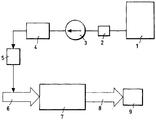
- This method envisages the injection of oil into the suction collector to simulate an increase in the drawing from the suction valves, from the seals on the shaft of the turbocompressor and through the ventilation circuit of the engine base. This method allows the following experimentation objectives to be reached:
- the oil tank is connected to a load cell for measuring the quantity of oil consumed.
- the heater has the function of increasing the temperature of the oil to lower the viscosity and guarantee a sufficiently pulverized spray.
- the injector is of the single-hole type normally used in Diesel engines for fuel injection.
- the test bench was equipped with a continuous detection system of the quantity of oil injected.
- the detection of the quantity of oil consumed by the engine was obtained by weighing the oil discharged from the engine every 120 hours.
- the high load functioning period was specifically established for ensuring a sufficient regeneration of the filtering element by reaction between the oxygen present and the particulate.
- test cycle is shown in Table 1, which indicates functioning times, regime conditions, motor load and temperature of the exhaust gases (which, as can be seen, represent the main parameter capable of governing the regeneration), for a test period of 2 hours, to be suitably repeated to cover an accumulation of 120 hours, which proved optimum for the rapid screening of different oils in limited time periods
- Table 1 Phase Time Engine charge Engine regime Discharge temperature Low load accumulation 45 min 20% 3.000 rpm 300°C regeneration 15 min 80% 4.000 rpm 550°C Medium load accumulation 45 min 40% 2.000 rpm 350°C regeneration 15 min 80% 4.000 rpm 550°C
- a reference gas oil was used, as fuel, for the experimentation, characterized by a very low sulphur content (S ⁇ 10 ppm) and without additivation.
- Oil 1 Oil 2 Phosphorous (ppm) 1070 1040 Zinc (ppm) 1180 1120 Calcium (ppm) 2560 2540 Magnesium (ppm) 270 250 Cerium (ppm) 550 0 Sulphur (ppm) 8000 8000 Sulfated ashes (wt %) 1.20 1.26
- the deposit accumulated on the particulate filters was removed from the filters and subsequently characterized.
- the identification of the elements and compounds present in the deposit was effected by scanning electron microscope analysis (SEM) equipped with EDX (Energy Dispersive X-Ray) module. Table 3 shows the list of elements identified and the relative percentage determined.
- the Cerium is carried by the lubricating oil onto the DPF filter, where it is available for catalyzing the combustion of the particulate, allowing the regeneration of the filter.
- the Sulphur has been omitted as this element is characteristic of both the lubricant and the fuel and also because it has been ascertained that most of the sulphur is not collected on the filter, but passes through it in gaseous form.
- Oil 1 The lubricant called Oil 1 was evaluated on this engine in the test described of 120 hours under mixed functioning conditions (30 hours at high power + 90 hours at intermediate power) without revealing significant engine performances variations.
- the oil consumption which is considered a health index of the engine, as it tends to rise in the presence of wear or the formation of deposits which hinder the correct movement of the elastic strips, did not show any significant variations with respect to the comparative test effected on Oil 2, containing classical Calcium-based detergents, and with respect to the average consumption of the engine calculated on the values acquired during 6 different tests (Table 5)
- Example 3 The antifriction and antiwear properties of the overbased sulphonates containing Cerium and Calcium were evaluated according to the method DIN 51384, using the SRV test equipment.
- the additive tested is that of Example 3 having the following main characteristics:
- the test was carried out on 5% by weight solutions of the additives in mineral lubricating oil SN 150.
- the operating conditions used are the following:
- the test was carried out on solutions at 5% by weight of additives in mineral lubricating oil SN 150.
- the operating conditions used are the following:
Landscapes
- Chemical & Material Sciences (AREA)
- Chemical Kinetics & Catalysis (AREA)
- General Chemical & Material Sciences (AREA)
- Oil, Petroleum & Natural Gas (AREA)
- Organic Chemistry (AREA)
- Lubricants (AREA)
- Cephalosporin Compounds (AREA)
Claims (26)
- Additiv für Schmieröle, umfassend ein metallisches überbasisches Salz einer organischen Säure oder einer Mischung von organischen Säuren, enthaltend Cer und ein Erdalkalimetall mit einem Cer-Gehalt, entsprechend einem Verhältnis zwischen den Äquivalenten des Cers und denen der organischen Säure, in einem Bereich von 0,1 bis 1,2 und einem Gehalt an Erdalkalimetall, entsprechend einem Verhältnis zwischen den Äquivalenten des Erdalkalimetalls und denen der organischen Säure, in einem Bereich von 1 bis 40.
- Additiv für Schmieröle gemäß Anspruch 1, umfassend eine stabile, homogene und transparente Öl-Dispersion, im Wesentlichen bestehend aus:i. 5-99,9 Gew.-% eines Öls; undii. 0,1-95 Gew.-% des metallischen überbasischen Salzes.
- Additiv für Schmieröle gemäß Anspruch 1 oder 2, worin die organische Säure ausgewählt ist aus mindestens einem aus:einer Sulfonsäure mit der Formel
(R1)n-A-SO3H (I),
worin R1 eine lineare oder verzweigte Alkylgruppe ist, enthaltend 6 bis 40 Kohlenstoffatome, oder R1 ist ein Alkylsubstituent, abgeleitet von einem Polymer eines C2-C6-Olefins; A ist ein C6-C20-aromatischer Kohlenwasserstoff, ein aliphatischer Kohlenwasserstoff mit 5 bis 20 Kohlenstoffatomen; n ist Null oder eine Ganzzahl in einem Bereich von 1 bis 5;einer Carbonsäure mit der Formel: worin R2 eine lineare oder verzweigte Alkyl- oder Alkenylgruppe ist, enthaltend von 6 bis 40 Kohlenstoffatome; R3 ist eine Wasserstoffatom, eine Alkylgruppe, enthaltend von 1 bis 4 Kohlenstoffatome, oder der Rest -CH2COOH;einer Salizylsäure, gegebenenfalls substituiert mit linearen oder verzweigten Alkylgruppen, in einer Zahl in einem Bereich von 1 bis 3, enthaltend von 6 bis 40 Kohlenstoffatome;einem Phenol oder sulfurisiertem Phenol, gegebenenfalls substituiert mit linearen oder verzweigten Alkylgruppen, in einer Zahl in einem Bereich von 1 bis 3, enthaltend von 6 bis 40 Kohlenstoffatomen.
 - Additiv für Schmieröle gemäß Anspruch 1, 2 oder 3, worin die Verhältnisse zwischen den Äquivalenten des Cers und denen der organischen Säure in einem Bereich von 0,4 bis 1 sind, wobei die Verhältnisse zwischen den Äquivalenten des Erdalkalimetalls und den Äquivalenten der organischen Säure in einem Bereich von 5 bis 30 liegen.
- Additiv für Schmieröle gemäß irgendeinem der vorhergehenden Ansprüche, worin das Cer in dem überbasischen Salz im Oxidationszustand (III) oder (IV) ist.
- Additiv für Schmieröle gemäß irgendeinem der vorhergehenden Ansprüche, worin das Erdalkalimetall Calcium, Magnesium oder Barium ist.
- Additiv für Schmieröle gemäß irgendeinem der Ansprüche 2 bis 6, worin das Öl des Bestandteils (i) ein Schmieröl ist, ausgewählt aus denjenigen von tierischem, pflanzlichem, mineralischem oder synthetischem Ursprung.
- Verfahren zur Synthese von Additiven für Schmieröle nach irgendeinem der vorhergehenden Ansprüche 1 bis 7, umfassend die Reaktion zwischen den folgenden Bestandteilen:A1. einer Verbindung einer organischen Säure, enthaltend Cer oder einer Mischung der vorgenannten Verbindungen mit einer organischen Säure;B1. einer basischen Verbindung eines Erdalkalimetalls;C1. einem Lösemittel oder einer Mischung aus Lösemitteln;D1. einem Promoter oder einer Mischung aus Reaktionspromotern;E1. gegebenenfalls einem Öl;F1. Kohlenstoffdioxid;worin die Zugabe der Bestandteile (A1), (B1), (C1), (D1), gegebenenfalls (E1) in einer beliebigen Reihenfolge durchgeführt wird, wobei die Zugabe des Bestandteils (F1) im Anschluss stattfindet, folgend dem Bestandteil (B1).
- Verfahren nach Anspruch 8, worin die Synthese umfasst:- anfängliche Zugabe von Bestandteil (B1) zu einer Mischung, bestehend aus Bestandteil (C1) und einem Teil des Bestandteils (E1), im Anschluss Zugabe von Bestandteil (A1);- Zugabe von Bestandteil (D1);- Karbonisierung der erhaltenen Mischung mit Bestandteil (F1);- Zugabe, zum Ende der Karbonisierung, von einem zweiten Aliquot des Bestandteils (E1); und- Zugabe, nach Reifung, der verbleibenden Quantität von (E1).
- Verfahren nach Anspruch 8, worin die Synthese umfasst:- anfängliche Zugabe von Bestandteil (B1) zu einer Mischung, bestehend aus Bestandteil (C1), Bestandteil (D1) und einem Aliquot des Bestandteils (E1);- anschließende Zugabe von Bestandteil (A1);- Karbonisierung der erhaltenen Mischung mit Bestandteil (F1);- Zugabe eines zweiten Teils des Bestandteils (E1);- Zugabe, nach Reifung, der verbleibenden Quantität von (E1).
- Verfahren nach irgendeinem der Ansprüche 8 bis 10, worin das Additiv durch Abtrennung gewonnen wird, mittels Destillation, des Reaktionsprodukts aus dem Reaktionspromoter und aus dem Lösemittel, und durch anschließende Trennung mittels Filtration oder Zentrifugierung von den unlöslichen Nebenprodukten.
- Verfahren zur Synthese von Additiven für Schmieröle gemäß irgendeinem der vorhergehenden Ansprüche 1 bis 7, umfassend die Reaktion zwischen den folgenden Bestandteilen:A2. einer organischen Säure oder einer Mischung von organischen Säuren;B2. einer basischen Verbindung des Cers;C2. einer basischen Verbindung eines Erdalkalimetalls;D2. einem Lösemittel oder einer Mischung von Lösemitteln;E2. einem Promoter oder einer Mischung von Reaktionspromotern;F2. gegebenenfalls einem Öl;G2. Kohlenstoffdioxid,worin die Zugabe der Bestandteile (A2), (B2), (C2), (D2), (E2), gegebenenfalls (F2) in einer beliebigen Reihenfolge durchgeführt wird, wohingegen die Zugabe des Bestandteils (G2) im Anschluss stattfindet, folgend Bestandteil (C2).
- Verfahren nach Anspruch 12, worin die Synthese umfasst:- anfängliche Zugabe von Bestandteil (B2) zu einer Mischung, bestehend aus Bestandteil (D2) und einem Aliquot des Bestandteils (F2), anschließend Zugabe von Bestandteil (A2);- Zugabe von Bestandteil (C2) und Bestandteil (E2);- Karbonisierung der erhaltenen Mischung mit Bestandteil (G2);- Zugabe, zum Ende der Karbonisierung, von einem zweiten Aliquot des Bestandteils (F2); und- Zugabe, nach Reifung, der verbleibenden Quantität von (F2).
- Verfahren nach Anspruch 12, worin die Synthese umfasst:- anfängliche Zugabe von Bestandteil (B2) zu einer Mischung, bestehend aus Bestandteil (D2), Bestandteil (E2) und einem Teil von Bestandteil (F2);- anschließende Zugabe von Bestandteil (A2);- Zugabe von Bestandteil (C2);- Karbonisierung der erhaltenen Mischung mit Bestandteil (G2);- Zugabe eines zweiten Teils des Bestandteils (F2);- Zugabe, nach Reifung, der verbleibenden Quantität von (F2).
- Verfahren nach irgendeinem der Ansprüche 12 bis 14, worin das Additiv durch Trennung gewonnen wird, mittels Destillation des Reaktionsprodukts aus dem Reaktionspromoter und aus dem Lösemittel, und durch anschließende Abtrennung mittels Filtration oder Zentrifugierung, von den unlöslichen Nebenprodukten.
- Verfahren nach Anspruch 8 bis 11, worin die Mischung; bestehend aus der Verbindung von organischen Säuren, enthaltend Cer, und einer organischen Säure; einen Gewichtsprozentsatz der Verbindung, enthaltend Cer, in einem Bereich von 10 bis 99 enthält.
- Verfahren nach irgendeinem der Ansprüche 8 bis 16, worin die basische Verbindung des Erdalkalimetalls ausgewählt ist aus einem Oxid oder Hydroxid des Erdalkalimetalls.
- Verfahren nach irgendeinem der Ansprüche 8 bis 17, worin das Lösemittel in einer Menge in einem Bereich von 10 bis 500 Gew.-%, berechnet mit Bezug auf Bestandteil (A1) oder (A2), verwendet wird, und ausgewählt ist aus aromatischen oder aliphatischen Kohlenwasserstoffen.
- Verfahren nach irgendeinem der Ansprüche 8 bis 18, worin der Reaktionspromoter in einer Menge eingesetzt wird, in einem Bereich von 2 bis 500 Gew.-%, berechnet mit Bezug auf Bestandteil B1 oder der Summe der Bestandteile B2 und C2, und ist ausgewählt aus einem Alkohol, Wasser, einem Glycol, einem Keton, einem Ester einer Carbonsäure.
- Verfahren nach irgendeinem der Ansprüche 8 bis 19, worin die Karbonisierungsphase der basischen Verbindung des Erdalkalimetalls bewirkt wird mit Kohlenstoffdioxid in einer solchen Menge, dass ein Verhältnis zwischen den Äquivalenten des Kohlenstoffdioxids und denjenigen der Base des Erdalkalimetalls in Überschuss mit Bezug auf die organische Säure in einem Bereich von 0,6 bis 1,1 ist.
- Verfahren nach irgendeinem der Ansprüche 8 bis 20, worin das Schmieröl bei der Verwendung in einer Menge von 30 bis 800 Gew.-%, berechnet mit Bezug auf die Bestandteile (A1) oder (A2), zugegeben wird.
- Verfahren nach irgendeinem der Ansprüche 8 bis 21, worin die Reaktion zwischen den Bestandteilen (A1) - (E1) oder zwischen den Bestandteilen (A2) - (F2) bei einer Temperatur in einem Bereich von 15 bis 200 °C stattfindet.
- Verfahren nach irgendeinem der Ansprüche 8 bis 22, worin die Karbonisierungsphase bei einer Temperatur in einem Bereich von 10 bis 150 °C stattfindet.
- Verfahren nach irgendeinem der Ansprüche 8 bis 23, worin die Trennungsphase des Reaktionsprodukts durch Destillation von dem Reaktionspromoter und dem Lösemittel dadurch bewirkt wird, dass die Temperatur am Ende der Karbonisierung auf einen Maximalwert von 200 °C angehoben wird.
- Schmierzusammensetzungen, umfassend ein Basis-Öl bestehend aus einem Schmieröl von tierischem, pflanzlichem, mineralischem oder synthetischem Ursprung und einem Additiv, umfassend ein überbasisches Salz, enthaltend Cer, und ein Erdalkalimetall gemäß irgendeinem der vorhergehenden Ansprüche 1 bis 7, verwendet in einem Bereich von 0,2 bis 10 Gew.-%, berechnet mit Bezug auf das Schmieröl.
- Verfahren zur Reduzierung von Emissionen von verschmutzenden Substanzen, die in Abgasen einer internen Verbrennungsmaschine vorliegen und/oder zur Beförderung von Cer-Verbindungen auf den Teilchenfilter in einer internen Verbrennungsmaschine, welches die Verwendung der Schmierzusammensetzung gemäß Anspruch 25 umfasst.
Applications Claiming Priority (2)
| Application Number | Priority Date | Filing Date | Title |
|---|---|---|---|
| IT001953A ITMI20071953A1 (it) | 2007-10-09 | 2007-10-09 | Additivi contenenti cerio per composizioni lubrificanti e metodo per la loro preparazione |
| PCT/EP2008/008509 WO2009046976A2 (en) | 2007-10-09 | 2008-10-07 | Additives containing cerium for lubricating compositions and method for the preparation thereof |
Publications (2)
| Publication Number | Publication Date |
|---|---|
| EP2201089A2 EP2201089A2 (de) | 2010-06-30 |
| EP2201089B1 true EP2201089B1 (de) | 2018-02-14 |
Family
ID=40313796
Family Applications (1)
| Application Number | Title | Priority Date | Filing Date |
|---|---|---|---|
| EP08802834.5A Not-in-force EP2201089B1 (de) | 2007-10-09 | 2008-10-07 | Cerhaltige additive für schmierstoffzusammensetzungen und herstellungsverfahren dafür |
Country Status (4)
| Country | Link |
|---|---|
| EP (1) | EP2201089B1 (de) |
| ES (1) | ES2668642T3 (de) |
| IT (1) | ITMI20071953A1 (de) |
| WO (1) | WO2009046976A2 (de) |
Families Citing this family (4)
| Publication number | Priority date | Publication date | Assignee | Title |
|---|---|---|---|---|
| IT1392158B1 (it) * | 2008-11-24 | 2012-02-22 | Eni Spa | Procedimento per la preparazione di additivi per lubrificanti, contenenti cerio |
| CN102287917B (zh) * | 2011-06-01 | 2013-06-19 | 刘革 | 甲醇制氢氧化供热系统 |
| CN117887501A (zh) * | 2023-12-27 | 2024-04-16 | 华北水利水电大学 | 油溶性硫化铈纳米微粒、合成方法及其作为润滑油添加剂的应用 |
| CN118146851B (zh) * | 2023-12-27 | 2025-11-18 | 太原理工大学 | 一种稀土基润滑脂及其制备方法 |
Family Cites Families (7)
| Publication number | Priority date | Publication date | Assignee | Title |
|---|---|---|---|---|
| US4804489A (en) * | 1987-10-29 | 1989-02-14 | The Lubrizol Corporation | Low molecular weight viscosity modifying compositions |
| DE3926817A1 (de) * | 1989-08-14 | 1991-02-21 | Miltiathis Markou | Schmiermittel fuer eine brennkraftmaschine |
| FR2751662B1 (fr) * | 1996-07-29 | 1998-10-23 | Total Raffinage Distribution | Composition organometalliques mixtes, comprenant au moins trois metaux, et leurs applications comme additifs pour combustibles ou carburants |
| IT1318868B1 (it) * | 2000-08-03 | 2003-09-10 | Cesare Pedrazzini | Additivo per ridurre il particolato nelle emissioni derivanti dallacombustione di gasolio ed olio combustibile e composizione carburante |
| EP1344812A1 (de) * | 2002-03-13 | 2003-09-17 | Infineum International Limited | Überbasisches Metallsalz enthaltende Dieselkraftstoffzusatzzusammensetzungen zur Partikelfalleverbesserung |
| US6892531B2 (en) * | 2003-04-02 | 2005-05-17 | Julius J. Rim | System for and methods of operating diesel engines to reduce harmful exhaust emissions and to improve engine lubrication |
| PT1512736T (pt) * | 2003-09-05 | 2018-05-29 | Infineum Int Ltd | Composições estabilizadas de aditivos para gasóleo |
-
2007
- 2007-10-09 IT IT001953A patent/ITMI20071953A1/it unknown
-
2008
- 2008-10-07 ES ES08802834.5T patent/ES2668642T3/es active Active
- 2008-10-07 WO PCT/EP2008/008509 patent/WO2009046976A2/en not_active Ceased
- 2008-10-07 EP EP08802834.5A patent/EP2201089B1/de not_active Not-in-force
Also Published As
| Publication number | Publication date |
|---|---|
| WO2009046976A2 (en) | 2009-04-16 |
| EP2201089A2 (de) | 2010-06-30 |
| ITMI20071953A1 (it) | 2009-04-10 |
| ES2668642T3 (es) | 2018-05-21 |
| WO2009046976A3 (en) | 2009-07-16 |
Similar Documents
| Publication | Publication Date | Title |
|---|---|---|
| JP5344540B2 (ja) | 摩耗及び腐食に対する防護が増大した潤滑油 | |
| EP2633009B1 (de) | Wasserfreie schmiermittel- und kraftstoffzusammensetzungen mit fettsäureestern aus hydroxycarbonsäuren sowie ihre verwendung | |
| CN1314786C (zh) | 高碱性去垢添加剂 | |
| JP5624319B2 (ja) | 高硫黄分及び低硫黄分の燃料油に適した船舶用潤滑剤 | |
| JP5522803B2 (ja) | 2サイクル船舶エンジン用シリンダー潤滑油 | |
| BG61308B1 (en) | Method for the preparation of high alkaline magnesium sulphonates | |
| EP2201089B1 (de) | Cerhaltige additive für schmierstoffzusammensetzungen und herstellungsverfahren dafür | |
| KR20070034600A (ko) | 알킬 하이드록시 카복실산 보론 에스테르를 함유하는 연료및 윤활 첨가제 | |
| KR20220003036A (ko) | 윤활제 조성물 및 구아니디늄-계 이온성 액체의 윤활제 첨가제로서의 용도 | |
| CA2659854C (en) | A low phosphorus lubricating oil composition having lead corrosion control | |
| KR20230062401A (ko) | 이산화질소 오염으로 인한 화학적 분해를 제한하는 방법 | |
| EP2356203B1 (de) | Verfahren zur herstellung von additiven für cerhaltige schmiermittel | |
| JP2004532297A (ja) | フェノール単位およびサリチル酸単位を含有する直鎖化合物 | |
| EP4136202B1 (de) | Phosphoniumbasierte ionische flüssigkeit und deren verwendung als schmierstoffadditiv | |
| CA2894238A1 (en) | Process for producing an overbased metal detergent | |
| KR20230002624A (ko) | 암모늄계 이온성 액체 및 윤활제 첨가제로서의 이의 사용방법 | |
| CN115989309A (zh) | 减摩添加剂及其制备方法 | |
| EP3990594B1 (de) | Mischung aus calixarenen, verfahren zur herstellung davon und verwendung davon zur herstellung von waschmittelzusammensetzungen für schmierstoffe | |
| EP4136201B1 (de) | Ionische flüssigkeit auf guanidiniumbasis und deren verwendung als schmiermitteladditiv | |
| HK40082787A (en) | A phosphonium-based ionic liquid and its use as a lubricant additive | |
| HK40082787B (en) | A phosphonium-based ionic liquid and its use as a lubricant additive | |
| HK40082484B (en) | A guanidinium-based ionic liquid and its use as a lubricant additive | |
| HK40082484A (en) | A guanidinium-based ionic liquid and its use as a lubricant additive | |
| JPH08506141A (ja) | アルカリ土類金属加硫ヒドロカルビルフェネート、これらの製造およびこれらを含有する濃縮物および完成潤滑油 |
Legal Events
| Date | Code | Title | Description |
|---|---|---|---|
| PUAI | Public reference made under article 153(3) epc to a published international application that has entered the european phase |
Free format text: ORIGINAL CODE: 0009012 |
|
| 17P | Request for examination filed |
Effective date: 20100408 |
|
| AK | Designated contracting states |
Kind code of ref document: A2 Designated state(s): AT BE BG CH CY CZ DE DK EE ES FI FR GB GR HR HU IE IS IT LI LT LU LV MC MT NL NO PL PT RO SE SI SK TR |
|
| AX | Request for extension of the european patent |
Extension state: AL BA MK RS |
|
| DAX | Request for extension of the european patent (deleted) | ||
| GRAP | Despatch of communication of intention to grant a patent |
Free format text: ORIGINAL CODE: EPIDOSNIGR1 |
|
| STAA | Information on the status of an ep patent application or granted ep patent |
Free format text: STATUS: GRANT OF PATENT IS INTENDED |
|
| INTG | Intention to grant announced |
Effective date: 20170906 |
|
| GRAS | Grant fee paid |
Free format text: ORIGINAL CODE: EPIDOSNIGR3 |
|
| GRAA | (expected) grant |
Free format text: ORIGINAL CODE: 0009210 |
|
| STAA | Information on the status of an ep patent application or granted ep patent |
Free format text: STATUS: THE PATENT HAS BEEN GRANTED |
|
| AK | Designated contracting states |
Kind code of ref document: B1 Designated state(s): AT BE BG CH CY CZ DE DK EE ES FI FR GB GR HR HU IE IS IT LI LT LU LV MC MT NL NO PL PT RO SE SI SK TR |
|
| REG | Reference to a national code |
Ref country code: GB Ref legal event code: FG4D |
|
| REG | Reference to a national code |
Ref country code: CH Ref legal event code: EP |
|
| REG | Reference to a national code |
Ref country code: IE Ref legal event code: FG4D |
|
| REG | Reference to a national code |
Ref country code: DE Ref legal event code: R096 Ref document number: 602008054029 Country of ref document: DE Ref country code: AT Ref legal event code: REF Ref document number: 969817 Country of ref document: AT Kind code of ref document: T Effective date: 20180315 |
|
| REG | Reference to a national code |
Ref country code: ES Ref legal event code: FG2A Ref document number: 2668642 Country of ref document: ES Kind code of ref document: T3 Effective date: 20180521 |
|
| REG | Reference to a national code |
Ref country code: NL Ref legal event code: FP |
|
| REG | Reference to a national code |
Ref country code: AT Ref legal event code: MK05 Ref document number: 969817 Country of ref document: AT Kind code of ref document: T Effective date: 20180214 |
|
| PG25 | Lapsed in a contracting state [announced via postgrant information from national office to epo] |
Ref country code: FI Free format text: LAPSE BECAUSE OF FAILURE TO SUBMIT A TRANSLATION OF THE DESCRIPTION OR TO PAY THE FEE WITHIN THE PRESCRIBED TIME-LIMIT Effective date: 20180214 Ref country code: NO Free format text: LAPSE BECAUSE OF FAILURE TO SUBMIT A TRANSLATION OF THE DESCRIPTION OR TO PAY THE FEE WITHIN THE PRESCRIBED TIME-LIMIT Effective date: 20180514 Ref country code: HR Free format text: LAPSE BECAUSE OF FAILURE TO SUBMIT A TRANSLATION OF THE DESCRIPTION OR TO PAY THE FEE WITHIN THE PRESCRIBED TIME-LIMIT Effective date: 20180214 Ref country code: CY Free format text: LAPSE BECAUSE OF FAILURE TO SUBMIT A TRANSLATION OF THE DESCRIPTION OR TO PAY THE FEE WITHIN THE PRESCRIBED TIME-LIMIT Effective date: 20180214 Ref country code: LT Free format text: LAPSE BECAUSE OF FAILURE TO SUBMIT A TRANSLATION OF THE DESCRIPTION OR TO PAY THE FEE WITHIN THE PRESCRIBED TIME-LIMIT Effective date: 20180214 |
|
| PG25 | Lapsed in a contracting state [announced via postgrant information from national office to epo] |
Ref country code: BG Free format text: LAPSE BECAUSE OF FAILURE TO SUBMIT A TRANSLATION OF THE DESCRIPTION OR TO PAY THE FEE WITHIN THE PRESCRIBED TIME-LIMIT Effective date: 20180514 Ref country code: AT Free format text: LAPSE BECAUSE OF FAILURE TO SUBMIT A TRANSLATION OF THE DESCRIPTION OR TO PAY THE FEE WITHIN THE PRESCRIBED TIME-LIMIT Effective date: 20180214 Ref country code: LV Free format text: LAPSE BECAUSE OF FAILURE TO SUBMIT A TRANSLATION OF THE DESCRIPTION OR TO PAY THE FEE WITHIN THE PRESCRIBED TIME-LIMIT Effective date: 20180214 Ref country code: SE Free format text: LAPSE BECAUSE OF FAILURE TO SUBMIT A TRANSLATION OF THE DESCRIPTION OR TO PAY THE FEE WITHIN THE PRESCRIBED TIME-LIMIT Effective date: 20180214 Ref country code: GR Free format text: LAPSE BECAUSE OF FAILURE TO SUBMIT A TRANSLATION OF THE DESCRIPTION OR TO PAY THE FEE WITHIN THE PRESCRIBED TIME-LIMIT Effective date: 20180515 |
|
| REG | Reference to a national code |
Ref country code: FR Ref legal event code: PLFP Year of fee payment: 11 |
|
| PG25 | Lapsed in a contracting state [announced via postgrant information from national office to epo] |
Ref country code: EE Free format text: LAPSE BECAUSE OF FAILURE TO SUBMIT A TRANSLATION OF THE DESCRIPTION OR TO PAY THE FEE WITHIN THE PRESCRIBED TIME-LIMIT Effective date: 20180214 Ref country code: RO Free format text: LAPSE BECAUSE OF FAILURE TO SUBMIT A TRANSLATION OF THE DESCRIPTION OR TO PAY THE FEE WITHIN THE PRESCRIBED TIME-LIMIT Effective date: 20180214 Ref country code: PL Free format text: LAPSE BECAUSE OF FAILURE TO SUBMIT A TRANSLATION OF THE DESCRIPTION OR TO PAY THE FEE WITHIN THE PRESCRIBED TIME-LIMIT Effective date: 20180214 |
|
| REG | Reference to a national code |
Ref country code: DE Ref legal event code: R097 Ref document number: 602008054029 Country of ref document: DE |
|
| PG25 | Lapsed in a contracting state [announced via postgrant information from national office to epo] |
Ref country code: DK Free format text: LAPSE BECAUSE OF FAILURE TO SUBMIT A TRANSLATION OF THE DESCRIPTION OR TO PAY THE FEE WITHIN THE PRESCRIBED TIME-LIMIT Effective date: 20180214 Ref country code: SK Free format text: LAPSE BECAUSE OF FAILURE TO SUBMIT A TRANSLATION OF THE DESCRIPTION OR TO PAY THE FEE WITHIN THE PRESCRIBED TIME-LIMIT Effective date: 20180214 Ref country code: CZ Free format text: LAPSE BECAUSE OF FAILURE TO SUBMIT A TRANSLATION OF THE DESCRIPTION OR TO PAY THE FEE WITHIN THE PRESCRIBED TIME-LIMIT Effective date: 20180214 |
|
| PLBE | No opposition filed within time limit |
Free format text: ORIGINAL CODE: 0009261 |
|
| STAA | Information on the status of an ep patent application or granted ep patent |
Free format text: STATUS: NO OPPOSITION FILED WITHIN TIME LIMIT |
|
| 26N | No opposition filed |
Effective date: 20181115 |
|
| PG25 | Lapsed in a contracting state [announced via postgrant information from national office to epo] |
Ref country code: SI Free format text: LAPSE BECAUSE OF FAILURE TO SUBMIT A TRANSLATION OF THE DESCRIPTION OR TO PAY THE FEE WITHIN THE PRESCRIBED TIME-LIMIT Effective date: 20180214 |
|
| REG | Reference to a national code |
Ref country code: CH Ref legal event code: PL |
|
| REG | Reference to a national code |
Ref country code: BE Ref legal event code: MM Effective date: 20181031 |
|
| PG25 | Lapsed in a contracting state [announced via postgrant information from national office to epo] |
Ref country code: MC Free format text: LAPSE BECAUSE OF FAILURE TO SUBMIT A TRANSLATION OF THE DESCRIPTION OR TO PAY THE FEE WITHIN THE PRESCRIBED TIME-LIMIT Effective date: 20180214 Ref country code: LU Free format text: LAPSE BECAUSE OF NON-PAYMENT OF DUE FEES Effective date: 20181007 |
|
| REG | Reference to a national code |
Ref country code: IE Ref legal event code: MM4A |
|
| PG25 | Lapsed in a contracting state [announced via postgrant information from national office to epo] |
Ref country code: LI Free format text: LAPSE BECAUSE OF NON-PAYMENT OF DUE FEES Effective date: 20181031 Ref country code: CH Free format text: LAPSE BECAUSE OF NON-PAYMENT OF DUE FEES Effective date: 20181031 Ref country code: BE Free format text: LAPSE BECAUSE OF NON-PAYMENT OF DUE FEES Effective date: 20181031 |
|
| PG25 | Lapsed in a contracting state [announced via postgrant information from national office to epo] |
Ref country code: IE Free format text: LAPSE BECAUSE OF NON-PAYMENT OF DUE FEES Effective date: 20181007 |
|
| PG25 | Lapsed in a contracting state [announced via postgrant information from national office to epo] |
Ref country code: MT Free format text: LAPSE BECAUSE OF NON-PAYMENT OF DUE FEES Effective date: 20181007 |
|
| PGFP | Annual fee paid to national office [announced via postgrant information from national office to epo] |
Ref country code: NL Payment date: 20191026 Year of fee payment: 12 Ref country code: DE Payment date: 20191029 Year of fee payment: 12 |
|
| PGFP | Annual fee paid to national office [announced via postgrant information from national office to epo] |
Ref country code: ES Payment date: 20191104 Year of fee payment: 12 Ref country code: FR Payment date: 20191025 Year of fee payment: 12 Ref country code: IT Payment date: 20191023 Year of fee payment: 12 |
|
| PG25 | Lapsed in a contracting state [announced via postgrant information from national office to epo] |
Ref country code: TR Free format text: LAPSE BECAUSE OF FAILURE TO SUBMIT A TRANSLATION OF THE DESCRIPTION OR TO PAY THE FEE WITHIN THE PRESCRIBED TIME-LIMIT Effective date: 20180214 |
|
| PGFP | Annual fee paid to national office [announced via postgrant information from national office to epo] |
Ref country code: GB Payment date: 20191028 Year of fee payment: 12 |
|
| PG25 | Lapsed in a contracting state [announced via postgrant information from national office to epo] |
Ref country code: PT Free format text: LAPSE BECAUSE OF FAILURE TO SUBMIT A TRANSLATION OF THE DESCRIPTION OR TO PAY THE FEE WITHIN THE PRESCRIBED TIME-LIMIT Effective date: 20180214 |
|
| PG25 | Lapsed in a contracting state [announced via postgrant information from national office to epo] |
Ref country code: HU Free format text: LAPSE BECAUSE OF FAILURE TO SUBMIT A TRANSLATION OF THE DESCRIPTION OR TO PAY THE FEE WITHIN THE PRESCRIBED TIME-LIMIT; INVALID AB INITIO Effective date: 20081007 |
|
| PG25 | Lapsed in a contracting state [announced via postgrant information from national office to epo] |
Ref country code: IS Free format text: LAPSE BECAUSE OF FAILURE TO SUBMIT A TRANSLATION OF THE DESCRIPTION OR TO PAY THE FEE WITHIN THE PRESCRIBED TIME-LIMIT Effective date: 20180614 |
|
| REG | Reference to a national code |
Ref country code: DE Ref legal event code: R119 Ref document number: 602008054029 Country of ref document: DE |
|
| REG | Reference to a national code |
Ref country code: NL Ref legal event code: MM Effective date: 20201101 |
|
| GBPC | Gb: european patent ceased through non-payment of renewal fee |
Effective date: 20201007 |
|
| PG25 | Lapsed in a contracting state [announced via postgrant information from national office to epo] |
Ref country code: FR Free format text: LAPSE BECAUSE OF NON-PAYMENT OF DUE FEES Effective date: 20201031 Ref country code: DE Free format text: LAPSE BECAUSE OF NON-PAYMENT OF DUE FEES Effective date: 20210501 Ref country code: NL Free format text: LAPSE BECAUSE OF NON-PAYMENT OF DUE FEES Effective date: 20201101 |
|
| PG25 | Lapsed in a contracting state [announced via postgrant information from national office to epo] |
Ref country code: GB Free format text: LAPSE BECAUSE OF NON-PAYMENT OF DUE FEES Effective date: 20201007 |
|
| PG25 | Lapsed in a contracting state [announced via postgrant information from national office to epo] |
Ref country code: IT Free format text: LAPSE BECAUSE OF NON-PAYMENT OF DUE FEES Effective date: 20201007 |
|
| REG | Reference to a national code |
Ref country code: ES Ref legal event code: FD2A Effective date: 20220121 |
|
| PG25 | Lapsed in a contracting state [announced via postgrant information from national office to epo] |
Ref country code: ES Free format text: LAPSE BECAUSE OF NON-PAYMENT OF DUE FEES Effective date: 20201008 |