EP2192170A1 - Amino acid-producing microorganism and method of producing amino acid - Google Patents
Amino acid-producing microorganism and method of producing amino acid Download PDFInfo
- Publication number
- EP2192170A1 EP2192170A1 EP08829698A EP08829698A EP2192170A1 EP 2192170 A1 EP2192170 A1 EP 2192170A1 EP 08829698 A EP08829698 A EP 08829698A EP 08829698 A EP08829698 A EP 08829698A EP 2192170 A1 EP2192170 A1 EP 2192170A1
- Authority
- EP
- European Patent Office
- Prior art keywords
- gene
- seq
- amino acid
- pyruvate
- dna
- Prior art date
- Legal status (The legal status is an assumption and is not a legal conclusion. Google has not performed a legal analysis and makes no representation as to the accuracy of the status listed.)
- Granted
Links
Images

Classifications
-
- C—CHEMISTRY; METALLURGY
- C12—BIOCHEMISTRY; BEER; SPIRITS; WINE; VINEGAR; MICROBIOLOGY; ENZYMOLOGY; MUTATION OR GENETIC ENGINEERING
- C12P—FERMENTATION OR ENZYME-USING PROCESSES TO SYNTHESISE A DESIRED CHEMICAL COMPOUND OR COMPOSITION OR TO SEPARATE OPTICAL ISOMERS FROM A RACEMIC MIXTURE
- C12P13/00—Preparation of nitrogen-containing organic compounds
- C12P13/04—Alpha- or beta- amino acids
- C12P13/06—Alanine; Leucine; Isoleucine; Serine; Homoserine
-
- C—CHEMISTRY; METALLURGY
- C12—BIOCHEMISTRY; BEER; SPIRITS; WINE; VINEGAR; MICROBIOLOGY; ENZYMOLOGY; MUTATION OR GENETIC ENGINEERING
- C12N—MICROORGANISMS OR ENZYMES; COMPOSITIONS THEREOF; PROPAGATING, PRESERVING, OR MAINTAINING MICROORGANISMS; MUTATION OR GENETIC ENGINEERING; CULTURE MEDIA
- C12N9/00—Enzymes; Proenzymes; Compositions thereof; Processes for preparing, activating, inhibiting, separating or purifying enzymes
- C12N9/0004—Oxidoreductases (1.)
- C12N9/0008—Oxidoreductases (1.) acting on the aldehyde or oxo group of donors (1.2)
-
- C—CHEMISTRY; METALLURGY
- C12—BIOCHEMISTRY; BEER; SPIRITS; WINE; VINEGAR; MICROBIOLOGY; ENZYMOLOGY; MUTATION OR GENETIC ENGINEERING
- C12P—FERMENTATION OR ENZYME-USING PROCESSES TO SYNTHESISE A DESIRED CHEMICAL COMPOUND OR COMPOSITION OR TO SEPARATE OPTICAL ISOMERS FROM A RACEMIC MIXTURE
- C12P13/00—Preparation of nitrogen-containing organic compounds
- C12P13/04—Alpha- or beta- amino acids
- C12P13/08—Lysine; Diaminopimelic acid; Threonine; Valine
-
- C—CHEMISTRY; METALLURGY
- C12—BIOCHEMISTRY; BEER; SPIRITS; WINE; VINEGAR; MICROBIOLOGY; ENZYMOLOGY; MUTATION OR GENETIC ENGINEERING
- C12P—FERMENTATION OR ENZYME-USING PROCESSES TO SYNTHESISE A DESIRED CHEMICAL COMPOUND OR COMPOSITION OR TO SEPARATE OPTICAL ISOMERS FROM A RACEMIC MIXTURE
- C12P13/00—Preparation of nitrogen-containing organic compounds
- C12P13/04—Alpha- or beta- amino acids
- C12P13/22—Tryptophan; Tyrosine; Phenylalanine; 3,4-Dihydroxyphenylalanine
Definitions
- the present invention relates to a microorganism which produces an L-amino acid and a method for producing an L-amino acid.
- L-Lysine, L-threonine and L-tryptophan are widely used as feed additives etc.
- L-Phenylalanine is used as a raw material of sweetners.
- L-Valine, L-leucine and L-isoleucine are used for amino acid infusion or supplements.
- L-Serine is useful as a food additive, a raw material of cosmetics etc.
- a target substance such as L-amino acids by fermentation using a microorganism
- a target substance such as L-amino acids
- auxotrophic strains derived from wild type strains for production of a target substance such as L-amino acids by fermentation using a microorganism
- metabolic regulation mutant strains derived from wild type strains as mutant strains resistant to various drugs
- strains having characteristics as both auxotrophic and metabolic regulation mutant and so forth.
- L-amino acid productivity of a microorganism is improved by enhancing expression of a gene encoding an L-amino acid biosynthetic enzyme or a protein involved in excretion of L-amino acid or resistance to L-amino acid, or by enhancing uptake of a carbon source to the L-amino acid biosynthesis system.
- genes imparting resistance to L-threonine and/or L-homoserine include the rhtA gene (Patent document 4), rhtB gene (Patent document 5), rhtC gene (Patent document 6), yfiK, yeaS genes (Patent document 7).
- Patent document 12 desensitization to the feedback inhibition of chorismate mutase-prephenate dehydratase (Patent document 12), deletion of chorismate mutase-prephenate dehydrogenase and tyrosine repressor (Patent document 13), and so forth are known.
- L-valine a mutant strain which requires lipoic acid for its growth and/or which is deficient in H + -ATPase (Patent document 14), and so forth are known.
- L-leucine desensitization to the feedback inhibition of isopropyl malate synthase (Patent document 15) and so forth are known, and for L-isoleucine, expression enhancement of genes encoding threonine deaminase and acetohydroxy acid synthase (Patent document 16) and so forth are known.
- L-serine a strain containing 3-phosphoglycerate dehydrogenase which is desensitized to feedback inhibition by serine (Patent document 17), a bacterium having L-serine-producing ability, at least one of which phosphoserine phosphatase activity and phosphoserine transaminase activity is enhanced, a bacterium deficient in L-serine decomposition ability (Patent document 18), a bacterium resistant to azaserine or ⁇ -(2-thienyl)-DL-alanine and having L-serine-producing ability (Patent document 19), and so forth are known.
- Objects of the present invention is to provide a bacterial strain which can efficiently produce an L-amino acid and to provide a method for efficiently producing an L-amino acid using such a strain.
- the present invention provides the followings.
- the microorganism of the present invention is a microorganism which has an ability to produced an L-amino acid selected from the group consisting of L-lysine, L-threonine, L-tryptophan, L-phenylalanine, L-valine, L-leucine, L-isoleucine and L-serine and has been modified so that an activity of pyruvate synthase or pyruvate:NADP + oxidoreductase is increased.
- L-amino acid selected from the group consisting of L-lysine, L-threonine, L-tryptophan, L-phenylalanine, L-valine, L-leucine, L-isoleucine and L-serine
- L-amino acid means L-lysine, L-threonine, L-tryptophan, L-phenylalaine, L-valine, L-leucine, L-isoleucine, and/or L-serine, unless specifically mentioned.
- the term "ability to produce L-amino acid (L-amino acid-producing ability)" refers to the ability to produce L-amino acid and cause accumulation of L-amino acid in the cells of the microorganism of the present invention or a medium to such a degree that L-amino acid can be collected from the cells or medium when the microorganism is cultured in the medium.
- the amino acid produced by the microorganism of the present invention may be one amino acid or two or more amino acids.
- the microorganism which is able to produce L-amino acid may be a microorganism which has inherently the ability, or may be a microorganism which is imparted the ability by modifying the microorganism using mutagenesis or recombinant DNA techniques, or by introducing the gene of the present invention to the microorganism.
- activity of pyruvate synthase or pyruvate:NADP + oxidoreductase is increased means that activity of at least one of pyruvate synthase and pyruvate:NADP + oxidoreductase increases in a microorganism inherently having pyruvate synthase and/or pyruvate:NADP + oxidoreductase, or that activity of at least one of pyruvate synthase and pyruvate:NADP + oxidoreductase is imparted to a microorganism originally not having pyruvate synthase and pyruvate:NADP + oxidoreductase.
- the microorganism of the present invention can be obtained by using a microorganism having an L-amino acid-producing ability as a parent strain, and modifying it so that the activity of pyruvate synthase or pyruvate:NADP + oxidoreductase, or the activities of these both are increased.
- the microorganism of the present invention can also be obtained by using a microorganism modified so that the activity of pyruvate synthase or pyruvate:NADP + oxidoreductase is increased as a parent strain, and imparting an L-amino acid-producing ability to it or enhancing an L-amino acid-producing ability thereof.
- Microorganisms used for the present invention include microorganisms belonging to ⁇ -proteobacteria such as bacteria belonging to the genera Escherichia, Enterobacter, Pantoea, Klebsiella, Serratia, Erwinia, Salmonella, Morganella, etc.; bacteria called as coryneform bacteria such as bacteria belonging to the genera Brevibacterium, Corynebacterium, and Microbacterium; and microorganisms belonging to the genera Alicyclobacillus, Bacillus, and Saccharomyces.
- ⁇ -proteobacteria such as bacteria belonging to the genera Escherichia, Enterobacter, Pantoea, Klebsiella, Serratia, Erwinia, Salmonella, Morganella, etc.
- bacteria called as coryneform bacteria such as bacteria belonging to the genera Brevibacterium, Corynebacterium, and Microbacterium
- microorganisms belonging to the genera Alicyclobacillus, Bacillus, and Saccharomyces are examples
- Escherichia bacteria examples include Escherichia coli and so forth.
- Escherichia coli strains are bread by using a genetic engineering technique
- the E. coli K12 strain and derivatives thereof, the Escherichia coli MG1655 strain (ATCC 47076) and W3110 strain (ATCC 27325) can be used.
- the Escherichia coli K12 strain was isolated in the Stanford University in 1922. This strain is a lysogenic bacterium of ⁇ phage and has the F-factor.
- This strain is a highly versatile strain from which genetic recombinants can be constructed by conjugation or the like.
- the genome sequence of the Escherichia soli K12 strain has already been determined, and the gene information thereof can also be used freely.
- the Escherichia coli K12 strain and derivatives thereof can be available from American Type Culture Collection (ATCC, Address: P.O. Box 1549, Manassas, VA 20108, United States of America).
- Pantoea bacteria, Erwinia bacteria and Enterobacter bacteria are classified as ⁇ -proteobacteria, and they are taxonomically very close to one another ( J. Gen. Appl. Microbiol., 1997, 43, 355-361 ; Int. J. Syst. Bacteriol., 1997, 43, 1061-1067 ).
- some bacteria belonging to the genus Enterobacter were reclassified as Pantoea agglomerans, Pantoea dispersa, or the like, on the basis of DNA-DNA hybridization experiments etc. ( International Journal of Systematic Bacteriology, July 1989, 39:337-345 ).
- Enterobacter bacteria examples include, but are not limited to, Enterobacter agglomerans, Enterobacter aerogenes, and so forth.
- Enterobacter agglomerans examples include, but are not limited to, Enterobacter agglomerans, Enterobacter aerogenes, and so forth.
- the strains exemplified in European Patent Publication No. 952221 can be used.
- a typical strain of the genus Enterobacter includes the Enterobacter agglomeranses ATCC 12287 strain.
- Pantoea bacteria include, but are not limited to, Pantoea ananatis, Pantoea stewartii, Pantoea agglomerans, and Pantoea citrea. Specific examples include the following strains:
- Erwinia bacteria examples include, but are not limited to, Erwinia amylovora and Erwinia carotovora
- Klebsiella bacteria examples include Klebsiella planticola. Specific examples include the following strains:
- coryneform bacteria referred to in the present invention are a group of microorganisms defined in Bergey's Manual of Determinative Bacteriology, 8th Ed., p.599, 1974 , and include aerobic, Gram-positive and nonacid-fast bacilli not having an ability to sporulate, which have hitherto been classified into the genus Brevibacterium but united into the genus Corynebacterium at present ( Liebl, W. et al., 1991, Int. J. Syst. Bacteriol. 41:255-260 ), and also include bacteria belonging to the genus Brevibacterium or Microbacterium closely relative to the genus Corynebacterium.
- coryneform bacteria preferably used for amino acids of L-glutamic acid family include the followings:
- the bacterium used for the present invention may be a bacterium having ethanol assimilability.
- Such a strain may be a bacterium inherently having ethanol assimilability, a recombinant strain to which ethanol assimilability is imparted, or a mutant strain of which ethanol assimilability is increased.
- AdhE As for Escherichia coli , presence of AdhE is known, which has activities of acetaldehyde dehydrogenase and alcohol dehydrogenase catalyzing reversively the reactions described below as enzymes which generate ethanol under anaerobic conditions.
- Escherichia coli cannot assimilate ethanol under aerobic conditions, it is known that it comes to be able to aerobically assimilate ethanol after mutation of AdhE ( Clark D.P., and Cronan, J.E. Jr., 1980, J. Bacteriol., 144:179-184 ; Membrillo-Hernandez, J. et al., 2000, J. Biol. Chem., 275:33869-33875 ).
- mutant AdhE having having a mutation such a mutation include the mutant AdhE (Glu568Lys, E568K) are known, which corresponds to Escherichia coli AdhE in which the glutamic acid residue at position 568 is replaced with an amino acid residue other than glutamic acid and aspartic acid residues such as lysine residue.
- the aforementioned AdhE mutant may further include the following additional mutations.
- Corynebacterium glutamicum has two or more kinds of alcohol dehydrogenases, and can aerobically assimilate ethanol ( Pelechova J et al., 1980, Folia Microbiol (Praha) 25:341-346 ).
- the bacterium used for the present invention may be a bacterium having an ability to assimilate fat or oil or an aliphatic acid.
- a bacterium may be a bacterium inherently having an ability to assimilate fat or oil or aliphatic acid, a recombinant strain to which an ability to assimilate fat or oil or an aliphatic acid is imparted, or a mutant strain of which ability to assimilate fat or oil or aliphatic acid is increased.
- Escherichia coli can assimilate long chain aliphatic acids having a chain length of 12 or longer ( Clark D.P.
- Escherichia coli mutant strains which came to be able to assimilate short-to medium-chain aliphatic acids are known ( Nunn, W.D. et al., 1979, J. Biol. Chem., 254:9130-9134 ; Salanitro, J.P. and Wegener, W.S., 1971, J. Bacteriol., 108:885-892 ).
- a bacterium having an L-amino acid-producing ability means a bacterium which can produce and accumulate an L-amino acid in a medium in such an amount that the L-amino acid can be collected from the medium when it is cultured in the medium. It preferably means a bacterium which can accumulate a target L-amino acid in the medium in an amount not less than 0.5 g/L, more preferably not less than 1.0 g/L.
- the "L-amino acid” encompasses L-lysine, L-threonine, L-tryptophan, L-phenylalanine, L-valine, L-leucine, L-isoleucine and L-serine. L-Lysine L-threonine, L-valine and L-tryptophan are especially preferred.
- L-amino acid biosynthesis enzyme(s) can be enhanced singly or in combinations of two or more. Furthermore, the technique of imparting properties such as auxotrophic mutation, analogue resistance, or metabolic regulation mutation may be combined with the technique of enhancing the biosynthesis enzymes.
- An auxotrophic mutant strain, L-amino acid analogue-resistant strain, or metabolic regulation mutant strain with the ability to produce an L-amino acid can be obtained by subjecting a parent strain or wild-type strain to a conventional mutatagenesis, such as exposure to X-rays or UV irradiation, or treatment with a mutagen such as N-methyl-N'-nitro-N-nitrosoguanidine, etc., then selecting those which exhibit an autotrophy, analogue resistance, or metabolic regulation mutation and which also have the ability to produce an L-amino acid.
- impartation or enhancement of L-amino acid-producing ability can also be attained by enhancing an enzymatic activity by gene recombination.
- Examples of the method for enhancing enzymatic activity include, for example, modifying a bacterium so that expression of a gene encoding an enzyme involved in biosynthesis of an L-amino acid is enhanced.
- enhancement can also be attained by introducing an amplification plasmid prepared by introducing a DNA fragment containing the gene into an appropriate plasmid, for example, a plasmid vector containing at least a gene responsible for replication and proliferation of the plasmid in a microorganism, increasing copy number of the gene on chromosome by conjugation, transfer or the like, or introducing a mutation into a promoter region of the gene (refer to International Patent Publication WO95/34672 ).
- an appropriate plasmid for example, a plasmid vector containing at least a gene responsible for replication and proliferation of the plasmid in a microorganism, increasing copy number of the gene on chromosome by conjugation, transfer or the like, or introducing a mutation into a promoter region of the gene (refer to International Patent Publication WO95/34672 ).
- any promoter may be used for expression of the gene so long as a promoter that functions in the L-amino acid-producing bacterium is chosen.
- the promoter may be the inherent promoter of the gene, or a modified promoter.
- Expression of a gene can also be controlled by suitably choosing a promoter that potently functions in the L-amino acid-producing bacterium, or by approximating -35 and -10 regions of a promoter close to the consensus sequence.
- the methods for enhancing expression of genes encoding the target enzymes are described in WO00/18935 , European Patent Publication No. 1010755 , and so forth.
- L-lysine-producing bacteria belonging to the genus Escherichia include mutants having resistance to an L-lysine analogue.
- the L-lysine analogue inhibits growth of bacteria belonging to the genus Escherichia, but this inhibition is fully or partially desensitized when L-lysine coexists in a medium.
- Examples of the L-lysine analogue include, but are not limited to, oxalysine, lysine hydroxamate, S-(2-aminoethyl)-L-cysteine (AEC), ⁇ -methyllysine, ⁇ -chlorocaprolactam and so forth.
- Mutants having resistance to these lysine analogues can be obtained by subjecting bacteria belonging to the genus Escherichia to a conventional artificial mutagenesis treatment.
- bacterial strains useful for producing L-lysine include Escherichia coli AJ11442 (FERM BP-1543, NRRL B-12185; see U.S. Patent No. 4,346,170 ) and Escherichia coli VL611. In these microorganisms, feedback inhibition of aspartokinase by L-lysine is desensitized.
- the strain WC196 may be used as an L-lysine-producing bacterium of Escherichia coli. This bacterial strain was bred by conferring AEC resistance to the strain W3110, which was derived from Escherichia coli K-12. The resulting strain was designated Escherichia coli AJ13069 strain and was deposited at the National Institute of Bioscience and Human-Technology, Agency of Industrial Science and Technology (currently National Institute of Advanced Industrial Science and Technology, International Patent Organism Depositary, Tsukuba Central 6, 1-1, Higashi 1-Chome, Tsukuba-shi, Ibaraki-ken, 305-8566, Japan) on December 6, 1994 and received an accession number of FERM P-14690. Then, it was converted to an international deposit under the provisions of the Budapest Treaty on September 29, 1995, and received an accession number of FERM BP-5252 ( U.S. Patent No. 5,827,698 ).
- L-lysine-producing bacteria and parent strains for deriving L-lysine-producing bacteria also include strains in which expression of one or more genes encoding an L-lysine biosynthetic enzyme are enhanced.
- L-lysine biosynthetic enzymes include, but are not limited to, dihydrodipicolinate synthase ( dapA ), aspartokinase ( lysC ), dihydrodipicolinate reductase (dapB), diaminopimelate decarboxylase (lysA), diaminopimelate dehydrogenase ( ddh ) ( U.S. Patent No.
- dihydrodipicolinate reductase diaminopimelate decarboxylase, diaminopimelate dehydrogenase, phosphoenolpyrvate carboxylase, aspartate aminotransferase, diaminopimelate epimerase, aspartate semialdehyde dehydrogenase, tetrahydrodipicolinate succinylase, and succinyl diaminopimelate deacylase are especially preferred.
- the parent strains may have an increased level of expression of the gene involved in energy efficiency ( cyo ) ( EP 1170376 A ), the gene encoding nicotinamide nucleotide transhydrogenase ( pntAB ) ( U.S. Patent No. 5,830,716 ), the ybjE gene ( WO2005/073390 ), or combinations thereof.
- cyo energy efficiency
- pntAB nicotinamide nucleotide transhydrogenase
- pntAB nicotinamide nucleotide transhydrogenase
- ybjE gene WO2005/073390
- Examples of L-lysine-producing bacteria and parent strains for deriving L-lysine-producing bacteria also include strains having decreased or eliminated activity of an enzyme that catalyzes a reaction for generating a compound other than L-lysine by branching off from the biosynthetic pathway of L-lysine.
- Examples of the enzymes that catalyze a reaction for generating a compound other than L-lysine by branching off from the biosynthetic pathway of L-lysine include homoserine dehydrogenase, lysine decarboxylase ( U.S. Patent No. 5,827,698 ), and the malic enzyme ( WO2005/010175 ).
- L-lysine-producing bacteria include Escherichia coli WC196 ⁇ mez/pCABD2 ( WO2005/010175 ), WC196 ⁇ cadA ⁇ ldcC/pCABD2 ( WO2006/078039 ), and so forth.
- the WC196 ⁇ mez/pCABD2 strain is a strain obtained by introducing the plasmid pCABD2, which is disclosed in U.S. Patent No. 6,040,160 , into the strain WC196 ⁇ mez which had been obtained by disrupting sfcA and b2463 genes encoding malic enzyme.
- the WC196 ⁇ mez is described in WO2005/010175 in detail.
- the nucleotide sequences of the sfcA gene and b2463 gene and the amino acid sequences encoded by these genes are shown in SEQ ID NOS: 52 to 55.
- the WC196 ⁇ cadA ⁇ ldcC/pCABD2 strain is a strain obtained by introducing the plasmid pCABD2, which is disclosed in U.S. Patent No. 6,040,160 , into the strain WC196 with disrupted cadA and ldcC genes encoding lysine decarboxylase.
- the plasmid pCABD2 contains a mutant dapA gene derived from Escherichia coli encoding a dihydrodipicolinate synthase (DDPS) having a mutation for desensitization to the feedback inhibition by L-lysine, a mutant lysC gene derived from Escherichia coli encoding aspartokinase III having a mutation for desensitization to the feedback inhibition by L-lysine, the dapB gene derived from Escherichia coli encoding dihydrodipicolinate reductase, and the ddh gene derived from Brevibacterium lactofermentum encoding diaminopimelate dehydrogenase.
- DDPS dihydrodipicolinate synthase
- the Escherichia coli W3110(tyrA)/pCABD2 strain harboring this plasmid was designated AJ12604 and deposited at the National Institute of Advanced Industrial Science and Technology, International Patent Organism Depository (Address: Tsukuba Central 6, 1-1, Higashi 1-Chome, Tsukuba-shi, Ibaraki-ken, 305-8566, Japan) on January 28, 1991 under an accession number of FERM P-11975. The deposition was then converted to an international deposition under the provisions of Budapest Treaty on September 26, 1991, and assigned an accession number of FERM BP-3579.
- microorganisms having L-threonine-producing ability include bacteria in which one or more activities of L-threonine biosynthesis system enzymes are enhanced.
- L-threonine biosynthetic enzymes include aspartokinase III ( lysC ), aspartate semialdehyde dehydrogenase ( asd ), aspartokinase I ( thrA ), homoserine kinase (thrB), threonine synthase ( thrC ), and aspartate aminotransferase (aspartate transaminase) (aspC).
- the parentheses after the names of the enzymes are the names of the genes coding for the respective enzymes (the same shall apply throughout this specification).
- aspartokinaseIII, spartate semialdehyde dehydrogenase, aspartokinase I, homoserine kinase, aspartate aminotransferase, and threonine synthase are particularly preferred.
- the genes coding for the L-threonine biosynthetic enzymes may be introduced into an Escherichia bacterium which has a reduced ability to decompose threonine.
- An example of such an Escherichia bacterium is the TDH6 strain which is deficient in threonine dehydrogenase activity ( JP 2001-346578 A ).
- the enzymatic activities of the L-threonine biosynthetic enzymes are inhibited by the endproduct, L-threonine. Therefore, the genes for the L-threonine biosynthetic enzymes are preferably modified so that the enzymes are desensitized to feedback inhibition by L-threonine in the L-threonine-producing strains.
- the aforementioned thrA, thrB, and thrC genes constitute the threonine operon, which attenuates function.
- the expression of the threonine operon is inhibited by isoleucine and threonine in the culture medium and also suppressed by this attenuation.
- the threonine operon is preferably modified by removing the leader sequence or the sequence responsible for attenuation in the attenuation region (refer to Lynn, S.P. et al. J. Mol. Biol. 194:59-69 (1987 ); WO02/26993 ; WO2005/049808 ).
- the native promoter of the threonine operon is present upstream of the threonine operon, and may be replaced with a non-native promoter (refer to WO98/04715 ) or a threonine operon which has been modified so that expression of the threonine biosynthesis gene is controlled by the repressor and promoter of ⁇ -phage ( EP 0593792 ).
- a strain resistant to ⁇ -amino- ⁇ -hydroxyisovaleric acid (AHV) may be selected.
- the copy number of the theronine operon that is modified as described above so it is desensitized to feedback inhibition by L-threonine in the host bacterium, or increase expression of such a modified operon by ligating it to a potent promoter.
- the copy number can also be increased by, besides amplification using a plasmid, transferring the threonine operon to a genome using a transposon, Mu-phage, or the like.
- genes that regulate the expression of these genes, or the genes involved in sugar uptake may also be preferably increased.
- these genes include the genes encoding transhydrogenase ( pntAB, EP 733712 B ), phosphoenolpyruvate carboxylase ( pepC , WO95/06114 ) phosphoenolpyruvate synthase ( pps , EP 877090 B ), and pyruvate carboxylase, all of which can be derived from coryneform bacterium or Bacillus bacterium ( WO99/18228 EP 1092776 A ).
- a gene that imparts L-threonine resistance a gene that imparts L-homoserine resistance, and/or both to the host.
- these genes include rhtA ( Res. Microbiol., 154:123-135 (2003 )), rhtB ( EP 0994190 A ), rhtC ( EP 1013765 A ), yfiK, and yeaS ( EP 1016710 A ).
- the methods for imparting L-threonine resistance to a host are described in EP 0994190 A and WO90/04636 .
- L-threonine-producing bacteria and parent strains which can be used to derive such bacteria include, but are not limited to, strains belonging to the genus Escherichia, such as E. coli TDH-6/pVIC40 (VKPM B-3996) ( U.S. Patent No. 5,175,107 , U.S. Patent No. 5,705,371 ), E. coli 472T23/pYN7 (ATCC 98081) ( U.S. Patent No. 5,631,157 ), E. coli NRRL-21593 ( U.S. Patent No. 5,939,307 ), E. coli FERM BP-3756 ( U.S. Patent No. 5,474,918 ), E.
- E. coli TDH-6/pVIC40 VKPM B-3996
- U.S. Patent No. 5,175,107 U.S. Patent No. 5,705,371
- E. coli 472T23/pYN7 ATCC 98081
- the TDH-6 strain is deficient in the thrC gene, as well as being sucrose-assimilative, and the ilvA gene has a leaky mutation. This strain also has a mutation in the rhtA gene, which imparts resistance to high concentrations of threonine or homoserine.
- the B-3996 strain contains the plasmid pVIC40, which was obtained by inserting the thrA*BC operon, including a mutant thrA gene, into the RSF1010-derived vector. This mutant thrA gene encodes aspartokinase homoserine dehydrogenase I which is substantially desensitized to feedback inhibition by threonine.
- the B-3996 strain was deposited on November 19, 1987 in the All-Union Scientific Center of Antibiotics (Nagatinskaya Street 3-A, 117105 Moscow, Russia) under the accession number RIA 1867. The strain was also deposited at the Russian National Collection of Industrial Microorganisms (VKPM) (1 Dorozhny proezd., 1 Moscow 117545, Russia) on April 7, 1987 under the accession number VKPM B-3996.
- VKPM Russian National Collection of Industrial Microorganisms
- E. coli VKPM B-5318 ( EP 0593792 B ) is also an L-threonine-producing bacterium.
- the B-5318 strain is prototrophic with regard to isoleucine, and a temperature-sensitive lambda-phage Cl repressor and PR promoter replace the regulatory region of the threonine operon in pVIC40.
- the VKPM B-5318 strain was deposited at the Russian National Collection of Industrial Microorganisms (VKPM) (1 Dorozhny proezd., 1 Moscow 117545, Russia) on May 3, 1990 under the accession number of VKPM B-5318.
- the thrA gene which encodes aspartokinase homoserine dehydrogenase I of Escherichia coli has been elucidated (nucleotide positions 337 to 2799, GenBank accession NC_000913.2, gi: 49175990).
- the thrA gene is located between the thrL and thrB genes on the chromosome of E. coli K-12.
- the thrB gene which encodes homoserine kinase of Escherichia coli has been elucidated (nucleotide positions 2801 to 3733, GenBank accession NC 000913.2, gi: 49175990).
- the thrB gene is located between the thrA and thrC genes on the chromosome of E. coli K-12.
- the thrC gene which encodes threonine synthase of Escherichia coli has been elucidated (nucleotide positions 3734 to 5020, GenBank accession NC 000913.2, gi: 49175990).
- the thrC gene is located between the thrB gene and the yaaX open reading frame on the chromosome of E. coli K-12. All three genes function as a single threonine operon.
- the attenuator region which affects the transcription is desirably removed ( WO2005/049808 , WO2003/097839 ).
- a mutant thrA gene which codes for aspartokinase homoserine dehydrogenase I resistant to feedback inhibition by threonine, as well as the thrB and thrC genes can be obtained as one operon from the well-known pVIC40 plasmid, which is present in the threonine-producing E. coli strain VKPM B-3996.
- pVIC40 is described in detail in U.S. Patent No. 5,705,371 .
- the rhtA gene of E. coli is present at 18 min on the E. coli chromosome, which is close to the glnHPQ operon, and which encodes components of the glutamine transport system.
- the rhtA gene is identical to ORFl ( ybiF gene, nucleotide numbers 764 to 1651, GenBank accession number AAA218541, gi:440181) and is located between the pexB and ompX genes.
- the unit expressing the protein encoded by the ORPl has been designated the rhtA gene (rht: resistance to homoserine and threonine).
- the asd gene of E. coli has already been elucidated (nucleotide numbers 3572511 to 3571408, GenBank accession NC_000913.1, gi:16131307), and can be obtained by PCR (polymerase chain reaction; refer to White, T.J. et al., Trends Genet, 5, 185 (1989 )) utilizing primers prepared based on the nucleotide sequence of the gene.
- the asd genes of other microorganisms can also be obtained in a similar manner.
- the aspC gene of E. coli has already been elucidated (nucleotide numbers 983742 to 984932, GenBank accession NC 000913.1, gi:16128895), and can be obtained by PCR.
- the aspC genes of other microorganisms can also be obtained in a similar manner.
- L-tryptophan-producing bacteria and parent strains for deriving L-tryptophan-producing bacteria include, but are not limited to, strains belonging to the genus Escherichia, such as E. coli JP4735/pMU3028 (DSM10122) and JP6015/pMU91 (DSM10123) deficient in the tryptophanyl-tRNA synthetase encoded by mutant trpS gene ( U.S. Patent No. 5,756,345 ); E.
- coli SV164 (pGH5) having a serA allele encoding phosphoglycerate dehydrogenase free from feedback inhibition by serine and a trpE allele encoding anthranilate synthase free from feedback inhibition by tryptophan ( U.S. Patent No. 6,180,373 ); E. coli AGX17 (pGX44) (NRRL B-12263) and AGX6(pGX50)aroP (NRRL B-12264) deficient in the enzyme tryptophanase ( U.S. Patent No. 4,371,614 ); E.
- L-tryptophan-producing bacteria and parent strains for deriving L-tryptophan-producing bacteria also include strains in which one or more activities are enhanced of the following enzymes: anthranilate synthase ( trpE ), phosphoglycerate dehydrogenase (serA), 3-deoxy-D-arabinoheptulosonate-7-phosphate synthase (aroG), 3-dehydroquinate synthase ( aroB ), shikimate dehydrogenase ( aroE ), shikimate kinase ( aroL ), 5-enolpyruvylshikimate-3-phosphate synthase ( aroA ), chorismate synthase (aroC), prephenate dehydratase, chorismate mutase, and tryptophan synthase ( trpAB ).
- anthranilate synthase trpE
- serA phosphoglycerate dehydr
- Prephenate dehydratase and chorismate mutase are encoded by the pheA gene as a bifunctional enzyme (CM-PD).
- CM-PD bifunctional enzyme
- the anthranilate synthase and phosphoglycerate dehydrogenase are both subject to feedback inhibition by L-tryptophan and L-serine, and therefore a mutation desensitizing the feedback inhibition may be introduced into these enzymes.
- Specific examples of strains having such a mutation include E. coli SV164 which harbors desensitized anthranilate synthase and a transformant strain obtained by introducing into the E. coli SV164 the plasmid pGH5 ( WO 94/08031 ), which contains a mutant serA gene encoding feedback inhibition-desensitized phosphoglycerate dehydrogenase.
- L-tryptophan-producing bacteria and parent strains for deriving L-tryptophan-producing bacteria also include strains into which the tryptophan operon which contains a gene encoding desensitized anthranilate synthase has been introduced ( JP 57-71397 A , JP 62-244382 A , U.S. Patent No. 4,371,614 ).
- L-tryptflphan-producing ability may be imparted by enhancing expression of a gene which encodes tryptophan synthase, among tryptophan operons ( trpBA ).
- the tryptophan synthase consists of ⁇ and ⁇ subunits which are encoded by trpA and trpB, respectively.
- L-tryptophan-producing ability may be improved by enhancing expression of the isocitrate lyase-malate synthase operon ( WO2005/103275 ).
- L-phenylalanine-producing bacteria and parent strains for deriving L-phenylalanine-producing bacteria include, but are not limited to, strains belonging to the genus Escherichia, such as E. coli AJ12739 (tyrA::Tn10, tyrR) (VKPM B-8197) ( WO03/044191 ); E. coli HW1089 (ATCC 55371) harboring the pheA34 gene encoding chorismate mutase-prephenate dehydratase desensitized to the feedback inhibition ( U.S. Patent No. 5,354,672 ); E. coli MWEC101-b ( KR8903681 ); E.
- E. coli NRRL B-12141, NRRL B-12145, NRRL B-12146 and NRRL B-12147 ( U.S. Patent No. 4,407,952 ).
- E. coli K-12 [W3110 (tyrA)/pPHAB (FERM BP-3566) having a gene encoding chorismate mutase-prephenate dehydratase desensitized to the feedback inhibition E. coli K-12 [W3110 (tyrA)/pPHAD] (FERM BP-12659), E. coli K-12 [W3110 (tyrA)/pPHATerm] (FERM BP-12662) and E.
- coli K-12 [W3110 (tyrA)/pBR-aroG4, pACMAB] named as AJ12604 (FERM BP-3579) may be used ( EP 488424 B1 ).
- L-phenylalanine-producing bacteria belonging to the genus Escherichia with an enhanced activity of the protein encoded by the yedA gene or the yddG gene may also be used ( U.S. Published Patent Applications 2003/0148473 A1 and 2003/0157667 A1 , WO03/044192 ).
- Example of L-valine-producing bacteria and parent strains for deriving L-valine-producing bacteria include, but are not limited to, strains which have been modified to overexpress the ilvGMEDA operon ( U.S. Patent No. 5,998,178 ). It is desirable to remove the region of the ilvGMFDA operon which is required for attenuation so that expression of the operon is not attenuated by L-valine that is produced. Furthermore, the ilvA gene in the operon is desirably disrupted so that threonine deaminase activity is decreased.
- L-valine-producing bacteria and parent strains for deriving L-valine-producing bacteria also include mutants having a mutation of amino-acyl t-RNA synthetase ( U.S. Patent No. 5,658,766 ).
- E. coli VL1970 which has a mutation in the iles gene encoding isoleucine tRNA synthetase, can be used.
- E. coli VL1970 has been deposited at the Russian National Collection of Industrial Microorganisms (VKPM) (1 Dorozhny proezd., 1 Moscow 117545, Russia) on June 24, 1988 under accession number VKPM B-4411.
- mutants requiring lipoic acid for growth and/or lacking H + -ATPase can also be used as parent strains ( WO96/06926 , U.S. Patent No. 5,888,783 ).
- VKPM B- 8066 As L-valine-producing bacteria belonging to the genus Escherichia, H-81 (VKPM B- 8066), NRRL B-12287, and NRRL B-12288 ( US patent No. 4,391,907 ), VKPM B-4411 ( US patent No. 5,658,766 ), VKPM B-7707 (European patent application EP1016710A2 ), or the like can also be used.
- the H-81 strain was deposited at the Russian National Collection of Industrial Microorganisms (VKPM) (1 Dorozhny proezd., 1 Moscow 117545, Russia) on January 30, 2001 under the accession number VKPM B-8066, and it was then converted to an international deposit under the provisions of the Budapest Treaty on Februay 1, 2002.
- VKPM National Collection of Industrial Microorganisms
- L-leucine-producing bacteria and parent strains for deriving L-leucine-producing bacteria include, but are not limited to, strains belonging to the genus Escherichia, such as E. coli strains resistant to leucine (for example, the strain 57 (VKPM B-7386, U.S. Patent No. 6,124,121 )) or leucine analogues including ⁇ -2-thienylalanine, 3-hydroxyleucine, 4-azaleucine and 5,5,5-trifluoroleucine ( JP 62-34397 B and JP 8-70879 A ); E. coli strains obtained by the genetic engineering method described in WO96/06926 ; and E. coli H-9068 ( JP 8-70879 A ).
- the bacterium used for the present invention may be improved by enhancing the expression of one or more genes involved in L-leucine biosynthesis.
- genes of the leuABCD operon which are preferably represented by a mutant leuA gene encoding isopropylmalate synthase freed from feedback inhibition by L-leucine ( U.S. Patent No. 6,403,342 ).
- the bacterium used for the present invention may be improved by enhancing the expression of one or more genes encoding proteins which excrete L-amino acid from the bacterial cell. Examples of such genes include the b2682 and b2683 genes ( ygaZH genes) ( EP 1239041 A2 ).
- L-isoleucine-producing bacteria and parent strains for deriving L-isoleucine-producing bacteria include, but are not limited to, mutants having resistance to 6-dimethylaminopurine ( JP 5-304969 A ), mutants having resistance to an isoleucine analogue such as thiaisoleucine and isoleucine hydroxamate, and mutants additionally having resistance to DL-ethionine and/or arginine hydroxamate ( JP 5-130882 A ).
- recombinant strains transformed with genes encoding proteins involved in L-isoleucine biosynthesis can also be used as parent strains ( JP 2-458 A , FR 0356739 , and U.S. Patent No. 5,998,178 ).
- L-serine-producing bacteria and parent strains for deriving L-serine-producing bacteria examples include Escherichia coli having 3-phosphoglycerate dehydrogenase of which feedback inhibition by serine is attenuated (Japanese Patent No. 2584409 , U.S. Patent No. 5,618,716 ). Moreover, coryneform bacteria having L-serine-producing ability in which at least one of phosphoserine phosphatase activity and phosphoserine transaminase activity is enhanced, coryneform bacteria in which L-serine decomposition ability is deleted ( JP 11-253187 A , U.S. Patent No.
- coryneform bacteria having resistance to azaserine or ⁇ -(2-thienyl)-DL-alanine and having L-serine-producing ability
- JP 11-266881 A U.S. Patent No. 6,258,573
- JP 11-266881 A U.S. Patent No. 6,258,573
- the genes to be used are not limited to genes having the genetic information described above or genes having known sequences, and genes having conservative mutations such as homologues or artificially modified genes can also be used so long as functions of the encoded proteins are not degraded. That is, they may be genes encoding a known amino acid sequence including substitution, deletion, insertion, addition or the like of one or several amino acid residues at one or several positions.
- conservative mutation the descriptions concerning pyruvate synthase etc. described below are also applied to the aforementioned genes.
- the microorganism of the present invention is a microorganism having an L-amino acid-producing ability modified so that an activity of pyruvate synthase or pyruvate:NADP + oxidoreductase is increased.
- modification that pyruvate synthase or pyruvate:NADP + oxidoreductase activity is increased preferred is such modification that the pyruvate synthase or pyruvate:NADP + oxidoreductase activity is increased as compared to that of the parent strain, for example, a wild type strain or a non-modified strain.
- the pyruvate synthase or pyruvate:NADP + oxidoreductase activity of the microorganism, modified so that it should have that enzymatic activity, is increased compared with a non-modified strain.
- the bacterium may be modified first so that the enzymatic activity of pyruvate synthase or pyruvate:NADP + oxidoreductase is enhanced, and then imparted with an L-amino acid-producing ability.
- enhancement of the activity of pyruvate synthase or pyruvate:NADP + oxidoreductase can be performed by such a method for enhancing expression of a gene as described above.
- the "pyruvate synthase” referred to in the present invention is an enzyme catalyzing reversively the following reaction, which generates pyruvic acid from acetyl-CoA and CO 2 in the presence of an electron donor such as ferredoxin and flavodoxin (EC 1.2.7.1).
- Pyruvate synthase may be abbreviated as PS, and may be designated pyruvate oxidoreductase, pyruvate ferredoxin oxidoreductase, pyruvate flavodoxin oxidoreductase, or pyruvate oxidoreductase.
- As the electron donor ferredoxin or flavodoxin can be used.0 Reduced ferredoxin + acetyl-CoA + CO 2 -> oxidized ferredoxin + pyruvic acid + CoA
- Enhancement of the pyruvate synthase activity can be confirmed by preparing crude enzyme solutions from the microorganism before the enhancement and the microorganism after the enhancement, and comparing the pyruvate synthase activity of them.
- the activity of pyruvate synthase can be measured by, for example, the method of Yoon et al. ( Yoon, K.S. et al., 1997. Arch. Microbiol. 167:275-279, 1997 ).
- the measurement can be attained by adding pyruvic acid to a reaction mixture containing oxidized methylviologen as an electron acceptor, CoA, and crude enzyme solution, and spectroscopically measuring amount of reduced methylviologen, which increases due to the decarboxylation of pyruvic acid.
- One unit (U) of the enzymatic activity is defined as an activity of reducing 1 ⁇ mol of methylviologen per 1 minute.
- the parent strain has the pyruvate synthase activity, the activity desirably increases, for example, preferably 1.5 times or more, more preferably 2 times or more, still more preferably 3 times or more, compared with that of the parent strain.
- the activity is preferably enhanced to such an extent that the enzymatic activity can be measured, and the activity is preferably 0.001 U/mg (cell protein) or higher, more preferably 0.005 U/mg or higher, still more preferably 0.01 U/mg or higher.
- Pyruvate synthase is sensitive to oxygen, and activity expression and measurement are often generally difficult ( Buckel, W. and Golding, B.T., 2006, Ann. Rev. of Microbiol., 60:27-49 ). Therefore, as described in the examples, when the enzymatic activity is measured, it is preferable to perform the enzymatic reaction with reducing the oxygen concentration in a reaction vessel.
- the gene encoding the pyruvate synthase it is possible to use the pyruvate synthase genes of bacteria having the reductive TCA cycle such as the pyruvate synthase genes of Chlorobium tepidum and Hydrogenobacter thermophilus. Additionally, pyruvate synthase genes of Eshcerichia coli and other bactria belonging to the Enterobacteriaceae can be used.
- pyruvate synthase genes of autotrophic methanogenic archaebacteria such as Methanococcus maripaludis, Methanocaldococcus jannaschii, Methanothermobacter thermautotrophicus and the like can be used.
- Specific examples include a gene having the nucleotide sequence locating at the nucleotide numbers 1534432 to 1537989 of the genome sequence of Chlorobium tepidum (Genbank Accession No. NC_002932) and shown in SEQ ID NO: 1, as the pyruvate synthase gene of Chlorobium tepidum.
- the amino acid sequence encoded by this gene is shown in SEQ ID NO: 2 (Genbank Accession No. AAC76906).
- SEQ ID NO: 2 Genbank Accession No. AAC76906
- the pyruvate synthase of Hydrogenobacter thermophilus forms a complex of four subunits, ⁇ -subunit (Genbank Accession No. BAA95604), ⁇ -subunit (Genbank Accession No.
- Examples of the gene further include the pyruvate synthase gene consisting of four genes, HP1108, HP1109, HP1110 and HP1111, locating at the nucleotide numbers of 1170138 to 1173296 of the genome sequence of Helicobacter pylori (GenBank Accession No.
- the pyruvate synthase gene encoded by four genes, SSO1208, SSO7412, SSO1207 and SSO1206, identified by the nucleotide numbers of 1047593 to 1044711 in the genome sequence of Sulfolobus solfataricus (GenBank Accession No. NC 002754).
- the pyruvate synthase gene may be those cloned from Chlorobium, Desulfobacter, Aquifex, Hydrogenabacter, Thermoproteus, Pyrobaculum bacteria or the like on the basis of homology to the genes exemplified above.
- the ydbK gene ( b1378 ) having the nucleotide sequence shown in SEQ ID NO: 3, which locates at the nucleotide numbers 1435284 to 1438808 in the genome sequence of the K-12 strain (GenBank Accession No. U00096), encodes pyruvate flavodoxin oxidoreductase, i.e., pyruvate synthase, on the basis of homology of the sequences.
- the amino acid sequence encoded by this gene is shown in SEQ ID NO: 4 (GenBank Accession No. AAC76906).
- a gene encoding pyruvate synthase can be the pyruvate synthase gene of Enterobacteriaceae such as genus Escherichia, Salmonella, Serratia, Enterobacter, Shigella, Citrobacter or the like which has high homology to the pyruvate synthase gene of Escherichia coli ( ydbK ).
- the pyruvate synthase gene of Methanococcus maripaludis is encoded by the porCDABEF operon which locates at the nucleotide numbers 1462535 to 1466397 in the genome sequence of Methanococcus maripaludis (GenBank Accession No. NC_005791) ( Hendrickson, E. L. et al. 2004. J. Bacteriol. 186: 6956-6969 ).
- This pyruvate synthase includes four subunits ⁇ , ⁇ , ⁇ , anf ⁇ , and it has been known that PorE and PorF in addition to these subunits are important for pyruvate synthase activity ( Lin, W. and Whitman, W. B. 2004. Arch.
- the ⁇ subunit is encoded by the porA gene corresponding to the nucleotide numbers 1465867 to 1466397 (complementary strand) of the genome sequence. This nucleotide sequence is shown in SEQ ID NO: 56 and the amino acid sequence endoced by the gene is shown in SEQ ID NO: 57.
- the ⁇ subunit is encoded by the porB gene corresponding to the nucleotide numbers 1465595 to 1465852 (complementary strand) of the genome sequence. This nucleotide sequence is shown in SEQ ID NO: 58 and the amino acid sequence endoced by the gene is shown in SEQ ID NO: 59 (GenBank Accession No.
- the ⁇ subunit is encoded by the porC gene corresponding to the nucleotide numbers 1464410 to 1465573 (complementary strand) of the genome sequence. This nucleotide sequence is shown in SEQ ID NO: 60 and the amino acid sequence endoced by the gene is shown in SEQ ID NO: 61 (GenBank Accession No. NP_988625).
- the ⁇ subunit is encoded by the porD gene corresponding to the nucleotide numbers 1463497 to 1464393 (complementary strand) of the genome sequence. This nucleotide sequence is shown in SEQ ID NO: 62 and the amino acid sequence endoced by the gene is shown in SEQ ID NO: 63 (GenBank Accession No.
- the PorE is encoded by the porE gene corresponding to the nucleotide numbers 1462970 to 1463473 (complementary strand) of the genome sequence. This nucleotide sequence is shown in SEQ ID NO: 64 and the amino acid sequence endoced by the gene is shown in SEQ ID NO: 65 (GenBank Accession No. NP_988623.
- the PorF is encoded by the porF gene corresponding to the nucleotide numbers 1462535 to 1462951 (complementary strand) of the genome sequence. This nucleotide sequence is shown in SEQ ID NO: 66 and the amino acid sequence endoced by the gene is shown in SEQ ID NO: 67 (GenBank Accession No. NP_988622.
- Methanocaldococcus jannaschii and Methanothermobacter thermautotrophicus and the like which are autotrophic methanogenic archaebacteria, have a pyruvate synthase gene having the similar structure, and therefore, these genes can be used.
- the "pyruvate:NADP + oxidoreductase" referred to in the present invention is an enzyme catalyzing reversively the following reaction, which generates pyruvic acid from acetyl CoA and CO 2 , in the presence of an electron donor such as NADPH or NADH (EC 1.2.1.15).
- the pyruvate:NADP + oxidoreductase may be abbreviated as PNO, and may be designated pyruvate dehydrogenase.
- the "pyruvate dehydrogenase activity" referred to in the present invention is the activity of catalyzing the oxidative decarboxylation of pyruvic acid to generate acetyl-CoA, as described later, and pyruvate dehydrogenase (PDH) which catalyses this reaction is an enzyme different from pyruvate:NADP + oxidoreductase.
- Pyruvate:NADP + oxidoreductase can use NADPH or NADH as the electron donor.
- Enhancement of the pyruvate:NADP + oxidoreductase activity can be confirmed by preparing crude enzyme solutions from the microorganism before the enhancement and the microorganism after the enhancement, and comparing the pyruvate:NADP + oxidoreductase activity of them.
- the activity of pyruvate:NADP + oxidoreductase can be measured by, for example, the method of Inui et al. ( Inui, H. et al., J. Biol. Chem., 262:9130-9135 ).
- the measurement can be attained by adding pyruvic acid to a reaction mixture containing oxidized methylviologen as an electron acceptor, CoA, and crude enzyme solution, and spectroscopically measuring amount of reduced methylviologen, which increases due to the decarboxylation of pyruvic acid.
- One unit (U) of the enzymatic activity is defined as an activity of reducing 1 ⁇ mol of methylviologen per 1 minute.
- the parent strain has the pyruvate:NADP + oxidoreductase activity
- the activity desirably increases, for example, preferably 1.5 times or more, more preferably 2 times or more, still more preferably 3 times or more, as compared to that of the parent strain.
- the activity is preferably enhanced to such an extent that the enzymatic activity can be measured, and the activity is preferably 0.001 U/mg (cell protein) or higher, more preferably 0.005 U/mg or higher, still more preferably 0.01 U/mg or higher.
- Pyruvate:NADP + oxidoreductase is sensitive to oxygen, and activity expression and measurement are often generally difficult ( Inui, H. et al., 1987, J. Biol.
- pyruvate:NADP + oxidoreductase As for the gene encoding pyruvate:NADP + oxidoreductase, besides the pyruvate:NADP + oxidoreductase gene of Euglena gracilis, which is a photosynthetic eukaryotic microorganism and is also classified into protozoans ( Nakazawa et al., 2000, FEBS Lett., 479:155-156 ), and the pyruvate:NADP + oxidoreductase gene of a protist, Cryptosporidium parvum ( Rotte, C. et al., 2001, Mol. Biol.
- a gene having the nucleotide sequence shown in SEQ ID NO: 5 can be exemplified as the pyruvate:NADP + oxidoreductase gene of Euglena gracilis.
- the amino acid sequence encoded by this gene is shown in SEQ ID NO: 6 (GenBank Accession No. BAB12024).
- the microorganism of the present invention may be a microorganism modified so that the pyruvate synthase activity is increased by such a modification that the activity of recycling oxidized electron donor to reduced electron donor, which is required for the pyruvate synthase activity, is increased as compared to a parent strain, for example, a wild type strain or a non-modified strain.
- Example of the activity for recycling oxidized electron donor to reduced electron donor include ferredoxin NADP + reductase activity.
- the microorganism may be a microorganism modified so that the activity of pyruvate synthase is increased by such a modification that pyruvate synthase activity is increased, in addition to the enhancement of the electron donor recycling activity.
- the aforementioned parent strain may be a strain inherently having a gene encoding the electron donor recycling activity, or a strain which does not inherently have the electron donor recycling activity, but can be imparted with the activity by introduction of a gene encoding the activity, and improve an L-amino acid-producing ability.
- the "ferredoxin NADP + reductase” means an enzyme that reversibly catalyzes the following reaction (EC 1.18.1.2). Reduced ferredoxin + NADP + -> Oxidized ferredoxin + NADPH + H +
- This reaction is a reversible reaction, and can generate the reduced ferredoxin in the presence NADPH and the oxidized ferredoxin.
- Ferredoxin is replaceable with flavodoxin, and the enzyme has a function equivalent to that of the enzyme designated flavodoxin NADP + reductase.
- flavodoxin NADP + reductase Existence of ferredoxin NADP + reductase is confirmed in a wide variety of organisms ranging from microorganisms to higher organisms (refer to Carrillo, N. and Ceccarelli, E.A., 2004, Eur. J. Biochem., 270:1900-1915 ; Ceccarelli, E.A. et al., 2004, Biochim. Biophys. Acta., 1698:155-165 ), and some of the enzymes are also named ferredoxin NADP + oxidoreductase or NADPH-ferredoxin oxidoreductase.
- Enhancement of the ferredoxin NADP + reductase activity can be confirmed by preparing crude enzyme solutions from the microorganism before the modification and the microorganism after the modification, and comparing the ferredoxin NADP + reductase activity of them.
- the activity of ferredoxin NADP + reductase can be measured by, for example, the method of Blaschkowski et al. ( Blaschkowski, H.P. et al., 1989, Eur. J. Biochem., 123:563-569 ).
- the activity can be measured by using ferredoxin as a substrate to spectroscopically measure decrease of the amount of NADPH.
- One unit (U) of the enzymatic activity is defined as activity for oxidizing 1 ⁇ mol of NADPH per 1 minute.
- the enzymatic activity is desirably increases preferably 1.5 times or more, more preferably 2 times or more, still more preferably 3 times or more, compared with that of the parent strain.
- Examples of the flavodoxin NADP + reductase gene of Escherichia coli include the fpr gene which locates at the nucleotide numbers 4111749 to 4112495 (complementary strand) of the genome sequence of the Escherichia coli K-12 strain (Genbank Accession No. U00096) and which has the nucleotide sequence shown in SEQ ID NO: 7. The amino acid sequence of Fpr is shown in SEQ ID NO: 8 (Genbank Accession No. AAC76906). Moreover, a ferredoxin NADP+ reductase gene (Genbank Accession No. BAB99777) is also found at the nucleotide numbers 2526234 to 2527211 of the genome sequence of Corynebacterium glutamicum (Genbank Accession No. BA00036).
- the microorganism may be a microorganism modified so that the activity of pyruvate synthase is increased by such a modification that the production ability for ferredoxin or flavodoxin is improved.
- microorganism may also be modified so that the production ability for ferredoxin or flavodoxin is improved, in addition to being modified so that pyruvate synthase activity or flavodoxin NADP + reductase and pyruvate synthase activities is enhanced.
- the "ferredoxin” refers to a protein containing nonheme iron atoms (Fe) and sulfur atoms, bound with an iron-sulfur cluster called 4Fe-4S, 3Fe-4S or 2Fe-2S cluster, and functioning as a one-electron carrier.
- the "flavodoxin” refers to a protein containing FMN (flavin-mononucleotide) as a prosthetic group and functioning as a one- or two-electron carrier.
- FMN flavin-mononucleotide
- the parent strains to be subjected to the modification may be strains which inherently have an endogenous gene encoding ferredoxin or flavodoxin.
- the parent strains may be strains which do not inherently have a gene encoding ferredoxin or flavodoxin, but which can be imparted with the activity by introduction of a ferredoxin or flavodoxin gene to show improved L-glutamic acid-producing ability.
- Improvement of ferredoxin or flavodoxin-producing ability compared with the parent strain such as a wild-type or non-modified strain can be confirmed by, for example, comparing amount of mRNA for ferredoxin or flavodoxin with that of a wild type strain or non-modified strain.
- Examples of the method for confirming the expression amount include Northern hybridization and RT-PCR ( Sambrook, J. Et al., 1989, Molecular Cloning A Laboratory Manual/Second Edition, Cold Spring Harbor Laboratory Press, New York .).
- Degree of the increase of the expression is not particularly limited so long as it increases compared with that of a wild type strain or non-modified strain. However, it is desirably increases, for example, 1.5 times or more, preferably 2 times or more, more preferably 3 times or more, compared with that of a wild type strain or non-modified strain.
- Improvement of the ferredoxin or flavodoxin-producing ability compared with a parent strain can be detected by SDS-PAGE, two-dimensional electrophoresis, or Western blotting using antibodies ( Sambrook J. et al., 1989, Molecular Cloning A Laboratory Manual/Second Edition, Cold Spring Harbor Laboratory Press, New York ).
- Degree of the improvement of the production is not particularly limited so long as it increases compared with that of a wild type strain or non-modified strain. However, it is desirably increases, for example, 1.5 times or more, preferably 2 times or more, more preferably 3 times or more, compared with that of a wild type strain or non-modified strain.
- ferredoxin and flavodoxin can be measured by adding them to a suitable oxidation-reduction reaction system.
- a method comprising reducing produced ferredoxin with ferredoxin NADP + reductase and quantifying reduction of cytochrome C by the produced reduced ferredoxin is disclosed by Boyer et al. ( Boyer, M.E. et al., 2006, Biotechnol. Bioeng., 94:128-138 ).
- the activity of flavodoxin can be measured by the same method using flavodoxin NADP + reductase.
- ferredoxin or flavodoxin are widely distributed, and any of those can be used so long as ferredoxin or flavodoxin encoded by the genes can be utilized by pyruvate synthase and an electron donor recycling system.
- the fdx gene exists as a gene encoding ferredoxin which has a 2Fe-2S cluster ( Ta, D.T. and Vickery, L.E., 1992, J. Biol. Chem., 267:11120-11125 ), and the yfhL gene is expected as a gene encoding ferredoxin which has a 4Fe-4S cluster.
- the flavodoxin gene the fldA gene ( Osborne C. et al., 1991, J. Bacteriol., 173:1729-1737 ) and the fldB gene ( Gaudu, P. and Weiss, B., 2000, J. Bacteriol., 182:1788-1793 ) are known.
- the genome sequence of Corynebacterium glutamicum Genbank Accession No. BA00036
- multiple ferredoxin genes, fdx (Genbank Accession No. BAB97942) were found at the nucleotide numbers of 562643 to 562963
- the fer gene was found at the nucleotide numbers of 1148953 to 1149270 (Genbank Accession No.
- ferredoxin genes exist in the Chlorobium tepidum, and ferredoxin I and ferredoxin II have been identified as ferredoxin genes for the 4Fe-4S type which serves as the electron acceptor of pyruvate synthase ( Yoon, K.S. et al., 2001, J. Biol. Chem., 276:44027-44036 ).
- Ferredoxin gene or flavodoxin gene of bacteria having the reductive TCA cycle such as the ferredoxin gene of Hydrogenobacter thermophilus and the like can also be used.
- ferredoxin gene of Escherichia coli include the fdx gene locating at the nucleotide numbers of 2654770 to 2655105 (complementary strand) of the genome sequence of the Escherichia coli K-12 strain (Genbank Accession No. U00096) and shown in SEQ ID NO: 9, and the yfhL gene locating at the nucleotide numbers of 2697685 to 2697945 of the same and shown in SEQ ID NO: 11.
- the amino acid sequences of Fdx and YfhL are shown in SEQ ID NOS: 10 and 12 (Genbank Accession Nos. AAC75578 and AAC75615, respectively).
- Examples of the flavodoxin gene of Escherichia coli include the fldA gene locating at the nucleotide numbers of 710688 to 710158 (complementary strand) of the genome sequence of the Escherichia coli K-12 strain (Genbank Accession No. U00096) and shown in SEQ ID NO: 13, and the fldB gene locating at the nucleotide numbers 3037877 to 3038398 of the same and shown in SEQ ID NO: 15.
- the amino acid sequences encoded by the fldA gene and the fldB gene are shown in SEQ ID NOS: 14 and 16 (Genbank Accession Nos. AAC73778 and AAC75933, respectively.).
- ferredoxin gene of Chlorobium tepidum examples include the ferredoxin I gene locating at the nucleotide numbers of 1184078 to 1184266 in the genome sequence of Chlorobium tepidum (Genbank Accession No. NC_002932) and shown in SEQ ID NO: 17, and the ferredoxin II gene locating at the nucleotide numbers of 1184476 to 1184664 of the same and shown in SEQ ID NO: 19.
- the amino acid sequences of Ferredoxin I and Ferredoxin II are shown in SEQ ID NOS: 18 and 20 (Genbank Accession Nos. AAM72491 and AAM72490, respectively).
- Examples further include the ferredoxin gene of Hydrogenobacter thermophilus (Genbank Accession No. BAE02673) and the ferredoxin gene of Sulfolobus solfataricus indicated with the nucleotide numbers of 2345414 to 2345728 in the genome of Sulfolobus solfataricus.
- the gene may be those cloned from Chlorobium, Desulfobacter, Aquifex, Hydrogenobacter, Thermoproteus, Pyrobaculum bacteria or the like on the basis of homology to the genes exemplified above, or those cloned from ⁇ -proteobacteria such as those of the genus Enterobacter, Klebsiella, Serratia, Erwinia and Yersinia, coryneform bacteria such as Corynebacterium glutamicum and Brevibacterium lactofermentum, Pseudomonas bacteria such as Pseudomonas aeruginosa, Mycobacterium bacteria such as Mycobacterium tuberculoses, and so forth.
- ⁇ -proteobacteria such as those of the genus Enterobacter, Klebsiella, Serratia, Erwinia and Yersinia
- coryneform bacteria such as Corynebacterium glutamicum and
- genes having conservative mutations such as homologues or artificially modified genes of the genes can also be used so long as functions of the encoded proteins are not degraded. That is, they may be those encoding a conservative variant of the proteins having amino acid sequences of known proteins or wild-type proteins including substitution, deletion, insertion or addition of one or several amino acid residues at one or several positions.
- the number of the "one or several" amino acid residues referred to herein may differ depending on positions in the three-dimensional structure or types of amino acid residues of the proteins, it is preferably 1 to 20, more preferably 1 to 10, particularly preferably 1 to 5.
- a conservative substitution is a mutation wherein substitution takes place mutually among Phe, Trp and Tyr, if the substitution site is an aromatic amino acid; among Leu, Ile and Val, if the substitution site is a hydrophobic amino acid; between Gln and Asn, if it is a polar amino acid; among Lys, Arg and His, if it is a basic amino acid; between Asp and Glu, if it is an acidic amino acid; and between Ser and Thr, if it is an amino acid having a hydroxyl group.
- conservative substitutions include: substitution of Ser or Thr for Ala; substitution of Gln, His or Lys for Arg; substitution of Glu, Gln, Lys, His or Asp for Asn; substitution of Asn, Glu or Gln for Asp; substitution of Ser or Ala for Cys; substitution of Asn, Glu, Lys, His, Asp or Arg for Gln; substitution of Gly, Asn, Gln, Lys or Asp for Glu; substitution of Pro for Gly; substitution of Asn, Lys, Gln, Arg or Tyr for His; substitution of Leu, Met, Val or Phe for Ile; substitution of Ile, Met, Val or Phe for Leu; substitution of Asn, Glu, Gln, His or Arg for Lys; substitution of Ile, Leu, Val or Phe for Met; substitution of Trp, Tyr, Met, Ile or Leu for Phe; substitution of Thr or Ala for Ser; substitution of Ser or Ala for Thr; substitution of Phe or
- amino acid substitution, deletion, insertion, addition, inversion etc. may be a result of a naturally-occurring mutation or variation due to an individual difference, or a difference of species of a bacterium harboring the gene of the present invention.
- a gene with substitutions of codons that can be easily used in a host into which the gene of the present invention is introduced may be used.
- the gene may be extended or shortened at either the N-terminus and/or C-terminus.
- the length of the extension or shortening is, for example, 50 or less, preferably 20 or less, more preferably 10 or less, particularly preferably 5 or less, in terms of the number of amino acid residues.
- a gene encoding such a conservative variant can be obtained by, for example, modifying the nucleotide sequence by site-specific mutagenesis so that amino acid residues of specific sites of the encoded protein includes substitutions, deletions, insertions or additions of amino acid residues. Furthermore, it can also be obtained by the conventionally known mutagenesis.
- Examples of the mutagenesis include treating the gene of the present invention with hydroxylamine or the like in vitro, and irradiating ultraviolet to a microorganism such as an Escherichia bacterium containing the gene, or treating the microorganism with a mutagen used for usual mutagenesis such as N-methyl-N'-nitro-N-nitrosoguanidine (NTG) or ethyl methanesulfonate (EMS).
- NTG N-methyl-N'-nitro-N-nitrosoguanidine
- EMS ethyl methanesulfonate
- substitutions, deletions, insertions, additions, inversions etc. of amino acid residues as described above include those caused by a naturally occurring mutation or variation based on difference of individuals or species of the microorganism containing the gene of the present invention.
- the gene of the present invention may be a DNA which is able to hybridizes with a DNA having any one of the aforementioned nucleotide sequences or a probe prepared from a DNA which has any one of these nucleotide sequences under stringent conditions and which encodes pyruvate synthase, ferredoxin-NADP + reductase, ferredoxin, or flavodoxin.
- stringent conditions refers to conditions where a so-called specific hybrid is formed and a nonspecific hybrid is not formed. It is difficult to clearly define the conditions by numerical value, but examples thereof include conditions where DNAs having high homology, for example, at least 70%, preferably 80%, more preferably 90%, and further more preferably 95% homology, hybridize with each other and DNAs having homology less than the value do not hybridize with each other; and specifically include conditions corresponding to salt concentration and temperature of washing conditions of typical of Southern hybridization, e.g., washing at 60°C, 1 ⁇ SSC, 0.1% SDS, preferably 60°C, 0.1 ⁇ SSC, 0.1% SDS, more preferably 68°C, 0.1 ⁇ SSC, 0.1% SDS, once or preferably twice or three times.
- the term “homology” may mean "identity”.
- the probe may be one having a partial sequence of the gene of the present invention.
- a probe can be prepared by PCR using oligonucleotides prepared based on the nucleotide sequence of each gene as primers according to a method well known to a person skilled in the art, and a DNA fragment containing each gene as a template.
- the conditions of washing after hybridization consist of, for example, 50°C, 2 ⁇ SSC, and 0.1% SDS.
- the modification for enhancing expression of the gene of the present invention can be performed in the same manner as that of the method for enhancing expression of a target gene described for the impartation of the L-amino acid-producing ability.
- the gene of the present invention can be obtained by PCR using a chromosomal DNA of a microorganism having it as a template.
- the pyruvate synthase gene of Chlorobium tepidum can be obtained by PCR (polymerase chain reaction)(see White, T. J. et al., 1989, Trends Genet., 5:185-189 ) using primers prepared on the basis of the nucleotide sequence of SEQ ID NO: 1, for example, the primers shown in SEQ ID NOS: 35 and 36, and the chromosomal DNA of Chlorobium tepidum as a template.
- the pyruvate synthase gene of Escherichia coli can be obtained by PCR using primers prepared on the basis of the nucleotide sequence of SEQ ID NO: 3, for example, the primers shown in SEQ ID NOS: 38 and 39, and the chromosomal DNA of Escherichia coli as a template.
- the NADP + oxidoreductase gene of Euglena gracilis can be obtained by PCR using primers prepared on the basis of the nucleotide sequence of SEQ ID NO: 5, for example, the primers shown in SEQ ID NOS: 40 and 41, and the chromosomal DNA of Euglena gracilis as a template.
- the flavodoxin NADP + reductase gene of Escherichia coli can be obtained by PCR using primers prepared on the basis of the nucleotide sequence of SEQ ID NO: 7, for example, the primers shown in SEQ ID NOS: 42 and 43, and the chromosomal DNA of Escherichia coli as a template.
- the ferredoxin gene fdx of Escherichia coli can be obtained by PCR using primers prepared on the basis of the nucleotide sequence of SEQ ID NO: 9, for example, the primers shown in SEQ ID NOS: 44 and 45, and the chromosomal DNA of Escherichia coli as a template.
- the flavodoxin gene fldA of Escherichia coli can be obtained by PCR using primers prepared on the basis of the nucleotide sequence of SEQ ID NO: 13, and the flavodoxin gene fldB of Escherichia coli can be obtained by PCR using primers prepared on the basis of the nucleotide sequence of SEQ ID NO: 15, and the chromosomal DNA of Escherichia coli as a template, respectively.
- ferredoxin I gene of Chlorobium tepidum can be obtained by PCR using primers prepared on the basis of the nucleotide sequence of SEQ ID NO: 17, and the ferredoxin II gene of Chlorobium tepidum can be obtained by PCR using primers prepared on the basis of the nucleotide sequence of SEQ ID NO: 19, with using the chromosomal DNA of Chlorobium tepidum as a template in both cases.
- the gene of the present invention from other microorganisms can also be obtained from the chromosomal DNA or a chromosomal DNA library of the chosen microorganism by PCR using, as primers, oligonucleotides prepared based on the sequences of the aforementioned gene or sequences of genes or proteins known in the chosen microorganism; or hybridization using an oligonucleotide prepared based on such sequence as mentioned above as a probe.
- a chromosomal DNA can be prepared from a microorganism that serves as a DNA donor by the method of Saito and Miura ( Saito H. and Miura K., 1963, Biochem. Biophys. Acta, 72:619-629 ;, Experiment Manual for Biotechnology, edited by The Society for Biotechnology, Japan, p97-98, Baifukan Co., Ltd., 1992 ) or the like.
- Enhancement of expression of the gene of the present invention and genes of L-amino acid synthesis systems can be attained by increasing copy number of the gene of the present invention by performing transformation or homologous recombination or modifying an expression control sequence of the gene of the present invention in such manners as described above. Furthermore, enhancement of expression of the gene of the present invention can also be attained by amplifying an activator which increases expression of the gene of the present invention, and/or by eliminating or attenuating a regulator which reduce expression of the gene of the present invention.
- the first method is increasing copy number of a target gene.
- copy number of the target gene can be increased by cloning the gene on an appropriate vector and transforming a host microorganism with the obtained vector.
- the vector used for transformation may be a plasmid autonomously replicable in a cell of the host microorganism.
- examples of the plasmid autonomously replicable in bacteria of the Enterobacteriaceae include plasmid vectors pUC19, pUC18, pBR322, RSF1010, pHSG299, pHSG298, pHSG399, pHSG398, pSTV28, pSTV29 (pHSG and pSTV vectors are available from Takara Bio Inc.), pMW119, pMW118, pMW219, pMW218 (pMW vectors are available from Nippon Gene Co., Ltd.) and so forth.
- plasmids for coryneform bacteria include pAM330 (Japanese Patent Laid-open No. 58-67699 ), pHM1519 (Japanese Patent Laid-open No. 58-77895 ), pSFK6 (Japanese Patent Laid-open No. 2000-262288 ), pVK7 (USP2003-0175912A), pAJ655, pAJ611, pAJ1844 (Japanese Patent Laid-open No. 58-192900 ), pCG1 (Japanese Patent Laid-open No. 57-134500 ), pCG2 (Japanese Patent Laid-open No.
- transformation methods include treating recipient cells with calcium chloride so to increase permeability of the DNA, which has been reported for Escherichia coli K-12 ( Mandel, M. and Higa, A., 1970, J. Mol. Biol., 53:159-162 ), and preparing competent cells from cells which are at the growth phase, followed by transformation with DNA, which has been reported for Bacillus subtilis ( Duncan, C.H. et al., 1977, Gene, 1:153-167 ).
- a method of making DNA-recipient cells into protoplasts or spheroplasts which can easily take up recombinant DNA, followed by introducing the recombinant DNA into the cells, which is known to be applicable to Bacillus subtilis, actinomycetes and yeasts ( Chang, S. and Choen, S.N., 1979, Mol. Gen. Genet., 168:111-115 ; Bibb, M.J. et al., 1978, Nature, 274:398-400 ; Hinnen, A. et al., 1978, Proc. Natl. Sci., USA, 75:1929-1933 ) can also be employed.
- transformation of microorganisms can also be performed by the electric pulse method (Japanese Patent Laid-open No. 2-207791 ).
- Increasing the copy number of a target gene can also be achieved by introducing multiple copies of the gene into the chromosomal DNA of the microorganism.
- Introducing multiple copies of the gene into the chromosomal DNA of the microorganism may be performed by homologous recombination ( MillerI, J. H. Experiments in Molecular Genetics, 1972, Cold Spring Harbor Laboratory ) using a sequence whose multiple copies exist as targets in the chromosomal DNA.
- Sequences having multiple copies in the chromosomal DNA include, but are not limited to, repetitive DNA, and inverted repeats existing at the end of a transposable element. Also, as disclosed in Japanese Patent Laid-open No. 2-109985 , it is possible to incorporate the target gene into a transposon, and allow it to be transferrer to introduce multiple copies of the gene into the chromosomal DNA. Introduction of a target gene into a bacterial chromosome can be also achieved by the method using Mu phage (Japanese Patent Laid-open No. 2-109985 ), or the like. Transfer of a target gene to a chromosome can be confirmed by Southern hybridization using a part of the gene as a probe.
- the copy number of a gene is not particularly limited so long as activity of the product of the target gene can be enhanced.
- the copy number is preferably 2 or more.
- the copy number of the gene introduced may be 1, but it may also be 2 or more.
- the second method is enhancing expression of a target gene by replacing an expression regulatory sequence of the target gene such as promoter on the chromosomal DNA or plasmid with a promoter which has an appropriate strength.
- the thr promoter, lac promoter, trp promoter, trc promoter, pL promoter, tac promoter, etc. are known as promoters frequently used.
- promoters with high expression activity in coryneform bacteria include promoter of the elongation factor Tu (EF-Tu) gene, tuf, promoters of genes that encode cochaperonin GroES-chaperonin GroEL, thioredoxin reductase, phosphoglycerate mutase, glyceraldehyde-3-phophate dehydrogenase, and the like ( WO2006/028063 , EP1697525 ). Examples of strong promoters and methods for evaluating the strength of promoters are described in an article by Goldstein and Doi ( Goldstein, M. A. and Doi R. H., 1995, Biotechnol. Annu.
- substitution of an expression regulatory sequence can also be performed by methods which employ linear DNA, such as a method called "Red-driven integration" using Red recombinase of ⁇ phage ( Datsenko, K.A. and Wanner, B.L., 2000, Proc. Natl. Acad. Sci. USA., 97:6640-6645 ), a method combining the Red-driven integration method and the ⁇ phage excision system ( Cho, E. H. et al., 2002, J. Bacteriol., 184:5200-5203 ) ( WO2005/010175 ), and so forth.
- the modification of an expression regulatory sequence can be combined with the increasing gene copy number described above.
- Futhermore in the bacterium of the poresent invention, it is preferable that malic enzyme activity is decreased, in addition to that pyruvate synthase acitivity or pyruvate:NADH + oxidoreductase activity is enhanced. Especially, it is preferred that malic enzyme activity is reduced when the bacterium of the present invention is a bacterium belonging to the genus Escherichia, Enterobacter, Pantoea, Klebsiella, or Serattia.
- malic enzyme activity means an activity for catalyzing reversively the reaction of oxidatively decarboxylating malic acid to produce pyruvic acid.
- the aforementioned reaction is catalyzed by two kinds of enzymes, NADP-dependent malic enzyme which uses NADP as electron acceptor (also noted as “malate dehydrogenase (oxaloacetate-decarboxylating)(NADP + )", (EC:1.1.1.40 b2463 gene (also noted as maeB gene, SEQ ID NO: 54), and NAD-dependent malic enzyme which uses NAD as electron acceptor (also noted as “malate dehydrogenase (oxaloacetate-decarboxylating)(NAP + )", (EC:1.1.1.38 sfc gene (also noted as maeA gene, SEQ ID NO: 52).
- Malic enzyme activity can be measured by the method of Bologna et al. ( Bologna, F. P. et al. 2007. J. Bacterial. 2007 189: 5937-5946 ).
- NADP-dependent malic enzyme NADP + + malate -> NADPH + CO 2 + pyruvate
- NAD-dependent malic enzyme NAD + + malate -> NADH + CO 2 + pyruvate
- the enzyme activity can be decreased in the same manner as in decreasing pyruvate dehydrogenase activity as described below.
- both of NADP-dependent malic enzyme and NAD-dependent malic enzyme it is preferable that both of NADP-dependent malic enzyme and NAD-dependent malic enzyme. It is particularly preferred that activities of both type of malic enzymes are decreased when the bacterium of the present invention is a bacterium belonging to the genus Escherichia, Enterobacter, Pantoea, Klebsiella, or Serattia.
- pyruvate dehydrogenase activity is reduced, in addition to that pyruvate synthase acitivity or pyruvate:NADH + oxidoreductase activity is enhanced.
- pyruvate dehydrogenase activity means an activity for catalyzing the reaction of oxidatively decarboxylating pyruvic acid to produce acetyl-CoA.
- the aforementioned reaction is catalyzed by three kinds of enzymes, PDH (E1p, pyruvate dehydrogenase, EC:1.2.4.1, aceE gene, SEQ ID NO: 46), dihydrolipoyl transacetylase (E2p, EC:2.3.1.12, aceF gene, SEQ ID NO: 48), and dihydrolipoamide dehydrogenase (E3, EC:1.8.1.4, lpdA gene, SEQ ID NO: 50). That is, these three kinds of subunits catalyze the following reactions, respectively, and the activity for catalyzing the reaction corresponding to the total of these three reactions is called PDH activity.
- PDH activity enzymes
- the activity can be measured according to the method of Visser and Strating ( Visser, J. and Strating, M., 1982, Methods Enzymol., 89:391-399 ).
- E1p Pyruvate + [dihydrolipoyllysine-residue succinyltransferase] lipoyllysine -> [dihydrolipoyllysine- residue acetyltransferase] S-acetyldihydrolipoyllysine + CO 2
- E2p CoA + enzyme N6-(S-acetyldihydralipoyl)lysine -> acetyl-CoA + enzyme N6-(dihydrolipoyl)lysine
- E3 Protein N6-(dihydrolipoyl)lysine + NAD + -> protein N6- (lipoyl)lysine + NADH + H +
- Decreasing enzyme activity may be achieved by, for example, deleting a part or entire region of the coding region of one or more genes of aceE, aceF and lpdA, or by modifying an expression control sequence such as a promoter or Shine Dargarno (SD) sequence, or the like. Expression amount of the genes can also be reduced by modifying a non-translation region other than expression control regions. Furthermore, entire gene including upstream and downstream regions of the genes on a chromosome may be deleted.
- an amino acid substitution (missense mutation), a stop codon (nonsense mutation), or a frame shift mutation which adds or deletes one or two nucleotides may be introduced into an enzyme coding region on a chromosome by genetic recombination ( Wang, J. P. et al. 2006. J. Agric. Food Chem. 54: 9405-9410 ; Winkler, W. C. 2005. Curr. Opin. Chem. Biol. 9: 594-602 ; Qiu, Z. and Goodman, M. F. 1997. J. Biol. Chem. 272: 8611-8617 ; Wente, S. R. and Schachman, H. K. 1991. J. Biol. Chem. 266: 20833-20839 ).
- the modification may be a modification based on usual mutatagenesis, such as exposure to X-rays or UV irradiation, or treatment with a mutagen such as N-methyl-N'-nitro-N-nitrosoguanidine, etc., so long as the PDH activity is reduced by the modification.
- Modification of an expression control sequence is performed for preferably one or more nucleotides, more preferably two or more nucleotides, particularly preferably three or more nucleotides.
- the region to be deleted may be an N-terminus region, an internal region or a C-terminus region, or even the entire coding region, so long as the function of the enzyme protein to be produced is reduced. Deletion of a longer region can usually more surely inactivate the gene. Furthermore, it is preferred that reading frames upstream and downstream of the region to be deleted are not the same.
- sequence when another sequence is inserted into a coding region, the sequence may be inserted into any region of the gene, and insertion of a longer region can usually more surely inactivate the gene. It is preferred that reading frames upstream and downstream of the insertion site are not the same.
- the other sequence is not particularly limited so long as a sequence which reduces or deletes function of the enzyme protein is chosen, and examples include, for example, a transposon carrying an antibiotic resistance gene or a gene useful for L-amino acid production.
- Such modification of a gene on a chromosome as described above can be attained by, for example, preparing a deletion type gene in which a partial sequence of a gene of interest is deleted so that a protein that can normally function is produced, and transforming a bacterium with a DNA containing the deletion type gene to cause homologous recombination between the deletion type gene and the gene on a chromosome and thereby substitute the deletion type gene for the gene on the genome.
- the enzyme protein encoded by the deletion type gene has a conformation different from that of a wild-type enzyme protein, even if it is produced, and thus the function thereof is reduced or deleted.
- Gene disruption based on gene substitution utilizing such homologous recombination can be performed by the aforementioned Red driven integration method, a method of using a linear DNA such as a method utilizing the Red driven integration method in combination with an excision system derived from ⁇ phage, a method of using a plasmid containing a temperature sensitive replication origin, or a plasmid capable of conjugative transfer, a method of utilizing a suicide vector not having replication origin in a host ( U.S. Patent No. 6,303,383 , JP 05-007491 A ) etc.
- the microorganism of the present invention When the microorganism of the present invention is cultured under anaerobic or microaerobic conditions, it may be a microorganism which has been modified so that it does not produce any organic acid or ethanol under the anaerobic or microaerobic conditions, in addition to that pyruvate synthase acitivity or pyruvate: NADH + oxidoreductase activity is enhanced.
- the organic acid referred to here include lactic acid, formic acid and acetic acid.
- the method for modifying so that any organic acid or ethanol is not produced include a method of disrupting the gene encoding lactate dehydrogenase ( Verumi, G.N. et al., 2002, J. Industrial Microbiol. Biotechnol., 28:325-332 ; Japanese
- Patent Laid-open No. 2005-95169 is a patent Laid-open No. 2005-95169 .
- an assimilability of fatty acids can be increased when the bacterium is cultured in a medium containing fatty acids as carbon sources.
- the means for increasing the assimilability of fatty acids include, for example, attenuation or elimination of fadR gene expression, enhancement of expression of genes involved in fatty acid utilization, fadL, fadE, fadD, fadB, and/or fadA, or enhancement of expression of cyoABCED which is gene cluster encoding subunits of cytochrome bo terminal oxidase complex ( Gennis, R. B. and Stewart, V. 1996. p. 217-261. In F. D.
- Neidhardt ed., Escherichia coli and Salmonella Cellular and Molecular Biology/Second Edition, American Society for Microbiology Press, Washington, D.C ; Chepuri et al. 1990. J. Biol. Chem. 265: 11185-11192 ).
- the "fadR gene” is a gene encoding a transcription factor FadR having a DNA binding ability to regulate fatty acid metabolism, which in found in enterobacteria ( DiRusso, C. C. et al. 1992. J. Biol. Chem. 267: 8685-8691 ; DiRusso, C. C. et al. 1993. Mol. Microbiol. 7: 311-322 ).
- the fadR gene of Escherichia coli is exemplified by a gene having the nucleotide sequence of SEQ ID NO: 82, which is located at the nucleotide positions 1234161 to 1234880 in the genome sequence of Escherichia coli (GenBank Accession No. U00096). The amino acid sequence encoded by the gene is shown in SEQ ID NO: 83.
- the method of the present invention is a method for producing an L-amino acid by culturing the microorganism of the present invention in a medium to produce and accumulate an L-amino acid in the medium or cells, and collecting the L-amino acid from the medium or cells.
- batch culture, fed-batch culture and continuous culture may be used.
- Ethanol or an aliphatic acid in the medium may be contained in starting medium or feed medium, and may be contained in both these medium.
- the aforementioned fed-batch culture refers to a culture method in which a medium is continuously or intermittently fed into a culture vessel, and the medium is not extracted until the end of culture.
- the continuous culture means a method in which a medium is continuously or intermittently fed into a culture vessel, and the medium is extracted from the vessel (usually in a volume equivalent to the volume of fed medium) at the same time.
- the starting medium means a medium used in batch culture in the fed-batch culture or continuous culture before feeding the feed medium (medium used at the time of the start of the culture), and feed medium means a medium which is supplied to a fermentation tank in the fed-batch culture or continuous culture.
- the batch culture means a method in which fresh medium is prepared for every culture, and a strain is inoculated into the medium, into which medium is not fed until harvest.
- the carbon source a substance from which acetyl-CoA can be produced without a decarboxylation reaction is preferred, and specific examples include ethanol, aliphatic acids, aliphatic acid esters including fats and oils which generate an aliphatic acid upon decomposition, and so forth. Examples of using ethanol or an aliphatic acid as the carbon source will be described below.
- Ethanol is a monohydric alcohol represented by the molecular formula C 2 H 5 OH, and it may be used as a pure substance, or a mixture containing ethanol, such as ethanol in a culture medium produced in ethanol fermentation etc., as it is may also be used.
- Aliphatic acid is a monovalent carboxylic acid represented by the general formula C m H n COOH. So long as it is assimilable by bacteria having L-amino acid-producing ability, it may have any chain length, and may contain aliphatic acids of any chain lengths at any ratio. Preferred aliphatic acids are oleic acid (C 17 H 33 COOH) and palmitic acid (C 15 H 31 COOH), and oleic acid is particularly preferred. As for oleic acid, a mixture of long chain aliphatic acids containing oleic acid can be obtained by hydrolysis of fats and oils.
- Oleic acid used for the present invention can be obtained as a hydrolysate of fats and oils such as palm oil, and oleic acid extracted from any of animal oils, vegetable oils, waste cooking oils, other blended fats and oils, foodstuffs containing fats such as chocolate may be used.
- Aliphatic acid may be used as a free acid, or as an alkali metal salt such as sodium salts and potassium salts, or an ammonium salt.
- Ethanol or aliphatic acid contained in the medium used in the present invention may be contained at any concentration so long as the bacterium used for the method of the present invention can assimilate it as a carbon source.
- it is preferably contained in the medium in an amount of 20% w/v or less, more preferably 10% w/v or less, still more preferably 2% w/v or less.
- ethanol or aliphatic acid may be contained in the medium at any concentration so long as it is contained at least in such an amount that it can be assimilated as a carbon source by the bacterium.
- it is used as a sole carbon source in the medium it is desirably contained in the medium in an amount of 0.001% w/v or more, preferably 0.05% w/v or more, more preferably 0.1% w/v or more.
- feed medium when ethanol or aliphatic acid is used as a sole carbon source, it is preferably contained in the medium in an amount of 10% w/v or less, more preferably 5% w/v or less, still more preferably 1% w/v or less, and it is preferably contained in the medium in an amount of 0.001% w/v or more, more preferably 0.05% w/v or more, still more preferably 0.1% w/v or more.
- concentration of ethanol can be measured by various methods, measurement by the enzymatic method is convenient and common ( Swift R., 2003, Addiction, 98:73-80 ).
- Concentration of aliphatic acid can be measured by usual methods such as gas chromatography and HPLC ( Lehotay, S. J. and Hajslova, J. TrAC Trends Anal. Chem., 2002, 21:686-697 ; Lin J.T., Snyder L.R., and McKeon, T.A., 1998, J. Chromatogr. A., 808:43-49 ).
- the medium used for the present invention may contain a mixture of ethanol and an aliphatic acid.
- Addition concentrations of ethanol and aliphatic acid may be any concentrations so long as the bacterium used for the method of the present invention can assimilate them as a carbon source.
- a mixture of ethanol and an aliphatic acid is used as a sole carbon source in the medium, it is preferably contained in an amount of 20% w/v or less, more preferably 10% w/v or less, still more preferably 2% w/v or less, in terms of the total concentration.
- a mixture of ethanol and an aliphatic acid may be contained in the medium at any concentration so long as it is contained at least in such an amount that it can be assimilated as a carbon source by the bacterium.
- a mixture of ethanol and an aliphatic acid is used as a sole carbon source in the medium, it is desirably contained in the medium in an amount of 0.001% w/v or more, preferably 0.05% w/v or more, more preferably 0.1% w/v or more, in terms of the total concentration of ethanol and oleic acid.
- Mixing ratio of ethanol and aliphatic acid may be any ratio so long as they are at such concentrations that the bacteria used for the method of the present invention can assimilate them as a carbon source.
- the aliphatic acid is generally mixed at a ratio of about 2 or less, preferably about 1.5 or less, preferably about 1 or less, based on ethanol, which is taken as 1.
- the lower limit of the mixing ratio of the aliphatic acid is not particularly limited in the case of mixing the aliphatic acid, the aliphatic acid is preferably mixed at a ratio of 0.05 or more, desirably 0.1 or more, based on ethanol, which is taken as 1.
- ethanol or aliphatic acid in addition to ethanol or aliphatic acid, or both ethanol and aliphatic acid, other carbon sources may be further added to the medium used for the method of the present invention.
- Preferred are saccharides such as glucose, fructose, sucrose, lactose, galactose, blackstrap molasses and starch hydrolysate, polyhydric alcohols such as glycerol, and organic acids such as fumaric acid, citric acid and succinic acid.
- Glucose, sucrose, fructose and glycerol are especially preferred.
- crude glycerol produced in biodiesel fuel production can also be used.
- the carbon source may consist of one kind of substance or a mixture of two or more kinds of substances. When other carbon sources are used, ratio of ethanol, aliphatic acid, or a mixture of ethanol and aliphatic acid in the carbon source is preferably 10% by weight or more, more preferably 30% by weight or more, still more
- ethanol or aliphatic acid may be contained at a certain constant concentration throughout the culture process, it may be added only to the starting medium or the feed medium, or if other carbon sources are sufficient, there may be a period where ethanol or aliphatic acid temporarily runs short.
- temporary means that, for example, the aliphatic acid may run short for a period corresponding to 10%, 20%, or 30% at most, of the whole fermentation period.
- the other components to be added to the medium usual media containing a nitrogen source, inorganic ions, and if needed, other organic components in addition to the carbon source can be used.
- the nitrogen source contained in the medium of the present invention include ammonia, ammonium salts such as ammonium sulfate, ammonium carbonate, ammonium chloride, ammonium phosphate, ammonium acetate and urea, nitrates and so forth.
- Ammonia gas and aqueous ammonia used for pH adjustment can also be utilized as the nitrogen source.
- peptone, yeast extract, meat extract, malt extract, corn steep liquor, soybean hydrolysate and so forth can also be utilized.
- the medium may contain one or more types of these nitrogen sources. These nitrogen sources can also be used for both the starting medium and the feed medium. Furthermore, the same nitrogen source can be used for both the starting medium and the feed medium, or the nitrogen source of the feed medium may be different from that of the starting medium.
- the medium of the present invention preferably contains a phosphoric acid source and a sulfur source in addition to the carbon source, the nitrogen source and sulfur.
- a phosphoric acid source potassium dihydrogenphosphate, dipotassium hydrogenphosphate, phosphate polymers such as pyrophosphoric acid and so forth can be utilized.
- the sulfur source may be any substance containing sulfur atoms, sulfuric acid salts such as sulfates, thiosulfates and sulfites, and sulfur-containing amino acids such as cysteine, cystine and glutathione are desirable, and ammonium sulfate is especially desirable.
- the medium may contain a growth promoting factor (nutrient having a growth promoting effect) in addition to the carbon source, nitrogen source and sulfur source.
- a growth promoting factor nutrient having a growth promoting effect
- trace metals amino acids, vitamins, nucleic acids as well as peptone, casamino acid, yeast extract, soybean protein degradation product and so forth containing the foregoing substances can be used.
- the trace metals include iron, manganese, magnesium, calcium and so forth.
- the vitamins include vitamin B 1 , vitamin B 2 , vitamin B 6 , nicotinic acid, nicotinamide, vitamin B 12 and so forth.
- the auxotrophic mutant that requires an amino acid or the like for growth thereof it is preferable to supplement a required nutrient to the medium.
- a required nutrient since the L-lysine biosynthetic pathway is enhanced and L-lysine degrading ability is often attenuated in L-lysine-producing bacteria that can be used for the present invention as described below, one or more types of substances selected from L-threonine, L-homoserine, L-isoleucine and L-methionine are preferably added.
- the starting medium and the feed medium may have the same or different medium composition.
- the starting medium and the feed medium may have the same or different composition.
- the compositions of the feed medium fed at the stages may be the same or different.
- the culture is preferably performed as aeration culture at a fermentation temperature of 20 to 45°C, particularly preferably at 33 to 42°C.
- the oxygen concentration is adjusted to 5 to 50%, desirably about 10%.
- the aeration culture is preferably performed with pH adjusted to 5 to 9. If pH is lowered during the culture, for example, calcium carbonate or an alkali such as ammonia gas and aqueous ammonia is added to neutralize the culture.
- pH is lowered during the culture, for example, calcium carbonate or an alkali such as ammonia gas and aqueous ammonia is added to neutralize the culture.
- a marked amount of L-amino acid is accumulated in the culture medium.
- the concentration of L-amino acid accumulated is not limited so long as it is higher than that observed with wild type strains and the L-amino acid can be isolated and collected from the medium, it may be 50 g/L or higher, desirably 75 g/L or higher, more desirably 100 g/L or higher.
- the production thereof may be performed by a method in which fermentation is performed by a method wherein pH of the medium is controlled to be 6.5 to 9.0 during the culture and to be 7.2 to 9.0 at the end of the culture, and the internal pressure in the fermentation tank is controlled to be positive during the fermentation, or carbon dioxide gas or a mixed gas containing carbon dioxide is supplied to the medium so that there is a culture period that bicarbonate ions and/or carbonate ions exist in an amount of 2 g/L or larger in the medium, and thereby the bicarbonate ions and/or carbonate ions can be used as counter ions of cations mainly consisting of the basic amino acid, and the objective basic amino acid is collected (refer to JP 2002-065287 A ).
- L-Amino acid can be collected by a known collection method from the culture medium after the culture.
- L-amino acid is collected by ion exchange resin method or precipitation method, or after bacterial cells are removed from the culture medium by centrifugation or the like, L-amino acid is collected by concentration for crystallization.
- culture of the microorganism may be performed as seed culture and main culture in order to secure accumulation of L-amino acid higher than a certain level.
- the seed culture may be performed as shaking culture using a flask or the like or batch culture, and the main culture may be performed as fed-batch culture or continuous culture.
- both the seed culture and the main culture may be performed as batch culture.
- the feed medium may be intermittently fed so that supply of ethanol, aliphatic acid or other carbon sources is temporarily stopped.
- the supply of the feed medium is preferably stopped for, at maximum, 30% or less, desirably 20% or less, particularly desirably 10% or less, of the feeding time.
- the feed medium When the feed medium is intermittently fed, the feed medium may be initially added over a predetermined time, and the second and following additions may be controlled so that it is started when elevation of pH or dissolved oxygen concentration is detected by a computer upon depletion of the carbon source in the fermentation medium during an addition-stopped period prior to a certain medium-addition period, and thus the substrate concentration in the culture tank is always automatically maintained at a low level ( U.S. Patent No. 5,912,113 ).
- the feed medium used for the fed-batch culture is preferably a medium containing ethanol or an aliphatic acid, another carbon source and a nutrient having a growth promoting effect (growth promoting factor), and may be controlled so that the concentration of the aliphatic acid in the fermentation medium is at a predetermined concentration or lower.
- predetermined concentration or lower used herein means that the medium is prepared so that the aliphatic acid concentration in the medium becomes 10% w/v or lower, preferably 5% w/v or lower, more preferably 1% w/v or lower.
- glucose, sucrose, fructose and glycerol are preferred.
- nitrogen sources, phosphoric acid, amino acids and so forth are preferred.
- ammonia, ammonium salts such as ammonium sulfate, ammonium carbonate, ammonium chloride, ammonium phosphate, ammonium acetate and urea, nitrates and so forth can be used.
- phosphoric acid source potassium dihydrogenphosphate and dipotassium hydrogenphosphate can be used.
- amino acids when an auxotrophic mutant strain is used, it is preferable to supplement a required nutrient.
- the feed medium may consist of one type of medium, or a mixture of two or more types of media.
- the media may be mixed and fed by using one feed can, or the media may be separately fed by using two or more feed cans.
- the medium may be extracted and fed simultaneously, or a part of the medium may be extracted, and then the medium may be fed.
- the method may also be a continuous culture method in which the culture medium containing L-amino acid and bacterial cells is extracted, and only the cells are returned to the fermenter to reuse the cells (French Patent No. 2669935 ).
- the method for continuously or intermittently feeding a nutrient source the same method as used in the fed-batch culture is used.
- the continuous culture method reusing bacterial cells is a method of intermittently or continuously extracting the fermentation medium when the amino acid concentration reaches a predetermined level, extracting only L-amino acid and re-circulating filtration residues containing bacterial cells into the fermenter, and it can be performed by referring to, for example, French Patent No. 2669935 .
- the culture medium When the culture medium is intermittently extracted, it is preferred that a part of L-amino acid is extracted when the L-amino acid concentration reaches a predetermined level, and a fresh medium is fed to continue the culture. Furthermore, as for the volume of the medium to be added, the culture is preferably performed so that the final volume of the medium after the addition of the medium is equal to the volume of the culture medium before the extraction.
- the term "equal" used herein means that the volume after the addition of the medium corresponds to about 93 to 107% of the volume of the medium before the extraction.
- the extraction is preferably started at the same time as or after the feeding of the nutrient medium. For example, within 5 hours, desirably 3 hours, more desirably 1 hour, after the start of the feeding, the extraction is started. Furthermore, the extraction volume of the culture medium is preferably equal to the volume of the fed medium.
- Example 1 Construction of alcohol dehydrogenase (AdhE) mutated strain derived from Escherichia coli
- An Escherichia coli strain having mutant alcohol dehydrogenase AdhE was constructed so as to obtain an aerobically ethanol assimilable Escherichia coli strain.
- the nucleotide sequence of the wild-type AdhE gene (adhE) derived from Escherichia coli and the encoded amino acid sequence are shown in SEQ ID NOS: 21 and 22, respectively.
- a genetic recombinant strain can be constructed in one step using a PCR product obtained by using synthetic oligonucleotides designed so as to contain a part of a target gene at the 5' end side and a part of antibiotic resistance gene at the 3' end side, respectively, as primers.
- the excision system derived from ⁇ phage in combination, the antibiotic resistance gene integrated into the genetic recombinant strain can be eliminated.
- a fragment containing the P L-tac promoter and the cat gene encoding a chloramphenicol resistance (Cm R ) gene was amplified by PCR using the genome of the Escherichia coli MG1655 P L-tac xylE strain described in WO2006/043730 as a template and primers shown in SEQ ID NOS: 23 and 24.
- the primer of SEQ ID NO: 23 contained a sequence complementary to upstream region of the adhE gene, and the primer of SEQ ID NO: 23 contained a sequence complementary to a 5' region of the adhE gene.
- the sequence of the P L-tac promoter is shown in SEQ ID NO: 25.
- Gene Amp PCR System 2700 Amplificatory (Applied Biosystems) and Taq DNA polymerase (Fermentas) were used.
- the obtained amplified fragment was purified and collected by agarose gel electrophoresis. This fragment was introduced into the Escherichia coli MG1655/pKD46 strain harboring the plasmid pKD46 having temperature sensitive replication ability by electroporation.
- the plasmid pKD46 Datsenko, K.A. and Wanner, B.L., 2000, Proc. Natl. Acad. Sci.
- USA, 97:12:6640-45 includes a 2,154 nucleotide DNA fragment of phage ⁇ (nucleotide positions 31088 to 33241, GenBank/EMBL accession no. J02459), and contains genes of the ⁇ Red homologous recombination system (y, ⁇ , exo genes) under the control of the arabinose-inducible ParaB promoter.
- the plasmid pKD46 is necessary for integration of the PCR product into the chromosome of strain MG1655.
- the amplified PCR product was pulified by agarose gel electrophoresis, and was used to electroporation of the E. coli MG1655 harboring the plasmid pKD46, which contains the plasmid pKD46 having a temperature-sensitive replication ability.
- Competent cells for electroporation were prepared as follows: E. coli MG1655/pKD46 was grown overnight at 30 °C in LB medium (trypotone 10g/L, yeaset extract 5g/L, NaCl 10g/L) containing ampicillin (100 mg/l), and the culture was diluted 100 times with 5 ml of LB medium containing 100mg/L of ampicillin and 10mM of L-arabinose. The diluted suspention were grown with aeration at 30 °C to an OD 600 of about 0.6 and then were made electrocompetent by concentrating 100-fold and washing three times with 10% glycerol. Electroporation was performed using 70 ⁇ l of cells and about 100 ng of the PCR product.
- Cm resistant strains were inoculated onto the M9 plate medium ( Sambrook J. et al., 1989, Molecular Cloning A Laboratory Manual/Second Edition, Cold Spring Harbor Laboratory Press, New York ) containing 2% ethanol, and about 100 clones were selected among strains grown within 2 to 3 days. Then the selected clones were cultured on the M9 plate medium containing 2% ethanol followed by selecting strains grown within 36 hours. In order to determine sequences of the Cm R gene and the promoter egion of these strains, PCR amplification was performed using the primers shown in SEQ ID NOS: 26 and 27.
- One of the clones confirmed to contain the Cm R gene in the promoter region of the adhE gene was cultured at 37°C to eliminate the temperature sensitive plasmid pKD46 and thereby obtain an MG1655::P L-tac adhE strain.
- the adhE gene of wild-type Escherichia coli MG1655 strain was replaced with inactivated adhE gene by the method developed by Datsenko and Wanner.
- a fragment containing the kan gene encoding the kanamycin resistance (Kan R ) gene was amplified by PCR using the plasmid pACYC177 (GenBank/EMBL accession number X06402, Fermentas) as a template and the primers shown in SEQ ID NOS: 28 and 29.
- the primer of SEQ ID NO: 28 contained a sequence of 40 bases complementary to the region of the 318 bp upstream of the adhE gene
- the primer of SEQ ID NO: 29 contained a sequence of 41 bases complementary to the region on the 3' side of the adhE gene.
- Gene Amp PCR System 2700 Amplificatory (Applied Biosystems) and Taq DNA Polymerase (Fermentas) were used.
- the obtained amplified fragment was purified and collected by agarose gel electrophoresis. This fragment was introduced into the Escherichia coli MG1655/pKD46 strain harboring the plasmid pKD46 by electroporation.
- PCR amplification was performed by using the primers shown in SEQ ID NOS: 30 and 31 for confirming the presence of the Km R gene in clones grown on the LB plate medium ( Sambrook, J. et al., 1989, Molecular Cloning A Laboratory Manual/Second Edition, Cold Spring Harbor Laboratory Press, New York ) containing 20 ⁇ g/ml of kanamycin.
- One of clones confirmed to contain the Km R gene in the adhE gene region was cultured at 37°C to remove the temperature sensitive plasmid pKD46 and thereby obtain an MG1655 ⁇ adhE strain.
- PCR was performed using the primer of SEQ ID NO: 32 complementary to nucleotide sequences of 1662 to 1701 and 1703 to 1730 of the adhE gene and containing a g -> a mutation at the nucleotide of position 1702, the primer of SEQ ID NO: 33 homologous to a 3' end side region of the nucleotide sequence of the adhE gene, and the genome of the Escherichia coli MGl655 strain as a template.
- Gene Amp PCR System 2700 Amplificatory (Applied Biosystems) and Pyrobest DNA Polymerase (Takara Shuzo) were used. The obtained amplification fragment of 1.05 kbp was purified and collected by agarose gel electrophoresis.
- PCR was performed using genome of the Escherichia coli MG1655::P L-tac adhE strain as a template, the primer shown in SEQ ID NO: 34 and the fragment of 1.05 kbp introduced with the mutation as another primer.
- the primer of SEQ ID NO: 34 is a primer corresponding to the sequence 402 to 425 bp upstream from the start codon of the adhE gene.
- Gene Amp PCR System 2700 Amplificatory (Applied Biosystems) and TaKaRa LA DNA Polymerase (Takara Shuzo) were used. The obtained amplification fragment of 4.7 kbp was purified and collected by agarose gel electrophoresis.
- the 4.7 kbp fragment containing the Cm R gene and the mutant adhE gene downstream of the P L-tac promoter (cat-P L-tac adhE*) was introduced into the MG1655 ⁇ adhE/pKD46 strain by electroporation according to the method of Datsenko and Wanner.
- the obtained clones were selected on the M9 plate medium containing 2% ethanol as a sole carbon source.
- Glu568Lys (gag-aag), Ile554Ser (atc-agc), Glu22Gly (gaa-gga), Met236Val (atg-gtg), Tyr461Cys (tac-tgc) and Ala786Val (gca-gta) were identified as mutations accompanied by amino acid substitution, and this clone was designated MG1655:: P L-tac adhE* strain.
- the MG1655 ⁇ tdh rhtA* strain is an L-threonine-producing strain which corresponds to the MG1655 strain in which the tdh gene encoding threonine dehydrogenase has been disrupted by the method of Datsenko and Wanner and the rhtA23 mutation derived from the VL614rhtA23 strain ( Livshits, V.A. et al., 2003, Res. Microbiol., 154:123-135 ) which is resistant to threonine of high concentration in a minimal medium has been introduced to the rhtA gene.
- the L-lysine-producing bacterium WC196 ⁇ mez/pCABD2 strain described in International Patent Publication WO2005/010175 was subjected to P1 transduction using MG1655 ⁇ tdh rhtA* P L-tac adhE* as a donor to obtain a WC196 ⁇ mez P L-tac adhE*/pCABD2 strain which is an L-threonine-producing strain having ethanol assimilability.
- WC196 ⁇ mez had been obtained by disrupting sfc ⁇ and b2463 genes encoding malic enzyme of the WC196 strain ( WO2005/010175 ).
- pCABD2 is the plasmid described in U.S. Patent No. 6,040,160 carrying the dapA* gene imparting resistance to the feedback inhibition by L-lysine, the lysC* gene imparting resistance to the feedback inhibition by L-lysine, dapB gene, and ddh gene.
- Example 2 Construction of a plasmid for expression of pyruvate synthase gene of Chlorobium tepidum and measurement of activity
- Chlorobium tepidum is a meso- to thermophilic autotrophic bacterium, of which optimum growth temperature is 48°C.
- the genome sequence of the Chlorobium tepidum TLS strain has been elucidated by Eisen et al. ( Eisen, J.A. et al., 2002, Proc. Natl. Acad. Sci. USA, 99:9509-9514 ).
- Eisen et al. Eisen, J.A. et al., 2002, Proc. Natl. Acad. Sci. USA, 99:9509-9514 .
- the pyruvate synthase gene was isolated from this strain, and a plasmid expressing it was constructed.
- PCR was performed using the chromosomal DNA of the Chlorobium tepidum TLS strain (ATCC 49652) as a template and the oligonucleotides shown in SEQ ID NOS: 35 and 36 to amplify a pyruvate synthasegene gene fragment
- the obtained gene fragment was digested with Sac I , and the digested fragment was inserted into the Sac I site of pSTV28 (Takara Bio) to construct a plasmid, which was designated pSTV-PS.
- the pyruvate synthase gene contained no PCR error over the full length by using BigDye Terminators v1.1 Cycle Sequencing Kit, the pyruvate synthase gene was excised from pSTV-PS with Sac I, and inserted into the Sac I site of pMW-Pthr to construct a plasmid pMW-Pthr-PS for expression of the pyruvate synthase gene.
- pMW-Pthr is a plasmid corresponding to the vector pMW219 (Nippon Gene) having the promoter region (Pthr) of the threonine operon (thrABC) of the Escherichia coli K-12 strain between the Hind III site and the Xba I site and capable of expressing a gene cloned downstream of the promoter.
- the promoter sequence of the used threonine operon was shown in SEQ ID NO: 37.
- pMW-Pthr-PS and the vector pMW-Pthr as a control for comparison were introduced into the WC196 ⁇ cadA ⁇ ldcC/pCABD2 strain by electroporation, respectively, transformants were obtained on the basis of the kanamycin resistance, and introduction of the plasmids was confirmed.
- the strain expressing the pyruvate synthase gene of Chlorobium tepidum was designated WC196 ⁇ cadA ⁇ ldcC/pCABD2/pMW-Pthr-PS, and the control strain was designated WC196 ⁇ cadA ⁇ ldc/pCABD2/pMW-Pthr.
- the aforementioned strains were each inoculated into the LB medium containing 20 mg/L of streptomycin and 40 mg/L of kanamycin, and cultured overnight at 37°C with shaking.
- the cells were collected by centrifugation and suspended in a 50 mM HEPES buffer (pH 8.0).
- the cells in the suspension were disrupted by using a ultrasonicator, the suspension was centrifuged at 15000 rpm for 15 minutes, and the obtained supernatant was used as a crude enzyme solution.
- Protein concentration in the crude enzyme solution was measured by using Protein Assay CBB Solution (Nakalai Tesque), and the crude enzyme solution containing 250 ⁇ g of the total protein was used for the activity measurement.
- the reaction was performed by adding the crude enzyme solution to 2 ml of the following reaction solution.
- the reaction solution containing all the ingredients except for pyruvic acid serving as a substrate was first added to a cell for spectrometry, and the cell was sealed with a rubber stopper and an aluminum cap. After argon gas was injected into the cell for 5 minutes using a syringe to reduce the oxygen concentration in the cell, the cell was set on a spectrophotometer (U-3210 Spectrophotometer, Hitachi), and a pyruvic acid solution was added by using a syringe to start the reaction.
- the reaction was allowed at 37°C for 30 minutes, and absorbance was periodically measured at 578 nm to examine change of reduced methylviologen amount.
- the results are shown in Table 1.
- the unit of the specific activity is U/mg protein.
- One unit is defined as activity for reducing 1 nmol of methylviologen per 1 minute.
- Example 3 Construction of a plasmid for expressing pyruvate synthase gene of Chlorobium tepidum, amplifying flavodoxin NADP + reductase gene of Escherichia coli and ferredoxin gene of Escherichia coli
- PCR was performed using the chromosomal DNA of the E. coli MG1655 strain as a template and the oligonucleotides shown in SEQ ID NOS: 42 and 43 to amplify the flavodoxin NADP + reductase gene fragment.
- the obtained gene fragment was digested with Sma I , and inserted into the Sma I site of pMW-Pthr to construct a plasmid for amplifying the flavodoxin NADP + reductase gene, which was designated pMW-Pthr-fpr.
- PCR was performed using the chromosomal DNA of the E. coli MG1655 strain as a template and the oligonucleotides shown in SEQ ID NOS: 44 and 45 to amplify the ferredoxin (fdx) gene fragment.
- the gene fragment was digested with EcoR I , and inserted into the EcoR I site of pMW-Pthr to construct a plasmid for amplifying the ferredoxin (fdx) gene, pMW-Pthr-fdx.
- pMW-Pthr-fpr was digested with Sma I, and the obtained fpr gene fragment was ligated with pMW-Pthr-fdx treated with Sma I to obtain pMW-Pthr-fpr-fdx. Then, pMW-Pthr-PS was digested with Sac I, and the obtained PS gene fragment was ligated with pMWPthr-fpr-fdx treated with Sac I to construct a plasmid for expressing the pyruvate synthase gene of C. tepidum and enhancing expression of the flavodoxin NADP + reductase gene and the ferredoxin (fdx) gene of E. coli, pMW-Pthr-fpr-PS-fdx.
- the pyruvate synthase gene of C. tepidum is transcribed from Pthr, and the other genes are also transcribed by read through from Pthr.
- pMW-Pthr-fpr-PS-fdx and the vector pMW-Pthr as a control for comparison were introduced into WC196 ⁇ mez/pCABD2 by electroporation, respectively, transformants were obtained on the basis of the kanamycin resistance, and introduction of the plasmids were confirmed.
- the strain expressing the pyruvate synthase gene of Chlorobium tepidum, the flavodoxin NADP + reductase gene of Escherichia coli and the ferredoxin gene of Escherichia coli was designated WC196 ⁇ mez/pCABD2/pMW-Pthr-fpr-PS-fdx, and the control strain was designated WC196 ⁇ mez/pCABD2/pMW-pthr.
- Both the strains MC196 ⁇ mez/pCABD2/pMW-Pthr and WC196 ⁇ mez/pCABD2/pMW-Pthr-fpr-PS-fdx were inoculated on the LB plate medium, respectively, and precultured overnight at 37°C.
- the cells corresponding to 1/8 of the plate were inoculated into 20 ml of the oleic acid medium having the following composition contained in a 500 ml-volume Sakaguchi flask, and aerobically cultured at a stirring rate of 120 rpm at 37°C for 72 hours.
- L-Lysine accumulated in the medium was measured by using Biosensor BF-5 (Oji Scientific Instruments). The live cell count in the medium was also measured.
- Example 5 Construction of a plasmid for expression of pyruvate synthase gene of Escherichia coli and measurement of activity
- PCR was performed using the chromosomal DNA of the Escherichia coli MG1655 strain as a template and the oligonucleotides shown in SEQ ID NOS: 38 and 39 to amplify the pyruvate synthase gene fragment.
- the obtained gene fragment was digested with Kpn I, and the digested fragment was inserted into the Kpn I site of pSTV28 (Takara Bio) to construct a plasmid, which was designated pSTV-ydbK.
- the pyruvate synthase gene contained no PCR error over the full length by using BigDye Terminators v1.1 Cycle Sequencing Kit, the pyruvate synthase gene was excised from pSTV-ydbK with Kpn I, and inserted into the Kpn I site of pMW-Pthr to construct a plasmid pMW-Pthr-ydbK for expression of the pyruvate synthase gene.
- pMW-Pthr-ydbK and the vector pMW-Pthr as a control for comparison were introduced into the WC196 ⁇ cadA ⁇ ldcC/pCABD2 strain by electroporation, respectively, transformants were obtained on the basis of the kanamycin resistance, and introduction of the plasmids was confirmed.
- the strain expressing the pyruvate synthase gene of Escherichia coli was designated WC196 ⁇ cadA ⁇ ldcC/pCABD2/pMW-Pthr-ydbK
- the control strain was designated WC196 ⁇ cadA ⁇ ldc/pCABD2/pMW-Pthr.
- the aforementioned strains were each inoculated into the LB medium containing 20 mg/l of streptomycin and 40 mg/l of kanamycin, and cultured overnight at 37°C with shaking. The cells were collected by centrifugation, and the activity was measured in the same manner as that of the activity measurement method for the strain expressing the pyruvate synthase gene of Chlorobium tepidum described in Example 2. The results are shown in Table 3.
- Example 6 Construction of a plasmid for expressing pyruvate synthase gene of Escherichia coli, flavodoxin NADP + reductase gene of Escherichia coli and ferredoxin gene of Escherichia coli
- the plasmid pMW-Pthr-fpr containing the flavodoxin NADP + reductase gene of Escherichia coli described in Example 3 was digested with Sma I , and the obtained fpr gene fragment was ligated with the plasmid pMW-Pthr-fdx containing the ferredoxin gene of Escherichia coli treated with Sma I to obtain pMW-Pthr-fpr-fdx.
- pMW-Pthr-ydbK was digested with Kpn I, and the obtained ydbK gene fragment was ligated with pMW-Pthr-fpr-fdx treated with Kpn I to construct a plasmid for enhancing expression of the pyruvate synthase gene of Escherichia coli, flavodoxin NADP + reductase gene of Escherichia coli and ferredoxin fdx gene, pMW-Pthr-fpr-ydbK-fdx.
- pMW-Pthr-fpr-ydbK-fdx and the vector pMW-Pthr as a control for comparison were introduced into WC196 ⁇ mez adhE*/pCABD2 by electroporation, respectively, transformants were obtained on the basis of the kanamycin resistance, and introduction of the plasmids were confirmed.
- the strain expressing flavodoxin NADP + reductase gene, the pyruvate synthase gene, and ferredoxin gene of Escherichia coli was designated WC196 ⁇ mez P L-tac adhE*/pCABD2/pMW-Pthr-fpr-ydbK-fdx, and the control strain was designated WC196 ⁇ mez P L-tac adhE*/pCABD2/pMW-Pthr.
- strains WC196 ⁇ mez P L-tac adhE*/pCABD2/pMW-Pthr and NC196 ⁇ mez P L-tac adhE*/pCABD2/pMW-Pthr-fpr-ydbK-fdx were inoculated on the LB plate medium, respectively, and cultured overnight at 37°C.
- the cells corresponding to 1/8 of the plate were inoculated into 20 ml of the ethanol medium having the following composition contained in a 500 ml-volume Sakaguchi flask, and aerobically cultured at a stirring rate of 120 rpm at 37°C for 96 hours.
- L-Lysine accumulated in the medium and residual ethanol were measured by using Biosensor BF-5 (Oji Scientific Instruments). The turbidity of the medium was also measured. Averages of the values obtained in the culture performed in duplicate are shown in Table 4. Improvement in L-lysine accumulation was observed for the strain in which expression of pyruvate synthase gene of Escherichia coli, flavodoxin NADP + reductase gene of Escherichia coli and ferredoxin gene of Escherichia coli was enhanced, compared with the control.
- Example 8 Construction of a plasmid for expression of pyruvate:NADP + oxidoreductase gene of Euglena gracilis and measurement of activity and confirmation of the expression
- the Euglena gracilis Z train is a photosynthetic protist, of which optimum growth temperature is 27°C.
- the pyruvate:NADP + oxidoreductase gene was isolated from this organism, and a plasmid expressing this gene was constructed.
- cDNA library of the Euglena gracilis Z strain was prepared accrding to the method of Rotte ( Rotte, C. et al. 2001. Mol. Biol. Evol. 18: 710-720 ).
- PCR was performed by using the cDNA as a template and the oligonucleotides shown in SEQ ID NOS: 40 and 41 to amplify the pyruvate:NADP + oxidoreductase gene fragment.
- the obtained gene fragment was digested with Kpn I , and the digested fragment was inserted into the Kpn I site of pUC19 (Takara Bio) to construct a plasmid, which was designated pUC-PNO.
- the pyruvate:NADP + oxidoreductase gene contained no PCR error over the full length by using BigDye Terminators v1.1 Cycle Sequencing Kit
- the pyruvate:NADP + oxidoreductase gene was excised from pUC-PNO with Kpn I, and inserted into the Kpn I site of pMW-Pthr to construct a plasmid pMW-Pthr-PNO for expression of the pyruvate:NADP + oxidoreductase gene.
- pMW-Pthr-PNO and the vector pMW-Pthr as a control for comparison were introduced into the WC196 ⁇ cadA ⁇ ldcC/pCABD2 strain by electroporation, respectively, transformants were obtained on the basis of the kanamycin resistance, and introduction of the plasmids was confirmed.
- the strain expressing the pyruvate:NADP + oxidoreductase gene of Euglena gracilis was designated WC196 ⁇ cadA ⁇ ldc/pCABD2/pMW-Pthr-PNO, and the control strain was designated WC196 ⁇ cadA ⁇ ldcC/pCABD2/pMW-Pthr.
- the aforementioned strains were each inoculated into the LB medium containing 20 mg/l of streptomycin and 40 mg/l of kanamycin, and cultured overnight at 37°C with shaking.
- the medium in a volume of 1 ml was inoculated to 20 ml of the LB medium containing 20 mg/l of streptomycin and 40 mg/l of kanamycin, and cultured at 37°C for 5 hours with shaking.
- the cells were collected by centrifugation and suspended in 1 ml of PBS.
- the cells in the suspension were disrupted by using a ultrasonicator, the suspension was centrifuged at 15000 rpm for 15 minutes, and the obtained supernatant was used as a crude extract.
- Protein concentration in the crude extract was measured by using Protein Assay CBB Solution (Nakalai Tesque), and the crude extract containing 10 ⁇ g of protein was used for preparation of samples.
- Each sample was prepared by adding NuPAGE LDS Sample Buffer (Invitrogen) to the crude extract at a concentration of 1.1 times, then adding NuPAGE Sample Reducing Agent (Invitrogen) at a final concentration of 10%, and heating the mixture at 70°C for 10 minutes.
- the prepared sample was subjected to electrophoresis using NuPAGE Tris-Acetate Gel 3-8% (Invitrogen). MagicMark XP western Protein Standard (Invitrogen) was used as markers.
- the gel after the electrophoresis was transferred to a membrane by using iBlot Gel Transfer Device (Invitrogen).
- the operations from blocking to detection after the transfer were performed by using WesternBreeze Chemiluminescent Western Blot Immunodetection Kit (Invitrogen).
- the membrane was subjected to a blocking treatment for 30 minutes, washed twice with purified water and incubated in an anti-PNO serum solution diluted 1000 times for 1 hour.
- the membrane was washed 3 times with a washing solution, and incubated in a second antibody solution for 30 minutes.
- Fig. 1 A band presumed to be PNO was detected around 200 kD for the WC196 ⁇ cadA ⁇ ldcC/pCABD2/pMW-Pthr-PNO strain, whereas such a band was not detected for the WC196 ⁇ cadA ⁇ ldc/pCABD2/pMW-Pthr strain as the control strain.
- pMW-Pthr-PNO and the vector pMW-Pthr as a control for comparison were introduced into WC196 ⁇ mez/pCABD2 by electroporation, respectively, transformants were obtained on the basis of the kanamycin resistance, and introduction of the plasmids were confirmed.
- the strain expressing the pyruvate:NADP + oxidoreductase gene of Euglena gracilis was designated WC196 ⁇ mez/pCABD2/pMW-Pthr-PNO, and the control strain was designated WC196 ⁇ mez/pCABD2/pMW-Pthr.
- Both the strains WC196 ⁇ mez/pCABD2/pMW-Pthr and WC196 ⁇ mez/pCABD2/pMW-Pthr-PNO were inoculated on the LB plate medium, respectively, and cultured overnight at 37°C.
- the cells corresponding to 1/8 of the plate were inoculated into 20 ml of the oleic acid medium having the following composition contained in a 500 ml-volume Sakaguchi flask, and aerobically cultured at a stirring rate of 120 rpm at 37°C for 72 hours.
- L-Lysine accumulated in the medium was measured by using Biosensor BF-5 (Oji Scientific Instruments). The live cell count in the medium was also measured.
- pMW-Pthr-PNO and the vector pMW-Pthr as a control for comparison were introduced into WC196 ⁇ mez adhE*/pCABD2 by electroporation, respectively, transformants were obtained on the basis of the kanamycin resistance, and introduction of the plasmids were confirmed.
- the strain expressing the pyruvate:NADP + oxidoreductase gene of Euglena gracilis was designated WC196 ⁇ mez adhE*/pCABD2/pMW-Pthr-PNO, and the control strain was designated WC196 ⁇ mez adhE*/pCABD2/pMW-Pthr.
- strains WC196 ⁇ mez P L-tac adhE*/pCABD2/pMW-Pthr and MC196 ⁇ mez P L-tac adhE*/pCABD2/pMW-Pthr-PNO were each inoculated on the LB plate medium, and precultured overnight at 37°C.
- the cells corresponding to 1/8 of the plate were inoculated into 20 ml of the ethanol medium having the following composition contained in a 500 ml-volume Sakaguchi flask, and aerobically cultured at a stirring rate of 120 rpm at 37°C for 96 hours.
- Example 11 Construction of Escherichia coli L-lysine producing strain WC196 ⁇ cadA ⁇ ldcCAmez ⁇ fadR/pCABD2
- a transcriptional factor FadR which regulates fatty acid metabolism in Escherichia coli is encoded by the fadR gene (SEQ ID NO: 82) ( DiRusso, C. C. et al. 1992. J. Biol. Chem. 267: 8685-8691 ).
- a deletion mutant strain of the fadR gene was constructed from the WC196 ⁇ cadA ⁇ ldcC/pCABD2 strain described in WO2006/07803 as an L-lysine producing strain of Escherichia coli.
- Deletion of the fadR gene encoding the transcriptional factor which regulates fatty acid metabolism is performed according to the method of Datsenko and Wanner ( Datsenko, K. A. and Wanner, B. L. 2000. Proc. Natl. Acad. Sci. USA. 97: 6640-6645 ) using the excision system of ⁇ phage ( Cho, E. H. et al. 2002. J. Bacteriol. 184: 5200-5203 ).
- PCR was performed using the plasmid pMM118-( ⁇ attL-Km r -a ⁇ ttR) ( WO2006/09332 as a template, and the synthetic oligonucleotides shown in SEQ ID NOS: 68 and 69 which contain sequences corresponding to the both ends of attL and attR at the 3' terminus and sequences corresponding to a part of the fadR gene, the target gene, at the 5' terminus as primers.
- the amplified PCR product was purified by agarose gel electrophoresis and introduced into the Escherichia coli WC196 ⁇ cadA ⁇ ldcC strain harboring the pKD46 plasmid having a temperature sensitive replication ability by electroporation. Then, in order to remove the pKD46 plasmid, subculture was performed twice on LB agar medium containing kanamycin at 42°C, and the ampicillin resistance of the resulting colonies was tested to obtain ampicillin sensitive strains from which the pKD46 plasmid was eliminated. Deletion of the fadR gene which can be identified by the kanamycin resistant gene was confirmed by PCR among the ampicillin sensitive strains. The obtained fadR deletion strain was designated WC196 ⁇ cadA ⁇ ldcC ⁇ fadR::att-kan strain.
- pMW-intxis-ts is a plasmid which harbors a gene encoding an integrase (Int) and a gene encoding an excisionase (Xis) of ⁇ phage and has a temperature sensitive replication ability.
- Competent cells were prepared from the WC196 ⁇ cadAldcC ⁇ fadR::att-kan strain obtained above according to the conventional method, transformed with the helper plasmid pMW-intxis-ts, and then plated onto LB agar medium containing 100 mg/L of ampicillin at 30°C to select an ampicillin resistant strain.
- subculture was performed twice on LB agar medium at 42°C, and the ampicillin resistance and kanamycin resistance of the resulting colonies were tested to obtain a kanamycin and ampicillin sensitive strain, a fadR disrupted strain from which att-kan and pMW-intxis-ts were eliminated.
- the strain was designated WC196 ⁇ cadA ⁇ ldecC ⁇ fadR strain.
- the sfcA gene was deleted from WC196 ⁇ cadA ⁇ ldcC ⁇ fadR strain using the primers of SEQ ID NOS: 70 and 71 as primers for disruption of sfcA according to the method described above ⁇ 11-1>.
- WC196 ⁇ cadA ⁇ ldcC ⁇ fadR ⁇ sfcA strain was obtained.
- the b2463 gene was deleted from the WC196 ⁇ cadA ⁇ ldcC ⁇ fadR ⁇ sfcA strain using the primers of SEQ ID NOS: 72 and 73 as primers for disruption of b2463 according to the method described above ⁇ 11-1>.
- WC196 ⁇ cadA ⁇ ldcC ⁇ fadR ⁇ sfcA ⁇ b2463 strain was obtained.
- the strain was designated WC196 ⁇ cadA ⁇ ldcC ⁇ mez ⁇ fadR strain.
- the plasmid pCABD2 was introduced into the strain by electroporation, transformants were obtained on the basis of the streptomycin resistance, and introduction of the plasmid was confirmed. This strain was designated WC196 ⁇ cadA ⁇ ldcC ⁇ mez ⁇ fadR/pCABD2 strain.
- Example 12 Construction of a plasmid for expression of pyruvate synthase gene of Escherichia coli and flavodoxin-NADP + reductase gene of Escherichia coli
- PCR was performed using the chromosomal DNA of the E. coli MG1655 strain as a template and the oligonucleotides shown in SEQ ID NOS: 42 and 43 to amplify the flavodoxin NADP + reductase gene fragment of E. coli.
- the obtained gene fragment was digested with Sma I, and inserted into the Sma I site of pMW-P L-tac to construct a plasmid for amplifying the flavodoxin NADP + reductase gene of Escherichia coli, which was designated pMW-P L-tac -fpr.
- pMN-P L-tac is a plasmid constructed by amplifying a fragment containing P L-tac by PCR method using the genome of the E. coli MG1655P L-tac xylE strain described in WO2006/043730 as a template and the primers shown in SEQ ID NOS: 84 and 85, digesting the obtained gene fragment with HindIII and SalI, and then inserting into pMW119 (Nippongene) digested with HindIII and SalI. Using the plasmid, a gene can be cloned into the downstream of this P L-tac and expressed.
- the pyruvate synthase gene ydbK was excised from pSTV-ydbK described in Example 5 with KpnI, and inserted into the KpnI site of pMW-P L-tac -fpr to construct the plasmid pMW-P L-tac -fpr-ydbK for expression of the pyruvate synthase gene of Escherichia coli and the flavodoxin-NADP + reductase gene of Escherichia coli
- pMW-P L-tac -fpr-ydbK and the vector pMW-P L-tac as a control for comparison were introduced into the WC196 ⁇ cadA ⁇ ldcC ⁇ mez ⁇ fadR/pCABD2 strain by electroporation, respectively, transformants were obtained on the basis of the ampicillin resistance, and introduction of the plasmid was confirmed.
- the strain in which expression of the pyruvate synthase gene of Escherichia coli and the flavodoxin-NADP + reductase gene of Escherichia coli was enhanced was designated WC196 ⁇ cadA ⁇ ldcC ⁇ mez ⁇ fadR/pCABD2/pMW-P L-tac -fpr-ydbK, and the control strain was designated WC196 ⁇ cadA ⁇ ldcC ⁇ mez ⁇ fadR/pCABD2/pMW-P L-tac .
- strains WC196 ⁇ cadA ⁇ ldcC ⁇ mez ⁇ fadR/pCABD2/pMW-P L-tac and WC196 ⁇ cadA ⁇ ldcC ⁇ mez ⁇ fadR/pCABD2/pMW-P L-tac -fpr-ydbK were inoculated on the LB plate medium, respectively, and precultured overnight at 37°C.
- the cells corresponding to 1/8 of the plate were inoculated into 20 ml of the oleic acid medium having the following composition contained in a 500 ml-volume Sakaguchi flask, and aerobically cultured at a stirring rate of 120 rpm at 37°C for 72 hours.
- L-Lysine accumulated in the medium was measured by using Biosensor By-5 (Oji Scientific Instruments). The turbidity of the medium was also measured. Averages of the values obtained in the culture performed in duplicate are shown in Table 7. Improvement in L-lysine accumulation was observed for the strain in which expression of the pyruvate synthase gene of Escherichia coli and the flavodoxin-NADP + reductase gene of Escherichia coli was enhanced, compared with the control.
- the L-lysine-producing bacterium WC196 ⁇ cadA ⁇ ldcC strain was subjected to P1 transduction using MG1655 ⁇ tdh rhtA* P L-tac adhE* as a donor to obtain the WC196 ⁇ cadA ⁇ ldcC P L-tac adhE* strain.
- Deletion of the b2463 gene from the WC196 ⁇ cadA ⁇ ldcC ⁇ sfcA adhE* strain was performed using primers of SEQ ID NOS: 72 and 73 as primers for disruption of b2463 according to the method described above ⁇ 11-1>.
- the WC196 ⁇ cadA ⁇ ldcC ⁇ sfcA ⁇ b2463 P L-tac adhE* strain was obtained.
- the strain was designated WC196 ⁇ cadA ⁇ ldcC ⁇ mez P L-tac dhE* strain.
- the plasmid pCABD2 was introduced into the strain by electroporation, transformants were obtained on the basis of the streptomycin resistance, and introduction of the plasmid was confirmed. This strain was designated WC196 ⁇ cadA ⁇ ldcC ⁇ mez P L-tac adhE*/pCABD2 strain.
- pMW-P L-tac -fpr-ydbK and the vector pMW-P L-tac as a control for comparison were introduced into the WC196 ⁇ cadA ⁇ ldcC ⁇ mez P L-tac adhE* /pCABD2 strain by electroporation, respectively, transformants were obtained on the basis of the ampicillin resistance, and introduction of the plasmid was confirmed.
- the strain in which expression of the pyruvate synthase gene of Escherichia coli and the flavodoxin-NADP + reductase gene of Escherichia coli was enhanced was designated WC196 ⁇ cadA ⁇ ldcC ⁇ mez P L-tac adhE*/pCABD2/pMW-P L-tac -fpr-ydbK, and the control strain was designated WC196 ⁇ cadA ⁇ ldcC ⁇ mez P L-tac adhE*/pCABD2/pMW-P L-tac .
- strains WC196 ⁇ cadA ⁇ ldcC ⁇ mez P L-tac adhE*/pCABD2/pMW-P L-tac and WC196 ⁇ cadA ⁇ ldcC ⁇ mez P L-ac adhE*/pCABD2/pMW-P L-tac -fpr-ydbK were inoculated on the LB plate medium, respectively, and precultured overnight at 37°C.
- the cells corresponding to 1/8 of the plate were inoculated into 20 ml of the ethanol medium having the following composition contained in a 500 ml-volume Sakaguchi flask, and aerobically cultured at a stirring rate of 120 rpm at 37°C for 120 hours.
- PCR was performed using the chromosomal DNA of the E. coli MG1655 strain as a template and the oligonucleotides shown in SEQ ID NOS: 74 and 75 to amplify the pyruvate synthase gene fragment.
- the obtained gene fragment was digested with KpnI, and inserted into the KpnI site of pMW-P L-tac to construct the plasmid pMW-P L-tac -ydbK for amplifying the pyruvate synthase gene of Escherichia coli.
- pMW-P L-tac -ydbK and the vector pMW-P L-tac as a control for comparison were introduced into the WC196 ⁇ cadA ⁇ ldcC ⁇ mez ⁇ fadR/pCABD2 strain by electroporation, respectively, transformants were obtained on the basis of the ampicillin resistance, and introduction of the plasmid was confirmed.
- the strain in which expression of the pyruvate synthase gene of Escherichia coli was enhanced was designated WC196 ⁇ cadA ⁇ ldcC ⁇ mez ⁇ fadR/pCABD2/pMW-P L-tac -ydbK
- the control strain was designated WC196 ⁇ cadA ⁇ ldcC ⁇ mez ⁇ fadR/pCABD2/pMW-P L-tac .
- strains NC196 ⁇ cadA ⁇ ldcC ⁇ mez ⁇ fadR/pCABD2/pMW-P L-tac and WC196 ⁇ cadA ⁇ ldcC ⁇ mez ⁇ fadR/pCABD2/pMW-P L-tac -ydbK were inoculated on the LB plate medium, respectively, and precultured overnight at 37°C.
- the cells corresponding to 1/8 of the plate were inoculated into 20 ml of the oleic acid medium having the following composition contained in a 500 ml-volume Sakaguchi flask, and aerobically cultured at a stirring rate of 120 rpm at 37°C for 72 hours.
- L-Lysine accumulated in the medium was measured by using Biosensor BF-5 (Oji Scientific Instruments). Averages of the values obtained in the culture performed in triplicate are shown in Table 9. Improvement in L-lysine accumulation was observed for the strain in which expression of the pyruvate synthase gene of Escherichia coli was enhanced, compared with the control.
- Example 16 Construction of a plasmid for expression of pyruvate synthase gene of Methanococcus maripaludis and measurement of activity
- PCR was performed using the chromosomal DNA of the Methanococcus maripaludis ATCC43000 strain as a template and the oligonucleotides shown in SEQ ID NOS: 76 and 77 to amplify the pyruvate synthase gene fragment.
- the obtained gene fragment was digested with SacI, and the digested fragment was inserted into the SacI site of pMW-P L-tac to construct the plasmid pMW-P L-tac -MmPS for expression of the pyruvate synthase gene of Methanococcus maripaludis.
- pMW-P L-tac -MmPS and the vector pMW-P L-tac as a control for comparison were introduced into the Escherichia coli JM109 strain (TAKARA BIO) by electroporation, respectively, transformants were obtained on the basis of the ampicillin resistance, and introduction of the plasmids was confirmed.
- the strain expressing the pyruvate synthase gene of Methanococcus maripaludis was designated JM109/pMM-P L-tac -MmPS, and the control strain was designated JM109/pMW-P L-tac .
- the aforementioned strains were each inoculated into the LB medium containing 100 mg/l of ampicillin, and cultured overnight at 37°C with shaking. The cells were collected by centrifugation, and the activity was measured in the same manner as that of the activity measurement method for the strain expressing the pyruvate synthase gene of Chlorobium tepidum described in Example 2. The results are shown in Table 10.
- pMW-P L-tac -MmPS and the vector pMW-P L-tac as a control for comparison were introduced into NC196 ⁇ cadA ⁇ ldcC ⁇ mez ⁇ fadR/pCABD2 strain by electroporation, respectively, transformants were obtained on the basis of the ampicillin resistance, and introduction of the plasmid was confirmed.
- the strain in which expression of the pyruvate synthase gene of Methanococcus maripaludis was enhanced was designated WC196 ⁇ cadA ⁇ ldcC ⁇ mez ⁇ fadR/pCABD2/pMW-P L-tac -MmPS, and the control strain was designated WC196 ⁇ cadA ⁇ ldcC ⁇ mez ⁇ fadR/pCABD2/PMW-P L-tac .
- strain WC196 ⁇ cadA ⁇ ldcC ⁇ mez ⁇ fadR/pCABD2/pMW-P L-tac and MC196 ⁇ cadA ⁇ /pCABD2/pMW-P L-tac -MmPS were inoculated on the LB plate medium, respectively, and precultured overnight at 37°C.
- the cells corresponding to 1/8 of the plate were inoculated into 20 ml of the oleic acid medium having the following composition contained in a 500 ml-volume Sakaguchi flask, and aerobically cultured at a stirring rate of 120 rpm at 37°C for 72 hours.
- L-Lysine accumulated in the medium was measured by using Biosensor BF-5 (Oji Scientific Instrument) Averages of the values obtained in the culture performed in triplicate are shown in Table 11. Improvement in L-lysine accumulation was observed for the strain in which expression of the pyruvate synthase gene of Methanococcus maripaludis was enhanced, compared with the control.
- pMW-P L-tac -MmPS and the vector pMW-P L-tac as a control for comparison were introduced into WC196 ⁇ cadA ⁇ ldcC ⁇ mez adhE*/pCABD2 strain by electroporation, respectively, transformants were obtained on the basis of the ampicillin resistance, and introduction of the plasmid was confirmed.
- the strain in which expression of the pyruvate synthase gene of Methanococcus maripaludis was enhanced was designated WC196 ⁇ cadA ⁇ ldcC ⁇ mez P L-tac adhE*/pCABD2/pMW-P L-tac -MmPS, and the control strain was designated WC196 ⁇ cadA ⁇ ldcC ⁇ mez P L-tac adhE*/pCABD2/PMW-P L-tac .
- strains MC196 ⁇ cadA ⁇ ldcC ⁇ mez P L-tac adhE*/pCABD2/pMW-P L-tac and WC196 ⁇ cad ⁇ ldcC ⁇ mez P L-tac adhE*/pCABD2/pMN-P L-tac -MmPS were inoculated on the LB plate medium, respectively, and precultured overnight at 37°C.
- the cells corresponding to 1/8 of the plate were inoculated into 20 ml of the ethanol medium having the following composition contained in a 500 ml-volume Sakaguchi flask, and aerobically cultured at a stirring rate of 120 rpm at 37°C for 96 hours.
- Ethanol 20 mL/L MgSO 4 ⁇ 7H 2 O 1 g/L (NH 4 ) 2 SO 4 12 g/L KH 2 PO 4 0.5 g/L Yeast extract 1 g/L FeSO 4 ⁇ 7H 2 O 0.01 g/L MnSO 4 ⁇ 5H 2 O 0.01 g/L Ampicillin 100 mg/L Streptomycin 20 mg/L Calcium carbonate 30 g/L pH 7.0 (adjusted with KOH)
- Example 19 Construction of a plasmid for hyperexpression of pyruvate synthase gene of Escherichia coli
- the promoter of the ydbK gene was replaced with the PL promoter.
- the promoter replacement was performed according to the method of Datsenko and Wanner ( Datsenko, K. A. and Wanner, B. L. 2000. Proc. Natl. Acad. Sci. USA. 97: 6640-6645 ) using the excision system of ⁇ phage ( Cho, E. H. et al: 2002. J. Bacteriol. 184: 5200-5203 ).
- ydbK-attR (SEQ ID NO: 78) containing the sequence of attR, an upstream sequence of the ydbK gene and a sequence of a region adjacent to the Cm r gene on the genome of the BW25113 cat-PL-yddG strain and PL-ydbK (SEQ ID NO: 79) which contains sequences of an upstream region of the ydbK gene and a downstream region of the PL promoter on the genome of the BW25113 cat-PL-yddG strain were prepared as primers.
- the BW25113 cat-PL-yddG strain is described in EP1449918A1 or RU2222596 in detail.
- PCR was performed using the genome of the BW25113 cat-PL-yddG strain as a template and the synthetic oligonucleotides shown in SEQ ID NOS: 78 and 79.
- the resulting PCR product was introduced into the Escherichia coli MG1655/pKD46 strain by electroporation, and Cm resistant transformants were selected.
- the transformants were plated onto the LB plate medium containing Cm, and subculture was performed twice at 42°C to select an ampicillin sensitive strain.
- the strain obtained above was designated MG1655 cat-PL-ydbK strain.
- the genome of the MG1655 cat-PL-ydbK strain was prepared using GenElute Bacterial Genomic DNA Kit (Sigma-Aldrich Corp.). The genome DNA and the plasmid pMW119 were digested with SalI, and then mixed and ligated. The MG1655 strain was transformed with the reaction solution, and a Cm resistant strain was selected. Construction of cat-PL-ydbK was confirmed by PCR using the plasmid DNA as a template and ydbKC1 (SEQ ID NO: 80) and ydbK CH2 (SEQ ID NO: 81) as primers. The plasmid pMW119 cat-PL-ydbK big-1 containing a insert of 11.2 kb in length was obtained.
- the plasmid pMW119 cat-PL-ydbK big-1 was digested with a restriction enzyme SmlI (New England Biolabs, Inc), and then normally treated with the Klenow fragment (( Sambrook, J. et al. 1989. Molecular CloningA Laboratory Manual/Second Edition, Cold Spring Harbor Laboratory Press, New York )). After digesting pMW119 with SmaI, both digested plasmids were mixed and ligated. The MG1655 strain was transformed with the reaction solution, and a Cm resistant strain was selected. A plasmid was prepared from the Cm resistant strain, and the length was confirmed by digestion with Bam HI. Thus, the plasmid pPLydbK3 containing a 6.7 kb cat-PL-ydbK insert was obtained.
- SmlI New England Biolabs, Inc
- MG1655 ⁇ tdh rhtA* P L-tac adhE* constructed in Example 1 was transformed with the plasmid pVIC40.
- the plasmid pVIC40 is a plasmid for L-threonine production described in US5,705,371 .
- MG1655 ⁇ tdh rhtA* P L-tac adhE* /pVIC40 was further transformed with pPLydbK3 to obtain the MG1655 ⁇ tdh rhtA* P L-tac adhE*/pVIC40/pPLydbK3 strain.
- 0.1 ml of the culture broth was inoculated into 2 ml of the ethanol medium for L-threonine production contained in a 20 ⁇ 200mm test tube, and rotation culture was performed at 32°C for 72 hours.
- MG1655 ⁇ tdh rhtA * P L-tac adhE*/pVIC40/pPLydbK3 in which expression of the pyruvate synthase gene of Escherichia coli was enhanced showed higher level of L-threonine accumulation than the non-enhanced strain, MG1655 ⁇ tdh rhtA* P L-tac adhE*/pVIC90.
- the L-valine-producing bacterium H-81 strain was subjected to P1 transduction using the MG1655::P L-tac adhE* strain as a donor to obtain the H-81 P L-tac adhE* strain.
- the H-81 P L-tac dhE* strain was further transformed with pPLydbK3 to obtain the H-81 P L-tac adhE*/pPLydbK3 strain.
- H-81 P L-tac adhE*/pPLydbK3 strain in which expression of the pyruvate synthase gene of Escherichia coli was enhanced showed higher level of L-valine, accumulation than the not enhanced strain, H-81 P L-tac adhE*.
- the method of the present invention is an environment-friendly method which can reduce carbon dioxide emission by suppressing decarboxylation and utilizing carbon dioxide fixation.
Landscapes
- Chemical & Material Sciences (AREA)
- Organic Chemistry (AREA)
- Life Sciences & Earth Sciences (AREA)
- Engineering & Computer Science (AREA)
- Zoology (AREA)
- Wood Science & Technology (AREA)
- Health & Medical Sciences (AREA)
- Genetics & Genomics (AREA)
- Bioinformatics & Cheminformatics (AREA)
- General Health & Medical Sciences (AREA)
- Biochemistry (AREA)
- General Engineering & Computer Science (AREA)
- Microbiology (AREA)
- Biotechnology (AREA)
- Chemical Kinetics & Catalysis (AREA)
- General Chemical & Material Sciences (AREA)
- Medicinal Chemistry (AREA)
- Molecular Biology (AREA)
- Biomedical Technology (AREA)
- Preparation Of Compounds By Using Micro-Organisms (AREA)
- Micro-Organisms Or Cultivation Processes Thereof (AREA)
Abstract
Description
- The present invention relates to a microorganism which produces an L-amino acid and a method for producing an L-amino acid. L-Lysine, L-threonine and L-tryptophan are widely used as feed additives etc. L-Phenylalanine is used as a raw material of sweetners. L-Valine, L-leucine and L-isoleucine are used for amino acid infusion or supplements. L-Serine is useful as a food additive, a raw material of cosmetics etc.
- For production of a target substance such as L-amino acids by fermentation using a microorganism, there are methods of using a wild-type microorganism (wild type strain), auxotrophic strains derived from wild type strains, metabolic regulation mutant strains derived from wild type strains as mutant strains resistant to various drugs, strains having characteristics as both auxotrophic and metabolic regulation mutant, and so forth.
- In recent years, recombinant DNA techniques are used for the production of target substances by fermentation. For example, it is prevalent that L-amino acid productivity of a microorganism is improved by enhancing expression of a gene encoding an L-amino acid biosynthetic enzyme or a protein involved in excretion of L-amino acid or resistance to L-amino acid, or by enhancing uptake of a carbon source to the L-amino acid biosynthesis system.
- As such techniques as described above, for example, there are known, for L-lysine, enhancing expression of genes encoding enzymes such as dihydrodipicolinate synthase, aspartokinase, dihydrodipicolinate reductase, diaminopimelate decarboxylase and diaminopimelate dehydrogenase (Patent document 1), reducing the activities of the homoserine dehydrogenase and lysine decarboxylase (Patent document 2), reducing the activity of the malic enzyme (Patent document 3), and so forth.
- As for L-threonine, genes imparting resistance to L-threonine and/or L-homoserine include the rhtA gene (Patent document 4), rhtB gene (Patent document 5), rhtC gene (Patent document 6), yfiK, yeaS genes (Patent document 7). Additinally, enhancing expression of genes encoding aspartokinase, aspartate semialdehyde dehydrogenease, homoserine kinase, threonine synthase, and aspartate aminotransferase (aspartate transaminase) (Patent document 8), and decreasing threonine dehydrogenase (Patent document 9), and the like are exemplified.
- For L-tryptophan, desensitization to the feedback inhibition of phosphoglycerate dehydrogenase and anthranilate synthase (Patent document 10), deletion of tryptophanase (Patent document 11), and so forth are known.
- For L-phenylalanine, desensitization to the feedback inhibition of chorismate mutase-prephenate dehydratase (Patent document 12), deletion of chorismate mutase-prephenate dehydrogenase and tyrosine repressor (Patent document 13), and so forth are known.
- For L-valine, a mutant strain which requires lipoic acid for its growth and/or which is deficient in H+-ATPase (Patent document 14), and so forth are known. For L-leucine, desensitization to the feedback inhibition of isopropyl malate synthase (Patent document 15) and so forth are known, and for L-isoleucine, expression enhancement of genes encoding threonine deaminase and acetohydroxy acid synthase (Patent document 16) and so forth are known.
- For L-serine, a strain containing 3-phosphoglycerate dehydrogenase which is desensitized to feedback inhibition by serine (Patent document 17), a bacterium having L-serine-producing ability, at least one of which phosphoserine phosphatase activity and phosphoserine transaminase activity is enhanced, a bacterium deficient in L-serine decomposition ability (Patent document 18), a bacterium resistant to azaserine or β-(2-thienyl)-DL-alanine and having L-serine-producing ability (Patent document 19), and so forth are known.
- Patent document 1:
U.S. Patent No. 6,040,160 - Patent document 2:
U.S. Patent No. 5,827,698 - Patent document 3:
WO2005/010175 - Patent document 4:
U.S. Patent No. 6,303,348 - Patent document 5: European Patent Application Laid-open No .
0994190 - Patent document 6: European Patent Application Laid-open No .
1013765 - Patent document 7: European Patent Application Laid-open No .
1016710 - Patent document 8:
WO2006/123764 - Patent document 9:
U.S. Patent No. 7,179,623 Patent document 10:U.S. Patent No. 6,180,373 - Patent document 11:
U.S. Patent No. 4,371,614 - Patent document 12:
U.S. Patent No. 5,354,672 - Patent document 13:
WO03/044191 - Patent document 14:
U.S. Patent No. 5,888,783 - Patent document 15:
U.S. Patent No. 6,403,342 - Patent document 16:
U.S. Patent No. 5,998,178 - Patent document 17:
U.S. Patent No. 5,618,716 - Patent document 18:
U.S. Patent No. 6,037,154 - Patent document 19:
U.S. Patent No. 6,258,573 - Objects of the present invention is to provide a bacterial strain which can efficiently produce an L-amino acid and to provide a method for efficiently producing an L-amino acid using such a strain.
- Conventional L-amino acid production is mainly based on supply of acetyl-CoA to the TCA cycle by pyruvate dehydrogenase using sugar as a carbon source. However, since the reaction catalyzed by pyruvate dehydrogenase is accompanied by decarboxylation, one molecule of CO2 is inevitably released. Therefore, the inventors of the present invention considered that, in order to further increase the productivity, it was necessary to decrease this decarboxylation. Then, the inventors of the present invention assiduously conducted various researches in order to achieve the aforementioned objects. As a result, they found that by using a substance which could supply acetyl-CoA such as ethanol and aliphatic acids as a carbon source and increasing the enzymatic activity of pyruvate synthase, which is an enzyme catalyzing carbon dioxide fixation, or pyruvate:NADP+ oxidoreductase, Furthermore, by increasing the enzymatic activity of ferredoxin-NADP+ reductase having an activity for generating the reduced ferredoxin or reduced flavodoxin from those of oxidized type required for the enzymatic activity of pyruvate synthase, or by increasing the ablitity to produce ferredoxin or flavodoxin, productivity of L-amino acid could be improved, and thus accomplished the present invention.
- That is, the present invention provides the followings.
- (1) A microorganism which has an ability to produce an L-amino acid selected from the group consisting of L-lysine, L-threonine, L-tryptophan, L-phenylalanine, L-valine, L-leucine, L-isoleucine and L-serine and has been modified so that an activity of pyruvate synthase or pyruvate:NADP+ oxidoreductase is increased.
- (2) The aforementioned microorganism modified so that the activity of pyruvate synthase is increased.
- (3) The aforementioned microorganism modified so that the activity of pyruvate:NADP+ oxidoreductase is increased.
- (4) The aforementioned microorganism, wherein the activity of pyruvate synthase or pyruvate:NADP+ oxidoreductase is increased by increasing expression of a gene encoding pyruvate synthase or pyruvate:NADP+ oxidoreductase, and/or by increasing translation of the gene.
- (5) The aforementioned microorganism, wherein the activity of pyruvate synthase or pyruvate:NADP+ oxidoreductase is increased by increasing copy number of a gene encoding pyruvate synthase or pyruvate:NADP+ oxidoreductase, or by modifying an expression control sequence of the gene.
- (6) The aforementioned microorganism, wherein the gene encoding pyruvate synthase encodes a polypeptide defined in any one of the following (A) to (D), or polypeptides defined in the following (E), (F), (G) and (H), or polypeptides defined in the following (E), (F), (G), (H), (I) and (J):
- (A) a polypeptide comprising the amino acid sequence shown in SEQ ID NO: 2,
- (B) a polypeptide comprising an amino acid sequence shown in SEQ ID NO: 2 including substitution, deletion, insertion or addition of one or several amino acid residues and having pyruvate synthase activity,
- (C) a polypeptide comprising the amino acid sequence shown in SEQ ID NO: 4,
- (D) a polypeptide comprising an amino acid sequence shown in SEQ ID NO: 4 including substitution, deletion, insertion or addition of one or several amino acid residues and having pyruvate synthase activity,
- (E) a polypeptide defined in the following (E1) or (E2) :
- (E1) a polypeptide comprising the amino acid sequence shown in SEQ ID NO: 57,
- (E2) a polypeptide which comprises an amino acid sequence shown in SEQ ID NO: 57 including substitution, deletion, insertion or addition of one or several amino acid residues and having pyruvate synthase activity, and is able to constitute a protein complex having pyruvate synthatse acitivity with at least the polypeptides (F), (G) and (H),
- (F) a polypeptide defined in the following (F1) or (F2):
- (F1) a polypeptide comprising the amino acid sequence shown in SEQ ID NO: 57,
- (F2) a polypeptide which comprises an amino acid sequence shown in SEQ ID NO: 57 including substitution, deletion, insertion or addition of one or several amino acid residues and having pyruvate synthase activity, and is able to constitute a protein complex having pyruvate synthatse activity with at least the polypeptides (E), (G) and (H),
- (G) a polypeptide defined in the following (G1) or (G2):
- (G1) a polypeptide comprising the amino acid sequence shown in SEQ ID NO: 57,
- (G2) a polypeptide which comprises an amino acid sequence shown in SEQ ID NO: 57 including substitution, deletion, insertion or addition of one or several amino acid residues and having pyruvate synthase activity, and is able to constitute a protein complex having pyruvate synthatse acitivity with at least the polypeptides (E), (F) and (H),
- (H) a polypeptide defined in the following (H1) or (H2):
- (H1) a polypeptide comprising the amino acid sequence shown in SEQ ID NO: 57,
- (H2) a polypeptide which comprises an amino acid sequence shown in SEQ ID NO: 57 including substitution, deletion, insertion or addition of one or several amino acid residues and having pyruvate synthase activity, and is able to constitute a protein complex having pyruvate synthatse acitivity with at least the polypeptides (E), (F) and (G),
- (I) a polypeptide defined in the following (I1) or (I2) :
- (H1) a polypeptide comprising the amino acid sequence shown in SEQ ID NO: 65,
- (H2) a polypeptide which comprises an amino acid sequence shown in SEQ ID NO: 65 including substitution, deletion, insertion or addition of one or several amino acid residues and having pyruvate synthase activity, and is able to constitute a protein complex having pyruvate synthatse acitivity with at least the polypeptides (E), (F) and (G) and (H),
- (J) a polypeptide defined in the following (J1) or (J2) :
- (J1) a polypeptide comprising the amino acid sequence shown in SEQ ID NO: 67,
- (J2) a polypeptide which comprises an amino acid sequence shown in SEQ ID NO: 67 including substitution, deletion, insertion or addition of one or several amino acid residues and having pyruvate synthase activity, and is able to constitute a protein complex having pyruvate synthatse acitivity with at least the polypeptides (E), (F) and (G) and (H).
- (7) The aforementioned microorganism, wherein the gene encoding pyruvate synthase comprises a DNA defined in any one of the following (a) to (d), or a DNA defined in the following (e), (f), (g) and (h), or a DNA defined in the following (e), (f), (g), (h), (i) and (j):
- (a) a DNA having the nucleotide sequence shown in SEQ ID NO: 1,
- (b) a DNA which is able to hybridize with a sequence complementary to the nucleotide sequence shown in SEQ ID NO: 1 or a probe which can be prepared from the nucleotide sequence under stringent conditions, and which encodes a polypeptide having pyruvate synthase activity,
- (c) a DNA having the nucleotide sequence shown in SEQ ID NO: 3,
- (d) a DNA which is able to hybridize with a sequence complementary to the nucleotide sequence shown in SEQ ID NO: 3 or a probe which can be prepared from the nucleotide sequence under stringent conditions, and which encodes a polypeptide having pyruvate synthase activity,
- (e) a DNA defined in the following (e1) or (e2):
- (e1) a DNA having the nucleotide sequence shown in SEQ ID NO: 56,
- (e2) a DNA which is able to hybridize with a sequence complementary to the nucleotide sequence shown in SEQ ID NO: 56 or a probe which can be prepared from the nucleotide sequence under stringent conditions, and which encodes a protein complex having pyruvate synthase activity with at least DNAs defined in (f), (g) and (h),
- (f) a DNA defined in the following (f1) or (f2):
- (f1) a DNA having the nucleotide sequence shown in SEQ ID NO: 58,
- (f2) a DNA which is able to hybridize with a sequence complementary to the nucleotide sequence shown in SEQ ID NO: 58 or a probe which can be prepared from the nucleotide sequence under stringent conditions, and which encodes a protein complex having pyruvate synthase activity with at least DNAs defined in (e), (g) and (h),
- (g) a DNA defined in the following (g1) or (g2):
- (g1) a DNA having the nucleotide sequence shown in SEQ ID NO: 60,
- (g2) a DNA which is able to hybridize with a sequence complementary to the nucleotide sequence shown in SEQ ID NO: 60 or a probe which can be prepared from the nucleotide sequence under stringent conditions, and which encodes a protein complex having pyruvate synthase activity with at least DNAs defined in (e), (f) and (h),
- (h) a DNA defined in the following (h1) or (h2):
- (h1) a DNA having the nucleotide sequence shown in SEQ ID NO: 62,
- (h2) a DNA which is able to hybridize with a sequence complementary to the nucleotide sequence shown in SEQ ID NO: 62 or a probe which can be prepared from the nucleotide sequence under stringent conditions, and which encodes a protein complex having pyruvate synthase activity with at least DNAs defined in (e), (f) and (g),
- (i) a DNA defined in the following (i1) or (i2):
- (i1) a DNA having the nucleotide sequence shown in SEQ ID NO: 64,
- (i2) a DNA which is able to hybridize with a sequence complementary to the nucleotide sequence shown in SEQ ID NO: 64 or a probe which can be prepared from the nucleotide sequence under stringent conditions, and which encodes a protein complex having pyruvate synthase activity with at least DNAs defined in (e), (f), (g) and (h),
- (j) a DNA defined in the following (j1) or (j2):
- (j1) a DNA having the nucleotide sequence shown in SEQ ID NO: 66,
- (j2) a DNA which is able to hybridize with a sequence complementary to the nucleotide sequence shown in SEQ ID NO: 66 or a probe which can be prepared from the nucleotide sequence under stringent conditions, and which encodes a protein complex having pyruvate synthase activity with at least DNAs defined in (e), (f), (g) and (h).
- (8) The aforementioned microorganism, wherein the gene encoding pyruvate:NADP+ oxidoreductase encodes a polypeptide defined in the following (A) or (B):
- (A) a polypeptide comprising the amino acid sequence shown in SEQ ID NO: 6,
- (B) a polypeptide comprising an amino acid sequence shown in SEQ ID NO: 6 including substitution, deletion, insertion or addition of one or several amino acid residues and having pyruvate:NADP+ oxidoreductase activity.
- (9) The aforementioned microorganism, wherein the gene encoding pyruvate:NADP+ oxidoreductase comprises a DNA defined in the following (a) or (b):
- (a) a DNA having the nucleotide sequence shown in SEQ ID NO: 5,
- (b) a DNA which is able to hybridize with a sequence complementary to the nucleotide sequence shown in SEQ ID NO: 5 or a probe which can be prepared from the nucleotide sequence under stringent conditions, and which encodes a polypeptide having pyruvate:NADP+ oxidoreductase activity,
- (10) The aforementioned microorganism, which has been modified so that an activity of ferredoxin-NADP+ reductase is increased.
- (11) The aforementioned microorganism, which has been modified so that ferredoxin or flavodoxin production ability is improved.
- (12) The aforementioned microorganism, which has been modified so that an activity of malic enzyme is decreased.
- (13) The aforementioned microorganism, which has been modified so that pyruvate dehydrogenase activity is decreased.
- (14) The aforementioned microorganism, which has been modified so that it can aerobically assimilate ethanol.
- (15) The aforementioned microorganism, which is a bacterium belonging to the genus selected from the group consisting of the genera Escherichia, Enterobacter, Pantoea, Klebsiella and Serratia.
- (16) The aforementioned microorganism, wherein activities of both of NAD-dependent malic enzyme and NADP-dependent malic enzyme are decreased.
- (17) The aforementioned microorganism, which is a coryneform bacterium.
- (18) A method for producing an L-amino acid, which comprises culturing the aforementioned microorganism in a medium to produce and accumulate an L-amino acid selected from the group consisting of L-lysine, L-tryptophan, L-phenylalanine, L-valine, L-leucine, L-isoleucine and L-serine in the medium or cells, and collecting the L-amino acid from the medium or the cells.
- (19) The aforementioned method, wherein the medium contains ethanol or an aliphatic acid as a carbon source.
-
-
Fig. 1 is a photograph of the result of Western blotting showing expression of a pyruvate:NADP+ oxidoreductase (PNO) gene derived from Euglena gracilis.- Lane 1: Markers
- Lane 2: Crude enzyme extract obtained from WC196ΔcadAΔldcC/pCABD2/pMW-Pthr
- Lane 3: Crude enzyme extract obtained from WC196ΔcadAΔldcC/pCABD2/pMW-Pthr-PNO.
- Hereafter, the present invention will be explained in detail.
- The microorganism of the present invention is a microorganism which has an ability to produced an L-amino acid selected from the group consisting of L-lysine, L-threonine, L-tryptophan, L-phenylalanine, L-valine, L-leucine, L-isoleucine and L-serine and has been modified so that an activity of pyruvate synthase or pyruvate:NADP+ oxidoreductase is increased.
- In the present invention, the "L-amino acid" means L-lysine, L-threonine, L-tryptophan, L-phenylalaine, L-valine, L-leucine, L-isoleucine, and/or L-serine, unless specifically mentioned.
- The term "ability to produce L-amino acid (L-amino acid-producing ability)" refers to the ability to produce L-amino acid and cause accumulation of L-amino acid in the cells of the microorganism of the present invention or a medium to such a degree that L-amino acid can be collected from the cells or medium when the microorganism is cultured in the medium. The amino acid produced by the microorganism of the present invention may be one amino acid or two or more amino acids. The microorganism which is able to produce L-amino acid may be a microorganism which has inherently the ability, or may be a microorganism which is imparted the ability by modifying the microorganism using mutagenesis or recombinant DNA techniques, or by introducing the gene of the present invention to the microorganism.
- The expression "activity of pyruvate synthase or pyruvate:NADP+ oxidoreductase is increased" means that activity of at least one of pyruvate synthase and pyruvate:NADP+ oxidoreductase increases in a microorganism inherently having pyruvate synthase and/or pyruvate:NADP+ oxidoreductase, or that activity of at least one of pyruvate synthase and pyruvate:NADP+ oxidoreductase is imparted to a microorganism originally not having pyruvate synthase and pyruvate:NADP+ oxidoreductase.
- The microorganism of the present invention can be obtained by using a microorganism having an L-amino acid-producing ability as a parent strain, and modifying it so that the activity of pyruvate synthase or pyruvate:NADP+ oxidoreductase, or the activities of these both are increased. The microorganism of the present invention can also be obtained by using a microorganism modified so that the activity of pyruvate synthase or pyruvate:NADP+ oxidoreductase is increased as a parent strain, and imparting an L-amino acid-producing ability to it or enhancing an L-amino acid-producing ability thereof.
- Methods for imparting L-amino acid-producing ability to a microorganism and microorganisms imparted with an L-amino acid-producing ability, which can be used for the present invention, will be exemplified below. However, so long as a method that can impart an L-amino acid-producing ability or a microorganism having an L-amino acid-producing ability is chosen, the methods and microorganisms are not limited to these.
- Microorganisms used for the present invention include microorganisms belonging to γ-proteobacteria such as bacteria belonging to the genera Escherichia, Enterobacter, Pantoea, Klebsiella, Serratia, Erwinia, Salmonella, Morganella, etc.; bacteria called as coryneform bacteria such as bacteria belonging to the genera Brevibacterium, Corynebacterium, and Microbacterium; and microorganisms belonging to the genera Alicyclobacillus, Bacillus, and Saccharomyces. As γ-proteobacteria, those classified into the bacteria according to the NCBI (National Center for Biotechnology Information) taxonomy database (http://www.ncbi.nlm.nih.gov/Taxonomy/Browser/wwwtax.cgi?i d=91347) can be used.
- Examples of Escherichia bacteria include Escherichia coli and so forth. When Escherichia coli strains are bread by using a genetic engineering technique, the E. coli K12 strain and derivatives thereof, the Escherichia coli MG1655 strain (ATCC 47076) and W3110 strain (ATCC 27325) can be used. The Escherichia coli K12 strain was isolated in the Stanford University in 1922. This strain is a lysogenic bacterium of λ phage and has the F-factor. This strain is a highly versatile strain from which genetic recombinants can be constructed by conjugation or the like. Furthermore, the genome sequence of the Escherichia soli K12 strain has already been determined, and the gene information thereof can also be used freely. The Escherichia coli K12 strain and derivatives thereof can be available from American Type Culture Collection (ATCC, Address: P.O. Box 1549, Manassas, VA 20108, United States of America).
- In particular, Pantoea bacteria, Erwinia bacteria and Enterobacter bacteria are classified as γ-proteobacteria, and they are taxonomically very close to one another (J. Gen. Appl. Microbiol., 1997, 43, 355-361; Int. J. Syst. Bacteriol., 1997, 43, 1061-1067). In recent years, some bacteria belonging to the genus Enterobacter were reclassified as Pantoea agglomerans, Pantoea dispersa, or the like, on the basis of DNA-DNA hybridization experiments etc. (International Journal of Systematic Bacteriology, July 1989, 39:337-345). Furthermore, some bacteria belonging to the genus Erwinia were reclassified as Pantoea ananas or Pantoea stewartii (refer to Int. J. Syst. Bacteriol., 1993, 43:162-173).
- Examples of the Enterobacter bacteria include, but are not limited to, Enterobacter agglomerans, Enterobacter aerogenes, and so forth. Specifically, the strains exemplified in European Patent Publication No.
952221 - Typical strains of the Pantoea bacteria include, but are not limited to, Pantoea ananatis, Pantoea stewartii, Pantoea agglomerans, and Pantoea citrea. Specific examples include the following strains:
- Pantoea ananatis AJ13355 (FERM BP-6614, European Patent Publication No.
0952221 - Pantoea ananatis AJ13356 (FERM BP-6615, European Patent Publication No.
0952221 ) - Although these strains are described as Enterobacter a gglomerans in European Patent Publication No.
0952221 , they are currently classified as Pantoea ananatis on the basis of nucleotide sequence analysis of 16S rRNA etc., as described above. - Examples of the Erwinia bacteria include, but are not limited to, Erwinia amylovora and Erwinia carotovora, and examples of the Klebsiella bacteria include Klebsiella planticola. Specific examples include the following strains:
- Erwinia amylovora ATCC 15580
- Erwinia carotovora ATCC 15713
- Klebsiella planticola AJ13399 (FERM BP-6600, European Patent Publication No.
955368 - Klebsiella planticola AJ13410 (FERM BP-6617, European Patent Publication No.
955368 - The coryneform bacteria referred to in the present invention are a group of microorganisms defined in Bergey's Manual of Determinative Bacteriology, 8th Ed., p.599, 1974, and include aerobic, Gram-positive and nonacid-fast bacilli not having an ability to sporulate, which have hitherto been classified into the genus Brevibacterium but united into the genus Corynebacterium at present (Liebl, W. et al., 1991, Int. J. Syst. Bacteriol. 41:255-260), and also include bacteria belonging to the genus Brevibacterium or Microbacterium closely relative to the genus Corynebacterium.
- Specific examples of coryneform bacteria preferably used for amino acids of L-glutamic acid family include the followings:
- Corynebacterium acetoacidophilum
- Corynebacterium acetoglutamicum
- Corynebacterium alkanolyticum
- Corynebacterium callunae
- Corynebacterium glutamicum
- Corynebacterium lilium (Corynebacterium glutamicum)
- Corynebacterium melassecola
- Corynebacterium thermoaminogenes (Corynebacterium efficiens)
- Corynebacterium herculis
- Brevibacterium divaricatum (Corynebacterium glutamicum)
- Brevibacterium flavum (Corynebacterium glutamicum)
- Brevibacterium immariophilum
- Brevibacterium lactofermentum (Corynebacterium glutamicum)
- Brevibacterium roseum
- Brevibacterium saccharolyticum
- Brevibacterium thiogenitalis
- Brevibacterium ammoniagenes (Corynebacterium ammoniagenes)
- Brevibacterium album
- Brevibacterium cerinum
- Microbacterium ammoniaphilum
- Specifically, the following strains can be mentioned:
- Corynebacterium thermoaminogenes AJ12340 (FERM BP-1539)
- Corynebacterium glutamicum ATCC 13032
- Brevibacterium flavum (Corynebacterium glutamicum) ATCC 13826, ATCC 14067
- Brevibacterium lactofermentum (Corynebacterium glulamicum) ATCC 13665, ATCC 13869
- Brevibacterium ammoniagenes (Corynebacterium ammoniagenes) ATCC 6871
- The bacterium used for the present invention may be a bacterium having ethanol assimilability. Such a strain may be a bacterium inherently having ethanol assimilability, a recombinant strain to which ethanol assimilability is imparted, or a mutant strain of which ethanol assimilability is increased. As for Escherichia coli, presence of AdhE is known, which has activities of acetaldehyde dehydrogenase and alcohol dehydrogenase catalyzing reversively the reactions described below as enzymes which generate ethanol under anaerobic conditions.
Acetyl-CoA + NADH + H+ -> acetaldehyde + NAD+ + CoA Acetaldehyde + NADH + H+ -> ethanol + NAD+
- Although Escherichia coli cannot assimilate ethanol under aerobic conditions, it is known that it comes to be able to aerobically assimilate ethanol after mutation of AdhE (Clark D.P., and Cronan, J.E. Jr., 1980, J. Bacteriol., 144:179-184; Membrillo-Hernandez, J. et al., 2000, J. Biol. Chem., 275:33869-33875). Specific examples of mutant AdhE having having a mutation such a mutation include the mutant AdhE (Glu568Lys, E568K) are known, which corresponds to Escherichia coli AdhE in which the glutamic acid residue at position 568 is replaced with an amino acid residue other than glutamic acid and aspartic acid residues such as lysine residue.
- The aforementioned AdhE mutant may further include the following additional mutations.
- A) Substitution of another amino acid residue such as lysine residue for the glutamic acid residue at position 560,
- B) Substitution of another amino acid residue such as valine residue for the phenylalanine residue at position 566,
- C) Substitution of other amino acid residues such as glycine residue, valine residue, cysteine residue, serine residue and valine residue for glutamic acid residue at position 22, methionine residue at position 236, tyrosine residue at position 461 position, isoleucine residue at position 554 position and alanine residue at position 786, respectively, or
- D) a combination of the aforementioned mutations.
- It is known that Corynebacterium glutamicum has two or more kinds of alcohol dehydrogenases, and can aerobically assimilate ethanol (Pelechova J et al., 1980, Folia Microbiol (Praha) 25:341-346).
- The bacterium used for the present invention may be a bacterium having an ability to assimilate fat or oil or an aliphatic acid. Such a bacterium may be a bacterium inherently having an ability to assimilate fat or oil or aliphatic acid, a recombinant strain to which an ability to assimilate fat or oil or an aliphatic acid is imparted, or a mutant strain of which ability to assimilate fat or oil or aliphatic acid is increased. In is known that Escherichia coli can assimilate long chain aliphatic acids having a chain length of 12 or longer (Clark D.P. and Cronan J.E., 1996, In Escherichia coli and Salmonella: Cellular and Molecular Biology/Second Edition (Neidhardt, F.C. Ed.) pp.343-357). Furthermore, Escherichia coli mutant strains which came to be able to assimilate short-to medium-chain aliphatic acids are known (Nunn, W.D. et al., 1979, J. Biol. Chem., 254:9130-9134; Salanitro, J.P. and Wegener, W.S., 1971, J. Bacteriol., 108:885-892).
- In the present invention, a bacterium having an L-amino acid-producing ability means a bacterium which can produce and accumulate an L-amino acid in a medium in such an amount that the L-amino acid can be collected from the medium when it is cultured in the medium. It preferably means a bacterium which can accumulate a target L-amino acid in the medium in an amount not less than 0.5 g/L, more preferably not less than 1.0 g/L. The "L-amino acid" encompasses L-lysine, L-threonine, L-tryptophan, L-phenylalanine, L-valine, L-leucine, L-isoleucine and L-serine. L-Lysine L-threonine, L-valine and L-tryptophan are especially preferred.
- Hereafter, methods for imparting an L-amino acid-producing ability to such bacteria as mentioned above or methods for enhancing an L-amino acid-producing ability of such bacteria as described above are described.
- To impart the ability to produce an L-amino acid, methods conventionally employed in the breeding of the coryneform bacteria or bacteria of the genus Escherichia (see "Amino Acid Fermentation", Gakkai Shuppan Center (Ltd.), 1st Edition, published May 30, 1986, pp. 77-100) can be applied. Such methods include acquisition of an auxotrophic mutant, an analogue-resistant strain, or a metabolic regulation mutant, or construction of a recombinant strain having enhanced expression of an L-amino acid biosynthesis enzyme. Here, in the breeding of an L-amino acid-producing bacteria, one or two or more properties, such as auxotrophic mutation, analogue resistance, or metabolic regulation mutation may be imparted. The expression of L-amino acid biosynthesis enzyme(s) can be enhanced singly or in combinations of two or more. Furthermore, the technique of imparting properties such as auxotrophic mutation, analogue resistance, or metabolic regulation mutation may be combined with the technique of enhancing the biosynthesis enzymes.
- An auxotrophic mutant strain, L-amino acid analogue-resistant strain, or metabolic regulation mutant strain with the ability to produce an L-amino acid can be obtained by subjecting a parent strain or wild-type strain to a conventional mutatagenesis, such as exposure to X-rays or UV irradiation, or treatment with a mutagen such as N-methyl-N'-nitro-N-nitrosoguanidine, etc., then selecting those which exhibit an autotrophy, analogue resistance, or metabolic regulation mutation and which also have the ability to produce an L-amino acid.
- Moreover, impartation or enhancement of L-amino acid-producing ability can also be attained by enhancing an enzymatic activity by gene recombination. Examples of the method for enhancing enzymatic activity include, for example, modifying a bacterium so that expression of a gene encoding an enzyme involved in biosynthesis of an L-amino acid is enhanced. As for the method for enhancing expression of a gene, enhancement can also be attained by introducing an amplification plasmid prepared by introducing a DNA fragment containing the gene into an appropriate plasmid, for example, a plasmid vector containing at least a gene responsible for replication and proliferation of the plasmid in a microorganism, increasing copy number of the gene on chromosome by conjugation, transfer or the like, or introducing a mutation into a promoter region of the gene (refer to International Patent Publication
WO95/34672 - When a target gene is introduced into the aforementioned amplification plasmid or chromosome, any promoter may be used for expression of the gene so long as a promoter that functions in the L-amino acid-producing bacterium is chosen. The promoter may be the inherent promoter of the gene, or a modified promoter. Expression of a gene can also be controlled by suitably choosing a promoter that potently functions in the L-amino acid-producing bacterium, or by approximating -35 and -10 regions of a promoter close to the consensus sequence. The methods for enhancing expression of genes encoding the target enzymes are described in
WO00/18935 1010755 , and so forth. - Examples of methods for imparting L-amino acid-producing ability to a bacterium and bacteria imparted with an L-amino acid-producing ability will be described below.
- Examples of L-lysine-producing bacteria belonging to the genus Escherichia include mutants having resistance to an L-lysine analogue. The L-lysine analogue inhibits growth of bacteria belonging to the genus Escherichia, but this inhibition is fully or partially desensitized when L-lysine coexists in a medium. Examples of the L-lysine analogue include, but are not limited to, oxalysine, lysine hydroxamate, S-(2-aminoethyl)-L-cysteine (AEC), γ-methyllysine, α-chlorocaprolactam and so forth. Mutants having resistance to these lysine analogues can be obtained by subjecting bacteria belonging to the genus Escherichia to a conventional artificial mutagenesis treatment. Specific examples of bacterial strains useful for producing L-lysine include Escherichia coli AJ11442 (FERM BP-1543, NRRL B-12185; see
U.S. Patent No. 4,346,170 ) and Escherichia coli VL611. In these microorganisms, feedback inhibition of aspartokinase by L-lysine is desensitized. - The strain WC196 may be used as an L-lysine-producing bacterium of Escherichia coli. This bacterial strain was bred by conferring AEC resistance to the strain W3110, which was derived from Escherichia coli K-12. The resulting strain was designated Escherichia coli AJ13069 strain and was deposited at the National Institute of Bioscience and Human-Technology, Agency of Industrial Science and Technology (currently National Institute of Advanced Industrial Science and Technology, International Patent Organism Depositary, Tsukuba Central 6, 1-1, Higashi 1-Chome, Tsukuba-shi, Ibaraki-ken, 305-8566, Japan) on December 6, 1994 and received an accession number of FERM P-14690. Then, it was converted to an international deposit under the provisions of the Budapest Treaty on September 29, 1995, and received an accession number of FERM BP-5252 (
U.S. Patent No. 5,827,698 ). - Examples of L-lysine-producing bacteria and parent strains for deriving L-lysine-producing bacteria also include strains in which expression of one or more genes encoding an L-lysine biosynthetic enzyme are enhanced. Examples of such enzymes include, but are not limited to, dihydrodipicolinate synthase (dapA), aspartokinase (lysC), dihydrodipicolinate reductase (dapB), diaminopimelate decarboxylase (lysA), diaminopimelate dehydrogenase (ddh) (
U.S. Patent No. 6,040,160 ), phosphoenolpyrvate carboxylase (ppc), aspartate aminotransferase (aspC) aspartate semialdehyde dehydrogenease (asd), diaminopimelate epimerase (dapF), tetrahydrodipicolinate succinylase (dapD), succinyl diaminopimelate deacylase (dapE), and aspartase (aspA) (EP 1253195 A ). The abbreviations in parentheses represent the gene names (the same shall apply to the same occasions hereafter). Among these enzymes, dihydrodipicolinate reductase, diaminopimelate decarboxylase, diaminopimelate dehydrogenase, phosphoenolpyrvate carboxylase, aspartate aminotransferase, diaminopimelate epimerase, aspartate semialdehyde dehydrogenase, tetrahydrodipicolinate succinylase, and succinyl diaminopimelate deacylase are especially preferred. In addition, the parent strains may have an increased level of expression of the gene involved in energy efficiency (cyo) (EP 1170376 A ), the gene encoding nicotinamide nucleotide transhydrogenase (pntAB) (U.S. Patent No. 5,830,716 ), the ybjE gene (WO2005/073390 ), or combinations thereof. - Examples of L-lysine-producing bacteria and parent strains for deriving L-lysine-producing bacteria also include strains having decreased or eliminated activity of an enzyme that catalyzes a reaction for generating a compound other than L-lysine by branching off from the biosynthetic pathway of L-lysine. Examples of the enzymes that catalyze a reaction for generating a compound other than L-lysine by branching off from the biosynthetic pathway of L-lysine include homoserine dehydrogenase, lysine decarboxylase (
U.S. Patent No. 5,827,698 ), and the malic enzyme (WO2005/010175 ). - Preferred examples of L-lysine-producing bacteria include Escherichia coli WC196Δmez/pCABD2 (
WO2005/010175 ), WC196ΔcadAΔldcC/pCABD2 (WO2006/078039 ), and so forth. The WC196Δmez/pCABD2 strain is a strain obtained by introducing the plasmid pCABD2, which is disclosed inU.S. Patent No. 6,040,160 , into the strain WC196Δmez which had been obtained by disrupting sfcA and b2463 genes encoding malic enzyme. The WC196Δmez is described inWO2005/010175 in detail. The nucleotide sequences of the sfcA gene and b2463 gene and the amino acid sequences encoded by these genes are shown in SEQ ID NOS: 52 to 55. - The WC196ΔcadAΔldcC/pCABD2 strain is a strain obtained by introducing the plasmid pCABD2, which is disclosed in
U.S. Patent No. 6,040,160 , into the strain WC196 with disrupted cadA and ldcC genes encoding lysine decarboxylase. The plasmid pCABD2 contains a mutant dapA gene derived from Escherichia coli encoding a dihydrodipicolinate synthase (DDPS) having a mutation for desensitization to the feedback inhibition by L-lysine, a mutant lysC gene derived from Escherichia coli encoding aspartokinase III having a mutation for desensitization to the feedback inhibition by L-lysine, the dapB gene derived from Escherichia coli encoding dihydrodipicolinate reductase, and the ddh gene derived from Brevibacterium lactofermentum encoding diaminopimelate dehydrogenase. The Escherichia coli W3110(tyrA)/pCABD2 strain harboring this plasmid was designated AJ12604 and deposited at the National Institute of Advanced Industrial Science and Technology, International Patent Organism Depository (Address: Tsukuba Central 6, 1-1, Higashi 1-Chome, Tsukuba-shi, Ibaraki-ken, 305-8566, Japan) on January 28, 1991 under an accession number of FERM P-11975. The deposition was then converted to an international deposition under the provisions of Budapest Treaty on September 26, 1991, and assigned an accession number of FERM BP-3579. - Preferred examples of microorganisms having L-threonine-producing ability include bacteria in which one or more activities of L-threonine biosynthesis system enzymes are enhanced. Examples of L-threonine biosynthetic enzymes include aspartokinase III (lysC), aspartate semialdehyde dehydrogenase (asd), aspartokinase I (thrA), homoserine kinase (thrB), threonine synthase (thrC), and aspartate aminotransferase (aspartate transaminase) (aspC). The parentheses after the names of the enzymes are the names of the genes coding for the respective enzymes (the same shall apply throughout this specification). Among these enzymes, aspartokinaseIII, spartate semialdehyde dehydrogenase, aspartokinase I, homoserine kinase, aspartate aminotransferase, and threonine synthase are particularly preferred. The genes coding for the L-threonine biosynthetic enzymes may be introduced into an Escherichia bacterium which has a reduced ability to decompose threonine. An example of such an Escherichia bacterium is the TDH6 strain which is deficient in threonine dehydrogenase activity (
JP 2001-346578 A - The enzymatic activities of the L-threonine biosynthetic enzymes are inhibited by the endproduct, L-threonine. Therefore, the genes for the L-threonine biosynthetic enzymes are preferably modified so that the enzymes are desensitized to feedback inhibition by L-threonine in the L-threonine-producing strains. The aforementioned thrA, thrB, and thrC genes constitute the threonine operon, which attenuates function. The expression of the threonine operon is inhibited by isoleucine and threonine in the culture medium and also suppressed by this attenuation. Therefore, the threonine operon is preferably modified by removing the leader sequence or the sequence responsible for attenuation in the attenuation region (refer to Lynn, S.P. et al. J. Mol. Biol. 194:59-69 (1987);
WO02/26993 WO2005/049808 ). - The native promoter of the threonine operon is present upstream of the threonine operon, and may be replaced with a non-native promoter (refer to
WO98/04715 EP 0593792 ). Furthermore, in order to modify a bacterium so it is desensitized to feedback inhibition by L-threonine, a strain resistant to α-amino-β-hydroxyisovaleric acid (AHV) may be selected. - It is preferable to increase the copy number of the theronine operon that is modified as described above so it is desensitized to feedback inhibition by L-threonine in the host bacterium, or increase expression of such a modified operon by ligating it to a potent promoter. The copy number can also be increased by, besides amplification using a plasmid, transferring the threonine operon to a genome using a transposon, Mu-phage, or the like.
- Other than increasing expression of the L-threonine biosynthetic genes, expression of the genes involved in the glycolytic pathway, TCA cycle, or respiratory chain, the genes that regulate the expression of these genes, or the genes involved in sugar uptake may also be preferably increased. Examples of these genes include the genes encoding transhydrogenase (pntAB,
EP 733712 B WO95/06114 EP 877090 B WO99/18228 EP 1092776 A ). - It is also preferable to enhance expression of a gene that imparts L-threonine resistance, a gene that imparts L-homoserine resistance, and/or both to the host. Examples of these genes include rhtA (Res. Microbiol., 154:123-135 (2003)), rhtB (
EP 0994190 A ), rhtC (EP 1013765 A ), yfiK, and yeaS (EP 1016710 A ). The methods for imparting L-threonine resistance to a host are described inEP 0994190 A andWO90/04636 - Examples of L-threonine-producing bacteria and parent strains which can be used to derive such bacteria include, but are not limited to, strains belonging to the genus Escherichia, such as E. coli TDH-6/pVIC40 (VKPM B-3996) (
U.S. Patent No. 5,175,107 ,U.S. Patent No. 5,705,371 ), E. coli 472T23/pYN7 (ATCC 98081) (U.S. Patent No. 5,631,157 ), E. coli NRRL-21593 (U.S. Patent No. 5,939,307 ), E. coli FERM BP-3756 (U.S. Patent No. 5,474,918 ), E. coli FERM BP-3519 and FERM BP-3520 (U.S. Patent No. 5,376,538 ), E. coli MG442 (Gusyatiner et al., Genetika (in Russian), 14, 947-956 (1978)), E. coli VL643 and VL2055 (EP 1149911 A ) and so forth. - The TDH-6 strain is deficient in the thrC gene, as well as being sucrose-assimilative, and the ilvA gene has a leaky mutation. This strain also has a mutation in the rhtA gene, which imparts resistance to high concentrations of threonine or homoserine. The B-3996 strain contains the plasmid pVIC40, which was obtained by inserting the thrA*BC operon, including a mutant thrA gene, into the RSF1010-derived vector. This mutant thrA gene encodes aspartokinase homoserine dehydrogenase I which is substantially desensitized to feedback inhibition by threonine. The B-3996 strain was deposited on November 19, 1987 in the All-Union Scientific Center of Antibiotics (Nagatinskaya Street 3-A, 117105 Moscow, Russia) under the accession number RIA 1867. The strain was also deposited at the Russian National Collection of Industrial Microorganisms (VKPM) (1 Dorozhny proezd., 1 Moscow 117545, Russia) on April 7, 1987 under the accession number VKPM B-3996.
- E. coli VKPM B-5318 (
EP 0593792 B ) is also an L-threonine-producing bacterium. The B-5318 strain is prototrophic with regard to isoleucine, and a temperature-sensitive lambda-phage Cl repressor and PR promoter replace the regulatory region of the threonine operon in pVIC40. The VKPM B-5318 strain was deposited at the Russian National Collection of Industrial Microorganisms (VKPM) (1 Dorozhny proezd., 1 Moscow 117545, Russia) on May 3, 1990 under the accession number of VKPM B-5318. - The thrA gene which encodes aspartokinase homoserine dehydrogenase I of Escherichia coli has been elucidated (nucleotide positions 337 to 2799, GenBank accession NC_000913.2, gi: 49175990). The thrA gene is located between the thrL and thrB genes on the chromosome of E. coli K-12. The thrB gene which encodes homoserine kinase of Escherichia coli has been elucidated (nucleotide positions 2801 to 3733, GenBank accession NC 000913.2, gi: 49175990). The thrB gene is located between the thrA and thrC genes on the chromosome of E. coli K-12. The thrC gene which encodes threonine synthase of Escherichia coli has been elucidated (nucleotide positions 3734 to 5020, GenBank accession NC 000913.2, gi: 49175990). The thrC gene is located between the thrB gene and the yaaX open reading frame on the chromosome of E. coli K-12. All three genes function as a single threonine operon. To enhance expression of the threonine operon, the attenuator region which affects the transcription is desirably removed (
WO2005/049808 ,WO2003/097839 ). - A mutant thrA gene which codes for aspartokinase homoserine dehydrogenase I resistant to feedback inhibition by threonine, as well as the thrB and thrC genes can be obtained as one operon from the well-known pVIC40 plasmid, which is present in the threonine-producing E. coli strain VKPM B-3996. pVIC40 is described in detail in
U.S. Patent No. 5,705,371 . - The rhtA gene of E. coli is present at 18 min on the E. coli chromosome, which is close to the glnHPQ operon, and which encodes components of the glutamine transport system. The rhtA gene is identical to ORFl (ybiF gene, nucleotide numbers 764 to 1651, GenBank accession number AAA218541, gi:440181) and is located between the pexB and ompX genes. The unit expressing the protein encoded by the ORPl has been designated the rhtA gene (rht: resistance to homoserine and threonine). Also, it was revealed that the rhtA23 mutation is an A-for-G substitution at position -1 with respect to the ATG start codon (ABSTRACTS of the 17th International Congress of Biochemistry and Molecular Biology in conjugation with Annual Meeting of the American Society for Biochemistry and Molecular Biology, San Francisco, California August 24-29, 1997, abstract No. 457,
EP 1013765 A ). - The asd gene of E. coli has already been elucidated (nucleotide numbers 3572511 to 3571408, GenBank accession NC_000913.1, gi:16131307), and can be obtained by PCR (polymerase chain reaction; refer to White, T.J. et al., Trends Genet, 5, 185 (1989)) utilizing primers prepared based on the nucleotide sequence of the gene. The asd genes of other microorganisms can also be obtained in a similar manner.
- Also, the aspC gene of E. coli has already been elucidated (nucleotide numbers 983742 to 984932, GenBank accession NC 000913.1, gi:16128895), and can be obtained by PCR. The aspC genes of other microorganisms can also be obtained in a similar manner.
- Examples of L-tryptophan-producing bacteria and parent strains for deriving L-tryptophan-producing bacteria include, but are not limited to, strains belonging to the genus Escherichia, such as E. coli JP4735/pMU3028 (DSM10122) and JP6015/pMU91 (DSM10123) deficient in the tryptophanyl-tRNA synthetase encoded by mutant trpS gene (
U.S. Patent No. 5,756,345 ); E. coli SV164 (pGH5) having a serA allele encoding phosphoglycerate dehydrogenase free from feedback inhibition by serine and a trpE allele encoding anthranilate synthase free from feedback inhibition by tryptophan (U.S. Patent No. 6,180,373 ); E. coli AGX17 (pGX44) (NRRL B-12263) and AGX6(pGX50)aroP (NRRL B-12264) deficient in the enzyme tryptophanase (U.S. Patent No. 4,371,614 ); E. coli AGX17/pGX50,pACKG4-pps in which a phosphoenolpyruvate-producing ability is enhanced (WO97/0833 U.S. Patent No. 6,319,696 ), and so forth. L-typtophan-producing bacteria belonging to the genus Escherichia with an enhanced activity of the protein encoded by the yedA gene or the yddG gene may also be used (U.S. Published Patent Applications 2003/0148473 A1 and2003/0157667 A1 ). - Examples of L-tryptophan-producing bacteria and parent strains for deriving L-tryptophan-producing bacteria also include strains in which one or more activities are enhanced of the following enzymes: anthranilate synthase (trpE), phosphoglycerate dehydrogenase (serA), 3-deoxy-D-arabinoheptulosonate-7-phosphate synthase (aroG), 3-dehydroquinate synthase (aroB), shikimate dehydrogenase (aroE), shikimate kinase (aroL), 5-enolpyruvylshikimate-3-phosphate synthase (aroA), chorismate synthase (aroC), prephenate dehydratase, chorismate mutase, and tryptophan synthase (trpAB). Prephenate dehydratase and chorismate mutase are encoded by the pheA gene as a bifunctional enzyme (CM-PD). Among these, phosphoglycerate dehydrogenase, 3-deoxy-D-arabinoheptulosonate-7-phosphate synthase, 3-dehydroquinate synthase, shikimate dehydratase, shikimate kinase, 5-enolpyruvylshikimate-3-phosphate synthase, chorismate synthase, prephenate dehydratase, chorismate mutase-prephenate dehydratase are especially preferred. The anthranilate synthase and phosphoglycerate dehydrogenase are both subject to feedback inhibition by L-tryptophan and L-serine, and therefore a mutation desensitizing the feedback inhibition may be introduced into these enzymes. Specific examples of strains having such a mutation include E. coli SV164 which harbors desensitized anthranilate synthase and a transformant strain obtained by introducing into the E. coli SV164 the plasmid pGH5 (
WO 94/08031 - Examples of L-tryptophan-producing bacteria and parent strains for deriving L-tryptophan-producing bacteria also include strains into which the tryptophan operon which contains a gene encoding desensitized anthranilate synthase has been introduced (
JP 57-71397 A JP 62-244382 A U.S. Patent No. 4,371,614 ). Moreover, L-tryptflphan-producing ability may be imparted by enhancing expression of a gene which encodes tryptophan synthase, among tryptophan operons (trpBA). The tryptophan synthase consists of α and β subunits which are encoded by trpA and trpB, respectively. In addition, L-tryptophan-producing ability may be improved by enhancing expression of the isocitrate lyase-malate synthase operon (WO2005/103275 ). - Examples of L-phenylalanine-producing bacteria and parent strains for deriving L-phenylalanine-producing bacteria include, but are not limited to, strains belonging to the genus Escherichia, such as E. coli AJ12739 (tyrA::Tn10, tyrR) (VKPM B-8197) (
WO03/044191 U.S. Patent No. 5,354,672 ); E. coli MWEC101-b (KR8903681 U.S. Patent No. 4,407,952 ). Also, as a parent strain, E. coli K-12 [W3110 (tyrA)/pPHAB (FERM BP-3566) having a gene encoding chorismate mutase-prephenate dehydratase desensitized to the feedback inhibition, E. coli K-12 [W3110 (tyrA)/pPHAD] (FERM BP-12659), E. coli K-12 [W3110 (tyrA)/pPHATerm] (FERM BP-12662) and E. coli K-12 [W3110 (tyrA)/pBR-aroG4, pACMAB] named as AJ12604 (FERM BP-3579) may be used (EP 488424 B1 U.S. Published Patent Applications 2003/0148473 A1 and2003/0157667 A1 ,WO03/044192 - Example of L-valine-producing bacteria and parent strains for deriving L-valine-producing bacteria include, but are not limited to, strains which have been modified to overexpress the ilvGMEDA operon (
U.S. Patent No. 5,998,178 ). It is desirable to remove the region of the ilvGMFDA operon which is required for attenuation so that expression of the operon is not attenuated by L-valine that is produced. Furthermore, the ilvA gene in the operon is desirably disrupted so that threonine deaminase activity is decreased. - Examples of L-valine-producing bacteria and parent strains for deriving L-valine-producing bacteria also include mutants having a mutation of amino-acyl t-RNA synthetase (
U.S. Patent No. 5,658,766 ). For example, E. coli VL1970, which has a mutation in the iles gene encoding isoleucine tRNA synthetase, can be used. E. coli VL1970 has been deposited at the Russian National Collection of Industrial Microorganisms (VKPM) (1 Dorozhny proezd., 1 Moscow 117545, Russia) on June 24, 1988 under accession number VKPM B-4411. - Furthermore, mutants requiring lipoic acid for growth and/or lacking H+-ATPase can also be used as parent strains (
WO96/06926 U.S. Patent No. 5,888,783 ). - As L-valine-producing bacteria belonging to the genus Escherichia, H-81 (VKPM B- 8066), NRRL B-12287, and NRRL B-12288 (
US patent No. 4,391,907 ), VKPM B-4411 (US patent No. 5,658,766 ), VKPM B-7707 (European patent applicationEP1016710A2 ), or the like can also be used. The H-81 strain was deposited at the Russian National Collection of Industrial Microorganisms (VKPM) (1 Dorozhny proezd., 1 Moscow 117545, Russia) on January 30, 2001 under the accession number VKPM B-8066, and it was then converted to an international deposit under the provisions of the Budapest Treaty on Februay 1, 2002. - Examples of L-leucine-producing bacteria and parent strains for deriving L-leucine-producing bacteria include, but are not limited to, strains belonging to the genus Escherichia, such as E. coli strains resistant to leucine (for example, the strain 57 (VKPM B-7386,
U.S. Patent No. 6,124,121 )) or leucine analogues including β-2-thienylalanine, 3-hydroxyleucine, 4-azaleucine and 5,5,5-trifluoroleucine (JP 62-34397 B JP 8-70879 A WO96/06926 JP 8-70879 A - The bacterium used for the present invention may be improved by enhancing the expression of one or more genes involved in L-leucine biosynthesis. Examples of such genes include genes of the leuABCD operon, which are preferably represented by a mutant leuA gene encoding isopropylmalate synthase freed from feedback inhibition by L-leucine (
U.S. Patent No. 6,403,342 ). In addition, the bacterium used for the present invention may be improved by enhancing the expression of one or more genes encoding proteins which excrete L-amino acid from the bacterial cell. Examples of such genes include the b2682 and b2683 genes (ygaZH genes) (EP 1239041 A2 ). - Examples of L-isoleucine-producing bacteria and parent strains for deriving L-isoleucine-producing bacteria include, but are not limited to, mutants having resistance to 6-dimethylaminopurine (
JP 5-304969 A JP 5-130882 A JP 2-458 A FR 0356739 U.S. Patent No. 5,998,178 ). - Examples of L-serine-producing bacteria and parent strains for deriving L-serine-producing bacteria include Escherichia coli having 3-phosphoglycerate dehydrogenase of which feedback inhibition by serine is attenuated (Japanese Patent No.
2584409 U.S. Patent No. 5,618,716 ). Moreover, coryneform bacteria having L-serine-producing ability in which at least one of phosphoserine phosphatase activity and phosphoserine transaminase activity is enhanced, coryneform bacteria in which L-serine decomposition ability is deleted (JP 11-253187 A U.S. Patent No. 6,037,154 ), and coryneform bacteria having resistance to azaserine or β-(2-thienyl)-DL-alanine and having L-serine-producing ability (JP 11-266881 A U.S. Patent No. 6,258,573 ) can also be used. - When the aforementioned L-amino acid-producing bacteria are bred by gene recombination, the genes to be used are not limited to genes having the genetic information described above or genes having known sequences, and genes having conservative mutations such as homologues or artificially modified genes can also be used so long as functions of the encoded proteins are not degraded. That is, they may be genes encoding a known amino acid sequence including substitution, deletion, insertion, addition or the like of one or several amino acid residues at one or several positions. As for the "conservative mutation", the descriptions concerning pyruvate synthase etc. described below are also applied to the aforementioned genes.
- The microorganism of the present invention is a microorganism having an L-amino acid-producing ability modified so that an activity of pyruvate synthase or pyruvate:NADP+ oxidoreductase is increased. As such modification that pyruvate synthase or pyruvate:NADP+ oxidoreductase activity is increased, preferred is such modification that the pyruvate synthase or pyruvate:NADP+ oxidoreductase activity is increased as compared to that of the parent strain, for example, a wild type strain or a non-modified strain. In addition, as described above, when the microorganism does not originally have the pyruvate synthase activity, the pyruvate synthase or pyruvate:NADP+ oxidoreductase activity of the microorganism, modified so that it should have that enzymatic activity, is increased compared with a non-modified strain.
- The bacterium may be modified first so that the enzymatic activity of pyruvate synthase or pyruvate:NADP+ oxidoreductase is enhanced, and then imparted with an L-amino acid-producing ability. In addition, enhancement of the activity of pyruvate synthase or pyruvate:NADP+ oxidoreductase can be performed by such a method for enhancing expression of a gene as described above. That is, it may be attained by enhancing expression of endogenous pyruvate synthase gene or pyruvate:NADP+ oxidoreductase gene based on modification of expression control region such as modification of promoter or the like, or enhancing expression of exogenous pyruvate synthase gene or pyruvate:NADP+ oxidoreductase gene based on introduction of a plasmid containing the pyruvate synthase gene or pyruvate:NADP+ oxidoreductase gene into the bacterium, introduction of these genes into chromosome of the bacterium, or the like.
- The "pyruvate synthase" referred to in the present invention is an enzyme catalyzing reversively the following reaction, which generates pyruvic acid from acetyl-CoA and CO2 in the presence of an electron donor such as ferredoxin and flavodoxin (EC 1.2.7.1). Pyruvate synthase may be abbreviated as PS, and may be designated pyruvate oxidoreductase, pyruvate ferredoxin oxidoreductase, pyruvate flavodoxin oxidoreductase, or pyruvate oxidoreductase. As the electron donor, ferredoxin or flavodoxin can be used.0
Reduced ferredoxin + acetyl-CoA + CO2 -> oxidized ferredoxin + pyruvic acid + CoA
- Enhancement of the pyruvate synthase activity can be confirmed by preparing crude enzyme solutions from the microorganism before the enhancement and the microorganism after the enhancement, and comparing the pyruvate synthase activity of them. The activity of pyruvate synthase can be measured by, for example, the method of Yoon et al. (Yoon, K.S. et al., 1997. Arch. Microbiol. 167:275-279, 1997). For example, the measurement can be attained by adding pyruvic acid to a reaction mixture containing oxidized methylviologen as an electron acceptor, CoA, and crude enzyme solution, and spectroscopically measuring amount of reduced methylviologen, which increases due to the decarboxylation of pyruvic acid. One unit (U) of the enzymatic activity is defined as an activity of reducing 1 µmol of methylviologen per 1 minute. When the parent strain has the pyruvate synthase activity, the activity desirably increases, for example, preferably 1.5 times or more, more preferably 2 times or more, still more preferably 3 times or more, compared with that of the parent strain. When the parent strain does not have the pyruvate synthase activity, although it is sufficient that pyruvate synthase is produced by the introduction of the pyruvate synthase gene, the activity is preferably enhanced to such an extent that the enzymatic activity can be measured, and the activity is preferably 0.001 U/mg (cell protein) or higher, more preferably 0.005 U/mg or higher, still more preferably 0.01 U/mg or higher. Pyruvate synthase is sensitive to oxygen, and activity expression and measurement are often generally difficult (Buckel, W. and Golding, B.T., 2006, Ann. Rev. of Microbiol., 60:27-49). Therefore, as described in the examples, when the enzymatic activity is measured, it is preferable to perform the enzymatic reaction with reducing the oxygen concentration in a reaction vessel.
- As the gene encoding the pyruvate synthase, it is possible to use the pyruvate synthase genes of bacteria having the reductive TCA cycle such as the pyruvate synthase genes of Chlorobium tepidum and Hydrogenobacter thermophilus. Additionally, pyruvate synthase genes of Eshcerichia coli and other bactria belonging to the Enterobacteriaceae can be used. Furthermore, as a gene encoding pyruvate synthase, pyruvate synthase genes of autotrophic methanogenic archaebacteria such as Methanococcus maripaludis, Methanocaldococcus jannaschii, Methanothermobacter thermautotrophicus and the like can be used.
- Specific examples include a gene having the nucleotide sequence locating at the nucleotide numbers 1534432 to 1537989 of the genome sequence of Chlorobium tepidum (Genbank Accession No. NC_002932) and shown in SEQ ID NO: 1, as the pyruvate synthase gene of Chlorobium tepidum. The amino acid sequence encoded by this gene is shown in SEQ ID NO: 2 (Genbank Accession No. AAC76906). Furthermore, it is known that the pyruvate synthase of Hydrogenobacter thermophilus forms a complex of four subunits, δ-subunit (Genbank Accession No. BAA95604), α-subunit (Genbank Accession No. BAA95605), β-subunit (Genbank Accession No. BAA95606) and γ-subunit (Genbank Accession No. BAA95607) (Ikeda, T. et al., 2006, Biochem. Biophys. Res. Common., 340:76-82). Examples of the gene further include the pyruvate synthase gene consisting of four genes, HP1108, HP1109, HP1110 and HP1111, locating at the nucleotide numbers of 1170138 to 1173296 of the genome sequence of Helicobacter pylori (GenBank Accession No. NC 000915), and the pyruvate synthase gene encoded by four genes, SSO1208, SSO7412, SSO1207 and SSO1206, identified by the nucleotide numbers of 1047593 to 1044711 in the genome sequence of Sulfolobus solfataricus (GenBank Accession No. NC 002754). Furthermore, the pyruvate synthase gene may be those cloned from Chlorobium, Desulfobacter, Aquifex, Hydrogenabacter, Thermoproteus, Pyrobaculum bacteria or the like on the basis of homology to the genes exemplified above.
- It is predicted that, in Escherichia coli, the ydbK gene (b1378) having the nucleotide sequence shown in SEQ ID NO: 3, which locates at the nucleotide numbers 1435284 to 1438808 in the genome sequence of the K-12 strain (GenBank Accession No. U00096), encodes pyruvate flavodoxin oxidoreductase, i.e., pyruvate synthase, on the basis of homology of the sequences. The amino acid sequence encoded by this gene is shown in SEQ ID NO: 4 (GenBank Accession No. AAC76906). As demonstrated in the example section, it was verified that this gene product has the pyruvate synthase activity, and enhancing expression of this gene improves an L-amino acid-producing ability. Furthermore, a gene encoding pyruvate synthase can be the pyruvate synthase gene of Enterobacteriaceae such as genus Escherichia, Salmonella, Serratia, Enterobacter, Shigella, Citrobacter or the like which has high homology to the pyruvate synthase gene of Escherichia coli (ydbK).
- The pyruvate synthase gene of Methanococcus maripaludis is encoded by the porCDABEF operon which locates at the nucleotide numbers 1462535 to 1466397 in the genome sequence of Methanococcus maripaludis (GenBank Accession No. NC_005791) (Hendrickson, E. L. et al. 2004. J. Bacteriol. 186: 6956-6969). This pyruvate synthase includes four subunits γ, α, β, anf δ, and it has been known that PorE and PorF in addition to these subunits are important for pyruvate synthase activity (Lin, W. and Whitman, W. B. 2004. Arch. Microbiol. 181: 68-73). The γ subunit is encoded by the porA gene corresponding to the nucleotide numbers 1465867 to 1466397 (complementary strand) of the genome sequence. This nucleotide sequence is shown in SEQ ID NO: 56 and the amino acid sequence endoced by the gene is shown in SEQ ID NO: 57. The δ subunit is encoded by the porB gene corresponding to the nucleotide numbers 1465595 to 1465852 (complementary strand) of the genome sequence. This nucleotide sequence is shown in SEQ ID NO: 58 and the amino acid sequence endoced by the gene is shown in SEQ ID NO: 59 (GenBank Accession No. NP_988627). The α subunit is encoded by the porC gene corresponding to the nucleotide numbers 1464410 to 1465573 (complementary strand) of the genome sequence. This nucleotide sequence is shown in SEQ ID NO: 60 and the amino acid sequence endoced by the gene is shown in SEQ ID NO: 61 (GenBank Accession No. NP_988625). The β subunit is encoded by the porD gene corresponding to the nucleotide numbers 1463497 to 1464393 (complementary strand) of the genome sequence. This nucleotide sequence is shown in SEQ ID NO: 62 and the amino acid sequence endoced by the gene is shown in SEQ ID NO: 63 (GenBank Accession No. NP_988624). The PorE is encoded by the porE gene corresponding to the nucleotide numbers 1462970 to 1463473 (complementary strand) of the genome sequence. This nucleotide sequence is shown in SEQ ID NO: 64 and the amino acid sequence endoced by the gene is shown in SEQ ID NO: 65 (GenBank Accession No. NP_988623. The PorF is encoded by the porF gene corresponding to the nucleotide numbers 1462535 to 1462951 (complementary strand) of the genome sequence. This nucleotide sequence is shown in SEQ ID NO: 66 and the amino acid sequence endoced by the gene is shown in SEQ ID NO: 67 (GenBank Accession No. NP_988622.
- It has been known that Methanocaldococcus jannaschii and Methanothermobacter thermautotrophicus and the like, which are autotrophic methanogenic archaebacteria, have a pyruvate synthase gene having the similar structure, and therefore, these genes can be used.
- The "pyruvate:NADP+ oxidoreductase" referred to in the present invention is an enzyme catalyzing reversively the following reaction, which generates pyruvic acid from acetyl CoA and CO2, in the presence of an electron donor such as NADPH or NADH (EC 1.2.1.15). The pyruvate:NADP+ oxidoreductase may be abbreviated as PNO, and may be designated pyruvate dehydrogenase. However, the "pyruvate dehydrogenase activity" referred to in the present invention is the activity of catalyzing the oxidative decarboxylation of pyruvic acid to generate acetyl-CoA, as described later, and pyruvate dehydrogenase (PDH) which catalyses this reaction is an enzyme different from pyruvate:NADP+ oxidoreductase. Pyruvate:NADP+ oxidoreductase can use NADPH or NADH as the electron donor.
NADPH + acetyl-CoA + CO2 -> NADP+ + pyruvic acid + CoA
- Enhancement of the pyruvate:NADP+ oxidoreductase activity can be confirmed by preparing crude enzyme solutions from the microorganism before the enhancement and the microorganism after the enhancement, and comparing the pyruvate:NADP+ oxidoreductase activity of them. The activity of pyruvate:NADP+ oxidoreductase can be measured by, for example, the method of Inui et al. (Inui, H. et al., J. Biol. Chem., 262:9130-9135). For example, the measurement can be attained by adding pyruvic acid to a reaction mixture containing oxidized methylviologen as an electron acceptor, CoA, and crude enzyme solution, and spectroscopically measuring amount of reduced methylviologen, which increases due to the decarboxylation of pyruvic acid. One unit (U) of the enzymatic activity is defined as an activity of reducing 1 µmol of methylviologen per 1 minute. When the parent strain has the pyruvate:NADP+ oxidoreductase activity, the activity desirably increases, for example, preferably 1.5 times or more, more preferably 2 times or more, still more preferably 3 times or more, as compared to that of the parent strain. When the parent strain does not have the pyruvate:NADP+ oxidoreductase activity, although it is sufficient that pyruvate:NADP+ oxidoreductase is produced by the introduction of the pyruvate:NADP+ oxidoreductase gene, the activity is preferably enhanced to such an extent that the enzymatic activity can be measured, and the activity is preferably 0.001 U/mg (cell protein) or higher, more preferably 0.005 U/mg or higher, still more preferably 0.01 U/mg or higher. Pyruvate:NADP+ oxidoreductase is sensitive to oxygen, and activity expression and measurement are often generally difficult (Inui, H. et al., 1987, J. Biol. Chem., 262: 9130-9135; Rotte, C. et al., 2001, Mol. Biol. Evol., 18:710-720). When the activity cannot be measured due to inactivation or the like, it is possible to confirm expression of the protein by Western blotting or the like, as described in the example section.
- As for the gene encoding pyruvate:NADP+ oxidoreductase, besides the pyruvate:NADP+ oxidoreductase gene of Euglena gracilis, which is a photosynthetic eukaryotic microorganism and is also classified into protozoans (Nakazawa et al., 2000, FEBS Lett., 479:155-156), and the pyruvate:NADP+ oxidoreductase gene of a protist, Cryptosporidium parvum (Rotte, C. et al., 2001, Mol. Biol. Evol., 18:710-720), it is known that a homologous gene also exists in Bacillariophyta, Tharassiosira pseudonana (Ctrnacta, V. et al., 2006, J. Eukaryot. Microbiol., 53:225-231).
- Specifically, a gene having the nucleotide sequence shown in SEQ ID NO: 5 (GenBank Accession No. AB021127) can be exemplified as the pyruvate:NADP+ oxidoreductase gene of Euglena gracilis. The amino acid sequence encoded by this gene is shown in SEQ ID NO: 6 (GenBank Accession No. BAB12024).
- The microorganism of the present invention may be a microorganism modified so that the pyruvate synthase activity is increased by such a modification that the activity of recycling oxidized electron donor to reduced electron donor, which is required for the pyruvate synthase activity, is increased as compared to a parent strain, for example, a wild type strain or a non-modified strain. Example of the activity for recycling oxidized electron donor to reduced electron donor include ferredoxin NADP+ reductase activity. Furthermore, the microorganism may be a microorganism modified so that the activity of pyruvate synthase is increased by such a modification that pyruvate synthase activity is increased, in addition to the enhancement of the electron donor recycling activity. The aforementioned parent strain may be a strain inherently having a gene encoding the electron donor recycling activity, or a strain which does not inherently have the electron donor recycling activity, but can be imparted with the activity by introduction of a gene encoding the activity, and improve an L-amino acid-producing ability.
- The "ferredoxin NADP+ reductase" means an enzyme that reversibly catalyzes the following reaction (EC 1.18.1.2).
Reduced ferredoxin + NADP+ -> Oxidized ferredoxin + NADPH + H+
- This reaction is a reversible reaction, and can generate the reduced ferredoxin in the presence NADPH and the oxidized ferredoxin. Ferredoxin is replaceable with flavodoxin, and the enzyme has a function equivalent to that of the enzyme designated flavodoxin NADP+ reductase. Existence of ferredoxin NADP+ reductase is confirmed in a wide variety of organisms ranging from microorganisms to higher organisms (refer to Carrillo, N. and Ceccarelli, E.A., 2004, Eur. J. Biochem., 270:1900-1915; Ceccarelli, E.A. et al., 2004, Biochim. Biophys. Acta., 1698:155-165), and some of the enzymes are also named ferredoxin NADP+ oxidoreductase or NADPH-ferredoxin oxidoreductase.
- Enhancement of the ferredoxin NADP+ reductase activity can be confirmed by preparing crude enzyme solutions from the microorganism before the modification and the microorganism after the modification, and comparing the ferredoxin NADP+ reductase activity of them. The activity of ferredoxin NADP+ reductase can be measured by, for example, the method of Blaschkowski et al. (Blaschkowski, H.P. et al., 1989, Eur. J. Biochem., 123:563-569). For example, the activity can be measured by using ferredoxin as a substrate to spectroscopically measure decrease of the amount of NADPH. One unit (U) of the enzymatic activity is defined as activity for oxidizing 1 µmol of NADPH per 1 minute. When the parent strain has the ferredoxin NADP+ reductase activity, and the activity of the parent strain is sufficiently high, it is not necessary to enhance the activity. However, the enzymatic activity is desirably increases preferably 1.5 times or more, more preferably 2 times or more, still more preferably 3 times or more, compared with that of the parent strain.
- Genes encoding the ferredoxin NADP+ reductase are found in many biological species, and any of them showing the activity in the objective L-amino acid producing strain can be used. As for Escherichia coli, the fpr gene has been identified as a gene for flavodoxin NADP+ reductase (Bianchi, V. et al., 1993, 175:1590-1595). Moreover, it is known that, in Pseudomonas putida, an NADPH-putidaredoxin reductase gene and a putidaredoxin gene exist as an operon (Koga, H. et al., 1989, J. Biochem. (Tokyo), 106:831-836).
- Examples of the flavodoxin NADP+ reductase gene of Escherichia coli include the fpr gene which locates at the nucleotide numbers 4111749 to 4112495 (complementary strand) of the genome sequence of the Escherichia coli K-12 strain (Genbank Accession No. U00096) and which has the nucleotide sequence shown in SEQ ID NO: 7. The amino acid sequence of Fpr is shown in SEQ ID NO: 8 (Genbank Accession No. AAC76906). Moreover, a ferredoxin NADP+ reductase gene (Genbank Accession No. BAB99777) is also found at the nucleotide numbers 2526234 to 2527211 of the genome sequence of Corynebacterium glutamicum (Genbank Accession No. BA00036).
- The pyruvate synthase activity requires presence of ferredoxin or flavodoxin as an electron donor. Therefore, the microorganism may be a microorganism modified so that the activity of pyruvate synthase is increased by such a modification that the production ability for ferredoxin or flavodoxin is improved.
- Moreover, the microorganism may also be modified so that the production ability for ferredoxin or flavodoxin is improved, in addition to being modified so that pyruvate synthase activity or flavodoxin NADP+ reductase and pyruvate synthase activities is enhanced.
- In the present invention, the "ferredoxin" refers to a protein containing nonheme iron atoms (Fe) and sulfur atoms, bound with an iron-sulfur cluster called 4Fe-4S, 3Fe-4S or 2Fe-2S cluster, and functioning as a one-electron carrier. The "flavodoxin," refers to a protein containing FMN (flavin-mononucleotide) as a prosthetic group and functioning as a one- or two-electron carrier. Ferredoxin and flavodoxin are described in the reference of McLean et al. (McLean K.J. et al., 2005, Biochem. Soc. Trans., 33:796-801).
- The parent strains to be subjected to the modification may be strains which inherently have an endogenous gene encoding ferredoxin or flavodoxin. Alternatively, the parent strains may be strains which do not inherently have a gene encoding ferredoxin or flavodoxin, but which can be imparted with the activity by introduction of a ferredoxin or flavodoxin gene to show improved L-glutamic acid-producing ability.
- Improvement of ferredoxin or flavodoxin-producing ability compared with the parent strain such as a wild-type or non-modified strain can be confirmed by, for example, comparing amount of mRNA for ferredoxin or flavodoxin with that of a wild type strain or non-modified strain. Examples of the method for confirming the expression amount include Northern hybridization and RT-PCR (Sambrook, J. Et al., 1989, Molecular Cloning A Laboratory Manual/Second Edition, Cold Spring Harbor Laboratory Press, New York.). Degree of the increase of the expression is not particularly limited so long as it increases compared with that of a wild type strain or non-modified strain. However, it is desirably increases, for example, 1.5 times or more, preferably 2 times or more, more preferably 3 times or more, compared with that of a wild type strain or non-modified strain.
- Improvement of the ferredoxin or flavodoxin-producing ability compared with a parent strain, for example, a wild type strain or a non-modified strain, can be detected by SDS-PAGE, two-dimensional electrophoresis, or Western blotting using antibodies (Sambrook J. et al., 1989, Molecular Cloning A Laboratory Manual/Second Edition, Cold Spring Harbor Laboratory Press, New York). Degree of the improvement of the production is not particularly limited so long as it increases compared with that of a wild type strain or non-modified strain. However, it is desirably increases, for example, 1.5 times or more, preferably 2 times or more, more preferably 3 times or more, compared with that of a wild type strain or non-modified strain.
- The activities of ferredoxin and flavodoxin can be measured by adding them to a suitable oxidation-reduction reaction system. For example, a method comprising reducing produced ferredoxin with ferredoxin NADP+ reductase and quantifying reduction of cytochrome C by the produced reduced ferredoxin is disclosed by Boyer et al. (Boyer, M.E. et al., 2006, Biotechnol. Bioeng., 94:128-138). Furthermore, the activity of flavodoxin can be measured by the same method using flavodoxin NADP+ reductase.
- Genes encoding ferredoxin or flavodoxin are widely distributed, and any of those can be used so long as ferredoxin or flavodoxin encoded by the genes can be utilized by pyruvate synthase and an electron donor recycling system. For example, in Escherichia coli, the fdx gene exists as a gene encoding ferredoxin which has a 2Fe-2S cluster (Ta, D.T. and Vickery, L.E., 1992, J. Biol. Chem., 267:11120-11125), and the yfhL gene is expected as a gene encoding ferredoxin which has a 4Fe-4S cluster. Furthermore, as the flavodoxin gene, the fldA gene (Osborne C. et al., 1991, J. Bacteriol., 173:1729-1737) and the fldB gene (Gaudu, P. and Weiss, B., 2000, J. Bacteriol., 182:1788-1793) are known. In the genome sequence of Corynebacterium glutamicum (Genbank Accession No. BA00036), multiple ferredoxin genes, fdx (Genbank Accession No. BAB97942) were found at the nucleotide numbers of 562643 to 562963, and the fer gene was found at the nucleotide numbers of 1148953 to 1149270 (Genbank Accession No. BAB98495). Furthermore, in the Chlorobium tepidum, many ferredoxin genes exist, and ferredoxin I and ferredoxin II have been identified as ferredoxin genes for the 4Fe-4S type which serves as the electron acceptor of pyruvate synthase (Yoon, K.S. et al., 2001, J. Biol. Chem., 276:44027-44036). Ferredoxin gene or flavodoxin gene of bacteria having the reductive TCA cycle such as the ferredoxin gene of Hydrogenobacter thermophilus and the like can also be used.
- Specific examples of the ferredoxin gene of Escherichia coli include the fdx gene locating at the nucleotide numbers of 2654770 to 2655105 (complementary strand) of the genome sequence of the Escherichia coli K-12 strain (Genbank Accession No. U00096) and shown in SEQ ID NO: 9, and the yfhL gene locating at the nucleotide numbers of 2697685 to 2697945 of the same and shown in SEQ ID NO: 11. The amino acid sequences of Fdx and YfhL are shown in SEQ ID NOS: 10 and 12 (Genbank Accession Nos. AAC75578 and AAC75615, respectively). Examples of the flavodoxin gene of Escherichia coli include the fldA gene locating at the nucleotide numbers of 710688 to 710158 (complementary strand) of the genome sequence of the Escherichia coli K-12 strain (Genbank Accession No. U00096) and shown in SEQ ID NO: 13, and the fldB gene locating at the nucleotide numbers 3037877 to 3038398 of the same and shown in SEQ ID NO: 15. The amino acid sequences encoded by the fldA gene and the fldB gene are shown in SEQ ID NOS: 14 and 16 (Genbank Accession Nos. AAC73778 and AAC75933, respectively.).
- Examples of the ferredoxin gene of Chlorobium tepidum include the ferredoxin I gene locating at the nucleotide numbers of 1184078 to 1184266 in the genome sequence of Chlorobium tepidum (Genbank Accession No. NC_002932) and shown in SEQ ID NO: 17, and the ferredoxin II gene locating at the nucleotide numbers of 1184476 to 1184664 of the same and shown in SEQ ID NO: 19. The amino acid sequences of Ferredoxin I and Ferredoxin II are shown in SEQ ID NOS: 18 and 20 (Genbank Accession Nos. AAM72491 and AAM72490, respectively). Examples further include the ferredoxin gene of Hydrogenobacter thermophilus (Genbank Accession No. BAE02673) and the ferredoxin gene of Sulfolobus solfataricus indicated with the nucleotide numbers of 2345414 to 2345728 in the genome of Sulfolobus solfataricus. Furthermore, the gene may be those cloned from Chlorobium, Desulfobacter, Aquifex, Hydrogenobacter, Thermoproteus, Pyrobaculum bacteria or the like on the basis of homology to the genes exemplified above, or those cloned from γ-proteobacteria such as those of the genus Enterobacter, Klebsiella, Serratia, Erwinia and Yersinia, coryneform bacteria such as Corynebacterium glutamicum and Brevibacterium lactofermentum, Pseudomonas bacteria such as Pseudomonas aeruginosa, Mycobacterium bacteria such as Mycobacterium tuberculoses, and so forth.
- As these genes encoding pyruvate synthase, ferredoxin-NADP+ reductase, ferredoxin, and flavodoxin (henceforth generically called the gene of the present invention), genes having conservative mutations such as homologues or artificially modified genes of the genes can also be used so long as functions of the encoded proteins are not degraded. That is, they may be those encoding a conservative variant of the proteins having amino acid sequences of known proteins or wild-type proteins including substitution, deletion, insertion or addition of one or several amino acid residues at one or several positions. Although the number of the "one or several" amino acid residues referred to herein may differ depending on positions in the three-dimensional structure or types of amino acid residues of the proteins, it is preferably 1 to 20, more preferably 1 to 10, particularly preferably 1 to 5.
- These mutations are preferably conservative substitutions that are neutral mutations and preserve the function of the protein. A conservative substitution is a mutation wherein substitution takes place mutually among Phe, Trp and Tyr, if the substitution site is an aromatic amino acid; among Leu, Ile and Val, if the substitution site is a hydrophobic amino acid; between Gln and Asn, if it is a polar amino acid; among Lys, Arg and His, if it is a basic amino acid; between Asp and Glu, if it is an acidic amino acid; and between Ser and Thr, if it is an amino acid having a hydroxyl group.
- Specific examples of conservative substitutions include: substitution of Ser or Thr for Ala; substitution of Gln, His or Lys for Arg; substitution of Glu, Gln, Lys, His or Asp for Asn; substitution of Asn, Glu or Gln for Asp; substitution of Ser or Ala for Cys; substitution of Asn, Glu, Lys, His, Asp or Arg for Gln; substitution of Gly, Asn, Gln, Lys or Asp for Glu; substitution of Pro for Gly; substitution of Asn, Lys, Gln, Arg or Tyr for His; substitution of Leu, Met, Val or Phe for Ile; substitution of Ile, Met, Val or Phe for Leu; substitution of Asn, Glu, Gln, His or Arg for Lys; substitution of Ile, Leu, Val or Phe for Met; substitution of Trp, Tyr, Met, Ile or Leu for Phe; substitution of Thr or Ala for Ser; substitution of Ser or Ala for Thr; substitution of Phe or Tyr for Trp; substitution of His, Phe or Trp for Tyr; and substitution of Met, Ile or Leu for Val. The above-mentioned amino acid substitution, deletion, insertion, addition, inversion etc. may be a result of a naturally-occurring mutation or variation due to an individual difference, or a difference of species of a bacterium harboring the gene of the present invention.
- Furthermore, a gene with substitutions of codons that can be easily used in a host into which the gene of the present invention is introduced may be used. Similarly, so long as the gene of the present invention maintains its function, the gene may be extended or shortened at either the N-terminus and/or C-terminus. The length of the extension or shortening is, for example, 50 or less, preferably 20 or less, more preferably 10 or less, particularly preferably 5 or less, in terms of the number of amino acid residues.
- A gene encoding such a conservative variant can be obtained by, for example, modifying the nucleotide sequence by site-specific mutagenesis so that amino acid residues of specific sites of the encoded protein includes substitutions, deletions, insertions or additions of amino acid residues. Furthermore, it can also be obtained by the conventionally known mutagenesis. Examples of the mutagenesis include treating the gene of the present invention with hydroxylamine or the like in vitro, and irradiating ultraviolet to a microorganism such as an Escherichia bacterium containing the gene, or treating the microorganism with a mutagen used for usual mutagenesis such as N-methyl-N'-nitro-N-nitrosoguanidine (NTG) or ethyl methanesulfonate (EMS). Moreover, such substitutions, deletions, insertions, additions, inversions etc. of amino acid residues as described above include those caused by a naturally occurring mutation or variation based on difference of individuals or species of the microorganism containing the gene of the present invention. Whether those gene encodes functional pyruvate synthase, ferredoxin-NADP+ reductase, ferredoxin, or flavodoxin can be confirmed by, for example, introducing each gene into a microorganism, and measuring the activity of expression product of each gene.
- The gene of the present invention may be a DNA which is able to hybridizes with a DNA having any one of the aforementioned nucleotide sequences or a probe prepared from a DNA which has any one of these nucleotide sequences under stringent conditions and which encodes pyruvate synthase, ferredoxin-NADP+ reductase, ferredoxin, or flavodoxin.
- The term "stringent conditions" refers to conditions where a so-called specific hybrid is formed and a nonspecific hybrid is not formed. It is difficult to clearly define the conditions by numerical value, but examples thereof include conditions where DNAs having high homology, for example, at least 70%, preferably 80%, more preferably 90%, and further more preferably 95% homology, hybridize with each other and DNAs having homology less than the value do not hybridize with each other; and specifically include conditions corresponding to salt concentration and temperature of washing conditions of typical of Southern hybridization, e.g., washing at 60°C, 1×SSC, 0.1% SDS, preferably 60°C, 0.1×SSC, 0.1% SDS, more preferably 68°C, 0.1×SSC, 0.1% SDS, once or preferably twice or three times. In the present specification, the term "homology" may mean "identity".
- The probe may be one having a partial sequence of the gene of the present invention. Such a probe can be prepared by PCR using oligonucleotides prepared based on the nucleotide sequence of each gene as primers according to a method well known to a person skilled in the art, and a DNA fragment containing each gene as a template. When a DNA fragment of a length of about 300 bp is used as the probe, the conditions of washing after hybridization consist of, for example, 50°C, 2×SSC, and 0.1% SDS.
- The aforementioned descriptions concerning the conservative variant is also applied to the enzymes and genes described above for impartation of L-amino acid-producing ability.
- The modification for enhancing expression of the gene of the present invention can be performed in the same manner as that of the method for enhancing expression of a target gene described for the impartation of the L-amino acid-producing ability. The gene of the present invention can be obtained by PCR using a chromosomal DNA of a microorganism having it as a template.
- For example, the pyruvate synthase gene of Chlorobium tepidum can be obtained by PCR (polymerase chain reaction)(see White, T. J. et al., 1989, Trends Genet., 5:185-189) using primers prepared on the basis of the nucleotide sequence of SEQ ID NO: 1, for example, the primers shown in SEQ ID NOS: 35 and 36, and the chromosomal DNA of Chlorobium tepidum as a template.
- The pyruvate synthase gene of Escherichia coli can be obtained by PCR using primers prepared on the basis of the nucleotide sequence of SEQ ID NO: 3, for example, the primers shown in SEQ ID NOS: 38 and 39, and the chromosomal DNA of Escherichia coli as a template.
- The NADP+ oxidoreductase gene of Euglena gracilis can be obtained by PCR using primers prepared on the basis of the nucleotide sequence of SEQ ID NO: 5, for example, the primers shown in SEQ ID NOS: 40 and 41, and the chromosomal DNA of Euglena gracilis as a template.
- The flavodoxin NADP+ reductase gene of Escherichia coli can be obtained by PCR using primers prepared on the basis of the nucleotide sequence of SEQ ID NO: 7, for example, the primers shown in SEQ ID NOS: 42 and 43, and the chromosomal DNA of Escherichia coli as a template.
- The ferredoxin gene fdx of Escherichia coli can be obtained by PCR using primers prepared on the basis of the nucleotide sequence of SEQ ID NO: 9, for example, the primers shown in SEQ ID NOS: 44 and 45, and the chromosomal DNA of Escherichia coli as a template.
- The flavodoxin gene fldA of Escherichia coli can be obtained by PCR using primers prepared on the basis of the nucleotide sequence of SEQ ID NO: 13, and the flavodoxin gene fldB of Escherichia coli can be obtained by PCR using primers prepared on the basis of the nucleotide sequence of SEQ ID NO: 15, and the chromosomal DNA of Escherichia coli as a template, respectively.
- Furthermore, the ferredoxin I gene of Chlorobium tepidum can be obtained by PCR using primers prepared on the basis of the nucleotide sequence of SEQ ID NO: 17, and the ferredoxin II gene of Chlorobium tepidum can be obtained by PCR using primers prepared on the basis of the nucleotide sequence of SEQ ID NO: 19, with using the chromosomal DNA of Chlorobium tepidum as a template in both cases.
- The gene of the present invention from other microorganisms can also be obtained from the chromosomal DNA or a chromosomal DNA library of the chosen microorganism by PCR using, as primers, oligonucleotides prepared based on the sequences of the aforementioned gene or sequences of genes or proteins known in the chosen microorganism; or hybridization using an oligonucleotide prepared based on such sequence as mentioned above as a probe. A chromosomal DNA can be prepared from a microorganism that serves as a DNA donor by the method of Saito and Miura (Saito H. and Miura K., 1963, Biochem. Biophys. Acta, 72:619-629;, Experiment Manual for Biotechnology, edited by The Society for Biotechnology, Japan, p97-98, Baifukan Co., Ltd., 1992) or the like.
- Enhancement of expression of the gene of the present invention and genes of L-amino acid synthesis systems can be attained by increasing copy number of the gene of the present invention by performing transformation or homologous recombination or modifying an expression control sequence of the gene of the present invention in such manners as described above. Furthermore, enhancement of expression of the gene of the present invention can also be attained by amplifying an activator which increases expression of the gene of the present invention, and/or by eliminating or attenuating a regulator which reduce expression of the gene of the present invention.
- Methods for enhancing a gene will be explained below.
- The first method is increasing copy number of a target gene. For example, copy number of the target gene can be increased by cloning the gene on an appropriate vector and transforming a host microorganism with the obtained vector.
- The vector used for transformation may be a plasmid autonomously replicable in a cell of the host microorganism. Examples of the plasmid autonomously replicable in bacteria of the Enterobacteriaceae include plasmid vectors pUC19, pUC18, pBR322, RSF1010, pHSG299, pHSG298, pHSG399, pHSG398, pSTV28, pSTV29 (pHSG and pSTV vectors are available from Takara Bio Inc.), pMW119, pMW118, pMW219, pMW218 (pMW vectors are available from Nippon Gene Co., Ltd.) and so forth. Furthermore, plasmids for coryneform bacteria include pAM330 (Japanese Patent Laid-open No.
58-67699 58-77895 2000-262288 58-192900 57-134500 58-35197 57-183799 5-7491 - Examples of transformation methods include treating recipient cells with calcium chloride so to increase permeability of the DNA, which has been reported for Escherichia coli K-12 (Mandel, M. and Higa, A., 1970, J. Mol. Biol., 53:159-162), and preparing competent cells from cells which are at the growth phase, followed by transformation with DNA, which has been reported for Bacillus subtilis (Duncan, C.H. et al., 1977, Gene, 1:153-167). Alternatively, a method of making DNA-recipient cells into protoplasts or spheroplasts, which can easily take up recombinant DNA, followed by introducing the recombinant DNA into the cells, which is known to be applicable to Bacillus subtilis, actinomycetes and yeasts (Chang, S. and Choen, S.N., 1979, Mol. Gen. Genet., 168:111-115; Bibb, M.J. et al., 1978, Nature, 274:398-400; Hinnen, A. et al., 1978, Proc. Natl. Sci., USA, 75:1929-1933) can also be employed. In addition, transformation of microorganisms can also be performed by the electric pulse method (Japanese Patent Laid-open No.
2-207791
Increasing the copy number of a target gene can also be achieved by introducing multiple copies of the gene into the chromosomal DNA of the microorganism. Introducing multiple copies of the gene into the chromosomal DNA of the microorganism may be performed by homologous recombination (MillerI, J. H. Experiments in Molecular Genetics, 1972, Cold Spring Harbor Laboratory) using a sequence whose multiple copies exist as targets in the chromosomal DNA. Sequences having multiple copies in the chromosomal DNA include, but are not limited to, repetitive DNA, and inverted repeats existing at the end of a transposable element. Also, as disclosed in Japanese Patent Laid-open No.2-109985 2-109985
When copy number of a gene is increased, the copy number is not particularly limited so long as activity of the product of the target gene can be enhanced. However, when the microorganism originally has the target gene, the copy number is preferably 2 or more. When the microorganism does not originally have the gene of the present invention, the copy number of the gene introduced may be 1, but it may also be 2 or more.
The second method is enhancing expression of a target gene by replacing an expression regulatory sequence of the target gene such as promoter on the chromosomal DNA or plasmid with a promoter which has an appropriate strength. For example, the thr promoter, lac promoter, trp promoter, trc promoter, pL promoter, tac promoter, etc., are known as promoters frequently used. Examples of promoters with high expression activity in coryneform bacteria include promoter of the elongation factor Tu (EF-Tu) gene, tuf, promoters of genes that encode cochaperonin GroES-chaperonin GroEL, thioredoxin reductase, phosphoglycerate mutase, glyceraldehyde-3-phophate dehydrogenase, and the like (WO2006/028063 ,EP1697525 ). Examples of strong promoters and methods for evaluating the strength of promoters are described in an article by Goldstein and Doi (Goldstein, M. A. and Doi R. H., 1995, Biotechnol. Annu. Rev., 1:105-128), etc.
Moreover, it is also possible to substitute several nucleotides in a promoter region of a gene, so that the promoter has an appropriate strength, as disclosed in International Patent PublicationWO00/18935 WO99/03988 WO2005/010175 ), and so forth. The modification of an expression regulatory sequence can be combined with the increasing gene copy number described above.
Furthermore, it is known that substitution of several nucleotides in a spacer between the ribosome binding site (RBS) and the start codon, in particular, the sequences immediately upstream of the start codon profoundly affect the mRNA translatability. Translation can be enhanced by modifying these sequences.
When pyruvate synthase consists of multiple subunits, expressions of genes encoding the subunits may be individually enhanced, or may be simultaneously enhanced as a polycistron. Furthermore, when the genes are introduced into a microorganism by using a vector, the genes encoding the subunits may be simultaneously carried by a single vector molecule, or may be separately carried by different vector molecules. Also when the genes encoding the subunits are inserted into a chromosome, the genes may be simultaneously inserted into the same site on the genome, or may be separately inserted on different sites. - Futhermore, in the bacterium of the poresent invention, it is preferable that malic enzyme activity is decreased, in addition to that pyruvate synthase acitivity or pyruvate:NADH+ oxidoreductase activity is enhanced. Especially, it is preferred that malic enzyme activity is reduced when the bacterium of the present invention is a bacterium belonging to the genus Escherichia, Enterobacter, Pantoea, Klebsiella, or Serattia.
- In the present invention, malic enzyme activity means an activity for catalyzing reversively the reaction of oxidatively decarboxylating malic acid to produce pyruvic acid. The aforementioned reaction is catalyzed by two kinds of enzymes, NADP-dependent malic enzyme which uses NADP as electron acceptor (also noted as "malate dehydrogenase (oxaloacetate-decarboxylating)(NADP+)", (EC:1.1.1.40 b2463 gene (also noted as maeB gene, SEQ ID NO: 54), and NAD-dependent malic enzyme which uses NAD as electron acceptor (also noted as "malate dehydrogenase (oxaloacetate-decarboxylating)(NAP+)", (EC:1.1.1.38 sfc gene (also noted as maeA gene, SEQ ID NO: 52). Malic enzyme activity can be measured by the method of Bologna et al. (Bologna, F. P. et al. 2007. J. Bacterial. 2007 189: 5937-5946).
NADP-dependent malic enzyme : NADP+ + malate -> NADPH + CO2 + pyruvate
NAD-dependent malic enzyme : NAD+ + malate -> NADH + CO2 + pyruvate
- The enzyme activity can be decreased in the same manner as in decreasing pyruvate dehydrogenase activity as described below.
- In the present invention, it is preferable that both of NADP-dependent malic enzyme and NAD-dependent malic enzyme. It is particularly preferred that activities of both type of malic enzymes are decreased when the bacterium of the present invention is a bacterium belonging to the genus Escherichia, Enterobacter, Pantoea, Klebsiella, or Serattia.
- Furthermore, in the microorganism of the present invention, it is preferred that pyruvate dehydrogenase activity is reduced, in addition to that pyruvate synthase acitivity or pyruvate:NADH+ oxidoreductase activity is enhanced.
- In the present invention, pyruvate dehydrogenase (henceforth also referred to as "PDH") activity means an activity for catalyzing the reaction of oxidatively decarboxylating pyruvic acid to produce acetyl-CoA. The aforementioned reaction is catalyzed by three kinds of enzymes, PDH (E1p, pyruvate dehydrogenase, EC:1.2.4.1, aceE gene, SEQ ID NO: 46), dihydrolipoyl transacetylase (E2p, EC:2.3.1.12, aceF gene, SEQ ID NO: 48), and dihydrolipoamide dehydrogenase (E3, EC:1.8.1.4, lpdA gene, SEQ ID NO: 50). That is, these three kinds of subunits catalyze the following reactions, respectively, and the activity for catalyzing the reaction corresponding to the total of these three reactions is called PDH activity. As for confirmation of the PDH activity, the activity can be measured according to the method of Visser and Strating (Visser, J. and Strating, M., 1982, Methods Enzymol., 89:391-399).
E1p: Pyruvate + [dihydrolipoyllysine-residue succinyltransferase] lipoyllysine -> [dihydrolipoyllysine- residue acetyltransferase] S-acetyldihydrolipoyllysine + CO2
E2p: CoA + enzyme N6-(S-acetyldihydralipoyl)lysine -> acetyl-CoA + enzyme N6-(dihydrolipoyl)lysine
E3: Protein N6-(dihydrolipoyl)lysine + NAD+ -> protein N6- (lipoyl)lysine + NADH + H+
- Decreasing enzyme activity may be achieved by, for example, deleting a part or entire region of the coding region of one or more genes of aceE, aceF and lpdA, or by modifying an expression control sequence such as a promoter or Shine Dargarno (SD) sequence, or the like. Expression amount of the genes can also be reduced by modifying a non-translation region other than expression control regions. Furthermore, entire gene including upstream and downstream regions of the genes on a chromosome may be deleted. In addition, an amino acid substitution (missense mutation), a stop codon (nonsense mutation), or a frame shift mutation which adds or deletes one or two nucleotides may be introduced into an enzyme coding region on a chromosome by genetic recombination (Wang, J. P. et al. 2006. J. Agric. Food Chem. 54: 9405-9410; Winkler, W. C. 2005. Curr. Opin. Chem. Biol. 9: 594-602; Qiu, Z. and Goodman, M. F. 1997. J. Biol. Chem. 272: 8611-8617; Wente, S. R. and Schachman, H. K. 1991. J. Biol. Chem. 266: 20833-20839).
- In the present invention, it is preferable to delete a part or all of an expression control sequence such as promoter region, a coding region or a non-coding region of a gene on a chromosome, or insert another sequence into these regions by homologous recombination to reduce the intracellular enzymatic activity. However, the modification may be a modification based on usual mutatagenesis, such as exposure to X-rays or UV irradiation, or treatment with a mutagen such as N-methyl-N'-nitro-N-nitrosoguanidine, etc., so long as the PDH activity is reduced by the modification.
- Modification of an expression control sequence is performed for preferably one or more nucleotides, more preferably two or more nucleotides, particularly preferably three or more nucleotides. When a coding region is deleted, the region to be deleted may be an N-terminus region, an internal region or a C-terminus region, or even the entire coding region, so long as the function of the enzyme protein to be produced is reduced. Deletion of a longer region can usually more surely inactivate the gene. Furthermore, it is preferred that reading frames upstream and downstream of the region to be deleted are not the same.
- Also when another sequence is inserted into a coding region, the sequence may be inserted into any region of the gene, and insertion of a longer region can usually more surely inactivate the gene. It is preferred that reading frames upstream and downstream of the insertion site are not the same. The other sequence is not particularly limited so long as a sequence which reduces or deletes function of the enzyme protein is chosen, and examples include, for example, a transposon carrying an antibiotic resistance gene or a gene useful for L-amino acid production.
- Such modification of a gene on a chromosome as described above can be attained by, for example, preparing a deletion type gene in which a partial sequence of a gene of interest is deleted so that a protein that can normally function is produced, and transforming a bacterium with a DNA containing the deletion type gene to cause homologous recombination between the deletion type gene and the gene on a chromosome and thereby substitute the deletion type gene for the gene on the genome. The enzyme protein encoded by the deletion type gene has a conformation different from that of a wild-type enzyme protein, even if it is produced, and thus the function thereof is reduced or deleted. Gene disruption based on gene substitution utilizing such homologous recombination can be performed by the aforementioned Red driven integration method, a method of using a linear DNA such as a method utilizing the Red driven integration method in combination with an excision system derived from λ phage, a method of using a plasmid containing a temperature sensitive replication origin, or a plasmid capable of conjugative transfer, a method of utilizing a suicide vector not having replication origin in a host (
U.S. Patent No. 6,303,383 ,JP 05-007491 A - The aforementioned description concerning reduction of the PDH activity is also applied to "reduction of activity" of the other enzymes described above, or "destruction" of the other genes described above.
- When the microorganism of the present invention is cultured under anaerobic or microaerobic conditions, it may be a microorganism which has been modified so that it does not produce any organic acid or ethanol under the anaerobic or microaerobic conditions, in addition to that pyruvate synthase acitivity or pyruvate: NADH+ oxidoreductase activity is enhanced. Examples of the organic acid referred to here include lactic acid, formic acid and acetic acid. Examples of the method for modifying so that any organic acid or ethanol is not produced include a method of disrupting the gene encoding lactate dehydrogenase (Verumi, G.N. et al., 2002, J. Industrial Microbiol. Biotechnol., 28:325-332; Japanese
- Patent Laid-open No.
2005-95169 - Furthermore, in the bacterim of the present invention, an assimilability of fatty acids can be increased when the bacterium is cultured in a medium containing fatty acids as carbon sources. The means for increasing the assimilability of fatty acids include, for example, attenuation or elimination of fadR gene expression, enhancement of expression of genes involved in fatty acid utilization, fadL, fadE, fadD, fadB, and/or fadA, or enhancement of expression of cyoABCED which is gene cluster encoding subunits of cytochrome bo terminal oxidase complex (Gennis, R. B. and Stewart, V. 1996. p. 217-261. In F. D. Neidhardt (ed.), Escherichia coli and Salmonella Cellular and Molecular Biology/Second Edition, American Society for Microbiology Press, Washington, D.C; Chepuri et al. 1990. J. Biol. Chem. 265: 11185-11192).
- The "fadR gene" is a gene encoding a transcription factor FadR having a DNA binding ability to regulate fatty acid metabolism, which in found in enterobacteria (DiRusso, C. C. et al. 1992. J. Biol. Chem. 267: 8685-8691; DiRusso, C. C. et al. 1993. Mol. Microbiol. 7: 311-322). The fadR gene of Escherichia coli is exemplified by a gene having the nucleotide sequence of SEQ ID NO: 82, which is located at the nucleotide positions 1234161 to 1234880 in the genome sequence of Escherichia coli (GenBank Accession No. U00096). The amino acid sequence encoded by the gene is shown in SEQ ID NO: 83.
- The method of the present invention is a method for producing an L-amino acid by culturing the microorganism of the present invention in a medium to produce and accumulate an L-amino acid in the medium or cells, and collecting the L-amino acid from the medium or cells.
- For the method of the present invention, batch culture, fed-batch culture and continuous culture may be used. Ethanol or an aliphatic acid in the medium may be contained in starting medium or feed medium, and may be contained in both these medium.
- In the present invention, the aforementioned fed-batch culture refers to a culture method in which a medium is continuously or intermittently fed into a culture vessel, and the medium is not extracted until the end of culture. The continuous culture means a method in which a medium is continuously or intermittently fed into a culture vessel, and the medium is extracted from the vessel (usually in a volume equivalent to the volume of fed medium) at the same time. The starting medium means a medium used in batch culture in the fed-batch culture or continuous culture before feeding the feed medium (medium used at the time of the start of the culture), and feed medium means a medium which is supplied to a fermentation tank in the fed-batch culture or continuous culture. The batch culture means a method in which fresh medium is prepared for every culture, and a strain is inoculated into the medium, into which medium is not fed until harvest.
- As the carbon source, a substance from which acetyl-CoA can be produced without a decarboxylation reaction is preferred, and specific examples include ethanol, aliphatic acids, aliphatic acid esters including fats and oils which generate an aliphatic acid upon decomposition, and so forth. Examples of using ethanol or an aliphatic acid as the carbon source will be described below.
- Ethanol is a monohydric alcohol represented by the molecular formula C2H5OH, and it may be used as a pure substance, or a mixture containing ethanol, such as ethanol in a culture medium produced in ethanol fermentation etc., as it is may also be used.
- Aliphatic acid is a monovalent carboxylic acid represented by the general formula CmHnCOOH. So long as it is assimilable by bacteria having L-amino acid-producing ability, it may have any chain length, and may contain aliphatic acids of any chain lengths at any ratio. Preferred aliphatic acids are oleic acid (C17H33COOH) and palmitic acid (C15H31COOH), and oleic acid is particularly preferred. As for oleic acid, a mixture of long chain aliphatic acids containing oleic acid can be obtained by hydrolysis of fats and oils. Oleic acid used for the present invention can be obtained as a hydrolysate of fats and oils such as palm oil, and oleic acid extracted from any of animal oils, vegetable oils, waste cooking oils, other blended fats and oils, foodstuffs containing fats such as chocolate may be used. Aliphatic acid may be used as a free acid, or as an alkali metal salt such as sodium salts and potassium salts, or an ammonium salt.
- Ethanol or aliphatic acid contained in the medium used in the present invention may be contained at any concentration so long as the bacterium used for the method of the present invention can assimilate it as a carbon source. When it is used as a sole carbon source in the medium, it is preferably contained in the medium in an amount of 20% w/v or less, more preferably 10% w/v or less, still more preferably 2% w/v or less. Furthermore, ethanol or aliphatic acid may be contained in the medium at any concentration so long as it is contained at least in such an amount that it can be assimilated as a carbon source by the bacterium. When it is used as a sole carbon source in the medium, it is desirably contained in the medium in an amount of 0.001% w/v or more, preferably 0.05% w/v or more, more preferably 0.1% w/v or more.
- As for feed medium, when ethanol or aliphatic acid is used as a sole carbon source, it is preferably contained in the medium in an amount of 10% w/v or less, more preferably 5% w/v or less, still more preferably 1% w/v or less, and it is preferably contained in the medium in an amount of 0.001% w/v or more, more preferably 0.05% w/v or more, still more preferably 0.1% w/v or more.
- Although concentration of ethanol can be measured by various methods, measurement by the enzymatic method is convenient and common (Swift R., 2003, Addiction, 98:73-80). Concentration of aliphatic acid can be measured by usual methods such as gas chromatography and HPLC (Lehotay, S. J. and Hajslova, J. TrAC Trends Anal. Chem., 2002, 21:686-697; Lin J.T., Snyder L.R., and McKeon, T.A., 1998, J. Chromatogr. A., 808:43-49).
- Furthermore, the medium used for the present invention may contain a mixture of ethanol and an aliphatic acid. Addition concentrations of ethanol and aliphatic acid may be any concentrations so long as the bacterium used for the method of the present invention can assimilate them as a carbon source. However, when a mixture of ethanol and an aliphatic acid is used as a sole carbon source in the medium, it is preferably contained in an amount of 20% w/v or less, more preferably 10% w/v or less, still more preferably 2% w/v or less, in terms of the total concentration. Furthermore, a mixture of ethanol and an aliphatic acid may be contained in the medium at any concentration so long as it is contained at least in such an amount that it can be assimilated as a carbon source by the bacterium. However, when a mixture of ethanol and an aliphatic acid is used as a sole carbon source in the medium, it is desirably contained in the medium in an amount of 0.001% w/v or more, preferably 0.05% w/v or more, more preferably 0.1% w/v or more, in terms of the total concentration of ethanol and oleic acid.
- Mixing ratio of ethanol and aliphatic acid may be any ratio so long as they are at such concentrations that the bacteria used for the method of the present invention can assimilate them as a carbon source. However, the aliphatic acid is generally mixed at a ratio of about 2 or less, preferably about 1.5 or less, preferably about 1 or less, based on ethanol, which is taken as 1. Although the lower limit of the mixing ratio of the aliphatic acid is not particularly limited in the case of mixing the aliphatic acid, the aliphatic acid is preferably mixed at a ratio of 0.05 or more, desirably 0.1 or more, based on ethanol, which is taken as 1.
- In addition to ethanol or aliphatic acid, or both ethanol and aliphatic acid, other carbon sources may be further added to the medium used for the method of the present invention. Preferred are saccharides such as glucose, fructose, sucrose, lactose, galactose, blackstrap molasses and starch hydrolysate, polyhydric alcohols such as glycerol, and organic acids such as fumaric acid, citric acid and succinic acid. Glucose, sucrose, fructose and glycerol are especially preferred. As glycerol, crude glycerol produced in biodiesel fuel production can also be used. The carbon source may consist of one kind of substance or a mixture of two or more kinds of substances. When other carbon sources are used, ratio of ethanol, aliphatic acid, or a mixture of ethanol and aliphatic acid in the carbon source is preferably 10% by weight or more, more preferably 30% by weight or more, still more preferably 50% by weight or more.
- In the present invention, ethanol or aliphatic acid may be contained at a certain constant concentration throughout the culture process, it may be added only to the starting medium or the feed medium, or if other carbon sources are sufficient, there may be a period where ethanol or aliphatic acid temporarily runs short. The term "temporarily" means that, for example, the aliphatic acid may run short for a period corresponding to 10%, 20%, or 30% at most, of the whole fermentation period.
- As for the other components to be added to the medium, usual media containing a nitrogen source, inorganic ions, and if needed, other organic components in addition to the carbon source can be used. Examples of the nitrogen source contained in the medium of the present invention include ammonia, ammonium salts such as ammonium sulfate, ammonium carbonate, ammonium chloride, ammonium phosphate, ammonium acetate and urea, nitrates and so forth. Ammonia gas and aqueous ammonia used for pH adjustment can also be utilized as the nitrogen source. Furthermore, peptone, yeast extract, meat extract, malt extract, corn steep liquor, soybean hydrolysate and so forth can also be utilized. The medium may contain one or more types of these nitrogen sources. These nitrogen sources can also be used for both the starting medium and the feed medium. Furthermore, the same nitrogen source can be used for both the starting medium and the feed medium, or the nitrogen source of the feed medium may be different from that of the starting medium.
- The medium of the present invention preferably contains a phosphoric acid source and a sulfur source in addition to the carbon source, the nitrogen source and sulfur. As the phosphoric acid source, potassium dihydrogenphosphate, dipotassium hydrogenphosphate, phosphate polymers such as pyrophosphoric acid and so forth can be utilized. Although the sulfur source may be any substance containing sulfur atoms, sulfuric acid salts such as sulfates, thiosulfates and sulfites, and sulfur-containing amino acids such as cysteine, cystine and glutathione are desirable, and ammonium sulfate is especially desirable.
- Furthermore, the medium may contain a growth promoting factor (nutrient having a growth promoting effect) in addition to the carbon source, nitrogen source and sulfur source. As the growth promoting factor, trace metals, amino acids, vitamins, nucleic acids as well as peptone, casamino acid, yeast extract, soybean protein degradation product and so forth containing the foregoing substances can be used. Examples of the trace metals include iron, manganese, magnesium, calcium and so forth. Examples of the vitamins include vitamin B1, vitamin B2, vitamin B6, nicotinic acid, nicotinamide, vitamin B12 and so forth. These growth promoting factors may be contained in the starting medium or the feed medium.
- Furthermore, when an auxotrophic mutant that requires an amino acid or the like for growth thereof is used, it is preferable to supplement a required nutrient to the medium. In particular, since the L-lysine biosynthetic pathway is enhanced and L-lysine degrading ability is often attenuated in L-lysine-producing bacteria that can be used for the present invention as described below, one or more types of substances selected from L-threonine, L-homoserine, L-isoleucine and L-methionine are preferably added. The starting medium and the feed medium may have the same or different medium composition. Furthermore, the starting medium and the feed medium may have the same or different composition. Furthermore, when the feed medium is fed at multiple stages, the compositions of the feed medium fed at the stages may be the same or different.
- The culture is preferably performed as aeration culture at a fermentation temperature of 20 to 45°C, particularly preferably at 33 to 42°C. The oxygen concentration is adjusted to 5 to 50%, desirably about 10%. Furthermore, the aeration culture is preferably performed with pH adjusted to 5 to 9. If pH is lowered during the culture, for example, calcium carbonate or an alkali such as ammonia gas and aqueous ammonia is added to neutralize the culture. When culture is performed under such conditions preferably for about 10 to 120 hours, a marked amount of L-amino acid is accumulated in the culture medium. Although the concentration of L-amino acid accumulated is not limited so long as it is higher than that observed with wild type strains and the L-amino acid can be isolated and collected from the medium, it may be 50 g/L or higher, desirably 75 g/L or higher, more desirably 100 g/L or higher.
- When the target amino acid is a basic amino acid, the production thereof may be performed by a method in which fermentation is performed by a method wherein pH of the medium is controlled to be 6.5 to 9.0 during the culture and to be 7.2 to 9.0 at the end of the culture, and the internal pressure in the fermentation tank is controlled to be positive during the fermentation, or carbon dioxide gas or a mixed gas containing carbon dioxide is supplied to the medium so that there is a culture period that bicarbonate ions and/or carbonate ions exist in an amount of 2 g/L or larger in the medium, and thereby the bicarbonate ions and/or carbonate ions can be used as counter ions of cations mainly consisting of the basic amino acid, and the objective basic amino acid is collected (refer to
JP 2002-065287 A - L-Amino acid can be collected by a known collection method from the culture medium after the culture. For example, L-amino acid is collected by ion exchange resin method or precipitation method, or after bacterial cells are removed from the culture medium by centrifugation or the like, L-amino acid is collected by concentration for crystallization.
- In the present invention, culture of the microorganism may be performed as seed culture and main culture in order to secure accumulation of L-amino acid higher than a certain level. The seed culture may be performed as shaking culture using a flask or the like or batch culture, and the main culture may be performed as fed-batch culture or continuous culture. Alternatively, both the seed culture and the main culture may be performed as batch culture.
- When fed-batch culture or continuous culture is performed according to the present invention, the feed medium may be intermittently fed so that supply of ethanol, aliphatic acid or other carbon sources is temporarily stopped. The supply of the feed medium is preferably stopped for, at maximum, 30% or less, desirably 20% or less, particularly desirably 10% or less, of the feeding time. When the feed medium is intermittently fed, the feed medium may be initially added over a predetermined time, and the second and following additions may be controlled so that it is started when elevation of pH or dissolved oxygen concentration is detected by a computer upon depletion of the carbon source in the fermentation medium during an addition-stopped period prior to a certain medium-addition period, and thus the substrate concentration in the culture tank is always automatically maintained at a low level (
U.S. Patent No. 5,912,113 ). - The feed medium used for the fed-batch culture is preferably a medium containing ethanol or an aliphatic acid, another carbon source and a nutrient having a growth promoting effect (growth promoting factor), and may be controlled so that the concentration of the aliphatic acid in the fermentation medium is at a predetermined concentration or lower. The expression "predetermined concentration or lower" used herein means that the medium is prepared so that the aliphatic acid concentration in the medium becomes 10% w/v or lower, preferably 5% w/v or lower, more preferably 1% w/v or lower.
- As the other carbon source, glucose, sucrose, fructose and glycerol are preferred. As the growth promoting factor, nitrogen sources, phosphoric acid, amino acids and so forth are preferred. As the nitrogen source, ammonia, ammonium salts such as ammonium sulfate, ammonium carbonate, ammonium chloride, ammonium phosphate, ammonium acetate and urea, nitrates and so forth can be used. Furthermore, as the phosphoric acid source, potassium dihydrogenphosphate and dipotassium hydrogenphosphate can be used. As for the amino acids, when an auxotrophic mutant strain is used, it is preferable to supplement a required nutrient. Furthermore, the feed medium may consist of one type of medium, or a mixture of two or more types of media. When two or more types of feed media are used, the media may be mixed and fed by using one feed can, or the media may be separately fed by using two or more feed cans.
- When the continuous culture method is used for the present invention, the medium may be extracted and fed simultaneously, or a part of the medium may be extracted, and then the medium may be fed. Furthermore, the method may also be a continuous culture method in which the culture medium containing L-amino acid and bacterial cells is extracted, and only the cells are returned to the fermenter to reuse the cells (French Patent No.
2669935 - The continuous culture method reusing bacterial cells is a method of intermittently or continuously extracting the fermentation medium when the amino acid concentration reaches a predetermined level, extracting only L-amino acid and re-circulating filtration residues containing bacterial cells into the fermenter, and it can be performed by referring to, for example, French Patent No.
2669935 - When the culture medium is intermittently extracted, it is preferred that a part of L-amino acid is extracted when the L-amino acid concentration reaches a predetermined level, and a fresh medium is fed to continue the culture. Furthermore, as for the volume of the medium to be added, the culture is preferably performed so that the final volume of the medium after the addition of the medium is equal to the volume of the culture medium before the extraction. The term "equal" used herein means that the volume after the addition of the medium corresponds to about 93 to 107% of the volume of the medium before the extraction.
- When the culture medium is continuously extracted, the extraction is preferably started at the same time as or after the feeding of the nutrient medium. For example, within 5 hours, desirably 3 hours, more desirably 1 hour, after the start of the feeding, the extraction is started. Furthermore, the extraction volume of the culture medium is preferably equal to the volume of the fed medium.
- Hereafter, the present invention will be still more specifically explained with reference to examples. However, the present invention is not limited by these examples.
- An Escherichia coli strain having mutant alcohol dehydrogenase AdhE was constructed so as to obtain an aerobically ethanol assimilable Escherichia coli strain. The nucleotide sequence of the wild-type AdhE gene (adhE) derived from Escherichia coli and the encoded amino acid sequence are shown in SEQ ID NOS: 21 and 22, respectively.
- Substitution of the PL-tac promoter for the promoter region of the Escherichia coli adhE gene was performed by the method called "Red-driven integration", which was developed by Datsenko and Wanner (Datsenko, K.A. and Wanner, B.L., 2000, Proc. Natl. Acad. Sci. USA., 97:6640-6645) using the excision system derived from λ phage (Cho, E.H. et al., 2002, J. Bacteriol., 184:5200-5203).
- By this technique, a genetic recombinant strain can be constructed in one step using a PCR product obtained by using synthetic oligonucleotides designed so as to contain a part of a target gene at the 5' end side and a part of antibiotic resistance gene at the 3' end side, respectively, as primers. By further using the excision system derived from λ phage in combination, the antibiotic resistance gene integrated into the genetic recombinant strain can be eliminated.
- A fragment containing the PL-tac promoter and the cat gene encoding a chloramphenicol resistance (CmR) gene was amplified by PCR using the genome of the Escherichia coli MG1655 PL-tacxylE strain described in
WO2006/043730 as a template and primers shown in SEQ ID NOS: 23 and 24. The primer of SEQ ID NO: 23 contained a sequence complementary to upstream region of the adhE gene, and the primer of SEQ ID NO: 23 contained a sequence complementary to a 5' region of the adhE gene. - The sequence of the PL-tac promoter is shown in SEQ ID NO: 25. For PCR, Gene Amp PCR System 2700 Amplificatory (Applied Biosystems) and Taq DNA polymerase (Fermentas) were used. The obtained amplified fragment was purified and collected by agarose gel electrophoresis. This fragment was introduced into the Escherichia coli MG1655/pKD46 strain harboring the plasmid pKD46 having temperature sensitive replication ability by electroporation. The plasmid pKD46 (Datsenko, K.A. and Wanner, B.L., 2000, Proc. Natl. Acad. Sci. USA, 97:12:6640-45) includes a 2,154 nucleotide DNA fragment of phage λ (nucleotide positions 31088 to 33241, GenBank/EMBL accession no. J02459), and contains genes of the λ Red homologous recombination system (y, β, exo genes) under the control of the arabinose-inducible ParaB promoter. The plasmid pKD46 is necessary for integration of the PCR product into the chromosome of strain MG1655.
- The amplified PCR product was pulified by agarose gel electrophoresis, and was used to electroporation of the E. coli MG1655 harboring the plasmid pKD46, which contains the plasmid pKD46 having a temperature-sensitive replication ability.
- Competent cells for electroporation were prepared as follows: E. coli MG1655/pKD46 was grown overnight at 30 °C in LB medium (trypotone 10g/L, yeaset extract 5g/L, NaCl 10g/L) containing ampicillin (100 mg/l), and the culture was diluted 100 times with 5 ml of LB medium containing 100mg/L of ampicillin and 10mM of L-arabinose. The diluted suspention were grown with aeration at 30 °C to an OD600 of about 0.6 and then were made electrocompetent by concentrating 100-fold and washing three times with 10% glycerol. Electroporation was performed using 70 µl of cells and about 100 ng of the PCR product. Cells after electroporation were incubated with 1 ml of SOC medium (Sambrook, J. et al., 1989, Molecular Cloning A Laboratory Manual/Second Edition, Cold Spring Harbor Laboratory Press, New York) at 37 °C for 1 hour and then were plated onto LB agar medium (trypotone 10g/L, yeaset extract 5g/L, NaCl 10g/L, agar 15g/L) containing 40 mg/L of chloramphenicol and grown at 37 °C to select CmR recombinants.
- Cm resistant strains were inoculated onto the M9 plate medium (Sambrook J. et al., 1989, Molecular Cloning A Laboratory Manual/Second Edition, Cold Spring Harbor Laboratory Press, New York) containing 2% ethanol, and about 100 clones were selected among strains grown within 2 to 3 days. Then the selected clones were cultured on the M9 plate medium containing 2% ethanol followed by selecting strains grown within 36 hours. In order to determine sequences of the CmR gene and the promoter egion of these strains, PCR amplification was performed using the primers shown in SEQ ID NOS: 26 and 27. One of the clones confirmed to contain the CmR gene in the promoter region of the adhE gene was cultured at 37°C to eliminate the temperature sensitive plasmid pKD46 and thereby obtain an MG1655::PL-tacadhE strain.
- The adhE gene of wild-type Escherichia coli MG1655 strain (ATCC 700926) was replaced with inactivated adhE gene by the method developed by Datsenko and Wanner. A fragment containing the kan gene encoding the kanamycin resistance (KanR) gene was amplified by PCR using the plasmid pACYC177 (GenBank/EMBL accession number X06402, Fermentas) as a template and the primers shown in SEQ ID NOS: 28 and 29. The primer of SEQ ID NO: 28 contained a sequence of 40 bases complementary to the region of the 318 bp upstream of the adhE gene, and the primer of SEQ ID NO: 29 contained a sequence of 41 bases complementary to the region on the 3' side of the adhE gene. For PCR, Gene Amp PCR System 2700 Amplificatory (Applied Biosystems) and Taq DNA Polymerase (Fermentas) were used. The obtained amplified fragment was purified and collected by agarose gel electrophoresis. This fragment was introduced into the Escherichia coli MG1655/pKD46 strain harboring the plasmid pKD46 by electroporation.
- PCR amplification was performed by using the primers shown in SEQ ID NOS: 30 and 31 for confirming the presence of the KmR gene in clones grown on the LB plate medium (Sambrook, J. et al., 1989, Molecular Cloning A Laboratory Manual/Second Edition, Cold Spring Harbor Laboratory Press, New York) containing 20 µg/ml of kanamycin. One of clones confirmed to contain the KmR gene in the adhE gene region was cultured at 37°C to remove the temperature sensitive plasmid pKD46 and thereby obtain an MG1655ΔadhE strain.
- In order to introduce Glu568Lys (E568K) mutation into AdhE, PCR was performed using the primer of SEQ ID NO: 32 complementary to nucleotide sequences of 1662 to 1701 and 1703 to 1730 of the adhE gene and containing a g -> a mutation at the nucleotide of position 1702, the primer of SEQ ID NO: 33 homologous to a 3' end side region of the nucleotide sequence of the adhE gene, and the genome of the Escherichia coli MGl655 strain as a template. For PCR, Gene Amp PCR System 2700 Amplificatory (Applied Biosystems) and Pyrobest DNA Polymerase (Takara Shuzo) were used. The obtained amplification fragment of 1.05 kbp was purified and collected by agarose gel electrophoresis.
- PCR was performed using genome of the Escherichia coli MG1655::PL-tacadhE strain as a template, the primer shown in SEQ ID NO: 34 and the fragment of 1.05 kbp introduced with the mutation as another primer. The primer of SEQ ID NO: 34 is a primer corresponding to the sequence 402 to 425 bp upstream from the start codon of the adhE gene. For PCR, Gene Amp PCR System 2700 Amplificatory (Applied Biosystems) and TaKaRa LA DNA Polymerase (Takara Shuzo) were used. The obtained amplification fragment of 4.7 kbp was purified and collected by agarose gel electrophoresis.
- In order to replace the wild-type adhE gene region with the mutant adhE gene, the 4.7 kbp fragment containing the CmR gene and the mutant adhE gene downstream of the PL-tac promoter (cat-PL-tacadhE*) was introduced into the MG1655ΔadhE/pKD46 strain by electroporation according to the method of Datsenko and Wanner. The obtained clones were selected on the M9 plate medium containing 2% ethanol as a sole carbon source. By sequencing the adhE gene of a grown clone, Glu568Lys (gag-aag), Ile554Ser (atc-agc), Glu22Gly (gaa-gga), Met236Val (atg-gtg), Tyr461Cys (tac-tgc) and Ala786Val (gca-gta) were identified as mutations accompanied by amino acid substitution, and this clone was designated MG1655:: PL-tacadhE* strain.
- By P1 transduction (Miller, J.H., 1972, Experiments in Molecular Genetics, Cold Spring Harbor Lab. Press, Plainview, NY) for infecting MG1655Δtdh rhtA* strain with Plvir phage using the Escherichia coli MG1655::PL-tacadhE* strain, which is a L-threonine-producing strain having ethanol assimilability, as a donor, an MG1655Δtdh rhtA* PL-tacadhE* strain was obtained. The MG1655Δtdh rhtA* strain is an L-threonine-producing strain which corresponds to the MG1655 strain in which the tdh gene encoding threonine dehydrogenase has been disrupted by the method of Datsenko and Wanner and the rhtA23 mutation derived from the VL614rhtA23 strain (Livshits, V.A. et al., 2003, Res. Microbiol., 154:123-135) which is resistant to threonine of high concentration in a minimal medium has been introduced to the rhtA gene.
- In order to impart ethanol assimilability to an L-lysine-producing bacterium, the L-lysine-producing bacterium WC196Δmez/pCABD2 strain described in International Patent Publication
WO2005/010175 was subjected to P1 transduction using MG1655Δtdh rhtA* PL-tac adhE* as a donor to obtain a WC196Δmez PL-tacadhE*/pCABD2 strain which is an L-threonine-producing strain having ethanol assimilability. WC196Δmez had been obtained by disrupting sfcΔ and b2463 genes encoding malic enzyme of the WC196 strain (WO2005/010175 ). pCABD2 is the plasmid described inU.S. Patent No. 6,040,160 carrying the dapA* gene imparting resistance to the feedback inhibition by L-lysine, the lysC* gene imparting resistance to the feedback inhibition by L-lysine, dapB gene, and ddh gene. - Chlorobium tepidum is a meso- to thermophilic autotrophic bacterium, of which optimum growth temperature is 48°C. The genome sequence of the Chlorobium tepidum TLS strain has been elucidated by Eisen et al. (Eisen, J.A. et al., 2002, Proc. Natl. Acad. Sci. USA, 99:9509-9514). The pyruvate synthase gene was isolated from this strain, and a plasmid expressing it was constructed.
- PCR was performed using the chromosomal DNA of the Chlorobium tepidum TLS strain (ATCC 49652) as a template and the oligonucleotides shown in SEQ ID NOS: 35 and 36 to amplify a pyruvate synthasegene gene fragment The obtained gene fragment was digested with SacI, and the digested fragment was inserted into the SacI site of pSTV28 (Takara Bio) to construct a plasmid, which was designated pSTV-PS. After it was confirmed that the pyruvate synthase gene contained no PCR error over the full length by using BigDye Terminators v1.1 Cycle Sequencing Kit, the pyruvate synthase gene was excised from pSTV-PS with SacI, and inserted into the SacI site of pMW-Pthr to construct a plasmid pMW-Pthr-PS for expression of the pyruvate synthase gene. pMW-Pthr is a plasmid corresponding to the vector pMW219 (Nippon Gene) having the promoter region (Pthr) of the threonine operon (thrABC) of the Escherichia coli K-12 strain between the HindIII site and the XbaI site and capable of expressing a gene cloned downstream of the promoter. The promoter sequence of the used threonine operon was shown in SEQ ID NO: 37.
- pMW-Pthr-PS and the vector pMW-Pthr as a control for comparison were introduced into the WC196ΔcadAΔldcC/pCABD2 strain by electroporation, respectively, transformants were obtained on the basis of the kanamycin resistance, and introduction of the plasmids was confirmed. The strain expressing the pyruvate synthase gene of Chlorobium tepidum was designated WC196ΔcadAΔldcC/pCABD2/pMW-Pthr-PS, and the control strain was designated WC196ΔcadAΔldc/pCABD2/pMW-Pthr.
- The aforementioned strains were each inoculated into the LB medium containing 20 mg/L of streptomycin and 40 mg/L of kanamycin, and cultured overnight at 37°C with shaking. The cells were collected by centrifugation and suspended in a 50 mM HEPES buffer (pH 8.0). The cells in the suspension were disrupted by using a ultrasonicator, the suspension was centrifuged at 15000 rpm for 15 minutes, and the obtained supernatant was used as a crude enzyme solution.
- Protein concentration in the crude enzyme solution was measured by using Protein Assay CBB Solution (Nakalai Tesque), and the crude enzyme solution containing 250 µg of the total protein was used for the activity measurement.
- Measurement of the activity was performed as follows. The reaction was performed by adding the crude enzyme solution to 2 ml of the following reaction solution. The reaction solution containing all the ingredients except for pyruvic acid serving as a substrate was first added to a cell for spectrometry, and the cell was sealed with a rubber stopper and an aluminum cap. After argon gas was injected into the cell for 5 minutes using a syringe to reduce the oxygen concentration in the cell, the cell was set on a spectrophotometer (U-3210 Spectrophotometer, Hitachi), and a pyruvic acid solution was added by using a syringe to start the reaction. The reaction was allowed at 37°C for 30 minutes, and absorbance was periodically measured at 578 nm to examine change of reduced methylviologen amount. The results are shown in Table 1. In the table, the unit of the specific activity is U/mg protein. One unit is defined as activity for reducing 1 nmol of methylviologen per 1 minute.
-
MgCl2 1 mM Dithiothreitol 1 mM Methylviologen 5 mM CoA 0.25 mM Pyruvic acid 10 mM (added immediately before start of measurement) HEPES (pH 8.0) 50 mM Table 1 Plasmid Specific activity pMW-Pthr 0.0 pMW-Pthr-PS 1.2 - By using the flavodoxin NADP+ reductase gene of Escherichia coli and the ferredoxin gene of Escherichia coli as coenzyme regenerating systems required for the pyruvate synthase activity, a plasmid simultaneously expressing three of genes including these genes and the pyruvate synthase gene was constructed. The fpr gene was used as the ferredoxin-NADP+ reductase gene of Escherichia coli, and the fdx gene was used as the ferredoxin gene of Escherichia coli.
- PCR was performed using the chromosomal DNA of the E. coli MG1655 strain as a template and the oligonucleotides shown in SEQ ID NOS: 42 and 43 to amplify the flavodoxin NADP+ reductase gene fragment. The obtained gene fragment was digested with SmaI, and inserted into the SmaI site of pMW-Pthr to construct a plasmid for amplifying the flavodoxin NADP+ reductase gene, which was designated pMW-Pthr-fpr.
- PCR was performed using the chromosomal DNA of the E. coli MG1655 strain as a template and the oligonucleotides shown in SEQ ID NOS: 44 and 45 to amplify the ferredoxin (fdx) gene fragment. The gene fragment was digested with EcoRI, and inserted into the EcoRI site of pMW-Pthr to construct a plasmid for amplifying the ferredoxin (fdx) gene, pMW-Pthr-fdx.
- pMW-Pthr-fpr was digested with SmaI, and the obtained fpr gene fragment was ligated with pMW-Pthr-fdx treated with SmaI to obtain pMW-Pthr-fpr-fdx. Then, pMW-Pthr-PS was digested with SacI, and the obtained PS gene fragment was ligated with pMWPthr-fpr-fdx treated with SacI to construct a plasmid for expressing the pyruvate synthase gene of C. tepidum and enhancing expression of the flavodoxin NADP+ reductase gene and the ferredoxin (fdx) gene of E. coli, pMW-Pthr-fpr-PS-fdx.
- In the aforementioned plasmids, the pyruvate synthase gene of C. tepidum is transcribed from Pthr, and the other genes are also transcribed by read through from Pthr.
- pMW-Pthr-fpr-PS-fdx and the vector pMW-Pthr as a control for comparison were introduced into WC196Δmez/pCABD2 by electroporation, respectively, transformants were obtained on the basis of the kanamycin resistance, and introduction of the plasmids were confirmed. The strain expressing the pyruvate synthase gene of Chlorobium tepidum, the flavodoxin NADP+ reductase gene of Escherichia coli and the ferredoxin gene of Escherichia coli was designated WC196Δmez/pCABD2/pMW-Pthr-fpr-PS-fdx, and the control strain was designated WC196Δmez/pCABD2/pMW-pthr.
- Both the strains MC196Δmez/pCABD2/pMW-Pthr and WC196Δmez/pCABD2/pMW-Pthr-fpr-PS-fdx were inoculated on the LB plate medium, respectively, and precultured overnight at 37°C. The cells corresponding to 1/8 of the plate were inoculated into 20 ml of the oleic acid medium having the following composition contained in a 500 ml-volume Sakaguchi flask, and aerobically cultured at a stirring rate of 120 rpm at 37°C for 72 hours. L-Lysine accumulated in the medium was measured by using Biosensor BF-5 (Oji Scientific Instruments). The live cell count in the medium was also measured. Averages of the values obtained in the culture performed in duplicate are shown in Table 2. Improvement in L-lysine accumulation was observed for the strain in which expression of pyruvate synthase gene of Chlorobium tepidum, flavodoxin NADP+ reductase gene of Escherichia coli and ferredoxin gene of Escherichia coli was enhanced, compared with the control.
-
Sodium oleate 20 g/L Tween80 5g/L MgSO4·7H2O 1.0 g/L (NH4)2SO4 12 g/L KH2PO4 0.5 g/L Yeast extract 1.0 g/L FeSO4·7H2O 0.01 g/L MnSO4·5H2O 0.01 g/L Kanamycin 40 mg/L Streptomycin 20 mg/L Calcium carbonate 30 g/L pH 7.0 (adjusted with KOH) - Sterilization conditions: 115°C, 10 minutes. Calcium carbonate was sterilized by dry-heat at 180 °C for more than 2 hours. Sodium oleate and Tween 20 were mixed and sterilized, and then added to the medium. MgSO4·7H2O and calcium carbonate were separately sterilized and then added to the medium. Kanamycin and streptomycin were separately added to the medium.
Table 2 Strain L-lysine (g/l) Live cell count (108/ml) WC196Δmez/pCABD2/pMW-Pthr 1.77 22.3 WC196Δmez/pCABD2/pMW-Pthr-fpr-PS-fdx 2.35 13.6 - An expression plasmid for the ydbK gene homologous to the pyruvate synthase gene found in the genome of Escherichia coli MG1655 strain was constructed, and the activity was measured.
- PCR was performed using the chromosomal DNA of the Escherichia coli MG1655 strain as a template and the oligonucleotides shown in SEQ ID NOS: 38 and 39 to amplify the pyruvate synthase gene fragment. The obtained gene fragment was digested with KpnI, and the digested fragment was inserted into the KpnI site of pSTV28 (Takara Bio) to construct a plasmid, which was designated pSTV-ydbK. After it was confirmed that the pyruvate synthase gene contained no PCR error over the full length by using BigDye Terminators v1.1 Cycle Sequencing Kit, the pyruvate synthase gene was excised from pSTV-ydbK with KpnI, and inserted into the KpnI site of pMW-Pthr to construct a plasmid pMW-Pthr-ydbK for expression of the pyruvate synthase gene.
- pMW-Pthr-ydbK and the vector pMW-Pthr as a control for comparison were introduced into the WC196ΔcadAΔldcC/pCABD2 strain by electroporation, respectively, transformants were obtained on the basis of the kanamycin resistance, and introduction of the plasmids was confirmed. The strain expressing the pyruvate synthase gene of Escherichia coli was designated WC196ΔcadAΔldcC/pCABD2/pMW-Pthr-ydbK, and the control strain was designated WC196ΔcadAΔldc/pCABD2/pMW-Pthr.
- The aforementioned strains were each inoculated into the LB medium containing 20 mg/l of streptomycin and 40 mg/l of kanamycin, and cultured overnight at 37°C with shaking. The cells were collected by centrifugation, and the activity was measured in the same manner as that of the activity measurement method for the strain expressing the pyruvate synthase gene of Chlorobium tepidum described in Example 2. The results are shown in Table 3. Whereas the activity of pyruvate synthase was not confirmed for the control strain WC196ΔcadABΔldcC/pCABD2/pMW-Pthr, 8.0 U/mg of the activity was confirmed for the strain expressing pyruvate synthase gene of Escherichia coli, WC196ΔcadAΔldcC/pCABD2/pMW-Pthr-ydbK. The results are shown in Table 3. The unit of the specific activity is the same as that used in Table 1.
Table 3 Plasmid Specific activity pMW-Pthr 0.0 pMW-Pthr-ydbK 8.0 - The plasmid pMW-Pthr-fpr containing the flavodoxin NADP+ reductase gene of Escherichia coli described in Example 3 was digested with SmaI, and the obtained fpr gene fragment was ligated with the plasmid pMW-Pthr-fdx containing the ferredoxin gene of Escherichia coli treated with SmaI to obtain pMW-Pthr-fpr-fdx. Then, pMW-Pthr-ydbK was digested with KpnI, and the obtained ydbK gene fragment was ligated with pMW-Pthr-fpr-fdx treated with KpnI to construct a plasmid for enhancing expression of the pyruvate synthase gene of Escherichia coli, flavodoxin NADP+ reductase gene of Escherichia coli and ferredoxin fdx gene, pMW-Pthr-fpr-ydbK-fdx.
- pMW-Pthr-fpr-ydbK-fdx and the vector pMW-Pthr as a control for comparison were introduced into WC196Δmez adhE*/pCABD2 by electroporation, respectively, transformants were obtained on the basis of the kanamycin resistance, and introduction of the plasmids were confirmed. The strain expressing flavodoxin NADP+ reductase gene, the pyruvate synthase gene, and ferredoxin gene of Escherichia coli was designated WC196Δmez PL-tacadhE*/pCABD2/pMW-Pthr-fpr-ydbK-fdx, and the control strain was designated WC196Δmez PL-tacadhE*/pCABD2/pMW-Pthr.
- Both the strains WC196Δmez PL-tacadhE*/pCABD2/pMW-Pthr and NC196Δmez PL-tacadhE*/pCABD2/pMW-Pthr-fpr-ydbK-fdx were inoculated on the LB plate medium, respectively, and cultured overnight at 37°C. The cells corresponding to 1/8 of the plate were inoculated into 20 ml of the ethanol medium having the following composition contained in a 500 ml-volume Sakaguchi flask, and aerobically cultured at a stirring rate of 120 rpm at 37°C for 96 hours. L-Lysine accumulated in the medium and residual ethanol were measured by using Biosensor BF-5 (Oji Scientific Instruments). The turbidity of the medium was also measured. Averages of the values obtained in the culture performed in duplicate are shown in Table 4. Improvement in L-lysine accumulation was observed for the strain in which expression of pyruvate synthase gene of Escherichia coli, flavodoxin NADP+ reductase gene of Escherichia coli and ferredoxin gene of Escherichia coli was enhanced, compared with the control.
-
Ethanol 20 ml/L MgSO4·7H2O 1.0 g/L (NH4)2SO4 12 g/L KH2PO4 0.5 g/L Yeast extract 1.0 g/L FeSO4·7H2O 0.01 g/L MnSO4·5H2O 0.01 g/L Kanamycin 40 mg/L Streptomycin 20 mg/L Calcium carbonate 30 g/L pH 7.0 (adjusted with KOH) - Sterilization conditions: 115°C, 10 minutes. MgSO4·7H2O and calcium carbonate were separately sterilized and then added to the medium. Ethanol, kanamycin and streptomycin were separately added to the medium.
Table 4 Strain Lys (g/L) EtOH (V/V %) OD620 WC196Δmez PL-tacadhE*/pCABD2/pMW-Pthr 2.47 0.00 14.7 NC196Δmez PL-tacadhE*/pCABD2/pMW-Pthr-fpr-ydbK-fdx 2.89 0.00 9.3 - The Euglena gracilis Z train is a photosynthetic protist, of which optimum growth temperature is 27°C. The pyruvate:NADP+ oxidoreductase gene was isolated from this organism, and a plasmid expressing this gene was constructed.
- cDNA library of the Euglena gracilis Z strain (ATCC12894) was prepared accrding to the method of Rotte (Rotte, C. et al. 2001. Mol. Biol. Evol. 18: 710-720). PCR was performed by using the cDNA as a template and the oligonucleotides shown in SEQ ID NOS: 40 and 41 to amplify the pyruvate:NADP+ oxidoreductase gene fragment. The obtained gene fragment was digested with KpnI, and the digested fragment was inserted into the KpnI site of pUC19 (Takara Bio) to construct a plasmid, which was designated pUC-PNO. After it was confirmed that the pyruvate:NADP+ oxidoreductase gene contained no PCR error over the full length by using BigDye Terminators v1.1 Cycle Sequencing Kit, the pyruvate:NADP+ oxidoreductase gene was excised from pUC-PNO with KpnI, and inserted into the KpnI site of pMW-Pthr to construct a plasmid pMW-Pthr-PNO for expression of the pyruvate:NADP+ oxidoreductase gene.
- pMW-Pthr-PNO and the vector pMW-Pthr as a control for comparison were introduced into the WC196ΔcadAΔldcC/pCABD2 strain by electroporation, respectively, transformants were obtained on the basis of the kanamycin resistance, and introduction of the plasmids was confirmed. The strain expressing the pyruvate:NADP+ oxidoreductase gene of Euglena gracilis was designated WC196ΔcadAΔldc/pCABD2/pMW-Pthr-PNO, and the control strain was designated WC196ΔcadAΔldcC/pCABD2/pMW-Pthr.
- The aforementioned strains were each inoculated into the LB medium containing 20 mg/l of streptomycin and 40 mg/l of kanamycin, and cultured overnight at 37°C with shaking. The medium in a volume of 1 ml was inoculated to 20 ml of the LB medium containing 20 mg/l of streptomycin and 40 mg/l of kanamycin, and cultured at 37°C for 5 hours with shaking. The cells were collected by centrifugation and suspended in 1 ml of PBS. The cells in the suspension were disrupted by using a ultrasonicator, the suspension was centrifuged at 15000 rpm for 15 minutes, and the obtained supernatant was used as a crude extract. Protein concentration in the crude extract was measured by using Protein Assay CBB Solution (Nakalai Tesque), and the crude extract containing 10 µg of protein was used for preparation of samples. Each sample was prepared by adding NuPAGE LDS Sample Buffer (Invitrogen) to the crude extract at a concentration of 1.1 times, then adding NuPAGE Sample Reducing Agent (Invitrogen) at a final concentration of 10%, and heating the mixture at 70°C for 10 minutes. The prepared sample was subjected to electrophoresis using NuPAGE Tris-Acetate Gel 3-8% (Invitrogen). MagicMark XP western Protein Standard (Invitrogen) was used as markers.
- The gel after the electrophoresis was transferred to a membrane by using iBlot Gel Transfer Device (Invitrogen). The operations from blocking to detection after the transfer were performed by using WesternBreeze Chemiluminescent Western Blot Immunodetection Kit (Invitrogen). First, the membrane was subjected to a blocking treatment for 30 minutes, washed twice with purified water and incubated in an anti-PNO serum solution diluted 1000 times for 1 hour. The membrane was washed 3 times with a washing solution, and incubated in a second antibody solution for 30 minutes. The membrane was washed 3 times with a washing solution and further twice with purified water, sprinkled with a detection reagent, and subjected to detection using Lumino-image Analyzer LAS-1000 (Fuji Photo Film). The results are shown in
Fig. 1 . A band presumed to be PNO was detected around 200 kD for the WC196ΔcadAΔldcC/pCABD2/pMW-Pthr-PNO strain, whereas such a band was not detected for the WC196ΔcadAΔldc/pCABD2/pMW-Pthr strain as the control strain. - pMW-Pthr-PNO and the vector pMW-Pthr as a control for comparison were introduced into WC196Δmez/pCABD2 by electroporation, respectively, transformants were obtained on the basis of the kanamycin resistance, and introduction of the plasmids were confirmed. The strain expressing the pyruvate:NADP+ oxidoreductase gene of Euglena gracilis was designated WC196Δmez/pCABD2/pMW-Pthr-PNO, and the control strain was designated WC196Δmez/pCABD2/pMW-Pthr.
- Both the strains WC196Δmez/pCABD2/pMW-Pthr and WC196Δmez/pCABD2/pMW-Pthr-PNO were inoculated on the LB plate medium, respectively, and cultured overnight at 37°C. The cells corresponding to 1/8 of the plate were inoculated into 20 ml of the oleic acid medium having the following composition contained in a 500 ml-volume Sakaguchi flask, and aerobically cultured at a stirring rate of 120 rpm at 37°C for 72 hours. L-Lysine accumulated in the medium was measured by using Biosensor BF-5 (Oji Scientific Instruments). The live cell count in the medium was also measured. Averages of the values obtained in the culture performed in duplicate are shown in Table 5. Improvement in L-lysine accumulation was observed for the strain in which expression of pyruvate:NADP+ oxidoreductase gene of Euglena gracilis was enhanced, compared with the control.
-
Sodium oleate 20 g/L Tween80 5 g/L MgSO4·7H2O 1.0 g/L (NH4)2SO4 12 g/L KH2PO4 0.5 g/L Yeast extract 1.0 g/L FeSO4·7H2O 0.01 g/L MnSO4·5H2O 0.01 g/L Kanamycin 40 mg/L Streptomycin 20 mg/L Calcium carbonate 30 g/L pH 7.0 (adjusted with KOH) - Sterilization conditions: 115°C, 10 minutes. Sodium oleate and Tween 20 were mixed and sterilized, and then added to the medium. MgSO4·7H2O and calcium carbonate were separately sterilized and then added to the medium. Kanamycin and streptomycin were separately added to the medium.
Table 5 Strain Lys (g/l) Live cell count (108/ml) WC196Δmez/pCABD2/pMW-Pthr 1.77 22.3 WC196Δmez/pCABD2/pMW-Pthr-PNO 2.41 15.9 - pMW-Pthr-PNO and the vector pMW-Pthr as a control for comparison were introduced into WC196Δmez adhE*/pCABD2 by electroporation, respectively, transformants were obtained on the basis of the kanamycin resistance, and introduction of the plasmids were confirmed. The strain expressing the pyruvate:NADP+ oxidoreductase gene of Euglena gracilis was designated WC196Δmez adhE*/pCABD2/pMW-Pthr-PNO, and the control strain was designated WC196Δmez adhE*/pCABD2/pMW-Pthr.
- Both the strains WC196Δmez PL-tacadhE*/pCABD2/pMW-Pthr and MC196Δmez PL-tacadhE*/pCABD2/pMW-Pthr-PNO were each inoculated on the LB plate medium, and precultured overnight at 37°C. The cells corresponding to 1/8 of the plate were inoculated into 20 ml of the ethanol medium having the following composition contained in a 500 ml-volume Sakaguchi flask, and aerobically cultured at a stirring rate of 120 rpm at 37°C for 96 hours. After the culture for 96 hours, 1 ml of the medium was sampled, and L-Lysine accumulated in the medium was measured by using Biosensor BF-5 (Oji Scientific Instruments) The turbidity of the medium was also measured. Averages of the values obtained in the culture performed in duplicate are shown in Table 6. Improvement in L-lysine accumulation was observed in the strain in which expression of pyruvate:NADP+ oxidoreductase gene of Euglena gracilis was enhanced, compared with the control.
-
Ethanol 20 ml/L MgSO4·7H2O 1.0 g/L (NH4)2SO4 12 g/L KH2PO4 0.5 g/L Yeast extract 1.0 g/L FeSO4·7H2O 0.01 g/L MnSO4·5H2O 0.01 g/L Kanamycin 40 mg/L Streptomycin 20 mg/L Calcium carbonate 30 g/L pH 7.0 (adjusted with KOH) - Sterilization conditions: 115°C, 10 minutes. MgSO4·7H2O and calcium carbonate were separately sterilized and then added to the medium. Ethanol, kanamycin and streptomycin were separately added to the medium.
Table 6 Strain Lys (g/l) EtOH (V/V %) OD620 WC196Δmez adhE*/pCABD2/pMW-Pthr 2.47 0.00 14.7 WC19Δmez adhE*/pCABD2/pMW-Pthr-PNO 2.63 0.00 12.9 - A transcriptional factor FadR which regulates fatty acid metabolism in Escherichia coli is encoded by the fadR gene (SEQ ID NO: 82) (DiRusso, C. C. et al. 1992. J. Biol. Chem. 267: 8685-8691). A deletion mutant strain of the fadR gene was constructed from the WC196ΔcadAΔldcC/pCABD2 strain described in
WO2006/07803 - Deletion of the fadR gene encoding the transcriptional factor which regulates fatty acid metabolism is performed according to the method of Datsenko and Wanner (Datsenko, K. A. and Wanner, B. L. 2000. Proc. Natl. Acad. Sci. USA. 97: 6640-6645) using the excision system of λ phage (Cho, E. H. et al. 2002. J. Bacteriol. 184: 5200-5203). PCR was performed using the plasmid pMM118-(λattL-Kmr-aλttR) (
WO2006/09332 - The amplified PCR product was purified by agarose gel electrophoresis and introduced into the Escherichia coli WC196ΔcadAΔldcC strain harboring the pKD46 plasmid having a temperature sensitive replication ability by electroporation. Then, in order to remove the pKD46 plasmid, subculture was performed twice on LB agar medium containing kanamycin at 42°C, and the ampicillin resistance of the resulting colonies was tested to obtain ampicillin sensitive strains from which the pKD46 plasmid was eliminated. Deletion of the fadR gene which can be identified by the kanamycin resistant gene was confirmed by PCR among the ampicillin sensitive strains. The obtained fadR deletion strain was designated WC196ΔcadAΔldcCΔfadR::att-kan strain.
- Then, in order to remove the att-kan gene which had been introduced within the fadR gene, the above helper plasmid pMW-intxis-ts (
US2006/0141586 ) was used. pMW-intxis-ts is a plasmid which harbors a gene encoding an integrase (Int) and a gene encoding an excisionase (Xis) of λ phage and has a temperature sensitive replication ability. - Competent cells were prepared from the WC196ΔcadAldcCΔfadR::att-kan strain obtained above according to the conventional method, transformed with the helper plasmid pMW-intxis-ts, and then plated onto LB agar medium containing 100 mg/L of ampicillin at 30°C to select an ampicillin resistant strain. Then, in order to remove the pMW-intxis-ts plasmid, subculture was performed twice on LB agar medium at 42°C, and the ampicillin resistance and kanamycin resistance of the resulting colonies were tested to obtain a kanamycin and ampicillin sensitive strain, a fadR disrupted strain from which att-kan and pMW-intxis-ts were eliminated. The strain was designated WC196ΔcadAΔldecCΔfadR strain.
- The sfcA gene was deleted from WC196ΔcadAΔldcCΔfadR strain using the primers of SEQ ID NOS: 70 and 71 as primers for disruption of sfcA according to the method described above <11-1>. Thus, WC196ΔcadAΔldcCΔfadRΔsfcA strain was obtained.
- The b2463 gene was deleted from the WC196ΔcadAΔldcCΔfadRΔsfcA strain using the primers of SEQ ID NOS: 72 and 73 as primers for disruption of b2463 according to the method described above <11-1>. Thus, WC196ΔcadAΔldcCΔfadRΔsfcAΔb2463 strain was obtained. The strain was designated WC196ΔcadAΔldcCΔmezΔfadR strain. The plasmid pCABD2 was introduced into the strain by electroporation, transformants were obtained on the basis of the streptomycin resistance, and introduction of the plasmid was confirmed. This strain was designated WC196ΔcadAΔldcCΔmezΔfadR/pCABD2 strain.
- PCR was performed using the chromosomal DNA of the E. coli MG1655 strain as a template and the oligonucleotides shown in SEQ ID NOS: 42 and 43 to amplify the flavodoxin NADP+ reductase gene fragment of E. coli. The obtained gene fragment was digested with SmaI, and inserted into the SmaI site of pMW-PL-tac to construct a plasmid for amplifying the flavodoxin NADP+ reductase gene of Escherichia coli, which was designated pMW-PL-tac-fpr. pMN-PL-tac is a plasmid constructed by amplifying a fragment containing PL-tac by PCR method using the genome of the E. coli MG1655PL-tacxylE strain described in
WO2006/043730 as a template and the primers shown in SEQ ID NOS: 84 and 85, digesting the obtained gene fragment with HindIII and SalI, and then inserting into pMW119 (Nippongene) digested with HindIII and SalI. Using the plasmid, a gene can be cloned into the downstream of this PL-tac and expressed. - The pyruvate synthase gene ydbK was excised from pSTV-ydbK described in Example 5 with KpnI, and inserted into the KpnI site of pMW-PL-tac-fpr to construct the plasmid pMW-PL-tac-fpr-ydbK for expression of the pyruvate synthase gene of Escherichia coli and the flavodoxin-NADP+ reductase gene of Escherichia coli
- pMW-PL-tac-fpr-ydbK and the vector pMW-PL-tac as a control for comparison were introduced into the WC196ΔcadAΔldcCΔmezΔfadR/pCABD2 strain by electroporation, respectively, transformants were obtained on the basis of the ampicillin resistance, and introduction of the plasmid was confirmed. The strain in which expression of the pyruvate synthase gene of Escherichia coli and the flavodoxin-NADP+ reductase gene of Escherichia coli was enhanced was designated WC196ΔcadAΔldcCΔmezΔfadR/pCABD2/pMW-PL-tac-fpr-ydbK, and the control strain was designated WC196ΔcadAΔldcCΔmezΔfadR/pCABD2/pMW-PL-tac.
- Both the strains WC196ΔcadAΔldcCΔmezΔfadR/pCABD2/pMW-PL-tac and WC196ΔcadAΔldcCΔmezΔfadR/pCABD2/pMW-PL-tac-fpr-ydbK were inoculated on the LB plate medium, respectively, and precultured overnight at 37°C. The cells corresponding to 1/8 of the plate were inoculated into 20 ml of the oleic acid medium having the following composition contained in a 500 ml-volume Sakaguchi flask, and aerobically cultured at a stirring rate of 120 rpm at 37°C for 72 hours. L-Lysine accumulated in the medium was measured by using Biosensor By-5 (Oji Scientific Instruments). The turbidity of the medium was also measured. Averages of the values obtained in the culture performed in duplicate are shown in Table 7. Improvement in L-lysine accumulation was observed for the strain in which expression of the pyruvate synthase gene of Escherichia coli and the flavodoxin-NADP+ reductase gene of Escherichia coli was enhanced, compared with the control.
-
Sodium oleate 10g /L Tween80 5 g/L MgSO4·7H2O 1 g/L (NH4)2SO4 12 g/L KH2PO4 0.5 g/L Yeast extract 1 g/L FeSO4·7H2O 0.01 g/L MnSO4·5H2O 0.01 g/L Ampicillin 100 mg/L Streptomycin 20 mg/L Calcium carbonate 30 g/L pH7.0 (adjusted with KOH) - Sterilization conditions: 115°C, 10 minutes. Sodium oleate and Tween80 were mixed, sterilized and then added to the medium. MgSO4·7H2O and calcium carbonate were separately sterilized and then added to the medium. Kanamycin and streptomycin were also separately added to the medium.
Table 7 Strain Lys (g/L) Live cell count (108/mL) WC196ΔcadAΔldcCΔmezΔfadR/pCABD2/pMW-PL-tac 3.17 6.00 WC196ΔcadAΔldcCΔmezΔfadR/pCABD2/ pMW-PL-tac-fpr-ydbK 4.11 0.23 - In order to impart ethanol assimilability to an L-lysine-producing bacterium, the L-lysine-producing bacterium WC196ΔcadAΔldcC strain was subjected to P1 transduction using MG1655Δtdh rhtA* PL-tacadhE* as a donor to obtain the WC196ΔcadAΔldcC PL-tacadhE* strain.
- Deletion of the sfcA gene from the WC196ΔcadAΔldcC adhE* strain was performed using the primers of SEQ ID NOS: 70 and 71 as primers for disruption of sfcA according to the method described above <11-1>. Thus, the WC196ΔcadAΔldcCΔsfcA PL-tacadhE* strain was obtained.
- Deletion of the b2463 gene from the WC196ΔcadAΔldcCΔsfcA adhE* strain was performed using primers of SEQ ID NOS: 72 and 73 as primers for disruption of b2463 according to the method described above <11-1>. Thus, the WC196ΔcadAΔldcCΔsfcAΔb2463 PL-tacadhE* strain was obtained. The strain was designated WC196ΔcadAΔldcCΔmez PL-tacdhE* strain. The plasmid pCABD2 was introduced into the strain by electroporation, transformants were obtained on the basis of the streptomycin resistance, and introduction of the plasmid was confirmed. This strain was designated WC196ΔcadAΔldcCΔmez PL-tacadhE*/pCABD2 strain.
- pMW-PL-tac-fpr-ydbK and the vector pMW-PL-tac as a control for comparison were introduced into the WC196ΔcadAΔldcCΔmez PL-tacadhE* /pCABD2 strain by electroporation, respectively, transformants were obtained on the basis of the ampicillin resistance, and introduction of the plasmid was confirmed. The strain in which expression of the pyruvate synthase gene of Escherichia coli and the flavodoxin-NADP+ reductase gene of Escherichia coli was enhanced was designated WC196ΔcadAΔldcCΔmez PL-tacadhE*/pCABD2/pMW-PL-tac-fpr-ydbK, and the control strain was designated WC196ΔcadAΔldcCΔmez PL-tacadhE*/pCABD2/pMW-PL-tac.
- Both the strains WC196ΔcadAΔldcCΔmez PL-tacadhE*/pCABD2/pMW-PL-tac and WC196ΔcadAΔldcCΔmez PL-acadhE*/pCABD2/pMW-PL-tac-fpr-ydbK were inoculated on the LB plate medium, respectively, and precultured overnight at 37°C. The cells corresponding to 1/8 of the plate were inoculated into 20 ml of the ethanol medium having the following composition contained in a 500 ml-volume Sakaguchi flask, and aerobically cultured at a stirring rate of 120 rpm at 37°C for 120 hours. One ml of the culture broth was sampled at 120 hr of cultivation, and L-Lysine accumulated in the medium was measured by using Biosensor BF-5 (Oji Scientific Instruments). The turbidity of the medium was also measured. Averages of the values obtained in the culture performed in duplicate are shown in Table 8. Improvement in L-lysine accumulation was observed for the strain in which expression of the pyruvate synthase gene of Escherichia coli and the flavodoxin-NADP+ reductase gene of Escherichia coli was enhanced, compared with the control.
-
Ethanol 20mL/L MgSO4·7H2O 1g/L (NH4)2SO4 12g/L KH2PO4 0.5g/L Yeast extract 1g/L FeSO4·7H2O 0.01g/L MnSO4·5H2O 0.01g/L Ampicillin 100mg/L Streptomycin 20mg/L Calcium carbonate 30g/L pH 7.0 (adjusted with KOH) - Sterilization conditions: 115°C, 10 minutes. MgSO4·7H2O and calcium carbonate were separately sterilized and then added to the medium. Ethanol, kanamycin and streptomycin were separately added to the medium.
Table 8 Strain Lys (g/L) EtOH (%V/V) OD600 WC196ΔcadAΔldcCΔmez PL-tacadhE*/pCABD2/ pMN-PL-tac 2.15 0.00 12.0 WC196ΔcadAΔldcCΔmez PL-tacadhE*/pCABD2/ pMW-PL-tac-fpr-ydbK 2.52 0.00 10.0 - PCR was performed using the chromosomal DNA of the E. coli MG1655 strain as a template and the oligonucleotides shown in SEQ ID NOS: 74 and 75 to amplify the pyruvate synthase gene fragment. The obtained gene fragment was digested with KpnI, and inserted into the KpnI site of pMW-PL-tac to construct the plasmid pMW-PL-tac-ydbK for amplifying the pyruvate synthase gene of Escherichia coli.
- pMW-PL-tac-ydbK and the vector pMW-PL-tac as a control for comparison were introduced into the WC196ΔcadAΔldcCΔmezΔfadR/pCABD2 strain by electroporation, respectively, transformants were obtained on the basis of the ampicillin resistance, and introduction of the plasmid was confirmed. The strain in which expression of the pyruvate synthase gene of Escherichia coli was enhanced was designated WC196ΔcadAΔldcCΔmezΔfadR/pCABD2/pMW-PL-tac-ydbK, and the control strain was designated WC196ΔcadAΔldcCΔmezΔfadR/pCABD2/pMW-PL-tac.
- Both the strains NC196ΔcadAΔldcCΔmezΔfadR/pCABD2/pMW-PL-tac and WC196ΔcadAΔldcCΔmezΔfadR/pCABD2/pMW-PL-tac-ydbK were inoculated on the LB plate medium, respectively, and precultured overnight at 37°C. The cells corresponding to 1/8 of the plate were inoculated into 20 ml of the oleic acid medium having the following composition contained in a 500 ml-volume Sakaguchi flask, and aerobically cultured at a stirring rate of 120 rpm at 37°C for 72 hours. L-Lysine accumulated in the medium was measured by using Biosensor BF-5 (Oji Scientific Instruments). Averages of the values obtained in the culture performed in triplicate are shown in Table 9. Improvement in L-lysine accumulation was observed for the strain in which expression of the pyruvate synthase gene of Escherichia coli was enhanced, compared with the control.
-
Sodium oleate 10g/L Tween80 5 g/L MgSO4·7H2O 1 g/L (NH4)2SO4 12 g/L KH2PO4 0.5 g/L Yeast extract 1 g/L FeSO4·7H2O 0.01 g/L MnSO4·5H2O 0.01 g/L Ampicillin 100 mg/L Streptomycin 20 mg/L Calcium carbonate 30 g/L pH7.0 (adjusted with KOH) - Sterilization conditions: 115°C, 10 minutes. Sodium oleate and Tween80 were mixed, sterilized and then added to the medium. MgSO4·7H2O and calcium carbonate were separately sterilized and then added to the medium. Ampicillin and streptomycin were also separately added to the medium.
Table 9 Strain Lys (g/L) WC196ΔcadAΔldcCΔmezΔfadR/pCABD/pMW-PL-tac 2.95 WC196ΔcadAΔldcCAmezΔfadR/pCABD2/pMW-PL-tac-ydbK 4.05 - PCR was performed using the chromosomal DNA of the Methanococcus maripaludis ATCC43000 strain as a template and the oligonucleotides shown in SEQ ID NOS: 76 and 77 to amplify the pyruvate synthase gene fragment. The obtained gene fragment was digested with SacI, and the digested fragment was inserted into the SacI site of pMW-PL-tac to construct the plasmid pMW-PL-tac-MmPS for expression of the pyruvate synthase gene of Methanococcus maripaludis.
- pMW-PL-tac-MmPS and the vector pMW-PL-tac as a control for comparison were introduced into the Escherichia coli JM109 strain (TAKARA BIO) by electroporation, respectively, transformants were obtained on the basis of the ampicillin resistance, and introduction of the plasmids was confirmed. The strain expressing the pyruvate synthase gene of Methanococcus maripaludis was designated JM109/pMM-PL-tac-MmPS, and the control strain was designated JM109/pMW-PL-tac.
- The aforementioned strains were each inoculated into the LB medium containing 100 mg/l of ampicillin, and cultured overnight at 37°C with shaking. The cells were collected by centrifugation, and the activity was measured in the same manner as that of the activity measurement method for the strain expressing the pyruvate synthase gene of Chlorobium tepidum described in Example 2. The results are shown in Table 10. Whereas the activity of pyruvate synthase was not confirmed for the control strain JM109/pMN-PL-tac, 7.1 U/mg of the activity was confirmed for the strain expressing pyruvate synthase gene of Methanococcus maripaludis, JM109/pMW-PL-tac-MmPS. The unit of the specific activity is the same as that used in Table 1.
Table 10 Plasmid Specific activity pMW-PL-tac 0.0 pMW-PL-tac-MmPS 7.1 - pMW-PL-tac-MmPS and the vector pMW-PL-tac as a control for comparison were introduced into NC196ΔcadAΔldcCΔmezΔfadR/pCABD2 strain by electroporation, respectively, transformants were obtained on the basis of the ampicillin resistance, and introduction of the plasmid was confirmed. The strain in which expression of the pyruvate synthase gene of Methanococcus maripaludis was enhanced was designated WC196ΔcadAΔldcCΔmezΔfadR/pCABD2/pMW-PL-tac-MmPS, and the control strain was designated WC196ΔcadAΔldcCΔmezΔfadR/pCABD2/PMW-PL-tac.
- Both the strain WC196ΔcadAΔldcCΔmezΔfadR/pCABD2/pMW-PL-tac and MC196ΔcadAΔ/pCABD2/pMW-PL-tac-MmPS were inoculated on the LB plate medium, respectively, and precultured overnight at 37°C. The cells corresponding to 1/8 of the plate were inoculated into 20 ml of the oleic acid medium having the following composition contained in a 500 ml-volume Sakaguchi flask, and aerobically cultured at a stirring rate of 120 rpm at 37°C for 72 hours. L-Lysine accumulated in the medium was measured by using Biosensor BF-5 (Oji Scientific Instrument) Averages of the values obtained in the culture performed in triplicate are shown in Table 11. Improvement in L-lysine accumulation was observed for the strain in which expression of the pyruvate synthase gene of Methanococcus maripaludis was enhanced, compared with the control.
-
Sodium oleate 10g /L Tween80 5 g/L MgSO4·7H2O 1 g/L (NH4)2SO4 12 g/L KH2PO4 0.5 g/L Yeast extract 1 g/L FeSO4·7H2O 0.01 g/L MnSO4·5H2O 0.01 g/L Ampicillin 100 mg/L Streptomycin 20 mg/L Calcium carbonate 30 g/L pH7.0 (adjusted with KOH) - Sterilization conditions:115°C, 10 minutes. Sodium oleate and Tween80 were mixed, sterilized and then added to the medium. MgSO4·7H2O and calcium carbonate were separately sterilized and then added to the medium. Ampicillin and streptomycin were also separately added to the medium.
Table 11 Strain Lys (g/L) WC196ΔcadAΔldcCΔmezΔfadR/pCABB2/pMW-PL-tac 2.90 WC196ΔcadAΔldcCΔmezΔfadR/pCABD2/pMW-PL-tac-MmPS 4.22 - pMW-PL-tac-MmPS and the vector pMW-PL-tac as a control for comparison were introduced into WC196ΔcadAΔldcCΔmez adhE*/pCABD2 strain by electroporation, respectively, transformants were obtained on the basis of the ampicillin resistance, and introduction of the plasmid was confirmed. The strain in which expression of the pyruvate synthase gene of Methanococcus maripaludis was enhanced was designated WC196ΔcadAΔldcCΔmez PL-tacadhE*/pCABD2/pMW-PL-tac-MmPS, and the control strain was designated WC196ΔcadAΔldcCΔmez PL-tacadhE*/pCABD2/PMW-PL-tac.
- Both the strains MC196ΔcadAΔldcCΔmez PL-tac adhE*/pCABD2/pMW-PL-tac and WC196ΔcadΔldcCΔmez PL-tacadhE*/pCABD2/pMN-PL-tac-MmPS were inoculated on the LB plate medium, respectively, and precultured overnight at 37°C. The cells corresponding to 1/8 of the plate were inoculated into 20 ml of the ethanol medium having the following composition contained in a 500 ml-volume Sakaguchi flask, and aerobically cultured at a stirring rate of 120 rpm at 37°C for 96 hours. One ml of the culture broth was sampled at 96 hr of cultivation, and L-Lysine accumulated in the medium was measured by using Biosensor BF-5 (Oji Scientific Instruments). The turbidity of the medium was also measured. Averages of the values obtained in the culture performed in duplicate are shown in Table 12. Improvement in L-lysine accumulation was observed for the strain in which expression of the pyruvate synthase gene ofMethanococcus maripaludis was enhanced, compared with the control.
-
Ethanol 20 mL/L MgSO4·7H2O 1 g/L (NH4)2SO4 12 g/L KH2PO4 0.5 g/L Yeast extract 1 g/L FeSO4·7H2O 0.01 g/L MnSO4·5H2O 0.01 g/L Ampicillin 100 mg/L Streptomycin 20 mg/L Calcium carbonate 30 g/L pH 7.0 (adjusted with KOH) - Sterilization conditions: 115°C, 10 minutes. MgSO4·7H2O and calcium carbonate were separately sterilized and then added to the medium. Ethanol, amplicillin and streptomycin were separately added to the medium.
Table 12 Strain Lys (g/L) EtOH (%V/V) OD620 WC196ΔcadAΔldcCΔmez PL-tacadhE*/ PCABD2/PMW-PL-tac- 2.19 0.10 13.9 WC196ΔcadAΔldcCΔmez PL-tacadhE*/ pCABD2/pMW-PL-tac-MmPS 2.67 0.14 12.0 - In order to prepare a plasmid for hyperexpression of pyruvate synthase gene of Escherichia coli, the promoter of the ydbK gene was replaced with the PL promoter. The promoter replacement was performed according to the method of Datsenko and Wanner (Datsenko, K. A. and Wanner, B. L. 2000. Proc. Natl. Acad. Sci. USA. 97: 6640-6645) using the excision system of λ phage (Cho, E. H. et al: 2002. J. Bacteriol. 184: 5200-5203). ydbK-attR (SEQ ID NO: 78) containing the sequence of attR, an upstream sequence of the ydbK gene and a sequence of a region adjacent to the Cmr gene on the genome of the BW25113 cat-PL-yddG strain and PL-ydbK (SEQ ID NO: 79) which contains sequences of an upstream region of the ydbK gene and a downstream region of the PL promoter on the genome of the BW25113 cat-PL-yddG strain were prepared as primers. The BW25113 cat-PL-yddG strain is described in
EP1449918A1 orRU2222596 - The genome of the MG1655 cat-PL-ydbK strain was prepared using GenElute Bacterial Genomic DNA Kit (Sigma-Aldrich Corp.). The genome DNA and the plasmid pMW119 were digested with SalI, and then mixed and ligated. The MG1655 strain was transformed with the reaction solution, and a Cm resistant strain was selected. Construction of cat-PL-ydbK was confirmed by PCR using the plasmid DNA as a template and ydbKC1 (SEQ ID NO: 80) and ydbK CH2 (SEQ ID NO: 81) as primers. The plasmid pMW119 cat-PL-ydbK big-1 containing a insert of 11.2 kb in length was obtained. The plasmid pMW119 cat-PL-ydbK big-1 was digested with a restriction enzyme SmlI (New England Biolabs, Inc), and then normally treated with the Klenow fragment ((Sambrook, J. et al. 1989. Molecular CloningA Laboratory Manual/Second Edition, Cold Spring Harbor Laboratory Press, New York)). After digesting pMW119 with SmaI, both digested plasmids were mixed and ligated. The MG1655 strain was transformed with the reaction solution, and a Cm resistant strain was selected. A plasmid was prepared from the Cm resistant strain, and the length was confirmed by digestion with BamHI. Thus, the plasmid pPLydbK3 containing a 6.7 kb cat-PL-ydbK insert was obtained.
- In order to evaluate the effect of amplifying the pyruvate synthase gene of Escherichia coli on L-threonine-producing ability, MG1655Δtdh rhtA* PL-tac adhE* constructed in Example 1 was transformed with the plasmid pVIC40. The plasmid pVIC40 is a plasmid for L-threonine production described in
US5,705,371 . MG1655Δtdh rhtA* PL-tacadhE* /pVIC40 was further transformed with pPLydbK3 to obtain the MG1655Δtdh rhtA* PL-tacadhE*/pVIC40/pPLydbK3 strain. After culturing these strains in the nutrient broth at 37°C for 18 hours, 0.1 ml of the culture broth was inoculated into 2 ml of the ethanol medium for L-threonine production contained in a 20×200mm test tube, and rotation culture was performed at 32°C for 72 hours. L-threonine concentration in the medium at 48 and 72 hr was measured by paper chromatography using a mobile phase consisting of butanol : acetic acid : water = 4 : 1 : 1 (v/v). Two percent ninhydrin in acetone solution was used as a visualization reagent. A spot containing L-threonine was excised, L-threonine was eluted within a 0.5 % solution of CdCl2, and then quantified by measuring the absorbance at 540 nm. Results of the culture using 10 test tubes are shown in Table 13. MG1655Δtdh rhtA* PL-tacadhE*/pVIC40/pPLydbK3 in which expression of the pyruvate synthase gene of Escherichia coli was enhanced showed higher level of L-threonine accumulation than the non-enhanced strain, MG1655Δtdh rhtA* PL-tacadhE*/pVIC90. -
Ethanol 20g/L (NH4)2SO4 22g/L K2HPO4 2g/L MgSO4·7H2O 0.8g/L MnSO4·5H2O 0.02g/L FeSO4·7H2O 0.02g/L Thiamine hydrochloride 0.002g/L Yeast extract 1.0g/L CaCO3 30g/L pH 7.0 - K2HPO4 and CaCO3 were separately sterilized and then added to the medium. Ethanol was separately added to the medium.
Table 13 Strain 48 hr 72 hr OD550 Thr (g/l) OD550 Thr (g/l) MG1655 Δtdh rhtA* cat-PLtac-adhE*/ pVIC40 13.8±0.5 2.4±0.3 12.5 2.5±0.2 MG1655 Δtdh rhtA* cat-PLtac-adhE*/ pVIC40 /pPLydbK3 13.9±0.7 3.8±0.5 12.7 3.6±0.5 - In order to evaluate the effect of amplifying the pyruvate synthase gene of Escherichia coli on L-valine-producing ability,
the L-valine-producing bacterium H-81 strain was subjected to P1 transduction using the MG1655::PL-tacadhE* strain as a donor to obtain the H-81 PL-tacadhE* strain. The H-81 PL-tacdhE* strain was further transformed with pPLydbK3 to obtain the H-81 PL-tacadhE*/pPLydbK3 strain. After culturing these strains in the nutrient broth at 37°C for 18 hours, 0.1 ml of the culture broth was inoculated into 2 ml of the ethanol medium for L-valine production contained in a 20x200mm test tube, and gyratory culture was performed at 32°C for 72 hours. L-valine, concentration in the medium at 48hr and 72 hr was quantified by TLC. Using 10×15 cm TLC plates containing no fluorescent reagent coated with 0.11 mm Sorbfil silica gel (Stock Company Sorbpolymer, Krasnodar, Russia), samples were developed with a mobile phase consisting of propan-2-ol : ethylacetate : 25 % aqueous ammonia : water = 40 : 40 : 7 : 16 (v/v), and then quantified with 2% ninhydrin in acetone solution as a visualization reagent. Results of the culture using 10 test tubes are shown in Table 14. The H-81 PL-tacadhE*/pPLydbK3 strain in which expression of the pyruvate synthase gene of Escherichia coli was enhanced showed higher level of L-valine, accumulation than the not enhanced strain, H-81 PL-tacadhE*. -
Ethanol 20 g/L (NH4)2SO4 15 g/L KH2PO4 1.5 g/L MgSO4·7H2O 1 g/L Mameno (as total nitrogen) 0.4 g/L CaCO3 25 g/L pH 7.0 - CaCO3 was separately sterilized. Ethanol was separately added to the medium.
Table 14 Strain 48 hr 72 hr OD550 Val (g/l) OD550 Val (g/l) H-81 PLtacadhE* 5.5±0.5 1.1±0.1 12.4±0.6 1.6±0.1 H-81 PLtacadhE*/ pPLydbK3 16.8±0.4 2.1±0.2 16.1±0.4 2.0±0.1 -
- SEQ ID NO: 1: Nucleotide sequence of Chlorobium tepidum pyruvate synthase gene
- SEQ ID NO: 2: Amino acid sequence of Chlorobium tepidum pyruvate synthase
- SEQ ID NO: 3: Nucleotide sequence of Escherichia coli pyruvate synthase gene
- SEQ ID NO: 4: Amino acid sequence of Escherichia coli pyruvate synthase
- SEQ ID NO: 5: Nucleotide sequence of Escherichia gracilis pyruvate: NADP+ oxidoreductase gene
- SEQ ID NO: 6: Amino acid sequence of Escherichia gracilis pyruvate: NADP+ oxidoreductase gene
- SEQ ID NO: 7: Nucleotide sequence of Escherichia coli flavodoxin NADP+ reductase(fpr) gene
- SEQ ID NO: 8: Amino acid sequence encoded by E. coli E. coli flavodoxin NADP+ reductase(fpr) gene
- SEQ ID NO: 9: Nucleotide sequence of E. coli ferredoxin(fdx) gene
- SEQ ID NO: 10: Amino acid sequence encoded by E. coli ferredoxin(fdx) gene
- SEQ LID NO: 11: Nucleotide sequence of E. coli ferredoxin(yfhL) gene
- SEQ ID NO: 12: Amino acid sequence encoded by E. coli ferredoxin(yfhL) gene
- SEQ ID NO: 13: Nucleotide sequence of E. coli flavodoxin(fldA) gene
- SEQ ID NO: 14: Amino acid sequence encoded by E. coli flavodoxin(fldA) gene
- SEQ ID NO: 15: Nucleotide sequence of E. coli flavodoxin(fldB) gene
- SEQ ID NO: 16: Amino acid sequence encoded by E. coli flavodoxin(fldB) gene
- SEQ ID NO: 17: Nucleotide sequence of Chlorobium tepidum ferredoxin I gene
- SEQ ID NO: 18: Amino acid sequence encoded by Chlorobium tepidum ferredoxin I gene
- SEQ ID NO: 19: Nucleotide sequence of Chlorobium tepidum ferredoxin II gene
- SEQ ID NO: 20: Amino acid sequence encoded by Chlorobium tepidum ferredoxin II gene
- SEQ ID NO: 21: Nucleotide sequence of E. coli alcohol dehydrogenase gene
- SEQ ID NO: 22: Amino acid sequence encoded by E. coli alcohol dehydrogenase gene
- SEQ ID NO: 23: PL-tac and chloramphenicol resistance (CmR) gene amplification primer 1
- SEQ ID NO: 24: PL-tac and chloramphenicol resistance (CmR) gene amplification primer 2
- SEQ ID NO: 25: Nucleotide sequence of PL-tac
- SEQ ID NO: 26: PL-tac and chloramphenicol resistance (CmR) gene amplification primer 3
- SEQ ID NO: 27: PL-tac and chloramphenicol resistance (CmR) gene amplification primer 4
- SEQ ID NO: 28: Kanamycin resistance (KmR) gene amplification primer 1
- SEQ ID NO: 29: Kanamycin resistance (KmR) gene amplification primer 2
- SEQ ID NO: 30: Kanamycin resistance (KmR) gene amplification primer 3
- SEQ ID NO: 31: Kanamycin resistance (KmR) gene amplification primer 4
- SEQ ID NO: 32: Escherichia coli mutant alcohol dehydrogenase gene amplification primer 1
- SEQ ID NO: 33: Escherichia coli mutant alcohol dehydrogenase gene amplification primer 2
- SEQ ID NO: 34: Escherichia coli mutant alcohol dehydrogenase gene amplification primer 3
- SEQ ID NO: 35: Chlorobium tepidum pyruvate synthase gene amplification primer 1
- SEQ ID NO: 36: Chlorobium tepidum pyruvate synthase gene amplification primer 2
- SEQ ID NO: 37: Threonine operon promoter sequence
- SEQ ID NO: 38: Escherichia coli pyruvate synthase gene amplification primer 1
- SEQ ID NO: 39: Escherichia coli pyruvate synthase gene amplification primer 2
- SEQ ID NO: 40: Escherichia gracilis pyruvate:NADP+ oxidoreductase gene amplification primer 1
- SEQ ID NO: 41: Escherichia gracilis pyruvate:NADP+ oxidoreductase gene amplification primer 2
- SEQ ID NO: 42: Escherichia coli flavodoxin NADP+ reductase gene amplification primer 1
- SEQ ID NO: 43: Escherichia coli flavodoxin NADP+ reductase gene amplification primer 2
- SEQ ID NO: 44: Escherichia coli fdx gene amplification primer 1
- SEQ ID NO: 45: Escherichia coli fdx gene amplification primer 2
- SEQ ID NO: 46: Nucleotide sequence of Escherichia coli pyruvate dehydrogenase Ep1 subunit gene (aceE)
- SEQ ID NO: 47: Amino acid sequence of Escherichia coli pyruvate dehydrogenase Ep1 subunit
- SEQ ID NO: 48: Nucleotide sequence of Escherichia coli pyruvate dehydrogenase E2 subunit gene (aceF)
- SEQ ID NO: 49: Amino acid sequence of Escherichia coli pyruvate dehydrogenase E2 subunit
- SEQ ID NO: 50: Nucleotide sequence of Escherichia coli pyruvate dehydrogenase E3 subunit gene (lpdA)
- SEQ ID NO: 51: Amino acid sequence of Escherichia coli pyruvate dehydrogenase E3 subunit
- SEQ ID NO: 52: Nucleotide sequence of gene (sfcA) encoding Escherichia coli malic enzyme
- SEQ ID NO: 53: Amino acid sequence of malic enzyme encoded by Escherichia coli sfcA gene
- SEQ ID NO: 54: Nucleotide sequence of gene (b2463) encoding Escherichia coli malic enzyme
- SEQ ID NO: 55: Amino acid sequence of malic enzyme encoded by Escherichia coli b2463 gene
- SEQ ID NO: 56: Nucleotide sequence of Methanococcus maripaludis pyruvate synthase γ subunit gene (porA)
- SEQ ID NO: 57: Amino acid sequence of Methanococcus maxipaludis pyruvate synthase γ subunit
- SEQ ID NO: 58: Nucleotide sequence of Methanococcus maripaludis pyruvate synthase δ subunit gene (porB)
- SEQ ID NO: 59: Amino acid sequence of Methanococcus maripaludis pyruvate synthase δ subunit
- SEQ ID NO: 60: Nucleotide sequence of Methanococcus maripaludis pyruvate synthase α subunit gene (porC)
- SEQ ID NO: 61: Amino acid sequence of Methanococcus maripaludis pyruvate synthase α subunit
- SEQ ID NO: 62: Nucleotide sequence of Methanococcus maripaludis pyruvate synthase β subunit gene (parD)
- SEQ ID NO: 63: Amino acid sequence of Methanococcus maripaludis pyruvate synthase β subunit
- SEQ ID NO: 64: Nucleotide sequence of Methanococcus maripaludis pyruvate synthase porE gene
- SEQ ID NO: 65: Amino acid sequence of Methanococcus maripaludis pyruvate synthase PorE
- SEQ ID NO: 66: Nucleotide sequence of Methanococcus maripaludis pyruvate synthase porF gene
- SEQ ID NO: 67: Amino acid sequence of Methanococcus maripaludis pyruvate synthase PorF
- SEQ ID NO: 68: fadR gene disruption primer 1
- SEQ ID NO: 69: fadR gene disruption primer 2
- SEQ ID NO: 70: sfcA gene disruption primer 1
- SEQ ID NO: 71: sfcA gene disruption primer 2
- SEQ ID NO: 72: b2463 gene disruption primer 1
- SEQ ID NO: 73: b2463 gene disruption primer 2
- SEQ ID NO: 74: Escherichia coli pyruvate synthase gene amplification primer 1
- SEQ ID NO: 75: Escherichia coli pyruvate synthase gene amplification primer 2
- SEQ ID NO: 76: Methanococcus maripaludis pyruvate synthase gene amplification primer 1
- SEQ ID NO: 77: Methanococcus maripaludis pyruvate synthase gene amplification primer 2
- SEQ ID NO: 78: amplification primer 1 for promoter replacement of Escherichia coli pyruvate synthase gene
- SEQ ID NO: 79: amplification primer 2 for promoter replacement of Escherichia coli pyruvate synthase gene
- SEQ ID NO: 80: cat-PL-ydbK structure confirmation primer 1
- SEQ ID NO: 81: cat-PL-ydbK structure confirmation primer 2
- SEQ ID NO: 82: Nucleotide sequence of Escherichia coli fadR gene
- SEQ ID NO: 83: Amino acid sequence of Escherichia coli FadR
- SEQ ID NO: 84: PL-tac amplification primer 1
- SEQ ID NO: 85: PL-tac amplification primer 2
- By using the microorganism of the present invention, an L-amino acid can be efficiently produced by fermentation. Moreover, according to a preferred embodiment of the method of the present invention, the method of the present invention is an environment-friendly method which can reduce carbon dioxide emission by suppressing decarboxylation and utilizing carbon dioxide fixation.


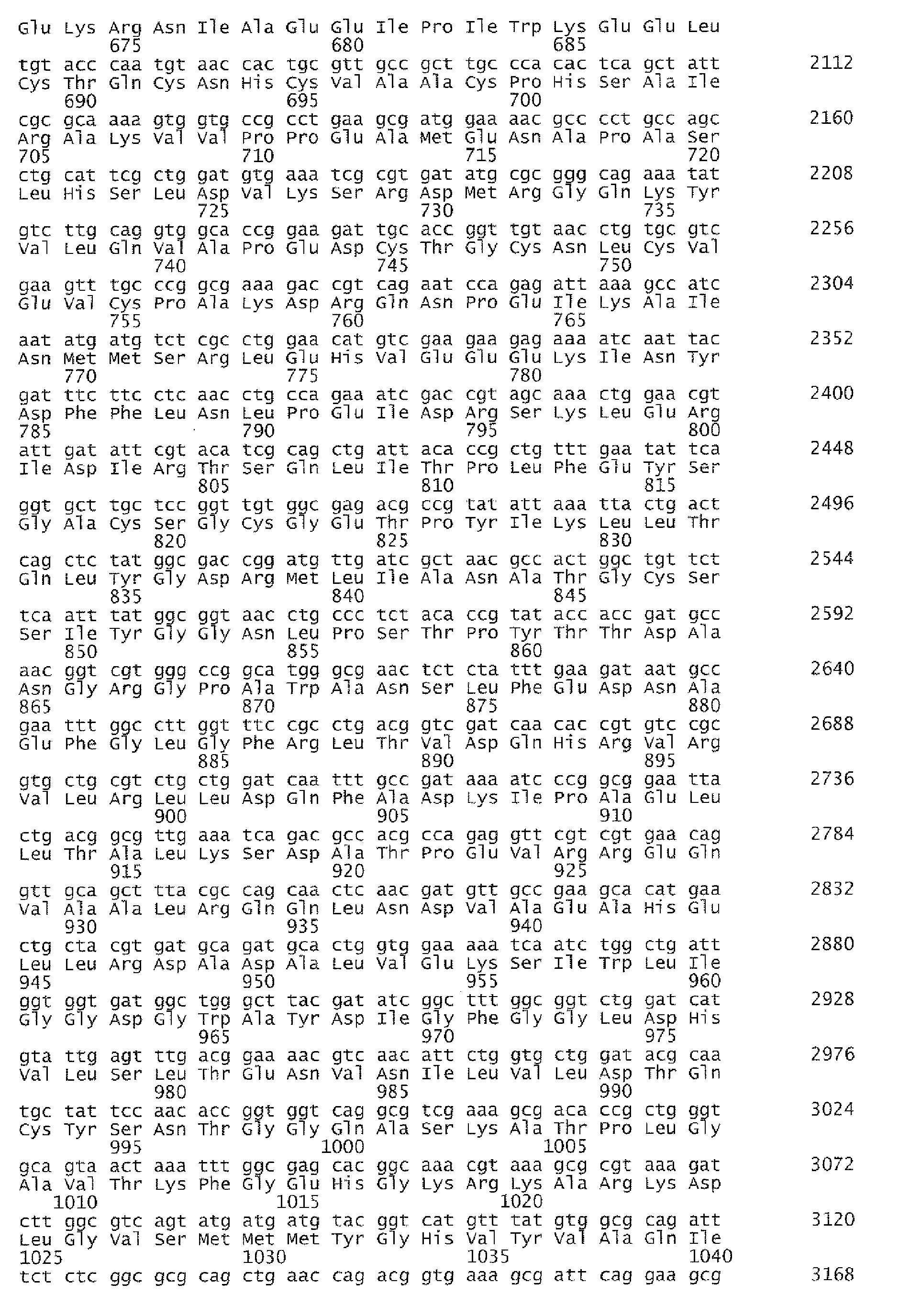


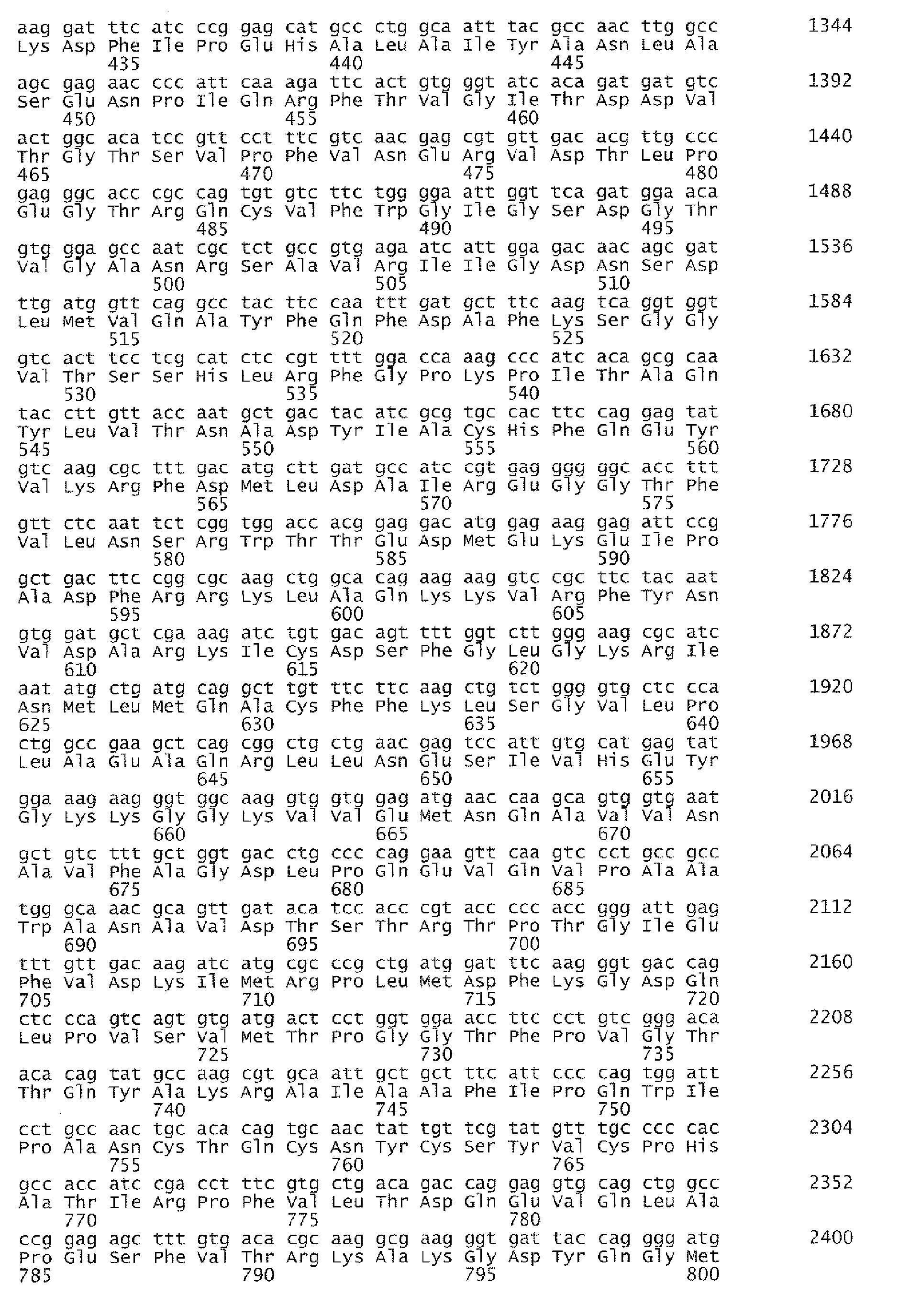


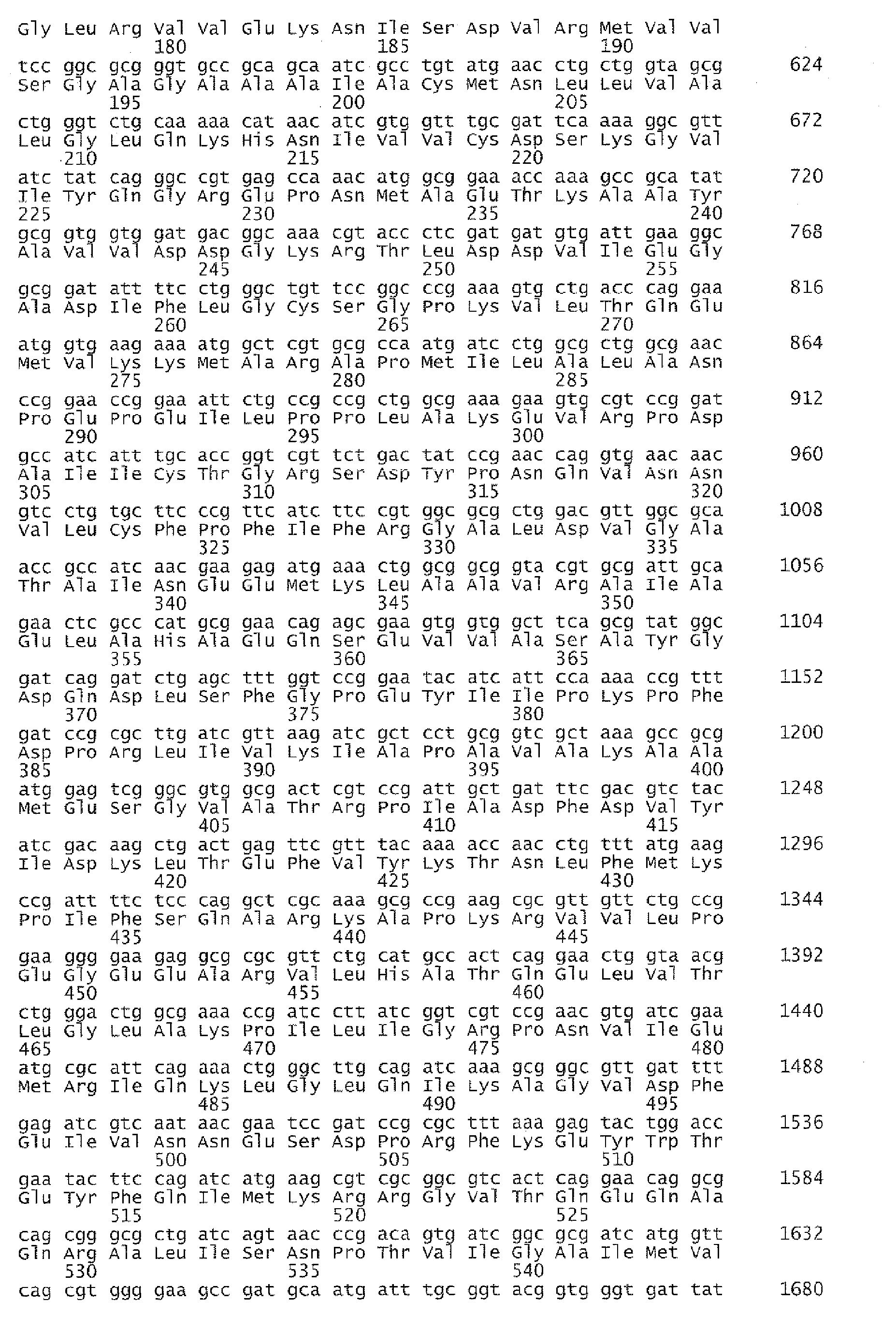


Claims (19)
- A microorganism which has an ability to produce an L-amino acid selected from the group consisting of L-lysine, L-threonine, L-tryptophan, L-phenylalanine, L-valine, L-leucine, L-isoleucine and L-serine and has been modified so that an activity of pyruvate synthase or pyruvate:NADP+ oxidoreductase is increased.
- The microorganism according to claim 1, which has been modified so that the activity of pyruvate synthase is increased.
- The microorganism according to claim 1, which has been modified so that the activity of pyruvate:NADP+ oxidoreductase is increased.
- The microorganism according to any one of claims 1 to 3, wherein the activity of pyruvate synthase or pyruvate:NADP+ oxidoreductase is increased by increasing expression of a gene encoding pyruvate synthase or pyruvate:NADP+ oxidoreductase, and/or by increasing translation of the gene.
- The microorganism according to claim 4, wherein the activity of pyruvate synthase or pyruvate:NADP+ oxidoreductase is increased by increasing copy number of a gene encoding pyruvate synthase or pyruvate:NADP+ oxidoreductase, or by modifying an expression control sequence of the gene.
- The microorganism according to claim 4 or 5,
wherein the gene encoding pyruvate synthase encodes a polypeptide defined in any one of the following (A) to (D), or polypeptides defined in the following (E), (F), (G) and (H), or polypeptides defined in the following (E), (F), (G), (H), (I) and (J):(A) a polypeptide comprising the amino acid sequence shown in SEQ ID NO: 2,(B) a polypeptide comprising an amino acid sequence shown in SEQ ID NO: 2 including substitution, deletion, insertion or addition of one or several amino acid residues and having pyruvate synthase activity,(C) a polypeptide comprising the amino acid sequence shown in SEQ ID NO: 4,(D) a polypeptide comprising an amino acid sequence shown in SEQ ID NO: 4 including substitution, deletion, insertion or addition of one or several amino acid residues and having pyruvate synthase activity,(E) a polypeptide defined in the following (E1) or (E2):(E1) a polypeptide comprising the amino acid sequence shown in SEQ ID NO: 57,(E2) a polypeptide which comprises an amino acid sequence shown in SEQ ID NO: 57 including substitution, deletion, insertion or addition of one or several amino acid residues and having pyruvate synthase activity, and is able to constitute a protein complex having pyruvate synthatse acitivity with at least the polypeptides (F), (G) and (H),(F) a polypeptide defined in the following (F1) or (F2) :(F1) a polypeptide comprising the amino acid sequence shown in SEQ ID NO: 57,(F2) a polypeptide which comprises an amino acid sequence shown in SEQ ID NO: 57 including substitution, deletion, insertion or addition of one or several amino acid residues and having pyruvate synthase activity, and is able to constitute a protein complex having pyruvate synthatse acitivity with at least the polypeptides (E), (G) and (H),(G) a polypeptide defined in the following (G1) or (G2):(G1) a polypeptide comprising the amino acid sequence shown in SEQ ID NO: 57,(G2) a polypeptide which comprises an amino acid sequence shown in SEQ ID NO: 57 including substitution, deletion, insertion or addition of one or several amino acid residues and having pyruvate synthase activity, and is able to constitute a protein complex having pyruvate synthatse acitivity with at least the polypeptides (E), (F) and (H),(H) a polypeptide defined in the following (H1) or (H2):(H1) a polypeptide comprising the amino acid sequence shown in SEQ ID NO: 57,(H2) a polypeptide which comprises an amino acid sequence shown in SEQ ID NO: 57 including substitution, deletion, insertion or addition of one or several amino acid residues and having pyruvate synthase activity, and is able to constitute a protein complex having pyruvate synthatse acitivity with at least the polypeptides (E), (F) and (G),(I) a polypeptide defined in the following (I1) or (I2):(H1) a polypeptide comprising the amino acid sequence shown in SEQ ID NO: 65,(H2) a polypeptide which comprises an amino acid sequence shown in SEQ ID NO: 65 including substitution, deletion, insertion or addition of one or several amino acid residues and having pyruvate synthase activity, and is able to constitute a protein complex having pyruvate synthatse acitivity with at least the polypeptides (E), (F) and (G) and (H),(J) a polypeptide defined in the following (J1) or (J2):(J1) a polypeptide comprising the amino acid sequence shown in SEQ ID NO: 67,(J2) a polypeptide which comprises an amino acid sequence shown in SEQ ID NO: 67 including substitution, deletion, insertion or addition of one or several amino acid residues and having pyruvate synthase activity, and is able to constitute a protein complex having pyruvate synthatse acitivity with at least the polypeptides (E), (F) and (G) and (H). - The microorganism according to claim 4 or 5, wherein the gene encoding pyruvate synthase comprises a DNA defined in any one of the following (a) to (d), or a DNA defined in the following (e), (f), (g) and (h), or a DNA defined in the following (e), (f), (g), (h), (i) and (j):(a) a DNA having the nucleotide sequence shown in SEQ ID NO: 1,(b) a DNA which is able to hybridize with a sequence complementary to the nucleotide sequence shown in SEQ ID NO: 1 or a probe which can be prepared from the nucleotide sequence under stringent conditions, and which encodes a polypeptide having pyruvate synthase activity,(c) a DNA having the nucleotide sequence shown in SEQ ID NO: 3,(d) a DNA which is able to hybridize with a sequence complementary to the nucleotide sequence shown in SEQ ID NO: 3 or a probe which can be prepared from the nucleotide sequence under stringent conditions, and which encodes a polypeptide having pyruvate synthase activity,(e) a DNA defined in the following (el) or (e2):(el) a DNA having the nucleotide sequence shown in SEQ ID NO: 56,(e2) a DNA which is able to hybridize with a sequence complementary to the nucleotide sequence shown in SEQ ID NO: 56 or a probe which can be prepared from the nucleotide sequence under stringent conditions, and which encodes a protein complex having pyruvate synthase activity with at least DNAs defined in (f), (g) and (h),(f) a DNA defined in the following (f1) or (f2):(f1) a DNA having the nucleotide sequence shown in SEQ ID NO: 58,(f2) a DNA which is able to hybridize with a sequence complementary to the nucleotide sequence shown in. SEQ ID NO: 58 or a probe which can be prepared from the nucleotide sequence under stringent conditions, and which encodes a protein complex having pyruvate synthase activity with at least DNAs defined in (e), (g) and (h),(g) a DNA defined in the following (g1) or (g2):(g1) a DNA having the nucleotide sequence shown in SEQ ID NO: 60,(g2) a DNA which is able to hybridize with a sequence complementary to the nucleotide sequence shown in SEQ ID NO: 60 or a probe which can be prepared from the nucleotide sequence under stringent conditions, and which encodes a protein complex having pyruvate synthase activity with at least DNAs defined in (e), (f) and (h),(h) a DNA defined in the following (h1) or (h2):(h1) a DNA having the nucleotide sequence shown in SEQ ID NO: 62,(h2) a DNA which is able to hybridize with a sequence complementary to the nucleotide sequence shown in SEQ ID NO: 62 or a probe which can be prepared from the nucleotide sequence under stringent conditions, and which encodes a protein complex having pyruvate synthase activity with at least DNAs defined in (e), (f) and (g),(i) a DNA defined in the following (i1) or (i2):(i1) a DNA having the nucleotide sequence shown in SEQ ID NO: 64,(i2) a DNA which is able to hybridize with a sequence comple mentary to the nucleotide sequence shown in SEQ ID NO: 64 or a probe which can be prepared from the nucleotide sequence under stringent conditions, and which encodes a protein com plex having pyruvate synthase activity with at least DNAs de fined in (e), (f), (g) and (h),(j) a DNA defined in the following (j1) or (j2):(j1) a DNA having the nucleotide sequence shown in SEQ ID NO: 66,(j2) a DNA which is able to hybridize with a sequence complementary to the nucleotide sequence shown in SEQ ID NO: 66 or a probe which can be prepared from the nucleotide sequence under stringent conditions, and which encodes a protein complex having pyruvate synthase activity with at least DNAs defined in (e), (f), (g) and (h).
- The microorganism according to claim 4 or 5,
wherein the gene encoding pyruvate:NADP+ oxidoreductase encodes a polypeptide defined in the following (A) or (B):(A) a polypeptide comprising the amino acid sequence shown in SEQ ID NO: 6,(B) a polypeptide comprising an amino acid sequence shown in SEQ ID NO: 6 including substitution, deletion, insertion or addition of one or several amino acid residues and having pyruvate:NADP+ oxidoreductase activity. - The microorganism according to claim 4 or 5,
wherein the gene encoding pyruvate:NADP+ oxidoreductase comprises a DNA defined in the following (a) or (b):(a) a DNA having the nucleotide sequence shown in SEQ ID NO: 5,(b) a DNA which is able to hybridize with a sequence complementary to the nucleotide sequence shown in SEQ ID NO: 5 or a probe which can be prepared from the nucleotide sequence under stringent conditions and, and which encodes a polypeptide having pyruvate:NADP+ oxidoreductase activity, - The microorganism according to any one of claims 1 and 2 to 7, which has been modified so that an activity of ferredoxin-NADP+ reductase is increased.
- The microorganism according to any one of claims 1, 2 to 7 and 10, which has been modified so that ferredoxin or flavodoxin production ability is improved.
- The microorganism according to any one of claims 1 to 11, which has been modified so that an activity of malic enzyme is decreased.
- The microorganism according to any one of claims 1 to 12, which has been modified so that pyruvate dehydrogenase activity is decreased.
- The microorganism according to any one of claims 1 to 13, which has been modified so that it can aerobically assimilate ethanol.
- The microorganism according to any one of claims 1 to 14, which is a bacterium belonging to the genus selected from the group consisting of the genera Escherichia, Enterobacter, Pantoea, Klebsiella and Serratia.
- The microorganism according to claim 15, wherein activities of both of NAD-dependent malic enzyme and NADP-dependent malic enzyme are decreased.
- The microorganism according to any one of claims 1 to 14, which is a coryneform bacterium.
- A method for producing an L-amino acid, which comprises culturing the microorganism according to any one of claims 1 to 15 in a medium to produce and accumulate an L-amino acid selected from the group consisting of L-lysine, L-tryptophan, L-phenylalanine, L-valine, L-leucine, L-isoleucine and L-serine in the medium or cells, and collecting the L-amino acid from the medium or the cells.
- The method according to claim 18, wherein the medium contains ethanol or an aliphatic acid as a carbon source.
Applications Claiming Priority (3)
| Application Number | Priority Date | Filing Date | Title |
|---|---|---|---|
| JP2007228733A JP2010263790A (en) | 2007-09-04 | 2007-09-04 | Amino acid-producing microorganism and method for producing amino acid |
| RU2007147434/13A RU2395579C2 (en) | 2007-12-21 | 2007-12-21 | METHOD OF PRODUCING L-AMINO ACIDS USING Escherichia GENUS BACTERIA |
| PCT/JP2008/065834 WO2009031565A1 (en) | 2007-09-04 | 2008-09-03 | Amino acid-producing microorganism and method of producing amino acid |
Publications (3)
| Publication Number | Publication Date |
|---|---|
| EP2192170A1 true EP2192170A1 (en) | 2010-06-02 |
| EP2192170A4 EP2192170A4 (en) | 2010-12-08 |
| EP2192170B1 EP2192170B1 (en) | 2017-02-15 |
Family
ID=40428879
Family Applications (1)
| Application Number | Title | Priority Date | Filing Date |
|---|---|---|---|
| EP08829698.3A Not-in-force EP2192170B1 (en) | 2007-09-04 | 2008-09-03 | Amino acid-producing microorganism and method of producing amino acid |
Country Status (4)
| Country | Link |
|---|---|
| EP (1) | EP2192170B1 (en) |
| CN (1) | CN101939412B (en) |
| BR (1) | BRPI0816429A2 (en) |
| WO (1) | WO2009031565A1 (en) |
Cited By (7)
| Publication number | Priority date | Publication date | Assignee | Title |
|---|---|---|---|---|
| EP2787082A4 (en) * | 2011-12-01 | 2015-07-08 | Cj Cheiljedang Corp | MICROORGANISM SIMULTANEOUSLY PRODUCING AN L-AMINO ACID AND RIBOFLAVIN, AND PROCESS FOR PRODUCING L-AMINO ACID AND RIBOFLAVIN USING THE SAME |
| US10563234B2 (en) | 2014-06-03 | 2020-02-18 | Ajinomoto Co., Inc. | Method for producing L-amino acids |
| WO2023247740A1 (en) | 2022-06-24 | 2023-12-28 | Arkeon Gmbh | Method for producing amino acids with methanogenic microorganisms in a bioreactor |
| WO2023247741A1 (en) | 2022-06-24 | 2023-12-28 | Arkeon Gmbh | Method for producing amino acids in a bioreactor with methanogenic microorganisms |
| WO2023247742A1 (en) | 2022-06-24 | 2023-12-28 | Arkeon Gmbh | Method for producing amino acids in a bioreactor |
| WO2023247743A1 (en) | 2022-06-24 | 2023-12-28 | Arkeon Gmbh | Method for fermentatively producing norvaline |
| WO2024014699A1 (en) * | 2022-07-11 | 2024-01-18 | 대상 주식회사 | Corynebacterium sp. mutant microorganism producing l-glutamic acid and method for producing l-glutamic acid using same |
Families Citing this family (15)
| Publication number | Priority date | Publication date | Assignee | Title |
|---|---|---|---|---|
| JPWO2011013707A1 (en) | 2009-07-29 | 2013-01-10 | 味の素株式会社 | Method for producing L-amino acid |
| JP2012223092A (en) | 2009-08-28 | 2012-11-15 | Ajinomoto Co Inc | Method for producing l-amino acid |
| JP2013074795A (en) | 2010-02-08 | 2013-04-25 | Ajinomoto Co Inc | MUTANT rpsA GENE AND METHOD FOR PRODUCING L-AMINO ACID |
| JP2014036576A (en) | 2010-12-10 | 2014-02-27 | Ajinomoto Co Inc | Method for producing l-amino acids |
| CN103865869B (en) * | 2014-04-03 | 2017-01-11 | 天津科技大学 | Genetically engineered bacterium for producing alpha-ketobutyric acid and application of genetically engineered bacterium |
| KR101747542B1 (en) * | 2015-10-23 | 2017-06-15 | 씨제이제일제당 (주) | Microorganisms having l-isoleucine productivity and process for producing l-isoleucine using the same |
| US12241101B2 (en) | 2018-08-10 | 2025-03-04 | Kyowa Hakko Bio Co., Ltd. | Microorganism producing polyunsaturated fatty acid and method for producing polyunsaturated fatty acid |
| CN111019878B (en) * | 2020-01-13 | 2021-04-16 | 江南大学 | Recombinant Escherichia coli with improved L-threonine yield, construction method and application thereof |
| CN112695036B (en) * | 2021-03-23 | 2021-07-06 | 中国科学院天津工业生物技术研究所 | An aspartate kinase gene expression control sequence and its application |
| CN113249347B (en) * | 2021-07-14 | 2021-11-12 | 中国科学院天津工业生物技术研究所 | Mutants of pyruvate dehydrogenase and methods for producing L-amino acids using the same |
| CN113913478B (en) * | 2021-11-26 | 2023-06-02 | 江南大学 | Method for producing L-valine by fermenting Brevibacterium flavum |
| CN116286566A (en) * | 2022-07-13 | 2023-06-23 | 南京盛德生物科技研究院有限公司 | A kind of L-homoserine high-yield strain and its construction method and application |
| CN115948359B (en) * | 2022-08-01 | 2025-01-10 | 华南农业大学 | Protein fusion tag and application thereof |
| CN117802021A (en) * | 2023-12-26 | 2024-04-02 | 大连医诺生物股份有限公司 | An engineering bacterium, biological material and application for improving tryptophan production |
| CN119306809B (en) * | 2024-09-29 | 2025-11-04 | 南京农业大学 | Application of porin PorA in improving the ammonia nitrogen utilization capacity of methanogenic bacteria |
Family Cites Families (78)
| Publication number | Priority date | Publication date | Assignee | Title |
|---|---|---|---|---|
| FR356739A (en) | 1904-09-20 | 1905-12-07 | Charles Glauser Perrin | Winding and time-setting mechanism |
| JPS561890A (en) | 1979-06-15 | 1981-01-10 | Ajinomoto Co Inc | Preparation of l-phenylalanine by fermentation |
| JPS5618596A (en) | 1979-07-23 | 1981-02-21 | Ajinomoto Co Inc | Production of l-lysine through fermentation process |
| JPS5672695A (en) | 1979-11-15 | 1981-06-16 | Ajinomoto Co Inc | Preparation of l-leucine |
| JPS5685289A (en) | 1979-12-13 | 1981-07-11 | Ajinomoto Co Inc | Preparation of l-valine by fermentation |
| US4371614A (en) | 1980-08-22 | 1983-02-01 | Ajinomoto Co., Inc. | E.Coli bacteria carrying recombinant plasmids and their use in the fermentative production of L-tryptophan |
| JPS57134500A (en) | 1981-02-12 | 1982-08-19 | Kyowa Hakko Kogyo Co Ltd | Plasmid pcg1 |
| JPS57183799A (en) | 1981-04-17 | 1982-11-12 | Kyowa Hakko Kogyo Co Ltd | Novel plasmid |
| JPS5835197A (en) | 1981-08-26 | 1983-03-01 | Kyowa Hakko Kogyo Co Ltd | Plamid pcg 2 |
| JPS5867699A (en) | 1981-10-16 | 1983-04-22 | Ajinomoto Co Inc | Plasmid |
| JPS5877895A (en) | 1981-11-02 | 1983-05-11 | Ajinomoto Co Inc | Plasmid phm1519 |
| JPS58192900A (en) | 1982-05-04 | 1983-11-10 | Ajinomoto Co Inc | Complex plasmid |
| JPH06102024B2 (en) | 1986-04-16 | 1994-12-14 | 味の素株式会社 | Novel promoter and gene expression method using the promoter |
| JP2536570B2 (en) | 1987-10-12 | 1996-09-18 | 味の素株式会社 | Fermentation method for producing L-isoleucine |
| FR2627508B1 (en) | 1988-02-22 | 1990-10-05 | Eurolysine | PROCESS FOR THE INTEGRATION OF A SELECTED GENE ON THE CHROMOSOME OF A BACTERIA AND BACTERIA OBTAINED BY SAID METHOD |
| JPH03501682A (en) | 1988-10-25 | 1991-04-18 | 味の素株式会社 | Escherichia coli BKIIM strain B-3996 as an L-threonine producer |
| US5705371A (en) | 1990-06-12 | 1998-01-06 | Ajinomoto Co., Inc. | Bacterial strain of escherichia coli BKIIM B-3996 as the producer of L-threonine |
| JPH02207791A (en) | 1989-02-07 | 1990-08-17 | Ajinomoto Co Inc | Transformation of bacterium |
| JPH07108228B2 (en) | 1990-10-15 | 1995-11-22 | 味の素株式会社 | Temperature sensitive plasmid |
| DE69133342T2 (en) | 1990-11-30 | 2004-07-22 | Ajinomoto Co., Inc. | Recombinant DNA sequences coding for enzymes free from feedback inhibition, plasmids containing these sequences, transformed microorganisms useful for the production of aromatic amino acids, and their methods of production by fermentation |
| MY121534A (en) | 1990-11-30 | 2006-02-28 | Ajinomoto Kk | Method and apparatus for controlling carbon source concentration in aerobic cultivation of a microorganism. |
| US5534421A (en) | 1991-05-30 | 1996-07-09 | Ajinomoto Co., Inc. | Production of isoleucine by escherichia coli having isoleucine auxotrophy and no negative feedback inhibition of isoleucine production |
| JP3006926B2 (en) | 1991-09-04 | 2000-02-07 | 協和醗酵工業株式会社 | Method for producing L-threonine by fermentation method |
| JP3036930B2 (en) | 1991-11-11 | 2000-04-24 | 協和醗酵工業株式会社 | Production method of L-isoleucine by fermentation method |
| TW313589B (en) | 1991-12-12 | 1997-08-21 | Wacker Chemie Gmbh | |
| JP3151073B2 (en) | 1992-02-25 | 2001-04-03 | 協和醗酵工業株式会社 | Production of amino acids by fermentation |
| DE4232468A1 (en) | 1992-09-28 | 1994-03-31 | Consortium Elektrochem Ind | Microorganisms for the production of tryptophan and process for their production |
| EP0593792B2 (en) | 1992-10-14 | 2004-01-07 | Ajinomoto Co., Inc. | Novel L-threonine-producing microbacteria and a method for the production of L-threonine |
| US5354672A (en) | 1992-11-24 | 1994-10-11 | Ian Fotheringham | Materials and methods for hypersecretion of amino acids |
| CA2169170C (en) | 1993-08-24 | 2007-01-09 | Masakazu Sugimoto | Mutant phosphoenolpyruvate carboxylase, its gene, and production method of amino acid |
| RU2182173C2 (en) | 1993-10-28 | 2002-05-10 | Адзиномото Ко., Инк. | Method of production of l-amino acid |
| JPH07155184A (en) | 1993-12-08 | 1995-06-20 | Ajinomoto Co Inc | Fermentation method for producing L-lysine |
| US5998178A (en) | 1994-05-30 | 1999-12-07 | Ajinomoto Co., Ltd. | L-isoleucine-producing bacterium and method for preparing L-isoleucine through fermentation |
| CN1103819C (en) | 1994-06-14 | 2003-03-26 | 味之素株式会社 | α-ketoglutarate dehydrogenase gene |
| JP3698758B2 (en) | 1994-06-30 | 2005-09-21 | 協和醗酵工業株式会社 | Method for producing L-leucine by fermentation |
| JP3709564B2 (en) | 1994-08-30 | 2005-10-26 | 味の素株式会社 | Process for producing L-valine and L-leucine |
| ES2256850T5 (en) | 1994-12-09 | 2013-04-15 | Ajinomoto Co., Inc. | New lysine decarboxylase gene and procedure for the production of L-lysine |
| JP4032441B2 (en) | 1995-08-30 | 2008-01-16 | 味の素株式会社 | Method for producing L-amino acid |
| GB2304718B (en) | 1995-09-05 | 2000-01-19 | Degussa | The production of tryptophan by the bacterium escherichia coli |
| US5939307A (en) | 1996-07-30 | 1999-08-17 | The Archer-Daniels-Midland Company | Strains of Escherichia coli, methods of preparing the same and use thereof in fermentation processes for l-threonine production |
| KR100697551B1 (en) | 1997-07-18 | 2007-03-21 | 아지노모토 가부시키가이샤 | Method for producing purine nucleosides by fermentation |
| DE59812638D1 (en) | 1997-10-04 | 2005-04-14 | Degussa | METHOD FOR MICROBIAL PRODUCTION OF AMINO ACIDS OF THE ASPART AND / OR GLUTAMATE FAMILY AND METHODS USED IN THE PROCESS |
| RU2140450C1 (en) | 1997-10-29 | 1999-10-27 | Закрытое акционерное общество "Научно-исследовательский институт "Аджиномото-Генетика" (ЗАО "АГРИ") | Strains of bacterium escherichia coli - producers of l-leucine (variants) |
| JP4066543B2 (en) | 1998-01-12 | 2008-03-26 | 味の素株式会社 | Method for producing L-serine by fermentation |
| JP3997631B2 (en) | 1998-01-12 | 2007-10-24 | 味の素株式会社 | Method for producing L-serine by fermentation |
| AU756507B2 (en) | 1998-03-18 | 2003-01-16 | Ajinomoto Co., Inc. | L-glutamic acid-producing bacterium and method for producing L-glutamic acid |
| AU746542B2 (en) | 1998-03-18 | 2002-05-02 | Ajinomoto Co., Inc. | L-glutamic acid-producing bacterium and method for producing L-glutamic acid |
| RU2144564C1 (en) | 1998-10-13 | 2000-01-20 | Закрытое акционерное общество "Научно-исследовательский институт Аджиномото-Генетика" | Dna fragment rhtb encoding synthesis of protein rhtb that determines resistance of bacterium escherichia coli to l-homoserine and method of l-amino acid producing |
| BR9906279A (en) | 1998-12-18 | 2001-04-24 | Ajinomoto Kk | Chorineform bacteria, process to produce l-glutamic acid, and, dna. |
| RU2148642C1 (en) | 1998-12-23 | 2000-05-10 | ЗАО "Научно-исследовательский институт АДЖИНОМОТО-Генетика" (ЗАО "АГРИ") | Dna rhtc fragment encoding synthesis of rhtc protein that determines enhanced resistance of bacterium escherichia coli to l-threonine and method of l-amino acid producing |
| RU2175351C2 (en) | 1998-12-30 | 2001-10-27 | Закрытое акционерное общество "Научно-исследовательский институт "Аджиномото-Генетика" (ЗАО "АГРИ") | Escherichia coli dna fragment determining enhanced production of l-amino acids (variants) and method of l-amino acid producing |
| JP2000262288A (en) | 1999-03-16 | 2000-09-26 | Ajinomoto Co Inc | Temperature sensitive plasmid of coryneform bacteria |
| RU2201454C2 (en) | 1999-07-09 | 2003-03-27 | Закрытое акционерное общество "Научно-исследовательский институт Аджиномото-Генетика" | Mutant alpha-isopropylmalate synthase (ipms), dna encoding mutant ipms, method of preparing escherichia coli strain, method of l-leucine preparing |
| RU2207376C2 (en) * | 1999-10-14 | 2003-06-27 | Закрытое акционерное общество "Научно-исследовательский институт Аджиномото-Генетика" | Method for preparing l-amino acid by fermentation method, strain of bacterium escherichia coli as producer of l-amino acid (variants) |
| BRPI0016995B1 (en) | 2000-01-21 | 2016-03-08 | Ajinomoto Kk | genetically modified escherichia coli bacteria, and method for producing l-lysine |
| RU2212447C2 (en) | 2000-04-26 | 2003-09-20 | Закрытое акционерное общество "Научно-исследовательский институт Аджиномото-Генетика" | Strain escherichia coli as producer of amino acid (variants) and method for preparing amino acid (variants) |
| JP4380029B2 (en) | 2000-07-05 | 2009-12-09 | 味の素株式会社 | Manufacturing method of substances using microorganisms |
| EP1182259A1 (en) * | 2000-08-17 | 2002-02-27 | BASF Plant Science GmbH | Pyruvate:NADP+ oxidoreductase and uses thereof |
| JP4362959B2 (en) | 2000-08-24 | 2009-11-11 | 味の素株式会社 | Method for producing basic amino acid |
| DE10045497A1 (en) * | 2000-09-13 | 2002-03-28 | Degussa | New nucleotide sequences coding for the ppsA gene |
| US7220571B2 (en) | 2000-09-28 | 2007-05-22 | Archer-Daniels-Midland Company | Escherichia coli strains which over-produce L-threonine and processes for the production of L-threonine by fermentation |
| CN100529057C (en) | 2001-02-13 | 2009-08-19 | 味之素株式会社 | Method for producing L-amino acid by Escherichia bacterium |
| RU2229513C2 (en) | 2001-11-23 | 2004-05-27 | Закрытое акционерное общество "Научно-исследовательский институт Аджиномото-Генетика" | Method for preparing l-amino acids, strain escherichia coli as producer of l-amino acids (variants) |
| RU2222596C1 (en) | 2002-08-14 | 2004-01-27 | Закрытое акционерное общество "Научно-исследовательский институт Аджиномото-Генетика" | Method for preparing l-amino acids, strain escherichia coli as producer of l-amino acid (variants) |
| EP1449918B1 (en) | 2001-11-23 | 2010-06-09 | Ajinomoto Co., Inc. | Process for producing l-amino acid using escherichia |
| KR100459758B1 (en) | 2002-05-15 | 2004-12-03 | 씨제이 주식회사 | A nucleotide sequence of threonine operon deregulated from isoleucine and a method for producing L-threonine using a transformed cell containing the same |
| CN100520793C (en) | 2003-07-29 | 2009-07-29 | 味之素株式会社 | Method for determination of metabolic flux affecting production of useful material |
| JP4575086B2 (en) | 2003-08-28 | 2010-11-04 | 三菱化学株式会社 | Method for producing succinic acid |
| JP4380305B2 (en) | 2003-11-21 | 2009-12-09 | 味の素株式会社 | Method for producing L-amino acid by fermentation |
| DE10359594A1 (en) | 2003-12-18 | 2005-07-28 | Basf Ag | PEF TU-expression units |
| CN103146593B (en) | 2004-01-30 | 2015-07-15 | 味之素株式会社 | L-amino acid-producing microorganism and method for producing l-amino acid |
| WO2005103275A1 (en) | 2004-04-26 | 2005-11-03 | Ajinomoto Co., Ltd. | Process for producing l-tryptophan according to fermentation process |
| US8604180B2 (en) | 2004-09-09 | 2013-12-10 | Research Institute Of Innovative Technology For The Earth | DNA fragment having promoter function |
| RU2004130954A (en) | 2004-10-22 | 2006-04-10 | Закрытое акционерное общество "Научно-исследовательский институт Аджиномото-Генетика" (ЗАО АГРИ) (RU) | METHOD FOR PRODUCING L-AMINO ACIDS USING BACTERIA OF THE ENTEROBACTERIACEAE FAMILY |
| RU2004137719A (en) | 2004-12-23 | 2006-06-10 | Закрытое акционерное общество "Научно-исследовательский институт Аджиномото-Генетика" (ЗАО АГРИ) (RU) | METHOD FOR PRODUCING L-AMINO ACIDS USING BACTERIA OF THE ENTEROBACTERIACEAE FAMILY |
| WO2006078039A1 (en) | 2005-01-18 | 2006-07-27 | Ajinomoto Co., Inc. | L-amino acid producing microorganism and a method for producing l-amino acid |
| JP2008530978A (en) | 2005-03-03 | 2008-08-14 | 味の素株式会社 | Process for producing 4-hydroxy-L-isoleucine or a salt thereof |
| WO2006123764A1 (en) | 2005-05-16 | 2006-11-23 | Ajinomoto Co., Inc. | A method for producing an l-amino acid using a bacterium of the enterobacteriaceae family with attenuated expression of the kefb gene |
-
2008
- 2008-09-03 WO PCT/JP2008/065834 patent/WO2009031565A1/en not_active Ceased
- 2008-09-03 BR BRPI0816429A patent/BRPI0816429A2/en not_active IP Right Cessation
- 2008-09-03 EP EP08829698.3A patent/EP2192170B1/en not_active Not-in-force
- 2008-09-03 CN CN200880105639.9A patent/CN101939412B/en not_active Expired - Fee Related
Cited By (8)
| Publication number | Priority date | Publication date | Assignee | Title |
|---|---|---|---|---|
| EP2787082A4 (en) * | 2011-12-01 | 2015-07-08 | Cj Cheiljedang Corp | MICROORGANISM SIMULTANEOUSLY PRODUCING AN L-AMINO ACID AND RIBOFLAVIN, AND PROCESS FOR PRODUCING L-AMINO ACID AND RIBOFLAVIN USING THE SAME |
| US10590446B2 (en) | 2011-12-01 | 2020-03-17 | Cj Cheiljedang Corporation | Microorganism for simultaneously producing L-amino acid and riboflavin, and method for producing L-amino acid and riboflavin using same |
| US10563234B2 (en) | 2014-06-03 | 2020-02-18 | Ajinomoto Co., Inc. | Method for producing L-amino acids |
| WO2023247740A1 (en) | 2022-06-24 | 2023-12-28 | Arkeon Gmbh | Method for producing amino acids with methanogenic microorganisms in a bioreactor |
| WO2023247741A1 (en) | 2022-06-24 | 2023-12-28 | Arkeon Gmbh | Method for producing amino acids in a bioreactor with methanogenic microorganisms |
| WO2023247742A1 (en) | 2022-06-24 | 2023-12-28 | Arkeon Gmbh | Method for producing amino acids in a bioreactor |
| WO2023247743A1 (en) | 2022-06-24 | 2023-12-28 | Arkeon Gmbh | Method for fermentatively producing norvaline |
| WO2024014699A1 (en) * | 2022-07-11 | 2024-01-18 | 대상 주식회사 | Corynebacterium sp. mutant microorganism producing l-glutamic acid and method for producing l-glutamic acid using same |
Also Published As
| Publication number | Publication date |
|---|---|
| CN101939412B (en) | 2016-01-20 |
| BRPI0816429A2 (en) | 2019-09-24 |
| EP2192170A4 (en) | 2010-12-08 |
| EP2192170B1 (en) | 2017-02-15 |
| CN101939412A (en) | 2011-01-05 |
| WO2009031565A1 (en) | 2009-03-12 |
Similar Documents
| Publication | Publication Date | Title |
|---|---|---|
| EP2192170B1 (en) | Amino acid-producing microorganism and method of producing amino acid | |
| US7833761B2 (en) | Amino acid producing microorganism and a method for producing an amino acid | |
| CN101563453B (en) | Production method of L-amino acid | |
| EP1999266B1 (en) | Method for producing l-amino acid | |
| CN101490251B (en) | Method for producing L-amino acid using Enterobacteriaceae bacteria | |
| EP2290092B1 (en) | Method for production of l-amino acid | |
| EP2650376B1 (en) | Method for producing an l-amino acid by reducing the intracellular hydrogen peroxide concentration | |
| CN108690856B (en) | Process for producing L-amino acid | |
| EP1990416B1 (en) | Method for production of l-amino acid | |
| US8932834B2 (en) | Method for producing an L-amino acid in a cultured bacterium having reduced activity of the arginine succinyltransferase pathway | |
| WO2007069782A1 (en) | L-amino acid producing bacterium and method of producing l-amino acid | |
| EP2382320B1 (en) | Process for producing l-amino acids employing bacteria of the enterobacteriacea family in a culture medium with controlled glycerol concentration | |
| US20170073714A1 (en) | Method for Producing L-Amino Acids | |
| WO2012002486A1 (en) | Method for producing l-amino acid | |
| JP2010246483A (en) | Method for producing l-amino acid | |
| WO2015064648A1 (en) | Green algae that generates a fatty acid | |
| WO2010101053A1 (en) | Method for producing l-amino acid |
Legal Events
| Date | Code | Title | Description |
|---|---|---|---|
| PUAI | Public reference made under article 153(3) epc to a published international application that has entered the european phase |
Free format text: ORIGINAL CODE: 0009012 |
|
| 17P | Request for examination filed |
Effective date: 20100318 |
|
| AK | Designated contracting states |
Kind code of ref document: A1 Designated state(s): AT BE BG CH CY CZ DE DK EE ES FI FR GB GR HR HU IE IS IT LI LT LU LV MC MT NL NO PL PT RO SE SI SK TR |
|
| AX | Request for extension of the european patent |
Extension state: AL BA MK RS |
|
| A4 | Supplementary search report drawn up and despatched |
Effective date: 20101108 |
|
| DAX | Request for extension of the european patent (deleted) | ||
| 17Q | First examination report despatched |
Effective date: 20140715 |
|
| GRAP | Despatch of communication of intention to grant a patent |
Free format text: ORIGINAL CODE: EPIDOSNIGR1 |
|
| INTG | Intention to grant announced |
Effective date: 20160809 |
|
| GRAS | Grant fee paid |
Free format text: ORIGINAL CODE: EPIDOSNIGR3 |
|
| GRAJ | Information related to disapproval of communication of intention to grant by the applicant or resumption of examination proceedings by the epo deleted |
Free format text: ORIGINAL CODE: EPIDOSDIGR1 |
|
| GRAL | Information related to payment of fee for publishing/printing deleted |
Free format text: ORIGINAL CODE: EPIDOSDIGR3 |
|
| INTC | Intention to grant announced (deleted) | ||
| GRAR | Information related to intention to grant a patent recorded |
Free format text: ORIGINAL CODE: EPIDOSNIGR71 |
|
| GRAA | (expected) grant |
Free format text: ORIGINAL CODE: 0009210 |
|
| INTG | Intention to grant announced |
Effective date: 20170104 |
|
| AK | Designated contracting states |
Kind code of ref document: B1 Designated state(s): AT BE BG CH CY CZ DE DK EE ES FI FR GB GR HR HU IE IS IT LI LT LU LV MC MT NL NO PL PT RO SE SI SK TR |
|
| REG | Reference to a national code |
Ref country code: GB Ref legal event code: FG4D Ref country code: CH Ref legal event code: EP |
|
| REG | Reference to a national code |
Ref country code: IE Ref legal event code: FG4D |
|
| REG | Reference to a national code |
Ref country code: AT Ref legal event code: REF Ref document number: 867904 Country of ref document: AT Kind code of ref document: T Effective date: 20170315 |
|
| REG | Reference to a national code |
Ref country code: NL Ref legal event code: FP |
|
| REG | Reference to a national code |
Ref country code: DE Ref legal event code: R096 Ref document number: 602008048777 Country of ref document: DE |
|
| REG | Reference to a national code |
Ref country code: LT Ref legal event code: MG4D |
|
| REG | Reference to a national code |
Ref country code: AT Ref legal event code: MK05 Ref document number: 867904 Country of ref document: AT Kind code of ref document: T Effective date: 20170215 |
|
| PG25 | Lapsed in a contracting state [announced via postgrant information from national office to epo] |
Ref country code: GR Free format text: LAPSE BECAUSE OF FAILURE TO SUBMIT A TRANSLATION OF THE DESCRIPTION OR TO PAY THE FEE WITHIN THE PRESCRIBED TIME-LIMIT Effective date: 20170516 Ref country code: NO Free format text: LAPSE BECAUSE OF FAILURE TO SUBMIT A TRANSLATION OF THE DESCRIPTION OR TO PAY THE FEE WITHIN THE PRESCRIBED TIME-LIMIT Effective date: 20170515 Ref country code: FI Free format text: LAPSE BECAUSE OF FAILURE TO SUBMIT A TRANSLATION OF THE DESCRIPTION OR TO PAY THE FEE WITHIN THE PRESCRIBED TIME-LIMIT Effective date: 20170215 Ref country code: LT Free format text: LAPSE BECAUSE OF FAILURE TO SUBMIT A TRANSLATION OF THE DESCRIPTION OR TO PAY THE FEE WITHIN THE PRESCRIBED TIME-LIMIT Effective date: 20170215 Ref country code: HR Free format text: LAPSE BECAUSE OF FAILURE TO SUBMIT A TRANSLATION OF THE DESCRIPTION OR TO PAY THE FEE WITHIN THE PRESCRIBED TIME-LIMIT Effective date: 20170215 |
|
| PG25 | Lapsed in a contracting state [announced via postgrant information from national office to epo] |
Ref country code: ES Free format text: LAPSE BECAUSE OF FAILURE TO SUBMIT A TRANSLATION OF THE DESCRIPTION OR TO PAY THE FEE WITHIN THE PRESCRIBED TIME-LIMIT Effective date: 20170215 Ref country code: SE Free format text: LAPSE BECAUSE OF FAILURE TO SUBMIT A TRANSLATION OF THE DESCRIPTION OR TO PAY THE FEE WITHIN THE PRESCRIBED TIME-LIMIT Effective date: 20170215 Ref country code: AT Free format text: LAPSE BECAUSE OF FAILURE TO SUBMIT A TRANSLATION OF THE DESCRIPTION OR TO PAY THE FEE WITHIN THE PRESCRIBED TIME-LIMIT Effective date: 20170215 Ref country code: LV Free format text: LAPSE BECAUSE OF FAILURE TO SUBMIT A TRANSLATION OF THE DESCRIPTION OR TO PAY THE FEE WITHIN THE PRESCRIBED TIME-LIMIT Effective date: 20170215 Ref country code: PT Free format text: LAPSE BECAUSE OF FAILURE TO SUBMIT A TRANSLATION OF THE DESCRIPTION OR TO PAY THE FEE WITHIN THE PRESCRIBED TIME-LIMIT Effective date: 20170615 Ref country code: BG Free format text: LAPSE BECAUSE OF FAILURE TO SUBMIT A TRANSLATION OF THE DESCRIPTION OR TO PAY THE FEE WITHIN THE PRESCRIBED TIME-LIMIT Effective date: 20170515 |
|
| PG25 | Lapsed in a contracting state [announced via postgrant information from national office to epo] |
Ref country code: RO Free format text: LAPSE BECAUSE OF FAILURE TO SUBMIT A TRANSLATION OF THE DESCRIPTION OR TO PAY THE FEE WITHIN THE PRESCRIBED TIME-LIMIT Effective date: 20170215 Ref country code: IT Free format text: LAPSE BECAUSE OF FAILURE TO SUBMIT A TRANSLATION OF THE DESCRIPTION OR TO PAY THE FEE WITHIN THE PRESCRIBED TIME-LIMIT Effective date: 20170215 Ref country code: EE Free format text: LAPSE BECAUSE OF FAILURE TO SUBMIT A TRANSLATION OF THE DESCRIPTION OR TO PAY THE FEE WITHIN THE PRESCRIBED TIME-LIMIT Effective date: 20170215 Ref country code: CZ Free format text: LAPSE BECAUSE OF FAILURE TO SUBMIT A TRANSLATION OF THE DESCRIPTION OR TO PAY THE FEE WITHIN THE PRESCRIBED TIME-LIMIT Effective date: 20170215 Ref country code: SK Free format text: LAPSE BECAUSE OF FAILURE TO SUBMIT A TRANSLATION OF THE DESCRIPTION OR TO PAY THE FEE WITHIN THE PRESCRIBED TIME-LIMIT Effective date: 20170215 |
|
| REG | Reference to a national code |
Ref country code: DE Ref legal event code: R097 Ref document number: 602008048777 Country of ref document: DE |
|
| PG25 | Lapsed in a contracting state [announced via postgrant information from national office to epo] |
Ref country code: DK Free format text: LAPSE BECAUSE OF FAILURE TO SUBMIT A TRANSLATION OF THE DESCRIPTION OR TO PAY THE FEE WITHIN THE PRESCRIBED TIME-LIMIT Effective date: 20170215 Ref country code: PL Free format text: LAPSE BECAUSE OF FAILURE TO SUBMIT A TRANSLATION OF THE DESCRIPTION OR TO PAY THE FEE WITHIN THE PRESCRIBED TIME-LIMIT Effective date: 20170215 |
|
| PLBE | No opposition filed within time limit |
Free format text: ORIGINAL CODE: 0009261 |
|
| STAA | Information on the status of an ep patent application or granted ep patent |
Free format text: STATUS: NO OPPOSITION FILED WITHIN TIME LIMIT |
|
| 26N | No opposition filed |
Effective date: 20171116 |
|
| PG25 | Lapsed in a contracting state [announced via postgrant information from national office to epo] |
Ref country code: SI Free format text: LAPSE BECAUSE OF FAILURE TO SUBMIT A TRANSLATION OF THE DESCRIPTION OR TO PAY THE FEE WITHIN THE PRESCRIBED TIME-LIMIT Effective date: 20170215 |
|
| REG | Reference to a national code |
Ref country code: CH Ref legal event code: PL |
|
| GBPC | Gb: european patent ceased through non-payment of renewal fee |
Effective date: 20170903 |
|
| PG25 | Lapsed in a contracting state [announced via postgrant information from national office to epo] |
Ref country code: MC Free format text: LAPSE BECAUSE OF FAILURE TO SUBMIT A TRANSLATION OF THE DESCRIPTION OR TO PAY THE FEE WITHIN THE PRESCRIBED TIME-LIMIT Effective date: 20170215 |
|
| REG | Reference to a national code |
Ref country code: IE Ref legal event code: MM4A |
|
| REG | Reference to a national code |
Ref country code: BE Ref legal event code: MM Effective date: 20170930 |
|
| PG25 | Lapsed in a contracting state [announced via postgrant information from national office to epo] |
Ref country code: LU Free format text: LAPSE BECAUSE OF NON-PAYMENT OF DUE FEES Effective date: 20170903 |
|
| REG | Reference to a national code |
Ref country code: FR Ref legal event code: ST Effective date: 20180531 |
|
| PG25 | Lapsed in a contracting state [announced via postgrant information from national office to epo] |
Ref country code: GB Free format text: LAPSE BECAUSE OF NON-PAYMENT OF DUE FEES Effective date: 20170903 Ref country code: LI Free format text: LAPSE BECAUSE OF NON-PAYMENT OF DUE FEES Effective date: 20170930 Ref country code: IE Free format text: LAPSE BECAUSE OF NON-PAYMENT OF DUE FEES Effective date: 20170903 Ref country code: CH Free format text: LAPSE BECAUSE OF NON-PAYMENT OF DUE FEES Effective date: 20170930 |
|
| PG25 | Lapsed in a contracting state [announced via postgrant information from national office to epo] |
Ref country code: FR Free format text: LAPSE BECAUSE OF NON-PAYMENT OF DUE FEES Effective date: 20171002 Ref country code: BE Free format text: LAPSE BECAUSE OF NON-PAYMENT OF DUE FEES Effective date: 20170930 |
|
| PG25 | Lapsed in a contracting state [announced via postgrant information from national office to epo] |
Ref country code: MT Free format text: LAPSE BECAUSE OF NON-PAYMENT OF DUE FEES Effective date: 20170903 |
|
| PG25 | Lapsed in a contracting state [announced via postgrant information from national office to epo] |
Ref country code: HU Free format text: LAPSE BECAUSE OF FAILURE TO SUBMIT A TRANSLATION OF THE DESCRIPTION OR TO PAY THE FEE WITHIN THE PRESCRIBED TIME-LIMIT; INVALID AB INITIO Effective date: 20080903 |
|
| PG25 | Lapsed in a contracting state [announced via postgrant information from national office to epo] |
Ref country code: CY Free format text: LAPSE BECAUSE OF NON-PAYMENT OF DUE FEES Effective date: 20170215 |
|
| PG25 | Lapsed in a contracting state [announced via postgrant information from national office to epo] |
Ref country code: TR Free format text: LAPSE BECAUSE OF FAILURE TO SUBMIT A TRANSLATION OF THE DESCRIPTION OR TO PAY THE FEE WITHIN THE PRESCRIBED TIME-LIMIT Effective date: 20170215 |
|
| PG25 | Lapsed in a contracting state [announced via postgrant information from national office to epo] |
Ref country code: IS Free format text: LAPSE BECAUSE OF FAILURE TO SUBMIT A TRANSLATION OF THE DESCRIPTION OR TO PAY THE FEE WITHIN THE PRESCRIBED TIME-LIMIT Effective date: 20170615 |
|
| PGFP | Annual fee paid to national office [announced via postgrant information from national office to epo] |
Ref country code: NL Payment date: 20220819 Year of fee payment: 15 |
|
| PGFP | Annual fee paid to national office [announced via postgrant information from national office to epo] |
Ref country code: DE Payment date: 20220803 Year of fee payment: 15 |
|
| P01 | Opt-out of the competence of the unified patent court (upc) registered |
Effective date: 20230512 |
|
| REG | Reference to a national code |
Ref country code: DE Ref legal event code: R119 Ref document number: 602008048777 Country of ref document: DE |
|
| REG | Reference to a national code |
Ref country code: NL Ref legal event code: MM Effective date: 20231001 |
|
| PG25 | Lapsed in a contracting state [announced via postgrant information from national office to epo] |
Ref country code: NL Free format text: LAPSE BECAUSE OF NON-PAYMENT OF DUE FEES Effective date: 20231001 |
|
| PG25 | Lapsed in a contracting state [announced via postgrant information from national office to epo] |
Ref country code: NL Free format text: LAPSE BECAUSE OF NON-PAYMENT OF DUE FEES Effective date: 20231001 |
|
| PG25 | Lapsed in a contracting state [announced via postgrant information from national office to epo] |
Ref country code: DE Free format text: LAPSE BECAUSE OF NON-PAYMENT OF DUE FEES Effective date: 20240403 |