EP2191372B1 - Parallel nested transactions in transactional memory - Google Patents
Parallel nested transactions in transactional memory Download PDFInfo
- Publication number
- EP2191372B1 EP2191372B1 EP08832590.7A EP08832590A EP2191372B1 EP 2191372 B1 EP2191372 B1 EP 2191372B1 EP 08832590 A EP08832590 A EP 08832590A EP 2191372 B1 EP2191372 B1 EP 2191372B1
- Authority
- EP
- European Patent Office
- Prior art keywords
- transaction
- parent
- parallel
- nested
- stage
- Prior art date
- Legal status (The legal status is an assumption and is not a legal conclusion. Google has not performed a legal analysis and makes no representation as to the accuracy of the status listed.)
- Active
Links
Images







Classifications
-
- G—PHYSICS
- G06—COMPUTING OR CALCULATING; COUNTING
- G06F—ELECTRIC DIGITAL DATA PROCESSING
- G06F9/00—Arrangements for program control, e.g. control units
- G06F9/06—Arrangements for program control, e.g. control units using stored programs, i.e. using an internal store of processing equipment to receive or retain programs
- G06F9/46—Multiprogramming arrangements
- G06F9/466—Transaction processing
- G06F9/467—Transactional memory
-
- G—PHYSICS
- G06—COMPUTING OR CALCULATING; COUNTING
- G06F—ELECTRIC DIGITAL DATA PROCESSING
- G06F16/00—Information retrieval; Database structures therefor; File system structures therefor
- G06F16/20—Information retrieval; Database structures therefor; File system structures therefor of structured data, e.g. relational data
- G06F16/23—Updating
- G06F16/2308—Concurrency control
- G06F16/2336—Pessimistic concurrency control approaches, e.g. locking or multiple versions without time stamps
-
- G—PHYSICS
- G06—COMPUTING OR CALCULATING; COUNTING
- G06F—ELECTRIC DIGITAL DATA PROCESSING
- G06F16/00—Information retrieval; Database structures therefor; File system structures therefor
- G06F16/20—Information retrieval; Database structures therefor; File system structures therefor of structured data, e.g. relational data
- G06F16/23—Updating
- G06F16/2308—Concurrency control
- G06F16/2315—Optimistic concurrency control
- G06F16/2329—Optimistic concurrency control using versioning
-
- G—PHYSICS
- G06—COMPUTING OR CALCULATING; COUNTING
- G06F—ELECTRIC DIGITAL DATA PROCESSING
- G06F16/00—Information retrieval; Database structures therefor; File system structures therefor
- G06F16/20—Information retrieval; Database structures therefor; File system structures therefor of structured data, e.g. relational data
- G06F16/23—Updating
- G06F16/2308—Concurrency control
- G06F16/2336—Pessimistic concurrency control approaches, e.g. locking or multiple versions without time stamps
- G06F16/2343—Locking methods, e.g. distributed locking or locking implementation details
Definitions
- STM Software transactional memory
- a transaction in the context of transactional memory is a piece of code that executes a series of reads and writes to shared memory. In other words, a transaction accesses data in one or more objects.
- An object in the context of transactional memory is a set of connected memory locations that are locked as one entity.
- An object in this context might also be a static variable, or a set of such variables, or it might be a set of cache lines.
- STM is used as an alternative to traditional locking mechanisms. STM allows concurrent programs to be written more simply.
- a transaction specifies a sequence of code that is supposed to execute as if it were executing in isolation. This illusion of isolation is achieved by fine-grained locking of objects, and by executing in a mode that allows the side-effects of the transaction to be rolled back if the transaction is discovered to be in conflict with some other transaction.
- a data access is "transacted” if the code generated for that access has been modified to include support for these locking and rollback mechanisms.
- Transactions may be nested, and can be classified as open or closed nested. If a thread is currently executing a transaction and reaches the start of a new atomic block, this atomic block is executed as a closed nested child transaction of the currently-executing parent.
- This nested transaction executes within the same isolation boundary as the enclosing transaction, and just like other memory accessed within the enclosing transaction, the effects of the nested transaction will only become visible when the enclosing transaction commits. In other words, the parent transaction is effectively suspended, and the closed nested transaction is allowed to run to completion before processing in the parent is resumed. When a nested transaction rolls back, its temporary effects are undone and the state of the parent transaction is restored to the point that the nested transaction began.
- the "outermost" transaction being executed by a given thread is not nested; we call this the top-level transaction.
- This top-level transaction must execute atomically, so the nested transactions become part of it.
- Nesting could arise, for example, if some abstractions A and B each had internal representation invariants they wanted to maintain even in use by concurrent threads, and they therefore used atomic blocks in the implementations of their methods to guarantee that these invariants are not violated by concurrent accesses.
- some higher-level abstraction C uses instances of A and B in its implementation, and has some invariant that relates these A and B instances. Methods of C might use transactions to ensure that this invariant is not violated. If A and B methods are used inside C's transactions, the transactions in the A and B methods will be nested (in this use).
- XCilk allows users to call a library function within a transaction, even if that function itself exploits concurrency and uses transactions.
- XCilk provides transactional memory with strong atomicity, eager updates, eager conflict detection and lazy cleanup on aborts.
- XCilk uses a new algorithm and data structure, called XConflict, to facilitate conflict detection between transactions.
- the object of the present invention is to provide a system and a method for supporting parallel nested transactions in a transactional memory system.
- Various technologies and techniques are disclosed for supporting parallel nested transactions in a transactional memory system. Multiple closed nested transactions are created for a single parent transaction, and the closed nested transactions are executed concurrently as parallel nested transactions. Various techniques are used to ensure effects of the parallel nested transactions are hidden from other transactions outside the parent transaction until the parent transaction commits.
- versioned write locks are used with parallel nested transactions.
- a transactional memory word changes from a write lock to a versioned write lock an entry is made in a global versioned write lock map to store a pointer to a write log entry that the versioned write lock replaced.
- the global versioned write lock map is consulted to translate the versioned write lock to the pointer to the write log entry.
- the release of a duplicate write lock for rollback is supported for parallel transactions.
- a first write log entry is encountered that represents a write lock. If the write lock is determined to be a duplicate, a global lock is acquired and used to synchronize access to a global versioned write lock map.
- optimistic read validation is supported for parallel nested transactions.
- a versioned write lock indicates a conflict from a sibling parallel nested transaction, then information is consulted to determine if a parallel nested transaction should be doomed. In one implementation, that information is contained in a versioned write lock and in a global versioned write lock map.
- write lock acquisition is supported for parallel nested transactions.
- a transactional memory word is read and analyzed to determine if the write lock can be obtained. If the transactional memory word indicates a versioned write lock, a global versioned write lock map is accessed to retrieve a write log entry pointer that points to a first write log entry.
- pessimistic reads are supported for parallel nested transactions.
- a pessimistic duplication detection data structure is created for a parallel nested transaction. An entry is made into the data structure for each pessimistic read in the parallel nested transaction.
- new pessimistic read locks are passed to an immediate parent, and an entry is made into a separate pessimistic duplication detection data structure of the immediate parent with synchronization between sibling transactions.
- the pessimistic duplication detection data structures can also be used for upgrades from pessimistic reads to write locks.
- retry operations are supported with parallel nested transactions.
- a transaction that is a parallel nested transaction or a child transaction of the parallel nested transaction executes a retry
- a read set of the transaction is registered for the retry.
- the read set is kept registered and made part of a parent read set.
- write abort compensation maps can be used with parallel nested transactions to detect and handle falsely doomed parent transactions.
- a write abort compensation map is created when releasing new write locks for a parallel nested transaction during rollback. When the parallel nested transaction rolls back, an entry is created in the write abort compensation map for each new write lock released.
- one or more of the techniques described herein can be implemented as features within a framework program such as MICROSOFT® .NET Framework, or from any other type of program or service that provides platforms for developers to develop software applications.
- a framework program such as MICROSOFT® .NET Framework
- one or more of the techniques described herein are implemented as features with other applications that deal with developing applications that execute in concurrent environments.
- a nested transaction is considered closed if it its effects are part of the same isolation boundary as its containing, or parent, transaction.
- a transaction may have multiple closed nested transactions at the same time. These are called “parallel nested transactions " (PNTs). All of the PNTs under a single enclosing transaction are called the “parallel children " of the transaction, and the enclosing transaction is called the "parallel parent". The parallel parent and its children are referred to as a "parallel nest”.
- a "sibling" of a PNT is another PNT enclosed (at some nesting level) within the same parallel parent.
- each PNT executes much like a normal closed nested transaction: its effects are isolated within the enclosing transaction and only become visible beyond the parallel nest when the parallel parent commits. However, each PNT is isolated from its siblings just as if it were a top-level transaction. The effects of a PNT only become visible to its siblings when it commits.
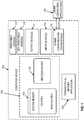
- an exemplary computer system to use for implementing one or more parts of the system includes a computing device, such as computing device 100.
- computing device 100 In its most basic configuration, computing device 100 typically includes at least one processing unit 102 and memory 104.
- memory 104 may be volatile (such as RAM), non-volatile (such as ROM, flash memory, etc.) or some combination of the two.
- This most basic configuration is illustrated in Figure 1 by dashed line 106.
- device 100 may also have additional features/functionality.
- device 100 may also include additional storage (removable and/or non-removable) including, but not limited to, magnetic or optical disks or tape.
- additional storage is illustrated in Figure 1 by removable storage 108 and non-removable storage 110.
- Computer storage media includes volatile and nonvolatile, removable and non-removable media implemented in any method or technology for storage of information such as computer readable instructions, data structures, program modules or other data.
- Memory 104, removable storage 108 and non-removable storage 110 are all examples of computer storage media.
- Computer storage media includes, but is not limited to, RAM, ROM, EEPROM, flash memory or other memory technology, CD-ROM, digital versatile disks (DVD) or other optical storage, magnetic cassettes, magnetic tape, magnetic disk storage or other magnetic storage devices, or any other medium which can be used to store the desired information and which can accessed by device 100. Any such computer storage media may be part of device 100.
- Computing device 100 includes one or more communication connections 114 that allow computing device 100 to communicate with other computers/applications 115.
- Device 100 may also have input device(s) 112 such as keyboard, mouse, pen, voice input device, touch input device, etc.
- Output device(s) 111 such as a display, speakers, printer, etc. may also be included. These devices are well known in the art and need not be discussed at length here.
- computing device 100 includes transactional memory application 200. Transactional memory application 200 will be described in further detail in Figure 2 .
- Transactional memory application 200 is one of the application programs that reside on computing device 100. However, it will be understood that transactional memory application 200 can alternatively or additionally be embodied as computer-executable instructions on one or more computers and/or in different variations than shown on Figure 1 . Alternatively or additionally, one or more parts of transactional memory application 200 can be part of system memory 104, on other computers and/or applications 115, or other such variations as would occur to one in the computer software art.
- Transactional memory application 200 includes program logic 204, which is responsible for carrying out some or all of the techniques described herein.
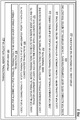
- Program logic 204 includes logic for allowing multiple parallel transactions to be nested under a single parent transaction 206 (as described below with respect to Figure 3 ); logic for allowing parallel nested transactions to nest and compose properly with other closed nested transactions 208 (as described below with respect to Figures 7-14 ); logic for allowing parallel nested transactions to execute with independent logs and to transfer ownership of locks and logs to the parent with low contention 210 (as described below with respect to Figures 4 and 5 ); logic for enabling parallel nested transactions for optimistic and pessimistic reads in the same transaction 212 (as described below with respect to Figures 15-17 ); logic for enabling parallel nested transactions for in-place or buffered writes 214 (as described below with respect to Figures 7 , 11 and 12 ); logic for allowing retry to work correctly with parallel nested transactions 216 (as described below with respect to Figure
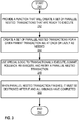
- Figure 3 illustrates one implementation of the stages involved in allowing multiple parallel transactions to be nested under a single parent transaction.
- the process begins at start point 240 with providing a function or other feature that will create a set of parallel nested transactions that are ready to execute (stage 242).
- a set of parallel nested transactions are created for a given parent transaction all at once or lazily as needed (stage 244).
- Figures 4 and 5 illustrate how to allocate parallel nested transaction entries in the parent log.
- Parallel nested transactions are able to execute with independent logs and to transfer ownership of locks, logs, and other data to the parent with low contention after being allocated according to one of the allocation techniques described in Figures 4 and 5 .
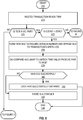
- Figure 4 one implementation is shown for allocating parallel nested transaction entries in the parent log when the number of parallel nested transactions is known up front. The process begins at start point 270 with one parallel nested transaction entry (PNTE) being created for each parallel nested transaction (PNT) in the nest before any PNT begins execution, since the number of parallel nested transactions is known up front (stage 272).
- PNTE parallel nested transaction entry
- PNT parallel nested transaction entry
- the parallel nested transaction retrieves the parallel nested transaction entry from the parent transaction with minimal synchronization.
- the pre-allocated PNTE are held in an array in the parent transaction.
- a PNT may obtain a pointer to the next available PNTE with a simple compare and swap operation on a next available parallel nested transaction index (stage 274).
- a compare and swap (CAS) is an operation that atomically performs a comparison between a given value and the contents of a given memory location, and if they match a given new value is stored in the memory location. If they do not match, then no action is taken.
- CAS compare and swap
- the parallel nested transaction fills in the parallel nested transaction entry in the parent log with information (stage 276).
- the information includes a pointer to the child's log and a pointer to the write abort compensation map for the child and/or pessimistically read object table, if applicable.
- the write abort compensation map is described in further detail in Figure 19 .
- the pessimistically read object table is described in more detail in Figure 15 .
- the process ends at end point 278.
- Figure 5 illustrates one implementation of the stages involved in allocating parallel nested transaction entries in the parent log when the number of parallel nested transactions is not known up front.
- the process begins at start point 290 with allocating room in the parent log for a new parallel nested transaction entry when a parallel nested transaction is created (stage 292).
- stage 294 When the parallel nested transaction commits, a parallel nested transaction entry is created in the parent log (stage 294).
- Access to the parent log is synchronized to move the parent's current log point to acquire access to the next available space for a parallel nested transaction entry (stage 296).
- the parallel nested transaction fills in the parallel nested transaction entry in the parent log with information (stage 298).
- the information includes a pointer to the child's log and a pointer to the write abort compensation map for the child and/or pessimistically read object table, if applicable.
- the write abort compensation map is described in further detail in Figure 19 .
- the pessimistically read object table is described in more detail in Figure 15 .
- the process ends at end point 300.
- FIG. 6 illustrates an example structure 320 of a transactional memory word (TMW) of one implementation with various bits 322 being used to mark various lock statuses.
- TMW transactional memory word
- a TMW is associated with each object.
- a single hardware word representation is used; but numerous other representations for TMWs are possible that allow for locking information to be stored.
- a TMW may indicate that the associated object is write-locked or is not.
- One bit of the TMW is dedicated to this distinction. If a TMW is not write-locked, then it contains a version number and a count of pessimistic readers called a version/count pair 324 (V/C pair).
- some number of bits of the TMW record the version number of the object, and remaining bits represent a count of the number of transactions that currently hold a pessimistic read lock on the object.
- this lock can be of two kinds (distinguished by a further bit in the TMW).
- the remaining bits of a write-locked TMW contain a pointer to an entry in the write log of the locking transaction 326; this write log entry (WLE) contains other information about the object and the locking. For example, it might contain the TMW value for the object before the write lock was obtained; in another implementation, it might contain a "shadow copy" of the object into which uncommitted modifications are made.
- a write-locked TMW contains a versioned write lock (VWL).
- VWL versioned write lock
- the remaining bits of the TMW (called VWL [V/C] 328) represent the version number of the object while it is still write locked and a count of pessimistic readers, similar to a V/C pair.
- Tx1 versioned write locks
- WLE1 write log entry in Tx1's log representing Tx1's write lock on O1.
- Tx2 and Tx3 are siblings in the parallel nest, and are executed concurrently.
- Tx2 and Tx3 may access data locked by Tx1, but they must be isolated from each other.
- Tx2 and Tx3 may both access O1, they must not be allowed to do so concurrently.
- Tx3 wishes to read from O1. It performs an optimistic read operation, creating an optimistic read log entry in its log recording the value of O1's TMW as WLE1.
- Tx2 writes to O1.
- Tx2 will acquire a write lock on O1, and set the TMW for O1 to WLE2, which is a write log entry in Tx2's log.
- WLE2 records that WLE1 is the previous value of O1's TMW.
- Tx2 may now write to fields of O1, and does so with in-place writes.
- Tx3 continues to execute, it reads fields of O1 that contain uncommitted writes from Tx2.
- Tx3 is by definition doomed and should rollback. However, if Tx2 rolls back for any reason before Tx3 attempts to commit, then it must release its write lock on O1. To do this, Tx2 would normally set O1's TMW back to WLE1. But now when Tx3 attempts to commit, it will see that O1's TMW contains the same value that it did when Tx3 first read O1. In this situation, Tx3 will appear valid, and will fail to recognize that it read uncommitted writes from Tx2.
- FIG. 7 illustrates one implementation of the stages involved in using versioned write locks to ensure parallel nested transactions nest and compose properly.
- the process begins at start point 340 with providing a transactional memory word which can be one of a version/count pair, a write log entry (WLE), or a versioned write lock (VWL) (stage 342).
- a transactional memory word (TMW) changes to a versioned write lock
- VWLM global versioned write lock map
- VWLM global versioned write lock map
- the global versioned write lock map is consulted to translate it to a write log entry pointer and normal processing occurs on the write log entry pointer (stage 346).
- Version numbers in the transactional memory word always increment during commit or abort processing, whether held in a V/C pair or a versioned write lock (stage 348).
- An entry is made in the global versioned write lock map just before the versioned write lock is placed in the transactional memory word, and the entry remains so long as the transactional memory word contains the versioned write lock (stage 350).
- the transactions have to acquire a global lock to access the global versioned write lock map (stage 352). The process ends at end point 354.
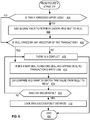
- Figures 8 and 9 illustrate one implementation of the stages involved in properly handling a nested transaction acquiring a write lock.
- a new write lock is a write lock acquired for the first time within a nest of transactions
- a duplicate write lock is a write lock which a nested transaction may acquire on an object that an ancestor transaction currently has write locked.
- the process begins at start point 370 with a nested transaction reading a transactional memory word (stage 372). If the transactional memory word is not a V/C pair (decision point 374), then the process continues with Figure 9 , stage 404, described in the next section.
- the process of Figure 16 is performed to handle pessimistic read to write lock upgrade. If the transactional memory word is a V/C pair with C equal to zero (decision point 375), this indicates that the transactional memory word is not pessimistically locked for read or write by any transaction, therefore allowing acquisition of a new write lock. To do so, the system forms a new write log entry to record the version number and appends the write log entry to the transaction's write log (stage 376). A compare and swap is then performed to switch the transactional memory word value from a V/C pair to a write log entry pointer (e.g.
- stage 378 If the compare and swap is successful (decision point 380), then the lock was obtained successfully (stage 382). If the compare and swap is not successful (decision point 380), then there is a conflict (stage 384) and the lock was not obtained successfully. The process ends at end point 386.
- the TMW is not a V/C pair (decision point 374 on Figure 8 )
- the transactional memory word is not a versioned write lock (decision point 404)
- it is a WLE* to WLE A and the process continues at stage 408.
- the transactional memory word is a versioned write lock (decision point 404)
- the global version write lock map is used to retrieve the underlying WLE* to WLE A (stage 406). If WLE A is not owned by any ancestor of the transaction (decision point 408), then there is a conflict (stage 410) and the process ends at end point 420.
- WLE A is owned by an ancestor (decision point 408)
- a new WLE B is formed to record WLE A and WLE B is appended to the transaction's write log (stage 412).
- a compare and swap is then performed to switch the transactional memory word value from WLE A * to WLE B * (stage 414). If the compare and swap was successful (decision point 416), then the lock was successfully obtained (stage 418). If the compare and swap was not successful (decision point 416), then there is a conflict (stage 410) and the lock was not successfully obtained. The process ends at end point 420.
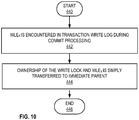
- Figure 10 illustrates one implementation of the stages involved in properly handling a nested transaction releasing any kind of write lock for commit.
- the process begins at start point 440 with WLE X being encountered in a transaction write log during commit processing (stage 442). Ownership of the write lock, and WLE X , is simply transferred to the immediate parent transaction (stage 444). By transferring ownership from a parallel nested transaction to the parent transaction on commit, other siblings now find that they can acquire the write lock for themselves now. Likewise, the act of acquiring a duplicate write lock prevents siblings from being able to acquire the write lock for themselves. The process ends at end point 446.
- FIG 11 illustrates one implementation of the stages involved in properly handling a nested transaction releasing a new write lock for rollback.
- the process begins at start point 460 with WLEX being encountered in a transaction write log during rollback processing (stage 462).
- the system checks to see what type of write lock WLEX represents (stage 464). If WLEX does not represent a new write lock (decision point 466), then logic for releasing a duplicate write lock is performed (stage 471), as described in Figure 12 for one implementation. If WLEX represents a new write lock (decision point 466), then the previous version number stored in WLEX is retrieved (stage 468).
- the location of the transactional memory word is retrieved from WLEX and the write lock is released using a normal store operation to change the transactional memory word value to a V/C pair appropriate for the type of system (in-place or buffered) (stage 470).
- the transactional memory word value is changed back to represent the original version number.
- the transactional memory word value is changed to represent the original version number plus one. The process ends at end point 472.
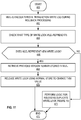
- Figure 12 illustrates one implementation of the stages involved in properly handling a nested transaction releasing a duplicate write lock for rollback.
- this process is used only for systems that increment an object's version number on rollback, i.e., an in-place system.
- the version number is not increased during rollback.
- the process for releasing a new write lock ( Figure 11 ) may be used to release a duplicate write lock.
- the process begins at start point 490 with WLEX being encountered in a transaction write log during rollback processing (stage 492).
- the system checks to see what type of write lock WLEX represents (stage 494).
- stage 511 If the lock is not a duplicate write lock (decision point 496), then logic for releasing a new write lock is performed (stage 511), as described in Figure 11 for one implementation. If the lock is a duplicate write lock, then a global lock is acquired that is used to synchronize access to the global versioned write lock map (stage 498). The original write log entry pointer WLEY* and the location of the transactional memory word are retrieved from WLEX (stage 500). A new global versioned write lock map entry is formed for the object, referring to WLEY (stage 502). The global lock that is used to synchronize access to the global versioned write lock map is then released (stage 504).
- the original version number is retrieved from WLEX (stage 506), and a new versioned write lock value is formed as the original version number + 1 (stage 508).
- the write lock is released using a normal store operation to change the transactional memory word value from WLEX* to the new versioned write lock (stage 510). The process ends at end point 512.
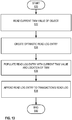
- Figure 13 is a process flow diagram for one implementation of the system of Figure 1 that illustrates performing optimistic read lock acquisition.
- the process begins at start point 530 with the object's current TMW value being read when a transaction performs an optimistic read on an object (stage 532).
- An optimistic read log entry is created (stage 534) and populated with the current TMW value and the location of the TMW (stage 536).
- the read log entry is appended to the transaction's read log (stage 538).
- this process is the same for all types of transactions: top-level, simple nested, or parallel nested transactions.
- the process ends at end point 540.
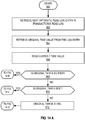
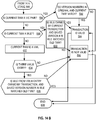
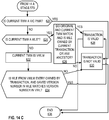
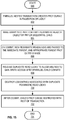
- FIGS 14A-14D are process flow diagrams for one implementation of the system of Figure 1 that illustrates performing optimistic read validation.
- the process begins at start point 560 with considering each optimistic read log entry in the transaction's read log when attempting to commit a transaction or otherwise determine if the transaction is valid (stage 562).
- the original value of the TMW is retrieved from the read log entry (stage 564), and the current value of the TMW is read (stage 566).
- WACM write abort compensation maps
- the process described in Figure 14B is performed. If the original TMW is a WLE* (decision point 570), then the process described in Figure 14C is performed. If the original TMW is neither a V/C pair nor a WLE*, then the original TMW is a VWL (stage 572), and the process of Figure 14D is performed. Let's look at each of these scenarios in further detail.
- Figure 14B covers more details on an exemplary process performed during optimistic read validation in one implementation when the original TMW is a V/C pair (decision point 568). If the current TMW is a V/C pair (decision point 590), and the version numbers in the original TMW and the current TMW match (decision point 592), then the transaction is valid (stage 594). If the current TMW is a V/C pair (decision point 590), and the version numbers in the original TMW and the current TMW do not match (decision point 592), then the transaction is invalid (596).
- the transaction is valid (stage 594). If the current TMW is not a V/C pair (decision point 590), and the current TMW is not a WLE* (decision point 598), then the TMW is a VWL (stage 602). A synchronized lookup is made in the VWLM using the address of the locked object. If there is no VWLM entry (decision point 604), then the transaction is invalid (stage 596). If there is an entry (decision point 604), then the VWLM entry is used to retrieve the WLE* that the VWL replaced. If the WLE is owned by the transaction, and the saved version number in the WLE matches the old TMW (decision point 606), then the transaction is valid (stage 594). Otherwise, the transaction is invalid (stage 596). The process ends at end point 608.
- FIG 14C an exemplary process is shown that is performed during optimistic read validation in one implementation when the original TMW is a WLE*. If the current TMW is a V/C pair (decision point 620), then the current transaction is not valid (stage 630). If the current TMW is not a V/C pair (decision point 620), but is instead a WLE* (decision point 624), then the system checks to see if the original and current TMW match, and if the WLE is owned by the current transaction or any ancestor (decision point 626). If both of these criteria are met, then the transaction is valid (stage 628). Otherwise, the transaction is invalid (stage 630).
- the current TMW is not a V/C pair (decision point 620), and is not a WLE* (decision point 624), then the current TMW is a VWL (stage 632). If the WLE from the original TMW is owned by this transaction or any ancestor, and if the version number saved in the WLE matches the version number in the VWL (decision point 634), then the transaction is valid (stage 628). Otherwise, the transaction is not valid (stage 630). The process ends at end point 636.
- FIG 14D an exemplary process is shown that is performed during optimistic read validation in one implementation when the original TMW is a VWL. If the current TMW is a V/C pair (decision point 650), then the transaction is not valid due to a conflict (stage 660). If the current TMW is not a V/C pair (decision point 650), but instead is a WLE* (decision point 654), then the system checks to see if the WLE is owned by the current transaction or any ancestor, and if the version number stored in the WLE matches the version in the VWL (decision point 656). If both of these criteria are met, then the transaction is valid (stage 658). Otherwise, the transaction is not valid (stage 660).
- the current TMW is not a V/C pair (decision point 650), and the current TMW is not a WLE* (decision point 654), then the current TMW is a VWL (stage 662).
- a lookup is performed in the VWLM to translate the VWL to a WLE* (stage 664). If an entry is not found (decision point 666), then the transaction is not valid (stage 660). Otherwise, if an entry is found (decision point 666), then the system checks to see if the version numbers of the original and current VWL match, and if the WLE found in the VWLM for the TMW is owned by this transaction or any ancestor (decision point 668). If both criteria are met, then the transaction is valid (stage 658). Otherwise, the transaction is invalid (stage 660). The process ends at end point 670.
- Pessimistically Read Object Table Each top-level transaction creates a PROT either at transaction start, or lazily at the first pessimistic read operation.
- the transaction, or any descendent attempts to acquire a pessimistic read lock on an object, it consults the PROT to determine if a pessimistic read lock has already been acquired. If the object is in the PROT, then that object is already read locked by the nest of transactions.
- a pessimistic read lock is acquired using a CAS operation to increment C (the count of pessimistic readers) in the V/C pair stored in the object's TMW. If the CAS operation is successful, then an entry is made in the PROT to record the fact that the nest now has the object locked for pessimistic reads. When the pessimistic read lock is released, either during top-level commit or rollback, C is decremented (with a CAS again), and the PROT entry is removed. Let's now look at how PROTs are used with parallel nested transactions.
- Figure 15 illustrates one implementation of the stages involved in ensuring correct operation of pessimistic reads with parallel nested transactions.
- the process begins at start point 690 with a parallel nested transaction creating a pessimistic duplication detection data structure (called a PROT, as described previously) during initialization, or lazily during acquisition of the first pessimistic read lock by the parallel nested transaction (stage 692).
- a PROT pessimistic duplication detection data structure
- This data structure is used by the system when a transaction attempts to upgrade a pessimistic read lock to a write lock.
- An entry is made into the PROT for the first pessimistic read of an object made by the parallel nested transaction or any sequential child (stage 694).
- stage 696 new pessimistic read locks are passed to the immediate parent, and an appropriate parent PROT entry is made (stage 696).
- Duplicate read locks are released to allow siblings to gain write access after a parallel child commits (stage 698).
- stage 700 The system then destroys log entries associated with duplicate pessimistic read locks (stage 700).
- stage 702 After commit, a child's PROT can be destroyed with the rest of the transaction (stage 702). The process ends at end point 704.
- Figure 16 illustrates one implementation of the stages involved in upgrading pessimistic read locks to write locks.
- the process begins at start point 720 with discovering that a write lock that is desired for an object is already opened for pessimistic read(s) (stage 722).
- the child's PROT is queried (stage 724) to look at a current count of readers and decide if the current transaction can account for all those reads (stage 726). If the result accounts for all of the pessimistic readers, then the child may attempt to upgrade to write lock as usual (stage 728). If there are still unaccounted for readers, then the child must query all ancestor PROT's to determine if it may upgrade to a write lock (stage 730).
- any ancestor is a parallel parent then we must consider the parallel parent's PROT as well as the PROT of any parallel siblings that have already committed. These sibling PROT's are held in the parallel parent's log via PNTE's. Proper synchronization is required to ensure that there is race-free access to these sibling PROT's. This synchronization is accomplished by ensuring that a PNT does not access its PROT after placing it in the associated PNTE. If the ancestors and any committed parallel siblings make up for the extra pessimistic readers, then the child may attempt to upgrade to a write lock as usual (stage 732). In one implementation, the upgrade is accomplished as follows. A new write log entry is formed and added to the PNT's log.
- the current value of the TMW is placed in the WLE for use during rollback and commit processing. If the current value of the TMW is a VWL, then the VWLM is used, with proper synchronization, to translate the VWL to a WLE* first. A CAS is used to acquire the write lock. If the CAS is successful, then the upgrade worked, otherwise there is conflict. The process ends at end point 734.
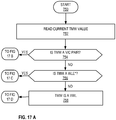
- the process begins with 17A with reading the current TMW (stage 752). If the TMW is a V/C pair (decision point 754), then the process described in Figure 17B is performed. If the TMW is a WLE* (decision point 756), then the process described in Figure 17C is performed. If the TMW is not a V/C pair (decision point 754), and is not a WLE* (decision point 756), then the TMW is a VWL (stage 758), and the process described in Figure 17D is performed. Each of these scenarios will now be looked at in further detail.
- the transaction's PROT is consulted to determine if it already holds a pessimistic read lock on the object (decision point 769). If there is a PROT entry, then the process ends at end point 776. If there is no PROT entry (decision point 769), then a compare and swap (CAS) is used to increment C, which is the count of pessimistic readers (stage 770). If the CAS is successful (decision point 772), then the lock is acquired and a PROT entry is made (stage 774). If the CAS fails (decision point 772), then try again, which is illustrated by referring to Figure 17A , stage 752.
- CAS compare and swap
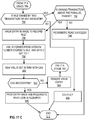
- the system determines if the owning transaction is below or above the parallel parent (decision point 792). If the owning transaction is below the parallel parent (decision point 792), then the pessimistic read succeeds (stage 794). If the owning transaction is above the parallel parent (decision point 792), then the system switches the TMW to a VWL to coordinate with siblings.
- a VWLM entry is made to record the WLE* (stage 796), with proper synchronization, and a VWL is formed from the version number stored in the VWL, and with C (the count of pessimistic readers) set to 1 (stage 798).
- the new VWL is set in the TMW with a CAS (stage 800). If the CAS is successful, a PROT entry is made and the pessimistic read lock is acquired (stage 806). If the CAS is not successful, then the VWLM entry is removed (stage 804), and then we try again by returning to Figure 17A , stage 752. The process ends at end point 810.
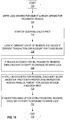
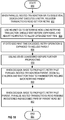
- the VWL is translated to a WLE* via the VWLM (stage 820), with proper synchronization. If the WLE is owned by this transaction or any ancestor (decision point 822), then a CAS is used to increment C (count of pessimistic readers) in the VWL in the TMW (stage 824). If the CAS is successful (decision point 826), then a PROT entry is made and the lock is acquired. If the CAS fails, then we try again by continuing with Figure 17A , stage 752. If the WLE is not owned by this transaction or any ancestor (decision point 822), then there is a conflict (stage 830). The process ends at end point 832.
- Figure 18 illustrates one implementation of the stages involved in allowing retry to work correctly with parallel nested transactions.
- a retry operation allows basic communication between transactions. When a transaction executes a retry operation, its effects are rolled back and execution is suspended until something that the transaction read changes. When a change is detected, the transaction is reexecuted.
- Retry operations can be used for some very common data structures, like blocking queues. For example, a transaction could check to see if a queue is empty and then retry if it is empty, or remove an element if the queue is not empty. The transaction will block while the queue remains unchanged and re-execute when the state of the queue changes, which gives the transaction another opportunity to complete.
- the system when a transaction executes a retry operation, the system registers for waits on every read in the read set of the retrying transaction.
- the retrying transaction waits for notification that something in the read set has changed.
- a wait notification is initiated from a particular transaction releasing a write lock.
- a transaction knows if notification is required in one of two ways. In the first way, if the transactional memory word contained a waiters bit during write lock acquisition, then during release the transactional memory word is looked up in an object waiters map, and each waiting transaction is signaled.
- a writing transaction finds a global count of waiting transactions to be greater than zero after releasing all write locks, it will use a transaction waiters map to determine which transactions, if any, were waiting on locations written to and need to be signaled. In each case, the write lock is released using a normal store operation.
- a progressive retry operation is started with a rollback of just the retrying nested transaction and waiting on its read set. After waiting for some particular time or for some other condition to be met, a backoff process is performed to rollback an immediate parent of the retrying transaction, increasing the size of the original wait set. The backoff process is repeated until rollback of a top-most parent, adding an additional wait for each next parent.
- the aggregate wait set is associated with the top-most parent and any notification will result in re-execution of the top-most parent.
- stage 852 the system registers the transaction's read set for retry as usual (stage 852).
- stage 852 The system includes heuristics to determine how long a retrying transaction should wait before expanding the retry operation to include some subset of the transaction's ancestors (stage 854). These heuristics are adjusted for parallel nested transactions and allow an extended wait time so long as other parallel siblings are active. If that extended wait time is exceeded, then the retry operation is expanded to include the parent (stage 856).
- stage 858 The state of the siblings is considered before propagating further (stage 858).
- stage 860 When a decision is made to propagate a retry past a parallel nested transaction parent, all children are doomed, and then must finish before a retrying parent is rolled back (stage 860).
- stage 860 When a decision is made to propagate a retry past the parent, the parallel nested transaction's read set remains registered and becomes part of a parent read set (stage 862). Note that the read sets of any parallel siblings that have already committed into the parent are made part of the wait set along with the parent's read set. Any parallel siblings that were aborted by the decision to propagate the retry to the parent do not contribute to the wait set. The process ends at end point 864.
- Figure 19 illustrates one implementation of the stages involved in using write abort compensation maps with parallel nested transactions. Before getting into the details of Figure 19 and how write abort compensation maps can be used with parallel nested transactions, it is necessary to provide some background information regarding write abort compensation maps of one implementation.
- Write abort compensation maps can be used to detect falsely doomed parent transactions of nested children in transactional memory systems that use in-place writes.
- a write abort compensation map (or other storage mechanism) tracks the release count for each lock released for each nested transaction that rolls back. The number of times the nested transactions release a write lock is recorded in their respective write abort compensation map. The release counts can be used during a validation of a parent transaction to determine if an apparently invalid optimistic read is really valid.
- any write abort compensation maps seen for nested child transactions are combined into an aggregated write abort compensation map in the parent. If the optimistic read failed to validate due to a version number mismatch, then the aggregated write abort compensation map is consulted to retrieve a particular variable's write lock release count for the nested child transactions. If a difference in version numbers exactly matches the write lock release count for the nested child transactions, then the optimistic read is valid.
- the process begins at start point 880 with creating a write abort compensation map (WACM) when releasing new write locks during rollback of a parallel nested transaction (stage 882).
- WACM write abort compensation map
- stage 882 When a nested transaction rolls back, it creates a WACM entry for each new write lock released (stage 884).
- the WACM is logically placed before the parallel nested transaction's log when ownership of the log is transferred to the parent during commit (stage 886).
- PNT WACM's will be used during parent rollback just like any other nested transaction's WACM, as described above, and will ensure correct validation of parent optimistic reads (stage 888).
- stage 888 The process ends at end point 890.
Landscapes
- Engineering & Computer Science (AREA)
- Theoretical Computer Science (AREA)
- Software Systems (AREA)
- Physics & Mathematics (AREA)
- General Engineering & Computer Science (AREA)
- General Physics & Mathematics (AREA)
- Data Mining & Analysis (AREA)
- Databases & Information Systems (AREA)
- Information Retrieval, Db Structures And Fs Structures Therefor (AREA)
Applications Claiming Priority (2)
| Application Number | Priority Date | Filing Date | Title |
|---|---|---|---|
| US11/901,647 US7890472B2 (en) | 2007-09-18 | 2007-09-18 | Parallel nested transactions in transactional memory |
| PCT/US2008/076563 WO2009039118A2 (en) | 2007-09-18 | 2008-09-16 | Parallel nested transactions in transactional memory |
Publications (3)
| Publication Number | Publication Date |
|---|---|
| EP2191372A2 EP2191372A2 (en) | 2010-06-02 |
| EP2191372A4 EP2191372A4 (en) | 2011-11-02 |
| EP2191372B1 true EP2191372B1 (en) | 2018-04-11 |
Family
ID=40455684
Family Applications (1)
| Application Number | Title | Priority Date | Filing Date |
|---|---|---|---|
| EP08832590.7A Active EP2191372B1 (en) | 2007-09-18 | 2008-09-16 | Parallel nested transactions in transactional memory |
Country Status (7)
| Country | Link |
|---|---|
| US (3) | US7890472B2 (enExample) |
| EP (1) | EP2191372B1 (enExample) |
| JP (1) | JP2010539609A (enExample) |
| CN (2) | CN101889266B (enExample) |
| BR (1) | BRPI0814455A2 (enExample) |
| TW (1) | TWI431474B (enExample) |
| WO (1) | WO2009039118A2 (enExample) |
Families Citing this family (47)
| Publication number | Priority date | Publication date | Assignee | Title |
|---|---|---|---|---|
| US7756846B2 (en) * | 2005-07-01 | 2010-07-13 | Sap Aktiengesellschaft | Methods and systems for propagating locks through nested logical units of work |
| US7962456B2 (en) * | 2007-06-27 | 2011-06-14 | Microsoft Corporation | Parallel nested transactions in transactional memory |
| US7840530B2 (en) * | 2007-09-18 | 2010-11-23 | Microsoft Corporation | Parallel nested transactions in transactional memory |
| US7890472B2 (en) * | 2007-09-18 | 2011-02-15 | Microsoft Corporation | Parallel nested transactions in transactional memory |
| US8555016B2 (en) * | 2008-12-17 | 2013-10-08 | Intel Corporation | Unified optimistic and pessimistic concurrency control for a software transactional memory (STM) system |
| US8935703B2 (en) * | 2009-12-11 | 2015-01-13 | Red Hat, Inc. | Performance counter inheritance |
| US8756361B1 (en) * | 2010-10-01 | 2014-06-17 | Western Digital Technologies, Inc. | Disk drive modifying metadata cached in a circular buffer when a write operation is aborted |
| US8954664B1 (en) | 2010-10-01 | 2015-02-10 | Western Digital Technologies, Inc. | Writing metadata files on a disk |
| US8793429B1 (en) * | 2011-06-03 | 2014-07-29 | Western Digital Technologies, Inc. | Solid-state drive with reduced power up time |
| US8756382B1 (en) | 2011-06-30 | 2014-06-17 | Western Digital Technologies, Inc. | Method for file based shingled data storage utilizing multiple media types |
| US8612706B1 (en) | 2011-12-21 | 2013-12-17 | Western Digital Technologies, Inc. | Metadata recovery in a disk drive |
| US9417881B2 (en) * | 2012-01-30 | 2016-08-16 | Nvidia Corporation | Parallel dynamic memory allocation using a lock-free pop-only FIFO |
| US9542227B2 (en) | 2012-01-30 | 2017-01-10 | Nvidia Corporation | Parallel dynamic memory allocation using a lock-free FIFO |
| US9870384B2 (en) | 2012-03-30 | 2018-01-16 | International Business Machines Corporation | Database system transaction management |
| US9367323B2 (en) | 2012-06-15 | 2016-06-14 | International Business Machines Corporation | Processor assist facility |
| US10437602B2 (en) | 2012-06-15 | 2019-10-08 | International Business Machines Corporation | Program interruption filtering in transactional execution |
| US9740549B2 (en) | 2012-06-15 | 2017-08-22 | International Business Machines Corporation | Facilitating transaction completion subsequent to repeated aborts of the transaction |
| US9442737B2 (en) | 2012-06-15 | 2016-09-13 | International Business Machines Corporation | Restricting processing within a processor to facilitate transaction completion |
| US9348642B2 (en) | 2012-06-15 | 2016-05-24 | International Business Machines Corporation | Transaction begin/end instructions |
| US8682877B2 (en) | 2012-06-15 | 2014-03-25 | International Business Machines Corporation | Constrained transaction execution |
| US8966324B2 (en) | 2012-06-15 | 2015-02-24 | International Business Machines Corporation | Transactional execution branch indications |
| US9336046B2 (en) | 2012-06-15 | 2016-05-10 | International Business Machines Corporation | Transaction abort processing |
| US9317460B2 (en) | 2012-06-15 | 2016-04-19 | International Business Machines Corporation | Program event recording within a transactional environment |
| US8880959B2 (en) | 2012-06-15 | 2014-11-04 | International Business Machines Corporation | Transaction diagnostic block |
| US9436477B2 (en) | 2012-06-15 | 2016-09-06 | International Business Machines Corporation | Transaction abort instruction |
| US9361115B2 (en) | 2012-06-15 | 2016-06-07 | International Business Machines Corporation | Saving/restoring selected registers in transactional processing |
| US9772854B2 (en) | 2012-06-15 | 2017-09-26 | International Business Machines Corporation | Selectively controlling instruction execution in transactional processing |
| US9384004B2 (en) | 2012-06-15 | 2016-07-05 | International Business Machines Corporation | Randomized testing within transactional execution |
| US8688661B2 (en) | 2012-06-15 | 2014-04-01 | International Business Machines Corporation | Transactional processing |
| US9448796B2 (en) | 2012-06-15 | 2016-09-20 | International Business Machines Corporation | Restricted instructions in transactional execution |
| US20130339680A1 (en) | 2012-06-15 | 2013-12-19 | International Business Machines Corporation | Nontransactional store instruction |
| US9953294B2 (en) * | 2012-10-15 | 2018-04-24 | Sap Se | Enabling an in-memory transactional application |
| US20150074219A1 (en) * | 2013-07-12 | 2015-03-12 | Brocade Communications Systems, Inc. | High availability networking using transactional memory |
| US9292337B2 (en) | 2013-12-12 | 2016-03-22 | International Business Machines Corporation | Software enabled and disabled coalescing of memory transactions |
| US9348523B2 (en) | 2013-12-12 | 2016-05-24 | International Business Machines Corporation | Code optimization to enable and disable coalescing of memory transactions |
| US9348522B2 (en) | 2013-12-12 | 2016-05-24 | International Business Machines Corporation | Software indications and hints for coalescing memory transactions |
| US9146774B2 (en) | 2013-12-12 | 2015-09-29 | International Business Machines Corporation | Coalescing memory transactions |
| US9158573B2 (en) | 2013-12-12 | 2015-10-13 | International Business Machines Corporation | Dynamic predictor for coalescing memory transactions |
| US10019476B2 (en) | 2015-05-27 | 2018-07-10 | Microsoft Technology Licensing, Llc | Multi-version data system nested transactions isolation |
| US10067960B2 (en) * | 2015-06-04 | 2018-09-04 | Microsoft Technology Licensing, Llc | Controlling atomic updates of indexes using hardware transactional memory |
| WO2017095388A1 (en) * | 2015-11-30 | 2017-06-08 | Hewlett-Packard Enterprise Development LP | Managing an isolation context |
| US10223268B2 (en) * | 2016-02-23 | 2019-03-05 | International Business Systems Corporation | Transactional memory system including cache versioning architecture to implement nested transactions |
| US11113262B2 (en) * | 2019-04-01 | 2021-09-07 | Sap Se | Time-efficient lock release in database systems |
| CN111984379B (zh) * | 2020-07-14 | 2023-04-07 | 上海金仕达软件科技股份有限公司 | 读写事务控制方法、系统、终端设备及存储介质 |
| CN114661816B (zh) * | 2020-12-24 | 2023-03-24 | 金篆信科有限责任公司 | 数据同步方法、装置、电子设备、存储介质 |
| EP4113317A1 (en) * | 2021-06-28 | 2023-01-04 | Microsoft Technology Licensing, LLC | Versioning of items in a data structure |
| CN116244041B (zh) * | 2022-12-02 | 2023-10-27 | 湖南亚信安慧科技有限公司 | 一种数据库子事务的性能优化方法 |
Family Cites Families (101)
| Publication number | Priority date | Publication date | Assignee | Title |
|---|---|---|---|---|
| US5251318A (en) | 1988-09-02 | 1993-10-05 | Hitachi, Ltd. | Multiprocessing system comparing information copied from extended storage before and after processing for serializing access to shared resource |
| US5305196A (en) * | 1989-05-01 | 1994-04-19 | Credit Verification Corporation | Check transaction processing, database building and marketing method and system utilizing automatic check reading |
| US5263155A (en) | 1991-02-21 | 1993-11-16 | Texas Instruments Incorporated | System for selectively registering and blocking requests initiated by optimistic and pessimistic transactions respectively for shared objects based upon associated locks |
| US5287501A (en) * | 1991-07-11 | 1994-02-15 | Digital Equipment Corporation | Multilevel transaction recovery in a database system which loss parent transaction undo operation upon commit of child transaction |
| US5701480A (en) | 1991-10-17 | 1997-12-23 | Digital Equipment Corporation | Distributed multi-version commitment ordering protocols for guaranteeing serializability during transaction processing |
| JPH05173988A (ja) * | 1991-12-26 | 1993-07-13 | Toshiba Corp | 分散処理方式および該分散処理に適用されるトランザクション処理方式 |
| US5241675A (en) | 1992-04-09 | 1993-08-31 | Bell Communications Research, Inc. | Method for enforcing the serialization of global multidatabase transactions through committing only on consistent subtransaction serialization by the local database managers |
| US5335343A (en) | 1992-07-06 | 1994-08-02 | Digital Equipment Corporation | Distributed transaction processing using two-phase commit protocol with presumed-commit without log force |
| EP0613083B1 (en) * | 1993-02-25 | 2002-01-23 | Sun Microsystems, Inc. | Transaction management in object oriented systems |
| US5687363A (en) | 1994-03-30 | 1997-11-11 | Siemens Stromberg-Carlson | Distributed database architecture and distributed database management system for open network evolution |
| US5835757A (en) | 1994-03-30 | 1998-11-10 | Siemens Telecom Networks | Distributed database management system for servicing application requests in a telecommunications switching system |
| US5721909A (en) | 1994-03-30 | 1998-02-24 | Siemens Stromberg-Carlson | Distributed database architecture and distributed database management system for open network evolution |
| US5764977A (en) | 1994-03-30 | 1998-06-09 | Siemens Stromberg-Carlson | Distributed database architecture and distributed database management system for open network evolution |
| US6052695A (en) | 1995-02-28 | 2000-04-18 | Ntt Data Communications Systems Corporation | Accurate completion of transaction in cooperative type distributed system and recovery procedure for same |
| US5581729A (en) * | 1995-03-31 | 1996-12-03 | Sun Microsystems, Inc. | Parallelized coherent read and writeback transaction processing system for use in a packet switched cache coherent multiprocessor system |
| US6647510B1 (en) | 1996-03-19 | 2003-11-11 | Oracle International Corporation | Method and apparatus for making available data that was locked by a dead transaction before rolling back the entire dead transaction |
| GB2312766A (en) * | 1996-05-01 | 1997-11-05 | Ibm | Transactional layer for object management system |
| JP3672208B2 (ja) | 1996-07-02 | 2005-07-20 | インターナショナル・ビジネス・マシーンズ・コーポレーション | 階層化トランザクション処理方法 |
| FR2751106B1 (fr) * | 1996-07-11 | 1999-01-08 | Alsthom Cge Alcatel | Methode de planification de transactions distribuees |
| US5903891A (en) * | 1997-02-25 | 1999-05-11 | Hewlett-Packard Company | Hierarchial information processes that share intermediate data and formulate contract data |
| US5878206A (en) * | 1997-03-25 | 1999-03-02 | Hewlett-Packard Company | Commit scope control in hierarchical information processes |
| JP2001523367A (ja) | 1998-01-26 | 2001-11-20 | テレノール アクティーゼルスカブ | トランザクションの条件付き競合直列化可能性のための、及び信頼性の程度が変化するメタデータを組合わせるデータベース管理システム及び方法 |
| US5983225A (en) | 1998-01-26 | 1999-11-09 | Telenor As | Parameterized lock management system and method for conditional conflict serializability of transactions |
| US6148300A (en) | 1998-06-19 | 2000-11-14 | Sun Microsystems, Inc. | Hybrid queue and backoff computer resource lock featuring different spin speeds corresponding to multiple-states |
| US6182186B1 (en) | 1998-06-30 | 2001-01-30 | Sun Microsystems, Inc. | Method and apparatus that utilizes lock states to lock resources |
| US6295610B1 (en) | 1998-09-17 | 2001-09-25 | Oracle Corporation | Recovering resources in parallel |
| US6298478B1 (en) | 1998-12-31 | 2001-10-02 | International Business Machines Corporation | Technique for managing enterprise JavaBeans (™) which are the target of multiple concurrent and/or nested transactions |
| US6457065B1 (en) * | 1999-01-05 | 2002-09-24 | International Business Machines Corporation | Transaction-scoped replication for distributed object systems |
| TW429705B (en) | 1999-05-15 | 2001-04-11 | Via Tech Inc | Shared memory allocation method to improve the accessing efficiency |
| JP2001216259A (ja) * | 2000-02-04 | 2001-08-10 | Hitachi Ltd | マルチプロセッサシステム及びそのトランザックション制御方法 |
| US6651073B1 (en) * | 2000-05-23 | 2003-11-18 | International Business Machines Corporation | Method and apparatus for insuring database data integrity without data recovery logging |
| CA2416909A1 (en) * | 2000-07-28 | 2002-02-07 | Xymphonic Systems As | Method, system and data structures for implementing nested databases |
| US6671686B2 (en) * | 2000-11-02 | 2003-12-30 | Guy Pardon | Decentralized, distributed internet data management |
| US6772154B1 (en) | 2000-11-16 | 2004-08-03 | Sun Microsystems, Inc. | Implementation of nested databases using flexible locking mechanisms |
| JP3621641B2 (ja) * | 2000-11-20 | 2005-02-16 | 株式会社東芝 | トランザクション処理の管理方法 |
| US6993523B1 (en) * | 2000-12-05 | 2006-01-31 | Silicon Graphics, Inc. | System and method for maintaining and recovering data consistency in a data base page |
| US6850938B1 (en) | 2001-02-08 | 2005-02-01 | Cisco Technology, Inc. | Method and apparatus providing optimistic locking of shared computer resources |
| US7346632B2 (en) * | 2001-02-22 | 2008-03-18 | International Business Machines Corporation | Mechanism for executing nested transactions in an execution environment supporting flat transactions only |
| JP3732113B2 (ja) | 2001-05-14 | 2006-01-05 | 株式会社八十二銀行 | トランザクション制御システム、方法及びプログラム |
| US6983395B2 (en) * | 2001-05-23 | 2006-01-03 | Hewlett-Packard Development Company, L.P. | Multi-agent cooperative transaction method and system |
| US7248585B2 (en) | 2001-10-22 | 2007-07-24 | Sun Microsystems, Inc. | Method and apparatus for a packet classifier |
| GB0130399D0 (en) | 2001-12-19 | 2002-02-06 | Ibm | Message ordering in a messaging system |
| US6754737B2 (en) * | 2001-12-24 | 2004-06-22 | Hewlett-Packard Development Company, L.P. | Method and apparatus to allow dynamic variation of ordering enforcement between transactions in a strongly ordered computer interconnect |
| US6785779B2 (en) | 2002-01-09 | 2004-08-31 | International Business Machines Company | Multi-level classification method for transaction address conflicts for ensuring efficient ordering in a two-level snoopy cache architecture |
| US7234076B2 (en) | 2002-02-15 | 2007-06-19 | Sun Microsystems, Inc. | Multi-level undo of main-memory and volatile resources |
| US6990503B1 (en) | 2002-04-12 | 2006-01-24 | Ncr Corporation | Rescheduling transactions in a database system |
| US9886309B2 (en) | 2002-06-28 | 2018-02-06 | Microsoft Technology Licensing, Llc | Identity-based distributed computing for device resources |
| GB0215808D0 (en) * | 2002-07-09 | 2002-08-14 | Ibm | A system and method for managing transactions in a messaging system |
| US7685583B2 (en) * | 2002-07-16 | 2010-03-23 | Sun Microsystems, Inc. | Obstruction-free mechanism for atomic update of multiple non-contiguous locations in shared memory |
| US7076508B2 (en) | 2002-08-12 | 2006-07-11 | International Business Machines Corporation | Method, system, and program for merging log entries from multiple recovery log files |
| US7089253B2 (en) | 2002-09-13 | 2006-08-08 | Netezza Corporation | Computer method and system for concurrency control using dynamic serialization ordering |
| JP2004157776A (ja) | 2002-11-06 | 2004-06-03 | Nec Corp | アプリケーションの処理方法およびシステム |
| US7116011B2 (en) | 2002-12-31 | 2006-10-03 | Intel Corporation | CPU surge reduction and protection |
| US6898685B2 (en) | 2003-03-25 | 2005-05-24 | Emc Corporation | Ordering data writes from a local storage device to a remote storage device |
| US7289992B2 (en) | 2003-05-01 | 2007-10-30 | International Business Machines Corporation | Method, system, and program for lock and transaction management |
| US7496574B2 (en) | 2003-05-01 | 2009-02-24 | International Business Machines Corporation | Managing locks and transactions |
| US7418706B1 (en) | 2003-05-08 | 2008-08-26 | Teradota Us, Inc. | Rescheduling table scan transactions |
| US7673307B2 (en) * | 2003-05-29 | 2010-03-02 | International Business Machines Corporation | Managing transactions in a messaging system |
| US7739252B2 (en) | 2003-07-14 | 2010-06-15 | Oracle America, Inc. | Read/write lock transaction manager freezing |
| TW200532560A (en) | 2003-11-13 | 2005-10-01 | Qualcomm Inc | System and method for dynamically simulating devices at a computing device |
| US7240054B2 (en) * | 2004-02-27 | 2007-07-03 | International Business Machines Corporation | Techniques to preserve data constraints and referential integrity in asynchronous transactional replication of relational tables |
| US7574274B2 (en) | 2004-04-14 | 2009-08-11 | Nvidia Corporation | Method and system for synchronizing audio processing modules |
| GB0409326D0 (en) | 2004-04-27 | 2004-06-02 | Ibm | Locker manager for managing access to shared resources |
| US7428539B2 (en) | 2004-06-21 | 2008-09-23 | Microsoft Corporation | Method, system, and apparatus for managing access to a data object |
| US7266571B2 (en) * | 2004-07-27 | 2007-09-04 | International Business Machines Corporation | Method and system for scheduling a partial ordered transactions for event correlation |
| US7685365B2 (en) * | 2004-09-30 | 2010-03-23 | Intel Corporation | Transactional memory execution utilizing virtual memory |
| ITMI20041957A1 (it) * | 2004-10-15 | 2005-01-15 | St Microelectronics Srl | Dispositivo di memoria |
| US7318064B2 (en) * | 2004-10-28 | 2008-01-08 | International Business Machines Corporation | Using MD4 checksum as primary keys to link transactions across machines |
| ATE521207T1 (de) | 2004-11-30 | 2011-09-15 | Ericsson Telefon Ab L M | Verfahren zur smm-fähigkeitsverteilung |
| US8363730B2 (en) | 2004-12-16 | 2013-01-29 | Intel Corporation | Local macroblock information buffer |
| US7490215B2 (en) | 2004-12-22 | 2009-02-10 | Intel Corporation | Media memory system and method for providing concurrent memory access to a plurality of processors through separate translation table information |
| US7593943B2 (en) | 2005-01-14 | 2009-09-22 | Microsoft Corporation | Method and system for synchronizing multiple user revisions to a shared object |
| US7376675B2 (en) | 2005-02-18 | 2008-05-20 | International Business Machines Corporation | Simulating multi-user activity while maintaining original linear request order for asynchronous transactional events |
| US7334076B2 (en) | 2005-03-08 | 2008-02-19 | Microsoft Corporation | Method and system for a guest physical address virtualization in a virtual machine environment |
| US7949551B2 (en) * | 2005-04-06 | 2011-05-24 | International Business Machines Corporation | Processing of compensation scopes in workflow management systems |
| EP1872555A4 (en) * | 2005-04-18 | 2008-07-02 | Research In Motion Ltd | TRANSACTION MANAGEMENT SYSTEM AT TANK LEVEL AND METHOD THEREFOR |
| US7756846B2 (en) | 2005-07-01 | 2010-07-13 | Sap Aktiengesellschaft | Methods and systems for propagating locks through nested logical units of work |
| US7702686B2 (en) | 2005-07-29 | 2010-04-20 | Microsoft Corporation | Retrieving and persisting objects from/to relational databases |
| US7810085B2 (en) * | 2005-12-07 | 2010-10-05 | Microsoft Corporation | Removal of unnecessary read-to-update upgrades in software transactional memory |
| US20070136725A1 (en) | 2005-12-12 | 2007-06-14 | International Business Machines Corporation | System and method for optimized preemption and reservation of software locks |
| US7730286B2 (en) | 2005-12-30 | 2010-06-01 | Intel Corporation | Software assisted nested hardware transactions |
| US20070186056A1 (en) | 2006-02-07 | 2007-08-09 | Bratin Saha | Hardware acceleration for a software transactional memory system |
| US20070198978A1 (en) | 2006-02-22 | 2007-08-23 | David Dice | Methods and apparatus to implement parallel transactions |
| US8099538B2 (en) | 2006-03-29 | 2012-01-17 | Intel Corporation | Increasing functionality of a reader-writer lock |
| US7840540B2 (en) * | 2006-04-20 | 2010-11-23 | Datascout, Inc. | Surrogate hashing |
| US7792805B2 (en) * | 2006-05-30 | 2010-09-07 | Oracle America, Inc. | Fine-locked transactional memory |
| US7478210B2 (en) | 2006-06-09 | 2009-01-13 | Intel Corporation | Memory reclamation with optimistic concurrency |
| US7434010B2 (en) * | 2006-08-04 | 2008-10-07 | Microsoft Corporation | Combined pessimistic and optimisitic concurrency control |
| US7650371B2 (en) | 2006-12-14 | 2010-01-19 | Microsoft Corporation | Finalizable object usage in software transactions |
| US7669040B2 (en) * | 2006-12-15 | 2010-02-23 | Sun Microsystems, Inc. | Method and apparatus for executing a long transaction |
| US8321637B2 (en) * | 2007-05-14 | 2012-11-27 | International Business Machines Corporation | Computing system with optimized support for transactional memory |
| US7890707B2 (en) * | 2007-06-27 | 2011-02-15 | Microsoft Corporation | Efficient retry for transactional memory |
| US7962456B2 (en) | 2007-06-27 | 2011-06-14 | Microsoft Corporation | Parallel nested transactions in transactional memory |
| US7899999B2 (en) * | 2007-06-27 | 2011-03-01 | Microsoft Corporation | Handling falsely doomed parents of nested transactions |
| US8719514B2 (en) * | 2007-06-27 | 2014-05-06 | Intel Corporation | Software filtering in a transactional memory system |
| US7516365B2 (en) * | 2007-07-27 | 2009-04-07 | Sun Microsystems, Inc. | System and method for split hardware transactions |
| US7890472B2 (en) | 2007-09-18 | 2011-02-15 | Microsoft Corporation | Parallel nested transactions in transactional memory |
| US7840530B2 (en) | 2007-09-18 | 2010-11-23 | Microsoft Corporation | Parallel nested transactions in transactional memory |
| CN100568184C (zh) * | 2007-12-27 | 2009-12-09 | 电子科技大学 | 协同编辑中数据冲突模块的加锁方法 |
| US10210018B2 (en) | 2008-12-24 | 2019-02-19 | Intel Corporation | Optimizing quiescence in a software transactional memory (STM) system |
| US8095824B2 (en) * | 2009-12-15 | 2012-01-10 | Intel Corporation | Performing mode switching in an unbounded transactional memory (UTM) system |
-
2007
- 2007-09-18 US US11/901,647 patent/US7890472B2/en active Active
-
2008
- 2008-08-18 TW TW097131472A patent/TWI431474B/zh not_active IP Right Cessation
- 2008-09-16 CN CN2008801073002A patent/CN101889266B/zh active Active
- 2008-09-16 JP JP2010525101A patent/JP2010539609A/ja active Pending
- 2008-09-16 BR BRPI0814455-9A2A patent/BRPI0814455A2/pt not_active IP Right Cessation
- 2008-09-16 WO PCT/US2008/076563 patent/WO2009039118A2/en not_active Ceased
- 2008-09-16 CN CN201210399252.7A patent/CN102929702B/zh active Active
- 2008-09-16 EP EP08832590.7A patent/EP2191372B1/en active Active
-
2011
- 2011-02-15 US US13/027,938 patent/US8271465B2/en active Active
-
2012
- 2012-09-18 US US13/622,164 patent/US9411635B2/en active Active
Non-Patent Citations (1)
| Title |
|---|
| None * |
Also Published As
| Publication number | Publication date |
|---|---|
| TWI431474B (zh) | 2014-03-21 |
| TW200915071A (en) | 2009-04-01 |
| CN101889266A (zh) | 2010-11-17 |
| HK1179718A1 (zh) | 2013-10-04 |
| CN102929702B (zh) | 2016-04-27 |
| BRPI0814455A2 (pt) | 2015-01-06 |
| US9411635B2 (en) | 2016-08-09 |
| US7890472B2 (en) | 2011-02-15 |
| CN102929702A (zh) | 2013-02-13 |
| US20130018860A1 (en) | 2013-01-17 |
| EP2191372A4 (en) | 2011-11-02 |
| JP2010539609A (ja) | 2010-12-16 |
| US8271465B2 (en) | 2012-09-18 |
| CN101889266B (zh) | 2013-06-12 |
| US20110138145A1 (en) | 2011-06-09 |
| WO2009039118A3 (en) | 2009-05-28 |
| WO2009039118A2 (en) | 2009-03-26 |
| US20090077083A1 (en) | 2009-03-19 |
| EP2191372A2 (en) | 2010-06-02 |
Similar Documents
| Publication | Publication Date | Title |
|---|---|---|
| US7890472B2 (en) | Parallel nested transactions in transactional memory | |
| US7962456B2 (en) | Parallel nested transactions in transactional memory | |
| US7840530B2 (en) | Parallel nested transactions in transactional memory | |
| EP2150900B1 (en) | Transactional memory using buffered writes and enforced serialization order | |
| Cachopo et al. | Versioned boxes as the basis for memory transactions | |
| EP1040433B1 (en) | A fine-grained consistency mechanism for optimistic concurrency control using lock groups | |
| US7676638B2 (en) | Combined pessimistic and optimistic concurrency control | |
| JP4774056B2 (ja) | トランザクショナルなメモリアクセスのハイブリッドハードウェア・ソフトウェア実現のための方法及び装置 | |
| US8473950B2 (en) | Parallel nested transactions | |
| US20100332765A1 (en) | Hierarchical bloom filters for facilitating concurrency control | |
| EP0457473A2 (en) | Apparatus and method for accessing shared data | |
| US7890707B2 (en) | Efficient retry for transactional memory | |
| Hassan et al. | On developing optimistic transactional lazy set | |
| US20030208489A1 (en) | Method for ordering parallel operations in a resource manager | |
| US8095731B2 (en) | Mutable object caching | |
| CN117348977A (zh) | 一种数据库中事务并发控制的方法、装置、设备及介质 | |
| Siakavaras et al. | RCU‐HTM: A generic synchronization technique for highly efficient concurrent search trees | |
| HK1179718B (en) | Parallel nested transactions in transactional memory | |
| Juyal et al. | Achieving Starvation-Freedom with Greater Concurrency in Multi-Version Object-based Transactional Memory Systems | |
| Kim et al. | Lock-free red-black trees using cas | |
| Hans et al. | Opacity vs TMS2: expectations and reality |
Legal Events
| Date | Code | Title | Description |
|---|---|---|---|
| PUAI | Public reference made under article 153(3) epc to a published international application that has entered the european phase |
Free format text: ORIGINAL CODE: 0009012 |
|
| 17P | Request for examination filed |
Effective date: 20100204 |
|
| AK | Designated contracting states |
Kind code of ref document: A2 Designated state(s): AT BE BG CH CY CZ DE DK EE ES FI FR GB GR HR HU IE IS IT LI LT LU LV MC MT NL NO PL PT RO SE SI SK TR |
|
| AX | Request for extension of the european patent |
Extension state: AL BA MK RS |
|
| A4 | Supplementary search report drawn up and despatched |
Effective date: 20111006 |
|
| RIC1 | Information provided on ipc code assigned before grant |
Ipc: G06F 9/52 20060101AFI20110927BHEP Ipc: G06F 9/46 20060101ALI20110927BHEP |
|
| 17Q | First examination report despatched |
Effective date: 20120625 |
|
| DAX | Request for extension of the european patent (deleted) | ||
| RAP1 | Party data changed (applicant data changed or rights of an application transferred) |
Owner name: MICROSOFT TECHNOLOGY LICENSING, LLC |
|
| RIC1 | Information provided on ipc code assigned before grant |
Ipc: G06F 17/30 20060101ALI20170911BHEP Ipc: G06F 9/52 20060101AFI20170911BHEP Ipc: G06F 9/46 20060101ALI20170911BHEP |
|
| GRAP | Despatch of communication of intention to grant a patent |
Free format text: ORIGINAL CODE: EPIDOSNIGR1 |
|
| INTG | Intention to grant announced |
Effective date: 20171109 |
|
| RIN1 | Information on inventor provided before grant (corrected) |
Inventor name: MAGRUDER, MICHAEL M. Inventor name: DETLEFS, DAVID Inventor name: GRAEFE, GOETZ Inventor name: GROVER, VINOD K. Inventor name: DUFFY, JOHN JOSEPH |
|
| GRAS | Grant fee paid |
Free format text: ORIGINAL CODE: EPIDOSNIGR3 |
|
| GRAA | (expected) grant |
Free format text: ORIGINAL CODE: 0009210 |
|
| AK | Designated contracting states |
Kind code of ref document: B1 Designated state(s): AT BE BG CH CY CZ DE DK EE ES FI FR GB GR HR HU IE IS IT LI LT LU LV MC MT NL NO PL PT RO SE SI SK TR |
|
| REG | Reference to a national code |
Ref country code: GB Ref legal event code: FG4D |
|
| REG | Reference to a national code |
Ref country code: CH Ref legal event code: EP |
|
| REG | Reference to a national code |
Ref country code: AT Ref legal event code: REF Ref document number: 988735 Country of ref document: AT Kind code of ref document: T Effective date: 20180415 |
|
| REG | Reference to a national code |
Ref country code: IE Ref legal event code: FG4D |
|
| REG | Reference to a national code |
Ref country code: DE Ref legal event code: R096 Ref document number: 602008054813 Country of ref document: DE |
|
| REG | Reference to a national code |
Ref country code: NL Ref legal event code: FP |
|
| REG | Reference to a national code |
Ref country code: FR Ref legal event code: PLFP Year of fee payment: 11 |
|
| REG | Reference to a national code |
Ref country code: LT Ref legal event code: MG4D |
|
| PG25 | Lapsed in a contracting state [announced via postgrant information from national office to epo] |
Ref country code: PL Free format text: LAPSE BECAUSE OF FAILURE TO SUBMIT A TRANSLATION OF THE DESCRIPTION OR TO PAY THE FEE WITHIN THE PRESCRIBED TIME-LIMIT Effective date: 20180411 Ref country code: FI Free format text: LAPSE BECAUSE OF FAILURE TO SUBMIT A TRANSLATION OF THE DESCRIPTION OR TO PAY THE FEE WITHIN THE PRESCRIBED TIME-LIMIT Effective date: 20180411 Ref country code: LT Free format text: LAPSE BECAUSE OF FAILURE TO SUBMIT A TRANSLATION OF THE DESCRIPTION OR TO PAY THE FEE WITHIN THE PRESCRIBED TIME-LIMIT Effective date: 20180411 Ref country code: SE Free format text: LAPSE BECAUSE OF FAILURE TO SUBMIT A TRANSLATION OF THE DESCRIPTION OR TO PAY THE FEE WITHIN THE PRESCRIBED TIME-LIMIT Effective date: 20180411 Ref country code: NO Free format text: LAPSE BECAUSE OF FAILURE TO SUBMIT A TRANSLATION OF THE DESCRIPTION OR TO PAY THE FEE WITHIN THE PRESCRIBED TIME-LIMIT Effective date: 20180711 Ref country code: ES Free format text: LAPSE BECAUSE OF FAILURE TO SUBMIT A TRANSLATION OF THE DESCRIPTION OR TO PAY THE FEE WITHIN THE PRESCRIBED TIME-LIMIT Effective date: 20180411 Ref country code: BG Free format text: LAPSE BECAUSE OF FAILURE TO SUBMIT A TRANSLATION OF THE DESCRIPTION OR TO PAY THE FEE WITHIN THE PRESCRIBED TIME-LIMIT Effective date: 20180711 |
|
| PG25 | Lapsed in a contracting state [announced via postgrant information from national office to epo] |
Ref country code: GR Free format text: LAPSE BECAUSE OF FAILURE TO SUBMIT A TRANSLATION OF THE DESCRIPTION OR TO PAY THE FEE WITHIN THE PRESCRIBED TIME-LIMIT Effective date: 20180712 Ref country code: HR Free format text: LAPSE BECAUSE OF FAILURE TO SUBMIT A TRANSLATION OF THE DESCRIPTION OR TO PAY THE FEE WITHIN THE PRESCRIBED TIME-LIMIT Effective date: 20180411 Ref country code: LV Free format text: LAPSE BECAUSE OF FAILURE TO SUBMIT A TRANSLATION OF THE DESCRIPTION OR TO PAY THE FEE WITHIN THE PRESCRIBED TIME-LIMIT Effective date: 20180411 |
|
| REG | Reference to a national code |
Ref country code: AT Ref legal event code: MK05 Ref document number: 988735 Country of ref document: AT Kind code of ref document: T Effective date: 20180411 |
|
| PG25 | Lapsed in a contracting state [announced via postgrant information from national office to epo] |
Ref country code: PT Free format text: LAPSE BECAUSE OF FAILURE TO SUBMIT A TRANSLATION OF THE DESCRIPTION OR TO PAY THE FEE WITHIN THE PRESCRIBED TIME-LIMIT Effective date: 20180813 |
|
| REG | Reference to a national code |
Ref country code: DE Ref legal event code: R097 Ref document number: 602008054813 Country of ref document: DE |
|
| PG25 | Lapsed in a contracting state [announced via postgrant information from national office to epo] |
Ref country code: AT Free format text: LAPSE BECAUSE OF FAILURE TO SUBMIT A TRANSLATION OF THE DESCRIPTION OR TO PAY THE FEE WITHIN THE PRESCRIBED TIME-LIMIT Effective date: 20180411 Ref country code: EE Free format text: LAPSE BECAUSE OF FAILURE TO SUBMIT A TRANSLATION OF THE DESCRIPTION OR TO PAY THE FEE WITHIN THE PRESCRIBED TIME-LIMIT Effective date: 20180411 Ref country code: DK Free format text: LAPSE BECAUSE OF FAILURE TO SUBMIT A TRANSLATION OF THE DESCRIPTION OR TO PAY THE FEE WITHIN THE PRESCRIBED TIME-LIMIT Effective date: 20180411 Ref country code: RO Free format text: LAPSE BECAUSE OF FAILURE TO SUBMIT A TRANSLATION OF THE DESCRIPTION OR TO PAY THE FEE WITHIN THE PRESCRIBED TIME-LIMIT Effective date: 20180411 Ref country code: CZ Free format text: LAPSE BECAUSE OF FAILURE TO SUBMIT A TRANSLATION OF THE DESCRIPTION OR TO PAY THE FEE WITHIN THE PRESCRIBED TIME-LIMIT Effective date: 20180411 Ref country code: SK Free format text: LAPSE BECAUSE OF FAILURE TO SUBMIT A TRANSLATION OF THE DESCRIPTION OR TO PAY THE FEE WITHIN THE PRESCRIBED TIME-LIMIT Effective date: 20180411 |
|
| PLBE | No opposition filed within time limit |
Free format text: ORIGINAL CODE: 0009261 |
|
| STAA | Information on the status of an ep patent application or granted ep patent |
Free format text: STATUS: NO OPPOSITION FILED WITHIN TIME LIMIT |
|
| PG25 | Lapsed in a contracting state [announced via postgrant information from national office to epo] |
Ref country code: IT Free format text: LAPSE BECAUSE OF FAILURE TO SUBMIT A TRANSLATION OF THE DESCRIPTION OR TO PAY THE FEE WITHIN THE PRESCRIBED TIME-LIMIT Effective date: 20180411 |
|
| 26N | No opposition filed |
Effective date: 20190114 |
|
| PG25 | Lapsed in a contracting state [announced via postgrant information from national office to epo] |
Ref country code: MC Free format text: LAPSE BECAUSE OF FAILURE TO SUBMIT A TRANSLATION OF THE DESCRIPTION OR TO PAY THE FEE WITHIN THE PRESCRIBED TIME-LIMIT Effective date: 20180411 |
|
| REG | Reference to a national code |
Ref country code: CH Ref legal event code: PL |
|
| PG25 | Lapsed in a contracting state [announced via postgrant information from national office to epo] |
Ref country code: SI Free format text: LAPSE BECAUSE OF FAILURE TO SUBMIT A TRANSLATION OF THE DESCRIPTION OR TO PAY THE FEE WITHIN THE PRESCRIBED TIME-LIMIT Effective date: 20180411 |
|
| REG | Reference to a national code |
Ref country code: BE Ref legal event code: MM Effective date: 20180930 |
|
| REG | Reference to a national code |
Ref country code: IE Ref legal event code: MM4A |
|
| PG25 | Lapsed in a contracting state [announced via postgrant information from national office to epo] |
Ref country code: LU Free format text: LAPSE BECAUSE OF NON-PAYMENT OF DUE FEES Effective date: 20180916 |
|
| PG25 | Lapsed in a contracting state [announced via postgrant information from national office to epo] |
Ref country code: IE Free format text: LAPSE BECAUSE OF NON-PAYMENT OF DUE FEES Effective date: 20180916 |
|
| PG25 | Lapsed in a contracting state [announced via postgrant information from national office to epo] |
Ref country code: BE Free format text: LAPSE BECAUSE OF NON-PAYMENT OF DUE FEES Effective date: 20180930 Ref country code: LI Free format text: LAPSE BECAUSE OF NON-PAYMENT OF DUE FEES Effective date: 20180930 Ref country code: CH Free format text: LAPSE BECAUSE OF NON-PAYMENT OF DUE FEES Effective date: 20180930 |
|
| PG25 | Lapsed in a contracting state [announced via postgrant information from national office to epo] |
Ref country code: MT Free format text: LAPSE BECAUSE OF NON-PAYMENT OF DUE FEES Effective date: 20180916 |
|
| PG25 | Lapsed in a contracting state [announced via postgrant information from national office to epo] |
Ref country code: TR Free format text: LAPSE BECAUSE OF FAILURE TO SUBMIT A TRANSLATION OF THE DESCRIPTION OR TO PAY THE FEE WITHIN THE PRESCRIBED TIME-LIMIT Effective date: 20180411 |
|
| PG25 | Lapsed in a contracting state [announced via postgrant information from national office to epo] |
Ref country code: HU Free format text: LAPSE BECAUSE OF FAILURE TO SUBMIT A TRANSLATION OF THE DESCRIPTION OR TO PAY THE FEE WITHIN THE PRESCRIBED TIME-LIMIT; INVALID AB INITIO Effective date: 20080916 |
|
| PG25 | Lapsed in a contracting state [announced via postgrant information from national office to epo] |
Ref country code: CY Free format text: LAPSE BECAUSE OF FAILURE TO SUBMIT A TRANSLATION OF THE DESCRIPTION OR TO PAY THE FEE WITHIN THE PRESCRIBED TIME-LIMIT Effective date: 20180411 |
|
| PG25 | Lapsed in a contracting state [announced via postgrant information from national office to epo] |
Ref country code: IS Free format text: LAPSE BECAUSE OF FAILURE TO SUBMIT A TRANSLATION OF THE DESCRIPTION OR TO PAY THE FEE WITHIN THE PRESCRIBED TIME-LIMIT Effective date: 20180811 |
|
| P01 | Opt-out of the competence of the unified patent court (upc) registered |
Effective date: 20230523 |
|
| PGFP | Annual fee paid to national office [announced via postgrant information from national office to epo] |
Ref country code: NL Payment date: 20230822 Year of fee payment: 16 |
|
| PGFP | Annual fee paid to national office [announced via postgrant information from national office to epo] |
Ref country code: FR Payment date: 20230822 Year of fee payment: 16 |
|
| REG | Reference to a national code |
Ref country code: NL Ref legal event code: MM Effective date: 20241001 |
|
| PG25 | Lapsed in a contracting state [announced via postgrant information from national office to epo] |
Ref country code: NL Free format text: LAPSE BECAUSE OF NON-PAYMENT OF DUE FEES Effective date: 20241001 |
|
| PG25 | Lapsed in a contracting state [announced via postgrant information from national office to epo] |
Ref country code: FR Free format text: LAPSE BECAUSE OF NON-PAYMENT OF DUE FEES Effective date: 20240930 |
|
| PGFP | Annual fee paid to national office [announced via postgrant information from national office to epo] |
Ref country code: DE Payment date: 20250820 Year of fee payment: 18 |
|
| PGFP | Annual fee paid to national office [announced via postgrant information from national office to epo] |
Ref country code: GB Payment date: 20250820 Year of fee payment: 18 |