EP2175576A2 - Satellitenendgerät und Kommunikationsstreckenübergangsverfahren, das von diesem Endgerät durchgeführt wird - Google Patents
Satellitenendgerät und Kommunikationsstreckenübergangsverfahren, das von diesem Endgerät durchgeführt wird Download PDFInfo
- Publication number
- EP2175576A2 EP2175576A2 EP09164860A EP09164860A EP2175576A2 EP 2175576 A2 EP2175576 A2 EP 2175576A2 EP 09164860 A EP09164860 A EP 09164860A EP 09164860 A EP09164860 A EP 09164860A EP 2175576 A2 EP2175576 A2 EP 2175576A2
- Authority
- EP
- European Patent Office
- Prior art keywords
- satellite
- link
- gap filler
- signal
- transition
- Prior art date
- Legal status (The legal status is an assumption and is not a legal conclusion. Google has not performed a legal analysis and makes no representation as to the accuracy of the status listed.)
- Withdrawn
Links
Images


Classifications
-
- H—ELECTRICITY
- H04—ELECTRIC COMMUNICATION TECHNIQUE
- H04H—BROADCAST COMMUNICATION
- H04H20/00—Arrangements for broadcast or for distribution combined with broadcast
- H04H20/26—Arrangements for switching distribution systems
-
- H—ELECTRICITY
- H04—ELECTRIC COMMUNICATION TECHNIQUE
- H04B—TRANSMISSION
- H04B7/00—Radio transmission systems, i.e. using radiation field
- H04B7/14—Relay systems
- H04B7/15—Active relay systems
- H04B7/185—Space-based or airborne stations; Stations for satellite systems
-
- H—ELECTRICITY
- H04—ELECTRIC COMMUNICATION TECHNIQUE
- H04B—TRANSMISSION
- H04B7/00—Radio transmission systems, i.e. using radiation field
- H04B7/14—Relay systems
- H04B7/15—Active relay systems
- H04B7/185—Space-based or airborne stations; Stations for satellite systems
- H04B7/19—Earth-synchronous stations
-
- H—ELECTRICITY
- H04—ELECTRIC COMMUNICATION TECHNIQUE
- H04H—BROADCAST COMMUNICATION
- H04H40/00—Arrangements specially adapted for receiving broadcast information
- H04H40/18—Arrangements characterised by circuits or components specially adapted for receiving
- H04H40/27—Arrangements characterised by circuits or components specially adapted for receiving specially adapted for broadcast systems covered by groups H04H20/53 - H04H20/95
- H04H40/90—Arrangements characterised by circuits or components specially adapted for receiving specially adapted for broadcast systems covered by groups H04H20/53 - H04H20/95 specially adapted for satellite broadcast receiving
-
- H—ELECTRICITY
- H04—ELECTRIC COMMUNICATION TECHNIQUE
- H04H—BROADCAST COMMUNICATION
- H04H20/00—Arrangements for broadcast or for distribution combined with broadcast
- H04H20/20—Arrangements for broadcast or distribution of identical information via plural systems
- H04H20/22—Arrangements for broadcast of identical information via plural broadcast systems
-
- H—ELECTRICITY
- H04—ELECTRIC COMMUNICATION TECHNIQUE
- H04H—BROADCAST COMMUNICATION
- H04H20/00—Arrangements for broadcast or for distribution combined with broadcast
- H04H20/53—Arrangements specially adapted for specific applications, e.g. for traffic information or for mobile receivers
- H04H20/61—Arrangements specially adapted for specific applications, e.g. for traffic information or for mobile receivers for local area broadcast, e.g. instore broadcast
- H04H20/62—Arrangements specially adapted for specific applications, e.g. for traffic information or for mobile receivers for local area broadcast, e.g. instore broadcast for transportation systems, e.g. in vehicles
-
- H—ELECTRICITY
- H04—ELECTRIC COMMUNICATION TECHNIQUE
- H04H—BROADCAST COMMUNICATION
- H04H60/00—Arrangements for broadcast applications with a direct linking to broadcast information or broadcast space-time; Broadcast-related systems
- H04H60/35—Arrangements for identifying or recognising characteristics with a direct linkage to broadcast information or to broadcast space-time, e.g. for identifying broadcast stations or for identifying users
- H04H60/49—Arrangements for identifying or recognising characteristics with a direct linkage to broadcast information or to broadcast space-time, e.g. for identifying broadcast stations or for identifying users for identifying locations
- H04H60/51—Arrangements for identifying or recognising characteristics with a direct linkage to broadcast information or to broadcast space-time, e.g. for identifying broadcast stations or for identifying users for identifying locations of receiving stations
Definitions
- the following description relates to satellite broadcasting and communication technology, and more particularly, to technology for realizing satellite broadcasting and communication services in a shadow region without interruption.
- Satellite communications could only be performed when line of sight (LOS) was ensured.
- satellite broadcasting including satellite digital multimedia broadcasting (DMB)
- DMB satellite digital multimedia broadcasting
- NLOS non-LOS
- gap filler technology to overcome the NLOS environment has not been introduced at all in bi-directional satellite communications.
- the following description relates to technology enabling satellite broadcasting and communication services to be provided in a shadow region, in particular in a railway tunnel, without interruption. More particularly, the following description relates to technology enabling bi-directional satellite communications to be provided in a shadow region.
- a link transition method performed by a satellite terminal, including scanning a gap filler link signal during satellite broadcasting and communication through a satellite link, receiving the gap filler link signal as a result of the scanning, determining whether or not the received gap filler link signal satisfies requirements, and performing a communication transition from a satellite link to a gap filler link when the requirements are determined to be satisfied.
- the scanning of the gap filler link signal may include receiving current position coordinates during the satellite broadcasting and communication through the satellite link and scanning a gap filler link signal when the received position coordinates are designated coordinates.
- the determining of whether or not the received gap filler link signal may satisfies requirements may include estimating a signal to noise ratio of the received gap filler link signal; and determining whether or not the estimated signal to noise ratio is equal to or higher than a critical value.
- the performing of the communication transition may include synchronizing a gap filler link signal packet with a satellite link signal packet and performing a communication transition from a satellite link to a gap filler link after the synchronization.
- the performing of the communication transition may include activating a function of generating a pilot to be sent to a gap filler.
- the method may further include detecting a satellite link signal during the transition to the gap filler link, estimating a signal to noise ratio of the detected satellite link signal determining whether or not the detected satellite link signal is equal to or higher than a critical value, performing a communication transition from a gap filler link to a satellite link when the determined results are equal to or higher than the critical value, and deactivating the function of generating a pilot after the communication transition to the satellite link.
- a satellite terminal including a satellite receiver receiving a satellite signal transmitted from a satellite, a gap filler receiver receiving a gap filler signal transmitted from the satellite receiver and band-converted by a gap filler, and a controller activating the gap filler receiver during satellite broadcasting and communication in which the satellite receiver receives a satellite signal to scan a gap filler link signal, and performing a communication transition to a gap filter link when a signal to noise ratio of the gap filter link signal received as a result of the scanning is equal to or higher than a critical value.
- FIG. 1 illustrates a distribution example of a satellite signal and a gap filler signal at an entrance and an exit of a railway tunnel
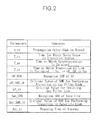
- FIG. 2 illustrates variables that are to be taken into account for a transition between a satellite link and a gap filler link
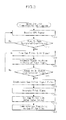
- FIG. 3 is a flowchart illustrating a transition from a satellite link to a gap filler link, which is performed by a satellite terminal, according to an exemplary embodiment.
- the satellite terminal is installed in a train and provides passengers with bi-directional satellite digital multimedia broadcasting services.
- This may, for example, refer to a satellite digital audio broadcasting (DAB) or satellite digital multimedia broadcasting (DMB) terminal.
- DMB satellite digital multimedia broadcasting
- the satellite terminal is not necessarily installed in the train, but may be a personal satellite terminal that a passenger possesses.
- a gap filler (GF) 100 is installed at a tunnel entrance in the direction of the train. Further, although not illustrated, a plurality of gap fillers are installed in the tunnel at predetermined intervals, Also, a gap filler 200 is installed at a predetermined distance from a tunnel exit. These gap fillers function to modulate a time division multivision (TDM) signal in a Ku band or Ka band that a broadcasting satellite sends towards the ground to a code division multiplexing (CDM) signal of 2.6 GHz (S band) so that the satellite terminal receives the signal.
- TDM time division multivision
- CDM code division multiplexing
- a communication transition performed by the satellite terminal from a satellite link to a gap filler link will be explained below.
- the satellite terminal receives a GPS signal during satellite link communications (operation 300).
- the satellite terminal scans a gap filler link signal (operations 310 and 320).
- the satellite terminal continuously scans the gap filler link signal during the satellite link communications,
- a signal sent by the gap filler 100 installed at the tunnel entrance may be input.
- a signal to noise ratio (GF_SNR) is estimated (operation 330).
- GF_SNR obtained while estimating the signal to noise ratio is compared with GF_SNR-th to determine whether or not GF_SNR is equal to or higher than GF_SNR_th (operation 340).
- GF_SNR is equal to or higher than GF_SNR_th
- a communication transition from the current satellite link state to a gap filler link state is performed (operation 380). That is, the satellite link is released.
- a received gap filler signal packet is synchronized with a satellite signal packet (operation 350). This is because gap filler relay causes a delay in reception to occur in the gap filler link, and thus when a communication transition to the gap filler link is performed without synchronization, a part of the received packet may be destroyed.
- a function of generating a pilot is activated (operation 360). Activating the function of the pilot is limited to a case in which the satellite terminal operates in a burst mode. This is because signal power is weak for the gap filler to perform auto gain control (AGC) on a burst signal transmitted to a return link when the satellite terminal operates in the burst mode. Therefore, a tone pilot is generated to enable the gap filler to perform the AGC on the burst signal transmitted from the satellite terminal.
- AGC auto gain control
- a gap filler delay value d_tu is set, so that a transmission signal is transmitted as early as the value of d_tu (operation 370).
- the satellite terminal transmits the burst signal as early as the value of d_tu in the tunnel, so that network synchronization may be maintained.
- the value of d_tu that is equivalent to a value delayed in the tunnel may vary per tunnel depending on the length of a tunnel. Therefore, the value of d_tu may be set differently for each tunnel. For example, the value of d_tu may be set differently by identifying tunnels that the current train is to pass using coordinate information of the current position received from the GPS module.
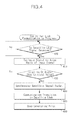
- FIG. 4 is a flowchart illustrating a transition from a gap filler link to a satellite link, which is performed by a satellite terminal, according to an exemplary embodiment.
- Whether or not a satellite link signal is detected is confirmed during gap filler link communications (operation 400). That is, whether or not the train has emerged from the tunnel is detected.
- antenna "Tracking ON” information is received from a satellite antenna during the gap filler link communications
- a signal to noise ratio (Sat_SNR) of a signal input from the satellite link is estimated (operation 410).
- Sat_SNR that is obtained while estimating the signal to noise is compared with Sat_SNR_th, and whether or not Sat_SNR is equal to or higher than Sat_SNR_th is determined (operation 420),
- Sat_SNR is equal to or higher than Sat_SNR_th
- a received satellite signal packet is synchronized with a gap filler signal packet, and then a communication transition from the current gap filler link to the satellite link is performed (operations 430 and 440). That is, the gap filler link is released.
- the function of generating a pilot which is required and activated during the gap filler link communications, is deactivated (operation 450).
- the gap filler 200 may be installed at a proper location such that the communication transition from the gap filler link to the satellite link is performed without interruption.
- a tracking time Ant_tr of a satellite antenna, a link transition time T_tr, a packet synchronization time T_as, and a time for which a train stops in a transition region may be taken into account.
- FIG. 5 is a block diagram of a satellite terminal according to an exemplary embodiment.
- a satellite receiver 510 receives a satellite signal in a Ku or Ka band transmitted from a broadcasting satellite.
- a gap filter receiver 520 receives a gap filter signal that the broadcasting satellite transmits and the gap filler converts its band,
- a GPS receiver 530 receives coordinate information of a current position transmitted from a GPS satellite.
- a pilot generator 540 generates a pilot signal to transmit the generated results to the outside.
- a controller 550 activates the gap filler receiver 520 to scan a gap filler link signal.
- the controller 550 maintains the gap filler receiver 520 to be constantly activated, so that the gap filler link signal is continuously scanned.
- the controller 550 estimates a signal to noise ratio of a gap filter signal that the gap filler receiver 520 receives depending on the scanning of the gap filler link signal, and determines whether or not the estimated signal to noise ratio GF_SNR is equal to or higher than a critical value GF_SNR_th. When the estimated value is equal to or higher than the critical value, the controller 550 synchronizes a received gap filler link signal packet with a satellite link signal packet. Further, in a burst mode, the pilot generator 540 is activated, a gap filler link delay value d_tu is set, and then a communication transition from a current satellite link to a gap filler link is performed.
- the controller 550 detects whether or not the satellite receiver 510 receives a satellite signal. When the satellite signal is received, the controller 550 estimates a signal to noise ratio of the received satellite signal, and determines whether or not the estimated signal to noise ratio Sat_SNR is equal to or higher than a critical value Sat_SNR_th. When the determined results are equal to or higher than the critical value, the controller 550 synchronizes a received satellite link signal packet with a gap filler link signal packet, and then a communication transition from a current gap filler link to a satellite link is performed. Then, the activated pilot generator 540 is deactivated.
- a satellite terminal installed in an express train when a satellite terminal installed in an express train is used to provide bi-directional multimedia services to passengers in the train, services may be provided without interruption in a shadow region, such as a tunnel, through a communication transition from a satellite link to a gap filler link.
Landscapes
- Engineering & Computer Science (AREA)
- Signal Processing (AREA)
- Physics & Mathematics (AREA)
- Astronomy & Astrophysics (AREA)
- General Physics & Mathematics (AREA)
- Aviation & Aerospace Engineering (AREA)
- Computer Networks & Wireless Communication (AREA)
- Radio Relay Systems (AREA)
- Mobile Radio Communication Systems (AREA)
Applications Claiming Priority (1)
| Application Number | Priority Date | Filing Date | Title |
|---|---|---|---|
| KR1020080098374A KR101022026B1 (ko) | 2008-10-07 | 2008-10-07 | 위성 단말 및 그 위성 단말에서 수행되는 통신 링크 천이 방법 |
Publications (2)
| Publication Number | Publication Date |
|---|---|
| EP2175576A2 true EP2175576A2 (de) | 2010-04-14 |
| EP2175576A3 EP2175576A3 (de) | 2012-03-07 |
Family
ID=41395039
Family Applications (1)
| Application Number | Title | Priority Date | Filing Date |
|---|---|---|---|
| EP09164860A Withdrawn EP2175576A3 (de) | 2008-10-07 | 2009-07-08 | Satellitenendgerät und Kommunikationsstreckenübergangsverfahren, das von diesem Endgerät durchgeführt wird |
Country Status (2)
| Country | Link |
|---|---|
| EP (1) | EP2175576A3 (de) |
| KR (1) | KR101022026B1 (de) |
Family Cites Families (7)
| Publication number | Priority date | Publication date | Assignee | Title |
|---|---|---|---|---|
| JP4398893B2 (ja) * | 2005-03-28 | 2010-01-13 | 株式会社東芝 | モバイル放送受信装置およびその制御方法 |
| KR100651835B1 (ko) * | 2005-04-15 | 2006-12-01 | 엘지전자 주식회사 | 디지털 멀티미디어 방송 수신 장치 및 수신장치에 사용되는제어 장치 및 제어 방법 |
| KR20070010446A (ko) * | 2005-07-18 | 2007-01-24 | 주식회사 팬택 | 디엠비 단말기의 방송 수신 위치 안내 장치 및 방법 |
| KR100681912B1 (ko) * | 2005-08-01 | 2007-02-12 | 에스케이 텔레콤주식회사 | 디지털 멀티미디어 방송 시스템에서 신호 수신 경로 설정방법 및 이를 위한 dmb 단말 |
| GB2433179B (en) * | 2005-12-09 | 2010-05-19 | Korea Electronics Telecomm | Apparatus and method for deciding transmission route in terminal of satellite system |
| JP2007195041A (ja) * | 2006-01-20 | 2007-08-02 | Toshiba Corp | 放送受信装置 |
| KR20080050927A (ko) * | 2006-12-04 | 2008-06-10 | 한국전자통신연구원 | Tdma 기반 양방향 위성통신 시스템에서의 타이밍동기화 방법 |
-
2008
- 2008-10-07 KR KR1020080098374A patent/KR101022026B1/ko not_active Expired - Fee Related
-
2009
- 2009-07-08 EP EP09164860A patent/EP2175576A3/de not_active Withdrawn
Also Published As
| Publication number | Publication date |
|---|---|
| KR20100039139A (ko) | 2010-04-15 |
| KR101022026B1 (ko) | 2011-03-16 |
| EP2175576A3 (de) | 2012-03-07 |
Similar Documents
| Publication | Publication Date | Title |
|---|---|---|
| US12149957B2 (en) | Infrastructure equipment, communications devices and methods | |
| JP4237052B2 (ja) | 移動送受信機プラットホームが横断している受信可能区域間におけるハンドオフのためのリターンリンクの予めの調整 | |
| CN103380657B (zh) | Car-to-X通信系统、这种系统中的参与者以及用于在这种系统中接收无线电信号的方法 | |
| KR101151142B1 (ko) | 이동 위성 통신 시스템에서 상향링크를 설정하는 방법 | |
| CN111866878B (zh) | 一种卫星通信系统中的终端登录方法 | |
| KR20090115114A (ko) | Atsc 상호운용성을 제공하는 시스템, 장치, 방법 및 컴퓨터 프로그램 제품 | |
| CN114258646A (zh) | 无线通信设备和方法 | |
| US8699444B2 (en) | Broadcast system interference protection method and apparatus | |
| US20060193306A1 (en) | System and method for synchronization between base stations | |
| Kim et al. | Beam management for 5G satellite systems based on NR | |
| EP2175576A2 (de) | Satellitenendgerät und Kommunikationsstreckenübergangsverfahren, das von diesem Endgerät durchgeführt wird | |
| EP2096771A2 (de) | Kommunikationssystem mit Flugzeug als Relay | |
| KR101661355B1 (ko) | 통신 시스템에서 타이밍 동기 에러 보상 방법 및 장치 | |
| US20060205345A1 (en) | Air radio system | |
| JP3088345B2 (ja) | 遠隔通信における位相同期誤差補正方法および位相同期誤差補正システム | |
| JP4543075B2 (ja) | 地上デジタル放送再送信装置 | |
| JP4037302B2 (ja) | 衛星通信システム、基地局及び移動局 | |
| KR100585902B1 (ko) | 위성 방송 방법, 그 방법에 이용하는 기지국 및 이동국 | |
| JP2007259226A (ja) | Ofdm信号の送信方法およびその再送信方法 | |
| KR20050018525A (ko) | 위성 디지털 멀티미디어 방송 시스템 에이 에서 시분할다중화 방식의 경로를 이용하는 장치 및 방법 | |
| US8542631B2 (en) | Communication device and method for internally redirecting control information | |
| JP2000244383A (ja) | 衛星通信システムとその再送信装置 | |
| Iliev et al. | An approach for more effective use of the radio-frequency spectrum in DVB-T single frequency networks | |
| US9042809B2 (en) | Satellite communication having distinct low priority information broadcast into adjacent sub-regions | |
| JP2005295090A (ja) | 衛星通信システム及び衛星通信装置 |
Legal Events
| Date | Code | Title | Description |
|---|---|---|---|
| PUAI | Public reference made under article 153(3) epc to a published international application that has entered the european phase |
Free format text: ORIGINAL CODE: 0009012 |
|
| AK | Designated contracting states |
Kind code of ref document: A2 Designated state(s): AT BE BG CH CY CZ DE DK EE ES FI FR GB GR HR HU IE IS IT LI LT LU LV MC MK MT NL NO PL PT RO SE SI SK SM TR |
|
| AX | Request for extension of the european patent |
Extension state: AL BA RS |
|
| PUAL | Search report despatched |
Free format text: ORIGINAL CODE: 0009013 |
|
| AK | Designated contracting states |
Kind code of ref document: A3 Designated state(s): AT BE BG CH CY CZ DE DK EE ES FI FR GB GR HR HU IE IS IT LI LT LU LV MC MK MT NL NO PL PT RO SE SI SK SM TR |
|
| AX | Request for extension of the european patent |
Extension state: AL BA RS |
|
| RIC1 | Information provided on ipc code assigned before grant |
Ipc: H04H 40/90 20080101ALI20120127BHEP Ipc: H04H 20/26 20080101AFI20120127BHEP |
|
| 17P | Request for examination filed |
Effective date: 20120907 |
|
| STAA | Information on the status of an ep patent application or granted ep patent |
Free format text: STATUS: THE APPLICATION HAS BEEN WITHDRAWN |
|
| 18W | Application withdrawn |
Effective date: 20140820 |