EP2173094A2 - Wiedergabevorrichtung für bewegte Bilder, Wiedergabeverfahren für bewegte Bilder und Programm - Google Patents
Wiedergabevorrichtung für bewegte Bilder, Wiedergabeverfahren für bewegte Bilder und Programm Download PDFInfo
- Publication number
- EP2173094A2 EP2173094A2 EP09168913A EP09168913A EP2173094A2 EP 2173094 A2 EP2173094 A2 EP 2173094A2 EP 09168913 A EP09168913 A EP 09168913A EP 09168913 A EP09168913 A EP 09168913A EP 2173094 A2 EP2173094 A2 EP 2173094A2
- Authority
- EP
- European Patent Office
- Prior art keywords
- moving picture
- reproduction
- frequency
- display
- stops
- Prior art date
- Legal status (The legal status is an assumption and is not a legal conclusion. Google has not performed a legal analysis and makes no representation as to the accuracy of the status listed.)
- Withdrawn
Links
Images

Classifications
-
- H—ELECTRICITY
- H04—ELECTRIC COMMUNICATION TECHNIQUE
- H04N—PICTORIAL COMMUNICATION, e.g. TELEVISION
- H04N21/00—Selective content distribution, e.g. interactive television or video on demand [VOD]
- H04N21/40—Client devices specifically adapted for the reception of or interaction with content, e.g. set-top-box [STB]; Operations thereof
- H04N21/41—Structure of client; Structure of client peripherals
- H04N21/414—Specialised client platforms, e.g. receiver in car or embedded in a mobile appliance
- H04N21/4143—Specialised client platforms, e.g. receiver in car or embedded in a mobile appliance embedded in a Personal Computer [PC]
-
- H—ELECTRICITY
- H04—ELECTRIC COMMUNICATION TECHNIQUE
- H04N—PICTORIAL COMMUNICATION, e.g. TELEVISION
- H04N21/00—Selective content distribution, e.g. interactive television or video on demand [VOD]
- H04N21/40—Client devices specifically adapted for the reception of or interaction with content, e.g. set-top-box [STB]; Operations thereof
- H04N21/41—Structure of client; Structure of client peripherals
- H04N21/4104—Peripherals receiving signals from specially adapted client devices
- H04N21/4122—Peripherals receiving signals from specially adapted client devices additional display device, e.g. video projector
-
- H—ELECTRICITY
- H04—ELECTRIC COMMUNICATION TECHNIQUE
- H04N—PICTORIAL COMMUNICATION, e.g. TELEVISION
- H04N21/00—Selective content distribution, e.g. interactive television or video on demand [VOD]
- H04N21/40—Client devices specifically adapted for the reception of or interaction with content, e.g. set-top-box [STB]; Operations thereof
- H04N21/43—Processing of content or additional data, e.g. demultiplexing additional data from a digital video stream; Elementary client operations, e.g. monitoring of home network or synchronising decoder's clock; Client middleware
- H04N21/432—Content retrieval operation from a local storage medium, e.g. hard-disk
- H04N21/4325—Content retrieval operation from a local storage medium, e.g. hard-disk by playing back content from the storage medium
-
- H—ELECTRICITY
- H04—ELECTRIC COMMUNICATION TECHNIQUE
- H04N—PICTORIAL COMMUNICATION, e.g. TELEVISION
- H04N21/00—Selective content distribution, e.g. interactive television or video on demand [VOD]
- H04N21/40—Client devices specifically adapted for the reception of or interaction with content, e.g. set-top-box [STB]; Operations thereof
- H04N21/43—Processing of content or additional data, e.g. demultiplexing additional data from a digital video stream; Elementary client operations, e.g. monitoring of home network or synchronising decoder's clock; Client middleware
- H04N21/44—Processing of video elementary streams, e.g. splicing a video clip retrieved from local storage with an incoming video stream or rendering scenes according to encoded video stream scene graphs
- H04N21/4402—Processing of video elementary streams, e.g. splicing a video clip retrieved from local storage with an incoming video stream or rendering scenes according to encoded video stream scene graphs involving reformatting operations of video signals for household redistribution, storage or real-time display
- H04N21/440281—Processing of video elementary streams, e.g. splicing a video clip retrieved from local storage with an incoming video stream or rendering scenes according to encoded video stream scene graphs involving reformatting operations of video signals for household redistribution, storage or real-time display by altering the temporal resolution, e.g. by frame skipping
-
- H—ELECTRICITY
- H04—ELECTRIC COMMUNICATION TECHNIQUE
- H04N—PICTORIAL COMMUNICATION, e.g. TELEVISION
- H04N5/00—Details of television systems
- H04N5/76—Television signal recording
- H04N5/765—Interface circuits between an apparatus for recording and another apparatus
- H04N5/775—Interface circuits between an apparatus for recording and another apparatus between a recording apparatus and a television receiver
-
- G—PHYSICS
- G09—EDUCATION; CRYPTOGRAPHY; DISPLAY; ADVERTISING; SEALS
- G09G—ARRANGEMENTS OR CIRCUITS FOR CONTROL OF INDICATING DEVICES USING STATIC MEANS TO PRESENT VARIABLE INFORMATION
- G09G2320/00—Control of display operating conditions
- G09G2320/10—Special adaptations of display systems for operation with variable images
- G09G2320/106—Determination of movement vectors or equivalent parameters within the image
-
- G—PHYSICS
- G09—EDUCATION; CRYPTOGRAPHY; DISPLAY; ADVERTISING; SEALS
- G09G—ARRANGEMENTS OR CIRCUITS FOR CONTROL OF INDICATING DEVICES USING STATIC MEANS TO PRESENT VARIABLE INFORMATION
- G09G2340/00—Aspects of display data processing
- G09G2340/04—Changes in size, position or resolution of an image
- G09G2340/0407—Resolution change, inclusive of the use of different resolutions for different screen areas
- G09G2340/0435—Change or adaptation of the frame rate of the video stream
-
- G—PHYSICS
- G09—EDUCATION; CRYPTOGRAPHY; DISPLAY; ADVERTISING; SEALS
- G09G—ARRANGEMENTS OR CIRCUITS FOR CONTROL OF INDICATING DEVICES USING STATIC MEANS TO PRESENT VARIABLE INFORMATION
- G09G5/00—Control arrangements or circuits for visual indicators common to cathode-ray tube indicators and other visual indicators
Definitions
- the present invention relates to a moving picture reproduction apparatus, a moving picture reproduction method, and a program. More particularly, the present invention relates to a moving picture reproduction apparatus, a moving picture reproduction method, and a program that reproduce a moving picture by using a reproduction application that temporarily stops reproduction of the moving picture in accordance with the change in the frequency of a display.
- Japanese Patent Application Laid-Open No. 2000-32376 discloses a technique for changing the used frequency in accordance with the destination area in response to a simple operation performed by a user.
- the frequency of the display is changed in accordance with the frequency of the moving picture in order to smoothly reproduce the moving picture using the PC.
- the display is desirably driven at the maximum frequency that can be set, for example, at 59.94 Hz, in order to prevent flickering.
- the frequency of the display is changed during the reproduction of the moving picture
- some reproduction applications instruct to stop reproduction of the moving picture.
- the frequency of the display is changed to the frequency prior to the reproduction of the moving picture, for example, 59.94Hz, when the frequency of the display is changed and the stop of the reproduction is detected.
- the present invention addresses the above-described issue and other issues associated with conventional methods and apparatuses. Accordingly, the present invention provides a novel and improved moving picture reproduction apparatus, a moving picture reproduction method, and a program that can normally reproduce a moving picture using a reproduction application that instructs to stop the reproduction of the moving picture when the frequency of the display is changed during the reproduction of the moving picture.
- a moving picture reproduction apparatus including: a frequency change unit for changing a display frequency to a frequency of a moving picture when a reproduction of the moving picture starts and for changing the display frequency to a frequency prior to the start of the reproduction of the moving picture when the reproduction of the moving picture stops; and a reproduction unit for stopping the reproduction of the moving picture when the frequency change unit changes the display frequency, wherein the frequency change unit maintains the display frequency at the frequency of the moving picture in a case where the reproduction unit stops the reproduction of the moving picture in response to the change of the display frequency by the frequency change unit.
- the reproduction of the moving picture stops when the display frequency is changed, and the display frequency is maintained at the frequency of the moving picture when the reproduction of the moving picture stops in response to the change of the display frequency.
- the moving picture can be normally reproduced using the reproduction application that instructs to stop the reproduction of the moving picture when the frequency of the display is changed during the reproduction of the moving picture. Namely, when the moving picture is reproduced using the reproduction application that instructs to stop reproduction of the moving picture, the repetition of the following operations can be avoided: the moving picture stops when the frequency is changed to match the frequency of the moving picture; and the frequency prior to the reproduction of the moving picture is changed when the moving picture stops.
- the frequency change unit may maintain the display frequency at the frequency of the moving picture in a case where the reproduction unit starts the reproduction of the moving picture after a predetermined period of time passes since the reproduction unit stops the reproduction of the moving picture.
- the frequency change unit may maintain the display frequency at the frequency of the moving picture in a case where the reproduction unit stops the reproduction of the moving picture after a predetermined period of time passes since the frequency change unit changes the display frequency to the frequency of the moving picture.
- the reproduction unit may stop the reproduction of the moving picture when the display frequency is changed during the reproduction of the moving picture.
- a moving picture reproduction method including the steps of: stopping a reproduction of a moving picture when a display frequency is changed; determining whether the reproduction of the moving picture stops in response to a change of the display frequency; and maintaining the display frequency at a frequency of the moving picture in a case where the reproduction of the moving picture stops in response to the change of the display frequency.
- a program for causing a computer to function as a moving picture reproduction apparatus wherein the moving picture reproduction apparatus includes: a frequency change unit for changing a display frequency to a frequency of a moving picture when a reproduction of the moving picture starts and for changing the display frequency to a frequency prior to the start of the reproduction of the moving picture when the reproduction of the moving picture stops; and a reproduction unit for stopping the reproduction of the moving picture when the frequency change unit changes the display frequency, and the frequency change unit maintains the display frequency at the frequency of the moving picture in a case where the reproduction unit stops the reproduction of the moving picture in response to the change of the display frequency by the frequency change unit.
- Such program can cause hardware resources of a computer, such as CPU, ROM, or RAM, to execute the function of each element of the moving picture reproduction apparatus as described above.
- the moving picture can be normally reproduced using the moving picture reproduction application.
- the display is desirably driven at the maximum frequency that can be set, for example, at 59.94 Hz, in order to prevent flickering.
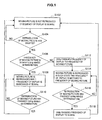
- FIG. 1 is an explanatory diagram illustrating the processing flow of the change of the frequency of a generally-used display.
- the frequency of the display is usually set to 59.94 Hz when the moving picture is not reproduced, namely, when the desktop is displayed or text information is displayed (S102).
- S104 When the reproduction of the moving picture is determined to have started (S104), a utility makes a determination as to whether the frequency of the moving picture is equal to the frequency prior to the reproduction of the moving picture, 59.94 Hz (S106).
- the moving picture is reproduced with the frequency of the display being maintained at 59.94 Hz (S108). Thereafter, the utility makes a determination as to whether the reproduction of the moving picture has finished (S110). In a case where the reproduction of the moving picture is determined not to have finished yet in step S110, the reproduction of the moving picture continues. On the other hand, in a case where the reproduction of the moving picture is determined to have finished in step S110, the moving picture reproduction apparatus goes into such a state that the moving picture is not reproduced (S102).
- the utility changes the frequency of the display to the frequency of the moving picture (S112). Accordingly, the moving picture is reproduced with the frequency of the display being matched to the frequency of the moving picture (S114).
- the utility makes a determination as to whether the reproduction of the moving picture has finished (S116).
- the reproduction of the moving picture is determined not to have finished yet in step S116, the moving picture is continuously reproduced in such a state that the frequency of the display is matched to the frequency of the moving picture (S114).
- the utility changes the frequency of the display to the frequency prior to the reproduction of the moving picture, 59.94 Hz (S118).
- reproduction applications such as Media Center and WinDVD, that instruct to stop the reproduction of the moving picture when the frequency of the display is changed during the reproduction of the moving picture.
- the frequency of the display is changed to the frequency prior to the reproduction of the moving picture, for example, 59.94 Hz, when the frequency of the display is changed and the stop of the reproduction is detected.
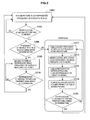
- FIG. 2 is an explanatory diagram illustrating the flow of processings in a case where the moving picture is reproduced using the reproduction application (hereinafter simply referred to as the reproduction application) that instructs to stop the reproduction of the moving picture when the frequency of the display is changed during the reproduction of the moving picture.
- the reproduction application hereinafter simply referred to as the reproduction application
- the frequency of the display is set to 59.94 Hz (S202).
- the utility makes a determination as to whether the frequency of the moving picture is equal to the frequency prior to the reproduction of the moving picture, 59.94 Hz (S206).
- the moving picture is reproduced with the frequency of the display being maintained at 59.94 Hz (S208). Thereafter, the utility makes a determination as to whether the reproduction of the moving picture has finished (S210). In a case where the reproduction of the moving picture is determined not to have finished yet in step S210, the moving picture is continuously reproduced. On the other hand, in a case where the reproduction of the moving picture is determined to have finished in step S210, the moving picture reproduction apparatus goes into such a state that the moving picture is not reproduced (S202).
- the utility changes the frequency of the display to the frequency of the moving picture (S212).
- the reproduction application instructs to stop the reproduction, so that the reproduction of the moving picture stops (S214).
- the utility detects the stop of the reproduction of the moving picture, and changes the frequency of the display to the frequency prior to the reproduction of the moving picture, 59.94 Hz (S216). Thereafter, the reproduction application resumes the reproduction of the moving picture (S218).
- the utility makes a determination as to whether the reproduction of the moving picture has finished (S220). In a case where the reproduction of the moving picture is determined not to have finished in step S220, the utility changes the frequency of the display to the frequency of the moving picture (S212). In a case where the reproduction of the moving picture is determined to have finished in step S220, the utility changes the frequency of the display to the frequency prior to the reproduction of the moving picture, 59.94 Hz (S118).
- step S212 to step S220 the processings from step S212 to step S220 are repeated, so that an infinite loop is formed.
- the display repeats black out as the moving picture is reproduced and stopped.
- a moving picture reproduction apparatus 100 according to an embodiment of the present invention has been created in view of the above-described circumstances. With the moving picture reproduction apparatus 100 according to the present embodiment, the moving picture can be normally reproduced using the reproduction application that instructs to stop the reproduction of the moving picture when the frequency of the display is changed during the reproduction of the moving picture.
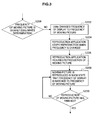
- FIG. 3 is an explanatory diagram illustrating the overview of the moving picture reproduction processings in which the above-described issues are solved.
- the utility changes the frequency of the display to the frequency of the moving picture (S222).
- the reproduction application instructs to stop the reproduction, so that the reproduction of the moving picture stops (S224).
- the reproduction application resumes the reproduction of the moving picture without the frequency of the display being changed by the utility (S226).
- the moving picture is reproduced in such a state that the frequency of the display is matched to the frequency of the moving picture (S228).
- the utility makes a determination as to whether the reproduction of the moving picture has finished (S230). In a case where the reproduction of the moving picture is determined not to have finished yet in step S230, the moving picture is continuously reproduced in such a state that the frequency of the display is matched to the frequency of the moving picture (S228).
- the moving picture reproduction apparatus 100 does not change but maintains the frequency of the display when the reproduction application temporarily stops upon detecting the change of the frequency. Therefore, the moving picture can be reproduced while the infinite loop as illustrated in FIG. 2 is avoided.
- the moving picture reproduction apparatus 100 that does not change but maintains the frequency of the display when the reproduction application detects the change of the frequency and the reproduction performed by the application temporarily stops.
- the moving picture reproduction apparatus 100 is formed integrally with a display device such as an LCD and the like, but the present embodiment is not limited thereto.
- the moving picture reproduction apparatus may be formed independently from the display device.
- Examples of the moving picture reproduction apparatus 100 include a personal computer (hereinafter referred to as PC) or the like.
- PC personal computer
- the present embodiment will be hereinafter described using an example of a so-called notebook PC in which a PC main body portion including a processing device and a recording device is integrally formed with the display device.
- FIG. 4 is a block diagram illustrating the hardware configuration of the moving picture reproduction apparatus 100 according to the present embodiment.
- FIG. 4 is an explanatory diagram illustrating the hardware configuration of the moving picture reproduction apparatus 100 according to the present embodiment.
- the moving picture reproduction apparatus 100 has a CPU (Central Processing Unit) 101, a ROM (Read Only Memory) 102, a RAM (Random Access Memory) 103, a host bus 104, a bridge 105, an external bus 106, an interface 107, an input device 108, an output unit 109, a storage device (HDD) 110, a drive 111, and a communication device 112.
- a CPU Central Processing Unit
- ROM Read Only Memory
- RAM Random Access Memory
- HDD storage device
- the CPU 101 functions as a calculation processing device and a control device, and controls the overall operation in the moving picture reproduction apparatus 100 according to various programs.
- the CPU 101 may be a microprocessor.
- the ROM 102 stores programs, operation parameters, and the like used by the CPU 101.
- the RAM 103 primarily stores the programs used during the execution of the CPU 101 and the parameters and the like that change, as appropriately, during the execution. These are connected with each other via the host bus 104 configured with a CPU bus and the like.
- the host bus 104 is connected to the external bus 106 such as PCI (Peripheral Component Interconnect/Interface) via the bridge 105.
- PCI Peripheral Component Interconnect/Interface
- the host bus 104, the bridge 105, and the external bus 106 are not necessarily formed separately, and these functions may be implemented on one bus.
- the input device 108 includes input means, such as a mouse, a keyboard, a touch panel, buttons, a microphone, switches, and levers, which allows a user to input information, and also includes an input control circuit which generates an input signal based on the input of the user and outputs the input signal to the CPU 101.
- input means such as a mouse, a keyboard, a touch panel, buttons, a microphone, switches, and levers, which allows a user to input information
- an input control circuit which generates an input signal based on the input of the user and outputs the input signal to the CPU 101.
- the output device 109 includes a display device such as a CRT (Cathode Ray Tube) display device, a liquid crystal display (LCD) device, an OLED (Organic Light Emitting Display) device, and lamps, and also includes an audio output device such as a speaker and a headphone.
- the output device 109 outputs, for example, a reproduced content.
- the display device displays, as text or image, various information such as reproduced video data and the like.
- the audio output device converts the reproduced audio data and the like into audio and outputs the audio.
- the storage device 110 is a data storage device as an example of a storage unit for the moving picture reproduction apparatus 100 according to the present embodiment.
- the storage device 110 may include a storage medium, a recording device for recording data on the storage medium, a reading device for reading data from the storage medium, and a deleting device for deleting data recorded on the storage medium.
- the storage device 110 is configured with, for example, an HDD (Hard Disk Drive). This storage device 110 drives a hard disk and stores various data and programs executed by the CPU 101.
- the storage device 110 is recorded with content data, metadata, device data, and the like.
- the drive 111 is a reader/writer for the storage medium, and is built in the moving picture reproduction apparatus 100 or attached externally to the moving picture reproduction apparatus 100.
- the drive 111 reads information recorded on a removable storage medium 120 such as a mounted magnetic disk, an optical disk, a magneto-optical disk, or a semiconductor memory, and outputs the information to the RAM 103.
- the communication device 112 is a communication interface configured with, for example, a communication device and the like for connecting to a communication network 121.
- the communication device 112 may be a communication device compatible with wireless LAN (Local Area Network), a communication device compatible with wireless USB, and a wired communication device capable of communicating via wire.
- the communication device 112 sends and receives various data such as content data and content lists via the communication network 121 to and from external devices.
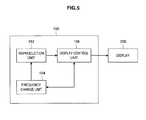
- FIG. 5 is a block diagram illustrating the functional configuration of the moving picture reproduction apparatus 100 according to the present embodiment. As illustrated in FIG. 5 , the moving picture reproduction apparatus 100 according to the present embodiment has a reproduction unit 152, a frequency change unit 154, a display control unit 156, and the like.
- the reproduction unit 152 has a function to stop the reproduction of the moving picture in response to the change of the display frequency by the later-described frequency change unit 154. Especially, the reproduction unit 152 stops the reproduction of the moving picture in response to the change of the display frequency during the reproduction of the moving picture.
- the frequency change unit 154 has a function to change the display frequency to the frequency of the moving picture when the reproduction of the moving picture starts, and also has a function to change the display frequency to the frequency prior to the start of the reproduction of the moving picture when the reproduction of the moving picture stops. Further, the frequency change unit 154 has a function to maintain the display frequency at the frequency of the moving picture when the reproduction of the moving picture performed by the reproduction unit 152 stops in response to the change of the display frequency by the frequency change unit 154.
- the reproduction of the moving picture performed by the reproduction unit 152 stops in response to the change of the display frequency by the frequency change unit 154.
- the reproduction of the moving picture can be determined to have stopped in response to the change of the display frequency if the reproduction of the moving picture is started by the reproduction unit 152 after a predetermined period of time passes since the reproduction of the moving picture is stopped by the reproduction unit 152.
- the reproduction of the moving picture can be determined to have stopped in response to the change of the display frequency if the reproduction of the moving picture is stopped by the reproduction unit 152 after the predetermined period of time passes since the display frequency is changed to the frequency of the moving picture by the frequency change unit 154.
- After the predetermined period of time passes may be defined as, for example, after approximately 5 seconds to 1 minute passes. This is the time needed for the frequency change unit 154 to change the frequency of the display to the frequency of the moving picture. Therefore, in a case where the reproduction of the moving picture starts after approximately 5 seconds to 1 minute passes since the reproduction of the moving picture stops, the display frequency is not changed to the frequency prior to the start of reproduction of the moving picture, but is maintained at the frequency of the moving picture. In a case where the reproduction of the moving picture stops after approximately 5 seconds to 1 minute passes since the display frequency is changed to the frequency of the moving picture, the display frequency is not changed to the frequency prior to the start of the reproduction of the moving picture, but is maintained at the frequency of the moving picture.
- the display control unit 156 has a function to control the reproduction of the moving picture on a display 200 in accordance with the instruction of the reproduction unit 152. Further, the display control unit 156 notifies the frequency change unit 154 of the frequency of the display 200 and the moving picture reproduced on the display 200. The display control unit 156 also has a function to change the frequency of the display 200 in accordance with the instruction of the frequency change unit 154.
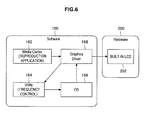
- FIG. 6 is an explanatory diagram illustrating the flow of data in the moving picture reproduction apparatus 100.
- examples of software running on the moving picture reproduction apparatus 100 include Media Center (hereinafter referred to as reproduction application) 162, a utility (hereinafter referred to as frequency control utility) 164, a graphics driver (hereinafter referred to as driver) 166, and an OS 168.
- reproduction application hereinafter referred to as reproduction application
- utility hereinafter referred to as frequency control utility
- driver graphics driver
- OS OS
- the reproduction application 162 is one example of the reproduction unit 152 according to the present embodiment.
- the frequency control utility 164 is one example of the frequency change unit 154 according to the present embodiment.
- the driver 166 is one example of the display control unit 156.
- the reproduction application 162 starts the reproduction of the moving picture, and transmits to the driver 166 the moving picture to be reproduced. Then, the frequency of the moving picture is notified to the frequency control utility 164 via the driver 166.
- the frequency control utility 164 requests the driver 166 to change the frequency by way of the OS 168.
- the driver 166 changes the frequency of the built-in LCD 202 to the frequency requested by way of the OS 168.
- the reproduction application 162 detects the change of the frequency of the built-in LCD 202 made by the driver 166. Upon detecting the change of the frequency of the built-in LCD 202, the reproduction application 162 stops the reproduction of the moving picture. Namely, the reproduction application 162 stops transmission of the moving picture to the driver 166.
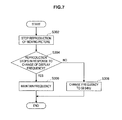
- the reproduction unit 152 stops the reproduction of the moving picture (S302).
- the reproduction unit 152 starts the reproduction of the moving picture after the predetermined period of time passes since the reproduction unit 152 stops the reproduction of the moving picture, the reproduction of the moving picture can be deemed to have stopped in response to the change of the display frequency.
- the reproduction unit 152 stops the reproduction of the moving picture after the predetermined period of time passes since the frequency change unit 154 changes the display frequency to the frequency of the moving picture the reproduction of the moving picture can be deemed to have stopped in response to the change of the display frequency.
- the frequency is maintained (S306).
- the frequency is changed to the display frequency prior to the reproduction of the moving picture (for example 59.94 Hz) (S308).
- the moving picture reproduction apparatus 100 changes the display frequency to the frequency of the moving picture when the reproduction of the moving picture starts, and changes the display frequency to the frequency prior to the start of the reproduction of the moving picture when the reproduction of the moving picture stops. In a case where the display frequency is changed, the reproduction of the moving picture stops. In a case where the reproduction of the moving picture stops in response to the change of the display frequency, the display frequency is maintained at the frequency of the moving picture.
- the moving picture can be normally reproduced using the reproduction application that instructs to stop the reproduction of the moving picture when the frequency of the display is changed during the reproduction of the moving picture. Namely, when the moving picture is reproduced using the reproduction application that instructs to stop the reproduction of the moving picture, the repetition of the following operations can be avoided: the moving picture stops when the frequency is changed to match the frequency of the moving picture; and the frequency prior to the reproduction of the moving picture is changed when the moving picture stops.
- the present application contains subject matter related to that disclosed in Japanese Priority Patent Application JP 2008-221854 filed in the Japan Patent Office on JP August 29, 2008, the entire content of which is hereby incorporated by reference. It should be understood by those skilled in the art that various modifications, combinations, sub-combinations and alterations may occur depending on design requirements and other factors insofar as they are within the scope of the appended claims or the equivalents thereof.
Landscapes
- Engineering & Computer Science (AREA)
- Multimedia (AREA)
- Signal Processing (AREA)
- Databases & Information Systems (AREA)
- General Engineering & Computer Science (AREA)
- Controls And Circuits For Display Device (AREA)
- Television Signal Processing For Recording (AREA)
- Transforming Electric Information Into Light Information (AREA)
- Control Of Indicators Other Than Cathode Ray Tubes (AREA)
Applications Claiming Priority (1)
| Application Number | Priority Date | Filing Date | Title |
|---|---|---|---|
| JP2008221854A JP4636142B2 (ja) | 2008-08-29 | 2008-08-29 | 動画再生装置、動画再生方法およびプログラム |
Publications (2)
| Publication Number | Publication Date |
|---|---|
| EP2173094A2 true EP2173094A2 (de) | 2010-04-07 |
| EP2173094A3 EP2173094A3 (de) | 2010-04-14 |
Family
ID=41693203
Family Applications (1)
| Application Number | Title | Priority Date | Filing Date |
|---|---|---|---|
| EP09168913A Withdrawn EP2173094A3 (de) | 2008-08-29 | 2009-08-28 | Wiedergabevorrichtung für bewegte Bilder, Wiedergabeverfahren für bewegte Bilder und Programm |
Country Status (5)
| Country | Link |
|---|---|
| US (1) | US8610828B2 (de) |
| EP (1) | EP2173094A3 (de) |
| JP (1) | JP4636142B2 (de) |
| CN (1) | CN101661695B (de) |
| BR (1) | BRPI0902777A2 (de) |
Families Citing this family (1)
| Publication number | Priority date | Publication date | Assignee | Title |
|---|---|---|---|---|
| EP4553821A4 (de) * | 2022-08-23 | 2025-11-12 | Samsung Electronics Co Ltd | Anzeigevorrichtung und wearable-vorrichtung zur einstellung der bildfrequenz und verfahren zum betrieb davon |
Citations (2)
| Publication number | Priority date | Publication date | Assignee | Title |
|---|---|---|---|---|
| JP2000032376A (ja) | 1998-07-14 | 2000-01-28 | Sony Corp | 仕向切換器付きビデオ記録・再生装置 |
| JP2008221854A (ja) | 2008-06-23 | 2008-09-25 | Seiko Epson Corp | プラテンを汚すことなく印刷用紙の端部まで行う印刷 |
Family Cites Families (16)
| Publication number | Priority date | Publication date | Assignee | Title |
|---|---|---|---|---|
| JPH06250624A (ja) * | 1993-02-23 | 1994-09-09 | Oki Electric Ind Co Ltd | 画面表示制御装置 |
| JP3368796B2 (ja) * | 1997-04-17 | 2003-01-20 | 松下電器産業株式会社 | ディスプレイ回路制御装置 |
| US20020030635A1 (en) * | 1998-11-16 | 2002-03-14 | Mcgowan Scott J. | Method and apparatus for phase-locking a plurality of display devices and multi-level driver for use therewith |
| JP4040826B2 (ja) * | 2000-06-23 | 2008-01-30 | 株式会社東芝 | 画像処理方法および画像表示システム |
| US7043019B2 (en) * | 2001-02-28 | 2006-05-09 | Eastman Kodak Company | Copy protection for digital motion picture image data |
| US7206811B2 (en) * | 2003-03-13 | 2007-04-17 | Oracle International Corp. | System and method for facilitating real-time collaborating by collapsing a queue for a slow client |
| US7221759B2 (en) * | 2003-03-27 | 2007-05-22 | Eastman Kodak Company | Projector with enhanced security camcorder defeat |
| US7634134B1 (en) * | 2004-03-15 | 2009-12-15 | Vincent So | Anti-piracy image display methods and systems |
| US7693330B2 (en) * | 2004-03-15 | 2010-04-06 | Vincent So | Anti-piracy image display methods and systems with sub-frame intensity compensation |
| JP4452136B2 (ja) * | 2004-03-30 | 2010-04-21 | 株式会社日立製作所 | データ同期再生装置及び端末装置 |
| JP2006098765A (ja) * | 2004-09-29 | 2006-04-13 | Seiko Epson Corp | 画像表示装置、画像表示システム、画像出力機器、及び画像表示装置のリフレッシュレート設定方法 |
| JP4462036B2 (ja) * | 2005-01-06 | 2010-05-12 | 株式会社デンソー | 液晶表示装置 |
| JP4887727B2 (ja) * | 2005-10-20 | 2012-02-29 | ソニー株式会社 | 画像信号処理装置、カメラシステム、および画像信号処理方法 |
| TWI343213B (en) * | 2006-11-08 | 2011-06-01 | Qisda Corp | Method for playing audio-video file and playing system using the same |
| JP5426080B2 (ja) * | 2007-06-19 | 2014-02-26 | 株式会社コナミデジタルエンタテインメント | 走行玩具システム |
| JP4581012B2 (ja) * | 2008-12-15 | 2010-11-17 | 株式会社東芝 | 電子機器、及び表示制御方法 |
-
2008
- 2008-08-29 JP JP2008221854A patent/JP4636142B2/ja not_active Expired - Fee Related
-
2009
- 2009-08-04 US US12/535,260 patent/US8610828B2/en not_active Expired - Fee Related
- 2009-08-17 BR BRPI0902777-7A patent/BRPI0902777A2/pt not_active IP Right Cessation
- 2009-08-28 EP EP09168913A patent/EP2173094A3/de not_active Withdrawn
- 2009-08-31 CN CN2009101709828A patent/CN101661695B/zh not_active Expired - Fee Related
Patent Citations (2)
| Publication number | Priority date | Publication date | Assignee | Title |
|---|---|---|---|---|
| JP2000032376A (ja) | 1998-07-14 | 2000-01-28 | Sony Corp | 仕向切換器付きビデオ記録・再生装置 |
| JP2008221854A (ja) | 2008-06-23 | 2008-09-25 | Seiko Epson Corp | プラテンを汚すことなく印刷用紙の端部まで行う印刷 |
Also Published As
| Publication number | Publication date |
|---|---|
| US20100054697A1 (en) | 2010-03-04 |
| CN101661695B (zh) | 2012-07-04 |
| BRPI0902777A2 (pt) | 2010-05-25 |
| EP2173094A3 (de) | 2010-04-14 |
| CN101661695A (zh) | 2010-03-03 |
| US8610828B2 (en) | 2013-12-17 |
| JP4636142B2 (ja) | 2011-02-23 |
| JP2010054971A (ja) | 2010-03-11 |
Similar Documents
| Publication | Publication Date | Title |
|---|---|---|
| CN105556417B (zh) | 用于控制电力的电子设备及其方法 | |
| WO2021259100A1 (zh) | 分享方法、装置和电子设备 | |
| US8706275B2 (en) | Systems and methods for application sound management | |
| US20090172607A1 (en) | Electronic device and method for controlling screen saver operations thereof | |
| US9529755B2 (en) | Apparatus and method of recognizing external device in a communication system | |
| JP2009089065A (ja) | 電子機器および顔画像表示装置 | |
| CN102262501A (zh) | 信息处理设备,信息处理方法,计算机程序和信息处理系统 | |
| US20040080539A1 (en) | Information processing apparatus, a display control method of the information processing apparatus, a storage medium and its program | |
| EP4369176A1 (de) | Anzeigeverfahren, vorrichtung, vorrichtung und speichermedium | |
| US20190306555A1 (en) | Electronic apparatus, method of controlling the same and recording medium thereof | |
| US8204610B2 (en) | Eletronic device, display device, and method of controlling audio/video output of an electronic device | |
| CN101599241A (zh) | 信息处理设备 | |
| CN113781957B (zh) | 防止显示设备烧屏的方法及显示设备 | |
| CN101872601A (zh) | 延伸显示系统及方法 | |
| EP2173094A2 (de) | Wiedergabevorrichtung für bewegte Bilder, Wiedergabeverfahren für bewegte Bilder und Programm | |
| CN113992963A (zh) | 一种显示设备及投屏方法 | |
| US20120229511A1 (en) | Electronic apparatus and method of displaying object | |
| US20070203981A1 (en) | Electronic device capable of recording conference information, computer system, conference information processing method, and program product therefor | |
| US20120162530A1 (en) | Electronic Apparatus and Display Control Method | |
| CN111367604A (zh) | 一种文件显示的处理方法、装置、存储介质及终端 | |
| WO2024255294A1 (zh) | 投屏方法、终端设备以及存储介质 | |
| US20240370157A1 (en) | Interaction method, interaction apparatus, electronic device, and computer-readable storage medium | |
| CN112218156B (zh) | 一种调节视频动态对比度的方法及显示设备 | |
| JP2002207472A (ja) | 画像表示装置 | |
| CN115190342A (zh) | 显示设备控制方法、装置、电子设备及可读存储介质 |
Legal Events
| Date | Code | Title | Description |
|---|---|---|---|
| PUAI | Public reference made under article 153(3) epc to a published international application that has entered the european phase |
Free format text: ORIGINAL CODE: 0009012 |
|
| PUAL | Search report despatched |
Free format text: ORIGINAL CODE: 0009013 |
|
| 17P | Request for examination filed |
Effective date: 20090828 |
|
| AK | Designated contracting states |
Kind code of ref document: A2 Designated state(s): AT BE BG CH CY CZ DE DK EE ES FI FR GB GR HR HU IE IS IT LI LT LU LV MC MK MT NL NO PL PT RO SE SI SK SM TR |
|
| AX | Request for extension of the european patent |
Extension state: AL BA RS |
|
| AK | Designated contracting states |
Kind code of ref document: A3 Designated state(s): AT BE BG CH CY CZ DE DK EE ES FI FR GB GR HR HU IE IS IT LI LT LU LV MC MK MT NL NO PL PT RO SE SI SK SM TR |
|
| AX | Request for extension of the european patent |
Extension state: AL BA RS |
|
| RIC1 | Information provided on ipc code assigned before grant |
Ipc: G09G 5/12 20060101AFI20100308BHEP |
|
| 17Q | First examination report despatched |
Effective date: 20100330 |
|
| STAA | Information on the status of an ep patent application or granted ep patent |
Free format text: STATUS: THE APPLICATION IS DEEMED TO BE WITHDRAWN |
|
| 18D | Application deemed to be withdrawn |
Effective date: 20160301 |