EP2159843A2 - Color display device and method for manufacturing the same - Google Patents
Color display device and method for manufacturing the same Download PDFInfo
- Publication number
- EP2159843A2 EP2159843A2 EP09010980A EP09010980A EP2159843A2 EP 2159843 A2 EP2159843 A2 EP 2159843A2 EP 09010980 A EP09010980 A EP 09010980A EP 09010980 A EP09010980 A EP 09010980A EP 2159843 A2 EP2159843 A2 EP 2159843A2
- Authority
- EP
- European Patent Office
- Prior art keywords
- pixel
- sub
- light
- reflection layer
- emitting
- Prior art date
- Legal status (The legal status is an assumption and is not a legal conclusion. Google has not performed a legal analysis and makes no representation as to the accuracy of the status listed.)
- Granted
Links
Images


Classifications
-
- H—ELECTRICITY
- H10—SEMICONDUCTOR DEVICES; ELECTRIC SOLID-STATE DEVICES NOT OTHERWISE PROVIDED FOR
- H10K—ORGANIC ELECTRIC SOLID-STATE DEVICES
- H10K59/00—Integrated devices, or assemblies of multiple devices, comprising at least one organic light-emitting element covered by group H10K50/00
- H10K59/30—Devices specially adapted for multicolour light emission
- H10K59/35—Devices specially adapted for multicolour light emission comprising red-green-blue [RGB] subpixels
- H10K59/351—Devices specially adapted for multicolour light emission comprising red-green-blue [RGB] subpixels comprising more than three subpixels, e.g. red-green-blue-white [RGBW]
-
- H—ELECTRICITY
- H10—SEMICONDUCTOR DEVICES; ELECTRIC SOLID-STATE DEVICES NOT OTHERWISE PROVIDED FOR
- H10K—ORGANIC ELECTRIC SOLID-STATE DEVICES
- H10K50/00—Organic light-emitting devices
- H10K50/80—Constructional details
- H10K50/85—Arrangements for extracting light from the devices
- H10K50/852—Arrangements for extracting light from the devices comprising a resonant cavity structure, e.g. Bragg reflector pair
-
- H—ELECTRICITY
- H10—SEMICONDUCTOR DEVICES; ELECTRIC SOLID-STATE DEVICES NOT OTHERWISE PROVIDED FOR
- H10K—ORGANIC ELECTRIC SOLID-STATE DEVICES
- H10K59/00—Integrated devices, or assemblies of multiple devices, comprising at least one organic light-emitting element covered by group H10K50/00
- H10K59/10—OLED displays
- H10K59/12—Active-matrix OLED [AMOLED] displays
- H10K59/124—Insulating layers formed between TFT elements and OLED elements
-
- H—ELECTRICITY
- H10—SEMICONDUCTOR DEVICES; ELECTRIC SOLID-STATE DEVICES NOT OTHERWISE PROVIDED FOR
- H10K—ORGANIC ELECTRIC SOLID-STATE DEVICES
- H10K59/00—Integrated devices, or assemblies of multiple devices, comprising at least one organic light-emitting element covered by group H10K50/00
- H10K59/80—Constructional details
- H10K59/875—Arrangements for extracting light from the devices
- H10K59/876—Arrangements for extracting light from the devices comprising a resonant cavity structure, e.g. Bragg reflector pair
-
- H—ELECTRICITY
- H10—SEMICONDUCTOR DEVICES; ELECTRIC SOLID-STATE DEVICES NOT OTHERWISE PROVIDED FOR
- H10K—ORGANIC ELECTRIC SOLID-STATE DEVICES
- H10K59/00—Integrated devices, or assemblies of multiple devices, comprising at least one organic light-emitting element covered by group H10K50/00
- H10K59/30—Devices specially adapted for multicolour light emission
- H10K59/38—Devices specially adapted for multicolour light emission comprising colour filters or colour changing media [CCM]
Definitions
- the present invention relates to a color display device using an electroluminescent device and a method for manufacturing the same.
- CRTs cathode ray tubes
- organic electroluminescent device also referred to hereinafter as "organic EL device”
- organic EL device is an element that emits light according to electrical signals and is composed of an organic compound as a light-emitting material.
- the organic EL device inherently has excellent display properties such as wide viewing angle, high contrast and high-speed response.
- the organic EL device is capable of realizing thin, lightweight and high-definition display devices ranging in size from small to large, and thus attracts attention as an element substituted for CRT or LCD.
- an organic EL display device provided with a micro-cavity (minute resonator) is disclosed (see, for example, Japanese National-Phase Publication No. 2007-503093 ).
- one pixel is divided into red (R), green (G) and blue (B) sub-pixels each constituting a resonator for resonating emitted light between an optically semitransparent reflection electrode and a reflection film (electrode) and having an organic EL light-emitting layer in common among the sub-pixels, thus making separate forming in three colors unnecessary and a color filter also unnecessary, thereby being assumed to provide a simple full-color display device.
- a resonant is not arranged in a white sub-pixel region.
- a light-emitting device wherein a resonant structure is formed by changing the thickness of an anode for an organic electroluminescence layer, thereby picking out R, G and B lights, is disclosed (see, for example, Japanese Patent Application Laid-Open (JP-A) No. 2006-269329 ).
- the anode a transparent electroconductive material such as ITO is used, and a light reflection film is arranged via a transparent insulation film in the lower part of the anode.
- a white sub-pixel is important for simultaneously achieving rich color reproduction, tone reproduction and low power consumption, and it is desired to solve the problems in arrangement of the white sub-pixel.
- a first aspect of the invention provides a color display device comprising a plurality of pixels on a substrate, wherein each pixel comprises a plurality of sub-pixels, each sub-pixel emits light of different wavelengths in the visible range and further comprises a white sub-pixel, wherein the plurality of sub-pixels and the white sub-pixel each have a white organic electroluminescence layer interposed between an optically semitransparent reflection layer and a light reflection layer, the optical distance between the optically semitransparent reflection layer and the light reflection layer in each of the plurality of sub-pixels forms a resonator having a distance for resonating emitted light, and the optical distance between the optically semitransparent reflection layer and the light reflection layer in the white sub-pixel is longer than the maximum optical distance between the optically semitransparent reflection layer and the light reflection layer in each of the plurality of sub-pixels.
- the display device of the invention includes plural pixels on a substrate, each pixel contains two or more sub-pixels, each sub-pixel emits light of different wavelength in the visible range and further contains a white sub-pixel.
- the display device of the invention has a matrix-type screen panel having plural pixels arranged lengthwise and breadthwise on a substrate.
- Each pixel contains plural sub-pixels, each sub-pixel emits light of different wavelengths in the visible range and further contains a white sub-pixel and each sub-pixel forms a resonator.
- These sub-pixels are independently regulated and allowed to emit lights with independent luminance, thereby enabling full-color reproduction.
- each pixel is composed of a red (R) sub-pixel, a green (G) sub-pixel, a blue (B) sub-pixel and a white (W) sub-pixel.
- FIG. 2 is a conceptual diagram showing the arrangement of sub-pixels.
- the color display device of the invention includes plural pixels on a substrate, each pixel contains plural sub-pixels, each sub-pixel emits light of different wavelengths in the visible range, and further contains a white sub-pixel, wherein the plural sub-pixels and the white sub-pixel each have a white-light emitting organic electroluminescence layer interposed between an optically semitransparent reflection layer and a light reflection layer, the optical distance between the optically semitransparent reflection layer and the light reflection layer in each of the plural sub-pixels forms a resonator having a distance for resonating emitted light, and the optical distance between the optically semitransparent reflection layer and the light reflection layer in the white sub-pixel is longer than the maximum optical distance between the optically semitransparent reflection layer and the light reflection layer in each of the plural sub-pixels.
- the display device has, as the plural sub-pixels, a red sub-pixel (R sub-pixel), a green sub-pixel (G sub-pixel) and a blue sub-pixel (B sub-pixel), and the optical distances between the optically semitransparent reflection layer and the light reflection layer in the red sub-pixel, green sub-pixel and blue sub-pixel are distances with which red light (R light), green light (G light) and blue light (B light) are resonated respectively.
- the optical distance between the optically semitransparent reflection layer and the light reflection layer in the white sub-pixel is equal to or longer than twice the maximum optical distance between the optically semitransparent reflection layer and the light reflection layer in each of the plural sub-pixels.
- the optical distance between the optically semitransparent reflection layer and the light reflection layer in the white sub-pixel is 2.0 ⁇ m or more, more preferably 3.0 ⁇ m or more, even more preferably 4.0 ⁇ m or more.
- each sub-pixel has an optical path length regulation layer between the optically semitransparent reflection layer and the light reflection layer, and the plural sub-pixels and the white sub-pixel each have a white organic electroluminescence layer having the same composition and are different in only the thickness of the optical path length regulation layer.
- the display device of the invention is preferably provided in each sub-pixel region with a TFT for driving each sub-pixel.
- the substrate for the display device of the invention uses, as the substrate, a substrate for a TFT, and at least one of the sub-pixels has a planarized film on the substrate and a light reflection layer on the planarized film.
- a light path length regulation layer, a white organic luminescence layer and an optically semitransparent reflection layer are arranged on the light reflection layer.
- each sub-pixel has the light reflection layer either between the planarizing film and the substrate or in the planarizing film. In this case, at least a part of the planarizing film functions as an optical path length regulation layer.
- the red sub-pixel, the green sub-pixel, the blue sub-pixel and the white sub-pixel each have, on the planarizing film, a light reflection layer, an optically semitransparent reflection layer and an optical path length regulation layer and a white light-emitting organic luminescence layer interposed between the optically semitransparent reflection layer and the light reflection layer.
- the red sub-pixel, the green sub-pixel and the blue sub-pixel each have, on the planarizing film, a light reflection layer, an optically semitransparent reflection layer and an optical path length regulation layer and a white organic luminescence layer interposed between the optically semitransparent reflection layer and the light reflection layer
- the white sub-pixel has a light reflection layer between a substrate and a planarizing film and has, on the planarizing film, a transparent electrode, a white organic luminescence layer, and an optically semitransparent reflection layer.
- the light reflection layer of the white sub-pixel is formed at a layer common with an electrode of a TFT.
- a red color filter, a green color filter and a blue color filter are arranged at the light emission side of the red light-emitting sub-pixel, green light-emitting sub-pixel and blue light-emitting sub-pixel, respectively.
- the organic EL in the invention may be a top emission-type organic EL or a bottom emission-type organic EL.
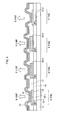
- FIG. 3 is a sectional schematic diagram showing the constitution of R, G and B sub-pixels and W sub-pixel constituting one pixel in the invention.
- a planarizing film 6 is formed by coverage on TFT.
- a light reflection layer 2 is arranged on the planarizing film.
- the light reflection layer may be arranged in common among R, G, B and W sub-pixels.
- optical path length regulation layers that are different in thickness among the R, G, B and W sub-pixels are arranged respectively (that is, optical path length regulation layers 8-1, 8-2, 8-3 and 8-4).
- the optical path length regulation layer 8-1 in the B sub-pixel region is thinnest, and as long as the B sub-pixel region attains a resonance distance, the thickness may be 0, that is, the optical path length regulation layer may not be arranged in the B sub-pixel region.
- the optical path length regulation layer in the R sub-pixel region is thicker than in the G sub-pixel region.
- the optical path length regulation layer 8-4 in the W sub-pixel region is thickest and is preferably thicker than the optical path length regulation layer 8-3 in the R sub-pixel region, more preferably thicker than twice the optical path length regulation layer 8-3 in the R sub-pixel region.
- the optical path length regulation layer is electrically insulating.
- a transparent electrode 3 is arranged as a pixel electrode by patterning on the optical path length regulation layer for each pixel. The transparent electrode 3 is connected electrically via a contact hole to TFT. The non-light-emitting regions in spaces among the sub-pixels are covered with a bank 7 (insulating layer).
- a white organic luminescence layer 4 and an optically semitransparent reflection layer 5 are arranged thereon in common among the respective sub-pixels.
- the white organic electroluminescence layer 4 is preferably a laminate of plural functional layers such as a hole injecting layer, a hole transporting layer, a light-emitting layer, an electron transporting layer, and an electron injecting layer.
- the optically semitransparent reflection layer 5 may be either a metallic thin film (Al, Ag etc.) or a distributed Bragg reflection film (DBR) wherein transparent thin films different in refractive index are laminated.
- the optical path length regulation layer is composed of an insulating layer material and may be any of inorganic materials (SiO 2 , SiON, SiN etc.) and organic materials (polycarbonate, polyacrylate, silicone resin etc.).
- the thickness of the optical path length regulation in each of the R, G, and B sub-pixels is regulated so as to provide a distance with which emitted light resonates.
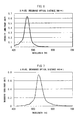
- the resonance optical distance in the B sub-pixel region is 380 nm, emitted light having a maximum wavelength at 465 nm shown in FIG. 6 is picked out to the outside.
- each of R, G and B sub-pixels emits light of different wavelengths in the visible range.
- the optical path length regulation layer is thicker than in the R sub-pixel region and is regulated to have such thickness as not to exhibit emission of light having a specific wavelength in the visible range.
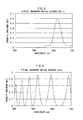
- the resonance optical distance is 2.0 ⁇ m
- lights with a resonance wave having many emission peaks as shown in FIG. 9 are picked out to the outside.
- the light of W sub-pixel observed outside is an almost white light having such lights mixed therein.
- the lights emitted in the white organic electroluminescence layer 4 upon electrification are repeatedly reflected and resonated between the optically semitransparent reflection layer 5 and the light reflection layer 2 whereby R, G and B lights are emitted through the optically semitransparent reflection layer 5 to the outside.
- the R, G and B resonated lights are mixed and observed as white light.
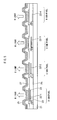
- FIG. 4 is a sectional schematic diagram showing the constitution of one pixel in another aspect of the invention.
- the constitution of the R, G and B sub-pixel regions is the same as the constitution shown in FIG. 3 .
- a reflection layer 12-2 is first arranged in a region where the W sub-pixel is to be arranged on substrate 11 provided with TFT. TFT and the light reflection layer 12-2 are covered by arranging a planarizing film 16 thereon.
- the planarizing film is arranged as planarizing film 16 common among the R, G and B sub-pixel regions.
- the planarizing film 16 functions as an optical path length regulation layer, wherein the thickness of the optical path length regulation layer in the W sub-pixel may be greater than a predetermined thickness and may thus not be strictly regulated. Accordingly, sufficiently satisfactory performance can be achieved even by a general manner of producing a planarizing film.
- 12-1 represents an light refection layer and 18-1, 18-2 and 18-3 each represents an optical path length regulation layer.
- a transparent electrode 13 is arranged as a pixel electrode on the planarizing film 16 by patterning for each sub-pixel.
- the transparent electrode 13 is connected electrically via a contact hole to the TFT.
- the non-light-emitting regions in spaces among the sub-pixels are covered with a bank 17 (insulating layer).
- a white organic luminescence layer 14 and a optically semitransparent reflection layer 15 are arranged thereon in common among the sub-pixels.
- an optical path length regulation layer may be arranged between the planarizing film 16 and the transparent electrode 13.
- FIG. 5 is a sectional schematic diagram showing the constitution of one pixel in still another aspect of the invention.
- the constitution of the W sub-pixel region is the same as the constitution shown in FIG. 4 .
- the light reflection layer is arranged inside the planarizing film.
- the light reflection layer 22-1 is arranged in the uppermost part of the planarizing film 26.
- the light reflection layers 22-2 and 22-3 in the G and R sub-pixel regions are arranged respectively inside the planarizing film 26 in such positions that the resonance distance in the R sub-pixel region becomes longer than that in the G sub-pixel region.
- a patterned transparent electrode 23 is formed in the R, G, B and W sub-pixels, respectively.
- a white organic luminescence layer 24 and a optically semitransparent reflection layer 25 are arranged thereon in common among the R, G, B and W sub-pixels.
- 27 represents a bank.
- the light emitted from each of the R, G and B sub-pixels is a light of high luminance and high chroma with a narrow spectrum distribution, whereby a light with extremely high luminance and high chroma is obtained.
- the light emitted from the W pixel region is not a resonance light having a limited number of specific wavelengths but a white light obtained by mixing of a large number of resonance lights so that a high-luminance white light can be obtained without such color drift as is observed in the conventional W pixel region having a resonator.
- the white organic luminescence layer and semitransparent reflection layer can be formed consistently in common among the R, G, B and W sub-pixels, thus making achievement of higher resolution easy, facilitating the production process, and attaining high productivity.
- the optical path length regulation layer in the invention is not particularly limited as long as it is composed of a transparent insulating layer material, and such material may be any one of inorganic materials (SiO 2 , SiON, SiN etc.) and organic materials (polycarbonate, polyacrylate, silicone resin etc.).
- the inorganic insulating materials used in the optical path length regulation layer of the invention may be a wide variety of conventionally known metal oxides, metal nitrides and metal fluorides.
- metal oxides include MgO, SiO, SiO 2 , Al 2 O 3 , GeO, NiO, CaO, BaO, Fe 2 O 3 , Y 2 O 3 , TiO 2 etc.
- metal nitrides include SiN x , SiN x O y etc.
- metal fluorides include MgF 2 , LiF, AlF 3 , CaF 2 etc. The material may also be a mixture thereof.
- an organic compound may also be used, and a film-forming polymer is preferably used.
- the film-forming polymer includes polycarbonate, polyacrylate, silicone resin, polyvinyl butyral, etc.
- the thickness of the optical path length regulation layer is regulated so as to constitute an optical distance with which each sub-pixel can efficiently resonate light of specific wavelength. Accordingly, the optical distance for resonance is determined depending on the refractive index, composition and thickness of the material interposed between the reflection film and the semitransparent reflection film and is thus not determined by the optical path length regulation layer.
- the thickness of the optical path length regulation layer of each of the R, G and B sub-pixels in terms of physical thickness, is preferably 0 nm to 1000 nm, more preferably 20 nm to 500 nm, even more preferably 30 nm to 200 nm.
- the method of forming the optical path length regulation layer is not particularly limited and can use, for example, a vacuum deposition method, a sputtering method, a reactive sputtering method, an MBE (molecular beam epitaxy) method, a cluster ion beam method, an ion plating method, a plasma polymerization method (high-frequency excitation ion plating method), a plasma CVD method, a laser CVD method, a thermal CVD method, a gas-source CVD method, a coating method, a printing method, or a transfer method.
- a vacuum deposition method a sputtering method, a reactive sputtering method, an MBE (molecular beam epitaxy) method, a cluster ion beam method, an ion plating method, a plasma polymerization method (high-frequency excitation ion plating method), a plasma CVD method, a laser CVD method, a thermal CVD method, a gas-source CVD method,
- the organic luminescence layer in the invention may, besides the light-emitting layer, have conventionally known organic compound layers such as a hole transporting layer, an electron transporting layer, a blocking layer, an electron injecting layer and a hole injecting layer.
- At least one of the pair electrodes of the organic electroluminescence layer of the invention is a transparent electrode, and the other is a back plate.
- the back plate may be transparent or opaque.
- the layer structure of the organic compound layer is not particularly limited, and may be suitably selected in accordance with the usage of the organic electroluminescent device or the target thereof.
- the organic compound layer is formed on the transparent electrode or on the back plate.
- the organic compound layer is formed over the entire surface or on a part of the surface of the transparent electrode or the back plate.
- the shape, the size, the thickness and other factors of the organic compound layer are not particularly limited, and can be suitably selected in accordance with the target.
- the layer structure includes the following. In the invention, however, the layer structure is not limited to these structures.
- the hole transporting layer used in the invention comprises a hole transporting material.
- a hole transporting material a material having any one of a function of transporting holes and a function of blocking electrons injected from the cathode can be used without any special limitation.
- the hole transporting material used in the invention may be any one of a low molecular weight hole transporting material and a high molecular weight hole transporting material. Specific examples of the hole transporting material used in the invention include the following:
- the thickness of the hole transporting layer is preferably 1 nm to 200 nm, more preferably 5 nm to 100 nm.
- a hole injecting layer may be formed between the hole transporting layer and the anode.
- the hole injecting layer is a layer which makes it easy to inject holes from the anode to the hole transporting layer.
- a material having a small ionization potential among the above-mentioned various hole transporting materials is preferably used. Examples of the material include a phthalocyanine compound, a porphyrin compound, and a star-burst triarylamine compound. These can be preferably used.
- the film thickness of the hole injecting layer is preferably 1 nm to 300 nm.
- the light-emitting layer used in the invention comprises at least one light-emitting material, and may comprise a hole transporting material, an electron transporting material, and a host material if necessary.
- the light-emitting material used in the invention is not particularly limited, and may be any one of a fluorescent light-emitting material and a phosphorescent light-emitting material.
- the phosphorescent light-emitting material is preferable from the viewpoint of light-emitting efficiency.
- One kind of light-emitting material may be used if white light can be emitted, or plural light-emitting materials may be simultaneously used.
- the combination of emission colors is not particularly limited, and examples include combined use of a blue light-emitting material and a yellow light-emitting material and combined use of a blue light-emitting material, a green light-emitting material and a red light-emitting material.
- the fluorescent light-emitting material examples include a benzooxazole derivative, a benzoimidazole derivative, a benzothiazole derivative, a styrylbenzene derivative, a polyphenyl derivative, a diphenylbutadiene derivative, a tetraphenylbutadiene derivative, a naphthalimide derivative, a coumalin derivative, a perylene derivative, a peronone derivative, an oxadiazole derivative, an aldazine derivative, a pyrrolizine derivative, a cyclopentadiene derivative, a bisstyrylanthracene derivative, a quinacridone derivative, pyrrolopyridine derivative, a thiadiazolopyridine derivative, a styrylamine derivative, an aromatic dimethylidyne compound, various metal complexes, typical example of which include a metal complex of an 8-quinolinol derivative or a rare earth complex, and polymeric compounds
- the phosphorescent light-emitting material is not particularly limited, and is preferably an orthometal metal complex or a porphyrin complex.
- orthometal metal complex is the generic name for the compound group mentioned in " Organic metal chemistry - basic and application -" written by Akio Yamamoto, p. 150, p. 232, Shokabo Publishing Co., Ltd., (published in 1982 ), " Photochemistry and photophysics of coordination compounds” written by H. Yersin, p. 71 to 77, p. 135 to 146, Springer-Verlag (published in 1987 ) and the like. It is advantageous to use the orthometal metal complex in the luminescent layer as the light-emitting material in terms of obtaining a high luminosity and an excellent light-emitting efficiency.
- ligands can be used for forming the above-mentioned orthometal metal complex, and examples thereof are described in the above-mentioned articles.
- preferable examples of the ligands include a 2-phenyl pyridine derivative, a 7,8-benzoquinoline derivative, a 2-(2-thienyl) pyridine derivative, a 2-(1-naphtyl) pyridine derivative, a 2-phenyl quinoline derivative and the like. These derivatives may have a substituent in accordance with necessity.
- the above-mentioned orthometal metal complex may have another ligand in addition to the above-mentioned ligand.
- the orthometal metal complex used in the present invention can be synthesized by various known methods such as those mentioned in: Inorg Chem., vol. 30, p. 1685 (1991 ); Inorg Chem., vol. 27, p. 3464 (1988 ); Inorg Chem., vol. 33, p. 545(1994 ); Inorg. Chim. Acta, vol. 181, p. 245 (1991 ); J. Organomet. Chem., vol. 335, p. 293 (1987 ); J. Am. Chem. Soc. vol. 107, p. 1431 (1985 ); or the like.
- a compound which provide light emission by a triplet exciton can be preferably used in the present invention in terms of improvement of the light-emitting efficiency.
- porphyrin complexes a porphyrin platinum complex is preferable.
- the phosphorescent light-emitting materials may be used alone or in combination of plural kinds thereof.
- One or more kinds of the fluorescent light-emitting materials and one or more kinds of the phosphorescent light-emitting materials may be used together.
- the host material is a material which has a function of moving energy from an excited state thereof to a fluorescent light-emitting material or a phosphorescent light-emitting material, so as to cause the fluorescent or phosphorescent light-emitting material to emit light.
- the host material is not particularly limited if the material is a compound capable of moving the energy of its excitons to the light-emitting material, and can be suitably selected in accordance with the purpose of the electroluminescent device.
- Specific examples thereof include a carbazole derivative, a triazole derivative, an oxazole derivative, an oxadiazole derivative, an imidazole derivative, a polyarylalkane derivative, a pyrazoline derivative, a pyrazolone derivative, a phenylenediamine derivative, an arylamine derivative, an amino-substituted chalcone derivative, a styrylanthracene derivative, a fluorenone derivative, a hydorazone derivative, a stylbene derivative, a silazane derivative, an aromatic tertiary amine compound, a styrylamine compound, an aromatic dimethylidyne compound, a porphyrin compound, an anthraquinodimethane
- a blocking layer may be formed between the light-emitting layer and the electron transporting layer in the invention.
- the blocking layer is a layer for restraining the diffusion of excitons generated in the light-emitting layer, or restraining holes from penetrating toward the cathode.
- the material used in the blocking layer is not particularly limited if the material is a material capable of receiving electrons from the electron transporting layer and delivering the electrons to the light-emitting layer.
- the material may be an ordinary electron transporting material. Examples thereof include the following: a triazole derivative, an oxazole derivative, an oxadiazole derivative, a fluorenone derivative, an anthraquinodimethane derivative, an anthrone derivative, a diphenylquinone derivative, a thiopyrandioxide derivative, a carbodiimide derivative, a fluorenylidenemethane derivative, a distyrylpyrazine derivative, heterocyclic tetracarboxylic acid anhydrides such as naphthaleneperylene, various metal complexes, typical examples of which include metal complexes of a phthalocyanine derivative or 8-quinolinol derivative, metal phthalocyanine, and metal complexes each having, as a lig
- An electron transporting layer comprising an electron transporting material can be deposited in the invention.
- the electron transporting material is not limited if the material is a material having any one of a function of transporting electrons and a function of blocking holes injected from the anode. Examples of the electron transporting material given in the description of the blocking layer can be preferably used.
- the thickness of the electron transporting layer is preferably 10 nm to 200 nm, more preferably 20 nm to 80 nm.
- the thickness is more than 100 nm, the driving voltage may unfavorably rise. If the thickness is less than 10 nm, the light-emitting efficiency of the electroluminescent device may unfavorably be impaired.
- An electron injecting layer may be formed between the electron transporting layer and the cathode in the invention.
- the electron injecting layer is a layer which makes it easy to inject electrons from the cathode to the electron transporting layer.
- the material used in this layer include alkali metal salts such as lithium fluoride, lithium chloride, lithium bromide, other lithium salts, sodium fluoride, sodium chloride and cesium fluoride, and insulating metal oxides such as lithium oxide, aluminum oxide, indium oxide and magnesium oxide.
- the film thickness of the electron injecting layer is preferably 0.1 nm to 5 nm.
- the material of the substrate used in the invention is preferably a material through which water content cannot permeate, or a material having a very low water content permeability. Also, the material is preferably a material which does not cause scattering or attenuation of light emitted from the organic compound layer.
- organic materials such as YSZ (yttria-stabilized zirconia) and glass
- organic materials such as polyethylene terephthalate, polybutylene terephthalate, polyethylene naphthalate, other polyesters, polystyrene, polycarbonate, polyethersulfone, polyarylate, allyl diglycol carbonate, polyimide, polycycloolefin, norbornene resin, poly(chlorotrifluoroethylene) and other synthetic resins.
- the organic materials it is preferred that the organic materials are organic materials excellent in heat resistance, dimensional stability, solvent resistance, electric non-conductance, workability, low gas permeability and low hygroscopicity.
- the above-mentioned materials may be used alone or in combination of plural kinds thereof.
- the shape, structure and size of the substrate and other factors thereof are not particularly limited, and can be suitably selected in accordance with the usage and purpose of the electroluminescent device.
- the shape is a form of a plate.
- the structure may be a mono-layered structure or a multi-layered structure.
- the substrate may be made of a single member, or plural members.
- the substrate may be transparent and colorless, or transparent and colored.
- the substrate is preferably transparent and colorless since the substrate does not cause scattering or attenuation of light emitted from the light-emitting layer.
- a moisture permeation preventing layer (gas barrier layer) on the front surface or the rear surface (on the side of the transparent electrode) of the substrate.
- the material of this layer is preferably an inorganic material such as silicon nitride or silicon oxide.
- This layer can be formed by, for example, high-frequency sputtering. If necessary, a hard coat layer, an undercoat layer, or some other layer may be formed on the substrate.
- either the first or second electrode may be an anode or a cathode, but it is preferable that the first electrode is an anode and the second electrode is a cathode.
- the anode used in the invention has a function of supplying holes to the organic compound layer.
- the shape, structure and size thereof, and other factors thereof are not particularly limited, and can be suitably selected from known anodes in accordance with the usage and the purpose of the electroluminescent device.
- the material of the anode include metals, alloys, metal oxides, organic electroconductive compounds, and mixtures thereof.
- the material is preferably a material having a work function of 4.0 eV or more.
- Specific examples thereof include semiconductive metal oxides such as a tin oxide doped with antimony or fluorine (ATO, or FTO), tin oxide, zinc oxide, indium oxide, indium tin oxide (ITO) and indium zinc oxide (IZO), metals such as gold, silver, chromium and nickel, mixtures or laminates each made of one or more of these metals and an electroconductive metal oxide, inorganic electroconductive materials such as copper iodide and copper sulfide, organic electroconductive materials such as polyaniline, polythiophene and polypyrrole, and laminates each composed of one or more of these compounds and ITO.
- ATO antimony or fluorine
- ITO indium oxide
- IZO indium zinc oxide
- metals such as gold, silver, chrom
- the anode can be formed on the substrate in accordance with a method selected suitably, under consideration of suitability for the anode material, from wet methods such as printing and coating, physical methods such as vacuum vapor deposition, sputtering and ion plating, chemical methods such as CVD and plasma CVD, and other methods.
- the anode can be formed by direct current or high-frequency sputtering, vacuum vapor deposition, ion plating or the like.
- an organic electroconductive compound as the anode material
- the anode can be formed by any wet film-forming method.
- the position where the anode is formed in the electroluminescent device is not particularly limited, and can be suitably selected in accordance with the usage and the purpose of this element.
- the anode may be patterned by a chemical etching such as photolithography or a physical etching such as laser etching.
- the patterning may be attained by vacuum vapor deposition or sputtering in a state that a mask is overlapped with the anode which has not yet been patterned, or may be attained by a lift-off method or a printing method.
- the thickness of the anode can be suitably selected in accordance with the anode material.
- the thickness which cannot be specified without reservation, is usually from 10 nm to 50 ⁇ m, preferably 50 nm to 20 ⁇ m.
- the resistance value of the anode is preferably 10 3 ⁇ / ⁇ or less, more preferably 10 2 ⁇ / ⁇ or less.
- the anode may be transparent and colorless, or transparent and colored.
- the transmittance thereof is preferably 60% or more, more preferably 70% or more. This transmittance can be measured in a known method using a spectrophotometer.
- the anode in the case of using a plastic substrate with low heat resistance is preferably an anode obtained by making ITO or IZO into a film at a low temperature of 150 °C or lower.
- the cathode which can be used in the invention, has a function of injecting electrons into the organic compound layer.
- the shape, structure and size thereof, and other factors thereof are not particularly limited, and can be suitably selected from known cathodes in accordance with the usage and the purpose of the electroluminescent device.
- Examples of the material of the cathode include metals, alloys, metal oxides, electroconductive compounds, and mixtures thereof.
- the material is preferably a material having a work function of 4.5 eV or less.
- Specific examples thereof include alkali metals (such as Li, Na, K and Cs), alkaline earth metals (such as Mg, and Ca), gold, silver, lead, aluminum, sodium-potassium alloy, lithium-aluminum alloy, magnesium-silver alloy, indium, and rare earth metals such as ytterbium. These may be used alone. However, in order to make the stability and electron-injecting property of the cathode compatible with each other, it is preferable to use plural kinds thereof together.
- alkali metals or alkaline earth metals are preferable from the viewpoint of electron injecting property.
- a material made mainly of aluminum is preferable since the material is excellent in storage stability.
- the material made mainly of aluminum means aluminum alone, or any alloy or mixture made of aluminum and 0.01 to 10% by mass of an alkali metal or alkaline earth metal (for example, lithium-aluminum alloy, or magnesium-aluminum alloy).
- JP-A Japanese Patent Application Laid-Open
- 2-15595 and 5-121172 Materials of the cathode are described in detail in Japanese Patent Application Laid-Open (JP-A) Nos. 2-15595 and 5-121172 . These can be applied to the invention.
- the method for forming the cathode is not particularly limited, and may be a known method.
- the cathode can be formed on the substrate in accordance with a method selected suitably, under consideration of suitability for the cathode material, from wet methods such as printing and coating, physical methods such as vacuum vapor deposition, sputtering and ion plating, chemical methods such as CVD and plasma CVD, and other methods.
- wet methods such as printing and coating
- physical methods such as vacuum vapor deposition, sputtering and ion plating, chemical methods such as CVD and plasma CVD, and other methods.
- metals are selected as material for the cathode, one or more kinds thereof can be used simultaneously or successively according to sputtering method and the like.
- the cathode may be patterned by a chemical etching such as photolithography or a physical etching such as laser etching.
- the patterning may be attained by vacuum vapor deposition or sputtering in a state that a mask is overlapped with the cathode which has not yet been patterned, or may be attained by a lift-off method or a printing method.
- the position where the cathode is formed in the organic electroluminescent device is not particularly limited, and can be suitably selected in accordance with the usage and the purpose of the device.
- the cathode is preferably formed on the organic compound layer.
- the cathode may be formed on the whole of the organic compound layer or on a part of the layer.
- a dielectric layer made of an alkali metal fluoride, an alkaline earth metal fluoride or the like may be inserted between the cathode and the organic compound layer so as to have a thickness of 0.1 nm to 5 nm.
- the thickness of the cathode can be suitably selected in accordance with the cathode material.
- the thickness which cannot be specified without reservation, is usually from 10 nm to 5 ⁇ m, preferably 20 nm to 500 nm.
- the cathode may be transparent or opaque.
- the transparent electrode can be formed by making the cathode material into a film having a thickness of 1 nm to 10 nm and then laminating a transparent electroconductive material such as ITO or IZO onto the film.
- the whole of the organic EL device may be protected with a protective layer.
- Materials contained in the protective layer may be those having a function of preventing substances (for example, water and oxygen) accelerating deterioration of the device from entering the device.
- Specific examples include metals such as In, Sn, Pb, Au, Cu, Ag, Al, Ti and Ni, metal oxides such as MgO, SiO, SiO 2 , Al 2 O 3 , GeO, NiO, CaO, BaO, Fe 2 O 3 , Y 2 O 3 and TiO 2 , metal nitrides such as SiN x and SiN x O y , metal fluorides such as MgF 2 , LiF, AlF 3 and CaF 2 , polyethylene, polypropylene, polymethyl methacrylate, polyimide, polyurea, polytetrafluoroethylene, polychlorotrifluoroethylene, polydichlorodifluoroethylene, a chlorotrifluoroethylene/dichlorod
- the method of forming the protective layer is not particularly limited and can use, for example, a vacuum deposition method, a sputtering method, a reactive sputtering method, an MBE (molecular beam epitaxy) method, a cluster ion beam method, an ion plating method, a plasma polymerization method (high-frequency excitation ion plating method), a plasma CVD method, a laser CVD method, a thermal CVD method, a gas-source CVD method, a coating method, a printing method, or a transfer method.
- a vacuum deposition method a sputtering method, a reactive sputtering method, an MBE (molecular beam epitaxy) method, a cluster ion beam method, an ion plating method, a plasma polymerization method (high-frequency excitation ion plating method), a plasma CVD method, a laser CVD method, a thermal CVD method, a gas-source CVD method, a coating method
- the whole of the organic electroluminescent device in the invention may be sealed with a sealing container.
- a water absorbent or an inert liquid may be sealed in a space between the sealing container and the electroluminescent device.
- the water absorbent includes, but is not limited to, barium oxide, sodium oxide, potassium oxide, calcium oxide, sodium sulfate, calcium sulfate, magnesium sulfate, phosphorus pentoxide, calcium chloride, magnesium chloride, copper chloride, cesium fluoride, niobium fluoride, calcium bromide, vanadium bromide, molecular sieve, zeolite, and magnesium oxide.
- the inert liquid includes, but is not limited to, paraffins, liquid paraffins, fluorine solvents such as perfluoroalkane, perfluoroamine and perfluoroether, chlorine solvents and silicone oil.
- the layers constituting the device in the invention can be produced preferably by either a dry film-making method such as a vapor deposition method and a sputtering method, or a wet film-making method such as dipping, a spin coating method, a dip coating method, a casting method, a die coating method, a roll coating method, a bar coating method, and a gravure coating method.
- a dry film-making method such as a vapor deposition method and a sputtering method
- a wet film-making method such as dipping, a spin coating method, a dip coating method, a casting method, a die coating method, a roll coating method, a bar coating method, and a gravure coating method.
- the dry method is preferable from the viewpoint of emission efficiency and durability.
- the wet film-making method is not preferable because a remaining coating solvent damages the light-emitting layer.
- a resistance heating vacuum deposition method is particularly preferable.
- the resistance heating vacuum deposition method is advantageous
- Vacuum deposition is a method wherein in a vacuum container, a material to be vapor-deposited is gasified or sublimated by heating and then adhered by deposition onto the surface of a material placed a little distance away, thereby forming a thin film.
- the material is heated by a method such as resistance heating, electron beam method, high-frequency induction, or laser method.
- the vacuum deposition method in a resistance heating system is a method of forming a film at lowest temperature, wherein a material of high sublimation point cannot be formed into a film, but a material of low sublimation point can be formed into a film of a deposited material in a scarcely damaged state.
- the sealing film material in the invention is capable of being formed into a film with vacuum deposition in a resistance heating system.
- Conventionally used sealants such as silicon oxide have a high sublimation point and have been hardly vapor-deposited by resistance heating.
- the vapor deposition method such as an ion plating system described generally in known examples, a deposition origin is heated to an ultrahigh-temperature of several thousand degrees Celsius, thus thermally influencing and deteriorating a deposited material, and therefore the vapor deposition method is not suitable for the method of manufacturing a sealing film for an organic EL device to be particularly liable to influence by heating or with ultraviolet light.
- the organic electroluminescent device in the invention can emit light by applying DC (which may if necessary contain an AC component) voltage cross the anode and cathode (usually 2 to 15 volts) or by applying DC electricity.
- DC which may if necessary contain an AC component
- the method of driving the organic electroluminescent device in the invention can use driving methods described in JP-A Nos. 2-148687 , 6-301355 , 5-29080 , 7-134558 , 8-234685 , 8-241047 , Japanese Patent No. 2784615 , US Patent No. 5828429 and US Patent No. 6023308 .
- the display device of the invention is applied in a wide variety of broad fields including cell phone displays, personal digital assistants (PDA), computer displays, automotive information displays, TV monitors, and generic illumination.
- a method for manufacturing a color display device having a plurality of pixels on a substrate wherein:
- ⁇ 12> A method for manufacturing a color display device having a plurality of pixels on a substrate, wherein:
- a method for manufacturing a color display device having a plurality of pixels on a substrate wherein:
- a metal electrode (Ag, 20 nm) is formed by the vacuum film-making method.
- the resulting organic electroluminescence layer-forming region is sealed, and each electrode is connected to an external signal regulating device.
- Plural pixels each containing R, G, B and W sub-pixels are arranged to form a display surface, and the respective sub-pixels are allowed to selectively emit light thereby forming an image on the display surface.
- Lights emitted in the white organic electroluminescence layer 4 upon electrification are resonated between the optically semitransparent reflection layer 5 and the light reflection layer 2, whereby R, G and B lights are emitted respectively via the semitransparent electrode 5 to the outside.
- a high-luminance B light with the sharp emission spectrum shown in FIG. 6 is emitted from the B sub-pixel region; a high-luminance G light with the sharp emission spectrum shown in FIG. 7 is emitted from the G sub-pixel region; and a high-luminance R light with the sharp emission spectrum shown in FIG. 8 is emitted from the R sub-pixel region.
- a large number of resonance lights shown in FIG. 9 are mixed and emitted as light observed to be completely white light.
- the R, G, B and W sub-pixels which are different in only the thickness of their optical path length regulation layer, are composed of the same material.
- the R, G, B and W sub-pixels have the organic electroluminescence layer and the optically semitransparent reflection layer in common, which can be consistently produced thus making formation of each pixel by separate forming unnecessary, simplifying the production process to increase productivity, and facilitating achievement of higher resolution.
- the pixel in this example has the constitution shown in FIG. 4 which is the same as in Example 1 except that the constitution of the W sub-pixel region was changed as follows.
- the method of manufacturing each component is the same as in Example 1.
- the planarizing film 16 in the W sub-pixel region functions as a substitute for the optical path length regulation layer.
- the pixel in this example has the constitution shown in FIG. 5 which is the same as in Example 2 except that even in the R, G and B sub-pixel regions, the light reflection layer is arranged in the planarizing film 26.
- the optical path length regulation layers in all the sub-pixel regions are arranged in the planarizing film. Accordingly, particular arrangement of the optical path length regulation layers outside the planarizing film is unnecessary, thus allowing all the R, G, B and W sub-pixel regions to be formed with the same thickness, thereby preferably planarizing the whole of the pixel with reduced depression and protrusion. Further, the transparent electrodes, the white organic electroluminescence layers or the optically semitransparent reflection layers in the sub-pixel regions can be formed of the same material in the same step, thus making the production process simple and facilitating achievement of higher resolution.
- a color display device that is capable of high-resolution color display and easily producible and a method for manufacturing the same.
- organic electroluminescence layers can be formed in common among all pixels including sub-pixels, and so the separate forming, depending on the color of emitted light, of the organic electroluminescence layer region is not necessary.
- optical path length regulation layers for forming a resonant structure can be formed of a material common among the sub-pixels by merely changing the thickness of the material.
- the white sub-pixel assumes specific color thus making suitable color reproduction difficult.
- the optical path length regulation layer in the white sub-pixel region is thicker than the optical path length regulation layer for the red light-emitting layer, and emission of specific color is not substantially generated.
Landscapes
- Engineering & Computer Science (AREA)
- Microelectronics & Electronic Packaging (AREA)
- Physics & Mathematics (AREA)
- Optics & Photonics (AREA)
- Electroluminescent Light Sources (AREA)
- Devices For Indicating Variable Information By Combining Individual Elements (AREA)
Abstract
Description
- The present invention relates to a color display device using an electroluminescent device and a method for manufacturing the same.
- In recent years, thin and lightweight flat panel displays have been substituted for cathode ray tubes (CRTs) in various fields, and their applications are expanding. This is because personal information terminals such as personal computers and network access-compatible cell phones are acceleratingly spreading due to development of information equipments and infrastructures for services network with internet as a core. Further, the market of flat panel displays is expanding to household-use televisions that have conventionally been in the exclusive province of CRTs
- Among them, there is an organic electroluminescent device (also referred to hereinafter as "organic EL device") as a device attracting attention particularly in recent years. The organic EL device is an element that emits light according to electrical signals and is composed of an organic compound as a light-emitting material. The organic EL device inherently has excellent display properties such as wide viewing angle, high contrast and high-speed response. The organic EL device is capable of realizing thin, lightweight and high-definition display devices ranging in size from small to large, and thus attracts attention as an element substituted for CRT or LCD.
- Various proposes have been made of full-color display devices using the organic EL device.
For example, as a method of attaining the three basic colors of red (R), green (G) and blue (B) for full-color display, there is a separate forming method in three colors or a method of combining color filters with a white organic EL device. - In the separate forming method in three colors, there is a possibility that higher efficiency can be achieved by arranging three-color suitable materials as coloring materials and by reducing a loss in a circularly polarizing plate. However, the separate forming technique is difficult so that realization of high-definition or large-sized displays is regarded as difficult.
- In the method of combining color filters with a white organic EL device to attain the three colors, there is a problem that the luminous efficiency of a white color-emitting material itself is low, and the luminance is reduced by the color filters to about 1/3.
Various improvements have been made in a method of obtaining desired colors by converting the color of light from an organic EL device with a color conversion film, but there are problems such as low efficiency of conversion to red color, and the like. - There is an investigation in which a semitransparent cathode is used as an upper electrode, and by the multiple interference thereof with a reflection film, only light of specific wavelength is picked out of an organic EL device, to realize high color reproducibility. For example, an organic EL device is known wherein a first electrode consisting of a light reflection material, an organic layer provided with an organic light-emitting layer, a semitransparent reflection layer, and a second electrode consisting of a transparent material are laminated in this order and the organic layer is constituted to serve as a resonating region,
wherein when the peak wavelength of a spectrum of light to be picked out is λ, the organic EL device is constituted to satisfy the following equation:
wherein L is an optical distance, λ is the wavelength of light to be picked out, m is an integer, and Φ is phase shift, and the optical distance L is constituted to be a positive minimum value. - For example, an organic EL display device provided with a micro-cavity (minute resonator) is disclosed (see, for example, Japanese National-Phase Publication No.
2007-503093 - A light-emitting device wherein a resonant structure is formed by changing the thickness of an anode for an organic electroluminescence layer, thereby picking out R, G and B lights, is disclosed (see, for example, Japanese Patent Application Laid-Open (JP-A) No.
2006-269329 - In a full-color display device, a white sub-pixel is important for simultaneously achieving rich color reproduction, tone reproduction and low power consumption, and it is desired to solve the problems in arrangement of the white sub-pixel.
- The present invention has been made in view of the above circumstances and provides a color display device and a method for manufacturing the same.
A first aspect of the invention provides a color display device comprising a plurality of pixels on a substrate, wherein each pixel comprises a plurality of sub-pixels, each sub-pixel emits light of different wavelengths in the visible range and further comprises a white sub-pixel,
wherein the plurality of sub-pixels and the white sub-pixel each have a white organic electroluminescence layer interposed between an optically semitransparent reflection layer and a light reflection layer,
the optical distance between the optically semitransparent reflection layer and the light reflection layer in each of the plurality of sub-pixels forms a resonator having a distance for resonating emitted light, and
the optical distance between the optically semitransparent reflection layer and the light reflection layer in the white sub-pixel is longer than the maximum optical distance between the optically semitransparent reflection layer and the light reflection layer in each of the plurality of sub-pixels. - Exemplary embodiments of the present invention will be described in detail based on the following figures, wherein:
-
FIG. 1 is a conceptual diagram of arrangement of pixels in a matrix-type display device; -
FIG. 2 is a conceptual diagram showing arrangement of sub-pixels in one pixel; -
FIG. 3 is a schematic sectional view of one pixel in an exemplary aspect of the invention; -
FIG. 4 is a schematic sectional view of one pixel in another aspect of the invention; -
FIG. 5 is a schematic sectional view of one pixel in still another aspect of the invention; -
FIG. 6 is one example of a spectrum of light emitted from the B sub-pixel in the invention; -
FIG. 7 is one example of a spectrum of light emitted from the G sub-pixel in the invention; -
FIG. 8 is one example of a spectrum of light emitted from the R sub-pixel in the invention; -
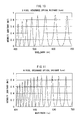
FIG. 9 is one example of a spectrum of light emitted from the W sub-pixel in the invention; -
FIG. 10 is one example of a spectrum of light emitted from the W sub-pixel in the invention; and -
FIG. 11 is another example of a spectrum of light emitted from the W sub-pixel in the invention. - Hereinafter, the present invention will be described in more detail.
- The display device of the invention includes plural pixels on a substrate, each pixel contains two or more sub-pixels, each sub-pixel emits light of different wavelength in the visible range and further contains a white sub-pixel.
As shown inFIG. 1 , the display device of the invention has a matrix-type screen panel having plural pixels arranged lengthwise and breadthwise on a substrate. Each pixel contains plural sub-pixels, each sub-pixel emits light of different wavelengths in the visible range and further contains a white sub-pixel and each sub-pixel forms a resonator. These sub-pixels are independently regulated and allowed to emit lights with independent luminance, thereby enabling full-color reproduction.
Preferably, each pixel is composed of a red (R) sub-pixel, a green (G) sub-pixel, a blue (B) sub-pixel and a white (W) sub-pixel.FIG. 2 is a conceptual diagram showing the arrangement of sub-pixels. - The color display device of the invention includes plural pixels on a substrate, each pixel contains plural sub-pixels, each sub-pixel emits light of different wavelengths in the visible range, and further contains a white sub-pixel, wherein the plural sub-pixels and the white sub-pixel each have a white-light emitting organic electroluminescence layer interposed between an optically semitransparent reflection layer and a light reflection layer, the optical distance between the optically semitransparent reflection layer and the light reflection layer in each of the plural sub-pixels forms a resonator having a distance for resonating emitted light, and the optical distance between the optically semitransparent reflection layer and the light reflection layer in the white sub-pixel is longer than the maximum optical distance between the optically semitransparent reflection layer and the light reflection layer in each of the plural sub-pixels.
Preferably, the display device has, as the plural sub-pixels, a red sub-pixel (R sub-pixel), a green sub-pixel (G sub-pixel) and a blue sub-pixel (B sub-pixel), and the optical distances between the optically semitransparent reflection layer and the light reflection layer in the red sub-pixel, green sub-pixel and blue sub-pixel are distances with which red light (R light), green light (G light) and blue light (B light) are resonated respectively.
Preferably, the optical distance between the optically semitransparent reflection layer and the light reflection layer in the white sub-pixel is equal to or longer than twice the maximum optical distance between the optically semitransparent reflection layer and the light reflection layer in each of the plural sub-pixels.
Preferably, the optical distance between the optically semitransparent reflection layer and the light reflection layer in the white sub-pixel is 2.0 µm or more, more preferably 3.0 µm or more, even more preferably 4.0 µm or more.
Preferably, each sub-pixel has an optical path length regulation layer between the optically semitransparent reflection layer and the light reflection layer, and the plural sub-pixels and the white sub-pixel each have a white organic electroluminescence layer having the same composition and are different in only the thickness of the optical path length regulation layer. - The display device of the invention is preferably provided in each sub-pixel region with a TFT for driving each sub-pixel. Preferably, the substrate for the display device of the invention uses, as the substrate, a substrate for a TFT, and at least one of the sub-pixels has a planarized film on the substrate and a light reflection layer on the planarized film. Further, a light path length regulation layer, a white organic luminescence layer and an optically semitransparent reflection layer are arranged on the light reflection layer.
In another preferable aspect, each sub-pixel has the light reflection layer either between the planarizing film and the substrate or in the planarizing film. In this case, at least a part of the planarizing film functions as an optical path length regulation layer.
In a preferable specific aspect, the red sub-pixel, the green sub-pixel, the blue sub-pixel and the white sub-pixel each have, on the planarizing film, a light reflection layer, an optically semitransparent reflection layer and an optical path length regulation layer and a white light-emitting organic luminescence layer interposed between the optically semitransparent reflection layer and the light reflection layer.
In another preferable specific aspect, the red sub-pixel, the green sub-pixel and the blue sub-pixel each have, on the planarizing film, a light reflection layer, an optically semitransparent reflection layer and an optical path length regulation layer and a white organic luminescence layer interposed between the optically semitransparent reflection layer and the light reflection layer, and the white sub-pixel has a light reflection layer between a substrate and a planarizing film and has, on the planarizing film, a transparent electrode, a white organic luminescence layer, and an optically semitransparent reflection layer. - Preferably, the light reflection layer of the white sub-pixel is formed at a layer common with an electrode of a TFT.
Preferably, a red color filter, a green color filter and a blue color filter are arranged at the light emission side of the red light-emitting sub-pixel, green light-emitting sub-pixel and blue light-emitting sub-pixel, respectively. - The organic EL in the invention may be a top emission-type organic EL or a bottom emission-type organic EL.
- Now, the constitution of the display device of the invention will be described specifically with reference to the drawings.
FIG. 3 is a sectional schematic diagram showing the constitution of R, G and B sub-pixels and W sub-pixel constituting one pixel in the invention.
Onsubstrate 1 provided with TFT, aplanarizing film 6 is formed by coverage on TFT. Alight reflection layer 2 is arranged on the planarizing film. When insulation properties with a pixel electrode (transparent electrode 3) are maintained, the light reflection layer may be arranged in common among R, G, B and W sub-pixels. - Then, optical path length regulation layers that are different in thickness among the R, G, B and W sub-pixels are arranged respectively (that is, optical path length regulation layers 8-1, 8-2, 8-3 and 8-4). The optical path length regulation layer 8-1 in the B sub-pixel region is thinnest, and as long as the B sub-pixel region attains a resonance distance, the thickness may be 0, that is, the optical path length regulation layer may not be arranged in the B sub-pixel region. The optical path length regulation layer in the R sub-pixel region is thicker than in the G sub-pixel region. The optical path length regulation layer 8-4 in the W sub-pixel region is thickest and is preferably thicker than the optical path length regulation layer 8-3 in the R sub-pixel region, more preferably thicker than twice the optical path length regulation layer 8-3 in the R sub-pixel region. Preferably the optical path length regulation layer is electrically insulating.
Atransparent electrode 3 is arranged as a pixel electrode by patterning on the optical path length regulation layer for each pixel. Thetransparent electrode 3 is connected electrically via a contact hole to TFT.
The non-light-emitting regions in spaces among the sub-pixels are covered with a bank 7 (insulating layer). - A white
organic luminescence layer 4 and an opticallysemitransparent reflection layer 5 are arranged thereon in common among the respective sub-pixels. The whiteorganic electroluminescence layer 4 is preferably a laminate of plural functional layers such as a hole injecting layer, a hole transporting layer, a light-emitting layer, an electron transporting layer, and an electron injecting layer. The opticallysemitransparent reflection layer 5 may be either a metallic thin film (Al, Ag etc.) or a distributed Bragg reflection film (DBR) wherein transparent thin films different in refractive index are laminated. The optical path length regulation layer is composed of an insulating layer material and may be any of inorganic materials (SiO2, SiON, SiN etc.) and organic materials (polycarbonate, polyacrylate, silicone resin etc.). - The thickness of the optical path length regulation in each of the R, G, and B sub-pixels is regulated so as to provide a distance with which emitted light resonates. For example, the film thickness of optical distance L with which optical resonance is generated for R (λ = 625 nm to 740 nm), G (λ = 500 nm to 565 nm) or B (λ = 450 nm to 485 nm) is formed between the
light reflection layer 2 and the opticallysemitransparent reflection layer 5. For example, when the resonance optical distance in the B sub-pixel region is 380 nm, emitted light having a maximum wavelength at 465 nm shown inFIG. 6 is picked out to the outside. When the resonance optical distance in the G sub-pixel region is 440 nm, emitted light having a maximum wavelength at 526 nm shown inFIG. 7 is picked out to the outside. When the resonance optical distance in the R sub-pixel region is 520 nm, emitted light having a maximum wavelength at 623 nm shown inFIG. 8 is picked out to the outside. Thus, each of R, G and B sub-pixels emits light of different wavelengths in the visible range. - In the W sub-pixel region, on the other hand, the optical path length regulation layer is thicker than in the R sub-pixel region and is regulated to have such thickness as not to exhibit emission of light having a specific wavelength in the visible range. For example, when the resonance optical distance is 2.0 µm, lights with a resonance wave having many emission peaks as shown in
FIG. 9 are picked out to the outside. Accordingly, the light of W sub-pixel observed outside is an almost white light having such lights mixed therein.
The lights emitted in the whiteorganic electroluminescence layer 4 upon electrification are repeatedly reflected and resonated between the opticallysemitransparent reflection layer 5 and thelight reflection layer 2 whereby R, G and B lights are emitted through the opticallysemitransparent reflection layer 5 to the outside. In the W sub-pixel, the R, G and B resonated lights are mixed and observed as white light. -
FIG. 4 is a sectional schematic diagram showing the constitution of one pixel in another aspect of the invention.
The constitution of the R, G and B sub-pixel regions is the same as the constitution shown inFIG. 3 . For the W sub-pixel, a reflection layer 12-2 is first arranged in a region where the W sub-pixel is to be arranged onsubstrate 11 provided with TFT. TFT and the light reflection layer 12-2 are covered by arranging aplanarizing film 16 thereon. The planarizing film is arranged asplanarizing film 16 common among the R, G and B sub-pixel regions. In the W sub-pixel region, theplanarizing film 16 functions as an optical path length regulation layer, wherein the thickness of the optical path length regulation layer in the W sub-pixel may be greater than a predetermined thickness and may thus not be strictly regulated. Accordingly, sufficiently satisfactory performance can be achieved even by a general manner of producing a planarizing film. In theFIG.4 , 12-1 represents an light refection layer and 18-1, 18-2 and 18-3 each represents an optical path length regulation layer. - Then, a
transparent electrode 13 is arranged as a pixel electrode on theplanarizing film 16 by patterning for each sub-pixel. Thetransparent electrode 13 is connected electrically via a contact hole to the TFT.
The non-light-emitting regions in spaces among the sub-pixels are covered with a bank 17 (insulating layer).
A whiteorganic luminescence layer 14 and a opticallysemitransparent reflection layer 15 are arranged thereon in common among the sub-pixels.
When the optical distance between the light reflection layer 12-2 and the opticallysemitransparent reflection layer 15 in the W sub-pixel region is to be further increased, an optical path length regulation layer may be arranged between theplanarizing film 16 and thetransparent electrode 13. -
FIG. 5 is a sectional schematic diagram showing the constitution of one pixel in still another aspect of the invention.
The constitution of the W sub-pixel region is the same as the constitution shown inFIG. 4 .
In each of the R, G and B sub-pixel regions, the light reflection layer is arranged inside the planarizing film. In the B sub-pixel region, the light reflection layer 22-1 is arranged in the uppermost part of theplanarizing film 26. The light reflection layers 22-2 and 22-3 in the G and R sub-pixel regions are arranged respectively inside theplanarizing film 26 in such positions that the resonance distance in the R sub-pixel region becomes longer than that in the G sub-pixel region.
On theplanarizing film 26, a patternedtransparent electrode 23 is formed in the R, G, B and W sub-pixels, respectively.
A whiteorganic luminescence layer 24 and a opticallysemitransparent reflection layer 25 are arranged thereon in common among the R, G, B and W sub-pixels. In theFIG. 5 , 27 represents a bank. - It follows that according to the invention, the light emitted from each of the R, G and B sub-pixels is a light of high luminance and high chroma with a narrow spectrum distribution, whereby a light with extremely high luminance and high chroma is obtained.
The light emitted from the W pixel region is not a resonance light having a limited number of specific wavelengths but a white light obtained by mixing of a large number of resonance lights so that a high-luminance white light can be obtained without such color drift as is observed in the conventional W pixel region having a resonator.
The white organic luminescence layer and semitransparent reflection layer can be formed consistently in common among the R, G, B and W sub-pixels, thus making achievement of higher resolution easy, facilitating the production process, and attaining high productivity. - The optical path length regulation layer in the invention is not particularly limited as long as it is composed of a transparent insulating layer material, and such material may be any one of inorganic materials (SiO2, SiON, SiN etc.) and organic materials (polycarbonate, polyacrylate, silicone resin etc.).
The inorganic insulating materials used in the optical path length regulation layer of the invention may be a wide variety of conventionally known metal oxides, metal nitrides and metal fluorides.
Specific examples of the metal oxides include MgO, SiO, SiO2, Al2O3, GeO, NiO, CaO, BaO, Fe2O3, Y2O3, TiO2 etc.; specific examples of the metal nitrides include SiNx, SiNxOy etc.; and specific examples of the metal fluorides include MgF2, LiF, AlF3, CaF2 etc. The material may also be a mixture thereof. - As the material of the optical path length regulation layer of the invention, an organic compound may also be used, and a film-forming polymer is preferably used. The film-forming polymer includes polycarbonate, polyacrylate, silicone resin, polyvinyl butyral, etc.
- The thickness of the optical path length regulation layer is regulated so as to constitute an optical distance with which each sub-pixel can efficiently resonate light of specific wavelength. Accordingly, the optical distance for resonance is determined depending on the refractive index, composition and thickness of the material interposed between the reflection film and the semitransparent reflection film and is thus not determined by the optical path length regulation layer. In consideration of the constitution of the generally used organic EL light-emitting layer, the thickness of the optical path length regulation layer of each of the R, G and B sub-pixels, in terms of physical thickness, is preferably 0 nm to 1000 nm, more preferably 20 nm to 500 nm, even more preferably 30 nm to 200 nm.
- The method of forming the optical path length regulation layer is not particularly limited and can use, for example, a vacuum deposition method, a sputtering method, a reactive sputtering method, an MBE (molecular beam epitaxy) method, a cluster ion beam method, an ion plating method, a plasma polymerization method (high-frequency excitation ion plating method), a plasma CVD method, a laser CVD method, a thermal CVD method, a gas-source CVD method, a coating method, a printing method, or a transfer method.
- The organic luminescence layer in the invention may, besides the light-emitting layer, have conventionally known organic compound layers such as a hole transporting layer, an electron transporting layer, a blocking layer, an electron injecting layer and a hole injecting layer.
- The organic electroluminescent device of the invention will be described in detail hereinafter.
- At least one of the pair electrodes of the organic electroluminescence layer of the invention is a transparent electrode, and the other is a back plate. The back plate may be transparent or opaque.
- The layer structure of the organic compound layer is not particularly limited, and may be suitably selected in accordance with the usage of the organic electroluminescent device or the target thereof. Preferably, the organic compound layer is formed on the transparent electrode or on the back plate. In this case, the organic compound layer is formed over the entire surface or on a part of the surface of the transparent electrode or the back plate.
The shape, the size, the thickness and other factors of the organic compound layer are not particularly limited, and can be suitably selected in accordance with the target. - Specific examples of the layer structure include the following. In the invention, however, the layer structure is not limited to these structures.
- 1. Anode/hole transporting layer/light emitting layer/electron transporting layer/cathode
- 2. Anode/hole transporting layer/light emitting layer/blocking layer/electron transporting layer/cathode
- 3. Anode/hole transporting layer/light emitting layer/blocking layer/electron transporting layer/electron injecting layer/cathode
- 4. Anode/hole injecting layer/hole transporting layer/light emitting layer/blocking layer/electron transporting layer/cathode
- 5. Anode/hole injecting layer/hole transporting layer/light emitting layer/blocking layer/electron transporting layer/electron injecting layer/cathode
- Each of the layers will be described in detail hereinafter.
- The hole transporting layer used in the invention comprises a hole transporting material. As the hole transporting material, a material having any one of a function of transporting holes and a function of blocking electrons injected from the cathode can be used without any special limitation. The hole transporting material used in the invention may be any one of a low molecular weight hole transporting material and a high molecular weight hole transporting material.
Specific examples of the hole transporting material used in the invention include the following: - A carbazole derivative, an imidazole derivative, a polyarylalkane derivative, a pyrazoline derivative, a pyrazolone derivative, a phenylenediamine derivative, an arylamine derivative, an amino-substituted chalcone derivative, a styrylanthracene derivative, a fluorenone derivative, a hydrazone derivative, a stilbene derivative, a silazane derivative, an aromatic tertiary amine compound, a styrylamine compound, an aromatic dimethylidyne compound, a porphyrin compound, a polysilane compound, a poly(N-vinylcarbazole) derivative, electroconductive polymers or oligomers such as an aniline copolymer, a thiophene oligomer and polythiophene, a polythiophene derivative, a polyphenylene derivative, a polyphenylenevinylene derivative, a polyfluorene derivative, and other polymer compounds.
These may be used alone or in combination of plural kinds thereof. - The thickness of the hole transporting layer is preferably 1 nm to 200 nm, more preferably 5 nm to 100 nm.
- In the invention, a hole injecting layer may be formed between the hole transporting layer and the anode.
The hole injecting layer is a layer which makes it easy to inject holes from the anode to the hole transporting layer. Specifically, a material having a small ionization potential among the above-mentioned various hole transporting materials is preferably used. Examples of the material include a phthalocyanine compound, a porphyrin compound, and a star-burst triarylamine compound. These can be preferably used.
The film thickness of the hole injecting layer is preferably 1 nm to 300 nm. - The light-emitting layer used in the invention comprises at least one light-emitting material, and may comprise a hole transporting material, an electron transporting material, and a host material if necessary.
The light-emitting material used in the invention is not particularly limited, and may be any one of a fluorescent light-emitting material and a phosphorescent light-emitting material. The phosphorescent light-emitting material is preferable from the viewpoint of light-emitting efficiency.
One kind of light-emitting material may be used if white light can be emitted, or plural light-emitting materials may be simultaneously used. When plural light-emitting materials are simultaneously used, the combination of emission colors is not particularly limited, and examples include combined use of a blue light-emitting material and a yellow light-emitting material and combined use of a blue light-emitting material, a green light-emitting material and a red light-emitting material. - Examples of the fluorescent light-emitting material include a benzooxazole derivative, a benzoimidazole derivative, a benzothiazole derivative, a styrylbenzene derivative, a polyphenyl derivative, a diphenylbutadiene derivative, a tetraphenylbutadiene derivative, a naphthalimide derivative, a coumalin derivative, a perylene derivative, a peronone derivative, an oxadiazole derivative, an aldazine derivative, a pyrrolizine derivative, a cyclopentadiene derivative, a bisstyrylanthracene derivative, a quinacridone derivative, pyrrolopyridine derivative, a thiadiazolopyridine derivative, a styrylamine derivative, an aromatic dimethylidyne compound, various metal complexes, typical example of which include a metal complex of an 8-quinolinol derivative or a rare earth complex, and polymeric compounds such as a polythiophene derivative, a polyphenylene derivative, a polyphenylenevinylene derivative, and a polyfluorene derivative. These may be used alone or in combination of plural kinds thereof.
- The phosphorescent light-emitting material is not particularly limited, and is preferably an orthometal metal complex or a porphyrin complex.
- The above-mentioned orthometal metal complex is the generic name for the compound group mentioned in "Organic metal chemistry - basic and application -" written by Akio Yamamoto, p. 150, p. 232, Shokabo Publishing Co., Ltd., (published in 1982), "Photochemistry and photophysics of coordination compounds" written by H. Yersin, p. 71 to 77, p. 135 to 146, Springer-Verlag (published in 1987) and the like. It is advantageous to use the orthometal metal complex in the luminescent layer as the light-emitting material in terms of obtaining a high luminosity and an excellent light-emitting efficiency.
- Various kinds of ligands can be used for forming the above-mentioned orthometal metal complex, and examples thereof are described in the above-mentioned articles. Among them, preferable examples of the ligands include a 2-phenyl pyridine derivative, a 7,8-benzoquinoline derivative, a 2-(2-thienyl) pyridine derivative, a 2-(1-naphtyl) pyridine derivative, a 2-phenyl quinoline derivative and the like. These derivatives may have a substituent in accordance with necessity. Moreover, the above-mentioned orthometal metal complex may have another ligand in addition to the above-mentioned ligand.
- The orthometal metal complex used in the present invention can be synthesized by various known methods such as those mentioned in: Inorg Chem., vol. 30, p. 1685 (1991); Inorg Chem., vol. 27, p. 3464 (1988); Inorg Chem., vol. 33, p. 545(1994); Inorg. Chim. Acta, vol. 181, p. 245 (1991); J. Organomet. Chem., vol. 335, p. 293 (1987); J. Am. Chem. Soc. vol. 107, p. 1431 (1985); or the like.
Among the above-mentioned orthometal complexes, a compound which provide light emission by a triplet exciton can be preferably used in the present invention in terms of improvement of the light-emitting efficiency. - Moreover, among the porphyrin complexes, a porphyrin platinum complex is preferable.The phosphorescent light-emitting materials may be used alone or in combination of plural kinds thereof. One or more kinds of the fluorescent light-emitting materials and one or more kinds of the phosphorescent light-emitting materials may be used together.
- The host material is a material which has a function of moving energy from an excited state thereof to a fluorescent light-emitting material or a phosphorescent light-emitting material, so as to cause the fluorescent or phosphorescent light-emitting material to emit light.
- The host material is not particularly limited if the material is a compound capable of moving the energy of its excitons to the light-emitting material, and can be suitably selected in accordance with the purpose of the electroluminescent device. Specific examples thereof include a carbazole derivative, a triazole derivative, an oxazole derivative, an oxadiazole derivative, an imidazole derivative, a polyarylalkane derivative, a pyrazoline derivative, a pyrazolone derivative, a phenylenediamine derivative, an arylamine derivative, an amino-substituted chalcone derivative, a styrylanthracene derivative, a fluorenone derivative, a hydorazone derivative, a stylbene derivative, a silazane derivative, an aromatic tertiary amine compound, a styrylamine compound, an aromatic dimethylidyne compound, a porphyrin compound, an anthraquinodimethane derivative, an anthrone derivative, a diphenylquinone derivative, a thiopyrandioxide derivative, a carbodiimide derivative, a fluorenylidenemethane derivative, a distyrylpyrazine derivative, heterocyclic tetracarboxylic acid anhydrides such as naphthaleneperylene, various metal complexes, typical examples of which include metal complexes of a phthalocyanine derivative or 8-quinolinol derivative, metal phthalocyanine, and metal complexes each having, as a ligand thereof, benzooxazole or benzothiazole, electroconductive polymers/oligomers such as a polysilane compound, a poly(N-vinylcarbazole) derivative, an aniline copolymer, a thiophene oligomer and polythiophene, and polymeric compounds such as a polythiophene derivative, a polyphenylene derivative, a polyphenylenevinylene derivative and a polyfluorene derivative. These may be used alone or in combination of plural kinds thereof.
The content by percentage of the host material in the light-emitting layer is preferably 20 to 99.9% by mass, more preferably 50 to 99.0% by mass. - A blocking layer may be formed between the light-emitting layer and the electron transporting layer in the invention. The blocking layer is a layer for restraining the diffusion of excitons generated in the light-emitting layer, or restraining holes from penetrating toward the cathode.
- The material used in the blocking layer is not particularly limited if the material is a material capable of receiving electrons from the electron transporting layer and delivering the electrons to the light-emitting layer. The material may be an ordinary electron transporting material. Examples thereof include the following: a triazole derivative, an oxazole derivative, an oxadiazole derivative, a fluorenone derivative, an anthraquinodimethane derivative, an anthrone derivative, a diphenylquinone derivative, a thiopyrandioxide derivative, a carbodiimide derivative, a fluorenylidenemethane derivative, a distyrylpyrazine derivative, heterocyclic tetracarboxylic acid anhydrides such as naphthaleneperylene, various metal complexes, typical examples of which include metal complexes of a phthalocyanine derivative or 8-quinolinol derivative, metal phthalocyanine, and metal complexes each having, as a ligand thereof, benzooxazole or benzothiazole, electroconductive polymers/oligomers such as an aniline copolymer, a thiophene oligomer and polythiophene, and polymeric compounds such as a polythiophene derivative, a polyphenylene derivative, a polyphenylenevinylene derivative and a polyfluorene derivative. These may be used alone or in combination of plural kinds thereof.
- An electron transporting layer comprising an electron transporting material can be deposited in the invention.
The electron transporting material is not limited if the material is a material having any one of a function of transporting electrons and a function of blocking holes injected from the anode. Examples of the electron transporting material given in the description of the blocking layer can be preferably used.
The thickness of the electron transporting layer is preferably 10 nm to 200 nm, more preferably 20 nm to 80 nm. - If the thickness is more than 100 nm, the driving voltage may unfavorably rise. If the thickness is less than 10 nm, the light-emitting efficiency of the electroluminescent device may unfavorably be impaired.
- An electron injecting layer may be formed between the electron transporting layer and the cathode in the invention.
The electron injecting layer is a layer which makes it easy to inject electrons from the cathode to the electron transporting layer. Preferable examples of the material used in this layer include alkali metal salts such as lithium fluoride, lithium chloride, lithium bromide, other lithium salts, sodium fluoride, sodium chloride and cesium fluoride, and insulating metal oxides such as lithium oxide, aluminum oxide, indium oxide and magnesium oxide.
The film thickness of the electron injecting layer is preferably 0.1 nm to 5 nm. - The material of the substrate used in the invention is preferably a material through which water content cannot permeate, or a material having a very low water content permeability. Also, the material is preferably a material which does not cause scattering or attenuation of light emitted from the organic compound layer. Specific examples thereof include inorganic materials such as YSZ (yttria-stabilized zirconia) and glass, and organic materials such as polyethylene terephthalate, polybutylene terephthalate, polyethylene naphthalate, other polyesters, polystyrene, polycarbonate, polyethersulfone, polyarylate, allyl diglycol carbonate, polyimide, polycycloolefin, norbornene resin, poly(chlorotrifluoroethylene) and other synthetic resins. In the case of the organic materials, it is preferred that the organic materials are organic materials excellent in heat resistance, dimensional stability, solvent resistance, electric non-conductance, workability, low gas permeability and low hygroscopicity. The above-mentioned materials may be used alone or in combination of plural kinds thereof.
- The shape, structure and size of the substrate and other factors thereof are not particularly limited, and can be suitably selected in accordance with the usage and purpose of the electroluminescent device. In general, the shape is a form of a plate. The structure may be a mono-layered structure or a multi-layered structure. The substrate may be made of a single member, or plural members.
- The substrate may be transparent and colorless, or transparent and colored. The substrate is preferably transparent and colorless since the substrate does not cause scattering or attenuation of light emitted from the light-emitting layer.
- It is preferable to form a moisture permeation preventing layer (gas barrier layer) on the front surface or the rear surface (on the side of the transparent electrode) of the substrate. The material of this layer is preferably an inorganic material such as silicon nitride or silicon oxide. This layer can be formed by, for example, high-frequency sputtering.
If necessary, a hard coat layer, an undercoat layer, or some other layer may be formed on the substrate. - With respect to the electrodes in the invention, either the first or second electrode may be an anode or a cathode, but it is preferable that the first electrode is an anode and the second electrode is a cathode.
- It is usually sufficient that the anode used in the invention has a function of supplying holes to the organic compound layer. The shape, structure and size thereof, and other factors thereof are not particularly limited, and can be suitably selected from known anodes in accordance with the usage and the purpose of the electroluminescent device.
- Preferable examples of the material of the anode include metals, alloys, metal oxides, organic electroconductive compounds, and mixtures thereof. The material is preferably a material having a work function of 4.0 eV or more. Specific examples thereof include semiconductive metal oxides such as a tin oxide doped with antimony or fluorine (ATO, or FTO), tin oxide, zinc oxide, indium oxide, indium tin oxide (ITO) and indium zinc oxide (IZO), metals such as gold, silver, chromium and nickel, mixtures or laminates each made of one or more of these metals and an electroconductive metal oxide, inorganic electroconductive materials such as copper iodide and copper sulfide, organic electroconductive materials such as polyaniline, polythiophene and polypyrrole, and laminates each composed of one or more of these compounds and ITO.
- The anode can be formed on the substrate in accordance with a method selected suitably, under consideration of suitability for the anode material, from wet methods such as printing and coating, physical methods such as vacuum vapor deposition, sputtering and ion plating, chemical methods such as CVD and plasma CVD, and other methods. In the case of selecting, for example, ITO as the anode material, the anode can be formed by direct current or high-frequency sputtering, vacuum vapor deposition, ion plating or the like. In the case of selecting an organic electroconductive compound as the anode material, the anode can be formed by any wet film-forming method.
- The position where the anode is formed in the electroluminescent device is not particularly limited, and can be suitably selected in accordance with the usage and the purpose of this element.
- The anode may be patterned by a chemical etching such as photolithography or a physical etching such as laser etching. The patterning may be attained by vacuum vapor deposition or sputtering in a state that a mask is overlapped with the anode which has not yet been patterned, or may be attained by a lift-off method or a printing method.
- The thickness of the anode can be suitably selected in accordance with the anode material. The thickness, which cannot be specified without reservation, is usually from 10 nm to 50 µm, preferably 50 nm to 20 µm.
The resistance value of the anode is preferably 103 Ω/□ or less, more preferably 102 Ω/□ or less.
The anode may be transparent and colorless, or transparent and colored. In order to take out light emitted from the side of the anode, the transmittance thereof is preferably 60% or more, more preferably 70% or more. This transmittance can be measured in a known method using a spectrophotometer. - Details of anodes are described in "New Development of Transparent Electrode Films", supervised by Yutaka Sawada and published by CMC (1999). These can be applied to the invention. The anode in the case of using a plastic substrate with low heat resistance is preferably an anode obtained by making ITO or IZO into a film at a low temperature of 150 °C or lower.
- It is usually sufficient that the cathode, which can be used in the invention, has a function of injecting electrons into the organic compound layer. The shape, structure and size thereof, and other factors thereof are not particularly limited, and can be suitably selected from known cathodes in accordance with the usage and the purpose of the electroluminescent device.
- Examples of the material of the cathode include metals, alloys, metal oxides, electroconductive compounds, and mixtures thereof. The material is preferably a material having a work function of 4.5 eV or less. Specific examples thereof include alkali metals (such as Li, Na, K and Cs), alkaline earth metals (such as Mg, and Ca), gold, silver, lead, aluminum, sodium-potassium alloy, lithium-aluminum alloy, magnesium-silver alloy, indium, and rare earth metals such as ytterbium. These may be used alone. However, in order to make the stability and electron-injecting property of the cathode compatible with each other, it is preferable to use plural kinds thereof together.
- Among them, alkali metals or alkaline earth metals are preferable from the viewpoint of electron injecting property. A material made mainly of aluminum is preferable since the material is excellent in storage stability. The material made mainly of aluminum means aluminum alone, or any alloy or mixture made of aluminum and 0.01 to 10% by mass of an alkali metal or alkaline earth metal (for example, lithium-aluminum alloy, or magnesium-aluminum alloy).
- Materials of the cathode are described in detail in Japanese Patent Application Laid-Open (JP-A) Nos.
2-15595 5-121172 - The method for forming the cathode is not particularly limited, and may be a known method. For example, the cathode can be formed on the substrate in accordance with a method selected suitably, under consideration of suitability for the cathode material, from wet methods such as printing and coating, physical methods such as vacuum vapor deposition, sputtering and ion plating, chemical methods such as CVD and plasma CVD, and other methods. For example, when metals are selected as material for the cathode, one or more kinds thereof can be used simultaneously or successively according to sputtering method and the like.
- The cathode may be patterned by a chemical etching such as photolithography or a physical etching such as laser etching. The patterning may be attained by vacuum vapor deposition or sputtering in a state that a mask is overlapped with the cathode which has not yet been patterned, or may be attained by a lift-off method or a printing method.
- The position where the cathode is formed in the organic electroluminescent device is not particularly limited, and can be suitably selected in accordance with the usage and the purpose of the device. The cathode is preferably formed on the organic compound layer. In this case, the cathode may be formed on the whole of the organic compound layer or on a part of the layer.
A dielectric layer made of an alkali metal fluoride, an alkaline earth metal fluoride or the like may be inserted between the cathode and the organic compound layer so as to have a thickness of 0.1 nm to 5 nm. - The thickness of the cathode can be suitably selected in accordance with the cathode material. The thickness, which cannot be specified without reservation, is usually from 10 nm to 5 µm, preferably 20 nm to 500 nm.
The cathode may be transparent or opaque. The transparent electrode can be formed by making the cathode material into a film having a thickness of 1 nm to 10 nm and then laminating a transparent electroconductive material such as ITO or IZO onto the film. - In the invention, the whole of the organic EL device may be protected with a protective layer.
Materials contained in the protective layer may be those having a function of preventing substances (for example, water and oxygen) accelerating deterioration of the device from entering the device.
Specific examples include metals such as In, Sn, Pb, Au, Cu, Ag, Al, Ti and Ni, metal oxides such as MgO, SiO, SiO2, Al2O3, GeO, NiO, CaO, BaO, Fe2O3, Y2O3 and TiO2, metal nitrides such as SiNx and SiNxOy, metal fluorides such as MgF2, LiF, AlF3 and CaF2, polyethylene, polypropylene, polymethyl methacrylate, polyimide, polyurea, polytetrafluoroethylene, polychlorotrifluoroethylene, polydichlorodifluoroethylene, a chlorotrifluoroethylene/dichlorodifluoroethylene copolymer, a copolymer obtained by copolymerizing a monomer mixture containing tetrafluoroethylene and at least one kind of comonomer, a fluorine-containing copolymer having a cyclic structure in a copolymer main chain, a water-absorbing substance with a water absorption percentage of 1% or more, and a dampproof substance with a water absorption percentage of 0.1 % or less. - The method of forming the protective layer is not particularly limited and can use, for example, a vacuum deposition method, a sputtering method, a reactive sputtering method, an MBE (molecular beam epitaxy) method, a cluster ion beam method, an ion plating method, a plasma polymerization method (high-frequency excitation ion plating method), a plasma CVD method, a laser CVD method, a thermal CVD method, a gas-source CVD method, a coating method, a printing method, or a transfer method.
- In addition, the whole of the organic electroluminescent device in the invention may be sealed with a sealing container.
A water absorbent or an inert liquid may be sealed in a space between the sealing container and the electroluminescent device.
The water absorbent includes, but is not limited to, barium oxide, sodium oxide, potassium oxide, calcium oxide, sodium sulfate, calcium sulfate, magnesium sulfate, phosphorus pentoxide, calcium chloride, magnesium chloride, copper chloride, cesium fluoride, niobium fluoride, calcium bromide, vanadium bromide, molecular sieve, zeolite, and magnesium oxide. The inert liquid includes, but is not limited to, paraffins, liquid paraffins, fluorine solvents such as perfluoroalkane, perfluoroamine and perfluoroether, chlorine solvents and silicone oil. - The layers constituting the device in the invention can be produced preferably by either a dry film-making method such as a vapor deposition method and a sputtering method, or a wet film-making method such as dipping, a spin coating method, a dip coating method, a casting method, a die coating method, a roll coating method, a bar coating method, and a gravure coating method.
Particularly, the dry method is preferable from the viewpoint of emission efficiency and durability. The wet film-making method is not preferable because a remaining coating solvent damages the light-emitting layer.
A resistance heating vacuum deposition method is particularly preferable. The resistance heating vacuum deposition method is advantageous in that since only a substance to be evaporated by heating under vacuum can be efficiently heated, the device is not exposed to high temperature and is thus less damaged. - Vacuum deposition is a method wherein in a vacuum container, a material to be vapor-deposited is gasified or sublimated by heating and then adhered by deposition onto the surface of a material placed a little distance away, thereby forming a thin film. Depending on the type of a deposition material and a material receiving the deposition material, the material is heated by a method such as resistance heating, electron beam method, high-frequency induction, or laser method. Among these methods, the vacuum deposition method in a resistance heating system is a method of forming a film at lowest temperature,
wherein a material of high sublimation point cannot be formed into a film, but a material of low sublimation point can be formed into a film of a deposited material in a scarcely damaged state. - The sealing film material in the invention is capable of being formed into a film with vacuum deposition in a resistance heating system. Conventionally used sealants such as silicon oxide have a high sublimation point and have been hardly vapor-deposited by resistance heating. By the vapor deposition method such as an ion plating system described generally in known examples, a deposition origin is heated to an ultrahigh-temperature of several thousand degrees Celsius, thus thermally influencing and deteriorating a deposited material, and therefore the vapor deposition method is not suitable for the method of manufacturing a sealing film for an organic EL device to be particularly liable to influence by heating or with ultraviolet light.
- 13) Driving method The organic electroluminescent device in the invention can emit light by applying DC (which may if necessary contain an AC component) voltage cross the anode and cathode (usually 2 to 15 volts) or by applying DC electricity.
- The method of driving the organic electroluminescent device in the invention can use driving methods described in
JP-A Nos. 2-148687 6-301355 5-29080 7-134558 8-234685 8-241047 2784615 US Patent No. 5828429 andUS Patent No. 6023308 . - The display device of the invention is applied in a wide variety of broad fields including cell phone displays, personal digital assistants (PDA), computer displays, automotive information displays, TV monitors, and generic illumination.
- Hereinafter, the exemplary embodiments of the invention are enumerated.
- <1> A color display device comprising a plurality of pixels on a substrate, wherein each pixel comprises a plurality of sub-pixels, each sub-pixel emits light of different wavelengths in the visible range and further comprises a white sub-pixel,
wherein the plurality of sub-pixels and the white sub-pixel each have a white organic electroluminescence layer interposed between an optically semitransparent reflection layer and a light reflection layer,
the optical distance between the optically semitransparent reflection layer and the light reflection layer in each of the plurality of sub-pixels forms a resonator having a distance for resonating emitted light, and
the optical distance between the optically semitransparent reflection layer and the light reflection layer in the white sub-pixel is longer than the maximum optical distance between the optically semitransparent reflection layer and the light reflection layer in each of the plurality of sub-pixels. - <2> The color display device of <1>, wherein the plural sub-pixels comprise a red sub-pixel, a green sub-pixel and a blue sub-pixel, and the optical distances between the optically semitransparent reflection layer and the light reflection layer in the red sub-pixel, green sub-pixel and blue sub-pixel are distances with which red light, green light and blue light are resonated respectively.
- <3> The color display device of <1> or <2>, wherein the optical distance between the optically semitransparent reflection layer and the light reflection layer in the white sub-pixel is equal to or longer than twice the maximum optical distance between the optically semitransparent reflection layer and the light reflection layer in each of the plural sub-pixels.
- <4> The color display device of any one of <1> to <3>, wherein the optical distance between the optically semitransparent reflection layer and the light reflection layer in the white sub-pixel is 2.0 µm or more.
- <5> The color display device of any one of <1> to <4>, wherein the plural sub-pixels and the white sub-pixel each have a white organic electroluminescence layer having the same composition and have an optical path length regulation layer between the optically semitransparent reflection layer and the light reflection layer, and the thickness of the optical path length regulation layer varies among the sub-pixels.
- <6> The color display device of any one of <1> to <5>, wherein the substrate is a substrate of a TFT, and at least one of the sub-pixels has a planarizing film on the substrate and has the light reflection layer on the planarizing film.
- <7> The color display device of any one of <1> to <5>, wherein the substrate is a substrate of a TFT, and at least one of the sub-pixels has a planarizing film on the substrate and has the light reflection layer either between the planarizing film and the substrate or in the planarizing film.
- <8> The color display device of <6> or <7>, wherein the substrate is a substrate of TFT and has a planarizing film thereon, the red sub-pixel, green sub-pixel and blue sub-pixel each have, on the planarizing film, the light reflection layer, the optically semitransparent reflection layer and an optical path length regulation layer and a white organic electroluminescence layer interposed between the optically semitransparent reflection layer and the light reflection layer, the white sub-pixel has the light reflection layer between the substrate and the planarizing film and has, on the planarizing film, a transparent electrode, the white organic electroluminescence layer, and the optically semitransparent reflection layer.
- <9> The color display device of <8>, wherein the light reflection layer of the white sub-pixel is formed at a layer common with an electrode of the TFT.
- <10> The color display device of any one of <2> to <9>, wherein a red color filter, a green color filter and a blue color filter are arranged at the light emission side of the red light-emitting sub-pixel, green light-emitting sub-pixel and blue light-emitting sub-pixel, respectively.
- <11> A method for manufacturing a color display device having a plurality of pixels on a substrate, wherein:
- each pixel comprises a red light-emitting sub-pixel, a green light-emitting sub-pixel, a blue light-emitting sub-pixel, a white sub-pixel, and each sub-pixel comprises a TFT that drives the sub-pixel,
wherein the red light-emitting sub-pixel, green light-emitting sub-pixel, blue light-emitting sub-pixel and white sub-pixel each has an optical path length regulation layer and a white organic electroluminescence layer interposed between an optically semitransparent reflection layer and a light reflection layer, - the optical distance between the optically semitransparent reflection layer and the light reflection layer in the red light-emitting sub-pixel, green light-emitting sub-pixel and blue light-emitting sub-pixel is a distance with which emitted lights are resonated respectively, and
- the optical distance between the optically semitransparent reflection layer and the light reflection layer in the white sub-pixel is longer than the maximum optical distance between the optically semitransparent reflection layer and the light reflection layer in the red sub-pixel,
- the method comprising:
- 1) covering the TFT for each of the red light-emitting sub-pixel, green light-emitting sub-pixel, blue light-emitting sub-pixel and white sub-pixel, to form a planarizing film,
- 2) forming a light reflection layer common among the red light-emitting sub-pixel, green light-emitting sub-pixel, blue light-emitting sub-pixel and white sub-pixel,
- 3) forming optical path length regulation layers of a material common among the red light-emitting sub-pixel, green light-emitting sub-pixel, blue light-emitting sub-pixel and white sub-pixel while changing the thickness of the layers,
- 4) forming transparent electrodes as pixel electrodes by patterning corresponding to the red light-emitting sub-pixel, green light-emitting sub-pixel, blue light-emitting sub-pixel and white sub-pixel,
- 5) forming a white organic luminescence layer common among the red light-emitting sub-pixel, green light-emitting sub-pixel, blue light-emitting sub-pixel and white sub-pixel, and
- 6) forming an optically semitransparent reflection layer common among the red light-emitting sub-pixel, green light-emitting sub-pixel, blue light-emitting sub-pixel and white sub-pixel.
- <12> A method for manufacturing a color display device having a plurality of pixels on a substrate, wherein:
- each pixel comprises a red light-emitting sub-pixel, a green light-emitting sub-pixel, a blue light-emitting sub-pixel, a white sub-pixel, and each sub-pixel comprises a TFT that drives the sub-pixel,
wherein the red light-emitting sub-pixel, green light-emitting sub-pixel, blue light-emitting sub-pixel and white sub-pixel each has an optical path length regulation layer and a white organic electroluminescence layer interposed between an optically semitransparent reflection layer and a light reflection layer, - the optical distance between the optically semitransparent reflection layer and the light reflection layer in the red light-emitting sub-pixel, green light-emitting sub-pixel and blue light-emitting sub-pixel is a distance with which emitted lights are resonated respectively, and
- the optical distance between the optically semitransparent reflection layer and the light reflection layer in the white sub-pixel is longer than the maximum optical distance between the optically semitransparent reflection layer and the light reflection layer in the red sub-pixel,
- the method comprising:
- 1) forming a light reflection layer for the white sub-pixel, on the same substrate on which the TFT has been formed,
- 2) covering the TFT for each of the red light-emitting sub-pixel, green light-emitting sub-pixel, blue light-emitting sub-pixel and white sub-pixel, and the light reflection layer for the white sub-pixel, to form a planarizing film,
- 3) forming a light reflection layer common among the red light-emitting sub-pixel, green light-emitting sub-pixel and blue light-emitting sub-pixel,
- 4) forming the optical path length regulation layers of a material common among the red light-emitting sub-pixel, green light-emitting sub-pixel and blue light-emitting sub-pixel while changing the thickness of the layers,
- 5) forming transparent electrodes as pixel electrodes by patterning corresponding to the red light-emitting sub-pixel, green light-emitting sub-pixel, blue light-emitting sub-pixel and white sub-pixel,
- 6) forming the white organic luminescence layer common among the red light-emitting sub-pixel, green light-emitting sub-pixel, blue light-emitting sub-pixel and white sub-pixel, and
- 7) forming the optically semitransparent reflection layer common among the red light-emitting sub-pixel, green light-emitting sub-pixel, blue light-emitting sub-pixel and white sub-pixel.
- <13> A method for manufacturing a color display device having a plurality of pixels on a substrate, wherein:
- each pixel comprises a red light-emitting sub-pixel, a green light-emitting sub-pixel, a blue light-emitting sub-pixel, a white sub-pixel, and each sub-pixel comprises a TFT that drives the sub-pixel,
wherein the red light-emitting sub-pixel, green light-emitting sub-pixel, blue light-emitting sub-pixel and white sub-pixel each has an optical path length regulation layer and a white organic electroluminescence layer interposed between an optically semitransparent reflection layer and a light reflection layer, - the optical distance between the optically semitransparent reflection layer and the light reflection layer in the red light-emitting sub-pixel, green light-emitting sub-pixel and blue light-emitting sub-pixel is a distance with which emitted lights are resonated respectively, and
- the optical distance between the optically semitransparent reflection layer and the light reflection layer in the white sub-pixel is longer than the maximum optical distance between the optically semitransparent reflection layer and the light reflection layer in the red sub-pixel,
- the method comprising:
- 1) forming a light reflection layer for the white sub-pixel, on the same substrate on which the TFT has been formed,
- 2) covering the TFT for each of the red light-emitting sub-pixel, green light-emitting sub-pixel, blue light-emitting sub-pixel and white sub-pixel, and the light reflection layer for the white sub-pixel, to form a planarizing film of first thickness,
- 3) forming a light reflection layer for the red light-emitting sub-pixel,
- 4) forming a planarizing film of second thickness for coverage throughout the red light-emitting sub-pixel, green light-emitting sub-pixel, blue light-emitting sub-pixel and white sub-pixel,
- 5) forming a light reflection layer for the green light-emitting sub-pixel,
- 6) forming a planarizing film of third thickness for coverage throughout the red light-emitting sub-pixel, green light-emitting sub-pixel, blue light-emitting sub-pixel and white sub-pixel,
- 7) forming a light reflection layer for the blue light-emitting sub-pixel,
- 8) forming a planarizing film of fourth thickness for coverage throughout the red light-emitting sub-pixel, green light-emitting sub-pixel, blue light-emitting sub-pixel and white sub-pixel,
- 9) forming transparent electrodes as pixel electrodes by patterning corresponding to the red light-emitting sub-pixel, green light-emitting sub-pixel, blue light-emitting sub-pixel and white sub-pixel,
- 10) forming the white organic luminescence layer common among the red light-emitting sub-pixel, green light-emitting sub-pixel, blue light-emitting sub-pixel and white sub-pixel, and
- 11) forming the optically semitransparent reflection layer common among the red light-emitting sub-pixel, green light-emitting sub-pixel, blue light-emitting sub-pixel and white sub-pixel.
- Hereinafter, the present invention will be described with reference to the Examples, but the invention is not limited to these examples.
- The method of manufacturing the color display device of the invention with the constitution shown in
FIG. 3 is described. - (1) On a
glass substrate 1 provided with TFT, the TFT is covered with aplanarizing film 6 of 3 µm in thickness. TFTs are arranged corresponding to R, G, B and W sub-pixels respectively. - (2) On the
planarizing film 6, Al is arranged to a thickness of 100 nm as alight reflection layer 2 by patterning in R, G, B and W sub-pixels respectively by the vacuum film-forming method. -
- (3) On the upper surface of the
light reflection layer 2, optical path length regulation layers 8-1, 8-2, 8-3 and 8-4 composed of a transparent insulating material which in the positions of R, G, B and W sub-pixels, is made different in film thickness. - Material: SiON
- Film-forming method: ion plating method
- Thickness: 120 nm in R region, 70 nm in G region, 30 nm in B region, and 2200 nm in W region.
- (4) On the upper surface of the optical path length regulation layer, a transparent electrode 3 (ITO, 60 nm) is formed by patterning for each sub-pixel. The
transparent electrode 3 over the planarizing film is electrically connected to TFT via a contact hole arranged in the optical path length regulation layer and in the reflection layer. - (5) While the light-emitting regions are covered with a metal mask, the non-light-emitting regions are covered with an insulating layer (bank 7).
- (4) On the upper surface of the optical path length regulation layer, a transparent electrode 3 (ITO, 60 nm) is formed by patterning for each sub-pixel. The
-
- (6) On the upper surface of the
transparent electrode 3, a white light-emittingelectroluminescence layer 4 and a opticallysemitransparent reflection layer 5 which are common among the R, G, B and W sub-pixels are formed consistently by the vacuum deposition method in the following order. -
- Hole injecting layer: 4,4',4"-tris(2-naphthylphenylamino)triphenylamine (abbreviated as 2-TNATA) and tetrafluorotetracyanoquinodimethane (abbreviated as F4-TCNQ) in an amount of 1.0 mass% relative to 2-TNATA were co-deposited. The film thickness was 40 nm.
- Hole transporting layer: N,N'-dinaphthyl-N,N'-diphenyl-[1,1'-biphenyl]-4,4'-diamine (abbreviated as α-NPD), thickness 10 nm.
- Light-emitting layer: 1,3-bis(carbazol-9-yl)benzene (abbreviated as mCP) and emitting materials A, B and C in amounts of 15, 0.13 and 0.13 mass% respectively relative to mCP were subjected to quaternary co-deposition. The film thickness was 30 nm.
- Electron transporting layer: bis-(2-methyl-8-quinolinolate)-4-(phenylphenolate)aluminum (abbreviated as BAlq), thickness 40 nm.
- Electron injecting layer: LiF was deposited to a thickness of 0.5 nm and then Al was deposited to a thickness of 1.5 nm to form an electron injecting layer.
- A metal electrode (Ag, 20 nm) is formed by the vacuum film-making method.
- Structures of the compounds used in this example are shown below:
-
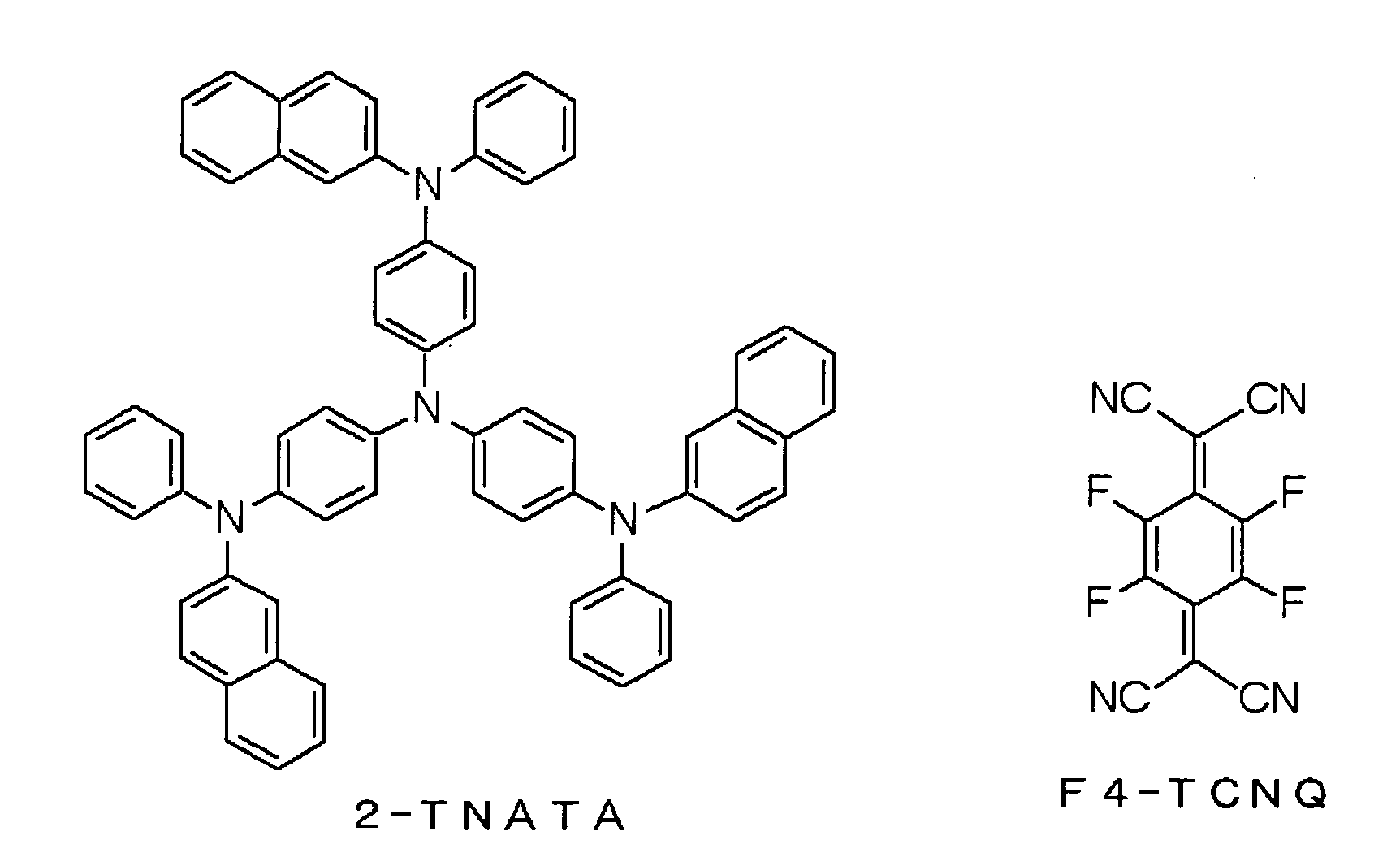


- The resulting organic electroluminescence layer-forming region is sealed, and each electrode is connected to an external signal regulating device.
By the foregoing process, one pixel in which a top emission-type organic EL device has been integrated is formed. - Plural pixels each containing R, G, B and W sub-pixels are arranged to form a display surface, and the respective sub-pixels are allowed to selectively emit light thereby forming an image on the display surface.
- Lights emitted in the white
organic electroluminescence layer 4 upon electrification are resonated between the opticallysemitransparent reflection layer 5 and thelight reflection layer 2, whereby R, G and B lights are emitted respectively via thesemitransparent electrode 5 to the outside.
A high-luminance B light with the sharp emission spectrum shown inFIG. 6 is emitted from the B sub-pixel region; a high-luminance G light with the sharp emission spectrum shown inFIG. 7 is emitted from the G sub-pixel region; and a high-luminance R light with the sharp emission spectrum shown inFIG. 8 is emitted from the R sub-pixel region.
In the W sub-pixel region, a large number of resonance lights shown inFIG. 9 are mixed and emitted as light observed to be completely white light. - According to the production method described above, the R, G, B and W sub-pixels, which are different in only the thickness of their optical path length regulation layer, are composed of the same material. Particularly, the R, G, B and W sub-pixels have the organic electroluminescence layer and the optically semitransparent reflection layer in common, which can be consistently produced thus making formation of each pixel by separate forming unnecessary, simplifying the production process to increase productivity, and facilitating achievement of higher resolution.
- The pixel in this example has the constitution shown in
FIG. 4 which is the same as in Example 1 except that the constitution of the W sub-pixel region was changed as follows. The method of manufacturing each component is the same as in Example 1. - (1) First, a light reflection layer 12-2 is arranged on a
substrate 11 for a TFT. - (2) The TFT and light reflection layer 12-2 are covered by arranging a
planarizing film 16. The step of arranging theplanarizing film 16 is carried out by the same step as in arranging theplanarizing film 16 in the R, G and B sub-pixel regions. - (3) The subsequent steps of laminating a
transparent electrode 13/whiteorganic electroluminescence layer 14/opticallysemitransparent reflection layer 15 are carried out by the same steps as in the R, G and B sub-pixel regions. - In the constitution obtained above, the
planarizing film 16 in the W sub-pixel region functions as a substitute for the optical path length regulation layer. In this example as compared with Example 1, it is not particularly necessary to arrange the thick optical path length regulation layer in the W sub-pixel region, thus making the process further easy, and the W sub-pixel region does not become particularly thick compared to the R, G and B sub-pixel regions, whereby the entire pixel is planarized with resuced depressions and protrusions, which is preferable. - The pixel in this example has the constitution shown in
FIG. 5 which is the same as in Example 2 except that even in the R, G and B sub-pixel regions, the light reflection layer is arranged in theplanarizing film 26. - (1) On
substrate 21 for TFT, a light reflection layer 22-4 is first formed for W sub-pixel. - (2) Throughout R, G, B and W sub-pixel regions, TFT and a light reflection layer 22-2 are covered by arranging a planarizing film of first thickness.
- (3) Then, a light reflection layer 22-3 is arranged for R sub-pixel.
- (4) Subsequently, a planarized plate of second thickness is arranged throughout the R, G, B and W sub-pixel regions.
- (5) Then, a light reflection layer 22-2 is arranged for G sub-pixel.
- (6) Subsequently, a planarizing film of third thickness is arranged throughout the R, G, B and W sub-pixel regions.
- (7) Then, a light reflection layer 22-1 is arranged for B sub-pixel.
- (8) Subsequently, a planarizing film of fourth thickness is arranged throughout the R, G, B and W sub-pixel regions.
- (9) The subsequent step of forming a laminate of a
transparent electrode 23/whiteorganic electroluminescence layer 24/opticallysemitransparent reflection layer 25 that are common among the R, G, B and W sub-pixels is carried out in the same manner as in Examples 1 and 2. - In the constitution obtained above, the optical path length regulation layers in all the sub-pixel regions are arranged in the planarizing film. Accordingly, particular arrangement of the optical path length regulation layers outside the planarizing film is unnecessary, thus allowing all the R, G, B and W sub-pixel regions to be formed with the same thickness, thereby preferably planarizing the whole of the pixel with reduced depression and protrusion. Further, the transparent electrodes, the white organic electroluminescence layers or the optically semitransparent reflection layers in the sub-pixel regions can be formed of the same material in the same step, thus making the production process simple and facilitating achievement of higher resolution.
- According to the invention, there are provided a color display device that is capable of high-resolution color display and easily producible and a method for manufacturing the same. Particularly, organic electroluminescence layers can be formed in common among all pixels including sub-pixels, and so the separate forming, depending on the color of emitted light, of the organic electroluminescence layer region is not necessary. Furthermore, optical path length regulation layers for forming a resonant structure can be formed of a material common among the sub-pixels by merely changing the thickness of the material.
Conventionally, when a resonant structure is provided in each of R, G and B sub-pixels and a resonant structure is also provided in a white sub-pixel, a specific wavelength is resonated in the white sub-pixel region, and as a result, the white sub-pixel assumes specific color thus making suitable color reproduction difficult. To allow only the white sub-pixel region to be constituted so as not to have a resonant structure complicates not only the constitution of the device but also the production process, and makes achievement of higher resolution difficult.
According to the invention, the optical path length regulation layer in the white sub-pixel region is thicker than the optical path length regulation layer for the red light-emitting layer, and emission of specific color is not substantially generated.
Claims (13)
- A color display device comprising a plurality of pixels on a substrate, wherein each pixel comprises a plurality of sub-pixels, each sub-pixel emits light of different wavelengths in the visible range and further comprises a white sub-pixel,
wherein the plurality of sub-pixels and the white sub-pixel each have a white organic electroluminescence layer interposed between an optically semitransparent reflection layer and a light reflection layer,
the optical distance between the optically semitransparent reflection layer and the light reflection layer in each of the plurality of sub-pixels forms a resonator having a distance for resonating emitted light, and
the optical distance between the optically semitransparent reflection layer and the light reflection layer in the white sub-pixel is longer than the maximum optical distance between the optically semitransparent reflection layer and the light reflection layer in each of the plurality of sub-pixels. - The color display device of claim 1, wherein the plurality of sub-pixels comprise a red sub-pixel, a green sub-pixel and a blue sub-pixel, and the optical distances between the optically semitransparent reflection layer and the light reflection layer in the red sub-pixel, green sub-pixel and blue sub-pixel are distances with which red light, green light and blue light are resonated respectively.
- The color display device of claim 1, wherein the optical distance between the optically semitransparent reflection layer and the light reflection layer in the white sub-pixel is equal to or longer than twice the maximum optical distance between the optically semitransparent reflection layer and the light reflection layer in each of the plurality of sub-pixels.
- The color display device of claim 1, wherein the optical distance between the optically semitransparent reflection layer and the light reflection layer in the white sub-pixel is 2.0 µm or more.
- The color display device of claim 1, wherein the plurality of sub-pixels and the white sub-pixel each have a white organic electroluminescence layer having the same composition and have an optical path length regulation layer between the optically semitransparent reflection layer and the light reflection layer, and the thickness of the optical path length regulation layer varies among the sub-pixels.
- The color display device of claim 1, wherein the substrate is a substrate of a TFT, and at least one of the sub-pixels has a planarizing film on the substrate and has the light reflection layer on the planarizing film.
- The color display device of claim 1, wherein the substrate is a substrate of a TFT, and at least one of the sub-pixels has a planarizing film on the substrate and has the light reflection layer either between the planarizing film and the substrate or in the planarizing film.
- The color display device of claim 6, wherein:the substrate is a substrate of a TFT and has a planarizing film thereon,the red sub-pixel, green sub-pixel and blue sub-pixel each have, on the planarizing film, the light reflection layer, the optically semitransparent reflection layer and an optical path length regulation layer and the white organic electroluminescence layer interposed between the optically semitransparent reflection layer and the light reflection layer, andthe white sub-pixel has the light reflection layer between the substrate and the planarizing film and has, on the planarizing film, a transparent electrode, the white organic electroluminescence layer, and the optically semitransparent reflection layer.
- The color display device of claim 8, wherein the light reflection layer of the white sub-pixel is formed at a layer common with an electrode of the TFT.
- The color display device of claim 2, wherein a red color filter, a green color filter and a blue color filter are arranged at the light emission side of the red light-emitting sub-pixel, green light-emitting sub-pixel and blue light-emitting sub-pixel, respectively.
- A method for manufacturing the color display device of claim 2, the method comprising:1) covering the TFT for each of the red light-emitting sub-pixel, green light-emitting sub-pixel, blue light-emitting sub-pixel and white sub-pixel, to form a planarizing film,2) forming a light reflection layer common among the red light-emitting sub-pixel, green light-emitting sub-pixel, blue light-emitting sub-pixel and white sub-pixel,3) forming optical path length regulation layers of a material common among the red light-emitting sub-pixel, green light-emitting sub-pixel, blue light-emitting sub-pixel and white sub-pixel while changing the thickness of the layers,4) forming transparent electrodes as pixel electrodes by patterning corresponding to the red light-emitting sub-pixel, green light-emitting sub-pixel, blue light-emitting sub-pixel and white sub-pixel,5) forming a white organic luminescence layer common among the red light-emitting sub-pixel, green light-emitting sub-pixel, blue light-emitting sub-pixel and white sub-pixel, and6) forming an optically semitransparent reflection layer common among the red light-emitting sub-pixel, green light-emitting sub-pixel, blue light-emitting sub-pixel and white sub-pixel.
- A method for manufacturing the color display device of claim 2, the method comprising:1) forming a light reflection layer for the white sub-pixel, on the same substrate on which the TFT has been formed,2) covering the TFT for each of the red light-emitting sub-pixel, green light-emitting sub-pixel, blue light-emitting sub-pixel and white sub-pixel, and the light reflection layer for the white sub-pixel, to form a planarizing film,3) forming a light reflection layer common among the red light-emitting sub-pixel, green light-emitting sub-pixel and blue light-emitting sub-pixel,4) forming the optical path length regulation layers of a material common among the red light-emitting sub-pixel, green light-emitting sub-pixel and blue light-emitting sub-pixel while changing the thickness of the layers,5) forming transparent electrodes as pixel electrodes by patterning corresponding to the red light-emitting sub-pixel, green light-emitting sub-pixel, blue light-emitting sub-pixel and white sub-pixel,6) forming the white organic luminescence layer common among the red light-emitting sub-pixel, green light-emitting sub-pixel, blue light-emitting sub-pixel and white sub-pixel, and7) forming the optically semitransparent reflection layer common among the red light-emitting sub-pixel, green light-emitting sub-pixel, blue light-emitting sub-pixel and white sub-pixel.
- A method for manufacturing the color display device of claim 2, the method comprising:1) forming a light reflection layer for the white sub-pixel, on the same substrate on which the TFT has been formed,2) covering the TFT for each of the red light-emitting sub-pixel, green light-emitting sub-pixel, blue light-emitting sub-pixel and white sub-pixel, and the light reflection layer for the white sub-pixel, to form a planarizing film of first thickness,3) forming a light reflection layer for the red light-emitting sub-pixel,4) forming a planarizing film of second thickness for coverage throughout the red light-emitting sub-pixel, green light-emitting sub-pixel, blue light-emitting sub-pixel and white sub-pixel,5) forming a light reflection layer for the green light-emitting sub-pixel,6) forming a planarizing film of third thickness for coverage throughout the red light-emitting sub-pixel, green light-emitting sub-pixel, blue light-emitting sub-pixel and white sub-pixel,7) forming a light reflection layer for the blue light-emitting sub-pixel,8) forming a planarizing film of fourth thickness for coverage throughout the red light-emitting sub-pixel, green light-emitting sub-pixel, blue light-emitting sub-pixel and white sub-pixel,9) forming transparent electrodes as pixel electrodes by patterning corresponding to the red light-emitting sub-pixel, green light-emitting sub-pixel, blue light-emitting sub-pixel and white sub-pixel,10) forming the white organic luminescence layer common among the red light-emitting sub-pixel, green light-emitting sub-pixel, blue light-emitting sub-pixel and white sub-pixel, and11) forming the optically semitransparent reflection layer common among the red light-emitting sub-pixel, green light-emitting sub-pixel, blue light-emitting sub-pixel and white sub-pixel.
Priority Applications (1)
| Application Number | Priority Date | Filing Date | Title |
|---|---|---|---|
| EP20168310.9A EP3694002B1 (en) | 2008-08-29 | 2009-08-27 | Color display device and method for manufacturing the same |
Applications Claiming Priority (1)
| Application Number | Priority Date | Filing Date | Title |
|---|---|---|---|
| JP2008221881A JP5117326B2 (en) | 2008-08-29 | 2008-08-29 | Color display device and manufacturing method thereof |
Related Child Applications (1)
| Application Number | Title | Priority Date | Filing Date |
|---|---|---|---|
| EP20168310.9A Division EP3694002B1 (en) | 2008-08-29 | 2009-08-27 | Color display device and method for manufacturing the same |
Publications (3)
| Publication Number | Publication Date |
|---|---|
| EP2159843A2 true EP2159843A2 (en) | 2010-03-03 |
| EP2159843A3 EP2159843A3 (en) | 2013-05-01 |
| EP2159843B1 EP2159843B1 (en) | 2020-04-15 |
Family
ID=41227059
Family Applications (2)
| Application Number | Title | Priority Date | Filing Date |
|---|---|---|---|
| EP09010980.2A Active EP2159843B1 (en) | 2008-08-29 | 2009-08-27 | Color display device and method for manufacturing the same |
| EP20168310.9A Active EP3694002B1 (en) | 2008-08-29 | 2009-08-27 | Color display device and method for manufacturing the same |
Family Applications After (1)
| Application Number | Title | Priority Date | Filing Date |
|---|---|---|---|
| EP20168310.9A Active EP3694002B1 (en) | 2008-08-29 | 2009-08-27 | Color display device and method for manufacturing the same |
Country Status (4)
| Country | Link |
|---|---|
| US (2) | US8237360B2 (en) |
| EP (2) | EP2159843B1 (en) |
| JP (1) | JP5117326B2 (en) |
| CN (1) | CN101661951B (en) |
Cited By (5)
| Publication number | Priority date | Publication date | Assignee | Title |
|---|---|---|---|---|
| WO2010101011A1 (en) * | 2009-03-03 | 2010-09-10 | Fujifilm Corporation | Method for producing light-emitting display device, light-emitting display device and light-emitting display |
| CN104247080A (en) * | 2012-07-30 | 2014-12-24 | 索尼公司 | Display device, manufacturing method of display device, and electronic apparatus |
| EP3291326A3 (en) * | 2016-08-31 | 2018-03-14 | LG Display Co., Ltd. | Display device having a micro-cavity structure and method for forming the same |
| US10734610B2 (en) | 2010-12-28 | 2020-08-04 | Udc Ireland Limited | Organic electroluminescent device |
| US12225761B2 (en) | 2018-05-11 | 2025-02-11 | Semiconductor Energy Laboratory Co., Ltd. | Display device and fabrication method thereof |
Families Citing this family (145)
| Publication number | Priority date | Publication date | Assignee | Title |
|---|---|---|---|---|
| JP3496147B2 (en) | 2001-03-21 | 2004-02-09 | 有限会社ささはら | Snow damage reduction method and snow eaves cutting device |
| CA2419704A1 (en) | 2003-02-24 | 2004-08-24 | Ignis Innovation Inc. | Method of manufacturing a pixel with organic light-emitting diode |
| CA2495726A1 (en) | 2005-01-28 | 2006-07-28 | Ignis Innovation Inc. | Locally referenced voltage programmed pixel for amoled displays |
| US8026531B2 (en) * | 2005-03-22 | 2011-09-27 | Semiconductor Energy Laboratory Co., Ltd. | Light emitting device |
| JP5117326B2 (en) | 2008-08-29 | 2013-01-16 | 富士フイルム株式会社 | Color display device and manufacturing method thereof |
| JP5170020B2 (en) * | 2008-10-03 | 2013-03-27 | セイコーエプソン株式会社 | Organic EL device and electronic device |
| DE102008054435A1 (en) * | 2008-12-09 | 2010-06-10 | Universität Zu Köln | Organic light emitting diode with optical resonator and manufacturing method |
| US8633873B2 (en) | 2009-11-12 | 2014-01-21 | Ignis Innovation Inc. | Stable fast programming scheme for displays |
| WO2011145794A1 (en) | 2010-05-18 | 2011-11-24 | 서울반도체 주식회사 | Light emitting diode chip having wavelength conversion layer and manufacturing method thereof, and package including same and manufacturing method thereof |
| JP5617700B2 (en) * | 2011-03-07 | 2014-11-05 | セイコーエプソン株式会社 | Light emitting device and method for manufacturing light emitting device |
| JP5759760B2 (en) * | 2011-03-16 | 2015-08-05 | 株式会社Joled | Display device and electronic device |
| TWI562424B (en) * | 2011-03-25 | 2016-12-11 | Semiconductor Energy Lab Co Ltd | Light-emitting panel, light-emitting device, and method for manufacturing the light-emitting panel |
| US9606607B2 (en) | 2011-05-17 | 2017-03-28 | Ignis Innovation Inc. | Systems and methods for display systems with dynamic power control |
| WO2012156942A1 (en) | 2011-05-17 | 2012-11-22 | Ignis Innovation Inc. | Systems and methods for display systems with dynamic power control |
| JP5741221B2 (en) * | 2011-05-31 | 2015-07-01 | セイコーエプソン株式会社 | LIGHT EMITTING DEVICE AND ELECTRONIC DEVICE |
| JP2013008515A (en) * | 2011-06-23 | 2013-01-10 | Nitto Denko Corp | Top-emission organic electroluminescent element, and manufacturing method for the same |
| KR20130007167A (en) * | 2011-06-29 | 2013-01-18 | 삼성디스플레이 주식회사 | Organic light emitting display |
| US8901579B2 (en) | 2011-08-03 | 2014-12-02 | Ignis Innovation Inc. | Organic light emitting diode and method of manufacturing |
| US9070775B2 (en) | 2011-08-03 | 2015-06-30 | Ignis Innovations Inc. | Thin film transistor |
| KR101407309B1 (en) * | 2011-11-15 | 2014-06-16 | 엘지디스플레이 주식회사 | Organic electro-luminesence display panel and manufacturing method of the same |
| US9385169B2 (en) | 2011-11-29 | 2016-07-05 | Ignis Innovation Inc. | Multi-functional active matrix organic light-emitting diode display |
| US10089924B2 (en) | 2011-11-29 | 2018-10-02 | Ignis Innovation Inc. | Structural and low-frequency non-uniformity compensation |
| KR101932564B1 (en) | 2011-11-29 | 2018-12-28 | 삼성디스플레이 주식회사 | Organic light emitting display |
| TW201324891A (en) | 2011-12-05 | 2013-06-16 | Au Optronics Corp | Pixel structure of electroluminescent display panel |
| TW201324758A (en) * | 2011-12-05 | 2013-06-16 | Au Optronics Corp | Pixel structure of electroluminescent display panel |
| KR101901832B1 (en) | 2011-12-14 | 2018-09-28 | 삼성디스플레이 주식회사 | Organic light emitting display apparatus and method of manufacturing organic light emitting display apparatus |
| WO2013099744A1 (en) * | 2011-12-27 | 2013-07-04 | シャープ株式会社 | Display device |
| TWI508279B (en) * | 2012-01-19 | 2015-11-11 | Joled Inc | Display and manufacturing method thereof, unit, transfer method, organic electroluminescence unit and manufacturing method thereof, and electronic device |
| TW201334622A (en) * | 2012-02-10 | 2013-08-16 | Wintek Corp | Organic electroluminescent display device |
| US9190456B2 (en) * | 2012-04-25 | 2015-11-17 | Ignis Innovation Inc. | High resolution display panel with emissive organic layers emitting light of different colors |
| KR101904466B1 (en) * | 2012-05-08 | 2018-12-03 | 삼성디스플레이 주식회사 | Organic light emitting display and the manufacturing method thereof |
| CN103545449A (en) * | 2012-07-10 | 2014-01-29 | 群康科技(深圳)有限公司 | Organic light emitting diode (OLED), display panel with OLED and display equipment with OLED |
| TWI506835B (en) * | 2012-07-10 | 2015-11-01 | Innocom Tech Shenzhen Co Ltd | Organic light-emitting diode, display panel and display device therewith |
| KR101632298B1 (en) * | 2012-07-16 | 2016-06-22 | 삼성디스플레이 주식회사 | Flat panel display device and manufacturing method thereof |
| US8883531B2 (en) * | 2012-08-28 | 2014-11-11 | Lg Display Co., Ltd. | Organic light emitting diode display device and method of manufacturing the same |
| JP2013012493A (en) * | 2012-09-10 | 2013-01-17 | Fujifilm Corp | Color display device and manufacturing method thereof |
| KR101954973B1 (en) * | 2012-09-19 | 2019-03-08 | 삼성디스플레이 주식회사 | Organic light emitting display |
| KR101990116B1 (en) * | 2012-10-22 | 2019-10-01 | 삼성디스플레이 주식회사 | Organic light emitting device and manufacture method thereof |
| US8921842B2 (en) | 2012-11-14 | 2014-12-30 | Lg Display Co., Ltd. | Organic light emitting display device and method of manufacturing the same |
| CN103000662B (en) * | 2012-12-12 | 2014-06-18 | 京东方科技集团股份有限公司 | Array substrate, preparation method of array substrate and display device |
| KR101980758B1 (en) * | 2012-12-14 | 2019-08-28 | 엘지디스플레이 주식회사 | Organic light emitting diode display device |
| JP6111643B2 (en) * | 2012-12-17 | 2017-04-12 | セイコーエプソン株式会社 | ORGANIC ELECTROLUMINESCENCE DEVICE AND ELECTRONIC DEVICE |
| KR101981071B1 (en) * | 2012-12-31 | 2019-05-22 | 엘지디스플레이 주식회사 | Organic Light Emitting Diode Display Device and Method for Manufacturing The Same |
| TWI496281B (en) * | 2013-02-05 | 2015-08-11 | Au Optronics Corp | Pixel structure of electroluminescent display |
| JP2014154405A (en) * | 2013-02-08 | 2014-08-25 | Toshiba Corp | Organic electroluminescent element, illumination device and illumination system |
| KR102037850B1 (en) * | 2013-02-27 | 2019-10-29 | 엘지디스플레이 주식회사 | Organic light emitting display and manufactucring method of the same |
| US9721505B2 (en) | 2013-03-08 | 2017-08-01 | Ignis Innovation Inc. | Pixel circuits for AMOLED displays |
| WO2014140992A1 (en) | 2013-03-15 | 2014-09-18 | Ignis Innovation Inc. | Dynamic adjustment of touch resolutions on an amoled display |
| JP6164402B2 (en) * | 2013-03-27 | 2017-07-19 | セイコーエプソン株式会社 | Organic EL device manufacturing method and organic EL device |
| CN104078574A (en) * | 2013-03-29 | 2014-10-01 | 海洋王照明科技股份有限公司 | Organic light-emitting diode device and manufacturing method thereof |
| CN104078600A (en) * | 2013-03-29 | 2014-10-01 | 海洋王照明科技股份有限公司 | Organic light-emitting diode device and manufacturing method thereof |
| TWI500146B (en) * | 2013-04-25 | 2015-09-11 | Au Optronics Corp | Pixel structure of electroluminescent display panel |
| CN104183742A (en) * | 2013-05-20 | 2014-12-03 | 海洋王照明科技股份有限公司 | Organic electroluminescent device and preparation method thereof |
| JP6119437B2 (en) | 2013-06-05 | 2017-04-26 | セイコーエプソン株式会社 | Electro-optical device, method of manufacturing electro-optical device, and electronic apparatus |
| JP6221418B2 (en) | 2013-07-01 | 2017-11-01 | セイコーエプソン株式会社 | LIGHT EMITTING DEVICE AND ELECTRONIC DEVICE |
| KR102043853B1 (en) * | 2013-07-24 | 2019-11-12 | 엘지디스플레이 주식회사 | Liquid crystal display device |
| JP6247855B2 (en) * | 2013-07-26 | 2017-12-13 | 株式会社ジャパンディスプレイ | Light emitting element display device |
| JP6286941B2 (en) | 2013-08-27 | 2018-03-07 | セイコーエプソン株式会社 | LIGHT EMITTING DEVICE, LIGHT EMITTING DEVICE MANUFACTURING METHOD, ELECTRONIC DEVICE |
| KR102085153B1 (en) | 2013-11-29 | 2020-03-05 | 엘지디스플레이 주식회사 | Organic Light Emitting Device |
| JP6488082B2 (en) * | 2013-12-02 | 2019-03-20 | 株式会社半導体エネルギー研究所 | LIGHT EMITTING DEVICE, ELECTRONIC DEVICE, AND LIGHTING DEVICE |
| KR102149199B1 (en) * | 2013-12-19 | 2020-08-31 | 엘지디스플레이 주식회사 | Transparent display device |
| US9502653B2 (en) | 2013-12-25 | 2016-11-22 | Ignis Innovation Inc. | Electrode contacts |
| CN103928495B (en) * | 2013-12-31 | 2017-01-18 | 上海天马有机发光显示技术有限公司 | OLED display panel, manufacturing method thereof and display device |
| US10997901B2 (en) | 2014-02-28 | 2021-05-04 | Ignis Innovation Inc. | Display system |
| US10176752B2 (en) | 2014-03-24 | 2019-01-08 | Ignis Innovation Inc. | Integrated gate driver |
| TWI567971B (en) * | 2014-04-22 | 2017-01-21 | 友達光電股份有限公司 | Light emitting device |
| TWI577008B (en) * | 2014-05-28 | 2017-04-01 | 友達光電股份有限公司 | Display panel |
| CN104037202B (en) * | 2014-06-12 | 2017-08-04 | 上海和辉光电有限公司 | A kind of AMOLED display device and its sub-pixel structure preparation method |
| CN104409468B (en) | 2014-10-29 | 2018-09-14 | 京东方科技集团股份有限公司 | Display base plate and its display device, production method |
| CN104409654A (en) * | 2014-11-19 | 2015-03-11 | 昆山工研院新型平板显示技术中心有限公司 | Light-emitting device and manufacturing method thereof |
| CA2872563A1 (en) | 2014-11-28 | 2016-05-28 | Ignis Innovation Inc. | High pixel density array architecture |
| CN104576694A (en) * | 2014-12-17 | 2015-04-29 | 深圳市华星光电技术有限公司 | Oled display device and manufacturing method thereof |
| CN104466027B (en) * | 2014-12-30 | 2017-03-08 | 昆山国显光电有限公司 | The micro-cavity structure of OLED and OLED |
| CN104538431B (en) * | 2014-12-31 | 2017-11-24 | 北京维信诺科技有限公司 | A kind of OLED and preparation method thereof, display |
| CN104600097A (en) * | 2015-02-06 | 2015-05-06 | 京东方科技集团股份有限公司 | Pixel unit structure, organic light emitting display panel and display device |
| CN104716167B (en) * | 2015-04-13 | 2017-07-25 | 京东方科技集团股份有限公司 | A kind of organic elctroluminescent device, its preparation method and display device |
| KR102572407B1 (en) * | 2015-07-22 | 2023-08-30 | 엘지디스플레이 주식회사 | Thin Film Transistor Array Substrate And Organic Light Emitting Diode Display Device Including The Same |
| US10373554B2 (en) | 2015-07-24 | 2019-08-06 | Ignis Innovation Inc. | Pixels and reference circuits and timing techniques |
| US10657895B2 (en) | 2015-07-24 | 2020-05-19 | Ignis Innovation Inc. | Pixels and reference circuits and timing techniques |
| CA2898282A1 (en) | 2015-07-24 | 2017-01-24 | Ignis Innovation Inc. | Hybrid calibration of current sources for current biased voltage progra mmed (cbvp) displays |
| KR102322083B1 (en) * | 2015-07-28 | 2021-11-04 | 삼성디스플레이 주식회사 | Organic light emitting diode display and manufacturing method thereof |
| KR102505166B1 (en) * | 2015-07-30 | 2023-03-02 | 엘지디스플레이 주식회사 | Organic light emitting display device |
| CN105070739B (en) * | 2015-08-17 | 2018-06-01 | 京东方科技集团股份有限公司 | Show backboard and preparation method thereof, display device |
| KR102396748B1 (en) * | 2015-09-15 | 2022-05-13 | 삼성디스플레이 주식회사 | Mirror display apparatus and method of the same |
| CA2909813A1 (en) | 2015-10-26 | 2017-04-26 | Ignis Innovation Inc | High ppi pattern orientation |
| JP6784031B2 (en) * | 2016-02-15 | 2020-11-11 | セイコーエプソン株式会社 | Electro-optics, manufacturing methods of electro-optics, and electronic devices |
| CN105720081B (en) * | 2016-02-24 | 2021-04-16 | 京东方科技集团股份有限公司 | An organic light emitting diode array substrate, a display device and a manufacturing method |
| JP6731748B2 (en) * | 2016-02-26 | 2020-07-29 | 株式会社ジャパンディスプレイ | Display device |
| JP6727848B2 (en) * | 2016-02-26 | 2020-07-22 | 株式会社ジャパンディスプレイ | Display device |
| KR102603593B1 (en) | 2016-07-29 | 2023-11-20 | 엘지디스플레이 주식회사 | Display device having a white light emitting layer |
| CN106340597B (en) * | 2016-08-31 | 2019-01-18 | 纳晶科技股份有限公司 | Luminescent device |
| CN106324720A (en) * | 2016-10-24 | 2017-01-11 | 昆山工研院新型平板显示技术中心有限公司 | Thin film packaging structure |
| CN106373988B (en) * | 2016-11-24 | 2019-08-02 | 上海天马有机发光显示技术有限公司 | Display device, organic light emitting display panel and manufacturing method thereof |
| CN108123053B (en) * | 2016-11-29 | 2025-02-25 | 京东方科技集团股份有限公司 | Light emitting device and display device |
| US10586491B2 (en) | 2016-12-06 | 2020-03-10 | Ignis Innovation Inc. | Pixel circuits for mitigation of hysteresis |
| US10847744B2 (en) | 2017-03-21 | 2020-11-24 | Sony Semiconductor Solutions Corporation | Light emitting element, display device, and electronic apparatus |
| CN107146807B (en) * | 2017-05-12 | 2019-09-06 | 京东方科技集团股份有限公司 | Preparation method of pixel defining layer, OLED and its preparation method, and display device |
| US10714018B2 (en) | 2017-05-17 | 2020-07-14 | Ignis Innovation Inc. | System and method for loading image correction data for displays |
| CN107195584B (en) * | 2017-05-27 | 2020-03-31 | 广州新视界光电科技有限公司 | Preparation method of display panel, display panel and display device |
| CN107154424B (en) * | 2017-05-27 | 2019-10-18 | 广州新视界光电科技有限公司 | A kind of preparation method of display panel, display panel and display device |
| US11025899B2 (en) | 2017-08-11 | 2021-06-01 | Ignis Innovation Inc. | Optical correction systems and methods for correcting non-uniformity of emissive display devices |
| US10373936B2 (en) | 2017-08-22 | 2019-08-06 | Facebook Technologies, Llc | Pixel elements including light emitters of variable heights |
| US10373999B2 (en) | 2017-09-29 | 2019-08-06 | Taiwan Semiconductor Manufacturing Company Ltd. | Image sensor and associated fabricating method |
| JP6562054B2 (en) * | 2017-10-02 | 2019-08-21 | セイコーエプソン株式会社 | LIGHT EMITTING DEVICE AND ELECTRONIC DEVICE |
| KR102510569B1 (en) * | 2017-10-27 | 2023-03-15 | 엘지디스플레이 주식회사 | Organic light emitting display device |
| KR102513910B1 (en) * | 2017-12-18 | 2023-03-23 | 엘지디스플레이 주식회사 | Electroluminescent Display Device |
| JP2019114484A (en) * | 2017-12-26 | 2019-07-11 | ソニーセミコンダクタソリューションズ株式会社 | Display element and electronic device |
| CN108288636A (en) * | 2018-01-19 | 2018-07-17 | 云谷(固安)科技有限公司 | A kind of organic light emitting apparatus |
| US10971078B2 (en) | 2018-02-12 | 2021-04-06 | Ignis Innovation Inc. | Pixel measurement through data line |
| JP7031446B2 (en) * | 2018-03-30 | 2022-03-08 | 大日本印刷株式会社 | Organic electroluminescence display device |
| CN110459559B (en) * | 2018-05-07 | 2022-04-12 | 京东方科技集团股份有限公司 | A display panel, its manufacturing method and display device |
| DE102018113363A1 (en) * | 2018-06-05 | 2019-12-05 | Osram Opto Semiconductors Gmbh | OPTOELECTRONIC COMPONENT AND METHOD FOR PRODUCING AN OPTOELECTRONIC COMPONENT |
| FR3085232B1 (en) * | 2018-08-21 | 2020-07-17 | Commissariat A L'energie Atomique Et Aux Energies Alternatives | PIXEL OF A MICROSCREEN WITH ORGANIC LIGHT EMITTING DIODES |
| CN109742261B (en) * | 2019-01-09 | 2021-01-22 | 昆山国显光电有限公司 | Organic light emitting diode OLED display panel and display device |
| JP6961109B2 (en) * | 2019-01-15 | 2021-11-05 | ソニーセミコンダクタソリューションズ株式会社 | Display devices, manufacturing methods for display devices, and electronic devices |
| CN110085775A (en) * | 2019-05-07 | 2019-08-02 | 深圳市华星光电半导体显示技术有限公司 | Display panel and preparation method thereof |
| WO2020257971A1 (en) * | 2019-06-24 | 2020-12-30 | Boe Technology Group Co., Ltd. | Display substrate, method for manufacturing display substrate, and display apparatus |
| CN110400890A (en) * | 2019-07-26 | 2019-11-01 | 中国科学院长春光学精密机械与物理研究所 | An irregular microcavity colloidal quantum dot electroluminescence device and its preparation method |
| CN110459699B (en) | 2019-08-30 | 2022-07-15 | 京东方科技集团股份有限公司 | Display substrate and preparation method thereof, and display device |
| JP7380702B2 (en) * | 2019-11-05 | 2023-11-15 | ソニーグループ株式会社 | display device |
| CN111063831B (en) * | 2019-12-04 | 2021-04-02 | 深圳市华星光电半导体显示技术有限公司 | OLED display panel, manufacturing method thereof and OLED display |
| CN211743193U (en) * | 2020-01-09 | 2020-10-23 | 京东方科技集团股份有限公司 | Array substrate and display device |
| CN111261801A (en) | 2020-02-12 | 2020-06-09 | 武汉华星光电半导体显示技术有限公司 | Array substrate and display panel |
| KR102785403B1 (en) * | 2020-03-03 | 2025-03-21 | 삼성전자주식회사 | Light emitting device and display apparatus including the light emitting device |
| US11758786B2 (en) | 2020-03-18 | 2023-09-12 | Boe Technology Group Co., Ltd. | Array substrate, fabricating method therefor and display panel |
| US11980046B2 (en) | 2020-05-27 | 2024-05-07 | Taiwan Semiconductor Manufacturing Company, Ltd. | Method for forming an isolation structure having multiple thicknesses to mitigate damage to a display device |
| CN111584762B (en) * | 2020-05-28 | 2023-01-24 | 京东方科技集团股份有限公司 | Display panel, packaging method and display device |
| JP7549473B2 (en) * | 2020-07-09 | 2024-09-11 | キヤノン株式会社 | Organic device, display device, photoelectric conversion device, electronic device, lighting device, lighting fixture for mobile object and mobile object |
| KR20220018140A (en) | 2020-08-05 | 2022-02-15 | 삼성디스플레이 주식회사 | Light emitting device and manufacturing method of the same |
| JP7604170B2 (en) * | 2020-10-23 | 2024-12-23 | キヤノン株式会社 | Electronic devices, display devices, photoelectric conversion devices, electronic devices, lighting, and mobile devices |
| JP7614785B2 (en) | 2020-10-28 | 2025-01-16 | キヤノン株式会社 | Light-emitting device, display device, imaging device, electronic device, and method for manufacturing light-emitting device |
| CN112582570A (en) * | 2020-12-09 | 2021-03-30 | 武汉华星光电半导体显示技术有限公司 | Display module |
| TW202243238A (en) * | 2020-12-25 | 2022-11-01 | 日商索尼半導體解決方案公司 | Display apparatus and electronic device |
| KR102934007B1 (en) * | 2020-12-29 | 2026-03-04 | 엘지디스플레이 주식회사 | Display Panel and Display Device Using the Same |
| KR20220124312A (en) * | 2021-03-02 | 2022-09-14 | 삼성디스플레이 주식회사 | display device |
| CN113193023A (en) * | 2021-04-26 | 2021-07-30 | 睿馨(珠海)投资发展有限公司 | Pixel unit, display device and preparation method thereof |
| CN115347129A (en) * | 2021-05-13 | 2022-11-15 | 北京京东方技术开发有限公司 | A light-emitting substrate and a light-emitting device |
| CN113299858B (en) * | 2021-05-24 | 2024-09-06 | 京东方科技集团股份有限公司 | Display substrate and manufacturing method thereof, and display device |
| CN113314682B (en) * | 2021-05-27 | 2024-08-02 | 京东方科技集团股份有限公司 | Display panel, manufacturing method thereof and electronic equipment |
| CN113419387A (en) * | 2021-06-22 | 2021-09-21 | 惠科股份有限公司 | Array substrate, display panel, display device and preparation method of array substrate |
| CN113871437A (en) * | 2021-09-18 | 2021-12-31 | 深圳大学 | Display device, method of making the same, and display device |
| CN114864641B (en) * | 2022-04-25 | 2026-02-17 | 合肥鑫晟光电科技有限公司 | Display substrate and display device |
| CN115863508A (en) * | 2022-12-22 | 2023-03-28 | 安徽熙泰智能科技有限公司 | Micro LED structure with Micro cavity and manufacturing method thereof |
| US20240324419A1 (en) * | 2023-03-24 | 2024-09-26 | Samsung Display Co., Ltd. | Display apparatus |
| CN121816856A (en) * | 2024-07-24 | 2026-04-07 | 京东方科技集团股份有限公司 | Array substrate, display device and method for manufacturing array substrate |
Citations (11)
| Publication number | Priority date | Publication date | Assignee | Title |
|---|---|---|---|---|
| JPH0215595A (en) | 1987-02-11 | 1990-01-19 | Eastman Kodak Co | Electroluminescent device with improved cathode |
| JPH02148687A (en) | 1988-10-20 | 1990-06-07 | Eastman Kodak Co | El storage display unit |
| JPH0529080A (en) | 1990-11-28 | 1993-02-05 | Idemitsu Kosan Co Ltd | Organic electroluminescence element and light emitting device using the element |
| JPH05121172A (en) | 1991-01-29 | 1993-05-18 | Pioneer Electron Corp | Organic electroluminescence element |
| JPH06301355A (en) | 1993-04-16 | 1994-10-28 | Toppan Printing Co Ltd | Driving method for organic thin-film el element |
| JPH07134558A (en) | 1993-11-08 | 1995-05-23 | Idemitsu Kosan Co Ltd | Organic electroluminescence display device |
| JPH08234685A (en) | 1995-01-03 | 1996-09-13 | Xerox Corp | Device for generation of picture from light source |
| JPH08241047A (en) | 1994-12-14 | 1996-09-17 | Eastman Kodak Co | TFT-EL pixel manufacturing method |
| JP2784615B2 (en) | 1991-10-16 | 1998-08-06 | 株式会社半導体エネルギー研究所 | Electro-optical display device and driving method thereof |
| JP2006269329A (en) | 2005-03-25 | 2006-10-05 | Seiko Epson Corp | Light emitting device |
| JP2007503093A (en) | 2003-08-19 | 2007-02-15 | イーストマン コダック カンパニー | OLED device with microcavity gamut subpixel |
Family Cites Families (12)
| Publication number | Priority date | Publication date | Assignee | Title |
|---|---|---|---|---|
| JP4046948B2 (en) * | 2001-02-26 | 2008-02-13 | 株式会社日立製作所 | Organic light emitting display |
| US7129634B2 (en) * | 2004-04-07 | 2006-10-31 | Eastman Kodak Company | Color OLED with added color gamut pixels |
| JP2007005173A (en) * | 2005-06-24 | 2007-01-11 | Toshiba Matsushita Display Technology Co Ltd | Display device |
| JP2007059116A (en) * | 2005-08-23 | 2007-03-08 | Sony Corp | Display device |
| JP2007108249A (en) * | 2005-10-11 | 2007-04-26 | Sony Corp | Display device and driving method thereof |
| JP2007108248A (en) * | 2005-10-11 | 2007-04-26 | Sony Corp | Display device |
| JP2007141789A (en) * | 2005-11-22 | 2007-06-07 | Sanyo Electric Co Ltd | LIGHT EMITTING ELEMENT AND DISPLAY DEVICE |
| TW200721896A (en) | 2005-11-22 | 2007-06-01 | Sanyo Electric Co | Light emitting element and display device |
| TW200803606A (en) * | 2006-06-13 | 2008-01-01 | Itc Inc Ltd | The fabrication of full color OLED panel using micro-cavity structure |
| JP4816354B2 (en) * | 2006-09-15 | 2011-11-16 | セイコーエプソン株式会社 | Electro-optical device and electronic apparatus |
| US7859188B2 (en) * | 2007-08-21 | 2010-12-28 | Global Oled Technology Llc | LED device having improved contrast |
| JP5117326B2 (en) | 2008-08-29 | 2013-01-16 | 富士フイルム株式会社 | Color display device and manufacturing method thereof |
-
2008
- 2008-08-29 JP JP2008221881A patent/JP5117326B2/en active Active
-
2009
- 2009-08-20 US US12/544,239 patent/US8237360B2/en active Active
- 2009-08-26 CN CN2009101704523A patent/CN101661951B/en active Active
- 2009-08-27 EP EP09010980.2A patent/EP2159843B1/en active Active
- 2009-08-27 EP EP20168310.9A patent/EP3694002B1/en active Active
-
2012
- 2012-08-06 US US13/567,094 patent/US8513882B2/en active Active
Patent Citations (13)
| Publication number | Priority date | Publication date | Assignee | Title |
|---|---|---|---|---|
| JPH0215595A (en) | 1987-02-11 | 1990-01-19 | Eastman Kodak Co | Electroluminescent device with improved cathode |
| JPH02148687A (en) | 1988-10-20 | 1990-06-07 | Eastman Kodak Co | El storage display unit |
| JPH0529080A (en) | 1990-11-28 | 1993-02-05 | Idemitsu Kosan Co Ltd | Organic electroluminescence element and light emitting device using the element |
| JPH05121172A (en) | 1991-01-29 | 1993-05-18 | Pioneer Electron Corp | Organic electroluminescence element |
| US5828429A (en) | 1991-10-16 | 1998-10-27 | Semiconductor Energy Laboratory Co., Lt.D | Electro-optical device and method of driving with voltage supply lines parallel to gate lines and two transistors per pixel |
| JP2784615B2 (en) | 1991-10-16 | 1998-08-06 | 株式会社半導体エネルギー研究所 | Electro-optical display device and driving method thereof |
| US6023308A (en) | 1991-10-16 | 2000-02-08 | Semiconductor Energy Laboratory Co., Ltd. | Active matrix device with two TFT's per pixel driven by a third TFT with a crystalline silicon channel |
| JPH06301355A (en) | 1993-04-16 | 1994-10-28 | Toppan Printing Co Ltd | Driving method for organic thin-film el element |
| JPH07134558A (en) | 1993-11-08 | 1995-05-23 | Idemitsu Kosan Co Ltd | Organic electroluminescence display device |
| JPH08241047A (en) | 1994-12-14 | 1996-09-17 | Eastman Kodak Co | TFT-EL pixel manufacturing method |
| JPH08234685A (en) | 1995-01-03 | 1996-09-13 | Xerox Corp | Device for generation of picture from light source |
| JP2007503093A (en) | 2003-08-19 | 2007-02-15 | イーストマン コダック カンパニー | OLED device with microcavity gamut subpixel |
| JP2006269329A (en) | 2005-03-25 | 2006-10-05 | Seiko Epson Corp | Light emitting device |
Non-Patent Citations (8)
| Title |
|---|
| AKIO YAMAMOTO: "Organic metal chemistry - basic and application", 1982, SHOKABO PUBLISHING CO., LTD., pages: 150 |
| H. YERSIN: "Photochemistry and photophysics of coordination compounds", vol. 77, 1987, SPRINGER-VERLAG, pages: 135 - 146 |
| INORG CHEM., vol. 27, 1988, pages 3464 |
| INORG CHEM., vol. 30, 1991, pages 1685 |
| INORG CHEM., vol. 33, 1994, pages 545 |
| INORG. CHIM. ACTA, vol. 181, 1991, pages 245 |
| J. AM. CHEM. SOC., vol. 107, 1985, pages 1431 |
| J. ORGANOMET. CHEM., vol. 335, 1987, pages 293 |
Cited By (8)
| Publication number | Priority date | Publication date | Assignee | Title |
|---|---|---|---|---|
| WO2010101011A1 (en) * | 2009-03-03 | 2010-09-10 | Fujifilm Corporation | Method for producing light-emitting display device, light-emitting display device and light-emitting display |
| US10135032B2 (en) | 2009-03-03 | 2018-11-20 | Udc Ireland Limited | Method for producing light-emitting display device, light-emitting display device and light-emitting display |
| US10734610B2 (en) | 2010-12-28 | 2020-08-04 | Udc Ireland Limited | Organic electroluminescent device |
| CN104247080A (en) * | 2012-07-30 | 2014-12-24 | 索尼公司 | Display device, manufacturing method of display device, and electronic apparatus |
| US9425435B2 (en) | 2012-07-30 | 2016-08-23 | Joled Inc. | Display device, manufacturing method of display device, and electronic apparatus |
| EP3291326A3 (en) * | 2016-08-31 | 2018-03-14 | LG Display Co., Ltd. | Display device having a micro-cavity structure and method for forming the same |
| US10297792B2 (en) | 2016-08-31 | 2019-05-21 | Lg Display Co., Ltd. | Display device having a micro-cavity structure and method for forming the same |
| US12225761B2 (en) | 2018-05-11 | 2025-02-11 | Semiconductor Energy Laboratory Co., Ltd. | Display device and fabrication method thereof |
Also Published As
| Publication number | Publication date |
|---|---|
| EP3694002A1 (en) | 2020-08-12 |
| US8237360B2 (en) | 2012-08-07 |
| JP2010056017A (en) | 2010-03-11 |
| EP2159843B1 (en) | 2020-04-15 |
| US20100052524A1 (en) | 2010-03-04 |
| EP3694002B1 (en) | 2025-10-01 |
| CN101661951B (en) | 2011-06-15 |
| US20120299002A1 (en) | 2012-11-29 |
| US8513882B2 (en) | 2013-08-20 |
| JP5117326B2 (en) | 2013-01-16 |
| CN101661951A (en) | 2010-03-03 |
| EP2159843A3 (en) | 2013-05-01 |
Similar Documents
| Publication | Publication Date | Title |
|---|---|---|
| EP2159843B1 (en) | Color display device and method for manufacturing the same | |
| JP5918340B2 (en) | Color display device and manufacturing method thereof | |
| US20100053038A1 (en) | Color display and method for producing the same | |
| US20100053043A1 (en) | Color display and method for producing the same | |
| US7750561B2 (en) | Stacked OLED structure | |
| JP2010056015A (en) | Display device and method of manufacturing the same | |
| US7728517B2 (en) | Intermediate electrodes for stacked OLEDs | |
| US8829497B2 (en) | Display element, display device, and electronic apparatus | |
| US20160181560A1 (en) | Color-Stable Organic Light Emitting Diode Stack | |
| JP2013012493A (en) | Color display device and manufacturing method thereof | |
| US12588382B2 (en) | Color stable multicolor OLED device structures | |
| GB2416919A (en) | Liquid electrodes for organic semiconductor devices | |
| JP5052464B2 (en) | Method for manufacturing organic electroluminescent display device | |
| US20020122900A1 (en) | Organic electroluminescent device and display unit | |
| JPH11329731A (en) | Organic electroluminescent device | |
| JP2000091073A (en) | Organic electroluminescent device | |
| US7453204B2 (en) | Light emitting element with light-emitting material in different concentrations | |
| JP2008227182A (en) | Display device | |
| JP2000012226A (en) | Organic electroluminescent device | |
| JP2000091077A (en) | Organic electroluminescent device | |
| JPH11329730A (en) | Organic electroluminescent device | |
| JP2008225101A (en) | Display device | |
| JP2005005226A (en) | Organic electroluminescence device | |
| JP2000012225A (en) | Organic electroluminescent device | |
| US20070145894A1 (en) | Organic electroluminescence device and producing method thereof |
Legal Events
| Date | Code | Title | Description |
|---|---|---|---|
| PUAI | Public reference made under article 153(3) epc to a published international application that has entered the european phase |
Free format text: ORIGINAL CODE: 0009012 |
|
| AK | Designated contracting states |
Kind code of ref document: A2 Designated state(s): AT BE BG CH CY CZ DE DK EE ES FI FR GB GR HR HU IE IS IT LI LT LU LV MC MK MT NL NO PL PT RO SE SI SK SM TR |
|
| AX | Request for extension of the european patent |
Extension state: AL BA RS |
|
| RAP1 | Party data changed (applicant data changed or rights of an application transferred) |
Owner name: UDC IRELAND LIMITED |
|
| PUAL | Search report despatched |
Free format text: ORIGINAL CODE: 0009013 |
|
| AK | Designated contracting states |
Kind code of ref document: A3 Designated state(s): AT BE BG CH CY CZ DE DK EE ES FI FR GB GR HR HU IE IS IT LI LT LU LV MC MK MT NL NO PL PT RO SE SI SK SM TR |
|
| AX | Request for extension of the european patent |
Extension state: AL BA RS |
|
| RIC1 | Information provided on ipc code assigned before grant |
Ipc: H01L 27/32 20060101AFI20130327BHEP Ipc: H01L 51/52 20060101ALI20130327BHEP |
|
| RBV | Designated contracting states (corrected) |
Designated state(s): AT BE BG CH CY CZ DE DK EE ES FI FR GB GR HR HU IE IS IT LI LT LU LV MC MK MT NL NO PL PT RO SE SI SK SM TR |
|
| 17P | Request for examination filed |
Effective date: 20131104 |
|
| 17Q | First examination report despatched |
Effective date: 20150914 |
|
| RAP1 | Party data changed (applicant data changed or rights of an application transferred) |
Owner name: UDC IRELAND LIMITED |
|
| STAA | Information on the status of an ep patent application or granted ep patent |
Free format text: STATUS: EXAMINATION IS IN PROGRESS |
|
| GRAP | Despatch of communication of intention to grant a patent |
Free format text: ORIGINAL CODE: EPIDOSNIGR1 |
|
| STAA | Information on the status of an ep patent application or granted ep patent |
Free format text: STATUS: GRANT OF PATENT IS INTENDED |
|
| INTG | Intention to grant announced |
Effective date: 20190710 |
|
| GRAJ | Information related to disapproval of communication of intention to grant by the applicant or resumption of examination proceedings by the epo deleted |
Free format text: ORIGINAL CODE: EPIDOSDIGR1 |
|
| STAA | Information on the status of an ep patent application or granted ep patent |
Free format text: STATUS: EXAMINATION IS IN PROGRESS |
|
| INTC | Intention to grant announced (deleted) | ||
| GRAP | Despatch of communication of intention to grant a patent |
Free format text: ORIGINAL CODE: EPIDOSNIGR1 |
|
| STAA | Information on the status of an ep patent application or granted ep patent |
Free format text: STATUS: GRANT OF PATENT IS INTENDED |
|
| INTG | Intention to grant announced |
Effective date: 20191202 |
|
| GRAS | Grant fee paid |
Free format text: ORIGINAL CODE: EPIDOSNIGR3 |
|
| GRAA | (expected) grant |
Free format text: ORIGINAL CODE: 0009210 |
|
| STAA | Information on the status of an ep patent application or granted ep patent |
Free format text: STATUS: THE PATENT HAS BEEN GRANTED |
|
| AK | Designated contracting states |
Kind code of ref document: B1 Designated state(s): AT BE BG CH CY CZ DE DK EE ES FI FR GB GR HR HU IE IS IT LI LT LU LV MC MK MT NL NO PL PT RO SE SI SK SM TR |
|
| REG | Reference to a national code |
Ref country code: GB Ref legal event code: FG4D Ref country code: CH Ref legal event code: EP |
|
| REG | Reference to a national code |
Ref country code: DE Ref legal event code: R096 Ref document number: 602009061717 Country of ref document: DE |
|
| REG | Reference to a national code |
Ref country code: IE Ref legal event code: FG4D |
|
| REG | Reference to a national code |
Ref country code: AT Ref legal event code: REF Ref document number: 1258302 Country of ref document: AT Kind code of ref document: T Effective date: 20200515 |
|
| REG | Reference to a national code |
Ref country code: NL Ref legal event code: MP Effective date: 20200415 |
|
| REG | Reference to a national code |
Ref country code: LT Ref legal event code: MG4D |
|
| PG25 | Lapsed in a contracting state [announced via postgrant information from national office to epo] |
Ref country code: NO Free format text: LAPSE BECAUSE OF FAILURE TO SUBMIT A TRANSLATION OF THE DESCRIPTION OR TO PAY THE FEE WITHIN THE PRESCRIBED TIME-LIMIT Effective date: 20200715 Ref country code: IS Free format text: LAPSE BECAUSE OF FAILURE TO SUBMIT A TRANSLATION OF THE DESCRIPTION OR TO PAY THE FEE WITHIN THE PRESCRIBED TIME-LIMIT Effective date: 20200815 Ref country code: PT Free format text: LAPSE BECAUSE OF FAILURE TO SUBMIT A TRANSLATION OF THE DESCRIPTION OR TO PAY THE FEE WITHIN THE PRESCRIBED TIME-LIMIT Effective date: 20200817 Ref country code: FI Free format text: LAPSE BECAUSE OF FAILURE TO SUBMIT A TRANSLATION OF THE DESCRIPTION OR TO PAY THE FEE WITHIN THE PRESCRIBED TIME-LIMIT Effective date: 20200415 Ref country code: GR Free format text: LAPSE BECAUSE OF FAILURE TO SUBMIT A TRANSLATION OF THE DESCRIPTION OR TO PAY THE FEE WITHIN THE PRESCRIBED TIME-LIMIT Effective date: 20200716 Ref country code: NL Free format text: LAPSE BECAUSE OF FAILURE TO SUBMIT A TRANSLATION OF THE DESCRIPTION OR TO PAY THE FEE WITHIN THE PRESCRIBED TIME-LIMIT Effective date: 20200415 Ref country code: LT Free format text: LAPSE BECAUSE OF FAILURE TO SUBMIT A TRANSLATION OF THE DESCRIPTION OR TO PAY THE FEE WITHIN THE PRESCRIBED TIME-LIMIT Effective date: 20200415 Ref country code: SE Free format text: LAPSE BECAUSE OF FAILURE TO SUBMIT A TRANSLATION OF THE DESCRIPTION OR TO PAY THE FEE WITHIN THE PRESCRIBED TIME-LIMIT Effective date: 20200415 |
|
| REG | Reference to a national code |
Ref country code: AT Ref legal event code: MK05 Ref document number: 1258302 Country of ref document: AT Kind code of ref document: T Effective date: 20200415 |
|
| PG25 | Lapsed in a contracting state [announced via postgrant information from national office to epo] |
Ref country code: BG Free format text: LAPSE BECAUSE OF FAILURE TO SUBMIT A TRANSLATION OF THE DESCRIPTION OR TO PAY THE FEE WITHIN THE PRESCRIBED TIME-LIMIT Effective date: 20200715 Ref country code: HR Free format text: LAPSE BECAUSE OF FAILURE TO SUBMIT A TRANSLATION OF THE DESCRIPTION OR TO PAY THE FEE WITHIN THE PRESCRIBED TIME-LIMIT Effective date: 20200415 Ref country code: LV Free format text: LAPSE BECAUSE OF FAILURE TO SUBMIT A TRANSLATION OF THE DESCRIPTION OR TO PAY THE FEE WITHIN THE PRESCRIBED TIME-LIMIT Effective date: 20200415 |
|
| REG | Reference to a national code |
Ref country code: DE Ref legal event code: R097 Ref document number: 602009061717 Country of ref document: DE |
|
| PG25 | Lapsed in a contracting state [announced via postgrant information from national office to epo] |
Ref country code: DK Free format text: LAPSE BECAUSE OF FAILURE TO SUBMIT A TRANSLATION OF THE DESCRIPTION OR TO PAY THE FEE WITHIN THE PRESCRIBED TIME-LIMIT Effective date: 20200415 Ref country code: SM Free format text: LAPSE BECAUSE OF FAILURE TO SUBMIT A TRANSLATION OF THE DESCRIPTION OR TO PAY THE FEE WITHIN THE PRESCRIBED TIME-LIMIT Effective date: 20200415 Ref country code: IT Free format text: LAPSE BECAUSE OF FAILURE TO SUBMIT A TRANSLATION OF THE DESCRIPTION OR TO PAY THE FEE WITHIN THE PRESCRIBED TIME-LIMIT Effective date: 20200415 Ref country code: AT Free format text: LAPSE BECAUSE OF FAILURE TO SUBMIT A TRANSLATION OF THE DESCRIPTION OR TO PAY THE FEE WITHIN THE PRESCRIBED TIME-LIMIT Effective date: 20200415 Ref country code: EE Free format text: LAPSE BECAUSE OF FAILURE TO SUBMIT A TRANSLATION OF THE DESCRIPTION OR TO PAY THE FEE WITHIN THE PRESCRIBED TIME-LIMIT Effective date: 20200415 Ref country code: ES Free format text: LAPSE BECAUSE OF FAILURE TO SUBMIT A TRANSLATION OF THE DESCRIPTION OR TO PAY THE FEE WITHIN THE PRESCRIBED TIME-LIMIT Effective date: 20200415 Ref country code: CZ Free format text: LAPSE BECAUSE OF FAILURE TO SUBMIT A TRANSLATION OF THE DESCRIPTION OR TO PAY THE FEE WITHIN THE PRESCRIBED TIME-LIMIT Effective date: 20200415 Ref country code: RO Free format text: LAPSE BECAUSE OF FAILURE TO SUBMIT A TRANSLATION OF THE DESCRIPTION OR TO PAY THE FEE WITHIN THE PRESCRIBED TIME-LIMIT Effective date: 20200415 |
|
| PLBE | No opposition filed within time limit |
Free format text: ORIGINAL CODE: 0009261 |
|
| STAA | Information on the status of an ep patent application or granted ep patent |
Free format text: STATUS: NO OPPOSITION FILED WITHIN TIME LIMIT |
|
| PG25 | Lapsed in a contracting state [announced via postgrant information from national office to epo] |
Ref country code: PL Free format text: LAPSE BECAUSE OF FAILURE TO SUBMIT A TRANSLATION OF THE DESCRIPTION OR TO PAY THE FEE WITHIN THE PRESCRIBED TIME-LIMIT Effective date: 20200415 Ref country code: SK Free format text: LAPSE BECAUSE OF FAILURE TO SUBMIT A TRANSLATION OF THE DESCRIPTION OR TO PAY THE FEE WITHIN THE PRESCRIBED TIME-LIMIT Effective date: 20200415 |
|
| 26N | No opposition filed |
Effective date: 20210118 |
|
| PG25 | Lapsed in a contracting state [announced via postgrant information from national office to epo] |
Ref country code: MC Free format text: LAPSE BECAUSE OF FAILURE TO SUBMIT A TRANSLATION OF THE DESCRIPTION OR TO PAY THE FEE WITHIN THE PRESCRIBED TIME-LIMIT Effective date: 20200415 |
|
| REG | Reference to a national code |
Ref country code: CH Ref legal event code: PL |
|
| PG25 | Lapsed in a contracting state [announced via postgrant information from national office to epo] |
Ref country code: LU Free format text: LAPSE BECAUSE OF NON-PAYMENT OF DUE FEES Effective date: 20200827 Ref country code: LI Free format text: LAPSE BECAUSE OF NON-PAYMENT OF DUE FEES Effective date: 20200831 Ref country code: CH Free format text: LAPSE BECAUSE OF NON-PAYMENT OF DUE FEES Effective date: 20200831 |
|
| REG | Reference to a national code |
Ref country code: BE Ref legal event code: MM Effective date: 20200831 |
|
| PG25 | Lapsed in a contracting state [announced via postgrant information from national office to epo] |
Ref country code: SI Free format text: LAPSE BECAUSE OF FAILURE TO SUBMIT A TRANSLATION OF THE DESCRIPTION OR TO PAY THE FEE WITHIN THE PRESCRIBED TIME-LIMIT Effective date: 20200415 |
|
| PG25 | Lapsed in a contracting state [announced via postgrant information from national office to epo] |
Ref country code: IE Free format text: LAPSE BECAUSE OF NON-PAYMENT OF DUE FEES Effective date: 20200827 Ref country code: BE Free format text: LAPSE BECAUSE OF NON-PAYMENT OF DUE FEES Effective date: 20200831 |
|
| PG25 | Lapsed in a contracting state [announced via postgrant information from national office to epo] |
Ref country code: TR Free format text: LAPSE BECAUSE OF FAILURE TO SUBMIT A TRANSLATION OF THE DESCRIPTION OR TO PAY THE FEE WITHIN THE PRESCRIBED TIME-LIMIT Effective date: 20200415 Ref country code: MT Free format text: LAPSE BECAUSE OF FAILURE TO SUBMIT A TRANSLATION OF THE DESCRIPTION OR TO PAY THE FEE WITHIN THE PRESCRIBED TIME-LIMIT Effective date: 20200415 Ref country code: CY Free format text: LAPSE BECAUSE OF FAILURE TO SUBMIT A TRANSLATION OF THE DESCRIPTION OR TO PAY THE FEE WITHIN THE PRESCRIBED TIME-LIMIT Effective date: 20200415 |
|
| PG25 | Lapsed in a contracting state [announced via postgrant information from national office to epo] |
Ref country code: MK Free format text: LAPSE BECAUSE OF FAILURE TO SUBMIT A TRANSLATION OF THE DESCRIPTION OR TO PAY THE FEE WITHIN THE PRESCRIBED TIME-LIMIT Effective date: 20200415 |
|
| REG | Reference to a national code |
Ref country code: DE Ref legal event code: R079 Ref document number: 602009061717 Country of ref document: DE Free format text: PREVIOUS MAIN CLASS: H01L0027320000 Ipc: H10K0059000000 |
|
| P01 | Opt-out of the competence of the unified patent court (upc) registered |
Effective date: 20230426 |
|
| PGFP | Annual fee paid to national office [announced via postgrant information from national office to epo] |
Ref country code: DE Payment date: 20250827 Year of fee payment: 17 |
|
| PGFP | Annual fee paid to national office [announced via postgrant information from national office to epo] |
Ref country code: GB Payment date: 20250827 Year of fee payment: 17 |
|
| PGFP | Annual fee paid to national office [announced via postgrant information from national office to epo] |
Ref country code: FR Payment date: 20250825 Year of fee payment: 17 |