EP2152003A1 - Bildverarbeitungsvorrichtung und Bildverarbeitungsverfahren - Google Patents
Bildverarbeitungsvorrichtung und Bildverarbeitungsverfahren Download PDFInfo
- Publication number
- EP2152003A1 EP2152003A1 EP09003454A EP09003454A EP2152003A1 EP 2152003 A1 EP2152003 A1 EP 2152003A1 EP 09003454 A EP09003454 A EP 09003454A EP 09003454 A EP09003454 A EP 09003454A EP 2152003 A1 EP2152003 A1 EP 2152003A1
- Authority
- EP
- European Patent Office
- Prior art keywords
- resolution
- super
- video
- module
- level
- Prior art date
- Legal status (The legal status is an assumption and is not a legal conclusion. Google has not performed a legal analysis and makes no representation as to the accuracy of the status listed.)
- Withdrawn
Links
Images


Classifications
-
- H—ELECTRICITY
- H04—ELECTRIC COMMUNICATION TECHNIQUE
- H04N—PICTORIAL COMMUNICATION, e.g. TELEVISION
- H04N21/00—Selective content distribution, e.g. interactive television or video on demand [VOD]
- H04N21/60—Network structure or processes for video distribution between server and client or between remote clients; Control signalling between clients, server and network components; Transmission of management data between server and client, e.g. sending from server to client commands for recording incoming content stream; Communication details between server and client
- H04N21/61—Network physical structure; Signal processing
- H04N21/6106—Network physical structure; Signal processing specially adapted to the downstream path of the transmission network
- H04N21/6112—Network physical structure; Signal processing specially adapted to the downstream path of the transmission network involving terrestrial transmission, e.g. DVB-T
-
- H—ELECTRICITY
- H04—ELECTRIC COMMUNICATION TECHNIQUE
- H04N—PICTORIAL COMMUNICATION, e.g. TELEVISION
- H04N21/00—Selective content distribution, e.g. interactive television or video on demand [VOD]
- H04N21/20—Servers specifically adapted for the distribution of content, e.g. VOD servers; Operations thereof
- H04N21/23—Processing of content or additional data; Elementary server operations; Server middleware
- H04N21/234—Processing of video elementary streams, e.g. splicing of video streams or manipulating encoded video stream scene graphs
- H04N21/2343—Processing of video elementary streams, e.g. splicing of video streams or manipulating encoded video stream scene graphs involving reformatting operations of video signals for distribution or compliance with end-user requests or end-user device requirements
- H04N21/23439—Processing of video elementary streams, e.g. splicing of video streams or manipulating encoded video stream scene graphs involving reformatting operations of video signals for distribution or compliance with end-user requests or end-user device requirements for generating different versions
-
- H—ELECTRICITY
- H04—ELECTRIC COMMUNICATION TECHNIQUE
- H04N—PICTORIAL COMMUNICATION, e.g. TELEVISION
- H04N21/00—Selective content distribution, e.g. interactive television or video on demand [VOD]
- H04N21/40—Client devices specifically adapted for the reception of or interaction with content, e.g. set-top-box [STB]; Operations thereof
- H04N21/41—Structure of client; Structure of client peripherals
- H04N21/4104—Peripherals receiving signals from specially adapted client devices
- H04N21/4122—Peripherals receiving signals from specially adapted client devices additional display device, e.g. video projector
-
- H—ELECTRICITY
- H04—ELECTRIC COMMUNICATION TECHNIQUE
- H04N—PICTORIAL COMMUNICATION, e.g. TELEVISION
- H04N21/00—Selective content distribution, e.g. interactive television or video on demand [VOD]
- H04N21/40—Client devices specifically adapted for the reception of or interaction with content, e.g. set-top-box [STB]; Operations thereof
- H04N21/43—Processing of content or additional data, e.g. demultiplexing additional data from a digital video stream; Elementary client operations, e.g. monitoring of home network or synchronising decoder's clock; Client middleware
- H04N21/432—Content retrieval operation from a local storage medium, e.g. hard-disk
- H04N21/4325—Content retrieval operation from a local storage medium, e.g. hard-disk by playing back content from the storage medium
-
- H—ELECTRICITY
- H04—ELECTRIC COMMUNICATION TECHNIQUE
- H04N—PICTORIAL COMMUNICATION, e.g. TELEVISION
- H04N21/00—Selective content distribution, e.g. interactive television or video on demand [VOD]
- H04N21/40—Client devices specifically adapted for the reception of or interaction with content, e.g. set-top-box [STB]; Operations thereof
- H04N21/43—Processing of content or additional data, e.g. demultiplexing additional data from a digital video stream; Elementary client operations, e.g. monitoring of home network or synchronising decoder's clock; Client middleware
- H04N21/44—Processing of video elementary streams, e.g. splicing a video clip retrieved from local storage with an incoming video stream or rendering scenes according to encoded video stream scene graphs
- H04N21/4402—Processing of video elementary streams, e.g. splicing a video clip retrieved from local storage with an incoming video stream or rendering scenes according to encoded video stream scene graphs involving reformatting operations of video signals for household redistribution, storage or real-time display
- H04N21/440263—Processing of video elementary streams, e.g. splicing a video clip retrieved from local storage with an incoming video stream or rendering scenes according to encoded video stream scene graphs involving reformatting operations of video signals for household redistribution, storage or real-time display by altering the spatial resolution, e.g. for displaying on a connected PDA
-
- H—ELECTRICITY
- H04—ELECTRIC COMMUNICATION TECHNIQUE
- H04N—PICTORIAL COMMUNICATION, e.g. TELEVISION
- H04N21/00—Selective content distribution, e.g. interactive television or video on demand [VOD]
- H04N21/40—Client devices specifically adapted for the reception of or interaction with content, e.g. set-top-box [STB]; Operations thereof
- H04N21/45—Management operations performed by the client for facilitating the reception of or the interaction with the content or administrating data related to the end-user or to the client device itself, e.g. learning user preferences for recommending movies, resolving scheduling conflicts
- H04N21/462—Content or additional data management e.g. creating a master electronic programme guide from data received from the Internet and a Head-end or controlling the complexity of a video stream by scaling the resolution or bit-rate based on the client capabilities
- H04N21/4621—Controlling the complexity of the content stream or additional data, e.g. lowering the resolution or bit-rate of the video stream for a mobile client with a small screen
-
- H—ELECTRICITY
- H04—ELECTRIC COMMUNICATION TECHNIQUE
- H04N—PICTORIAL COMMUNICATION, e.g. TELEVISION
- H04N21/00—Selective content distribution, e.g. interactive television or video on demand [VOD]
- H04N21/40—Client devices specifically adapted for the reception of or interaction with content, e.g. set-top-box [STB]; Operations thereof
- H04N21/45—Management operations performed by the client for facilitating the reception of or the interaction with the content or administrating data related to the end-user or to the client device itself, e.g. learning user preferences for recommending movies, resolving scheduling conflicts
- H04N21/462—Content or additional data management e.g. creating a master electronic programme guide from data received from the Internet and a Head-end or controlling the complexity of a video stream by scaling the resolution or bit-rate based on the client capabilities
- H04N21/4622—Retrieving content or additional data from different sources, e.g. from a broadcast channel and the Internet
-
- H—ELECTRICITY
- H04—ELECTRIC COMMUNICATION TECHNIQUE
- H04N—PICTORIAL COMMUNICATION, e.g. TELEVISION
- H04N21/00—Selective content distribution, e.g. interactive television or video on demand [VOD]
- H04N21/40—Client devices specifically adapted for the reception of or interaction with content, e.g. set-top-box [STB]; Operations thereof
- H04N21/47—End-user applications
- H04N21/485—End-user interface for client configuration
-
- H—ELECTRICITY
- H04—ELECTRIC COMMUNICATION TECHNIQUE
- H04N—PICTORIAL COMMUNICATION, e.g. TELEVISION
- H04N21/00—Selective content distribution, e.g. interactive television or video on demand [VOD]
- H04N21/60—Network structure or processes for video distribution between server and client or between remote clients; Control signalling between clients, server and network components; Transmission of management data between server and client, e.g. sending from server to client commands for recording incoming content stream; Communication details between server and client
- H04N21/61—Network physical structure; Signal processing
- H04N21/6106—Network physical structure; Signal processing specially adapted to the downstream path of the transmission network
- H04N21/6118—Network physical structure; Signal processing specially adapted to the downstream path of the transmission network involving cable transmission, e.g. using a cable modem
-
- H—ELECTRICITY
- H04—ELECTRIC COMMUNICATION TECHNIQUE
- H04N—PICTORIAL COMMUNICATION, e.g. TELEVISION
- H04N21/00—Selective content distribution, e.g. interactive television or video on demand [VOD]
- H04N21/60—Network structure or processes for video distribution between server and client or between remote clients; Control signalling between clients, server and network components; Transmission of management data between server and client, e.g. sending from server to client commands for recording incoming content stream; Communication details between server and client
- H04N21/61—Network physical structure; Signal processing
- H04N21/6106—Network physical structure; Signal processing specially adapted to the downstream path of the transmission network
- H04N21/6125—Network physical structure; Signal processing specially adapted to the downstream path of the transmission network involving transmission via Internet
Definitions
- One embodiment of the invention relates to a technology for increasing resolution of an image and, more particularly, to an image processing apparatus that switches resolution levels and a method thereof.
- Video broadcast for SD televisions, video recorded on DVD, or the like has low resolution. Therefore, when users view video in HD size (especially, in full HD size, i.e., full HD resolution of 1920x1080 pixels), the resolution of the video is increased.
- technologies such as linear interpolation and cubic covolution interpolation, have been used to calculate the pixel value of the image. With these technologies, however, a sharp image cannot be obtained.
- a super resolution technology in which an image is expanded, and high-frequency component pixels are interpolated between pixels of the expanded image to obtain a sharp high-resolution image (see, for example, Japanese Patent Application Publication (KOKAI) Nos. 2008-067110 and 2008-146190 ).
- the conventional super resolution technology enhances the sharpness of video, and thus users can enj oy the sharp and clear video.
- an image processing apparatus comprises: a level storage module configured to store a super-resolution level in association with a video mode that indicates definition to display a video signal, the super-resolution level indicating intensity of super-resolution conversion, in which, on receipt of a first video signal with first resolution, an original pixel value is estimated from the first video signal, and pixels are increased to obtain a second video signal with second resolution that is higher than the first resolution; an instruction receiving module configure to receive an instruction specifying a video mode; a switching module configured to switch a video mode to the video mode specified by the instruction; and a resolution increasing module configured to perform the super-resolution conversion at a super-resolution level corresponding to the video mode switched by the switching module.
- an image processing apparatus comprises: a resolution increasing module configured to perform super-resolution conversion, in which, on receipt of a first video signal with first resolution, the resolution increasing module estimates an original pixel value from the first video signal, and increases pixels to obtain a second video signal with second resolution that is higher than the first resolution; a display module configured to display the second video signal obtained by the super-resolution conversion; a super-resolution level selecting module configure to receive input selecting a level of the super-resolution conversion through the display module; and a controller configured to control the resolution increasing module to perform the super-resolution conversion at the level of the super-resolution conversion.
- an image processing apparatus comprises: a level storage module configured to store a super-resolution level in association with a video mode that indicates definition to display a video signal, the super-resolution level indicating intensity of super-resolution conversion, in which a video signal with a first resolution is converted into a video signal with second resolution that is higher than the first resolution; an instruction receiving module configure to receive an instruction specifying a video mode; a switching module configured to switch a video mode to the video mode specified by the instruction; and a resolution increasing module configured to perform the super-resolution conversion at a super-resolution level corresponding to the video mode switched by the switching module.
- an image processing method comprises: storing a super-resolution level in association with a video mode that indicates definition to display a video signal, the super-resolution level indicating intensity of super-resolution conversion, in which, on receipt of a first video signal with first resolution, an original pixel value is estimated from the first video signal, and pixels are increased to obtain a second video signal with second resolution that is higher than the first resolution; receiving an instruction specifying a video mode; switching a video mode to the video mode specified by the instruction; and performing the super-resolution conversion at a super-resolution level corresponding to the video mode switched at the switching.
- the super-resolution level is stored in association with a video mode that indicates definition to display a video signal, and super-resolution processing is performed on a video signal in a video mode specified by a user.
- the user can easily switches super-resolution levels from one to another.
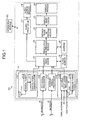
- FIG. 1 is a schematic block diagram of an image display apparatus 100 according to an embodiment of the invention.
- the image display apparatus 100 of the embodiment comprises a video signal input module 11, a central processor 12, a resolution increasing module 13, a moving-image improving module 14, a display processor 15, a display module 16, an audio processor 17, and an audio output module 18.
- the resolution increasing module 13 corresponds to an image processing apparatus.
- the video signal input module 11 comprises a digital broadcast receiver 111, an Internet protocol television (IPTV) signal processor 112, an Internet signal processor 113, and an external input module 114.
- the digital broadcast receiver 111 receives an video signal to be displayed.
- the Internet signal processor 113 receives data transmitted through an IP network such as the Internet.
- the external input module 114 receives input of an analog signal.
- video signal as used herein includes audio signals as well as image signals such as still image signals and moving image signals.
- the digital broadcast receiver 111 comprises a digital antenna 1111, a digital tuner 1112, and a digital signal demodulator 1113.
- the digital antenna 1111 receives digital broadcasting such as BS broadcasting, CS broadcasting, and digital terrestrial broadcasting.
- the digital tuner 1112 is used to select a digital broadcast channel.
- the digital signal demodulator 1113 demodulates a digital broadcast signal, and outputs it to the central processor 12 as a digital video signal.
- the IPTV signal processor 112 receives IP broadcasting transmitted over a dedicated IP network, and outputs it to the central processor 12 as a digital video signal.
- the Internet signal processor 113 receives data (still image, moving image, etc.) transmitted through an IP network such as the Internet, and outputs it to the central processor 12 as a digital video signal.
- the external input module 114 comprises an analog antenna 1141, an analog tuner 1142, and an external input signal processor 1143.
- the analog antenna 1141 receives analog broadcasting.
- the analog tuner 1142 is used to select an analog broadcast channel.
- the external input signal processor 1143 performs signal processing, such as A/D conversion, on an analog signal, and outputs it to the central processor 12 as a digital video signal.
- the external input signal processor 1143 is provided with a terminal (not shown) for connection to an external device such as a game machine, a personal computer (PC), a digital versatile disk (DVD) player.
- the external input signal processor 1143 performs the signal processing also on an analog signal received from an external device through the terminal.
- FIG. 2 is a functional block diagram of the central processor 12. As illustrated in FIG. 2 , the central processor 12 comprises an operation receiver 121, a switch 122, a controller 123, and a flash memory 19.
- the operation receiver 121 receives, as will be described later, a signal instructing a video mode (hereinafter, "instruction signal"), and outputs it to the switch 122.
- the video mode indicates definition to display a video signal on the display module 16 and is specified through an operation module 200.
- the operation module 200 may comprise a remote controller.
- a fine adjustment screen is displayed via on screen display (OSD) as illustrated in FIG. 3 .
- the fine adjustment screen displays a menu item "super-resolution adjustment" for adjusting the super-resolution level indicating the super-resolution intensity with various types of parameters such as color temperature setting for white balance and a gamma correction parameter.
- the super-resolution level represents, as will be described later, the intensity of super-resolution conversion ranked, for example, from levels 1 to 5. This eliminates the need of the user to specify a complicated super-resolution parameter.
- a "super-resolution level adjustment menu” is displayed as illustrated in FIG. 4 .
- the super-resolution level adjustment menu allows the user to select a video mode by, for example, pressing the setting button.
- the super-resolution level adjustment menu herein provides menu items “Auto”, “Mode 1", “Mode 2", “Mode 3", and “Off” for super-resolution processing.
- “Auto” mode the mode may automatically switches among Mode 1 to 3 according to an input video signal, or, apart from Mode 1 to 3, a parameter characteristic of the super-resolution processing may be automatically variable.
- the mode automatically switches among Mode 1 to 3 according to the noise level or the data amount of a video signal (bit rate, resolution), or a parameter characteristic of the super-resolution processing automatically varies.
- the super-resolution processing is performed for a clear and vivid video compressed at a low compression ratio/a high bit rate with low noise, and the intensity is lower than in the other modes.
- Mode 3 the super-resolution processing is performed for a video compressed at a high compression ratio/a low bit rate with relatively high noise, and the intensity is higher than in the other modes.
- Mode 2 between Modes 1 and 3, the super-resolution processing is performed for a standard video compressed at a moderate compression ratio/a moderate bit rate(the middle between high and low) .
- "Off" mode the super-resolution processing is not performed. Accordingly, by switching between Off mode and the other modes, the user can experience the effect of the super-resolution processing.
- FIG. 4 illustrates the case where the user has selected "Mode 2" as the video mode, and has set the super-resolution level to "level 2".
- the super-resolution processing may be performed in a reverse manner to that described above. That is, the intensity of the super-resolution processing may be higher in Mode 1 than in the other modes, while the intensity may be lower in Mode 3 than in the other modes.
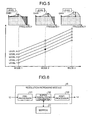
- FIG. 5 illustrates the relationship between the video modes and the super-resolution levels.
- the super-resolution levels are set with respect to each of the video modes. More specifically, the video modes and the super-resolution levels are associated so that the output of the high frequency components of a video signal increases at the super-resolution levels as the video mode changes from Mode 1 through Mode 2 to ... (Mode 1 ⁇ Mode 2 ⁇ ).
- the user can finely set a super-resolution level.
- the video modes and the super-resolution levels are stored in a storage medium such as the flash memory 19 in association with one another.
- the switch 122 identifies a video mode (e.g., Mode 2) and a super-resolution level (e.g. , level 2) corresponding to an instruction signal received by the operation receiver 121, and outputs them to the controller 123.
- the switch 122 also writes the video mode and the super-resolution level to the flash memory 19.
- the controller 123 separates the video signal into an image signal and an audio signal.
- the controller 123 outputs the image signal subjected to predetermined image processing to the resolution increasing module 13 as well as outputting the audio signal to the audio processor 17.
- Examples of the image processing that the controller 123 performs on the image signal include scaling to convert the resolution of the image signal to a predetermined value (e.g., 1280 ⁇ 720).
- the flash memory 19 stores a video mode and a super-resolution level corresponding to an instruction signal received from the operation module 200 by the operation receiver 121 in association with each other.
- FIG. 6 is a functional block diagram of the resolution increasing module 13. As illustrated in FIG. 6 , the resolution increasing module 13 comprises a preprocessor 131, a super-resolution converter 132, a post-processor 133, and an electrically erasable programmable read-only memory (EEPROM) 20.
- EEPROM electrically erasable programmable read-only memory
- the preprocessor 131 performs image processing (hereinafter, "preprocessing") on the image signal received from the central processor 12, and then outputs it to the super-resolution converter 132, which will be described later. Examples of the preprocessing include interlace/progressive conversion and noise reduction to remove noise.
- the preprocessor 131 also receives the video mode and the super-resolution level from the central processor 12, and outputs them to the super-resolution converter 132.
- a signal relative to the video mode and the super-resolution level may be directly input to the super-resolution converter 132 without via the preprocessor 131.
- the preprocessor 131 detects motion of an image from the image signal and determines whether the image is a still image or a moving image. When the image is a still image, the preprocessor 131 performs still-image interpolation. On the other hand, when the image is a moving image, the preprocessor 131 performs moving-image interpolation.
- the preprocessor 131 corrects the contour of the image, reduces image blur and glare, suppresses excessive equalizing (high-frequency enhancement), and corrects camera shake blur caused by the horizontal movement of a camera.
- the super-resolution converter 132 performs image processing (hereinafter, "super-resolution conversion”) on a low-resolution frame received from the preprocessor 131 to increase the resolution, thereby generating a frame of high-resolution moving image data in HD size (hereinafter, "high-resolution frame”).
- the super-resolution converter 132 outputs the high-resolution frame to the post-processor 133.
- super-resolution conversion refers to image sharpening, in which, from an image signal with low resolution, i.e., first resolution, an original pixel value is estimated to increase the pixels and thus to restore an image signal with high resolution, i.e., second resolution.
- the original pixel value refers to the value of each pixel of an image signal obtained by, for example, photographing the same object as that of an image with low resolution (first resolution) with a camera having high-resolution pixels and capable of capturing an image with high resolution (second resolution).
- original pixel value is estimated to increase pixels means to obtain the characteristics of images to find a correlated image, and estimate an original pixel value from neighboring images (in the same frame or between frames) using the correlated image to increase pixels.
- the super-resolution conversion may be performed using known or commonly used technologies as disclosed in, for example, Japanese Patent Application Publication (KOKAI) Nos. 2007-310837 , 2008-98803 , and 2000-188680 .
- the super-resolution conversion uses a technology of, for example, restoring an image with frequency components above the Nyquist frequency determined by the sampling rate of an input image.
- the super-resolution converter 132 sets a target pixel in each of a plurality of frames of moderate resolution, and sets a target image area so that it contains the target pixel.
- the super-resolution converter 132 selects a plurality of correspondent points that correspond to a plurality of target image areas closest to a variation pattern of the pixel value in the target image area from the reference frame.
- the super-resolution converter 132 sets a sample value of luminance of a correspondent point to the pixel value of a corresponding target pixel.
- the super-resolution converter 132 calculates a pixel value for a high-resolution frame having more pixels than the reference frame and corresponding to the reference frame based on the size of a plurality of sample values and layout of the correspondent points. Thus, the super-resolution converter 132 estimates an original pixel value from a low-resolution image signal, and increases pixels to restore a high-resolution image signal.
- the super-resolution converter 132 calculates a first pixel position with the smallest error, i.e., a first error, by comparing errors of respective pixels in a search area of a frame of moderate resolution.
- the super-resolution converter 132 calculates a position with the smallest error in the search area with decimal precision based on the first pixel position and the first error, and a second pixel position around a first pixel and a second error thereof.
- the super-resolution converter 132 calculates a decimal-precision vector that has its end point at the position with the smallest error and its start point at a pixel of interest.
- the super-resolution converter 132 calculates an extrapolation vector of the decimal-precision vector that has its end point at a pixel on a screen which is not in the search area based on the decimal-precision vector.
- the super-resolution converter 132 calculates a pixel value for a high-resolution image having more pixels than an image signal based on a pixel value obtained from the image signal, the decimal-precision vector, and the extrapolation vector. In this manner, the super-resolution converter 132 estimates an original pixel value from a low-resolution image signal, and increases pixels to restore a high-resolution image signal.
- the super-resolution converter 132 may employ the super-resolution conversion disclosed in Japanese Patent Application Publication (KOKAI) No. 2000-188680 using mapping between a plurality of frames.
- the above technologies of the super-resolution conversion are cited by way of example and not by way of limitation.
- the super-resolution converter 132 may employ various other technologies in which an original pixel value is estimated from a low-resolution image signal to increase pixels to thereby obtain a high-resolution image signal.
- the super-resolution converter 132 Having received an image signal on which the preprocessor 131 has performed noise reduction, etc., the super-resolution converter 132 performs the super-resolution conversion corresponding to the video mode and the super-resolution level. More specifically, the super-resolution converter 132 retrieves a super-resolution parameter corresponding to the video mode and the super-resolution level from, for example, the EEPROM 20.
- the super-resolution parameter represents the intensity of the super-resolution conversion by a numeric value. For example, when more pixels having high frequency components are to be interpolated between pixels, the ratio of the high-frequency component pixels to the pixels to be interpolated with them is high, and the super-resolution parameter indicates a lager value. A larger value of the super-resolution parameter indicates a higher sharpening gain and a higher intensity of the super-resolution conversion.
- the super-resolution parameters illustrated in FIG. 5 represents, assuming that they are set to 100 when the super-resolution conversion is performed on all pixels, the ratio of high-frequency component pixels to be interpolated to all the pixels. In this manner, the index of the super-resolution conversion is stored as a parameter. Therefore, if there is a change in the reference of the super-resolution conversion, it is possible to easily and efficiently cope with the change.
- the super-resolution converter 132 performs the super-resolution conversion on an image signal based on the super-resolution parameter, and outputs it to the post-processor 133 described below.
- the post-processor 133 performs image correction (hereinafter, "post-processing") such as gamma correction and white balance adjustment on the image signal received from the super-resolution converter 132, and outputs it to the moving-image improving module 14.
- post-processing image correction
- gamma correction and white balance adjustment on the image signal received from the super-resolution converter 132
- the moving-image improving module 14 performs double-speed processing on the image signal received from the post-processor 133. More specifically, the moving-image improving module 14 converts the frame rate of a video signal transmitted at 60 frames per second (fps) to 120 fps. This reduces image blur in a portion in which an object moves horizontally, vertically, and diagonally or rotates as well as efficiently suppressing noise. Thus, a telop sequence, a sports scene with fast motion, etc. can be displayed clearly. The moving-image improving module 14 outputs the image signal subjected to the frame rate conversion to the display processor 15.
- fps frames per second
- the interpolation may be performed by using an interpolation frame generated according to a commonly used method for interpolation of a frame image such as the interpolation frame generating method based on motion vector detection by block matching disclosed in Japanese Patent Application Publication (KOKAI) No. 2008-35404 .
- the number of interpolation frames may be arbitrarily determined.
- the display processor 15 comprises a driver to output an image signal to the display module 16 so that the display module 16 can display the image signal received from the moving-image improving module 14.
- the display processor 15 also displays the fine adjustment screen relative to video display via OSD in response to an instruction from the operation module 200.
- the display module 16 comprises a display panel such as a liquid crystal display (LCD) panel, a plasma panel, or a surface-conduction electron-emitter display (SED) panel.
- the display module 16 displays an image signal on the screen under the control of the display processor 15.
- the EEPROM 20 stores, as mentioned previously, the video mode and the super-resolution level in association with each other.
- the operation module 200 may comprise a remote operation device such as a remote controller, and, in response to user input to specify a video mode, sends an instruction signal corresponding thereto to the central processor 12.
- a remote operation device such as a remote controller
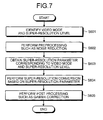
- FIG. 7 is a flowchart of the super-resolution conversion performed by the image display apparatus 100 at a super-resolution level corresponding to a video mode specified by a user.
- a user has already specified a video mode, and a super-resolution parameter is obtained that is at a super-resolution level corresponding to the video mode.
- the video mode can be specified as required even in course of each process by an interrupt signal.
- the switch 122 of the central processor 12 identifies a video mode set by a user (S601).
- the switch 122 sends the video mode with an image signal to the resolution increasing module 13.
- the preprocessor 131 performs image processing, such as interlace/progressive conversion and noise reduction, on the image signal, and outputs it with the video mode and a corresponding super-resolution level to the super-resolution converter 132 (S602).
- image processing such as interlace/progressive conversion and noise reduction
- a signal relative to the video mode and the super-resolution level may be directly input from the central processor 12 to the super-resolution converter 132 without via the preprocessor 131.
- the super-resolution converter 132 obtains a super-resolution parameter corresponding to the video mode and the super-resolution level from the EEPROM 20 (S603).
- the super-resolution converter 132 performs the super-resolution conversion on the image signal at the super-resolution level corresponding to the super-resolution parameter (S604), and outputs it to the post-processor 133.
- the post-processor 133 performs image correction such as gamma correction and white balance adjustment on the image signal, and outputs it to the moving-image improving module 14 (S605).
- the display module 16 displays the image signal under the control of the display processor 15.
- the switch 122 of the central processor 12 obtains a super-resolution parameter at a super-resolution level corresponding to a video mode specified by a user. This allows the user to set a desired super-resolution level by a simple operation. Moreover, with "Auto" mode, the user can enjoy video with the super-resolution processing automatically adjusted to the optimum setting. Furthermore, with a plurality of modes such as Mode 1 to 3 and Off, the user can enjoy video with the super-resolution processing selected as he/she desires depending on the type of the video.
- the super-resolution level is described as being stored in association with the video mode indicating definition to display a video signal.
- the super-resolution level may be set depending on the type of an image signal (e.g., the frequency of the image signal provided by BS broadcasting, CS broadcasting, etc.) or the type of a program (e.g., sports program, movie, etc.).
- the super-resolution conversion is performed based on a super-resolution parameter corresponding to the super-resolution level thus set.
- the information processing apparatus of the embodiment is described as being applied to the image display apparatus 100 such as a digital TV comprising the display processor 15, the display module 16, the audio processor 17 and the audio output module 18 by way of example; however, it can be applied to, for example, a tuner or a set-top box without having those modules.
- the various modules of the systems described herein can be implemented as software applications, hardware and/or software modules, or components on one or more computers, such as servers. While the various modules are illustrated separately, they may share some or all of the same underlying logic or code.
Landscapes
- Engineering & Computer Science (AREA)
- Multimedia (AREA)
- Signal Processing (AREA)
- Databases & Information Systems (AREA)
- Human Computer Interaction (AREA)
- Controls And Circuits For Display Device (AREA)
Applications Claiming Priority (1)
| Application Number | Priority Date | Filing Date | Title |
|---|---|---|---|
| JP2008201202 | 2008-08-04 |
Publications (1)
| Publication Number | Publication Date |
|---|---|
| EP2152003A1 true EP2152003A1 (de) | 2010-02-10 |
Family
ID=41137740
Family Applications (1)
| Application Number | Title | Priority Date | Filing Date |
|---|---|---|---|
| EP09003454A Withdrawn EP2152003A1 (de) | 2008-08-04 | 2009-03-10 | Bildverarbeitungsvorrichtung und Bildverarbeitungsverfahren |
Country Status (3)
| Country | Link |
|---|---|
| US (1) | US8581906B2 (de) |
| EP (1) | EP2152003A1 (de) |
| CN (1) | CN101646033B (de) |
Cited By (1)
| Publication number | Priority date | Publication date | Assignee | Title |
|---|---|---|---|---|
| CN113837939A (zh) * | 2017-10-09 | 2021-12-24 | 华为技术有限公司 | 一种图像处理方法及设备 |
Families Citing this family (19)
| Publication number | Priority date | Publication date | Assignee | Title |
|---|---|---|---|---|
| JP4674614B2 (ja) * | 2008-04-18 | 2011-04-20 | ソニー株式会社 | 信号処理装置および制御方法、信号処理方法、プログラム、並びに信号処理システム |
| KR20100116850A (ko) * | 2009-04-23 | 2010-11-02 | 삼성전자주식회사 | 디스플레이 장치 세팅방법 및 이를 적용한 디스플레이 장치 |
| JP5343785B2 (ja) * | 2009-09-17 | 2013-11-13 | ソニー株式会社 | 画像信号処理装置、送信装置、画像信号処理方法、プログラム、および画像信号処理システム |
| KR101650779B1 (ko) * | 2010-02-01 | 2016-08-25 | 삼성전자주식회사 | 단일 칩 디스플레이 구동회로, 이를 포함하는 디스플레이 장치 및 디스플레이 시스템 |
| US20120005507A1 (en) * | 2010-07-01 | 2012-01-05 | Himax Technologies Limited | Display Devices and Control Methods |
| CN104144311A (zh) * | 2013-05-07 | 2014-11-12 | 中兴通讯股份有限公司 | 一种自适应调节视频的方法及系统 |
| CN103716575A (zh) * | 2013-12-11 | 2014-04-09 | 乐视致新电子科技(天津)有限公司 | 一种可调整清晰度的显示装置及控制方法 |
| US9860606B2 (en) * | 2015-01-24 | 2018-01-02 | Valens Semiconductor Ltd. | Maintaining a fixed delay while switching between light video compression ratios |
| CN105872662A (zh) * | 2016-03-30 | 2016-08-17 | 乐视控股(北京)有限公司 | 一种视频清晰度控制方法、装置及播放终端 |
| DE102016122934A1 (de) * | 2016-11-28 | 2018-06-14 | SMR Patents S.à.r.l. | Bildgebungssystem für ein Fahrzeug und Verfahren zum Erhalten eines superaufgelösten Antiflimmer-Bildes |
| CN114007107A (zh) | 2018-11-02 | 2022-02-01 | 华为技术有限公司 | 一种视频自适应方法、相关设备以及存储介质 |
| KR102222871B1 (ko) * | 2019-02-22 | 2021-03-04 | 삼성전자주식회사 | 디스플레이 장치 및 이의 영상 표시 방법 |
| CN113728354A (zh) * | 2019-04-30 | 2021-11-30 | 华为技术有限公司 | 一种图像处理方法及装置 |
| CN110868625A (zh) * | 2019-11-22 | 2020-03-06 | 北京金山云网络技术有限公司 | 一种视频播放方法、装置、电子设备及存储介质 |
| JP7438779B2 (ja) * | 2020-02-13 | 2024-02-27 | キヤノン株式会社 | 画像処理装置、画像処理システム、および、それらの制御方法 |
| CN114286126A (zh) * | 2020-09-28 | 2022-04-05 | 阿里巴巴集团控股有限公司 | 视频处理方法及装置 |
| CN112866574B (zh) * | 2021-01-14 | 2022-12-23 | 中国科学院软件研究所 | 一种面向软件定义卫星的可重构阵列成像方法与装置 |
| CN113099289B (zh) | 2021-03-31 | 2023-12-12 | 京东方科技集团股份有限公司 | 显示装置及其控制方法 |
| CN120179134A (zh) * | 2023-12-12 | 2025-06-20 | 荣耀终端股份有限公司 | 一种界面显示方法及电子设备 |
Citations (12)
| Publication number | Priority date | Publication date | Assignee | Title |
|---|---|---|---|---|
| JP2000188680A (ja) | 1998-12-21 | 2000-07-04 | Sharp Corp | 高解像度画像の生成方法及びシステム |
| US20050030386A1 (en) * | 2003-08-04 | 2005-02-10 | John Kamieniecki | Method and apparatus for determining video formats supported by a digital television receiver |
| WO2005020237A1 (en) * | 2003-08-22 | 2005-03-03 | Samsung Electronics Co., Ltd. | Dvd player that sets optimal display environment and operating method thereof |
| US20050160468A1 (en) * | 2004-01-21 | 2005-07-21 | Rodriguez Arturo A. | Interactive discovery of display device characteristics |
| US20050262444A1 (en) * | 2004-05-24 | 2005-11-24 | Kabushiki Kaisha Toshiba | Information-processing apparatus and display control method |
| EP1708507A2 (de) * | 2005-03-31 | 2006-10-04 | LG Electronics Inc. | Bildanzeigevorrichtung und -Verfahren |
| JP2007310837A (ja) | 2006-05-22 | 2007-11-29 | Toshiba Corp | 高解像度化装置および方法 |
| JP2008035404A (ja) | 2006-07-31 | 2008-02-14 | Toshiba Corp | 補間フレーム作成方法及び補間フレーム作成装置 |
| JP2008067110A (ja) | 2006-09-07 | 2008-03-21 | Toshiba Corp | 超解像度画像の生成装置 |
| JP2008098803A (ja) | 2006-10-10 | 2008-04-24 | Toshiba Corp | 高解像度化装置および方法 |
| JP2008146190A (ja) | 2006-12-07 | 2008-06-26 | Seiko Epson Corp | 解像度変換装置、解像度変換方法、解像度変換プログラム及び画像表示システム |
| WO2008085874A2 (en) * | 2007-01-05 | 2008-07-17 | Marvell World Trade Ltd. | Methods and systems for improving low-resolution video |
Family Cites Families (16)
| Publication number | Priority date | Publication date | Assignee | Title |
|---|---|---|---|---|
| JP3409889B2 (ja) | 1993-09-01 | 2003-05-26 | 株式会社日立製作所 | 記録制御装置 |
| US5760783A (en) * | 1995-11-06 | 1998-06-02 | Silicon Graphics, Inc. | Method and system for providing texture using a selected portion of a texture map |
| US6563504B1 (en) * | 1998-12-24 | 2003-05-13 | B3D, Inc. | System and method for creating 3D animated content for multiple playback platforms from a single production process |
| US6184894B1 (en) * | 1999-01-29 | 2001-02-06 | Neomagic Corp. | Adaptive tri-linear interpolation for use when switching to a new level-of-detail map |
| AU2001239926A1 (en) * | 2000-02-25 | 2001-09-03 | The Research Foundation Of State University Of New York | Apparatus and method for volume processing and rendering |
| JP2002077834A (ja) | 2000-08-29 | 2002-03-15 | Toshiba Corp | デジタル放送受信装置 |
| US7081893B2 (en) * | 2001-10-10 | 2006-07-25 | Sony Computer Entertainment America Inc. | System and method for point pushing to render polygons in environments with changing levels of detail |
| US6833839B2 (en) * | 2002-05-13 | 2004-12-21 | Genesis Microchip Inc. | Apparatus and method for multi-resolution color mapping for display devices |
| US7120311B2 (en) * | 2002-06-28 | 2006-10-10 | Microsoft Corporation | Systems and methods for providing forward mapping with visibility for and resolution of accumulated samples |
| US6943805B2 (en) * | 2002-06-28 | 2005-09-13 | Microsoft Corporation | Systems and methods for providing image rendering using variable rate source sampling |
| JP2005141614A (ja) | 2003-11-10 | 2005-06-02 | Seiko Epson Corp | 低解像度の複数の画像に基づく高解像度の画像生成における処理時間の短縮化 |
| US7689053B2 (en) * | 2005-01-26 | 2010-03-30 | Panasonic Corporation | Image processing method |
| JP2006236317A (ja) | 2005-01-26 | 2006-09-07 | Matsushita Electric Ind Co Ltd | 画像処理方法 |
| JP2007193508A (ja) | 2006-01-18 | 2007-08-02 | Sanyo Electric Co Ltd | 画像処理装置及び画像処理プログラム |
| US7626591B2 (en) * | 2006-01-24 | 2009-12-01 | D & S Consultants, Inc. | System and method for asynchronous continuous-level-of-detail texture mapping for large-scale terrain rendering |
| JP2008067316A (ja) | 2006-09-11 | 2008-03-21 | Olympus Corp | 画像配信システム、サーバ及びクライアント端末 |
-
2009
- 2009-02-19 US US12/389,152 patent/US8581906B2/en active Active
- 2009-03-10 EP EP09003454A patent/EP2152003A1/de not_active Withdrawn
- 2009-03-13 CN CN2009101271353A patent/CN101646033B/zh active Active
Patent Citations (12)
| Publication number | Priority date | Publication date | Assignee | Title |
|---|---|---|---|---|
| JP2000188680A (ja) | 1998-12-21 | 2000-07-04 | Sharp Corp | 高解像度画像の生成方法及びシステム |
| US20050030386A1 (en) * | 2003-08-04 | 2005-02-10 | John Kamieniecki | Method and apparatus for determining video formats supported by a digital television receiver |
| WO2005020237A1 (en) * | 2003-08-22 | 2005-03-03 | Samsung Electronics Co., Ltd. | Dvd player that sets optimal display environment and operating method thereof |
| US20050160468A1 (en) * | 2004-01-21 | 2005-07-21 | Rodriguez Arturo A. | Interactive discovery of display device characteristics |
| US20050262444A1 (en) * | 2004-05-24 | 2005-11-24 | Kabushiki Kaisha Toshiba | Information-processing apparatus and display control method |
| EP1708507A2 (de) * | 2005-03-31 | 2006-10-04 | LG Electronics Inc. | Bildanzeigevorrichtung und -Verfahren |
| JP2007310837A (ja) | 2006-05-22 | 2007-11-29 | Toshiba Corp | 高解像度化装置および方法 |
| JP2008035404A (ja) | 2006-07-31 | 2008-02-14 | Toshiba Corp | 補間フレーム作成方法及び補間フレーム作成装置 |
| JP2008067110A (ja) | 2006-09-07 | 2008-03-21 | Toshiba Corp | 超解像度画像の生成装置 |
| JP2008098803A (ja) | 2006-10-10 | 2008-04-24 | Toshiba Corp | 高解像度化装置および方法 |
| JP2008146190A (ja) | 2006-12-07 | 2008-06-26 | Seiko Epson Corp | 解像度変換装置、解像度変換方法、解像度変換プログラム及び画像表示システム |
| WO2008085874A2 (en) * | 2007-01-05 | 2008-07-17 | Marvell World Trade Ltd. | Methods and systems for improving low-resolution video |
Cited By (1)
| Publication number | Priority date | Publication date | Assignee | Title |
|---|---|---|---|---|
| CN113837939A (zh) * | 2017-10-09 | 2021-12-24 | 华为技术有限公司 | 一种图像处理方法及设备 |
Also Published As
| Publication number | Publication date |
|---|---|
| US20100026695A1 (en) | 2010-02-04 |
| US8581906B2 (en) | 2013-11-12 |
| CN101646033A (zh) | 2010-02-10 |
| CN101646033B (zh) | 2012-02-15 |
Similar Documents
| Publication | Publication Date | Title |
|---|---|---|
| US8581906B2 (en) | Image processing apparatus and image processing method | |
| US8265426B2 (en) | Image processor and image processing method for increasing video resolution | |
| US8373700B2 (en) | Image processing apparatus | |
| US7995146B2 (en) | Image processing apparatus and image processing method | |
| US20100026885A1 (en) | Image Processing Apparatus | |
| US8385422B2 (en) | Image processing apparatus and image processing method | |
| JP2008252701A (ja) | 映像信号処理装置、映像表示装置および映像信号処理方法 | |
| US20100026737A1 (en) | Video Display Device | |
| US8264587B2 (en) | Increasing frame rate for imaging | |
| US7787047B2 (en) | Image processing apparatus and image processing method | |
| JP5178579B2 (ja) | 画像処理装置 | |
| US11930207B2 (en) | Display device, signal processing device, and signal processing method | |
| US20100165205A1 (en) | Video signal sharpening apparatus, image processing apparatus, and video signal sharpening method | |
| JP4991884B2 (ja) | 画像処理装置、および画像処理方法 | |
| US8270773B2 (en) | Image processing apparatus and image processing method | |
| US20100045857A1 (en) | Image Processor and Image Processing Method | |
| JP4897036B2 (ja) | 画像処理装置、および画像処理方法 | |
| JP5075923B2 (ja) | 画像処理装置、および画像処理方法 | |
| US20090290803A1 (en) | Image processing apparatus for image quality improvement and method thereof | |
| US20060044471A1 (en) | Video signal setting device |
Legal Events
| Date | Code | Title | Description |
|---|---|---|---|
| PUAI | Public reference made under article 153(3) epc to a published international application that has entered the european phase |
Free format text: ORIGINAL CODE: 0009012 |
|
| 17P | Request for examination filed |
Effective date: 20090310 |
|
| AK | Designated contracting states |
Kind code of ref document: A1 Designated state(s): AT BE BG CH CY CZ DE DK EE ES FI FR GB GR HR HU IE IS IT LI LT LU LV MC MK MT NL NO PL PT RO SE SI SK TR |
|
| AX | Request for extension of the european patent |
Extension state: AL BA RS |
|
| 17Q | First examination report despatched |
Effective date: 20100506 |
|
| AKX | Designation fees paid |
Designated state(s): DE FR GB |
|
| 18D | Application deemed to be withdrawn |
Effective date: 20161019 |
|
| STAA | Information on the status of an ep patent application or granted ep patent |
Free format text: STATUS: THE APPLICATION IS DEEMED TO BE WITHDRAWN |
|
| R18D | Application deemed to be withdrawn (corrected) |
Effective date: 20160621 |