EP2137778B1 - Method to charge a lithium secondary battery - Google Patents
Method to charge a lithium secondary battery Download PDFInfo
- Publication number
- EP2137778B1 EP2137778B1 EP08762884A EP08762884A EP2137778B1 EP 2137778 B1 EP2137778 B1 EP 2137778B1 EP 08762884 A EP08762884 A EP 08762884A EP 08762884 A EP08762884 A EP 08762884A EP 2137778 B1 EP2137778 B1 EP 2137778B1
- Authority
- EP
- European Patent Office
- Prior art keywords
- electrode active
- active material
- amorphous
- secondary battery
- positive electrode
- Prior art date
- Legal status (The legal status is an assumption and is not a legal conclusion. Google has not performed a legal analysis and makes no representation as to the accuracy of the status listed.)
- Active
Links
Images


Classifications
-
- H—ELECTRICITY
- H01—ELECTRIC ELEMENTS
- H01M—PROCESSES OR MEANS, e.g. BATTERIES, FOR THE DIRECT CONVERSION OF CHEMICAL ENERGY INTO ELECTRICAL ENERGY
- H01M4/00—Electrodes
- H01M4/02—Electrodes composed of, or comprising, active material
- H01M4/36—Selection of substances as active materials, active masses, active liquids
- H01M4/48—Selection of substances as active materials, active masses, active liquids of inorganic oxides or hydroxides
- H01M4/52—Selection of substances as active materials, active masses, active liquids of inorganic oxides or hydroxides of nickel, cobalt or iron
- H01M4/525—Selection of substances as active materials, active masses, active liquids of inorganic oxides or hydroxides of nickel, cobalt or iron of mixed oxides or hydroxides containing iron, cobalt or nickel for inserting or intercalating light metals, e.g. LiNiO2, LiCoO2 or LiCoOxFy
-
- H—ELECTRICITY
- H01—ELECTRIC ELEMENTS
- H01M—PROCESSES OR MEANS, e.g. BATTERIES, FOR THE DIRECT CONVERSION OF CHEMICAL ENERGY INTO ELECTRICAL ENERGY
- H01M4/00—Electrodes
- H01M4/02—Electrodes composed of, or comprising, active material
- H01M4/36—Selection of substances as active materials, active masses, active liquids
- H01M4/48—Selection of substances as active materials, active masses, active liquids of inorganic oxides or hydroxides
-
- C—CHEMISTRY; METALLURGY
- C03—GLASS; MINERAL OR SLAG WOOL
- C03C—CHEMICAL COMPOSITION OF GLASSES, GLAZES OR VITREOUS ENAMELS; SURFACE TREATMENT OF GLASS; SURFACE TREATMENT OF FIBRES OR FILAMENTS MADE FROM GLASS, MINERALS OR SLAGS; JOINING GLASS TO GLASS OR OTHER MATERIALS
- C03C3/00—Glass compositions
- C03C3/12—Silica-free oxide glass compositions
- C03C3/14—Silica-free oxide glass compositions containing boron
-
- C—CHEMISTRY; METALLURGY
- C03—GLASS; MINERAL OR SLAG WOOL
- C03C—CHEMICAL COMPOSITION OF GLASSES, GLAZES OR VITREOUS ENAMELS; SURFACE TREATMENT OF GLASS; SURFACE TREATMENT OF FIBRES OR FILAMENTS MADE FROM GLASS, MINERALS OR SLAGS; JOINING GLASS TO GLASS OR OTHER MATERIALS
- C03C4/00—Compositions for glass with special properties
- C03C4/18—Compositions for glass with special properties for ion-sensitive glass
-
- H—ELECTRICITY
- H01—ELECTRIC ELEMENTS
- H01M—PROCESSES OR MEANS, e.g. BATTERIES, FOR THE DIRECT CONVERSION OF CHEMICAL ENERGY INTO ELECTRICAL ENERGY
- H01M10/00—Secondary cells; Manufacture thereof
- H01M10/05—Accumulators with non-aqueous electrolyte
-
- H—ELECTRICITY
- H01—ELECTRIC ELEMENTS
- H01M—PROCESSES OR MEANS, e.g. BATTERIES, FOR THE DIRECT CONVERSION OF CHEMICAL ENERGY INTO ELECTRICAL ENERGY
- H01M10/00—Secondary cells; Manufacture thereof
- H01M10/05—Accumulators with non-aqueous electrolyte
- H01M10/052—Li-accumulators
-
- H—ELECTRICITY
- H01—ELECTRIC ELEMENTS
- H01M—PROCESSES OR MEANS, e.g. BATTERIES, FOR THE DIRECT CONVERSION OF CHEMICAL ENERGY INTO ELECTRICAL ENERGY
- H01M10/00—Secondary cells; Manufacture thereof
- H01M10/05—Accumulators with non-aqueous electrolyte
- H01M10/056—Accumulators with non-aqueous electrolyte characterised by the materials used as electrolytes, e.g. mixed inorganic/organic electrolytes
- H01M10/0564—Accumulators with non-aqueous electrolyte characterised by the materials used as electrolytes, e.g. mixed inorganic/organic electrolytes the electrolyte being constituted of organic materials only
- H01M10/0566—Liquid materials
-
- H—ELECTRICITY
- H01—ELECTRIC ELEMENTS
- H01M—PROCESSES OR MEANS, e.g. BATTERIES, FOR THE DIRECT CONVERSION OF CHEMICAL ENERGY INTO ELECTRICAL ENERGY
- H01M4/00—Electrodes
- H01M4/02—Electrodes composed of, or comprising, active material
- H01M4/04—Processes of manufacture in general
-
- H—ELECTRICITY
- H01—ELECTRIC ELEMENTS
- H01M—PROCESSES OR MEANS, e.g. BATTERIES, FOR THE DIRECT CONVERSION OF CHEMICAL ENERGY INTO ELECTRICAL ENERGY
- H01M4/00—Electrodes
- H01M4/02—Electrodes composed of, or comprising, active material
- H01M4/36—Selection of substances as active materials, active masses, active liquids
- H01M4/48—Selection of substances as active materials, active masses, active liquids of inorganic oxides or hydroxides
- H01M4/485—Selection of substances as active materials, active masses, active liquids of inorganic oxides or hydroxides of mixed oxides or hydroxides for inserting or intercalating light metals, e.g. LiTi2O4 or LiTi2OxFy
-
- Y—GENERAL TAGGING OF NEW TECHNOLOGICAL DEVELOPMENTS; GENERAL TAGGING OF CROSS-SECTIONAL TECHNOLOGIES SPANNING OVER SEVERAL SECTIONS OF THE IPC; TECHNICAL SUBJECTS COVERED BY FORMER USPC CROSS-REFERENCE ART COLLECTIONS [XRACs] AND DIGESTS
- Y02—TECHNOLOGIES OR APPLICATIONS FOR MITIGATION OR ADAPTATION AGAINST CLIMATE CHANGE
- Y02E—REDUCTION OF GREENHOUSE GAS [GHG] EMISSIONS, RELATED TO ENERGY GENERATION, TRANSMISSION OR DISTRIBUTION
- Y02E60/00—Enabling technologies; Technologies with a potential or indirect contribution to GHG emissions mitigation
- Y02E60/10—Energy storage using batteries
Definitions
- the invention relates to a method of charging a lithium secondary battery which uses an amorphous electrode active material.
- lithium secondary batteries have come to be widely used as power sources in the fields of communication and information-related devices due to their high energy density. Also, in the automotive field as well, there is a push for the rapid development of electric vehicles due to environmental and resources issues, and lithium secondary batteries are being considered for use as power sources to power these electric vehicles.
- JP-A-2005-135866 describes electrode active material that is mainly an amorphous metal complex represented by the general expression M 2-2x B 2x O 3 .
- the pre-characterising section of claim 1 is based on the disclosure in JP 2005-135 866 .
- JP-A-8-78002 describes positive electrode active material that is made up of an oxide of a transition metal from the 7A family or an oxide of a transition metal from the 8A family or both, in which a portion of that transition metal oxide has an amorphous structure.
- JP-A-10-74515 describes positive electrode active material in which a transition metal from the 7A family or a transition metal from the 8A family or both is Me, and in which a portion or all that has a LiMeO 2 structure is made up of an amorphous metal oxide.
- Amorphous electrode active material is advantageous in that the composition can be set freely compared with crystalline electrode active material. Moreover, although amorphous electrode active material shows promise as a high capacity electrode active material, its actual capacity is currently still low so there is a demand for high capacity amorphous electrode active material.
- JP-A-10-134813 JP-A-10-134813
- JP-A-9-22695 JP-A-9-22695
- JP 2002-270171 discloses a positive electrode active material for the non-aqueous electrolyte lithium secondary battery constituted by a lithium ion complex oxide.
- the lithium iron complex oxide has an amorphous structure and the composition before initial charge is expressed in a following composition formula (1): Li x FeO y (1) In the formula, 0.65 ⁇ x ⁇ 1.00, and 1.83 ⁇ y ⁇ 2.05.
- This invention provides a method of charging a lithium secondary battery which uses an amorphous electrode active material with superior charging and discharging characteristics.
- the inventors have found a correlative relationship between the oxidation potential of Fe and the average electronegativity of M in amorphous electrode active material represented by the general expression Li x FeM y O z (where M is a one or two or more types of glass former element). More specifically, the inventors have found that the oxidation potential of Fe drops when the average electronegativity of M decreases, and that not only divalent-trivalent redox (i.e., oxidation-reduction) of Fe, but also trivalent-quadrivalent redox of Fe can be put to practical use.
- the oxidation potential from trivalent Fe to quadrivalent Fe is higher than the decomposition potential of the electrolyte solution (hereinafter also referred to as "electrolyte decomposition potential") so if the potential is increased, the electrolyte solution starts to decompose first, thus preventing trivalent-quadrivalent redox from being put to practical use.
- electrolyte decomposition potential the decomposition potential of the electrolyte solution
- the oxidation potential from trivalent Fe to quadrivalent Fe can be reduced so that it is lower than the electrolyte decomposition potential by setting the average electronegativity of M taking the electrolyte decomposition potential Ve into account.
- trivalent-quadrivalent redox can be used, thus enabling high capacity electrode active material to be obtained.
- the average electronegativity of M may be equal to or less than 2.07. This enables a more practical electrode active material to be obtained.
- the M may be B (boron). Accordingly, the electronegativity can be kept within an appropriate range such that high capacity electrode active material can be obtained.
- the electrode active material according to this example is electrode active material which is used together with electrolyte solution having an electrolyte decomposition potential Ve.
- M represents one or two or more types of glass former element, and the average electronegativity of M is less than (Ve + 6.74) / 5.41.
- the oxidation potential from trivalent to quadrivalent Fe can be reduced so that it is less than the electrolyte decomposition potential by setting the average electronegativity of M taking the electrolyte decomposition potential Ve into account.
- trivalent-quadrivalent redox can be used which enables high capacity electrode active material to be obtained.
- the electrode active material according to the example is amorphous which is advantageous in that it enables the composition of the electrode active material to be set freely.
- the electrode active material according to the example is used as positive electrode active material.
- the electrode active material according to the example may be referred to as amorphous electrode active material represented by the general expression Li x FeM y O z .
- FIGS. 1A and 1B are graphs showing the relationship between the oxidation potential of Fe and the average electronegativity of M in amorphous electrode active material represented by the general expression Li x FeM y O z .
- the oxidation potential from trivalent to quadrivalent Fe is higher than the decomposition potential of the electrolyte solution used so the electrolyte solution is first to decompose when the potential is increased.
- trivalent-quadrivalent redox was unable to be used.
- the electrolyte decomposition potential is Ve (V vs Li-metal)
- the average electronegativity of M is set to correspond to that Ve. More specifically, the average electronegativity of M is made less than (Ve + 6.74) / 5.41.
- the oxidation potential from trivalent to quadrivalent Fe becomes less than the decomposition potential of the electrolyte solution used so trivalent-quadrivalent redox can be used, thus enabling high capacity electrode active material to be obtained.
- the average electronegativity of M in this example is defined as being less than (Ve + 6.74) / 5.41.
- the electrode active material according to the example will be described divided into the following: i) the structure of the electrode active material, ii) the electrolyte solution used with the electrode active material, and iii) the manufacturing method of the electrode active material.
- the value of x is normally 1 ⁇ x ⁇ 2.5, preferably 1.5 ⁇ x ⁇ 2.5, and more preferably 1.75 ⁇ x ⁇ 2.5. If the value of x is equal to or less than 1, in theory Fe cannot take on a valence of 4. Conversely, if the value of x is too large, amorphous electrode active material cannot be obtained.
- the value of y is normally 0 ⁇ y ⁇ 3, preferably 1.5 ⁇ y ⁇ 3, and more preferably 1.5 ⁇ y ⁇ 2.5. If the value of y is too small, amorphous electrode active material cannot be obtained. On the other hand, if the value of y is too large, the capacity becomes smaller such that practical electrode active material cannot be obtained.
- the valence of Fe changes from 2 to 4 with charging and discharging, but when the electrode active material according to this example is synthesized using a melt rapid cooling method, which will be described later, for example, the valence of Fe is usually 2 or 3.
- M represents one or two or more types of glass former element.
- the M is not particularly limited as long as it is an element that forms glass. More specifically, the M may be, for example, boron (B), phosphorus (P), silicon (Si), or tin (Sn). Of these, boron (B) is preferable because the electronegativity is within the appropriate range which enables the capacity of the electrode active material to be high.
- the average electronegativity of M is less than (Ve + 6.74) / 5.41.
- the electrolyte decomposition potential Ve will be described later in relation to the electrolyte solution that is used together with the electrode active material.
- the term electronegativity in this example refers to Pauling electronegativity. More specifically, boron (B) is 2.04, phosphorus (P) is 2.19, silicon (Si) is 1.90, and tin (Sn) is 1.96.
- the term average electronegativity in this example embodiment of the invention refers to the weighted average of the electronegativity of each element that constitutes or forms M.
- the average electronegativity of M when the average electronegativity of M is equal to (Ve + 6.74) / 5.41, the oxidation potential from trivalent to quadrivalent Fe becomes equal to the decomposition potential of the electrolyte solution so the electrolyte solution ends up decomposing simultaneously with the oxidation of the Fe. Therefore, the average electronegativity of M simply needs to be less than (Ve + 6.74) / 5.41, preferably equal to or less than ((Ve + 6.74) / 5.41) - 0.05, and more preferably equal to or less than ((Ve + 6.74) / 5.41) - 0.1 because it enables the high electrode active material to be safer.
- the range of the average electronegativity of M differs depending on the decomposition potential of the electrolyte solution and the like, it is preferably equal to or less than 2.17, and more preferably equal to or less than 2.07.
- the electrode active material is amorphous.
- This electrode active material is preferably amorphous to the extent that one or two or more of the following conditions are satisfied. (1) the average- crystallite size is equal to or less than approximately 1000 Angstrom (preferably equal to or less than approximately 100 Angstrom, and more preferably equal to or less than 50 Angstrom); (2) the specific gravity of the electrode active material is large at equal to or greater than approximately 3% (and more preferably equal to or greater than approximately 5%) compared to the specific gravity (theoretical value) when the electrode active material is completely crystalline; and (3) no peak which supports the electrode active material being crystalline can be observed in an X-ray diffraction pattern.
- the electrode active material described here is preferably electrode active material that satisfies one or two or more of these conditions (1) to (3).
- the electrode active material is preferably an electrode active material that satisfies at least condition (3).
- the X-ray pattern can be obtained using an X-ray diffractometer (model number: Rigaku RINT 2100 HLR/PC) or the like that may be obtained from Rigaku Corporation, for example. The application effect of this example tends to become even greater with electrode active material that is more amorphous (i.e., less crystalline),
- electrolyte solution that is used together with the electrode active material
- the electrode active material according to the example is used together with electrolyte solution having an electrolyte decomposition potential Ve.
- the unit of the electrolyte decomposition potential Ve is (V vs Li-metal), but for the sake of convenience may simply be referred to as V.
- the electrolyte decomposition potential Ve differs depending on the composition of the electrolyte solution used, and although not particularly limited, is preferably within the range of 4.00 V to 5.00 V, and more preferably within the range of 4.00 V to 4.50 V, for example.
- the highest decomposition potential of any practical electrolyte solution currently being used is approximately 4.50 V.
- the decomposition potential can be determined by the value listed in a chemical pamphlet or the like or by the measurement results when an actual decomposition experiment is performed on the electrolyte solution.
- the electrolyte solution normally contains a supporting salt and a solvent.
- the supporting salt can be any of a variety of lithium salts such as LiPF 6 , LiBF 4 , LiN(CF 3 SO 2 ) 2 , LiCF 3 SO 3 , LiC 4 F 9 SO 3 , LiC(CF 3 SO 2 ) 3 , and LiClO 4 , for example.
- the solvent may be any of a variety of types of aprotic solvents such as a carbonate, ester, ether, nitrile, sulfone, or lactone type, or ambient temperature molten salt, for example.
- EMI-BF 4 1-ethyl-3-methylimidazolium tetrafluoroborate
- the manufacturing method of the electrode active material according to this example is not particularly limited as long as it is a method by which the electrode active material described above can be obtained.
- One example is the melt rapid cooling method.
- One specific example of the melt rapid cooling method is a method for melt mixing a raw material composition that includes the raw materials which constitute the general expression Li x FeM y O z , and rapidly solidifying that raw material composition from a molten state.
- the raw material composition normally contains Li raw material, Fe raw material, and M raw material.
- the Li raw material is not particularly limited as long as it contains a Li element.
- the Li raw material may be Li 2 O, LiOH, or Li 2 CO 3 or the like. Of these, Li 2 O is preferable.
- one or two or more types of the Li raw material may be used.
- the Fe raw material is not particularly limited as long as it contains an Fe element.
- the Fe raw material may be FeO or Fe 2 O 3 , FeO being the more preferable. In this example , one or two or more types of the Fe raw material may be used.
- the M raw material is not particularly limited as long as it includes the glass former element described above.
- Examples of the M raw material include hydroxide and oxide having the glass former element described above. More specifically, when the glass former element is boron (B), B 2 O 3 or the like may be used. When the glass former element is phosphorus (P), P 2 O 5 or the like may be used. When the glass former element is silicon (Si), SiO 2 or the like may be used. When the glass former element is tin (Sn), SnO 2 or the like may be used. In this example or two or more types of the M may be used. In this example , the type and amount of the M that is used are set so that the average electronegativity of M is less than the value described above.
- amorphous electrode active material may be obtained by adjusting the composition of the raw material composition to match the target element ratio, melting that raw material composition at approximately 1200°C, for example, and then rapidly cooling it using a single-roll rapid cooling apparatus provided with a Cu roll.
- the lithium secondary battery according to the example includes a positive electrode layer that includes the foregoing electrode active material as positive electrode active material; a negative electrode layer that includes negative electrode active material; a separator arranged between the positive electrode layer and the negative electrode layer; and an electrolyte solution having an electrolyte decomposition potential Ve which is impregnated into at least the separator.
- a high capacity lithium secondary battery can be obtained by combining the foregoing electrode active material with the foregoing electrolyte solution. That is, as shown in FIG. 1B described above, trivalent quadrivalent redox of Fe can be used by setting the value of the average electronegativity of M in amorphous electrode active material represented by the general expression Li x FeM y O z according to the electrolyte decomposition potential Ve. The ability to utilize this trivalent-quadrivalent redox of Fe enables a high capacity lithium secondary battery to be obtained.
- the electrode active material and the electrolyte solution used in this example are the same as the electrode active material and the electrolyte solution in the first example embodiment of the invention so descriptions thereof will be omitted here.
- the structure of the lithium secondary battery according to this example is not particularly limited and may be set as deemed appropriate as long as it at least has the foregoing electrode active material and the foregoing electrolyte solution.
- the positive electrode layer normally includes a conductive agent and a binder in addition to the positive electrode active material.
- the conductive agent may be, for example, carbon black or acetylene black.
- the binder may be, for example, polyvinylidene-fluoride (PVDF) or polytetrafluoroethylene (PTFE).
- PVDF polyvinylidene-fluoride
- PTFE polytetrafluoroethylene
- the lithium secondary battery according to this example may also have a positive electrode collector that collects power from the positive electrode layer.
- the material of this positive electrode collector may be, for example, stainless steel, nickel, aluminum, iron, or titanium.
- the negative electrode layer normally includes negative electrode active material, a conductive agent, and a binder.
- the negative electrode active material is not particularly limited as long as it can store and release lithium ions. Examples include metal lithium, a lithium alloy, metal oxide, metal sulfide, metal nitride, and carbon material such as graphite. Of these, metal lithium is preferable.
- the conductive agent and the binder can be the same as those used with the positive electrode layer described above.
- the lithium secondary battery according to this example may have a negative electrode collector that collects power from the negative electrode layer.
- the material of the negative electrode collector may be, for example, copper, stainless steel or nickel.
- the separator is not particularly limited as long as it functions to separate the positive electrode layer from the negative electrode layer and hold the electrolyte solution.
- Possible examples include a porous membrane such as polyethylene or polypropylene, and nonwoven fabric such as resin nonwoven fabric or glass fiber nonwoven fabric.
- the lithium secondary battery obtained from the example may be any of a variety of shapes, such as coin-shaped, laminated (stacked), or cylindrical.
- the invention is not limited to the foregoing example embodiments.
- the foregoing example embodiments illustrate examples.
- FeO as the Fe raw material P 2 O 5 as the P raw material
- B 2 O 3 as the B raw material were prepared.
- raw material components A to C were then obtained by mixing the constituent components together so that the molar ratio was the same as that shown in Chart 1 below.
- the raw material components were melted for 1 minute at 1200°C in an Ar atmosphere and then rapidly cooled with a single-roll rapid cooling apparatus provided with a Cu roll to obtain electrode active materials A to C.
- Apparatus used Rigaku, RAD-X
- X-ray CuK ⁇ , 40 kV, 40 mA
- scan range: 2 6 10° to 80°.
- test cells were manufactured using the electrode active materials A to C and the charging and discharging characteristics of each cell were evaluated.
- 0.4 grams of electrode active material A was weighed out and added to a zirconia mill pot. Ball mill processing was then performed for 3 hours at 300 rpm.
- 0.1429 grams of acetylene black was added and ball mill processing was performed for another 3 hours at 300 rpm.
- 0.053 grams of PTFE was added to the obtained powder and this mixture was then applied to SUS mesh to obtain a positive electrode.
- metal lithium as the counter electrode and a polyethylene separator (Ube Industries, Ltd.) were prepared.
- the electrolyte solution was prepared by dissolving 1 mol/L of LiPF 6 as a supporting salt in a mixed solvent having a volume ratio of 3 : 7 of ethylene carbonate (EC) and diethyl carbonate (DEC).
- Test cell A which is a 2032 type coin cell was obtained using these materials.
- test cells B and C were obtained in the same way except for that electrode active materials B and C, respectively, were used instead of electrode active material A.
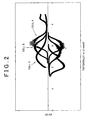
- FIG. 2 is a graph in which the obtained charging and discharging curves have been converted into differential capacity.
- divalent-trivalent redox of Fe was confirmed in test cells A and B, though trivalent-quadrivalent redox of Fe was not.
- test cell C an oxidation potential of trivalent-quadrivalent Fe near 4.3 V, as well as an oxidation potential of divalent-trivalent Fe near 2.5 V was observed.
- Electrode active material composition * Average electronegativity of M Oxidation potential (V) of Fe (divalent ⁇ trivalent Oxidation potential (V) of Fe (trivalent ⁇ quadrivalent Test cell A Li 2 FeP 1.5 O z 2.19 3.30 Not observed Test cell B Li 2 FeP 1 B 1 O z 2.12 2.96 Not observed Test cell C Li 2 FeB 2 O z 2.04 2.49 4.29 * In the expressions, z is a number that satisfies electroneutrality.
- FIG. 3 is a graph in which the x-axis represents the average electronegativity of M and the y-axis represents the oxidation potential.
- the oxidation potential from divalent to trivalent Fe decreases.
- the straight line of the oxidation potential from divalent to trivalent Fe and the straight line of the oxidation potential from trivalent to quadrivalent Fe are parallel. This is because the redox potential is determined by the relationship between an inherent potential that an Fe valence change has and an electronegativity that an element (Li, M, O) around the Fe has.
- the average electronegativity of M must be equal to or less than 2.07 to realize trivalent-quadrivalent redox of Fe.
- the average electronegativity of M in both test cells A and B is higher than approximately 2.07 so in actuality test cells A and B were unable to utilize trivalent-quadrivalent redox.
- the average electronegativity of M in test cell C is lower than approximately 2.07 so test cell C was able to utilize trivalent-quadrivalent redox.
Landscapes
- Chemical & Material Sciences (AREA)
- Chemical Kinetics & Catalysis (AREA)
- General Chemical & Material Sciences (AREA)
- Electrochemistry (AREA)
- Engineering & Computer Science (AREA)
- Inorganic Chemistry (AREA)
- Manufacturing & Machinery (AREA)
- Geochemistry & Mineralogy (AREA)
- Life Sciences & Earth Sciences (AREA)
- Materials Engineering (AREA)
- Organic Chemistry (AREA)
- Physics & Mathematics (AREA)
- Condensed Matter Physics & Semiconductors (AREA)
- General Physics & Mathematics (AREA)
- Secondary Cells (AREA)
- Battery Electrode And Active Subsutance (AREA)
Abstract
Description
- The invention relates to a method of charging a lithium secondary battery which uses an amorphous electrode active material.
- As personal computers, video cameras, mobile phones and other such devices become smaller, lithium secondary batteries have come to be widely used as power sources in the fields of communication and information-related devices due to their high energy density. Also, in the automotive field as well, there is a push for the rapid development of electric vehicles due to environmental and resources issues, and lithium secondary batteries are being considered for use as power sources to power these electric vehicles.
- Currently amorphous electrode active material is known to be used as the electrode active material in lithium secondary batteries. For example, Japanese Patent Application Publication No.
2005-135866 JP-A-2005-135866 claim 1 is based on the disclosure inJP 2005-135 866 8-78002 JP-A-8-78002 10-74515 JP-A-10-74515 - Amorphous electrode active material is advantageous in that the composition can be set freely compared with crystalline electrode active material. Moreover, although amorphous electrode active material shows promise as a high capacity electrode active material, its actual capacity is currently still low so there is a demand for high capacity amorphous electrode active material. Incidentally, Japanese Patent Application Publication No.
10-134813 JP-A-10-134813 9-22695 JP-A-9-22695
JP 2002-270171 - This invention provides a method of charging a lithium secondary battery which uses an amorphous electrode active material with superior charging and discharging characteristics.
- The inventors have found a correlative relationship between the oxidation potential of Fe and the average electronegativity of M in amorphous electrode active material represented by the general expression LixFeMyOz (where M is a one or two or more types of glass former element). More specifically, the inventors have found that the oxidation potential of Fe drops when the average electronegativity of M decreases, and that not only divalent-trivalent redox (i.e., oxidation-reduction) of Fe, but also trivalent-quadrivalent redox of Fe can be put to practical use. Normally, the oxidation potential from trivalent Fe to quadrivalent Fe is higher than the decomposition potential of the electrolyte solution (hereinafter also referred to as "electrolyte decomposition potential") so if the potential is increased, the electrolyte solution starts to decompose first, thus preventing trivalent-quadrivalent redox from being put to practical use. However, the inventors have found that by controlling the average electronegativity of M, the oxidation potential from trivalent Fe to quadrivalent Fe can be lowered, and as a result, trivalent-quadrivalent redox of Fe can be actively used.
- An aspect of the invention relates to a method of charging a lithium secondary battery, the lithium secondary battery comprising: a positive electrode layer that includes positive electrode active material; a negative electrode layer that includes negative electrode active material; a separator arranged between the positive electrode layer and the negative electrode layer; and an electrolyte solution having an electrolyte decomposition potential Ve which is impregnated into at least the separator, wherein the positive electrode active material is amorphous; and the positive electrode active material is represented by a general expression LixFeMyOz, wherein in the expression, x and y are values which independently satisfy 1 < x ≤ 2.5 and 0 < y ≤ 3, respectively, and z = (x + (valence of Fe) + (valence of M) x y) / 2 to satisfy stoichiometry, M represents one or two or more types of glass former element, and an average electronegativity of M is less than (Ve + 6.74) / 5.41, the method characterized in that the secondary battery is charged up to 4.5 V.
- According to this first aspect, the oxidation potential from trivalent Fe to quadrivalent Fe can be reduced so that it is lower than the electrolyte decomposition potential by setting the average electronegativity of M taking the electrolyte decomposition potential Ve into account. As a result, trivalent-quadrivalent redox can be used, thus enabling high capacity electrode active material to be obtained.
- Also, the average electronegativity of M may be equal to or less than 2.07. This enables a more practical electrode active material to be obtained.
- Further, the M may be B (boron). Accordingly, the electronegativity can be kept within an appropriate range such that high capacity electrode active material can be obtained.
- The foregoing and further features and advantages of the invention will become apparent from the following description of example embodiments with reference to the accompanying drawings, wherein like numerals are used to represent like elements and wherein:
-
FIGS. 1A and 1B are graphs showing the relationship between the oxidation potential of Fe and the average electronegativity of M in amorphous electrode active material represented by the general expression lixFeMyOz; -
FIG. 2 is a graph showing the charging and discharging characteristics of test cells according to an example; and -
FIG 3 is a graph showing the relationship between the oxidation potential of Fe and the average electronegativity of M in amorphous electrode active material according to the example. - Hereinafter, electrode active material and a lithium secondary battery will be described in detail.
- First the electrode active material according to a first example will be described. The electrode active material according to this example is electrode active material which is used together with electrolyte solution having an electrolyte decomposition potential Ve. The electrode active material is amorphous and can be represented by the general expression LixFeMyOz, where x and y are values which independently satisfy 1 < x s 2.5 and 0 < y ≤ 3, respectively, and z = (x + (valence of Fe) + (valence of M) x y) / 2 to satisfy stoichiometry. Also, M represents one or two or more types of glass former element, and the average electronegativity of M is less than (Ve + 6.74) / 5.41.
- According to the example, the oxidation potential from trivalent to quadrivalent Fe can be reduced so that it is less than the electrolyte decomposition potential by setting the average electronegativity of M taking the electrolyte decomposition potential Ve into account. As a result, trivalent-quadrivalent redox can be used which enables high capacity electrode active material to be obtained. Furthermore, the electrode active material according to the example is amorphous which is advantageous in that it enables the composition of the electrode active material to be set freely. Incidentally, the electrode active material according to the example is used as positive electrode active material. Also, hereinafter, the electrode active material according to the example may be referred to as amorphous electrode active material represented by the general expression LixFeMyOz.
-
FIGS. 1A and 1B are graphs showing the relationship between the oxidation potential of Fe and the average electronegativity of M in amorphous electrode active material represented by the general expression LixFeMyOz. As shown inFIG 1A , with amorphous electrode active material represented by the general expression LixFeMyOz, when the x-axis represents the average electronegativity of M and the y-axis represents the potential (V vs Li-metal), the relationship Y = 5.41X - 6.74 is satisfied for the oxidation potential from trivalent Fe to quadrivalent Fe, and the relationship Y = 5.41X - 8.54 is satisfied for the oxidation potential from divalent to trivalent Fe. - In the related art, the oxidation potential from trivalent to quadrivalent Fe is higher than the decomposition potential of the electrolyte solution used so the electrolyte solution is first to decompose when the potential is increased. As a result, trivalent-quadrivalent redox was unable to be used. However, as shown in
FIG 1B , when the electrolyte decomposition potential is Ve (V vs Li-metal), the average electronegativity of M is set to correspond to that Ve. More specifically, the average electronegativity of M is made less than (Ve + 6.74) / 5.41. As a result, the oxidation potential from trivalent to quadrivalent Fe becomes less than the decomposition potential of the electrolyte solution used so trivalent-quadrivalent redox can be used, thus enabling high capacity electrode active material to be obtained. In this manner, the average electronegativity of M in this example is defined as being less than (Ve + 6.74) / 5.41. Hereinafter, the electrode active material according to the example will be described divided into the following: i) the structure of the electrode active material, ii) the electrolyte solution used with the electrode active material, and iii) the manufacturing method of the electrode active material. - The electrode active material according to the example is amorphous and is represented by the general expression LixFeMyOz, where x and y are values which independently satisfy 1 < x ≤ 2.5 and 0 < y ≤ 3, respectively, and z = (x + (valence of Fe) + (valence of M) x y) / 2 to satisfy stoichiometry, M represents one or two or more types of glass former element, and the average electronegativity of M is less than (Ve + 6.74) / 5.41.
- In this general expression, the value of x is normally 1 < x ≤ 2.5, preferably 1.5 ≤ x ≤ 2.5, and more preferably 1.75 ≤ x ≤ 2.5. If the value of x is equal to or less than 1, in theory Fe cannot take on a valence of 4. Conversely, if the value of x is too large, amorphous electrode active material cannot be obtained.
- In the foregoing general expression, the value of y is normally 0 < y ≤ 3, preferably 1.5 ≤ y ≤ 3, and more preferably 1.5 ≤ y ≤ 2.5. If the value of y is too small, amorphous electrode active material cannot be obtained. On the other hand, if the value of y is too large, the capacity becomes smaller such that practical electrode active material cannot be obtained.
- In the foregoing general expression, the value of z changes depending on the value of x, the valence of Fe, the valence of M, and the value of y, but it is normally represented by z = (x + (valence of Fe) + (valence of M) x y) / 2 to satisfy stoichiometry. That is, in this example, the value of z is specified to satisfy electroneutrality. Incidentally, in the example , the valence of Fe changes from 2 to 4 with charging and discharging, but when the electrode active material according to this example is synthesized using a melt rapid cooling method, which will be described later, for example, the valence of Fe is usually 2 or 3.
- In the foregoing general expression, M represents one or two or more types of glass former element. The M is not particularly limited as long as it is an element that forms glass. More specifically, the M may be, for example, boron (B), phosphorus (P), silicon (Si), or tin (Sn). Of these, boron (B) is preferable because the electronegativity is within the appropriate range which enables the capacity of the electrode active material to be high.
- In the foregoing general expression, the average electronegativity of M is less than (Ve + 6.74) / 5.41. Incidentally, the electrolyte decomposition potential Ve will be described later in relation to the electrolyte solution that is used together with the electrode active material. The term electronegativity in this example refers to Pauling electronegativity. More specifically, boron (B) is 2.04, phosphorus (P) is 2.19, silicon (Si) is 1.90, and tin (Sn) is 1.96. Also, the term average electronegativity in this example embodiment of the invention refers to the weighted average of the electronegativity of each element that constitutes or forms M. For example, when M is formed of boron (B) and phosphorus (P) such that M = B1.5P0.5, the average electronegativity is ((2.04 × 1.5) + (2.19 × 0.5)) / (1.5 + 0.5) = 2.08.
- Here, when the average electronegativity of M is equal to (Ve + 6.74) / 5.41, the oxidation potential from trivalent to quadrivalent Fe becomes equal to the decomposition potential of the electrolyte solution so the electrolyte solution ends up decomposing simultaneously with the oxidation of the Fe. Therefore, the average electronegativity of M simply needs to be less than (Ve + 6.74) / 5.41, preferably equal to or less than ((Ve + 6.74) / 5.41) - 0.05, and more preferably equal to or less than ((Ve + 6.74) / 5.41) - 0.1 because it enables the high electrode active material to be safer.
- Although the range of the average electronegativity of M differs depending on the decomposition potential of the electrolyte solution and the like, it is preferably equal to or less than 2.17, and more preferably equal to or less than 2.07.
- One characteristic of the electrode active material according to the example embodiment of the invention is that it is amorphous. This electrode active material is preferably amorphous to the extent that one or two or more of the following conditions are satisfied. (1) the average- crystallite size is equal to or less than approximately 1000 Angstrom (preferably equal to or less than approximately 100 Angstrom, and more preferably equal to or less than 50 Angstrom); (2) the specific gravity of the electrode active material is large at equal to or greater than approximately 3% (and more preferably equal to or greater than approximately 5%) compared to the specific gravity (theoretical value) when the electrode active material is completely crystalline; and (3) no peak which supports the electrode active material being crystalline can be observed in an X-ray diffraction pattern. The electrode active material described here is preferably electrode active material that satisfies one or two or more of these conditions (1) to (3). Of these, the electrode active material is preferably an electrode active material that satisfies at least condition (3). Incidentally, the X-ray pattern can be obtained using an X-ray diffractometer (model number: Rigaku RINT 2100 HLR/PC) or the like that may be obtained from Rigaku Corporation, for example. The application effect of this example tends to become even greater with electrode active material that is more amorphous (i.e., less crystalline),
- Next, electrolyte solution that is used together with the electrode active material will be described. The electrode active material according to the example is used together with electrolyte solution having an electrolyte decomposition potential Ve. Incidentally, the unit of the electrolyte decomposition potential Ve is (V vs Li-metal), but for the sake of convenience may simply be referred to as V.
- The electrolyte decomposition potential Ve differs depending on the composition of the electrolyte solution used, and although not particularly limited, is preferably within the range of 4.00 V to 5.00 V, and more preferably within the range of 4.00 V to 4.50 V, for example. Incidentally, the highest decomposition potential of any practical electrolyte solution currently being used is approximately 4.50 V. However, in this example, sufficient effects of the example are displayed even if an electrolyte solution having a decomposition potential that exceeds 4.50 V is used. The decomposition potential can be determined by the value listed in a chemical pamphlet or the like or by the measurement results when an actual decomposition experiment is performed on the electrolyte solution.
- The electrolyte solution normally contains a supporting salt and a solvent. The supporting salt can be any of a variety of lithium salts such as LiPF6, LiBF4, LiN(CF3SO2)2, LiCF3SO3, LiC4F9SO3, LiC(CF3SO2)3, and LiClO4, for example. The solvent may be any of a variety of types of aprotic solvents such as a carbonate, ester, ether, nitrile, sulfone, or lactone type, or ambient temperature molten salt, for example. Specific examples include propylene carbonate; ethylene carbonate; diethyl carbonate; dimethyl carbonate; ethyl methyl carbonate; 1, 2-dimethoxyethane; 1, 2-diethoxyethane; acetonitrile; propionitrile; tetrahydrofuran; 2-methyltetrahydrofuran; dioxane; 1, 3-dioxolan; nitromethane; N, N-dimethylformamide; dimethylsulfoxide; sulfolane; γ-butyrolactone, and 1-ethyl-3-methylimidazolium tetrafluoroborate (EMI-BF4). In this example embodiment of the invention, only one type or a mixture of two or more types of these solvents may be used.
- Next, the manufacturing method of the electrode active material according to a second example will be described. The manufacturing method of the electrode active material according to this example is not particularly limited as long as it is a method by which the electrode active material described above can be obtained. One example is the melt rapid cooling method. One specific example of the melt rapid cooling method is a method for melt mixing a raw material composition that includes the raw materials which constitute the general expression LixFeMyOz, and rapidly solidifying that raw material composition from a molten state. The raw material composition normally contains Li raw material, Fe raw material, and M raw material.
- The Li raw material is not particularly limited as long as it contains a Li element. For example, the Li raw material may be Li2O, LiOH, or Li2CO3 or the like. Of these, Li2O is preferable. In this example, one or two or more types of the Li raw material may be used. The Fe raw material is not particularly limited as long as it contains an Fe element. For example, the Fe raw material may be FeO or Fe2O3, FeO being the more preferable. In this example , one or two or more types of the Fe raw material may be used.
- The M raw material is not particularly limited as long as it includes the glass former element described above. Examples of the M raw material include hydroxide and oxide having the glass former element described above. More specifically, when the glass former element is boron (B), B2O3 or the like may be used. When the glass former element is phosphorus (P), P2O5 or the like may be used. When the glass former element is silicon (Si), SiO2 or the like may be used. When the glass former element is tin (Sn), SnO2 or the like may be used. In this example or two or more types of the M may be used. In this example , the type and amount of the M that is used are set so that the average electronegativity of M is less than the value described above.
- In this example, amorphous electrode active material may be obtained by adjusting the composition of the raw material composition to match the target element ratio, melting that raw material composition at approximately 1200°C, for example, and then rapidly cooling it using a single-roll rapid cooling apparatus provided with a Cu roll.
- Next, a lithium secondary battery according to a third example will be described. The lithium secondary battery according to the example includes a positive electrode layer that includes the foregoing electrode active material as positive electrode active material; a negative electrode layer that includes negative electrode active material; a separator arranged between the positive electrode layer and the negative electrode layer; and an electrolyte solution having an electrolyte decomposition potential Ve which is impregnated into at least the separator.
- According to this example, a high capacity lithium secondary battery can be obtained by combining the foregoing electrode active material with the foregoing electrolyte solution. That is, as shown in
FIG. 1B described above, trivalent quadrivalent redox of Fe can be used by setting the value of the average electronegativity of M in amorphous electrode active material represented by the general expression LixFeMyOz according to the electrolyte decomposition potential Ve. The ability to utilize this trivalent-quadrivalent redox of Fe enables a high capacity lithium secondary battery to be obtained. - The electrode active material and the electrolyte solution used in this example are the same as the electrode active material and the electrolyte solution in the first example embodiment of the invention so descriptions thereof will be omitted here. Also, the structure of the lithium secondary battery according to this example is not particularly limited and may be set as deemed appropriate as long as it at least has the foregoing electrode active material and the foregoing electrolyte solution.
- The positive electrode layer normally includes a conductive agent and a binder in addition to the positive electrode active material. The conductive agent may be, for example, carbon black or acetylene black. The binder may be, for example, polyvinylidene-fluoride (PVDF) or polytetrafluoroethylene (PTFE). Also, the lithium secondary battery according to this example may also have a positive electrode collector that collects power from the positive electrode layer. The material of this positive electrode collector may be, for example, stainless steel, nickel, aluminum, iron, or titanium.
- The negative electrode layer normally includes negative electrode active material, a conductive agent, and a binder. The negative electrode active material is not particularly limited as long as it can store and release lithium ions. Examples include metal lithium, a lithium alloy, metal oxide, metal sulfide, metal nitride, and carbon material such as graphite. Of these, metal lithium is preferable. The conductive agent and the binder can be the same as those used with the positive electrode layer described above. Also, the lithium secondary battery according to this example may have a negative electrode collector that collects power from the negative electrode layer. The material of the negative electrode collector may be, for example, copper, stainless steel or nickel.
- The separator is not particularly limited as long as it functions to separate the positive electrode layer from the negative electrode layer and hold the electrolyte solution. Possible examples include a porous membrane such as polyethylene or polypropylene, and nonwoven fabric such as resin nonwoven fabric or glass fiber nonwoven fabric. Also, the lithium secondary battery obtained from the example may be any of a variety of shapes, such as coin-shaped, laminated (stacked), or cylindrical.
- Incidentally, the invention is not limited to the foregoing example embodiments. The foregoing example embodiments illustrate examples.
- Hereinafter, the invention will be described in even more detail with the following examples. LiOH as the Li raw material, FeO as the Fe raw material, P2O5 as the P raw material, and B2O3 as the B raw material were prepared. Using these raw materials, raw material components A to C were then obtained by mixing the constituent components together so that the molar ratio was the same as that shown in
Chart 1 below. -
[Chart 1] Li:Fe:P:B Raw material composition A 2 : 1 : 1.5 : 0 Raw material composition B 2 : 1 : 1 : 1 Raw material composition C 2 : 1 : 0 : 2 - Next, the raw material components were melted for 1 minute at 1200°C in an Ar atmosphere and then rapidly cooled with a single-roll rapid cooling apparatus provided with a Cu roll to obtain electrode active materials A to C. The crystallinity of each of the obtained electrode active materials A to C was then evaluated using X-ray diffraction under the following measurement conditions: Apparatus used: Rigaku, RAD-X; X-ray: CuKα, 40 kV, 40 mA; scan range: 2 6 = 10° to 80°. In the results, no peak which supports crystallinity could be observed in an X-ray diffraction pattern for any of the electrode active materials A to C so the electrode active materials A to C were all confirmed to be amorphous.
- Next, test cells were manufactured using the electrode active materials A to C and the charging and discharging characteristics of each cell were evaluated. First, 0.4 grams of electrode active material A was weighed out and added to a zirconia mill pot. Ball mill processing was then performed for 3 hours at 300 rpm. Next, 0.1429 grams of acetylene black was added and ball mill processing was performed for another 3 hours at 300 rpm. Then 0.053 grams of PTFE was added to the obtained powder and this mixture was then applied to SUS mesh to obtain a positive electrode.
- Next, metal lithium as the counter electrode and a polyethylene separator (Ube Industries, Ltd.) were prepared. Also, the electrolyte solution was prepared by dissolving 1 mol/L of LiPF6 as a supporting salt in a mixed solvent having a volume ratio of 3 : 7 of ethylene carbonate (EC) and diethyl carbonate (DEC). Test cell A which is a 2032 type coin cell was obtained using these materials. Then test cells B and C were obtained in the same way except for that electrode active materials B and C, respectively, were used instead of electrode active material A.
- Next, charging and discharging using the test cells A to C obtained as described above were performed under the following conditions: Charging: 4.5 V, CC157 µA, Rest: 5 min, Discharging: 1.5 V, CC157 µA, Rest: 5 min.
-
FIG. 2 is a graph in which the obtained charging and discharging curves have been converted into differential capacity. As is evident fromFIG 2 , divalent-trivalent redox of Fe was confirmed in test cells A and B, though trivalent-quadrivalent redox of Fe was not. On the other hand, in test cell C, an oxidation potential of trivalent-quadrivalent Fe near 4.3 V, as well as an oxidation potential of divalent-trivalent Fe near 2.5 V was observed. - A compilation of the results of
FIG. 2 are shown inChart 2 below. -
[Chart 2] Electrode active material composition * Average electronegativity of M Oxidation potential (V) of Fe
(divalent → trivalentOxidation potential (V) of Fe
(trivalent → quadrivalentTest cell A Li2FeP1.5Oz 2.19 3.30 Not observed Test cell B Li2FeP1B1Oz 2.12 2.96 Not observed Test cell C Li2FeB2Oz 2.04 2.49 4.29 * In the expressions, z is a number that satisfies electroneutrality. -
FIG. 3 is a graph in which the x-axis represents the average electronegativity of M and the y-axis represents the oxidation potential. As is evident fromFIG. 3 , it was confirmed that when the average electronegativity of M decreases, the oxidation potential from divalent to trivalent Fe also decreases. Incidentally, inFIG. 3 , the straight line of the oxidation potential from divalent to trivalent Fe and the straight line of the oxidation potential from trivalent to quadrivalent Fe are parallel. This is because the redox potential is determined by the relationship between an inherent potential that an Fe valence change has and an electronegativity that an element (Li, M, O) around the Fe has. Furthermore, taking into consideration that the decomposition voltage of the electrolyte solution used in this example is 4.50 V, the average electronegativity of M must be equal to or less than 2.07 to realize trivalent-quadrivalent redox of Fe. The average electronegativity of M in both test cells A and B is higher than approximately 2.07 so in actuality test cells A and B were unable to utilize trivalent-quadrivalent redox. The average electronegativity of M in test cell C, however, is lower than approximately 2.07 so test cell C was able to utilize trivalent-quadrivalent redox.
Claims (3)
- A method of charging a lithium secondary battery, the lithium secondary battery comprising:a positive electrode layer that includes positive electrode active material;a negative electrode layer that includes negative electrode active material;a separator arranged between the positive electrode layer and the negative electrode layer; andan electrolyte solution having an electrolyte decomposition potential Ve which is impregnated into at least the separator,wherein the positive electrode active material is amorphous; and the positive electrode active material is represented by a general expression LixFeMyOz, wherein in the expression, x and y are values which independently satisfy 1 < x ≤ 2.5 and 0 < y ≤ 3, respectively, and z = (x + (valence of Fe) + (valence of M) x y) / 2 to satisfy stoichiometry, M represents one or two or more types of glass former element, and an average electronegativity of M is less than (Ve + 6.74) / 5.41,the method characterized in that the secondary battery is charged up to 4.5 V.
- The method according to claim 1, wherein the average electronegativity of M is equal to or less than 2.07.
- The method according to claim 1 or 2, wherein the M is boron.
Applications Claiming Priority (2)
| Application Number | Priority Date | Filing Date | Title |
|---|---|---|---|
| JP2007094502A JP5164246B2 (en) | 2007-03-30 | 2007-03-30 | Electrode active material and lithium secondary battery |
| PCT/IB2008/001553 WO2008120106A2 (en) | 2007-03-30 | 2008-03-28 | Electrode active materialand lithium secondary battery |
Publications (2)
| Publication Number | Publication Date |
|---|---|
| EP2137778A2 EP2137778A2 (en) | 2009-12-30 |
| EP2137778B1 true EP2137778B1 (en) | 2011-09-07 |
Family
ID=39808761
Family Applications (1)
| Application Number | Title | Priority Date | Filing Date |
|---|---|---|---|
| EP08762884A Active EP2137778B1 (en) | 2007-03-30 | 2008-03-28 | Method to charge a lithium secondary battery |
Country Status (10)
| Country | Link |
|---|---|
| US (1) | US8703334B2 (en) |
| EP (1) | EP2137778B1 (en) |
| JP (1) | JP5164246B2 (en) |
| KR (1) | KR101145997B1 (en) |
| CN (1) | CN101657919B (en) |
| AT (1) | ATE523917T1 (en) |
| BR (1) | BRPI0809584A2 (en) |
| CA (1) | CA2682094C (en) |
| RU (1) | RU2433509C2 (en) |
| WO (1) | WO2008120106A2 (en) |
Families Citing this family (7)
| Publication number | Priority date | Publication date | Assignee | Title |
|---|---|---|---|---|
| JP5489627B2 (en) | 2009-10-02 | 2014-05-14 | トヨタ自動車株式会社 | Lithium secondary battery |
| JP5506358B2 (en) * | 2009-12-11 | 2014-05-28 | パナソニック株式会社 | Non-aqueous electrolyte battery active material and non-aqueous electrolyte battery |
| WO2016136555A1 (en) * | 2015-02-25 | 2016-09-01 | 国立大学法人長岡技術科学大学 | Positive electrode active material for alkali ion secondary batteries |
| JP6837278B2 (en) * | 2015-02-25 | 2021-03-03 | 国立大学法人長岡技術科学大学 | Positive electrode active material for alkaline ion secondary batteries |
| CN108352530A (en) * | 2015-10-28 | 2018-07-31 | 日本电气硝子株式会社 | Cathode active material for sodium ion secondary battery |
| CN110521036A (en) * | 2017-06-27 | 2019-11-29 | 日本电气硝子株式会社 | Positive electrode active material for sodium ion secondary battery |
| JP6662353B2 (en) * | 2017-07-18 | 2020-03-11 | トヨタ自動車株式会社 | Negative electrode current collector, negative electrode, and aqueous lithium ion secondary battery |
Family Cites Families (17)
| Publication number | Priority date | Publication date | Assignee | Title |
|---|---|---|---|---|
| GB744947A (en) * | 1953-09-14 | 1956-02-15 | British Thomson Houston Co Ltd | Improvements in glass compositions |
| EP0503901B1 (en) * | 1991-03-15 | 1996-12-04 | Honda Giken Kogyo Kabushiki Kaisha | Cathode materials for lithium battery and methods for producing the same |
| JP3393621B2 (en) * | 1993-06-07 | 2003-04-07 | 本田技研工業株式会社 | Positive electrode material for lithium secondary battery and method for producing the same |
| JPH0878002A (en) | 1994-08-31 | 1996-03-22 | Yamaha Corp | Lithium battery and manufacture of its electrode |
| JPH0922695A (en) | 1995-07-04 | 1997-01-21 | Mitsubishi Cable Ind Ltd | Electrode for lithium secondary battery and lithium secondary battery using same |
| JP3593808B2 (en) | 1996-09-02 | 2004-11-24 | ヤマハ株式会社 | Method for manufacturing electrode of lithium battery |
| JP3424722B2 (en) | 1996-10-29 | 2003-07-07 | 日本電信電話株式会社 | Positive active material for non-aqueous electrolyte secondary battery and non-aqueous electrolyte secondary battery |
| CA2320661A1 (en) * | 2000-09-26 | 2002-03-26 | Hydro-Quebec | New process for synthesizing limpo4 materials with olivine structure |
| JP2002270171A (en) * | 2001-03-08 | 2002-09-20 | Nissan Motor Co Ltd | Positive active material for non-aqueous electrolyte lithium secondary battery and method for producing the same |
| CN1205689C (en) | 2001-09-28 | 2005-06-08 | 任晓平 | Secondary lithium ion battery or battery pack, its protective circuit and electronic device |
| RU2303318C2 (en) * | 2003-04-23 | 2007-07-20 | Мицуи Майнинг Энд Смелтинг Ко., Лтд. | Negative plate for nonaqueous secondary battery, negative plate manufacturing process, and nonaqueous secondary battery |
| JP2005158673A (en) * | 2003-10-31 | 2005-06-16 | Toyota Motor Corp | Electrode active material, method for producing the same, and nonaqueous electrolyte secondary battery |
| JP4543658B2 (en) * | 2003-10-31 | 2010-09-15 | トヨタ自動車株式会社 | Electrode active material, method for producing the same, and nonaqueous electrolyte secondary battery |
| CA2791156C (en) * | 2003-12-23 | 2015-12-15 | Universite De Montreal | Process for preparing electroactive insertion compounds and electrode materials obtained therefrom |
| JP5053834B2 (en) | 2004-04-01 | 2012-10-24 | スリーエム イノベイティブ プロパティズ カンパニー | Redox shuttle for overdischarge protection of rechargeable lithium-ion batteries |
| JP2006155941A (en) * | 2004-11-25 | 2006-06-15 | Kyushu Univ | Method for producing electrode active material |
| JP2007234565A (en) * | 2005-03-18 | 2007-09-13 | Sanyo Electric Co Ltd | Nonaqueous electrolyte secondary battery |
-
2007
- 2007-03-30 JP JP2007094502A patent/JP5164246B2/en active Active
-
2008
- 2008-03-28 RU RU2009135868/07A patent/RU2433509C2/en active
- 2008-03-28 CN CN2008800109312A patent/CN101657919B/en active Active
- 2008-03-28 CA CA2682094A patent/CA2682094C/en active Active
- 2008-03-28 AT AT08762884T patent/ATE523917T1/en not_active IP Right Cessation
- 2008-03-28 US US12/593,412 patent/US8703334B2/en active Active
- 2008-03-28 KR KR1020097020471A patent/KR101145997B1/en active Active
- 2008-03-28 WO PCT/IB2008/001553 patent/WO2008120106A2/en not_active Ceased
- 2008-03-28 BR BRPI0809584-1A patent/BRPI0809584A2/en not_active Application Discontinuation
- 2008-03-28 EP EP08762884A patent/EP2137778B1/en active Active
Also Published As
| Publication number | Publication date |
|---|---|
| US20100183923A1 (en) | 2010-07-22 |
| KR101145997B1 (en) | 2012-05-15 |
| US8703334B2 (en) | 2014-04-22 |
| ATE523917T1 (en) | 2011-09-15 |
| WO2008120106A8 (en) | 2009-01-08 |
| CA2682094C (en) | 2013-07-23 |
| RU2433509C2 (en) | 2011-11-10 |
| JP5164246B2 (en) | 2013-03-21 |
| BRPI0809584A2 (en) | 2014-09-23 |
| WO2008120106A2 (en) | 2008-10-09 |
| CN101657919B (en) | 2012-07-04 |
| EP2137778A2 (en) | 2009-12-30 |
| JP2008251481A (en) | 2008-10-16 |
| KR20090121366A (en) | 2009-11-25 |
| CN101657919A (en) | 2010-02-24 |
| WO2008120106A3 (en) | 2009-10-22 |
| CA2682094A1 (en) | 2008-10-09 |
| RU2009135868A (en) | 2011-05-10 |
Similar Documents
| Publication | Publication Date | Title |
|---|---|---|
| EP2203948B1 (en) | Positive electrode active material, lithium secondary battery, and manufacture methods therefore | |
| US8501350B2 (en) | Lithium manganese composite oxide | |
| US8980476B2 (en) | Active material for battery, battery, and method for production of active material for battery | |
| KR102164007B1 (en) | Rechargeable lithium battery | |
| US8852740B2 (en) | Electrode active material and electrode active material production method | |
| EP2137778B1 (en) | Method to charge a lithium secondary battery | |
| EP3965128B1 (en) | Nonaqueous electrolyte solution, and nonaqueous electrolyte battery | |
| KR20130033425A (en) | Lithium secondary battery | |
| KR101382502B1 (en) | Active material for battery, and battery | |
| KR20160081111A (en) | Composite positive active material, preparing method thereof, positive electrode including the same, and lithium secondary battery including the positive electrode | |
| KR20190076774A (en) | Positive electrode active material precursor for rechargable lithium battery and manufacturing method of the same, positive electrode active material for rechargable lithium battery and manufacturing method of the same, rechargable lithium battery | |
| JP5489627B2 (en) | Lithium secondary battery | |
| CN103210532B (en) | Active material for anode of secondary cell and the secondary cell using it | |
| JP5565391B2 (en) | Electrode active material, method for producing the electrode active material, and lithium secondary battery including the electrode active material | |
| KR102436440B1 (en) | Cathode, method for manufacturing the same, and rechargeable lithium battery comprising the same | |
| KR100874769B1 (en) | Cathode active material for lithium secondary battery, preparation method thereof, and lithium secondary battery comprising same | |
| EP2557619A1 (en) | Active material for battery, and battery | |
| KR101443500B1 (en) | Lithium-metal oxide and lithium secondary battery having the same | |
| CN117337499A (en) | Cathode additive for lithium secondary batteries, manufacturing method thereof, cathode containing the same, and lithium secondary battery containing the same | |
| KR20200076229A (en) | Electrolyte for lithium secondary battery and lithium secondary battery comprising the same |
Legal Events
| Date | Code | Title | Description |
|---|---|---|---|
| PUAI | Public reference made under article 153(3) epc to a published international application that has entered the european phase |
Free format text: ORIGINAL CODE: 0009012 |
|
| 17P | Request for examination filed |
Effective date: 20090929 |
|
| AK | Designated contracting states |
Kind code of ref document: A2 Designated state(s): AT BE BG CH CY CZ DE DK EE ES FI FR GB GR HR HU IE IS IT LI LT LU LV MC MT NL NO PL PT RO SE SI SK TR |
|
| 17Q | First examination report despatched |
Effective date: 20100216 |
|
| DAX | Request for extension of the european patent (deleted) | ||
| GRAP | Despatch of communication of intention to grant a patent |
Free format text: ORIGINAL CODE: EPIDOSNIGR1 |
|
| RIC1 | Information provided on ipc code assigned before grant |
Ipc: H01M 10/44 20060101AFI20110131BHEP |
|
| RTI1 | Title (correction) |
Free format text: METHOD TO CHARGE A LITHIUM SECONDARY BATTERY |
|
| GRAS | Grant fee paid |
Free format text: ORIGINAL CODE: EPIDOSNIGR3 |
|
| GRAA | (expected) grant |
Free format text: ORIGINAL CODE: 0009210 |
|
| REG | Reference to a national code |
Ref country code: GB Ref legal event code: FG4D |
|
| REG | Reference to a national code |
Ref country code: CH Ref legal event code: EP |
|
| REG | Reference to a national code |
Ref country code: IE Ref legal event code: FG4D |
|
| REG | Reference to a national code |
Ref country code: DE Ref legal event code: R096 Ref document number: 602008009607 Country of ref document: DE Effective date: 20111103 |
|
| REG | Reference to a national code |
Ref country code: NL Ref legal event code: VDEP Effective date: 20110907 |
|
| PG25 | Lapsed in a contracting state [announced via postgrant information from national office to epo] |
Ref country code: FI Free format text: LAPSE BECAUSE OF FAILURE TO SUBMIT A TRANSLATION OF THE DESCRIPTION OR TO PAY THE FEE WITHIN THE PRESCRIBED TIME-LIMIT Effective date: 20110907 Ref country code: HR Free format text: LAPSE BECAUSE OF FAILURE TO SUBMIT A TRANSLATION OF THE DESCRIPTION OR TO PAY THE FEE WITHIN THE PRESCRIBED TIME-LIMIT Effective date: 20110907 Ref country code: SE Free format text: LAPSE BECAUSE OF FAILURE TO SUBMIT A TRANSLATION OF THE DESCRIPTION OR TO PAY THE FEE WITHIN THE PRESCRIBED TIME-LIMIT Effective date: 20110907 Ref country code: NO Free format text: LAPSE BECAUSE OF FAILURE TO SUBMIT A TRANSLATION OF THE DESCRIPTION OR TO PAY THE FEE WITHIN THE PRESCRIBED TIME-LIMIT Effective date: 20111207 Ref country code: LT Free format text: LAPSE BECAUSE OF FAILURE TO SUBMIT A TRANSLATION OF THE DESCRIPTION OR TO PAY THE FEE WITHIN THE PRESCRIBED TIME-LIMIT Effective date: 20110907 |
|
| LTIE | Lt: invalidation of european patent or patent extension |
Effective date: 20110907 |
|
| PG25 | Lapsed in a contracting state [announced via postgrant information from national office to epo] |
Ref country code: SI Free format text: LAPSE BECAUSE OF FAILURE TO SUBMIT A TRANSLATION OF THE DESCRIPTION OR TO PAY THE FEE WITHIN THE PRESCRIBED TIME-LIMIT Effective date: 20110907 Ref country code: GR Free format text: LAPSE BECAUSE OF FAILURE TO SUBMIT A TRANSLATION OF THE DESCRIPTION OR TO PAY THE FEE WITHIN THE PRESCRIBED TIME-LIMIT Effective date: 20111208 Ref country code: LV Free format text: LAPSE BECAUSE OF FAILURE TO SUBMIT A TRANSLATION OF THE DESCRIPTION OR TO PAY THE FEE WITHIN THE PRESCRIBED TIME-LIMIT Effective date: 20110907 Ref country code: AT Free format text: LAPSE BECAUSE OF FAILURE TO SUBMIT A TRANSLATION OF THE DESCRIPTION OR TO PAY THE FEE WITHIN THE PRESCRIBED TIME-LIMIT Effective date: 20110907 Ref country code: CY Free format text: LAPSE BECAUSE OF FAILURE TO SUBMIT A TRANSLATION OF THE DESCRIPTION OR TO PAY THE FEE WITHIN THE PRESCRIBED TIME-LIMIT Effective date: 20110907 |
|
| REG | Reference to a national code |
Ref country code: AT Ref legal event code: MK05 Ref document number: 523917 Country of ref document: AT Kind code of ref document: T Effective date: 20110907 |
|
| PG25 | Lapsed in a contracting state [announced via postgrant information from national office to epo] |
Ref country code: BE Free format text: LAPSE BECAUSE OF FAILURE TO SUBMIT A TRANSLATION OF THE DESCRIPTION OR TO PAY THE FEE WITHIN THE PRESCRIBED TIME-LIMIT Effective date: 20110907 |
|
| PG25 | Lapsed in a contracting state [announced via postgrant information from national office to epo] |
Ref country code: SK Free format text: LAPSE BECAUSE OF FAILURE TO SUBMIT A TRANSLATION OF THE DESCRIPTION OR TO PAY THE FEE WITHIN THE PRESCRIBED TIME-LIMIT Effective date: 20110907 Ref country code: CZ Free format text: LAPSE BECAUSE OF FAILURE TO SUBMIT A TRANSLATION OF THE DESCRIPTION OR TO PAY THE FEE WITHIN THE PRESCRIBED TIME-LIMIT Effective date: 20110907 Ref country code: IS Free format text: LAPSE BECAUSE OF FAILURE TO SUBMIT A TRANSLATION OF THE DESCRIPTION OR TO PAY THE FEE WITHIN THE PRESCRIBED TIME-LIMIT Effective date: 20120107 |
|
| PG25 | Lapsed in a contracting state [announced via postgrant information from national office to epo] |
Ref country code: PL Free format text: LAPSE BECAUSE OF FAILURE TO SUBMIT A TRANSLATION OF THE DESCRIPTION OR TO PAY THE FEE WITHIN THE PRESCRIBED TIME-LIMIT Effective date: 20110907 Ref country code: PT Free format text: LAPSE BECAUSE OF FAILURE TO SUBMIT A TRANSLATION OF THE DESCRIPTION OR TO PAY THE FEE WITHIN THE PRESCRIBED TIME-LIMIT Effective date: 20120109 Ref country code: EE Free format text: LAPSE BECAUSE OF FAILURE TO SUBMIT A TRANSLATION OF THE DESCRIPTION OR TO PAY THE FEE WITHIN THE PRESCRIBED TIME-LIMIT Effective date: 20110907 Ref country code: RO Free format text: LAPSE BECAUSE OF FAILURE TO SUBMIT A TRANSLATION OF THE DESCRIPTION OR TO PAY THE FEE WITHIN THE PRESCRIBED TIME-LIMIT Effective date: 20110907 Ref country code: NL Free format text: LAPSE BECAUSE OF FAILURE TO SUBMIT A TRANSLATION OF THE DESCRIPTION OR TO PAY THE FEE WITHIN THE PRESCRIBED TIME-LIMIT Effective date: 20110907 |
|
| PLBE | No opposition filed within time limit |
Free format text: ORIGINAL CODE: 0009261 |
|
| STAA | Information on the status of an ep patent application or granted ep patent |
Free format text: STATUS: NO OPPOSITION FILED WITHIN TIME LIMIT |
|
| PG25 | Lapsed in a contracting state [announced via postgrant information from national office to epo] |
Ref country code: DK Free format text: LAPSE BECAUSE OF FAILURE TO SUBMIT A TRANSLATION OF THE DESCRIPTION OR TO PAY THE FEE WITHIN THE PRESCRIBED TIME-LIMIT Effective date: 20110907 |
|
| 26N | No opposition filed |
Effective date: 20120611 |
|
| REG | Reference to a national code |
Ref country code: DE Ref legal event code: R097 Ref document number: 602008009607 Country of ref document: DE Effective date: 20120611 |
|
| PG25 | Lapsed in a contracting state [announced via postgrant information from national office to epo] |
Ref country code: MC Free format text: LAPSE BECAUSE OF NON-PAYMENT OF DUE FEES Effective date: 20120331 |
|
| REG | Reference to a national code |
Ref country code: CH Ref legal event code: PL |
|
| REG | Reference to a national code |
Ref country code: IE Ref legal event code: MM4A |
|
| PG25 | Lapsed in a contracting state [announced via postgrant information from national office to epo] |
Ref country code: LI Free format text: LAPSE BECAUSE OF NON-PAYMENT OF DUE FEES Effective date: 20120331 Ref country code: IE Free format text: LAPSE BECAUSE OF NON-PAYMENT OF DUE FEES Effective date: 20120328 Ref country code: CH Free format text: LAPSE BECAUSE OF NON-PAYMENT OF DUE FEES Effective date: 20120331 |
|
| PG25 | Lapsed in a contracting state [announced via postgrant information from national office to epo] |
Ref country code: ES Free format text: LAPSE BECAUSE OF FAILURE TO SUBMIT A TRANSLATION OF THE DESCRIPTION OR TO PAY THE FEE WITHIN THE PRESCRIBED TIME-LIMIT Effective date: 20111218 |
|
| PG25 | Lapsed in a contracting state [announced via postgrant information from national office to epo] |
Ref country code: BG Free format text: LAPSE BECAUSE OF FAILURE TO SUBMIT A TRANSLATION OF THE DESCRIPTION OR TO PAY THE FEE WITHIN THE PRESCRIBED TIME-LIMIT Effective date: 20111207 |
|
| PG25 | Lapsed in a contracting state [announced via postgrant information from national office to epo] |
Ref country code: MT Free format text: LAPSE BECAUSE OF FAILURE TO SUBMIT A TRANSLATION OF THE DESCRIPTION OR TO PAY THE FEE WITHIN THE PRESCRIBED TIME-LIMIT Effective date: 20110907 |
|
| PG25 | Lapsed in a contracting state [announced via postgrant information from national office to epo] |
Ref country code: TR Free format text: LAPSE BECAUSE OF FAILURE TO SUBMIT A TRANSLATION OF THE DESCRIPTION OR TO PAY THE FEE WITHIN THE PRESCRIBED TIME-LIMIT Effective date: 20110907 |
|
| PG25 | Lapsed in a contracting state [announced via postgrant information from national office to epo] |
Ref country code: LU Free format text: LAPSE BECAUSE OF NON-PAYMENT OF DUE FEES Effective date: 20120328 |
|
| PG25 | Lapsed in a contracting state [announced via postgrant information from national office to epo] |
Ref country code: HU Free format text: LAPSE BECAUSE OF FAILURE TO SUBMIT A TRANSLATION OF THE DESCRIPTION OR TO PAY THE FEE WITHIN THE PRESCRIBED TIME-LIMIT Effective date: 20080328 |
|
| REG | Reference to a national code |
Ref country code: FR Ref legal event code: PLFP Year of fee payment: 9 |
|
| REG | Reference to a national code |
Ref country code: FR Ref legal event code: PLFP Year of fee payment: 10 |
|
| REG | Reference to a national code |
Ref country code: FR Ref legal event code: PLFP Year of fee payment: 11 |
|
| PGFP | Annual fee paid to national office [announced via postgrant information from national office to epo] |
Ref country code: GB Payment date: 20260209 Year of fee payment: 19 |
|
| PGFP | Annual fee paid to national office [announced via postgrant information from national office to epo] |
Ref country code: DE Payment date: 20260204 Year of fee payment: 19 |
|
| PGFP | Annual fee paid to national office [announced via postgrant information from national office to epo] |
Ref country code: IT Payment date: 20260220 Year of fee payment: 19 |
|
| PGFP | Annual fee paid to national office [announced via postgrant information from national office to epo] |
Ref country code: FR Payment date: 20260209 Year of fee payment: 19 |