EP2116862B1 - Datenübertragung - Google Patents
Datenübertragung Download PDFInfo
- Publication number
- EP2116862B1 EP2116862B1 EP09159601.5A EP09159601A EP2116862B1 EP 2116862 B1 EP2116862 B1 EP 2116862B1 EP 09159601 A EP09159601 A EP 09159601A EP 2116862 B1 EP2116862 B1 EP 2116862B1
- Authority
- EP
- European Patent Office
- Prior art keywords
- data
- user
- scalar
- sensor
- controller
- Prior art date
- Legal status (The legal status is an assumption and is not a legal conclusion. Google has not performed a legal analysis and makes no representation as to the accuracy of the status listed.)
- Active
Links
Images


Classifications
-
- A—HUMAN NECESSITIES
- A63—SPORTS; GAMES; AMUSEMENTS
- A63B—APPARATUS FOR PHYSICAL TRAINING, GYMNASTICS, SWIMMING, CLIMBING, OR FENCING; BALL GAMES; TRAINING EQUIPMENT
- A63B71/00—Games or sports accessories not covered in groups A63B1/00 - A63B69/00
- A63B71/06—Indicating or scoring devices for games or players, or for other sports activities
- A63B71/0619—Displays, user interfaces and indicating devices, specially adapted for sport equipment, e.g. display mounted on treadmills
-
- A—HUMAN NECESSITIES
- A63—SPORTS; GAMES; AMUSEMENTS
- A63B—APPARATUS FOR PHYSICAL TRAINING, GYMNASTICS, SWIMMING, CLIMBING, OR FENCING; BALL GAMES; TRAINING EQUIPMENT
- A63B24/00—Electric or electronic controls for exercising apparatus of preceding groups; Controlling or monitoring of exercises, sportive games, training or athletic performances
- A63B24/0062—Monitoring athletic performances, e.g. for determining the work of a user on an exercise apparatus, the completed jogging or cycling distance
-
- G—PHYSICS
- G01—MEASURING; TESTING
- G01C—MEASURING DISTANCES, LEVELS OR BEARINGS; SURVEYING; NAVIGATION; GYROSCOPIC INSTRUMENTS; PHOTOGRAMMETRY OR VIDEOGRAMMETRY
- G01C22/00—Measuring distance traversed on the ground by vehicles, persons, animals or other moving solid bodies, e.g. using odometers, using pedometers
- G01C22/002—Measuring distance traversed on the ground by vehicles, persons, animals or other moving solid bodies, e.g. using odometers, using pedometers for cycles
-
- G—PHYSICS
- G01—MEASURING; TESTING
- G01C—MEASURING DISTANCES, LEVELS OR BEARINGS; SURVEYING; NAVIGATION; GYROSCOPIC INSTRUMENTS; PHOTOGRAMMETRY OR VIDEOGRAMMETRY
- G01C22/00—Measuring distance traversed on the ground by vehicles, persons, animals or other moving solid bodies, e.g. using odometers, using pedometers
- G01C22/006—Pedometers
-
- A—HUMAN NECESSITIES
- A63—SPORTS; GAMES; AMUSEMENTS
- A63B—APPARATUS FOR PHYSICAL TRAINING, GYMNASTICS, SWIMMING, CLIMBING, OR FENCING; BALL GAMES; TRAINING EQUIPMENT
- A63B71/00—Games or sports accessories not covered in groups A63B1/00 - A63B69/00
- A63B71/06—Indicating or scoring devices for games or players, or for other sports activities
- A63B71/0619—Displays, user interfaces and indicating devices, specially adapted for sport equipment, e.g. display mounted on treadmills
- A63B2071/0658—Position or arrangement of display
- A63B2071/0661—Position or arrangement of display arranged on the user
- A63B2071/0663—Position or arrangement of display arranged on the user worn on the wrist, e.g. wrist bands
-
- A—HUMAN NECESSITIES
- A63—SPORTS; GAMES; AMUSEMENTS
- A63B—APPARATUS FOR PHYSICAL TRAINING, GYMNASTICS, SWIMMING, CLIMBING, OR FENCING; BALL GAMES; TRAINING EQUIPMENT
- A63B2220/00—Measuring of physical parameters relating to sporting activity
- A63B2220/10—Positions
- A63B2220/12—Absolute positions, e.g. by using GPS
-
- A—HUMAN NECESSITIES
- A63—SPORTS; GAMES; AMUSEMENTS
- A63B—APPARATUS FOR PHYSICAL TRAINING, GYMNASTICS, SWIMMING, CLIMBING, OR FENCING; BALL GAMES; TRAINING EQUIPMENT
- A63B2220/00—Measuring of physical parameters relating to sporting activity
- A63B2220/17—Counting, e.g. counting periodical movements, revolutions or cycles, or including further data processing to determine distances or speed
-
- A—HUMAN NECESSITIES
- A63—SPORTS; GAMES; AMUSEMENTS
- A63B—APPARATUS FOR PHYSICAL TRAINING, GYMNASTICS, SWIMMING, CLIMBING, OR FENCING; BALL GAMES; TRAINING EQUIPMENT
- A63B2220/00—Measuring of physical parameters relating to sporting activity
- A63B2220/20—Distances or displacements
- A63B2220/22—Stride length
-
- A—HUMAN NECESSITIES
- A63—SPORTS; GAMES; AMUSEMENTS
- A63B—APPARATUS FOR PHYSICAL TRAINING, GYMNASTICS, SWIMMING, CLIMBING, OR FENCING; BALL GAMES; TRAINING EQUIPMENT
- A63B2220/00—Measuring of physical parameters relating to sporting activity
- A63B2220/80—Special sensors, transducers or devices therefor
- A63B2220/803—Motion sensors
-
- A—HUMAN NECESSITIES
- A63—SPORTS; GAMES; AMUSEMENTS
- A63B—APPARATUS FOR PHYSICAL TRAINING, GYMNASTICS, SWIMMING, CLIMBING, OR FENCING; BALL GAMES; TRAINING EQUIPMENT
- A63B2220/00—Measuring of physical parameters relating to sporting activity
- A63B2220/80—Special sensors, transducers or devices therefor
- A63B2220/83—Special sensors, transducers or devices therefor characterised by the position of the sensor
- A63B2220/833—Sensors arranged on the exercise apparatus or sports implement
-
- A—HUMAN NECESSITIES
- A63—SPORTS; GAMES; AMUSEMENTS
- A63B—APPARATUS FOR PHYSICAL TRAINING, GYMNASTICS, SWIMMING, CLIMBING, OR FENCING; BALL GAMES; TRAINING EQUIPMENT
- A63B2220/00—Measuring of physical parameters relating to sporting activity
- A63B2220/80—Special sensors, transducers or devices therefor
- A63B2220/83—Special sensors, transducers or devices therefor characterised by the position of the sensor
- A63B2220/836—Sensors arranged on the body of the user
-
- A—HUMAN NECESSITIES
- A63—SPORTS; GAMES; AMUSEMENTS
- A63B—APPARATUS FOR PHYSICAL TRAINING, GYMNASTICS, SWIMMING, CLIMBING, OR FENCING; BALL GAMES; TRAINING EQUIPMENT
- A63B2225/00—Miscellaneous features of sport apparatus, devices or equipment
- A63B2225/50—Wireless data transmission, e.g. by radio transmitters or telemetry
-
- A—HUMAN NECESSITIES
- A63—SPORTS; GAMES; AMUSEMENTS
- A63B—APPARATUS FOR PHYSICAL TRAINING, GYMNASTICS, SWIMMING, CLIMBING, OR FENCING; BALL GAMES; TRAINING EQUIPMENT
- A63B2230/00—Measuring physiological parameters of the user
- A63B2230/04—Measuring physiological parameters of the user heartbeat characteristics, e.g. ECG, blood pressure modulations
- A63B2230/06—Measuring physiological parameters of the user heartbeat characteristics, e.g. ECG, blood pressure modulations heartbeat rate only
Definitions
- the invention relates to a portable electronic device with data of at least one motion sensor.
- a portable electronic device such as a wrist or bike computer, may be used to monitor, for example, a heart rate of a user.
- the portable device may communicate with an outside motion sensor, such as a stride sensor or a cadence sensor of a vehicle, for determining the speed of the user and/or the traveled distance.
- an outside motion sensor such as a stride sensor or a cadence sensor of a vehicle
- the portable device may communicate with several outside motion sensors. In that way, for example a parameter associated with the movement can be proportioned with the heart rate.
- Document DE 4033831 presents a navigation system for a moving body.
- Document US 20020177476 presents a durable global asset-tracking device and a method of using the same.
- the frame of reference for the motion sensors is typically provided by the inertial frame, or in the case of bike sensors, the contact point between the ground and a bike wheel.
- the information provided by the motion sensor is rather limited and it is therefore useful to consider improvements in portable electronic devices in this regard.
- An object of the invention is to provide an improved portable electronic device.
- a portable electronic device comprising a controller and a display, the controller being configured to receive vector data on a position of a user of the portable device from a satellite positioning sensor associated with the user; receive scalar data on movement of the user from at least one motion sensor associated with the user; store data based on the vector data; detect a failure to receive the scalar data from the at least one motion sensor; form a scalar parameter on the basis of the vector data on position or receive scalar data on movement of the user from the satellite positioning sensor as a response to the failure; feed a scalar parameter proportional to the scalar data to the display; and the display is configured to display the scalar parameter.
- a data processing method further comprises receiving, by a controller of a portable electronic device, vector data on a position of a user of the portable device from a satellite positioning sensor associated with the user; receiving, by the controller, scalar data on movement of the user from at least one motion sensor associated with the user; storing data based on the vector data; detecting, by the controller, a failure in the reception of data from the at least one motion sensor; forming a scalar parameter on the basis of the vector data on position or receiving scalar data on movement of the user from the satellite positioning sensor as a response to the failure; feeding, by the controller, a scalar parameter proportional to the scalar data to the display; and displaying the scalar parameter by the display.
- a computer program product encoding a computer program of instructions for executing a computer process for data processing.
- the computer program product comprises receiving vector data on a position of a user of the portable device from a satellite positioning sensor associated with the user; receiving scalar data on movement of the user from at least one motion sensor associated with the user; storing data based on the vector data; detecting a failure in the reception of data from the at least one motion sensor; forming a scalar parameter on the basis of the vector data on position or receiving scalar data on movement of the user from the satellite positioning sensor as a response to the failure; feeding scalar parameter proportional to the scalar data to the display for displaying the scalar parameter.
- the invention provides advantages. Data from a separate source can be received to decrease the limitations of the data from motion sensor(s).
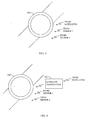
- Figure 1 presents a user 10 with a portable device 100 and a motion sensor 102.
- the portable electronic device 100 may be, for instance, a wrist computer.
- the portable device 100 may simultaneously receive data on signals from satellites 104 of a satellite positioning system and from at least one motion sensor 102 associated with a user 10.
- the data on signals from the satellites 104 of a satellite positioning system is vector data on a position of a user 10 and the vector data may come from a satellites 104 of a satellite positioning system directly or indirectly via a separate satellite positioning sensor.
- the vector data may define the position of the receiver (associated with the user of the portable device 100) of the satellite signals three dimensionally (3D), two dimensionally (2D) or one dimensionally (1D).
- the data from the at least one motion sensor 102 may be scalar data related to movement of the user 10.
- the scalar data comprises speed or a traveled distance from a predetermined position.
- the motion sensor 102 may be associated with the user such that the user 10 carries the motion sensor 102 during exercising ( Figure 1 ) or the sensor may be attached to an exercise equipment such as a bicycle ( Figure 2 ).
- the motion sensor 102 may measure a movement caused to the motion sensor 102 by the user 10 of the device 100.
- the portable device 100 may store data based on the vector data and display a scalar parameter proportional to the scalar data.
- the satellite positioning system may be a GPS (Global Positioning System) or the like.
- a common factor in motion sensors 102 is that the motion sensor 102 follows the user-fixed coordinate system.
- the motion sensor 102 has the same average speed and distance relative to a reference point as the user 10, wherein the reference point is external with respect to the user-fixed coordinate system.
- the scalar parameter may be an instantaneous speed, an average speed or a distance between two points along the path of the user.
- the scalar parameter may be based on a one-dimensional presentation of a speed or distance.
- the speed may refer to an overall speed of the body of a user 10 with respect to the environment, for example, during walking, running, cycling, etc.
- the speed may be an instantaneous speed.
- An instantaneous speed may be formed without averaging or integration, or the speed may be averaged or integrated over a few seconds, for example.
- the portable device 100 may receive scalar data which is displayable speed or distance data or determine a speed or distance of the user 10 on the basis of the received scalar data.
- the motion sensor 102 may be, for example, a stride sensor.
- the stride sensor may be attached to a shoe of the user. When the user is running with the shoe on, the foot experiences acceleration and deceleration cyclically which can be measured inertially by the stride sensor sensitive to the inertial forces.
- An inertial algorithm which may be performed in the stride sensor or in the portable device 100, may determine several parameters of the movement of the user 10 one of which may be speed.
- the stride sensor may transmit signals wirelessly, the signals including scalar data on the speed or distance.
- the speed and/or distance of the user 10 can be measured more accurately on the basis of the motion sensor(s) than on the basis of the satellite position system.
- a human being moves rather slowly when he/she is walking or running and a satellite positioning system cannot form, for example, an accurate value for (instant) speed of such a slow movement.
- the primary source for the speed of the user 10 is a motion sensor.
- the position information of a motion sensor is rather limited due to the scalar characteristics of the scalar data.
- the device 100 may determine a speed and/or traveled distance of the user 10 on the basis of at least one of the signals it is receiving.
- the data for the speed and/or distance may be based on both the motion sensor 102 and the satellite positioning system or either the motion sensor 102 or the satellite positioning system.
- a display of the device 100 may be used to display the speed and/or distance to, for example, the user 10.
- the determination of the speed and/or distance may include a selection to use either the data on signals from the satellite positioning system or the data on signals from the at least one motion sensor 102.
- the determination may also include signal and/or data processing.
- FIG. 2 presents an embodiment related to an exercise equipment such as a bicycle.
- the bicycle 20 may have at least one motion sensor 200, 202, 204, and the portable device 100, which may be a bicycle computer, may also be attached to the bicycle 20.
- the motion sensors 200, 202, 204 may output scalar data.
- a sensor attached to a bike is also referred to as a bike sensor.
- the motion sensor 200 may be a speed sensor which may comprise a magnet 2000 fastened to a wheel of a bicycle or the like, and a detector 2002 in the frame structure (front fork) of the bicycle 20.
- the speed measurement may be based on detection of the movement of the magnet 2000 past the detector 2002 of the sensor 200.
- a speed of the bicycle may be formed, for example, by dividing the circumference by the difference in time of the successive detections.
- the motion sensor 200 may also be an inertia sensor or the like.
- the motion sensor 202 may be a cadence sensor which may measure the pedalling frequency (or another performance frequency of a movement) of a pedaller.
- Cadence refers to a measure or beat of movement.
- the cadence sensor may comprise a magnet 2004 fastened to the pedal of a bicycle and a detector 2006 fastened to the frame tube of the bicycle, the measurement of the cadence, i.e. the pedalling frequency, may then be based on detection of the movement of the magnet 2004 past the detector 2006.
- a speed of the bicycle may also be formed, for example, by dividing the circumference multiplied by a constant based on the gear ratio by the difference in time between two successive detections.
- the motion sensor 202 may also be an inertia sensor or the like.
- the motion sensor 204 may comprise a magnet 2008 fastened to a chain of the bicycle 20 and a detector 2010 fastened to a cogwheel of the bicycle 20. The measurement of this form of cadence may then be based on a detection of the movement of the magnet 2008 past the detector 2010.
- a speed of the bicycle 20, which the user may be riding may also be formed by dividing the circumference multiplied by a constant based on the gear ratio by the difference in time between two successive detections.
- the motion sensor 204 may also be an inertia sensor or the like.
- Figure 3 presents an embodiment where the portable device 100 includes a wireless sensor for generating vector data from satellite signals.
- each satellite transmits two signals having frequencies between 1 GHz and 2 GHz.
- the location based on the vector data may be expressed in global coordinates or in some other coordinates in 3D, 2D or 1 D.
- the vector data may also be transformed into a scalar form, for instance, such that the difference in coordinates of successive measurements is transformed into a distance expressible in meters (or other length units). In order to measure, for example, speed, the distance may be divided by the difference in time of the successive measurements.
- the portable device 100 may also have a wireless or wired connection with at least one outside motion sensor 102, 200 - 204 or the like. However, the portable device 100 may additionally or alternatively comprise at least one sensor for determining the overall speed of the user with respect to the environment.
- Figure 4 shows an embodiment where the portable device 100 receives a signal from a separate satellite positioning sensor 400 which may be associated with the user of the portable device 100 during exercising.
- the satellite positioning sensor 400 may determine its position on the globe and may also form data on its speed and/or traveled distance.
- the portable device 100 may receive signals from the satellite positioning sensor 400 via a wire or wirelessly, and the signals may carry data related to a speed and/or a position of the satellite positioning sensor 400.
- the portable device 100 may also have a wireless or wired connection with the at least one outside motion sensor 102, 200 - 204 or the like.
- the portable device 100 may display the speed and/or distance of the user based on data on at least one signal of the at least one motion sensor while receiving data on signals from both the satellite positioning system and the at least one motion sensor 102, 200 - 204.
- a scalar parameter indicating the speed and/or traveled distance on the basis of the data from only one motion sensor may be displayed.
- the portable electronic device 100 may lose the signal from the motion sensor(s) 102, 200 - 204.
- the loss may be caused by any reason, such as drainage or a loss of contact of a battery in the sensor or the transceiver, breakdown of a component or an electric circuit, interference, fading etc. Whatever the reason, the portable device 100 cannot in such a situation operate using only the motion sensor(s). In prior art, the user has to face a fatal loss of important information on his/her training.
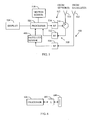
- FIG. 5 shows a block diagram of the portable device.
- a controller 506 may detect a failure to receive the scalar data from the at least one motion sensor 102, 200, 202, 204, 518. In response to the failure, the controller 506 may switch to form a scalar parameter associated to the user 10 on the basis of the vector data received from a satellite positioning sensor 400. The controller 506 may then feed the formed the scalar parameter to the display 520. The display 520 may display the scalar parameter of the user 10.
- the scalar parameter may be a numerical value for the speed and/or distance of the user 10 and thus directly define the speed and/or distance of the user 10.
- the controller 506 may alternatively receive scalar data on movement of the user 10 from the satellite positioning sensor 400 as a response to the failure.
- the controller 506 may then feed a scalar parameter based on the scalar data from the satellite positioning sensor 400 to the display 520.
- the scalar data from the satellite positioning sensor 400 may be a directly displayable scalar parameter or the controller 506 may form a scalar parameter from the scalar data on movement.
- the portable device 100 may comprise a receiver section 500 for receiving signals from the satellites of the satellite system.
- the receiver section 500 may comprise an antenna 502 which receives electromagnetic radiation and a mixer 504 for mixing the radio frequency signal coming from the antenna 502 to a base band signal.
- the base band signal propagates to a satellite positioning sensor 400 which forms vector data on position of the user 10.
- the satellite positioning sensor 400 may also form scalar data on movement of the user 10.
- a controller 506 receives the vector data and the potentially formed scalar data.
- the controller 506 may form the global coordinates in 2D or 3D and the speed and/or distance of the user.
- the controller 506 may have a processor and a memory, and the controller 506 may perform data and/or signal processing.
- the controller 506 may store the vector data such as the global coordinates in the memory.
- the portable device 100 may also comprise a receiver section 508 for receiving at least one signal from at least one motion sensor.
- the receiver section 508 may also receive a signal from a separate satellite positioning sensor 400 of a satellite positioning system.
- the receiver section 508 may comprise an antenna 510, which receives electromagnetic radiation, and a mixer 512 for mixing the radio frequency signal coming from the antenna 510 to a base band signal.
- the base band signal propagates to a controller 506 where the speed and or traveled distance of the user may be determined.
- the position of the user may also be determined if the receiver section 508 also receives data based on signals from the satellite system.
- the controller 506 may not necessarily need to process the signals and/or data any further but the controller 506 may select the data on signals of either the satellite system or the at least one motion sensor for the display 520.
- the portable device may have a common receiver section for signals from outside motion sensors and the satellite positioning system.
- the portable device 100 may comprise a transmitter section 512 which may comprise a mixer 514 for mixing the base band signal coming from the controller 506 to a radio frequency signal.
- the radio frequency signal may propagate to a circulator 516 which isolates the receiver section 508 and the transmitter section 512.
- the circulator 516 may then pass the radio frequency signal to the antenna 510 for transmitting the signal as an electromagnetic radiation.
- the transmitting may take place at a frequency of about 1 GHz.
- the transmitter section 512 is not necessarily needed in the portable device 100.
- the portable device 100 may communicate with at least one motion sensor and/or a positioning sensor 400 using magnetic pulses around, for example, 5 kHz as shown in Figure 6 .
- the magnetic pulses may be transmitted and received using a coil 600 as an antenna.
- the coil 600 may transform the magnetic signal into an electric signal which may be amplified in an amplifier 602.
- an electrical data signal may be fed from the controller 506 to the amplifier 602 which may feed the coil 600 for transmitting a magnetic signal.
- the portable device 100 may include a motion sensor 518 from where the controller 506 may receive signals carrying scalar data on a measured motion or movement of the user.
- the motion sensor 518 may be an acceleration sensor in at least one dimension. If the portable device 100 is in the wrist of the user 10, the motion of the wrist can be measured as a cyclical variation in acceleration. The measured variation can be used to determine the speed and/or traveled distance of the body of the user in a corresponding manner with the case of the stride sensor by integrating/averaging over a predetermined time. Also the traveled distance may be determined.
- a clock for time information may be included in the controller 506 and/or the at least one motion sensor.
- the controller 506 may simultaneously receive data on signals from a satellite positioning system and from at least one motion sensor inside or outside the portable device 100. The controller 506 may then determine a speed and/or traveled distance of the user on the basis of data on the signals, and the controller 506 may control a display 520 to display the speed and/or distance.
- the controller 506 may control the display 520 to display the speed and/or traveled distance of the user on the basis of the data on at least one signal of the at least one motion sensor while receiving the data on signals from both the satellite positioning system and from the at least one motion sensor.
- the controller 506 may form a location of the user 10 in global coordinates from the vector data and to store the global coordinates.
- the controller 506 may form the scalar parameter from the scalar data from at least one motion sensor 102, 200, 202, 204, 518 and to feed the scalar parameter to the display 520.
- the controller 506 may detect a failure to receive the scalar data from the at least one motion sensor. As a response to that, the controller 506 may form speed and/or distance data of the user 10 on the basis of the vector data on positions at different moments and feed the formed speed and/or distance data to the display 520.
- the display 520 may display the speed and/or distance.
- the controller 506 may alternatively receive scalar data on movement of the user 10 from the satellite positioning sensor 400 and feed speed and/or distance data based on the satellite positioning sensor 400 to the display 520.
- the portable electronic device can continue its operation by presenting the speed and/or distance of the user on the basis of data on signals from the satellite system if the portable electronic device loses the signal(s) from the motion sensor(s) whose data the movement of the user is initially based on.
- FIG. 7 shows a flow chart of the method.
- the controller 506 of a portable electronic device receives vector data on a position of a user 10 of the portable device 100 from a satellite positioning sensor 400 associated with the user 10.
- the controller 506 receives scalar data on movement of the user 10 from at least one motion sensor 102, 200, 202, 204, 518 associated with the user 10.
- data based on the vector data is stored in the portable device 100.
- the controller 506 feeds a scalar parameter proportional to the scalar data to the display 520.
- the scalar parameter is displayed by the display 520.
- the method steps may be performed as a computer program and the embodiments may be implemented as a computer program comprising instructions for executing a computer process for data processing.
- the computer program may be run in the controller of the portable device.
- the computer program may be stored on a computer program distribution medium readable by a computer or a processor.
- the computer program medium may be, for example but not limited to, an electric, magnetic, optical, infrared or semiconductor system, device or transmission medium.
- the computer program medium may include at least one of the following media: a computer readable medium, a program storage medium, a record medium, a computer readable memory, a random access memory, an erasable programmable read-only memory, a computer readable software distribution package, a computer readable signal, a computer readable telecommunications signal, computer readable printed matter, and a computer readable compressed software package.
Landscapes
- Engineering & Computer Science (AREA)
- Health & Medical Sciences (AREA)
- General Health & Medical Sciences (AREA)
- Physical Education & Sports Medicine (AREA)
- Physics & Mathematics (AREA)
- General Physics & Mathematics (AREA)
- Radar, Positioning & Navigation (AREA)
- Remote Sensing (AREA)
- Human Computer Interaction (AREA)
- Position Fixing By Use Of Radio Waves (AREA)
Claims (8)
- Tragbare elektronische Vorrichtung, dadurch gekennzeichnet, dass die Vorrichtung (100) eine Steuerung (506) und eine Anzeige (520) umfasst, wobei die Steuerung (506) konfiguriert ist zum:Empfangen von Vektordaten über eine Position eines Benutzers (10) der tragbaren Vorrichtung (100) von einem satellitengestützten Positionsbestimmungssensor (400), der mit dem Benutzer (10) assoziiert ist;Empfangen von Skalardaten über Bewegung des Benutzers (10) von mindestens einem Bewegungssensor (102,200, 202,204, 518), der mit dem Benutzer (10) assoziiert ist;Speichern von Daten basierend auf den Vektordaten;Erkennen einer Störung, die Skalardaten von dem mindestens einen Bewegungssensors (102, 200, 202, 204) zu empfangen;Bilden eines Skalarparameters auf der Basis der Vektordaten über die Position oder Empfangen von Skalardaten über Bewegung des Benutzers (10) vom satellitengestützten Positionsbestimmungssensor (400) als Reaktion auf die Störung;Zuführen eines Skalarparameters proportional zu den Skalardaten zur Anzeige (520); undwobei die Anzeige (520) so konfiguriert ist, dass sie den Skalarparameter anzeigt.
- Tragbare elektronische Vorrichtung nach Anspruch 1, dadurch gekennzeichnet, dass die Steuerung (506) so konfiguriert ist, dass sie aus den Vektordaten eine Position des Benutzers (10) in globalen Koordinaten bildet und die globalen Koordinaten speichert.
- Tragbare elektronische Vorrichtung nach Anspruch 1, dadurch gekennzeichnet, dass die Steuerung (506) so konfiguriert ist, dass sie den Skalarparameter aus den Skalardaten von mindestens einem Bewegungssensor (102, 200, 202, 204, 518) bildet und den Skalarparameter der Anzeige (520) zuführt.
- Tragbare elektronische Vorrichtung nach Anspruch 1, dadurch gekennzeichnet, dass die Steuerung (506) so konfiguriert ist, dass sie die Skalardaten von mindestens einem von den Folgenden empfängt: einem Laufsensor, einem Fahrradsensor, die jeweils als Bewegungssensor (102, 200, 202, 204) fungieren.
- Datenverarbeitungsverfahren, gekennzeichnet durch
Empfangen (700) durch eine Steuerung (506) einer tragbaren elektronischen Vorrichtung von Vektordaten über eine Position eines Benutzers (10) der tragbaren Vorrichtung (100) von einem satellitengestützten Positionsbestimmungssensor (400), der mit dem Benutzer (10) assoziiert ist;
Empfangen (702) durch die Steuerung (506) von Skalardaten über Bewegung des Benutzers (10) von mindestens einem Bewegungssensor (102, 200, 202, 204, 518), der mit dem Benutzer (10) assoziiert ist;
Speichern (704) von Daten basierend auf den Vektordaten;
Erkennen durch die Steuerung (506) einer Störung beim Empfang der Daten von dem mindestens einen Bewegungssensor (102, 200, 202, 204);
Bilden eines Skalarparameters auf der Basis der Vektordaten über die Position oder Empfangen von Skalardaten über Bewegung des Benutzers (10) vom satellitengestützten Positionsbestimmungssensor (400) als Reaktion auf die Störung;
Zuführen (706) durch die Steuerung (506) des Skalarparameters proportional zu den Skalardaten zur Anzeige (520); und
Anzeigen (708) des Skalarparameters durch die Anzeige (520). - Datenverarbeitungsverfahren nach Anspruch 5, gekennzeichnet durch Empfangen durch die Steuerung (506) der Skalardaten von mindestens einem von den Folgenden: einem Laufsensor, einem Fahrradsensor, die jeweils als Bewegungssensor (102, 200, 202, 204) fungieren.
- Computerprogrammprodukt, das ein Computerprogramm von Befehlen zum Ausführen eines Computerprozesses zur Datenverarbeitung codiert, gekennzeichnet durch Empfangen von Vektordaten über eine Position eines Benutzers (10) der tragbaren Vorrichtung (100) von einem satellitengestützten Positionsbestimmungssensor (400), der mit dem Benutzer (10) assoziiert ist;
Empfangen von Skalardaten über Bewegung des Benutzers (10) von mindestens einem Bewegungssensor (102, 200, 202, 204,518), der mit dem Benutzer (10) assoziiert ist;
Speichern von Daten basierend auf den Vektordaten;
Erkennen einer Störung beim Empfang der Daten von dem mindestens einen Bewegungssensor (102, 200, 202, 204);
Bilden eines Skalarparameters auf der Basis der Vektordaten über die Position oder Empfangen von Skalardaten über Bewegung des Benutzers (10) vom satellitengestützten Positionsbestimmungssensor (400) als Reaktion auf die Störung; und
Zuführen des Skalarparameters proportional zu den Skalardaten zur Anzeige (520) zum Anzeigen des Skalarparameters. - Computerprogramm nach Anspruch 7, dadurch gekennzeichnet, dass das Programm in der Form eines Verteilungsmediums verteilt ist, das mindestens eines von den folgenden Medien umfasst: einem computerlesbaren Medium, einem Programmspeichermedium, einem Aufzeichnungsmedium, einem computerlesbaren Medium, einem computerlesbaren Softwareverteilungspaket, einem computerlesbaren Signal, einem computerlesbaren Telekommunikationssignal und einem computerlesbaren komprimierten Softwarepaket.
Applications Claiming Priority (1)
| Application Number | Priority Date | Filing Date | Title |
|---|---|---|---|
| FI20085432A FI20085432A0 (fi) | 2008-05-09 | 2008-05-09 | Datansiirto |
Publications (3)
| Publication Number | Publication Date |
|---|---|
| EP2116862A2 EP2116862A2 (de) | 2009-11-11 |
| EP2116862A3 EP2116862A3 (de) | 2011-08-03 |
| EP2116862B1 true EP2116862B1 (de) | 2014-10-08 |
Family
ID=39523087
Family Applications (1)
| Application Number | Title | Priority Date | Filing Date |
|---|---|---|---|
| EP09159601.5A Active EP2116862B1 (de) | 2008-05-09 | 2009-05-07 | Datenübertragung |
Country Status (3)
| Country | Link |
|---|---|
| US (1) | US8538691B2 (de) |
| EP (1) | EP2116862B1 (de) |
| FI (1) | FI20085432A0 (de) |
Families Citing this family (6)
| Publication number | Priority date | Publication date | Assignee | Title |
|---|---|---|---|---|
| US9455768B2 (en) * | 2009-09-24 | 2016-09-27 | Blackberry Limited | Communications device, method and system for establishing wireless communications between communications devices |
| US20130123070A1 (en) * | 2011-07-28 | 2013-05-16 | Racer-Mate, Inc. | Cadence detection system and cadence sensor therefor |
| US9568323B2 (en) * | 2011-10-17 | 2017-02-14 | Microsoft Technology Licensing, Llc | Location determination |
| US10030992B2 (en) * | 2014-04-08 | 2018-07-24 | Seyed Amin Ghorashi Sarvestani | Bicycle activity monitoring and recording device |
| JP6941379B2 (ja) * | 2017-11-28 | 2021-09-29 | 株式会社ユピテル | 電子機器およびプログラム |
| US11350853B2 (en) | 2018-10-02 | 2022-06-07 | Under Armour, Inc. | Gait coaching in fitness tracking systems |
Family Cites Families (21)
| Publication number | Priority date | Publication date | Assignee | Title |
|---|---|---|---|---|
| JP2689000B2 (ja) | 1989-10-24 | 1997-12-10 | マツダ 株式会社 | 移動体用ナビゲーション装置 |
| US6266623B1 (en) * | 1994-11-21 | 2001-07-24 | Phatrat Technology, Inc. | Sport monitoring apparatus for determining loft time, speed, power absorbed and other factors such as height |
| US6463385B1 (en) * | 1996-11-01 | 2002-10-08 | William R. Fry | Sports computer with GPS receiver and performance tracking capabilities |
| US6002982A (en) | 1996-11-01 | 1999-12-14 | Fry; William R. | Sports computer with GPS receiver and performance tracking capabilities |
| JP3532773B2 (ja) | 1998-09-26 | 2004-05-31 | ジヤトコ株式会社 | 携帯用位置検出装置および位置管理システム |
| US6167347A (en) * | 1998-11-04 | 2000-12-26 | Lin; Ching-Fang | Vehicle positioning method and system thereof |
| WO2001042809A2 (en) | 1999-12-07 | 2001-06-14 | Esport Incorporated | Gps athletic performance monitor methods and apparatus thereof |
| US6522266B1 (en) | 2000-05-17 | 2003-02-18 | Honeywell, Inc. | Navigation system, method and software for foot travel |
| US6442481B2 (en) * | 2000-07-28 | 2002-08-27 | Honeywell International Inc. | Second order complementary global positioning system/inertial navigation system blending filter |
| US6496778B1 (en) * | 2000-09-14 | 2002-12-17 | American Gnc Corporation | Real-time integrated vehicle positioning method and system with differential GPS |
| US6577921B1 (en) * | 2000-11-27 | 2003-06-10 | Robert M. Carson | Container tracking system |
| WO2002095438A2 (en) | 2001-05-22 | 2002-11-28 | Geospatial Technologies, Inc. | A durable global asset-tracking device and a method of using the same |
| US6801159B2 (en) * | 2002-03-19 | 2004-10-05 | Motorola, Inc. | Device for use with a portable inertial navigation system (“PINS”) and method for transitioning between location technologies |
| US7715982B2 (en) * | 2002-11-01 | 2010-05-11 | M.B.T.L. Limited | Monitoring sports |
| US7805149B2 (en) * | 2004-01-16 | 2010-09-28 | Adidas Ag | Location-aware fitness training device, methods, and program products that support real-time interactive communication and automated route generation |
| US6924764B1 (en) * | 2004-04-28 | 2005-08-02 | Yu-Yu Chen | Dynamic information monitoring system employing acceleration signal and global positioning signal for skiing exercise |
| US7254516B2 (en) * | 2004-12-17 | 2007-08-07 | Nike, Inc. | Multi-sensor monitoring of athletic performance |
| US7848881B2 (en) * | 2005-07-05 | 2010-12-07 | Containertrac, Inc. | Automatic past error corrections for location and inventory tracking |
| JP4816340B2 (ja) * | 2006-08-31 | 2011-11-16 | ソニー株式会社 | ナビゲーション装置、位置検出方法及び位置検出プログラム |
| US8121785B2 (en) * | 2007-08-28 | 2012-02-21 | Garmin Switzerland Gmbh | Bicycle computer having position-determining functionality |
| US8364389B2 (en) * | 2009-02-02 | 2013-01-29 | Apple Inc. | Systems and methods for integrating a portable electronic device with a bicycle |
-
2008
- 2008-05-09 FI FI20085432A patent/FI20085432A0/fi not_active Application Discontinuation
-
2009
- 2009-05-01 US US12/434,143 patent/US8538691B2/en active Active
- 2009-05-07 EP EP09159601.5A patent/EP2116862B1/de active Active
Also Published As
| Publication number | Publication date |
|---|---|
| US8538691B2 (en) | 2013-09-17 |
| EP2116862A3 (de) | 2011-08-03 |
| FI20085432A0 (fi) | 2008-05-09 |
| US20090278734A1 (en) | 2009-11-12 |
| EP2116862A2 (de) | 2009-11-11 |
Similar Documents
| Publication | Publication Date | Title |
|---|---|---|
| US8538691B2 (en) | Data transfer | |
| US9488668B2 (en) | Cycle cranks, cycles, methods of measuring a cycle crank angular position | |
| US8269624B2 (en) | Positioning apparatus and method | |
| JP5459179B2 (ja) | 移動状態判別装置、移動状態判別方法およびプログラム | |
| US10130843B2 (en) | Electronic device, control program, control method, and system | |
| US6976937B2 (en) | Integrated exercise detection device employing satellite positioning signal and exercise signal | |
| US20170050080A1 (en) | Pedaling measurement apparatus, pedaling measurement system, pedaling measurement method, and recording medium | |
| JP6003284B2 (ja) | 携帯型機器 | |
| US20130196688A1 (en) | Gps odometer | |
| FI108579B (fi) | Menetelmä ja mittausjärjestely juoksijan, kävelijän tai muun liikkuvan elävän kohteen nopeuden määrittämiseen | |
| US20080319330A1 (en) | Transmitter and receiver for observing periodical events | |
| CN117169928A (zh) | 移动状态判别装置、电子表、移动状态判别方法及记录介质 | |
| TW200916730A (en) | Augmented navigation system and method of a moving object | |
| US20160157718A1 (en) | Choosing a heart rate monitor for a wearable monitoring device | |
| JP2014122895A (ja) | トランスポンダモジュールを用いてスポーツ競技における時間を測定する方法及びこの方法を実装するためのトランスポンダモジュール | |
| US20180321640A1 (en) | Wearable apparatus and display method | |
| WO2012045484A1 (en) | Gps-calibrated pedometer | |
| CN104523278A (zh) | 一种基于多传感器的体育运动监测系统 | |
| JP4954792B2 (ja) | 速度計 | |
| CN105716600B (zh) | 行人导航系统以及方法 | |
| CN113811778B (zh) | 用于测量自行车的至少一个物理参数的方法和系统 | |
| JP5144128B2 (ja) | 速度計 | |
| US8645059B2 (en) | Method of generating graphical data and electronic device | |
| US20090063088A1 (en) | Wristwatch type acceleration detection module | |
| US20230112194A1 (en) | Mobile Terminal And Control Method For Mobile Terminal |
Legal Events
| Date | Code | Title | Description |
|---|---|---|---|
| PUAI | Public reference made under article 153(3) epc to a published international application that has entered the european phase |
Free format text: ORIGINAL CODE: 0009012 |
|
| AK | Designated contracting states |
Kind code of ref document: A2 Designated state(s): AT BE BG CH CY CZ DE DK EE ES FI FR GB GR HR HU IE IS IT LI LT LU LV MC MK MT NL NO PL PT RO SE SI SK TR |
|
| PUAL | Search report despatched |
Free format text: ORIGINAL CODE: 0009013 |
|
| AK | Designated contracting states |
Kind code of ref document: A3 Designated state(s): AT BE BG CH CY CZ DE DK EE ES FI FR GB GR HR HU IE IS IT LI LT LU LV MC MK MT NL NO PL PT RO SE SI SK TR |
|
| AX | Request for extension of the european patent |
Extension state: AL BA RS |
|
| RIC1 | Information provided on ipc code assigned before grant |
Ipc: G01S 1/00 20060101AFI20110630BHEP Ipc: G01C 22/00 20060101ALI20110630BHEP |
|
| 17P | Request for examination filed |
Effective date: 20120123 |
|
| 17Q | First examination report despatched |
Effective date: 20120417 |
|
| GRAP | Despatch of communication of intention to grant a patent |
Free format text: ORIGINAL CODE: EPIDOSNIGR1 |
|
| INTG | Intention to grant announced |
Effective date: 20140424 |
|
| GRAS | Grant fee paid |
Free format text: ORIGINAL CODE: EPIDOSNIGR3 |
|
| GRAA | (expected) grant |
Free format text: ORIGINAL CODE: 0009210 |
|
| AK | Designated contracting states |
Kind code of ref document: B1 Designated state(s): AT BE BG CH CY CZ DE DK EE ES FI FR GB GR HR HU IE IS IT LI LT LU LV MC MK MT NL NO PL PT RO SE SI SK TR |
|
| REG | Reference to a national code |
Ref country code: GB Ref legal event code: FG4D |
|
| REG | Reference to a national code |
Ref country code: CH Ref legal event code: EP Ref country code: AT Ref legal event code: REF Ref document number: 690913 Country of ref document: AT Kind code of ref document: T Effective date: 20141015 |
|
| REG | Reference to a national code |
Ref country code: IE Ref legal event code: FG4D |
|
| REG | Reference to a national code |
Ref country code: DE Ref legal event code: R096 Ref document number: 602009027044 Country of ref document: DE Effective date: 20141120 |
|
| REG | Reference to a national code |
Ref country code: NL Ref legal event code: VDEP Effective date: 20141008 |
|
| REG | Reference to a national code |
Ref country code: AT Ref legal event code: MK05 Ref document number: 690913 Country of ref document: AT Kind code of ref document: T Effective date: 20141008 |
|
| REG | Reference to a national code |
Ref country code: LT Ref legal event code: MG4D |
|
| PG25 | Lapsed in a contracting state [announced via postgrant information from national office to epo] |
Ref country code: NL Free format text: LAPSE BECAUSE OF FAILURE TO SUBMIT A TRANSLATION OF THE DESCRIPTION OR TO PAY THE FEE WITHIN THE PRESCRIBED TIME-LIMIT Effective date: 20141008 |
|
| PG25 | Lapsed in a contracting state [announced via postgrant information from national office to epo] |
Ref country code: IS Free format text: LAPSE BECAUSE OF FAILURE TO SUBMIT A TRANSLATION OF THE DESCRIPTION OR TO PAY THE FEE WITHIN THE PRESCRIBED TIME-LIMIT Effective date: 20150208 Ref country code: NO Free format text: LAPSE BECAUSE OF FAILURE TO SUBMIT A TRANSLATION OF THE DESCRIPTION OR TO PAY THE FEE WITHIN THE PRESCRIBED TIME-LIMIT Effective date: 20150108 Ref country code: PT Free format text: LAPSE BECAUSE OF FAILURE TO SUBMIT A TRANSLATION OF THE DESCRIPTION OR TO PAY THE FEE WITHIN THE PRESCRIBED TIME-LIMIT Effective date: 20150209 Ref country code: FI Free format text: LAPSE BECAUSE OF FAILURE TO SUBMIT A TRANSLATION OF THE DESCRIPTION OR TO PAY THE FEE WITHIN THE PRESCRIBED TIME-LIMIT Effective date: 20141008 Ref country code: ES Free format text: LAPSE BECAUSE OF FAILURE TO SUBMIT A TRANSLATION OF THE DESCRIPTION OR TO PAY THE FEE WITHIN THE PRESCRIBED TIME-LIMIT Effective date: 20141008 Ref country code: LT Free format text: LAPSE BECAUSE OF FAILURE TO SUBMIT A TRANSLATION OF THE DESCRIPTION OR TO PAY THE FEE WITHIN THE PRESCRIBED TIME-LIMIT Effective date: 20141008 |
|
| PG25 | Lapsed in a contracting state [announced via postgrant information from national office to epo] |
Ref country code: LV Free format text: LAPSE BECAUSE OF FAILURE TO SUBMIT A TRANSLATION OF THE DESCRIPTION OR TO PAY THE FEE WITHIN THE PRESCRIBED TIME-LIMIT Effective date: 20141008 Ref country code: GR Free format text: LAPSE BECAUSE OF FAILURE TO SUBMIT A TRANSLATION OF THE DESCRIPTION OR TO PAY THE FEE WITHIN THE PRESCRIBED TIME-LIMIT Effective date: 20150109 Ref country code: PL Free format text: LAPSE BECAUSE OF FAILURE TO SUBMIT A TRANSLATION OF THE DESCRIPTION OR TO PAY THE FEE WITHIN THE PRESCRIBED TIME-LIMIT Effective date: 20141008 Ref country code: SE Free format text: LAPSE BECAUSE OF FAILURE TO SUBMIT A TRANSLATION OF THE DESCRIPTION OR TO PAY THE FEE WITHIN THE PRESCRIBED TIME-LIMIT Effective date: 20141008 Ref country code: HR Free format text: LAPSE BECAUSE OF FAILURE TO SUBMIT A TRANSLATION OF THE DESCRIPTION OR TO PAY THE FEE WITHIN THE PRESCRIBED TIME-LIMIT Effective date: 20141008 Ref country code: CY Free format text: LAPSE BECAUSE OF FAILURE TO SUBMIT A TRANSLATION OF THE DESCRIPTION OR TO PAY THE FEE WITHIN THE PRESCRIBED TIME-LIMIT Effective date: 20141008 Ref country code: AT Free format text: LAPSE BECAUSE OF FAILURE TO SUBMIT A TRANSLATION OF THE DESCRIPTION OR TO PAY THE FEE WITHIN THE PRESCRIBED TIME-LIMIT Effective date: 20141008 |
|
| REG | Reference to a national code |
Ref country code: DE Ref legal event code: R097 Ref document number: 602009027044 Country of ref document: DE |
|
| PG25 | Lapsed in a contracting state [announced via postgrant information from national office to epo] |
Ref country code: CZ Free format text: LAPSE BECAUSE OF FAILURE TO SUBMIT A TRANSLATION OF THE DESCRIPTION OR TO PAY THE FEE WITHIN THE PRESCRIBED TIME-LIMIT Effective date: 20141008 Ref country code: SK Free format text: LAPSE BECAUSE OF FAILURE TO SUBMIT A TRANSLATION OF THE DESCRIPTION OR TO PAY THE FEE WITHIN THE PRESCRIBED TIME-LIMIT Effective date: 20141008 Ref country code: DK Free format text: LAPSE BECAUSE OF FAILURE TO SUBMIT A TRANSLATION OF THE DESCRIPTION OR TO PAY THE FEE WITHIN THE PRESCRIBED TIME-LIMIT Effective date: 20141008 Ref country code: RO Free format text: LAPSE BECAUSE OF FAILURE TO SUBMIT A TRANSLATION OF THE DESCRIPTION OR TO PAY THE FEE WITHIN THE PRESCRIBED TIME-LIMIT Effective date: 20141008 Ref country code: EE Free format text: LAPSE BECAUSE OF FAILURE TO SUBMIT A TRANSLATION OF THE DESCRIPTION OR TO PAY THE FEE WITHIN THE PRESCRIBED TIME-LIMIT Effective date: 20141008 |
|
| PLBE | No opposition filed within time limit |
Free format text: ORIGINAL CODE: 0009261 |
|
| STAA | Information on the status of an ep patent application or granted ep patent |
Free format text: STATUS: NO OPPOSITION FILED WITHIN TIME LIMIT |
|
| PG25 | Lapsed in a contracting state [announced via postgrant information from national office to epo] |
Ref country code: IT Free format text: LAPSE BECAUSE OF FAILURE TO SUBMIT A TRANSLATION OF THE DESCRIPTION OR TO PAY THE FEE WITHIN THE PRESCRIBED TIME-LIMIT Effective date: 20141008 |
|
| 26N | No opposition filed |
Effective date: 20150709 |
|
| REG | Reference to a national code |
Ref country code: CH Ref legal event code: PL |
|
| PG25 | Lapsed in a contracting state [announced via postgrant information from national office to epo] |
Ref country code: CH Free format text: LAPSE BECAUSE OF NON-PAYMENT OF DUE FEES Effective date: 20150531 Ref country code: LI Free format text: LAPSE BECAUSE OF NON-PAYMENT OF DUE FEES Effective date: 20150531 Ref country code: MC Free format text: LAPSE BECAUSE OF FAILURE TO SUBMIT A TRANSLATION OF THE DESCRIPTION OR TO PAY THE FEE WITHIN THE PRESCRIBED TIME-LIMIT Effective date: 20141008 Ref country code: LU Free format text: LAPSE BECAUSE OF FAILURE TO SUBMIT A TRANSLATION OF THE DESCRIPTION OR TO PAY THE FEE WITHIN THE PRESCRIBED TIME-LIMIT Effective date: 20150507 |
|
| REG | Reference to a national code |
Ref country code: IE Ref legal event code: MM4A |
|
| PG25 | Lapsed in a contracting state [announced via postgrant information from national office to epo] |
Ref country code: SI Free format text: LAPSE BECAUSE OF FAILURE TO SUBMIT A TRANSLATION OF THE DESCRIPTION OR TO PAY THE FEE WITHIN THE PRESCRIBED TIME-LIMIT Effective date: 20141008 |
|
| PG25 | Lapsed in a contracting state [announced via postgrant information from national office to epo] |
Ref country code: IE Free format text: LAPSE BECAUSE OF NON-PAYMENT OF DUE FEES Effective date: 20150507 |
|
| REG | Reference to a national code |
Ref country code: FR Ref legal event code: PLFP Year of fee payment: 8 |
|
| PG25 | Lapsed in a contracting state [announced via postgrant information from national office to epo] |
Ref country code: MT Free format text: LAPSE BECAUSE OF FAILURE TO SUBMIT A TRANSLATION OF THE DESCRIPTION OR TO PAY THE FEE WITHIN THE PRESCRIBED TIME-LIMIT Effective date: 20141008 |
|
| REG | Reference to a national code |
Ref country code: FR Ref legal event code: PLFP Year of fee payment: 9 |
|
| PG25 | Lapsed in a contracting state [announced via postgrant information from national office to epo] |
Ref country code: HU Free format text: LAPSE BECAUSE OF FAILURE TO SUBMIT A TRANSLATION OF THE DESCRIPTION OR TO PAY THE FEE WITHIN THE PRESCRIBED TIME-LIMIT; INVALID AB INITIO Effective date: 20090507 Ref country code: BG Free format text: LAPSE BECAUSE OF FAILURE TO SUBMIT A TRANSLATION OF THE DESCRIPTION OR TO PAY THE FEE WITHIN THE PRESCRIBED TIME-LIMIT Effective date: 20141008 |
|
| PG25 | Lapsed in a contracting state [announced via postgrant information from national office to epo] |
Ref country code: TR Free format text: LAPSE BECAUSE OF FAILURE TO SUBMIT A TRANSLATION OF THE DESCRIPTION OR TO PAY THE FEE WITHIN THE PRESCRIBED TIME-LIMIT Effective date: 20141008 |
|
| PG25 | Lapsed in a contracting state [announced via postgrant information from national office to epo] |
Ref country code: BE Free format text: LAPSE BECAUSE OF FAILURE TO SUBMIT A TRANSLATION OF THE DESCRIPTION OR TO PAY THE FEE WITHIN THE PRESCRIBED TIME-LIMIT Effective date: 20141008 |
|
| REG | Reference to a national code |
Ref country code: FR Ref legal event code: PLFP Year of fee payment: 10 |
|
| PG25 | Lapsed in a contracting state [announced via postgrant information from national office to epo] |
Ref country code: MK Free format text: LAPSE BECAUSE OF FAILURE TO SUBMIT A TRANSLATION OF THE DESCRIPTION OR TO PAY THE FEE WITHIN THE PRESCRIBED TIME-LIMIT Effective date: 20141008 |
|
| PGFP | Annual fee paid to national office [announced via postgrant information from national office to epo] |
Ref country code: DE Payment date: 20250520 Year of fee payment: 17 |
|
| PGFP | Annual fee paid to national office [announced via postgrant information from national office to epo] |
Ref country code: GB Payment date: 20250519 Year of fee payment: 17 |
|
| PGFP | Annual fee paid to national office [announced via postgrant information from national office to epo] |
Ref country code: FR Payment date: 20250516 Year of fee payment: 17 |