EP2102806B1 - Motion desktop - Google Patents
Motion desktop Download PDFInfo
- Publication number
- EP2102806B1 EP2102806B1 EP07869884.2A EP07869884A EP2102806B1 EP 2102806 B1 EP2102806 B1 EP 2102806B1 EP 07869884 A EP07869884 A EP 07869884A EP 2102806 B1 EP2102806 B1 EP 2102806B1
- Authority
- EP
- European Patent Office
- Prior art keywords
- instructions
- content
- background
- motion desktop
- foreground
- Prior art date
- Legal status (The legal status is an assumption and is not a legal conclusion. Google has not performed a legal analysis and makes no representation as to the accuracy of the status listed.)
- Active
Links
Images




Classifications
-
- G—PHYSICS
- G06—COMPUTING OR CALCULATING; COUNTING
- G06F—ELECTRIC DIGITAL DATA PROCESSING
- G06F15/00—Digital computers in general; Data processing equipment in general
- G06F15/76—Architectures of general purpose stored program computers
-
- G—PHYSICS
- G09—EDUCATION; CRYPTOGRAPHY; DISPLAY; ADVERTISING; SEALS
- G09G—ARRANGEMENTS OR CIRCUITS FOR CONTROL OF INDICATING DEVICES USING STATIC MEANS TO PRESENT VARIABLE INFORMATION
- G09G5/00—Control arrangements or circuits for visual indicators common to cathode-ray tube indicators and other visual indicators
- G09G5/36—Control arrangements or circuits for visual indicators common to cathode-ray tube indicators and other visual indicators characterised by the display of a graphic pattern, e.g. using an all-points-addressable [APA] memory
- G09G5/363—Graphics controllers
-
- G—PHYSICS
- G06—COMPUTING OR CALCULATING; COUNTING
- G06F—ELECTRIC DIGITAL DATA PROCESSING
- G06F3/00—Input arrangements for transferring data to be processed into a form capable of being handled by the computer; Output arrangements for transferring data from processing unit to output unit, e.g. interface arrangements
- G06F3/14—Digital output to display device ; Cooperation and interconnection of the display device with other functional units
-
- G—PHYSICS
- G06—COMPUTING OR CALCULATING; COUNTING
- G06T—IMAGE DATA PROCESSING OR GENERATION, IN GENERAL
- G06T1/00—General purpose image data processing
-
- G—PHYSICS
- G06—COMPUTING OR CALCULATING; COUNTING
- G06T—IMAGE DATA PROCESSING OR GENERATION, IN GENERAL
- G06T15/00—Three-dimensional [3D] image rendering
- G06T15/50—Lighting effects
- G06T15/503—Blending, e.g. for anti-aliasing
-
- G—PHYSICS
- G09—EDUCATION; CRYPTOGRAPHY; DISPLAY; ADVERTISING; SEALS
- G09G—ARRANGEMENTS OR CIRCUITS FOR CONTROL OF INDICATING DEVICES USING STATIC MEANS TO PRESENT VARIABLE INFORMATION
- G09G2340/00—Aspects of display data processing
- G09G2340/10—Mixing of images, i.e. displayed pixel being the result of an operation, e.g. adding, on the corresponding input pixels
-
- G—PHYSICS
- G09—EDUCATION; CRYPTOGRAPHY; DISPLAY; ADVERTISING; SEALS
- G09G—ARRANGEMENTS OR CIRCUITS FOR CONTROL OF INDICATING DEVICES USING STATIC MEANS TO PRESENT VARIABLE INFORMATION
- G09G2340/00—Aspects of display data processing
- G09G2340/12—Overlay of images, i.e. displayed pixel being the result of switching between the corresponding input pixels
-
- G—PHYSICS
- G09—EDUCATION; CRYPTOGRAPHY; DISPLAY; ADVERTISING; SEALS
- G09G—ARRANGEMENTS OR CIRCUITS FOR CONTROL OF INDICATING DEVICES USING STATIC MEANS TO PRESENT VARIABLE INFORMATION
- G09G5/00—Control arrangements or circuits for visual indicators common to cathode-ray tube indicators and other visual indicators
- G09G5/14—Display of multiple viewports
Definitions
- a moving image may be provided as a desktop background for a processing device.
- a background area of a desktop may be assigned a particular chromatic key value.
- Video may be generated to a clipping region defined by the area having the particular chromatic key value.
- a clipping region is an area in which graphics or video may be presented.
- features such as shadow text and partially translucent elements are fundamentally incompatible with a background generated by using the video overlay feature. For example, a shadow portion of shadow text and areas behind translucent elements may have a color associated with an approximation of the particular chromatic key value.
- the areas having the approximation of the particular key chromatic key value may appear to be out of place with any video that may overlay areas having the particular chromatic key value.
- systems typically have only one video overlay resource, by capturing this resource and using it on the desktop, other applications such as, for example, media players or video editing applications, may be unable to acquire and use the video overlay resource.
- arbitrary content on the desktop may be drawn by creating complex clipping regions, which exclude desktop items, such as icons and associated text, as well as other items.
- the motion desktops performed poorly using this approach.
- the desktop items were not composed with a background and each time the background was updated, the updated background needed to be "cut out” using a clipping region. This resulted in a poor user experience.
- this approach is complex for requiring that the clipping region be maintained as the desktop is updated and this approach does not consider how to treat translucent elements.
- US 6 700 588 B1 relates to a graphics integrated circuit chip used in a set-top box for controlling a television display.
- the graphics chip processes analog video input, digital video input and graphics input.
- the chip blends graphics and video information by various graphics windows using alpha values for the windows, alpha values per pixel or both.
- the chip calculates a composite alpha value based on the window's alpha values and the alpha values per pixel. Blended graphics and video may then be composited using the composite alpha value.
- a motion desktop may be presented on a display screen of a processing device.
- the motion desktop may include a moving image as a background and foreground items such as, for example, icons and associated text, or other information, as a foreground.
- Foreground content may be rendered onto a composing surface, which in some embodiments may be an alpha-enabled surface capable of presenting translucent items.
- One or more motion desktop modules may render content to respective shared memories for respective portions of a moving image background of the motion desktop.
- a composer may use the rendered content from the respective shared memories to compose a scene on the composing surface from the foreground content and the rendered content with respect to the moving image, and may blend portions of the composed scene.
- the composed scene may then be presented on a display screen of a processing device as the motion desktop.
- a moving image of a background of the motion desktop may be rendered and composed on the composing surface for presentation upon receiving a notification from a motion desktop module indicating that rendered background content is available for composing the motion desktop.
- the moving image of the background of the motion desktop may be rendered and composed on the composing surface periodically, such that the moving image of the background of the presented motion desktop may be degraded, in order to provide a high quality of service for presenting foreground items of the motion desktop and other applications.
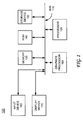
- Fig. 1 is a functional block diagram of a processing device which may implement embodiments consistent with the subject matter of this disclosure.
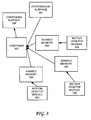
- Fig. 2 is a functional block diagram illustrating exemplary components of an embodiment consistent with the subject matter this disclosure.
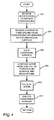
- Fig. 3 is a functional block diagram illustrating exemplary components and communication among the exemplary components via respective shared memories in an embodiment consistent with the subject matter of this disclosure.
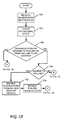
- Fig. 4 is a flowchart illustrating an exemplary process for rendering foreground content of a motion desktop.
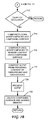
- Fig. 5 is a flowchart illustrating an exemplary process for rendering background content, composing a scene from the rendered background content and rendered foreground content, and presenting the scene as the motion desktop.
- Fig. 6 is a flowchart illustrating an exemplary process for receiving notifications and repainting a foreground portion or a background portion of a motion desktop.
- Figs. 7A-7C are flowcharts illustrating an exemplary process for rendering, composing, and presenting the motion desktop, and for changing an updating method for updating the motion desktop.
- a processing device may present a motion desktop, which may include a moving image on a display screen of the processing device with foreground items such as, for example, icons and associated text, or other information, appearing on a surface of the moving image.
- a motion desktop experience is to think of a surface of the motion desktop, with which a user may interact, as a piece of glass hanging in front of a three dimensional scene in which a number of interesting things may be viewed.
- the scene may be as simple as a video projected onto an orthogonal rectangle scaled to fill an entire display screen (video wallpaper), or may be as rich as rendering a camera view of a persistent three dimensional multiplayer game world.
- foreground content may be an interact-able portion of a desktop, which may be driven by user data.
- the foreground content may be redirected such that it may be rendered to a composing surface, such as, for example, an alpha-enabled surface capable of presenting translucent items.
- One or more motion desktop modules may render content for at least a portion of a background of the motion desktop to a respective shared memory, shared with a composer. Periodically, the composer may use the rendered content from each respective shared memory to compose a scene and may blend background and foreground portions of the scene. As a result, high-quality visual effects may be achieved and presented.
- an alpha blending operation may be offloaded to a graphics processing unit (GPU) found in modem graphics cards, thereby providing a high fidelity visual experience without significantly impacting available processing capacity for other applications and services.
- GPU graphics processing unit
- Fig. 1 is a functional block diagram of a processing device 100 which may be used to implement embodiments consistent with the subject matter of this disclosure.
- Processing device 100 may include a bus 110, a processor 120, a memory 130, a read only memory (ROM) 140, a storage device 150, an input device 160, a display device 170 and a graphics processor 180.
- ROM read only memory
- Bus 110 may be a communication interface that permits communication among components of processing device 100.
- Processor 120 may include at least one conventional processor or microprocessor that interprets and executes instructions.
- Memory 130 may be a random access memory (RAM) or another type of dynamic storage device that stores information and instructions for execution by processor 120. Memory 130 may also store temporary variables or other intermediate information used during execution of instructions by processor 120.
- ROM 140 may include a conventional ROM device or another type of static storage device that stores static information and instructions for processor 120.
- Storage device 150 may include any type of tangible media for storing data and/or instructions.
- Graphics processor 180 may include at least one graphics processor for processing data and presenting a graphics image.
- Processing device 100 may perform such functions in response to processor 120 executing sequences of instructions contained in a machine-readable medium, such as, for example, memory 130, or other tangible media. Such instructions may be read into memory 130 from another tangible machine-readable medium, such as storage device 150, or from a separate device via communication interface 180.
- a machine-readable medium such as, for example, memory 130, or other tangible media.
- Such instructions may be read into memory 130 from another tangible machine-readable medium, such as storage device 150, or from a separate device via communication interface 180.
- Fig. 2 is an exemplary functional block diagram illustrating components and interfaces in an embodiment consistent with the subject matter of this disclosure.
- the embodiment of Fig. 2 may include a composer 202 and motion desktop modules 204, 206 and 208.
- Composer 202 may interface with motion desktop modules 204, 206 and 208 via application program interfaces (APIs) 210, 212 and 214, respectively.
- APIs application program interfaces
- Each of motion desktop modules 204, 206 and 208 may interface with composer 202 via API 216.
- Each of motion desktop modules 204, 206 and 208 may render content of at least a portion of a background for a motion desktop to a respective shared memory, which may be shared with composer 202.
- the rendered content may be a moving image.
- Composer 202 may be responsible for using the rendered content from respective shared memories to compose a scene on a composing surface, which may be an alpha-enabled surface. Further, foreground content such as, for example, icons and associated text, as well as other items, may be redirected to the composing surface.
- Composer 202 may blend foreground content with the rendered content from the respective shared memories to compose the scene, which may be presented on a display screen of a processing device such as, for example, display device 170.
- the composing surface may be processed and alpha blended by a graphics processor or graphics processing unit (GPU).
- GPU graphics processing unit
- composer 202 and motion desktop module 204 may execute in a single process, while motion desktop modules 206, 208 may execute in a process separate from the process in which composer 202 and module desktop module 204 may execute.
- a composer and motion desktop modules may execute in a single process.
- a composer and motion desktop modules may each execute in separate processes.
- the composer may be isolated from one or more of the motion desktop modules.
- motion desktop module 204 may render content for at least a portion of a background of a motion desktop to a shared memory 306
- motion desktop module 206 may render content for at least a second portion of the background of the motion desktop to a shared memory 302
- motion desktop module 208 may render content for at least a third portion of the background of motion desktop to a shared memory 304.
- Each of motion desktop modules 204, 206, 208 may inform composer 202 of where and how content from each respective motion desktop module should be positioned within a background screen.
- centered content from a motion desktop module may take up a postage stamp sized portion of the screen, or the centered content may be stretched to completely cover a visible region of the screen or beyond.
- Composer 202 may assume that motion desktop modules 204, 206, 208 know a best way to present their respective content and composer 202 may honor each respective motion desktop modules position request, if possible. In a situation in which a motion desktop module requests that it's respective content be positioned such that the content overlaps with content from another motion desktop module, composer 202 may simply honor a most recent motion desktop module request (i.e. last request wins).
- each of shared memories 302, 304 and 306 may be shared with composer 202.
- each of motion desktop modules 204-206 may notify composer 202 when respective rendered content is available for composer 202.
- composer 202 may use the content within shared memories 302, 304 or 306 to compose the background surface.
- Background and foreground content from foreground surface 301 may then be composed as a scene on a composing surface 308, which may be an alpha-enabled surface, and blended for presentation as the newly updated motion desktop.
- Fig. 3 is an exemplary embodiment. In other embodiments, fewer or more motion desktop modules may be included. For example, one embodiment may include only one motion desktop module and one shared memory.
- Fig. 4 illustrates an exemplary process which may be performed in embodiments consistent with the subject matter of this disclosure.
- the exemplary process of Fig. 4 illustrates processing that may occur when a composer such as, for example, composer 202 receives a notification to repaint foreground content of a foreground of a motion desktop.
- the process may begin with composer 202 receiving a notification to repaint the foreground content of the foreground of the motion desktop (act 402).
- the foreground content may be rendered onto foreground surface 301 from foreground information that describes things such as, icons, associated text, or other items (act 404).
- composer 202 may issue a communication to an operating system component, or other system component, requesting that the foreground content be rendered to foreground surface 308.
- composer 202 may lock composing surface 308 (act 406). Locking may performed via a hardware or software mechanism. Composer 202 may then compose and blend a scene from the rendered foreground content of foreground surface 301 and rendered background content, which may have been previously copied to the composing area (as will be explained below), or from the rendered background content included in one or more shared memories (act 408). In some embodiments, composer 202 may offload blending of the scene to a GPU. Composer 202 may then present the scene on a display of a processing device as the motion desktop (act 410). Composer 202 may then unlock composing surface 308 to permit the other composer 202 threads to write to composing surface 308 (act 412).
- Fig. 5 is a flowchart of an exemplary process which may be implemented in embodiments consistent with the subject matter of this disclosure to update background content of a motion desktop.
- the exemplary process may be performed by a composer, such as composer 202, and a motion desktop module executing in a same process or separate processes.
- the process may begin with a motion desktop module determining whether the motion desktop is occluded (act 502).
- the motion desktop may be occluded by a window or other item being displayed which blocks the motion desktop from being displayed.
- the motion desktop also may be occluded under other conditions, which may include, but not be limited to, when the desktop is in a suspended state, when a session is locked, or when a screen saver is executing.
- the process may return. That is, the rendering of the content of a moving image onto composing surface 308, which may be an alpha-enabled surface, may be halted or suspended when the motion desktop module determines that the motion desktop is occluded. In other words, the rendering of the content of a moving image onto composing surface 308 may be performed only when the motion desktop is not occluded.
- the motion desktop module may render content such as, for example, moving image content for a background of the motion desktop, onto a shared memory (act 504).
- the motion desktop module may then notify a composer such as, for example, composer 202, of availability of the rendered content of the motion desktop module for the background (act 506).
- Composer 202 may then lock the shared memory to prevent the motion desktop module from writing to the shared memory and may lock composing surface 308 to prevent foreground content from being written to composing surface 308 (act 508).
- Composer 202 may then use contents of the shared memory to render background content onto composing surface 308 (act 510) and may compose and blend a scene based on rendered foreground content, previously rendered to composing surface 308, and the rendered content for the background, newly rendered to composing surface 308 (act 512).
- the composed scene may then be presented on a display of a processing device as the motion desktop (act 514).
- blending of the scene may be offloaded to a GPU.
- Composer 202 may then unlock composing surface 308 and the shared memory to again allow foreground content to be rendered to composing surface 308 from foreground surface 301 and to allow the motion desktop to write to the shared memory (act 516). The process may again be executed at a later time when the motion desktop module may again render background content to update the background of the motion desktop.
- a motion desktop module may share multiple memories with composer 202.
- the motion desktop module may then use an other of the shared memories.
- Composer 202 may then use the one of the shared memories to render background content to composing surface 308 while the motion desktop module may render updated background content to the other of the shared memories.
- the motion desktop module may continue to render background content while any one of the shared memories may be locked.
- a composer such as, for example, composer 202 may receive, from a same or different sources, each a foreground update notification or a background update notification, which may cause a foreground or a background, respectively, of a motion desktop to be updated and presented.
- Fig. 6 is a flowchart of an exemplary process that may be implemented in such embodiments.
- composer 202 may determine whether the notification is a background notification, indicating that a motion desktop module rendered background content to a shared memory (see act 504; Fig. 5 ), or whether the notification is a foreground notification, indicating that a foreground of the motion desktop may be updated (act 604). If composer 202 determines that the received notification is a background notification from a motion desktop module, then composer 202 may repaint the background of the motion desktop (act 606) by using content of a respective shared memory to render the content to composing surface 308, as previously described with respect to acts 506-516 of Fig. 5 . In some embodiments, composing surface 308 may be an alpha-enabled surface.
- Composer 202 may then compose and blend a scene from the newly rendered content of composing surface 308 and foreground content, which may have been previously rendered to composing surface 308 from foreground surface 301 (act 610). Acts 602-610 may then be repeated.
- composer 202 may repaint the foreground of the motion desktop (act 608) by composing a scene based on content of the foreground rendered onto composing surface 308 from foreground surface 301 and content of the background of the motion desktop rendered onto composing surface 308, as previously described with respect to acts 404-412.
- a presentation quality of a background of a motion desktop may be scaled, or degraded, based, at least in part, on a state of a processing device presenting the motion desktop. That is, a frequency for rendering background content based on a moving image may be adjusted based, at least in part, on the state of the processing device presenting the motion desktop. For example, if the motion desktop is determined to be in a battery-powered state, a low-powered state, or in a remote desktop state (indicating that the motion desktop of the processing device is being displayed on a remote processing device), then the background of the motion desktop may be updated less often.
- Figs. 7A-7C are flowcharts illustrating an exemplary process that may be implemented in such embodiments.
- the process may begin with composer 202 receiving a notification to update a background of a motion desktop (act 702).
- Composer 202 may check an operational state of a processing device upon which composer 202 is executing (act 704). For example, composer 202 may determine whether the processing device is in a battery-powered state, a low-powered state, a remote desktop state, or in another state.
- a presentation quality of the background of the motion desktop may be scaled or degraded when the operational state of the processing device is in a low-powered state or in a remote-desktop state.
- the presentation quality of the background of the motion desktop may be scaled or degraded when the operational state of the processing device is in a low-powered state, a battery-powered state, or a remote-desktop state.
- the presentation quality of the background of the motion desktop may be scaled or degraded when the operational state of the processing device is in other states.
- the presentation quality of the background of the motion desktop may be degraded by changing an updating operation of the background of the motion desktop such that one or more motion desktop modules may be polled periodically for updates (hereinafter referred to as "polling" updating), instead of updating the background of the motion desktop upon receiving a notification from a respective motion desktop module (hereinafter referred to as "on-demand" updating).
- composer 202 may determine, based on the operational state, whether a change in updating from "polling" to "on-demand” or from “on-demand” to “polling” is to occur (act 706). If composer 202 determines that no change in the updating operation is to occur, then composer 202 may determine whether the motion desktop is occluded (act 712; Fig. 7B ). If composer 202 determines that the motion desktop is occluded, then no further processing may occur until a next background notification is received. That is, if the motion desktop is occluded, then the background of the motion desktop may not be updated.
- composer 202 may lock a shared memory, shared with a motion desktop module, to prevent the motion desktop module from writing to the shared memory, and composer 202 may lock composing surface 308 to prevent other composer 202 threads from writing to composing surface 308 (act 714).
- Composer 202 may then use the shared memory to render content of the shared memory onto composing surface 308 (act 716).
- Composer 202 may then compose a scene from the rendered background and foreground content on composing surface 308 and may blend the background content and the foreground content. In some embodiments, blending may be performed by a GPU.
- the composed scene may then be presented by composer 202 on a display of processing device as the motion desktop (act 720).
- Composer 202 may then unlock composing surface 308 to permit the other composer 202 threads to write to composing surface 308 and composer 202 may unlock the shared memory to allow the motion desktop module to write to the shared memory (act 722). Upon receiving another notification, act 702 may again be performed.
- composer 202 may determine whether the change in the updating is a change to "polling" updating (act 730). If composer 202 determines that the change is to "polling" updating, then composer 202 may then may disable or ignore notifications from the motion desktop module indicating availability of updated rendered background content in the shared memory (act 732). Composer 202 may then enable polling notifications (act 734). That is, notifications received to indicate that an update to the background of the motion desktop is to occur, may be generated periodically based on a predetermined time period, such as 10 times per second, or another time period.
- Such notifications may be generated upon expiration of a timer, which may be restarted upon expiration while executing during "polling" update operation.
- Acts 712-722 ( Fig. 7B ) may then be performed by composer 202 to compose, render and present the motion desktop.
- composer 202 may assume that updating is to be changed to "on-demand” updating.
- Composer 202 may then disable polling notifications by, for example, stopping a timer, or performing another action (act 740; Fig.7C ) and may enable "on-demand” notifications (act 742) such that, for example, notifications from the motion desktop module, indicating that an updated background content is available in the shared memory, may again cause the background of the motion desktop be updated.
- Composer 202 may then perform acts 712-722 ( Fig. 7B ) to update the background of the motion desktop.
- composer 202 may again perform act 702 ( Fig. 7A ).
- composer 202 may determine whether a foreground of a motion desktop has a particular quality of service. That is, composer 202 may determine whether the background is being updated too frequently, thereby causing a degradation in quality in the presented foreground of the motion desktop.
- composer 202 may determine whether multiple notifications were received, indicating that the foreground of the motion desktop may be updated, at a time when composer 202 was unable to update the foreground of the presented motion desktop. In such a situation, composer 202 may cause a change from "on-demand” updating to "polling” updating in order to guarantee that the foreground of the motion desktop has the particular quality of service. Composer 202 may later cause a change from "polling" updating back to "on-demand” updating if a predetermined time period has passed, such as, for example, 15 minutes or another predetermined time period.
- composer 202 again may cause a change from "on-dcmand” updating to "polling" updating for a longer time period than the predetermined time period.
- composer 202 may inform the motion desktop module to enter a "controlled” mode, in which composer 202 may command the motion desktop module to pause, stop or go.
- the motion desktop module may release resources when in a "paused” or “stopped” state.
- acts 732-734 may be modified such that the controller may notify the motion desktop module to enter the "controlled' mode and may command the motion desktop module to enter a "paused state”.
- Acts 740-742 may be modified such that the controller may notify the motion desktop module to exit the "controlled” mode and enter the "on-demand” updating mode.
- each of the motion desktop modules may render content to a respective shared memory, shared with composer 202, in which a portion of content of a background of the motion desktop may be rendered.
- composer 202 may expose a master audio volume control for audio sessions that may have been started by a motion desktop module.
Landscapes
- Engineering & Computer Science (AREA)
- Theoretical Computer Science (AREA)
- Physics & Mathematics (AREA)
- General Physics & Mathematics (AREA)
- General Engineering & Computer Science (AREA)
- Computer Graphics (AREA)
- Computer Hardware Design (AREA)
- Human Computer Interaction (AREA)
- Processing Or Creating Images (AREA)
- Controls And Circuits For Display Device (AREA)
- User Interface Of Digital Computer (AREA)
- Image Processing (AREA)
- Digital Computer Display Output (AREA)
- Two-Way Televisions, Distribution Of Moving Picture Or The Like (AREA)
Applications Claiming Priority (2)
| Application Number | Priority Date | Filing Date | Title |
|---|---|---|---|
| US11/649,077 US7712047B2 (en) | 2007-01-03 | 2007-01-03 | Motion desktop |
| PCT/US2007/088800 WO2008085726A1 (en) | 2007-01-03 | 2007-12-26 | Motion desktop |
Publications (3)
| Publication Number | Publication Date |
|---|---|
| EP2102806A1 EP2102806A1 (en) | 2009-09-23 |
| EP2102806A4 EP2102806A4 (en) | 2011-05-04 |
| EP2102806B1 true EP2102806B1 (en) | 2013-05-29 |
Family
ID=39585816
Family Applications (1)
| Application Number | Title | Priority Date | Filing Date |
|---|---|---|---|
| EP07869884.2A Active EP2102806B1 (en) | 2007-01-03 | 2007-12-26 | Motion desktop |
Country Status (8)
| Country | Link |
|---|---|
| US (2) | US7712047B2 (enExample) |
| EP (1) | EP2102806B1 (enExample) |
| JP (1) | JP4809922B2 (enExample) |
| KR (1) | KR101279680B1 (enExample) |
| CN (1) | CN101573728B (enExample) |
| BR (1) | BRPI0722069B1 (enExample) |
| RU (1) | RU2463661C2 (enExample) |
| WO (1) | WO2008085726A1 (enExample) |
Families Citing this family (13)
| Publication number | Priority date | Publication date | Assignee | Title |
|---|---|---|---|---|
| US7712047B2 (en) * | 2007-01-03 | 2010-05-04 | Microsoft Corporation | Motion desktop |
| US7996787B2 (en) * | 2007-02-06 | 2011-08-09 | Cptn Holdings Llc | Plug-in architecture for window management and desktop compositing effects |
| CN102118576B (zh) * | 2009-12-30 | 2015-02-18 | 新奥特(北京)视频技术有限公司 | 一种虚拟体育系统中的色键合成方法及装置 |
| US20120127198A1 (en) * | 2010-11-22 | 2012-05-24 | Microsoft Corporation | Selection of foreground characteristics based on background |
| US9560314B2 (en) | 2011-06-14 | 2017-01-31 | Microsoft Technology Licensing, Llc | Interactive and shared surfaces |
| CN102523481A (zh) * | 2011-12-09 | 2012-06-27 | 成都东方盛行电子有限责任公司 | 一种节目播出系统用数据交换缓存的方法 |
| CN103513926A (zh) * | 2012-06-25 | 2014-01-15 | 威盛电子股份有限公司 | 动态桌布显示方法及新视频信息显示方法与手持移动系统 |
| CN103729884A (zh) * | 2014-01-10 | 2014-04-16 | 广州市久邦数码科技有限公司 | 一种模拟物理运动的桌面系统及其实现方法 |
| KR102285188B1 (ko) * | 2015-02-13 | 2021-08-05 | 삼성전자주식회사 | 시인성 개선을 위한 이미지 처리 방법 및 이를 지원하는 전자 장치 |
| CN105843831A (zh) * | 2016-01-15 | 2016-08-10 | 乐视移动智能信息技术(北京)有限公司 | 一种移动终端图片显示方法及系统 |
| US11294530B2 (en) * | 2017-08-07 | 2022-04-05 | Microsoft Technology Licensing, Llc | Displaying a translucent version of a user interface element |
| JP2022515709A (ja) * | 2018-11-14 | 2022-02-22 | ベステル エレクトロニク サナイー ベ ティカレト エー.エス. | 画像を生成するための方法、コンピュータプログラム、及び装置 |
| RU2748857C1 (ru) * | 2020-05-26 | 2021-06-01 | Общество с ограниченной ответственностью "Трастед Серч Девелопмент Компани" | Способ отображения ярлыка запуска приложений или иного функционала на экране информационной системы различного назначения |
Family Cites Families (24)
| Publication number | Priority date | Publication date | Assignee | Title |
|---|---|---|---|---|
| US4498079A (en) * | 1981-08-20 | 1985-02-05 | Bally Manufacturing Corporation | Prioritized overlay of foreground objects line buffer system for a video display system |
| US4580165A (en) * | 1984-04-12 | 1986-04-01 | General Electric Company | Graphic video overlay system providing stable computer graphics overlayed with video image |
| US5523791A (en) * | 1993-10-12 | 1996-06-04 | Berman; John L. | Method and apparatus for applying overlay images |
| US5422674A (en) * | 1993-12-22 | 1995-06-06 | Digital Equipment Corporation | Remote display of an image by transmitting compressed video frames representing background and overlay portions thereof |
| US6064393A (en) * | 1995-08-04 | 2000-05-16 | Microsoft Corporation | Method for measuring the fidelity of warped image layer approximations in a real-time graphics rendering pipeline |
| JPH1020844A (ja) * | 1996-06-28 | 1998-01-23 | Toshiba Corp | 画像処理装置、及びパーソナルコンピュータ |
| JP3558104B2 (ja) * | 1996-08-05 | 2004-08-25 | ソニー株式会社 | 3次元仮想物体表示装置および方法 |
| US5940080A (en) * | 1996-09-12 | 1999-08-17 | Macromedia, Inc. | Method and apparatus for displaying anti-aliased text |
| JPH11313339A (ja) * | 1998-04-30 | 1999-11-09 | Toshiba Corp | 表示制御装置および動画/グラフィクス合成表示方法 |
| US6229542B1 (en) * | 1998-07-10 | 2001-05-08 | Intel Corporation | Method and apparatus for managing windows in three dimensions in a two dimensional windowing system |
| US6927783B1 (en) * | 1998-11-09 | 2005-08-09 | Broadcom Corporation | Graphics display system with anti-aliased text and graphics feature |
| US6384846B1 (en) * | 1998-12-11 | 2002-05-07 | Hitachi America Ltd. | Methods and apparatus for rendering multiple images using a limited rendering resource |
| KR19990078635A (ko) * | 1999-07-16 | 1999-11-05 | 이원수 | 컴퓨터 모니터의 바탕화면을 이용한 광고방법 |
| KR20010008134A (ko) * | 2000-11-10 | 2001-02-05 | 정장호 | 바탕화면을 이용한 콘텐츠 제공 방법 및 시스템 |
| KR20010016495A (ko) * | 2000-12-15 | 2001-03-05 | 최추원 | 미디어 플레이어를 이용한 영상 디스플레이 방법 |
| KR100372092B1 (ko) * | 2001-02-06 | 2003-02-14 | 주식회사 우리기술 | 바탕화면 동영상 매체재생기 및 이를 이용한 바탕화면의동영상 처리방법과 상기 매체재생기 또는 방법을실행시키기 위한 프로그램을 기록한 컴퓨터로 읽을 수있는 기록매체 |
| WO2002093352A1 (en) * | 2001-05-11 | 2002-11-21 | 3Dna Corp. | Method and system for generating a three-dimensional graphical user interface (3d gui) for computer systems and websites |
| US7043701B2 (en) * | 2002-01-07 | 2006-05-09 | Xerox Corporation | Opacity desktop with depth perception |
| JP2004362222A (ja) * | 2003-06-04 | 2004-12-24 | Matsushita Electric Ind Co Ltd | 壁紙表示の方法 |
| GB0321083D0 (en) * | 2003-09-09 | 2003-10-08 | British Telecomm | Video communications method and system |
| US7817163B2 (en) * | 2003-10-23 | 2010-10-19 | Microsoft Corporation | Dynamic window anatomy |
| KR20050116260A (ko) * | 2004-06-07 | 2005-12-12 | 주식회사 소프트미디어 | 클라이언트의 바탕화면을 이용한 브랜드 이미지 프로모션및 능동적 커뮤니케이션 시스템 |
| KR101193397B1 (ko) * | 2004-12-01 | 2012-10-24 | 파나소닉 주식회사 | 재생장치, 화상합성방법, 컴퓨터 판독 가능한 기록매체 및 집적회로 |
| US7712047B2 (en) | 2007-01-03 | 2010-05-04 | Microsoft Corporation | Motion desktop |
-
2007
- 2007-01-03 US US11/649,077 patent/US7712047B2/en active Active
- 2007-12-26 JP JP2009544891A patent/JP4809922B2/ja not_active Expired - Fee Related
- 2007-12-26 BR BRPI0722069-3A patent/BRPI0722069B1/pt not_active IP Right Cessation
- 2007-12-26 CN CN2007800491745A patent/CN101573728B/zh active Active
- 2007-12-26 RU RU2009125411/08A patent/RU2463661C2/ru active
- 2007-12-26 KR KR1020097013841A patent/KR101279680B1/ko not_active Expired - Fee Related
- 2007-12-26 WO PCT/US2007/088800 patent/WO2008085726A1/en not_active Ceased
- 2007-12-26 EP EP07869884.2A patent/EP2102806B1/en active Active
-
2010
- 2010-03-16 US US12/724,627 patent/US8863028B2/en active Active
Non-Patent Citations (1)
| Title |
|---|
| JASON S: "Make any Screensaver as your desktop Wallpaper", 10 October 2006 (2006-10-10), Retrieved from the Internet <URL:http://jsbi.blogspot.com/2006/10/make-any-screensaver-as-your-desktop.html> [retrieved on 20120504] * |
Also Published As
| Publication number | Publication date |
|---|---|
| US8863028B2 (en) | 2014-10-14 |
| CN101573728A (zh) | 2009-11-04 |
| RU2009125411A (ru) | 2011-01-10 |
| BRPI0722069A2 (pt) | 2014-04-08 |
| US20080163060A1 (en) | 2008-07-03 |
| CN101573728B (zh) | 2012-06-06 |
| KR20090106498A (ko) | 2009-10-09 |
| BRPI0722069B1 (pt) | 2019-01-02 |
| US7712047B2 (en) | 2010-05-04 |
| EP2102806A1 (en) | 2009-09-23 |
| RU2463661C2 (ru) | 2012-10-10 |
| BRPI0722069A8 (pt) | 2017-01-17 |
| JP2010515194A (ja) | 2010-05-06 |
| EP2102806A4 (en) | 2011-05-04 |
| KR101279680B1 (ko) | 2013-06-27 |
| WO2008085726A1 (en) | 2008-07-17 |
| US20100171748A1 (en) | 2010-07-08 |
| JP4809922B2 (ja) | 2011-11-09 |
Similar Documents
| Publication | Publication Date | Title |
|---|---|---|
| US8863028B2 (en) | Motion desktop | |
| US6353451B1 (en) | Method of providing aerial perspective in a graphical user interface | |
| CN110166758B (zh) | 图像处理方法、装置、终端设备及存储介质 | |
| US8902363B2 (en) | Clear rectangle processing | |
| US20030189599A1 (en) | Application sharing user interface improvements | |
| US20090207178A1 (en) | Video Processing with Multiple Graphical Processing Units | |
| EP3850585A1 (en) | In-flight adaptive foveated rendering | |
| KR102426012B1 (ko) | 데스크탑 환경에서 애플리케이션 렌더링에서 온 스크린까지 시간을 동적으로 감소시키기 위한 방법 장치 | |
| US20240144976A1 (en) | Video processing method, device, storage medium, and program product | |
| JP2022515709A (ja) | 画像を生成するための方法、コンピュータプログラム、及び装置 | |
| CN109859328B (zh) | 一种场景切换方法、装置、设备和介质 | |
| CN112565869B (zh) | 一种视频重定向的窗口融合方法、装置及设备 | |
| CN117193910A (zh) | 一种帧动画处理方法、装置、电子设备和存储介质 | |
| CN110944239A (zh) | 一种视频播放的方法和装置 | |
| US20220193553A1 (en) | Systems and methods for embedded video streams | |
| CN121366558A (zh) | 一种显示方法、装置、设备、介质及产品 | |
| CN119342264A (zh) | 一种视频画面多屏显示方法及装置 | |
| CN114327722B (zh) | 移动终端性能优化方法、装置、设备及可读存储介质 | |
| KR100939548B1 (ko) | 고품질 다이렉트 엑스 멀티미디어 컨텐츠 영상의 캡처 방법 및 장치 | |
| CN106020607B (zh) | 一种图像显示方法以及电子设备 | |
| CN118718390A (zh) | 云游戏画面的呈现方法、装置、电子设备及存储介质 | |
| CN120915975A (zh) | 场景切换方法、装置、电子设备和存储介质 | |
| JP2003236172A (ja) | パチンコ機の画像表示装置とその制御方法 | |
| CN121462810A (zh) | 视频显示方法、装置、车辆、介质及产品 | |
| CN117333594A (zh) | 图像处理方法、装置、设备及介质 |
Legal Events
| Date | Code | Title | Description |
|---|---|---|---|
| PUAI | Public reference made under article 153(3) epc to a published international application that has entered the european phase |
Free format text: ORIGINAL CODE: 0009012 |
|
| 17P | Request for examination filed |
Effective date: 20090703 |
|
| AK | Designated contracting states |
Kind code of ref document: A1 Designated state(s): AT BE BG CH CY CZ DE DK EE ES FI FR GB GR HU IE IS IT LI LT LU LV MC MT NL PL PT RO SE SI SK TR |
|
| DAX | Request for extension of the european patent (deleted) | ||
| RIC1 | Information provided on ipc code assigned before grant |
Ipc: G06F 3/048 20060101ALI20110323BHEP Ipc: G06T 1/00 20060101AFI20080730BHEP Ipc: G06F 3/14 20060101ALI20110323BHEP Ipc: G06F 9/44 20060101ALI20110323BHEP |
|
| A4 | Supplementary search report drawn up and despatched |
Effective date: 20110405 |
|
| 17Q | First examination report despatched |
Effective date: 20120511 |
|
| GRAP | Despatch of communication of intention to grant a patent |
Free format text: ORIGINAL CODE: EPIDOSNIGR1 |
|
| GRAS | Grant fee paid |
Free format text: ORIGINAL CODE: EPIDOSNIGR3 |
|
| GRAA | (expected) grant |
Free format text: ORIGINAL CODE: 0009210 |
|
| AK | Designated contracting states |
Kind code of ref document: B1 Designated state(s): AT BE BG CH CY CZ DE DK EE ES FI FR GB GR HU IE IS IT LI LT LU LV MC MT NL PL PT RO SE SI SK TR |
|
| REG | Reference to a national code |
Ref country code: GB Ref legal event code: FG4D |
|
| REG | Reference to a national code |
Ref country code: CH Ref legal event code: EP |
|
| REG | Reference to a national code |
Ref country code: AT Ref legal event code: REF Ref document number: 614816 Country of ref document: AT Kind code of ref document: T Effective date: 20130615 |
|
| REG | Reference to a national code |
Ref country code: IE Ref legal event code: FG4D |
|
| REG | Reference to a national code |
Ref country code: DE Ref legal event code: R096 Ref document number: 602007030810 Country of ref document: DE Effective date: 20130725 |
|
| REG | Reference to a national code |
Ref country code: AT Ref legal event code: MK05 Ref document number: 614816 Country of ref document: AT Kind code of ref document: T Effective date: 20130529 |
|
| REG | Reference to a national code |
Ref country code: LT Ref legal event code: MG4D |
|
| PG25 | Lapsed in a contracting state [announced via postgrant information from national office to epo] |
Ref country code: GR Free format text: LAPSE BECAUSE OF FAILURE TO SUBMIT A TRANSLATION OF THE DESCRIPTION OR TO PAY THE FEE WITHIN THE PRESCRIBED TIME-LIMIT Effective date: 20130830 Ref country code: LT Free format text: LAPSE BECAUSE OF FAILURE TO SUBMIT A TRANSLATION OF THE DESCRIPTION OR TO PAY THE FEE WITHIN THE PRESCRIBED TIME-LIMIT Effective date: 20130529 Ref country code: FI Free format text: LAPSE BECAUSE OF FAILURE TO SUBMIT A TRANSLATION OF THE DESCRIPTION OR TO PAY THE FEE WITHIN THE PRESCRIBED TIME-LIMIT Effective date: 20130529 Ref country code: AT Free format text: LAPSE BECAUSE OF FAILURE TO SUBMIT A TRANSLATION OF THE DESCRIPTION OR TO PAY THE FEE WITHIN THE PRESCRIBED TIME-LIMIT Effective date: 20130529 Ref country code: PT Free format text: LAPSE BECAUSE OF FAILURE TO SUBMIT A TRANSLATION OF THE DESCRIPTION OR TO PAY THE FEE WITHIN THE PRESCRIBED TIME-LIMIT Effective date: 20130930 Ref country code: IS Free format text: LAPSE BECAUSE OF FAILURE TO SUBMIT A TRANSLATION OF THE DESCRIPTION OR TO PAY THE FEE WITHIN THE PRESCRIBED TIME-LIMIT Effective date: 20130929 Ref country code: SI Free format text: LAPSE BECAUSE OF FAILURE TO SUBMIT A TRANSLATION OF THE DESCRIPTION OR TO PAY THE FEE WITHIN THE PRESCRIBED TIME-LIMIT Effective date: 20130529 Ref country code: ES Free format text: LAPSE BECAUSE OF FAILURE TO SUBMIT A TRANSLATION OF THE DESCRIPTION OR TO PAY THE FEE WITHIN THE PRESCRIBED TIME-LIMIT Effective date: 20130909 Ref country code: SE Free format text: LAPSE BECAUSE OF FAILURE TO SUBMIT A TRANSLATION OF THE DESCRIPTION OR TO PAY THE FEE WITHIN THE PRESCRIBED TIME-LIMIT Effective date: 20130529 |
|
| REG | Reference to a national code |
Ref country code: NL Ref legal event code: VDEP Effective date: 20130529 |
|
| PG25 | Lapsed in a contracting state [announced via postgrant information from national office to epo] |
Ref country code: PL Free format text: LAPSE BECAUSE OF FAILURE TO SUBMIT A TRANSLATION OF THE DESCRIPTION OR TO PAY THE FEE WITHIN THE PRESCRIBED TIME-LIMIT Effective date: 20130529 Ref country code: BG Free format text: LAPSE BECAUSE OF FAILURE TO SUBMIT A TRANSLATION OF THE DESCRIPTION OR TO PAY THE FEE WITHIN THE PRESCRIBED TIME-LIMIT Effective date: 20130829 |
|
| PG25 | Lapsed in a contracting state [announced via postgrant information from national office to epo] |
Ref country code: LV Free format text: LAPSE BECAUSE OF FAILURE TO SUBMIT A TRANSLATION OF THE DESCRIPTION OR TO PAY THE FEE WITHIN THE PRESCRIBED TIME-LIMIT Effective date: 20130529 |
|
| PG25 | Lapsed in a contracting state [announced via postgrant information from national office to epo] |
Ref country code: SK Free format text: LAPSE BECAUSE OF FAILURE TO SUBMIT A TRANSLATION OF THE DESCRIPTION OR TO PAY THE FEE WITHIN THE PRESCRIBED TIME-LIMIT Effective date: 20130529 Ref country code: EE Free format text: LAPSE BECAUSE OF FAILURE TO SUBMIT A TRANSLATION OF THE DESCRIPTION OR TO PAY THE FEE WITHIN THE PRESCRIBED TIME-LIMIT Effective date: 20130529 Ref country code: DK Free format text: LAPSE BECAUSE OF FAILURE TO SUBMIT A TRANSLATION OF THE DESCRIPTION OR TO PAY THE FEE WITHIN THE PRESCRIBED TIME-LIMIT Effective date: 20130529 Ref country code: BE Free format text: LAPSE BECAUSE OF FAILURE TO SUBMIT A TRANSLATION OF THE DESCRIPTION OR TO PAY THE FEE WITHIN THE PRESCRIBED TIME-LIMIT Effective date: 20130529 Ref country code: CZ Free format text: LAPSE BECAUSE OF FAILURE TO SUBMIT A TRANSLATION OF THE DESCRIPTION OR TO PAY THE FEE WITHIN THE PRESCRIBED TIME-LIMIT Effective date: 20130529 |
|
| PG25 | Lapsed in a contracting state [announced via postgrant information from national office to epo] |
Ref country code: NL Free format text: LAPSE BECAUSE OF FAILURE TO SUBMIT A TRANSLATION OF THE DESCRIPTION OR TO PAY THE FEE WITHIN THE PRESCRIBED TIME-LIMIT Effective date: 20130529 Ref country code: RO Free format text: LAPSE BECAUSE OF FAILURE TO SUBMIT A TRANSLATION OF THE DESCRIPTION OR TO PAY THE FEE WITHIN THE PRESCRIBED TIME-LIMIT Effective date: 20130529 |
|
| PLBE | No opposition filed within time limit |
Free format text: ORIGINAL CODE: 0009261 |
|
| STAA | Information on the status of an ep patent application or granted ep patent |
Free format text: STATUS: NO OPPOSITION FILED WITHIN TIME LIMIT |
|
| 26N | No opposition filed |
Effective date: 20140303 |
|
| REG | Reference to a national code |
Ref country code: DE Ref legal event code: R097 Ref document number: 602007030810 Country of ref document: DE Effective date: 20140303 |
|
| REG | Reference to a national code |
Ref country code: CH Ref legal event code: PL |
|
| PG25 | Lapsed in a contracting state [announced via postgrant information from national office to epo] |
Ref country code: LU Free format text: LAPSE BECAUSE OF FAILURE TO SUBMIT A TRANSLATION OF THE DESCRIPTION OR TO PAY THE FEE WITHIN THE PRESCRIBED TIME-LIMIT Effective date: 20131226 Ref country code: MC Free format text: LAPSE BECAUSE OF FAILURE TO SUBMIT A TRANSLATION OF THE DESCRIPTION OR TO PAY THE FEE WITHIN THE PRESCRIBED TIME-LIMIT Effective date: 20130529 |
|
| REG | Reference to a national code |
Ref country code: IE Ref legal event code: MM4A |
|
| PG25 | Lapsed in a contracting state [announced via postgrant information from national office to epo] |
Ref country code: CH Free format text: LAPSE BECAUSE OF NON-PAYMENT OF DUE FEES Effective date: 20131231 Ref country code: LI Free format text: LAPSE BECAUSE OF NON-PAYMENT OF DUE FEES Effective date: 20131231 Ref country code: IE Free format text: LAPSE BECAUSE OF NON-PAYMENT OF DUE FEES Effective date: 20131226 |
|
| REG | Reference to a national code |
Ref country code: DE Ref legal event code: R082 Ref document number: 602007030810 Country of ref document: DE Representative=s name: GRUENECKER, KINKELDEY, STOCKMAIR & SCHWANHAEUS, DE |
|
| REG | Reference to a national code |
Ref country code: GB Ref legal event code: 732E Free format text: REGISTERED BETWEEN 20150115 AND 20150121 |
|
| REG | Reference to a national code |
Ref country code: DE Ref legal event code: R082 Ref document number: 602007030810 Country of ref document: DE Representative=s name: GRUENECKER PATENT- UND RECHTSANWAELTE PARTG MB, DE Effective date: 20150126 Ref country code: DE Ref legal event code: R081 Ref document number: 602007030810 Country of ref document: DE Owner name: MICROSOFT TECHNOLOGY LICENSING, LLC, REDMOND, US Free format text: FORMER OWNER: MICROSOFT CORP., REDMOND, WASH., US Effective date: 20150126 |
|
| PG25 | Lapsed in a contracting state [announced via postgrant information from national office to epo] |
Ref country code: CY Free format text: LAPSE BECAUSE OF FAILURE TO SUBMIT A TRANSLATION OF THE DESCRIPTION OR TO PAY THE FEE WITHIN THE PRESCRIBED TIME-LIMIT Effective date: 20130529 Ref country code: TR Free format text: LAPSE BECAUSE OF FAILURE TO SUBMIT A TRANSLATION OF THE DESCRIPTION OR TO PAY THE FEE WITHIN THE PRESCRIBED TIME-LIMIT Effective date: 20130529 |
|
| PG25 | Lapsed in a contracting state [announced via postgrant information from national office to epo] |
Ref country code: HU Free format text: LAPSE BECAUSE OF FAILURE TO SUBMIT A TRANSLATION OF THE DESCRIPTION OR TO PAY THE FEE WITHIN THE PRESCRIBED TIME-LIMIT; INVALID AB INITIO Effective date: 20071226 |
|
| PG25 | Lapsed in a contracting state [announced via postgrant information from national office to epo] |
Ref country code: MT Free format text: LAPSE BECAUSE OF FAILURE TO SUBMIT A TRANSLATION OF THE DESCRIPTION OR TO PAY THE FEE WITHIN THE PRESCRIBED TIME-LIMIT Effective date: 20130529 |
|
| REG | Reference to a national code |
Ref country code: FR Ref legal event code: TP Owner name: MICROSOFT TECHNOLOGY LICENSING, LLC, US Effective date: 20150724 |
|
| REG | Reference to a national code |
Ref country code: FR Ref legal event code: PLFP Year of fee payment: 9 |
|
| REG | Reference to a national code |
Ref country code: FR Ref legal event code: PLFP Year of fee payment: 10 |
|
| REG | Reference to a national code |
Ref country code: FR Ref legal event code: PLFP Year of fee payment: 11 |
|
| P01 | Opt-out of the competence of the unified patent court (upc) registered |
Effective date: 20230523 |
|
| PGFP | Annual fee paid to national office [announced via postgrant information from national office to epo] |
Ref country code: FR Payment date: 20231122 Year of fee payment: 17 |
|
| PGFP | Annual fee paid to national office [announced via postgrant information from national office to epo] |
Ref country code: IT Payment date: 20231121 Year of fee payment: 17 |
|
| PG25 | Lapsed in a contracting state [announced via postgrant information from national office to epo] |
Ref country code: FR Free format text: LAPSE BECAUSE OF NON-PAYMENT OF DUE FEES Effective date: 20241231 |
|
| PGFP | Annual fee paid to national office [announced via postgrant information from national office to epo] |
Ref country code: DE Payment date: 20251126 Year of fee payment: 19 |
|
| PGFP | Annual fee paid to national office [announced via postgrant information from national office to epo] |
Ref country code: GB Payment date: 20251120 Year of fee payment: 19 |
|
| PG25 | Lapsed in a contracting state [announced via postgrant information from national office to epo] |
Ref country code: IT Free format text: LAPSE BECAUSE OF NON-PAYMENT OF DUE FEES Effective date: 20241226 |