EP2089047B1 - Compositions and methods for cardiac tissue protection and regeneration - Google Patents
Compositions and methods for cardiac tissue protection and regeneration Download PDFInfo
- Publication number
- EP2089047B1 EP2089047B1 EP07867700A EP07867700A EP2089047B1 EP 2089047 B1 EP2089047 B1 EP 2089047B1 EP 07867700 A EP07867700 A EP 07867700A EP 07867700 A EP07867700 A EP 07867700A EP 2089047 B1 EP2089047 B1 EP 2089047B1
- Authority
- EP
- European Patent Office
- Prior art keywords
- cardiomatrix
- solution
- peptide
- self
- cell free
- Prior art date
- Legal status (The legal status is an assumption and is not a legal conclusion. Google has not performed a legal analysis and makes no representation as to the accuracy of the status listed.)
- Not-in-force
Links
Images


Classifications
-
- A—HUMAN NECESSITIES
- A61—MEDICAL OR VETERINARY SCIENCE; HYGIENE
- A61K—PREPARATIONS FOR MEDICAL, DENTAL OR TOILETRY PURPOSES
- A61K38/00—Medicinal preparations containing peptides
- A61K38/04—Peptides having up to 20 amino acids in a fully defined sequence; Derivatives thereof
- A61K38/10—Peptides having 12 to 20 amino acids
-
- A—HUMAN NECESSITIES
- A61—MEDICAL OR VETERINARY SCIENCE; HYGIENE
- A61K—PREPARATIONS FOR MEDICAL, DENTAL OR TOILETRY PURPOSES
- A61K33/00—Medicinal preparations containing inorganic active ingredients
-
- A—HUMAN NECESSITIES
- A61—MEDICAL OR VETERINARY SCIENCE; HYGIENE
- A61P—SPECIFIC THERAPEUTIC ACTIVITY OF CHEMICAL COMPOUNDS OR MEDICINAL PREPARATIONS
- A61P11/00—Drugs for disorders of the respiratory system
- A61P11/06—Antiasthmatics
-
- A—HUMAN NECESSITIES
- A61—MEDICAL OR VETERINARY SCIENCE; HYGIENE
- A61P—SPECIFIC THERAPEUTIC ACTIVITY OF CHEMICAL COMPOUNDS OR MEDICINAL PREPARATIONS
- A61P19/00—Drugs for skeletal disorders
- A61P19/02—Drugs for skeletal disorders for joint disorders, e.g. arthritis, arthrosis
-
- A—HUMAN NECESSITIES
- A61—MEDICAL OR VETERINARY SCIENCE; HYGIENE
- A61P—SPECIFIC THERAPEUTIC ACTIVITY OF CHEMICAL COMPOUNDS OR MEDICINAL PREPARATIONS
- A61P25/00—Drugs for disorders of the nervous system
- A61P25/28—Drugs for disorders of the nervous system for treating neurodegenerative disorders of the central nervous system, e.g. nootropic agents, cognition enhancers, drugs for treating Alzheimer's disease or other forms of dementia
-
- A—HUMAN NECESSITIES
- A61—MEDICAL OR VETERINARY SCIENCE; HYGIENE
- A61P—SPECIFIC THERAPEUTIC ACTIVITY OF CHEMICAL COMPOUNDS OR MEDICINAL PREPARATIONS
- A61P31/00—Antiinfectives, i.e. antibiotics, antiseptics, chemotherapeutics
- A61P31/04—Antibacterial agents
-
- A—HUMAN NECESSITIES
- A61—MEDICAL OR VETERINARY SCIENCE; HYGIENE
- A61P—SPECIFIC THERAPEUTIC ACTIVITY OF CHEMICAL COMPOUNDS OR MEDICINAL PREPARATIONS
- A61P35/00—Antineoplastic agents
-
- A—HUMAN NECESSITIES
- A61—MEDICAL OR VETERINARY SCIENCE; HYGIENE
- A61P—SPECIFIC THERAPEUTIC ACTIVITY OF CHEMICAL COMPOUNDS OR MEDICINAL PREPARATIONS
- A61P43/00—Drugs for specific purposes, not provided for in groups A61P1/00-A61P41/00
-
- A—HUMAN NECESSITIES
- A61—MEDICAL OR VETERINARY SCIENCE; HYGIENE
- A61P—SPECIFIC THERAPEUTIC ACTIVITY OF CHEMICAL COMPOUNDS OR MEDICINAL PREPARATIONS
- A61P7/00—Drugs for disorders of the blood or the extracellular fluid
-
- A—HUMAN NECESSITIES
- A61—MEDICAL OR VETERINARY SCIENCE; HYGIENE
- A61P—SPECIFIC THERAPEUTIC ACTIVITY OF CHEMICAL COMPOUNDS OR MEDICINAL PREPARATIONS
- A61P9/00—Drugs for disorders of the cardiovascular system
-
- A—HUMAN NECESSITIES
- A61—MEDICAL OR VETERINARY SCIENCE; HYGIENE
- A61P—SPECIFIC THERAPEUTIC ACTIVITY OF CHEMICAL COMPOUNDS OR MEDICINAL PREPARATIONS
- A61P9/00—Drugs for disorders of the cardiovascular system
- A61P9/04—Inotropic agents, i.e. stimulants of cardiac contraction; Drugs for heart failure
-
- A—HUMAN NECESSITIES
- A61—MEDICAL OR VETERINARY SCIENCE; HYGIENE
- A61P—SPECIFIC THERAPEUTIC ACTIVITY OF CHEMICAL COMPOUNDS OR MEDICINAL PREPARATIONS
- A61P9/00—Drugs for disorders of the cardiovascular system
- A61P9/10—Drugs for disorders of the cardiovascular system for treating ischaemic or atherosclerotic diseases, e.g. antianginal drugs, coronary vasodilators, drugs for myocardial infarction, retinopathy, cerebrovascula insufficiency, renal arteriosclerosis
-
- A—HUMAN NECESSITIES
- A61—MEDICAL OR VETERINARY SCIENCE; HYGIENE
- A61P—SPECIFIC THERAPEUTIC ACTIVITY OF CHEMICAL COMPOUNDS OR MEDICINAL PREPARATIONS
- A61P9/00—Drugs for disorders of the cardiovascular system
- A61P9/12—Antihypertensives
Definitions
- AMI Acute myocardial infarction
- the clinical presentation of patients with AMI ranges from mild chest pain to cardiogenic shock or sudden cardiac death. Treatment may be with medication (thrombolysis), angioplasty or bypass surgery. Medicinal treatments can include aspirin, thrombolytic agents (streptokinase, urokinase,reteplase (recombinant tissue plasminogen activator, rtPA), and reteplase), herapin, beta-blockers, and ACE inhibitors.
- thrombolytic agents streptokinase, urokinase, alteplase (recombinant tissue plasminogen activator, rtPA), and reteplase
- herapin beta-blockers
- beta-blockers beta-blockers
- ACE inhibitors ACE inhibitors.
- the goal of immediate treatment is restoration of normal blood flow in the coronary arteries and improved tissue perfusion. This may also be accomplished with intravenous thrombolytic therapy or direct angioplasty.
- Clinical trials have shown that
- Reperfusion injury refers to the damage to tissue when blood supply returns to that tissue after a period of ischemia.
- the damage of reperfusion injury is partly due to the inflammatory response in the damaged tissue.
- white blood cells carried to the ischemic area release a host of inflammatory factors such as interleukins as well as the generation of free radicals.
- the restoration of blood flow also causes damage to cell proteins, DNA and plasma membranes via the reintroduction of oxygen and the damage to cellular plasma membranes causes the release of additional free radicals. Free radicals are also believed to act indirectly to stimulate apoptotic responses in damaged tissues.
- post-infarction ventricular remodeling results from net loss of cardiomyocytes (19) and techniques to improve cell viability and/or recruitment to the infarct zone could be beneficial in the recovery of cardiac contractility.
- the present invention provides, in various aspects, a substantially cell free biocompatible and biodegradeable synthetic self-assembling peptide (SAP) scaffold material termed CardioMatrix.
- SAP synthetic self-assembling peptide
- the inventors have discovered that purified self-assembling peptides can be fashioned into injectable and implantable gels suitable for use in a number of cardiac applications.
- the CardioMatrix materials are used to treat cardiac tissue that has been injured due to one or more of AMI, pericardial disease, atrial fibrillation, ischemia-reperfusion, congenital heart disease, and congestive heart failure.
- the present invention provides a therapeutic benefit by decreasing the extent of MI and reperfusion injuries after CardioMatrix injection.
- CardioMatrix refers to SAP comprised of a RADARADARADARADA sequence (SEQ. ID NO.1).
- cardiac condition includes cardiac conditions, diseases, injuries, etc.
- cardiac conditions include, but are not limited to, AMI, valve disease, pericardial disease, congenital heart disease, and congestive heart failure.
- the present invention provides a substantially cell free solution containing greater than about 1% CardioMatrix by weight, and preferably greater than about 3% CardioMatrix by weight for use in treating cardiac tissue comprising injecting into the tissue to be treated.
- the solution comprises a sucrose solution containing a physiologically acceptable concentration of sucrose, e.g., a 10% by weight sucrose solution.
- the solution can contain one or more acceptable buffers to bring the solution to a physiological acceptable pH (e.g., pH of about 7 to about 8.5) prior to introducing the CardioMatrix solution into a subject.
- this use provides treatment, at least in part, via one or more of: local delivery of NO formed from LA, and promote formation of nitric oxide (NO) in response to physiological and/or pathological stimuli by CardioMatrix.
- NO nitric oxide
- the present invention provides a substantially cell free solution containing greater than about 1% CardioMatrix by weight, and preferably greater than about 3% CardioMatrix by weight for use in treating an infarct comprising injecting into an infarct.
- the solution comprises a sucrose solution containing a physiologically acceptable concentration of sucrose, e.g., a 10% by weight sucrose solution.
- the solution can contain one or more acceptable buffers to bring the solution to a physiological acceptable pH (e.g., pH of about 7 to about 8.5) prior to introducing the CardioMatrix solution into a subject.
- nitric oxide NO
- the present uses comprise providing a cardio-protective and/or cardio-regenerative effect by local administration of a substantially cell free solution containing greater than about 1% CardioMatrix by weight, and preferably greater than about 3% CardioMatrix by weight.
- Figure 1 Presents information on the change in Left Ventricular Ejection Fraction % between Day 3 and Day 28 post-ischemia-reperfusion (a) group totals and (b) per animal in each group.
- the 3% CardioMatrix group exhibits a statistically significant improvement over controls at day 28.
- LVEFs charted per animal at day 3 and day 28 demonstrate the trends in improvement of the 3% and 1% groups.
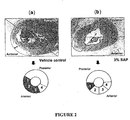
- Figure 2 Presents information on the histopathological scoring and photographical analysis of rat heart with vehicle alone (a) and 3% CardioMatrix (b). Scoring for infarct size or wall thinning-only the anterior region of the heart was scored as follows: 0-0% or no areas scoring positive for infarct or thinning, 1-25% of the area affected, termed mild, 2-50% of the area affected-moderate, 3 or 4 (75-100%) areas affected-severe, (a) Photograph of vehicle control shows a large area of the anterior wall was infarcted (areas 1-3 or 75% of the anterior region).
- Figure 3 Presents information on the CardioMatrix treatment reducing wall thinning area and severity.
- A Slices per rat with infarct and severe infarct comparing in animals receiving 3% CardioMatrix, 1% CardioMatrix and vehicle control.
- B Slices per rat with wall thinning and severe wall thinning in animals receiving 3% CardioMatrix, 1% CardioMatrix and vehicle control.
- the present invention provides injectable CardioMatrix, comprised of a self-assembling RADARADARADARADA sequence wherein the sequence is not modified to contain active sequences from platelet-derived growth factor, capable of forming nanofiber scaffolds that promote increasing one or more of cardiac cell preservation and cardiac cell recruitment.
- the present invention provides a CardioMatrix material for use in local myocardial injection. In various embodiments, the use promotes improved recovery of ventricular contractility after myocardial infarction.
- scaffold is meant a three-dimensional structure capable of supporting cells.
- Cells may be encapsulated by the scaffold or may be disposed in a layer on a surface of the scaffold.
- the beta-sheet secondary structure of the scaffold may be confirmed using standard circular dichroism to detect an absorbance minimum at approximately 218 nm and a maximum at approximately 195 nm.
- the scaffold is formed from the self-assembly of peptides that may include L-amino acids, D-amino acids, natural amino acids, non-natural amino acids, or a combination thereof. If L-amino acids are present in the scaffold, degradation of the scaffold produces amino acids which may be reused by the host tissue.
- the peptides may be covalently linked to a compound, such as a chemoattractant or a therapeutically active compound.
- the peptides may be chemically synthesized or purified from natural or recombinant sources, and the amino- and carboxy-termini of the peptides may be protected or not protected.
- the peptide scaffold may be formed from one or more distinct molecular species of peptides which are complementary and structurally compatible with each other. Peptides containing mismatched pairs, such as the repulsive pairing of two similarly charged residues from adjacent peptides, may also form scaffolds if the disruptive force is dominated by stabilizing interactions between the peptides. Scaffolds are also referred to herein as peptide structures, peptide hydrogel structures, peptide gel structures, or hydrogel structures.
- each hydrophilic residue in a peptide either hydrogen bonds or ionically pairs with a hydrophilic residue on an adjacent peptide or is exposed to solvent.
- structurally compatible capable of maintaining a sufficiently constant intrapeptide distance to allow scaffold formation.
- the variation in the intrapeptide distance is less than 4, 3, 2, or 1 angstroms. It is also contemplated that larger variations in the intrapeptide distance may not prevent scaffold formation if sufficient stabilizing forces are present.
- This distance may be calculated based on molecular modeling or based on a simplified procedure that has been previously reported ( U.S. Patent Number 5,670,483 ). In this method, the intrapeptide distance is calculated by taking the sum of the number of unbranched atoms on the side-chains of each amino acid in a pair.
- the variation in the intrapeptide distance of peptides having lysine-glutamic acid pairs and glutamine-glutamine pairs is 3 angstroms.
- pure is used to indicate the extent to which the peptides described herein are free of other chemical species, including deletion adducts of the peptide in question and peptides of differing lengths.
- biologically active agent is used to refer to agents, compounds, or entities that alter, inhibit, activate, or otherwise affect biological or biochemical events. Such agents may be naturally derived or synthetic. Biologically active agents include classes of molecules (e.g., proteins, amino acids, peptides, polynucleotides, nucleotides, carbohydrates, sugars, lipids, nucleoproteins, glycoproteins, lipoproteins, steroids, growth factors, chemoattractants, etc.) that are commonly found in cells and tissues, whether the molecules themselves are naturally-occurring or artificially created (e.g., by synthetic or recombinant methods). Biologically active agents also include drugs, for example, anticancer substances, analgesics, and opioids.
- drugs for example, anticancer substances, analgesics, and opioids.
- the drug is one that has already been deemed safe and effective for use by the appropriate governmental agency or body.
- drugs for human use listed by the FDA under 21 C.F.R. $$330.5, 331 through 361, and 440 through 460; drugs for veterinary use listed by the DA under 21 C.F.R. $$500 through 589 are all considered acceptable for use in accordance with the present invention.
- Additional exemplary biologically active agents include but are not limited to anti-AIDS substances, anti-cancer substances, immunosuppressants (e.g., cyclosporine), anti-viral agents, enzyme inhibitors, neurotoxins, hypnotics, antihistamines, lubricants, tranquilizers, anticonvulsants, muscle relaxants and anti-Parkinson agents, anti-spasmodics and muscle contractants including channel blockers, miotics and anticholinergics, anti-glaucoma compounds, anti-parasite, anti-protozoal, and/or anti-fungal compounds, modulators of cell-extracellular matrix interactions including cell growth inhibitors and anti-adhesion molecules, vasodilating agents, inhibitors of DNA, RNA or protein synthesis, antihypertensives, anti-pyretics, steroidal and non-steroidal anti-inflammatory agents, anti- angiogenic factors, anti-secretory factors, anticoagulants and/or antithrombotic agents, local anesthetics, ophthalmic
- a hydrogel such as a peptide hydrogel is "stable with respect to mechanical or physical agitation” if, when subjected to mechanical agitation, it substantially retains the physical properties (such as elasticity, viscosity, etc.), that characterized the hydrogel prior to physical agitation.
- the hydrogel need not maintain its shape or size and may fragment into smaller pieces when subjected to mechanical agitation while still being termed stable with respect to mechanical or physical agitation.
- stable does not have this meaning except when used with this phrase.
- nanofiber refers to a fiber having a diameter of nanoscale dimensions. Typically a nanoscale fiber has a diameter of 500 nm or less. According to certain embodiments of the invention a nanofiber has a diameter of less than 100 nm. According to certain other embodiments of the invention a nanofiber has a diameter of less than 50 nm. According to certain other embodiments of the invention a nanofiber has a diameter of less than 20 nm. According to certain other embodiments of the invention a nanofiber has a diameter of between 10 and 20 nm. According to certain other embodiments of the invention a nanofiber has a diameter of between 5 and 10 nm. According to certain other embodiments of the invention a nanofiber has a diameter of less than 5 nm.
- nanoscale environment scaffold refers to a scaffold comprising nanofibers.
- at least 50% of the fibers comprising the scaffold are nanofibers.
- at least 75% of the fibers comprising the scaffold are nanofibers.
- at least 90% of the fibers comprising the scaffold are nanofibers.
- at least 95% of the fibers comprising the scaffold are nanofibers.
- at least 99% of the fibers comprising the scaffold are nanofibers.
- the scaffold may also comprise non-fiber constituents, e.g., water, ions, growth and/or differentiation-inducing agents such as growth factors, therapeutic agents, or other compounds, which may be in solution in the scaffold and/or bound to the scaffold.
- the term "effective amount” includes an amount effective, at dosages and for periods of time necessary, to achieve the desired result.
- An effective amount may vary according to factors such as the disease state, age, and weight of the subject. Dosage regimens may be adjusted to provide the optimum therapeutic response. An effective amount is also one in which any toxic or detrimental effects (e.g., side effects) are outweighed by the therapeutically beneficial effects.
- CardioMatrix is a self-assembling peptide (SAP) containing the sequence RADARADARADARADA and is a member of a class of peptide biomaterials that have been developed in the context of cell culture, stem cell biology and tissue engineering (24, 25). CardioMatrix sequences for use in the present invention can also be modified to contain active sequences from various growth factors, other than platelet-derived growth factor, and/or extracellular matrix proteins (e.g. collagen, laminin) (10, 14). Examples of the preparation and characterization of SAPs can be found in U.S. Published Application Nos. 2004/0242469 and 2006/0084607 .
- the CardioMatrix material comprises purified amphiphilic peptides where the peptides are at least 75% pure, preferably at least 85% pure and more preferably at least 95% pure.
- the CardioMAtrix material is used in the present invention in the form of an injectable aqueous solution.
- the concentration of peptide chains in solution can be varied. In various embodiments, the concentration of the peptide chains in solution is one or more of: between about 1% and about 10% by weight; between about 3% and about 7% by weight; and between about 6% and about 10% by weight. In various embodiments, the concentration of the peptide chains in solution is one or more of: greater than about 2% by weight; greater than about 3% by weight; greater than about 4% by weight; greater than about 5% by weight; greater than about 6% by weight; greater than about 7% by weight; and greater than about 8% by weight.
- the CardioMatrix solution can contain one or more acceptable buffers to bring the solution to a physiological acceptable pH (e.g., pH of about 7 to about 8.5) prior to introducing the solution into a subject.
- a physiological acceptable pH e.g., pH of about 7 to about 8.5
- the CardioMatrix solution is preferably sterilized prior to use in a subject.
- the CardioMatrix powder can be radiation sterilized, for example, by exposure to gamma radiation to about 35 Kgrey. CardioMatrix solutions can be made that are stable with respect to exposure to radiation and structural alterations upon exposure to sterilizing radiation.
- the peptide chains in the CardioMatrix solution can be made to spontaneously self-assemble into scaffolds through electrostatic interactions.
- the self-assembled CardioMatrix peptide chains can form a hydrogel that remains ductile and amenable to flow upon application of an appropriate stimulus.
- SAPs upon the introduction of millimolar amounts of monovalent cations, either through the addition of salt solution, cell culture media or injection of the material in-vivo, can undergo self-assembly into nanofibers, approximately 10 nm in diameter, which form well-ordered 3-dimensional porous scaffolds (13).
- the amphiphilic peptides' charge density, size and water-structuring abilities can mimic those of in-vivo extracellular matrix.
- the CardioMatrix solutions can be formed into a stable scaffold by exposure to a monovalent salt solution.
- Sufficient electrolyte is added to the solution to initiate self-assembly of the peptides into a beta-sheet macroscopic structure upon contact with tissue at the site of administration.
- the concentration of the added electrolyte is at least 5, 10, 20, or 50 mM. Smaller concentrations, e.g., 0.1 to 1 mm, or larger concentrations can also be used. The choice of concentration depends partially on the desired ionic strength of the peptide gel and also affects the speed of gelation.
- Suitable electrolytes include, but are not limited to, Li + , Na + , K + , and Cs + .
- the electrolyte causes the peptide chains to self-assemble into a scaffold that is stable with respect to mechanical agitation.
- the present invention provides a substantially cell free solution comprising an amphiphilic self-assembling peptide having the complementary components of providing a: 1) a suitable biological scaffold that creates a microenvironment niche for cardiac cell types, and 2) that the endogenous cardiac cells and/or engrafted cell population can rapidly integrate into the needed tissue (24, 25).
- the CardioMatrix scaffold materials of the present invention comprise a network of nanofibers with intervening spaces rather than a solid matrix, which can promote cell infiltration and cell-cell interactions to promote healing.
- the introduction of the CardioMatrix material can be performed "cell-free," for example, the methods do not require the preparation of cells to be introduced into infarcted areas for the treatment of cardiac tissues.
- the CardioMatrix materials of the present invention provide, in various embodiments, appropriate three-dimensional architecture, promote signaling pathways influencing critical cell functions, such as proliferation, differentiation, and migration, or both (7-10, 14, 15). Furthermore, since the CardioMatrix solutions does not gel until it is administered, it could prevent back leakage of injected cells into the desired region-this technical advantage has proven to be extremely helpful in several pre-clinical studies conducted by the inventors.
- the CardioMatrix solution of the present invention is injectable, and can, in various embodiments, be used for localized drug delivery.
- the CardioMatrix solution is used to deliver drugs directly to the heart for either short term therapy, long term therapy, or both. Accordingly, instead of repeated systemic administration, CardioMatrix containing the desired agent can be periodically delivered directly to a desired area of the heart. All concentrations of CardioMatrix solution are injectable with any size needle, even very fine gauge needles (30 gauge).
- CardioMatrix solutions in various embodiments, can behave as a injection-molded material.
- the hydrogels passed through a needle fill a desired space with a single coherent bolus rather than a tangled, threaded mass. That is, the material assembles both at the scale of the individual peptide chains and on a macroscale as a gel.
- the CardioMatrix solutions can in various embodiments thus provide both an injectable material for ease of administration and a continuous fibrous network that facilitates cellular ingrowth and proliferation.
- a wide variety of devices can be used to deliver the injectable solutions including, but note limited, syringes, dual-chamber syringes, injection catheters, and delivery catheters.
- CardioMatrix solutions in various embodiments, can behave as non-Newtonian fluids.
- the solution can become more viscous over time.
- a 3% solution could exhibit a yield stress of 20-30 Pa and a viscosity less than 40 cP about an hour after mixing, the yield stress could increase to 50-65 Pa after about 5-6 hours, and after about two weeks, the yield stress could increase to about 100-160 Pa, and the viscosity increased to less than 200 cP.
- One or more biologically active agents for example, therapeutically active compounds or chemo-attractants, can be added to the CardioMatrix (10, 14).
- Growth factors alone or in combination with other biologically active agents such as cytokines (epidermal growth factor, nerve growth factor, transforming growth factor-alpha and beta, platelet-derived growth factor, insulin-like growth factor, vascular endothelial growth factor, etc.) can be added to the CardioMatrix material (10, 14).
- Drugs and growth factors each can be added in a similar fashion to CardioMatrix, for example, as follows: the desired drug or growth factor at 2X concentration is added to the sucrose vehicle solution, at a volume equal to that of sucrose vehicle solution, then mixed with CardioMatrix prior to injection.
- the present invention provides a substantially cell free CardioMatrix material for use in a method of treatment comprising local injection into a tissue to be treated.
- the tissue to be treated comprises cardiac tissue, including but not limited to vascular, arterial, muscular, arterial lining, etc. tissues.
- the substantially cell free material is injected as a solution containing greater than about 1 % CardioMatrix by weight, and preferably greater than about 3% CardioMatrix by weight.
- the present uses comprise providing a cardio-protective and/or cardio-regenerative effect by local administration of a substantially cell free solution containing greater than about 1% CardioMatrix by weight, and preferably greater than about 3% CardioMatrix by weight.
- AMI events lead to edema and inflammation in the heart which causes the infracted region to expand beyond the originally damaged area.
- the infarct expansion occurs 2-10 days after the event and causes necrosis not only in the original infracted zone but also in the expanded area (16).
- "stunning" in the heart occurs immediately after ischemia and subsequent reperfusion while “hibernation” is a process by which the myocardium adapts to chronic ischemia which involves a metabolic switch to alternative types of energy consumption, typically in the form of anaerobic glycolysis (22).
- Infracted cardiac tissue can enter a "hibernating" state from a chronically “stunned” state and this transition correlates with a temporal and spatial variation in structural protein expression during the progression (23).
- the present inventions provide CardioMatrix material for use in providing a cardio-protective and/or cardio-regenerative effect by local administration of a substantially cell free solution containing greater than about 1% CardioMatrix by weight, and preferably greater than about 3% CardioMatrix by weight.
- the treatment can provide one or more of: controling infarct size, reducing or preventing infarct expansion, and reducing ventricular wall stress.
- the substantially cell free solution containing an amphiphilic self-assembling peptide can be injected into heart muscle to stimulate muscle production at thinning cardiac walls.
- the pH of the solution can be adjusted to further promote cell ingrowth and extracellular matrix production, and/or growth factors can be added to promote, e.g., specific cell behavior.
- treat As used herein the terms, “treat,” “treatment,” “treating” and “therapy” are used interchangeably to refer to any method used to partially or completely alleviate, ameliorate, relieve, inhibit, delay onset of, reduce severity of and/or reduce incidence of one or more symptoms or features of a particular disease, disorder, injury and/or condition.
- treatment may be administered to a subject who does not exhibit signs of a disease or condition and/or exhibits only early signs of the disease or condition; treatment may be administered to a subject who has suffer an injury (for example as a result of AMI); etc.
- the CardioMatrix solution treats the damaged tissue by keeping it in a stunned state until the edema and inflammation subside (19, 22).
- the CardioMatrix solutions are employed as a bulking agent that protects the tissue from wall stress which would further compromises cardiac function and, for example, provide a biomechanical or biophysical protective effect towards the infracted tissue, promoting protection from further injury (19).
- the present invention provides CardioMatrix material for use in local myocardial injection.
- the present invention provides a substantially cell free solution containing greater than about 1% CardioMatrix by weight, and preferably greater than about 3% CardioMatrix by weight for use in treating an infarct comprising injecting into the infarct.
- the solution comprises a sucrose solution containing a physiologically acceptable concentration of sucrose, e.g., a 10% by weight sucrose solution.
- the solution can contain one or more acceptable buffers to bring the solution to a physiological acceptable pH (e.g., pH of about 7 to about 8.5) prior to introducing the CardioMatrix solution into a subject.
- the treatment increases the local delivery of NO to the treated tissue.
- the treatment provides local delivery of NO formed from LA in the Cardiomatrix.
- the CardioMatrix promotes the formation of nitric oxide (NO) by the treated tissues and/or tissues in pyhhsiological communication with the treated tissues.
- EXAMPLE 1 CardioMatrix Studies: Ischemia- reperfusion rat model.
- an ischemia-reperfusion rat model was used to test whether the use of local myocardial injection of CardioMatrix, improves ventricular remodeling after infarction, as measured by ventricular contractility and pathology assessments of infarct size and severity.
- the introduction of the CardioMatrix material was performed "cell-free," that is, it did not use or require the preparation of cells to be introduced into the infarcted areas.
- CardioMatrix was prepared as follows: CardioMatrix powder was dissolved in vehicle control solution (10% sucrose) to produce the 1% and 3%, concentration by weight, solutions used in this example. The solution was substantially cell free. The solution was then transferred to a syringe for injection. A 10% sucrose solution was used as the control.
- the rats were randomized to receive one of 3 materials: 3% CardioMatrix (3% CardioMatrix, 3DM Inc., Cambridge, MA, USA), 1% CardioMatrix (1% CardioMatrix, 3DM Inc., Cambridge, MA, USA) or vehicle control (CardioMatrix vehicle, 3DM, Inc., Cambridge, MA, USA).
- 3% CardioMatrix 3% CardioMatrix, 3DM Inc., Cambridge, MA, USA
- 1% CardioMatrix 1% CardioMatrix, 3DM Inc., Cambridge, MA, USA
- vehicle control CardioMatrix vehicle, 3DM, Inc., Cambridge, MA, USA
- Transthoracic echocardiography was performed on the 3 rd day after surgery using a 13 MHz linear array ultrasound probe (Vivid 7, GE Medical Systems, Milwaukee, WI, USA) after light sedation (ketamine, 0.05-0.10 mg/g ip).
- Left ventricular dimensions were measured from the parasternal short-axis M-mode tracings at the mid-ventricular level and the left ventricular ejection fraction (LVEF) was calculated with the Teich method (5). The measurements obtained from 2 consecutive tracings were averaged.
- Echocardiography was repeated under light sedation on the 28 th day after surgery using the methods described previously.
- the rats were then anesthetized (sodium pentobarbital 0.10mg/g ip), sacrificed and the hearts explanted for pathological assessment.
- Table I shows the LVID measurements in centimeters at days 3 and 28, the LVEFs in percentage at days 3 and 28, and the change in LVEF from days 3 and 28 for each of the 3 experimental groups.
- Table 1 shows the LVID measurements in centimeters at days 3 and 28, the LVEFs in percentage at days 3 and 28, and the change in LVEF from days 3 and 28 for each of the 3 experimental groups.
- On day 3 post-ischemia-reperfusion there was no difference in LVEF between the 3% CardioMatrix, 1% CardioMatrix and vehicle control groups (69.4 ⁇ 5.3%, 68.3 ⁇ 2.7% and 70.5 ⁇ 8.9%, respectively, p>0.50, Table 1) demonstrating that the infarcts were administered in a uniform fashion to all of the rats in the study.
- p values were calculated comparing the treatments to each other (i.e., 3% CardioMatrix versus 1% CardioMatrix or control and 1% CardioMatrix versus control) and the p values comparing treatment within a single group (i.e., 3% CardioMatrix, 1% CardioMatrix or control at day 3 versus day 28) ( Figure 1 ).
- the 3% CardioMatrix versus control p value of 0.04 demonstrates a statistically-significant improvement in the animals receiving 3% CardioMatrix compared to animals receiving the vehicle control.
- Figure 1(b) also includes a representation of each of the groups plotted separately with each animal represented by a single line bounded by the measurements at day 3 and day 28.
- each animal represented by a single line bounded by the measurements at day 3 and day 28.
- Figure 1 (b) shows that treatment with 3% CardioMatrix compared to the vehicle control shows statistically-significant enhancement of LVEF in rats that previously sustained an AMI event.
- the hearts were cut into five sections and evaluated separately on a scale of 0-4 (0-no effect, 4-severe) for infarction size, wall thinning, fibrosis and inflammation. Examples of scoring for infarct are pictured in Figure 2 .
- the vehicle control is shown to have an extensive area of infarction (75% of the anterior region of the heart) versus part b, the 3% CardioMatrix, which demonstrates a much smaller area of infarction (25% of the anterior region of the heart).
- the creation of nanofiber scaffold micro-environments, via injection of a CardioMatrix according to various embodiments of the present invention can promote cardiomyocyte and endothelial cell survival and organization after ischemic injury (5) and result in improvement in recovery of ventricular contractility.
- the results demonstrate that in various embodiments of the invention can promote protection against reperfusion injury or a cardioprotective effect. It is believed, without being held to theory, that the L-arginine (LA) peptide sequence present in the CardioMatrix of this example can promote or provide a cardioprotective effect.
- LA L-arginine
- nitric oxide can be formed from LA and oxygen and NO is synthesized in response to physiological and pathological stimuli; as cardiac reperfusion injury has been attributed to reduced NO activity resulting from deficiency of LA (3), various embodiments of the present invention can provide a treatment via local delivery of NO.
- various other diseases have been linked to inappropriate release of nitric oxide including hypertension, septic shock, neuro-degeneration, arthritis, and asthma.
- EXAMPLE 2 Studies: Biocompatability and Toxicology.
- the Agar Diffusion test (ISO 10993-5) measures a material's effect on cell cultures, which are extremely sensitive to minute quantities of leachable chemicals and readily display characteristic signs of toxicity in the presence of potentially harmful leachables.
- the biological reactivity of a mammalian monolayer, L929 mouse fibroblast cell culture, in response to the test article was determined as "no-reactivity" in tests.
- the hemolysis test (Direct Contact, ISO-10993-4) measures the ability of a material to cause red blood cells to rupture. This test is derived from well-established NIH protocols and is performed in triplicate. This test uses rabbit blood in direct contact with the test material and the degree of hemolysis is measured spectrophotometrically. The CardioMatrix tested "non-hemolytic" in tests carried out by an independent FDA-certified testing agency.
- Prothrombin Time (Human Plasma, ISO 10993-4) measures the effect of a test article extract on human blood coagulation time. This assay has become a suitable clinical means of determining the presence and functioning ability of prothrombin in the process of coagulation.
- the CardioMatrix did not have an adverse effect on prothrombin coagulation time of human plasma, in tests carried out by an independent FDA-certified testing agency.
- Test article was implanted into paravertebral muscle of 3 New Zealand white rabbits, with negative control (GelFoam) implanted in the contralateral muscle of each animal. Healing was allowed for 2 weeks. Animals were sacrificed and implants excised. Excised implants were examined macroscopically with a magnifying lens and fixed in formalin. Histologic slides of hematoxylin and eosin (H&E) and Mason's Trichrome stained sections were prepared, studied microscopically by a board-certified veterinary pathologist, and evaluated on a scale of 0-3. CardioMatrix implants retained the initial implant volume, collagen fibers, and vascularization of the injection site.
- H&E hematoxylin and eosin
- Mason's Trichrome stained sections were prepared, studied microscopically by a board-certified veterinary pathologist, and evaluated on a scale of 0-3. CardioMatrix implants retained the initial implant volume, collagen fibers, and vascularization of the injection site.
- Non-Toxic 0.13% on a scale ranging from Nontoxic ( ⁇ 1), Slightly Toxic (1 to ⁇ 2), Mildly Toxic (2 to ⁇ 3), Moderately Toxic (3 to >4), to Severely Toxic ( ⁇ 4), in tests carried out by an independent FDA-certified testing agency.
- Irritation reactivity tests assess the localized reaction of tissues, including breached tissue and blood contact, to device materials or extracts.
- a 0.5% w/v peptide CardioMatrix solution was extracted in NaCl and CSO at a ratio of 0.2gm per 1.0 mL at 70 ⁇ 2°C for 24 hours.
- Control extracts were prepared, in a similar manner to the test article.
- Three rabbits were injected intracutaneously, using one side of the animal for the test article extracts and the other side for the control extracts, at 0.2 mL per site. The injected sites were examined at 24, 48, and 72 hours post inoculation for gross evidence of tissue reaction such as erythema, edema, and necrosis.
- a Primary Irritation Index of 0.5 or less will be considered a negligible irritant, where 0.5 to ⁇ 2 are slight irritants, 2 to ⁇ 5 are moderate irritants, and >5 are severe irritants.
- the test sites injected with CardioMatrix did not exhibit signs of erythema or edema through the 72 hour observation point.
- the Primary Irritation Index for the material is 0.0, in tests carried out by an independent FDA-certified testing agency.
- the purpose of the test was to detect the risk of a patient to a febrile reaction as a result of the administration of the test article extract.
- the test article was prepared by mixing 9ml of the test article with 9mL of 0.9% USP Sodium Chloride for Injection (NaCl) and the resulting gel extracted at a ration of 0.2gm per 1.0 mL.
- the test article extract was administered by intravenous injection at 10 mL/kg.
- the rectal temperatures of the injected rabbits were compared with the temperature of a control rabbit similarly injected with 0.9% USP Sodium Chloride for Injection (NaCl).
- the base-line termperatures of the rabbits determined no more than 30 minutes prior to injection of the test article extract, were used to exclude rabbits whose body temperatures vary by more than 1°C from each other and whose temperatures are greater than 39.8°C. Body temperatures were recorded at 30 minute intervals between 1 and 3 hours subsequent to injection. If no rabbit exhibited a rise in temperature of 0.5°C or more about its base-line temperature, the product met the requirements for the absence of pyrogens. None of the animals injected with the test article extract exhibited signs of pyrogenic response, in tests carried out by an independent FDA-certified testing agency.
Landscapes
- Health & Medical Sciences (AREA)
- Life Sciences & Earth Sciences (AREA)
- Pharmacology & Pharmacy (AREA)
- Veterinary Medicine (AREA)
- Public Health (AREA)
- General Health & Medical Sciences (AREA)
- Chemical & Material Sciences (AREA)
- Animal Behavior & Ethology (AREA)
- Medicinal Chemistry (AREA)
- Engineering & Computer Science (AREA)
- Bioinformatics & Cheminformatics (AREA)
- Organic Chemistry (AREA)
- Nuclear Medicine, Radiotherapy & Molecular Imaging (AREA)
- General Chemical & Material Sciences (AREA)
- Chemical Kinetics & Catalysis (AREA)
- Cardiology (AREA)
- Heart & Thoracic Surgery (AREA)
- Epidemiology (AREA)
- Immunology (AREA)
- Proteomics, Peptides & Aminoacids (AREA)
- Gastroenterology & Hepatology (AREA)
- Hospice & Palliative Care (AREA)
- Pulmonology (AREA)
- Biomedical Technology (AREA)
- Neurology (AREA)
- Neurosurgery (AREA)
- Inorganic Chemistry (AREA)
- Diabetes (AREA)
- Oncology (AREA)
- Orthopedic Medicine & Surgery (AREA)
- Rheumatology (AREA)
- Physical Education & Sports Medicine (AREA)
- Communicable Diseases (AREA)
- Psychiatry (AREA)
- Hematology (AREA)
- Vascular Medicine (AREA)
- Urology & Nephrology (AREA)
- Medicines That Contain Protein Lipid Enzymes And Other Medicines (AREA)
- Medicinal Preparation (AREA)
- Peptides Or Proteins (AREA)
Applications Claiming Priority (2)
| Application Number | Priority Date | Filing Date | Title |
|---|---|---|---|
| US86943706P | 2006-12-11 | 2006-12-11 | |
| PCT/US2007/025271 WO2008073395A2 (en) | 2006-12-11 | 2007-12-11 | Compositions and methods for cardiac tissue protection and regeneration |
Publications (2)
| Publication Number | Publication Date |
|---|---|
| EP2089047A2 EP2089047A2 (en) | 2009-08-19 |
| EP2089047B1 true EP2089047B1 (en) | 2012-11-14 |
Family
ID=39183217
Family Applications (1)
| Application Number | Title | Priority Date | Filing Date |
|---|---|---|---|
| EP07867700A Not-in-force EP2089047B1 (en) | 2006-12-11 | 2007-12-11 | Compositions and methods for cardiac tissue protection and regeneration |
Country Status (6)
| Country | Link |
|---|---|
| US (2) | US9012404B2 (https=) |
| EP (1) | EP2089047B1 (https=) |
| JP (3) | JP5558104B2 (https=) |
| DK (1) | DK2089047T3 (https=) |
| ES (1) | ES2400294T3 (https=) |
| WO (2) | WO2008073392A2 (https=) |
Families Citing this family (19)
| Publication number | Priority date | Publication date | Assignee | Title |
|---|---|---|---|---|
| JP5255274B2 (ja) * | 2004-07-06 | 2013-08-07 | スリーディー マトリックス, インコーポレイテッド | 精製両親媒性ペプチド組成物およびその使用 |
| JP5497451B2 (ja) * | 2007-12-05 | 2014-05-21 | 株式会社スリー・ディー・マトリックス | 創傷治癒・皮膚再建材 |
| RU2011118341A (ru) * | 2008-10-06 | 2012-11-20 | 3-Д Матрикс, Лтд. (Jp) | Агент для окклюзии тканей |
| AP2011005824A0 (en) * | 2009-01-26 | 2011-08-31 | Intermune Inc | Methods for treating acute myocardial infarctions and associated disorders. |
| US20110117195A1 (en) * | 2009-11-18 | 2011-05-19 | National Cheng Kung University | Method for improving myocardial infarction by intramyocardial or transendocardial injection of peptide nanofibers |
| JP6034868B2 (ja) * | 2011-09-02 | 2016-11-30 | 株式会社スリー・ディー・マトリックス | 胸部の空気漏れ閉塞のための両親媒性ペプチド |
| US10905708B2 (en) | 2011-09-07 | 2021-02-02 | 3-D Matrix, Ltd. | MicroRNA-based methods and assays for osteocarcinoma |
| US11260072B2 (en) | 2011-09-07 | 2022-03-01 | 3-D Matrix, Ltd. | MicroRNA-based methods and assays for osteocarcinoma |
| WO2014008400A2 (en) | 2012-07-06 | 2014-01-09 | 3-D Matrix, Inc. | Fill-finish process for peptide solutions |
| JP2015021582A (ja) | 2013-07-22 | 2015-02-02 | 株式会社ジェイテクト | 円錐ころ軸受と円錐ころ軸受を用いた動力伝達装置 |
| BR112016019510A2 (pt) | 2014-03-10 | 2017-10-24 | 3 D Matrix Ltd | esterilização e filtração de composições de peptídeos |
| RU2016139369A (ru) | 2014-03-10 | 2018-04-10 | 3-Д Матрикс, Лтд. | Композиции самоорганизующихся пептидов |
| US10245299B2 (en) | 2014-03-10 | 2019-04-02 | 3-D Matrix, Ltd. | Autoassembling peptides for the treatment of pulmonary bulla |
| DE102015000363A1 (de) | 2015-01-20 | 2016-07-21 | Emc Microcollections Gmbh | Neue modular funktionalisierbare Peptid-Hydrogele |
| US10702606B2 (en) | 2015-12-10 | 2020-07-07 | Menicon Co., Ltd. | Peptide composition |
| US10814038B2 (en) | 2016-01-06 | 2020-10-27 | 3-D Matrix, Ltd. | Combination compositions |
| US11174288B2 (en) | 2016-12-06 | 2021-11-16 | Northeastern University | Heparin-binding cationic peptide self-assembling peptide amphiphiles useful against drug-resistant bacteria |
| JP2021506815A (ja) | 2017-12-15 | 2021-02-22 | 株式会社スリー・ディー・マトリックス | 界面活性ペプチドナノ構造および薬物送達における使用 |
| EP3818071A2 (en) * | 2018-07-03 | 2021-05-12 | 3-D Matrix, Ltd. | Ionic self-assembling peptides |
Family Cites Families (12)
| Publication number | Priority date | Publication date | Assignee | Title |
|---|---|---|---|---|
| US5670483A (en) | 1992-12-28 | 1997-09-23 | Massachusetts Insititute Of Technology | Stable macroscopic membranes formed by self-assembly of amphiphilic peptides and uses therefor |
| AU7178301A (en) * | 2000-07-06 | 2002-01-21 | American Home Prod | Methods for increasing nitric oxide synthase activity |
| US7449180B2 (en) * | 2001-02-06 | 2008-11-11 | John Kisiday | Macroscopic scaffold containing amphiphilic peptides encapsulating cells |
| AU2003249606A1 (en) | 2002-05-13 | 2003-12-02 | Massachusetts Institute Of Technology | Angiogenesis and cardiac tissue engineering with peptide hydrogels and related compositions and methods of use thereof |
| PL376213A1 (en) * | 2003-01-16 | 2005-12-27 | Boehringer Ingelheim International Gmbh | Pharmaceutical combination for the prophylaxis or treatment of cardiovascular, cardiopulmonary, pulmonary or renal diseases |
| EP2711025A3 (en) * | 2003-06-25 | 2014-09-10 | Massachusetts Institute of Technology | Self-assembling peptides incorporating modifications and methods of use thereof |
| US7713923B2 (en) * | 2003-06-25 | 2010-05-11 | Massachusetts Institute Of Technology | Self-assembling peptides incorporating modifications and methods of use thereof |
| JP4813771B2 (ja) * | 2004-04-14 | 2011-11-09 | 丸善製薬株式会社 | 血管内皮型一酸化窒素合成酵素活性促進剤 |
| JP5255274B2 (ja) | 2004-07-06 | 2013-08-07 | スリーディー マトリックス, インコーポレイテッド | 精製両親媒性ペプチド組成物およびその使用 |
| JP4949661B2 (ja) * | 2004-09-21 | 2012-06-13 | 第一三共株式会社 | HMG−CoAリダクターゼ阻害剤とグルタチオンを含有する医薬組成物 |
| JP2008526749A (ja) * | 2005-01-04 | 2008-07-24 | ザ ブライハム アンド ウイメンズ ホスピタル, インコーポレイテッド | 自己アセンブリするペプチドナノファイバーを用いたpdgfの徐放性の送達 |
| DK1879606T3 (da) * | 2005-04-25 | 2013-09-23 | Massachusetts Inst Technology | Selvorganiserende peptider til fremme af hæmostase |
-
2007
- 2007-12-11 WO PCT/US2007/025267 patent/WO2008073392A2/en not_active Ceased
- 2007-12-11 JP JP2009541336A patent/JP5558104B2/ja not_active Expired - Fee Related
- 2007-12-11 EP EP07867700A patent/EP2089047B1/en not_active Not-in-force
- 2007-12-11 DK DK07867700.2T patent/DK2089047T3/da active
- 2007-12-11 US US12/518,624 patent/US9012404B2/en active Active
- 2007-12-11 WO PCT/US2007/025271 patent/WO2008073395A2/en not_active Ceased
- 2007-12-11 ES ES07867700T patent/ES2400294T3/es active Active
-
2013
- 2013-05-07 JP JP2013097308A patent/JP5903068B2/ja not_active Expired - Fee Related
-
2015
- 2015-03-27 US US14/671,902 patent/US20150258166A1/en not_active Abandoned
- 2015-11-24 JP JP2015228381A patent/JP2016033147A/ja not_active Withdrawn
Non-Patent Citations (1)
| Title |
|---|
| HSIEH P C H ET AL: "Controlled delivery of PDGF-BB for myocardial protection using injectable self-assembling peptide nanofibers", JOURNAL OF CLINICAL INVESTIGATION, AMERICAN SOCIETY FOR CLINICAL INVESTIGATION, US, vol. 116, no. 1, 1 January 2006 (2006-01-01), pages 237 - 248, XP008084972, ISSN: 0021-9738, DOI: 10.1172/JCI25878 * |
Also Published As
| Publication number | Publication date |
|---|---|
| JP2010512393A (ja) | 2010-04-22 |
| JP2013151560A (ja) | 2013-08-08 |
| JP2016033147A (ja) | 2016-03-10 |
| JP5558104B2 (ja) | 2014-07-23 |
| WO2008073395A3 (en) | 2008-11-06 |
| WO2008073392A2 (en) | 2008-06-19 |
| WO2008073392A3 (en) | 2008-12-18 |
| EP2089047A2 (en) | 2009-08-19 |
| ES2400294T3 (es) | 2013-04-08 |
| US20150258166A1 (en) | 2015-09-17 |
| WO2008073395A2 (en) | 2008-06-19 |
| US9012404B2 (en) | 2015-04-21 |
| US20100143504A1 (en) | 2010-06-10 |
| JP5903068B2 (ja) | 2016-04-13 |
| DK2089047T3 (da) | 2013-02-18 |
Similar Documents
| Publication | Publication Date | Title |
|---|---|---|
| EP2089047B1 (en) | Compositions and methods for cardiac tissue protection and regeneration | |
| ES2260241T3 (es) | Composicion y procedimiento para la reparacion y regeneracion de cartilago y otros tejidos. | |
| CA2801010C (en) | Peptide and use thereof for treatment of cartilage damage and arthritis | |
| Hong et al. | Self-assembling injectable peptide hydrogels for emerging treatment of ischemic stroke | |
| US20160030628A1 (en) | Treatment for bile leakage | |
| WO2017152039A1 (en) | Protection and delivery of multiple therapeutic proteins | |
| US20200078489A1 (en) | Pancreatic fistula occlusion | |
| US20230348859A1 (en) | Decellularized mammalian extracellular matrix morsels, methods making and methods of using same | |
| WO2021169075A1 (zh) | 一种集可注射与抗菌于一体的双功能水凝胶及其制备方法和用途 | |
| KR20250134239A (ko) | 나노시트-하이드로겔 복합체 및 사용 방법 | |
| KR101110317B1 (ko) | 조직재생을 위한 티모신 베타-4 유래 Ac-SDKP 펩타이드의 스마트 방출지지체 | |
| Ruvinov et al. | Instructive biomaterials for myocardial regeneration and repair | |
| Fan | Control of Cardiac Extracellular Matrix Degradation and Cardiac Fibrosis after Myocardial Infarction | |
| HK1225957A1 (en) | Purified amphiphilic peptide compositions and uses thereof |
Legal Events
| Date | Code | Title | Description |
|---|---|---|---|
| PUAI | Public reference made under article 153(3) epc to a published international application that has entered the european phase |
Free format text: ORIGINAL CODE: 0009012 |
|
| 17P | Request for examination filed |
Effective date: 20090604 |
|
| AK | Designated contracting states |
Kind code of ref document: A2 Designated state(s): AT BE BG CH CY CZ DE DK EE ES FI FR GB GR HU IE IS IT LI LT LU LV MC MT NL PL PT RO SE SI SK TR |
|
| 17Q | First examination report despatched |
Effective date: 20091007 |
|
| DAX | Request for extension of the european patent (deleted) | ||
| GRAP | Despatch of communication of intention to grant a patent |
Free format text: ORIGINAL CODE: EPIDOSNIGR1 |
|
| GRAS | Grant fee paid |
Free format text: ORIGINAL CODE: EPIDOSNIGR3 |
|
| GRAA | (expected) grant |
Free format text: ORIGINAL CODE: 0009210 |
|
| AK | Designated contracting states |
Kind code of ref document: B1 Designated state(s): AT BE BG CH CY CZ DE DK EE ES FI FR GB GR HU IE IS IT LI LT LU LV MC MT NL PL PT RO SE SI SK TR |
|
| REG | Reference to a national code |
Ref country code: GB Ref legal event code: FG4D |
|
| REG | Reference to a national code |
Ref country code: CH Ref legal event code: EP Ref country code: AT Ref legal event code: REF Ref document number: 583590 Country of ref document: AT Kind code of ref document: T Effective date: 20121115 |
|
| REG | Reference to a national code |
Ref country code: IE Ref legal event code: FG4D |
|
| REG | Reference to a national code |
Ref country code: DE Ref legal event code: R096 Ref document number: 602007026750 Country of ref document: DE Effective date: 20130110 |
|
| REG | Reference to a national code |
Ref country code: DK Ref legal event code: T3 |
|
| REG | Reference to a national code |
Ref country code: CH Ref legal event code: NV Representative=s name: FIAMMENGHI-FIAMMENGHI, CH |
|
| REG | Reference to a national code |
Ref country code: ES Ref legal event code: FG2A Ref document number: 2400294 Country of ref document: ES Kind code of ref document: T3 Effective date: 20130408 |
|
| REG | Reference to a national code |
Ref country code: NL Ref legal event code: VDEP Effective date: 20121114 |
|
| REG | Reference to a national code |
Ref country code: AT Ref legal event code: MK05 Ref document number: 583590 Country of ref document: AT Kind code of ref document: T Effective date: 20121114 |
|
| REG | Reference to a national code |
Ref country code: LT Ref legal event code: MG4D |
|
| PG25 | Lapsed in a contracting state [announced via postgrant information from national office to epo] |
Ref country code: LT Free format text: LAPSE BECAUSE OF FAILURE TO SUBMIT A TRANSLATION OF THE DESCRIPTION OR TO PAY THE FEE WITHIN THE PRESCRIBED TIME-LIMIT Effective date: 20121114 Ref country code: FI Free format text: LAPSE BECAUSE OF FAILURE TO SUBMIT A TRANSLATION OF THE DESCRIPTION OR TO PAY THE FEE WITHIN THE PRESCRIBED TIME-LIMIT Effective date: 20121114 Ref country code: SE Free format text: LAPSE BECAUSE OF FAILURE TO SUBMIT A TRANSLATION OF THE DESCRIPTION OR TO PAY THE FEE WITHIN THE PRESCRIBED TIME-LIMIT Effective date: 20121114 |
|
| PG25 | Lapsed in a contracting state [announced via postgrant information from national office to epo] |
Ref country code: LV Free format text: LAPSE BECAUSE OF FAILURE TO SUBMIT A TRANSLATION OF THE DESCRIPTION OR TO PAY THE FEE WITHIN THE PRESCRIBED TIME-LIMIT Effective date: 20121114 Ref country code: PT Free format text: LAPSE BECAUSE OF FAILURE TO SUBMIT A TRANSLATION OF THE DESCRIPTION OR TO PAY THE FEE WITHIN THE PRESCRIBED TIME-LIMIT Effective date: 20130314 Ref country code: PL Free format text: LAPSE BECAUSE OF FAILURE TO SUBMIT A TRANSLATION OF THE DESCRIPTION OR TO PAY THE FEE WITHIN THE PRESCRIBED TIME-LIMIT Effective date: 20121114 Ref country code: BE Free format text: LAPSE BECAUSE OF FAILURE TO SUBMIT A TRANSLATION OF THE DESCRIPTION OR TO PAY THE FEE WITHIN THE PRESCRIBED TIME-LIMIT Effective date: 20121114 Ref country code: GR Free format text: LAPSE BECAUSE OF FAILURE TO SUBMIT A TRANSLATION OF THE DESCRIPTION OR TO PAY THE FEE WITHIN THE PRESCRIBED TIME-LIMIT Effective date: 20130215 Ref country code: CY Free format text: LAPSE BECAUSE OF FAILURE TO SUBMIT A TRANSLATION OF THE DESCRIPTION OR TO PAY THE FEE WITHIN THE PRESCRIBED TIME-LIMIT Effective date: 20121114 Ref country code: SI Free format text: LAPSE BECAUSE OF FAILURE TO SUBMIT A TRANSLATION OF THE DESCRIPTION OR TO PAY THE FEE WITHIN THE PRESCRIBED TIME-LIMIT Effective date: 20121114 |
|
| PG25 | Lapsed in a contracting state [announced via postgrant information from national office to epo] |
Ref country code: AT Free format text: LAPSE BECAUSE OF FAILURE TO SUBMIT A TRANSLATION OF THE DESCRIPTION OR TO PAY THE FEE WITHIN THE PRESCRIBED TIME-LIMIT Effective date: 20121114 |
|
| PG25 | Lapsed in a contracting state [announced via postgrant information from national office to epo] |
Ref country code: CZ Free format text: LAPSE BECAUSE OF FAILURE TO SUBMIT A TRANSLATION OF THE DESCRIPTION OR TO PAY THE FEE WITHIN THE PRESCRIBED TIME-LIMIT Effective date: 20121114 Ref country code: MC Free format text: LAPSE BECAUSE OF NON-PAYMENT OF DUE FEES Effective date: 20121231 Ref country code: BG Free format text: LAPSE BECAUSE OF FAILURE TO SUBMIT A TRANSLATION OF THE DESCRIPTION OR TO PAY THE FEE WITHIN THE PRESCRIBED TIME-LIMIT Effective date: 20130214 Ref country code: SK Free format text: LAPSE BECAUSE OF FAILURE TO SUBMIT A TRANSLATION OF THE DESCRIPTION OR TO PAY THE FEE WITHIN THE PRESCRIBED TIME-LIMIT Effective date: 20121114 Ref country code: EE Free format text: LAPSE BECAUSE OF FAILURE TO SUBMIT A TRANSLATION OF THE DESCRIPTION OR TO PAY THE FEE WITHIN THE PRESCRIBED TIME-LIMIT Effective date: 20121114 |
|
| PG25 | Lapsed in a contracting state [announced via postgrant information from national office to epo] |
Ref country code: RO Free format text: LAPSE BECAUSE OF FAILURE TO SUBMIT A TRANSLATION OF THE DESCRIPTION OR TO PAY THE FEE WITHIN THE PRESCRIBED TIME-LIMIT Effective date: 20121114 Ref country code: NL Free format text: LAPSE BECAUSE OF FAILURE TO SUBMIT A TRANSLATION OF THE DESCRIPTION OR TO PAY THE FEE WITHIN THE PRESCRIBED TIME-LIMIT Effective date: 20121114 |
|
| PLBE | No opposition filed within time limit |
Free format text: ORIGINAL CODE: 0009261 |
|
| STAA | Information on the status of an ep patent application or granted ep patent |
Free format text: STATUS: NO OPPOSITION FILED WITHIN TIME LIMIT |
|
| REG | Reference to a national code |
Ref country code: IE Ref legal event code: MM4A |
|
| 26N | No opposition filed |
Effective date: 20130815 |
|
| PG25 | Lapsed in a contracting state [announced via postgrant information from national office to epo] |
Ref country code: IE Free format text: LAPSE BECAUSE OF NON-PAYMENT OF DUE FEES Effective date: 20121211 |
|
| PG25 | Lapsed in a contracting state [announced via postgrant information from national office to epo] |
Ref country code: MT Free format text: LAPSE BECAUSE OF FAILURE TO SUBMIT A TRANSLATION OF THE DESCRIPTION OR TO PAY THE FEE WITHIN THE PRESCRIBED TIME-LIMIT Effective date: 20121114 |
|
| REG | Reference to a national code |
Ref country code: DE Ref legal event code: R097 Ref document number: 602007026750 Country of ref document: DE Effective date: 20130815 |
|
| PG25 | Lapsed in a contracting state [announced via postgrant information from national office to epo] |
Ref country code: TR Free format text: LAPSE BECAUSE OF FAILURE TO SUBMIT A TRANSLATION OF THE DESCRIPTION OR TO PAY THE FEE WITHIN THE PRESCRIBED TIME-LIMIT Effective date: 20121114 |
|
| PG25 | Lapsed in a contracting state [announced via postgrant information from national office to epo] |
Ref country code: LU Free format text: LAPSE BECAUSE OF NON-PAYMENT OF DUE FEES Effective date: 20121211 |
|
| PG25 | Lapsed in a contracting state [announced via postgrant information from national office to epo] |
Ref country code: HU Free format text: LAPSE BECAUSE OF FAILURE TO SUBMIT A TRANSLATION OF THE DESCRIPTION OR TO PAY THE FEE WITHIN THE PRESCRIBED TIME-LIMIT Effective date: 20071211 |
|
| REG | Reference to a national code |
Ref country code: FR Ref legal event code: PLFP Year of fee payment: 9 |
|
| PG25 | Lapsed in a contracting state [announced via postgrant information from national office to epo] |
Ref country code: IS Free format text: LAPSE BECAUSE OF FAILURE TO SUBMIT A TRANSLATION OF THE DESCRIPTION OR TO PAY THE FEE WITHIN THE PRESCRIBED TIME-LIMIT Effective date: 20121114 |
|
| REG | Reference to a national code |
Ref country code: FR Ref legal event code: PLFP Year of fee payment: 10 |
|
| PG25 | Lapsed in a contracting state [announced via postgrant information from national office to epo] |
Ref country code: IT Free format text: LAPSE BECAUSE OF NON-PAYMENT OF DUE FEES Effective date: 20151211 |
|
| PG25 | Lapsed in a contracting state [announced via postgrant information from national office to epo] |
Ref country code: IT Free format text: LAPSE BECAUSE OF NON-PAYMENT OF DUE FEES Effective date: 20151211 |
|
| PGRI | Patent reinstated in contracting state [announced from national office to epo] |
Ref country code: IT Effective date: 20170710 |
|
| REG | Reference to a national code |
Ref country code: FR Ref legal event code: PLFP Year of fee payment: 11 |
|
| PGFP | Annual fee paid to national office [announced via postgrant information from national office to epo] |
Ref country code: DK Payment date: 20181227 Year of fee payment: 12 |
|
| PGFP | Annual fee paid to national office [announced via postgrant information from national office to epo] |
Ref country code: CH Payment date: 20191231 Year of fee payment: 13 |
|
| REG | Reference to a national code |
Ref country code: DK Ref legal event code: EBP Effective date: 20191231 |
|
| PG25 | Lapsed in a contracting state [announced via postgrant information from national office to epo] |
Ref country code: DK Free format text: LAPSE BECAUSE OF NON-PAYMENT OF DUE FEES Effective date: 20191231 |
|
| REG | Reference to a national code |
Ref country code: CH Ref legal event code: PL |
|
| PG25 | Lapsed in a contracting state [announced via postgrant information from national office to epo] |
Ref country code: LI Free format text: LAPSE BECAUSE OF NON-PAYMENT OF DUE FEES Effective date: 20201231 Ref country code: CH Free format text: LAPSE BECAUSE OF NON-PAYMENT OF DUE FEES Effective date: 20201231 |
|
| PGFP | Annual fee paid to national office [announced via postgrant information from national office to epo] |
Ref country code: ES Payment date: 20230102 Year of fee payment: 16 |
|
| PGFP | Annual fee paid to national office [announced via postgrant information from national office to epo] |
Ref country code: IT Payment date: 20221221 Year of fee payment: 16 |
|
| PGFP | Annual fee paid to national office [announced via postgrant information from national office to epo] |
Ref country code: GB Payment date: 20231227 Year of fee payment: 17 |
|
| PGFP | Annual fee paid to national office [announced via postgrant information from national office to epo] |
Ref country code: FR Payment date: 20231227 Year of fee payment: 17 |
|
| PGFP | Annual fee paid to national office [announced via postgrant information from national office to epo] |
Ref country code: DE Payment date: 20231229 Year of fee payment: 17 |
|
| REG | Reference to a national code |
Ref country code: ES Ref legal event code: FD2A Effective date: 20250129 |
|
| PG25 | Lapsed in a contracting state [announced via postgrant information from national office to epo] |
Ref country code: ES Free format text: LAPSE BECAUSE OF NON-PAYMENT OF DUE FEES Effective date: 20231212 |
|
| REG | Reference to a national code |
Ref country code: DE Ref legal event code: R119 Ref document number: 602007026750 Country of ref document: DE |
|
| GBPC | Gb: european patent ceased through non-payment of renewal fee |
Effective date: 20241211 |
|
| PG25 | Lapsed in a contracting state [announced via postgrant information from national office to epo] |
Ref country code: IT Free format text: LAPSE BECAUSE OF NON-PAYMENT OF DUE FEES Effective date: 20231211 |
|
| PG25 | Lapsed in a contracting state [announced via postgrant information from national office to epo] |
Ref country code: DE Free format text: LAPSE BECAUSE OF NON-PAYMENT OF DUE FEES Effective date: 20250701 |
|
| PG25 | Lapsed in a contracting state [announced via postgrant information from national office to epo] |
Ref country code: GB Free format text: LAPSE BECAUSE OF NON-PAYMENT OF DUE FEES Effective date: 20241211 |
|
| PG25 | Lapsed in a contracting state [announced via postgrant information from national office to epo] |
Ref country code: FR Free format text: LAPSE BECAUSE OF NON-PAYMENT OF DUE FEES Effective date: 20241231 |