EP2068930B1 - Compositions and methods using anti-cs1 antibodies to treat multiple myeloma - Google Patents
Compositions and methods using anti-cs1 antibodies to treat multiple myeloma Download PDFInfo
- Publication number
- EP2068930B1 EP2068930B1 EP07840744A EP07840744A EP2068930B1 EP 2068930 B1 EP2068930 B1 EP 2068930B1 EP 07840744 A EP07840744 A EP 07840744A EP 07840744 A EP07840744 A EP 07840744A EP 2068930 B1 EP2068930 B1 EP 2068930B1
- Authority
- EP
- European Patent Office
- Prior art keywords
- antibody
- therapeutic agents
- huluc63
- administration
- agents
- Prior art date
- Legal status (The legal status is an assumption and is not a legal conclusion. Google has not performed a legal analysis and makes no representation as to the accuracy of the status listed.)
- Active
Links
Images
Classifications
-
- A—HUMAN NECESSITIES
- A61—MEDICAL OR VETERINARY SCIENCE; HYGIENE
- A61K—PREPARATIONS FOR MEDICAL, DENTAL OR TOILETRY PURPOSES
- A61K39/00—Medicinal preparations containing antigens or antibodies
- A61K39/395—Antibodies; Immunoglobulins; Immune serum, e.g. antilymphocytic serum
- A61K39/39533—Antibodies; Immunoglobulins; Immune serum, e.g. antilymphocytic serum against materials from animals
- A61K39/39558—Antibodies; Immunoglobulins; Immune serum, e.g. antilymphocytic serum against materials from animals against tumor tissues, cells, antigens
-
- A—HUMAN NECESSITIES
- A61—MEDICAL OR VETERINARY SCIENCE; HYGIENE
- A61K—PREPARATIONS FOR MEDICAL, DENTAL OR TOILETRY PURPOSES
- A61K31/00—Medicinal preparations containing organic active ingredients
- A61K31/33—Heterocyclic compounds
- A61K31/395—Heterocyclic compounds having nitrogen as a ring hetero atom, e.g. guanethidine or rifamycins
- A61K31/435—Heterocyclic compounds having nitrogen as a ring hetero atom, e.g. guanethidine or rifamycins having six-membered rings with one nitrogen as the only ring hetero atom
- A61K31/44—Non condensed pyridines; Hydrogenated derivatives thereof
- A61K31/445—Non condensed piperidines, e.g. piperocaine
- A61K31/4523—Non condensed piperidines, e.g. piperocaine containing further heterocyclic ring systems
- A61K31/454—Non condensed piperidines, e.g. piperocaine containing further heterocyclic ring systems containing a five-membered ring with nitrogen as a ring hetero atom, e.g. pimozide, domperidone
-
- A—HUMAN NECESSITIES
- A61—MEDICAL OR VETERINARY SCIENCE; HYGIENE
- A61K—PREPARATIONS FOR MEDICAL, DENTAL OR TOILETRY PURPOSES
- A61K31/00—Medicinal preparations containing organic active ingredients
- A61K31/33—Heterocyclic compounds
- A61K31/395—Heterocyclic compounds having nitrogen as a ring hetero atom, e.g. guanethidine or rifamycins
- A61K31/435—Heterocyclic compounds having nitrogen as a ring hetero atom, e.g. guanethidine or rifamycins having six-membered rings with one nitrogen as the only ring hetero atom
- A61K31/47—Quinolines; Isoquinolines
- A61K31/475—Quinolines; Isoquinolines having an indole ring, e.g. yohimbine, reserpine, strychnine, vinblastine
-
- A—HUMAN NECESSITIES
- A61—MEDICAL OR VETERINARY SCIENCE; HYGIENE
- A61K—PREPARATIONS FOR MEDICAL, DENTAL OR TOILETRY PURPOSES
- A61K31/00—Medicinal preparations containing organic active ingredients
- A61K31/56—Compounds containing cyclopenta[a]hydrophenanthrene ring systems; Derivatives thereof, e.g. steroids
- A61K31/57—Compounds containing cyclopenta[a]hydrophenanthrene ring systems; Derivatives thereof, e.g. steroids substituted in position 17 beta by a chain of two carbon atoms, e.g. pregnane or progesterone
- A61K31/573—Compounds containing cyclopenta[a]hydrophenanthrene ring systems; Derivatives thereof, e.g. steroids substituted in position 17 beta by a chain of two carbon atoms, e.g. pregnane or progesterone substituted in position 21, e.g. cortisone, dexamethasone, prednisone or aldosterone
-
- A—HUMAN NECESSITIES
- A61—MEDICAL OR VETERINARY SCIENCE; HYGIENE
- A61K—PREPARATIONS FOR MEDICAL, DENTAL OR TOILETRY PURPOSES
- A61K31/00—Medicinal preparations containing organic active ingredients
- A61K31/66—Phosphorus compounds
- A61K31/675—Phosphorus compounds having nitrogen as a ring hetero atom, e.g. pyridoxal phosphate
-
- A—HUMAN NECESSITIES
- A61—MEDICAL OR VETERINARY SCIENCE; HYGIENE
- A61K—PREPARATIONS FOR MEDICAL, DENTAL OR TOILETRY PURPOSES
- A61K31/00—Medicinal preparations containing organic active ingredients
- A61K31/70—Carbohydrates; Sugars; Derivatives thereof
- A61K31/7028—Compounds having saccharide radicals attached to non-saccharide compounds by glycosidic linkages
- A61K31/7034—Compounds having saccharide radicals attached to non-saccharide compounds by glycosidic linkages attached to a carbocyclic compound, e.g. phloridzin
- A61K31/704—Compounds having saccharide radicals attached to non-saccharide compounds by glycosidic linkages attached to a carbocyclic compound, e.g. phloridzin attached to a condensed carbocyclic ring system, e.g. sennosides, thiocolchicosides, escin, daunorubicin
-
- A—HUMAN NECESSITIES
- A61—MEDICAL OR VETERINARY SCIENCE; HYGIENE
- A61K—PREPARATIONS FOR MEDICAL, DENTAL OR TOILETRY PURPOSES
- A61K31/00—Medicinal preparations containing organic active ingredients
- A61K31/70—Carbohydrates; Sugars; Derivatives thereof
- A61K31/7042—Compounds having saccharide radicals and heterocyclic rings
- A61K31/7048—Compounds having saccharide radicals and heterocyclic rings having oxygen as a ring hetero atom, e.g. leucoglucosan, hesperidin, erythromycin, nystatin, digitoxin or digoxin
-
- A—HUMAN NECESSITIES
- A61—MEDICAL OR VETERINARY SCIENCE; HYGIENE
- A61K—PREPARATIONS FOR MEDICAL, DENTAL OR TOILETRY PURPOSES
- A61K33/00—Medicinal preparations containing inorganic active ingredients
- A61K33/24—Heavy metals; Compounds thereof
- A61K33/243—Platinum; Compounds thereof
-
- A—HUMAN NECESSITIES
- A61—MEDICAL OR VETERINARY SCIENCE; HYGIENE
- A61K—PREPARATIONS FOR MEDICAL, DENTAL OR TOILETRY PURPOSES
- A61K45/00—Medicinal preparations containing active ingredients not provided for in groups A61K31/00 - A61K41/00
- A61K45/06—Mixtures of active ingredients without chemical characterisation, e.g. antiphlogistics and cardiaca
-
- A—HUMAN NECESSITIES
- A61—MEDICAL OR VETERINARY SCIENCE; HYGIENE
- A61K—PREPARATIONS FOR MEDICAL, DENTAL OR TOILETRY PURPOSES
- A61K9/00—Medicinal preparations characterised by special physical form
- A61K9/0012—Galenical forms characterised by the site of application
- A61K9/0019—Injectable compositions; Intramuscular, intravenous, arterial, subcutaneous administration; Compositions to be administered through the skin in an invasive manner
-
- A—HUMAN NECESSITIES
- A61—MEDICAL OR VETERINARY SCIENCE; HYGIENE
- A61K—PREPARATIONS FOR MEDICAL, DENTAL OR TOILETRY PURPOSES
- A61K9/00—Medicinal preparations characterised by special physical form
- A61K9/10—Dispersions; Emulsions
- A61K9/127—Synthetic bilayered vehicles, e.g. liposomes or liposomes with cholesterol as the only non-phosphatidyl surfactant
-
- A—HUMAN NECESSITIES
- A61—MEDICAL OR VETERINARY SCIENCE; HYGIENE
- A61P—SPECIFIC THERAPEUTIC ACTIVITY OF CHEMICAL COMPOUNDS OR MEDICINAL PREPARATIONS
- A61P25/00—Drugs for disorders of the nervous system
-
- A—HUMAN NECESSITIES
- A61—MEDICAL OR VETERINARY SCIENCE; HYGIENE
- A61P—SPECIFIC THERAPEUTIC ACTIVITY OF CHEMICAL COMPOUNDS OR MEDICINAL PREPARATIONS
- A61P25/00—Drugs for disorders of the nervous system
- A61P25/02—Drugs for disorders of the nervous system for peripheral neuropathies
-
- A—HUMAN NECESSITIES
- A61—MEDICAL OR VETERINARY SCIENCE; HYGIENE
- A61P—SPECIFIC THERAPEUTIC ACTIVITY OF CHEMICAL COMPOUNDS OR MEDICINAL PREPARATIONS
- A61P35/00—Antineoplastic agents
-
- A—HUMAN NECESSITIES
- A61—MEDICAL OR VETERINARY SCIENCE; HYGIENE
- A61P—SPECIFIC THERAPEUTIC ACTIVITY OF CHEMICAL COMPOUNDS OR MEDICINAL PREPARATIONS
- A61P37/00—Drugs for immunological or allergic disorders
- A61P37/02—Immunomodulators
- A61P37/04—Immunostimulants
-
- A—HUMAN NECESSITIES
- A61—MEDICAL OR VETERINARY SCIENCE; HYGIENE
- A61P—SPECIFIC THERAPEUTIC ACTIVITY OF CHEMICAL COMPOUNDS OR MEDICINAL PREPARATIONS
- A61P43/00—Drugs for specific purposes, not provided for in groups A61P1/00-A61P41/00
-
- A—HUMAN NECESSITIES
- A61—MEDICAL OR VETERINARY SCIENCE; HYGIENE
- A61P—SPECIFIC THERAPEUTIC ACTIVITY OF CHEMICAL COMPOUNDS OR MEDICINAL PREPARATIONS
- A61P7/00—Drugs for disorders of the blood or the extracellular fluid
-
- C—CHEMISTRY; METALLURGY
- C07—ORGANIC CHEMISTRY
- C07K—PEPTIDES
- C07K16/00—Immunoglobulins [IG], e.g. monoclonal or polyclonal antibodies
- C07K16/18—Immunoglobulins [IG], e.g. monoclonal or polyclonal antibodies against material from animals or humans
- C07K16/22—Immunoglobulins [IG], e.g. monoclonal or polyclonal antibodies against material from animals or humans against growth factors ; against growth regulators
-
- C—CHEMISTRY; METALLURGY
- C07—ORGANIC CHEMISTRY
- C07K—PEPTIDES
- C07K16/00—Immunoglobulins [IG], e.g. monoclonal or polyclonal antibodies
- C07K16/18—Immunoglobulins [IG], e.g. monoclonal or polyclonal antibodies against material from animals or humans
- C07K16/28—Immunoglobulins [IG], e.g. monoclonal or polyclonal antibodies against material from animals or humans against receptors, cell surface antigens or cell surface determinants
- C07K16/2803—Immunoglobulins [IG], e.g. monoclonal or polyclonal antibodies against material from animals or humans against receptors, cell surface antigens or cell surface determinants against the immunoglobulin superfamily
-
- C—CHEMISTRY; METALLURGY
- C07—ORGANIC CHEMISTRY
- C07K—PEPTIDES
- C07K16/00—Immunoglobulins [IG], e.g. monoclonal or polyclonal antibodies
- C07K16/18—Immunoglobulins [IG], e.g. monoclonal or polyclonal antibodies against material from animals or humans
- C07K16/28—Immunoglobulins [IG], e.g. monoclonal or polyclonal antibodies against material from animals or humans against receptors, cell surface antigens or cell surface determinants
- C07K16/2896—Immunoglobulins [IG], e.g. monoclonal or polyclonal antibodies against material from animals or humans against receptors, cell surface antigens or cell surface determinants against molecules with a "CD"-designation, not provided for elsewhere
-
- A—HUMAN NECESSITIES
- A61—MEDICAL OR VETERINARY SCIENCE; HYGIENE
- A61K—PREPARATIONS FOR MEDICAL, DENTAL OR TOILETRY PURPOSES
- A61K39/00—Medicinal preparations containing antigens or antibodies
- A61K2039/505—Medicinal preparations containing antigens or antibodies comprising antibodies
-
- A—HUMAN NECESSITIES
- A61—MEDICAL OR VETERINARY SCIENCE; HYGIENE
- A61K—PREPARATIONS FOR MEDICAL, DENTAL OR TOILETRY PURPOSES
- A61K39/00—Medicinal preparations containing antigens or antibodies
- A61K2039/505—Medicinal preparations containing antigens or antibodies comprising antibodies
- A61K2039/507—Comprising a combination of two or more separate antibodies
-
- A—HUMAN NECESSITIES
- A61—MEDICAL OR VETERINARY SCIENCE; HYGIENE
- A61K—PREPARATIONS FOR MEDICAL, DENTAL OR TOILETRY PURPOSES
- A61K39/00—Medicinal preparations containing antigens or antibodies
- A61K2039/545—Medicinal preparations containing antigens or antibodies characterised by the dose, timing or administration schedule
Definitions
- MM Multiple myeloma
- the terms multiple myeloma and myeloma are used interchangeably to refer to the same condition.
- the myeloma tumor, its products, and the host response to it result in a number of organ dysfunctions and symptoms of bone pain or fracture, renal failure, susceptibility to infection, anemia, hypocalcemia, and occasionally clotting abnormalities, neurologic symptoms and vascular manifestations of hyperviscosity. See D. Longo, in Harrison's Principles of Internal Medicine 14th Edition, p. 713 (McGraw-Hill, New York, 1998 ). No effective long-term treatment currently exists for MM.
- MM malignant disease of plasma cells, manifested as hyperproteinemia, anemia, renal dysfunction, bone lesions, and immunodeficiency. MM is difficult to diagnose early because there may be no symptoms in the early stage. The disease has a progressive course with a median duration of survival of six months when no treatment is given. Systemic chemotherapy is the main treatment, and the current median of survival with chemotherapy is about three years, however fewer than 5% live longer than 10 years (See Anderson, K. et al., Annual Meeting Report 1999. Recent Advances in the Biology and Treatment of Multiple Myeloma (1999 )).
- the present invention provides a humanized anti-CS1 IgG1 antibody and one or two therapeutic agents for simultaneous, separate or sequential use in the treatment of multiple myeloma, wherein said antibody has the heavy chain variable region sequence of SEQ ID NO:5 and the light chain variable region sequence of SEQ ID NO:6, and wherein said one or two therapeutic agents are dexamethasone or dexamethasone and thalidomide.
- the present invention further provides use of a humanized anti-CS1 IgG1 antibody and one or two therapeutic agents for the manufacture of a medicament for the treatment of multiple myeloma, wherein said antibody has the heavy chain variable region sequence of SEQ ID NO:5 and the light chain variable region sequence of SEQ ID NO:6, and wherein said therapeutic agents are dexamethasone or dexamethasone and thalidomide.
- a humanized anti-CS1 IgG1 antibody and one or two therapeutic agents for the manufacture of a medicament for the treatment of multiple myeloma
- said antibody has the heavy chain variable region sequence of SEQ ID NO:5 and the light chain variable region sequence of SEQ ID NO:6, and wherein said therapeutic agents are dexamethasone or dexamethasone and thalidomide.
- said therapeutic agents are dexamethasone or dexamethasone and thalidomide.
- the anti-CS1 antibodies target CS1 (CD2-subsetl), which is also known as SLAMF7, CRACC, 19A, APEX-1, and FOAP12 (Genbank Accession Number NM_021181.3).
- CS1 is a glycoprotein that is highly expressed in bone marrow samples from patients diagnosed with MM.
- anti-CS1 antibodies exhibit significant anti-myeloma activity ( see , e.g., U.S. Patent Publication Nos. 2005/0025763 and 2006/0024296 ).
- HuLuc63 effectively mediates lysis of myeloma cells via antibody dependent cellular cytotoxicity (ADCC) (see, e.g., U.S. Patent Publication No. 2005/0025763 ).
- ADCC antibody dependent cellular cytotoxicity
- HuLuc63 significantly reduced tumor mass by more than 50% (see , e.g ., U.S. Patent Publication No. 2005/0025763 ).
- the present disclosure relates to compositions and methods for treating patients diagnosed with Monoclonal Gammopathy of Undetermined Significance (MGUS), smoldering myeloma, asymptomatic MM, and symptomatic MM, ranging from newly diagnosed to late stage relapsed/refractory.
- the methods relate to the administration of a pharmaceutical composition comprising an anti-CS1 antibody in combination with one or more therapeutic agents.
- Anti-CS1 antibodies are typically administered intravenously at doses ranging from 0.5 to 20 mg/kg, from once a week to once a month.
- One or more therapeutic agents can be administered concurrently, prior to, or following administration of an anti-CS1 antibody.
- the agents can be administered separately or combined in a cocktail and administered together as a single composition.
- the composition(s) can be administered by any means known in the art.
- administration of the pharmaceutical compositions described herein increases the sensitivity of multiple myeloma cells to a therapeutic agent.
- inclusion of an anti-CS1 antibody, such as HuLuc63 enhances the activity of therapeutic agents, such that lower doses can be used in the compositions and methods described herein.
- administration of the pharmaceutical compositions described herein elicits at least one of the beneficial responses as defined by the European Group for Blood and Marrow transplantation (EBMT).
- EBMT European Group for Blood and Marrow transplantation
- administration of the pharmaceutical compositions described herein can result in a complete response, partial response, minimal response, no change, or plateau.
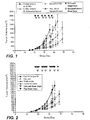
- FIG. 1 depicts the anti-tumor activity of HuLuc63 alone and in combination with dexamethasone in an in vivo mouse multiple myeloma xenograft model
- FIG. 2 depicts the anti-tumor activity of HuLuc63 alone, thalidomide alone, and HuLuc63 in combination with thalidomide in an in vivo mouse multiple myeloma xenograft model;
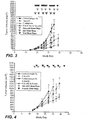
- FIG. 3 depicts the anti-tumor activity of HuLuc63 alone, thalidoinide/dexamethasone, and HuLuc63 in combination with thalidomide and dexamethasone in an in vivo mouse multiple myeloma xenograft model;
- FIG. 4 depicts the anti-tumor activity of HuLuc63 alone and in combination with bevacizumab in an in vivo mouse multiple myeloma xenograft model.
- compositions described herein combine anti-CS1 antibodies with one or more therapeutic agents at specific doses to potentiate or complement the anti-myeloma activities of the other.
- suitable anti-CS1 antibodies include, but are not limited to, isolated antibodies that bind one or more of the three epitope clusters identified on CS 1 and monoclonal antibodies produced by the hybridoma cell lines: Luc2, Luc3, Luc15, Luc22, Luc23, Luc29, Luc32, Luc34, Luc35, Luc37, Luc38, Luc39, Luc56, Luc60, Luc63, Luc69, LucX.1, LucX.2 or Luc90.
- suitable anti-CS1 antibodies include isolated antibodies that bind one or more of the three epitope clusters identified on CS1 (SEQ ID NO: 1, Table 1 below; see, e.g ., U.S. Patent Publication No. 2006/0024296 ). As disclosed in U.S. Patent Publication No. 2006/0024296 and shown below in Table 1, the CS 1 antibody binding sites have been grouped into 3 epitope clusters:
- HuLuc63 is a humanized recombinant monoclonal IgG1 antibody directed to human CS1.
- the amino acid sequence for the heavy chain variable region (SEQ ID NO: 5) and the light chain variable region (SEQ ID NO: 6) for HuLuc63 is disclosed in U.S. Patent Publication No. 2005/0025763 , and in Table 1.
- Table 1 SEQ ID NO: Amino Acid Sequence SEQ ID NO: 1 SEQ ID NO: 2 SEQ ID NO: 3 SEQ ID NO: 4 SEQ ID NO: 5 SEQ ID NO: 6
- the synergistic effect permits one or more therapeutic agents to be administered in combination with one or more anti-CS 1 antibodies at a reduced dosage, while retaining efficacy.
- use of the compositions and methods described herein can reduce the deleterious side effects observed in conventional and novel treatment regimens used to treat MM when these agents are administered at their recommended dosages.
- the synergistic effect permits one or more therapeutic agents to be administered in combination with one or more anti-CS1 antibodies at the approved dosage, but with greater than the expected efficacy.
- compositions can be administered for the treatment of Monoclonal Gammopathy of Undetermined Significance (MGUS), smoldering myeloma, asymptomatic MM, and symptomatic MM, ranging from newly diagnosed to late stage relapsed/refractory.
- MGUS Monoclonal Gammopathy of Undetermined Significance
- smoldering myeloma asymptomatic MM
- symptomatic MM ranging from newly diagnosed to late stage relapsed/refractory.
- administration of the compositions results in a reduction in M-protein in serum or urine such that a plateau, no change, minimal, partial or complete response is observed as defined by the European Group for Blood and Marrow transplantation (EBMT).
- EBMT European Group for Blood and Marrow transplantation
- compositions that are beneficial in reducing tumor mass and/or regressing tumor growth, in patients diagnosed with multiple myeloma.
- the Pharmaceutical compositions can be used to treat other diseases characterized by the presence of monoclonal protein (M-protein, paraprotein) in the serum or urine.
- M-protein monoclonal protein
- an anti-CS1 antibody can be provided in a first pharmaceutical composition, and a therapeutic agent provided in a second composition.
- an anti-CS1 antibody can be provided in a first pharmaceutical composition
- one therapeutic agent can be provided in a second composition
- the other therapeutic agent can be provided in a third composition.
- an anti-CS1 antibody can be provided in one pharmaceutical composition and the therapeutic agents can be combined and provided in a second pharmaceutical composition.
- one composition, comprising an anti-CS1 antibody and one or more therapeutic agents can be provided.
- an anti-CS1 antibody is present in a pharmaceutical composition at a concentration sufficient to permit intravenous administration at 0.5 mg/kg to 20 mg/kg.
- the concentration of an anti-CS1 antibody suitable for use in the compositions and methods described herein includes, but is not limited to, at least about 0.5 mg/kg, at least about 0.75 mg/kg, at least about 1 mg/kg, at least about 2 mg/kg, at least about 2.5 mg/kg, at least about 3 mg/kg, at least about 4 mg/kg, at least about 5 mg/kg, at least about 6 mg/kg, at least about 7 mg/kg, at least about 8 mg/kg, at least about 9 mg/kg, at least about 10 mg/kg, at least about 11 mg/kg, at least about 12 mg/kg, at least about 13 mg/kg, at least about 14 mg/kg, at least about 15 mg/kg, at least about 16 mg/kg, at least about 17 mg/kg, at least about 18 mg/kg, at least about 19 mg/kg, and at least about 15 mg/kg,
- the anti-CS1 antibodies can be administered in single or multiple dose regimens. Generally, an anti-CS1 antibody is administered over a period of time from about 1 to about 24 hours, but is typically administered over a period of about 1 to 2 hours. Dosages can be repeated from about 1 to about 4 weeks or more, for a total of 4 or more doses. Typically, dosages are repeated once every week, once every other week, or once a month for a minimum of 4 doses to a maximum of 52 doses.
- Determination of the effective dosage, total number of doses, and length of treatment with an anti-CS 1 antibody is well within the capabilities of those skilled in the art, and can be determined using a standard dose escalation study to identify the maximum tolerated dose (MTD) (see , e.g ., Richardson et al., 2002, Blood, 100(9):3063-3067 ).
- MTD maximum tolerated dose
- one or more therapeutic agents are administered in combination with an anti-CS1 antibody.
- the agents can be administered concurrently, prior to, or following administration of an anti-CS1 antibody.
- an anti-CS1 antibody is administered prior to the administration of the therapeutic agents.
- the anti-CS 1 antibody can be administered approximately 0 to 60 days prior to the administration of the therapeutic agents.
- an anti-CS1 antibody such as HuLuc63, is administered from about 30 minutes to about 1 hour prior to the administration of the therapeutic agents, or from about 1 hour to about 2 hours prior to the administration of the therapeutic agents, or from about 2 hours to about 4 hours prior to the administration of the therapeutic agents, or from about 4 hours to about 6 hours prior to the administration of the therapeutic agents, or from about 6 hours to about 8 hours prior to the administration of the therapeutic agents, or from about 8 hours to about 16 hours prior to the administration of the therapeutic agents, or from about 16 hours to 1 day prior to the administration of the therapeutic agents, or from about 1 to 5 days prior to the administration of the therapeutic agents, or from about 5 to 10 days prior to the administration of the therapeutic agents, or from about 10 to 15 days prior to the administration of the therapeutic agents, or from about 15 to 20 days prior to the administration of the therapeutic agents.
- the anti-CS 1 antibody is administered concurrently with the administration of the therapeutic agents.
- an anti-CS1 antibody is administered following the administration of the therapeutic agents.
- an anti-CS1 antibody such as HuLuc63
- HuLuc63 can be administered approximately 0 to 60 days after the administration of the therapeutic agents.
- HuLuc63 is administered from about 30 minutes to about 1 hour following the administration of the therapeutic agents, or from about 1 hour to about 2 hours following the administration of the therapeutic agents, or from about 2 hours to about 4 hours following the administration of the therapeutic agents, or from about 4 hours to about 6 hours following the administration of the therapeutic agents, or from about 6 hours to about 8 hours following the administration of the therapeutic agents, or from about 8 hours to about 16 hours following the administration of the therapeutic agents, or from about 16 hours to 1 day following the administration of the therapeutic agents, or from about 1 to 5 days following the administration of the therapeutic agents, or from about 5 to 10 days following the administration of the therapeutic agents, or from about 10 to 15 days following the administration of the therapeutic agents, or from about 15 to 20 days following the administration of the therapeutic agents, or from about 20 to 30 days following the administration of the therapeutic agents
- Therapeutic agents that can be used in combination with the anti-CS1 antibodies described herein include, but are not limited to, targeted agents, conventional chemotherapy agents, hormonal therapy agents, and supportive care agents.
- One or more therapeutic agents from the different classes e.g., targeted, conventional chemotherapeutic, hormonal, and supportive care, and/or subclasses can be combined in the compositions described herein.
- the various classes described herein can be further divided into subclasses.
- targeted agents can be separated into a number of different subclasses depending on their mechanism of action. As will be apparent to those of skill in the art, the agents can have more than one mechanism of action, and thus, could be classified into one or more subclasses.
- the following subclasses have been identified: anti-angiogenic, inhibitors of growth factor signaling, immunomodulators, inhibitors of protein synthesis, folding and/or degradation, inhibitors of gene expression, pro-apoptotic agents, agents that inhibit signal transduction and agents with "other" mechanisms of action.
- the mechanism of action for agents falling into the "other" subclass is unknown or poorly characterized.
- targeted agents such as bevacizumab, sutinib, sorafenib, 2-methoxyestradiol or 2ME2, finasunate, PTK787, vandetanib, aflibercept, volociximab, etaracizumab (MEDI-522), cilengitide, erlotinib, cetuximab, panitumumab, gefitinib, trastuzumab, TKI258, CP-751,871, atacicept, rituximab, alemtuzumab, aldesleukine, atlizumab, tocilizumab, temsirolimus, everolimus, NPI-1387, MLNM3897, HCD122, SGN-40, HLL1, huN901-DM1, atiprimod, natalizumab, bortezomib, carfilzomib, NPI-00
- conventional chemotherapy agents such as alklyating agents (e.g., oxaliplatin, carboplatin, cisplatin, cyclophosphamide, melphalan, ifosfamide, uramustine, chlorambucil, carmustine, mechloethamine, thiotepa, busulfan, temozolomide, dacarbazine), anti-metabolic agents (e.g., gemcitabine, cytosine arabinoside, Ara-C, capecitabine, 5FU (5-fluorouracil), azathioprine, mercaptopurine (6-MP), 6-thioguanine, aminopterin, pemetrexed, methotrexate), plant alkaloid and terpenoids (e.g., docetaxel, paclitaxel, vincristine, vinblastin, vinorelbine, vindesine, etoposide, VP-16, teniposide
- hormonal agents such as anastrozole, letrozole, goserelin, tamoxifen, dexamethasone, prednisone, and prednisilone can be combined with an anti-CS1 antibody, such as HuLuc63 and used to treat MM.
- an anti-CS1 antibody such as HuLuc63
- supportive care agents such as pamidronate, zoledonic acid, ibandronate, gallium nitrate, denosumab, darbepotin alpha, epoetin alpha, eltrombopag, and pegfilgrastim can be combined with an anti-CS1 antibody, such as HuLuc63 and used to treat MM.
- an anti-CS1 antibody such as HuLuc63
- the therapeutic agents can be administered in any manner found appropriate by a clinician and are typically provided in generally accepted efficacious dose ranges, such as those described in the Physician Desk Reference, 56th Ed. (2002), Publisher Medical Economics, New Jersey .
- a standard dose escalation study can be performed to identify the maximum tolerated dose (MTD) (see , e.g ., Richardson, et al. 2002, Blood, 100(9):3063-3067 .
- doses less than the generally accepted efficacious dose of a therapeutic agent can be used.
- the composition comprises a dosage that is less than about 10% to 75% of the generally accepted efficacious dose range.
- at least about 10% or less of the generally accepted efficacious dose range is used, at least about 15% or less, at least about 25%, at least about 30% or less, at least about 40% or less, at least about 50% or less, at least about 60% or less, at least about 75% or less, and at least about 90%.
- the therapeutic agents can be administered singly or sequentially, or in a cocktail with other therapeutic agents, as described below.
- the therapeutic agents can be administered orally, intravenously, systemically by injection intramuscularly, subcutaneously, intrathecally or intraperitoneally.
- the therapeutic agents provided in the pharmaceutical composition(s) are selected from the group consisting of dexamethasone, thalidomide, vincristine, carmustine (BCNU), melphalan, cyclophosphamide, prednisone, doxorubicin, cisplatin, etoposide, bortezomib, lenalidomide, ara-C, and/or combinations thereof.
- the pharmaceutical composition does not comprise bortezomib and/or lenalidomide.
- two pharmaceutical compositions are provided: a first comprising a therapeutically effective amount of an anti-CS1 antibody such as HuLuc63 and a second comprising a therapeutically effective amount of dexamethasone.
- At least two pharmaceutical compositions are provided: a first comprising a therapeutically effective amount of an anti-CS1 antibody such as HuLuc63 and a second comprising a therapeutically effective amount of dexamethasone and thalidomide.
- dexamethasone and thalidomide are provided separately, such that a total of three pharmaceutical compositions are provided: a first comprising an anti-CS1 antibody such as HuLuc63, a second comprising dexamethasone, and a third comprising thalidomide.
- compositions are provided: a first comprising a therapeutically effective amount of an anti-CS1 antibody such as HuLuc63 and a second comprising a therapeutically effective amount of vincristine, doxorubicin and dexamethasone (e.g ., VAD).
- vincristine, doxorubicin and dexamethasone are provided separately.
- compositions comprising other combinations of agents can be prepared depending in part, on dosage, route of administration, and whether the agents are provided in a solid, semi-solid or liquid form.
- compositions can be made: a first comprising a therapeutically effective amount of an anti-CS1 antibody such as HuLuc63, a second comprising dexamethasone, and a third comprising vincristine and doxorubicin.
- an anti-CS1 antibody such as HuLuc63
- a second comprising dexamethasone
- a third comprising vincristine and doxorubicin.
- compositions comprising a first comprising a therapeutically effective amount of an anti-CS1 antibody such as HuLuc63 and a second comprising a therapeutically effective amount of doxorubicin HCl liposome injection, vincristine and dexamethasone (e.g ., DVd).
- an anti-CS1 antibody such as HuLuc63
- a second comprising a therapeutically effective amount of doxorubicin HCl liposome injection, vincristine and dexamethasone (e.g ., DVd).
- compositions comprising other combinations of agents can be prepared depending in part, on dosage, route of administration, and whether the agents are provided in a solid, semi-solid or liquid form.
- compositions can be made: a first comprising a therapeutically effective amount of an anti-CS1 antibody such as HuLuc63, a second comprising doxorubicin HCl liposome injection, and a third comprising vincristine and dexamethasone.
- an anti-CS1 antibody such as HuLuc63
- doxorubicin HCl liposome injection a second comprising doxorubicin HCl liposome injection
- third comprising vincristine and dexamethasone.
- two pharmaceutical compositions are provided: a first comprising a therapeutically effective amount of an anti-CS1 antibody such as HuLuc63 and a second comprising a therapeutically effective amount of cyclophosphamide.
- compositions comprising a first comprising a therapeutically effective amount of an anti-CS1 antibody such as HuLuc63 and a second comprising a therapeutically effective amount of dexamethasone, thalidomide, cisplatin, doxorubicin, cyclophosphamide and etoposide (e.g ., DT-PACE).
- an anti-CS1 antibody such as HuLuc63
- a second comprising a therapeutically effective amount of dexamethasone, thalidomide, cisplatin, doxorubicin, cyclophosphamide and etoposide e.g ., DT-PACE.
- compositions comprising other combinations can be prepared depending in part, on dosage, route of administration, and whether the agents are provided in a solid, semi-solid or liquid form.
- dexamethasone and thalidomide could be provided in one composition and cisplatin, doxorubicin, cyclophospham
- compositions comprising a therapeutically effective amount of an anti-CS1 antibody such as HuLuc63 and a second comprising a therapeutically effective amount of vincristine, doxorubicin, dexamethasone, and cyclophosphamide.
- an anti-CS1 antibody such as HuLuc63
- a second comprising a therapeutically effective amount of vincristine, doxorubicin, dexamethasone, and cyclophosphamide.
- compositions comprising other combinations can be prepared depending in part, on dosage, route of administration, and whether the agents are provided in a solid, semi-solid or liquid form.
- vincristine, doxorubicin, and cyclophosphamide could be provided as one composition and dexamethasone as a second.
- compositions comprising a therapeutically effective amount of an anti-CS1 antibody such as HuLuc63 and a second comprising a therapeutically effective amount of doxorubicin HCl liposome injection, vincristine, dexamethasone, and thalidomide.
- an anti-CS1 antibody such as HuLuc63
- a second comprising a therapeutically effective amount of doxorubicin HCl liposome injection, vincristine, dexamethasone, and thalidomide.
- compositions comprising other combinations can be prepared depending in part, on dosage, route of administration, and whether the agents are provided in a solid, semi-solid or liquid form.
- vincristine, dexamethasone, and thalidomide could be provided as one composition and doxorubicin HCl liposome injection as a second.
- compositions comprising a therapeutically effective amount of an anti-CS1 antibody such as HuLuc63 and a second comprising a therapeutically effective amount of doxorubicin HCl liposome injection and bortezomib.
- an anti-CS1 antibody such as HuLuc63
- a second comprising a therapeutically effective amount of doxorubicin HCl liposome injection and bortezomib.
- compositions comprising other combinations can be prepared depending in part, on dosage, route of administration, and whether the agents are provided in a solid, semi-solid or liquid form.
- doxorubicin HCl liposome injection can be provided as one composition and bortezomib as a second.
- agents with the same mechanism of action as an anti-CS 1 antibody such as HuMax-Cd38 (Genmab) can be provided in the pharmaceutical compositions described herein.
- the pharmaceutical compositions comprise therapeutic agents with a mechanism of action that differs from an anti-CS1 antibody.
- targeted agents that inhibit angiogenesis including, but not limited to, bevacizumab, sutinib, sorafenib, 2-methoxyestradiol or 2ME2, finasunate, PTK787, vandetanib, aflibercept, volociximab, etaracizumab (MEDI-522), cilengitide, can be used in the pharmaceutical compositions described herein.
- agents that inhibit growth factor signaling including, but not limited to, erlotinib, cetuximab, panitumumab, gefitinib, trastuzumab, TKI258, CP-751,871, atacicept, can be used in the pharmaceutical compositions described herein.
- immunomodulators including, but not limited to, rituximab, alemtuzumab, aldesleukine, atlizumab, tocilizumab, temsirolimus, everolimus, NPI-1387, MLNM3897, HCD122, SGN-40, HLL1, huN901-DM1, atiprimod, natalizumab, can be used in the pharmaceutical compositions described herein.
- agents that inhibit protein synthesis, folding or degradation including but not limited to, bortezomib, carfilzomib, NPI-0052, tanespimycin, saquinavir mesylate, ritonavir, nelfinavir mesylate, indinavir sulfate, can be used in the pharmaceutical compositions described herein.
- agents that inhibit gene expression including but not limited to, belinostat, LBH589, can be used in the pharmaceutical compositions described herein.
- pro-apoptotic agents including but not limited to, mapatumumab, lexatumumab, AMG951, ABT-737, oblimersen, plitidepsin, can be used in the pharmaceutical compositions described herein.
- agents that inhibit signal transduction including but not limited to, SCIO-469, P276-00, enzastaurin, tipifamib, perifosine, imatinib, can be used in the pharmaceutical compositions described herein.
- agents with other mechanisms of action including but not limited to, dasatinib, lenalidomide, thalidomide, simvastatin, and celecoxib can be used in the pharmaceutical compositions described herein.
- compositions can exist as a solid, semi-solid, or liquid (e.g., suspensions or aerosols) dosage form.
- the compositions are administered in unit dosage forms suitable for single administration of precise dosage amounts.
- an anti-CS1 antibody can be packaged in dosages ranging from about 1 to 1000 mg.
- an anti-CS1 antibody is packaged in a dosage at least about 1 mg, at least about 10 mg, at least about 20 mg, at least about 50 mg, at least about 100 mg, at least about 200 mg, at least about 300 mg, at least about 400 mg, at least about 500 mg, at least about 750 mg, at least about 1000 mg.
- compositions can also include, depending on the formulation desired, pharmaceutically-acceptable, nontoxic carriers or diluents, which are defined as vehicles commonly used to formulate pharmaceutical compositions for animal or human administration.
- diluents are selected so as not to affect the biological activity of the combination. Examples of such diluents are distilled water, physiological saline, Ringer's solution, dextrose solution, and Hank's solution.
- composition or formulation can also include other carriers, adjuvants, or nontoxic, non-therapeutic, nonimmunogenic stabilizers and the like. Effective amounts of such diluent or carrier will be those amounts that are effective to obtain a pharmaceutically acceptable formulation in terms of solubility of components, or biological activity.
- compositions described herein find use in treating MM.
- the compositions can be used to treat Monoclonal Gammopathy of Undetermined Significance (MGUS), smoldering myeloma, asymptomatic MM, and symptomatic MM, ranging from newly diagnosed to late stage relapsed/refractory.
- MGUS Monoclonal Gammopathy of Undetermined Significance
- smoldering myeloma asymptomatic MM
- symptomatic MM ranging from newly diagnosed to late stage relapsed/refractory.
- compositions can be combined with other treatment strategies, i.e., autologous stem cell transplantation and allogeneic effector cell transplantation, to develop an effective treatment strategy based on the stage of myeloma being treated (see, e.g., Multiple Myeloma Research Foundation, Multiple Myeloma: Stem Cell Transplantation 1-30(2004 ); U.S. Patent Nos. 6,143,292 , and 5,928,639 , Igarashi, et al. Blood 2004, 104(1): 170-177 , Maloney, et al. 2003, Blood, 102(9): 3447-3454 , Badros, et al. 2002, J Clin Oncol., 20:1295-1303 , Tricot, etal. 1996, Blood, 87(3):1196-1198 ).
- other treatment strategies i.e., autologous stem cell transplantation and allogeneic effector cell transplantation
- A relatively normal renal function, serum creatinine value ⁇ 2.0 mg/dL
- B abnormal renal function, creatinine value ⁇ 2.0 mg/dL
- ISS International Staging System
- IPI international prognostic index
- the ISS is based on the assessment of two blood test results, beta 2 -microglobulin ( ⁇ 2 -M) and albumin, which separates patients into three prognostic groups irrespective of type of therapy.
- EBMT European Group for Blood and Marrow transplantation
- Table 2 lists the EBMT criteria for response.
- Table 2 EBMT/IBMTR/ABMTR 1 Criteria for Response Complete Response No M-protein detected in serum or urine by immunofixation for a minimum of 6 weeks and fewer than 5% plasma cells in bone marrow Partial Response > 50% reduction in serum M-protein level and/or 90% reduction in urine free light chain excretion or reduction to ⁇ 200 mg/24 hrs for 6 weeks 2
- Minimal Response 25-49% reduction in serum M-protein level and/or 50-89% reduction in urine free light chain excretion which still exceeds 200 mg/24 hrs for 6 weeks 3
- No Change Not meeting the criteria or either minimal response or progressive disease Plateau No evidence of continuing myeloma-related organ or tissue damage, ⁇ 25% change in M-protein levels and light chain excretion for 3 months Progressive Disease Myeloma-related organ or tissue damage continuing despite therapy or its
- bone marrow plasma cells should increase by > 25% and at least 10% in absolute terms; MRI examination may be helpful in selected patients.
- a “near complete response” is defined as the criteria for a “complete response” (CR), but with a positive immunofixation test.
- a “very good partial response” is defined as a greater than 90% decrease in M protein ( see , e.g ., Multiple Myeloma Research Foundation, Multiple Myeloma: Treatment Overview 9 (2005 )).
- the degree to which administration of the compositions elicits a response in an individual clinically manifesting at least one symptom associated with MM depends in part, on the severity of disease, e.g ., Stage I , II , or III , and in part, on whether the patient is newly diagnosed or has late stage refractory MM. Thus, in some embodiments, administration of the pharmaceutical composition elicits a complete response.
- administration of the pharmaceutical composition elicits a very good partial response or a partial response.
- administration of the pharmaceutical composition elicits a minimal response.
- administration of the pharmaceutical composition prevents the disease from progressing, resulting in a response classified as "no change” or "plateau” by the EBMT
- compositions comprising an anti-CS1 antibody such as HuLuc63 and one or more therapeutic agents for treating individuals diagnosed with MM can be determined using art-standard techniques, such as a standard dose escalation study to identify the MTD (see , e.g ., Richardson, et al. 2002, Blood, 100(9):3063-3067 ).
- anti-CS1 antibodies are administered intravenously.
- Administration of the other therapeutic agents described herein can be by any means known in the art. Such means include oral, rectal, nasal, topical (including buccal and sublingual) or parenteral (including subcutaneous, intramuscular, intravenous and intradermal) administration and will depend in part, on the available dosage form. For example, therapeutic agents that are available in a pill or capsule format typically are administered orally.
- oral administration generally requires administration of a higher dose than does intravenous administration. Determination of the actual route of administration that is best in a particular case is well within the capabilities of those skilled in the art, and in part, will depend on the dose needed versus the number of times per month administration is required.
- Factors affecting the selected dosage of an anti-CS1 antibody and the therapeutic agents used in the compositions and methods described herein include, but are not limited to, the type of agent, the age, weight, and clinical condition of the recipient patient, and the experience and judgment of the clinician or practitioner administering the therapy.
- the selected dosage should be sufficient to result in no change, but preferably results in at least a minimal change.
- An effective amount of a pharmaceutical agent is that which provides an objectively identifiable response, e.g., plateau, no change, minimal, partial, or complete, as noted by the clinician or other qualified observer, and as defined by the EBMT.
- an anti-CS1 antibody is administered as a separate composition from the composition(s) comprising the therapeutic agents.
- the therapeutic agents can each be administered as a separate composition, or combined in a cocktail and administered as a single combined composition.
- the compositions comprising an anti-CS1 antibody and one or more therapeutic agents are administered concurrently.
- an anti-CS1 antibody can be administered prior to the administration of composition(s) comprising the therapeutic agent(s).
- an anti-CS1 antibody is administered following the administration of composition(s) comprising the therapeutic agent(s).
- an anti-CS 1 antibody is administered prior to or following the administration of the therapeutic agents
- determination of the duration between the administration of an anti-CS1 antibody and administration of the agents is well within the capabilities of those skilled in the art, and in part, will depend on the dose needed versus the number of times per month administration is required.
- Doses of anti-CS 1 antibodies used in the methods described herein typically range between 0.5 mg/kg to 20 mg/kg.
- Optimal doses for the therapeutic agents are the generally accepted efficacious doses, such as those described in the Physician Desk Reference, 56th Ed. (2002), Publisher Medical Economics, New Jersey .
- Optimal doses for agents not described in the Physician Desk Reference can be determined using a standard dose escalation study to identify the MTD ( see , e.g ., Richardson, et al. 2002, Blood, 100(9):3063-3067 ).
- an anti-CS1 antibody is present in a pharmaceutical composition at a concentration, or in a weight/volume percentage, or in a weight amount, suitable for intravenous administration at a dosage rate at least about 0.5 mg/kg. at least about 0.75 mg/kg, at least about 1 mg/kg, at least about 2 mg/kg.
- Dexamethasone is a corticosteroid that is used extensively for the treatment of MM in multiple lines of therapy. Dex has been used as monotherapy or in combination with a variety of agents, including lenalidomide, thalidomide, velcade or as part of the VAD (vincristine, doxorubicin, dexamethasone) regimen or the DVd liposomal doxorubicin, vincristine, short-schedule dexamethasone regimen.
- VAD vincristine, doxorubicin, dexamethasone
- the mechanism of action of Dex involves direct induction of apoptosis of myeloma cells by activation of caspases ( Chauhan et al., 1997.
- mice When tumors reached an average size of about 100 mm 3 , animals were randomized into 3 groups of 8-10 mice each and were treated with 1 or 10 mg/kg of HuLuc63 or isotype control antibody administered intraperitoneally twice a week for a maximum of 6 doses.
- Dex was administered intraperitoneally at a dose of 10 mg/kg twice a week for a maximum of 6 doses.
- CS 1 protein expression was examined on the OPM2 multiple myeloma cell line. No significant change in CS1 expression was observed pre- or post-treatment with HuLuc63, Dex, or with both agents.
- the combination of HuLuc63 with Dex was tested for anti-myeloma activity in vivo .
- OPM2 tumor-bearing mice were treated with sub-optimal doses of HuLuc63 (1 mg/kg), or isotype control antibody twice weekly for three weeks.
- Dex was given twice a week at 10 mg/kg to mice receiving either isotype control antibody or HuLuc63.
- the results showed significant anti-tumor activity of HuLuc63 alone and in combination with Dex (see, e.g. , FIG. 1 ). Mice in the combination treatment group exhibited significantly smaller tumors than in the HuLuc63 monotherapy group (see, e.g., FIG. 1 ).
- Thalidomide is an immunomodulatory drug that is currently approved for the treatment of MM in combination with Dex.
- the mechanism of action of Tha1 is not completely understood, but involves inhibition of angiogenesis, inhibition of growth and survival of stromal cells and tumor cells in the bone marrow, and altering the production of factors that influence the survival of myeloma cells (such as IL-6, IL-10, IL-4, IL-5, IL-12, IL-8, TNF-alpha).
- CS1 protein expression was examined on the L363 multiple myeloma cell line. No significant change in CS 1 expression was observed pre- or post-treatment with HuLuc63, Tha1 or with both agents.
- the combination of HuLuc63 with Tha1 was tested for anti-myeloma activity in vivo .
- L363 tumor-bearing mice were treated with HuLuc63, or isotype control antibody twice weekly for three weeks at 10 mg/kg.
- Tha1 was given 5 days a week at 50 mg/kg for a maximum of 15 doses to mice receiving either isotype control antibody or HuLuc63.
- Significant anti-tumor activity was observed with HuLuc63 alone, Tha1 alone and HuLuc63 in combination with Tha1 (see, e.g ., FIG. 2 ).
- Mice in the combination treatment group exhibited smaller tumors compared to the HuLuc63 and Tha1 monotherapy groups (see, e.g ., FIG. 2 ).
- Thal/Dex combination therapy is currently approved for front-line treatment of MM patients.
- the combination of HuLuc63 with Thal/Dex was tested for anti-myeloma activity in vivo as described above.
- the effect of Thal/Dex treatment on the expression of CS1 in MM cell lines and mouse xenograft tumors was examined by immunohistochemistry as described above.
- L363 tumor-bearing mice were treated with HuLuc63, or isotype control antibody twice weekly for three weeks at 10 mg/kg.
- Tha1 was given 5 days a week at 50 mg/kg for a maximum of 15 doses and Dex was given twice a week at 10 mg/kg for a maximum of 6 doses to mice receiving either isotype control antibody or HuLuc63.
- the results showed significant anti-tumor activity of HuLuc63 alone, Thal/Dex alone and HuLuc63 in combination with Thal/Dex (see e.g ., FIG. 3 ).
- mice in the HuLuc63/Thal/Dex combination treatment group exhibited the smallest tumors, on average exhibiting a decrease of 50-70% in tumor size compared to HuLuc63 monotherapy or Thal/Dex therapy (see e.g ., FIG. 3 ).
- Bevacizumab is a monoclonal antibody that targets the endothelial growth factor VEGF. It works by inhibiting VEGF, resulting in the inhibition of new blood vessel formation in tumors. Bevacizumab is currently approved for the treatment of solid tumors, including metastatic colorectal cancer. Bevacizumab is currently not approved for the use in the treatment of MM.
- HuLuc63 HuLuc63
- Bevacizumab was tested for anti-myeloma activity in vivo, as described above.
- L363 tumor-bearing mice were treated with HuLuc63, or isotype control antibody twice weekly for three weeks at 10 mg/kg.
- Bevacizumab was given twice a week at 0.5 mg/kg for a maximum of 6 doses to mice receiving either isotype control antibody or HuLuc63.
- Significant anti-tumor activity of HuLuc63 alone and in combination with Bevacizumab was observed (see e.g ., FIG. 4 ). Bevacizumab alone did not exhibit significant anti-tumor activity.
- mice receiving the combination of HuLuc63 with Bevacizumab exhibited significantly smaller tumors compared to the HuLuc63 monotherapy group, indicating that HuLuc63 and Bevacizumab may act synergistically to cause an anti-myeloma effect.
- Example 5 Treatment of Patients Diagnosed with Multiple Myeloma
- HuLuc63 will be given by intravenous injection (IV) at up to five dose levels ranging from 2.5 mg/kg to 20 mg/kg in combination with one or more therapeutic agents.
- Patients will receive HuLuc63 once a week, with each dose infused over 1 hour, once every 10 days or once every two weeks, for a minimum of 4 doses and a maximum of 52 doses.
- Drug combinations suitable for administration with HuLuc63 include, but are not limited to:
- EBMT criteria will be assessed. If a patient has progressive disease, HuLuc63 will be discontinued and the other drug combinations may be withdrawn or continued at the discretion of the site investigator. If the patient has responded or has stable disease at Week 8-12, dosing with HuLuc63 and the drug combination will continue so that a maximum of 52 weeks of treatment are completed or disease progression occurs.
- Approximately 15 to 30 patients in 5 cohorts will be enrolled for each drug combination. Each cohort will begin with 3 patients. If no dose-limiting toxicity (DLT) is noted within the first 4 weeks of treatment in any patient, enrollment will begin in the next higher cohort. If one patient has a DLT, 3 additional patients will be enrolled in the cohort. If no other patient in the cohort has a DLT, escalation to the next cohort may proceed. If a second patient in a cohort has a DLT, the maximum tolerated dose (MTD) has been reached.
- DLT dose-limiting toxicity
- a dose-limiting toxicity is defined using the National Cancer Center Institute Common Toxicity Criteria Version 3.0 (NCI CTCAE v3.0) as a grade 4 hematologic toxicity or hyperbilirubinemia, or a grade 3 toxicity in any other system considered related to HuLuc63 or the combination of HuLuc63 and any of the drugs listed in Table1.
- NCI CTCAE v3.0 National Cancer Center Institute Common Toxicity Criteria Version 3.0
- 3 assessable patients must complete their first 4 weeks of dosing. If a DLT occurs, an additional three assessable patients will be accrued. Patients will be monitored for safety by assessing adverse events categorized by NCI CTCAE v3.0 and patients will be monitored for clinical activity using EBMT.
- the maximally tolerated dose is defined as the highest dose studied for which the incidence of DLTs is ⁇ 33%.
- the highest tolerated dose will be HuLuc63 at 20 mg/kg combined with the drugs at the doses listed above if no dose limiting toxicities are observed.
Landscapes
- Health & Medical Sciences (AREA)
- Chemical & Material Sciences (AREA)
- Life Sciences & Earth Sciences (AREA)
- Medicinal Chemistry (AREA)
- General Health & Medical Sciences (AREA)
- Pharmacology & Pharmacy (AREA)
- Animal Behavior & Ethology (AREA)
- Public Health (AREA)
- Veterinary Medicine (AREA)
- Organic Chemistry (AREA)
- Epidemiology (AREA)
- Immunology (AREA)
- Engineering & Computer Science (AREA)
- Molecular Biology (AREA)
- Bioinformatics & Cheminformatics (AREA)
- General Chemical & Material Sciences (AREA)
- Nuclear Medicine, Radiotherapy & Molecular Imaging (AREA)
- Chemical Kinetics & Catalysis (AREA)
- Proteomics, Peptides & Aminoacids (AREA)
- Biochemistry (AREA)
- Biophysics (AREA)
- Genetics & Genomics (AREA)
- Biomedical Technology (AREA)
- Neurosurgery (AREA)
- Neurology (AREA)
- Oncology (AREA)
- Inorganic Chemistry (AREA)
- Mycology (AREA)
- Microbiology (AREA)
- Diabetes (AREA)
- Hematology (AREA)
- Dispersion Chemistry (AREA)
- Dermatology (AREA)
- Medicines Containing Antibodies Or Antigens For Use As Internal Diagnostic Agents (AREA)
- Pharmaceuticals Containing Other Organic And Inorganic Compounds (AREA)
- Peptides Or Proteins (AREA)
- Medicines That Contain Protein Lipid Enzymes And Other Medicines (AREA)
- Acyclic And Carbocyclic Compounds In Medicinal Compositions (AREA)
Priority Applications (4)
| Application Number | Priority Date | Filing Date | Title |
|---|---|---|---|
| EP11176209A EP2425849A3 (en) | 2006-08-07 | 2007-08-07 | Compositions and methods using anti-CS1 antibodies to treat multiple myeloma |
| SI200731073T SI2068930T1 (sl) | 2006-08-07 | 2007-08-07 | Sestavki in postopki, pri katerih se uporabljajo anti-CS1 protitelesa za zdravljenje multiplega mieloma |
| PL07840744T PL2068930T3 (pl) | 2006-08-07 | 2007-08-07 | Kompozycje i sposoby wykorzystujące przeciwciało anty-CS1 do leczenia szpiczaka mnogiego |
| CY20121101037T CY1113309T1 (el) | 2006-08-07 | 2012-10-31 | Συνθεσεις και μεθοδοι χρησιμοποιωντας αντι-cs1 αντισωματα για να θεραπευεται πολλαπλο μυελωμα |
Applications Claiming Priority (3)
| Application Number | Priority Date | Filing Date | Title |
|---|---|---|---|
| US83625006P | 2006-08-07 | 2006-08-07 | |
| US85614406P | 2006-11-01 | 2006-11-01 | |
| PCT/US2007/075401 WO2008019376A2 (en) | 2006-08-07 | 2007-08-07 | Compositions and methods using anti-cs1 antibodies to treat multiple myeloma |
Related Child Applications (1)
| Application Number | Title | Priority Date | Filing Date |
|---|---|---|---|
| EP11176209A Division-Into EP2425849A3 (en) | 2006-08-07 | 2007-08-07 | Compositions and methods using anti-CS1 antibodies to treat multiple myeloma |
Publications (2)
| Publication Number | Publication Date |
|---|---|
| EP2068930A2 EP2068930A2 (en) | 2009-06-17 |
| EP2068930B1 true EP2068930B1 (en) | 2012-09-19 |
Family
ID=39033619
Family Applications (2)
| Application Number | Title | Priority Date | Filing Date |
|---|---|---|---|
| EP07840744A Active EP2068930B1 (en) | 2006-08-07 | 2007-08-07 | Compositions and methods using anti-cs1 antibodies to treat multiple myeloma |
| EP11176209A Withdrawn EP2425849A3 (en) | 2006-08-07 | 2007-08-07 | Compositions and methods using anti-CS1 antibodies to treat multiple myeloma |
Family Applications After (1)
| Application Number | Title | Priority Date | Filing Date |
|---|---|---|---|
| EP11176209A Withdrawn EP2425849A3 (en) | 2006-08-07 | 2007-08-07 | Compositions and methods using anti-CS1 antibodies to treat multiple myeloma |
Country Status (17)
| Country | Link |
|---|---|
| US (3) | US7842293B2 (enExample) |
| EP (2) | EP2068930B1 (enExample) |
| JP (4) | JP2010500370A (enExample) |
| AU (1) | AU2007281682B2 (enExample) |
| BR (1) | BRPI0716475A2 (enExample) |
| CA (1) | CA2660102C (enExample) |
| CY (1) | CY1113309T1 (enExample) |
| DK (1) | DK2068930T3 (enExample) |
| ES (1) | ES2391790T3 (enExample) |
| HR (1) | HRP20120934T1 (enExample) |
| IL (1) | IL196920A (enExample) |
| MX (1) | MX2009001440A (enExample) |
| NO (1) | NO345083B1 (enExample) |
| NZ (1) | NZ574979A (enExample) |
| PL (1) | PL2068930T3 (enExample) |
| PT (1) | PT2068930E (enExample) |
| WO (1) | WO2008019376A2 (enExample) |
Families Citing this family (15)
| Publication number | Priority date | Publication date | Assignee | Title |
|---|---|---|---|---|
| PT2641601T (pt) * | 2006-08-07 | 2016-10-14 | Dana Farber Cancer Inst Inc | Métodos de tratamento de mieloma múltiplo utilizando terapias de combinação baseadas em huluc63 com bortezomib |
| PL2068930T3 (pl) * | 2006-08-07 | 2013-02-28 | Abbvie Biotherapeutics Inc | Kompozycje i sposoby wykorzystujące przeciwciało anty-CS1 do leczenia szpiczaka mnogiego |
| JP2011523560A (ja) * | 2008-06-02 | 2011-08-18 | ダナ−ファーバー キャンサー インスティテュート インク. | Xbp1ペプチド、cd138ペプチドおよびcs1ペプチド |
| WO2010051391A1 (en) * | 2008-10-31 | 2010-05-06 | Facet Biotech Corporation | Use of anti-cs1 antibodies for treatment of rare lymphomas |
| US20140295497A1 (en) | 2011-11-30 | 2014-10-02 | Taymar E. Hartman | Vectors and host cells comprising a modified sv40 promoter for protein expression |
| SG10201610869TA (en) | 2012-06-26 | 2017-02-27 | Del Mar Pharmaceuticals | Methods for treating tyrosine-kinase-inhibitor-resistant malignancies in patients with genetic polymorphisms or ahi1 dysregulations or mutations employing dianhydrogalactitol, diacetyldianhydrogalacti |
| CA2888803A1 (en) | 2012-11-05 | 2014-05-08 | Jooeun Bae | Xbp1, cd138, and cs1 peptides, pharmaceutical compositions that include the peptides, and methods of using such peptides and compositions |
| EP2983674A4 (en) | 2013-04-08 | 2017-05-10 | Dennis M. Brown | Therapeutic benefit of suboptimally administered chemical compounds |
| EP3066127A1 (en) | 2013-11-06 | 2016-09-14 | Bristol-Myers Squibb Company | Immunotherapeutic dosing regimens and combinations thereof |
| ES2707057T3 (es) | 2013-11-06 | 2019-04-02 | Bristol Myers Squibb Co | Combinación de anticuerpos anti-KIR y anti-CS1 para tratar el mieloma múltiple |
| WO2016070089A2 (en) | 2014-10-31 | 2016-05-06 | Abbvie Biotherapeutics Inc. | Anti-cs1 antibodies and antibody drug conjugates |
| US20170355768A1 (en) | 2014-12-04 | 2017-12-14 | Bristol-Myers Squibb Company | Combination of anti-cs1 and anti-pd1 antibodies to treat cancer (myeloma) |
| SI3313528T1 (sl) * | 2015-06-29 | 2021-11-30 | Bristol-Myers Squibb Company | Imunoterapevtski režim odmerjanja, ki vsebujejo pomalidomid in protitelo anti-CS1 za zdravljenje raka |
| US10537585B2 (en) | 2017-12-18 | 2020-01-21 | Dexcel Pharma Technologies Ltd. | Compositions comprising dexamethasone |
| WO2021092044A1 (en) | 2019-11-05 | 2021-05-14 | Bristol-Myers Squibb Company | M-protein assays and uses thereof |
Family Cites Families (7)
| Publication number | Priority date | Publication date | Assignee | Title |
|---|---|---|---|---|
| IL112969A (en) | 1994-03-17 | 2001-05-20 | Baxter Int | Pharmaceutical compositions for the treatment of cancer comprising allogenic lymphocytes or their combination with a t-cell activator |
| JPH11511746A (ja) | 1995-05-25 | 1999-10-12 | バクスター、インターナショナル、インコーポレイテッド | 同種幹細胞移植後の癌の同種細胞治療 |
| US20050025763A1 (en) | 2003-05-08 | 2005-02-03 | Protein Design Laboratories, Inc. | Therapeutic use of anti-CS1 antibodies |
| US7709610B2 (en) * | 2003-05-08 | 2010-05-04 | Facet Biotech Corporation | Therapeutic use of anti-CS1 antibodies |
| WO2008019379A2 (en) | 2006-08-07 | 2008-02-14 | Pdl Biopharma, Inc. | Use of allogeneic effector cells and anti-cs1 antibodies for selective killing of multiple myeloma cells |
| PT2641601T (pt) | 2006-08-07 | 2016-10-14 | Dana Farber Cancer Inst Inc | Métodos de tratamento de mieloma múltiplo utilizando terapias de combinação baseadas em huluc63 com bortezomib |
| PL2068930T3 (pl) | 2006-08-07 | 2013-02-28 | Abbvie Biotherapeutics Inc | Kompozycje i sposoby wykorzystujące przeciwciało anty-CS1 do leczenia szpiczaka mnogiego |
-
2007
- 2007-08-07 PL PL07840744T patent/PL2068930T3/pl unknown
- 2007-08-07 NZ NZ574979A patent/NZ574979A/en unknown
- 2007-08-07 WO PCT/US2007/075401 patent/WO2008019376A2/en not_active Ceased
- 2007-08-07 EP EP07840744A patent/EP2068930B1/en active Active
- 2007-08-07 US US11/835,245 patent/US7842293B2/en active Active
- 2007-08-07 ES ES07840744T patent/ES2391790T3/es active Active
- 2007-08-07 CA CA2660102A patent/CA2660102C/en active Active
- 2007-08-07 JP JP2009523966A patent/JP2010500370A/ja not_active Withdrawn
- 2007-08-07 HR HRP20120934TT patent/HRP20120934T1/hr unknown
- 2007-08-07 AU AU2007281682A patent/AU2007281682B2/en active Active
- 2007-08-07 MX MX2009001440A patent/MX2009001440A/es active IP Right Grant
- 2007-08-07 PT PT07840744T patent/PT2068930E/pt unknown
- 2007-08-07 BR BRPI0716475A patent/BRPI0716475A2/pt not_active Application Discontinuation
- 2007-08-07 DK DK07840744.2T patent/DK2068930T3/da active
- 2007-08-07 EP EP11176209A patent/EP2425849A3/en not_active Withdrawn
-
2009
- 2009-02-05 IL IL196920A patent/IL196920A/en active Protection Beyond IP Right Term
- 2009-03-03 NO NO20090969A patent/NO345083B1/no unknown
-
2010
- 2010-10-12 US US12/903,051 patent/US20110165154A1/en not_active Abandoned
-
2012
- 2012-10-31 CY CY20121101037T patent/CY1113309T1/el unknown
-
2013
- 2013-08-30 JP JP2013178996A patent/JP5775125B2/ja active Active
-
2015
- 2015-04-01 JP JP2015074786A patent/JP6005205B2/ja active Active
-
2016
- 2016-04-06 US US15/091,977 patent/US20160206734A1/en not_active Abandoned
- 2016-09-05 JP JP2016172453A patent/JP2017025077A/ja active Pending
Non-Patent Citations (5)
| Title |
|---|
| DIMOPOULOS M A ET AL: "Thalidomide and dexamethasone combination for refractory multiple myeloma.", ANNALS OF ONCOLOGY : OFFICIAL JOURNAL OF THE EUROPEAN SOCIETY FOR MEDICAL ONCOLOGY / ESMO JUL 2001 LNKD- PUBMED:11521808, vol. 12, no. 7, July 2001 (2001-07-01), pages 991 - 995, ISSN: 0923-7534 * |
| RAJKUMAR S VINCENT ET AL: "Combination therapy with thalidomide plus dexamethasone for newly diagnosed myeloma.", JOURNAL OF CLINICAL ONCOLOGY : OFFICIAL JOURNAL OF THE AMERICAN SOCIETY OF CLINICAL ONCOLOGY 1 NOV 2002 LNKD- PUBMED:12409330, vol. 20, no. 21, 1 November 2002 (2002-11-01), pages 4319 - 4323, ISSN: 0732-183X * |
| RAJKUMAR S VINCENT ET AL: "Phase III clinical trial of thalidomide plus dexamethasone compared with dexamethasone alone in newly diagnosed multiple myeloma: a clinical trial coordinated by the Eastern Cooperative Oncology Group.", JOURNAL OF CLINICAL ONCOLOGY : OFFICIAL JOURNAL OF THE AMERICAN SOCIETY OF CLINICAL ONCOLOGY 20 JAN 2006 LNKD- PUBMED:16365178, vol. 24, no. 3, 20 January 2006 (2006-01-20), pages 431 - 436, ISSN: 1527-7755 * |
| ROSE ANDREA L ET AL: "Glucocorticoids and rituximab in vitro: synergistic direct antiproliferative and apoptotic effects.", BLOOD 1 SEP 2002 LNKD- PUBMED:12176898, vol. 100, no. 5, 1 September 2002 (2002-09-01), pages 1765 - 1773, ISSN: 0006-4971 * |
| WEBER DONNA ET AL: "Thalidomide alone or with dexamethasone for previously untreated multiple myeloma.", JOURNAL OF CLINICAL ONCOLOGY : OFFICIAL JOURNAL OF THE AMERICAN SOCIETY OF CLINICAL ONCOLOGY 1 JAN 2003 LNKD- PUBMED:12506164, vol. 21, no. 1, 1 January 2003 (2003-01-01), pages 16 - 19, ISSN: 0732-183X * |
Also Published As
| Publication number | Publication date |
|---|---|
| JP5775125B2 (ja) | 2015-09-09 |
| NO20090969L (no) | 2009-04-28 |
| CA2660102A1 (en) | 2008-02-14 |
| JP2014040421A (ja) | 2014-03-06 |
| EP2068930A2 (en) | 2009-06-17 |
| JP2010500370A (ja) | 2010-01-07 |
| US20110165154A1 (en) | 2011-07-07 |
| AU2007281682A1 (en) | 2008-02-14 |
| HRP20120934T1 (hr) | 2012-12-31 |
| JP2015157823A (ja) | 2015-09-03 |
| PT2068930E (pt) | 2012-10-23 |
| BRPI0716475A2 (pt) | 2016-05-03 |
| MX2009001440A (es) | 2009-04-15 |
| CA2660102C (en) | 2017-02-21 |
| WO2008019376A3 (en) | 2008-07-10 |
| IL196920A (en) | 2013-11-28 |
| DK2068930T3 (da) | 2012-10-29 |
| PL2068930T3 (pl) | 2013-02-28 |
| HK1129849A1 (en) | 2009-12-11 |
| JP6005205B2 (ja) | 2016-10-12 |
| EP2425849A2 (en) | 2012-03-07 |
| AU2007281682B2 (en) | 2013-05-16 |
| US20160206734A1 (en) | 2016-07-21 |
| WO2008019376A2 (en) | 2008-02-14 |
| IL196920A0 (en) | 2011-08-01 |
| EP2425849A3 (en) | 2012-05-09 |
| US7842293B2 (en) | 2010-11-30 |
| JP2017025077A (ja) | 2017-02-02 |
| CY1113309T1 (el) | 2016-04-13 |
| NZ574979A (en) | 2012-06-29 |
| NO345083B1 (no) | 2020-09-21 |
| US20080124332A1 (en) | 2008-05-29 |
| ES2391790T3 (es) | 2012-11-29 |
Similar Documents
| Publication | Publication Date | Title |
|---|---|---|
| AU2007281682B2 (en) | Compositions and methods using anti-CS1 antibodies to treat multiple myeloma | |
| EP2068874B1 (en) | Methods of treating multiple myeloma using combination therapies based on anti-cs1 antibodies | |
| US20080095768A1 (en) | Use of allogeneic effector cells and anti-cs1 antibodies for selective killing of multiple myeloma cells | |
| CN101534860B (zh) | 使用抗cs1-抗体治疗多发性骨髓瘤的组合物和方法 | |
| HK1129849B (en) | Compositions and methods using anti-cs1 antibodies to treat multiple myeloma | |
| HK1168759A (en) | Compositions and methods using anti-cs1 antibodies to treat multiple myeloma | |
| HK1233169A1 (en) | Combination therapies based on anti-cs1 antibodies for treating multiple myeloma | |
| HK1233169A (en) | Combination therapies based on anti-cs1 antibodies for treating multiple myeloma | |
| HK1129853B (en) | Methods of treating multiple myeloma using combination therapies based on anti-cs1 antibodies | |
| HK1189515B (en) | Methods of treating multiple myeloma using combination therapies based on huluc63 with bortezomib | |
| HK1189515A (en) | Methods of treating multiple myeloma using combination therapies based on huluc63 with bortezomib |
Legal Events
| Date | Code | Title | Description |
|---|---|---|---|
| PUAI | Public reference made under article 153(3) epc to a published international application that has entered the european phase |
Free format text: ORIGINAL CODE: 0009012 |
|
| 17P | Request for examination filed |
Effective date: 20090304 |
|
| AK | Designated contracting states |
Kind code of ref document: A2 Designated state(s): AT BE BG CH CY CZ DE DK EE ES FI FR GB GR HU IE IS IT LI LT LU LV MC MT NL PL PT RO SE SI SK TR |
|
| AX | Request for extension of the european patent |
Extension state: AL BA HR MK RS |
|
| 17Q | First examination report despatched |
Effective date: 20090723 |
|
| RAP1 | Party data changed (applicant data changed or rights of an application transferred) |
Owner name: FACET BIOTECH CORPORATION |
|
| REG | Reference to a national code |
Ref country code: HK Ref legal event code: DE Ref document number: 1129849 Country of ref document: HK |
|
| RAP1 | Party data changed (applicant data changed or rights of an application transferred) |
Owner name: ABBOTT BIOTHERAPEUTICS CORP. |
|
| GRAP | Despatch of communication of intention to grant a patent |
Free format text: ORIGINAL CODE: EPIDOSNIGR1 |
|
| RAX | Requested extension states of the european patent have changed |
Extension state: HR Payment date: 20090304 |
|
| GRAS | Grant fee paid |
Free format text: ORIGINAL CODE: EPIDOSNIGR3 |
|
| GRAA | (expected) grant |
Free format text: ORIGINAL CODE: 0009210 |
|
| AK | Designated contracting states |
Kind code of ref document: B1 Designated state(s): AT BE BG CH CY CZ DE DK EE ES FI FR GB GR HU IE IS IT LI LT LU LV MC MT NL PL PT RO SE SI SK TR |
|
| AX | Request for extension of the european patent |
Extension state: HR |
|
| REG | Reference to a national code |
Ref country code: GB Ref legal event code: FG4D |
|
| REG | Reference to a national code |
Ref country code: CH Ref legal event code: EP |
|
| REG | Reference to a national code |
Ref country code: IE Ref legal event code: FG4D |
|
| REG | Reference to a national code |
Ref country code: AT Ref legal event code: REF Ref document number: 575654 Country of ref document: AT Kind code of ref document: T Effective date: 20121015 |
|
| REG | Reference to a national code |
Ref country code: PT Ref legal event code: SC4A Free format text: AVAILABILITY OF NATIONAL TRANSLATION Effective date: 20121012 |
|
| REG | Reference to a national code |
Ref country code: RO Ref legal event code: EPE |
|
| REG | Reference to a national code |
Ref country code: DK Ref legal event code: T3 |
|
| REG | Reference to a national code |
Ref country code: SE Ref legal event code: TRGR |
|
| REG | Reference to a national code |
Ref country code: DE Ref legal event code: R096 Ref document number: 602007025619 Country of ref document: DE Effective date: 20121115 |
|
| REG | Reference to a national code |
Ref country code: HR Ref legal event code: TUEP Ref document number: P20120934 Country of ref document: HR |
|
| REG | Reference to a national code |
Ref country code: ES Ref legal event code: FG2A Ref document number: 2391790 Country of ref document: ES Kind code of ref document: T3 Effective date: 20121129 |
|
| REG | Reference to a national code |
Ref country code: CH Ref legal event code: NV Representative=s name: E. BLUM AND CO. AG PATENT- UND MARKENANWAELTE , CH |
|
| REG | Reference to a national code |
Ref country code: NL Ref legal event code: T3 |
|
| REG | Reference to a national code |
Ref country code: HR Ref legal event code: T1PR Ref document number: P20120934 Country of ref document: HR |
|
| REG | Reference to a national code |
Ref country code: HK Ref legal event code: GR Ref document number: 1129849 Country of ref document: HK |
|
| REG | Reference to a national code |
Ref country code: GR Ref legal event code: EP Ref document number: 20120402485 Country of ref document: GR Effective date: 20121122 |
|
| REG | Reference to a national code |
Ref country code: EE Ref legal event code: FG4A Ref document number: E007329 Country of ref document: EE Effective date: 20121128 |
|
| REG | Reference to a national code |
Ref country code: PL Ref legal event code: T3 |
|
| REG | Reference to a national code |
Ref country code: SK Ref legal event code: T3 Ref document number: E 13096 Country of ref document: SK |
|
| REG | Reference to a national code |
Ref country code: CH Ref legal event code: PFA Owner name: ABBVIE BIOTHERAPEUTICS INC., US Free format text: FORMER OWNER: ABBOTT BIOTHERAPEUTICS CORP., US |
|
| RAP2 | Party data changed (patent owner data changed or rights of a patent transferred) |
Owner name: ABBVIE BIOTHERAPEUTICS INC. |
|
| REG | Reference to a national code |
Ref country code: NL Ref legal event code: TD Effective date: 20130424 |
|
| REG | Reference to a national code |
Ref country code: DE Ref legal event code: R082 Ref document number: 602007025619 Country of ref document: DE Representative=s name: MEYER & PARTNER GBR, DE |
|
| REG | Reference to a national code |
Ref country code: DE Ref legal event code: R082 Ref document number: 602007025619 Country of ref document: DE Representative=s name: MEYER & PARTNER GBR, DE Effective date: 20130507 Ref country code: DE Ref legal event code: R081 Ref document number: 602007025619 Country of ref document: DE Owner name: ABBVIE BIOTHERAPEUTICS INC. (N.D.GES.D.STAATES, US Free format text: FORMER OWNER: ABBOTT BIOTHERAPEUTICS CORP., REDWOOD CITY, CALIF., US Effective date: 20130507 Ref country code: DE Ref legal event code: R081 Ref document number: 602007025619 Country of ref document: DE Owner name: ABBVIE BIOTHERAPEUTICS INC. (N.D.GES.D.STAATES, US Free format text: FORMER OWNER: ABBOTT BIOTHERAPEUTICS CORP., REDWOOD CITY, US Effective date: 20130507 |
|
| PLBE | No opposition filed within time limit |
Free format text: ORIGINAL CODE: 0009261 |
|
| STAA | Information on the status of an ep patent application or granted ep patent |
Free format text: STATUS: NO OPPOSITION FILED WITHIN TIME LIMIT |
|
| REG | Reference to a national code |
Ref country code: HR Ref legal event code: PNAN Ref document number: P20120934 Country of ref document: HR Owner name: ABBVIE BIOTHERAPEUTICS INC., US |
|
| REG | Reference to a national code |
Ref country code: EE Ref legal event code: HC1A Ref document number: E007329 Country of ref document: EE |
|
| 26N | No opposition filed |
Effective date: 20130620 |
|
| REG | Reference to a national code |
Ref country code: FR Ref legal event code: CD Owner name: ABBVIE BIOTHERAPEUTICS INC., US Effective date: 20130807 |
|
| REG | Reference to a national code |
Ref country code: AT Ref legal event code: HC Ref document number: 575654 Country of ref document: AT Kind code of ref document: T Owner name: ABBVIE BIOTHERAPEUTICS INC., US Effective date: 20130718 |
|
| REG | Reference to a national code |
Ref country code: SI Ref legal event code: SP73 Owner name: ABBVIE BIOTHERAPEUTICS INC.; US Effective date: 20130828 |
|
| REG | Reference to a national code |
Ref country code: SK Ref legal event code: TC4A Ref document number: E 13096 Country of ref document: SK Owner name: ABBVIE BIOTHERAPEUTICS INC., REDWOOD CITY, CA, US Effective date: 20130808 |
|
| REG | Reference to a national code |
Ref country code: DE Ref legal event code: R097 Ref document number: 602007025619 Country of ref document: DE Effective date: 20130620 |
|
| REG | Reference to a national code |
Ref country code: HU Ref legal event code: AG4A |
|
| REG | Reference to a national code |
Ref country code: FR Ref legal event code: PLFP Year of fee payment: 10 |
|
| REG | Reference to a national code |
Ref country code: FR Ref legal event code: PLFP Year of fee payment: 11 |
|
| REG | Reference to a national code |
Ref country code: FR Ref legal event code: PLFP Year of fee payment: 12 |
|
| REG | Reference to a national code |
Ref country code: HR Ref legal event code: ODRP Ref document number: P20120934 Country of ref document: HR Payment date: 20190723 Year of fee payment: 13 |
|
| REG | Reference to a national code |
Ref country code: HR Ref legal event code: ODRP Ref document number: P20120934 Country of ref document: HR Payment date: 20200724 Year of fee payment: 14 |
|
| REG | Reference to a national code |
Ref country code: HR Ref legal event code: ODRP Ref document number: P20120934 Country of ref document: HR Payment date: 20210806 Year of fee payment: 15 |
|
| REG | Reference to a national code |
Ref country code: HR Ref legal event code: ODRP Ref document number: P20120934 Country of ref document: HR Payment date: 20220729 Year of fee payment: 16 |
|
| P01 | Opt-out of the competence of the unified patent court (upc) registered |
Effective date: 20230331 |
|
| REG | Reference to a national code |
Ref country code: EE Ref legal event code: HC1A Ref document number: E007329 Country of ref document: EE |
|
| REG | Reference to a national code |
Ref country code: HR Ref legal event code: ODRP Ref document number: P20120934 Country of ref document: HR Payment date: 20230721 Year of fee payment: 17 |
|
| REG | Reference to a national code |
Ref country code: HR Ref legal event code: ODRP Ref document number: P20120934 Country of ref document: HR Payment date: 20240715 Year of fee payment: 18 |
|
| REG | Reference to a national code |
Ref country code: DE Ref legal event code: R082 Ref document number: 602007025619 Country of ref document: DE Representative=s name: MEISSNER BOLTE PATENTANWAELTE RECHTSANWAELTE P, DE |
|
| PGFP | Annual fee paid to national office [announced via postgrant information from national office to epo] |
Ref country code: PL Payment date: 20250616 Year of fee payment: 19 |
|
| PGFP | Annual fee paid to national office [announced via postgrant information from national office to epo] |
Ref country code: PT Payment date: 20250625 Year of fee payment: 19 |
|
| PGFP | Annual fee paid to national office [announced via postgrant information from national office to epo] |
Ref country code: MT Payment date: 20250621 Year of fee payment: 19 Ref country code: BG Payment date: 20250623 Year of fee payment: 19 |
|
| PGFP | Annual fee paid to national office [announced via postgrant information from national office to epo] |
Ref country code: SK Payment date: 20250630 Year of fee payment: 19 |
|
| PGFP | Annual fee paid to national office [announced via postgrant information from national office to epo] |
Ref country code: SI Payment date: 20250711 Year of fee payment: 19 |
|
| REG | Reference to a national code |
Ref country code: HR Ref legal event code: ODRP Ref document number: P20120934 Country of ref document: HR Payment date: 20250718 Year of fee payment: 19 |
|
| PGFP | Annual fee paid to national office [announced via postgrant information from national office to epo] |
Ref country code: LU Payment date: 20250710 Year of fee payment: 19 Ref country code: NL Payment date: 20250711 Year of fee payment: 19 |
|
| PGFP | Annual fee paid to national office [announced via postgrant information from national office to epo] |
Ref country code: HU Payment date: 20250804 Year of fee payment: 19 |
|
| PGFP | Annual fee paid to national office [announced via postgrant information from national office to epo] |
Ref country code: ES Payment date: 20250908 Year of fee payment: 19 Ref country code: FI Payment date: 20250729 Year of fee payment: 19 |
|
| PGFP | Annual fee paid to national office [announced via postgrant information from national office to epo] |
Ref country code: LT Payment date: 20250710 Year of fee payment: 19 Ref country code: DK Payment date: 20250729 Year of fee payment: 19 Ref country code: DE Payment date: 20250709 Year of fee payment: 19 |
|
| PGFP | Annual fee paid to national office [announced via postgrant information from national office to epo] |
Ref country code: MC Payment date: 20250729 Year of fee payment: 19 Ref country code: GR Payment date: 20250728 Year of fee payment: 19 |
|
| PGFP | Annual fee paid to national office [announced via postgrant information from national office to epo] |
Ref country code: TR Payment date: 20250717 Year of fee payment: 19 Ref country code: IT Payment date: 20250811 Year of fee payment: 19 |
|
| PGFP | Annual fee paid to national office [announced via postgrant information from national office to epo] |
Ref country code: BE Payment date: 20250710 Year of fee payment: 19 Ref country code: GB Payment date: 20250710 Year of fee payment: 19 |
|
| PGFP | Annual fee paid to national office [announced via postgrant information from national office to epo] |
Ref country code: FR Payment date: 20250709 Year of fee payment: 19 Ref country code: AT Payment date: 20250728 Year of fee payment: 19 |
|
| PGFP | Annual fee paid to national office [announced via postgrant information from national office to epo] |
Ref country code: CH Payment date: 20250901 Year of fee payment: 19 Ref country code: SE Payment date: 20250808 Year of fee payment: 19 |
|
| PGFP | Annual fee paid to national office [announced via postgrant information from national office to epo] |
Ref country code: EE Payment date: 20250717 Year of fee payment: 19 Ref country code: IE Payment date: 20250709 Year of fee payment: 19 Ref country code: CZ Payment date: 20250715 Year of fee payment: 19 |
|
| PGFP | Annual fee paid to national office [announced via postgrant information from national office to epo] |
Ref country code: RO Payment date: 20250728 Year of fee payment: 19 |
|
| PGFP | Annual fee paid to national office [announced via postgrant information from national office to epo] |
Ref country code: IS Payment date: 20250807 Year of fee payment: 19 |
|
| PGFP | Annual fee paid to national office [announced via postgrant information from national office to epo] |
Ref country code: LV Payment date: 20250709 Year of fee payment: 19 |
|
| PGFP | Annual fee paid to national office [announced via postgrant information from national office to epo] |
Ref country code: CY Payment date: 20250717 Year of fee payment: 19 |