EP2057166B1 - Verfahren und zwischenprodukte zur herstellung von (3-alkyl-5-piperidin-1-yl-3,3a-dihydropyrazolo[1,5-a]pyrimidin-7-yl)-amino-derivativen - Google Patents
Verfahren und zwischenprodukte zur herstellung von (3-alkyl-5-piperidin-1-yl-3,3a-dihydropyrazolo[1,5-a]pyrimidin-7-yl)-amino-derivativen Download PDFInfo
- Publication number
- EP2057166B1 EP2057166B1 EP07837015.2A EP07837015A EP2057166B1 EP 2057166 B1 EP2057166 B1 EP 2057166B1 EP 07837015 A EP07837015 A EP 07837015A EP 2057166 B1 EP2057166 B1 EP 2057166B1
- Authority
- EP
- European Patent Office
- Prior art keywords
- compound
- formula
- refluxing
- reaction
- salt
- Prior art date
- Legal status (The legal status is an assumption and is not a legal conclusion. Google has not performed a legal analysis and makes no representation as to the accuracy of the status listed.)
- Active
Links
- 0 C[O+]*1cc(C*)ccc1 Chemical compound C[O+]*1cc(C*)ccc1 0.000 description 3
- PHQXGCNECRISKB-UHFFFAOYSA-N CC(C)(C)OC(NCc1cnccc1)=O Chemical compound CC(C)(C)OC(NCc1cnccc1)=O PHQXGCNECRISKB-UHFFFAOYSA-N 0.000 description 1
- QFSOXHZZXZVMHY-UHFFFAOYSA-N CCc(cn[n]1c(Cl)c2)c1nc2Cl Chemical compound CCc(cn[n]1c(Cl)c2)c1nc2Cl QFSOXHZZXZVMHY-UHFFFAOYSA-N 0.000 description 1
- PIMQWRZWLQKKBJ-SFHVURJKSA-N CCc(cn[n]1c(NCc2c[n+]([O-])ccc2)c2)c1nc2N1[C@H](CCO)CCCC1 Chemical compound CCc(cn[n]1c(NCc2c[n+]([O-])ccc2)c2)c1nc2N1[C@H](CCO)CCCC1 PIMQWRZWLQKKBJ-SFHVURJKSA-N 0.000 description 1
- IACQMRWHKPJWEY-UHFFFAOYSA-N CCc1c(NC(CC2=O)=O)[n]2nc1 Chemical compound CCc1c(NC(CC2=O)=O)[n]2nc1 IACQMRWHKPJWEY-UHFFFAOYSA-N 0.000 description 1
- RDCODVKTTJWFAR-UHFFFAOYSA-N CCc1c[nH]nc1N Chemical compound CCc1c[nH]nc1N RDCODVKTTJWFAR-UHFFFAOYSA-N 0.000 description 1
- HDOUGSFASVGDCS-UHFFFAOYSA-N NCc1cnccc1 Chemical compound NCc1cnccc1 HDOUGSFASVGDCS-UHFFFAOYSA-N 0.000 description 1
- PTHDBHDZSMGHKF-UHFFFAOYSA-N OCCC1NCCCC1 Chemical compound OCCC1NCCCC1 PTHDBHDZSMGHKF-UHFFFAOYSA-N 0.000 description 1
Classifications
-
- C—CHEMISTRY; METALLURGY
- C07—ORGANIC CHEMISTRY
- C07D—HETEROCYCLIC COMPOUNDS
- C07D487/00—Heterocyclic compounds containing nitrogen atoms as the only ring hetero atoms in the condensed system, not provided for by groups C07D451/00 - C07D477/00
- C07D487/02—Heterocyclic compounds containing nitrogen atoms as the only ring hetero atoms in the condensed system, not provided for by groups C07D451/00 - C07D477/00 in which the condensed system contains two hetero rings
- C07D487/04—Ortho-condensed systems
Definitions
- This application discloses a novel process to (3-alkyl-5-piperidin-1-yl-3,3a-dihydro-pyrazolo[1,5-a]pyrimidin-7-yl)-amino derivatives, which have utility, for example, as pharmaceutically active compounds, and intermediates useful in the synthesis thereof.
- 3-alkyl-5-piperidin-1-yl-3,3a-dihydro-pyrazolo[1,5-a]pyrimidin-7-yl)-amino derivatives (as illustrated in Formula I, where R 1 is a linear, branched, or cyclic alkyloxy functional group of the structure (-R 2a -OH), R 2a is a linear, branched or cyclic alkyl group, R 2 is a linear, branched or cyclic alkyl group, and R 3 is selected from alkylheterocycles, for example, 3-alkylene-pyridine-N-oxide) have activity as cyclin-dependent kinase inhibitor (CDK inhibitor) compounds.
- CDK inhibitor cyclin-dependent kinase inhibitor
- R 1 , R 2 , and R 3 are as defined above, R 4 and R 7 are selected from H and R 2 , and R 5 and R 6 are taken together to form an alkyl heterocycle, for example, pyrimidin-1-yl, optionally substituted on any carbon with a linear, branched, or cyclic alkyl, which is optionally substituted with hydroxide.
- a dicarboxylic acid diester (compound 11, a malonate diester or an appropriately substuted malonate diester derivative where R4 is other than hydrogen) is condensed with pyrazole compound (7) by refluxing in acetic acid, forming a pyridone compound (13).
- the pyridone compound is subsequently derivatized by dihalogenating it, for example, by treatment with the chlorinating reagent POCl 3 to provide the dichloride derivative.
- the dihalogen derivative (14) is then sequentially treated with amines to provide the amino-functionalized CDK inhibitor product 16, wherein R5 and R6 are taken together to form an alkyl heterocycle, for example, pyrimidin-1-yl, and wherein "R" (Scheme 1) is a linear, branched, or cyclic alkyl, optionally substituted with pyridine N-oxide.
- step 1 the starting material (compound “C”) used in the formation of compound “D” is a sticky, viscous oil which is difficult to process (weigh, transfer, and blend).
- step 1 as described in the '878 publication, requires isolation and chromatographic purification of compounds C and D prior to carrying out each subsequent derivatization reaction.
- step 1 as described in the '878 publication, the reaction of compound C with malonate diester is carried out using the diester as a solvent.
- the process can also comprise: (b) derivatizing the intermediate E1 prepared in Step (a) to provide the compound of Formula F1, wherein "X" is selected from chloride, bromide, iodide, fluoride, and a sulfonyl group; and (c) sequentially aminating the compound of Formula F1, in sub-step (ci) with a primary amine, substituting the X-group on the 7-carbon atom of the pyrazolo-pyridine moiety, and in sub-step (cii) with a secondary amine replacing the "X"-group residing on the 5-carbon atom of the pyrazolo-pyridine moiety, wherein the structure of the amine used in each sub-step is independently selected to provide a suitable substituent to form the compound of Formula 1.
- Step (a) preferably the counter ion of the salt of the compound of Formula C1 is selected from oxalate, tosylate, and chloride, more preferably the counter ion is oxalate.
- R 2 is a linear alkyl group of 4 carbons or less, preferably R 2 is ethyl, thus the compound of Formula E1 is a compound of Formula E
- the reaction solvent is preferably selected from methanol and ethanol, more preferably methanol.
- the Lewis base is selected from metal alkoxide bases, more preferably the base is selected from lithium, sodium and potassium alkoxide bases, more preferably the Lewis base is selected from sodium ethoxide and sodium methoxide, and more preferably the Lewis base is sodium methoxide.
- Step (b) is carried out by providing a solution of the compound of Formula E1 and halogenating the compound of Formula E1 by treating the solution containing the compound of Formula E1 with a halogenating agent in the presence of a base, providing a compound of the structure of F1, where "X" is a halogen selected from chloride, bromide, iodide and fluoride.
- the solution is made by dissolving the compound of Formula E1 in a solvent selected from acetonitrile and toluene, more preferably the solution comprises toluene.
- the halogenating agent used in Step “b” is a chlorinating agent preferably selected from phosphorous oxychloride, phosphorous pentachloride, and thionyl chloride, more preferably the halogenating agent is phosphorous oxychloride.
- the base used is selected from dimethyl aniline, pyridine, diisopropylethylamine, and triethyl amine, more preferably dimethyl aniline.
- Step (b) is carried out by providing a solution of the compound of Formula E1 and sulfonating the compound of Formula E1 by treating the solution containing the compound of Formula E1 with a sulfonating agent in the presence of a base, providing a compound of the structure of F1 (shown above) where "X" is a sulfonyl group, preferably selected from aryl sulfonyl and methyl sulfonyl, more preferably methyl sulfonyl chloride.
- Step (c) comprises a sulfonation reaction
- the sulfonating agent is methyl sulfonyl chloride.
- the solution is made by dissolving the compound of Formula E1 in a solvent selected from acetonitrile and toluene, more preferably the solution comprises toluene.
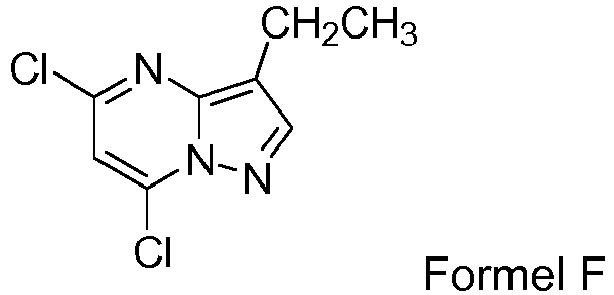
- R 2 is ethyl, thus, the compound of the structure of F1 is a compound of the structure of Formula F
- the compound of the "X" substituents in the compound of Formula F1 are chloride
- sub-step (ci), aminating the compound of Formula F1 with a primary amine comprises: (a) adding a water and a base, preferably K 3 PO 4 , either separately or as an aqueous solution, to the product mixture from derivatizing Step "b" which contains the dihalide compound of the structure of Formula F1; and (ii) reacting a primary amine, or a salt thereof, with the mixture under refluxing conditions to form the compound of the structure of Formula Ga, wherein R 2 and R 3 are as defined above.
- an amount of water to be added to the reaction mixture in amination sub-Step (ci) which is sufficient to provide a volumetric ratio of acetonitrile : water in the reaction mixture of about 1:5.
- amination sub-Step (cii) comprises refluxing the isolated compound of Formula Ga prepared in first amination sub-Step (ci) in N-methyl pyrrolidine with a secondary amine in the presence of sodium carbonate and sufficient water to maintain a refluxing temperature of from 140 °C to 160 °C, thereby yielding the compound of Formula I.
- the compound of Formula Ga prepared in first amination sub-Step (ci) is the compound of Formula G1
- the secondary amine used in second amination sub-Step (cii) is an amine of the structure of Formula Ha thereby providing the compound of Formula Ia
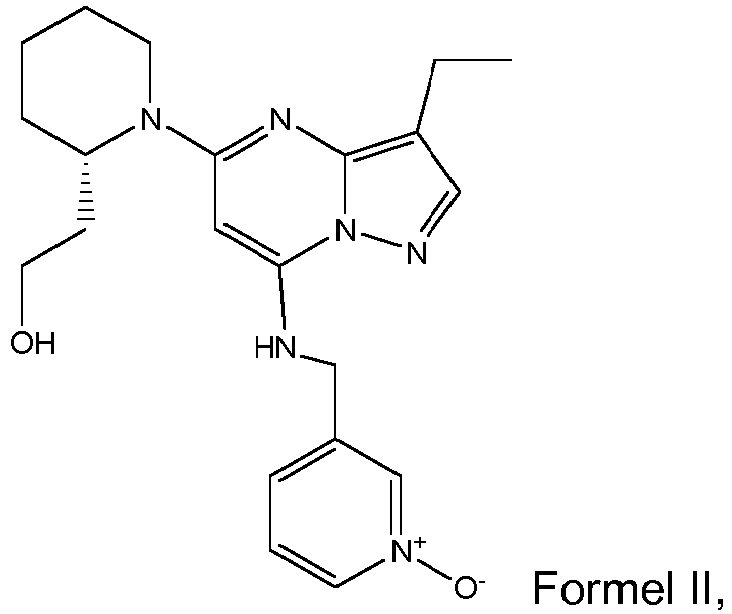
- R 2 is ethyl, thus the compound of the structure of Formula G1 is compound G, and the compound of Formula I prepared in Step e is the compound of Formula II.
- the present invention is a process for making Cyclin-Dependent Kinase inhibitor compounds (CDK inhibitor) of Formula II, the process comprising:
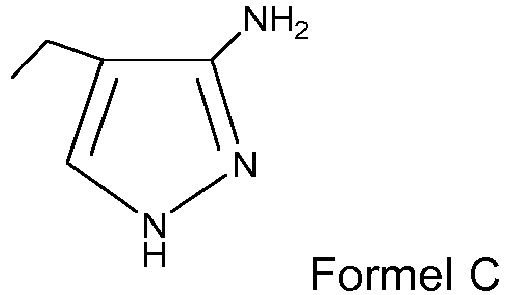
- the salt of the compound of Formula C in reacting Step “a” is selected from oxalate, tosylate, and chloride salts, preferably the oxalate salt.
- the solvent in reacting Step “a” is preferably selected from methanol and ethanol.
- the metal alkoxide base in reacting Step “a” is preferably selected from sodium methoxide and sodium ethoxide.
- the Lewis base used in Step "b" is preferably selected from N,N-dimethyl aniline, pyridine, diisopropylethylamine, and triethyl amine, more preferably N,N-dimethylaniline.
- the refluxing solvent employed in step “c” comprises a ratio of 5:1 water: acetonitrile.
- the base used in Step “c” is preferably potassium phosphate tribasic.
- the salt of pyridin-3-yl-methylamine-1-oxide used in the reaction is the dihydrochloride salt.
- the base used in Step “d” is selected from sodium carbonate and sodium bicarbonate, preferably the base used is sodium carbonate. In some embodiments it is preferred for an amount of water to be added to the reaction mixture in refluxing Step “d” sufficient to provide a volumetric ratio of N-methylpyrollidine: water in the reaction mixture of 100:1.
- step "e” it is preferred to use ethyl acetate to precipitate the solids.
- step "f' it is preferred to use ethyl alcohol as a recrystallization solvent.
- compounds of Formula I are believed to have promising activity as useful pharmaceutical compounds having CDK inhibitor properties.
- the synthesis of these compounds, for example, the compound of Formula II is described in detail in published U.S. Patent Application No. 2004-0209878 A1, filed on February 11, 2004 (the '878 publication).
- the process for providing the compound of Formula II is described in the '878 application in Examples 507 to 508, 509, 1000 and 1001.
- a pyrazole-3-yl-amine intermediate eg, compound 7 of Scheme 1 above
- a malonate or malonate derivative for example, a malonate diester, a malonate monoester acid chloride, or a malonate monoester acid
- cyclization to form the corresponding pyrazolo[1,5-a]pyrimidine-5,7-dione (for example, compound 13 in Scheme 1).
- halogenation at the ketone sites e.g. compound 14
- stepwise amination of the halide sites e.g. compounds 15 and 16
- the process of the present invention provides improvements in this general synthetic scheme by either adapting this process to either improve the yield of the product in some of these steps, combining two or more of these steps into a one-pot synthetic scheme, or alterations in the reaction scheme and methodology which leads to the provision of an intermediate or product as an easily isolated precipitate which obviates the need for chromatographic purification required in the previously described processes. Accordingly, each and severally the steps of the process of the present invention comprise an improved synthesis for the preparation of pyrazolo[1,5-a]pyrimidine compounds over those synthetic processes described in the '878 publication for preparation of pyrazolo-[1,5-a]-pyrimidine compounds. It will be appreciated that each and severally the improvements of the present invention can be incorporated into the previously described synthetic process to provide an improved synthetic process for the preparation of compounds with CDK inhibiting properties. Each improved step is described next.
- One aspect is an improved process for the provision of 5,7-dichloro-pyrazolo[1,5-a]pyrimidine compounds comprising an improved process for the preparation of intermediate compounds having the structure of Formula E1, wherein R 2 is a linear, branched or cyclic alkyl group, and its subsequent halogenation, or alternatively, its subsequent sulfonation, carried out in accordance with Scheme III.
- Step 1 the inventors have surprisingly found that a "one-pot" reaction can be carried out between salts of 4-alkyl-pyrazol-3-yl-amine (C1b) compounds and a malonic acid amidization reagent selected from dimethyl malonate (both “G” substituents are methyl), monomethylmalonylchloride (one “G” substituent is methyl and the other is chloride), and malonyldichloride (both "G” substituents are chloride) in the presence of a Lewis base having sufficient proton affinity to abstract a proton from the 1-position nitrogen on the pyrazole ring, yielding a corresponding malonamic acid methyl ester adducts.
- a malonic acid amidization reagent selected from dimethyl malonate (both “G” substituents are methyl), monomethylmalonylchloride (one “G” substituent is methyl and the other is chloride), and malonyldichloride (both "G” substituents are chloride
- pyrazolo[1,5-a]pyrimidine diketone E1
- various acid salts can be employed and both mono-acid and diacid salts can be employed.
- the acid salt can be prepared from oxalic acid, p-tolysulfonic acid, or hydrochloric acid such that in the corresponding salt "A” is oxalate, tosylate, and chloride, respectively.
- both monoacid and diacid salts can be prepared (thus "n" is 1 or 2 respectively).
- Both the monoacid and the diacid species can be prepared from either monoanionic species (for example, p-tolysulfonate, thus “m” is 1) or dianionic species (for example, oxalate, thus “m” is 2).
- these salts can be prepared by treating a solution of the free base with the corresponding acid, for example, oxalic acid, tolysulfonic acid and hydrochloric acid, to precipitate, respectively, the corresponding oxalate, tosylate, and chloride salt.
- the oxalate salt is preferred in the reaction of Scheme III.
- the inventors have found that conversion of the pyrazole-3yl-amine free base compound to a salt selected from oxalate, tosylate, and chloride prior to running the reaction also provides a reagent having advantageous handling properties.
- the corresponding pyrazole-3yl-amine free base compound is a viscous oil with a high affinity for metal surfaces. This aspect of this step of the invention facilitates scale-up of the reaction to a scale suitable for commercial production using ordinary production equipment and techniques.
- Step 1 of reaction Scheme III utilizes a refluxing solvent comprising an alcohol of 5 carbon atoms or less.
- the reaction solvent is selected from ethanol and methanol, more preferably, methanol.
- the reaction mixture can comprise any alcohol of 5 carbon atoms or less and mixtures of two or more thereof, for example, isopropanyl.
- Other non-alcohol solvents can be employed so long as the reactants are soluble in them and they reflux at a suitable temperature, for example acetonitrile and tetrahydrofuran (THF).
- THF acetonitrile and tetrahydrofuran
- the reaction mixture is refluxed until chromatographic measurements indicate that the reaction is complete, as indicated by less than about 5 % of the starting pyrazole compound remains unreacted. Under the above-described reaction condition the reaction typically requires about 10 hours of refluxing.
- reagents and reaction conditions are selected to complete the reaction in a period of from about 10 hours to about 20 hours.
- the amidization/cyclization reaction of Scheme III is driven by a Lewis base having sufficient proton affinity to abstract a proton from the 1-position nitrogen of the pyrazole ring.
- Suitable Lewis bases are metal alkoxide bases, for example, sodium, lithium, and postassium alkoxides, wherein the alkoxide portion of the complex is selected from linear, branched, and cyclic alkoxides having 6 carbon atoms or less.
- sodium alkoxides selected from sodium methoxide and sodium ethoxide, which sodium methoxide being preferred because of its commercial availability.
- Lewis bases can also be employed, for example, diisopropylethyl amine (DIEA), triethyl amine (TEA), potassium phosphate tribasic, 1,8 diazabicyclo[5,4-0]undec-7-ene (DBU), and 4-dimethyl aminopyridine (DMAP).
- DIEA diisopropylethyl amine
- TEA triethyl amine
- DBU 1,8 diazabicyclo[5,4-0]undec-7-ene
- DMAP 4-dimethyl aminopyridine
- the method presented in Scheme III provides an additional advantage in that at the end of the reaction, quenching the reaction mixture with water and adjusting the pH of the mixture to a pH of from about pH 2 to about pH 5, preferably pH 3, precipitates the product pyrazolo-pyrimidine diketone product (13), which can be quantitatively recovered by filtration, thus eliminating the chromatographic purification at the intermediate and final stages necessary in the previous process.
- the pH can be adjusted by addition of amounts of HCl or NaOH as needed to bring the pH of the reaction mixture within the desired range.
- the diketone intermediate can be provided as a precipitate which can be isolated by vacuum filtration for use in conversion to the corresponding dihalide, thus eliminating isolation of the amide intermediate and purification by chromatography to provide the ketone.
- the precipitated diketone is isolated by vacuum filtration and dissolved in a suitable solvent for conversion into the dihalide.
- suitable solvents include toluene, tetrahydrofuran (THF), and acetonitrile, with acetonitrile being the preferred solvent.
- the diketone is converted into the dichloride by refluxing a solution containing the diketone with phosphorous oxychloride in the presence of a suitable base, for example, N,N-dimethylaniline, triethylamine, pyridine, and isopropyldiethylamine. It will be appreciated that other bases can be utilized.
- a suitable base for example, N,N-dimethylaniline, triethylamine, pyridine, and isopropyldiethylamine. It will be appreciated that other bases can be utilized.
- step 1 of the Scheme III process can be isolated for use in other reactions, for example, other halogenation reactions and sulfonylation reactions to provide an intermediate which can be further transformed in accordance with the processes described in the above-mentioned '878 publication, and thereby provide desirable CDK inhibitor compounds.
- the dichloride compound F1 is obtained in accordance with Scheme III, combining the reaction mixture with water will precipitate the dichloride compound. Accordingly, the dichloride may be obtained in a form suitable for amination either as described below or in accordance with the above-mentioned '878 publication.
- a sulfonyl intermediate of this formula can be used to provide a compound of Formula II using amination reactions described below in the same manner as they are carried out using the above-described halogenated intermediates, for example, the dichloride of Formula F.
- Sulfonylation can be accomplished by treating the diketone with a suitable sulfonyl chloride in the presence of a base, as for the halogenation reaction described above.
- the sulfonyl chloride is selected from methylsulfonylchloride and an arylsulfonylchloride.
- the compound of the formula F1 prepared by the inventive process can be employed to prepare compounds of Formula I utilizing previously described amination reactions
- the inventors have surprising found that utilizing a primary amine salt in the first amination reaction provides process improvements. Accordingly, the inventors have surprisingly found that treating an the acetonitrile solution of the pyrazolo-pyrimidine dihalide compound (the compound of Formula F1, wherein the "X" substituent is a halogen), prepared as described above, with potassium phosphate tribasic and water in the presence of a primary amine salt, there is precipitated from the reaction mixture a first amine adduct in a form suitable for use directly in a second amination reaction (described herein below).
- a dichloride or sulfonyl obtained as a precipitate from Scheme III, Step 2a or 2b, described above, can be dried and employed in a first amination reaction in accordance with Scheme IV (illustrated with the dichloride).
- Scheme IV illustrated with the dichloride.
- the dichloride F1 is dissolved in Acetonitrile, which solution is mixed with a base, preferably a base selected from potassium carbonate and potassium phosphate tribasic, more preferably potassium phosphate tribasic (K 3 PO 4 ) and a sufficient amount of water (preferably 1:5 by volume, Acetonitrile: water) to promote the amination reaction under refluxing conditions.
- a base preferably a base selected from potassium carbonate and potassium phosphate tribasic, more preferably potassium phosphate tribasic (K 3 PO 4 ) and a sufficient amount of water (preferably 1:5 by volume, Acetonitrile: water) to promote the amination reaction under refluxing conditions.
- a base preferably a base selected from potassium carbonate and potassium phosphate tribasic, more preferably potassium phosphate tribasic (K 3 PO 4 ) and a sufficient amount of water (preferably 1:5 by volume, Acetonitrile: water) to promote the amination reaction under refluxing conditions.
- n mono hydro
- tripotassium phosphate potassium phosphate, tribasic
- bases for example, sodium carbonate and sodium bicarbonate.
- the amount of water used in promoting the reaction is not critical, the inventors have surprisingly found that a ratio of 1:5 by volume of acetonitrile : water permits the amination reaction to run to completion (determined by chromatography when less than about 5% of the starting material remains unreacted) in a period of about 6 hours, as compared to the reaction run under the conditions described in the '878 publication (no water present) which requires nearly 72 hours to complete.
- the reaction can be run to completion in a period of from about 4 hours to about 10 hours.
- the reaction conditions of the present invention also boost the yield of first amine adduct by about 10%, and provide the product in a suitable form for use in the subsequent second amination reaction (described below) directly without the need for chromatography to isolate and purify the product.
- the purity of the product can be increased by reslurrying the product in an acetonitrile/water mixture.
- the pyrazolo[1,5-a]pyridine-7yl-amine adduct of Formula G1, prepared in accordance with Scheme IV, is further derivatized by amination at the 5-chloro position in accordance with Scheme V.
- the second amination reaction can be carried out in refluxing N-methyl pyrolidine (NMP) in the presence of sodium carbonate and a small amount of water, where it is preferred to provide an amount of water in the system sufficient to maintain a refluxing temperature of from about 140 °C to about 160 °C.
- NMP N-methyl pyrolidine
- the inventors have surprisingly discovered that too little water leads to the formation of a high level of impurities in the reaction product which impedes separation of the product from the reaction mixture.
- the inventors have also found that when too much water is present in the reaction mixture it can slow the reaction rate, requiring undesirably long reaction times. Accordingly, it is desirable to maintain an amount of water in the reaction mixture that permits reflux in the temperature range of from about 120 °C to about 180 °C, more preferably about 140 °C to about 160 °C, and most preferably a refluxing temperature of about 150 °C.
- the solvent in which the second amination reaction is carried out is preferably NMP, however, this step may be carried out in other high boiling solvents, for example, N,N-dimethylaniline, dimethylsulfoxide (DMSO), phenyl ether, dimethylformamide (DMF), di(ethyleneglycolmethyl) ether, and anisole. If a sufficient amount of the secondary amine amination reagent is employed (with reference to Scheme V, for example, the amino-alcohol compound G1a), it can serve also as the solvent for the second amination step.
- the solvent employed in the second amination step is used in an amount up to 10X the volume of the aminating reagent, but preferably an amount of from about 1X the volume of the aminating reagent to about 2X the volume of the aminating reagent is employed, preferably about 1.5X the volume of the aminating reagent.
- the amount of base used is preferably up to about 2X (mole) the amount of chloride substrate which is to be aminated (compound of Formula "G"), more preferably from about 0.2 X mole to about 1X mole amount, and more preferably the base is present in an amount about 2X mole relative to the amount of chloride substrate used.
- R 2 in the above-described synthetic procedures can comprise any linear, branched, or cyclic alkyl substituent, it is preferred for R 2 to be a linear alkyl sustituent of four carbons or fewer.
- R 2 is an ethyl substituent (-CH 2 -CH 3 ).
- the second amination reaction is considered completed when from about 90% to about 95% of the starting chloride substrate has been consumed.
- the product (compound of Formula H1) can optionally be isolated directly from the reaction mixture by quenching the reaction of Scheme V with water and extracting the mixture with ethyl acetate.
- the reaction is quenched with an amount of water based on the reaction mixture volume.
- the ethyl acetate extract is concentrated under vacuum, following which the product is precipitated from the concentrate by adding a mixture of ethyl acetate and THF to the concentrate as an anti-solvent to promote crystallization and subsequent precipitation of the desired product.
- the precipitated product is sufficiently pure that column chromatography is not needed to isolate or purify the product.
- additional purity can be achieved by recrystallizing the precipitated product from ethanol or a mixture of t-butylmethyl ether and ethanol. Using this method, typically isolated yields obtained are of from about 50% to about 70 % based on the amount of second amine adduct prepared in the reaction of Scheme V.
- Step 2 First amination using primary amine
- n 1 or 2, preferably 2
- diketone E is provided by reacting a methanol solution of the oxalate salt of starting pyrazole "C” with dimethyl malonate in the presence of sodium methoxide under refluxing conditions as described above. Thereafter, the dichloride compound "F' is formed from the isolated diketone compound "E” prepared in Step 1 by treatment of the diketone with phosphorous oxychloride in acetonitrile in accordance with the procedures described above.
- Step 3 of Scheme VI the isolated first amine adduct compound "G” is converted to the second amine adduct by treatment with 2-piperdin-2-yl-ethanol (compound “G1a”) in the presence of sodium carbonate and a trace of water in refluxing N-methyl pyrolidinone in accordance with the procedures described above to yield the compound of Formula II.
- the aminopyrazole compounds used in the synthesis of the present invention can be made in accordance with the following Scheme VII.
- treatment of a starting nitrile with potassium t-butoxide and ethyl formate gives rise to the intermediate enol 2 which upon treatment with hydrazine gives the desired substituted 3-aminopyrazole.
- the malonate diesters used in the synthesis are commercially available, for example, dimethyl malonate from Aldrich, or can be prepared from the reaction of alcohol and the appropriate malonic acid derivative, for example, malonic acid chloride available from Aldrich, in accordance with known esterification reactions, for example, those disclosed in Organic Chemistry, 3rd edition by Morrison and Boyd, Allyn and Bacon 1976 .
- aminopyrazine N-oxide used in the reactions of the present invention can be prepared in accordance with the '878 publication, as described in Examples 198 through 203, which are incorporated herein by reference, can be used to prepare the aminopyridine N-oxide salt used in the first amination reaction, shown below in Scheme VIII.
- the protected amino-N-oxide compound was stirred at room temperature in 4M HCl in dioxane (0.97 mL) 2 hours to provide 3-amino-methylpyridine-N-oxide-hydrochlorides.
- LCMS: MH + 125.
- the dihydrochloride salt is also available as an article of commerce, as described above.
- the stereoisomer of the 2-Piperidin-2-yl-ethanol (Compound G1a) used in the second amination reaction may be prepared as described in the '878 publication in accordance with preparative Example 500.
- the S-isomer can be prepared from a mixture of R and S enantiomers of piperidine-2-ethanol (127 g, 980 mmol) in 95% EtOH (260 mL) was added to ( S )-(+)-camphorsulfonic acid (228.7 g, 1.0 eq.) in 95% EtOH (150 mL) and the resulting solution was warmed to reflux. To the warm solution was added Et 2 O (600 mL) and the solution cooled to room temperature and let stand 3 days. The resulting crystals were filtered and dried in vacuo (25 g): mp 173-173 °C (lit. 168 °C).
- reagents and solvents used in the examples are articles of commerce which, unless otherwise noted, were used as received. Completion of a reaction step is generally taken to be when 90% to 95% of the substrate used has been consumed, generally as determined by chromatography methods.
- the resulting precipitate was filtered and washed with water (600ml).
- the wet cake was returned to the flask with water (1500ml) and acetonitrile (300ml), and heated to reflux. Reflux was maintained for 6 hours additional.
- the reaction mixture was cooled to room temperature over a 2 hour period and left to stand at room temperature for 4 hours.
- the resulting precipitate was filtered and washed with water (600ml).
- the wet cake was dried in an air draft oven at 50 °C for 18 hours to give the first amine adduct "G" material (179g, 84.9%).
- the batch was dried by distillation of the water azetrope under atmospheric pressure and concentrated to about 28L volume. THF was added and the solution was heated to reflux until all the solids dissolve. Ethyl acetate and triethlamine are added to the hot solution. The batch was cooled to ambient and then agitated with the temperature maintained in the range of from 20 °C to 25 °C for 12 hours. The solids were collected by filtration, washed first with ethyl acetate then water, and dried in the filter under vacuum for 24 hours with the temperature maintained at from 40 °C to 50 °C, yielding 4.9kg, 51.3% of the compound of Formula II.
Landscapes
- Chemical & Material Sciences (AREA)
- Organic Chemistry (AREA)
- Nitrogen Condensed Heterocyclic Rings (AREA)
- Pharmaceuticals Containing Other Organic And Inorganic Compounds (AREA)
- Medicinal Preparation (AREA)
Claims (8)
- Ein Verfahren zur Herstellung der Verbindung der Formel II
 a) Bilden einer Verbindung mit der Struktur der Formel E
 b) Bilden einer Verbindung mit der Struktur der Formel F
 (c) Refluxieren der Reaktionsmischung von Schritt "b", die die Verbindung der Formel F enthält, in Gegenwart eines Dihydrochloridsalzes von Pyridin-3-ylmethylamin-1-oxid, K3PO4 und Wasser, um die Verbindung der Formel G zu bilden
 d) Refluxieren der in Schritt "c" hergestellten isolierten Verbindung der Formel G in N-Methylpyrrolidin in Gegenwart von Natriumcarbonat, einer ausreichenden Menge Wasser, um eine Refluxiertemperatur von 140°C bis 160°C beizubehalten, und der Aminoalkoholverbindung mit der Struktur der Formel G1a
 e) gegebenenfalls Isolieren der im Refluxierschritt "d" hergestellten Verbindung der Formel II aus dem Reaktionsprodukt und Umkristallisieren der Verbindung aus Ethanol durch Zugabe von tert-Methylbutylether.
 - Das Verfahren nach Anspruch 1, wobei die Menge an Wasser, die in Refluxierschritt "c" zur Reaktionsmischung gegeben wird, ausreichend ist, um ein volumetrisches Verhältnis von Acetonitril : Wasser in der Reaktionsmischung von 1:5 zu ergeben.
- Das Verfahren nach Anspruch 1 oder 2, wobei das Salz der Verbindung der Formel C in Reaktionsschritt "a" ausgewählt ist aus Oxalat, Tosylat und Chloridsalzen.
- Das Verfahren nach Anspruch 3, wobei das Salz der Verbindung der Formel C in Reaktionsschritt "a" ein Oxalatsalz ist.
- Das Verfahren nach einem der Ansprüche 1 bis 4, wobei das Lösungsmittel in Reaktionsschritt "a" ausgewählt ist aus Methanol und Ethanol.
- Das Verfahren nach einem der Ansprüche 1 bis 4, wobei die Metallalkoxid-Base in Reaktionsschritt "a" ausgewählt ist aus Natriummethoxid und Natriumethoxid.
- Das Verfahren nach einem der Ansprüche 1 bis 6, wobei die in Schritt "b" verwendete Lewis-Base N,N-Dimethylanilin ist.
- Ein Verfahren nach Anspruch 1 zur Herstellung der Verbindung der Formel II, umfassend(a) Umsetzen einer refluxierenden Lösung, die einen oder mehrere Alkohole mit 5 Kohlenstoffen oder weniger und ein Salz der 4-Ethyl-1H-pyrazol-3-ylamin-Verbindung der Formel C

 (b) Halogenierung des isolierten Produkts der Formel E aus Reaktionsschritt "a" durch Behandeln einer Acetonitrillösung, die die aus Schritt "a" isolierte Verbindung der Formel E enthält, mit Phosphoroxychlorid in Gegenwart von N,N-Dimethylanilin, um eine Verbindung der Struktur F zu bilden,
 (c) Refluxieren des in Schritt "b" hergestellten Dichlorids der Formel F in Gegenwart eines Hydrochloridsalzes von Pyridin-3-ylmethylamin-1-oxid, einer Base, ausgewählt aus Kaliumcarbonat und dreibasischem Kaliumphosphat (K3PO4), und einem Reaktionsmedium, ausgewählt aus Acetonitril und einer Acetonitril/Wasser-Mischung, um die Verbindung der Formel G zu bilden
 (d) Umsetzen der isolierten, in Refluxierschritt "c" hergestellten Verbindung der Formel G mit der Aminoalkoholverbindung der Struktur G1a
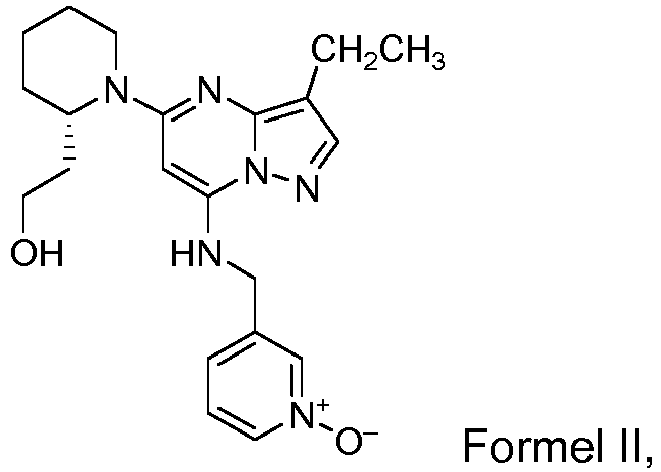 (e) gegebenenfalls Isolieren der im Refluxierschritt "d" hergestellten Verbindung der Formel II aus der Reaktionsmischung durch Ausfällen mit einem Anti-Lösungsmittel,(f) gegebenenfalls Umkristallisieren der isolierten Feststoffe.
Applications Claiming Priority (3)
| Application Number | Priority Date | Filing Date | Title |
|---|---|---|---|
| US84064806P | 2006-08-28 | 2006-08-28 | |
| US85195106P | 2006-10-14 | 2006-10-14 | |
| PCT/US2007/018305 WO2008027220A2 (en) | 2006-08-28 | 2007-08-17 | Process and intermediates for the synthesis of (3-alkyl-5-piperidin-1-yl-3, 3a-dihydropyrazol0 [1, 5-a] pyrimidin-7-yl) -amino derivatives |
Publications (2)
| Publication Number | Publication Date |
|---|---|
| EP2057166A2 EP2057166A2 (de) | 2009-05-13 |
| EP2057166B1 true EP2057166B1 (de) | 2018-07-11 |
Family
ID=38969591
Family Applications (1)
| Application Number | Title | Priority Date | Filing Date |
|---|---|---|---|
| EP07837015.2A Active EP2057166B1 (de) | 2006-08-28 | 2007-08-17 | Verfahren und zwischenprodukte zur herstellung von (3-alkyl-5-piperidin-1-yl-3,3a-dihydropyrazolo[1,5-a]pyrimidin-7-yl)-amino-derivativen |
Country Status (9)
| Country | Link |
|---|---|
| US (1) | US8076479B2 (de) |
| EP (1) | EP2057166B1 (de) |
| JP (1) | JP5079809B2 (de) |
| AR (1) | AR062420A1 (de) |
| CA (1) | CA2661737C (de) |
| ES (1) | ES2685837T3 (de) |
| MX (1) | MX2009002267A (de) |
| WO (1) | WO2008027220A2 (de) |
| ZA (1) | ZA200901289B (de) |
Families Citing this family (1)
| Publication number | Priority date | Publication date | Assignee | Title |
|---|---|---|---|---|
| CN111278839B (zh) | 2017-12-14 | 2023-10-17 | 广州华睿光电材料有限公司 | 一种有机金属配合物、高聚物、混合物、组合物及有机电子器件 |
Family Cites Families (4)
| Publication number | Priority date | Publication date | Assignee | Title |
|---|---|---|---|---|
| US7138538B2 (en) * | 2000-04-14 | 2006-11-21 | Solvay (Societe Anonyme) | Process for the separation of enantiomers and enantiopure reagent |
| DE10059413A1 (de) * | 2000-11-30 | 2002-06-20 | Gruenenthal Gmbh | Verwendung von substituierten 6-Dimethylaminomethyl-1-phenyl-cyclohexanverbindungen zur Therapie der Harninkontinenz |
| US7119200B2 (en) * | 2002-09-04 | 2006-10-10 | Schering Corporation | Pyrazolopyrimidines as cyclin dependent kinase inhibitors |
| CN101119998A (zh) * | 2004-12-21 | 2008-02-06 | 先灵公司 | 吡唑并[1,5-A]嘧啶腺苷A2a受体拮抗剂 |
-
2007
- 2007-08-17 WO PCT/US2007/018305 patent/WO2008027220A2/en not_active Ceased
- 2007-08-17 ES ES07837015.2T patent/ES2685837T3/es active Active
- 2007-08-17 JP JP2009526624A patent/JP5079809B2/ja active Active
- 2007-08-17 CA CA2661737A patent/CA2661737C/en active Active
- 2007-08-17 US US11/893,857 patent/US8076479B2/en active Active
- 2007-08-17 EP EP07837015.2A patent/EP2057166B1/de active Active
- 2007-08-17 AR ARP070103668A patent/AR062420A1/es not_active Application Discontinuation
- 2007-08-17 MX MX2009002267A patent/MX2009002267A/es active IP Right Grant
-
2009
- 2009-02-23 ZA ZA2009/01289A patent/ZA200901289B/en unknown
Non-Patent Citations (1)
| Title |
|---|
| None * |
Also Published As
| Publication number | Publication date |
|---|---|
| WO2008027220A3 (en) | 2009-08-27 |
| JP5079809B2 (ja) | 2012-11-21 |
| EP2057166A2 (de) | 2009-05-13 |
| JP2010502607A (ja) | 2010-01-28 |
| ZA200901289B (en) | 2010-02-24 |
| MX2009002267A (es) | 2009-03-20 |
| WO2008027220A2 (en) | 2008-03-06 |
| CA2661737C (en) | 2015-02-10 |
| US8076479B2 (en) | 2011-12-13 |
| AR062420A1 (es) | 2008-11-05 |
| ES2685837T3 (es) | 2018-10-11 |
| CA2661737A1 (en) | 2008-03-06 |
| US20080058518A1 (en) | 2008-03-06 |
Similar Documents
| Publication | Publication Date | Title |
|---|---|---|
| JP6921087B2 (ja) | ルキソリチニブの合成プロセス | |
| AU2020201260B2 (en) | Process for preparing BTK inhibitors | |
| JP7795485B2 (ja) | ピリミジニル-3,8-ジアザビシクロ[3.2.1]オクタニルメタノン誘導体およびその塩の調製 | |
| JP3543709B2 (ja) | N−(アミノ−4,6−ジハロピリミジン)ホルムアミド類の製造方法 | |
| JP6985367B2 (ja) | 新規化合物および方法 | |
| CA3210320A1 (en) | Synthesis of a bruton's tyrosine kinase inhibitor | |
| AU2002217089B2 (en) | Method for producing sulfonamide-substituted imidazotriazinones | |
| CN116897149A (zh) | 一种连接基药物偶联物的制备方法及其中间体 | |
| CA1202626A (en) | Deazapurine derivatives | |
| CA2661737C (en) | Process and intermediates for the synthesis of (3-alkyl-5-piperidin-1-yl-3,3a-dihydro-pyrazolo[1,5-a]pyrimidin-7-yl)-amino derivatives and intermediates | |
| Anderson et al. | Pyridopyrimidines. 6. Nucleophilic substitutions in the pyrido [2, 3-d] pyrimidine series | |
| JPH0641135A (ja) | イミダゾプテリジン誘導体及びその製造方法 | |
| Cocco et al. | Heterocyclization of Acetamidrazones. I. Synthesis of 1, 2, 4‐triazolo [4, 3‐a] pyridines via ring closure of 6‐(2‐acylhydrazino) pyridine intermediates | |
| CN101627041A (zh) | 合成(3-烷基-5-哌啶-1-基-3,3a-二氢-吡唑并[1,5-a]嘧啶-7-基)-氨基衍生物和中间体的方法和中间体 | |
| CN113999200B (zh) | 一种硫代二氮杂螺类化合物的合成方法、其中间体及其合成方法 | |
| US4897495A (en) | Process for the preparation of pyrrolizine derivatives | |
| Ryabova et al. | Transformations of ortho-methoxyaryl (hetaryl) carboxamides into quinazolin-4-one and pyrido [2, 3-d] pyrimidin-4-one derivatives | |
| EP4375282A1 (de) | Verfahren zur herstellung eines hepatitis-b-virus-nukleocapsid-inhibitors | |
| WO2025027567A1 (en) | Process for preparing mavacamten and process intermediate | |
| EP4640685A1 (de) | Produktionszwischenprodukt | |
| WO2023102800A1 (en) | Synthesis of 5, 7-dichloro-1, 6-naphthyridine | |
| WO2014126954A1 (en) | Regioselective synthesis of substituted pyrimidines | |
| CN116867789A (zh) | 一种伊喜替康衍生物的制备方法及其中间体 | |
| HK1231871A1 (en) | A process for the preparation of compound and synthetic intermediates thereof | |
| HK1205105A1 (zh) | 制备化合物的方法及其合成中间体 |
Legal Events
| Date | Code | Title | Description |
|---|---|---|---|
| PUAI | Public reference made under article 153(3) epc to a published international application that has entered the european phase |
Free format text: ORIGINAL CODE: 0009012 |
|
| 17P | Request for examination filed |
Effective date: 20080328 |
|
| AK | Designated contracting states |
Kind code of ref document: A2 Designated state(s): AT BE BG CH CY CZ DE DK EE ES FI FR GB GR HU IE IS IT LI LT LU LV MC MT NL PL PT RO SE SI SK TR |
|
| AX | Request for extension of the european patent |
Extension state: AL BA HR MK RS |
|
| REG | Reference to a national code |
Ref country code: HK Ref legal event code: DE Ref document number: 1125636 Country of ref document: HK |
|
| R17D | Deferred search report published (corrected) |
Effective date: 20090827 |
|
| RAP1 | Party data changed (applicant data changed or rights of an application transferred) |
Owner name: MERCK SHARP & DOHME CORP. |
|
| 17Q | First examination report despatched |
Effective date: 20140617 |
|
| REG | Reference to a national code |
Ref country code: HK Ref legal event code: WD Ref document number: 1125636 Country of ref document: HK |
|
| STAA | Information on the status of an ep patent application or granted ep patent |
Free format text: STATUS: EXAMINATION IS IN PROGRESS |
|
| GRAP | Despatch of communication of intention to grant a patent |
Free format text: ORIGINAL CODE: EPIDOSNIGR1 |
|
| STAA | Information on the status of an ep patent application or granted ep patent |
Free format text: STATUS: GRANT OF PATENT IS INTENDED |
|
| INTG | Intention to grant announced |
Effective date: 20180124 |
|
| GRAS | Grant fee paid |
Free format text: ORIGINAL CODE: EPIDOSNIGR3 |
|
| GRAA | (expected) grant |
Free format text: ORIGINAL CODE: 0009210 |
|
| STAA | Information on the status of an ep patent application or granted ep patent |
Free format text: STATUS: THE PATENT HAS BEEN GRANTED |
|
| AK | Designated contracting states |
Kind code of ref document: B1 Designated state(s): AT BE BG CH CY CZ DE DK EE ES FI FR GB GR HU IE IS IT LI LT LU LV MC MT NL PL PT RO SE SI SK TR |
|
| AX | Request for extension of the european patent |
Extension state: AL BA HR MK RS |
|
| REG | Reference to a national code |
Ref country code: GB Ref legal event code: FG4D |
|
| REG | Reference to a national code |
Ref country code: FR Ref legal event code: PLFP Year of fee payment: 12 Ref country code: CH Ref legal event code: EP Ref country code: CH Ref legal event code: NV Representative=s name: SERVOPATENT GMBH, CH |
|
| REG | Reference to a national code |
Ref country code: AT Ref legal event code: REF Ref document number: 1016753 Country of ref document: AT Kind code of ref document: T Effective date: 20180715 |
|
| REG | Reference to a national code |
Ref country code: IE Ref legal event code: FG4D |
|
| REG | Reference to a national code |
Ref country code: DE Ref legal event code: R096 Ref document number: 602007055367 Country of ref document: DE |
|
| REG | Reference to a national code |
Ref country code: NL Ref legal event code: FP |
|
| REG | Reference to a national code |
Ref country code: ES Ref legal event code: FG2A Ref document number: 2685837 Country of ref document: ES Kind code of ref document: T3 Effective date: 20181011 |
|
| REG | Reference to a national code |
Ref country code: LT Ref legal event code: MG4D |
|
| REG | Reference to a national code |
Ref country code: AT Ref legal event code: MK05 Ref document number: 1016753 Country of ref document: AT Kind code of ref document: T Effective date: 20180711 |
|
| PG25 | Lapsed in a contracting state [announced via postgrant information from national office to epo] |
Ref country code: BG Free format text: LAPSE BECAUSE OF FAILURE TO SUBMIT A TRANSLATION OF THE DESCRIPTION OR TO PAY THE FEE WITHIN THE PRESCRIBED TIME-LIMIT Effective date: 20181011 Ref country code: GR Free format text: LAPSE BECAUSE OF FAILURE TO SUBMIT A TRANSLATION OF THE DESCRIPTION OR TO PAY THE FEE WITHIN THE PRESCRIBED TIME-LIMIT Effective date: 20181012 Ref country code: AT Free format text: LAPSE BECAUSE OF FAILURE TO SUBMIT A TRANSLATION OF THE DESCRIPTION OR TO PAY THE FEE WITHIN THE PRESCRIBED TIME-LIMIT Effective date: 20180711 Ref country code: SE Free format text: LAPSE BECAUSE OF FAILURE TO SUBMIT A TRANSLATION OF THE DESCRIPTION OR TO PAY THE FEE WITHIN THE PRESCRIBED TIME-LIMIT Effective date: 20180711 Ref country code: PL Free format text: LAPSE BECAUSE OF FAILURE TO SUBMIT A TRANSLATION OF THE DESCRIPTION OR TO PAY THE FEE WITHIN THE PRESCRIBED TIME-LIMIT Effective date: 20180711 Ref country code: LT Free format text: LAPSE BECAUSE OF FAILURE TO SUBMIT A TRANSLATION OF THE DESCRIPTION OR TO PAY THE FEE WITHIN THE PRESCRIBED TIME-LIMIT Effective date: 20180711 Ref country code: FI Free format text: LAPSE BECAUSE OF FAILURE TO SUBMIT A TRANSLATION OF THE DESCRIPTION OR TO PAY THE FEE WITHIN THE PRESCRIBED TIME-LIMIT Effective date: 20180711 Ref country code: IS Free format text: LAPSE BECAUSE OF FAILURE TO SUBMIT A TRANSLATION OF THE DESCRIPTION OR TO PAY THE FEE WITHIN THE PRESCRIBED TIME-LIMIT Effective date: 20181111 |
|
| PG25 | Lapsed in a contracting state [announced via postgrant information from national office to epo] |
Ref country code: LV Free format text: LAPSE BECAUSE OF FAILURE TO SUBMIT A TRANSLATION OF THE DESCRIPTION OR TO PAY THE FEE WITHIN THE PRESCRIBED TIME-LIMIT Effective date: 20180711 |
|
| REG | Reference to a national code |
Ref country code: DE Ref legal event code: R097 Ref document number: 602007055367 Country of ref document: DE |
|
| PG25 | Lapsed in a contracting state [announced via postgrant information from national office to epo] |
Ref country code: RO Free format text: LAPSE BECAUSE OF FAILURE TO SUBMIT A TRANSLATION OF THE DESCRIPTION OR TO PAY THE FEE WITHIN THE PRESCRIBED TIME-LIMIT Effective date: 20180711 Ref country code: EE Free format text: LAPSE BECAUSE OF FAILURE TO SUBMIT A TRANSLATION OF THE DESCRIPTION OR TO PAY THE FEE WITHIN THE PRESCRIBED TIME-LIMIT Effective date: 20180711 Ref country code: MC Free format text: LAPSE BECAUSE OF FAILURE TO SUBMIT A TRANSLATION OF THE DESCRIPTION OR TO PAY THE FEE WITHIN THE PRESCRIBED TIME-LIMIT Effective date: 20180711 Ref country code: LU Free format text: LAPSE BECAUSE OF NON-PAYMENT OF DUE FEES Effective date: 20180817 Ref country code: CZ Free format text: LAPSE BECAUSE OF FAILURE TO SUBMIT A TRANSLATION OF THE DESCRIPTION OR TO PAY THE FEE WITHIN THE PRESCRIBED TIME-LIMIT Effective date: 20180711 |
|
| REG | Reference to a national code |
Ref country code: BE Ref legal event code: MM Effective date: 20180831 |
|
| PLBE | No opposition filed within time limit |
Free format text: ORIGINAL CODE: 0009261 |
|
| STAA | Information on the status of an ep patent application or granted ep patent |
Free format text: STATUS: NO OPPOSITION FILED WITHIN TIME LIMIT |
|
| REG | Reference to a national code |
Ref country code: IE Ref legal event code: MM4A |
|
| PG25 | Lapsed in a contracting state [announced via postgrant information from national office to epo] |
Ref country code: SK Free format text: LAPSE BECAUSE OF FAILURE TO SUBMIT A TRANSLATION OF THE DESCRIPTION OR TO PAY THE FEE WITHIN THE PRESCRIBED TIME-LIMIT Effective date: 20180711 Ref country code: DK Free format text: LAPSE BECAUSE OF FAILURE TO SUBMIT A TRANSLATION OF THE DESCRIPTION OR TO PAY THE FEE WITHIN THE PRESCRIBED TIME-LIMIT Effective date: 20180711 |
|
| 26N | No opposition filed |
Effective date: 20190412 |
|
| PG25 | Lapsed in a contracting state [announced via postgrant information from national office to epo] |
Ref country code: IE Free format text: LAPSE BECAUSE OF NON-PAYMENT OF DUE FEES Effective date: 20180817 |
|
| PG25 | Lapsed in a contracting state [announced via postgrant information from national office to epo] |
Ref country code: SI Free format text: LAPSE BECAUSE OF FAILURE TO SUBMIT A TRANSLATION OF THE DESCRIPTION OR TO PAY THE FEE WITHIN THE PRESCRIBED TIME-LIMIT Effective date: 20180711 Ref country code: BE Free format text: LAPSE BECAUSE OF NON-PAYMENT OF DUE FEES Effective date: 20180831 |
|
| PG25 | Lapsed in a contracting state [announced via postgrant information from national office to epo] |
Ref country code: MT Free format text: LAPSE BECAUSE OF NON-PAYMENT OF DUE FEES Effective date: 20180817 |
|
| PG25 | Lapsed in a contracting state [announced via postgrant information from national office to epo] |
Ref country code: HU Free format text: LAPSE BECAUSE OF FAILURE TO SUBMIT A TRANSLATION OF THE DESCRIPTION OR TO PAY THE FEE WITHIN THE PRESCRIBED TIME-LIMIT; INVALID AB INITIO Effective date: 20070817 Ref country code: PT Free format text: LAPSE BECAUSE OF FAILURE TO SUBMIT A TRANSLATION OF THE DESCRIPTION OR TO PAY THE FEE WITHIN THE PRESCRIBED TIME-LIMIT Effective date: 20180711 |
|
| REG | Reference to a national code |
Ref country code: CH Ref legal event code: PCAR Free format text: NEW ADDRESS: WANNERSTRASSE 9/1, 8045 ZUERICH (CH) |
|
| PG25 | Lapsed in a contracting state [announced via postgrant information from national office to epo] |
Ref country code: CY Free format text: LAPSE BECAUSE OF FAILURE TO SUBMIT A TRANSLATION OF THE DESCRIPTION OR TO PAY THE FEE WITHIN THE PRESCRIBED TIME-LIMIT Effective date: 20180711 |
|
| REG | Reference to a national code |
Ref country code: DE Ref legal event code: R081 Ref document number: 602007055367 Country of ref document: DE Owner name: MERCK SHARP & DOHME LLC, RAHWAY, US Free format text: FORMER OWNER: MERCK SHARP & DOHME CORP., RAHWAY, N.J., US |
|
| REG | Reference to a national code |
Ref country code: NL Ref legal event code: PD Owner name: MERCK SHARP & DOHME LLC; US Free format text: DETAILS ASSIGNMENT: CHANGE OF OWNER(S), MERGE; FORMER OWNER NAME: MERCK SHARP & DOHME CORP. Effective date: 20220922 Ref country code: GB Ref legal event code: 732E Free format text: REGISTERED BETWEEN 20220908 AND 20220914 |
|
| REG | Reference to a national code |
Ref country code: ES Ref legal event code: PC2A Owner name: MERCK SHARP & DOHME LLC Effective date: 20230309 |
|
| PGFP | Annual fee paid to national office [announced via postgrant information from national office to epo] |
Ref country code: NL Payment date: 20250711 Year of fee payment: 19 |
|
| PGFP | Annual fee paid to national office [announced via postgrant information from national office to epo] |
Ref country code: ES Payment date: 20250908 Year of fee payment: 19 |
|
| PGFP | Annual fee paid to national office [announced via postgrant information from national office to epo] |
Ref country code: DE Payment date: 20250709 Year of fee payment: 19 |
|
| PGFP | Annual fee paid to national office [announced via postgrant information from national office to epo] |
Ref country code: TR Payment date: 20250718 Year of fee payment: 19 Ref country code: IT Payment date: 20250811 Year of fee payment: 19 |
|
| PGFP | Annual fee paid to national office [announced via postgrant information from national office to epo] |
Ref country code: GB Payment date: 20250710 Year of fee payment: 19 |
|
| PGFP | Annual fee paid to national office [announced via postgrant information from national office to epo] |
Ref country code: FR Payment date: 20250709 Year of fee payment: 19 |
|
| PGFP | Annual fee paid to national office [announced via postgrant information from national office to epo] |
Ref country code: CH Payment date: 20250901 Year of fee payment: 19 |