EP2031064A1 - Verfahren zur Steigerung von Proteintitern - Google Patents
Verfahren zur Steigerung von Proteintitern Download PDFInfo
- Publication number
- EP2031064A1 EP2031064A1 EP07115227A EP07115227A EP2031064A1 EP 2031064 A1 EP2031064 A1 EP 2031064A1 EP 07115227 A EP07115227 A EP 07115227A EP 07115227 A EP07115227 A EP 07115227A EP 2031064 A1 EP2031064 A1 EP 2031064A1
- Authority
- EP
- European Patent Office
- Prior art keywords
- protein
- cell
- interest
- antibody
- cells
- Prior art date
- Legal status (The legal status is an assumption and is not a legal conclusion. Google has not performed a legal analysis and makes no representation as to the accuracy of the status listed.)
- Ceased
Links
Images


Classifications
-
- C—CHEMISTRY; METALLURGY
- C07—ORGANIC CHEMISTRY
- C07K—PEPTIDES
- C07K16/00—Immunoglobulins [IG], e.g. monoclonal or polyclonal antibodies
-
- C—CHEMISTRY; METALLURGY
- C07—ORGANIC CHEMISTRY
- C07K—PEPTIDES
- C07K16/00—Immunoglobulins [IG], e.g. monoclonal or polyclonal antibodies
- C07K16/40—Immunoglobulins [IG], e.g. monoclonal or polyclonal antibodies against enzymes
-
- C—CHEMISTRY; METALLURGY
- C07—ORGANIC CHEMISTRY
- C07K—PEPTIDES
- C07K2317/00—Immunoglobulins specific features
- C07K2317/20—Immunoglobulins specific features characterized by taxonomic origin
- C07K2317/24—Immunoglobulins specific features characterized by taxonomic origin containing regions, domains or residues from different species, e.g. chimeric, humanized or veneered
-
- C—CHEMISTRY; METALLURGY
- C07—ORGANIC CHEMISTRY
- C07K—PEPTIDES
- C07K2317/00—Immunoglobulins specific features
- C07K2317/50—Immunoglobulins specific features characterized by immunoglobulin fragments
- C07K2317/52—Constant or Fc region; Isotype
Definitions
- the invention relates to optimized proteins, in particular antibody Fc parts, or Fc fusion proteins and methods for the production or biopharmaceutical production of such optimized antibodies and Fc fusion proteins with increased productivity and a method for the production and purification of proteins, wherein the biomolecule produced completely is homogeneous with respect to the C-terminal lysine.
- Biomolecules such as proteins, polynucleotides, polysaccharides and the like are increasingly gaining commercial importance as drugs, as diagnostics, as additives in foods, detergents and the like, as research reagents and for many other applications.
- the need for such biomolecules can be determined - e.g. in the case of proteins - usually no longer satisfy by isolating the molecules from natural sources but requires the use of biotechnological production methods.
- the biotechnological production of proteins typically begins with the isolation of the DNA encoding the desired protein and its cloning into a suitable expression vector. After transfection of the recombinant expression vector into suitable prokaryotic or eukaryotic expression cells and subsequent selection of transfected, recombinant cells, the latter are cultured in fermenters and the desired protein is expressed. Subsequently, the harvest of the cells or of the culture supernatant and the workup and purification of the protein contained therein takes place.
- the product yield is crucial.
- the separation of impurities is important.
- process- and product-dependent impurities can be distinguished from each other.
- the process-dependent contaminants include components of the host cells, such as proteins and nucleic acids, or stem from cell culture (such as media components) as well as work-up (such as salts or detached chromatography ligands).
- product-dependent impurities occur. These are molecular variants of the product with different properties. These include e.g.
- truncated forms such as precursors and hydrolytic degradation products, enzymatic cleavage of C-terminal amino acid residues of proteins, but also modified forms, for example, by deamination, different Glykosyl michsmuster or incorrectly linked disulfide bridges.
- product-dependent variants include polymers and aggregates.
- Contaminants are any other materials of a chemical, biochemical or microbiological nature that are not directly related to the manufacturing process. Other contaminants are e.g. Viruses that can undesirably occur in cell cultures.
- the starting point for the evaluation of the production batch is the physico-chemical product properties, the purity, the homogeneity and the efficacy and safety of the product. Electrophoretic (IEF) or chromatographic (IEC, SEC, RP) separation methods and mass spectroscopic methods (MS, ESI, MALDI) are used to evaluate product purity and product heterogeneity.
- the control of product purity ensures sufficient depletion of impurities and the removal of fission products and aggregated protein molecules resulting from enzymatic, mechanical or chemical processes in the manufacturing process.
- the evaluation of the product homogeneity is primarily based on the deviations in the glycosylation pattern and the charge heterogeneity.
- the efficacy of a product describes its biological activity, which in the case of antibodies is composed of properties such as the antigen-binding capacity, the induction of effector functions, serum half-life and others.
- Factors determining product safety include sterility and bacterial endotoxin load on the product lot.
- the present invention surprisingly achieves this object by a method for the production of proteins which allows an increased yield by removing already at the DNA level the C-terminal coding codon (for example lysine) and subsequently inserting a stop codon.
- This method enables an increase in the protein titer, in particular of antibodies having a C-terminal lysine heavy chain deletion.
- the product titer is increased by at least 10%, preferably at least 20% and particularly preferably by at least 50%.
- the present invention is preferably applicable to processes for producing recombinant antibodies and / or Fc fusion proteins.
- the present invention is applicable to other molecules having C-terminal amino acid deletions. Examples include EPO and tPA, where C-terminal arginine deletions occur.
- the invention relates to the improved production and purification of optimized proteins, the constituent of which is, inter alia, the immunoglobulin domain C H 3.
- An often observed effect of these proteins is the cleavage of the C-terminal lysine. This usually incomplete processing of the heavy chain leads to product heterogeneity.
- the corresponding codon of the C-terminal lysine of the heavy antibody chain was deleted by means of recombinant DNA technology. This deletion in the optimized Surprisingly, antibody does not lead to a disadvantage in the expression or intracellular protein processing but rather to an increased product titer compared to the wild type.
- the present invention does not result from the prior art.
- product heterogeneity needs to be analyzed for each production lot before it can be released.
- For the qualitative and quantitative determination of the heterogeneity of lysine residues at the C-terminus of the heavy chain laborious and costly analysis methods must be used.
- column chromatographic separation methods weak cation exchangers, WCX
- LC-MS mass spectroscopy
- electrophoretic separation methods capillary isoelectric focusing, CIEF. Gelisoelectrophoretic focusing only allows a qualitative assessment of lysine heterogeneity.
- the reduction of charge heterogeneity occurs via the cleavage of C-terminal lysine residues of the immunoglobulin heavy chain antibody by means of the enzyme carboxypeptidase.
- this method only achieves a conversion of 95% of the antibodies into the homogeneous antibody form (Lys0).
- Further methods consist in the incubation of the heterogeneous antibody forms with ascites fluid in various ratios (2: 1 to 1:10) or in the pH reduction of the culture medium. The efficiency of these processes for the C-terminal lysine cleavage is also only about 95%. All procedures are also time consuming (> 24h).
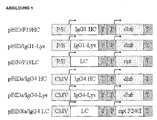
- FIGURE 1 Schematic representation of the recombined vectors
- the vectors shown here are used to express the IgG1 and IgG4 isotype monoclonal antibodies in CHO-DG44 cells.
- P / E is a combination of CMV enhancer and hamster Ub / S27a promoter
- CMV is a combination of CMV enhancer and promoter
- P is just a promoter element
- T is a termination signal for transcription needed for polyadenylation of the transcribed mRNA.
- the position and direction of transcription initiation within each transcription unit is indicated by an arrow.
- the amplifiable selection marker dlhydrofolate reductase is abbreviated "dhfr”.
- the selection marker neomycin phosphotransferase is labeled with "npt” and the neomycin phosphotransferase mutant produced by point mutation F2401 with "npt F240I”.
- "IgG1 HC” encodes the heavy chain of the wild-type IgG1 isotype F19 antibody and "heavy chain IgG1-Lys" of this antibody with a C-terminal lysine deletion.
- IgG4 HC identifies the gene for the IgG4 wild-type heavy chain and "IgG4-Lys" denotes the IgG4 heavy chain with a C-terminal lysine deletion.
- "LC” encodes the light chain of the IgG1 or IgG4 antibody.
- FIGURE 2 INFLUENCE OF C-TERMINAL LYSINE DELETION ON TRANSSIENT EXPRESSION OF IGG1 ANTIBODY
- the cell culture supernatants are removed and the IgG1 titers determined by ELISA and the SEAP activity.
- the IgG1 titer is corrected for transfection efficiency.
- the figure shows the average of 10 parallel pools with comparable product quantities for both variants.
- FIGURE 3 EXPRESSION OF IGG1 WILD TYPE AND IGG1 LYSINE DELETION MUTANT IN STABLE UNAMPLIFIED CELL POOLS
- CHO-DG44 cells with the plasmid combinations pBID / F19HC and pBIN / F19LC IgG1-WT
- the concentration of IgG1 antibody produced in the cell culture supernatant is determined by ELISA and the specific productivity per cell and day is calculated.
- the bars represent the means of specific productivity (dotted bars) and titer (striped bars) all pools in the test from each 3 - 4 cultivation passages in 75cm 2 cell culture bottles.
- FIGURE 4 EXPRESSION OF IGG1 WILD TYPE AND IGG1 LYSINE DELETION MUTANT IN STABLE AMPLIFIED CELL POOLS
- the concentration of IgG1 antibody produced in the cell culture supernatant is determined by ELISA and the specific productivity per cell and day is calculated.
- the bars represent, on the one hand, the mean values of the specific productivity (dotted bars) and the titer (striped bars) of each individual pool in the test from 6 cultivation passages each in 75 cm 2 cell culture bottles.
- the mean value (MW) from all pool data is given.
- Figure 4A the data of the cell pools transfected with the IgG1 wild-type are shown
- Figure 4B the data of the cell pools transfected with the IgG1-lysine deletion variant. The latter produce an average of 86% more antibody at 120% higher specific productivity than the cell pools transfected with the IgG1 wild-type.
- FIGURE 5 INFLUENCE OF C-TERMINAL LYSINE DELETION ON TRANSSIENT EXPRESSION OF IGG4 ANTIBODY
- the bars represent, on the one hand, the mean values of the specific productivity (dotted bars) and the titer (striped bars) of each individual pool in the test from 6 cultivation passages each in 75 cm 2 cell culture bottles.
- the mean value (MW) from all pool data is given.
- Figure 6A the data of the cell pools transfected with the IgG4 wild-type are shown
- Figure 6B the data of the cell pools transfected with the IgG4 lysine deletion variant. The latter produce, on average, 63% more antibodies with 70% higher specific productivity than the cell pools transfected with the IgG4 wild-type.
- FIGURE 7 EXPRESSION OF IGG4 WILD TYPE AND IGG4 LYSINE DELETION MUTANT IN CELL POOLS AFTER SECOND GENERIC EXPLOITATION ROUND
- the host cells are preferably established under serum-free conditions, adapted and cultivated, if appropriate in media which are free from animal proteins / peptides.
- media include Ham's F12 (Sigma, Deisenhofen, DE), RPMI-1640 (Sigma), Dulbecco's Modified Eagle's Medium (DMEM; Sigma), Minimal Essential Medium (MEM; Sigma), Iscove's Modified Dulbecco's Medium (IMDM; Sigma), CD-CHO (Invitrogen, Carlsbad, CA, USA), CHO-S-SFMII (Invitrogen), serum-free CHO medium (Sigma), and protein-free CHO medium (Sigma).
- a titer or productivity increase is also present when a cell according to the invention is cultured by a method according to the invention described here, and when this cell has at least one increase in specific productivity or titer of 20%, 50% and 75%, respectively ,
- a titer or productivity increase is in particular also present when a cell according to the invention is cultured by a method according to the invention described here, and if this cell has at least an increase of the specific productivity or the titer by 10-500%, preferably 20-300%, more preferably 50-200%.
- a titer or productivity increase can be achieved both by using one of the expression vectors according to the invention and by using one of the methods according to the invention.
- the present invention preferably relates to a method for increasing the specific productivity of a protein of interest of a cell, characterized in that in a nucleic acid sequence which codes for the protein of interest, at least the codon which codes for the C-terminal amino acid, the Cell is transfected with a vector containing the altered nucleic acid and the cell is cultured under conditions that allow production of the protein of interest.
- Another specific embodiment of all said methods according to the invention is characterized in that the protein of interest is an antibody, an Fc fusion protein, EPO or tPA.
- the invention further relates to an expression vector with increased expression of a gene of interest generatable by one of the aforementioned methods of the invention.
- the invention further relates to a method of producing and purifying a protein of interest, characterized in that at least one C-terminal amino acid of the corresponding gene of interest is deleted and the resulting protein of interest has a reduced heterogeneity compared to the wild-type protein without deletion.
- Another specific embodiment of the method according to the invention is characterized in that the protein of interest is an antibody, an Fc fusion protein, EPO or tPA.
- a preferred embodiment of the method according to the invention is characterized in that the protein of interest is a heavy chain of an antibody and the C-terminal amino acid lysine (Lys).
- a total of 1.0-1.1 ⁇ g of plasmid DNA, 4 ⁇ L Lipofectamine and 6 ⁇ L Plus reagent are mixed per transfection batch according to the manufacturer's instructions and mixed in a volume of 200 ⁇ L into 6 ⁇ 10 5 cells in 0.8 ml HT-supplemented CHO-S-SFMII medium. After incubation for 3 hours at 37 ° C. in a cell incubator, 2 ml of HT-supplemented CHO-S-SFMII medium are added. After a cultivation time of 48 hours, the transfection batches are either harvested (transient transfection) or subjected to selection.
- the cotransfected cells are transferred to CHO-S-SFMII medium without hypoxanthine and thymidine supplement for DHFR- and NPT-based selection 2 days after transfection also added G418 (Invitrogen) in a concentration of 400 ug / mL.
- G418 Invitrogen
- DHFR-based gene amplification of the integrated heterologous genes is achieved by addition of the selection agent MTX (Sigma, Deisenhofen, DE) in a concentration of 5-2000 nM to an HT-free CHO-S-SFMII medium.
- eukaryotic expression vectors are used, which are based on the pAD-CMV vector and the expression of a heterologous gene via the combination CMV enhancer / hamster ubiquitin / S27a promoter ( WO 97/15664 ) or CMV enhancer / CMV promoter. While the base vector pBID contains the dhfr minigene which serves as an amplifiable selection marker, in the pBIN vector the dhfr minigene is replaced by an NPT gene.
- the NPT selection marker including the SV40 early promoter and TK polyadenylation signal, was isolated from the commercial plasmid pBK-CMV (Stratagene, La Jolla, CA) as a 1640 bp Bsu361 fragment. After a replenishment reaction of the fragment ends by Klenow DNA polymerase, the fragment was ligated with the 3750 bp Bsu361 / Stul fragment of the vector pBID, which was also treated with Klenow DNA polymerase. In both vectors, the expression of the heterologous gene is controlled by the combination CMV enhancer / hamster ubiquitin / S27a promoter.
- the vector pBIN8a is a derivative of the vector pBIN and contains a modified NPT gene. It is the NPT variant F2401 (Phe240Ile) whose cloning in WO2004 / 050884 is described. In this vector as well as in the vector pBIDa, a derivative of the vector pBID, the expression of the heterologous gene is under the control of the CMV enhancer / promoter combination.
- the SEAP titer in culture supernatants of transiently transfected CHO-DG44 cells is quantified using the SEAP Reporter Gene Assay according to the protocol specifications of the manufacturer (Roche Diagnostics GmbH, Mannheim, DE).
- the heavy chain of the monoclonal humanized F19 antibody (IgG1 / kappa) is isolated as a 1.5 kb Nael / HindIII fragment from the plasmid pG1D105F19HC (NAGENESEQ: AAZ32786) and inserted into the EcoRI (filled in with Klenow DNA polymerase) and HindIII digested vector pBID, resulting in the vector pBID / F19HC ( Fig.1 ).
- the light chain is expressed as a 1.3 kb HindIII / EcoRI fragment from the plasmid pKN100F19LC (NAGENESEQ: AAZ32784) and cloned into the corresponding cleavage sites of the vector pBIN, resulting in the vector pBIN / F19LC ( Fig.1 ).
- the deletion of the C-terminal lysine on the heavy chain of the F19 antibody is carried out by means of PCR using the mutagenic primer F19HC-Lys rev (SEQ ID NO: 1) with complementary sequence to the gene sequence coding for the last amino acids of the heavy chain in the C -terminal area coded.
- the codon of C-terminal lysine is replaced by a stop codon.
- an Xbal restriction cleavage site follows, which is used for later cloning.
- This mutagenic primer is used in combination with primer F19 heavy4 (SEQ ID NO: 2), which has complementarity to a more upstream sequence in the heavy chain constant region.
- the template used for PCR mutagenesis is the vector pBID / F19HC.
- the resulting 757 bp PCR product is digested with BmgBI (an endogenous site downstream of primer position F19 heavy4) and XbaI and the 547 bp restriction fragment used to replace the corresponding sequence region in the vector pBID / F19HC.
- BmgBI an endogenous site downstream of primer position F19 heavy4
- XbaI and the 547 bp restriction fragment used to replace the corresponding sequence region in the vector pBID / F19HC.
- This results in the vector pBID / IgG1-Lys which codes for a heavy chain of the F19 antibody with a deleted C-terminal amino acid lysine ( Fig. 1 ).
- the IgG1 molecule is expressed and secreted despite the deletion of the C-terminal lysine in CHO cells and the amounts of product are comparable to the cells transfected by IgG1 wild-type ( Fig. 2 ).
- the heavy chain is transformed into the EcoRI (filled-in interface by treatment with Klenow DNA polymerase) - and 2.2 kb BamHI / SmaI fragment
- the deletion of the C-terminal lysine on the heavy chain of the IgG4 antibody is carried out by PCR using the mutagenic primer IgG4HC-Lys rev (SEQ ID NO: 3) with complementary sequence sequence corresponding to the last amino acids of the heavy chain in the C -terminal area coded.
- the codon of C-terminal lysine is replaced by a stop codon.
- an Xbal restriction cleavage site follows, which is used for later cloning.
- This mutagenic primer is used in combination with the primer HC for8 (SEQ ID NO: 4), which has complementarity to a more upstream sequence in the heavy chain constant region.
- the vector pBIDa / IgG4 HC serves as template for the PCR mutagenesis.
- the resulting 1013 bp PCR product is digested with BmgBI (an endogenous cleavage site downstream of primer position HC for8) and XbaI and the 644 bp restriction fragment used to replace the corresponding sequence region in vector pBIDa / IgG4 HC.
- BmgBI an endogenous cleavage site downstream of primer position HC for8
- XbaI and the 644 bp restriction fragment used to replace the corresponding sequence region in vector pBIDa / IgG4 HC.
- the IgG4 molecule is even produced slightly better than the IgG4 wild-type ( Fig. 5 ).
- cells 4 stably expressing with IgG4 wild-type transfected cells 4 and cells transfected with the lysine deletion variant 6 result in stable cell pools.
- cells expressing the lysine deletion variant of IgG4 show, on average even 63% higher titers or 70% higher specific productivities than cells expressing the IgG4 wild type ( Fig. 6 ).
- This production advantage of the lysine deletion variant is also given in the subsequent amplification step with 400 nM MTX. On average 53% higher titers and 66% higher specific productivities are achieved ( Fig. 7 ).
- C-terminal lysine ions become Fc fusion proteins (bivalent or bispecific) in which biomolecules such as cytokines, soluble receptors, etc. are part of an Fc fusion protein (examples: alefacept, LFA-3-Fc, etanercept TNFR-Fc ), performed.
- transient transfections it is first tested whether the deletion of the C-terminal amino acid has an influence on expression and secretion. Thereafter, stable transfections are performed and the specific productivities and titres of cell pools expressing mutated proteins or wild-type proteins are compared.
- the work-up is identical.
- Protein A affinity chromatography (MabSelect, GE) is according to the manufacturer's instructions.
- the quantification of the product yield after Protein A chromatography is carried out by means of Protein A HPLC.
- the yields for both variants of the isotype IgG1 are over 90% independent of the lysine codon deletion ( Fig. 8 ).
- the lysine deletion has no negative influence on the affinity chromatography or the product yield.
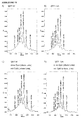
- the product heterogeneity with respect to the C-terminal lysine is qualitatively determined in isoelectric focusing (IEF) as well as quantitatively by weak cationic exchange (WCX) (see Fig.
- the antibodies are incubated with carboxypeptidase B.
- carboxypeptidase B At 37 ° C., 10 ⁇ g carboxypeptidase B are incubated in 100 ⁇ L and an antibody concentration of 1 mg / ml for 2 h.
- Fig.9 shows a reduction in the number of bands for the WT antibody (IgG1) after enzymatic cleavage with carboxypeptidase B (CpB).
- Cation exchange chromatography (ProPac WCX-10/4 x 250 mm) is performed at a flow rate of 1 mL / min and a 5-10% gradient over 40 min (buffer A 20 mM MES buffer pH 6.7, buffer B: 20 mM, 1 M NaCl pH6,7).
- the column is loaded with 40 ⁇ g of antibody each.
- the WT and the -Lys variant are analyzed respectively with and without enzymatic CpB treatment.
- the states Lys1 and Lys2 are indicated by the basic peaks 1 and 2. Their product content is ⁇ 10%.
- the elution profile or overlay of the variant with Lysindeletion has a very low heterogeneity in the basic range. The product share is below 1% ( Fig.11 ).
- the work-up is identical to IgG1.
- Protein A affinity chromatography (MabSelect, GE) is according to the manufacturer's instructions.
- the quantification of the product yield after Protein A chromatography is carried out by means of Protein A HPLC.
- the yields of both variants of the isotype IgG4 are also over 90% independent of the lysine codon deletion ( Fig. 8 ).
- the isotype IgG4 or its lysine codon deletion as with IgG1, the non-existent negative influence on the affinity chromatography or the product yield is confirmed.
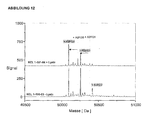
- the product heterogeneity with respect to the C-terminal lysine is quantified by LC-MS (see Fig. 10 and 12 ).
- the antibody samples are first reduced with DTT.
- the reduced light chain and the reduced heavy chain (HC 1-446 without Lys or HC1-447 with Lys) are separated via HPSEC and analyzed in subsequent (in-line) ESI-TOF-MS.
- the distribution of C-terminal lysine is based on peak areas for HC 1-446 and HC 1-447, respectively.
- the mass shift by lysine is shown as a function of glycosylation (G0, G1, G2) ( Fig. 12 ).
- the determined product content of antibody molecules (IgG4 WT) with C-terminal lysines in the heavy chain (Lys1 and Lys2) is approximately 20% ( Fig. 10 ).
- the determination of the thermal stability by intrinsic fluorescence shows no effect of the C-terminal lysine (IgG1 WT and -Lys T m 69 ° C; or IgG4 WT and -Lys 64 ° C).
- the excitation wavelength is 295 nm.
- the respective emission spectrum is measured in 1 ° C increments over a range of 25 ° C to 85 ° C.
- the emission spectra are recorded over a wavelength range of 300 nm to 450 nm. Further technical data: Fluorescence spectrometer LS55 Perkin Elmer, gap width 4 nm for excitation and emission side, temperature measurement / PT1 00- in the sample.
- the protein concentrations are 0.1 mg / mL in PBS buffer.
- the investigation shows that the C-terminal lysine of the heavy antibody chain has no influence on the thermal stability of the antibody molecule.
- Earlier studies have already shown that there is no influence of the C-terminal lysine of the heavy antibody chain on the thermal stability of the antibody molecules ( Liu et al. Immunol. Lett. 2006, 106 (2), 144-153 ).
Landscapes
- Chemical & Material Sciences (AREA)
- Organic Chemistry (AREA)
- Health & Medical Sciences (AREA)
- General Health & Medical Sciences (AREA)
- Biochemistry (AREA)
- Biophysics (AREA)
- Life Sciences & Earth Sciences (AREA)
- Genetics & Genomics (AREA)
- Medicinal Chemistry (AREA)
- Molecular Biology (AREA)
- Proteomics, Peptides & Aminoacids (AREA)
- Immunology (AREA)
- Preparation Of Compounds By Using Micro-Organisms (AREA)
- Peptides Or Proteins (AREA)
- Micro-Organisms Or Cultivation Processes Thereof (AREA)
Priority Applications (7)
| Application Number | Priority Date | Filing Date | Title |
|---|---|---|---|
| EP07115227A EP2031064A1 (de) | 2007-08-29 | 2007-08-29 | Verfahren zur Steigerung von Proteintitern |
| KR1020107004046A KR20100046219A (ko) | 2007-08-29 | 2008-08-28 | 단백질 역가를 증가시키는 방법 |
| PCT/EP2008/061310 WO2009027471A1 (de) | 2007-08-29 | 2008-08-28 | Verfahren zur steigerung von proteintitern |
| EP08803328A EP2195431A1 (de) | 2007-08-29 | 2008-08-28 | Verfahren zur steigerung von proteintitern |
| JP2010522371A JP2010536396A (ja) | 2007-08-29 | 2008-08-28 | タンパク質力価を増加させる方法 |
| US12/675,218 US20100297697A1 (en) | 2007-08-29 | 2008-08-28 | Methods for increasing protein titers |
| CA2696809A CA2696809A1 (en) | 2007-08-29 | 2008-08-28 | Method of increasing protein titres |
Applications Claiming Priority (1)
| Application Number | Priority Date | Filing Date | Title |
|---|---|---|---|
| EP07115227A EP2031064A1 (de) | 2007-08-29 | 2007-08-29 | Verfahren zur Steigerung von Proteintitern |
Publications (1)
| Publication Number | Publication Date |
|---|---|
| EP2031064A1 true EP2031064A1 (de) | 2009-03-04 |
Family
ID=39107125
Family Applications (2)
| Application Number | Title | Priority Date | Filing Date |
|---|---|---|---|
| EP07115227A Ceased EP2031064A1 (de) | 2007-08-29 | 2007-08-29 | Verfahren zur Steigerung von Proteintitern |
| EP08803328A Ceased EP2195431A1 (de) | 2007-08-29 | 2008-08-28 | Verfahren zur steigerung von proteintitern |
Family Applications After (1)
| Application Number | Title | Priority Date | Filing Date |
|---|---|---|---|
| EP08803328A Ceased EP2195431A1 (de) | 2007-08-29 | 2008-08-28 | Verfahren zur steigerung von proteintitern |
Country Status (6)
| Country | Link |
|---|---|
| US (1) | US20100297697A1 (enExample) |
| EP (2) | EP2031064A1 (enExample) |
| JP (1) | JP2010536396A (enExample) |
| KR (1) | KR20100046219A (enExample) |
| CA (1) | CA2696809A1 (enExample) |
| WO (1) | WO2009027471A1 (enExample) |
Cited By (21)
| Publication number | Priority date | Publication date | Assignee | Title |
|---|---|---|---|---|
| EP2194066A4 (en) * | 2007-09-26 | 2010-12-15 | Chugai Pharmaceutical Co Ltd | MODIFIED CONSTANT ANTIBODY REGION |
| US8562991B2 (en) | 2008-09-26 | 2013-10-22 | Chugai Seiyaku Kabushiki Kaisha | Antibody molecules that bind to IL-6 receptor |
| WO2013160316A1 (en) * | 2012-04-23 | 2013-10-31 | Dsm Ip Assets B.V. | Polypeptide expression method |
| US8575317B2 (en) | 2007-12-05 | 2013-11-05 | Chugai Seiyaku Kabushiki Kaisha | Anti-NR10 antibody and use thereof |
| US9096651B2 (en) | 2007-09-26 | 2015-08-04 | Chugai Seiyaku Kabushiki Kaisha | Method of modifying isoelectric point of antibody via amino acid substitution in CDR |
| US9228017B2 (en) | 2009-03-19 | 2016-01-05 | Chugai Seiyaku Kabushiki Kaisha | Antibody constant region variant |
| US9670269B2 (en) | 2006-03-31 | 2017-06-06 | Chugai Seiyaku Kabushiki Kaisha | Methods of modifying antibodies for purification of bispecific antibodies |
| US9868948B2 (en) | 2008-04-11 | 2018-01-16 | Chugai Seiyaku Kabushiki Kaisha | Antigen-binding molecule capable of binding to two or more antigen molecules repeatedly |
| US10011858B2 (en) | 2005-03-31 | 2018-07-03 | Chugai Seiyaku Kabushiki Kaisha | Methods for producing polypeptides by regulating polypeptide association |
| US10150808B2 (en) | 2009-09-24 | 2018-12-11 | Chugai Seiyaku Kabushiki Kaisha | Modified antibody constant regions |
| US10253091B2 (en) | 2009-03-19 | 2019-04-09 | Chugai Seiyaku Kabushiki Kaisha | Antibody constant region variant |
| US10435458B2 (en) | 2010-03-04 | 2019-10-08 | Chugai Seiyaku Kabushiki Kaisha | Antibody constant region variants with reduced Fcgammar binding |
| US10604561B2 (en) | 2016-09-16 | 2020-03-31 | Chugai Seiyaku Kabushiki Kaisha | Anti-dengue virus antibodies, polypeptides containing variant Fc regions, and methods of use |
| US10774148B2 (en) | 2015-02-27 | 2020-09-15 | Chugai Seiyaku Kabushiki Kaisha | Composition for treating IL-6-related diseases |
| US11046784B2 (en) | 2006-03-31 | 2021-06-29 | Chugai Seiyaku Kabushiki Kaisha | Methods for controlling blood pharmacokinetics of antibodies |
| US11124576B2 (en) | 2013-09-27 | 2021-09-21 | Chungai Seiyaku Kabushiki Kaisha | Method for producing polypeptide heteromultimer |
| US11142587B2 (en) | 2015-04-01 | 2021-10-12 | Chugai Seiyaku Kabushiki Kaisha | Method for producing polypeptide hetero-oligomer |
| US11649262B2 (en) | 2015-12-28 | 2023-05-16 | Chugai Seiyaku Kabushiki Kaisha | Method for promoting efficiency of purification of Fc region-containing polypeptide |
| US11851486B2 (en) | 2017-05-02 | 2023-12-26 | National Center Of Neurology And Psychiatry | Method for predicting and evaluating therapeutic effect in diseases related to IL-6 and neutrophils |
| US11891432B2 (en) | 2018-03-15 | 2024-02-06 | Chugai Seiyaku Kabushiki Kaisha | Anti-dengue virus antibodies having cross-reactivity to Zika virus and methods of use |
| US11891434B2 (en) | 2010-11-30 | 2024-02-06 | Chugai Seiyaku Kabushiki Kaisha | Antigen-binding molecule capable of binding to plurality of antigen molecules repeatedly |
Families Citing this family (71)
| Publication number | Priority date | Publication date | Assignee | Title |
|---|---|---|---|---|
| EP1878747A1 (en) * | 2006-07-11 | 2008-01-16 | greenovation Biotech GmbH | Glyco-engineered antibodies |
| EP2455403A1 (en) * | 2010-11-23 | 2012-05-23 | Pierre Fabre Medicament | Homogeneous humanized antibodies against JAM-A that inhibit proliferation |
| WO2012149197A2 (en) | 2011-04-27 | 2012-11-01 | Abbott Laboratories | Methods for controlling the galactosylation profile of recombinantly-expressed proteins |
| US9631216B2 (en) | 2011-04-29 | 2017-04-25 | Biocon Research Limited | Method for reducing heterogeneity of antibodies and a process of producing the antibodies thereof |
| JP2020141710A (ja) * | 2011-07-06 | 2020-09-10 | ゲンマブ エー/エス | 抗体重鎖のc末端の修飾による補体依存性細胞傷害の調節 |
| WO2013004841A1 (en) | 2011-07-06 | 2013-01-10 | Genmab A/S | Modulation of complement-dependent cytotoxicity through modifications of the c-terminus of antibody heavy chains |
| CN103717729B (zh) | 2011-07-08 | 2017-11-21 | 动量制药公司 | 细胞培养方法 |
| EP2771031B1 (en) | 2011-10-28 | 2018-04-18 | Prothena Biosciences Limited | Humanized antibodies that recognize alpha-synuclein |
| EP2807188B1 (en) | 2012-01-27 | 2019-09-11 | Prothena Biosciences Limited | Humanized antibodies that recognize alpha-synuclein |
| US9150645B2 (en) | 2012-04-20 | 2015-10-06 | Abbvie, Inc. | Cell culture methods to reduce acidic species |
| US9181572B2 (en) | 2012-04-20 | 2015-11-10 | Abbvie, Inc. | Methods to modulate lysine variant distribution |
| US9067990B2 (en) | 2013-03-14 | 2015-06-30 | Abbvie, Inc. | Protein purification using displacement chromatography |
| PL3489254T3 (pl) * | 2012-04-30 | 2023-01-30 | Biocon Limited | Ukierunkowujące/immunomodulujące białko fuzyjne i sposoby jego otrzymywania |
| US9249182B2 (en) | 2012-05-24 | 2016-02-02 | Abbvie, Inc. | Purification of antibodies using hydrophobic interaction chromatography |
| HK1211981A1 (en) | 2012-09-02 | 2016-06-03 | Abbvie Inc. | Methods to control protein heterogeneity |
| US9512214B2 (en) | 2012-09-02 | 2016-12-06 | Abbvie, Inc. | Methods to control protein heterogeneity |
| UA118441C2 (uk) | 2012-10-08 | 2019-01-25 | Протена Біосаєнсиз Лімітед | Антитіло, що розпізнає альфа-синуклеїн |
| MY186864A (en) * | 2013-03-12 | 2021-08-26 | Biocon Ltd | Fusion immunomodulatory proteins and methods for making same |
| SG11201507230PA (en) | 2013-03-12 | 2015-10-29 | Abbvie Inc | Human antibodies that bind human tnf-alpha and methods of preparing the same |
| WO2014165271A2 (en) | 2013-03-13 | 2014-10-09 | Neotope Biosciences Limited | Tau immunotherapy |
| WO2014151878A2 (en) | 2013-03-14 | 2014-09-25 | Abbvie Inc. | Methods for modulating protein glycosylation profiles of recombinant protein therapeutics using monosaccharides and oligosacharides |
| WO2014159579A1 (en) | 2013-03-14 | 2014-10-02 | Abbvie Inc. | MUTATED ANTI-TNFα ANTIBODIES AND METHODS OF THEIR USE |
| US9017687B1 (en) | 2013-10-18 | 2015-04-28 | Abbvie, Inc. | Low acidic species compositions and methods for producing and using the same using displacement chromatography |
| US10513555B2 (en) | 2013-07-04 | 2019-12-24 | Prothena Biosciences Limited | Antibody formulations and methods |
| WO2015004633A1 (en) | 2013-07-12 | 2015-01-15 | Neotope Biosciences Limited | Antibodies that recognize islet-amyloid polypeptide (iapp) |
| US9850302B2 (en) | 2013-07-12 | 2017-12-26 | Prothena Biosciences Limited | Antibodies that recognize IAPP |
| US9598667B2 (en) | 2013-10-04 | 2017-03-21 | Abbvie Inc. | Use of metal ions for modulation of protein glycosylation profiles of recombinant proteins |
| US9085618B2 (en) | 2013-10-18 | 2015-07-21 | Abbvie, Inc. | Low acidic species compositions and methods for producing and using the same |
| US9181337B2 (en) | 2013-10-18 | 2015-11-10 | Abbvie, Inc. | Modulated lysine variant species compositions and methods for producing and using the same |
| US8946395B1 (en) | 2013-10-18 | 2015-02-03 | Abbvie Inc. | Purification of proteins using hydrophobic interaction chromatography |
| US20150139988A1 (en) | 2013-11-15 | 2015-05-21 | Abbvie, Inc. | Glycoengineered binding protein compositions |
| US11191832B2 (en) | 2013-11-19 | 2021-12-07 | Prothena Biosciences Limited | Monitoring immunotherapy of Lewy body disease from constipation symptoms |
| EP3116906A1 (en) | 2014-03-12 | 2017-01-18 | Prothena Biosciences Limited | Anti-laminin4 antibodies specific for lg1-3 |
| WO2015136472A1 (en) | 2014-03-12 | 2015-09-17 | Prothena Biosciences Limited | Anti-laminin4 antibodies specific for lg4-5 |
| TW201623331A (zh) | 2014-03-12 | 2016-07-01 | 普羅帝納生物科學公司 | 抗黑色素瘤細胞黏著分子(mcam)抗體類及使用彼等之相關方法 |
| PT3116911T (pt) | 2014-03-12 | 2019-09-04 | Prothena Biosciences Ltd | Anticorpos anti-mcam e métodos de utilização associados |
| US10562973B2 (en) | 2014-04-08 | 2020-02-18 | Prothena Bioscience Limited | Blood-brain barrier shuttles containing antibodies recognizing alpha-synuclein |
| TWI718121B (zh) | 2015-01-28 | 2021-02-11 | 愛爾蘭商普羅佘納生物科技有限公司 | 抗甲狀腺素運送蛋白抗體 |
| TWI786505B (zh) | 2015-01-28 | 2022-12-11 | 愛爾蘭商普羅佘納生物科技有限公司 | 抗甲狀腺素運送蛋白抗體 |
| TWI769570B (zh) | 2015-01-28 | 2022-07-01 | 愛爾蘭商普羅佘納生物科技有限公司 | 抗甲狀腺素運送蛋白抗體 |
| US11090381B2 (en) | 2015-09-01 | 2021-08-17 | Oncoqr Ml Gmbh | Coiled-coil connector |
| WO2017046776A2 (en) | 2015-09-16 | 2017-03-23 | Prothena Biosciences Limited | Use of anti-mcam antibodies for treatment or prophylaxis of giant cell arteritis, polymyalgia rheumatica or takayasu's arteritis |
| WO2017046774A2 (en) | 2015-09-16 | 2017-03-23 | Prothena Biosciences Limited | Use of anti-mcam antibodies for treatment or prophylaxis of giant cell arteritis, polymyalgia rheumatica or takayasu's arteritis |
| WO2017149513A1 (en) | 2016-03-03 | 2017-09-08 | Prothena Biosciences Limited | Anti-mcam antibodies and associated methods of use |
| WO2017153955A1 (en) | 2016-03-09 | 2017-09-14 | Prothena Biosciences Limited | Use of anti-mcam antibodies for treatment or prophylaxis of granulomatous lung diseases |
| WO2017153953A1 (en) | 2016-03-09 | 2017-09-14 | Prothena Biosciences Limited | Use of anti-mcam antibodies for treatment or prophylaxis of granulomatous lung diseases |
| EP3452507B1 (en) | 2016-05-02 | 2022-10-19 | Prothena Biosciences Limited | Tau immunotherapy |
| US10906964B2 (en) | 2016-05-02 | 2021-02-02 | Prothena Biosciences Limited | Antibodies recognizing tau |
| MX2018013384A (es) | 2016-05-02 | 2019-02-28 | Prothena Biosciences Ltd | Anticuerpos que reconocen tau. |
| WO2017208210A1 (en) | 2016-06-03 | 2017-12-07 | Prothena Biosciences Limited | Anti-mcam antibodies and associated methods of use |
| EP3478714A2 (en) | 2016-07-02 | 2019-05-08 | Prothena Biosciences Limited | Anti-transthyretin antibodies |
| JP7016470B2 (ja) | 2016-07-02 | 2022-02-07 | プロセナ バイオサイエンシーズ リミテッド | 抗トランスサイレチン抗体 |
| JP7017013B2 (ja) | 2016-07-02 | 2022-02-08 | プロセナ バイオサイエンシーズ リミテッド | 抗トランスサイレチン抗体 |
| SG11201910066QA (en) | 2017-05-02 | 2019-11-28 | Prothena Biosciences Ltd | Antibodies recognizing tau |
| CA3076313A1 (en) | 2017-09-28 | 2019-04-04 | Prothena Biosciences Limited | Dosing regimes for treatment of synucleinopathies |
| KR102581734B1 (ko) | 2017-10-06 | 2023-09-22 | 네오토프 뉴로사이언스 리미티드 | 트랜스타이레틴의 검출 방법 |
| MA51223A (fr) | 2017-11-29 | 2020-10-07 | Prothena Biosciences Ltd | Formulation lyophilisée d'un anticorps monoclonal contre la transthyrétine |
| EP3774879B1 (en) * | 2018-03-30 | 2026-01-28 | Amgen Inc. | C-terminal antibody variants |
| SG11202104549TA (en) | 2018-11-08 | 2021-05-28 | Prothena Biosciences Ltd | Antibodies recognizing tau |
| UA128431C2 (uk) | 2018-11-26 | 2024-07-10 | Форті Севен, Інк. | ГУМАНІЗОВАНЕ АНТИТІЛО ДО c-Kit |
| TWI859197B (zh) | 2019-03-03 | 2024-10-21 | 愛爾蘭商普羅帝納生物科學公司 | 識別tau之抗體 |
| EP3995582B1 (en) | 2019-07-01 | 2026-04-22 | Eisai R&D Management Co., Ltd. | Anti-epha4 antibody |
| US12558423B2 (en) | 2020-05-29 | 2026-02-24 | Chugai Seiyaku Kabushiki Kaisha | Antibody-containing formulation |
| AU2021297540A1 (en) | 2020-06-24 | 2023-02-02 | Prothena Biosciences Limited | Antibodies recognizing sortilin |
| US20240010735A1 (en) | 2020-12-24 | 2024-01-11 | Eisai R&D Management Co., Ltd. | Therapeutic pharmaceutical composition for amyotrophic lateral sclerosis |
| EP4269588A4 (en) | 2020-12-24 | 2025-04-23 | Eisai R&D Management Co., Ltd. | ANTI-EPHA4 ANTIBODIES |
| CN118234864A (zh) | 2021-11-11 | 2024-06-21 | 卫材R&D管理有限公司 | 抗EphA4抗体 |
| WO2025059486A1 (en) | 2023-09-15 | 2025-03-20 | Prothena Biosciences Limited | Anti-tdp-43 antibodies and uses thereof |
| EP4777522A2 (en) | 2023-09-15 | 2026-07-22 | Prothena Platform Technologies Limited | Methods, compositions, and kits including cell-penetrating agents |
| CN122070299A (zh) | 2023-09-15 | 2026-05-19 | 普罗塞纳生物科学有限公司 | 细胞穿透剂及其用途 |
| WO2025059487A2 (en) | 2023-09-15 | 2025-03-20 | Othair Prothena Limited | Cell penetrating agents and uses thereof |
Citations (1)
| Publication number | Priority date | Publication date | Assignee | Title |
|---|---|---|---|---|
| US20040081651A1 (en) * | 2001-04-13 | 2004-04-29 | Michael Karpusas | Antibodies to vla-1 |
Family Cites Families (5)
| Publication number | Priority date | Publication date | Assignee | Title |
|---|---|---|---|---|
| BG60017B2 (bg) * | 1988-09-28 | 1993-06-30 | Eli Lilly And Company | Метод за намаляване хетерогенността на моноклонални антитела |
| ES2371072T3 (es) * | 2003-06-12 | 2011-12-27 | Eli Lilly And Company | Proteínas de fusión análogas de glp-1. |
| US20060024272A1 (en) * | 2004-07-29 | 2006-02-02 | Large Scale Biology Corporation | C-terminally truncated interferon |
| JP2008525452A (ja) * | 2004-12-22 | 2008-07-17 | イーライ リリー アンド カンパニー | Glp−1類似体融合蛋白質製剤 |
| CN102875681A (zh) * | 2005-07-08 | 2013-01-16 | 拜奥根Idec马萨诸塞公司 | 抗-αvβ6抗体及其用途 |
-
2007
- 2007-08-29 EP EP07115227A patent/EP2031064A1/de not_active Ceased
-
2008
- 2008-08-28 EP EP08803328A patent/EP2195431A1/de not_active Ceased
- 2008-08-28 WO PCT/EP2008/061310 patent/WO2009027471A1/de not_active Ceased
- 2008-08-28 JP JP2010522371A patent/JP2010536396A/ja active Pending
- 2008-08-28 US US12/675,218 patent/US20100297697A1/en not_active Abandoned
- 2008-08-28 CA CA2696809A patent/CA2696809A1/en not_active Abandoned
- 2008-08-28 KR KR1020107004046A patent/KR20100046219A/ko not_active Withdrawn
Patent Citations (1)
| Publication number | Priority date | Publication date | Assignee | Title |
|---|---|---|---|---|
| US20040081651A1 (en) * | 2001-04-13 | 2004-04-29 | Michael Karpusas | Antibodies to vla-1 |
Non-Patent Citations (4)
| Title |
|---|
| LAPPIN T R J ET AL: "STRUCTURE-FUNCTION RELATIONSHIPS OF THE ERYTHROPOIETIN MOLECULE", ANNALS OF THE NEW YORK ACADEMY OF SCIENCES, NEW YORK ACADEMY OF SCIENCES, NEW YORK, NY, US, vol. 718, 26 April 1993 (1993-04-26), pages 191 - 202, XP001095413, ISSN: 0077-8923 * |
| LUND J ET AL: "Expression and characterization of truncated forms of humanized L243 IgG1. Architectural features can influence synthesis of its oligosaccharide chains and affect superoxide production triggered through human Fcgamma receptor I", EUROPEAN JOURNAL OF BIOCHEMISTRY, BERLIN, DE, vol. 267, no. 24, December 2000 (2000-12-01), pages 7246 - 7257, XP003002553, ISSN: 0014-2956 * |
| PARKER E M ET AL: "Truncation of the extended carboxyl-terminal domain increases the expression and regulatory activity of the avian beta-adrenergic receptor.", THE JOURNAL OF BIOLOGICAL CHEMISTRY 25 MAY 1991, vol. 266, no. 15, 25 May 1991 (1991-05-25), pages 9987 - 9996, XP002471092, ISSN: 0021-9258 * |
| TAKAI T ET AL: "Expression of humanized Fab fragments that recognize the IgE-binding domain of human Fc(epsilon)RIalpha in COS and CHO cells.", JOURNAL OF BIOCHEMISTRY JAN 2001, vol. 129, no. 1, January 2001 (2001-01-01), pages 5 - 12, XP002471093, ISSN: 0021-924X * |
Cited By (49)
| Publication number | Priority date | Publication date | Assignee | Title |
|---|---|---|---|---|
| US11168344B2 (en) | 2005-03-31 | 2021-11-09 | Chugai Seiyaku Kabushiki Kaisha | Methods for producing polypeptides by regulating polypeptide association |
| US10011858B2 (en) | 2005-03-31 | 2018-07-03 | Chugai Seiyaku Kabushiki Kaisha | Methods for producing polypeptides by regulating polypeptide association |
| US9670269B2 (en) | 2006-03-31 | 2017-06-06 | Chugai Seiyaku Kabushiki Kaisha | Methods of modifying antibodies for purification of bispecific antibodies |
| USRE50968E1 (en) | 2006-03-31 | 2026-07-28 | Chugai Seiyaku Kabushiki Kaisha | Methods of modifying antibodies for purification of bispecific antibodies |
| US11046784B2 (en) | 2006-03-31 | 2021-06-29 | Chugai Seiyaku Kabushiki Kaisha | Methods for controlling blood pharmacokinetics of antibodies |
| US12473375B2 (en) | 2006-03-31 | 2025-11-18 | Chugai Seiyaku Kabushiki Kaisha | Methods for controlling blood pharmacokinetics of antibodies |
| US10934344B2 (en) | 2006-03-31 | 2021-03-02 | Chugai Seiyaku Kabushiki Kaisha | Methods of modifying antibodies for purification of bispecific antibodies |
| US9828429B2 (en) | 2007-09-26 | 2017-11-28 | Chugai Seiyaku Kabushiki Kaisha | Method of modifying isoelectric point of antibody via amino acid substitution in CDR |
| EP3059246A1 (en) * | 2007-09-26 | 2016-08-24 | Chugai Seiyaku Kabushiki Kaisha | Modified antibody constant region |
| US9688762B2 (en) | 2007-09-26 | 2017-06-27 | Chugai Sciyaku Kabushiki Kaisha | Modified antibody constant region |
| US12122840B2 (en) | 2007-09-26 | 2024-10-22 | Chugai Seiyaku Kabushiki Kaisha | Method of modifying isoelectric point of antibody via amino acid substitution in CDR |
| EP2194066A4 (en) * | 2007-09-26 | 2010-12-15 | Chugai Pharmaceutical Co Ltd | MODIFIED CONSTANT ANTIBODY REGION |
| US9096651B2 (en) | 2007-09-26 | 2015-08-04 | Chugai Seiyaku Kabushiki Kaisha | Method of modifying isoelectric point of antibody via amino acid substitution in CDR |
| US12116414B2 (en) | 2007-09-26 | 2024-10-15 | Chugai Seiyaku Kabushiki Kaisha | Method of modifying isoelectric point of antibody via amino acid substitution in CDR |
| US11332533B2 (en) | 2007-09-26 | 2022-05-17 | Chugai Seiyaku Kabushiki Kaisha | Modified antibody constant region |
| US11248053B2 (en) | 2007-09-26 | 2022-02-15 | Chugai Seiyaku Kabushiki Kaisha | Method of modifying isoelectric point of antibody via amino acid substitution in CDR |
| US12600789B2 (en) | 2007-09-26 | 2026-04-14 | Chugai Seiyaku Kabushiki Kaisha | Modified antibody constant region |
| EP3789400A1 (en) * | 2007-09-26 | 2021-03-10 | Chugai Seiyaku Kabushiki Kaisha | Modified antibody constant region |
| US9399680B2 (en) | 2007-12-05 | 2016-07-26 | Chugai Seiyaku Kabushiki Kaisha | Nucleic acids encoding anti-NR10 antibodies |
| US8575317B2 (en) | 2007-12-05 | 2013-11-05 | Chugai Seiyaku Kabushiki Kaisha | Anti-NR10 antibody and use thereof |
| US9890377B2 (en) | 2008-04-11 | 2018-02-13 | Chugai Seiyaku Kabushiki Kaisha | Antigen-binding molecule capable of binding to two or more antigen molecules repeatedly |
| US11371039B2 (en) | 2008-04-11 | 2022-06-28 | Chugai Seiyaku Kabushiki Kaisha | Antigen-binding molecule capable of binding to two or more antigen molecules repeatedly |
| US10472623B2 (en) | 2008-04-11 | 2019-11-12 | Chugai Seiyaku Kabushiki Kaisha | Antigen-binding molecule capable of binding two or more antigen molecules repeatedly |
| US9868948B2 (en) | 2008-04-11 | 2018-01-16 | Chugai Seiyaku Kabushiki Kaisha | Antigen-binding molecule capable of binding to two or more antigen molecules repeatedly |
| US11359194B2 (en) | 2008-04-11 | 2022-06-14 | Chugai Seiyaku Kabushiki Kaisha | Antigen-binding molecule capable of binding two or more antigen molecules repeatedly |
| US10662245B2 (en) | 2008-09-26 | 2020-05-26 | Chugai Seiyaku Kabushiki Kaisha | Methods of reducing IL-6 activity for disease treatment |
| US8562991B2 (en) | 2008-09-26 | 2013-10-22 | Chugai Seiyaku Kabushiki Kaisha | Antibody molecules that bind to IL-6 receptor |
| US12703738B2 (en) | 2009-03-19 | 2026-08-11 | Chugai Seiyaku Kabushiki Kaisha | Antibody constant region variant |
| US9228017B2 (en) | 2009-03-19 | 2016-01-05 | Chugai Seiyaku Kabushiki Kaisha | Antibody constant region variant |
| US10066018B2 (en) | 2009-03-19 | 2018-09-04 | Chugai Seiyaku Kabushiki Kaisha | Antibody constant region variant |
| US10253091B2 (en) | 2009-03-19 | 2019-04-09 | Chugai Seiyaku Kabushiki Kaisha | Antibody constant region variant |
| US10150808B2 (en) | 2009-09-24 | 2018-12-11 | Chugai Seiyaku Kabushiki Kaisha | Modified antibody constant regions |
| US10435458B2 (en) | 2010-03-04 | 2019-10-08 | Chugai Seiyaku Kabushiki Kaisha | Antibody constant region variants with reduced Fcgammar binding |
| US12617847B2 (en) | 2010-11-30 | 2026-05-05 | Chugai Seiyaku Kabushiki Kaisha | Antigen-binding molecule capable of binding to plurality of antigen molecules repeatedly |
| US11891434B2 (en) | 2010-11-30 | 2024-02-06 | Chugai Seiyaku Kabushiki Kaisha | Antigen-binding molecule capable of binding to plurality of antigen molecules repeatedly |
| WO2013160316A1 (en) * | 2012-04-23 | 2013-10-31 | Dsm Ip Assets B.V. | Polypeptide expression method |
| US11124576B2 (en) | 2013-09-27 | 2021-09-21 | Chungai Seiyaku Kabushiki Kaisha | Method for producing polypeptide heteromultimer |
| US10774148B2 (en) | 2015-02-27 | 2020-09-15 | Chugai Seiyaku Kabushiki Kaisha | Composition for treating IL-6-related diseases |
| US11142587B2 (en) | 2015-04-01 | 2021-10-12 | Chugai Seiyaku Kabushiki Kaisha | Method for producing polypeptide hetero-oligomer |
| US12359001B2 (en) | 2015-04-01 | 2025-07-15 | Chugai Seiyaku Kabushiki Kaisha | Method for producing polypeptide hetero-oligomer |
| US11649262B2 (en) | 2015-12-28 | 2023-05-16 | Chugai Seiyaku Kabushiki Kaisha | Method for promoting efficiency of purification of Fc region-containing polypeptide |
| US11780908B2 (en) | 2016-09-16 | 2023-10-10 | Chugai Seiyaku Kabushiki Kaisha | Anti-dengue virus antibodies, polypeptides containing variant FC regions, and methods of use |
| US12187786B2 (en) | 2016-09-16 | 2025-01-07 | Chugai Seiyaku Kabushiki Kaisha | Anti-dengue virus antibodies, polypeptides containing variant Fc regions, and methods of use |
| US10604561B2 (en) | 2016-09-16 | 2020-03-31 | Chugai Seiyaku Kabushiki Kaisha | Anti-dengue virus antibodies, polypeptides containing variant Fc regions, and methods of use |
| US10844113B2 (en) | 2016-09-16 | 2020-11-24 | Chugai Seiyaku Kabushiki Kaisha | Anti-dengue virus antibodies, polypeptides containing variant Fc regions, and methods of use |
| US12509511B2 (en) | 2017-05-02 | 2025-12-30 | National Center Of Neurology And Psychiatry | Method for predicting and evaluating therapeutic effect in diseases related to IL-6 and neutrophils |
| US11851486B2 (en) | 2017-05-02 | 2023-12-26 | National Center Of Neurology And Psychiatry | Method for predicting and evaluating therapeutic effect in diseases related to IL-6 and neutrophils |
| US11891432B2 (en) | 2018-03-15 | 2024-02-06 | Chugai Seiyaku Kabushiki Kaisha | Anti-dengue virus antibodies having cross-reactivity to Zika virus and methods of use |
| US12662526B2 (en) | 2018-03-15 | 2026-06-23 | Chugai Seiyaku Kabushiki Kaisha | Anti-dengue virus antibodies having cross-reactivity to zika virus and methods of use |
Also Published As
| Publication number | Publication date |
|---|---|
| KR20100046219A (ko) | 2010-05-06 |
| EP2195431A1 (de) | 2010-06-16 |
| WO2009027471A1 (de) | 2009-03-05 |
| CA2696809A1 (en) | 2009-03-05 |
| US20100297697A1 (en) | 2010-11-25 |
| JP2010536396A (ja) | 2010-12-02 |
Similar Documents
| Publication | Publication Date | Title |
|---|---|---|
| EP2195431A1 (de) | Verfahren zur steigerung von proteintitern | |
| EP2049671B1 (de) | Regulatorische nukleinsäureelemente | |
| US9499634B2 (en) | Process and methods for efficient manufacturing of highly pure asymmetric antibodies in mammalian cells | |
| DE69535389T2 (de) | Methode zur selektion hoch-exprimierender wirtszellen | |
| EP1567652B1 (de) | Neue neomycin-phosphotransferase-gene und verfahren zur selektion von hochproduzierenden rekombinanten zellen | |
| KR102301702B1 (ko) | 재조합 단백질의 갈락토오스 함량을 증가시키는 방법 | |
| DE69920747T2 (de) | Methode zur herstellung von rekombinanten zellen | |
| EP2938725B1 (en) | Heterologous intron within an immunoglobulin domain | |
| WO2005019442A2 (de) | Verfahren zur reklonierung von produktionszellen | |
| TW201011104A (en) | Novel regulatory elements | |
| HUE033758T2 (en) | A method for producing glycosylated immunoglobulin | |
| EP3354660A1 (en) | Expression vector element combinations, novel production cell generation methods and their use for the recombinant production of polypeptides | |
| MX2007014148A (es) | Composiciones y metodos para incrementar la estabilidad de anticuerpos. | |
| CN108138147B (zh) | 含Fc蛋白的表达 | |
| JP7812826B2 (ja) | 生物活性が低下した抗体バリアント | |
| JP2007500016A (ja) | 培養においてタンパク質生成を増大させるための方法 | |
| EP3063287B1 (en) | Use of monensin to regulate glycosylation of recombinant proteins | |
| EP0287075A2 (de) | Verfahren zur Konstruktion einer animalen Zellinie für die Herstellung von humanem Interferon-beta | |
| JP2021509007A (ja) | トロポロンをアッセイする方法 | |
| WO2004050879A1 (de) | Expressionsvektor, verfahren zur herstellung von heterologen genprodukten und selektionsverfahren für hochproduzierende rekombinante zellen | |
| US20140248665A1 (en) | Novel intron sequences | |
| DE112024000744T5 (de) | Minderung der fragmentierung von therapeutischem protein während verfahren zur zellkulturernte | |
| EP2307452A1 (de) | Verfahren zur optimierung von proteinen, die das immunoglobulinfaltungsmuster aufweisen | |
| DE112024002724T5 (de) | Ladungspaar-mutationen zum ermöglichen von korrekter schwer-leichtkette-paarung | |
| EP1854891A1 (de) | Neue Neomycin-Phosphotransferase-Gene und Verfahren zur Selektion von hochproduzierenden rekombinanten Zellen |
Legal Events
| Date | Code | Title | Description |
|---|---|---|---|
| PUAI | Public reference made under article 153(3) epc to a published international application that has entered the european phase |
Free format text: ORIGINAL CODE: 0009012 |
|
| AK | Designated contracting states |
Kind code of ref document: A1 Designated state(s): AT BE BG CH CY CZ DE DK EE ES FI FR GB GR HU IE IS IT LI LT LU LV MC MT NL PL PT RO SE SI SK TR |
|
| AX | Request for extension of the european patent |
Extension state: AL BA HR MK RS |
|
| STAA | Information on the status of an ep patent application or granted ep patent |
Free format text: STATUS: THE APPLICATION HAS BEEN REFUSED |
|
| 18R | Application refused |
Effective date: 20090427 |