EP2028285B1 - High cleanliness spring steel and high cleanliness spring excellent in fatigue characteristics - Google Patents
High cleanliness spring steel and high cleanliness spring excellent in fatigue characteristics Download PDFInfo
- Publication number
- EP2028285B1 EP2028285B1 EP07743972.7A EP07743972A EP2028285B1 EP 2028285 B1 EP2028285 B1 EP 2028285B1 EP 07743972 A EP07743972 A EP 07743972A EP 2028285 B1 EP2028285 B1 EP 2028285B1
- Authority
- EP
- European Patent Office
- Prior art keywords
- inclusions
- sio
- steel
- mass
- high cleanliness
- Prior art date
- Legal status (The legal status is an assumption and is not a legal conclusion. Google has not performed a legal analysis and makes no representation as to the accuracy of the status listed.)
- Not-in-force
Links
- 229910000639 Spring steel Inorganic materials 0.000 title claims description 32
- 230000003749 cleanliness Effects 0.000 title claims description 20
- VYPSYNLAJGMNEJ-UHFFFAOYSA-N Silicium dioxide Chemical compound O=[Si]=O VYPSYNLAJGMNEJ-UHFFFAOYSA-N 0.000 claims description 156
- 229910052681 coesite Inorganic materials 0.000 claims description 81
- 229910052906 cristobalite Inorganic materials 0.000 claims description 81
- 239000000377 silicon dioxide Substances 0.000 claims description 81
- 229910052682 stishovite Inorganic materials 0.000 claims description 81
- 229910052905 tridymite Inorganic materials 0.000 claims description 81
- 229910000831 Steel Inorganic materials 0.000 claims description 40
- 239000010959 steel Substances 0.000 claims description 40
- PNEYBMLMFCGWSK-UHFFFAOYSA-N aluminium oxide Inorganic materials [O-2].[O-2].[O-2].[Al+3].[Al+3] PNEYBMLMFCGWSK-UHFFFAOYSA-N 0.000 claims description 28
- 229910052593 corundum Inorganic materials 0.000 claims description 28
- 229910001845 yogo sapphire Inorganic materials 0.000 claims description 28
- XEEYBQQBJWHFJM-UHFFFAOYSA-N Iron Chemical compound [Fe] XEEYBQQBJWHFJM-UHFFFAOYSA-N 0.000 claims description 9
- 229910052760 oxygen Inorganic materials 0.000 claims description 9
- QVGXLLKOCUKJST-UHFFFAOYSA-N atomic oxygen Chemical compound [O] QVGXLLKOCUKJST-UHFFFAOYSA-N 0.000 claims description 7
- 239000001301 oxygen Substances 0.000 claims description 7
- 229910052761 rare earth metal Inorganic materials 0.000 claims description 7
- 229910052710 silicon Inorganic materials 0.000 claims description 6
- 239000012535 impurity Substances 0.000 claims description 5
- 229910052719 titanium Inorganic materials 0.000 claims description 5
- 229910052742 iron Inorganic materials 0.000 claims description 4
- 229910052783 alkali metal Inorganic materials 0.000 claims description 3
- 229910052784 alkaline earth metal Inorganic materials 0.000 claims description 3
- 229910052782 aluminium Inorganic materials 0.000 claims description 3
- 229910052759 nickel Inorganic materials 0.000 claims description 3
- 229910052758 niobium Inorganic materials 0.000 claims description 3
- 229910052802 copper Inorganic materials 0.000 claims description 2
- 229910052748 manganese Inorganic materials 0.000 claims description 2
- 229910052750 molybdenum Inorganic materials 0.000 claims description 2
- 229910052721 tungsten Inorganic materials 0.000 claims description 2
- 229910052720 vanadium Inorganic materials 0.000 claims description 2
- 239000000203 mixture Substances 0.000 description 34
- ODINCKMPIJJUCX-UHFFFAOYSA-N calcium oxide Inorganic materials [Ca]=O ODINCKMPIJJUCX-UHFFFAOYSA-N 0.000 description 22
- 238000005098 hot rolling Methods 0.000 description 22
- 238000002844 melting Methods 0.000 description 16
- 229910045601 alloy Inorganic materials 0.000 description 14
- 239000000956 alloy Substances 0.000 description 14
- 230000008018 melting Effects 0.000 description 14
- 230000000694 effects Effects 0.000 description 13
- JEIPFZHSYJVQDO-UHFFFAOYSA-N iron(III) oxide Inorganic materials O=[Fe]O[Fe]=O JEIPFZHSYJVQDO-UHFFFAOYSA-N 0.000 description 13
- 238000000034 method Methods 0.000 description 13
- CPLXHLVBOLITMK-UHFFFAOYSA-N magnesium oxide Inorganic materials [Mg]=O CPLXHLVBOLITMK-UHFFFAOYSA-N 0.000 description 12
- VASIZKWUTCETSD-UHFFFAOYSA-N manganese(II) oxide Inorganic materials [Mn]=O VASIZKWUTCETSD-UHFFFAOYSA-N 0.000 description 12
- 238000004519 manufacturing process Methods 0.000 description 10
- 238000012360 testing method Methods 0.000 description 10
- GRYLNZFGIOXLOG-UHFFFAOYSA-N Nitric acid Chemical compound O[N+]([O-])=O GRYLNZFGIOXLOG-UHFFFAOYSA-N 0.000 description 9
- 239000000463 material Substances 0.000 description 9
- 229910017604 nitric acid Inorganic materials 0.000 description 9
- 239000013078 crystal Substances 0.000 description 8
- 238000005191 phase separation Methods 0.000 description 8
- 239000007864 aqueous solution Substances 0.000 description 7
- 230000009467 reduction Effects 0.000 description 7
- 238000010438 heat treatment Methods 0.000 description 6
- 150000002910 rare earth metals Chemical class 0.000 description 6
- 239000000725 suspension Substances 0.000 description 6
- 230000001133 acceleration Effects 0.000 description 5
- 238000005516 engineering process Methods 0.000 description 5
- 229910052749 magnesium Inorganic materials 0.000 description 5
- 238000010587 phase diagram Methods 0.000 description 5
- 229910017970 MgO-SiO2 Inorganic materials 0.000 description 4
- MCMNRKCIXSYSNV-UHFFFAOYSA-N Zirconium dioxide Chemical compound O=[Zr]=O MCMNRKCIXSYSNV-UHFFFAOYSA-N 0.000 description 4
- 238000005097 cold rolling Methods 0.000 description 4
- 238000011156 evaluation Methods 0.000 description 4
- 230000006698 induction Effects 0.000 description 4
- 238000005259 measurement Methods 0.000 description 4
- 239000012528 membrane Substances 0.000 description 4
- 238000005096 rolling process Methods 0.000 description 4
- 238000005728 strengthening Methods 0.000 description 4
- 229910052661 anorthite Inorganic materials 0.000 description 3
- GWWPLLOVYSCJIO-UHFFFAOYSA-N dialuminum;calcium;disilicate Chemical compound [Al+3].[Al+3].[Ca+2].[O-][Si]([O-])([O-])[O-].[O-][Si]([O-])([O-])[O-] GWWPLLOVYSCJIO-UHFFFAOYSA-N 0.000 description 3
- 238000002474 experimental method Methods 0.000 description 3
- 238000011835 investigation Methods 0.000 description 3
- 229910052700 potassium Inorganic materials 0.000 description 3
- 229910052708 sodium Inorganic materials 0.000 description 3
- 239000002344 surface layer Substances 0.000 description 3
- 238000005491 wire drawing Methods 0.000 description 3
- QAOWNCQODCNURD-UHFFFAOYSA-N Sulfuric acid Chemical compound OS(O)(=O)=O QAOWNCQODCNURD-UHFFFAOYSA-N 0.000 description 2
- GWEVSGVZZGPLCZ-UHFFFAOYSA-N Titan oxide Chemical compound O=[Ti]=O GWEVSGVZZGPLCZ-UHFFFAOYSA-N 0.000 description 2
- 230000009471 action Effects 0.000 description 2
- 238000004458 analytical method Methods 0.000 description 2
- 238000000137 annealing Methods 0.000 description 2
- 238000005452 bending Methods 0.000 description 2
- 229910052791 calcium Inorganic materials 0.000 description 2
- 229910052799 carbon Inorganic materials 0.000 description 2
- 229910052804 chromium Inorganic materials 0.000 description 2
- 239000006185 dispersion Substances 0.000 description 2
- 238000004090 dissolution Methods 0.000 description 2
- 238000004453 electron probe microanalysis Methods 0.000 description 2
- 239000012467 final product Substances 0.000 description 2
- 238000005242 forging Methods 0.000 description 2
- 229910052744 lithium Inorganic materials 0.000 description 2
- 230000007246 mechanism Effects 0.000 description 2
- 229920001343 polytetrafluoroethylene Polymers 0.000 description 2
- 239000004810 polytetrafluoroethylene Substances 0.000 description 2
- 230000008569 process Effects 0.000 description 2
- 238000004445 quantitative analysis Methods 0.000 description 2
- 238000007670 refining Methods 0.000 description 2
- 239000013585 weight reducing agent Substances 0.000 description 2
- 229910002974 CaO–SiO2 Inorganic materials 0.000 description 1
- OKTJSMMVPCPJKN-UHFFFAOYSA-N Carbon Chemical compound [C] OKTJSMMVPCPJKN-UHFFFAOYSA-N 0.000 description 1
- 229910052684 Cerium Inorganic materials 0.000 description 1
- KKCBUQHMOMHUOY-UHFFFAOYSA-N Na2O Inorganic materials [O-2].[Na+].[Na+] KKCBUQHMOMHUOY-UHFFFAOYSA-N 0.000 description 1
- 239000004809 Teflon Substances 0.000 description 1
- 229920006362 Teflon® Polymers 0.000 description 1
- 229910052788 barium Inorganic materials 0.000 description 1
- 229910052792 caesium Inorganic materials 0.000 description 1
- 230000008859 change Effects 0.000 description 1
- 238000010622 cold drawing Methods 0.000 description 1
- 239000002131 composite material Substances 0.000 description 1
- 239000000470 constituent Substances 0.000 description 1
- 238000001816 cooling Methods 0.000 description 1
- 230000010485 coping Effects 0.000 description 1
- 230000003247 decreasing effect Effects 0.000 description 1
- 238000013461 design Methods 0.000 description 1
- 238000010828 elution Methods 0.000 description 1
- 238000009661 fatigue test Methods 0.000 description 1
- 238000001914 filtration Methods 0.000 description 1
- 239000000446 fuel Substances 0.000 description 1
- 230000012447 hatching Effects 0.000 description 1
- 230000001939 inductive effect Effects 0.000 description 1
- 230000002401 inhibitory effect Effects 0.000 description 1
- 230000001788 irregular Effects 0.000 description 1
- 229910052746 lanthanum Inorganic materials 0.000 description 1
- 238000002156 mixing Methods 0.000 description 1
- 150000004767 nitrides Chemical class 0.000 description 1
- 230000036961 partial effect Effects 0.000 description 1
- 239000002245 particle Substances 0.000 description 1
- -1 polytetrafluoroethylene Polymers 0.000 description 1
- 239000011148 porous material Substances 0.000 description 1
- NOTVAPJNGZMVSD-UHFFFAOYSA-N potassium monoxide Inorganic materials [K]O[K] NOTVAPJNGZMVSD-UHFFFAOYSA-N 0.000 description 1
- CHWRSCGUEQEHOH-UHFFFAOYSA-N potassium oxide Chemical compound [O-2].[K+].[K+] CHWRSCGUEQEHOH-UHFFFAOYSA-N 0.000 description 1
- 230000000171 quenching effect Effects 0.000 description 1
- 239000002994 raw material Substances 0.000 description 1
- 230000002829 reductive effect Effects 0.000 description 1
- 229910052701 rubidium Inorganic materials 0.000 description 1
- 238000005480 shot peening Methods 0.000 description 1
- 239000002893 slag Substances 0.000 description 1
- 238000007711 solidification Methods 0.000 description 1
- 230000008023 solidification Effects 0.000 description 1
- 229910052596 spinel Inorganic materials 0.000 description 1
- 239000011029 spinel Substances 0.000 description 1
- 238000003756 stirring Methods 0.000 description 1
- 229910052712 strontium Inorganic materials 0.000 description 1
- 239000000126 substance Substances 0.000 description 1
- 229910052717 sulfur Inorganic materials 0.000 description 1
- 238000005496 tempering Methods 0.000 description 1
- XLYOFNOQVPJJNP-UHFFFAOYSA-N water Substances O XLYOFNOQVPJJNP-UHFFFAOYSA-N 0.000 description 1
- 230000003245 working effect Effects 0.000 description 1
- 229910052726 zirconium Inorganic materials 0.000 description 1
Images


Classifications
-
- C—CHEMISTRY; METALLURGY
- C21—METALLURGY OF IRON
- C21D—MODIFYING THE PHYSICAL STRUCTURE OF FERROUS METALS; GENERAL DEVICES FOR HEAT TREATMENT OF FERROUS OR NON-FERROUS METALS OR ALLOYS; MAKING METAL MALLEABLE, e.g. BY DECARBURISATION OR TEMPERING
- C21D7/00—Modifying the physical properties of iron or steel by deformation
- C21D7/02—Modifying the physical properties of iron or steel by deformation by cold working
- C21D7/04—Modifying the physical properties of iron or steel by deformation by cold working of the surface
-
- F—MECHANICAL ENGINEERING; LIGHTING; HEATING; WEAPONS; BLASTING
- F16—ENGINEERING ELEMENTS AND UNITS; GENERAL MEASURES FOR PRODUCING AND MAINTAINING EFFECTIVE FUNCTIONING OF MACHINES OR INSTALLATIONS; THERMAL INSULATION IN GENERAL
- F16F—SPRINGS; SHOCK-ABSORBERS; MEANS FOR DAMPING VIBRATION
- F16F1/00—Springs
- F16F1/02—Springs made of steel or other material having low internal friction; Wound, torsion, leaf, cup, ring or the like springs, the material of the spring not being relevant
- F16F1/021—Springs made of steel or other material having low internal friction; Wound, torsion, leaf, cup, ring or the like springs, the material of the spring not being relevant characterised by their composition, e.g. comprising materials providing for particular spring properties
-
- C—CHEMISTRY; METALLURGY
- C22—METALLURGY; FERROUS OR NON-FERROUS ALLOYS; TREATMENT OF ALLOYS OR NON-FERROUS METALS
- C22C—ALLOYS
- C22C38/00—Ferrous alloys, e.g. steel alloys
- C22C38/18—Ferrous alloys, e.g. steel alloys containing chromium
- C22C38/40—Ferrous alloys, e.g. steel alloys containing chromium with nickel
- C22C38/46—Ferrous alloys, e.g. steel alloys containing chromium with nickel with vanadium
-
- C—CHEMISTRY; METALLURGY
- C21—METALLURGY OF IRON
- C21D—MODIFYING THE PHYSICAL STRUCTURE OF FERROUS METALS; GENERAL DEVICES FOR HEAT TREATMENT OF FERROUS OR NON-FERROUS METALS OR ALLOYS; MAKING METAL MALLEABLE, e.g. BY DECARBURISATION OR TEMPERING
- C21D7/00—Modifying the physical properties of iron or steel by deformation
- C21D7/02—Modifying the physical properties of iron or steel by deformation by cold working
- C21D7/04—Modifying the physical properties of iron or steel by deformation by cold working of the surface
- C21D7/06—Modifying the physical properties of iron or steel by deformation by cold working of the surface by shot-peening or the like
-
- C—CHEMISTRY; METALLURGY
- C22—METALLURGY; FERROUS OR NON-FERROUS ALLOYS; TREATMENT OF ALLOYS OR NON-FERROUS METALS
- C22C—ALLOYS
- C22C38/00—Ferrous alloys, e.g. steel alloys
- C22C38/002—Ferrous alloys, e.g. steel alloys containing In, Mg, or other elements not provided for in one single group C22C38/001 - C22C38/60
-
- C—CHEMISTRY; METALLURGY
- C22—METALLURGY; FERROUS OR NON-FERROUS ALLOYS; TREATMENT OF ALLOYS OR NON-FERROUS METALS
- C22C—ALLOYS
- C22C38/00—Ferrous alloys, e.g. steel alloys
- C22C38/005—Ferrous alloys, e.g. steel alloys containing rare earths, i.e. Sc, Y, Lanthanides
-
- C—CHEMISTRY; METALLURGY
- C22—METALLURGY; FERROUS OR NON-FERROUS ALLOYS; TREATMENT OF ALLOYS OR NON-FERROUS METALS
- C22C—ALLOYS
- C22C38/00—Ferrous alloys, e.g. steel alloys
- C22C38/02—Ferrous alloys, e.g. steel alloys containing silicon
-
- C—CHEMISTRY; METALLURGY
- C22—METALLURGY; FERROUS OR NON-FERROUS ALLOYS; TREATMENT OF ALLOYS OR NON-FERROUS METALS
- C22C—ALLOYS
- C22C38/00—Ferrous alloys, e.g. steel alloys
- C22C38/04—Ferrous alloys, e.g. steel alloys containing manganese
-
- C—CHEMISTRY; METALLURGY
- C22—METALLURGY; FERROUS OR NON-FERROUS ALLOYS; TREATMENT OF ALLOYS OR NON-FERROUS METALS
- C22C—ALLOYS
- C22C38/00—Ferrous alloys, e.g. steel alloys
- C22C38/06—Ferrous alloys, e.g. steel alloys containing aluminium
-
- C—CHEMISTRY; METALLURGY
- C22—METALLURGY; FERROUS OR NON-FERROUS ALLOYS; TREATMENT OF ALLOYS OR NON-FERROUS METALS
- C22C—ALLOYS
- C22C38/00—Ferrous alloys, e.g. steel alloys
- C22C38/08—Ferrous alloys, e.g. steel alloys containing nickel
-
- C—CHEMISTRY; METALLURGY
- C22—METALLURGY; FERROUS OR NON-FERROUS ALLOYS; TREATMENT OF ALLOYS OR NON-FERROUS METALS
- C22C—ALLOYS
- C22C38/00—Ferrous alloys, e.g. steel alloys
- C22C38/12—Ferrous alloys, e.g. steel alloys containing tungsten, tantalum, molybdenum, vanadium, or niobium
-
- C—CHEMISTRY; METALLURGY
- C22—METALLURGY; FERROUS OR NON-FERROUS ALLOYS; TREATMENT OF ALLOYS OR NON-FERROUS METALS
- C22C—ALLOYS
- C22C38/00—Ferrous alloys, e.g. steel alloys
- C22C38/18—Ferrous alloys, e.g. steel alloys containing chromium
-
- C—CHEMISTRY; METALLURGY
- C22—METALLURGY; FERROUS OR NON-FERROUS ALLOYS; TREATMENT OF ALLOYS OR NON-FERROUS METALS
- C22C—ALLOYS
- C22C38/00—Ferrous alloys, e.g. steel alloys
- C22C38/18—Ferrous alloys, e.g. steel alloys containing chromium
- C22C38/24—Ferrous alloys, e.g. steel alloys containing chromium with vanadium
-
- C—CHEMISTRY; METALLURGY
- C22—METALLURGY; FERROUS OR NON-FERROUS ALLOYS; TREATMENT OF ALLOYS OR NON-FERROUS METALS
- C22C—ALLOYS
- C22C38/00—Ferrous alloys, e.g. steel alloys
- C22C38/18—Ferrous alloys, e.g. steel alloys containing chromium
- C22C38/28—Ferrous alloys, e.g. steel alloys containing chromium with titanium or zirconium
-
- C—CHEMISTRY; METALLURGY
- C22—METALLURGY; FERROUS OR NON-FERROUS ALLOYS; TREATMENT OF ALLOYS OR NON-FERROUS METALS
- C22C—ALLOYS
- C22C38/00—Ferrous alloys, e.g. steel alloys
- C22C38/18—Ferrous alloys, e.g. steel alloys containing chromium
- C22C38/34—Ferrous alloys, e.g. steel alloys containing chromium with more than 1.5% by weight of silicon
-
- C—CHEMISTRY; METALLURGY
- C22—METALLURGY; FERROUS OR NON-FERROUS ALLOYS; TREATMENT OF ALLOYS OR NON-FERROUS METALS
- C22C—ALLOYS
- C22C38/00—Ferrous alloys, e.g. steel alloys
- C22C38/18—Ferrous alloys, e.g. steel alloys containing chromium
- C22C38/40—Ferrous alloys, e.g. steel alloys containing chromium with nickel
-
- C—CHEMISTRY; METALLURGY
- C22—METALLURGY; FERROUS OR NON-FERROUS ALLOYS; TREATMENT OF ALLOYS OR NON-FERROUS METALS
- C22C—ALLOYS
- C22C38/00—Ferrous alloys, e.g. steel alloys
- C22C38/18—Ferrous alloys, e.g. steel alloys containing chromium
- C22C38/40—Ferrous alloys, e.g. steel alloys containing chromium with nickel
- C22C38/44—Ferrous alloys, e.g. steel alloys containing chromium with nickel with molybdenum or tungsten
-
- C—CHEMISTRY; METALLURGY
- C21—METALLURGY OF IRON
- C21D—MODIFYING THE PHYSICAL STRUCTURE OF FERROUS METALS; GENERAL DEVICES FOR HEAT TREATMENT OF FERROUS OR NON-FERROUS METALS OR ALLOYS; MAKING METAL MALLEABLE, e.g. BY DECARBURISATION OR TEMPERING
- C21D2211/00—Microstructure comprising significant phases
- C21D2211/004—Dispersions; Precipitations
Definitions
- the present invention relates to high cleanliness spring steel excellent in fatigue properties and a high cleanliness spring excellent in fatigue properties, and relates to high cleanliness spring steel wherein hard metallic inclusions with extremely low ductility are reduced and fatigue properties are improved, and a high cleanliness spring excellent in fatigue properties obtained using the steel.
- the spring obtained from this high cleanliness spring steel is useful as a valve spring and a clutch spring for an automobile engine, and a brake spring wherein extremely high fatigue properties are required.
- Patent Document 1 it is disclosed that, in valve spring steel, if controlled to CaO-Al 2 O 3 -SiO 2 three-component based inclusions whose melting point is lower than approximately 1,400-1,500 DEG C., they do not become the start point of fatigue failure and fatigue properties improve.
- Patent Document 1 high cleanliness steel, whose cold workability and fatigue property are improved by stipulating the average composition of nonmetallic inclusions so that the nonmetallic inclusions are well stretched in hot rolling and are crushed and finely dispersed in a cold rolling or wire drawing process, is realized. Further, in the Patent Document 2 also, the composition of nonmetallic inclusions which are easily stretched and refined in hot rolling, cold rolling and drawing is stipulated.
- Patent Document 3 a technology is disclosed wherein the melting point of an oxide-based inclusion is stipulated as 1,500 DEG C. or below to make it an inclusion having a low-melting composition easily stretched in hot and cold rolling.
- Patent Document 4 as an inclusion having a low-melting composition easily stretched in hot rolling and cold rolling, an Al 2 O 3 -SiO 2 -MnO based inclusion containing MgO and/or CaO is stipulated.
- Spring steels excelling in fatigue characteristics are disclosed in documents 5 to 8. .
- the present invention has been developed under such circumstances, and its purpose is to provide spring steel useful in obtaining a spring excellent in fatigue properties and a spring excellent in fatigue properties.
- the purpose of the present invention described above can be achieved by following high cleanliness spring steel in relation with the present invention.
- the high cleanliness spring steel in relation with the present invention is defined in the claims.
- the present invention also includes high cleanliness springs excellent in fatigue properties made of said spring steel.
- high cleanliness spring steel in relation with the present invention, realization of high strengthening is possible by performing severe drawing work because SiO 2 -based inclusions are extremely controlled, and high cleanliness spring steel capable of manufacturing springs excellent in fatigue properties easily and springs excellent in fatigue properties obtained using the steel can be realized.
- the present inventors made investigations from a variety of angles to obtain spring steel suitable to manufacturing of springs that exert excellent fatigue properties. As a result, it was found out that, among hard crystal-based inclusions (to be exact, oxide-based inclusions with 25 mass% or above oxygen concentration), SiO 2 -based inclusions in particular were harmful.
- the total of inclusions described below obtained by abstraction from steel should be made 12 nos./500 g or below.
- SiO 2 -based inclusions (Hereafter, these inclusions abstracted may be collectively referred to as "SiO 2 -based inclusions”.
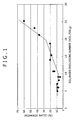
- FIG. 1 is a graph showing the investigation results on the effect of the number of the SiO 2 -based inclusions described above on fatigue properties (breakage ratio obtained by a method described in Example described below). As shown in FIG. 1 , it is known that the breakage ratio becomes extremely small by controlling the SiO 2 -based inclusions to 12 nos./500 g or below, fatigue properties are improved.
- Free oxygen is measured by a zirconia oxygen sensor, if it is not the target level or below (3 ppm or below), inside the furnace is evacuated (60 Torr or below) again (at this time, partial CO pressure inside the furnace lowers, therefore, C and O in molten steel react and concentration of C in molten steel also lowers), and C is finely dividedly added until the target C concentration is reached.
- the spring steel in relation with the embodiment of the invention is to satisfy the following fundamental components.
- C is an element useful in securing high strength, and the C content is made 0.2% (means mass%, hereafter the same with respect to the component) or above in order that the effect is sufficiently exerted. Preferably it is 0.3% or above, and more preferably it is 0.4% or above. However, if C content becomes excessive, steel becomes brittle which is not practical, therefore it is controlled to 1.2% or below.
- the steel of Si: 1.2% or above is made an object.
- Si is excessively contained, steel material becomes liable to be embrittled, therefore Si is controlled to 4% or below.
- Mn which is deoxidation component
- Mn content is controlled to 2.0% or below.
- Al is an element useful in control of inclusions and is required at approximately 0.0001% as the total Al. However, if the total Al content becomes much, Al 2 O 3 concentration in inclusions becomes high and it is possible that coarse Al 2 O 3 which becomes the cause of wire breakage is generated, therefore it is controlled to 0.01% or below.
- the elements contained in the spring steel in relation with the present invention are as described above, and the balance is iron and inevitable impurities.
- the inevitable impurities mixing in of elements brought in by the situation of raw material, manufacturing materials, manufacturing equipment and the like is allowable. Also, it is effective to further improve properties by positively containing elements described below.
- These elements are the elements effective in improving softening resistance property, and in order to make the effect exert, their low limits are 0.5% or above for Cr, 0.05% or above for Mo, 0.05% or above for W, and 0.01% or above for Co. However, if these elements are excessive, quenching property becomes too high and breakage becomes liable to occur during working, therefore they are controlled to 3% or below for Cr, 0.5% or below for Mo, 0.5% or below for W, and 0.5% or below for Co.
- These elements are the elements effective in grain refinement, and in order to make the effect exert, their low limits are 0.01% or above for V, 0.01% or above for Nb, and 0.01% or above for Ti. However, if these elements are excessive, coarse nitride is generated and fatigue strength is lowered. Therefore, they are controlled to 0.5% or below for V, 0.1% or below for Nb, and 0.1% or below for Ti.
- These elements are the elements effective in inhibiting low temperature embrittlement, and in order to make the effect exert, their low limits are 0.05% or above for Ni, and 0.01% or above for Cu.
- Ni is 0.5% or below
- Cu is 0.1% or below
- REM rare earth metal
- Ce Ce, La and the like
- REM has an action of further softening nonmetallic inclusions in steel. To make the effect exert, it is contained at 0.1 ppm or above. However, even if the element is added excessively, the effect saturates only, therefore the upper limit is 50 ppm or below.
- Alkali metal elements and/or alkaline earth metal elements 0.1-50 ppm in total ⁇
- Alkali metal elements Li, Na, K, Rb, Cs
- alkaline earth metal elements Mg, Ca, Ba, Sr
- the spring steel in relation with the embodiment of the present invention is excellent in drawing workability because SiO 2 -based inclusions are extremely controlled, and can secure excellent fatigue properties. Consequently, the spring steel of the invention is useful in manufacturing springs used, for example, in the automobile field, the industrial machinery field and the like. In particular, it is best suited to manufacturing springs used for a restoring mechanism of machinery such as a valve spring and a clutch spring for an automobile engine, a brake spring, a suspension spring for a suspension and the like which require extremely high fatigue properties, and the like.
- the present inventors studied from a variety of angles on composition and a form of respective inclusion for improving fatigue resistance property of springs considering also the change in the form of inclusions by heating after solidification and by hot rolling.
- the composition wherein SiO 2 would not be generated theoretically generation of SiO 2 could be inhibited remarkably regardless of rolling condition.
- FIG. 4 exhibited below, even within the range of the low melting point, the melting point in the side where SiO 2 concentration is high is occasionally lower compared with that in the side where SiO 2 concentration is low. Consequently, controlling to the lower side of SiO 2 concentration was not common.
- the present inventors found out that harmful SiO 2 could be remarkably controlled by performing control of the composition to a predetermined region and that tearing was possible during hot rolling even in the side where SiO 2 concentration was low.
- the width: 3 ⁇ m or above is that the fine inclusion with the width: less than 3 ⁇ m is hard to become the start point of the fatigue failure and has not a conspicuous influence on fatigue strength. Also, the reason the position of the presence of such inclusion is specified as "the surface layer side from the surface of a wire rod to the depth of 1/4 of the diameter" is that the inclusion present in this position influences fatigue properties most.
- MgO quantity in inclusions becomes excessive, a hard oxide of MgO-SiO 2 , spinel and the like becomes generated, therefore MgO content in inclusions needs to be made 5 mass% or below.
- an oxide of Mn (MnO) which is a weak deoxidation component, becomes 10 mass% or below. From such a viewpoint, if MnO content in inclusions exceeds 10 mass%, it shows that inclusions are in a non-preferable state, therefore MnO content in inclusions needs to be made 10 mass% or below.
- [Cn] (mass%) [(CaO) / (CaO + Al 2 O 3 + SiO 2 ) ] ⁇ 100 (2)
- [An] (mass%) [(Al 2 O 3 ) / (CaO + Al 2 O 3 + SiO 2 ) ] ⁇ 100 (3)
- [Sn] (mass%) [(SiO 2 ) / (CaO + Al 2 O 3 + SiO 2 ) ] ⁇ 100 (4)
- the present inventors found out that control to lower SiO 2 side of Line A was effective.
- the equation (5) described above represents Line A. That means SiO 2 is not generated even if phase separation occurs in heating before hot rolling and during hot rolling, if the relation of the equation (5) described above is satisfied.
- the spring steel of the second embodiment when CaO concentration [Cn], Al 2 O 3 concentration [An] and SiO 2 concentration [Sn] of the composition of an inclusion are expressed by a Al 2 O 3 - SiO 2 - CaO three component system phase diagram, its melting point needs to be 1,500 DEG C. or below.
- the reduction ratio of valve spring steel during hot rolling is large and it is expectable to make inclusions refined and non-harmful during hot rolling. Therefore, the control to the composition wherein inclusions are easily deformed during hot rolling even if its quantity is large is directed.
- inclusions need to be controlled to low melting point composition where deformation is easy, and its melting point was made 1,500 DEG C. or below. It is preferably 1,400 DEG C. or below.
- FIG. 4 Area of the composition of inclusions stipulated in this second embodiment is shown in FIG. 4 (Al 2 O 3 - SiO 2 - CaO three component system phase diagram).
- Line B is the one wherein the melting point of an inclusion satisfies 1,500 DEG C. (isothermal line). Consequently, in FIG. 4 , the area surrounded by Lines A, B, C (shown by hatching in the drawing) is the area stipulated by the second embodiment.
- control of inclusions can be performed easily by using the slag with the same composition which is same with the target composition of inclusion.
- the steel in relation with this second embodiment is assumed of high cleanliness steel useful as a material for spring steel and the like, but its steel kind is not particularly limited.
- Si should be 4 mass% or below and Si should be 2 mass% or below.
- the content of C which is the fundamental component as spring steel is preferably 1.2 mass% or below. If C content exceeds 1.2 mass%, the steel material is embrittled and becomes non-practical.
- A1 is an element useful for control of inclusions also, and is necessary by approximately 0.1-20 ppm in mass concentration. However, if A1 content increases, Al 2 O 3 concentration in inclusions becomes high and coarse Al 2 O 3 which becomes the cause of wire breakage is possibly generated, therefore it is preferably 0.01 mass% or below.
- the balance other than the fundamental components described above is Fe and inevitable impurities, but if necessary, it may include one or more kinds selected from a group consist of Cr, Ni, V, Nb, Mo, W, Cu, Ti, Li, Na, K and rare earth metal (REM).
- REM rare earth metal
- Preferable contents when they are contained are, Cr: 0.5-3 mass%, Ni: 0.5 mass% or below, V: 0.5 mass% or below, Nb: 0.1 mass% or below, Mo: 0.5 mass% or below, W: 0.5 mass% or below, Cu: 0.1 mass% or below, Ti: 0.1 mass% or below, Li: 0.0005 mass% or below, Na: 0.0010 mass% or below, K: 0.0010 mass% or below, and REM: 0.0010 mass% or below.
- the spring steel in relation with the second embodiment is excellent in fatigue properties because the entire inclusions are of low melting point and easy to be deformed, and SiO 2 is hard to be generated even phase separation occurs in heating before hot rolling and during hot rolling. Consequently, the spring steel in relation with this second embodiment is useful in manufacturing springs used, for example, in the automobile field, the industrial machinery field and the like. In particular, it is best suited to manufacturing springs used for a restoring mechanism of machinery such as a valve spring and a clutch spring for an automobile engine, a brake spring, a suspension spring for a suspension and the like which require extremely high fatigue properties, and the like.
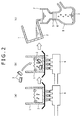
- aqueous solution of nitric acid 2 was put in a beaker 1 first, this aqueous solution of nitric acid was heated (50 DEG C. or above) by a heater 4 [ FIG. 2 (a) ], and a sample 3 was put in the heated aqueous solution of nitric acid.
- the sample 3 was dissolved by the aqueous solution of nitric acid 2, and the oxide-based inclusions present in the sample 3 were eluted [ FIG. 2 (b) ].
- the aqueous solution of nitric acid 2 after finishing dissolution and elution is filtered (a membrane filter 5, a filter stand 6 and a funnel 7) after cooling, the aqueous solution of nitric acid 2 is stored in a flask 8, and the oxide-based inclusions were eluted as the residue on the membrane filter 5 [ FIG. 2 (c) ].
- the dissolution described above was performed in the manner wherein the nitric acid (HNO 3 ): 250 mL (milliliter) added with water to make 700 mL and added further with 10 mL of sulfuric acid was prepared in a beaker of a 2 L capacity, and a steel sample of 25 g was put in it and was dissolved.
- the material of the beaker, funnel and filter stand used is polytetrafluoroethylene [PTFE: Teflon (registered trademark)].
- PTFE Teflon (registered trademark)
- MgO-SiO 2 shown in Table 2 are those with the composition near to MgO-SiO 2 or 2MgO-SiO 2 and are of 40-65% SiO 2 content, therefore they are distinguished from the inclusions with stipulated 70% or above of SiO 2 content.
- the breakage ratio correlates not with the number of crystal-based inclusions other than SiO 2 -based inclusions but with the number of SiO 2 -based inclusions and SiO 2 -based inclusions are harmful, and that, consequently, in order to inhibit breakage, it is necessary to control SiO 2 -based inclusions as stipulated in the present invention regardless of presence or absence of crystal-based inclusions other than SiO 2 -based inclusions.
Landscapes
- Chemical & Material Sciences (AREA)
- Engineering & Computer Science (AREA)
- Mechanical Engineering (AREA)
- Materials Engineering (AREA)
- Metallurgy (AREA)
- Organic Chemistry (AREA)
- Crystallography & Structural Chemistry (AREA)
- General Engineering & Computer Science (AREA)
- Treatment Of Steel In Its Molten State (AREA)
- Springs (AREA)
Description
- The present invention relates to high cleanliness spring steel excellent in fatigue properties and a high cleanliness spring excellent in fatigue properties, and relates to high cleanliness spring steel wherein hard metallic inclusions with extremely low ductility are reduced and fatigue properties are improved, and a high cleanliness spring excellent in fatigue properties obtained using the steel. The spring obtained from this high cleanliness spring steel is useful as a valve spring and a clutch spring for an automobile engine, and a brake spring wherein extremely high fatigue properties are required.
- In recent years, in the field of automobiles for example, as weight reduction and output enhancement are more highly required, a high stress design is directed also in a valve spring and a suspension spring used for an engine, a suspension and the like, and a clutch spring and the like. Therefore, for these springs, ones which are excellent in fatigue resistance property and setting resistance property are strongly required to cope with increase in load stress. In particular, with respect to a valve spring, the requirement for increasing fatigue strength is very strong, and even SWOSC-V (JIS G 3566), which is said to be high in fatigue strength among conventional steel, is hard to cope with.
- In spring steel material wherein high fatigue strength is required, it is necessary to reduce hard nonmetallic inclusions present in the steel as much as possible. From such a viewpoint, with respect to the steel used for the usage described above, it is common that high cleanliness steel wherein presence of nonmetallic inclusions described above is decreased as much as possible is used. Because the risk of wire breakage and fatigue breakage due to nonmetallic inclusions increases as high strengthening of material progresses, the requirement for reduction and miniaturization of the nonmetallic inclusions described above which becomes its main cause has become greatly severe.
- From the viewpoint of realizing reduction and miniaturization of hard nonmetallic inclusions in steel, a variety of technologies have been proposed so far. For example in the
Patent Document 1, it is disclosed that, in valve spring steel, if controlled to CaO-Al2O3-SiO2 three-component based inclusions whose melting point is lower than approximately 1,400-1,500 DEG C., they do not become the start point of fatigue failure and fatigue properties improve. - Also, in the
Patent Document 1, high cleanliness steel, whose cold workability and fatigue property are improved by stipulating the average composition of nonmetallic inclusions so that the nonmetallic inclusions are well stretched in hot rolling and are crushed and finely dispersed in a cold rolling or wire drawing process, is realized. Further, in thePatent Document 2 also, the composition of nonmetallic inclusions which are easily stretched and refined in hot rolling, cold rolling and drawing is stipulated. - On the other hand, in the
Patent Document 3, a technology is disclosed wherein the melting point of an oxide-based inclusion is stipulated as 1,500 DEG C. or below to make it an inclusion having a low-melting composition easily stretched in hot and cold rolling. - Further, in the Patent Document 4, as an inclusion having a low-melting composition easily stretched in hot rolling and cold rolling, an Al2O3-SiO2-MnO based inclusion containing MgO and/or CaO is stipulated. Spring steels excelling in fatigue characteristics are disclosed in
documents 5 to 8. . - Non-patent Document 1: "182nd and 183rd Nishiyama Memorial Technical Lecture", edited by The Iron and Steel Institute of Japan, P.131-134
- Patent Document 1:
Japanese Unexamined Patent Application Publication No. S62-99436 - Patent Document 2:
Japanese Unexamined Patent Application Publication No. S62-99437 - Patent Document 3:
Japanese Unexamined Patent Application Publication No. H5-320827 - Patent Document 4:
Japanese Unexamined Patent Application Publication No. S63-140068 - Patent Document 5:
EP1662016 A1 , - Patent Document 6:
EP1010769 A1 , - Patent Document 7:
WO 2005/071120 A1 , - Patent Document 8:
Japanese Unexamined Patent Application Publication No: JP 2003 342688 - In a variety of conventional technologies proposed until now, it was common to realize excellent fatigue strength by controlling the average composition of inclusions. In the meantime, in recent years, following properties (I) and (II) are required for a valve spring.
- (I) Because there is a tendency of securing the space below a bonnet to ensure collision safety for pedestrian protection, reduction of engine height, that is, reduction of spring height, is required.
- (II) For improving fuel economy, weight reduction of a spring is required.
- As described above, although further high strengthening of spring steel is required for realizing reduction of spring height and reduction of weight, it is not possible to cope with the requirement of further high strengthening merely by conventional technologies. Its reason is that there is a problem that control of inclusions of very high level has been already performed so far, inclusions inducing breakage exist very rarely only, and it is difficult to reduce further. Also, it has been known that hard crystal-based inclusions would be harmful, however, there has been no knowledge on distinction of particularly harmful one and not among hard crystal-based inclusions.
- Further, in a variety of conventional technologies proposed until now, main point is to control the inclusion composition to a low melting point region and to aim to effect refining, however, if the composition region is one which includes SiO2, SiO2 may theoretically be generated by phase separation. Particularly, because valve spring steel is heated before rolling after forging, occurring of generation of SiO2 by phase separation becomes highly probable at this time. SiO2 thus generated is hard, is hardly deformed in rolling, and easily remains in the final product. SiO2 remaining in the final product may become the cause of breakage in a wire rod even it is in extremely small numbers, and realization of high cleanliness steel capable of coping with requirement in recent years for further enhancement of cleanliness may not become possible.
- The present invention has been developed under such circumstances, and its purpose is to provide spring steel useful in obtaining a spring excellent in fatigue properties and a spring excellent in fatigue properties.
- The purpose of the present invention described above can be achieved by following high cleanliness spring steel in relation with the present invention. The high cleanliness spring steel in relation with the present invention is defined in the claims.
- Furthermore, the present invention also includes high cleanliness springs excellent in fatigue properties made of said spring steel.
- In accordance with the high cleanliness spring steel in relation with the present invention, realization of high strengthening is possible by performing severe drawing work because SiO2-based inclusions are extremely controlled, and high cleanliness spring steel capable of manufacturing springs excellent in fatigue properties easily and springs excellent in fatigue properties obtained using the steel can be realized.
-
- [
FIG. 1 ] A graph showing the investigation results on the effect of the number of SiO2-based inclusions (nos./500 g steel) on fatigue properties (breakage ratio obtained by a method described in Example). - [
FIG. 2 ] An explanatory drawing showing an abstraction procedure of SiO2-based inclusions in Example. - [
FIG. 3 ] A CaO - Al2O3 - SiO2 three component system phase diagram showing a region where SiO2 is generated by phase separation in heating before hot rolling and during hot rolling. - [
FIG. 4 ] A CaO - Al2O3 - SiO2 three component system phase diagram showing the composition of inclusions. -
- 1.
- Beaker
- 2.
- Aqueous solution of nitric acid
- 3.
- Sample
- 4.
- Heater
- 5.
- Membrane filter
- 6.
- Filter stand
- 7.
- Funnel
- 8.
- Flask
- The present inventors made investigations from a variety of angles to obtain spring steel suitable to manufacturing of springs that exert excellent fatigue properties. As a result, it was found out that, among hard crystal-based inclusions (to be exact, oxide-based inclusions with 25 mass% or above oxygen concentration), SiO2-based inclusions in particular were harmful. More specifically, it was found out that, because the composite inclusions which were inclusions of SiO2 or of high SiO2 percentage and were inclusions of 4 or above of L (the large diameter of an inclusion)/D (the short diameter of an inclusion) and 25 µm or above of D or inclusions of less than 4 of L/D and 25 µm or above of L extremely lowered fatigue properties even though the density was extremely low, it was necessary to strictly control the number of the inclusions described above, and the present invention was completed.
- Further more specifically, as will be shown in Examples described below, the total of inclusions described below obtained by abstraction from steel should be made 12 nos./500 g or below. • Inclusions with 70% or above of SiO2 content (presuming Al2O3 + MgO + CaO + SiO2 + MnO = 100%, hereafter the same. Also, % means mass%, hereafter the same with respect to inclusions) and with 4 or above of L (large diameter of inclusion)/D (short diameter of inclusion) and 25 µm or above of D, and
• Inclusions with 70% or above of SiO2 content (presuming Al2O3 + MgO + CaO + SiO2 + MnO = 100%, hereafter the same) and with less than 4 of L/D and 25 µm or above of L. -
FIG. 1 is a graph showing the investigation results on the effect of the number of the SiO2-based inclusions described above on fatigue properties (breakage ratio obtained by a method described in Example described below). As shown inFIG. 1 , it is known that the breakage ratio becomes extremely small by controlling the SiO2-based inclusions to 12 nos./500 g or below, fatigue properties are improved. - In order to obtain the steel with SiO2-based inclusions being controlled as described above, a method, for example, can be cited wherein, in vacuum induction melting, carbon deoxidation in vacuum as following is performed, and oxygen level is lowered sufficiently (3 ppm or below). That is, inside the furnace is evacuated (60 Torr or below) and C is finely dividedly added until the target C concentration is reached. Free oxygen is measured by a zirconia oxygen sensor, if it is not the target level or below (3 ppm or below), inside the furnace is evacuated (60 Torr or below) again (at this time, partial CO pressure inside the furnace lowers, therefore, C and O in molten steel react and concentration of C in molten steel also lowers), and C is finely dividedly added until the target C concentration is reached.
- The spring steel in relation with the embodiment of the invention is to satisfy the following fundamental components. Firstly, C is an element useful in securing high strength, and the C content is made 0.2% (means mass%, hereafter the same with respect to the component) or above in order that the effect is sufficiently exerted. Preferably it is 0.3% or above, and more preferably it is 0.4% or above. However, if C content becomes excessive, steel becomes brittle which is not practical, therefore it is controlled to 1.2% or below.
- In the spring steel in relation with the present embodiment, the steel of Si: 1.2% or above is made an object. However, if Si is excessively contained, steel material becomes liable to be embrittled, therefore Si is controlled to 4% or below.
- In order to control the composition of inclusions, Mn, which is deoxidation component, is made contain by 0.1% or above. However, if this component is excessively contained, steel material becomes liable to be embrittled, therefore Mn content is controlled to 2.0% or below.
- Al is an element useful in control of inclusions and is required at approximately 0.0001% as the total Al. However, if the total Al content becomes much, Al2O3 concentration in inclusions becomes high and it is possible that coarse Al2O3 which becomes the cause of wire breakage is generated, therefore it is controlled to 0.01% or below.
- The elements contained in the spring steel in relation with the present invention are as described above, and the balance is iron and inevitable impurities. For the inevitable impurities, mixing in of elements brought in by the situation of raw material, manufacturing materials, manufacturing equipment and the like is allowable. Also, it is effective to further improve properties by positively containing elements described below.
- These elements are the elements effective in improving softening resistance property, and in order to make the effect exert, their low limits are 0.5% or above for Cr, 0.05% or above for Mo, 0.05% or above for W, and 0.01% or above for Co. However, if these elements are excessive, quenching property becomes too high and breakage becomes liable to occur during working, therefore they are controlled to 3% or below for Cr, 0.5% or below for Mo, 0.5% or below for W, and 0.5% or below for Co.
- These elements are the elements effective in grain refinement, and in order to make the effect exert, their low limits are 0.01% or above for V, 0.01% or above for Nb, and 0.01% or above for Ti. However, if these elements are excessive, coarse nitride is generated and fatigue strength is lowered. Therefore, they are controlled to 0.5% or below for V, 0.1% or below for Nb, and 0.1% or below for Ti.
- These elements are the elements effective in inhibiting low temperature embrittlement, and in order to make the effect exert, their low limits are 0.05% or above for Ni, and 0.01% or above for Cu.
- However, even if these elements are contained excessively, its effect saturates only, therefore Ni is 0.5% or below, and Cu is 0.1% or below, from the economical viewpoint.
- REM (rare earth metal; Ce, La and the like) has an action of further softening nonmetallic inclusions in steel. To make the effect exert, it is contained at 0.1 ppm or above. However, even if the element is added excessively, the effect saturates only, therefore the upper limit is 50 ppm or below.
- Alkali metal elements (Li, Na, K, Rb, Cs) and alkaline earth metal elements (Mg, Ca, Ba, Sr) have an action of further softening nonmetallic inclusions in steel. To make the effect exert, it is contained at 0.1 ppm or above in total. However, even if the elements are added excessively, the effect saturates only, therefore the upper limit is 50 ppm or below in total.
- As described above, the spring steel in relation with the embodiment of the present invention is excellent in drawing workability because SiO2-based inclusions are extremely controlled, and can secure excellent fatigue properties. Consequently, the spring steel of the invention is useful in manufacturing springs used, for example, in the automobile field, the industrial machinery field and the like. In particular, it is best suited to manufacturing springs used for a restoring mechanism of machinery such as a valve spring and a clutch spring for an automobile engine, a brake spring, a suspension spring for a suspension and the like which require extremely high fatigue properties, and the like.
- [The second embodiment not in accordance with the invention] Next, an embodiment in relation with the second spring steel not in accordance with the present invention will be described.
- In a wire rod with a large deformation ratio during hot rolling, it is known that refinement of inclusions by stretchingly tearing during hot rolling is useful. Conventionally, because hard inclusions were disliked, control to low melting point composition (the Patent Document 3) and control to a certain composition region (the Patent Document 4) were performed. However, because the main aim was the control to low melting point composition, the composition was such that SiO2 would be generated theoretically, and SiO2 was generated rarely.
- Under such circumstance, the present inventors studied from a variety of angles on composition and a form of respective inclusion for improving fatigue resistance property of springs considering also the change in the form of inclusions by heating after solidification and by hot rolling. As a result, it was known that, by controlling to the composition wherein SiO2 would not be generated theoretically, generation of SiO2 could be inhibited remarkably regardless of rolling condition. In other words, as will be known from
FIG. 4 exhibited below, even within the range of the low melting point, the melting point in the side where SiO2 concentration is high is occasionally lower compared with that in the side where SiO2 concentration is low. Consequently, controlling to the lower side of SiO2 concentration was not common. Then, the present inventors found out that harmful SiO2 could be remarkably controlled by performing control of the composition to a predetermined region and that tearing was possible during hot rolling even in the side where SiO2 concentration was low. - The working effects by the constitution of this second embodiment will be described successively. In the spring steel in relation with this second embodiment, it is necessary that the oxide-based inclusions with the width: 3 µm or above which are present in the surface layer side from the surface of a wire rod to the depth of 1/4 of the diameter satisfy inequality (1) below, and the concentration of MgO is 5 mass% or below (inclusive of 0 mass%) and the concentration of MnO is 10 mass% or below (inclusive of 0 mass%).
CaO + Al2O3 + SiO2 > 80 (mass%) (1)
- The reason the inclusions which are made the object here are specified as "the width: 3 µm or above" is that the fine inclusion with the width: less than 3µm is hard to become the start point of the fatigue failure and has not a conspicuous influence on fatigue strength. Also, the reason the position of the presence of such inclusion is specified as "the surface layer side from the surface of a wire rod to the depth of 1/4 of the diameter" is that the inclusion present in this position influences fatigue properties most.
- In a wire rod, irregular inclusions (oxide of Ti, Cr, and the like, for example) mixed in inevitably, other than CaO, Al2O3, SiO2, MnO and MgO, are present. If their quantity is small, they do not become a problem, but if their quantity increases, they may possibly become the start point of the fatigue failure. From such a viewpoint, when the composition of inclusions is observed by five elements (CaO, Al2O3, SiO2, MnO and MgO), it is necessary to make [CaO + Al2O3 + SiO2] the main constituent (80 mass% or above) and to appropriately control MgO quantity and MnO quantity as well.
- Also, if MgO quantity in inclusions becomes excessive, a hard oxide of MgO-SiO2, spinel and the like becomes generated, therefore MgO content in inclusions needs to be made 5 mass% or below.
- Further, when composition of inclusions is stably controlled, an oxide of Mn (MnO), which is a weak deoxidation component, becomes 10 mass% or below. From such a viewpoint, if MnO content in inclusions exceeds 10 mass%, it shows that inclusions are in a non-preferable state, therefore MnO content in inclusions needs to be made 10 mass% or below.
- In the spring steel in relation with this second embodiment, under the condition described above, Al2O3 quantity when normalized so that three components of CaO, Al2O3 and SiO2 in inclusions become 100% and the relation of Al2O3 and SiO2 and the like need to be strictly stipulated to satisfy the predetermined region. In other words, when CaO, Al2O3 and SiO2 in oxide-based inclusions are expressed respectively as per the equations (2)-(4) below, they need to be controlled to satisfy the relation of the equations (5) and (6) below.
[Cn] (mass%) = [(CaO) / (CaO + Al2O3 + SiO2) ] × 100 (2)
[An] (mass%) = [(Al2O3) / (CaO + Al2O3 + SiO2) ] × 100 (3)
[Sn] (mass%) = [(SiO2) / (CaO + Al2O3 + SiO2) ] × 100 (4)
[An] + 4.29 [Sn] ≤ 221.9 (mass%) (5)
[An] ≤ 30 (mass%) (6)
- In the spring steel in relation with this second embodiment, it is necessary that SiO2 is not generated even if phase separation occurs in heating before hot rolling and during hot rolling. For example, in the three component system phase diagram shown in
FIG. 3 , if the composition of inclusions is within the composition area indicated by oblique lines, phase separation occurs theoretically and SiO2 is generated, therefore such area needs to be excluded. In the SiO2 generation region indicated inFIG. 3 , Line A becomes the line connecting CaO-SiO2 (Wallastonite) and CaO-Al2O3-2SiO2 (Anorthite). In other words, in order that SiO2 is not generated even if phase separation occurs in heating before hot rolling and during hot rolling, the region needs to be in the lower side of low SiO2 from Line A inFIG. 3 (lower side of Line A inFIG. 3 ). - The present inventors found out that control to lower SiO2 side of Line A was effective. The equation (5) described above represents Line A. That means SiO2 is not generated even if phase separation occurs in heating before hot rolling and during hot rolling, if the relation of the equation (5) described above is satisfied.
- Also, in the composition of inclusions, if Al2O3 quantity when normalized by three components of CaO, Al2O3 and SiO2 (which is [An] described above) exceeds 30 mass%, hard crystal such as Ghelenite and Anorthite is generated and has a harmful influence on fatigue strength, therefore it is necessary to satisfy the relation of the equation (6).
- On the other hand, in the spring steel of the second embodiment, when CaO concentration [Cn], Al2O3 concentration [An] and SiO2 concentration [Sn] of the composition of an inclusion are expressed by a Al2O3 - SiO2 - CaO three component system phase diagram, its melting point needs to be 1,500 DEG C. or below. In other words, the reduction ratio of valve spring steel during hot rolling is large and it is expectable to make inclusions refined and non-harmful during hot rolling. Therefore, the control to the composition wherein inclusions are easily deformed during hot rolling even if its quantity is large is directed. In this second embodiment, inclusions need to be controlled to low melting point composition where deformation is easy, and its melting point was made 1,500 DEG C. or below. It is preferably 1,400 DEG C. or below.
- Area of the composition of inclusions stipulated in this second embodiment is shown in
FIG. 4 (Al2O3 - SiO2 - CaO three component system phase diagram). InFig. 4 , Line A is the one satisfying the relation of {[An] + 4.29 [Sn] = 221.9 (mass%)}, Line C is the one satisfying the relation of {([An] = 30 (mass%)), and Line B is the one wherein the melting point of an inclusion satisfies 1,500 DEG C. (isothermal line). Consequently, inFIG. 4 , the area surrounded by Lines A, B, C (shown by hatching in the drawing) is the area stipulated by the second embodiment. - In realizing such composition of inclusions as described above, control of inclusions can be performed easily by using the slag with the same composition which is same with the target composition of inclusion.
- The steel in relation with this second embodiment is assumed of high cleanliness steel useful as a material for spring steel and the like, but its steel kind is not particularly limited. In order to control the composition of inclusions, it is preferable to contain Si by 1.2 Mass% or above, Mn by 0.1 mass% or above which are the deoxidation components. However, if these components are contained excessively, steel material becomes liable to be brittle, therefore Si should be 4 mass% or below and Si should be 2 mass% or below.
- The content of C which is the fundamental component as spring steel is preferably 1.2 mass% or below. If C content exceeds 1.2 mass%, the steel material is embrittled and becomes non-practical.
- A1 is an element useful for control of inclusions also, and is necessary by approximately 0.1-20 ppm in mass concentration. However, if A1 content increases, Al2O3 concentration in inclusions becomes high and coarse Al2O3 which becomes the cause of wire breakage is possibly generated, therefore it is preferably 0.01 mass% or below.
- The balance other than the fundamental components described above is Fe and inevitable impurities, but if necessary, it may include one or more kinds selected from a group consist of Cr, Ni, V, Nb, Mo, W, Cu, Ti, Li, Na, K and rare earth metal (REM). Preferable contents when they are contained are, Cr: 0.5-3 mass%, Ni: 0.5 mass% or below, V: 0.5 mass% or below, Nb: 0.1 mass% or below, Mo: 0.5 mass% or below, W: 0.5 mass% or below, Cu: 0.1 mass% or below, Ti: 0.1 mass% or below, Li: 0.0005 mass% or below, Na: 0.0010 mass% or below, K: 0.0010 mass% or below, and REM: 0.0010 mass% or below.
- As described above, the spring steel in relation with the second embodiment is excellent in fatigue properties because the entire inclusions are of low melting point and easy to be deformed, and SiO2 is hard to be generated even phase separation occurs in heating before hot rolling and during hot rolling. Consequently, the spring steel in relation with this second embodiment is useful in manufacturing springs used, for example, in the automobile field, the industrial machinery field and the like. In particular, it is best suited to manufacturing springs used for a restoring mechanism of machinery such as a valve spring and a clutch spring for an automobile engine, a brake spring, a suspension spring for a suspension and the like which require extremely high fatigue properties, and the like.
- Approximately 150 kg of steel and the alloy components other than Si, Al, Mg were molten by a vacuum induction melting furnace, and, in order to evaluate the degree of hazard of various kinds of oxides, inclusions in steel were removed (total oxygen: 5 ppm or below) by induction stirring. Also, in the present example, in order to observe the influence of the kind of inclusions on fatigue properties, as shown in Table 1, alloy elements and Fe2O3 were added after deoxidation described above, and molten steel was prepared so that a variety of inclusions would be present.
- Then, molten steel was casted in a mold, an ingot obtained was subjected to forging and hot rolling, and the wire rod with the diameter: 8.0 mm of the componential composition shown in Table 1 was obtained.
- Further, if refining is performed in a common method, various kinds of oxides are spontaneously generated and control of oxide in steel are very difficult, therefore manufacturing of steel wherein only the target oxide is present and inclusions of other composition is perfectly excluded becomes difficult. As a result, evaluation of the influence on fatigue strength distinguishing each kind of oxide is difficult as well. Consequently it was decided to investigate the influence on fatigue properties by preparing steel including inclusions of respective composition only by a vacuum induction furnace as described above.
- In table 1, the Al content of 0.002 or below is controlled within the scope of the present invention.
[Table 1] Experiment No. Chemical components (mass %) * Manufacturing condition C Si Mn Al Cr Ni V Others 1 0.6 2.0 0.7 0.002 or below 1.8 0.2 0.2 - C deoxidation in vacuum → Add alloy elements other than Si → Add Si+Fe2O3 2 0.7 1.5 0.7 0.002 or below 0.6 0.2 - - C deoxidation in vacuum → Add alloy elements other than Si → Add Mg, Si+Fe2O3 3 0.6 2.4 0.5 0.002 or below - - - - C deoxidation in vacuum → Add alloy elements other than Si → Add Si+Fe2O3 4 0.6 3.2 0.5 0.002 or below 0.5 - 0.2 - C deoxidation in vacuum → Add alloy elements other than Si → Add Si+Fe2O3 5 0.6 2.0 0.2 0.002 or below - - - - C deoxidation in vacuum → Add alloy elements other than Si → Add Mg, Si+Fe2O3 8 0.7 2.1 0.7 0.003 1.5 - 0.4 - C deoxidation in vacuum → Add alloy elements other than Si → Add Al,Si+Fe2O3 9 0.6 3.2 0.5 0.002 or below 0.5 - 0.2 Ti:0.002 C deoxidation in vacuum → Add alloy elements other than Si → Add Si+Fe2O3 11 0.6 2.0 0.7 0.002 or below - - 0.2 Li: 0.0001 C deoxidation in vacuum → Add alloy elements other than Si → Add Si+Fe2O3 12 0.6 2.0 0.7 0.002 or below 1.8 0.2 - Ce: 0.0005 C deoxidation in vacuum → Add alloy elements other than Si → Add Si+Fe2O3 13 0.6 1.5 0.7 0.002 or below 1 0.2 - - C deoxidation in vacuum → Add alloy elements other than Si → Add Si+ Fe2O3 14 0.6 2.1 0.6 0.002 or below - 0.2 - - C deoxidation in vacuum → Add alloy elements other than Si → Add Si+Fe2O3 15 0.6 2.5 0.5 0.002 or below - - 0.2 - C deoxidation in vacuum → Add alloy elements other than Si → Add Si+Fe2O3 * Balance: iron and inevitable impurities - With respect to each wire rod obtained, measuring of the number of SiO2-based inclusions and identification of the kind of coarse inclusions in the microscopic examination plane were performed, and fatigue properties were evaluated. The method of these measurement and evaluation is as described below.
- After the scales on the surface of the wire rod (the diameter: 8.0 mm) were removed, 20 nos. of samples (25 g) were cut out. The samples cut out were molten by the procedure shown in
FIG. 2 , and inclusions were abstracted. As exhibited inFIG. 2 , aqueous solution ofnitric acid 2 was put in abeaker 1 first, this aqueous solution of nitric acid was heated (50 DEG C. or above) by a heater 4 [FIG. 2 (a) ], and asample 3 was put in the heated aqueous solution of nitric acid. Thesample 3 was dissolved by the aqueous solution ofnitric acid 2, and the oxide-based inclusions present in thesample 3 were eluted [FIG. 2 (b) ]. The aqueous solution ofnitric acid 2 after finishing dissolution and elution is filtered (amembrane filter 5, afilter stand 6 and a funnel 7) after cooling, the aqueous solution ofnitric acid 2 is stored in aflask 8, and the oxide-based inclusions were eluted as the residue on the membrane filter 5 [FIG. 2 (c) ]. Further, the dissolution described above was performed in the manner wherein the nitric acid (HNO3): 250 mL (milliliter) added with water to make 700 mL and added further with 10 mL of sulfuric acid was prepared in a beaker of a 2 L capacity, and a steel sample of 25 g was put in it and was dissolved. Here, the material of the beaker, funnel and filter stand used is polytetrafluoroethylene [PTFE: Teflon (registered trademark)]. Also, with respect to the membrane filter used in filtering, one with the pore size of 1 µm was used. - Also, whenever the inclusions described above were abstracted, the blank test was performed and the abstract in the blank was confirmed to be zero. In the blank test, in performing abstraction and evaluation of inclusions using the sample, with the beaker without the sample put in, exactly same procedures as the above are followed, with the only exception that the sample was not put in, to confirm that the abstract from those other than the sample is zero.
- Determination of inclusions was performed under the conditions described below. Further, in the quantitative analysis, the presence concentration of Al, Mn, Si, Mg, Ca, Ti, Zr, K, Na, S, O objecting the inclusions of 4 or above of L (the large diameter of an inclusion)/D (the short diameter of an inclusion; the short diameter means the width of the widest line which is perpendicular to the long diameter) and 25 µm or above of D and inclusions of less than 4 of L/D and 25 µm or above of L, was obtained. Then, for the oxide-based inclusions with 25% or above of oxygen concentration, assuming that respective element described above was present in the form of Al2O3, MnO, SiO2, MgO, CaO, TiO2, ZrO2, K2O, Na2O, S, the presence concentration of the oxides and S in the inclusions was calculated on the basis of the concentration of respective element obtained by determination described above. Then, the number of those with 70% or above of SiO2 ratio, presuming Al2O3 + MgO + CaO + SiO2 + MnO = 100% (mass%), was obtained, thereafter the average value of 20 nos. of samples was obtained to convert to the value (number) per 500 g of steel.
-
- • EPMA device: JXA-8621MX made by JEOL
- • Analytical instrument (EDS): TN-5500 made by Tracor Northern [Analytical conditions]
- • Energy dispersion analysis
- • Voltage (acceleration voltage): 20 kV
- • Test current (acceleration current): 50 nA (nanoampere)
- • Magnification : 150 times
- • Analytical position of an inclusion: SPOT (one point measuring for the position of the maximum magnitude)
-
- • Voltage (acceleration voltage): 20 kV
- • Test current (acceleration current): 50 nA (nanoampere)
- • Photographing magnification: According to the size of an inclusion
- L section including a diameter of respective wire rod described above was ground, 1,000 mm2 of the surface layer side of D/4 part (D: diameter) of the wire rod was observed, the inclusions with 25 µm or above width which was perpendicular to the rolling direction were analyzed under the conditions described below, and the kind and number of the inclusions were obtained. Further, MgO-SiO2 shown in Table 2 are those with the composition near to MgO-SiO2 or 2MgO-SiO2 and are of 40-65% SiO2 content, therefore they are distinguished from the inclusions with stipulated 70% or above of SiO2 content.
- EPMA device: JXA-8621MX made by JEOL
- Analytical instrument (EDS): TN-5500 made by Tracor Northern
- Voltage (acceleration voltage): 20 kV
- Scanning current: 5 nA (nanoampere)
- Measuring method: Quantitative analysis by energy dispersion analysis
- For respective wire rod (8.0 mm φ), after performing scalping → patenting → cold wire drawing working (wire drawing) → oil tempering → process equivalent to strain relieving annealing → shot peening → strain relieving annealing, 4.0 mm φ x 650 mm wires were acquired as test pieces, a rotating bending test was performed using a Nakamura method rotating bending tester under the condition of the testing stress:.908 MPa nominal stress, speed: 4,000-5,000 rpm, number of times of stoppage: 2 × 10⁷ times, the number of the test pieces broken due to inclusions (although there were cases wherein the test piece was broken from the surface and the like of the wire not arising from inclusions, such cases were not made the objects) among the test pieces ruptured on the way was measured, and the breakage ratio was measured according to the equation below.

- The number of SiO2-based inclusions, the kind and number of coarse inclusions in the microscopic examination face, and fatigue properties (breakage ratio) described above are shown in Table 2.
[Table 2] Experiment No. SiO2-based inclusions (Nos./500g) Number of coarse inclusions in microscopic examination plane Breakage ratio in fatigue test (%) SiO2 MgO-SiO2 Wallastonite Anorthite 1 5 0 0 0 0 8 2 7 0 4 0 0 9 3 6 0 0 0 0 7 4 9 0 0 0 0 7 5 19 0 3 0 0 20 8 15 0 0 0 9 18 9 9 0 0 0 0 4 11 6 0 0 0 0 8 12 8 0 0 0 0 6 13 21 0 0 0 0 37 14 25 0 0 0 0 60 15 23 0 0 0 0 44 - Based on these results, following consideration is possible (also, the No. described below shows the experiment No. in the table). It is shown that the steels of Nos. 1-4, 11 and 12 wherein SiO2-based inclusions are inhibited as stipulated in the present invention are excellent in fatigue properties. On the contrary, the steels of Nos. 13-15 wherein SiO2-based inclusions exceed the stipulated region of the present invention is inferior in fatigue properties.
- Also, the following is known from Table 2. In observation of the microscopic examination plane, the observed area is small, and the inclusions such as SiO2-based inclusions which are present in small numbers only are not detected, whereas such inclusions can be also detected according to the abstraction method. Further, although SiO2-based inclusions are not detected in the microscopic examination plane, other crystal-based inclusions are detected, therefore it is known that other crystal-based inclusions are present more than the SiO2-based inclusions.
- Further, it is known that the breakage ratio correlates not with the number of crystal-based inclusions other than SiO2-based inclusions but with the number of SiO2-based inclusions and SiO2-based inclusions are harmful, and that, consequently, in order to inhibit breakage, it is necessary to control SiO2-based inclusions as stipulated in the present invention regardless of presence or absence of crystal-based inclusions other than SiO2-based inclusions.
Claims (2)
- High cleanliness spring steel which is steel consisting of in mass% with respect to the components; C: 0.2-1.2%, Si: 1.2-4%, Mn: 0.1-2.0%, Al: 0.0001-0.01%, and optionally; Cr: 0.5-3%, Mo: 0.05-0.5%, W: 0.05-0.5%, Co: 0.01-0.5%, V: 0.01-0.5%, Nb: 0.01-0.1%, Ti: 0.01-0.1%, Cu: 0.01-0.1%, Ni: 0.05-0.5%, REM: 0.1-50 ppm, alkali metal elements and/or alkaline earth metal elements: 0.1-50 ppm in total, and the balance being iron with inevitable impurities, wherein the total of SiO2-based inclusions is 12 nos./500 g or below, said total of SiO2-based inclusions meaning inclusions of 4 or above of L/D and 25 µm or above of D and inclusions of less than 4 of L/D and 25 µm or above of L, wherein L is the large diameter of an inclusion and D is the short diameter of an inclusion in the oxide-based inclusions with 25 mass% or above of oxygen concentration; and in mass% with respect to inclusions 70% or above of SiO2 content presuming Al2O3 + MgO + CaO + SiO2 + MnO = 100%, out of inclusions in the steel, wherein the short diameter of an inclusion means the width of the widest line which is perpendicular to the long diameter.
- A high cleanliness spring excellent in fatigue properties made of the high cleanliness spring steel as set forth in Claim 1.
Priority Applications (1)
| Application Number | Priority Date | Filing Date | Title |
|---|---|---|---|
| EP11008110.6A EP2407571B1 (en) | 2006-06-09 | 2007-05-23 | High cleanliness spring steel and high cleanliness spring excellent in fatigue properties |
Applications Claiming Priority (3)
| Application Number | Priority Date | Filing Date | Title |
|---|---|---|---|
| JP2006161240A JP4134204B2 (en) | 2006-06-09 | 2006-06-09 | High cleanliness spring steel |
| JP2006160796A JP4134203B2 (en) | 2006-06-09 | 2006-06-09 | High cleanliness spring steel and high cleanliness spring with excellent fatigue characteristics |
| PCT/JP2007/060538 WO2007142034A1 (en) | 2006-06-09 | 2007-05-23 | Steel for high-cleanliness spring with excellent fatigue characteristics and high-cleanliness spring |
Related Child Applications (2)
| Application Number | Title | Priority Date | Filing Date |
|---|---|---|---|
| EP11008110.6A Division EP2407571B1 (en) | 2006-06-09 | 2007-05-23 | High cleanliness spring steel and high cleanliness spring excellent in fatigue properties |
| EP11008110.6A Division-Into EP2407571B1 (en) | 2006-06-09 | 2007-05-23 | High cleanliness spring steel and high cleanliness spring excellent in fatigue properties |
Publications (3)
| Publication Number | Publication Date |
|---|---|
| EP2028285A1 EP2028285A1 (en) | 2009-02-25 |
| EP2028285A4 EP2028285A4 (en) | 2011-04-20 |
| EP2028285B1 true EP2028285B1 (en) | 2016-03-23 |
Family
ID=38801296
Family Applications (2)
| Application Number | Title | Priority Date | Filing Date |
|---|---|---|---|
| EP07743972.7A Not-in-force EP2028285B1 (en) | 2006-06-09 | 2007-05-23 | High cleanliness spring steel and high cleanliness spring excellent in fatigue characteristics |
| EP11008110.6A Not-in-force EP2407571B1 (en) | 2006-06-09 | 2007-05-23 | High cleanliness spring steel and high cleanliness spring excellent in fatigue properties |
Family Applications After (1)
| Application Number | Title | Priority Date | Filing Date |
|---|---|---|---|
| EP11008110.6A Not-in-force EP2407571B1 (en) | 2006-06-09 | 2007-05-23 | High cleanliness spring steel and high cleanliness spring excellent in fatigue properties |
Country Status (5)
| Country | Link |
|---|---|
| US (3) | US8613809B2 (en) |
| EP (2) | EP2028285B1 (en) |
| KR (2) | KR101106871B1 (en) |
| BR (1) | BRPI0712343B1 (en) |
| WO (1) | WO2007142034A1 (en) |
Cited By (1)
| Publication number | Priority date | Publication date | Assignee | Title |
|---|---|---|---|---|
| DE102022100384A1 (en) | 2022-01-10 | 2023-07-13 | KSB SE & Co. KGaA | Springing of a mechanical seal |
Families Citing this family (6)
| Publication number | Priority date | Publication date | Assignee | Title |
|---|---|---|---|---|
| JP4163239B1 (en) * | 2007-05-25 | 2008-10-08 | 株式会社神戸製鋼所 | High cleanliness spring steel and high cleanliness spring with excellent fatigue characteristics |
| JP5937973B2 (en) * | 2013-01-15 | 2016-06-22 | 株式会社神戸製鋼所 | Si-killed steel wire rod having excellent fatigue characteristics and spring using the same |
| JP6452454B2 (en) * | 2014-02-28 | 2019-01-16 | 株式会社神戸製鋼所 | Rolled material for high strength spring and wire for high strength spring |
| KR101674829B1 (en) | 2015-09-22 | 2016-11-10 | 주식회사 포스코 | Spring steels having excellent fatigue properties and method for manufacturing the same |
| US10650621B1 (en) | 2016-09-13 | 2020-05-12 | Iocurrents, Inc. | Interfacing with a vehicular controller area network |
| JP7050989B1 (en) * | 2021-03-12 | 2022-04-08 | 日本冶金工業株式会社 | Fe-Ni alloy with excellent outgas characteristics and its manufacturing method |
Family Cites Families (30)
| Publication number | Priority date | Publication date | Assignee | Title |
|---|---|---|---|---|
| JPS5873718A (en) * | 1981-10-26 | 1983-05-04 | Kobe Steel Ltd | Manufacture of steel material for high-silicon spring |
| JPS61136612A (en) * | 1984-12-04 | 1986-06-24 | Kobe Steel Ltd | Production of high-si clean steel for spring |
| JPH0674485B2 (en) | 1985-10-26 | 1994-09-21 | 新日本製鐵株式會社 | High cleanliness steel |
| JPH0674484B2 (en) | 1985-10-26 | 1994-09-21 | 新日本製鐵株式曾社 | High cleanliness steel |
| JPH076037B2 (en) | 1986-12-01 | 1995-01-25 | 新日本製鐵株式会社 | Spring steel with excellent fatigue strength |
| JPH046211A (en) * | 1990-04-25 | 1992-01-10 | Kobe Steel Ltd | Production of steel wire for spring having excellent fatigue strength |
| AU633737B2 (en) * | 1990-06-19 | 1993-02-04 | Nisshin Steel Company, Ltd. | Method of making steel for springs |
| JP2898472B2 (en) | 1992-05-26 | 1999-06-02 | 株式会社 神戸製鋼所 | Spring steel, spring steel wire and spring with excellent fatigue properties |
| JPH06158226A (en) * | 1992-11-24 | 1994-06-07 | Nippon Steel Corp | Spring steel with excellent fatigue properties |
| JPH06240408A (en) * | 1993-02-17 | 1994-08-30 | Sumitomo Electric Ind Ltd | Steel wire for spring and its production |
| JP3233188B2 (en) | 1995-09-01 | 2001-11-26 | 住友電気工業株式会社 | Oil-tempered wire for high toughness spring and method of manufacturing the same |
| JP4083828B2 (en) * | 1996-05-17 | 2008-04-30 | 株式会社神戸製鋼所 | Spring steel with excellent fatigue characteristics |
| JP3135056B2 (en) | 1996-12-19 | 2001-02-13 | 株式会社神戸製鋼所 | Closed kneading device |
| JP3718586B2 (en) * | 1998-01-08 | 2005-11-24 | 株式会社神戸製鋼所 | High cleanliness rolled steel |
| JPH11302784A (en) * | 1998-04-16 | 1999-11-02 | Nippon Steel Corp | High strength steel wire |
| JP3595901B2 (en) * | 1998-10-01 | 2004-12-02 | 鈴木金属工業株式会社 | High strength steel wire for spring and manufacturing method thereof |
| JP3504521B2 (en) | 1998-12-15 | 2004-03-08 | 株式会社神戸製鋼所 | Spring steel with excellent fatigue properties |
| JP3601388B2 (en) | 1999-12-17 | 2004-12-15 | 住友金属工業株式会社 | Method of manufacturing steel wire and steel for steel wire |
| GB2410503B (en) * | 2000-06-05 | 2005-09-07 | Sanyo Special Steel Co Ltd | High-cleanliness steel and process for producing the same |
| JP3533196B2 (en) * | 2001-08-28 | 2004-05-31 | 株式会社神戸製鋼所 | High fatigue strength spring steel wire and its manufacturing method. |
| JP3632922B2 (en) * | 2002-03-08 | 2005-03-30 | 住友電気工業株式会社 | Steel making and refining method for spring steel and spring steel wire obtained by using the steel making and refining method |
| JP4041330B2 (en) * | 2002-04-02 | 2008-01-30 | 株式会社神戸製鋼所 | Steel wire for hard springs and hard springs with excellent fatigue strength |
| JP3912186B2 (en) * | 2002-05-29 | 2007-05-09 | 住友金属工業株式会社 | Spring steel with excellent fatigue resistance |
| KR20050103981A (en) * | 2003-03-28 | 2005-11-01 | 가부시키가이샤 고베 세이코쇼 | Steel for spring being excellent in resistance to setting and fatigue characteristics |
| CN100445408C (en) * | 2003-03-28 | 2008-12-24 | 株式会社神户制钢所 | Steel wire for high-strength springs and high-strength springs with excellent workability |
| JP2004346402A (en) * | 2003-05-23 | 2004-12-09 | Sumitomo Electric Ind Ltd | Steel refining method for spring steel |
| JP4315825B2 (en) * | 2003-06-18 | 2009-08-19 | 株式会社神戸製鋼所 | Steel wire for highly clean springs with excellent fatigue characteristics |
| CN1836052B (en) * | 2004-01-22 | 2010-09-29 | 株式会社神户制钢所 | Production method of high cleanliness steel having high fatigue strength and high cold workability |
| JP4252016B2 (en) | 2004-06-21 | 2009-04-08 | 株式会社神戸製鋼所 | Extruder |
| JP4347786B2 (en) * | 2004-11-24 | 2009-10-21 | 株式会社神戸製鋼所 | High cleanliness spring steel |
-
2007
- 2007-05-23 EP EP07743972.7A patent/EP2028285B1/en not_active Not-in-force
- 2007-05-23 BR BRPI0712343-4B1A patent/BRPI0712343B1/en not_active IP Right Cessation
- 2007-05-23 WO PCT/JP2007/060538 patent/WO2007142034A1/en not_active Ceased
- 2007-05-23 EP EP11008110.6A patent/EP2407571B1/en not_active Not-in-force
- 2007-05-23 KR KR1020117000857A patent/KR101106871B1/en not_active Expired - Fee Related
- 2007-05-23 KR KR1020087029877A patent/KR101056868B1/en not_active Expired - Fee Related
- 2007-05-23 US US12/301,544 patent/US8613809B2/en not_active Expired - Fee Related
-
2010
- 2010-01-07 US US12/683,672 patent/US20100111748A1/en not_active Abandoned
-
2015
- 2015-01-09 US US14/593,581 patent/US9441695B2/en not_active Expired - Fee Related
Non-Patent Citations (1)
| Title |
|---|
| None * |
Cited By (1)
| Publication number | Priority date | Publication date | Assignee | Title |
|---|---|---|---|---|
| DE102022100384A1 (en) | 2022-01-10 | 2023-07-13 | KSB SE & Co. KGaA | Springing of a mechanical seal |
Also Published As
| Publication number | Publication date |
|---|---|
| EP2028285A1 (en) | 2009-02-25 |
| EP2407571A2 (en) | 2012-01-18 |
| WO2007142034A1 (en) | 2007-12-13 |
| US20150118097A1 (en) | 2015-04-30 |
| US8613809B2 (en) | 2013-12-24 |
| BRPI0712343B1 (en) | 2014-09-02 |
| EP2407571B1 (en) | 2016-03-30 |
| KR101056868B1 (en) | 2011-08-12 |
| EP2028285A4 (en) | 2011-04-20 |
| BRPI0712343A2 (en) | 2012-01-31 |
| US20090194204A1 (en) | 2009-08-06 |
| KR20090010231A (en) | 2009-01-29 |
| US20100111748A1 (en) | 2010-05-06 |
| KR20110008347A (en) | 2011-01-26 |
| US9441695B2 (en) | 2016-09-13 |
| KR101106871B1 (en) | 2012-01-19 |
| EP2407571A3 (en) | 2012-01-25 |
Similar Documents
| Publication | Publication Date | Title |
|---|---|---|
| US9441695B2 (en) | High cleanliness spring steel and high cleanliness spring excellent in fatigue properties | |
| EP2990497B1 (en) | Low-oxygen clean steel and low-oxygen clean steel product | |
| EP2947168B1 (en) | Si-killed steel wire rod having excellent fatigue properties, and spring using same | |
| KR101830023B1 (en) | Spring steel and method for producing same | |
| EP1538224B1 (en) | Steel product reduced in amount of alumina cluster | |
| KR101815410B1 (en) | Steel wire for springs having excellent fatigue properties, and spring | |
| CN111511947B (en) | Bearing steel member and bar steel for bearing steel member | |
| EP2143812B1 (en) | Silicon-killed steel wire material and spring | |
| CN101443468A (en) | High cleanliness spring steel and high cleanliness spring having excellent fatigue property | |
| EP2060649B1 (en) | Spring steel and spring superior in fatigue properties | |
| EP3604590A1 (en) | Wire rod and flat steel wire | |
| JP4424503B2 (en) | Steel bar and wire rod | |
| EP1612287A1 (en) | Steel for spring being excellent in resistance to setting and fatigue characteristics | |
| EP2410069A1 (en) | Si-killed steel wire rod and spring excellent in fatigue properties | |
| JP2009275262A (en) | High cleanliness spring steel having excellent fatigue property, and high cleanliness spring | |
| JP4134223B2 (en) | Si-killed steel wire rod and spring with excellent fatigue characteristics | |
| JP4134224B2 (en) | Si-killed steel wire rod and spring with excellent fatigue characteristics | |
| JP4134225B2 (en) | Si-killed steel wire rod and spring with excellent fatigue characteristics | |
| JP2002012950A (en) | High toughness 9% Ni steel |
Legal Events
| Date | Code | Title | Description |
|---|---|---|---|
| PUAI | Public reference made under article 153(3) epc to a published international application that has entered the european phase |
Free format text: ORIGINAL CODE: 0009012 |
|
| 17P | Request for examination filed |
Effective date: 20081106 |
|
| AK | Designated contracting states |
Kind code of ref document: A1 Designated state(s): AT BE BG CH CY CZ DE DK EE ES FI FR GB GR HU IE IS IT LI LT LU LV MC MT NL PL PT RO SE SI SK TR |
|
| AX | Request for extension of the european patent |
Extension state: AL BA HR MK RS |
|
| A4 | Supplementary search report drawn up and despatched |
Effective date: 20110321 |
|
| 17Q | First examination report despatched |
Effective date: 20111221 |
|
| DAX | Request for extension of the european patent (deleted) | ||
| RIC1 | Information provided on ipc code assigned before grant |
Ipc: C22C 38/04 20060101ALI20150529BHEP Ipc: C22C 38/40 20060101ALI20150529BHEP Ipc: C21D 7/06 20060101ALI20150529BHEP Ipc: C22C 38/34 20060101ALI20150529BHEP Ipc: C22C 38/46 20060101ALI20150529BHEP Ipc: C22C 38/24 20060101ALI20150529BHEP Ipc: F16F 1/02 20060101ALI20150529BHEP Ipc: C22C 38/18 20060101ALI20150529BHEP Ipc: C22C 38/28 20060101ALI20150529BHEP Ipc: C22C 38/00 20060101AFI20150529BHEP Ipc: C22C 38/08 20060101ALI20150529BHEP Ipc: C22C 38/06 20060101ALI20150529BHEP Ipc: C22C 38/44 20060101ALI20150529BHEP Ipc: C22C 38/12 20060101ALI20150529BHEP Ipc: C21D 7/04 20060101ALI20150529BHEP Ipc: C22C 38/02 20060101ALI20150529BHEP |
|
| GRAP | Despatch of communication of intention to grant a patent |
Free format text: ORIGINAL CODE: EPIDOSNIGR1 |
|
| INTG | Intention to grant announced |
Effective date: 20150930 |
|
| GRAS | Grant fee paid |
Free format text: ORIGINAL CODE: EPIDOSNIGR3 |
|
| GRAA | (expected) grant |
Free format text: ORIGINAL CODE: 0009210 |
|
| RIN1 | Information on inventor provided before grant (corrected) |
Inventor name: SAKAMOTO, KOICHI Inventor name: INOUE, TAKESHI Inventor name: YOSHIDA, ATSUHIKO Inventor name: SUGIMURA, TOMOKO Inventor name: KIMURA, SEI |
|
| AK | Designated contracting states |
Kind code of ref document: B1 Designated state(s): AT BE BG CH CY CZ DE DK EE ES FI FR GB GR HU IE IS IT LI LT LU LV MC MT NL PL PT RO SE SI SK TR |
|
| REG | Reference to a national code |
Ref country code: GB Ref legal event code: FG4D |
|
| REG | Reference to a national code |
Ref country code: CH Ref legal event code: EP |
|
| REG | Reference to a national code |
Ref country code: AT Ref legal event code: REF Ref document number: 783236 Country of ref document: AT Kind code of ref document: T Effective date: 20160415 |
|
| REG | Reference to a national code |
Ref country code: IE Ref legal event code: FG4D |
|
| REG | Reference to a national code |
Ref country code: FR Ref legal event code: PLFP Year of fee payment: 10 |
|
| REG | Reference to a national code |
Ref country code: DE Ref legal event code: R096 Ref document number: 602007045421 Country of ref document: DE |
|
| REG | Reference to a national code |
Ref country code: SE Ref legal event code: TRGR |
|
| REG | Reference to a national code |
Ref country code: NL Ref legal event code: FP |
|
| REG | Reference to a national code |
Ref country code: LT Ref legal event code: MG4D |
|
| PG25 | Lapsed in a contracting state [announced via postgrant information from national office to epo] |
Ref country code: FI Free format text: LAPSE BECAUSE OF FAILURE TO SUBMIT A TRANSLATION OF THE DESCRIPTION OR TO PAY THE FEE WITHIN THE PRESCRIBED TIME-LIMIT Effective date: 20160323 Ref country code: GR Free format text: LAPSE BECAUSE OF FAILURE TO SUBMIT A TRANSLATION OF THE DESCRIPTION OR TO PAY THE FEE WITHIN THE PRESCRIBED TIME-LIMIT Effective date: 20160624 |
|
| REG | Reference to a national code |
Ref country code: AT Ref legal event code: MK05 Ref document number: 783236 Country of ref document: AT Kind code of ref document: T Effective date: 20160323 |
|
| PG25 | Lapsed in a contracting state [announced via postgrant information from national office to epo] |
Ref country code: BE Free format text: LAPSE BECAUSE OF NON-PAYMENT OF DUE FEES Effective date: 20160531 Ref country code: LT Free format text: LAPSE BECAUSE OF FAILURE TO SUBMIT A TRANSLATION OF THE DESCRIPTION OR TO PAY THE FEE WITHIN THE PRESCRIBED TIME-LIMIT Effective date: 20160323 Ref country code: LV Free format text: LAPSE BECAUSE OF FAILURE TO SUBMIT A TRANSLATION OF THE DESCRIPTION OR TO PAY THE FEE WITHIN THE PRESCRIBED TIME-LIMIT Effective date: 20160323 |
|
| PG25 | Lapsed in a contracting state [announced via postgrant information from national office to epo] |
Ref country code: PL Free format text: LAPSE BECAUSE OF FAILURE TO SUBMIT A TRANSLATION OF THE DESCRIPTION OR TO PAY THE FEE WITHIN THE PRESCRIBED TIME-LIMIT Effective date: 20160323 Ref country code: IS Free format text: LAPSE BECAUSE OF FAILURE TO SUBMIT A TRANSLATION OF THE DESCRIPTION OR TO PAY THE FEE WITHIN THE PRESCRIBED TIME-LIMIT Effective date: 20160723 Ref country code: EE Free format text: LAPSE BECAUSE OF FAILURE TO SUBMIT A TRANSLATION OF THE DESCRIPTION OR TO PAY THE FEE WITHIN THE PRESCRIBED TIME-LIMIT Effective date: 20160323 |
|
| PG25 | Lapsed in a contracting state [announced via postgrant information from national office to epo] |
Ref country code: RO Free format text: LAPSE BECAUSE OF FAILURE TO SUBMIT A TRANSLATION OF THE DESCRIPTION OR TO PAY THE FEE WITHIN THE PRESCRIBED TIME-LIMIT Effective date: 20160323 Ref country code: ES Free format text: LAPSE BECAUSE OF FAILURE TO SUBMIT A TRANSLATION OF THE DESCRIPTION OR TO PAY THE FEE WITHIN THE PRESCRIBED TIME-LIMIT Effective date: 20160323 Ref country code: CZ Free format text: LAPSE BECAUSE OF FAILURE TO SUBMIT A TRANSLATION OF THE DESCRIPTION OR TO PAY THE FEE WITHIN THE PRESCRIBED TIME-LIMIT Effective date: 20160323 Ref country code: SK Free format text: LAPSE BECAUSE OF FAILURE TO SUBMIT A TRANSLATION OF THE DESCRIPTION OR TO PAY THE FEE WITHIN THE PRESCRIBED TIME-LIMIT Effective date: 20160323 Ref country code: PT Free format text: LAPSE BECAUSE OF FAILURE TO SUBMIT A TRANSLATION OF THE DESCRIPTION OR TO PAY THE FEE WITHIN THE PRESCRIBED TIME-LIMIT Effective date: 20160725 Ref country code: AT Free format text: LAPSE BECAUSE OF FAILURE TO SUBMIT A TRANSLATION OF THE DESCRIPTION OR TO PAY THE FEE WITHIN THE PRESCRIBED TIME-LIMIT Effective date: 20160323 |
|
| PG25 | Lapsed in a contracting state [announced via postgrant information from national office to epo] |
Ref country code: LU Free format text: LAPSE BECAUSE OF FAILURE TO SUBMIT A TRANSLATION OF THE DESCRIPTION OR TO PAY THE FEE WITHIN THE PRESCRIBED TIME-LIMIT Effective date: 20160523 Ref country code: BE Free format text: LAPSE BECAUSE OF FAILURE TO SUBMIT A TRANSLATION OF THE DESCRIPTION OR TO PAY THE FEE WITHIN THE PRESCRIBED TIME-LIMIT Effective date: 20160323 Ref country code: IT Free format text: LAPSE BECAUSE OF FAILURE TO SUBMIT A TRANSLATION OF THE DESCRIPTION OR TO PAY THE FEE WITHIN THE PRESCRIBED TIME-LIMIT Effective date: 20160323 |
|
| REG | Reference to a national code |
Ref country code: CH Ref legal event code: PL |
|
| REG | Reference to a national code |
Ref country code: DE Ref legal event code: R097 Ref document number: 602007045421 Country of ref document: DE |
|
| PLBE | No opposition filed within time limit |
Free format text: ORIGINAL CODE: 0009261 |
|
| STAA | Information on the status of an ep patent application or granted ep patent |
Free format text: STATUS: NO OPPOSITION FILED WITHIN TIME LIMIT |
|
| PG25 | Lapsed in a contracting state [announced via postgrant information from national office to epo] |
Ref country code: DK Free format text: LAPSE BECAUSE OF FAILURE TO SUBMIT A TRANSLATION OF THE DESCRIPTION OR TO PAY THE FEE WITHIN THE PRESCRIBED TIME-LIMIT Effective date: 20160323 Ref country code: LI Free format text: LAPSE BECAUSE OF NON-PAYMENT OF DUE FEES Effective date: 20160531 Ref country code: CH Free format text: LAPSE BECAUSE OF NON-PAYMENT OF DUE FEES Effective date: 20160531 |
|
| REG | Reference to a national code |
Ref country code: IE Ref legal event code: MM4A |
|
| PG25 | Lapsed in a contracting state [announced via postgrant information from national office to epo] |
Ref country code: BG Free format text: LAPSE BECAUSE OF FAILURE TO SUBMIT A TRANSLATION OF THE DESCRIPTION OR TO PAY THE FEE WITHIN THE PRESCRIBED TIME-LIMIT Effective date: 20160623 |
|
| 26N | No opposition filed |
Effective date: 20170102 |
|
| REG | Reference to a national code |
Ref country code: FR Ref legal event code: PLFP Year of fee payment: 11 |
|
| PG25 | Lapsed in a contracting state [announced via postgrant information from national office to epo] |
Ref country code: IE Free format text: LAPSE BECAUSE OF NON-PAYMENT OF DUE FEES Effective date: 20160523 Ref country code: SI Free format text: LAPSE BECAUSE OF FAILURE TO SUBMIT A TRANSLATION OF THE DESCRIPTION OR TO PAY THE FEE WITHIN THE PRESCRIBED TIME-LIMIT Effective date: 20160323 |
|
| REG | Reference to a national code |
Ref country code: FR Ref legal event code: PLFP Year of fee payment: 12 |
|
| PG25 | Lapsed in a contracting state [announced via postgrant information from national office to epo] |
Ref country code: CY Free format text: LAPSE BECAUSE OF FAILURE TO SUBMIT A TRANSLATION OF THE DESCRIPTION OR TO PAY THE FEE WITHIN THE PRESCRIBED TIME-LIMIT Effective date: 20160323 Ref country code: HU Free format text: LAPSE BECAUSE OF FAILURE TO SUBMIT A TRANSLATION OF THE DESCRIPTION OR TO PAY THE FEE WITHIN THE PRESCRIBED TIME-LIMIT; INVALID AB INITIO Effective date: 20070523 |
|
| PG25 | Lapsed in a contracting state [announced via postgrant information from national office to epo] |
Ref country code: MC Free format text: LAPSE BECAUSE OF FAILURE TO SUBMIT A TRANSLATION OF THE DESCRIPTION OR TO PAY THE FEE WITHIN THE PRESCRIBED TIME-LIMIT Effective date: 20160323 Ref country code: TR Free format text: LAPSE BECAUSE OF FAILURE TO SUBMIT A TRANSLATION OF THE DESCRIPTION OR TO PAY THE FEE WITHIN THE PRESCRIBED TIME-LIMIT Effective date: 20160323 Ref country code: MT Free format text: LAPSE BECAUSE OF NON-PAYMENT OF DUE FEES Effective date: 20160531 |
|
| PGFP | Annual fee paid to national office [announced via postgrant information from national office to epo] |
Ref country code: NL Payment date: 20190515 Year of fee payment: 13 |
|
| PGFP | Annual fee paid to national office [announced via postgrant information from national office to epo] |
Ref country code: DE Payment date: 20190508 Year of fee payment: 13 |
|
| PGFP | Annual fee paid to national office [announced via postgrant information from national office to epo] |
Ref country code: SE Payment date: 20190513 Year of fee payment: 13 Ref country code: FR Payment date: 20190410 Year of fee payment: 13 |
|
| PGFP | Annual fee paid to national office [announced via postgrant information from national office to epo] |
Ref country code: GB Payment date: 20190522 Year of fee payment: 13 |
|
| REG | Reference to a national code |
Ref country code: DE Ref legal event code: R119 Ref document number: 602007045421 Country of ref document: DE |
|
| REG | Reference to a national code |
Ref country code: NL Ref legal event code: MM Effective date: 20200601 |
|
| PG25 | Lapsed in a contracting state [announced via postgrant information from national office to epo] |
Ref country code: SE Free format text: LAPSE BECAUSE OF NON-PAYMENT OF DUE FEES Effective date: 20200524 |
|
| PG25 | Lapsed in a contracting state [announced via postgrant information from national office to epo] |
Ref country code: NL Free format text: LAPSE BECAUSE OF NON-PAYMENT OF DUE FEES Effective date: 20200601 |
|
| GBPC | Gb: european patent ceased through non-payment of renewal fee |
Effective date: 20200523 |
|
| PG25 | Lapsed in a contracting state [announced via postgrant information from national office to epo] |
Ref country code: GB Free format text: LAPSE BECAUSE OF NON-PAYMENT OF DUE FEES Effective date: 20200523 Ref country code: FR Free format text: LAPSE BECAUSE OF NON-PAYMENT OF DUE FEES Effective date: 20200531 |
|
| PG25 | Lapsed in a contracting state [announced via postgrant information from national office to epo] |
Ref country code: DE Free format text: LAPSE BECAUSE OF NON-PAYMENT OF DUE FEES Effective date: 20201201 |