EP2014291A2 - Piperazinon-Zusammensetzungen als tumor- und krebsbekämpfende Wirkstoffe und Behandlungsverfahren - Google Patents
Piperazinon-Zusammensetzungen als tumor- und krebsbekämpfende Wirkstoffe und Behandlungsverfahren Download PDFInfo
- Publication number
- EP2014291A2 EP2014291A2 EP08105065A EP08105065A EP2014291A2 EP 2014291 A2 EP2014291 A2 EP 2014291A2 EP 08105065 A EP08105065 A EP 08105065A EP 08105065 A EP08105065 A EP 08105065A EP 2014291 A2 EP2014291 A2 EP 2014291A2
- Authority
- EP
- European Patent Office
- Prior art keywords
- group
- aryl
- compound
- nmr
- heterocycle
- Prior art date
- Legal status (The legal status is an assumption and is not a legal conclusion. Google has not performed a legal analysis and makes no representation as to the accuracy of the status listed.)
- Granted
Links
- 0 CCC1=C*(C)C=*1 Chemical compound CCC1=C*(C)C=*1 0.000 description 8
Images



Classifications
-
- C—CHEMISTRY; METALLURGY
- C07—ORGANIC CHEMISTRY
- C07D—HETEROCYCLIC COMPOUNDS
- C07D403/00—Heterocyclic compounds containing two or more hetero rings, having nitrogen atoms as the only ring hetero atoms, not provided for by group C07D401/00
- C07D403/02—Heterocyclic compounds containing two or more hetero rings, having nitrogen atoms as the only ring hetero atoms, not provided for by group C07D401/00 containing two hetero rings
- C07D403/06—Heterocyclic compounds containing two or more hetero rings, having nitrogen atoms as the only ring hetero atoms, not provided for by group C07D401/00 containing two hetero rings linked by a carbon chain containing only aliphatic carbon atoms
-
- A—HUMAN NECESSITIES
- A61—MEDICAL OR VETERINARY SCIENCE; HYGIENE
- A61P—SPECIFIC THERAPEUTIC ACTIVITY OF CHEMICAL COMPOUNDS OR MEDICINAL PREPARATIONS
- A61P17/00—Drugs for dermatological disorders
- A61P17/06—Antipsoriatics
-
- A—HUMAN NECESSITIES
- A61—MEDICAL OR VETERINARY SCIENCE; HYGIENE
- A61P—SPECIFIC THERAPEUTIC ACTIVITY OF CHEMICAL COMPOUNDS OR MEDICINAL PREPARATIONS
- A61P19/00—Drugs for skeletal disorders
- A61P19/02—Drugs for skeletal disorders for joint disorders, e.g. arthritis, arthrosis
-
- A—HUMAN NECESSITIES
- A61—MEDICAL OR VETERINARY SCIENCE; HYGIENE
- A61P—SPECIFIC THERAPEUTIC ACTIVITY OF CHEMICAL COMPOUNDS OR MEDICINAL PREPARATIONS
- A61P29/00—Non-central analgesic, antipyretic or antiinflammatory agents, e.g. antirheumatic agents; Non-steroidal antiinflammatory drugs [NSAID]
-
- A—HUMAN NECESSITIES
- A61—MEDICAL OR VETERINARY SCIENCE; HYGIENE
- A61P—SPECIFIC THERAPEUTIC ACTIVITY OF CHEMICAL COMPOUNDS OR MEDICINAL PREPARATIONS
- A61P35/00—Antineoplastic agents
-
- A—HUMAN NECESSITIES
- A61—MEDICAL OR VETERINARY SCIENCE; HYGIENE
- A61P—SPECIFIC THERAPEUTIC ACTIVITY OF CHEMICAL COMPOUNDS OR MEDICINAL PREPARATIONS
- A61P35/00—Antineoplastic agents
- A61P35/02—Antineoplastic agents specific for leukemia
-
- A—HUMAN NECESSITIES
- A61—MEDICAL OR VETERINARY SCIENCE; HYGIENE
- A61P—SPECIFIC THERAPEUTIC ACTIVITY OF CHEMICAL COMPOUNDS OR MEDICINAL PREPARATIONS
- A61P9/00—Drugs for disorders of the cardiovascular system
- A61P9/10—Drugs for disorders of the cardiovascular system for treating ischaemic or atherosclerotic diseases, e.g. antianginal drugs, coronary vasodilators, drugs for myocardial infarction, retinopathy, cerebrovascula insufficiency, renal arteriosclerosis
-
- C—CHEMISTRY; METALLURGY
- C07—ORGANIC CHEMISTRY
- C07D—HETEROCYCLIC COMPOUNDS
- C07D241/00—Heterocyclic compounds containing 1,4-diazine or hydrogenated 1,4-diazine rings
- C07D241/02—Heterocyclic compounds containing 1,4-diazine or hydrogenated 1,4-diazine rings not condensed with other rings
- C07D241/06—Heterocyclic compounds containing 1,4-diazine or hydrogenated 1,4-diazine rings not condensed with other rings having one or two double bonds between ring members or between ring members and non-ring members
- C07D241/08—Heterocyclic compounds containing 1,4-diazine or hydrogenated 1,4-diazine rings not condensed with other rings having one or two double bonds between ring members or between ring members and non-ring members with oxygen atoms directly attached to ring carbon atoms
-
- C—CHEMISTRY; METALLURGY
- C07—ORGANIC CHEMISTRY
- C07D—HETEROCYCLIC COMPOUNDS
- C07D403/00—Heterocyclic compounds containing two or more hetero rings, having nitrogen atoms as the only ring hetero atoms, not provided for by group C07D401/00
- C07D403/14—Heterocyclic compounds containing two or more hetero rings, having nitrogen atoms as the only ring hetero atoms, not provided for by group C07D401/00 containing three or more hetero rings
Definitions
- the present invention relates to piperazinone compounds, pharmaceutical compositions containing those compounds and methods of treating tumors and cancer in mammalian patients, especially including humans.
- Cancer is a disease of abnormal cell growth often leading to death. Cancer is treated by three principal means; surgical removal of the tumor, therapeutic radiation, and treatment with anti-tumor chemical compounds. Treatment with chemical compounds, termed chemotherapy, is often hindered by the inherent toxicity of the chemicals to the patient and resistance of the tumor to the chemical treatment. Therefore the identification of less toxic anti-tumor agents capable of inhibiting growth of resistant tumors and/or treating cancer is of great importance. Alternative mechanism and targets for anti-tumor/anti-cancer therapy represent viable potential means of obtaining these goals.
- Protein prenylation is an important lipid post-translational modification that affects about 0.5% of cellular proteins. 1 Prenylated proteins are covalently modified with either farnesyl or geranylgeranyl isoprenoid via thioether bonds to the C-terminal cysteine residues. Prenylated proteins mainly belong to the low molecular weight GTPase family, such as the Ras oncoproteins, and depend heavily on prenylation for their proper cellular localization and biological function.
- FTIs protein farnesyltransferase
- GGTase-1 protein geranylgeranyltransferase I
- GGTIs protein geranylgeranyltransferase I
- RhoC RhoC
- RhoA RhoA
- Rac-1 RhoA
- Cdc42 RhoA
- R-Ras Ras-targeted anticancer drug discovery
- K-Ras the highly mutated and the most relevant target for Ras-targeted anticancer drug discovery, was found to be activated through geranylgeranylation when its farnesylation is inhibited by FTIs.
- 2 Further reasons for targeting GGTase-I in the development of novel anticancer agents arise from the desirable biological activities observed for GGTase inhibitors (GGTIs).
- GGTase-I inhibitors in combination with other anticancer therapy, may have significant potential as cancer chemotherapeutic agents for the treatment of malignant tumors advanced to the metastatic stage.
- an object of the present invention is to provide compounds and methods for the treatment of tumors and/or cancer in mammals, especially humans.
- objects of the present invention provide compounds, pharmaceutical compositions and methods for the treatment of neoplasia, hyperproliferative cell growth, psoriasis, intimal hyperplasia (restinosis) and chronic inflammatory diseases including rheumatoid and osteoarthritis.
- R 1 and R 3 are each independently a C 5 -C 15 alkyl or alkenyl group, an aryl, heterocycle, alkylenearyl, alkenylenearyl, alkyleneheterocycle or alkenylene heterocycle group, preferably an alkylenephenyl group, most preferably a benzyl group, wherein said alkylene, alkenylene, aryl or heterocycle group may be unsubstituted or substituted, wherein said alkylene or alkenylene group preferably contains up to 8 carbon atoms, even more preferably no more than 4 carbon atoms, a C 2 -C 10 ether or thioether group, a COR (keto containing group) CO 2 R (carboxylic acid or ester group), COSR (thioester group), a (CH 2 ) n COR, (CH 2 ) n CO 2 R or (CH 2 ) n COSR group, where n is 1
- R 4 and R 5 are H, R 1 and/or R 3 is an ester CO 2 R, an alkylene aryl group, more preferably a benzyl group or a group and R 2 is an alkylene aryl group, preferably an unsubstituted benzyl group.
- R is an alkylenearyl group or alkyleneheterocycle group
- X is preferably O and R 7 is an amino acid residue, more preferably, a natural amino acid most preferably a leucine residue, or a where R 8 is an alkylene ester where the alkylene group is a methylene group substituted with a thioether, alkyl, phenyl, benzyl, methylenecyclohexyl or methylene naphthalene group.
- R 1 is a where X is O and R 7 is an amino acid group bonded to the carbonyl at the amino group of the amino acid thus forming a urea moiety and R 3 is an alkylene aryl or alkylene heterocycle, preferably a methylene imidazole group which is alkyl, more preferably, methyl substituted or an unsubstituted benzyl group.
- R 2 is disposed in a configuration which is alpha (i.e., below the horizontal plane of the piperazinone moiety) to the piperazinone core moiety.
- Compounds according to the present invention preferably are represented by the chemical structures: where the substituents R 1 , R 2 , R 3 , R 4 and R 5 are described above.
- R 5 is H and more preferably, both the R 4 and R 5 substituents are H. It is to be understood that R 2 , R 4 and R 5 substituents may be disposed on the alpha (down) or beta (up) face of the pyrazinone moiety.
- Compounds according to the present invention are preferably derived from amino acids such that one or more of R 1 , R 2 or R 3 substituents is an amino acid residue or is derived from an amino acid residue.
- Still other preferred embodiments according to the present invention relate to compounds according to the structure: where R 16 is H or CH 3 ; and R 15 is
- the present invention contemplates all geometric and optical isomers of compounds according to the present invention, as mixtures or as separated isomers exhibiting high purity (i.e. preferably at least about 90% purity, even more preferably at least about 95% purity and even more preferably at least about 99% purity and in some cases as high as 100% purity).
- the present invention also relates to pharmaceutical compositions comprising effective amounts of one or more compounds according to the present invention optionally in combination with a pharmaceutically acceptable additive, carrier or excipient.
- the present invention is directed to the inhibition of GGTase enzyme, in particular GGTaseI in patients comprising administering to said patient an effective amount of one or more compounds according to the present invention to the patient.
- the method of inhibiting GGTase, especially GGTaseI in a patient will result in a pharmacological effect consistent with such inhibition in the patient.
- the present invention is also directed to a method for treating tumors and/or cancer in a patient in need of therapy comprising administering to such a patient an effective amount of one or more compounds according to the present invention, optionally in combination with a pharmaceutically acceptable additive, carrier or excipient.
- the tumors and/or cancer to be treated with compounds of the present invention include benign and malignant neoplasia, including various cancers such as, stomach, colon, rectal, liver, pancreatic, lung, breast, cervix uteri, corpus uteri, ovary, prostate, testis, bladder, renal, brain/cns, head and neck, throat, Hodgkins disease, non-Hodgkins leukemia, multiple myeloma leukemias, skin melanoma, acute lymphocytic leukemia, acute mylogenous leukemia, Ewings Sarcoma, small cell lung cancer, choriocarcinoma, rhabdomyosarcoma, Wilms Tumor, neuroblastoma, hairy cell leukemia, mouth/pharynx, oesophagus, larynx, melanoma, kidney, lymphoma, among others.
- Compounds according to the present invention are particularly useful in the treatment of a number of
- a method of treating hyperproliferative cell growth and psoriasis and related conditions using one or more of the disclosed compositions are other inventive aspects of the present invention.
- This method comprises administering to a patient in need of therapy an effective amount of one or more compounds according to the present invention to said patient, optionally in combination with an additive, carrier or excipient.
- a method of treating arthritis and chronic inflammatory diseases represent other inventive aspects of the present invention.
- This method comprises administering to a patient in need of therapy an effective amount of one or more compounds according to the present invention to said patient, optionally in combination with an additive, carrier or excipient.
- patient is used throughout the specification to describe a subject animal, preferably a human, to whom treatment, including prophylactic treatment, with the compounds/compositions according to the present invention is provided.
- treatment including prophylactic treatment
- patient refers to that specific animal.
- Neoplasia is used to describe the pathological process that results in the formation and growth of a neoplasm, i.e., an abnormal tissue that grows by cellular proliferation more rapidly than normal tissue and continues to grow after the stimuli that initated the new growth cease.
- Neoplasia exhibits partial or complete lack of structural organization and functional coordination with the normal tissue, and usually form a distinct mass of tissue which may be benign (benign tumor) or malignant (carcinoma).
- cancer is used as a general term to describe any of various types of malignant neoplasms, most of which invade surrounding tissues, may metastasize to several sites and are likely to recur after attempted removal and to cause death of the patient unless adequately treated.
- cancer is subsumed under the term neoplasia.
- tumor and/or cancer is used to describe all types of neoplasia, including benign and malignant.
- the other conditions and/or disease states which are described herein use standard terms for their description which are well known in the art.
- Exemplary tumors and/or cancers which may be effectively treated by the present invention include, for example, stomach, colon, rectal, liver, pancreatic, lung, breast, cervix uteri, corpus uteri, ovary, prostate, testis, bladder, renal, brain/cns, head and neck, throat, Hodgkins disease, non-Hodgkins leukemia, multiple myeloma leukemias, skin melanoma, acute lymphocytic leukemia, acute mylogenous leukemia, Ewings Sarcoma, small cell lung cancer, choriocarcinoma, rhabdomyosarcoma, Wilms Tumor, neuroblastoma, hairy cell leukemia, mouth/pharynx, oesophagus, larynx, melanoma, kidney, lymphoma, among others.
- pharmaceutically acceptable salt is used throughout the specification to describe a salt form of analogs of one or more of the compounds described herein which are presented to increase the solubility of the compound in the gastic juices of the patient's gastrointestinal tract in order to promote dissolution and the bioavailability of the compounds.
- Pharmaceutically acceptable salts include those derived from pharmaceutically acceptable inorganic or organic bases and acids. Suitable salts include those derived from alkali metals such as potassium and sodium, alkaline earth metals such as calcium, magnesium and ammonium salts, among numerous other acids well known in the pharmaceutical art.
- Additional salts include acid addition salts of amines such as, for example, HCl salts, carboxylic acid salts (malate, citratre, taurate, oxalate, etc.) and phosphate salts, among numerous others. Salt formulation is a function of the chemical formula of a given compound, as one of ordinary skill will readily understand.
- pharmaceutically acceptable derivative is used throughout the specification to describe any pharmaceutically acceptable prodrug form (such as an ester or ether or other prodrug group) which, upon administration to a patient, provides directly or indirectly the present compound or an active metabolite of the present compound.
- alkyl shall mean within its context a fully saturated C 1 -C 10 hydrocarbon linear, branch-chained or cyclic radical, preferably a C 1 -C 4 , even more preferably a C 1 -C 3 linear, branch-chained or cyclic fully saturated hydrocarbon radical.
- alkenyl is used to describe a hydrocarbon group, similar to an alkyl group which contains one double bond.
- alkylene and alkenylene are used to describe alkyl and alkenyl divalent radicals.
- aryl shall mean within its context a substituted or unsubstituted monovalent carbocyclic aromatic radical having a single ring (e.g., phenyl) or multiple condensed rings (e.g., naphthyl, anthracene, phenanthrene).
- Other examples include heterocyclic aromatic ring groups (heteroaryl) having one or more nitrogen, oxygen, or sulfur atoms in the ring, such as imidazolyl, furyl, pyrrolyl, pyridyl, thiazole, piperazinyl and indolyl, among numerous others.
- the preferred aryl group in compounds according to the present invention is a phenyl or substituted phenyl group (preferably substituted with at least one halogen).
- ether or "thioether” shall mean an ether or thioether group, formed from an oxygen or sulfur and an alkyl/alkylene group at a position on phenyl moiety of compounds according to the present invention, or alternatively, may also contain at least one oxygen or sulfur within the alkyl chain or alkylene chain.
- heterocycle shall mean a moiety which is cyclic and contains at least one atom other than a carbon atom, such as a nitrogen, sulfur, oxygen or other atom.
- a heterocycle according to the present invention is a piperazine (including piperazinone), furan, pyrrole, imidazole, thiazole, oxazole or isoxazole group, which may be substituted or unsubstituted, preferably substituted with a C 1 -C 3 alkyl group or a phenyl group which may be bonded at one or two carbon atoms of the heterocycle with the phenyl group (where the phenyl group is bonded to two positions on the heterocycle it forms a two membered ring structure with the phenyl group), the phenyl group being substituted or unsubstituted, preferably unsubstituted.
- unsubstituted shall mean substituted with hydrogen atoms.
- substituted shall mean, within the chemical context of the compound defined, a substituent selected from an alkyl (generally, no greater than about 12 carbon units in length), aryl (which also may be heteroaryl), heterocycle, alkylenearyl, alkyleneheterocycle, CF 3 , halogen, CN, nitro, amine or alkyleneamine (including monoalkyl and dialkyl amines) acyl, ester, alkyleneacyl (keto), alkylene ester, carboxylic acid, alkylene carboxylic acid, thioester, ether, thioether, amide, substituted amide or alkyleneamide, wherein the alkylene group is from 1 to 8 carbon units long and the alkyl group on an ester is from 1 to 8 carbon units long, preferably up to 4 carbon units long.
- amino acid shall mean a compound which contains an amino group and a carboxylic acid.
- Amino acids are described as ⁇ amino acids, ⁇ amino acids and ⁇ amino acids, depending on the position of substitution of the amino group relative to the carboxylic acid group in the molecule.
- Preferred amino acids for use in the present invention include the naturally occurring ⁇ -L amino acids.
- ⁇ -D amino acids and other amino acids may also be used, but are generally less preferred.
- amino acid residue is used to describe a substitutent on a pyrazinone compound according to the present invention which is derived from an amino acid by virtue of reaction of an amino acid with a molecule to incorporate the amino acid into the molecule.
- amino ester refers to an amino acid or amino acid residue wherein the carboxylic acid is in the form of a C 1 -C 8 , preferably a C 1 -C 4 ester, rather than an acid.
- alpha and beta refer, within the context of their use, to the position of a moiety which is disposed below (alpha) or above (beta) a plane of reference of a molecule (generally, the piperazinone ring or moiety of the present compounds), or alternatively, to the bonding of a moiety at a carbon or other atom at a position next to an atom of reference (alpha) or at an atom in a position next to the alpha position.
- geometric isomer shall be used to signify an isomer of a compound according to the present invention wherein a chemical group or atom occupies different spatial positions in relation to double bonds or in saturated ring systems having at least three members in the ring as well as in certain coordination compounds.
- cis and trans are geometric isomers as well as isomers of for example, cyclohexane and other cyclic systems.
- all geometric isomers as mixtures (impure) or pure isomers are contemplated by the present invention.
- the present invention is directed to pure geometric isomers.
- optical isomer is used to describe either of two kinds of optically active 3-dimensional isomers (stereoisomers).
- One kind is represented by mirror-image structures called enantiomers, which result from the presence of one or more asymmetric carbon atoms.
- the other kind is exemplified by diastereomers, which are not mirror images and which contain at least two asymmetric carbon atoms.
- diastereomers which are not mirror images and which contain at least two asymmetric carbon atoms.
- such compounds have 2 n optical isomers, where n is the numer of asymmetric carbon atoms.
- all optical isomers in impure (i.e., as mixtures) or pure or substantially pure form (such as enantiomerically enriched or as separated diastereomers) are contemplated by the present invention.
- inhibitory effective concentration or “inhibitory effective amount” is used throughout the specification to describe concentrations or amounts of compounds according to the present invention which substantially or significantly inhibit the growth of a tumor or cancer within the context of administration to a patient.
- therapeutic effective amount or “therapeutically effective amount” is used throughout the specification to describe concentrations or amounts of compounds according to the present invention which are therapeutically effective in treating tumors/cancer or the various conditions or disease states including hyperproliferative cell growth, psoriasis and related conditions, as well as arthritis and chronic inflammatory diseases, including rheumatoid arthritis and osteoarthritis, among others.
- preventing effective amount is used throughout the specification to describe concentrations or amounts of compounds according to the present invention which are prophylactically effective in preventing, reducing the likelihood of contracting or delaying the onset of one or more of the disease states according to the present invention.
- a preventing effective amount is that amount, for example, which may reduce the likelihood that a precancerous lesion may become a malignant tumor or that a non-malignant tumor will become malignant. This term is subsumed under the term "effective amount”.
- Certain compounds according to the present invention are particularly useful as prophylactic agents because of the reduced toxicity these compounds exhibit to non-tumorigenic and/or non-cancerous cells.
- an effective amount shall mean an amount or concentration of a compound or composition according to the present invention which is effective within the context of its administration, which may be inhibitory, prophylactic and/or therapeutic.
- Compounds according to the present invention are particularly useful for providing favorable change in the disease or condition treated, whether that change is a remission, a decrease in growth or size of cancer or a tumor or other effect of the condition or disease to be treated, a favorable physiological result or a reduction in symptomology associated with the disease or condition treated.
- Compounds according to the present invention may be synthesized by methods known in the art, or alternatively, by the preferred efficient synthetic methods presented in the present specification, either by following the specific syntheses or by analogy using well-known synthetic methods known.
- Compounds not specifically presented in the examples section of the present specification may be readily synthesized by analogy with those schemes specifically presented, or alternatively, by modifications using well-known synthetic steps.
- the compounds according to the present invention are synthesized by forming a piperazinone ring with substituents already present in the precursors or intermediates such that once the piperazinone moiety is formed, substituents may be added to the formed piperazinone moiety in order to produce the final compounds.
- Introduction of a substituent at a carbon position on the piperazinone ring alpha to the carbonyl group is preferably introduced into an intermediate or precursor molecule before formation of the heterocylic piperazinone ring.
- other substituents may be added, for example, especially those on one or both of the amine groups in the piperazinone ring.
- At least one of the two amine groups in the piperazinone ring is introduced in precursors prior to its formation is substituted; in certain instances both may be substituted.
- the R 3 substituent of the present compounds (on the amine alpha to the ketone of the piperazinone moiety) is introduced prior to formation of the piperazinone moiety and the R 1 substituent is added after ring formation, although R 1 may be added prior to formation of the ring and R 3 may be added after formation of the ring.
- R 3 is a methylene imidazole group which is alkyl, preferably methyl substituted, or a benzyl group.
- One or more of the carbon positions in the piperazinone precursors is favorably substituted, which upon formation of the piperazinone group, provides a substituent at any one of R 2 , R 4 or R 5 of the piperazinone moiety. While substituents in the carbon positions of the piperazinone moiety may be added after formation of the piperazinone moiety, it is preferred that the carbon substituents be introduced into the precursors before formation of the piperazinone moiety for ease of synthesis.
- Preferred compounds according to the present invention include a R 1 substituent which contains a urea or thiourea moiety which has been prepared by formation of an isocyanate or thioisocyanate at the amine in the position beta to the carbonyl group and then reacting the isocyanate or thioisocyanate with an amino acid to form a urea or thiourea.
- R 1 substituent which contains a urea or thiourea moiety which has been prepared by formation of an isocyanate or thioisocyanate at the amine in the position beta to the carbonyl group and then reacting the isocyanate or thioisocyanate with an amino acid to form a urea or thiourea.
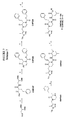
- Protected imidazole chloride derivatives (7-10) were prepared using previously reported procedures 21-23 as outlined in Figure 2 , Scheme 2.
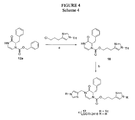
- Compounds with the imidazole group substituted on the N-1 position of piperazinone ring were prepared by alkylation of the amide nitrogen in compounds 12a-12d (See Figure 3 , Scheme 3).
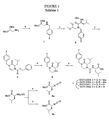
- Protected scaffolds 12a-12d were synthesized using procedures similar to that of scaffold 3, except that the reductive amination step was omitted to leave the N-1 position open for further substitution.
- the acid-catalyzed cyclization went smoothly for most of the scaffolds in 85%-88% yield, except for 12b (30% yield) which has a bulky naphthyl group.
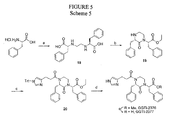
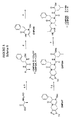
- GGTI-2376 and GGTI-2377 were synthesized using Yamashita's method 24 which is useful in synthesizing constrained dipeptide mimics composed of two identical amino acids.
- Compound 19 was synthesized in two steps (75% and 85% yields, respectively) from L-phenylalanine via ethylene-bridged compound 18. Coupling of scaffold 19 with N-1-trityl-deaminohistidine gave compound 20, which after removal of the trityl group and saponification gave the desired products.
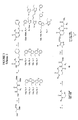
- the amino acid urea compounds of the present invention are prepared by first forming the amino acid ester isocyanates followed by subsequent urea formation. These syntheses are described pictorially in Figure 7 , Scheme 7 and Figure 8 , Scheme 8. Pursuant to these syntheses, the piperazinone scaffold is first synthesized and R 3 as a methyl-substituted methyleneimidazole is introduced on the amine alpha to the ketone after piperazinone formation. The amine beta to the ketone of the piperazinone is thereafter converted to an isocyanate and then reacted with an amino acid to form the amino acid urea compound. The same procedure was employed for attaching different amino acid methyl esters to the piperazinone scaffolds through a urea linkage with 85-88% yields.
- compositions based upon these novel chemical compounds comprise the above-described compounds in a therapeutically effective amount for treating one or more of a tumor and/or cancer, psoriasis, arthritis, atherosclerosis, intimal hyperplasia and chronic inflammatory diseases, including rheumatoid arthritis and osteoarthritis, among others, optionally in combination with a pharmaceutically acceptable additive, carrier or excipient.
- a therapeutically effective amount will vary with the infection or condition to be treated, its severity, the treatment regimen to be employed, the pharmacokinetics of the agent used, as well as the patient (animal or human) treated.
- the compound according to the present invention is formulated preferably in admixture with a pharmaceutically acceptable carrier.
- a pharmaceutically acceptable carrier In general, it is preferable to administer the pharmaceutical composition in orally-administrable form, but certain formulations may be administered via a parenteral, intravenous, intramuscular, transdermal, buccal, subcutaneous, suppository or other route. Intravenous and intramuscular formulations are preferably administered in sterile saline.
- one of ordinary skill in the art may modify the formulations within the teachings of the specification to provide numerous formulations for a particular route of administration without rendering the compositions of the present invention unstable or compromising their therapeutic activity.
- the modification of the present compounds to render them more soluble in water or other vehicle may be easily accomplished by minor modifications (salt formulation, esterification, etc.) which are well within the ordinary skill in the art. It is also well within the routineer's skill to modify the route of administration and dosage regimen of a particular compound in order to manage the pharmacokinetics of the present compounds for maximum beneficial effect in patients.
- the pro-drug form of the compounds especially including acylated (acetylated or other) and ether (alkyl and related) derivatives, phosphate esters and various salt forms of the present compounds, are preferred.
- acylated (acetylated or other) and ether (alkyl and related) derivatives, phosphate esters and various salt forms of the present compounds are preferred.
- One of ordinary skill in the art will recognize how to readily modify the present compounds to pro-drug forms to facilitate delivery of active compounds to a targeted site within the host organism or patient. The routineer also will take advantage of favorable pharmacokinetic parameters of the pro-drug forms, where applicable, in delivering the present compounds to a targeted site within the host organism or patient to maximize the intended effect of the compound.
- the amount of compound included within therapeutically active formulations according to the present invention is an effective amount for treating tumor and/or cancer, psoriasis, arthritis, atherosclerosis, intimal hyperplasia and chronic inflammatory diseases, including rheumatoid arthritis and osteoarthritis.
- a therapeutically effective amount of the present compound in pharmaceutical dosage form usually ranges from about 0.05 mg/kg to about 100 mg/kg per day or more, more preferably, less than about 1 mg/kg. to about 25 mg/kg per day of the patient or considerably more, depending upon the compound used, the condition or infection treated and the route of administration.
- the active compound is preferably administered in amounts ranging from about 0.5 mg/kg to about 25 mg/kg per day of the patient, depending upon the pharmacokinetics of the agent in the patient.
- This dosage range generally produces effective blood level concentrations of active compound.
- a prophylactically or preventive effective amount of the compositions according to the present invention falls within the same concentration range as set forth above for therapeutically effective amount and is usually the same as a therapeutically effective amount.
- Administration of the active compound may range from continuous (intravenous drip) to several oral administrations per day (for example, Q.I.D.) and may include oral, topical, parenteral, intramuscular, intravenous, sub-cutaneous, transdermal (which may include a penetration enhancement agent), buccal and suppository administration, among other routes of administration.
- Enteric coated oral tablets may also be used to enhance bioavailability of the compounds from an oral route of administration.
- the most effective dosage form will depend upon the pharmacokinetics of the particular agent chosen as well as the severity of disease in the patient. Oral dosage forms are particularly preferred, because of ease of admnistration and prospective favorable patient compliance.
- a therapeutically effective amount of one or more of the compounds according to the present invention is preferably intimately admixed with a pharmaceutically acceptable carrier according to conventional pharmaceutical compounding techniques to produce a dose.
- a carrier may take a wide variety of forms depending on the form of preparation desired for administration, e.g., oral or parenteral.
- any of the usual pharmaceutical media may be used.
- suitable carriers and additives including water, glycols, oils, alcohols, flavouring agents, preservatives, colouring agents and the like may be used.
- suitable carriers and additives including starches, sugar carriers, such as dextrose, mannitol, lactose and related carriers, diluents, granulating agents, lubricants, binders, disintegrating agents and the like may be used.
- the tablets or capsules may be enteric-coated or sustained release by standard techniques. The use of these dosage forms may significantly the bioavailability of the compounds in the patient.
- the carrier will usually comprise sterile water or aqueous sodium chloride solution, though other ingredients, including those which aid dispersion, also may be included.
- sterile water is to be used and maintained as sterile, the compositions and carriers must also be sterilized.
- injectable suspensions may also be prepared, in which case appropriate liquid carriers, suspending agents and the like may be employed.
- Liposomal suspensions may also be prepared by conventional methods to produce pharmaceutically acceptable carriers. This may be appropriate for the delivery of free nucleosides, acyl/alkyl nucleosides or phosphate ester pro-drug forms of the nucleoside compounds according to the present invention.
- the compounds and compositions are used to treat, prevent or delay the onset of any one or more of tumors and/or cancer, psoriasis, arthritis, atherosclerosis, intimal hyperplasia and chronic inflammatory diseases, including rheumatoid arthritis and osteoarthritis in mammals, especially humans.
- the compounds are used to treat tumors and/cancers such as in humans.
- the compositions will be administered in oral dosage form in amounts ranging from about 250 micrograms up to about 500 mg or more at least once a day, preferably, up to four times a day.
- the present compounds are preferably administered orally, but may be administered parenterally, topically or in suppository form.
- the compounds according to the present invention because of their low toxicity to host cells, may advantageously be employed prophylactically to prevent tumor and/or cancer, psoriasis, arthritis, atherosclerosis, and chronic inflammatory diseases, including rheumatoid arthritis and osteoarthritis, or to prevent the occurrence of clinical symptoms associated with the viral infection.
- the present invention also encompasses methods for the prophylactic treatment of tumors and/or cancer, and in particular, benign and malignant neoplasia, including various cancers such as, stomach, colon, rectal, liver, pancreatic, lung, breast, cervix uteri, corpus uteri, ovary, prostate, testis, bladder, renal, brain/cns, head and neck, throat, Hodgkins disease, non-Hodgkins leukemia, multiple myeloma leukemias, skin melanoma, acute lymphocytic leukemia, acute mylogenous leukemia, Ewings Sarcoma, small cell lung cancer, choriocarcinoma, rhabdomyosarcoma, Wilms Tumor, neuroblastoma, hairy cell leukemia, mouth/pharynx, oesophagus, larynx, melanoma, kidney, lymphoma, among others.
- the present compositions are used to prevent reduce the likelihood of or delay the onset of tumors and/or cancer.
- This prophylactic method comprises administering to a patient in need of such treatment or who is at risk for the development of one or more tumors and/or cancer, psoriasis, arthritis, atherosclerosis, intimal hyperplasia and chronic inflammatory diseases, including rheumatoid arthritis and osteoarthritis, among others, an amount of a compound according to the present invention effective for alleviating, preventing or delaying the onset of the infection.
- the compound utilized should be as low in toxicity and preferably non-toxic to the patient.
- the compound which is used should be maximally effective against the tumors and/or cancer and should exhibit a minimum of toxicity to the patient.
- the present compounds may be administered within the same dosage range for therapeutic treatment (i.e., about 250 micrograms up to about 500 mg. or more from one to four times per day for an oral dosage form) as a prophylactic agent to prevent the proliferation of the disease state or alternatively, to prolong the onset of or reduce the likelihood of a patient contracting a condition or a disease state which manifests itself in clinical symptoms.
- compounds according to the present invention may be administered alone or in combination with other agents, including other compounds of the present invention.
- Certain compounds according to the present invention may be effective for enhancing the biological activity of certain agents according to the present invention by reducing the metabolism, catabolism or inactivation of other compounds and as such, are co-administered for this intended effect.
- compounds according to the present invention may be administered alone or in combination with other agents, especially including other compounds of the present invention or compounds which are otherwise disclosed as being useful for the treatment of tumor and/or cancer, psoriasis, arthritis, atherosclerosis, intimal hyperplasia and chronic inflammatory diseases, including rheumatoid arthritis and osteoarthritis, among others, including those presently used to treat one or more of these disease states.
- Compounds used in the art may be used in combination with the present compounds for their additive activity or treatment profile against tumor and/or cancer, psoriasis, arthritis, atherosclerosis, intimal hyperplasia and chronic inflammatory diseases, including rheumatoid arthritis and osteoarthritis, among others and in certain instances, for their synergistic effects in combination with compounds of the present invention.
- Preferred secondary or additional compounds for use with the present compounds are those which do not inhibit tumor and/or cancer, psoriasis, arthritis, atherosclerosis, and chronic inflammatory diseases, including rheumatoid arthritis and osteoarthritis, among others by the same mechanism as those of the present invention.
- Certain compounds according to the present invention may be effective for enhancing the biological activity of certain agents according to the present invention by reducing the metabolism or inactivation of other compounds and as such, are co-administered for this intended effect.
- an inhibitory effective amount of the present compound is administered to a patient suffering from such a condition to treat the condition and alleviate the symptoms of such disease state.
- Nuclear magnetic resonance spectra ( 1 H, 400 or 500 MHz), ( 13 C, 100 or 125 MHz) were acquired using Bruker-500 or Bruker-400 spectrometers, and are reported in ⁇ (ppm) with TMS as the internal reference. The homogeneity of all the compounds was routinely checked by TLC on silica gel plates, and all synthesized final products were checked for purity by HPLC using a Rainin 250 ⁇ 4.6 mm, 5 ⁇ m Microsorb C18 column. High-resolution mass spectra (EI or FAB) were recorded on a Micro-mass VSE and Micro-mass 70-4F mass spectrometers, respectively. Melting points were obtained on an Electrochem melting point apparatus and are uncorrected.
- EI or FAB High-resolution mass spectra
- Amino acid methyl ester hydrochloride (0.6 mmol) was suspended in 2.0 mL of CH 2 Cl 2 , and to the solution was added 0.2 mL of pyridine (2.4 mmol). The sresulting suspension was cooled at 0 °C for 15 min. Then a solution of phosgene (20% in toluene, 0.4 mL, 0.72 mmol) (CAUTION: USE HOOD) was added by syringe. The resulting mixture was stirred at 0 °C under N 2 for 2 h.
- the solution was then diluted to a volume of 8 mL with CH 2 Cl 2 , extracted with 10 mL of cold 0.1 N HCl, and ca.7 mL of crushed ice. Each aqueous phases was re-extracted with 4 mL of CH 2 Cl 2 . The combined organic phases were extracted with cold brine, dried over Na 2 SO 4 . The resulting isocyanate solution was used for the subsequent urea formation reaction without further purification.
- L-leucine methyl ester hydrochloride 110mg, 0.6 mmol was dissolved in 0.3 mL of water and stirred with 1 mL of chloroform at 0 °C. The pH was adjusted to 9.0 with aqueous sodium carbonate solution. Then a solution of thiophosgene 70 ⁇ L (1.0mmol) in 150 ⁇ L CHCl 3 was added dropwise with stirring while the pH was kept at 9.0 with sodium carbonate solution.
- the organic phase was separated, and diluted to a volume of 8 mL with CHCl 3 .
- the solution was extracted with 10 mL of cold 0.1 N HCl, and ca. 7 mL of crushed ice. Each aqueous phases was re-extracted with 4 mL of CHCl 3 .
- the combined organic phases were extracted with cold brine, and dried over Na 2 SO 4 .
- the resulting isothiocyanate solution was used for the subsequent urea formation reaction without further purification.
- Trityl-protected compound 15 (0.2 mmol), was dissolved in 2 mL of 40 % TFA/CH 2 Cl 2 . Triethylsilane was added dropwise until the deep yellow color disappeared. The mixture was stirred at rt for 1 h. The solvent was removed and the resulting residue was dried under reduced pressure to give a yellow solid. After washing with hexanes, the residue was subjected to silica gel column chromatography using CH 2 Cl 2 followed by 5-10% MeOH/CH 2 Cl 2 as eluant. The fractions were combined and concentrated to afford a colorless oil.
- the deprotected product (0.2 mmol) was then dissolved in a 0.5 mL of MeOH, and then 1 mL of 1N NaOH. The mixture was stirred at rt for 1 h. The solvent was removed under reduced pressure, and the resulting residue was suspended in 2 mL of 30% MeOH/CH 2 Cl 2 , and the suspension was passed through a pad of silica gel. The solid phase was further eluted with 30%-50% MeOH/CH 2 Cl 2 solution. The fractions containing the product were combined and the solvent was removed to afford the target molecules in 80-85% yields.
- the naphthyl-derived scaffold 12b was synthesized using conditions slightly different from that described for the synthesis of compound 12a.
- Compound 11b (3.1 g, 7.1 mmol) was dissolved in 100 mL 70% TFA/H 2 O and the solution was stirred at rt overnight. The solvent was removed under reduced pressure to give a yellow oil, which was dissolved in 150 mL ethyl acetate and washed with saturated NaHCO 3 and brine. The organic phase was dried over anhydrous Na 2 SO 4 , and the solvent was removed to give a mixture of the uncyclized aldhyde and the desired product.
- aldehyde 21b (380 mg, 40%) as a colorless oil:
- Trityl-protected compound CHP341 (0.2 mmol), was dissolved in 2 mL of 40 % TFA/CH 2 Cl 2 . Triethylsilane was added dropwise until the deep yellow color disappeared. The mixture was stirred at rt for 1 h. The solvent was removed and the resulting residue was dried under reduced pressure to give a yellow solid. After washing with hexanes, the residue was subjected to silica gel column chromatography using CH 2 Cl 2 followed by 5-10% MeOH/CH 2 Cl 2 as eluant. The fractions were combined and concentrated to afford a colorless oil.
- the deprotected product (0.2 mmol) was then dissolved in a 0.5 mL of MeOH, and then 1 mL of 1N NaOH. The mixture was stirred at rt for 1 h. The solvent was removed under reduced pressure, and the resulting residue was suspended in 2 mL of 30% MeOH/CH 2 Cl 2 , and the suspension was passed through a pad of silica gel. The solid phase was further eluted with 30%-50% MeOH/CH 2 Cl 2 solution. The fractions containing the product were combined and the solvent was removed to afford the target molecules in 80-85% yields.
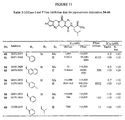
- the in vitro inhibition assays of GGTase-I and FTase were carried out by measuring the [ 3 H]GGPP and [ 3 H]FPP incorporated into H-Ras-CVLL and H-Ras-CVLS, respectively, as previously described. 27 The in vivo inhibition of geranylgeranylation and farnesylation was determined based on the level of inhibition of Rap1A and H-Ras processing, respectively. 10 Briefly, oncogenic H-Ras-transformed NIH 3T3 cells were treated with various concentrations of inhibitors, and the cell lysates were separated on 12.5% SDS-PAGE.
- the separated proteins were transferred to nitrocellulose and immunoblotted using an anti-Ras antibody (Y13-258) or an anti-Rap1A antibody (SC-65).
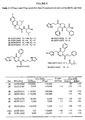
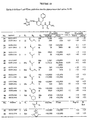
- Antibody reactions were visualized using either peroxidase-conjugated goat anti-rat IgG or goat anti-rabbit IgG and an enhanced chemilluminescence detection system. The results of those assays appear in Table 1 ( Figure 9 ), Table 2 ( Figure 10 ) and Table 3 ( Figure 11 ).
- the selectivity is significantly promoted by 5-methyl substitution on the imidazole ring and fluorine-substitution on the 3-aryl group. Modification of the 6-position of the piperazinone scaffold was found to be unfavorable. GGTI-2417, the corresponding methyl ester of GGTI-2418, was found to selectively block processing of Rap1A by GGTase-I with an IC 50 of 0.3 ⁇ M in NIH 3T3 cells. This series of compounds likely inhibit GGTase-I in a competitive manner to the CAAX tetrapeptide instead of geranylgeranylpyrophosphate (GGPP), the universal geranylgeranyl source for all the different GGTase substrates. This suggests potentially good selectivity of this series of compounds in cell culture or in vivo systems and utility as inhibitors of GGTase and antitumor/anticancer agents, as well as a number of other disease states described herein.
- GGPP geranylgeranylpyrophosphate
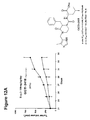
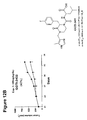
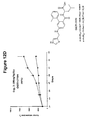
- Geranylgeranyltransferase I inhibitors potently inhibit A-549 human lung cancer cell growth in nude mice.
- the tumor volumes were determined by measuring the length (1) and the width (w) and calculating the volume (V lw 2 /2) as described previously (30, 31).
- A-549 cells were implanted s.c. in nude mice and when the tumors reached an average size of about 50 to 100 mm 3 , the animals were randomized and treated either with vehicle or peptidomimetics as described under Materials and Methods.
- Figures 12A-D show that, over a period of 28 - 34 days, tumors from animals that were treated with vehicle reached an average size of about 600 mm 3 whereas those treated with GGTI-2418 ( Figure 12A ), GGTI-2132 ( Figure 12B ), GGTI-2430 ( Figure 12C ) and GGTI-2154 ( Figure 12D ) grew to average sizes of 280, 300, 500 and 250 mm 3 , respectively.
- GGTIs inhibited A-549 tumor growth by 57%, 40%, 29% and 66%, respectively.
Landscapes
- Chemical & Material Sciences (AREA)
- Organic Chemistry (AREA)
- Health & Medical Sciences (AREA)
- General Chemical & Material Sciences (AREA)
- Medicinal Chemistry (AREA)
- Nuclear Medicine, Radiotherapy & Molecular Imaging (AREA)
- Chemical Kinetics & Catalysis (AREA)
- Pharmacology & Pharmacy (AREA)
- Life Sciences & Earth Sciences (AREA)
- Animal Behavior & Ethology (AREA)
- General Health & Medical Sciences (AREA)
- Public Health (AREA)
- Veterinary Medicine (AREA)
- Bioinformatics & Cheminformatics (AREA)
- Engineering & Computer Science (AREA)
- Rheumatology (AREA)
- Oncology (AREA)
- Cardiology (AREA)
- Heart & Thoracic Surgery (AREA)
- Hematology (AREA)
- Vascular Medicine (AREA)
- Pain & Pain Management (AREA)
- Urology & Nephrology (AREA)
- Dermatology (AREA)
- Immunology (AREA)
- Orthopedic Medicine & Surgery (AREA)
- Physical Education & Sports Medicine (AREA)
- Pharmaceuticals Containing Other Organic And Inorganic Compounds (AREA)
- Plural Heterocyclic Compounds (AREA)
Applications Claiming Priority (2)
| Application Number | Priority Date | Filing Date | Title |
|---|---|---|---|
| US31479501P | 2001-08-24 | 2001-08-24 | |
| EP02796419A EP1427418B1 (de) | 2001-08-24 | 2002-08-23 | Piperazinon-verbindungen als antitumorale und krebsbekämpfende mittel |
Related Parent Applications (2)
| Application Number | Title | Priority Date | Filing Date |
|---|---|---|---|
| EP02796419.6 Division | 2002-08-23 | ||
| EP02796419A Division EP1427418B1 (de) | 2001-08-24 | 2002-08-23 | Piperazinon-verbindungen als antitumorale und krebsbekämpfende mittel |
Publications (3)
| Publication Number | Publication Date |
|---|---|
| EP2014291A2 true EP2014291A2 (de) | 2009-01-14 |
| EP2014291A3 EP2014291A3 (de) | 2009-06-17 |
| EP2014291B1 EP2014291B1 (de) | 2011-10-26 |
Family
ID=23221472
Family Applications (2)
| Application Number | Title | Priority Date | Filing Date |
|---|---|---|---|
| EP08105065A Expired - Lifetime EP2014291B1 (de) | 2001-08-24 | 2002-08-23 | Piperazinon-Verbindungen als tumor- und krebsbekämpfende Wirkstoffe |
| EP02796419A Expired - Lifetime EP1427418B1 (de) | 2001-08-24 | 2002-08-23 | Piperazinon-verbindungen als antitumorale und krebsbekämpfende mittel |
Family Applications After (1)
| Application Number | Title | Priority Date | Filing Date |
|---|---|---|---|
| EP02796419A Expired - Lifetime EP1427418B1 (de) | 2001-08-24 | 2002-08-23 | Piperazinon-verbindungen als antitumorale und krebsbekämpfende mittel |
Country Status (9)
| Country | Link |
|---|---|
| US (1) | US7763620B2 (de) |
| EP (2) | EP2014291B1 (de) |
| JP (1) | JP2005504771A (de) |
| AT (2) | ATE447955T1 (de) |
| AU (1) | AU2002332640B2 (de) |
| CA (1) | CA2458009C (de) |
| DE (1) | DE60234354D1 (de) |
| ES (2) | ES2335092T3 (de) |
| WO (1) | WO2003017939A2 (de) |
Cited By (2)
| Publication number | Priority date | Publication date | Assignee | Title |
|---|---|---|---|---|
| WO2011090316A3 (ko) * | 2010-01-19 | 2011-12-01 | 한미홀딩스 주식회사 | 세포사멸 유도 활성을 갖는 신규 피라지논 유도체 및 이를 포함하는 약학 조성물 |
| WO2019076269A1 (zh) | 2017-10-16 | 2019-04-25 | 清华大学 | 甲羟戊酸通路抑制剂及其药物组合物 |
Families Citing this family (16)
| Publication number | Priority date | Publication date | Assignee | Title |
|---|---|---|---|---|
| SG172685A1 (en) | 2006-06-28 | 2011-07-28 | Amgen Inc | Glycine transporter-1 inhibitors |
| WO2009053459A1 (en) | 2007-10-26 | 2009-04-30 | Glaxo Group Limited | 4-benz0yl-1-substituted-piperazin-2-0ne derivatives as p2x7 modulators |
| KR100967171B1 (ko) * | 2007-12-26 | 2010-07-05 | 재단법인서울대학교산학협력재단 | Δ5-2-옥소피페라진 유도체 및 그의 고체상 합성 방법 |
| PE20110059A1 (es) * | 2008-06-24 | 2011-02-15 | Sanofi Aventis | Isoquinolinas e isoquinolinonas sustituidas en calidad de inhibidores de la rho-quinasa |
| WO2010088457A2 (en) * | 2009-01-29 | 2010-08-05 | H. Lee Moffitt Cancer And Research Institute, Inc. | Methods for inducing tumor regression, inhibiting tumor growth, and inducing apoptosis in breast tumors with geranylgeranyltransferase i inhibitors |
| WO2010149943A1 (en) * | 2009-06-25 | 2010-12-29 | Oncorel Ab | New compounds and medical use |
| CA2849751C (en) * | 2011-10-03 | 2019-06-11 | Euroscreen Sa | Chiral n-acyl-5,6,7,(8-substituted)-tetrahydro-[1,2,4]triazolo[4,3-a]pyrazines as selective nk-3 receptor antagonists, pharmaceutical composition, methods for use in nk-3 receptormediated disorders and chiral synthesis thereof |
| EP3724178B1 (de) | 2017-12-15 | 2024-05-01 | Inthera Bioscience AG | 1-(piperidinocarbonylmethyl)-2-oxopiperidin-derivate zur behandlung von krebs |
| WO2020048831A1 (en) | 2018-09-03 | 2020-03-12 | Bayer Aktiengesellschaft | 5-aryl-3,9-diazaspiro[5.5]undecan-2-one compounds |
| WO2020048828A1 (en) | 2018-09-03 | 2020-03-12 | Bayer Pharma Aktiengesellschaft | 5-heteroaryl-3,9-diazaspiro[5.5]undecane compounds |
| AR116020A1 (es) | 2018-09-03 | 2021-03-25 | Bayer Ag | COMPUESTOS DE 3,9-DIAZAESPIRO[5.5]UNDECANO COMO INHIBIDORES DE GGTasa I Y SU USO PARA EL TRATAMIENTO DE ENFERMEDADES HIPERPROLIFERATIVAS |
| WO2020048827A1 (en) | 2018-09-03 | 2020-03-12 | Bayer Aktiengesellschaft | 1, 3, 9-triazaspiro[5.5] undecan-2-one compounds |
| WO2020048830A1 (en) | 2018-09-03 | 2020-03-12 | Bayer Aktiengesellschaft | 5-aryl-3,9-diazaspiro[5.5]undecan-2-one compounds |
| WO2020048826A1 (en) | 2018-09-03 | 2020-03-12 | Bayer Aktiengesellschaft | 5-substituted 1-oxa-3,9-diazaspiro[5.5]undecan-2-one compounds |
| US12611406B2 (en) | 2020-06-19 | 2026-04-28 | Inthera Bioscience AG | Oxopiperazine derivatives for the treatment of cancer |
| CN115894609B (zh) * | 2022-11-02 | 2025-04-29 | 四川大学 | 一种具有抗癌活性的二肽化合物及其制备方法 |
Family Cites Families (11)
| Publication number | Priority date | Publication date | Assignee | Title |
|---|---|---|---|---|
| IL47168A (en) * | 1974-05-09 | 1979-07-25 | Toyama Chemical Co Ltd | Mono or dioxo piperazino(thio)carbonylamino derivatives ofpenicillins and cephalosporins and process for producing the same |
| US4251438A (en) | 1979-06-14 | 1981-02-17 | The Upjohn Company | Piperazinone and piperazine polypeptides |
| US5284828A (en) * | 1990-05-14 | 1994-02-08 | Fujisawa Pharmaceutical Co. Ltd. | Peptide compound and its preparation |
| EE9700141A (et) | 1994-12-23 | 1997-12-15 | Dr. Karl Thomae Gmbh | Piperasiinderivaadid, neid sisaldavad ravimid, nende kasutamine ja valmistamise meetod |
| US5885995A (en) * | 1996-04-03 | 1999-03-23 | Merck & Co., Inc. | Inhibitors of farnesyl-protein transferase |
| EP0951471B1 (de) | 1996-12-17 | 2004-03-17 | Warner-Lambert Company Llc | Cycloalkyl inhibitoren der protein-farnesyltransferase |
| WO1999009985A1 (en) * | 1997-08-27 | 1999-03-04 | Merck & Co., Inc. | Inhibitors of prenyl-protein transferase |
| YU47600A (sh) | 1998-01-27 | 2002-09-19 | Aventis Pharmaceuticals Products Inc. | SUPSTITUISANI OKSOAZAHETEROCIKLIL INHIBITORI FAKTORA Xa |
| JP2003529531A (ja) | 1998-11-25 | 2003-10-07 | アヴェンティス ファーマシューティカルズ インコーポレイテッド | 置換オキソアザへテロシクリルXa因子阻害剤 |
| US6358956B1 (en) | 1999-03-03 | 2002-03-19 | Merck & Co., Inc. | Inhibitors of prenyl-protein transferase |
| KR20020087041A (ko) * | 1999-07-28 | 2002-11-21 | 아벤티스 파마슈티칼스 프로덕츠 인크. | 치환된 옥소아자헤테로사이클릴 화합물 |
-
2002
- 2002-08-23 DE DE60234354T patent/DE60234354D1/de not_active Expired - Lifetime
- 2002-08-23 EP EP08105065A patent/EP2014291B1/de not_active Expired - Lifetime
- 2002-08-23 US US10/484,560 patent/US7763620B2/en not_active Expired - Lifetime
- 2002-08-23 AT AT02796419T patent/ATE447955T1/de not_active IP Right Cessation
- 2002-08-23 EP EP02796419A patent/EP1427418B1/de not_active Expired - Lifetime
- 2002-08-23 AU AU2002332640A patent/AU2002332640B2/en not_active Expired
- 2002-08-23 CA CA2458009A patent/CA2458009C/en not_active Expired - Lifetime
- 2002-08-23 AT AT08105065T patent/ATE530184T1/de not_active IP Right Cessation
- 2002-08-23 WO PCT/US2002/026881 patent/WO2003017939A2/en not_active Ceased
- 2002-08-23 ES ES02796419T patent/ES2335092T3/es not_active Expired - Lifetime
- 2002-08-23 JP JP2003522462A patent/JP2005504771A/ja active Pending
- 2002-08-23 ES ES08105065T patent/ES2376399T3/es not_active Expired - Lifetime
Non-Patent Citations (31)
Cited By (3)
| Publication number | Priority date | Publication date | Assignee | Title |
|---|---|---|---|---|
| WO2011090316A3 (ko) * | 2010-01-19 | 2011-12-01 | 한미홀딩스 주식회사 | 세포사멸 유도 활성을 갖는 신규 피라지논 유도체 및 이를 포함하는 약학 조성물 |
| KR101162100B1 (ko) | 2010-01-19 | 2012-07-02 | 한미사이언스 주식회사 | 세포사멸 유도 활성을 갖는 신규 피라지논 유도체 및 이를 활성성분으로 포함하는 약학 조성물 |
| WO2019076269A1 (zh) | 2017-10-16 | 2019-04-25 | 清华大学 | 甲羟戊酸通路抑制剂及其药物组合物 |
Also Published As
| Publication number | Publication date |
|---|---|
| EP1427418B1 (de) | 2009-11-11 |
| EP1427418A4 (de) | 2004-11-17 |
| CA2458009C (en) | 2011-08-16 |
| ES2335092T3 (es) | 2010-03-22 |
| US20080221123A1 (en) | 2008-09-11 |
| US7763620B2 (en) | 2010-07-27 |
| AU2002332640B2 (en) | 2007-11-08 |
| ES2376399T3 (es) | 2012-03-13 |
| WO2003017939A3 (en) | 2003-11-13 |
| DE60234354D1 (de) | 2009-12-24 |
| WO2003017939A2 (en) | 2003-03-06 |
| ATE447955T1 (de) | 2009-11-15 |
| JP2005504771A (ja) | 2005-02-17 |
| EP2014291A3 (de) | 2009-06-17 |
| EP1427418A2 (de) | 2004-06-16 |
| CA2458009A1 (en) | 2003-03-06 |
| EP2014291B1 (de) | 2011-10-26 |
| ATE530184T1 (de) | 2011-11-15 |
Similar Documents
| Publication | Publication Date | Title |
|---|---|---|
| EP2014291B1 (de) | Piperazinon-Verbindungen als tumor- und krebsbekämpfende Wirkstoffe | |
| AU2002332640A1 (en) | Piperazinone compounds as anti-tumor and anti-cancer agents and methods of treatment | |
| CA2285119C (en) | Retroviral protease inhibiting compounds | |
| WO2021236475A1 (en) | Compounds that inhibit asparagine synthetase and their methods of use | |
| US5728830A (en) | Farnesyltransferase inhibitor | |
| JP7857914B2 (ja) | Smarca2および/またはsmarca4分解剤としての6置換ピリダジン化合物 | |
| US11639343B2 (en) | Compounds targeting and degrading BCR-ABL protein and its antitumor application | |
| JP2018021072A (ja) | 治療活性化合物およびそれらの使用方法 | |
| CA3077245A1 (en) | Lactam derivatives useful as inhibitors of mutant idh1 | |
| EA001280B1 (ru) | Замещенные n-[(аминоиминометил или аминометил)фенил] пропиламиды | |
| EP3381925B1 (de) | Deuteriummodifizierte brigatinibderivate, pharmazeutische zusammensetzungen damit und verwendung davon | |
| Peng et al. | Synthesis and evaluation of potent, highly-selective, 3-aryl-piperazinone inhibitors of protein geranylgeranyltransferase-I | |
| JP2021500334A (ja) | Ehmt2阻害剤としてのアミン置換複素環化合物、その塩、及びそれらの合成方法 | |
| AU2006279991B2 (en) | Substituted imidazole compounds as KSP inhibitors | |
| EP3628664A1 (de) | Irreversible inhibitoren der kras-g12c-mutante | |
| AU2007229363B2 (en) | Piperazinone Compounds as Anti-Tumor and Anti-Cancer Agents and the Methods of Treatment | |
| JP5330377B2 (ja) | 3,4−ジヒドロキナゾリン誘導体 | |
| HK1126966A (en) | Piperazinone compounds as anti-tumor and anti-cancer agents and methods of treatment | |
| Hamilton et al. | Piperazinone compounds as anti-tumor and anti | |
| KR20020038817A (ko) | 암 치료를 위한 항세포증식제로서의 치환 피롤 | |
| CN115380024B (zh) | 二氮杂螺吡喃化合物的晶型 | |
| AU2004201149A1 (en) | Retroviral Protease Inhibiting Compounds | |
| WO2019118961A1 (en) | Inhibitors for the β-catenin/b-cell lymphoma 9 (bcl9) protein–protein interaction | |
| AU2923897A (en) | Hiv protease inhibitors useful for the treatment of aids | |
| JP3050598B2 (ja) | 水溶性ビスージオキソピペラジン誘導体 |
Legal Events
| Date | Code | Title | Description |
|---|---|---|---|
| PUAI | Public reference made under article 153(3) epc to a published international application that has entered the european phase |
Free format text: ORIGINAL CODE: 0009012 |
|
| PUAI | Public reference made under article 153(3) epc to a published international application that has entered the european phase |
Free format text: ORIGINAL CODE: 0009012 |
|
| AC | Divisional application: reference to earlier application |
Ref document number: 1427418 Country of ref document: EP Kind code of ref document: P |
|
| AK | Designated contracting states |
Kind code of ref document: A2 Designated state(s): AT BE BG CH CY CZ DE DK EE ES FI FR GB GR IE IT LI LU MC NL PT SE SK TR |
|
| AX | Request for extension of the european patent |
Extension state: AL LT LV MK RO SI |
|
| PUAL | Search report despatched |
Free format text: ORIGINAL CODE: 0009013 |
|
| AK | Designated contracting states |
Kind code of ref document: A3 Designated state(s): AT BE BG CH CY CZ DE DK EE ES FI FR GB GR IE IT LI LU MC NL PT SE SK TR |
|
| AX | Request for extension of the european patent |
Extension state: AL LT LV MK RO SI |
|
| REG | Reference to a national code |
Ref country code: HK Ref legal event code: DE Ref document number: 1126966 Country of ref document: HK |
|
| 17P | Request for examination filed |
Effective date: 20091127 |
|
| AKX | Designation fees paid |
Designated state(s): AT BE BG CH CY CZ DE DK EE ES FI FR GB GR IE IT LI LU MC NL PT SE SK TR |
|
| AXX | Extension fees paid |
Extension state: RO Payment date: 20091127 Extension state: AL Payment date: 20091127 Extension state: MK Payment date: 20091127 Extension state: LV Payment date: 20091127 Extension state: LT Payment date: 20091127 Extension state: SI Payment date: 20091127 |
|
| 17Q | First examination report despatched |
Effective date: 20100304 |
|
| GRAP | Despatch of communication of intention to grant a patent |
Free format text: ORIGINAL CODE: EPIDOSNIGR1 |
|
| RTI1 | Title (correction) |
Free format text: PIPERAZINONE COMPOUNDS AS ANTI-TUMOR AND ANTI-CANCER AGENTS |
|
| GRAS | Grant fee paid |
Free format text: ORIGINAL CODE: EPIDOSNIGR3 |
|
| GRAA | (expected) grant |
Free format text: ORIGINAL CODE: 0009210 |
|
| AC | Divisional application: reference to earlier application |
Ref document number: 1427418 Country of ref document: EP Kind code of ref document: P |
|
| AK | Designated contracting states |
Kind code of ref document: B1 Designated state(s): AT BE BG CH CY CZ DE DK EE ES FI FR GB GR IE IT LI LU MC NL PT SE SK TR |
|
| AX | Request for extension of the european patent |
Extension state: AL LT LV MK RO SI |
|
| REG | Reference to a national code |
Ref country code: GB Ref legal event code: FG4D |
|
| REG | Reference to a national code |
Ref country code: CH Ref legal event code: EP |
|
| REG | Reference to a national code |
Ref country code: IE Ref legal event code: FG4D |
|
| REG | Reference to a national code |
Ref country code: DE Ref legal event code: R096 Ref document number: 60241429 Country of ref document: DE Effective date: 20120119 |
|
| REG | Reference to a national code |
Ref country code: NL Ref legal event code: VDEP Effective date: 20111026 Ref country code: CH Ref legal event code: NV Representative=s name: RIEDERER HASLER & PARTNER PATENTANWAELTE AG |
|
| REG | Reference to a national code |
Ref country code: ES Ref legal event code: FG2A Ref document number: 2376399 Country of ref document: ES Kind code of ref document: T3 Effective date: 20120313 |
|
| LTIE | Lt: invalidation of european patent or patent extension |
Effective date: 20111026 |
|
| REG | Reference to a national code |
Ref country code: AT Ref legal event code: MK05 Ref document number: 530184 Country of ref document: AT Kind code of ref document: T Effective date: 20111026 |
|
| PG25 | Lapsed in a contracting state [announced via postgrant information from national office to epo] |
Ref country code: BE Free format text: LAPSE BECAUSE OF FAILURE TO SUBMIT A TRANSLATION OF THE DESCRIPTION OR TO PAY THE FEE WITHIN THE PRESCRIBED TIME-LIMIT Effective date: 20111026 |
|
| PG25 | Lapsed in a contracting state [announced via postgrant information from national office to epo] |
Ref country code: NL Free format text: LAPSE BECAUSE OF FAILURE TO SUBMIT A TRANSLATION OF THE DESCRIPTION OR TO PAY THE FEE WITHIN THE PRESCRIBED TIME-LIMIT Effective date: 20111026 Ref country code: GR Free format text: LAPSE BECAUSE OF FAILURE TO SUBMIT A TRANSLATION OF THE DESCRIPTION OR TO PAY THE FEE WITHIN THE PRESCRIBED TIME-LIMIT Effective date: 20120127 Ref country code: SE Free format text: LAPSE BECAUSE OF FAILURE TO SUBMIT A TRANSLATION OF THE DESCRIPTION OR TO PAY THE FEE WITHIN THE PRESCRIBED TIME-LIMIT Effective date: 20111026 Ref country code: PT Free format text: LAPSE BECAUSE OF FAILURE TO SUBMIT A TRANSLATION OF THE DESCRIPTION OR TO PAY THE FEE WITHIN THE PRESCRIBED TIME-LIMIT Effective date: 20120227 |
|
| PG25 | Lapsed in a contracting state [announced via postgrant information from national office to epo] |
Ref country code: CY Free format text: LAPSE BECAUSE OF FAILURE TO SUBMIT A TRANSLATION OF THE DESCRIPTION OR TO PAY THE FEE WITHIN THE PRESCRIBED TIME-LIMIT Effective date: 20111026 |
|
| PG25 | Lapsed in a contracting state [announced via postgrant information from national office to epo] |
Ref country code: CZ Free format text: LAPSE BECAUSE OF FAILURE TO SUBMIT A TRANSLATION OF THE DESCRIPTION OR TO PAY THE FEE WITHIN THE PRESCRIBED TIME-LIMIT Effective date: 20111026 Ref country code: DK Free format text: LAPSE BECAUSE OF FAILURE TO SUBMIT A TRANSLATION OF THE DESCRIPTION OR TO PAY THE FEE WITHIN THE PRESCRIBED TIME-LIMIT Effective date: 20111026 Ref country code: BG Free format text: LAPSE BECAUSE OF FAILURE TO SUBMIT A TRANSLATION OF THE DESCRIPTION OR TO PAY THE FEE WITHIN THE PRESCRIBED TIME-LIMIT Effective date: 20120126 Ref country code: SK Free format text: LAPSE BECAUSE OF FAILURE TO SUBMIT A TRANSLATION OF THE DESCRIPTION OR TO PAY THE FEE WITHIN THE PRESCRIBED TIME-LIMIT Effective date: 20111026 Ref country code: EE Free format text: LAPSE BECAUSE OF FAILURE TO SUBMIT A TRANSLATION OF THE DESCRIPTION OR TO PAY THE FEE WITHIN THE PRESCRIBED TIME-LIMIT Effective date: 20111026 |
|
| PLBE | No opposition filed within time limit |
Free format text: ORIGINAL CODE: 0009261 |
|
| STAA | Information on the status of an ep patent application or granted ep patent |
Free format text: STATUS: NO OPPOSITION FILED WITHIN TIME LIMIT |
|
| 26N | No opposition filed |
Effective date: 20120727 |
|
| REG | Reference to a national code |
Ref country code: DE Ref legal event code: R097 Ref document number: 60241429 Country of ref document: DE Effective date: 20120727 |
|
| PG25 | Lapsed in a contracting state [announced via postgrant information from national office to epo] |
Ref country code: AT Free format text: LAPSE BECAUSE OF FAILURE TO SUBMIT A TRANSLATION OF THE DESCRIPTION OR TO PAY THE FEE WITHIN THE PRESCRIBED TIME-LIMIT Effective date: 20111026 |
|
| PG25 | Lapsed in a contracting state [announced via postgrant information from national office to epo] |
Ref country code: MC Free format text: LAPSE BECAUSE OF NON-PAYMENT OF DUE FEES Effective date: 20120831 |
|
| PG25 | Lapsed in a contracting state [announced via postgrant information from national office to epo] |
Ref country code: FI Free format text: LAPSE BECAUSE OF FAILURE TO SUBMIT A TRANSLATION OF THE DESCRIPTION OR TO PAY THE FEE WITHIN THE PRESCRIBED TIME-LIMIT Effective date: 20111026 |
|
| PG25 | Lapsed in a contracting state [announced via postgrant information from national office to epo] |
Ref country code: TR Free format text: LAPSE BECAUSE OF FAILURE TO SUBMIT A TRANSLATION OF THE DESCRIPTION OR TO PAY THE FEE WITHIN THE PRESCRIBED TIME-LIMIT Effective date: 20111026 |
|
| PG25 | Lapsed in a contracting state [announced via postgrant information from national office to epo] |
Ref country code: LU Free format text: LAPSE BECAUSE OF NON-PAYMENT OF DUE FEES Effective date: 20120823 |
|
| REG | Reference to a national code |
Ref country code: HK Ref legal event code: WD Ref document number: 1126966 Country of ref document: HK |
|
| REG | Reference to a national code |
Ref country code: FR Ref legal event code: PLFP Year of fee payment: 15 |
|
| REG | Reference to a national code |
Ref country code: FR Ref legal event code: PLFP Year of fee payment: 16 |
|
| REG | Reference to a national code |
Ref country code: FR Ref legal event code: PLFP Year of fee payment: 17 |
|
| PGFP | Annual fee paid to national office [announced via postgrant information from national office to epo] |
Ref country code: CH Payment date: 20210902 Year of fee payment: 20 Ref country code: FR Payment date: 20210825 Year of fee payment: 20 Ref country code: IT Payment date: 20210820 Year of fee payment: 20 Ref country code: IE Payment date: 20210827 Year of fee payment: 20 |
|
| PGFP | Annual fee paid to national office [announced via postgrant information from national office to epo] |
Ref country code: DE Payment date: 20210827 Year of fee payment: 20 Ref country code: GB Payment date: 20210827 Year of fee payment: 20 Ref country code: ES Payment date: 20210901 Year of fee payment: 20 |
|
| REG | Reference to a national code |
Ref country code: DE Ref legal event code: R071 Ref document number: 60241429 Country of ref document: DE |
|
| REG | Reference to a national code |
Ref country code: CH Ref legal event code: PL |
|
| REG | Reference to a national code |
Ref country code: ES Ref legal event code: FD2A Effective date: 20220902 |
|
| REG | Reference to a national code |
Ref country code: GB Ref legal event code: PE20 Expiry date: 20220822 |
|
| REG | Reference to a national code |
Ref country code: IE Ref legal event code: MK9A |
|
| PG25 | Lapsed in a contracting state [announced via postgrant information from national office to epo] |
Ref country code: IE Free format text: LAPSE BECAUSE OF EXPIRATION OF PROTECTION Effective date: 20220823 Ref country code: GB Free format text: LAPSE BECAUSE OF EXPIRATION OF PROTECTION Effective date: 20220822 Ref country code: ES Free format text: LAPSE BECAUSE OF EXPIRATION OF PROTECTION Effective date: 20220824 |