EP2012802B1 - Nouveaux medicaments pour les traitements contre le virus de l'herpès - Google Patents
Nouveaux medicaments pour les traitements contre le virus de l'herpès Download PDFInfo
- Publication number
- EP2012802B1 EP2012802B1 EP07731407A EP07731407A EP2012802B1 EP 2012802 B1 EP2012802 B1 EP 2012802B1 EP 07731407 A EP07731407 A EP 07731407A EP 07731407 A EP07731407 A EP 07731407A EP 2012802 B1 EP2012802 B1 EP 2012802B1
- Authority
- EP
- European Patent Office
- Prior art keywords
- hsv
- polysaccharide
- viral
- herpes virus
- sulphated
- Prior art date
- Legal status (The legal status is an assumption and is not a legal conclusion. Google has not performed a legal analysis and makes no representation as to the accuracy of the status listed.)
- Not-in-force
Links
- 0 C[C@@](*)C(C1)([C@](*2*)C(*)OC1C(C)=C)OC2(C)[C@@](C(*)[C@]1C2I(C)C)OC(C[O+])[C@@]12O Chemical compound C[C@@](*)C(C1)([C@](*2*)C(*)OC1C(C)=C)OC2(C)[C@@](C(*)[C@]1C2I(C)C)OC(C[O+])[C@@]12O 0.000 description 1
Images



Classifications
-
- A—HUMAN NECESSITIES
- A61—MEDICAL OR VETERINARY SCIENCE; HYGIENE
- A61K—PREPARATIONS FOR MEDICAL, DENTAL OR TOILETRY PURPOSES
- A61K31/00—Medicinal preparations containing organic active ingredients
- A61K31/70—Carbohydrates; Sugars; Derivatives thereof
- A61K31/715—Polysaccharides, i.e. having more than five saccharide radicals attached to each other by glycosidic linkages; Derivatives thereof, e.g. ethers, esters
-
- A—HUMAN NECESSITIES
- A61—MEDICAL OR VETERINARY SCIENCE; HYGIENE
- A61K—PREPARATIONS FOR MEDICAL, DENTAL OR TOILETRY PURPOSES
- A61K31/00—Medicinal preparations containing organic active ingredients
- A61K31/70—Carbohydrates; Sugars; Derivatives thereof
- A61K31/715—Polysaccharides, i.e. having more than five saccharide radicals attached to each other by glycosidic linkages; Derivatives thereof, e.g. ethers, esters
- A61K31/737—Sulfated polysaccharides, e.g. chondroitin sulfate, dermatan sulfate
-
- A—HUMAN NECESSITIES
- A61—MEDICAL OR VETERINARY SCIENCE; HYGIENE
- A61P—SPECIFIC THERAPEUTIC ACTIVITY OF CHEMICAL COMPOUNDS OR MEDICINAL PREPARATIONS
- A61P31/00—Antiinfectives, i.e. antibiotics, antiseptics, chemotherapeutics
- A61P31/12—Antivirals
- A61P31/20—Antivirals for DNA viruses
- A61P31/22—Antivirals for DNA viruses for herpes viruses
Definitions
- the invention relates to novel drugs for the treatment against herpesvirus ( Herpesviridae ).
- herpesviruses belong to a family of viruses whose genome is double-stranded linear DNA encoding 100 to 200 genes and which is encapsulated in an icosahedral protein cage called the capsid, itself enveloped in a lipid membrane called envelope.
- the herpesvirus family comprises three subfamilies, namely alpha herpesvirus, beta herpesvirus and gamma herpesvirus.
- Alpha herpesviruses are characterized by a tropism with regard to a large number of cell types.
- Herpes simplex virus 1 HSV-1
- Herpes simplex virus 2 HSV-2
- VZV varicella-zoster virus
- Beta herpesviruses are characterized by a tropism with regard to a limited number of cell types.
- the cytomegalovirus (CMV) responsible for a mononucleosis syndrome and the human herpesviruses 6 (HHV6) and 7 (HHV7) responsible for roseola belong to this subfamily.
- Viruses of this subfamily include Epstein-Barr virus (EBV), which causes infectious mononucleosis, Burkitt's lymphoma and nasopharyngeal carcinoma, and Kaposi's sarcoma or Rhadinovirus-associated herpesvirus (KSHV). responsible for a lymphoma.
- EBV Epstein-Barr virus
- KSHV Rhadinovirus-associated herpesvirus
- Herpes infection includes a primary infection phase and latency phases interrupted by reactivation phases.
- the virus enters the epithelial cells where it will multiply and produce cell lysis at the site of inoculation. The virus can then take the path of the sensory nerves to nuclei of ganglion neurons.
- primary infection is often accompanied by a short period of clinical illness, long-term latency is asymptomatic.
- latency phases the intracellular virus does not replicate. The virus remains in the nucleus of neuronal ganglia in the form of extrachromosomal DNA without integrating the cellular genome. The choice of neurons as a latency site allows viruses to escape the immune system.
- the virus can reactivate and begin the transcription of many genes that lead to accelerated replication.
- the reactivation is often accompanied by the appearance of non-specific symptoms such as low fever, fatigue, erythema, as well as clinical signs such as swollen or painful lymph nodes and immunological signs such as a decrease in the number of natural killer cells.
- herpesvirus One of the peculiarities of herpesvirus is its ability to remain in a latent host cell without producing viral particles throughout the life of the host, and in its ability to reactivate, which can result in to multiple infections.
- the penetration of herpesvirus into the host cell is an essential step in the infection. It begins with the adsorption of the virus on the cell surface via specific receptors and nonspecific receptors for cell membrane receptors. After the adsorption process, the virus enters the cell by fusing the viral envelope with the cell membrane, releasing the nucleocapsid into the cytoplasm. The nucleocapsid is then degraded by enzymatic proteolysis with the consequent release of the viral DNA which migrates to and penetrates the nucleus of the host cell.
- the viral DNA is transcribed into viral mRNA by cellular RNA polymerase II.
- the expression of the viral genes is called “ordered”, which reflects the fact that it comprises several successive phases, namely a so-called “very early” phase, a so-called “early” phase and a so-called “late” phase.
- very early viral proteins In the very early phase, very early viral proteins (Immediate Early Antigens) are expressed. These are regulatory proteins that bind to cellular DNA and stop the synthesis of certain cellular proteins while causing the synthesis of other proteins to increase.
- viral enzyme proteins such as DNA polymerase and thymidine kinase are expressed. These two enzymes are very important for the replication of the virus. Mutations of these enzymes are responsible for resistance to anti-herpes agents.
- late viral proteins correspond, among others, to the structural proteins of the capsid and integument that are expressed.
- the nucleocapsid assembly of newly formed viruses by replication takes place in several stages that remain poorly defined.
- the mature virus becomes infectious when budding at the nuclear membrane.
- Newly formed replication viruses are released outside the cell either by lysis of the cell membrane or by formation of a vacuole.
- the duration of the replication cycle is approximately 18 to 20 hours.
- the efficiency of replication results in the fact that one infectious viral particle is synthesized per 100 to 1000 viruses produced in the host cell.
- the treatments currently used to combat herpesviruses aim to block their replication cycle.
- two groups of anti-viral agents are used that are capable of inhibiting the synthesis of herpesvirus DNA, in particular nucleoside inhibitors and non-nucleoside inhibitors.
- Viral DNA polymerase In these treatments, two groups of anti-viral agents are used that are capable of inhibiting the synthesis of herpesvirus DNA, in particular nucleoside inhibitors and non-nucleoside inhibitors. Viral DNA polymerase.
- Nucleoside inhibitors of viral DNA polymerase include acyclovir, penciclovir and their respective prodrugs, valacyclovir and famcyclovir. Nucleoside inhibitors are distinguished from naturally occurring nucleosides by modifications of their sugar or purine base or pyrimidine. They compete with natural nucleosides and prevent the elongation of the DNA chain.
- Acyclovir is the preferred nucleoside inhibitor for the treatment of herpes infections. To be able to act against the virus, it must first be phosphorylated by the viral enzyme thymidine kinase (TK); it must then be subjected to other phosphorylations carried out by cellular enzymes which leads to its active form. In this active form, acyclovir is a highly selective inhibitor of viral DNA polymerase which it inhibits more than cellular DNA polymerase.
- TK thymidine kinase
- Non-nucleoside inhibitors are inorganic pyrophosphate analogues. These molecules do not have to be previously phosphorylated to inhibit the viral enzymes. Non-nucleoside inhibitor therapies are used for infections resistant to nucleoside analogues. Among the non-nucleoside inhibitors of viral DNA polymerase, mention may be made of Foscarnet.
- the mechanism of resistance of certain viral strains to acyclovir is mainly due to the presence of mutations on the gene coding for viral TK, which induces an alteration of its function. Thus, a deficient TK will no longer be able to phosphorylate acyclovir. However, a mutant viral strain with deficient TK remains viable because the TK enzyme is not essential for replication of the virus.
- Foscarnet is currently the only anti-herpesvirus agent approved for the treatment of infections caused by nucleoside-resistant HSV.
- long-term treatment with Foscamet often leads to severe intolerance.
- Adsorption is a critical step in the infection.
- 1742-1745 describes the activity of a number of sulfated polysaccharides, among others dextran sulfate and heparin, against enveloped viruses (ie DNA - or RNA -) and in particular against HSV -1 and HSV -2.
- the activity is attributed to inhibition of viral absorption.
- the invention therefore aims, above all, to provide the medical profession with new drugs with a high therapeutic index for the control of herpesviruses in general, and more particularly against alpha herpesviruses, and in particular against HSV-1 and HSV. -2, these drugs being essentially opposed to the multiplication of said viruses by inhibition of the adsorption of the latter on the host cell.
- the polysaccharide used is a polysaccharide of formula (I), in which R 1 and R 2 may be identical and then represent a sulfate group or different from each other, R 1 then representing a sulphated glucose unit preferably linked by a ⁇ -1,6-type ⁇ bond to the saccharide structure, X and / or Y representing a mannitol group and n an integer from 11 to 30, more particularly from 25 to 30; , said medicament acting in particular by inhibition of the adsorption of the viruses in question on the host cell.
- formula (I) in which R 1 and R 2 may be identical and then represent a sulfate group or different from each other, R 1 then representing a sulphated glucose unit preferably linked by a ⁇ -1,6-type ⁇ bond to the saccharide structure, X and / or Y representing a mannitol group and n an integer from 11 to 30, more particularly from 25 to 30; , said medicament acting in particular by inhibition of the a
- the Applicant has also demonstrated that the drug manufactured using a polysaccharide of formula (I) according to the invention acts by inhibiting the adsorption of the viruses in question on the host cell.
- the Applicant has also been able to demonstrate that the polysaccharides of formula (I) according to the invention, and in particular sulfated laminarine, showed neither in vitro nor in vivo toxicity nor anti-anticoagulant activity and therefore not risk of hemorrhagic side effects, and had a high therapeutic index.
- the term "therapeutic index” or “IT” means the ratio between the maximum non-toxic dose (or a dose inducing a quantified toxicity) and the dose inducing a favorable pharmacological effect.
- sulfation degree means the average number, per saccharide unit, of sulphated OH groups.
- a degree of sulfation greater than 2 means that, on average, over the entire polysaccharide, more than 2 OH groups per saccharide unit are sulfated.
- sulfate group means a group of the type (-SO 3 H).
- Another object of the present invention is the use, for the implementation of a method for treating diseases caused by herpesviruses, more particularly by alpha herpesviruses, and in particular by HSV-1 and HSV-2, and than by strains of these viruses which are resistant to previously known antiviral agents, at least one polysaccharide of formula (I) as defined above.
- said polysaccharide of formula (I) is a sulfated laminarine having a degree of sulfation greater than 2 and preferably of 2.2 to 2.4.
- the sulfated laminarine used according to the invention has a degree of polymerization of 11 to 28.
- the polysaccharide of formula (I) is a sulfated laminarine with a degree of sulfation equal to about 2.3, and a degree of polymerization of 11 to 28, called "laminarine PS3".
- the term "degree of polymerization” is understood to mean the number of monosaccharide units bonded to each other by ⁇ (1 ⁇ 3) -type bonds constituting the main linear chain.
- a degree of polymerization of 11 to 28 means a polysaccharide composed of 11 to 28 saccharide units, in particular glucose, linked together by ⁇ -type bonds (1 ⁇ 3). This degree of polymerization does not take into account glucose units linked in ⁇ (1 ⁇ 6) to the main chain of the polysaccharide.
- the degree of polymerization is equal to n + 2 when X and Y simultaneously represent OH, to n + 3 if only one of X or Y represents OH, and to n + 4 if neither X nor Y represents OH.
- sulphated laminarine having a degree of sulphation greater than 2, preferably of 2.2 to 2.4, and a degree of polymerization of 11 to 28, was particularly effective for the treatment of diseases caused by herpesviruses, preferably chosen from those caused by alpha herpesviruses, and in particular by HSV-1 and HSV-2, as well as by strains of these viruses which are resistant to previously known antiviral agents.
- This sulphated laminarine also has a low anticoagulant activity, without any risk of hemorrhagic side effects, thus confirming its great interest in the manufacture of a medicament intended for human or animal administration, and also has a high therapeutic index.
- the invention relates to the use of an oligosaccharide, obtained from sulphated laminarine with a degree of sulphation greater than 2 and preferably from 2.2 to 2.4, the degree of polymerization.
- this oligosaccharide being from 11 to 28, for the preparation of a medicament for treatments against herpesviruses in general, more particularly against alpha herpesviruses, and in particular against HSV-1 and HSV-2, this drug which is also active against strains resistant to previously known antiviral agents acting on the multiplication of said viruses in particular by inhibition of the adsorption of the latter on the host cell.
- a particular embodiment of the invention relates to the use of a sulfated laminarine, characterized in that it has a degree of sulfation greater than 2, preferably from 2.2 to 2.4, and a degree of polymerization. from 11 to 28, for the manufacture of a medicament for the treatment of diseases caused by herpesviruses.
- Another particular embodiment of the invention relates to the use of a sulfated laminarine, characterized in that it has a degree of sulfation greater than 2, preferably from 2.2 to 2.4, and a degree of polymerization from 11 to 28, for the implementation of a method of treating diseases caused by herpesviruses.
- the diseases caused by herpesviruses are preferably chosen from those of immunodeficient individuals, more particularly from those of transplanted individuals, individuals with acquired immunodeficiency syndrome or individuals with major alterations of the skin, especially burn victims.
- herpesvirus in the sense of the invention, including oral herpes, genital herpes, chickenpox, shingles, infectious mononucleosis, Burkitt's lymphoma, nasopharyngeal carcinoma, mononucleosis, retinitis, roseola, Kaopsi's sarcoma, or all herpesvirus-associated lymphomas.
- herpesvirus within the meaning of the invention, the herpesviruses human and animal, belonging in particular to the families of alphaherpesvirinae, betaherpesvirinae, and gammaherpevirinae. More particularly, the invention relates to viruses of the simplex virus type, varicellovirus, iliavirus, iltovirus, cytomegalovirus, muromegalovirus, roseolovirus, lymphocryptovirus, rhadinovirus, or ictaluvirus.
- herpesvirus is intended to mean the HSV-1, HSV-2, VZV (varicella zoster virus), HHV-4 or EBV (Epstein Barr virus), HHV-5 or CMV, HHV-7 viruses, and HHV-8 or KSHV.
- the invention relates to the use of a polysaccharide of formula I, more particularly of sulfated laminarin having a degree of sulfation greater than 2 and preferably from 2.2 to 2.4 for the preparation of a medicament for treatments against alpha herpesvirus, and especially against HSV-1 and HSV-2, particularly intended for individuals immunodeficient, more particularly to transplanted individuals, individuals with acquired immune deficiency syndrome (AIDS) or individuals with severe skin changes, including burn victims.
- AIDS acquired immune deficiency syndrome
- the subject of the invention is also a pharmaceutical composition
- a pharmaceutical composition comprising, as active substance, an effective amount of at least one polysaccharide of formula 1 as defined above, and more particularly of sulfated laminarine having a degree of sulfation greater than 2, and preferably from 2.2 to 2.4, as well as an effective amount of at least one compound selected from the group consisting of nucleoside inhibitors and non-nucleoside inhibitors of a viral enzyme of a herpesvirus.
- nucleoside inhibitors including and not limited to acyclovir, penciclovir, cidofovir, ganciclovir, valganciclovir, valacyclovir and famcyclovir.
- non-nucleoside inhibitors especially inorganic pyrophosphate analogs, in particular foscarnet.
- the polysaccharide of formula (I) and the compound selected from the group comprising nucleoside inhibitors and non-nucleoside inhibitors of a viral enzyme of a herpesvirus may be used simultaneously, separately or spread in time.
- each active substance can be administered sequentially, even by different routes, or at the same time.
- the term "effective amount” means an amount of active substance that is sufficient to obtain a therapeutic effect on a patient.
- the invention also relates to a method for treating diseases caused by herpesviruses, more particularly by alpha herpesviruses, and in particular HSV-1 and HSV-2, as well as strains of these viruses which are resistant to previously known antiviral agents, comprising administering, in a patient afflicted with said herpesvirus disease, an effective amount of a medicament comprising as active agent at least one polysaccharide of formula (I) as defined above.
- the term "patient” means any warm-blooded animal, particularly mammals and especially humans.
- the polysaccharide of formula (I) used in the treatment method according to the invention is a sulfated laminarine, characterized in that it has a degree of sulfation greater than 2, preferably 2 , 2 to 2.4, and a degree of polymerization of 11 to 28.
- the treatment method as defined above comprises, in addition to the administration of at least one polysaccharide of formula (I) as defined above, the simultaneous or sequential administration of an effective amount of at least one compound selected from the group consisting of nucleoside inhibitors and non-nucleoside inhibitors of a viral enzyme of a herpesvirus.
- the treatment method according to the invention is characterized in that said patients suffering from a disease caused by herpesviruses are chosen from immunodeficient individuals, more particularly from transplanted individuals, individuals suffering from acquired immunodeficiency or individuals with severe skin changes, including severe burns.
- a sulphation step is preferably carried out according to the protocol described by Alban S, Kraus J, and Franz G in "Synthesis of laminarin sulfates with anticoagulant activity ", Artzneim.Forsch./drug Res (1992) 42; 1005-1008 .
- This process has been perfected in the thesis of Susanne Alban, born in 1993 at the University of Regensburg and bearing the title "Synthese und physio strige Testung neuartiger Heparinoide” .
- the sulfation reaction is advantageously carried out under conditions corresponding to an absolute absence of water.
- the polysaccharide is therefore preferably dried, for example on phosphorus pentoxide (P 2 O 5 ) and then dissolved in dimethylformamide or DMF.
- P 2 O 5 phosphorus pentoxide
- DMF dimethylformamide
- the SO 3 -pyridine complex can advantageously be used.
- the SO 3 -pyridine complex has, compared to other complexes, the advantage of being neither too reactive nor too stable, that is to say, too slowly from the reaction point of view.
- the degree of sulfation obtained is proportional to the molar excess of sulfation reagent and since it is desired to obtain a degree of substitution greater than 2, it is advantageous to use a concentration of 6 moles of SO 3 -pyridine per mole of glucose.
- Pyridine is preferably added from the start of the reaction to the sulfation reagent, in an equimolar amount, in order to directly capture the sulfuric acid that may be formed by reaction of the SO 3 -pyridine complex with the water.
- the concentration of the polysaccharide as well as that of the sulfation reagent should preferably be as high as possible, the solubility of the polysaccharide and sulfation reagent limiting the degree of final sulfation.
- the solution of the SO 3 -pyridine complex in DMF might not be added all at once, but continuously for 4 hours.
- the sulfation reaction can be carried out at a temperature of 20 to 60 ° C, preferably about 40 ° C. Higher temperatures result in more efficient substitution but also chain degradation.
- the mixture is preferably stirred for several hours at about 60 ° C. At this temperature, an additional substitution occurs without degradation of the chains.
- the supernatant of the mixture is then advantageously separated by decantation.
- the residue is dissolved, preferably in NaOH, and then mixed with 10 times its volume of ethanol.
- the precipitate which occurs at a temperature of 4-8 ° C overnight is isolated and then preferentially dissolved in dilute sodium hydroxide (pH solution of about 9).
- the solution is dialysed to remove low molecular weight salts and molecules and then advantageously brought to a pH of 7.0 by adding NaOH and then lyophilized.
- the resulting sulfated polysaccharide is in the form of the sodium salt.
- the degree of sulphation is preferably determined by conductimetric titration of the free acid of the sulphated polysaccharide, or alternatively by ion chromatography after hydrolysis using an HPLC type system.
- the first method has the advantage of also being suitable for stability research (the consumption of soda increases when sulphate groups are eliminated) whereas the method HPLC requires less substance and can be automated. As a control, it is possible to determine the sulfur content by elemental analysis.
- the degree of sulfation obtained by proceeding as indicated above is greater than 2, more precisely from 2 to 2.5 and especially from 2.2 to 2.4.
- the polysaccharide of formula (I), and preferably sulfated laminarine are used for the preparation of a medicament for the treatment of diseases caused by herpesvirus for administration by the general route and preferably by oral, rectal, pulmonary topical (including transdermal, oral and sublingual) and parenteral (including subcutaneous intramuscular, intravenous, intradermal and intravitreous).
- the daily dose is generally from 0.01 to 250 mg per kilogram of weight of the patient and preferably from 0.10 to 100 mg, more preferably still from 0.5 to 30 mg, and especially from 1.0 to 20 mg.
- the daily dose can be administered per unit dose in one, two, three, four, five or six times or more at different times of the day.
- the unit doses can comprise from 10 to 1000 mg, from 50 to 400 mg, and preferably from 50 to 100 mg of active substance.
- the medicaments obtained according to the invention, using at least one of the polysaccharides of formula (I), comprise the conventional formulation ingredients and optionally one or more other therapeutic agents.
- polysaccharide of the invention can be advantageously combined with other active substances.
- Their mode of administration can be simultaneous or sequential. They can also be administered by different routes as previously described.
- laminarin was extracted from a raw material constituted by brown algae following the protocol described in the patent. FR 92 08387 .
- the laminarine was first dried over phosphorus pentoxide (P 2 O 5 ) and then dissolved in dimethylformamide or DMF.
- the supernatant was then decanted from the mixture, the residue dissolved in 2.5 M NaOH, and then mixed with 10 times its volume of 99% ethanol.
- the resulting solution was then placed at a temperature of 4-8 ° C overnight and a precipitate was obtained which was isolated and then dissolved in dilute sodium hydroxide (pH solution of about 9).
- the solution was then dialyzed using a 1000 D cutoff Spectrapor membrane and then brought to pH 7.0 by addition of NaOH. Finally, the solution thus dialysed was lyophilized. A laminarin sulphate in the form of a sodium salt was obtained.
- the degree of sulfation by conductimetric titration of the free acid of the sulfated polysaccharide was then determined using 0.1 N sodium hydroxide.
- the sulfation degree of the laminarin obtained was 2.3.
- the degree of polymerization of the laminarin sulphate thus obtained was 23 to 28.
- Vero cells which are green monkey kidney fibroblast cells (Cercopithecus aethiops, ATCC: CCL 81), were used. These cells have a growth rate of 1: 20 in 7 days when seeded at a concentration of 3 ⁇ 10 5 cells / ml in MEM culture medium supplemented with fetal calf serum.
- Vero cells were cultured in a vial to confluency (350,000 cells / ml) in 5 ml of Eagle Minimum Essential Medium Eagle (MEM) essential medium supplemented with 8% fetal calf serum (FCS). containing 500 ⁇ l of viral suspension.
- MEM Eagle Minimum Essential Medium Eagle
- FCS fetal calf serum
- the culture flask was then placed in an oven at 37 ° C for 2h. After this incubation, the cells were rinsed and then covered with MEM medium containing 8% FCS.
- the vial was subjected to two successive cycles of freezing and thawing in order to burst the cells and release the intracellular virions.
- the culture supernatant was then recovered and then centrifuged for 10 minutes at 600 g using a Jouan MR22i centrifuge to remove cell debris.
- the culture supernatant was then frozen at -80 ° C which constituted the viral stock.
- This viral stock was then titrated, then divided into cryotubes in 2 ml aliquots and stored at -80 ° C.
- the infectious titre corresponding to the number of viral particles per unit of volume capable of infecting permissive cells was determined.
- This assay was performed according to the following protocol in 96-well microtiter plates. Each microtiter plate consists of 8 rows of 12 wells thus forming 12 columns of 8 wells. Each line corresponds to a dilution of the virus stock suspension from 10 -1 to 10 -8 .
- the microtiter plate was then placed in an oven at 37 ° C for 72 hours. During this period, four to five cycles of virus multiplication occur. After 72 hours, the supernatant was removed and the cytopathic effect of the HSV virus was examined. This cytopathic effect was visualized on the one hand by swelling and rounding of the nuclei of the cells which took on a globular appearance and, on the other hand, by an organization of the cells infected into rosaries.
- the titre of each virus strain was determined by the method of Reed and Muench (Am, J. Hyg., 1983, 27: 493-497 ). According to this titration method, the number of wells having a cytopatic effect and the number of wells having no cytopatic effect were counted for each viral dilution. The range of dilutions used was wide enough to include both the dilution for which all responses are positive and the dilution for which all responses are negative.
- the infectious titre was then expressed in DI 50 / ml, which designates the dose which infects 50% of the cells of the culture in question.
- the infectious dose at 50% of the viral strain HSV-1 is 10 4.75 DI 50 for 50 ⁇ l, ie a titration of 2x10 5.75 DI 50 for 1 ml according to the method of Reed and Muench .
- the infectious titer of the stock suspension of each viral strain was also determined by measurement by neutral red staining of the viability of infected cells.
- This method is based on the principle that living cells absorb neutral red, which is a vital dye.
- the optical density of the medium was measured at the maximum absorption wavelength of neutral red, i.e., 540 nm, using a spectrophotometer (SpectraCount TM, microplate photometer, Packard).
- the optical density at 540 nm is proportional to the number of living cells in an infected culture ( McLaren et al, Antiviral Research, 1983; 3: 223-234 and Langlois et al, Standardization, 1986, 14: 201-211 ).
- the titration curve of the viral HSV-1 strain obtained by the neutral red cell viability method has been reported. figure 1 .
- the infectious dose at 50% of the viral strain HSV-1 is 10 5.05 for 50 ⁇ l which corresponds to an infectious titer of 2x10 6.05 for 1 ml; the value of 2x10 6.05 is the average of 4 titrations performed for the HSV-1 strain.
- the effective concentration (EC50%), that is to say the concentration of the sulphated polysaccharide which makes it possible to inhibit the infection of 50% of the cells of a culture, was measured.
- Sulphated laminarin PS3 was used either before, during or after infection of Vero cells by different virus strains, or continuously.
- the cell viability method was used to determine the anti-herpes activity of the viral strain HSV-1, the viral infectious titer of which is 2x10 6.05 ID 50 / ml.
- This anti-herpes activity was evaluated by determining the effective concentrations (EC 50 ) of PS3 that protect 50% of the cells of one culture against infection with HSV-1 viral suspensions with different MOIs, depending on the incubation time of PS3 (48, 72, 96 and 120 hours).
- Acyclovir was used as a comparator.
- the cells were then incubated in an oven at 37 ° C. for 48, 72, 96 and 120 hours and the viability of the cells in each well was evaluated after staining with neutral red according to the method described above.
- the EC 50 concentration corresponding to the 50% reduction in the cytopathic effect of the virus was calculated according to the following formula: DO cell + virus + PS ⁇ 3 or acyclovir - DO witness virus DO cell + PS ⁇ 3 or acyclovir - DO witness virus
- the Figure 2 summarizes the anti-herpetic kinetic activity of PS3 for the three different MOIs. For each incubation time, it is for the MOI of 0.01 DI 50 / cell that the lowest EC 50 values were recorded and, conversely, it is for the MOI of 1 DI 50 / cell with the highest CE 50 values.
- the anti-herpes activity of PS3 was evaluated and compared to each HSV-1, HSV-1R, HSV-2 and HSV-2R viral suspension defined by an MOI of 0.01 DI 50 / cell for a cell concentration of 350. 000 cells / ml, after incubation times of 48 and 72 hours.
- PS3 is more effective than acyclovir in protecting Vero cells against HSV-1R, HSV-2 and HSV-2R strains, that is to say against viral strains. resistant to acyclovir.
- the EC 50 value of PS3 is lower than that of acyclovir for each of these strains, regardless of the treatment time.
- the procedure was as follows. In each well, the Vero cells were seeded at a cell density of 3.5 ⁇ 10 5 cells / ml in 100 ⁇ l of MEM medium containing 8% FCS. The cells were treated with 50 ⁇ l of PS3, the concentration of which varies from 0.125 to 2500 ⁇ g / ml or with 50 ⁇ l of acyclovir at a concentration of 5; 1; 0.5; 0.1 and 0.05 ⁇ g / ml. 50 ⁇ l of MEM medium containing 8% FCS was added to each well. Wells containing untreated cells were filled with 100 ⁇ l of MEM medium containing 8% FCS. The cells were then incubated in an oven at 37 ° C for 48, 72, 96 hours.
- cytotoxic activity of PS3 was determined by measuring the cytotoxic concentration at 50% or CC 50 .
- CC 50 is the concentration of PS3 that inhibits the growth of 50% of cells in a culture.
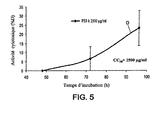
- the figure 5 illustrates the percentage of cellular destruction (CC 50 ) for the highest concentration of PS3, namely 2500 ⁇ g / ml depending on the incubation time (48, 72 and 96 hours). The examination of figure 5 reveals that PS3 has no toxic effect on Vero cells regardless of incubation time.
- the Therapeutic Index represents the ratio between the maximum non-toxic dose (or a dose inducing a quantified toxicity) and the dose inducing a favorable pharmacological effect.
- Table I are combined the values of the ITs of PS3, acyclovir, dextran sulfate and phycarine obtained for each of the four viral strains, after incubation times of 48 and 72 hours.
- PS3 is effective on all the viral strains studied, with EC 50 values of less than 2 ⁇ g / ml after 48 hours of treatment and less than 5 ⁇ g / ml. after 72 hours of treatment.
- PS3 is effective on strains resistant to acyclovir which is the inhibitor commonly used in patients with herpes.
- HSV-1, HSV-1R, HSV-2 and HSV-2R viral suspensions defined by an MOI of 0.01 DI 50 / cell were tested for a cell concentration of 350,000 cells / ml.
- acyclovir and dextran sulfate have been used at concentrations of between 0.05 and 5 ⁇ g / ml.
- PS3 concentrations 0.125 to 1250 ⁇ g / ml were used and experiments were performed in 96-well microtiter plates.
- Vero cells were inoculated at a cell density of 3.5 ⁇ 10 4 cells / well in 100 ⁇ l of MEM medium containing 8% FCS.
- microtiter plate containing cells treated with PS3 or the reference product was then placed in an oven at 37 ° C for 6, 12 or 24 hours.
- the cells were then washed with 100 ⁇ l of MEM medium in order to remove the PS3 or the reference product.
- a volume of 50 ⁇ l of a viral suspension in each well was then added, as well as 50 ⁇ l of MEM medium with 8% FCS; and the plates were held for 1 hour at 4 ° C.
- the infected cells were then placed in an oven at 37 ° C for 48 or 72 hours.
- the viability of the cells in each well was evaluated by neutral red staining according to the method described above.
- PS3 does not protect cells from viral infection.
- Vero cells were seeded for 24 hours, before the assay, at a cell density of 3.5 x 10 4 cells / well of a microtiter plate in 100 ⁇ l of MEM medium containing 8% FCS.
- the plates containing the infected cells were then placed in an oven at 37 ° C for 48 or 72 hours.
- the virucidal effect of PS3 was evaluated by measuring the EC 50 values determined according to the method described in Example 3.
- the Figures 6 and 7 give the EC 50 of PS3 on the different strains for incubation times of 48 and 72 hours respectively, the comparison product being acyclovir.
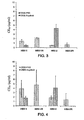
- the EC 50 values (illustrated by the Figures 6 and 7 ) should be lower than those obtained during evaluations of anti-herpes activity (illustrated by Figures 3 and 4 ).
- the examination of the results gathered in these Figures 6 and 7 shows that the EC 50 values are comparable to those obtained during evaluations of anti-herpes activity. PS3 therefore has no virucidal effect on the strains studied.
- Vero cells at a cell density of 3.5 ⁇ 10 4 cells / well were seeded into a 96-well microtiter plate in 100 ⁇ l of MEM medium containing 8% FCS and then infected by contact with the different viral strains. identified above for 1 hour at 4 ° C.
- the infected cells were then washed with saline buffer to remove virus particles that had not been adsorbed.
- the figure 8 shows the EC 50 values of the PS3 as a function of the moment of contact of the PS3 with the cells.
- Vero cells were inoculated 24 hours before the assay at a cell density of 3.5 x 10 4 cells / well of a 96-well microtiter plate in 100 ⁇ l MEM medium containing 8% FCS.
- the treated cells were infected with 50 ⁇ l of PS3 or of a comparison product (acyclovir) of a given concentration with 50 ⁇ l of one of the viral suspensions identified above for one hour at 4 ° C.
- the infected cells were then washed with 100 .mu.l of saline buffer in order to remove the PS3 or the reference product as well as the viral particles which had not been adsorbed by the cells.
- the cells were contacted with one of the viral suspensions identified above for 1 hour at 4 ° C.
- the infected cells were then washed with 100 ⁇ l of saline buffer in order to eliminate the viral particles which had not been adsorbed.
- the cells were then treated for 72 hours with different concentrations of PS3 or the reference product in a total volume of 200 ⁇ l per well.
- the treated cells were infected with 50 .mu.l of PS3 or reference product of a given concentration with 50 .mu.l of one of the viral suspensions identified above for one hour at 4.degree.
- the infected cells were then washed with 100 ⁇ l of saline buffer in order to eliminate the PS3 or the reference product as well as the viral particles which had not been adsorbed.
- the cells were then reapplied for 72 hours with the different concentrations of PS3 or the reference product in a total volume of 200 ⁇ l per well.
- the figure 9 shows the EC 50s of PS3 determined for the above four viral strains identified above after incubation times of 48 and 72 hours respectively, the comparison product being acyclovir.
- PS3 has an inhibitory effect on the 4 viral strains only during treatment C, ie when PS3 is present at the time and after the viral adsorption. PS3 thus exerts an antiviral activity in the first phase of the viral infection.
- Vero cells were seeded at a cell density of 3.5 ⁇ 10 4 cells / well of a microtiter plate in 100 ⁇ l of MEM medium containing 8% FCS.
- the confluent cells were brought into contact with 50 ⁇ l of a viral suspension for 1 hour at 4 ° C.
- the cell layer was then incubated with different concentrations of PS3 (0.125 - 1250 ⁇ g / ml) or reference product, here acyclovir (0.005 - 5 ⁇ l / ml), at 37 ° C in order to facilitate the penetration of the viruses. .
- the cells were then washed with 100 ⁇ l of PBS per well and resuspended at 37 ° C. in 200 ⁇ l MEM supplemented with 8% FCS.
- PS3 exhibits antiviral activity against the four viral strains tested, HSV-1, HSV-1R, HSV-2, HSV-2R by acting more particularly on the adsorption of viruses on cells; it is effective when present from the beginning of the infection.
- PS3 has an anti-herpes effect against acyclovir-resistant viral strains.
- the invention is therefore particularly aimed at the use of PS3 for the preparation of a medicament for a treatment against herpesvirus strains that are resistant to inhibitors of the nucleoside analogue type, and in particular with regard to the acyclovir.
- Immunodeficient individuals are those who are immunosuppressed, those who have undergone organ transplants, as well as those with Acquired Immunodeficiency Syndrome (AIDS) or those with severe skin changes such as burn victims.
- AIDS Acquired Immunodeficiency Syndrome
- the white rabbits were tested on the one hand for ocular irritation and on the other hand for the primary skin irritation test.
- the rats were subjected to an acute dermal toxicity test and to an acute oral toxicity study.
- the dermal lethal dose 50 is greater than 2 g / kg of body weight, which makes it possible to affirm that the product is not toxic.
- the acute oral toxicity may be considered to be greater than 2 g / kg of body weight, which again makes it possible to classify the product as nontoxic.
- the anticoagulant activity of the laminar sulfate PS3 obtained in Example 1 was determined as a function of its concentration in comparison with that of heparin in the conventional APTT or "Activated Partial Thromboplastin Time” coagulation tests.
- the duration of prothrombin, the test called “HEPTEST” and the duration of thrombin was determined as a function of its concentration in comparison with that of heparin in the conventional APTT or "Activated Partial Thromboplastin Time” coagulation tests.
- the APTT reflects an interaction with the intrinsic coagulation system while the prothrombin time reflects an interaction with extrinsic coagulation;
- the so-called "HEPTEST” test is the standard test for the measurement of heparin inhibitory activity with respect to factor Xa and the duration of thrombin corresponds to the last stage of coagulation, namely the formation of fibrins induced by thrombin. It has been found that unlike heparin, the activity of laminar sulfate PS3 in the test called “HEPTEST" is more than 20 times lower. Similarly, in relation to the duration of prothrombin, laminar sulfate PS3 showed no pronounced anticoagulant effect, as in the case of heparin.
- the specific activity (IU / mg) in the APTT represents 30% of the heparin activity and in the case of the thrombin time 60%. In order to completely prevent coagulation, the concentration of APTT was 4 times higher and, in the case of thrombin time, 20 times higher.
- laminar sulfate PS3 unlike heparin, does not exhibit either a significant anti-thrombin-dependent anti-factor Xa activity. an anti-thrombin activity.
- the effect in the case of thrombin time may be considered to be due to heparin cofactor II-dependent thrombin inhibition. Because of the lower specific activity on the one hand, and the concentration-dependent profile on the other, and further research on the mechanism of action, it is possible to consider that in the case of of laminarin sulphate PS3, the risk of bleeding is significantly lower than in the case of heparin.
- the sulfated laminarine tested came from lot PS3 8/2001 supplied by Laboratoires Go ⁇ mar.
- a sulphated laminarine cream PS3 having the following composition was produced: Demineralized Water 69.7% Glycerin 5.0% Sulphated Laminarin PS3 1.0% PEG 100 stearate 4.0% Cetearyl alcohol 2.0% Tory 1.0% PEG 40 stearate 3.0% Vitamin E acetate 0.5% C - 12-15 alkyl benzoate 6.5% Caprylic / capric triglycerides 5.5% 0.1N NaOH 1.8% 100%
- Example 11 Composition of an Aerosol Solution Based on Sulphated Laminarine PS3
- Example 12 Composition of a suppository based on a potassium salt of oligo sulfate ⁇ 1-3 glucan
- Example 13 Composition of a Solution for Injection Based on a Sodium Salt of Oligolaminaritol Sulfate
- An injectable solution based on a sodium salt of oligolaminaritol sulfate having the following composition: Sodium salt of oligolaminaritol sulphate (DP20, DS 2,3) 5.0% Sodium bicarbonate 3.0% Water ppi 92.0%
- EXAMPLE 14 Composition of a Vaginal Solution Based on a Sodium Salt of Oligo- ⁇ 1-3 Glucan Sulphate
- a vaginal solution based on a sodium salt of oligo ⁇ 1-3 glucan sulphate was prepared in the form of a single-dose 140 ml cannula vial having the following composition: Sodium salt of oligo sulfate ⁇ 1-3 glucan (DP23, DS 2,4) 0.1% Sodium chloride 9.0% 95 ° ethyl alcohol 5.0% Pink aroma 0.2% Purified water 84.7% Preservatives (benzalkonium chloride) 0.2% Sodium edetate 0.3% Polysorbate 20 0.5% 100%
Landscapes
- Health & Medical Sciences (AREA)
- Life Sciences & Earth Sciences (AREA)
- Animal Behavior & Ethology (AREA)
- Medicinal Chemistry (AREA)
- Molecular Biology (AREA)
- Veterinary Medicine (AREA)
- Public Health (AREA)
- Chemical & Material Sciences (AREA)
- General Health & Medical Sciences (AREA)
- Pharmacology & Pharmacy (AREA)
- Epidemiology (AREA)
- Virology (AREA)
- Dermatology (AREA)
- Nuclear Medicine, Radiotherapy & Molecular Imaging (AREA)
- Organic Chemistry (AREA)
- General Chemical & Material Sciences (AREA)
- Engineering & Computer Science (AREA)
- Chemical Kinetics & Catalysis (AREA)
- Oncology (AREA)
- Communicable Diseases (AREA)
- Biotechnology (AREA)
- Pharmaceuticals Containing Other Organic And Inorganic Compounds (AREA)
Priority Applications (1)
| Application Number | Priority Date | Filing Date | Title |
|---|---|---|---|
| PL07731407T PL2012802T3 (pl) | 2006-05-04 | 2007-05-03 | Nowe leki do leczenia wirusa opryszczki |
Applications Claiming Priority (2)
| Application Number | Priority Date | Filing Date | Title |
|---|---|---|---|
| FR0603990A FR2900577B1 (fr) | 2006-05-04 | 2006-05-04 | Nouveaux medicaments pour les traitements contre le virus de l'herpes |
| PCT/FR2007/000761 WO2007128914A1 (fr) | 2006-05-04 | 2007-05-03 | Nouveaux medicaments pour les traitements contre le virus de l'herpès |
Publications (2)
| Publication Number | Publication Date |
|---|---|
| EP2012802A1 EP2012802A1 (fr) | 2009-01-14 |
| EP2012802B1 true EP2012802B1 (fr) | 2012-08-29 |
Family
ID=37568481
Family Applications (1)
| Application Number | Title | Priority Date | Filing Date |
|---|---|---|---|
| EP07731407A Not-in-force EP2012802B1 (fr) | 2006-05-04 | 2007-05-03 | Nouveaux medicaments pour les traitements contre le virus de l'herpès |
Country Status (6)
| Country | Link |
|---|---|
| US (1) | US8288363B2 (pl) |
| EP (1) | EP2012802B1 (pl) |
| CA (1) | CA2651225A1 (pl) |
| FR (1) | FR2900577B1 (pl) |
| PL (1) | PL2012802T3 (pl) |
| WO (1) | WO2007128914A1 (pl) |
Families Citing this family (5)
| Publication number | Priority date | Publication date | Assignee | Title |
|---|---|---|---|---|
| US8853223B2 (en) | 2010-09-17 | 2014-10-07 | G2L Touch, Inc. | Therapeutic composition to treat lesions caused by herpes simplex virus |
| WO2011035120A2 (en) * | 2009-09-17 | 2011-03-24 | Gk Ventures, L.L.C. | Therapeutic composition to treat lesions caused by herpes simplex virus |
| FR3110396B1 (fr) | 2020-05-20 | 2023-03-17 | M G B Pharma | Composition comprenant un composé ascorbo-camphorate métallique pour son utilisation dans le traitement des infections causées par herpèsvirus |
| CN115957293B (zh) * | 2022-11-03 | 2023-06-27 | 通化仁生源生物科技股份有限公司 | 天麻多肽在制备抗疱疹病毒的外用产品中的用途 |
| CN119161499B (zh) * | 2024-09-23 | 2025-04-15 | 广东医科大学 | 一种海带多糖及其制备方法与应用 |
Family Cites Families (3)
| Publication number | Priority date | Publication date | Assignee | Title |
|---|---|---|---|---|
| US5874479A (en) * | 1991-03-01 | 1999-02-23 | Warner-Lambert Company | Therapeutic permeation enhanced-wound healing compositions and methods for preparing and using same |
| IL108951A0 (en) * | 1994-03-13 | 1994-06-24 | Hadasit Med Res Service | Pharmaceutical compositions containing polysulfated polysaccharides |
| DZ1966A1 (fr) * | 1995-02-06 | 2002-10-15 | Astra Ab | Combinaison pharmaceutique nouvelle. |
-
2006
- 2006-05-04 FR FR0603990A patent/FR2900577B1/fr not_active Expired - Fee Related
-
2007
- 2007-05-03 PL PL07731407T patent/PL2012802T3/pl unknown
- 2007-05-03 CA CA002651225A patent/CA2651225A1/fr not_active Abandoned
- 2007-05-03 US US12/299,365 patent/US8288363B2/en not_active Expired - Fee Related
- 2007-05-03 WO PCT/FR2007/000761 patent/WO2007128914A1/fr not_active Ceased
- 2007-05-03 EP EP07731407A patent/EP2012802B1/fr not_active Not-in-force
Also Published As
| Publication number | Publication date |
|---|---|
| WO2007128914A1 (fr) | 2007-11-15 |
| EP2012802A1 (fr) | 2009-01-14 |
| PL2012802T3 (pl) | 2013-03-29 |
| US8288363B2 (en) | 2012-10-16 |
| FR2900577A1 (fr) | 2007-11-09 |
| US20090176733A1 (en) | 2009-07-09 |
| CA2651225A1 (fr) | 2007-11-15 |
| FR2900577B1 (fr) | 2008-09-12 |
Similar Documents
| Publication | Publication Date | Title |
|---|---|---|
| Kimberlin et al. | Antiviral therapy of HSV-1 and-2 | |
| Guo et al. | Asiatic acid ameliorates dextran sulfate sodium-induced murine experimental colitis via suppressing mitochondria-mediated NLRP3 inflammasome activation | |
| KR101571571B1 (ko) | 황화 폴리사카라이드를 포함하는 항바이러스 조성물 | |
| AU2016293004B2 (en) | Stuffy nose deblocking composition having antiviral activity | |
| RU2650636C2 (ru) | Составы на основе полиинозиновой-полицитидиловой кислоты (poly(i:с)) для лечения инфекций верхних дыхательных путей | |
| EP2012802A1 (fr) | Nouveaux medicaments pour les traitements contre le virus de l'herpès | |
| WO2019046664A1 (en) | COMPOSITIONS AND METHODS FOR PROTECTING AGENTS FROM PATHOGENS AND IRRITANTS | |
| JP6416207B2 (ja) | 抗ウイルスゲル配合剤 | |
| RU2573977C2 (ru) | 4,6-ди(3,12-диаза-6,9-диазониадиспиро[5.2.5.2]гексадекан-1-ил)-2-метил-5-нитропиримидин тетрахлорид дигидрохлорид гексагидрат для лечения герпетической инфекции, фармацевтическая композиция для местного применения | |
| Besednova et al. | Antiviral activity and pathogenetic targets for seaweed sulfated polysaccharides in herpesvirus infections | |
| WO2021180742A1 (en) | Methyl-cyclodextrin for use in treating enveloped virus infections such as cov-2 | |
| CN111249288B (zh) | 甘露葡萄糖醛酸寡糖及其衍生物在制备治疗和/或预防hcmv药物中的应用 | |
| Arad et al. | Antiviral activity of sulfated polysaccharides of marine red algae | |
| US20110065655A1 (en) | Therapeutic composition to treat lesions caused by herpes simplex virus | |
| EP2827880B1 (en) | A mixture of polar glycolipids for use in the treatment of pain | |
| CA3171013A1 (fr) | Composition pour le traitement de lesions du systeme respiratoire | |
| CN100364975C (zh) | 一种抗呼吸道病毒的药物及用途 | |
| US20040087545A1 (en) | Method and composition for the treatment of a viral infection | |
| EP1888092B1 (fr) | Medicament a base de laminarine ou d' oligolaminarines pour le traitement de la septicemie et du choc septique | |
| EP2007400A1 (fr) | Nouveaux medicaments pour les traitements contre les retrovirus | |
| EP4291217B1 (fr) | Composition thérapeutique à base de feuilles de neurolaena inhibitrice de la dhodh pour le traitement d'infections par virus à arn | |
| DE102016113017A1 (de) | Pharmazeutische Verwendung von alpha-L-Guluronsäure | |
| WO2021257007A1 (en) | An antiviral pharmaceutical composition with therapeutic agent originated from astraeus asiaticus | |
| WO2021171225A1 (en) | Antimicrobial agents based on beta-glucans, methods for producing and use thereof | |
| WO2021180342A1 (fr) | Composition pour le traitement de lesions du systeme respiratoire |
Legal Events
| Date | Code | Title | Description |
|---|---|---|---|
| PUAI | Public reference made under article 153(3) epc to a published international application that has entered the european phase |
Free format text: ORIGINAL CODE: 0009012 |
|
| 17P | Request for examination filed |
Effective date: 20081029 |
|
| AK | Designated contracting states |
Kind code of ref document: A1 Designated state(s): AT BE BG CH CY CZ DE DK EE ES FI FR GB GR HU IE IS IT LI LT LU LV MC MT NL PL PT RO SE SI SK TR |
|
| AX | Request for extension of the european patent |
Extension state: AL BA HR MK RS |
|
| RAP1 | Party data changed (applicant data changed or rights of an application transferred) |
Owner name: LABORATOIRES GOEMAR |
|
| RAP1 | Party data changed (applicant data changed or rights of an application transferred) |
Owner name: ASE & BIO |
|
| 17Q | First examination report despatched |
Effective date: 20110412 |
|
| GRAP | Despatch of communication of intention to grant a patent |
Free format text: ORIGINAL CODE: EPIDOSNIGR1 |
|
| DAX | Request for extension of the european patent (deleted) | ||
| GRAS | Grant fee paid |
Free format text: ORIGINAL CODE: EPIDOSNIGR3 |
|
| GRAA | (expected) grant |
Free format text: ORIGINAL CODE: 0009210 |
|
| AK | Designated contracting states |
Kind code of ref document: B1 Designated state(s): AT BE BG CH CY CZ DE DK EE ES FI FR GB GR HU IE IS IT LI LT LU LV MC MT NL PL PT RO SE SI SK TR |
|
| REG | Reference to a national code |
Ref country code: GB Ref legal event code: FG4D Free format text: NOT ENGLISH |
|
| REG | Reference to a national code |
Ref country code: CH Ref legal event code: EP |
|
| REG | Reference to a national code |
Ref country code: AT Ref legal event code: REF Ref document number: 572678 Country of ref document: AT Kind code of ref document: T Effective date: 20120915 |
|
| REG | Reference to a national code |
Ref country code: IE Ref legal event code: FG4D Free format text: LANGUAGE OF EP DOCUMENT: FRENCH |
|
| REG | Reference to a national code |
Ref country code: DE Ref legal event code: R096 Ref document number: 602007025112 Country of ref document: DE Effective date: 20121018 |
|
| REG | Reference to a national code |
Ref country code: AT Ref legal event code: MK05 Ref document number: 572678 Country of ref document: AT Kind code of ref document: T Effective date: 20120829 |
|
| REG | Reference to a national code |
Ref country code: NL Ref legal event code: VDEP Effective date: 20120829 |
|
| REG | Reference to a national code |
Ref country code: LT Ref legal event code: MG4D Effective date: 20120829 |
|
| PG25 | Lapsed in a contracting state [announced via postgrant information from national office to epo] |
Ref country code: AT Free format text: LAPSE BECAUSE OF FAILURE TO SUBMIT A TRANSLATION OF THE DESCRIPTION OR TO PAY THE FEE WITHIN THE PRESCRIBED TIME-LIMIT Effective date: 20120829 Ref country code: LT Free format text: LAPSE BECAUSE OF FAILURE TO SUBMIT A TRANSLATION OF THE DESCRIPTION OR TO PAY THE FEE WITHIN THE PRESCRIBED TIME-LIMIT Effective date: 20120829 Ref country code: CY Free format text: LAPSE BECAUSE OF FAILURE TO SUBMIT A TRANSLATION OF THE DESCRIPTION OR TO PAY THE FEE WITHIN THE PRESCRIBED TIME-LIMIT Effective date: 20120829 Ref country code: IS Free format text: LAPSE BECAUSE OF FAILURE TO SUBMIT A TRANSLATION OF THE DESCRIPTION OR TO PAY THE FEE WITHIN THE PRESCRIBED TIME-LIMIT Effective date: 20121229 Ref country code: FI Free format text: LAPSE BECAUSE OF FAILURE TO SUBMIT A TRANSLATION OF THE DESCRIPTION OR TO PAY THE FEE WITHIN THE PRESCRIBED TIME-LIMIT Effective date: 20120829 |
|
| RAP2 | Party data changed (patent owner data changed or rights of a patent transferred) |
Owner name: ASE & BIO |
|
| PG25 | Lapsed in a contracting state [announced via postgrant information from national office to epo] |
Ref country code: PT Free format text: LAPSE BECAUSE OF FAILURE TO SUBMIT A TRANSLATION OF THE DESCRIPTION OR TO PAY THE FEE WITHIN THE PRESCRIBED TIME-LIMIT Effective date: 20121231 Ref country code: SI Free format text: LAPSE BECAUSE OF FAILURE TO SUBMIT A TRANSLATION OF THE DESCRIPTION OR TO PAY THE FEE WITHIN THE PRESCRIBED TIME-LIMIT Effective date: 20120829 Ref country code: GR Free format text: LAPSE BECAUSE OF FAILURE TO SUBMIT A TRANSLATION OF THE DESCRIPTION OR TO PAY THE FEE WITHIN THE PRESCRIBED TIME-LIMIT Effective date: 20121130 Ref country code: SE Free format text: LAPSE BECAUSE OF FAILURE TO SUBMIT A TRANSLATION OF THE DESCRIPTION OR TO PAY THE FEE WITHIN THE PRESCRIBED TIME-LIMIT Effective date: 20120829 Ref country code: LV Free format text: LAPSE BECAUSE OF FAILURE TO SUBMIT A TRANSLATION OF THE DESCRIPTION OR TO PAY THE FEE WITHIN THE PRESCRIBED TIME-LIMIT Effective date: 20120829 |
|
| REG | Reference to a national code |
Ref country code: CH Ref legal event code: PCOW Free format text: NEW ADDRESS: LES ARCADES, ESCALIER C 76/78 AVENUE DES CHAMPS ELYSEES, 75008 PARIS (FR) |
|
| REG | Reference to a national code |
Ref country code: PL Ref legal event code: T3 |
|
| REG | Reference to a national code |
Ref country code: FR Ref legal event code: CA Effective date: 20130305 |
|
| PG25 | Lapsed in a contracting state [announced via postgrant information from national office to epo] |
Ref country code: DK Free format text: LAPSE BECAUSE OF FAILURE TO SUBMIT A TRANSLATION OF THE DESCRIPTION OR TO PAY THE FEE WITHIN THE PRESCRIBED TIME-LIMIT Effective date: 20120829 Ref country code: NL Free format text: LAPSE BECAUSE OF FAILURE TO SUBMIT A TRANSLATION OF THE DESCRIPTION OR TO PAY THE FEE WITHIN THE PRESCRIBED TIME-LIMIT Effective date: 20120829 Ref country code: ES Free format text: LAPSE BECAUSE OF FAILURE TO SUBMIT A TRANSLATION OF THE DESCRIPTION OR TO PAY THE FEE WITHIN THE PRESCRIBED TIME-LIMIT Effective date: 20121210 Ref country code: RO Free format text: LAPSE BECAUSE OF FAILURE TO SUBMIT A TRANSLATION OF THE DESCRIPTION OR TO PAY THE FEE WITHIN THE PRESCRIBED TIME-LIMIT Effective date: 20120829 Ref country code: EE Free format text: LAPSE BECAUSE OF FAILURE TO SUBMIT A TRANSLATION OF THE DESCRIPTION OR TO PAY THE FEE WITHIN THE PRESCRIBED TIME-LIMIT Effective date: 20120829 Ref country code: CZ Free format text: LAPSE BECAUSE OF FAILURE TO SUBMIT A TRANSLATION OF THE DESCRIPTION OR TO PAY THE FEE WITHIN THE PRESCRIBED TIME-LIMIT Effective date: 20120829 |
|
| PG25 | Lapsed in a contracting state [announced via postgrant information from national office to epo] |
Ref country code: SK Free format text: LAPSE BECAUSE OF FAILURE TO SUBMIT A TRANSLATION OF THE DESCRIPTION OR TO PAY THE FEE WITHIN THE PRESCRIBED TIME-LIMIT Effective date: 20120829 |
|
| PLBE | No opposition filed within time limit |
Free format text: ORIGINAL CODE: 0009261 |
|
| STAA | Information on the status of an ep patent application or granted ep patent |
Free format text: STATUS: NO OPPOSITION FILED WITHIN TIME LIMIT |
|
| PG25 | Lapsed in a contracting state [announced via postgrant information from national office to epo] |
Ref country code: BG Free format text: LAPSE BECAUSE OF FAILURE TO SUBMIT A TRANSLATION OF THE DESCRIPTION OR TO PAY THE FEE WITHIN THE PRESCRIBED TIME-LIMIT Effective date: 20121129 |
|
| PGFP | Annual fee paid to national office [announced via postgrant information from national office to epo] |
Ref country code: GB Payment date: 20130521 Year of fee payment: 7 |
|
| 26N | No opposition filed |
Effective date: 20130530 |
|
| PGFP | Annual fee paid to national office [announced via postgrant information from national office to epo] |
Ref country code: PL Payment date: 20130416 Year of fee payment: 7 Ref country code: BE Payment date: 20130530 Year of fee payment: 7 Ref country code: IT Payment date: 20130513 Year of fee payment: 7 |
|
| REG | Reference to a national code |
Ref country code: DE Ref legal event code: R097 Ref document number: 602007025112 Country of ref document: DE Effective date: 20130530 |
|
| PG25 | Lapsed in a contracting state [announced via postgrant information from national office to epo] |
Ref country code: MC Free format text: LAPSE BECAUSE OF FAILURE TO SUBMIT A TRANSLATION OF THE DESCRIPTION OR TO PAY THE FEE WITHIN THE PRESCRIBED TIME-LIMIT Effective date: 20120829 |
|
| REG | Reference to a national code |
Ref country code: IE Ref legal event code: MM4A |
|
| PG25 | Lapsed in a contracting state [announced via postgrant information from national office to epo] |
Ref country code: IE Free format text: LAPSE BECAUSE OF NON-PAYMENT OF DUE FEES Effective date: 20130503 |
|
| GBPC | Gb: european patent ceased through non-payment of renewal fee |
Effective date: 20140503 |
|
| PG25 | Lapsed in a contracting state [announced via postgrant information from national office to epo] |
Ref country code: MT Free format text: LAPSE BECAUSE OF FAILURE TO SUBMIT A TRANSLATION OF THE DESCRIPTION OR TO PAY THE FEE WITHIN THE PRESCRIBED TIME-LIMIT Effective date: 20120829 |
|
| PG25 | Lapsed in a contracting state [announced via postgrant information from national office to epo] |
Ref country code: IT Free format text: LAPSE BECAUSE OF NON-PAYMENT OF DUE FEES Effective date: 20140503 |
|
| REG | Reference to a national code |
Ref country code: FR Ref legal event code: PLFP Year of fee payment: 9 |
|
| PG25 | Lapsed in a contracting state [announced via postgrant information from national office to epo] |
Ref country code: GB Free format text: LAPSE BECAUSE OF NON-PAYMENT OF DUE FEES Effective date: 20140503 |
|
| PG25 | Lapsed in a contracting state [announced via postgrant information from national office to epo] |
Ref country code: TR Free format text: LAPSE BECAUSE OF FAILURE TO SUBMIT A TRANSLATION OF THE DESCRIPTION OR TO PAY THE FEE WITHIN THE PRESCRIBED TIME-LIMIT Effective date: 20120829 |
|
| PG25 | Lapsed in a contracting state [announced via postgrant information from national office to epo] |
Ref country code: LU Free format text: LAPSE BECAUSE OF NON-PAYMENT OF DUE FEES Effective date: 20130503 Ref country code: HU Free format text: LAPSE BECAUSE OF FAILURE TO SUBMIT A TRANSLATION OF THE DESCRIPTION OR TO PAY THE FEE WITHIN THE PRESCRIBED TIME-LIMIT; INVALID AB INITIO Effective date: 20070503 |
|
| PG25 | Lapsed in a contracting state [announced via postgrant information from national office to epo] |
Ref country code: PL Free format text: LAPSE BECAUSE OF NON-PAYMENT OF DUE FEES Effective date: 20140503 |
|
| PGFP | Annual fee paid to national office [announced via postgrant information from national office to epo] |
Ref country code: FR Payment date: 20150528 Year of fee payment: 9 |
|
| REG | Reference to a national code |
Ref country code: PL Ref legal event code: LAPE |
|
| PGFP | Annual fee paid to national office [announced via postgrant information from national office to epo] |
Ref country code: CH Payment date: 20150721 Year of fee payment: 9 Ref country code: DE Payment date: 20150710 Year of fee payment: 9 |
|
| REG | Reference to a national code |
Ref country code: DE Ref legal event code: R119 Ref document number: 602007025112 Country of ref document: DE |
|
| REG | Reference to a national code |
Ref country code: CH Ref legal event code: PL |
|
| PG25 | Lapsed in a contracting state [announced via postgrant information from national office to epo] |
Ref country code: CH Free format text: LAPSE BECAUSE OF NON-PAYMENT OF DUE FEES Effective date: 20160531 Ref country code: LI Free format text: LAPSE BECAUSE OF NON-PAYMENT OF DUE FEES Effective date: 20160531 |
|
| REG | Reference to a national code |
Ref country code: FR Ref legal event code: ST Effective date: 20170131 |
|
| PG25 | Lapsed in a contracting state [announced via postgrant information from national office to epo] |
Ref country code: FR Free format text: LAPSE BECAUSE OF NON-PAYMENT OF DUE FEES Effective date: 20160531 Ref country code: DE Free format text: LAPSE BECAUSE OF NON-PAYMENT OF DUE FEES Effective date: 20161201 |
|
| PG25 | Lapsed in a contracting state [announced via postgrant information from national office to epo] |
Ref country code: BE Free format text: LAPSE BECAUSE OF NON-PAYMENT OF DUE FEES Effective date: 20140531 |